Eight days at Arctic Watch on Somerset Island, 74° north on the Northwest Passage, where some two thousand belugas gather every summer to molt, nurse and play.
July 20238 DaysNunavut, Canada
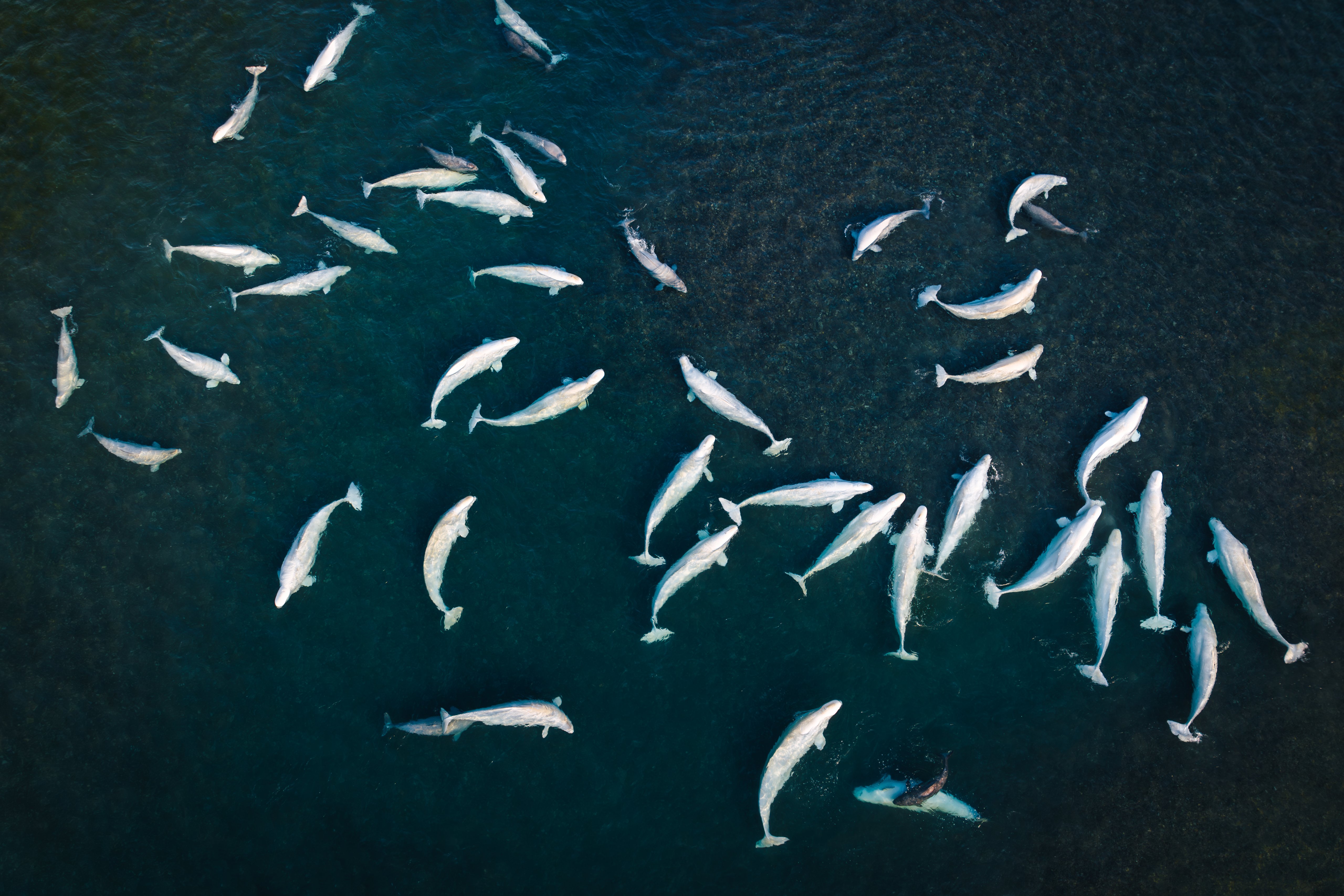
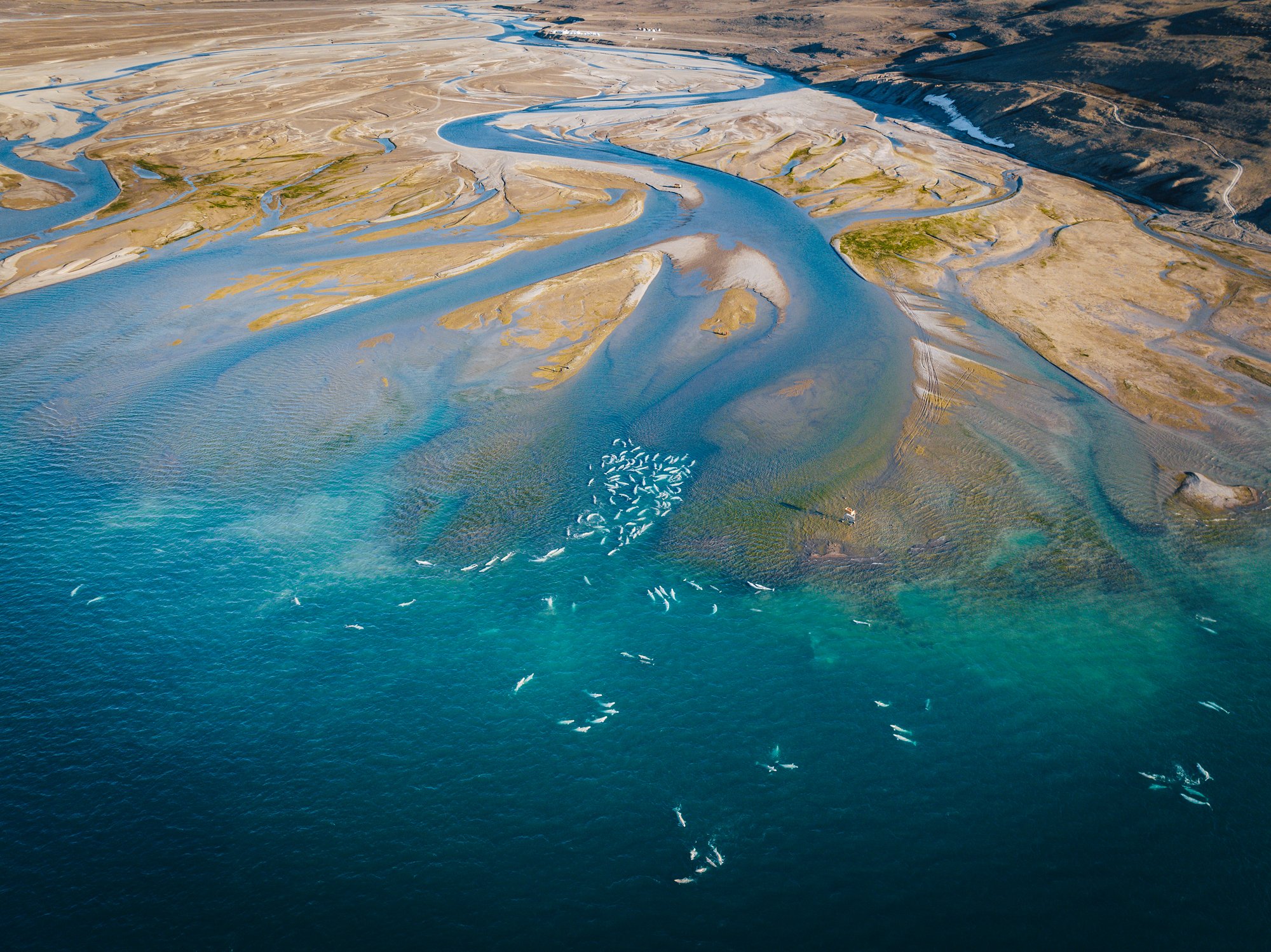
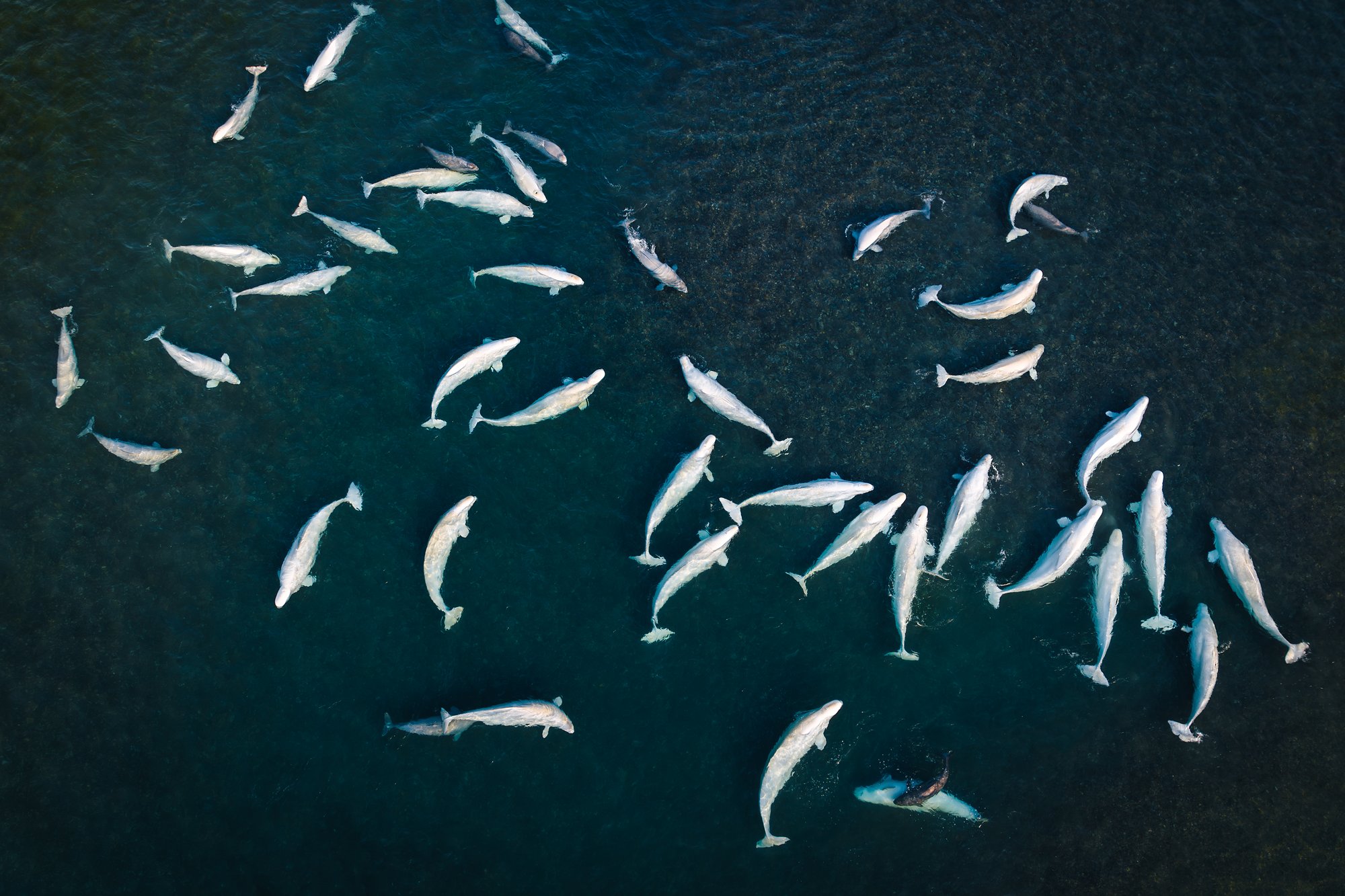
From the drone, the mouth of the Cunningham River looks as if someone has scattered rice across the water. Drop lower and the grains become whales: white adults, slate-gray calves tucked against their mothers, dozens of them turning together in water barely deep enough to cover their backs. Every summer some two thousand belugas funnel into this shallow inlet on Somerset Island, and for eight days in July 2023 we watched them from the air and from a gravel spit at the water's edge, often just a few meters away.
Arctic Watch Wilderness Lodge sits at 74° north, 800 kilometers above the Arctic Circle on the shores of the Northwest Passage. It is the most northerly fly-in lodge on the planet, run each summer by the Weber family of polar explorers, and we booked our week more than a year ahead. The belugas are the reason most people make the trip, but the island gave us far more than we expected: a canyon of waterfalls, musk ox on the open tundra, a day of rafting and kayaking the river, a coastline still jammed with sea ice, and, one morning on the northern coast, a polar bear and her cub crossing the floes. This is our journal of that week.
Part 01
Arctic Watch, 74° North
July 21, 2023 · Arctic Watch Wilderness Lodge, Somerset Island, Nunavut
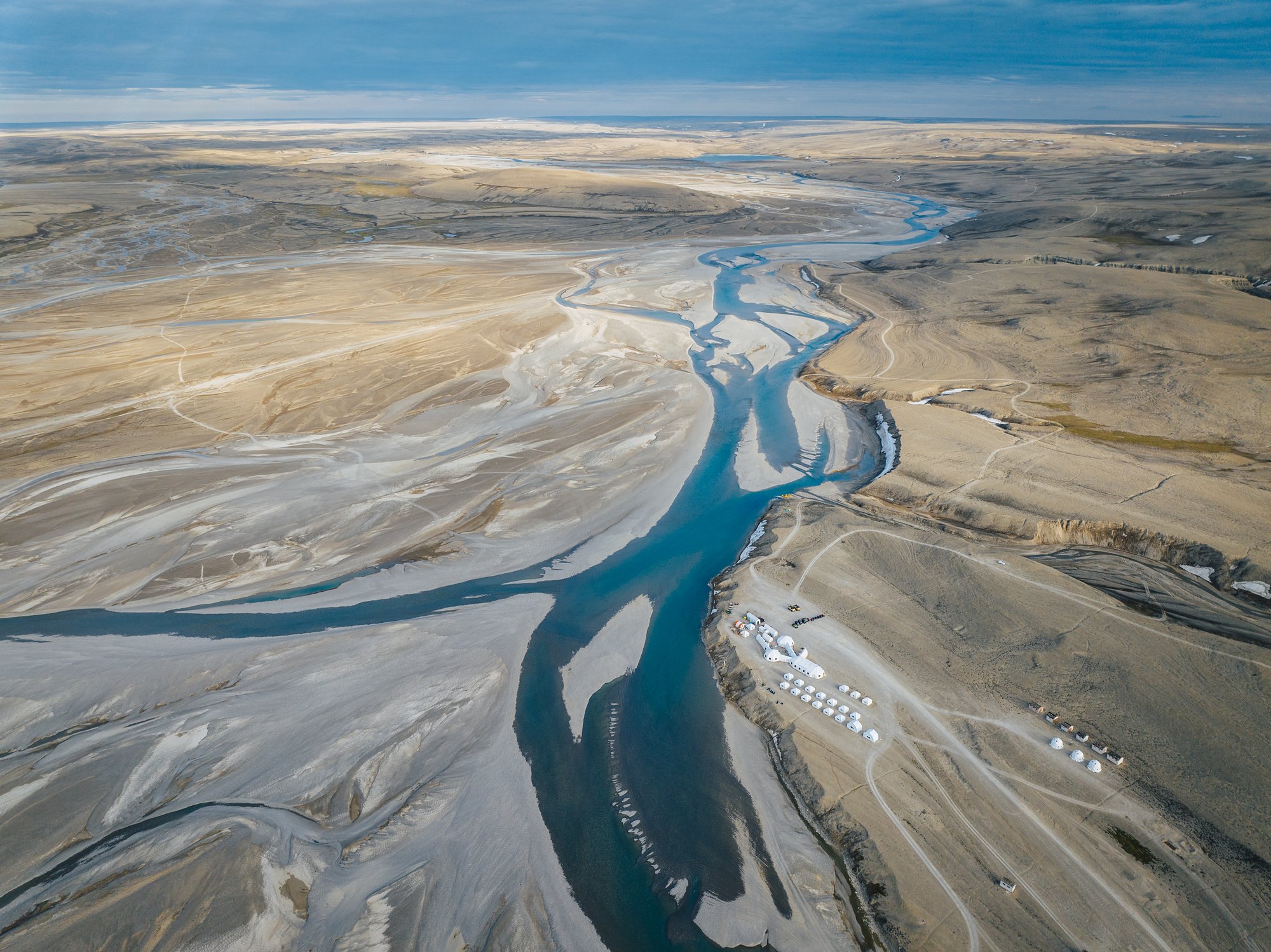
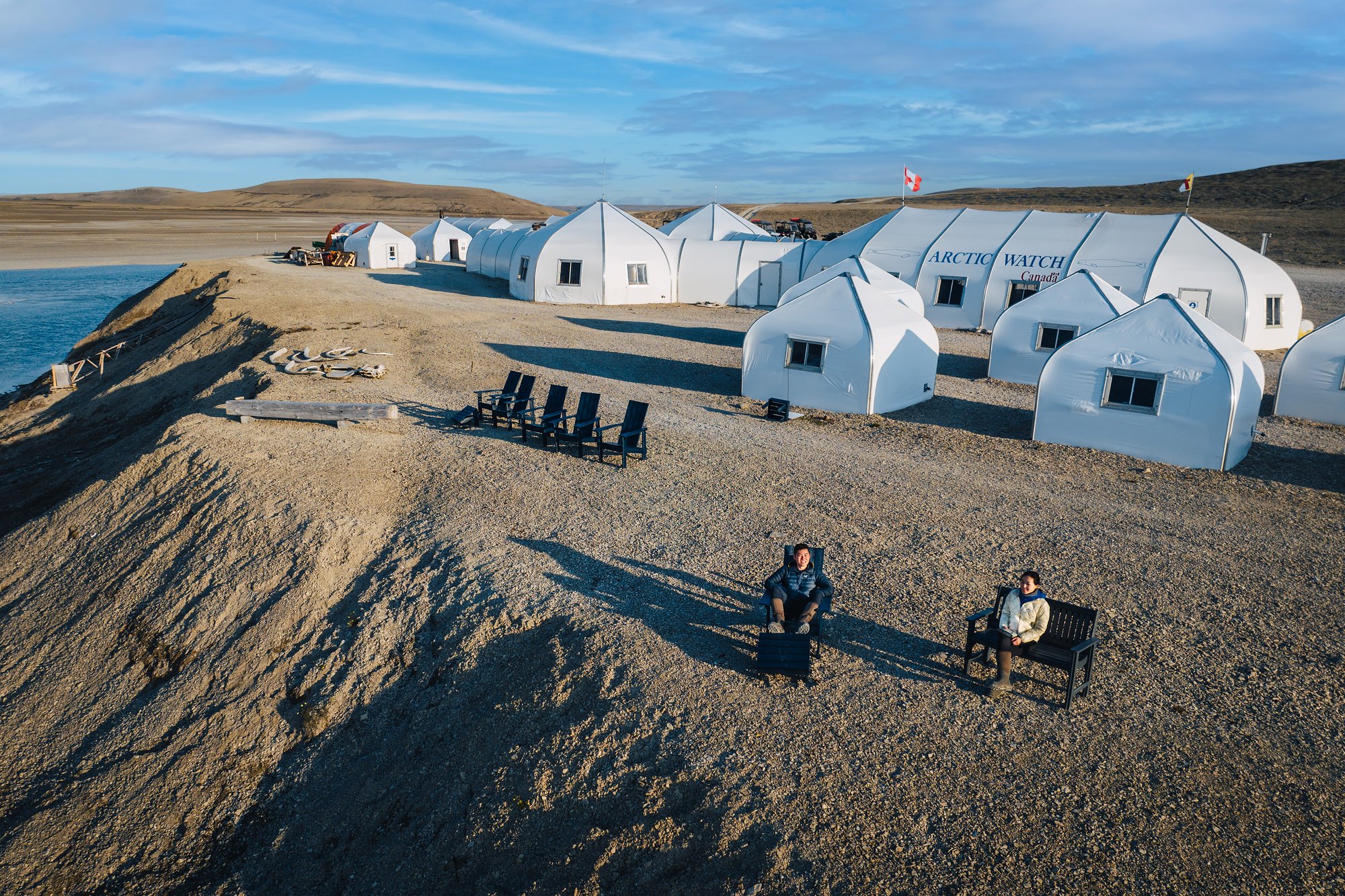
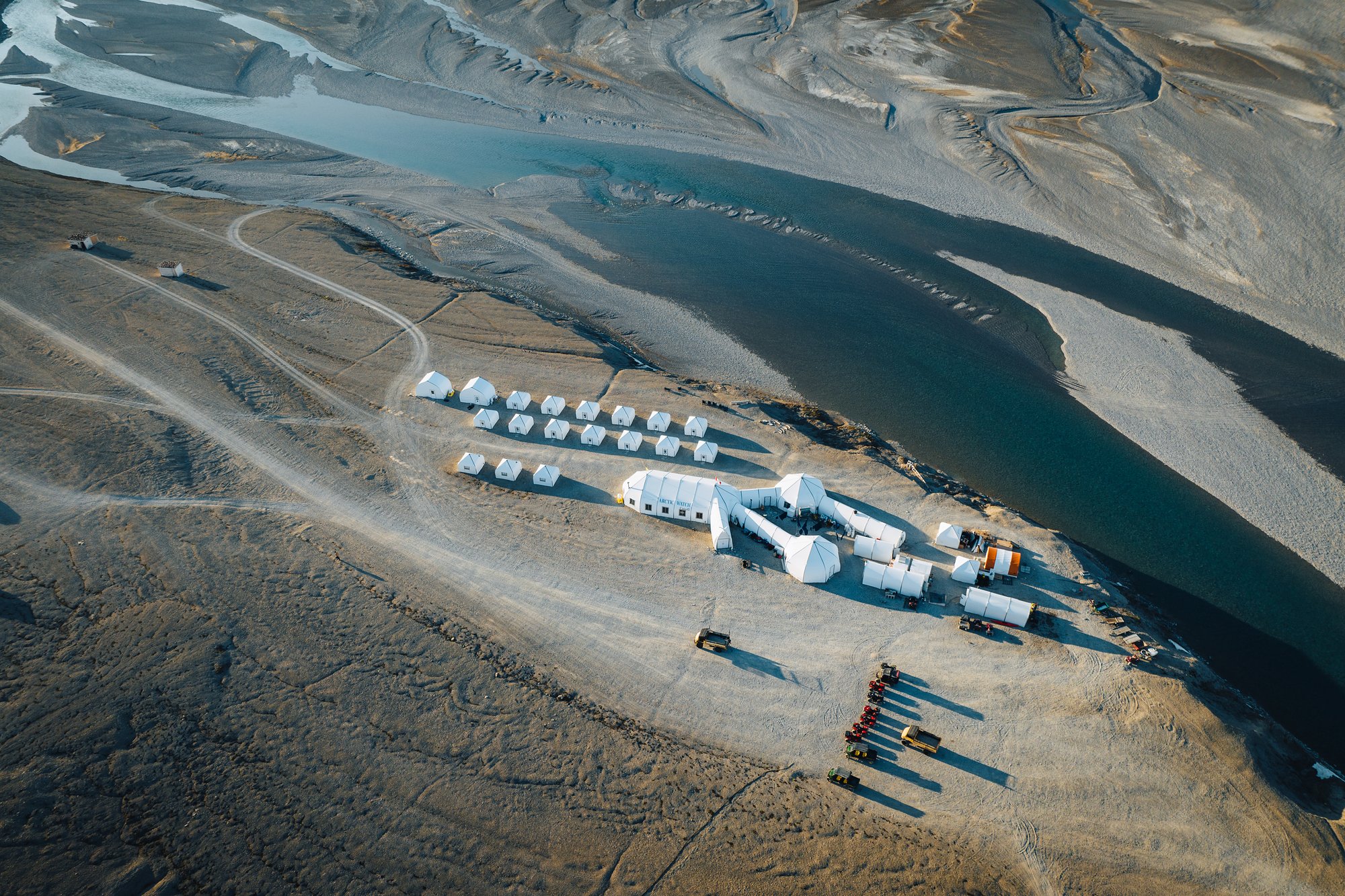
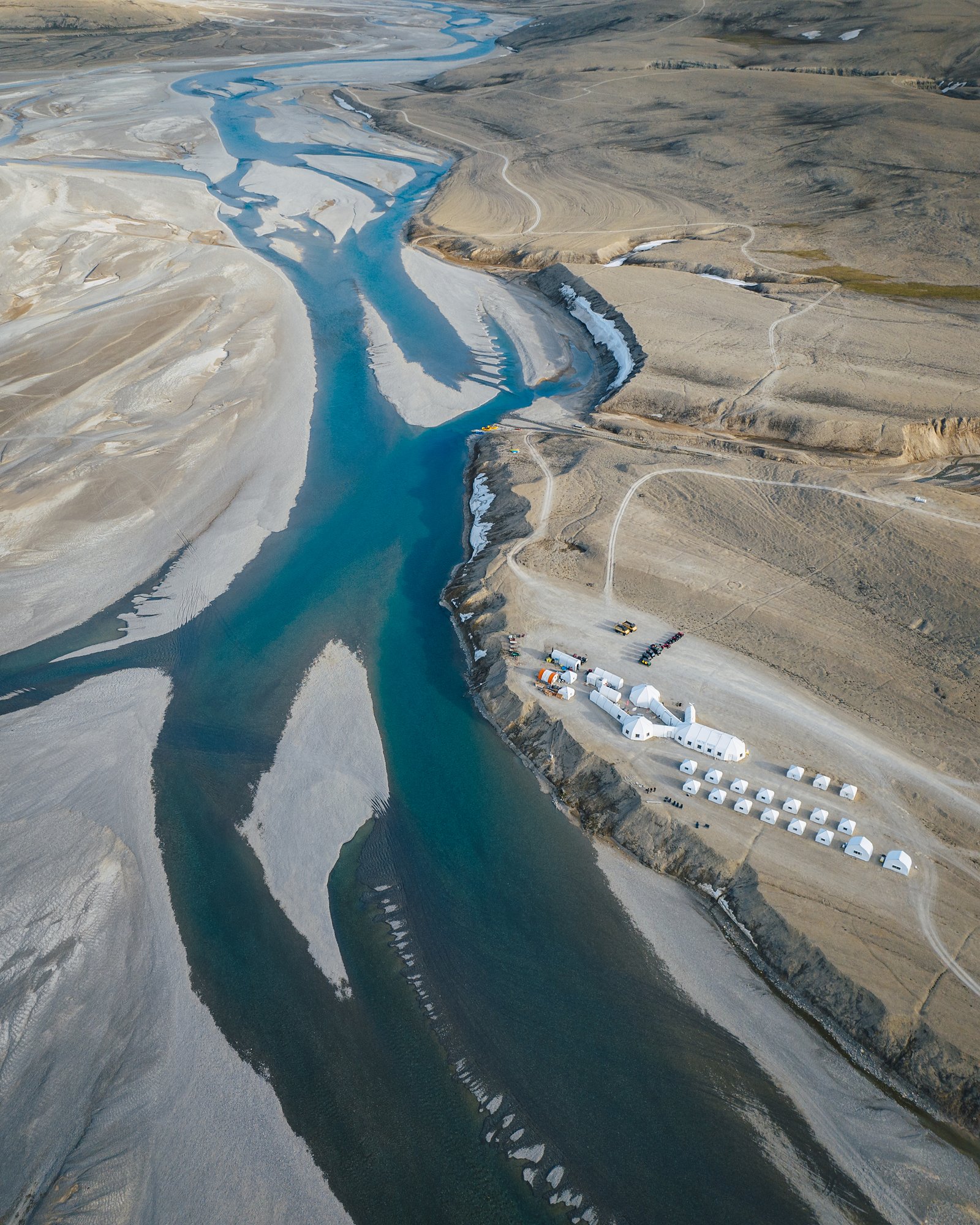
Arctic Watch on the bank of the Cunningham River. The rest of Somerset Island, all 25,000 square kilometers of it, has no permanent residents.
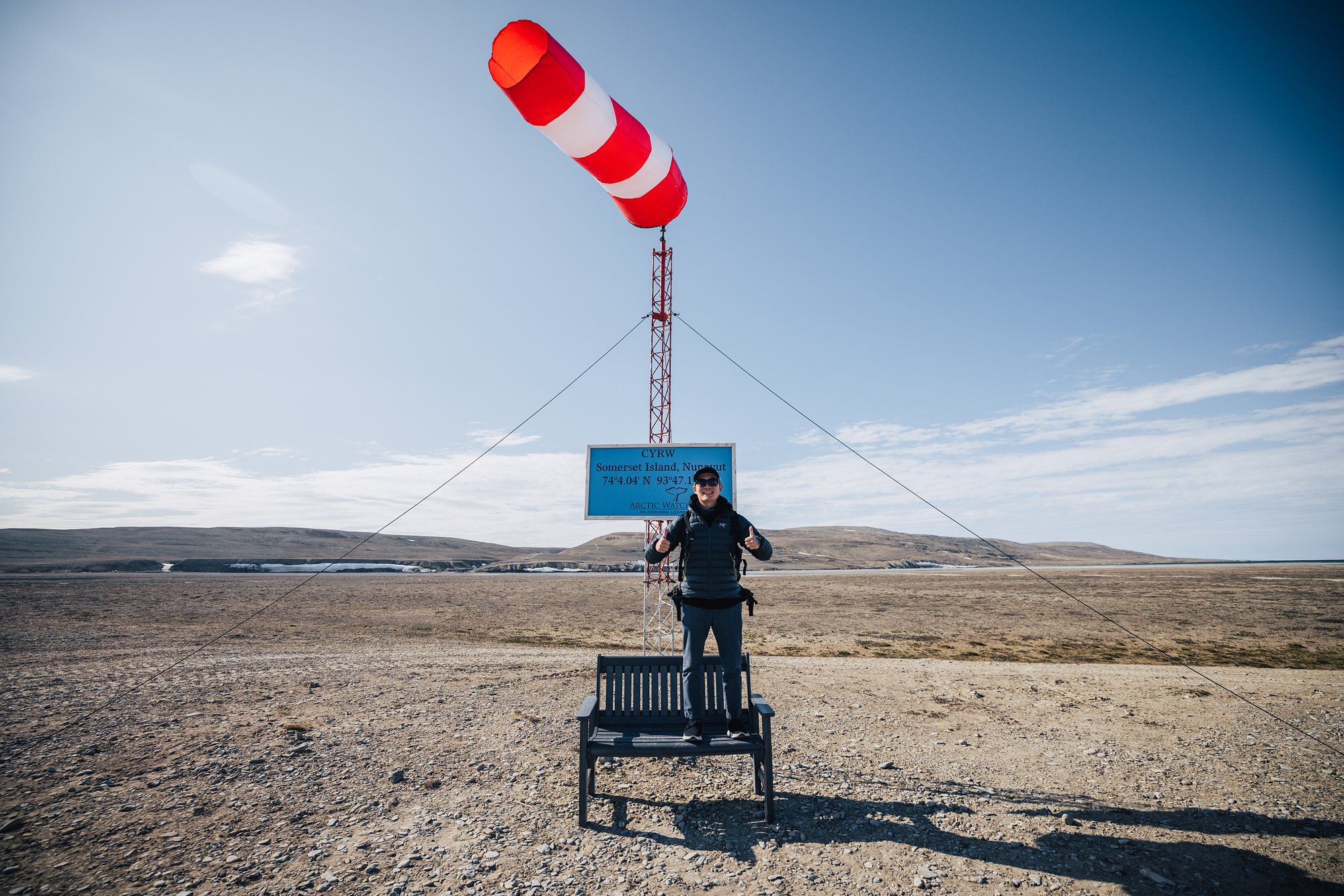
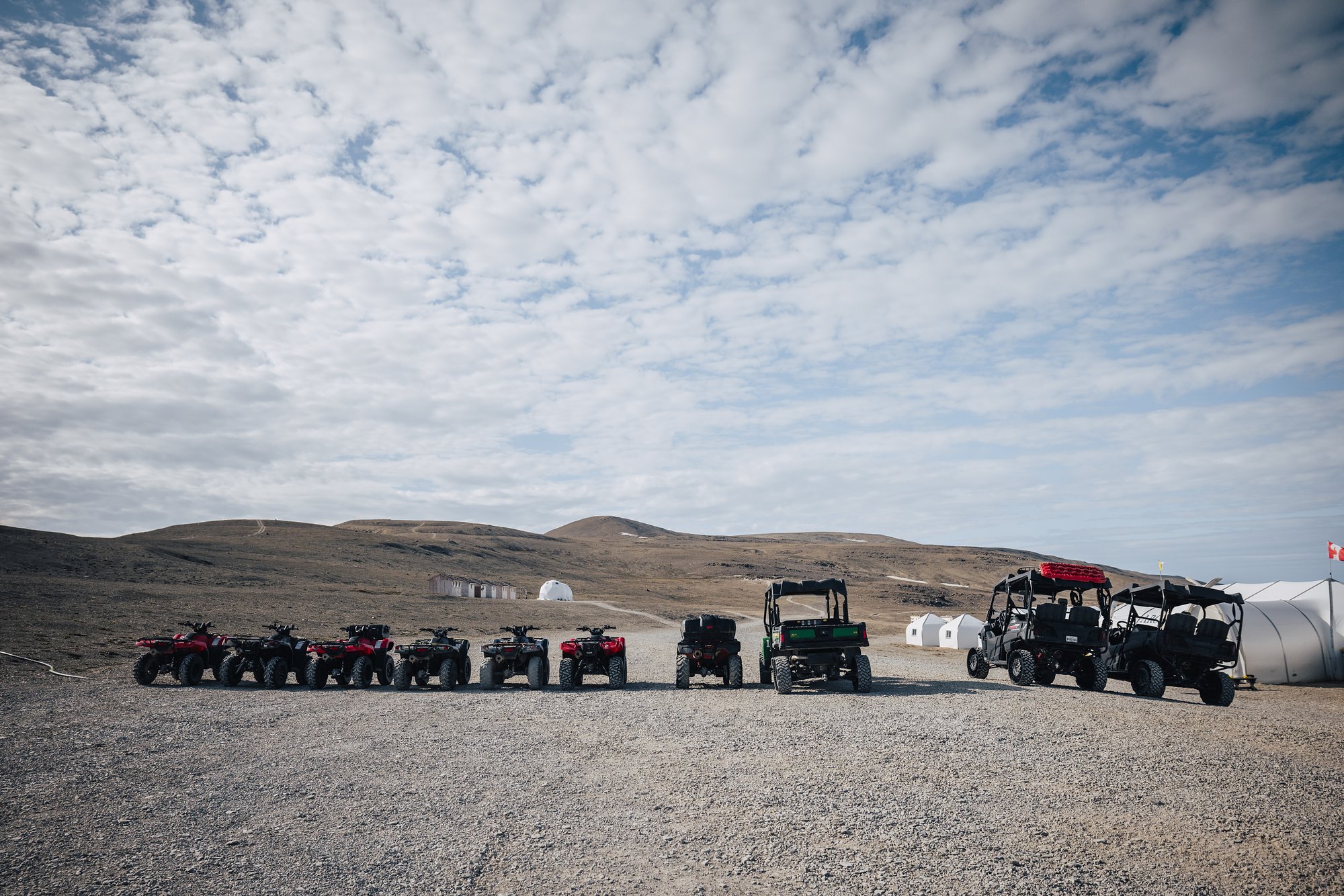
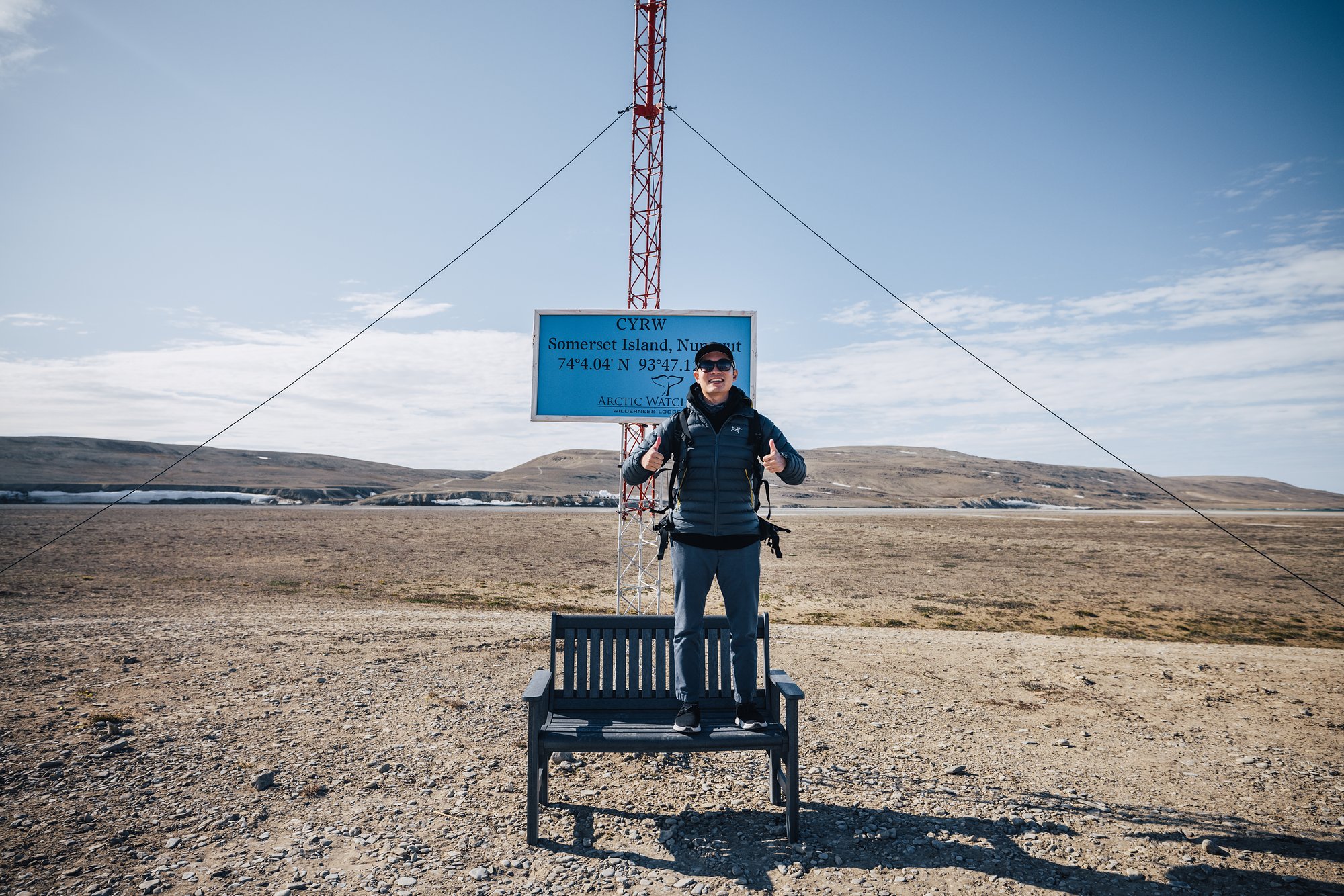
The plane set us down on a gravel strip in the middle of the tundra. A red-and-white windsock snapped overhead, and a small blue sign beneath it gave the coordinates: 74°4' north. There are no roads here and no villages, just the lodge, a line of ATVs and the long, bright light of an Arctic July. This far north the sun doesn't set in July, and it didn't once the whole week we were there.
The airstrip sign: CYRW, Somerset Island, Nunavut.
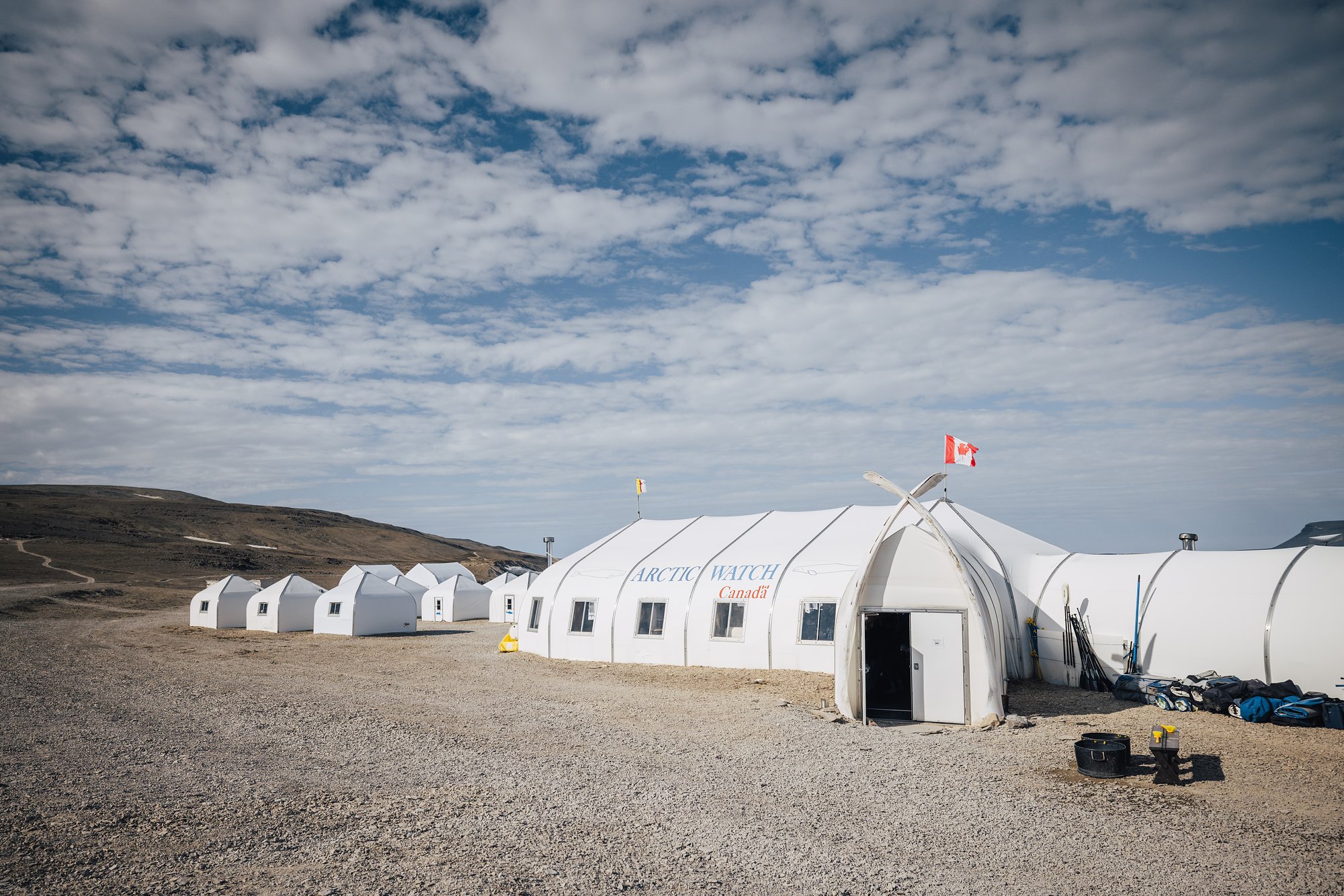
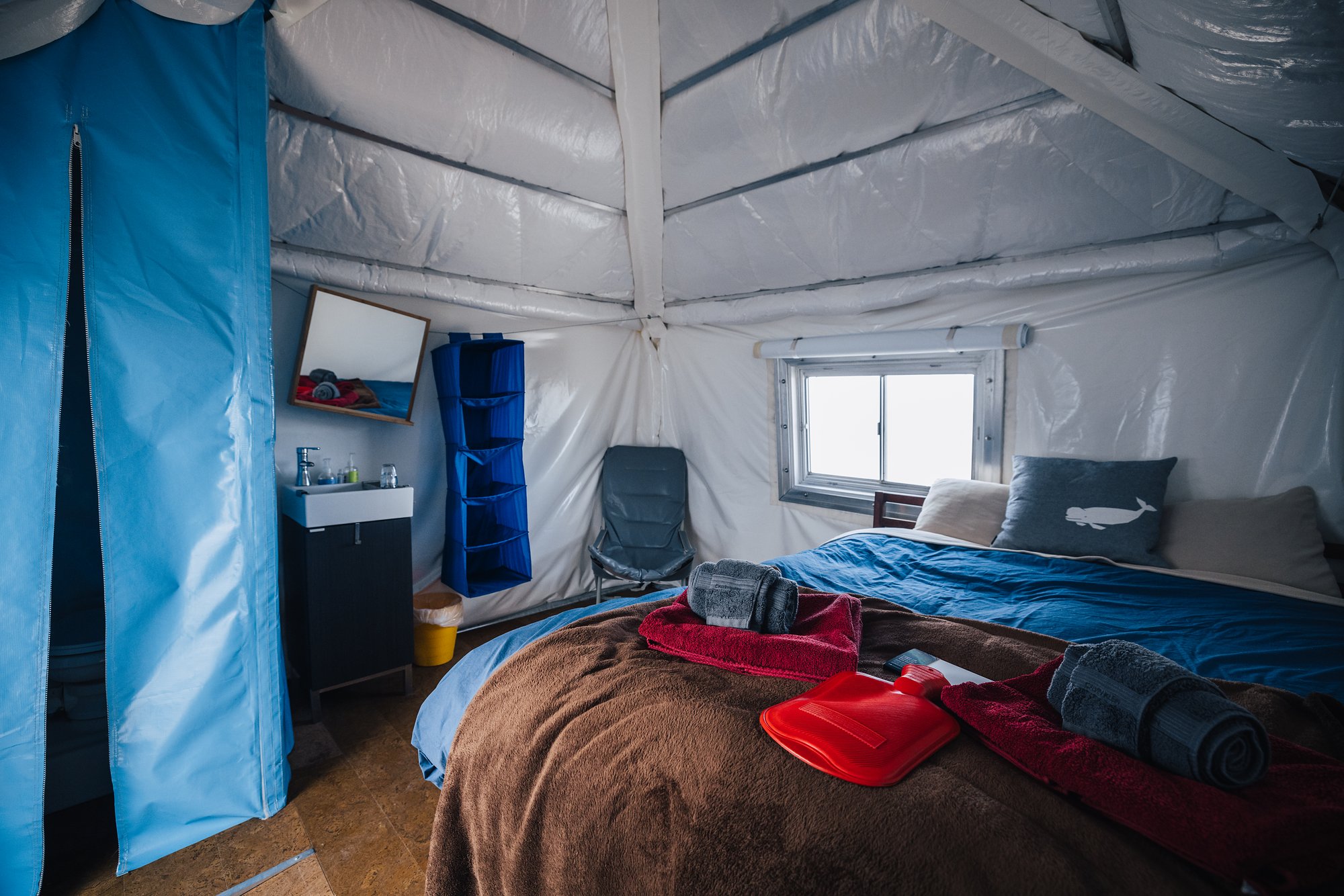
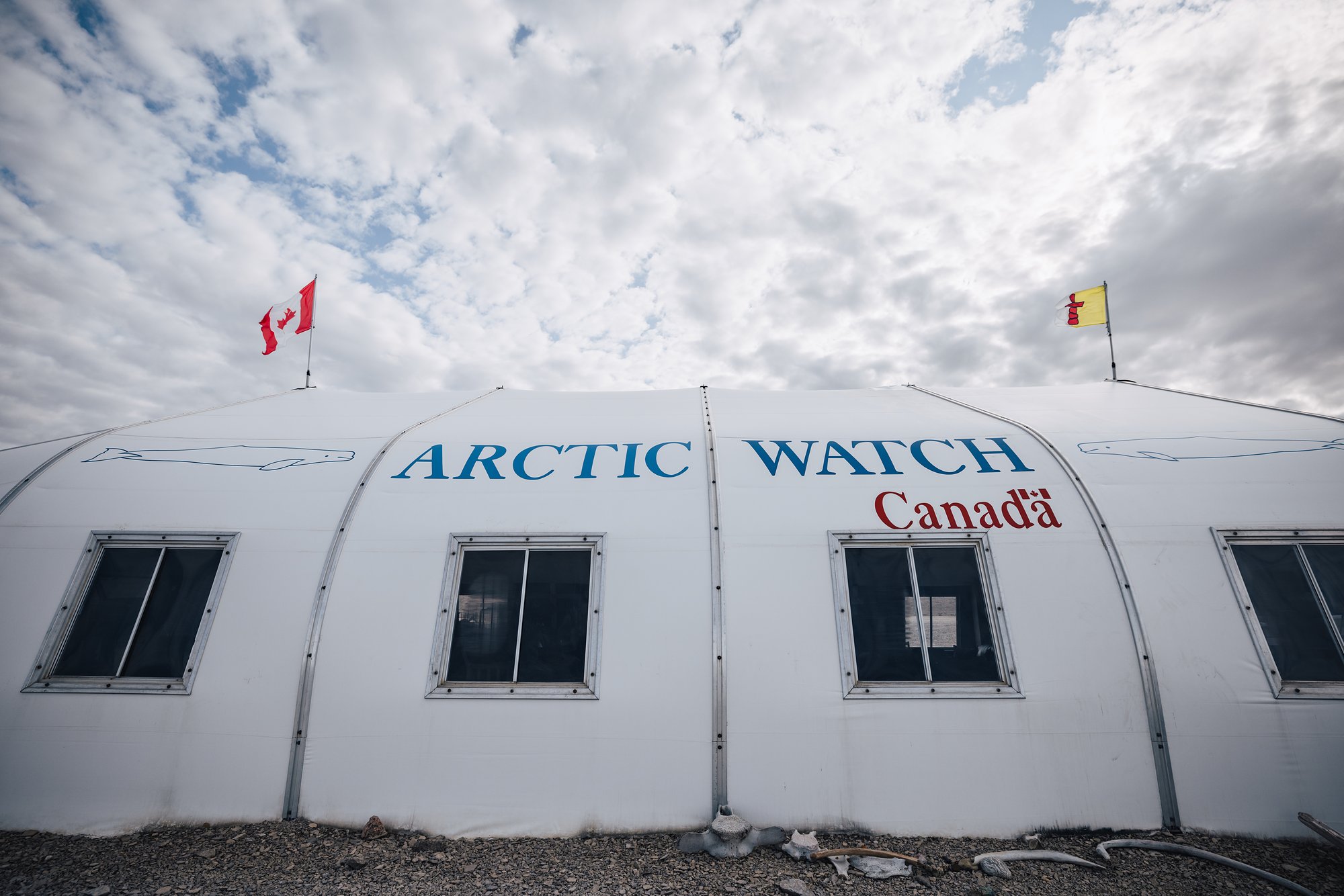
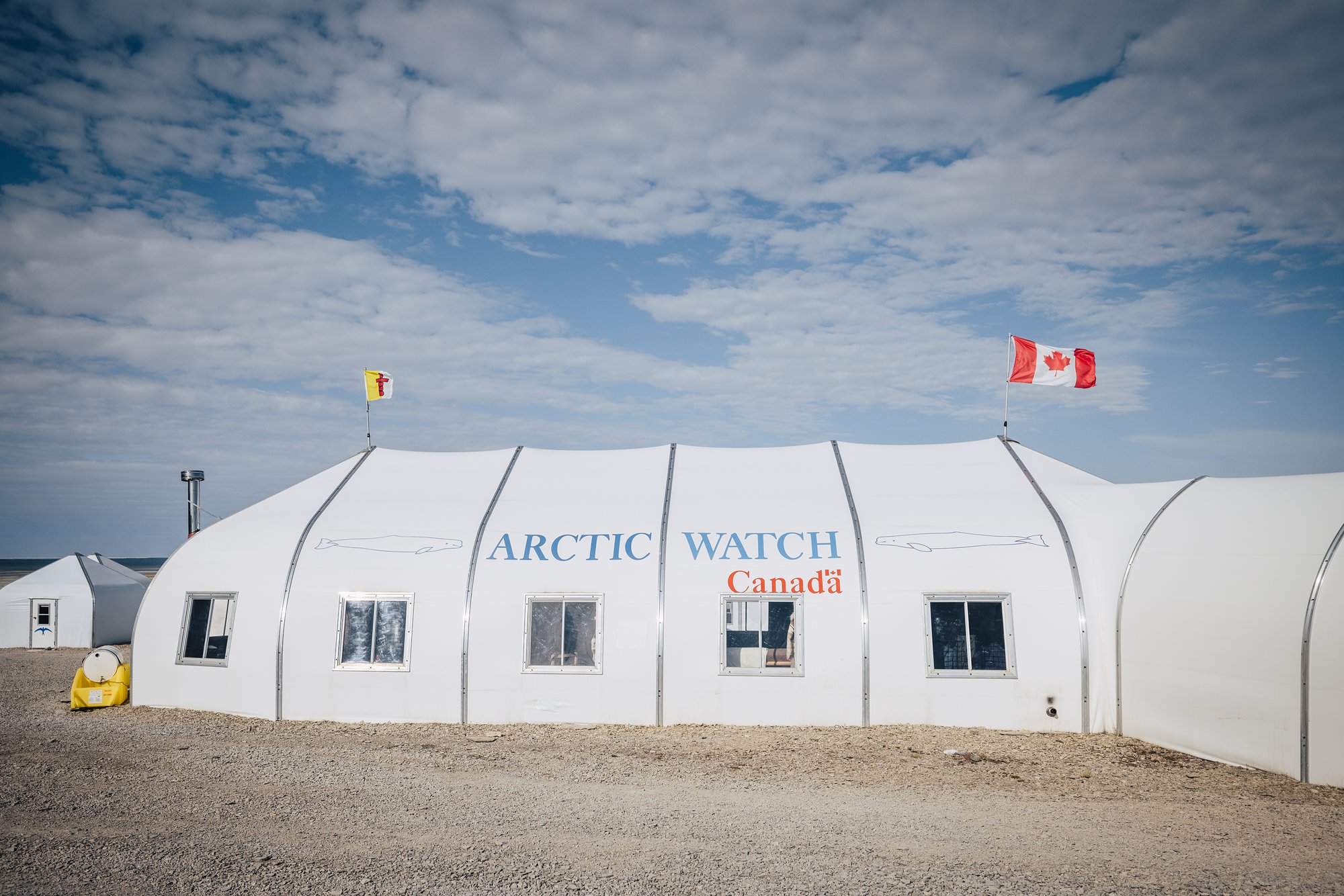
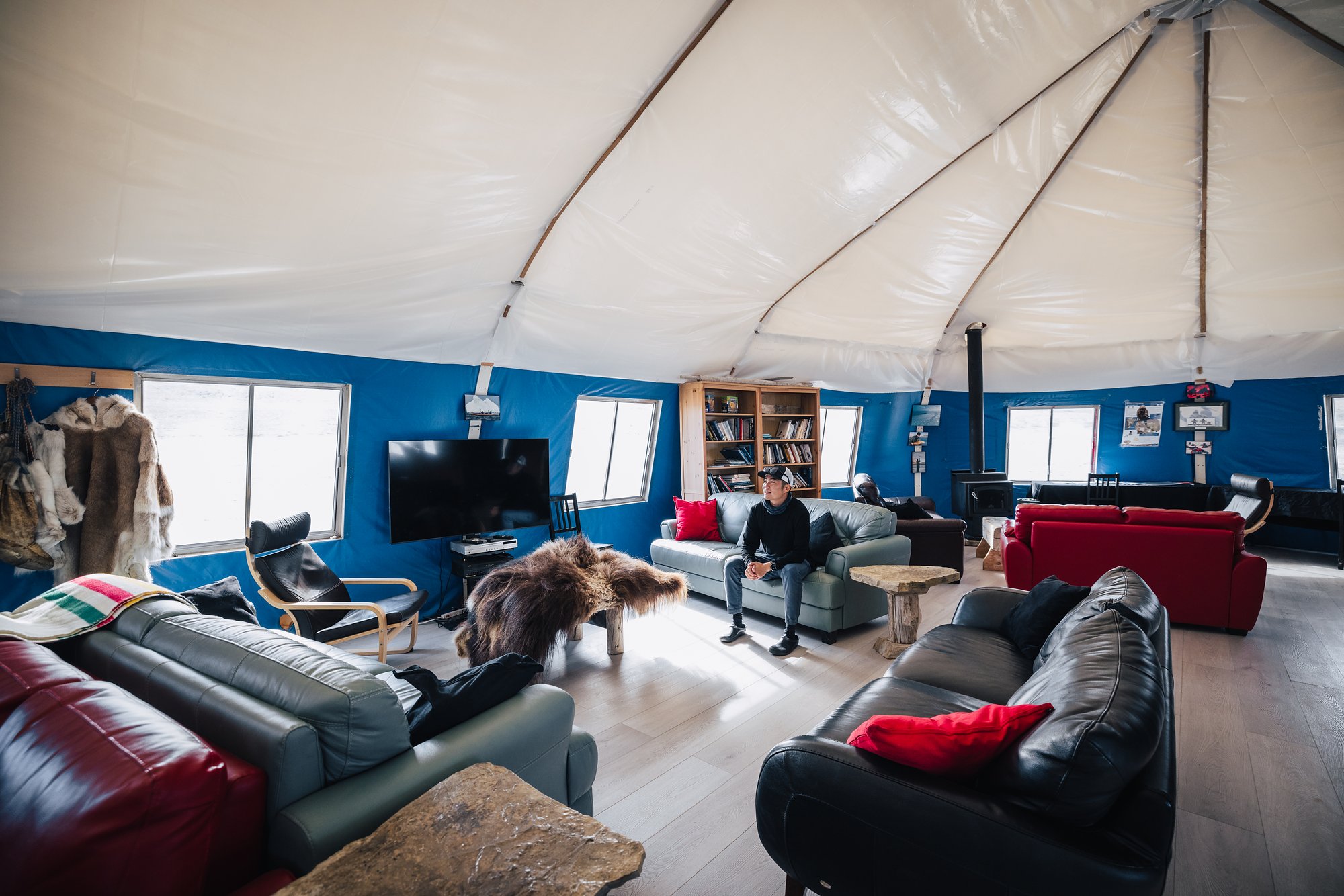
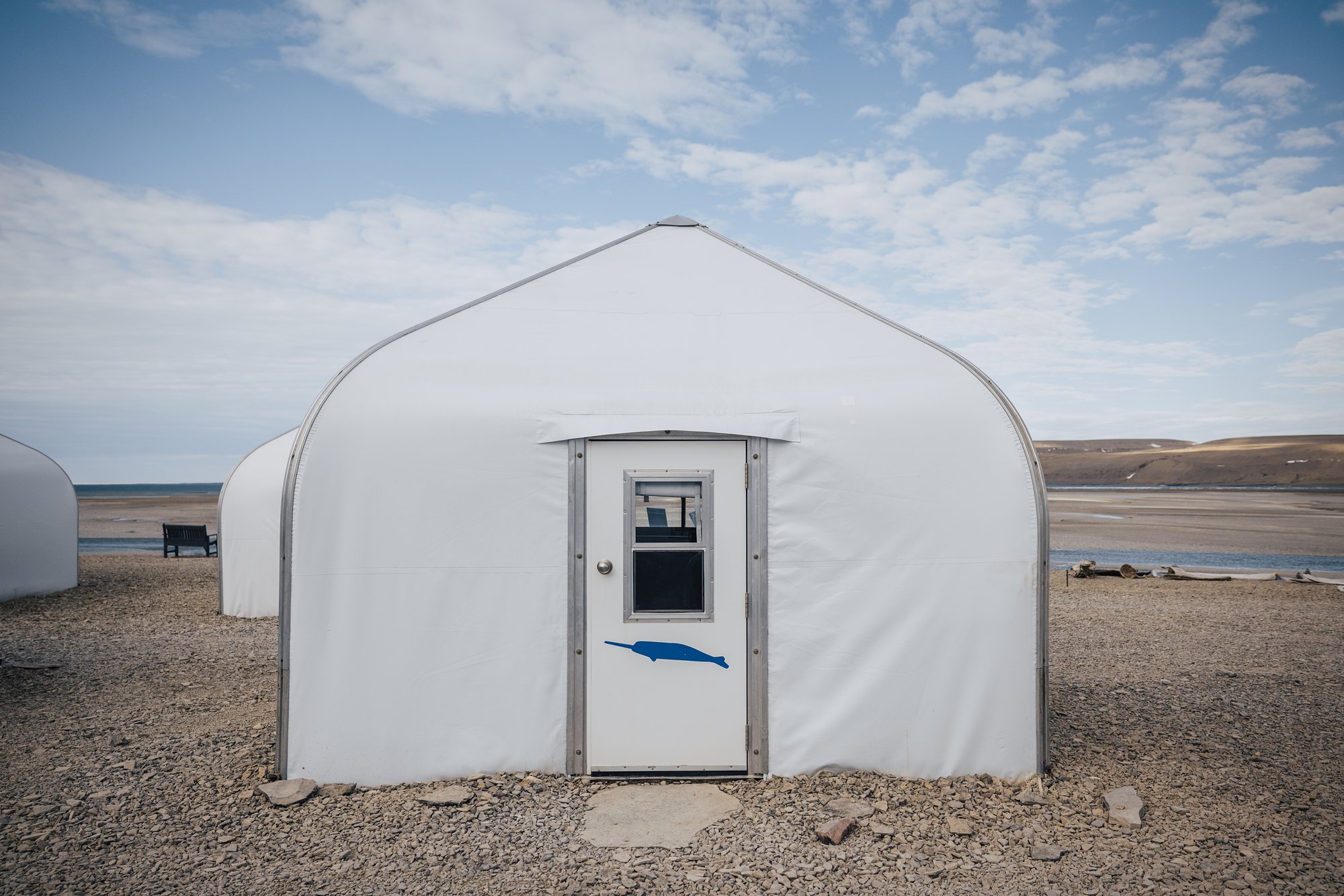
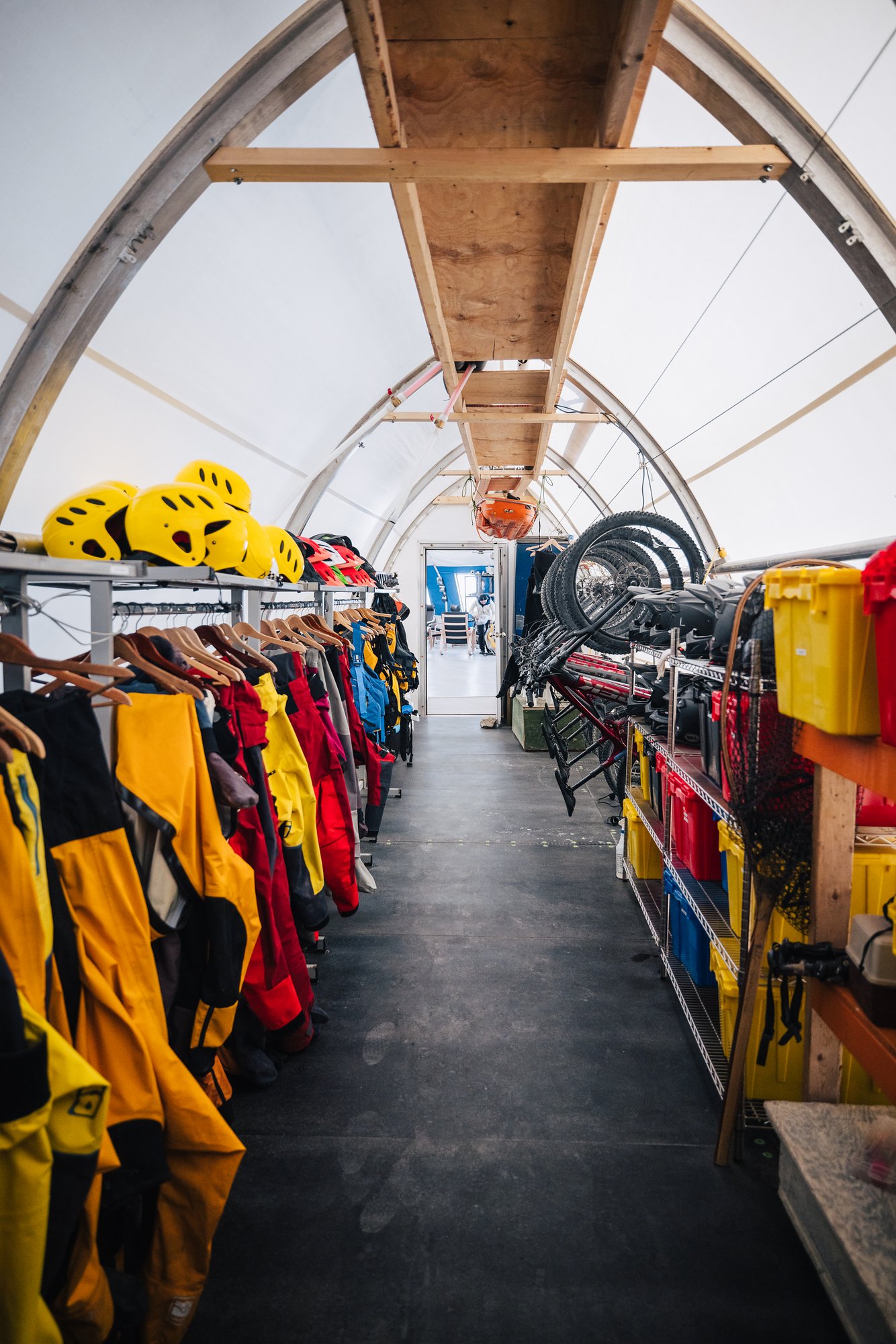
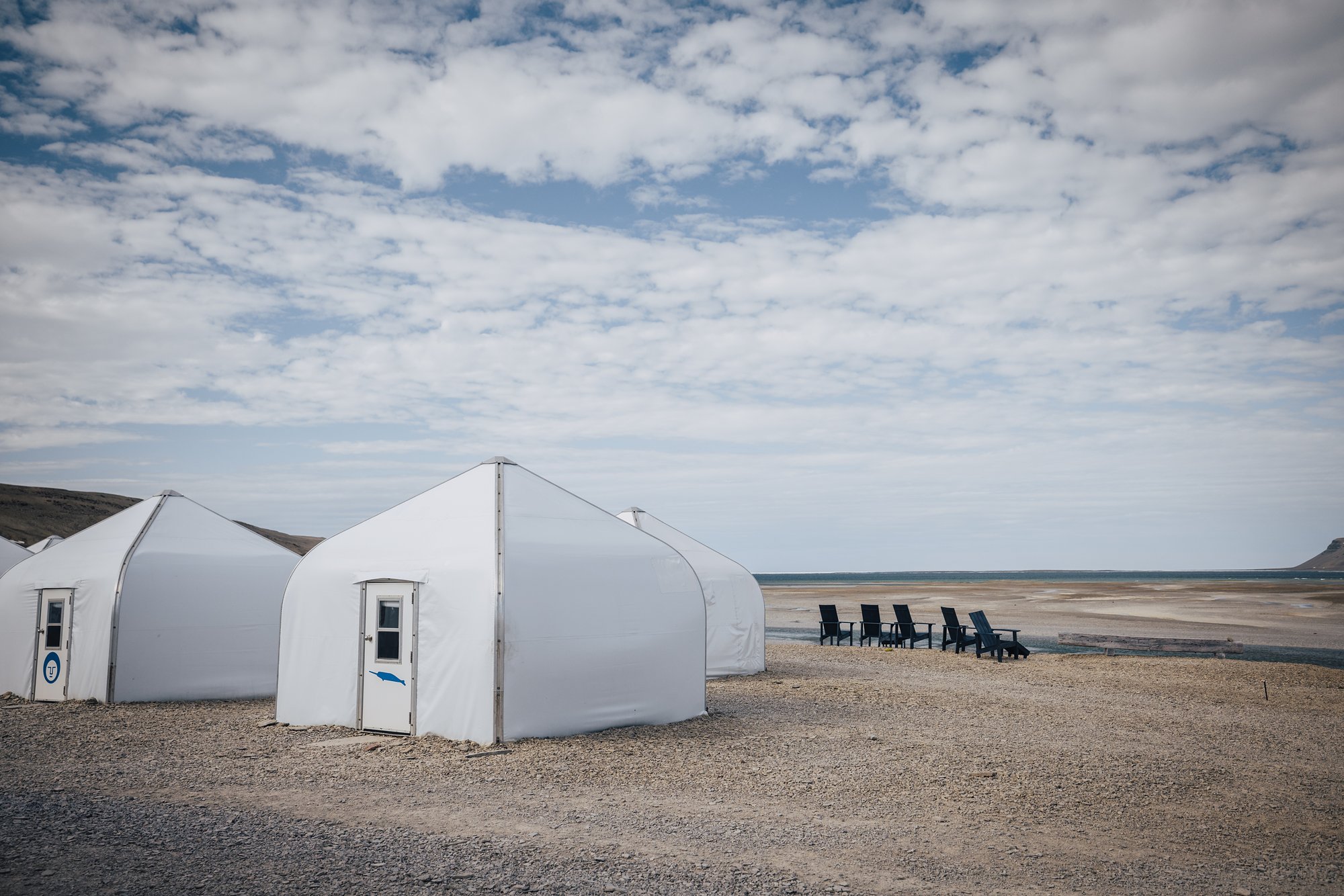
Arctic Watch is a small village of white tents on a bluff above the Cunningham River: sixteen guest cabins, a gear tent hung with drysuits, and a long main lodge you enter through an arch of whale bones. Our cabin had a proper bed, a sink and a red hot-water bottle waiting on the blanket. It felt less like camping than like a very good expedition base, which is exactly what it is.
The main lodge, entered through an arch of whale bones. Our cabin, hot-water bottle included.
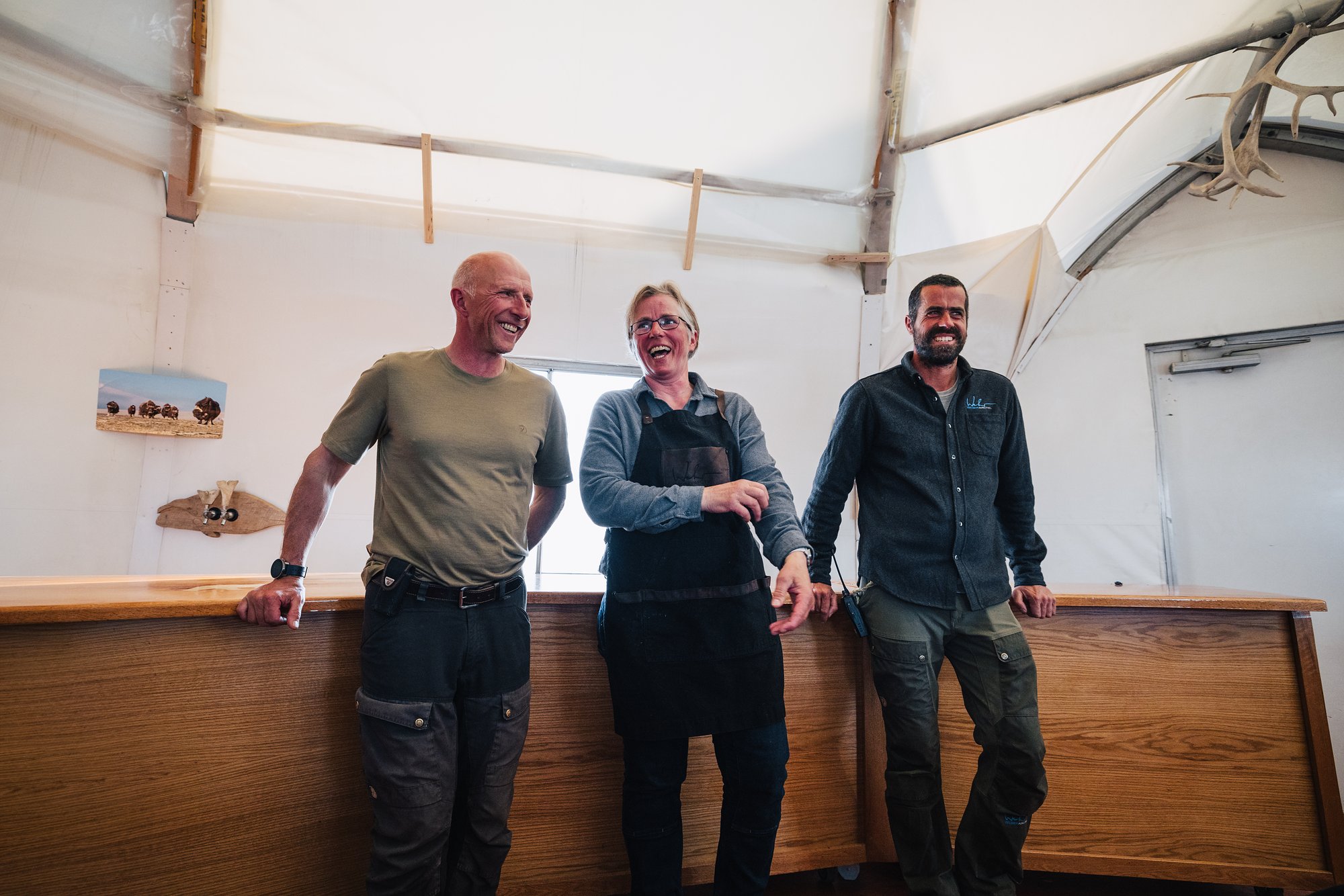
The lodge belongs to the Webers: Richard, Josée and their sons Tessum and Nansen, a family who have spent decades exploring the polar regions. Between them they have led some of the first successful expeditions to the North Pole and set speed records at both poles, and they have skied, kayaked and hiked across Canada's far north. It shows in everything from the guiding to the gear. We were in very good hands.
Evening outside the lodge. In late July the light just circles the sky.
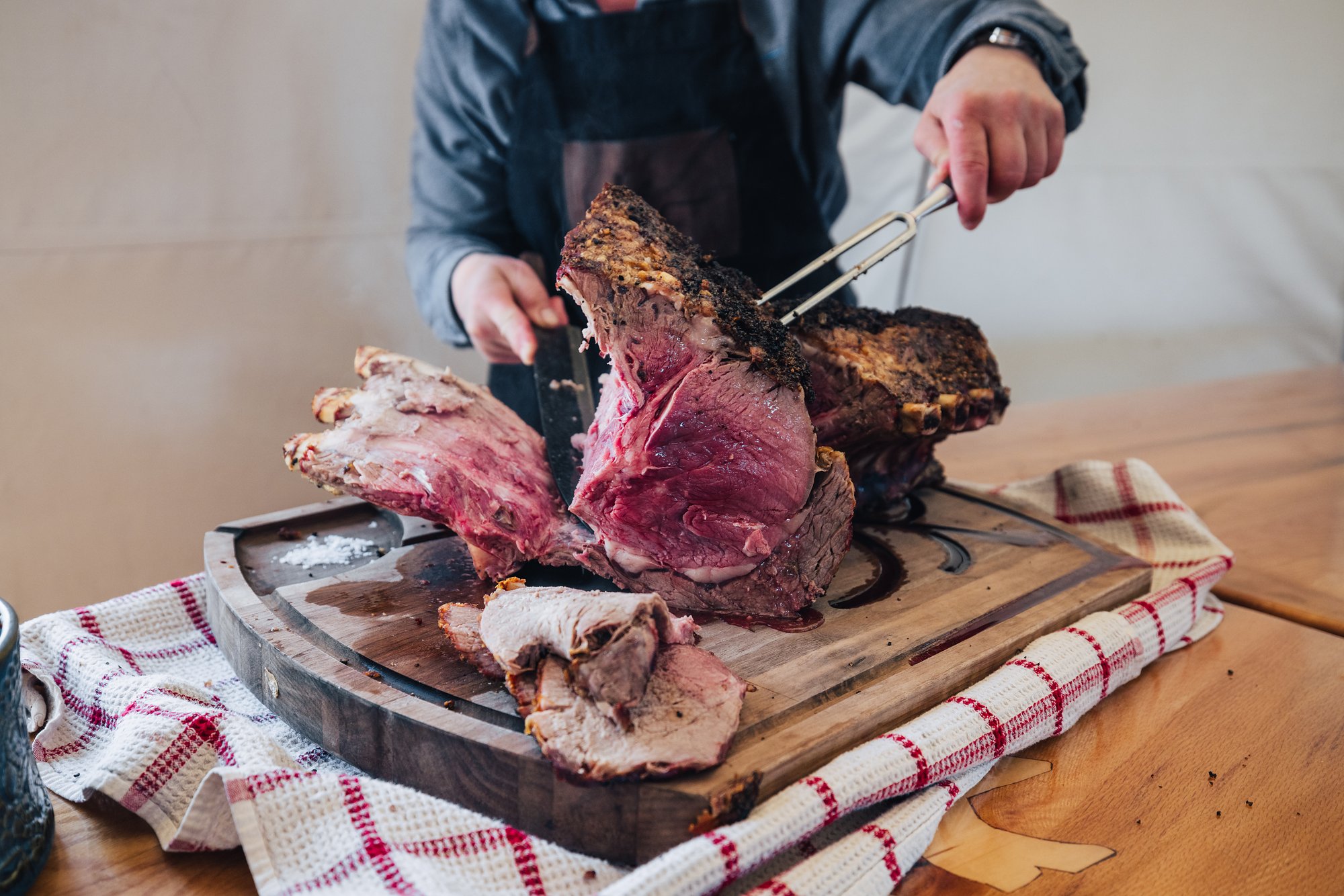
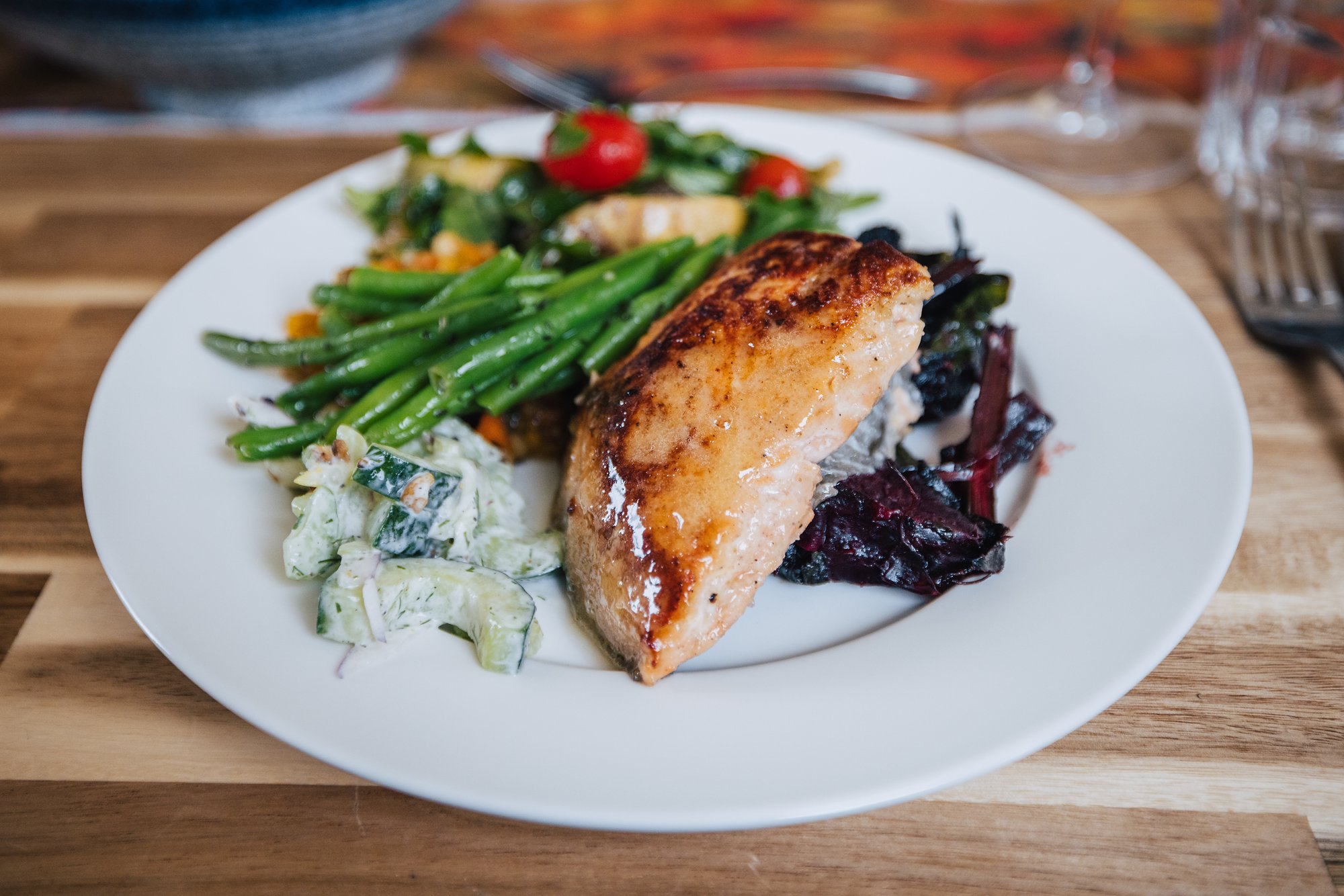
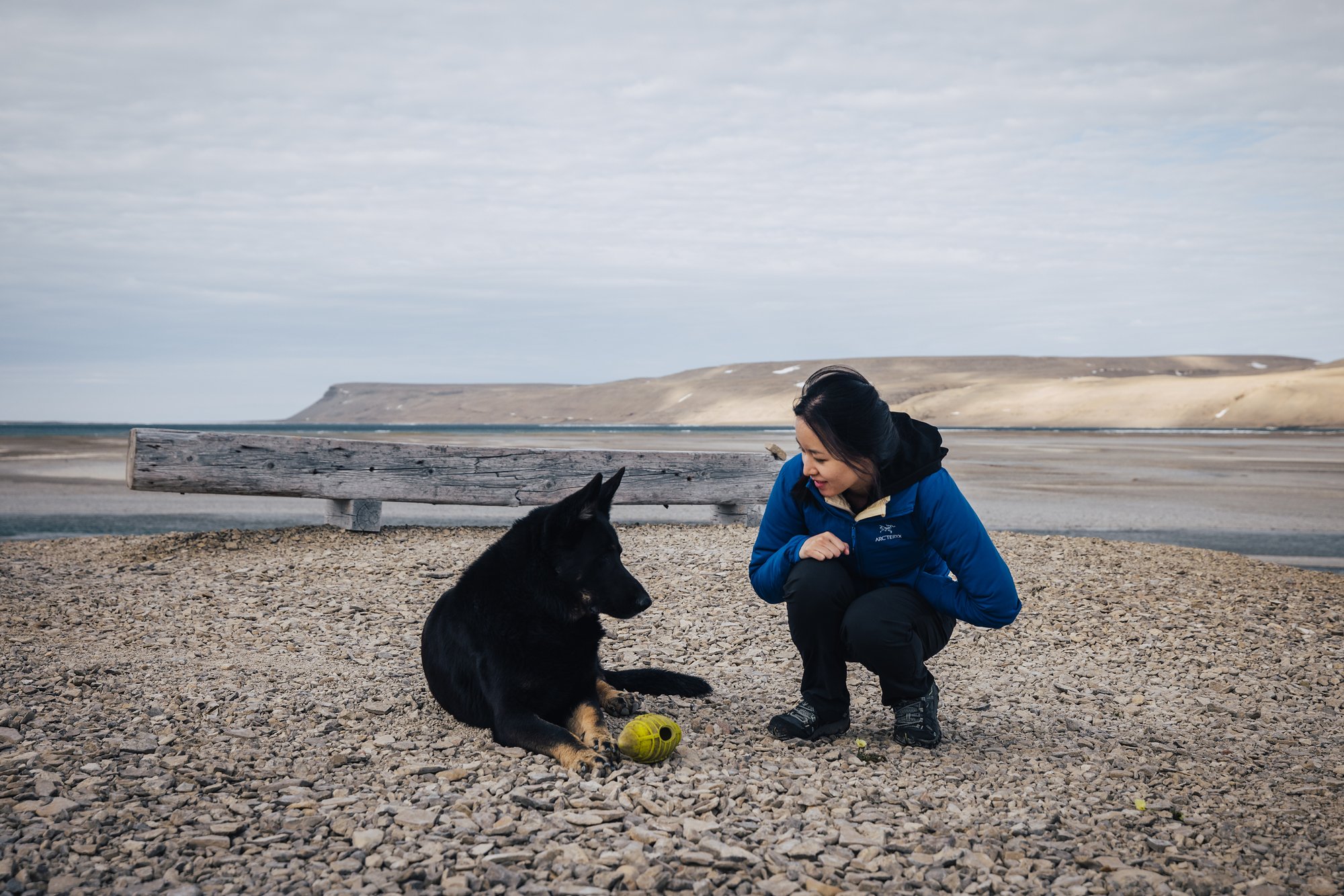
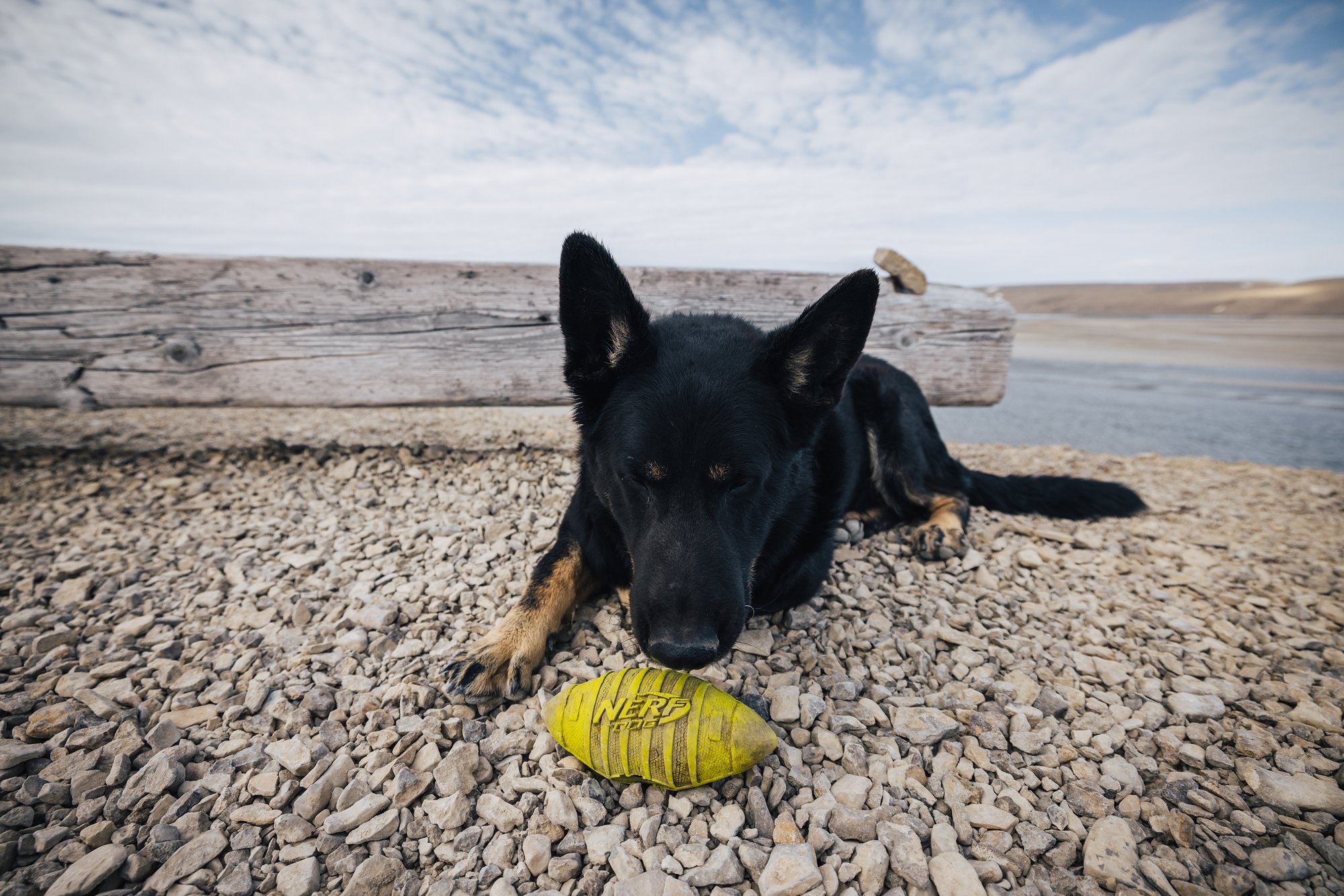
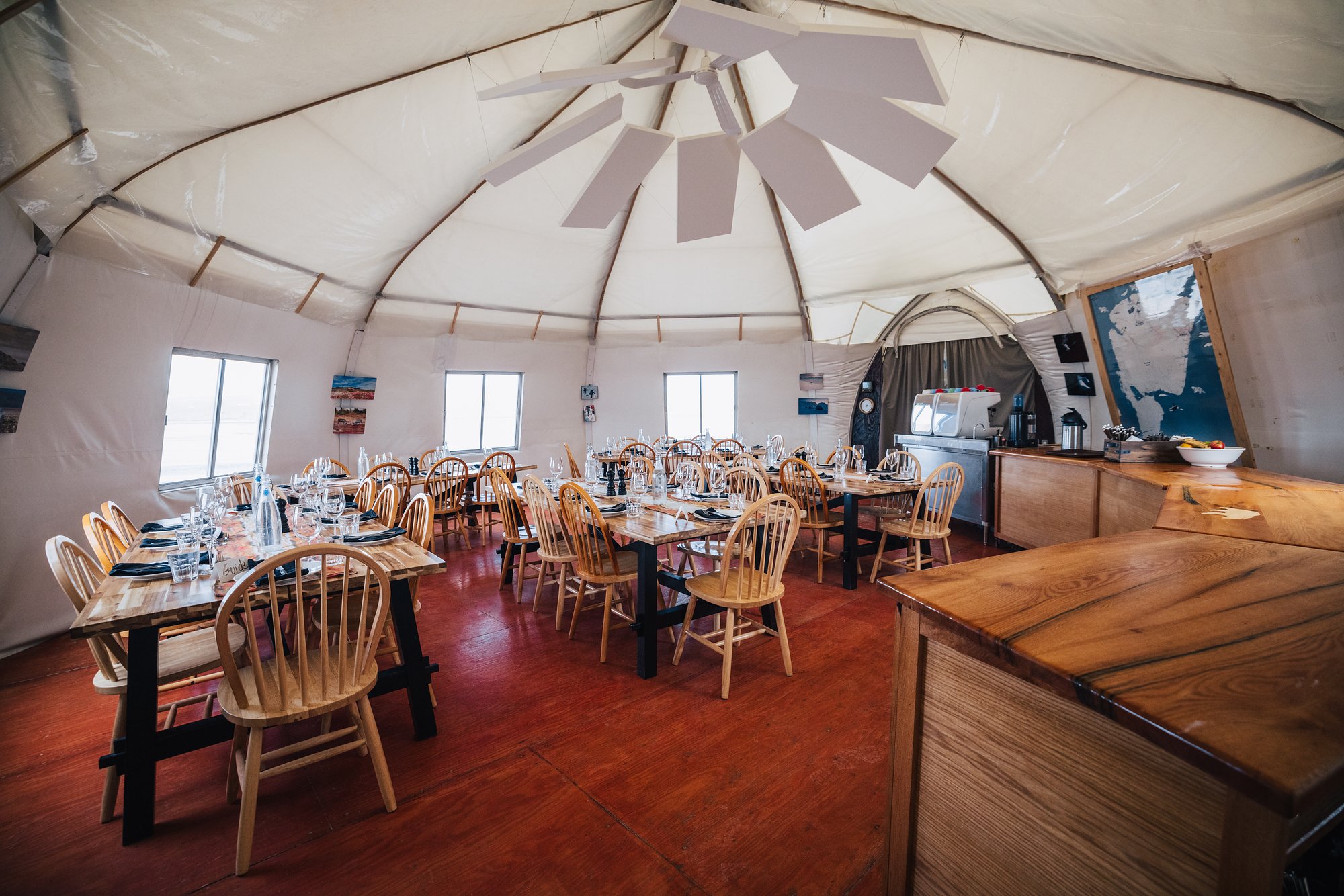
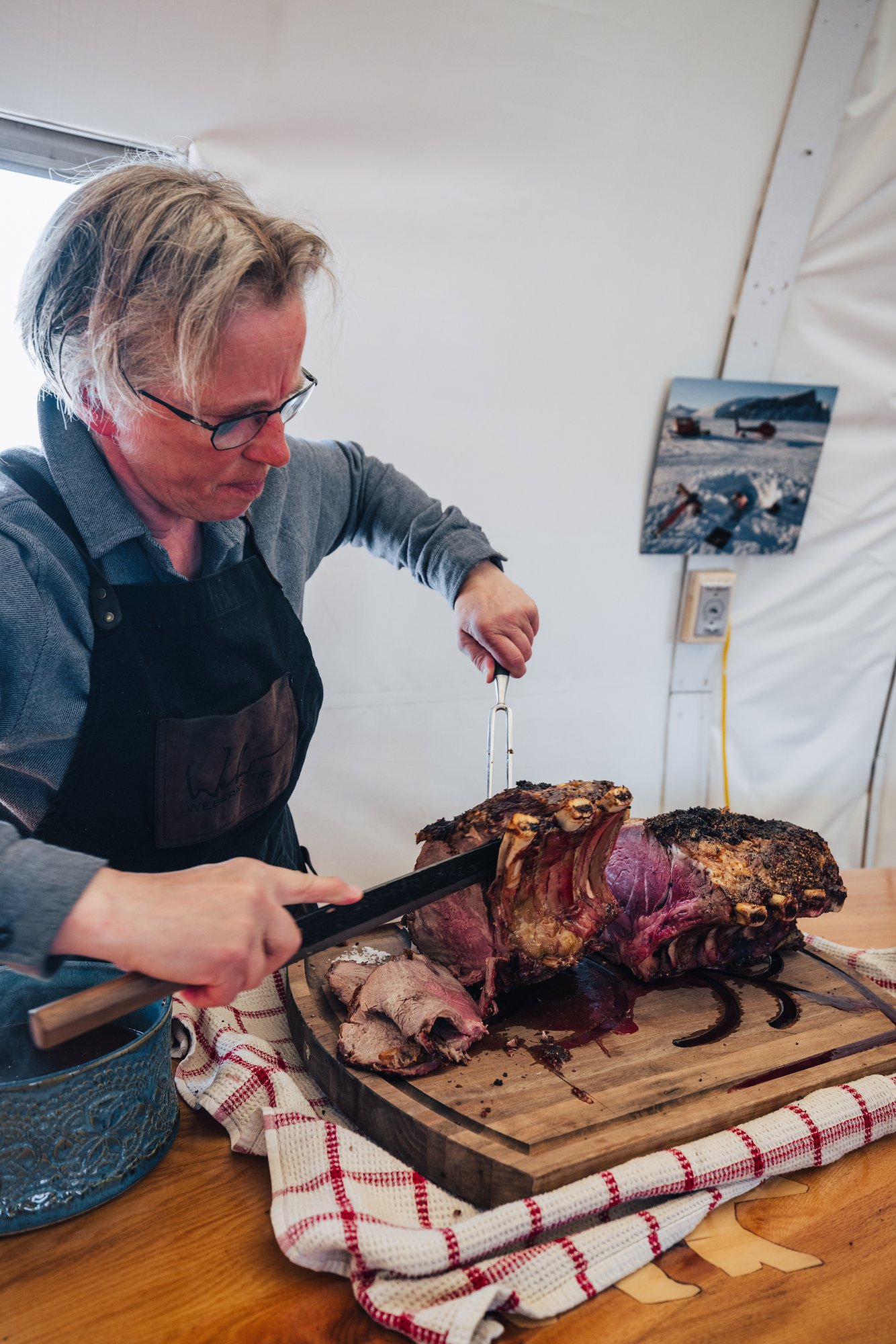
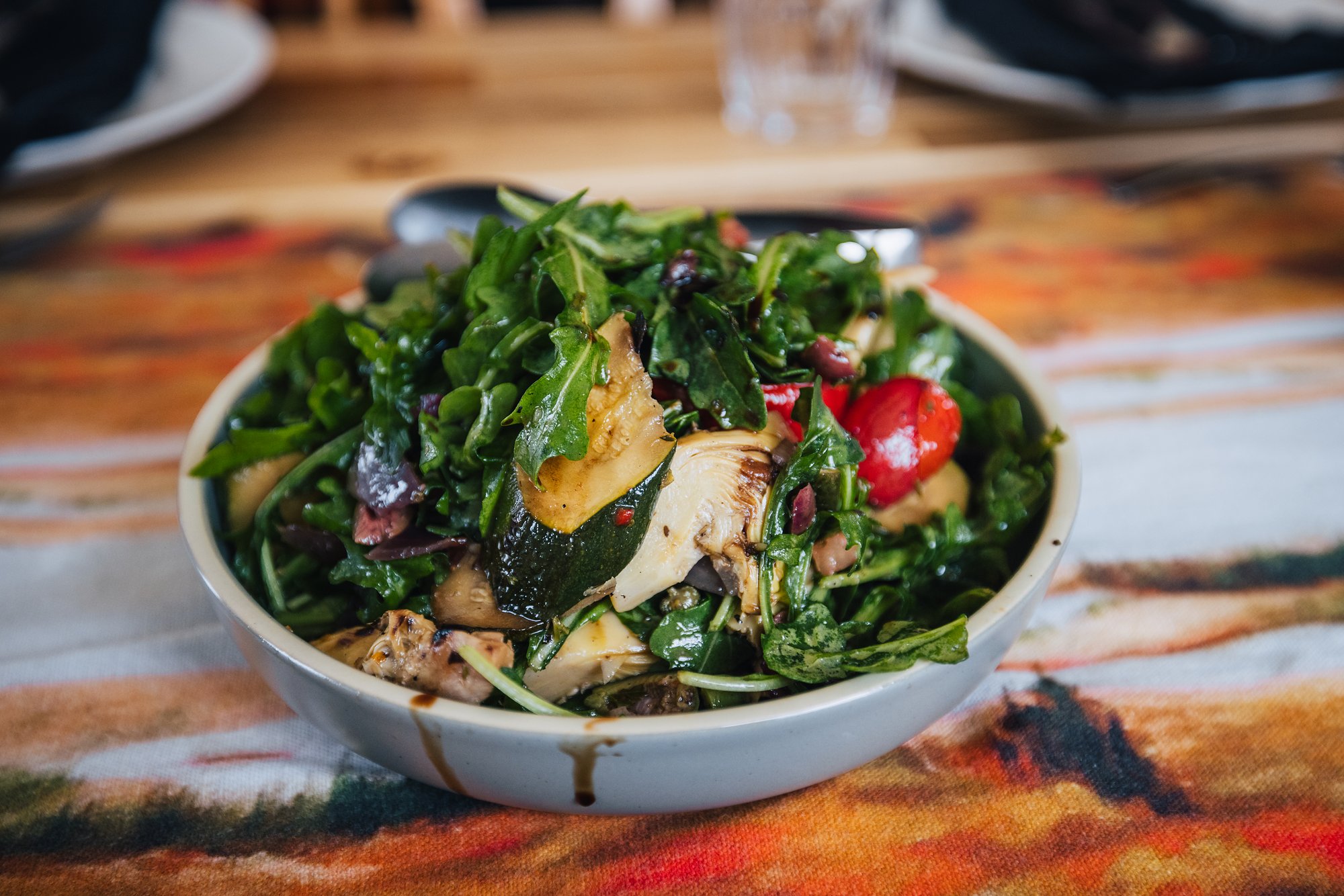
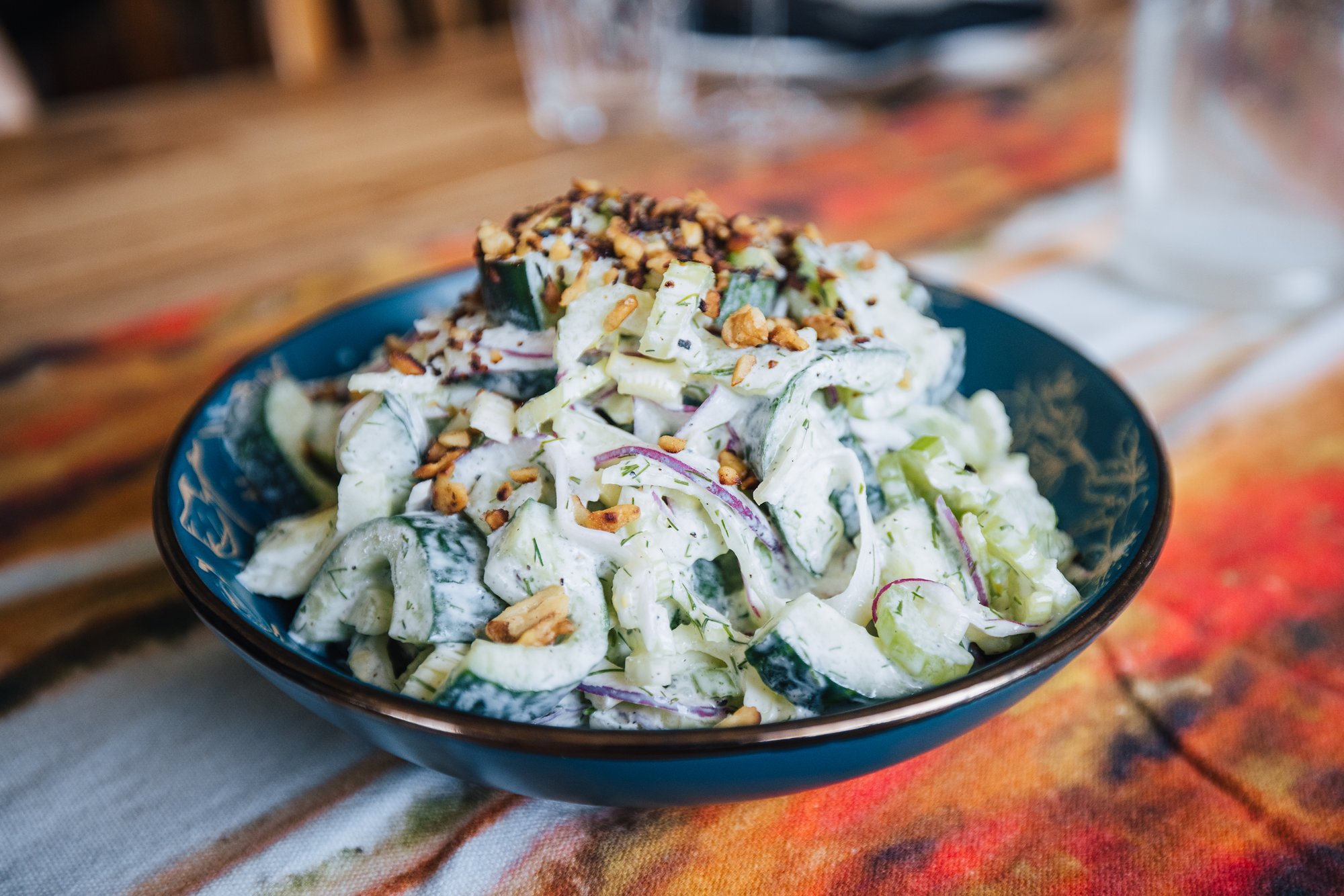
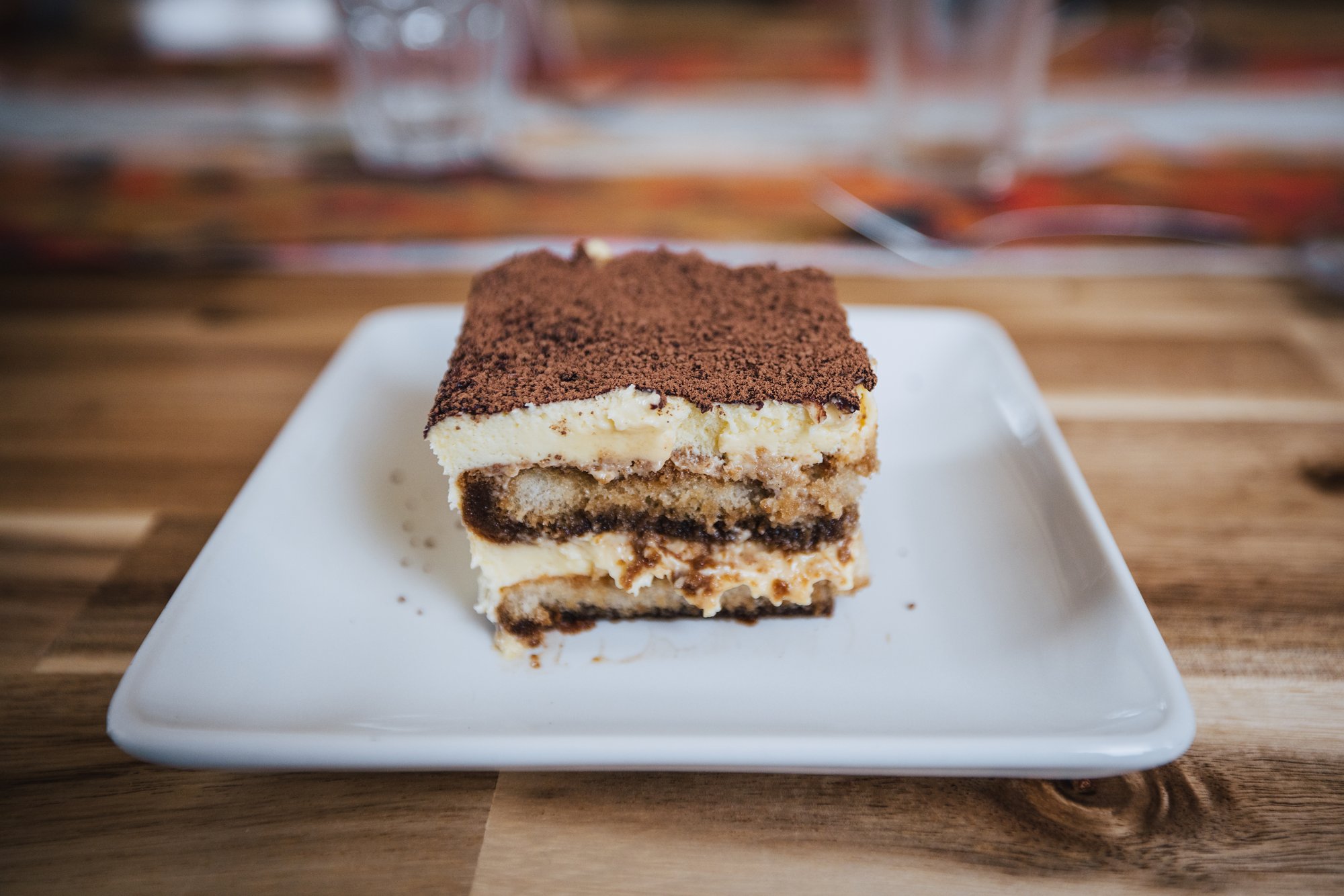
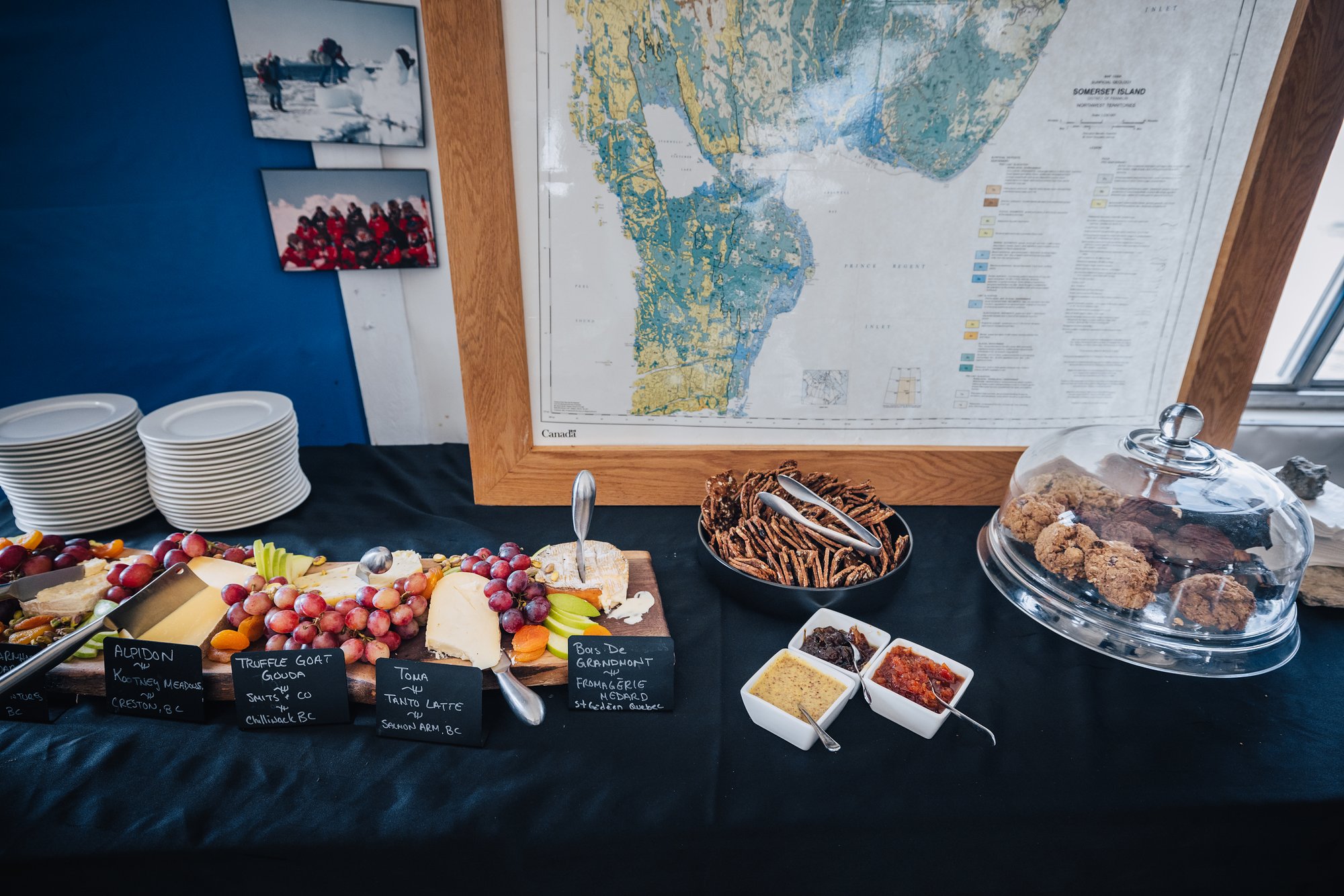
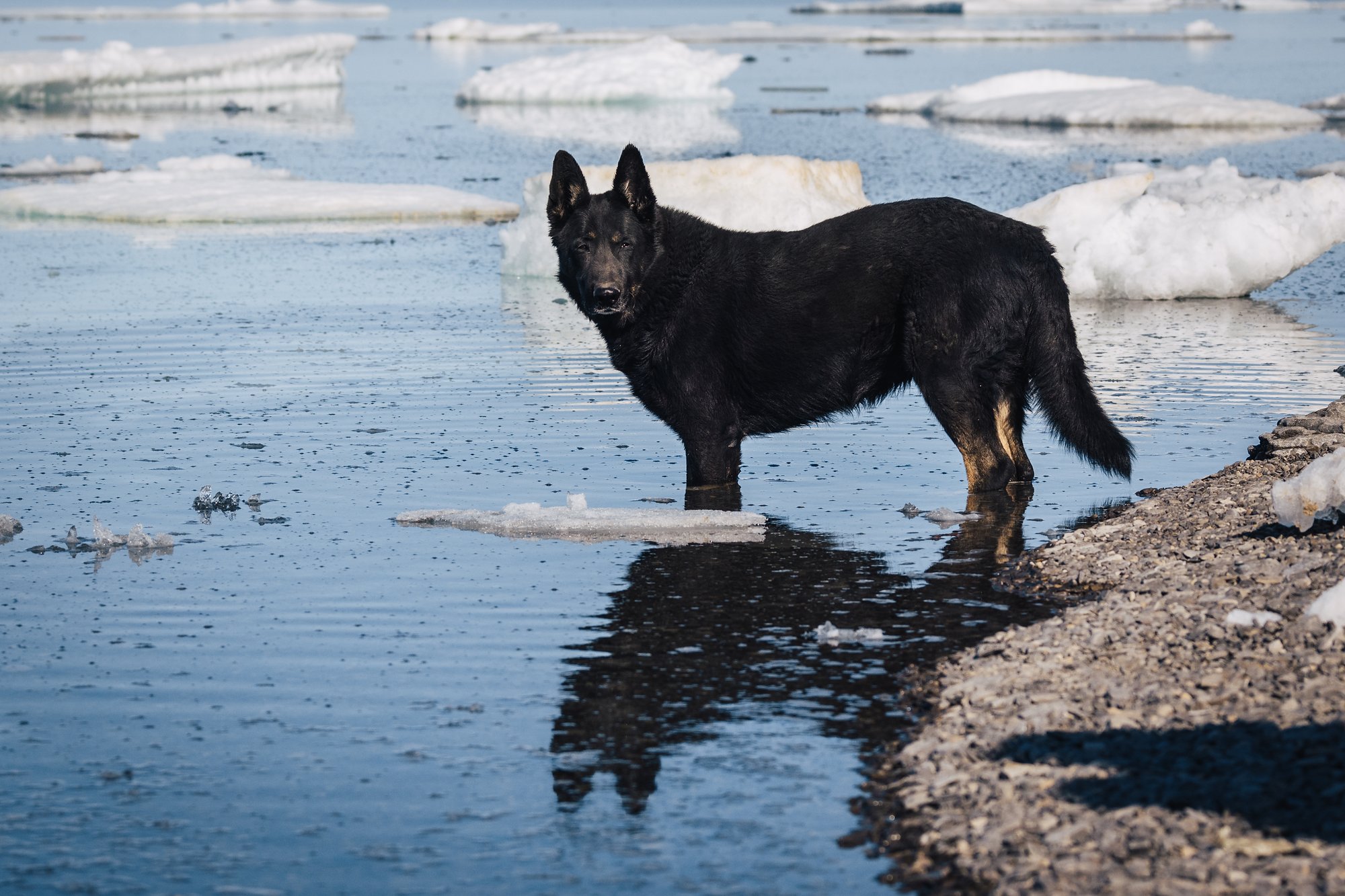
Then there was the food. The kitchen turns out gourmet dinners from ingredients gathered across Canada, including Arctic char caught locally, and after a day on the land nothing beat a roast carved in the dining tent or a square of tiramisu to finish. Between meals there was a cheese board, a well-stocked bar and a black camp dog with a well-chewed football, always looking for someone to throw it.
Dinner in the dining tent. Seared fish, green beans and cucumber salad.
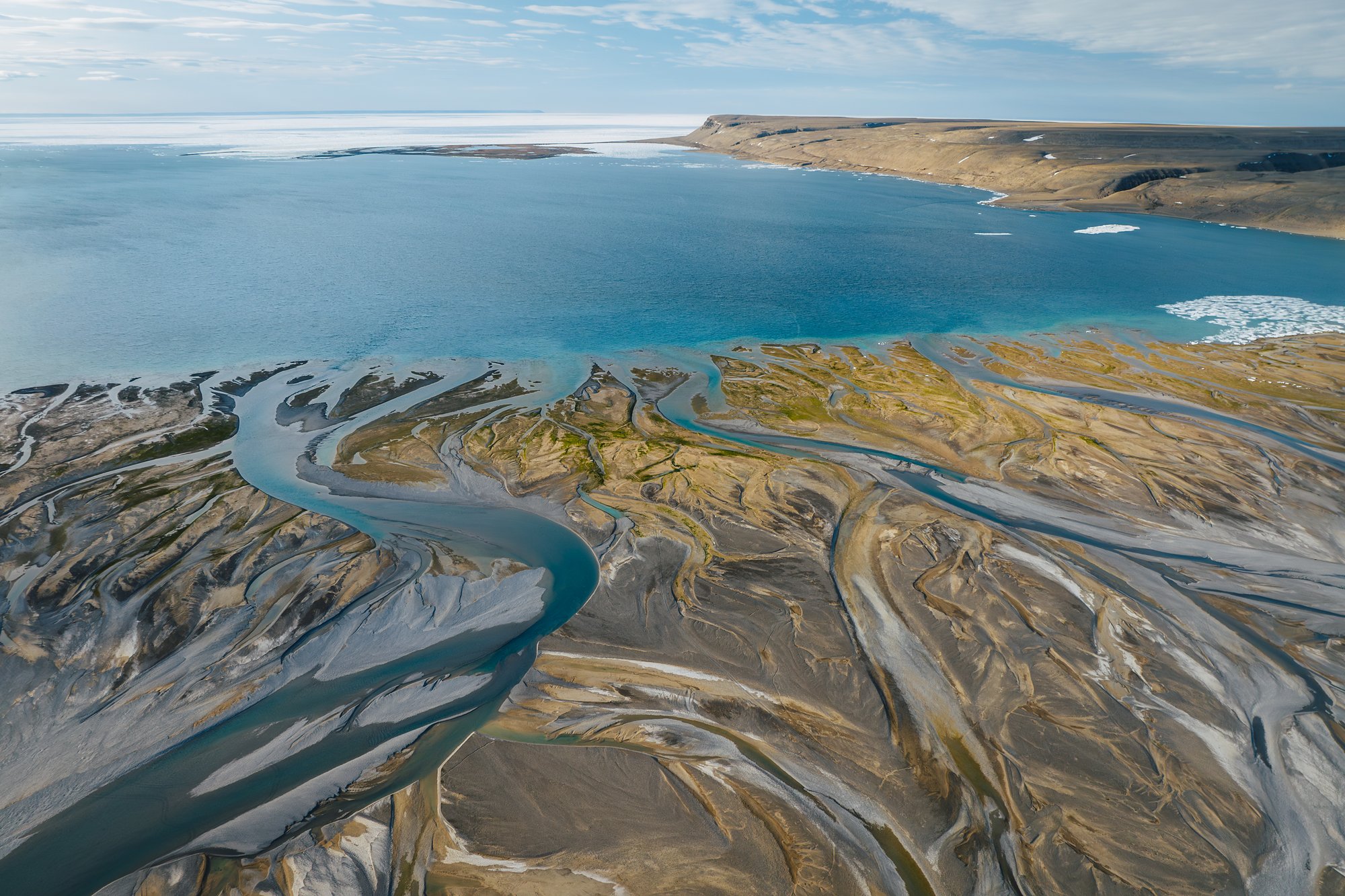
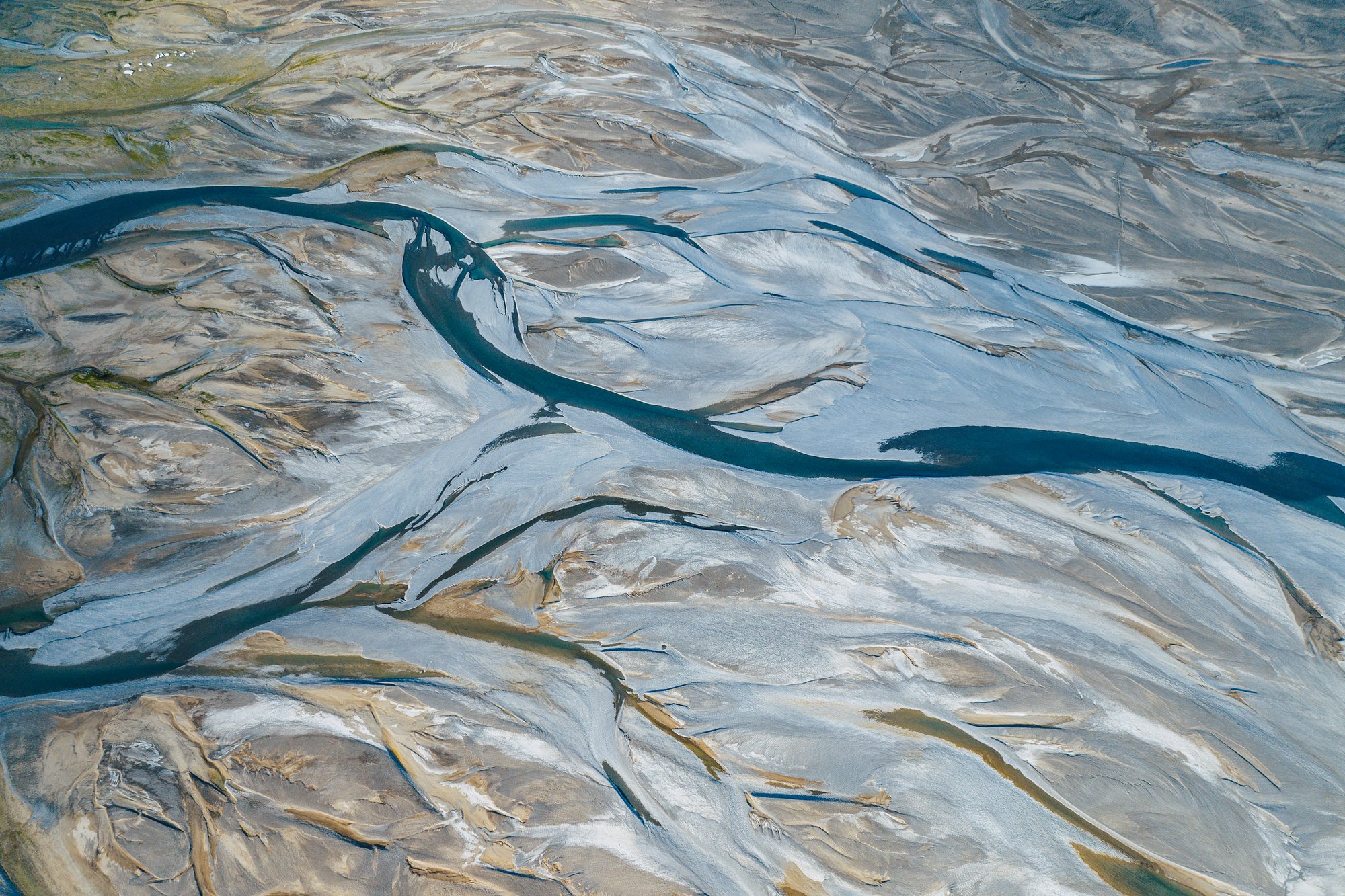
Downstream from the lodge, the river's braided channels spread across a delta and spill into Cunningham Inlet, the belugas' summer home. From the drone on our first evening the delta looked like marbled stone, and the sea beyond it was still white with ice.
Where the Cunningham River meets the sea. The white band on the horizon is sea ice.
Part 02
Three Waterfalls Canyon
July 22, 2023 · Three Waterfalls Canyon, near the lodge
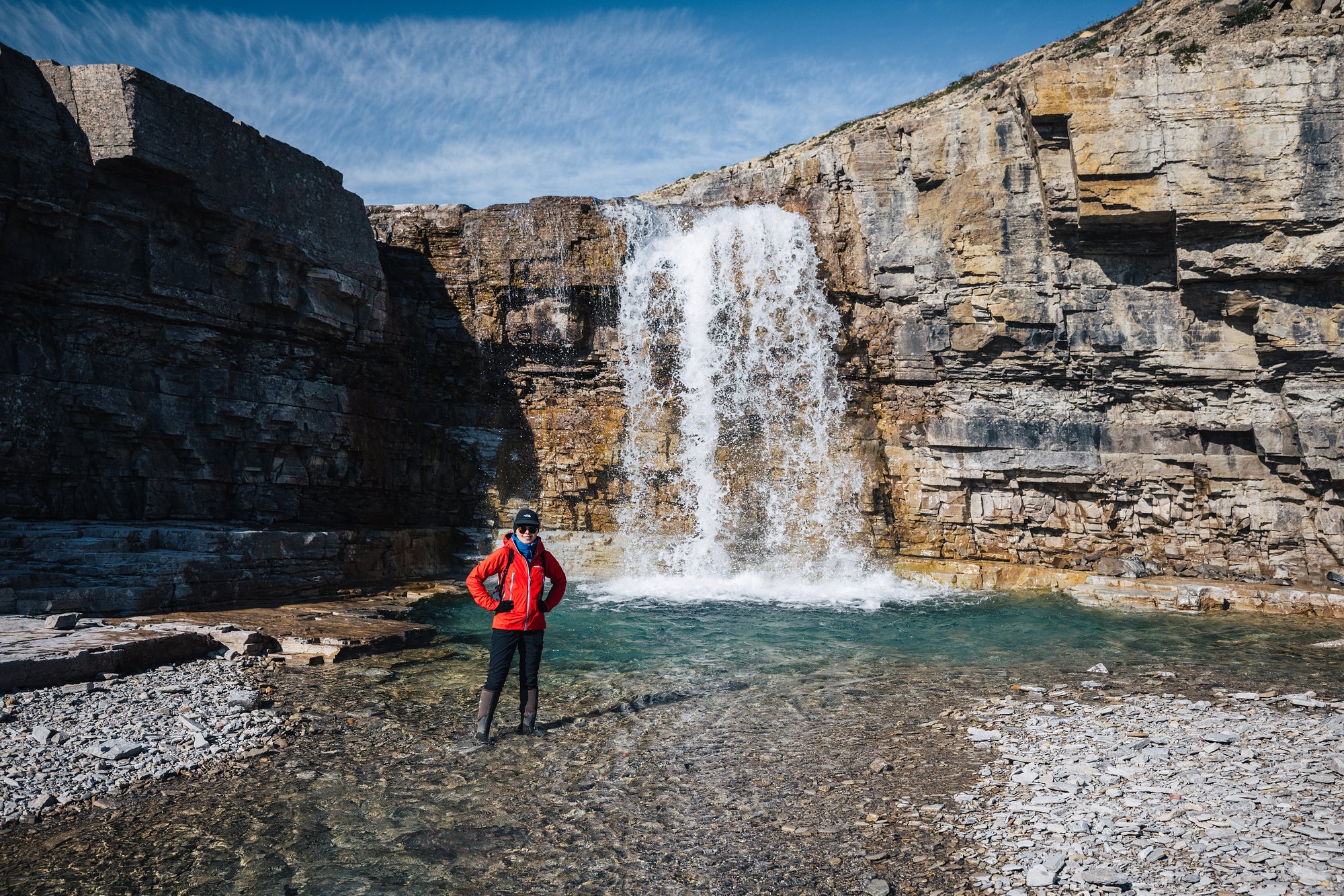
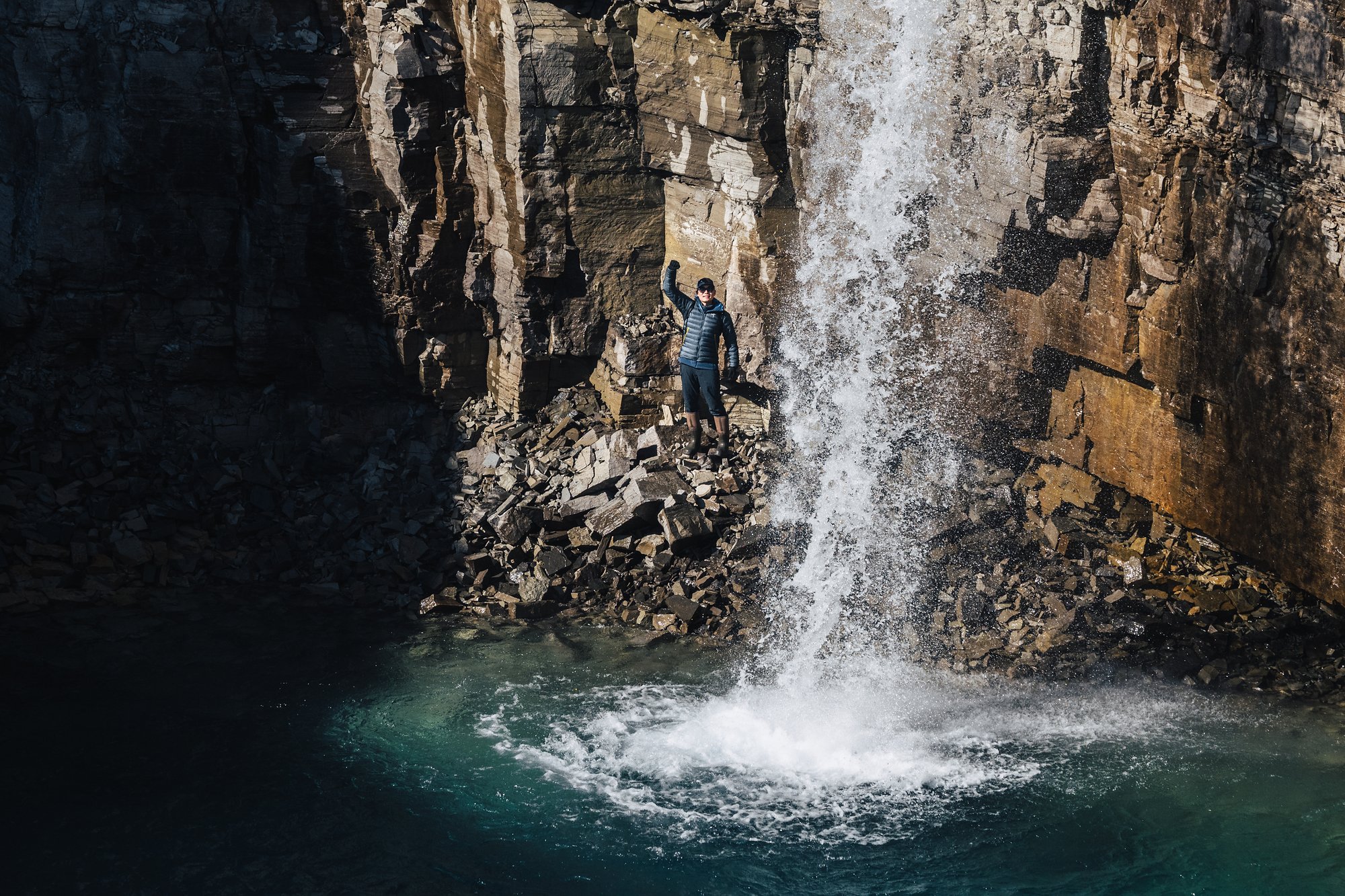
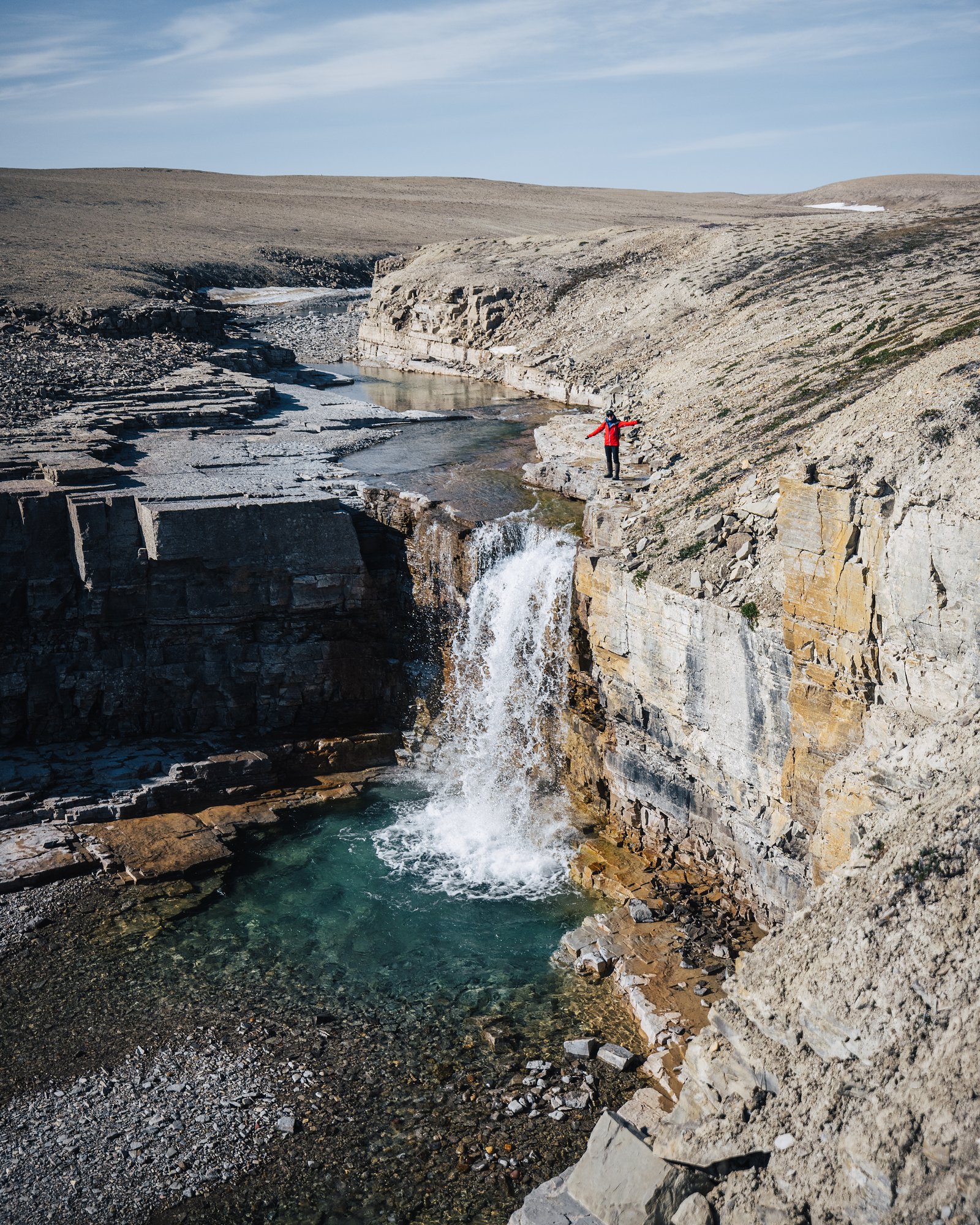
Grace at the foot of one of the three falls.
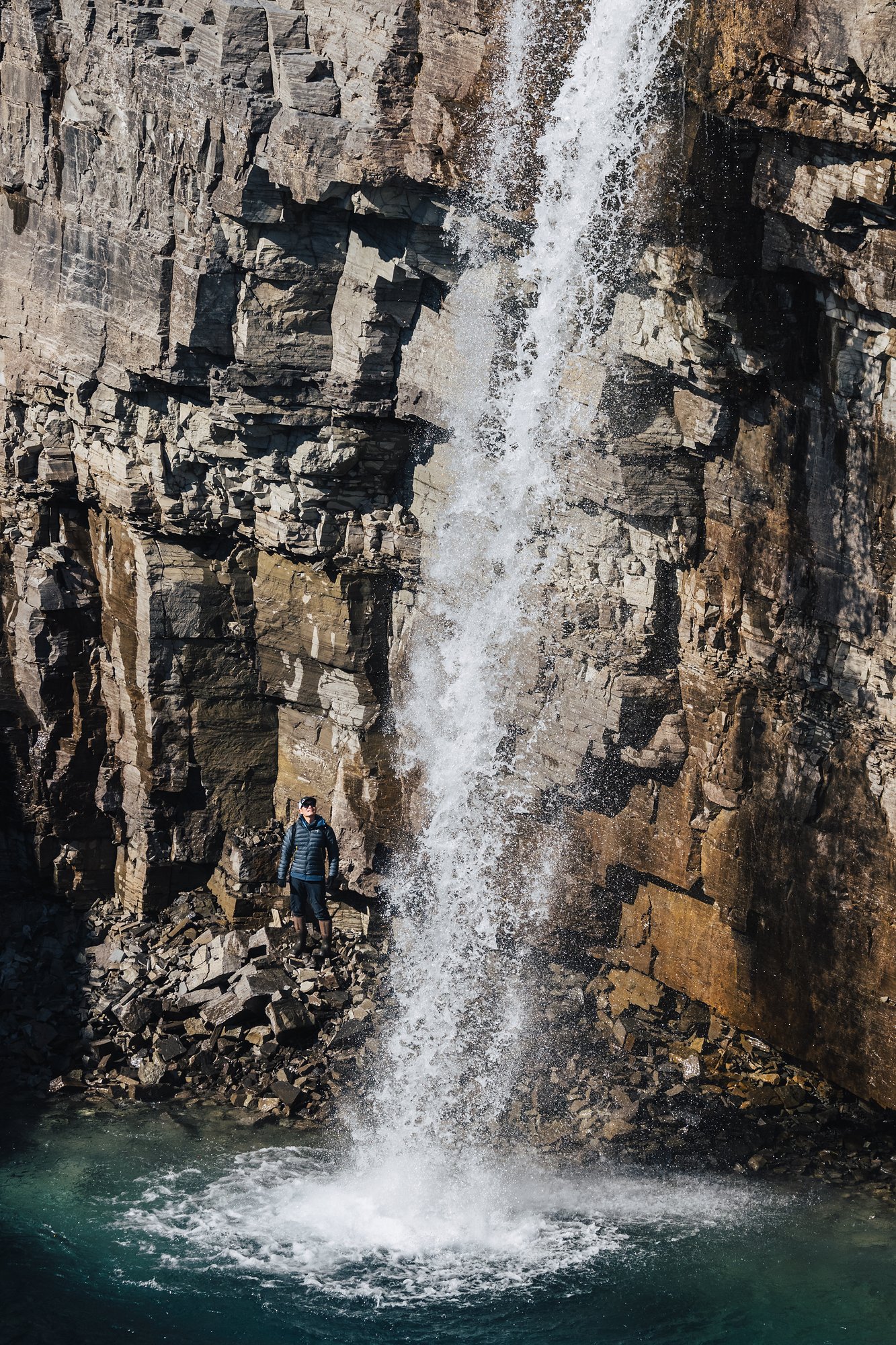
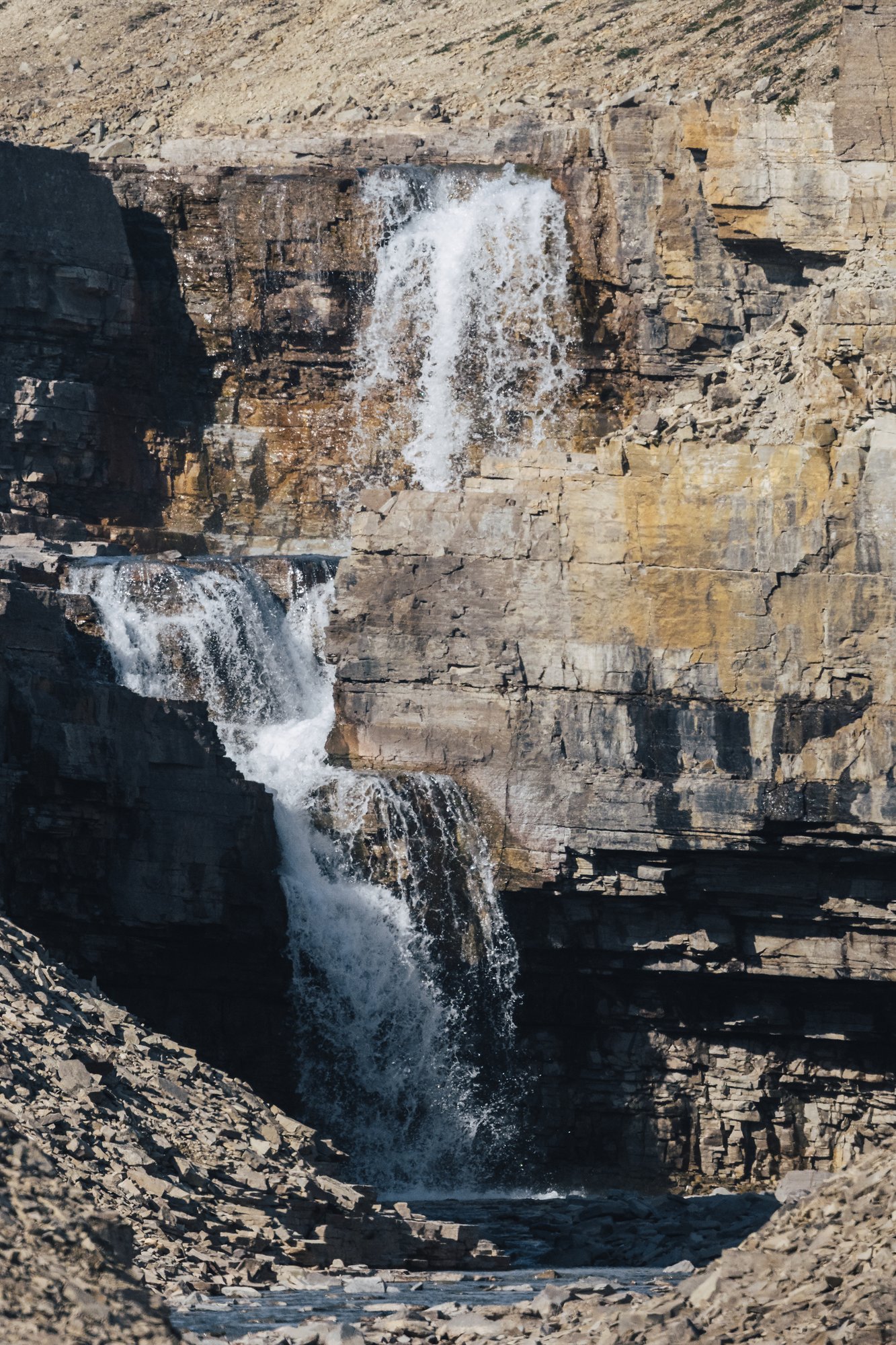
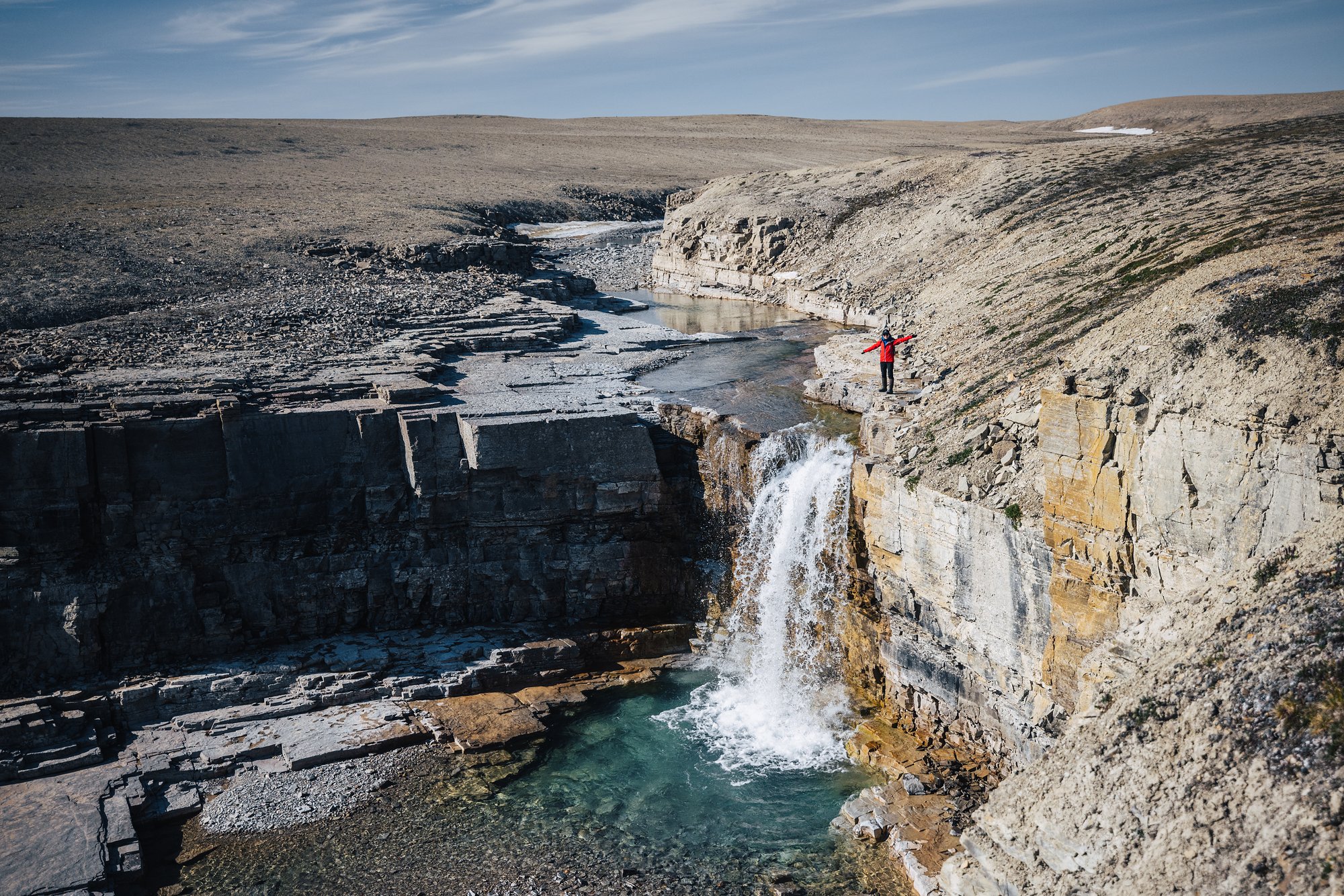
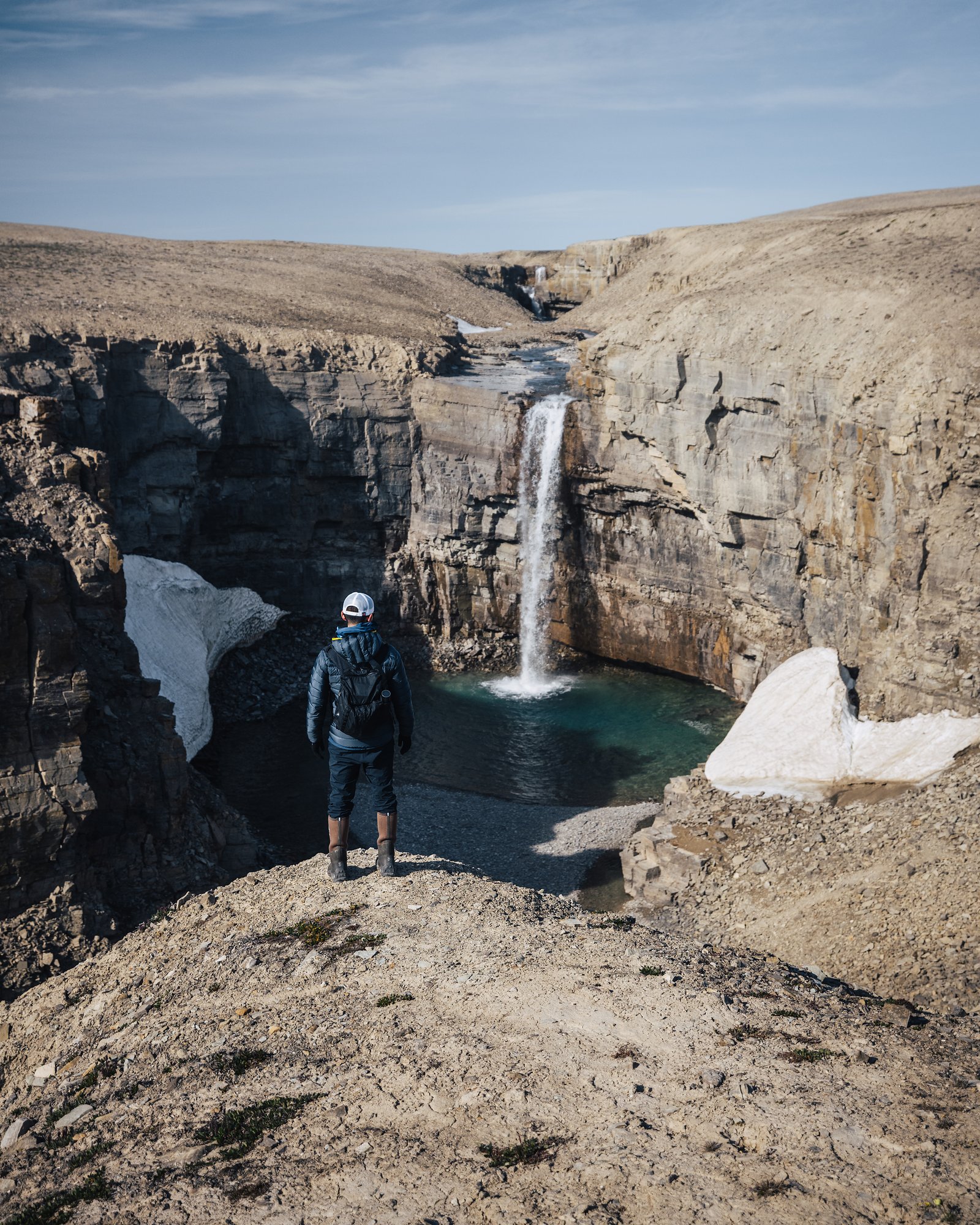
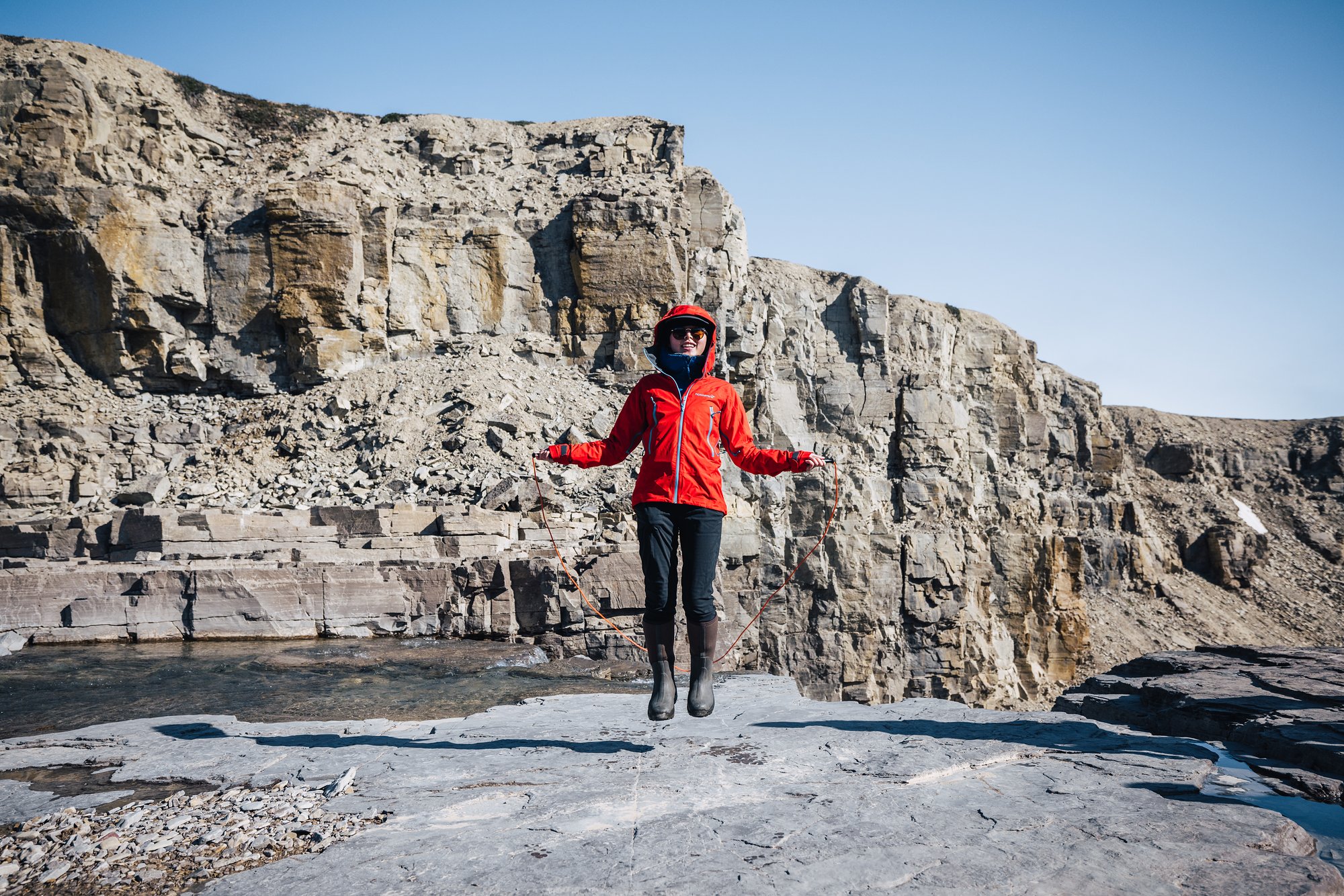
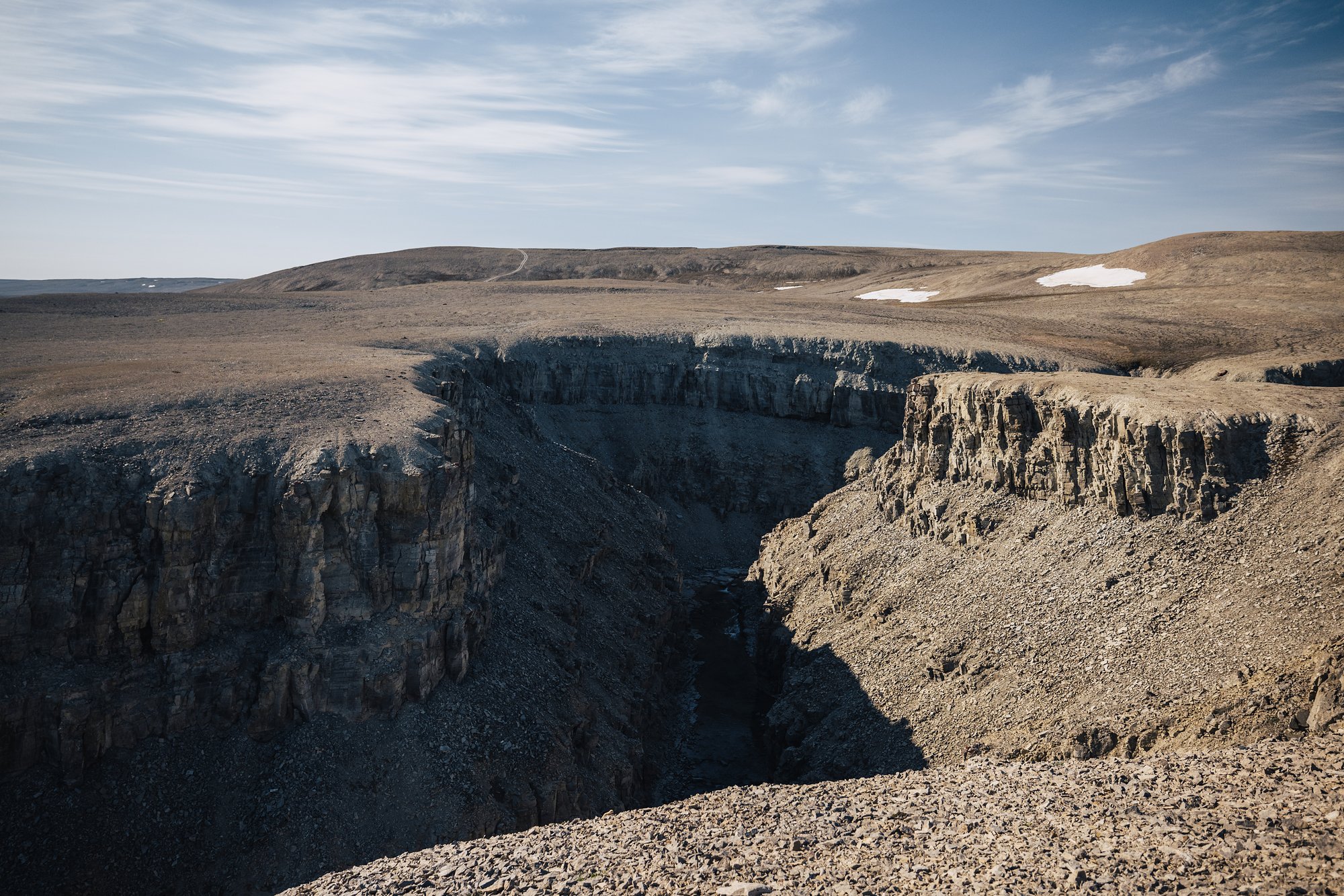
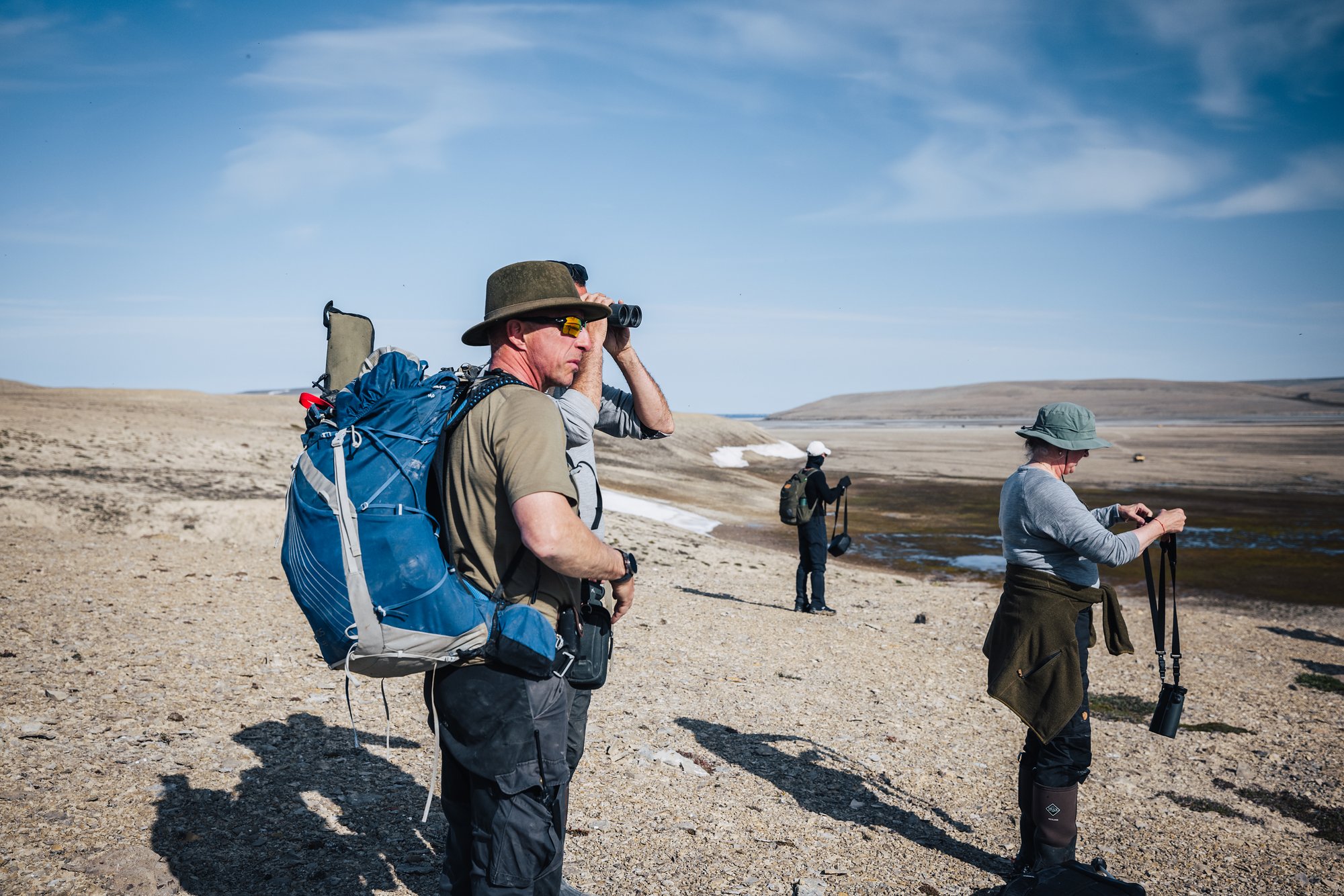
We spent our first morning getting to know the terrain at 74° north on an easy hike to Three Waterfalls Canyon, near the lodge. From a distance the tundra looks flat and endless. Then the ground simply falls away, and you are standing on the rim of a canyon of layered limestone with water pouring over its lip into pools of an improbable turquoise.
For scale: that figure at the base is one of our group. A second fall stepping down the canyon wall.
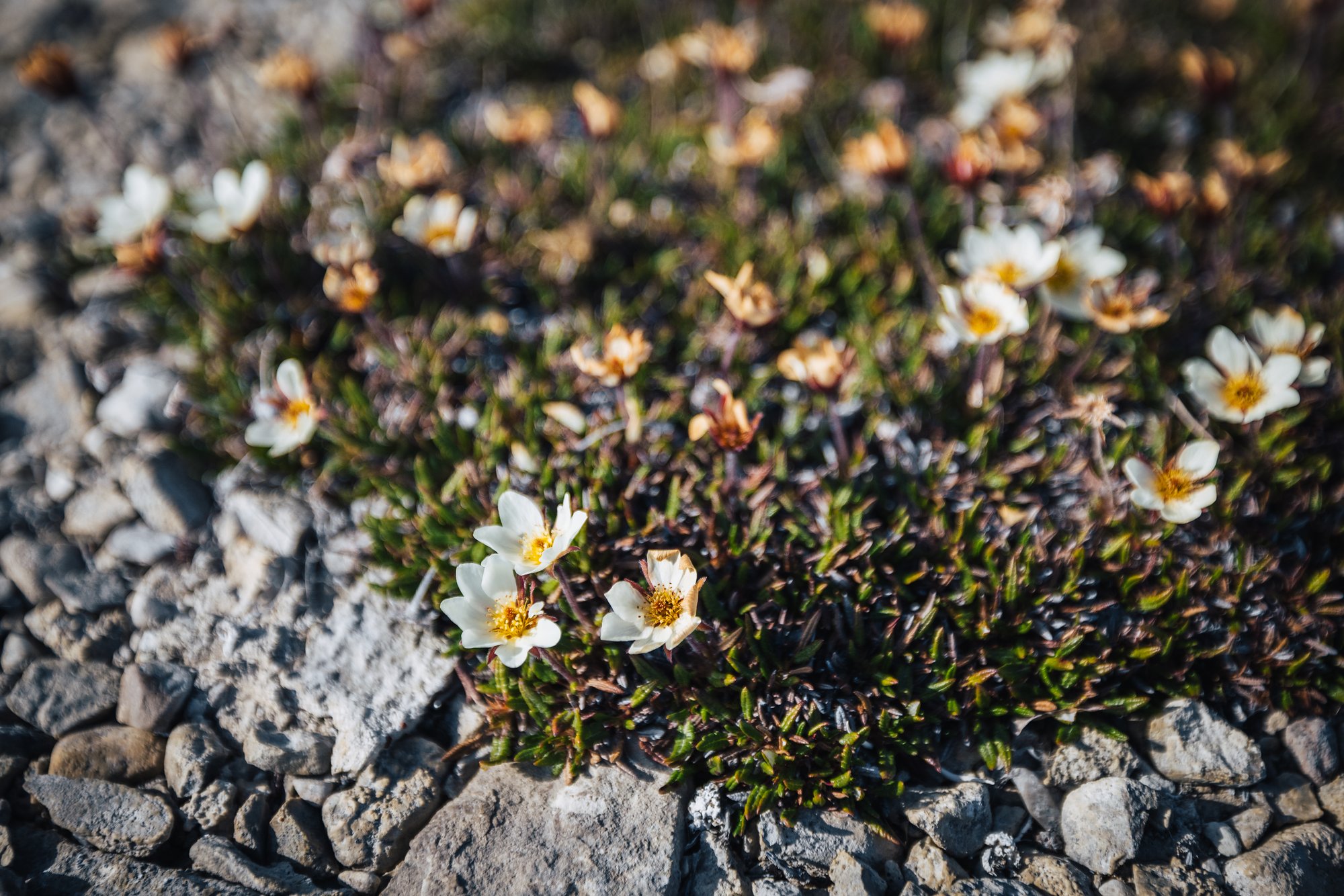
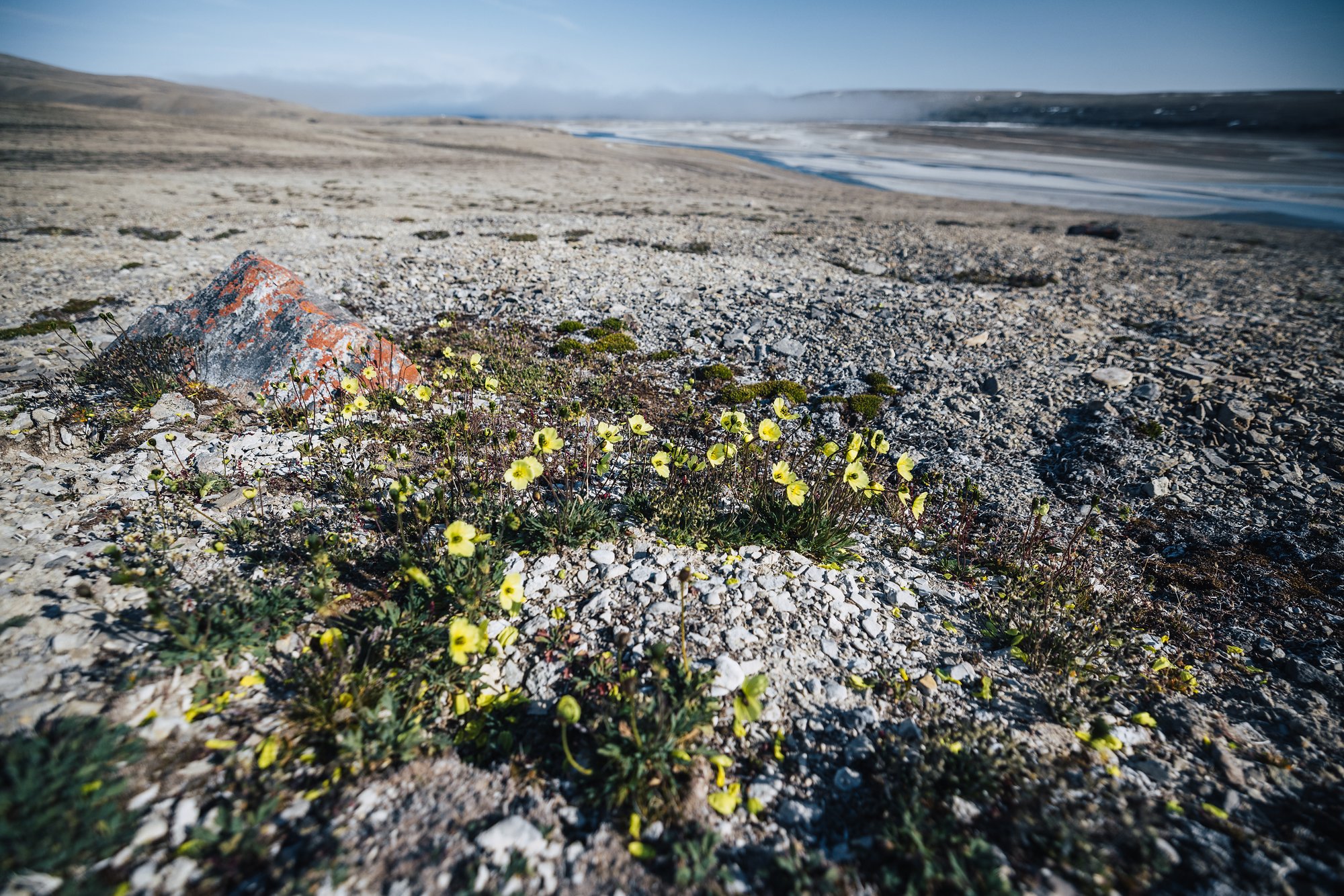
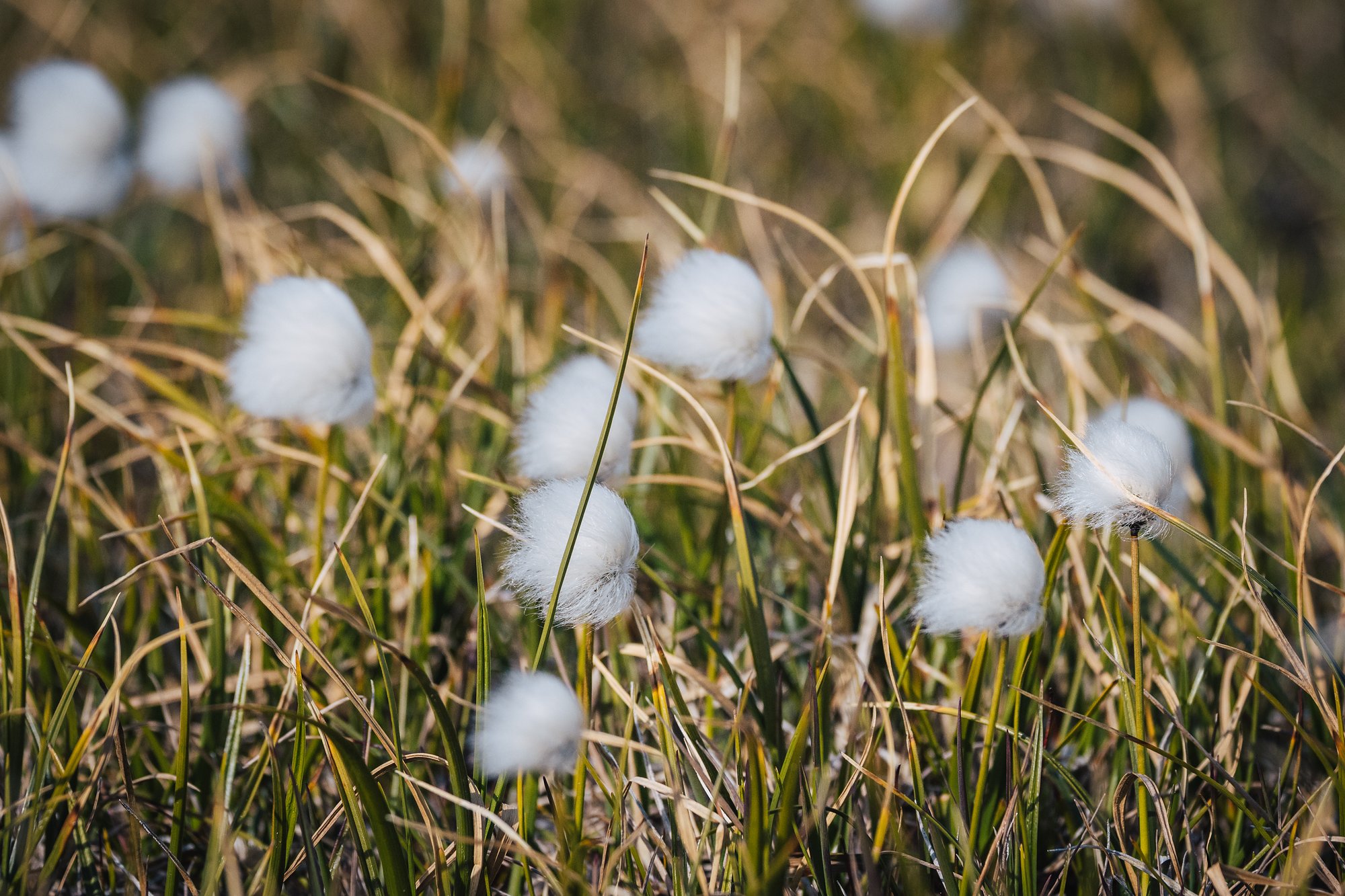
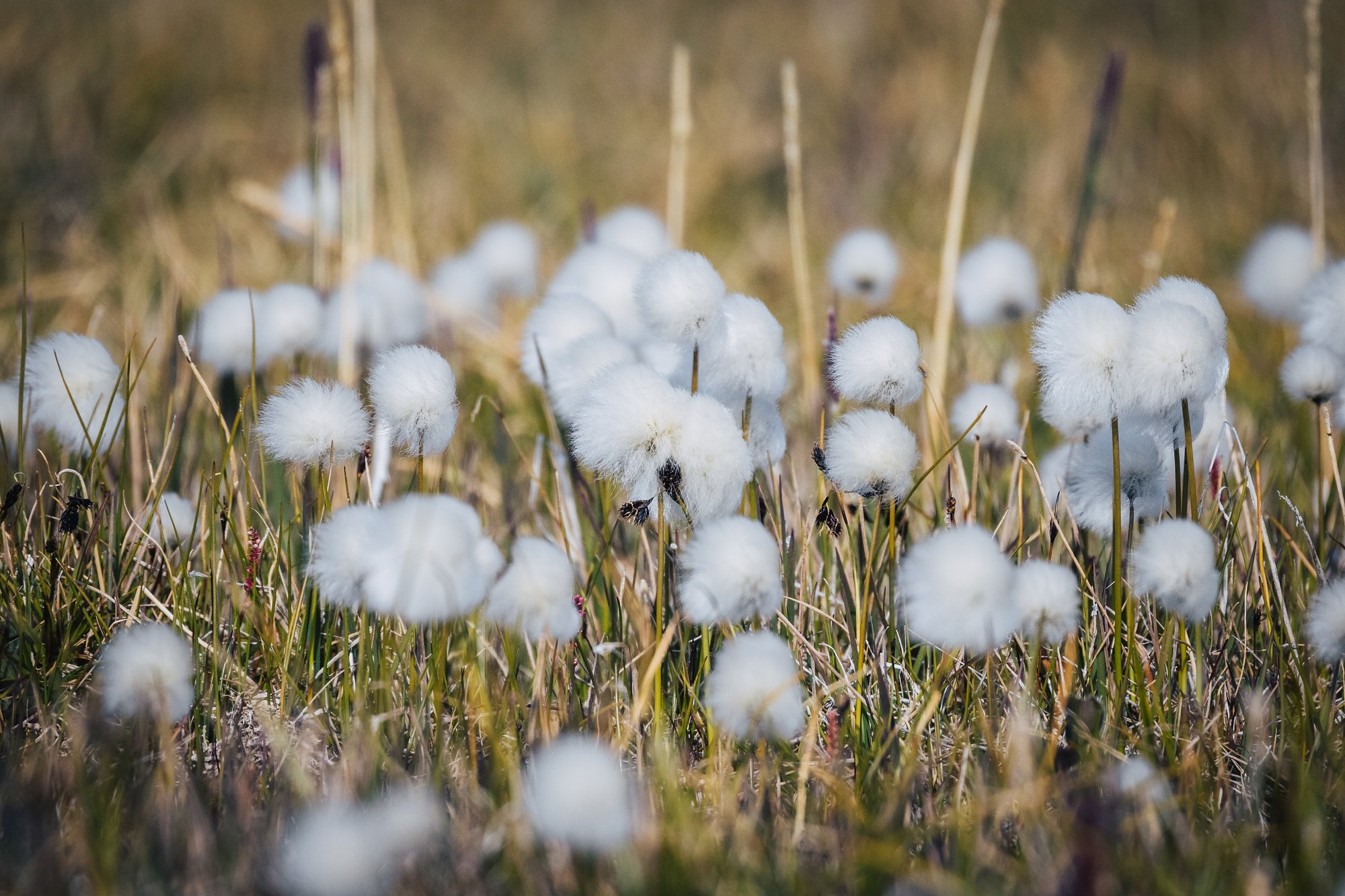
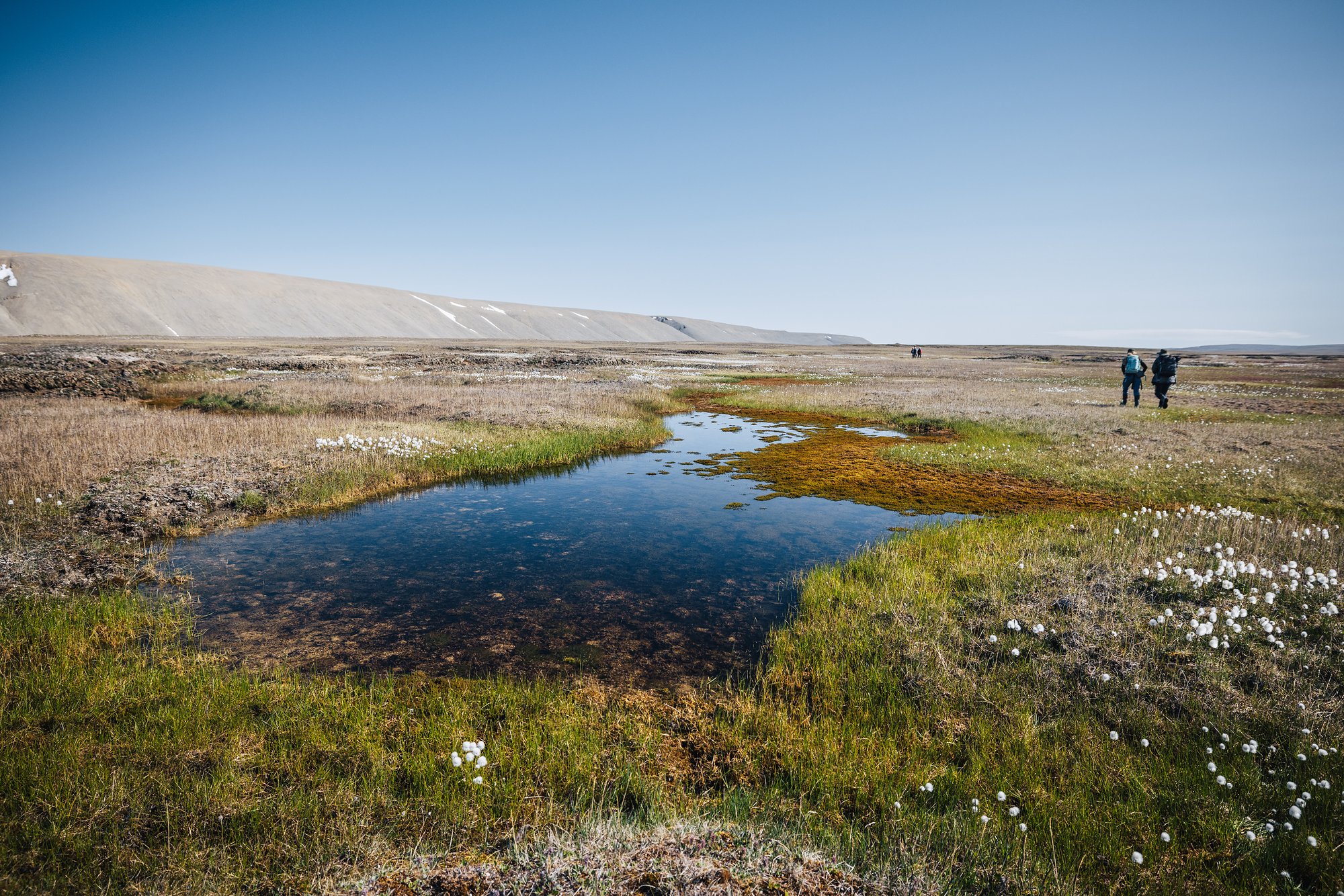
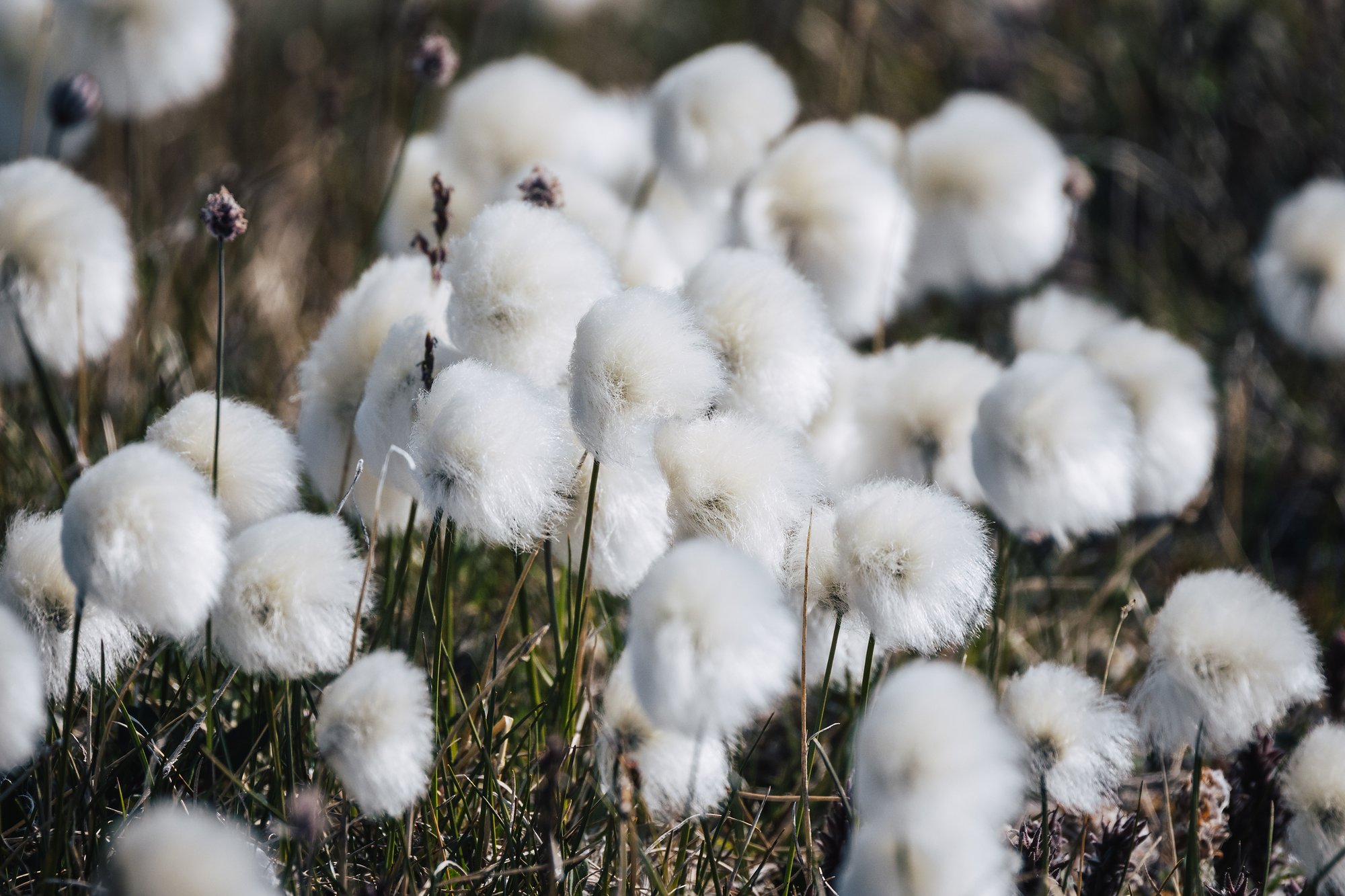
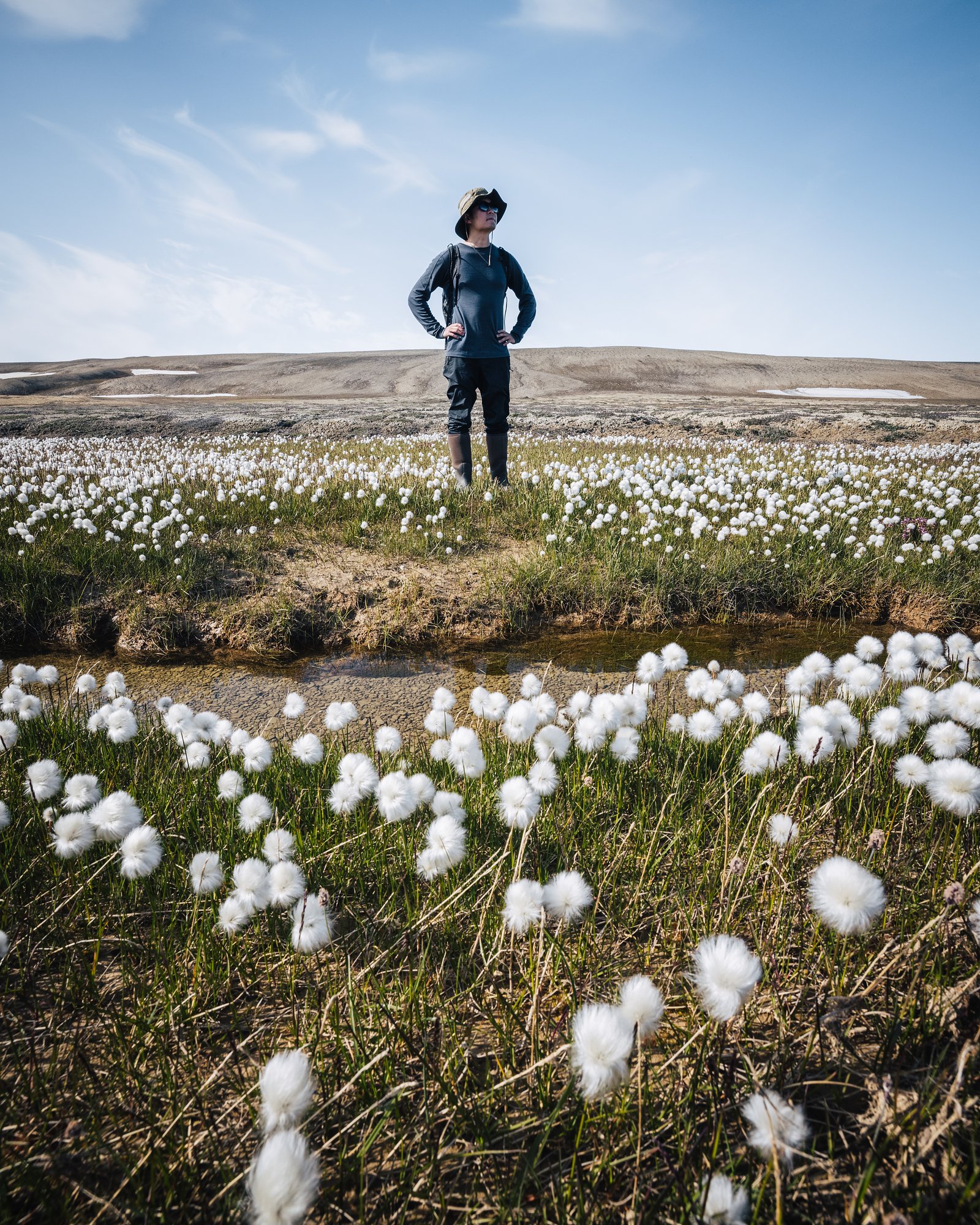
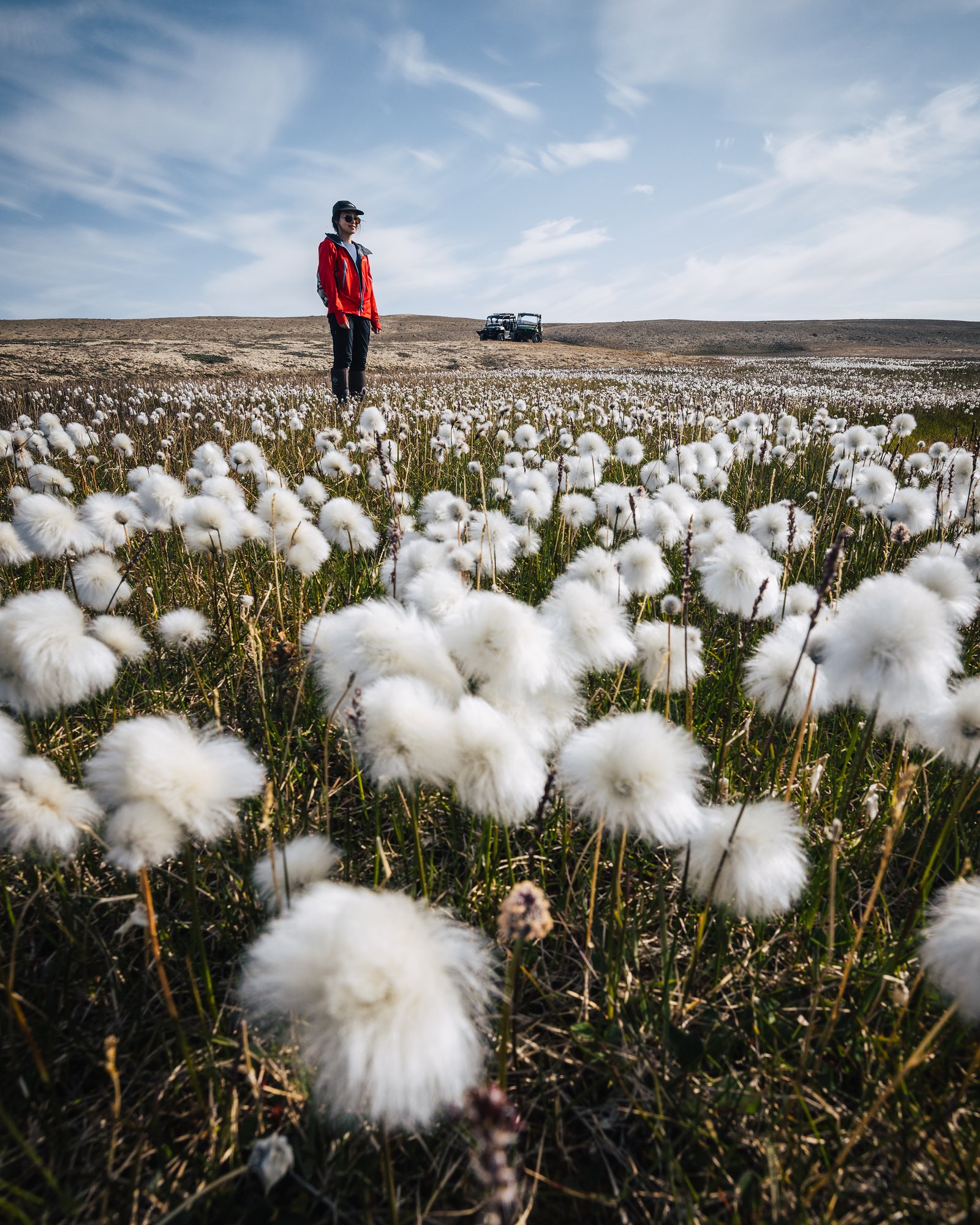
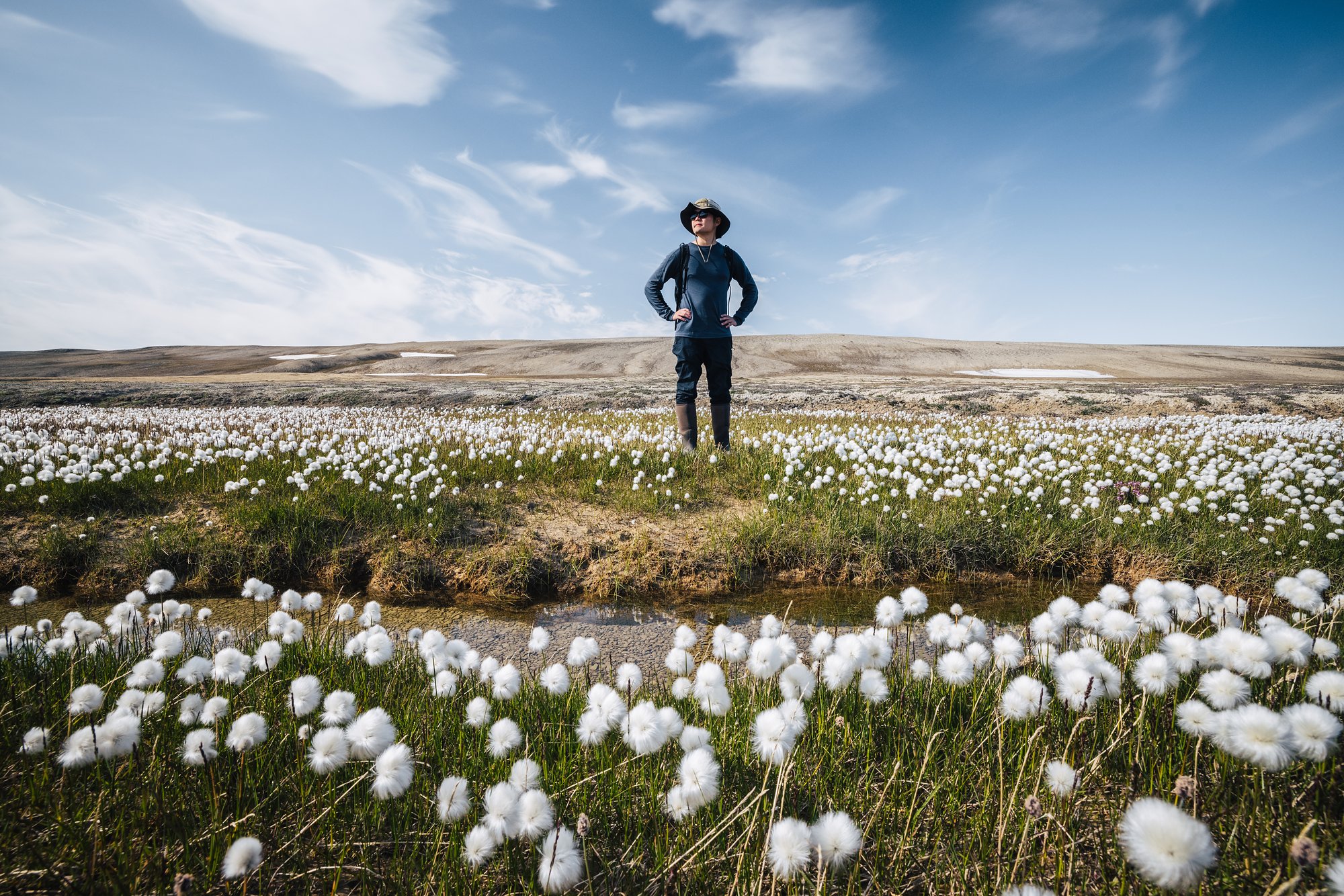
Up close, the tundra is anything but barren. In the short summer it bursts into flower: white mountain avens, yellow Arctic poppies nodding among the stones, and whole fields of cottongrass, its seed heads like tufts of cotton wool. With blue skies on a sunny summer morning, it was a perfect way to begin.
Mountain avens. Arctic poppies beside a lichen-covered boulder.
Part 03
Musk Ox on the Tundra
July 23, 2023 · The northeastern trail, Somerset Island
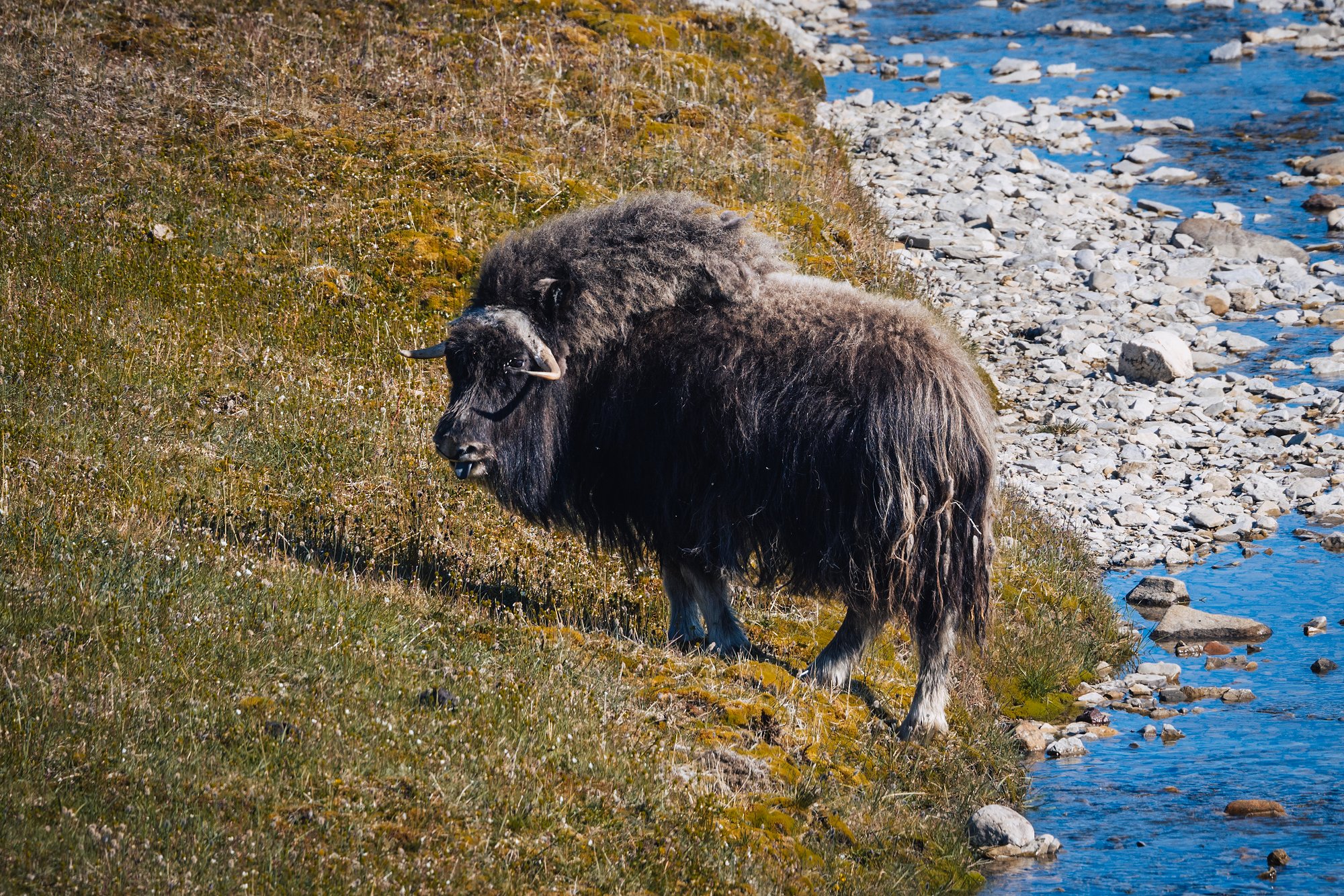
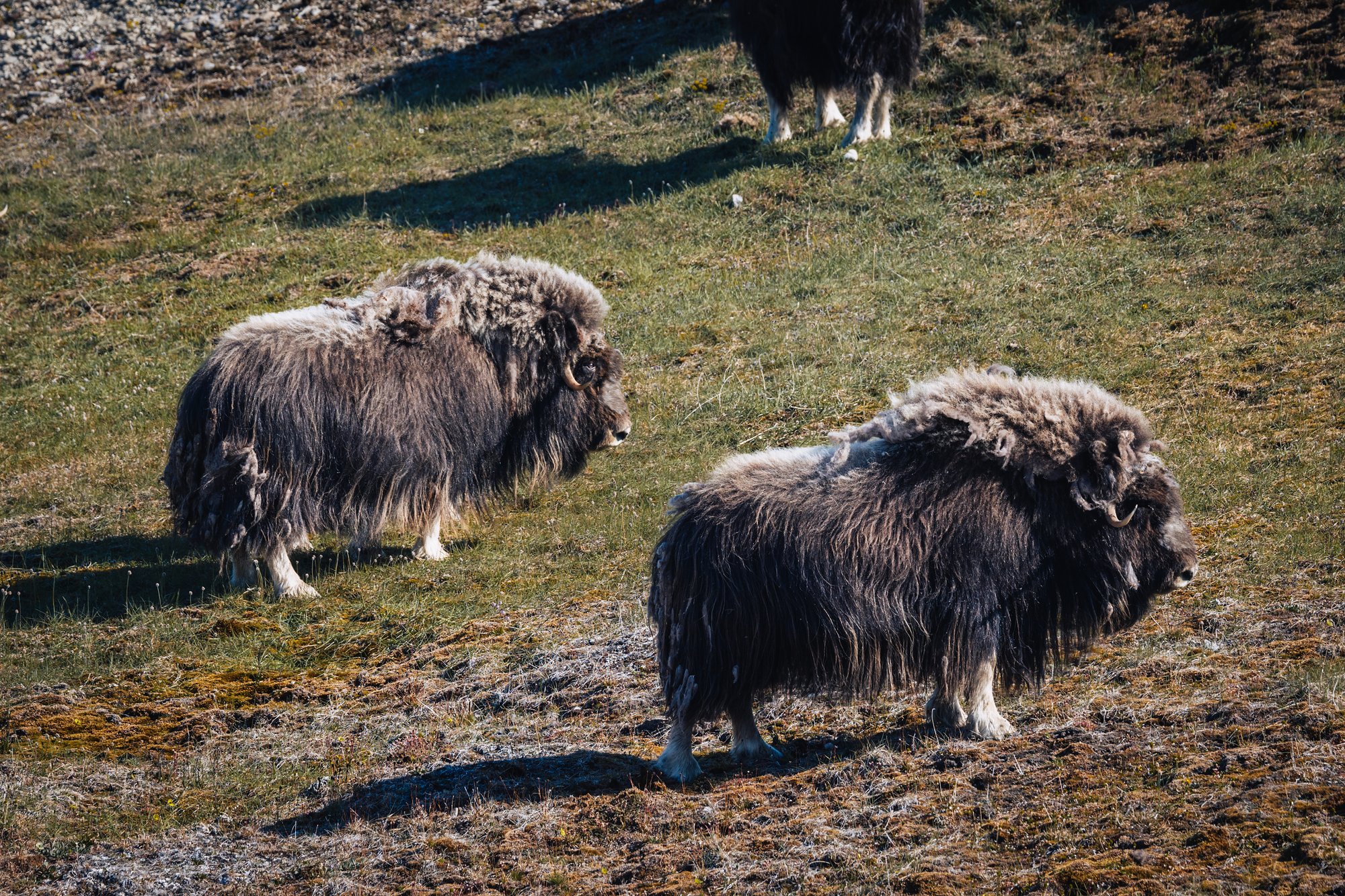
Both male and female musk oxen carry these long, curved horns.
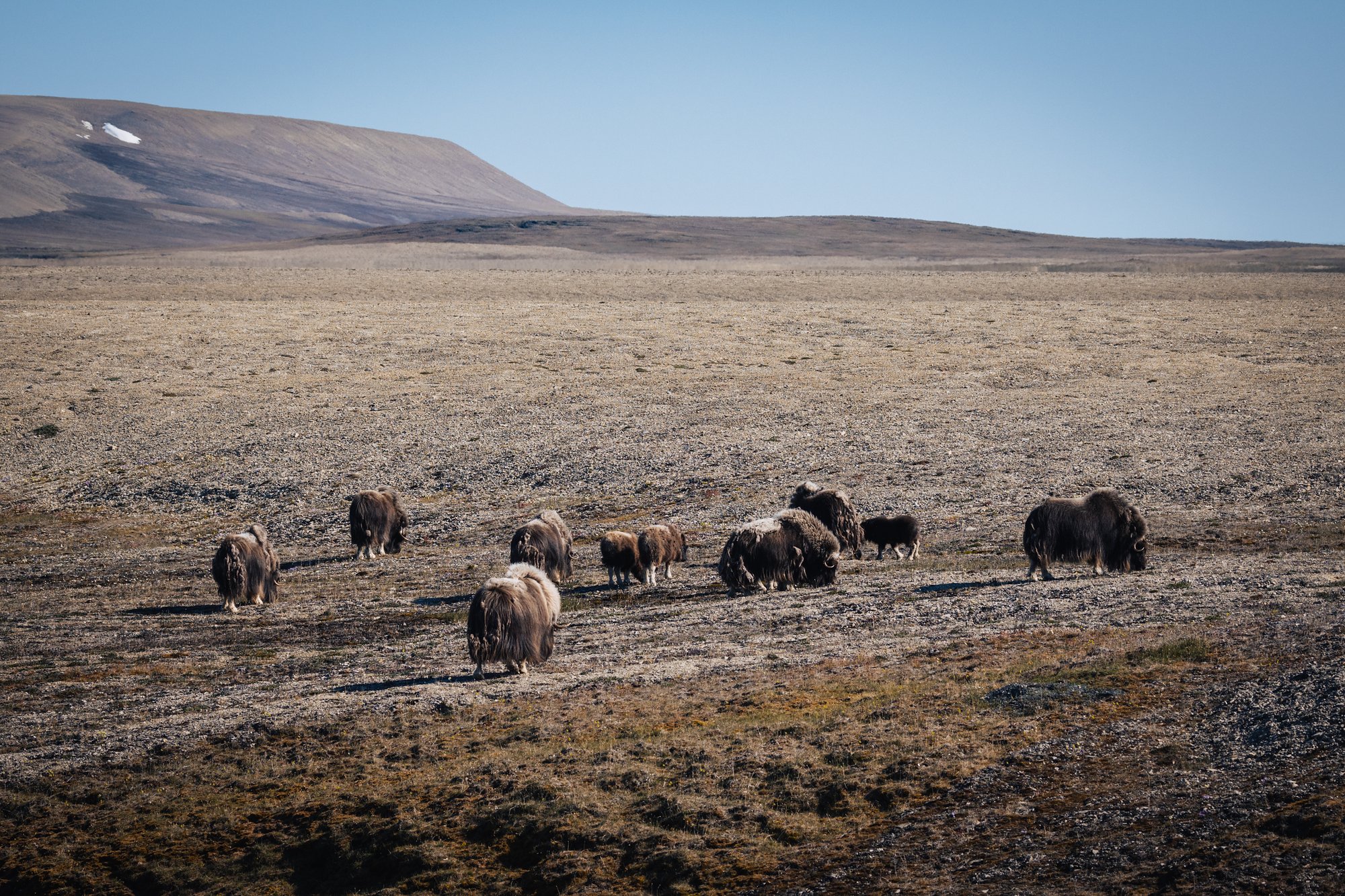
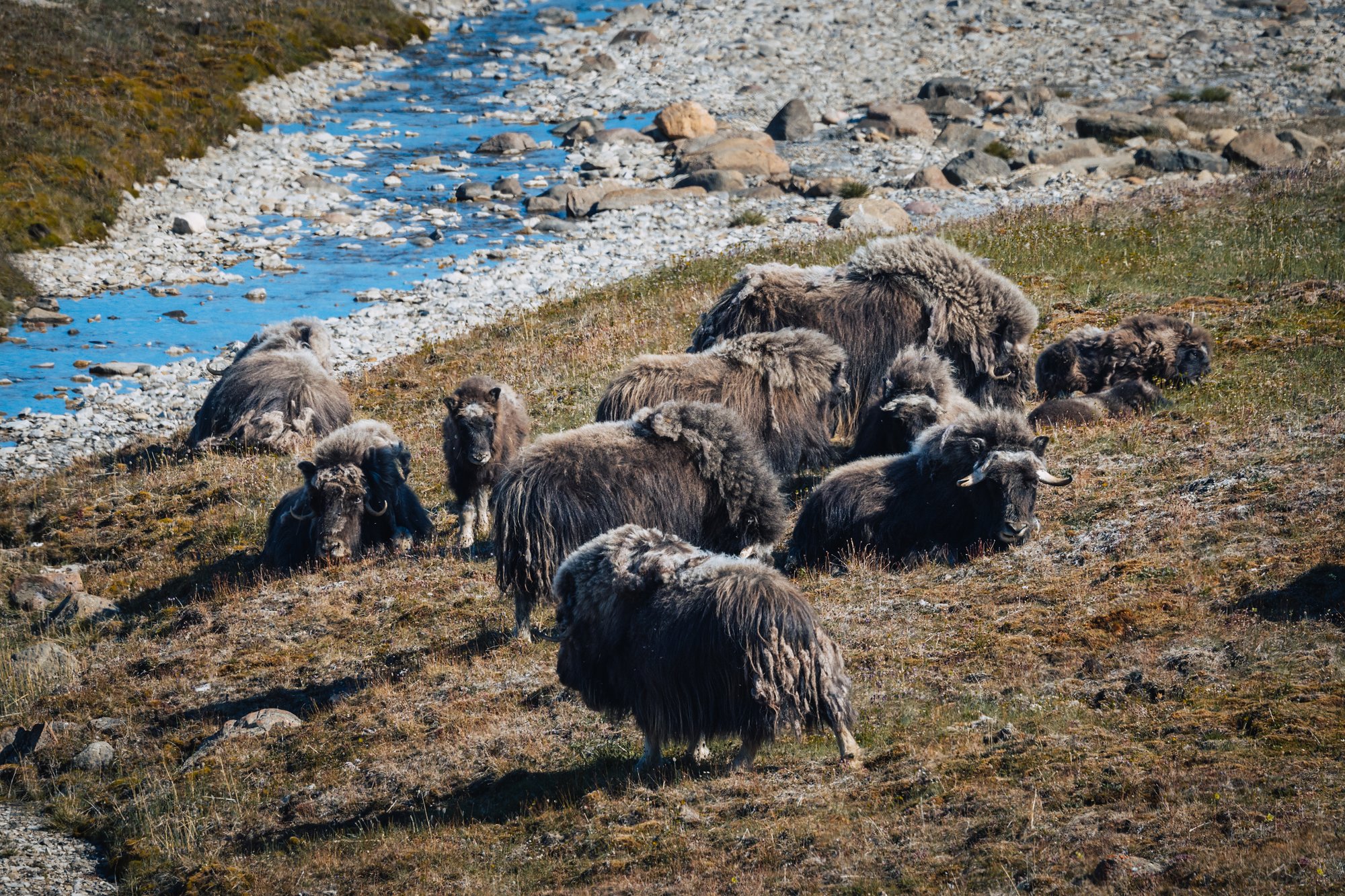
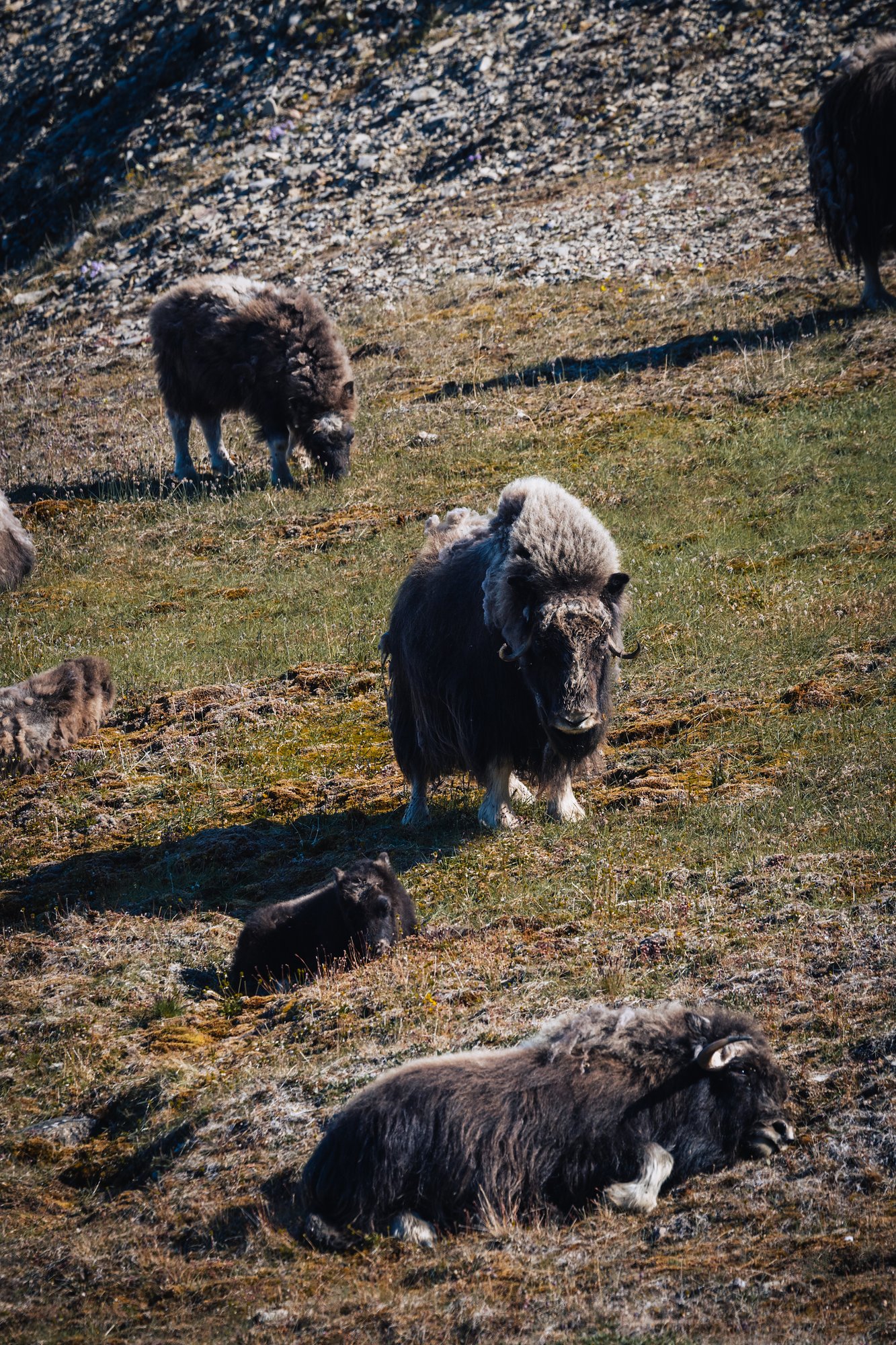
The next day we brought out the ATVs and buggies and followed the northeastern trail across Somerset Island in search of musk ox. We eventually found a herd a couple of kilometers off the trail, grazing on a green bank beside a stream.
The herd spread across the tundra.
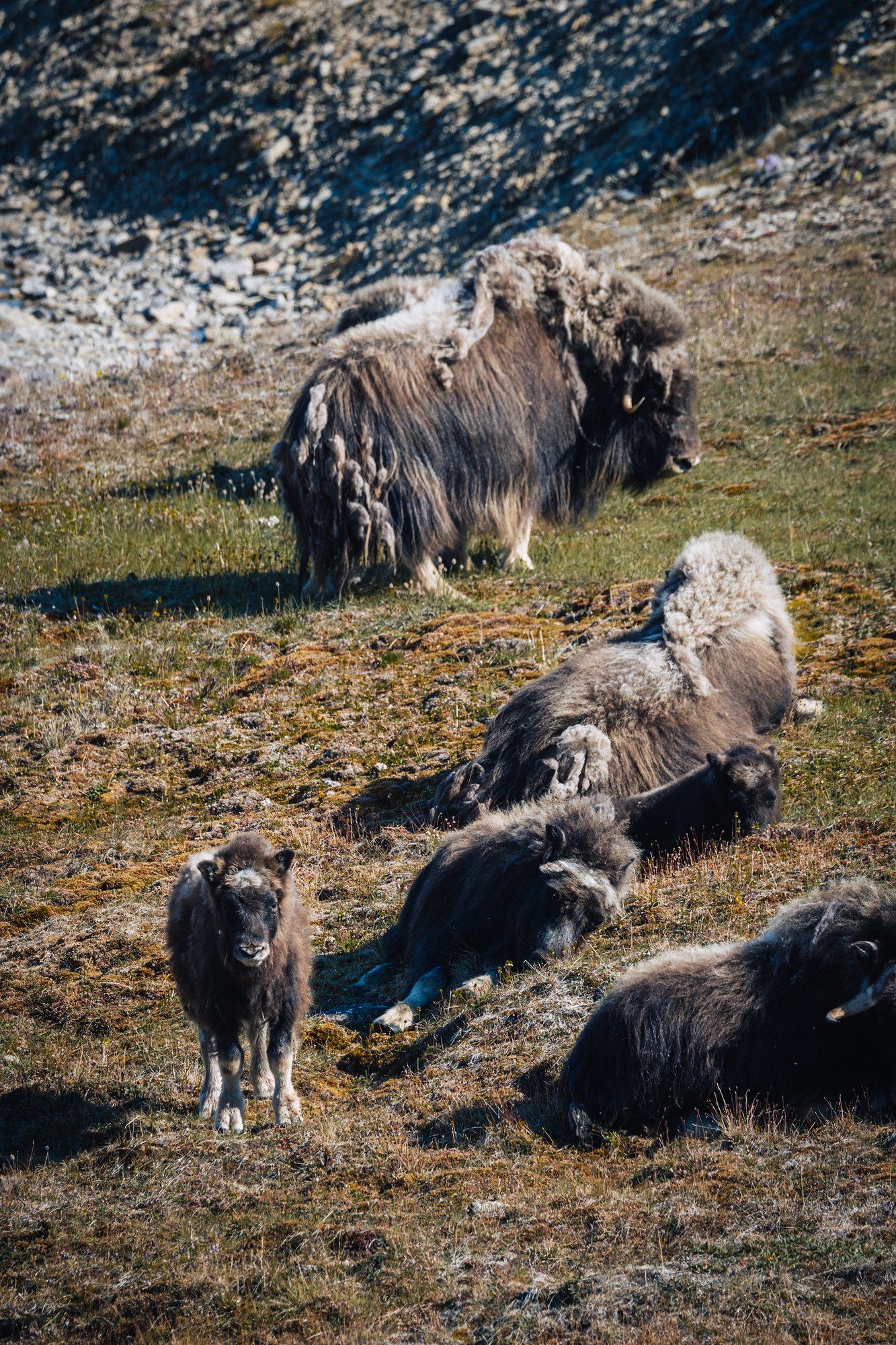
Musk oxen have lived in the frozen Arctic for many thousands of years, roaming the tundra for roots, mosses and lichens. Males and females alike carry long, arched horns, and both wear the same dense, shaggy coat and striking long beard. Watching them graze, the calves close at their mothers' sides, felt like looking back into the Ice Age.
Calves stay close to the herd. Two of the herd grazing.
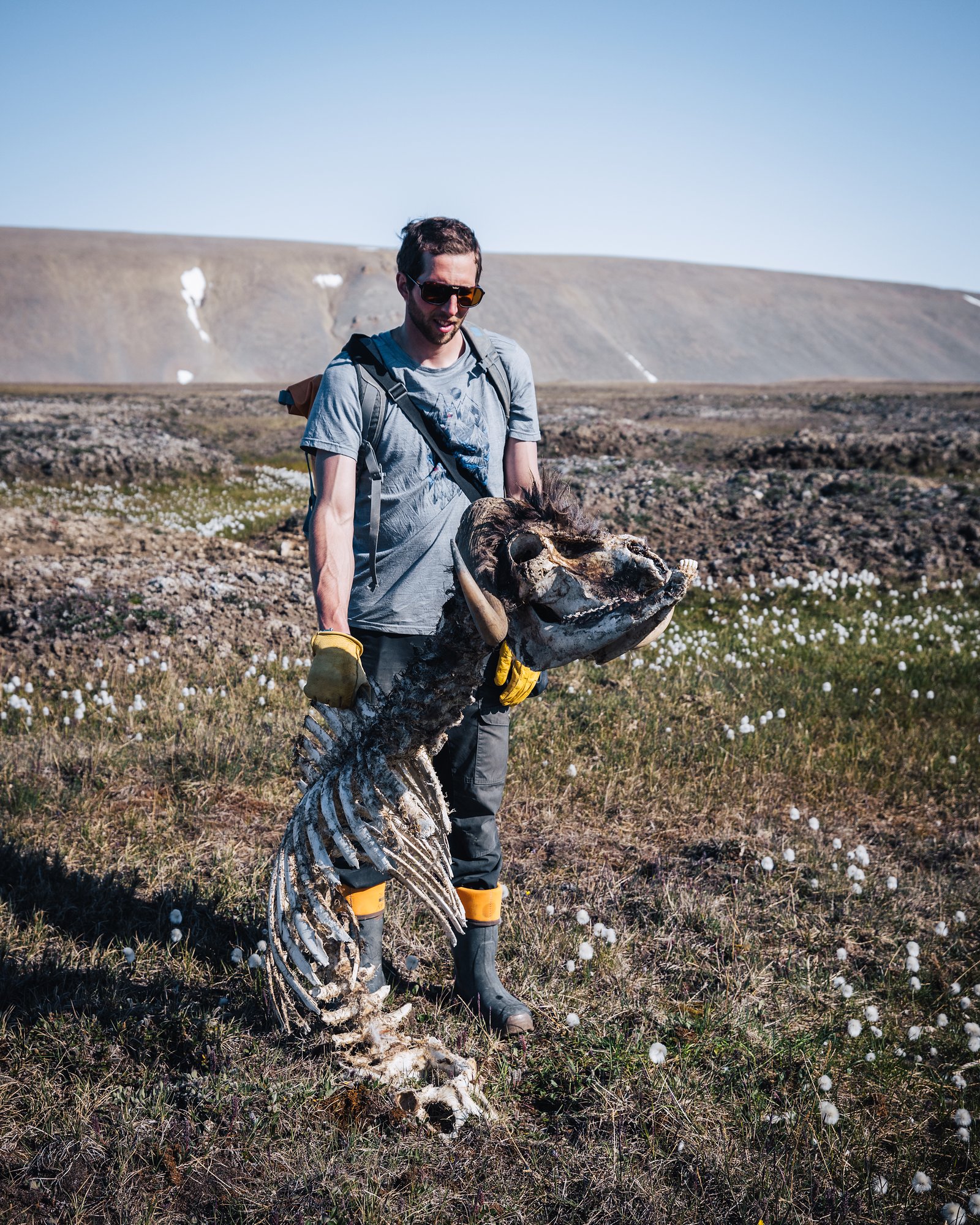
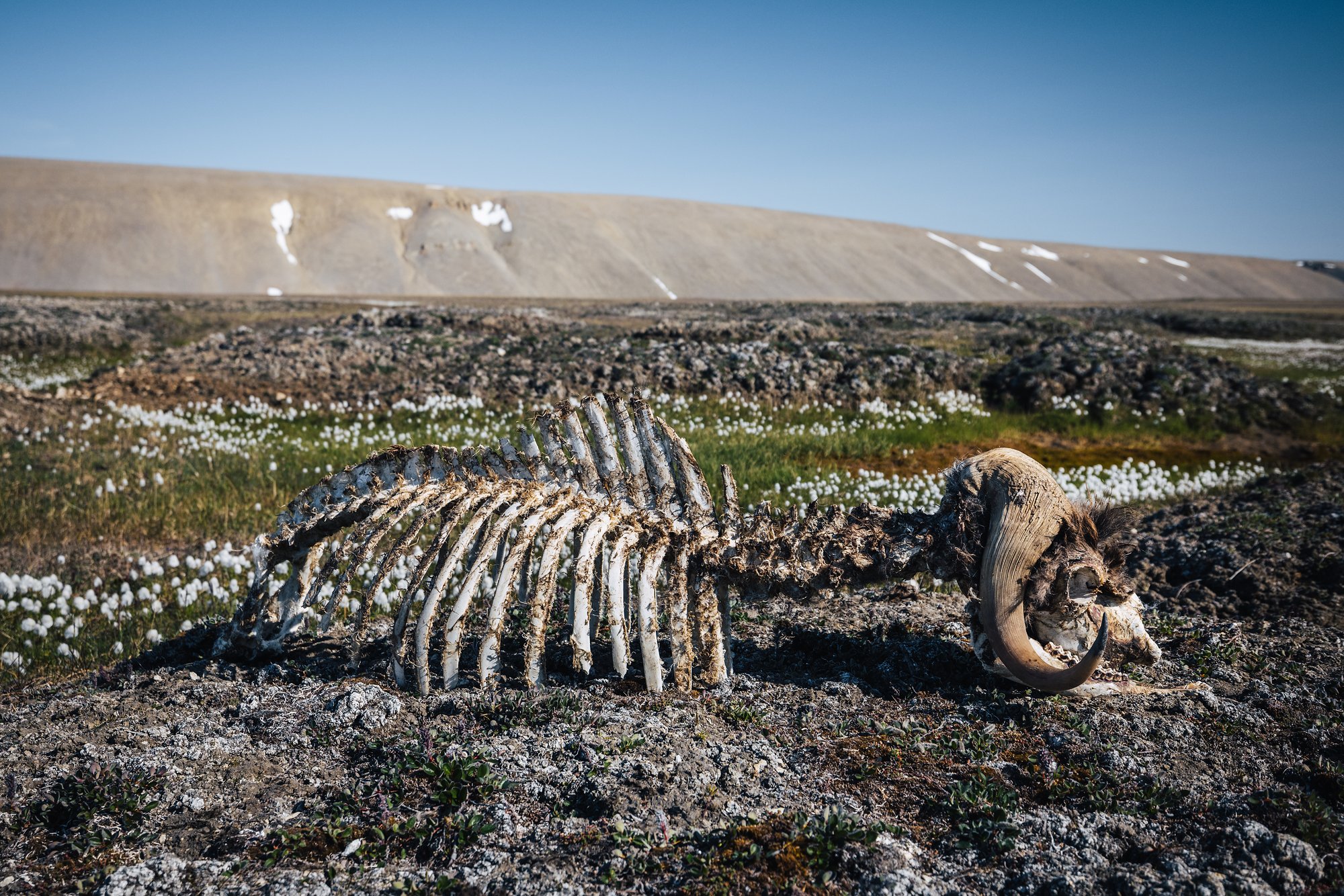
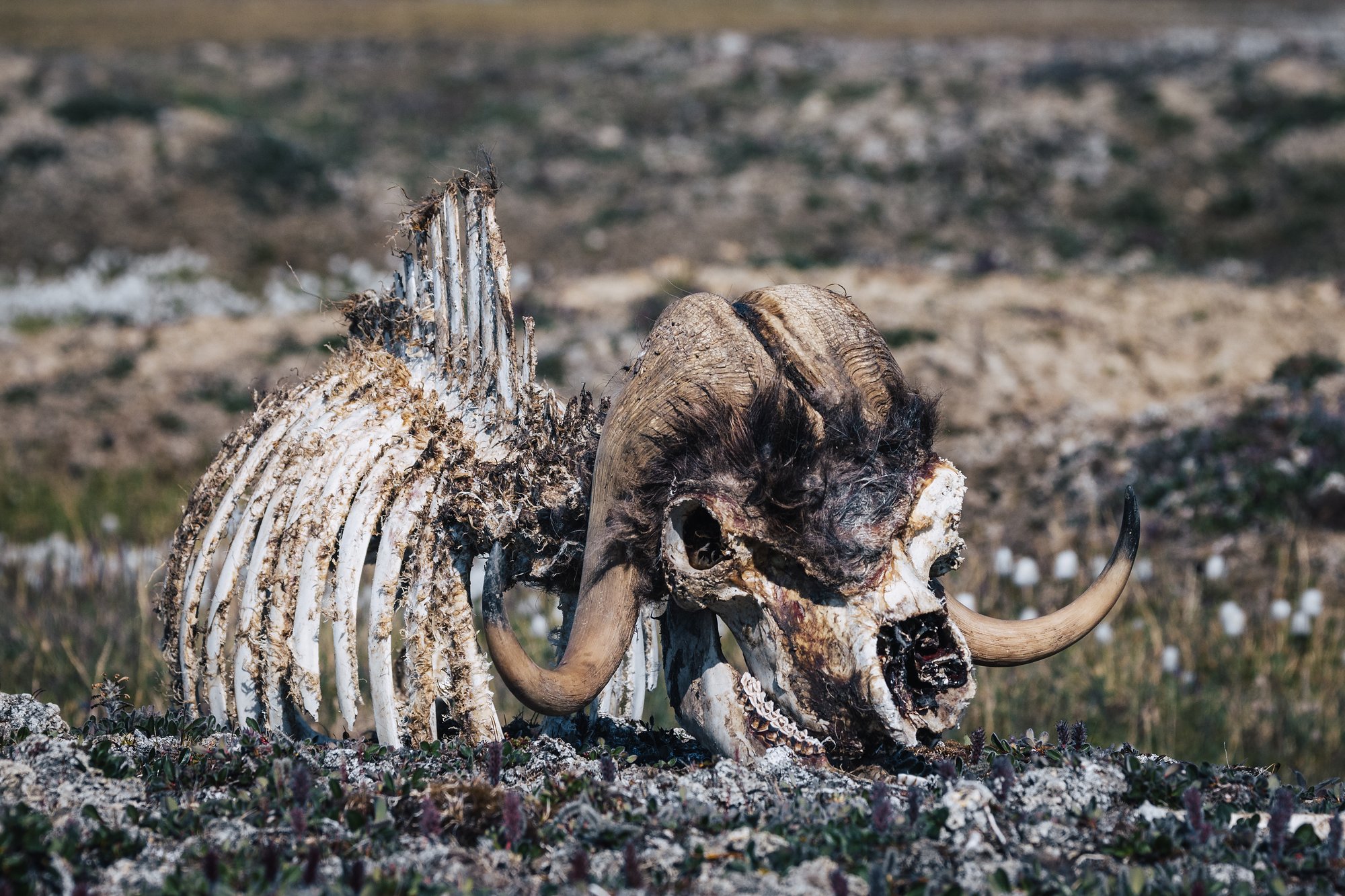
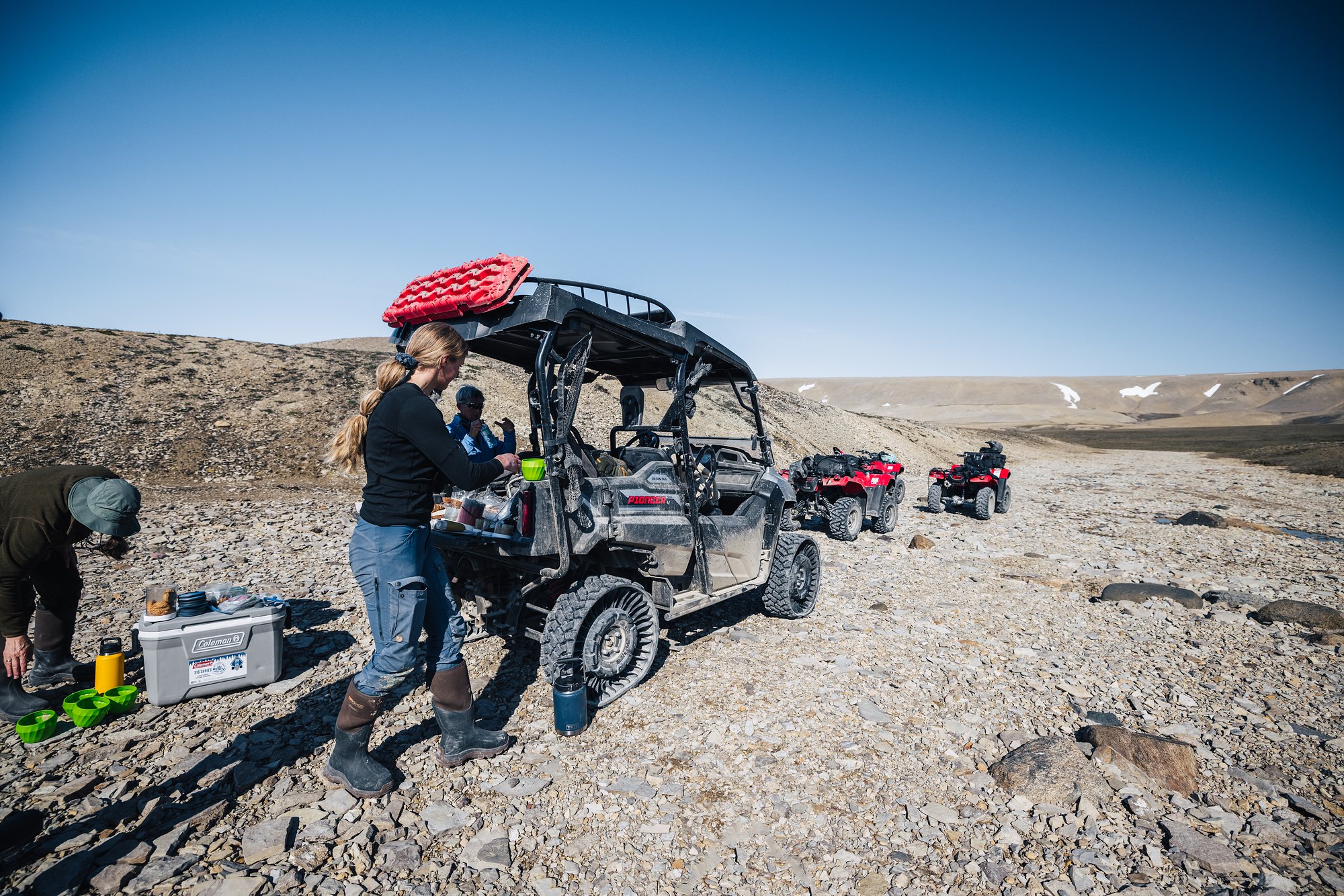
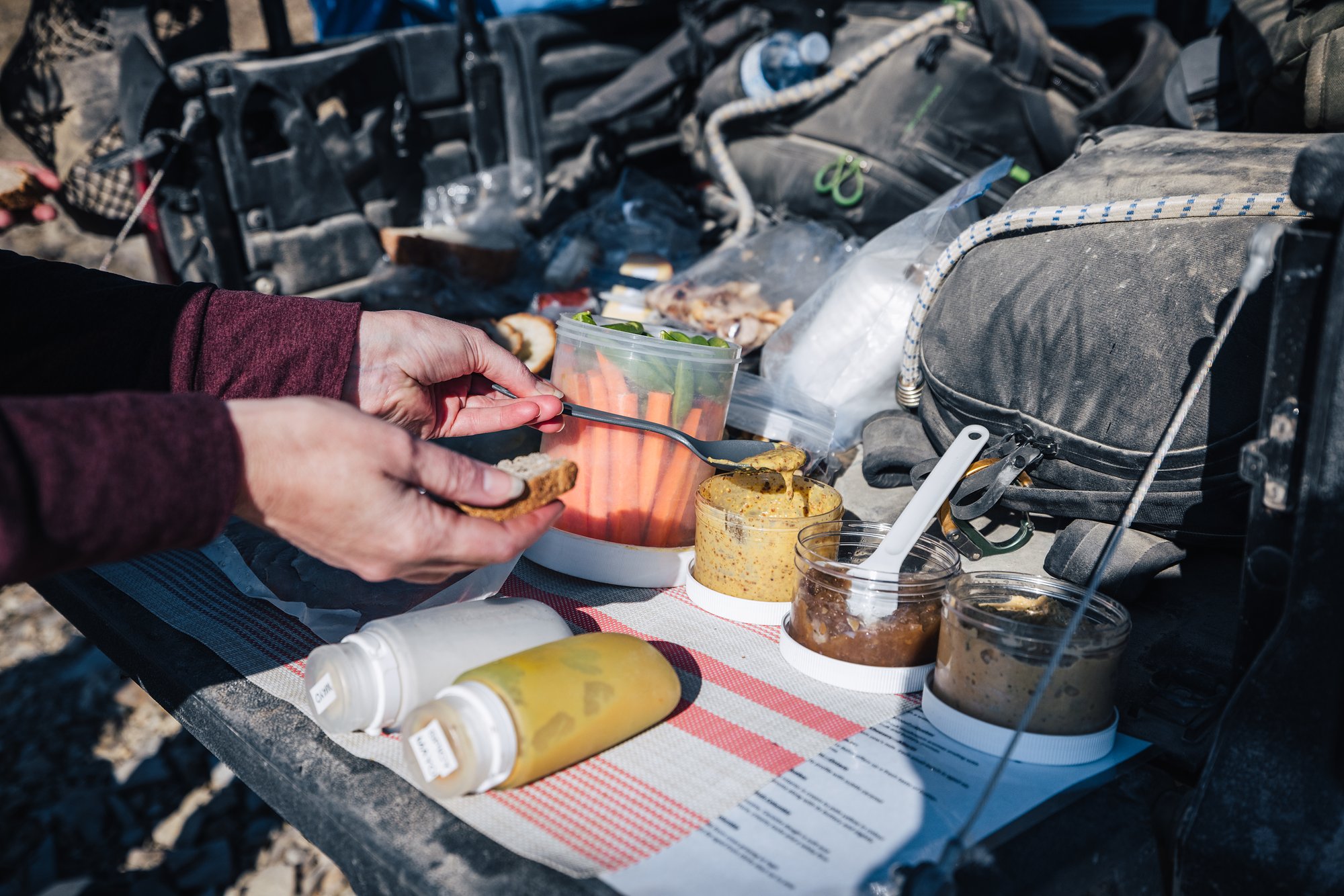
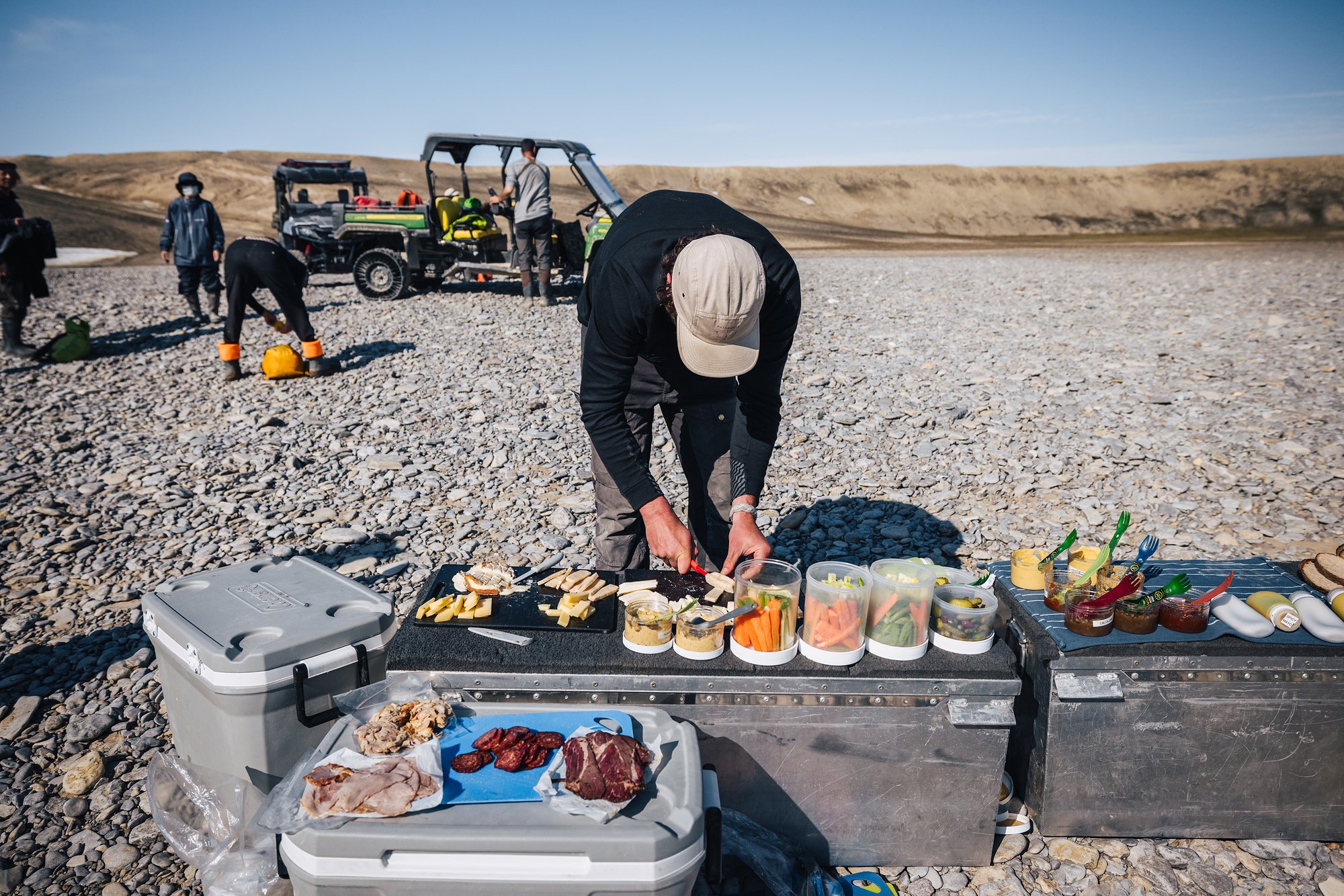
The tundra keeps its bones. Near the herd we passed the skeleton of a musk ox, its skull and horns still attached, and our guide held up the skull so we could see the full sweep of those horns. Then it was lunch on the tailgate of the buggy, sandwiches built from jars and coolers in the middle of nowhere.
Our guide with a musk ox skull we found on the tundra. A calf watched us from the slope.
Part 04
A Day on the River
July 24, 2023 · Cunningham River
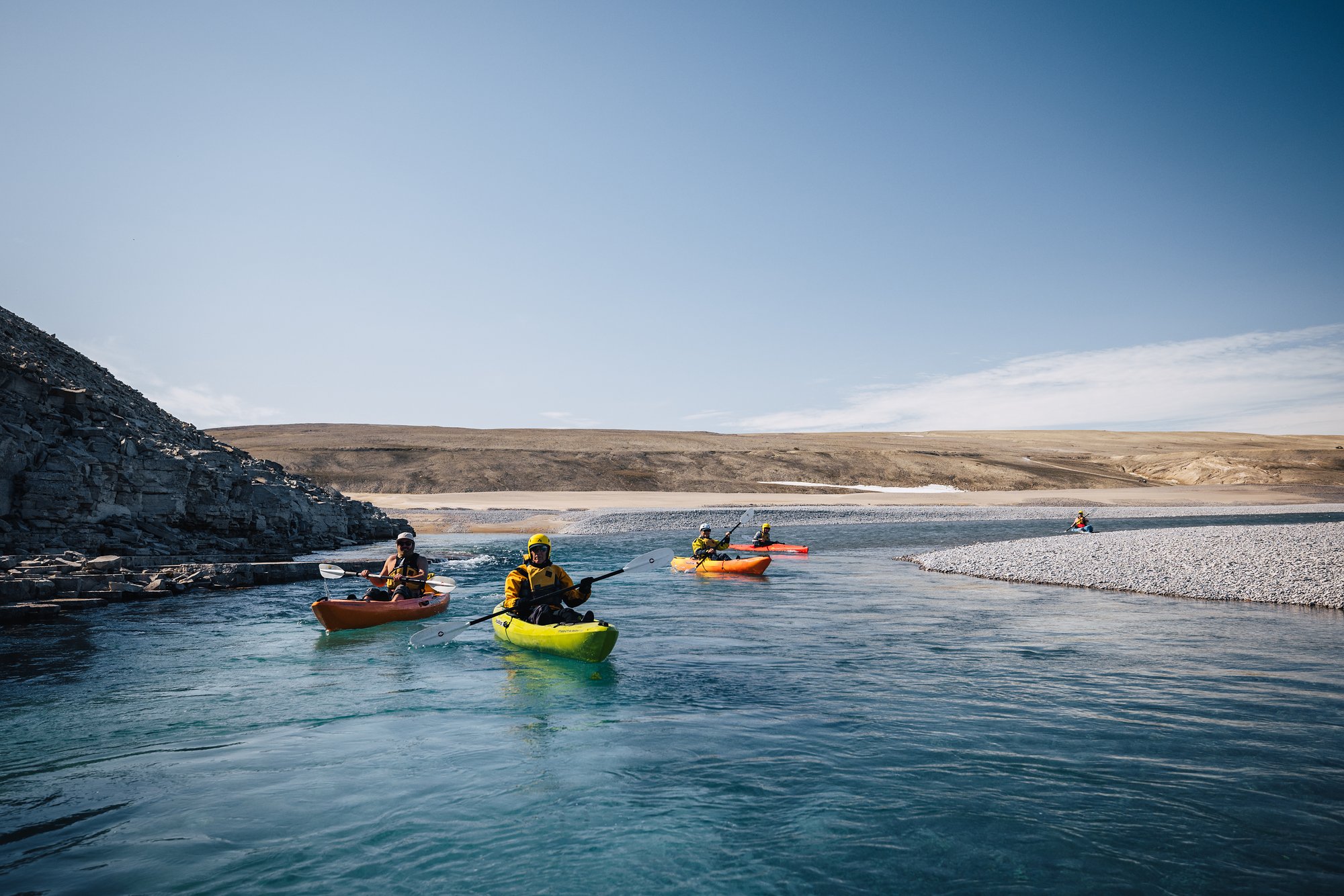
Kayaking the Cunningham River.
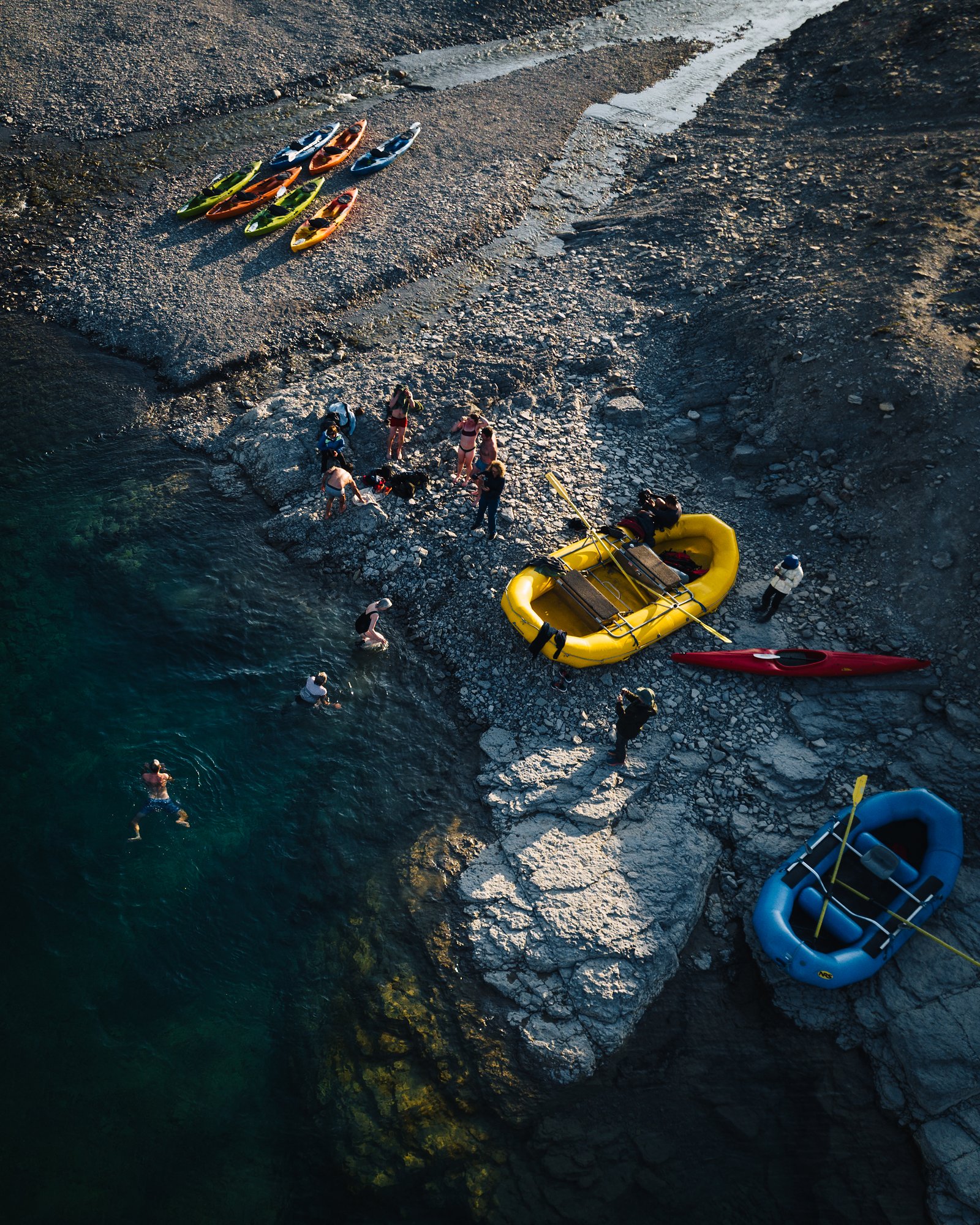
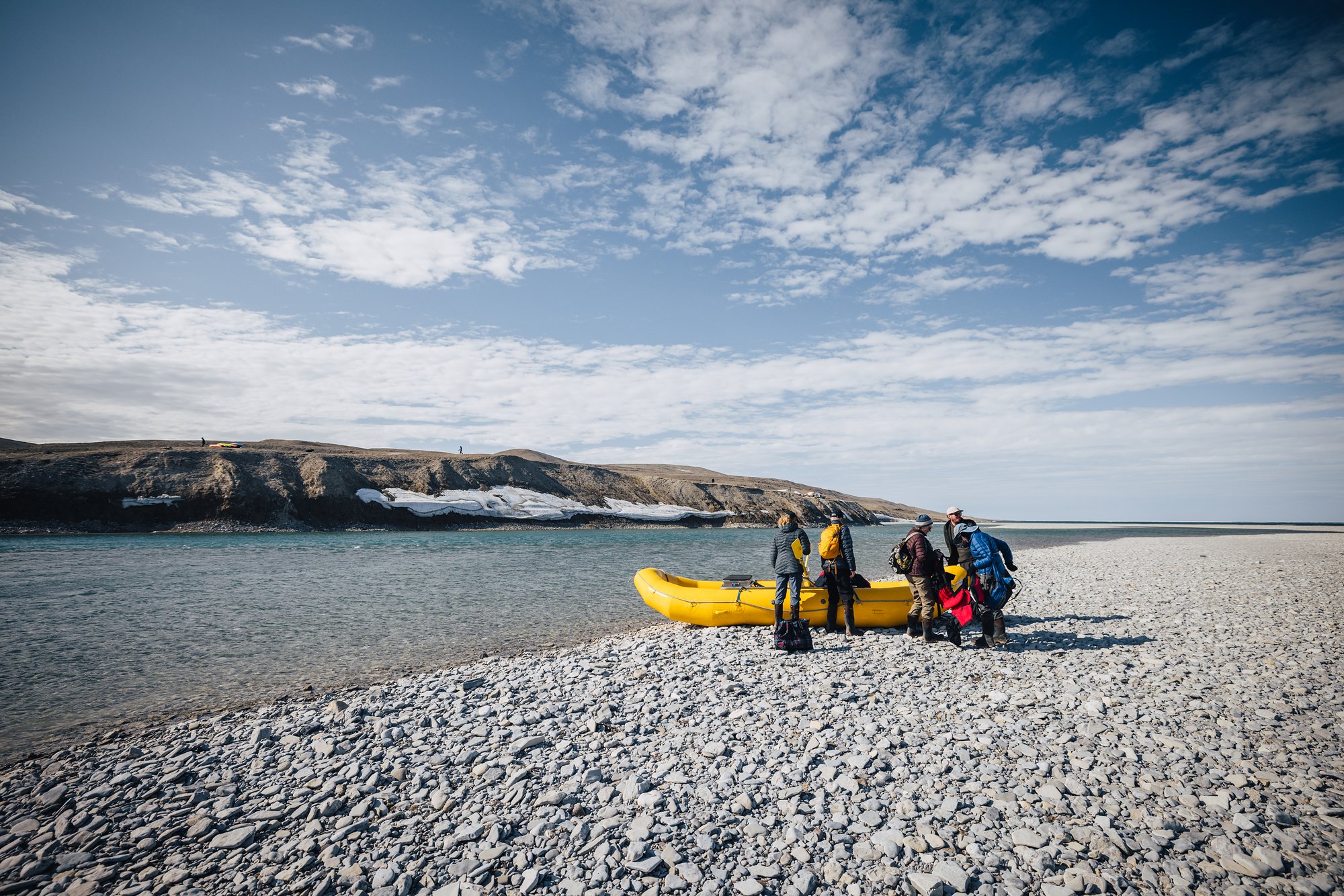
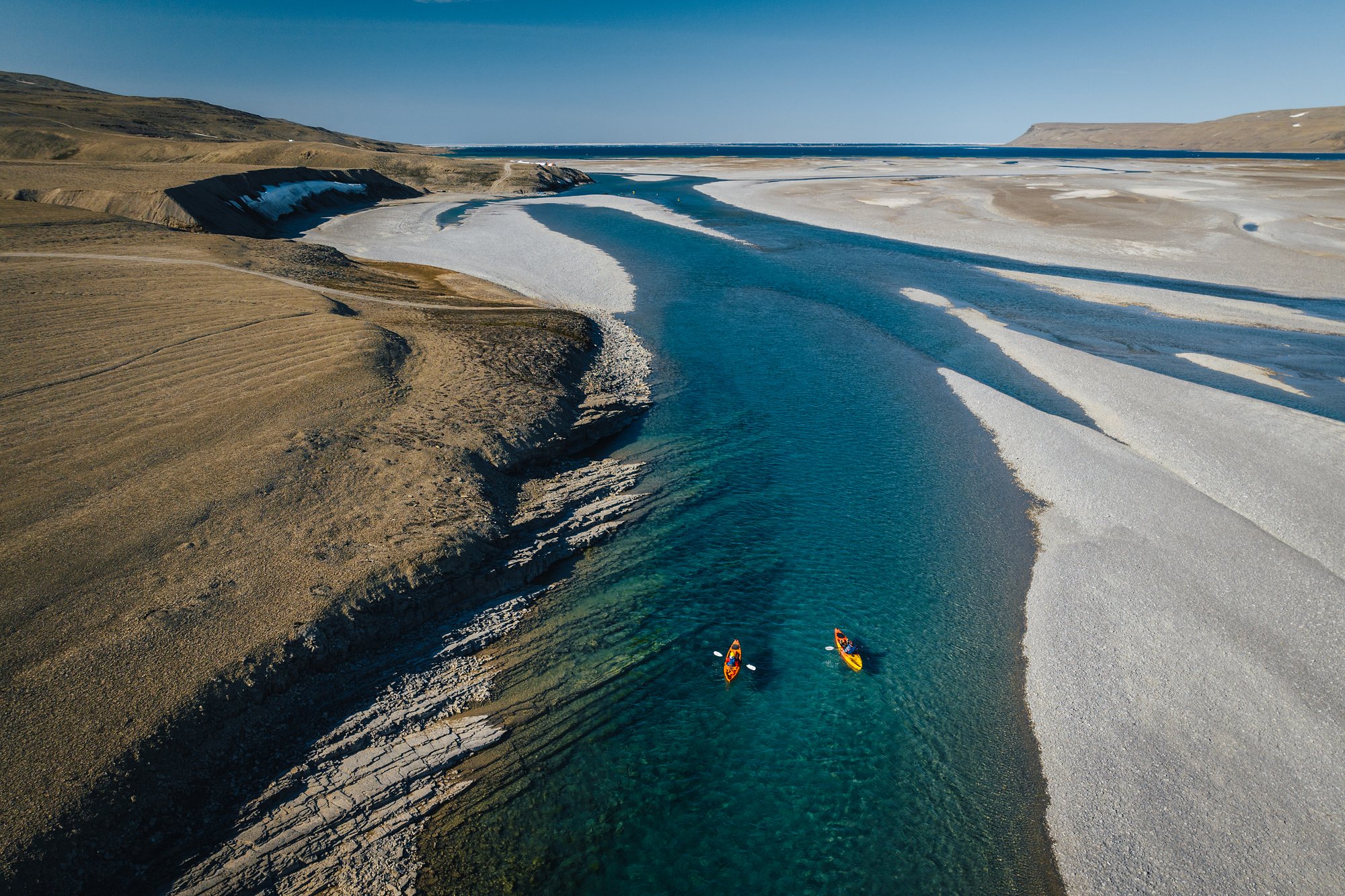
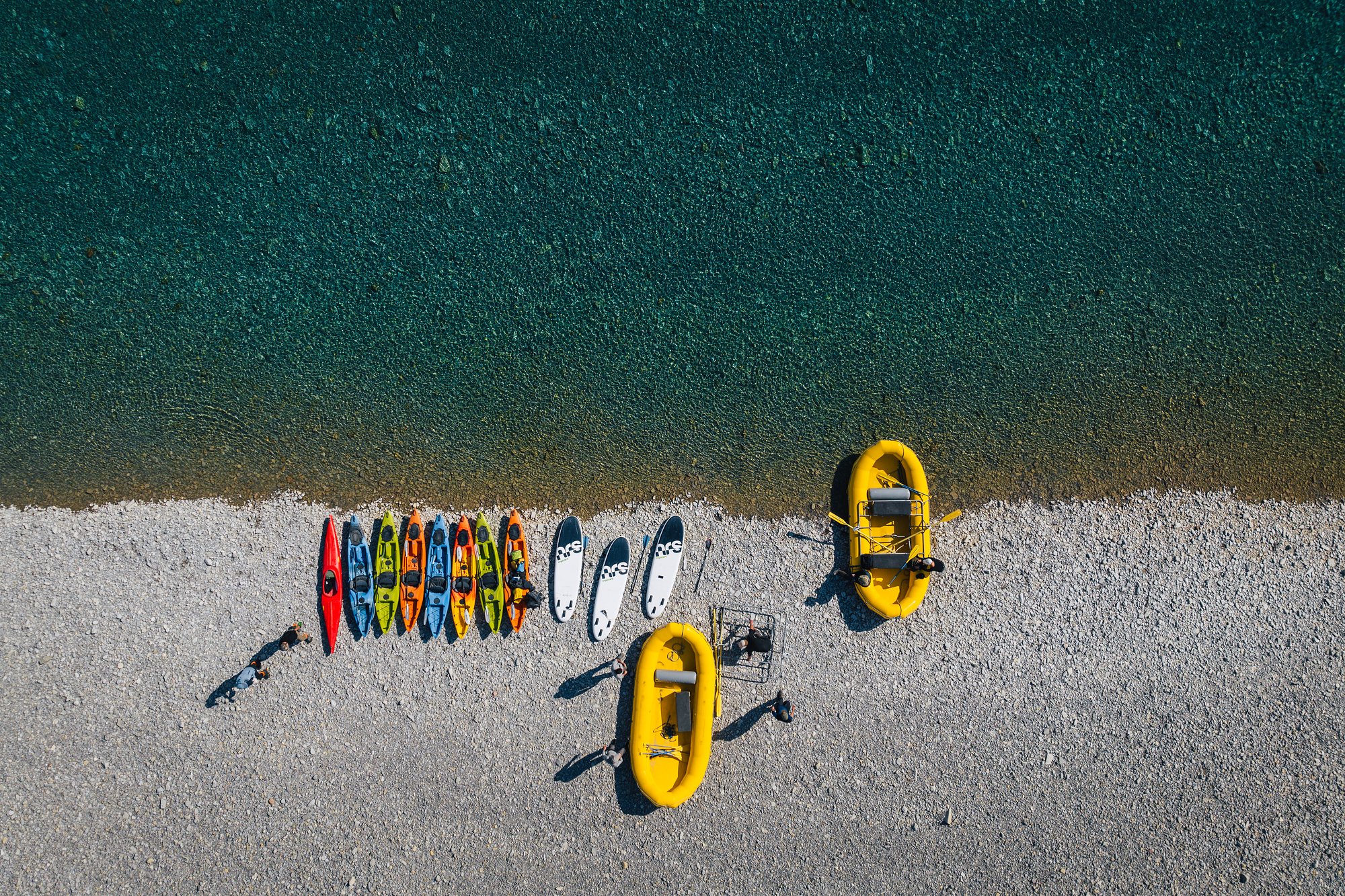
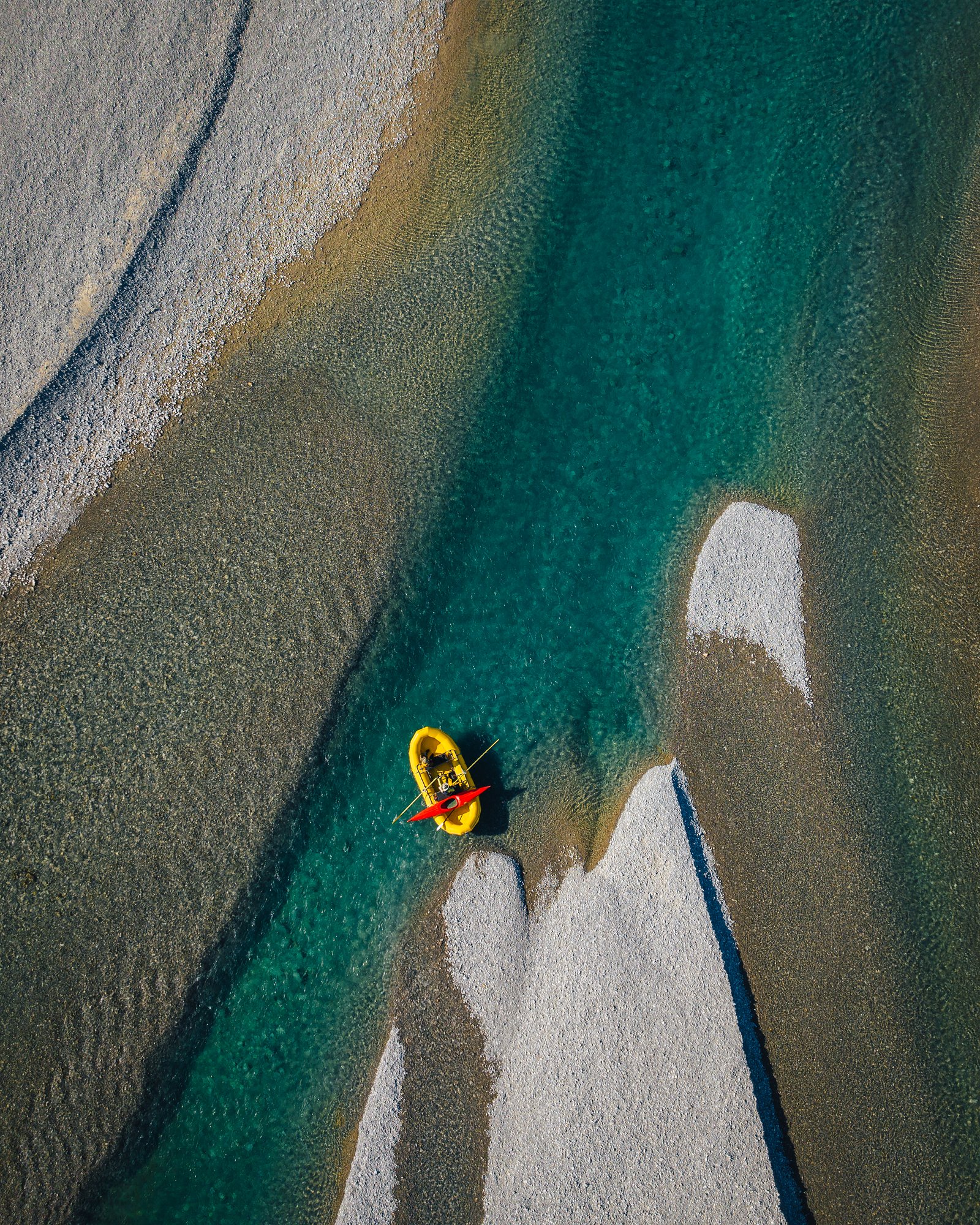
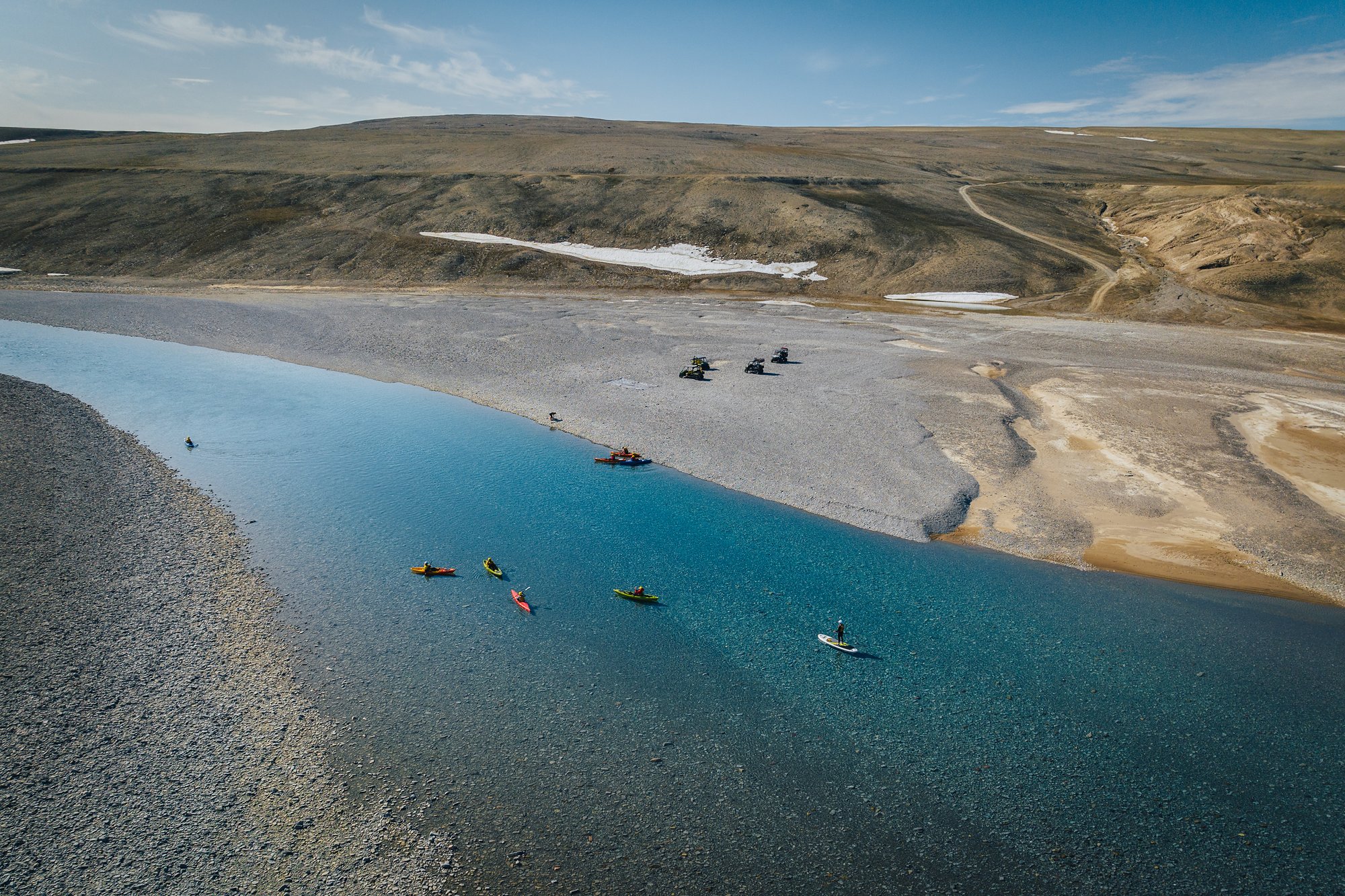
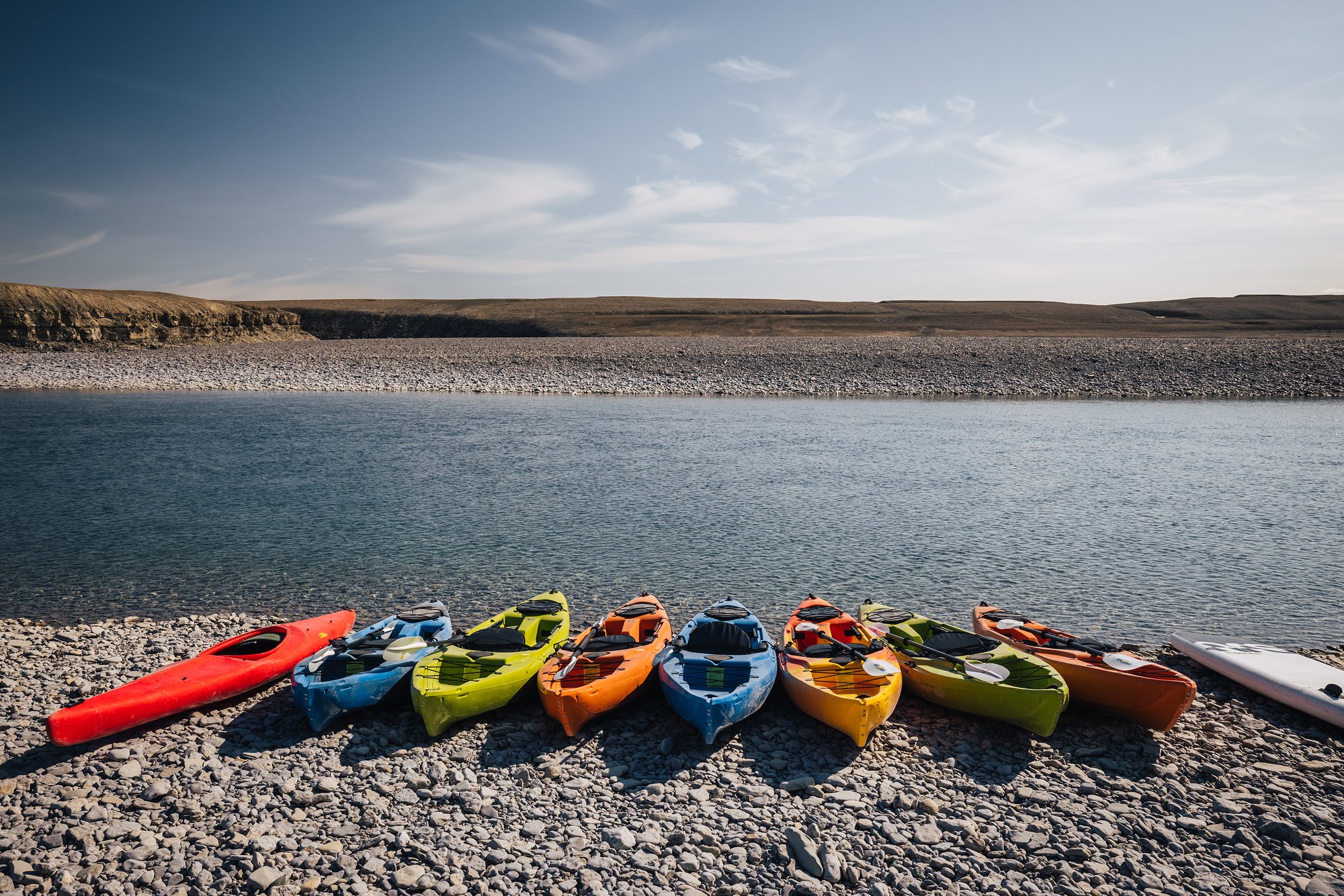
A perfect sunny day on Somerset Island means taking out all the toys. The guides loaded up the rafts, kayaks and stand-up paddleboards, and we spent the day hiking, rafting, kayaking and paddleboarding our way down the river.
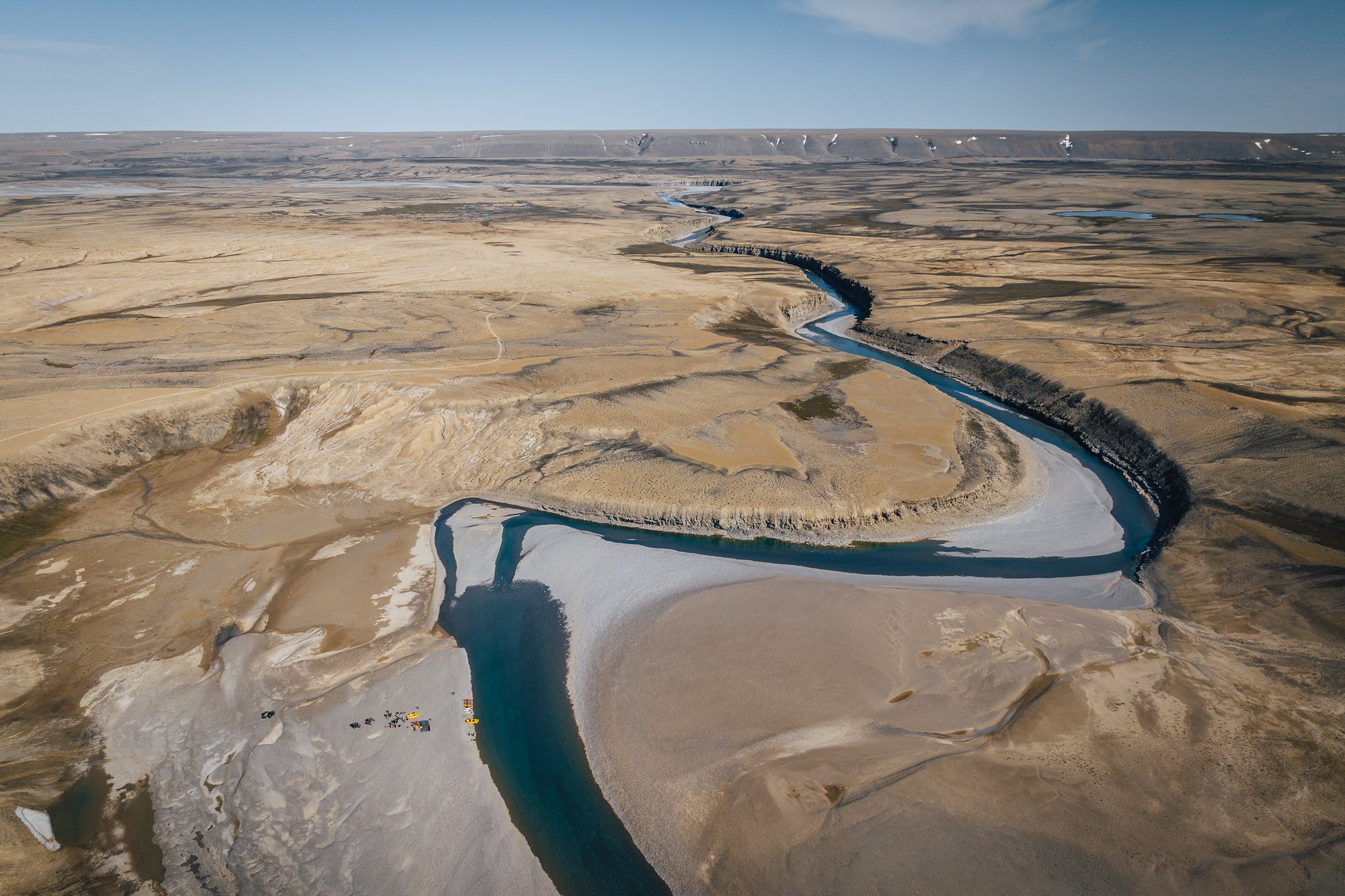
The fleet, lined up on a gravel bar.
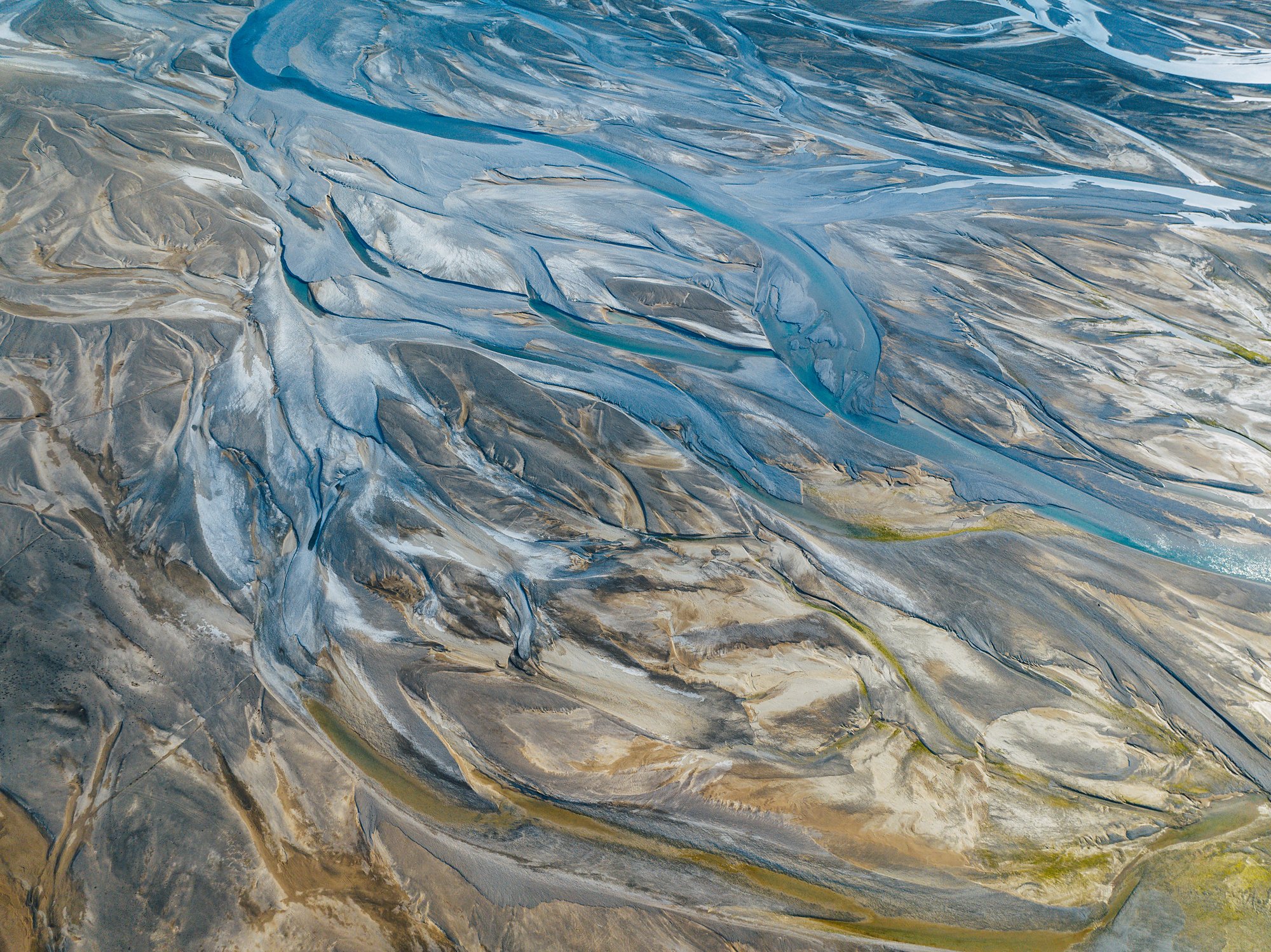
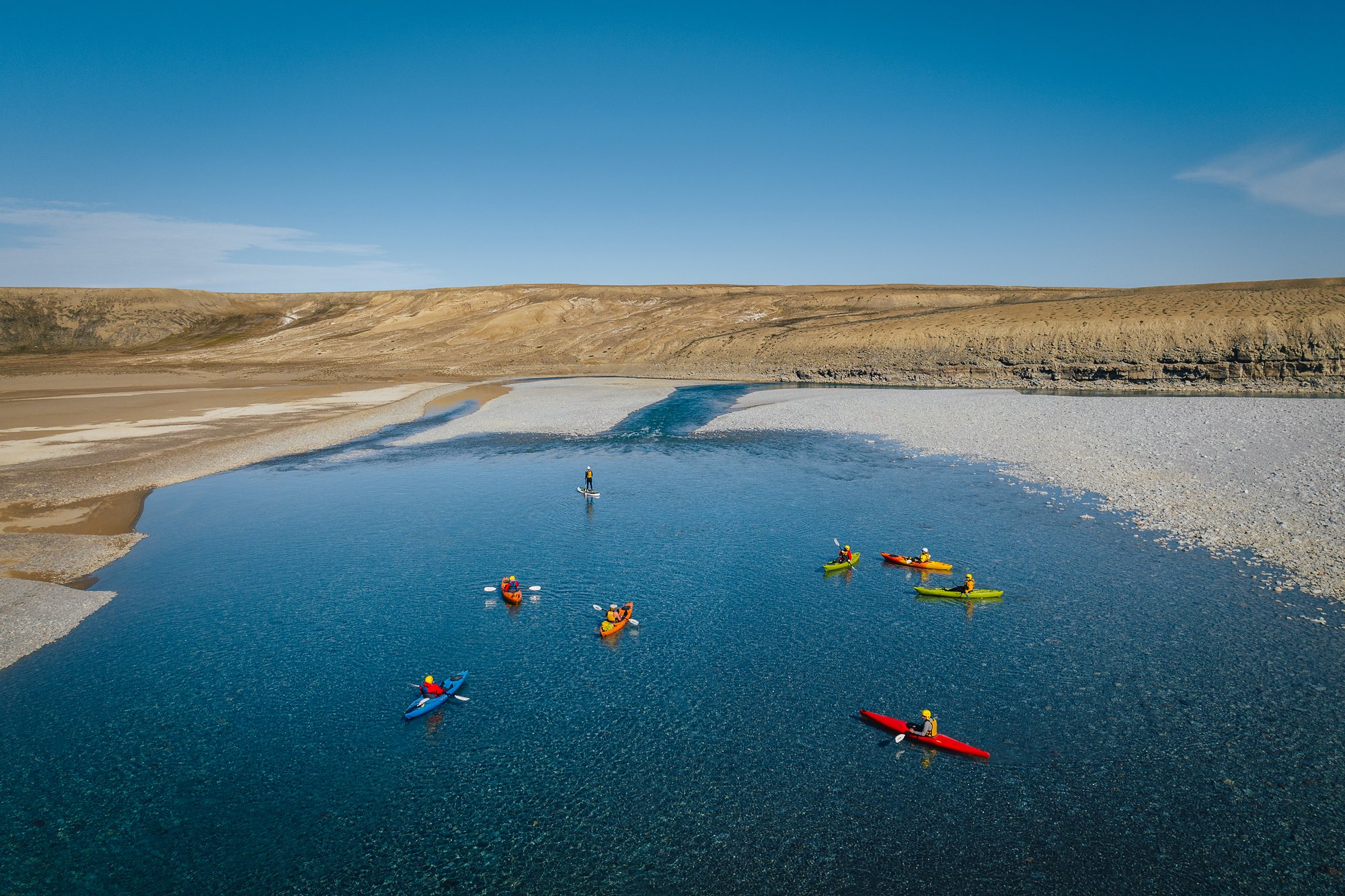
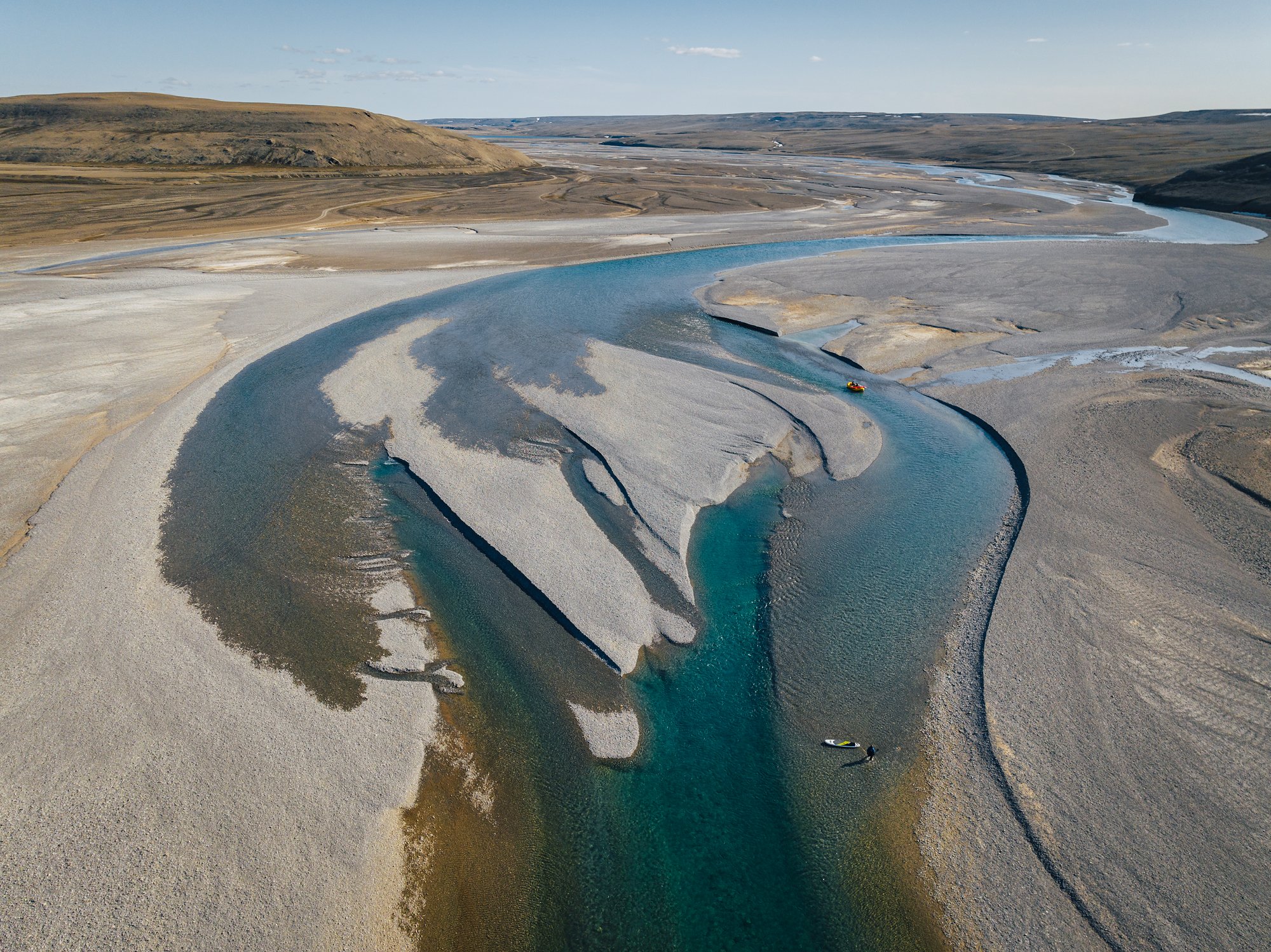
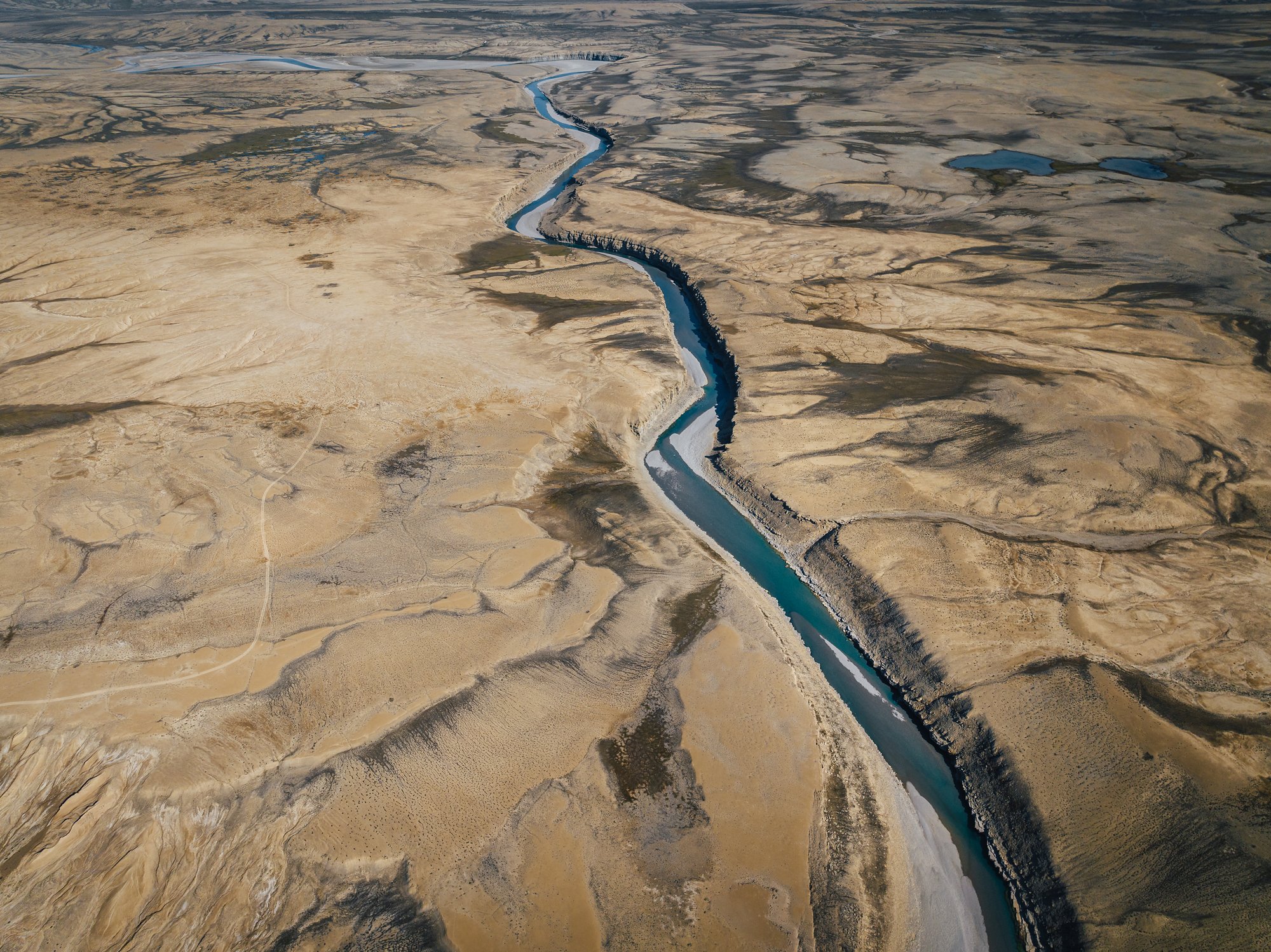
From the water the river feels like a secret. Its channels braid and split across wide beds of pale gravel, the water clear and teal over the stones. From the drone it looks even less real: a turquoise thread wandering through a land the color of sand.
Paddling beneath the cliffs. Kayaks and a paddleboard on a wide, still pool.
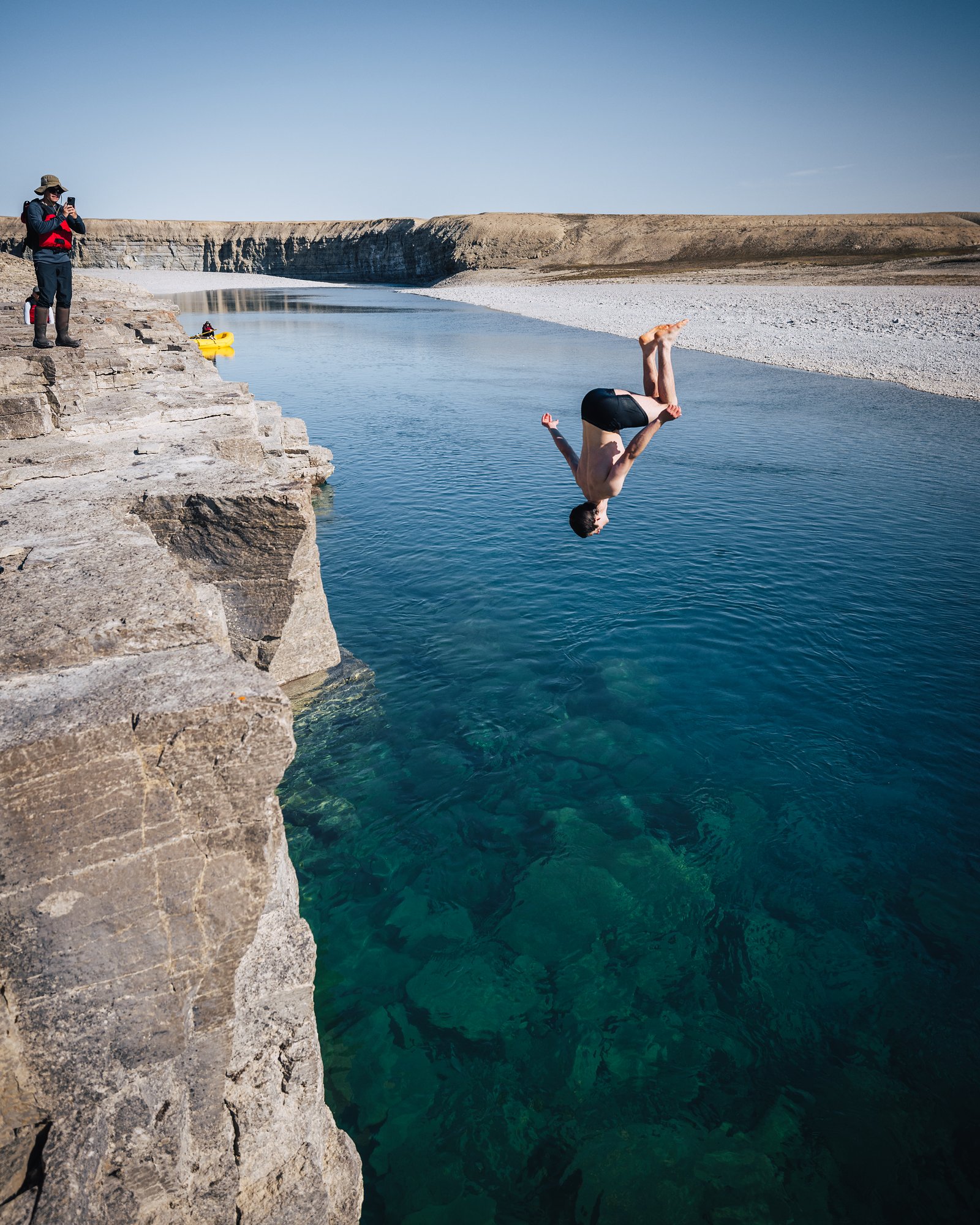
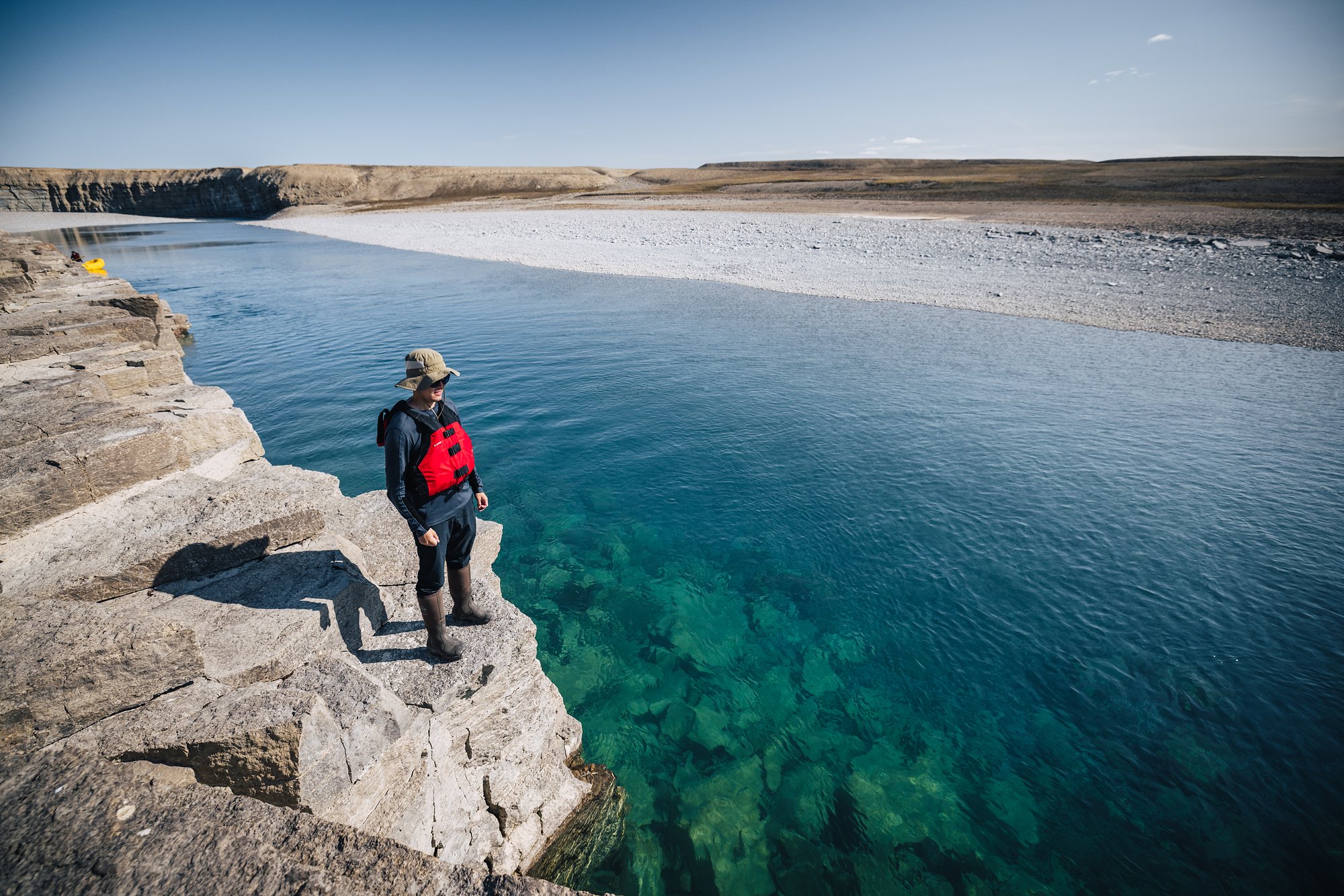
Then came the polar plunge. At a deep pool below a limestone ledge, the braver members of the group jumped in, one of them with a backflip, into water that has no business being swum in at 74° north. Lunch followed on the gravel, laid out on the equipment cases, with fields of cottongrass behind us. So much fun, and a great way to see how many different landscapes the Arctic holds.
The polar plunge, with style. The same river from above: a raft on a turquoise channel between gravel bars.
Part 05
The Heaviest Ice in 44 Years
July 22–27, 2023 · The northern coast, Somerset Island
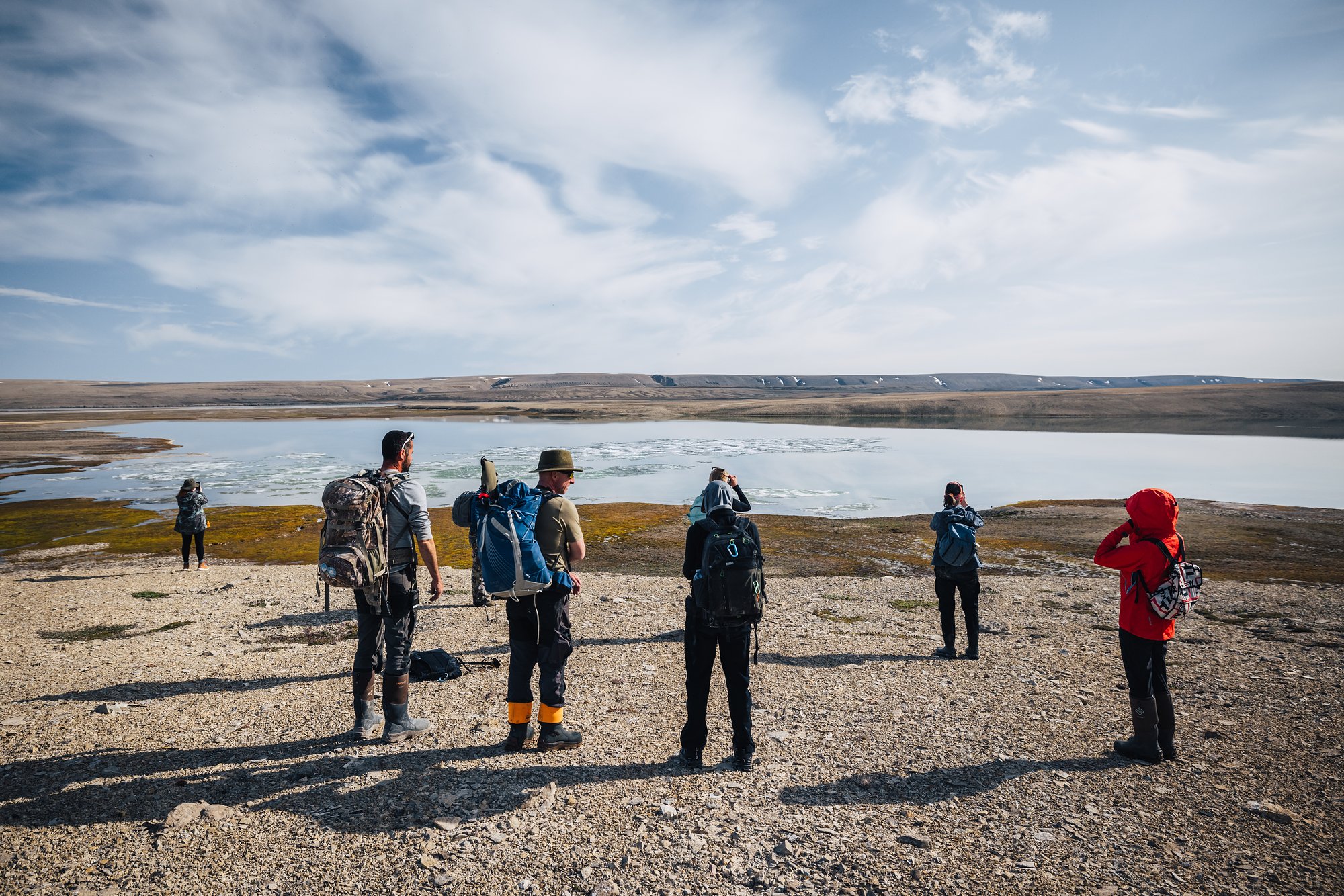
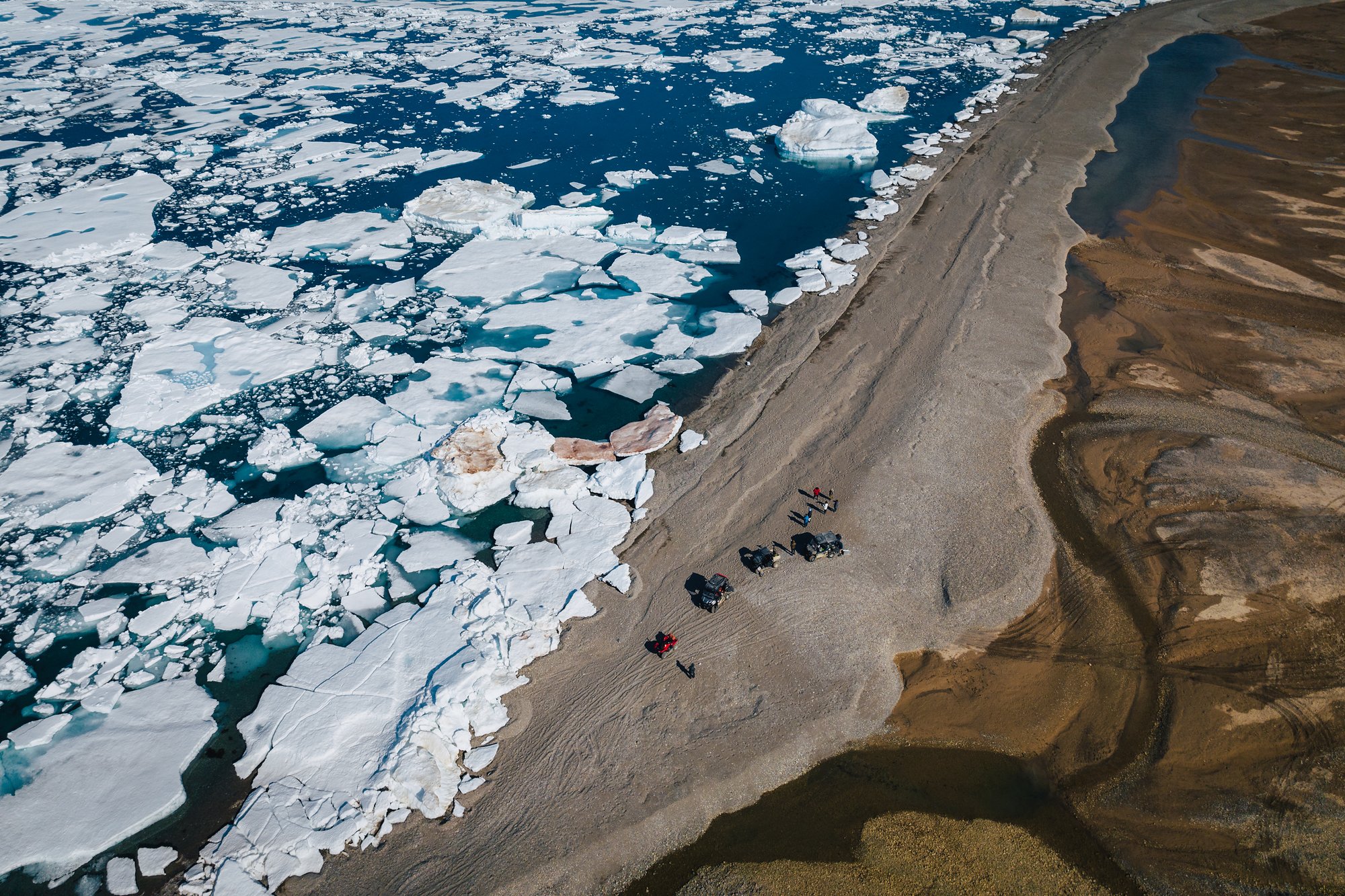
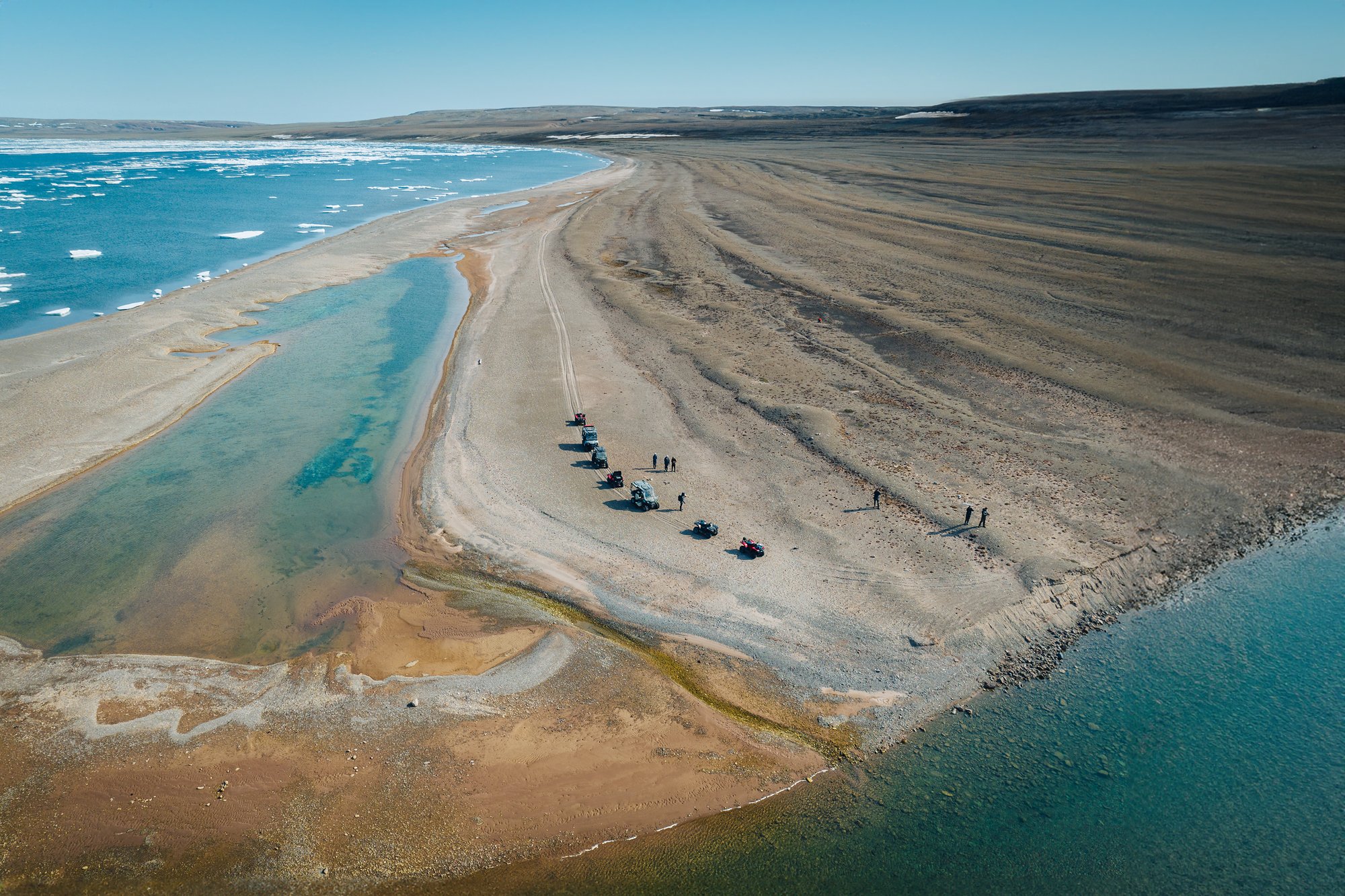
Walking a gravel spit between the sea ice and the shallows.
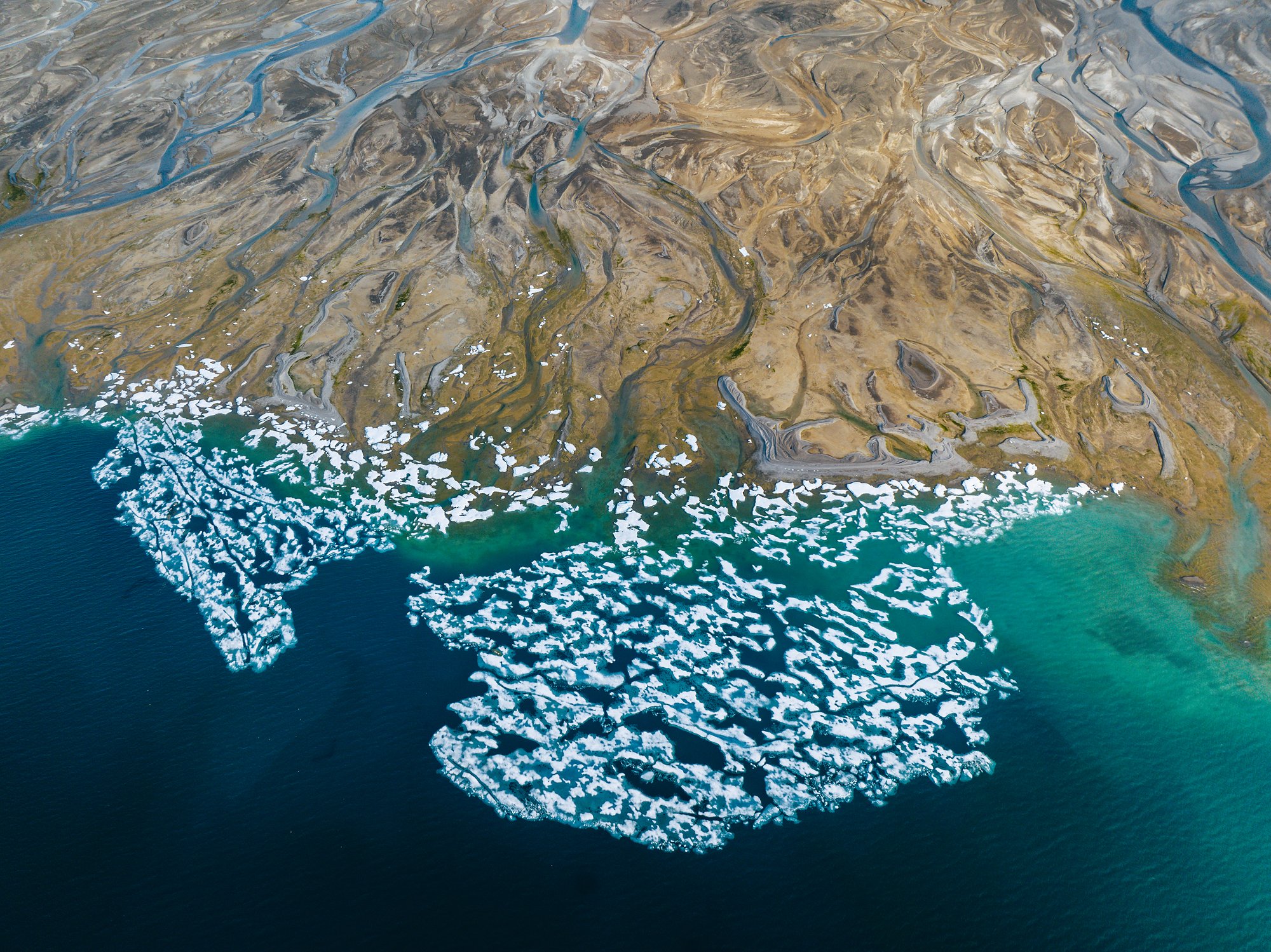
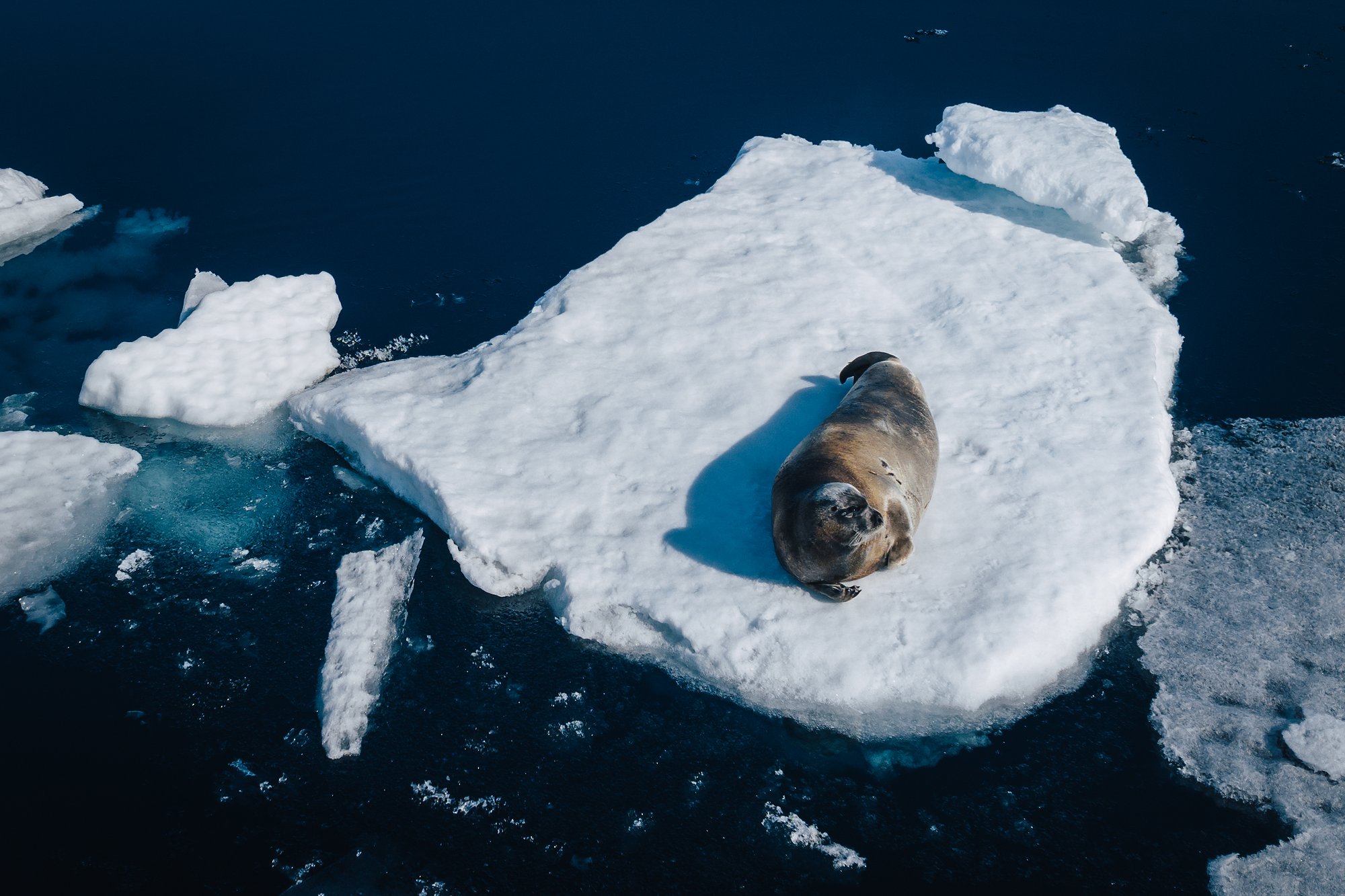
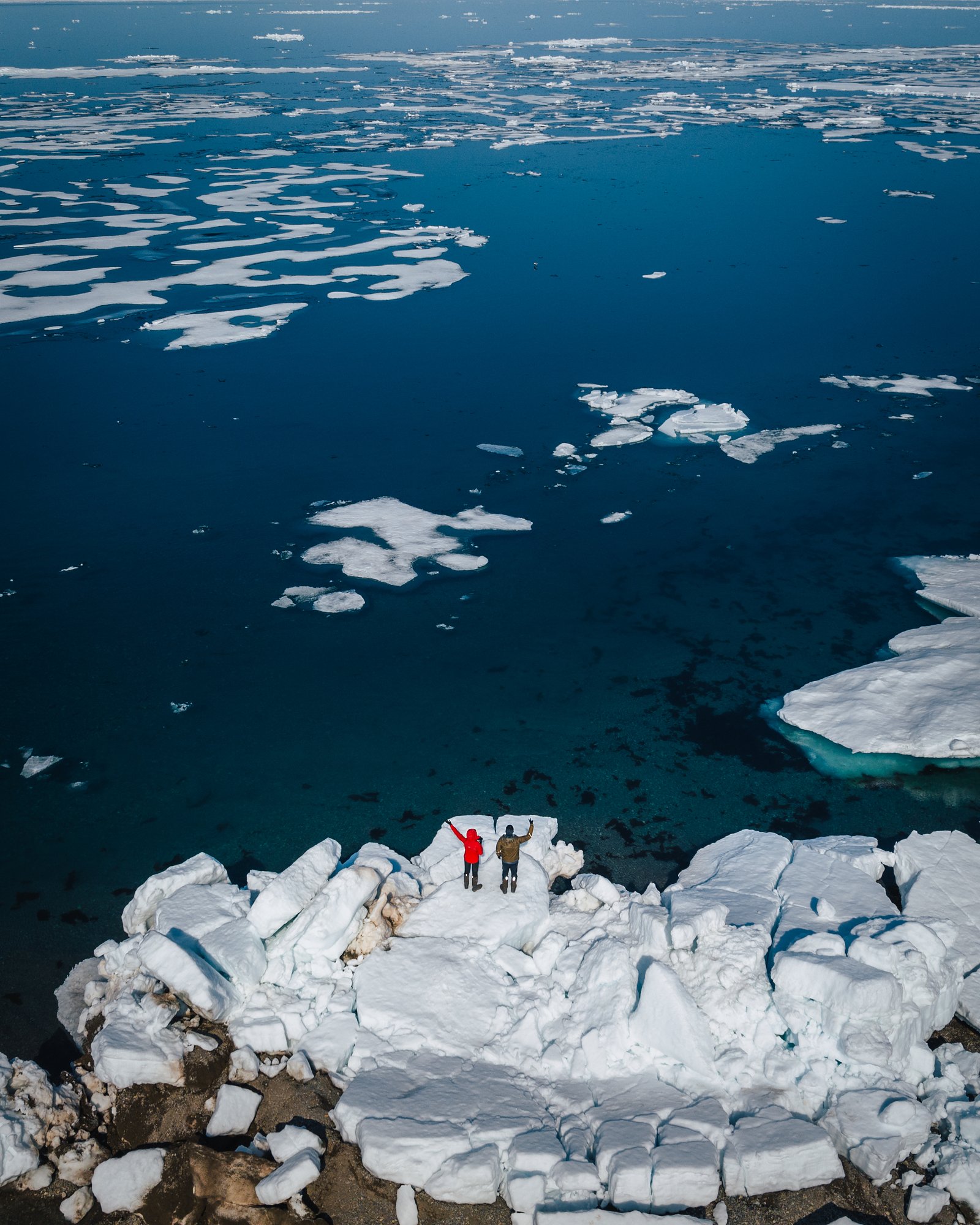
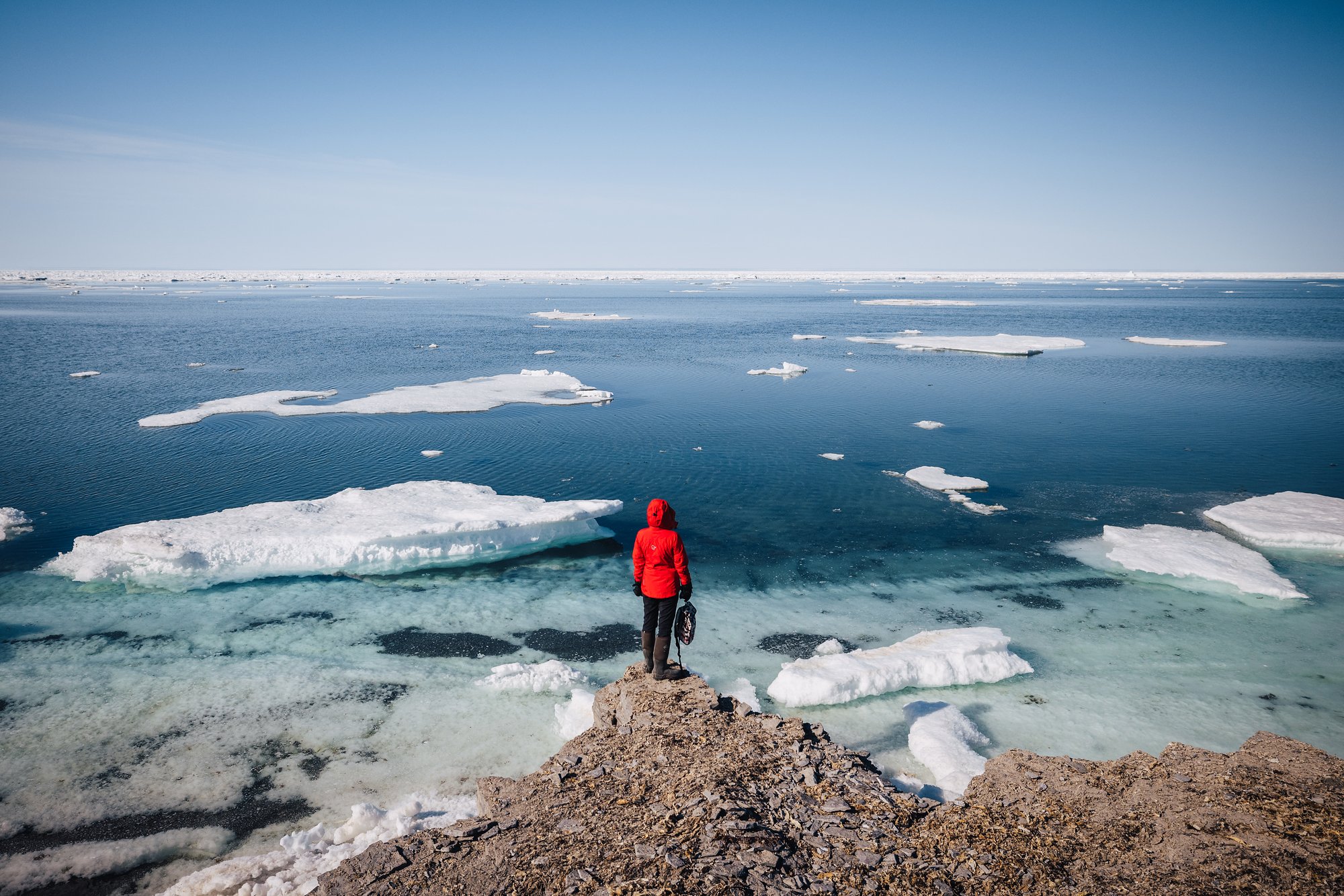
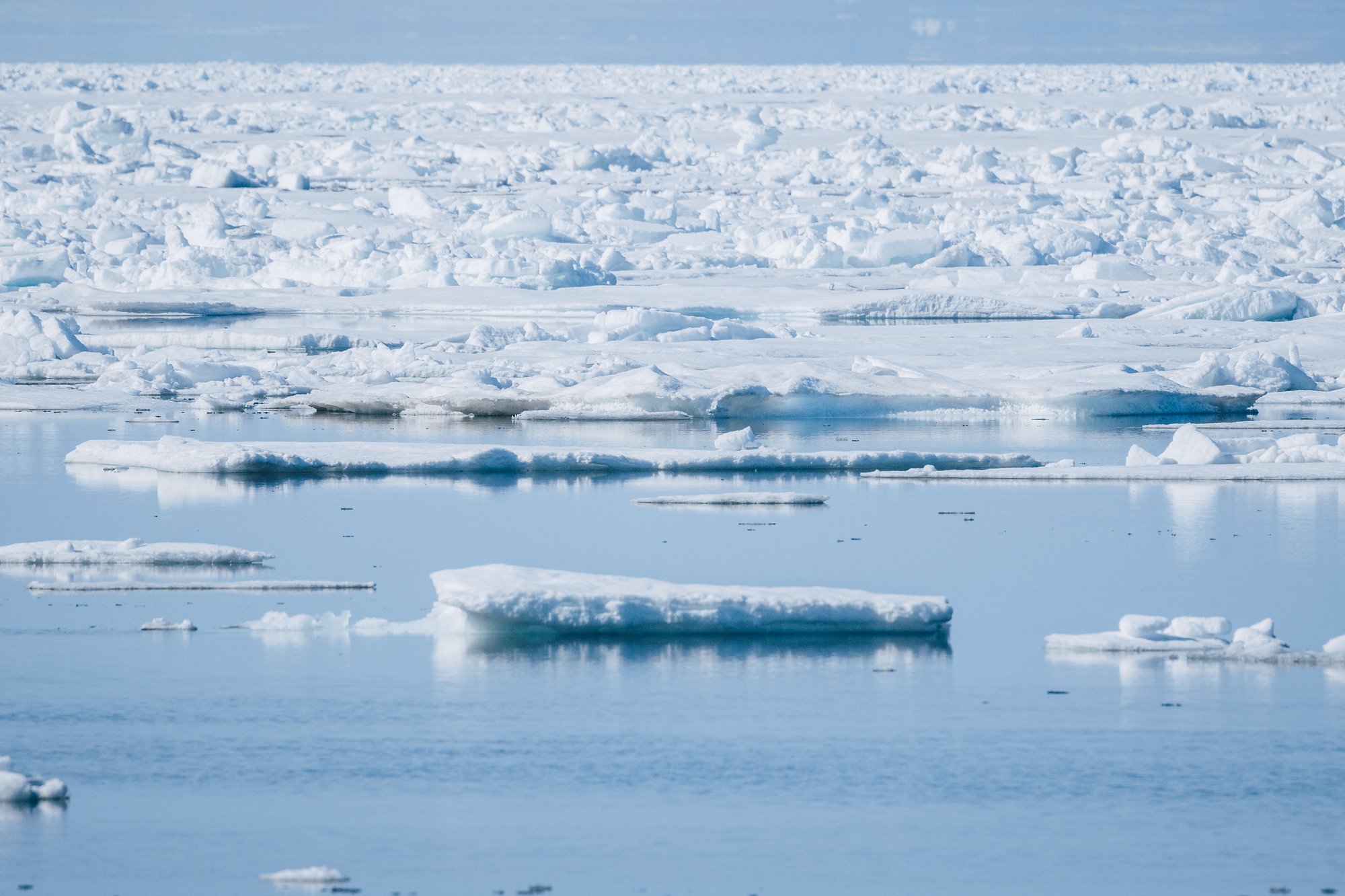
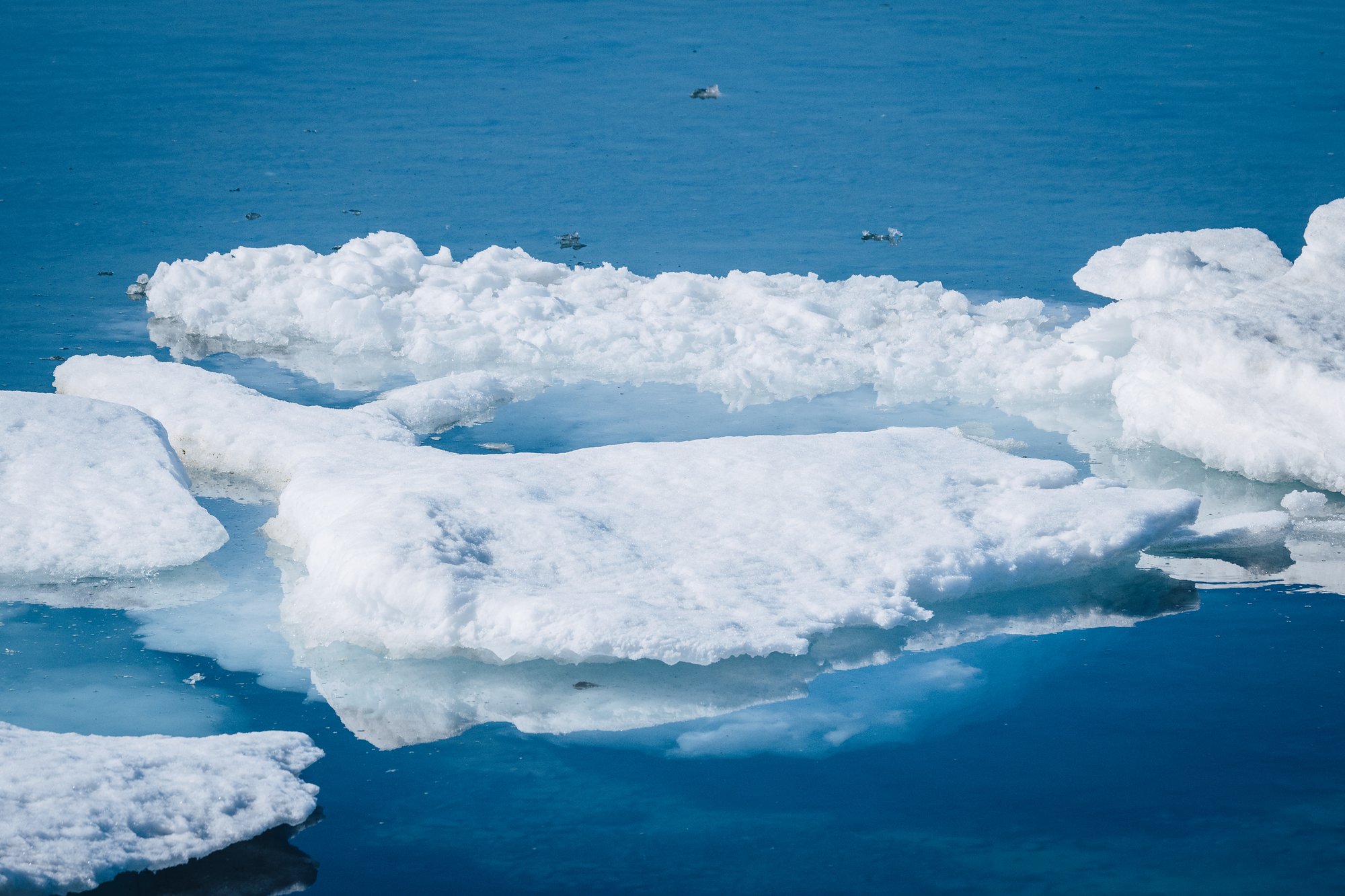
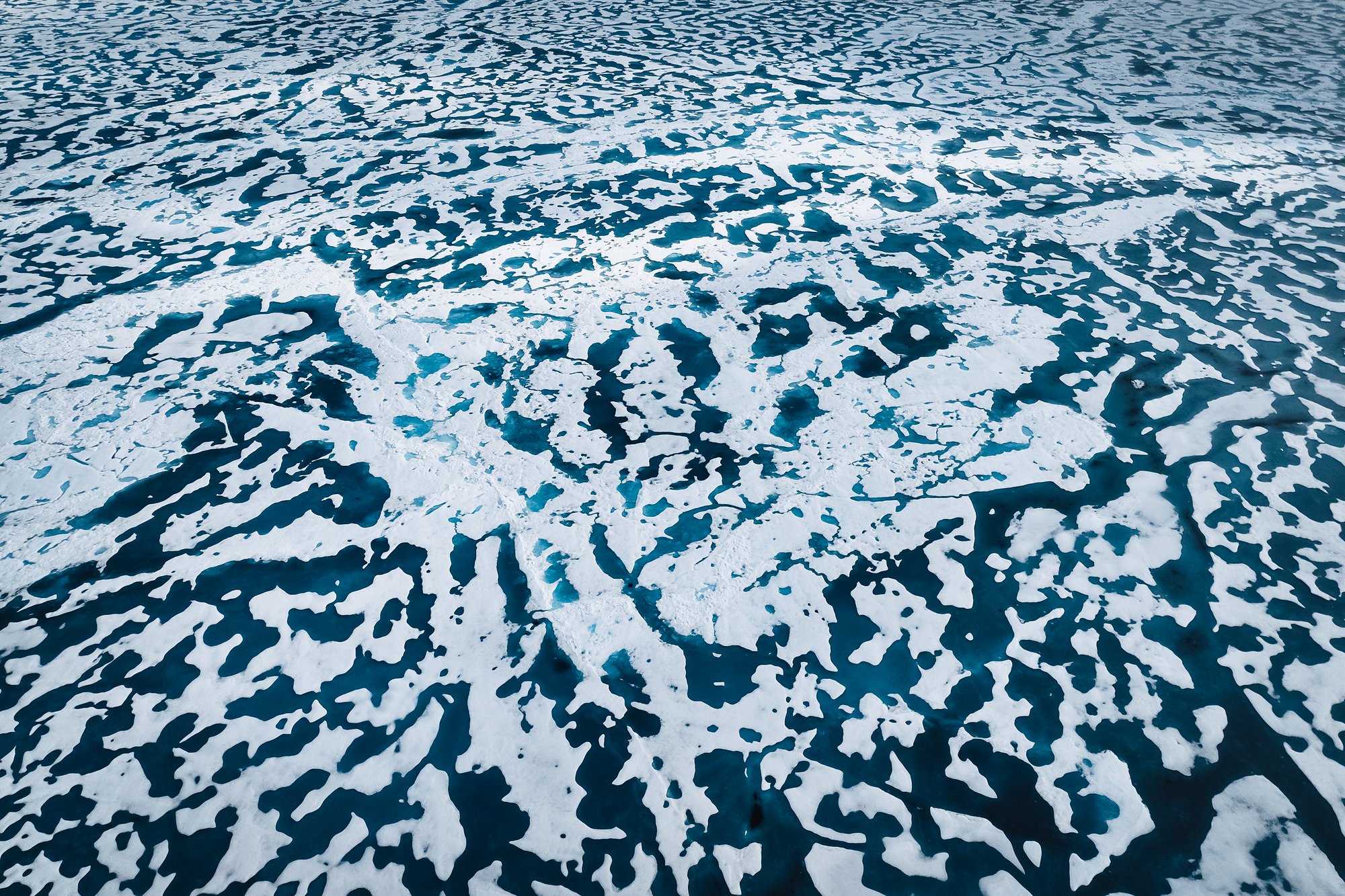
The summer we came, the sea around Somerset Island held the most ice in 44 years. Floes jammed the shore in broken white plates, lay stranded in the shallows and piled into blocks along the beaches, and beyond them the pack ice ran flat to the horizon. It made for stunning landscapes, and for resting spots for the seals.
A seal hauled out on a floe.
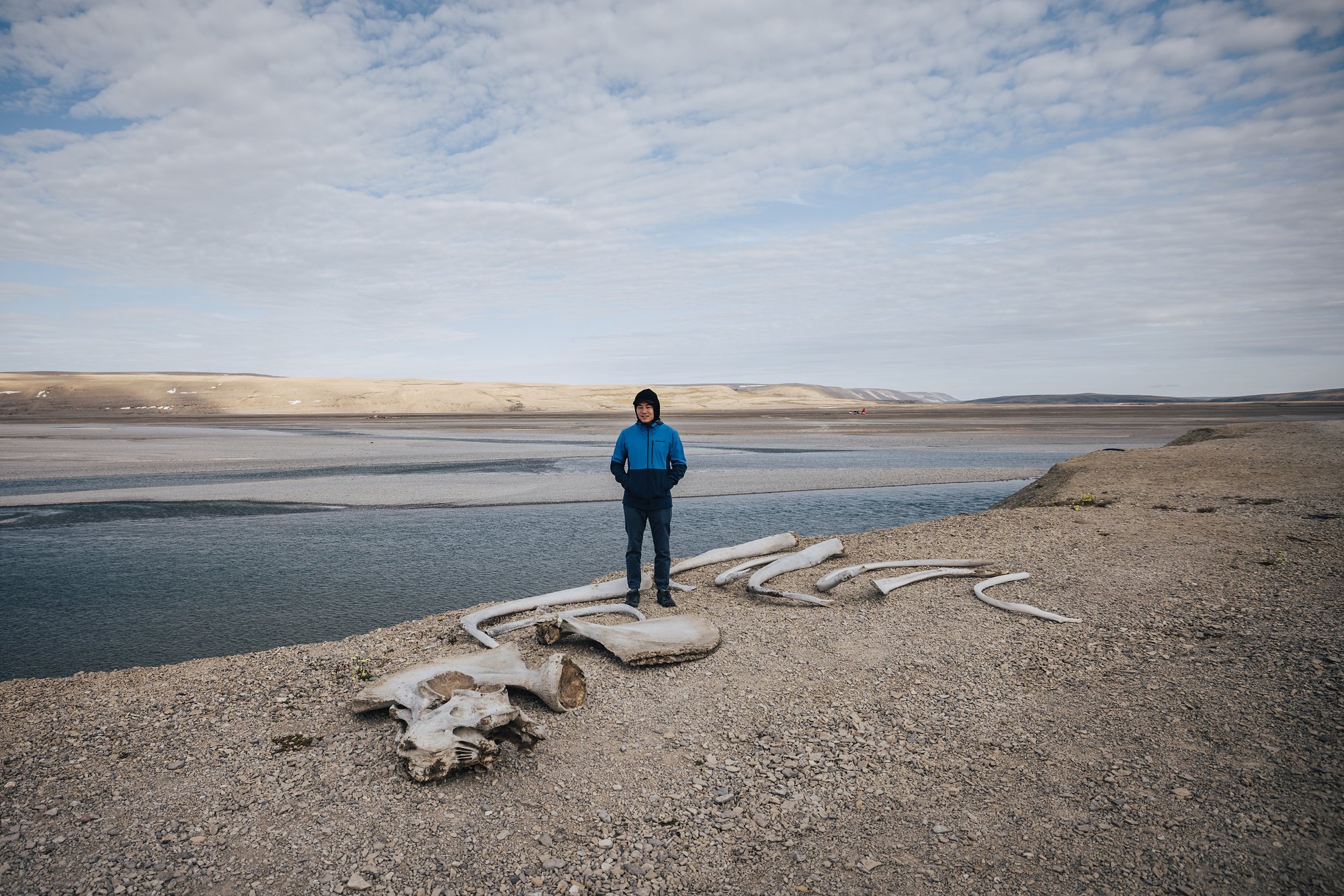
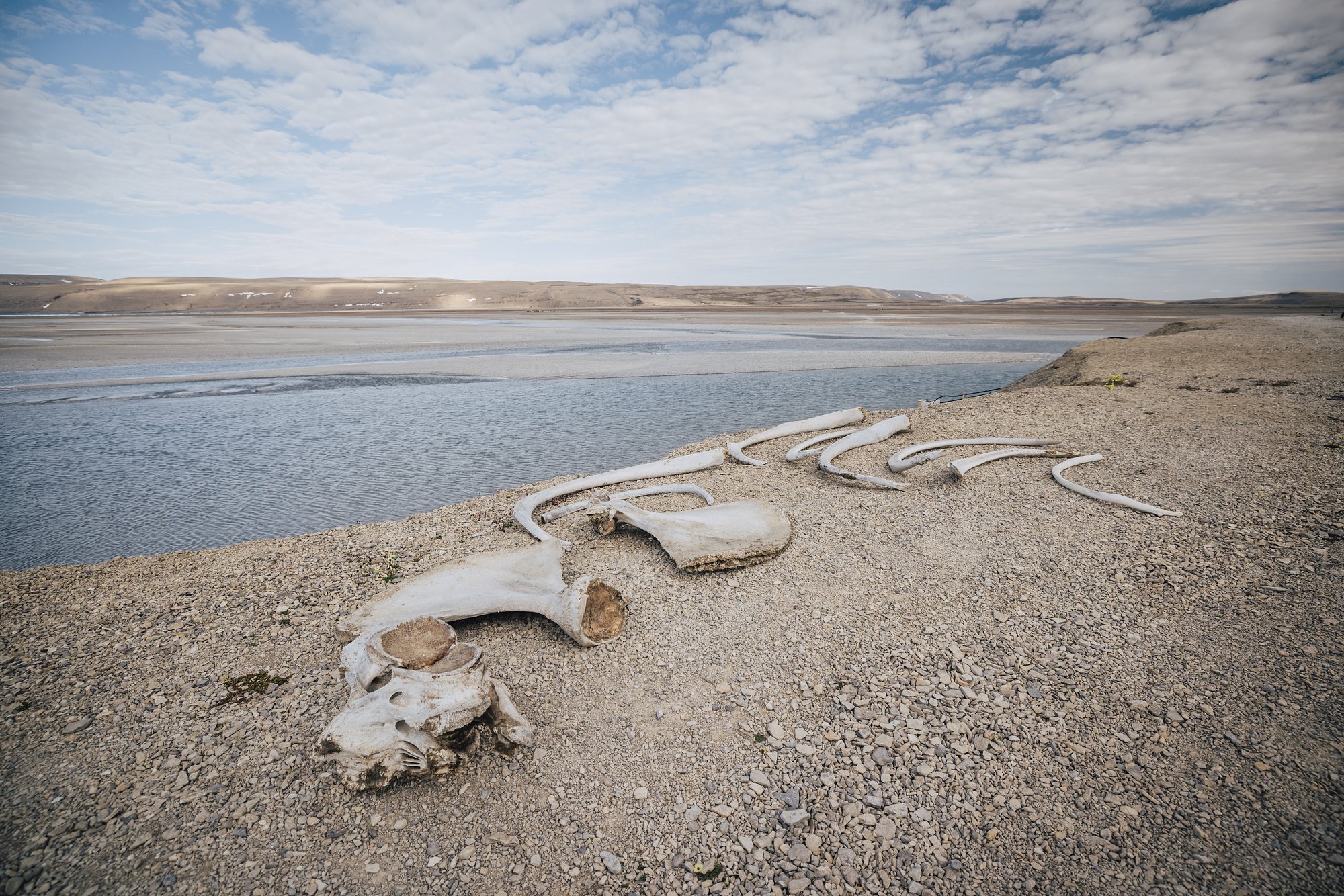
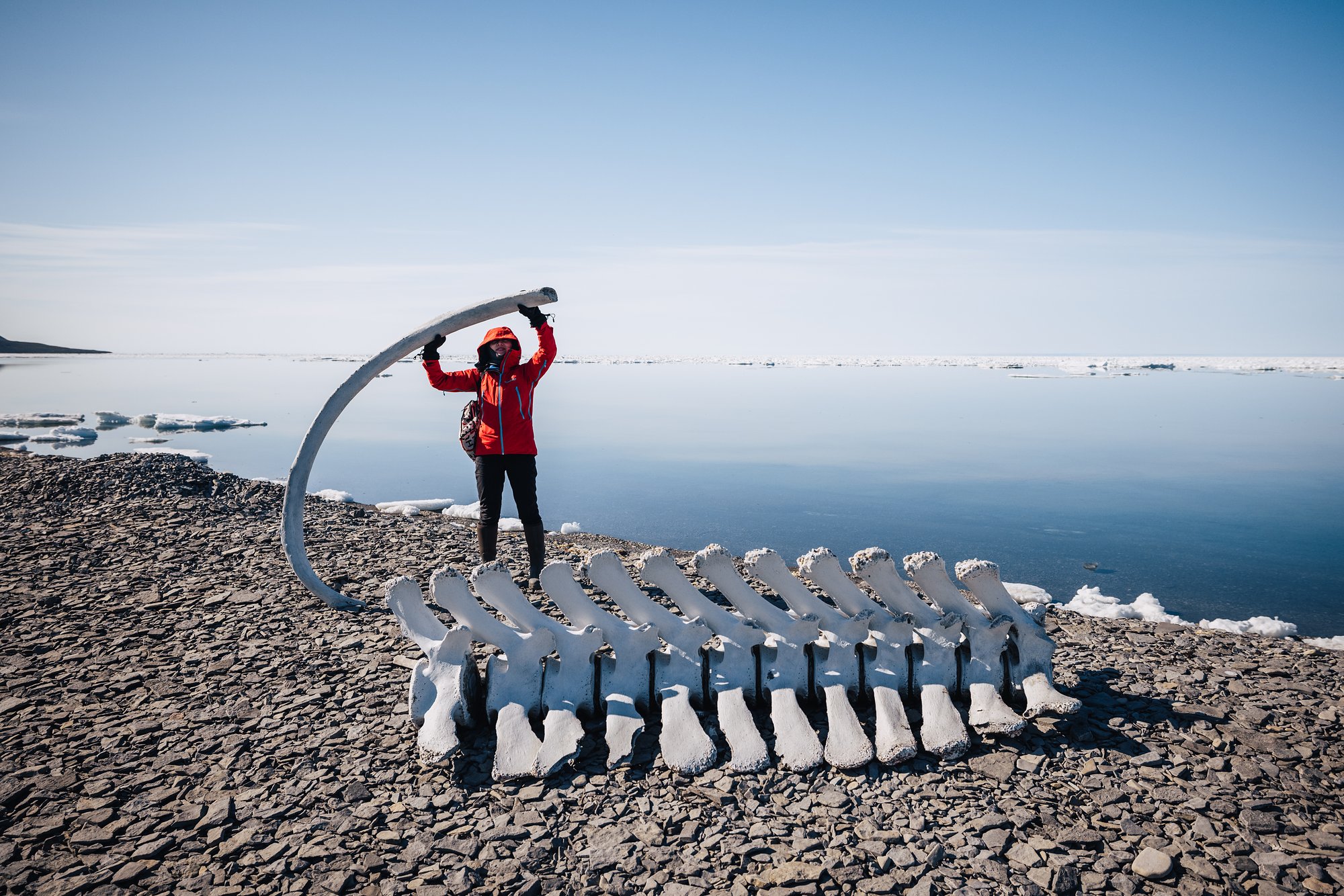
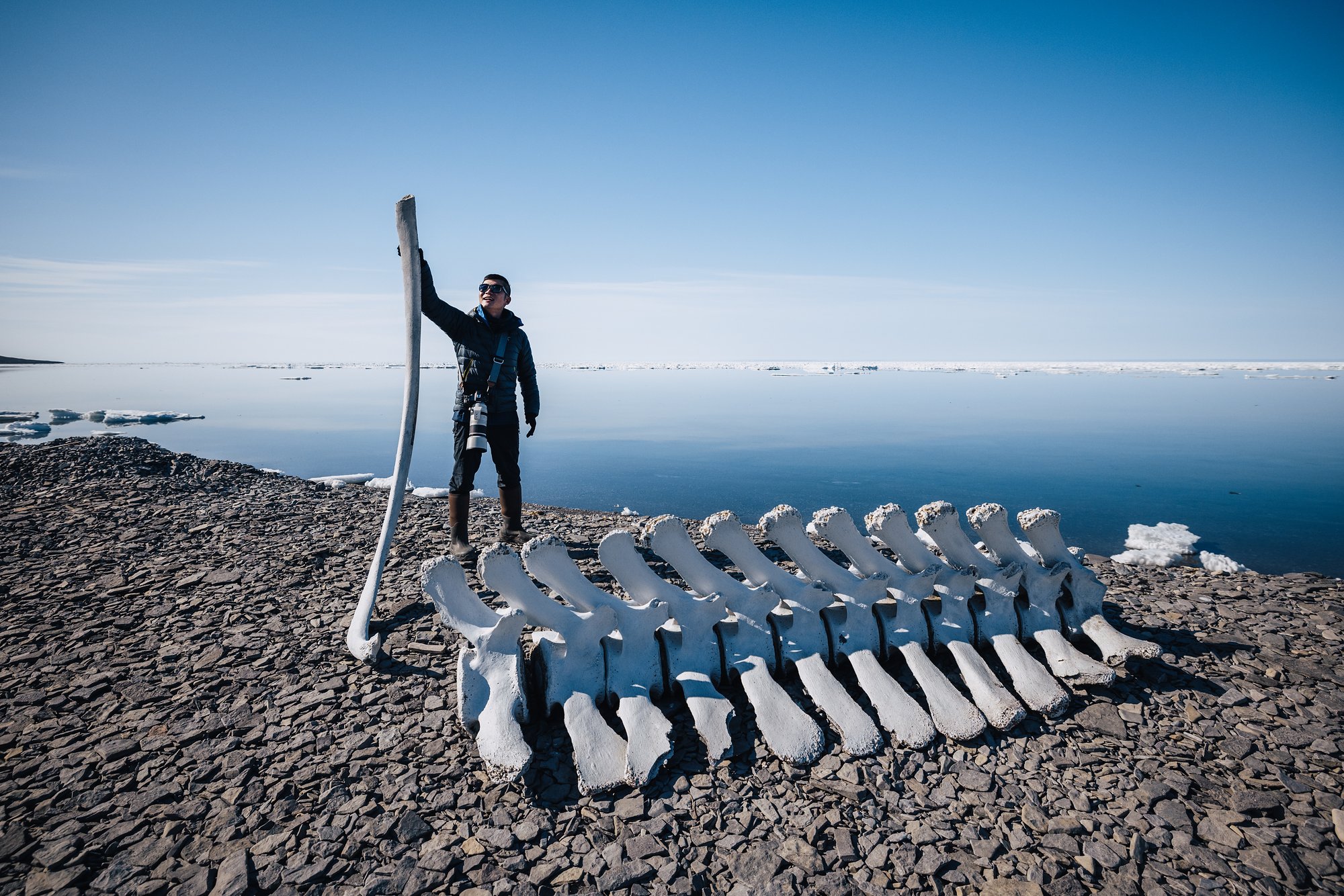
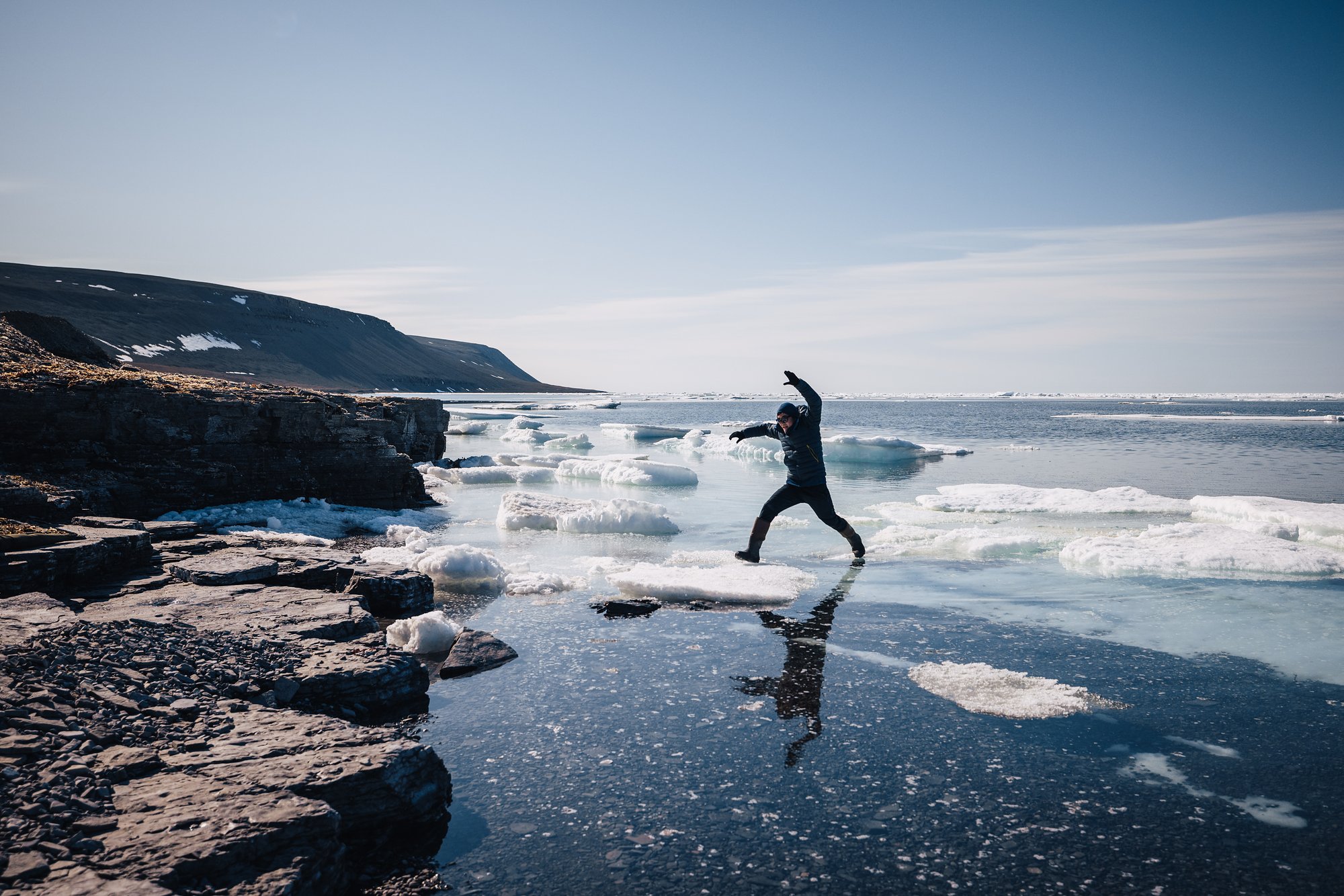
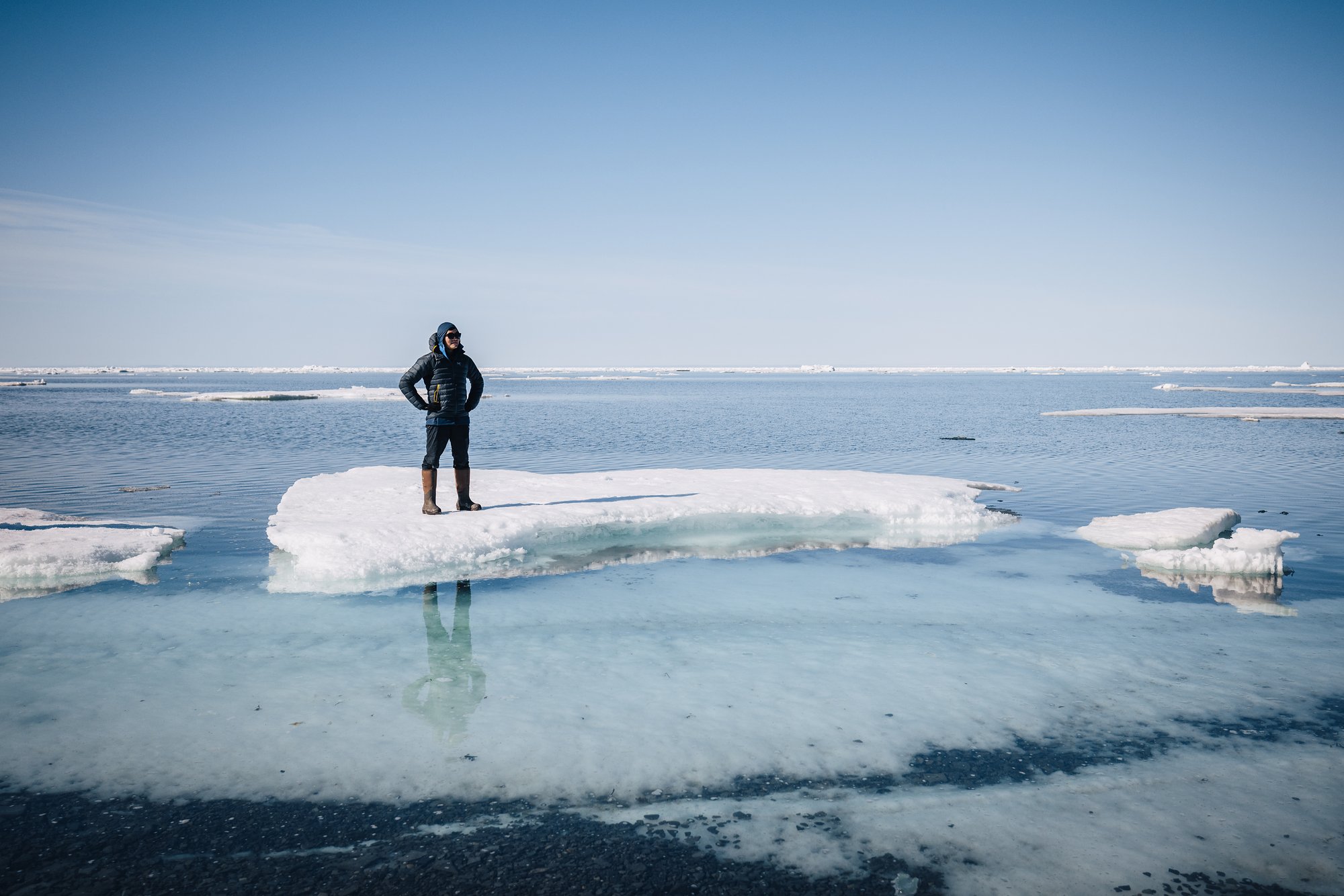
We spent several afternoons on the northern coast, walking the gravel spits and rock ledges between the ice and the tundra. On one beach lay the skeleton of a whale, its vertebrae lined up on the stones like a row of stools, and Grace couldn't resist hoisting one of its long, curved bones over her head. Standing on a stranded floe with ice in every direction, it felt like another world, and we were enjoying every minute of it.
Two of our group on a pile of stranded ice. Grace and the whale. Looking out over the floes.
Part 06
A Polar Bear and Her Cub
July 27, 2023 · The northern coast, Somerset Island
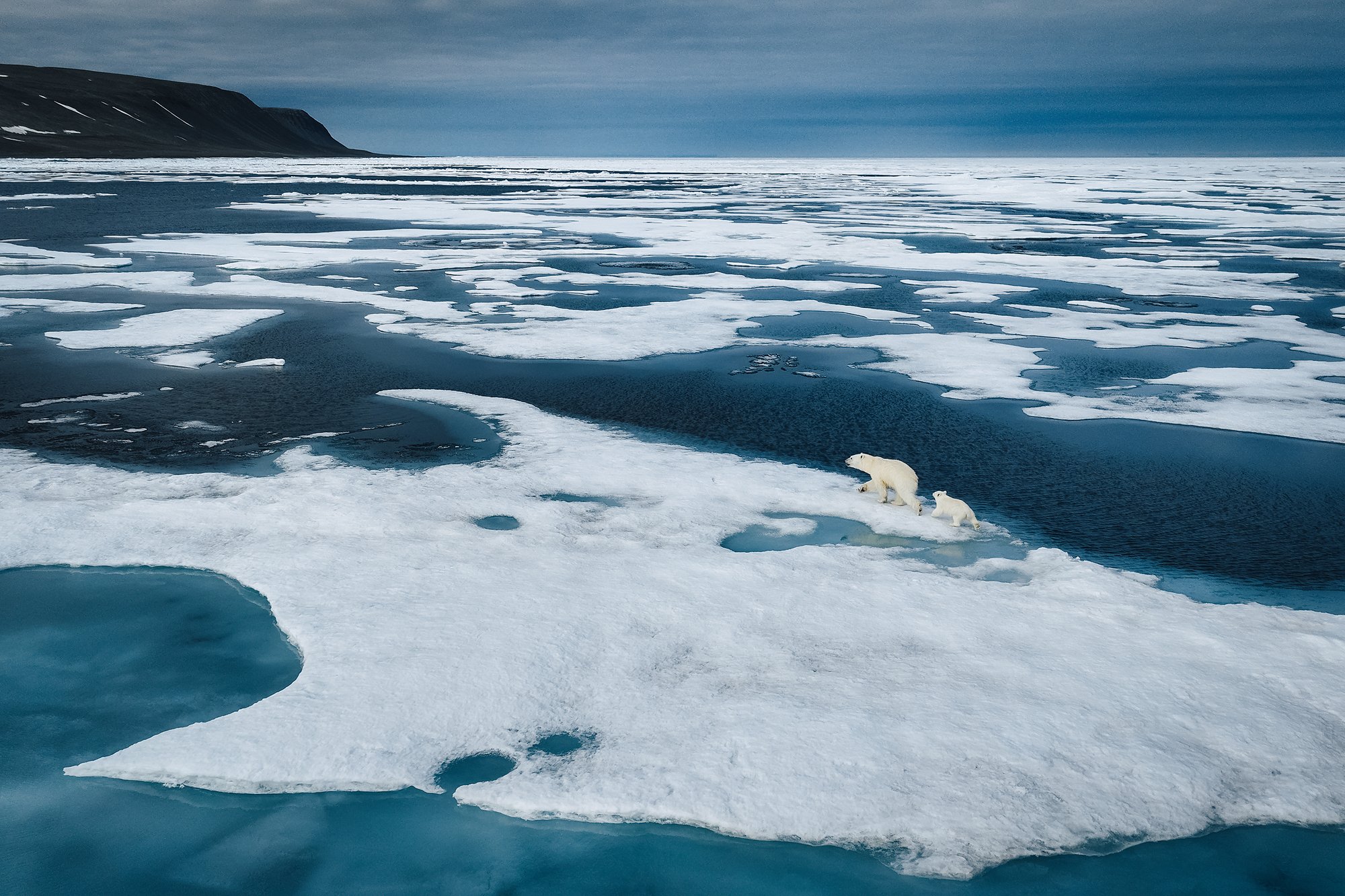
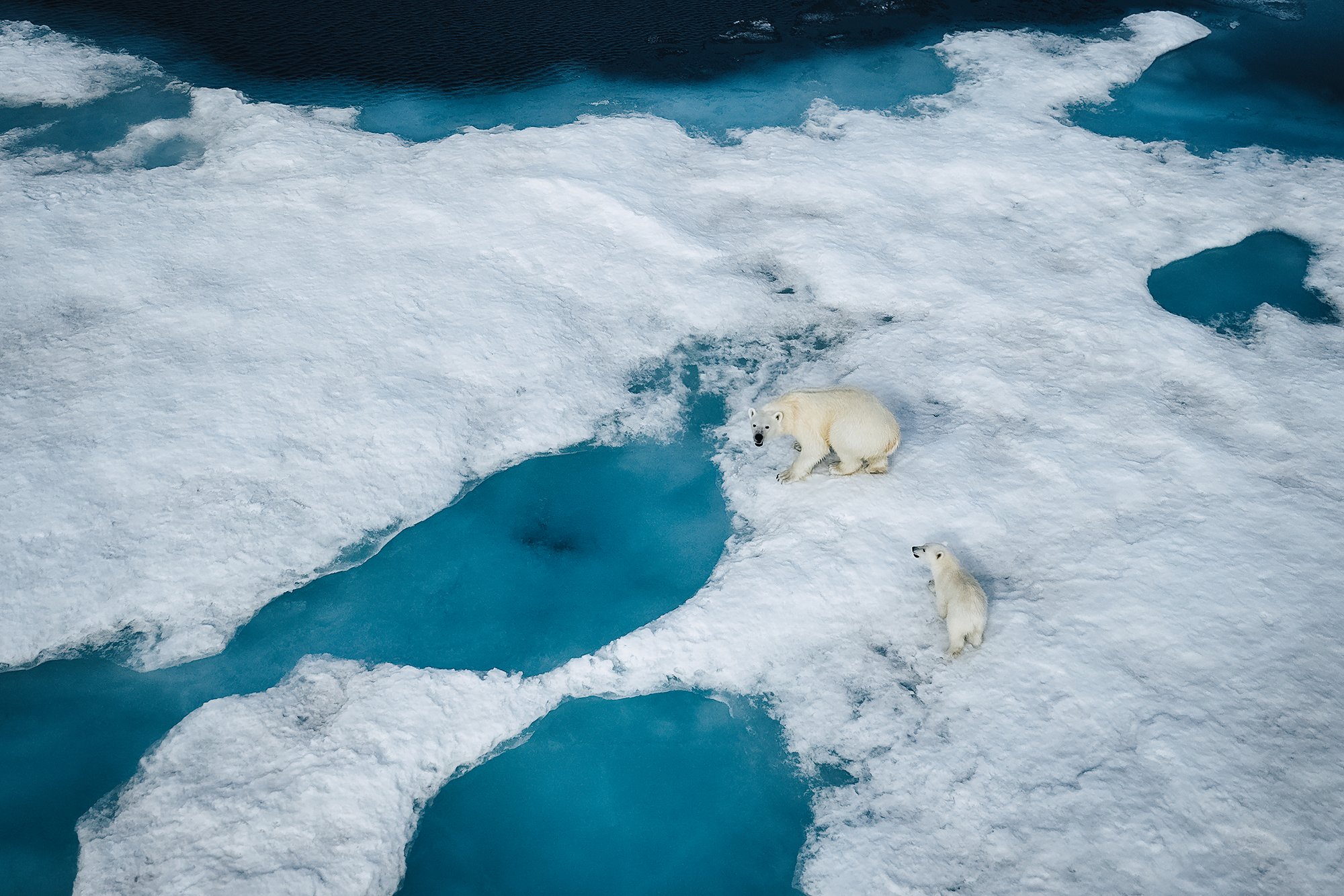
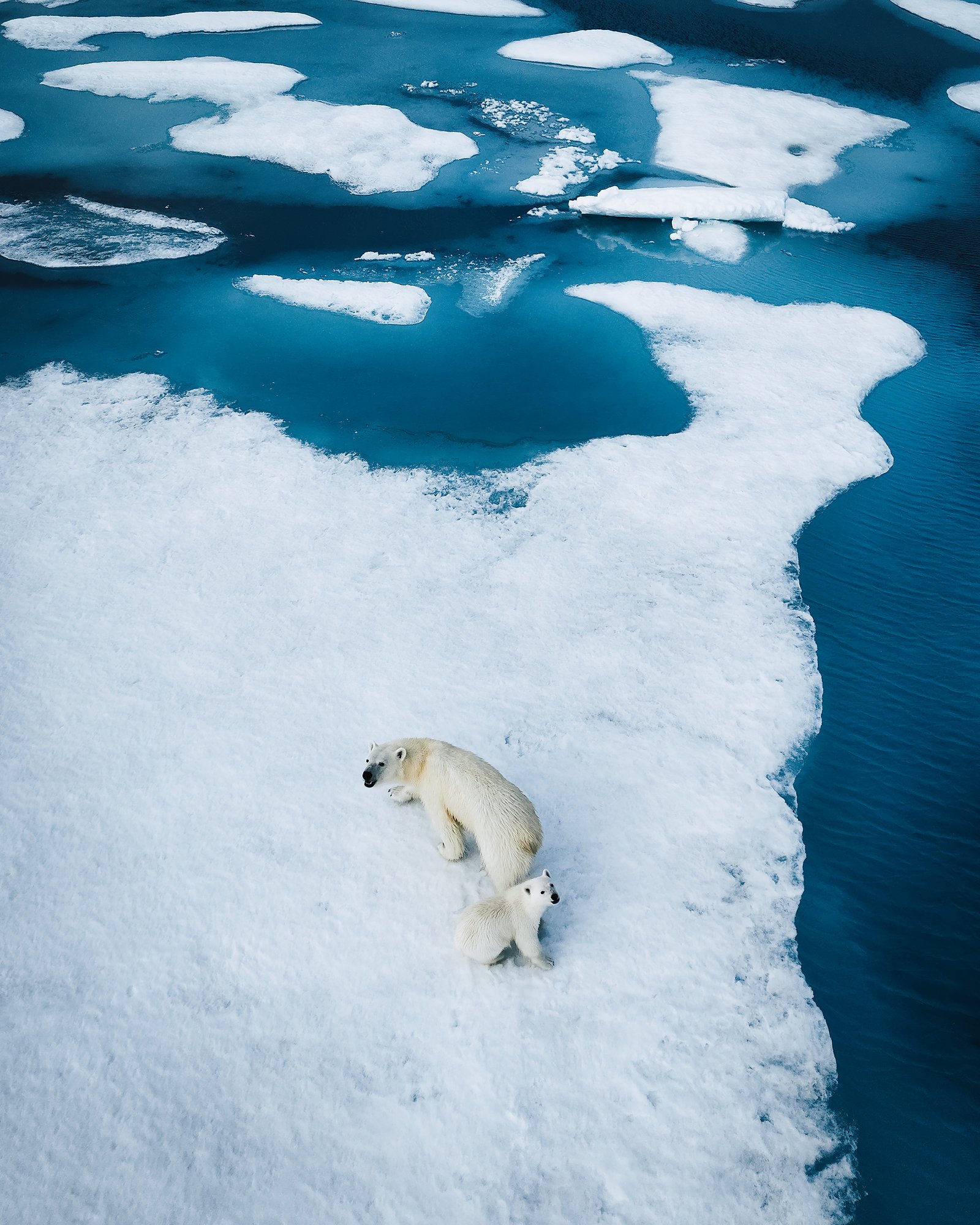
A mother polar bear and her cub on the sea ice off the northern coast.
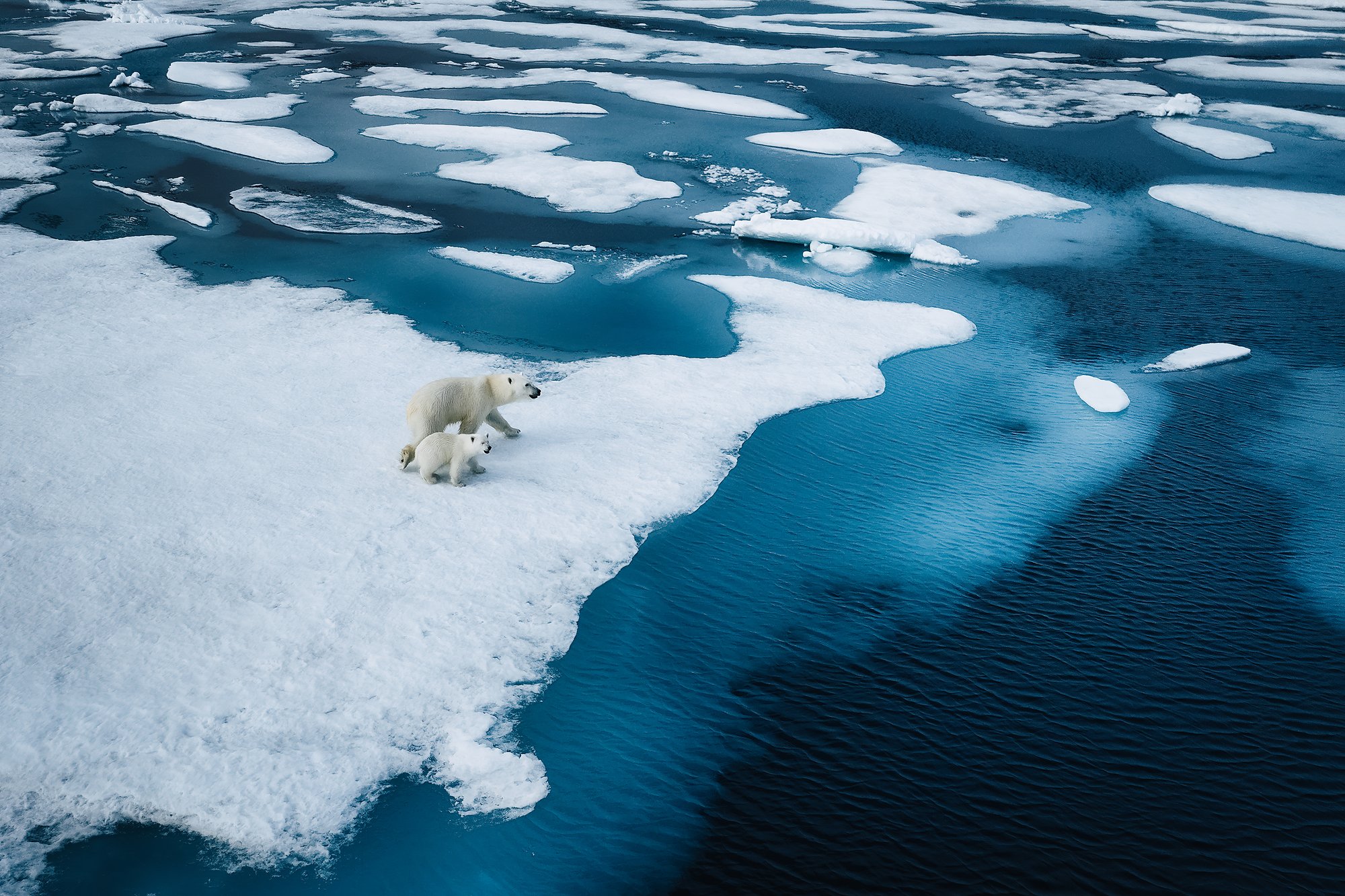
On one of our trips out to the northern coast we had a wonderful surprise: a mother polar bear and her cub, roaming the sea ice. At 74° north the ice is exactly where they belong. Polar bears spend about half of their lives hunting, mostly for seals, and a coast crowded with floes and hauled-out seals is just the place for it.
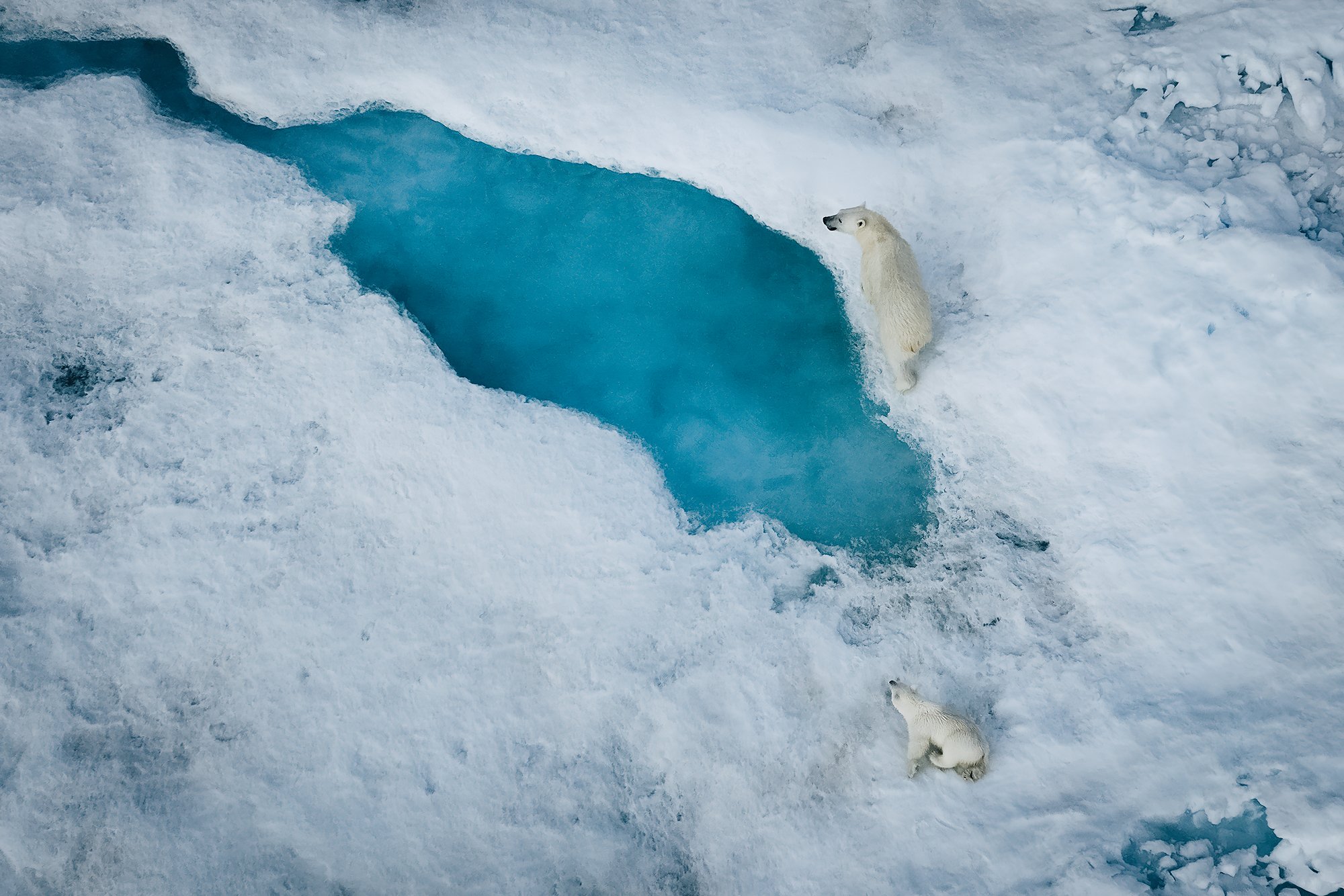
She pauses beside a melt pond, her cub just behind. Mother and cub between pools of meltwater.
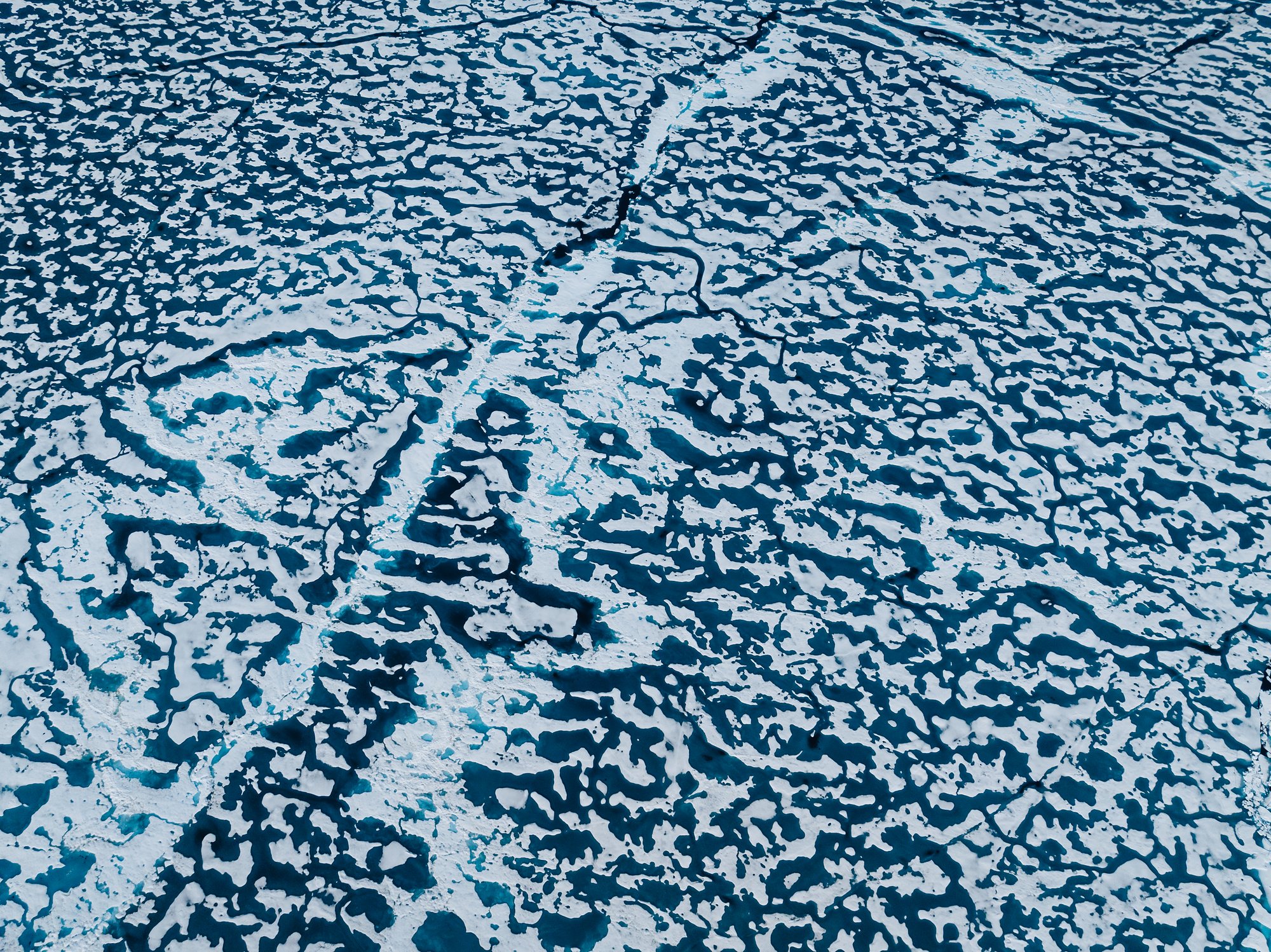
From the drone they looked tiny against the ice. The cub stayed pressed to its mother's side as she picked her way along the edge of the floe, stopping now and then beside the turquoise melt ponds before moving on. After days of looking out over what seemed like empty ice, it was a reminder that the ice is never really empty.
The cub never strayed far. Walking the edge of the floe. The sea ice from above.
Part 07
Two Thousand Belugas
July 24–27, 2023 · Cunningham Inlet, from the air
The Cunningham River spilling into the inlet. The white flecks at its mouth are belugas.
The main event at Arctic Watch is one of the most unusual beluga gatherings on earth. Every summer, from about mid-July to mid-August, some two thousand belugas flow in from the Northwest Passage to the shallow waters of Cunningham Inlet to nurse their calves, molt, socialize and feed. It is a world-class beluga nursery, and being face to face with it was easily one of the most incredible wildlife encounters of our lives.
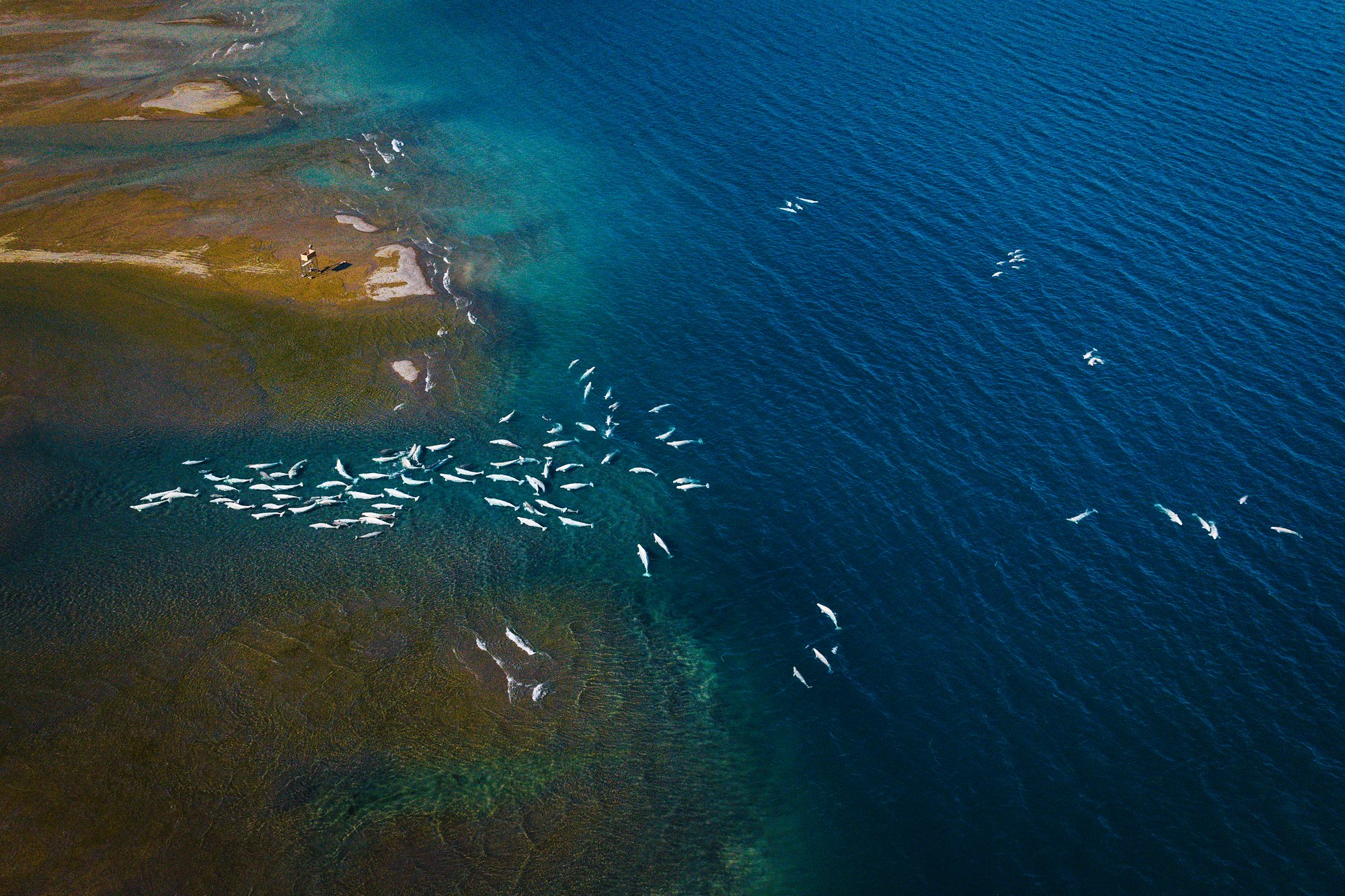
A line of belugas along the edge of the estuary, where the river's fresh water meets the sea.
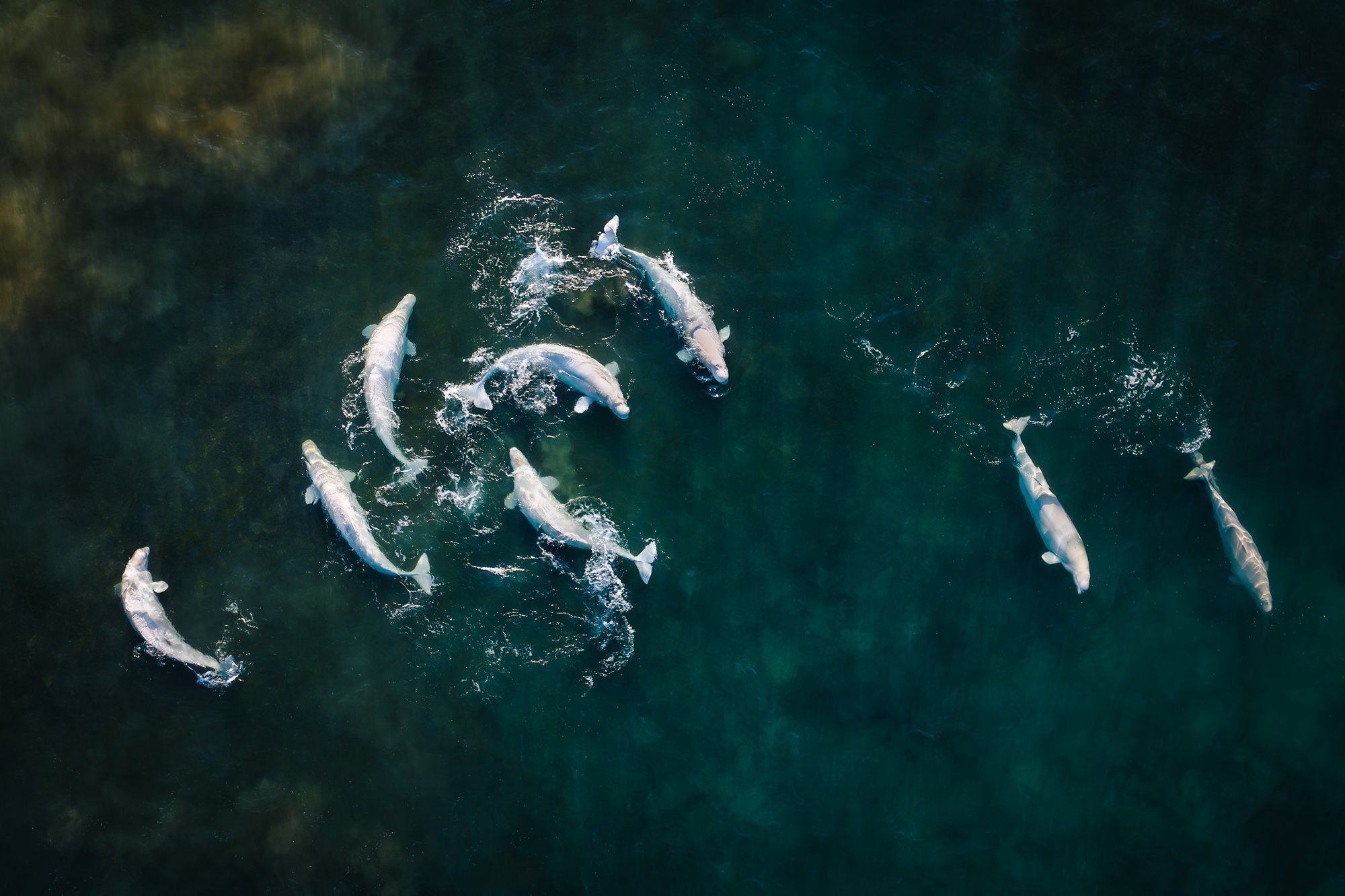
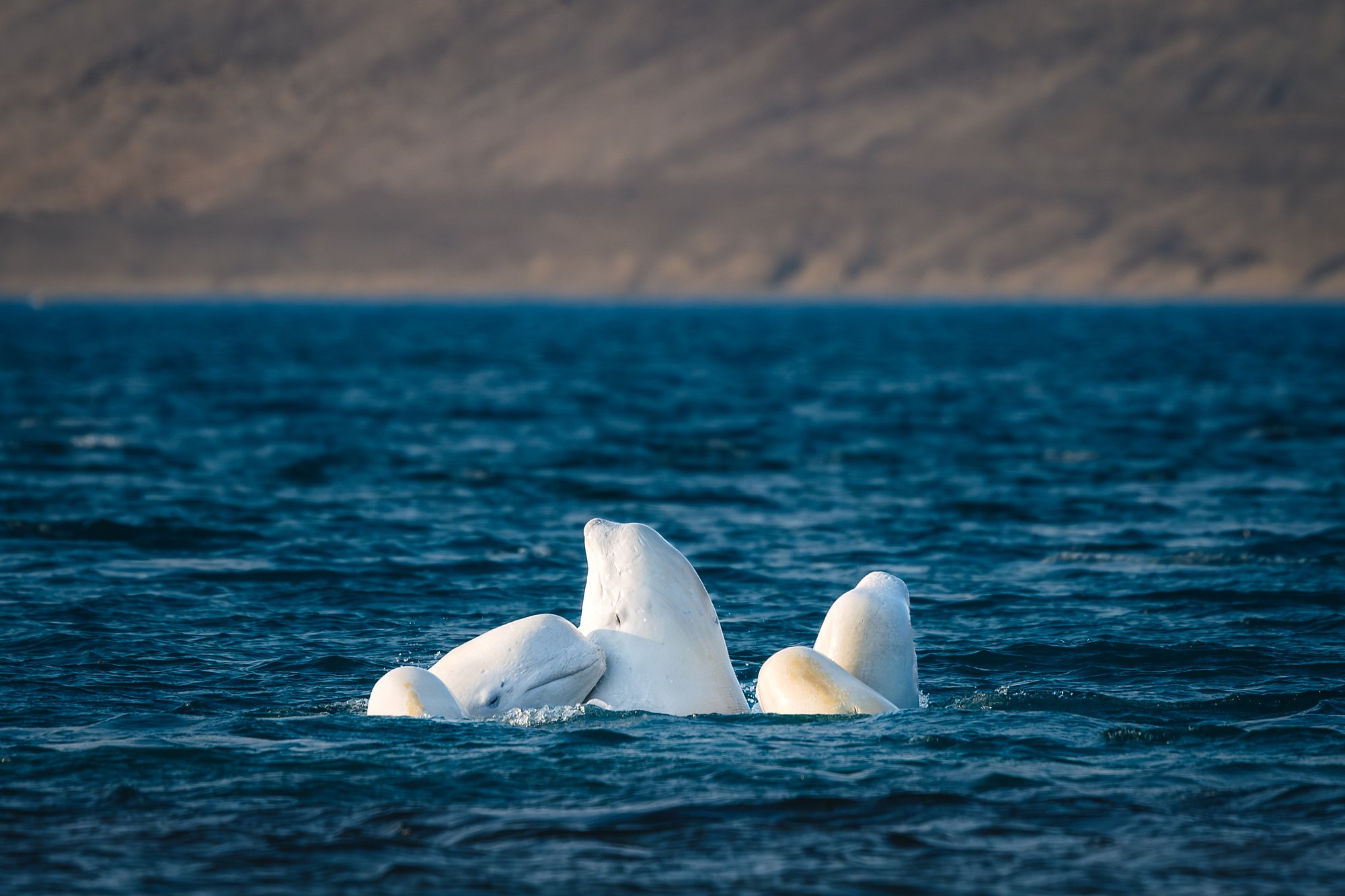
The reason they come is the river. Where the Cunningham pours into the inlet the water is shallower, warmer and fresher than the open sea, and belugas use it to shed their skin. Each summer they slough off the old, yellowed layer, rolling and rubbing against the stones on the bottom to scrub it away, a molt unlike that of any other whale. You can see it in our photos: the pale yellow patches on some of the adults are old skin on its way out.
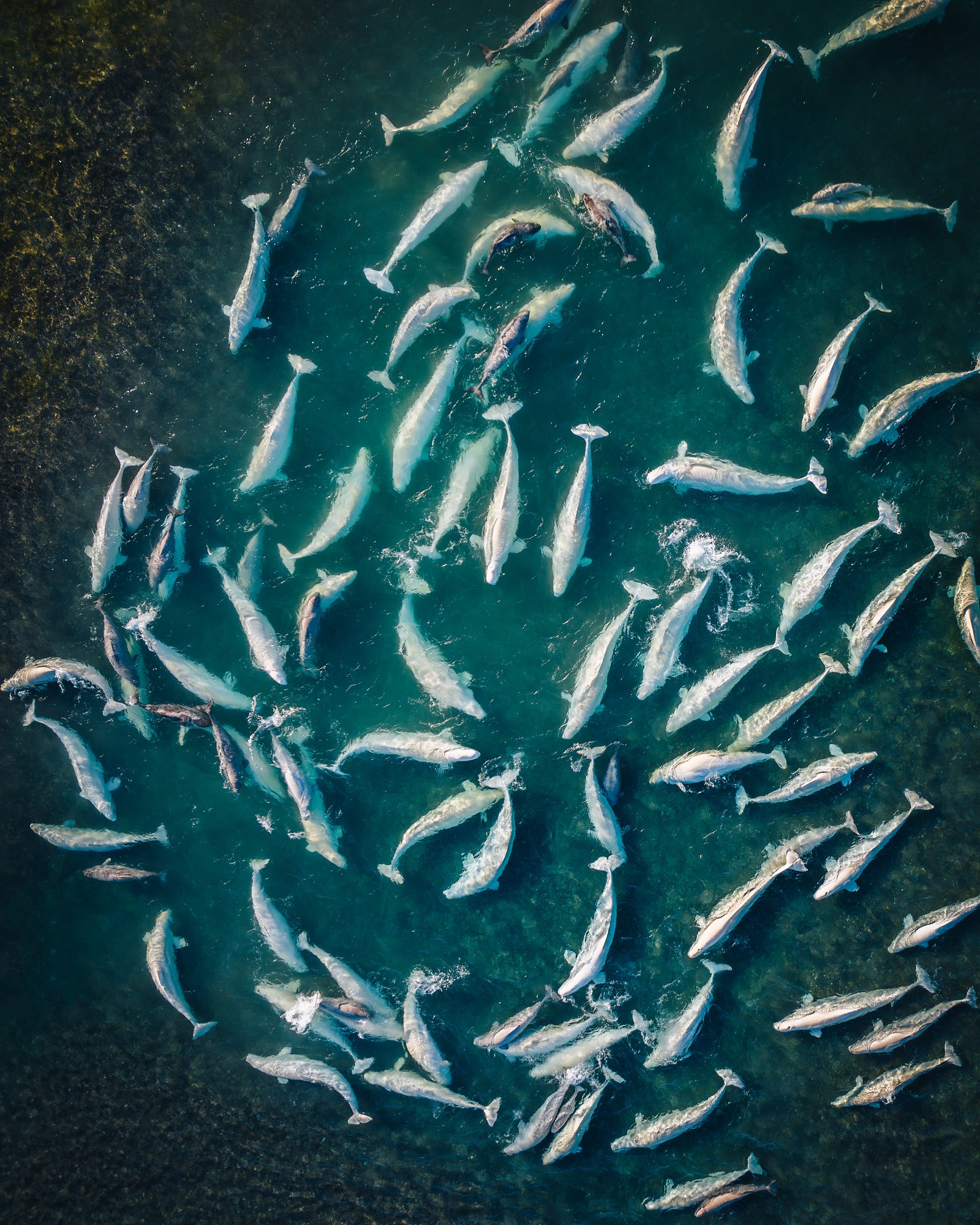
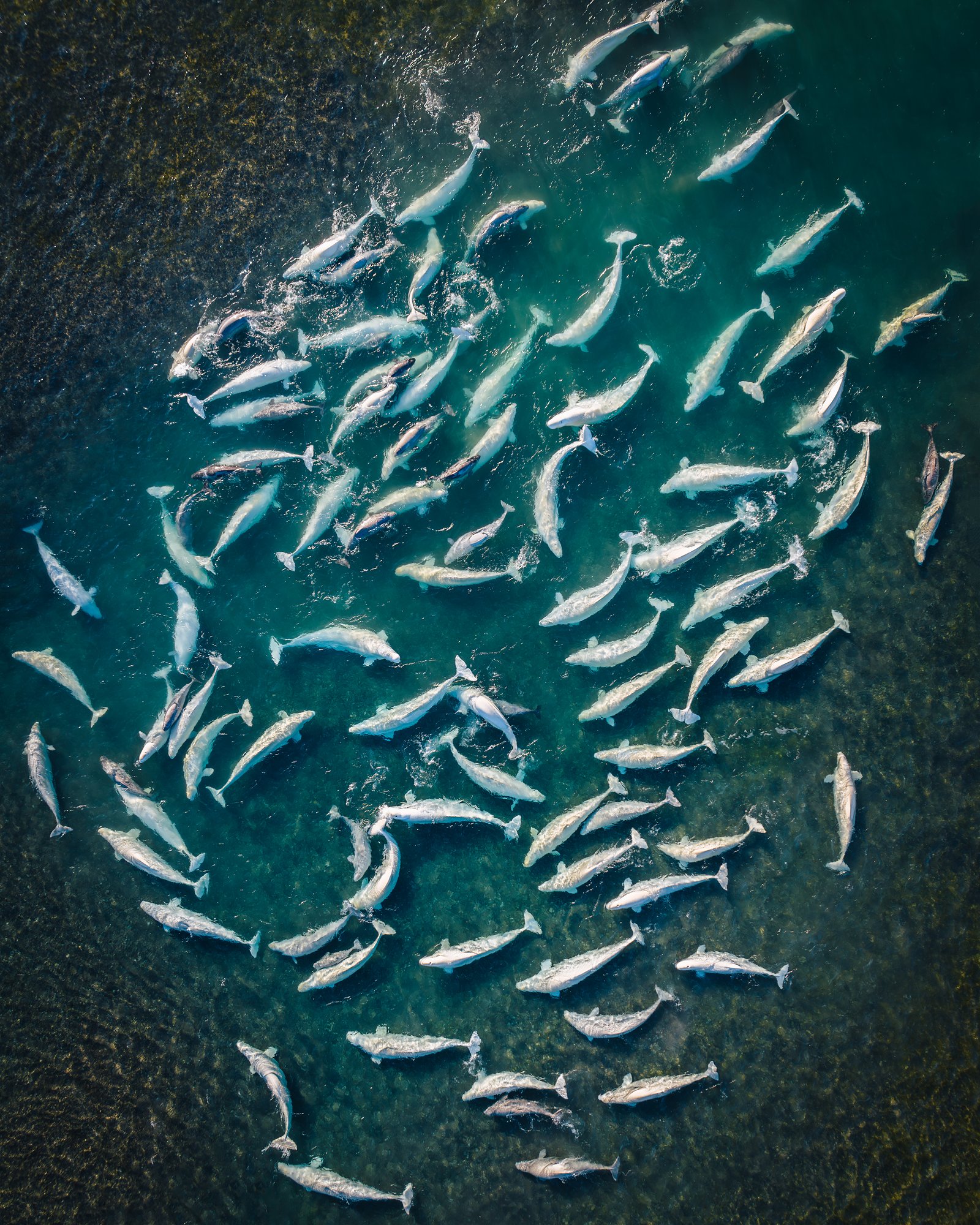
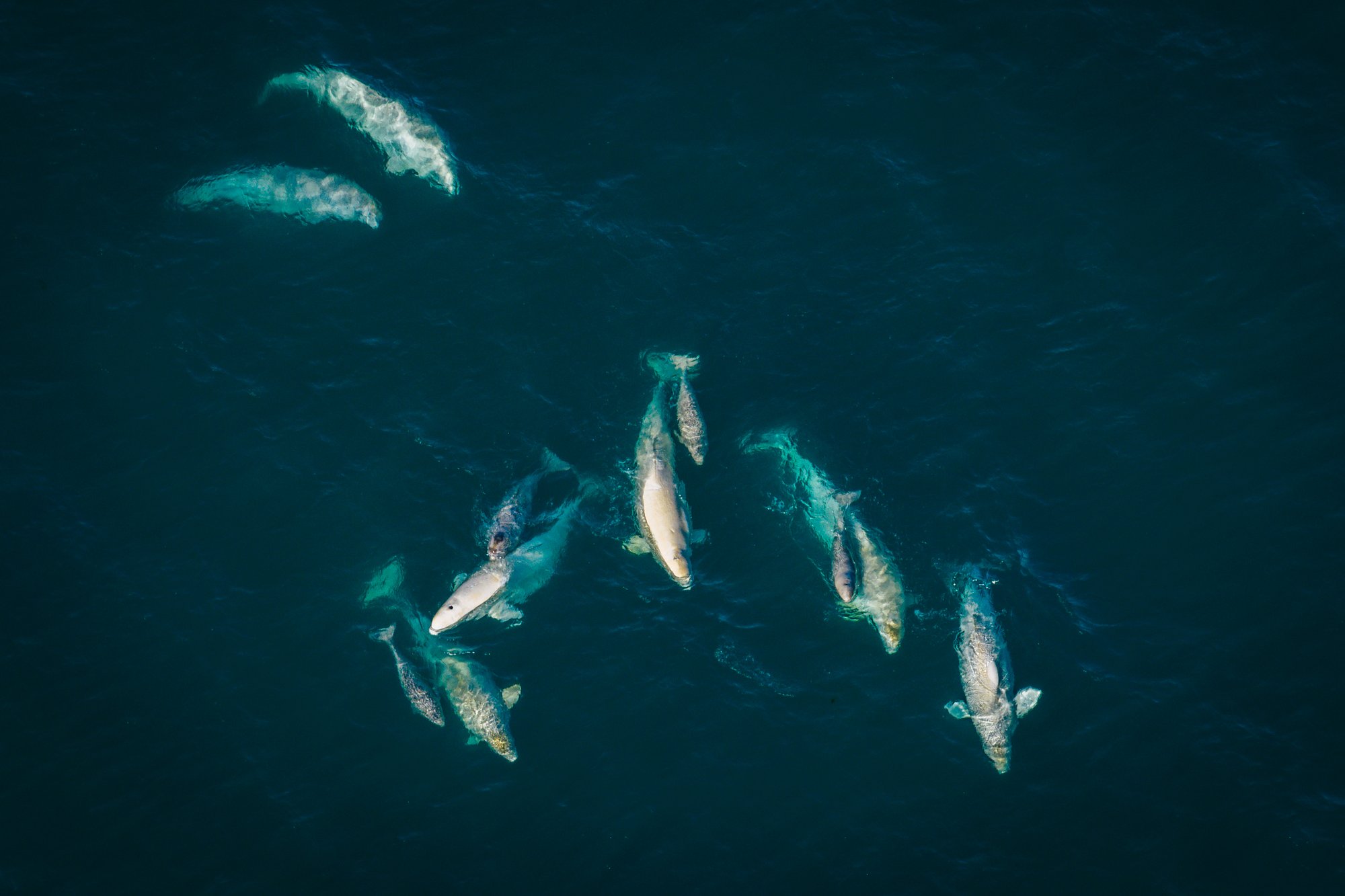
A pod packed into the shallows. Gray calves tucked in among the white adults.
From above, the calves are easy to pick out. Belugas are born gray and only turn fully white as they grow up, so each dark shape in the water is a young whale, usually swimming right alongside its mother. Watching a hundred of them turn together in the shallows, the calves shadowing every move, we felt incredibly lucky to be there for such a fleeting moment.
Belugas and their calves in the shallows of Cunningham Inlet.A tight knot of belugas churning the water. Calves and adults over the dark water of the inlet.
Part 08
Spy Hops and Bananas
July 24–28, 2023 · Cunningham Inlet, from the shore
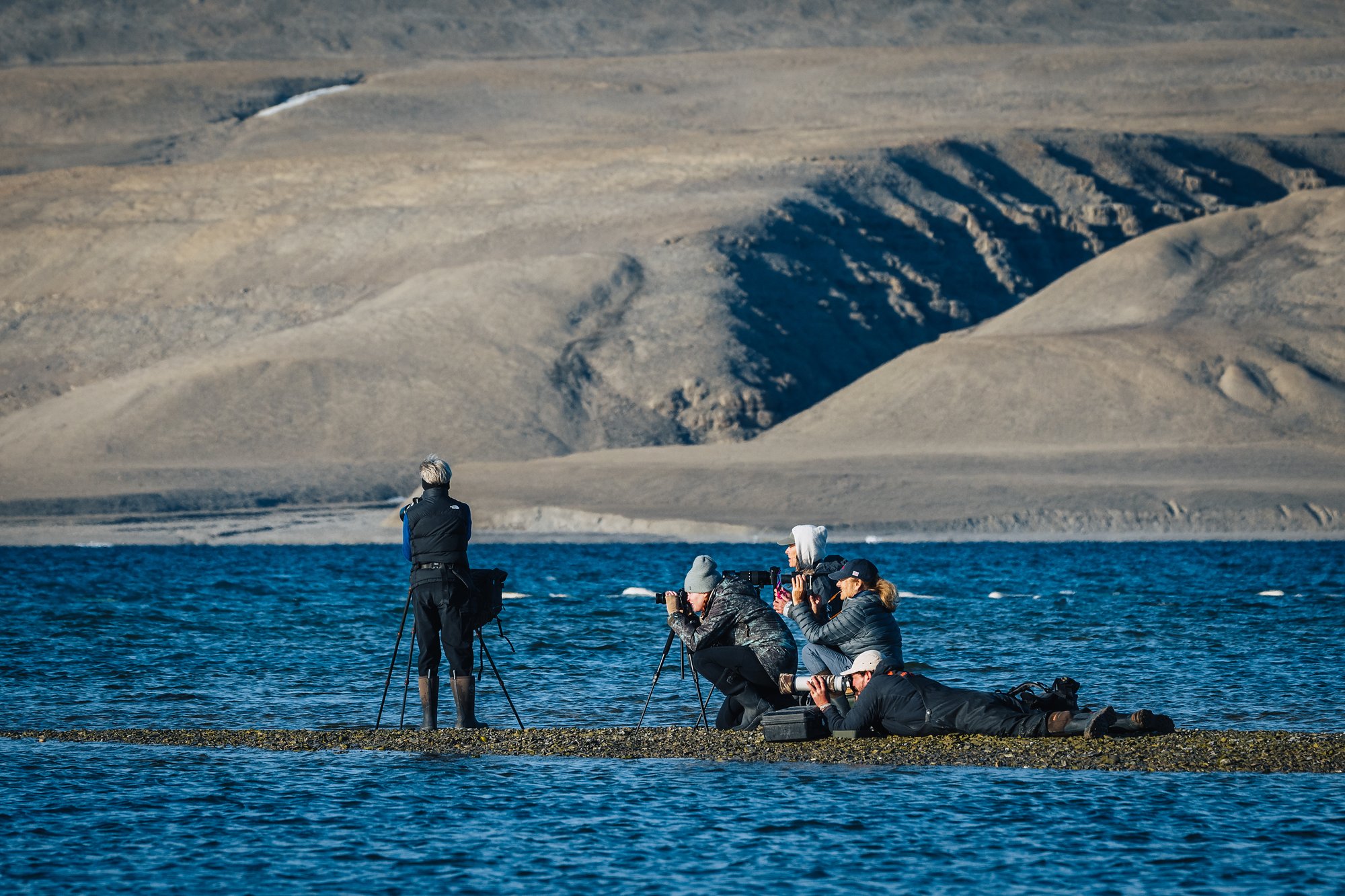
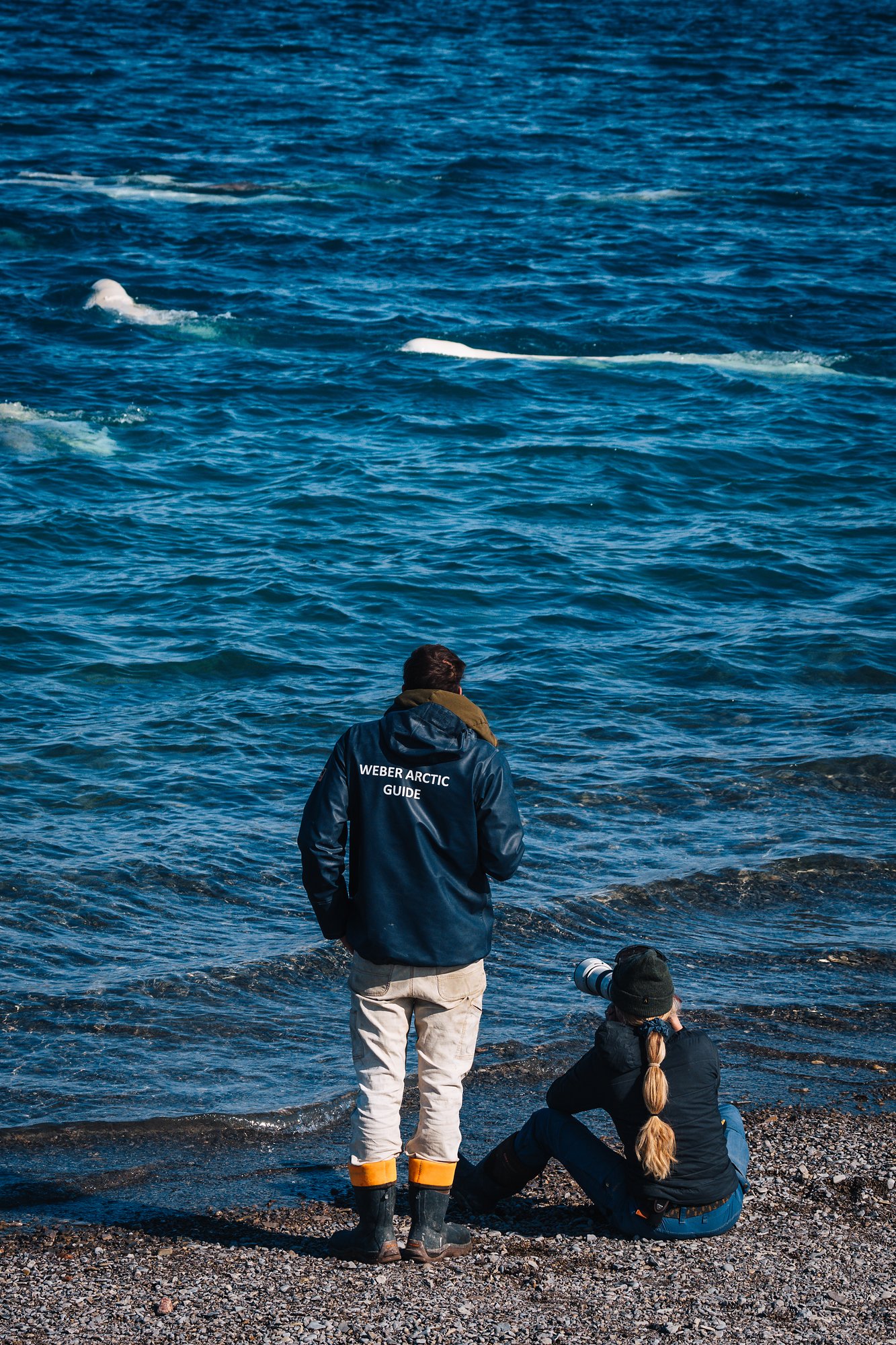
Photographers on the gravel spit, with belugas surfacing just offshore.
The best seats are on the gravel spit at the mouth of the river, right at water level. Some of the group stood at their tripods, some sat on the stones and one lay flat behind a long lens, and the whales came to us, close enough to watch them breathe, roll and look back.
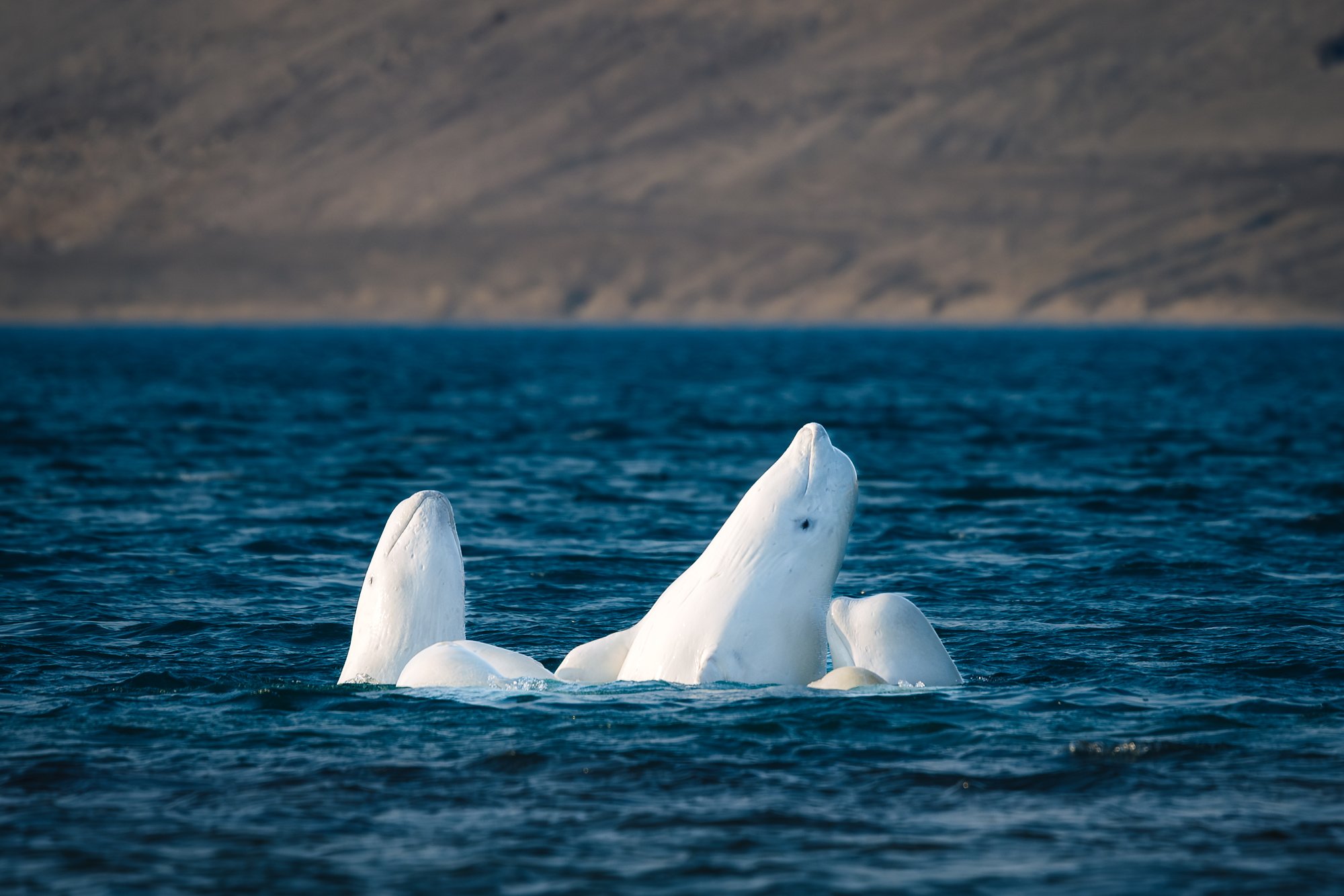
A pair of spy hops. Up for a look.
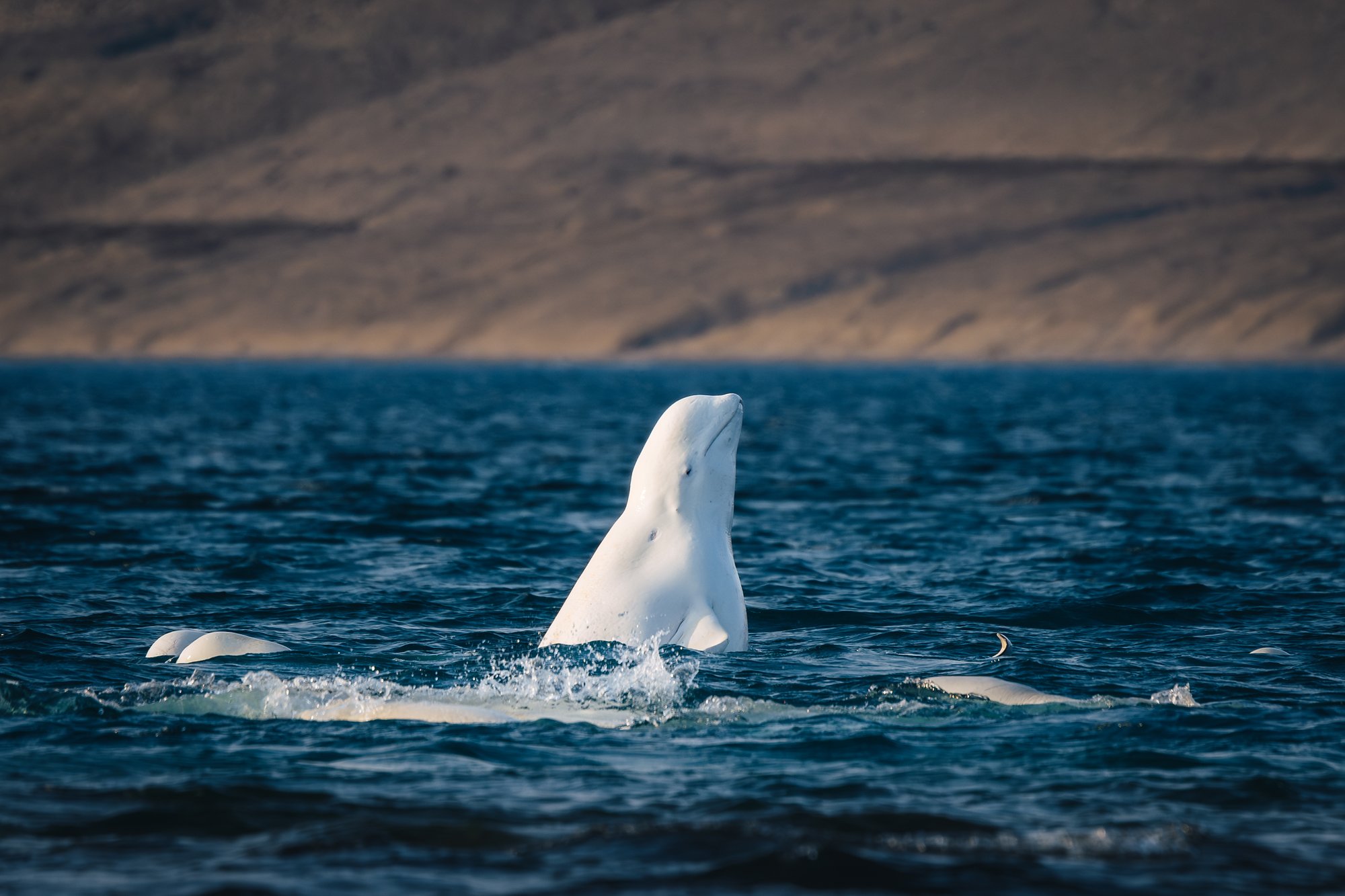
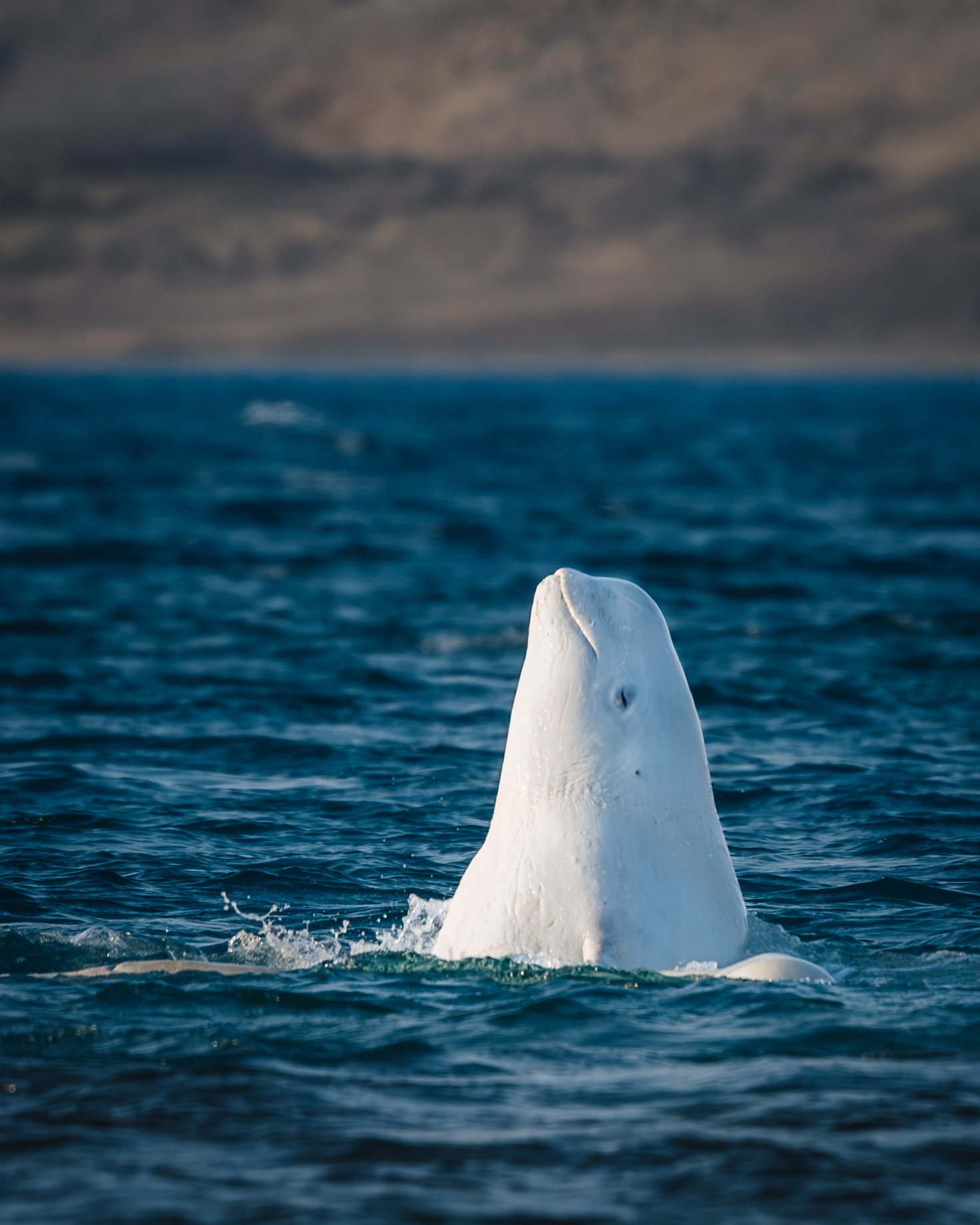
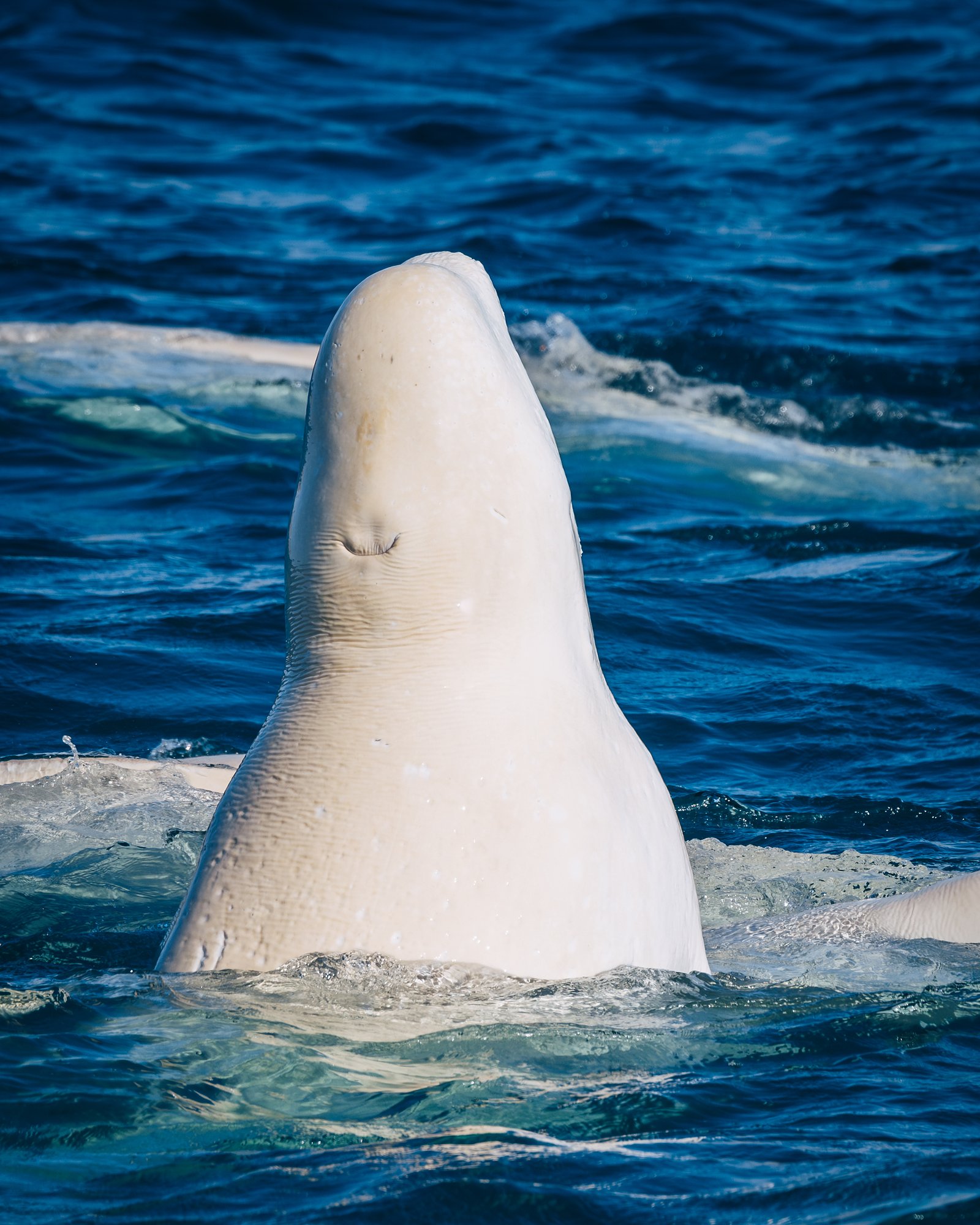
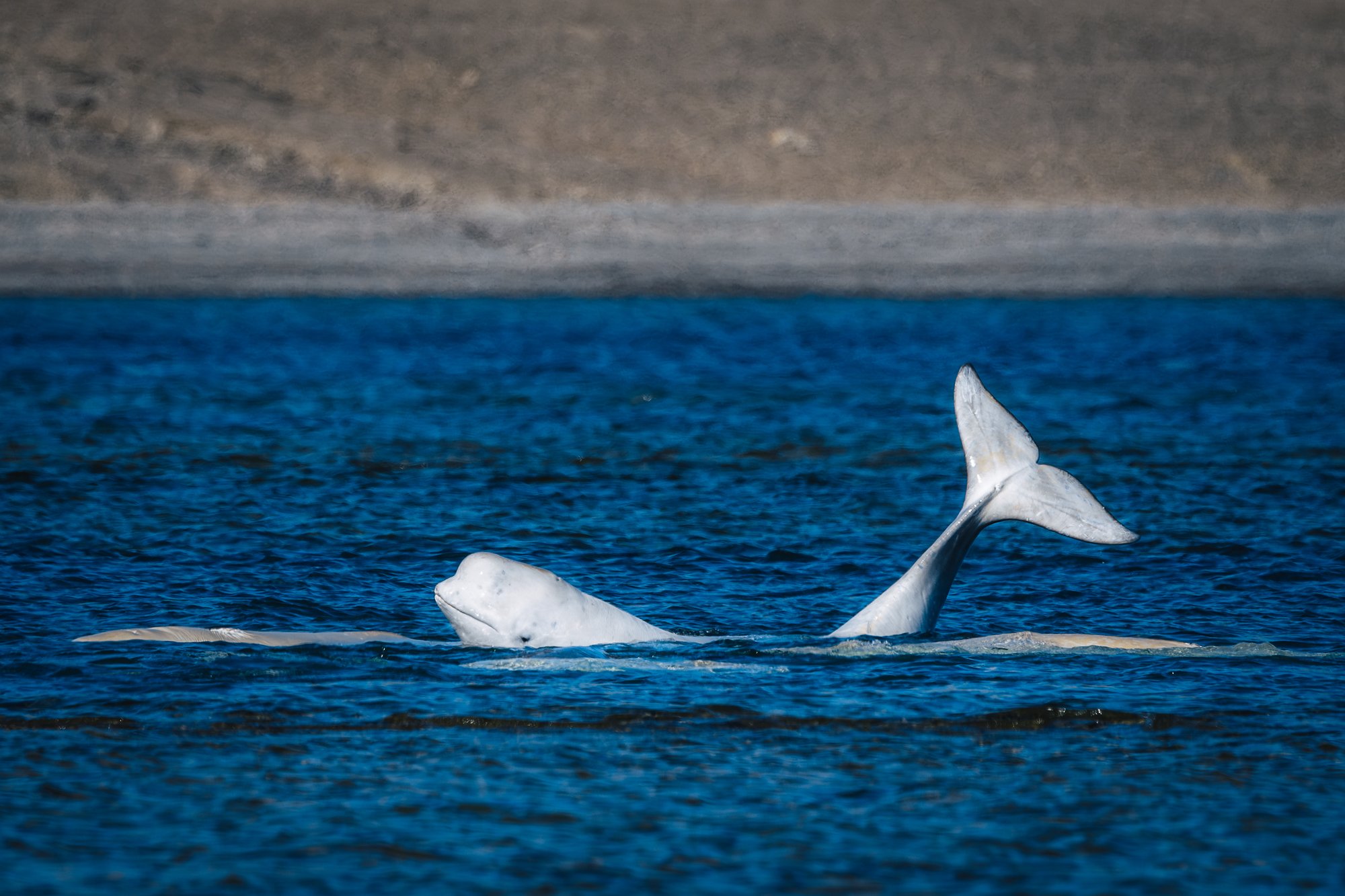
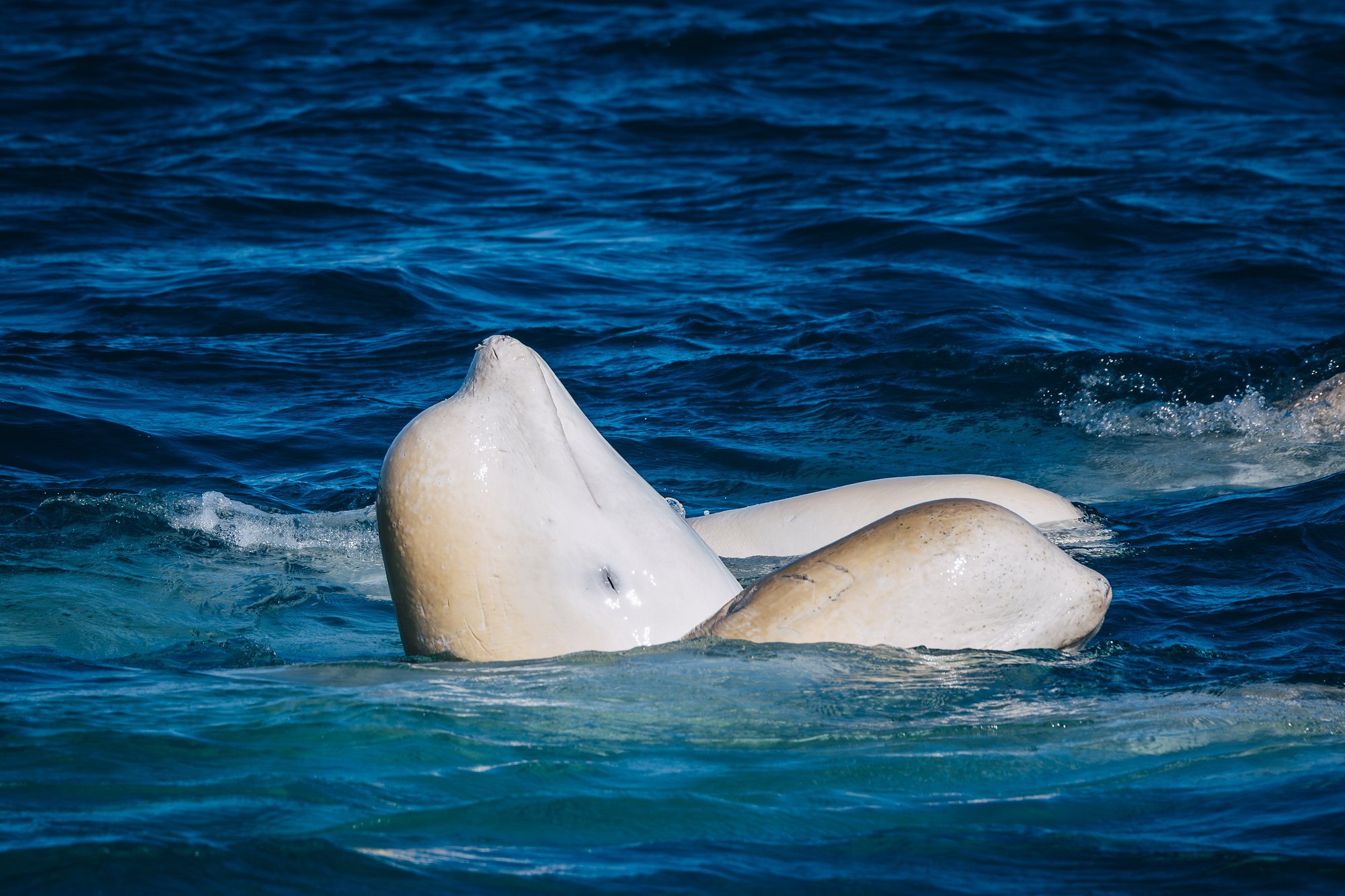
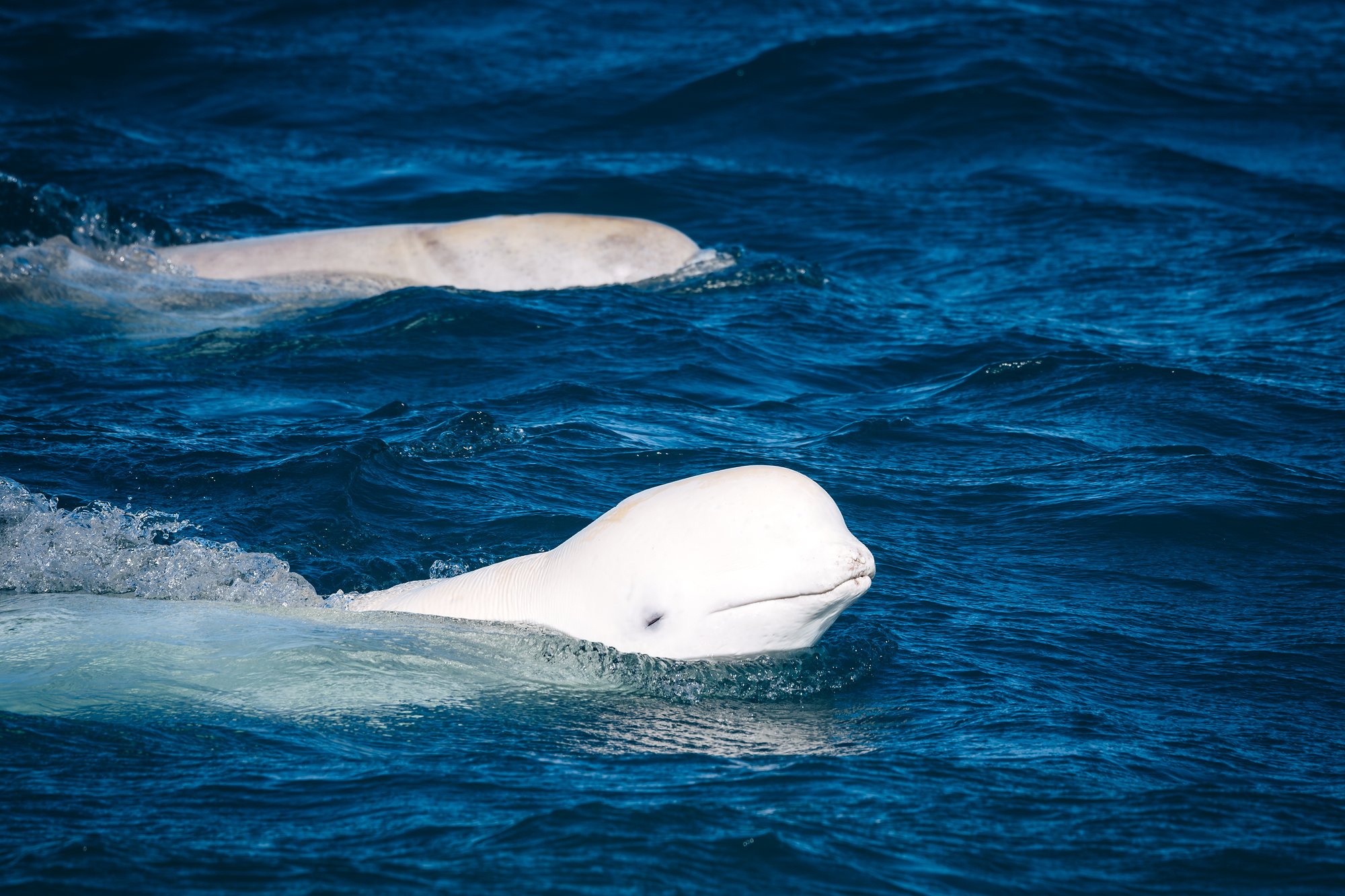
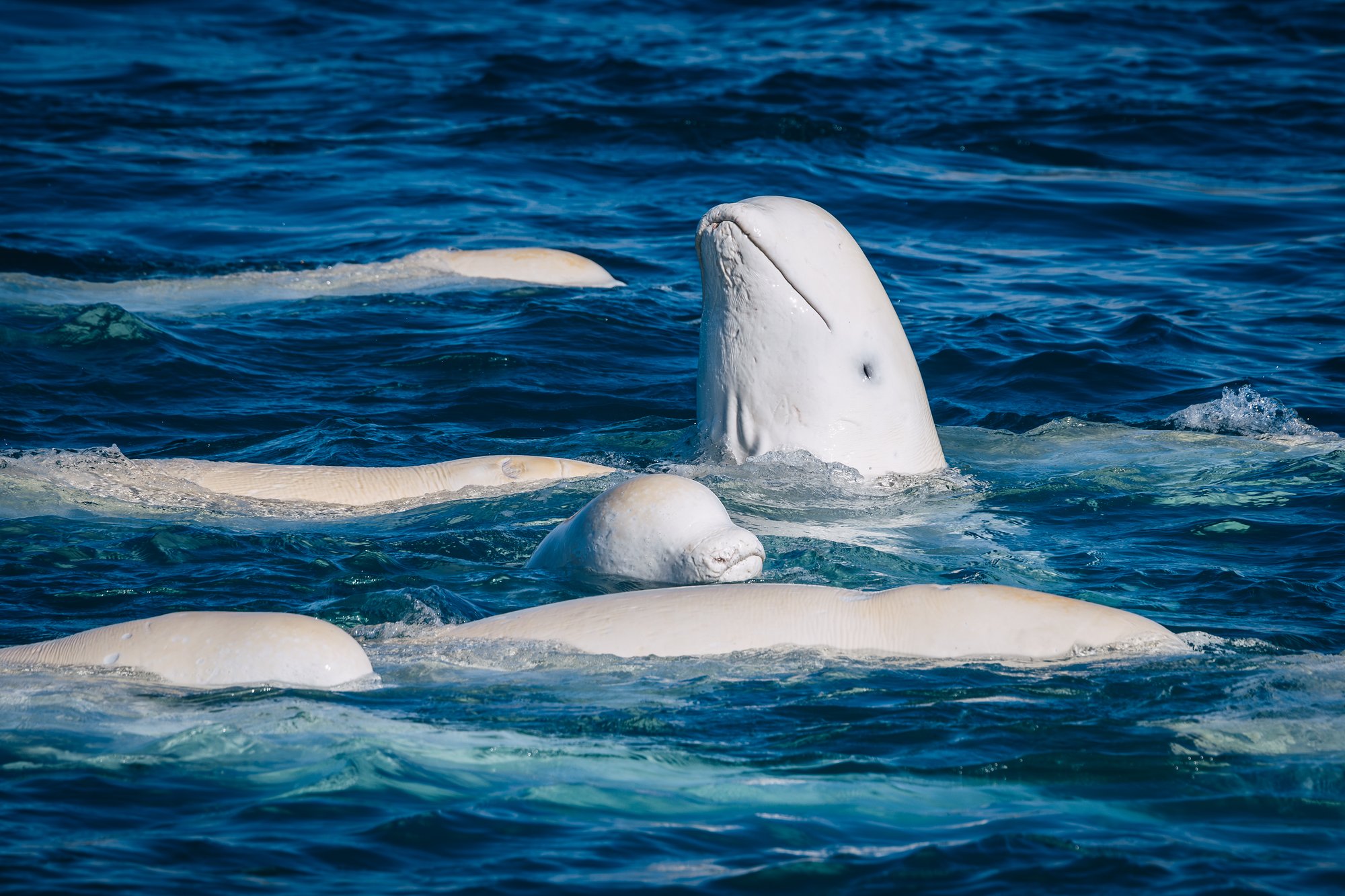
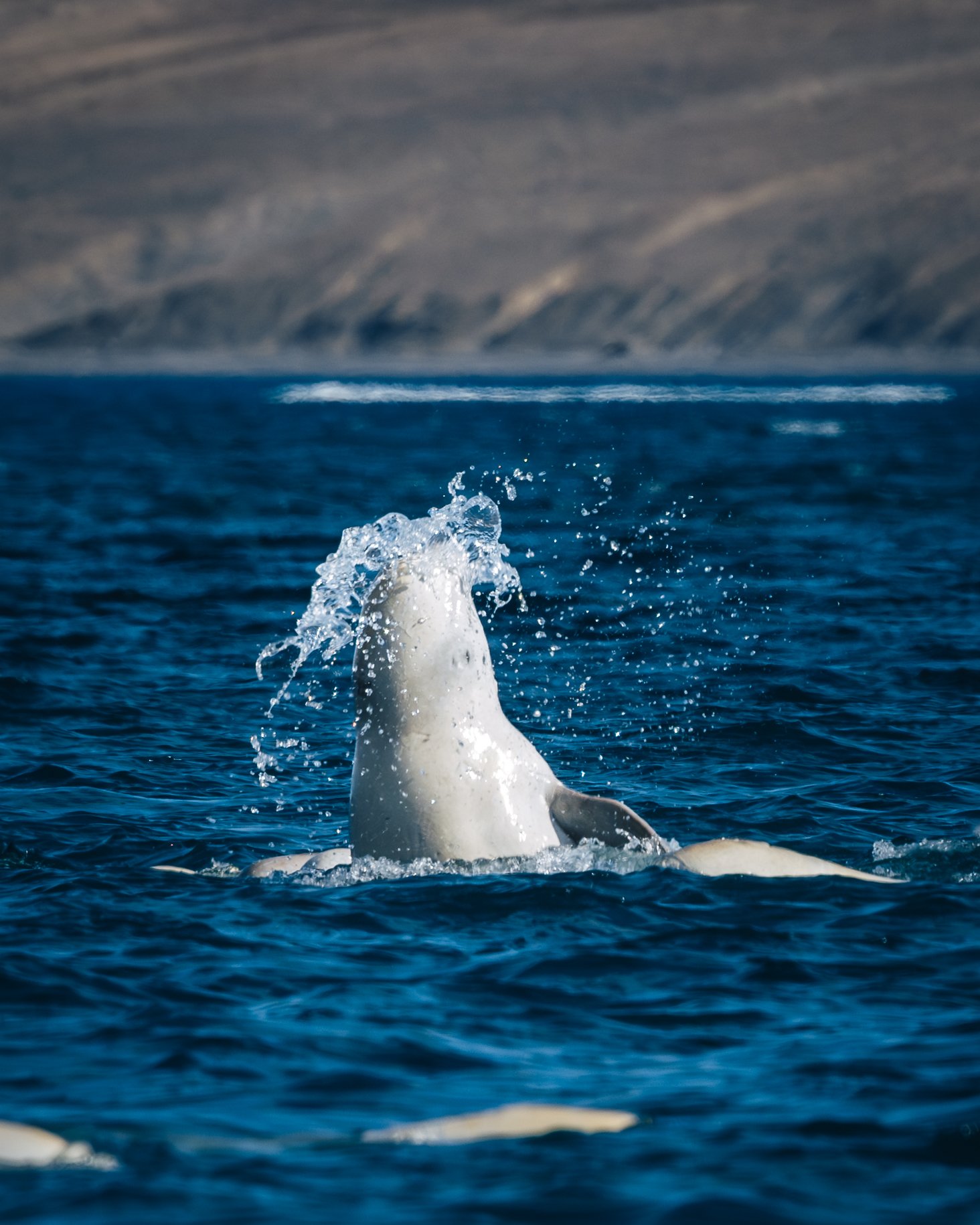
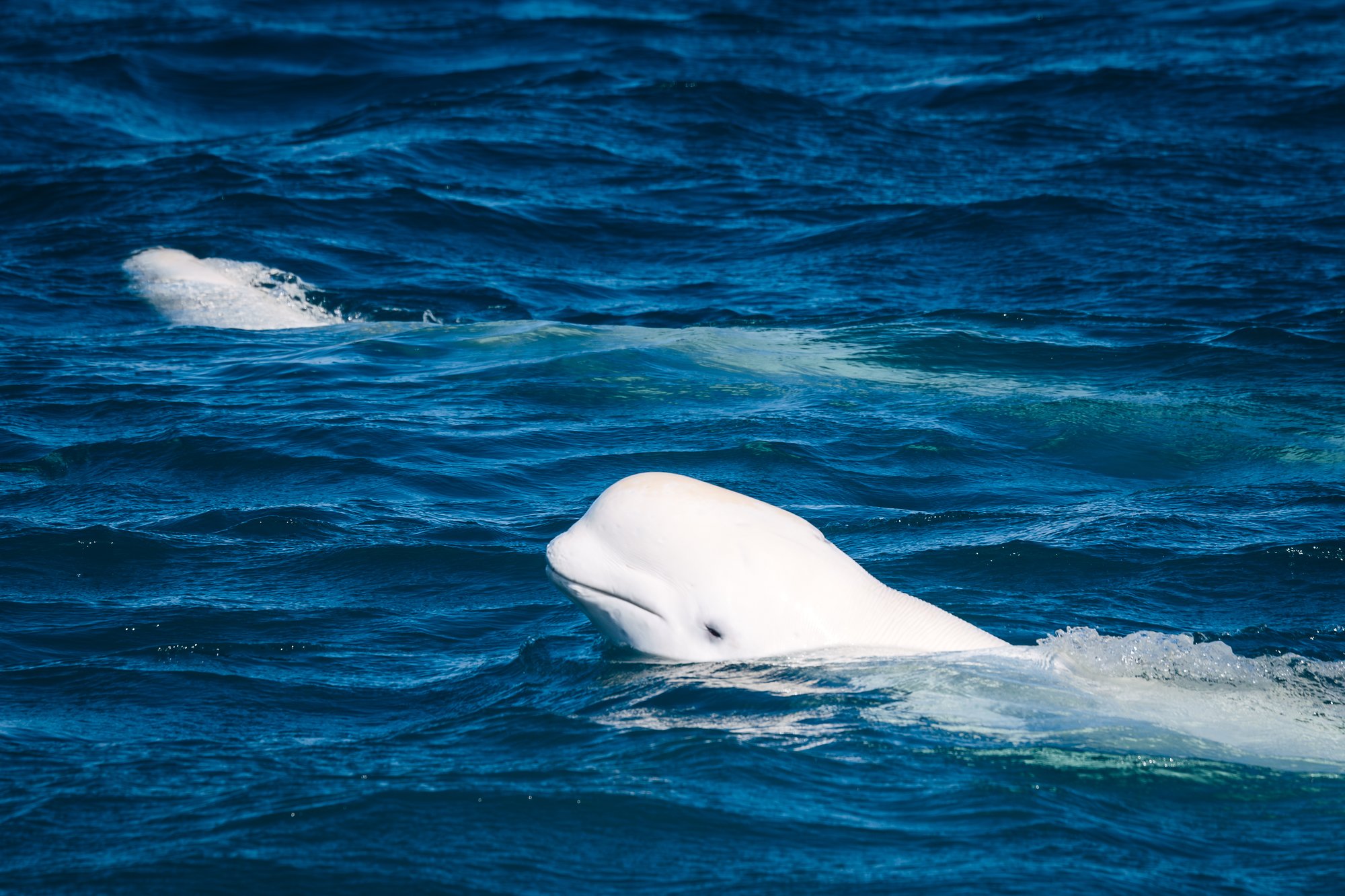
The belugas of Cunningham Inlet are known for their behavior, and two moves became our favorites. The first is the spy hop: a whale rises straight up out of the water, head and neck vertical, and holds there for a moment to have a look around. Unlike most whales, belugas have a flexible neck, so when they spy hop they can actually turn their heads to look at you.
A classic spy hop. Close enough to see the blowhole.
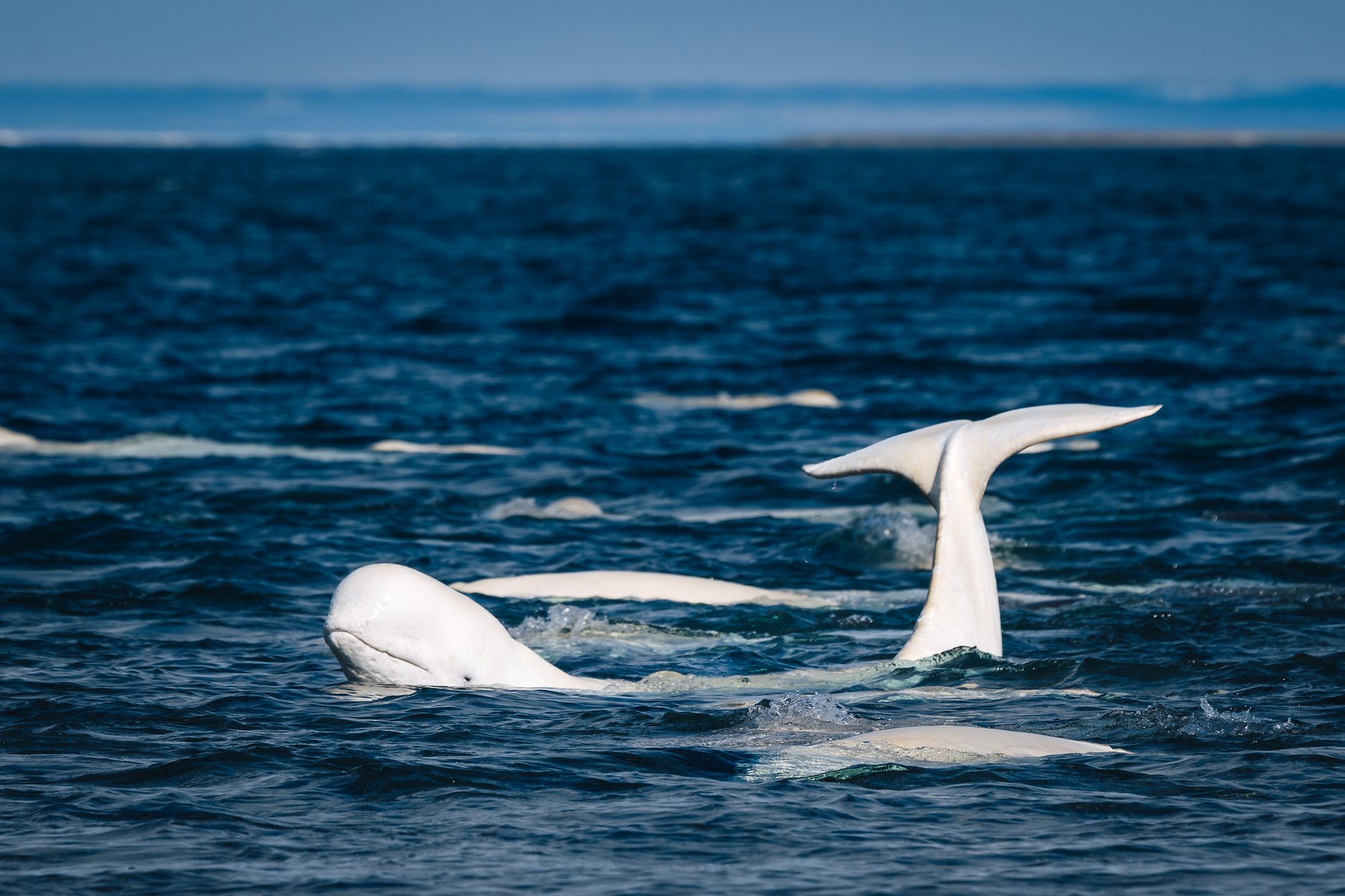
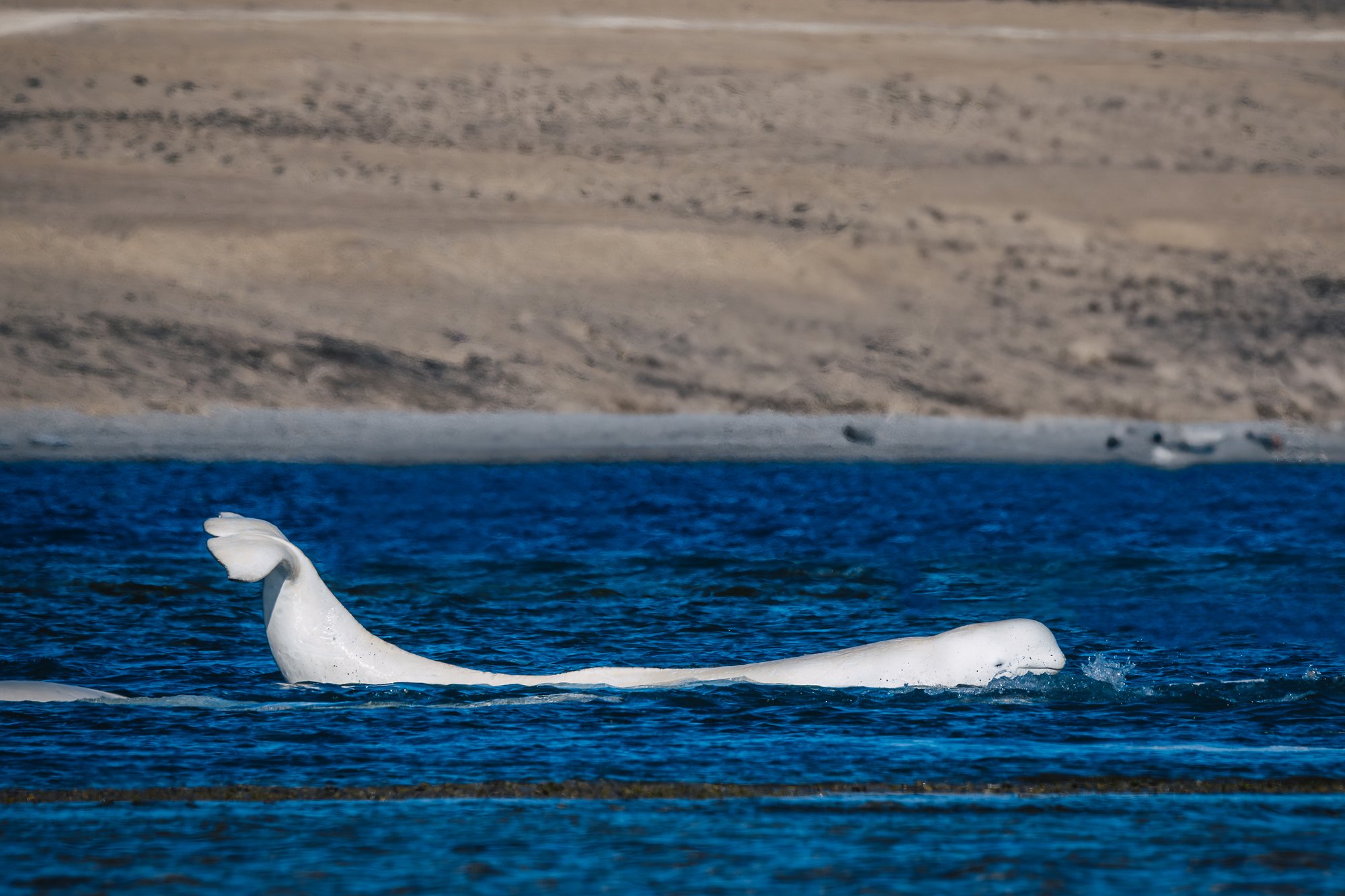
The second is the banana. A beluga lifts its head at one end and its tail at the other and bends its whole body into a curve, like a banana floating on its side. Whatever its purpose, it is ridiculous and wonderful to watch.
The banana: head up, tail up.
They are loud, too. Belugas are among the most vocal of all whales (sailors called them the canaries of the sea), and their calls carry a long way. Eight days on Somerset Island was not nearly enough.
The yellow patches are old skin, on its way out. That upturned mouth gives every beluga a permanent smile.
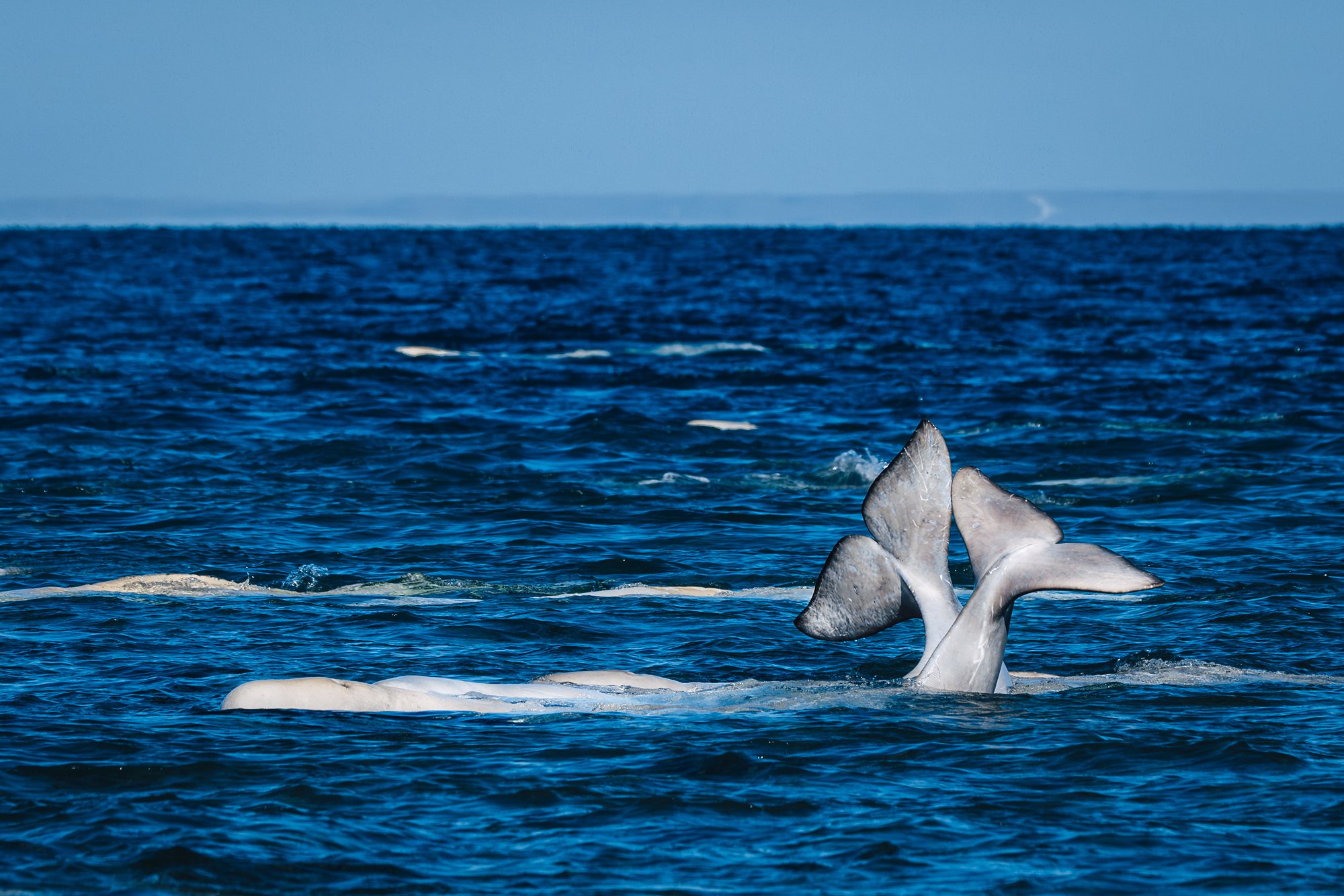
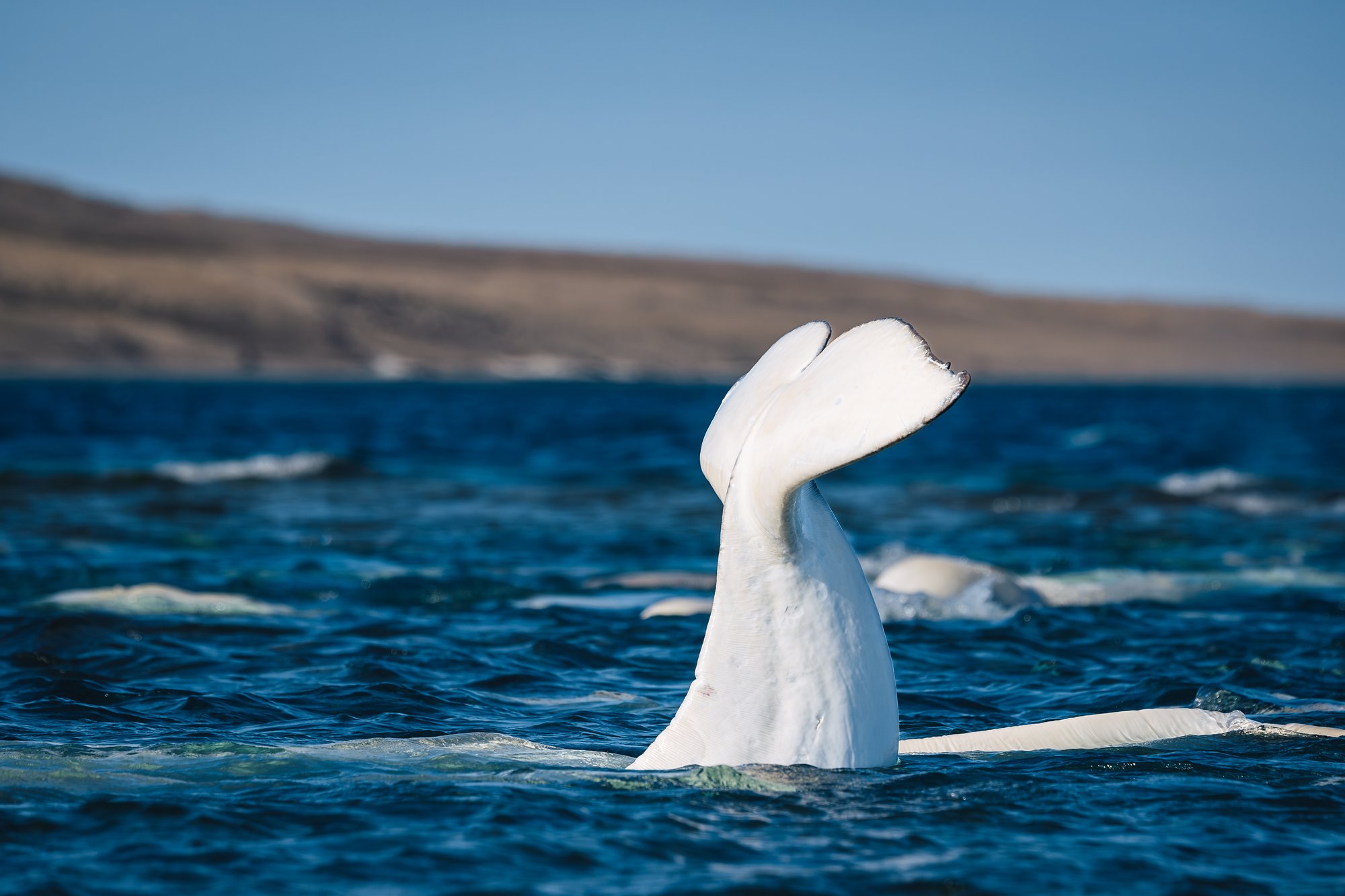
On our last morning we went back to the spit one more time. A pair of tails rose out of the water together, crossed for a second like a signature, and slipped under. Of everything we have seen at the ends of the earth, the belugas of Cunningham Inlet are near the top of the list.
Our last morning at the inlet.
If you go: the belugas are in Cunningham Inlet from about mid-July to mid-August. We booked Arctic Watch through Weber Arctic more than a year in advance and stayed eight days, which gave us time for the land as well as the whales.
A Nursery at the Edge of the Ice
Somerset Island has no roads, no villages and, in July, no night. From the plane it looked like the emptiest place we had ever been: gravel, tundra and a sea still locked in ice. A week on the ground filled it up. Musk oxen grazing beside a stream with their calves at their sides. Poppies and cottongrass between the stones. A mother polar bear picking her way along the edge of a floe, her cub pressed to her side. And at the mouth of the Cunningham River, two thousand belugas turning together in water barely deep enough to cover their backs, the gray calves shadowing every move.
The whales stay only a few weeks each summer, from about mid-July to mid-August, and then the inlet is quiet again. We were lucky to be on the spit while they were there, close enough to hear them call and to watch them look back at us. If you have ever wanted to see the Arctic at its most alive, go in July, and go to Cunningham Inlet.