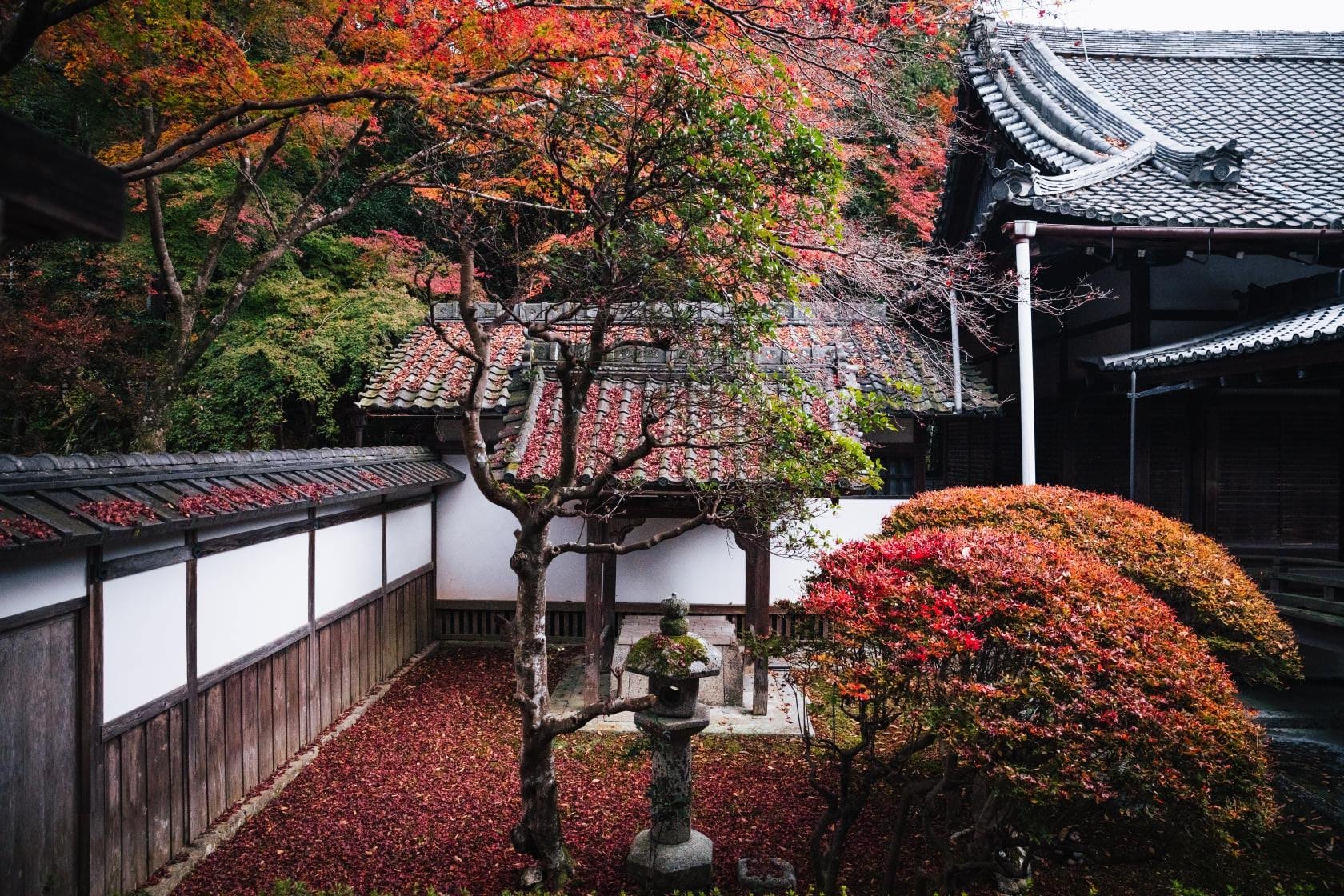
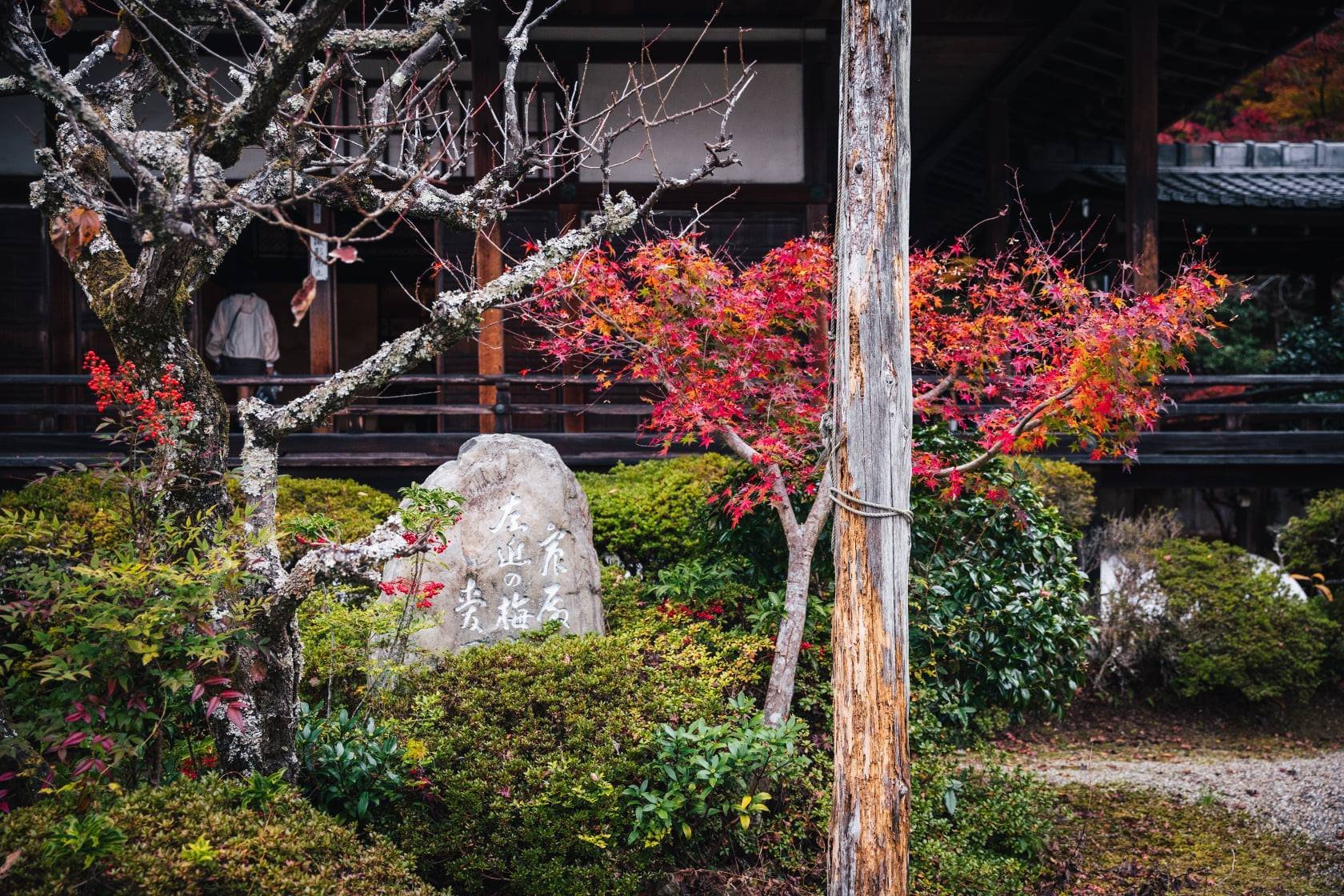
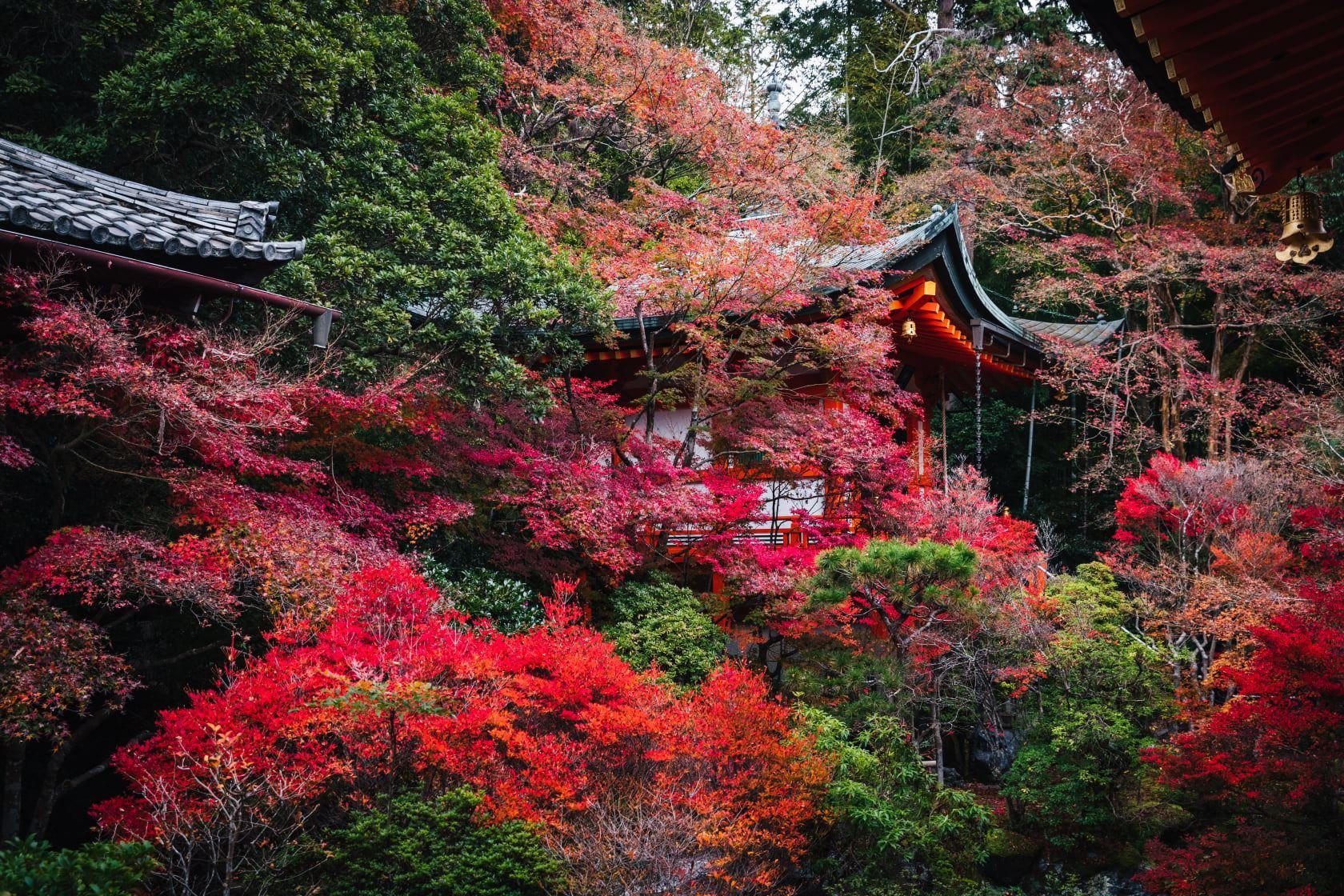
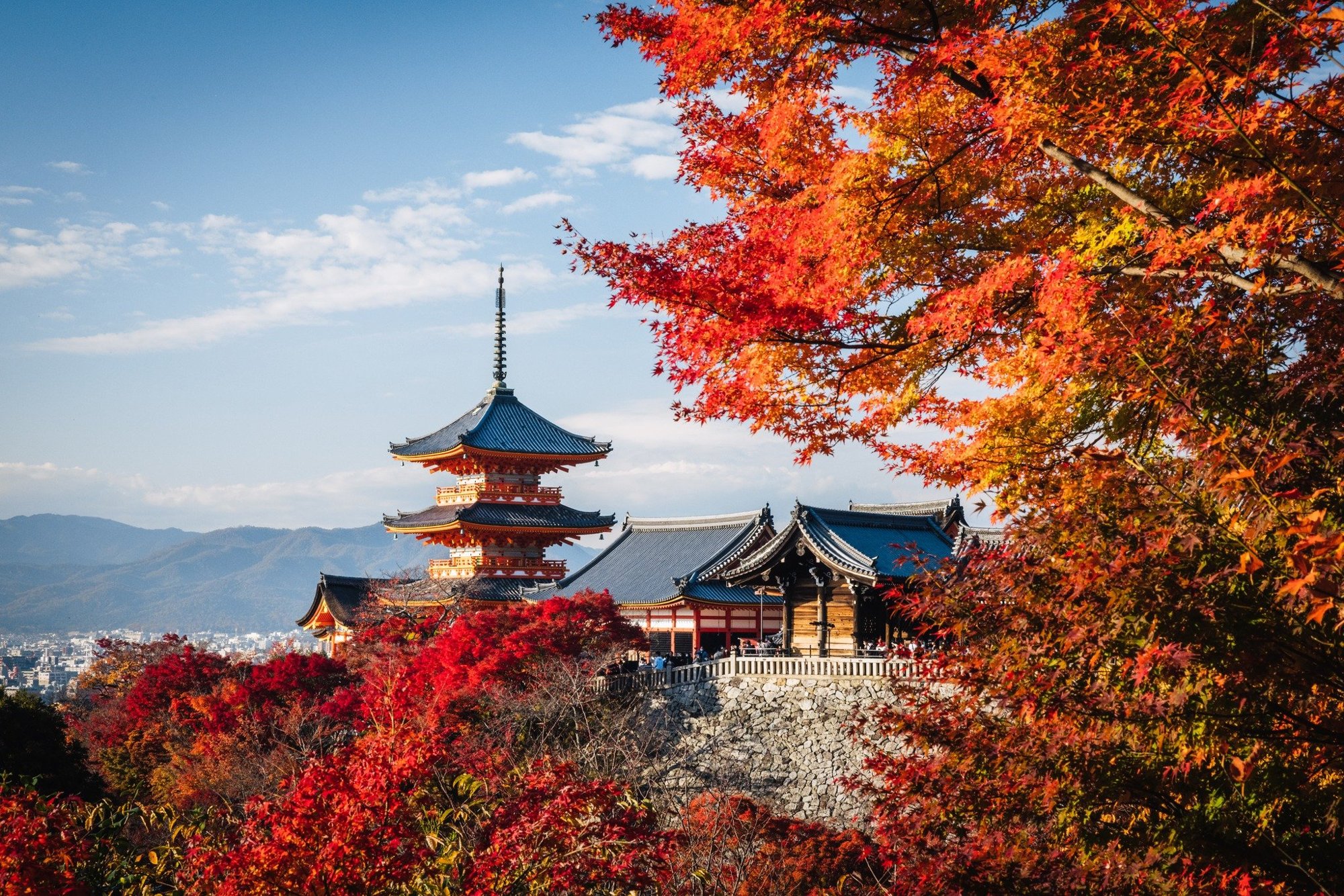
14 Autumn Foliage Spots in Japan

From the fiery maples of Kyoto's ancient temples to the hidden waterfalls of Tohoku, our guide to Japan's most unforgettable autumn landscapes.

Nov 2021 Japan
Where to Find Them

Fourteen Spots, Fuji to Tohoku

Click a number to open a spot and jump to its entry. The chips zoom to each region; most of these can be strung together over a week in November.

Table of Contents
Chubu
  1. 1Tenku no ToriiLake Kawaguchiko
  2. 2Oishi ParkLake Kawaguchiko
Kyoto
  1. 3Daigoji TempleKyoto
  2. 4MiyamasouHanase, Kyoto
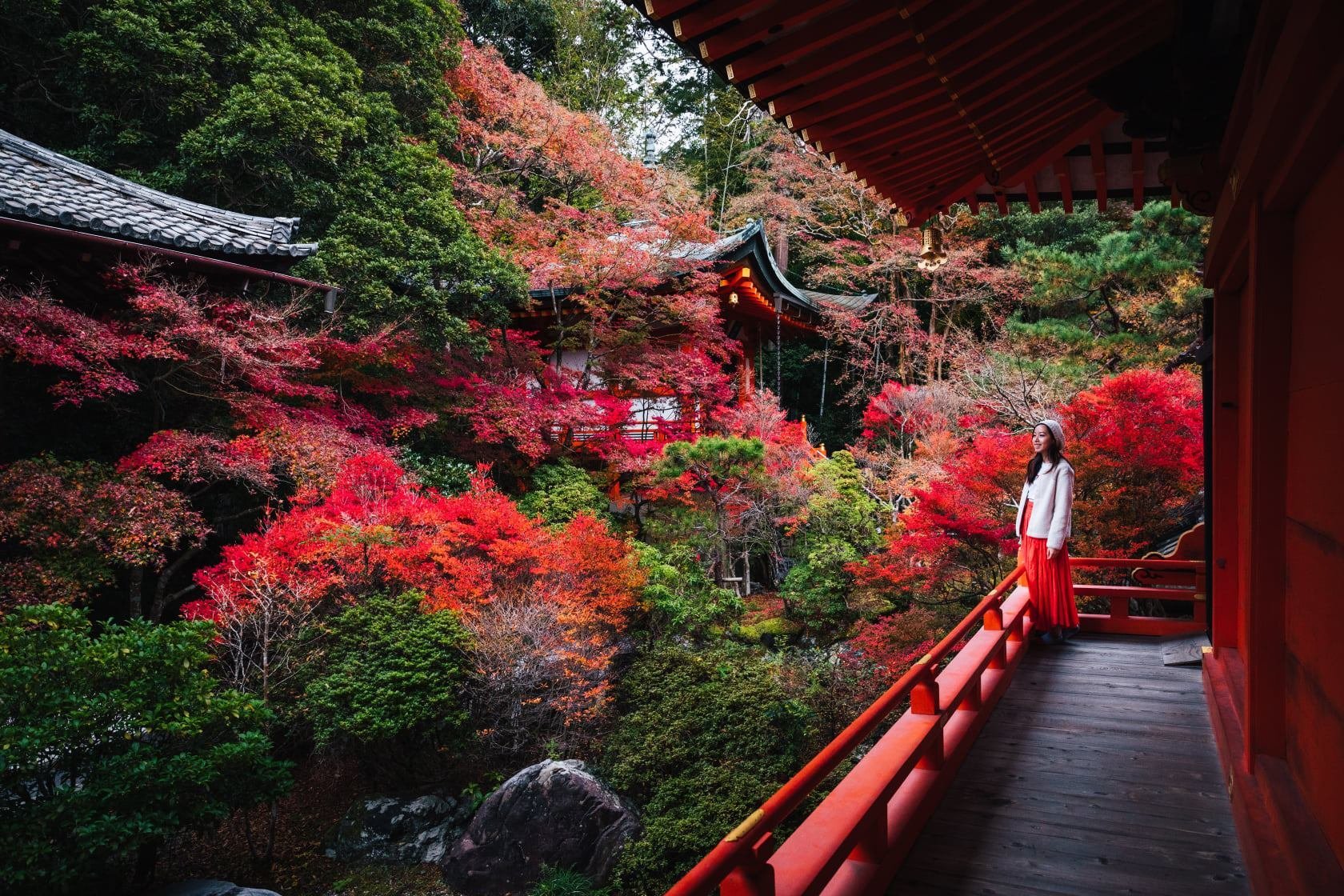
  3. 5Bishamondo TempleKyoto
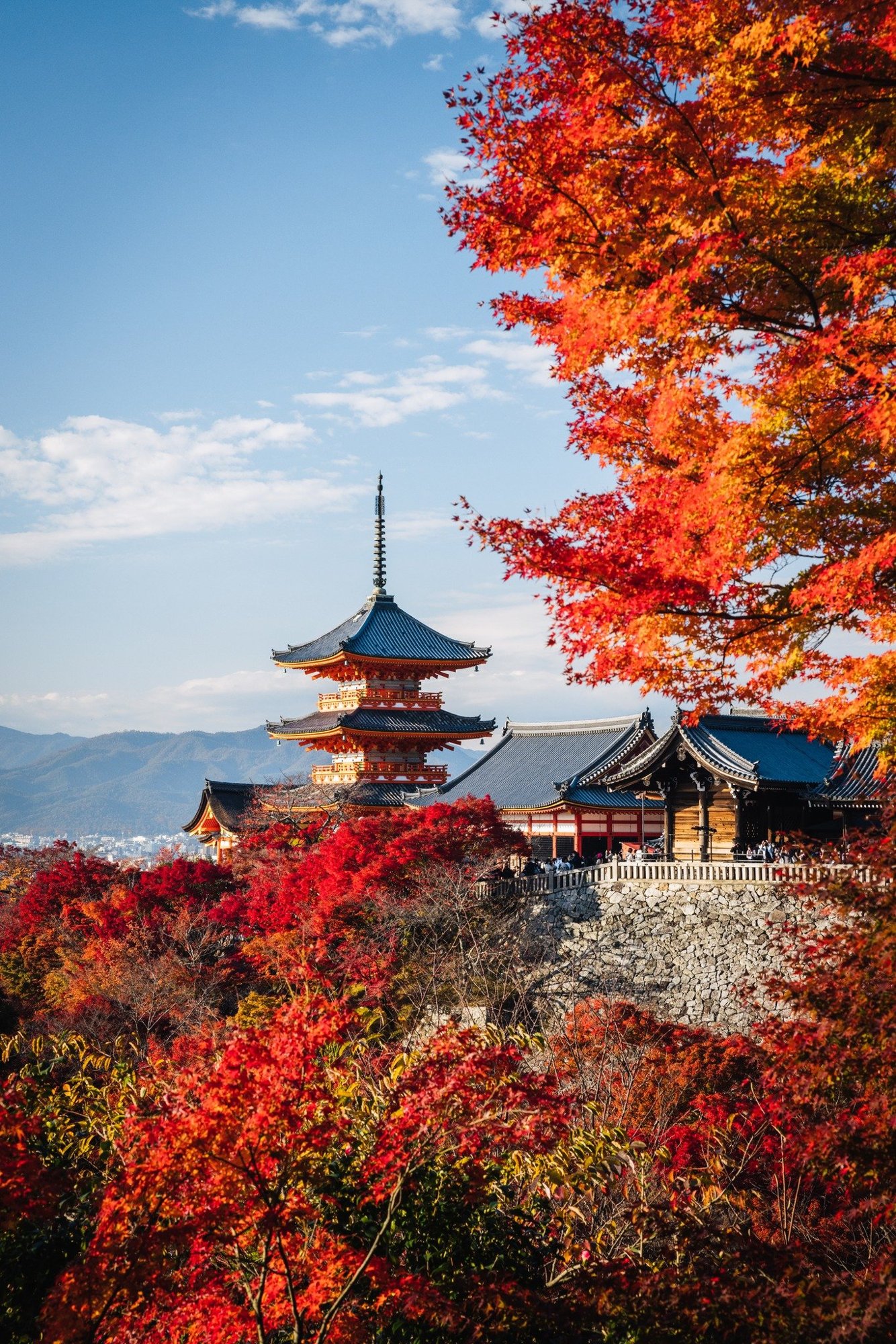
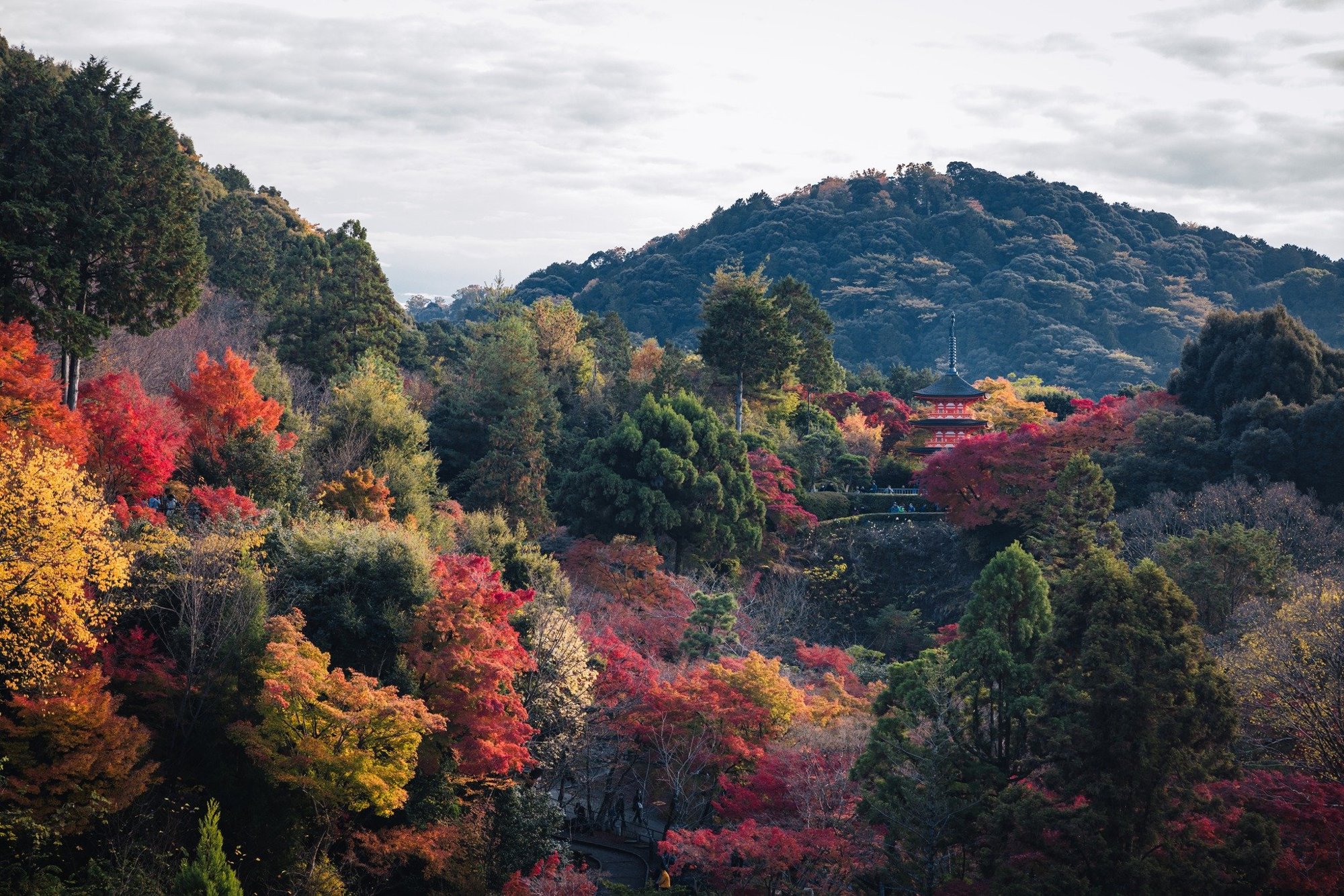
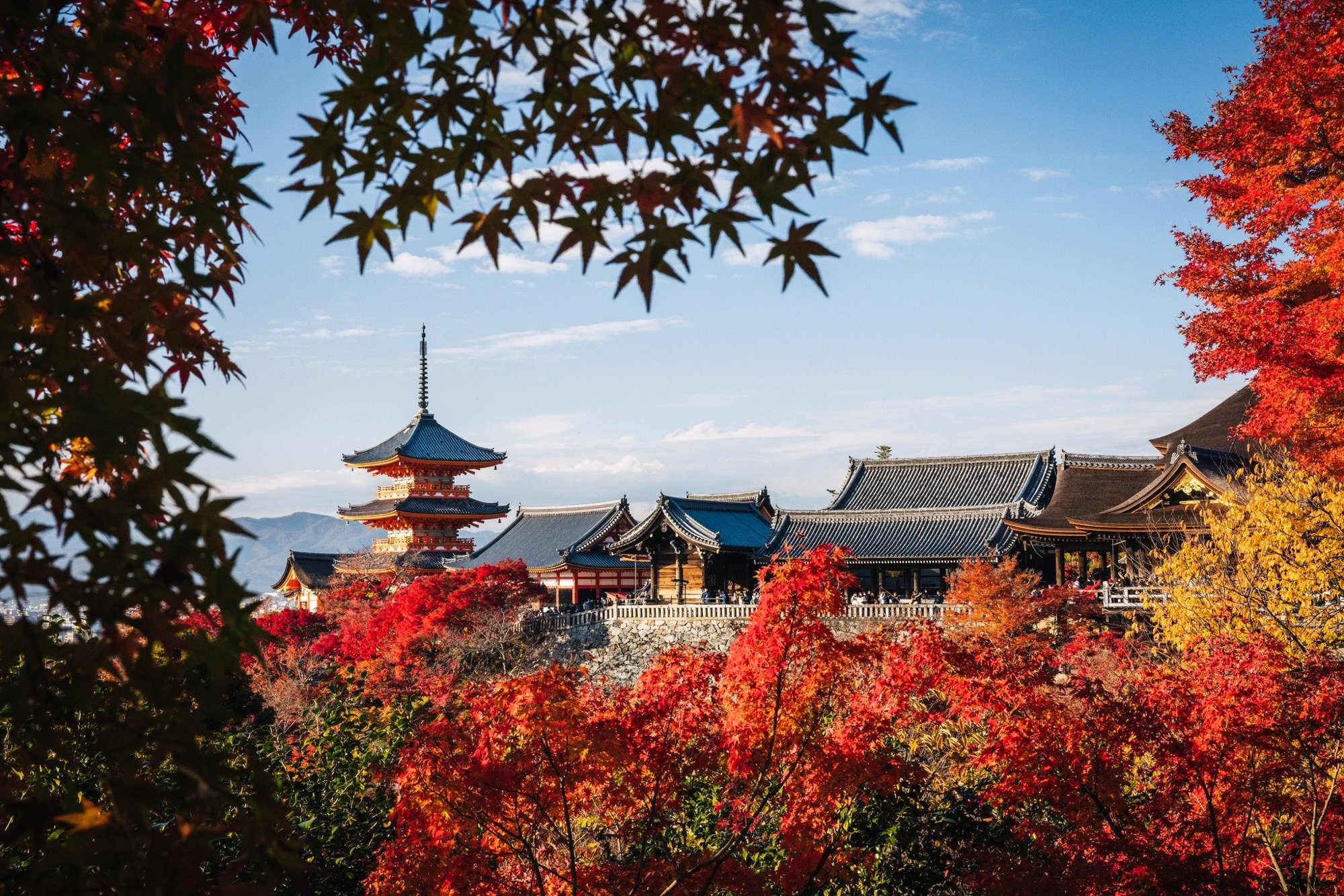
  4. 6Kiyomizu-deraKyoto
  5. 7Eikando TempleKyoto
  6. 8RurikoinKyoto
Osaka
  1. 9Katsuoji TempleMinoh, Osaka
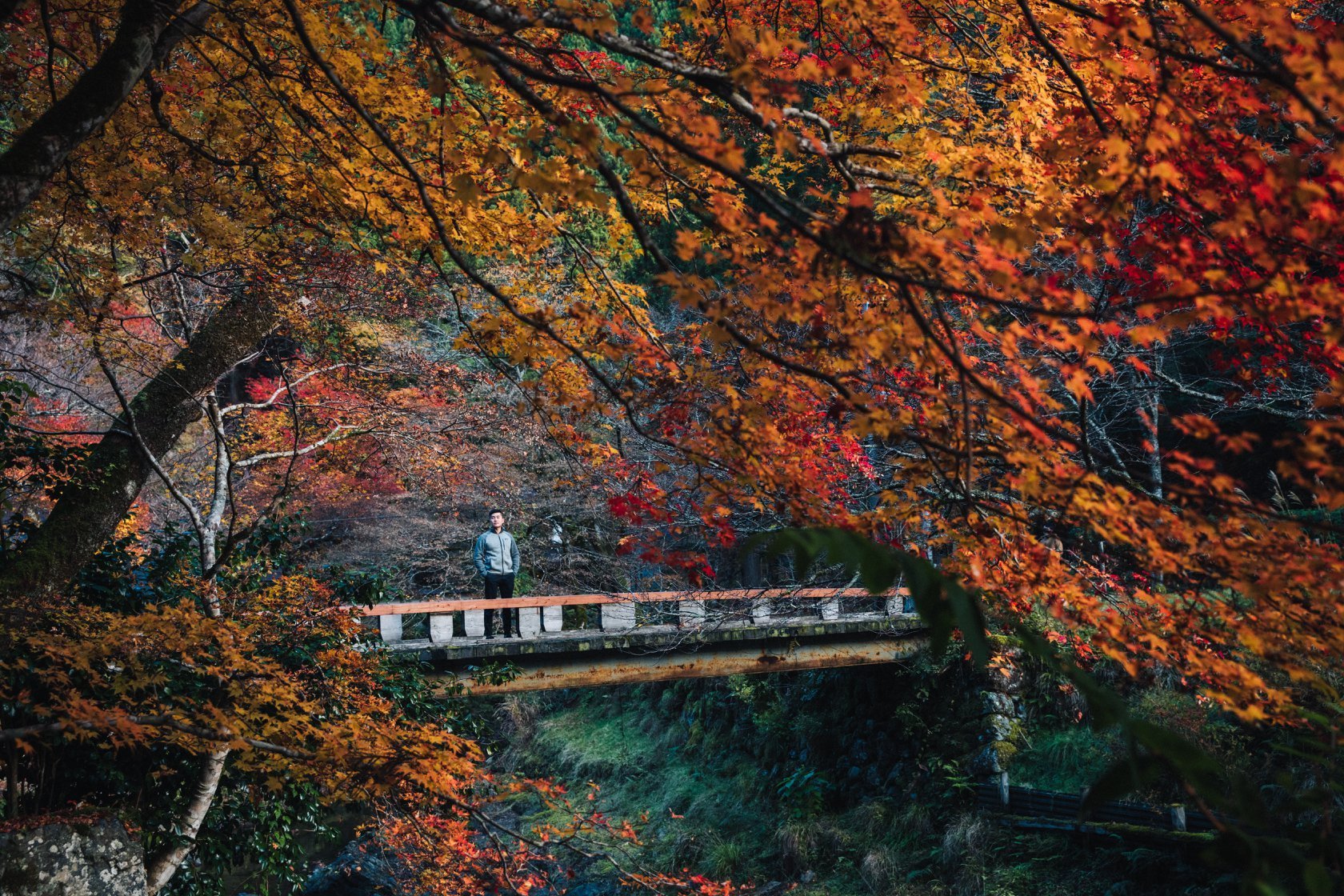
  2. 10Minoh FallsMinoh, Osaka
Tohoku
  1. 11Goshiki-numa Five LakesBandai, Fukushima
  2. 12Tatsuzawa Fudo FallsInawashiro, Fukushima
  3. 13Risshaku-ji Temple (Yamadera)Yamadera, Yamagata
  4. 14Naruko GorgeOsaki, Miyagi

"Autumn carries more gold in its pocket than all the other seasons." — Jim Bishop

Japan's koyo season, the fall foliage phenomenon that paints the archipelago in shades of crimson, amber, and gold, is nothing short of magical. For nearly two thousand years, the Japanese have celebrated this fleeting transformation with the same reverence poets reserve for spring cherry blossoms. We've spent countless autumn days wandering through misty valleys and along sacred temple grounds, watching entire hillsides ignite in color while leaves drift down like nature's confetti. The season typically peaks from late October through November, though timing varies by region—and the spectacle is so profound that it draws pilgrims and travelers from across the globe.

What makes Japanese autumn foliage extraordinary isn't just the visual splendor. It's the sense of impermanence woven into every golden moment—the Buddhist principle of mono no aware, the pathos of things. Nowhere is this more palpable than in Kyoto's ancient temples, where maple trees turn scarlet against weathered wooden architecture, or in the hidden mountain valleys where untouched forests blaze in solitude. Whether you're seeking a meditative walk through carpet-soft moss beneath arching maples, or the spiritual energy of a thousand daruma dolls nestled among autumn colors, Japan's foliage destinations offer an intimacy with nature that photographs alone cannot capture.
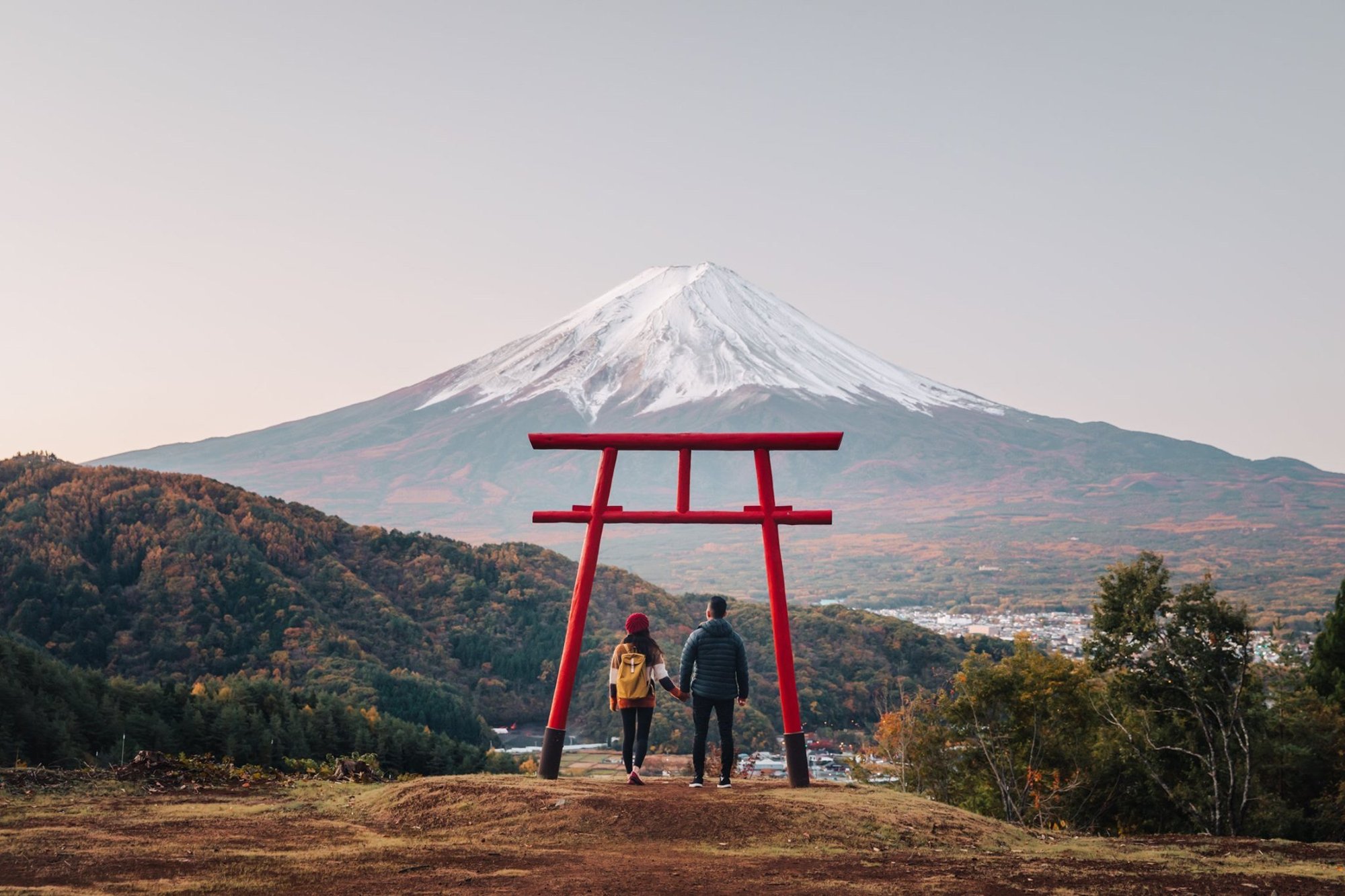
Tenku no Torii (天空の鳥居)

Lake Kawaguchiko, Yamanashi

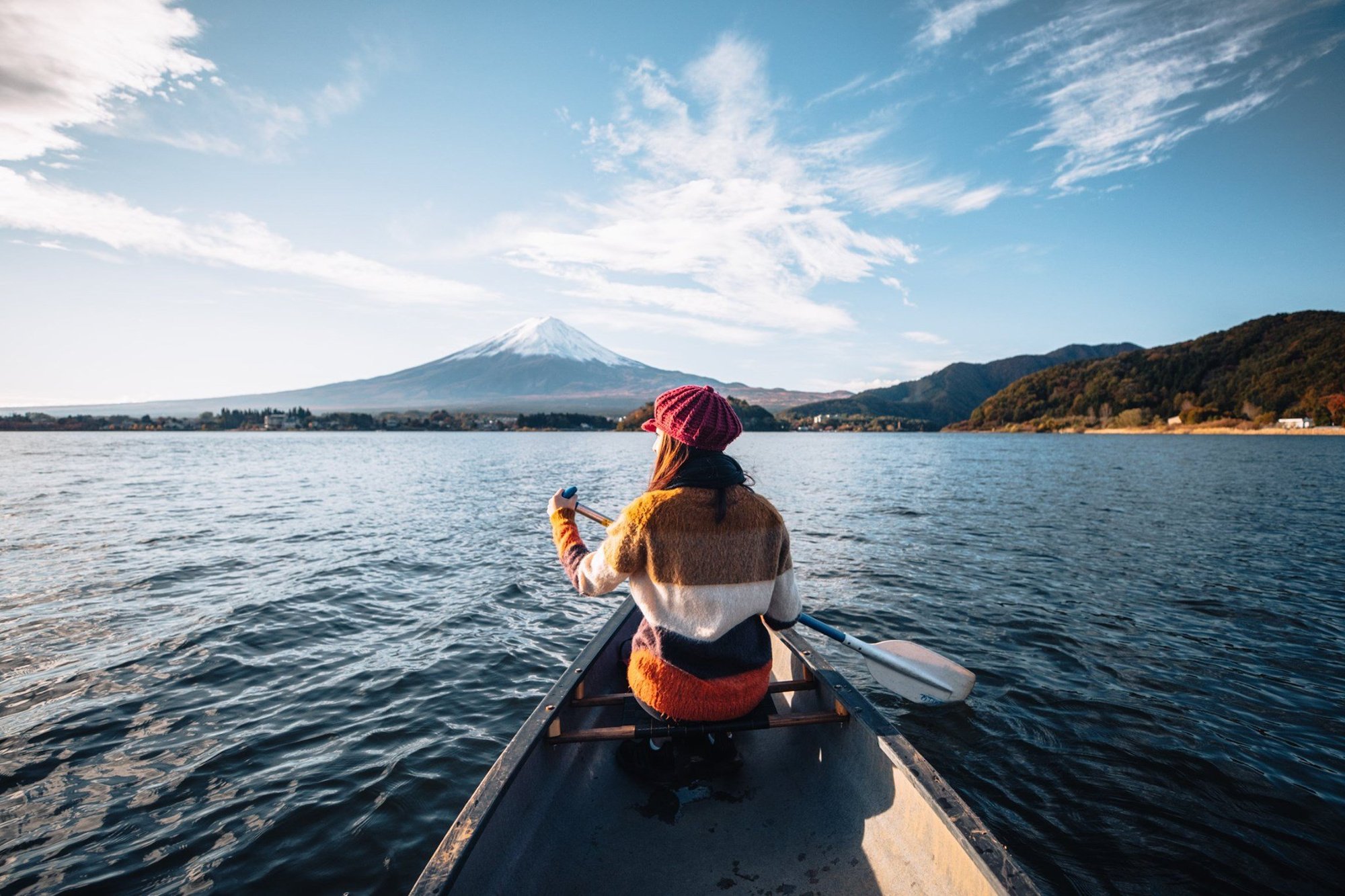
There exists a moment in travel when you stumble upon a place so perfectly composed that you question whether it's real or a painting brought to life. The red shrine gate at Tenku no Torii—meaning "Sky Gate"—is one such moment. Floating above the cerulean expanse of Lake Kawaguchiko, with Japan's most sacred mountain rising majestically beyond, this torii frame captures an image so iconic it has become shorthand for Japanese autumn itself. We found ourselves returning here three times during our visit, each time under different light: at dawn when mist clung to the water's surface, at noon when the colors burned brightest, and at dusk when the mountains turned purple and the leaves glowed like embers.

The genius of Tenku no Torii lies in its simplicity and restraint. There are no crowds, no temple architecture, no ornate gardens demanding attention—just a weathered wooden gate, the water, and the volcanic profile of Mount Fuji. During autumn, when the ginkgo and maple trees scattered along the shoreline ignite in gold and crimson, the contrast creates a visual story that feels almost too perfect to be accidental. We sat at a small bench nearby, sipping hot tea from a thermos, watching other visitors discover what we'd discovered: that some of nature's greatest compositions need no improvement from human hands.

Tenku no Torii shrine gate overlooking Lake Kawaguchiko

Oishi Park (大石公園)

Lake Kawaguchiko, Yamanashi

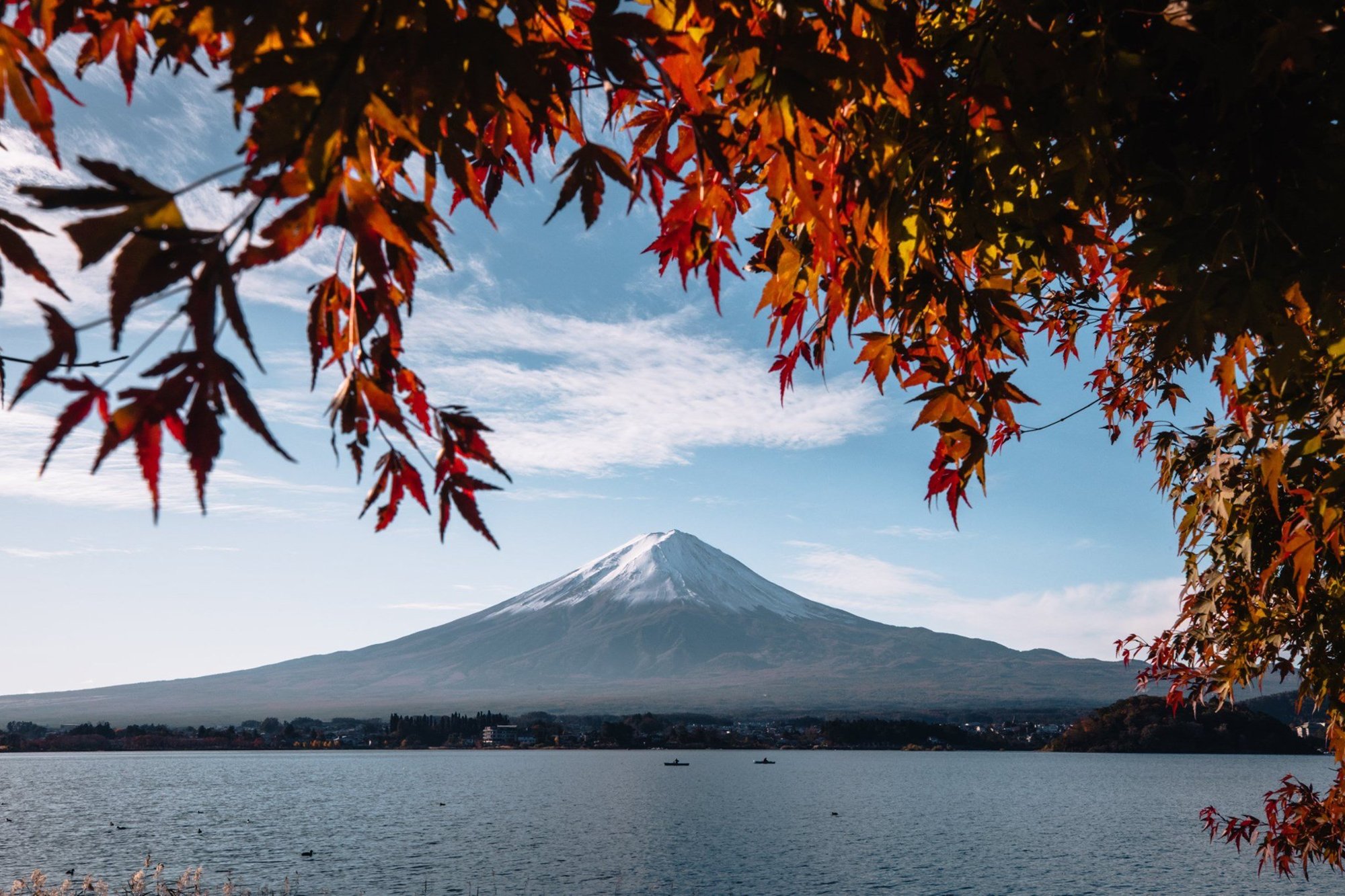
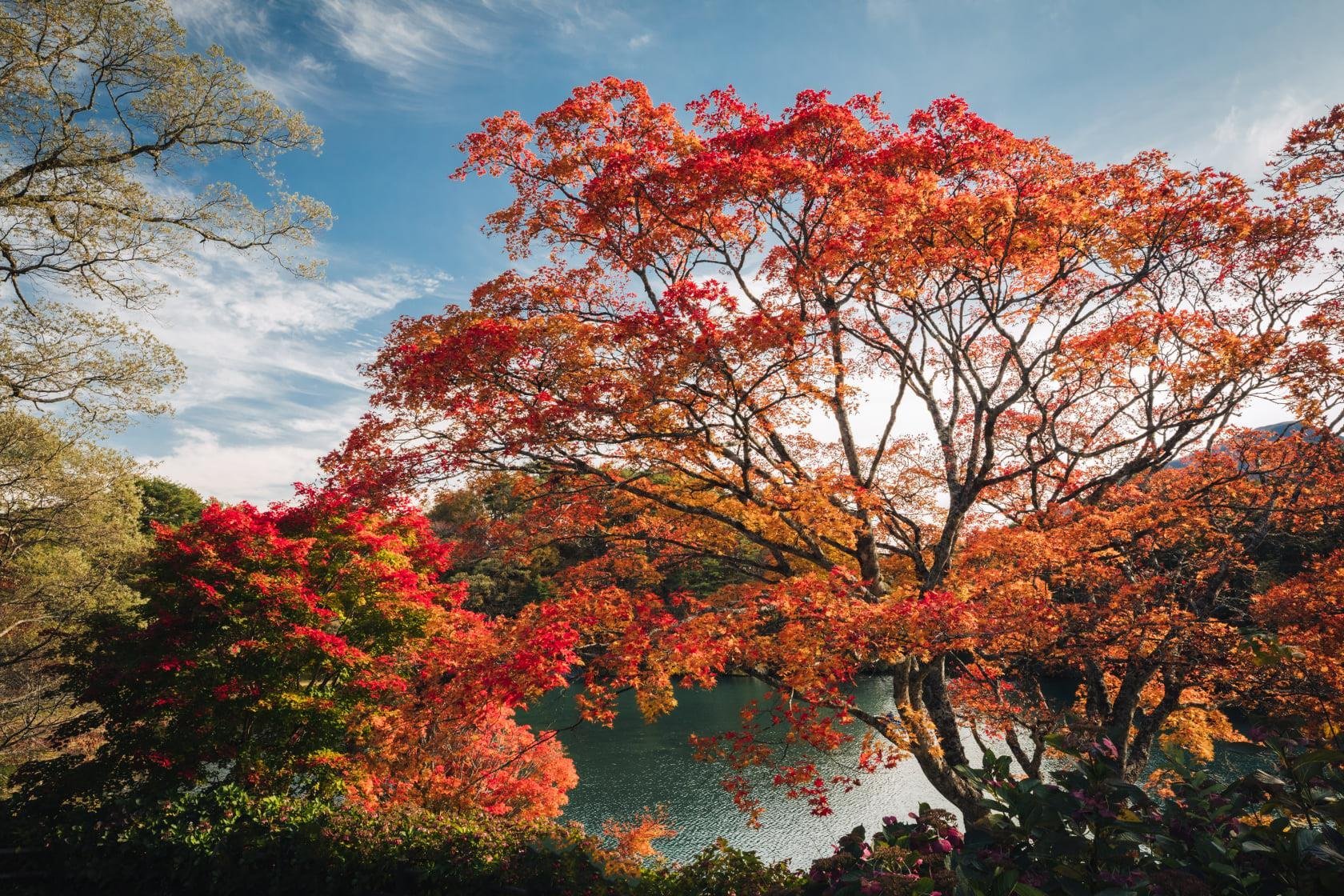
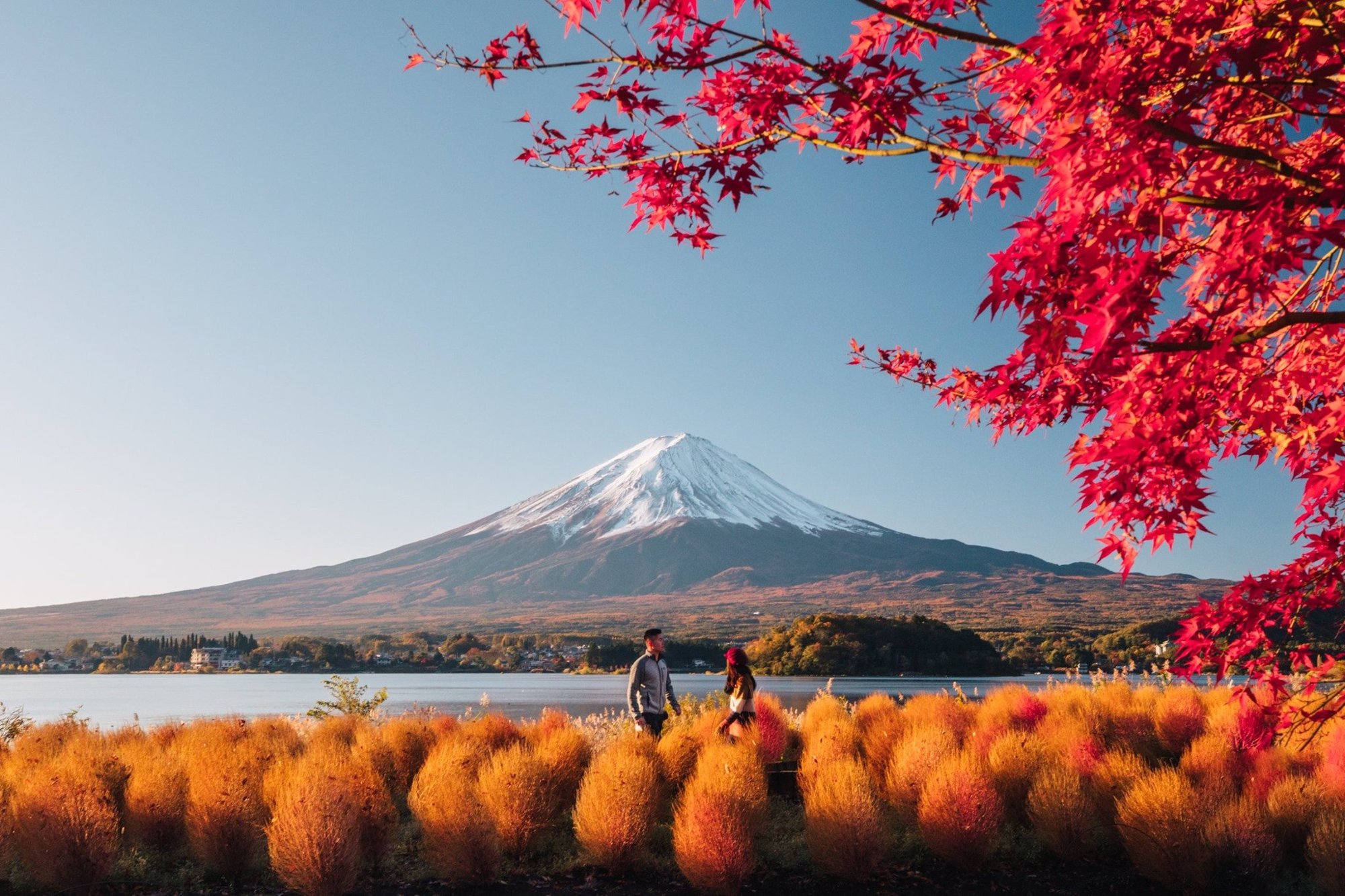
If Tenku no Torii is the gate to autumn in Japan, Oishi Park is the garden that unfolds beyond it. Positioned on the northern shore of Lake Kawaguchiko, this sprawling public park transforms in autumn into something between a wildflower meadow and a painter's palette. The lavender season may have faded by the time leaves turn, but what replaces it is no less stunning: low maples in shades of crimson and copper dotting the open lawns, with views of Mount Fuji framed across the water. We visited on a crisp October morning when the air carried that particular tang of approaching winter—the kind of morning that makes you want to walk forever.

The beauty of Oishi is that it remains wonderfully accessible even at peak foliage season. Unlike the crush of visitors at famous temples, this park invites lingering—bring a blanket, sit by the water's edge, and watch the maple leaves drift down like confetti. There's a small café on the grounds where we stopped for fresh apple cider and mochi, sitting at an outdoor table as the autumn light painted everything gold. The park's gentle, undulating landscape means you can find unexpected moments of solitude even when other visitors are present. We stumbled upon a small family of photographers setting up tripods on a hillside overlooking the lake, and for a moment, it felt less like a popular destination and more like a treasured secret shared between kindred spirits.

Oishi Park with Mount Fuji and autumn colors
Fall foliage in Oishi Park Lake shore at Oishi Park

Daigoji Temple (醍醐寺)

Kyoto

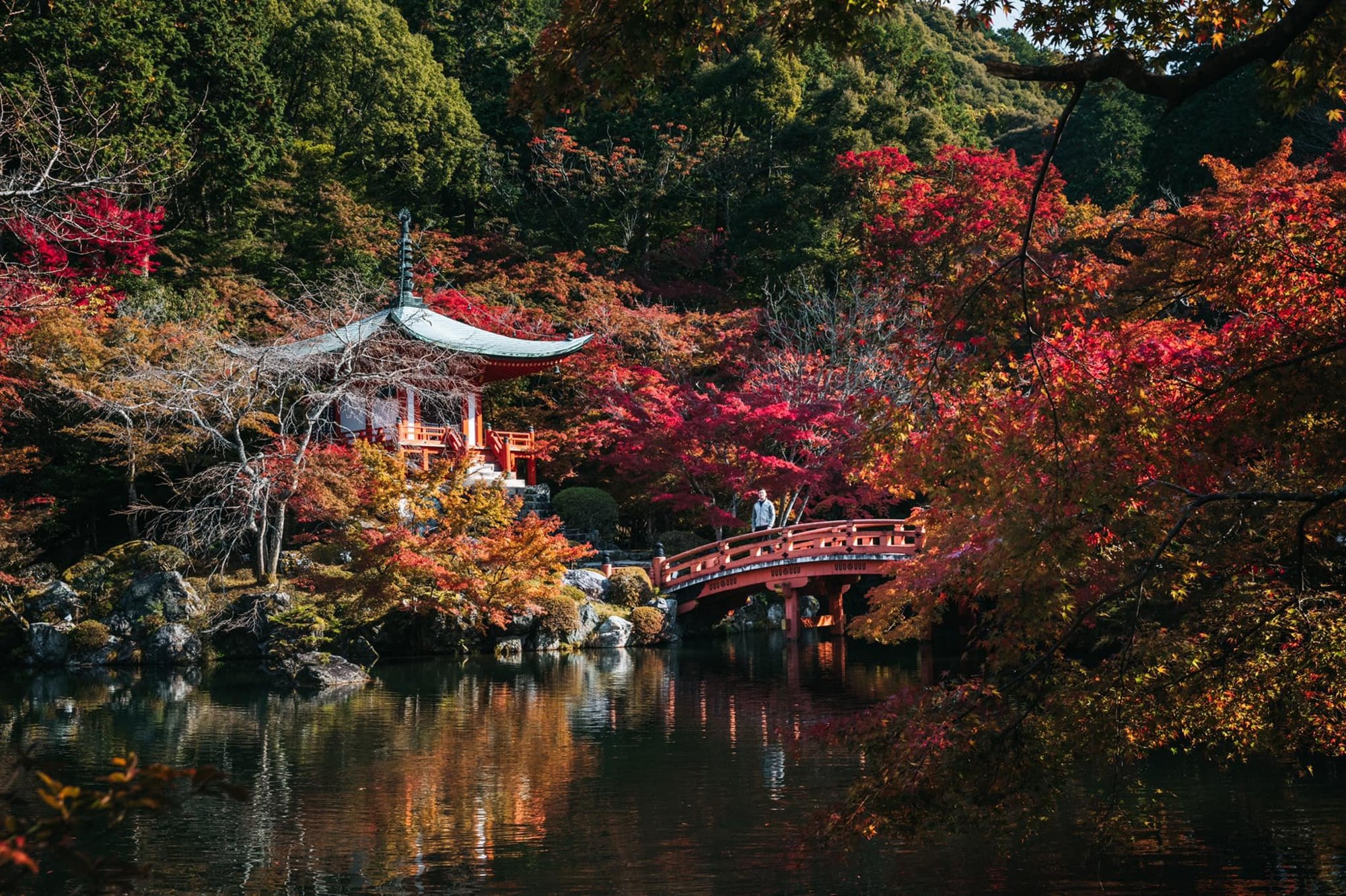
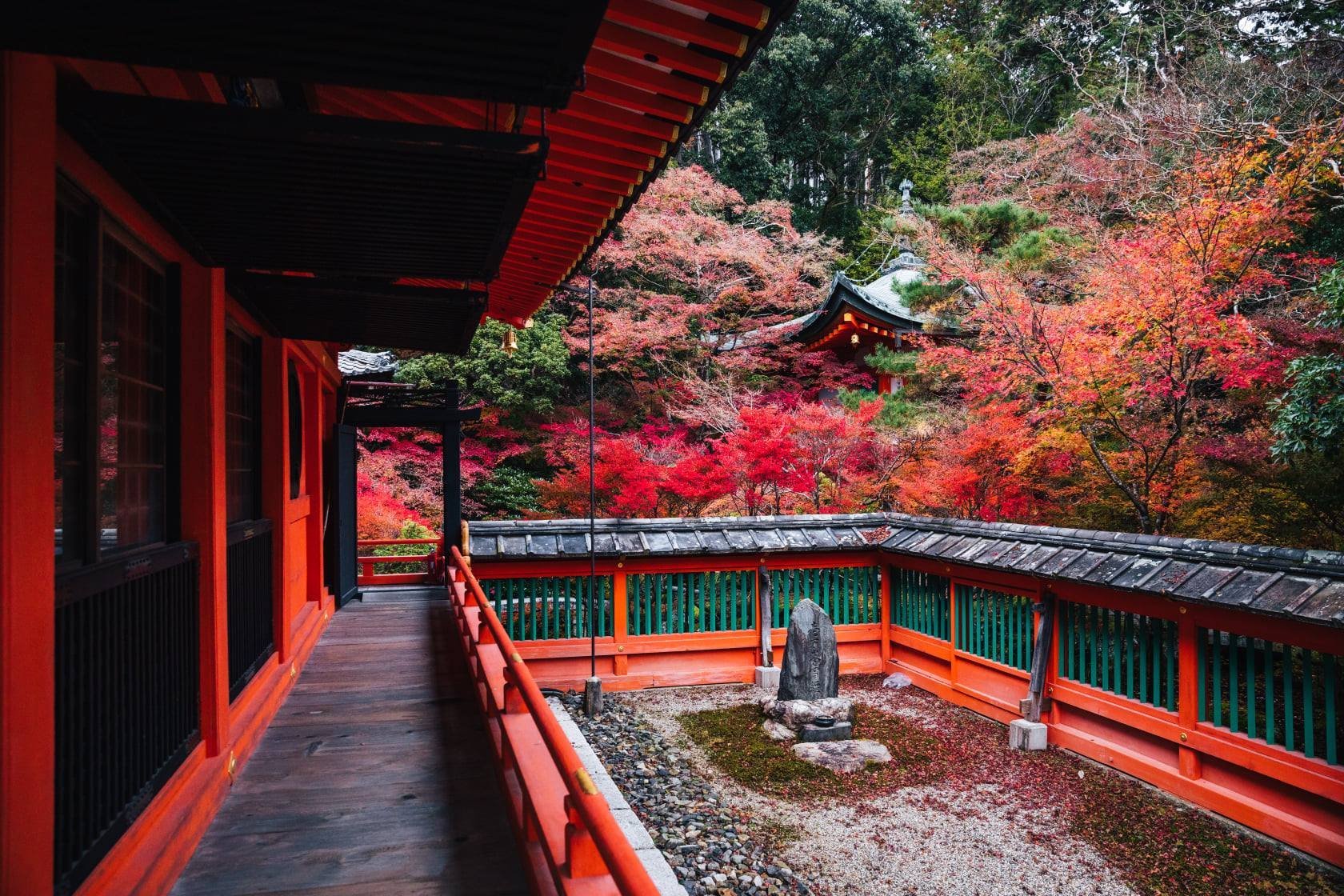
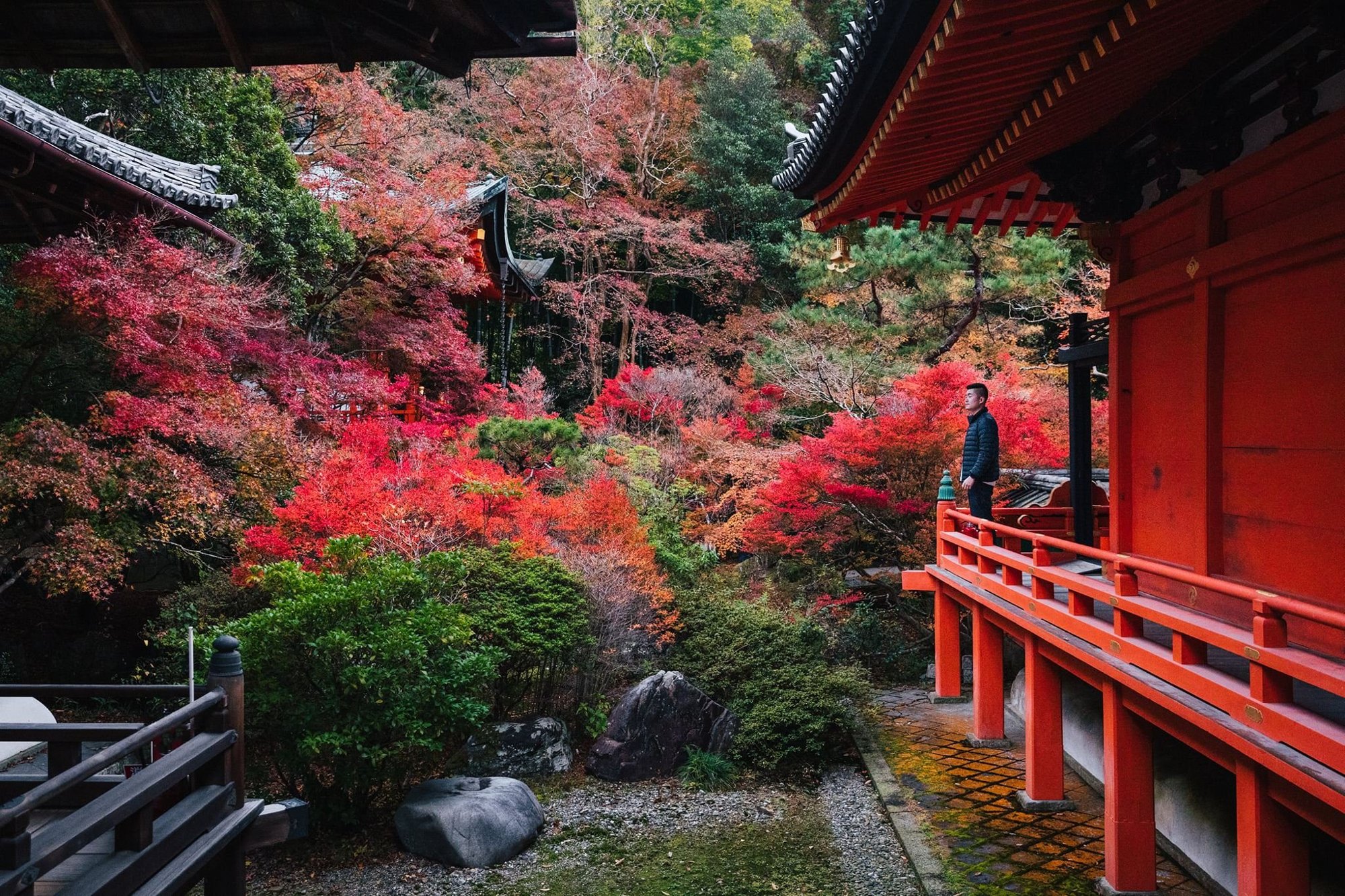
Daigoji Temple's claim to fame rests partly on its extraordinary architectural significance—it's a UNESCO World Heritage site with structures dating back over a thousand years—but it's the autumn foliage that steals your breath. The temple's most celebrated feature is Bentendo Hall, a small wooden pavilion that appears to float above a perfectly still pond. In autumn, when Japanese maples surrounding the hall turn a deep burgundy-red, the reflection in the water creates an almost surreal doubling of color. We arrived early one November morning, before the day-trippers descended, and found ourselves alone with the mist rising off the water and the sound of leaves settling into the pond below.

What makes Daigoji particularly special is the integration of the temple's architecture with its natural setting. Unlike some heritage sites where buildings feel imposed upon the landscape, here the structures seem to have grown from the earth itself. The approach to Bentendo Hall winds through a dense forest of mature trees, many of which have been cultivated for centuries specifically for their autumn color. We took our time on this path, stopping frequently to admire views that shifted with each turn—a window framing a scarlet maple, a stone lantern emerging from a drift of golden leaves, the weathered bridge over the pond suddenly seeming ancient beyond measure.

Daigoji Temple with autumn colors and pond reflection

Miyamasou (美山荘)

Hanase, Kyoto

In the mountains north of Kyoto, where the city's chaos feels another world away, sits Miyamasou—a celebrated ryokan and kaiseki restaurant that exists in a realm of quiet perfection. The approach alone is an experience: a winding mountain road climbing into increasingly dense forest, the road narrowing until you feel you're no longer approaching civilization but dissolving into the wilderness. When autumn arrives here, the entire valley transforms into a cathedral of color. Towering cryptomeria and cypress trees, evergreens that typically recede into the background, suddenly provide deep jade backdrops that make the scarlet and gold maples seem to glow with their own light.

Miyamasou is best experienced not as a day visitor but as a guest staying overnight. The inn's exquisite kaiseki dinners are served in rooms overlooking the autumn-painted river, and the meal itself becomes a meditation on the season. We sat in a traditional room, kneeling at low tables, as course after course arrived—each dish a small artwork reflecting autumn ingredients: chestnuts, mushrooms, sake lees, river fish. Between courses, we stepped outside onto wooden verandas to admire the way lantern light touched the falling leaves. The experience wasn't simply about viewing autumn foliage; it was about inhabiting it completely, letting it become the entire context of your days.

Miyamasou ryokan nestled in autumn mountains

Bishamondo Temple (毘沙門堂)

Yamashina, Kyoto

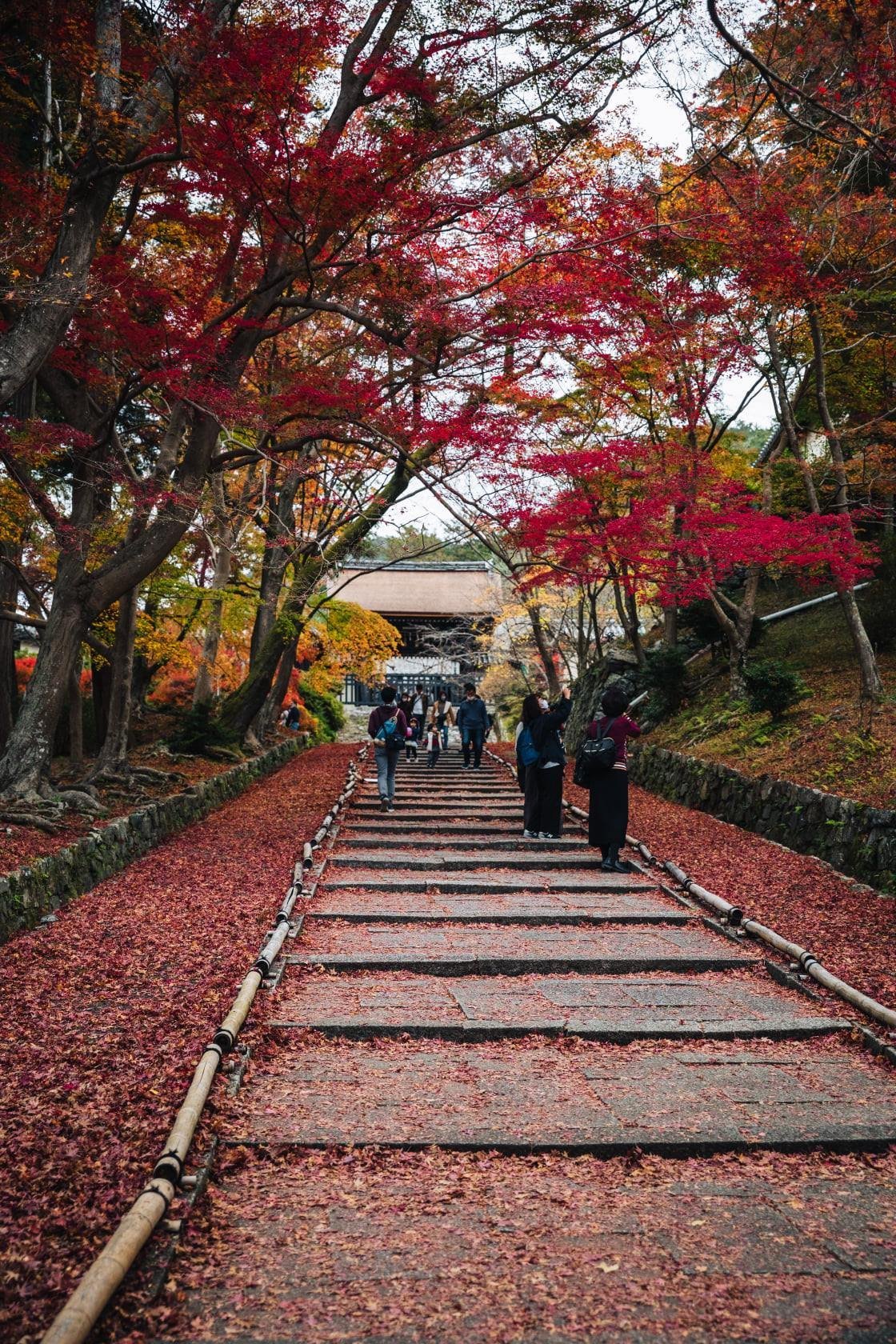
Bishamondo Temple gains its poetic reputation from a single, almost surreal natural phenomenon: each autumn, the long approach staircase becomes blanketed—we mean completely, entirely covered—in a carpet of fallen red and orange maple leaves. There is nothing quite like the sensation of walking up these stairs, each step cushioned by centuries’ worth of seasonal sacrifice, the leaves so thick beneath your feet that the stone beneath seems secondary to the natural beauty above it. We visited on a day when there had been a light rain, and the leaves were slick, their colors somehow even more vivid in the moisture. The climb to the temple hall above became a meditation on impermanence and beauty's relationship to brevity.
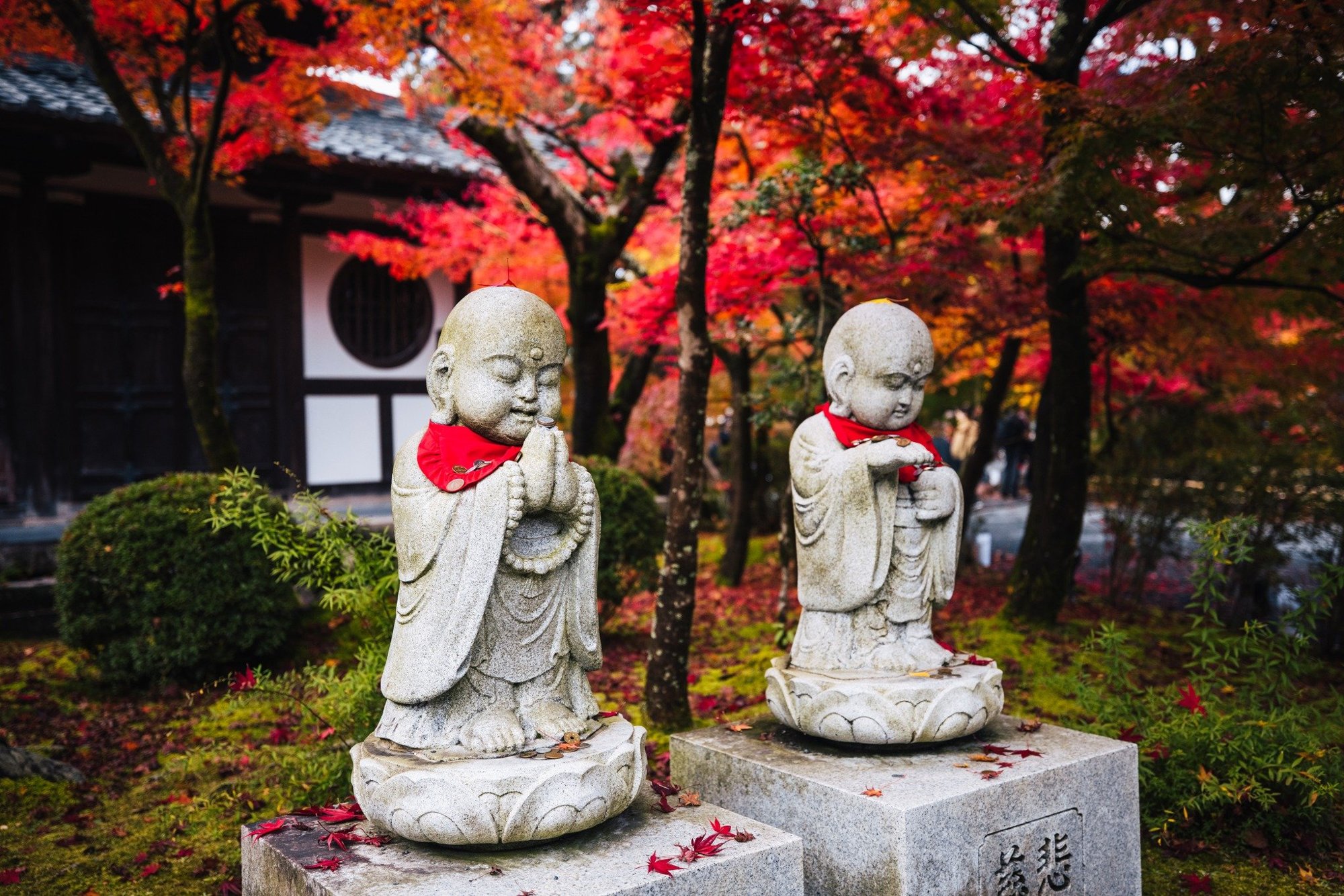
What many travelers don't realize is that Bishamondo's magic extends beyond just the stairs. The temple grounds themselves, set high above the city of Kyoto, offer sweeping views across a valley that turns into a patchwork of crimson and gold during peak season. We emerged from the staircase into the main temple compound and found ourselves nearly alone, save for an elderly caretaker sweeping fallen leaves in a narrow courtyard. The contrast—this solitary figure in ancient robes, attending to the endless work of managing nature's autumn generosity—seemed to encapsulate everything precious about the season: its beauty is temporary, it requires care and attention, and there is a profound peace in accepting work that is never truly finished.

Bishamondo Temple stairs carpeted with maple leaves

Kiyomizu-dera (清水寺)

Kyoto

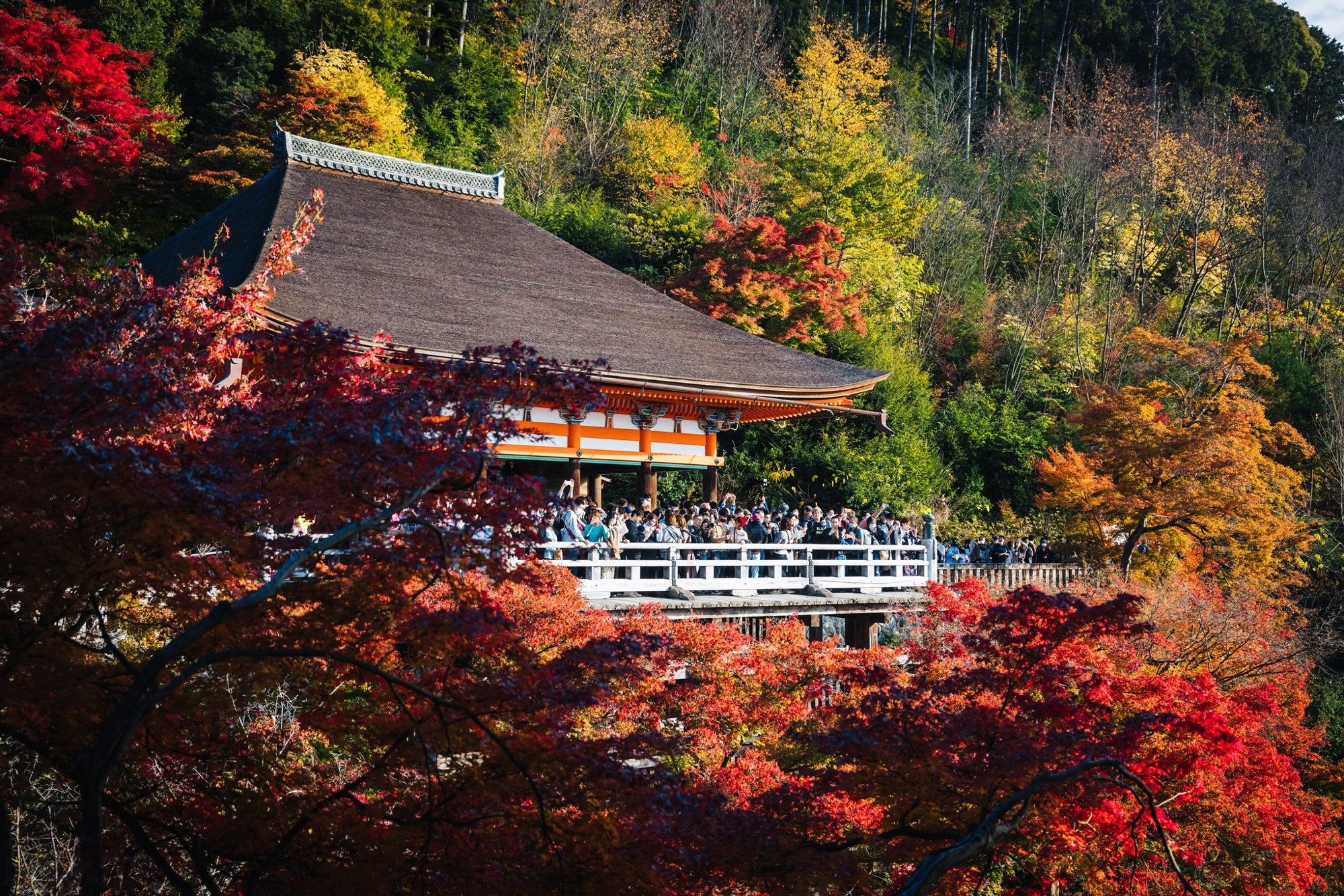
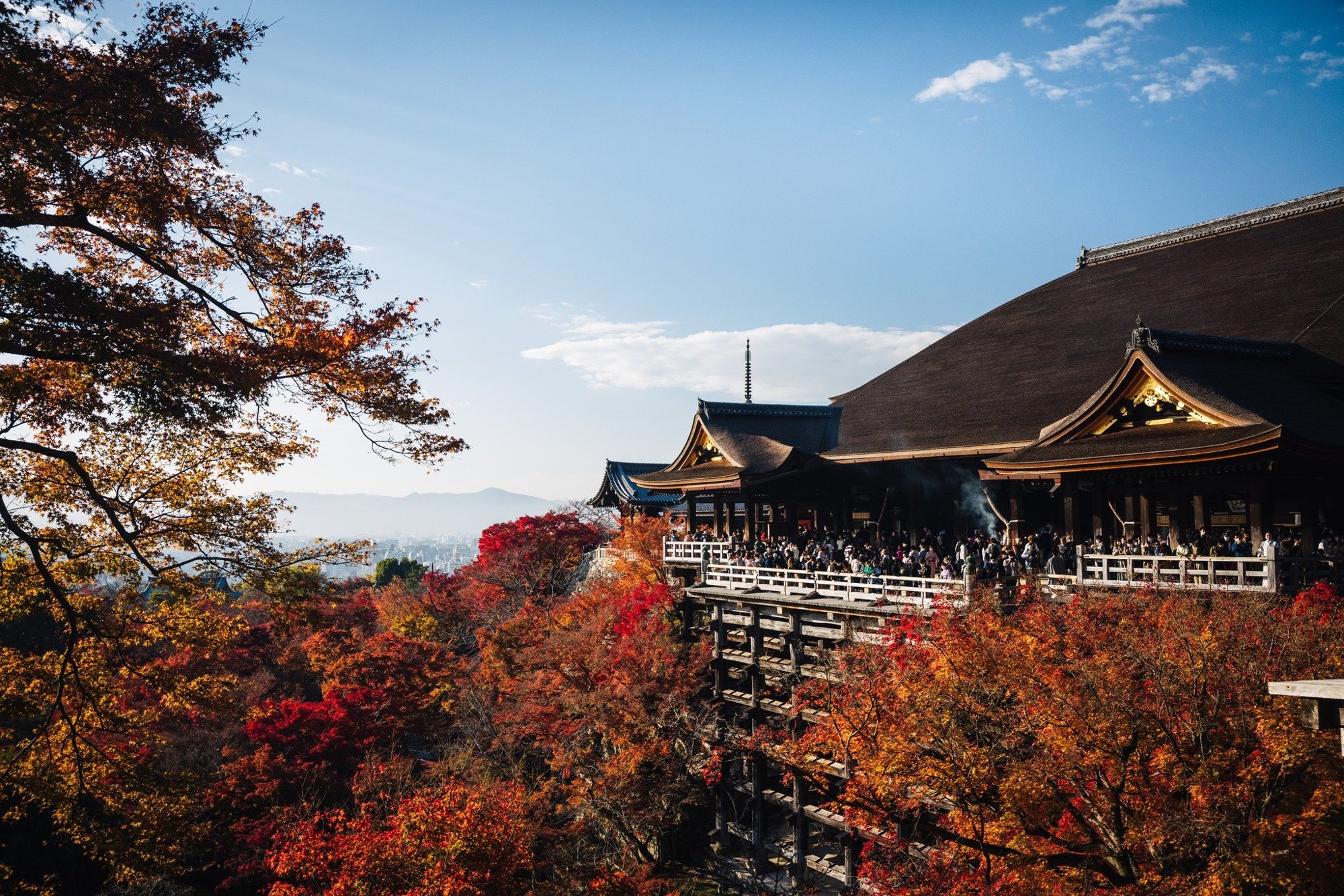
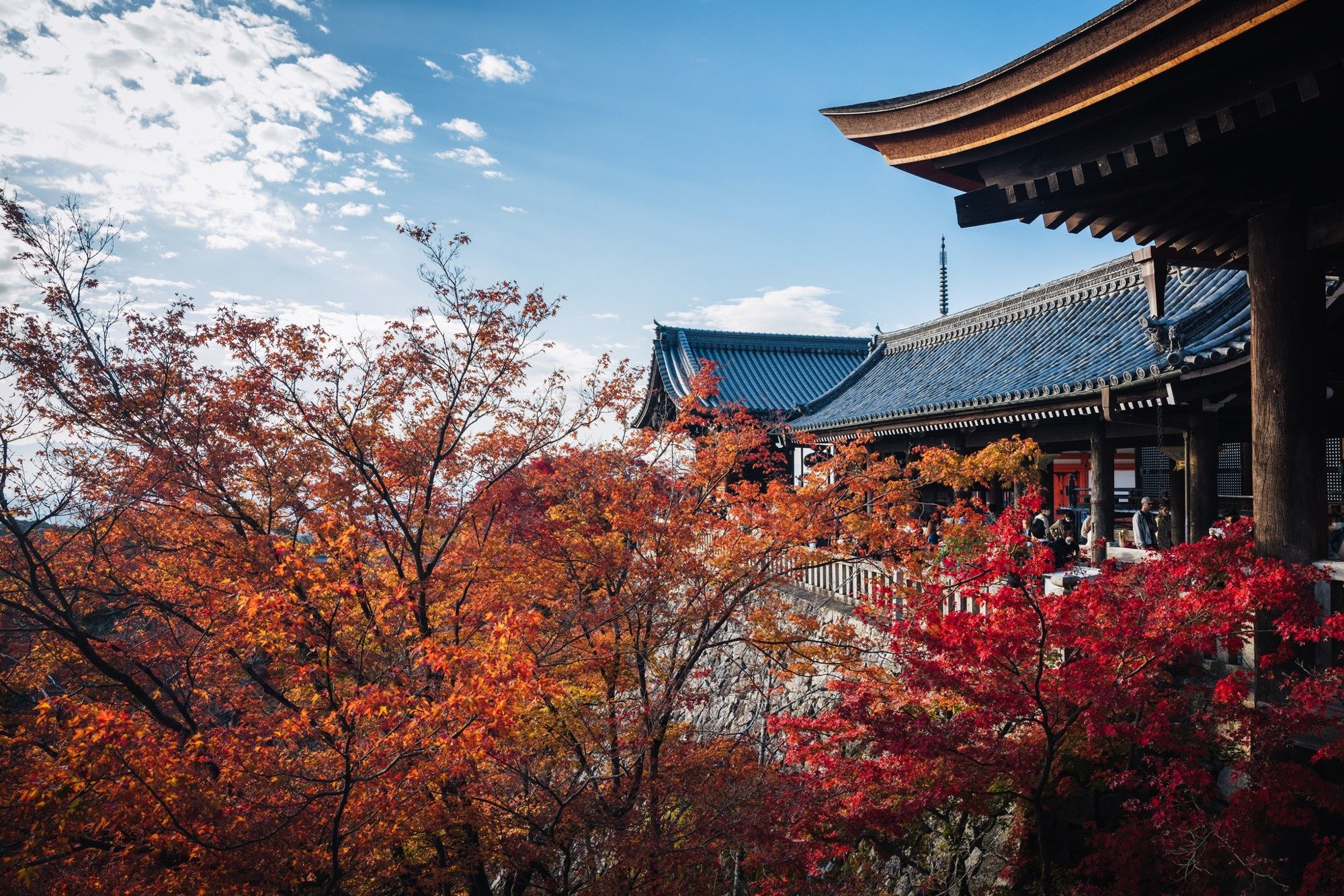
Kiyomizu-dera's iconic wooden stage, cantilevered over a forested valley, is famous throughout Japan—but it reaches a kind of apotheosis during autumn. Standing on that platform, which seems to hang between earth and sky, you're not just looking out at a view; you're floating above an entire universe of color. When we visited in late November, the forest below the stage had transformed into what we can only describe as an impressionist painting come to life: thousands of maple trees in every conceivable shade of red, orange, and gold, their colors diffused by the mist rising from the valley below. The stage itself seemed almost inadequate to contain the beauty in front of it.

The temple becomes even more extraordinary after dark. During autumn season, Kiyomizu-dera offers special evening illumination, when the maples are lit with colored lights that transform the daytime spectacle into something altogether ethereal. The darkness around the lit trees makes the colors seem to vibrate with an almost electric intensity. We returned to the stage at night, standing there with perhaps a hundred other visitors, all of us silent—the kind of silence that comes when people are witnessing something that exceeds normal emotional vocabulary. The night air carried the earthy scent of damp soil and leaves, and somewhere in the darkness below, you could hear the gentle murmur of the stream that gives Kiyomizu its name—"pure water."

Kiyomizu-dera stage overlooking autumn valley

Eikando Temple (永観堂禅林寺)

Kyoto

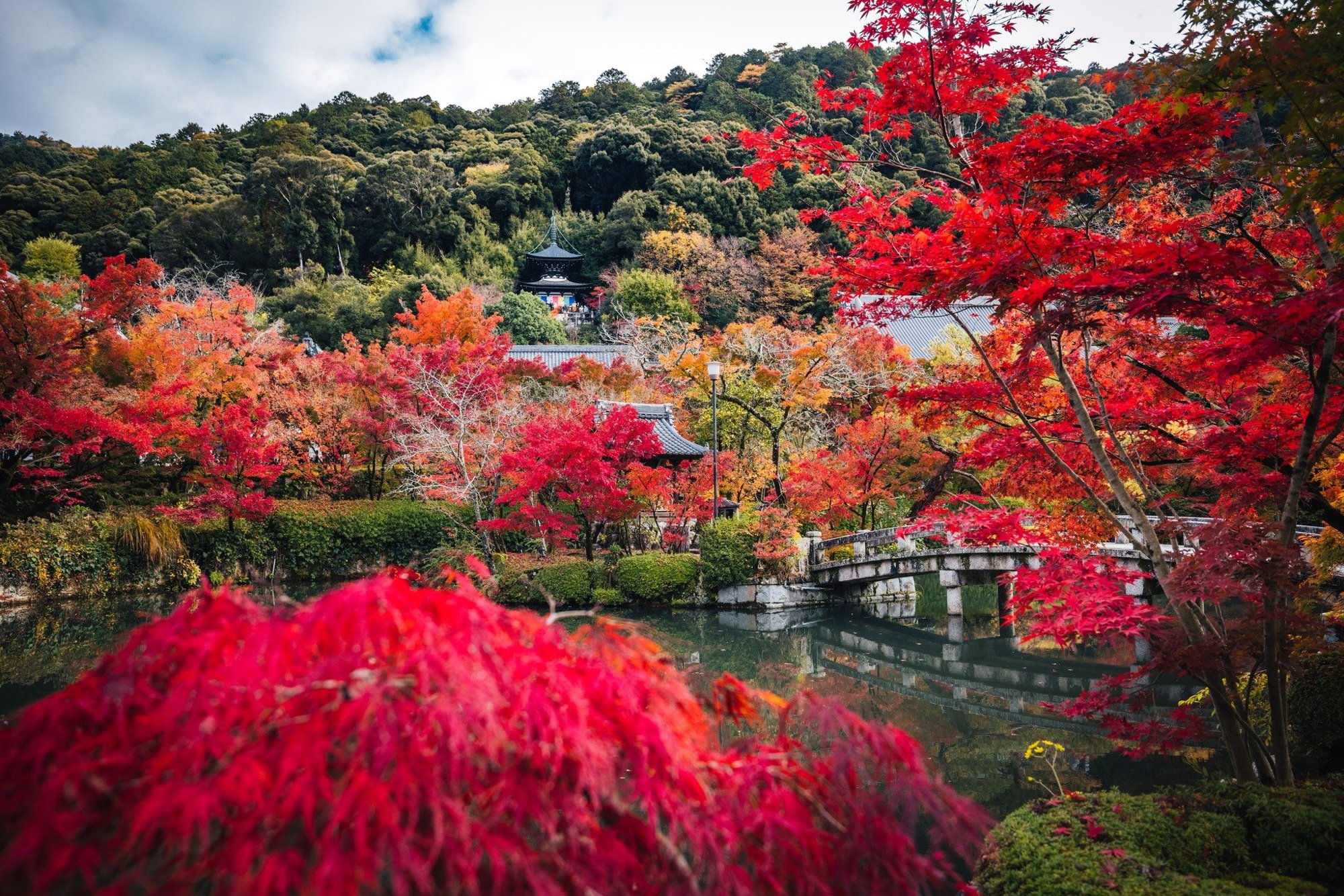
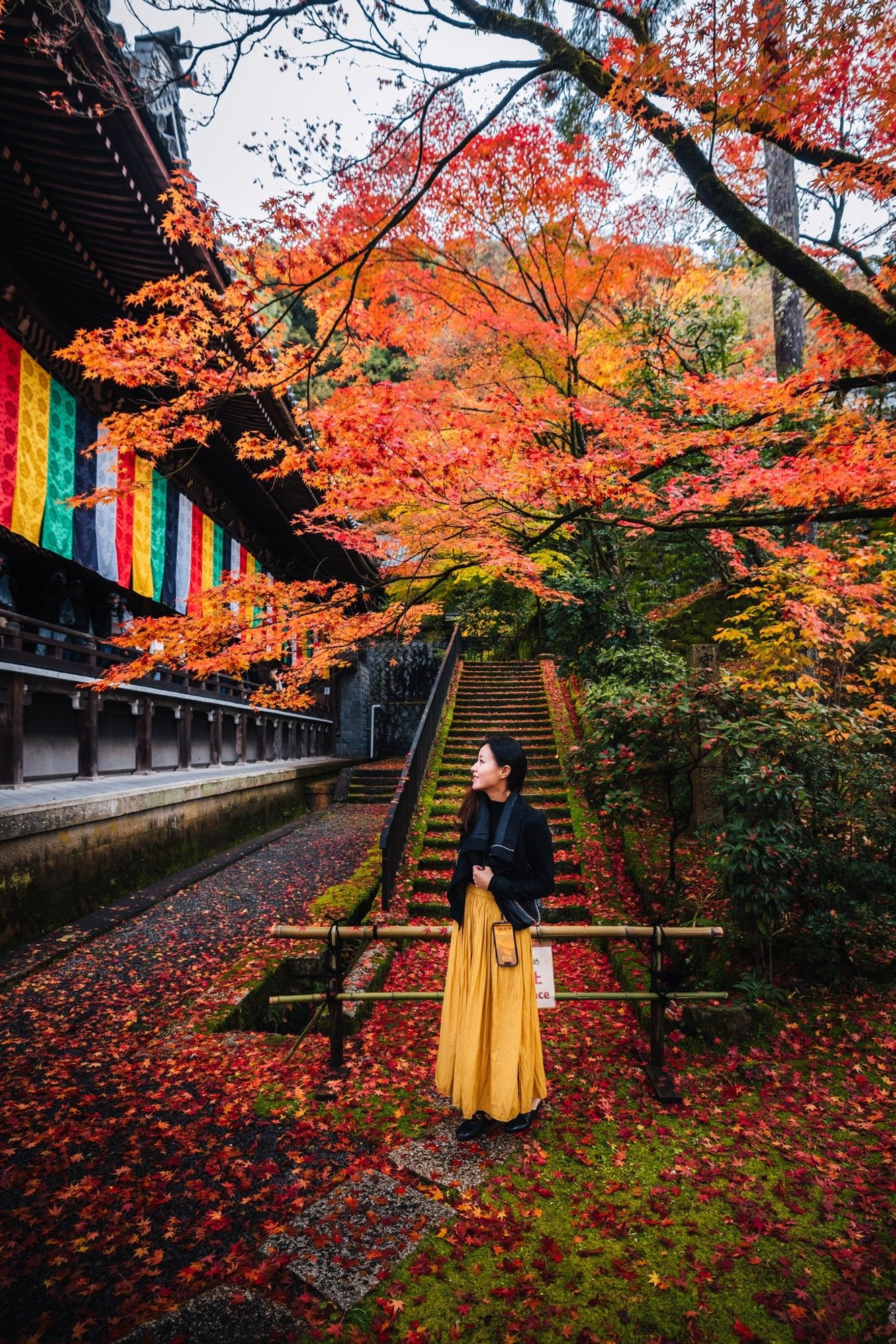
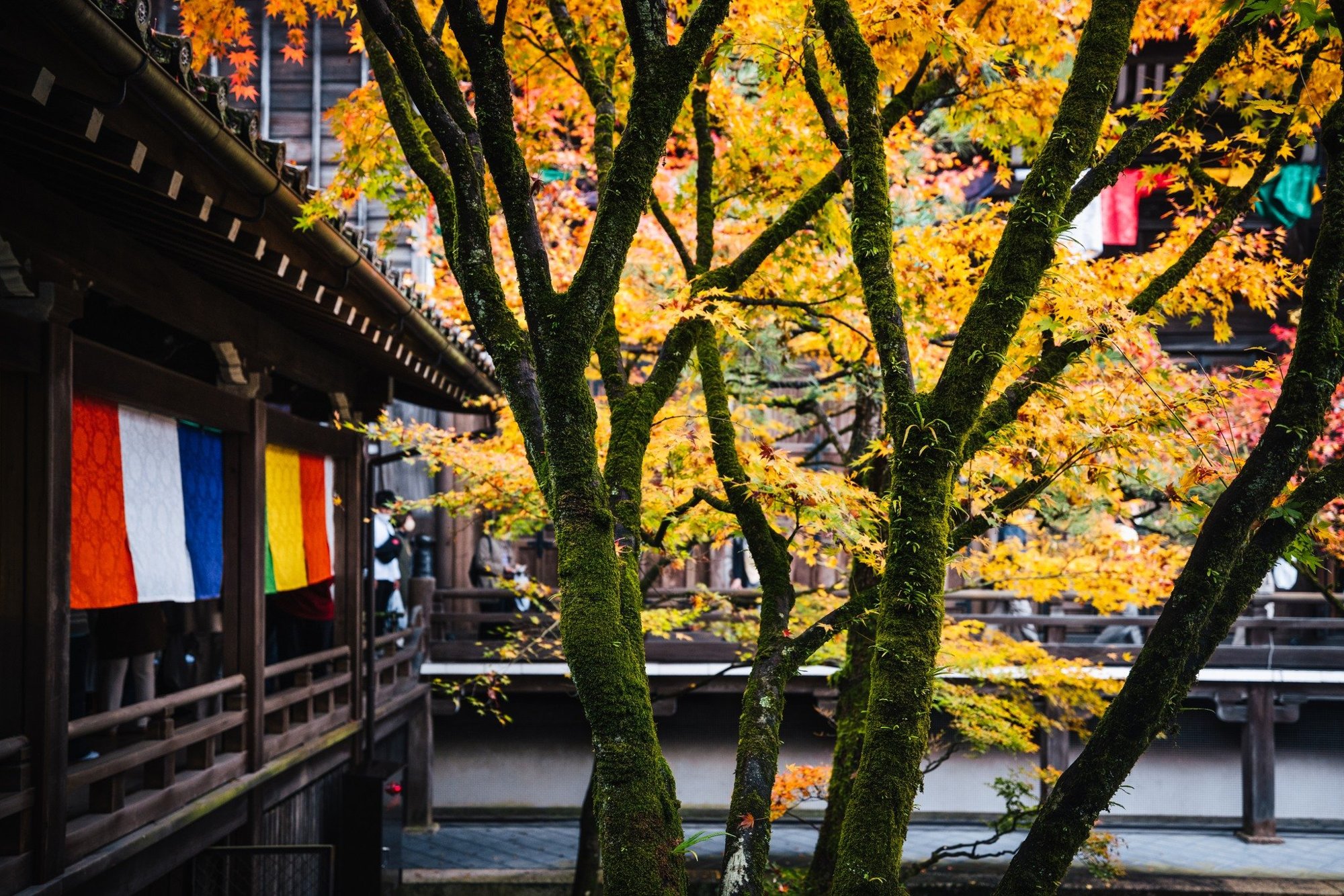
Eikando carries a title that says everything: "The Autumn Leaf Temple." Unlike other destinations where autumn foliage is a spectacular accident of nature, Eikando has spent over a thousand years deliberately cultivating the perfect autumn experience. The temple grounds contain over three thousand maple trees, many of them enormous specimens that must be centuries old themselves. The careful placement of these trees, combined with the temple's architecture and careful landscape design, creates a coherent vision of what autumn should be—not accidental beauty, but composed, intentional, perfected through generations of gardeners' attention.

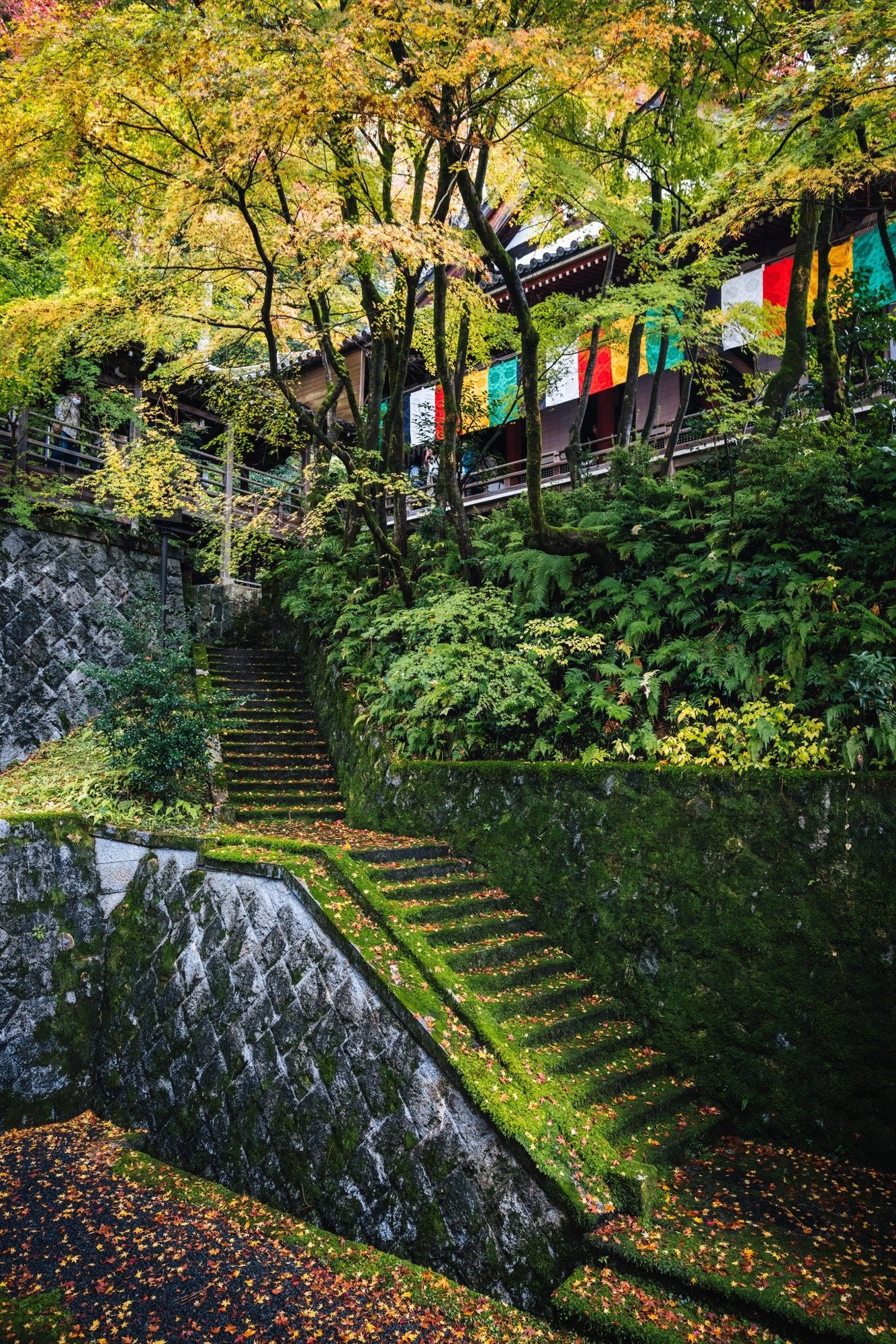
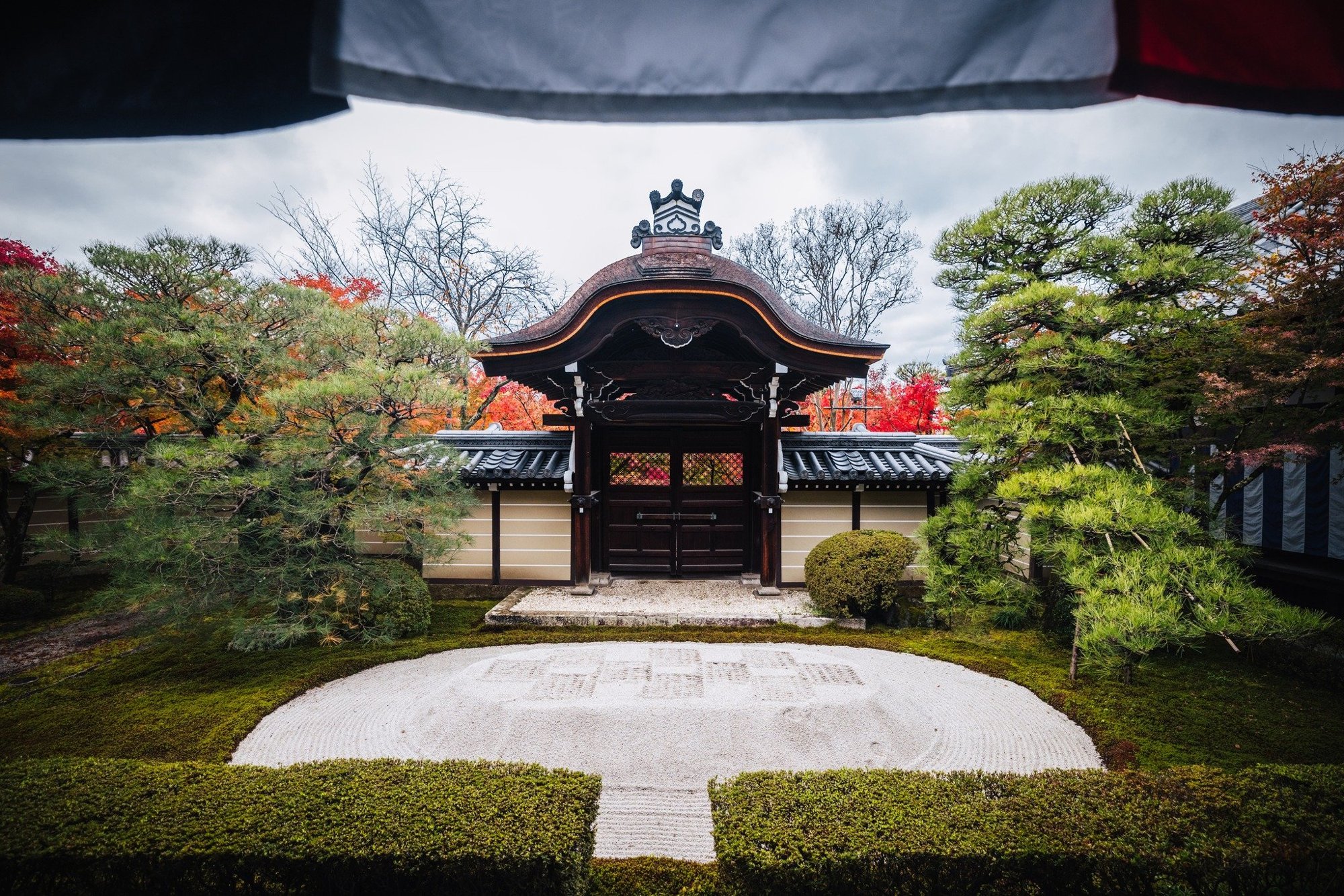
Walking through Eikando in peak season, which typically runs from mid-November through early December, is like moving through a fever dream in the best possible way. Every turn reveals new compositions: a weathered wooden gate framed by crimson leaves, a stone lantern nearly obscured by drifts of gold, a bridge suddenly appearing to float on a sea of color. The temple's main hall, the Amida-do, houses a famous statue of Amitabha Buddha that is said to be the only statue in Japan to turn and look at you as you leave—a reminder that enlightenment departs if you forget to acknowledge it. We stood before this statue for a long time, surrounded by the muted sounds of other visitors walking slowly through the grounds, and found ourselves deeply moved by the realization that we'd been in this place for hours and hadn't once thought to check the time.

Eikando Temple entrance in autumn

Rurikoin (瑠璃光院)

Kyoto

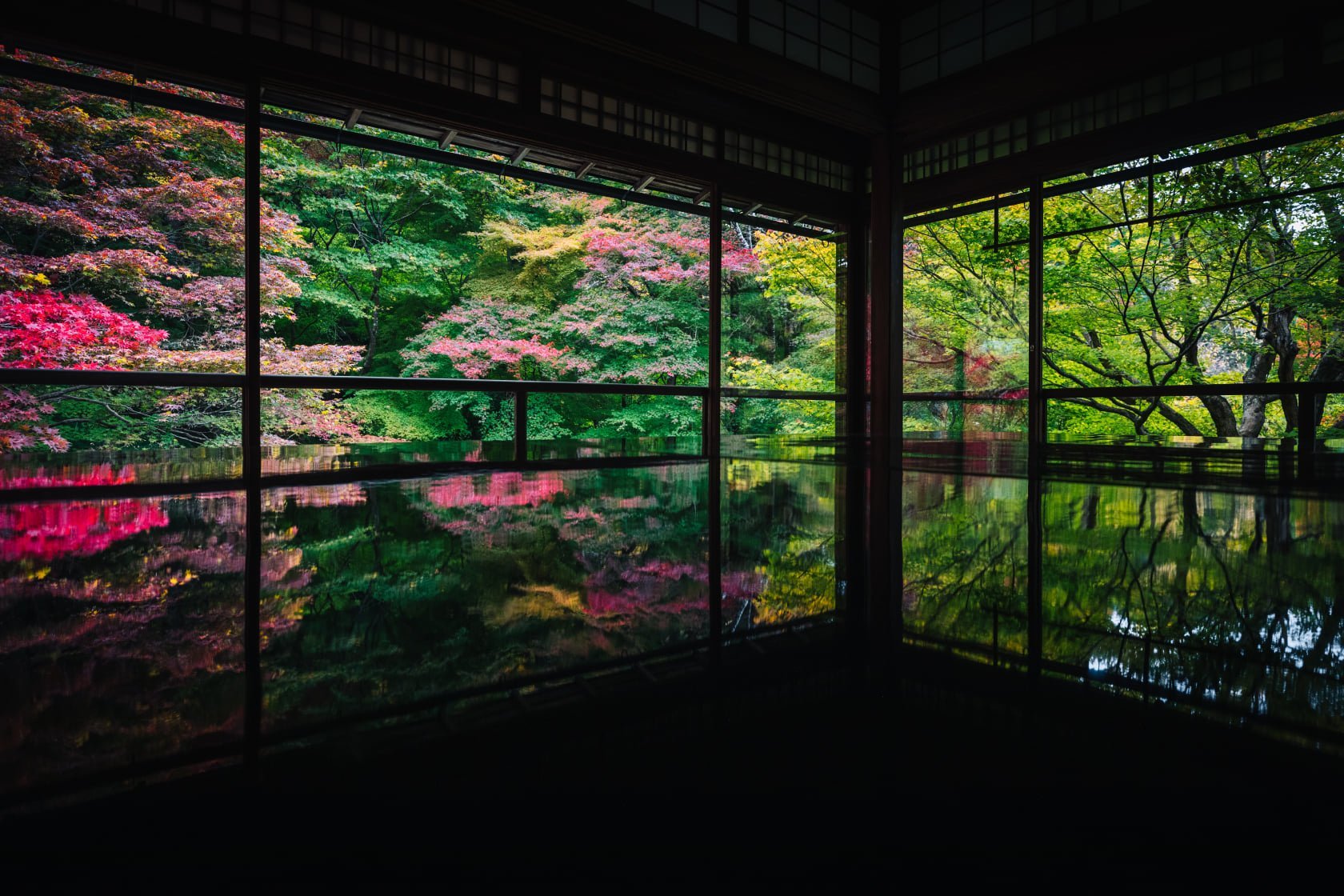
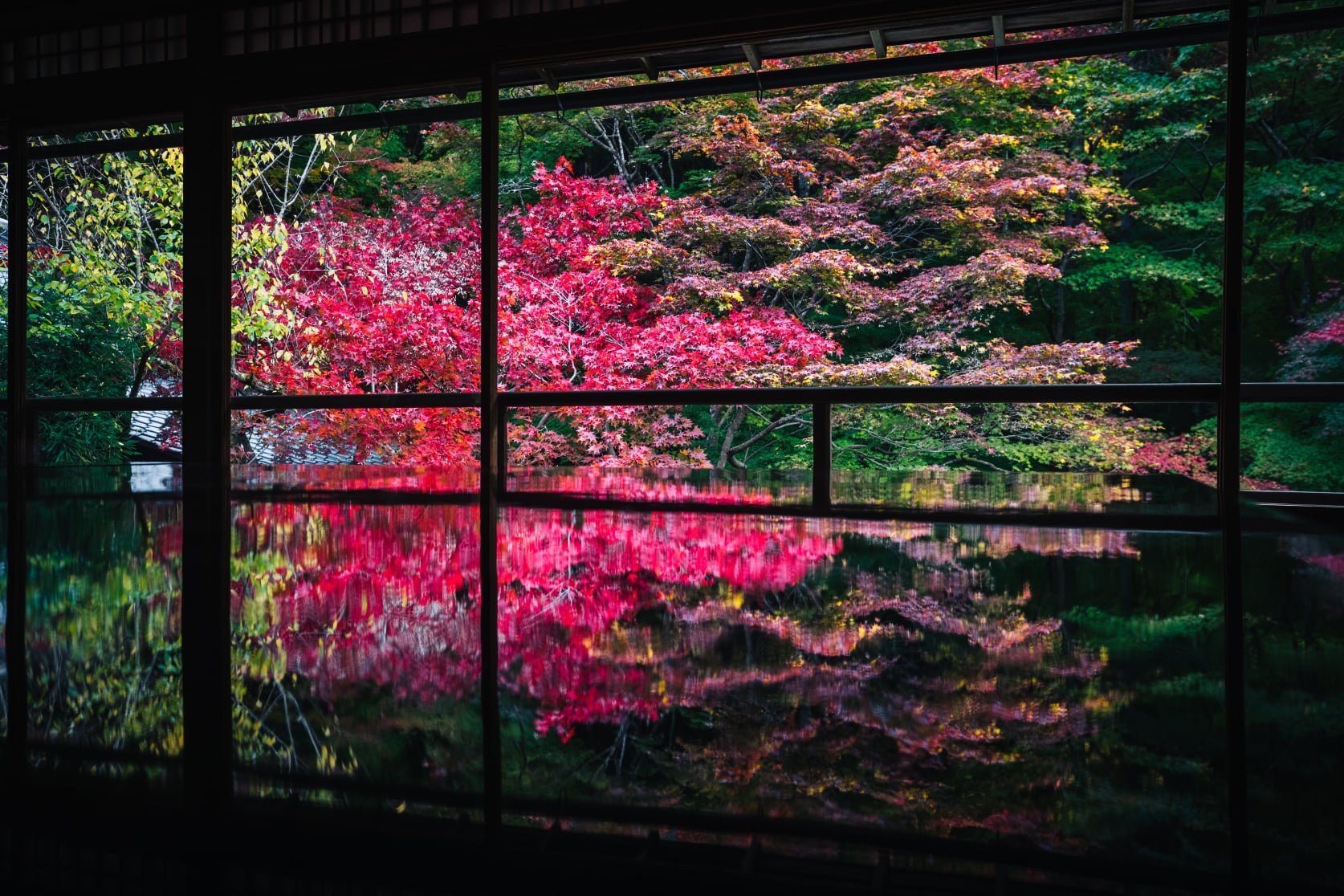
There exists a category of travel experiences so unusual that they border on the surreal, and Rurikoin occupies that space entirely. This small temple is famous for something almost impossible to explain without seeing it: the way autumn maple leaves reflect on polished black lacquer tables and floors, creating a doubling effect where leaves appear to hover in an impossible space between air and solid ground. The temple operates only twice yearly, specifically during maple season and when the spring leaves are turning green—by limiting access, the temple preserves something that mass tourism would inevitably diminish. We queued for three hours to enter, which meant we arrived after many day-trippers had already cycled through, and when we finally stepped into the main viewing room, our patience was rewarded with something close to transcendence.

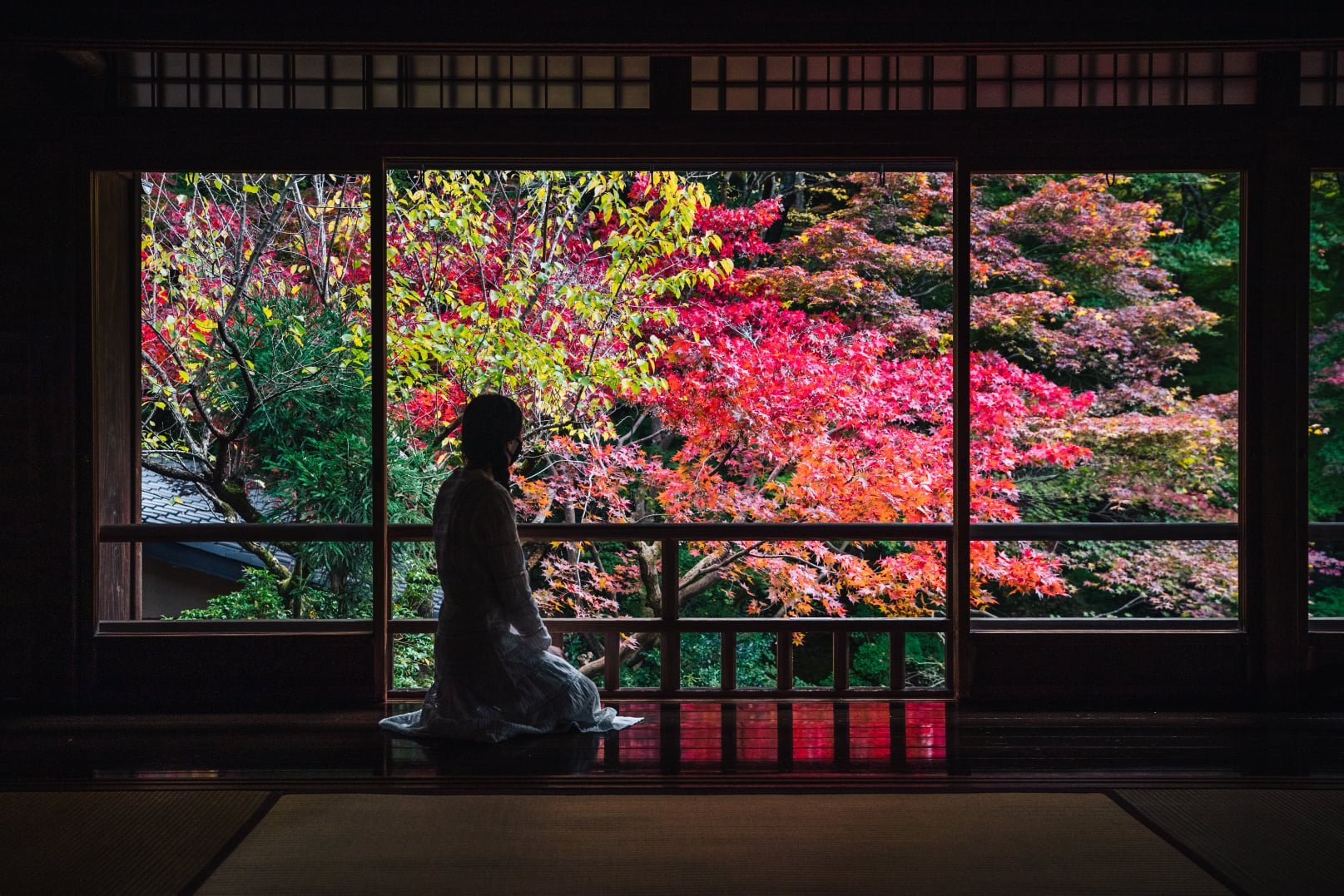
The experience at Rurikoin is deliberately designed to be minimalist and meditative. Visitors are asked to remove shoes and sit silently on the floor, positioned directly above or beside the black lacquer tables that reflect the leaves. The silence is absolute—no talking, no tripods, just the reflection. You simply sit, in the soft light filtering through the maples outside, and watch the leaves float in the impossible mirror of the floor. It's the kind of experience that photographs cannot capture because the magic lies not in visual documentation but in presence—in the simple act of being completely still and witnessing autumn existing at multiple levels simultaneously, in air and in reflection, in the world and in its shadow.

Rurikoin temple with reflected maple leaves

Katsuoji Temple (勝尾寺)

Minoh, Osaka

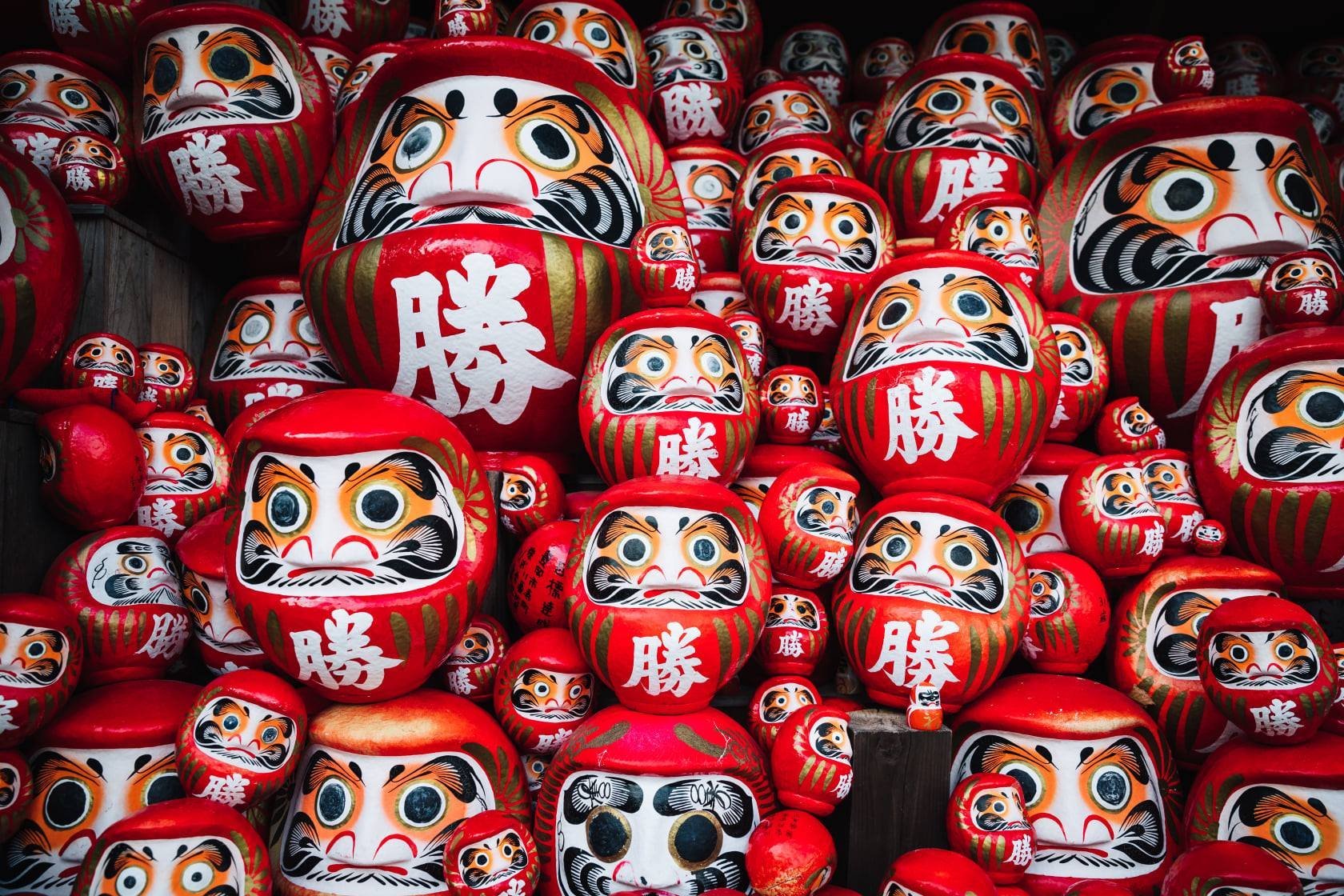
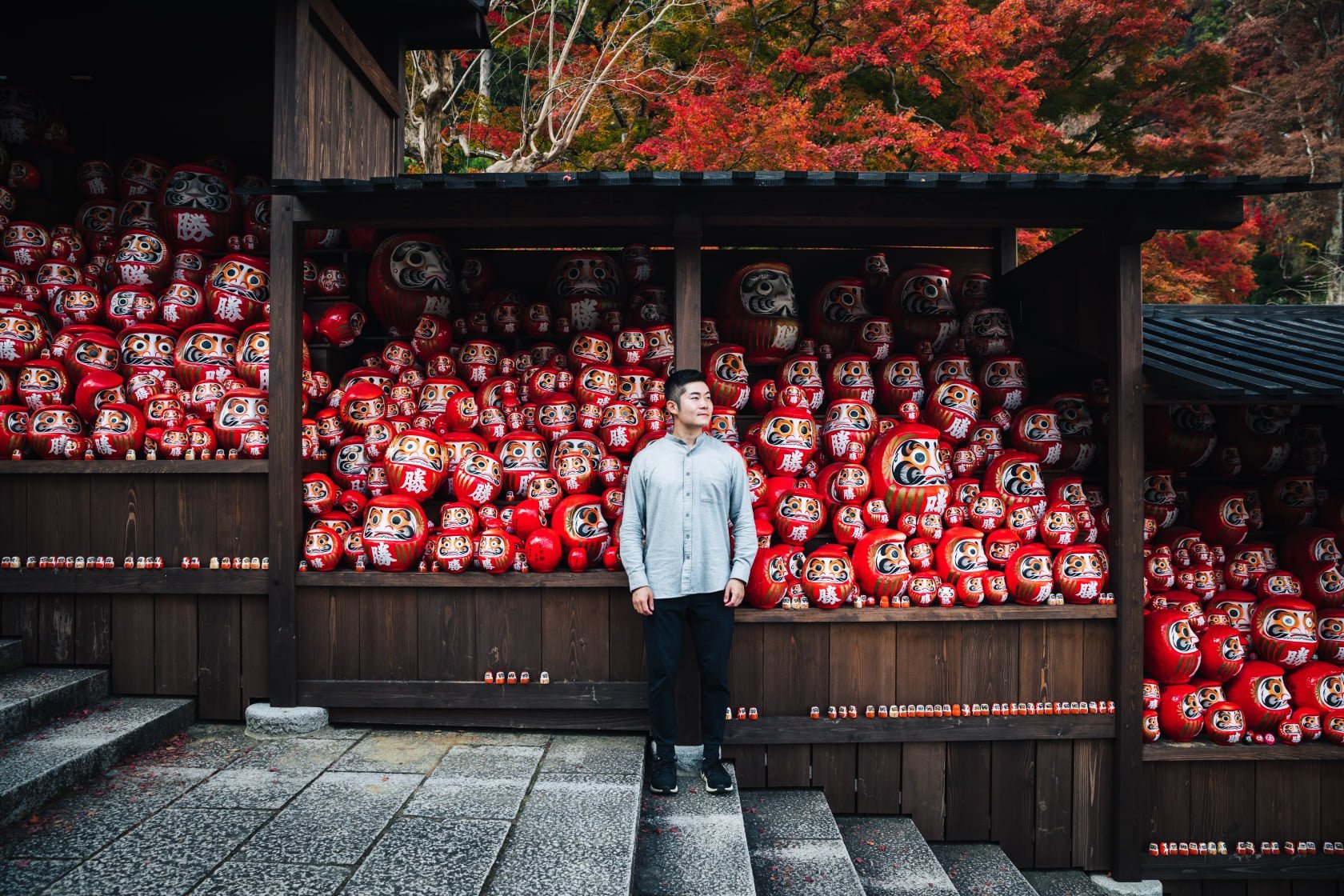
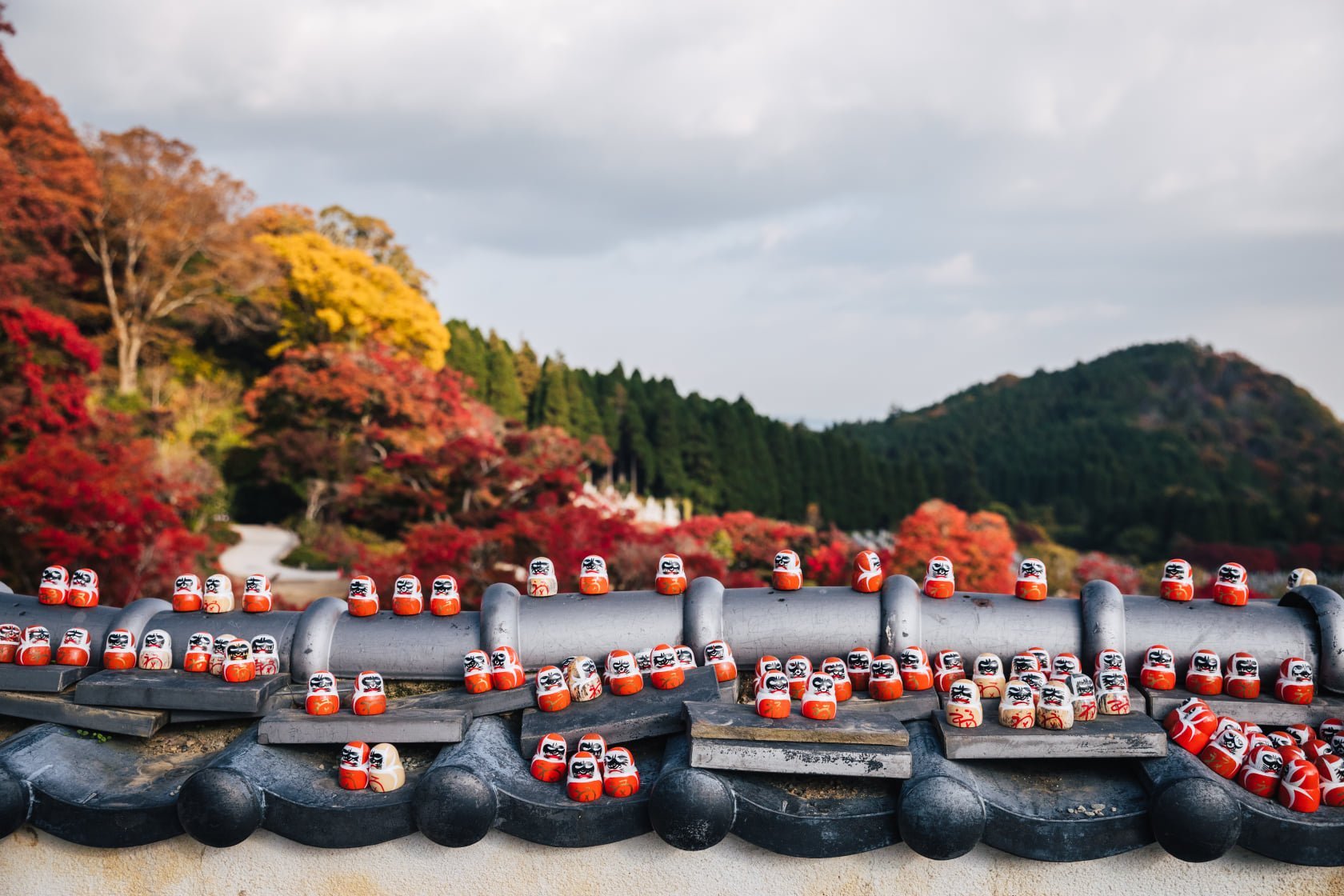
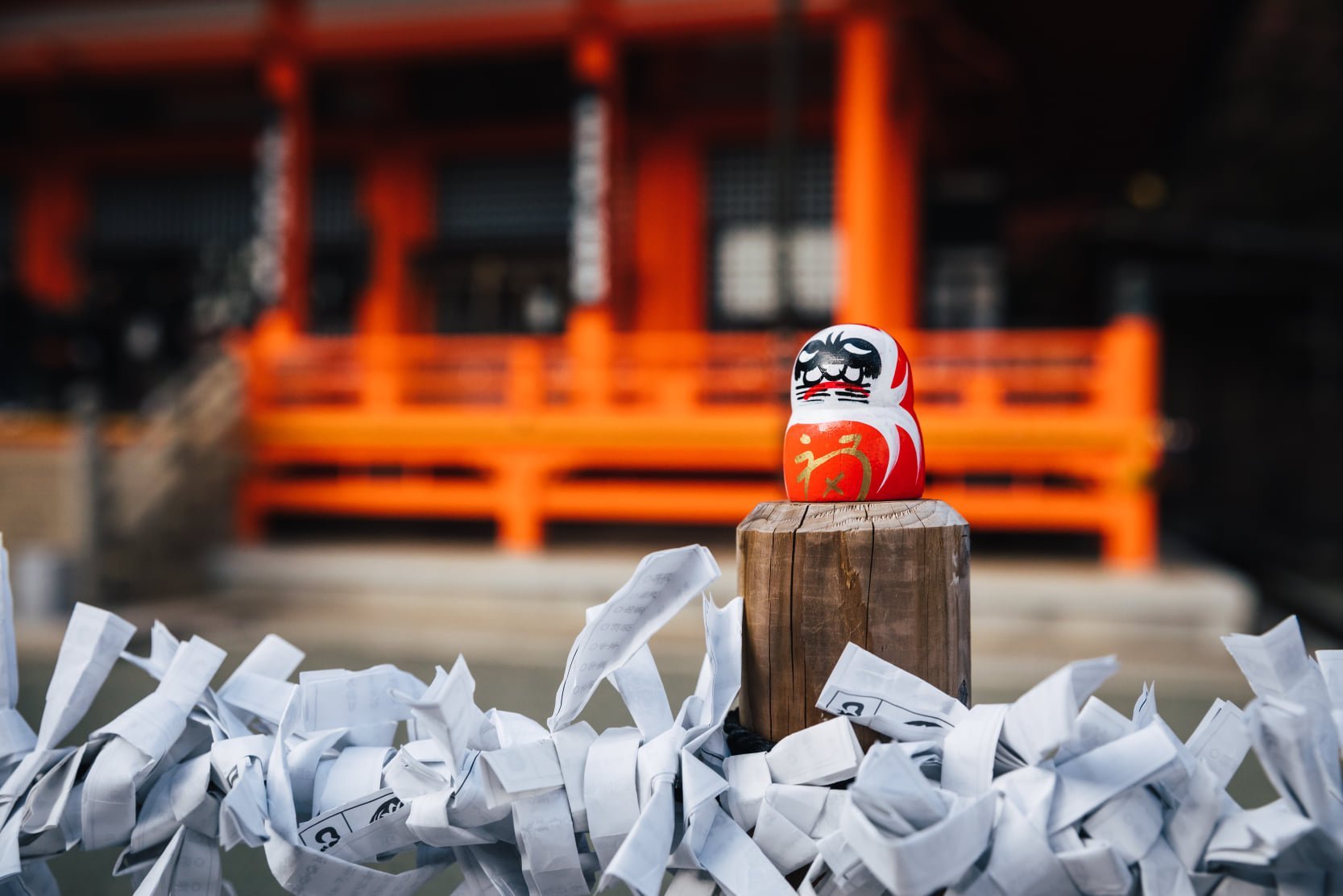
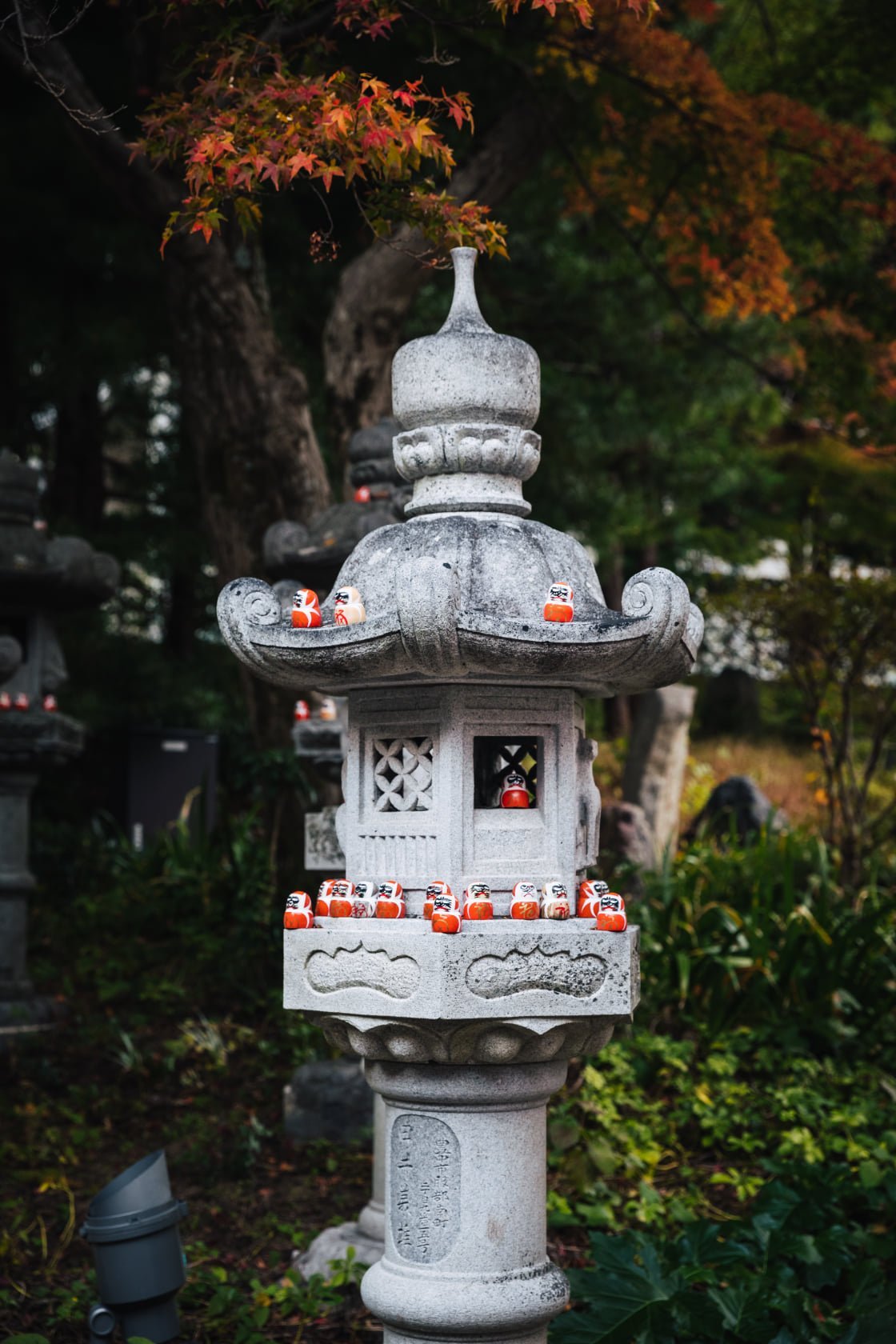
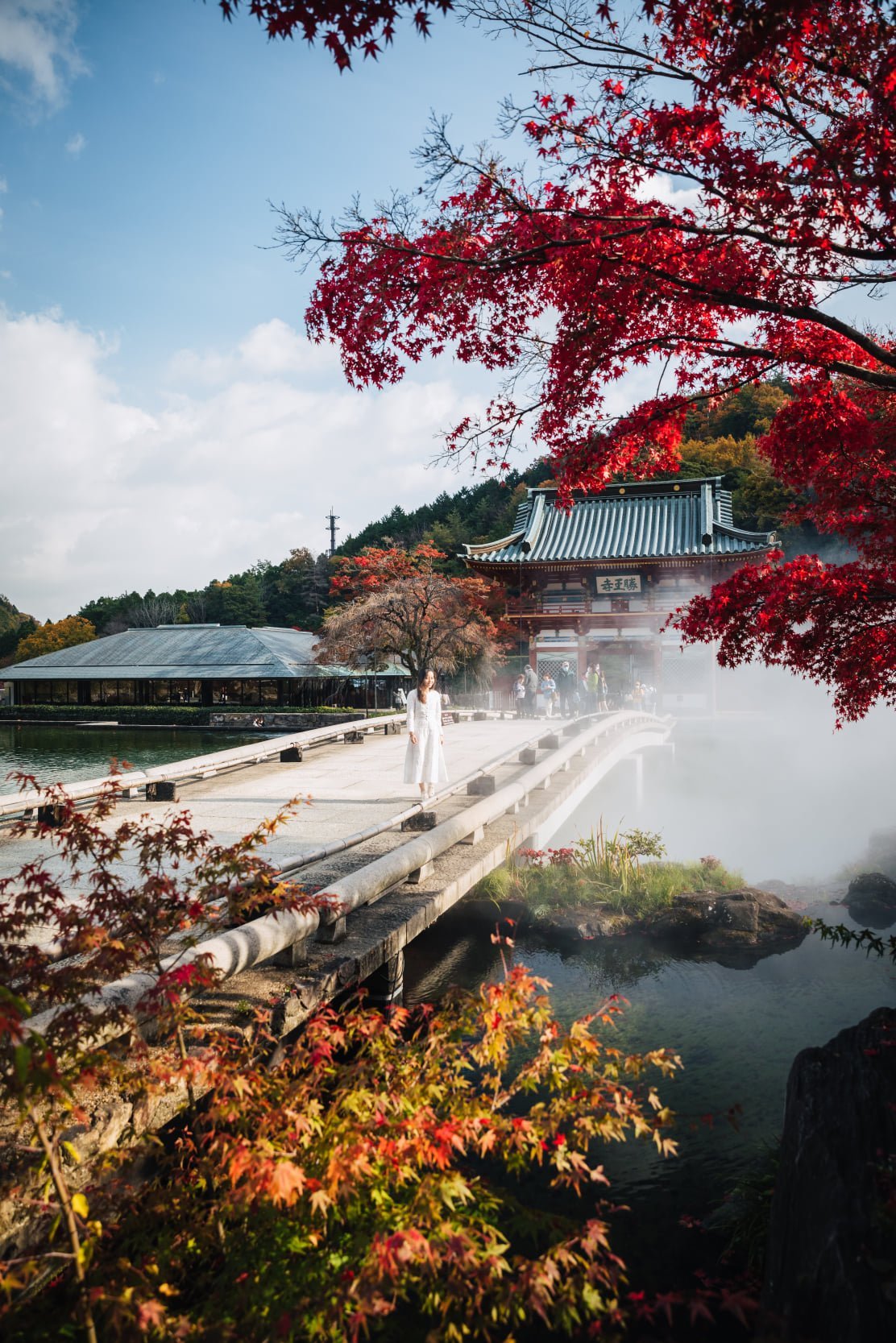
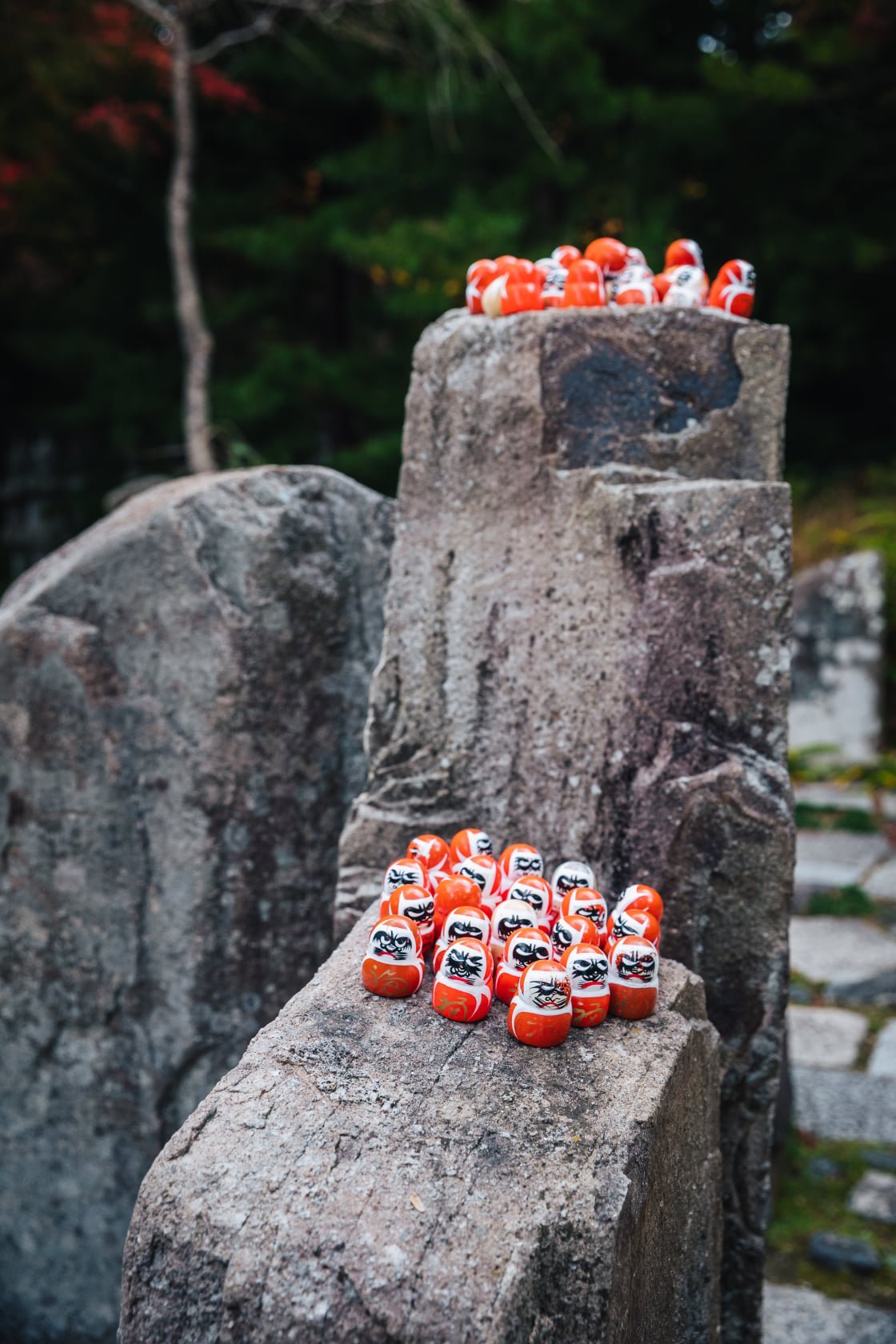
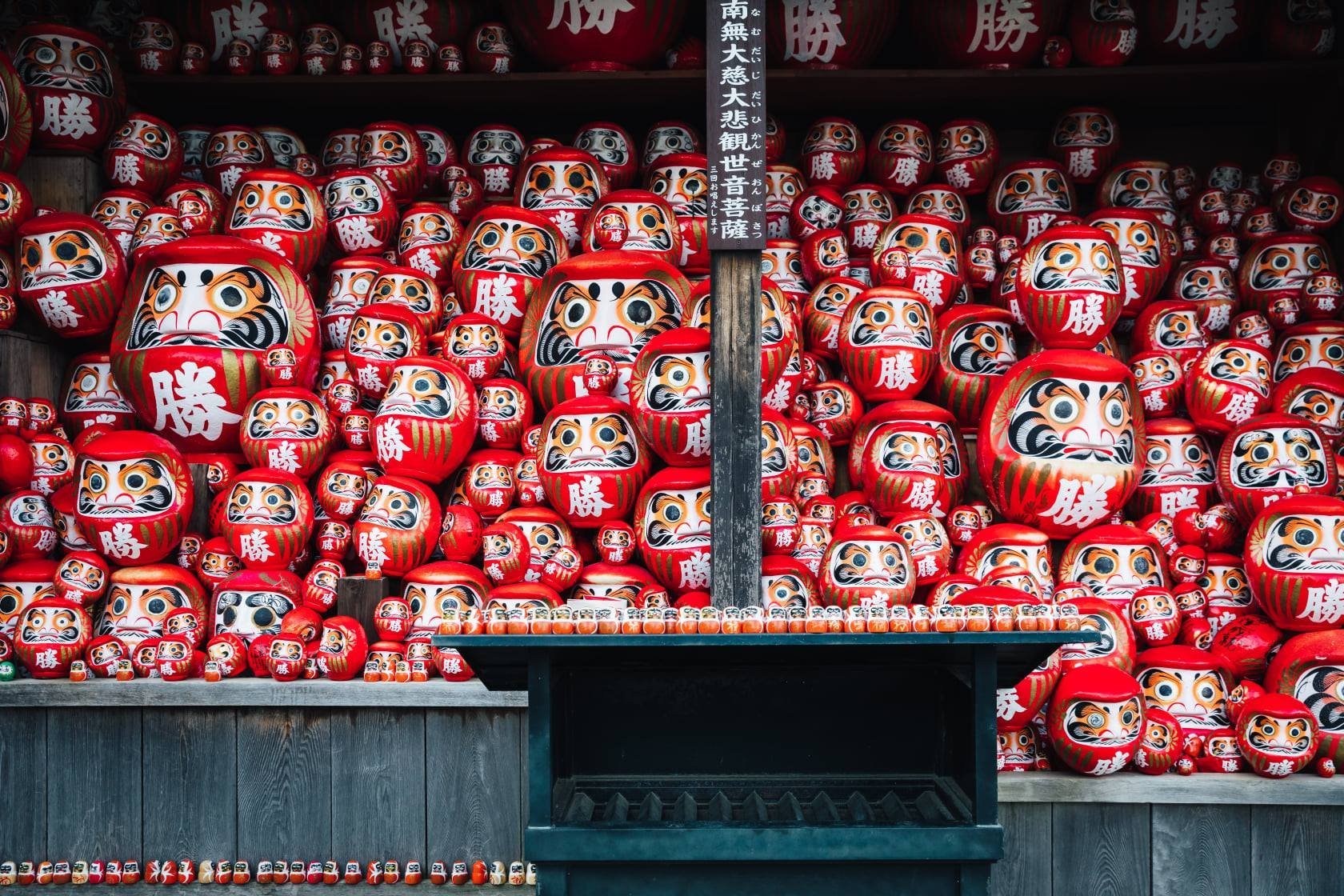
In the mountains north of Osaka, reached by a winding mountain road that climbs up through dense forest, sits Katsuoji Temple—known as the "Temple of Victory." Its name derives from its historical role as a temple where monks came to pray for martial victories, but in autumn, the temple wins its own victory over the senses. What makes Katsuoji unique among Japanese temples is the presence of thousands of small daruma dolls—red, round objects with blank faces—scattered throughout the temple grounds. Visitors purchase these dolls, write wishes or prayers on their backs, and leave them among the trees and temple buildings. During autumn, when the maples turn, these red darumas become almost invisible against the equally vivid foliage, creating an effect of wishes dissolving into the landscape, returning to nature.
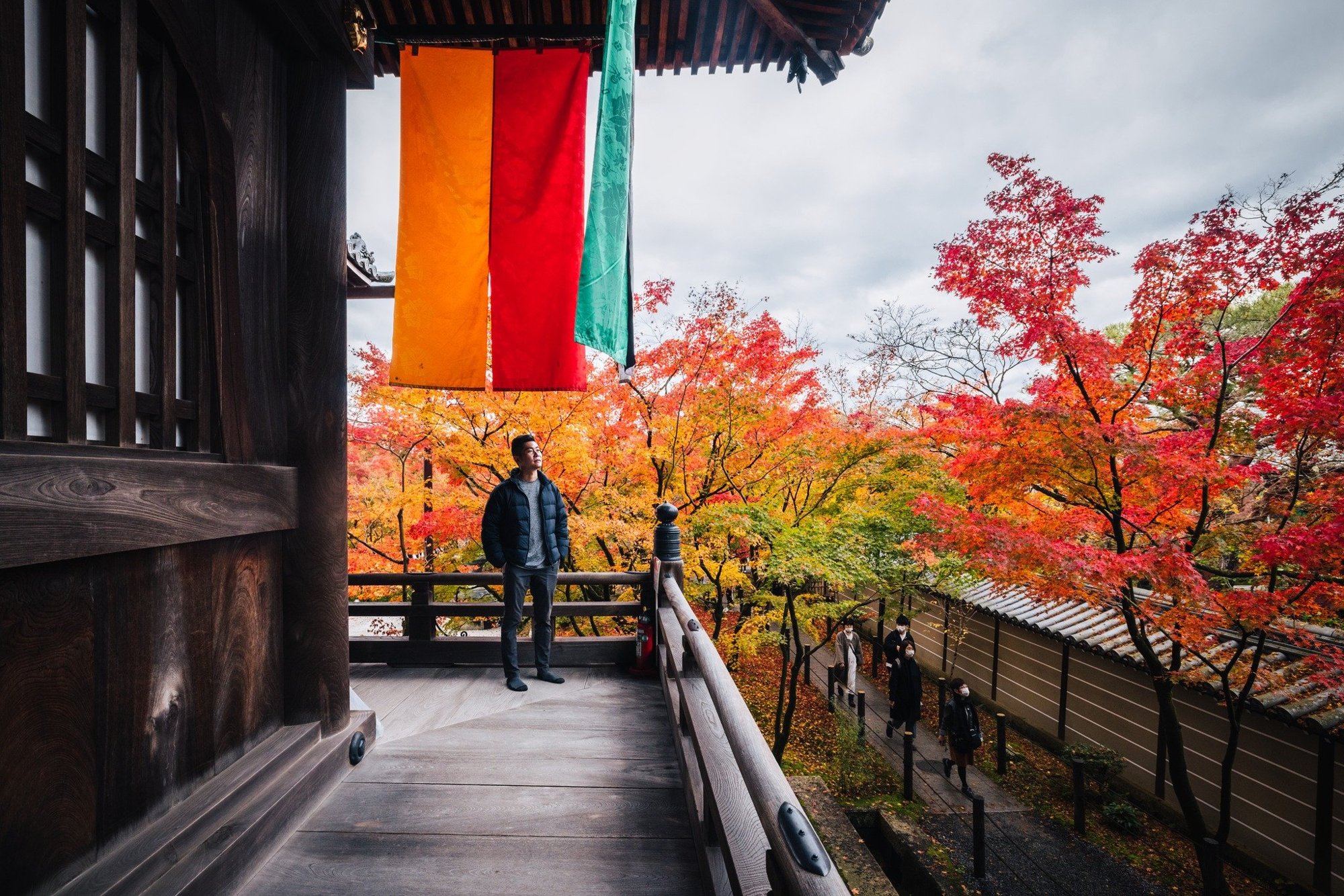
We visited on a misty October morning when the mist was so thick that the temple emerged from it gradually—the darumas appearing and disappearing like spirits in the fog. There's something deeply moving about being surrounded by thousands of strangers' hopes and dreams, all made physical and left in this place. An elderly woman was carefully placing a new daruma in the crook of a tree branch, whispering something inaudible, and we felt the profound intimacy of the gesture—that private moment of intention made public through the medium of objects left in nature. The autumn colors seemed to embrace these dolls rather than compete with them, and by the time we descended the mountain that afternoon, we understood that Katsuoji's magic lay not in aesthetic perfection but in the collision of human hope and natural indifference, neither overwhelming the other.
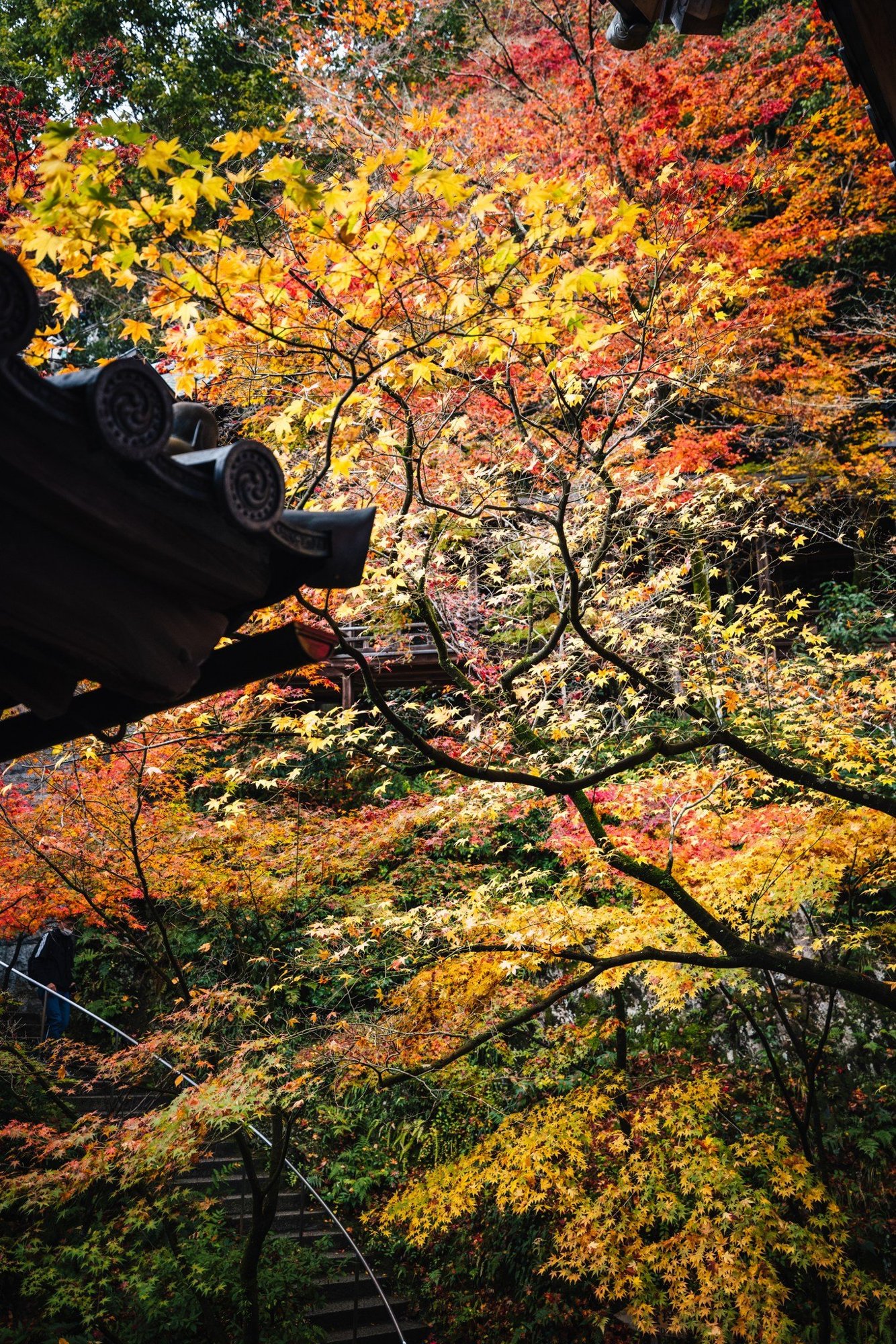
Katsuoji Temple with autumn colors and daruma dolls

Minoh Falls (箕面大滝)

Minoh, Osaka

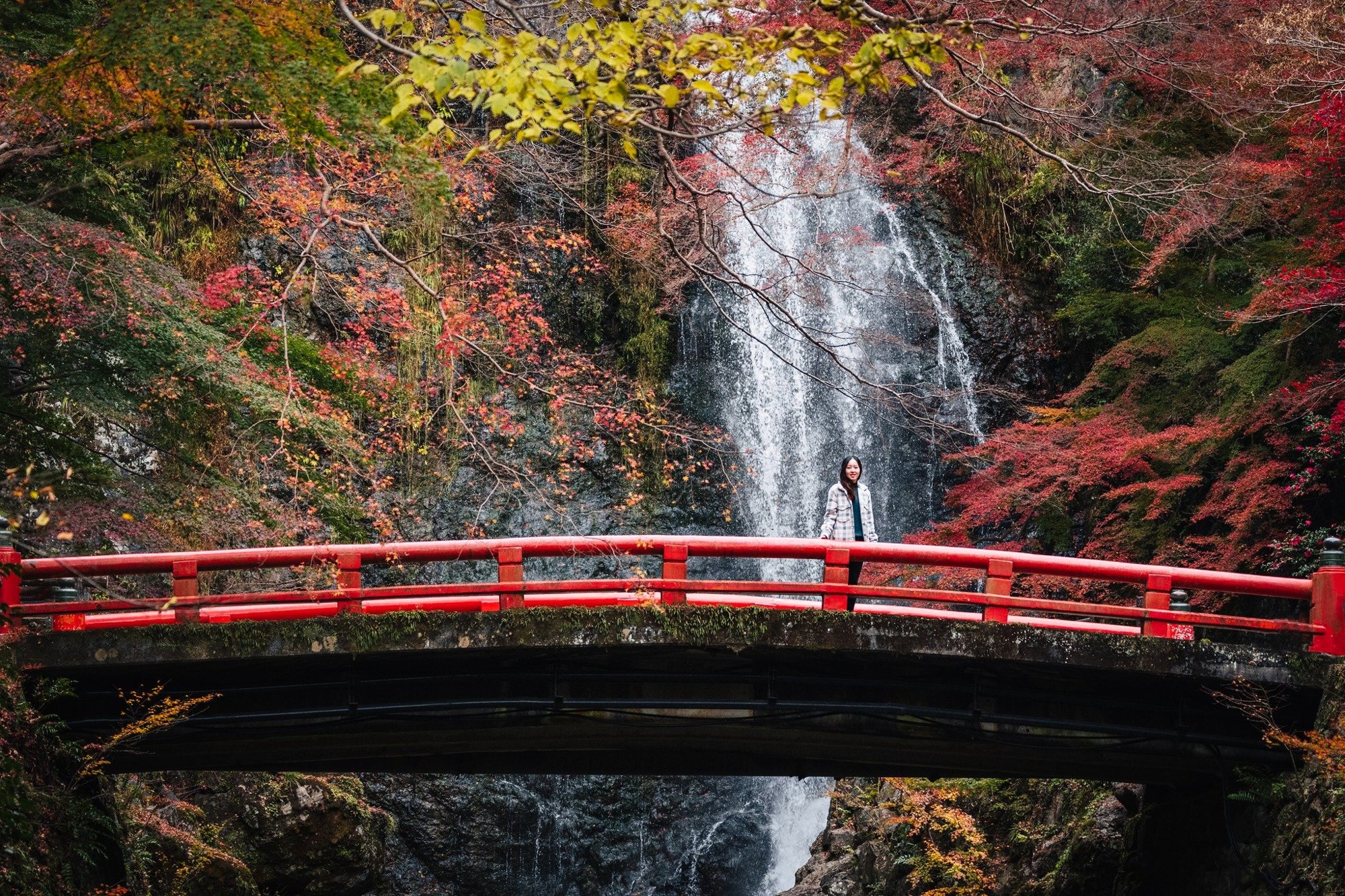
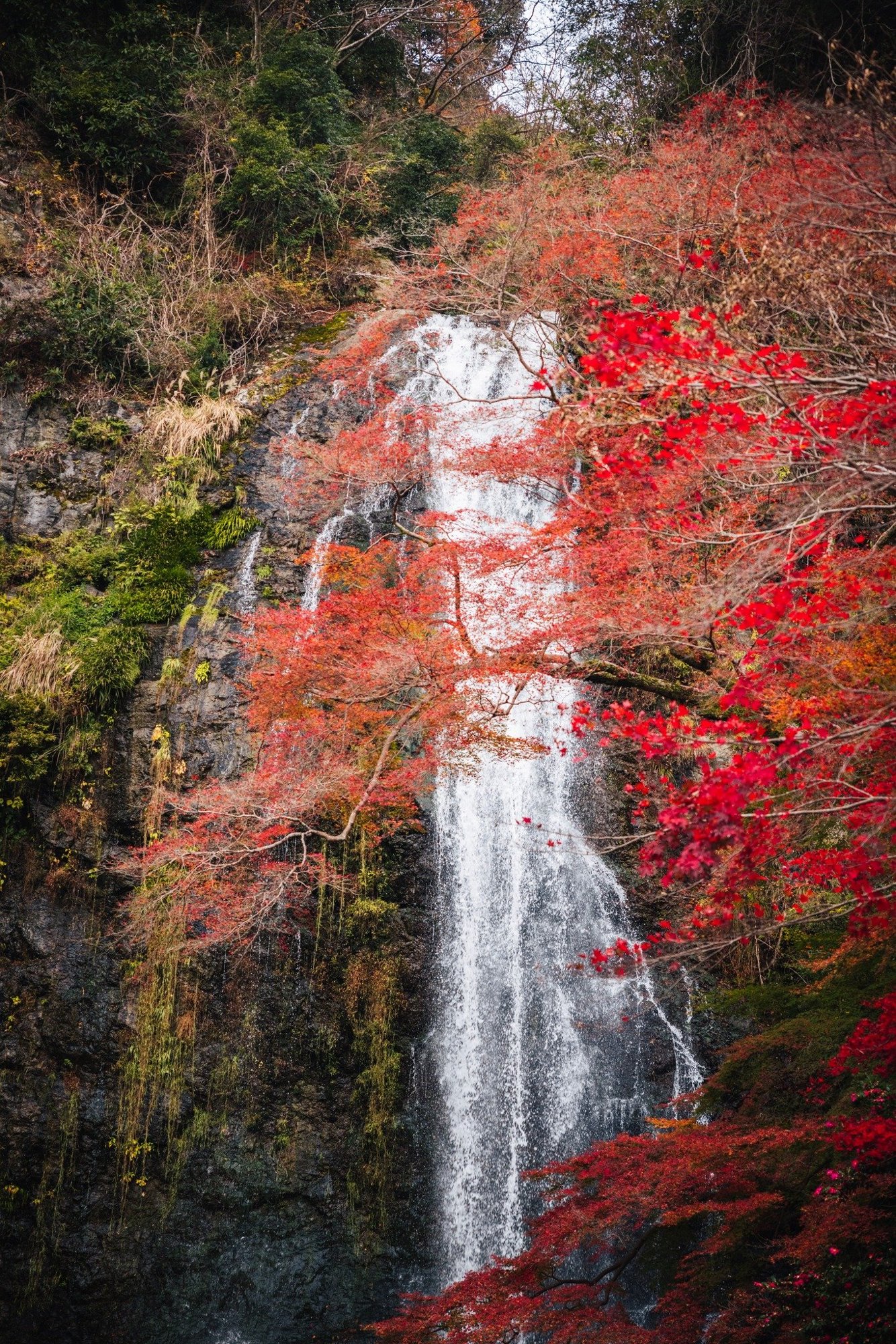
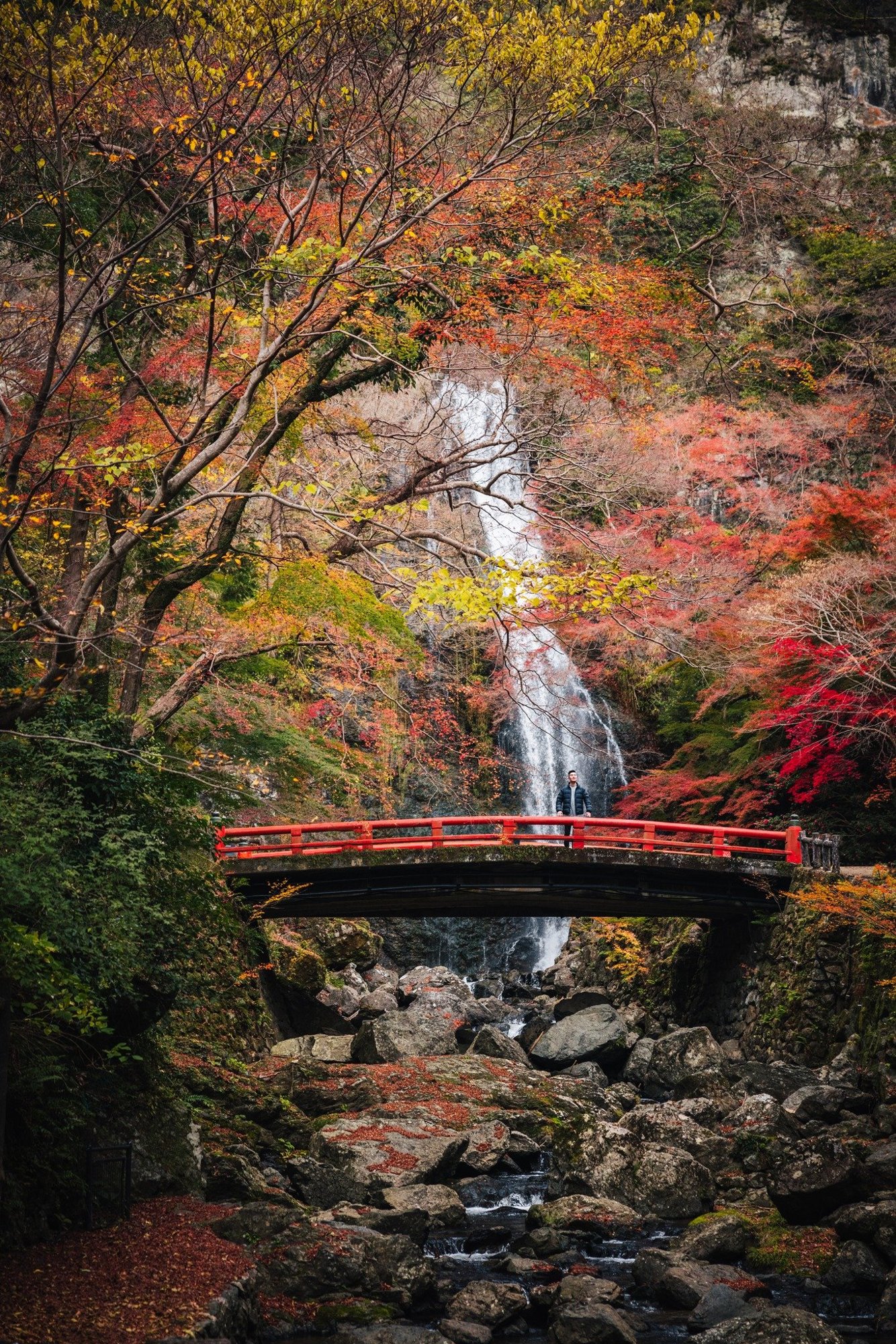
Minoh Falls is a thirty-three-meter cascade of water surrounded by one of the most dramatic autumn foliage displays in the Kansai region. The approach to the falls winds through a densely forested valley where Japanese maples grow in such abundance that the entire landscape seems designed by a painter specifically to showcase the color of autumn. We visited on a cool afternoon in November, and the path was crowded with other visitors, yet the scale of the natural beauty was so overwhelming that the crowds seemed almost irrelevant—everyone walked slowly, spoke quietly, and stopped frequently to simply stand and look. The forest had transformed everyone who entered it into something reverent.

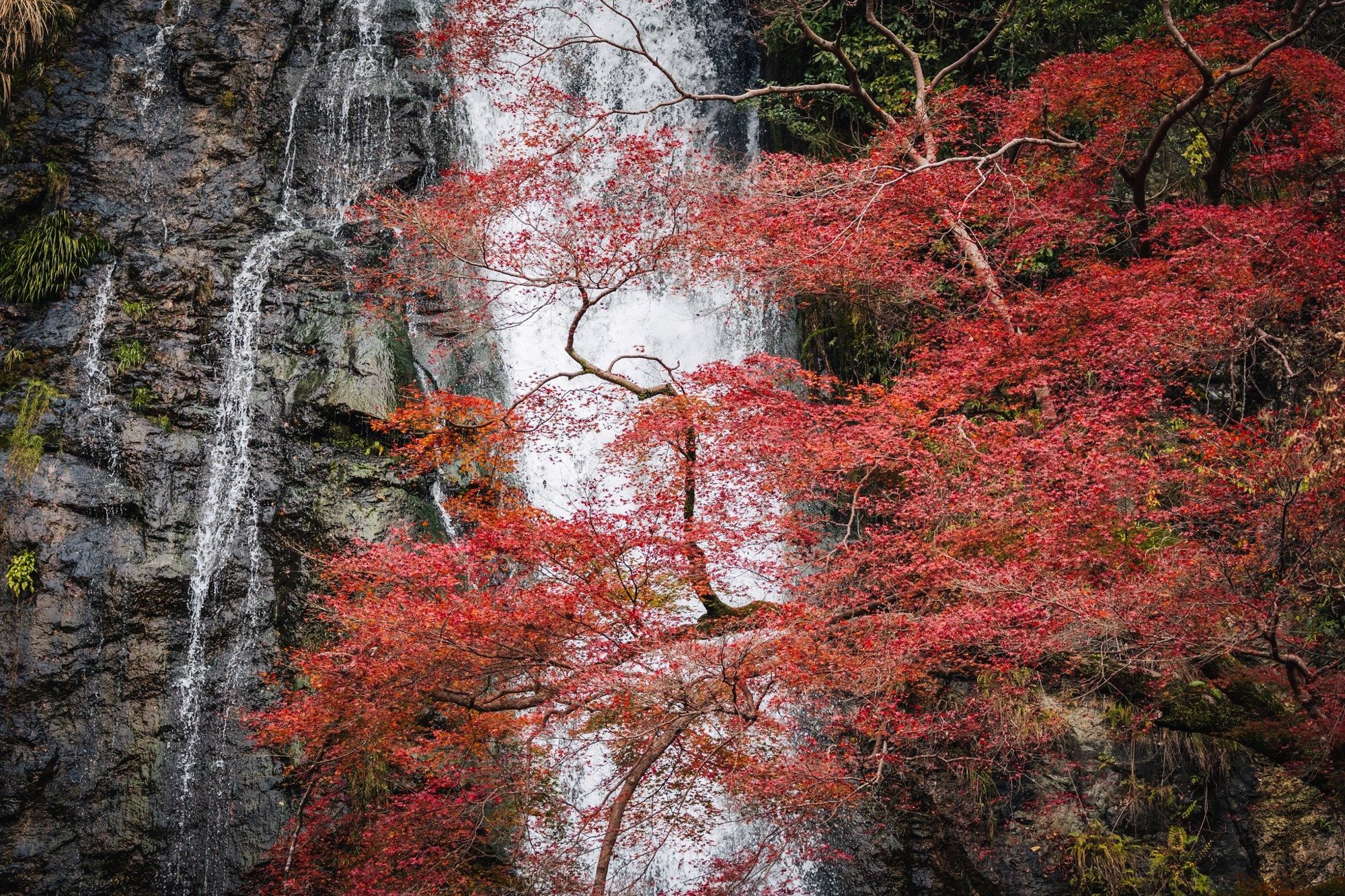
The genius of visiting Minoh is that the waterfall itself becomes secondary to the experience of the journey. The water emerges from hanging cliffs draped in crimson and gold, but what captures your attention is the cumulative effect of the walk itself—a Japanese maple with undersides of leaves glowing translucent red as sunlight passes through them, a small shrine appearing suddenly between two tree trunks, a stone bridge spanning a creek where fallen leaves were collecting like slow-moving water. And then, of course, there's the famous fried maple leaf tempura sold at shops near the falls' base—a snack that crystallizes the essence of the season into a single bite, sweet and delicate, the leaf itself still perfect inside its tempura coating. We sat on a bench eating these treats, watching the water fall, and understood why people had been making pilgrimage to this exact spot for more than a thousand years.

Minoh Falls surrounded by autumn maples
Forest path to waterfall Minoh valley detail
Waterfall close-up

Goshiki-numa Five Colored Lakes (五色沼)

Bandai, Fukushima

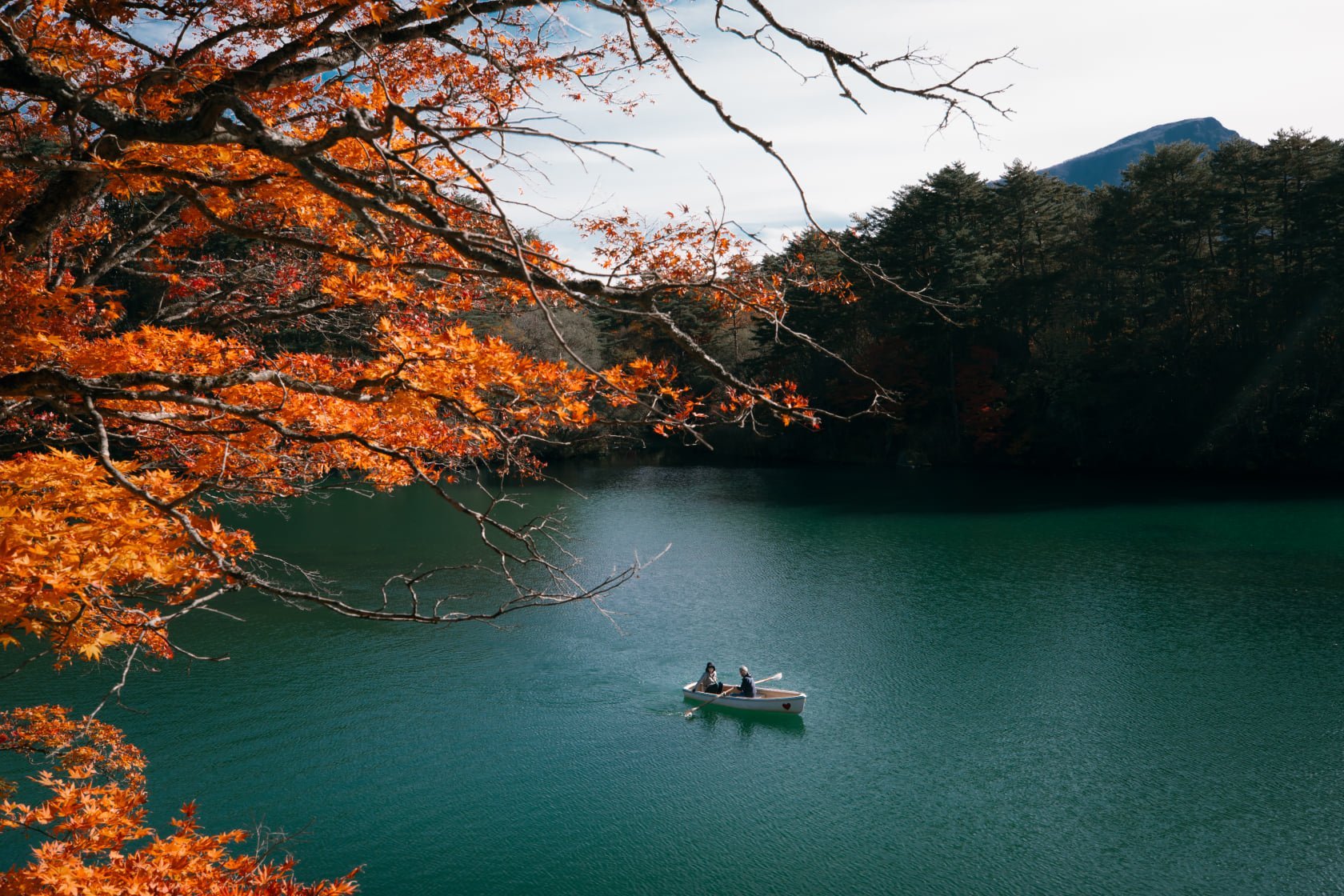
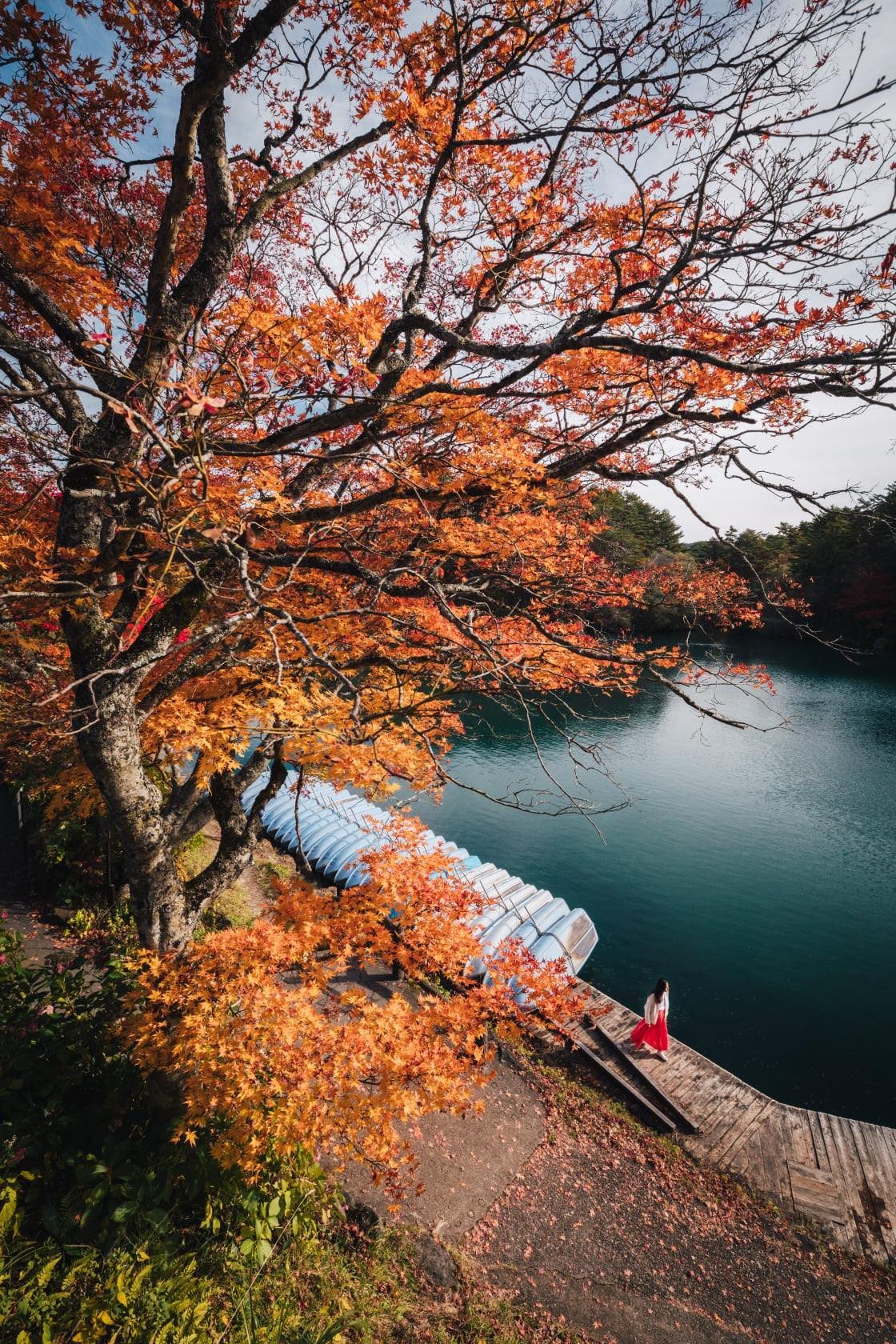
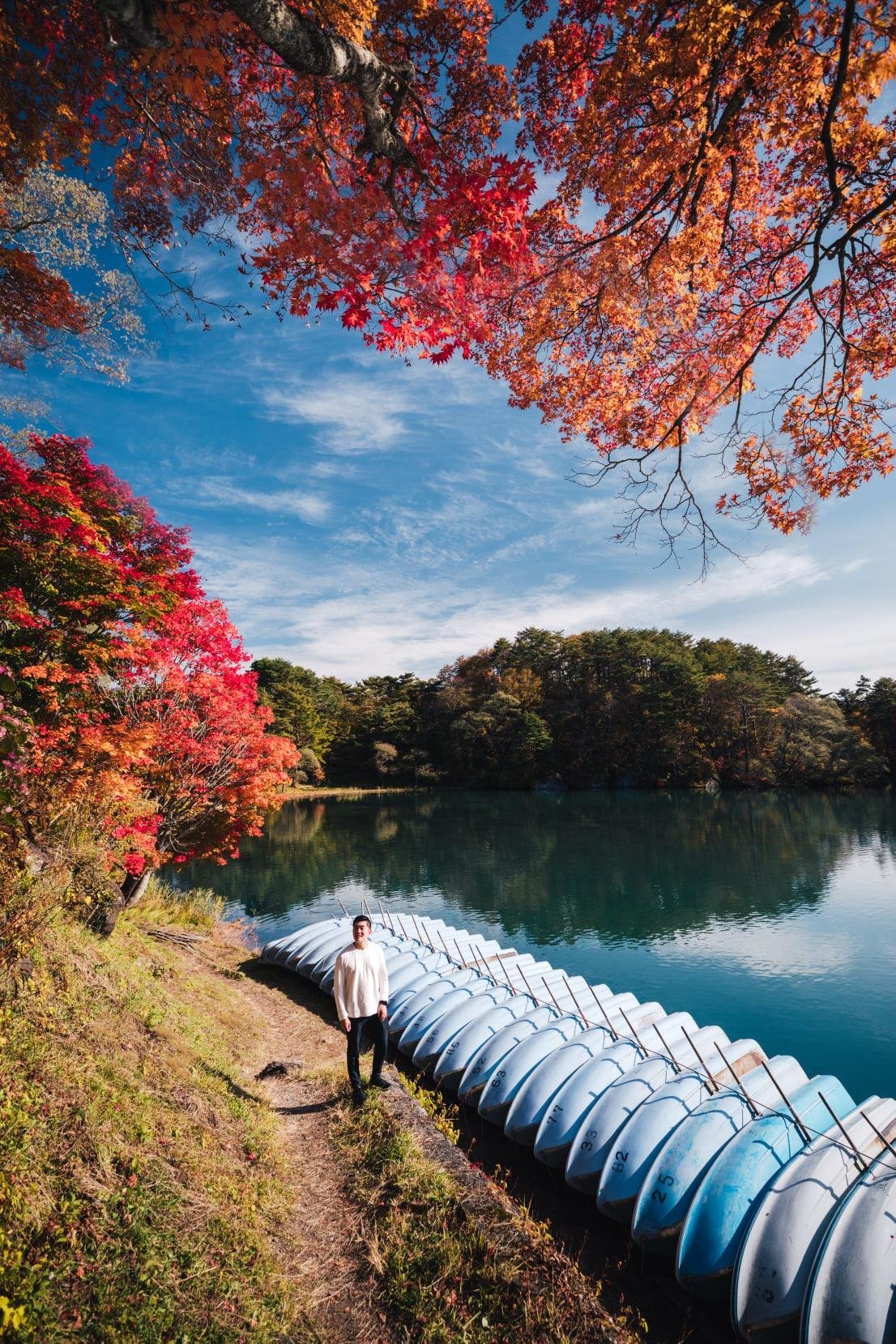
In the volcanic region of Bandai, in Fukushima Prefecture, lies a series of crater lakes that shift colors throughout the day—sometimes turquoise, sometimes emerald, sometimes a deep sapphire blue. The color changes result from the specific mineral content of each lake and the angle of the light striking the water, creating a phenomenon that feels almost otherworldly even before you add the variables of autumn foliage. When we visited in early November, the steep hillsides surrounding these lakes were ablaze with maples, and the contrast between the vivid jewel tones of the water and the burning colors of the surrounding forest created a landscape so saturated with color that our eyes struggled to process it all.
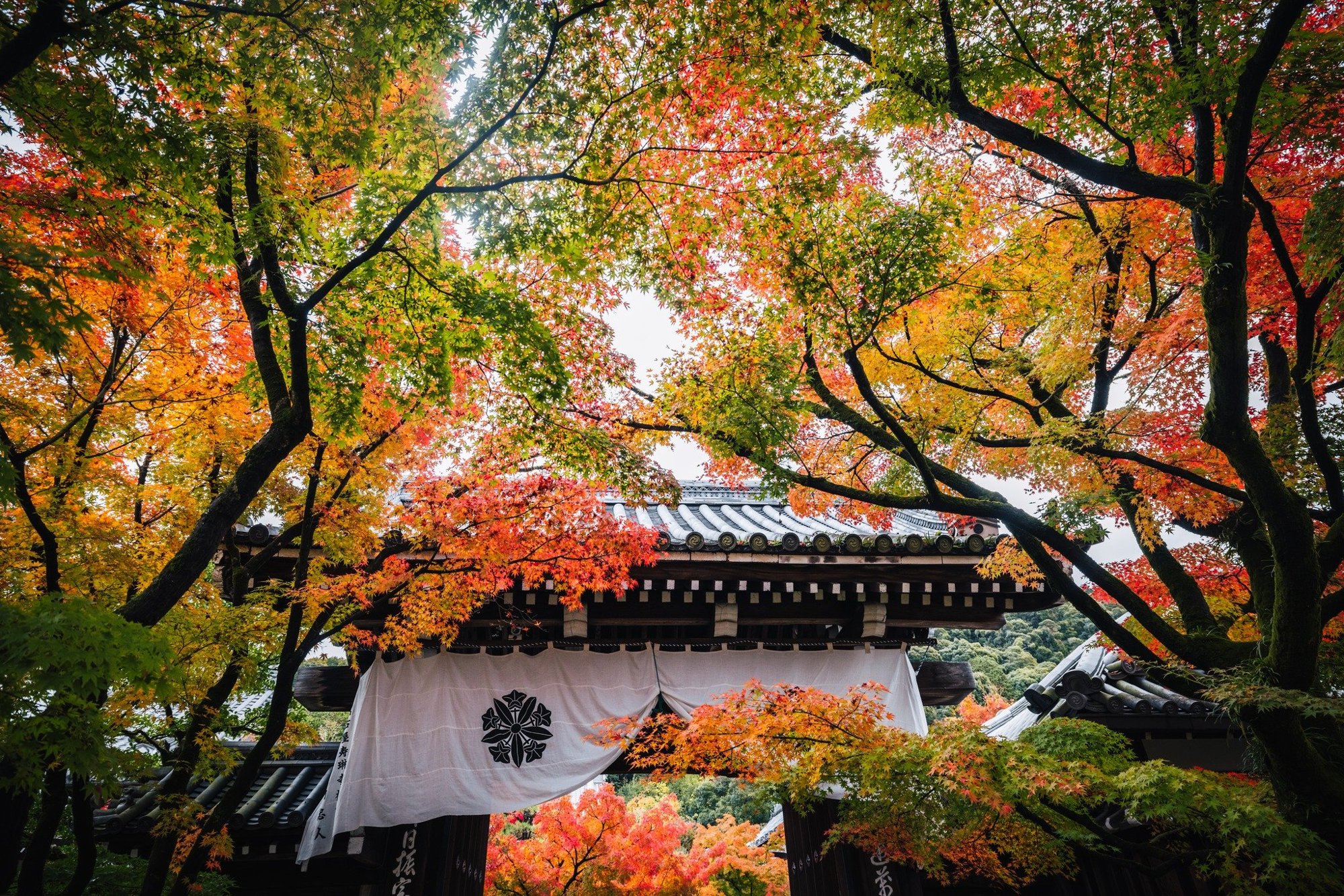
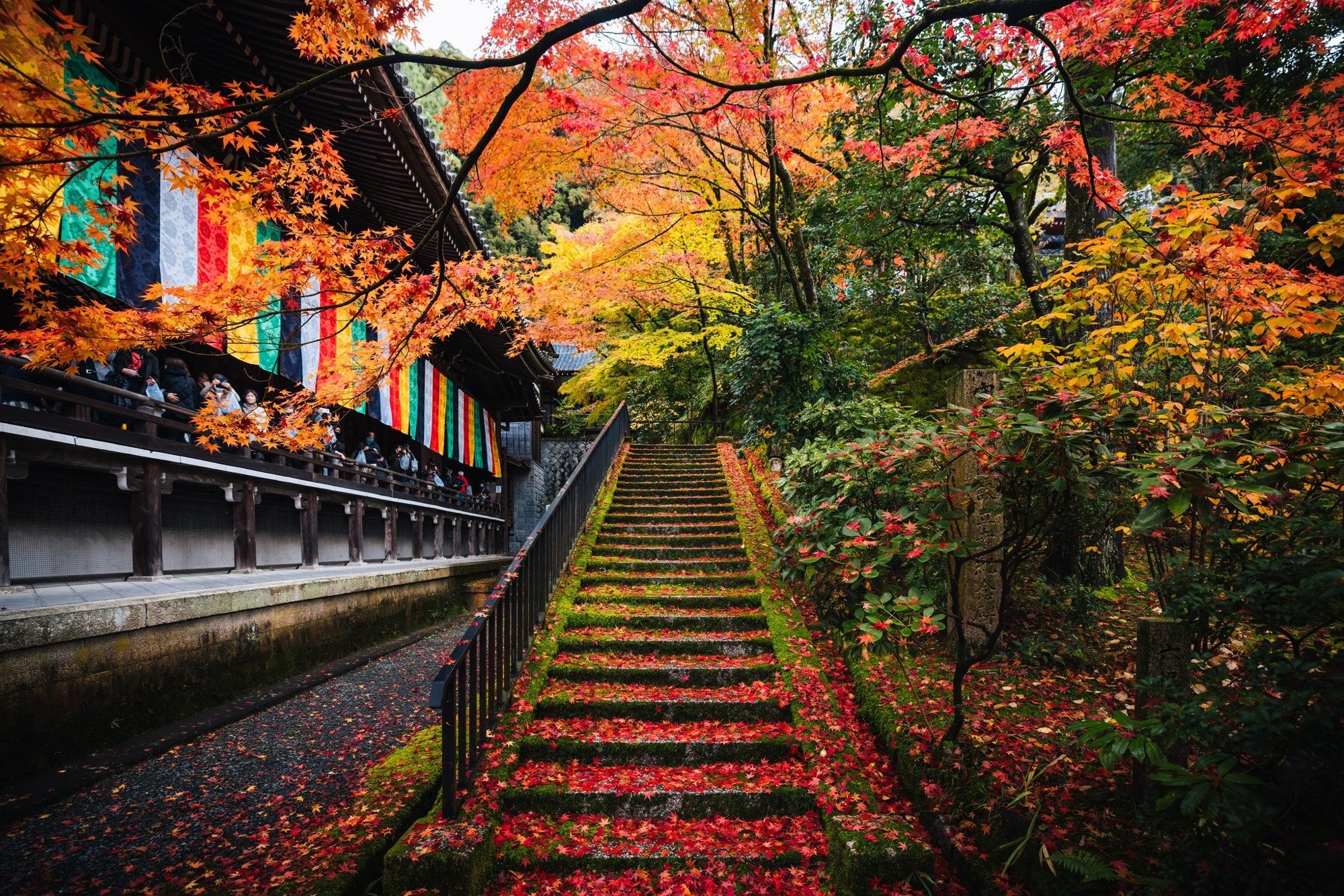
The hiking trail that connects the five main lakes is wonderfully designed—perhaps two hours for the full circuit, with elevation changes that are noticeable but never punishing. More importantly, the trail is managed in a way that prevents overcrowding while still allowing visitors to experience the lakes' beauty. We encountered perhaps a dozen other hikers during the entire walk, despite the season being peak foliage time. The isolation allowed us to sit at the shore of each lake for as long as we wanted, watching the light change, watching the reflections of autumn maples dance across the water's surface. There's a profound quiet that comes from moving slowly through a landscape this beautiful, and by the time we finished the circuit and returned to the parking area, we felt fundamentally changed by the experience—quieter, more attentive, more aware of beauty's simultaneous fragility and permanence.

Goshiki-numa lakes with autumn reflections
Lake colors detail Hiking trail
Lake from viewpoint

Tatsuzawa Fudo Falls (達沢不動滝)

Inawashiro, Fukushima

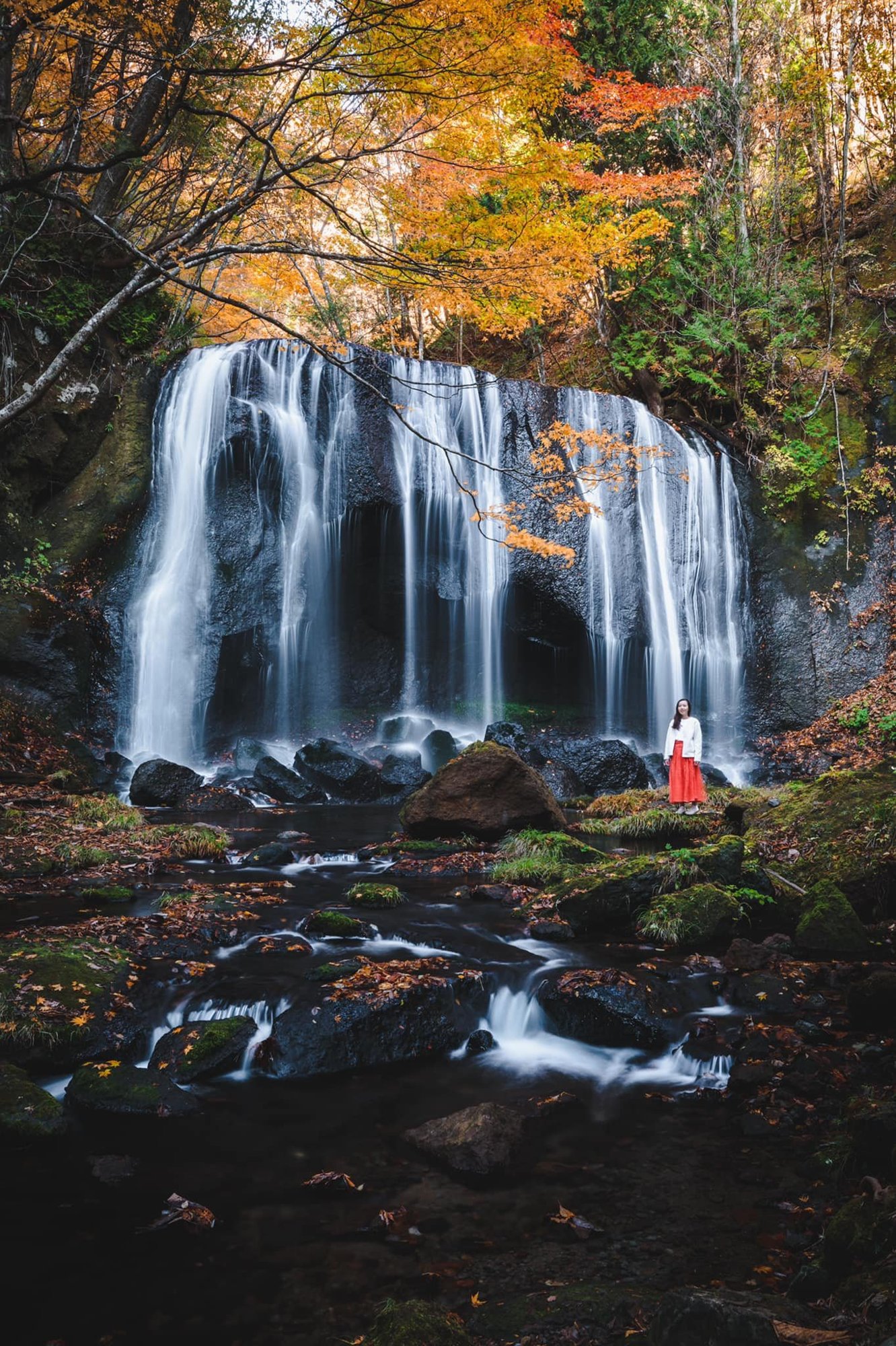
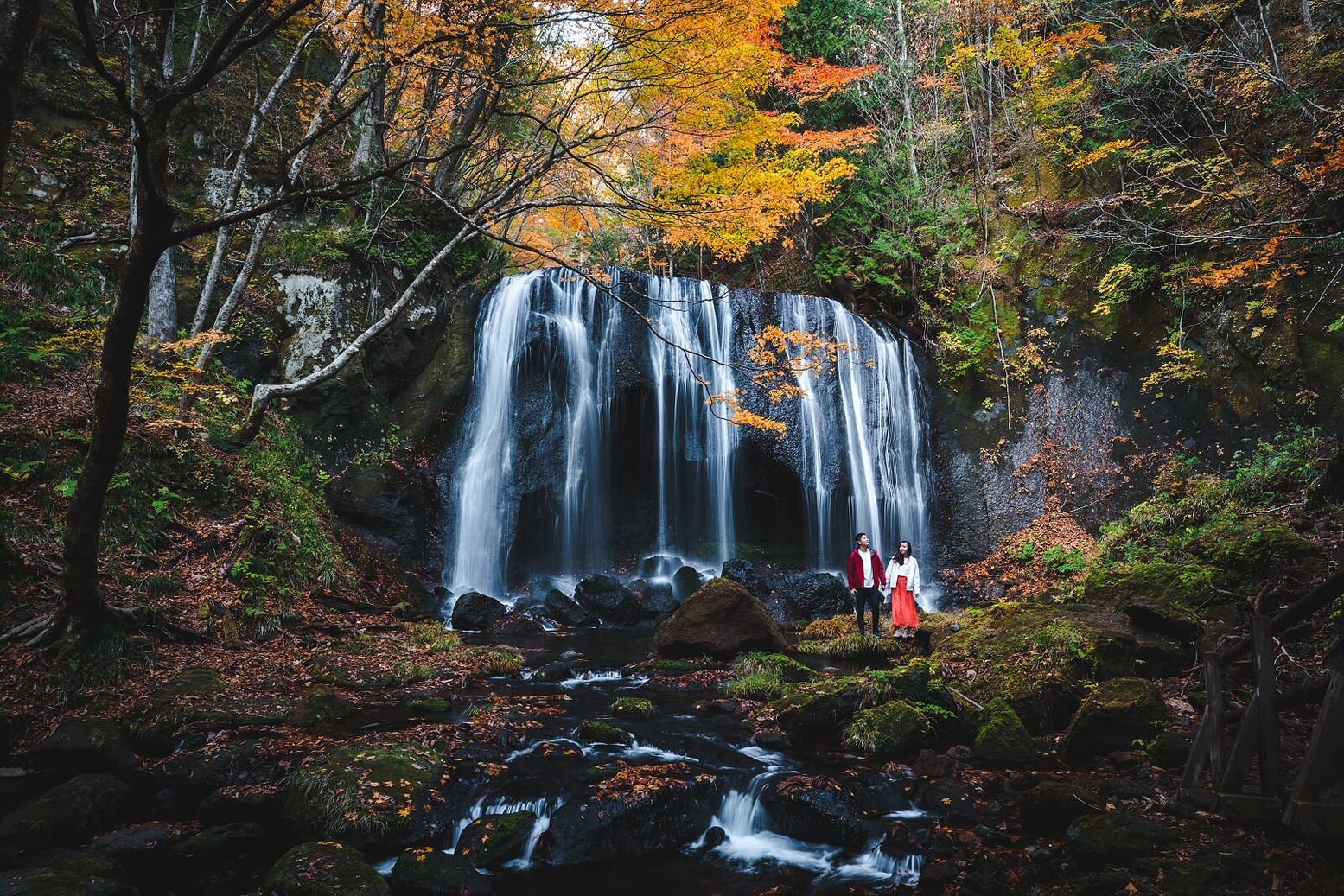
Deep in the forests of Fukushima, accessed by a hiking path that winds through increasingly dense woodland, lies Tatsuzawa Fudo Falls—a waterfall so photogenic and so remote that many Japanese tourists consider it the ultimate autumn foliage secret. The approach is not particularly strenuous, but it does require commitment: there are no shops, no restaurants, no facilities of any kind for the last hour of hiking. This remoteness is the waterfall's greatest treasure. When we arrived at the rocky basin below the falls, there were only two other visitors present despite it being peak foliage season. We understood immediately why photographers obsess over this location: the twenty-meter cascade drops between vertical rock faces that create a natural frame, and surrounding this frame is an explosion of autumn color that seems almost impossibly coordinated.

What struck us most about Tatsuzawa was not the dramatic beauty of the location—though that was undeniable—but the sense of discovery that came from reaching it. This is the kind of place that rewards effort, that remains humble and unchanged despite its growing reputation. We sat on the rocks for perhaps thirty minutes, barely moving, just absorbing the interplay of water, light, stone, and the burning maples rising up the cliff faces. An elderly Japanese woman was there with photography equipment, and she greeted us with a small nod before returning to the patient work of finding the perfect angle. We realized then that this was a place where people came not to conquer or consume the landscape, but to be in dialogue with it, to move at its pace, to listen to what it had to say. The waterfall fell in perfect silence beneath the autumn sky, unchanging and indifferent to our presence, and that indifference was the greatest gift it could offer.

Tatsuzawa Fudo Falls with autumn forest
Falls in mist

Risshaku-ji Temple (立石寺)

Yamadera, Yamagata

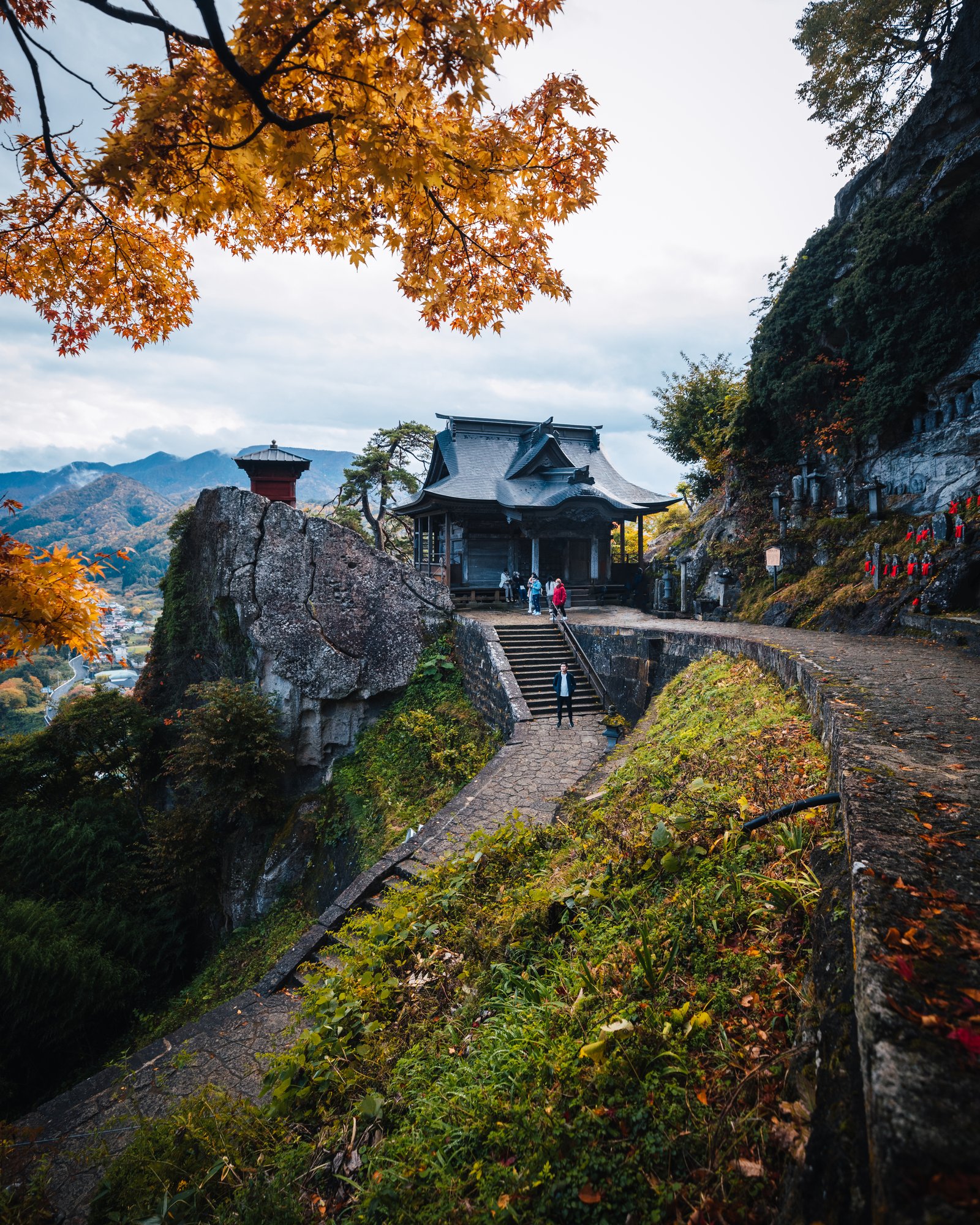
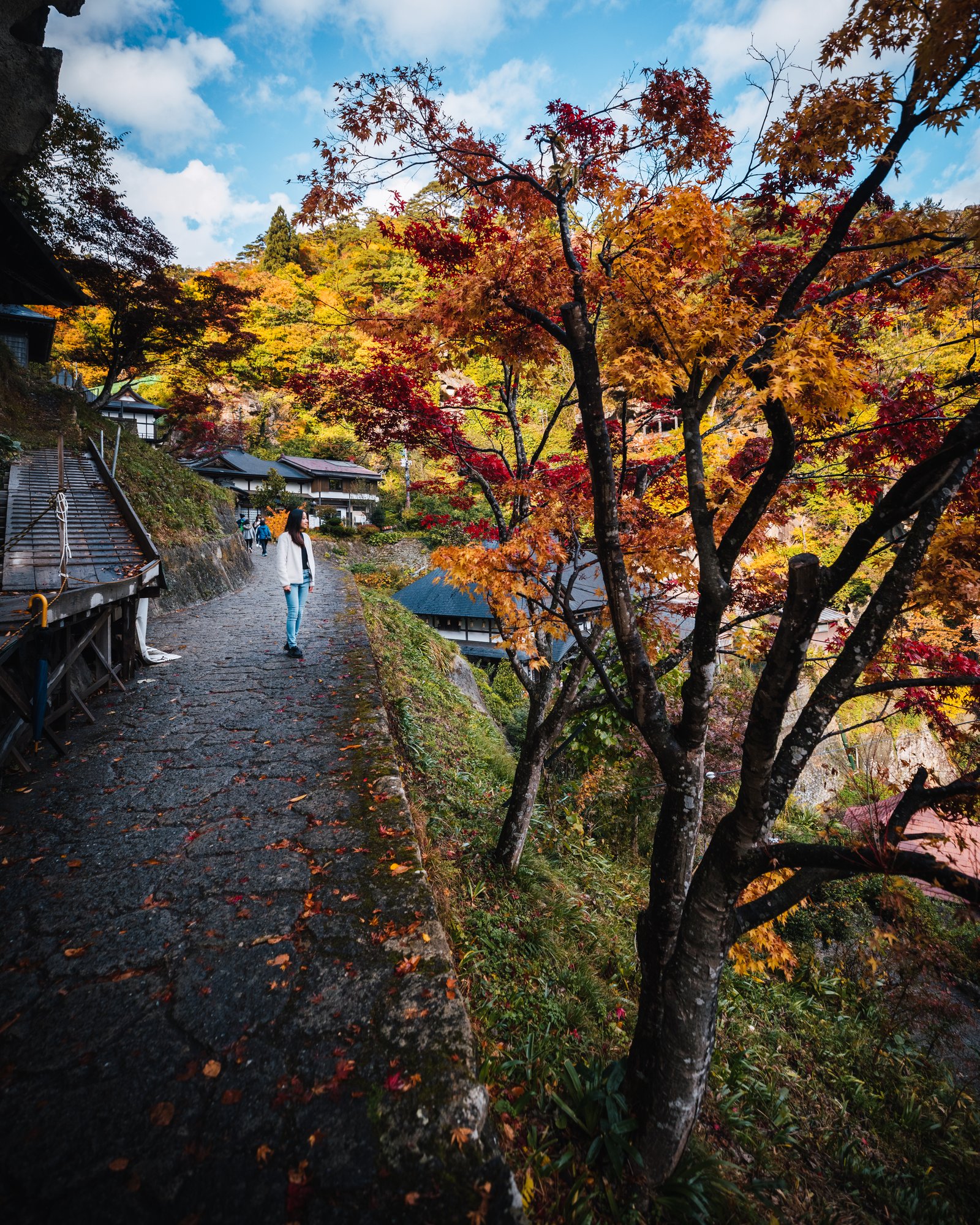
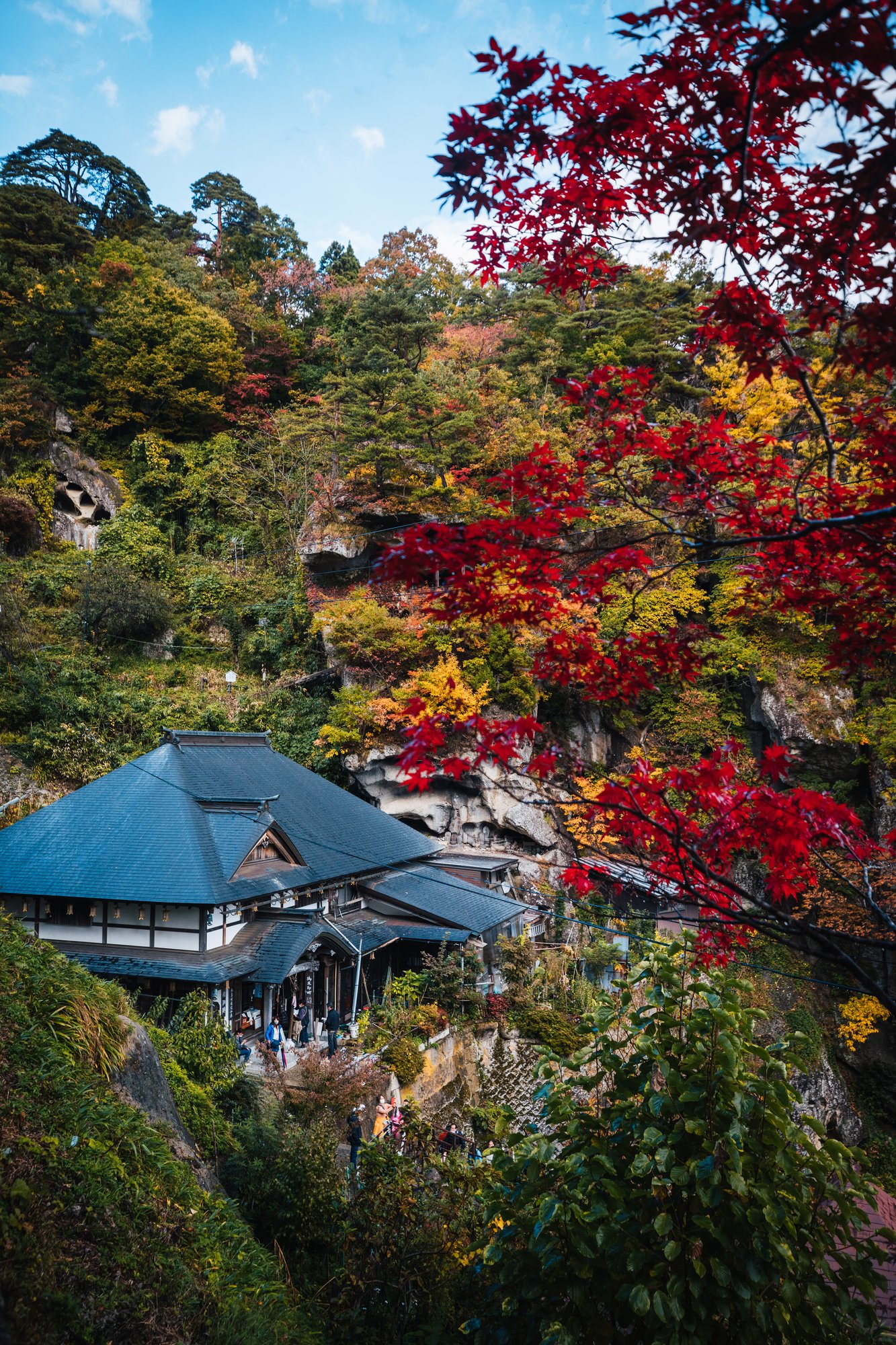
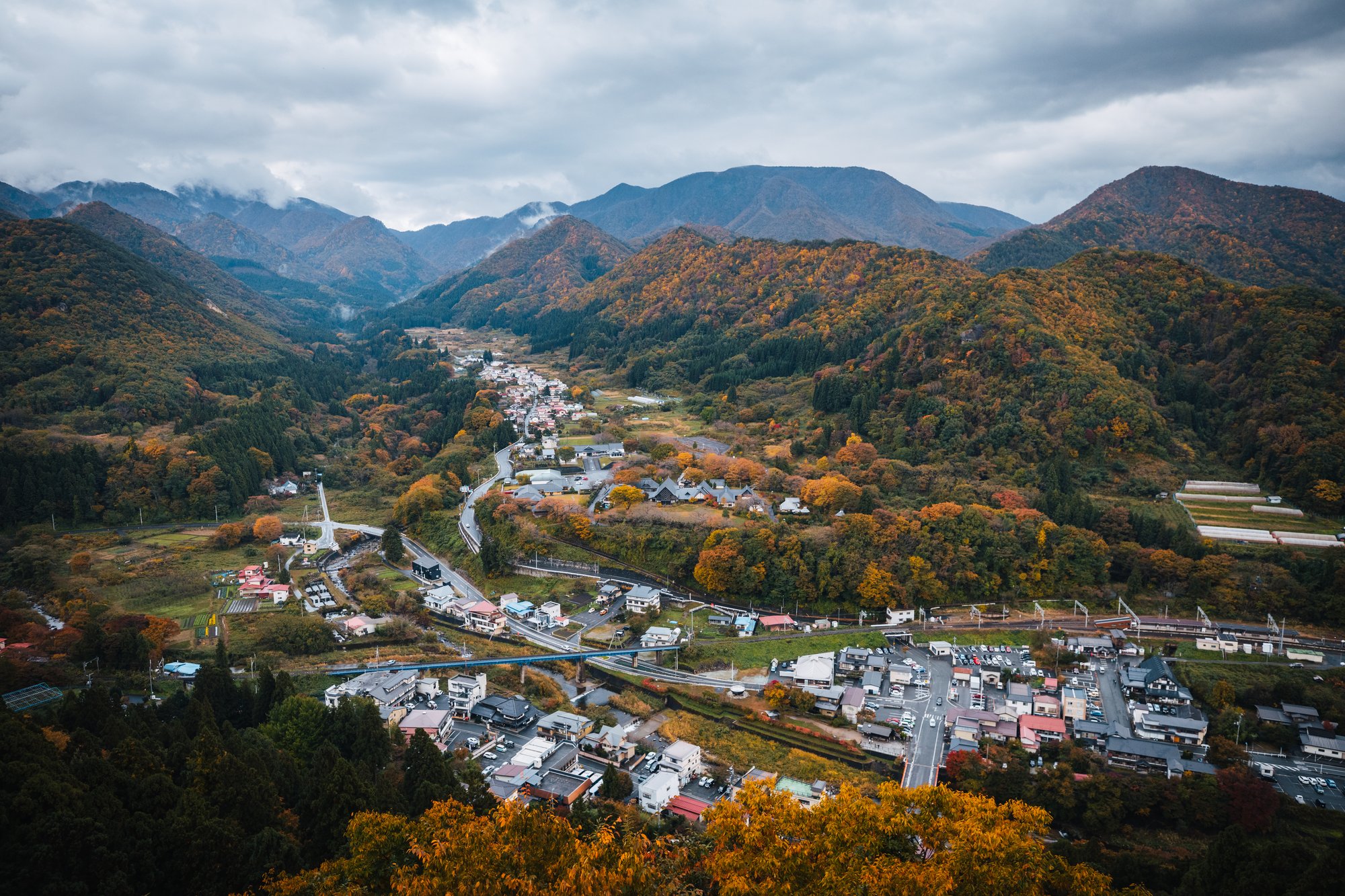
It takes 1,015 stone steps up a mountainside to reach one of Japan’s most beautiful temples. Risshaku-ji, better known simply as Yamadera (“mountain temple”), was founded in AD 860 to oversee the Tendai sect of Buddhism across northern Tohoku, and the complex that grew up the cliff over the following centuries is really more than a dozen sites of religious importance—shrines, gates, halls and monuments—stacked one above the other through a cedar forest. In autumn, the maples between them turn red and gold against the dark green of the cedars and the grey of the rock.

The haiku poet Matsuo Basho climbed these same steps in 1689 and wrote one of his most famous poems here: “ah this silence / sinking into the rocks / voice of cicada.” The silence is still there in autumn, minus the cicadas.

Jason on the stone steps at Yamadera with the red Nokyodo hall perched on the cliff above Grace walking the stone path at Risshaku-ji under red and gold maples

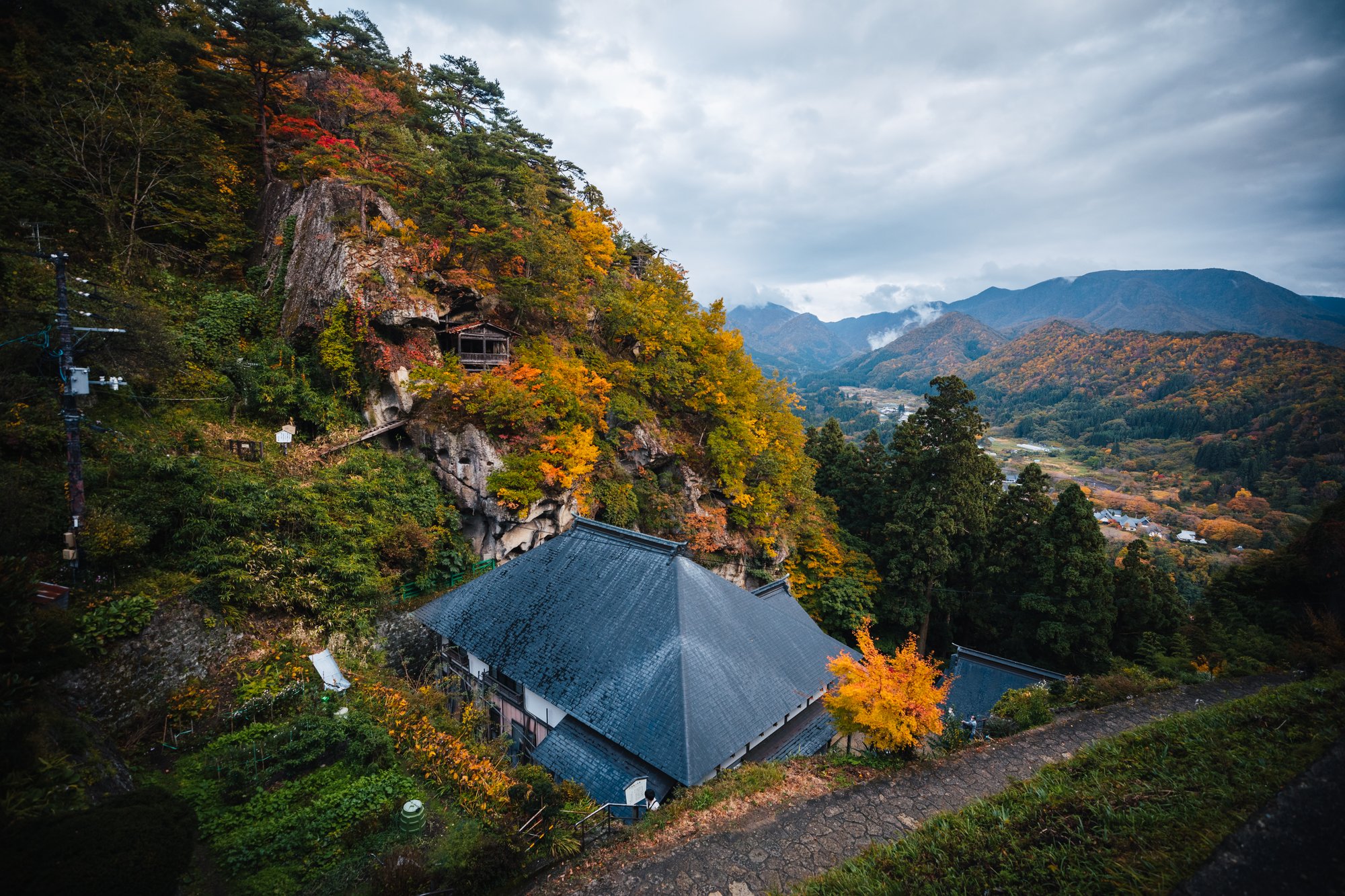
The climb itself is the experience. Eye-catching shrines and enchanting stone lanterns dot the way up through the atmospheric forest, and every switchback opens a new frame of foliage. Near the top, the small red Nokyodo hall and the Godaido viewing platform hang off the edge of the cliff, and from there you get one of the best views in northern Japan—the whole Yamadera valley laid out below, the river, the town, and the far hills fading into haze.

Halls of Risshaku-ji built into the cliff face above the Yamadera valley in autumn

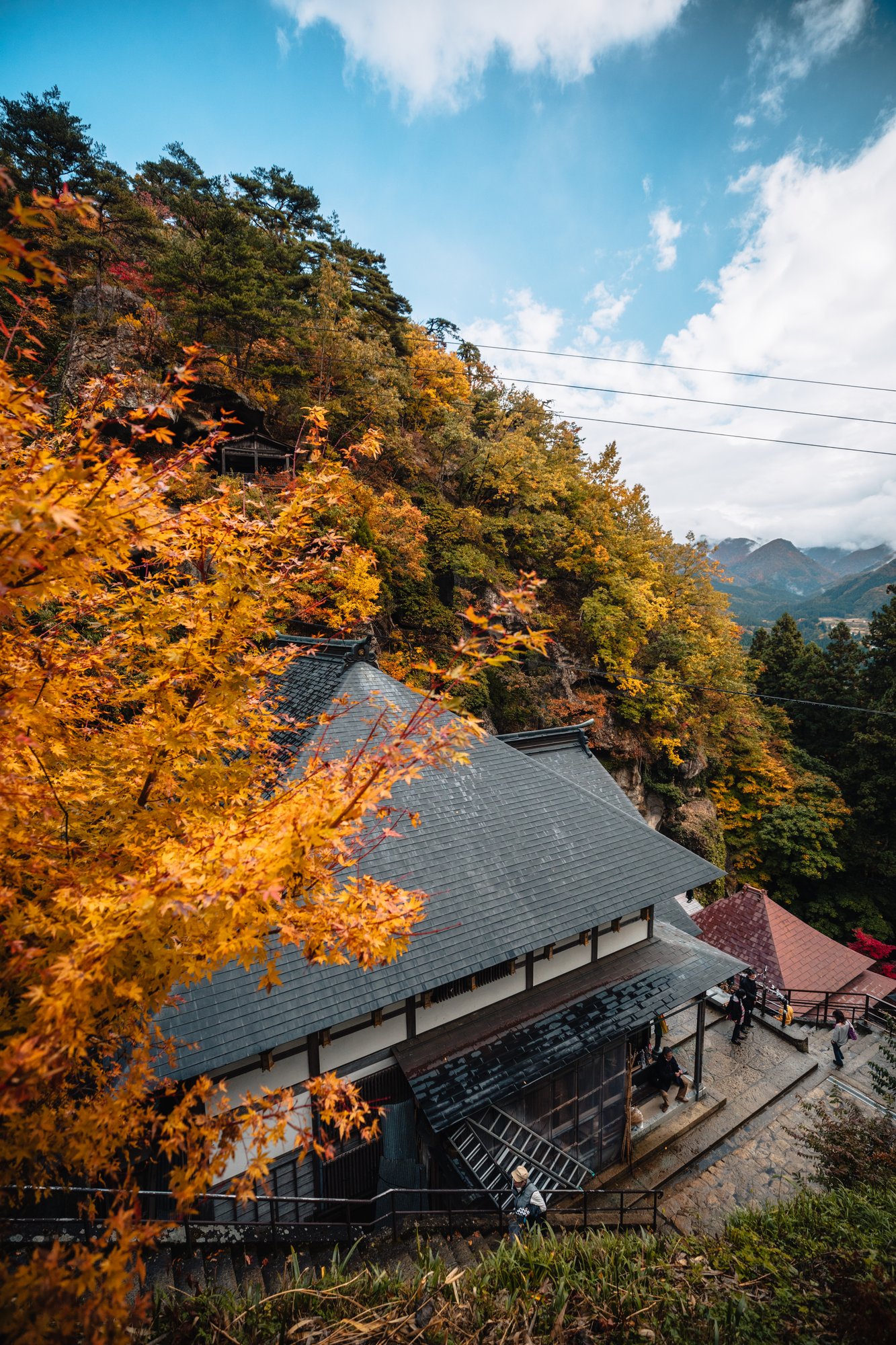
Two of the halls are worth seeking out among the rest. The Konpon-chudo, the main hall at the base of the mountain, is said to house a Buddhist flame that has been burning continuously for more than 1,000 years. Higher up, the Hiho-kan treasure hall, built in 1144, holds Yamadera’s most precious Buddhist artifacts. Neither is large, and both are easy to walk past when the maples are at their peak, which is exactly why they are worth the pause.

Temple hall roof beneath golden maple leaves at Yamadera with the valley beyond Temple hall framed by red maples and the cave-pocked cliff at Risshaku-ji
View over the town of Yamadera and the valley from the top of Risshaku-ji

Naruko Gorge (鳴子峡)

Osaki, Miyagi

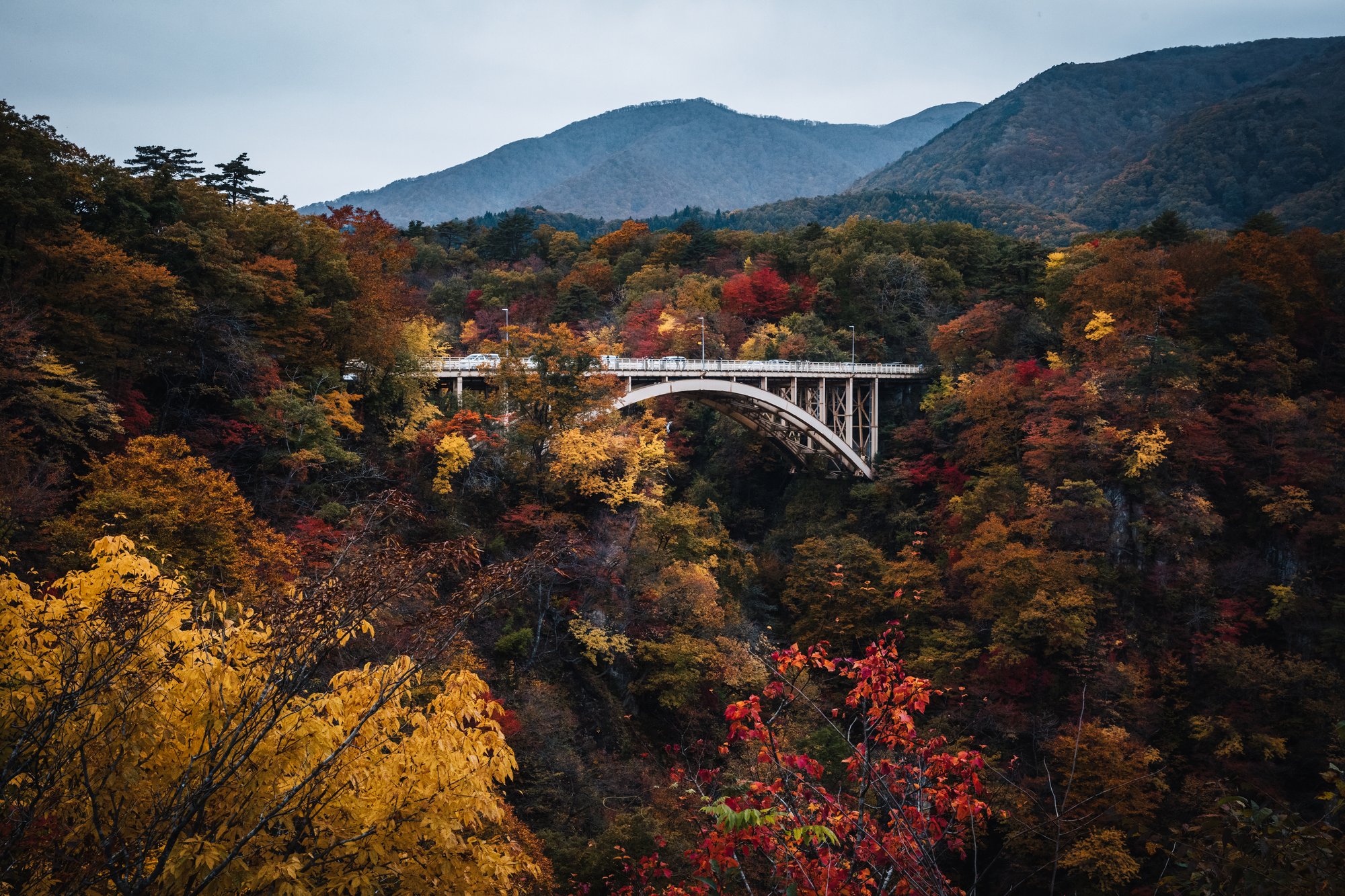
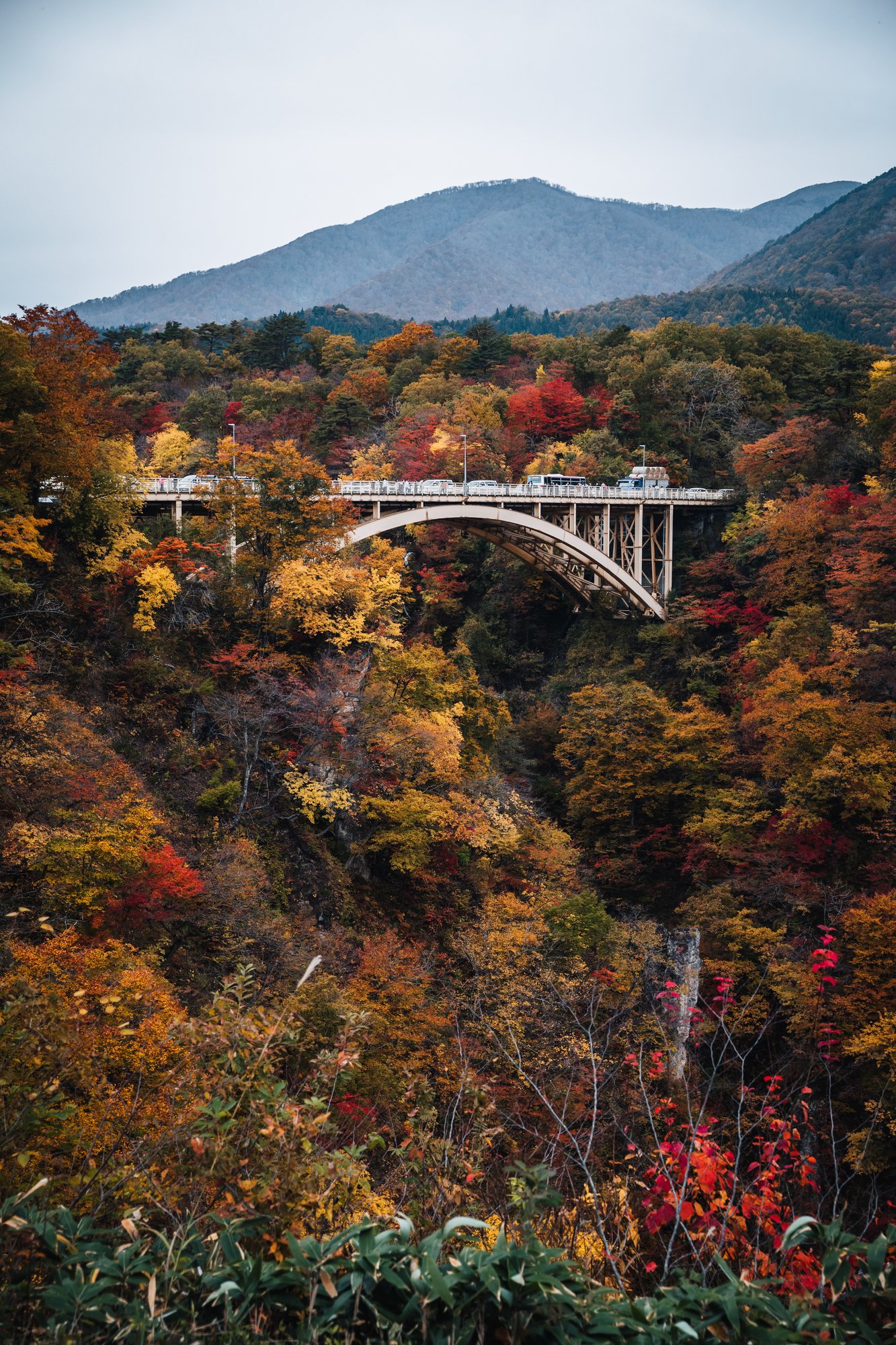
In autumn the mountains at Naruko Gorge are on fire. The ravine, some 100 meters deep and two kilometers long, cuts through the hills of northern Miyagi, and every slope of it turns a different shade at once—brilliant oranges, golden yellows, crimson reds—broken only by the grey rock faces that rise straight out of the trees. It is one of the most scenic gorges in all of Tohoku, and the first look from the lookout beside the Ofukazawa Bridge left us speechless.

The Ofukazawa Bridge arching over Naruko Gorge with autumn-colored slopes and mountains behind

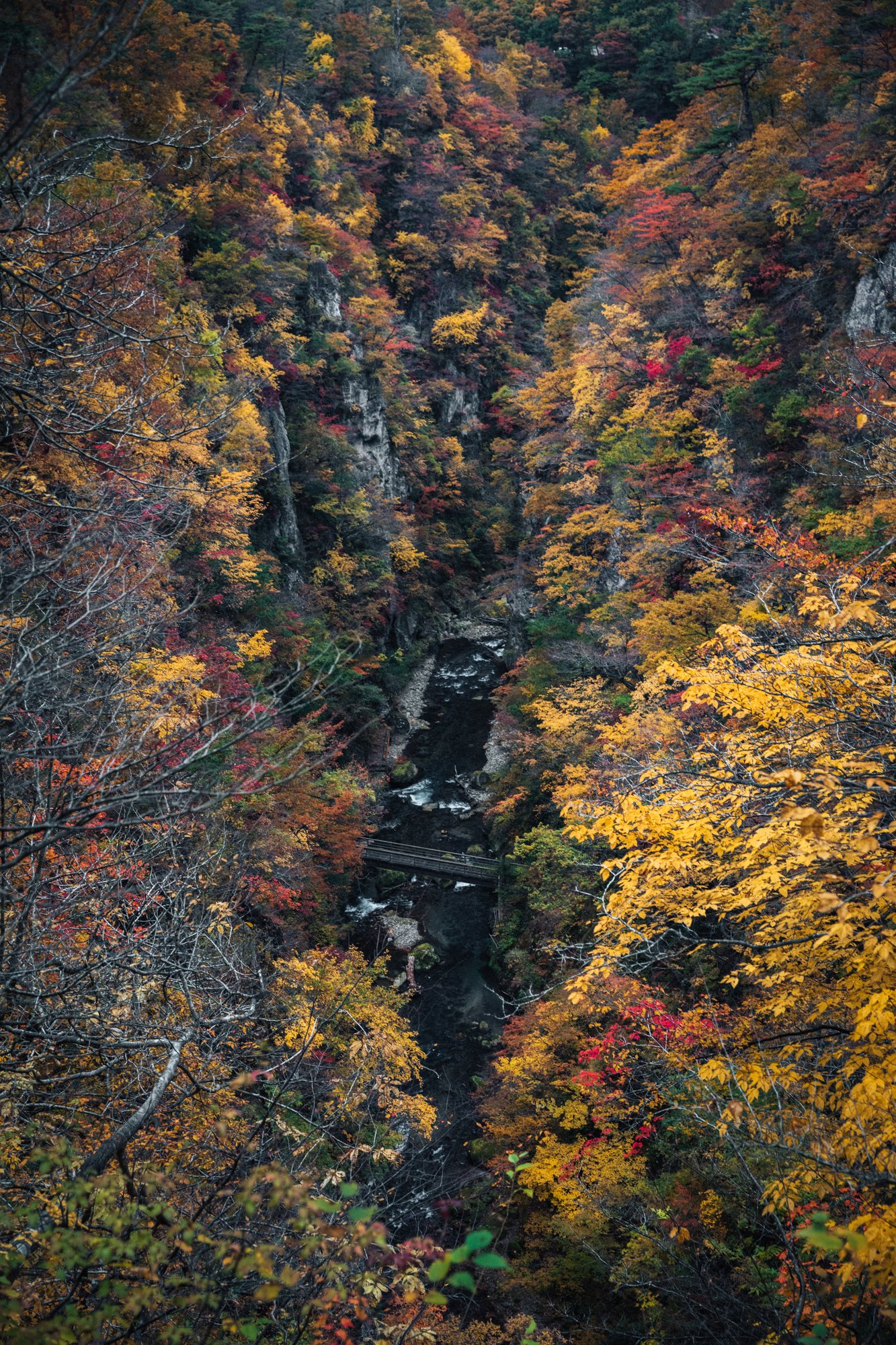
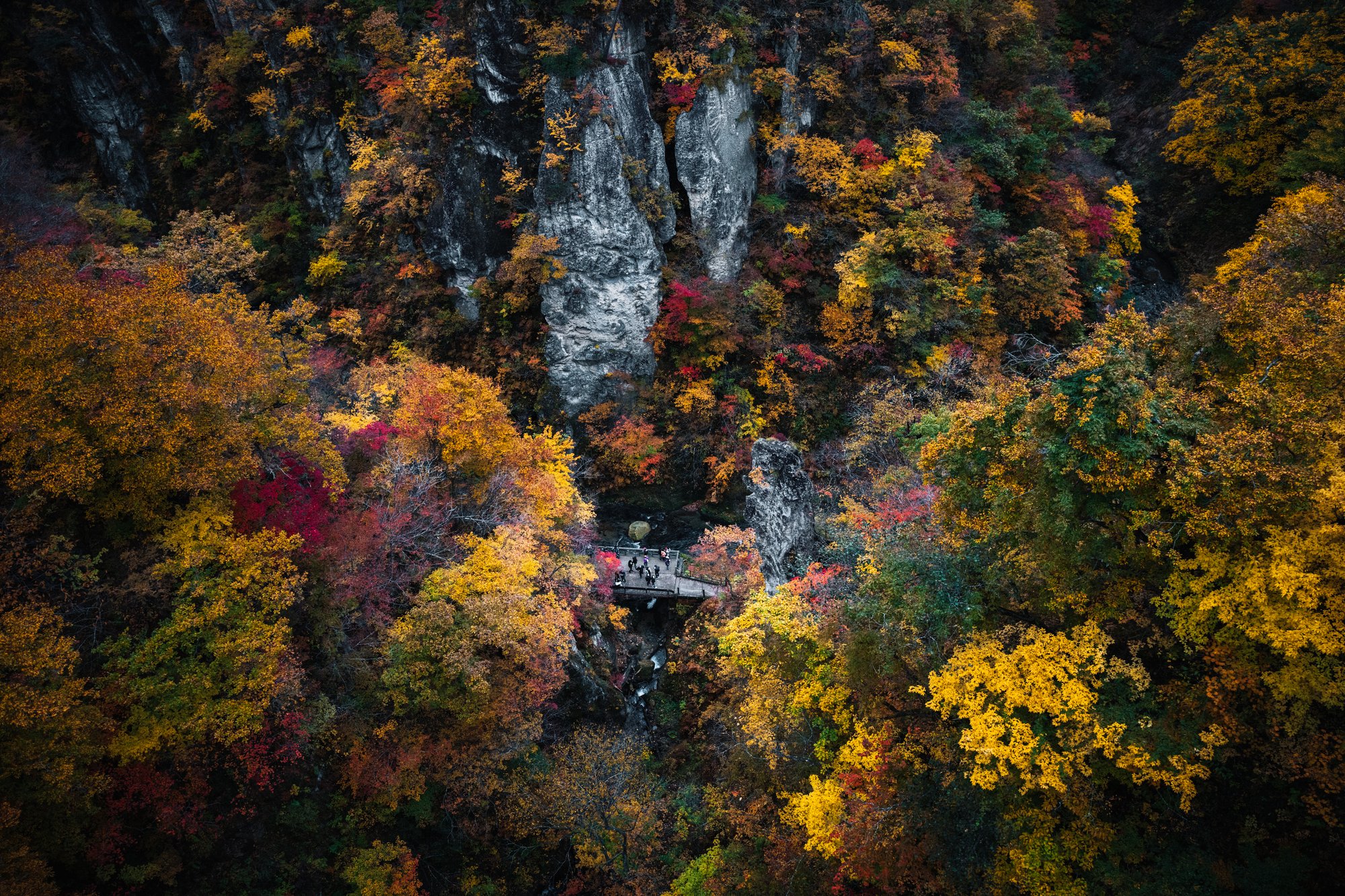
The gorge rewards looking straight down as much as looking across. From the viewing decks, the river is a thin dark thread far below, and the cliffs and rock pillars that give Naruko its drama stand out of a canopy that seems to go on forever in every direction.

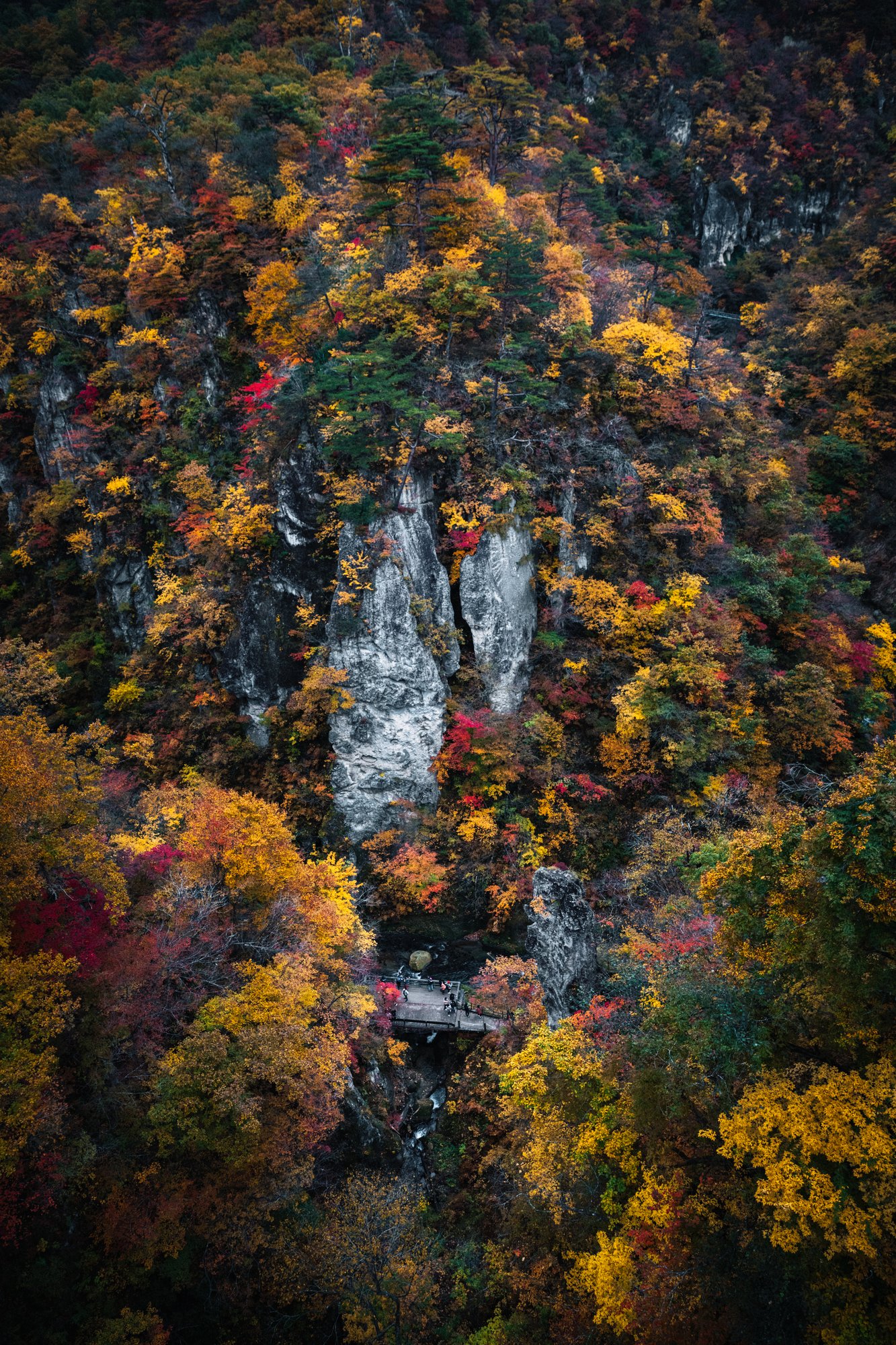
Looking down into Naruko Gorge at the river winding between walls of autumn foliage Rock pillars rising out of the autumn forest inside Naruko Gorge

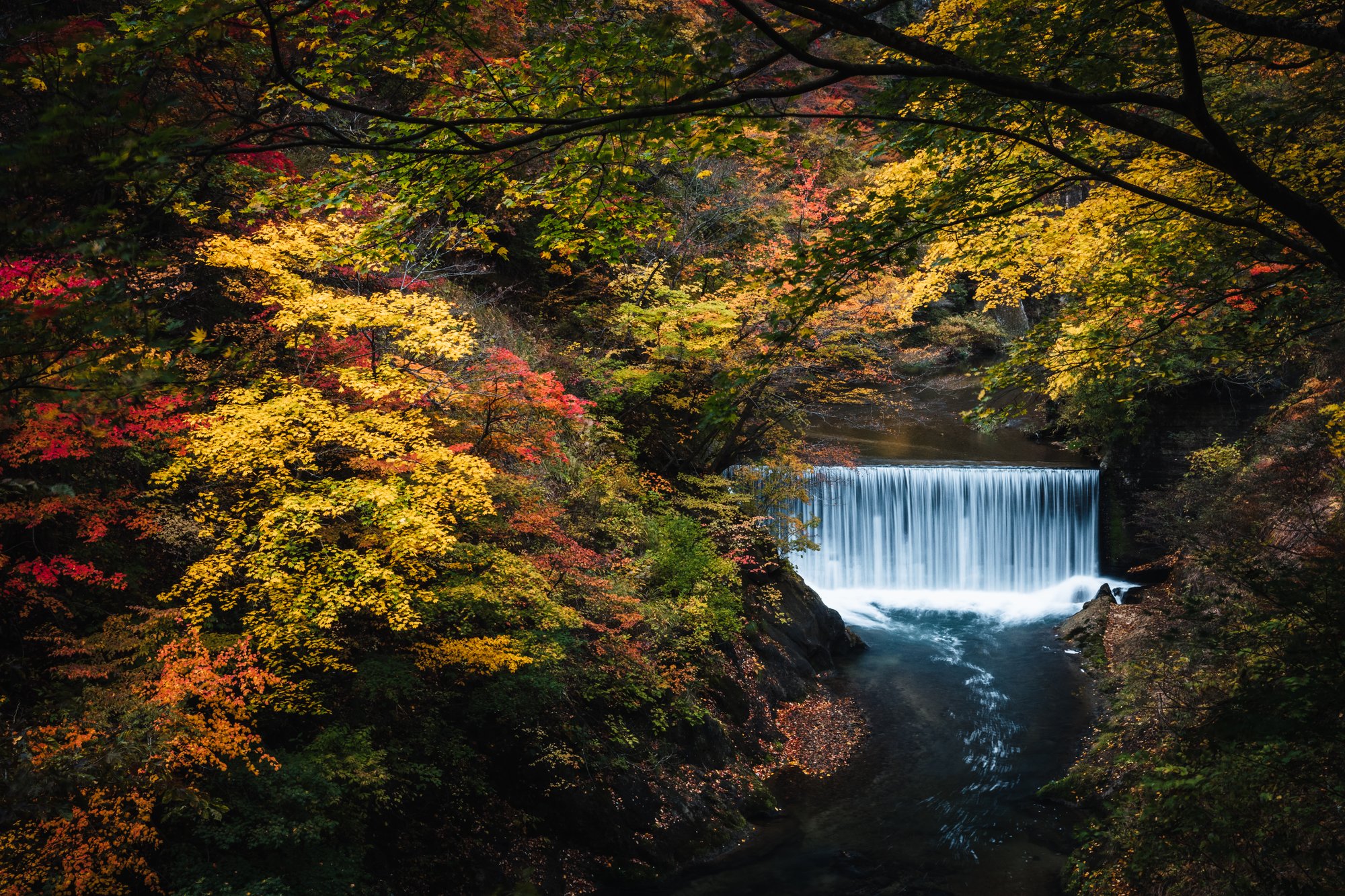
Down at river level the mood changes completely. A small weir turns the Oya River into a wide, silky curtain of water, and the yellow and orange maples lean in over it from both banks—a quieter, more intimate scene than the big views from the lookout above.

A weir waterfall on the river at Naruko Gorge framed by yellow and orange autumn trees

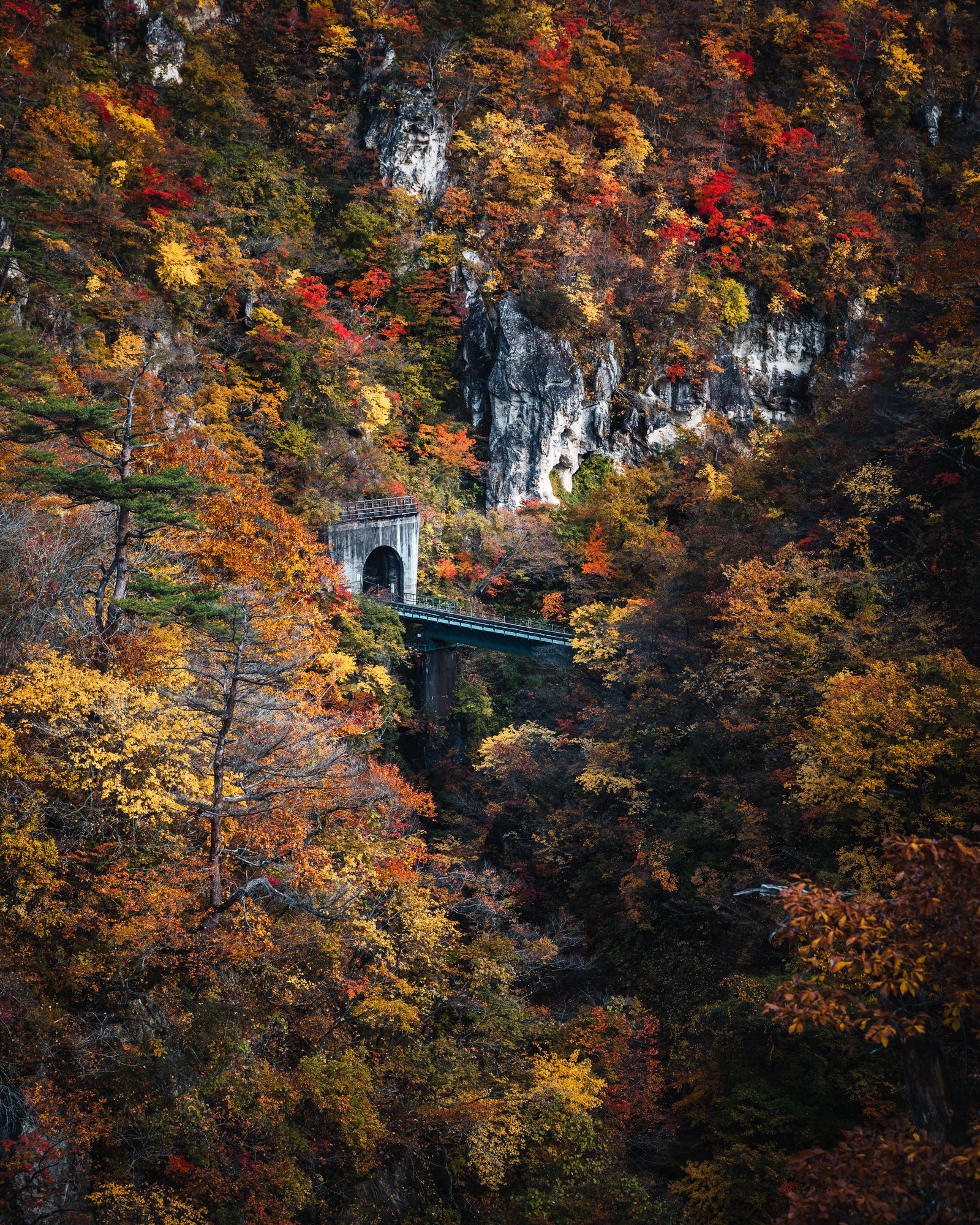
Two bridges cross the gorge and both are worth waiting for. The JR Rikuu East Line threads along the cliff and disappears into a tunnel cut through the rock, and the moment a train emerges from it into the foliage is one of the most photographed scenes in the region. Above it, the concrete arch of the Ofukazawa Bridge carries the road across the ravine, and from the lookout you can watch the cars crossing it, tiny against the slopes behind.

The JR Rikuu East Line rail bridge and tunnel mouth on the cliff at Naruko Gorge in autumn Cars crossing the Ofukazawa Bridge above Naruko Gorge with mountains beyond
Grey cliff faces and a small viewing deck surrounded by autumn foliage in Naruko Gorge