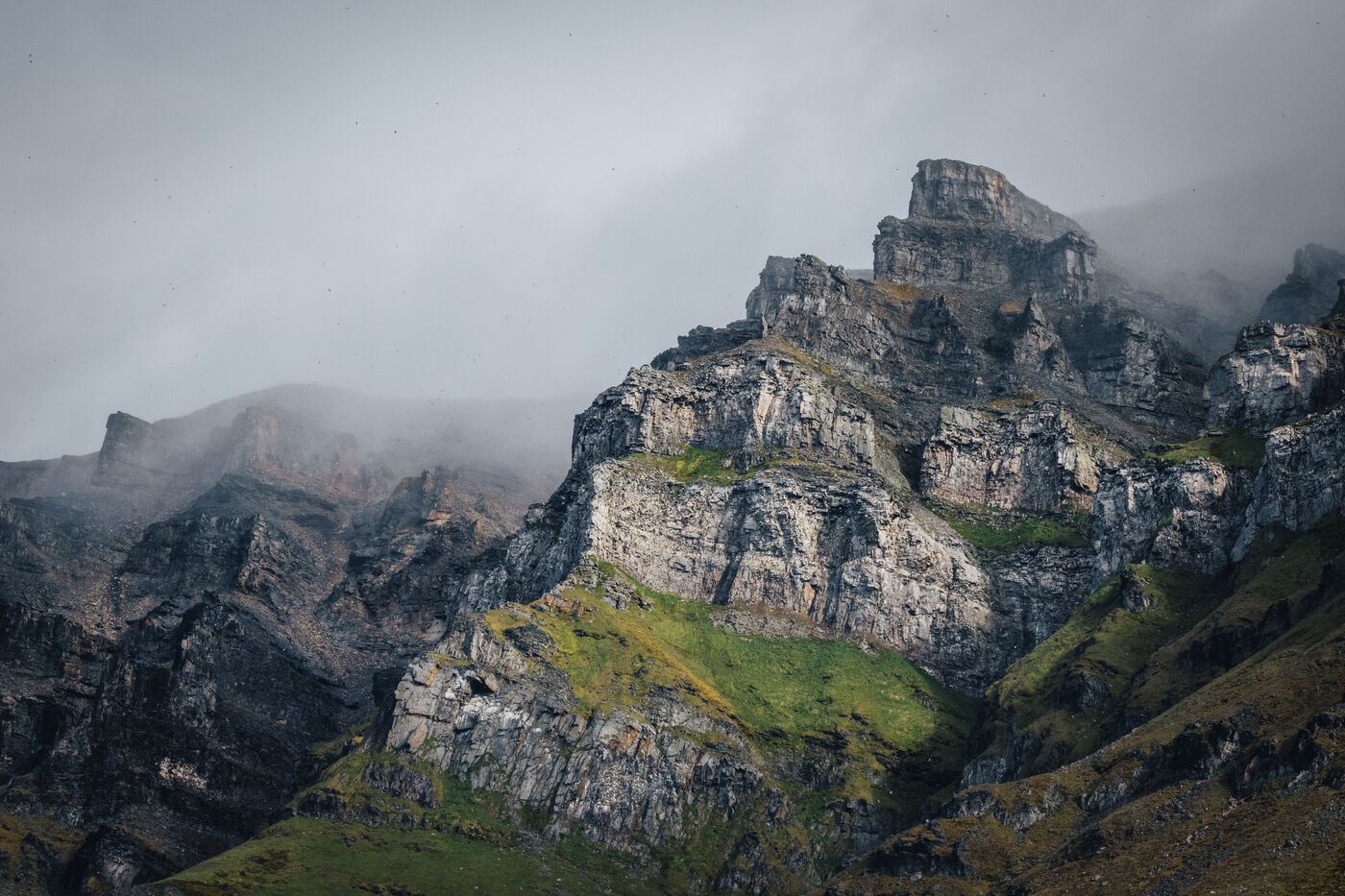
Circumnavigating Svalbard: 10 Days at the Top of the World

An intimate polar expedition through glaciers, polar bears, and the abandoned Soviet ghost town of Pyramiden aboard the M/V Kinfish.

July 2022 10 Days Svalbard, Norway

Svalbard had been calling to us ever since our first visit in January 2017, when we arrived during the polar night and experienced twenty-four hours of darkness, ice caves by husky sled, and temperatures that plunged to minus twenty-nine degrees. We promised ourselves we would return in summer, when the midnight sun transforms the archipelago into something entirely different. A land of perpetual golden light, fragmented sea ice, and wildlife thriving in the endless daylight. Three years of pandemic delays only sharpened the longing.

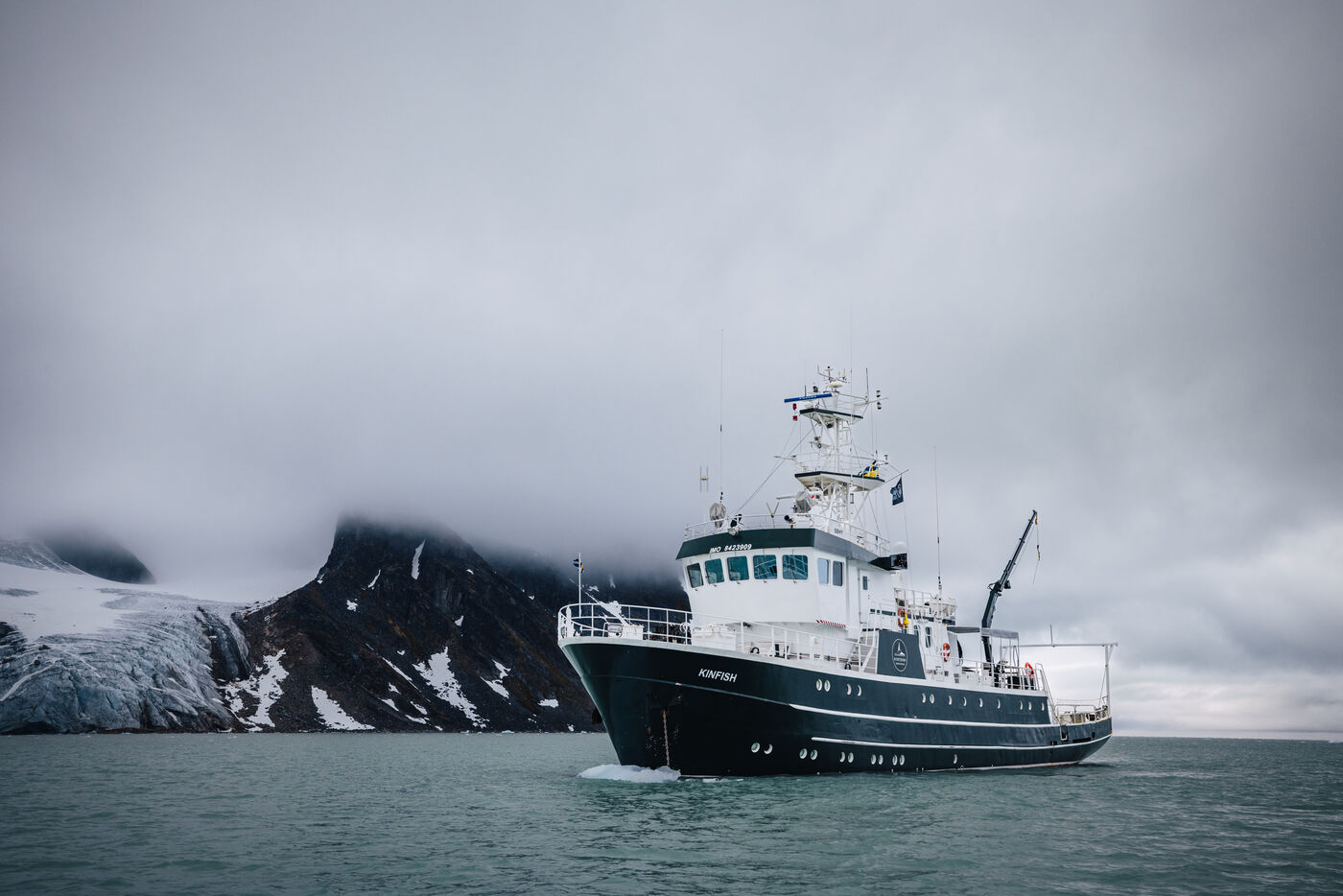
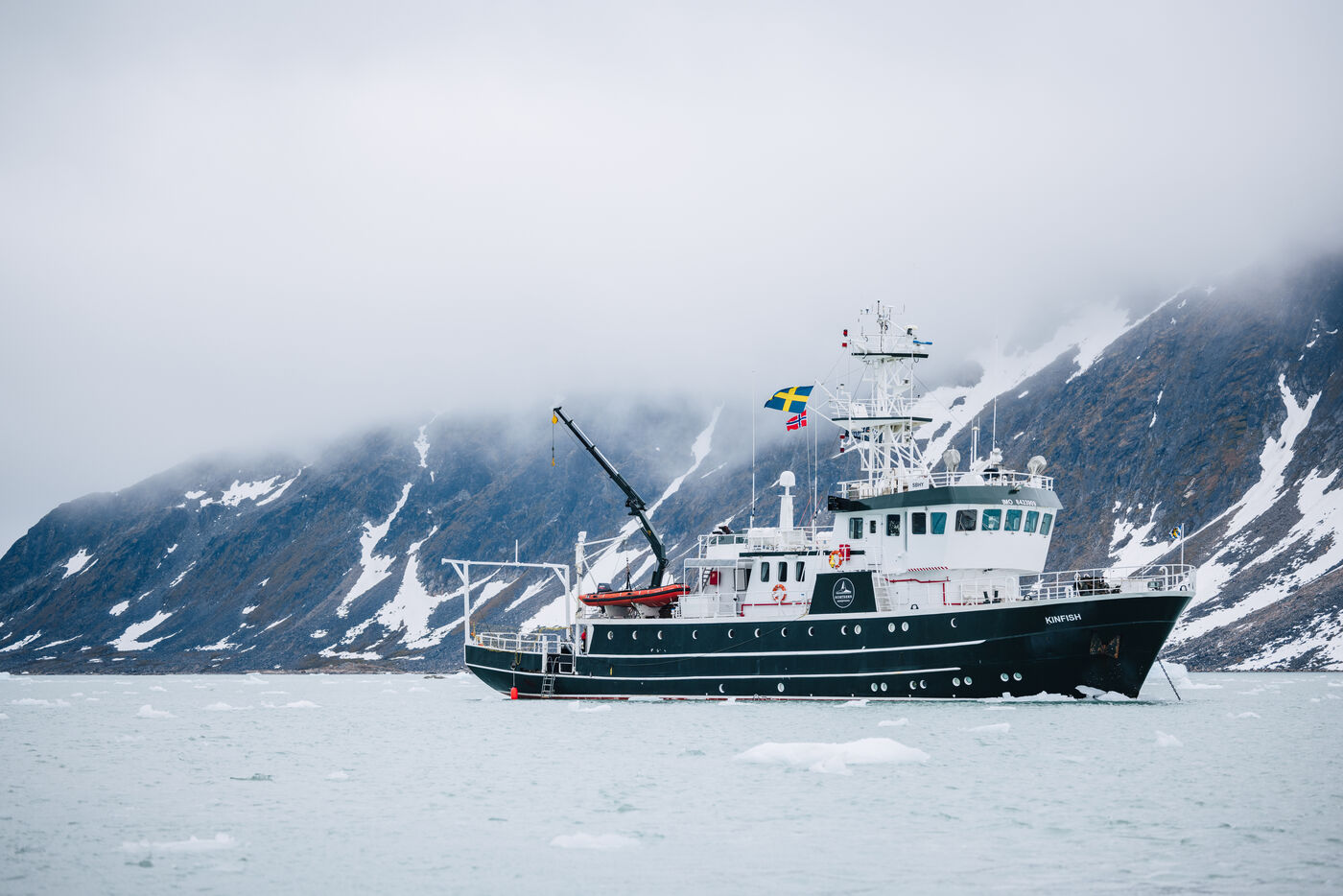
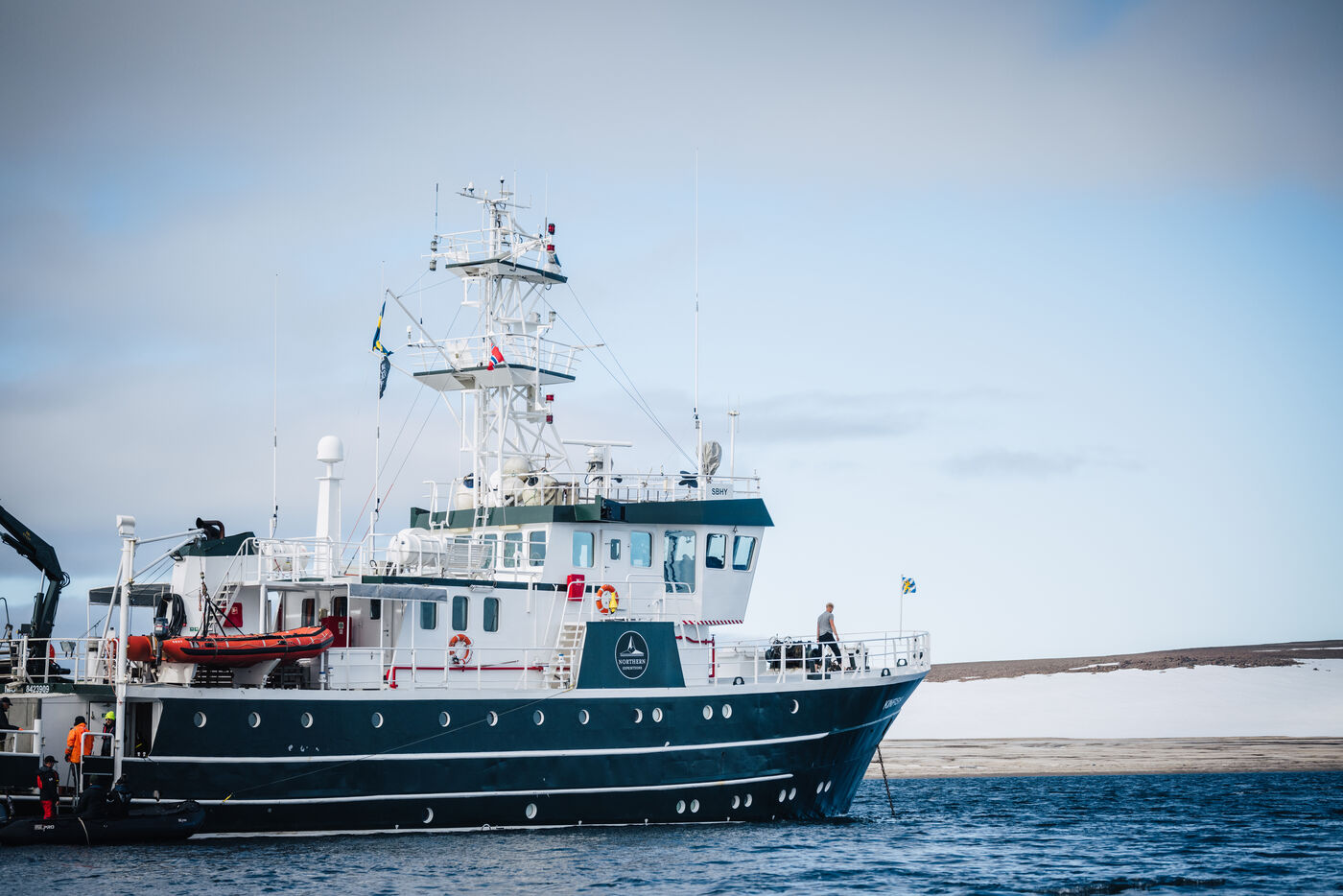
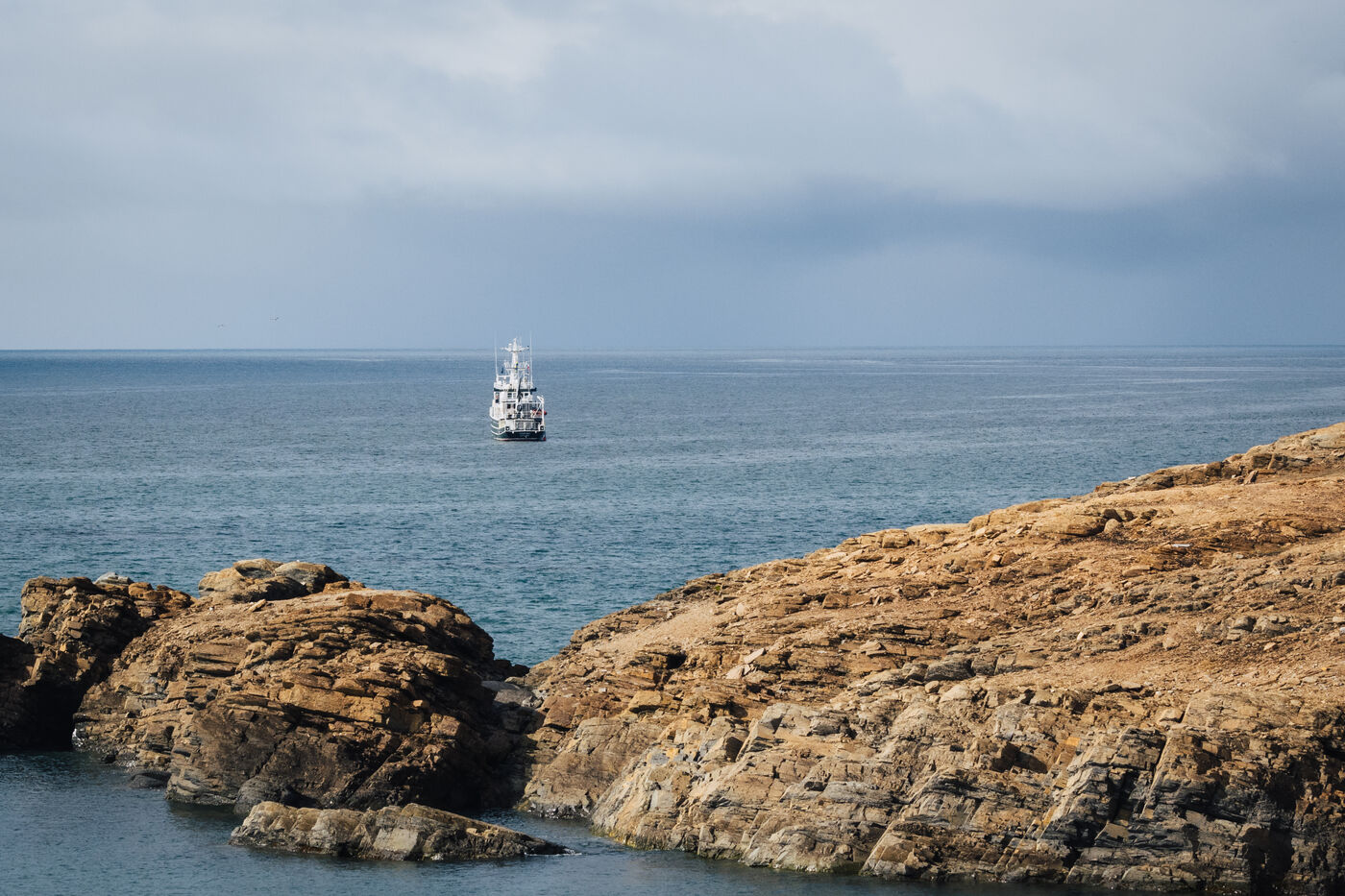
In July 2022, we finally boarded the M/V Kinfish on the evening of July 22 in Longyearbyen for a ten-night expedition with just ten guests and two expedition guides. Built in 1958 as a Norwegian research vessel, the Kinfish had recently been converted into an intimate passenger ship. Small enough to slip into fjords and coves that larger expedition vessels cannot reach. With photographer Chris Michel aboard, we set out to circumnavigate the entire Svalbard archipelago, a feat that requires perfect weather and favourable ice conditions.

What followed was the most rewarding and memorable trip we have ever taken. Polar bears swimming through Arctic waters just meters from our zodiac. Sixty thousand seabirds nesting on sheer basalt cliffs. Walruses dozing on snowbanks, periodically swatting their neighbors with their tusks. An abandoned Soviet mining town frozen in time. And 984.8 nautical miles of glaciers, icebergs, and landscapes so vast and silent they felt like the edge of the known world.
The Voyage
  1. BeforeArrival in Longyearbyen and Pyramiden
  2. Day 1Fuglefjorden and First Glaciers
  3. Day 2Polar Bears at Midnight
  4. Day 3Trapper's Station and Glacier
  5. Day 4Alkefjellet Bird Cliffs and Walruses
  6. Day 5Sea Ice, Polar Bears and Bråsvellbreen
  7. Day 6Emerald Icebergs and the Lobster Suit
  8. Day 7Walruses at Andréetangen
  9. Day 8Polish Polar Station and Polar Plunge
  10. Day 9Reindeer, Beluga Bones and Farewell

Arrival in Longyearbyen and Pyramiden

July 19-22, 2022. Longyearbyen and Pyramiden, Svalbard

Welcome to Svalbard, an Arctic land at 78 degrees North with the world's northernmost community. The last time we visited was in January 2017 during the polar night, where we experienced twenty-four hours of darkness. This summer trip was the complete opposite. Twenty-four hours of light under the midnight sun. There are around 3,000 people living in Longyearbyen, but an even greater number of polar bears at 3,500. Svalbard's nature is unforgiving, but fragile. Nearly two thirds of the surface is protected, and it's crucial to show caution for the wild animals living here.

We spent a couple of nights at Mary-Ann's Polarrigg, a lodge transformed from its previous life as a miner's barracks. Many items throughout the hotel are from the old coal mines, including the red miner's bus which stands outside the bar area. We also dined at Funktionærmessen inside the Funken Lodge, arguably the best restaurant in Longyearbyen. A historical dining place where mining officials once ate while enjoying mountain views. King crab from Finnmark, dry-aged beef, and Svalbard reindeer were among the highlights.

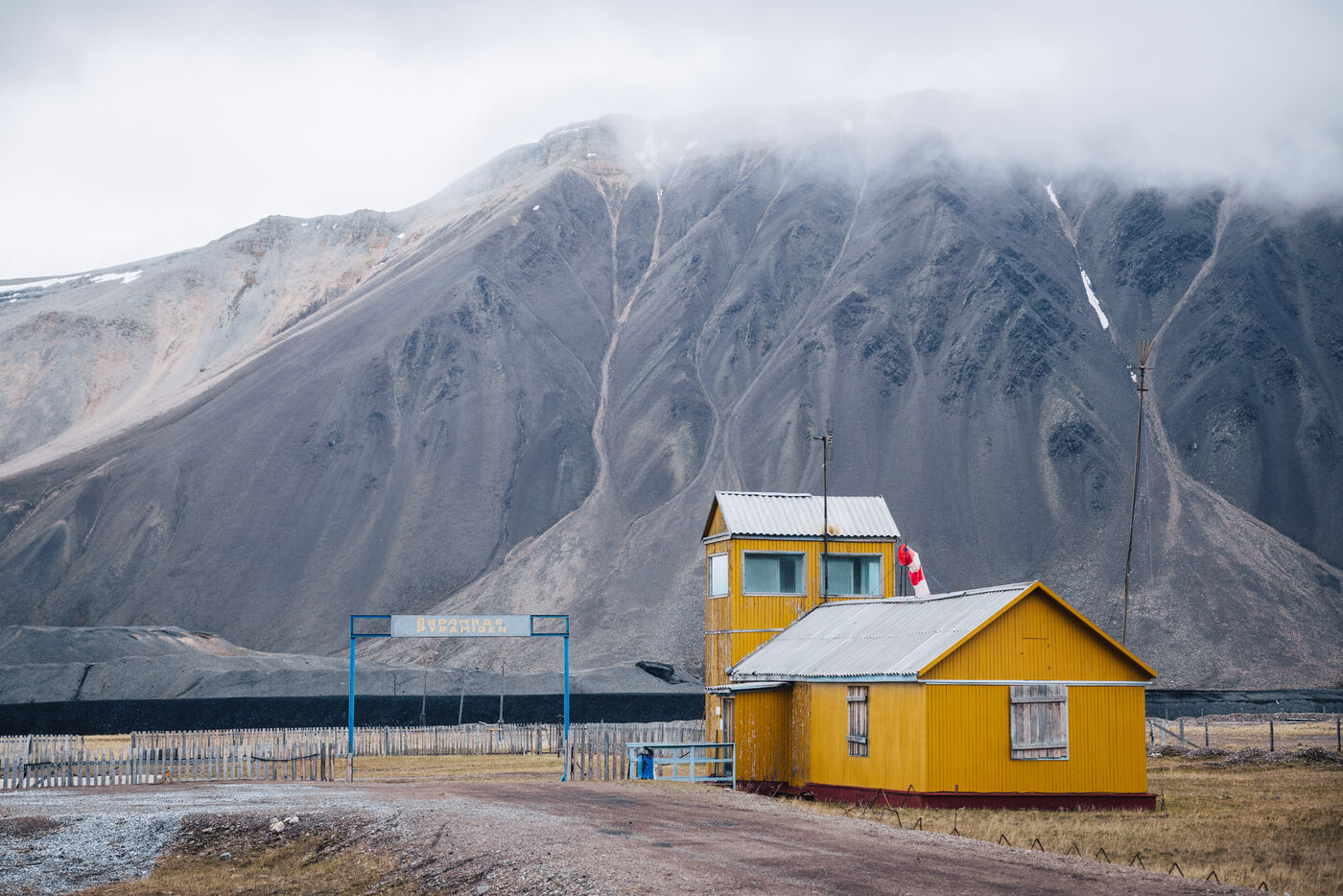
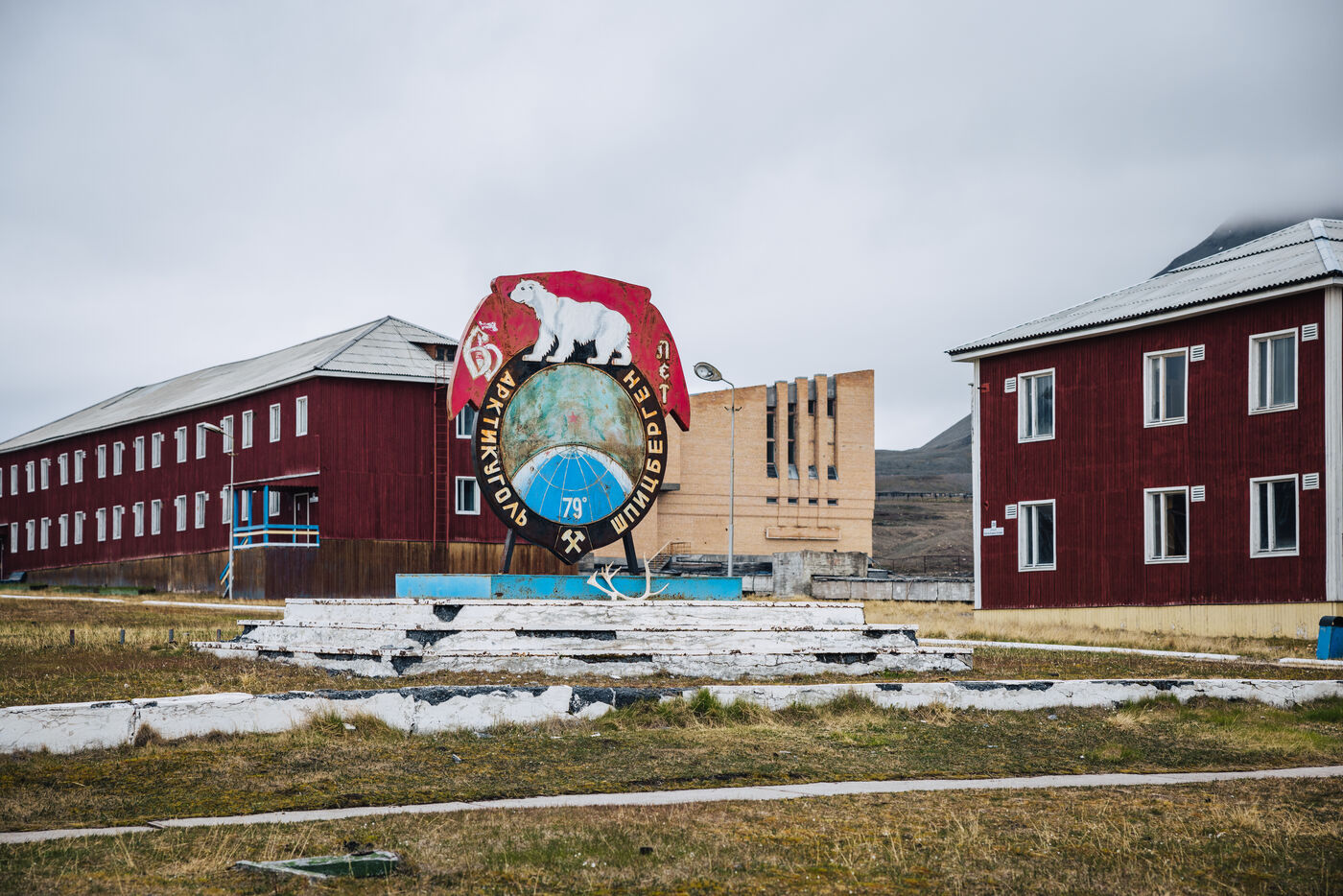
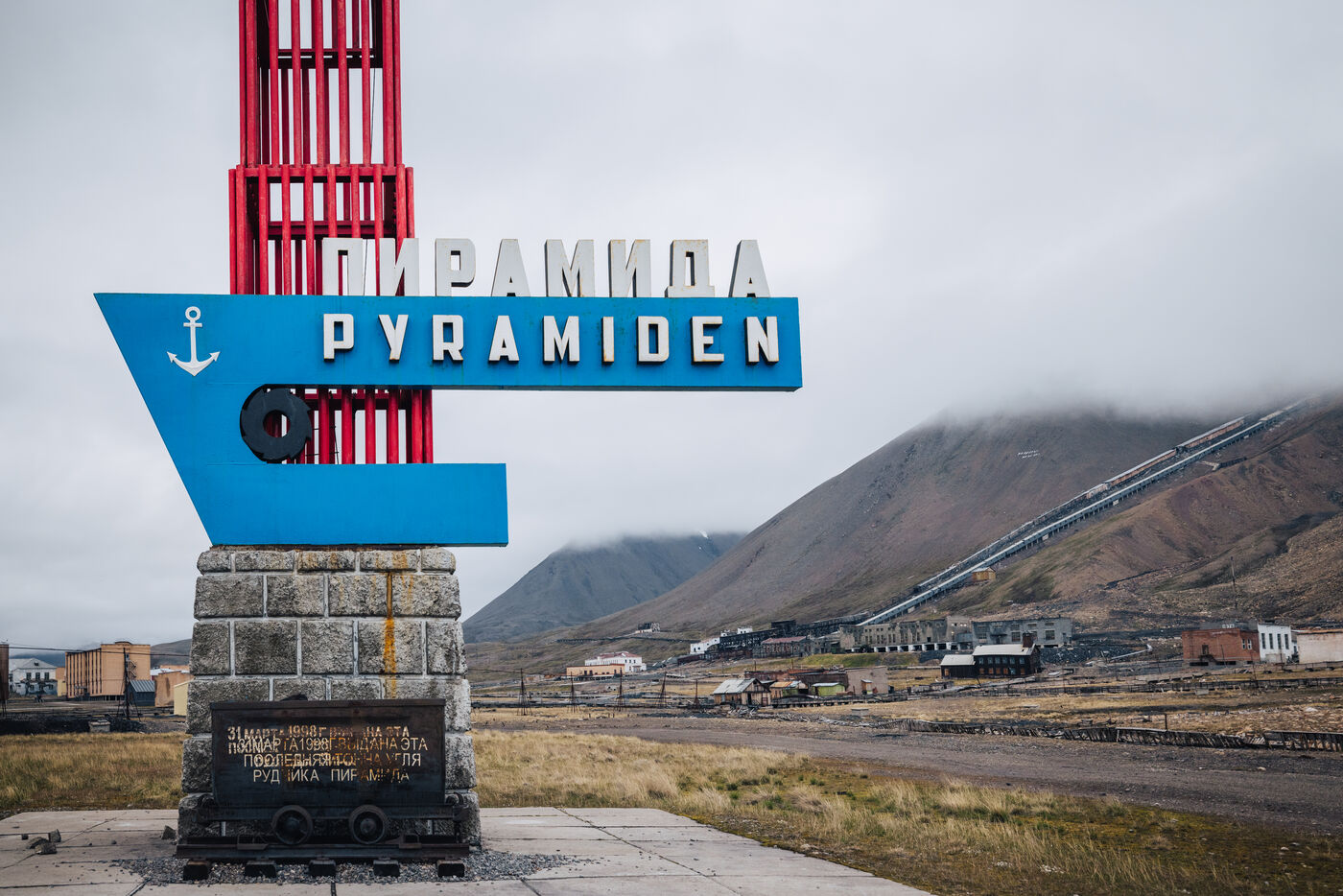
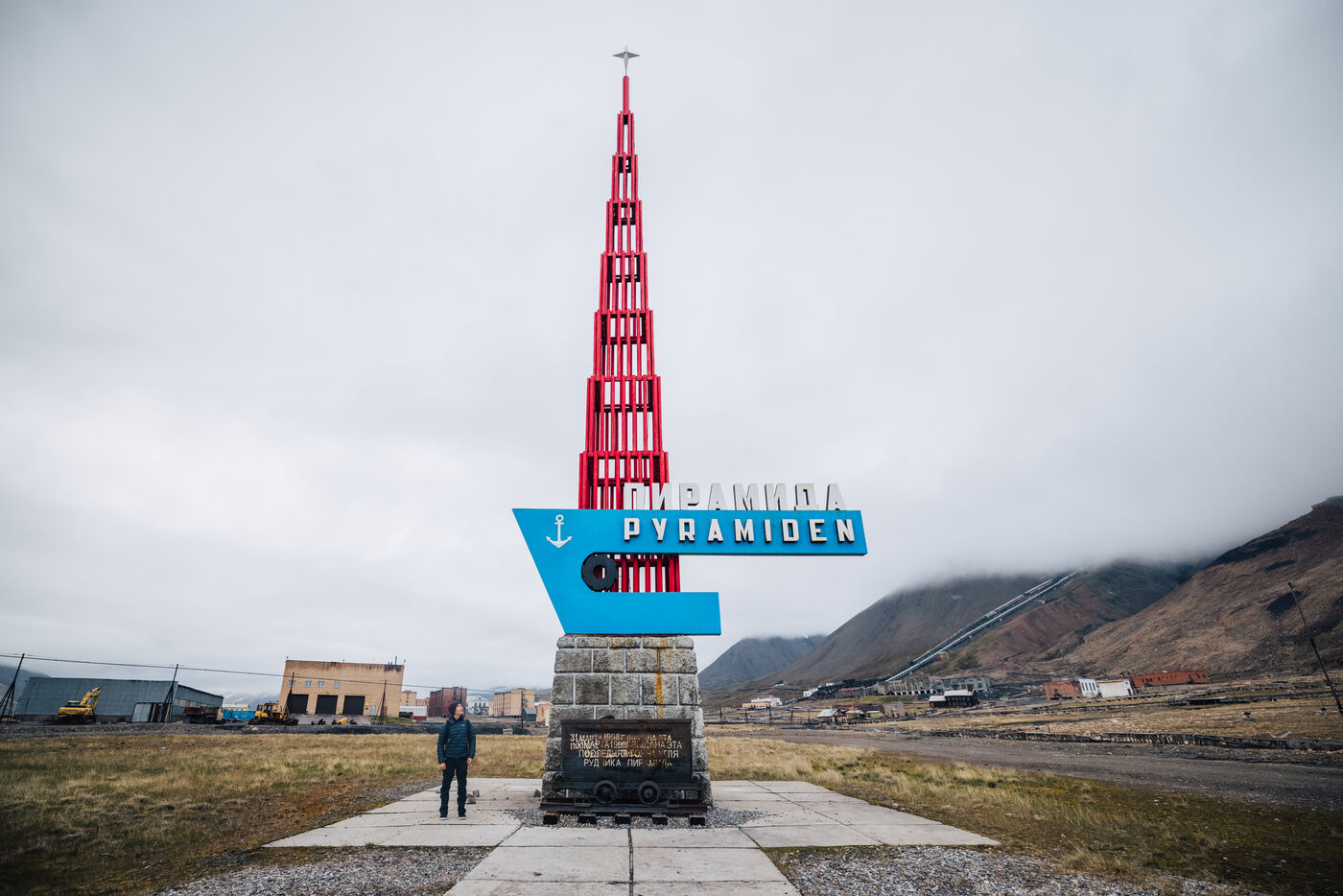
Pyramiden sign with red tower and mountains
The iconic red and blue Pyramiden sign welcomes us to this remote Arctic mining town.

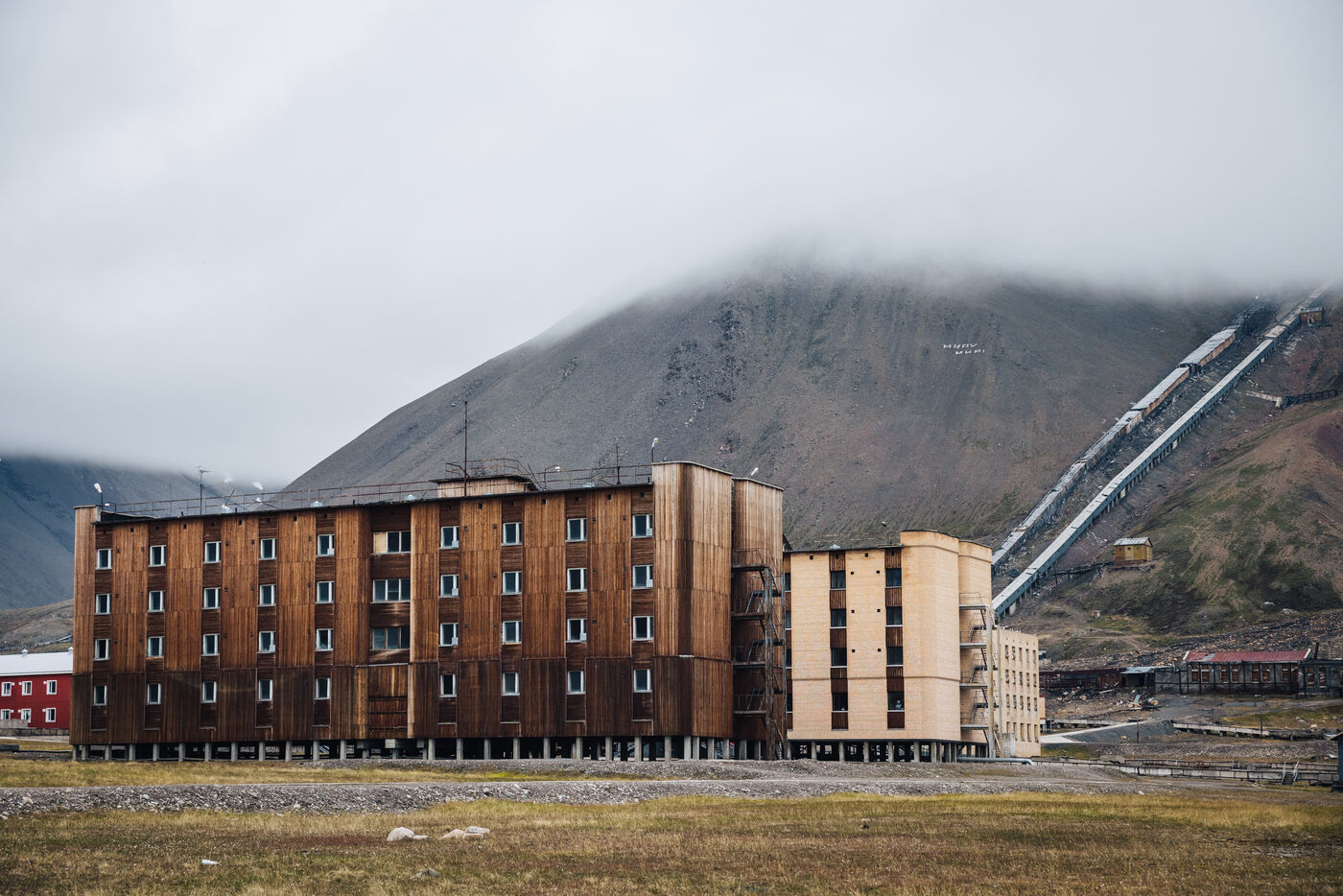
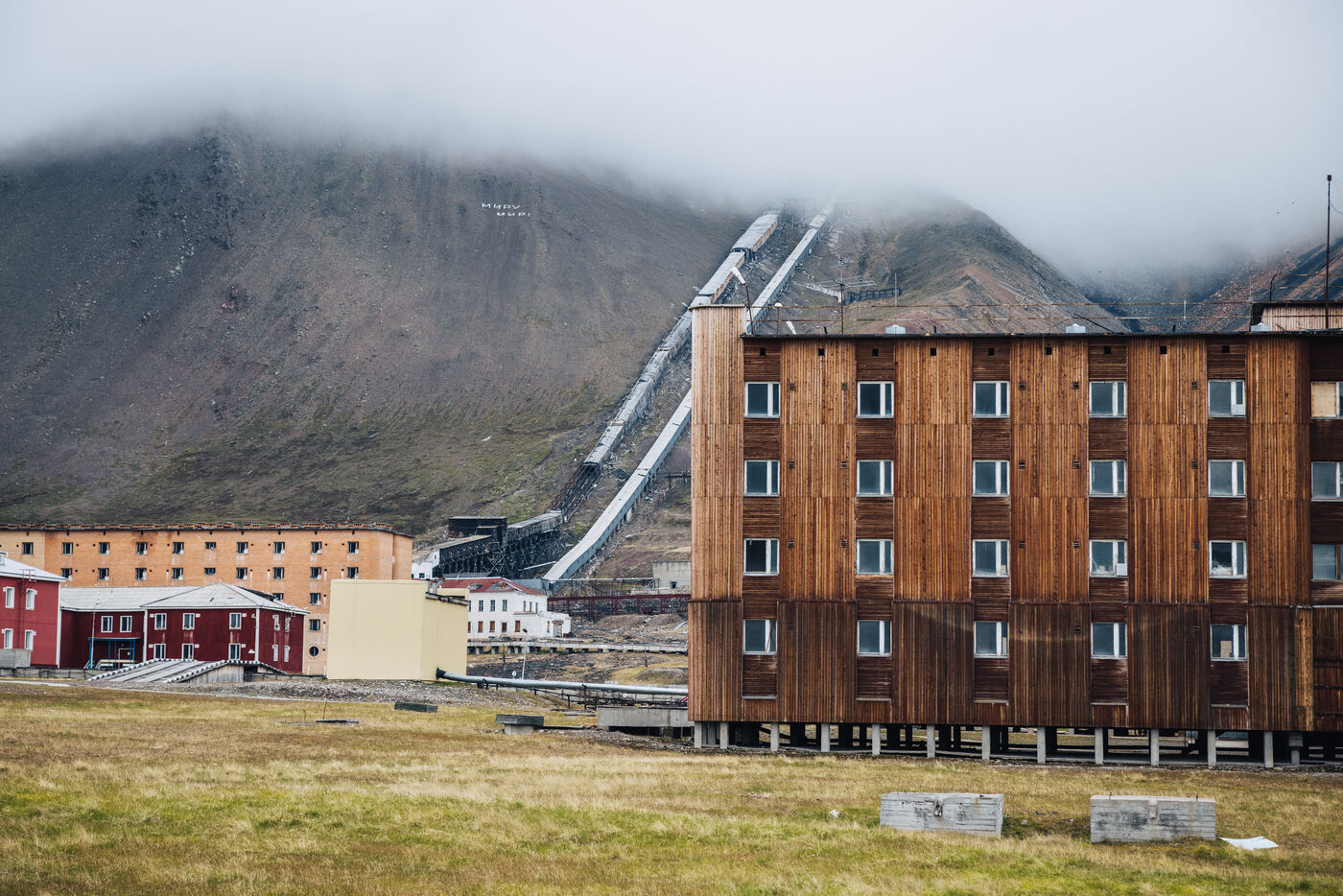
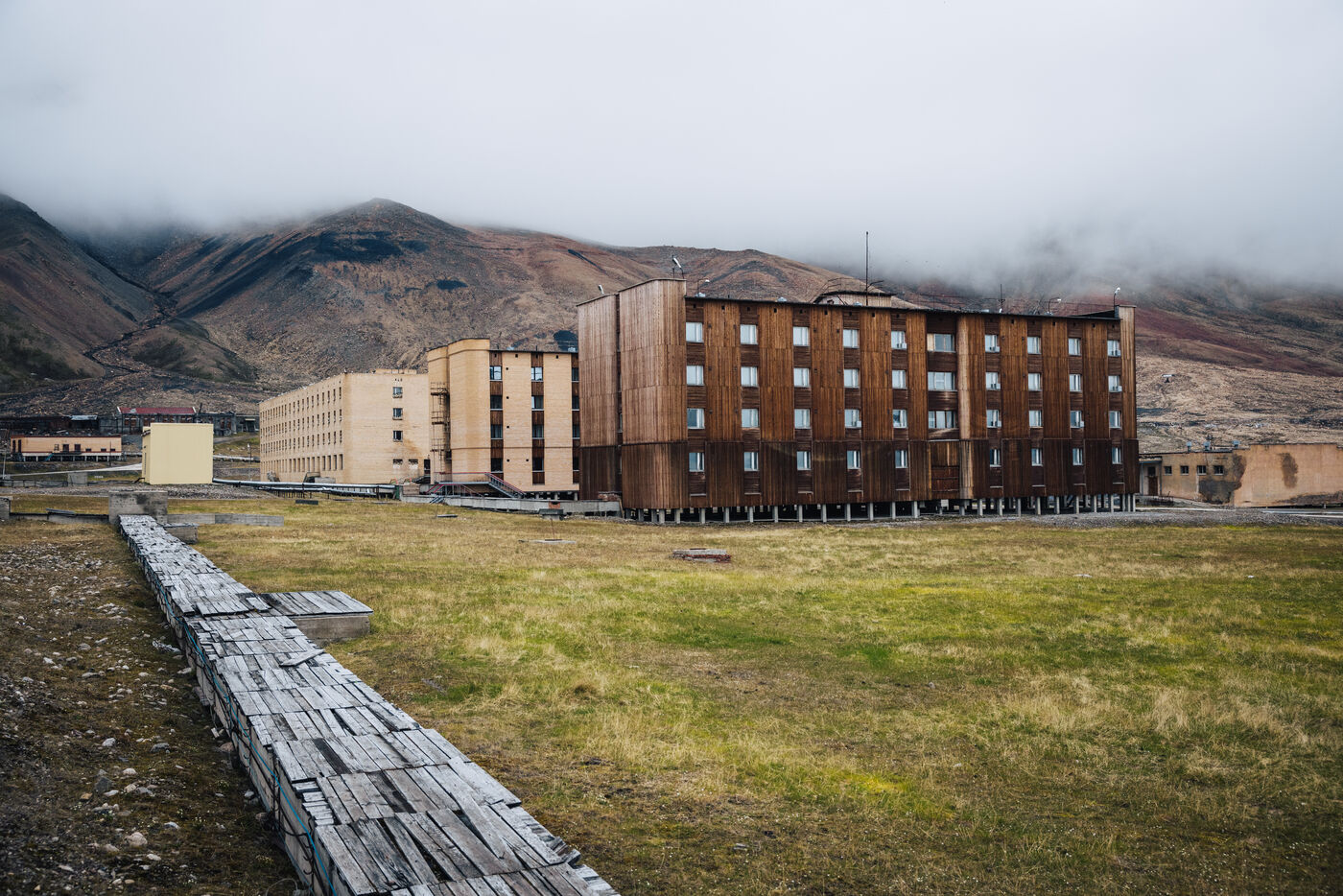
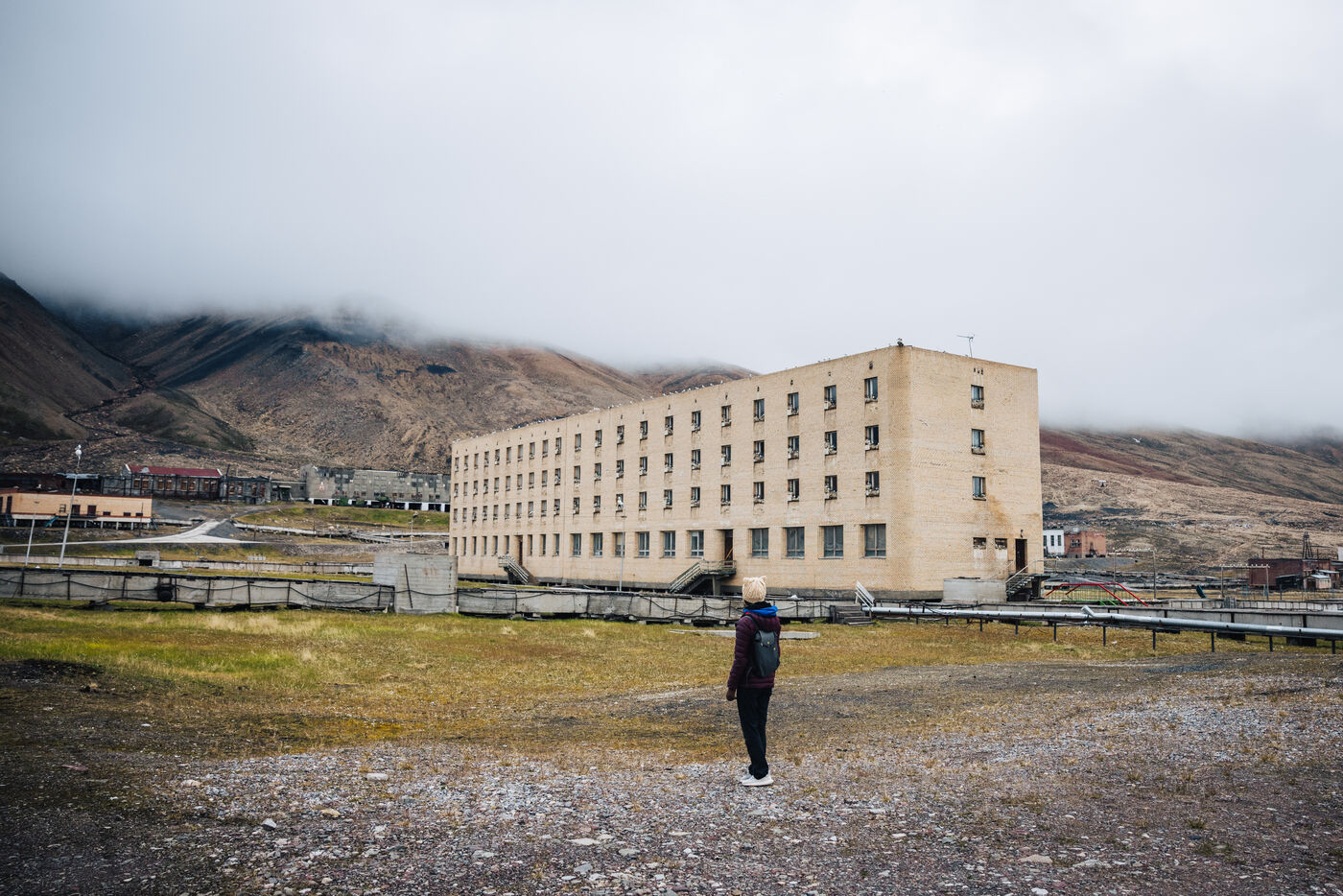
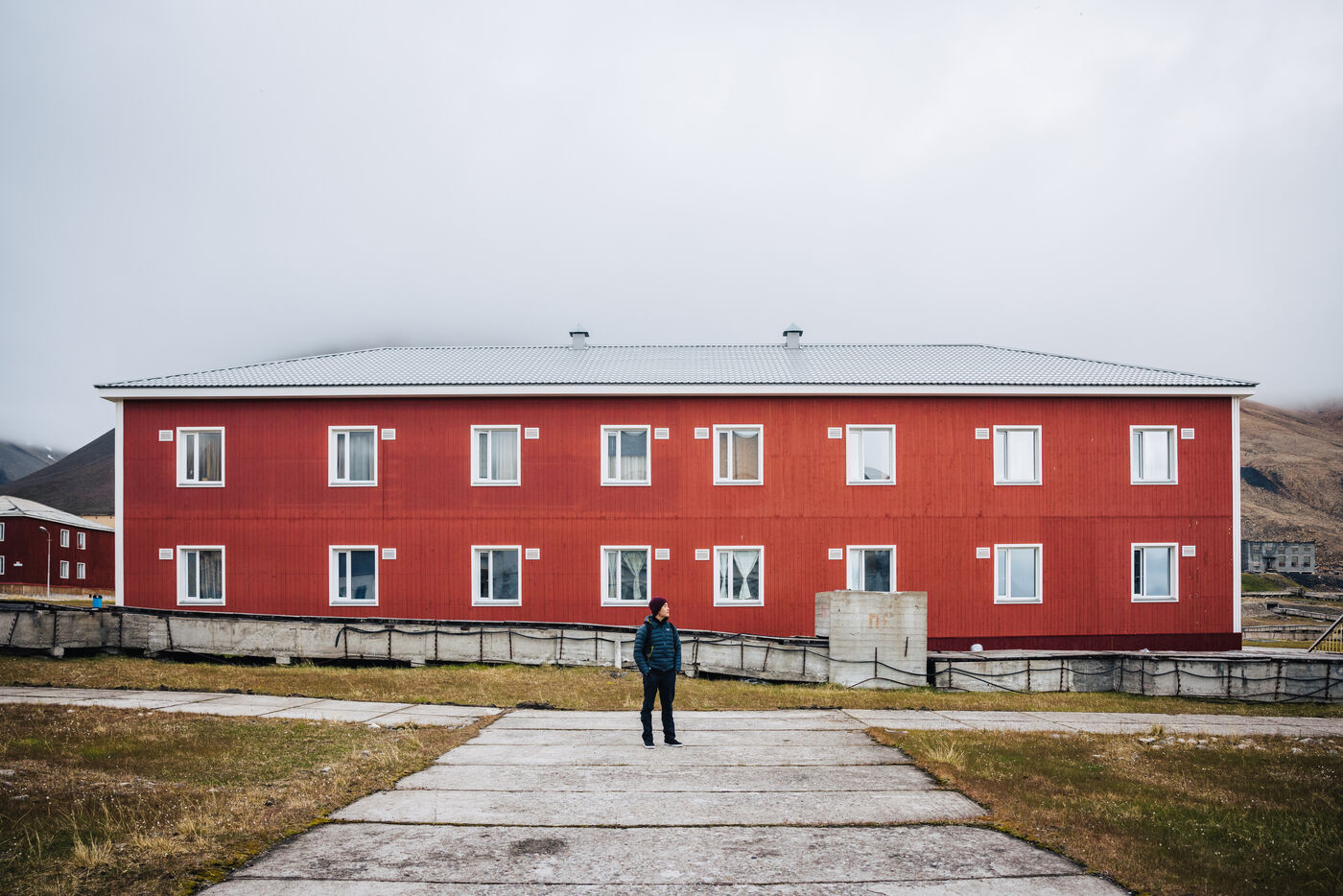
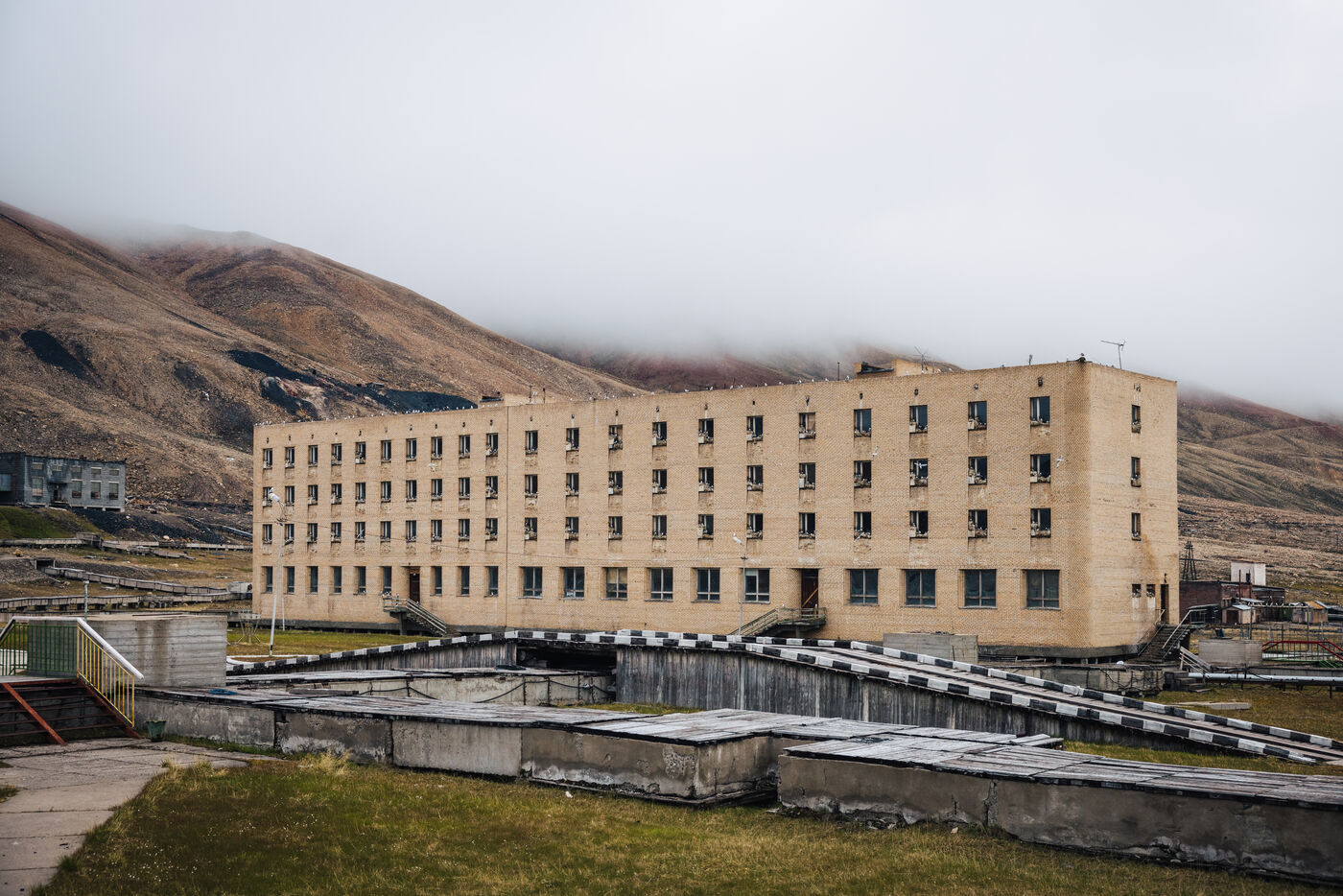
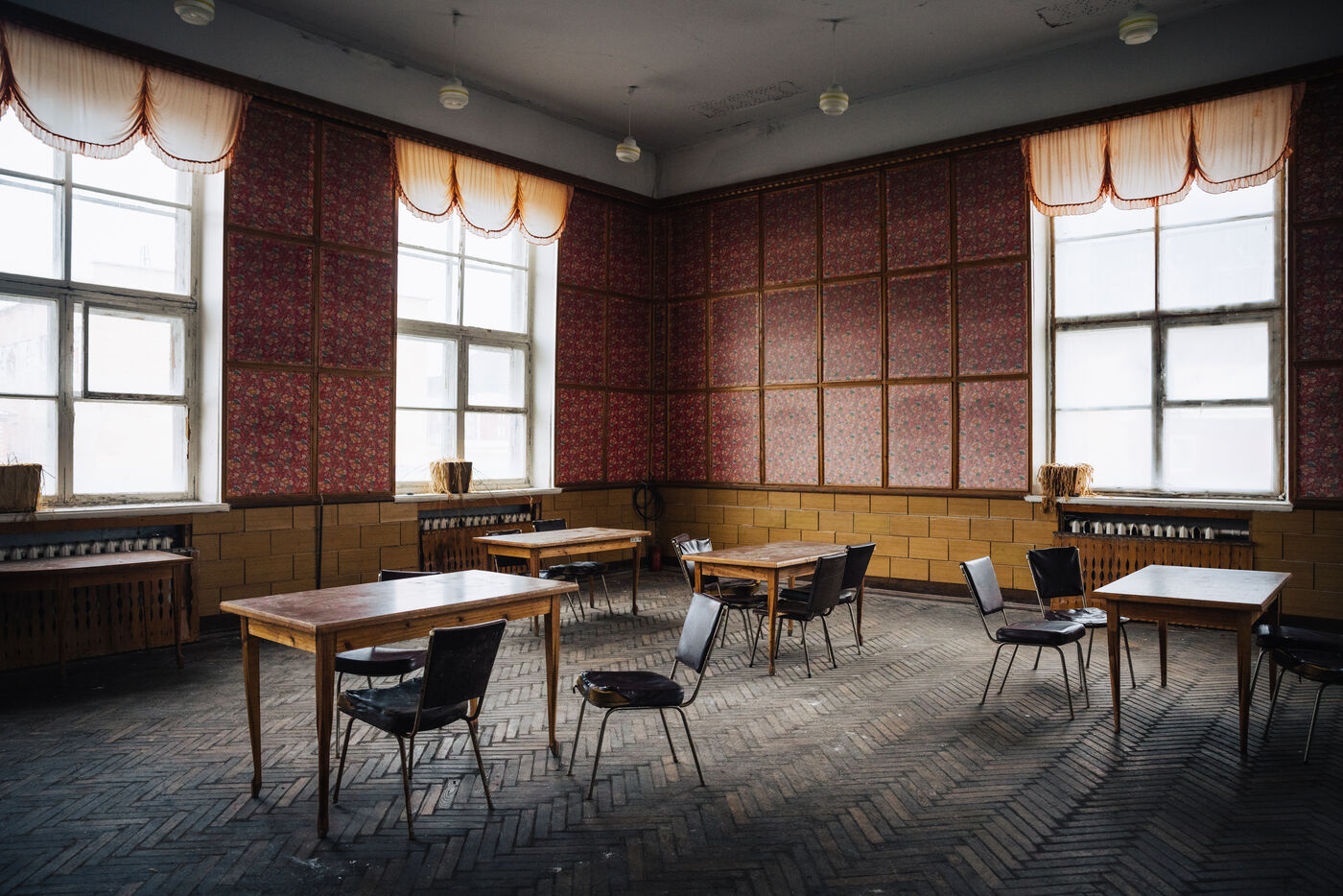
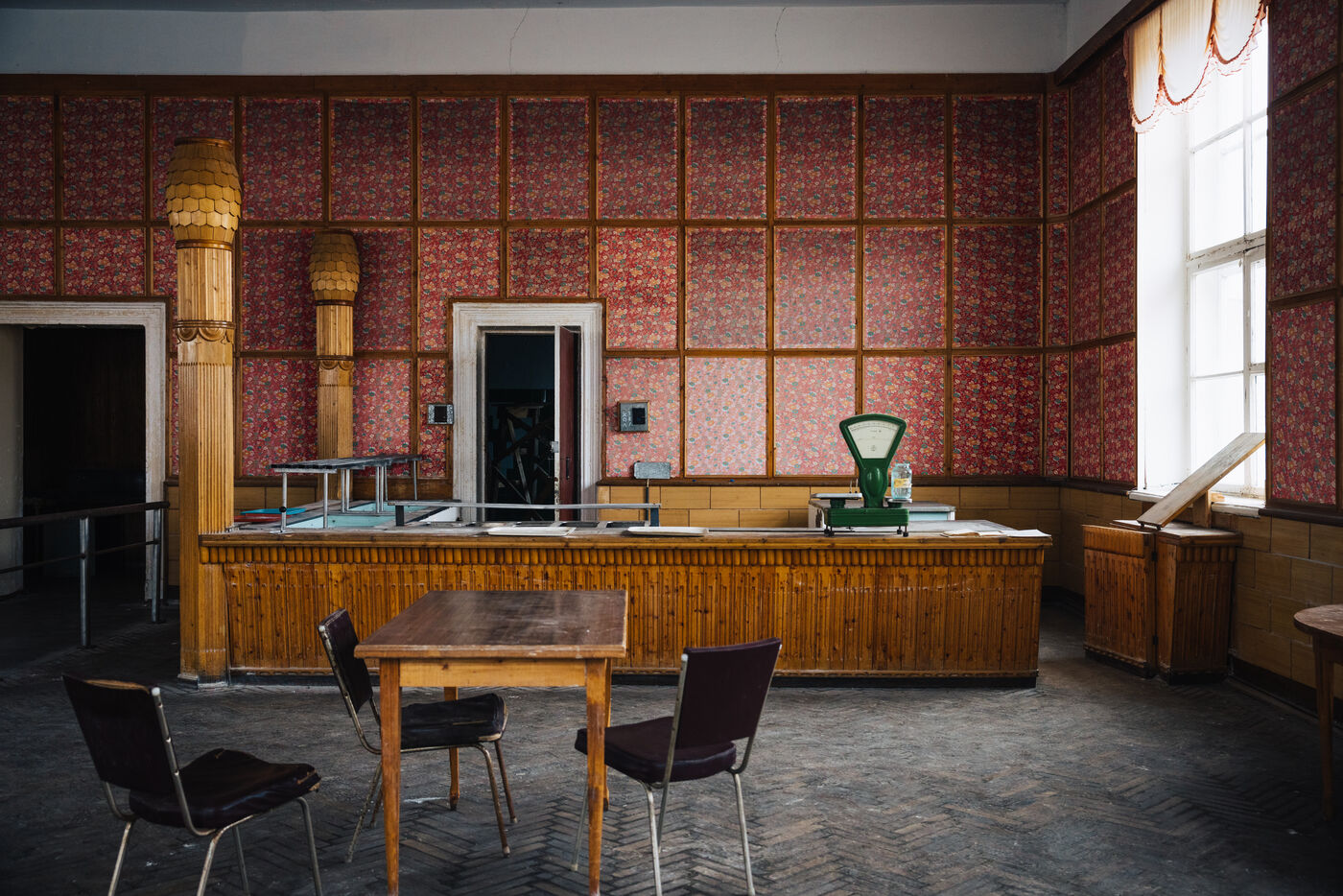
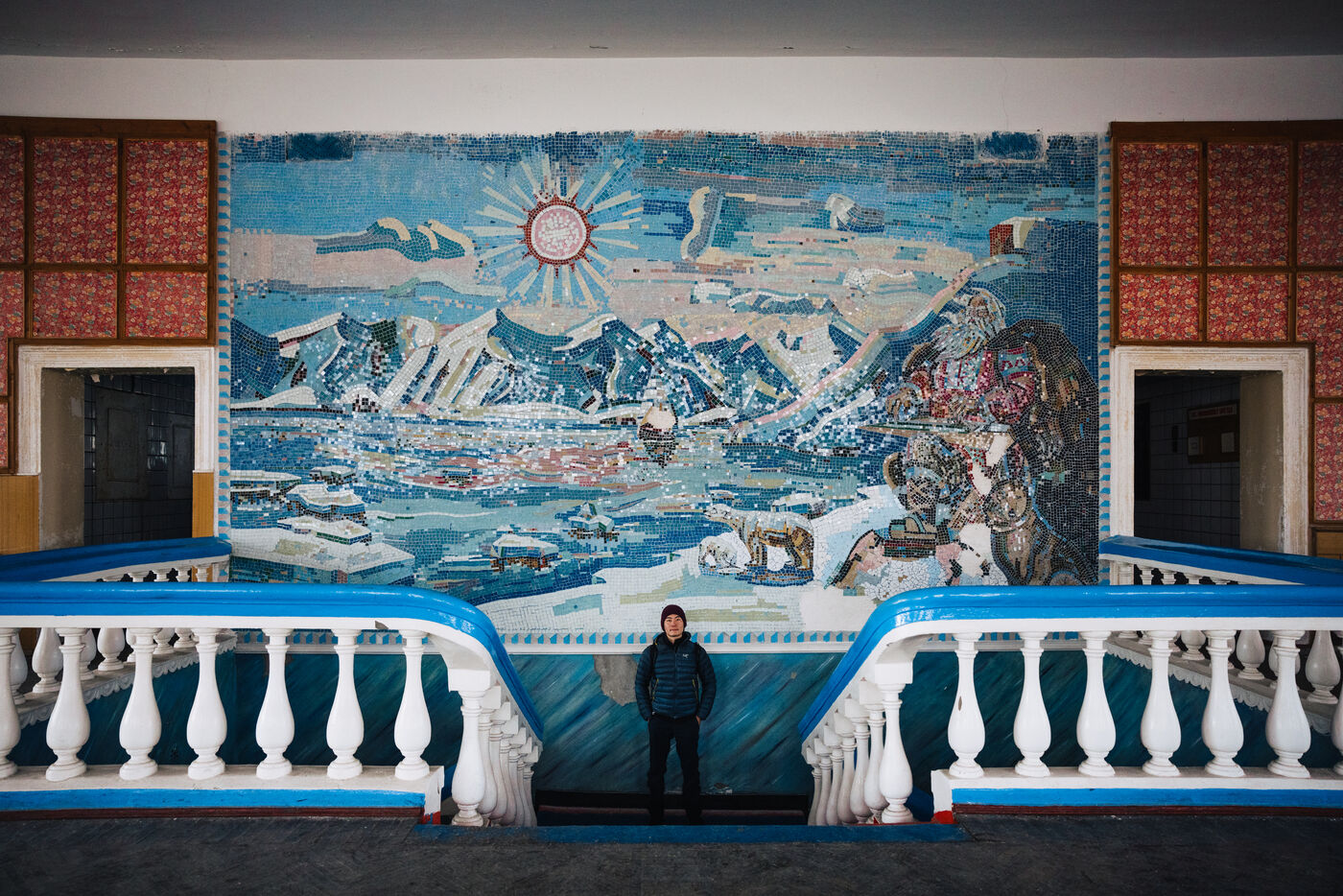
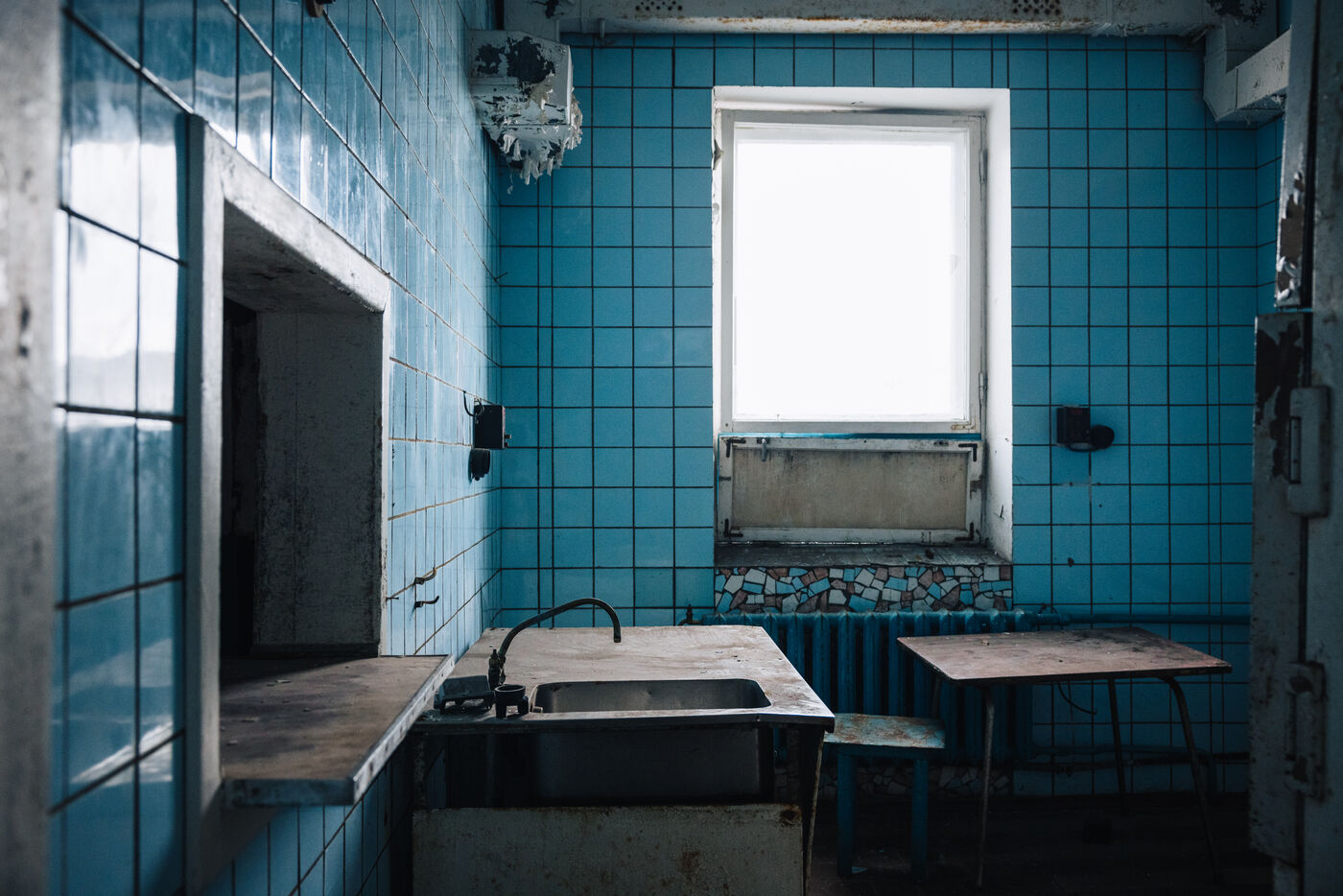
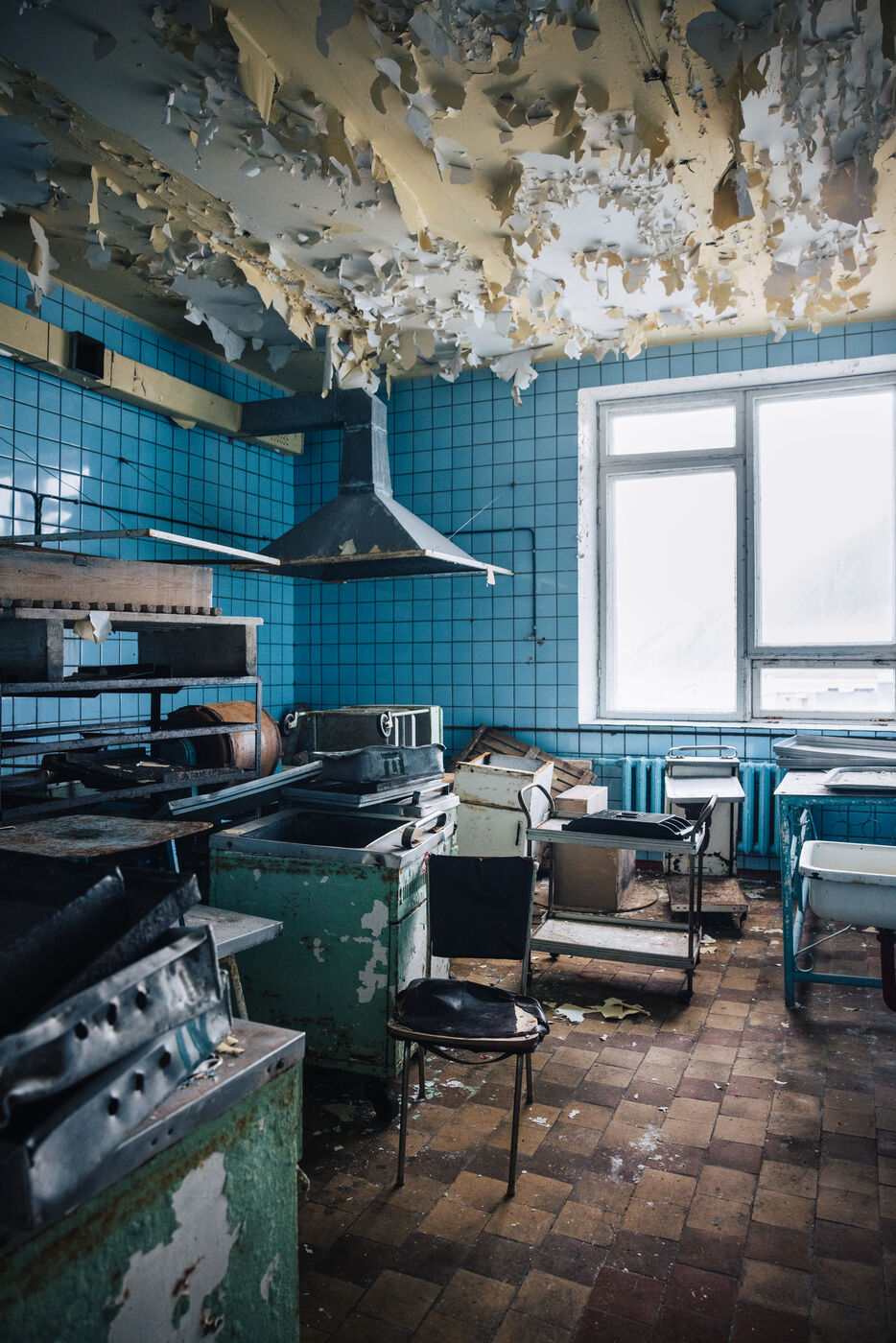
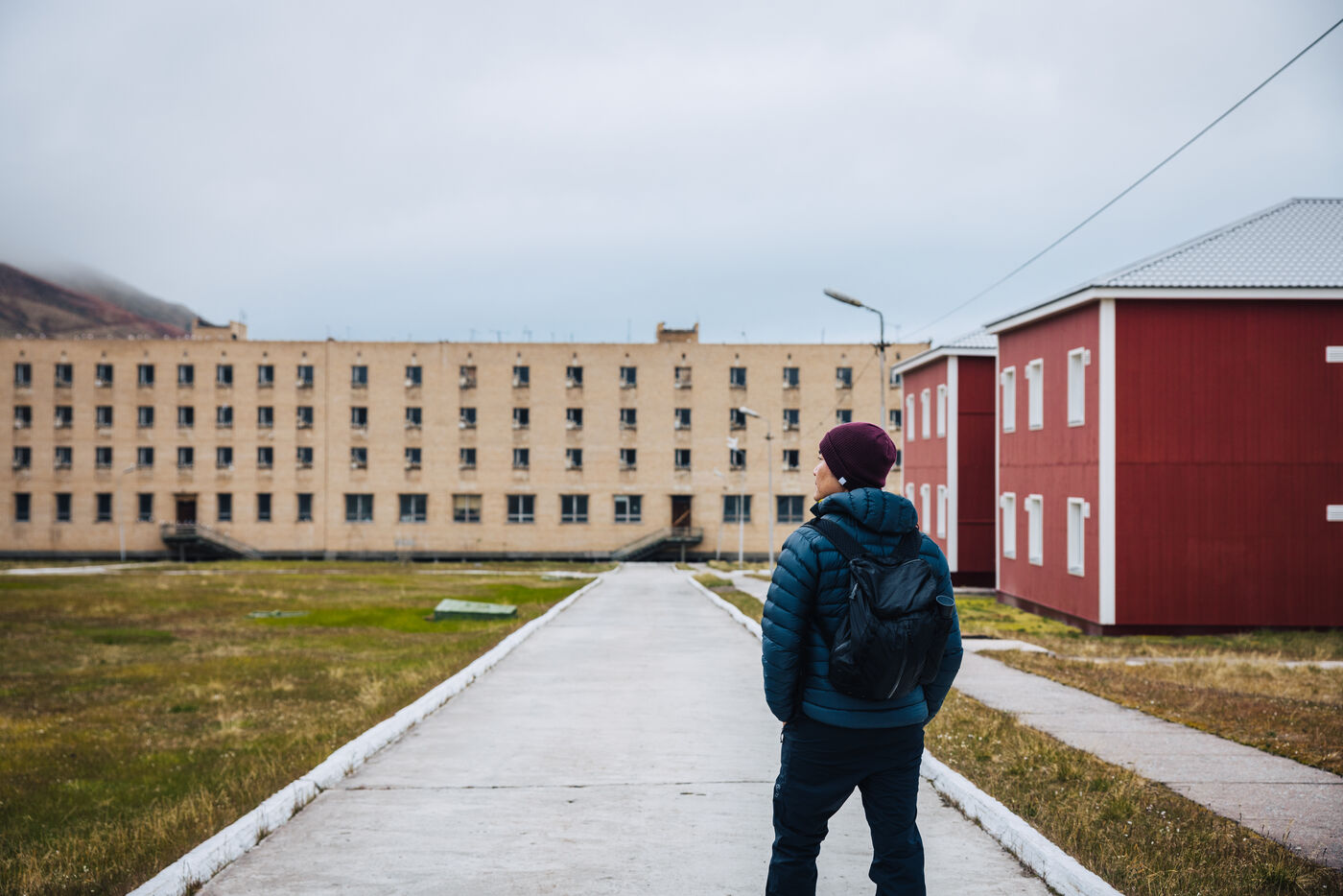
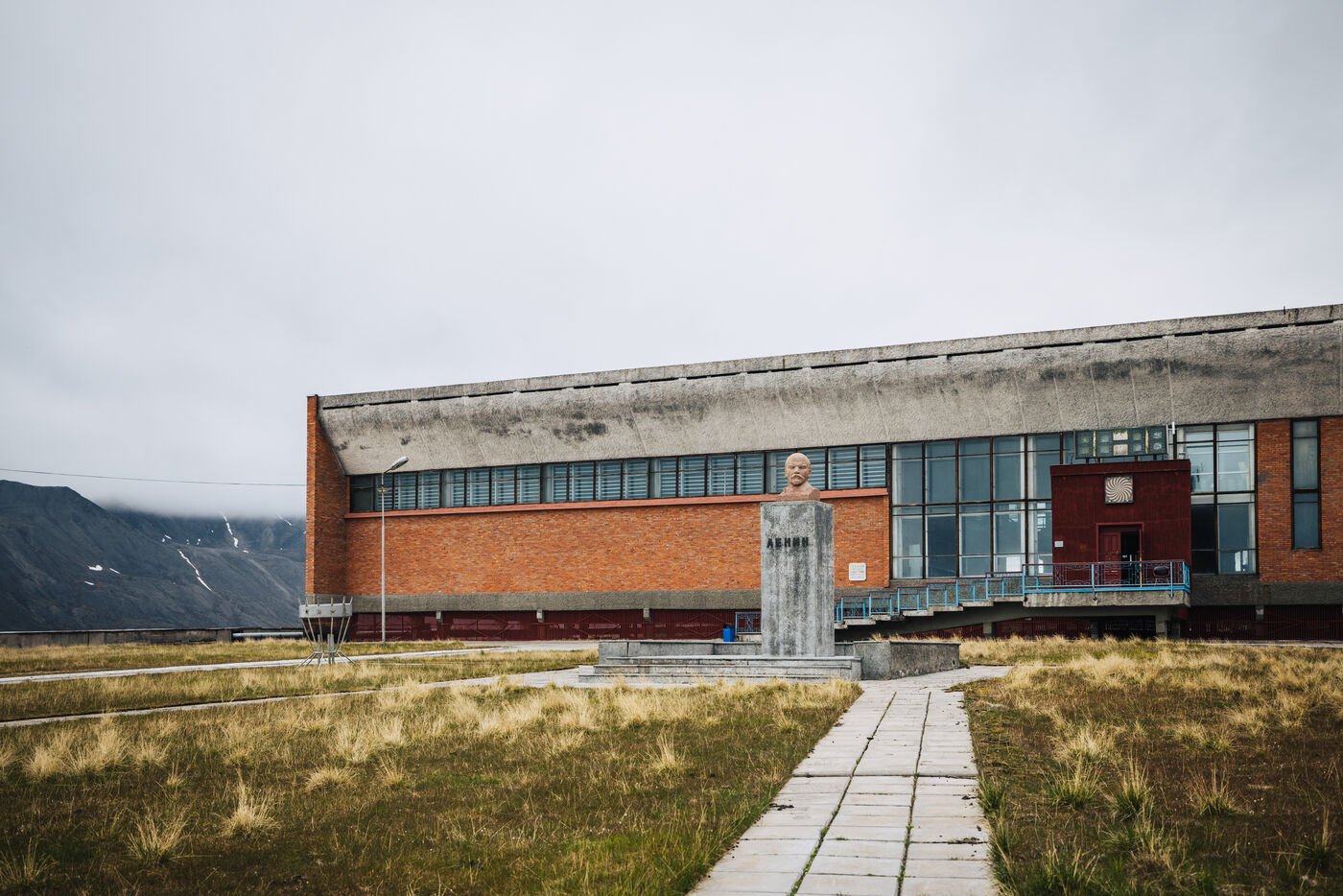
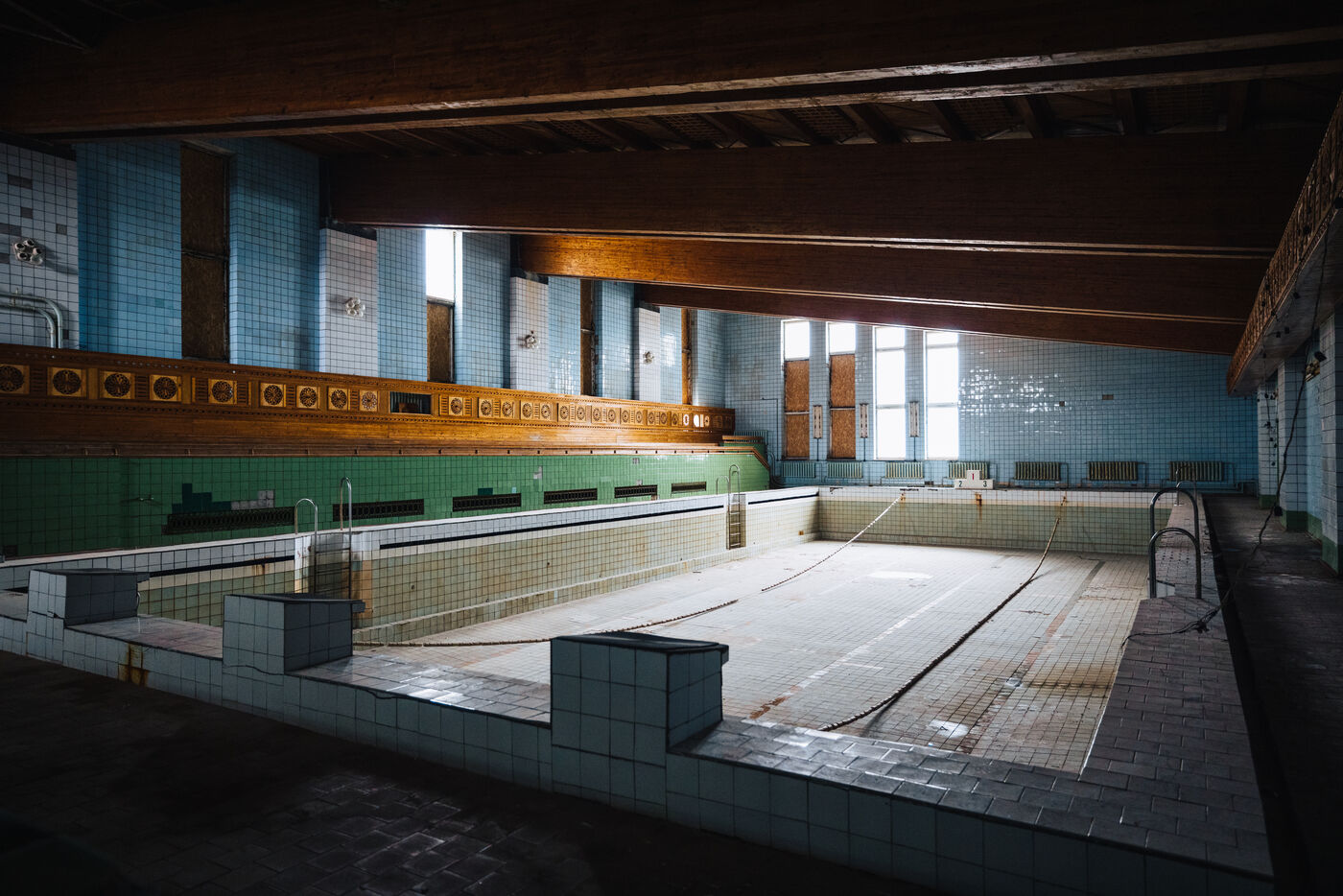
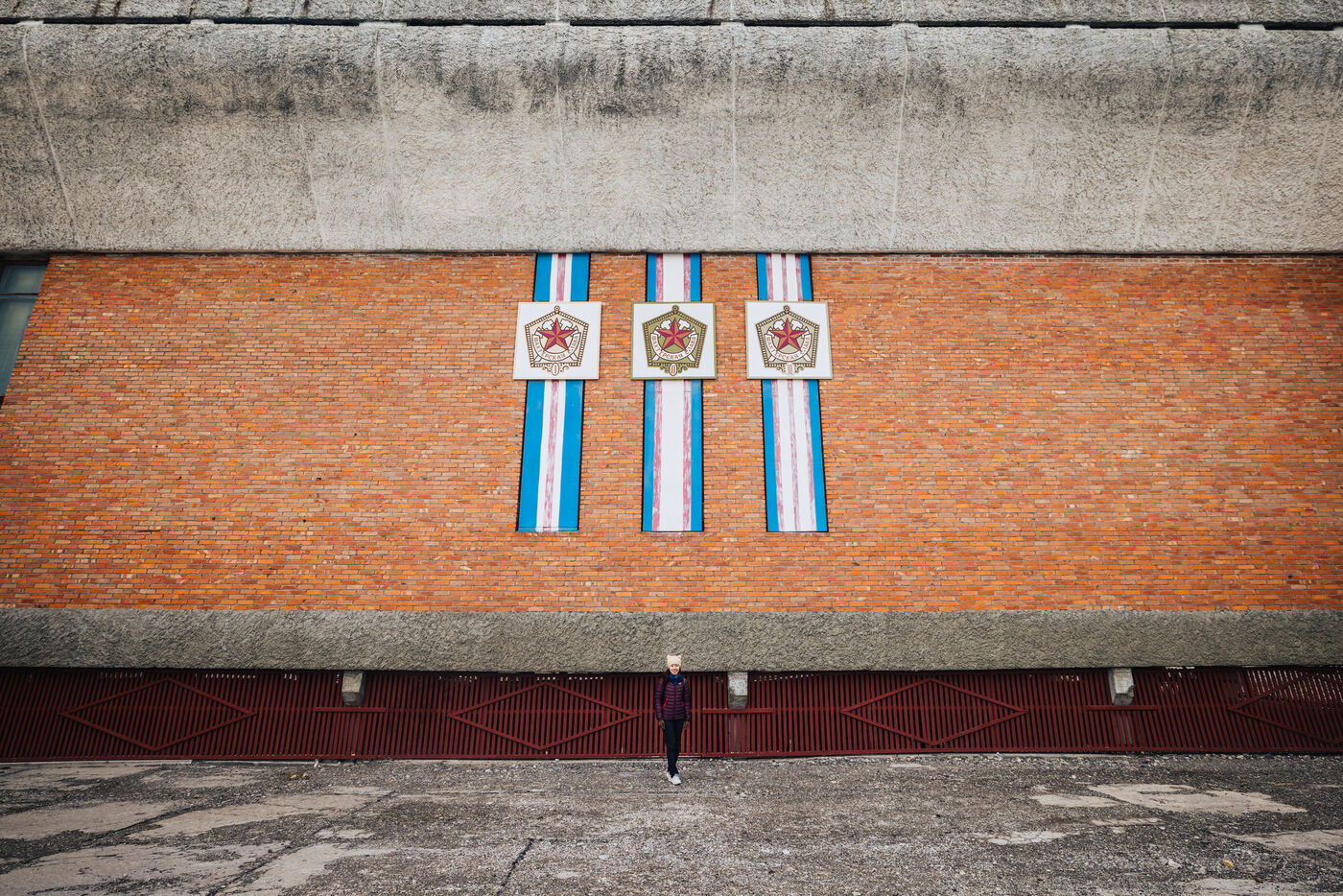
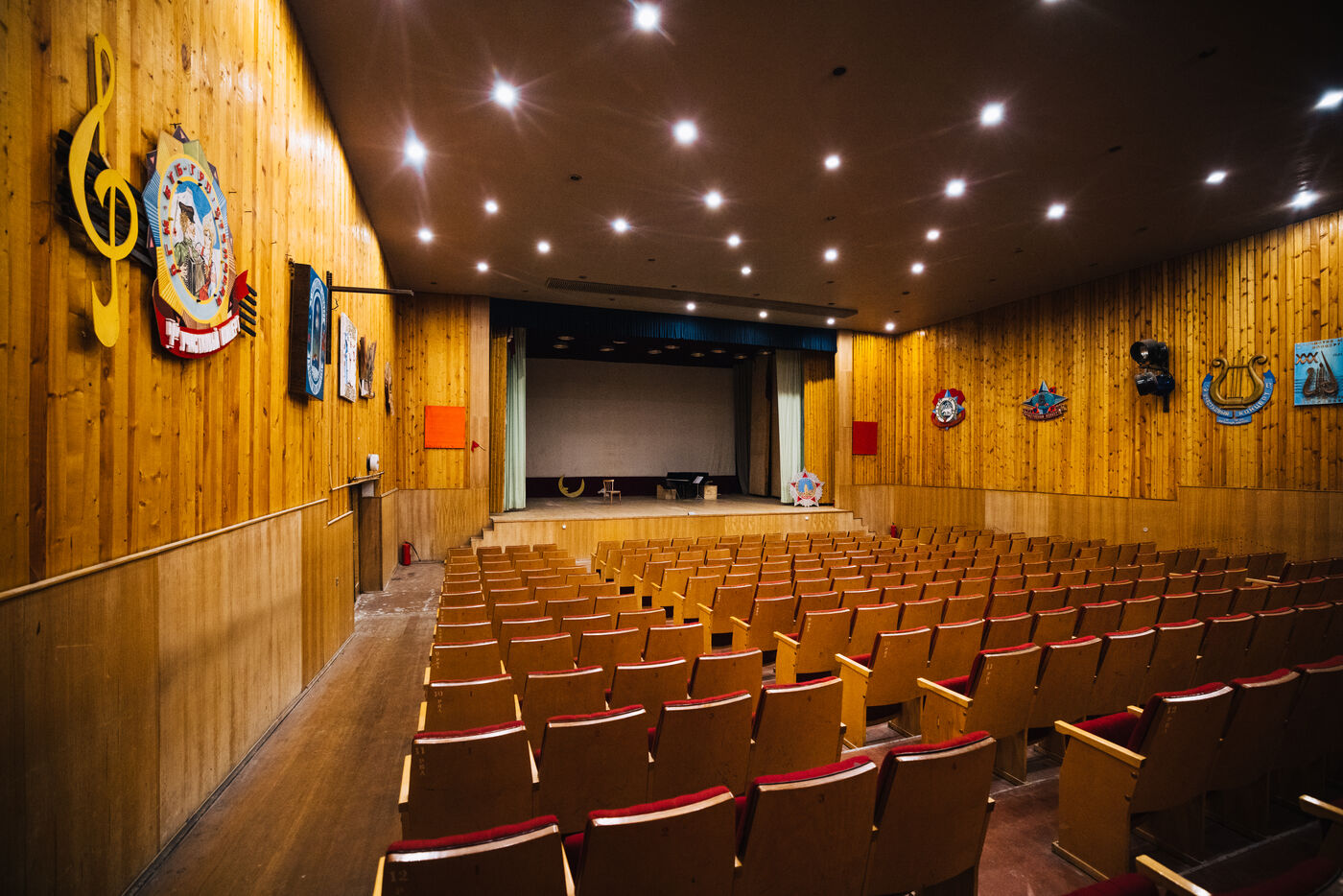
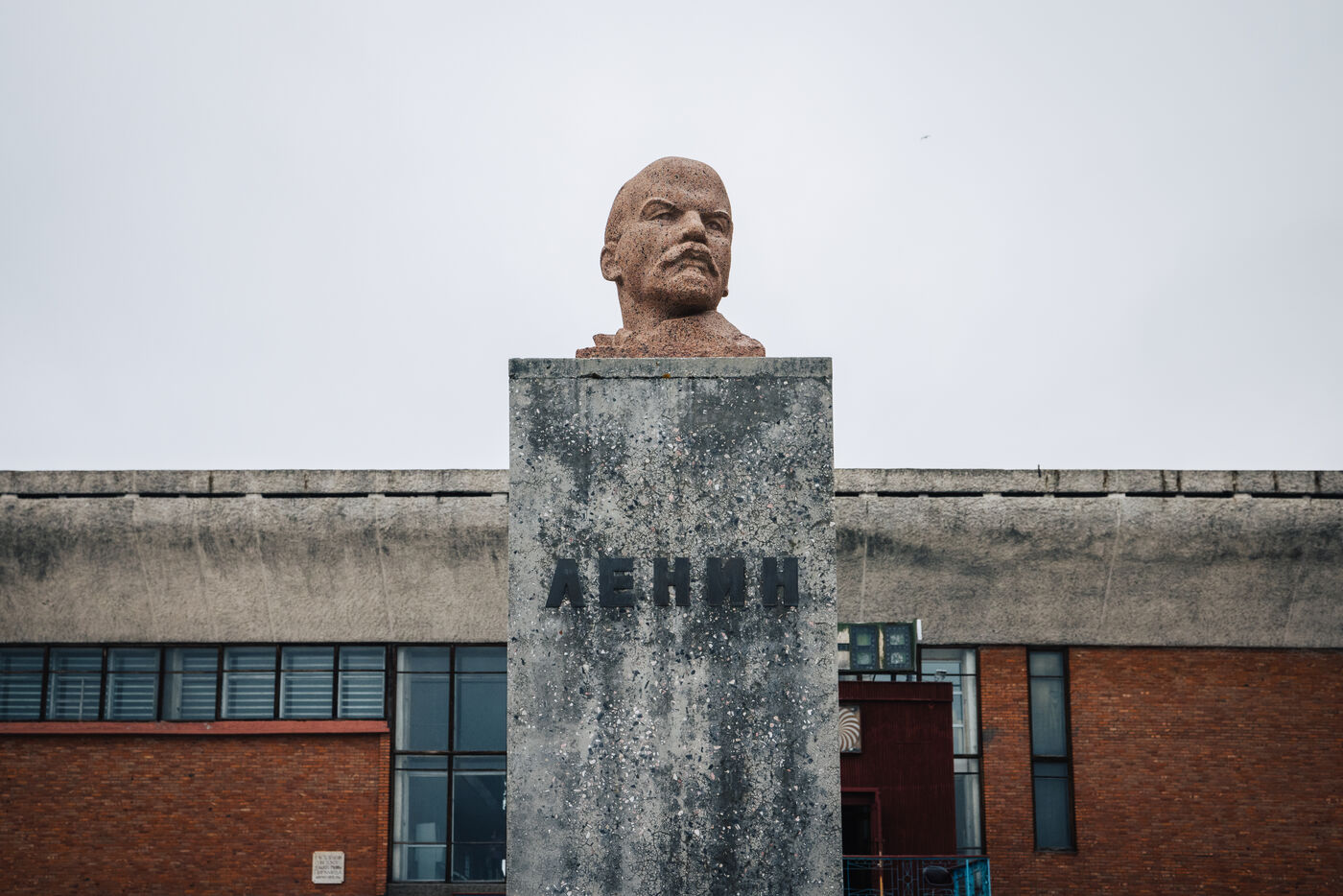
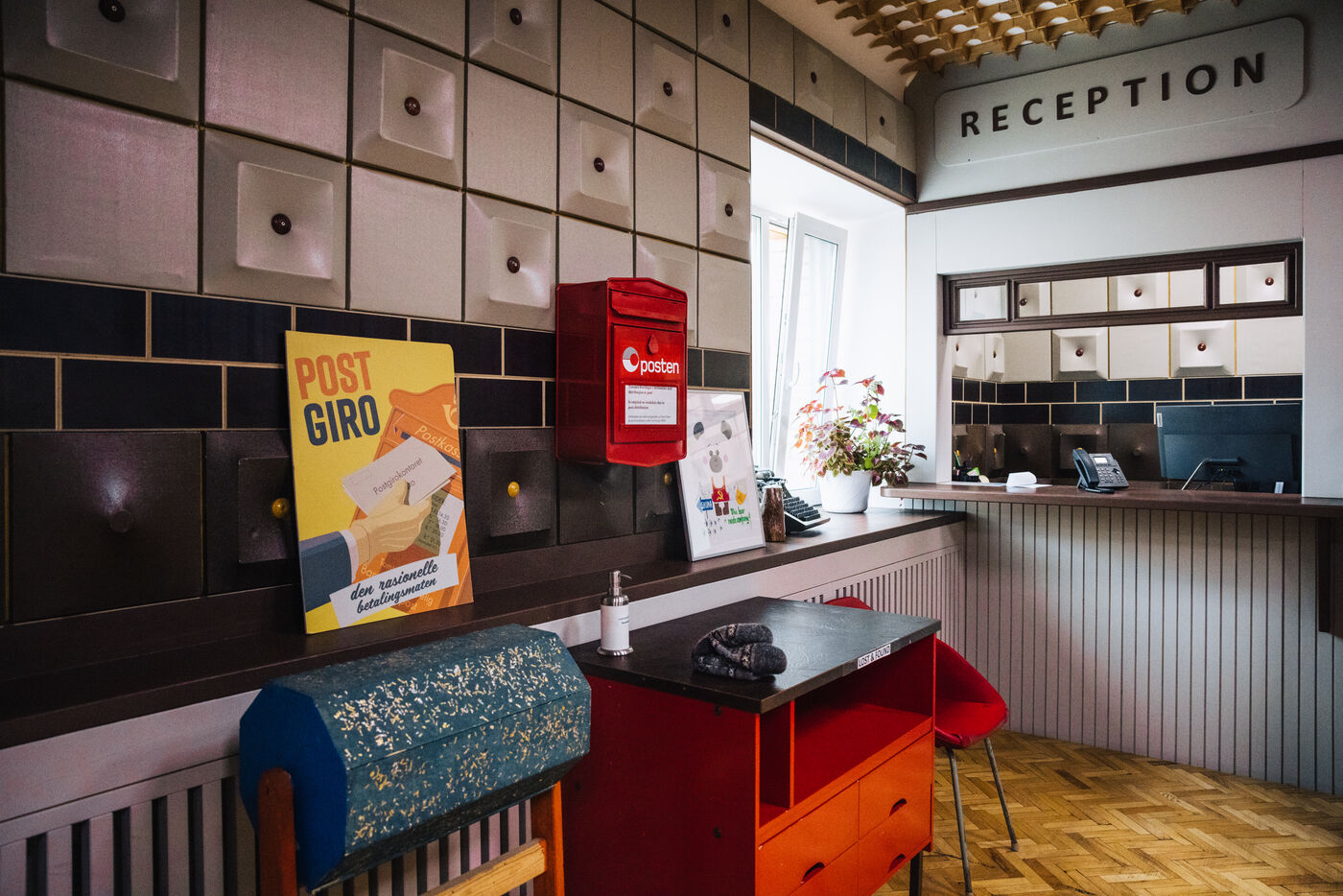
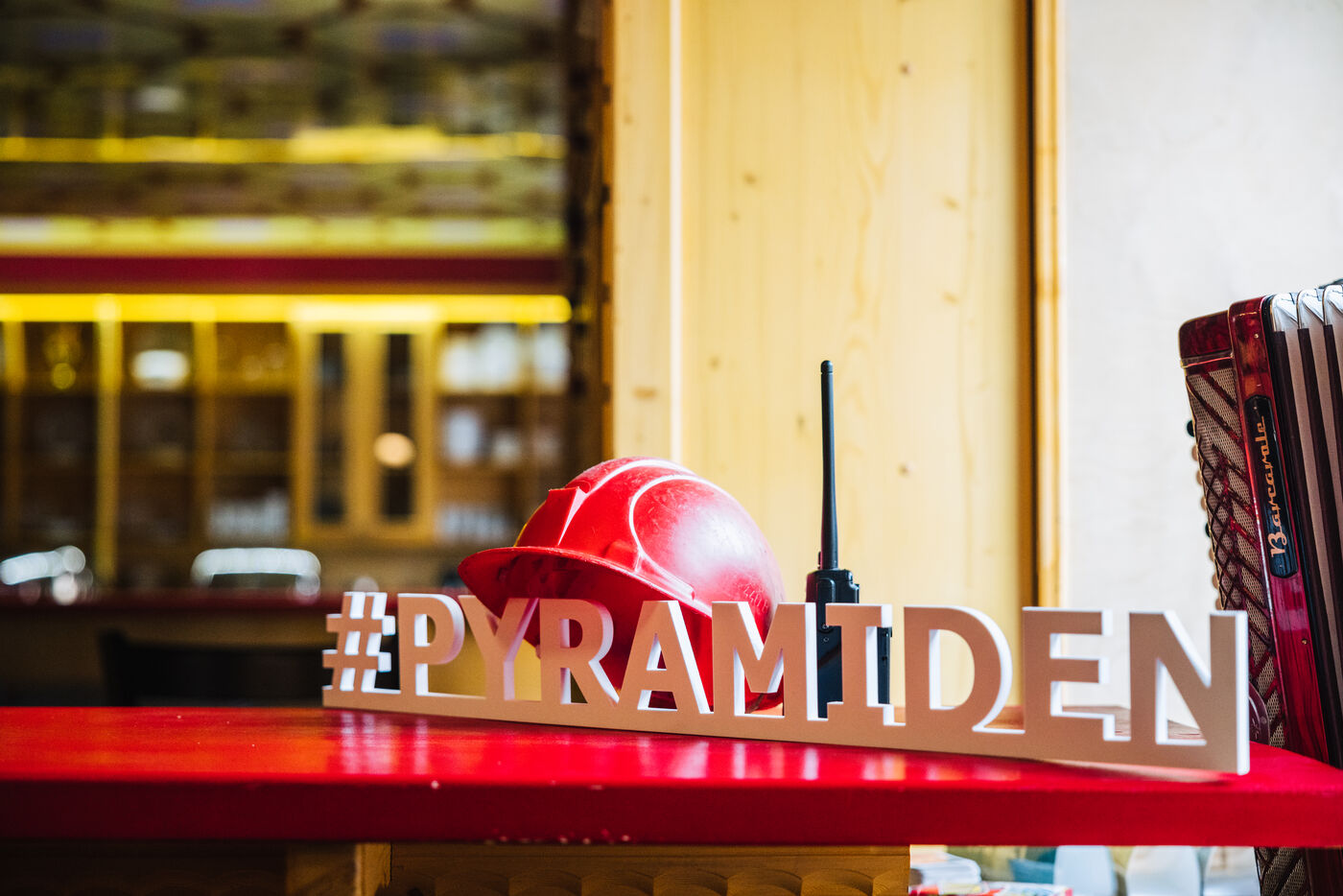
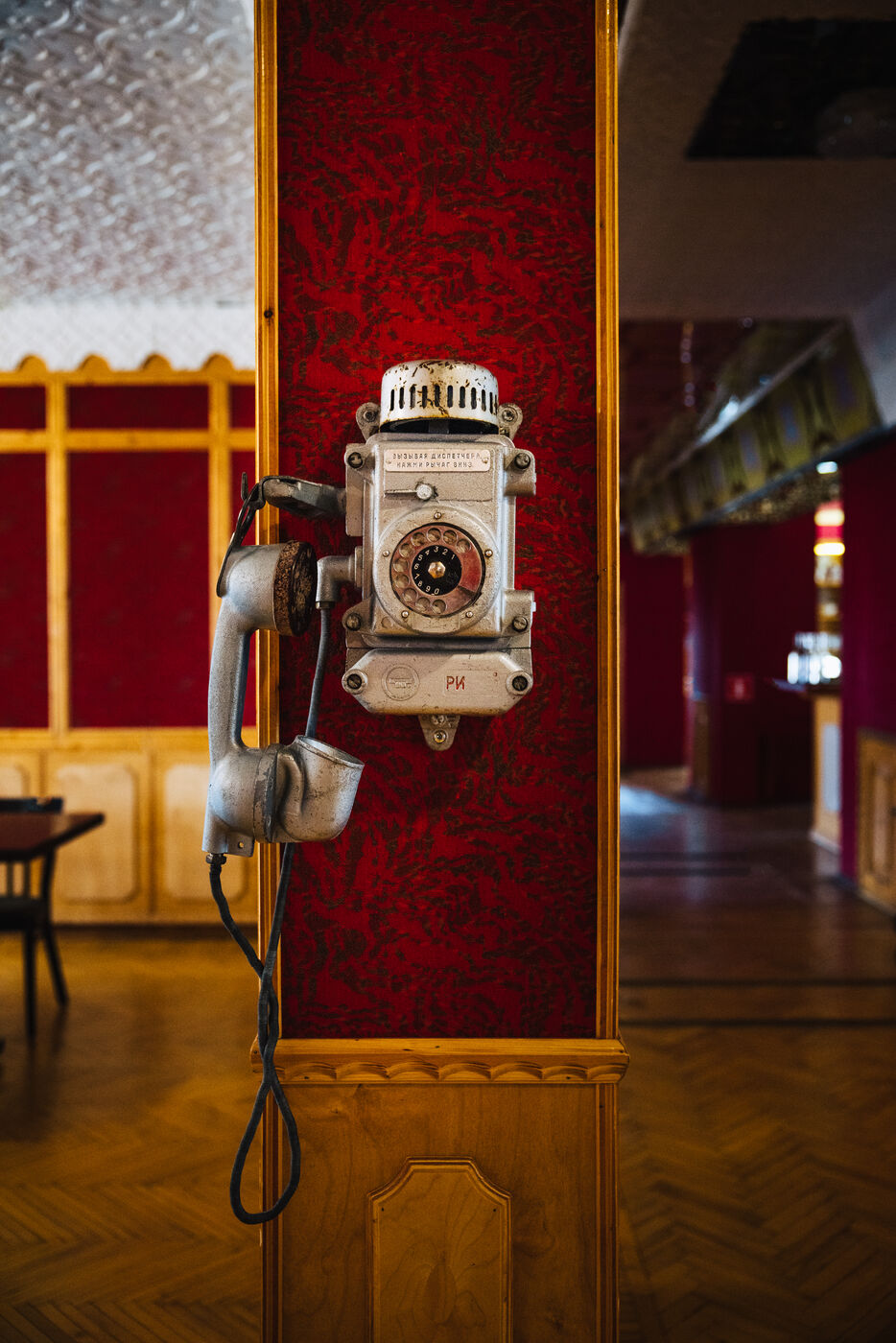
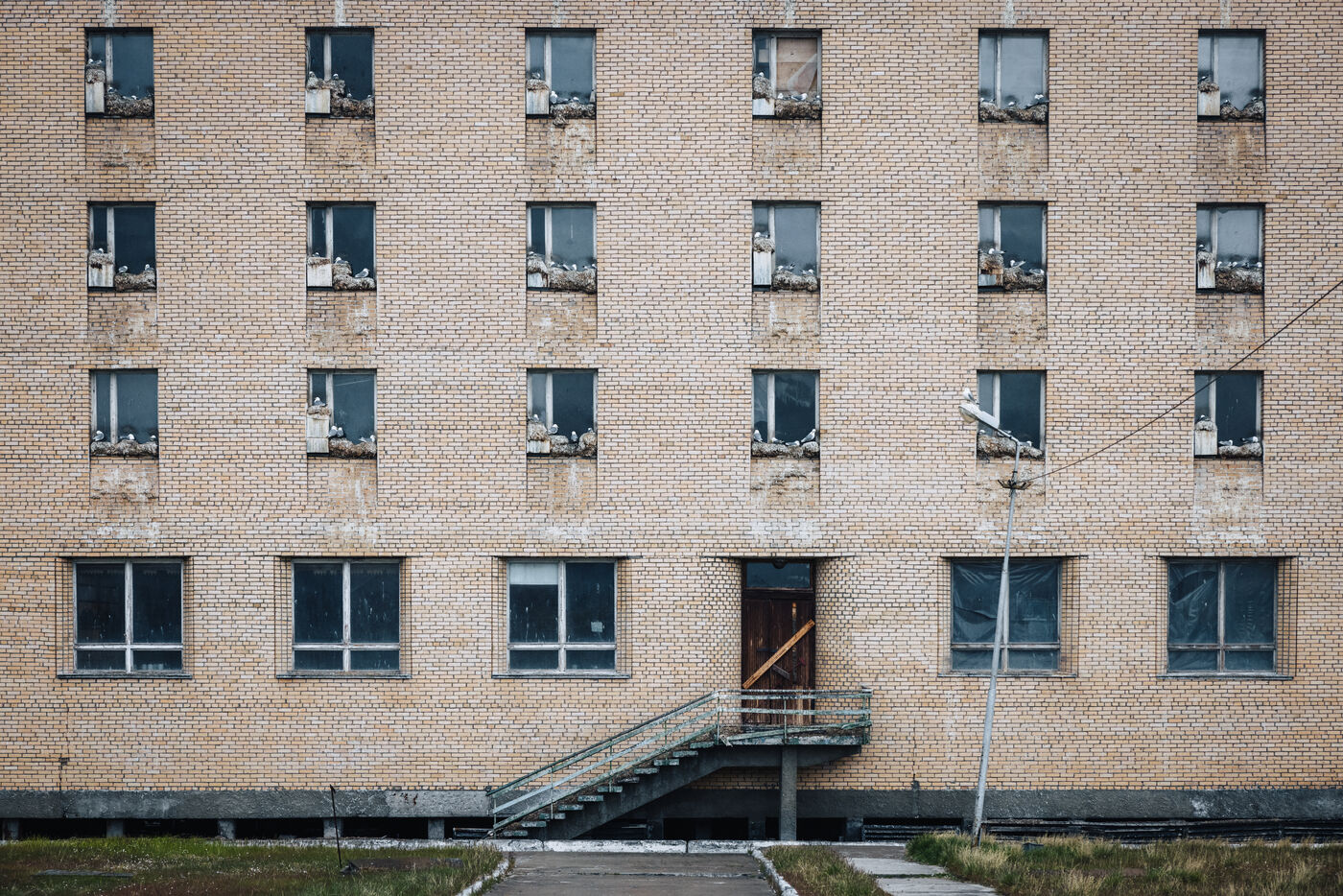
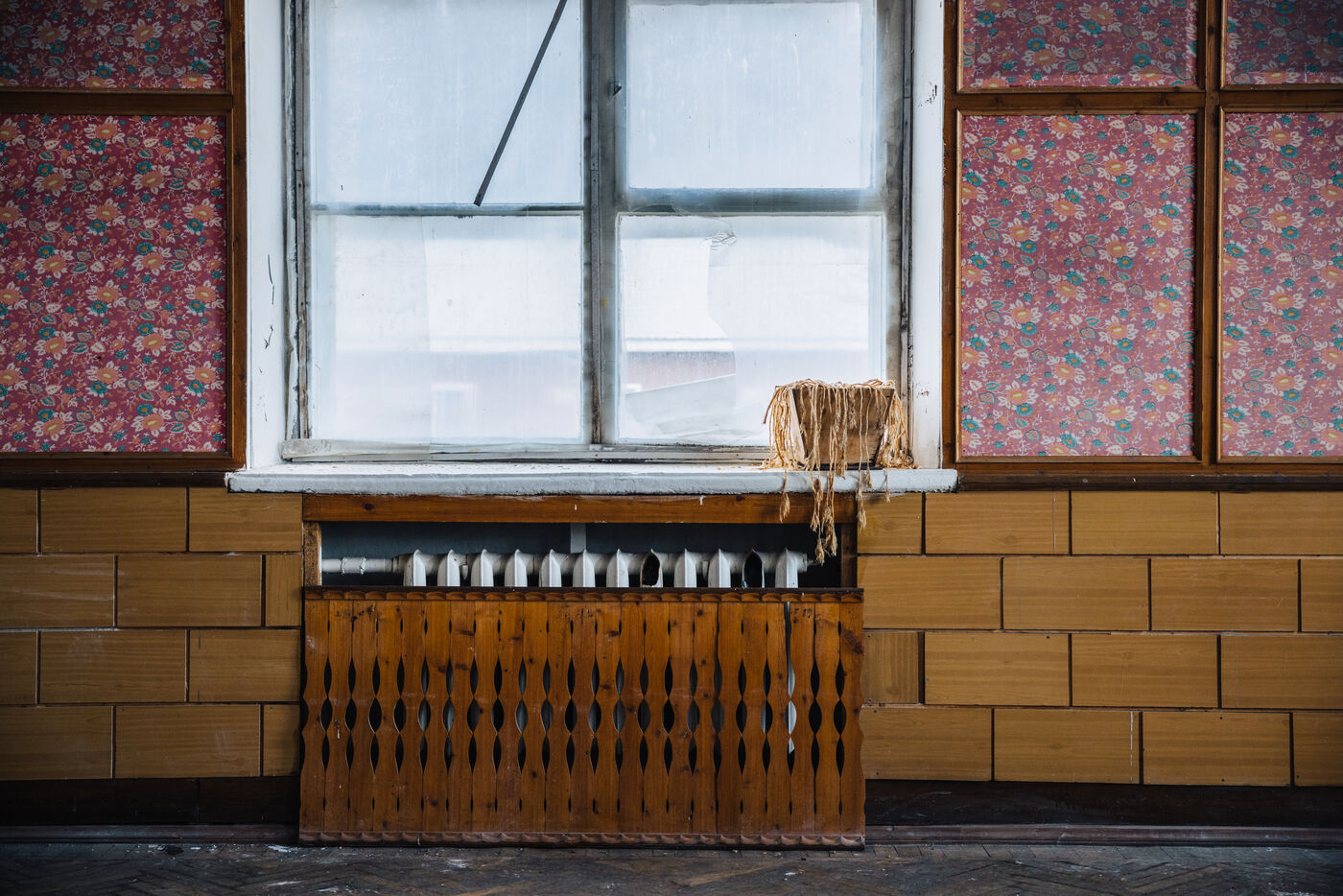
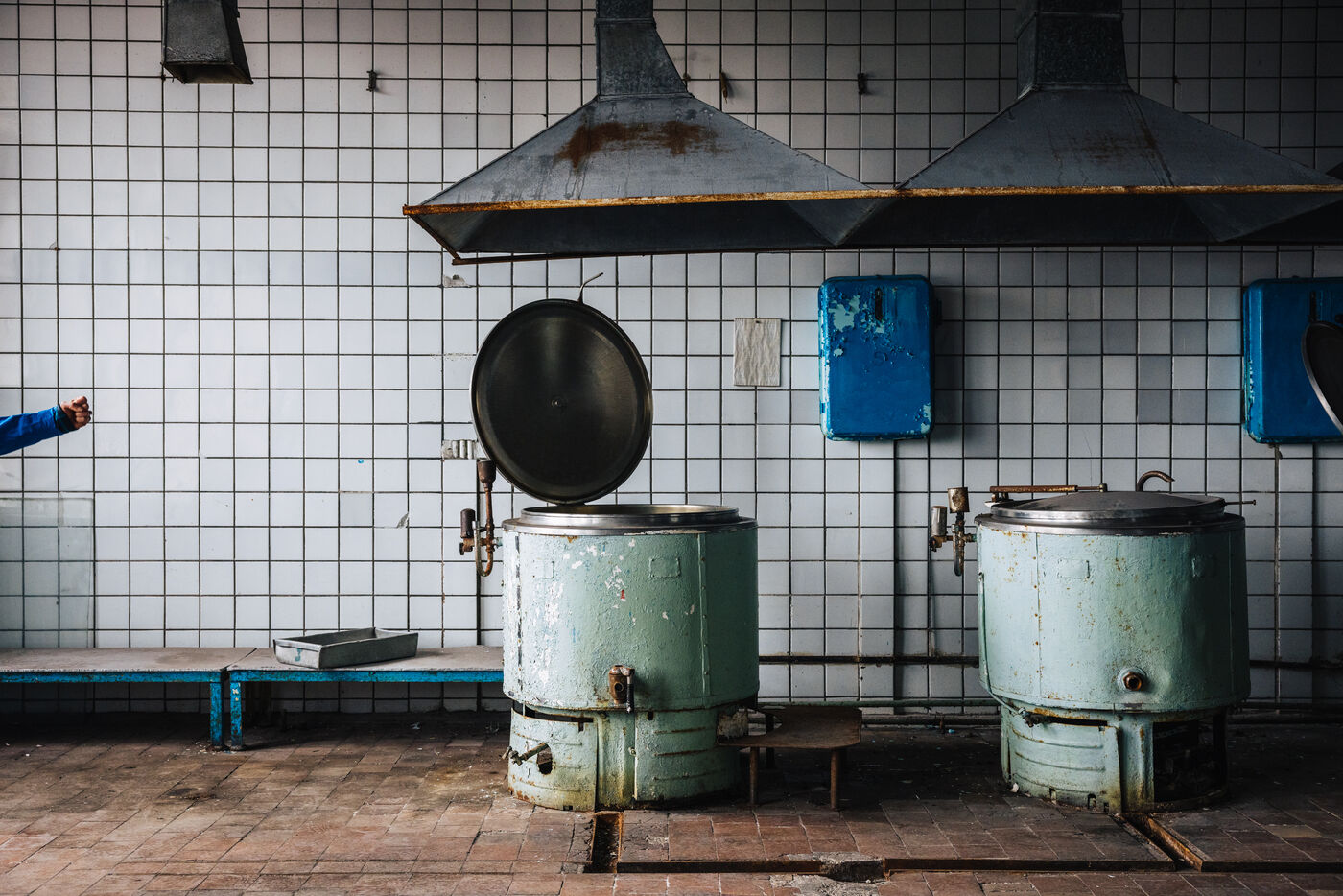
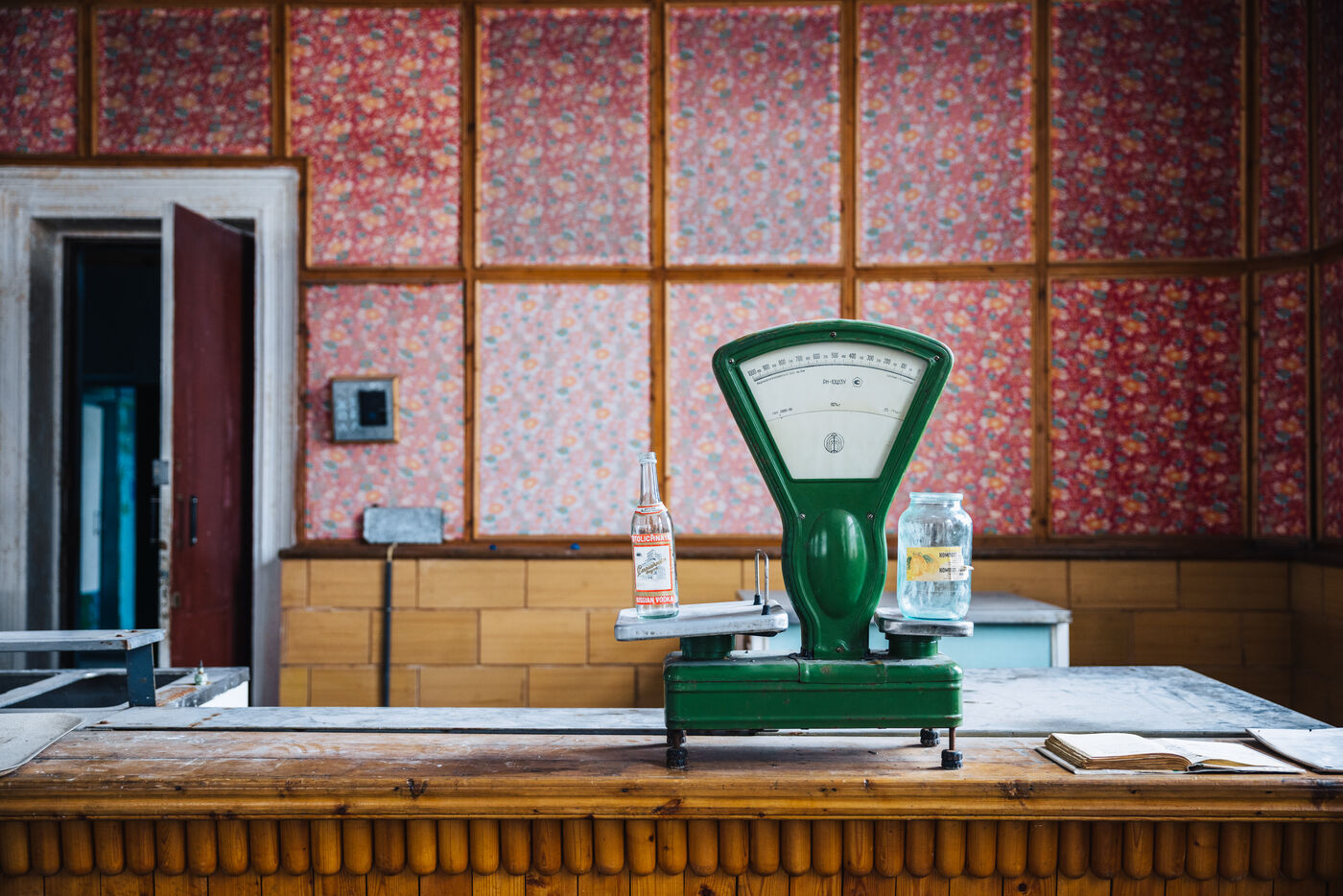
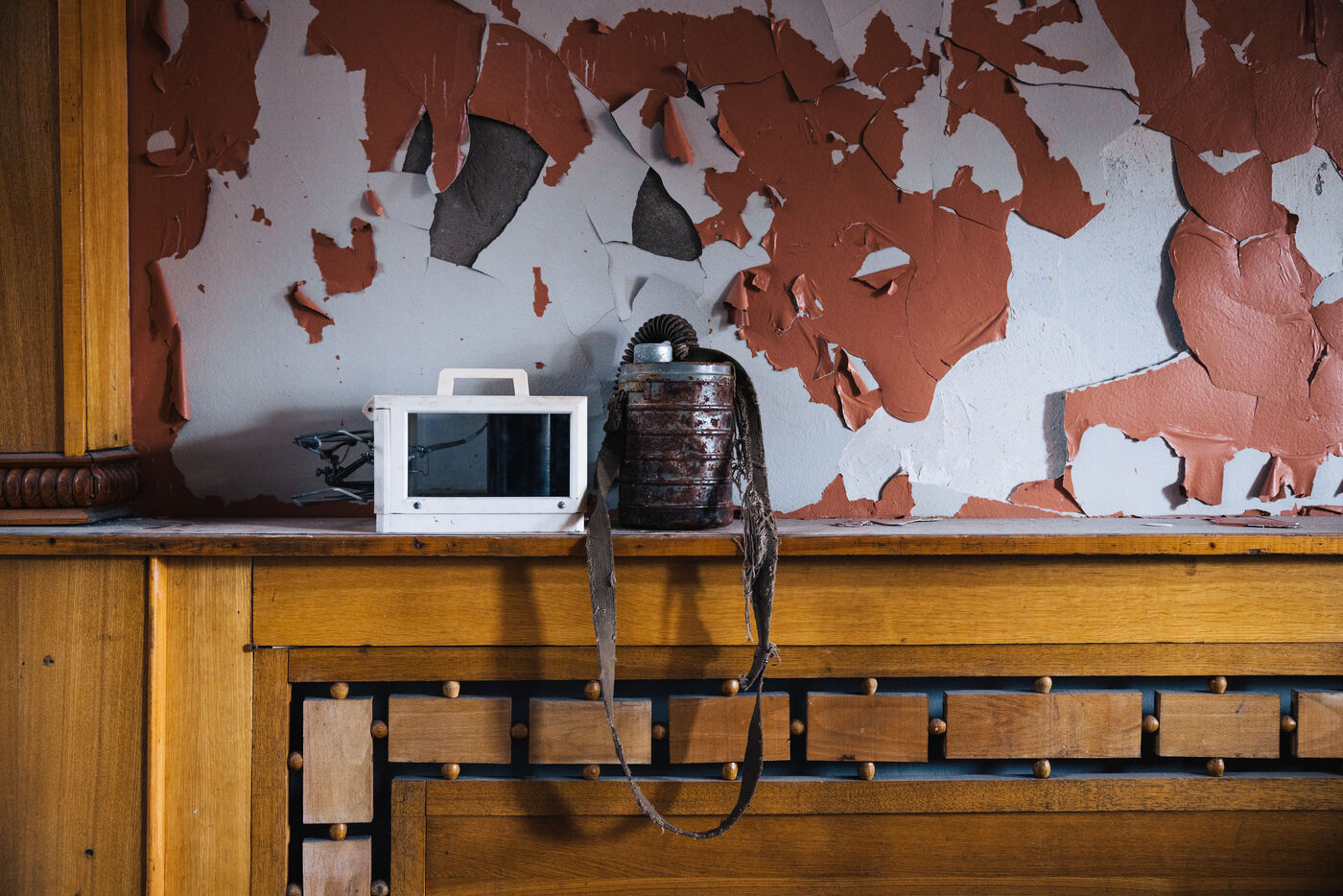
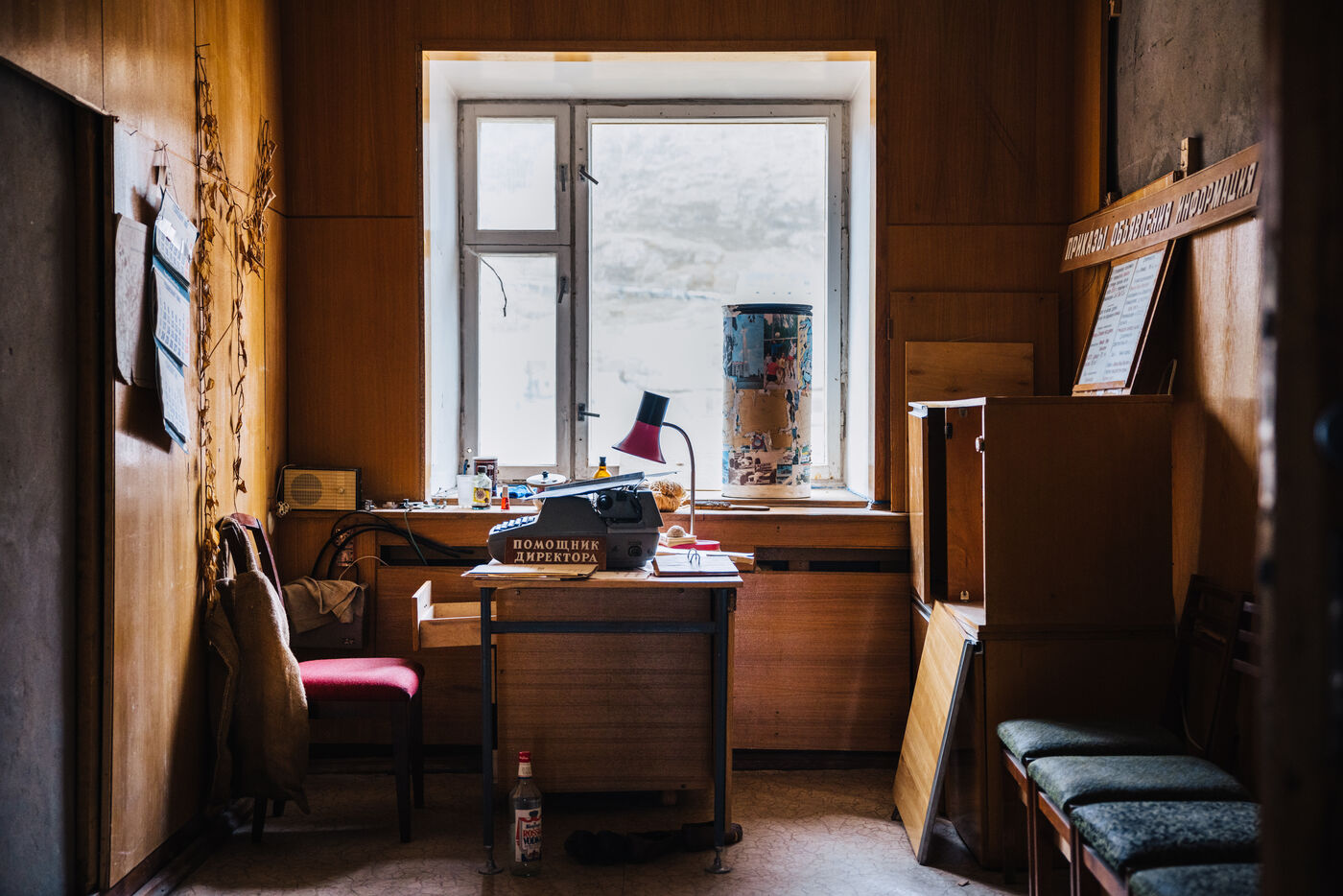
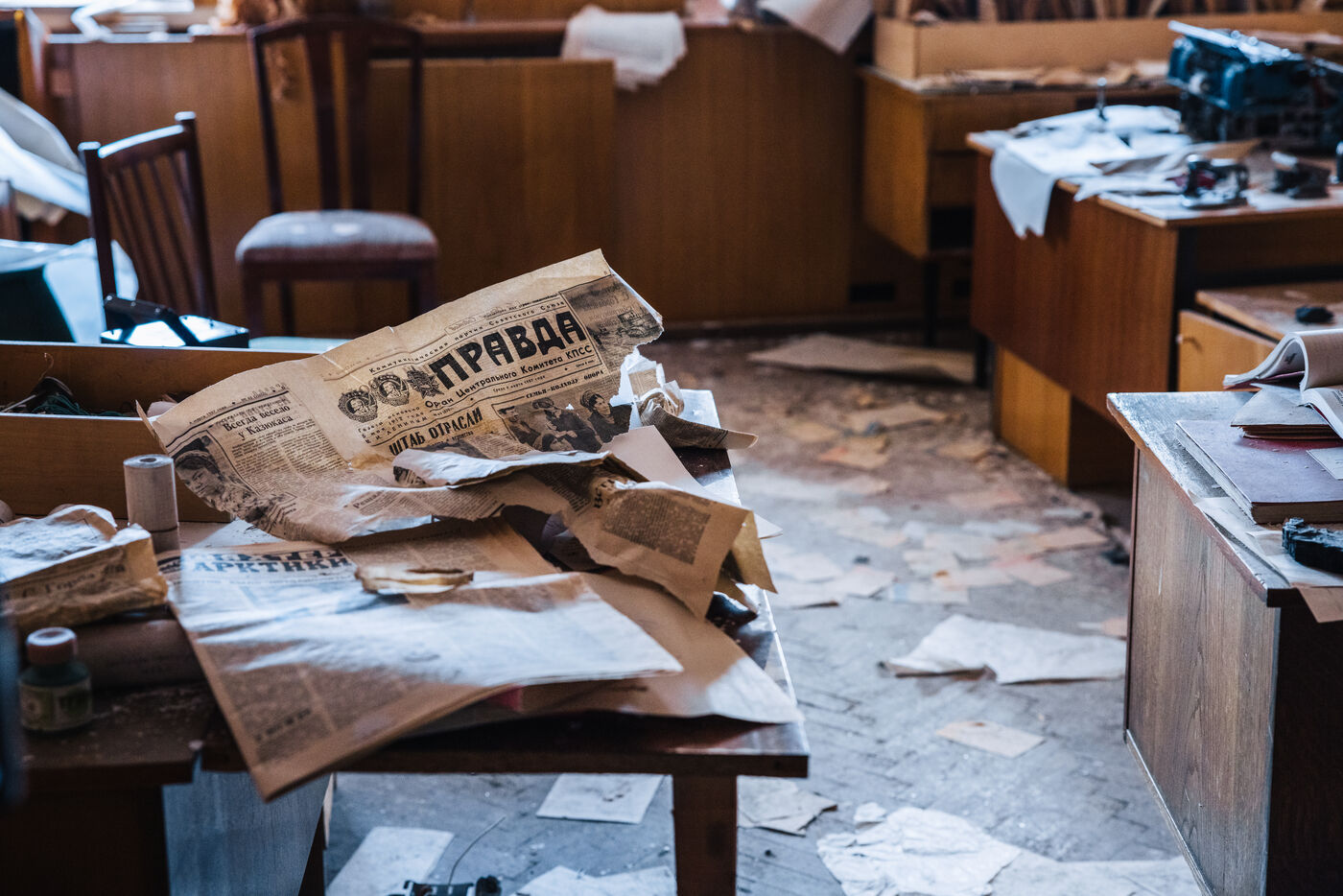
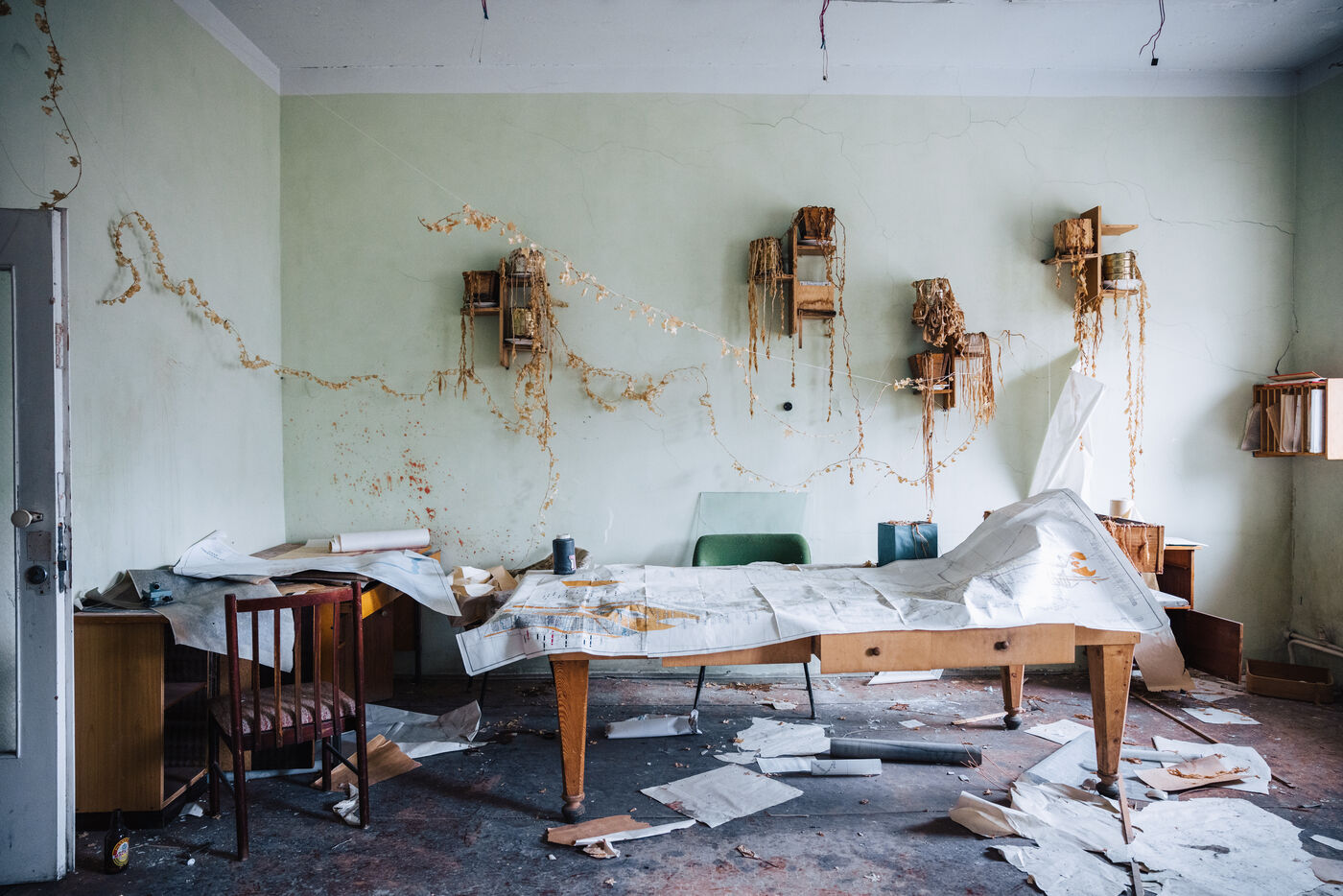
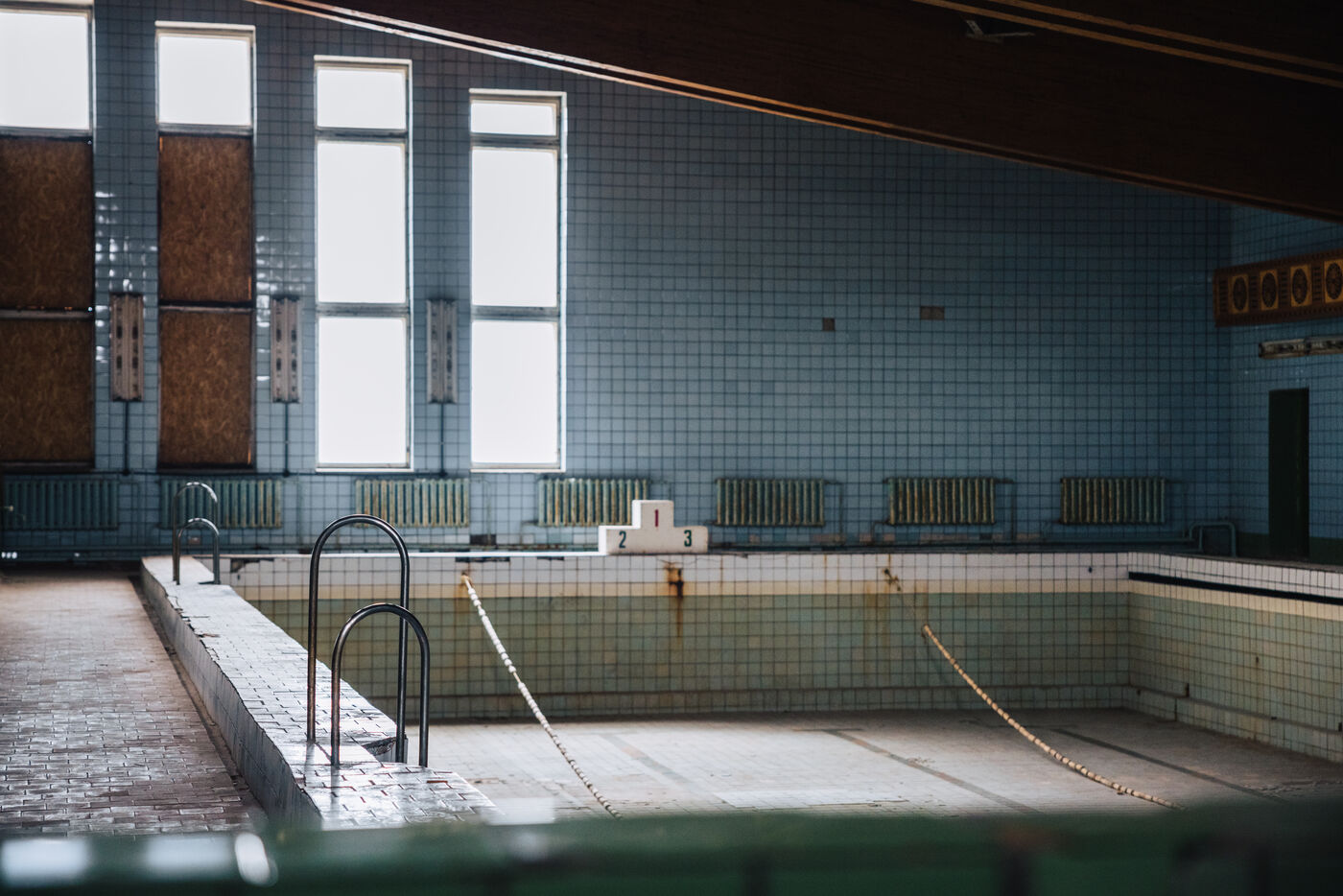
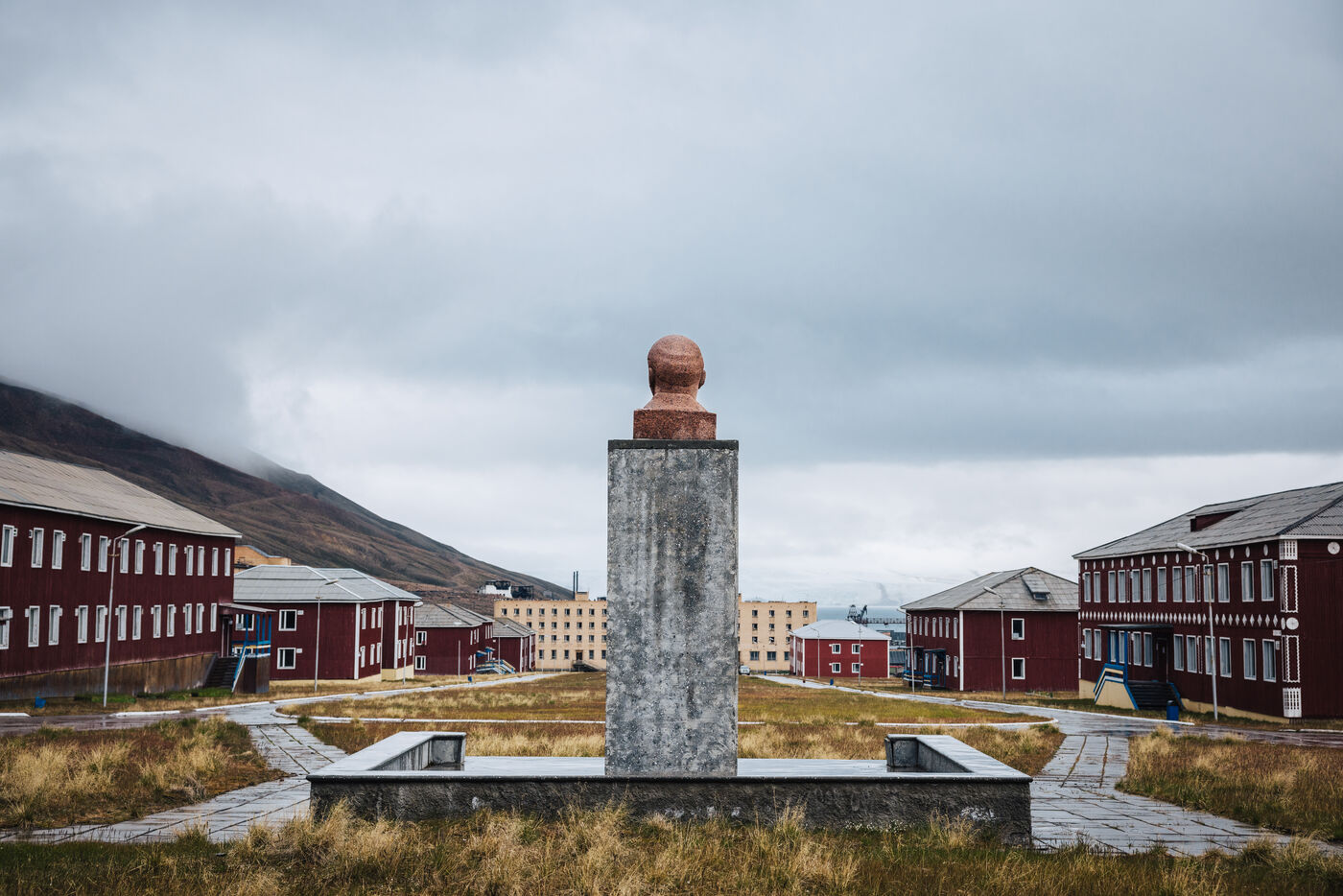
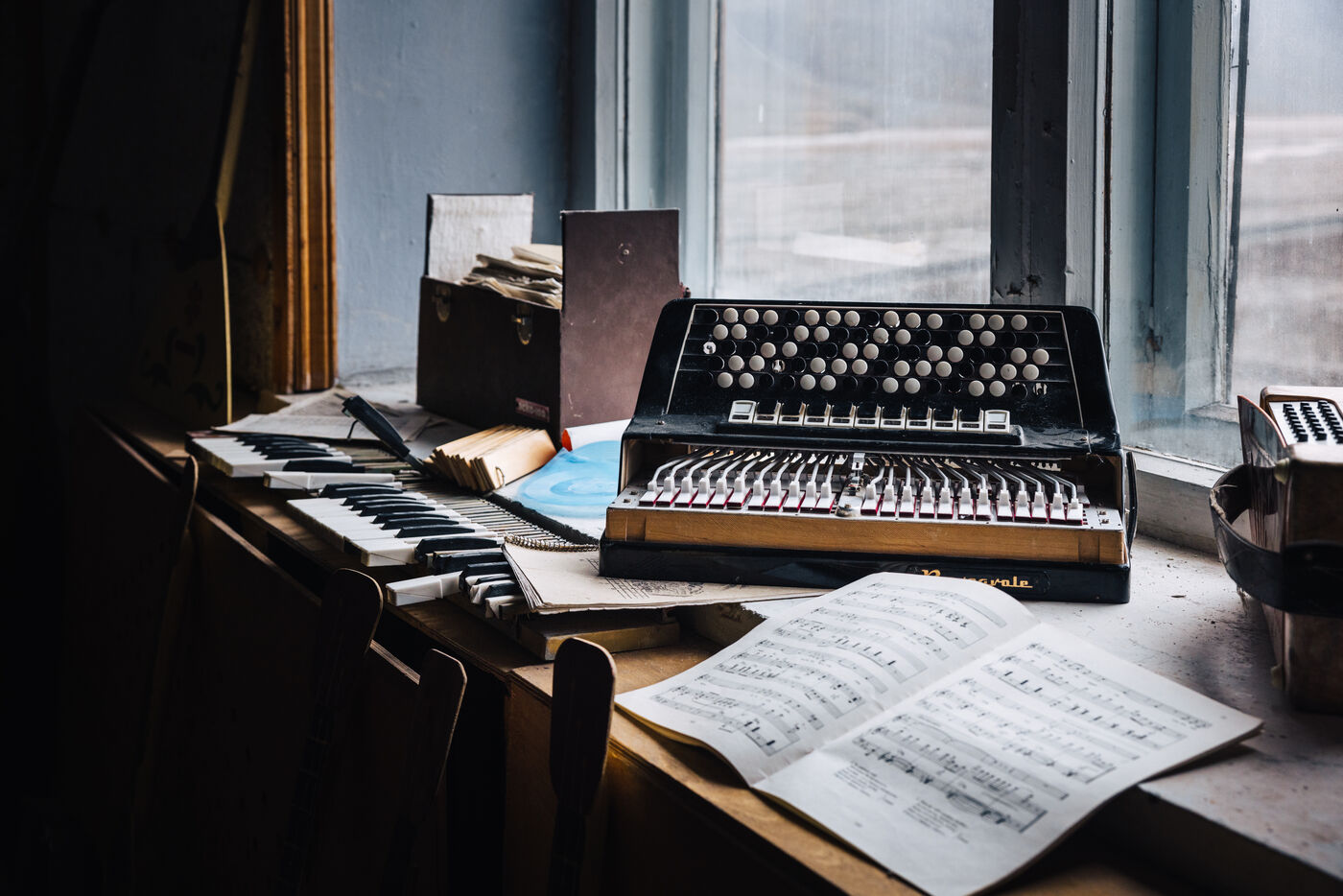
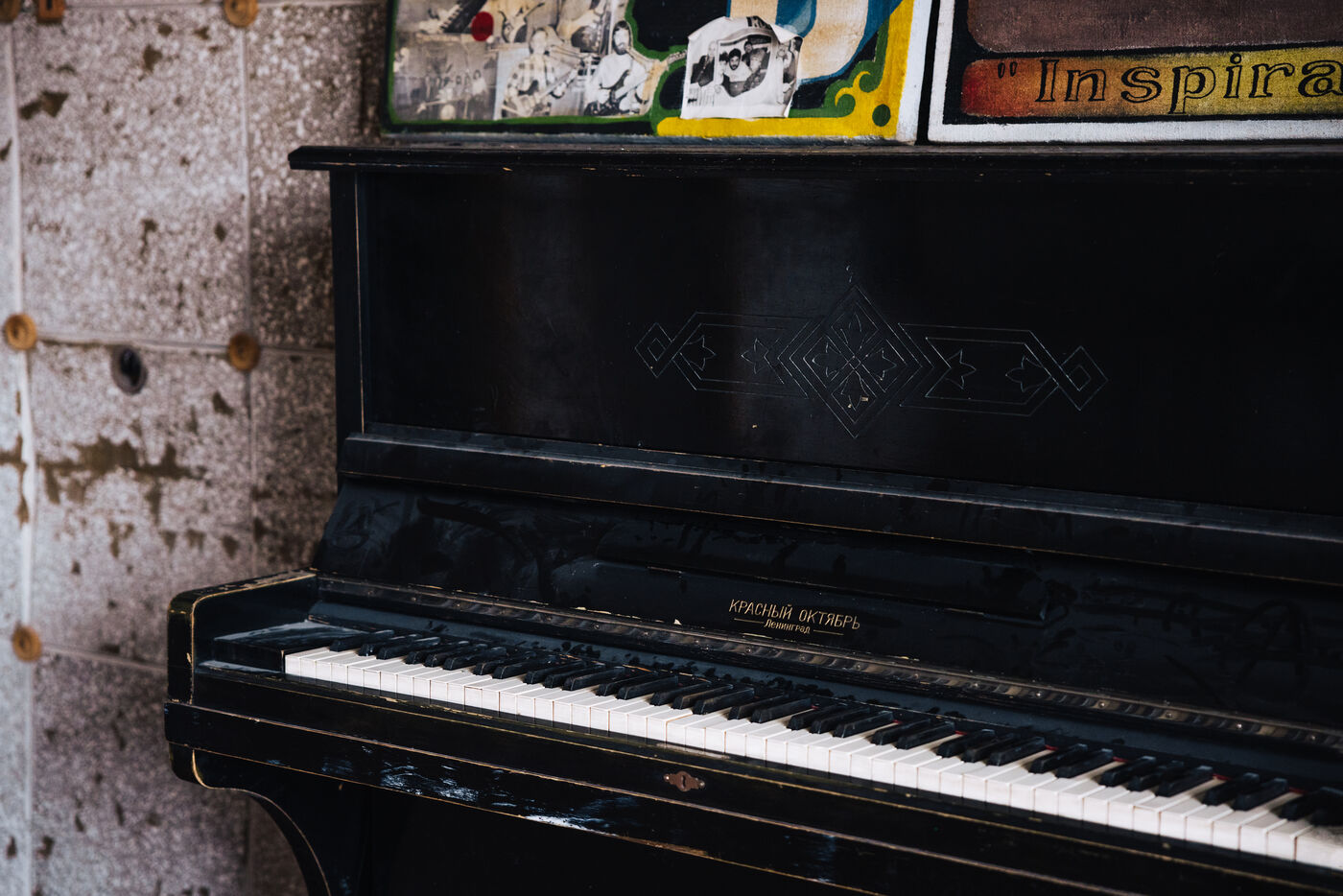
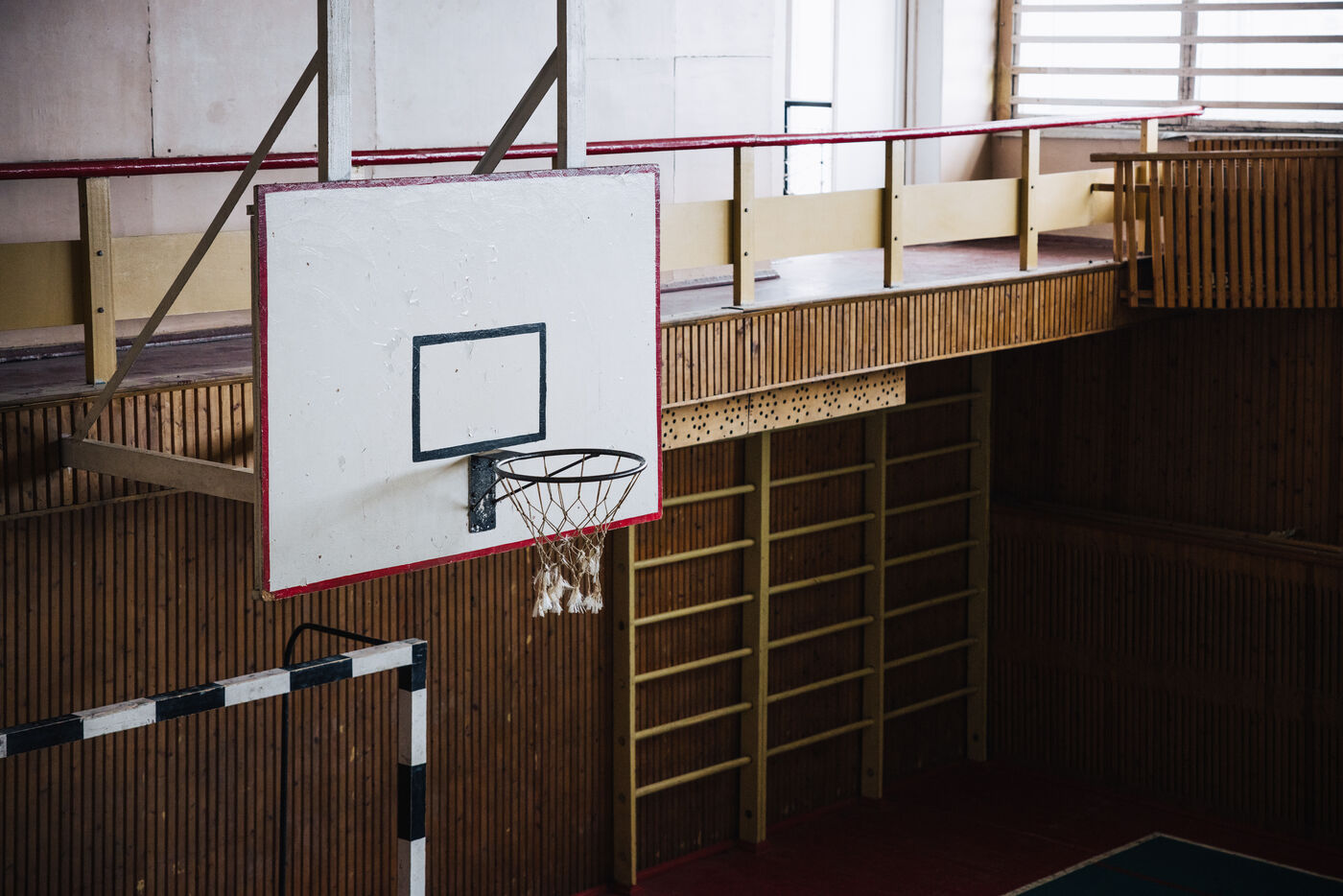
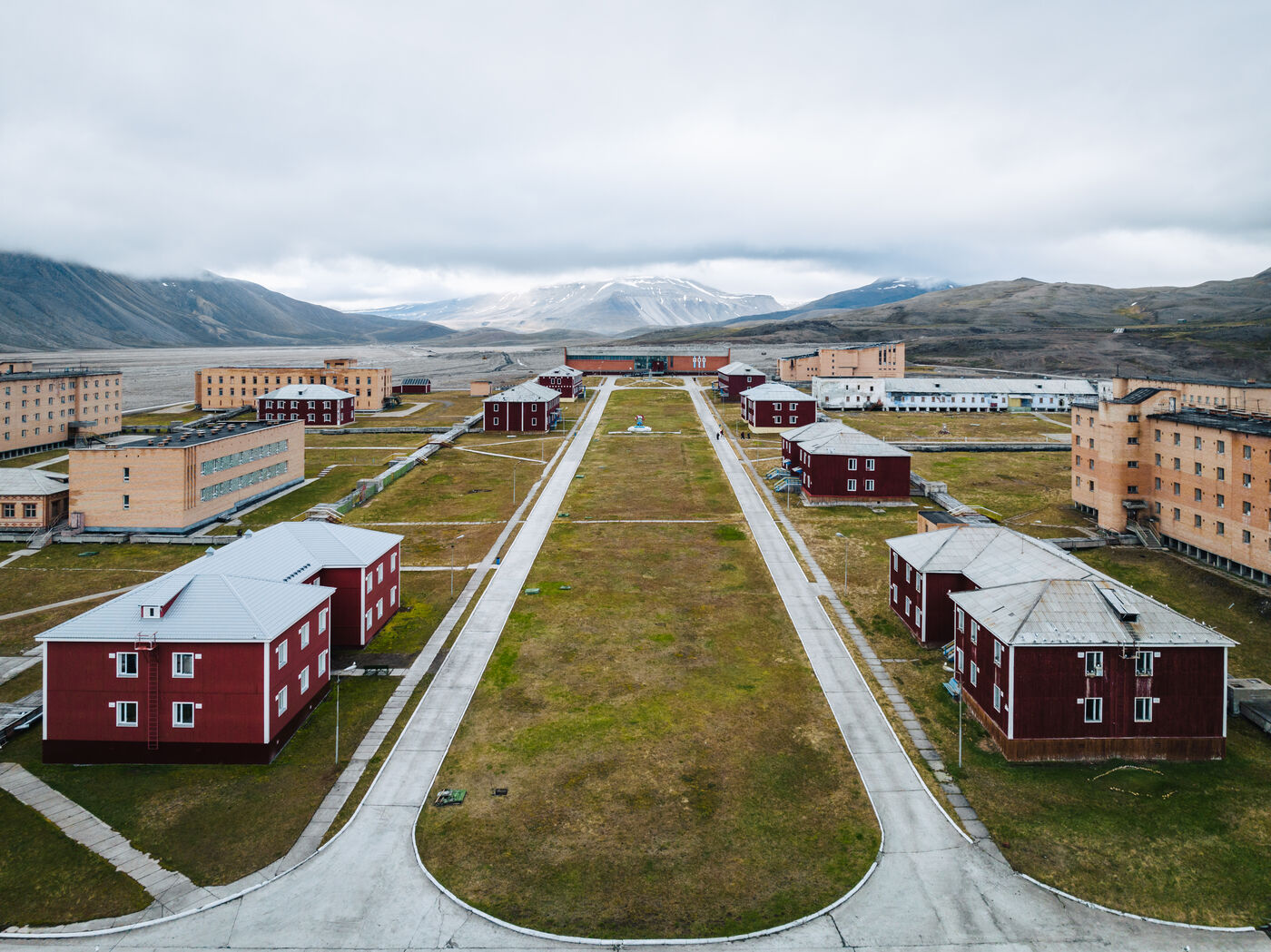
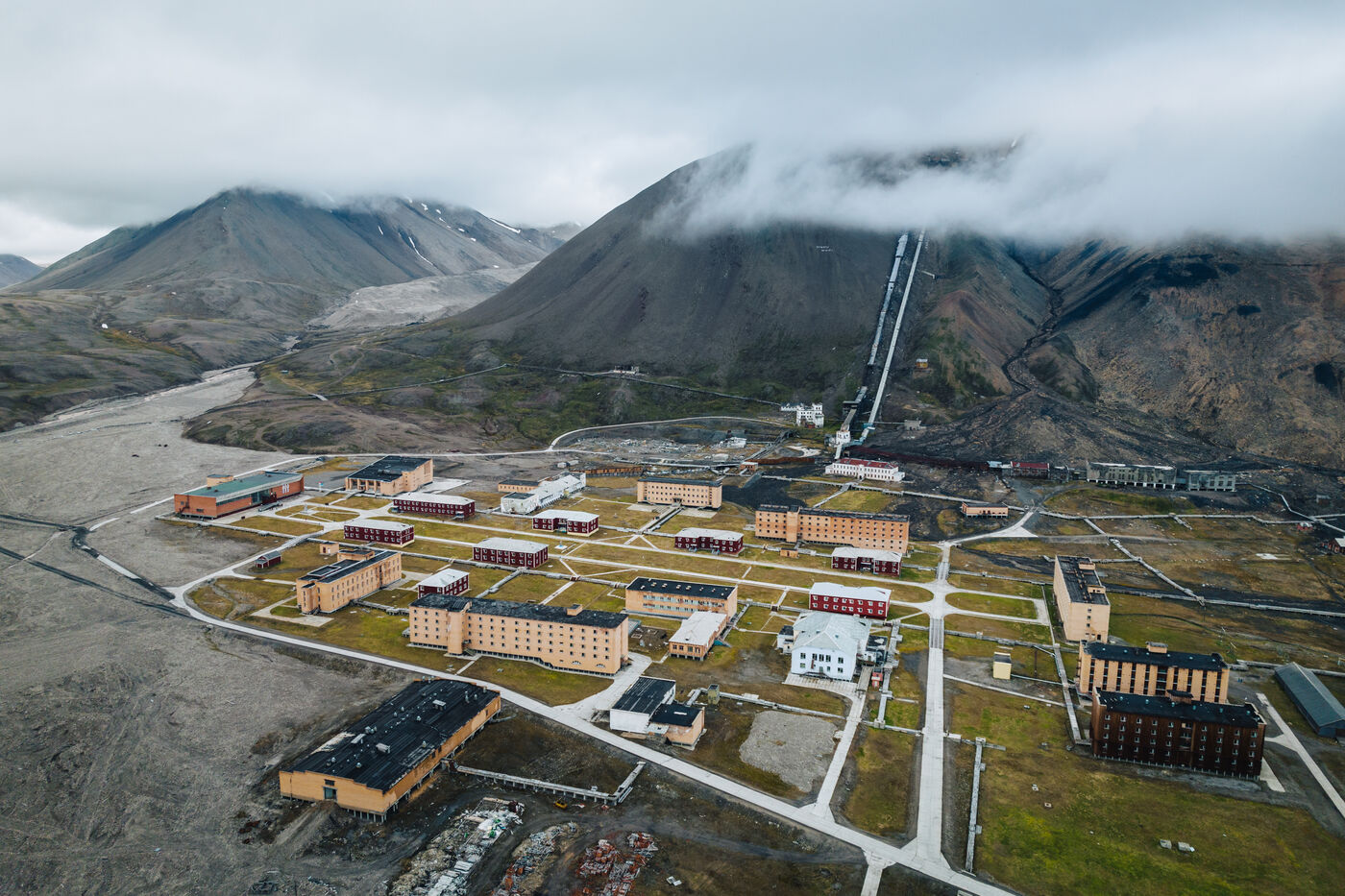
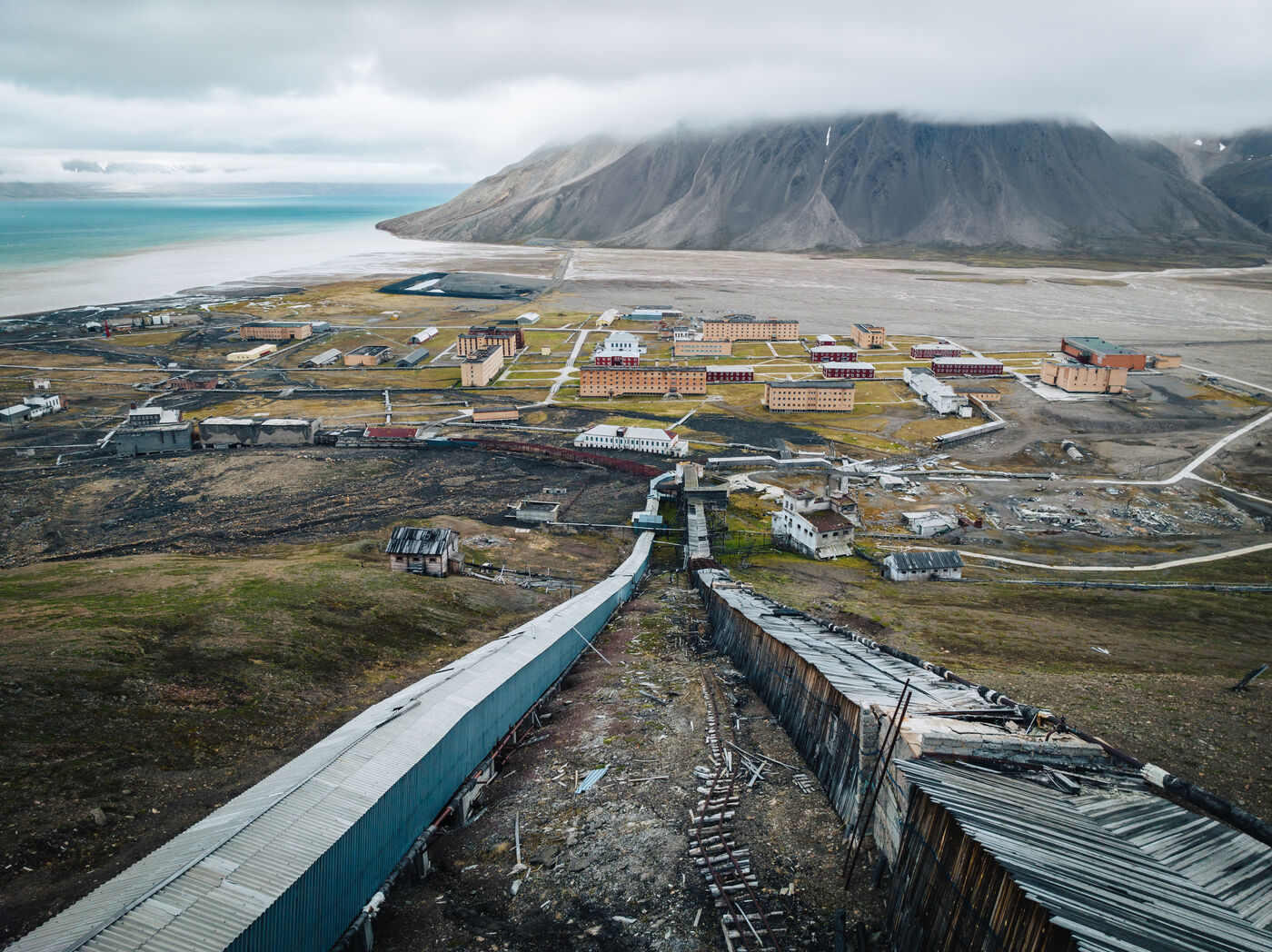
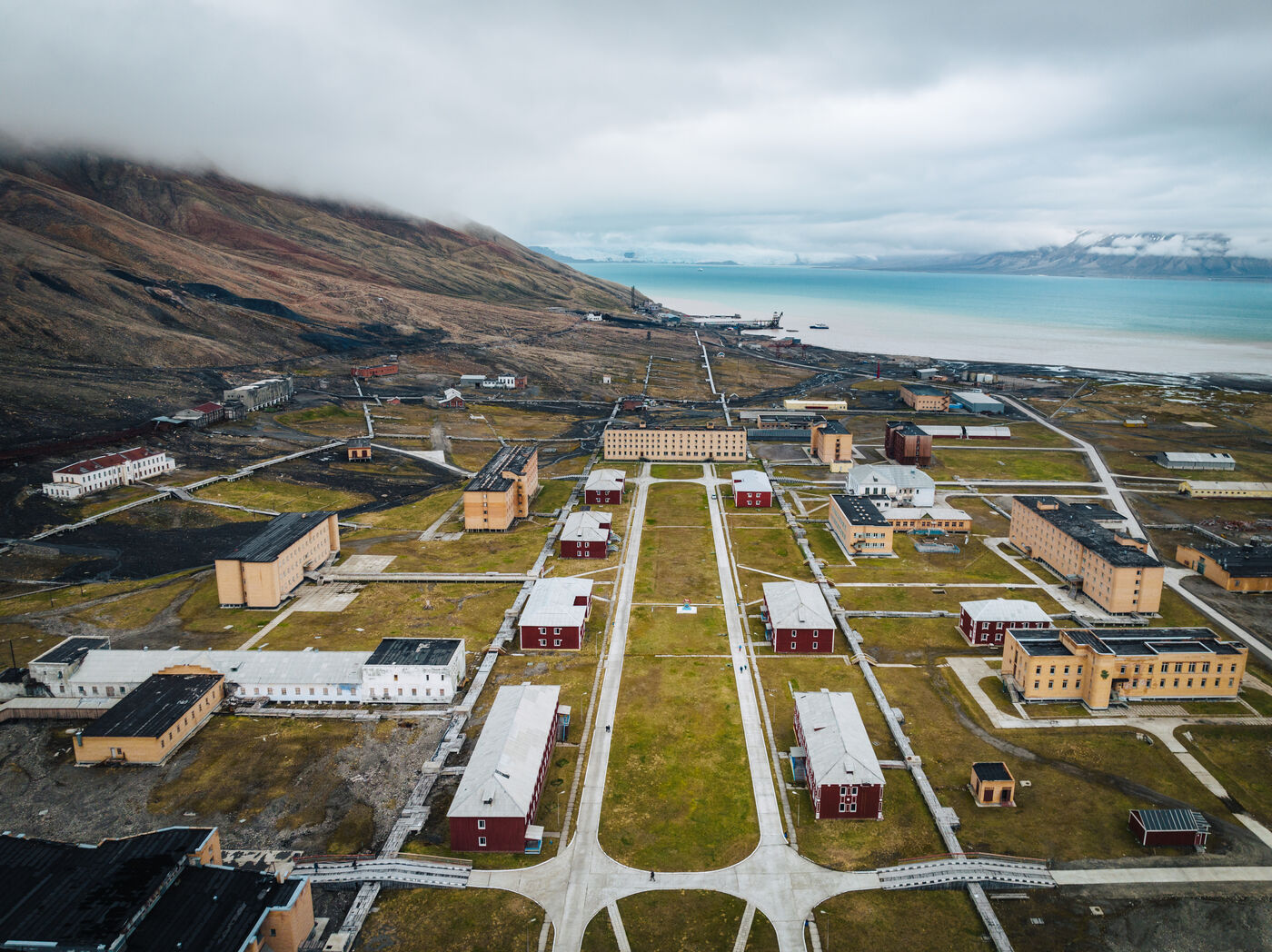
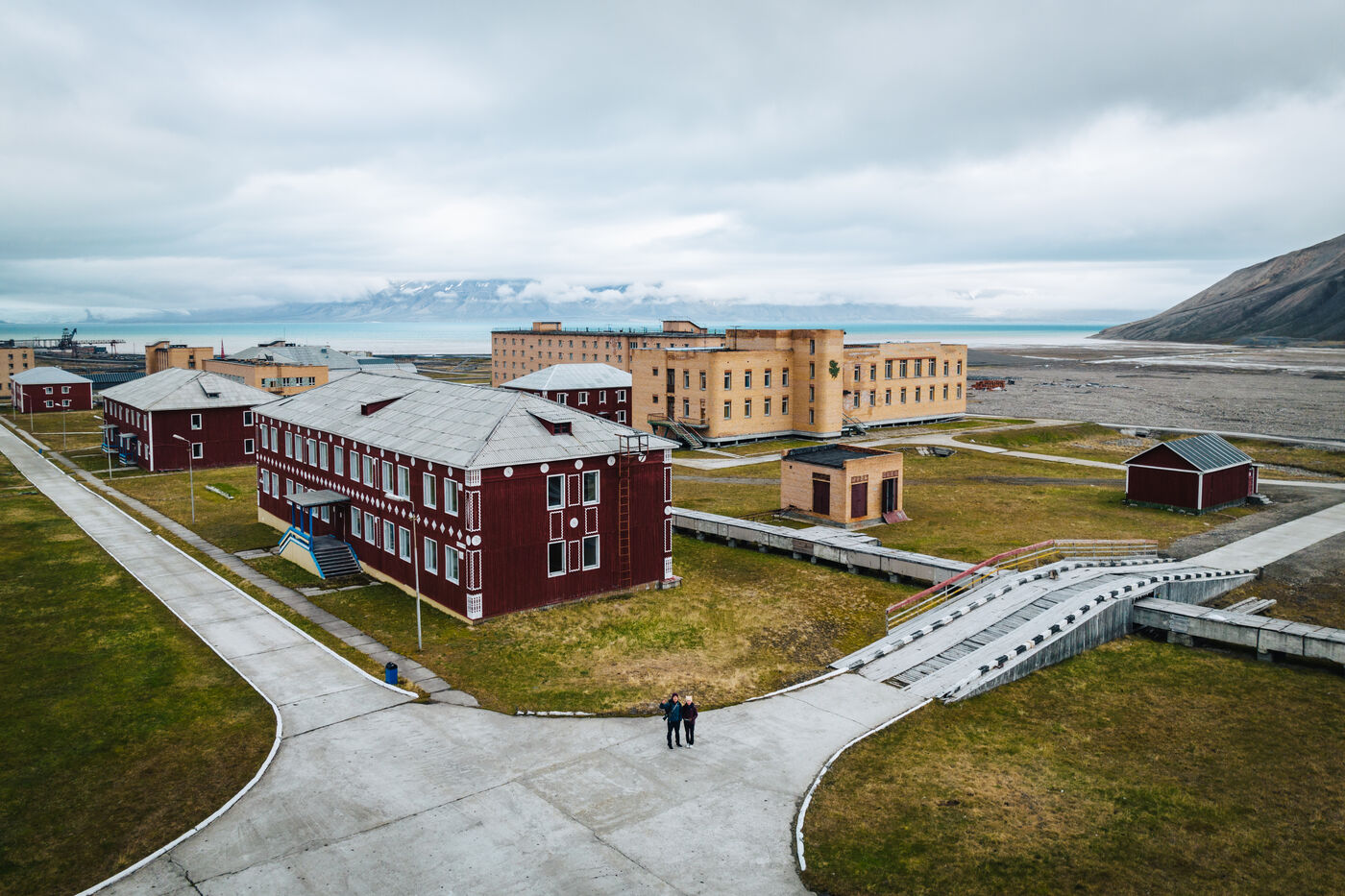
Before boarding the Kinfish, we took a day trip to Pyramiden, one of the last Soviet outposts in the Arctic. With Stalinist architecture, the journey felt like going to the ends of the Earth. This mining town looks much as it did when it was abandoned in 1998. To explore Pyramiden is to step back in time, to the heyday of the USSR. Soviet culture, architecture, and politics permeate the town, from the block-style housing to the bust of Lenin. The world's northernmost statue of that communist revolutionary gazing down on the main square.

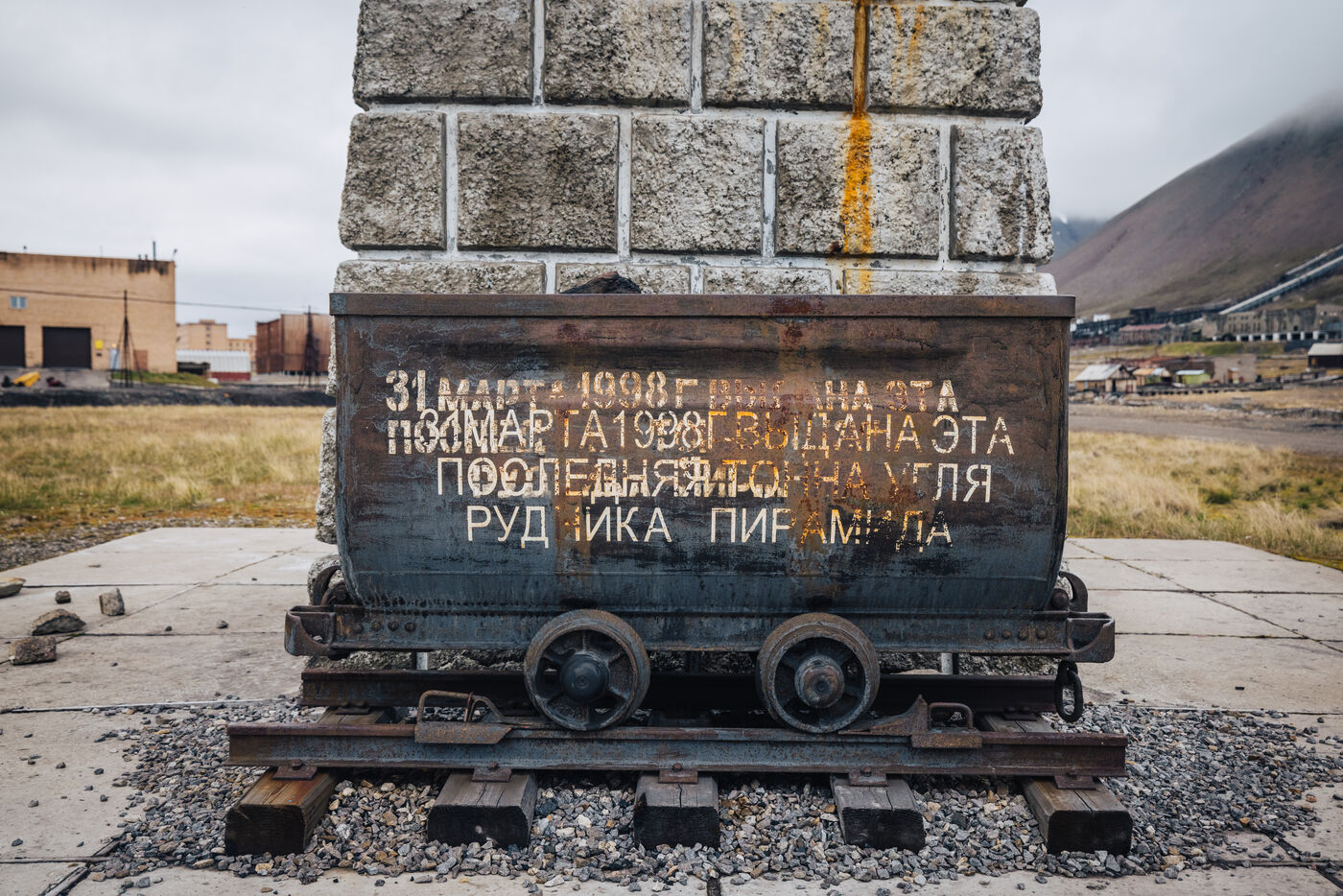
Old coal car with Cyrillic text Person standing beneath the Pyramiden sign and its red tower monument
A mining cart with faded Soviet lettering sits frozen in time, alongside colorful Cold War architecture.
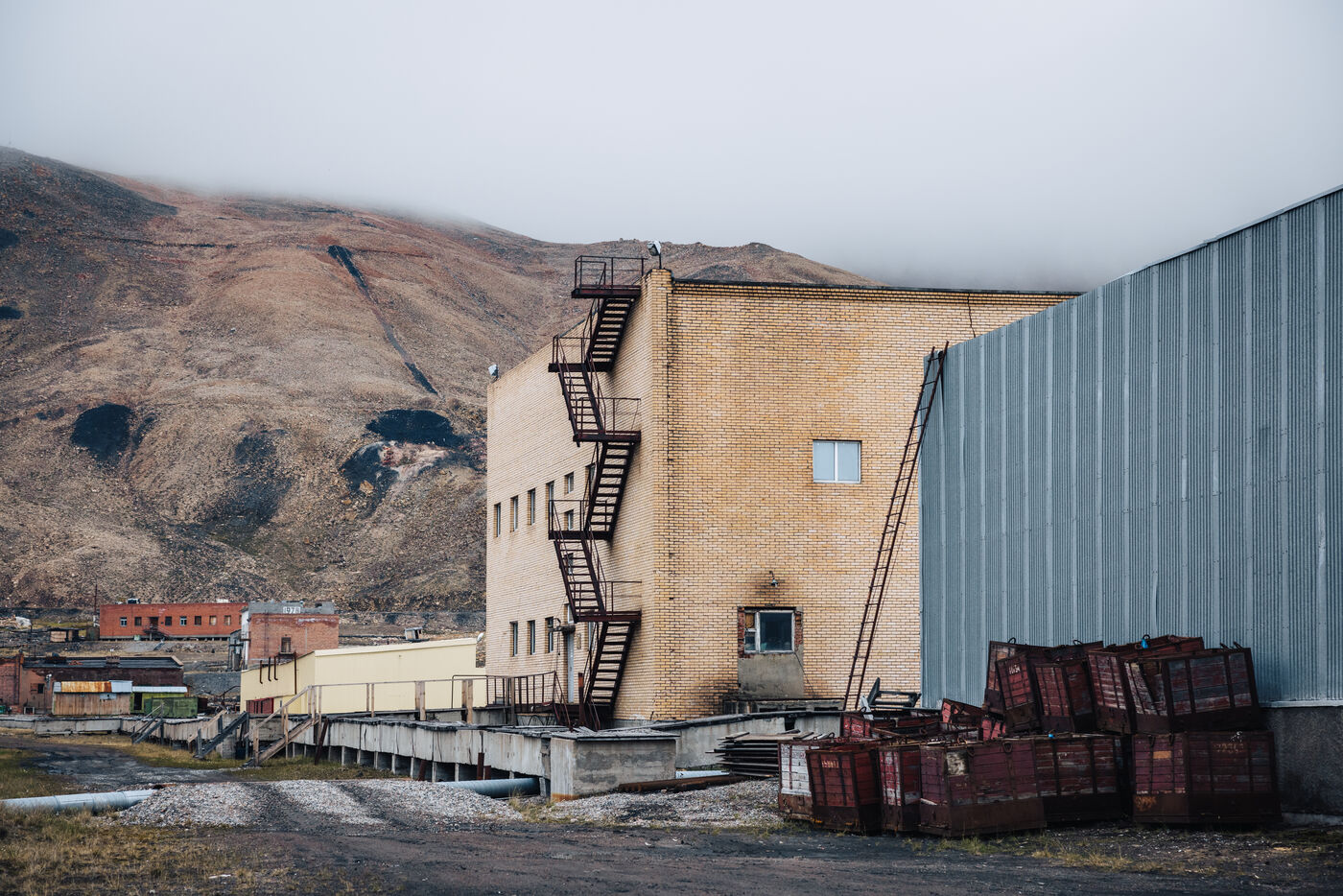
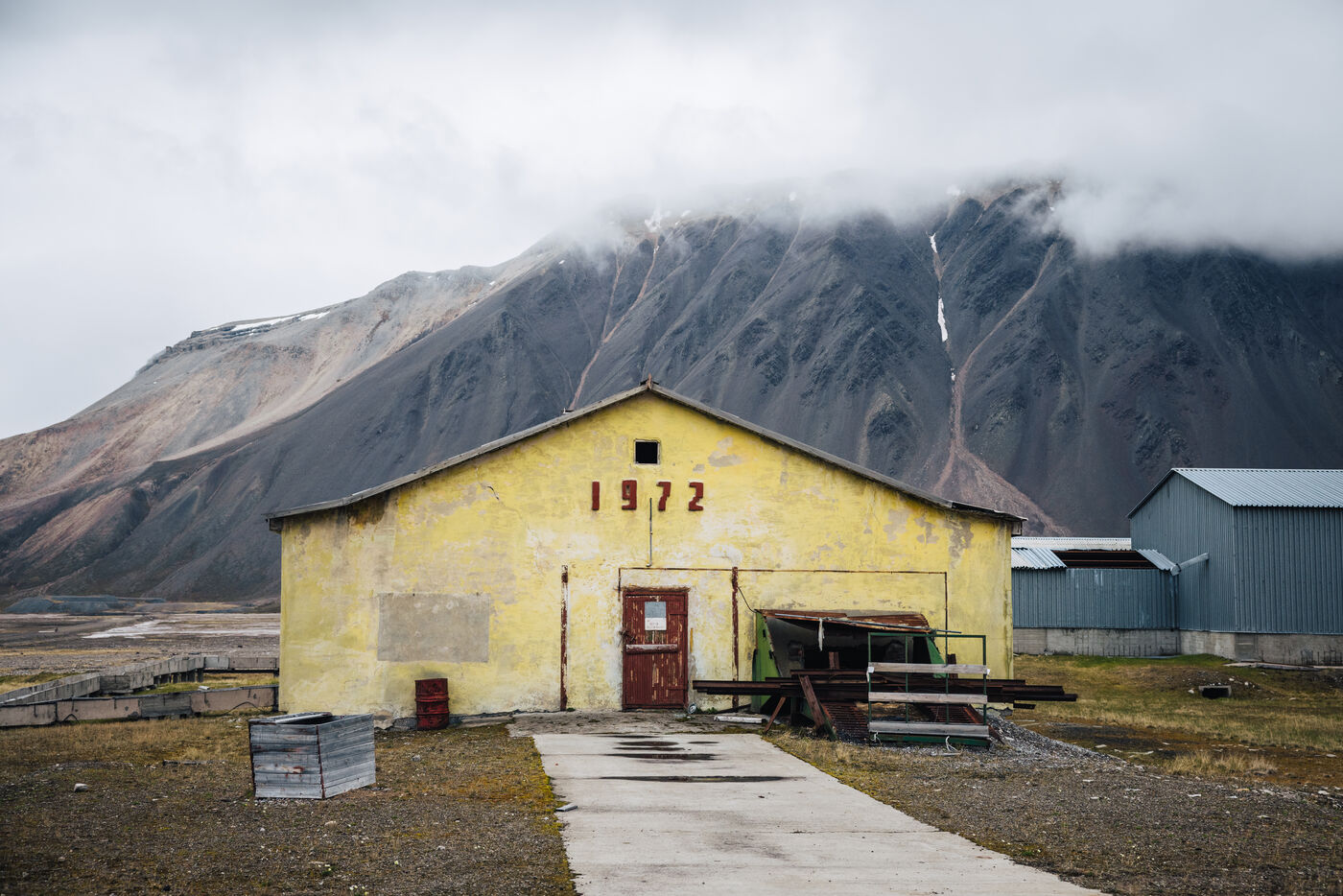
Yellow house with mountain backdrop Beige building with metal siding
Every structure tells the story of Soviet optimism in the Arctic, now quietly decaying beneath towering mountains.
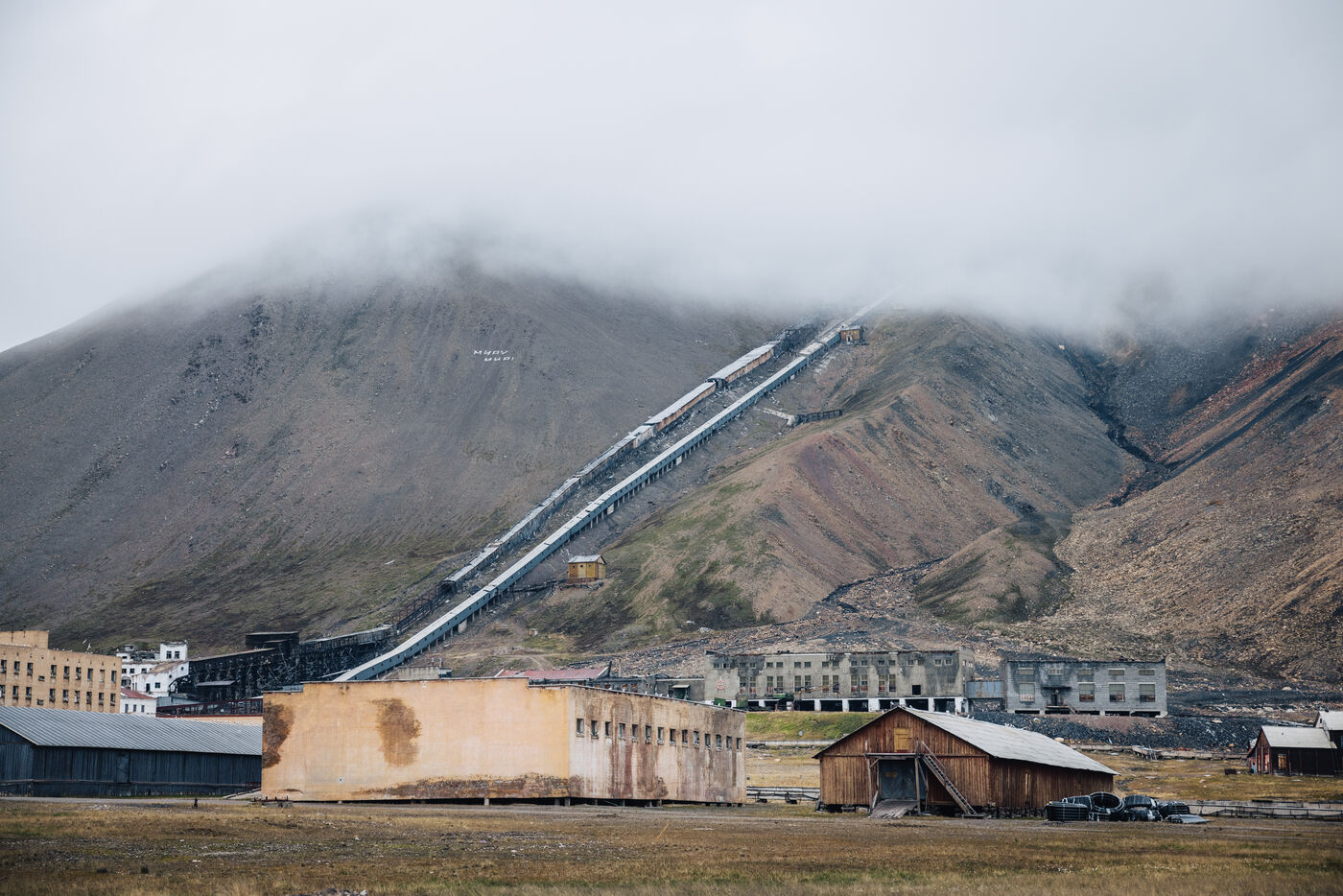
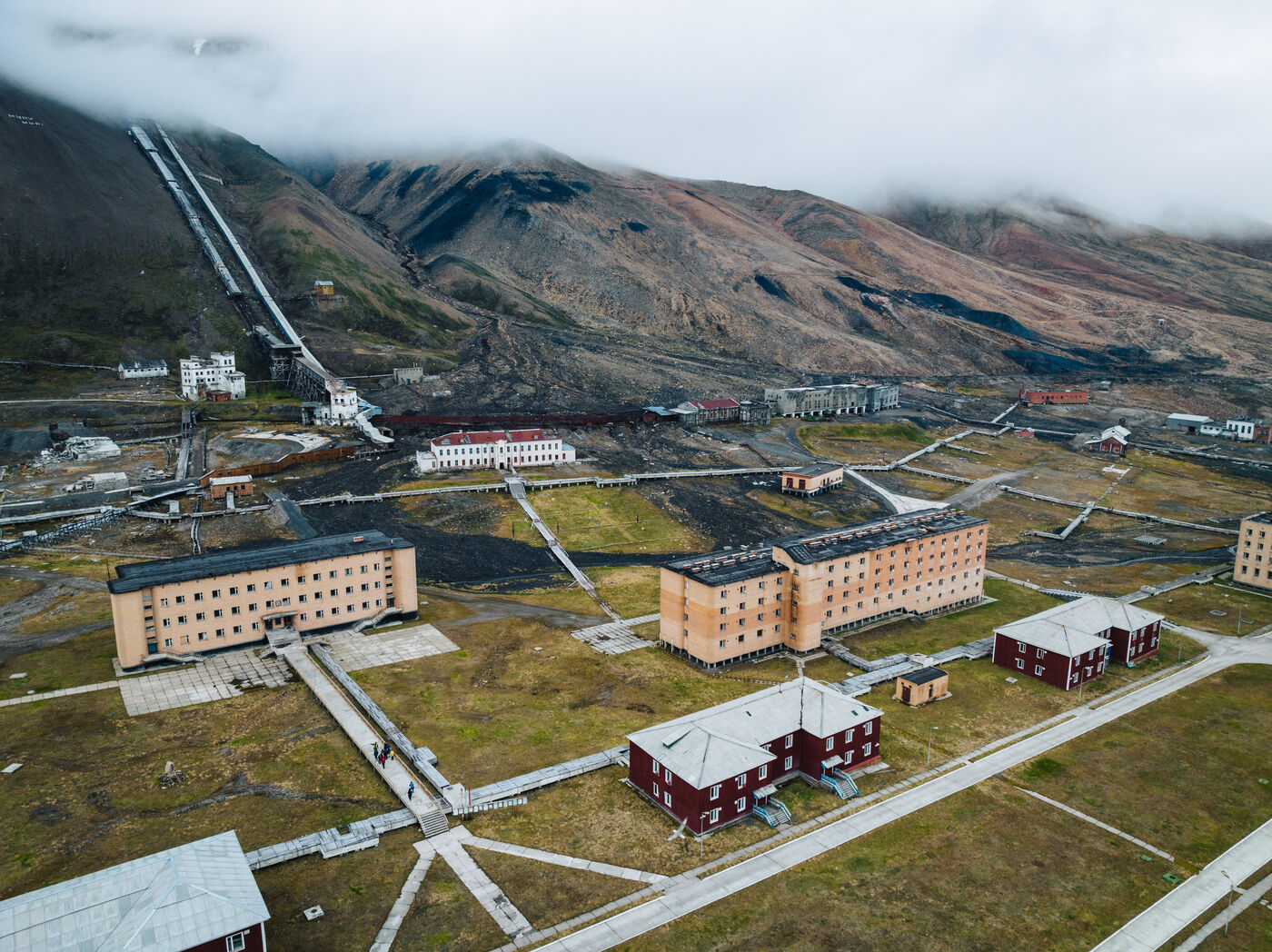
Wide view of Pyramiden with the mine conveyor climbing the mountainside under low cloud
The mine's conveyor climbs the mountainside above the settlement, the whole town laid out beneath low cloud.

Fuglefjorden and First Glaciers

July 23, 2022. Fuglefjorden, Svalbard

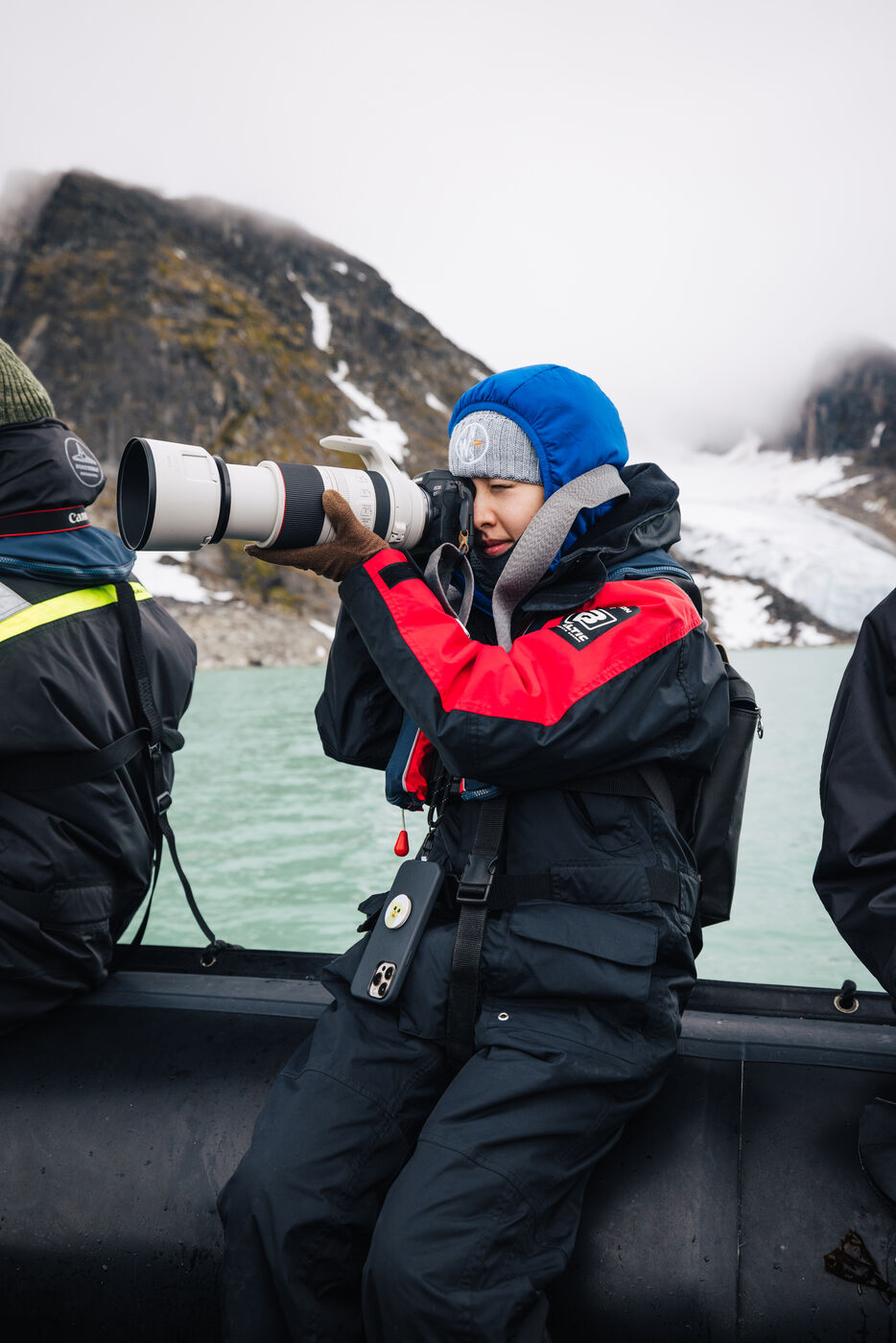
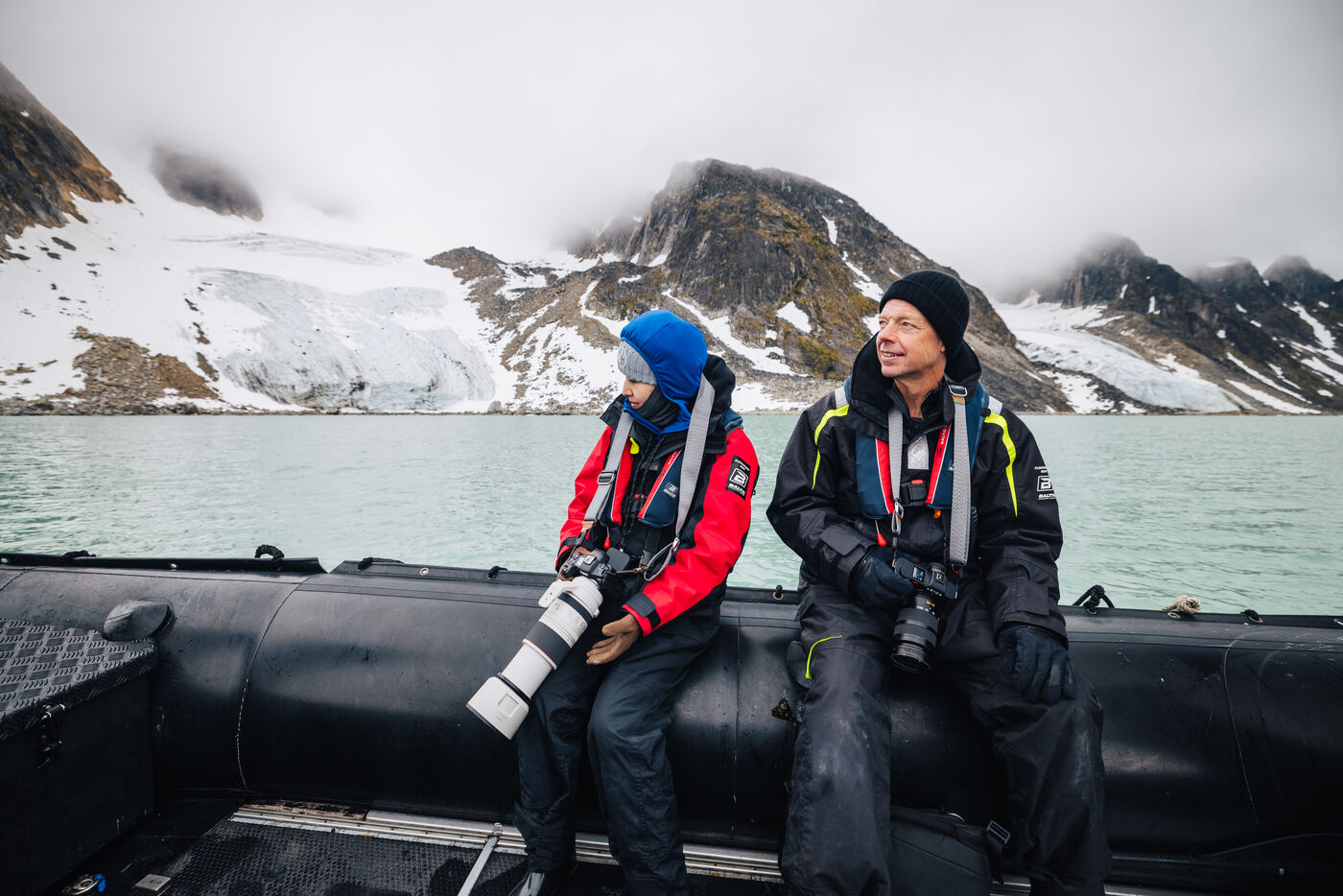
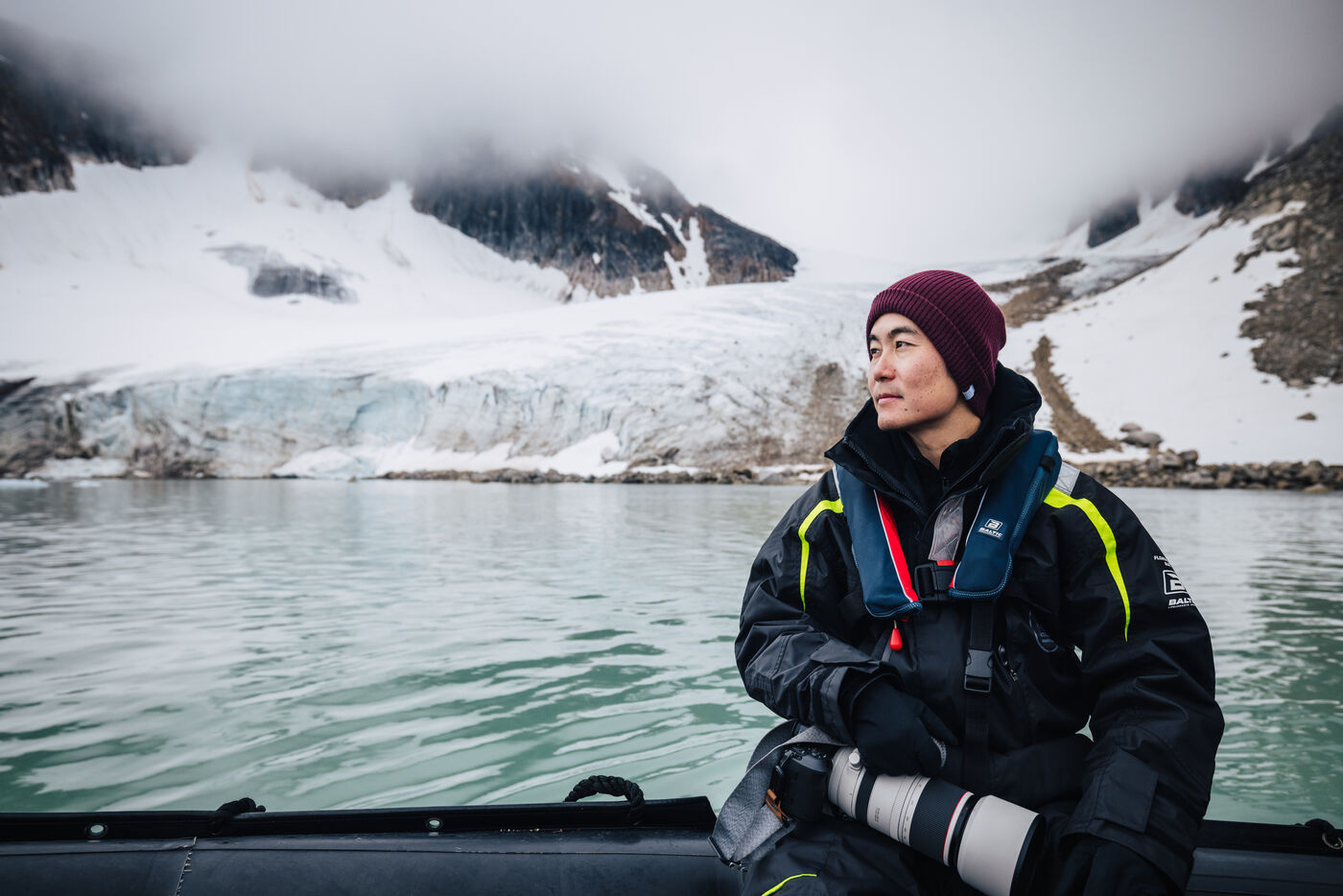
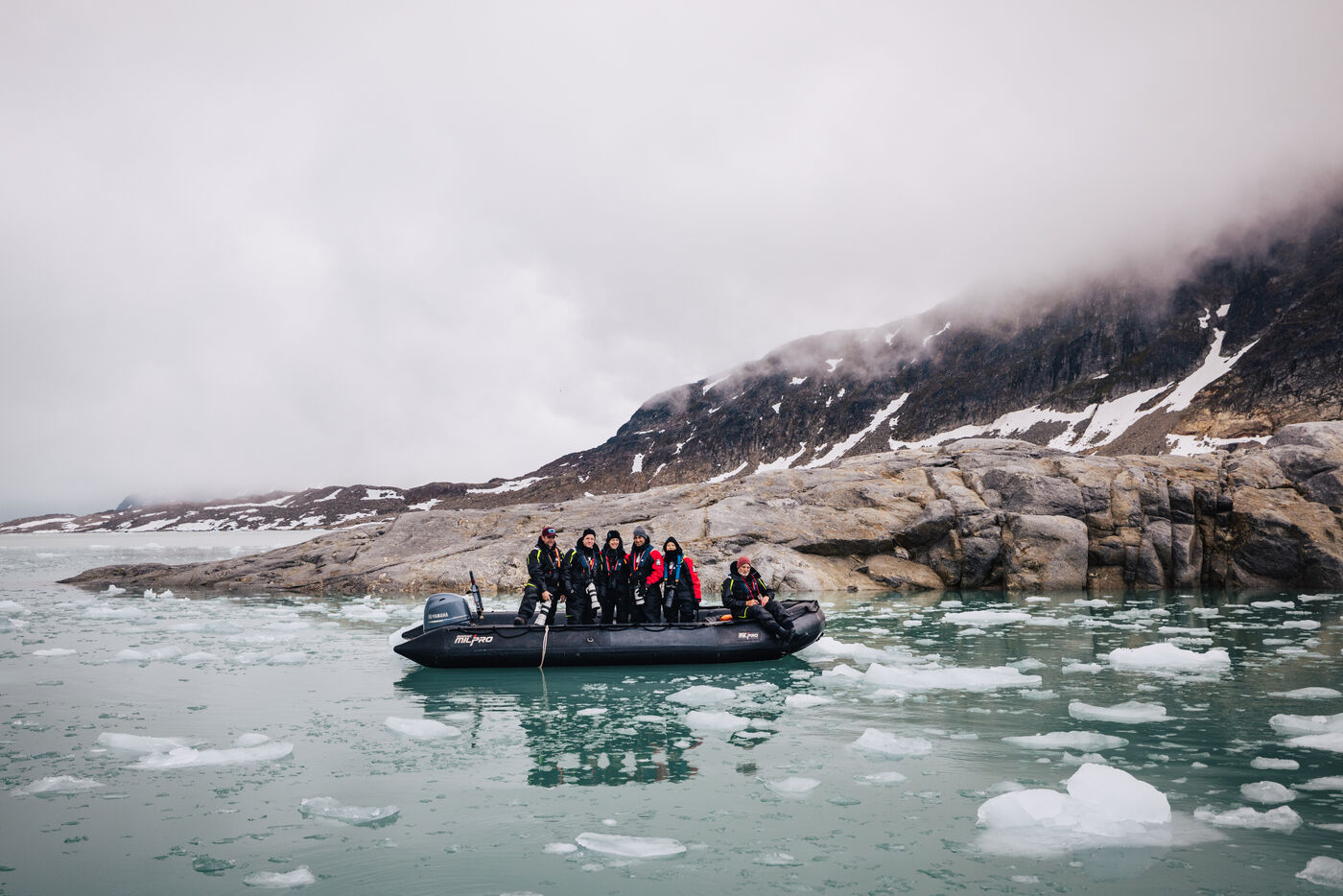
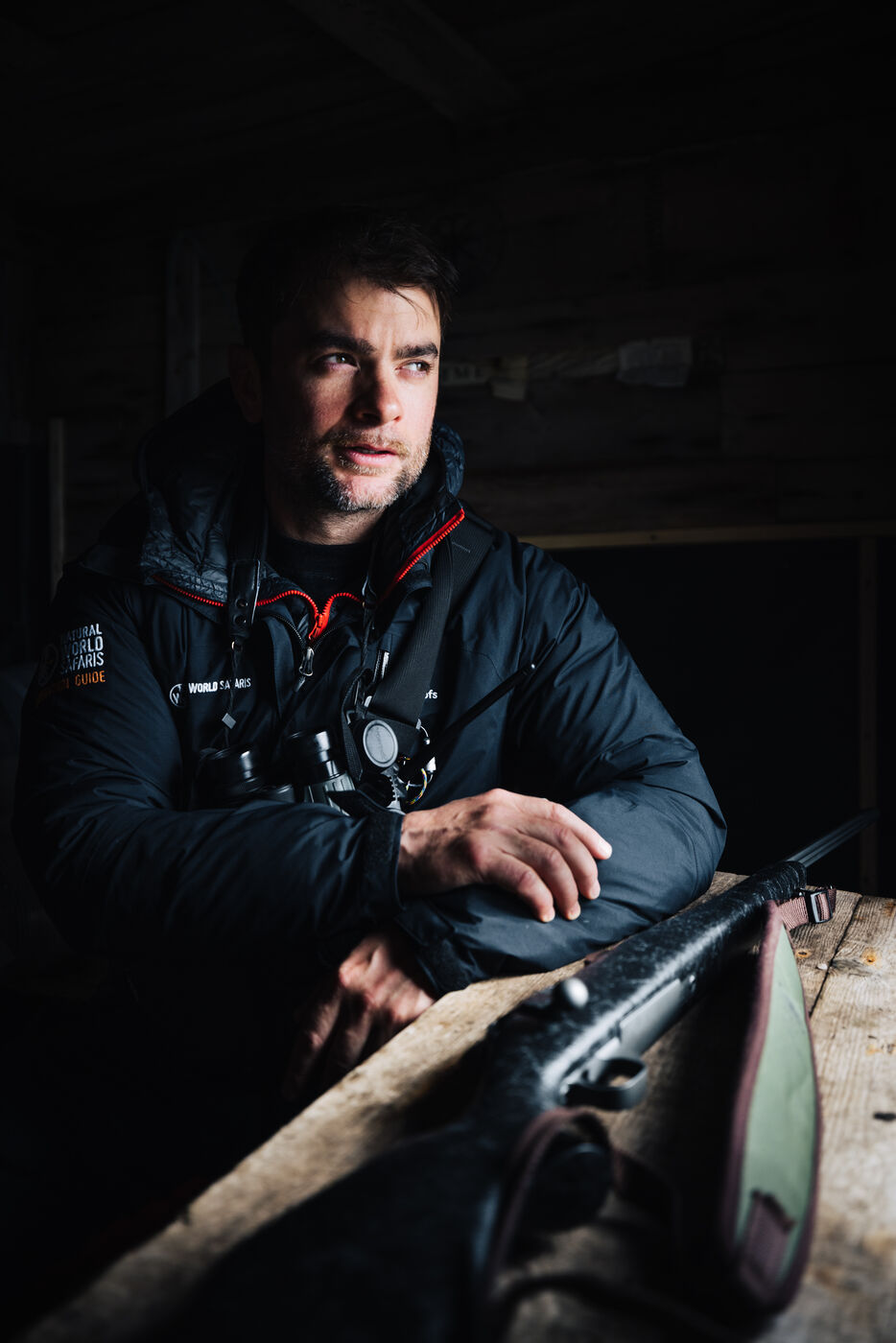
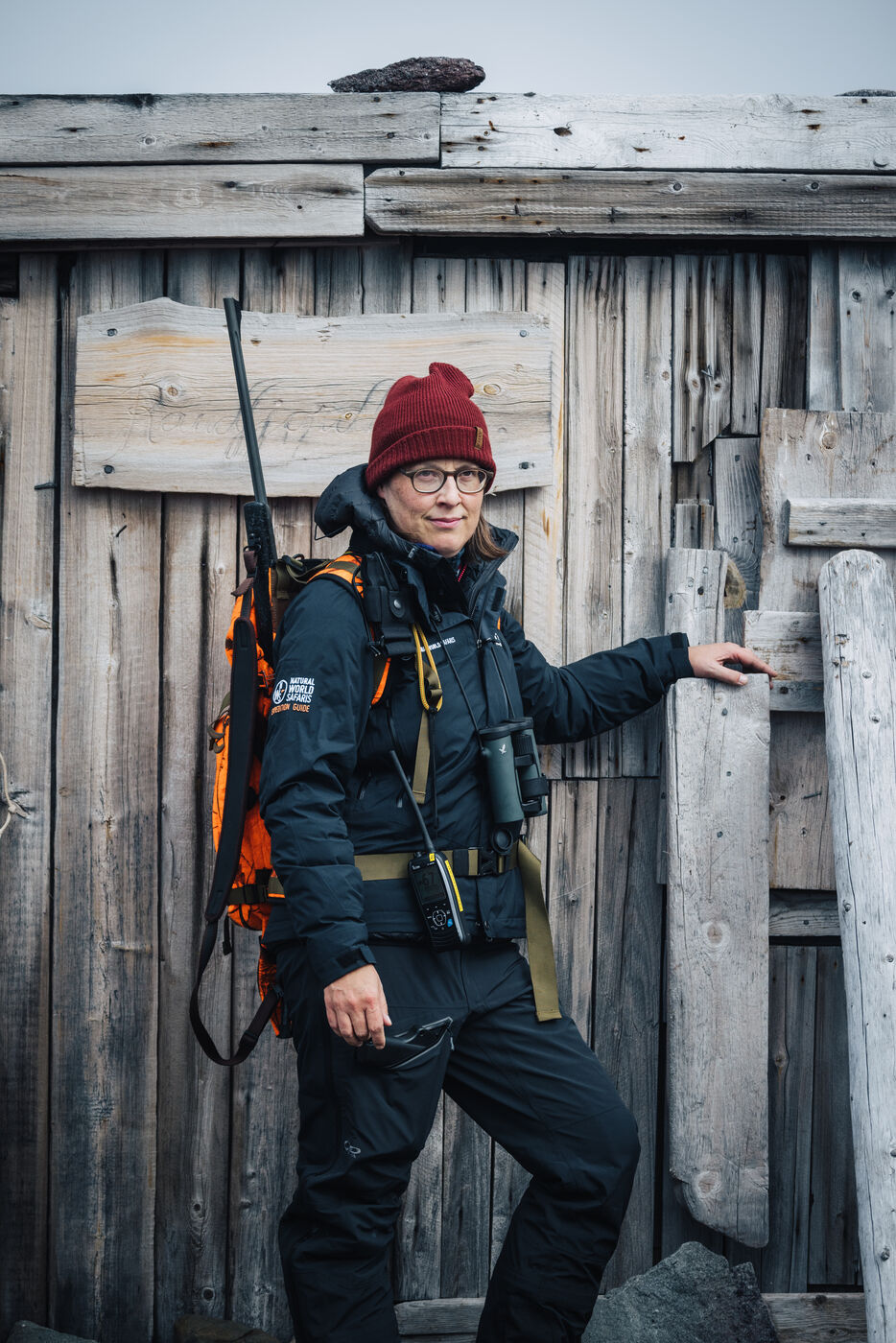
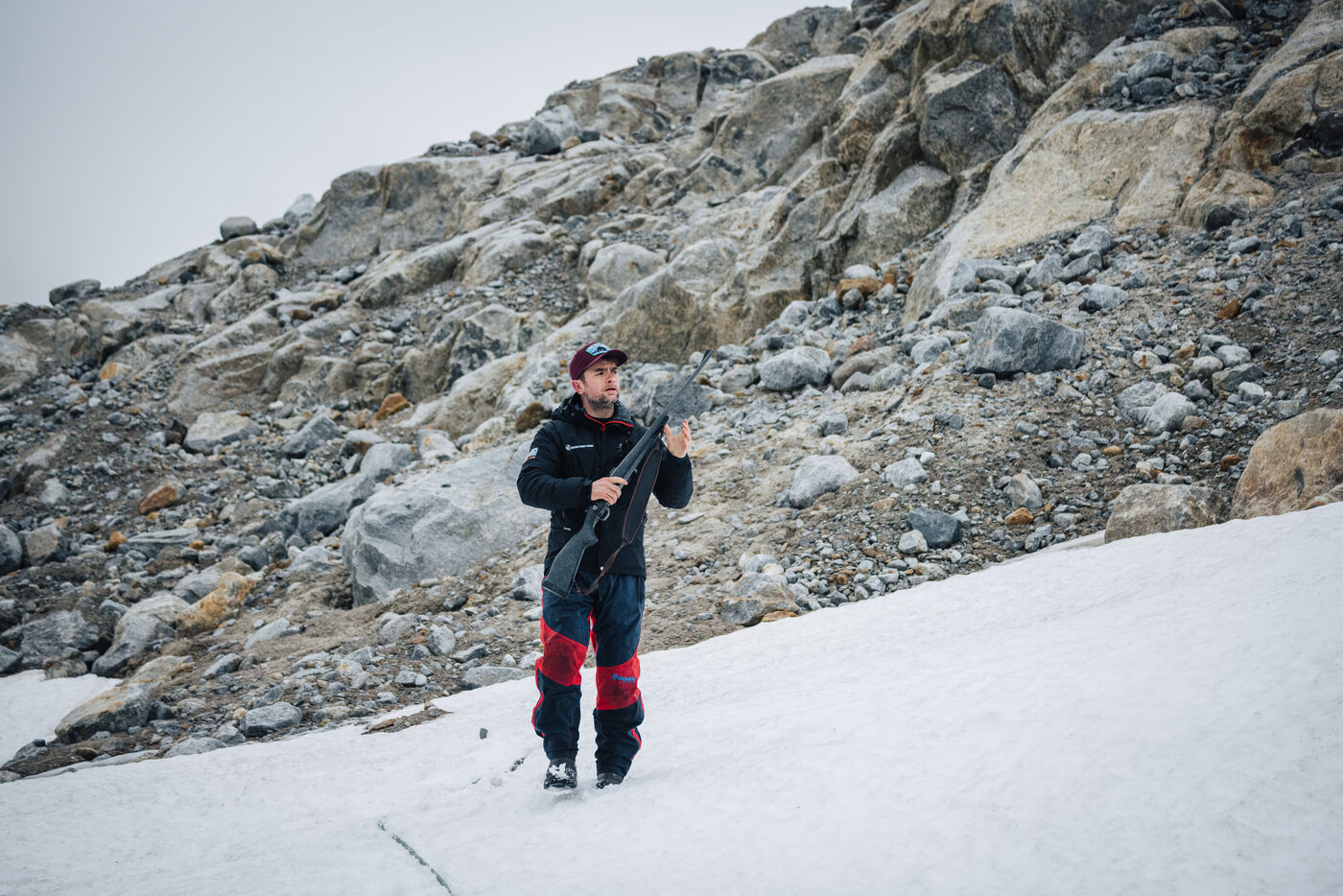
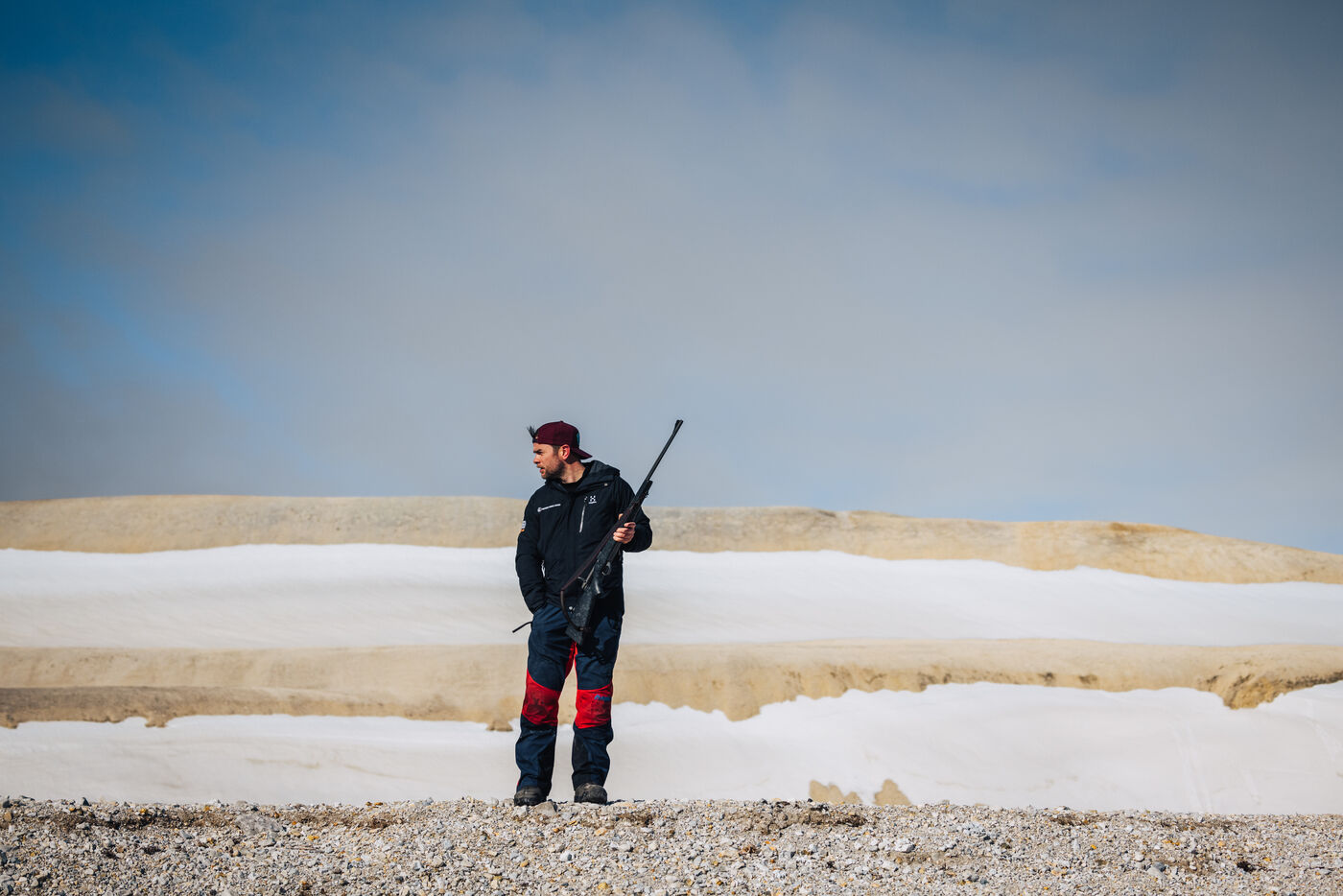
Our first full day aboard the Kinfish began as soon as we cast off from Longyearbyen. The ship slipped northward into Fuglefjorden, a valley carved by ice and time. Our expedition guides briefed us on polar bear protocols. The Arctic is their kingdom, and we are merely visitors. Every time we went ashore in a zodiac, a guide carried a rifle. Every time we ventured onto the ice, we moved with purpose and intention, keeping our voices low, our movements deliberate.

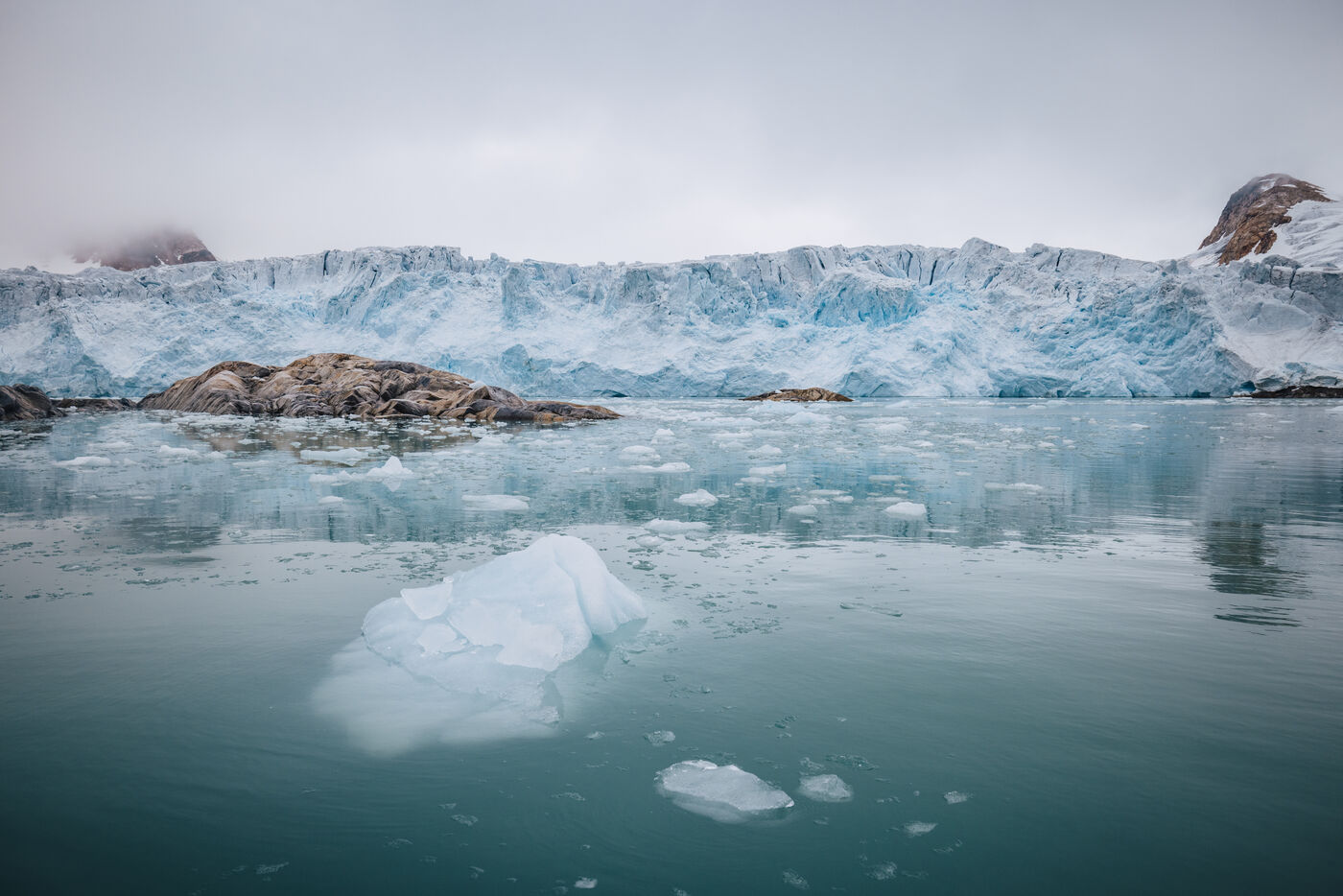
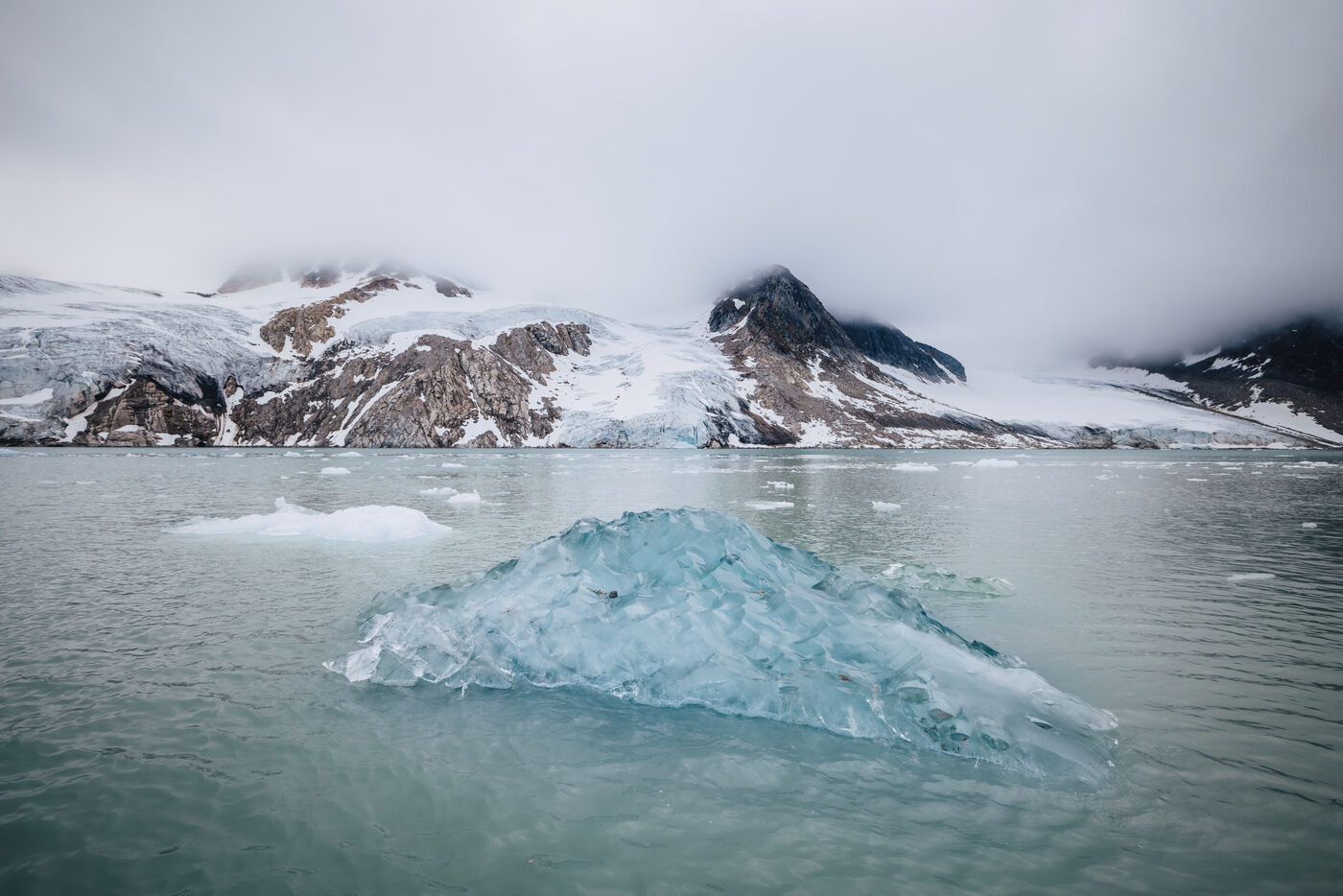
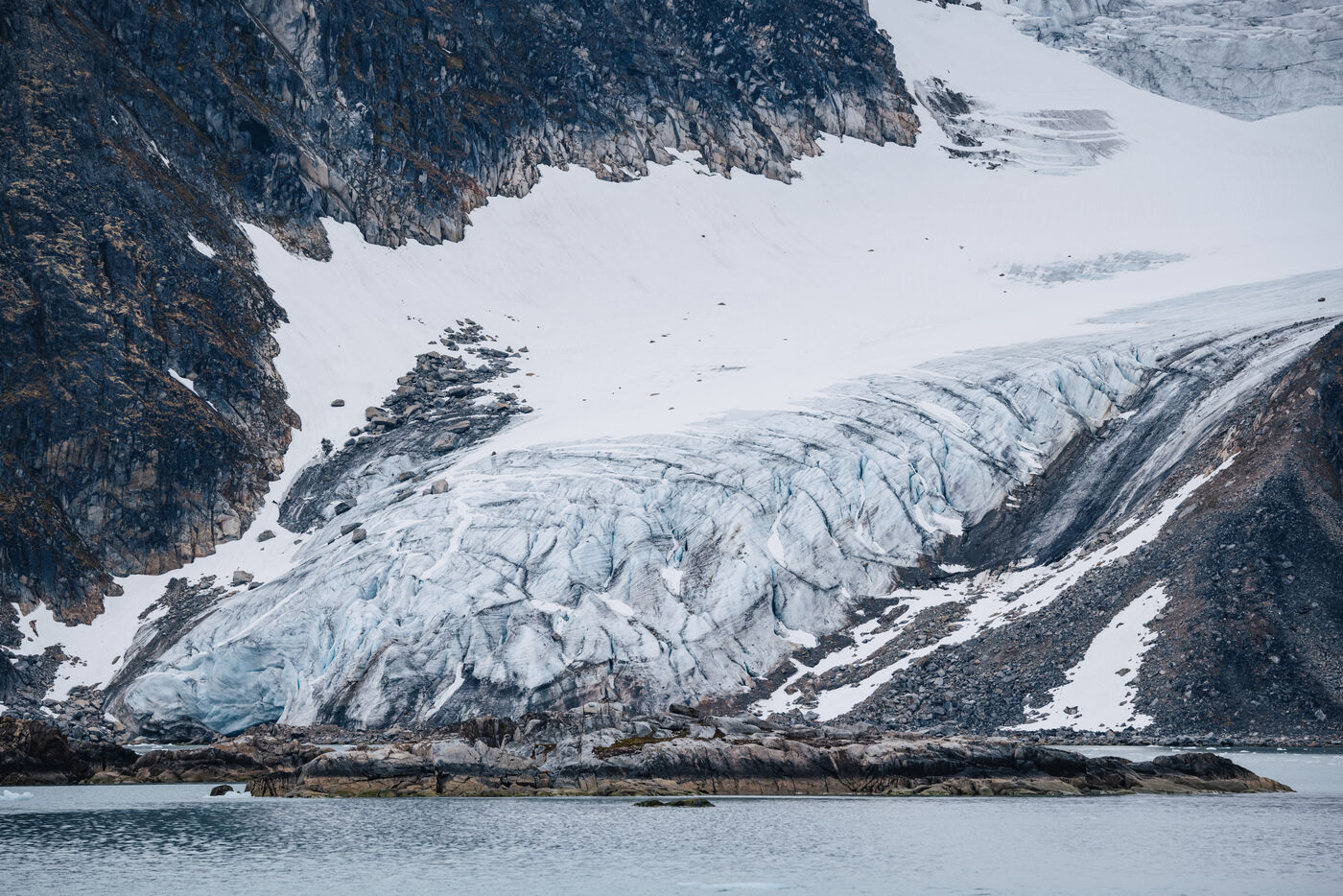
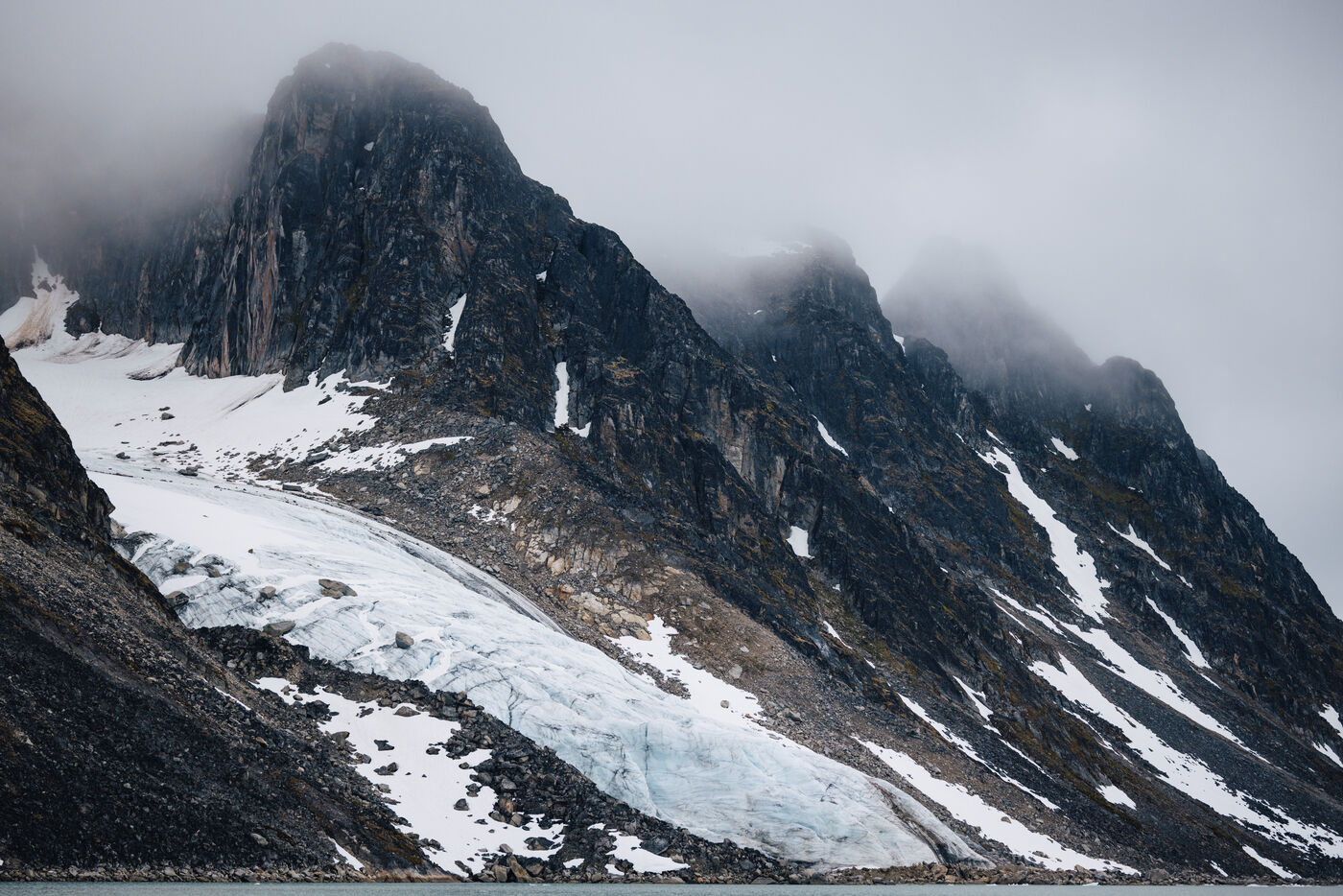
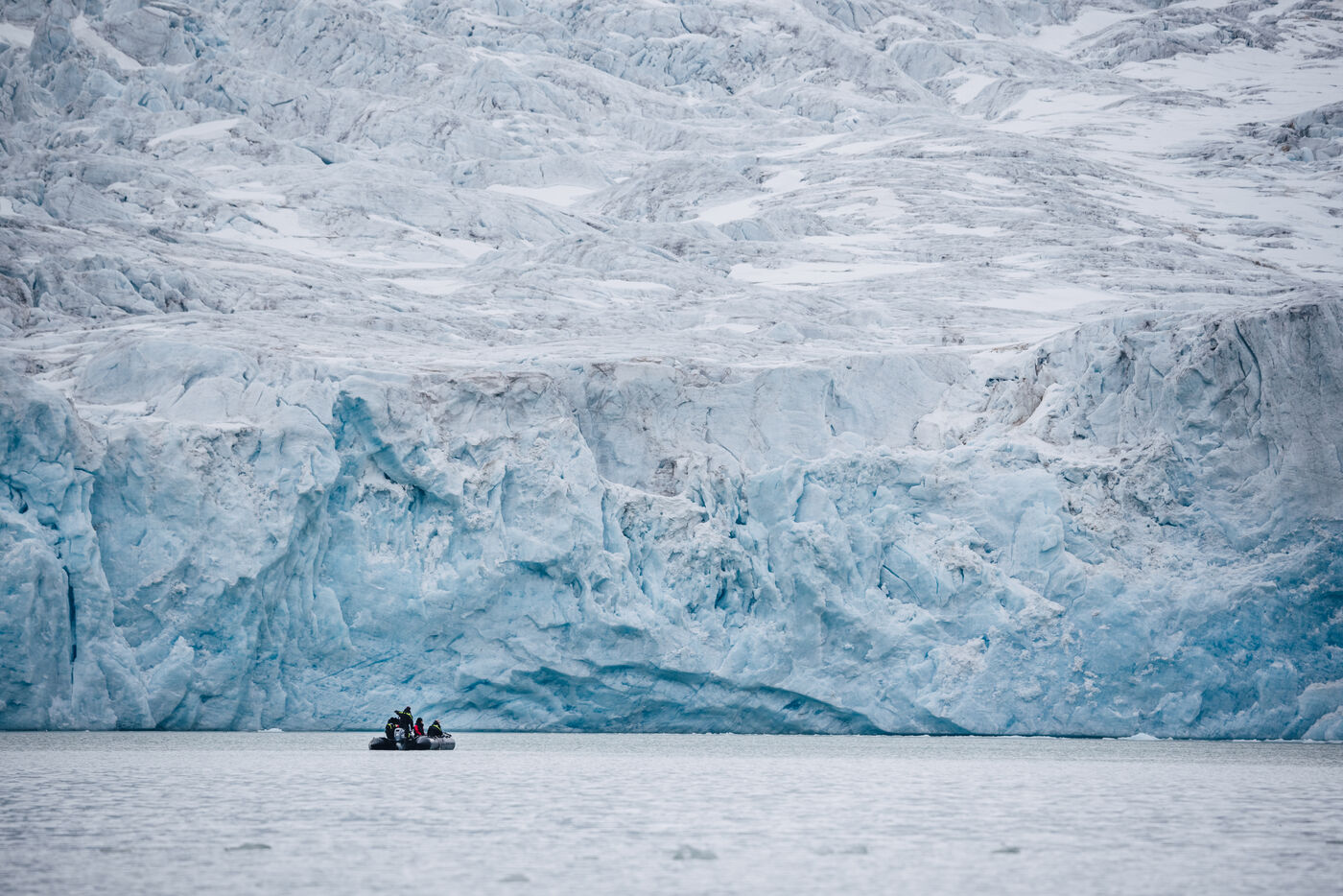
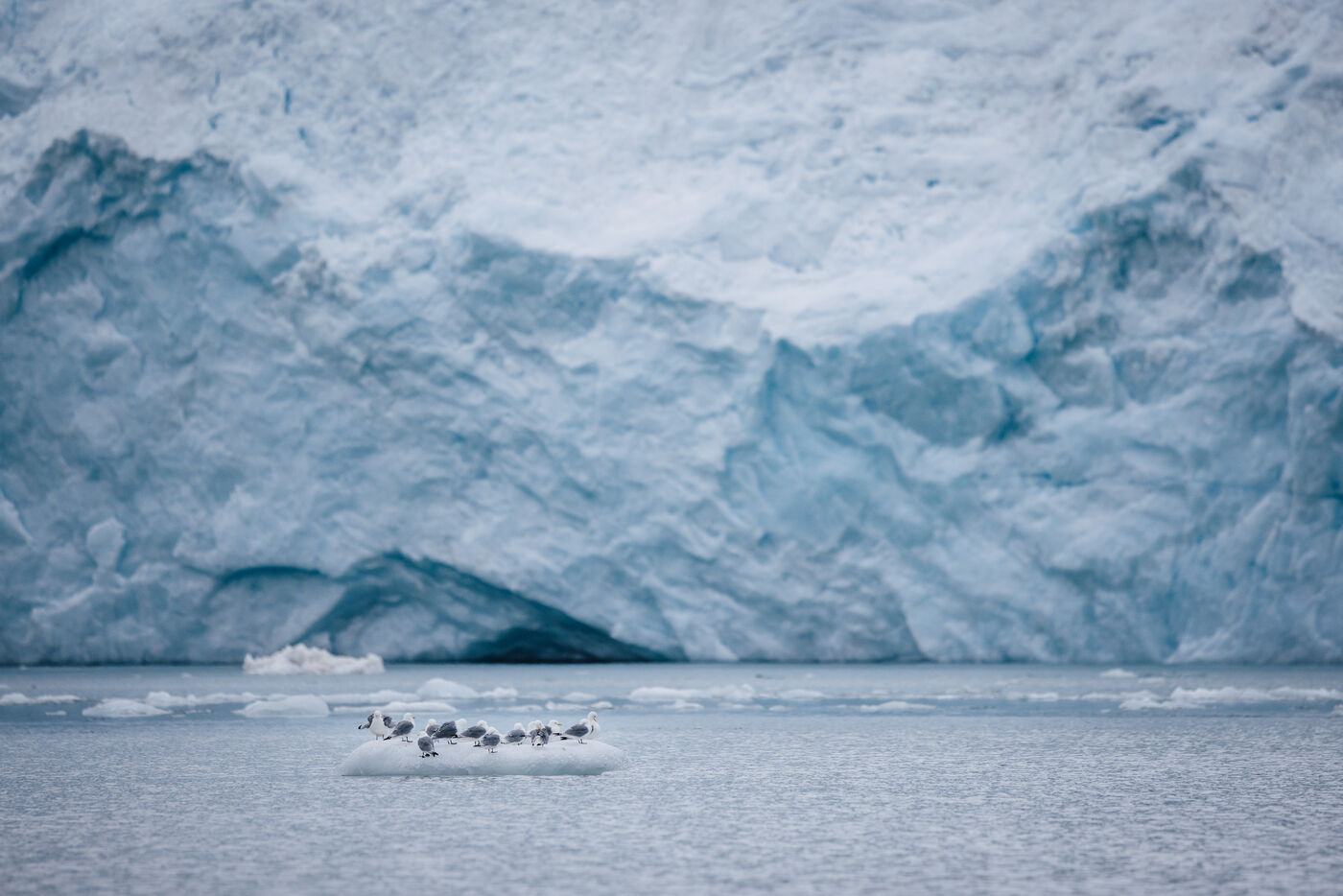
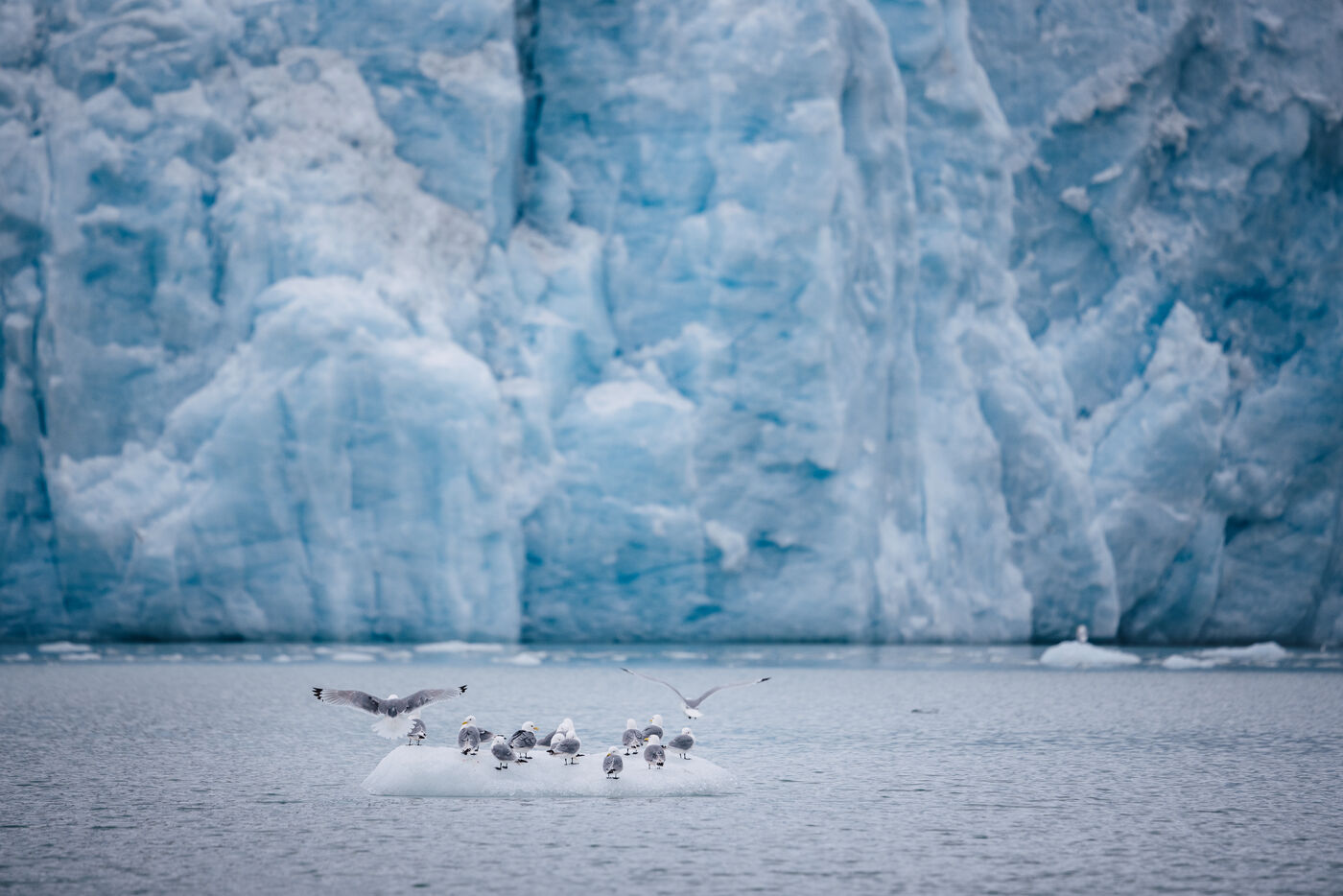
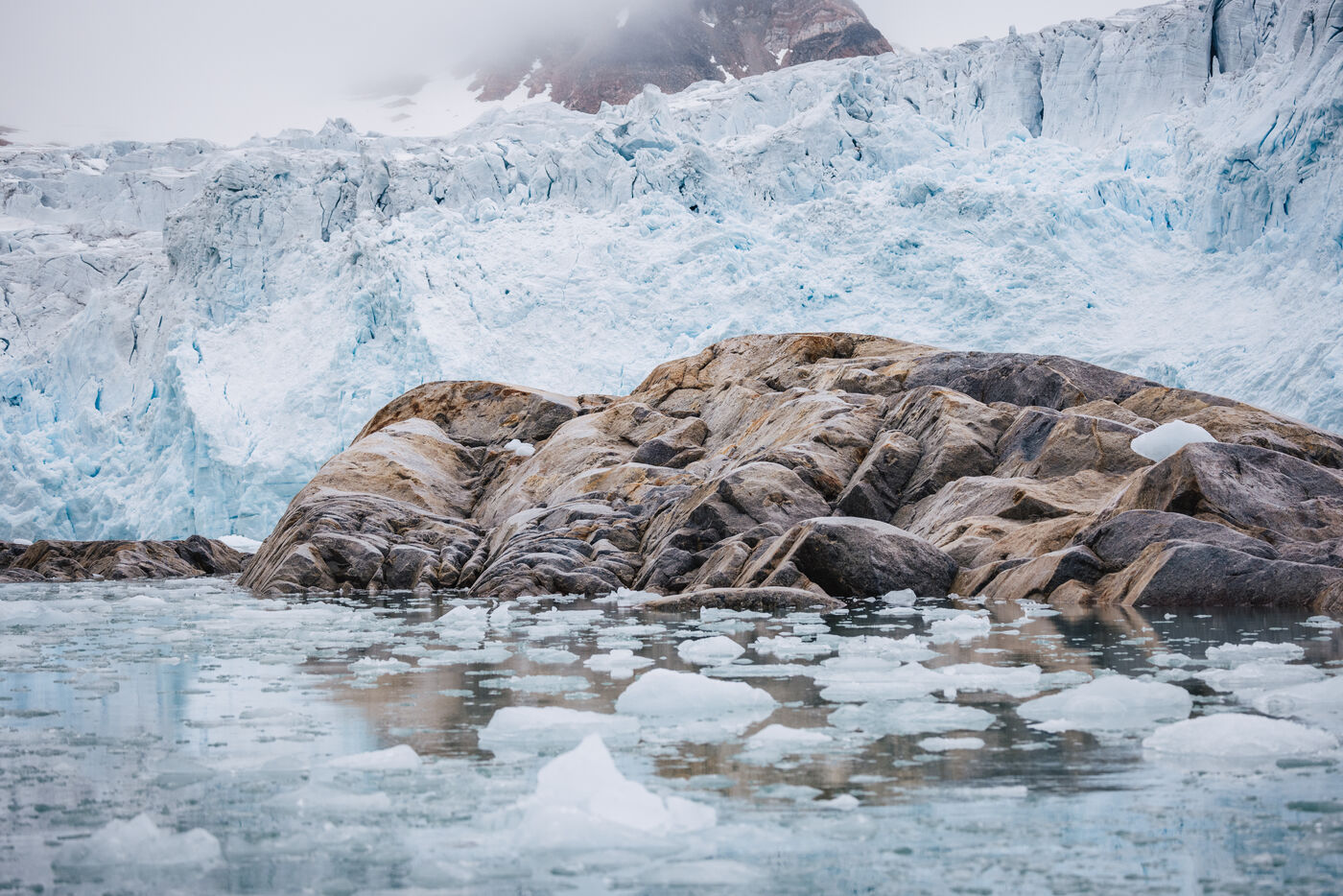
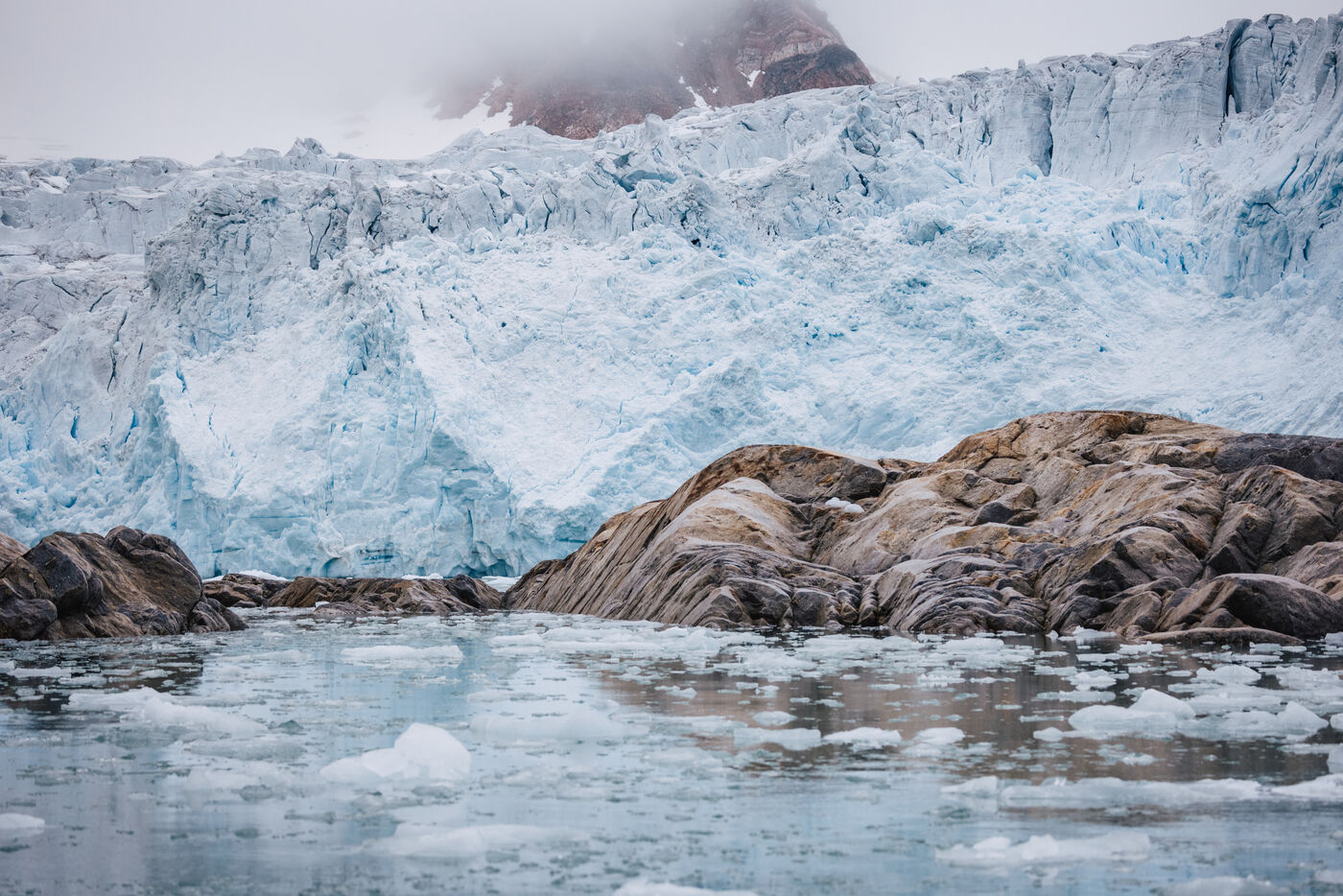
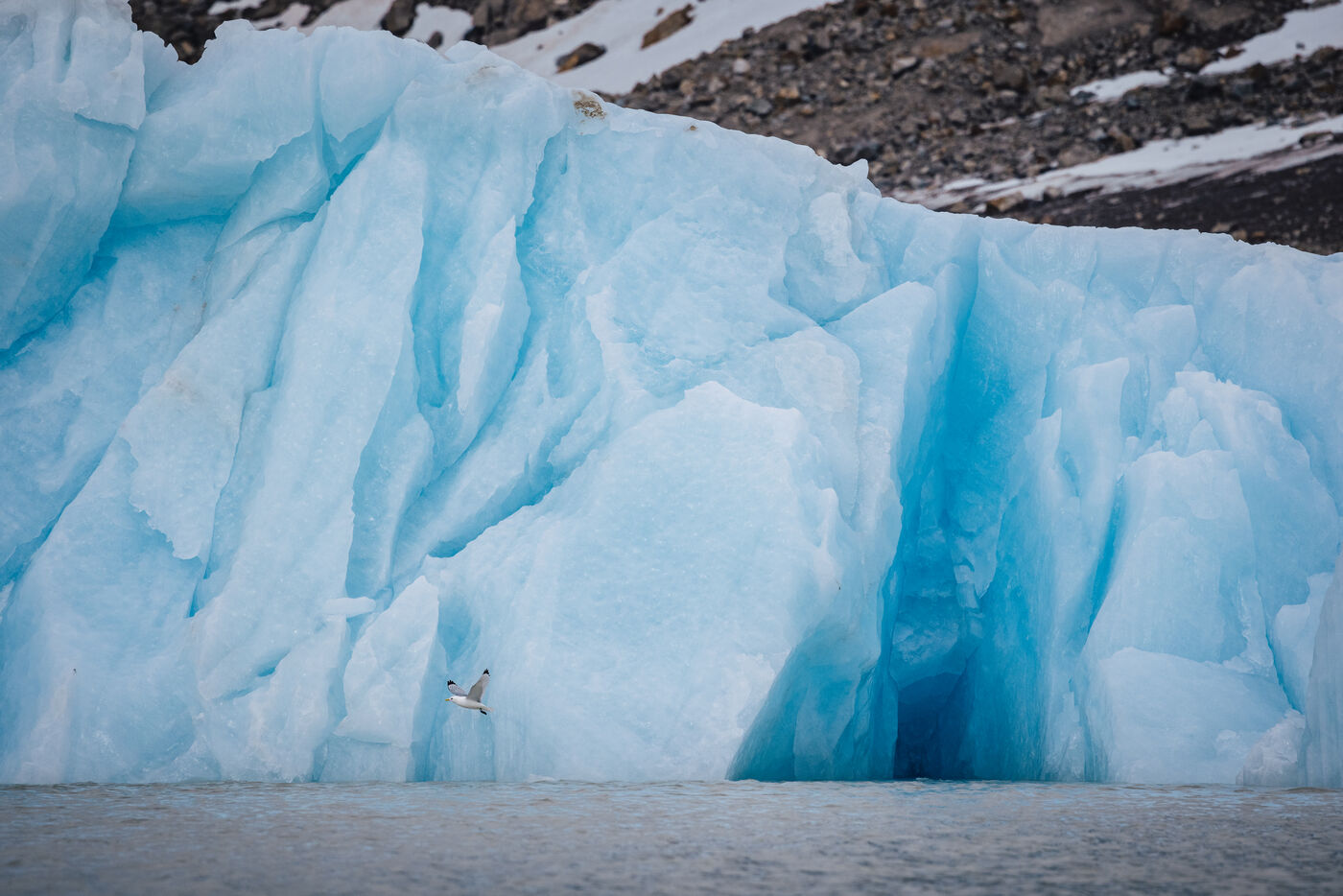
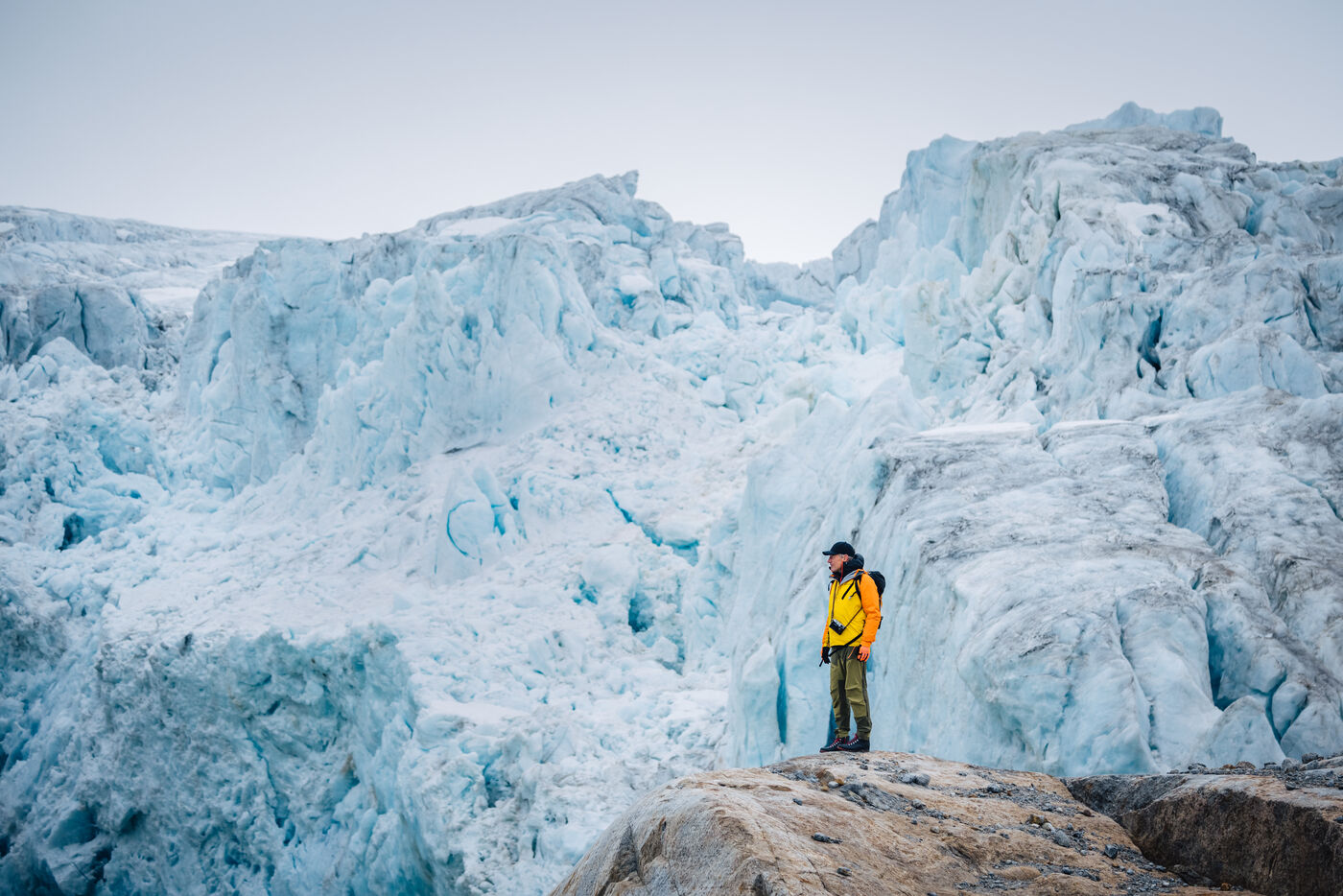
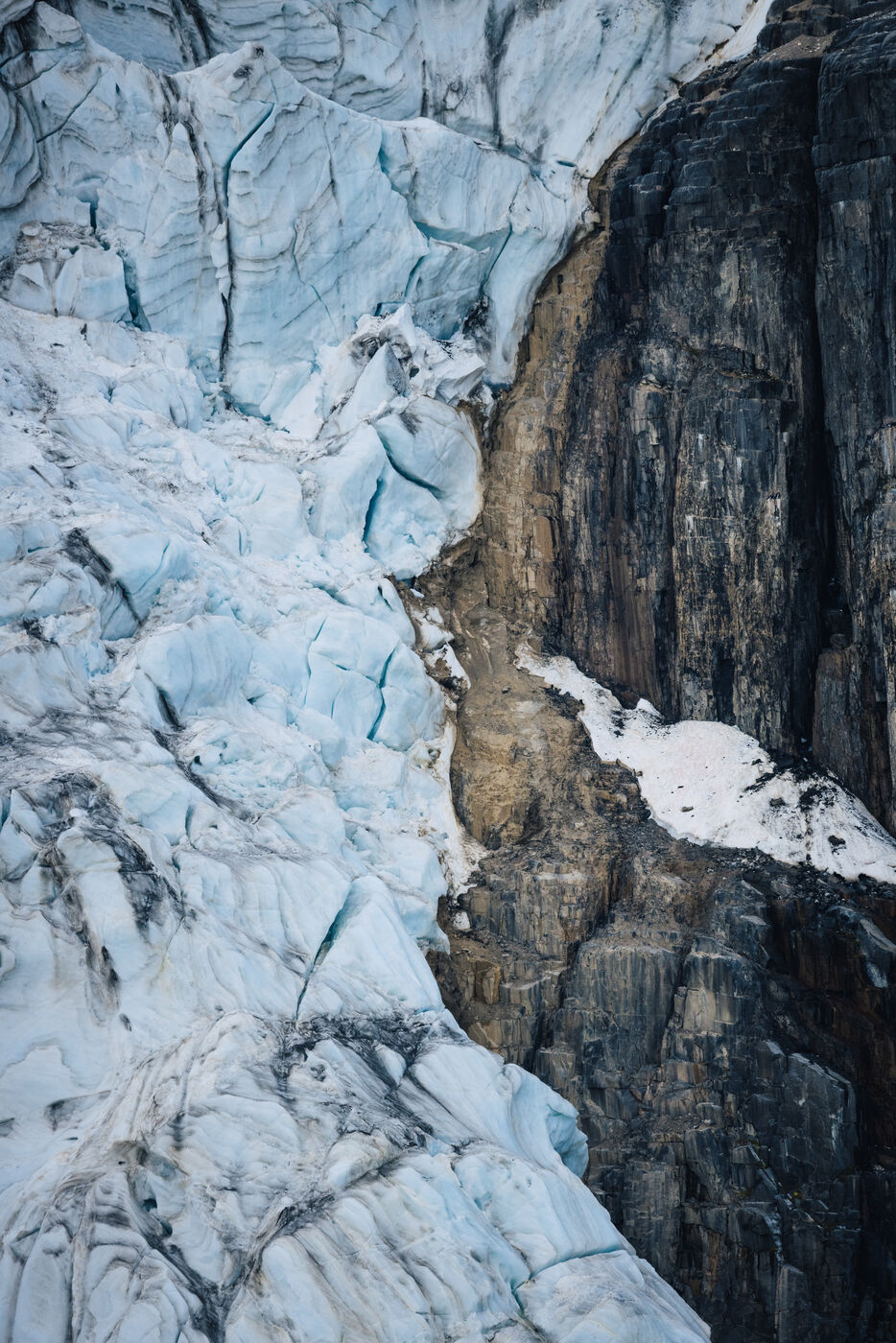
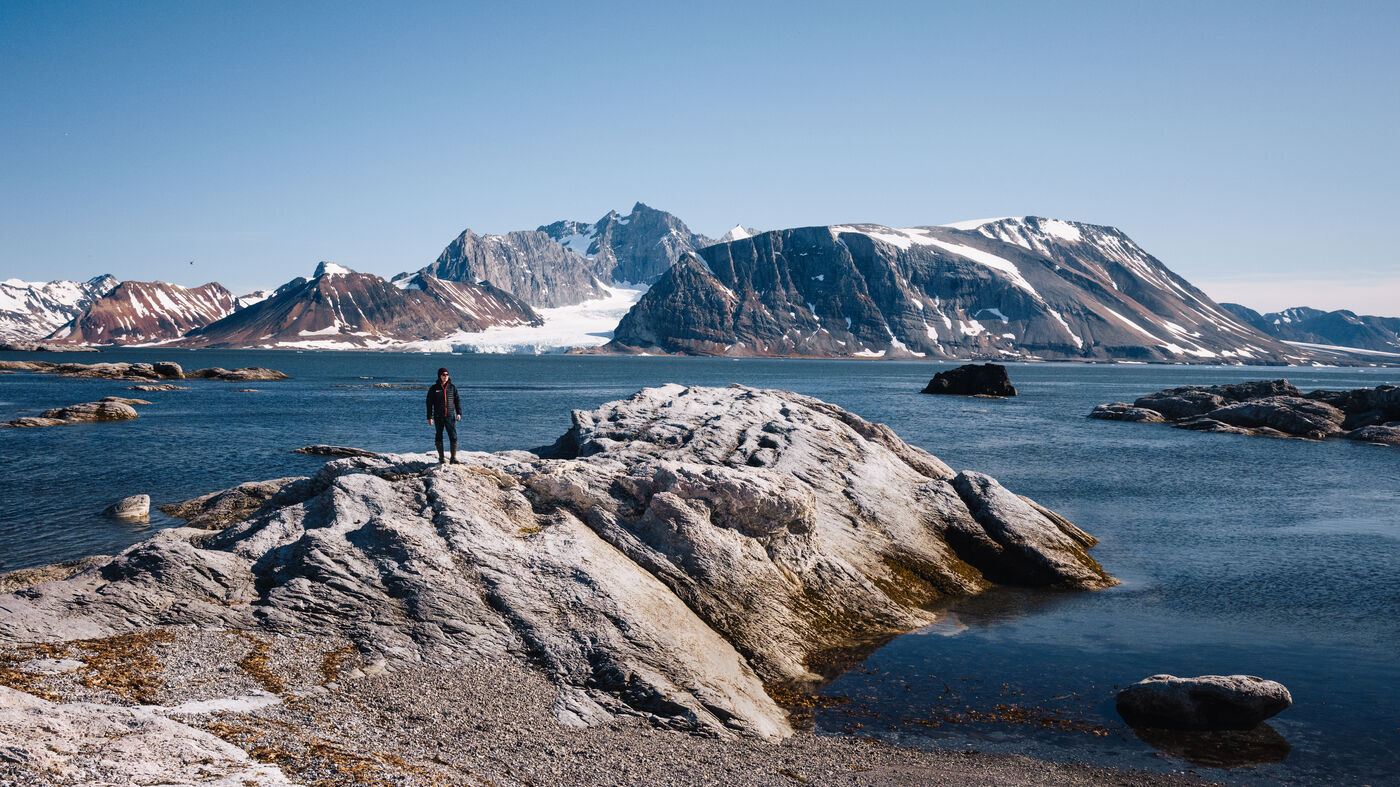
Fuglefjorden delivered immediately. We saw our first glacier up close, a wall of blue ice descending from mountains that touched the midnight sun. The light at 78 degrees North in July never gets dark. It's a perpetual golden twilight that transforms the landscape into something ethereal. The glaciers gleamed. The ice calved and cracked. And everywhere, the silence. The Arctic has a sound to it. Or rather, the profound absence of sound.

Kinfish cabin with bed and porthole window Pastries and coffee cups aboard ship
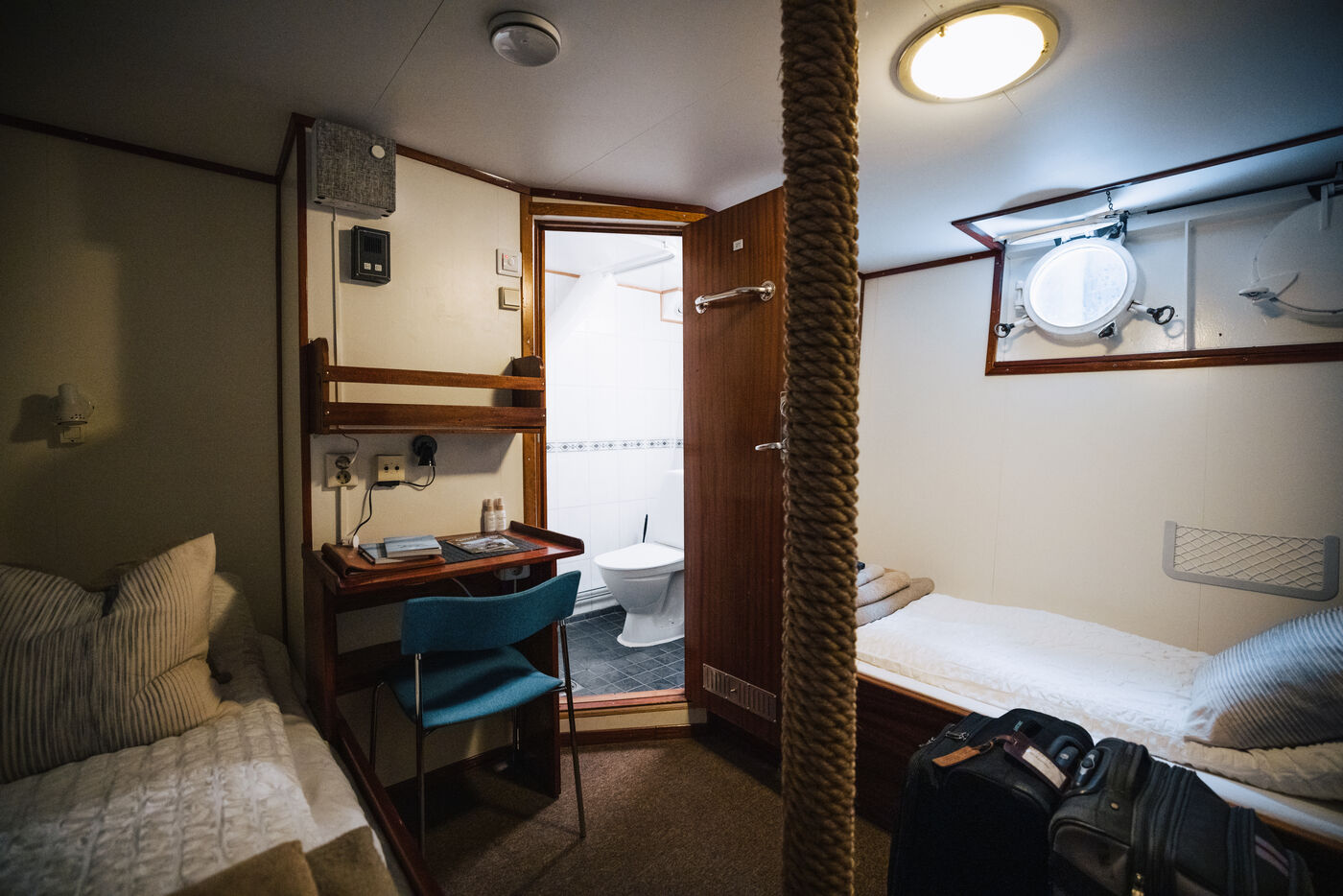
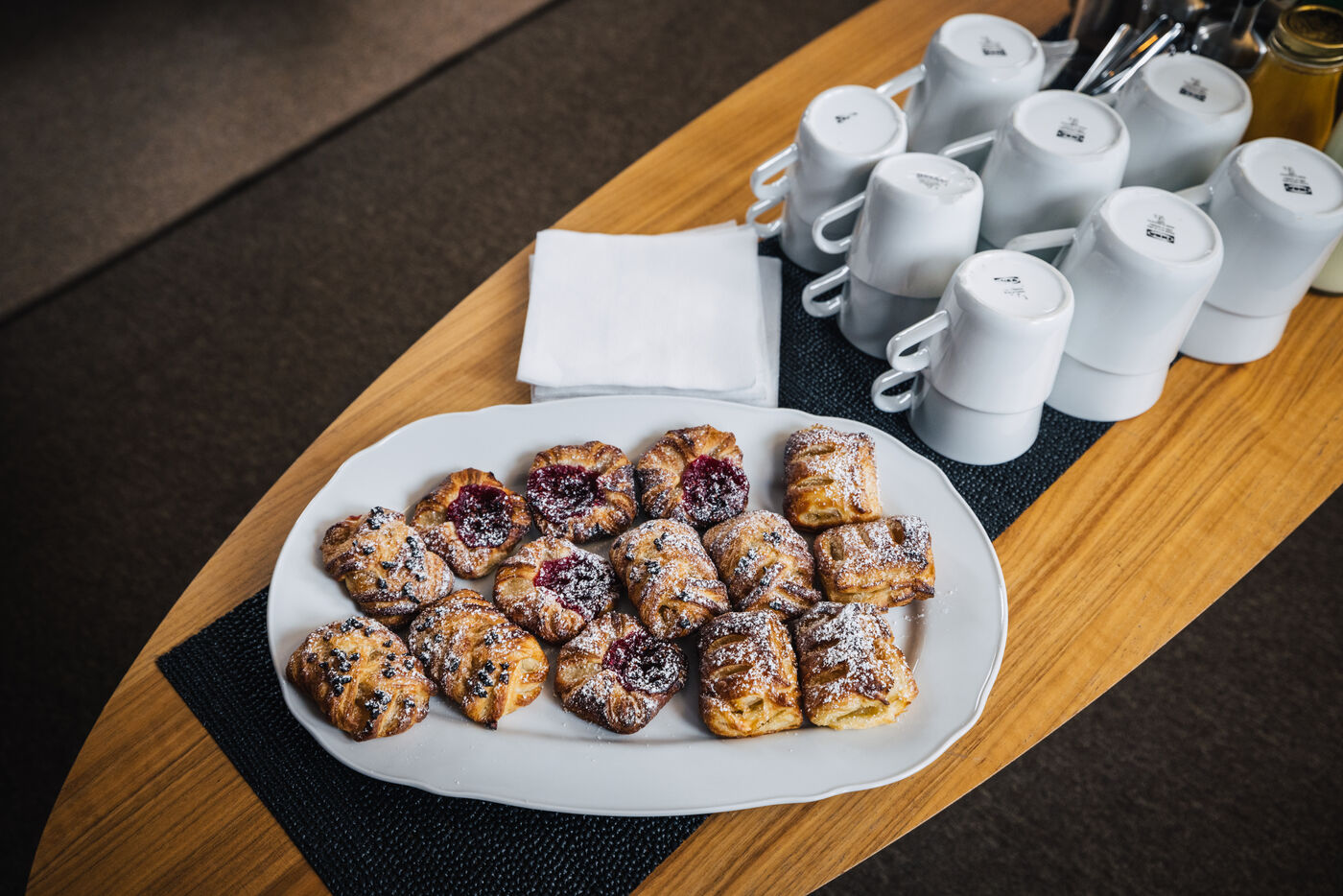
My cabin aboard the Kinfish, where reindeer moss pastries awaited each morning.
Bridge view from the Kinfish with instrument panels
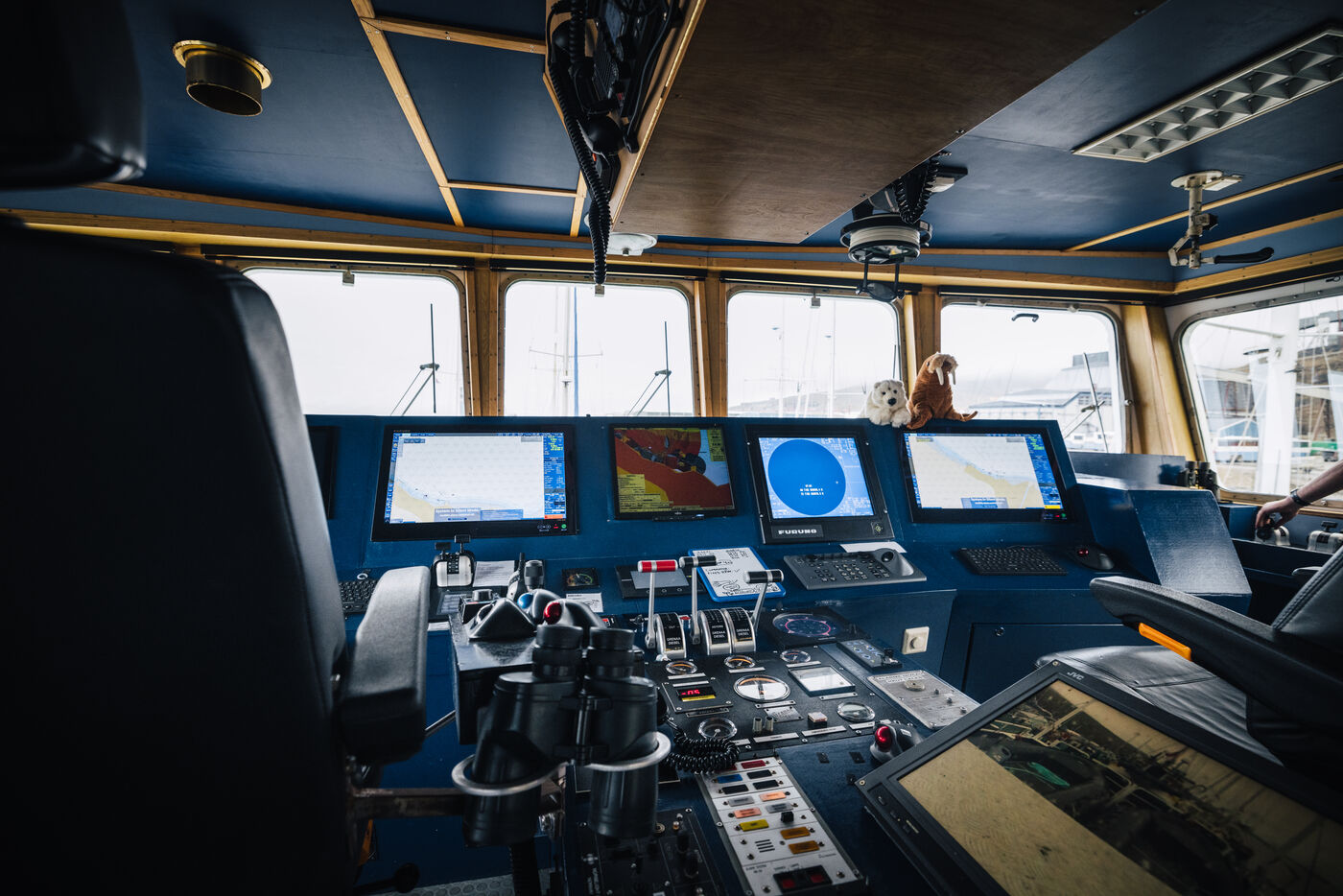
The bridge, where our guides navigated us through Arctic waters and ice.
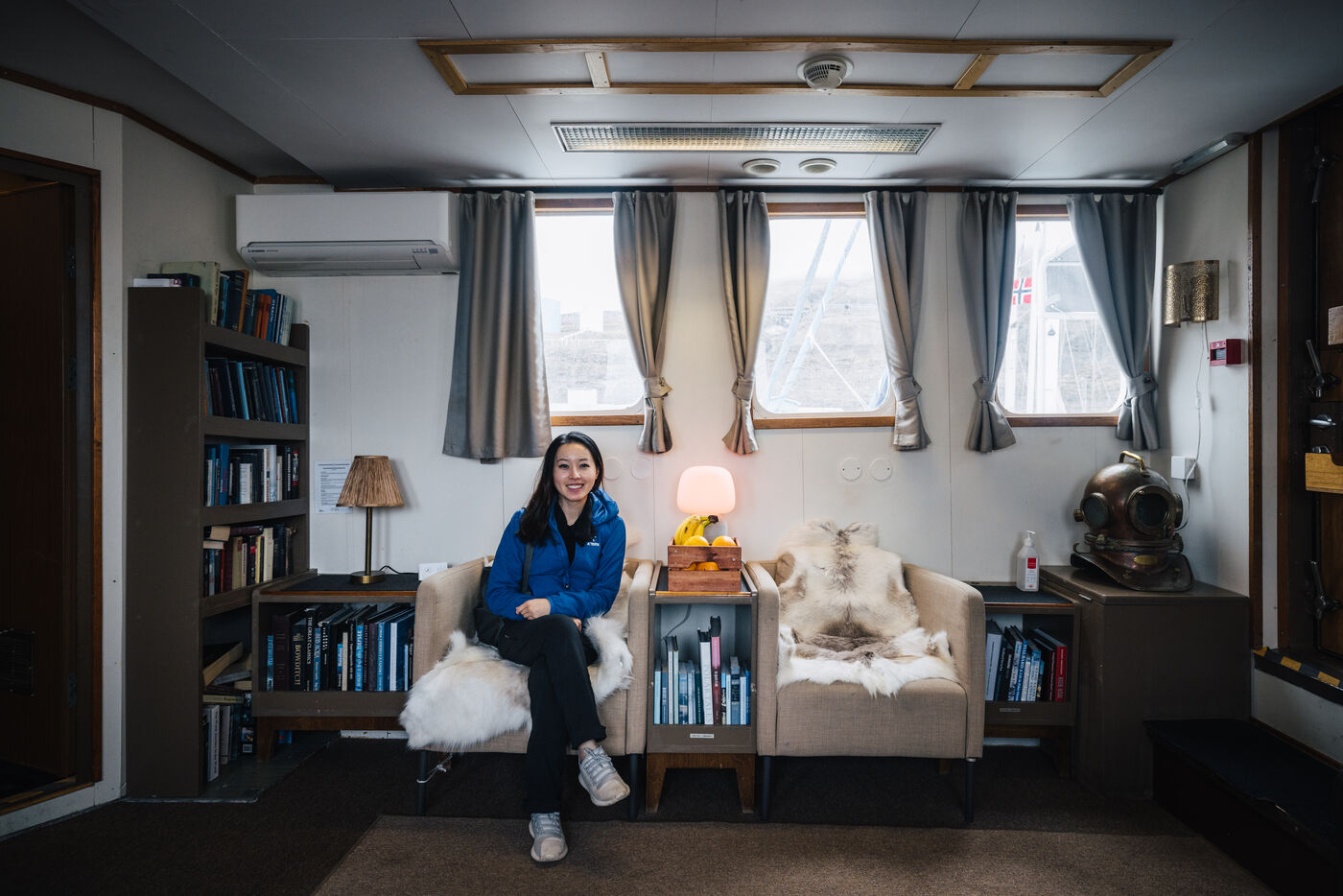
Passenger in lounge area with pastries Woman in a blue jacket seated in the Kinfish lounge between bookshelves and reindeer-hide armchairs
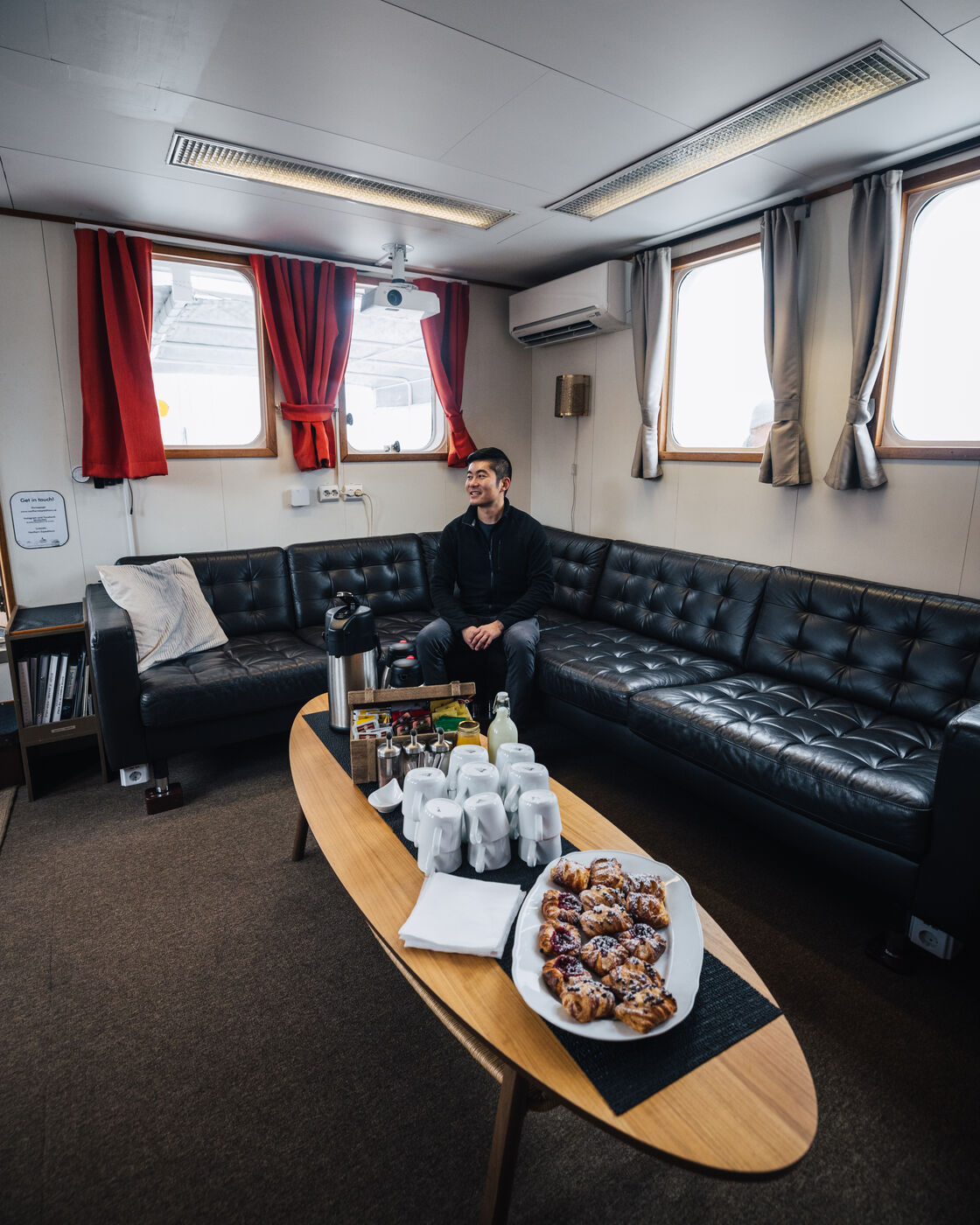
Onboard comfort: the Kinfish lounge, pastries on the table and reindeer hides on the chairs.
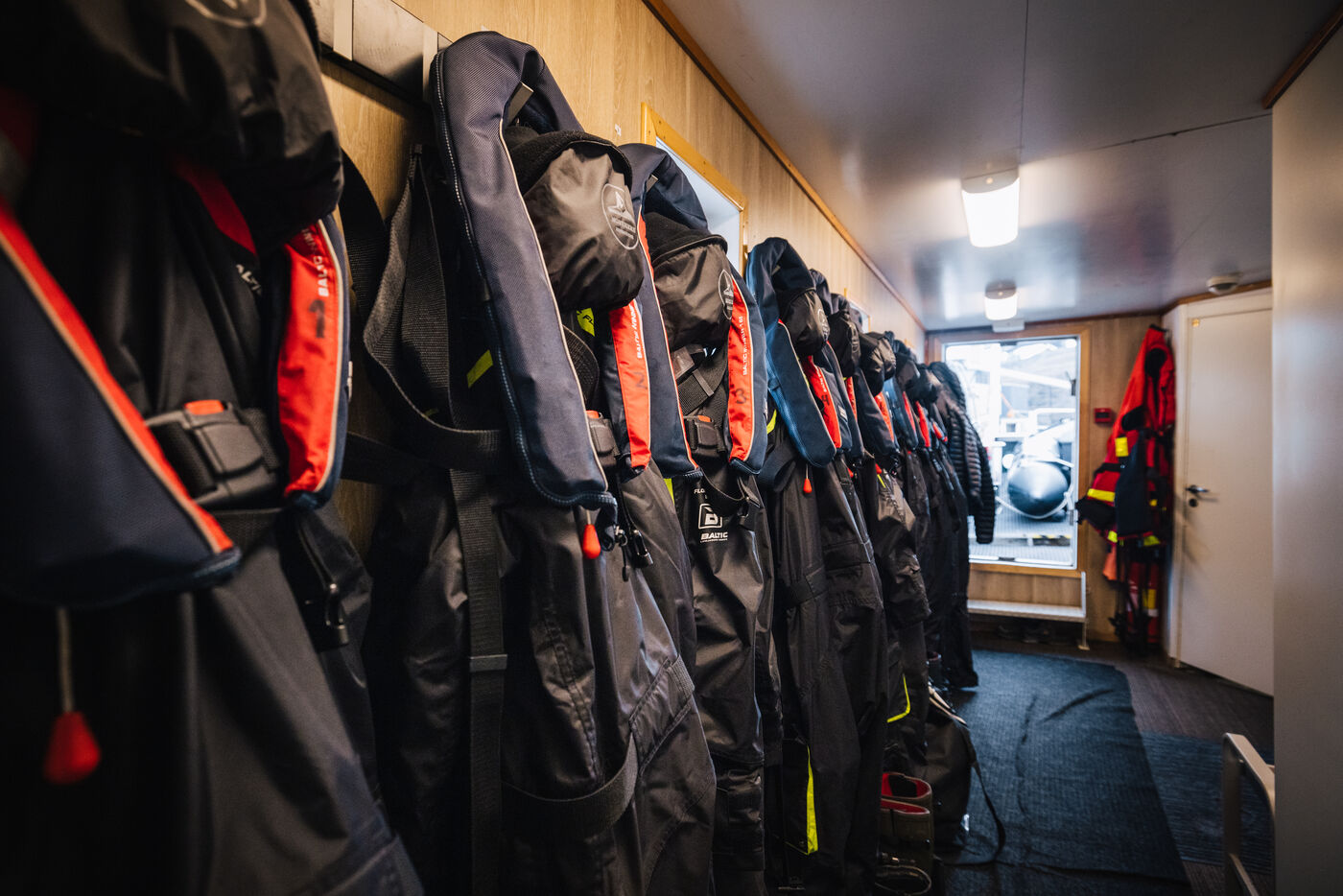
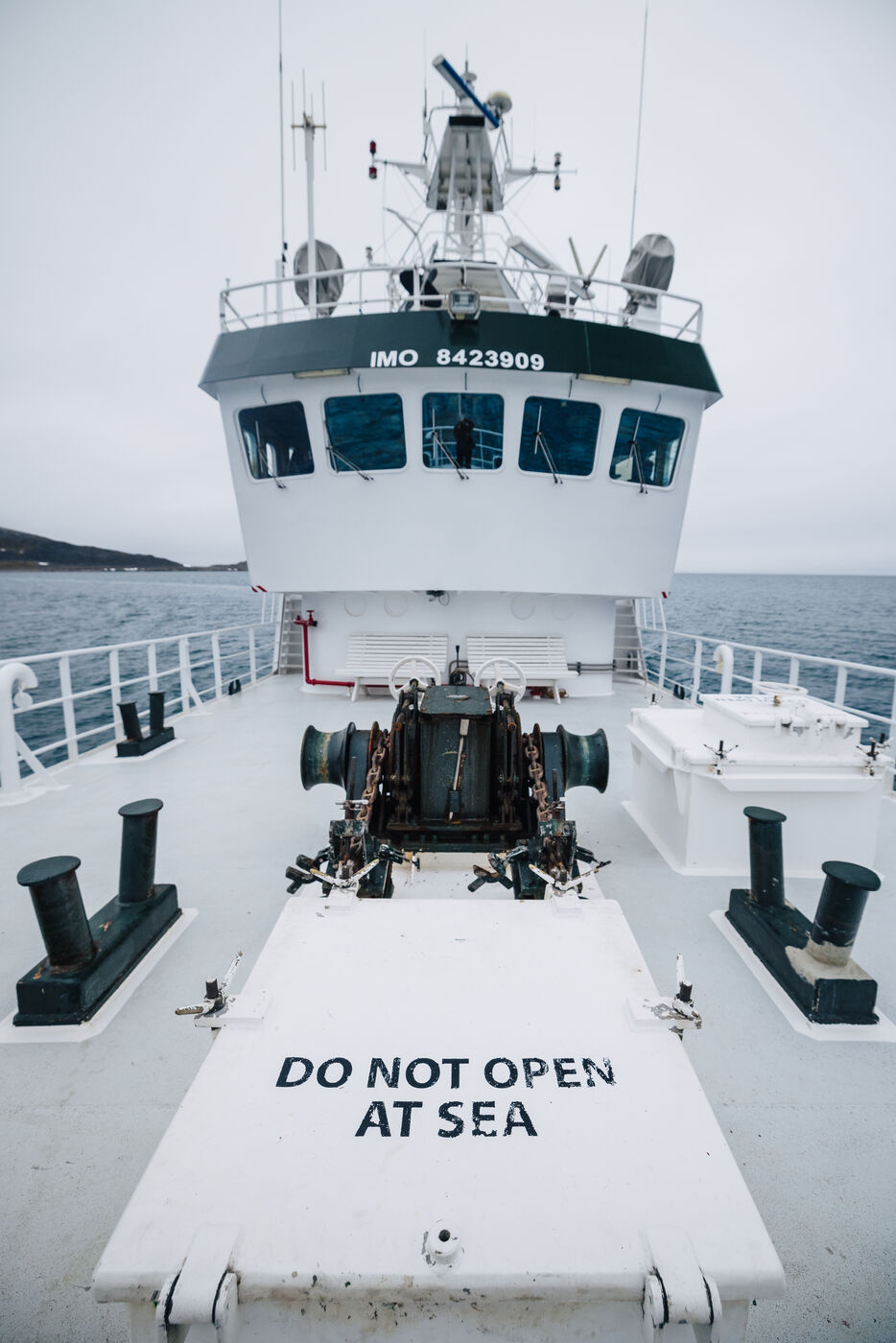
Expedition gear and life jackets hanging in a corridor aboard the Kinfish Kinfish viewed from the deck looking toward the bridge with IMO number visible
Survival suits and life jackets ready in the corridor, and the view forward over the Kinfish's bow.

Polar Bears at Midnight

July 24, 2022 (the small hours). Norskøya, Svalbard

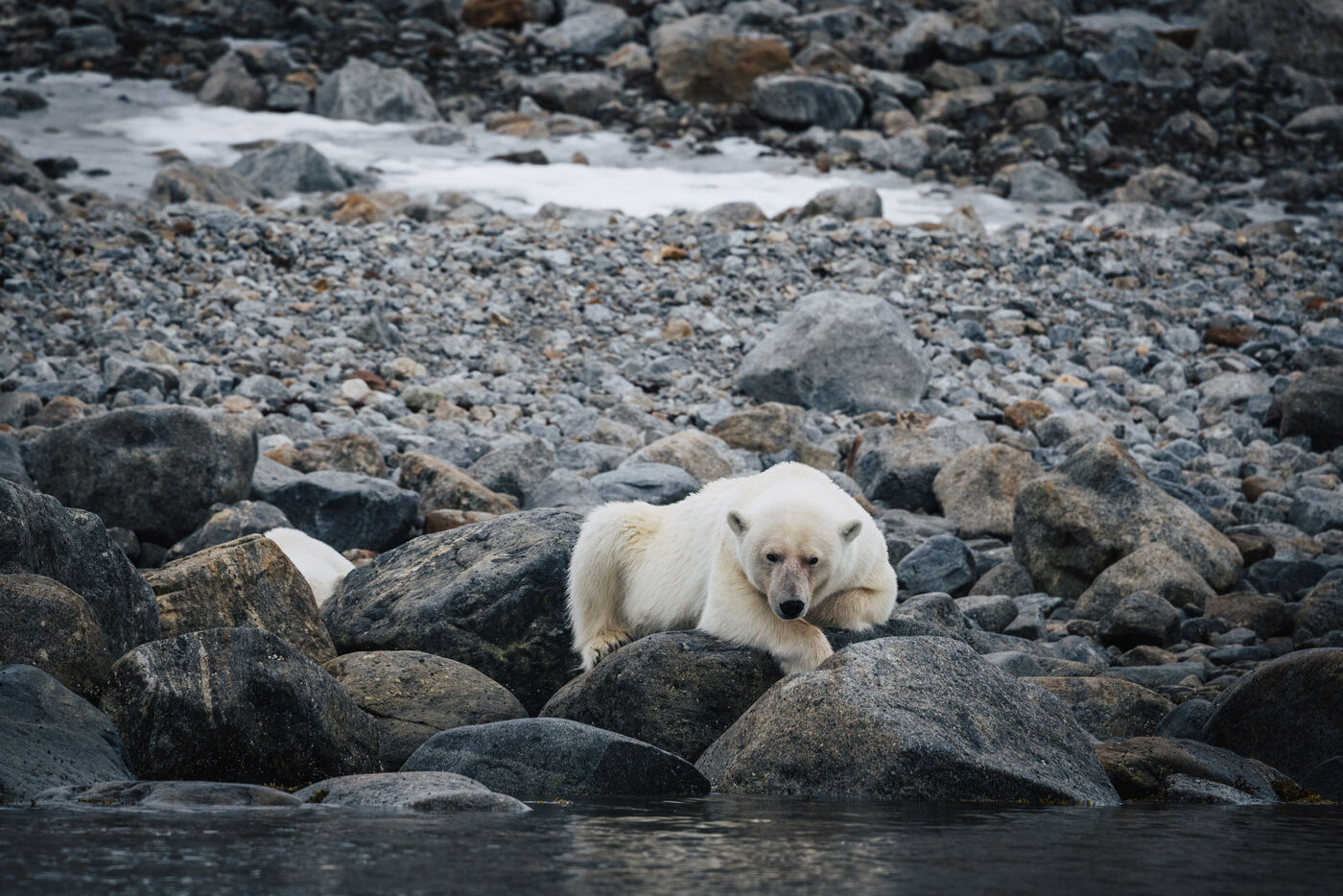
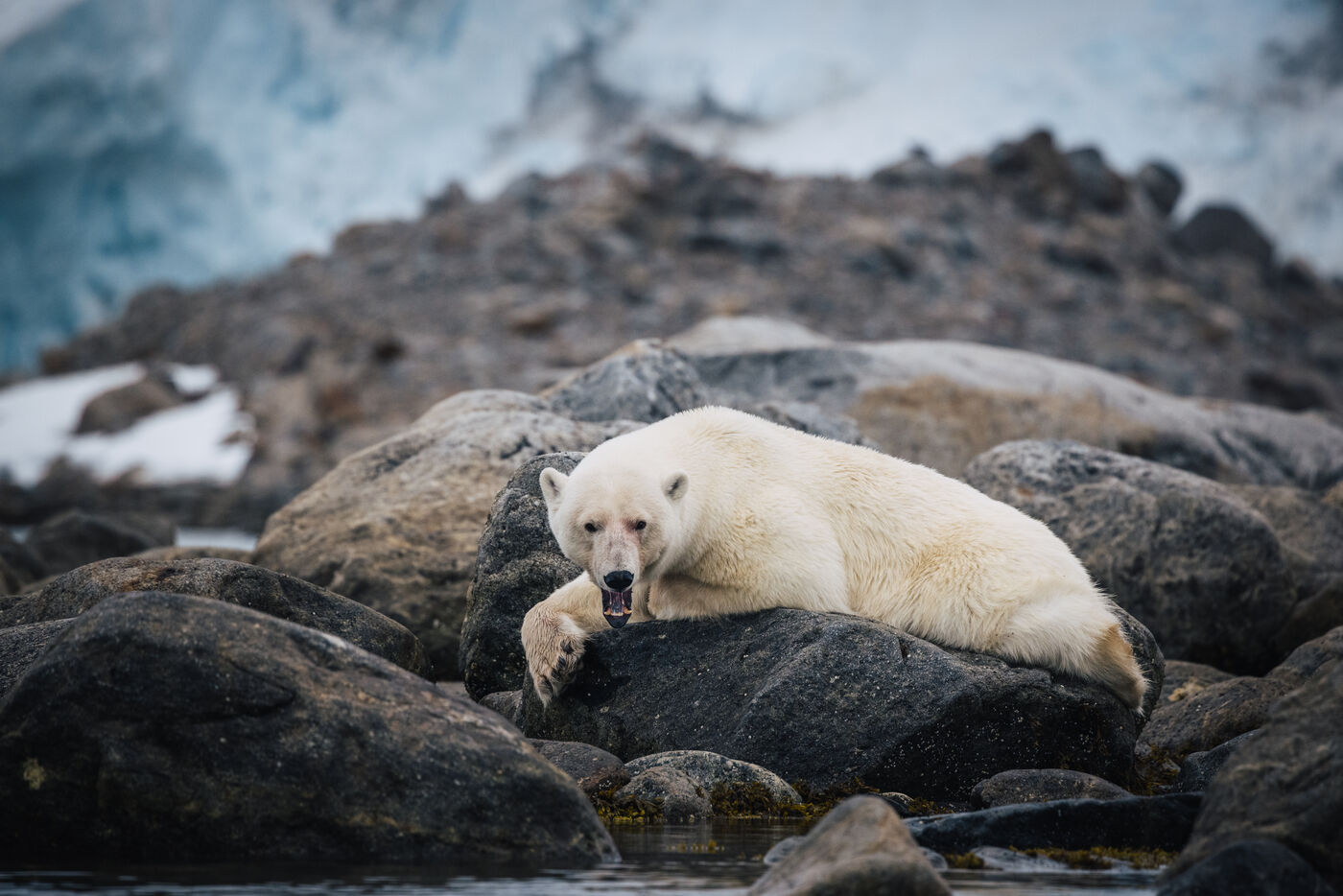
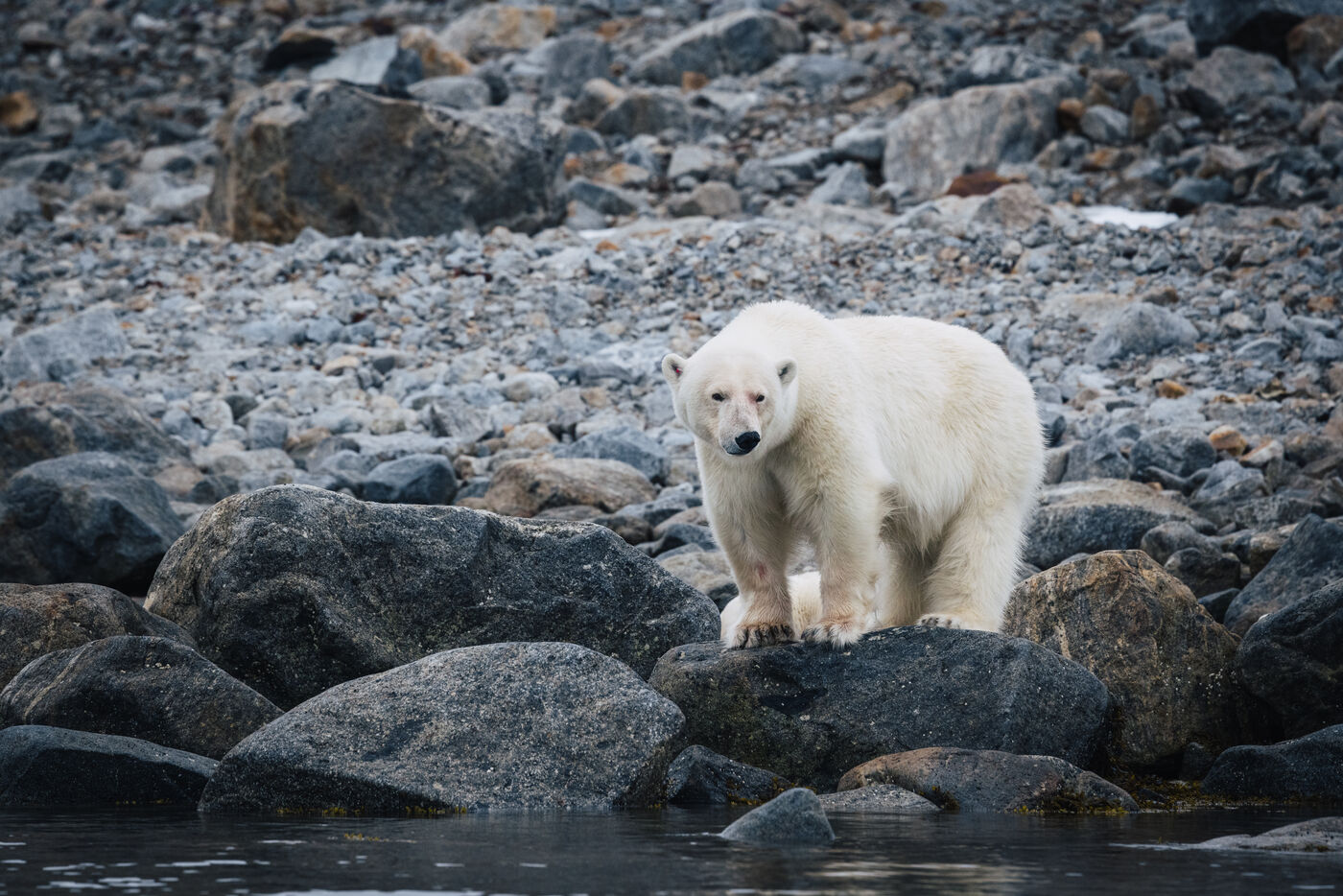
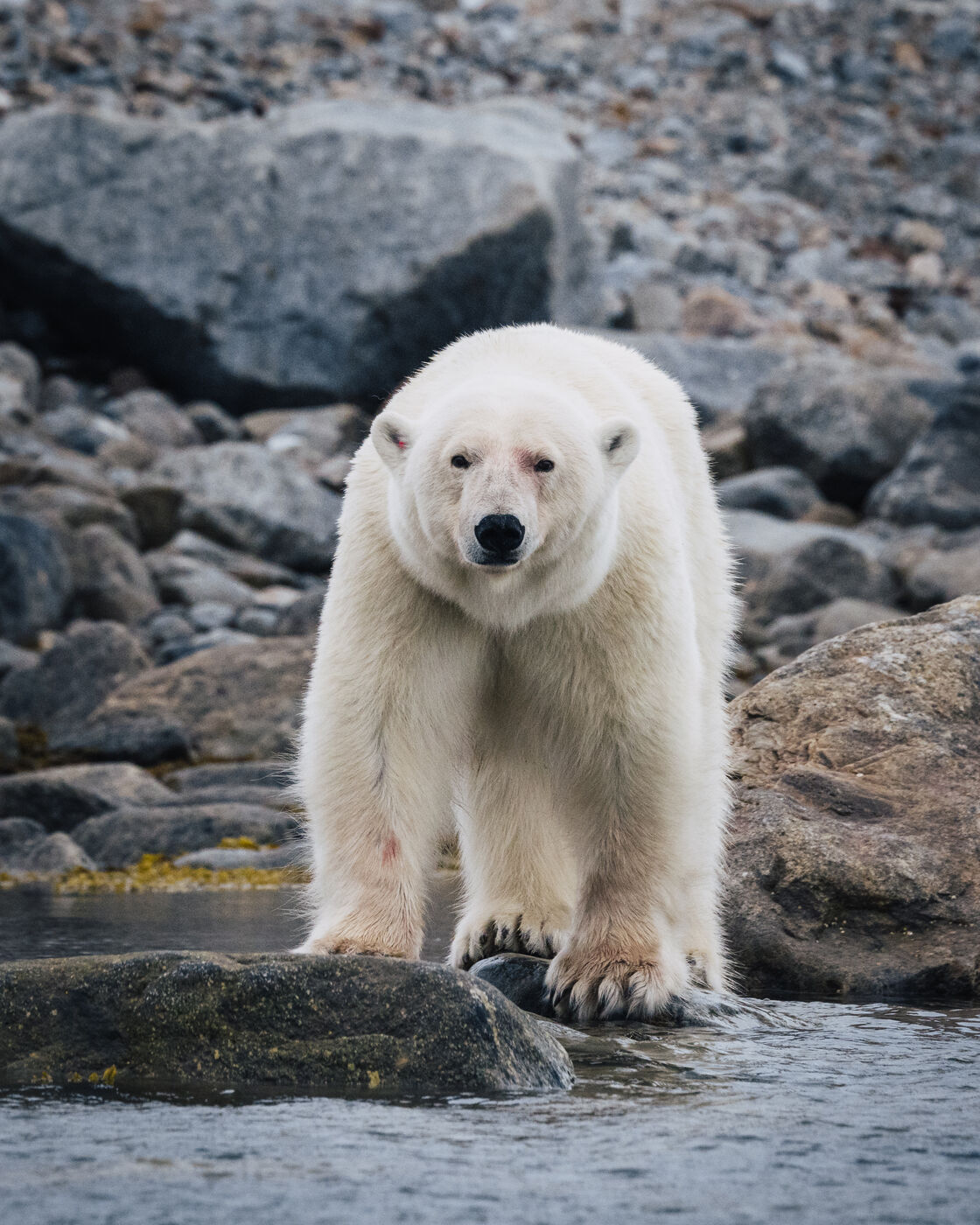
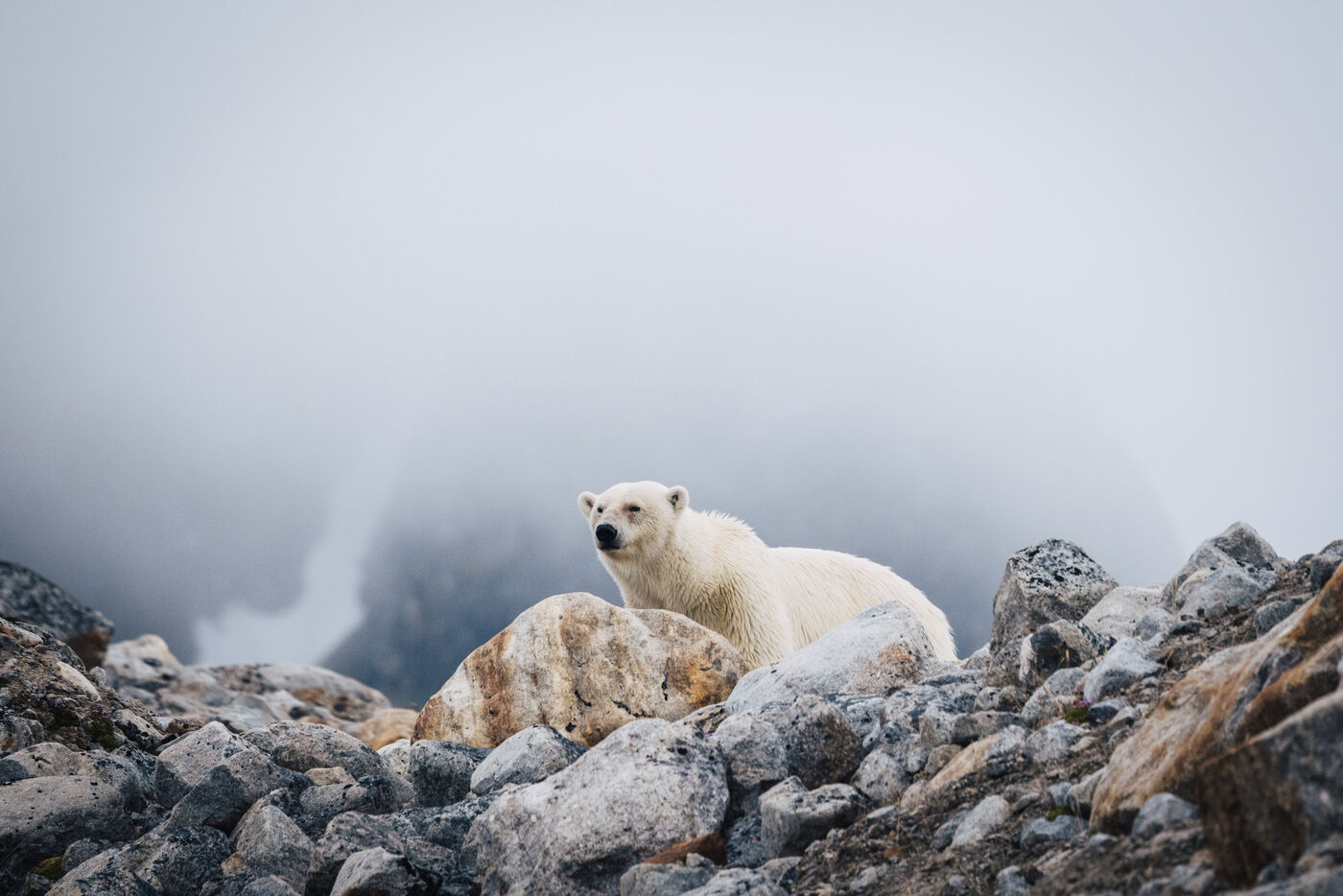
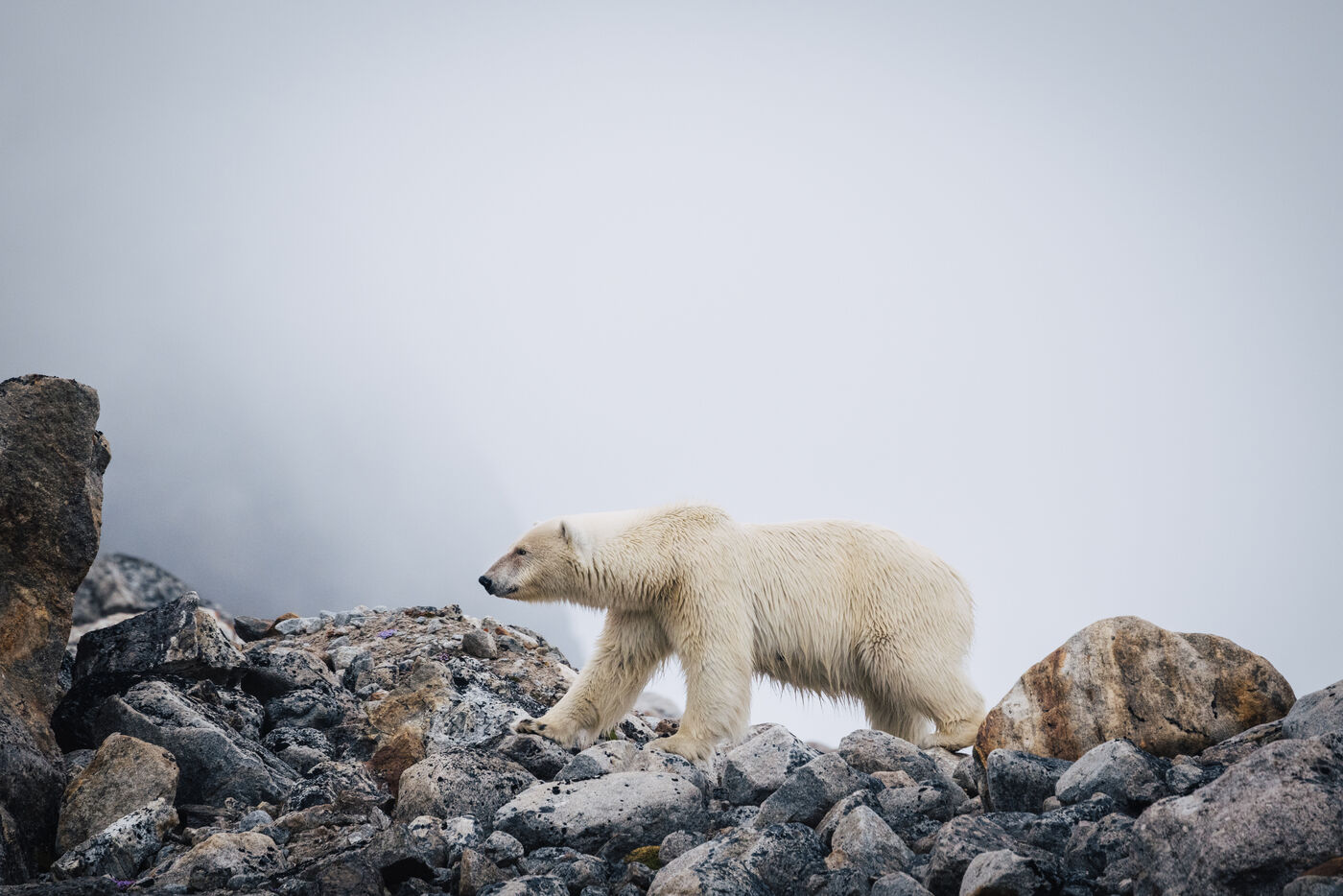
The night of July 23rd didn't feel like night at all. The sun never set. At midnight, it merely dipped toward the horizon before climbing back up again, a perpetual cycle that would confuse our circadian rhythms for days. The Kinfish motored toward Norskøya, and as the light remained golden and constant, we spotted our first polar bear. A lone figure standing on the rocky shoreline, completely at ease in a landscape that would break most living things.

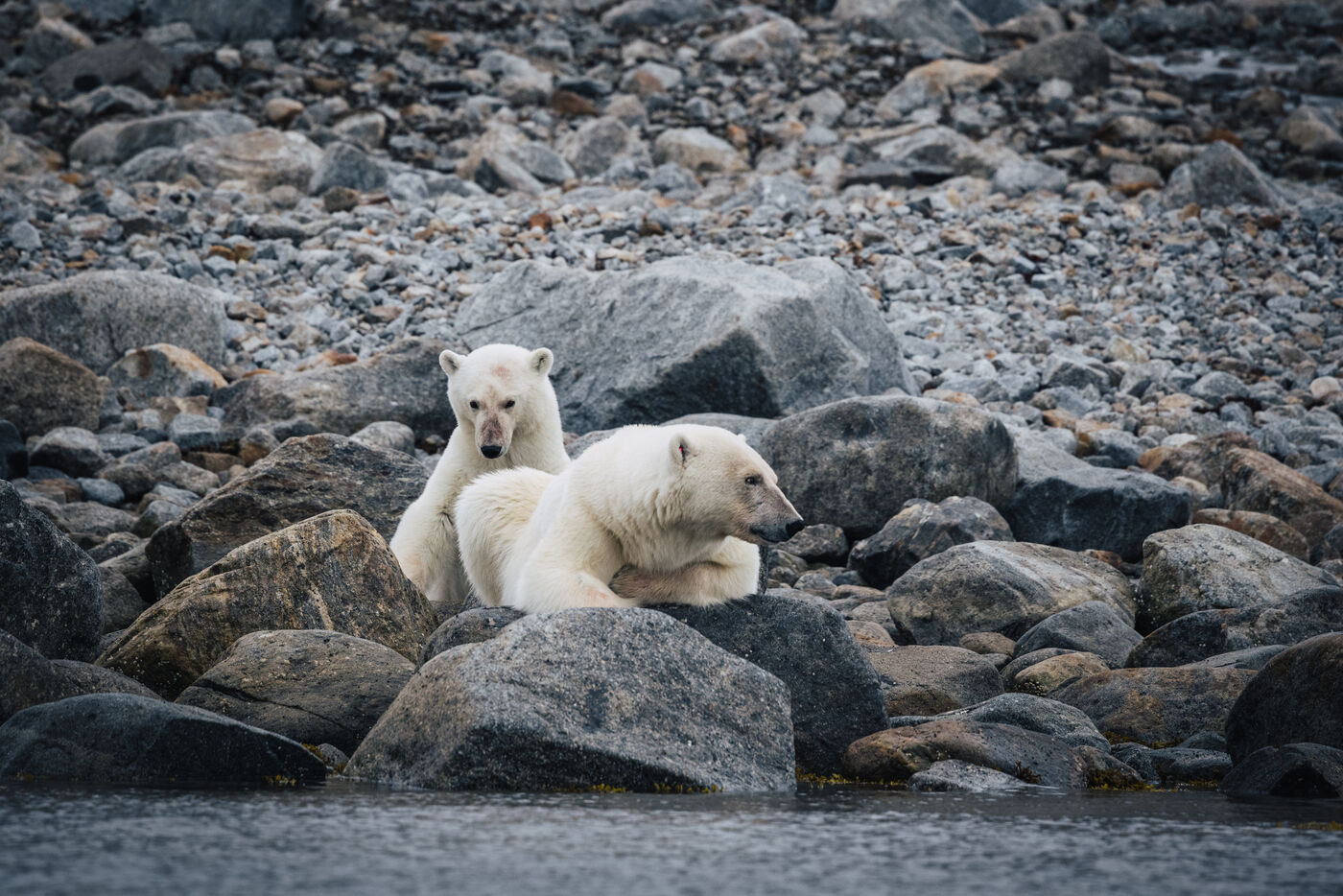
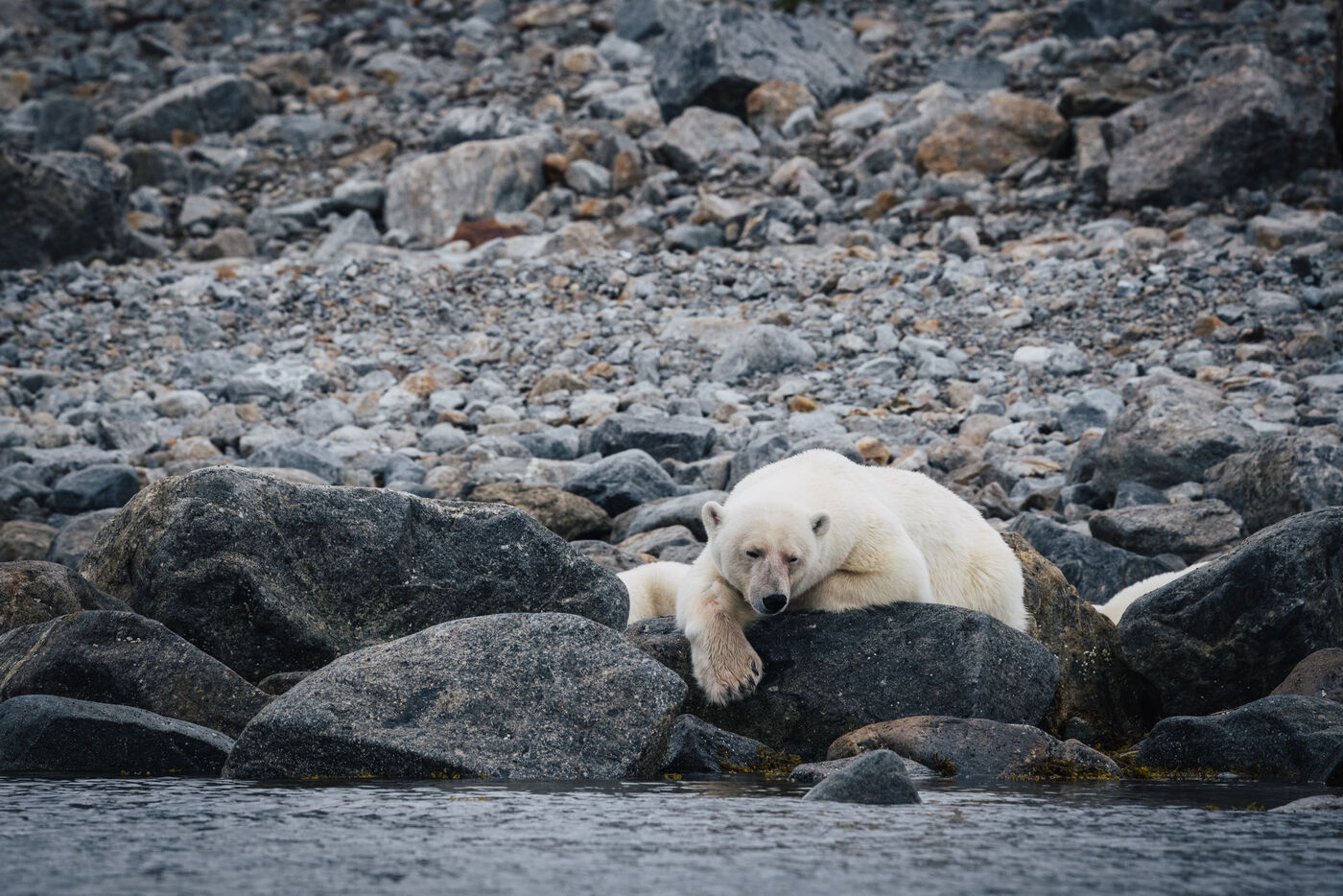
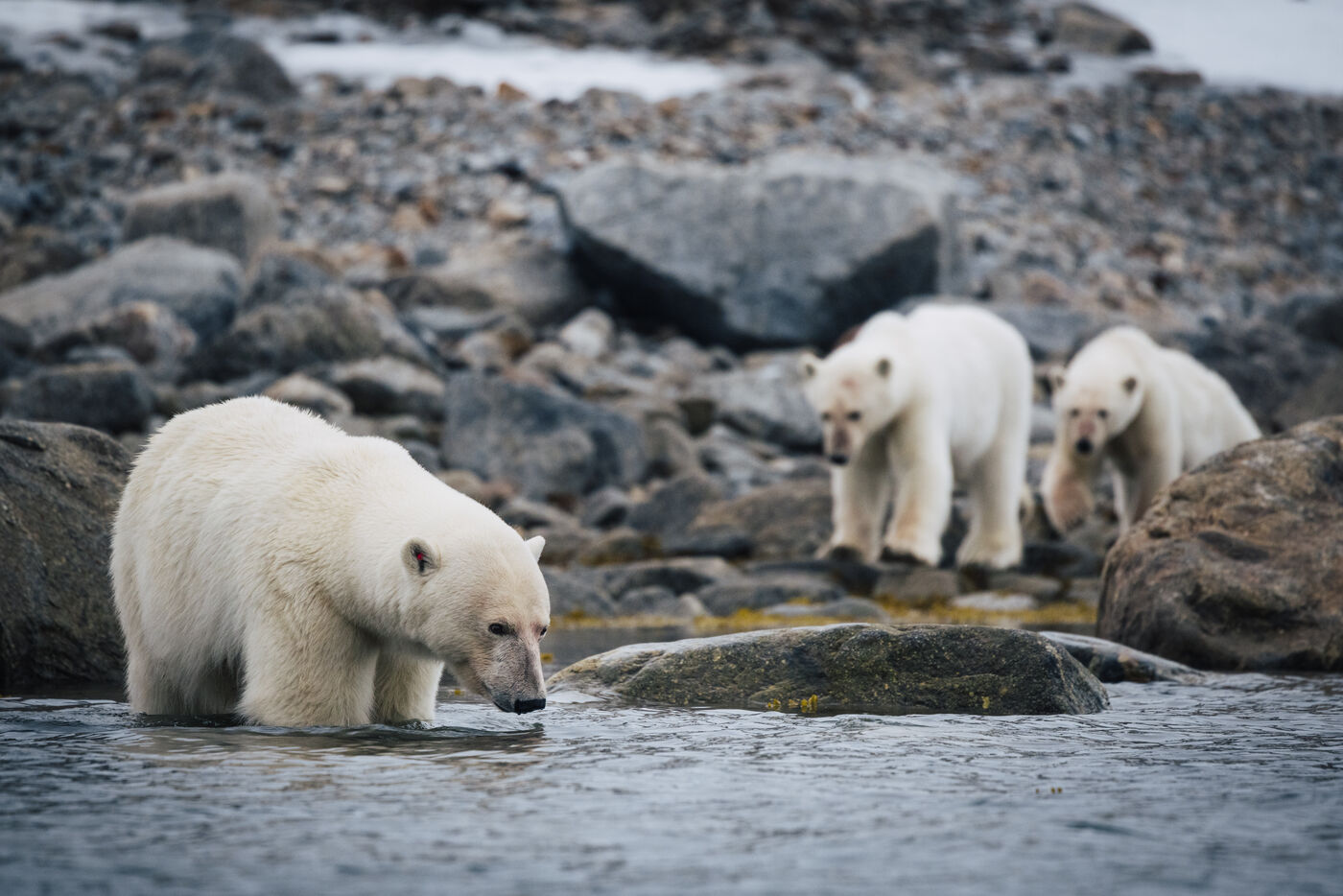
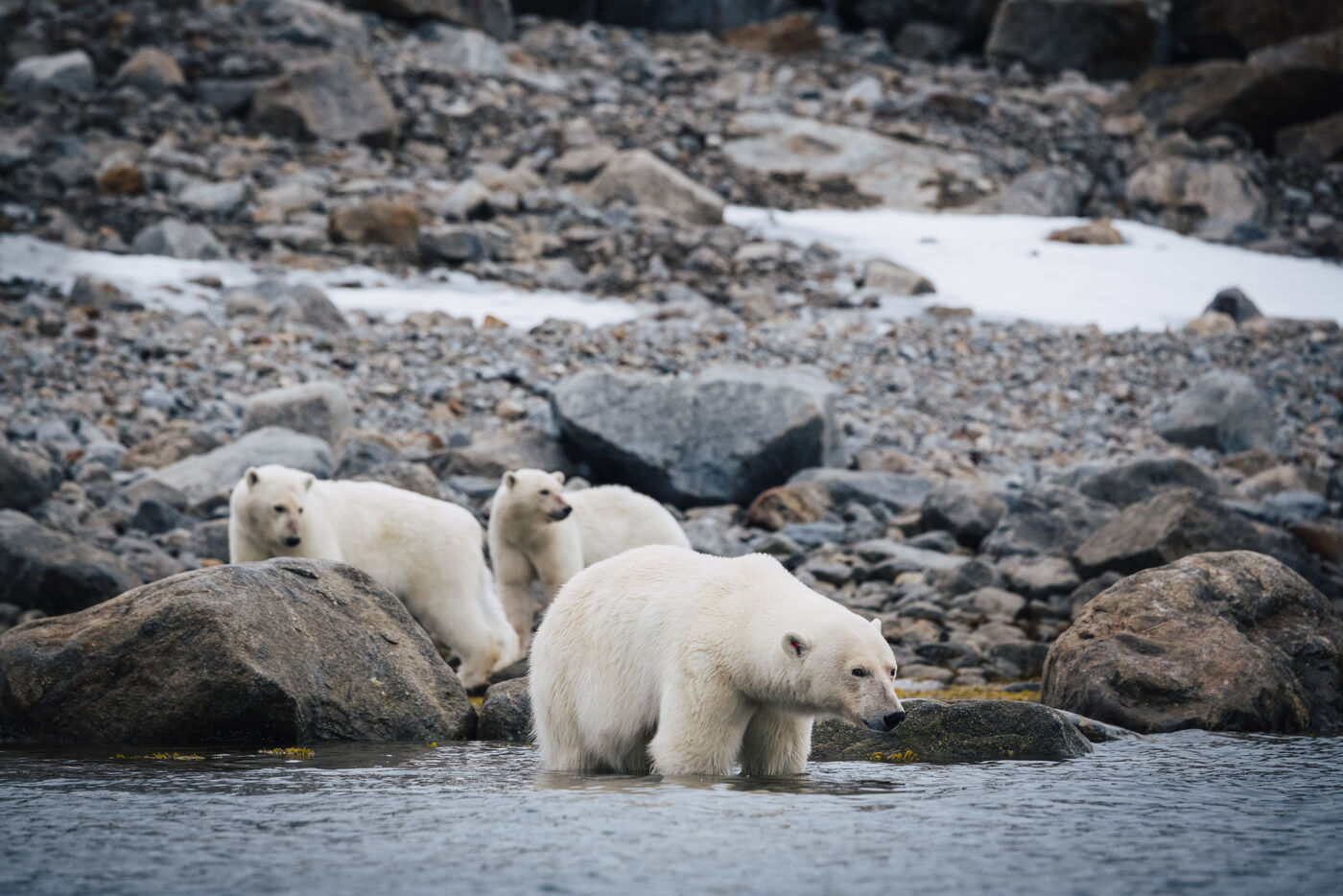
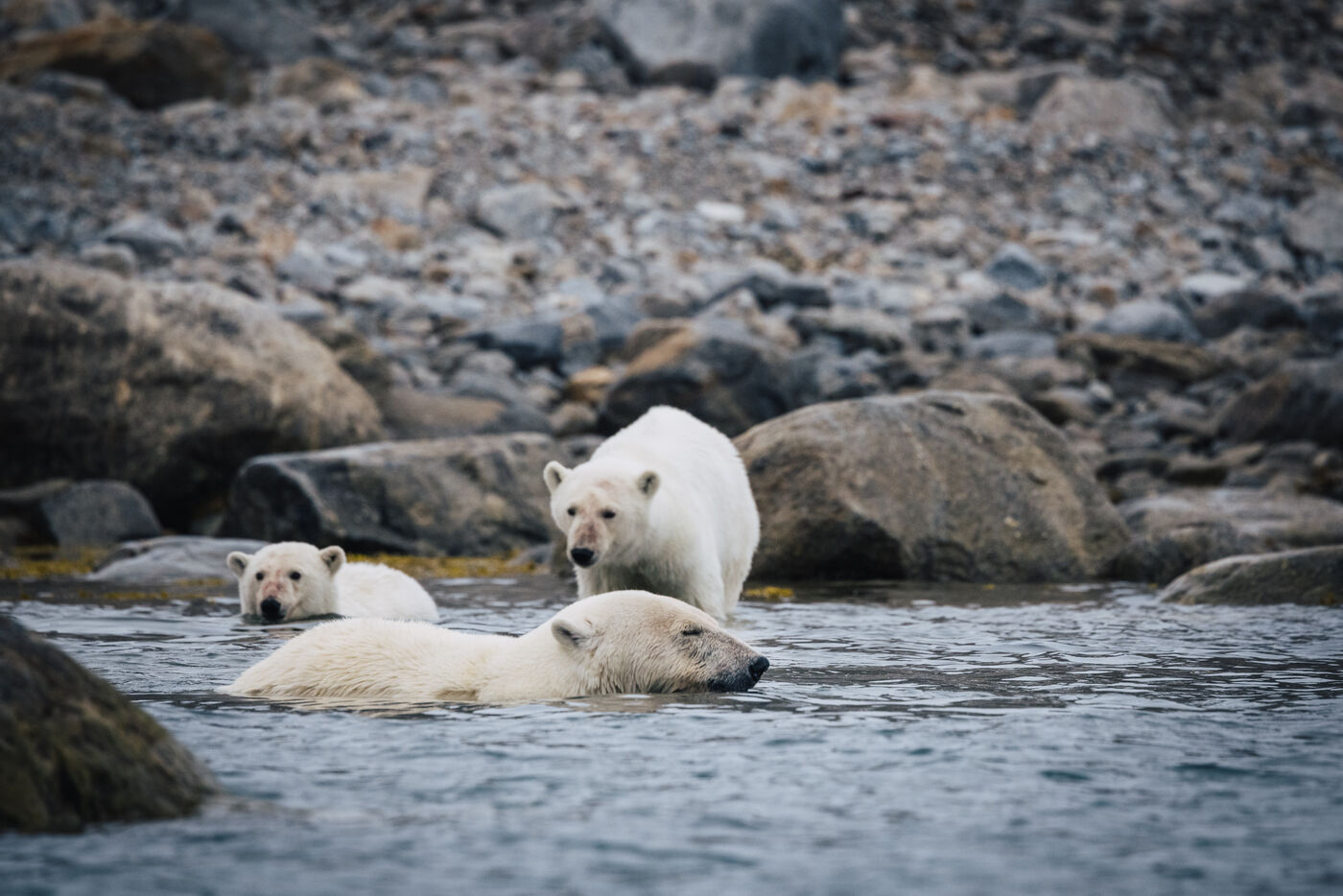
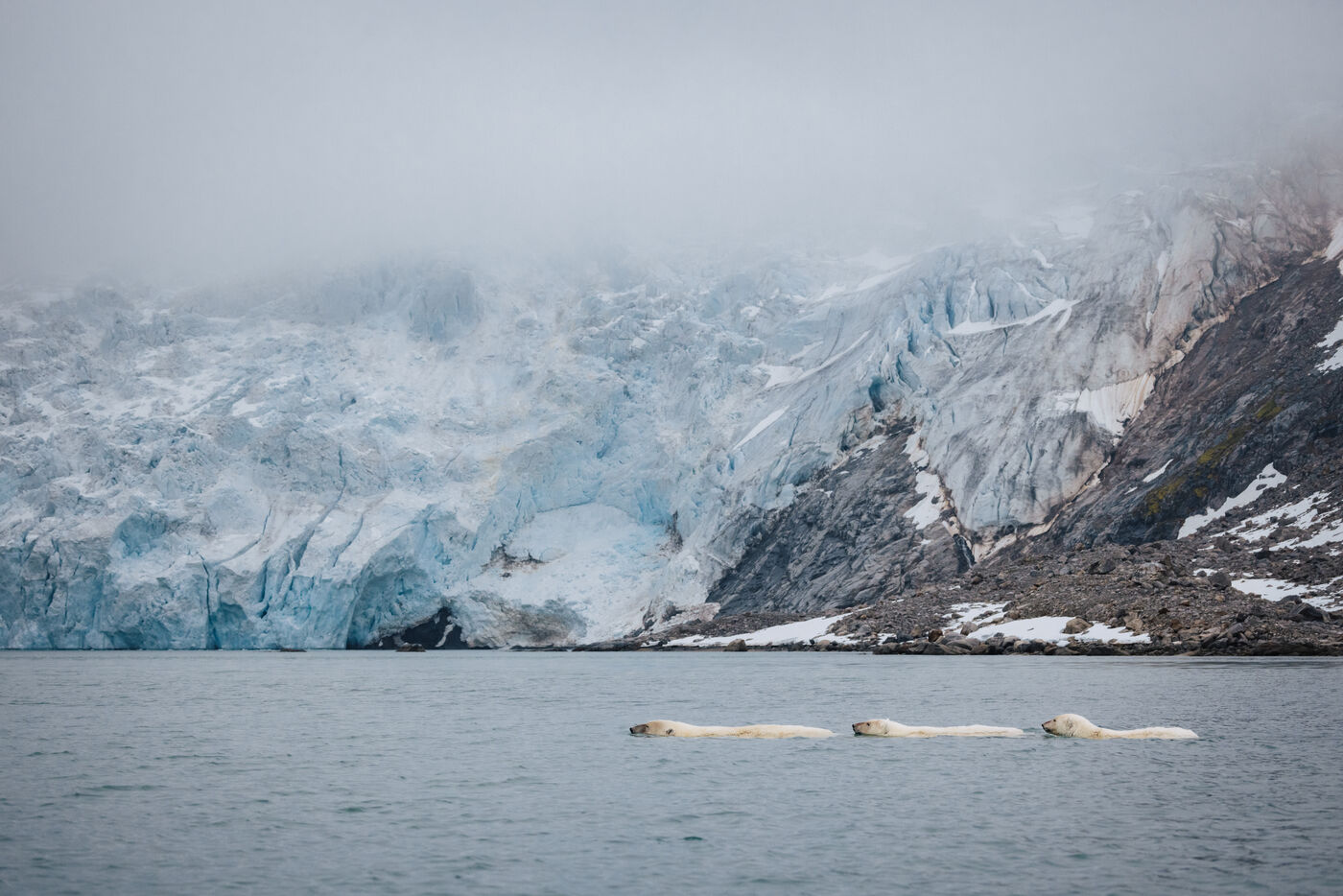
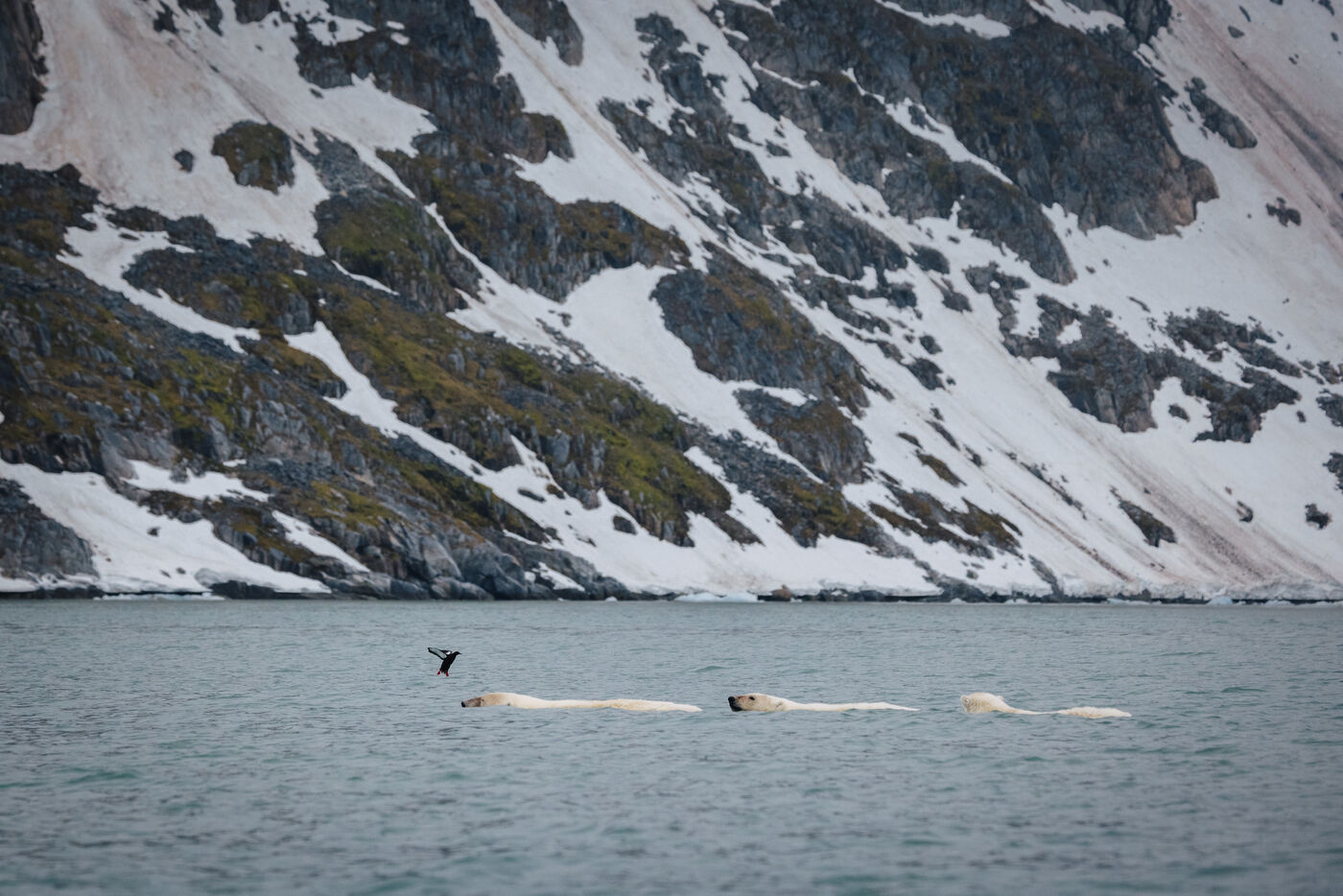
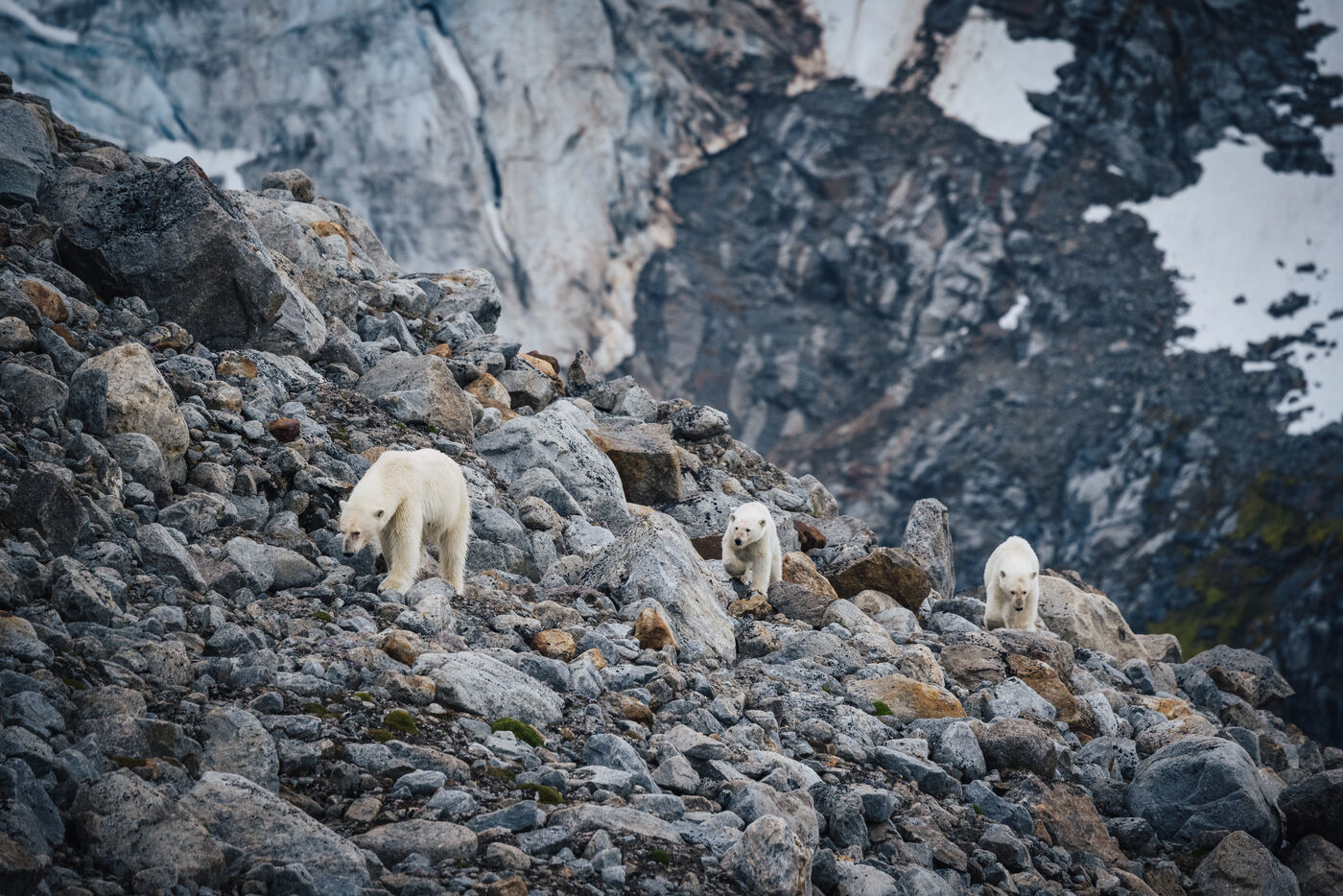
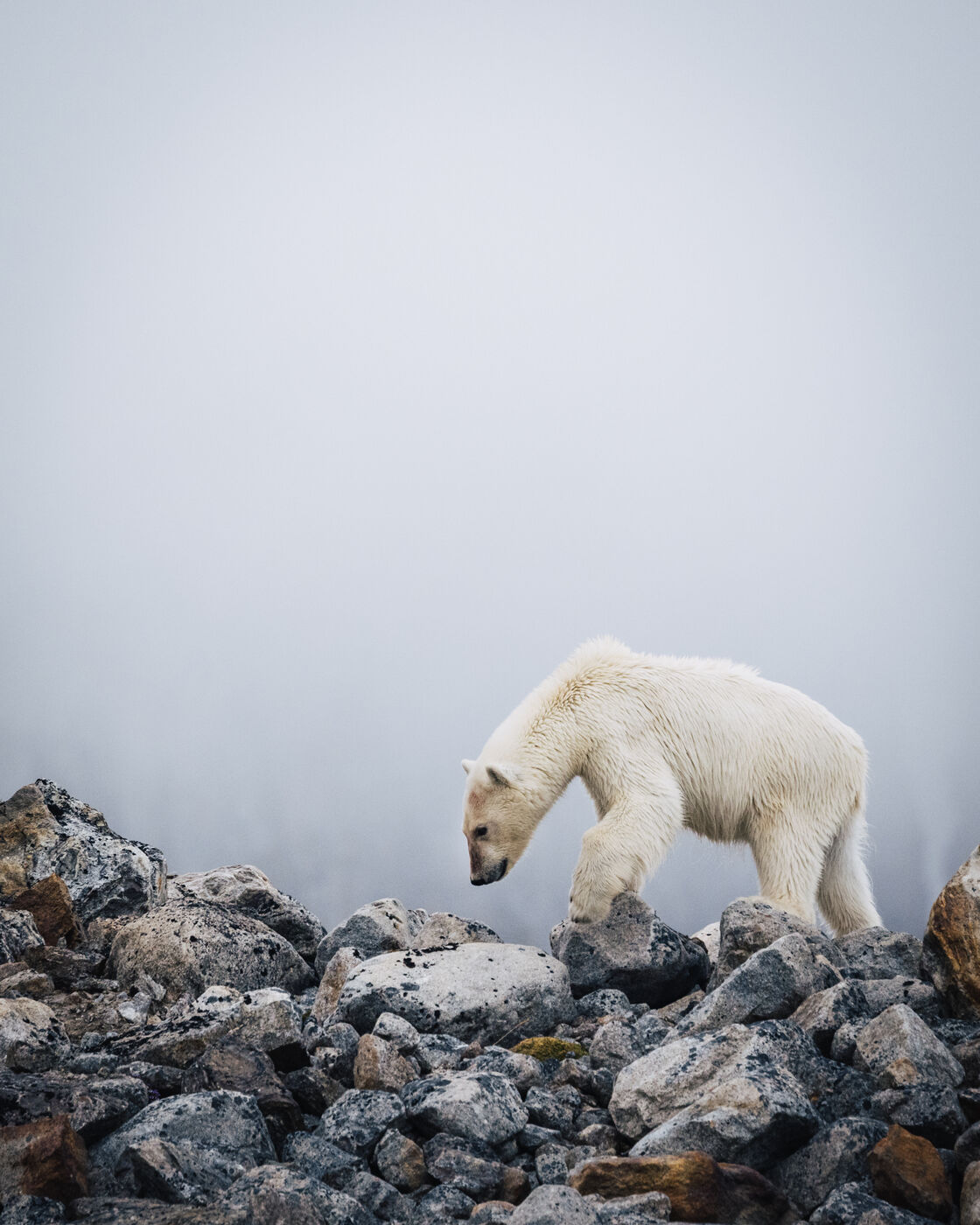
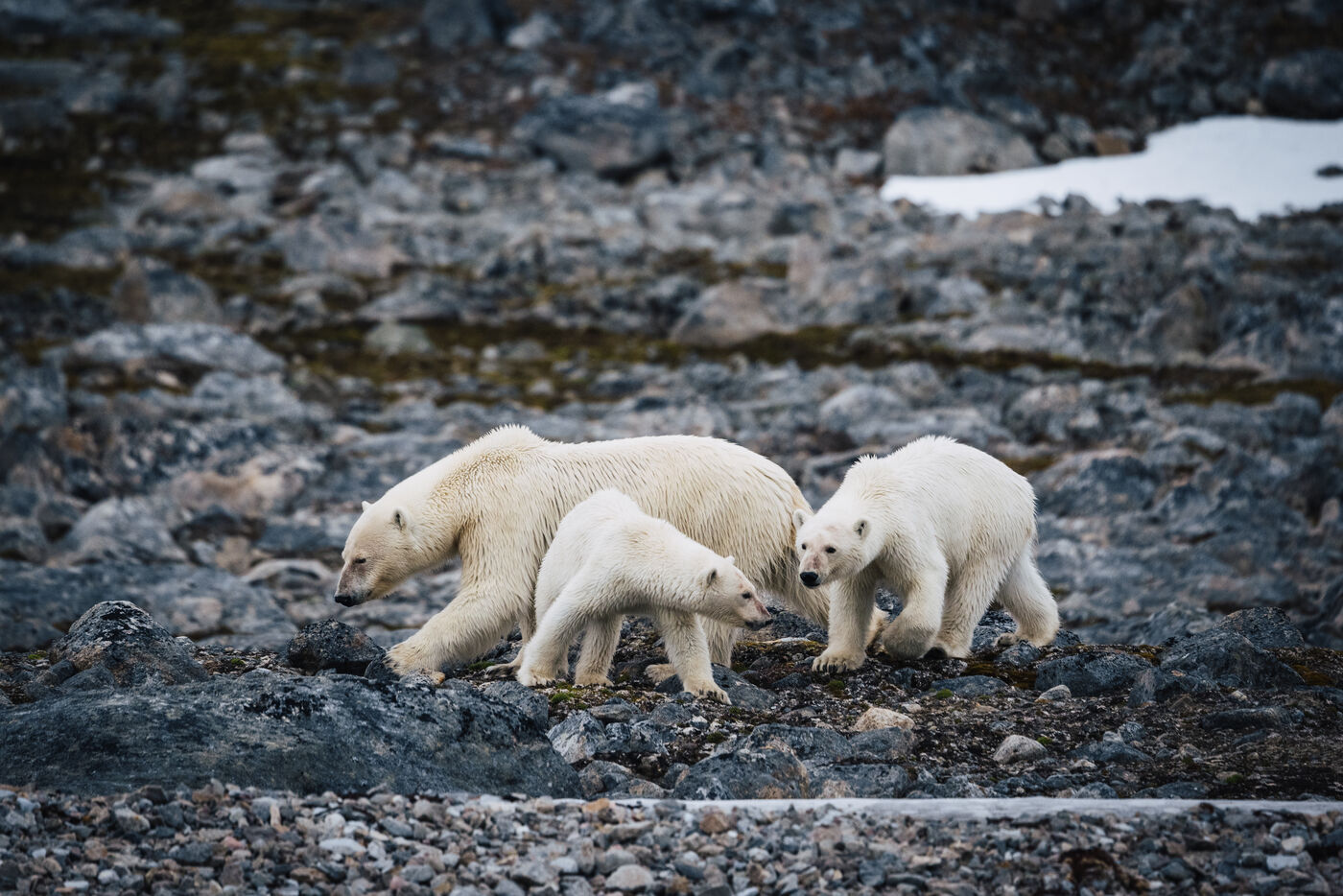
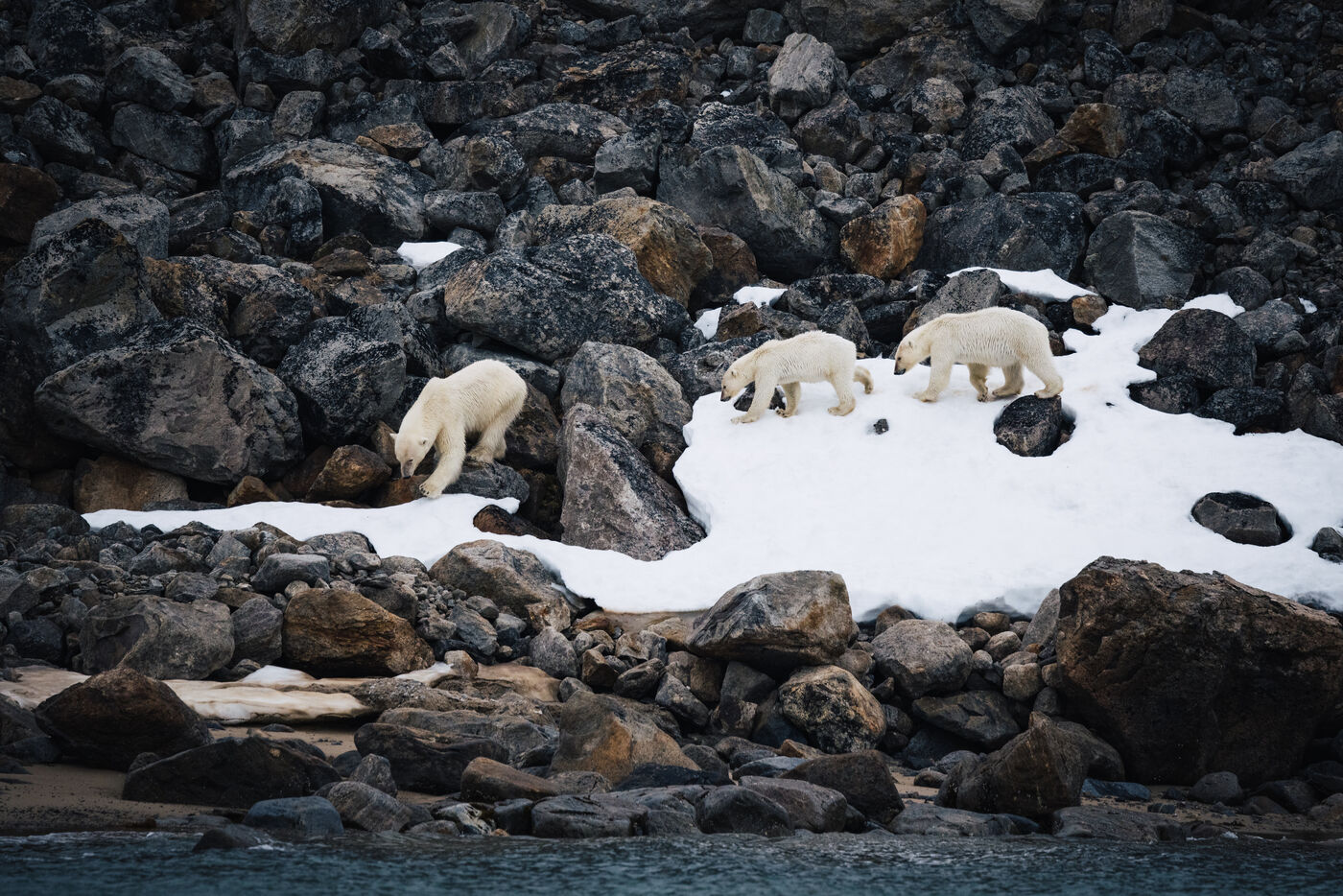
Polar bears are real. In photographs or documentaries, they are abstract. But seeing one from the ship, watching it move across the boulders with that deliberate, heavy-footed grace, is something that cannot be translated through a screen. We watched as more bears appeared, a mother with cubs, groups lounging on the rocks, others swimming between the shoreline and glacier. We weren't on their radar. They had seals to think about, not tourists.

Polar bear resting on boulders at the water's edge, head on its paws
Our first polar bear. Sprawled on the rocks of Norskøya, completely unbothered by our presence.
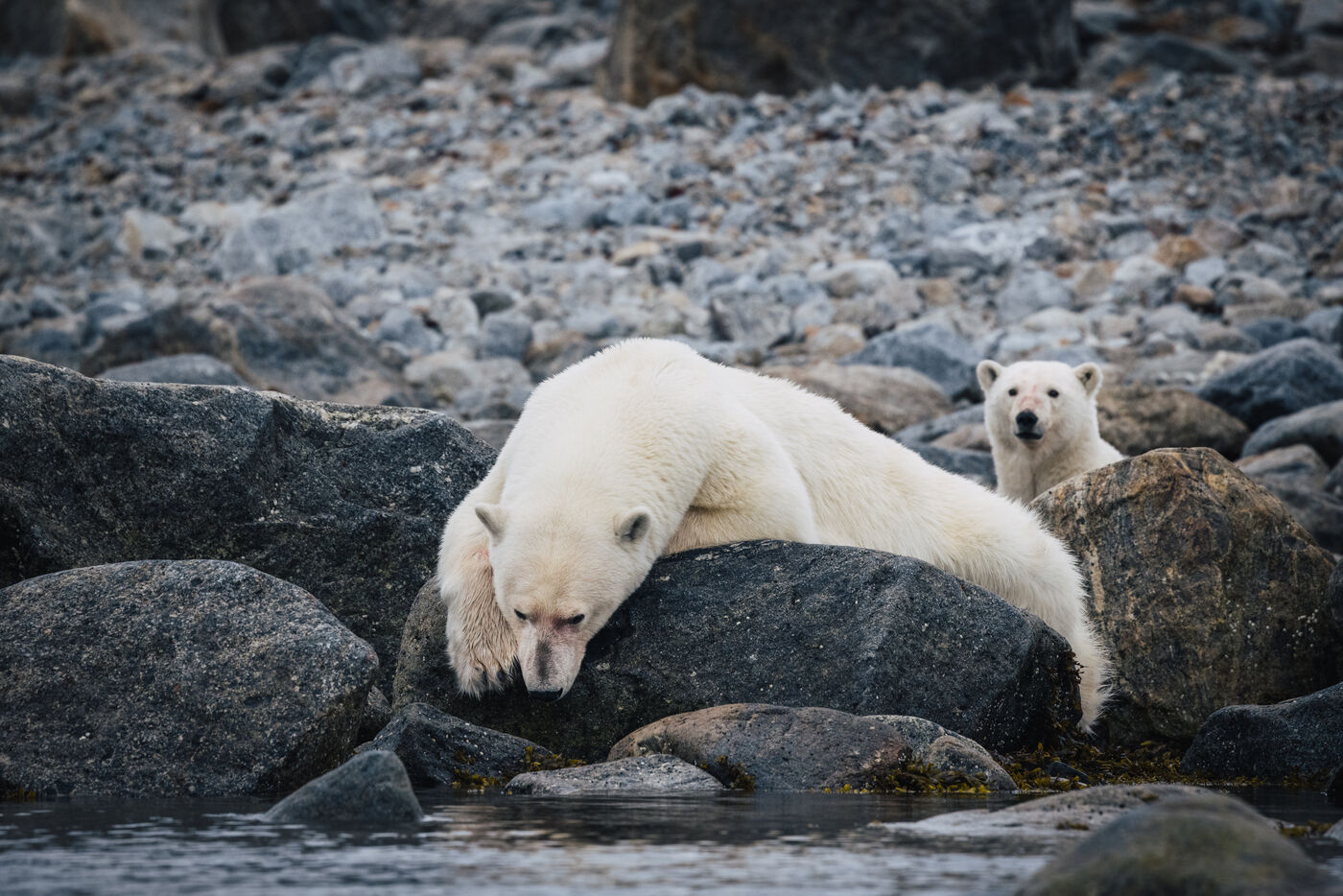
Two polar bears on a rocky beach in Svalbard Polar bear lounging across dark boulders
Two bears on the rocks, and one sprawled across the boulders like they owned the place. They do.
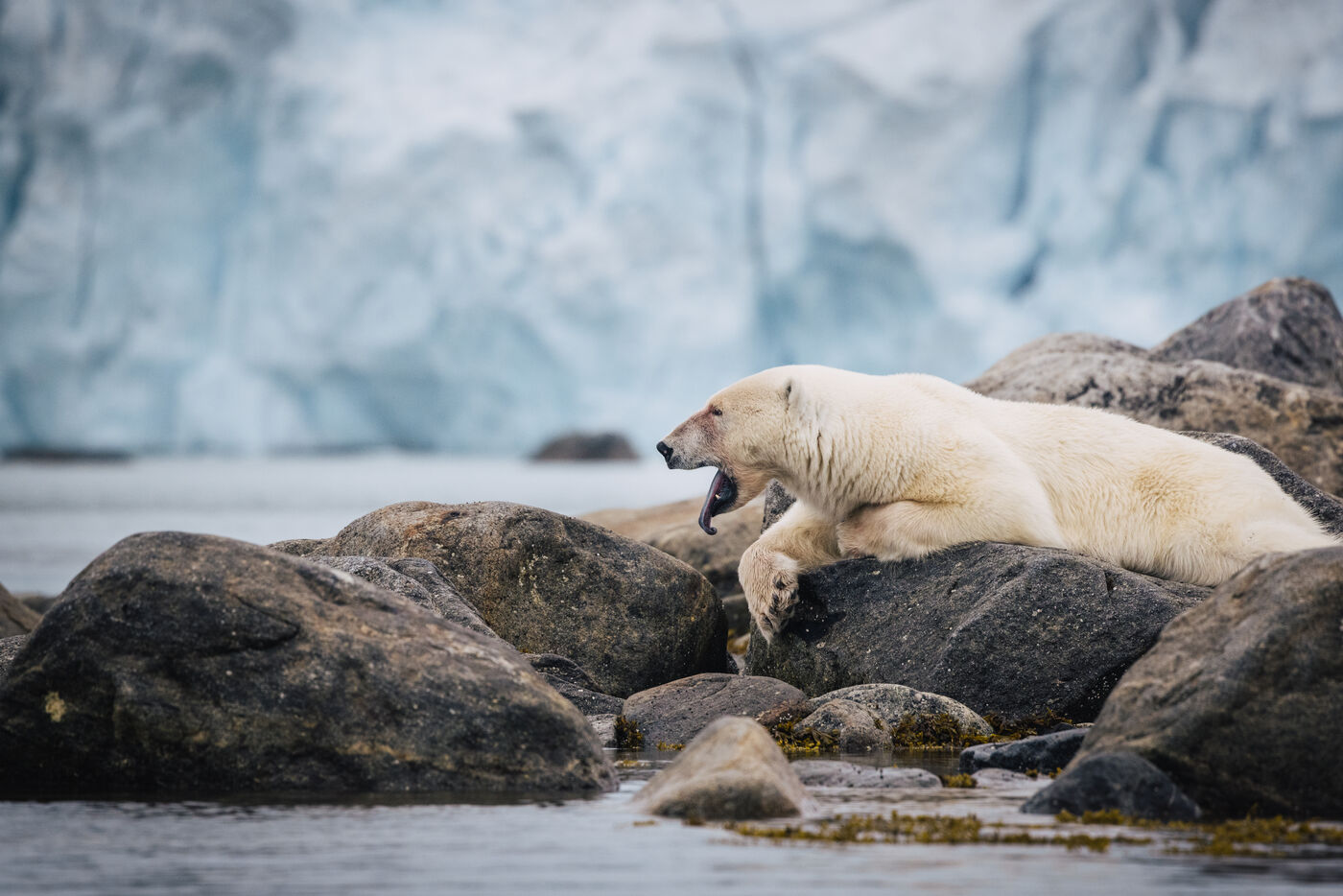
Polar bear resting on rocks with glacier in background Polar bear yawning on rocks with glacier behind
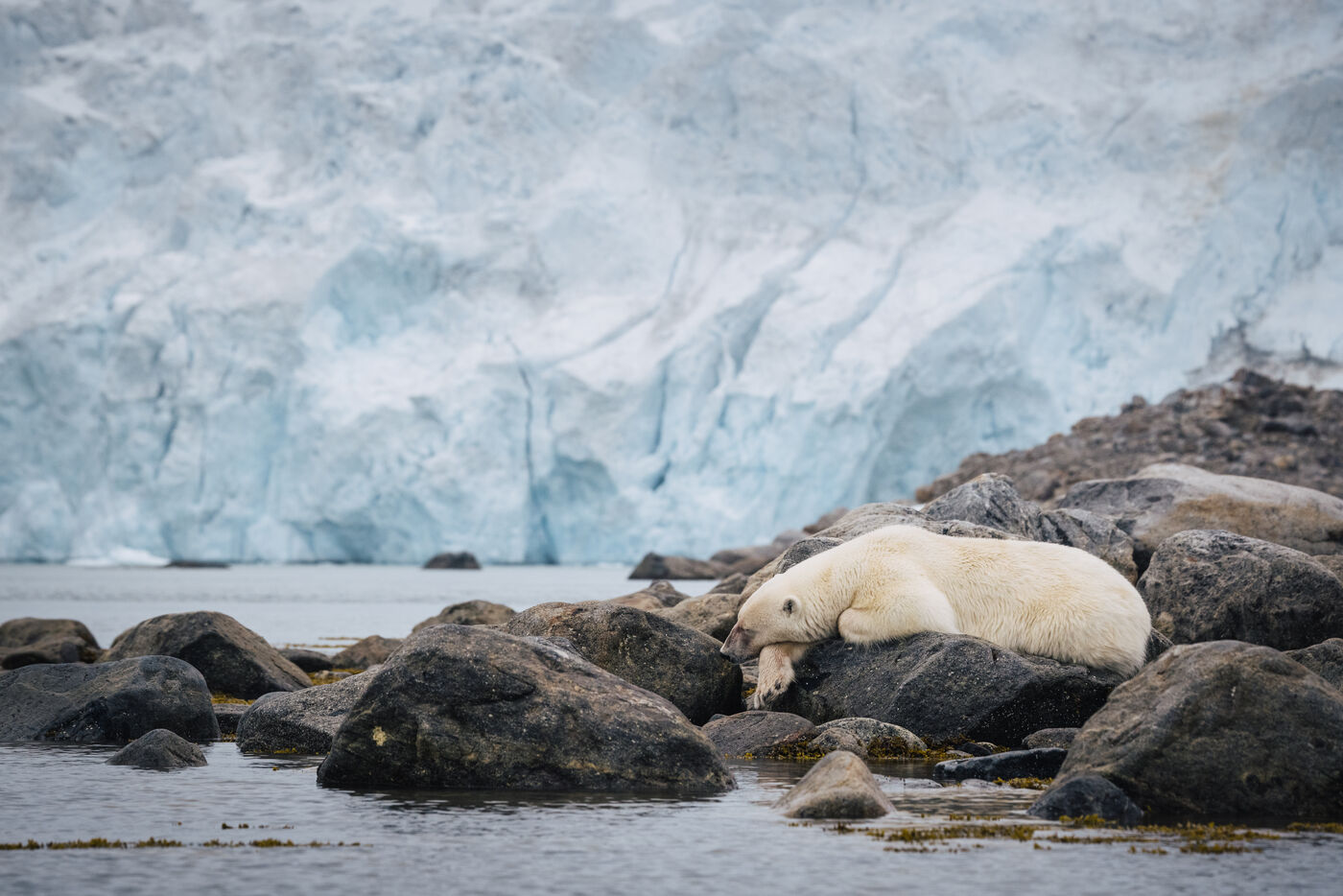
Resting with a glacier as the backdrop. The yawn says it all.
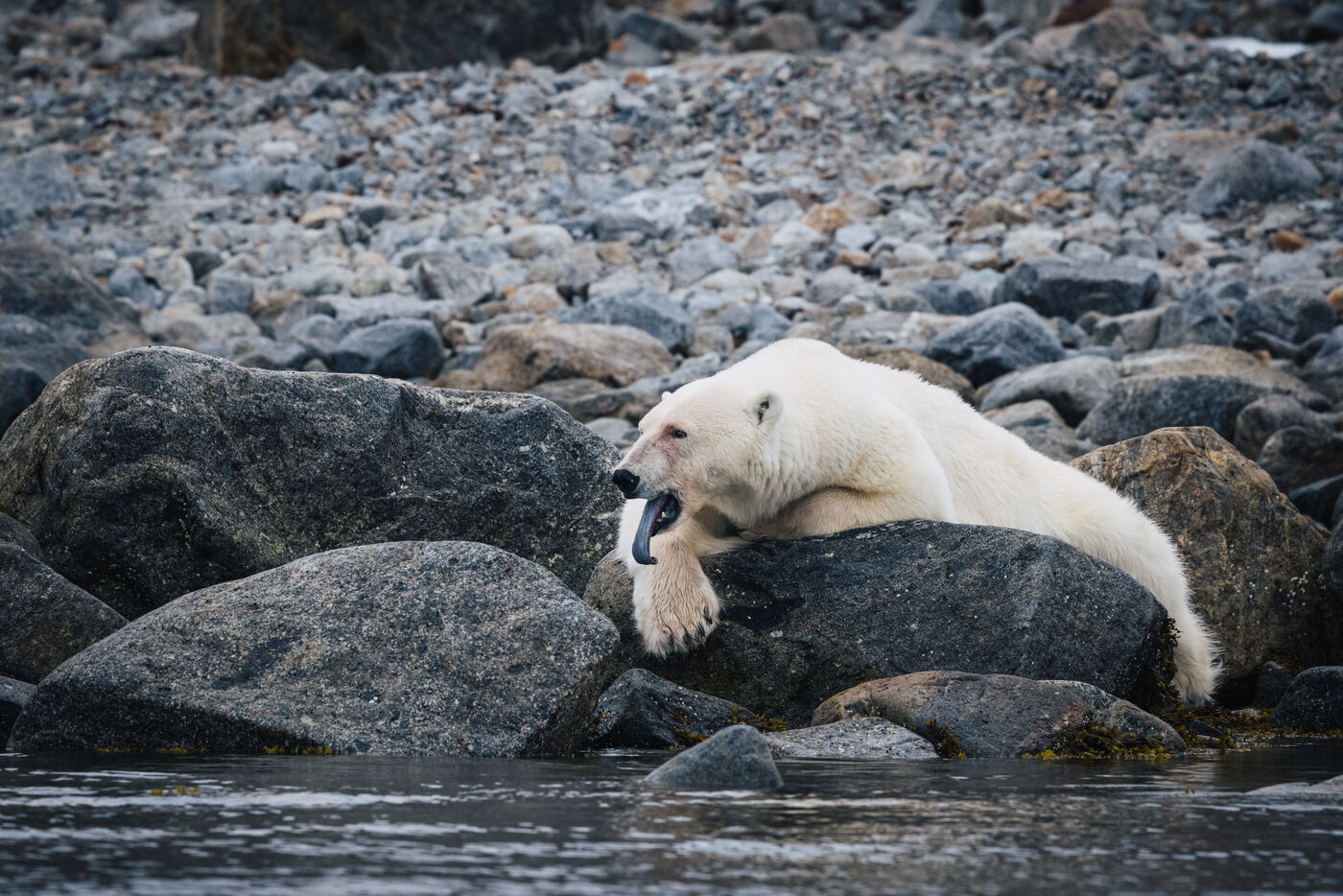
Polar bear stretching across boulders
A full stretch across the boulders. These animals are bigger than you expect, even when you expect them to be big.

Trapper's Station and Glacier

July 25, 2022. Taodden, Svalbard

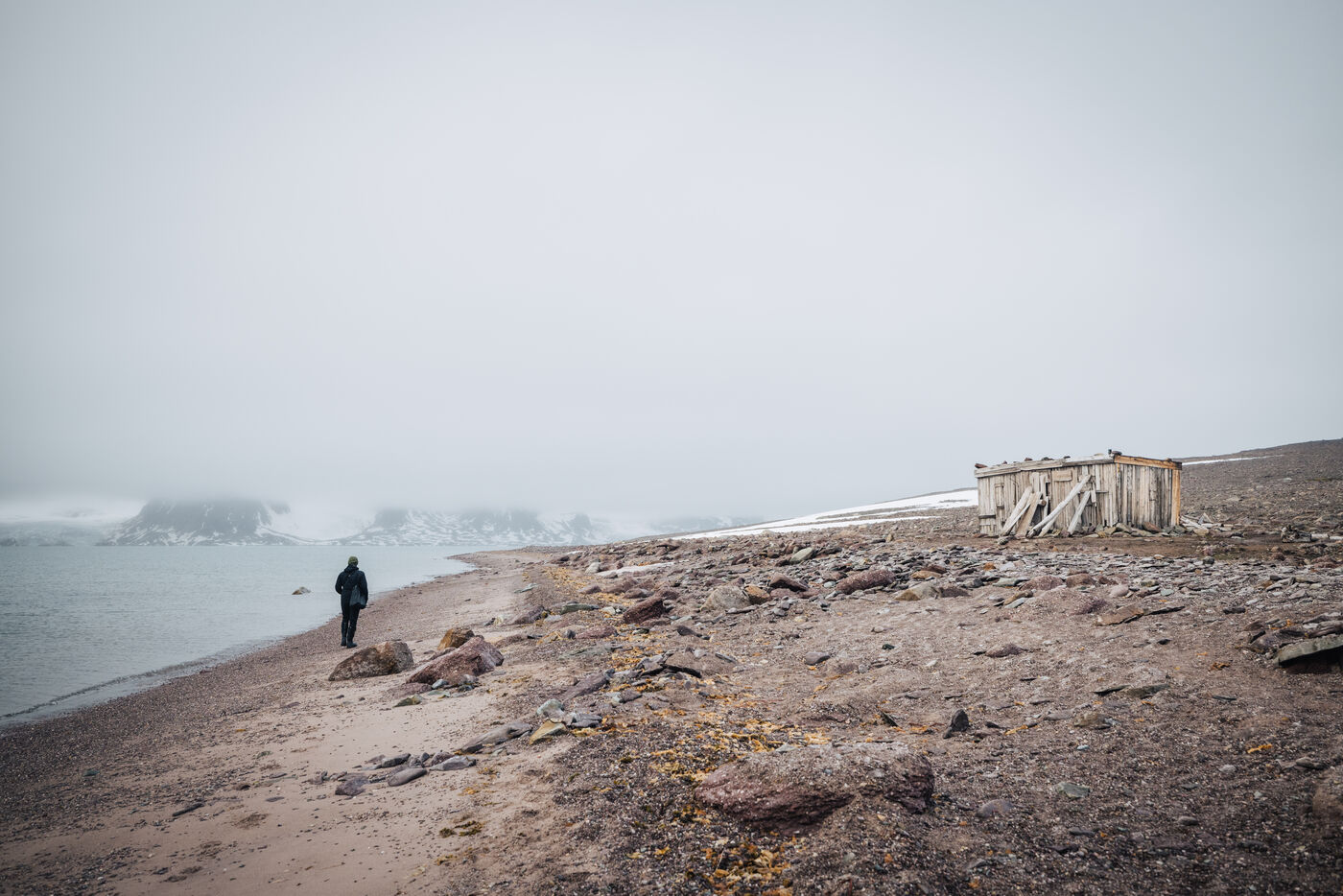
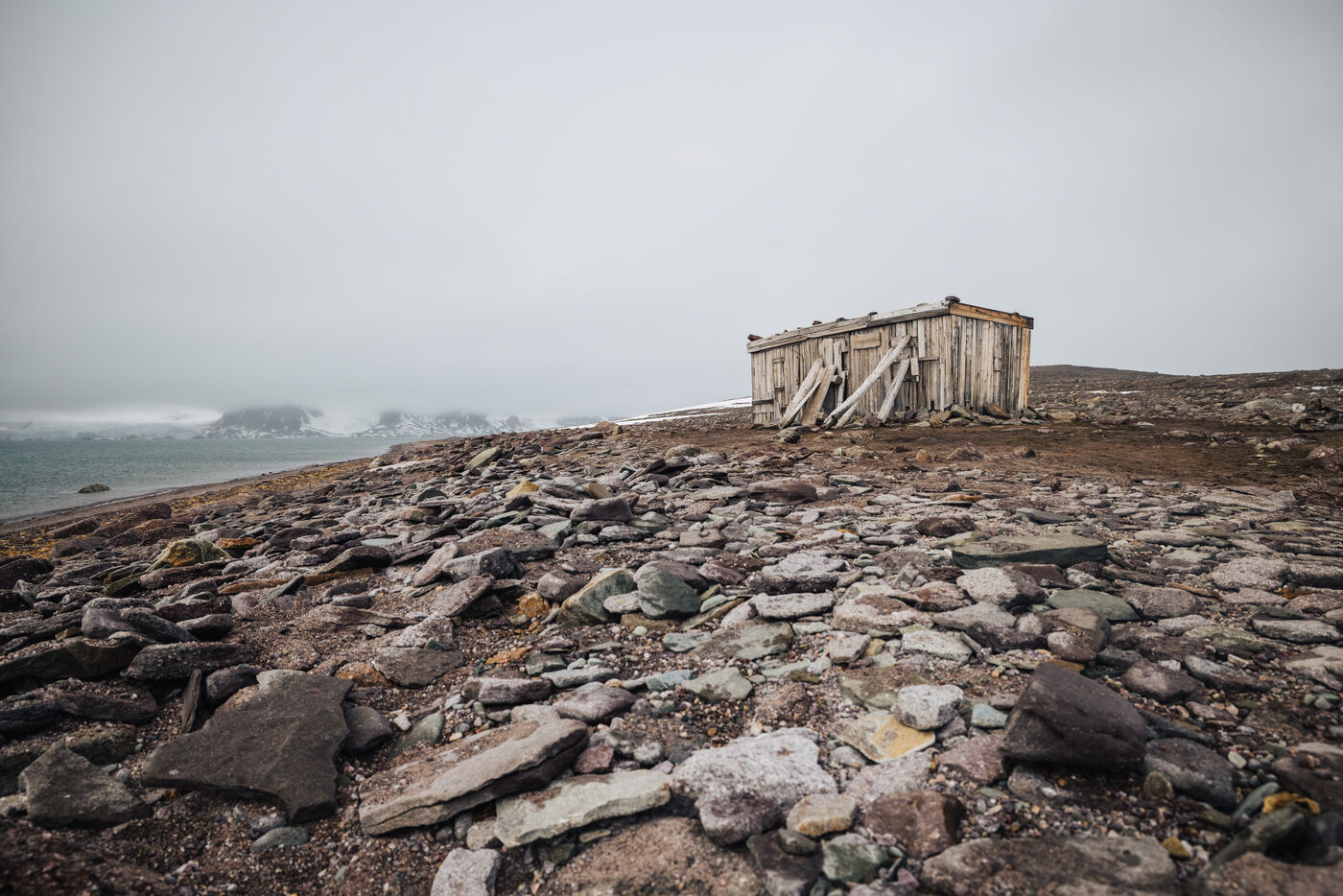
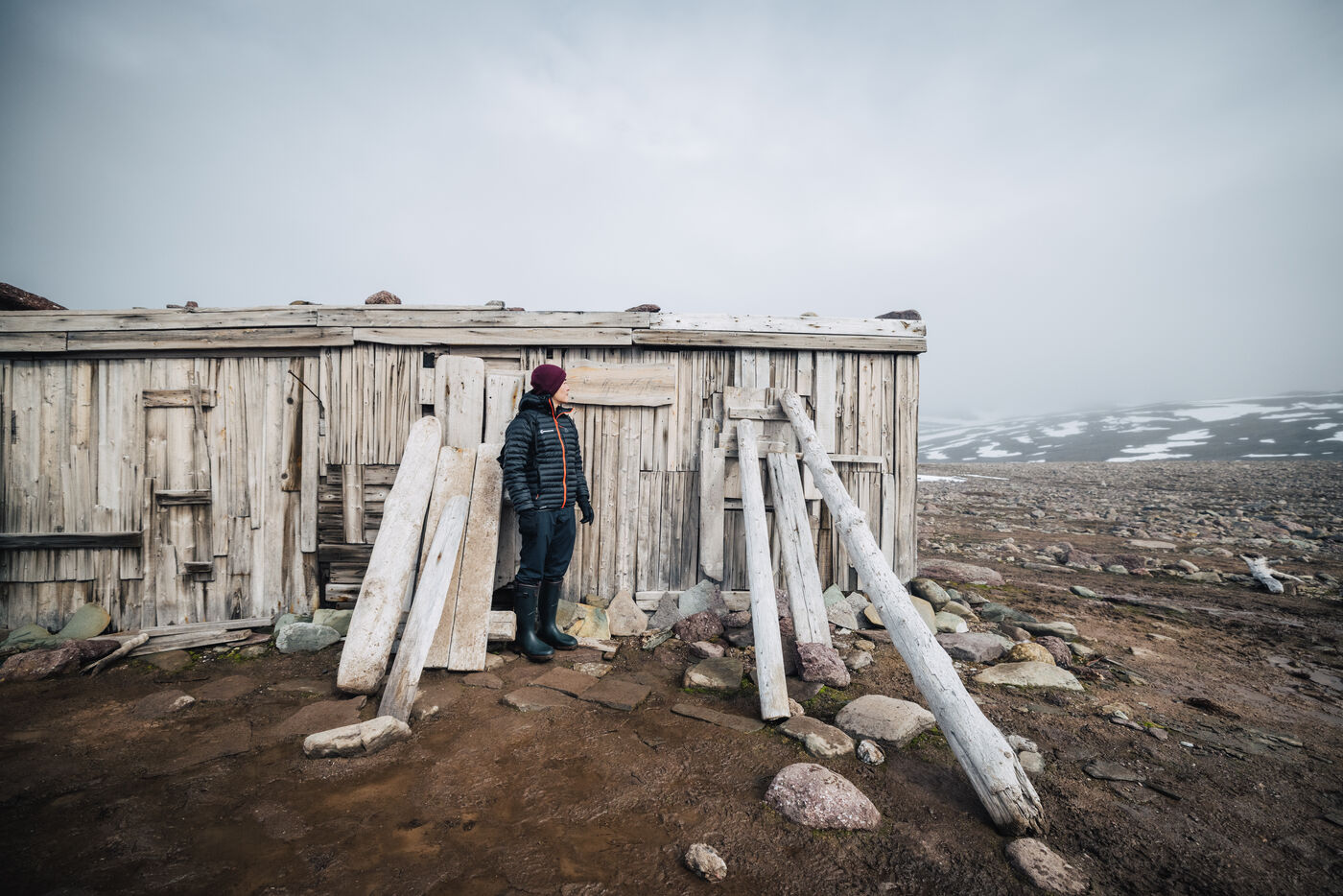
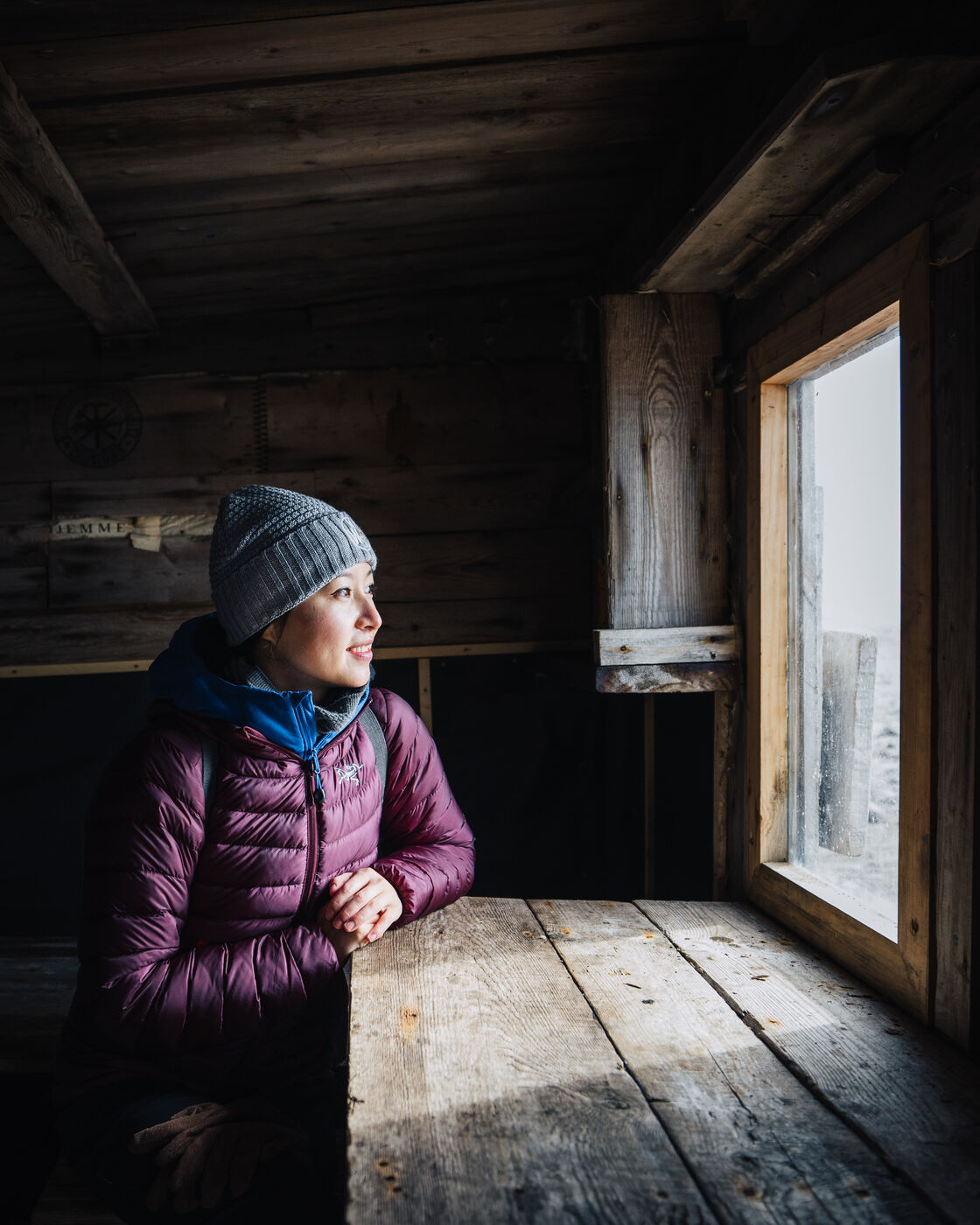
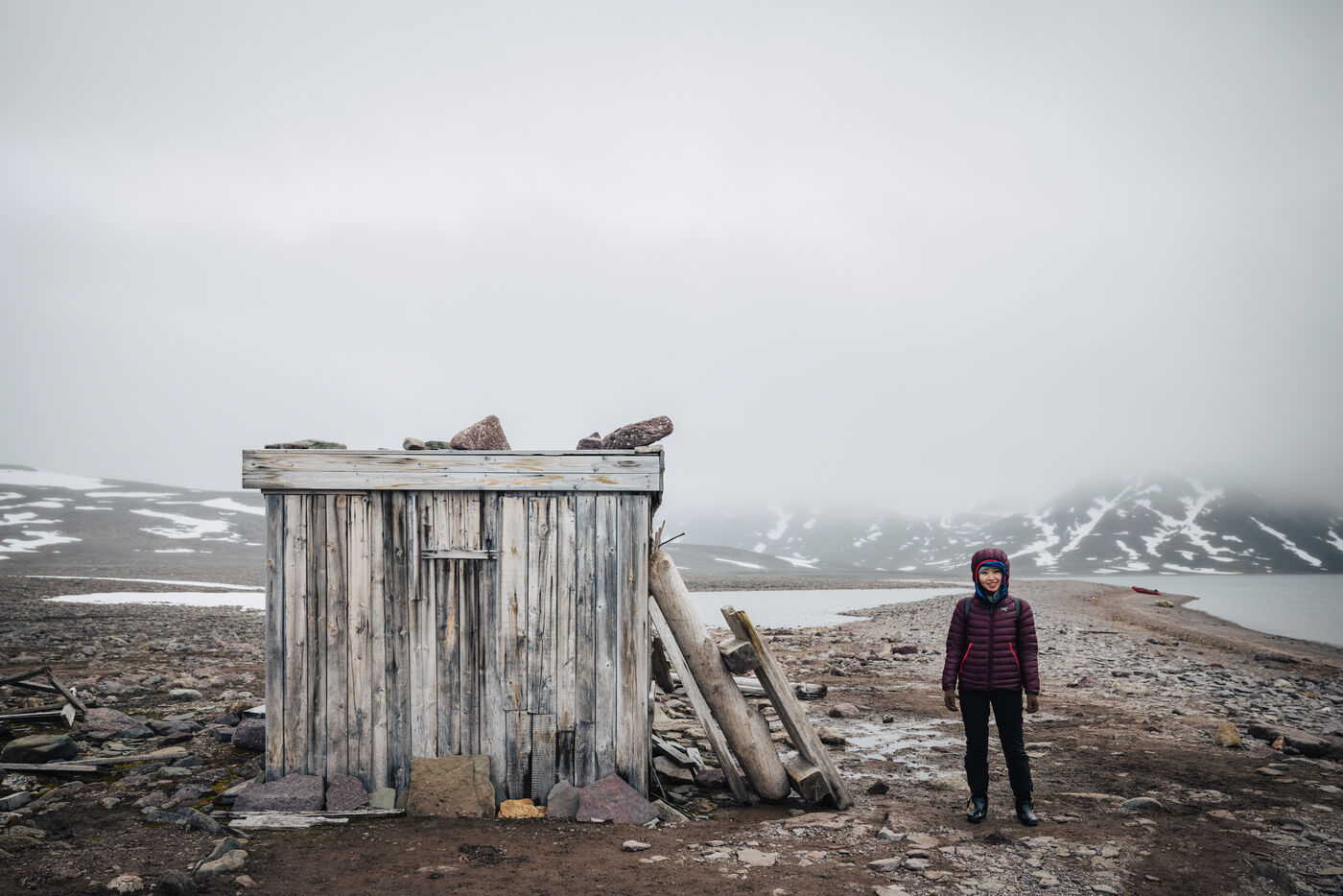
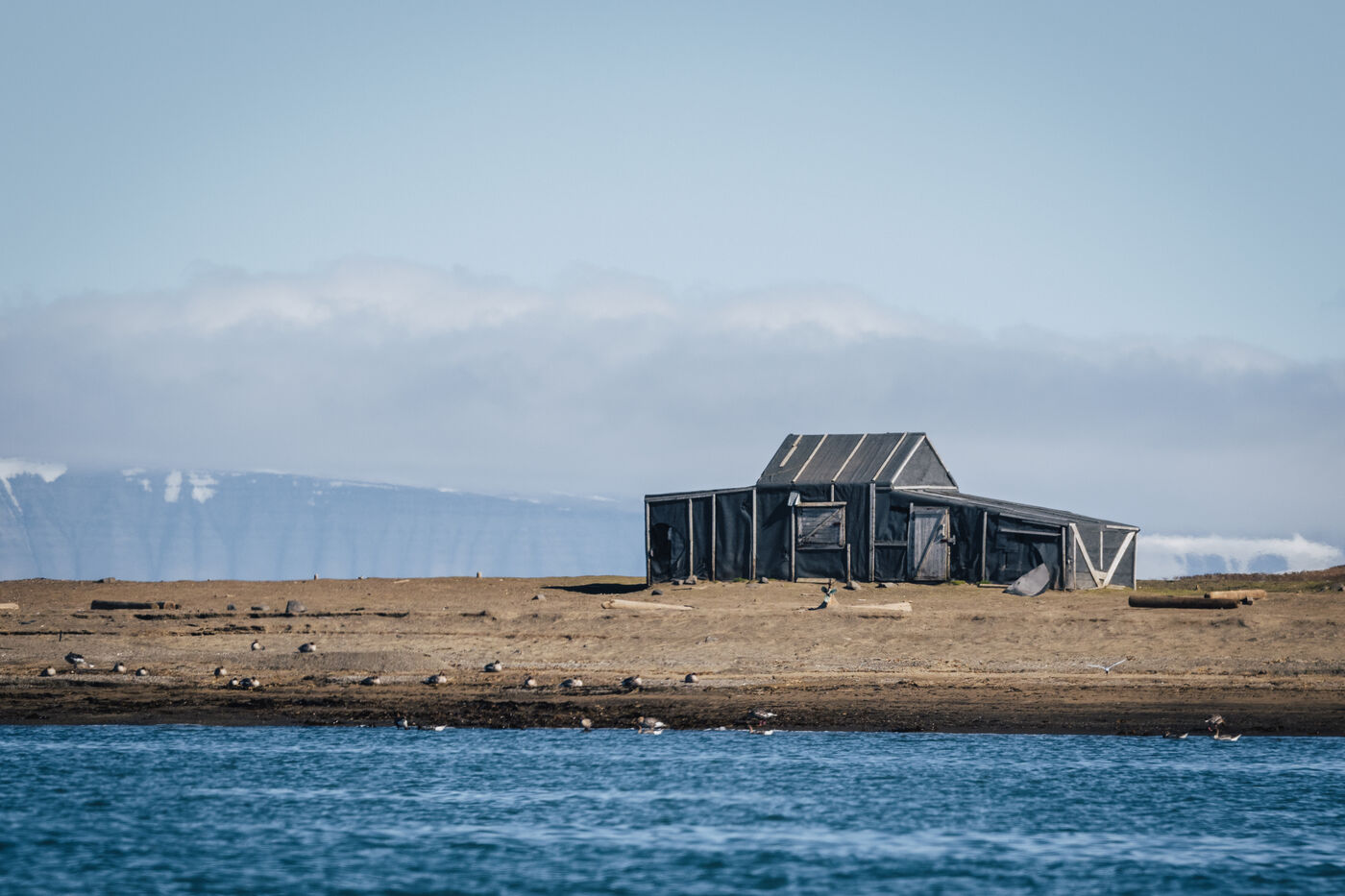
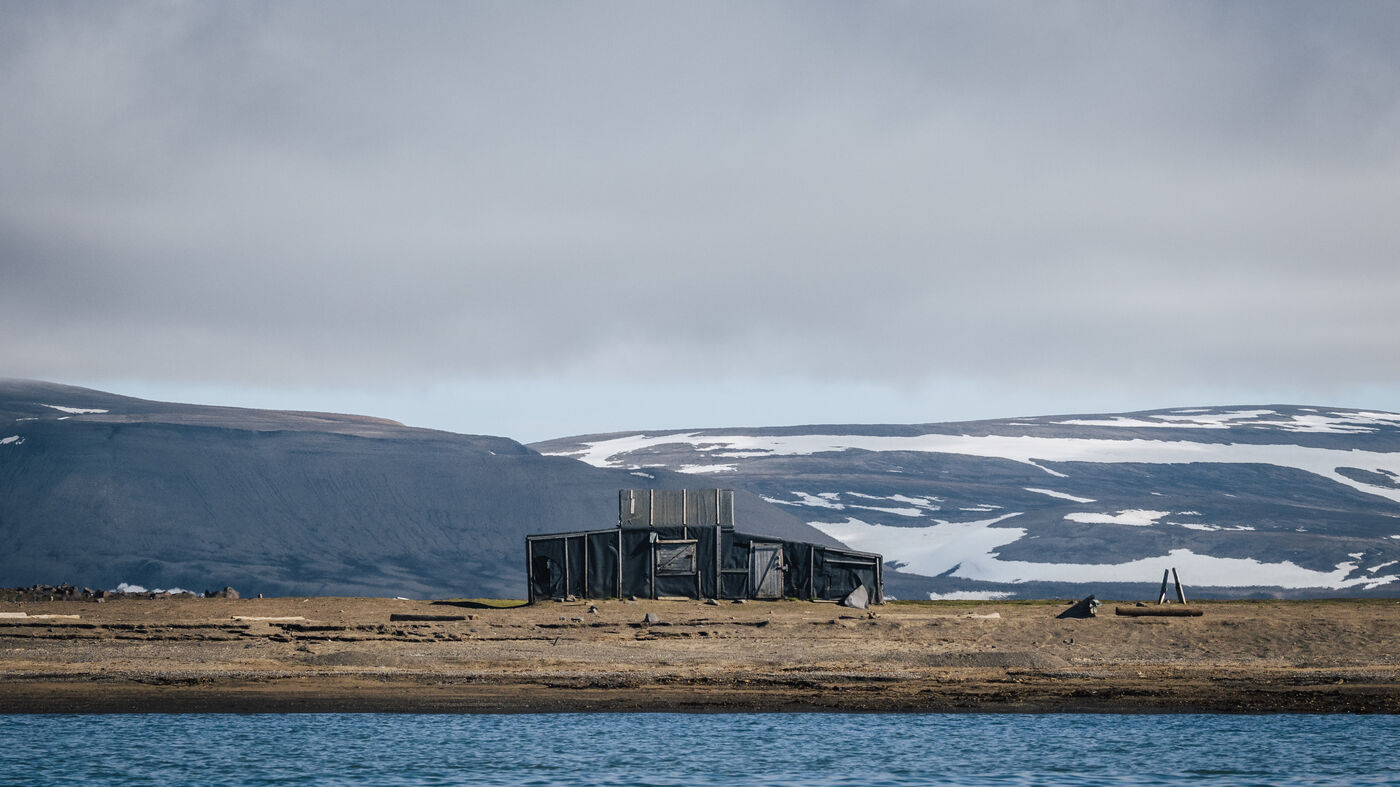
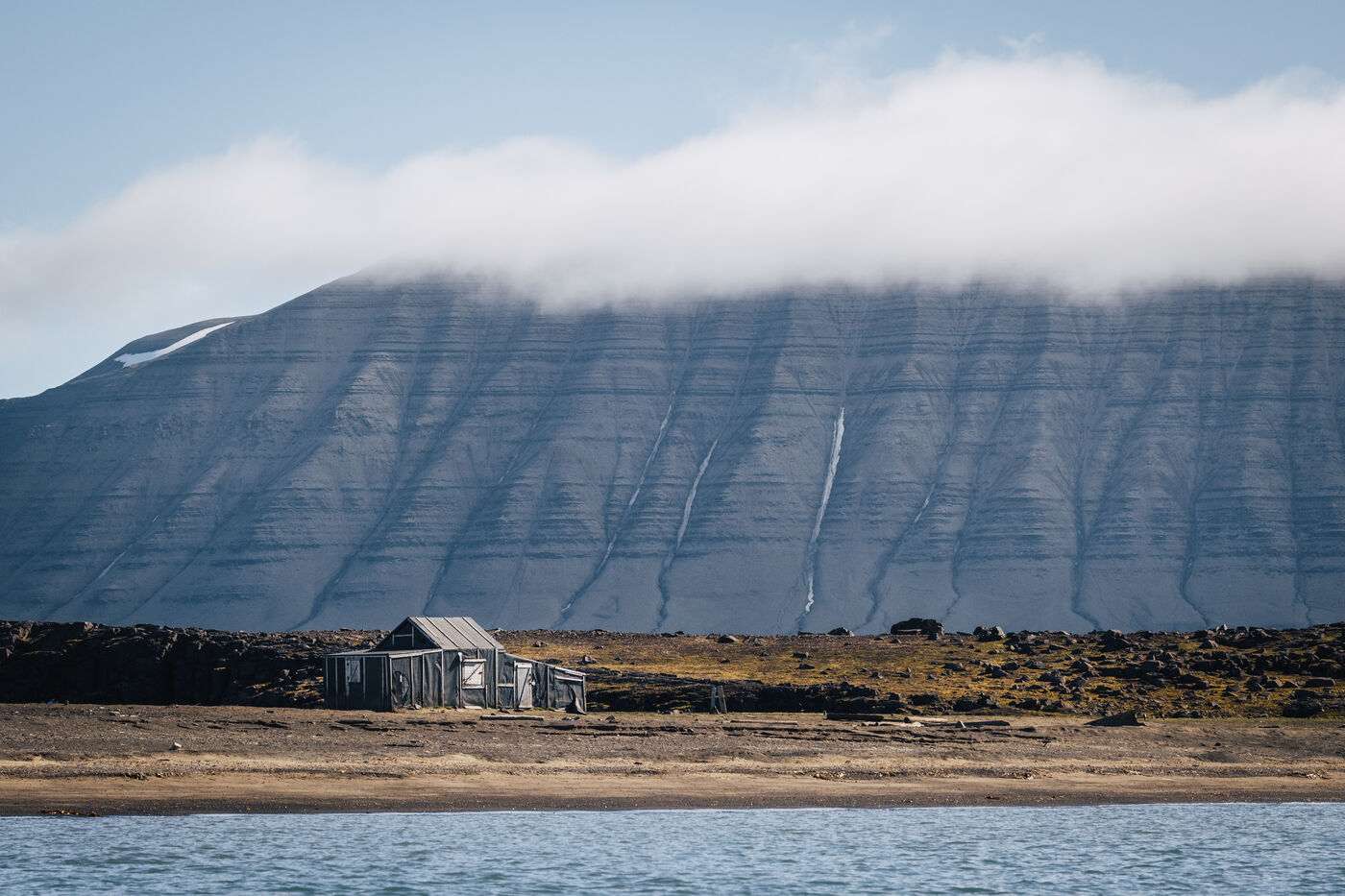
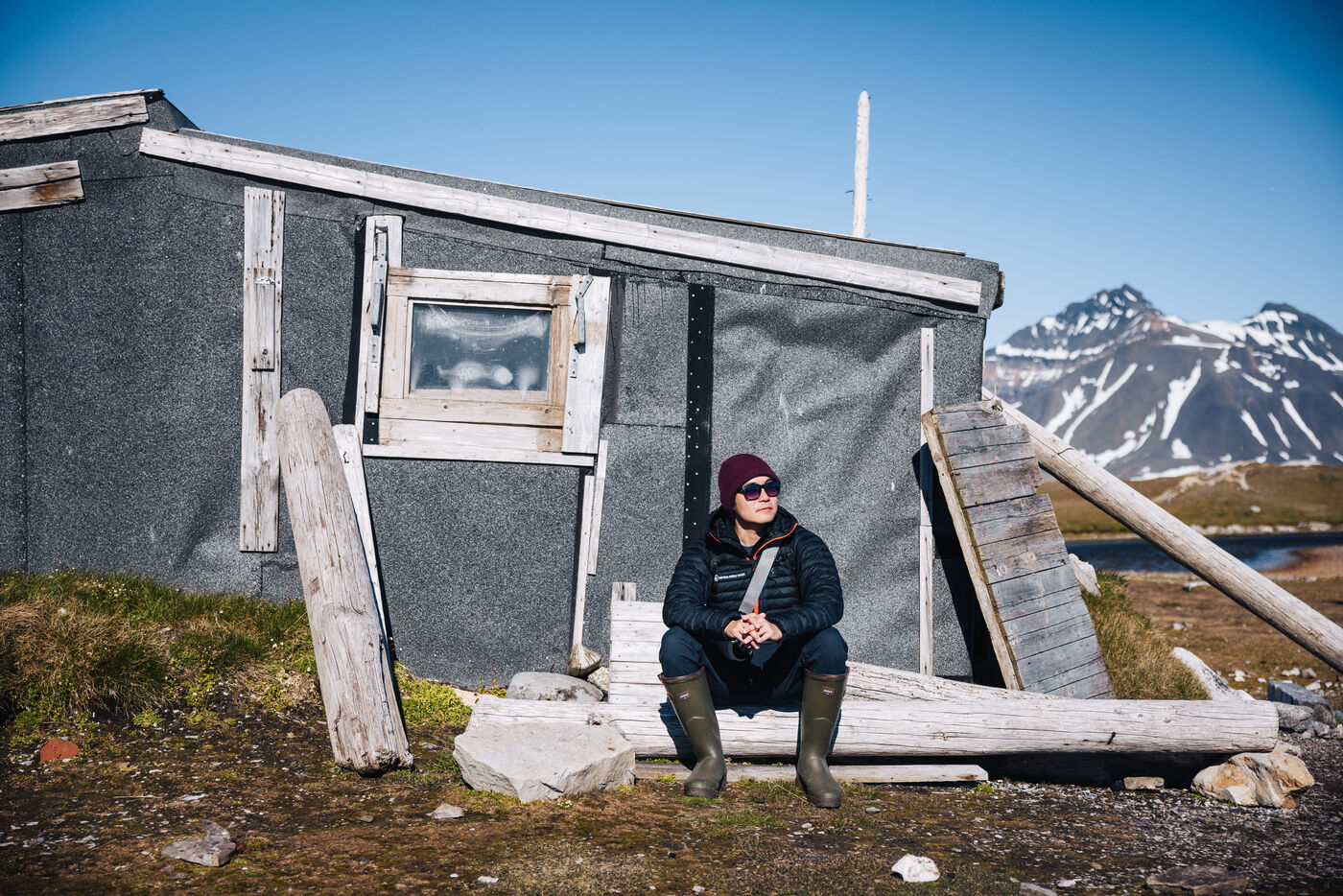
Trappers in the Arctic lived sparse, solitary lives. We hiked to the remnants of a hunter's station at Taodden, a small wooden structure that served as a base for men who hunted walruses, seals, and polar bears. Inside, the walls were dark and close, the kind of space where you'd wait out a storm and count the days until the supply boat returned. The landscape around it was utterly desolate. Mountains, snow, ice, and nothing else. The trappers who built this place chose isolation, and the Arctic demanded respect for that choice.

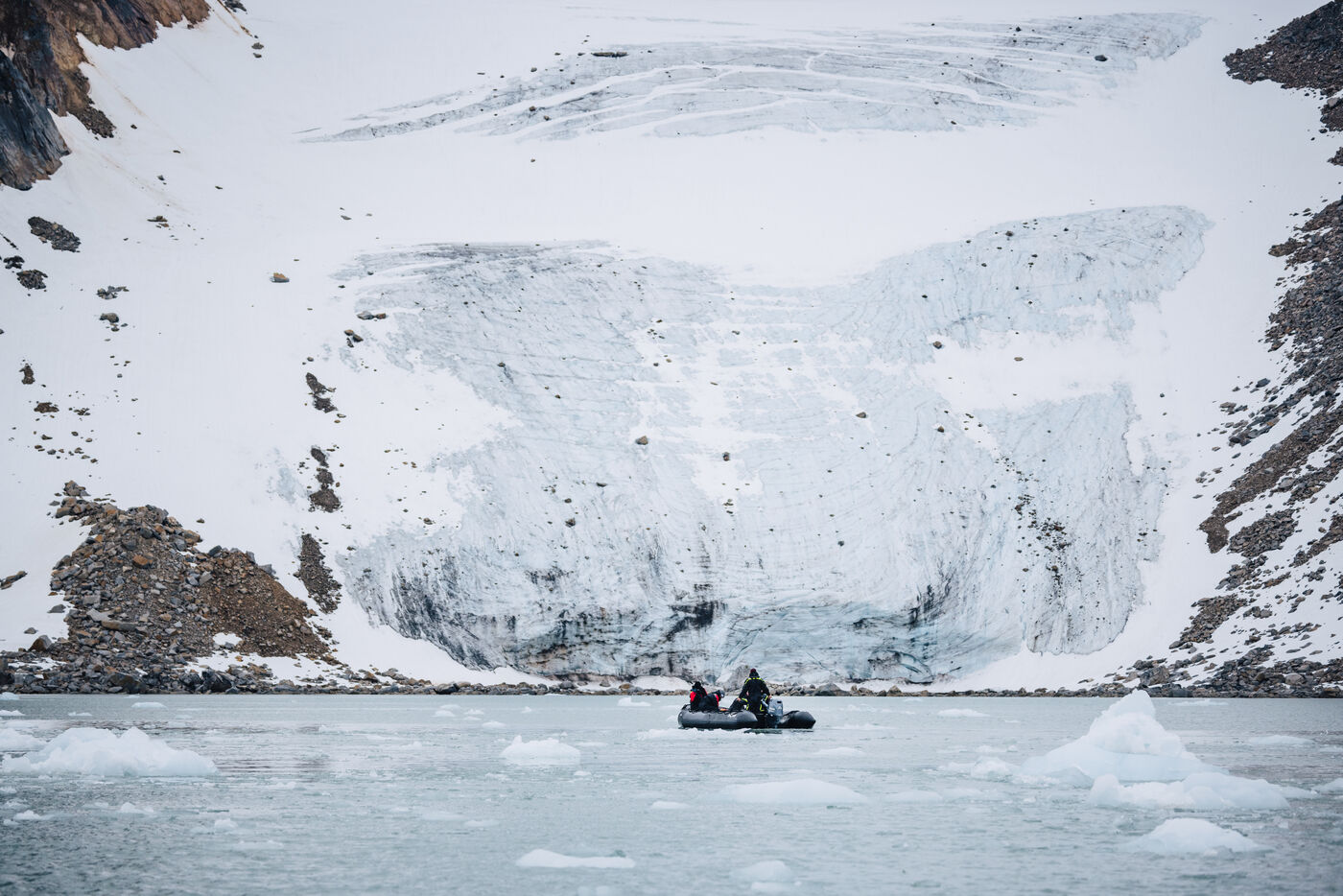
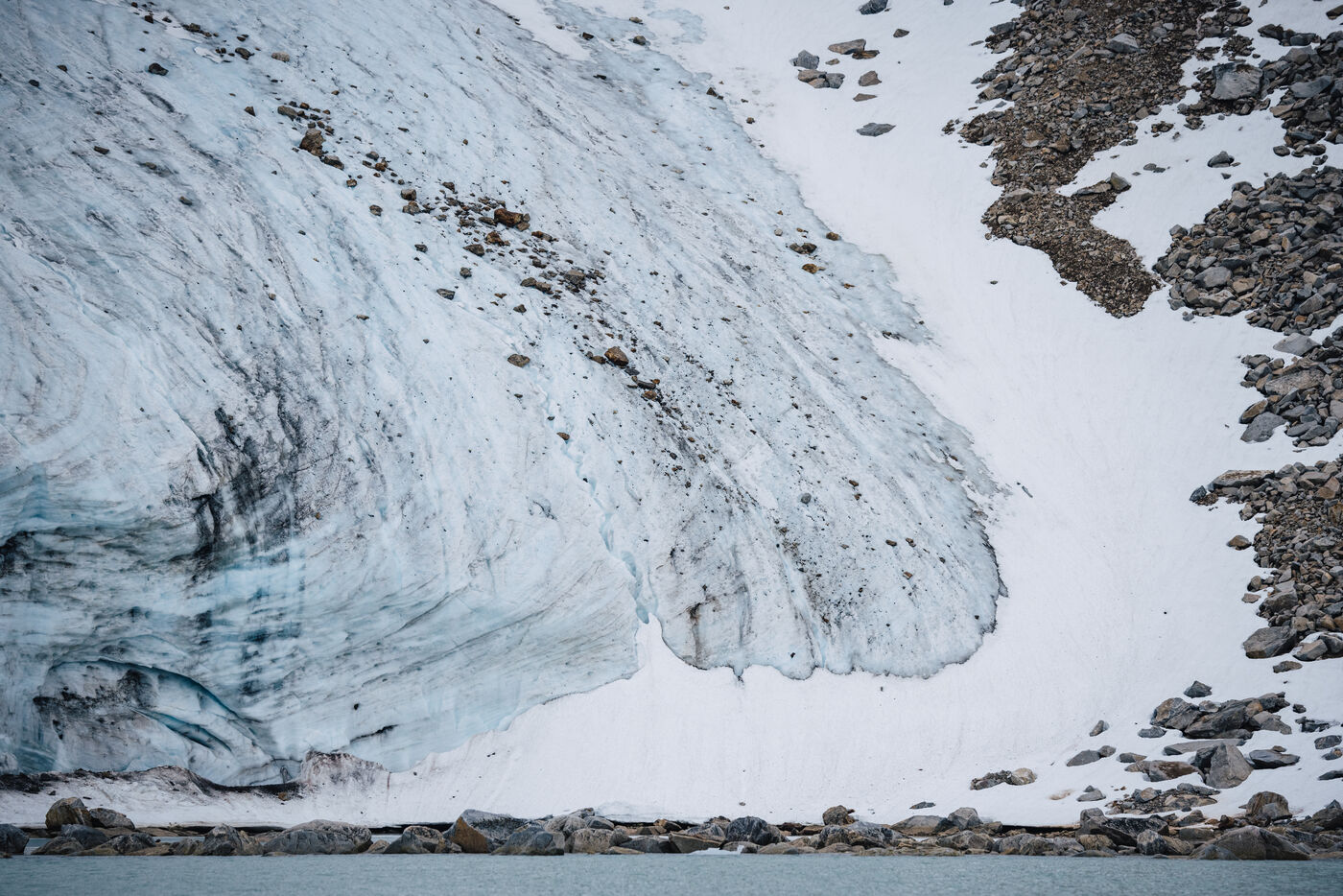
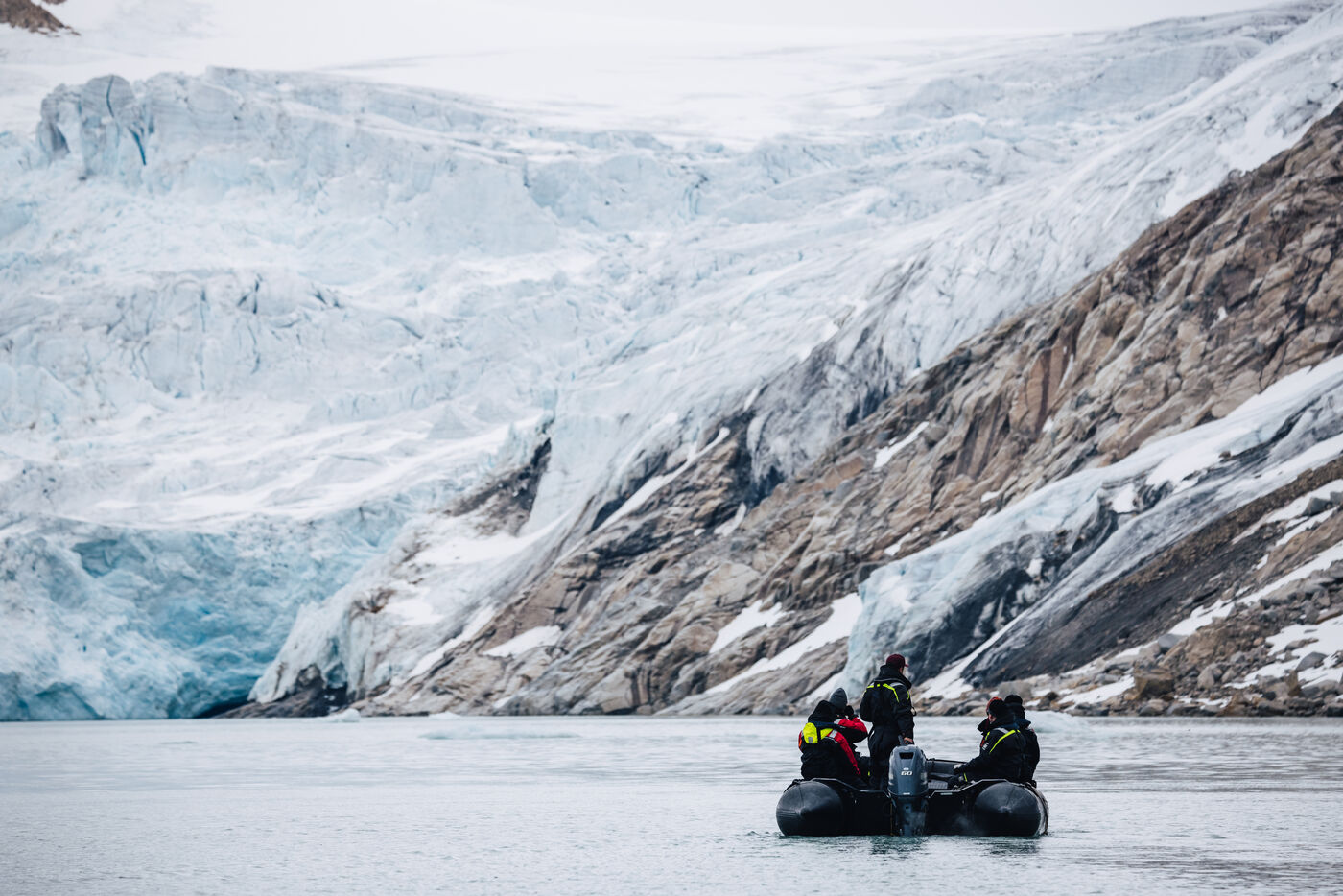
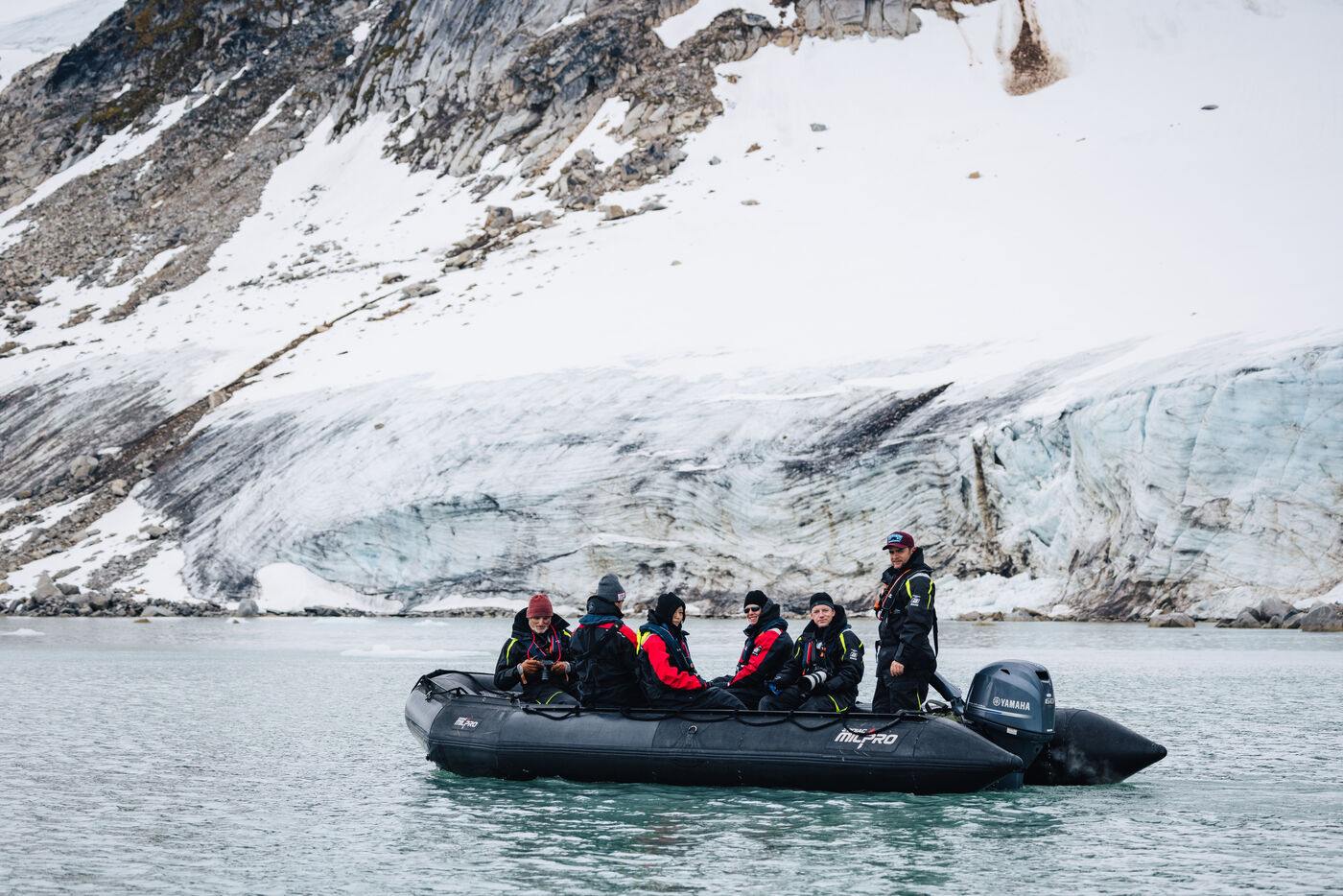
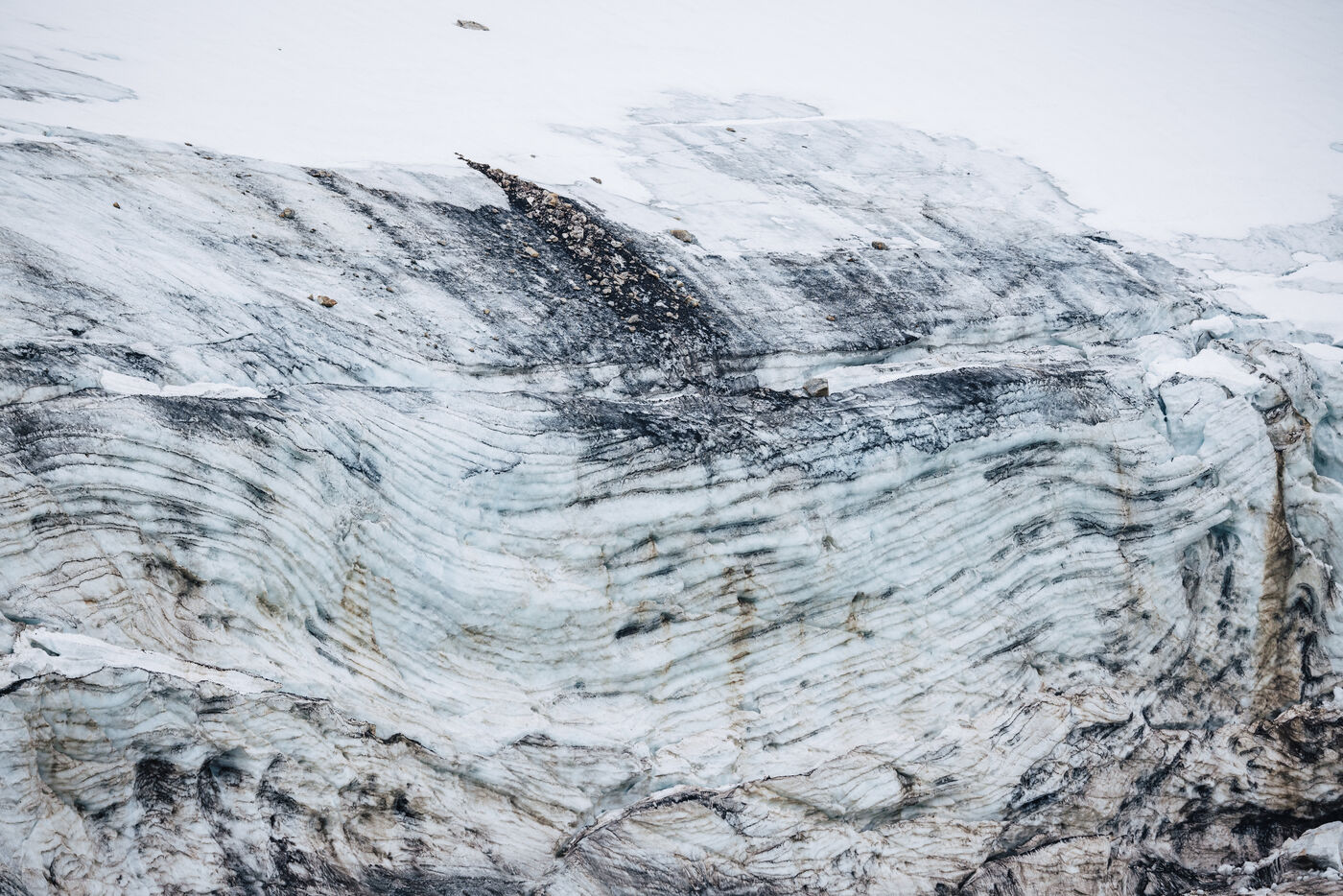
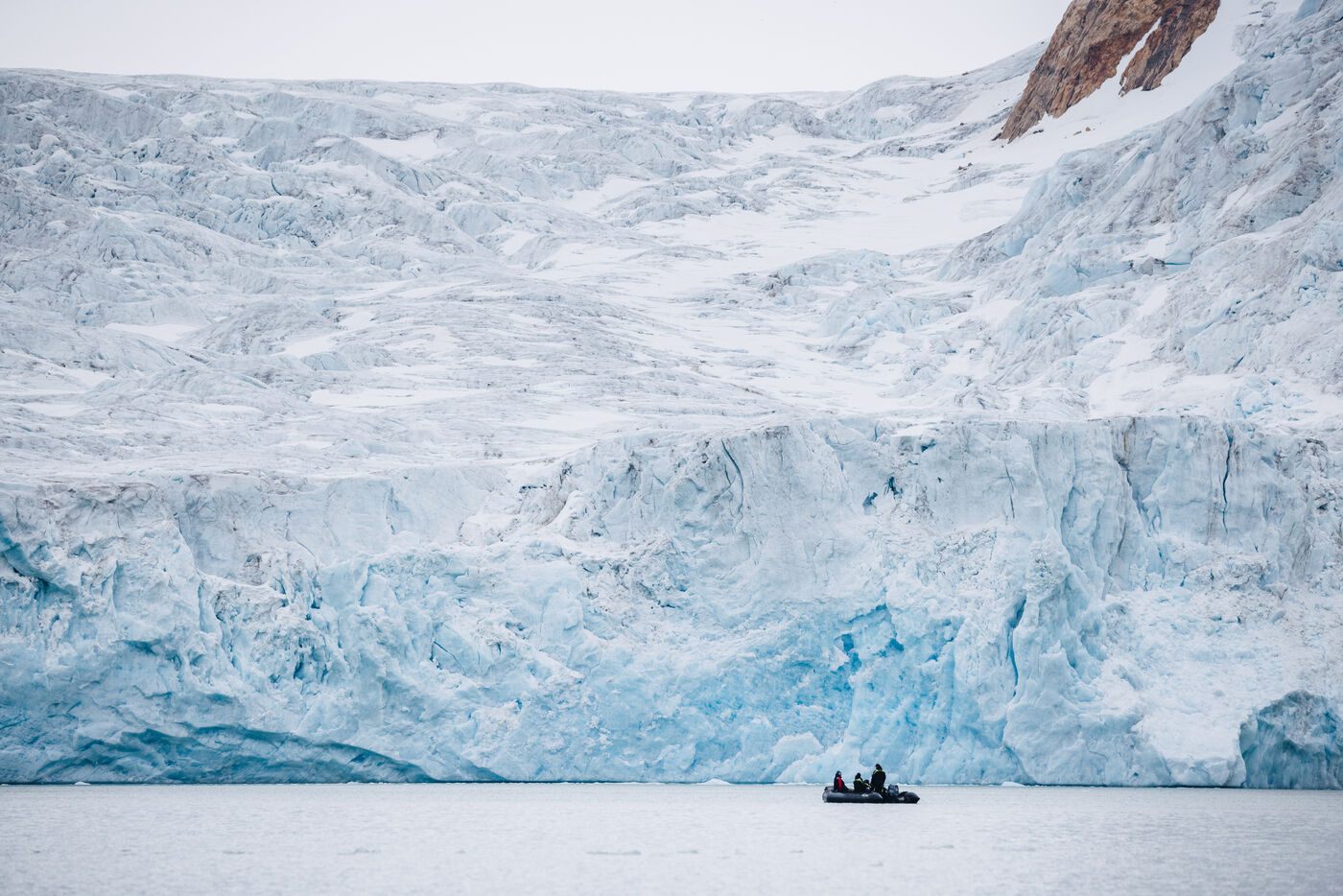
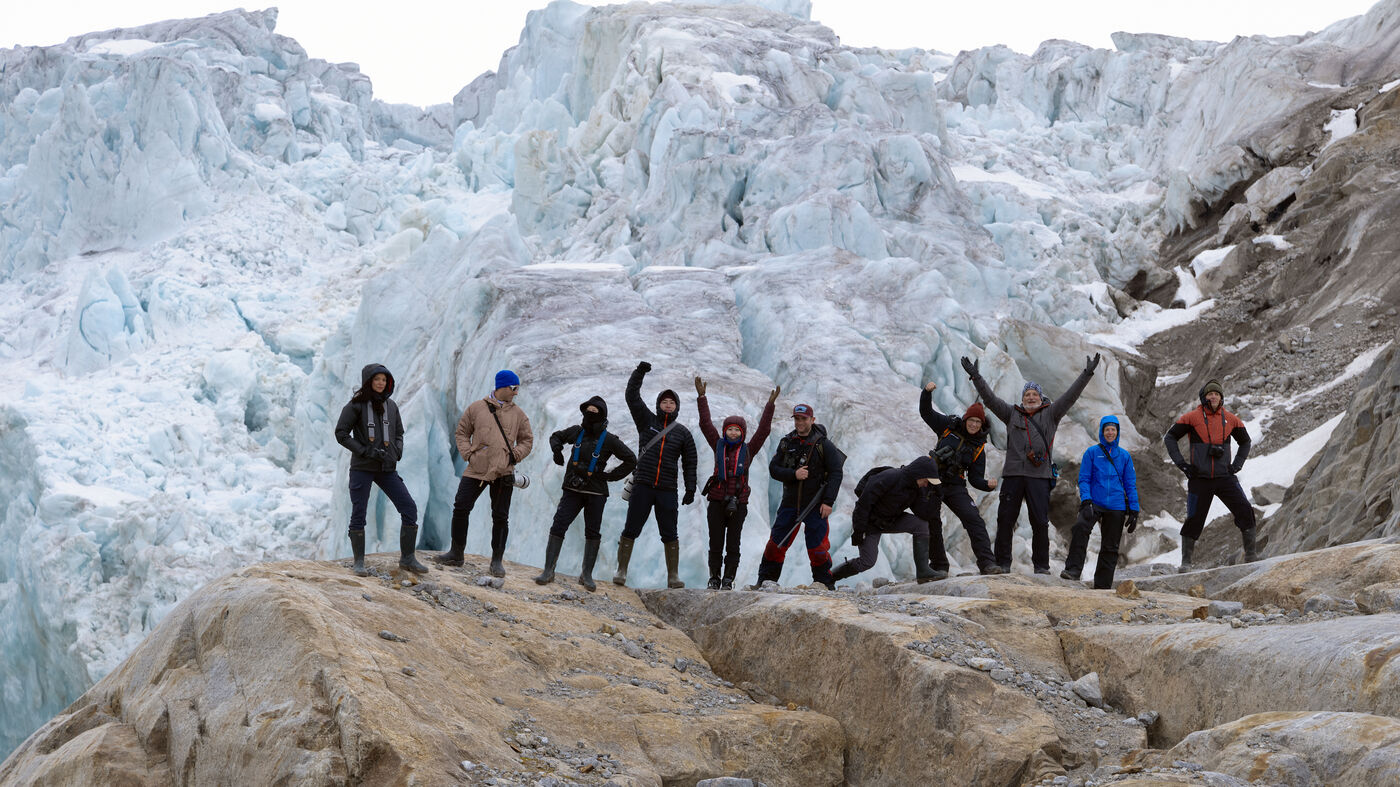
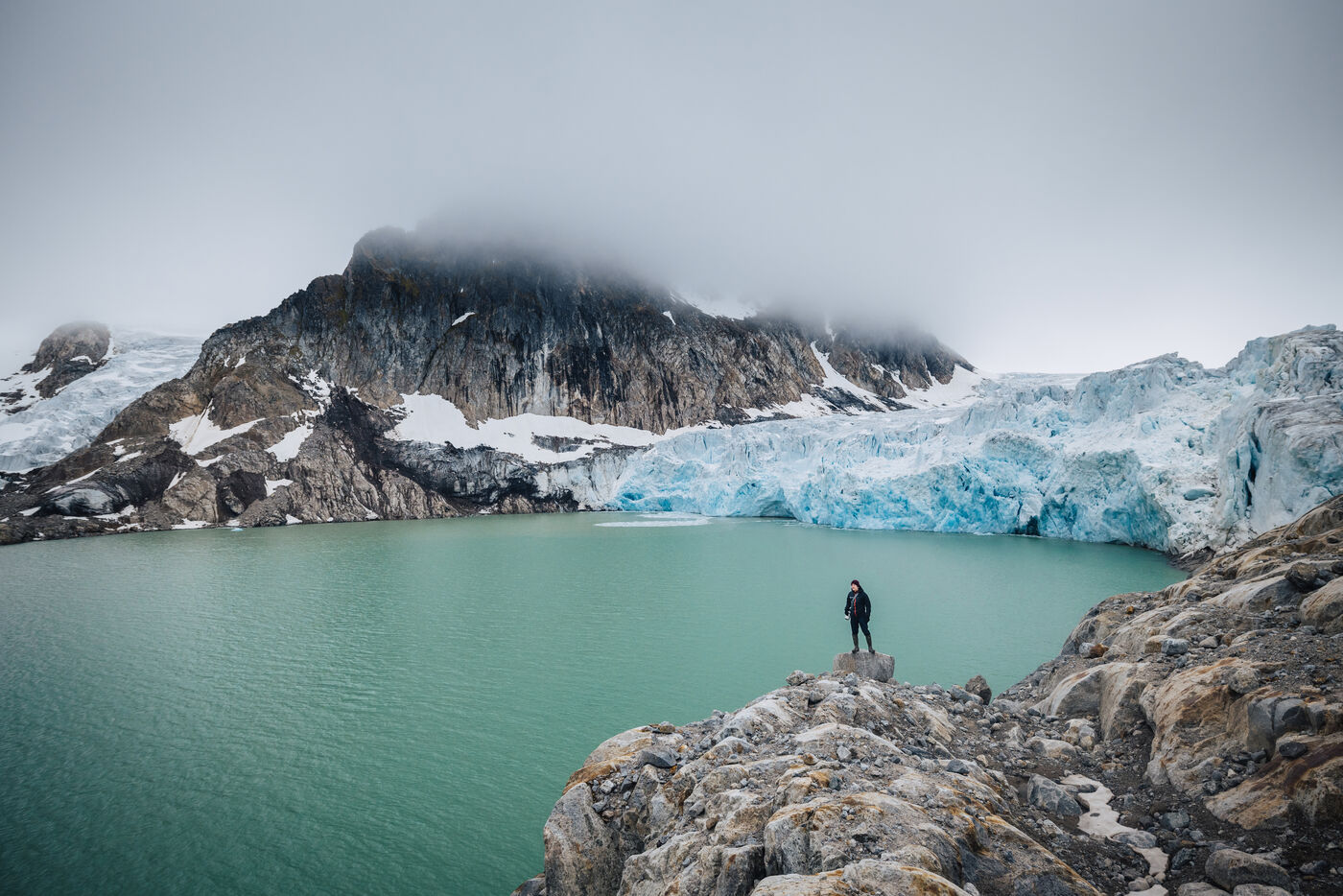
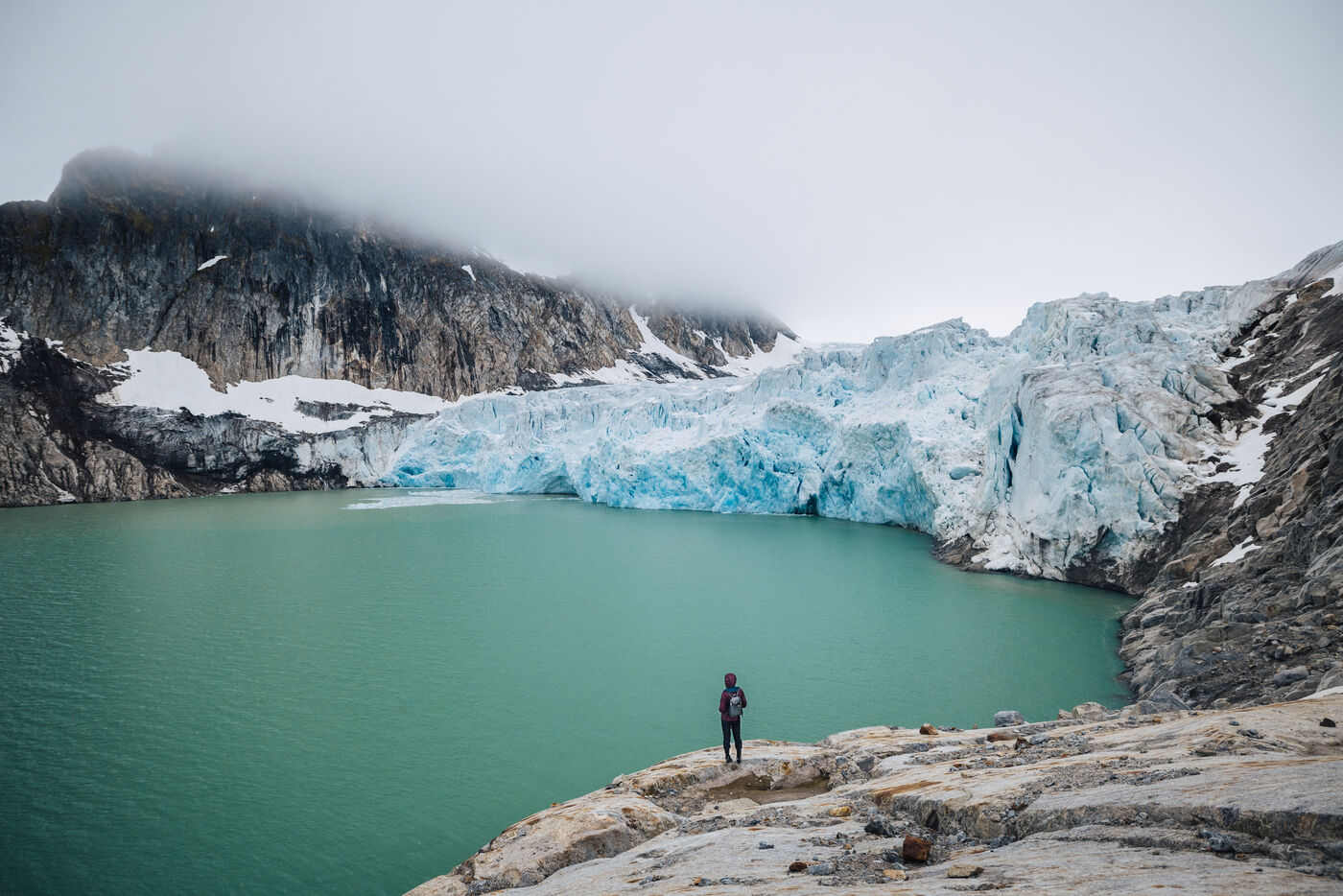
Nearby, a massive glacier descended to the water's edge, a wall of turquoise and white ice that made everything else feel small. We hiked across rocky moraines and snowfields to get closer, and the scale only grew. Standing at the base of a glacier in Svalbard is one of those experiences that rewires how you think about time.

Group of explorers celebrating at the base of a massive glacier
The group at the base of the glacier. Arms raised because what else do you do when you're standing in front of something this big.
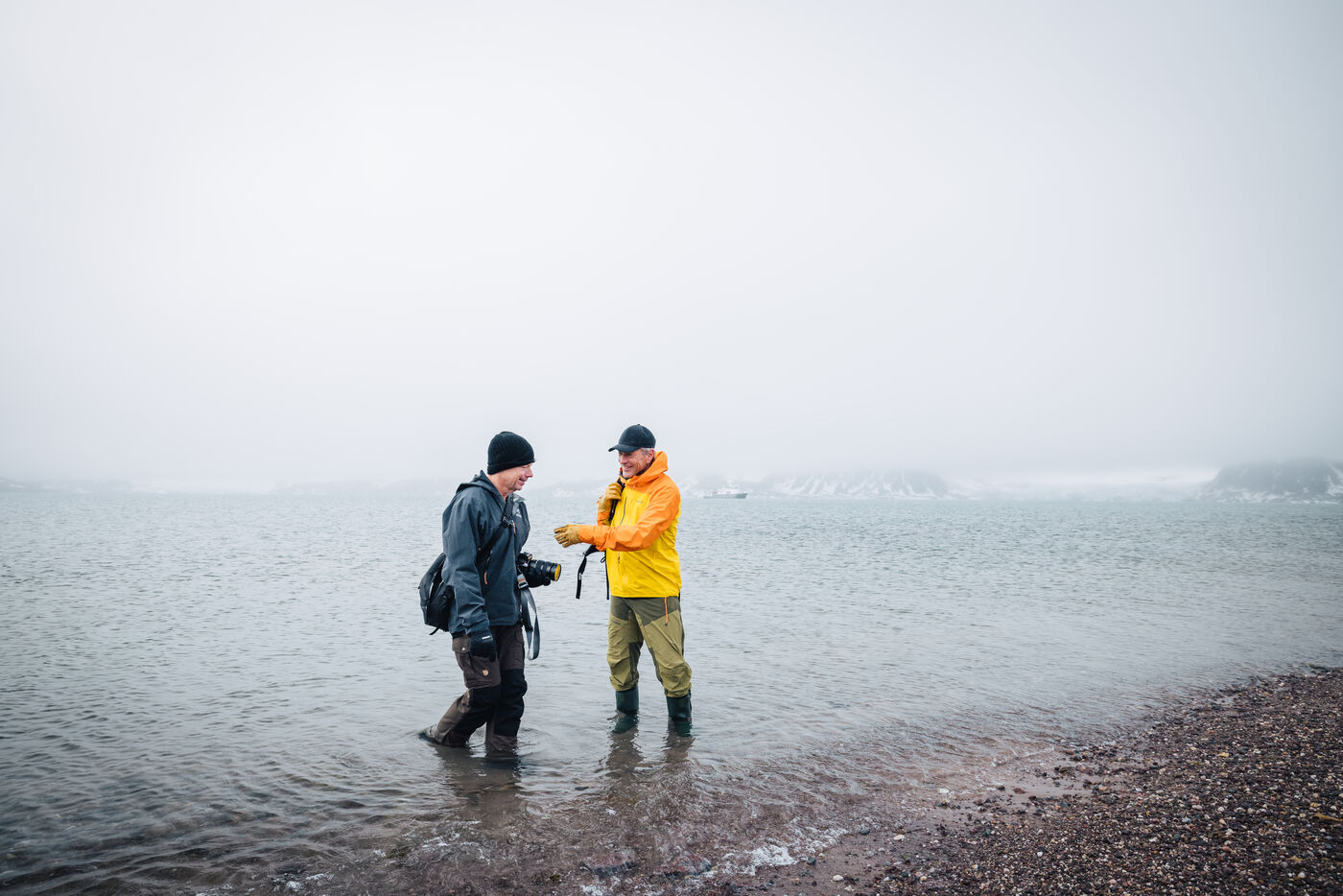
Two people wading in shallow water with misty mountains behind Solitary figure on rocky beach with abandoned wooden structure
Wading through the shallows near shore, and the first glimpse of the old trapper's hut in the fog.
Weathered wooden building frame on barren landscape with distant glaciers Person standing near a dilapidated wooden structure with snowy mountains
The trapper's station at Taodden. A wooden skeleton that has somehow survived decades of Arctic winters.
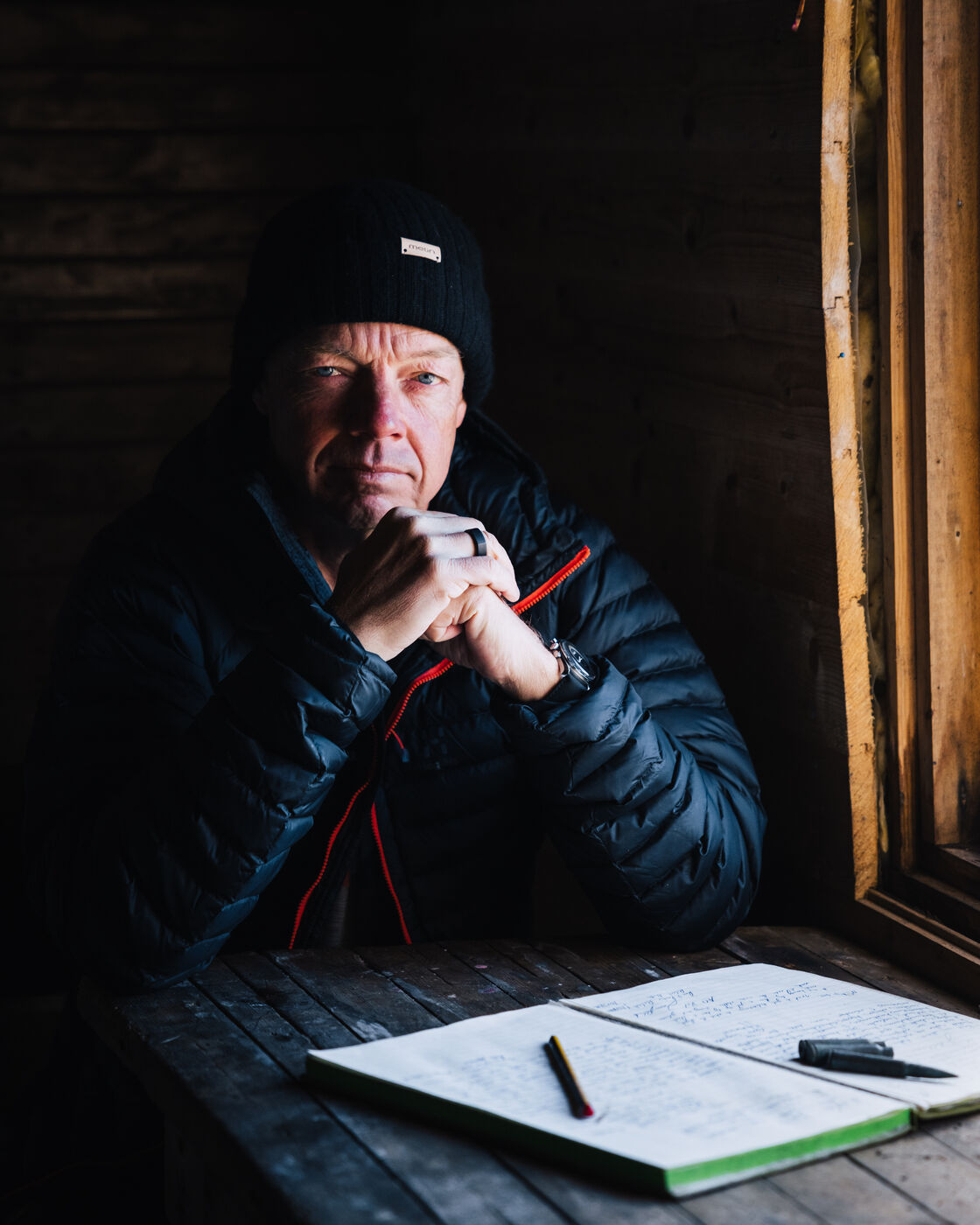
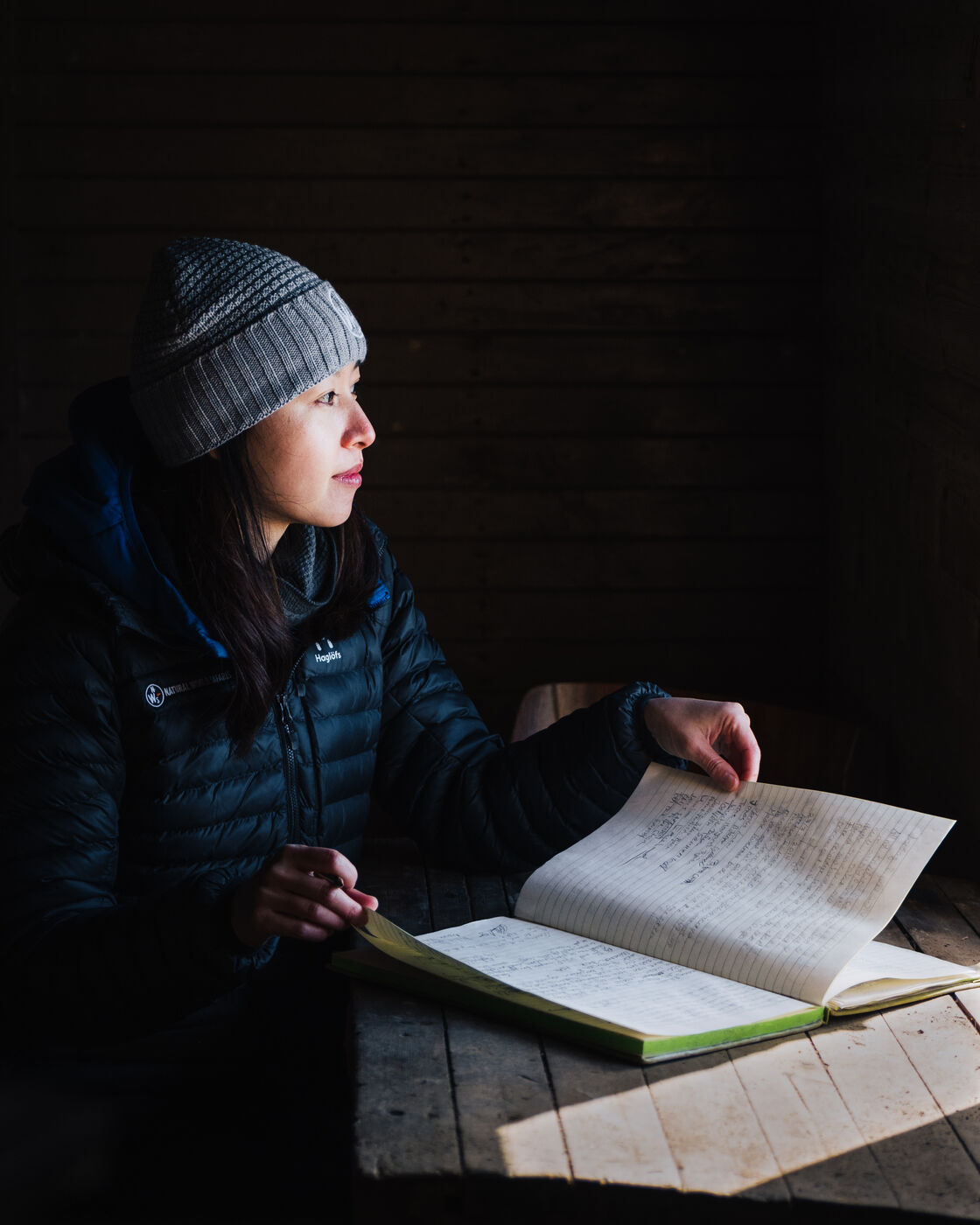
Portrait of a man in a black and orange jacket and beanie Woman gazing out a window inside a dark wooden cabin
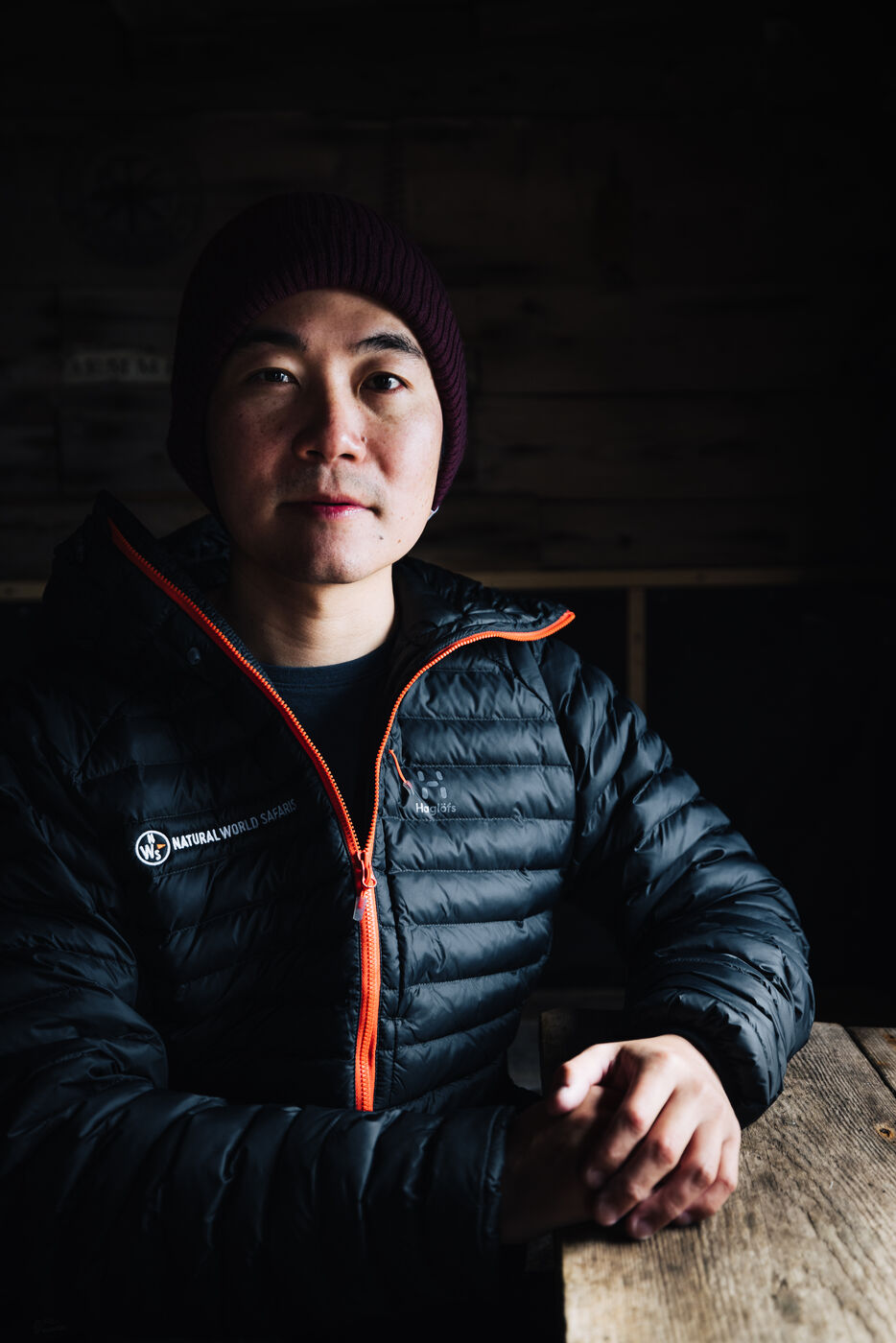
Inside the hut. The light through the window was the only warmth in the room.

Alkefjellet Bird Cliffs and Walruses

July 26, 2022. Alkefjellet, Svalbard

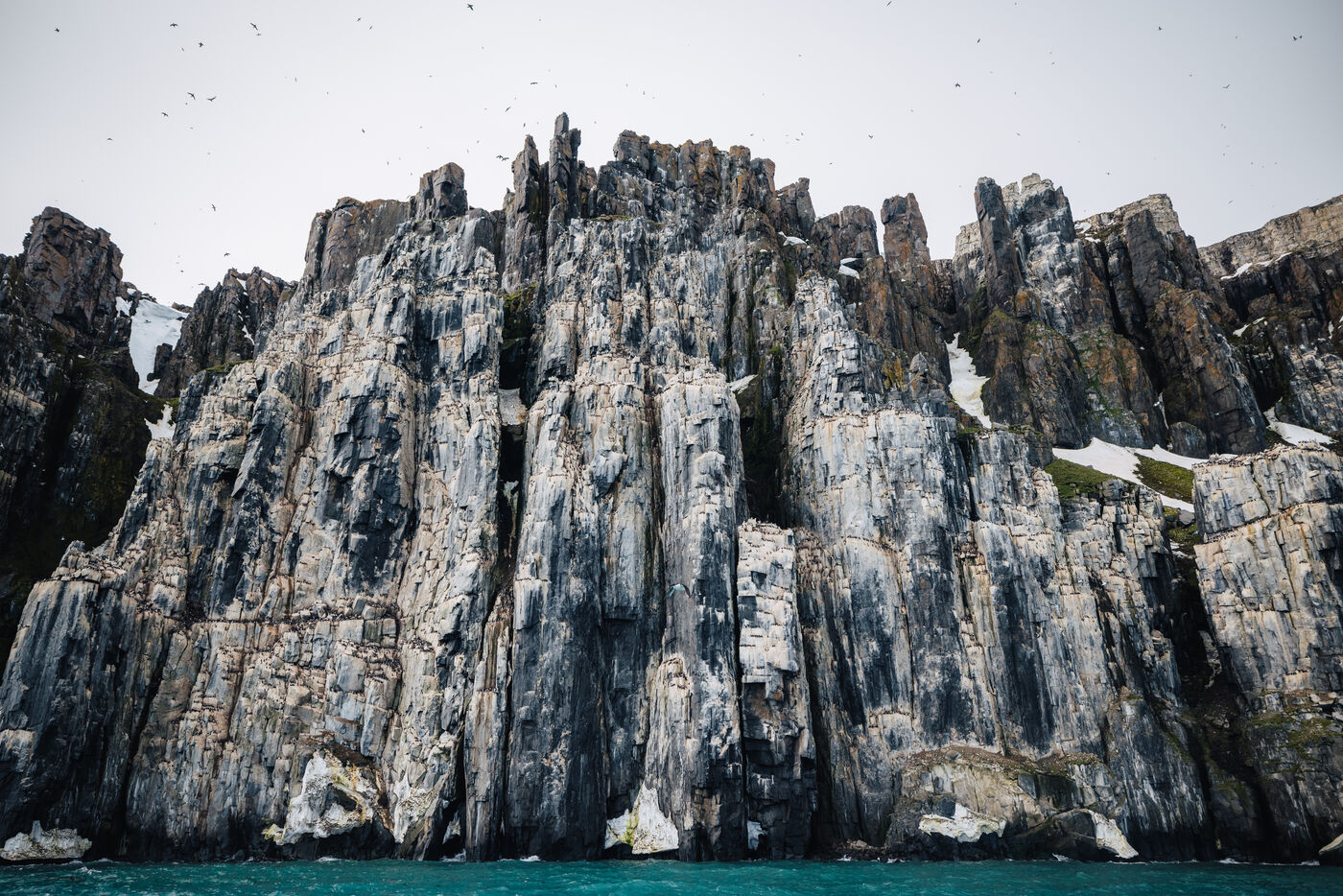
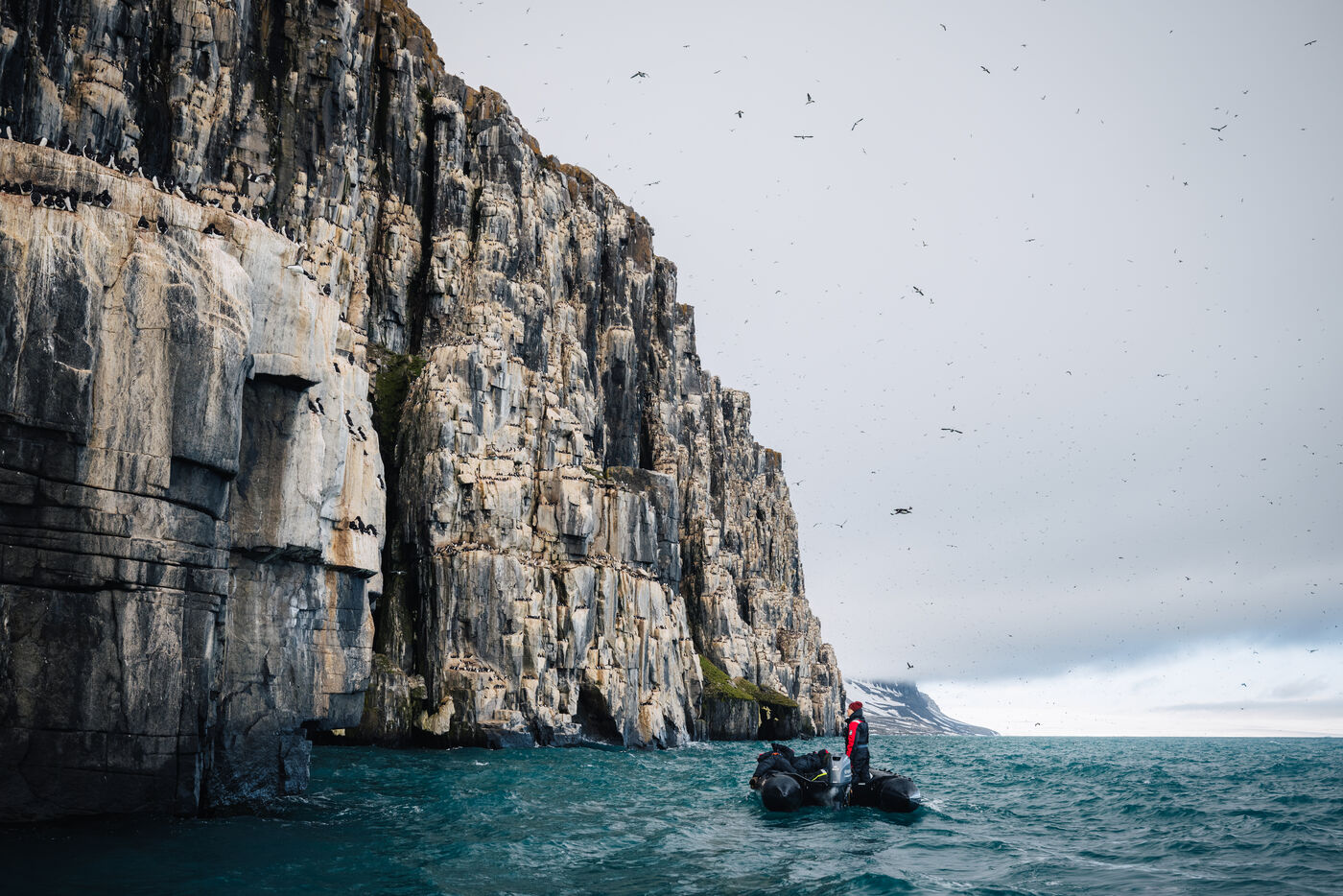
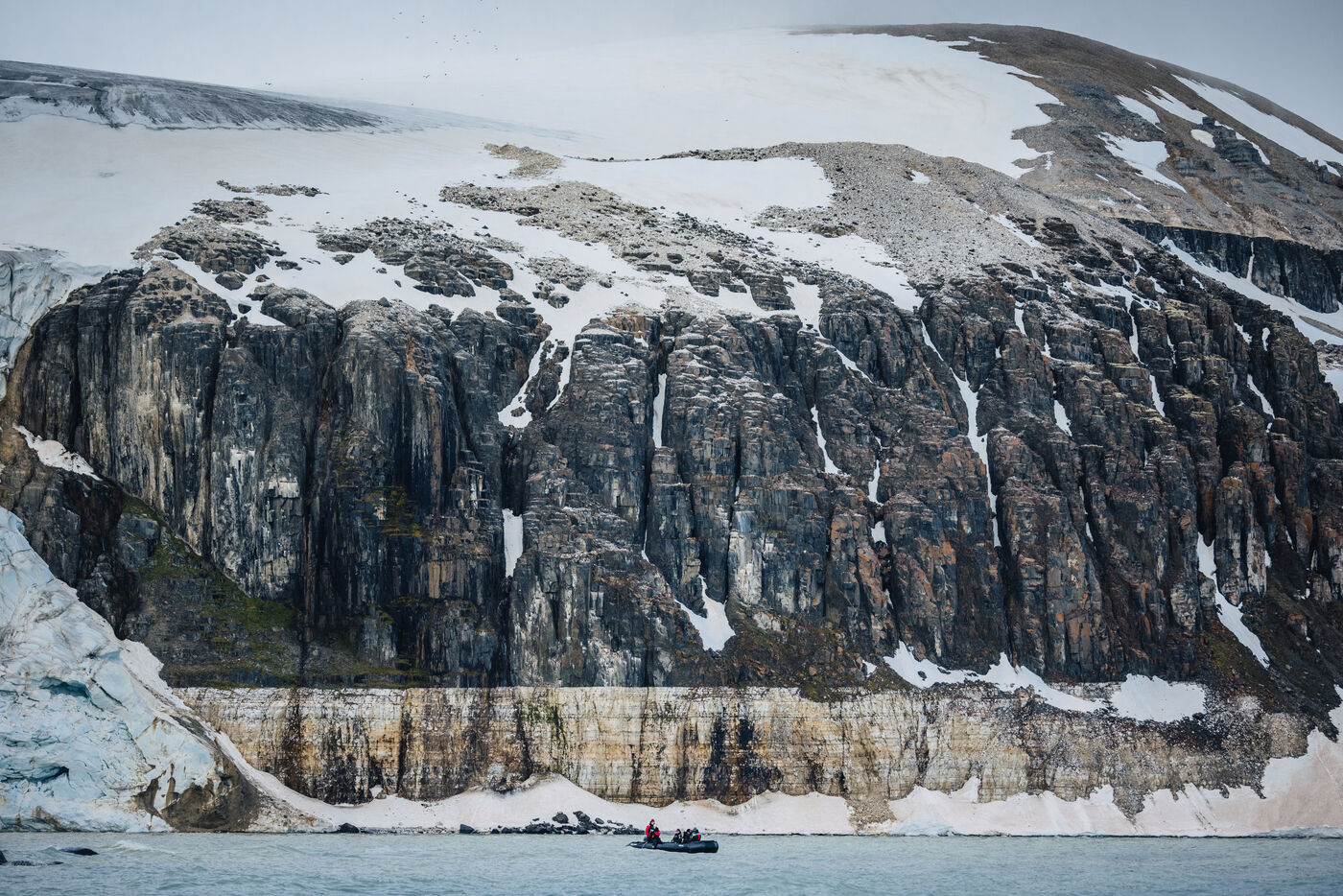
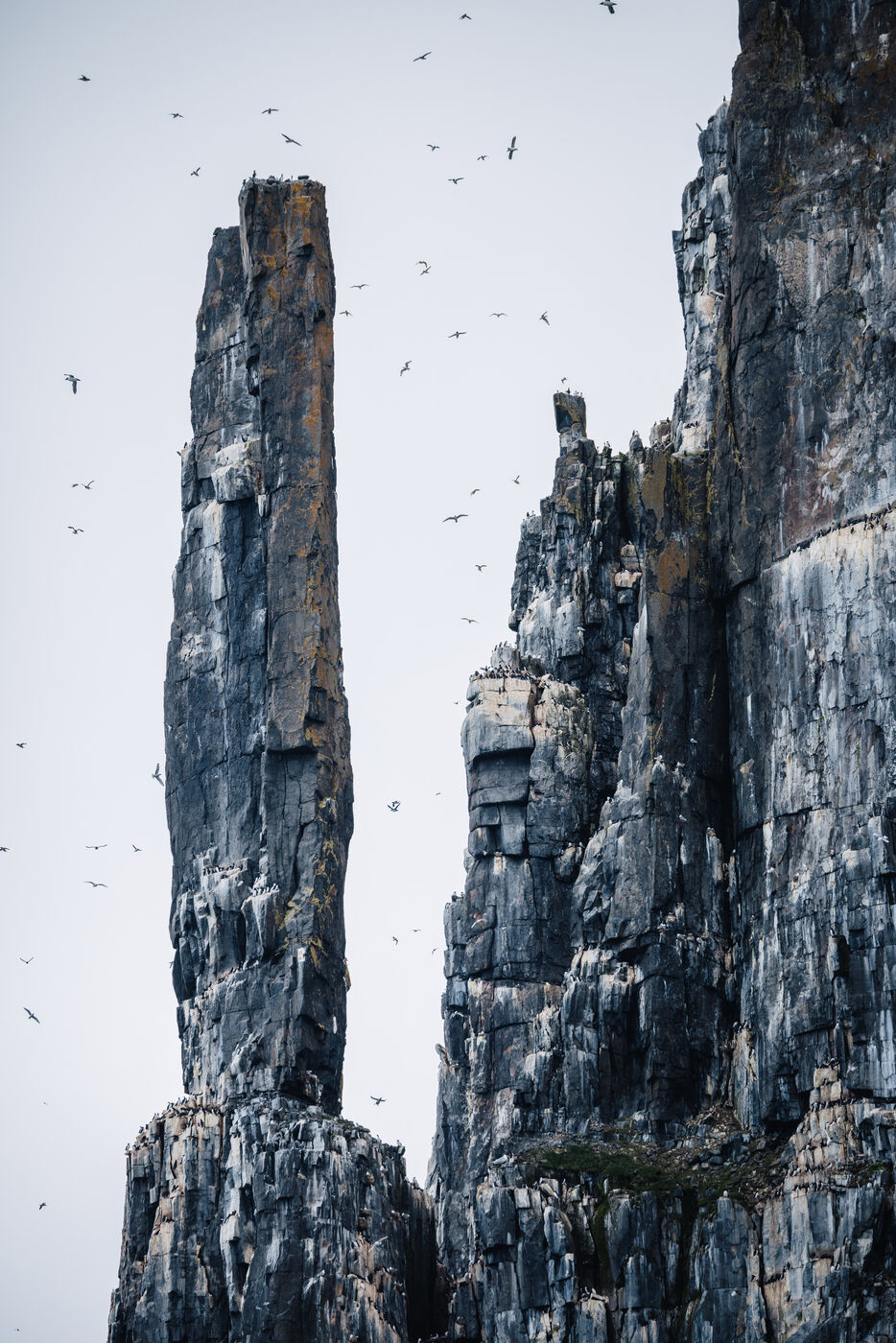
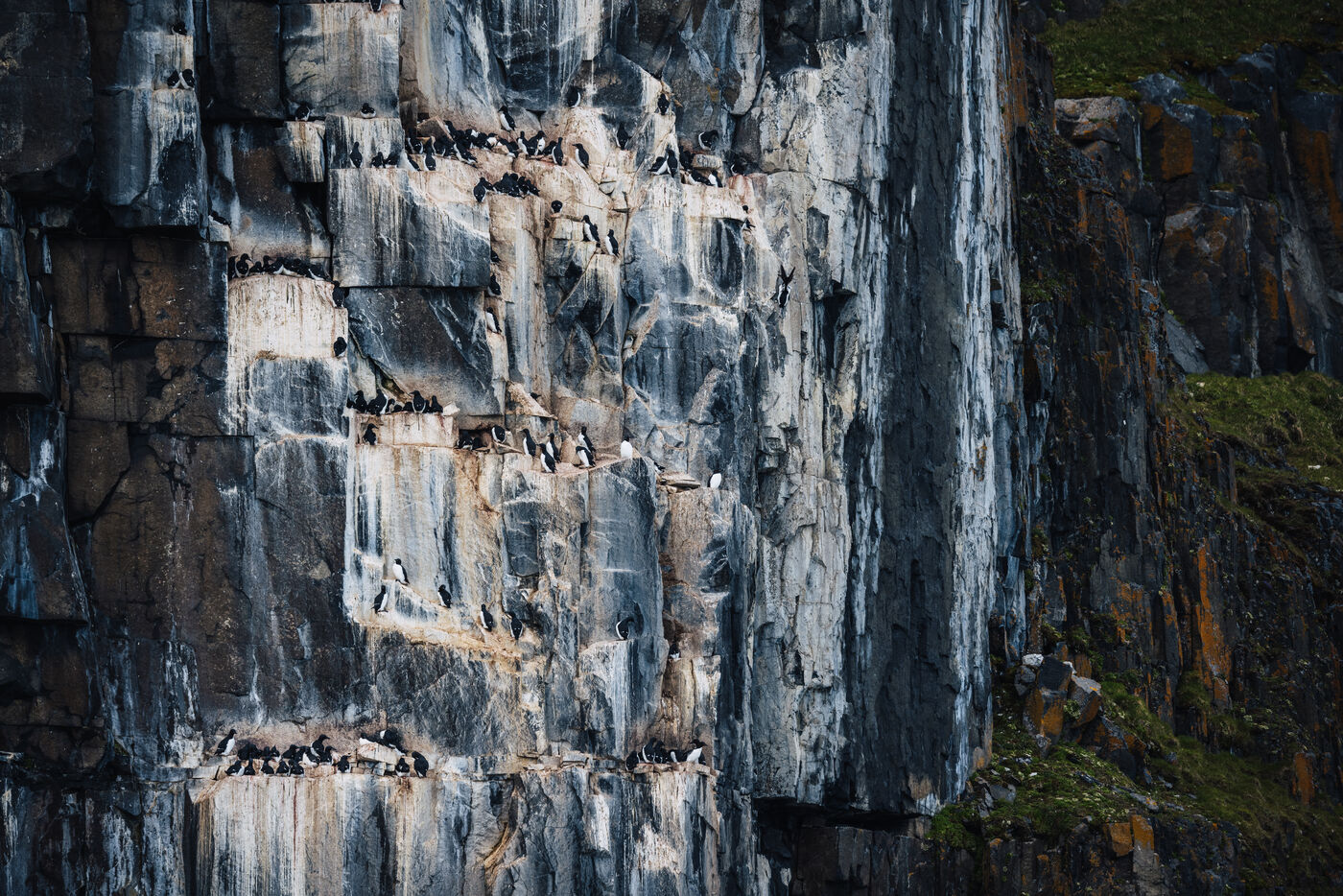
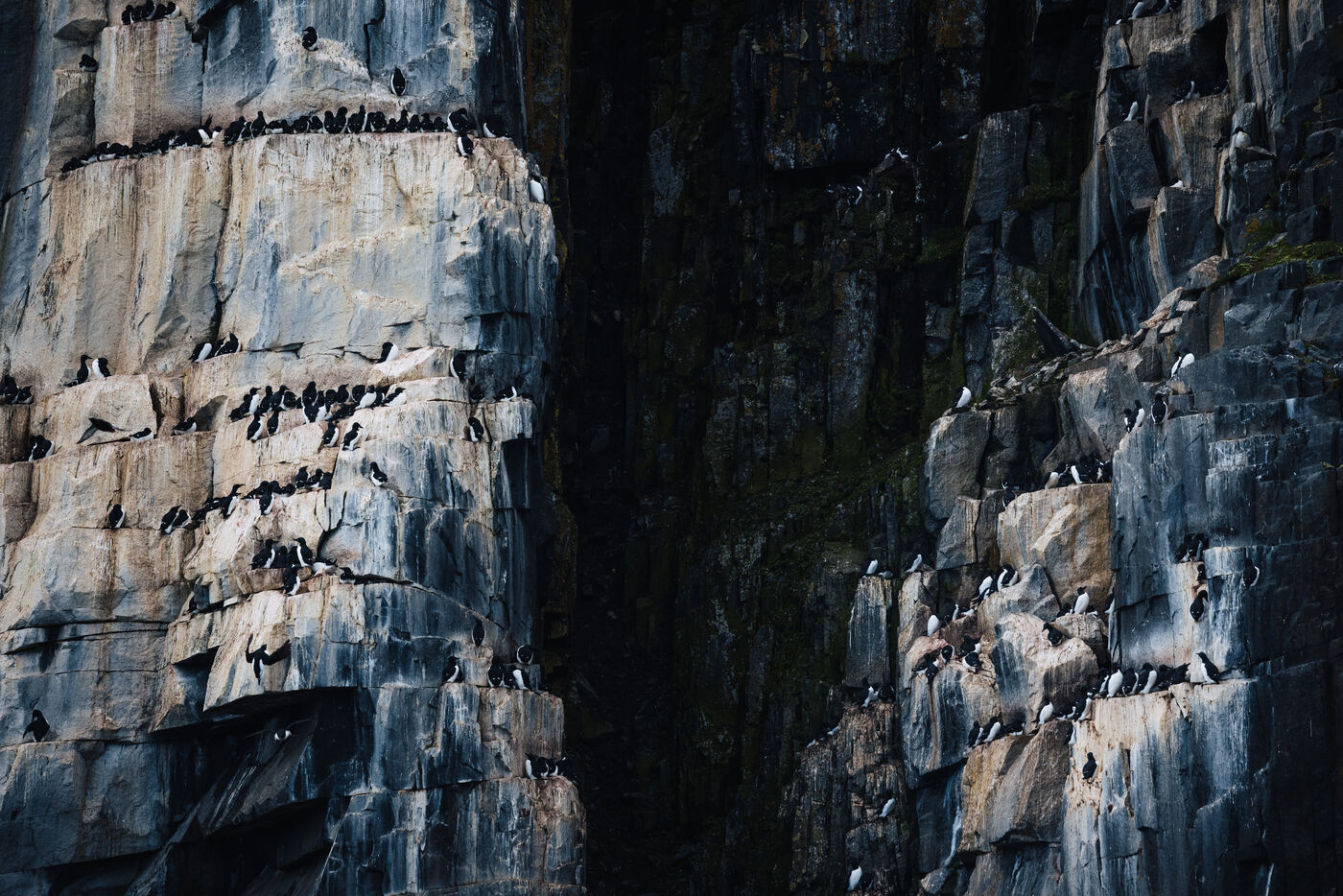
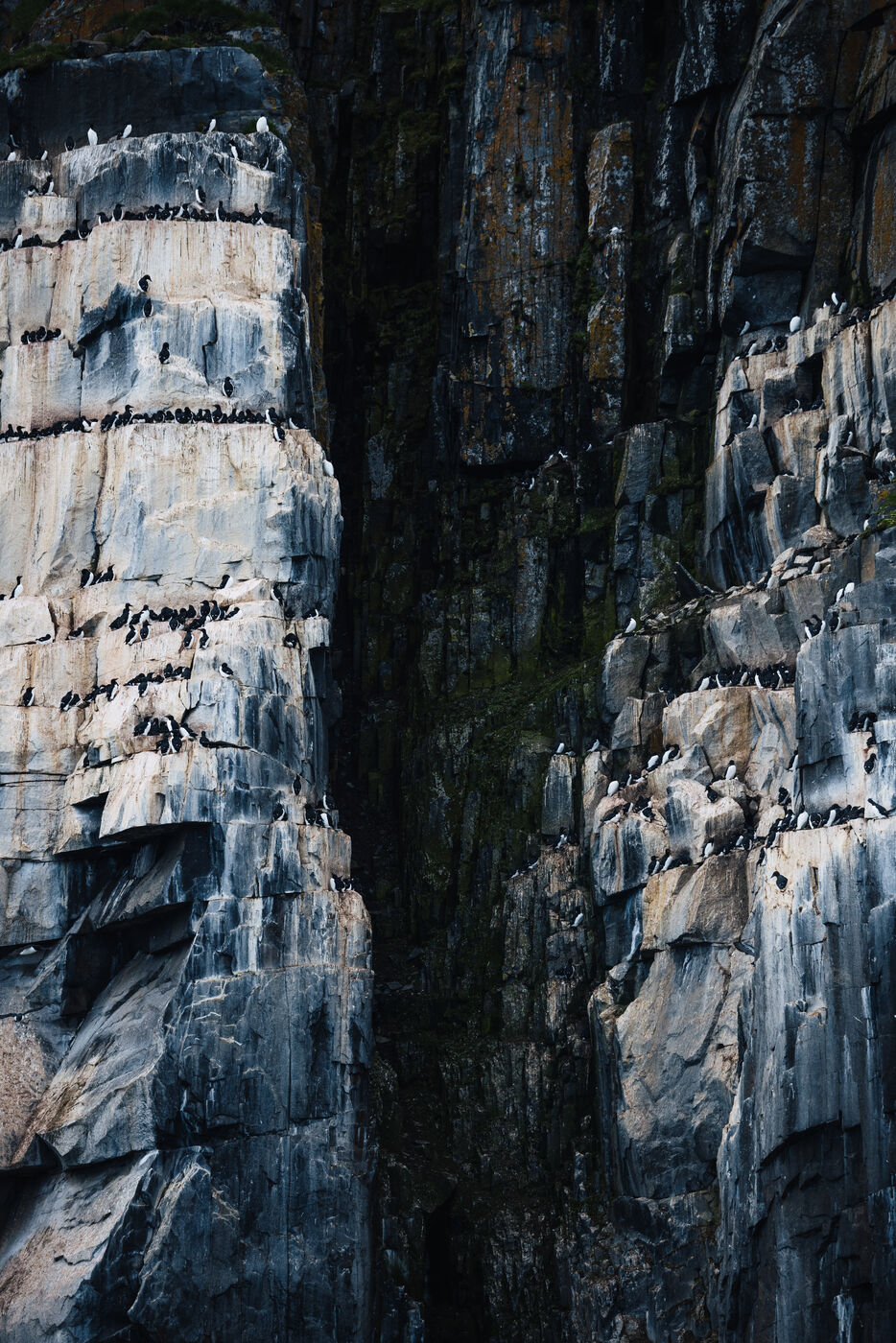
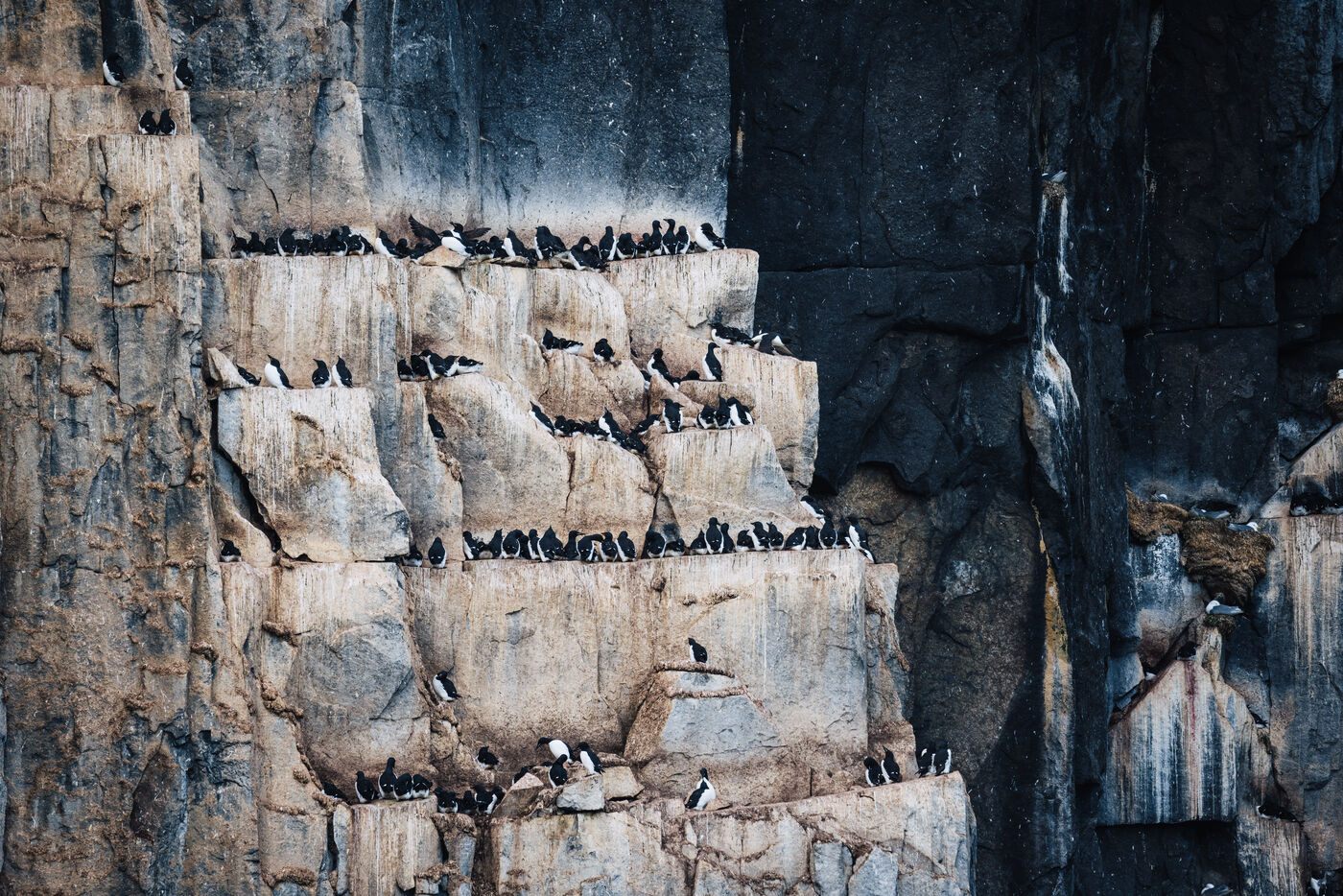
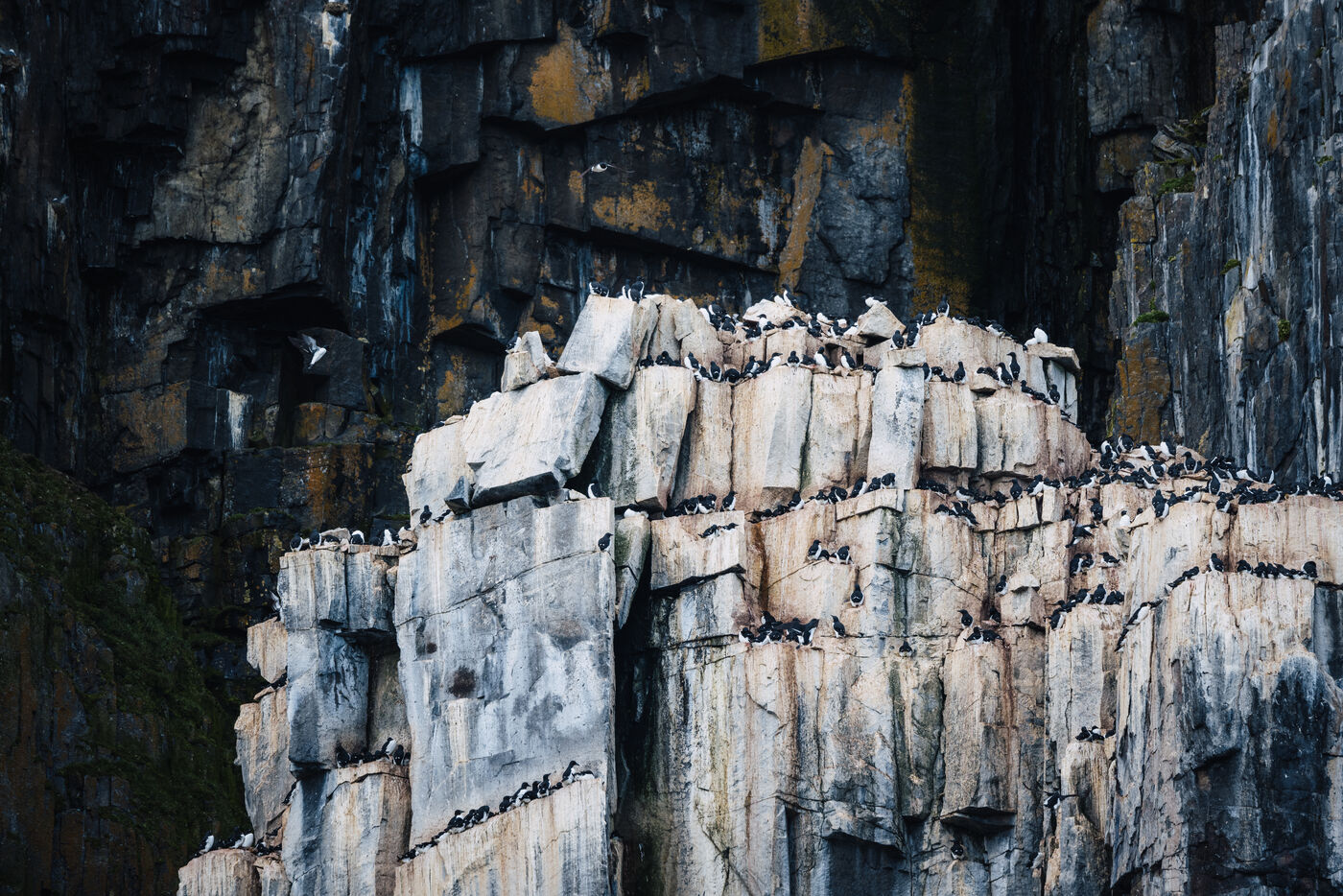
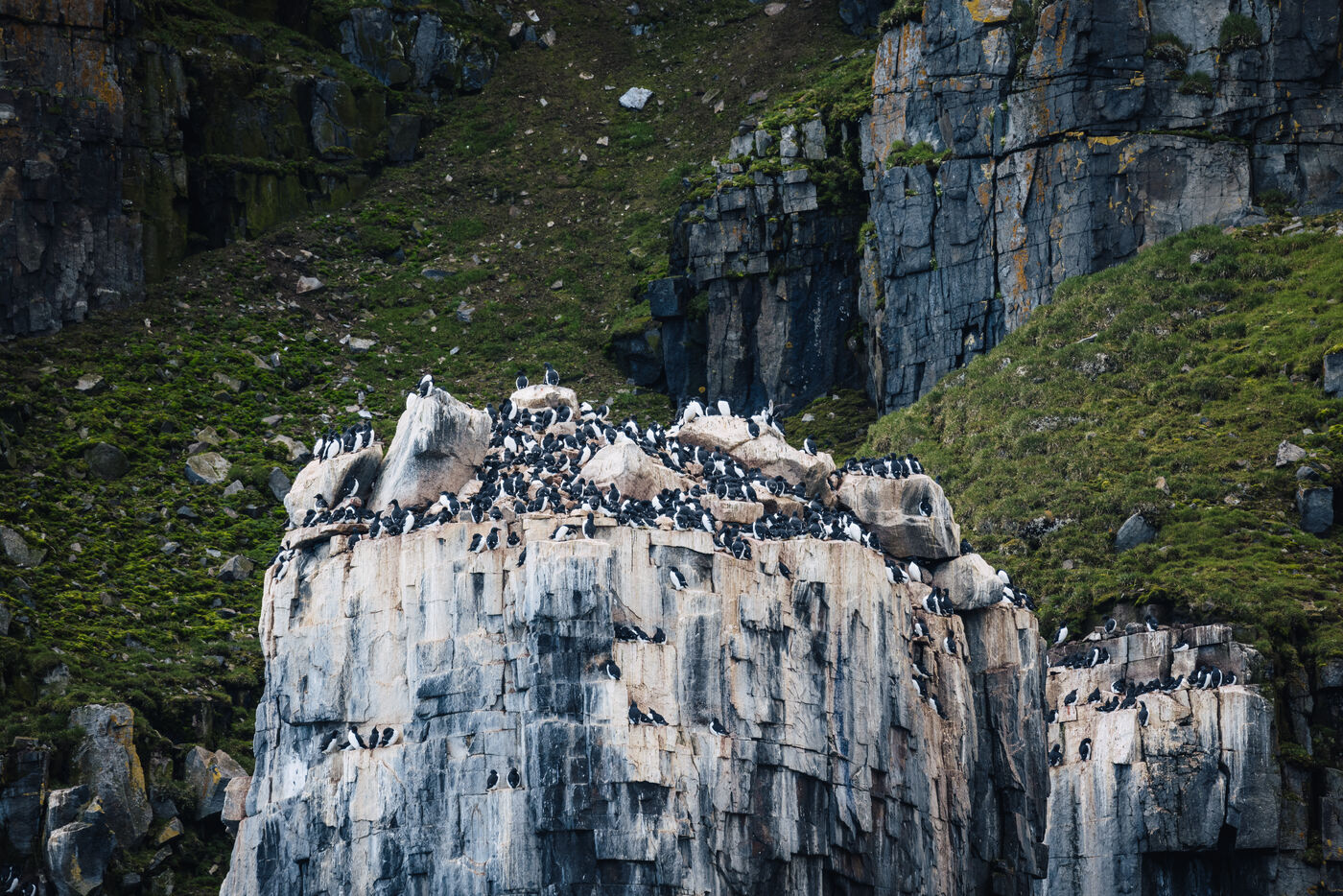
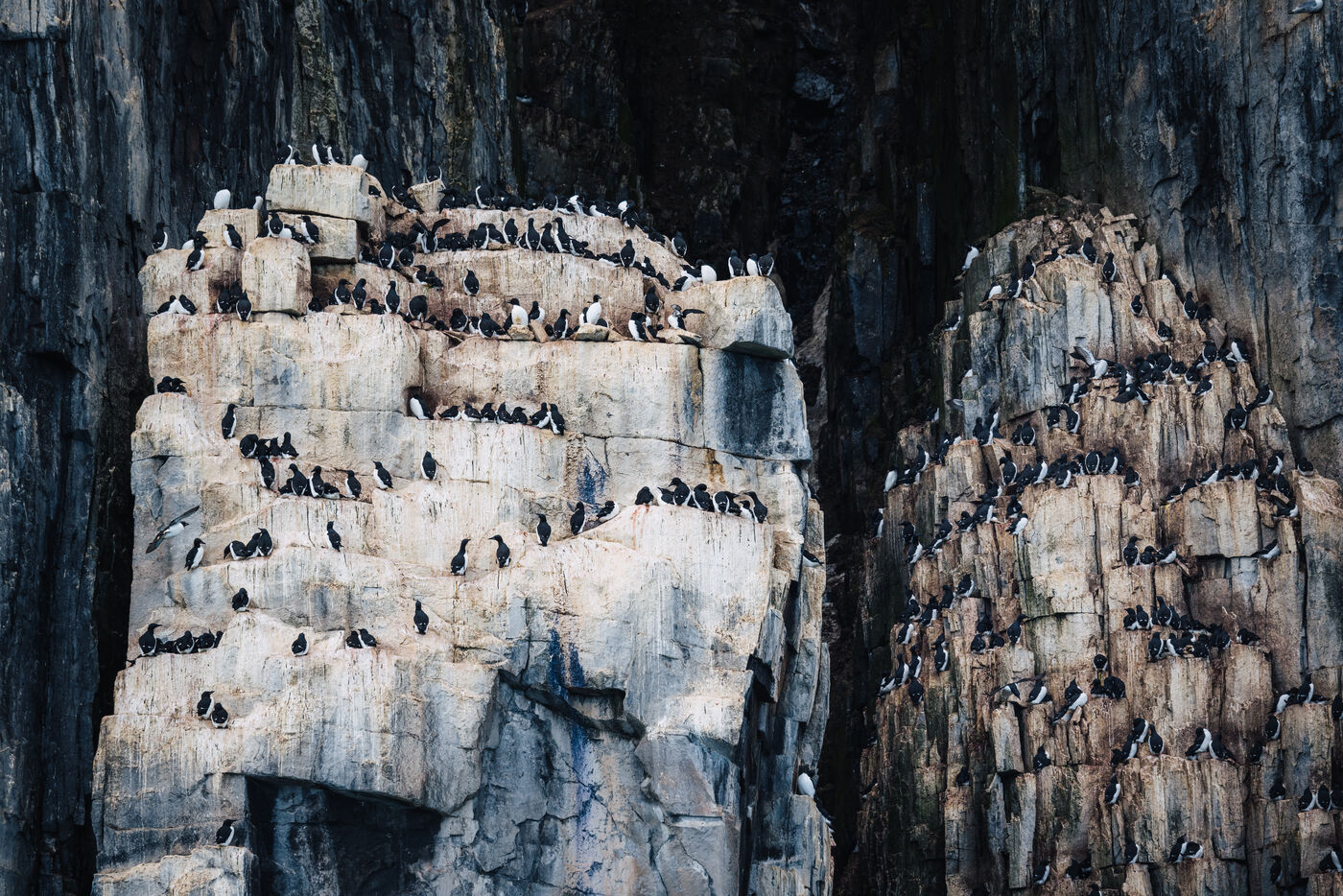
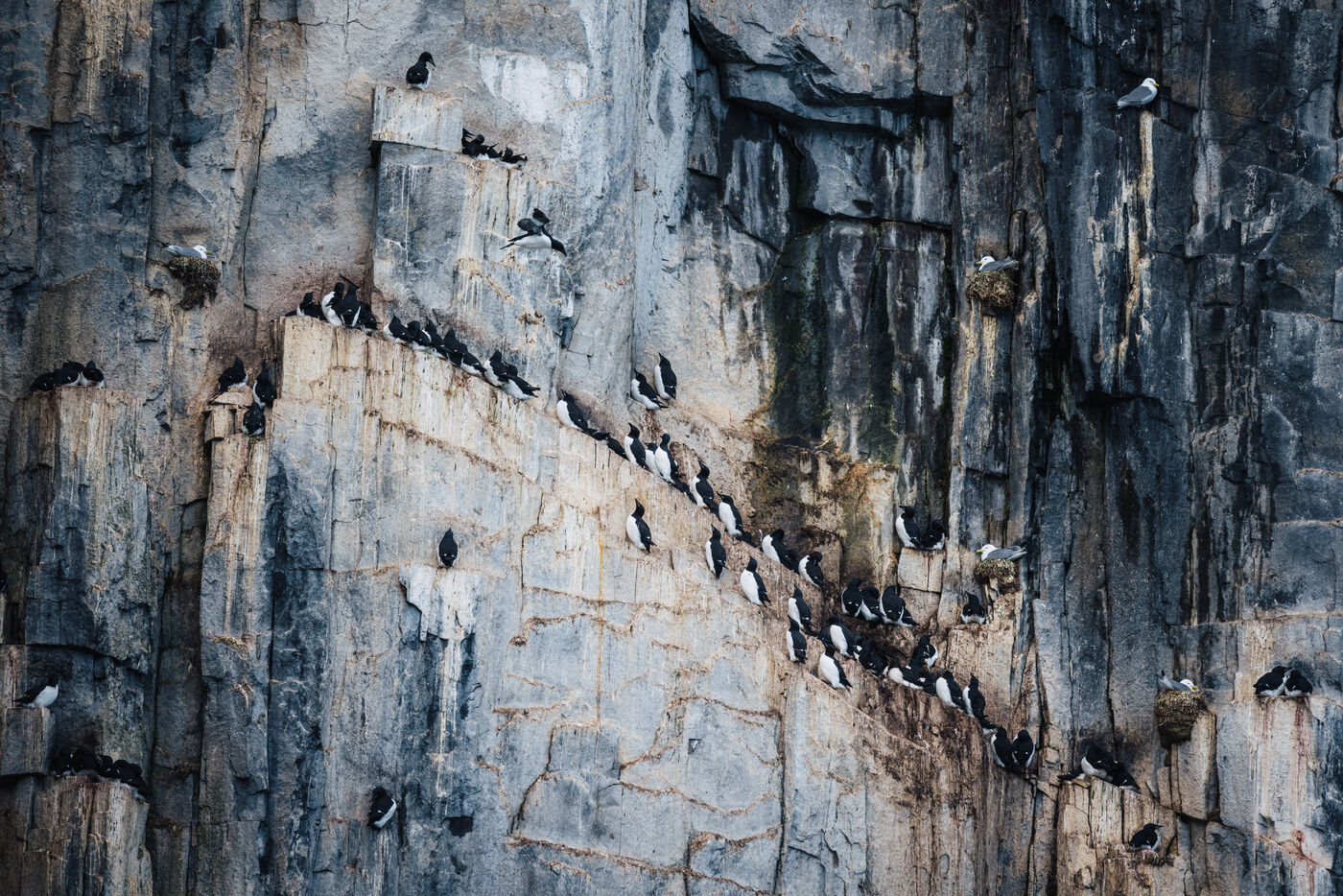
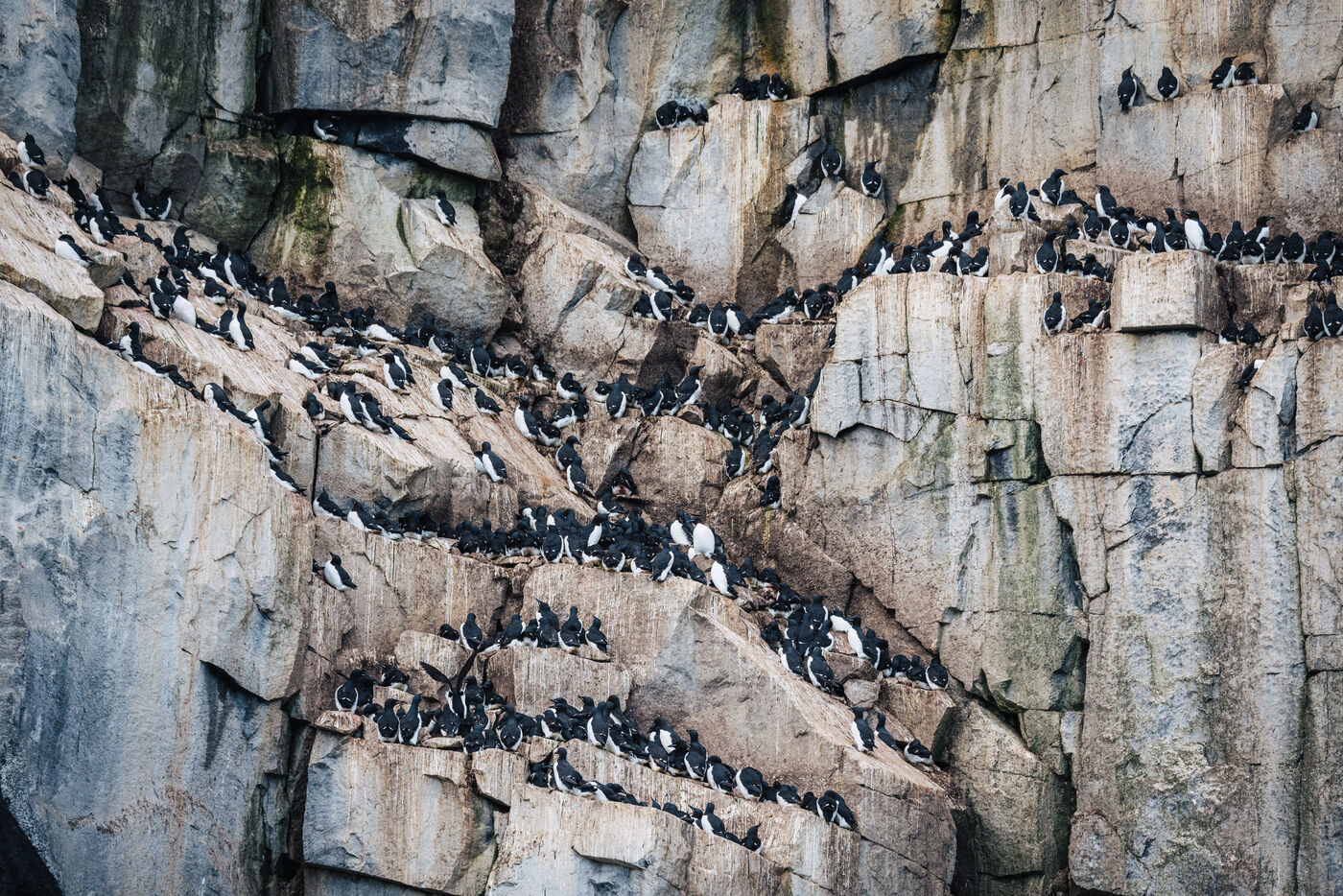
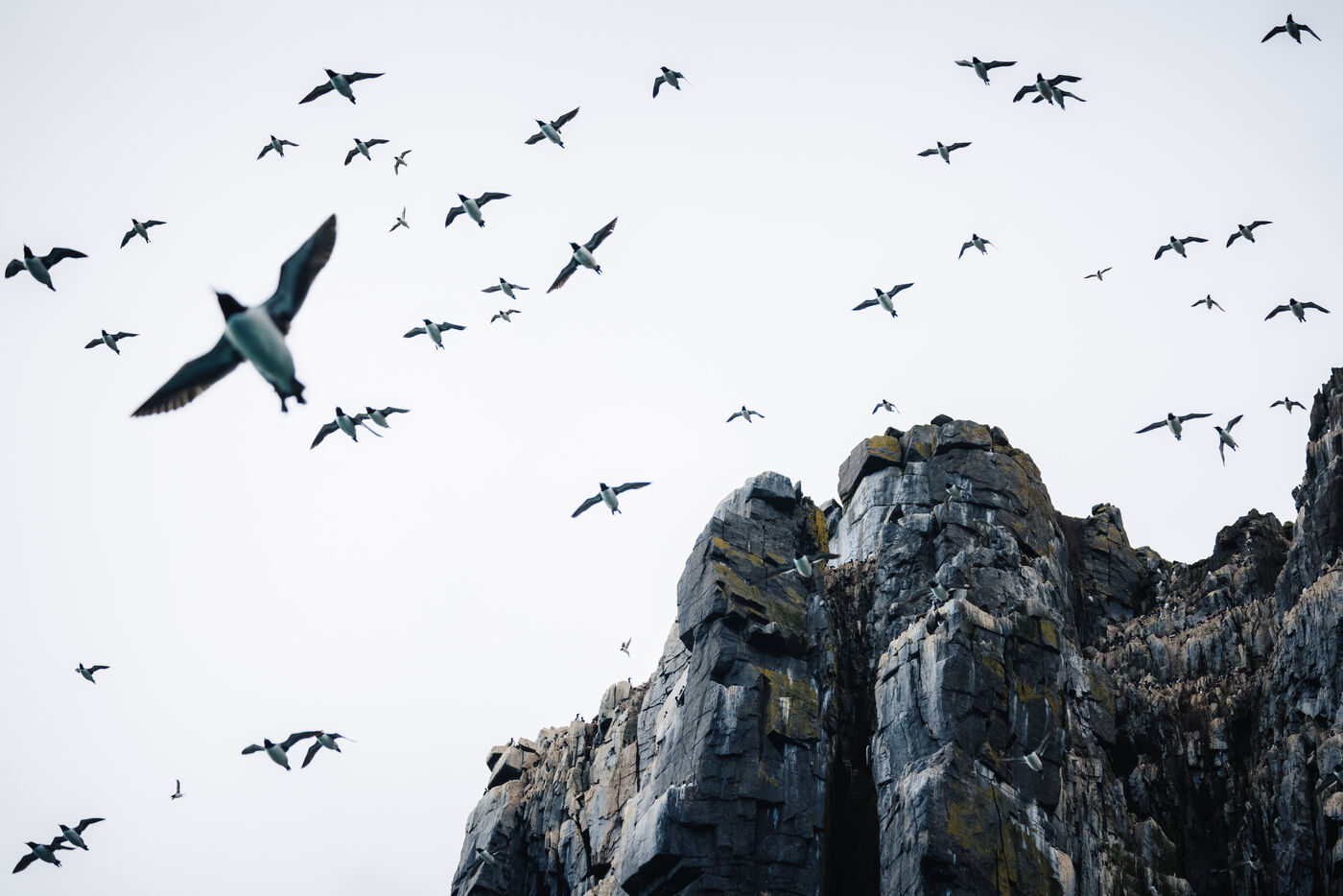
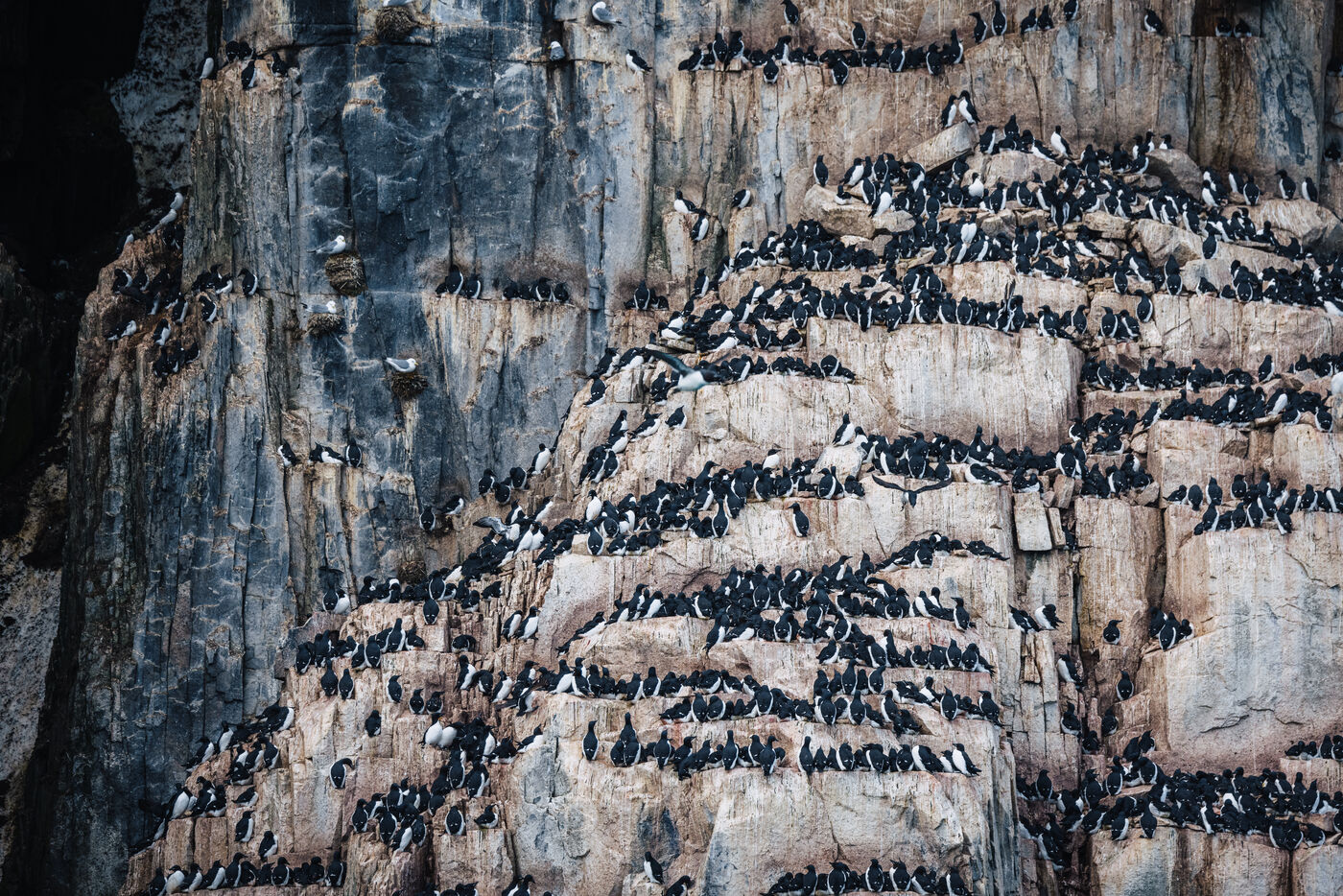
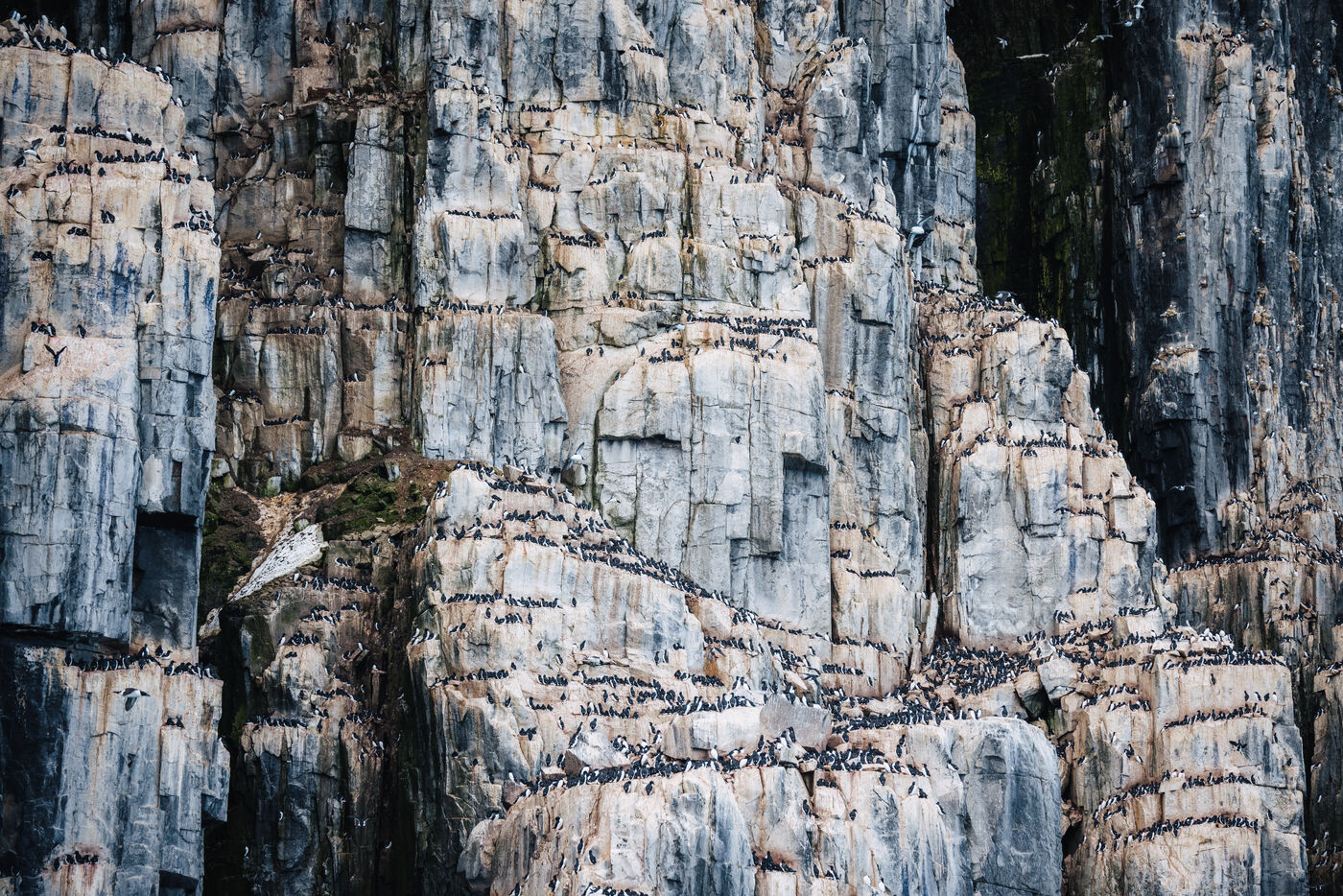
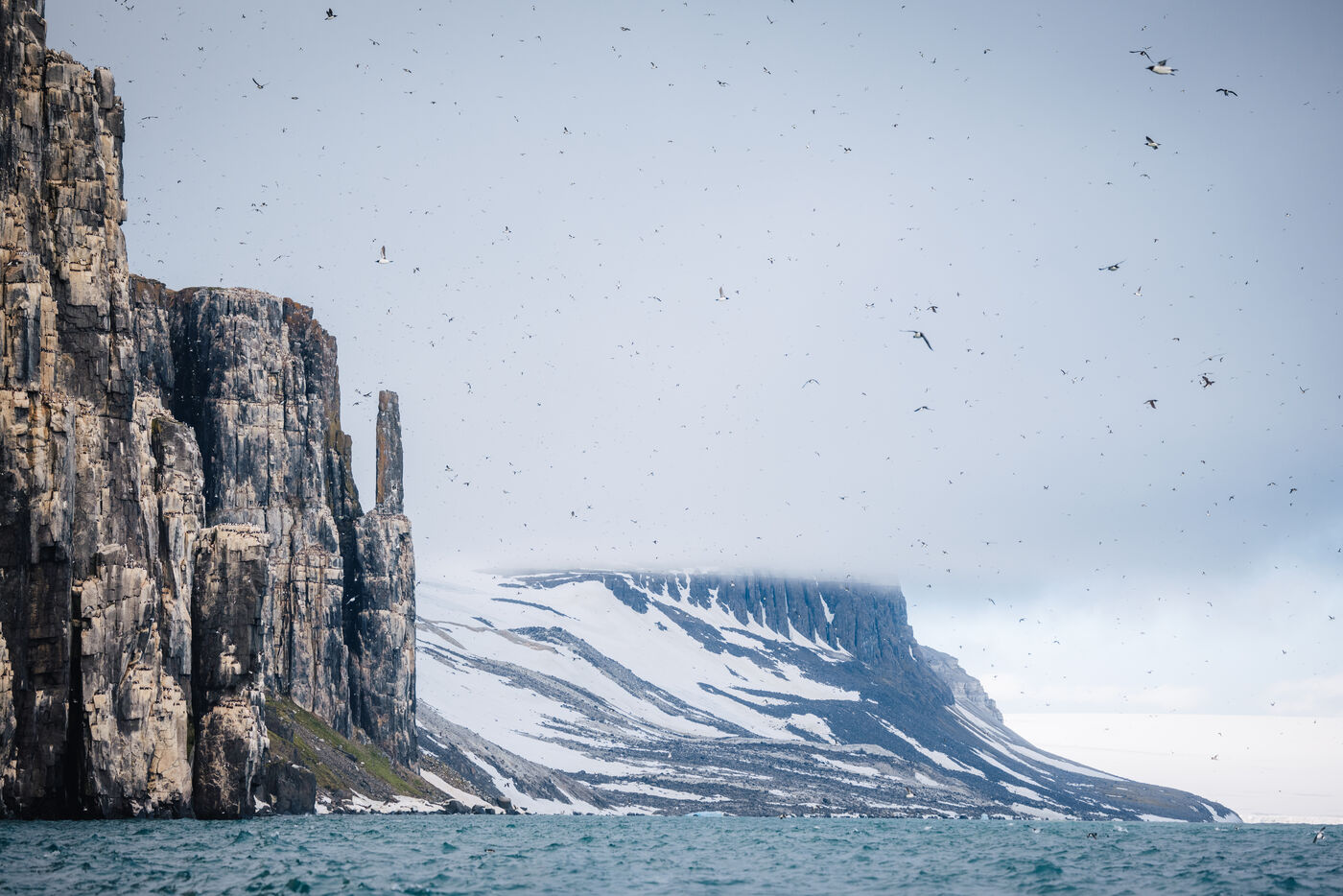
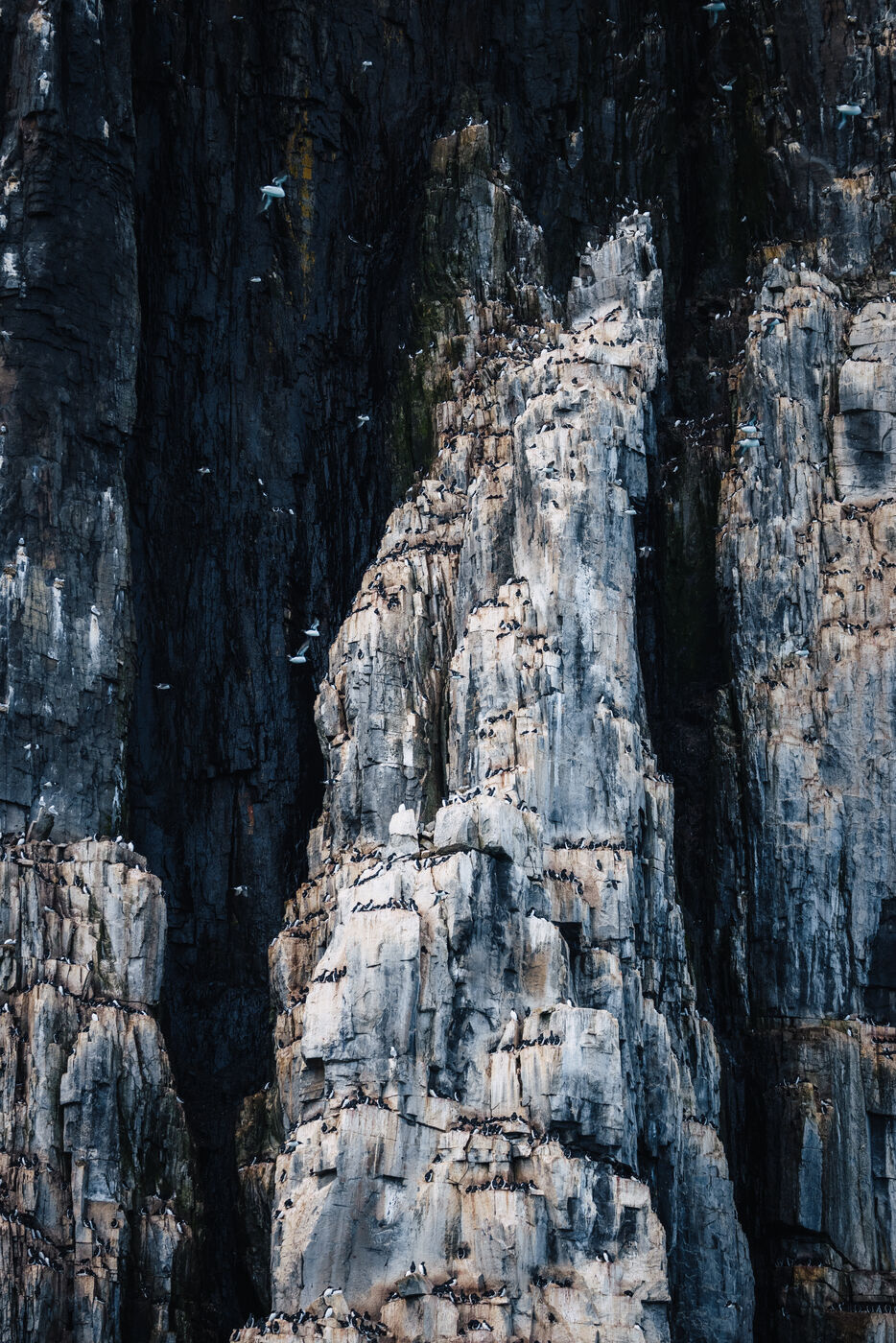
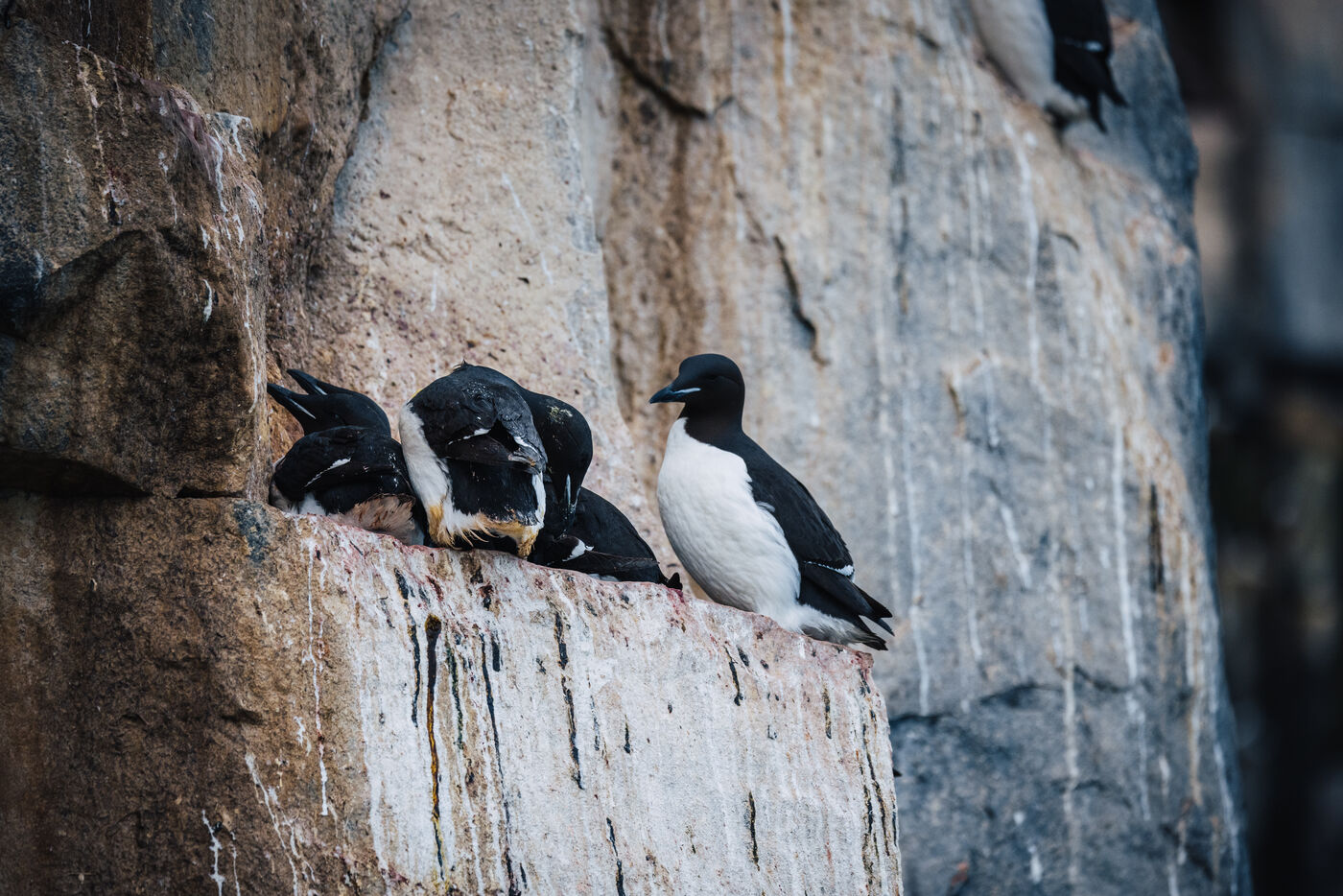
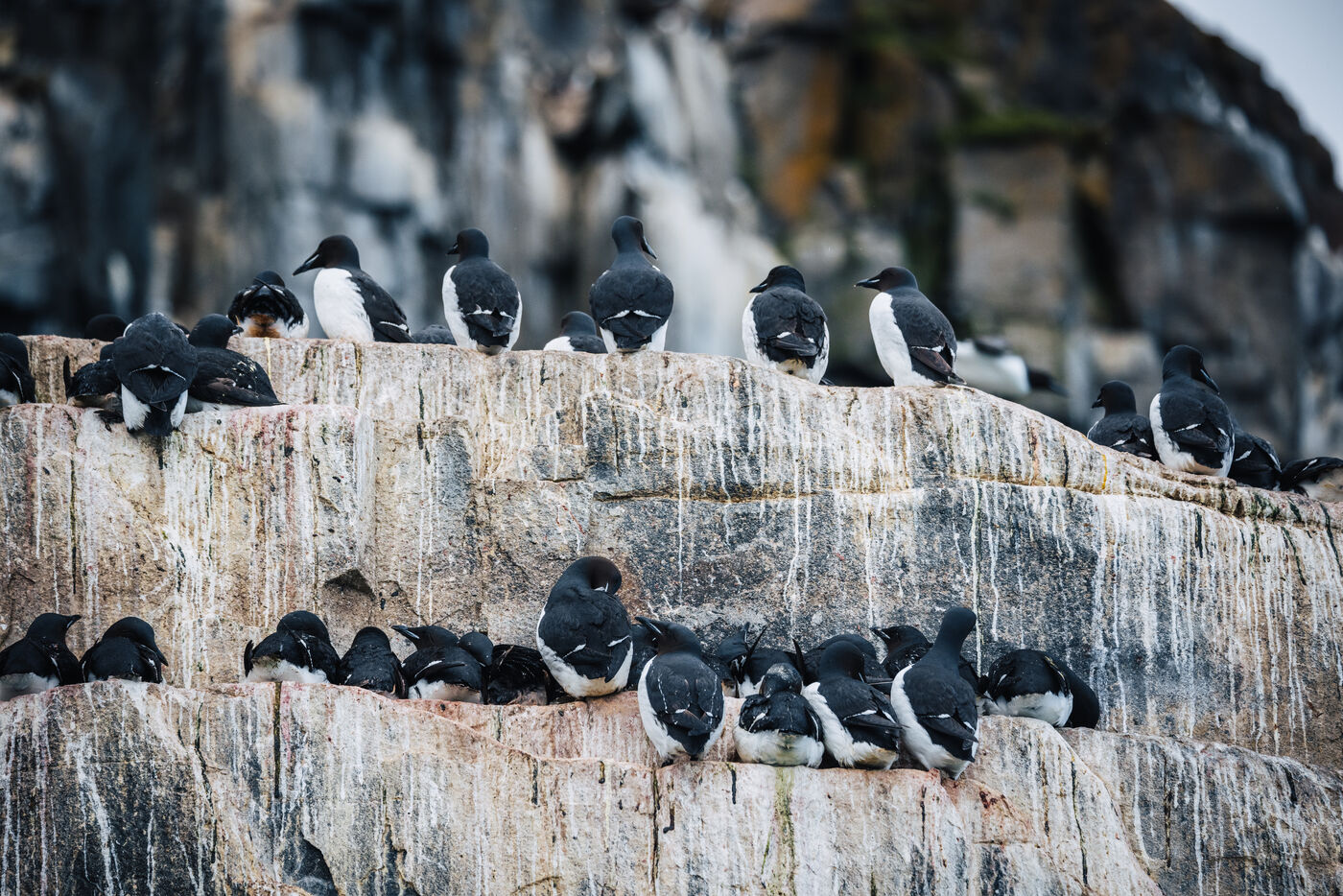
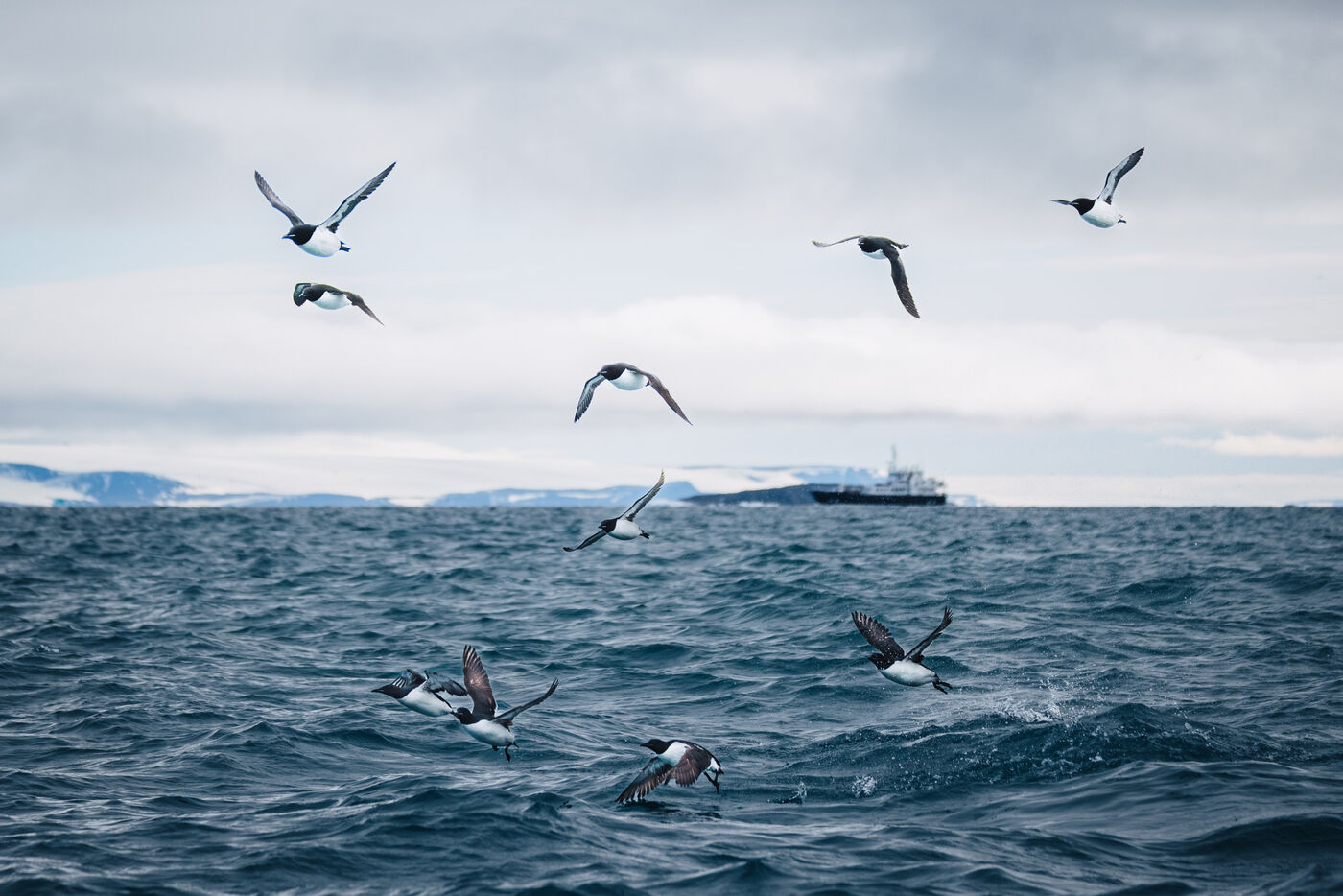
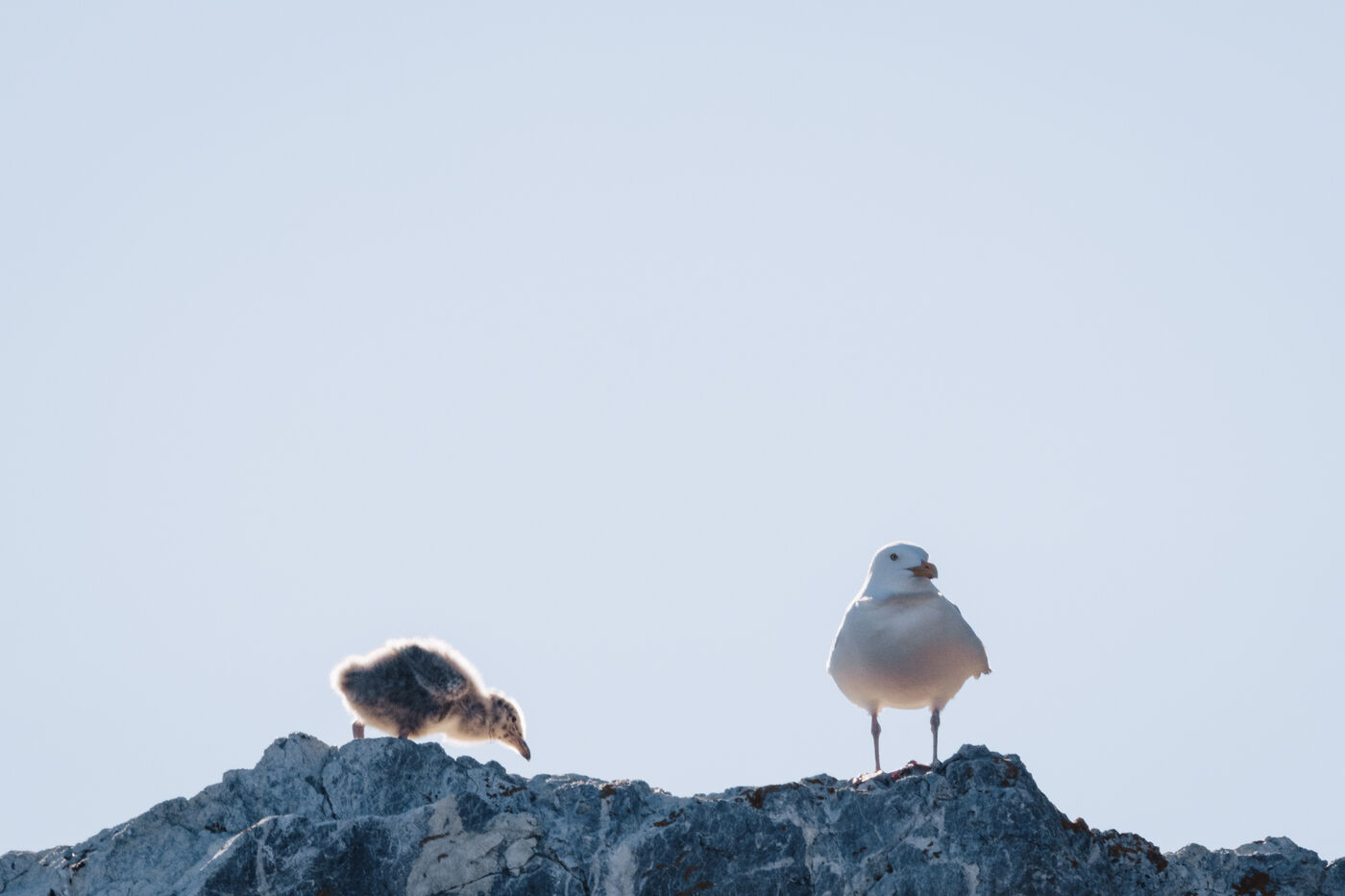
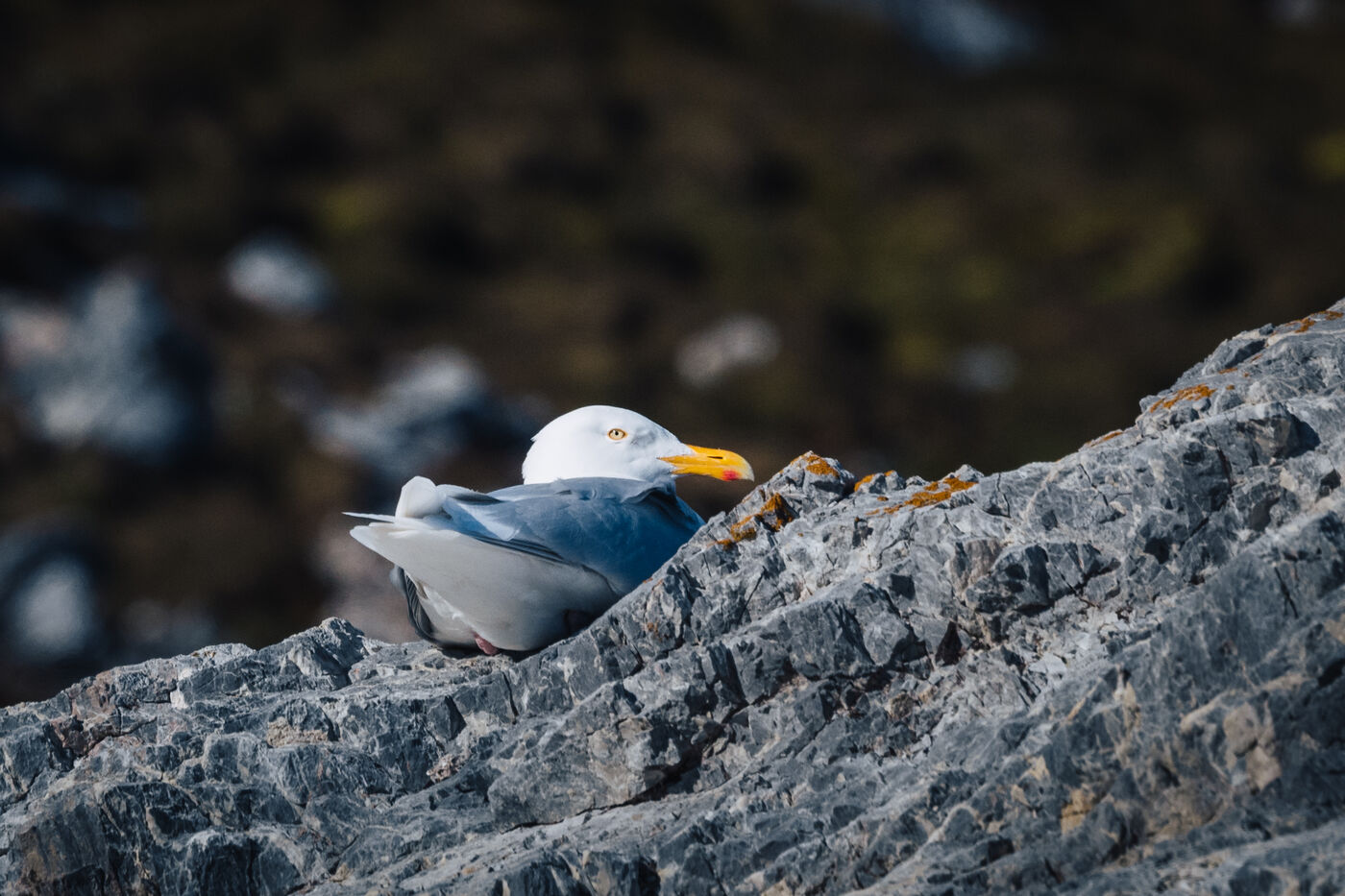
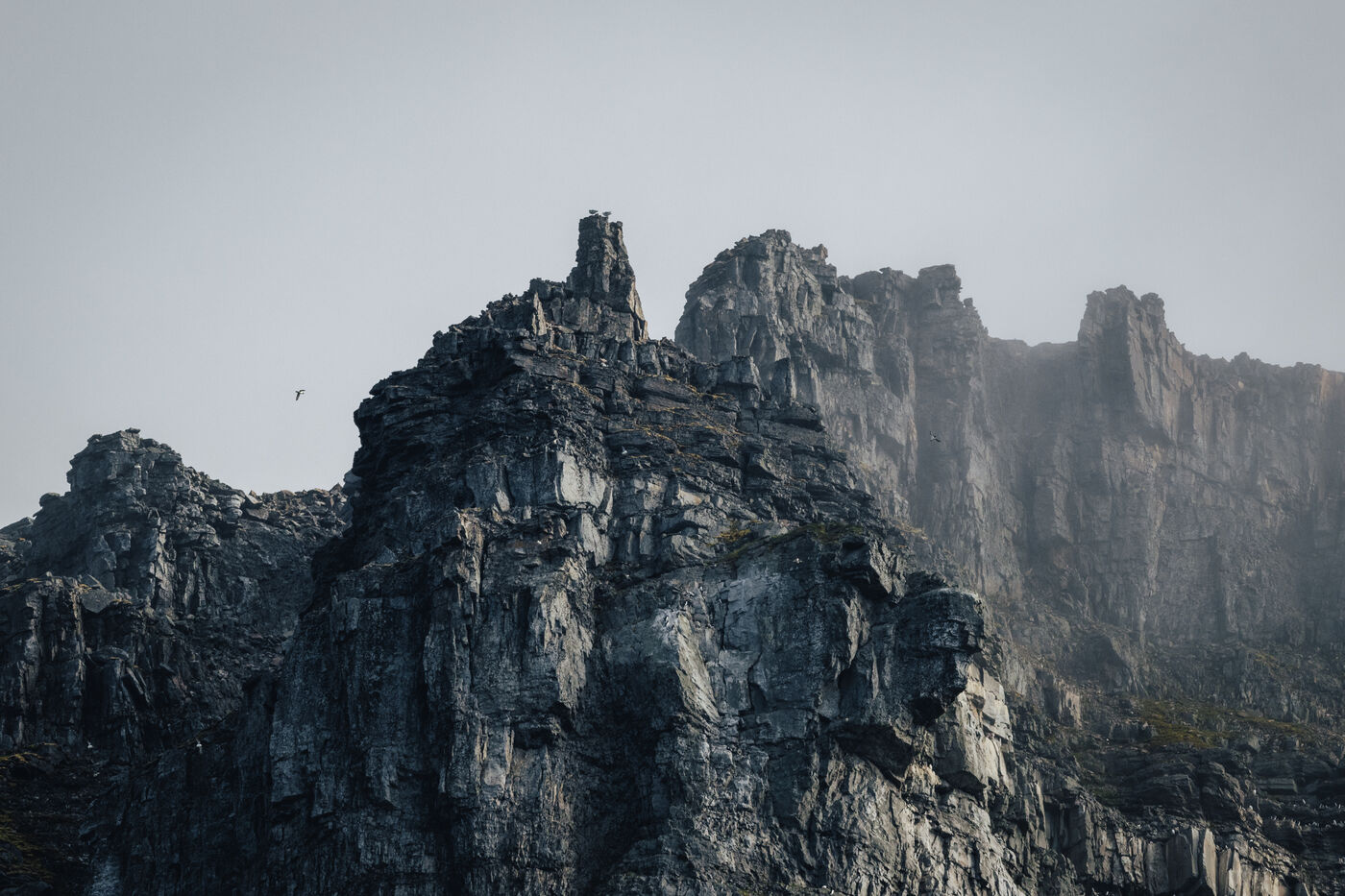
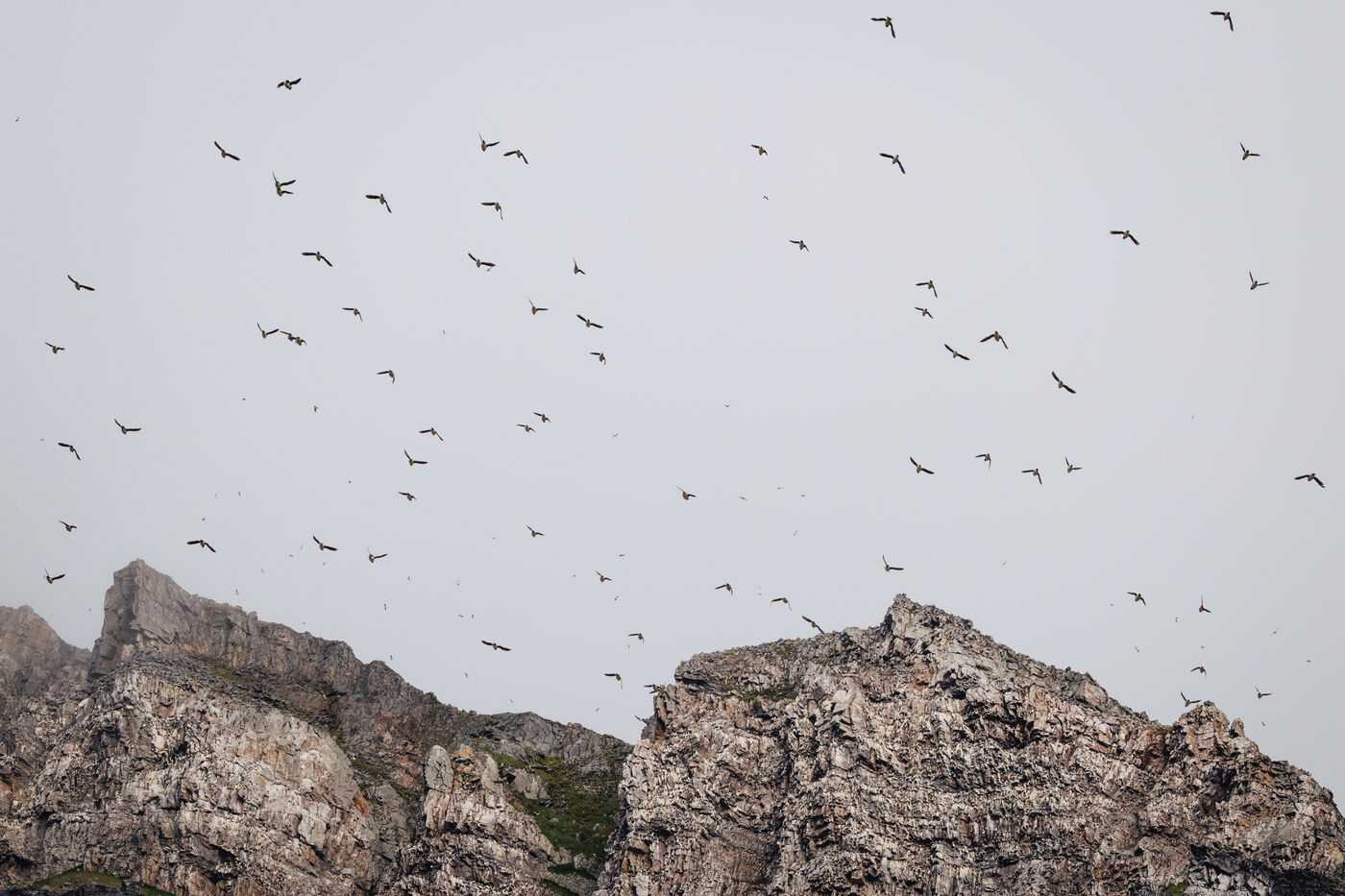
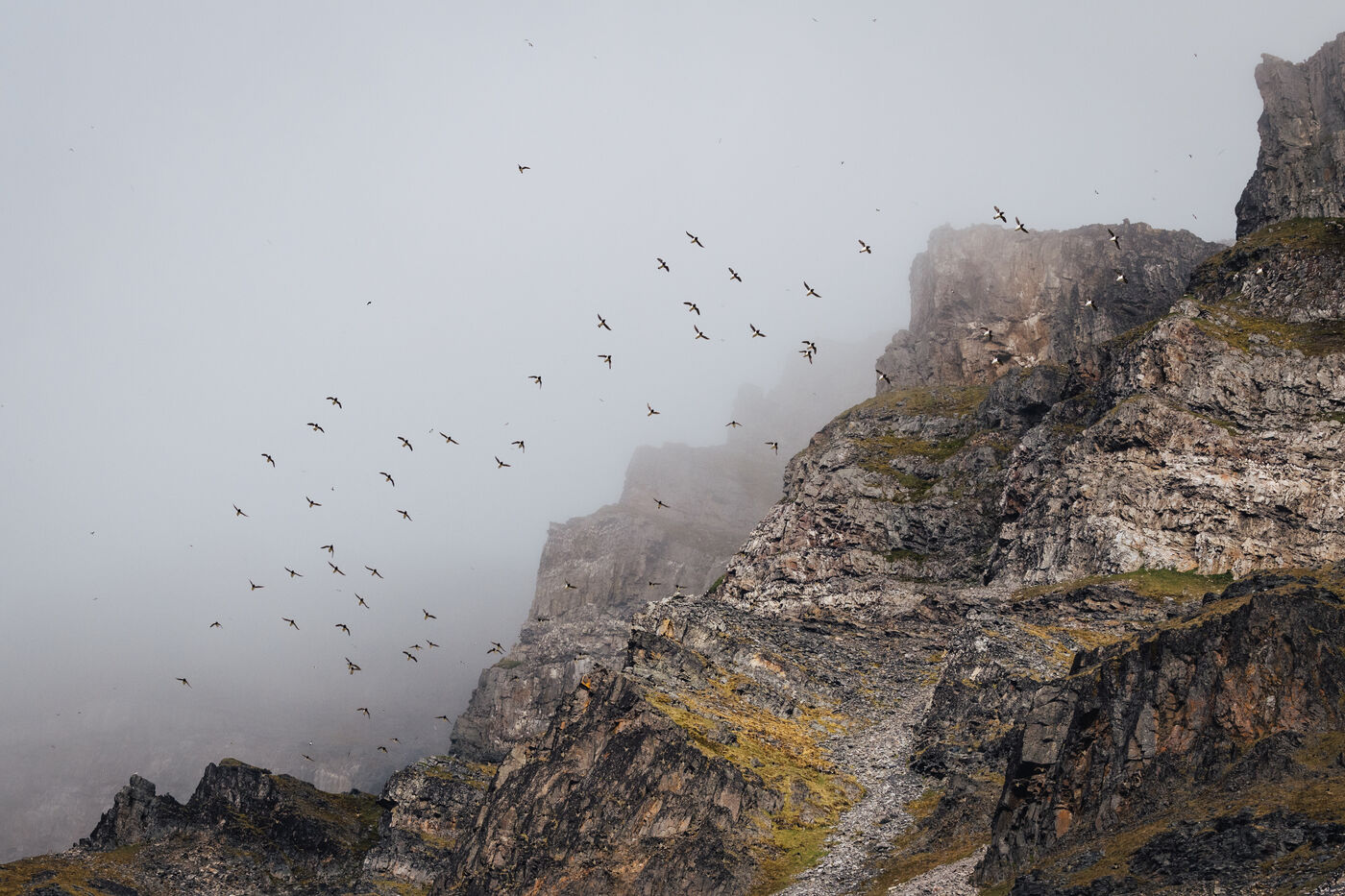
Sixty thousand seabirds nest on the sheer basalt cliffs of Alkefjellet. We approached by zodiac, and the sound was overwhelming. A cacophony of calls, nesting activity, and the sheer density of life on these vertical faces. Brünnich's guillemots, kittiwakes, glaucous gulls. All competing for space, for food, for survival. The cliffs rose 100 meters straight up from the Arctic waters, and they were alive with feathers and urgency.

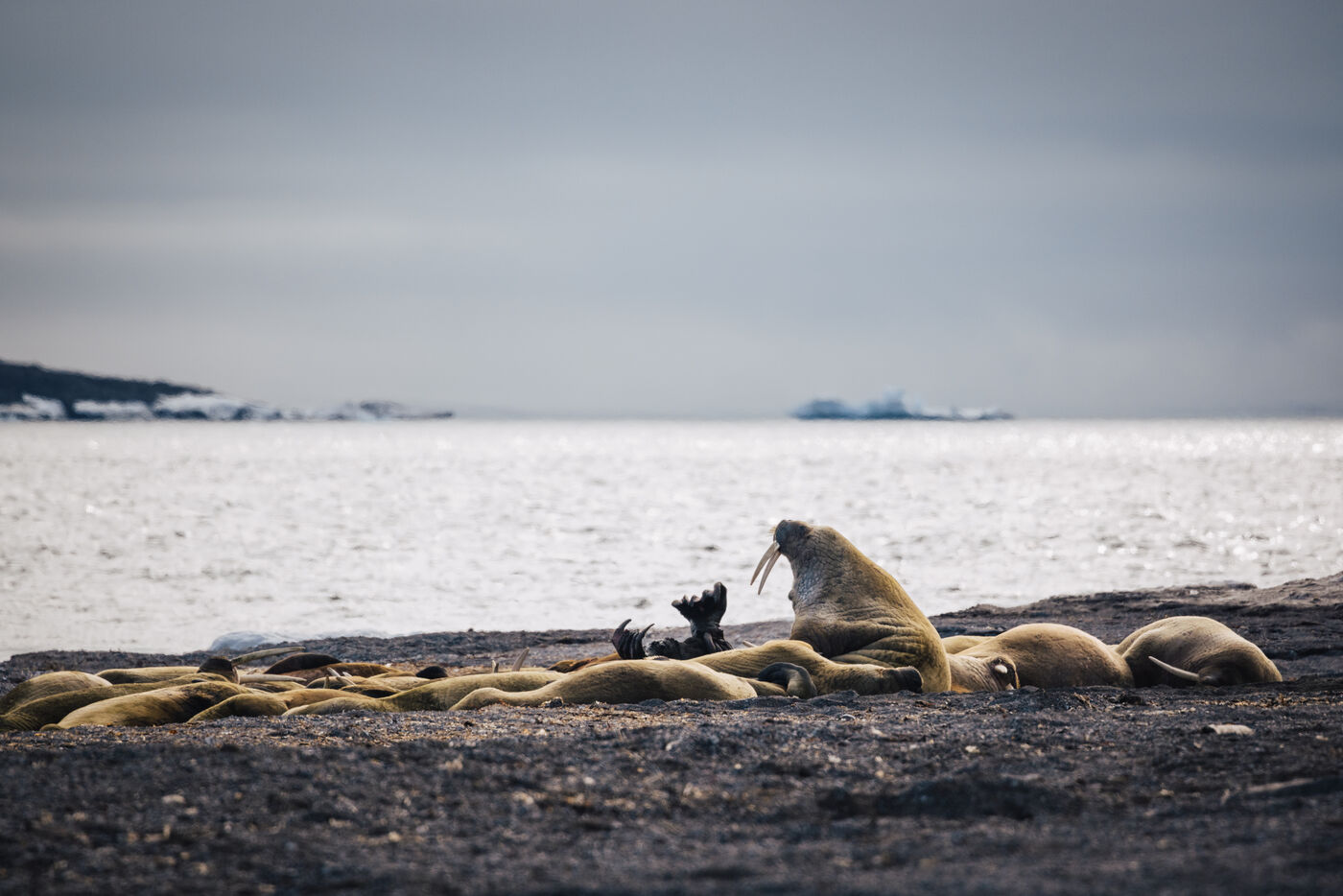
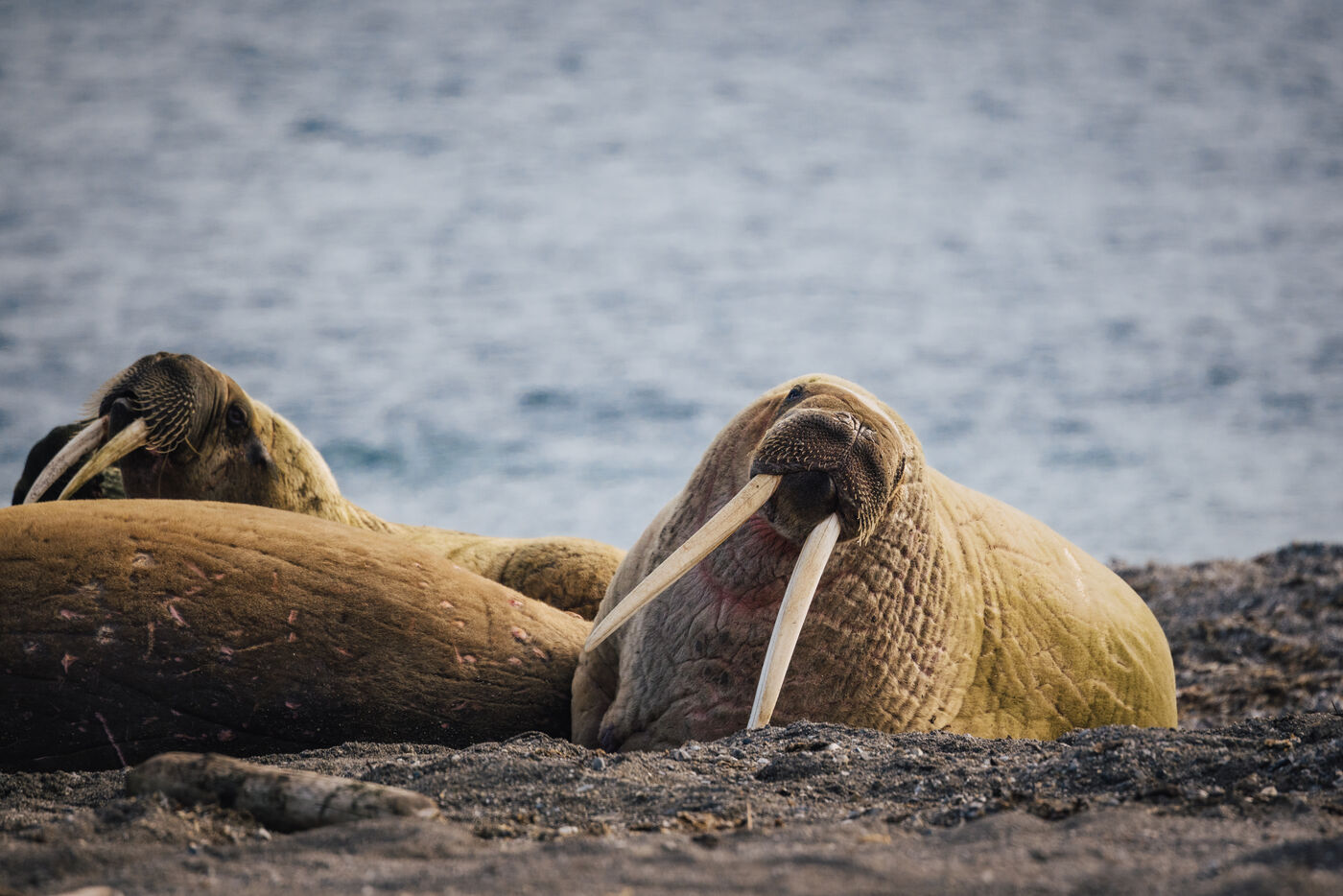
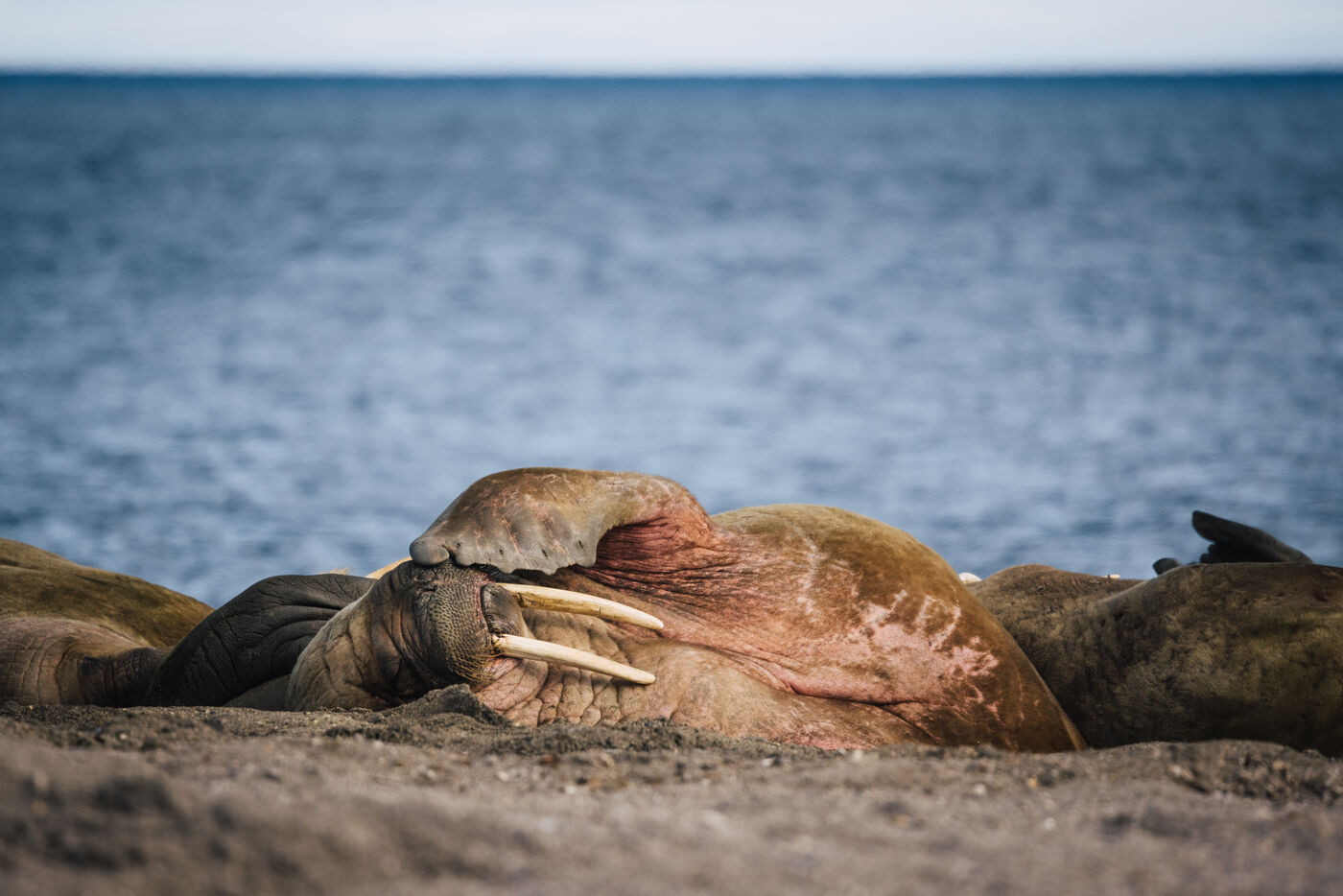
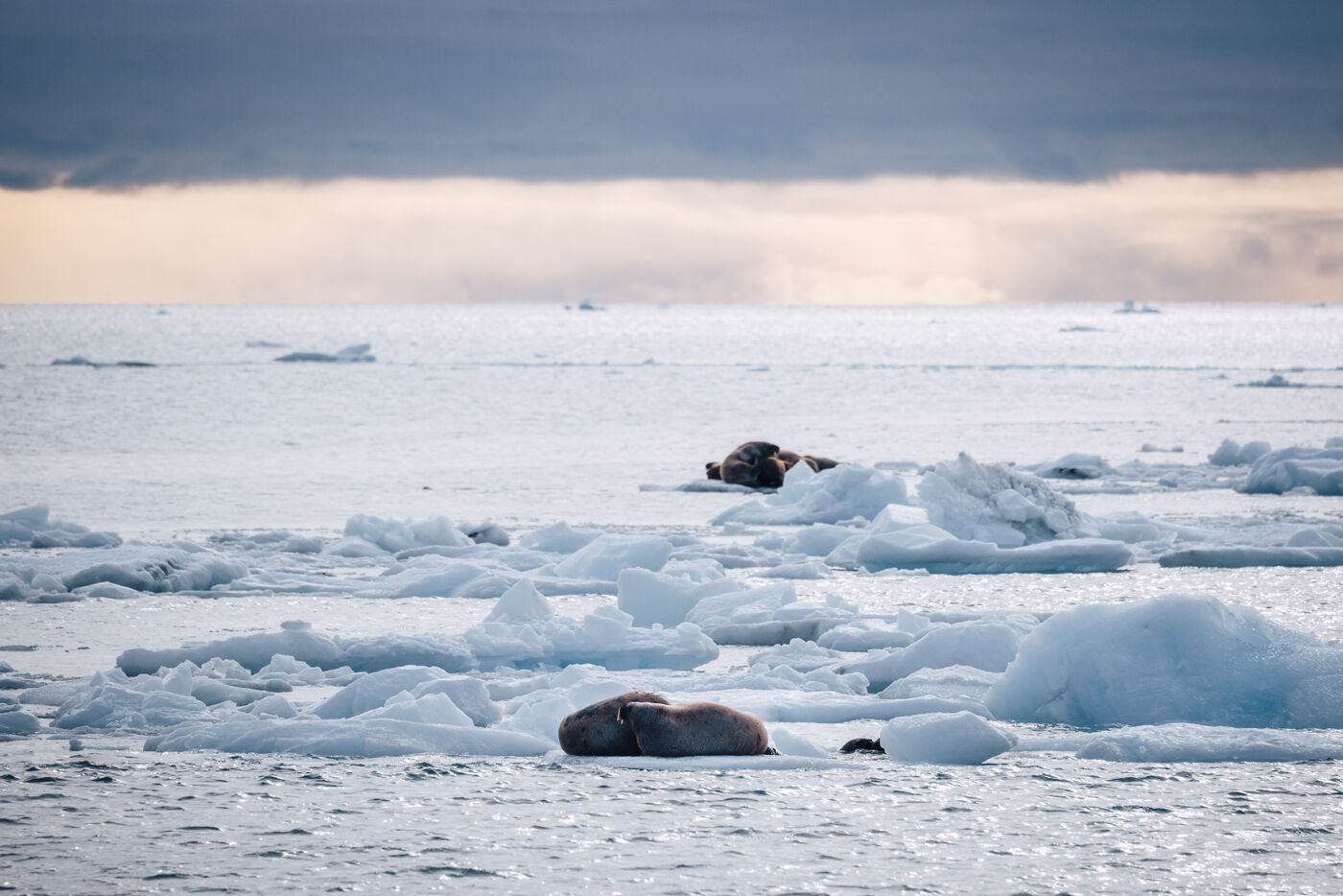
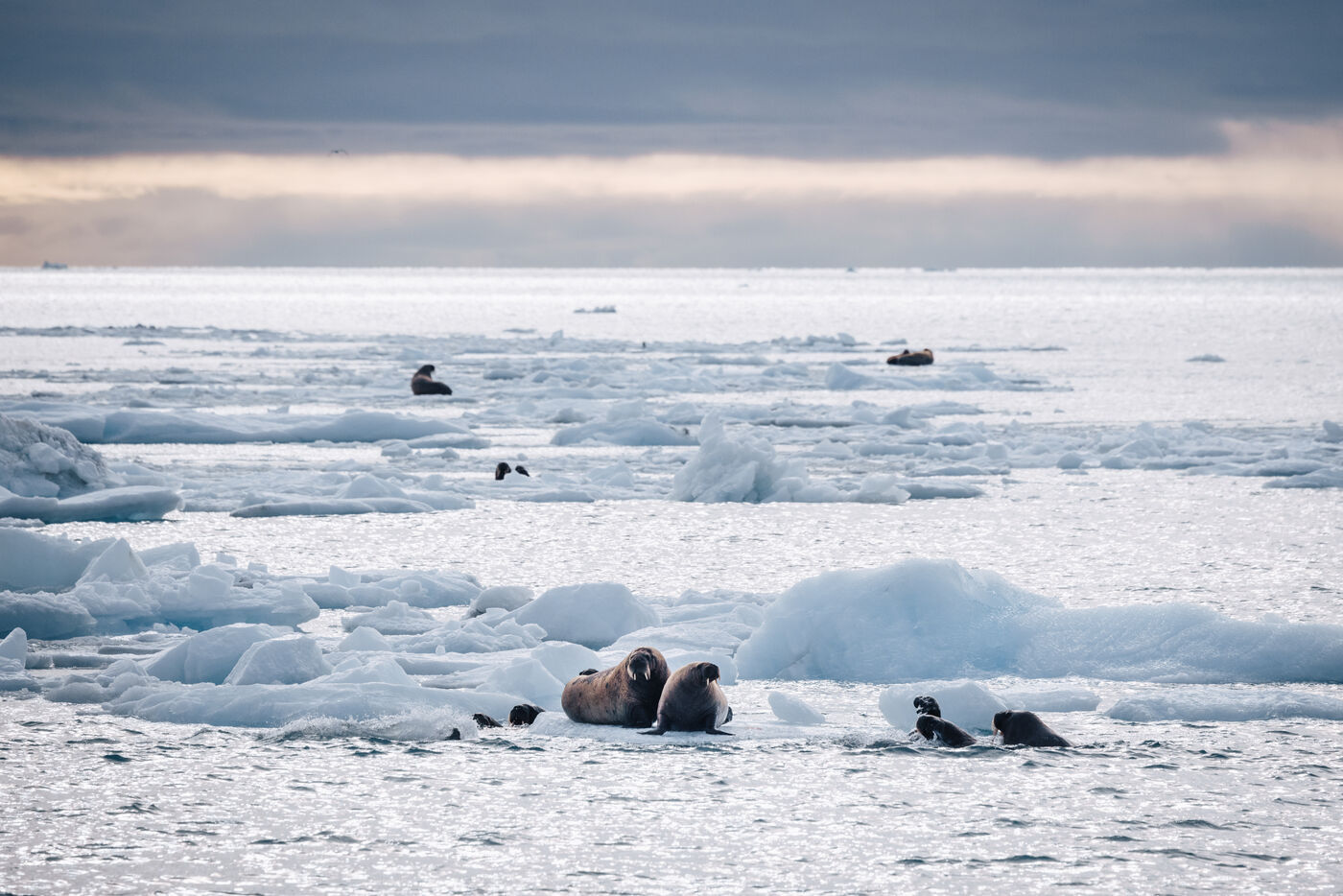
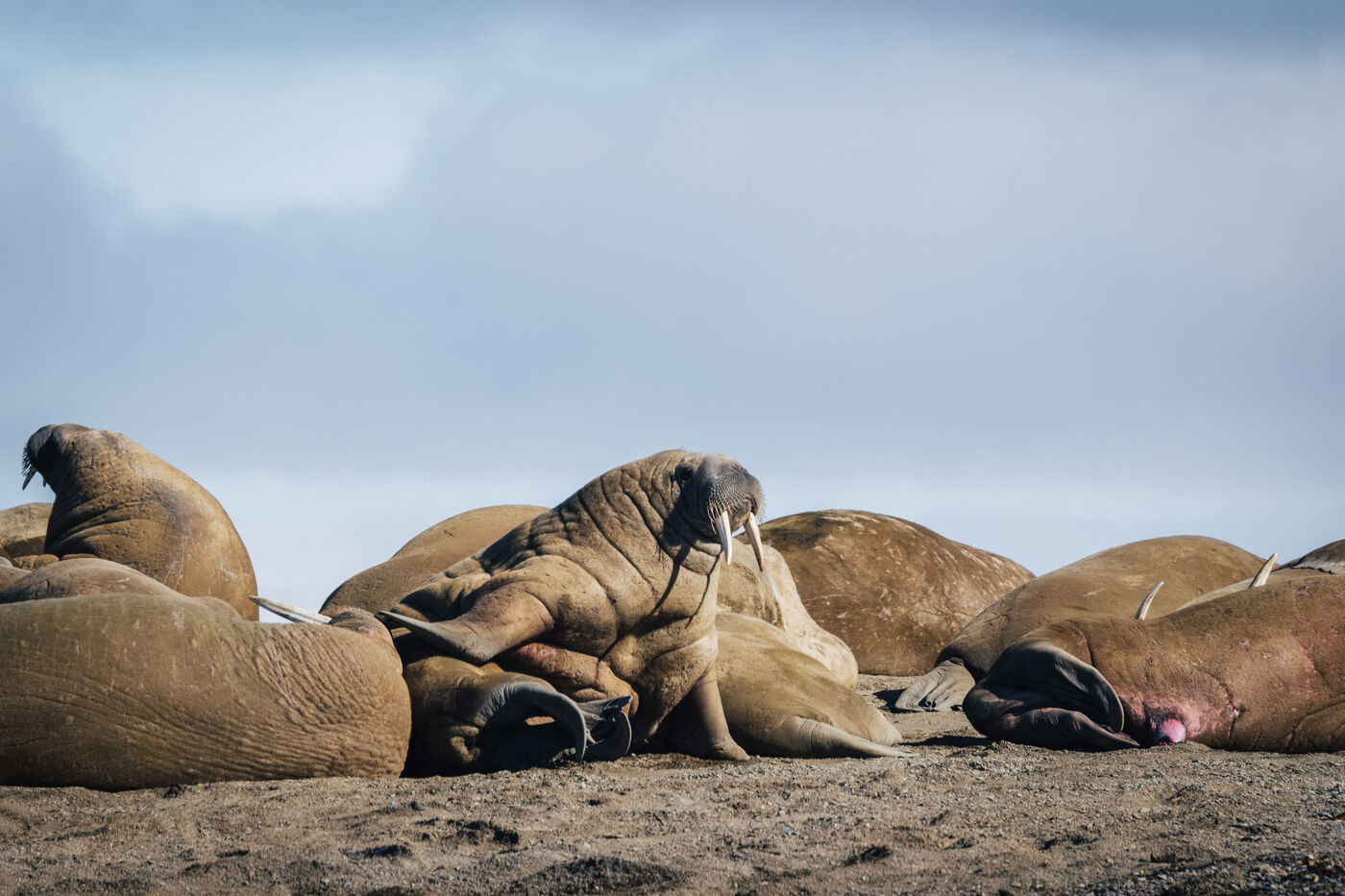
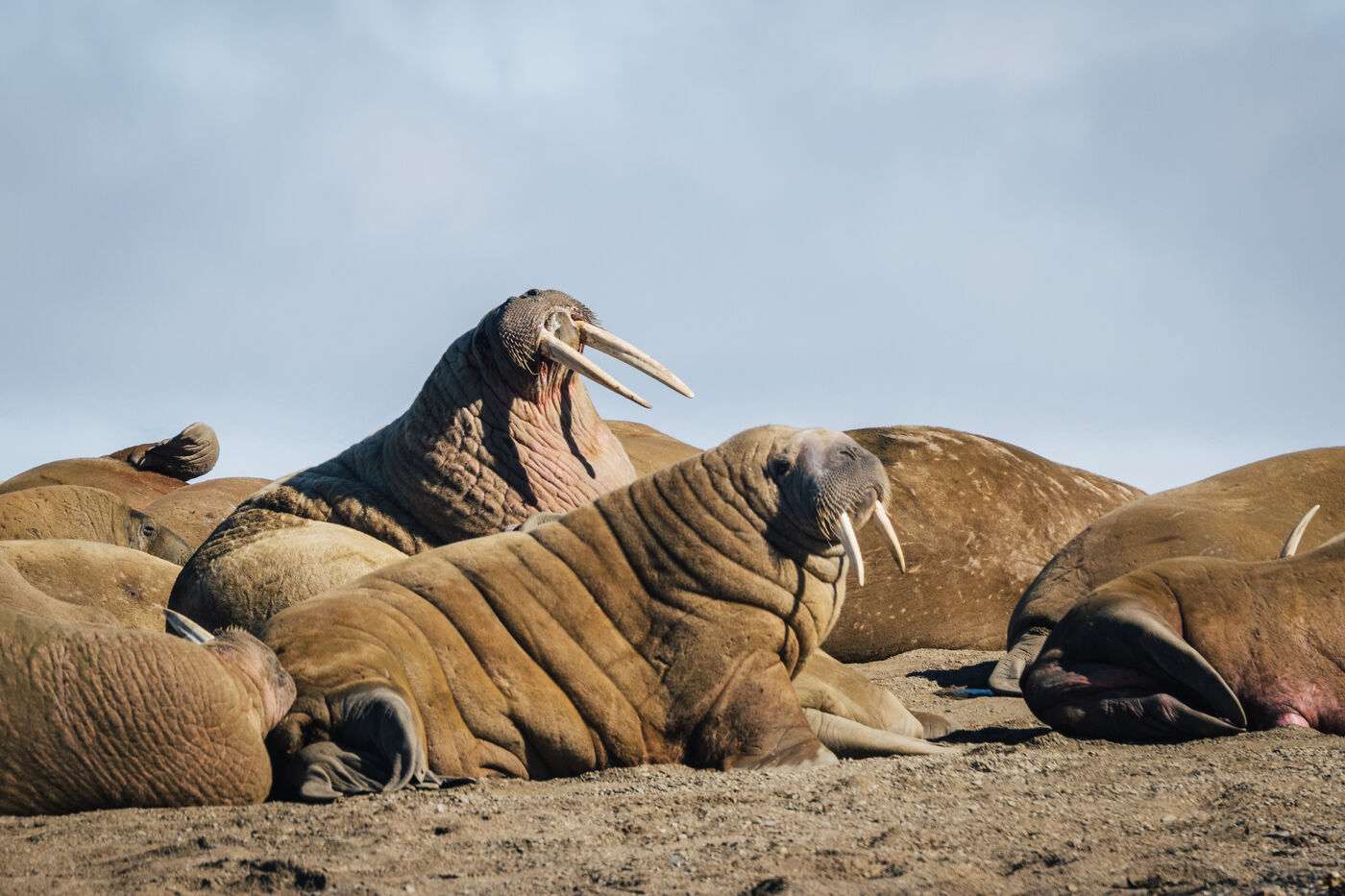
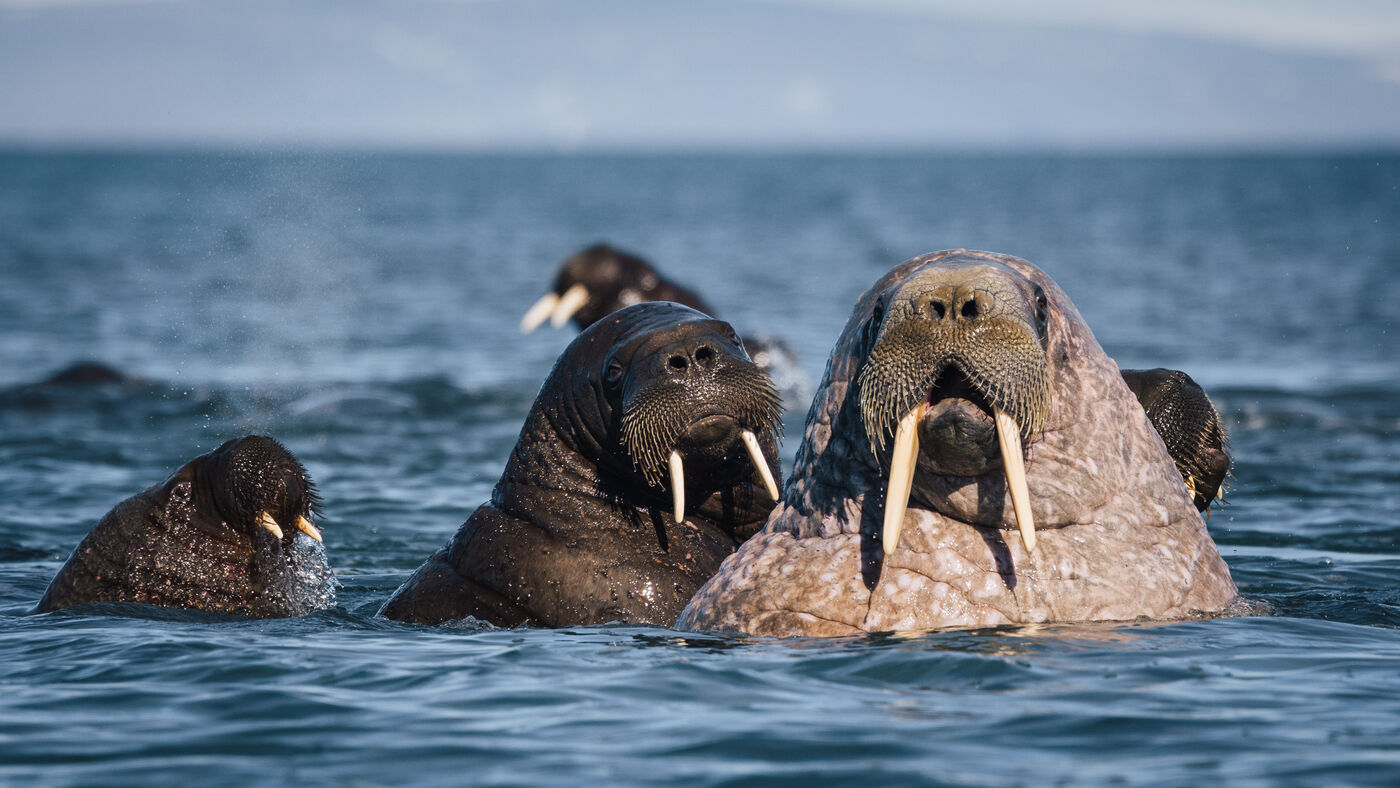
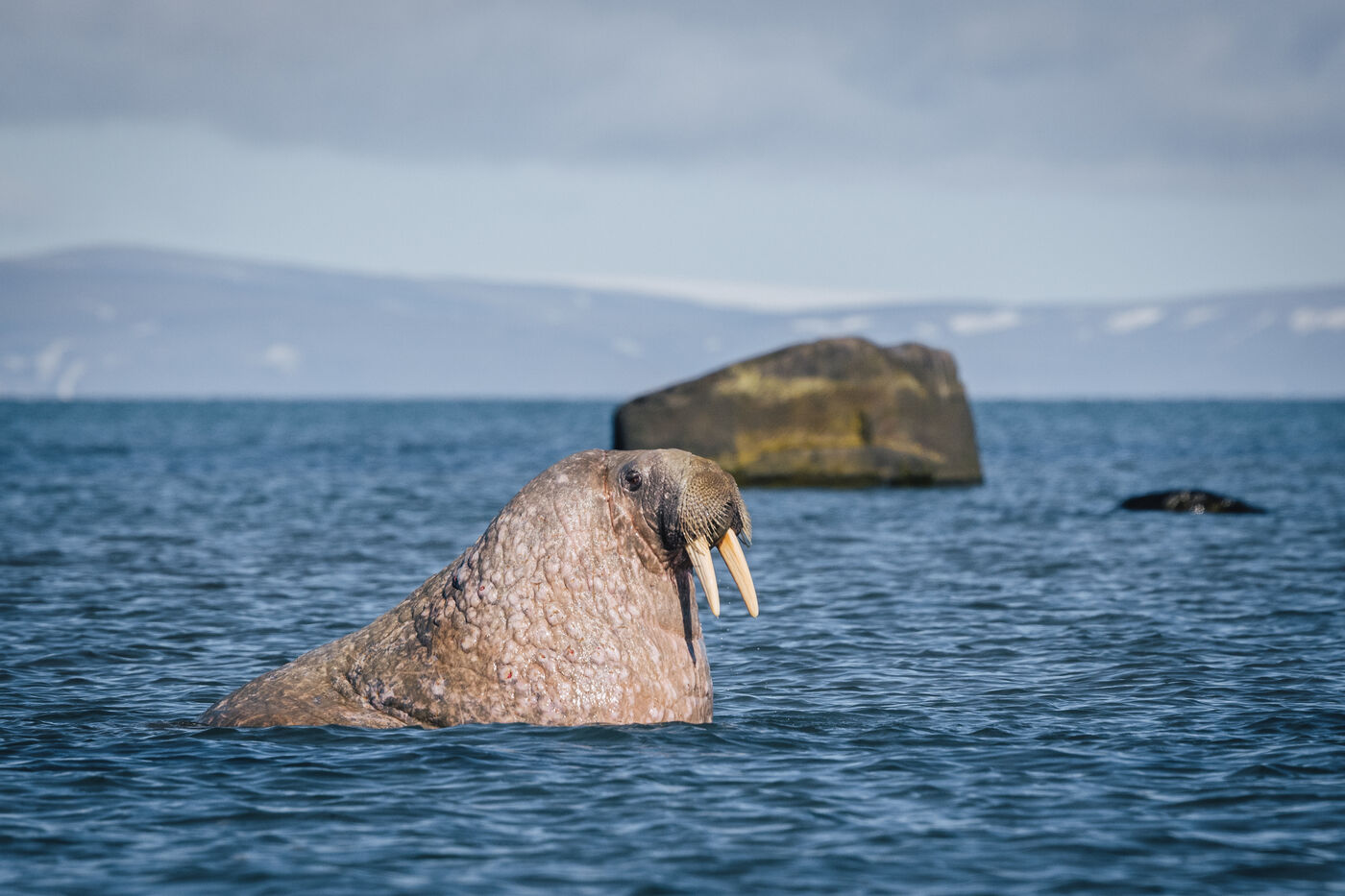
What made Alkefjellet unforgettable, though, was the walruses. We spotted them on the ice floes: massive, tusked animals, some weighing over a ton. They seemed almost comical in their indolence, piling onto the ice and occasionally swatting neighbors with their tusks. But there was nothing comical about their power. A walrus can haul itself onto ice thick enough to support it, and they were utterly unconcerned with our presence.

Alkefjellet basalt cliffs with thousands of seabirds
Alkefjellet rises from the Arctic waters, its cliffs alive with tens of thousands of nesting seabirds.
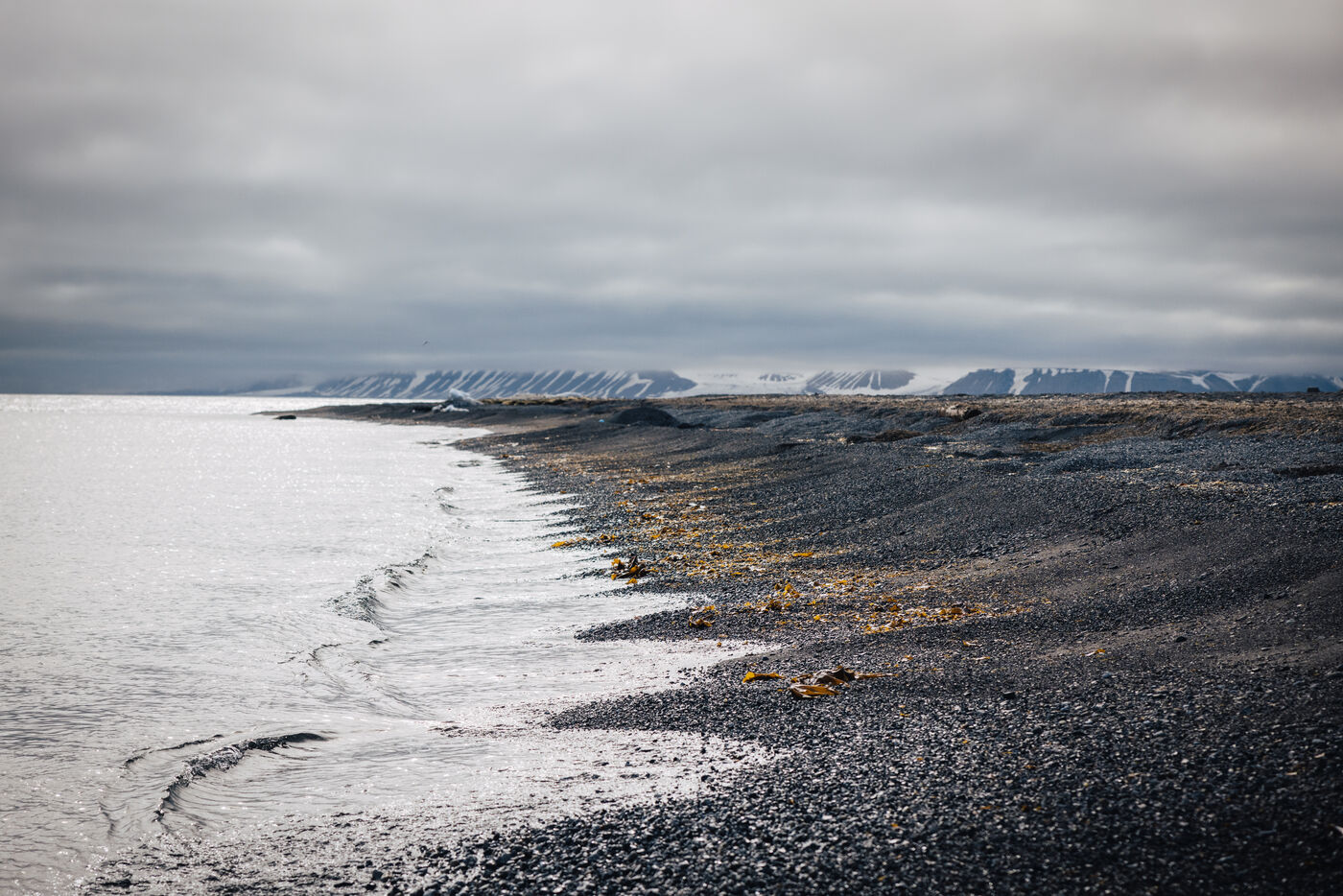
Zodiac at the foot of the Alkefjellet cliffs with birds wheeling overhead Dark gravel beach curving along still water under a grey sky
The cliffs from the zodiac, and a quiet gravel shore nearby.
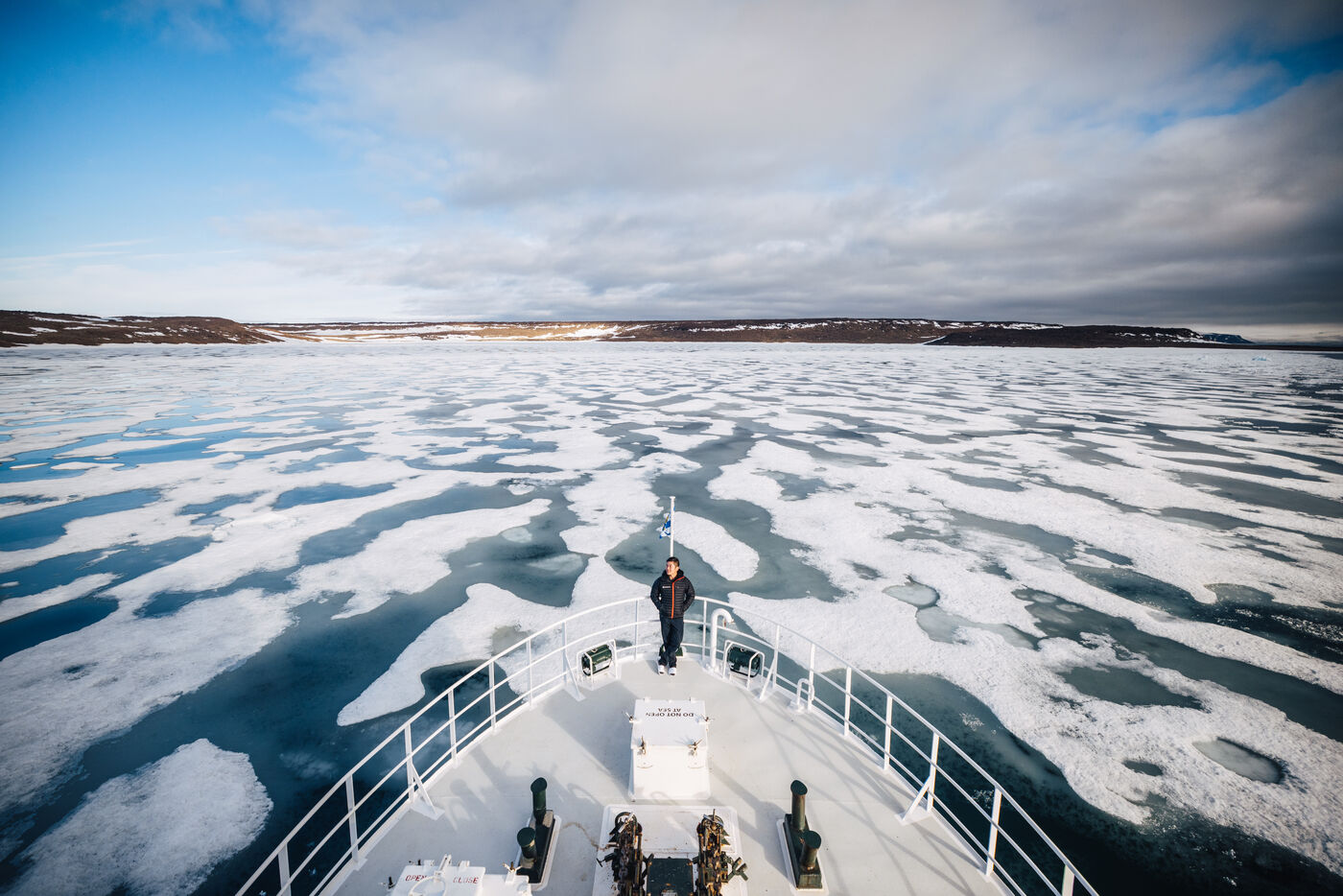
Passenger standing at the bow of the Kinfish as it pushes through broken sea ice
From the bow, watching the Kinfish nose into the first pack ice.

Sea Ice, Polar Bears and Bråsvellbreen

July 27, 2022. Nordaustlandet, Svalbard

Standing on the bow of the Kinfish as it pushes through pack ice
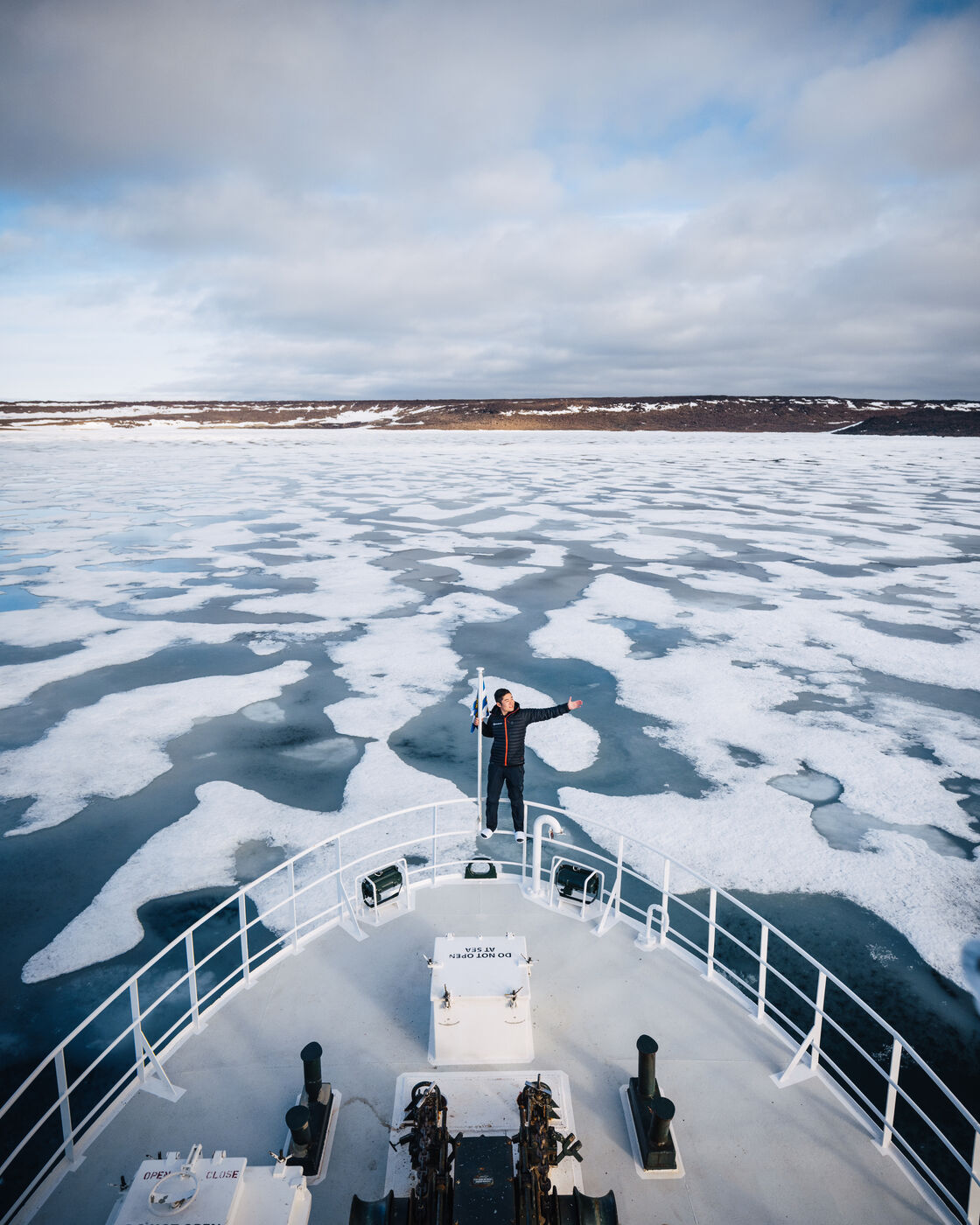
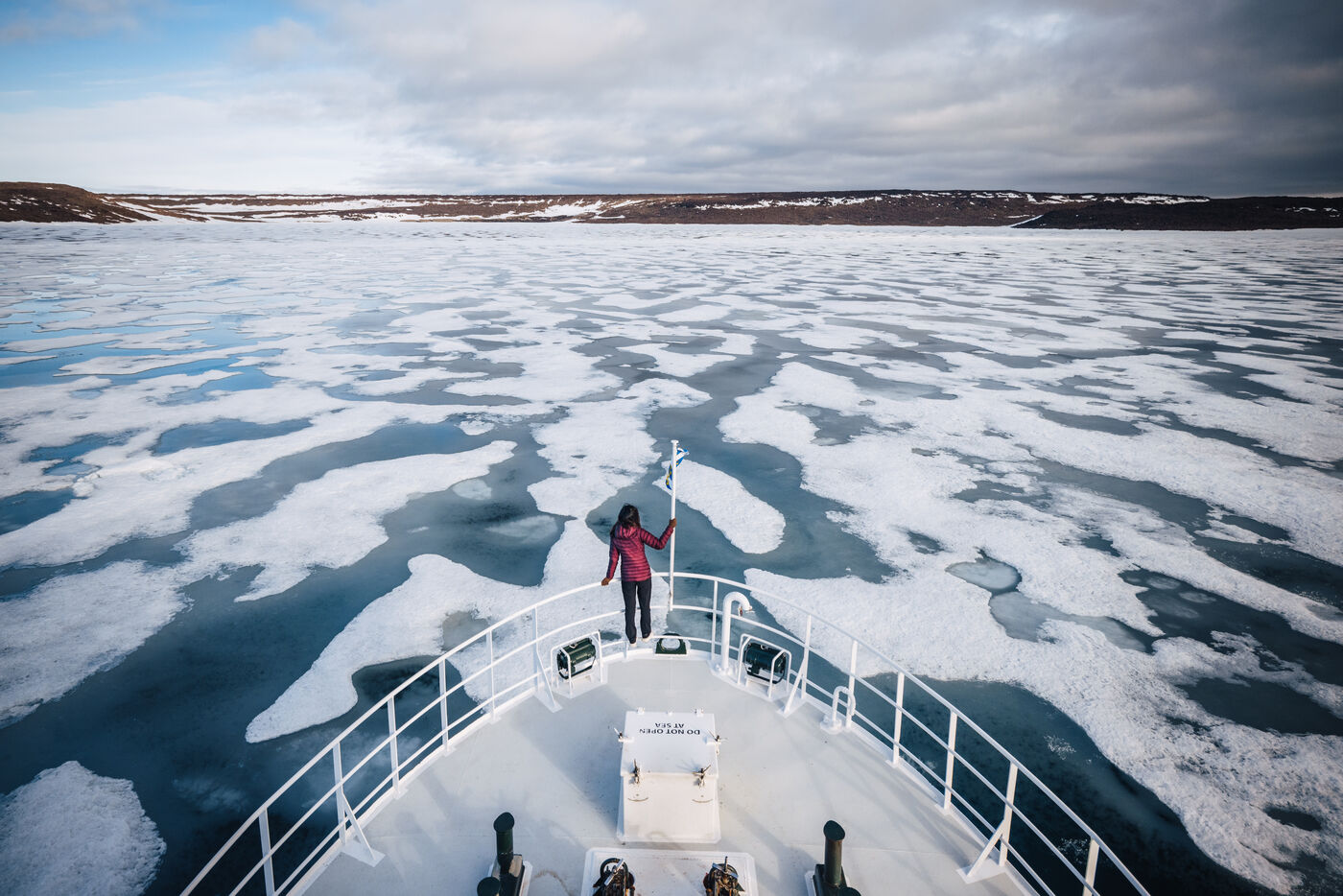
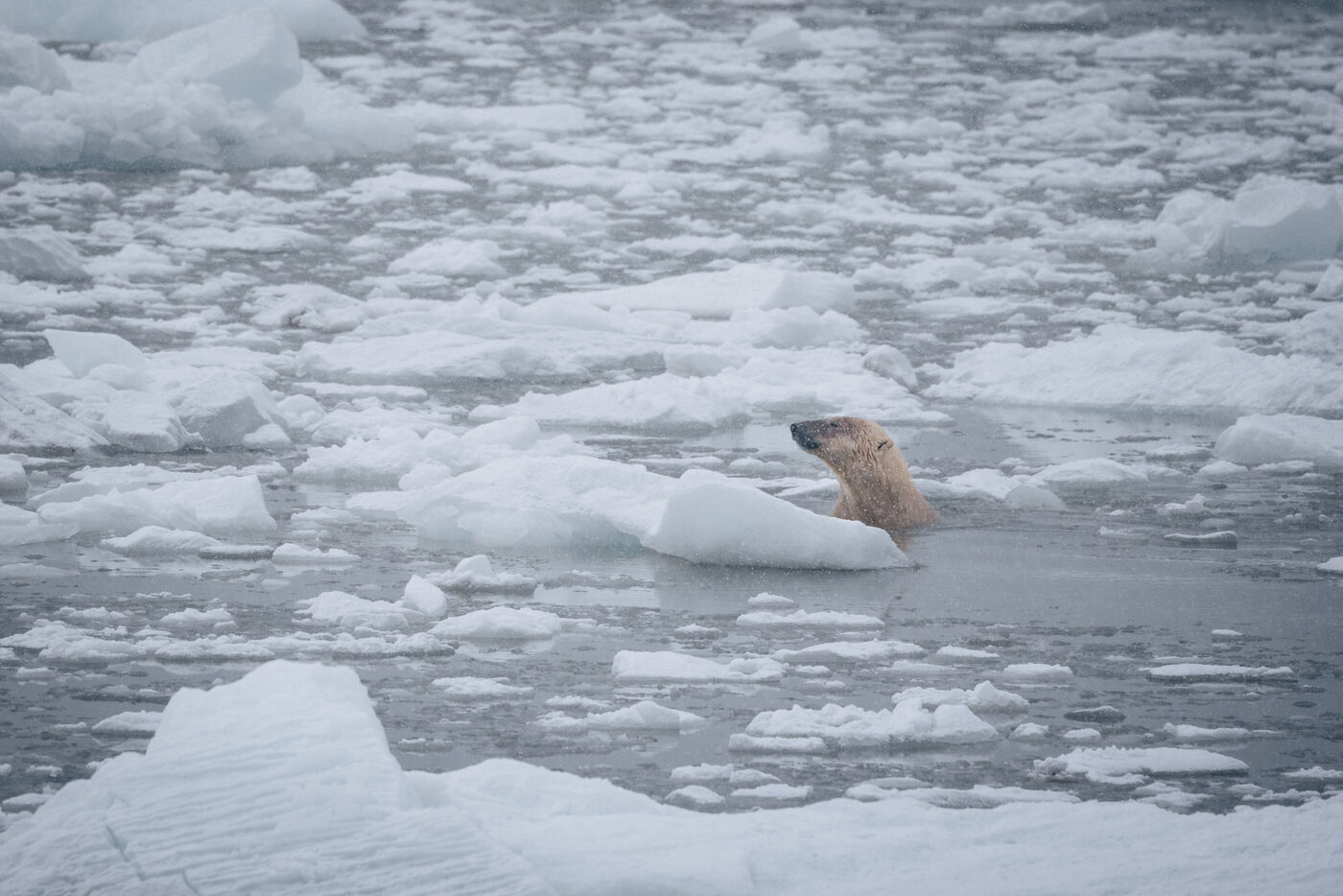
Riding the bow as the Kinfish noses through the pack ice toward Bråsvellbreen.

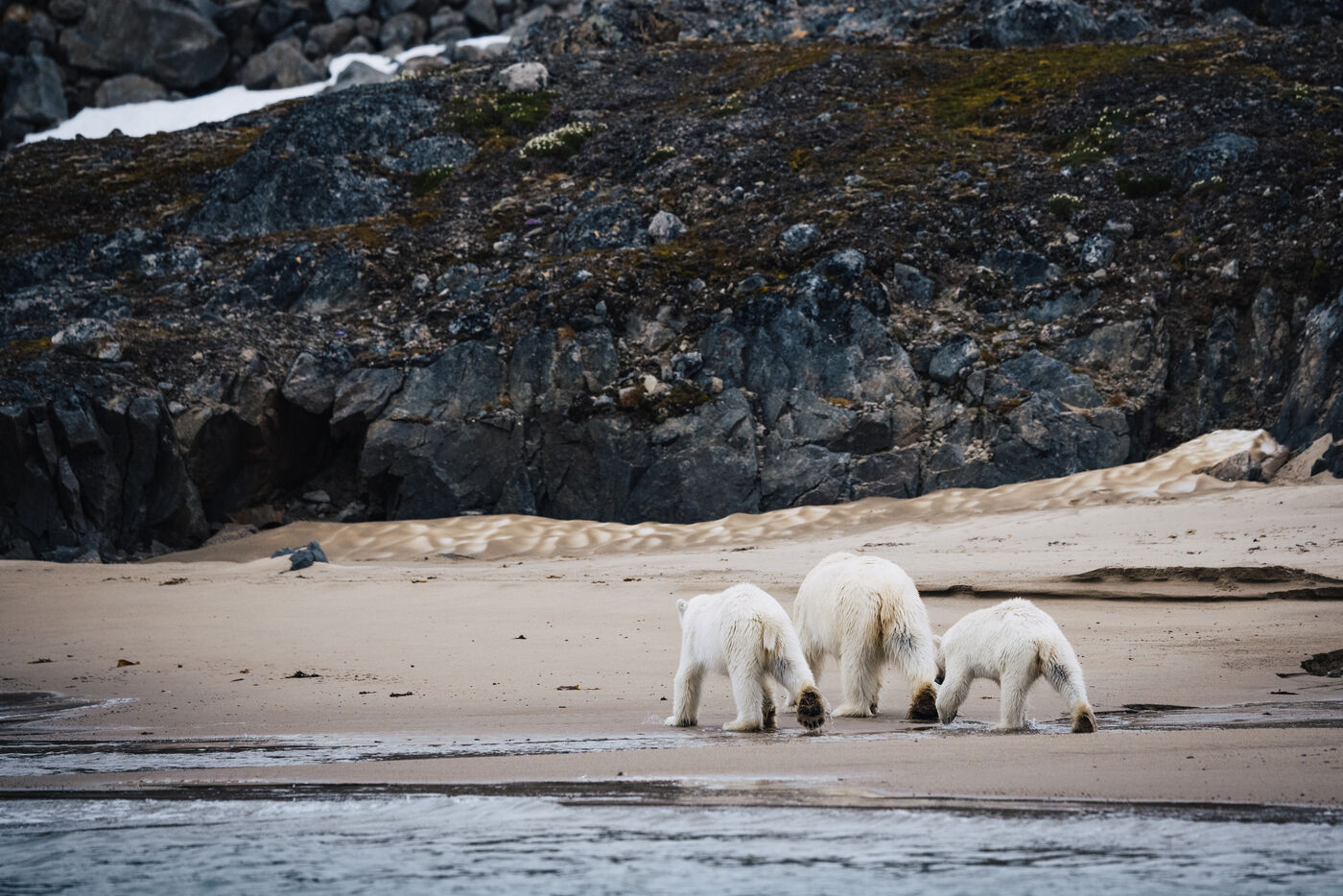
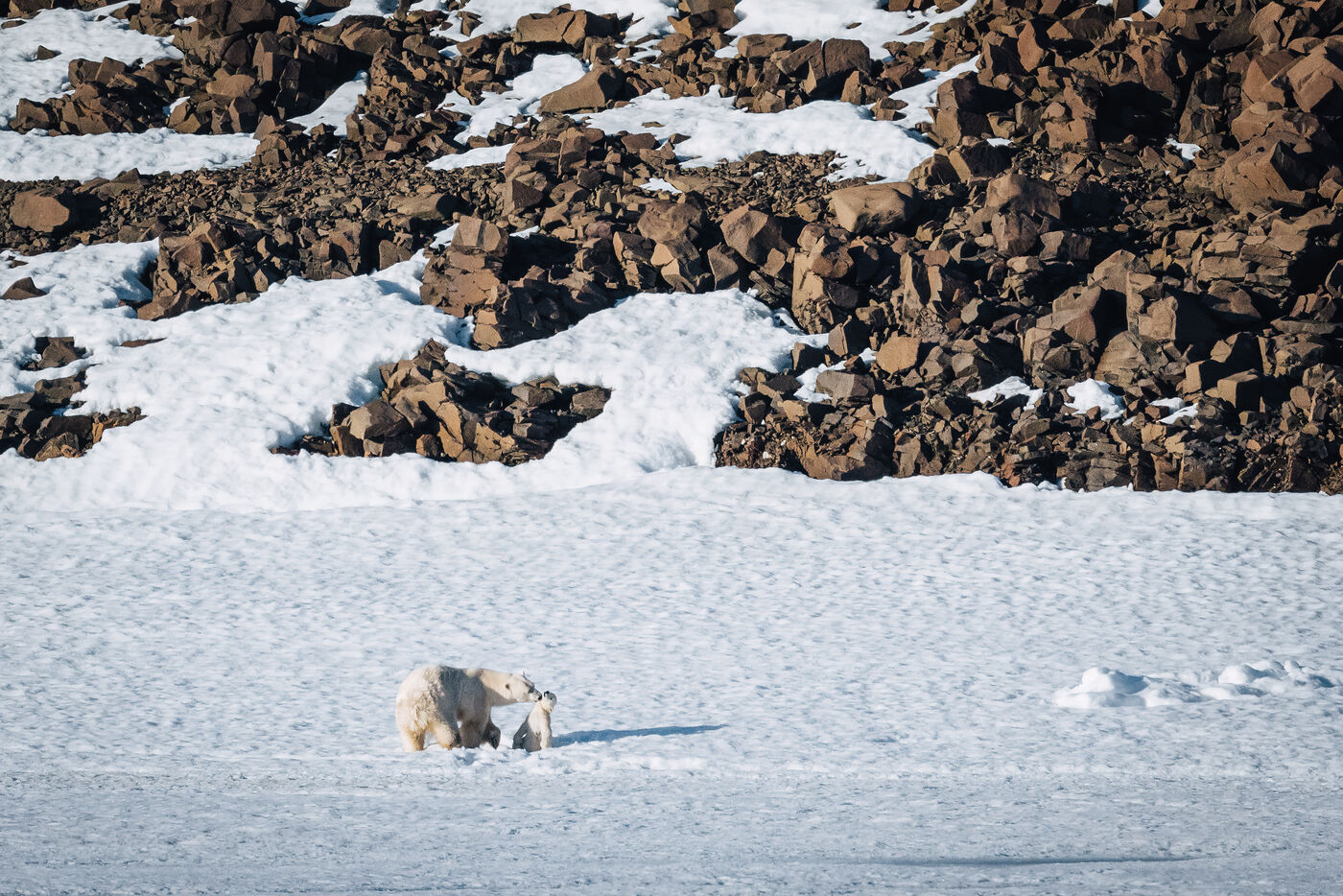
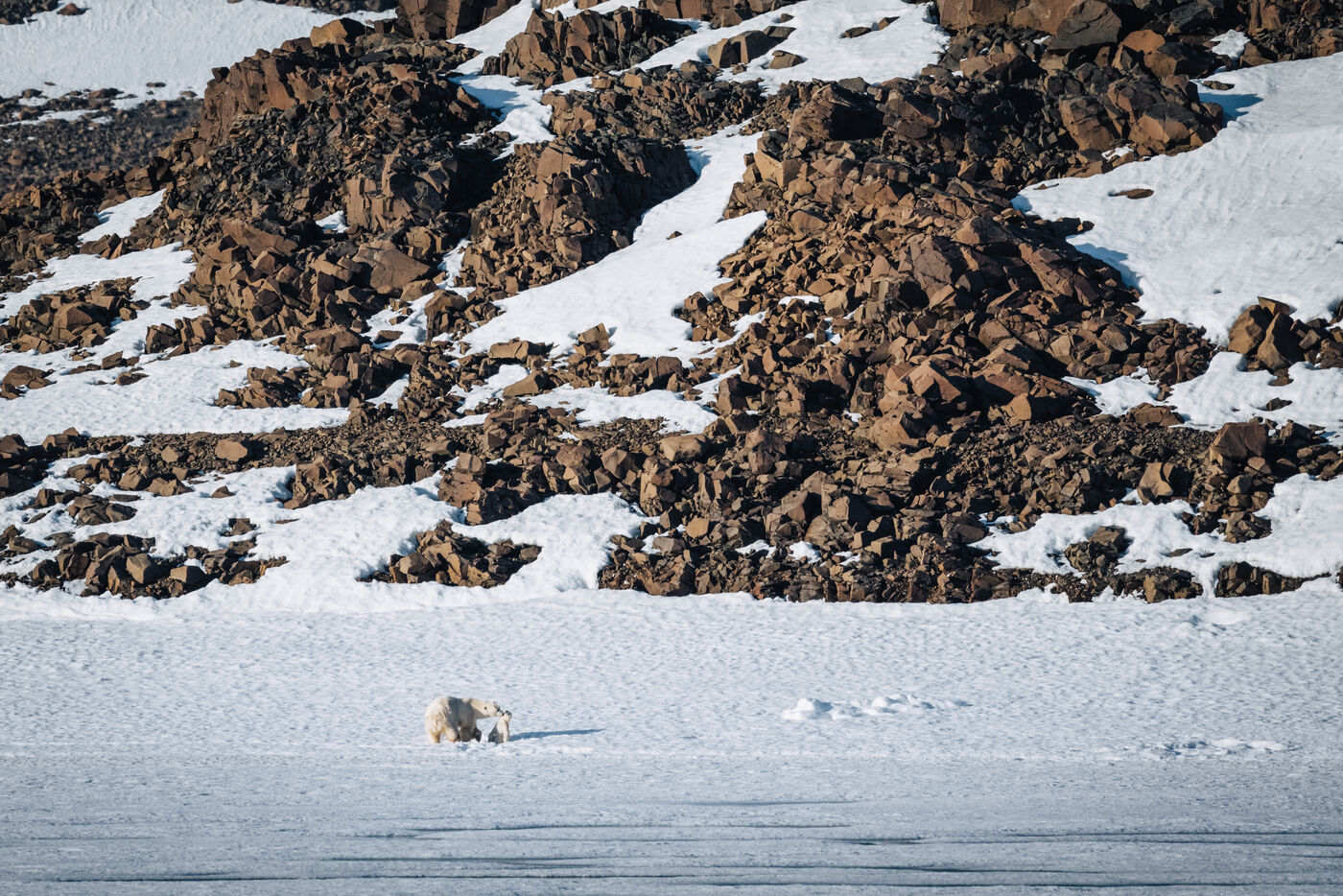
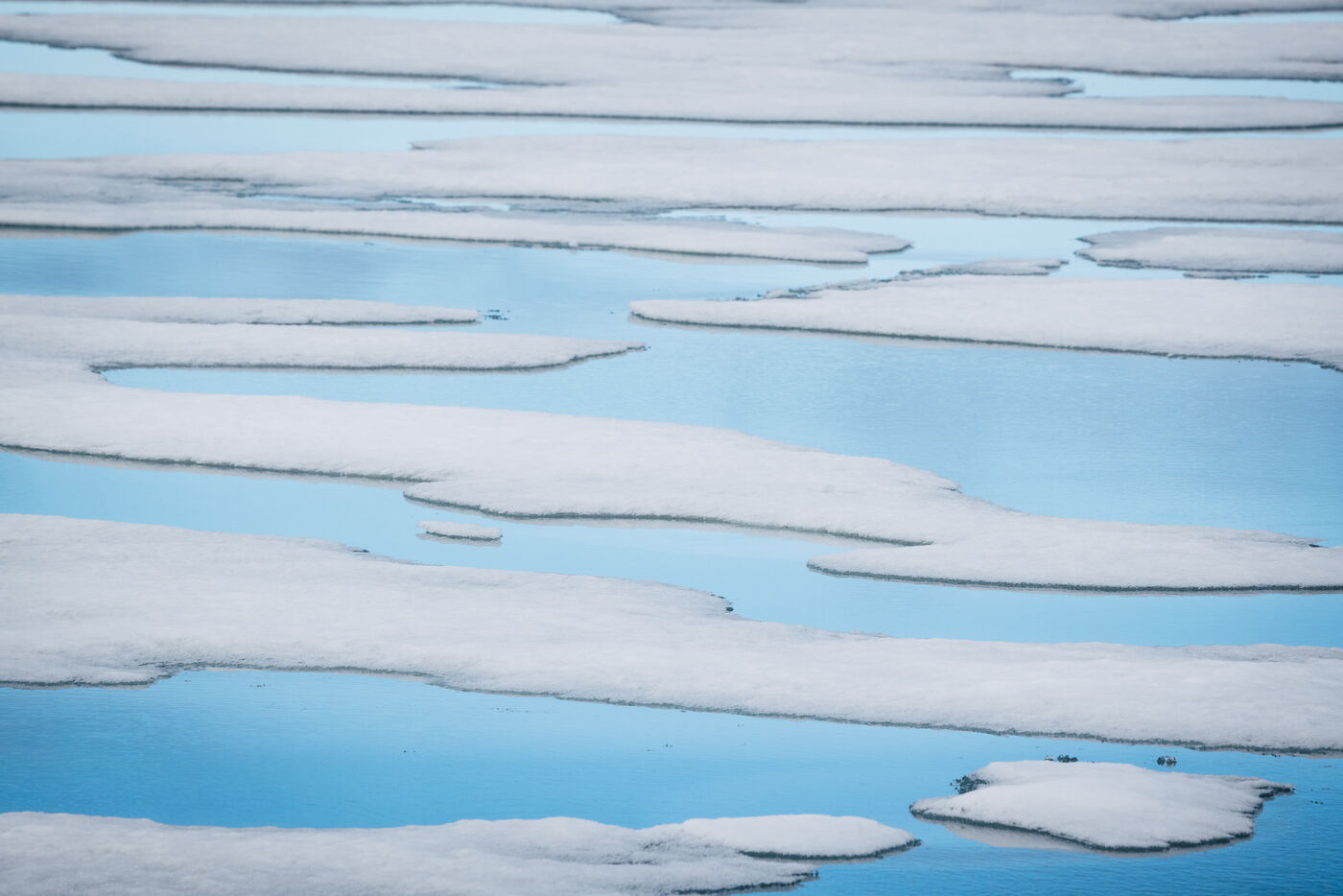
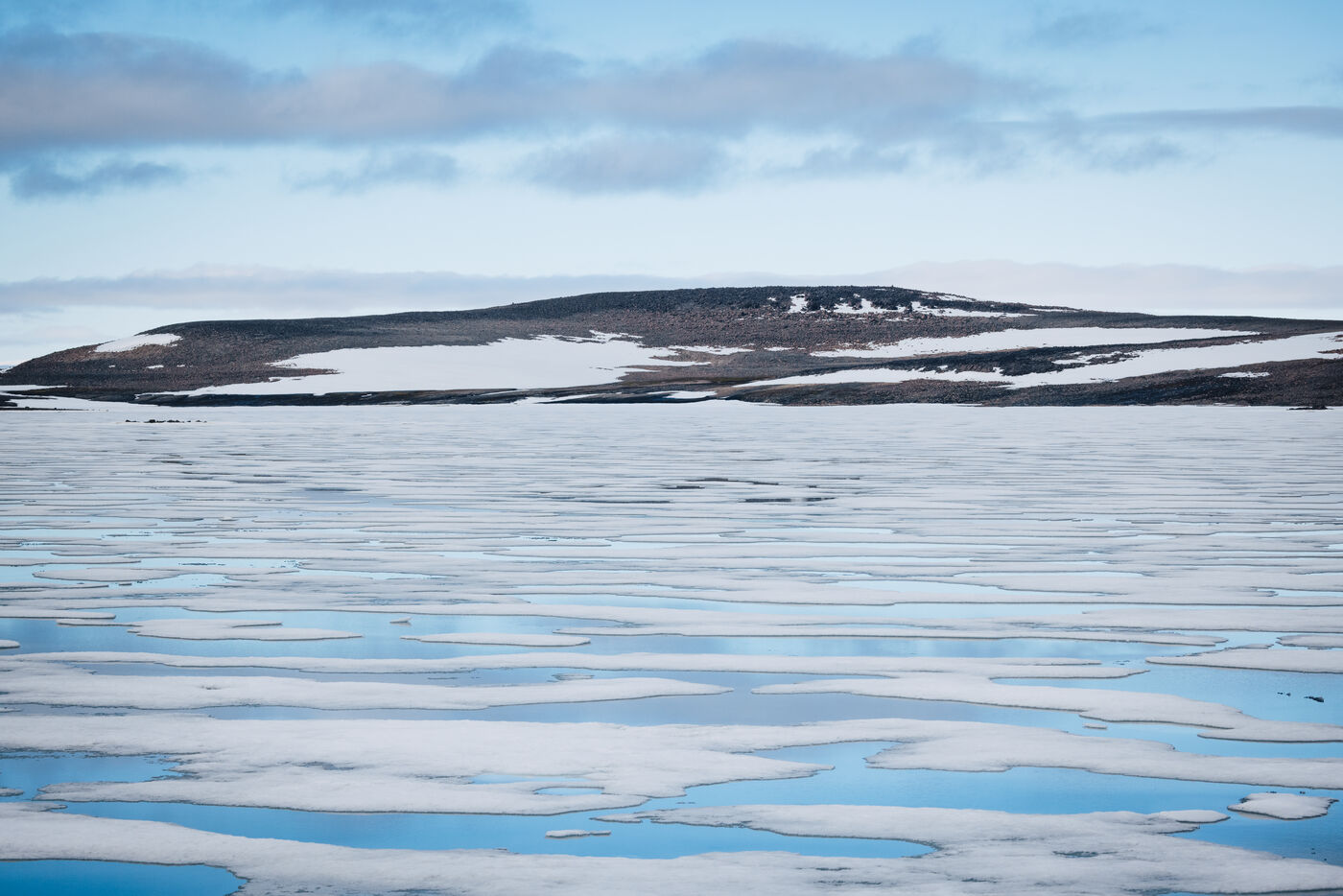
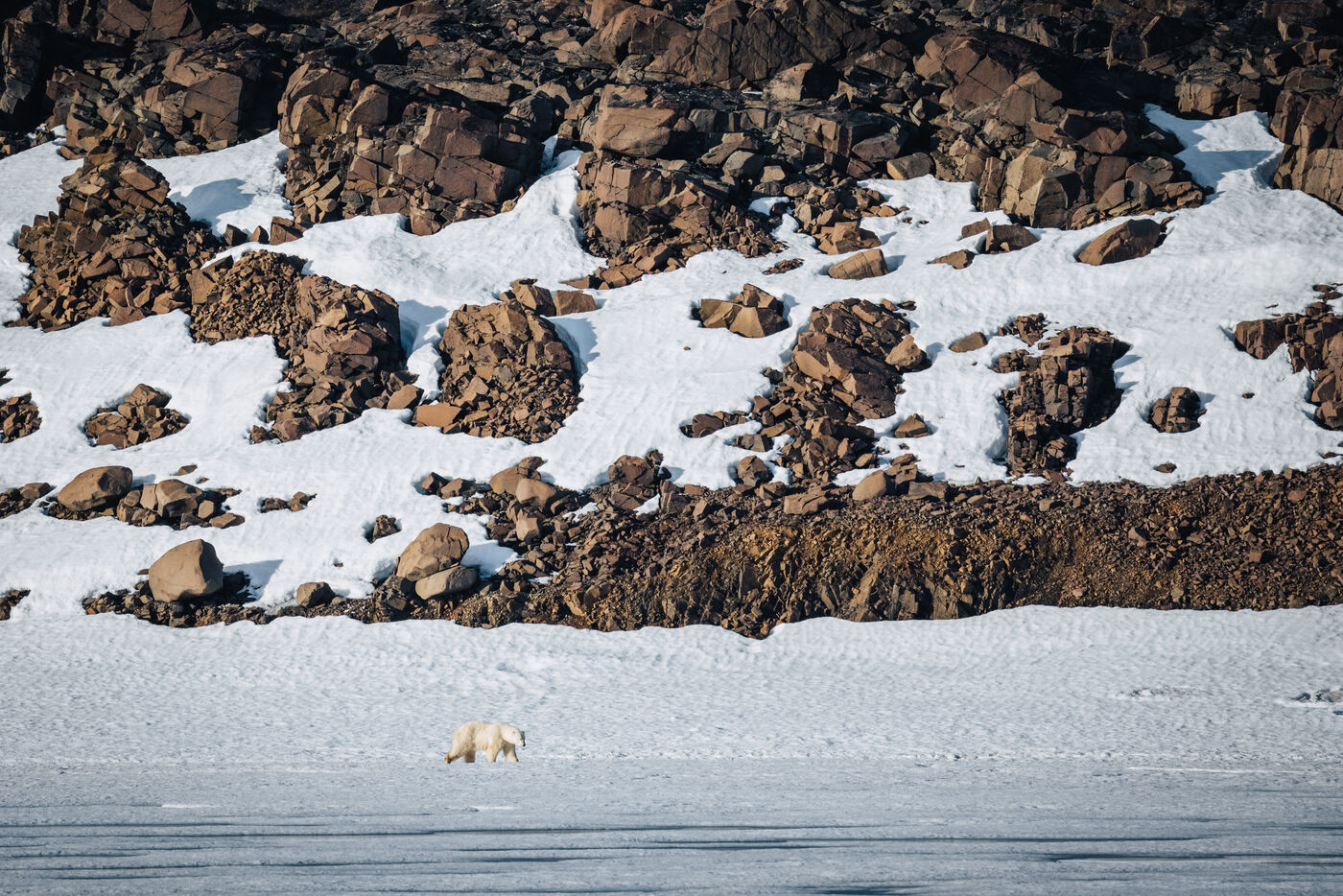
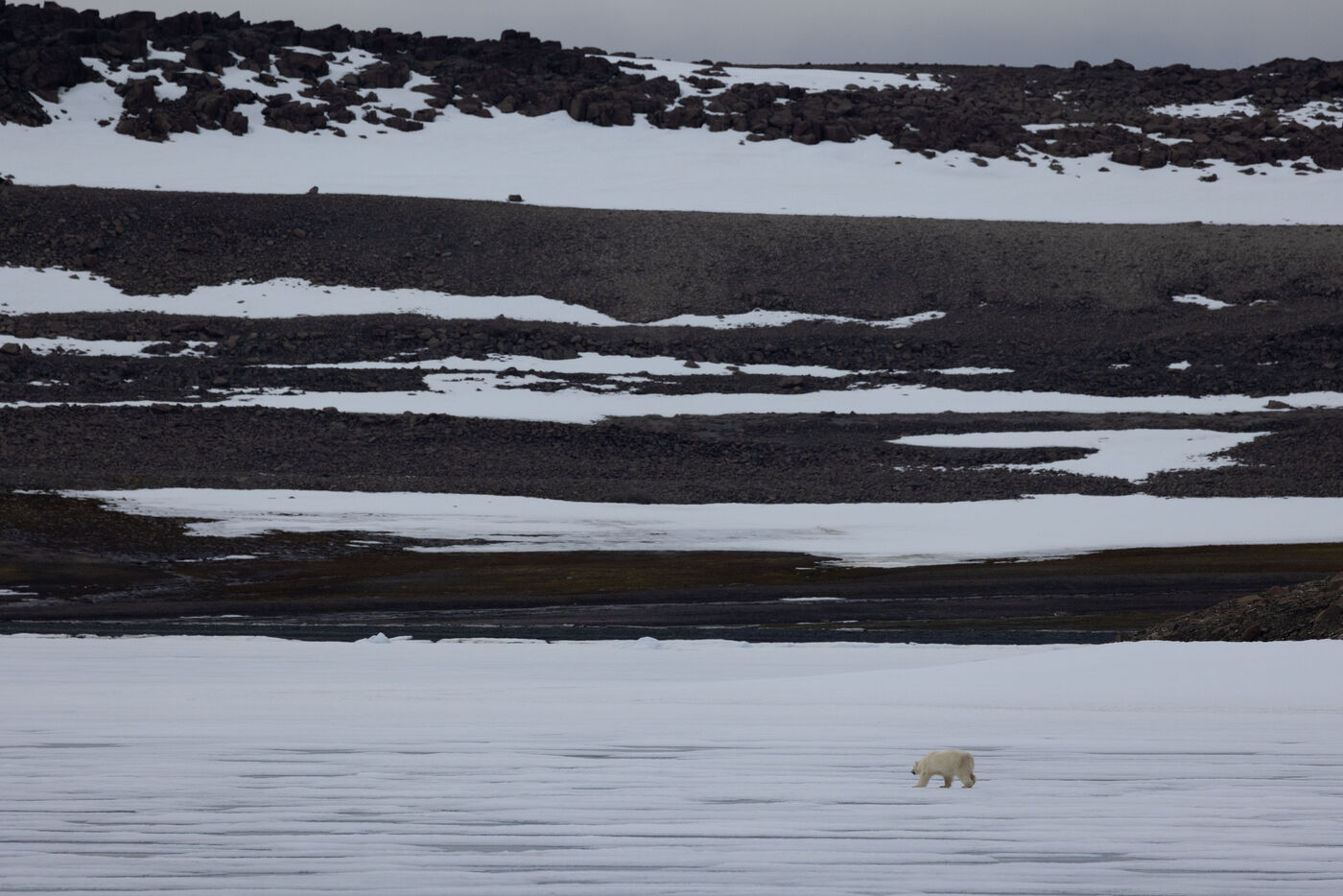
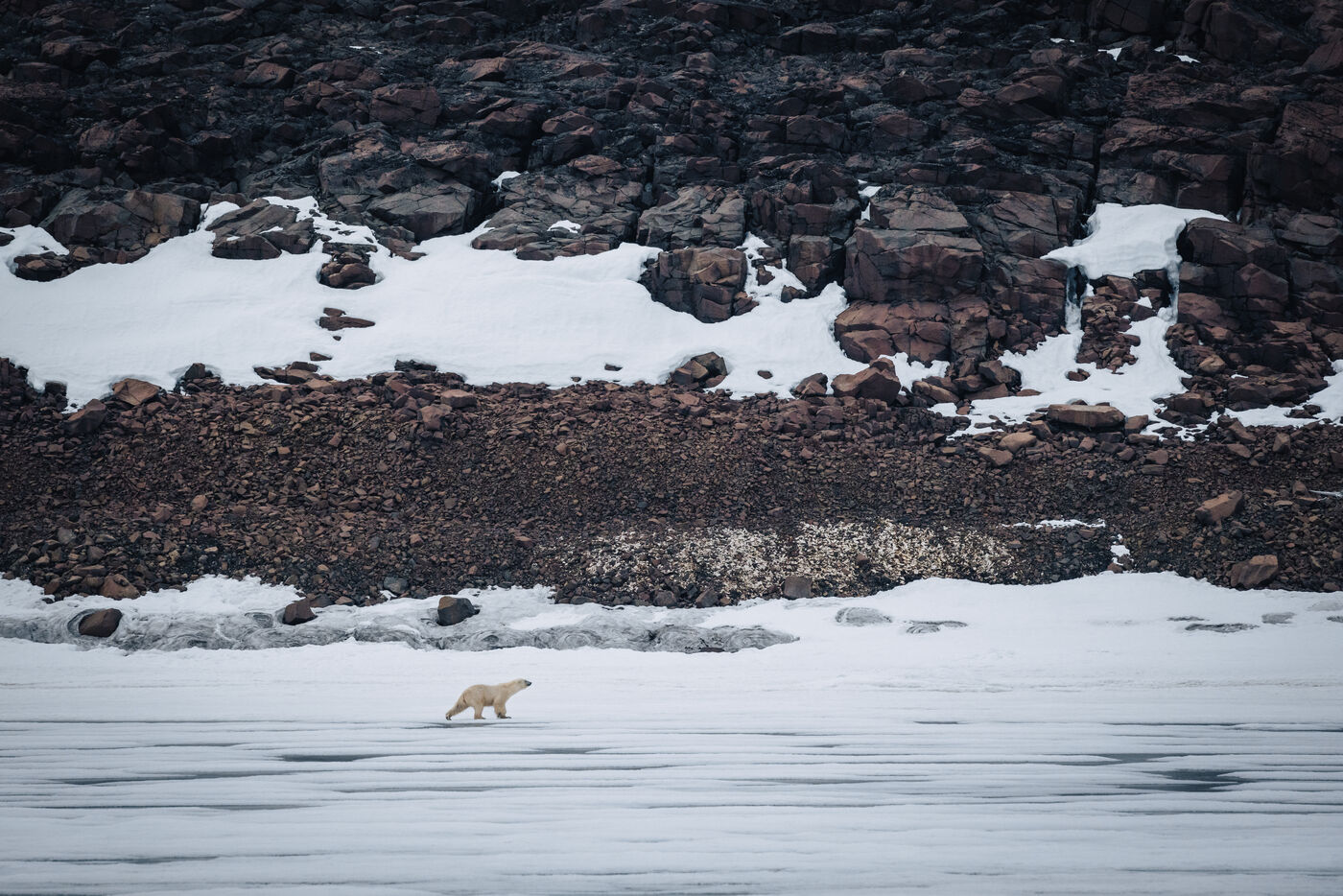
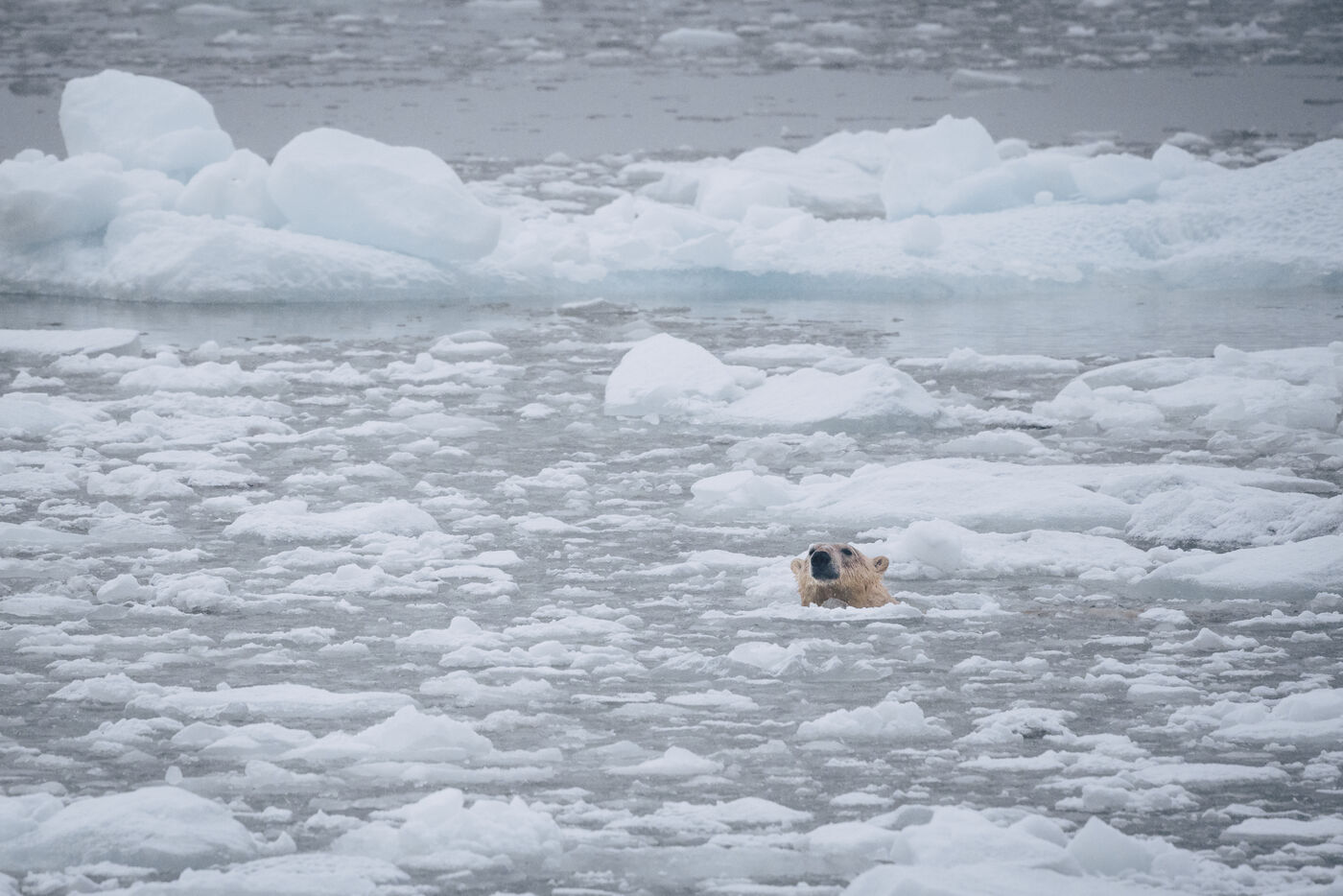
As we rounded Nordaustlandet, the sea ice thickened. The Kinfish had to pick its way carefully through the floes, with a lookout posted on the bow the whole way. We spotted more polar bears, swimming between ice floes or resting on the frozen surface. We also found ourselves in a landscape that felt even more primordial than before. Endless white ice under the gold light of the midnight sun. Mountains in the distance, barely visible in the haze.

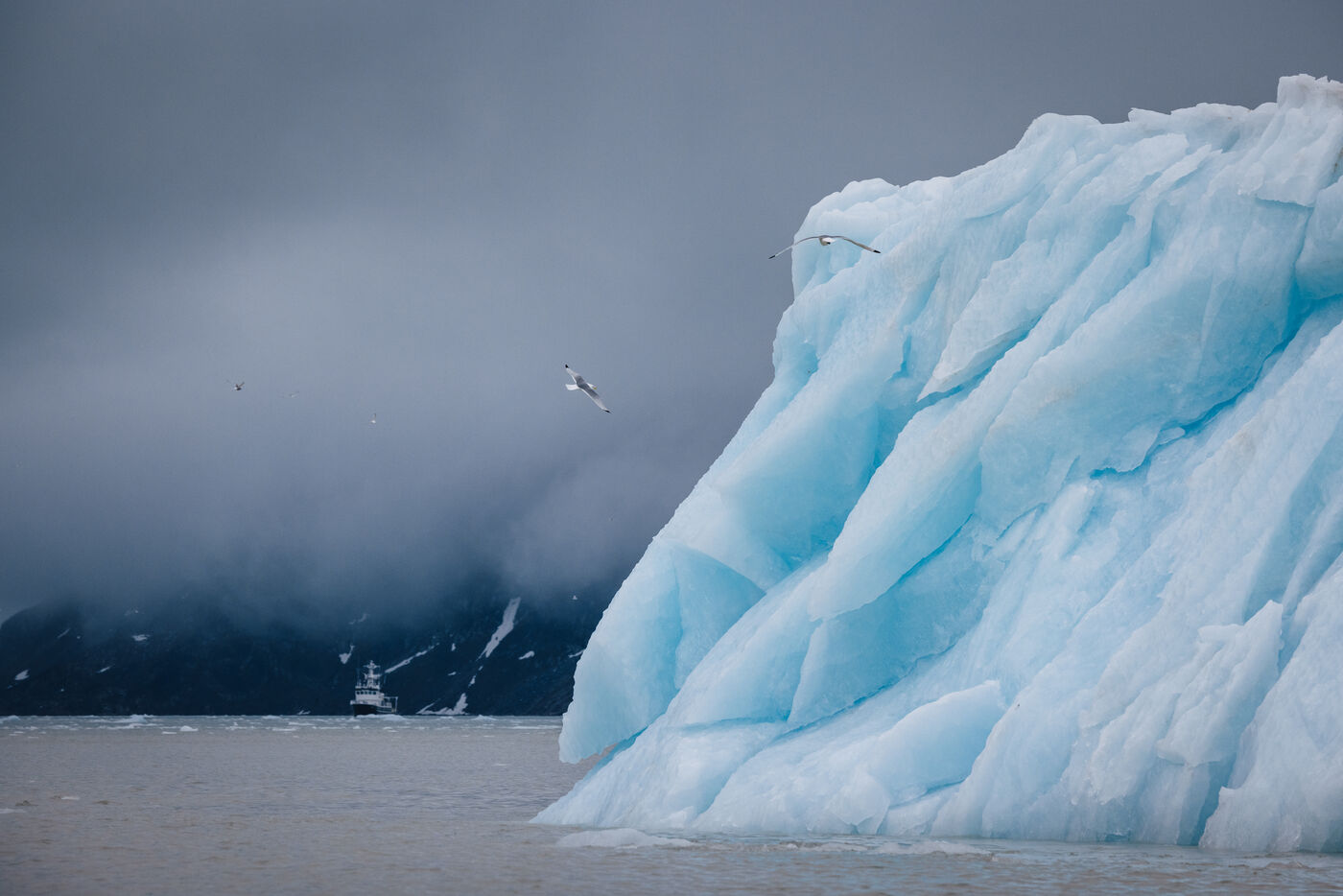
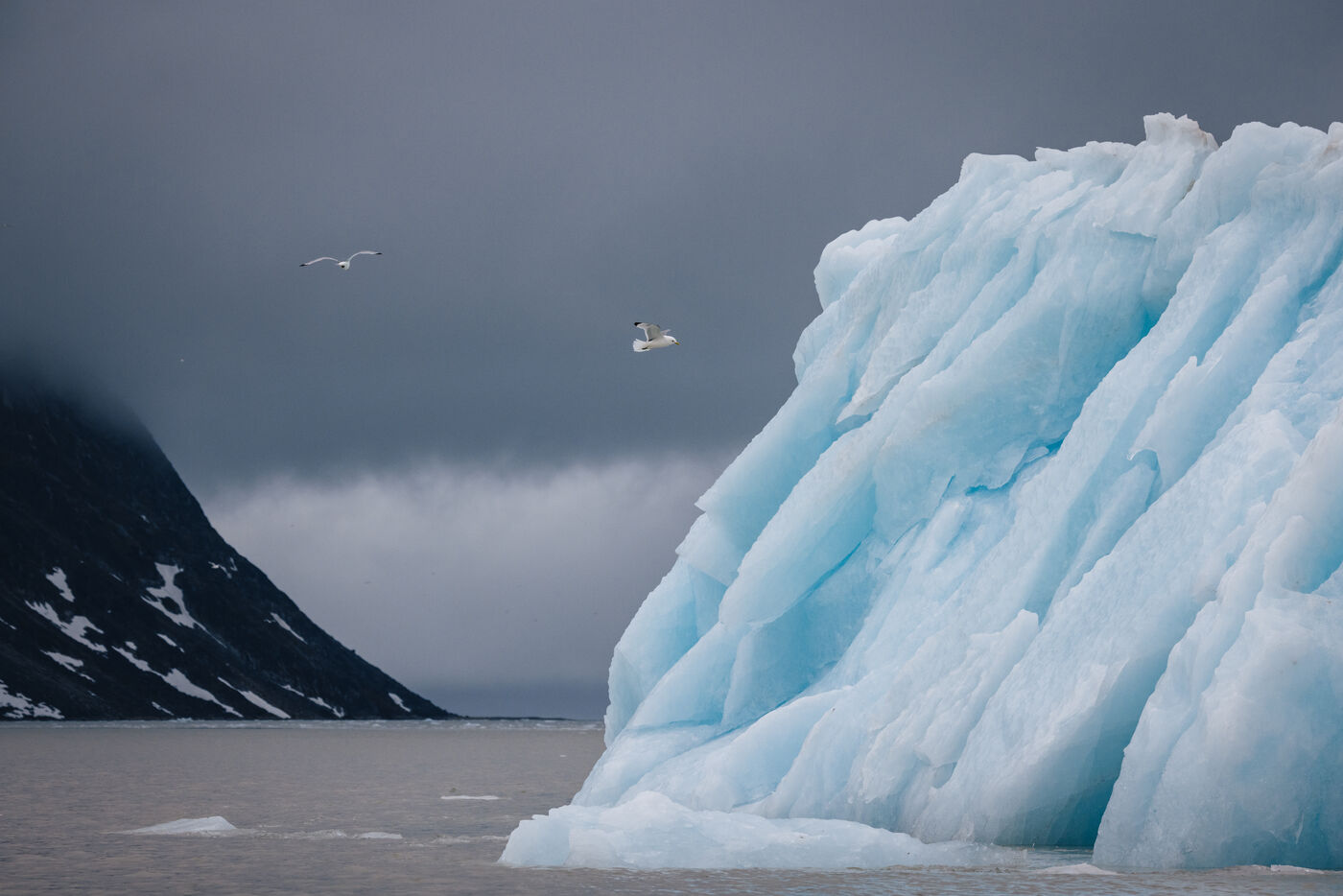
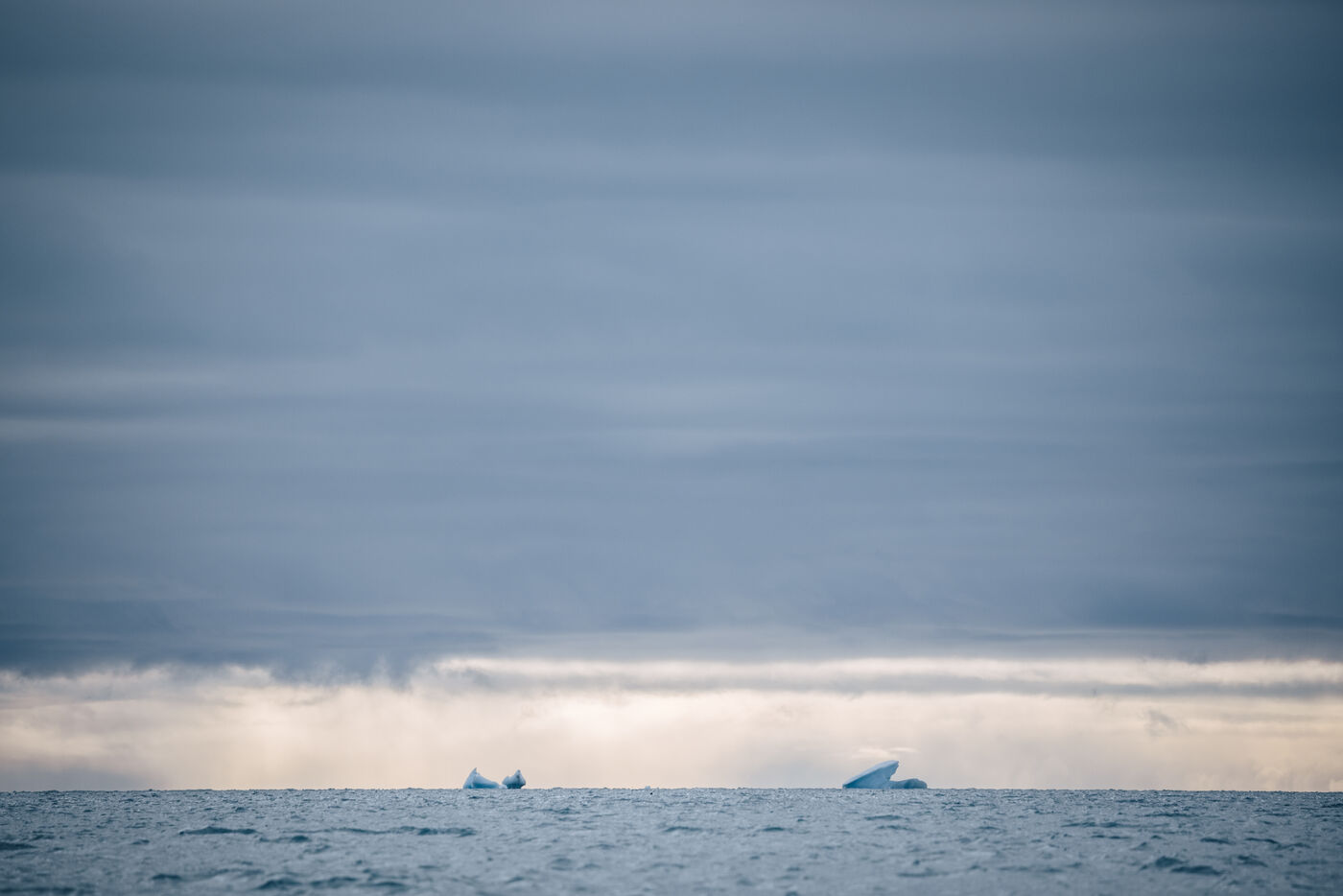
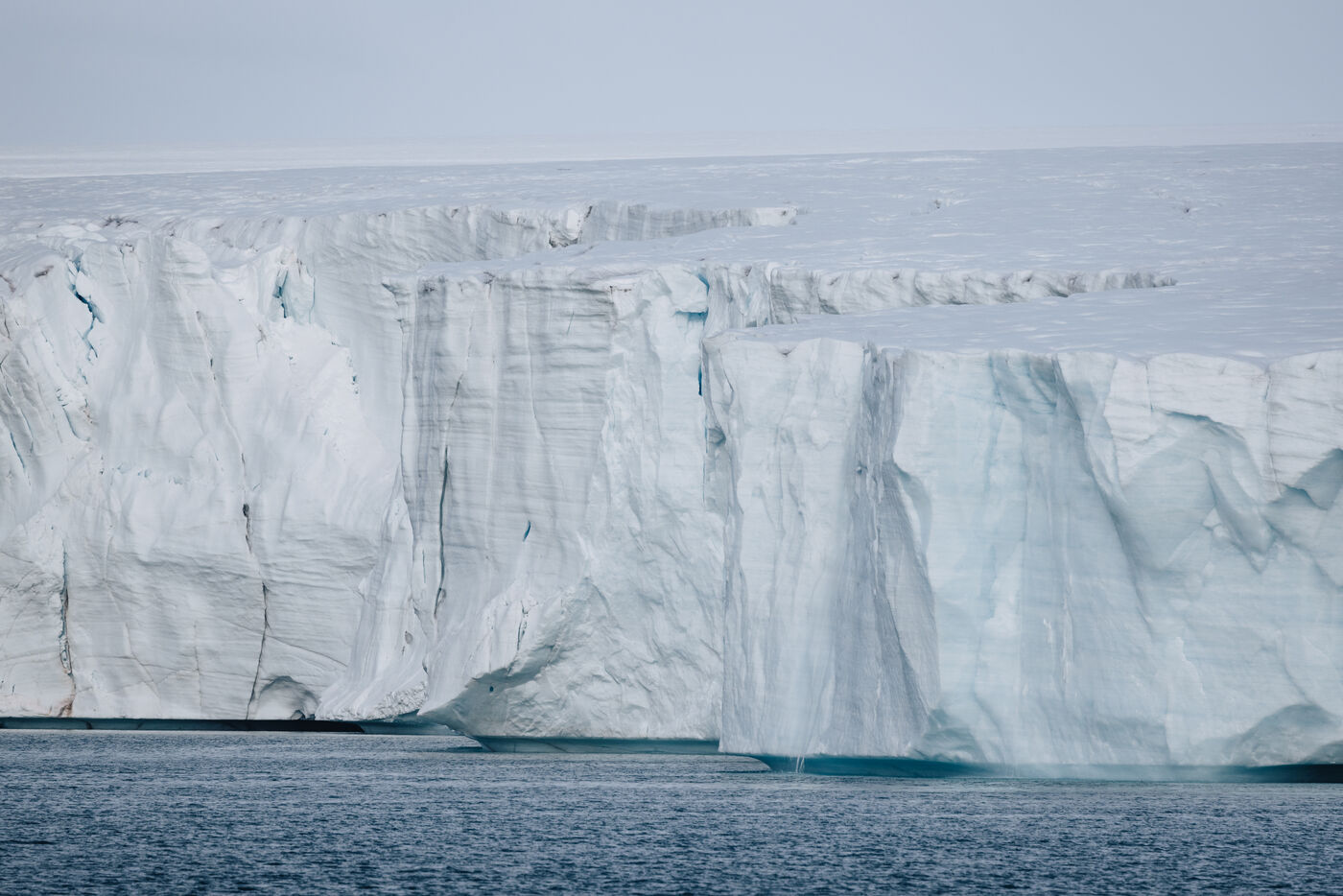
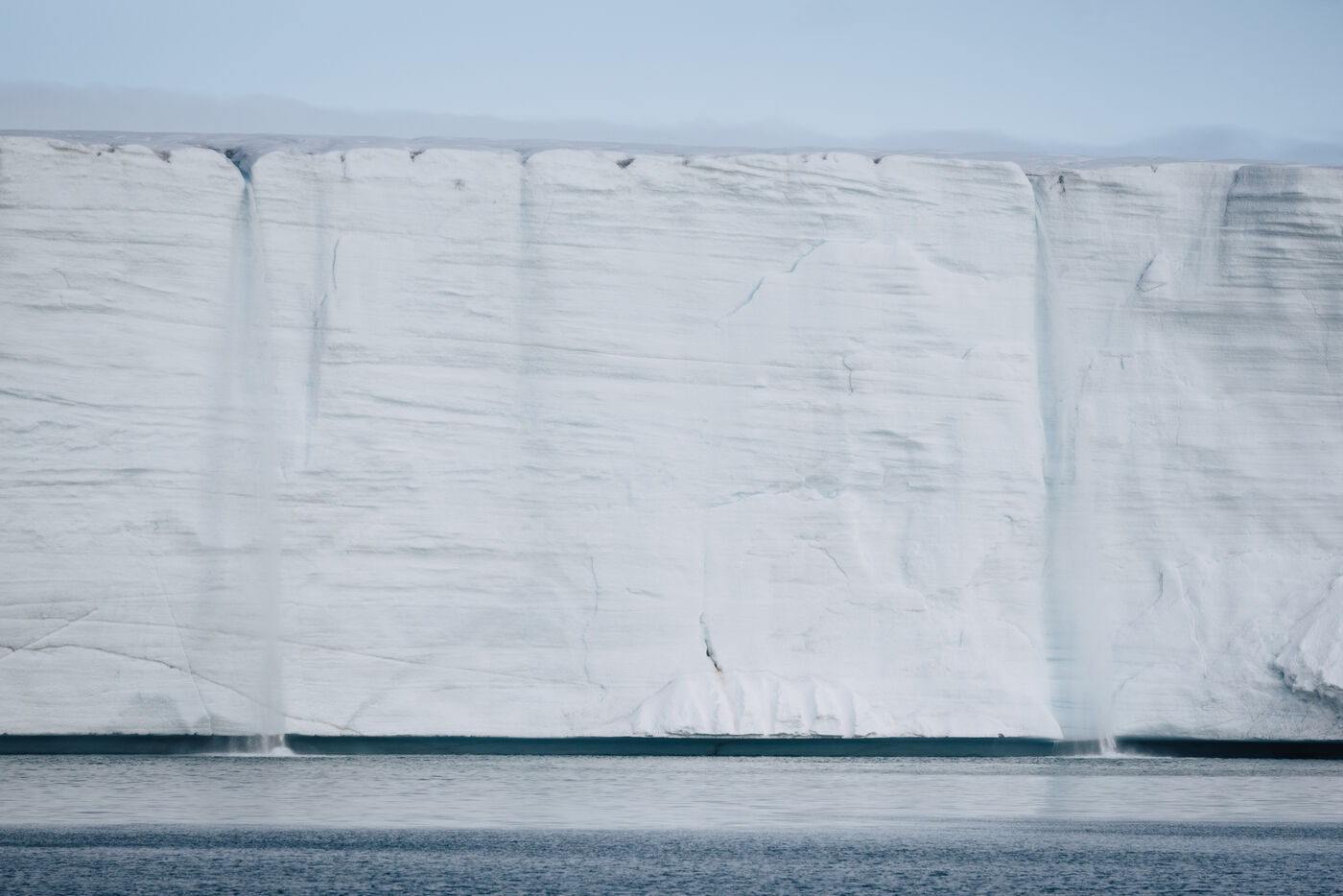
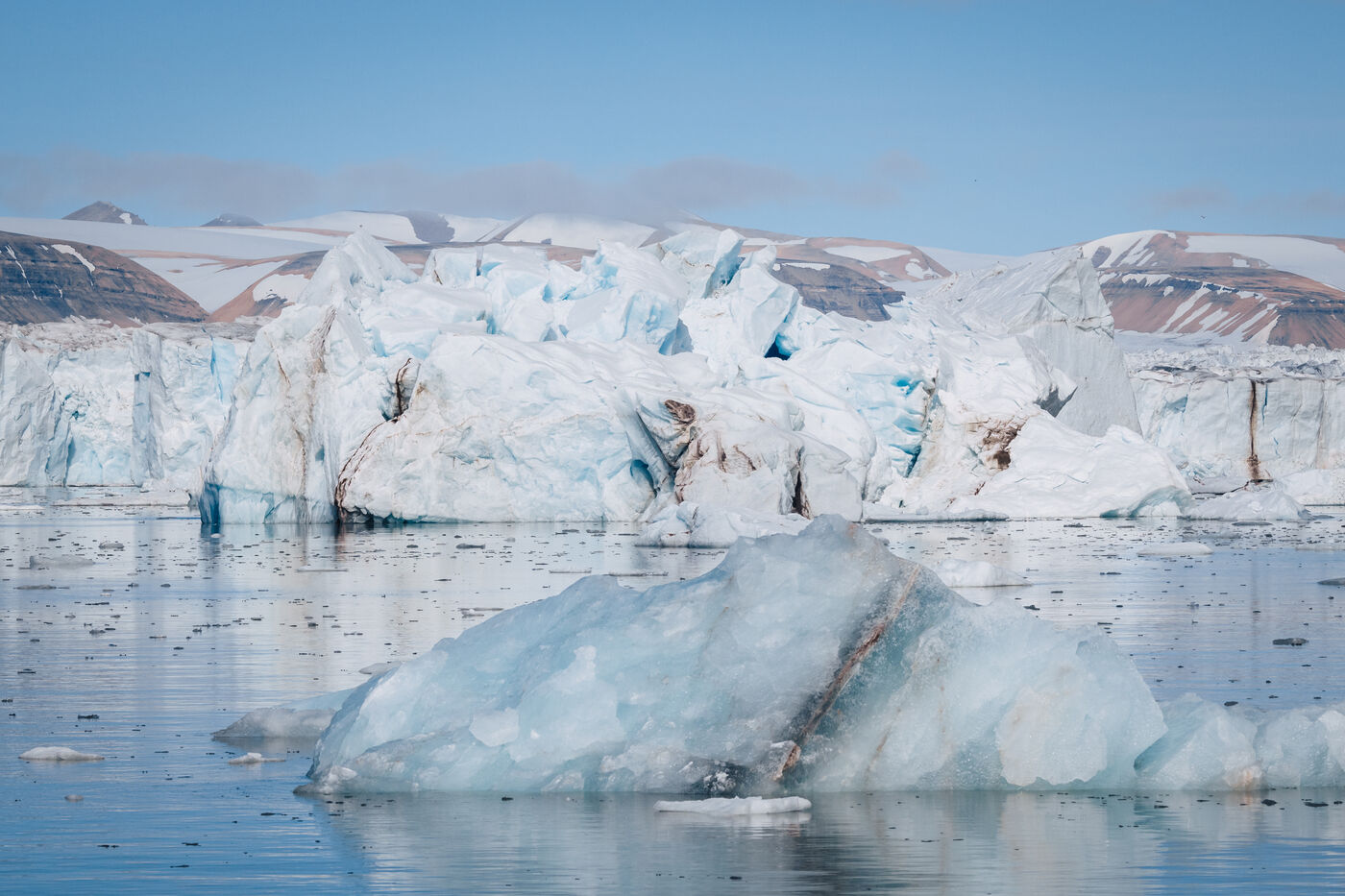
Bråsvellbreen is a glacier that calves directly into the sea. We watched as massive chunks of ice broke free and crashed into the Arctic Ocean. The sound is something no recording can capture. It's a boom, a crack, a rumble. The ice cubes left behind in the water are chunks the size of buildings. We navigated through icebergs, some white, some blue, all of them ancient and alien.

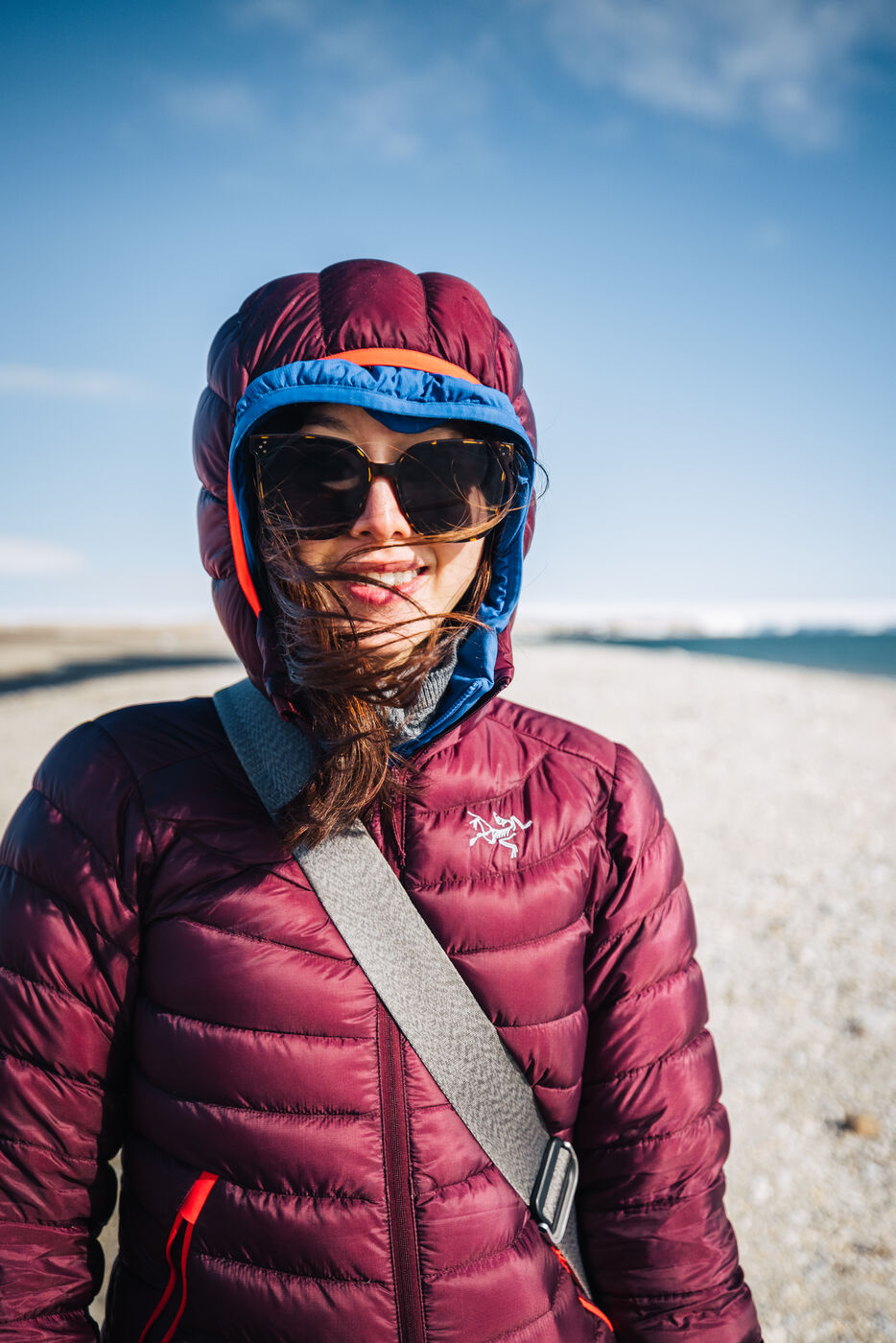
Woman in cold-weather gear on Arctic beach
Ready for another day exploring the Arctic.
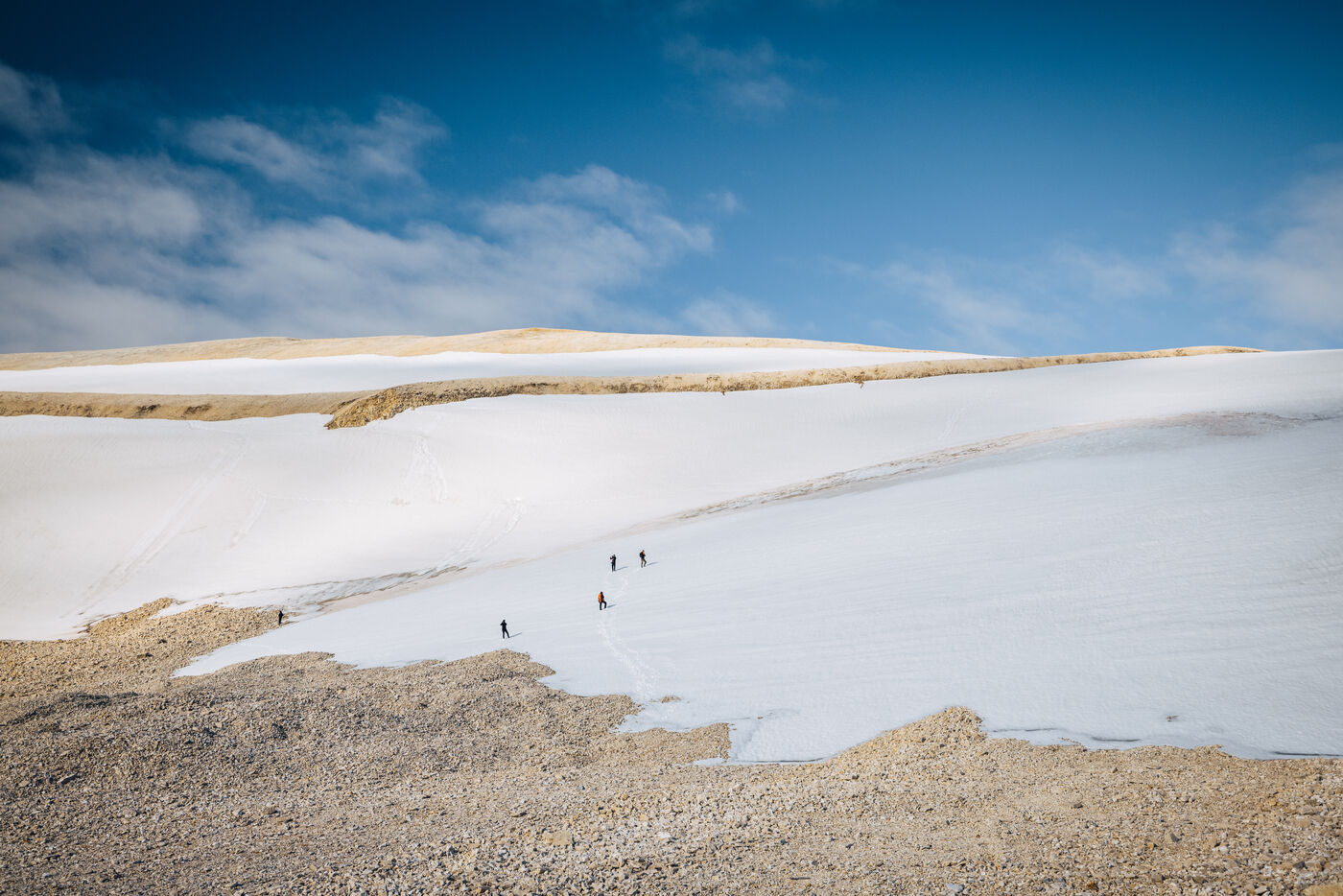
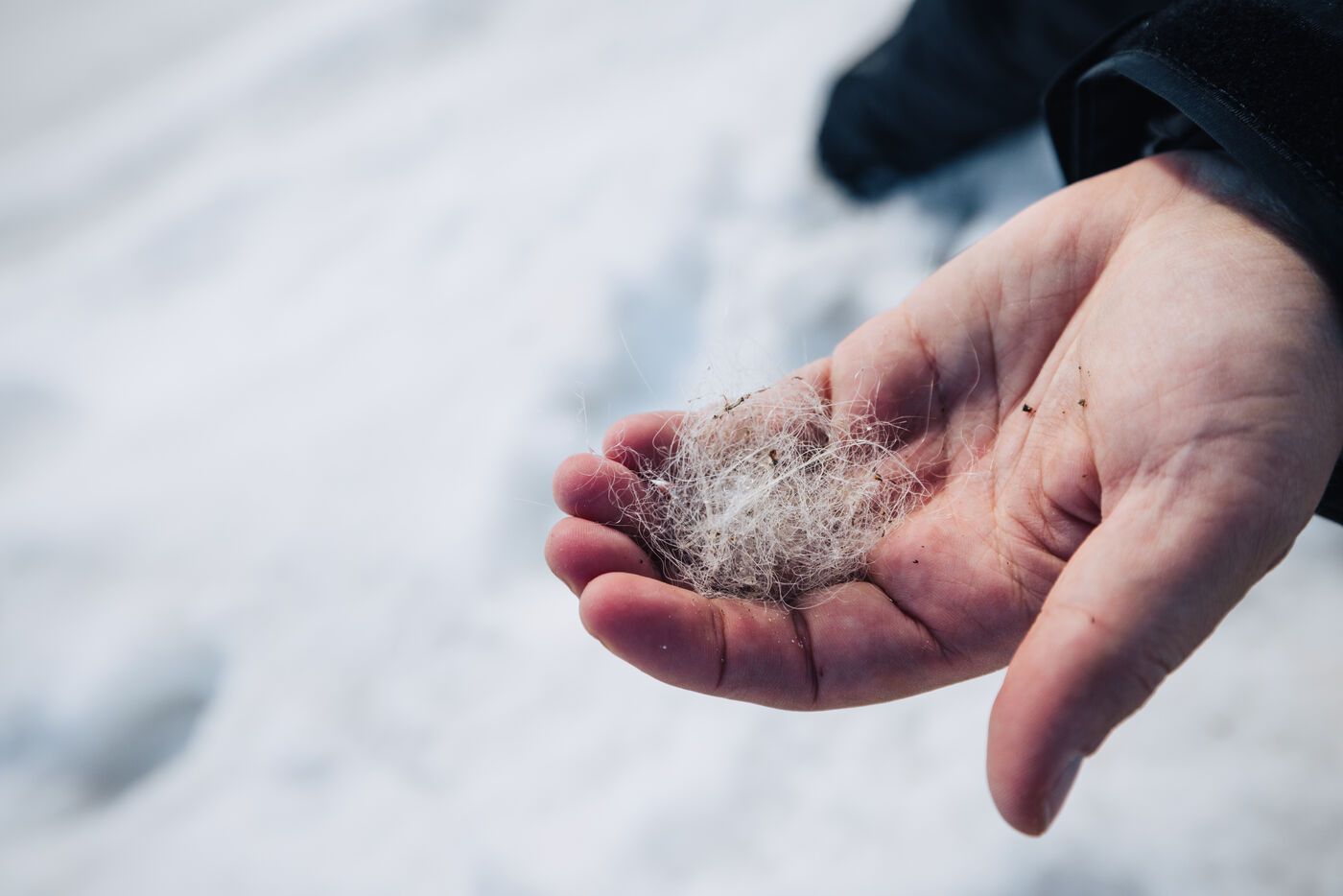
Tiny figures walking across a snowfield below a blue sky Hand cupping a wispy white tuft picked up from the snow
The landscape stretches endless, the ice crystalline under my fingers.
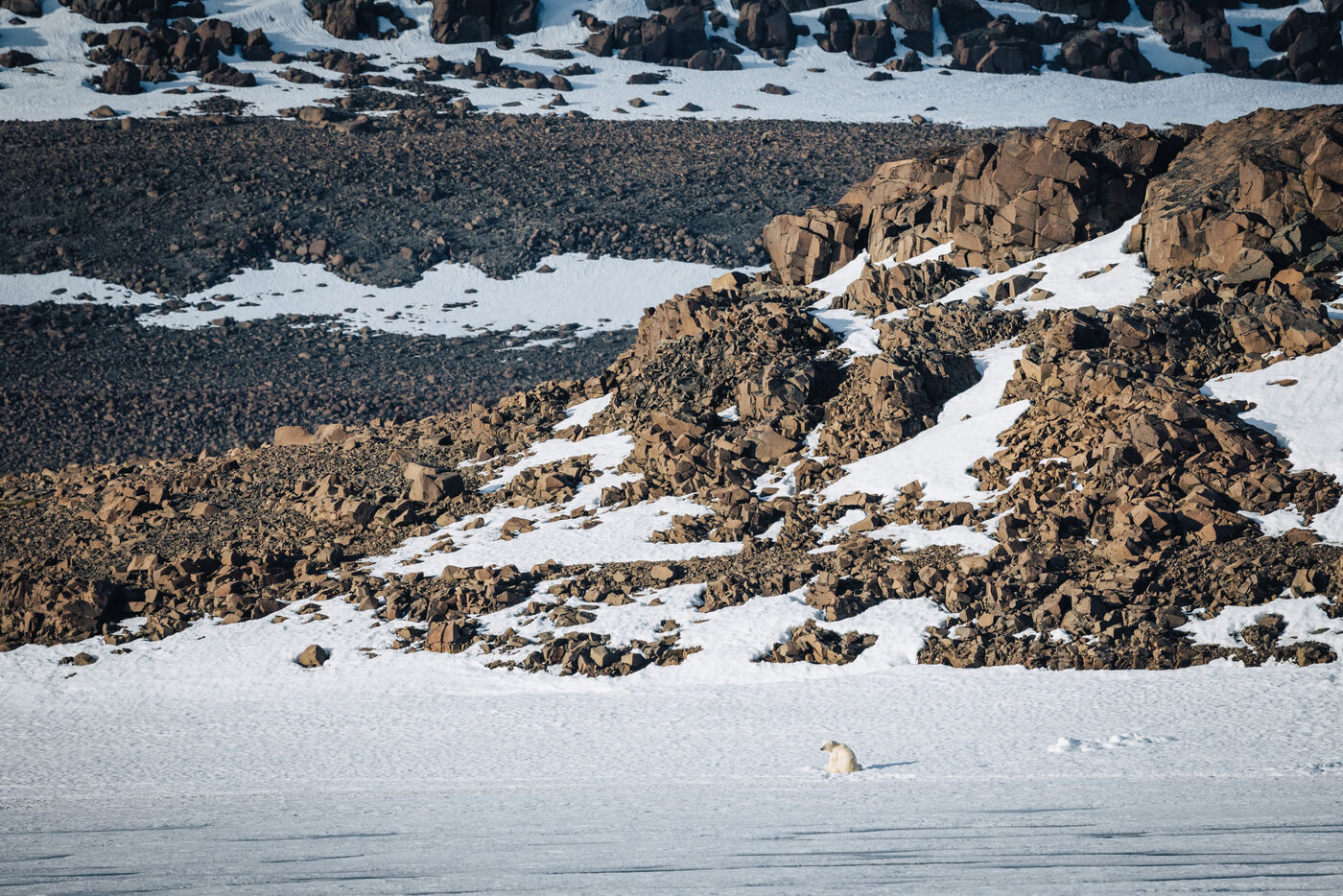
Distant polar bear resting on the sea ice below a rocky slope Bear walking across sea ice
A solitary bear traverses the frozen landscape, living between ice and stone.
Polar bear standing on the snow beneath a boulder-strewn slope
The bear keeps to the snow, working the line between ice and stone.

Emerald Icebergs and the Lobster Suit

July 28, 2022. Hinlopenstretet, Svalbard

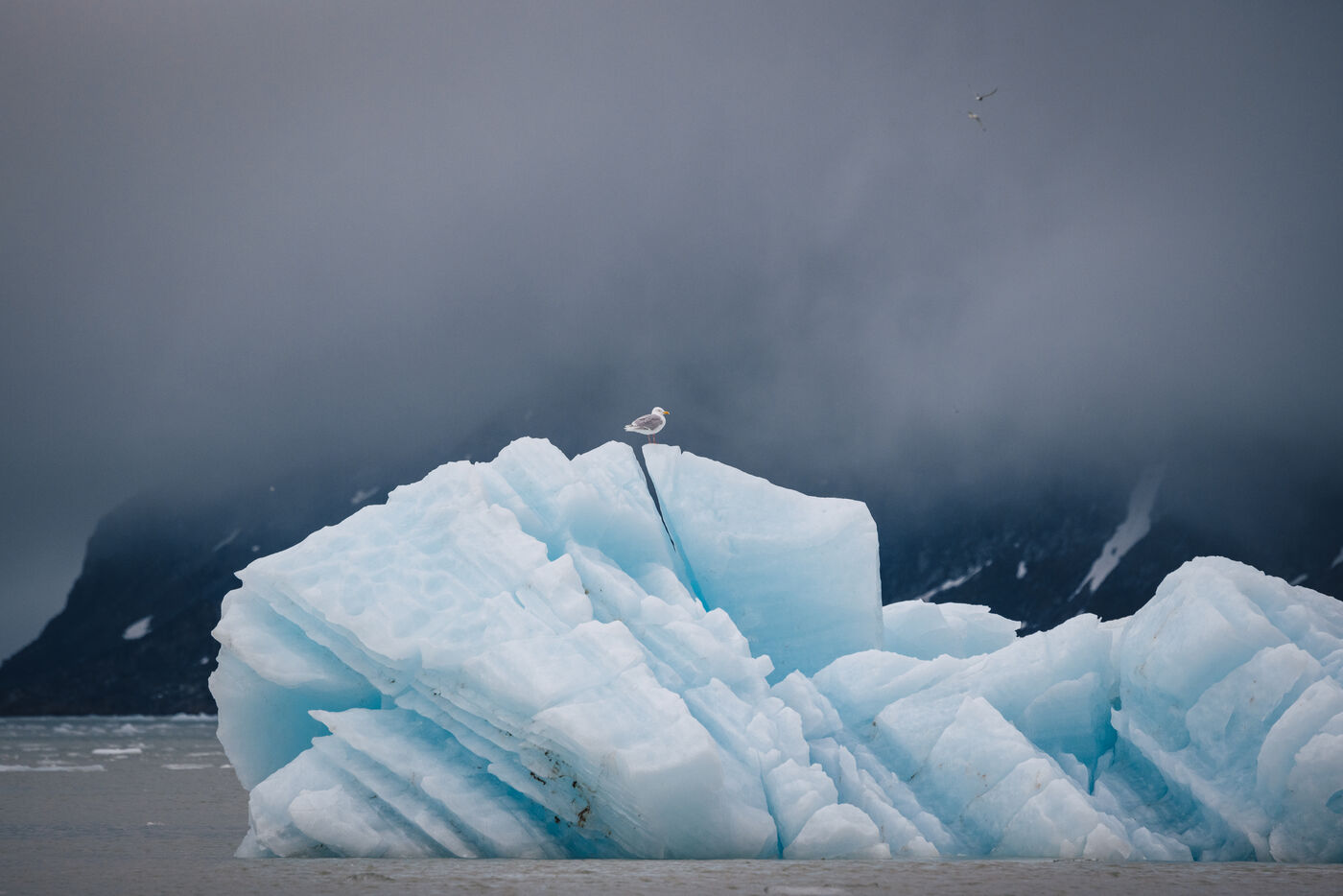
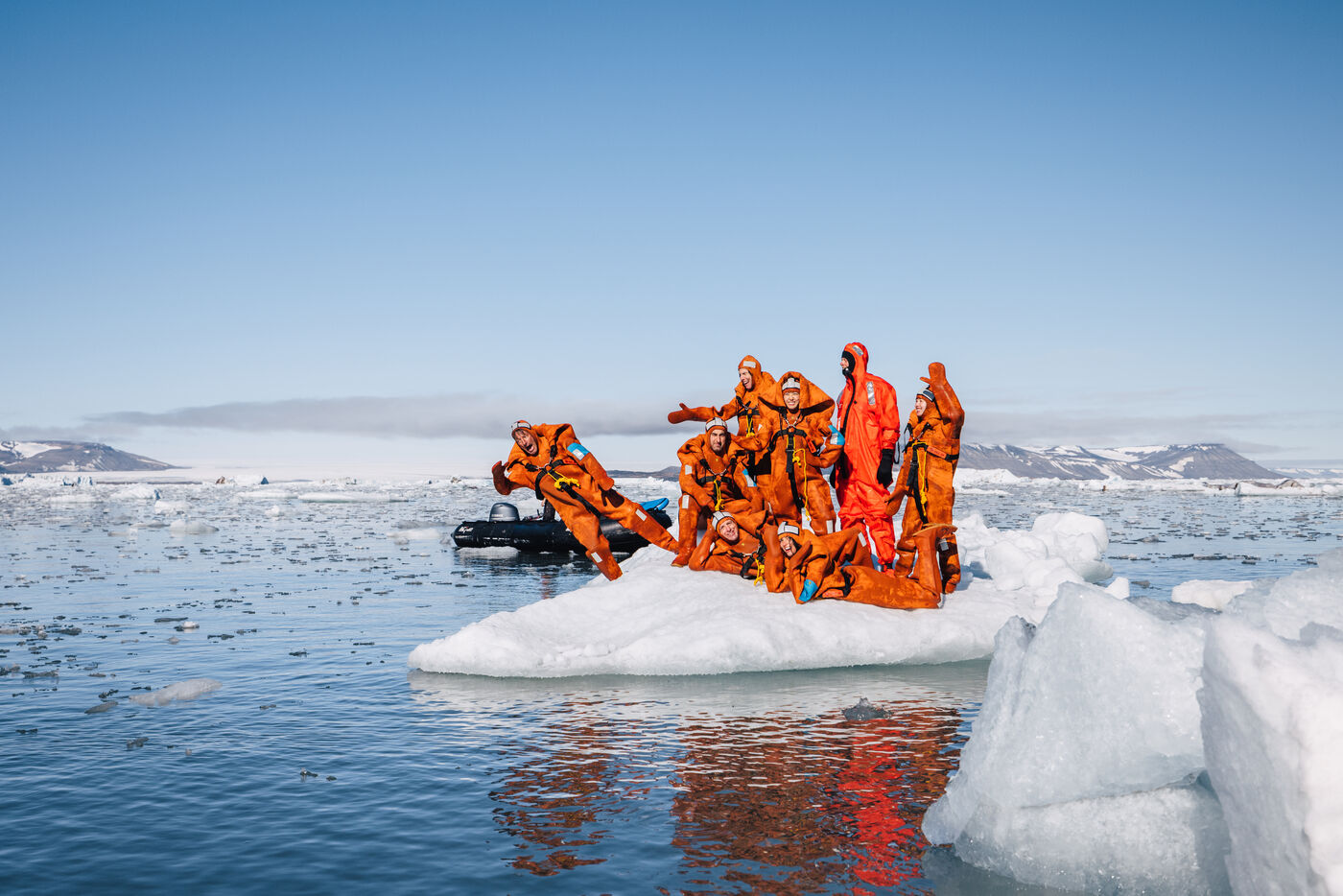
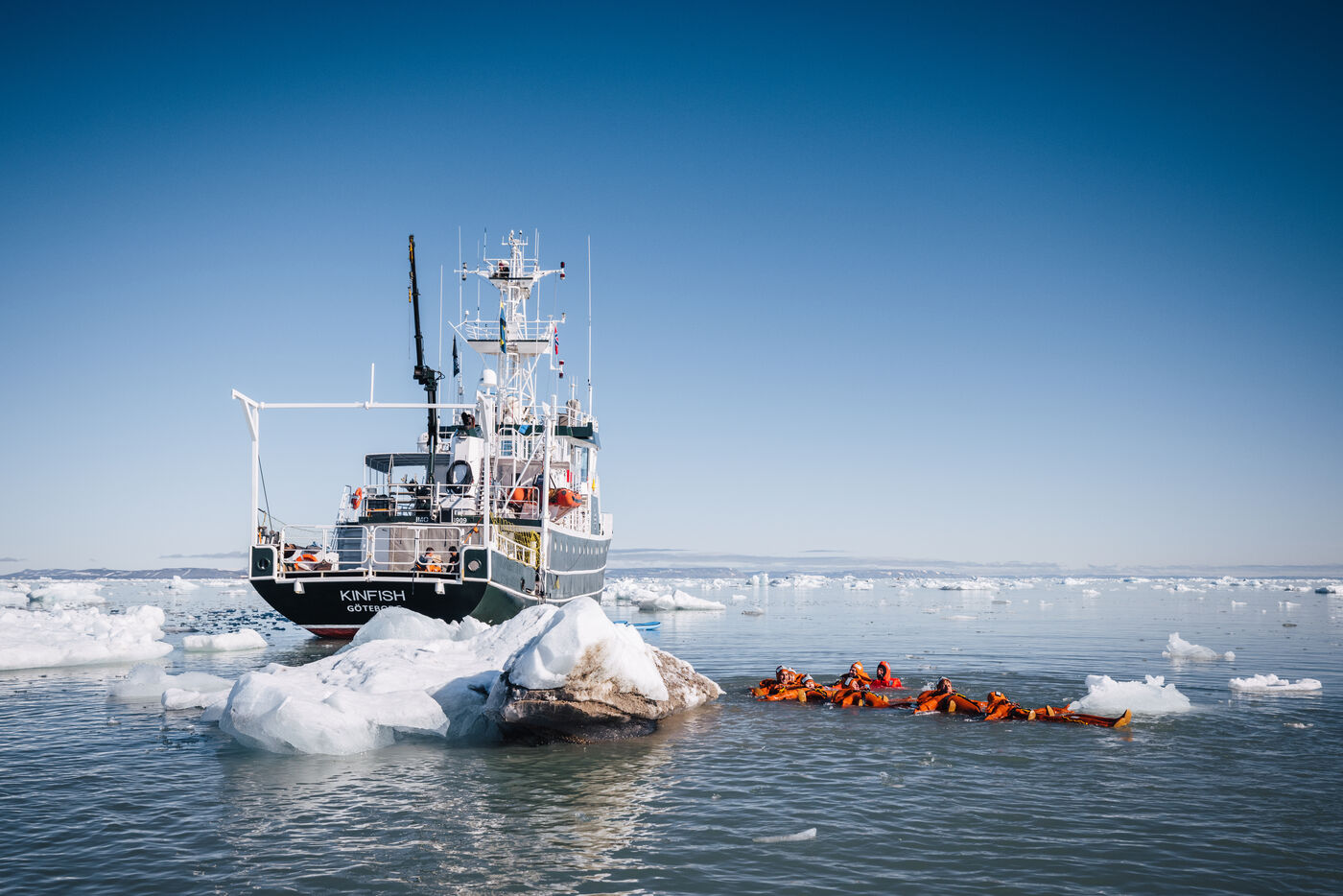
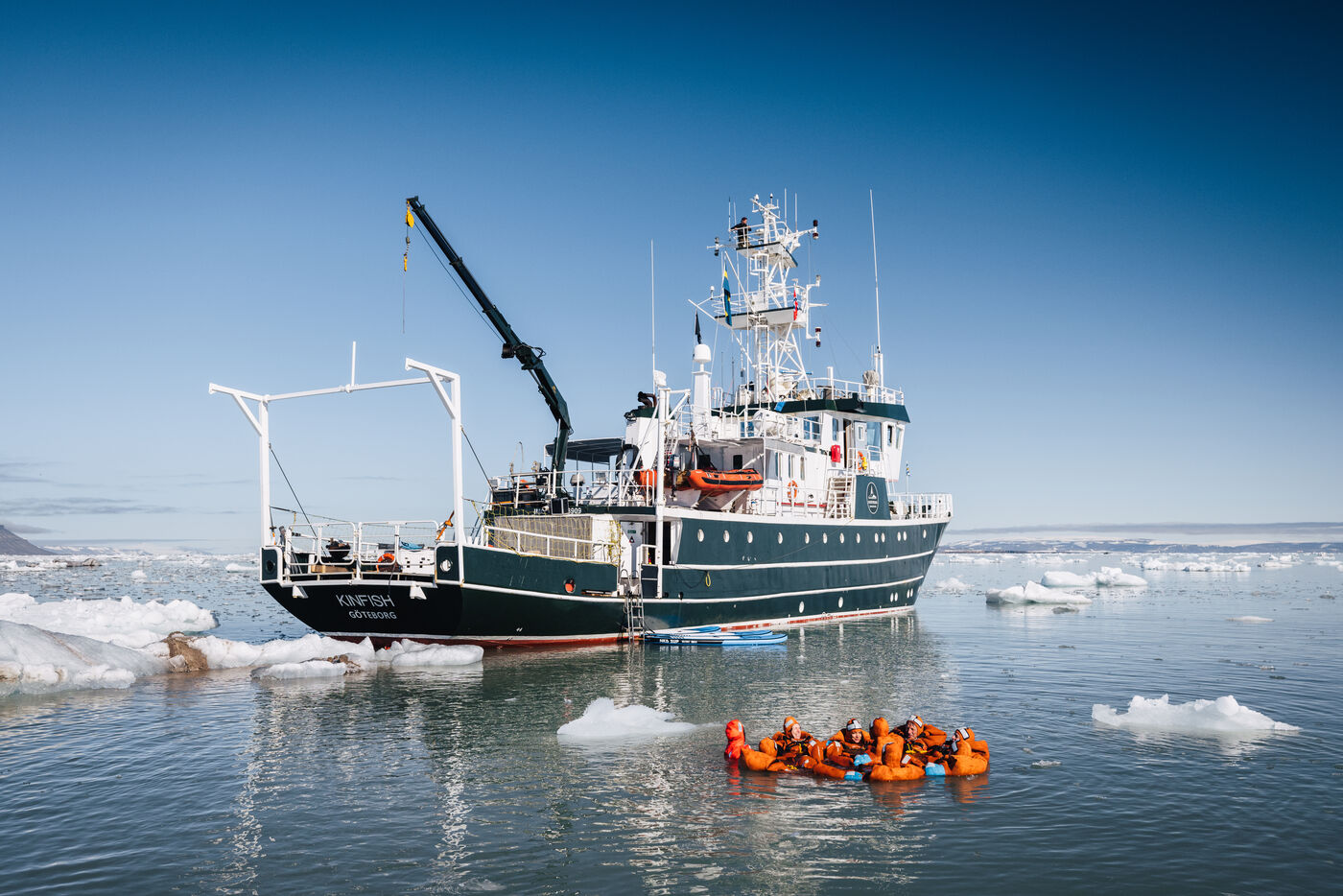
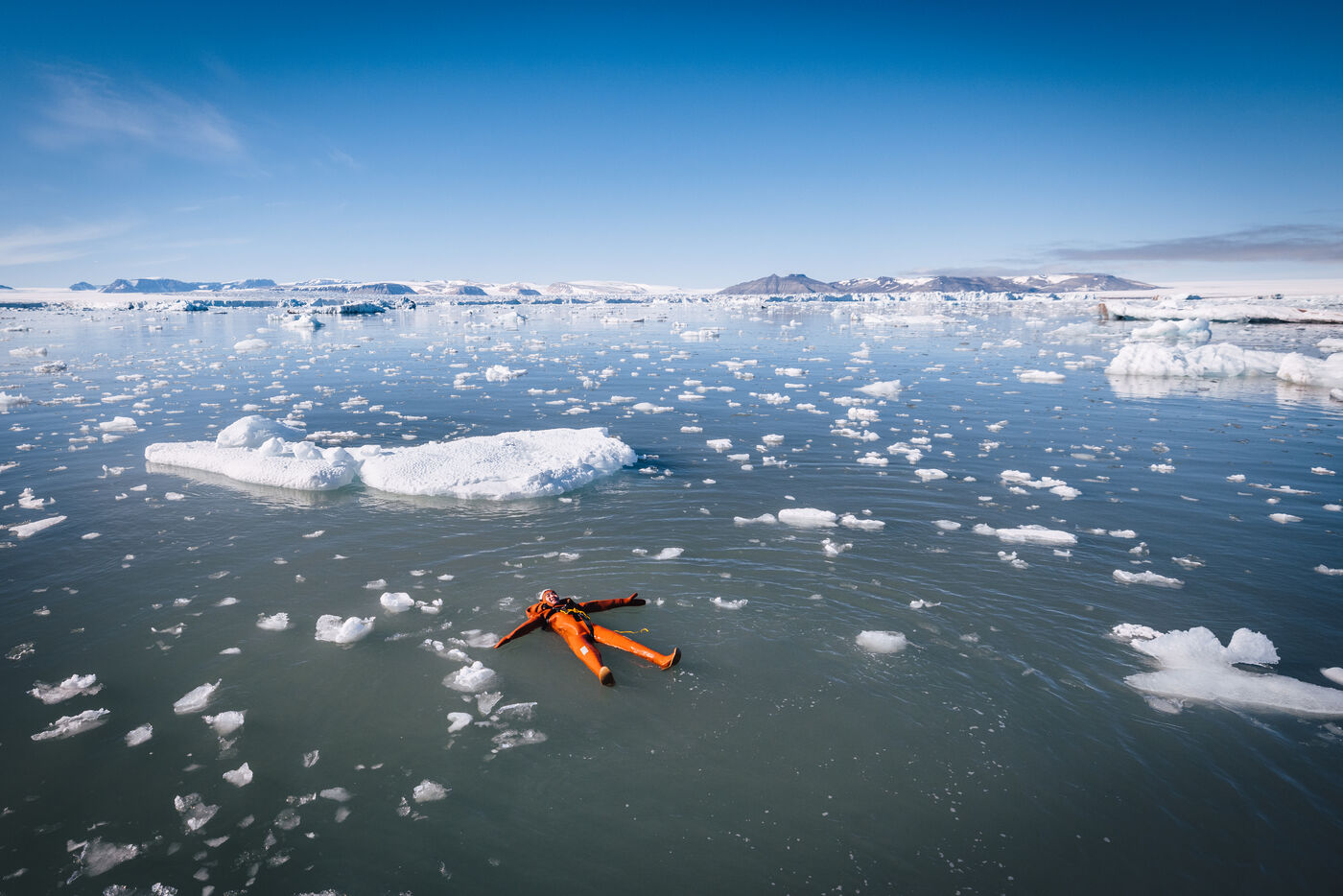
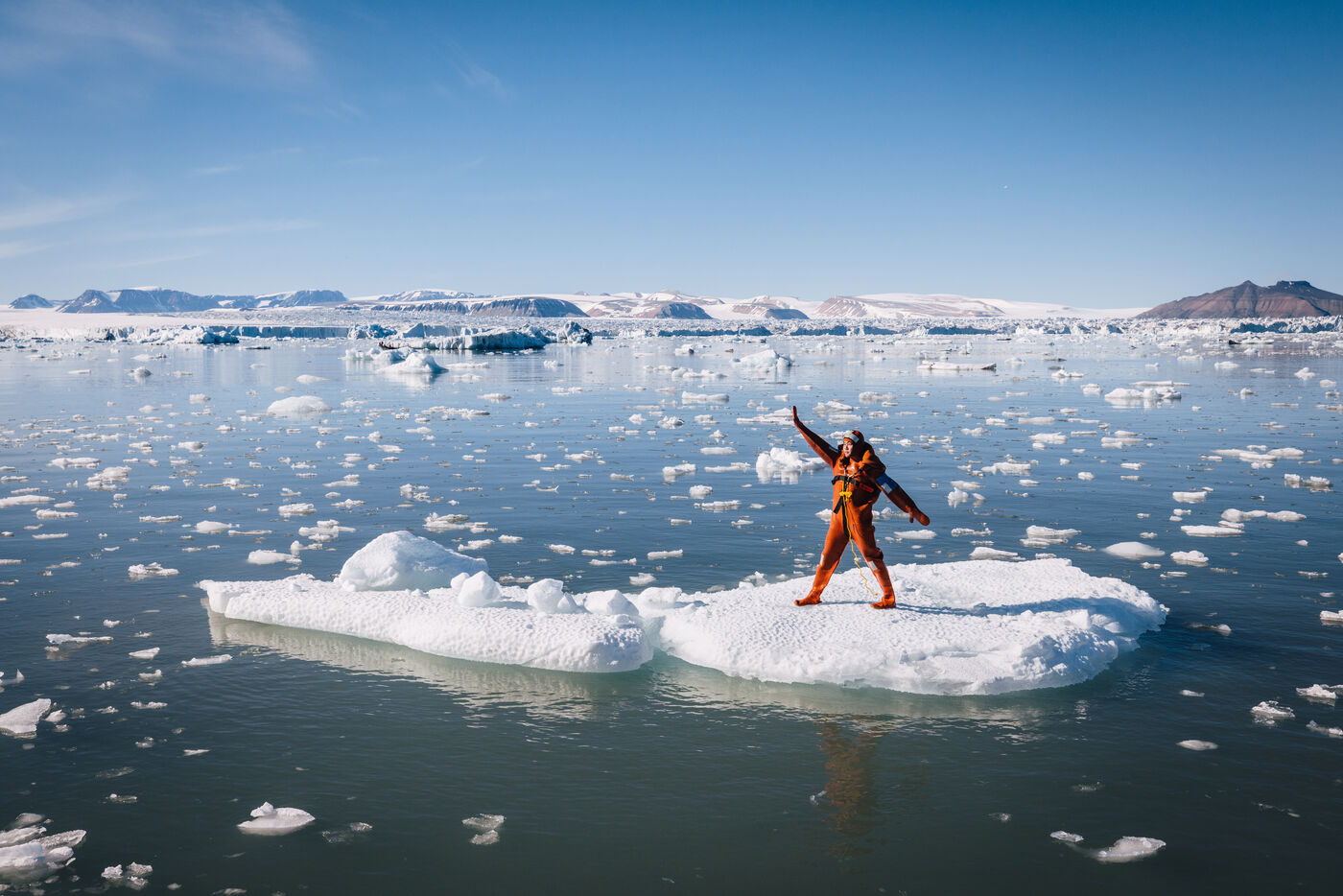
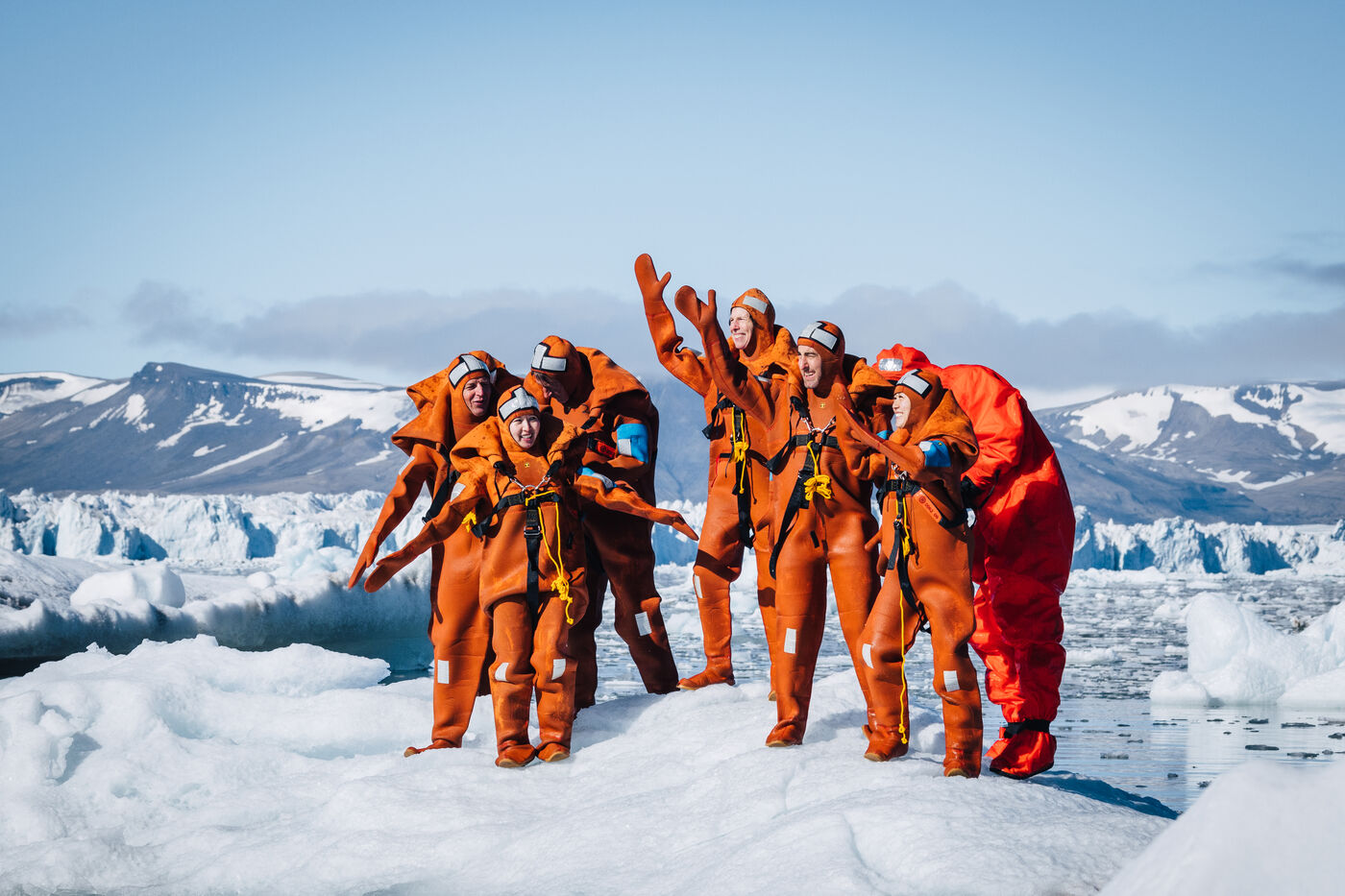
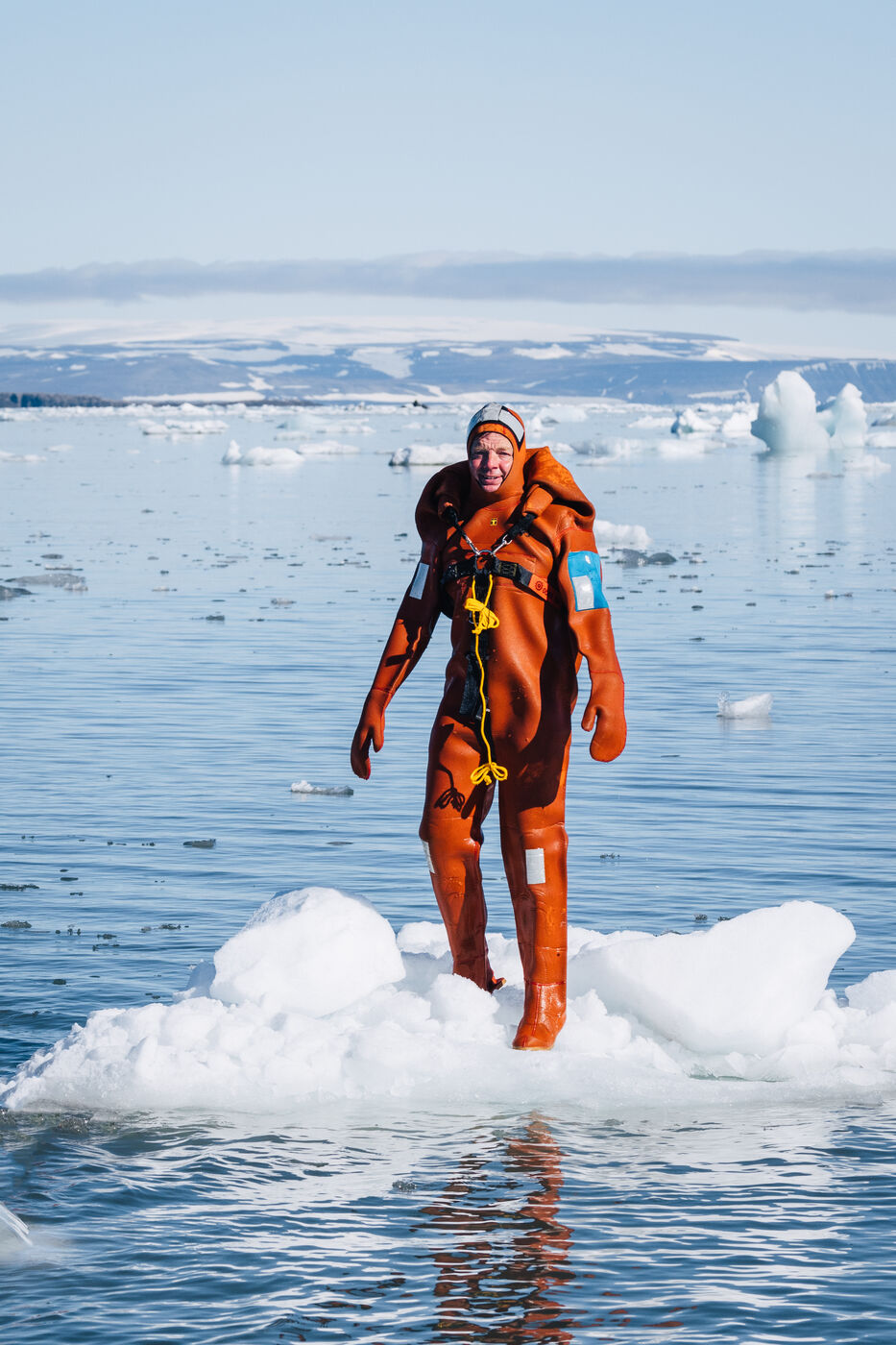
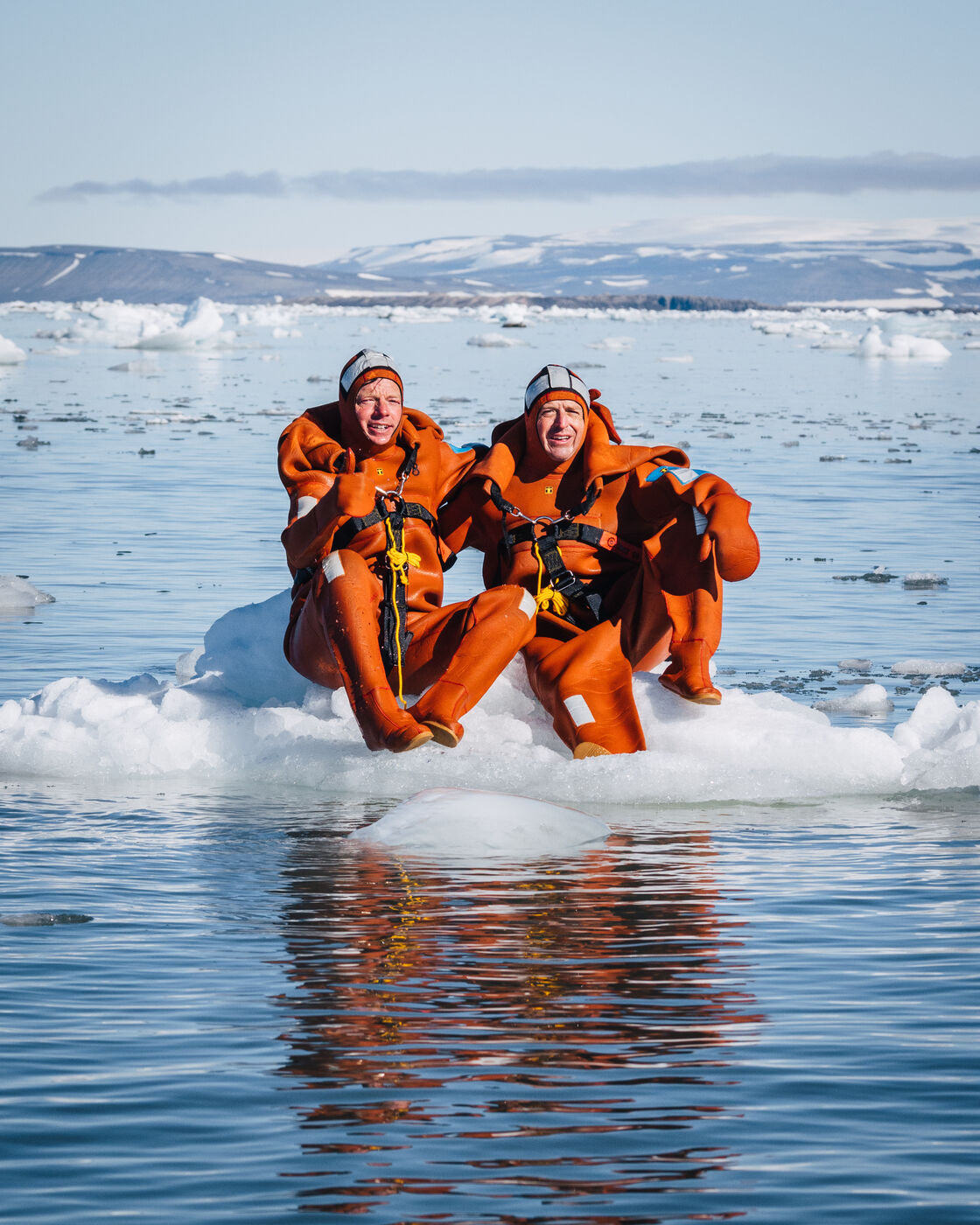
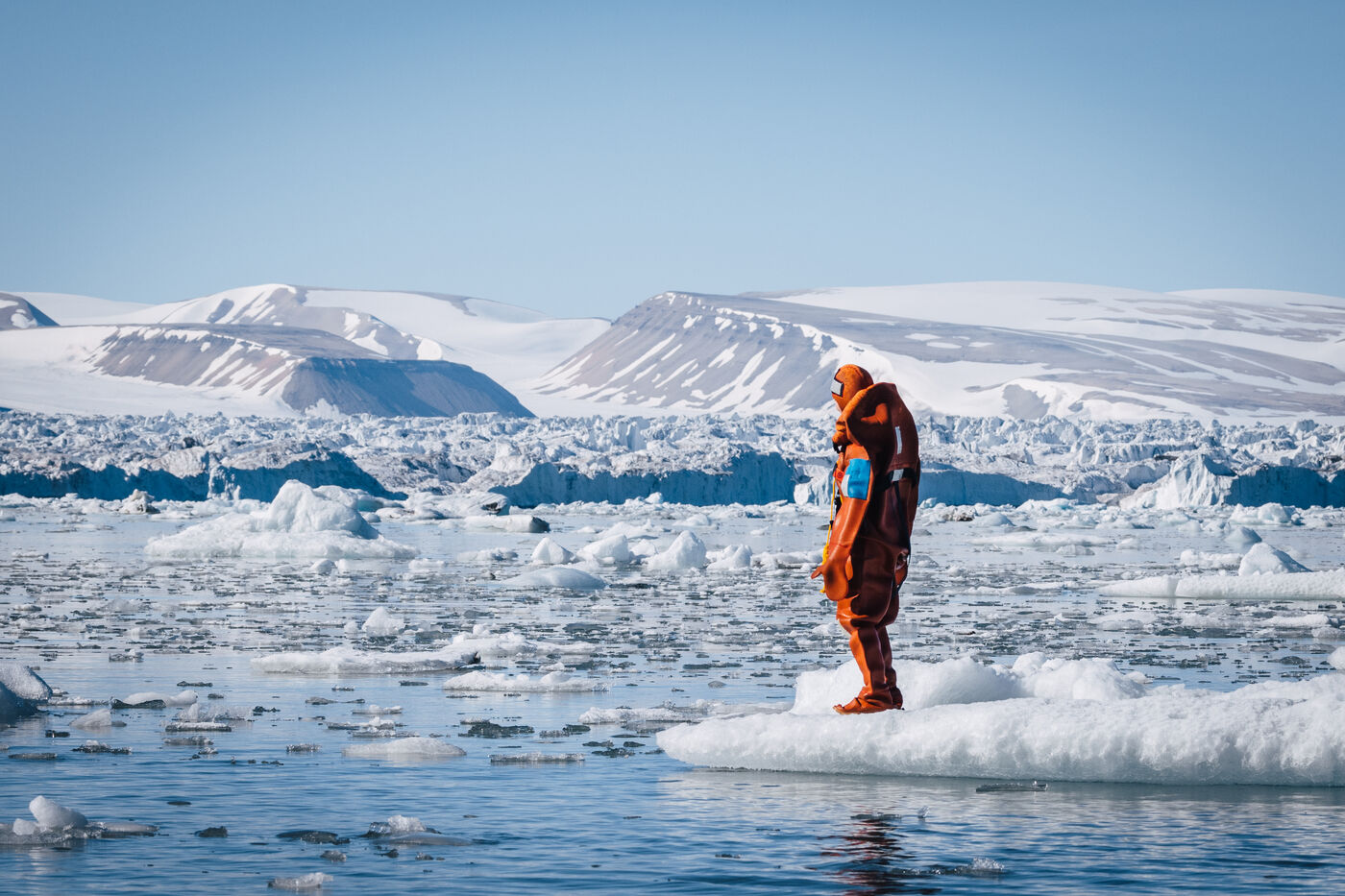
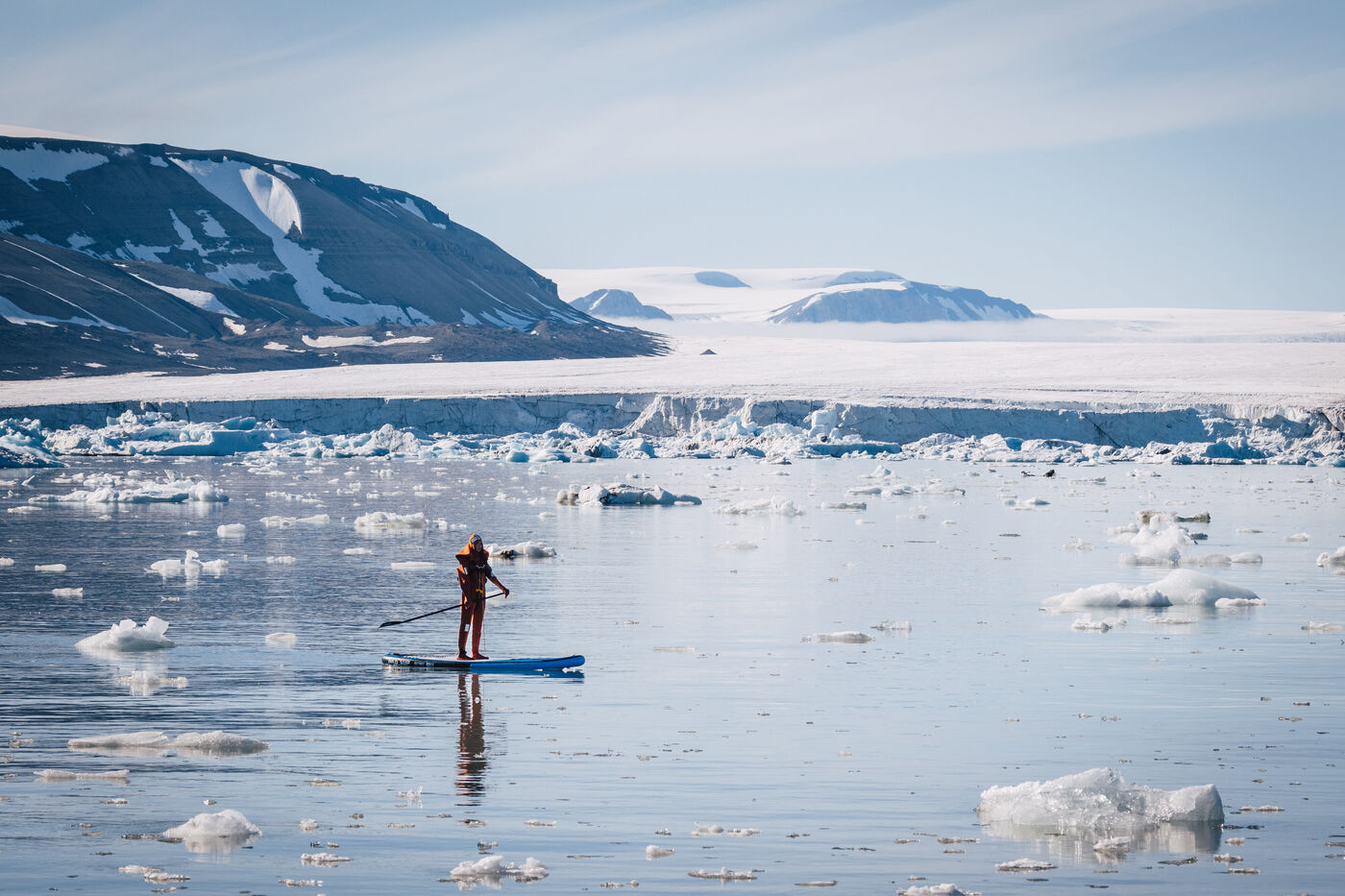
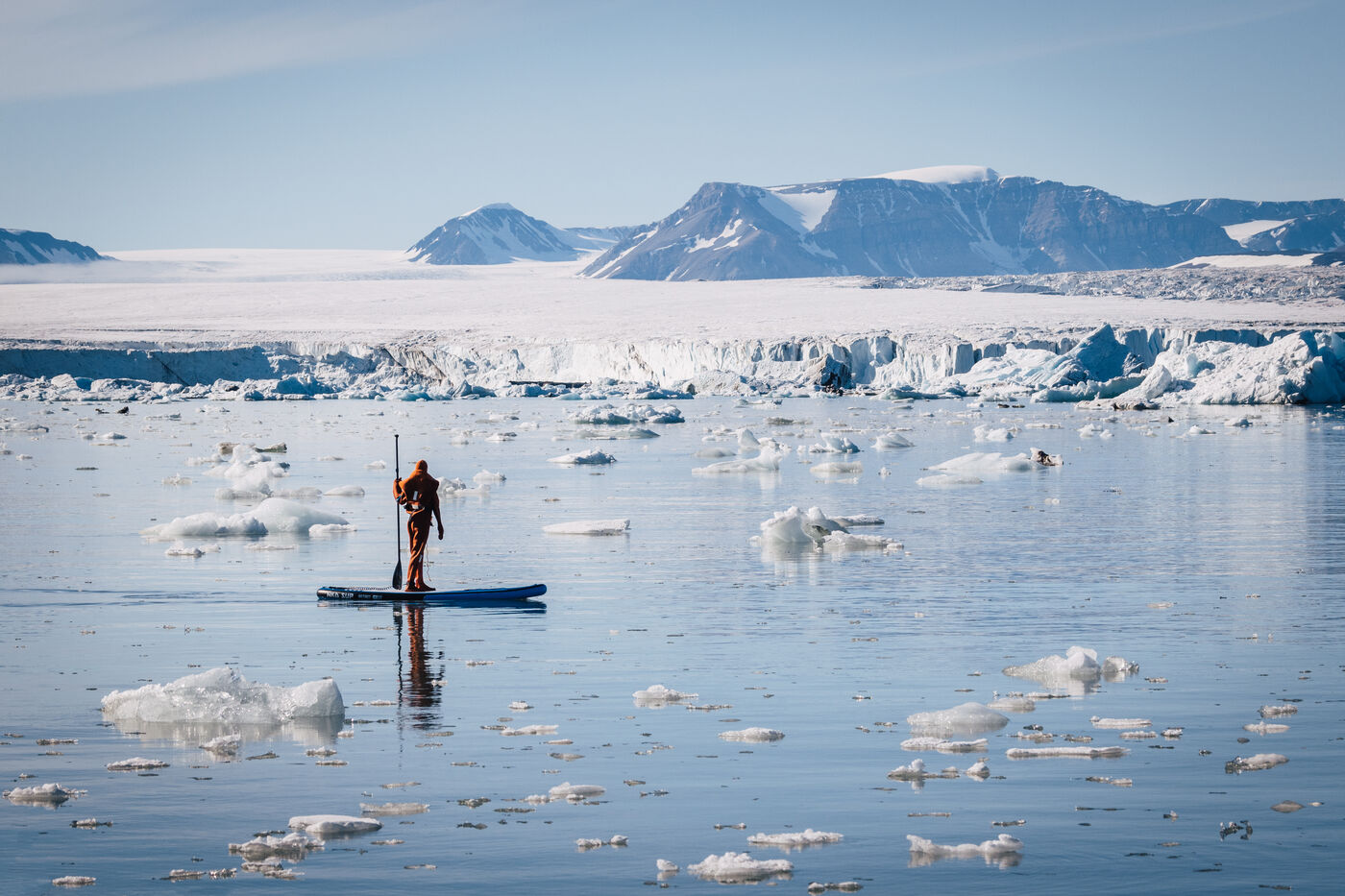
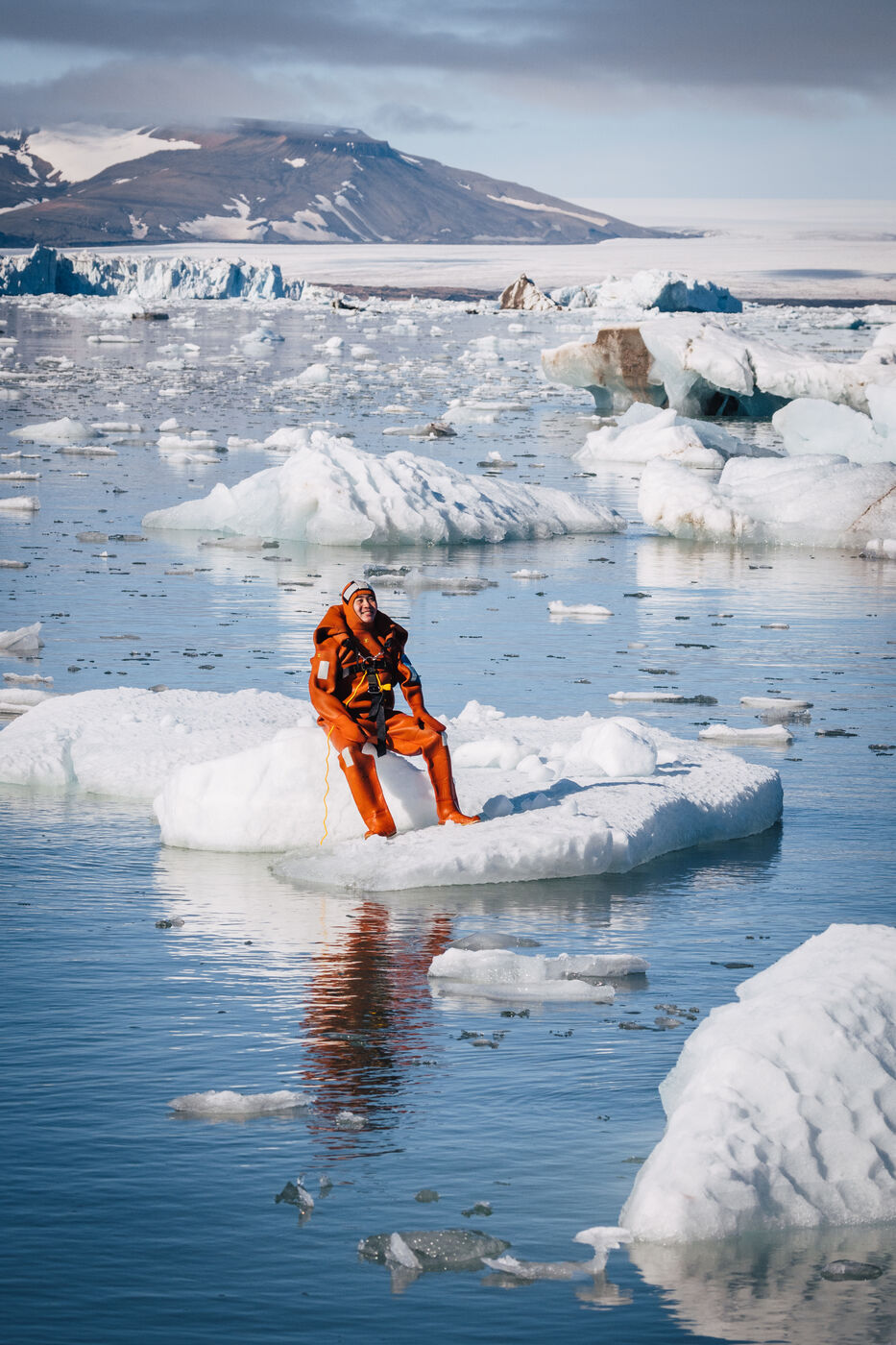
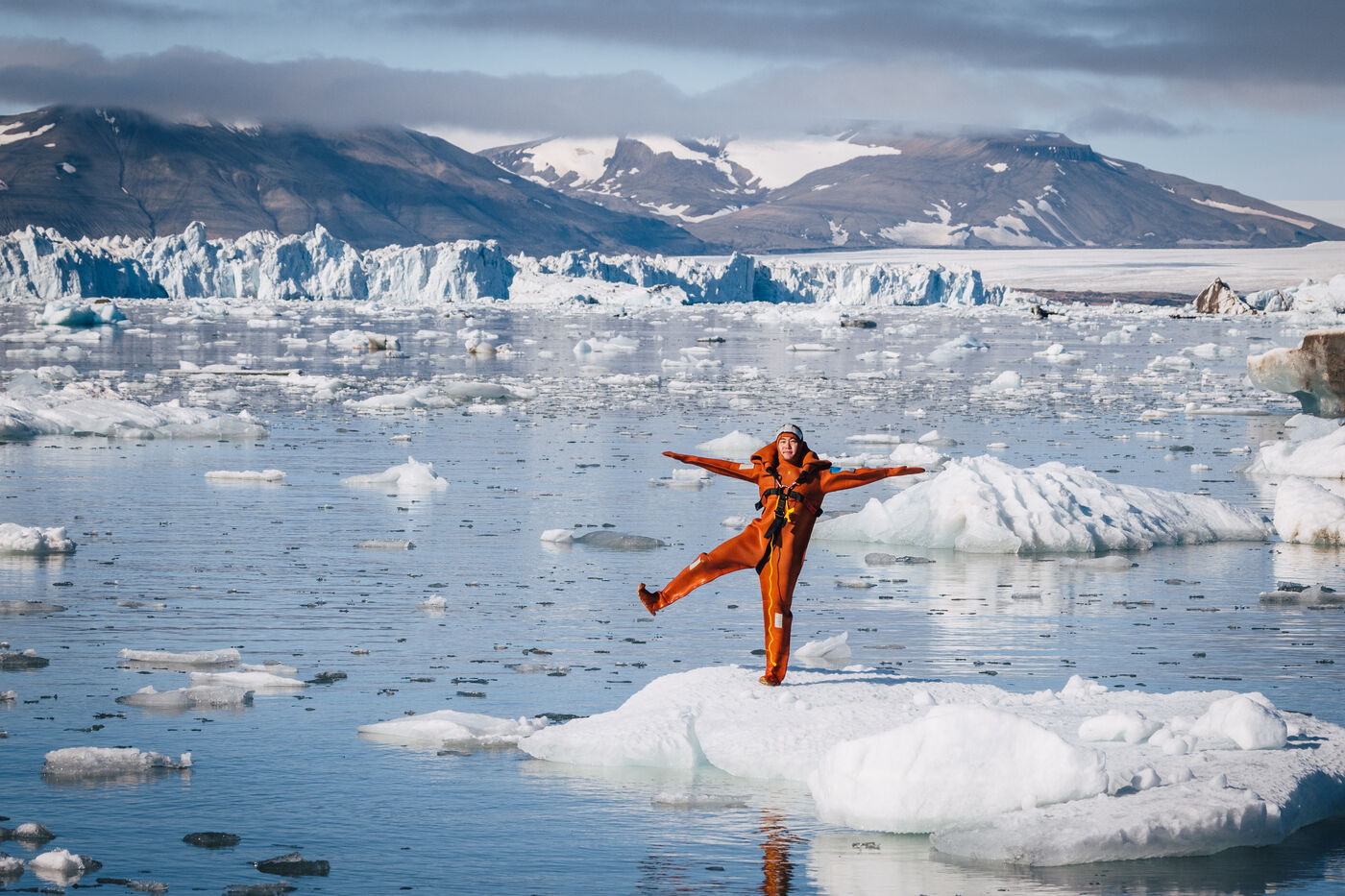
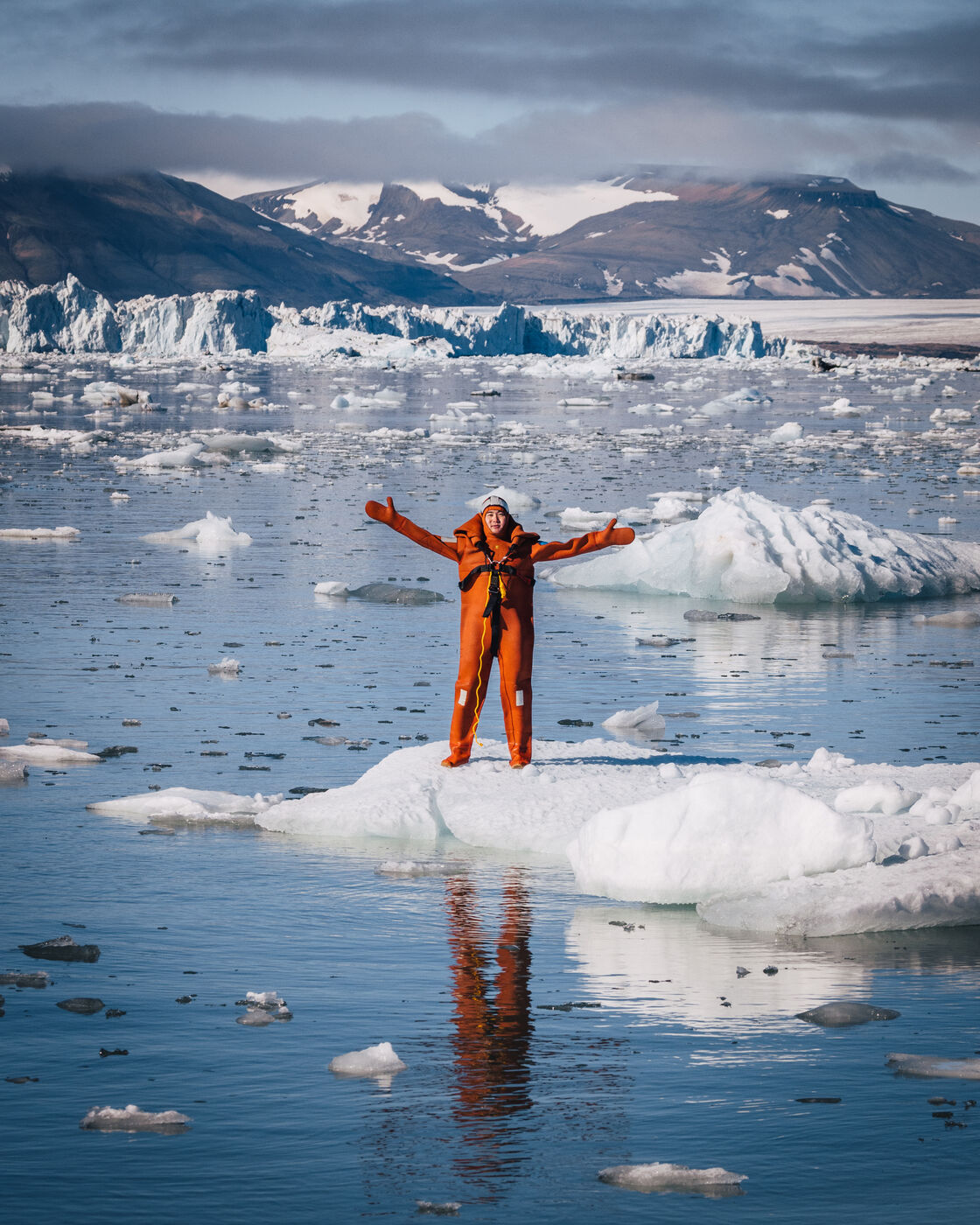
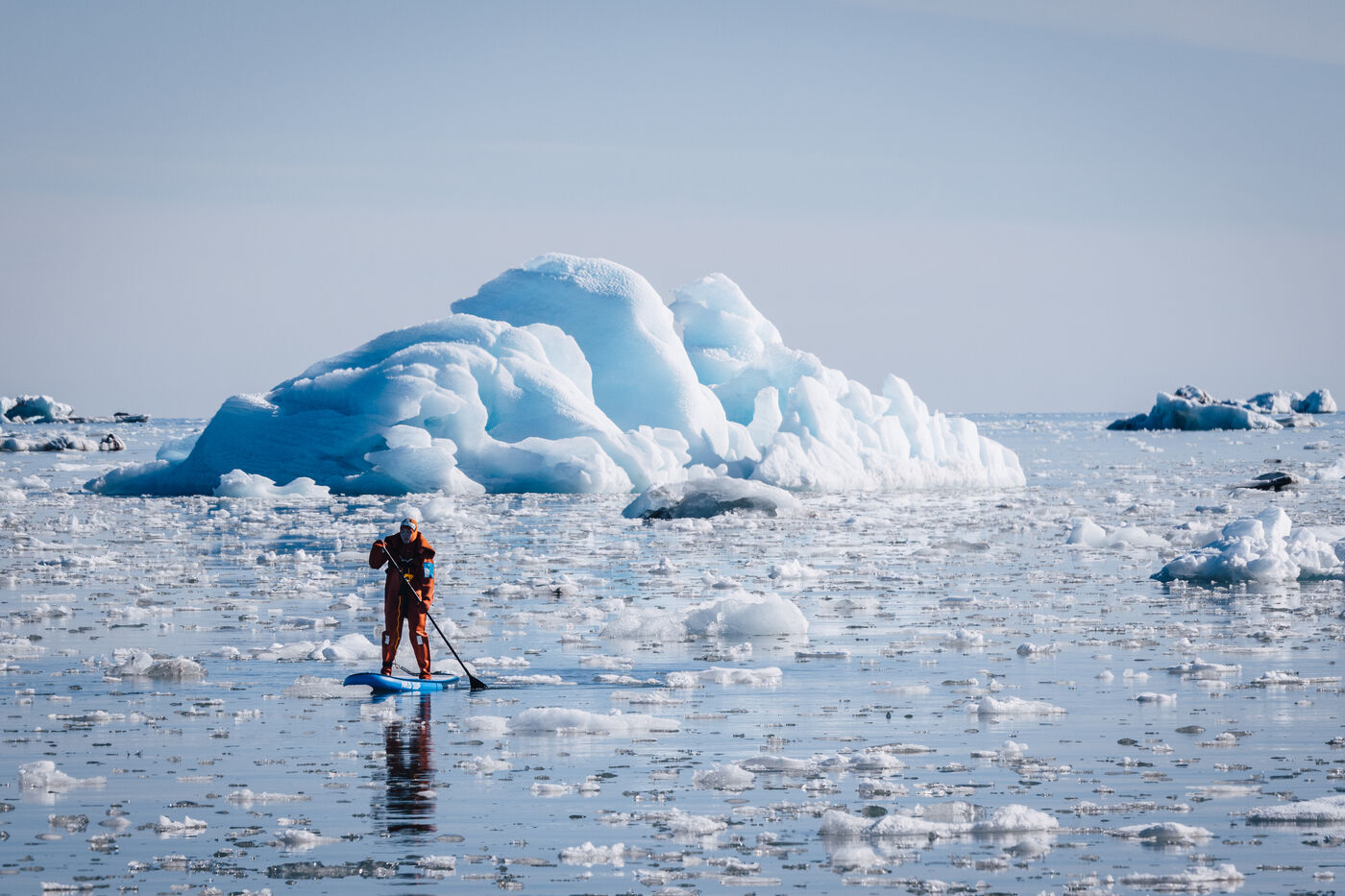
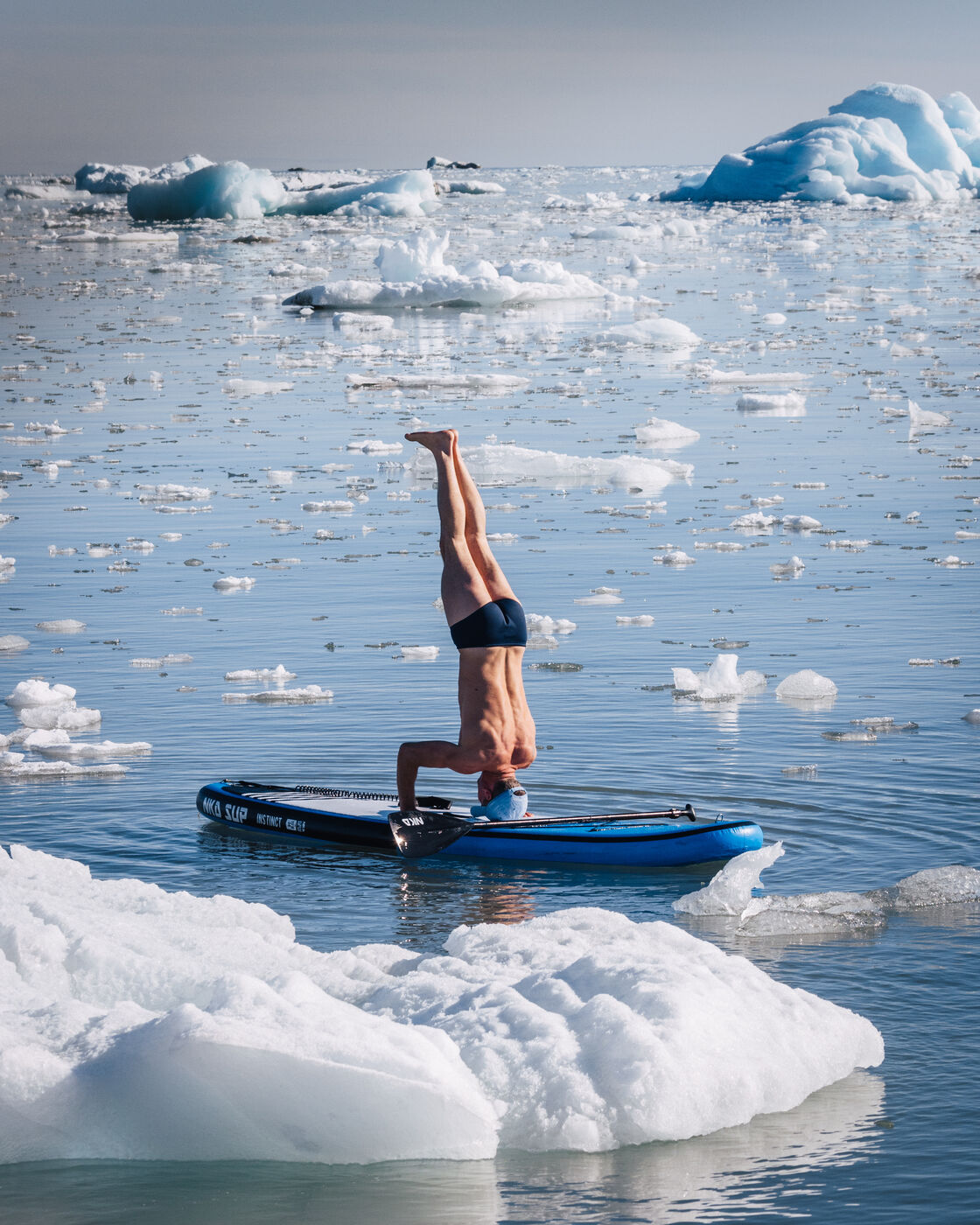
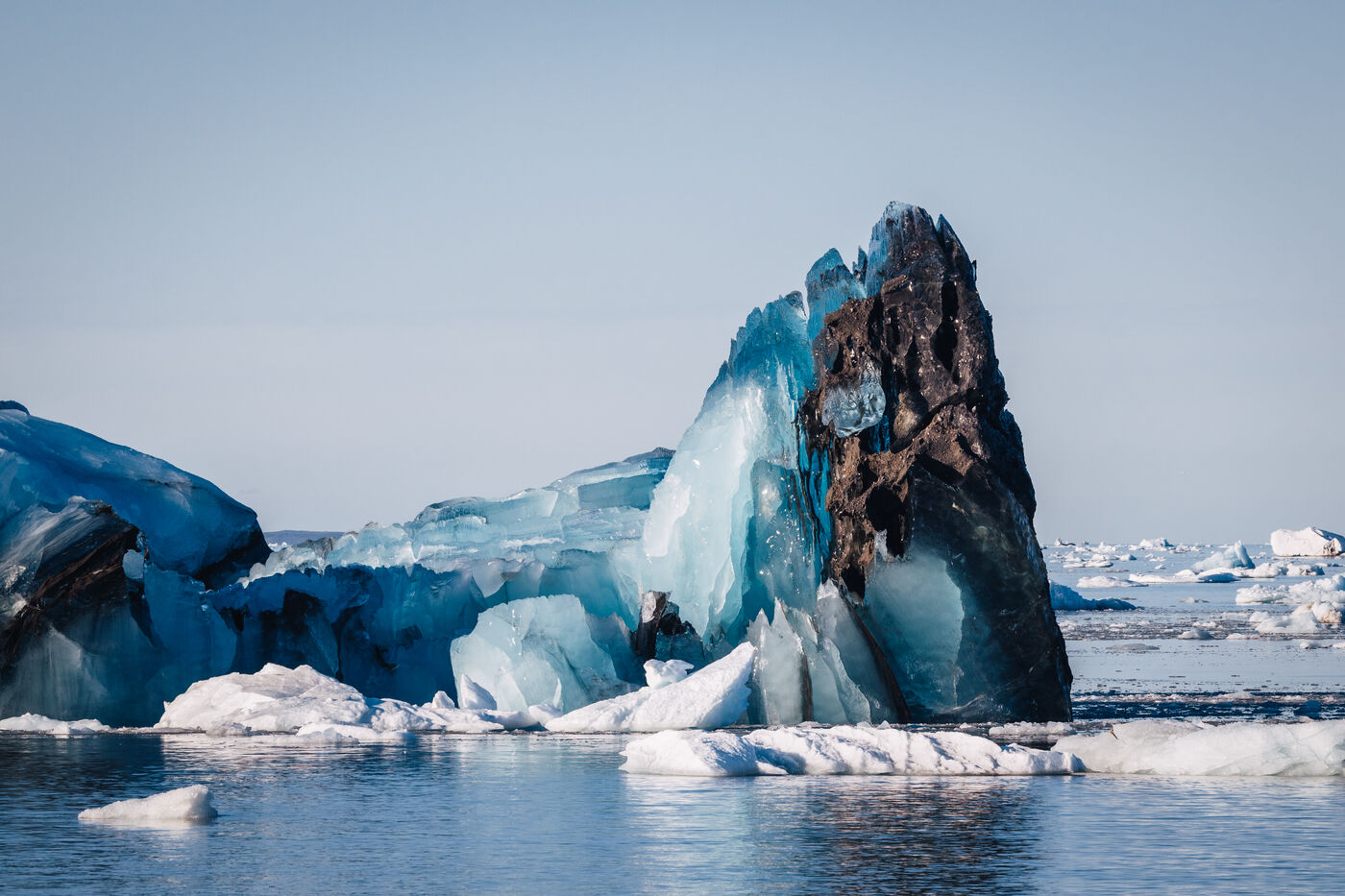
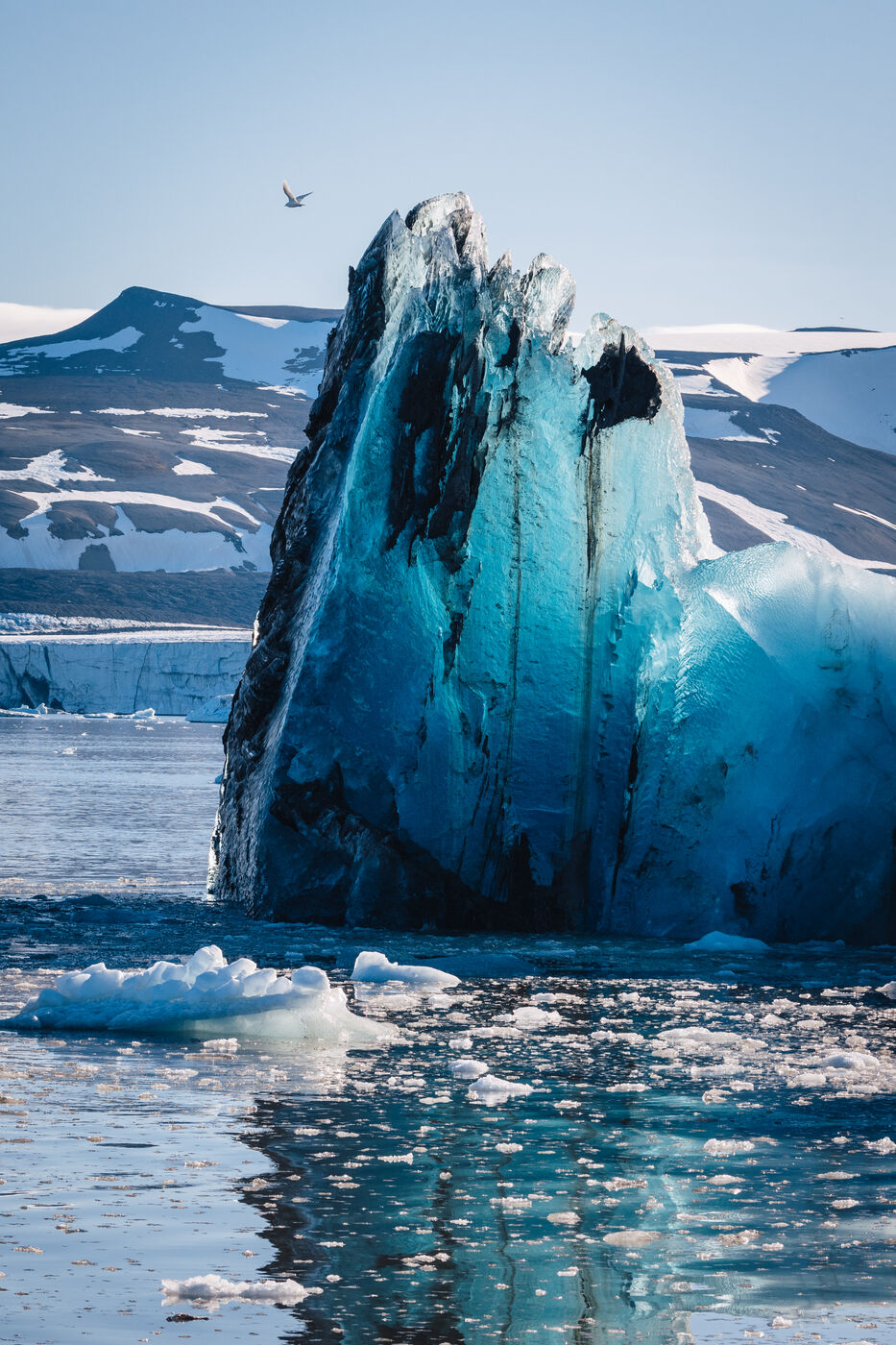
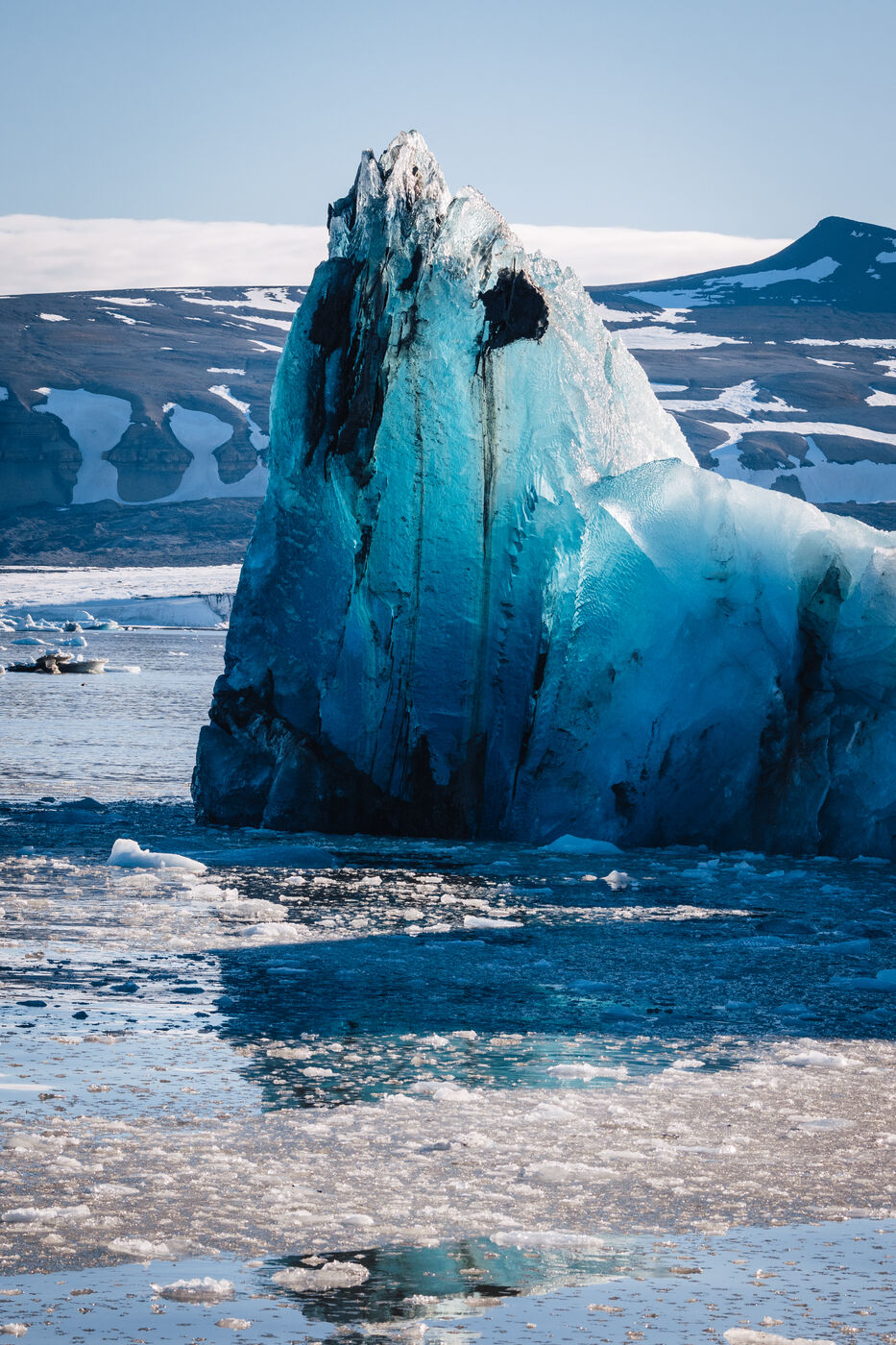
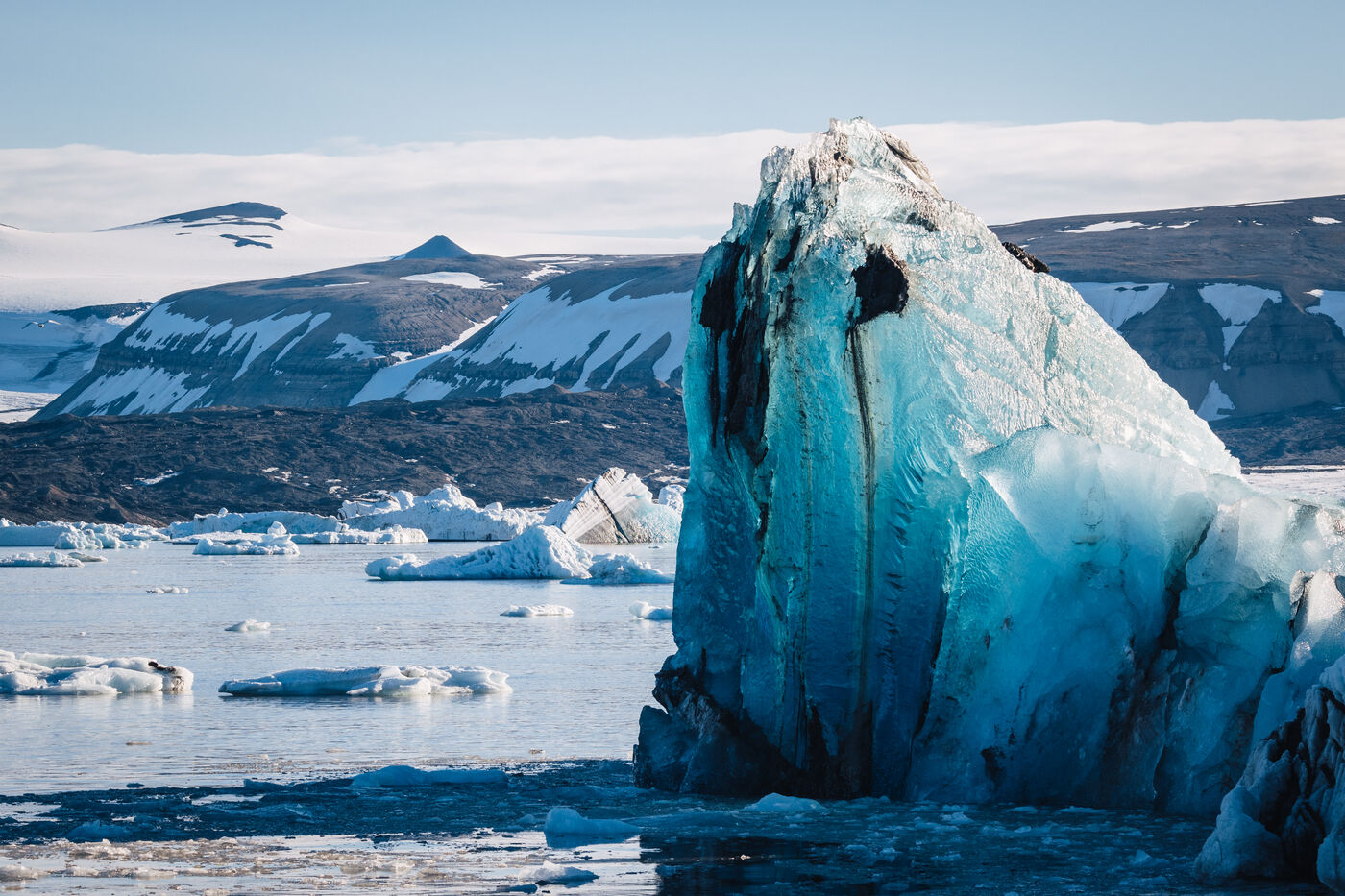
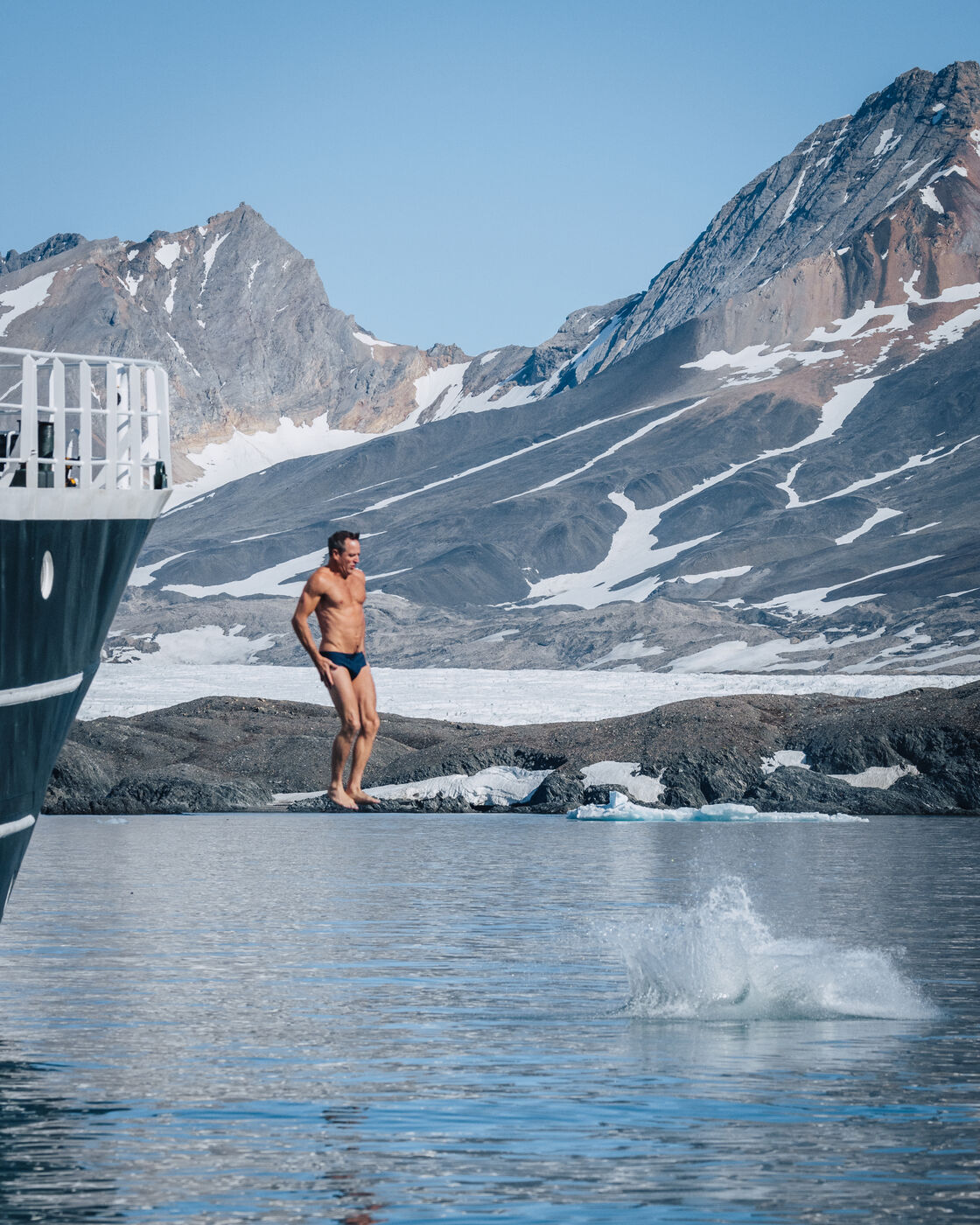
Some icebergs are white. Some are blue. And then there are the emerald icebergs. Algae-covered ice that has been underwater for long enough to develop a coat of green. Hinlopen Strait had emerald icebergs of extraordinary beauty. We photographed them obsessively, then someone had the brilliant and slightly mad idea. We suited up in Arctic survival suits (bright orange, hence the nickname "lobster suits") and went for a swim.

The Arctic Ocean is cold. It's always cold. Even in July. The water temperature was around four degrees Celsius. But for a few minutes, suspended in water surrounded by thousand-year-old ice, we were part of the Arctic in a way that no amount of zodiac cruising could match. It was terrifying and transcendent in equal measure.

Group in bright orange lobster suits on white iceberg The Kinfish ship with divers in orange suits in water
We're about to do something foolish and magnificent in equal measure.
Multiple divers in orange suits in water surrounding ship Wide view of fjord with iceberg and swimmers
The cold takes our breath away, but the view is transcendent.
Diver in orange suit on large white iceberg
Standing on an iceberg, I'm suspended between two impossible things: warmth and cold.
Crew member grilling on the Kinfish's aft deck with icebergs beyond Crew member tending the deck barbecue, an iceberg framed behind him
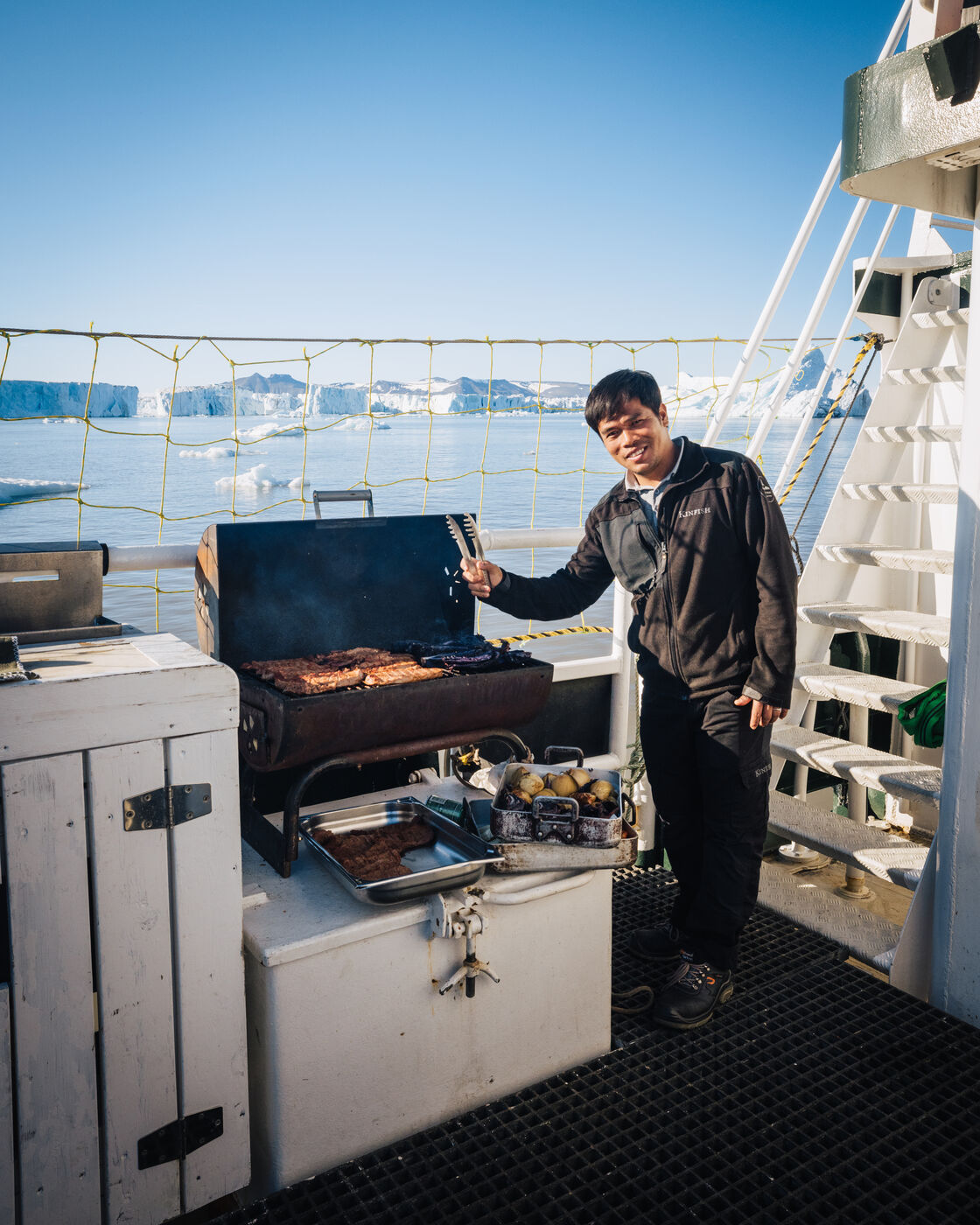
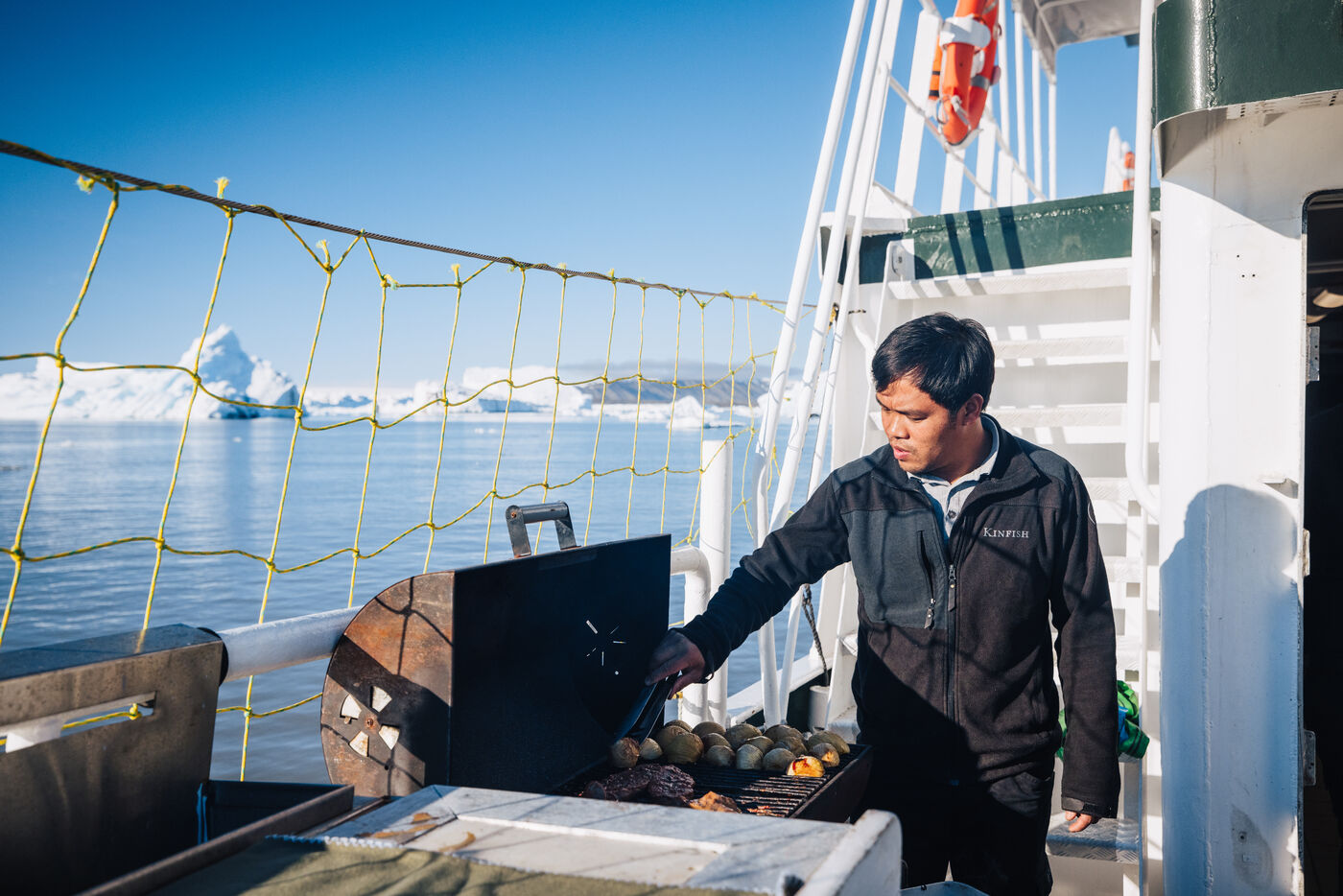
Back on deck, the crew fires up the grill while the ice drifts past.

Walruses at Andréetangen

July 29, 2022. Andréetangen, Svalbard

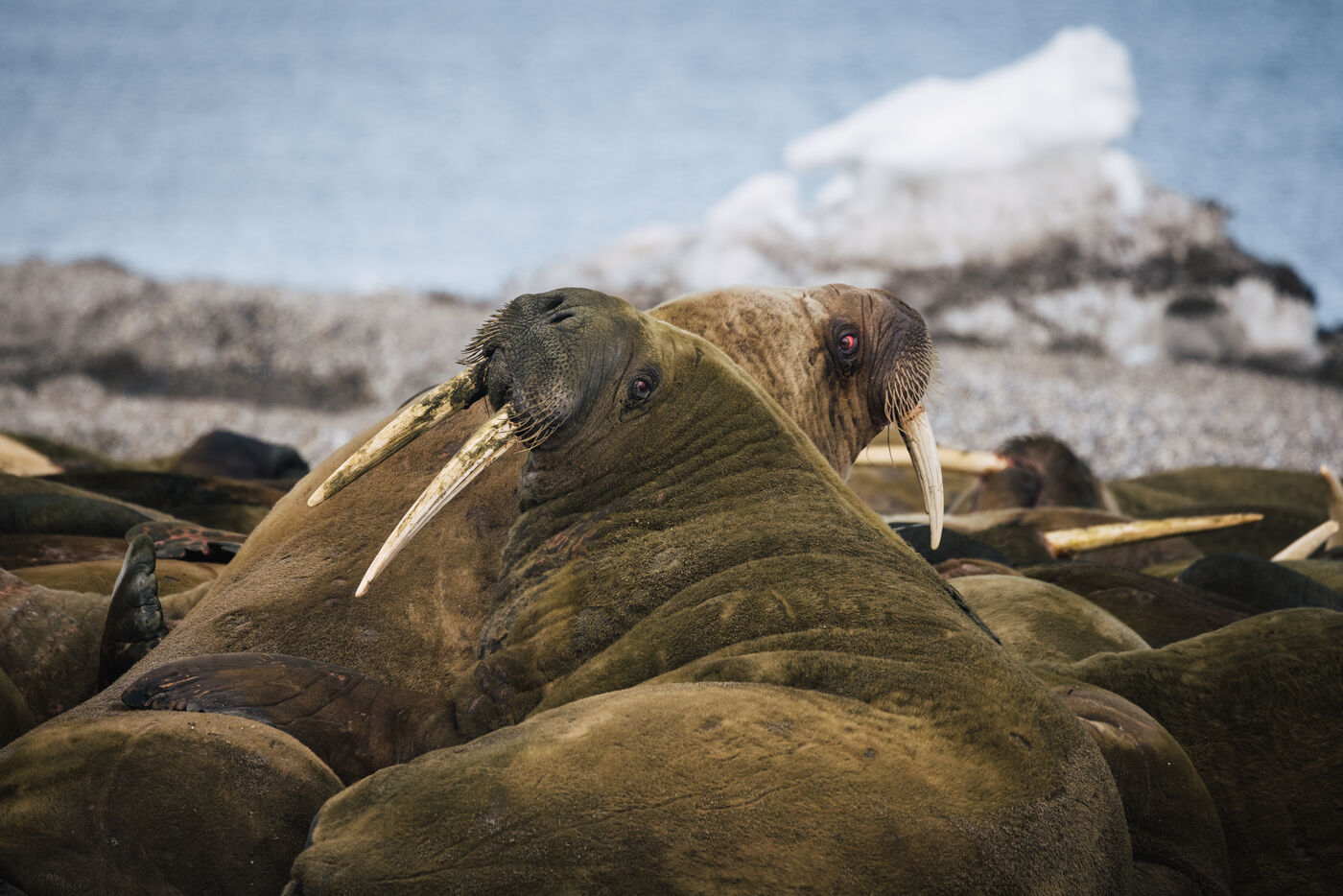
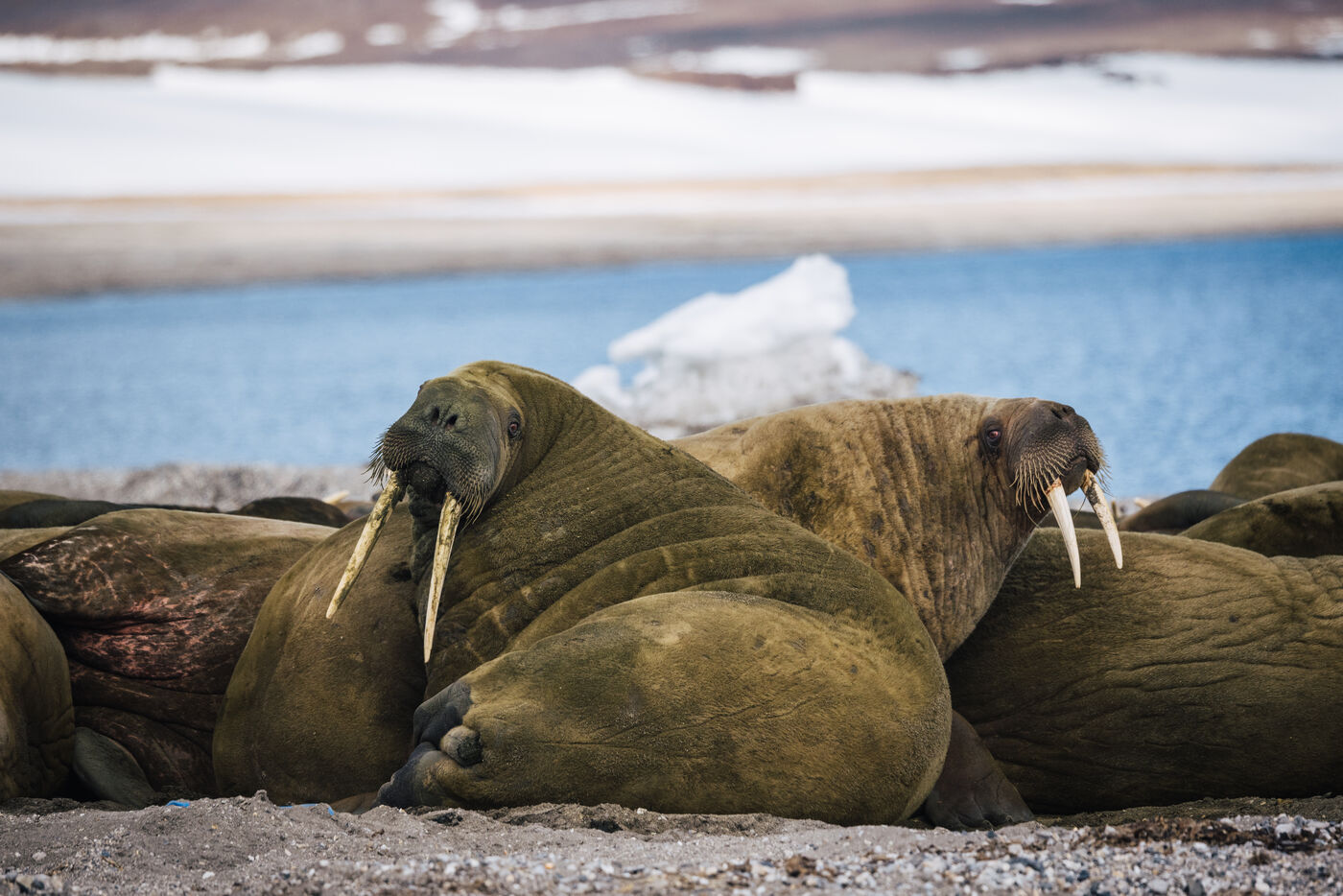
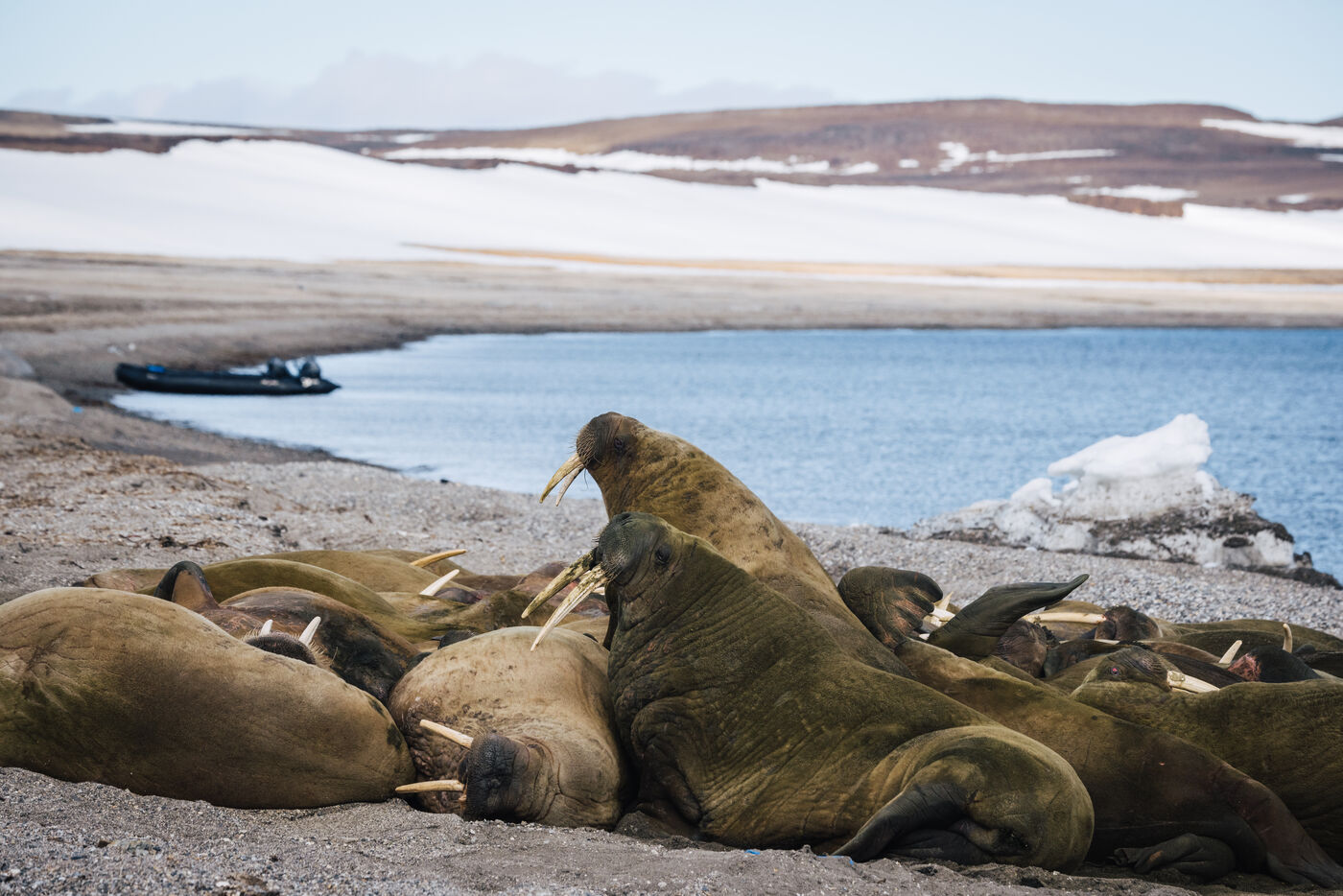
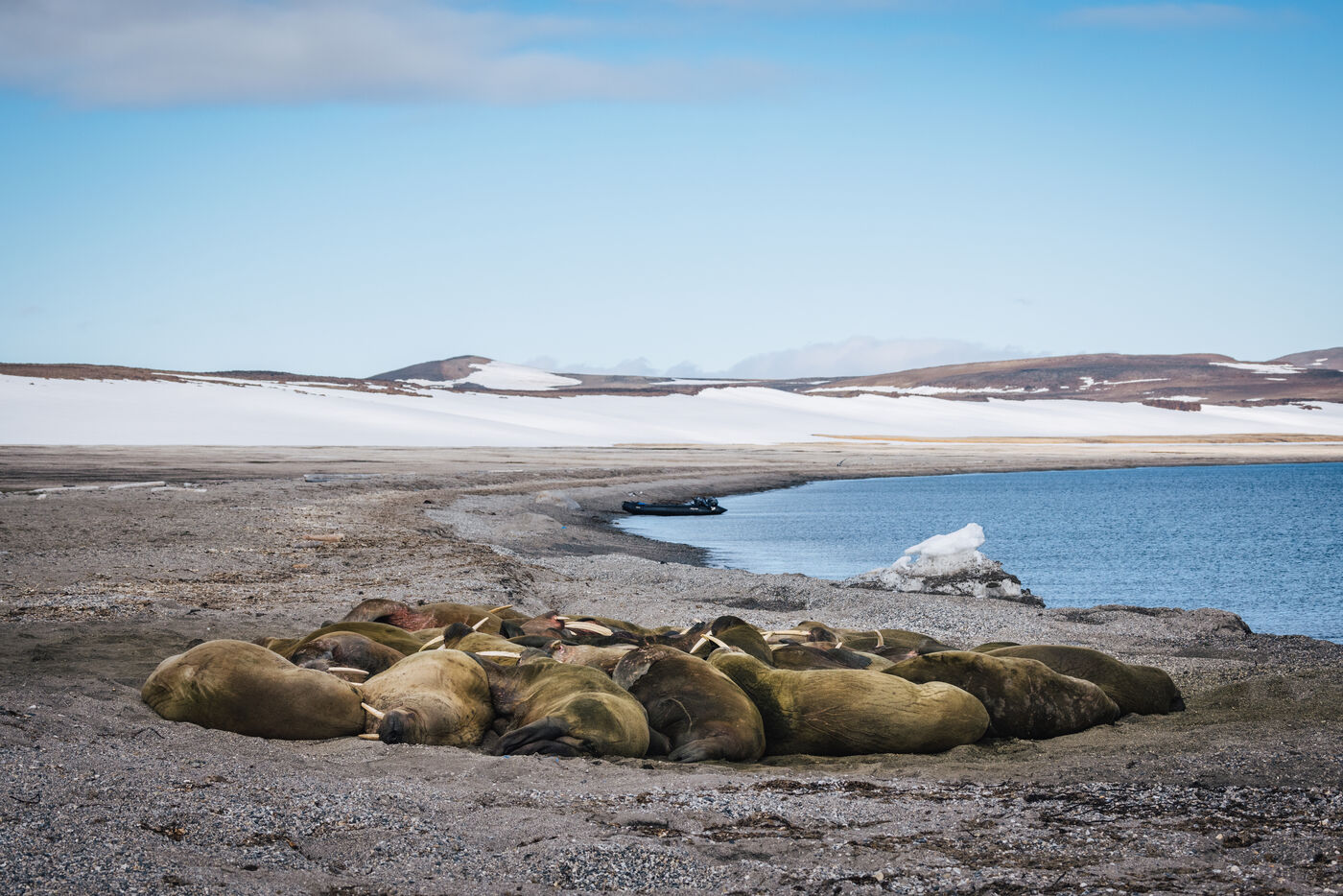
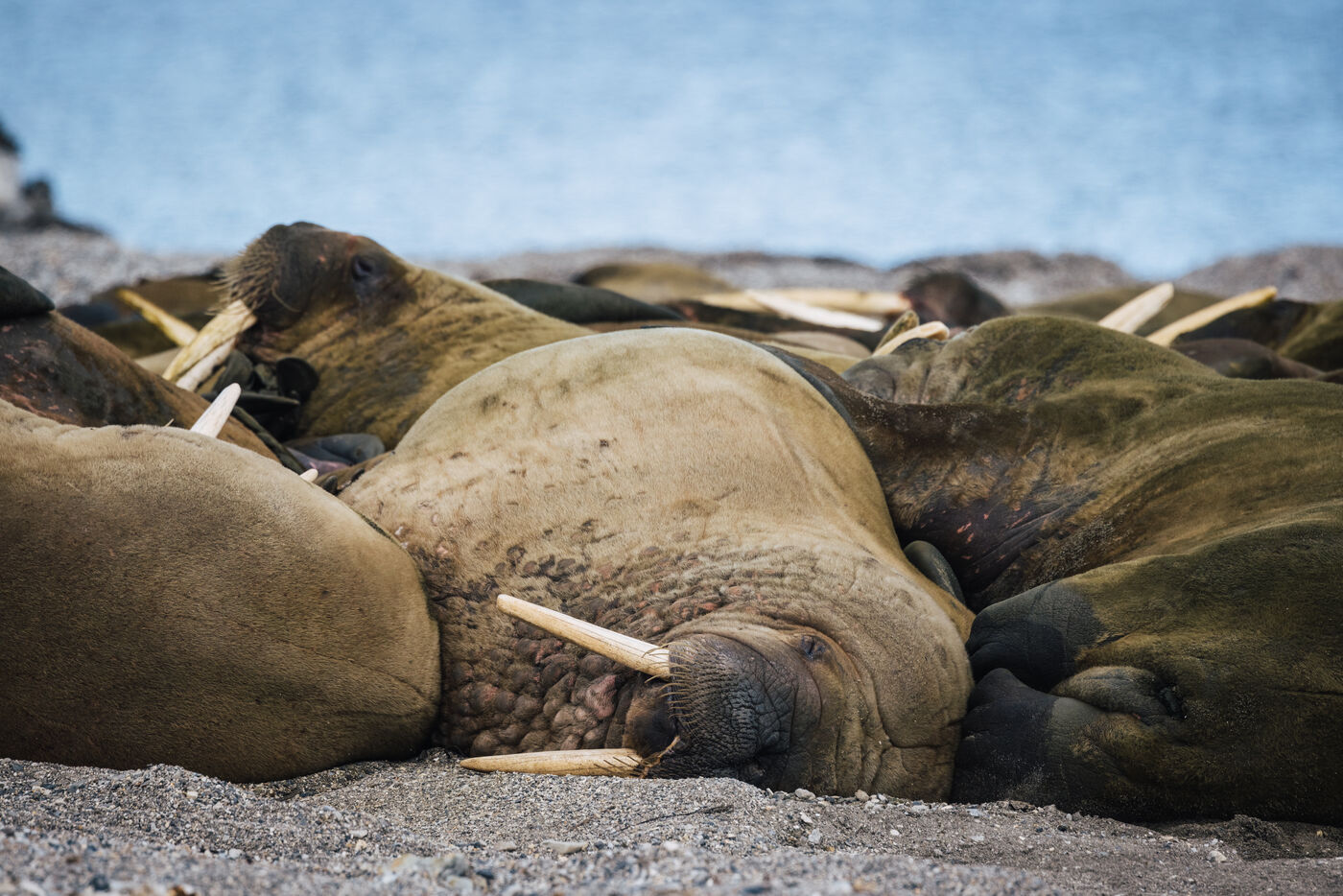
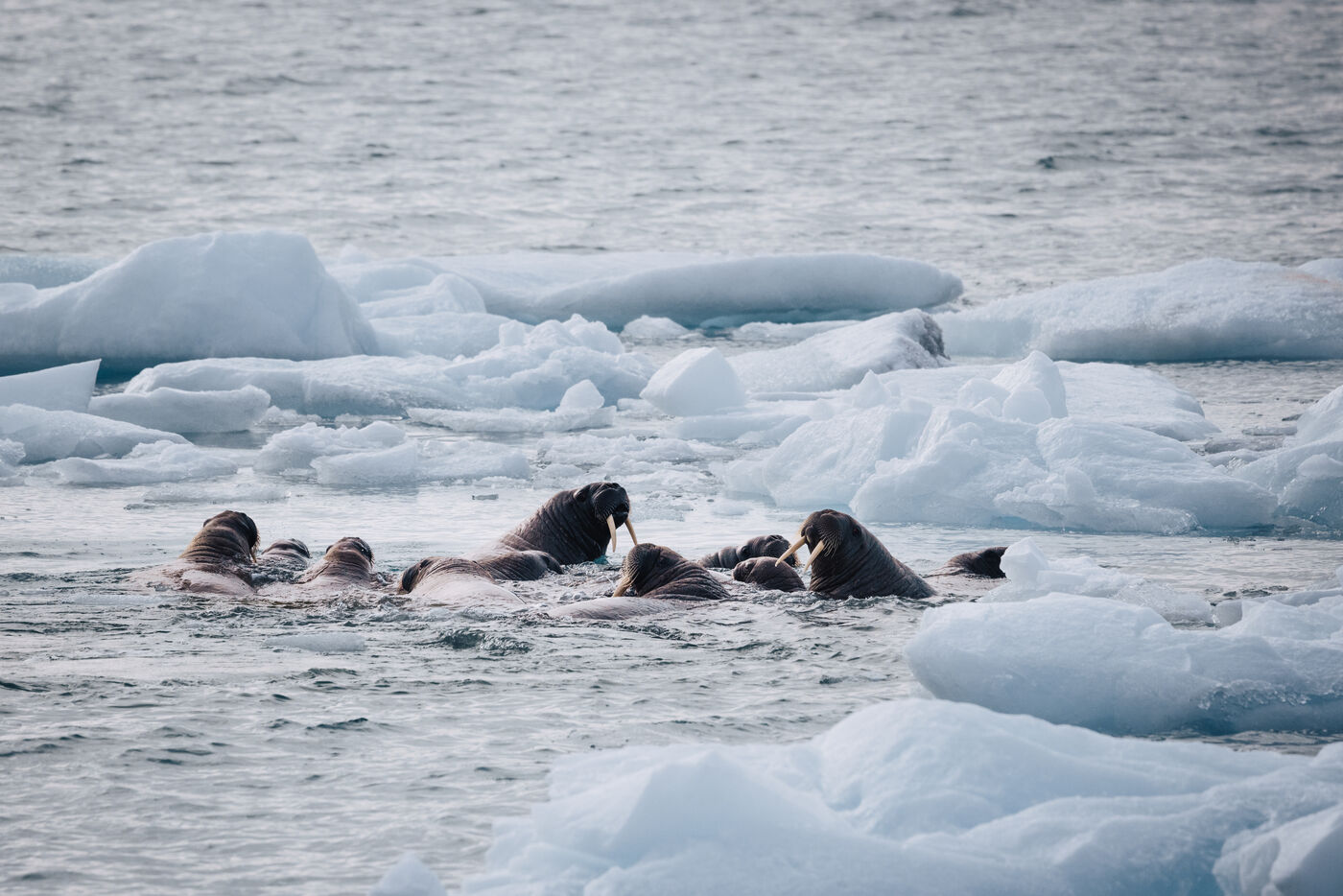
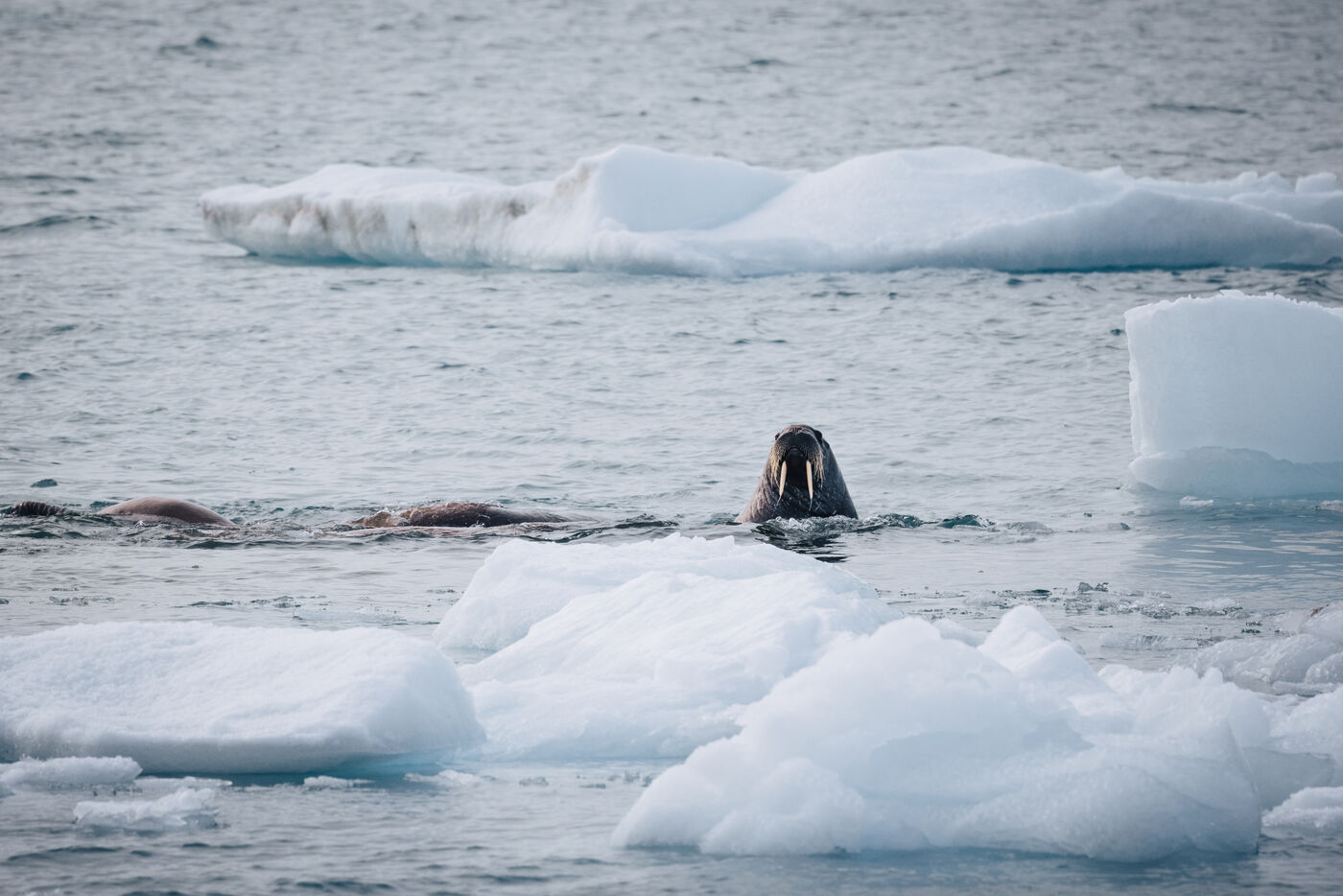
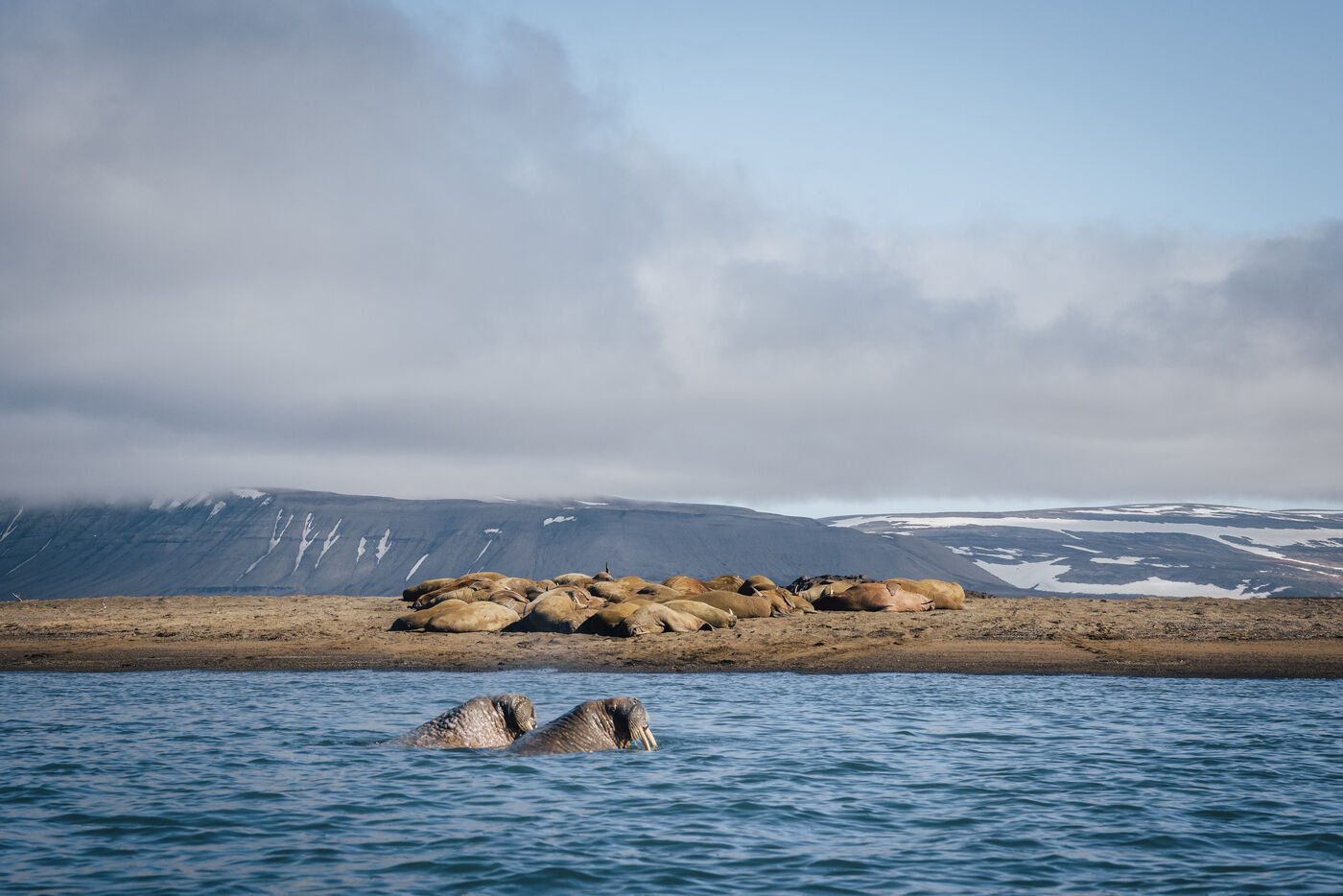
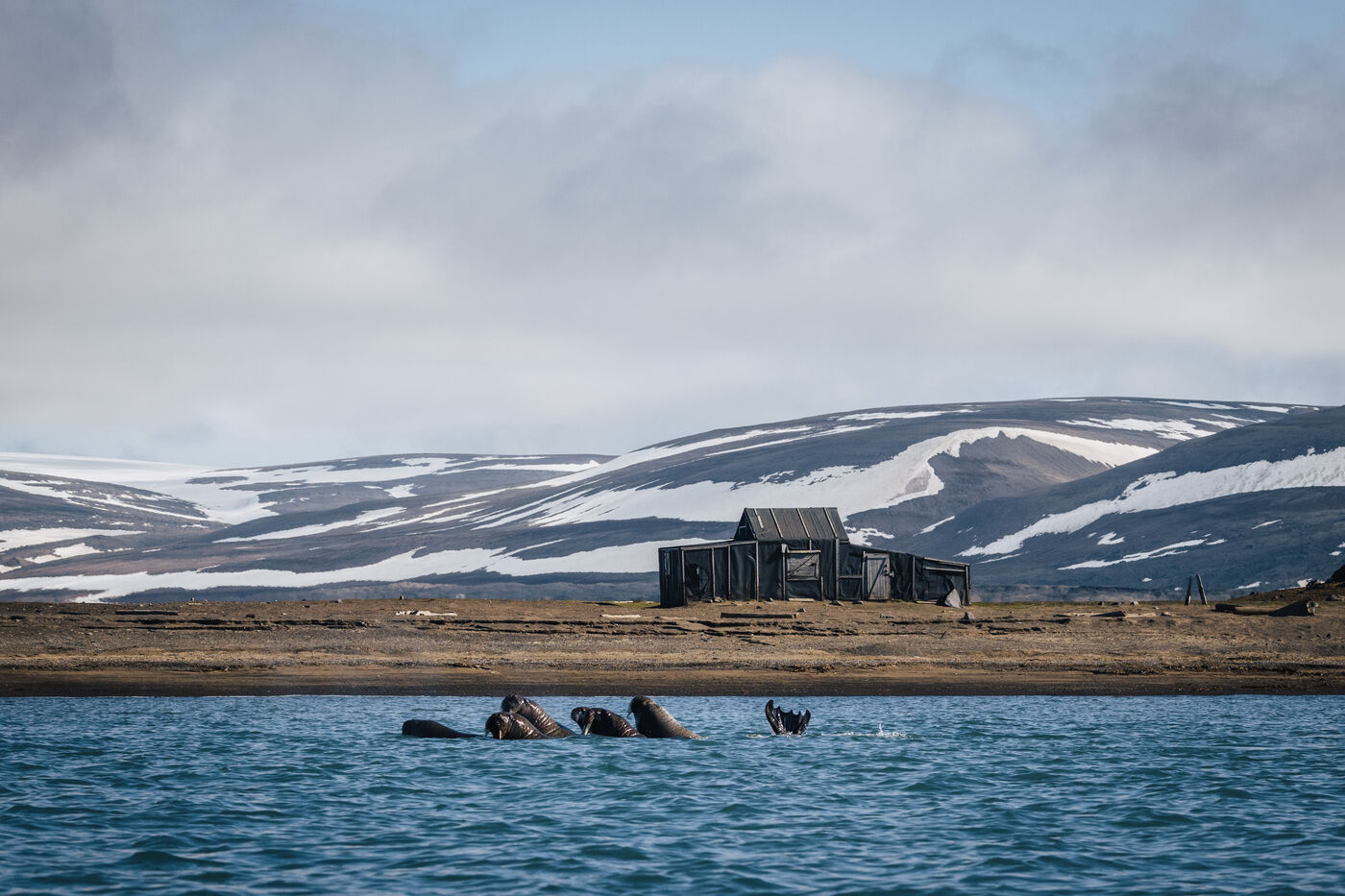
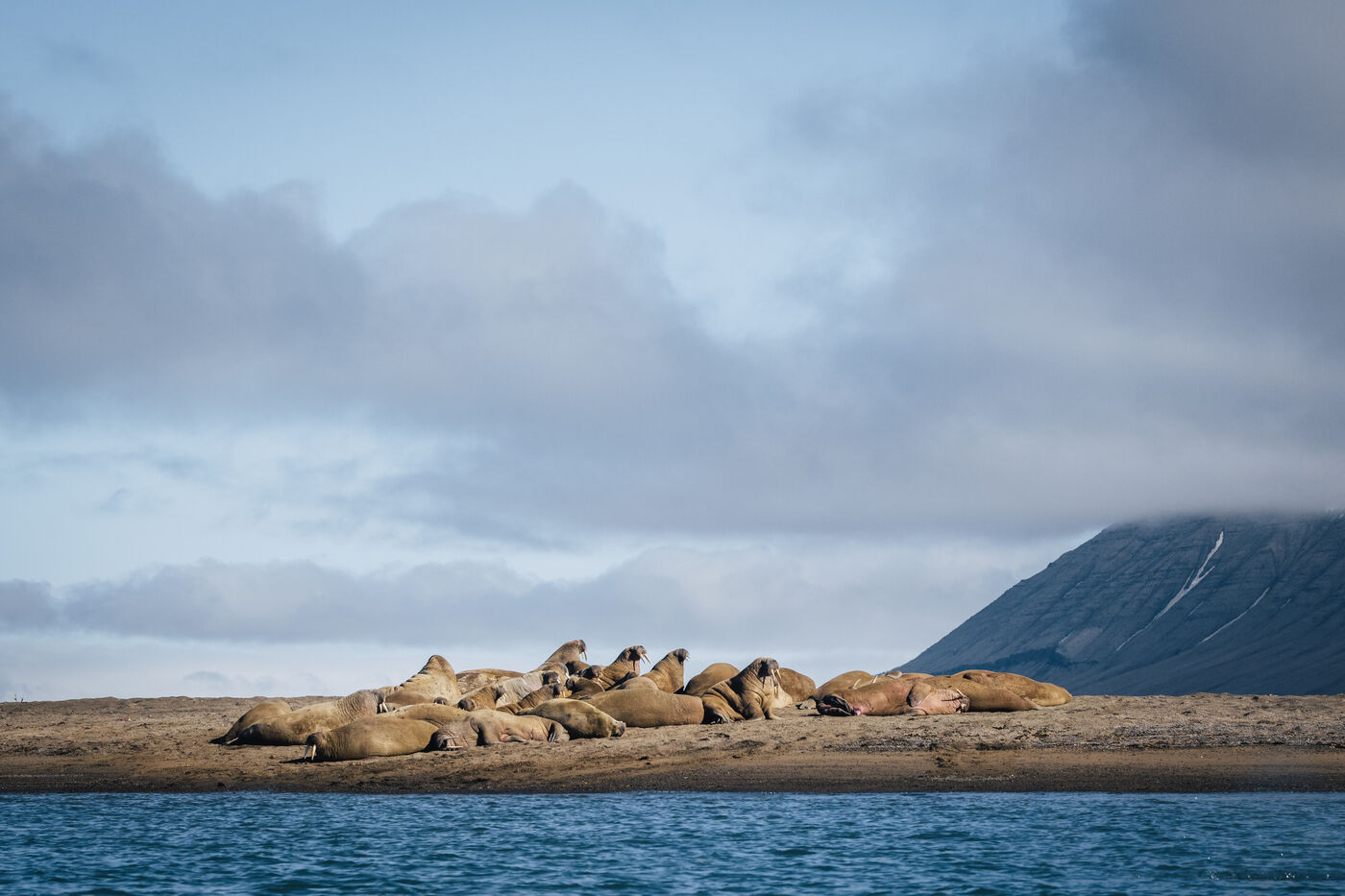
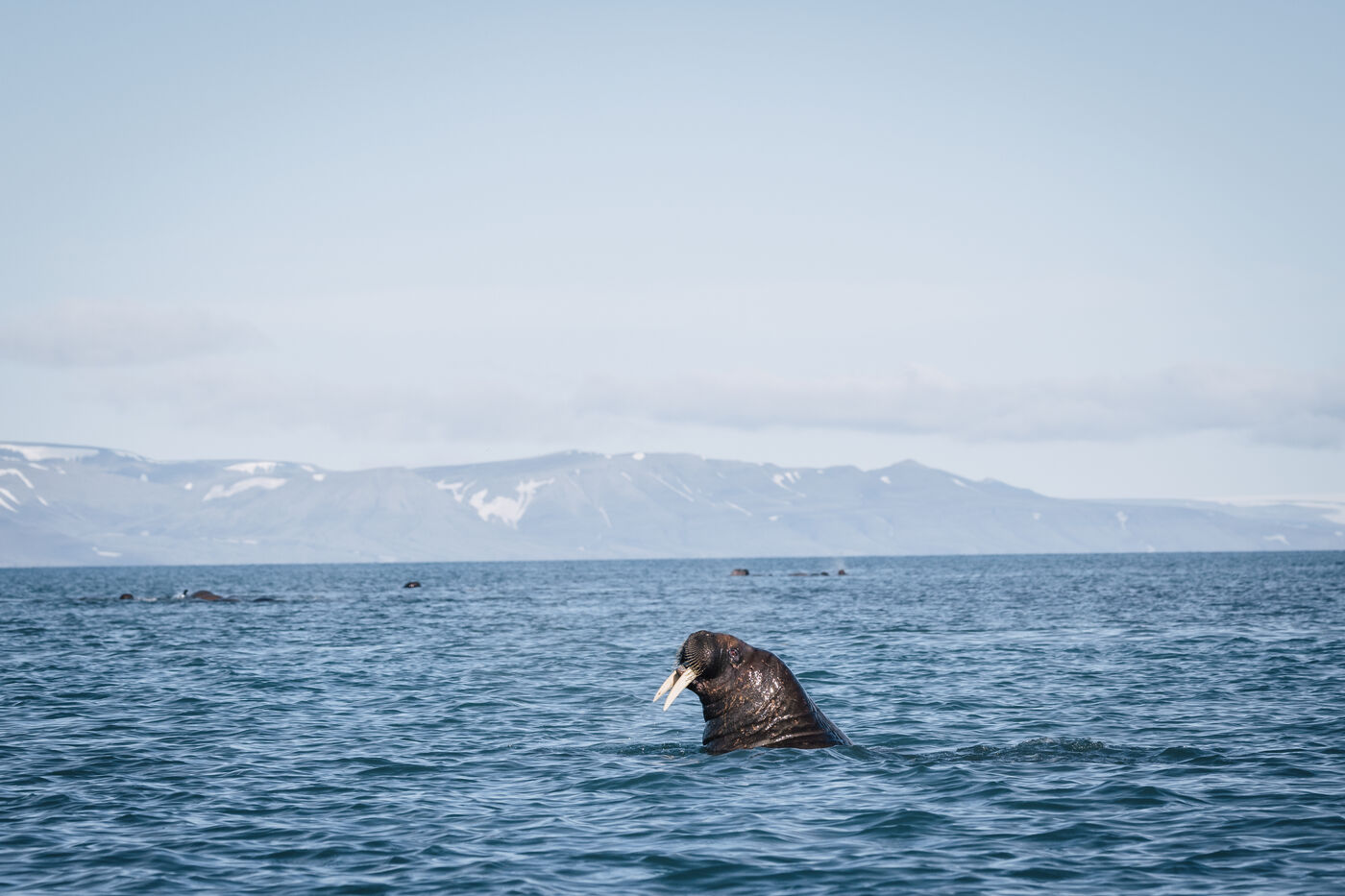
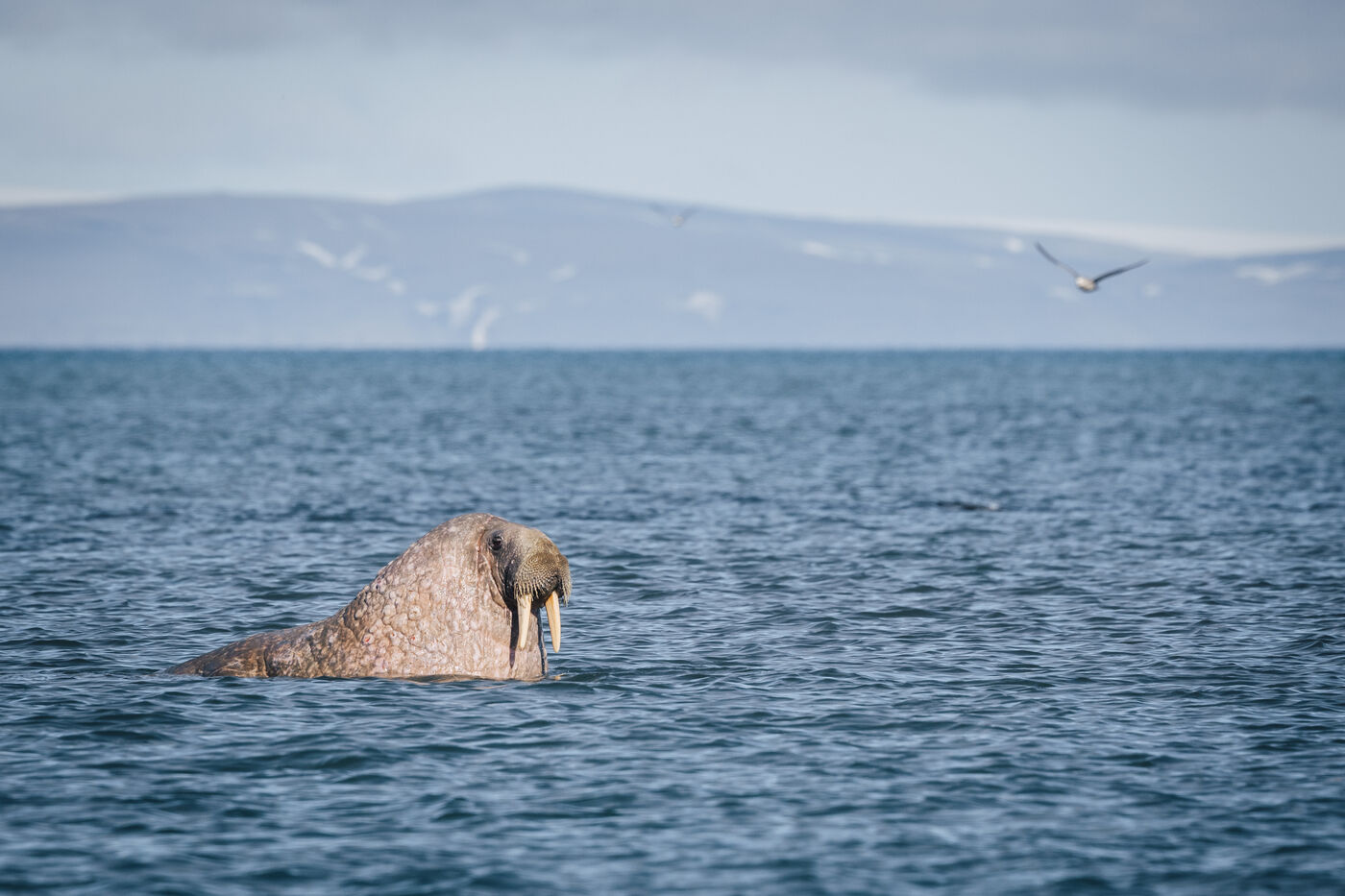
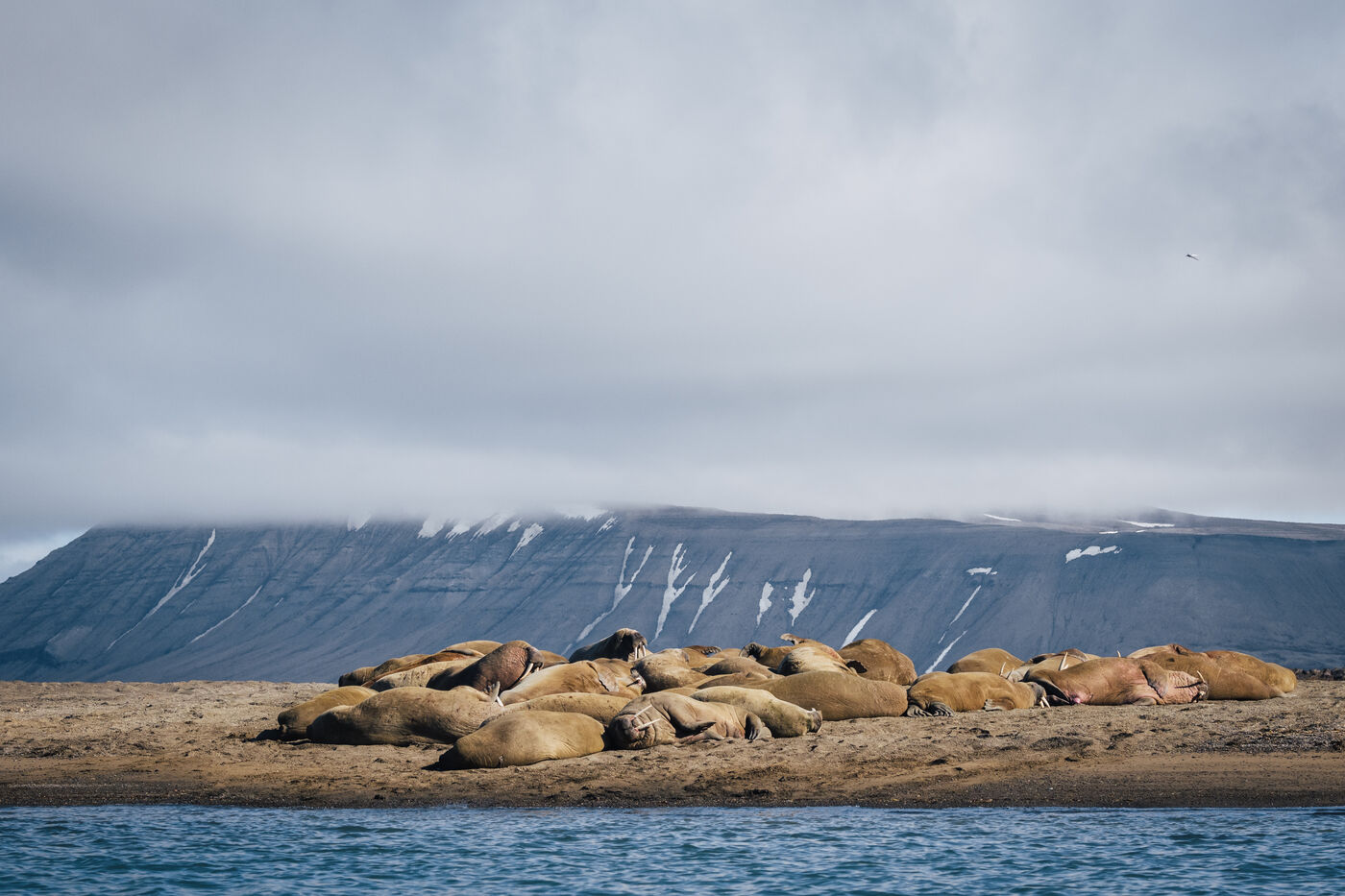
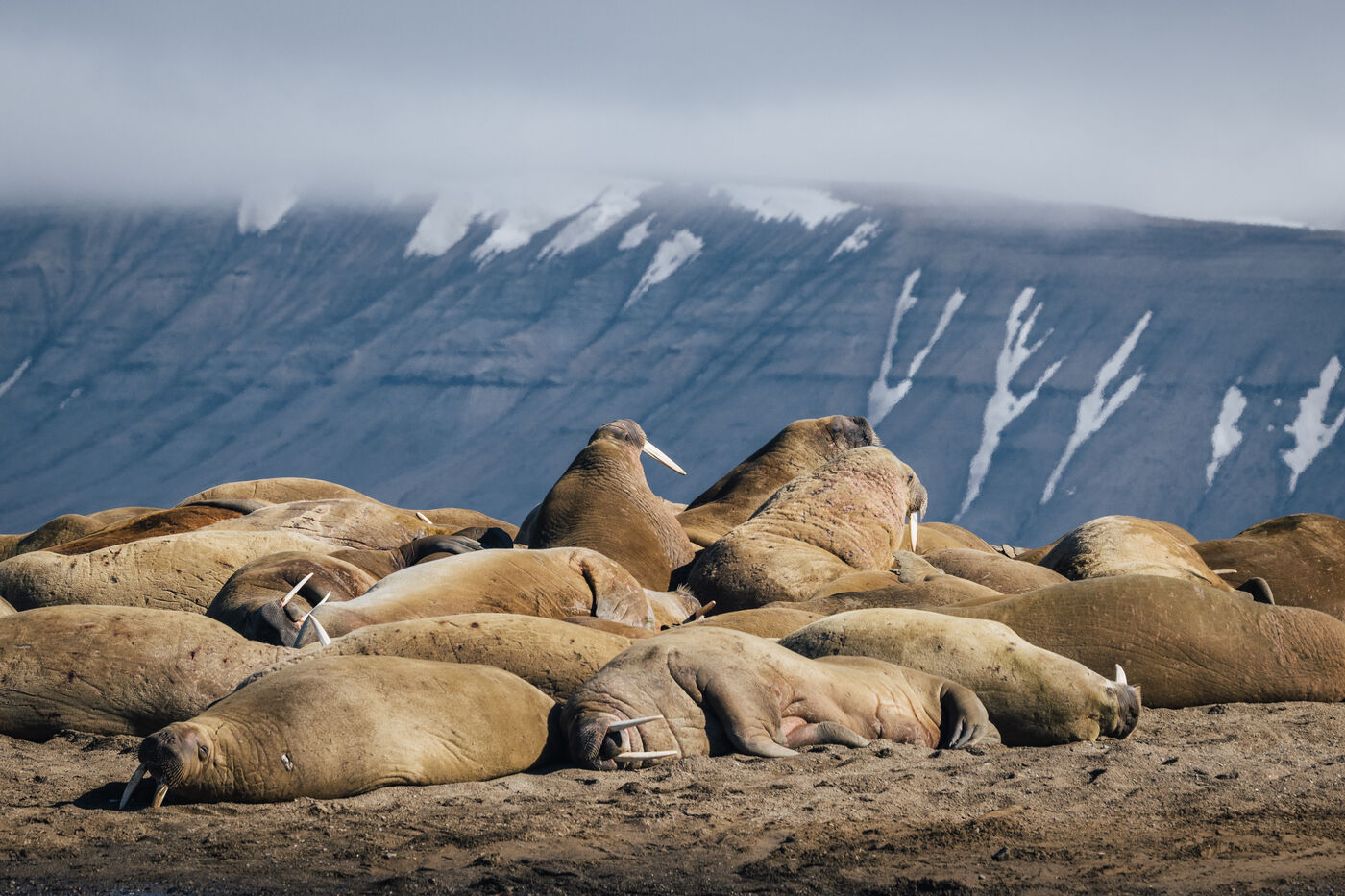
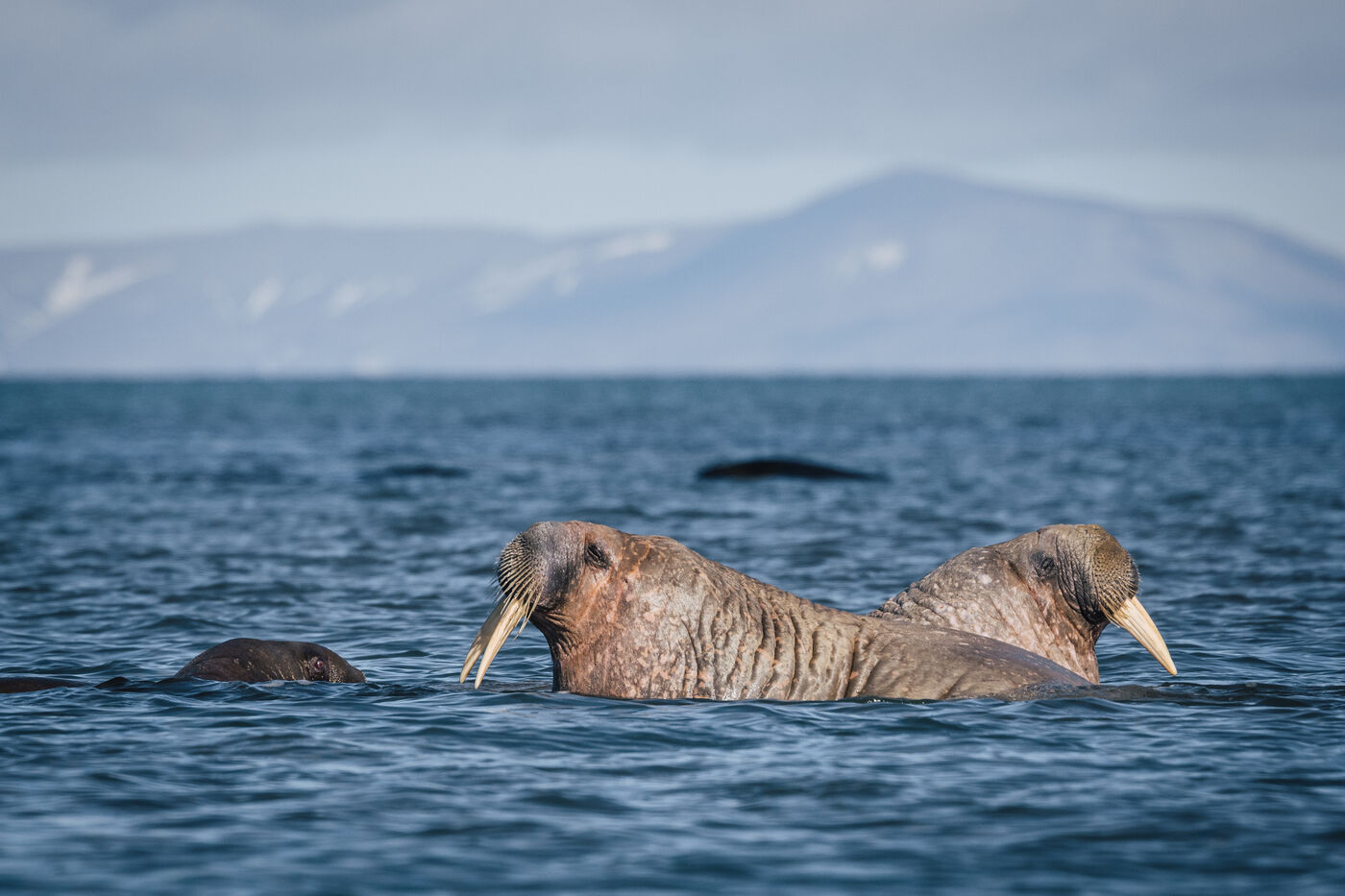
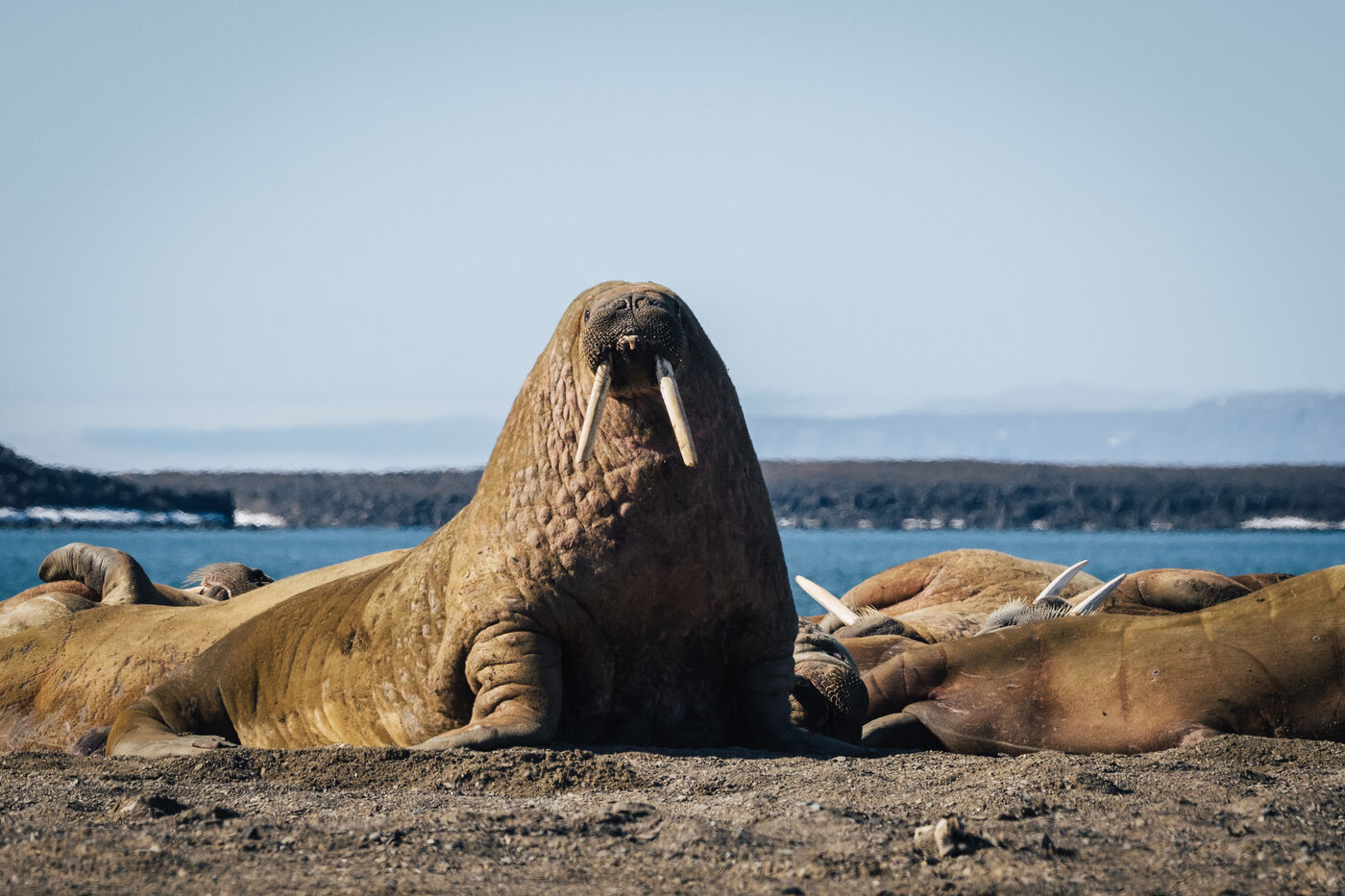
Andréetangen is a spit of land famous for its hauled-out walruses. We approached carefully, motors off, zodiacs moving silently to minimize disturbance. What we found was a gathering of hundreds of walruses, piled together on the Arctic shoreline. Males with massive tusks, females, juveniles. All packed tightly together, a warm mass of blubber and bone keeping each other warm in the Arctic chill.

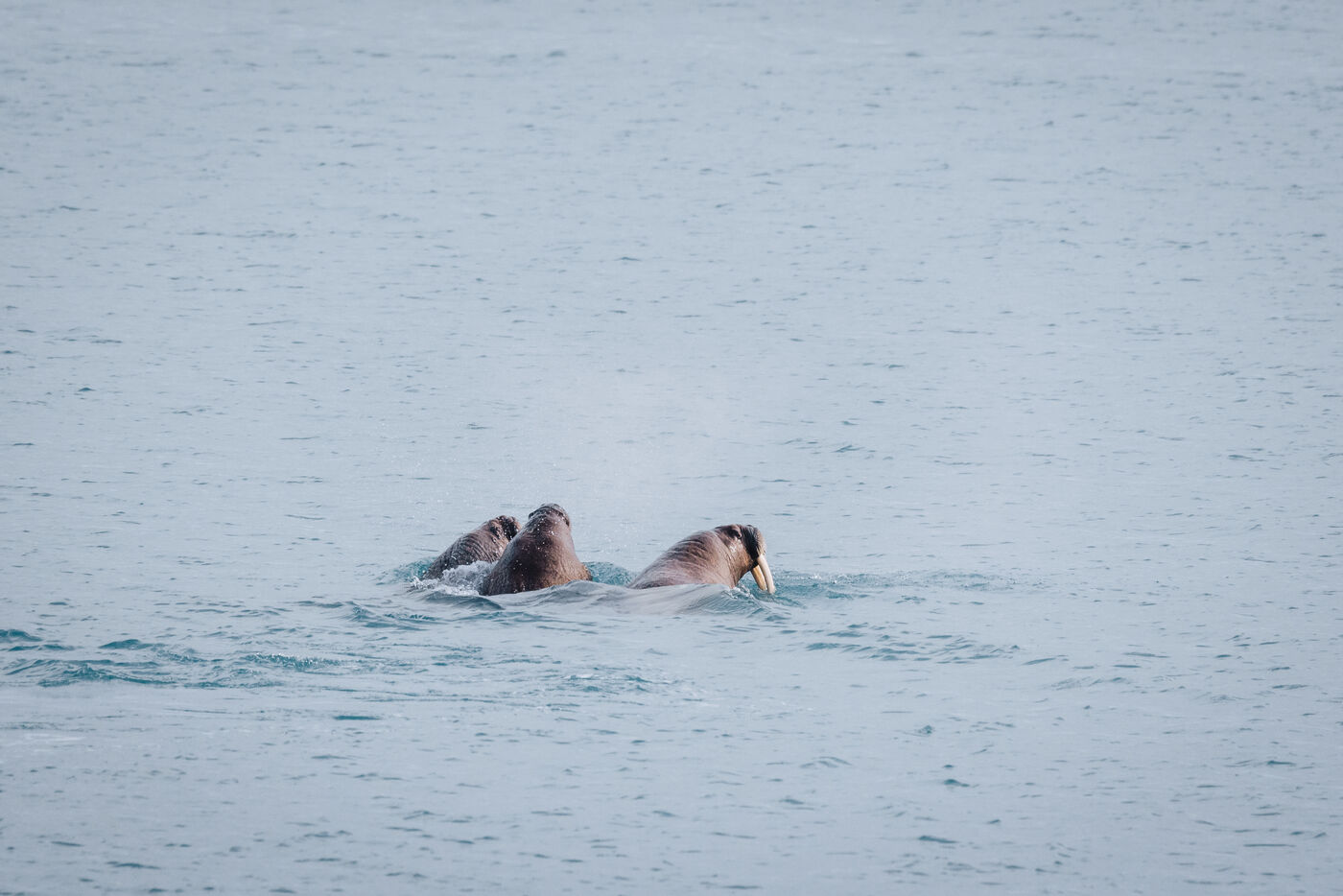
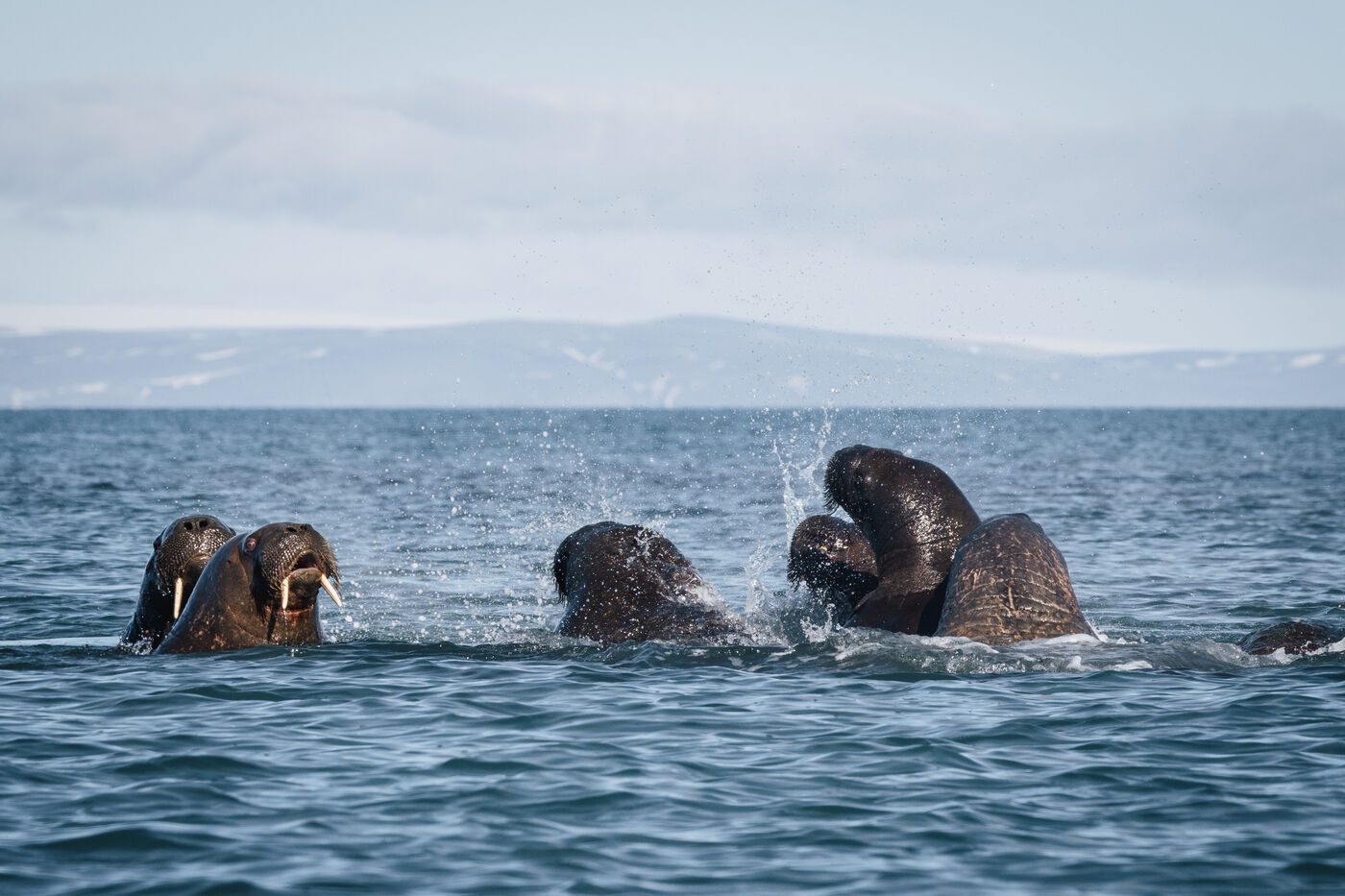
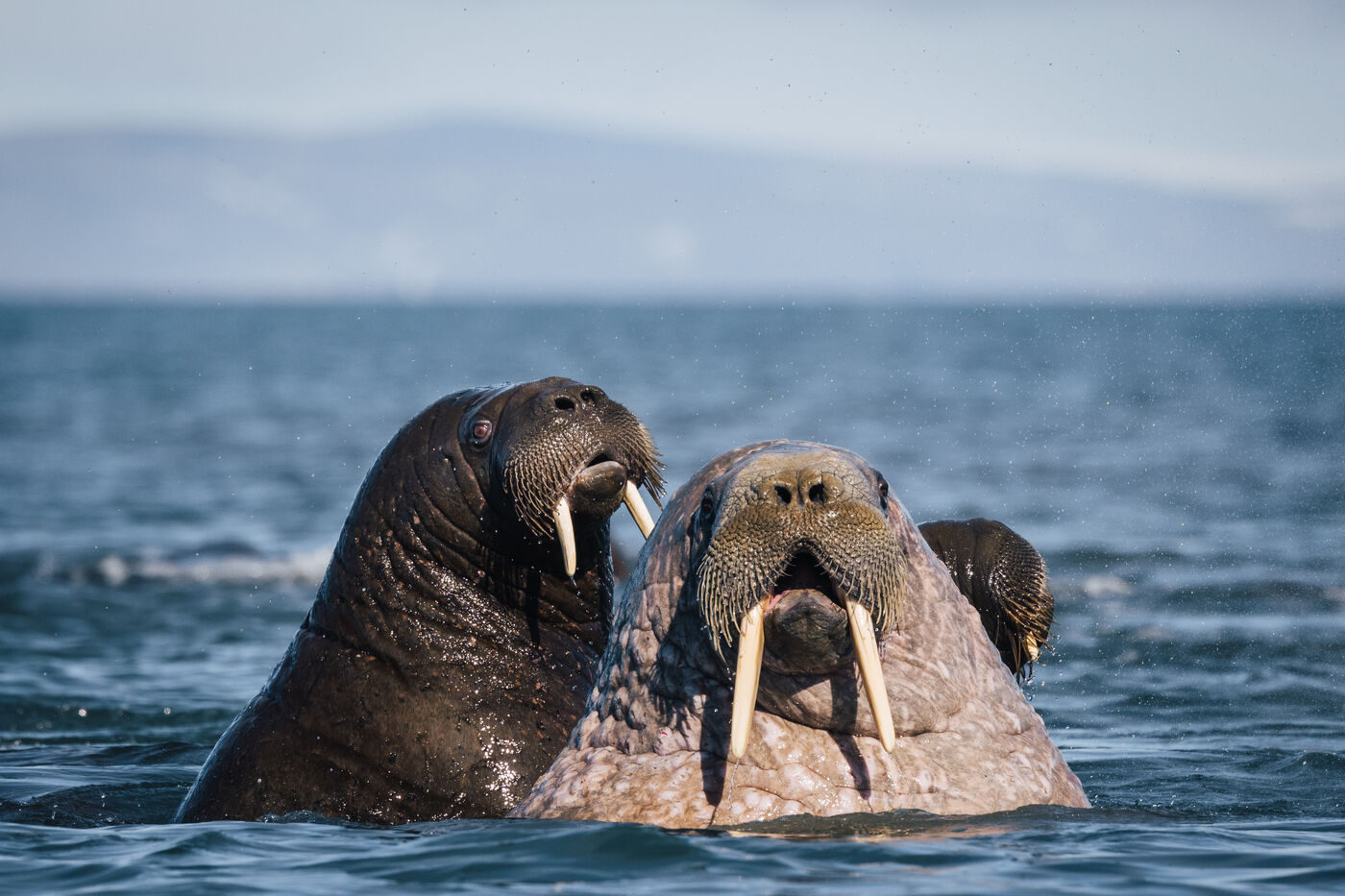
Walruses are not aggressive by nature, but they are possessive of their space. We watched as they shifted positions, occasionally pushing a neighbor into the water, only for that individual to haul right back out and reclaim its spot. The social hierarchy was evident in every interaction. The largest males commanded the best positions. The younger animals learned their place through constant jostling.

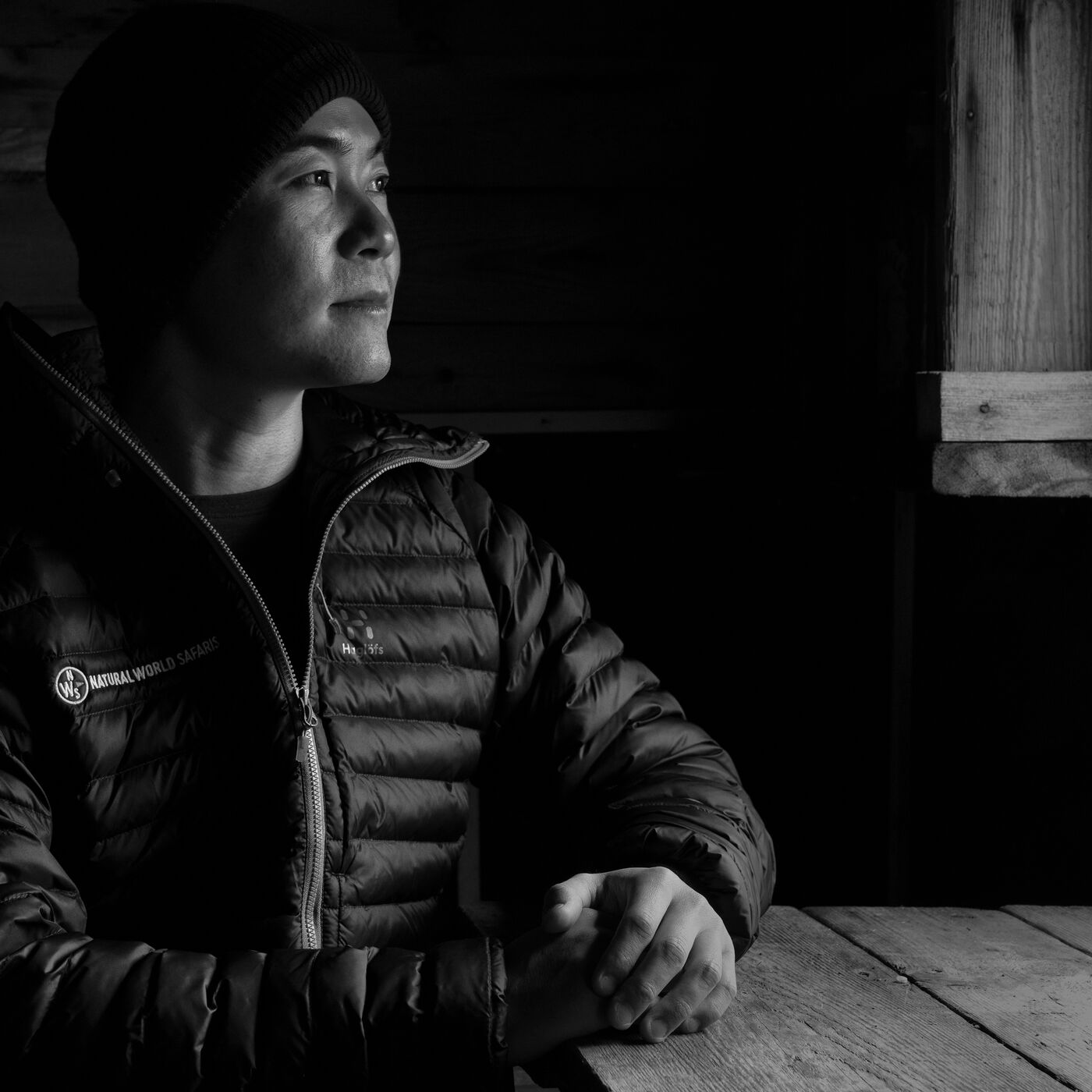
Black-and-white portrait of a man in a beanie and down jacket inside the trapper's cabin, looking toward the window
Inside the trapper's cabin at Andréetangen, a moment of quiet before the walruses.
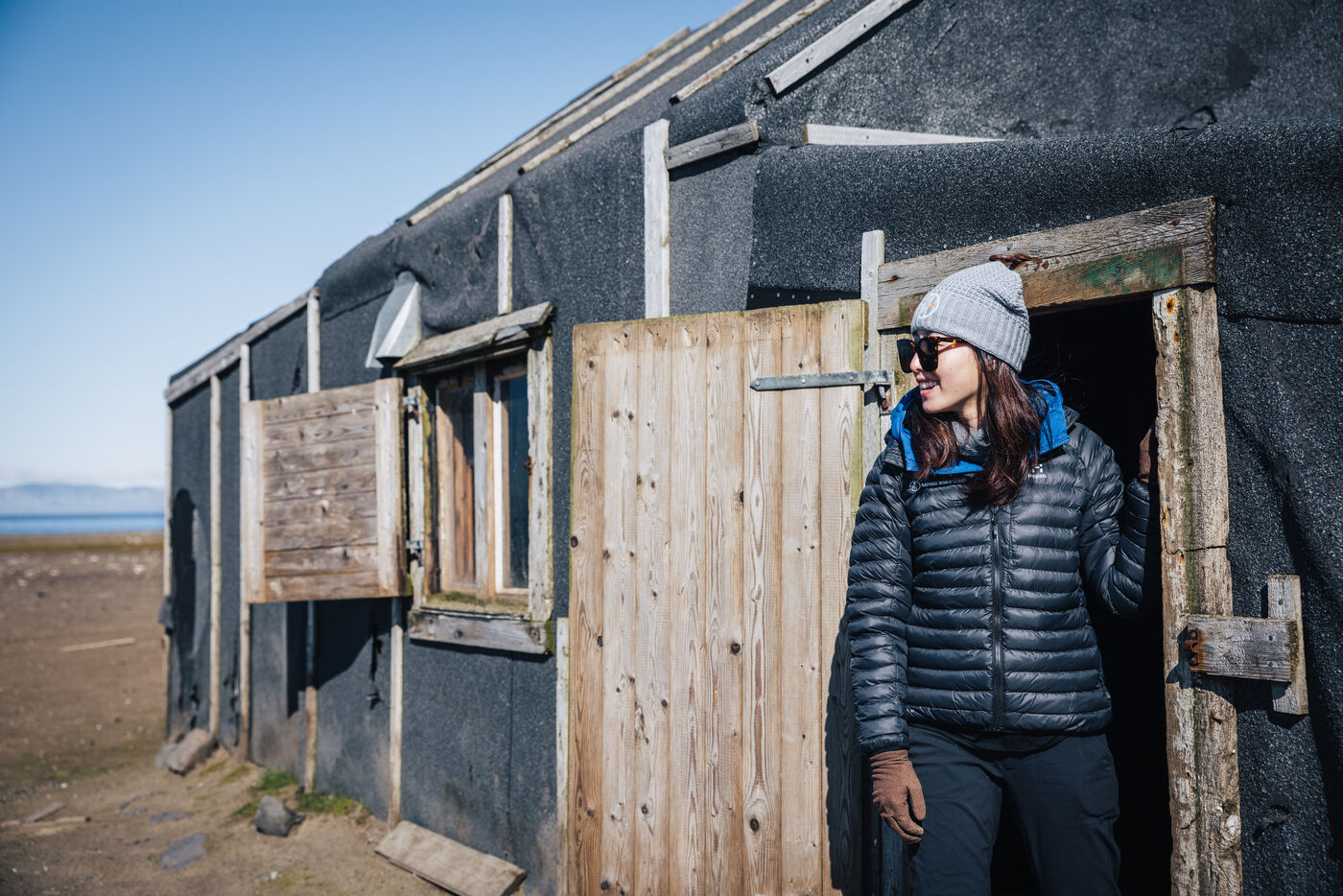
Walruses in water with snow-covered mountains in background Grace in a beanie and black puffer leaning in the doorway of a weathered trapper's cabin at Andréetangen
Walruses on the shoreline, and a trapper's cabin nearby that made for the perfect photo studio.
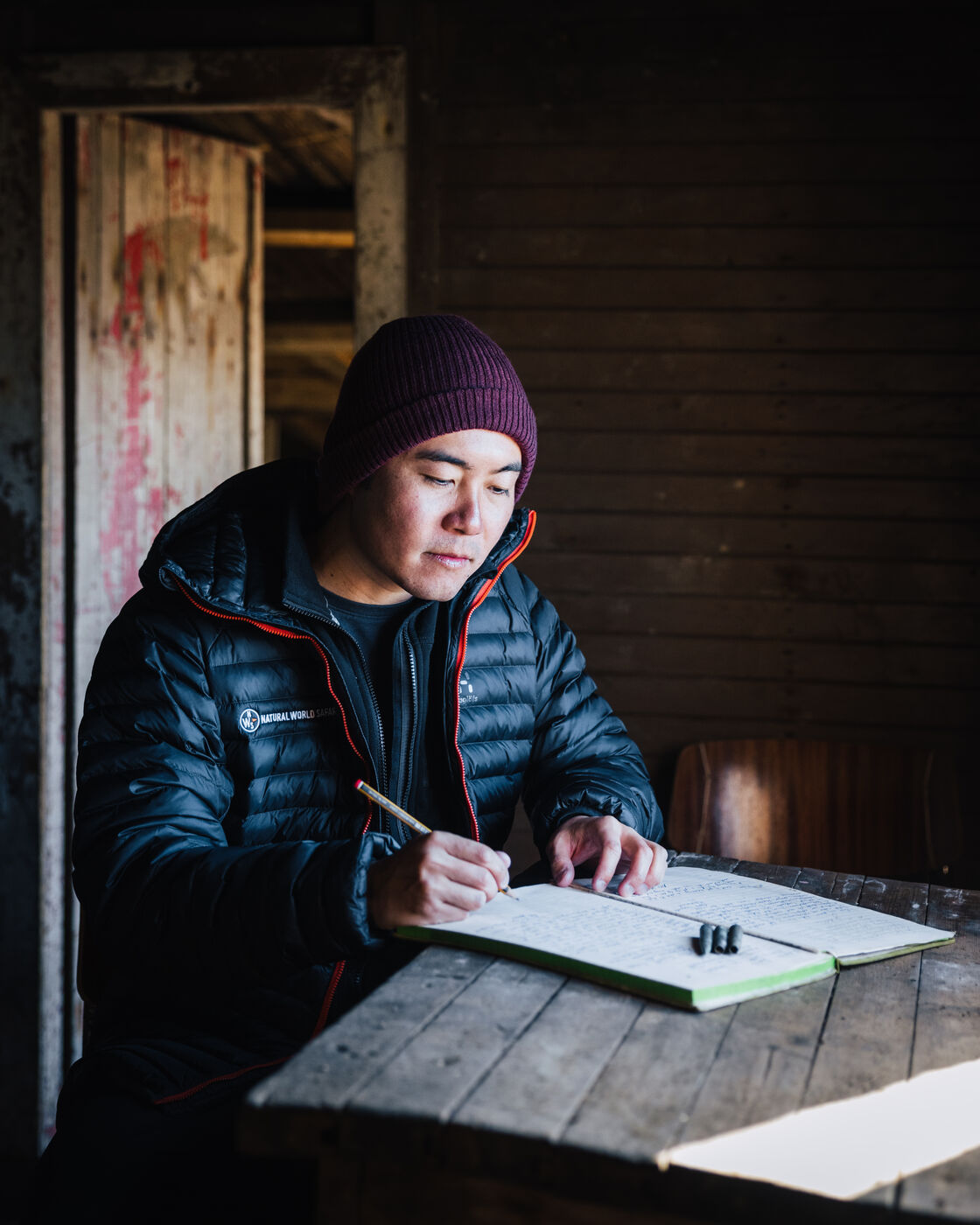
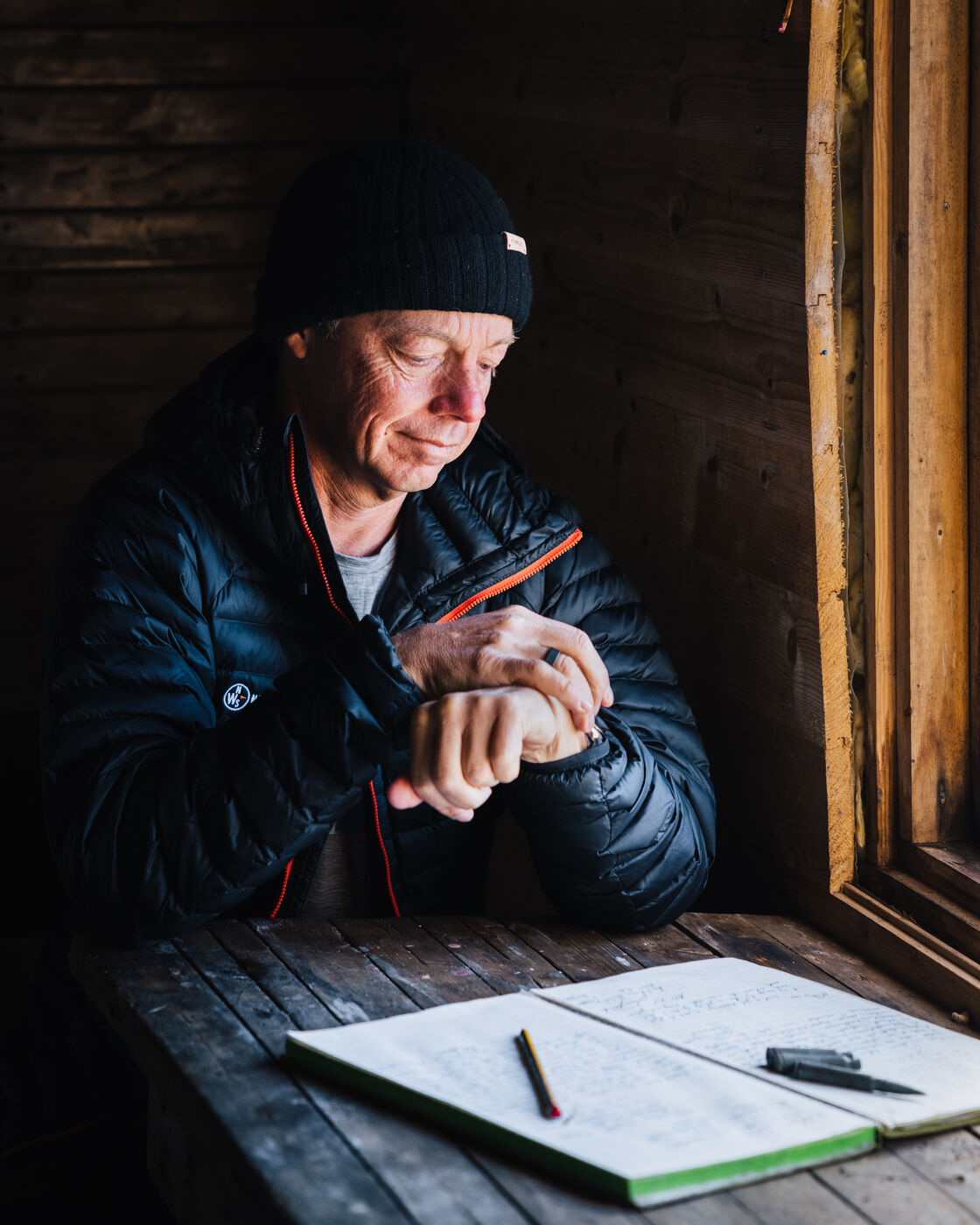
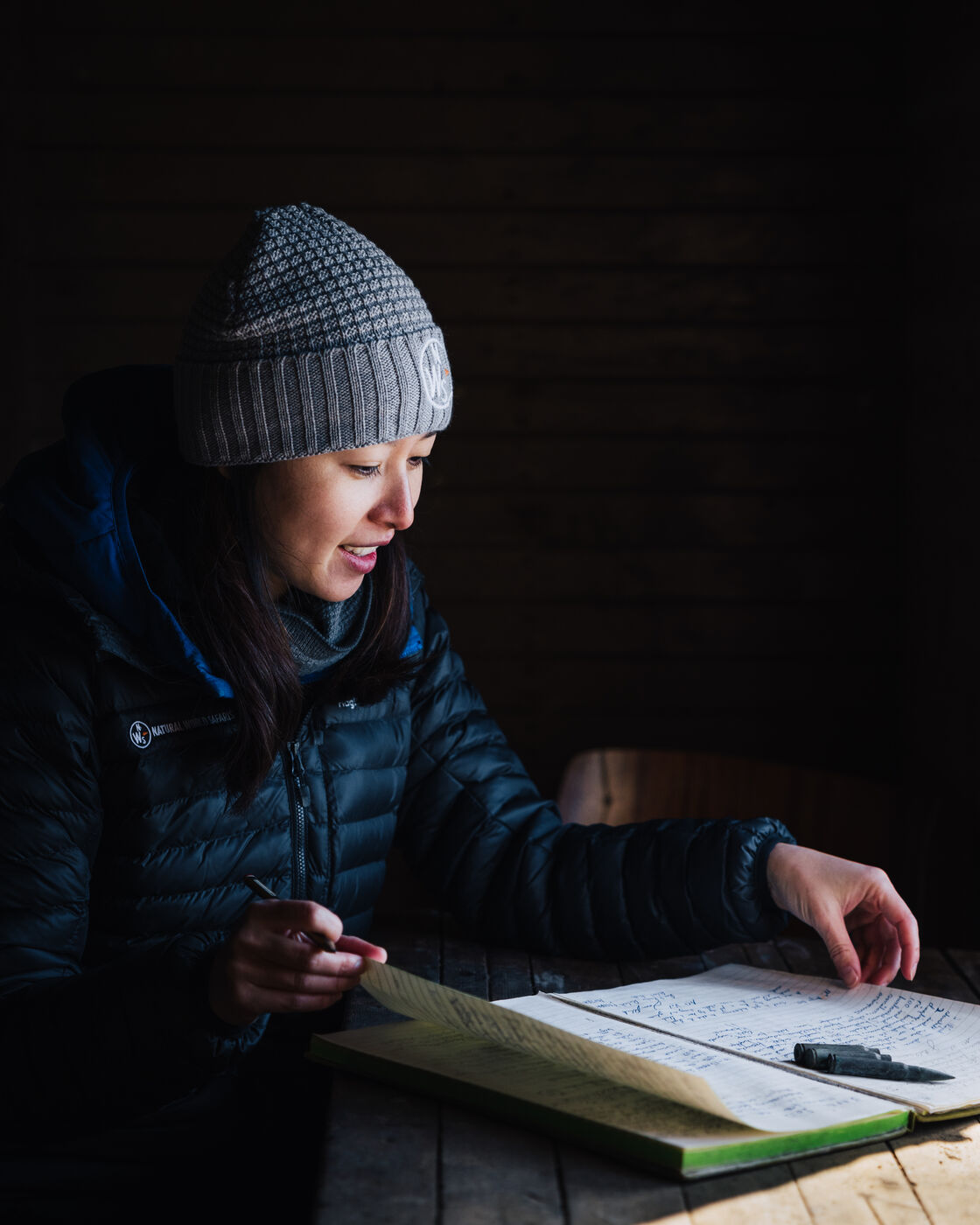
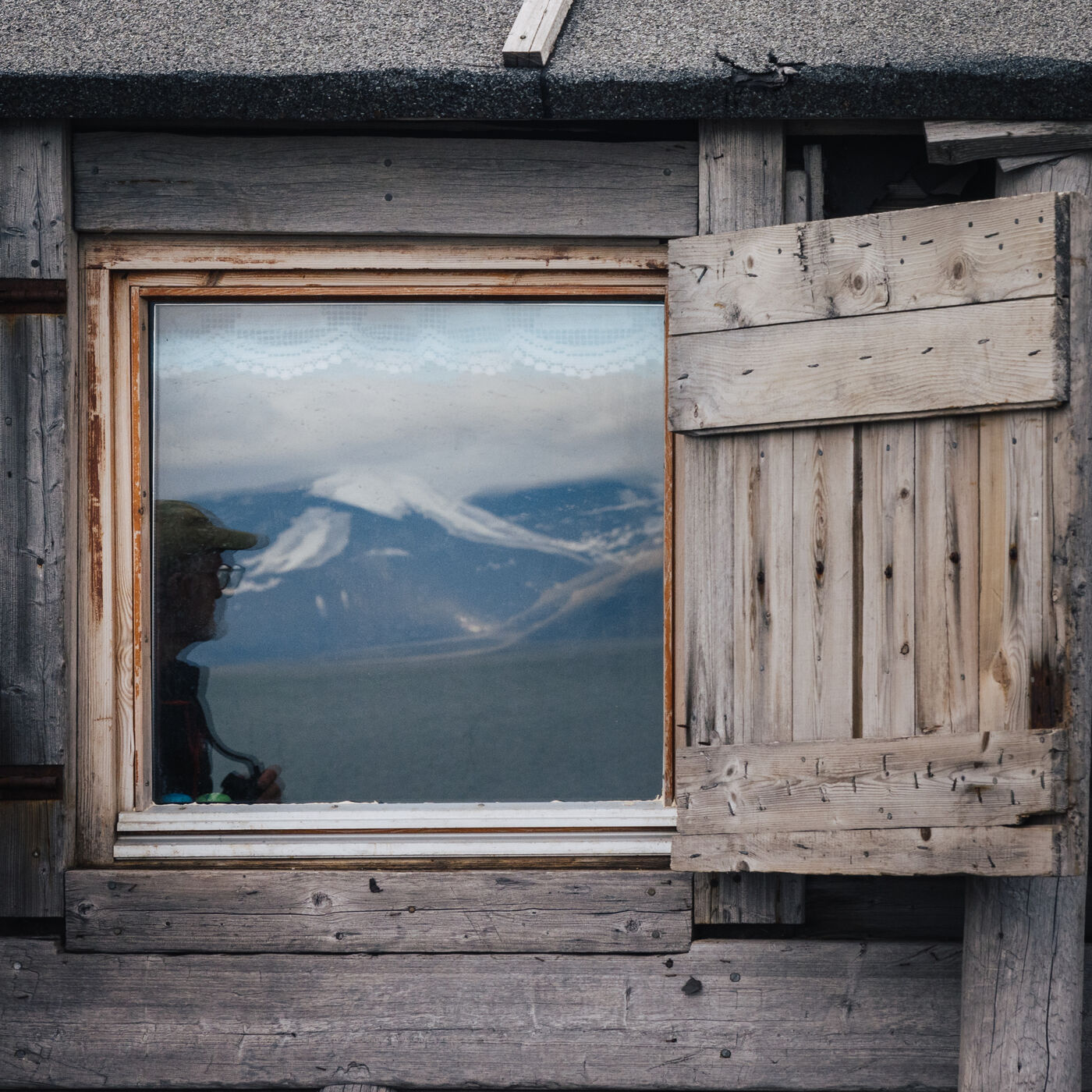
Person writing in notebook inside rustic wooden cabin Man in a black beanie at the cabin table beside the logbook, adjusting his watch
Taking notes on this extraordinary encounter, still processing what we're seeing.
Man in a black beanie resting his chin on his hands at the cabin table, logbook in front
The weight of bearing witness settles in.

Polish Polar Station and Polar Plunge

July 30, 2022. Hornsund, Svalbard

The Polish Polar Station at Hornsund has been staffed continuously since 1978, one of the few Arctic stations where scientists overwinter. The team here studies glaciers, wildlife, and the changes happening in the Arctic. We were invited to visit, to see the instruments, to understand the work. It was humbling. These scientists are gathering data on climate change in real time, watching glaciers retreat, measuring ice loss, documenting the Arctic's transformation.

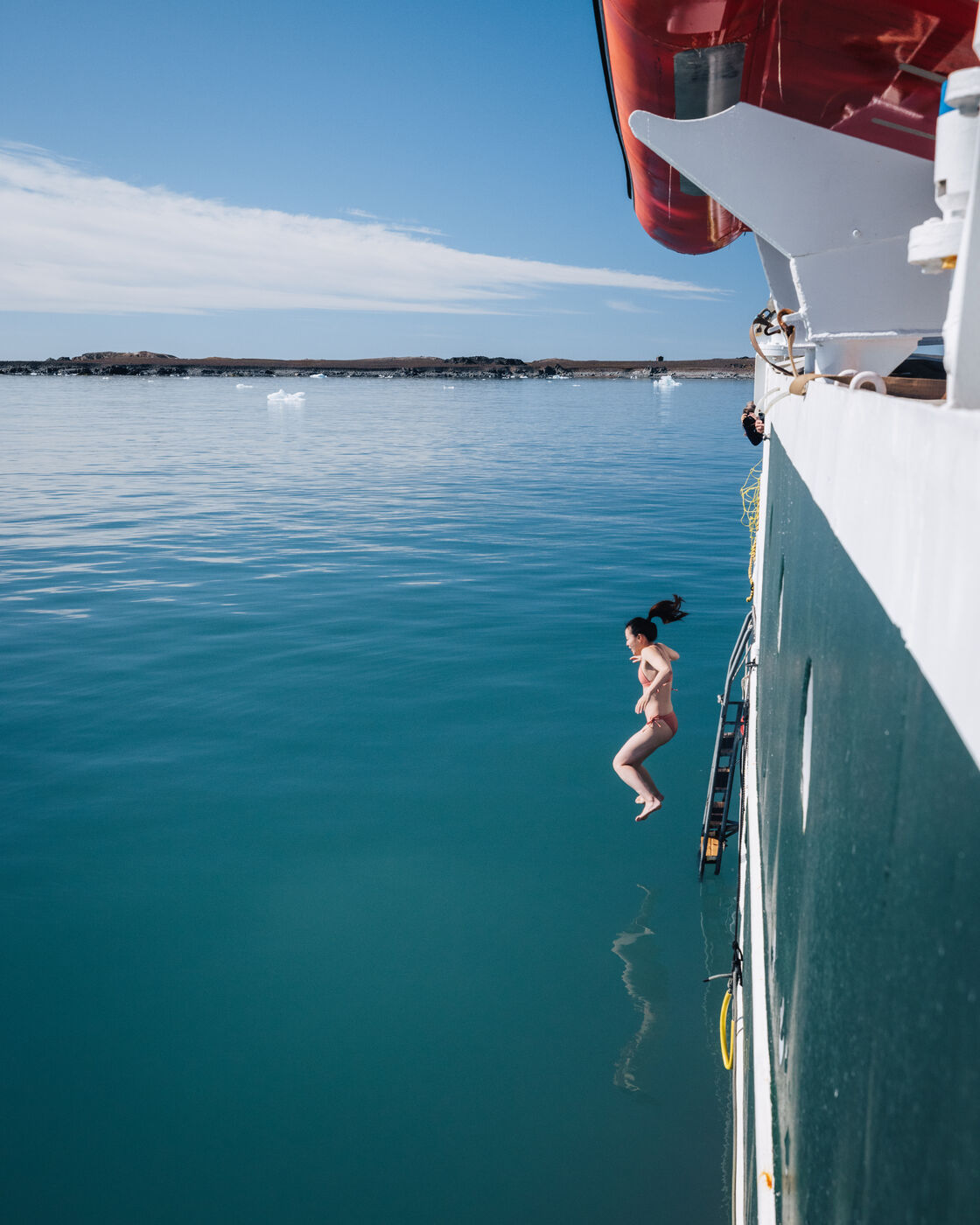
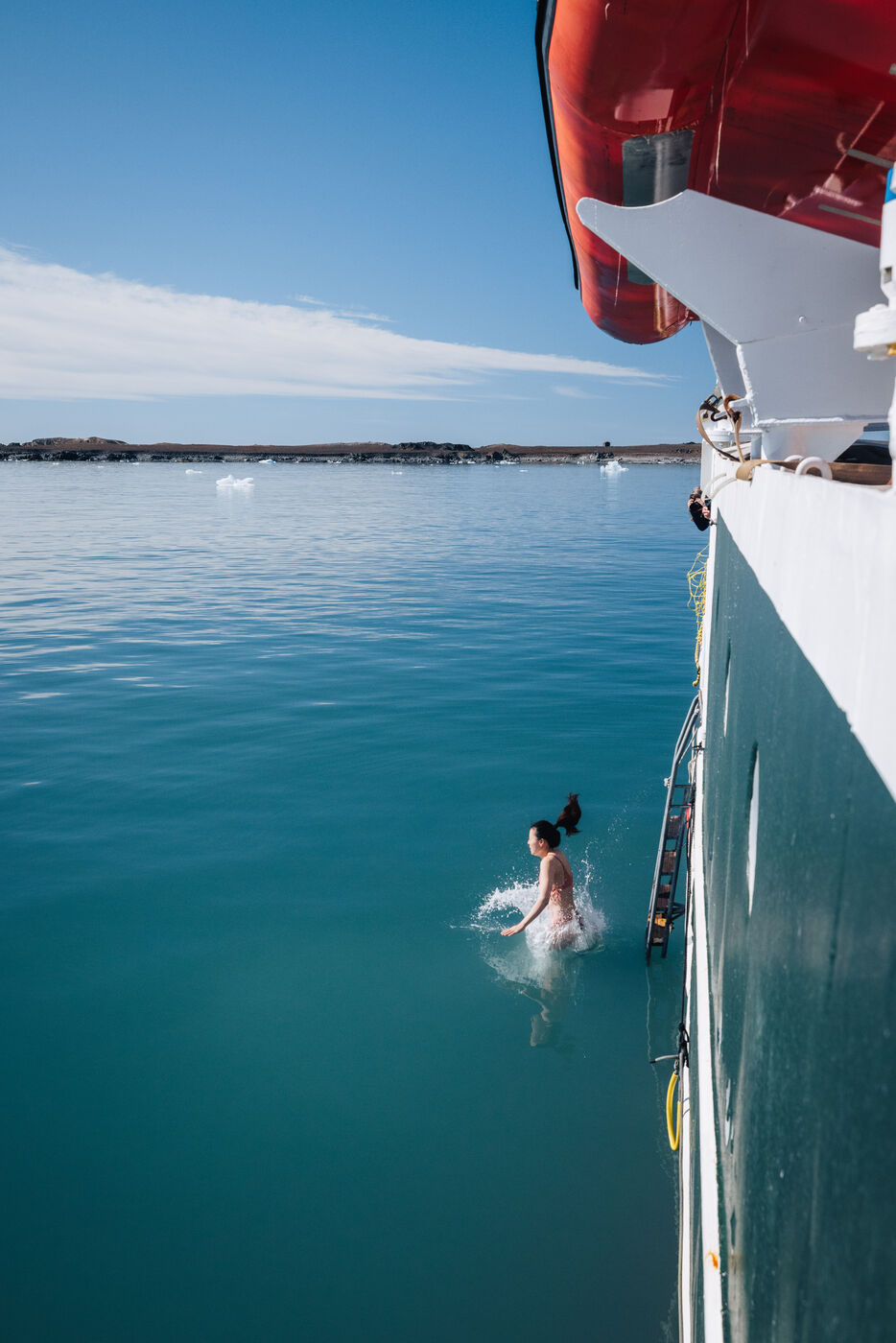
We also had another polar plunge moment here. This time we were more prepared, more aware of what we were doing. But no amount of preparation makes a four-degree swim comfortable. It's meant to be uncomfortable. The cold shocks your system, forces you to accept your own fragility in a landscape so vast and unforgiving that human concerns feel impossibly small.

Lone figure walking across barren tundra with dramatic mountainous fjord landscape Colorful barrels and equipment scattered on tundra near research structures and mountains
We approach the Polish Polar Station, remote even by Arctic standards, nestled in Hornsund.
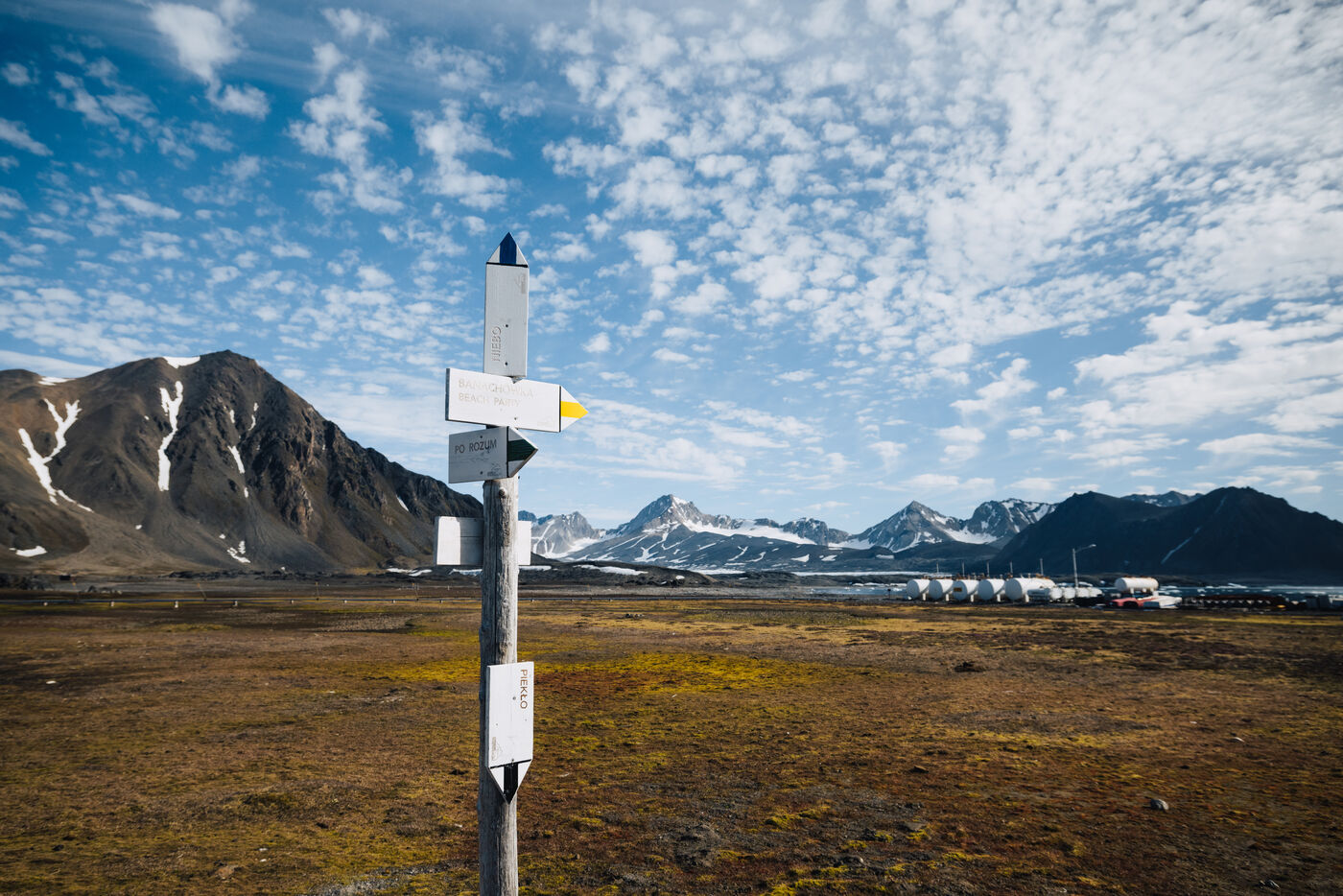
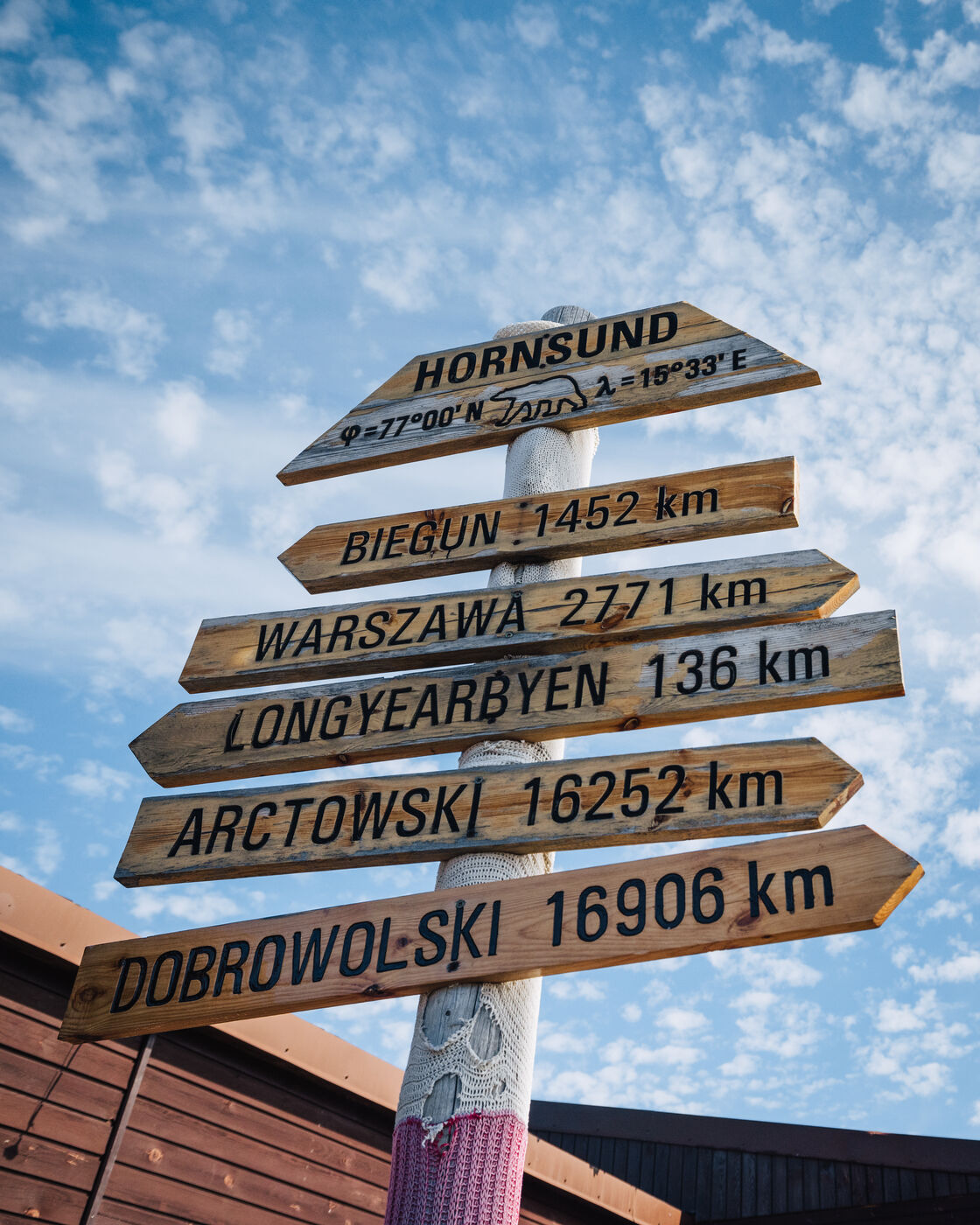
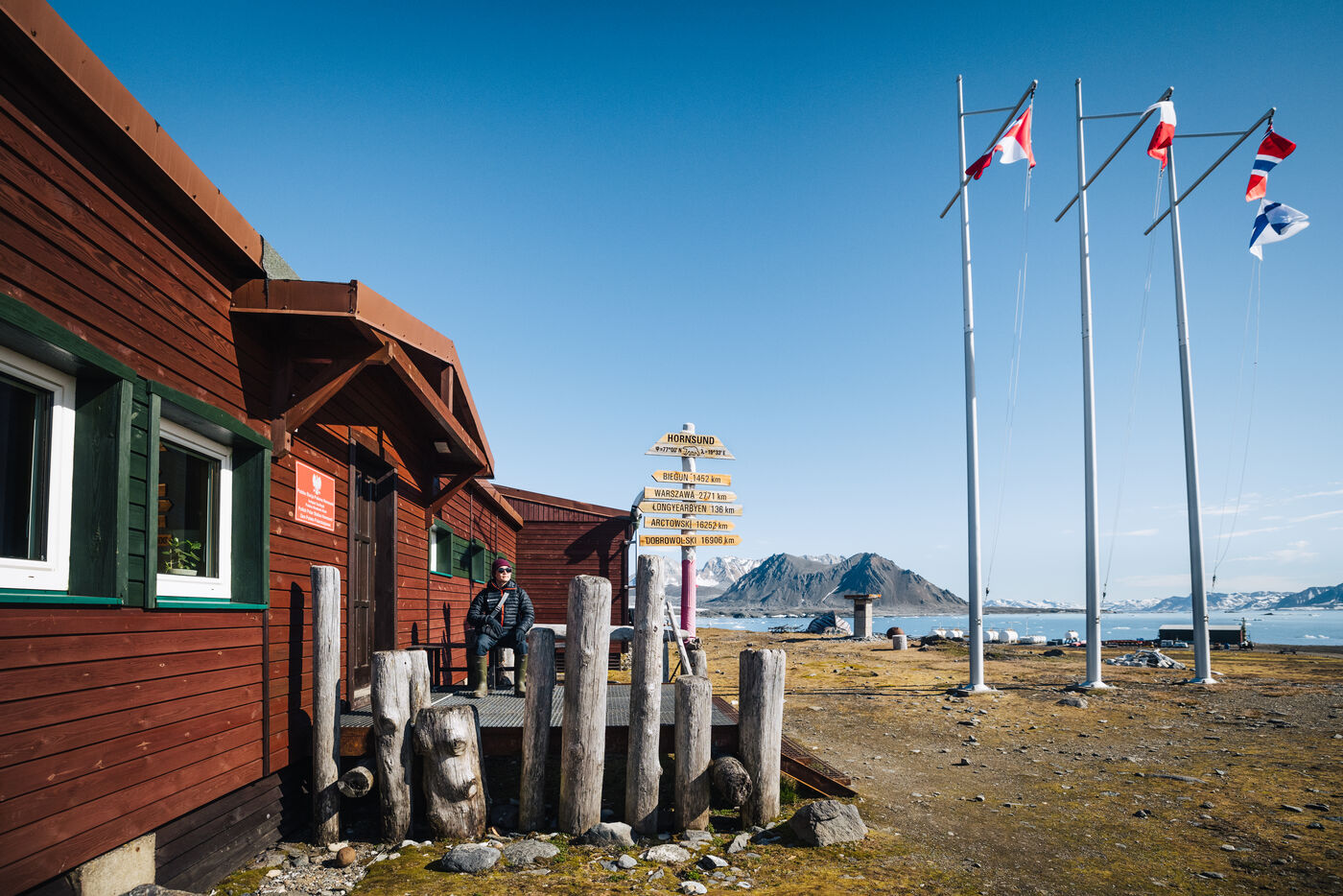
Signpost on the tundra in front of the Polish station, mountains and glacier beyond Wooden signpost at the Polish Polar Station showing distances to Warsaw, Longyearbyen and the Antarctic stations
Signposts at the station: Hornsund's coordinates, and the distances to Warsaw, Longyearbyen and the Antarctic stations.
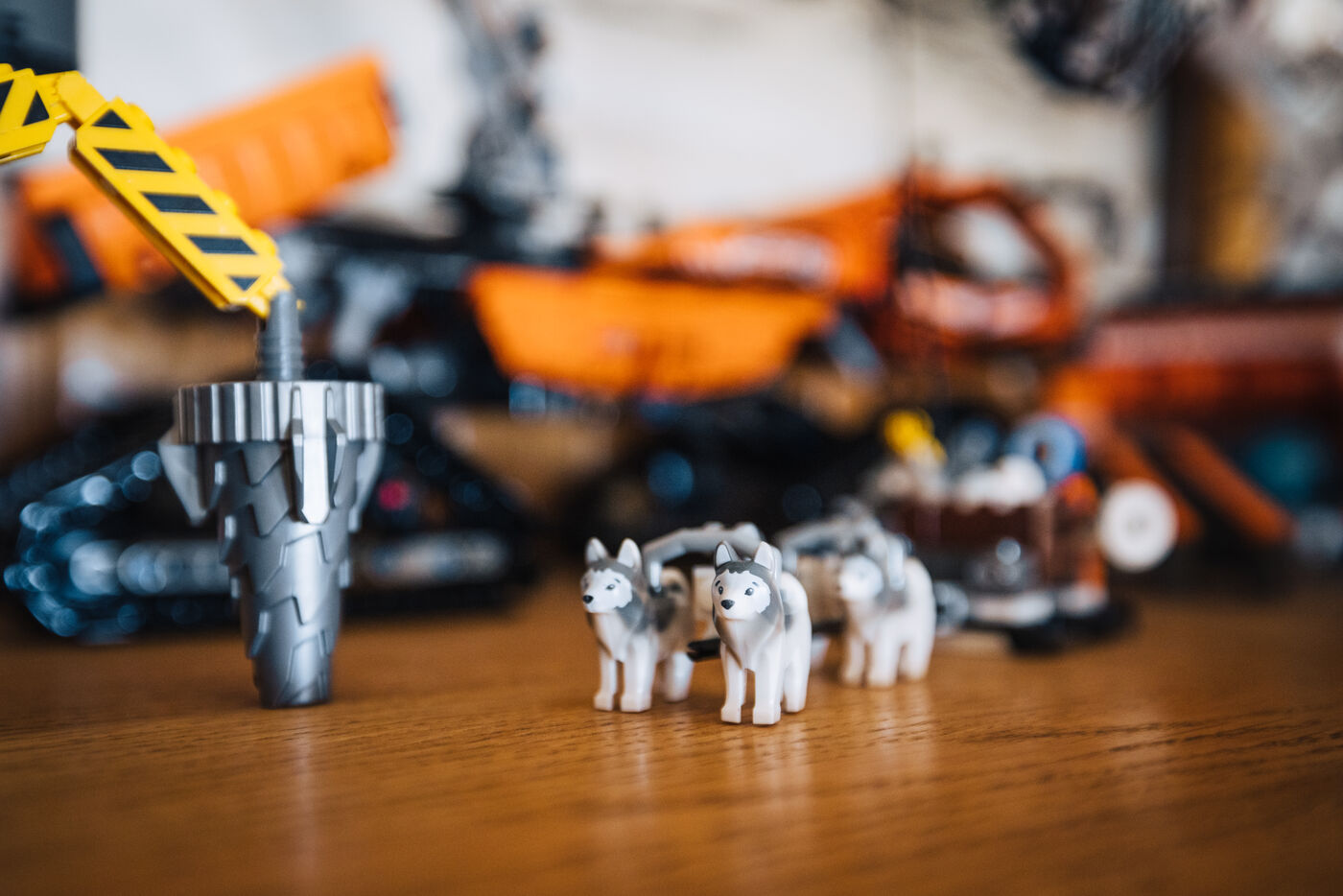
Lego huskies and an orange Lego vehicle on a wooden table inside the station
Station humour: a Lego sled team parked on the common-room table.
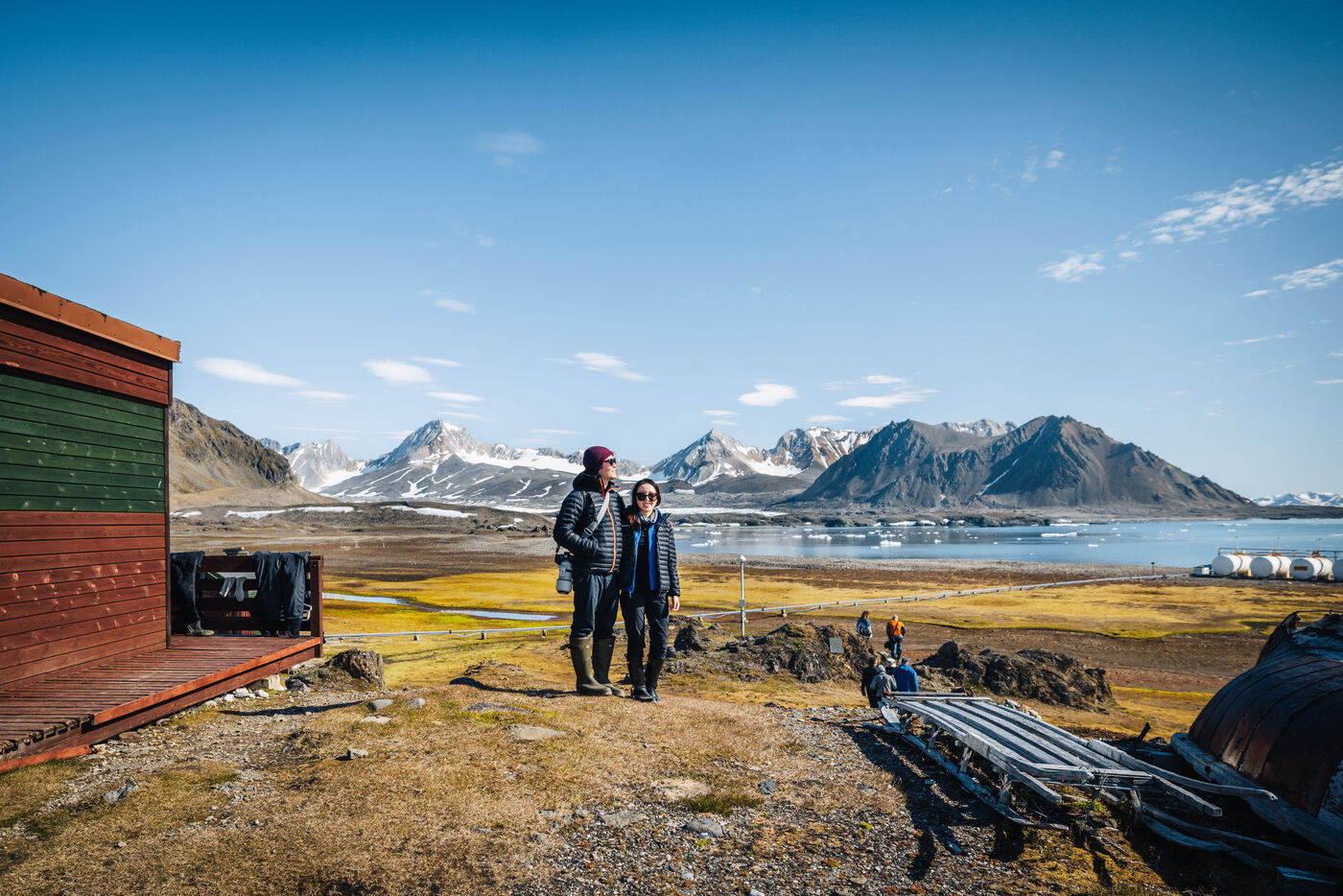
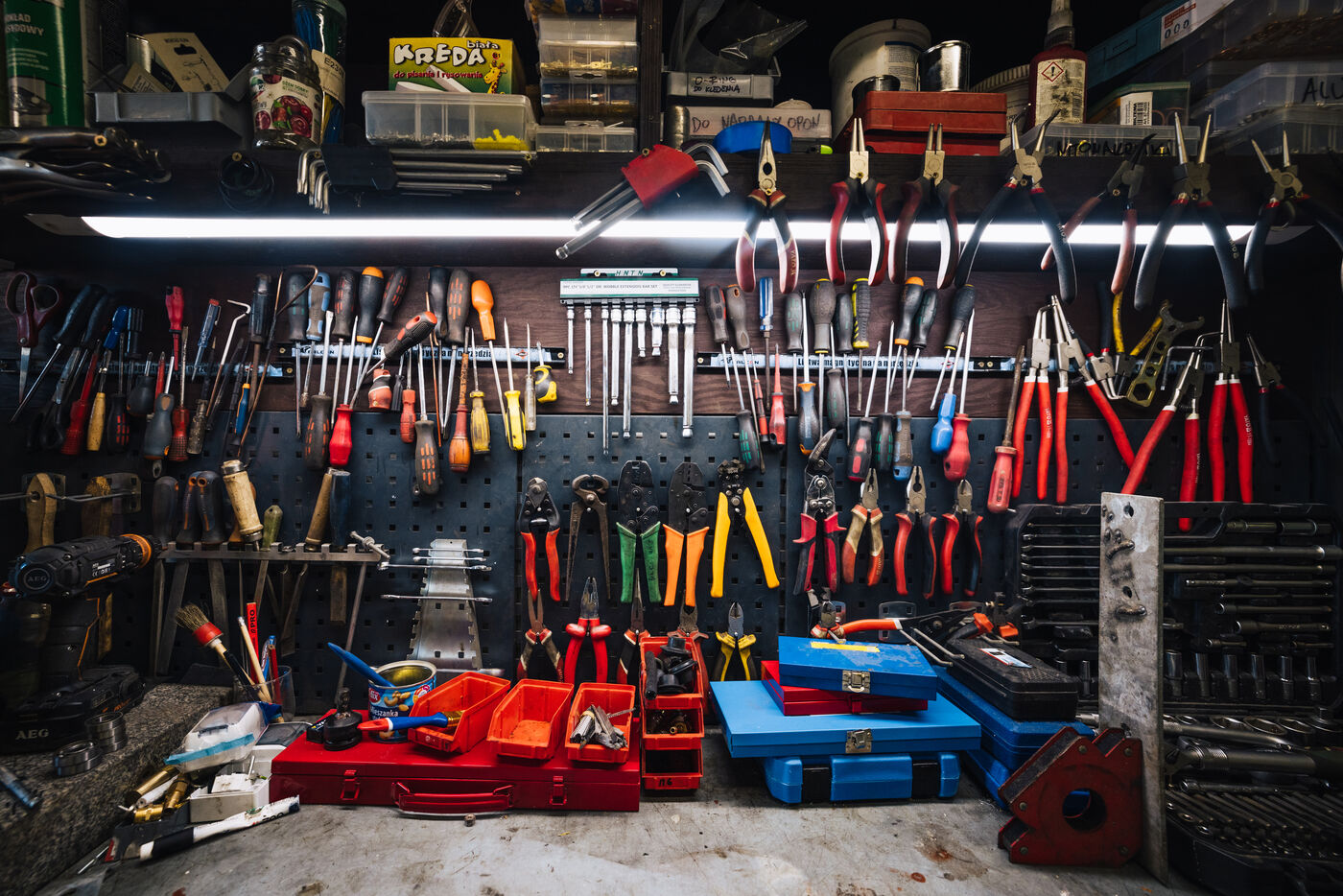
Two people standing outside a green station building, mountains and the fjord behind Workshop wall inside the station, pliers and screwdrivers hung in neat rows
The station from the outside, and the workshop that keeps it running through the winter.

Reindeer, Beluga Bones and Farewell

July 31, 2022. Southern Svalbard

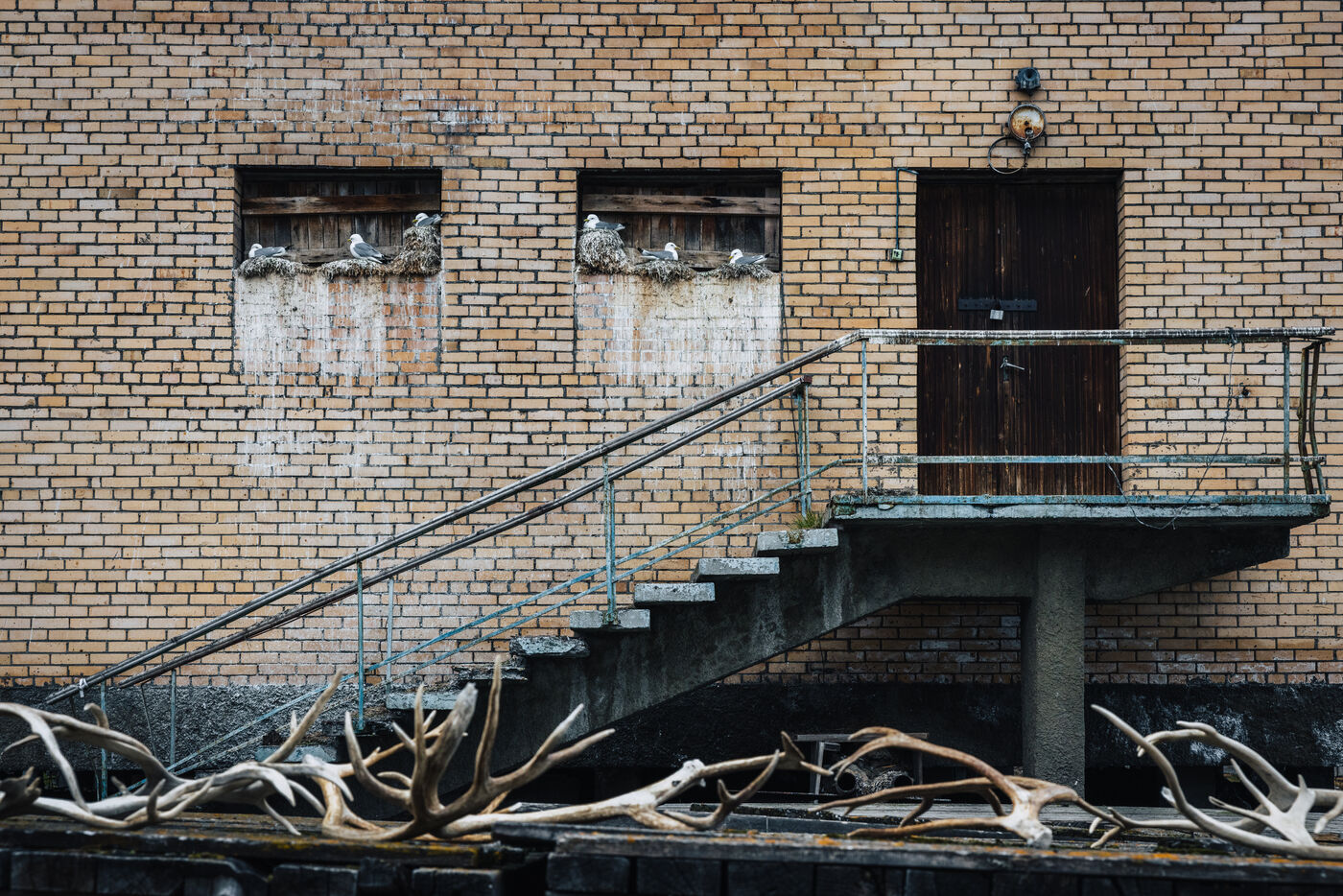
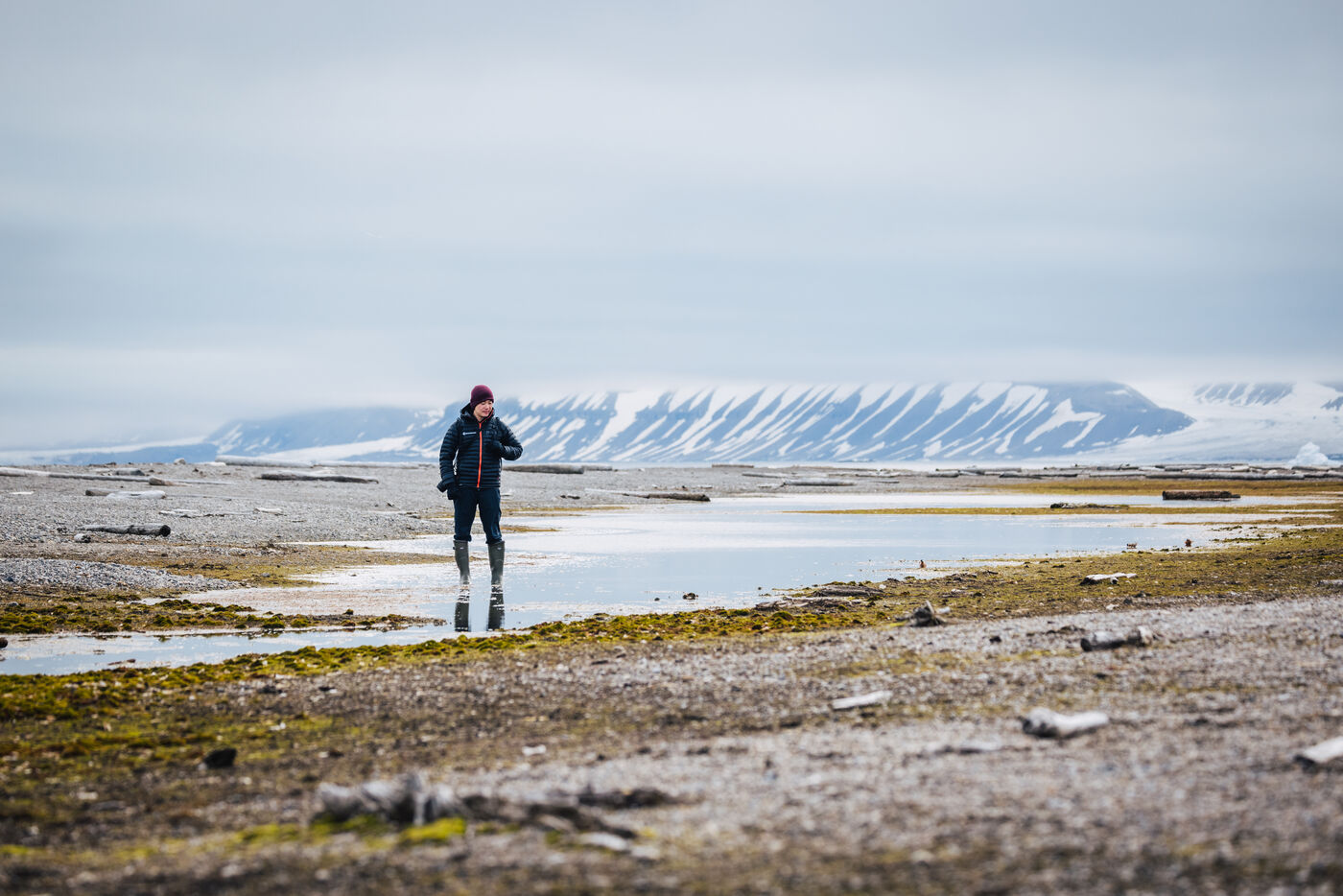
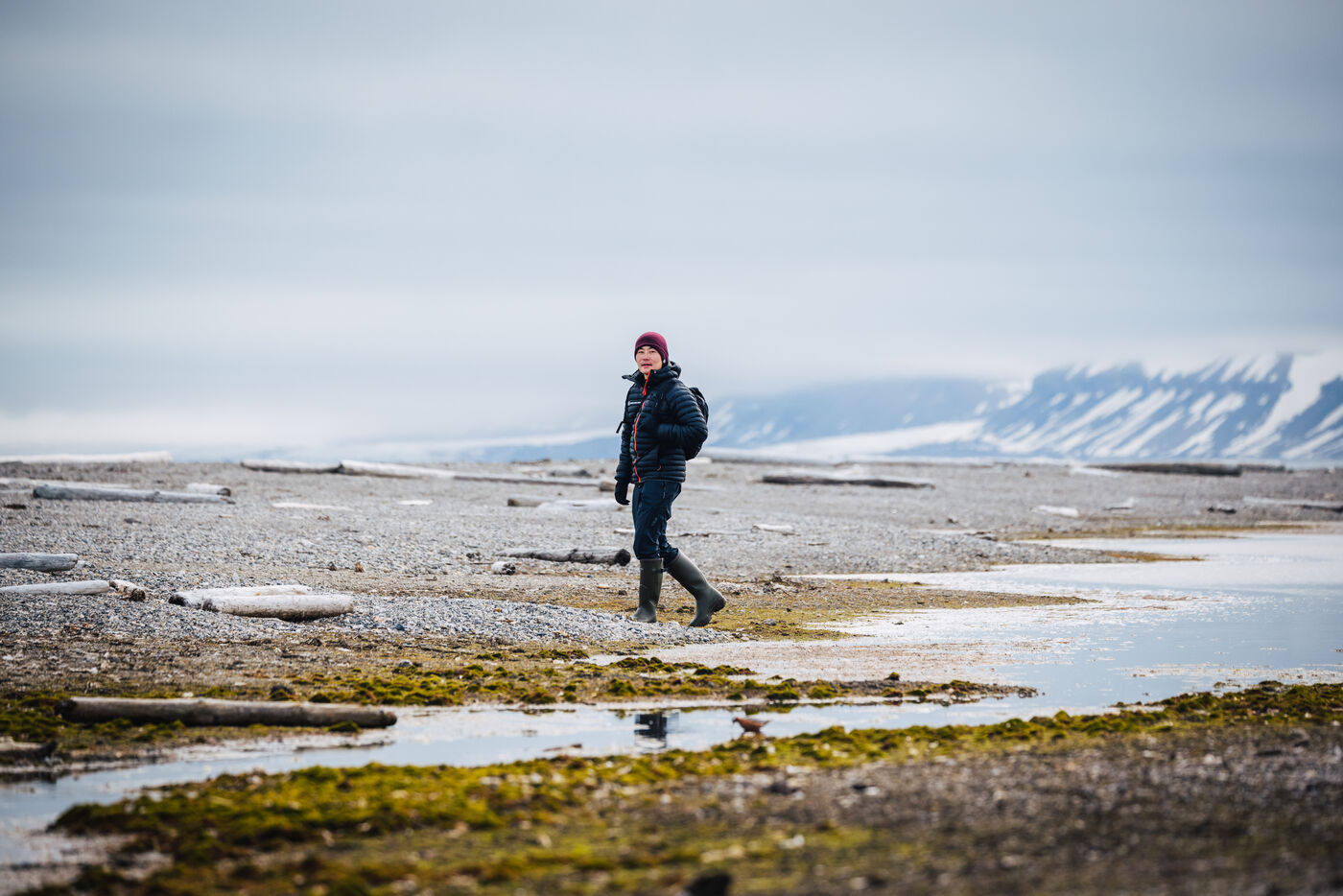
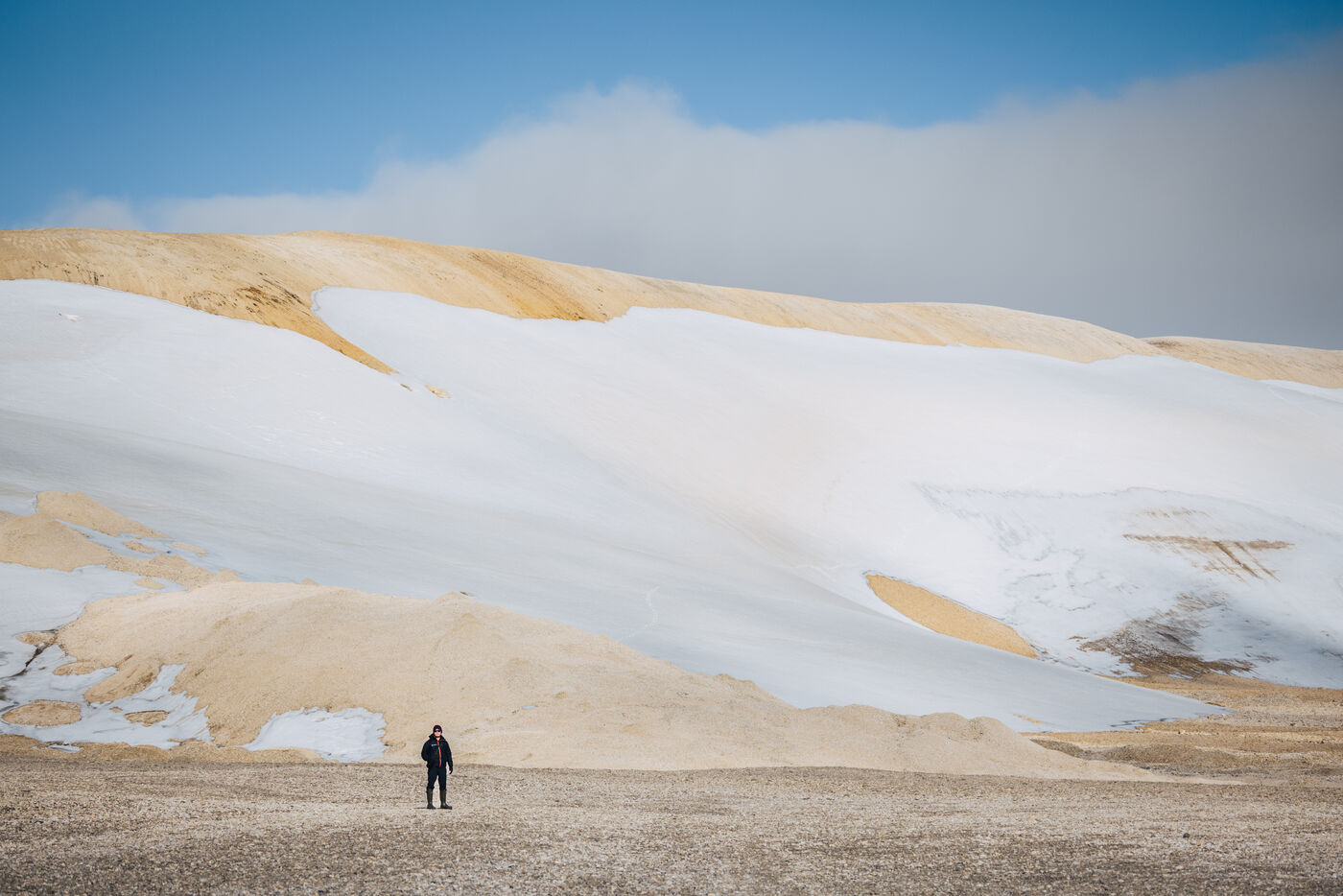
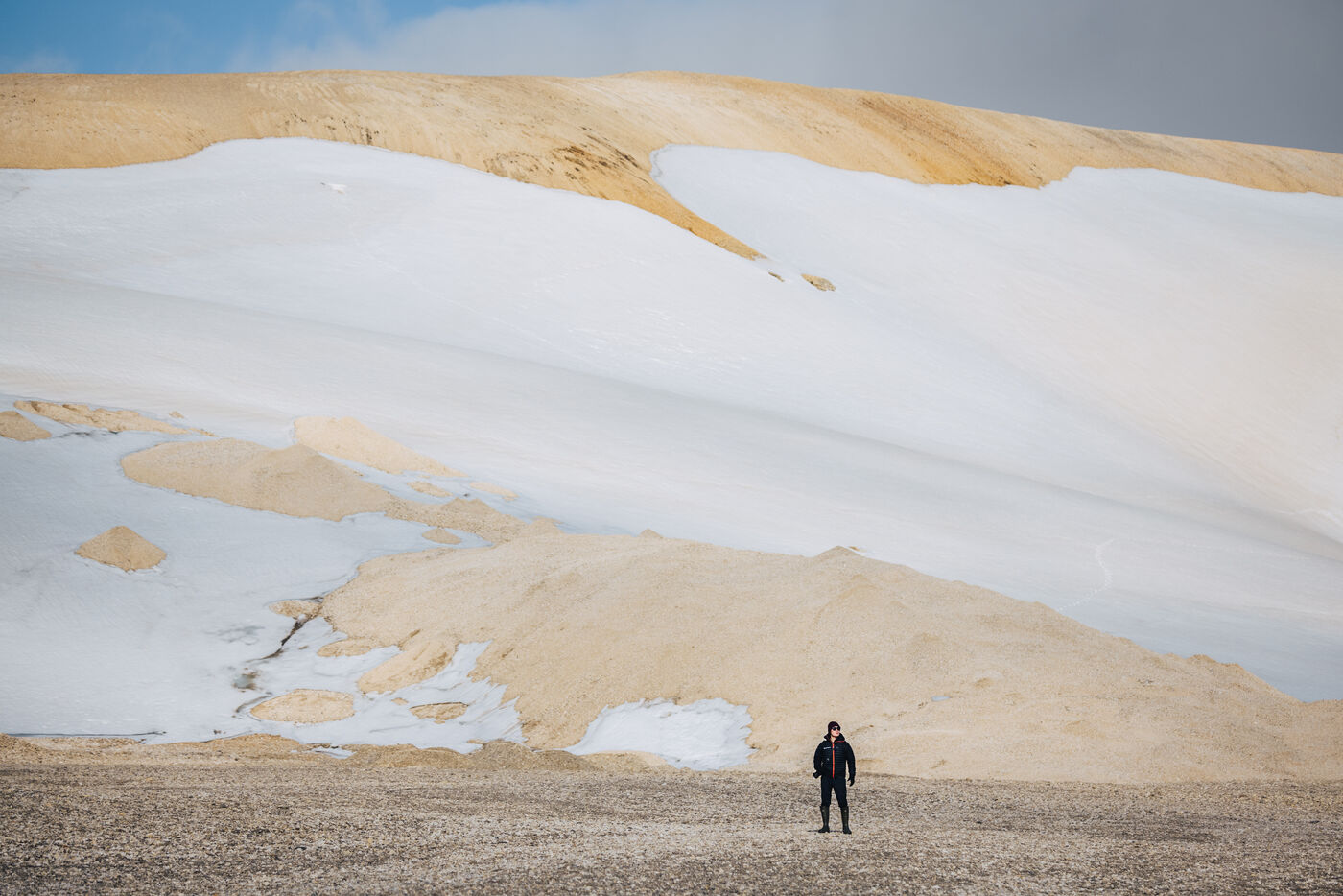
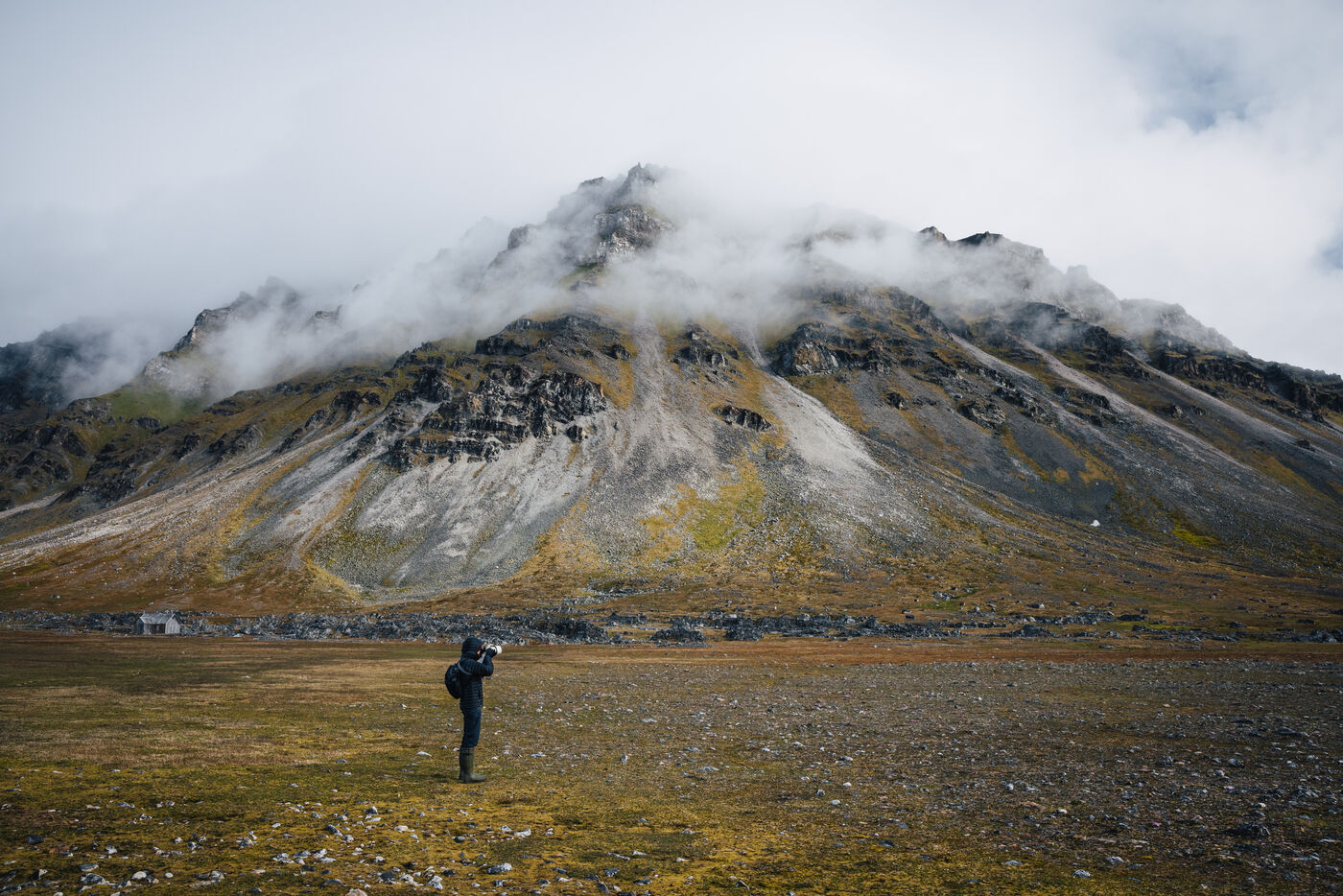
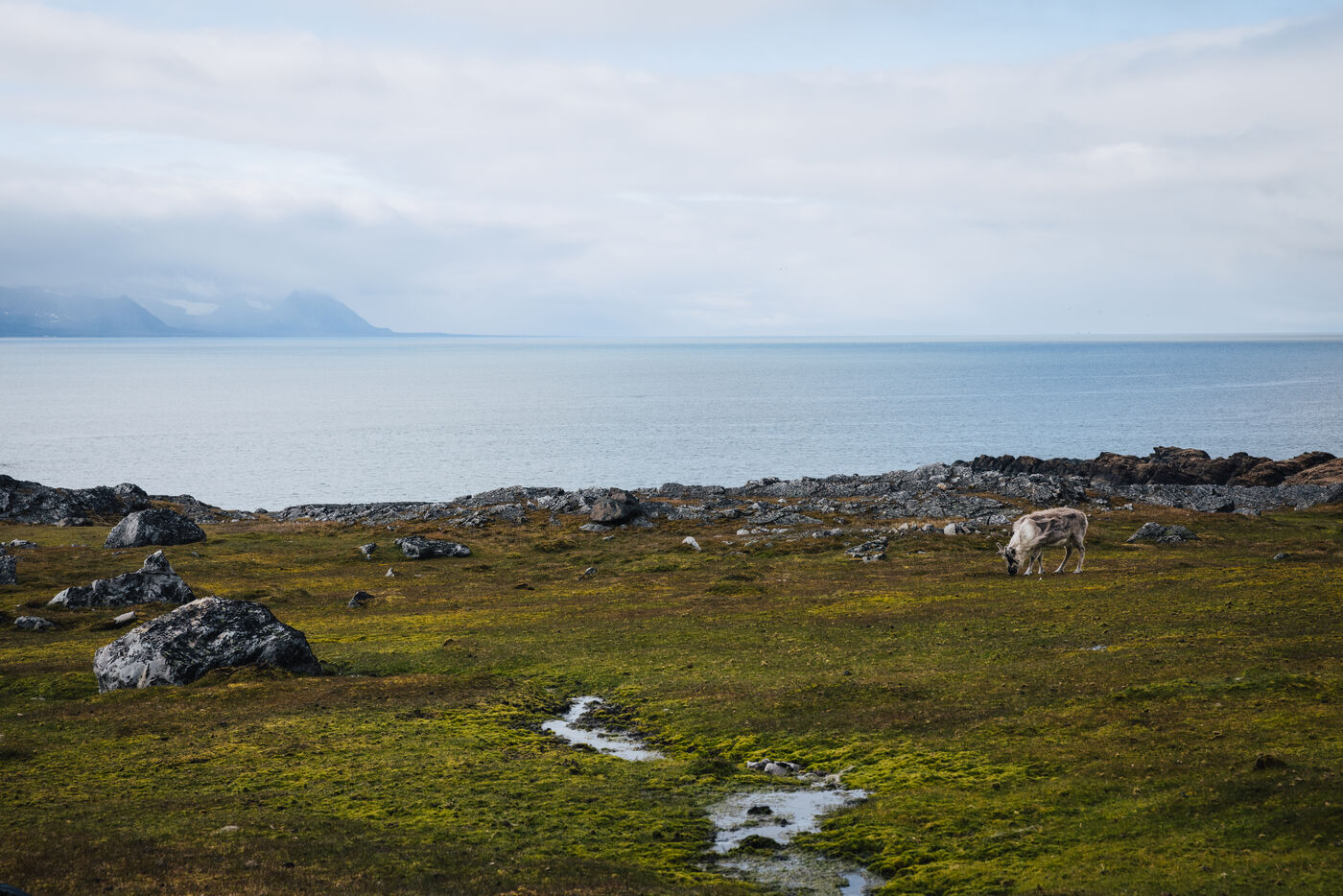
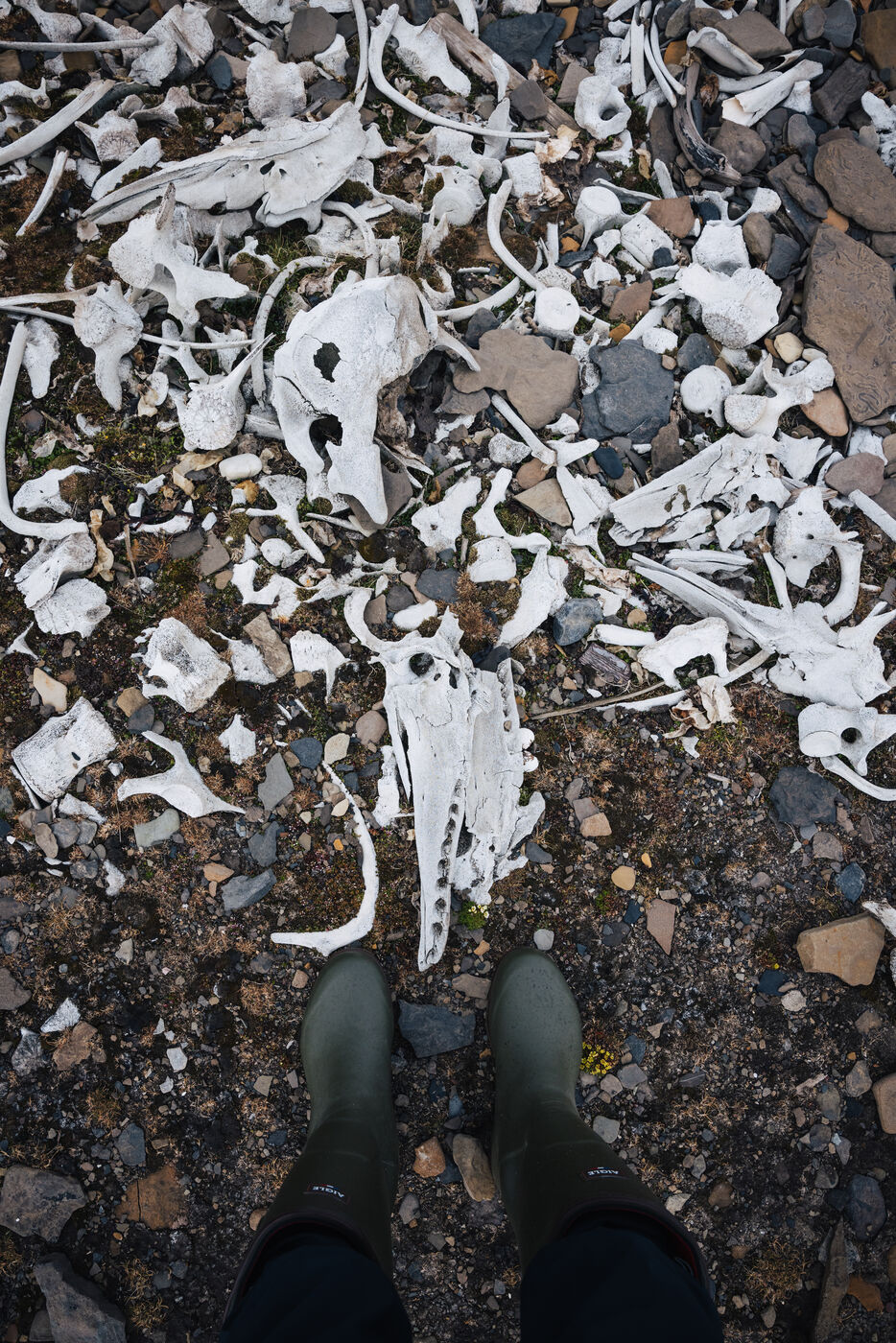
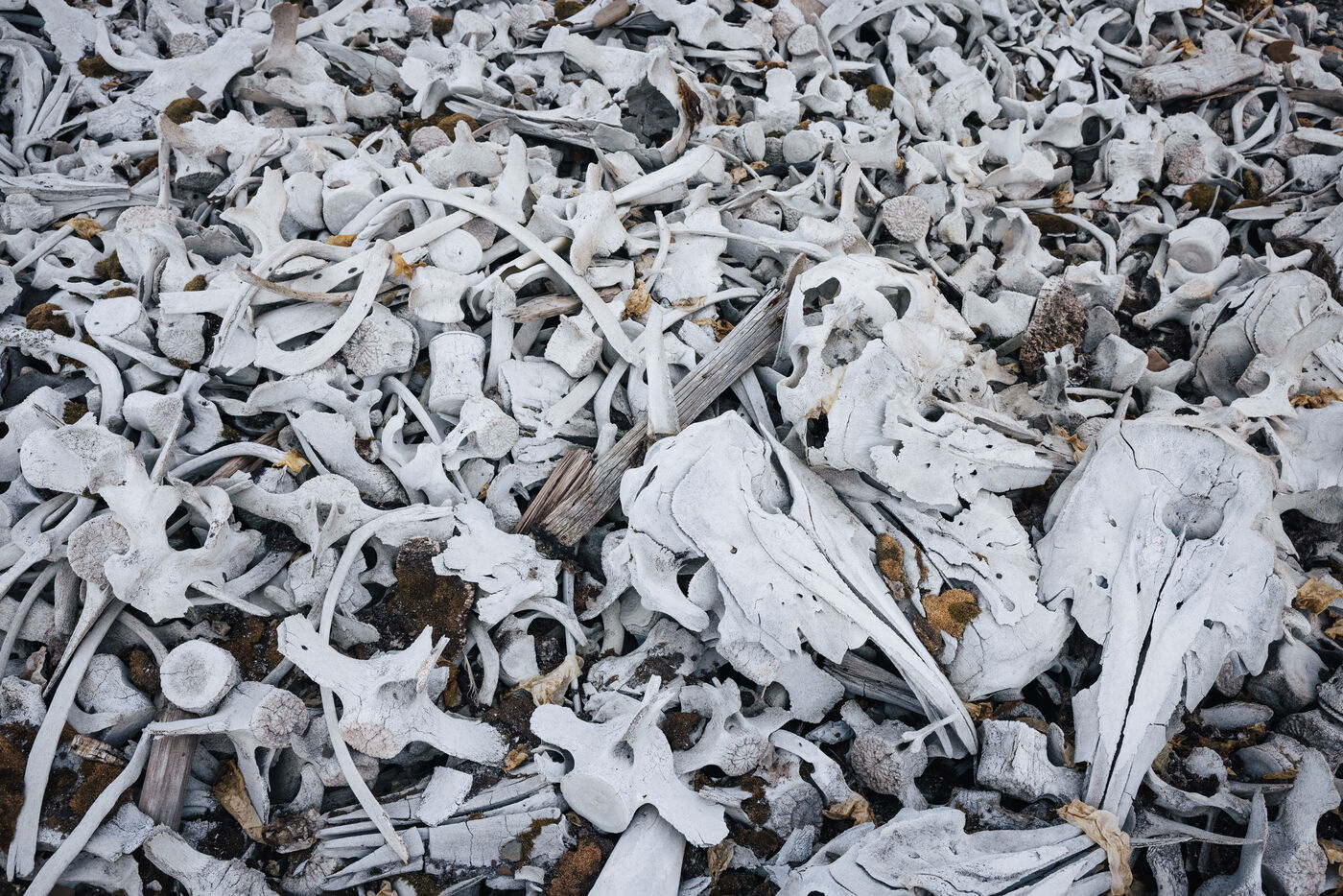
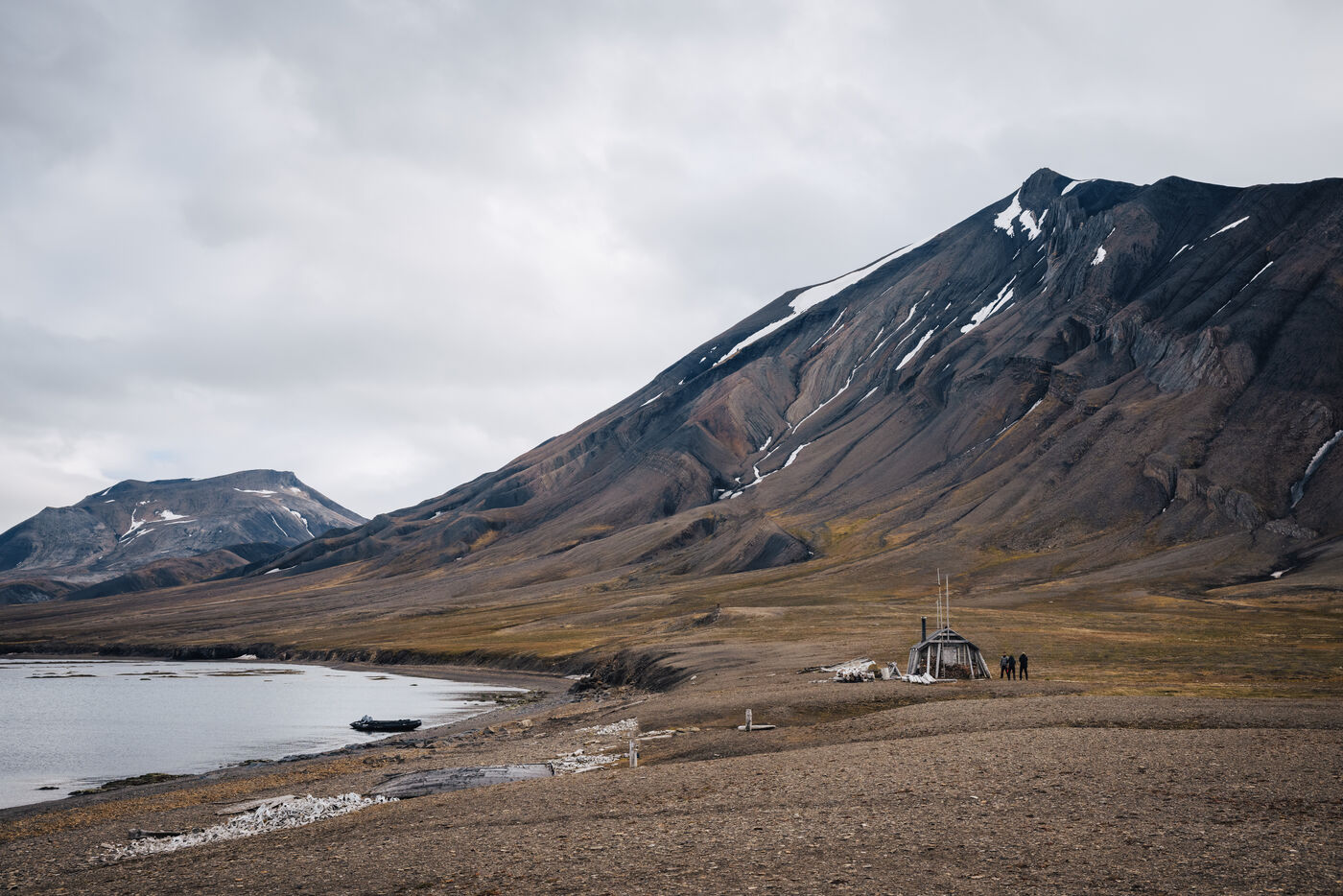
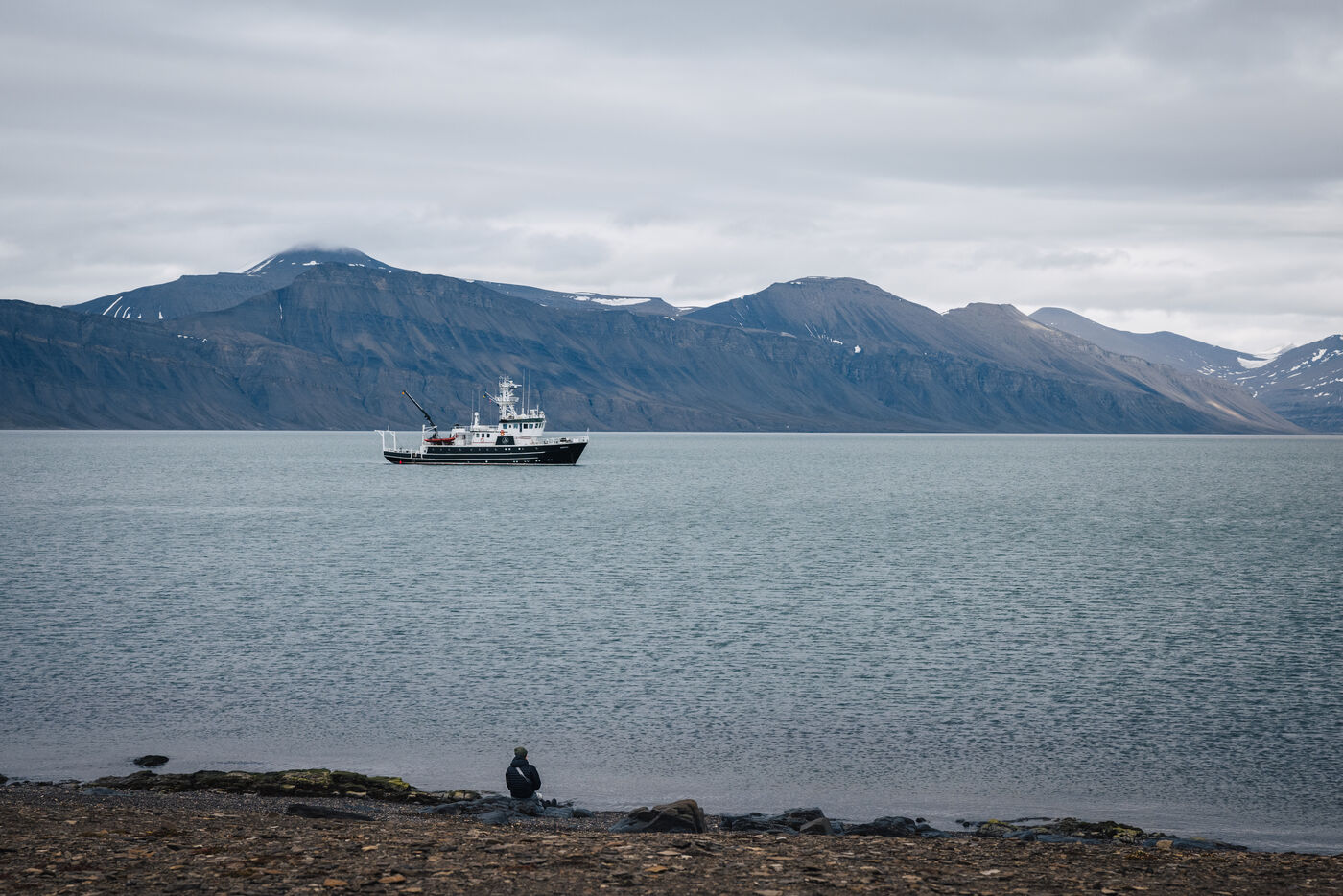
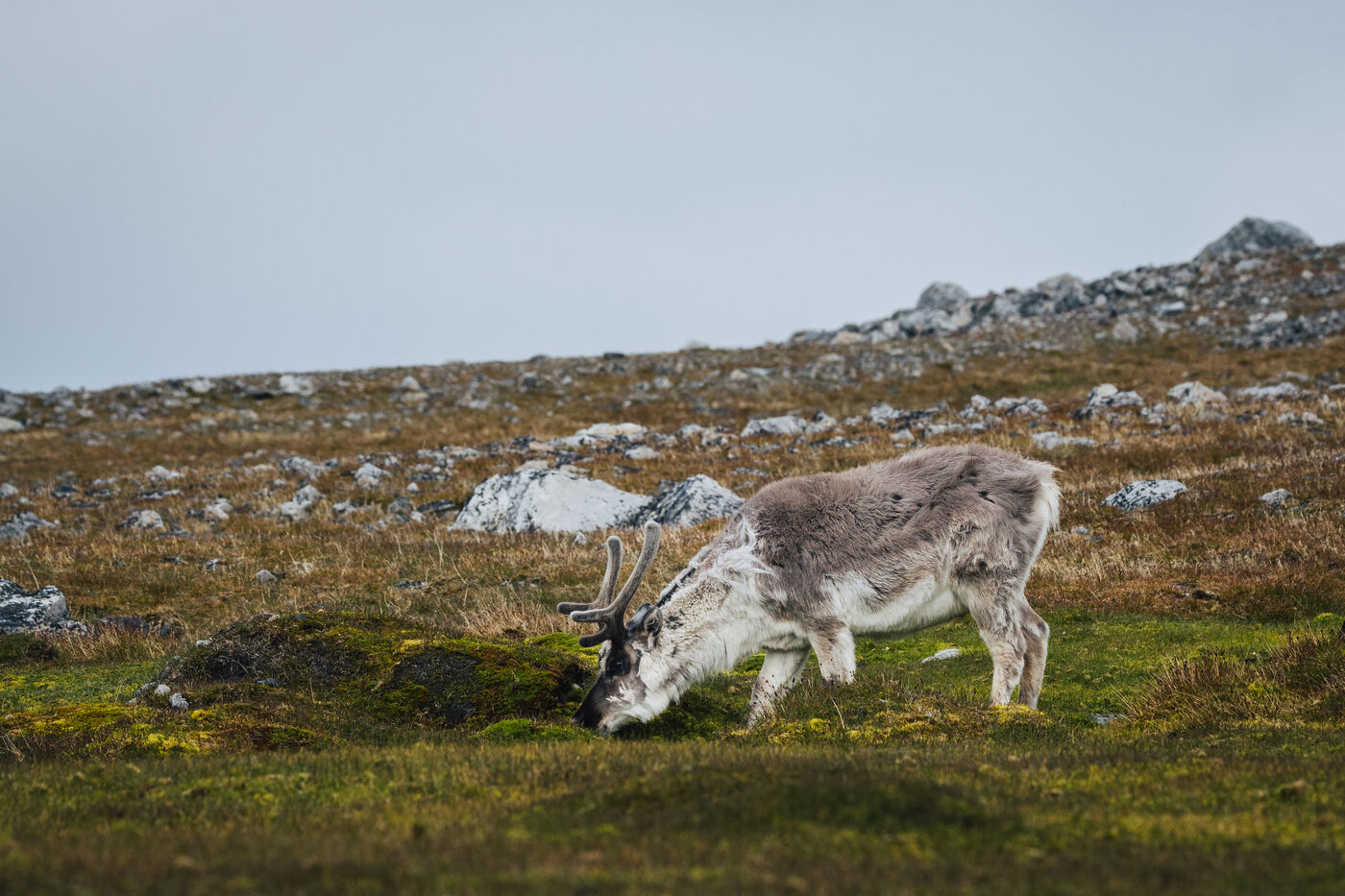
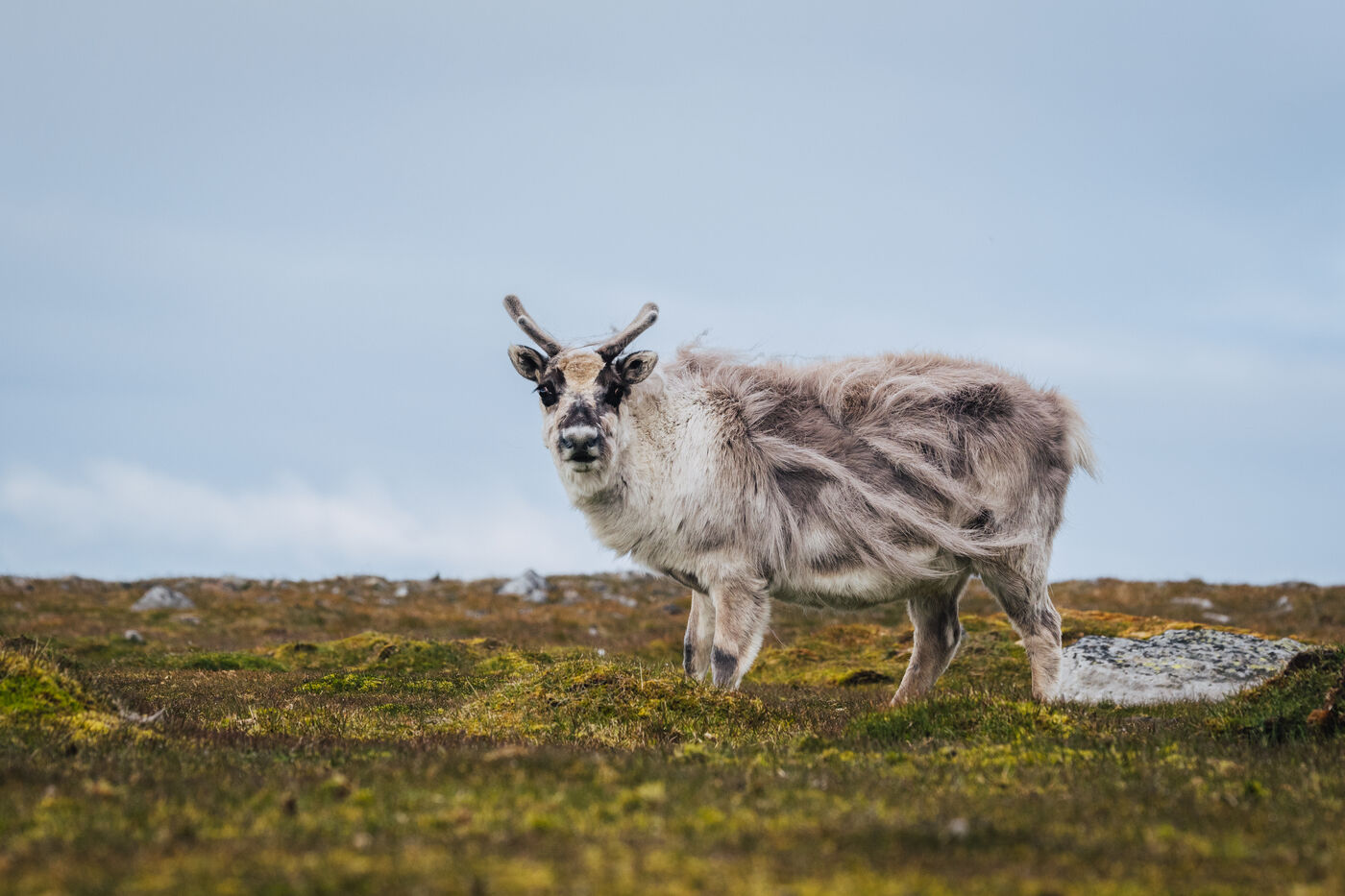
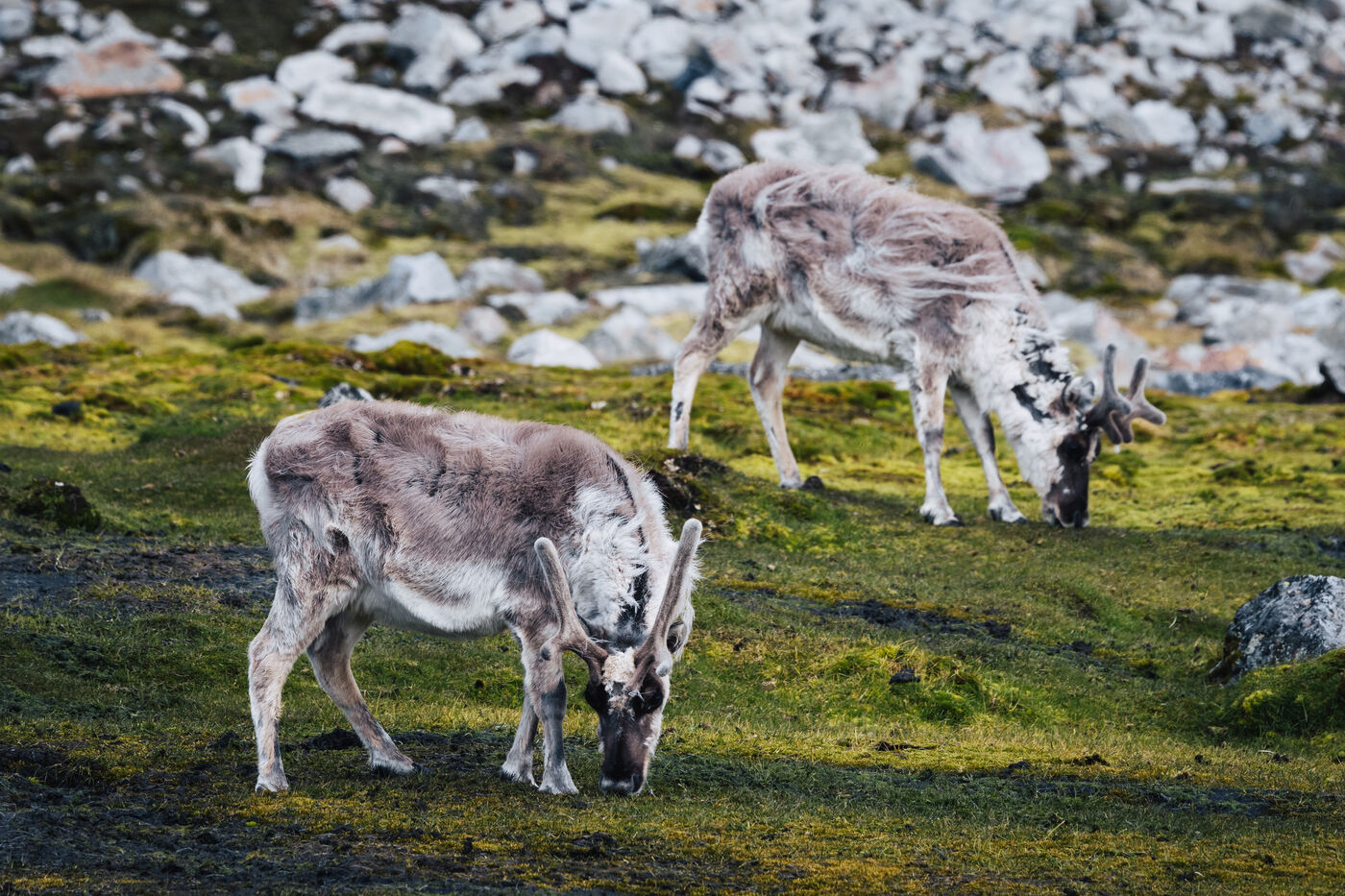
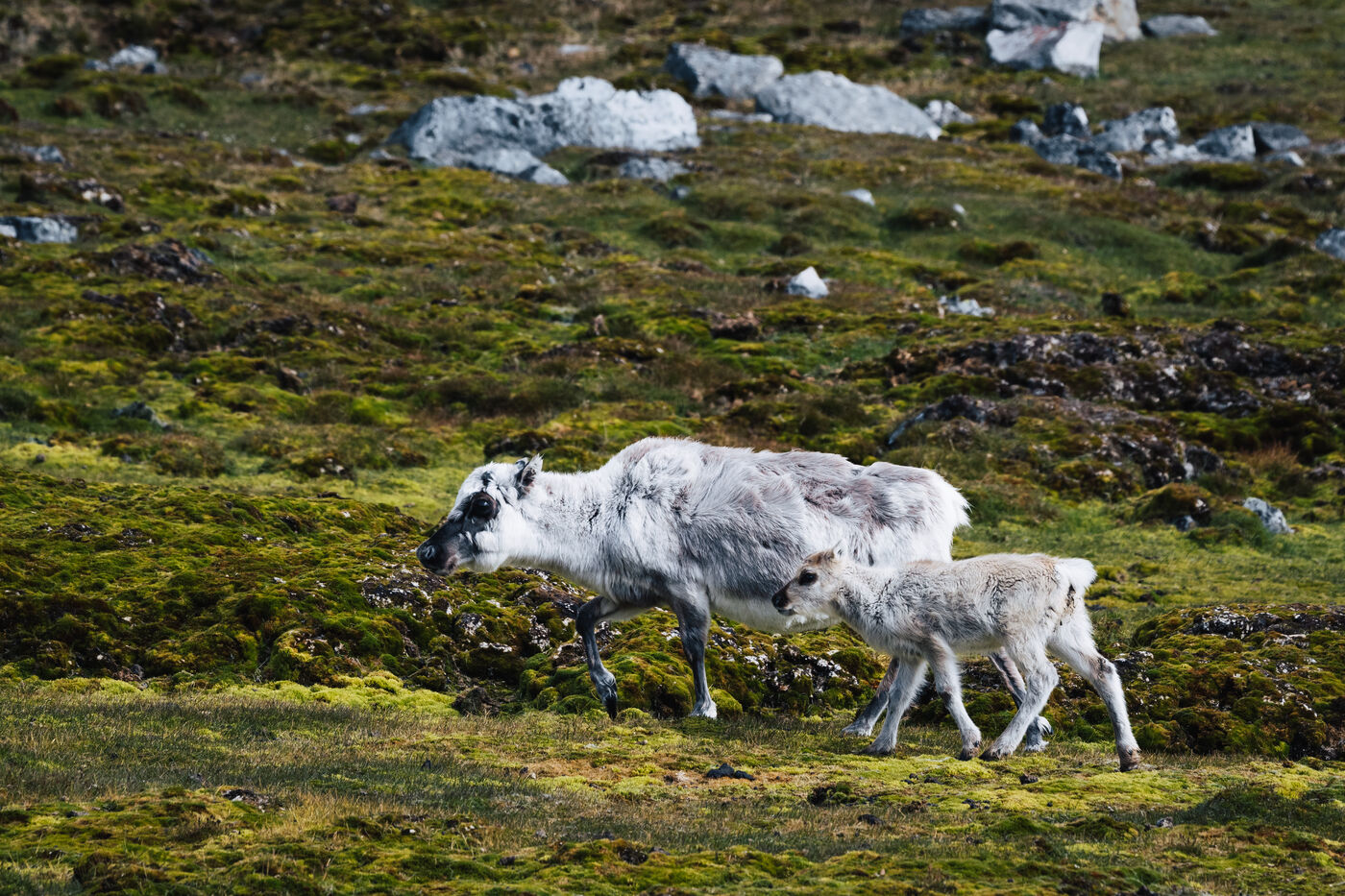
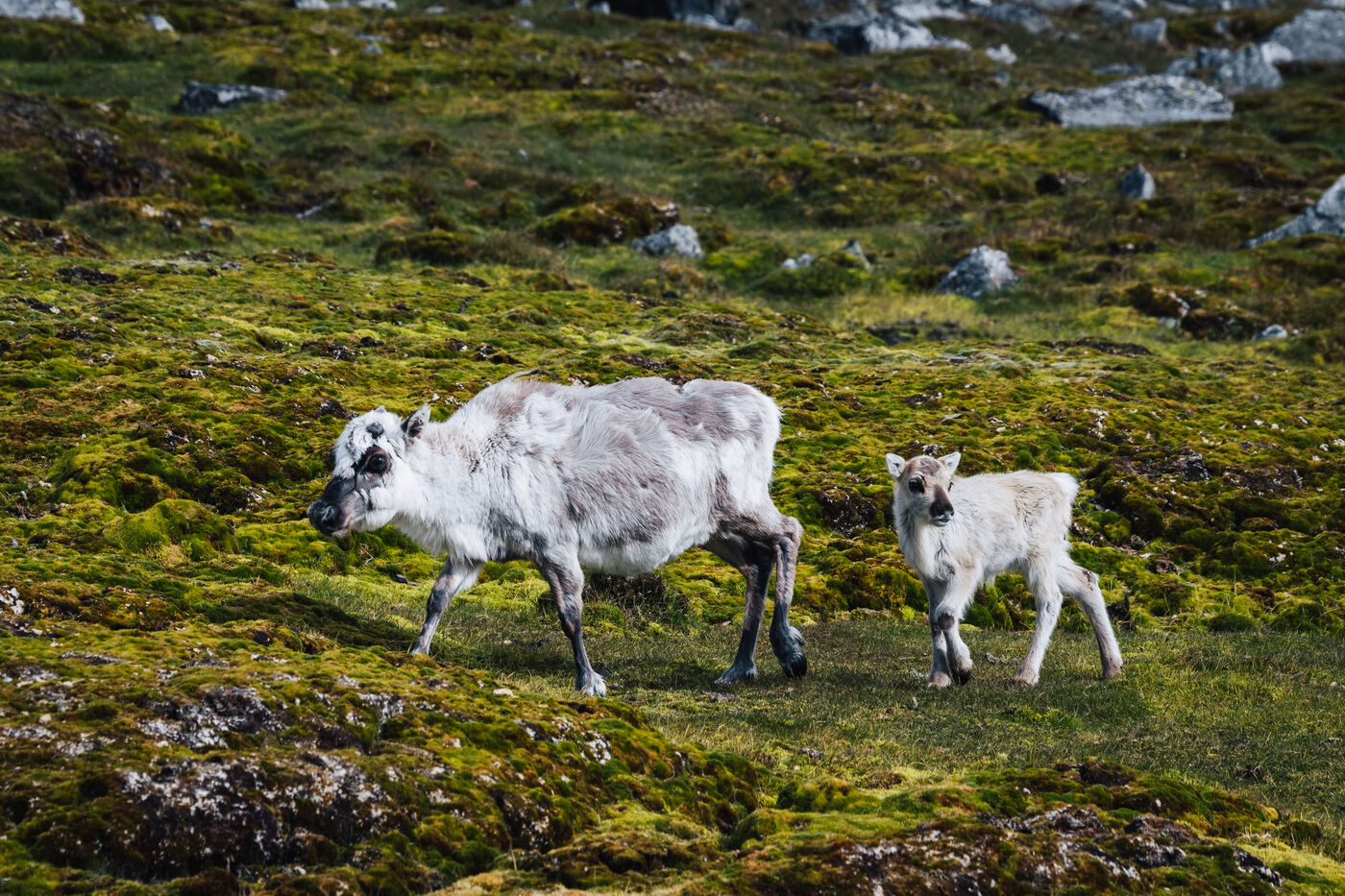
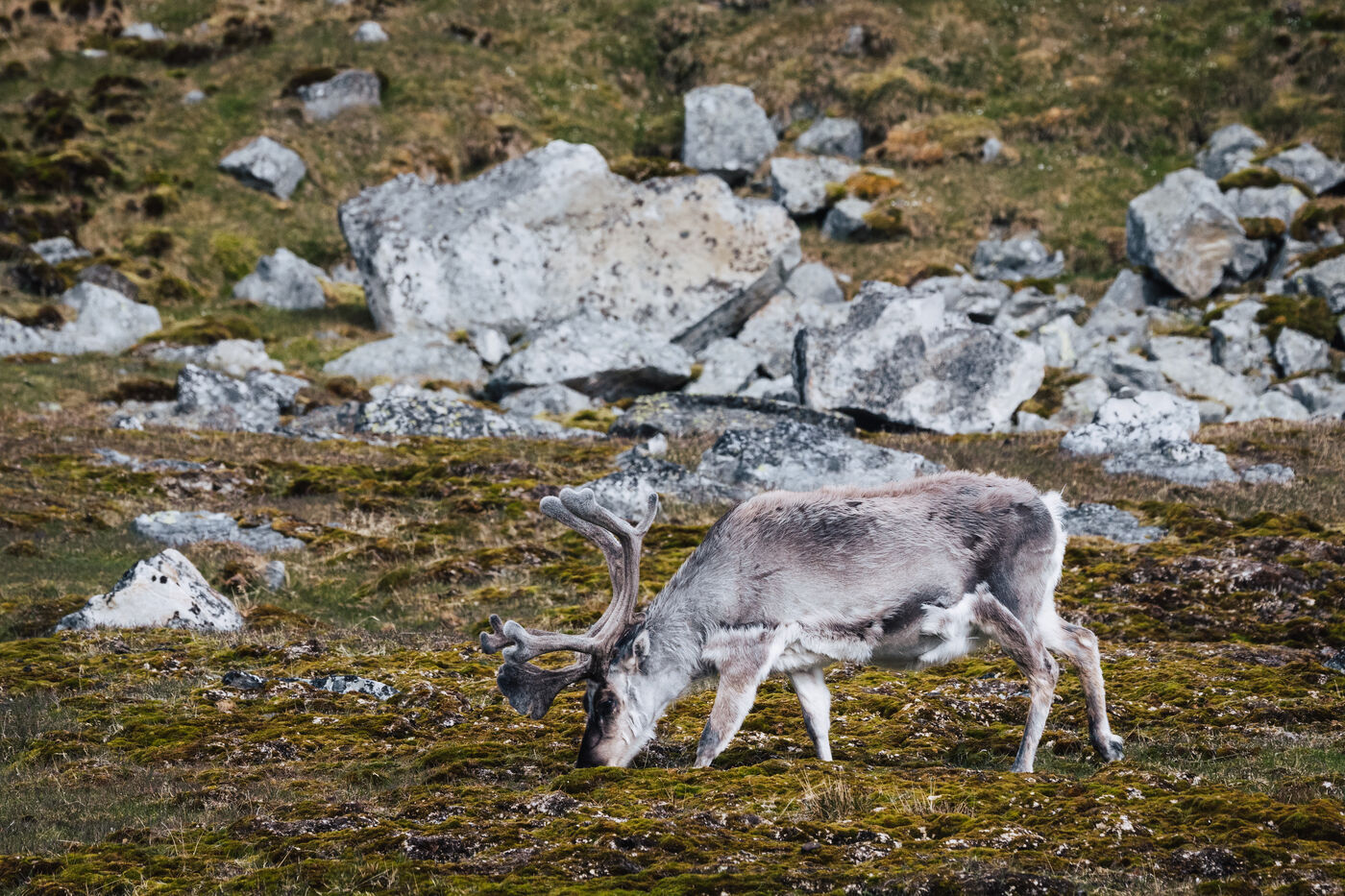
Our last day in the Arctic. The Kinfish motored slowly back toward Longyearbyen, and we made one final landing. We found Arctic reindeer on the tundra, animals smaller than their southern cousins, adapted to life at 78 degrees North. We found beluga bones on the shore, the remains of meals and time. We walked across ground that had never known a footprint before ours, knowing that within hours we would be back in the human world, surrounded by electricity and noise and the weight of civilization.

That transition was always going to be strange. We had spent ten days in a landscape where human concerns felt irrelevant. Where the only things that mattered were ice, light, and the animals that thrived in conditions that would kill most of us. Going back to our regular lives after that kind of immersion always leaves a scar. A beautiful scar, but a scar nonetheless. The Arctic doesn't let you go easily.

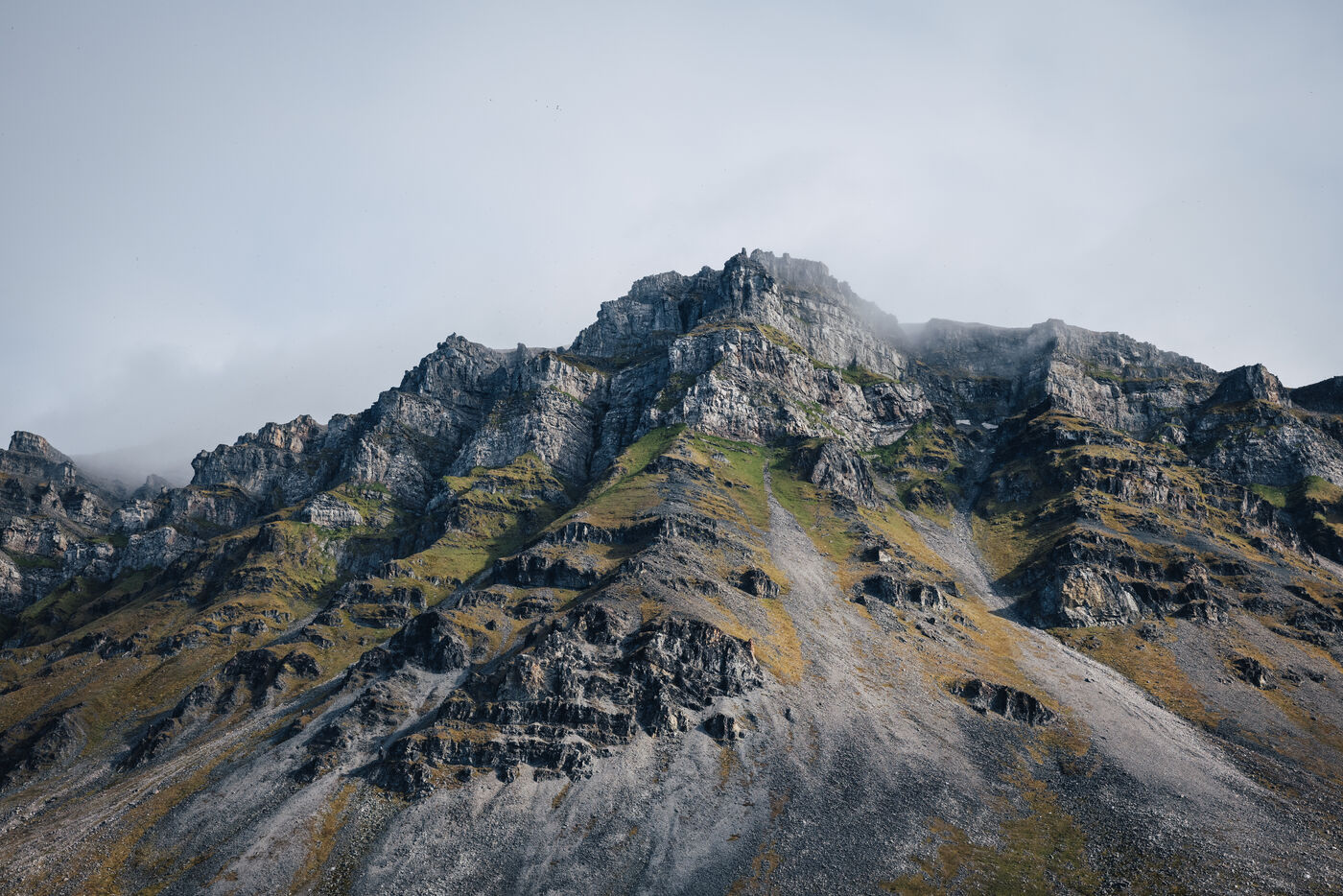
Barren tundra landscape with jagged mountain peak and glacier-carved valleys under cloudy sky
Our last landing, on ground untouched until this moment, knowing we must leave it behind.
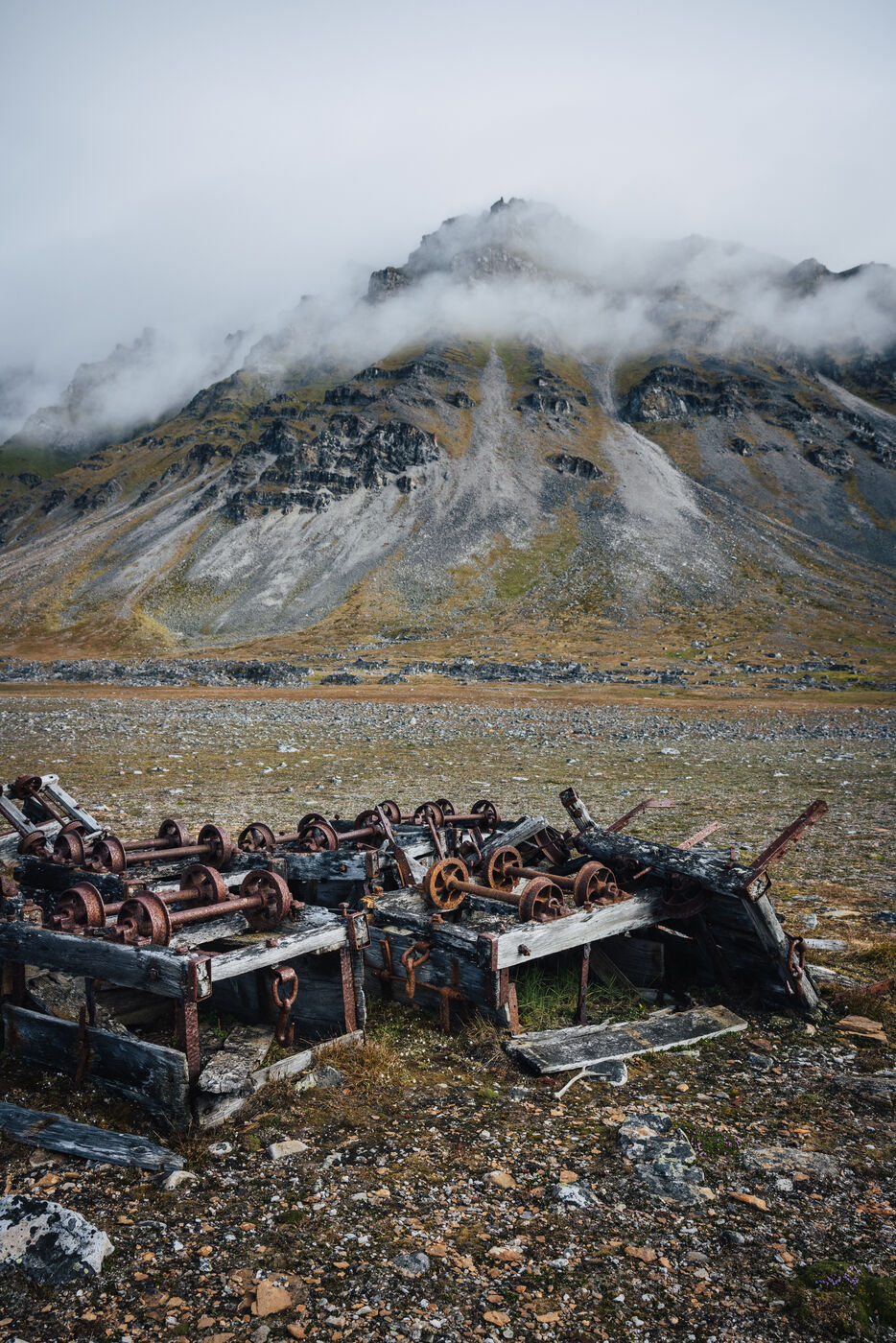
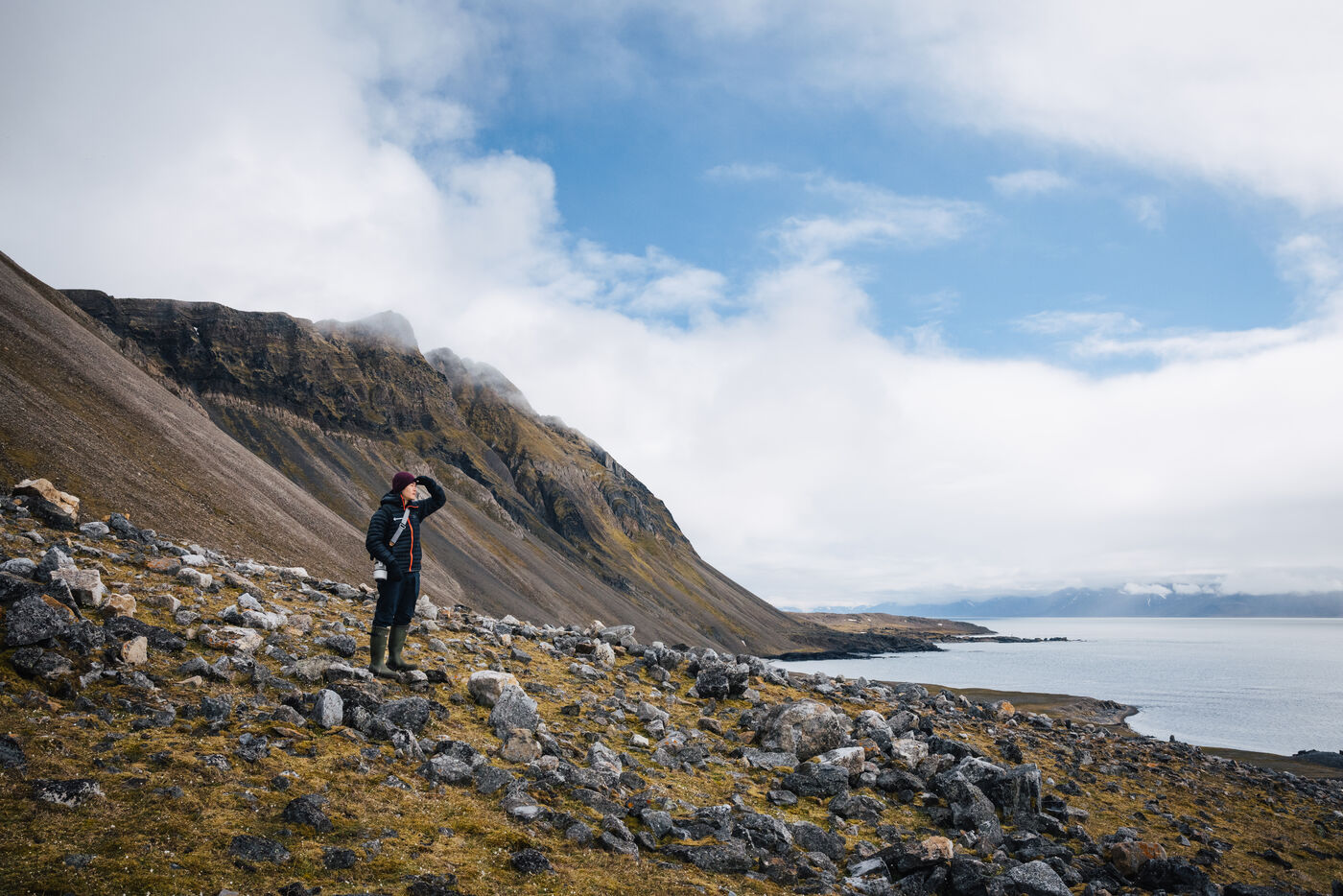
Lone figure standing on the tundra below a cloud-shrouded mountain Rusted wheels and weathered timber of abandoned machinery on the tundra below a cloud-capped mountain
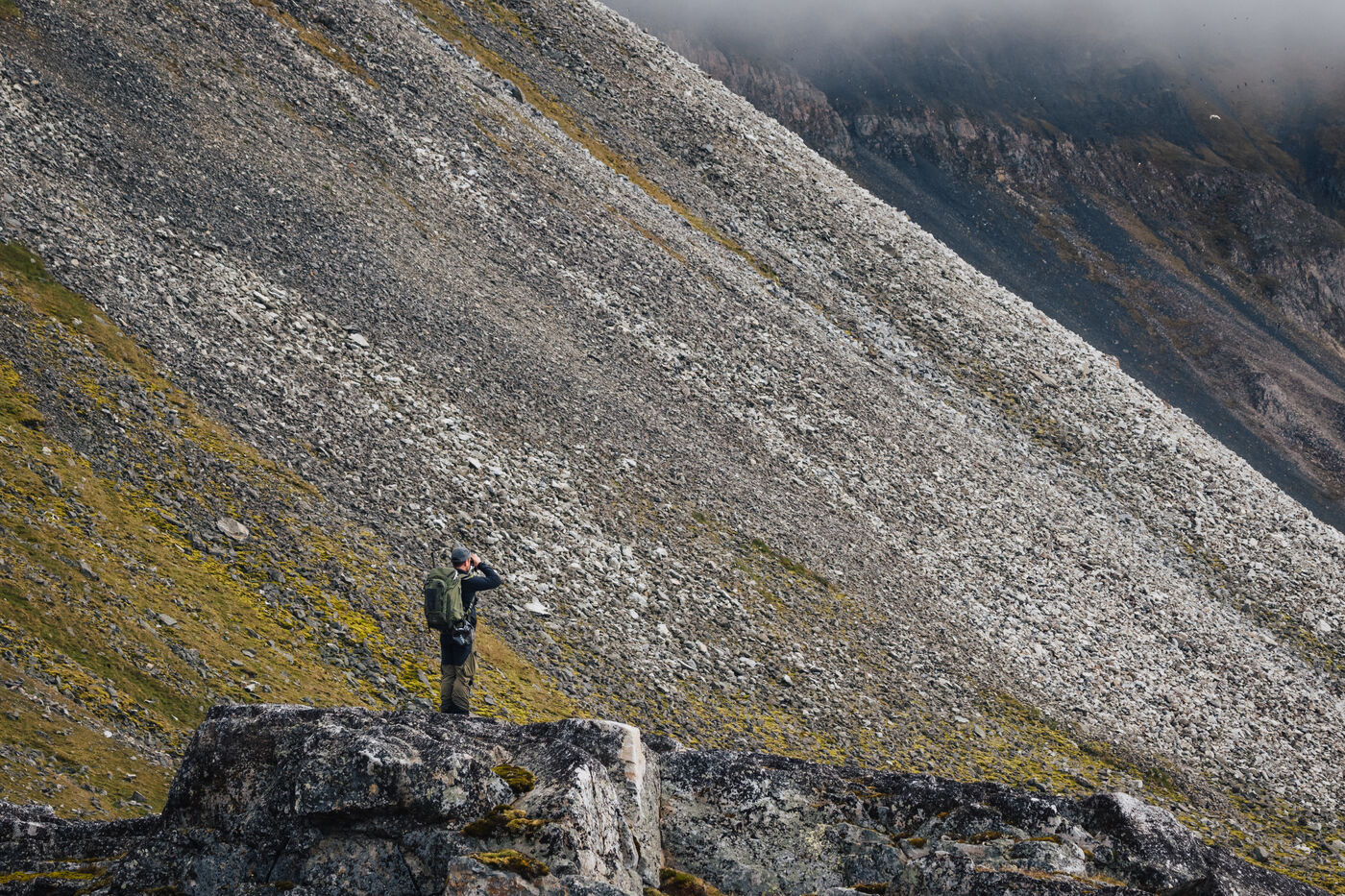
A lone figure on the tundra, and the rusting wreckage of old machinery left behind.
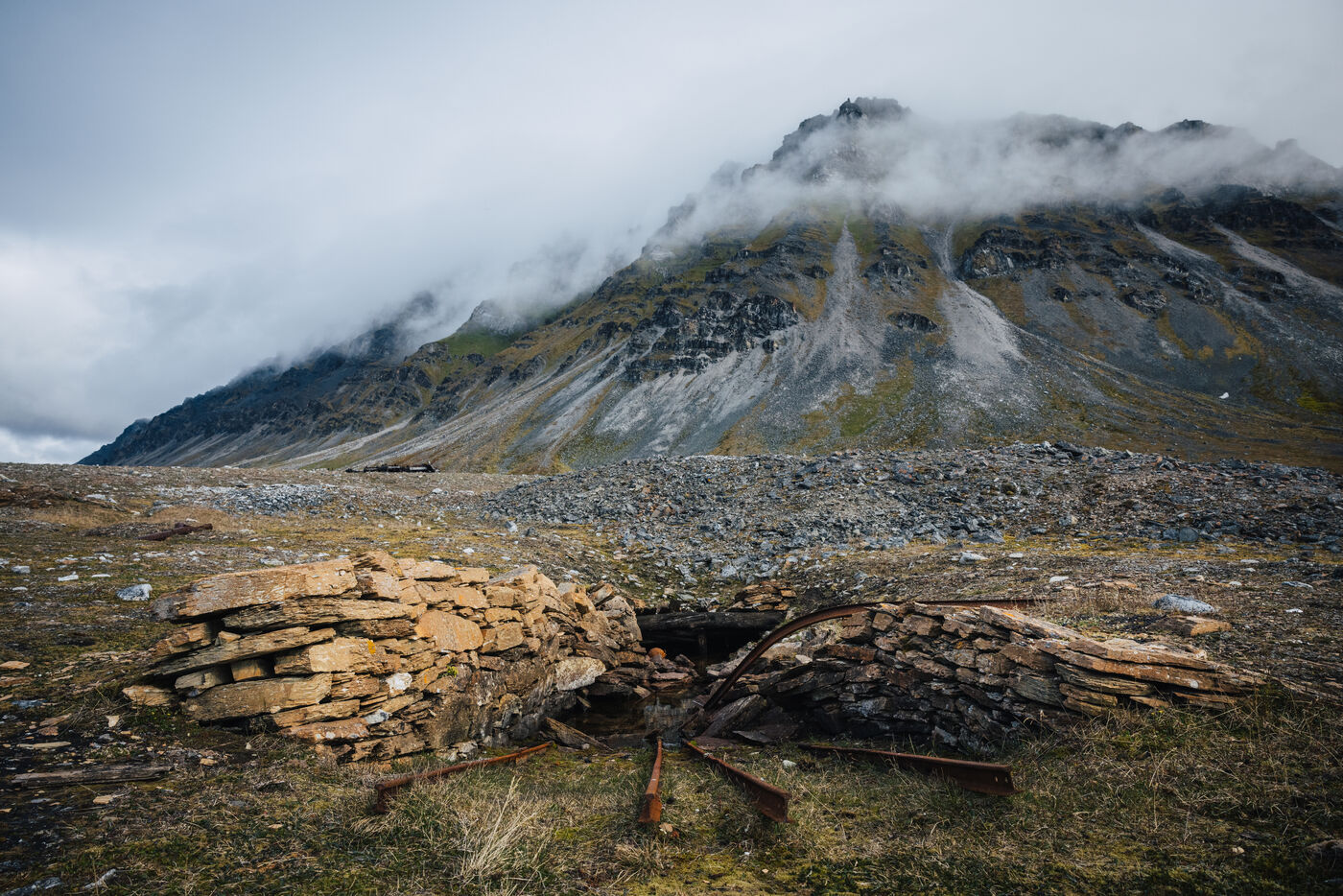
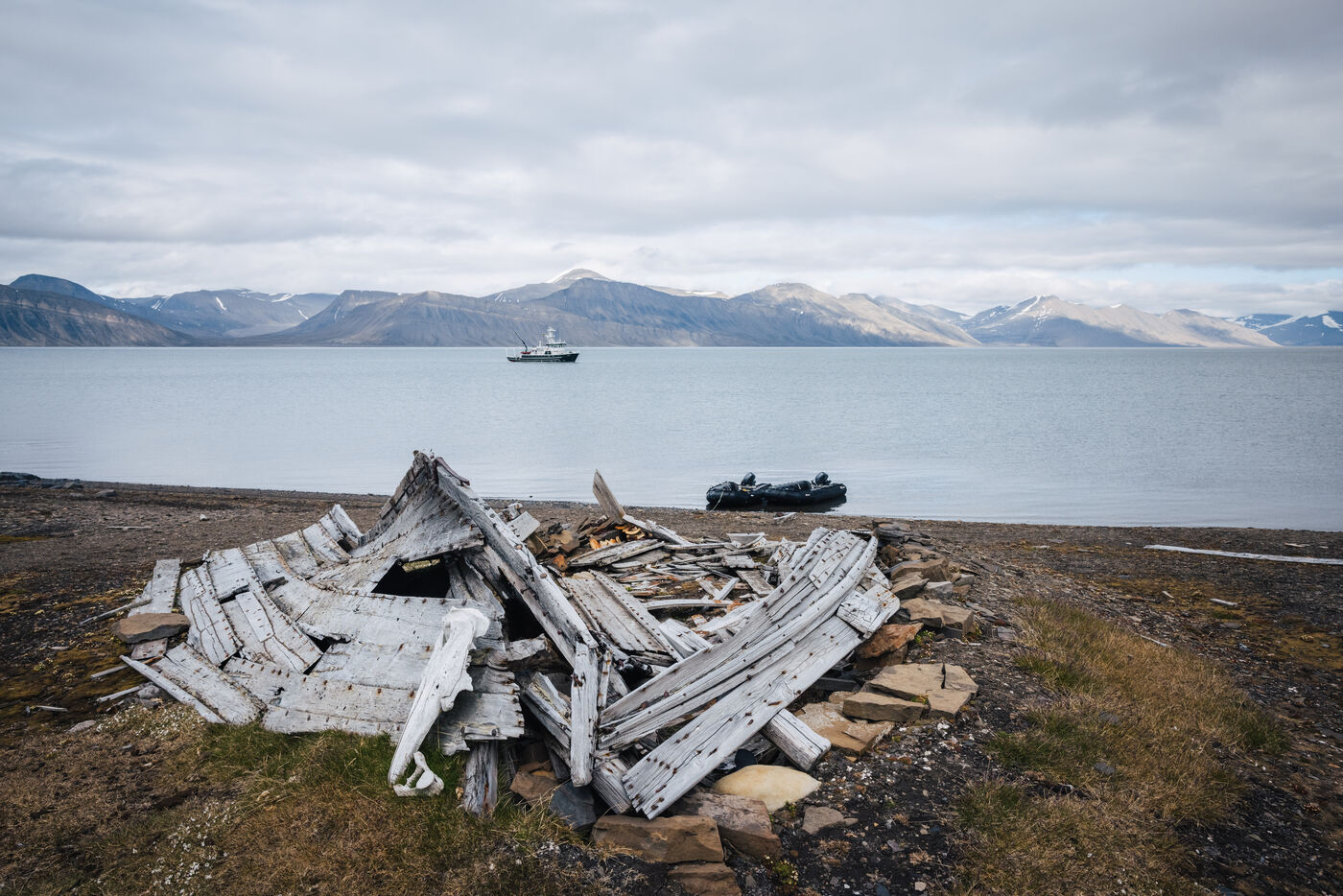
Collapsed stone structure with rusted ironwork on the tundra below a cloud-capped mountain Reindeer grazing on green tundra beside a stream, the sea and mountains beyond
A collapsed stone shelter, and a lone reindeer grazing the moss beside a tundra stream.
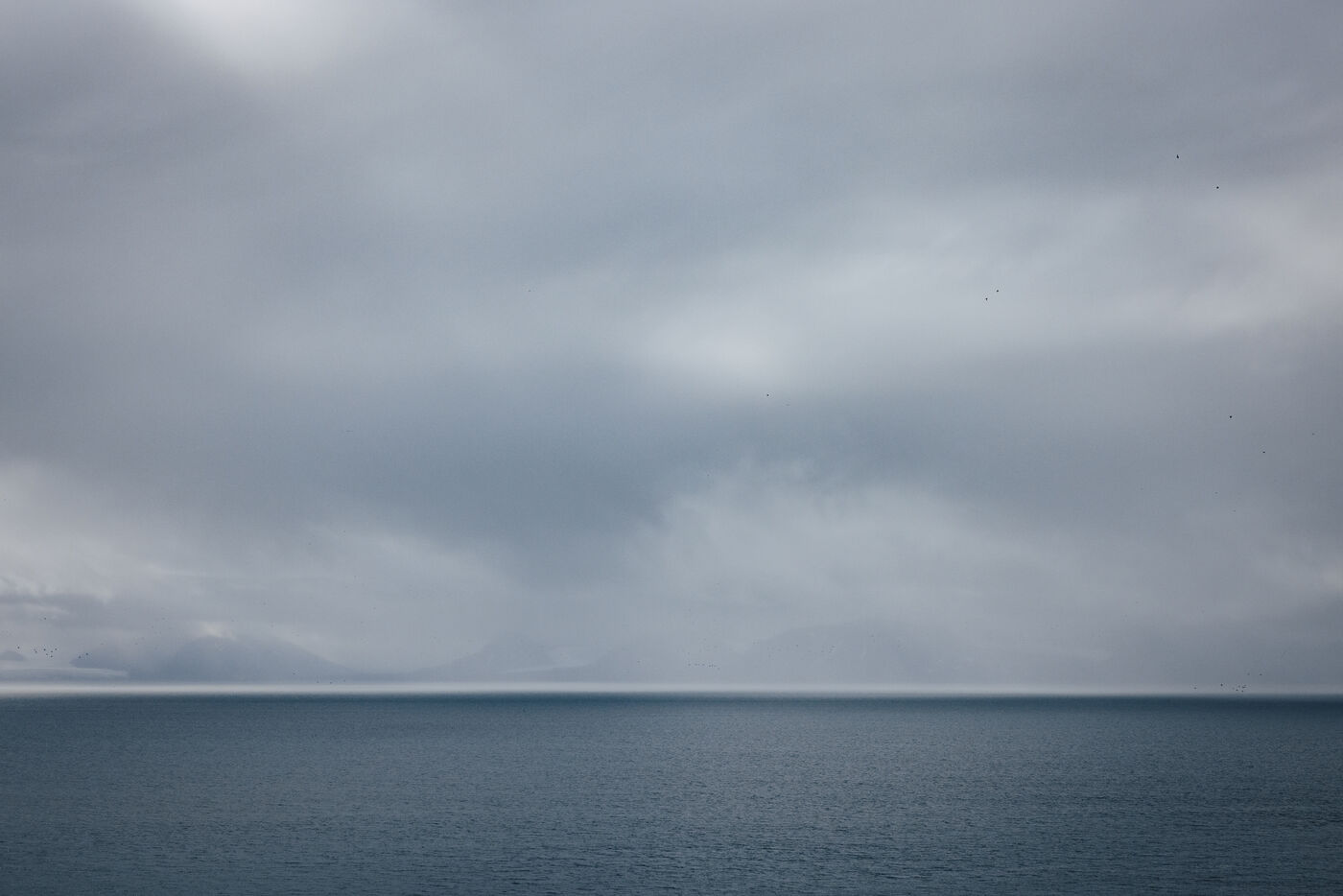
Grey sea under heavy cloud, light breaking on the horizon
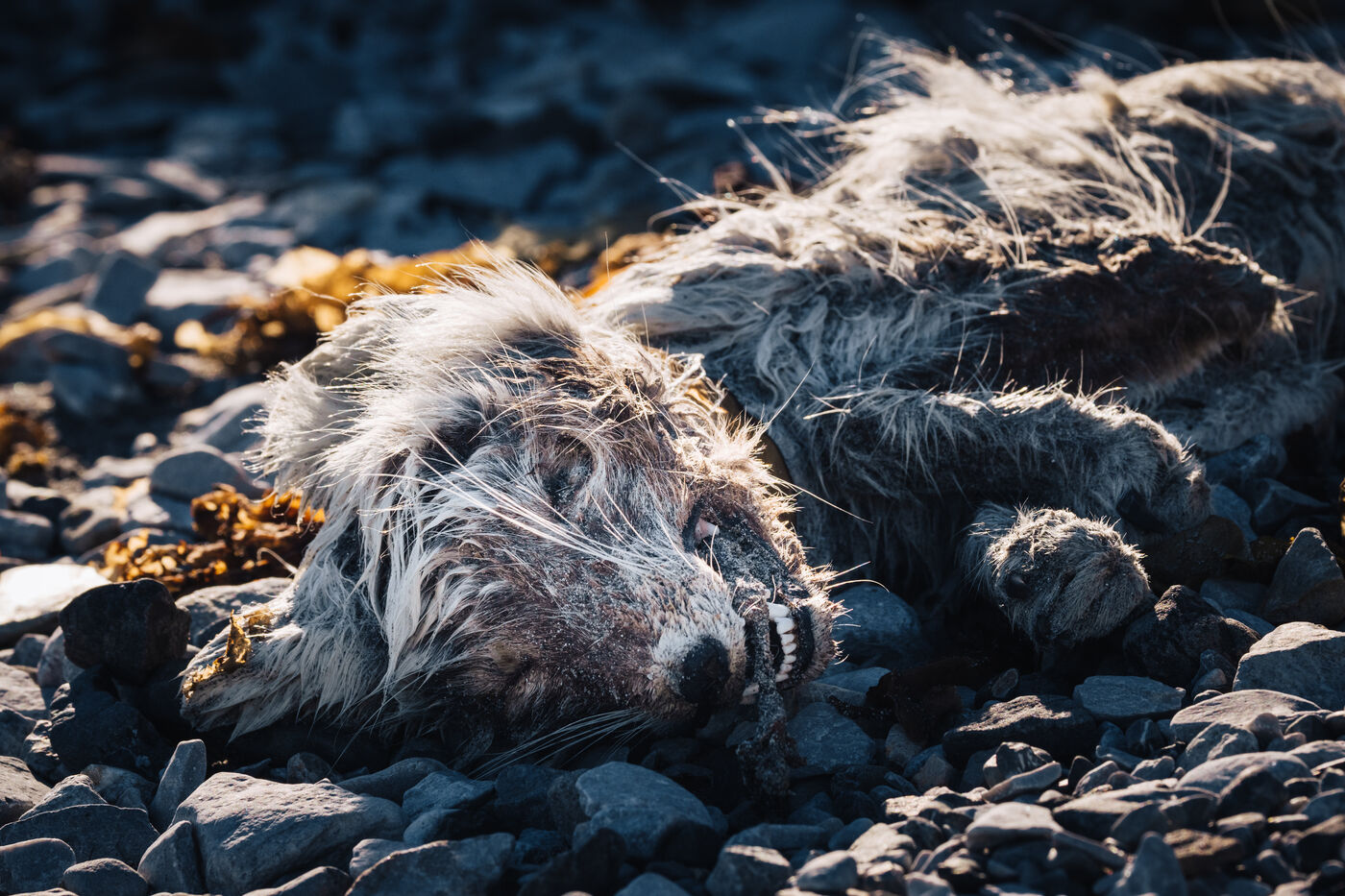
This serenity masks the constant predation and death that sustains Arctic life.

The Kinfish Experience

Our voyage with photographer Chris Michel and the entire Kinfish crew was more than a trip. It was a transformation. Ten days of Arctic light, wildlife, and the profound silence that comes from being at the top of the world. The Kinfish, built in 1958 and converted into an intimate passenger ship, carried us through waters that demanded respect and delivered rewards that words cannot quite capture.
If you ever have the chance to circumnavigate Svalbard, to spend ten days in the midnight sun, to swim in emerald waters surrounded by thousand-year-old ice, to watch polar bears hunt and walruses rest, to stand in abandoned Soviet towns and stand on tundra untouched by human footprints. Go. The Arctic will change you in ways you cannot predict until you arrive.