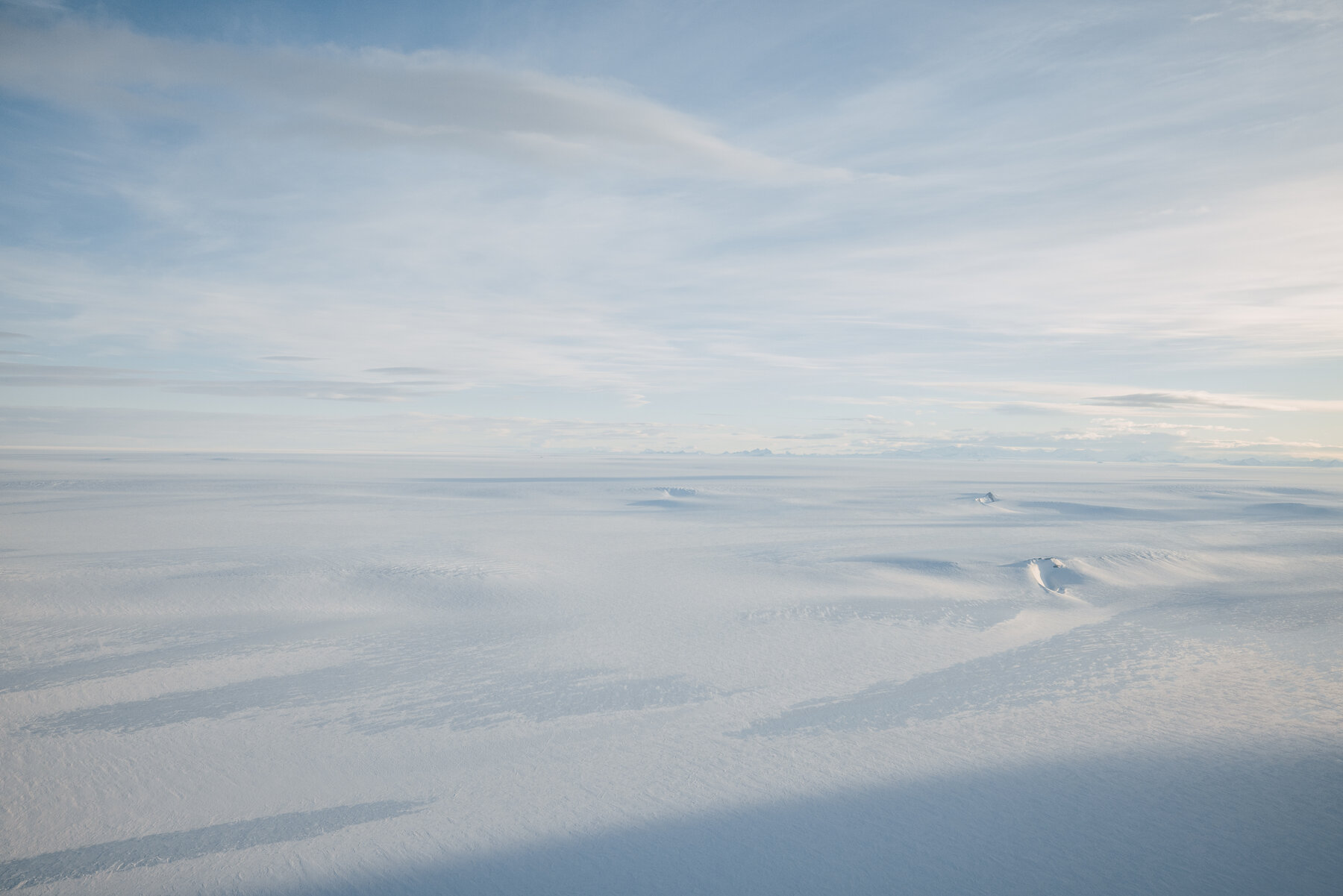
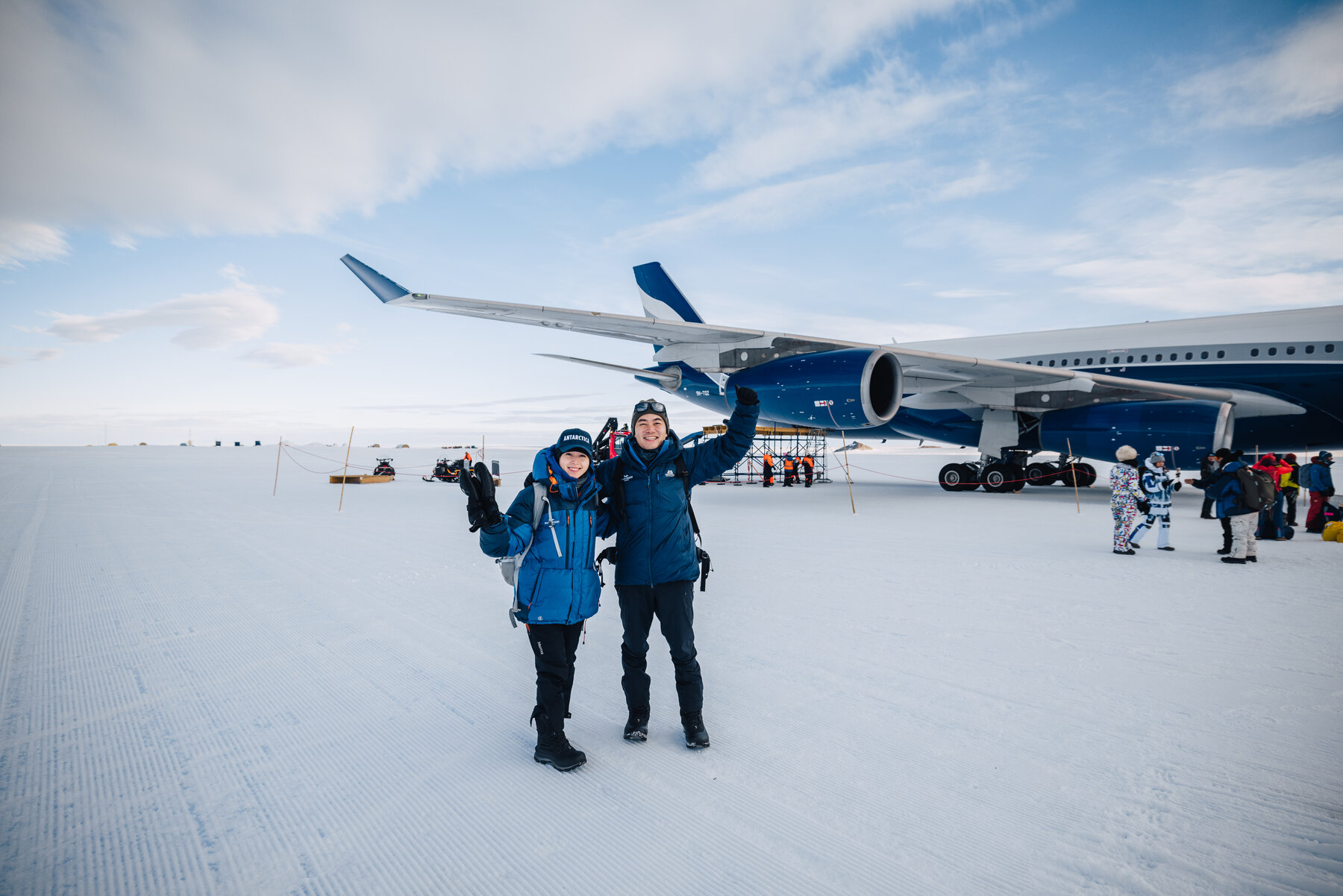
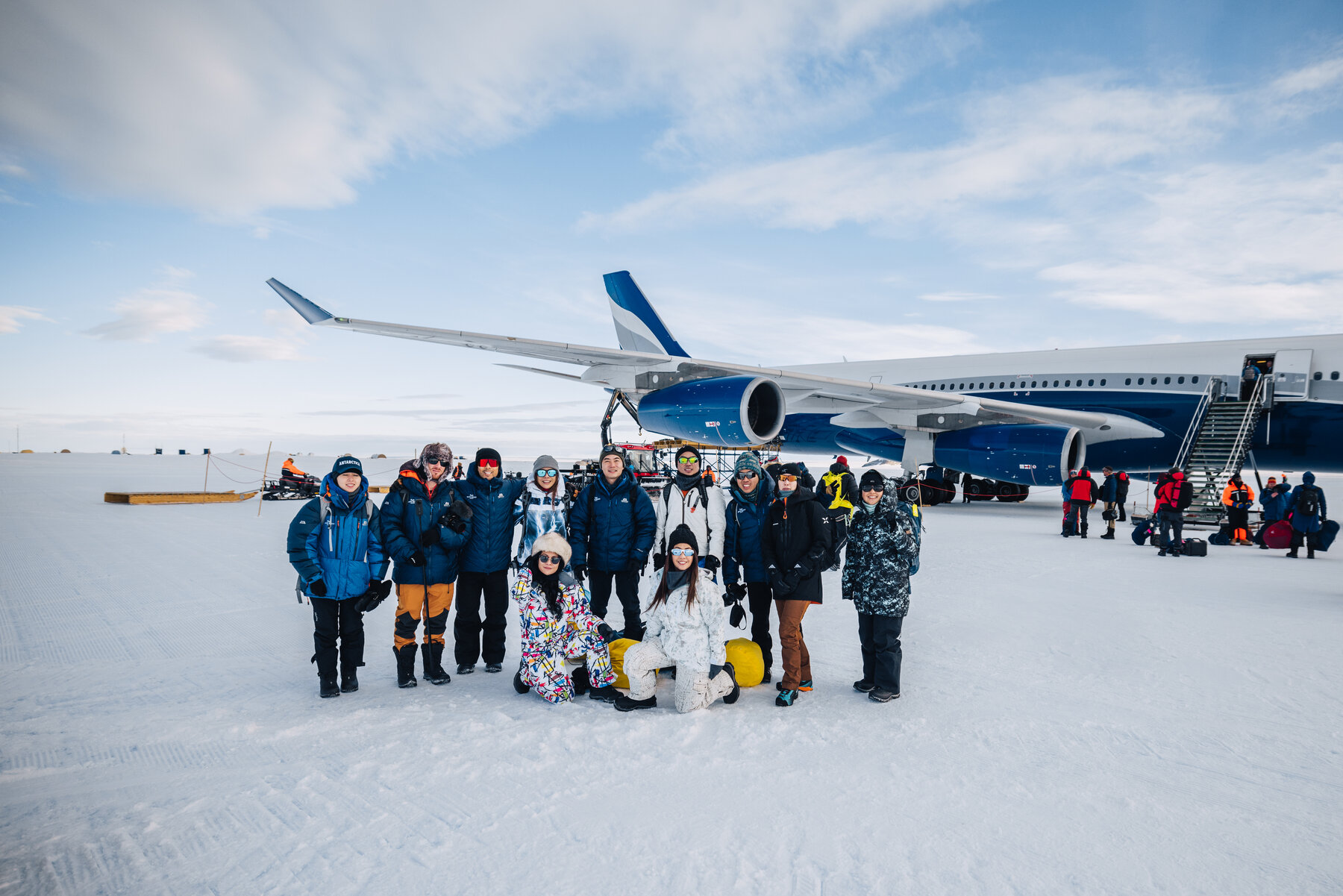
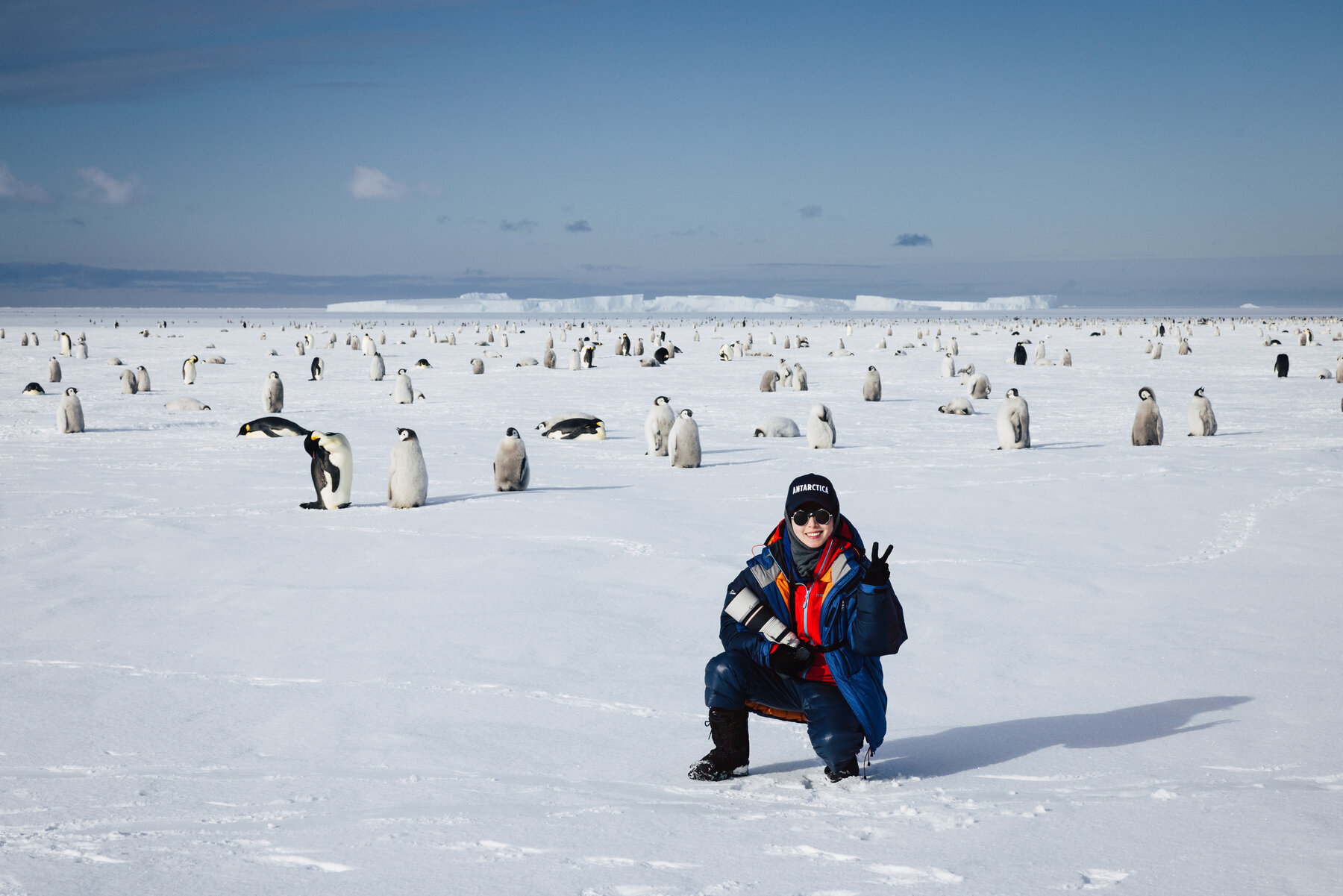
Eight days at the bottom of the world, from a luxury camp on the ice to the South Pole and an Emperor Penguin colony at Atka Bay.
December 20238 DaysAntarctica
A trip three years in the making finally arrived on a December morning in Cape Town. We boarded a private jet bound for Antarctica with White Desert, one of the only companies in the world that offers luxury air access to the frozen continent. What followed was eight days that tested every sense of wonder we possessed: standing at the geographic South Pole surrounded by nothing but sky and ice, watching Emperor Penguin chicks waddle fearlessly around our feet at Atka Bay, descending into ice tunnels where light refracted in colors that don't quite exist elsewhere on Earth, and scaling a nunatak with crampons and ice axes in the most remote climbing destination on the planet.
Antarctica is the coldest, driest, highest continent on Earth. Fewer than 500 people reach the South Pole in any given year. It was a dream for us, one we'd held since we first saw photos of the ceremonial pole marker and the endless white plateau stretching to the horizon. This is our journal of those eight days. Vivid, unfiltered, and honest about what it means to stand at the ends of the Earth.
Day 01
Cape Town to Wolf's Fang
December 13, 2023 · Cape Town, South Africa → Wolf's Fang, Antarctica
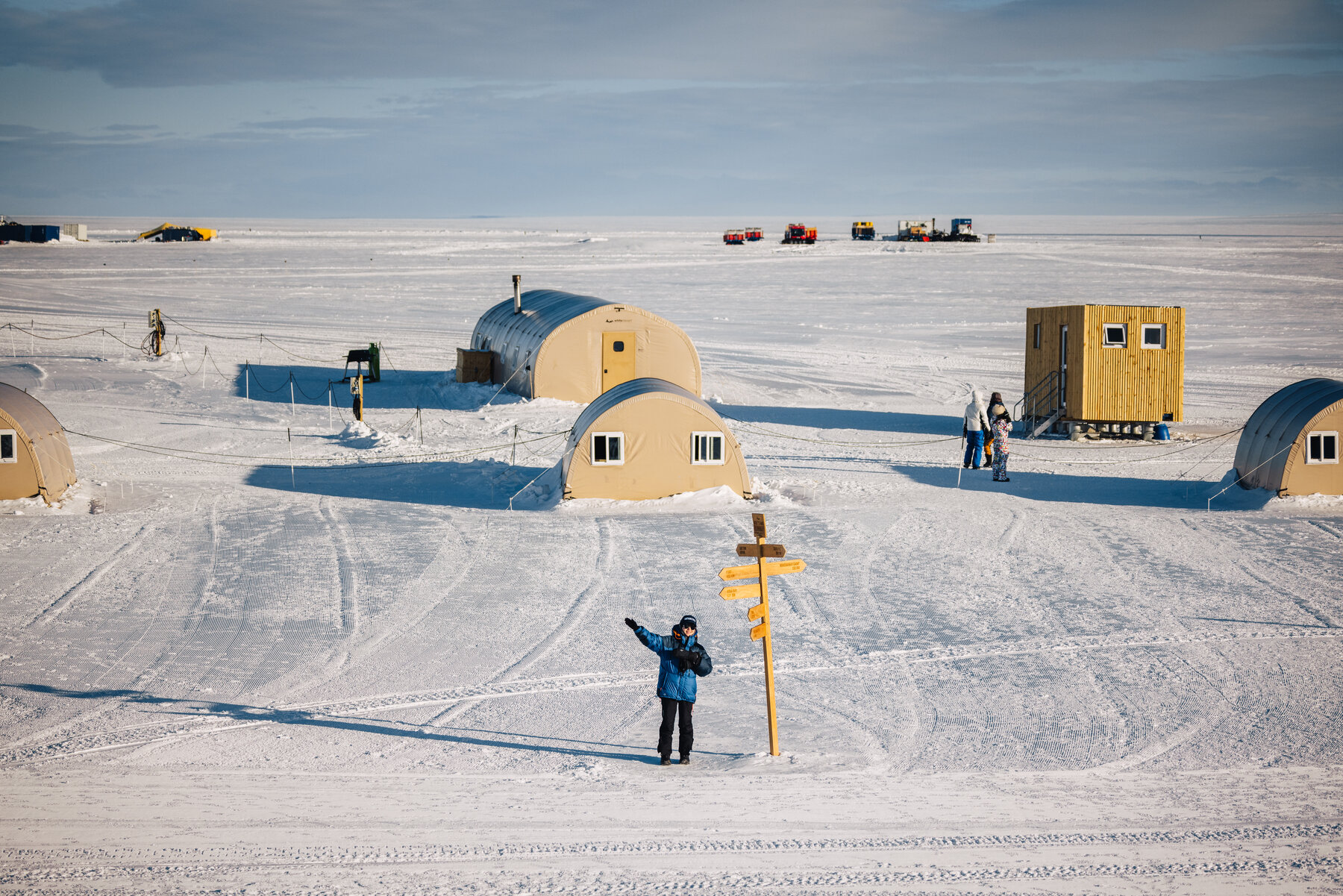
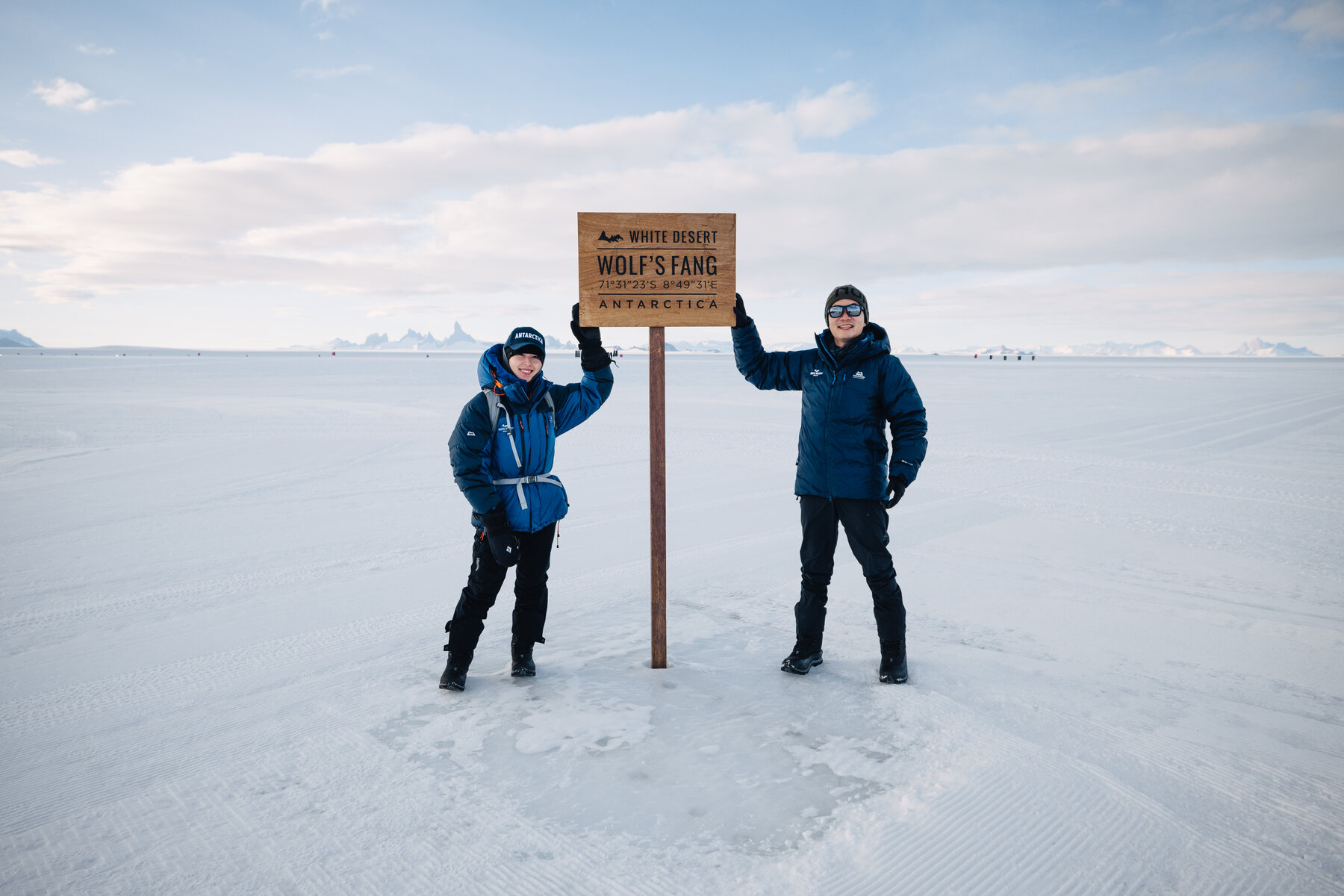
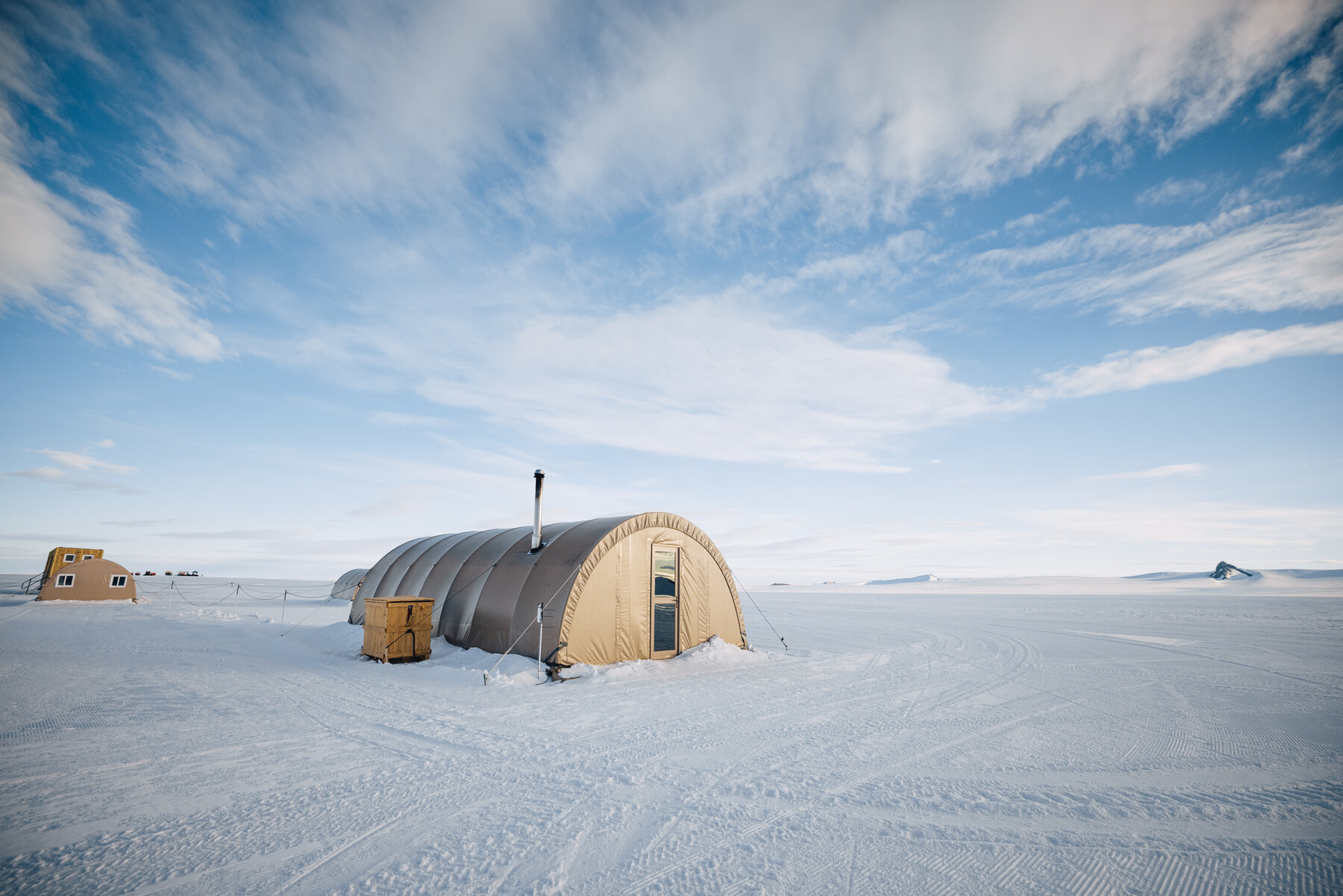
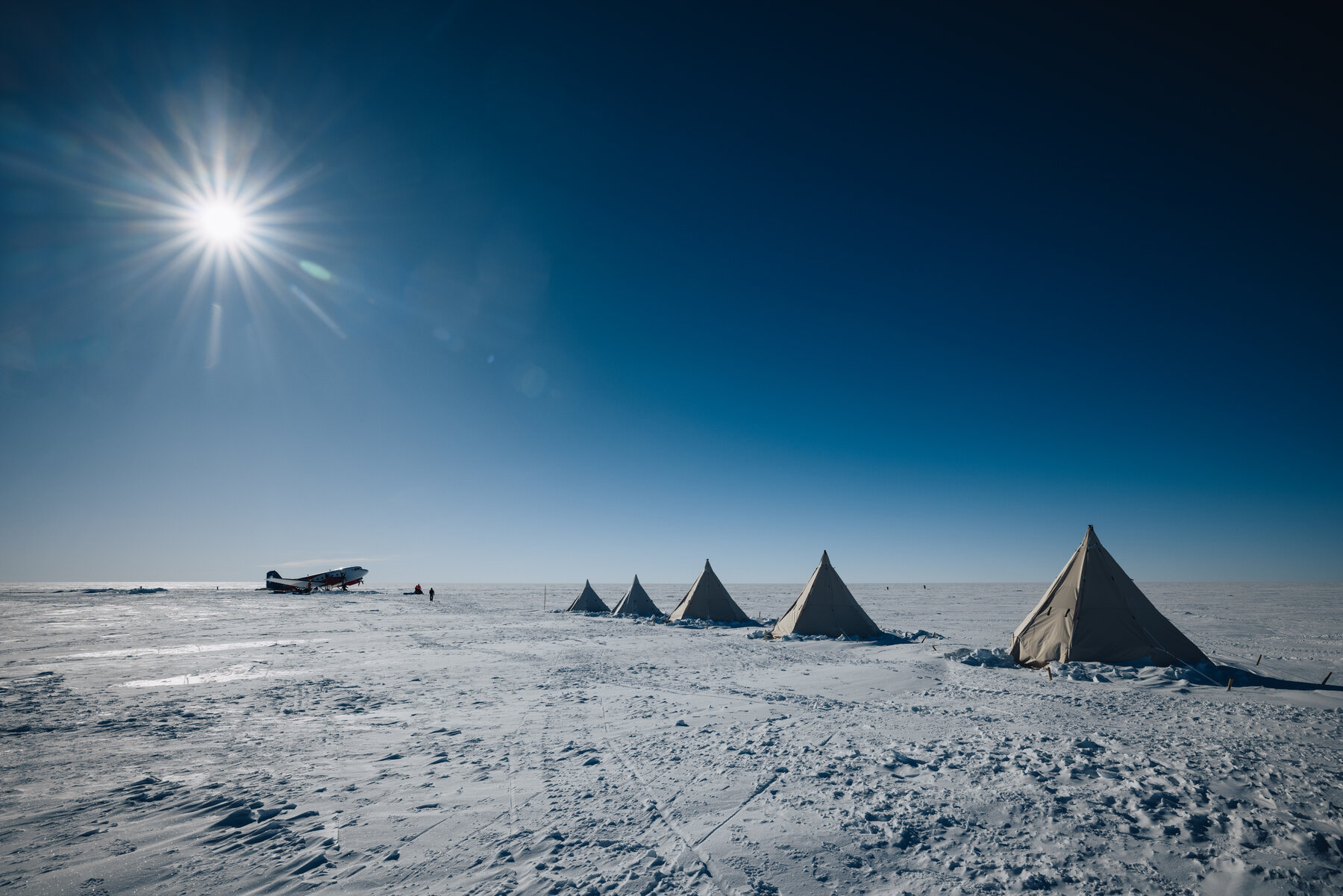
Wolf's Fang. Canvas lodging on an endless plateau, 4,398 km from Cape Town.
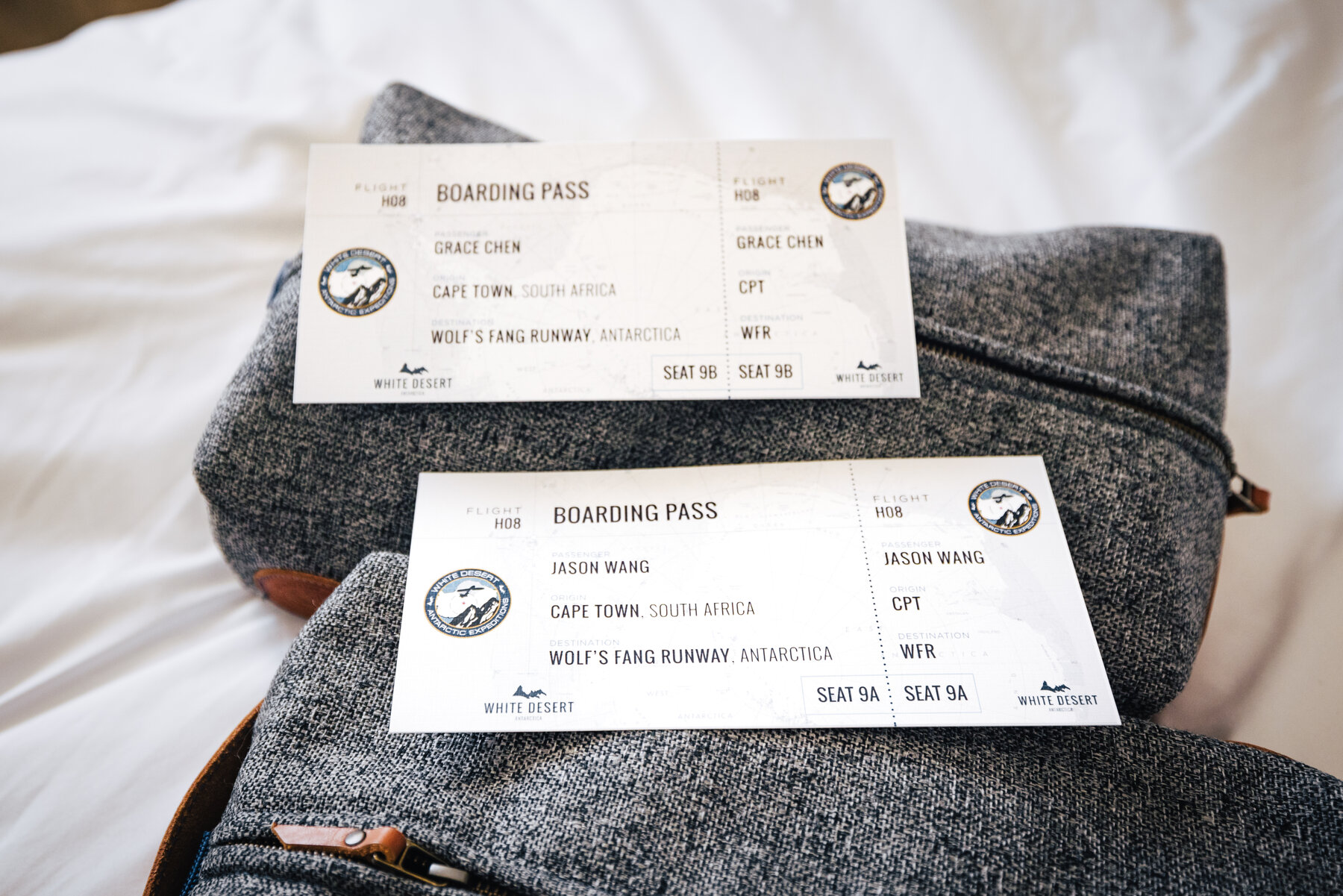
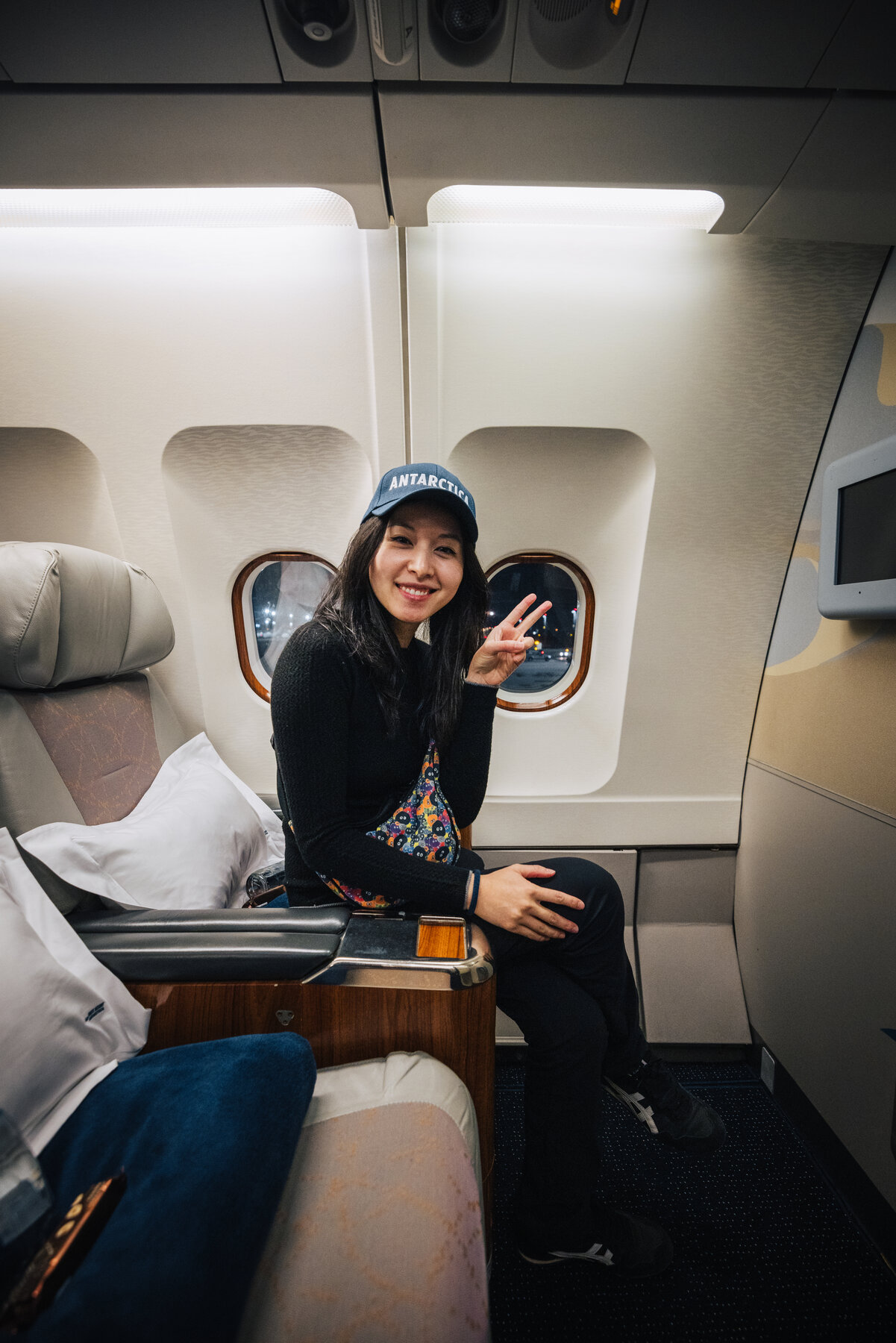
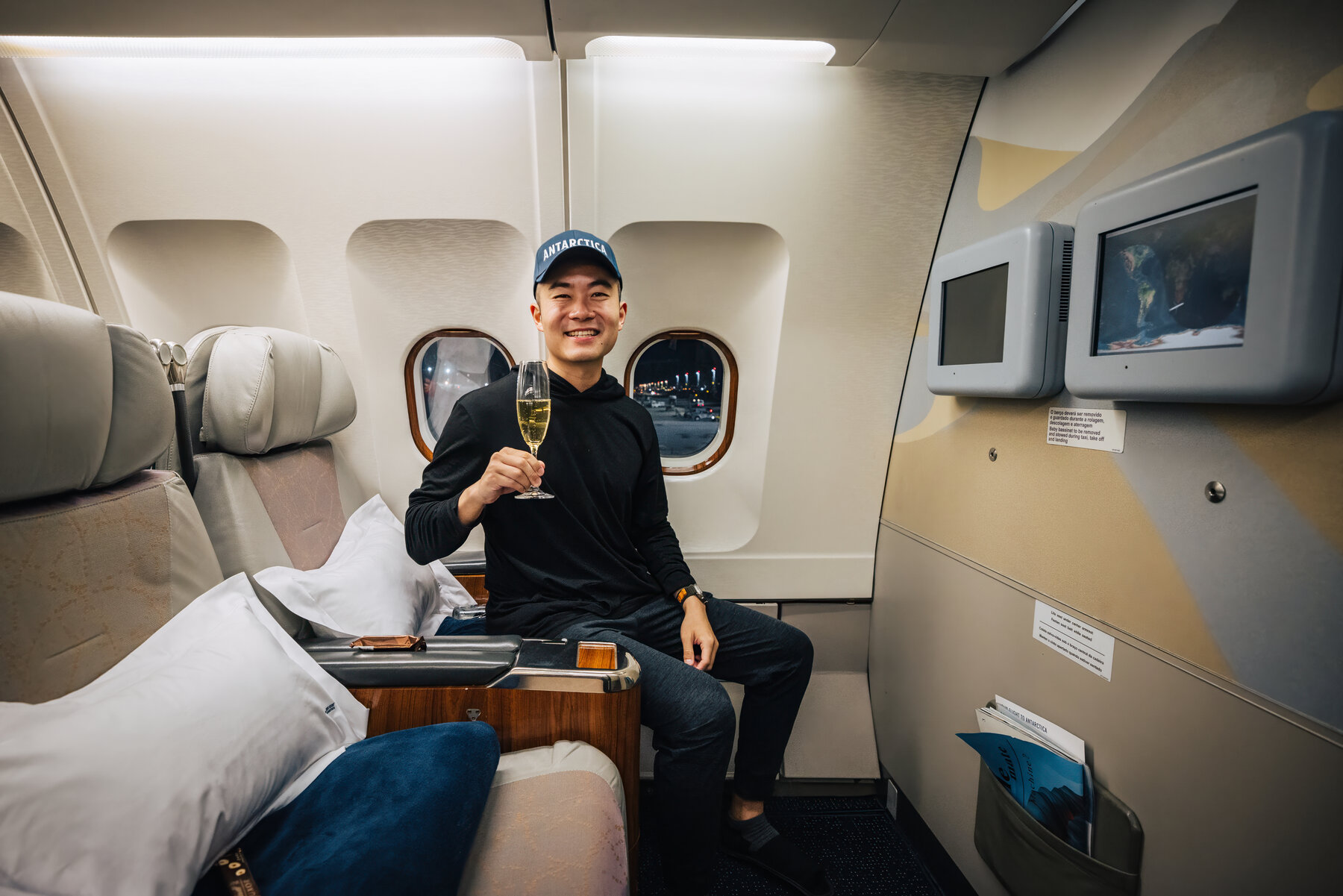
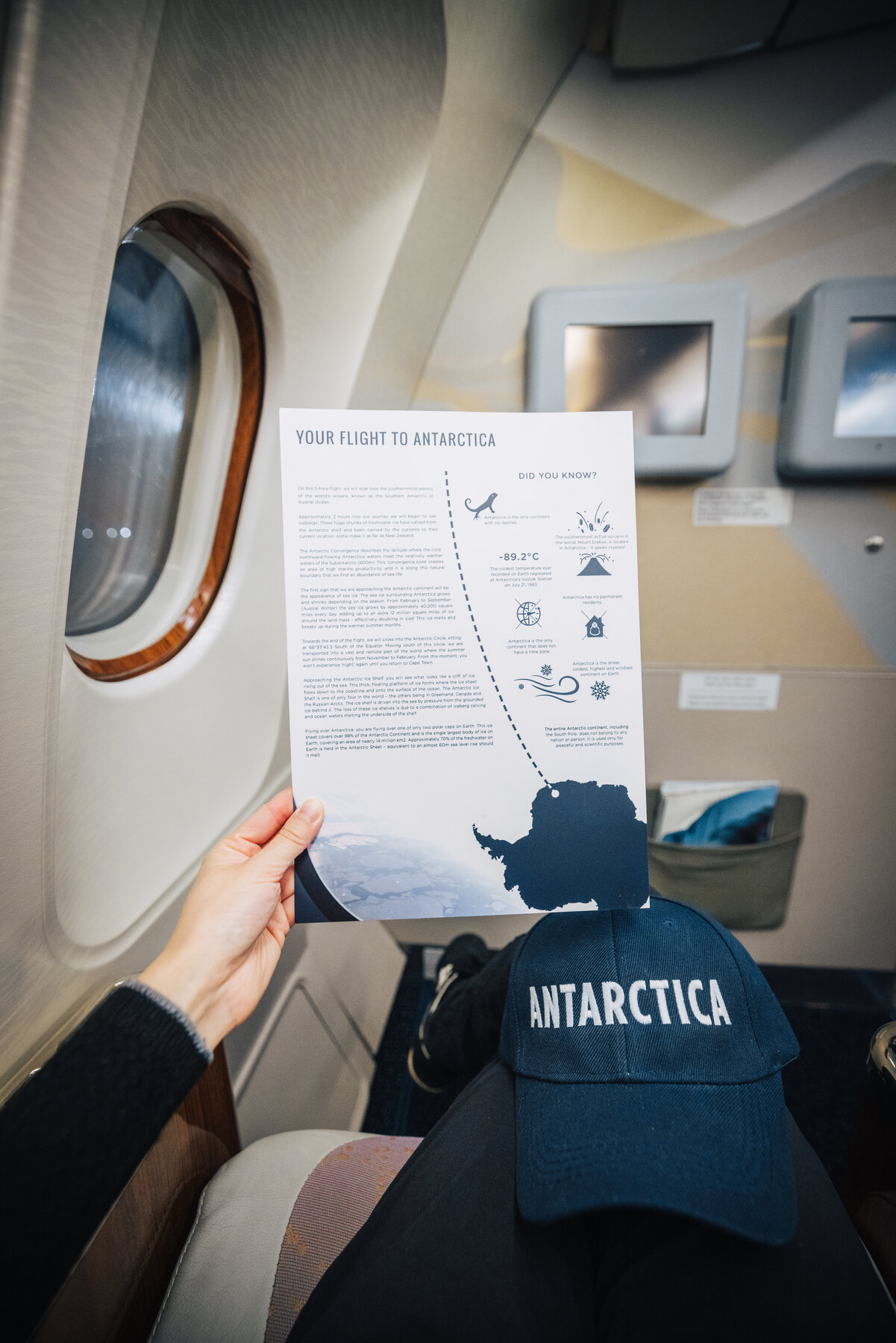
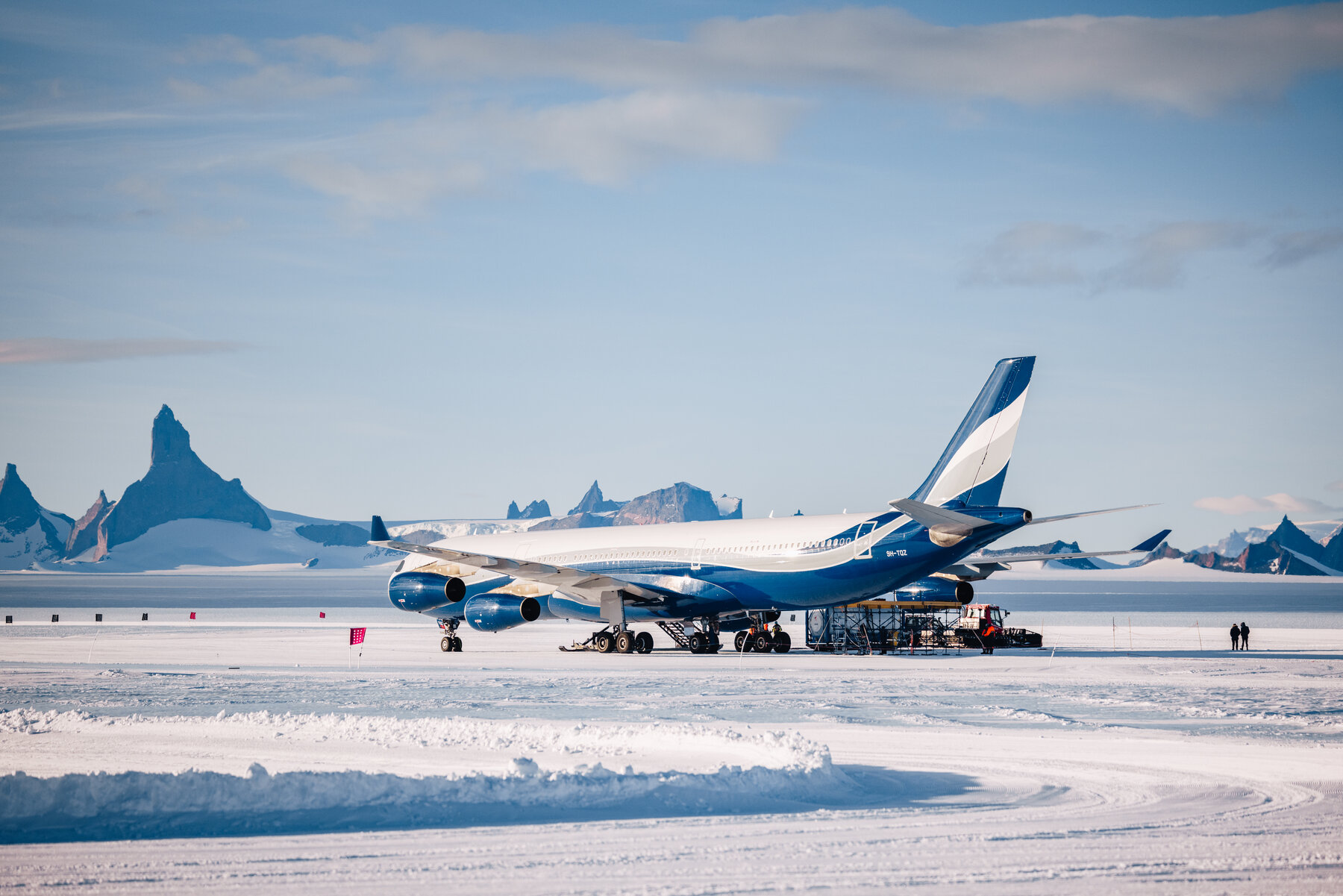
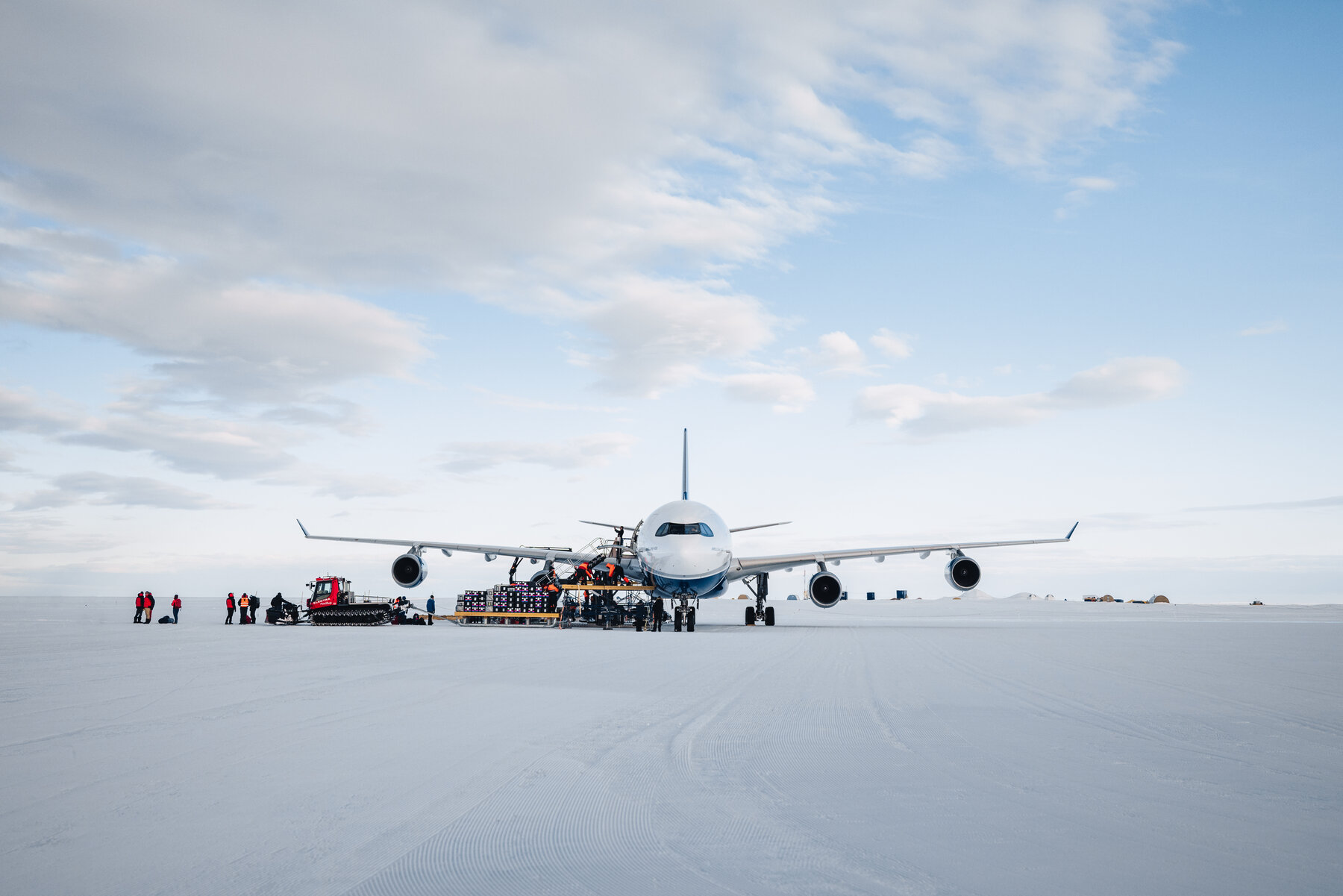
A trip three years in the making was finally here. We embarked on the most epic journey to Antarctica with White Desert, one of the only companies in the world that offers a private jet service to the frozen continent. After a 5.5-hour flight from Cape Town, we stepped into a world beyond imagination, landing on their exclusive Wolf's Fang Runway, a strip of blue ice that stretched endlessly toward the horizon.
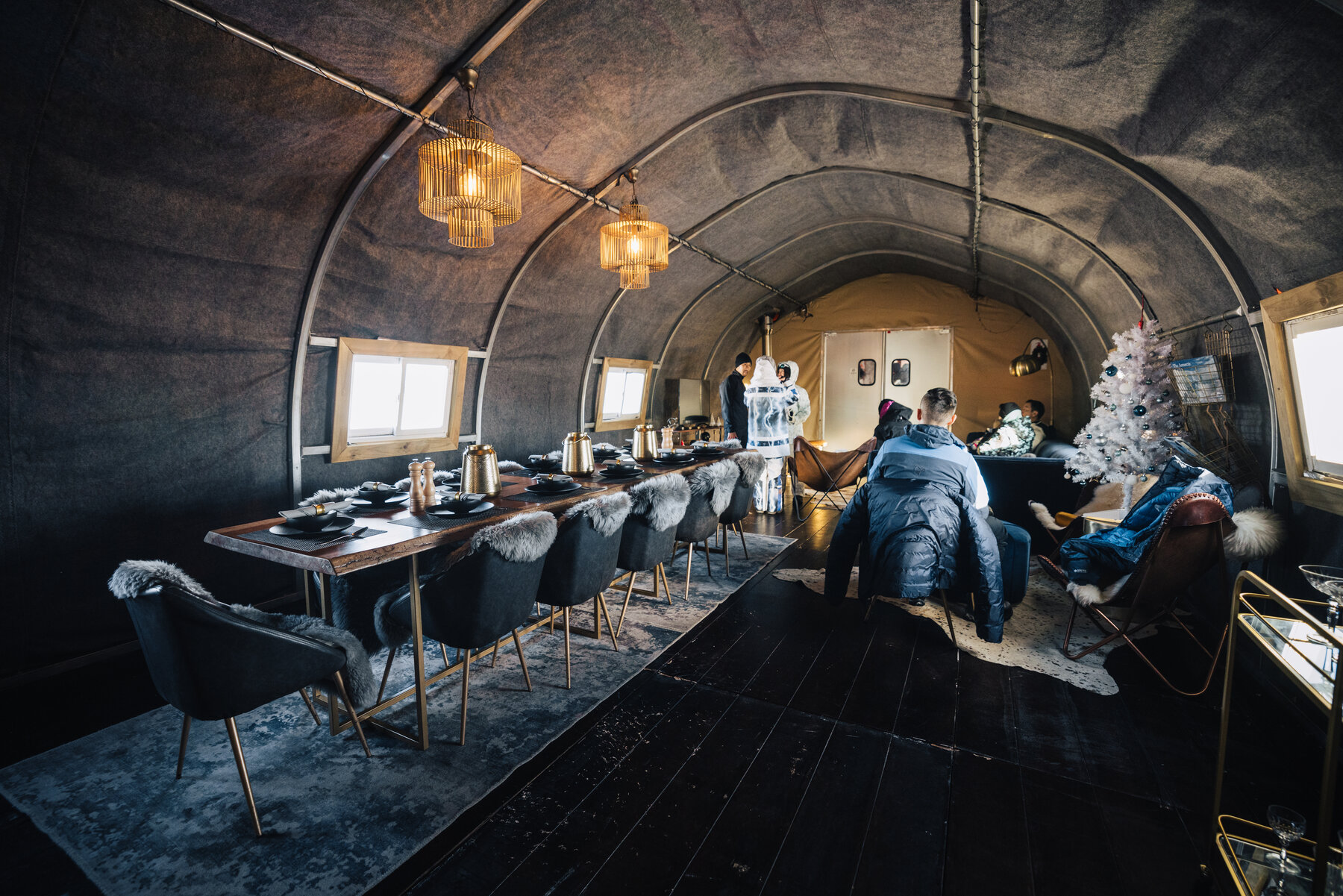
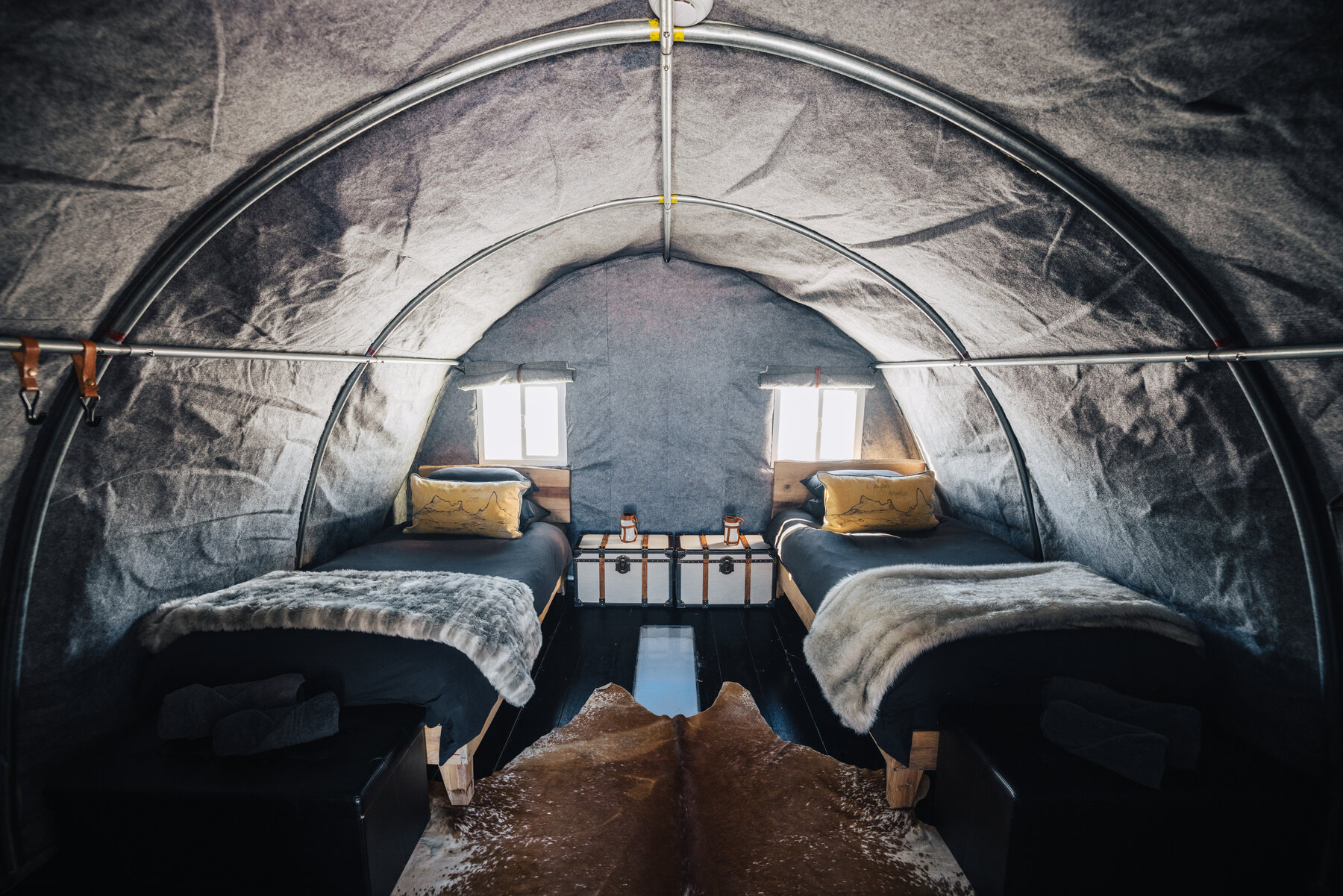
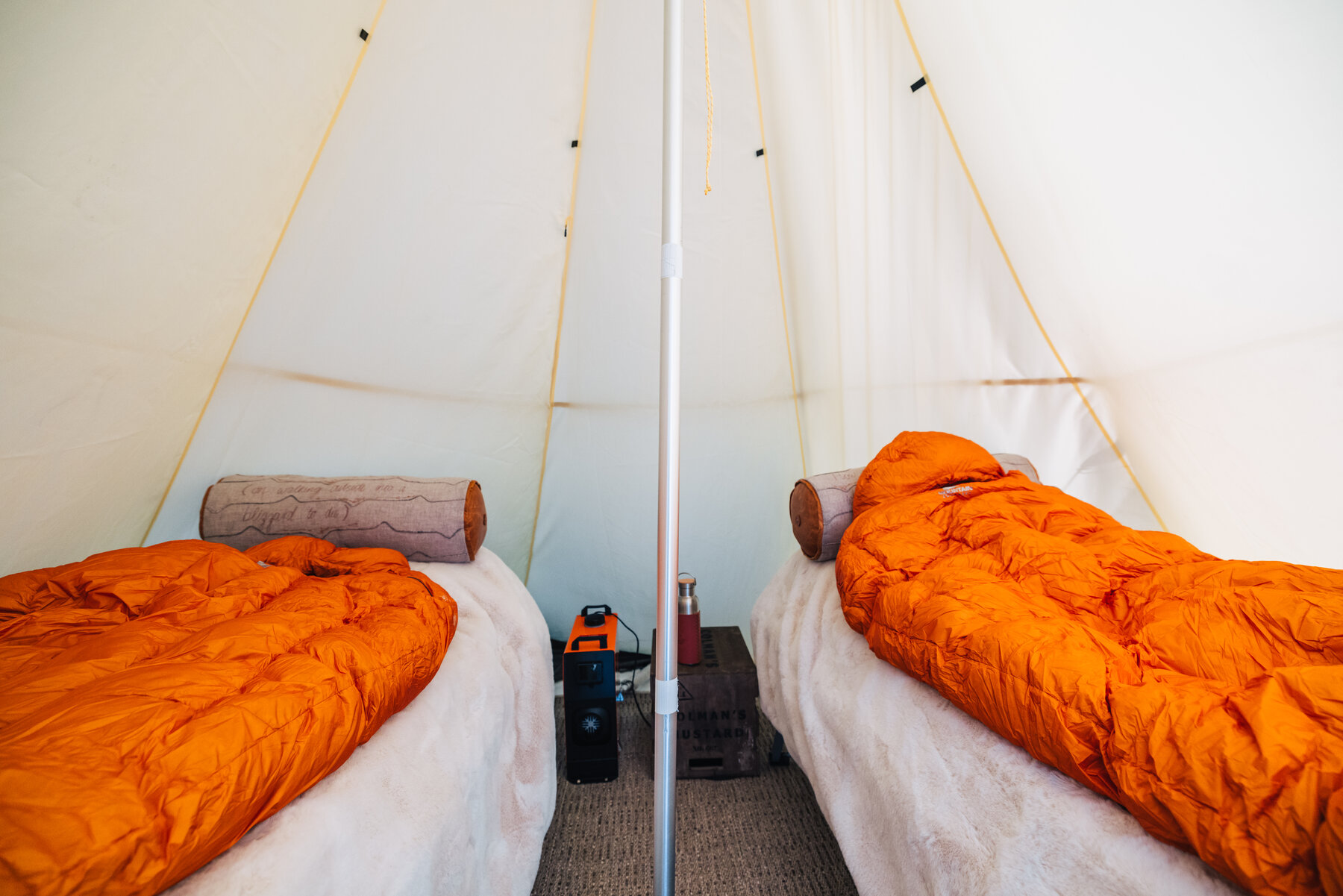
Stepping off the plane onto the ice, the cold hit us right away. Crisp, biting, and absolutely still. The silence was unlike anything we'd ever experienced. No traffic, no birds, no wind. Just the crunch of boots on ice that hasn't thawed in hundreds of thousands of years. Wolf's Fang is the first camp after landing in Antarctica — rustic lodging and an ice lounge area tucked into the plateau beneath the jagged Wolf's Fang nunatak peaks.
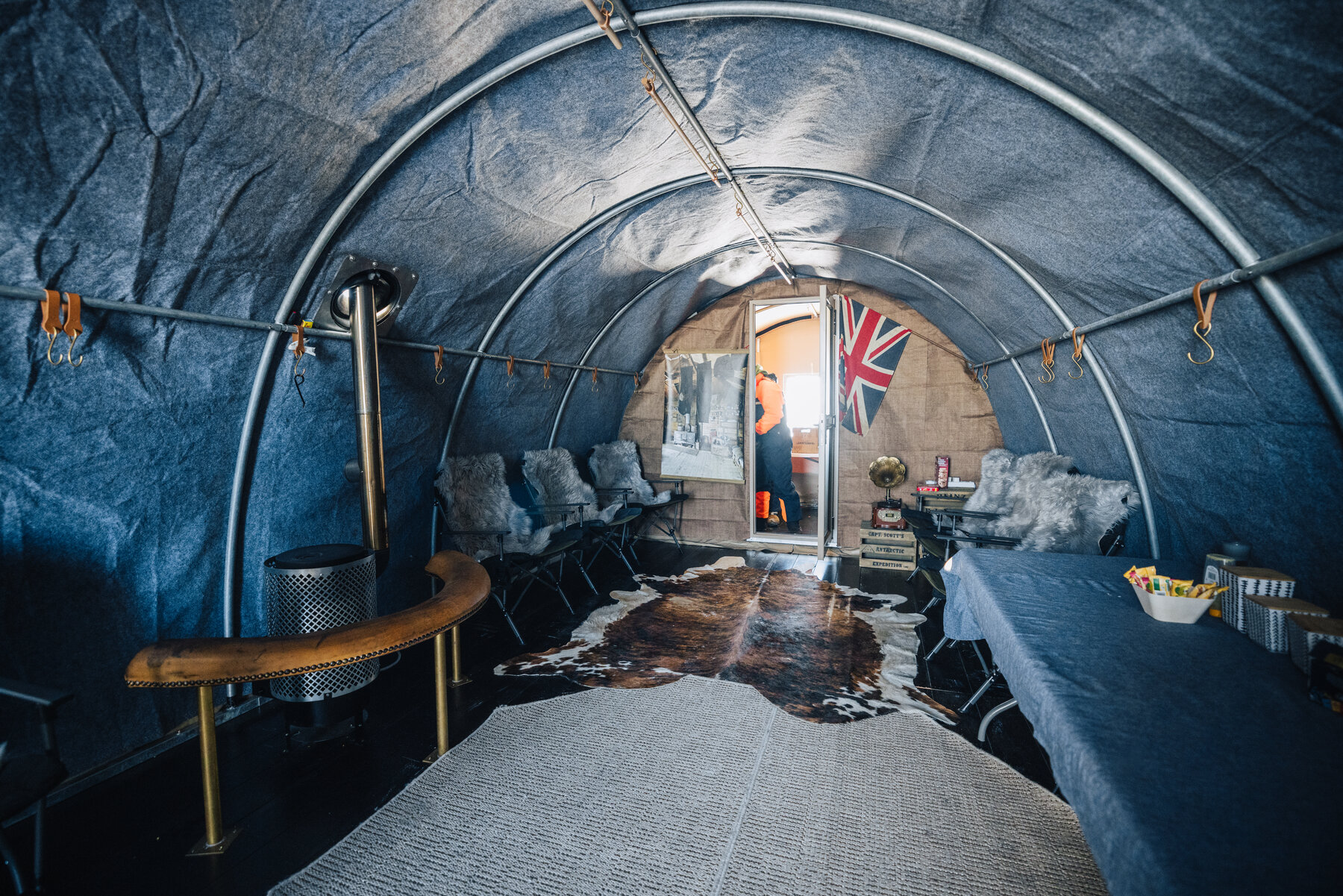
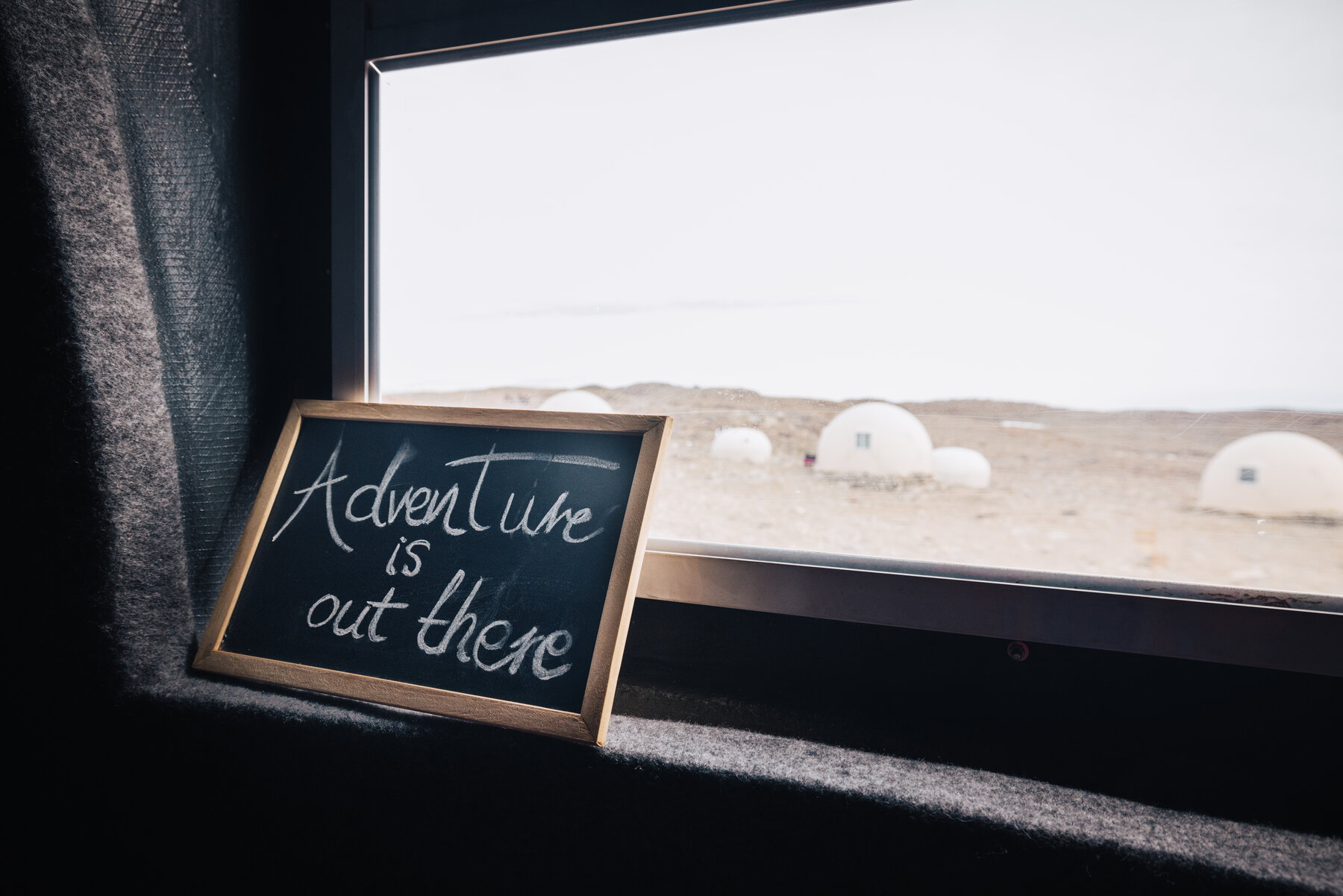
Inside Wolf's Fang: the main lodge where guests gather between expeditions, and the rustic sleeping tents — heated, insulated canvas shelters built for the plateau.
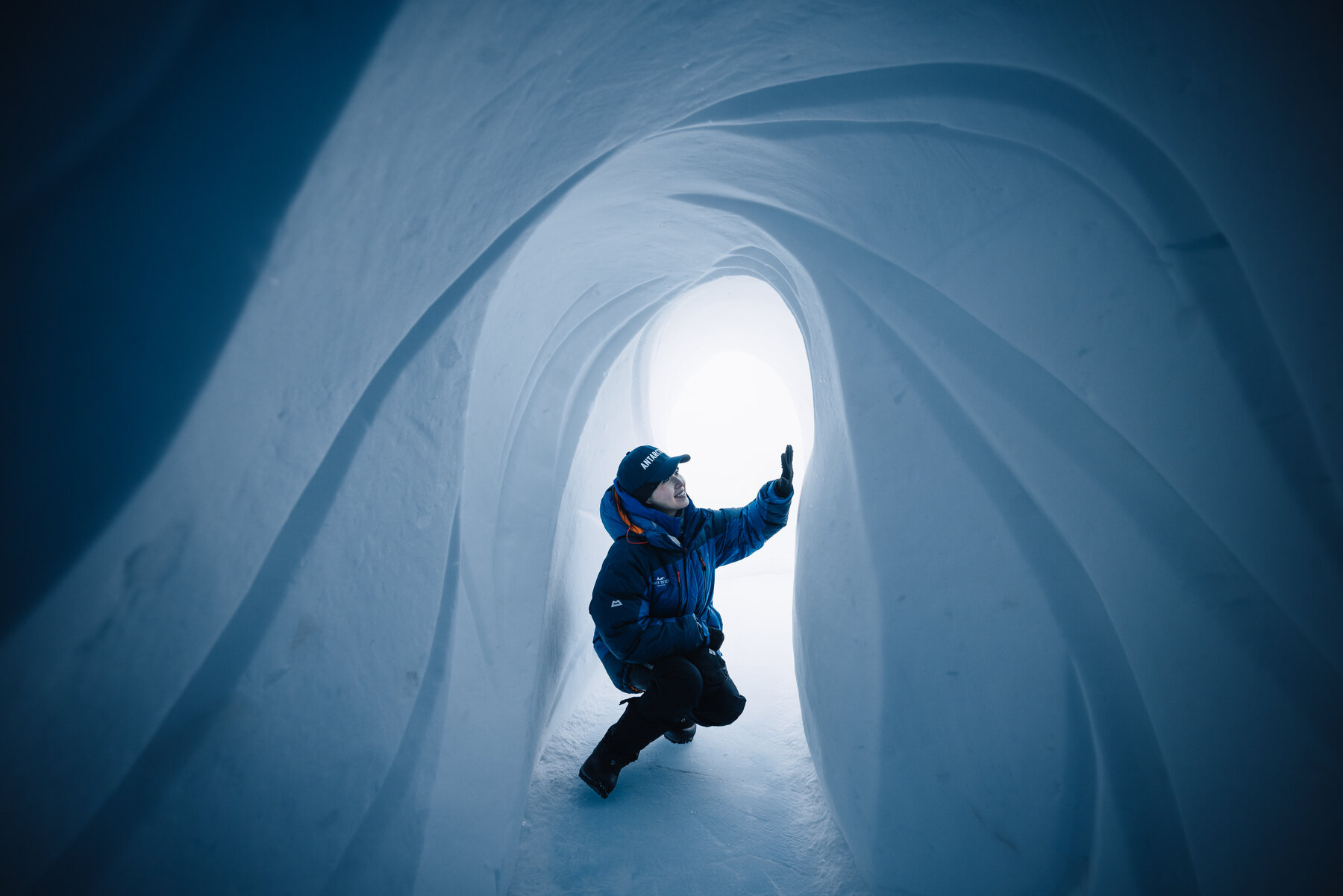
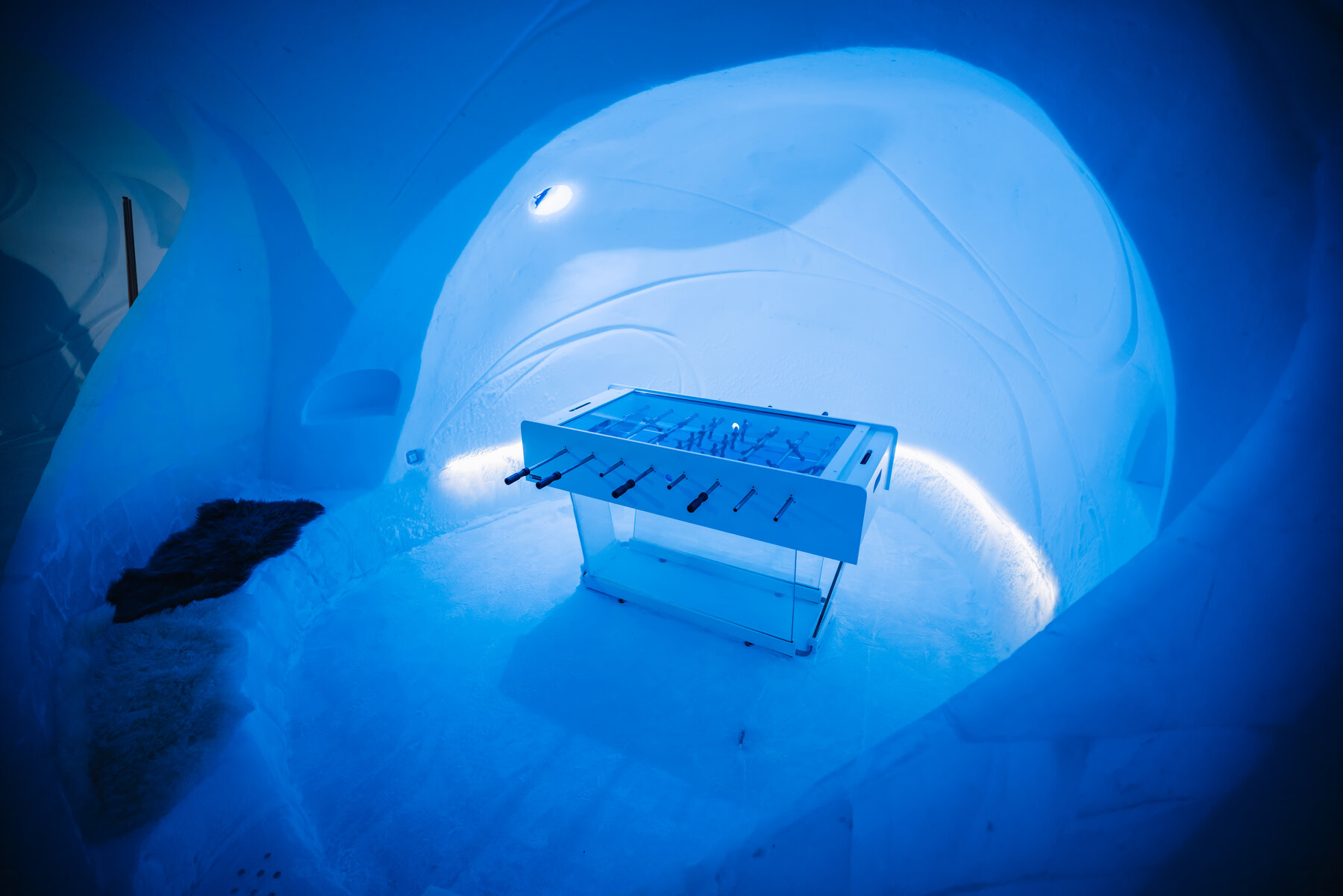
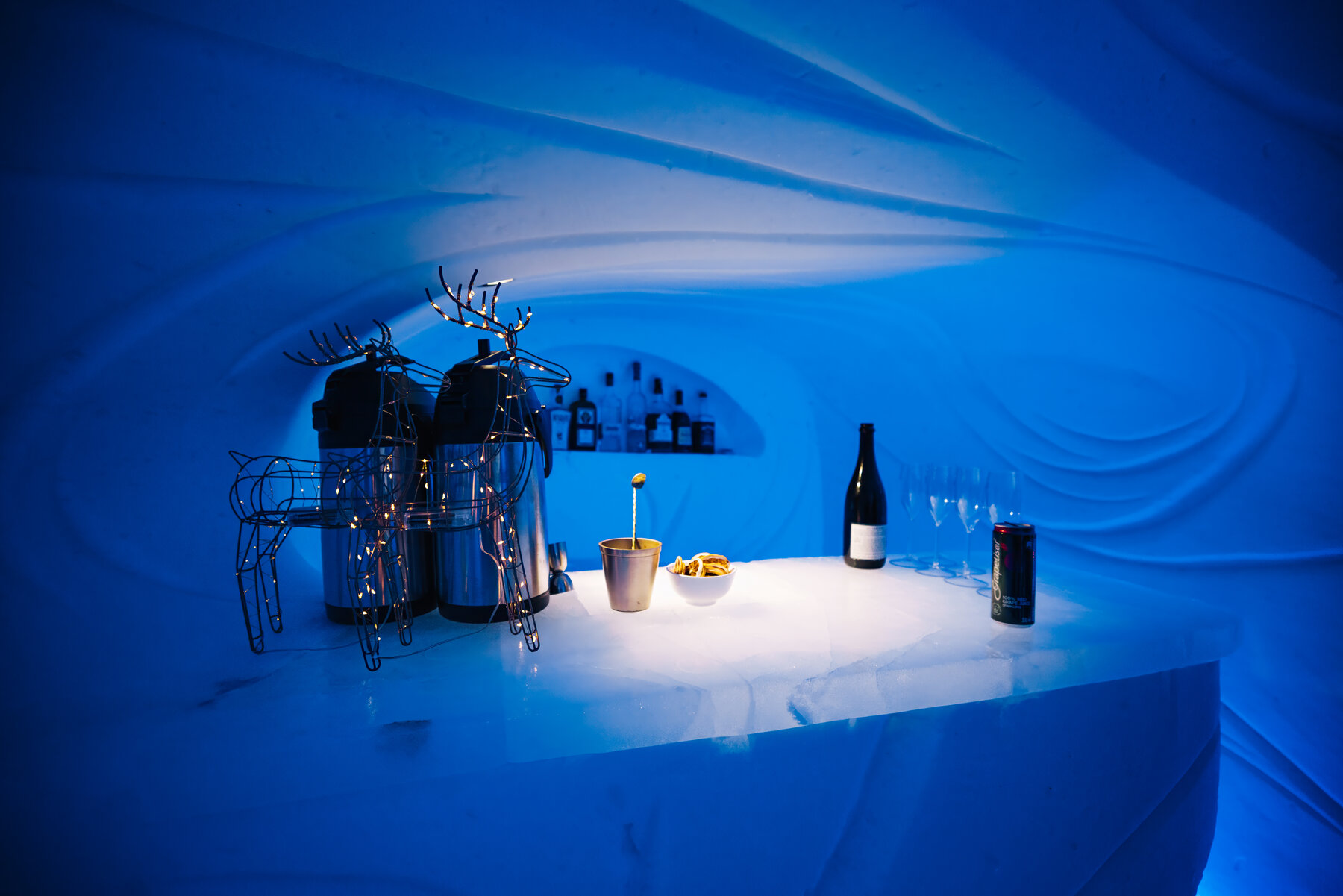
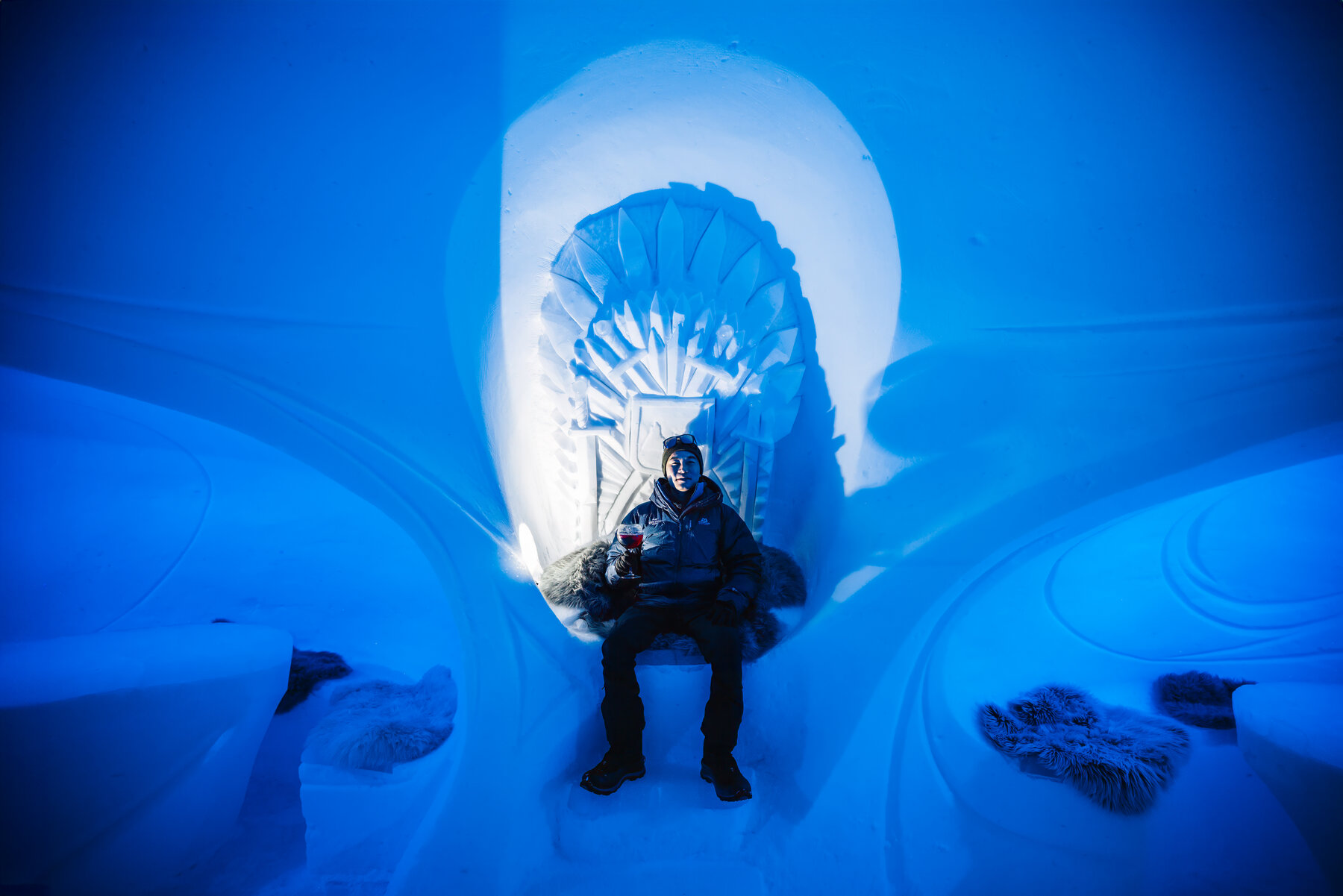
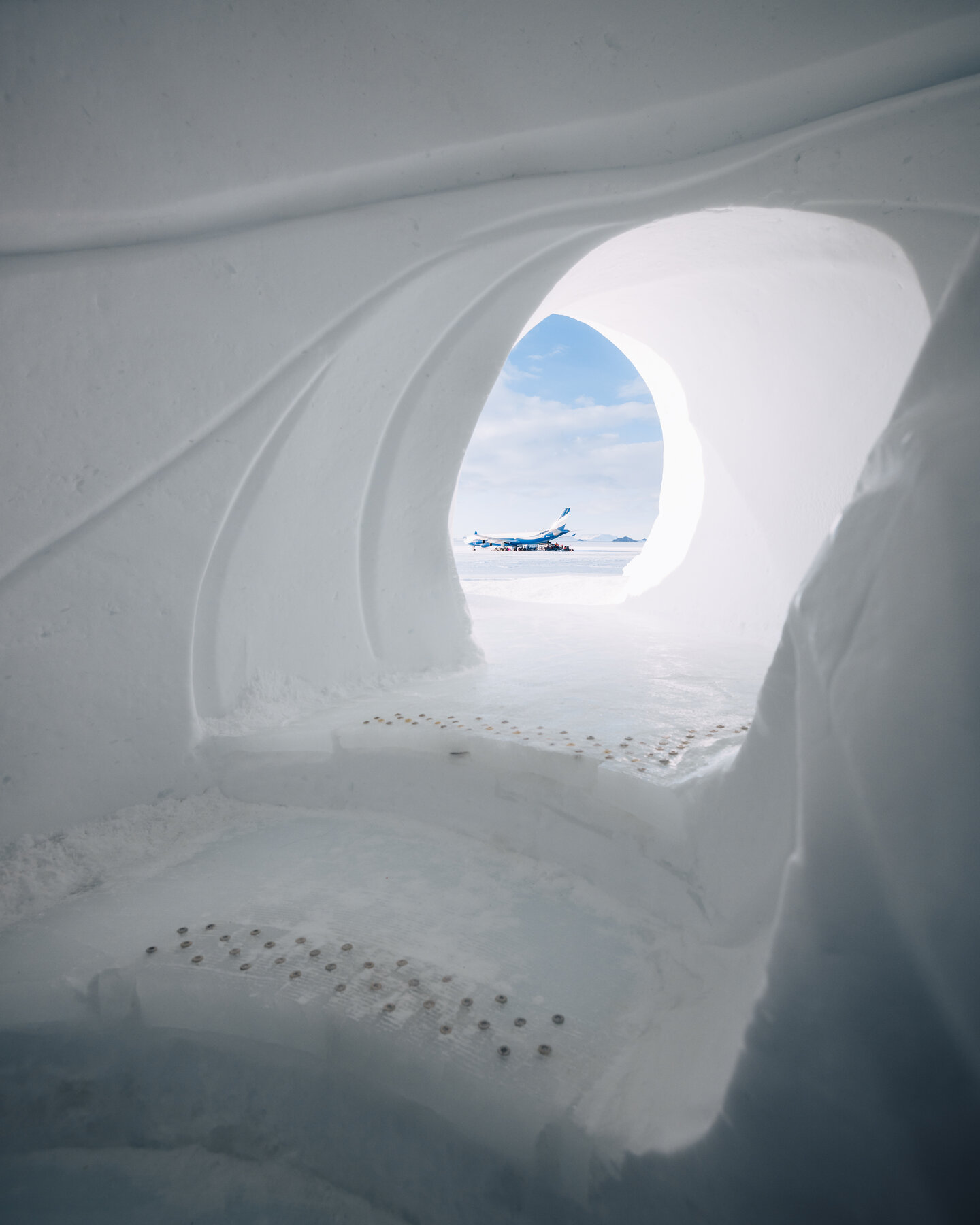
First stop? The coolest ice lounge in the world (literally), carved directly into the glacier beneath the camp. Cocktails chilled with 10,000-year-old ice, the entire structure cut from the ice itself — complete with windows looking out onto the vast Antarctic plain. This isn't just any ordinary trip; it's a journey to the edge of the world, where luxury meets adventure in the most extraordinary setting on Earth.
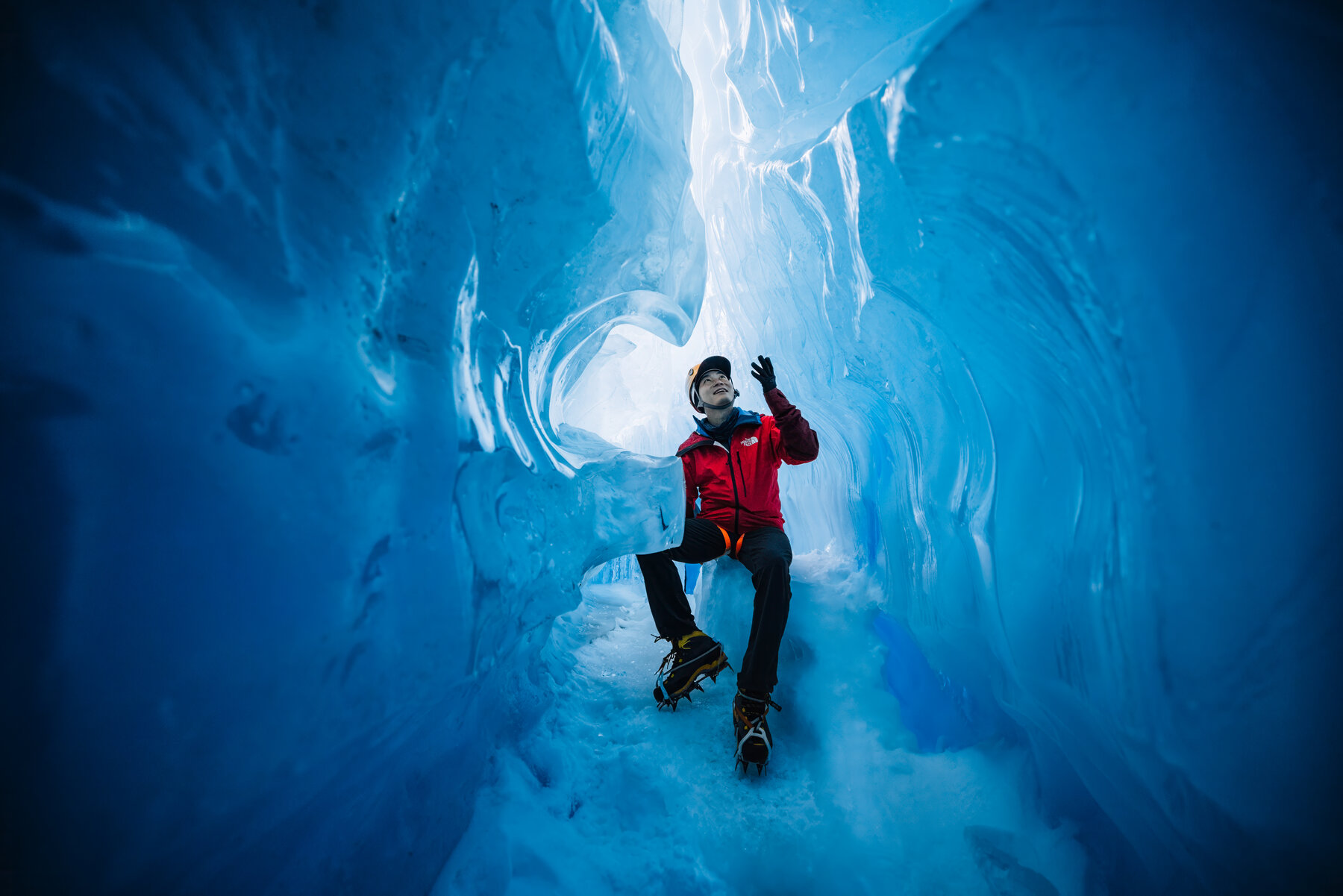
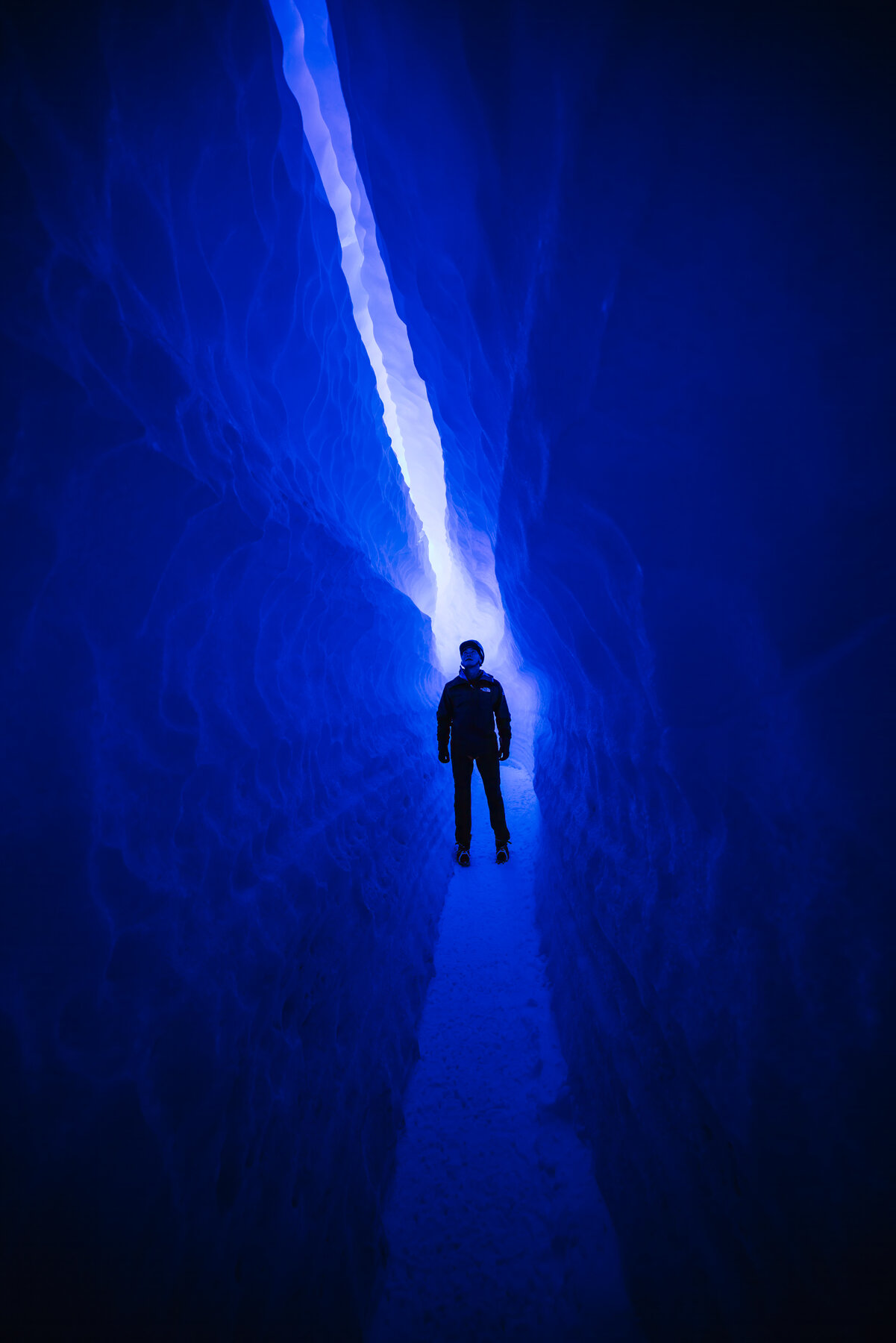
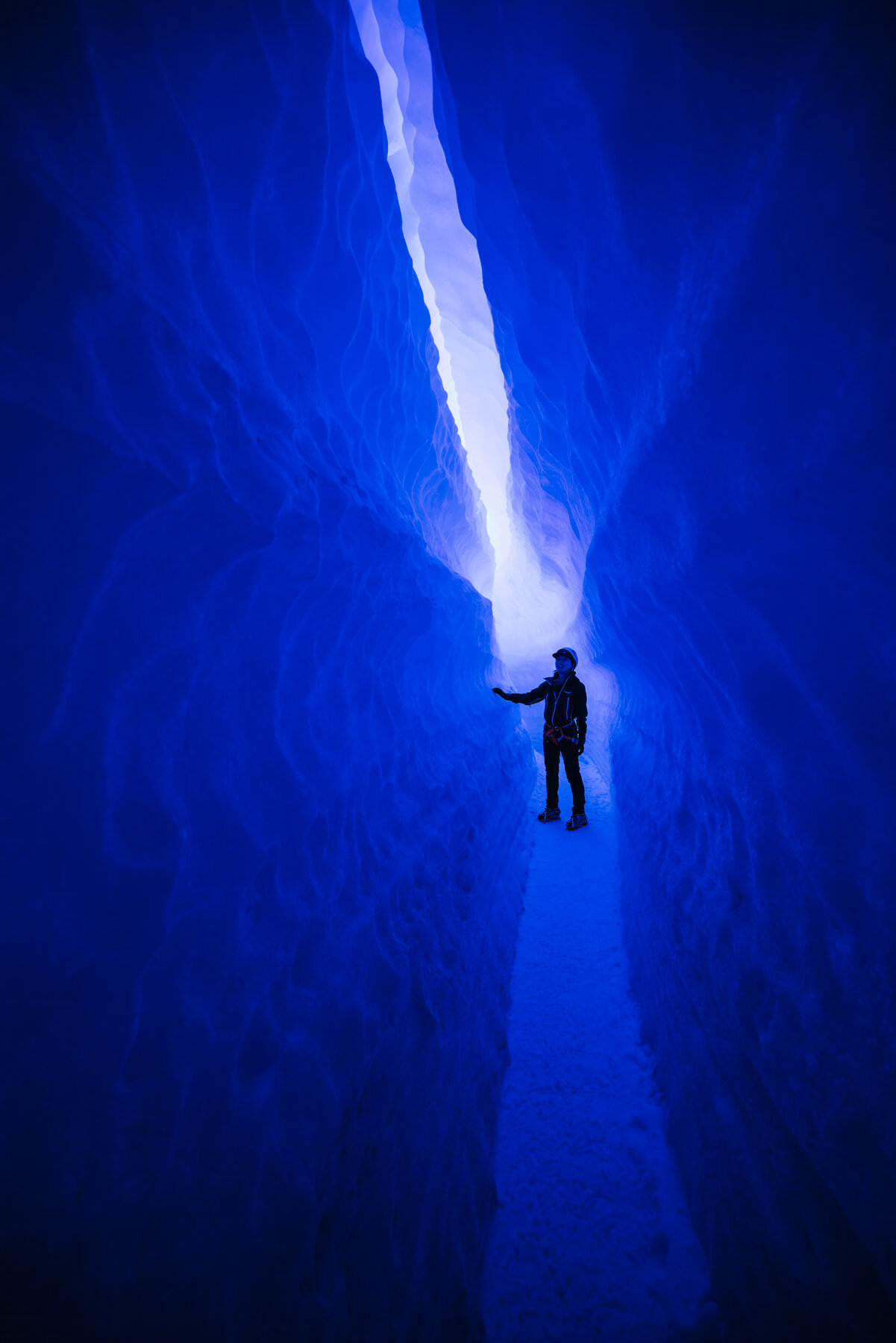
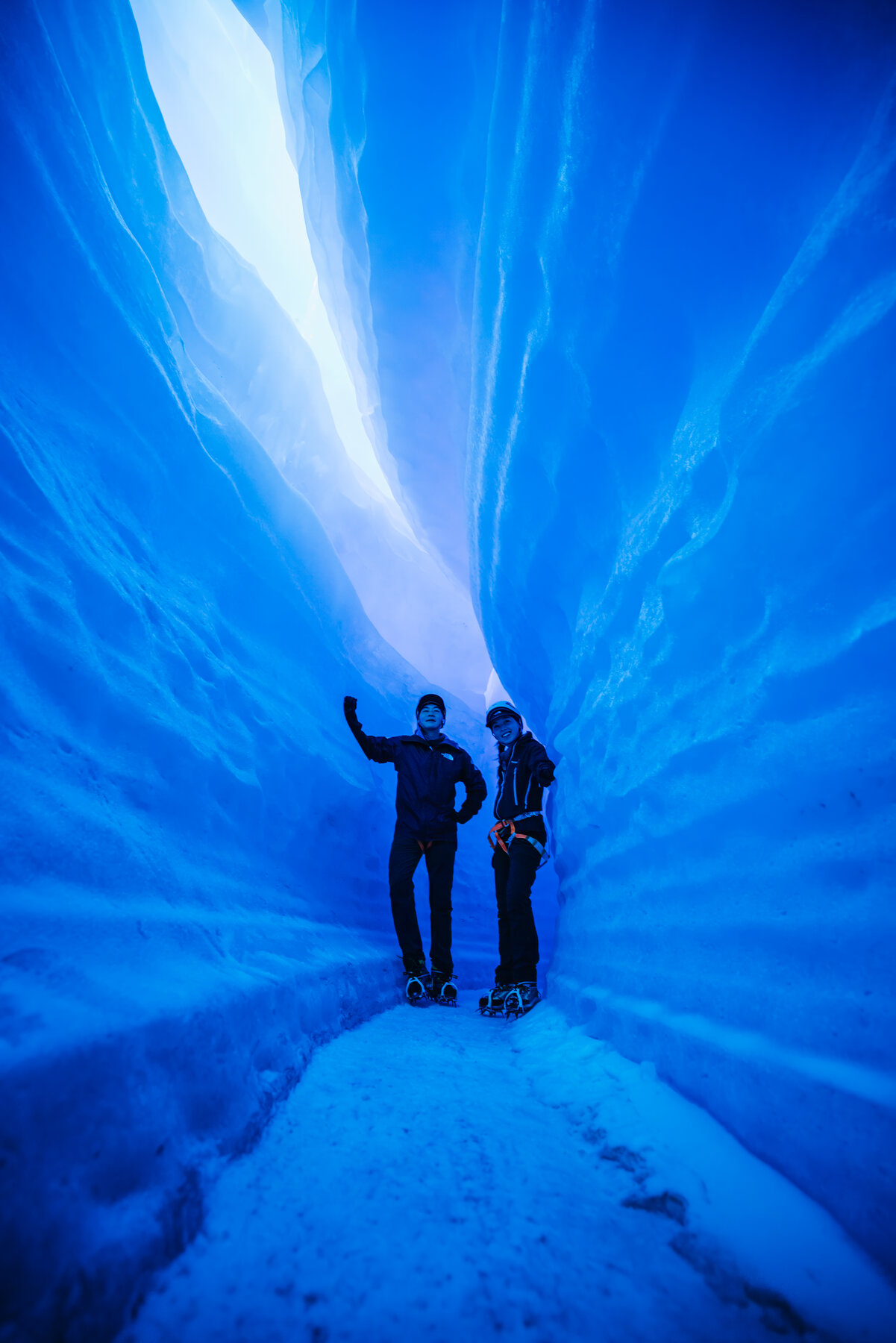
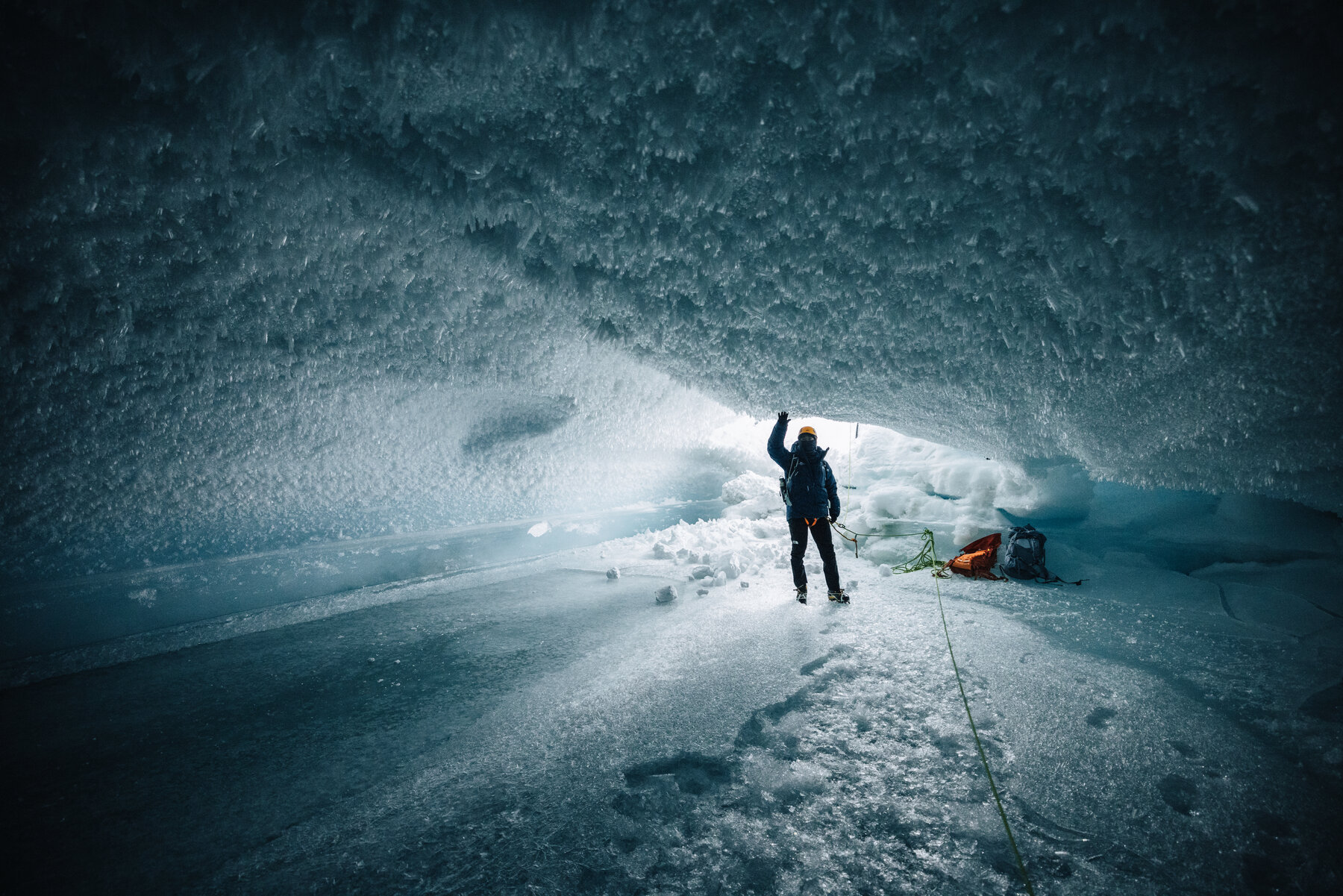
Inside the ice tunnel at Wolf's Fang. The light refracts in blues that don't quite exist elsewhere on Earth.
Day 02
The South Pole & Dixie's Camp
December 14, 2023 · Wolf's Fang → 90°S Amundsen–Scott South Pole Station → Dixie's Camp (83°S)
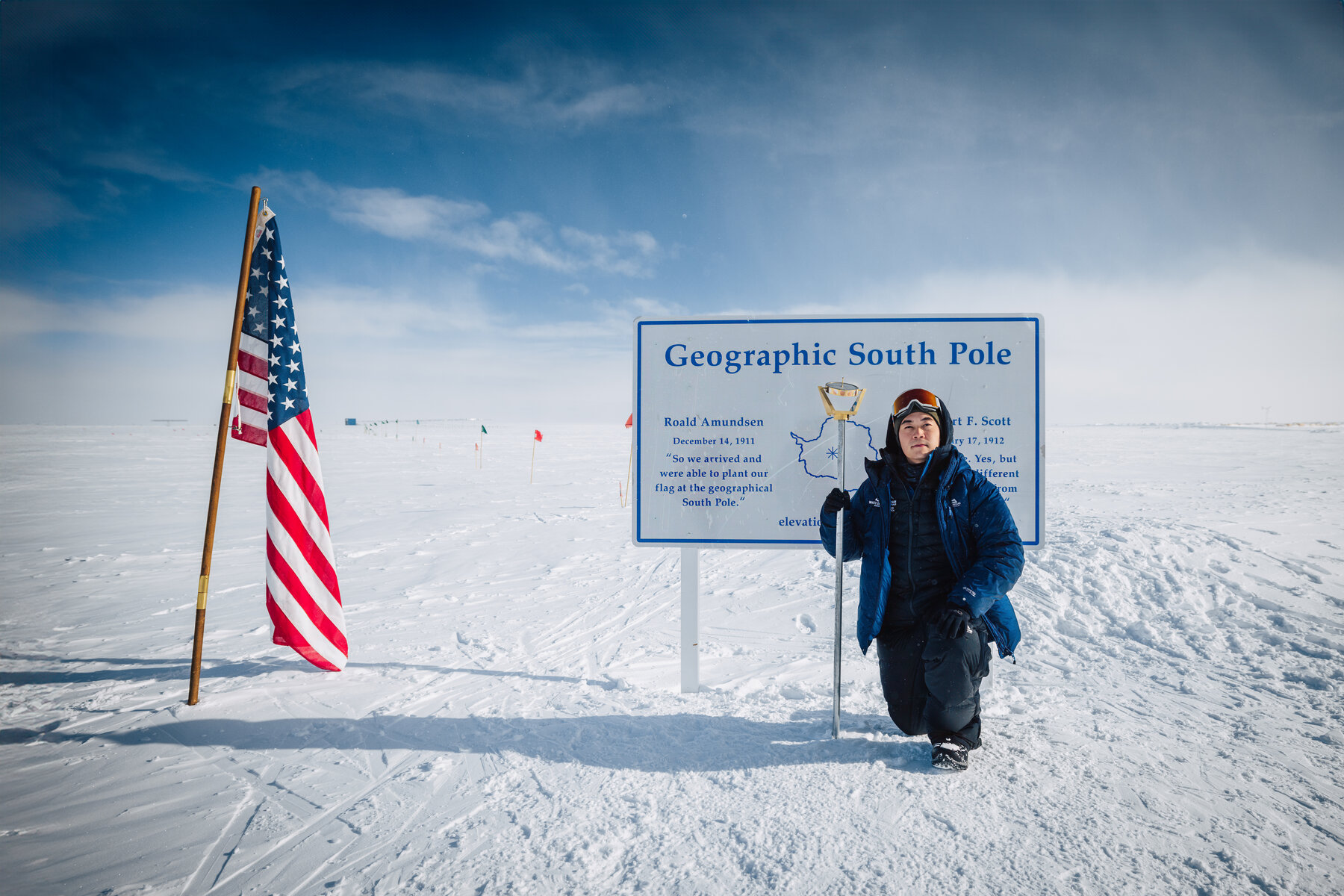
90°S. The geographic South Pole — the axis of the planet, where every direction is north.
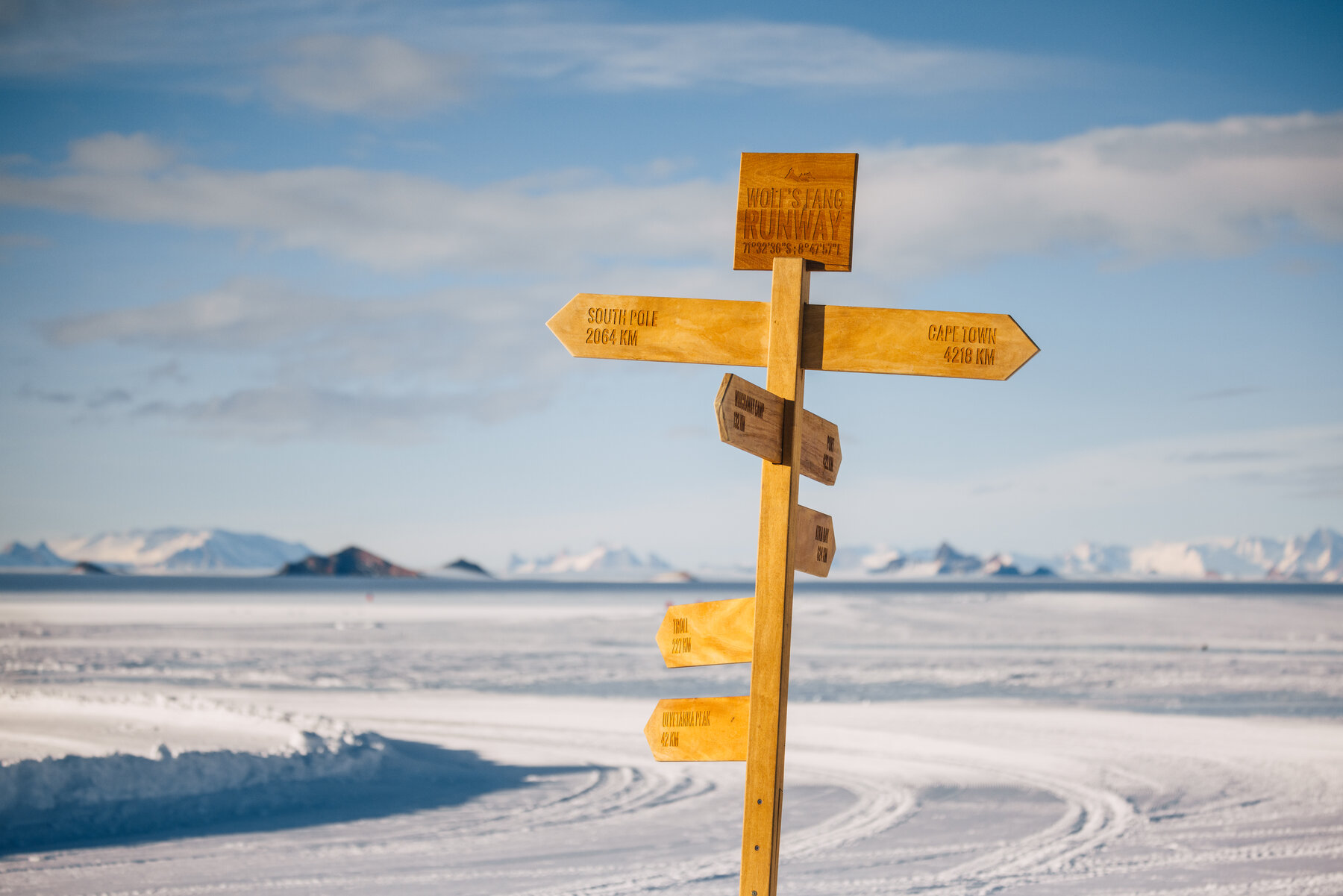
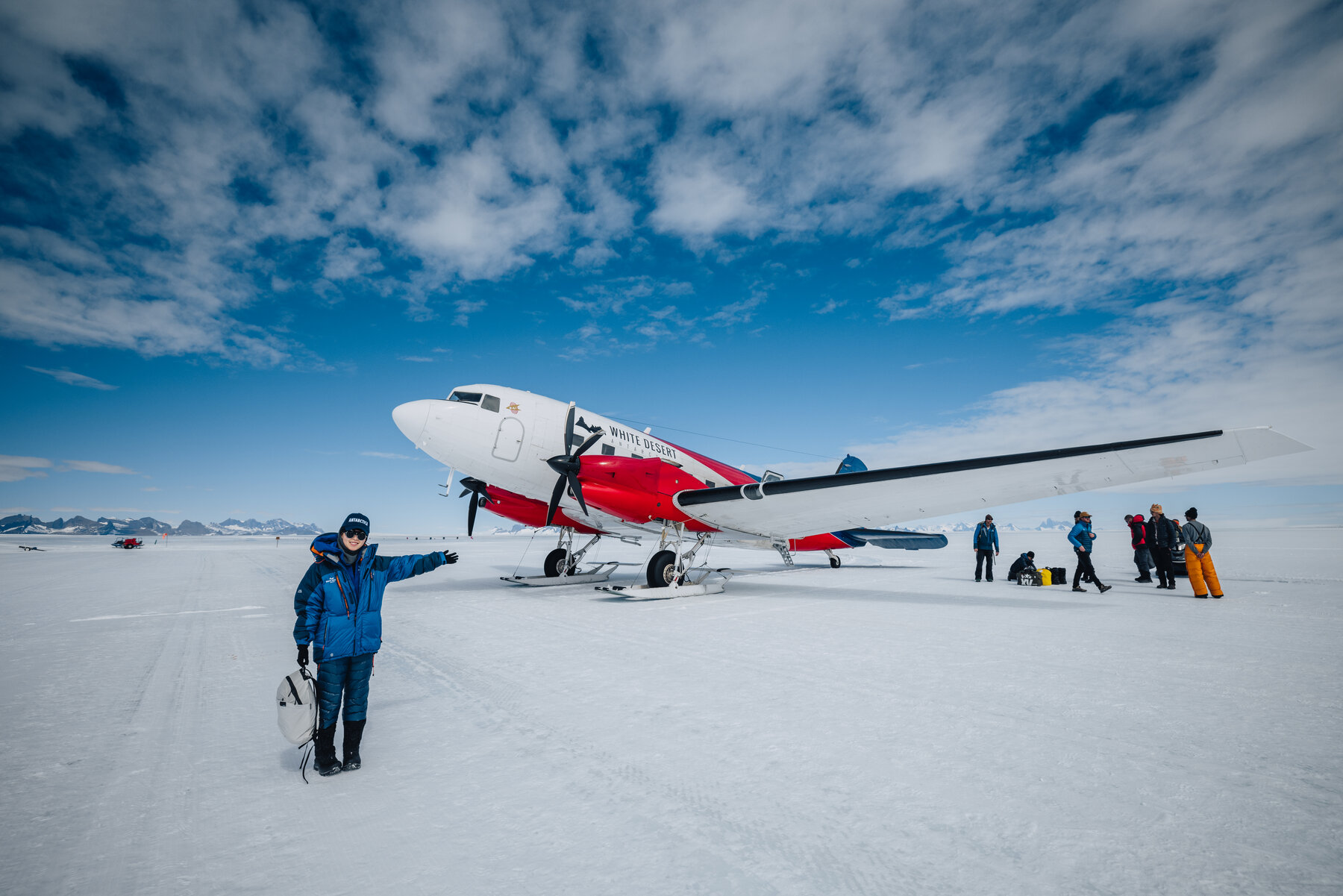
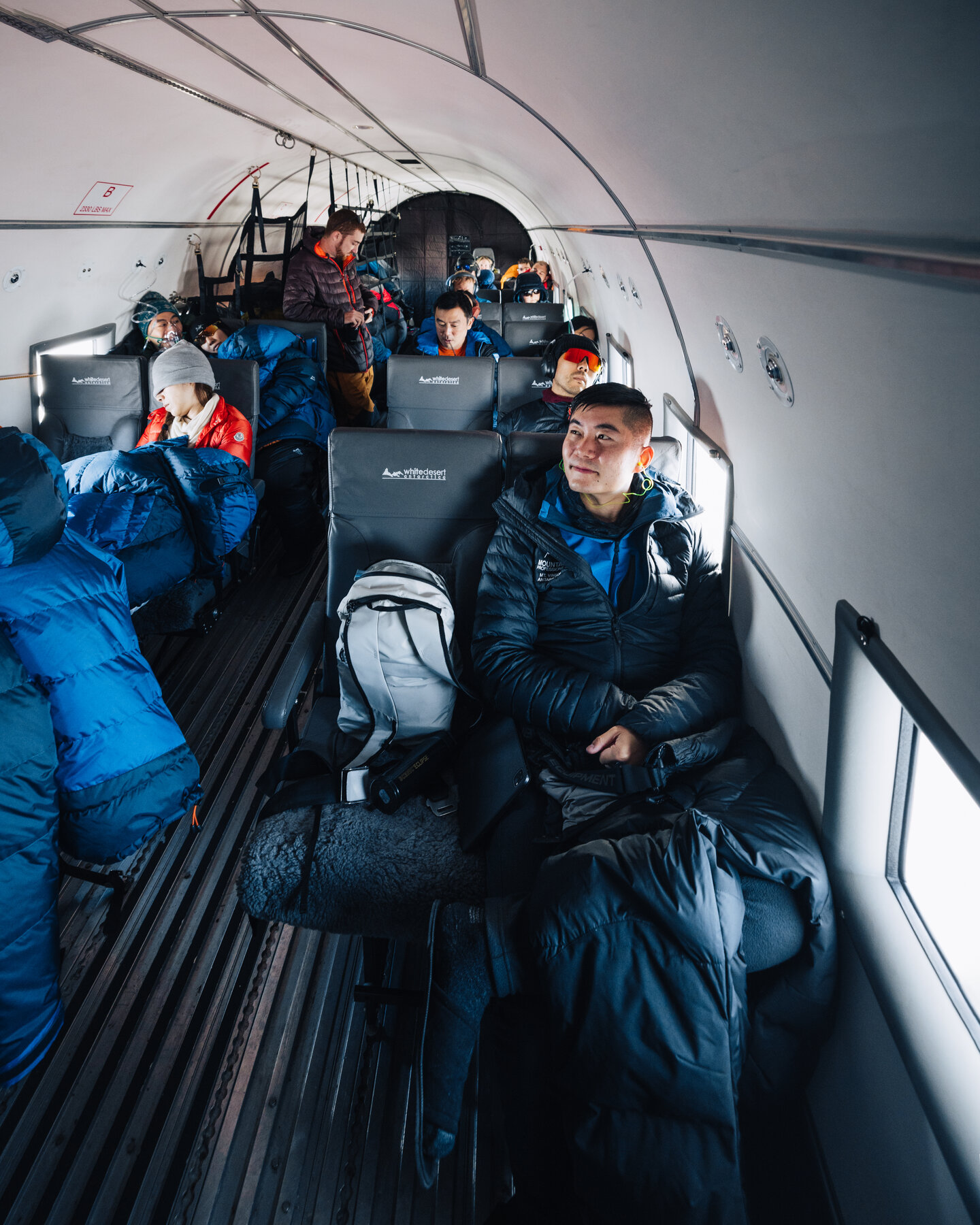
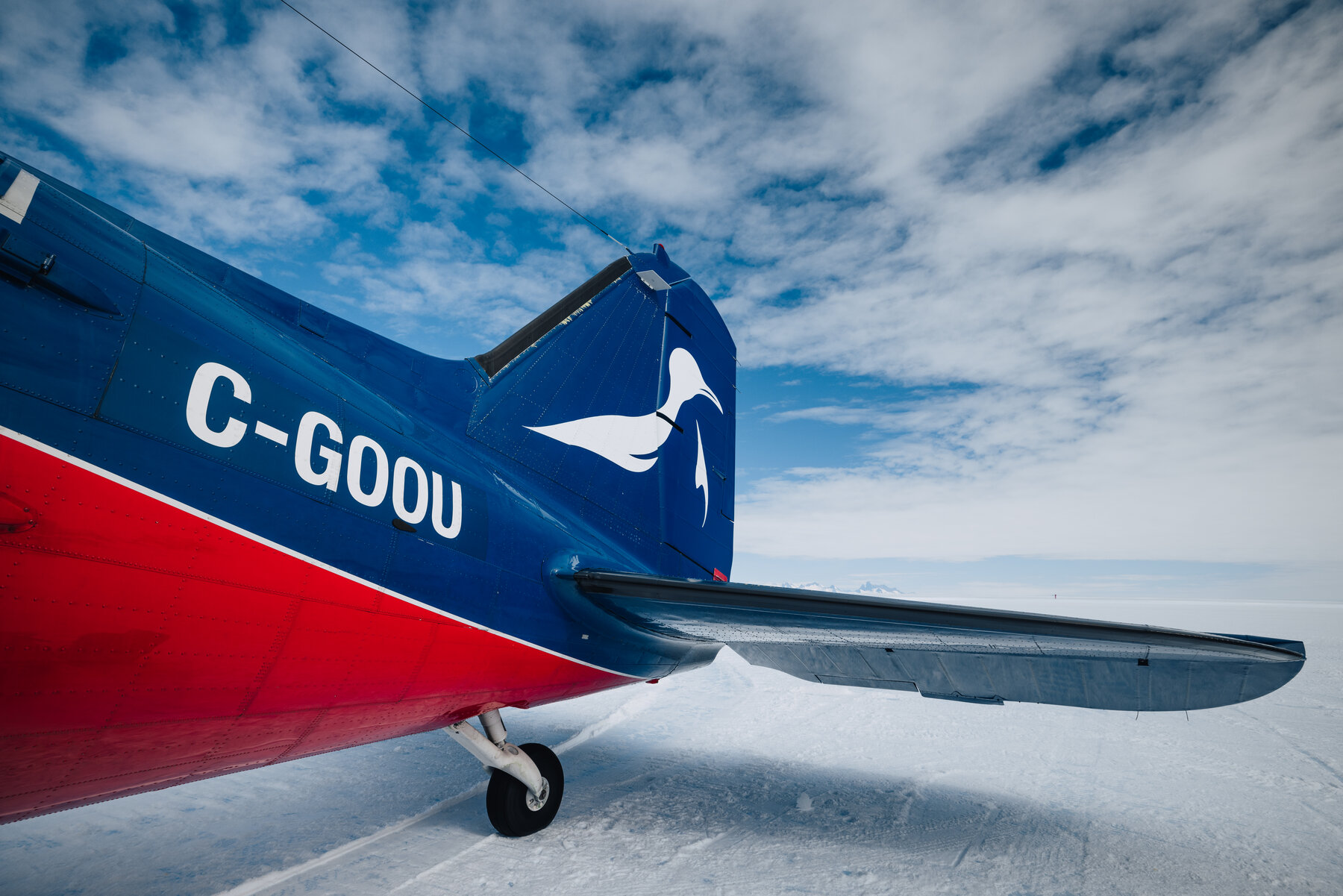
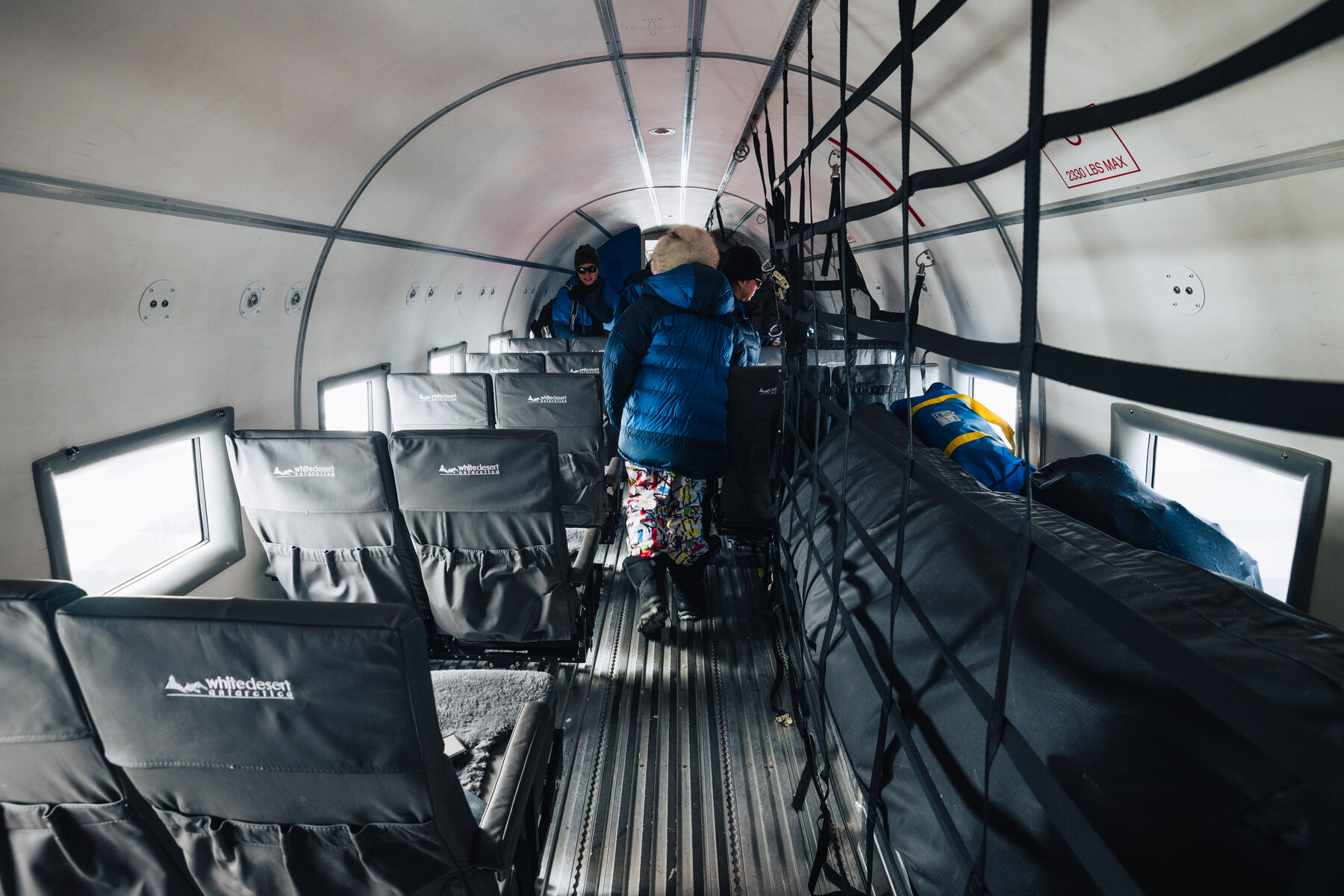
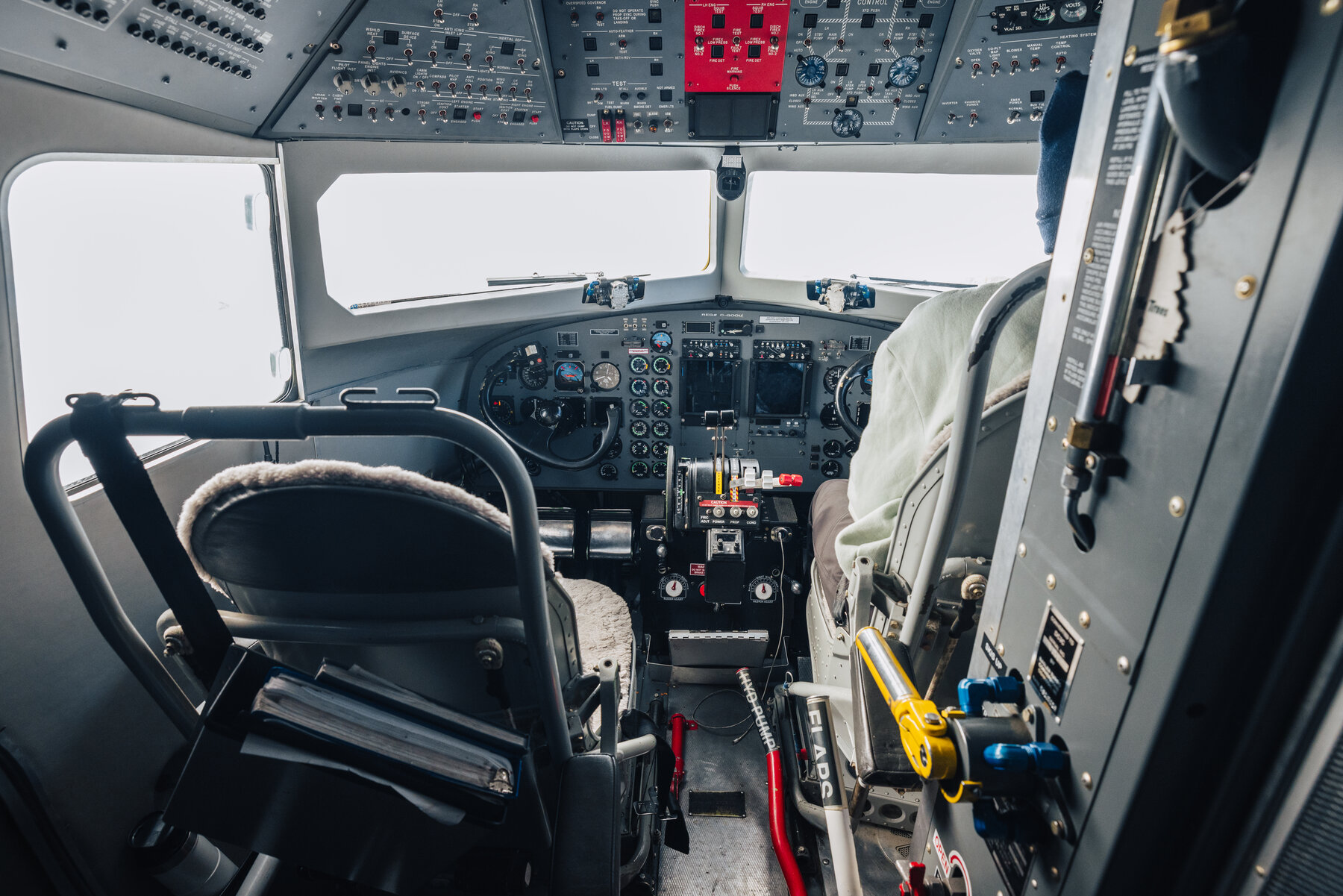
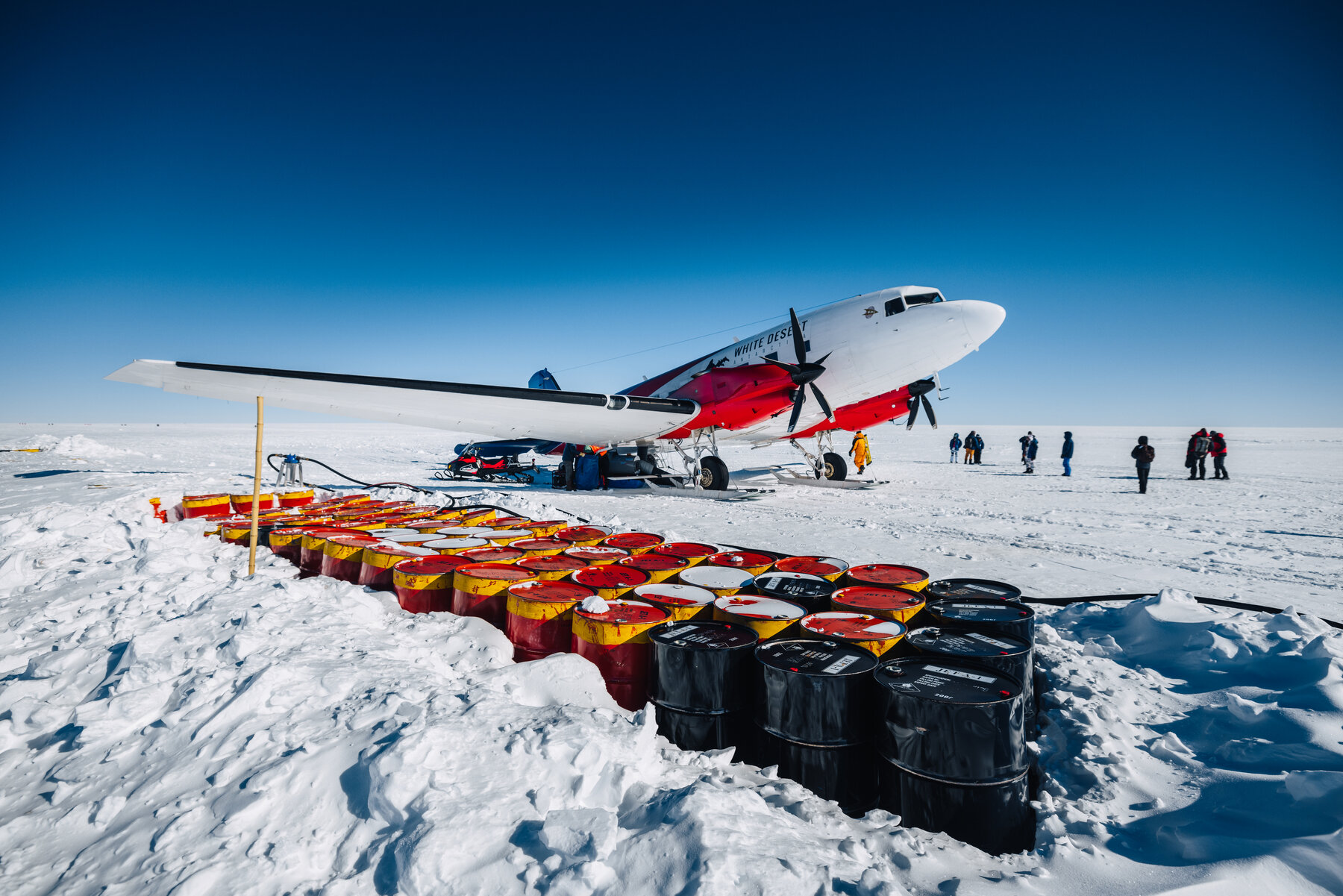
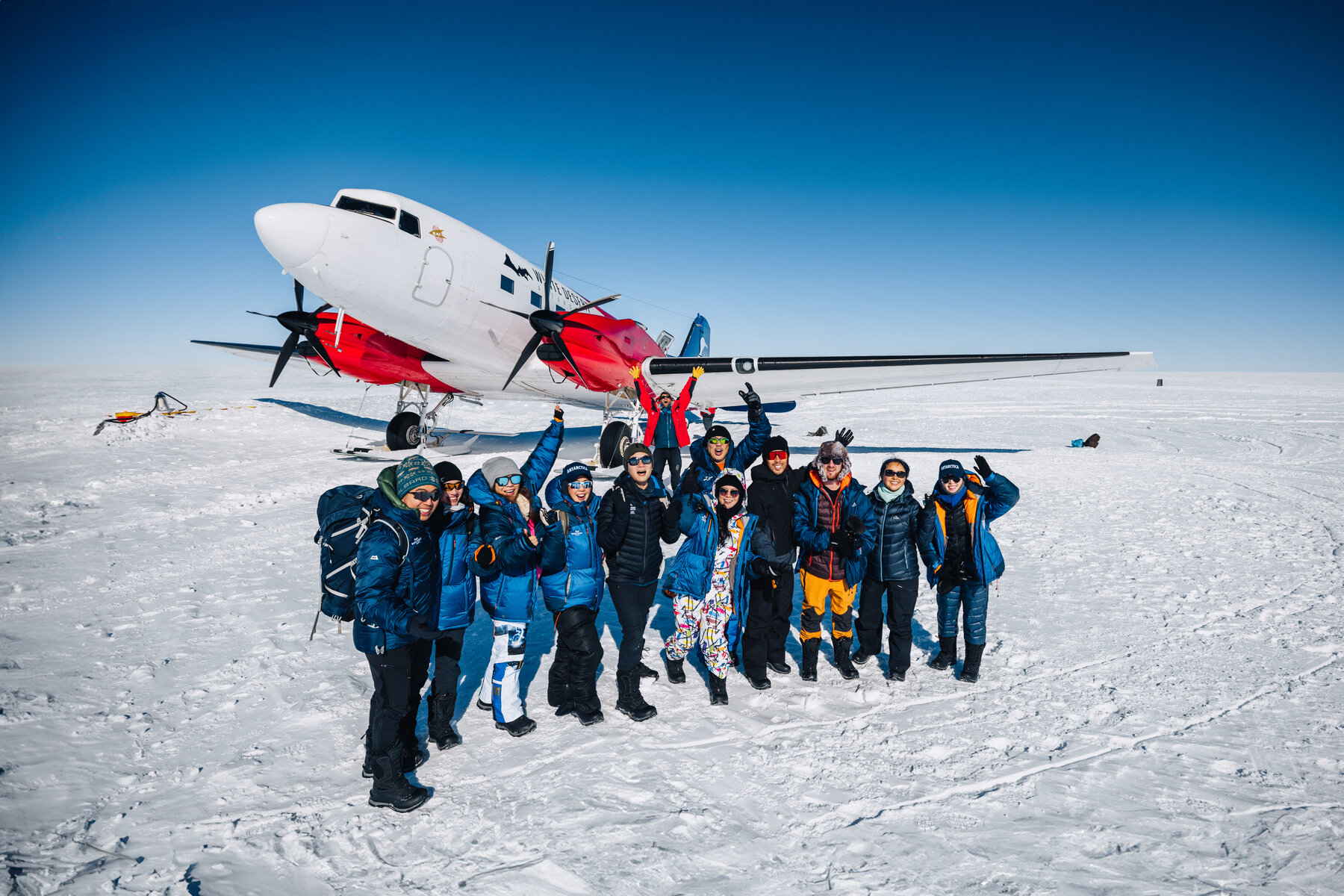
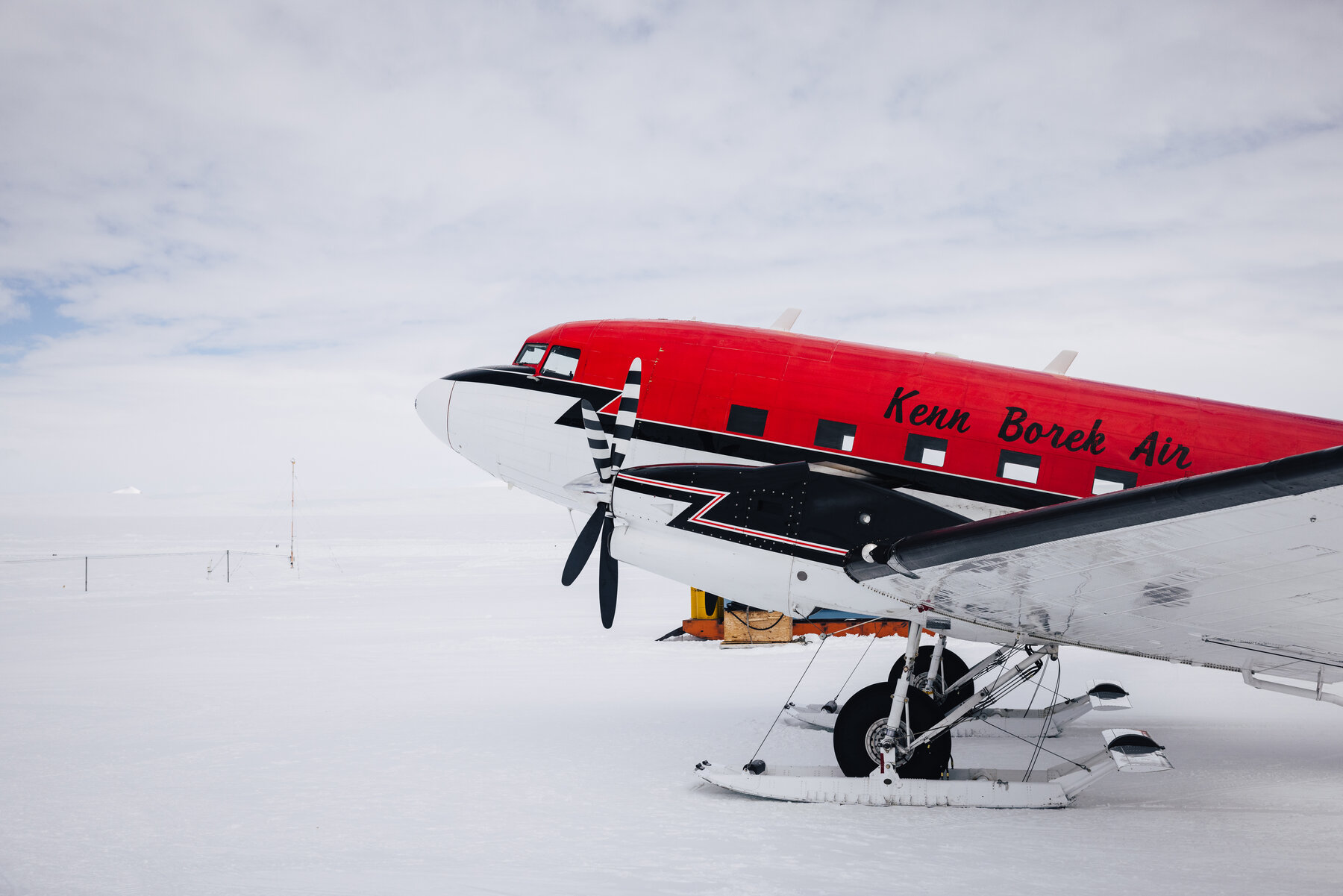
We made it. After years of dreaming, we finally reached the South Pole at the bottom of the world. A 7-hour flight on a ski-equipped Basler BT-67 carried us 2,064 km from Wolf's Fang Runway to 90°S, the southernmost point on Earth. The cabin was unpressurized and cold; we stayed bundled in parkas for the entire flight, watching the featureless white plateau scroll past beneath the wings for hours on end.
Our ski-equipped Basler before the long flight south, and the cabin during the 7-hour leg from Wolf's Fang.
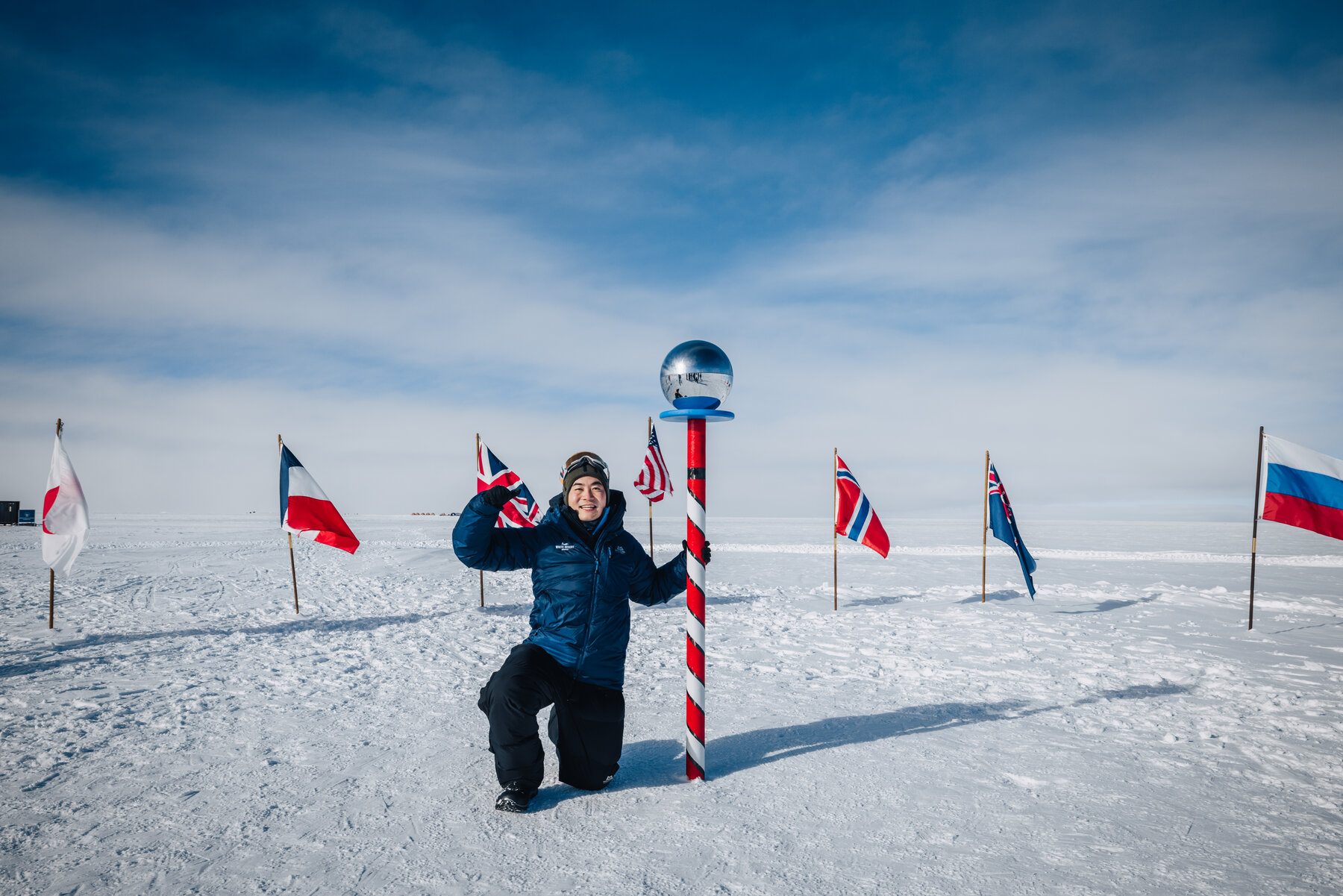
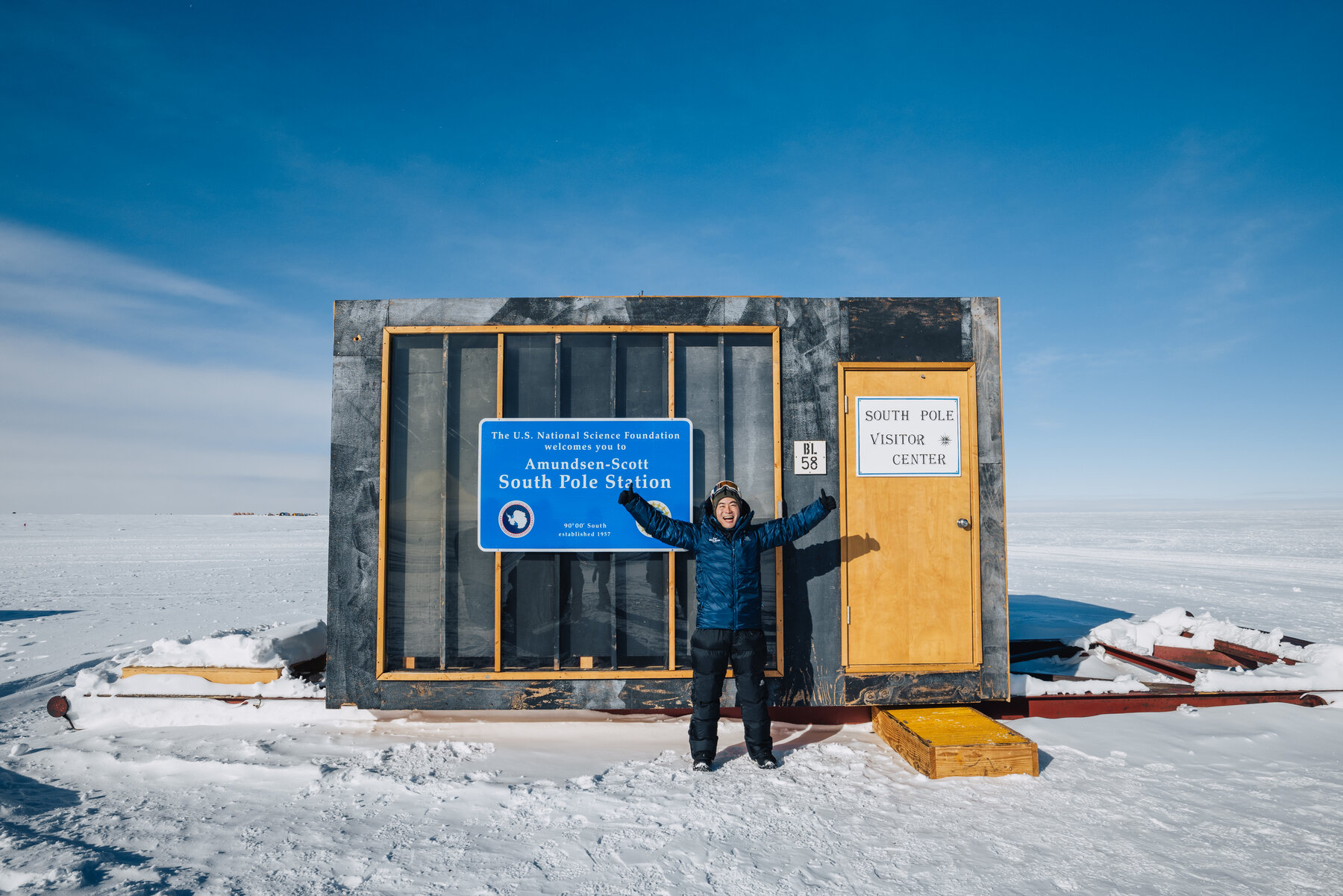
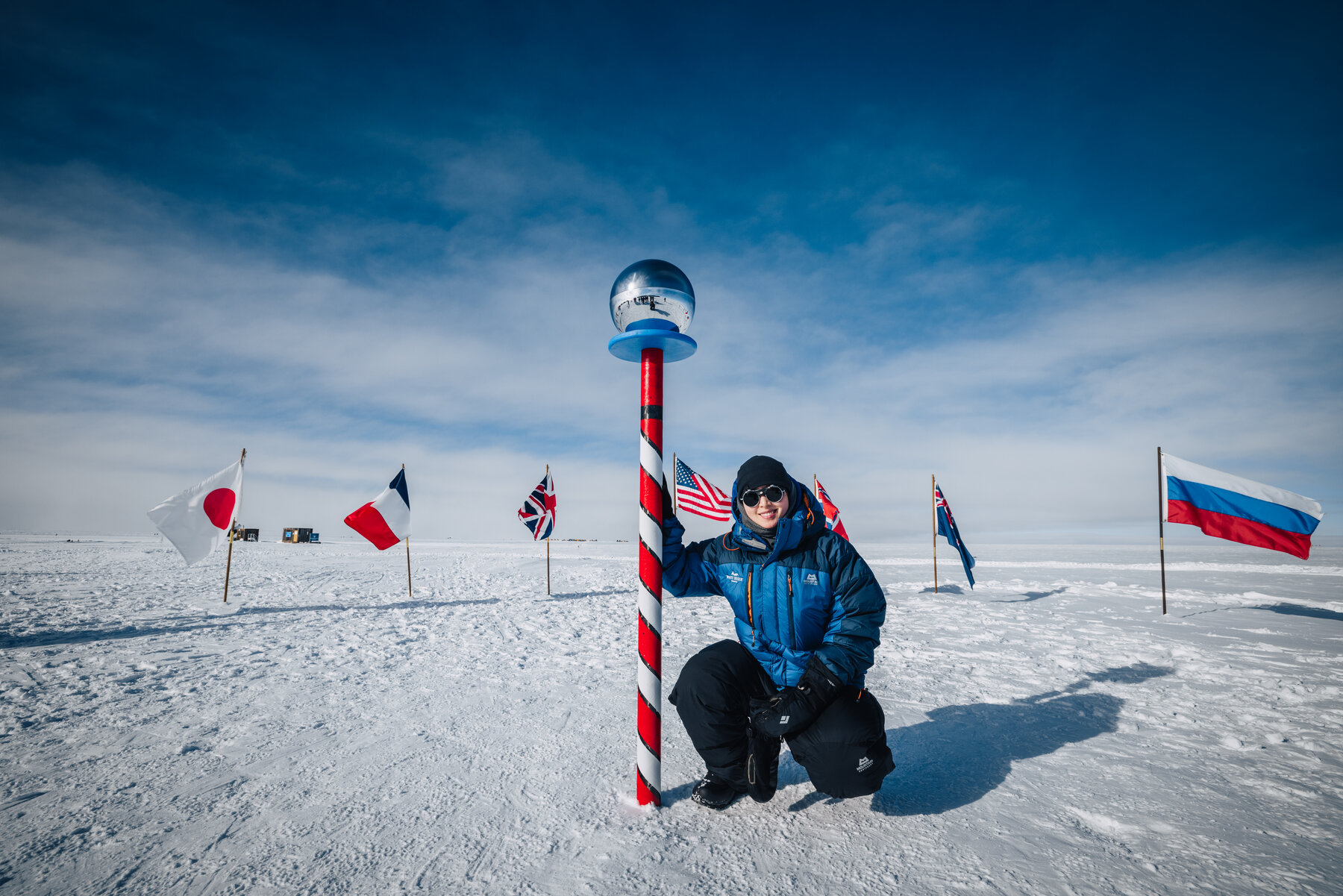
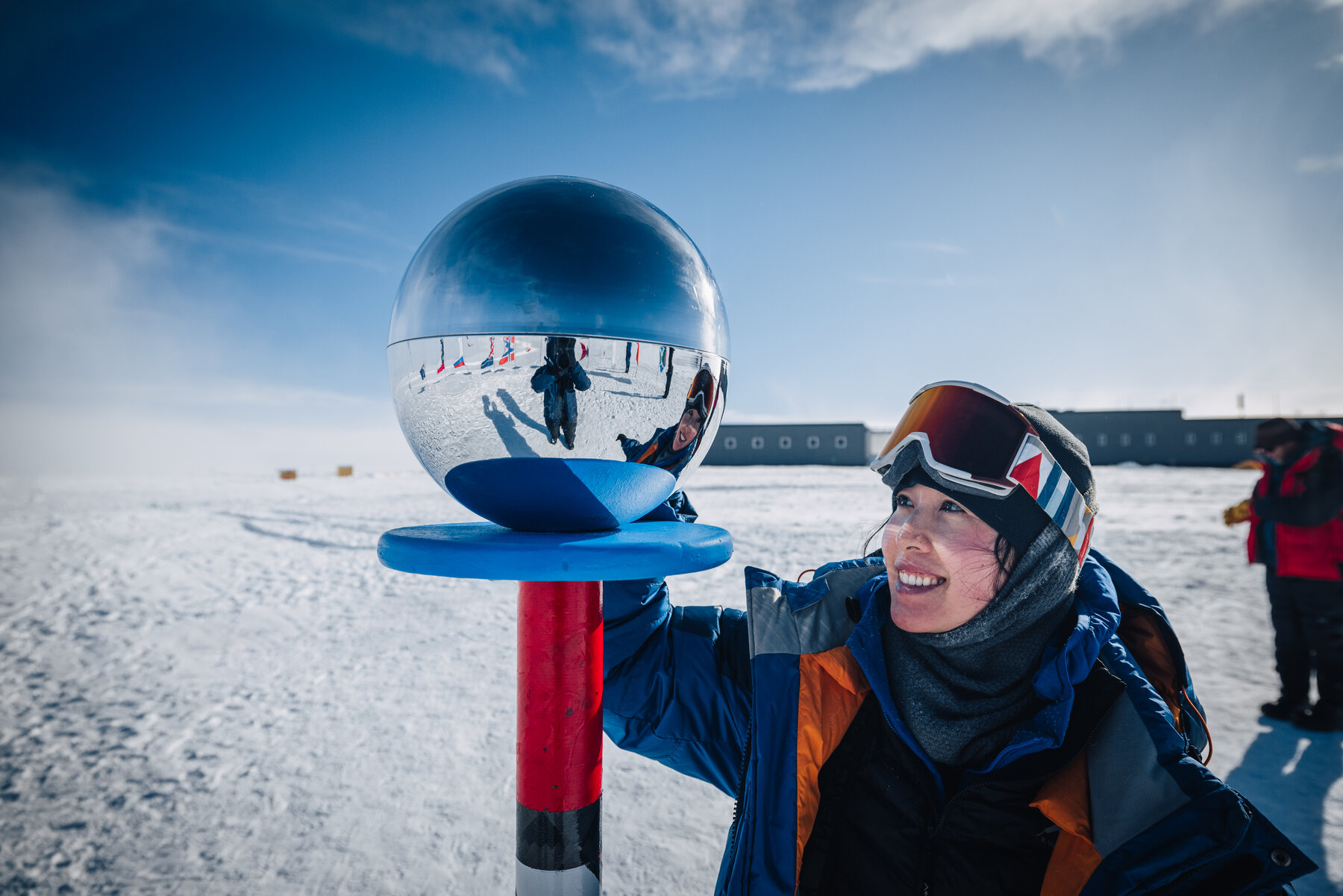
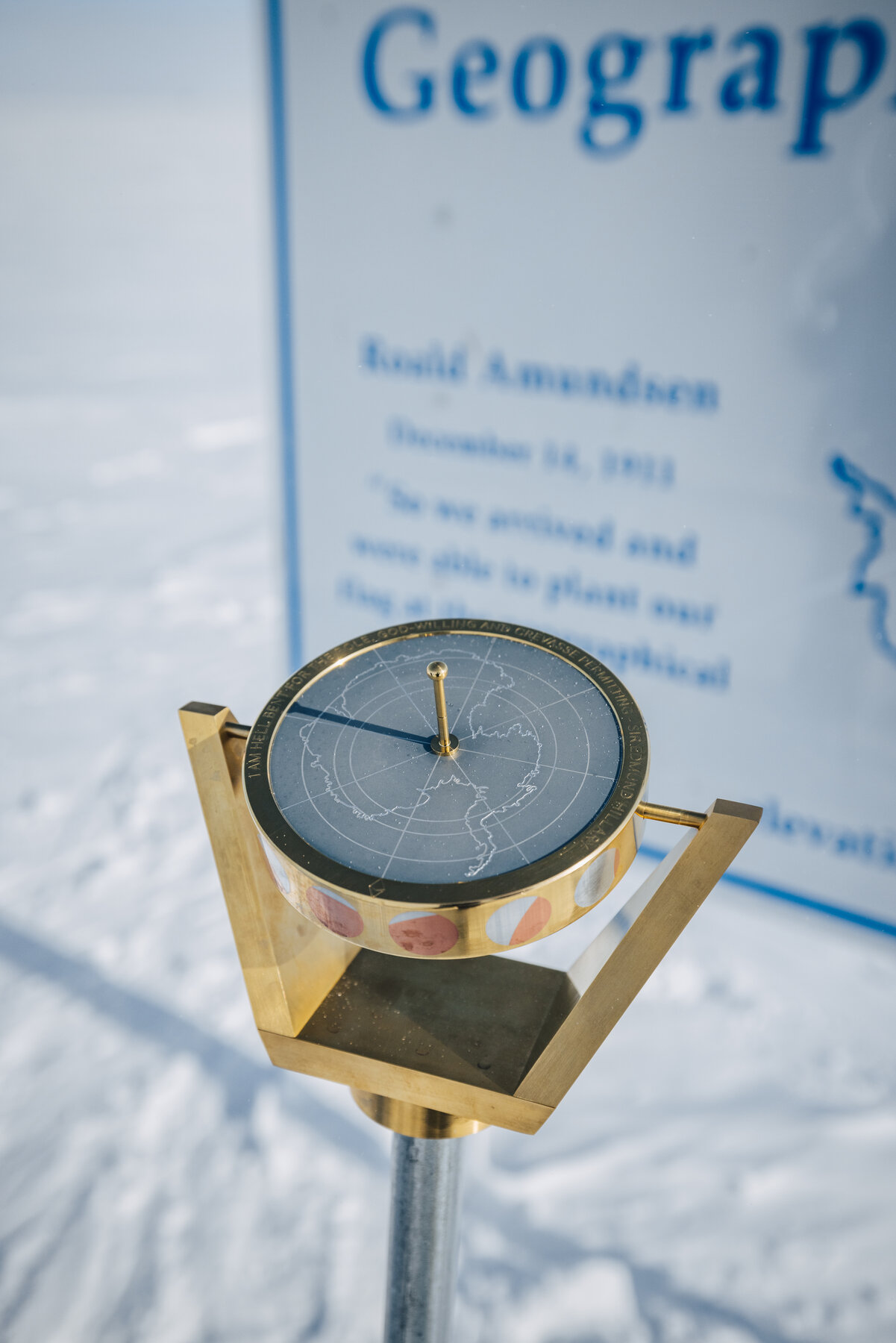
Stepping out of the plane, the altitude hit first. The South Pole sits at 2,835 meters on the Antarctic Plateau, and the thin, bone-dry polar air made every step feel deliberate. We got our passports stamped with the coolest stamp on Earth at the tiny visitor center, then walked out to the markers themselves — the mirrored silver sphere of the ceremonial pole ringed by the flags of the original Antarctic Treaty nations, and a hundred meters away, the small brass marker of the geographic pole itself.
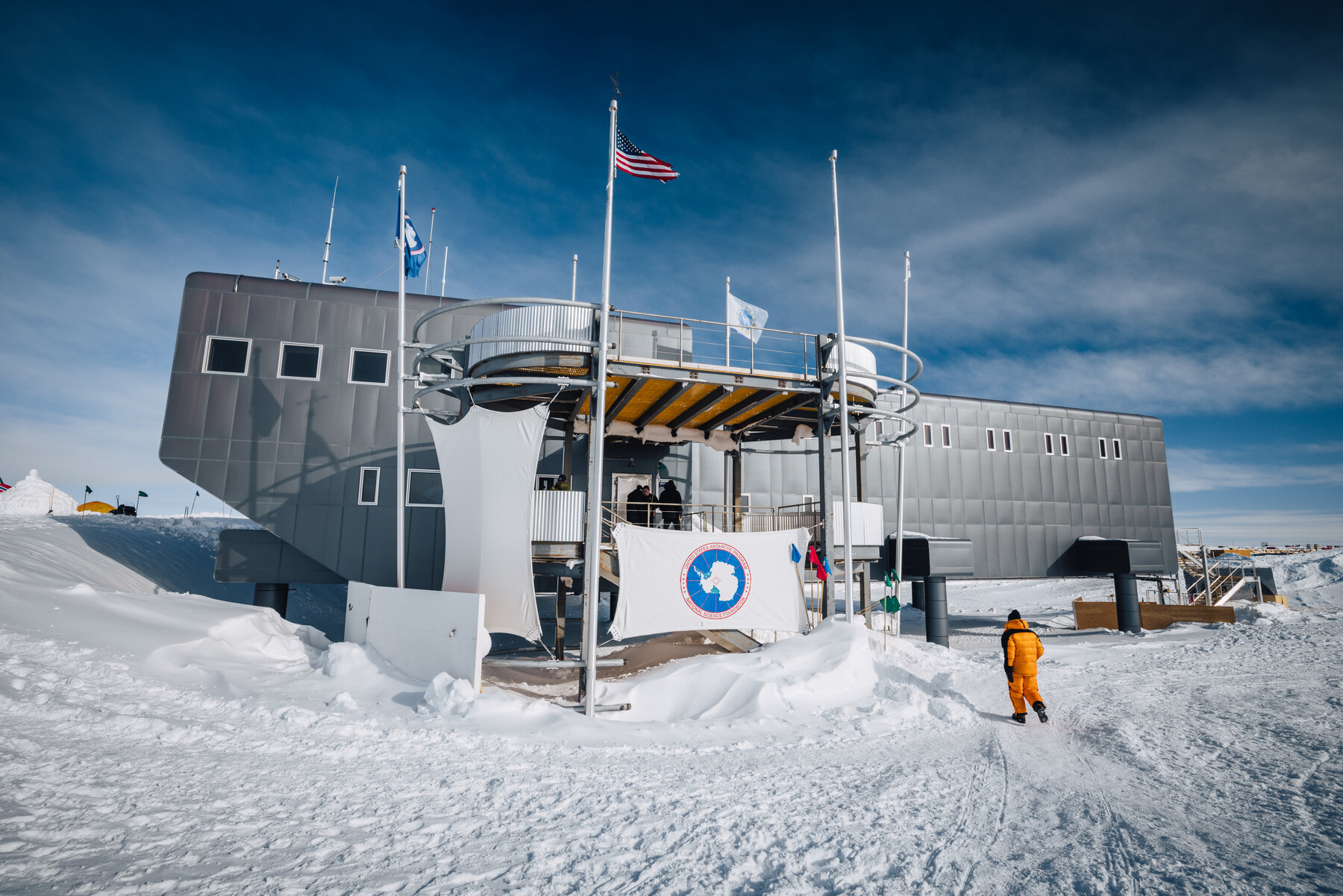
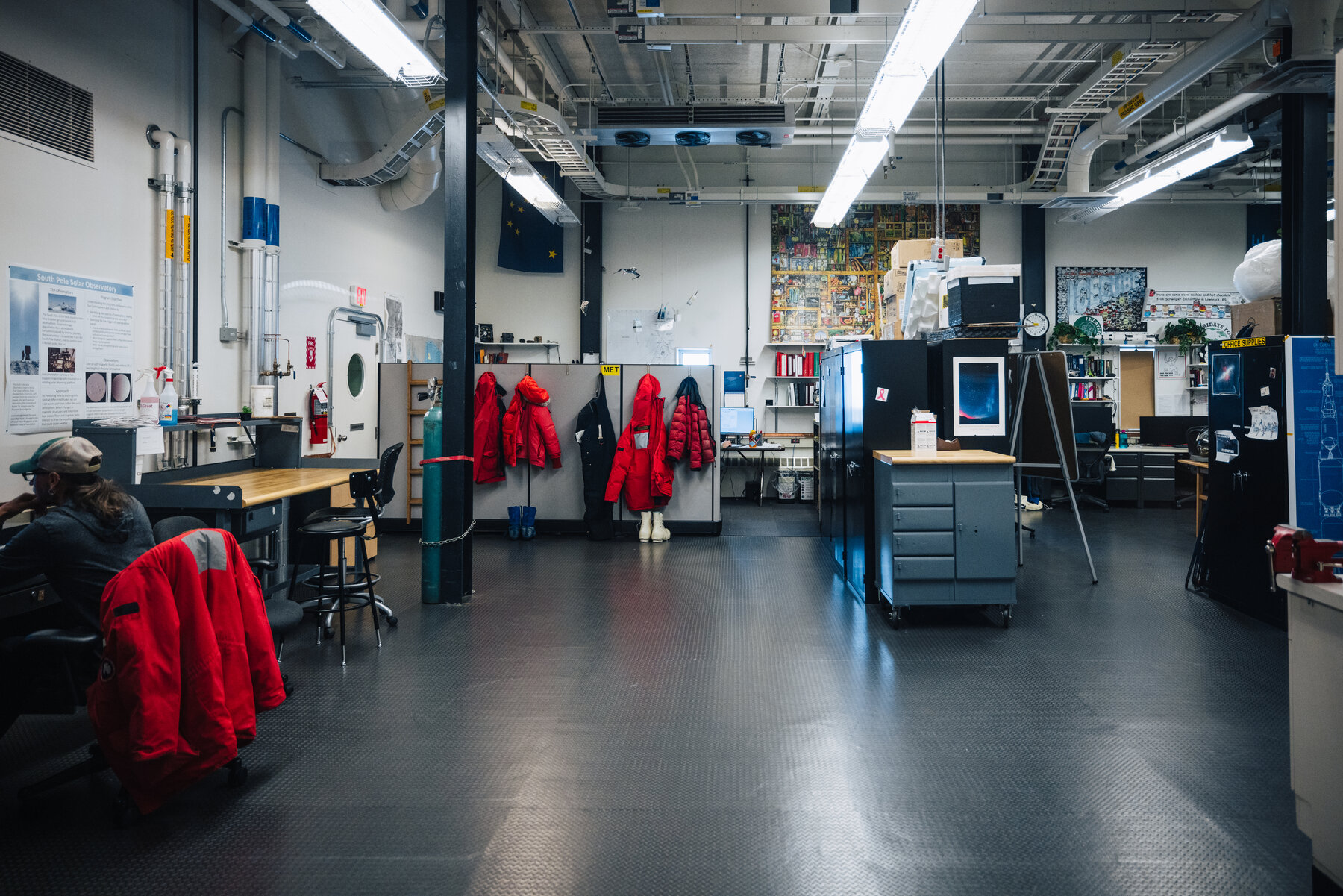
The Amundsen–Scott South Pole Station, built on stilts to ride above the accumulating snow. Inside, red extreme-cold-weather parkas hang ready for the roughly 50 scientists who overwinter here.
We were lucky enough to tour the Amundsen–Scott Station itself — an insider's look at the cutting-edge astrophysics and climate research that happens at the end of the world. It's a surreal feeling to stand at the axis of our planet, surrounded by nothing but sky and ice. Every direction is north.
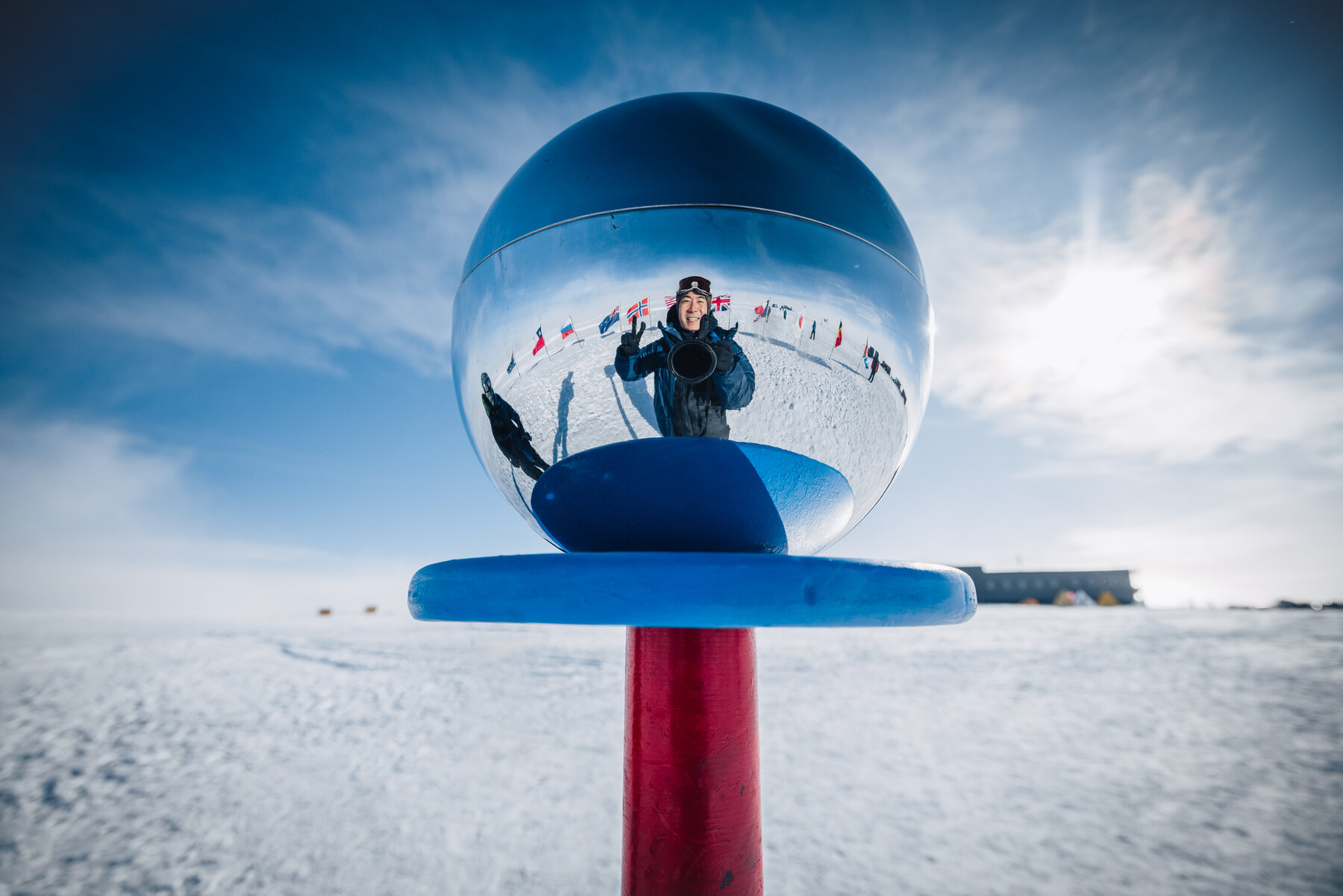
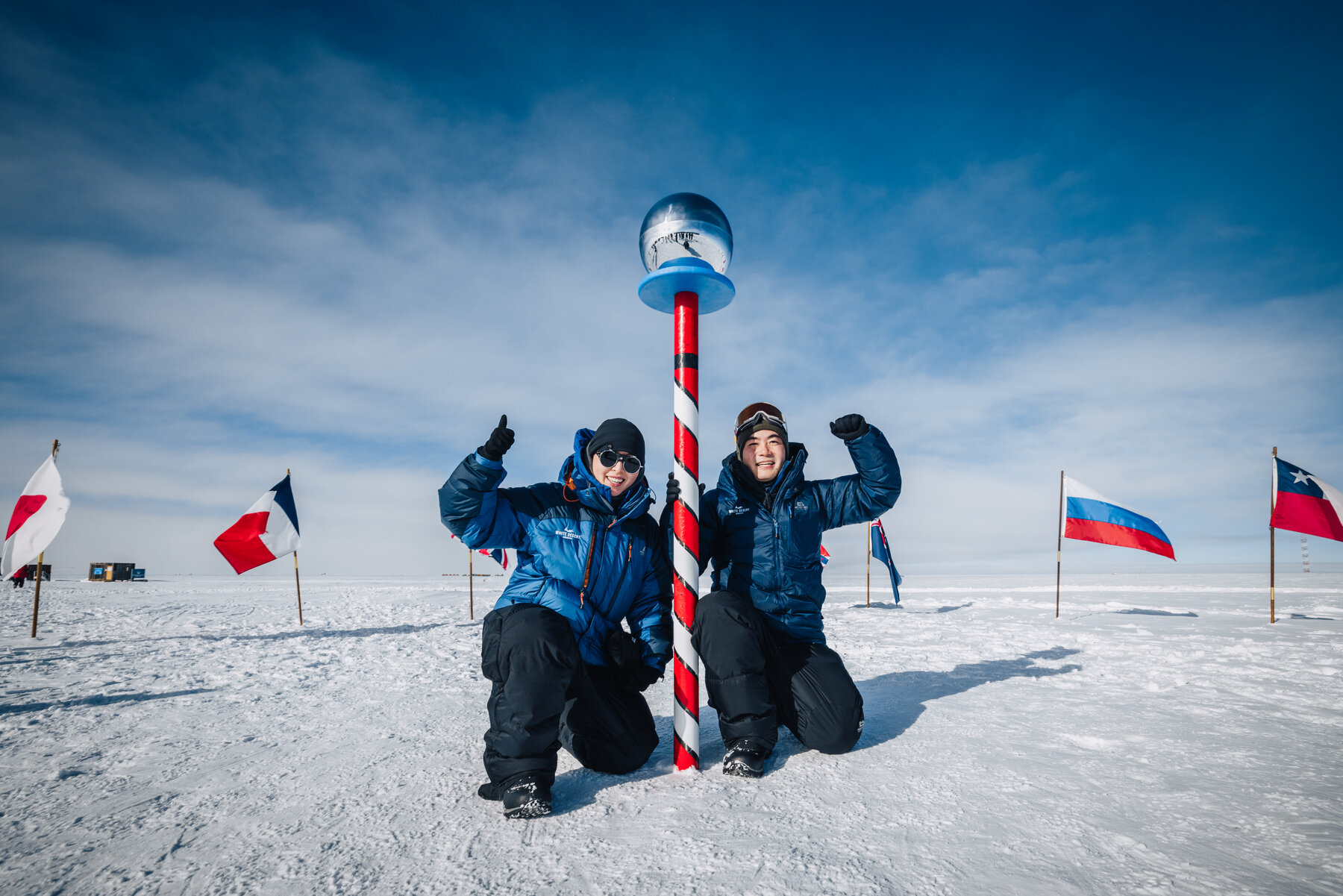
The ceremonial South Pole, ringed by the flags of the twelve original Antarctic Treaty signatories. The mirrored sphere reflects everything around it — including us.
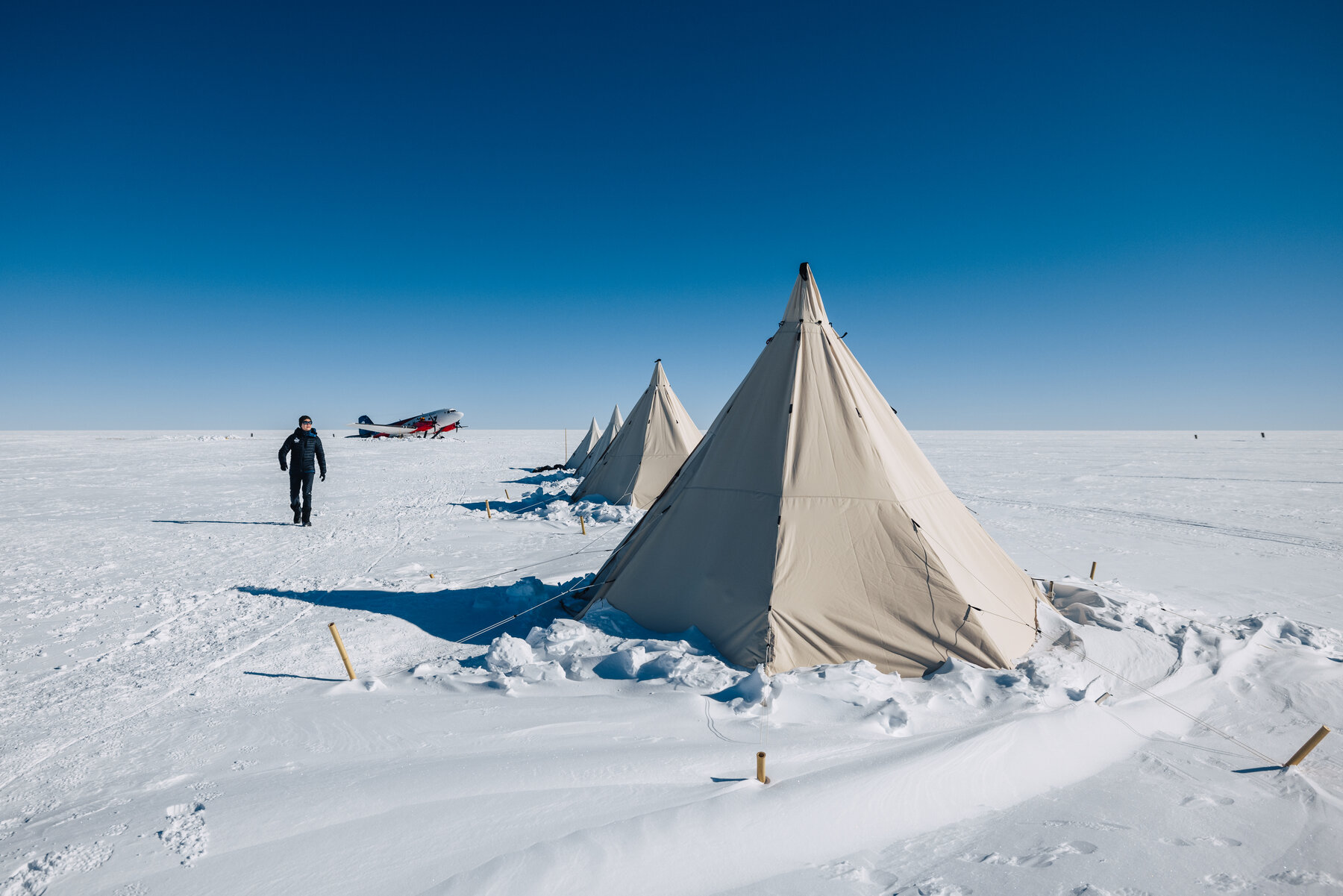
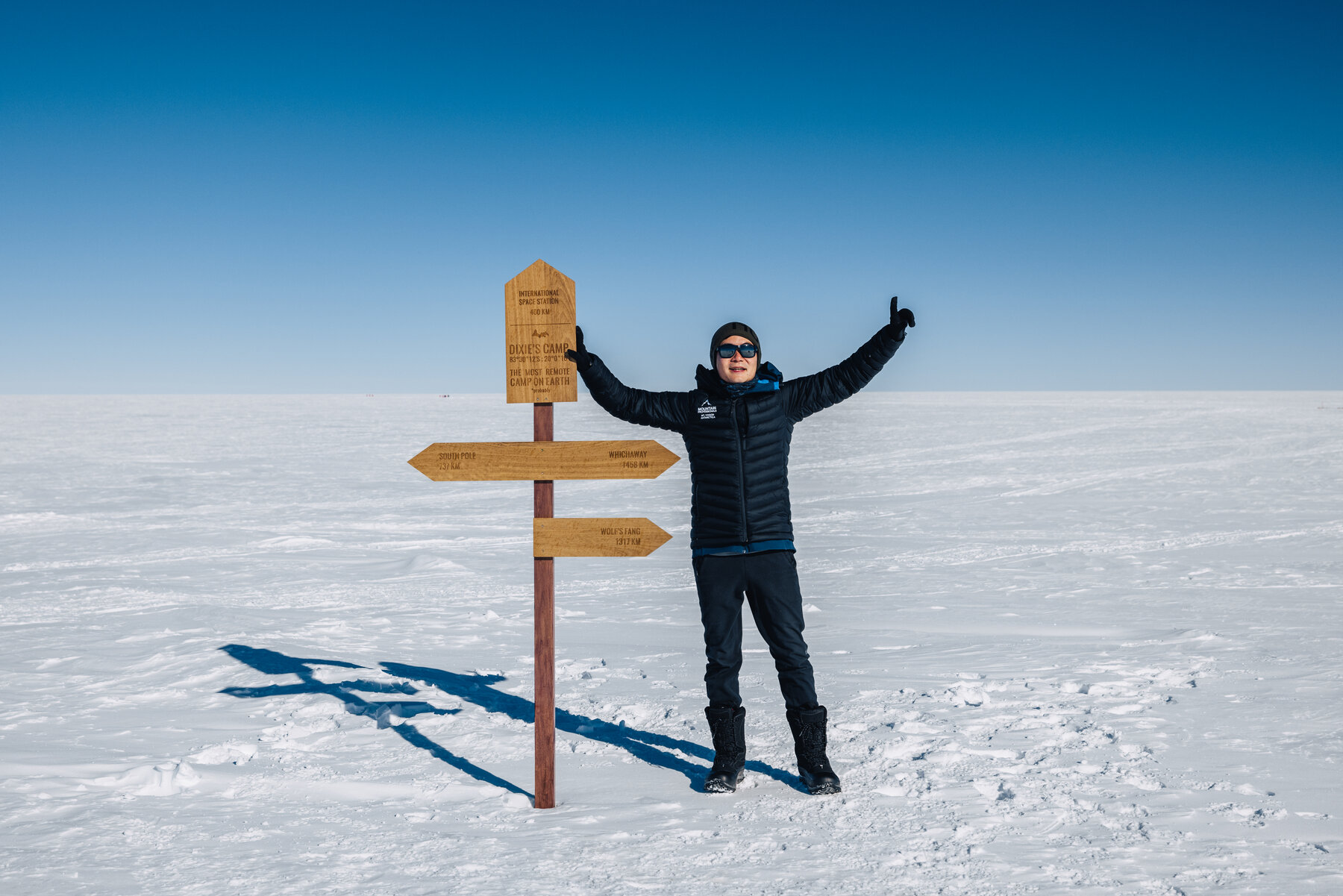
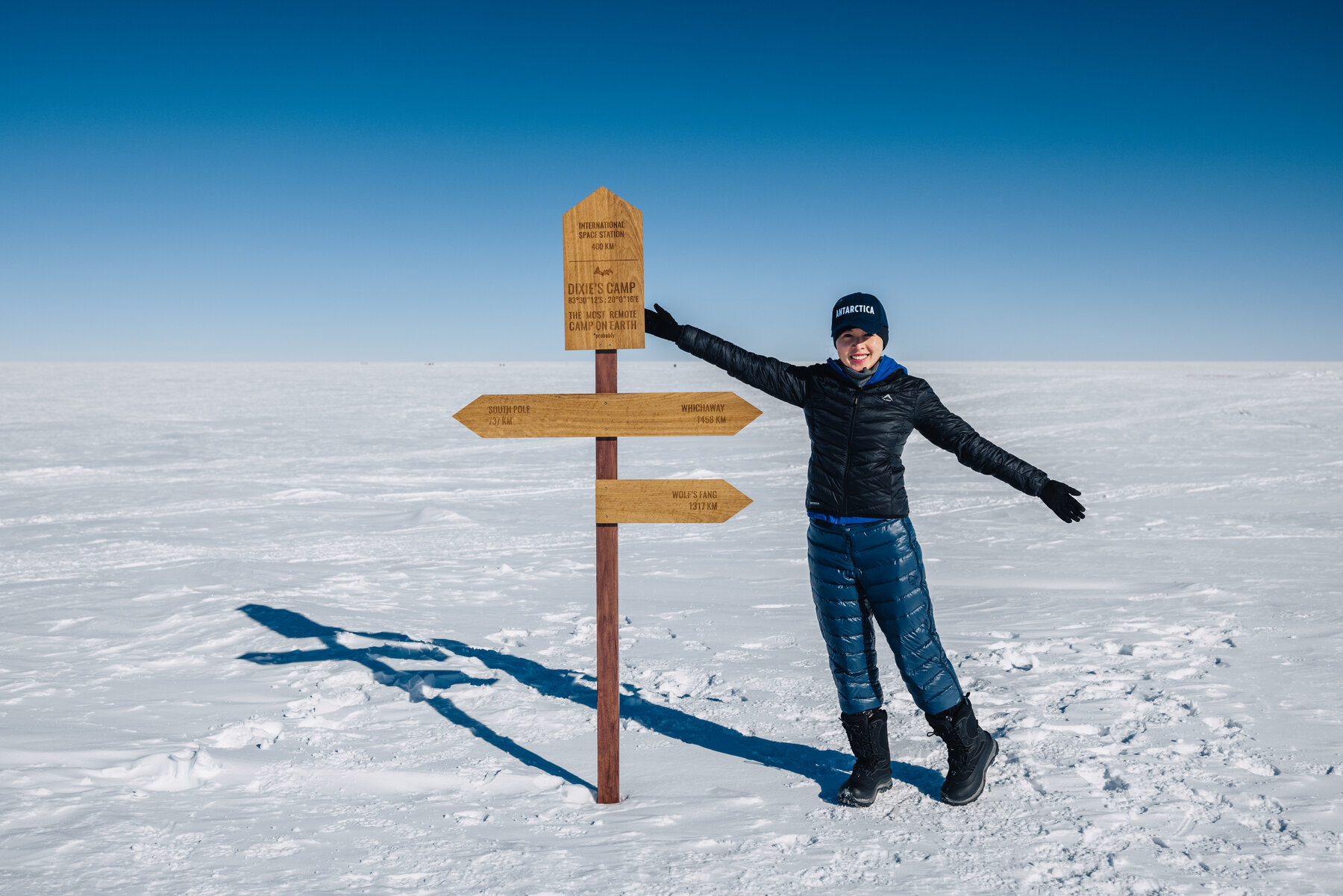
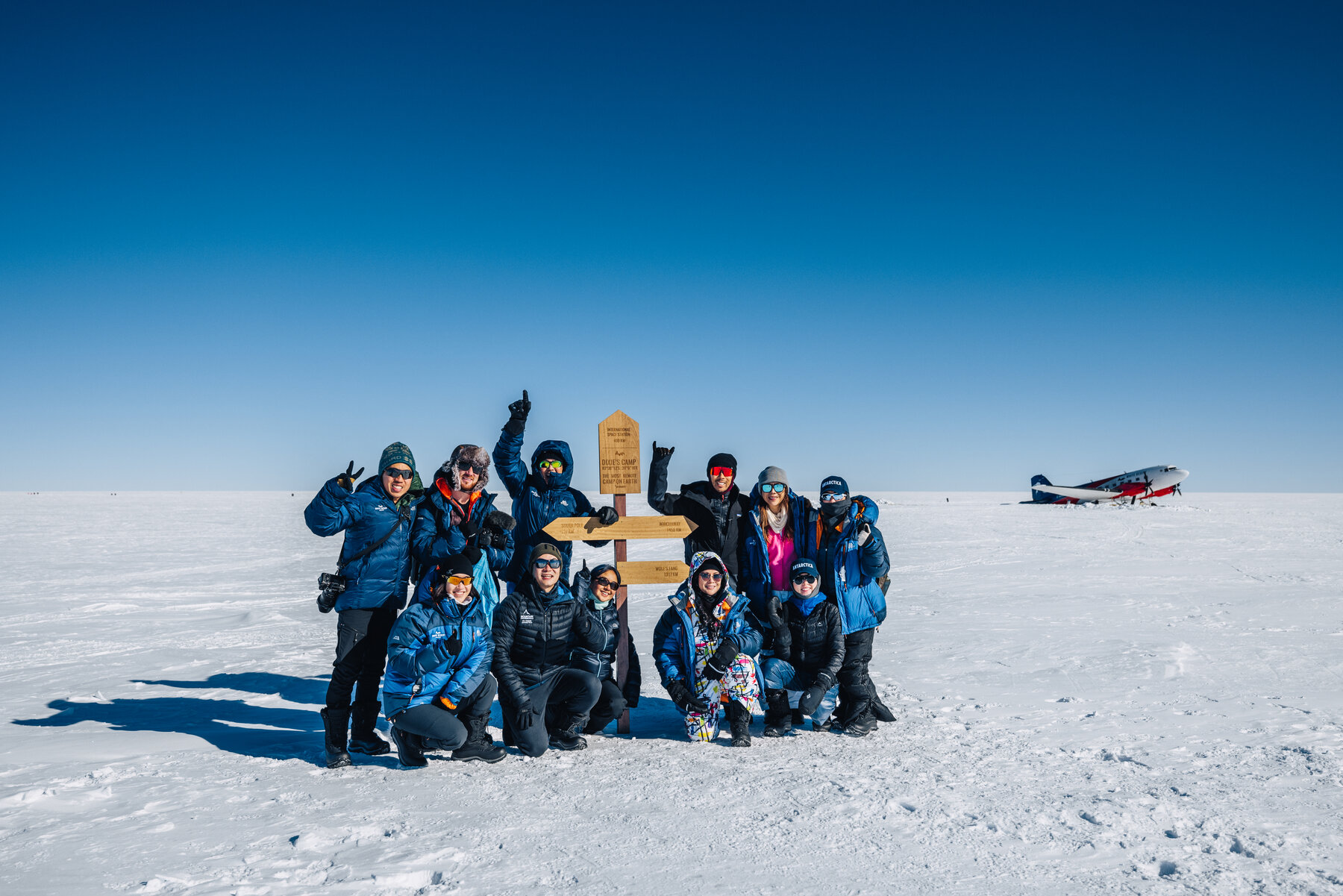
After several hours at the pole we reboarded the Basler and flew 780 km north to Dixie's Camp, pitched at 83°S on the high polar plateau. Its tagline — "The Most Remote Camp on Earth (Probably)" — is only a little tongue-in-cheek. The nearest other humans that night were the crew at the South Pole station, roughly 780 km behind us. Falling asleep in a heated canvas teepee under a sun that never set, we couldn't help but feel we'd joined a very small club.
Dixie's Camp at 83°S. Canvas teepees on the polar plateau, and nothing else for hundreds of kilometres.
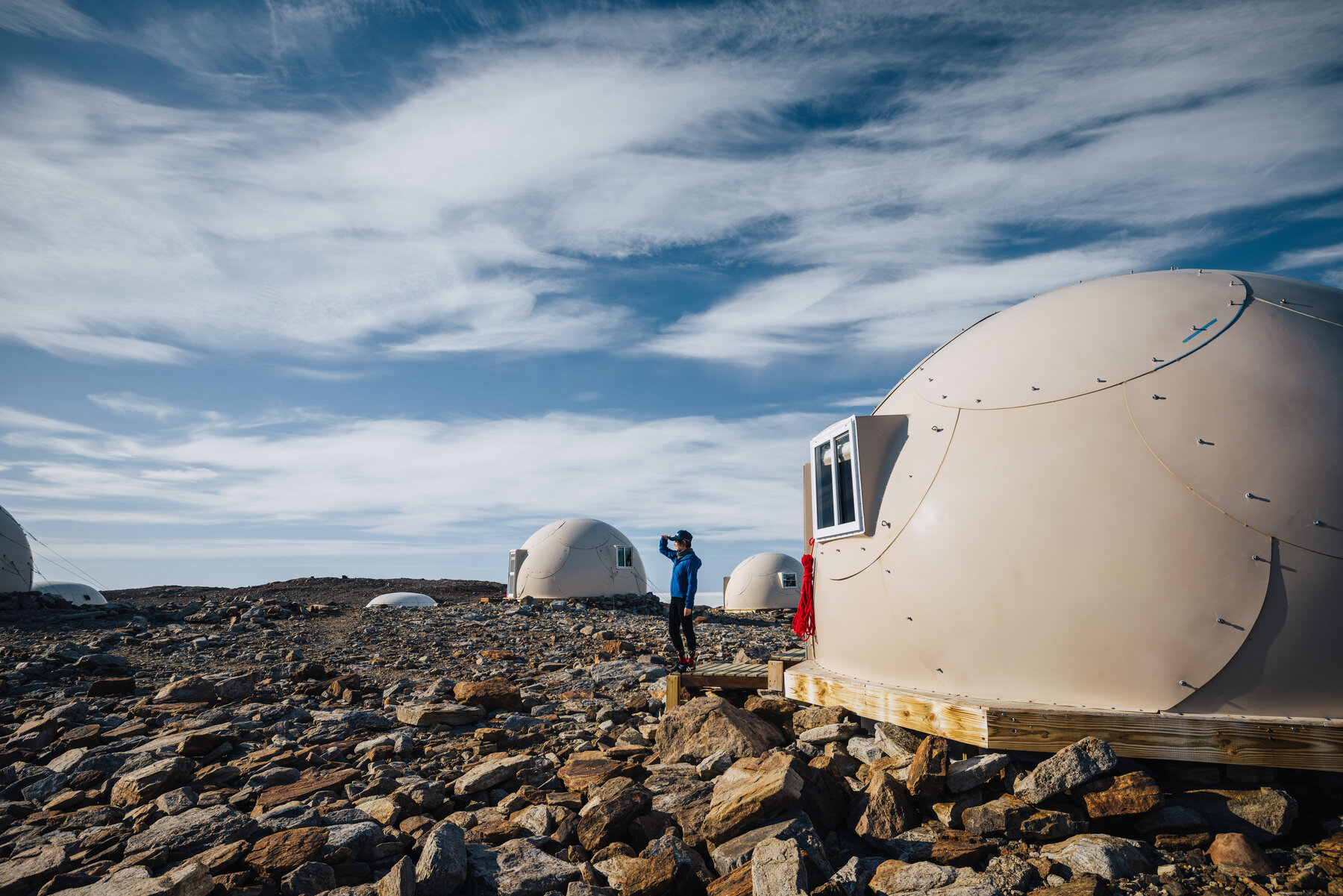
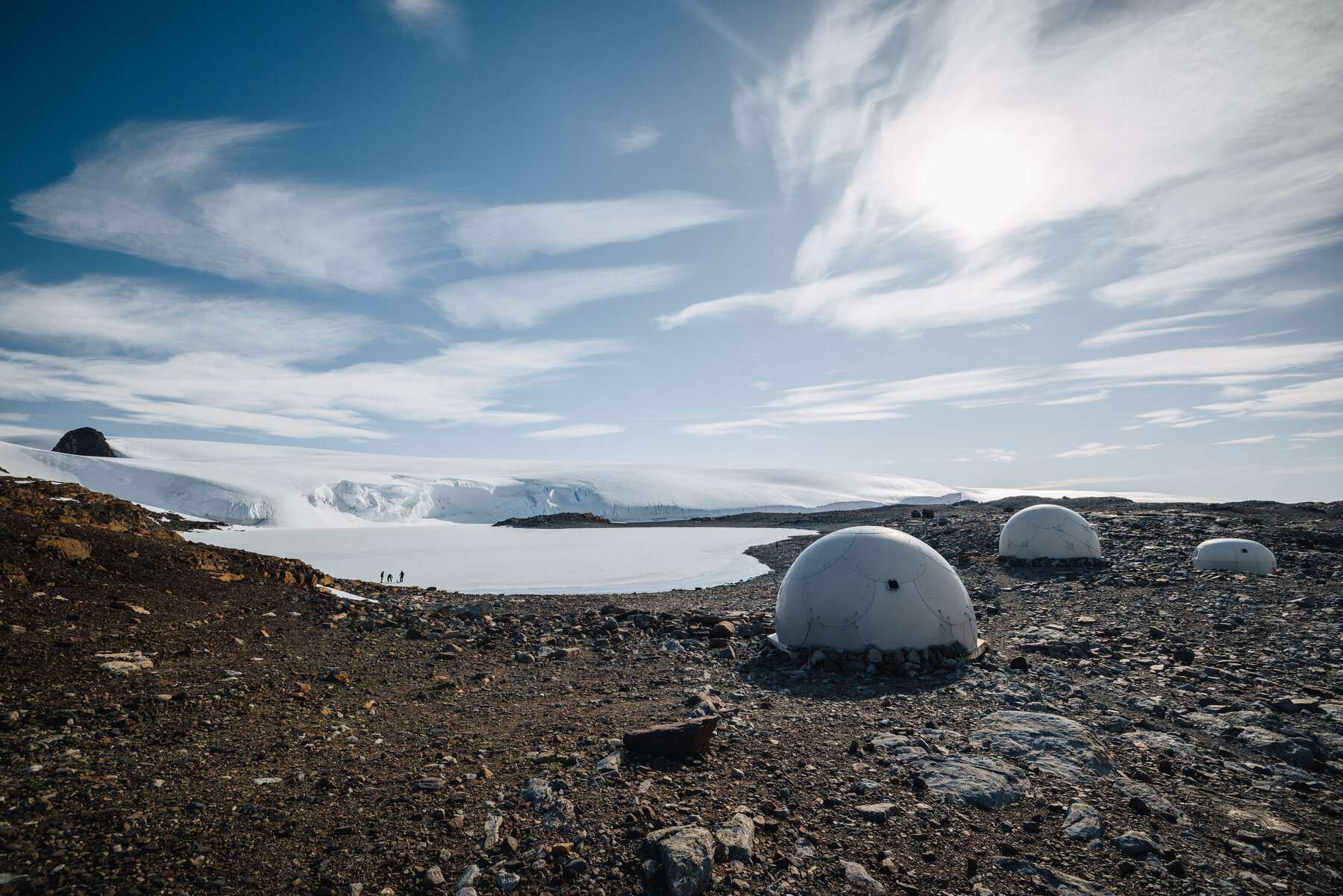
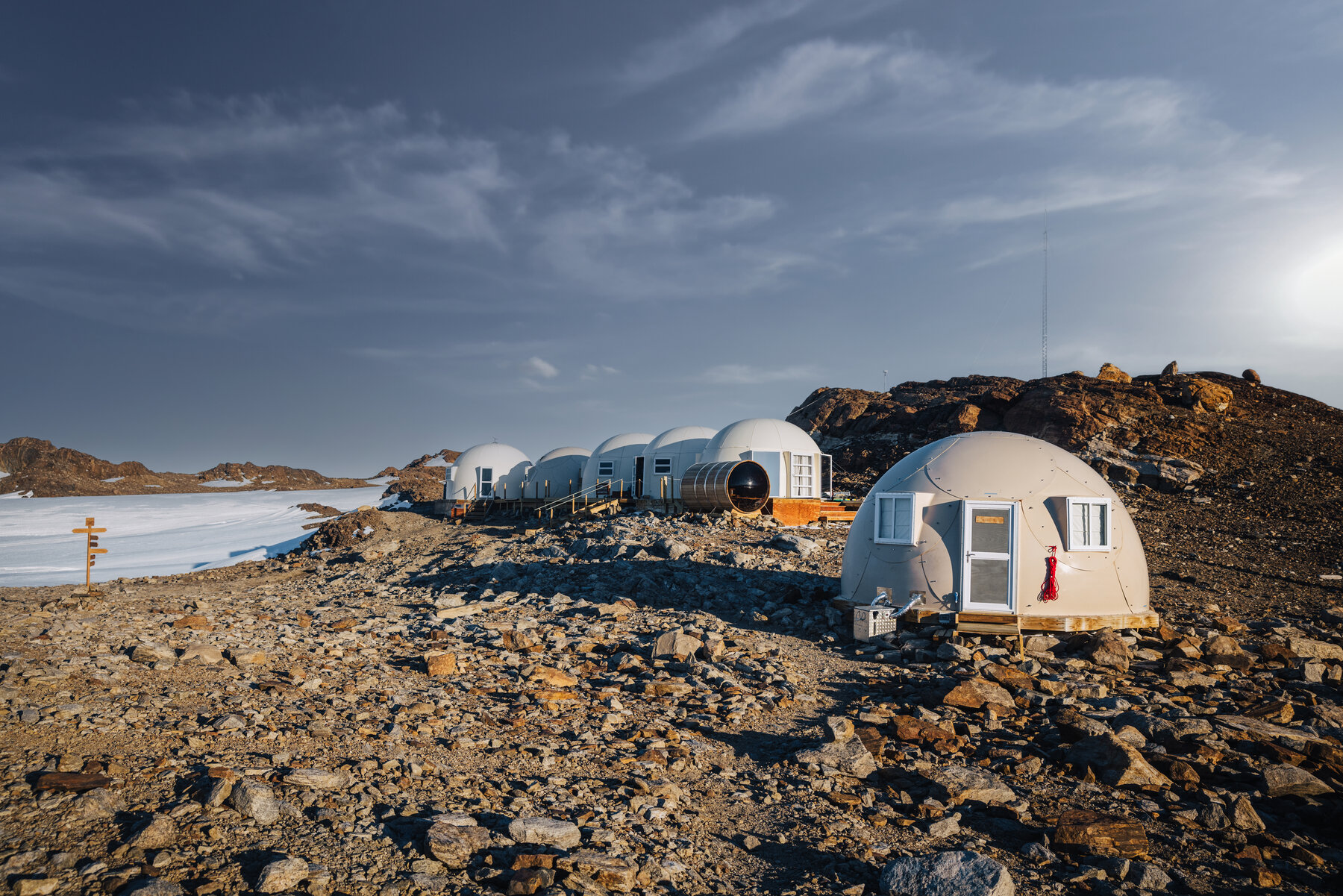
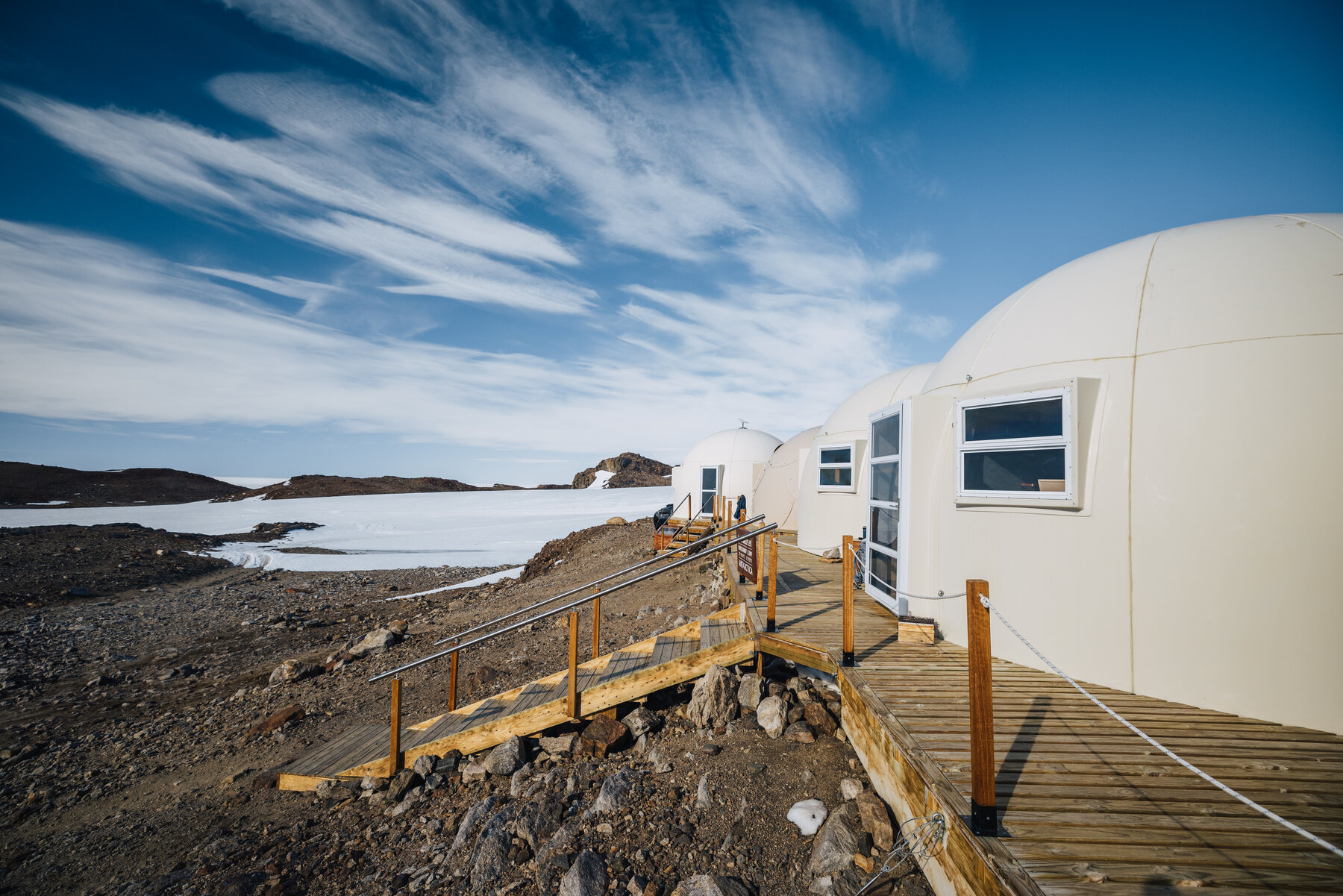
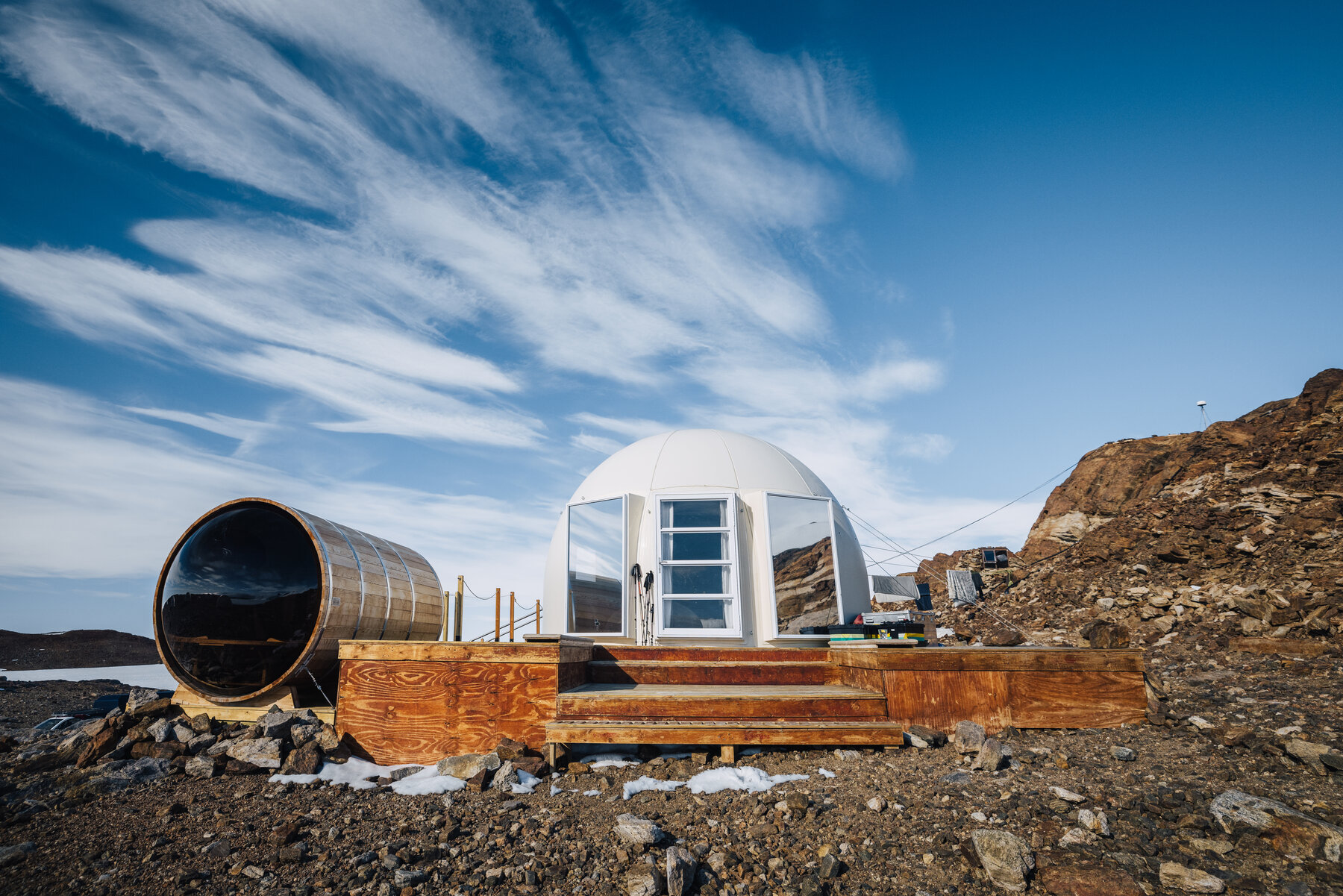
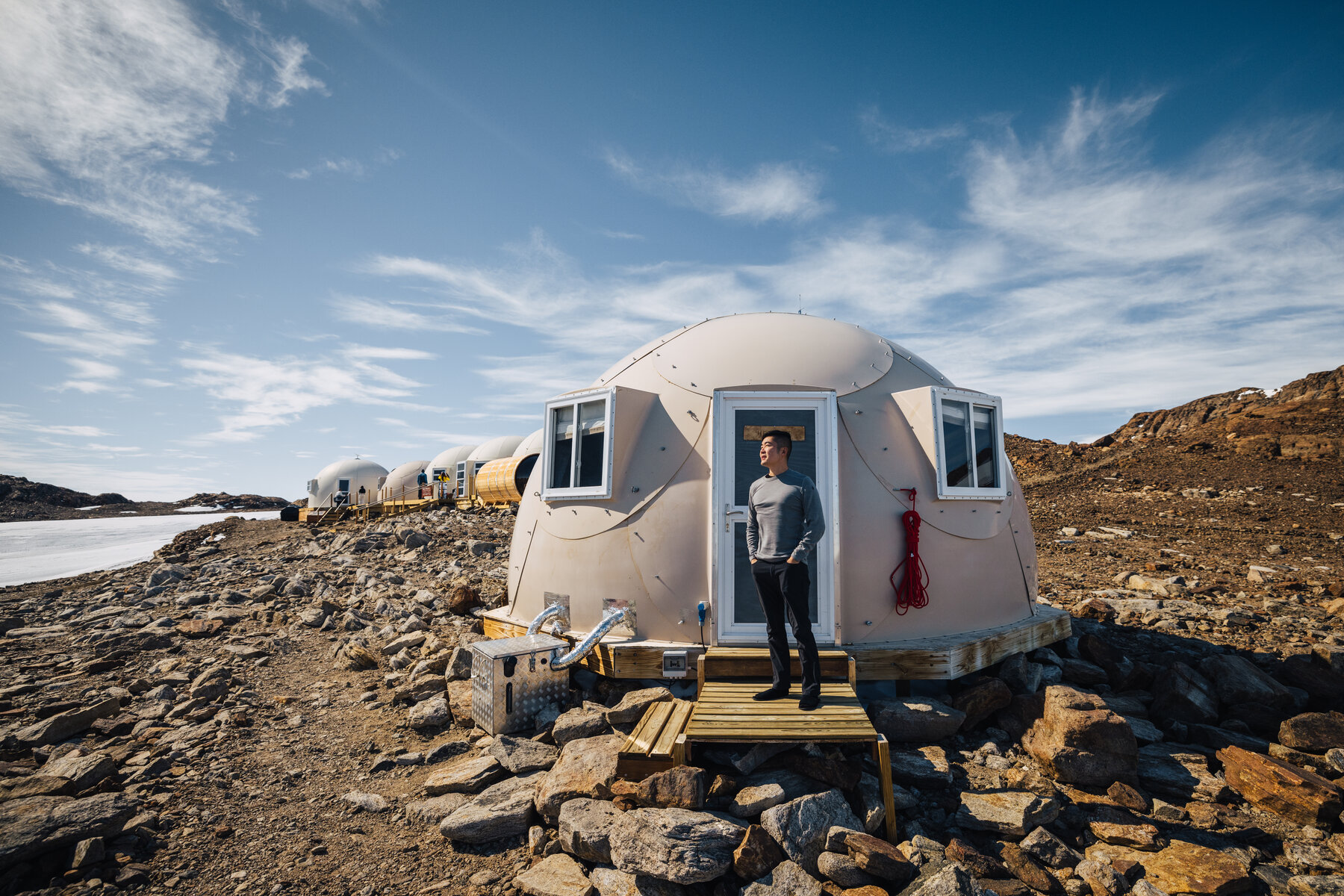
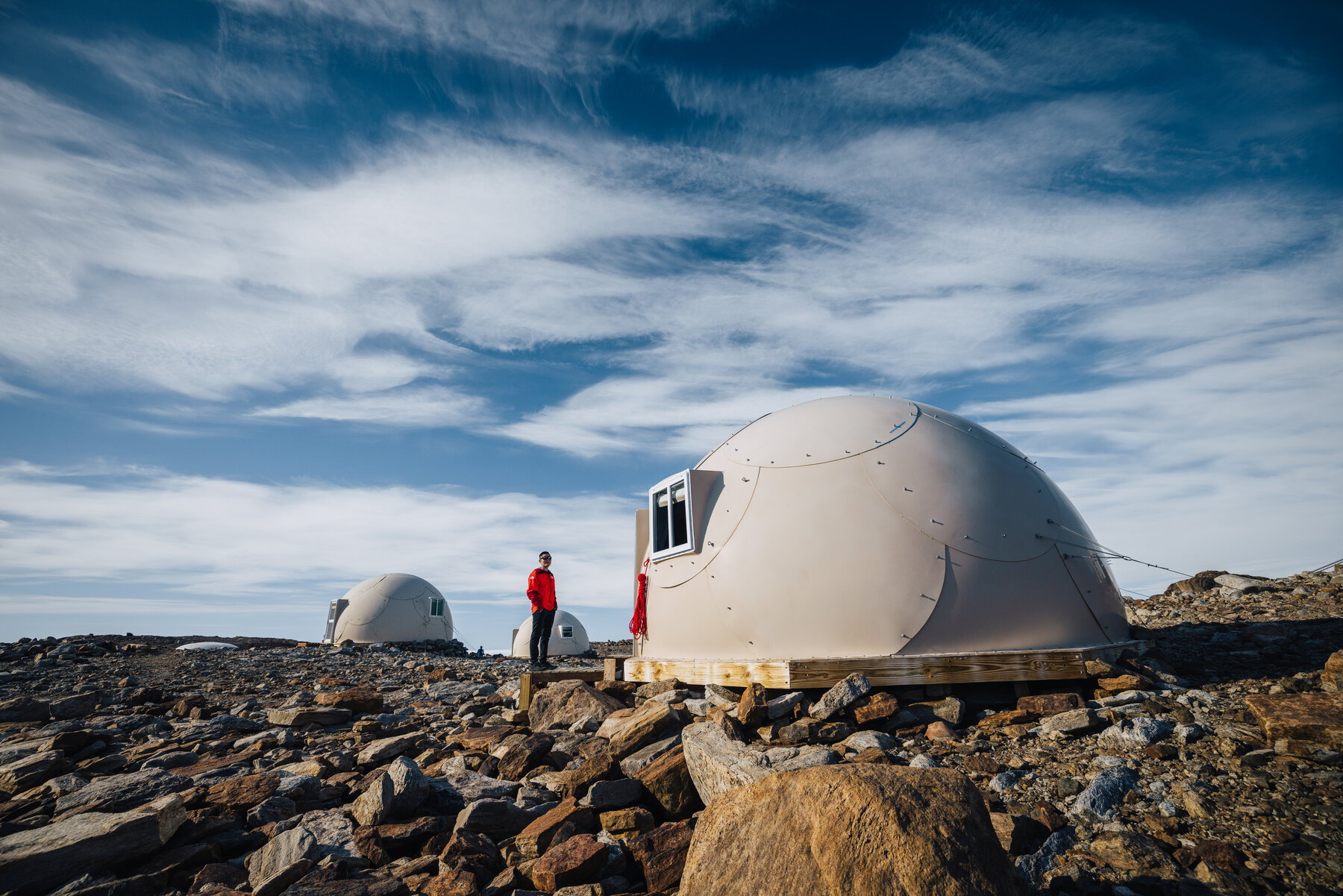
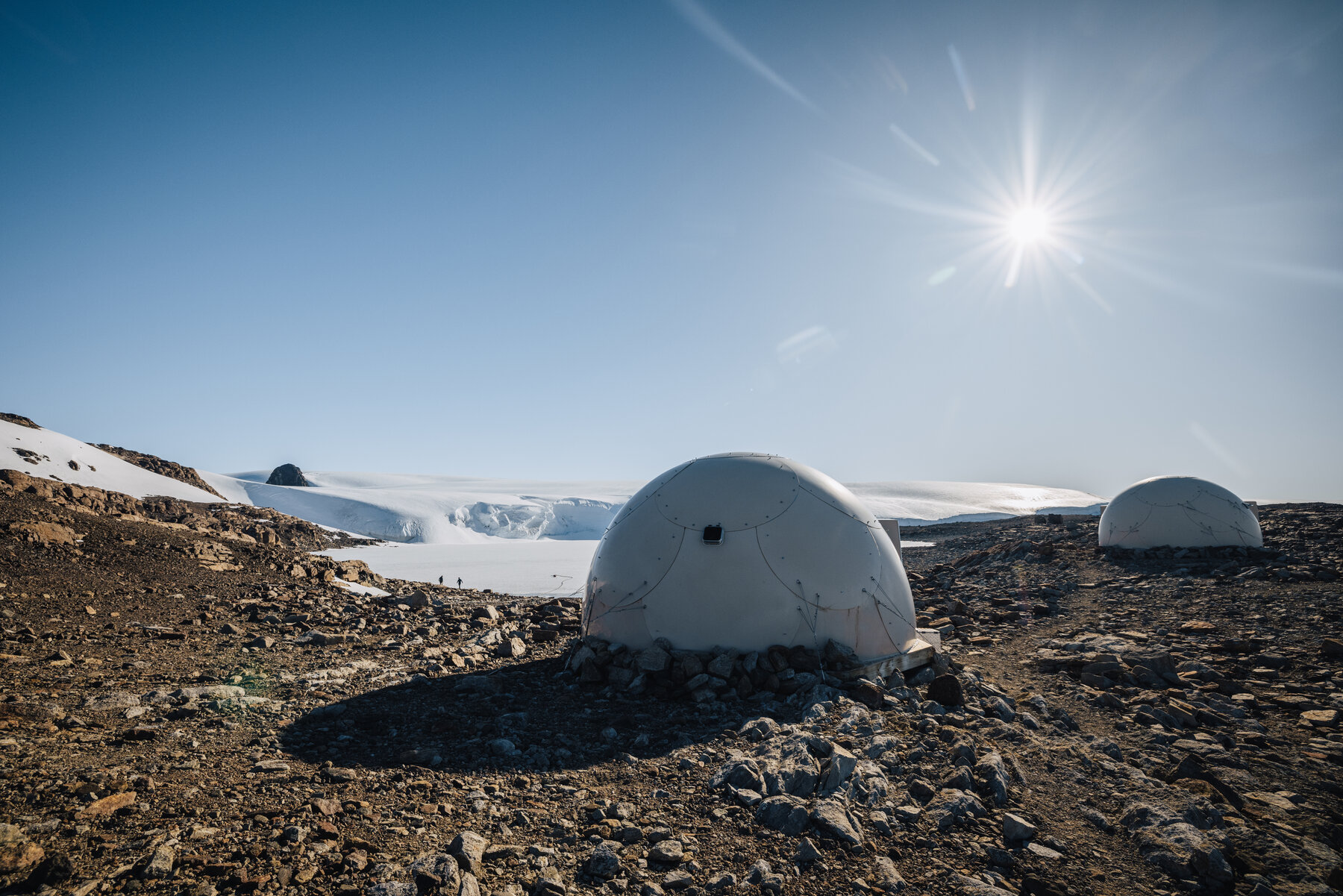
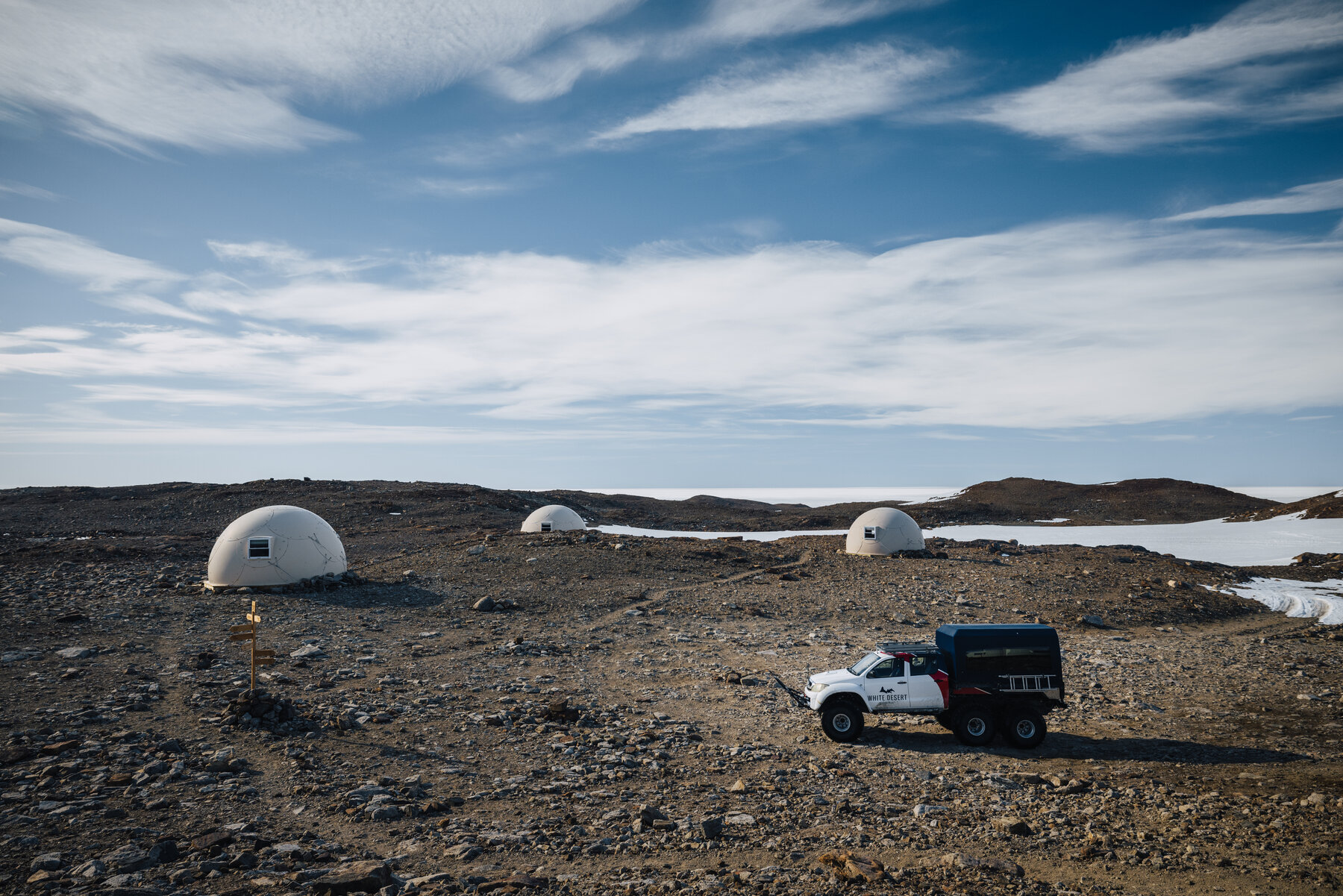
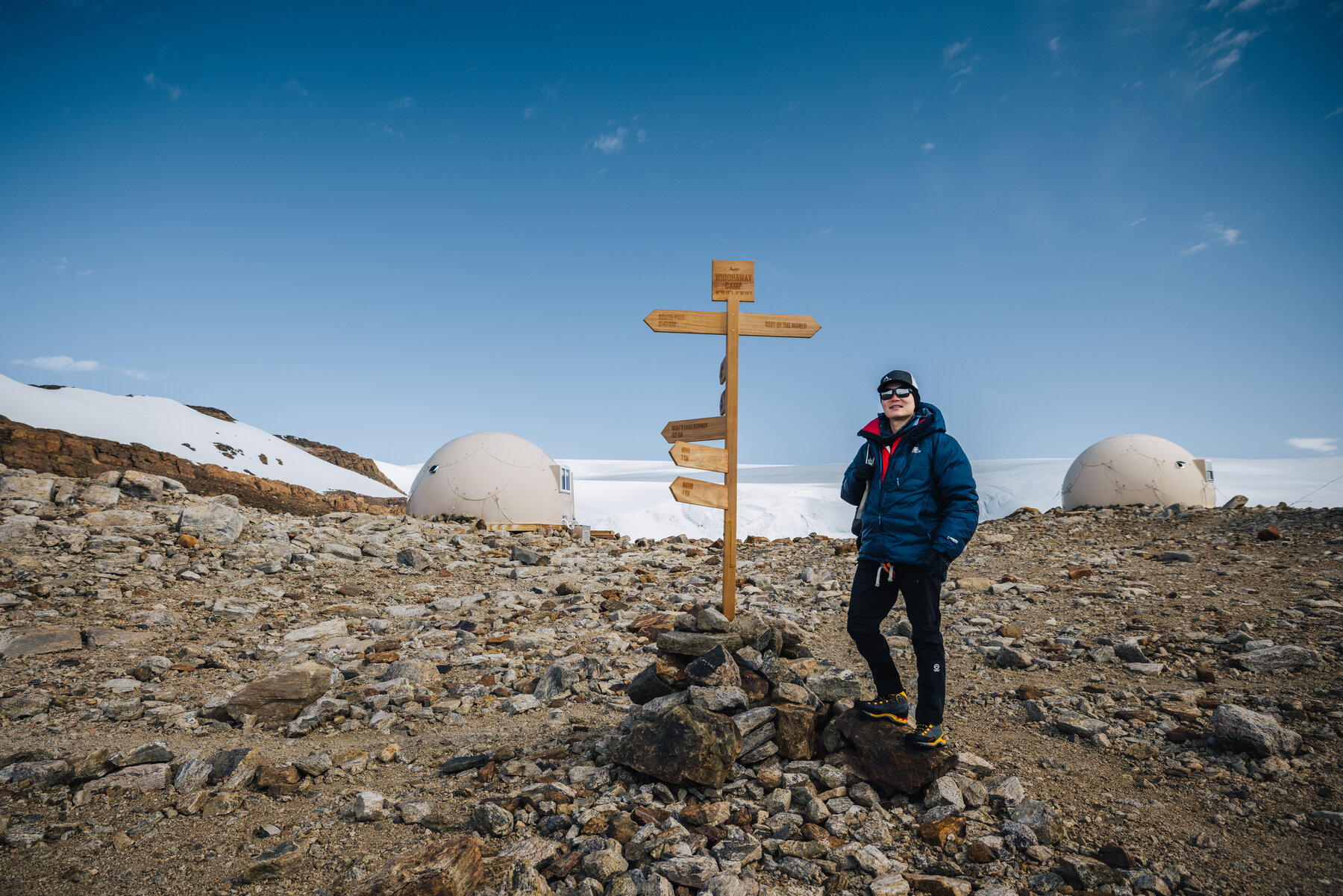
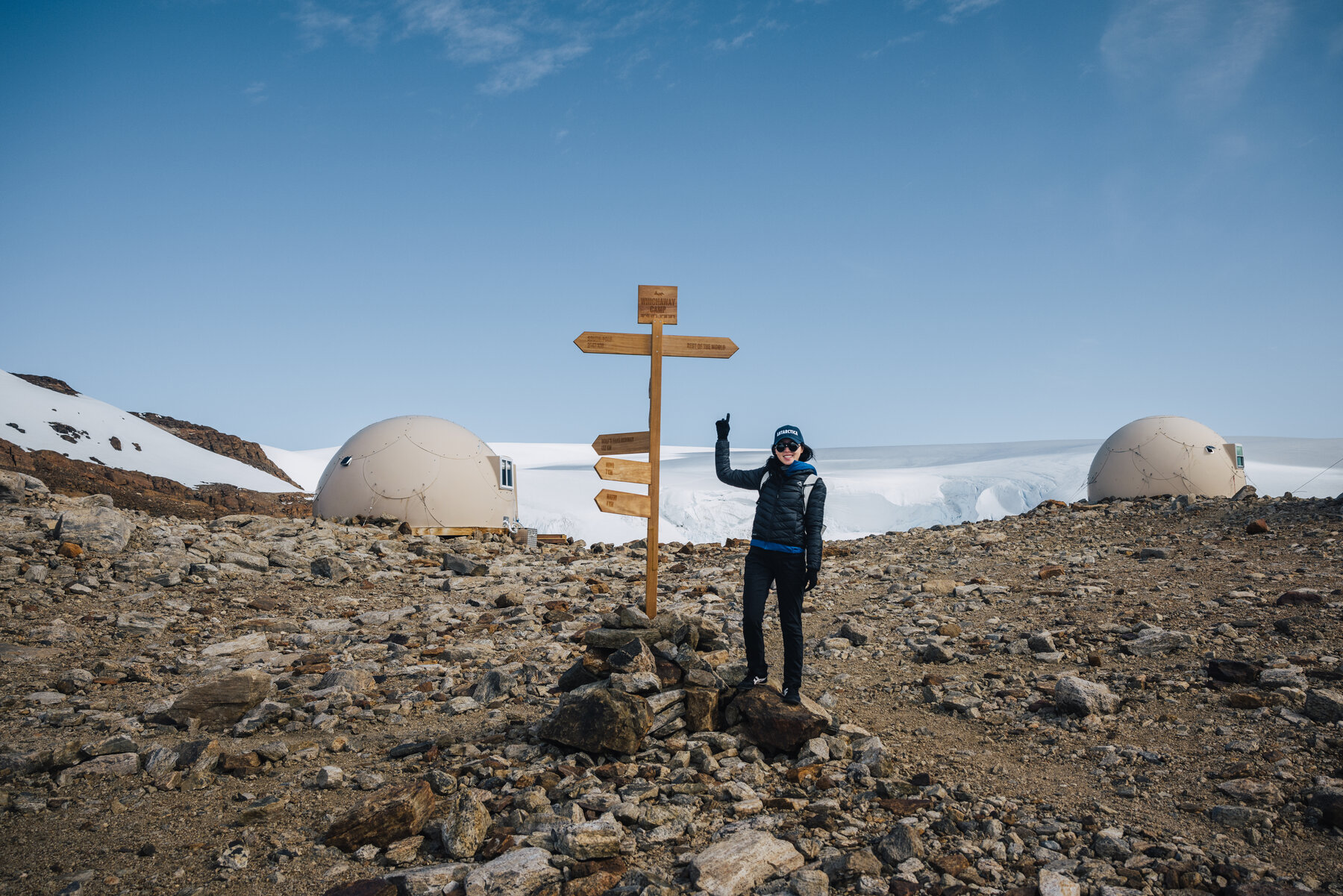
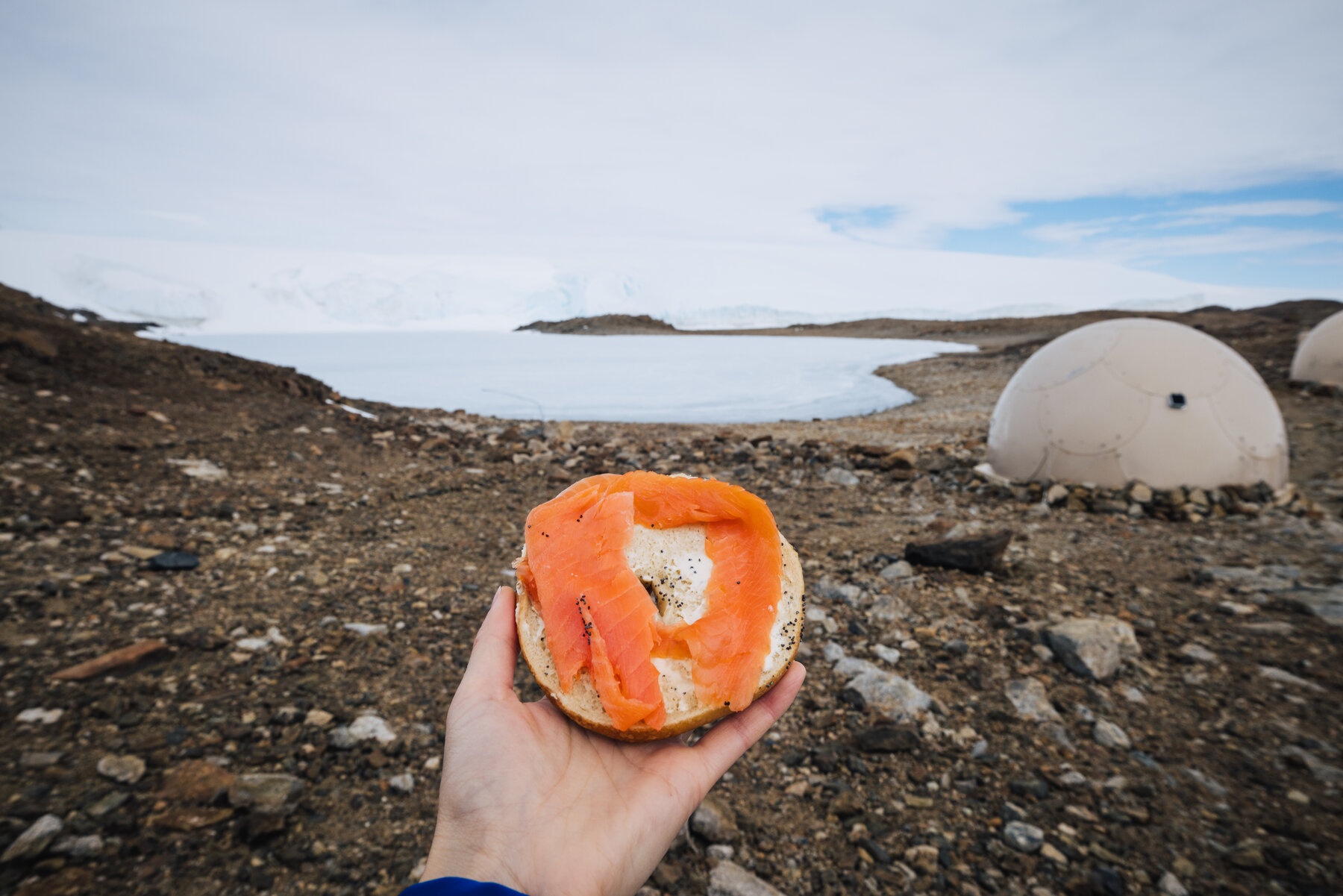
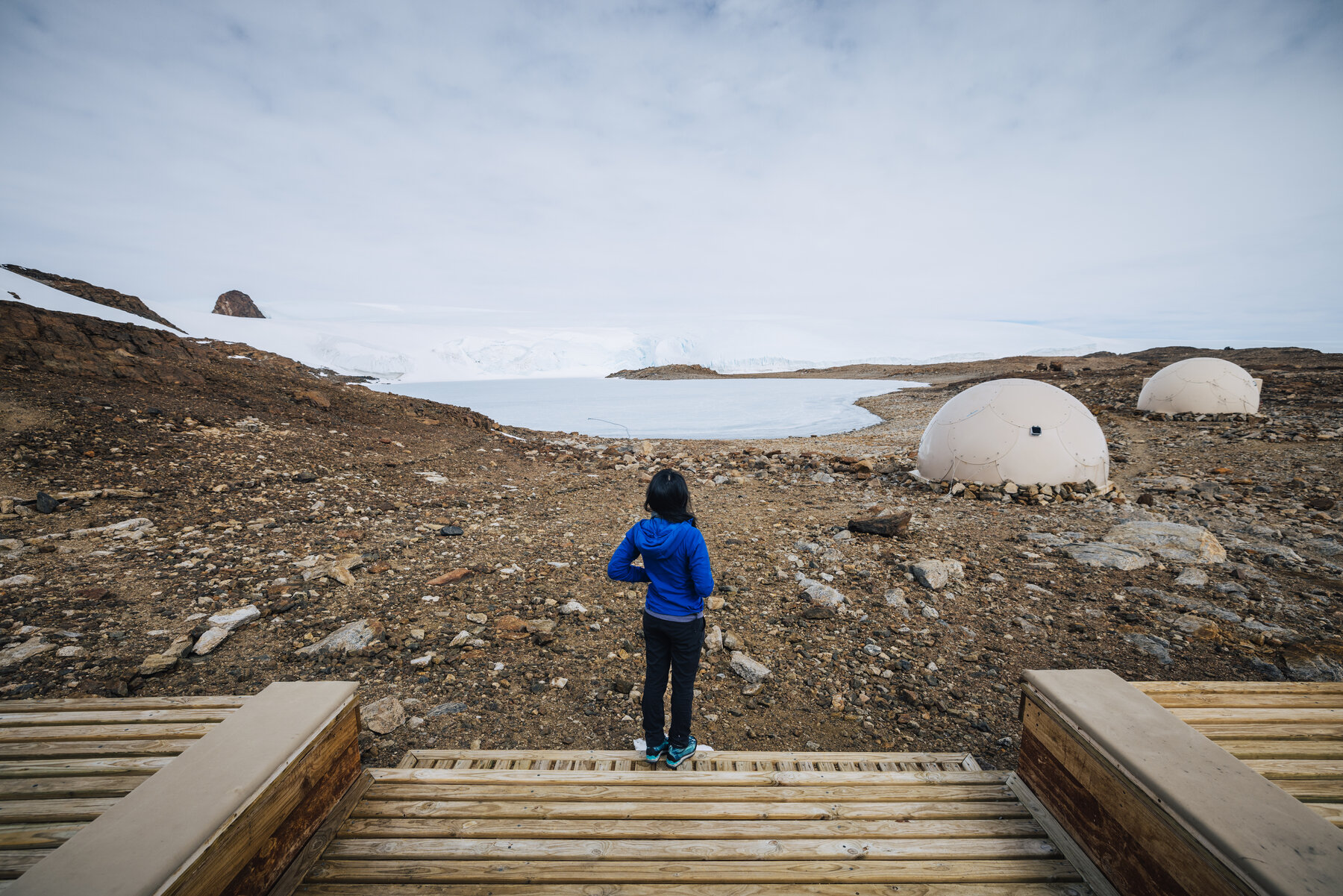
Whichaway Camp — home for the next five days. Eco-pods on a rocky outcrop in the Schirmacher Oasis, right on the edge of a frozen lake.
In the morning we flew from Dixie's Camp to our home for the next five days: Whichaway Camp. An oasis of luxury in the heart of Antarctica's icy wilderness, Whichaway sits on a rare rocky outcrop in the Schirmacher Oasis, right on the edge of a frozen lake with views of blue ice cliffs — a striking contrast to the surrounding white wilderness.
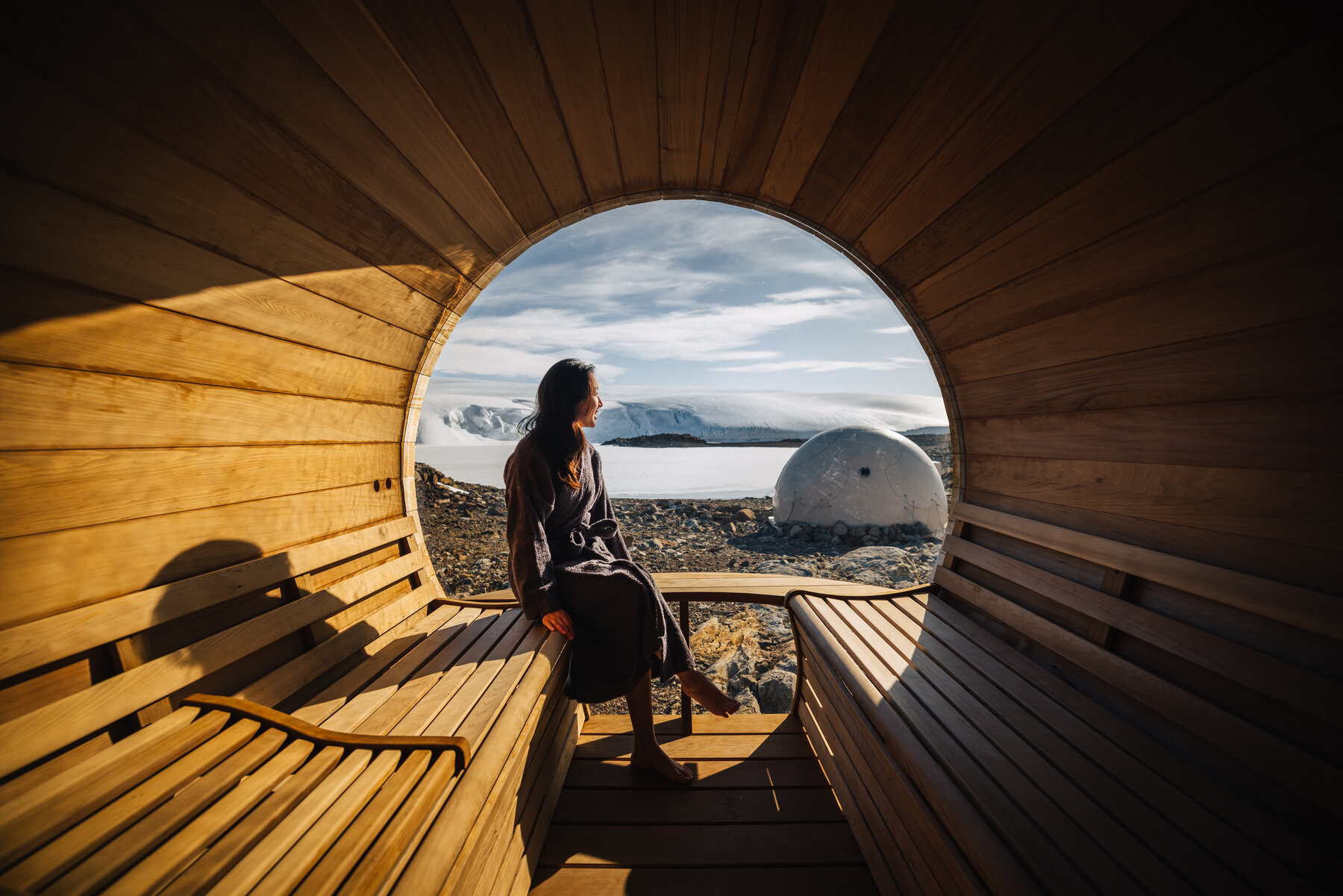
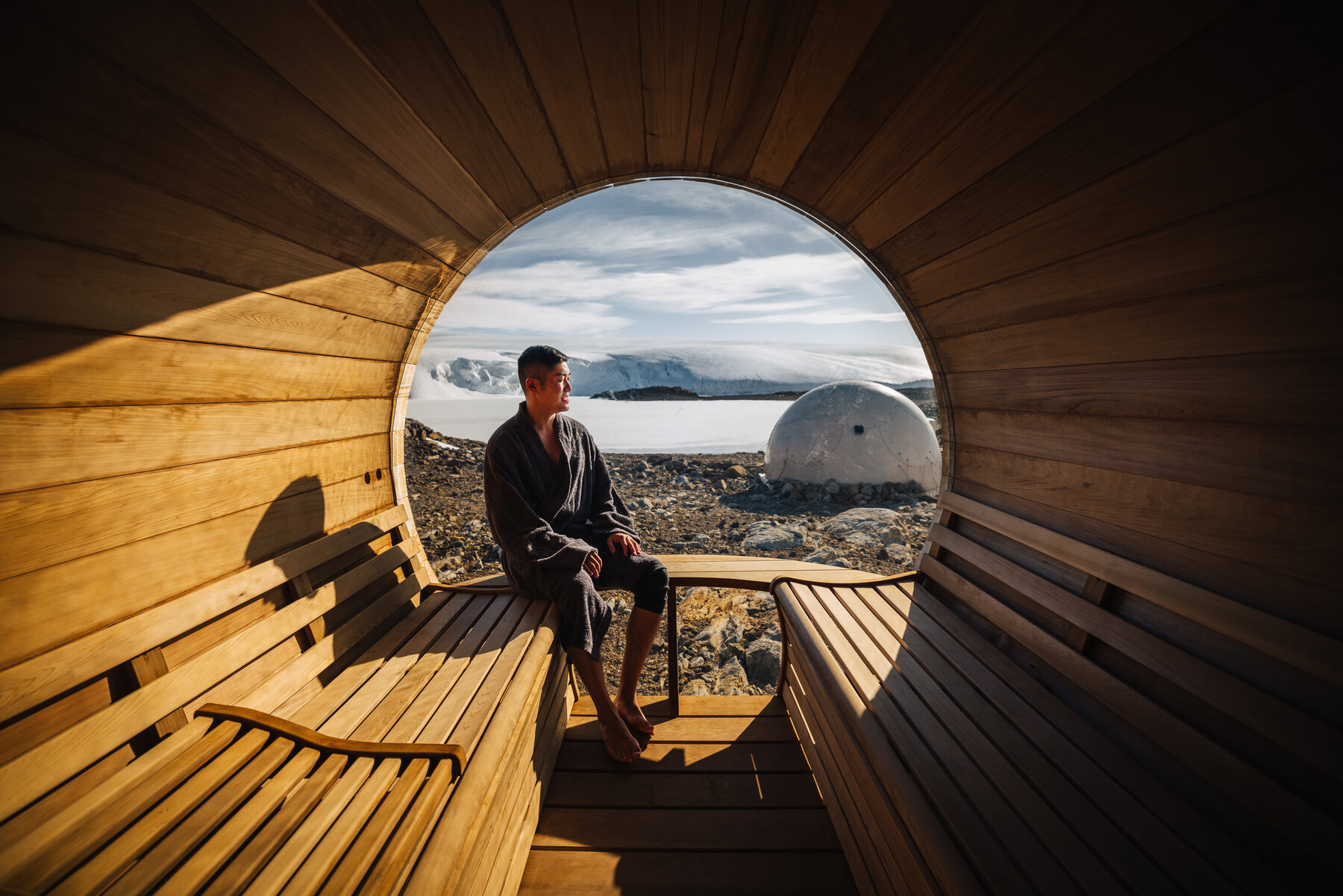
The camp sits at the edge of a frozen lake, with glacier walls rising on the far shore. The wooden sauna's circular window frames one of the best views at camp.
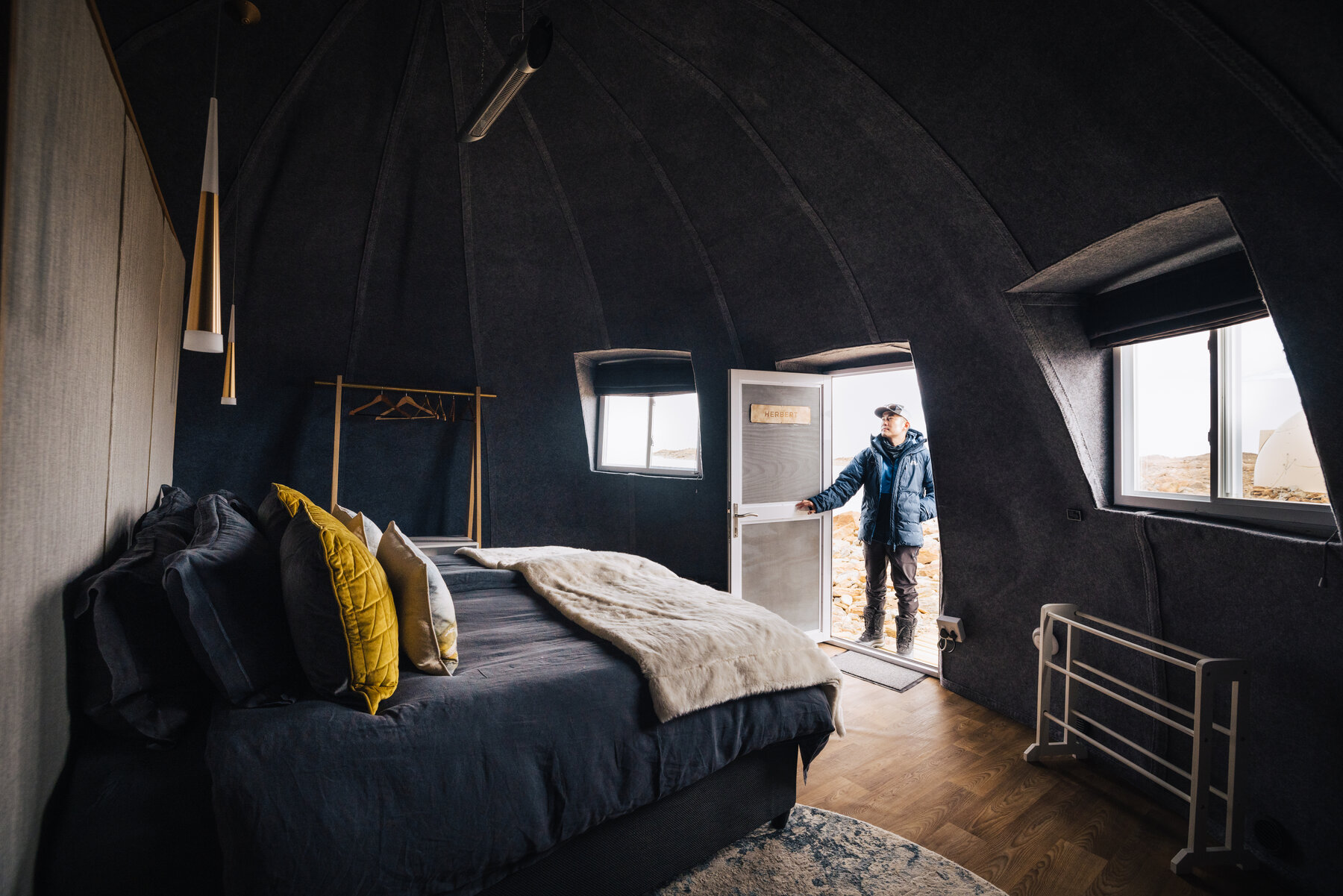
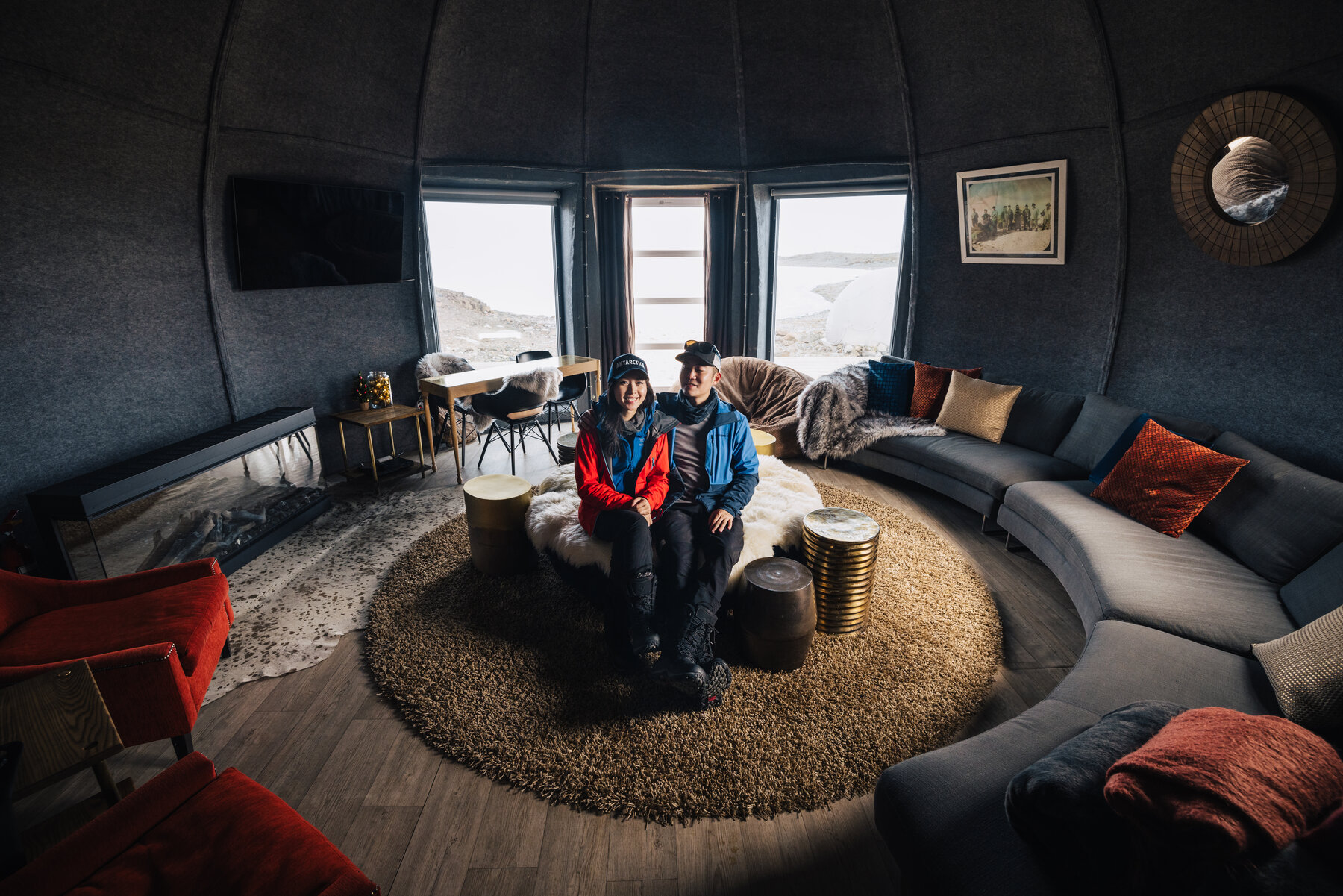
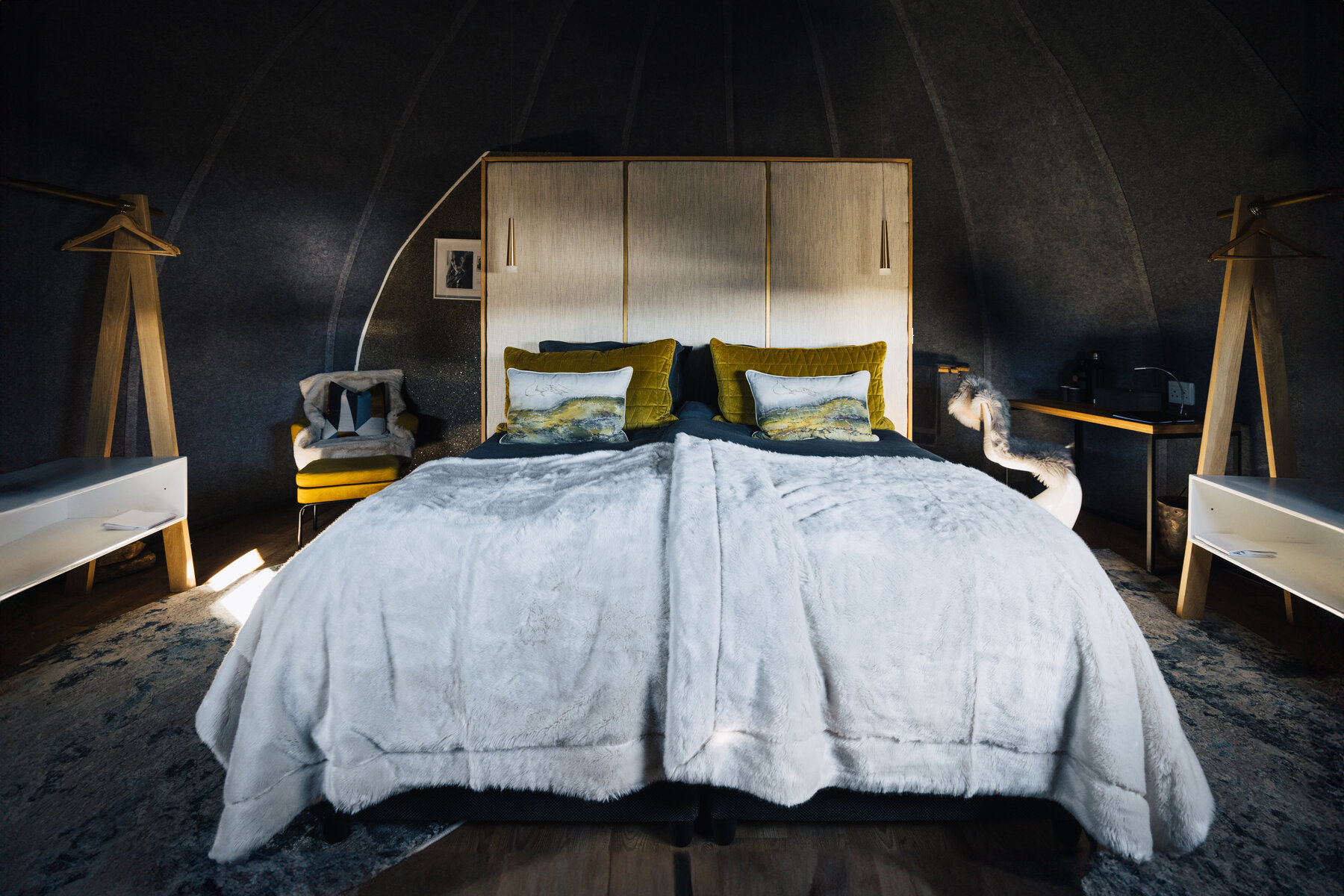
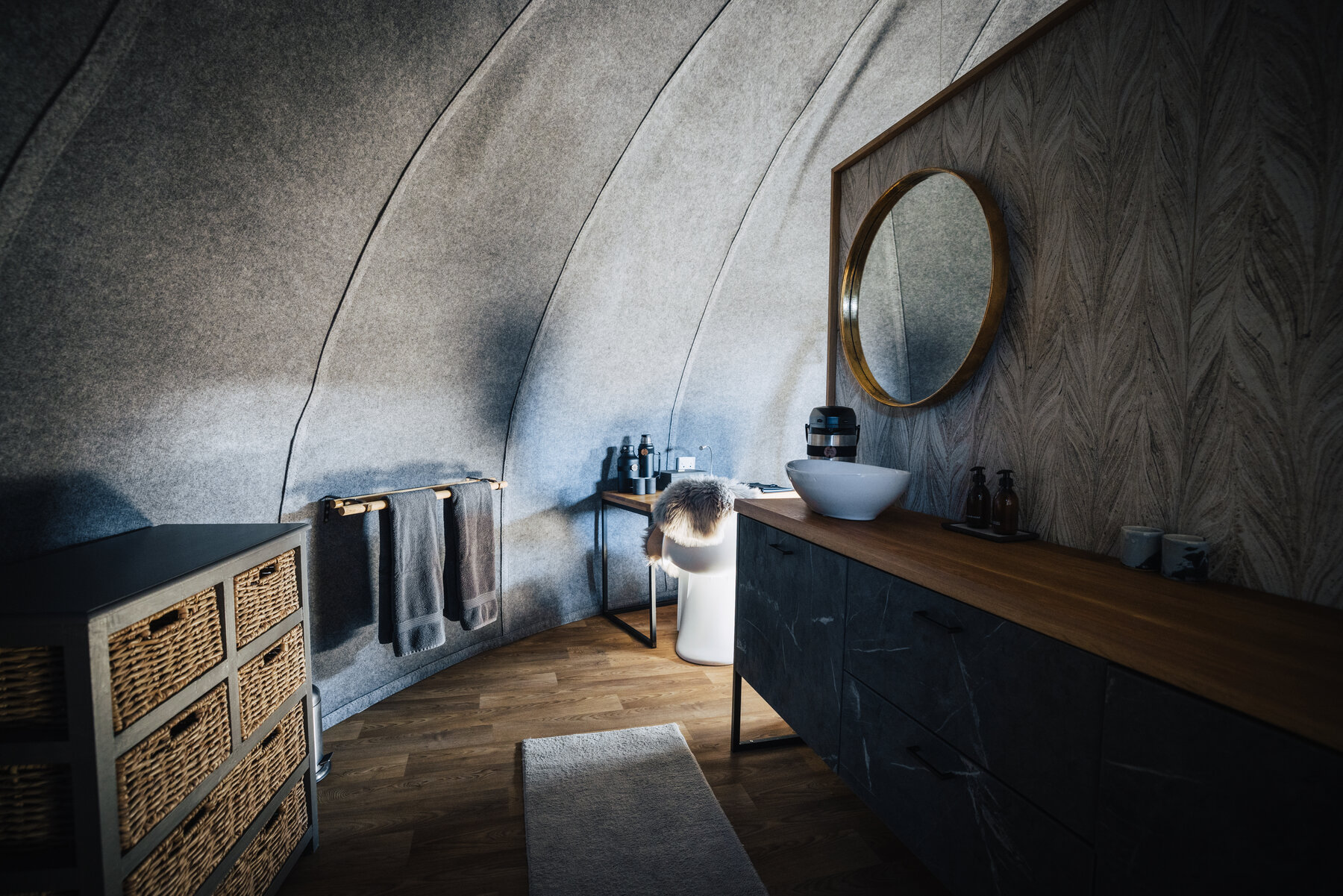
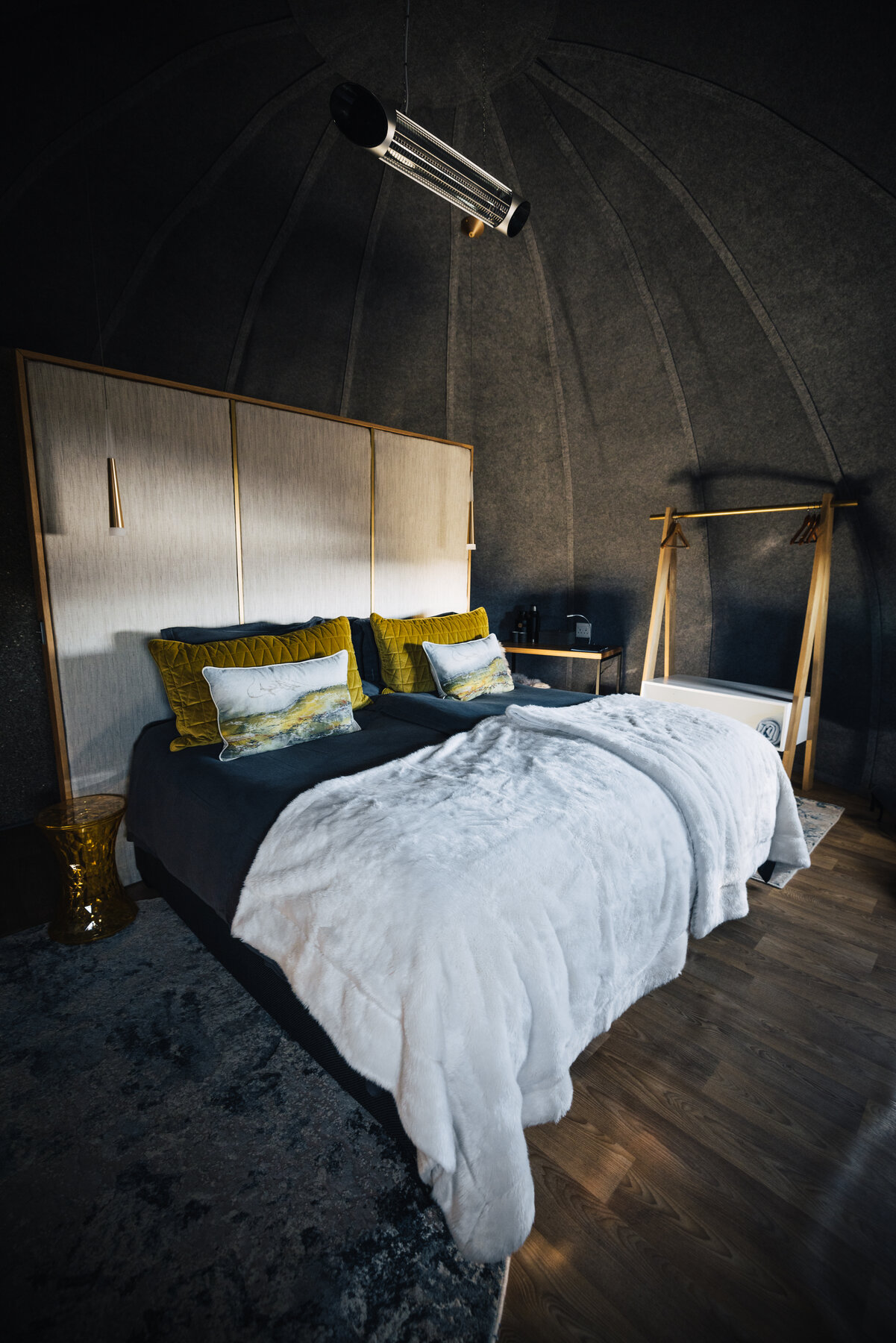
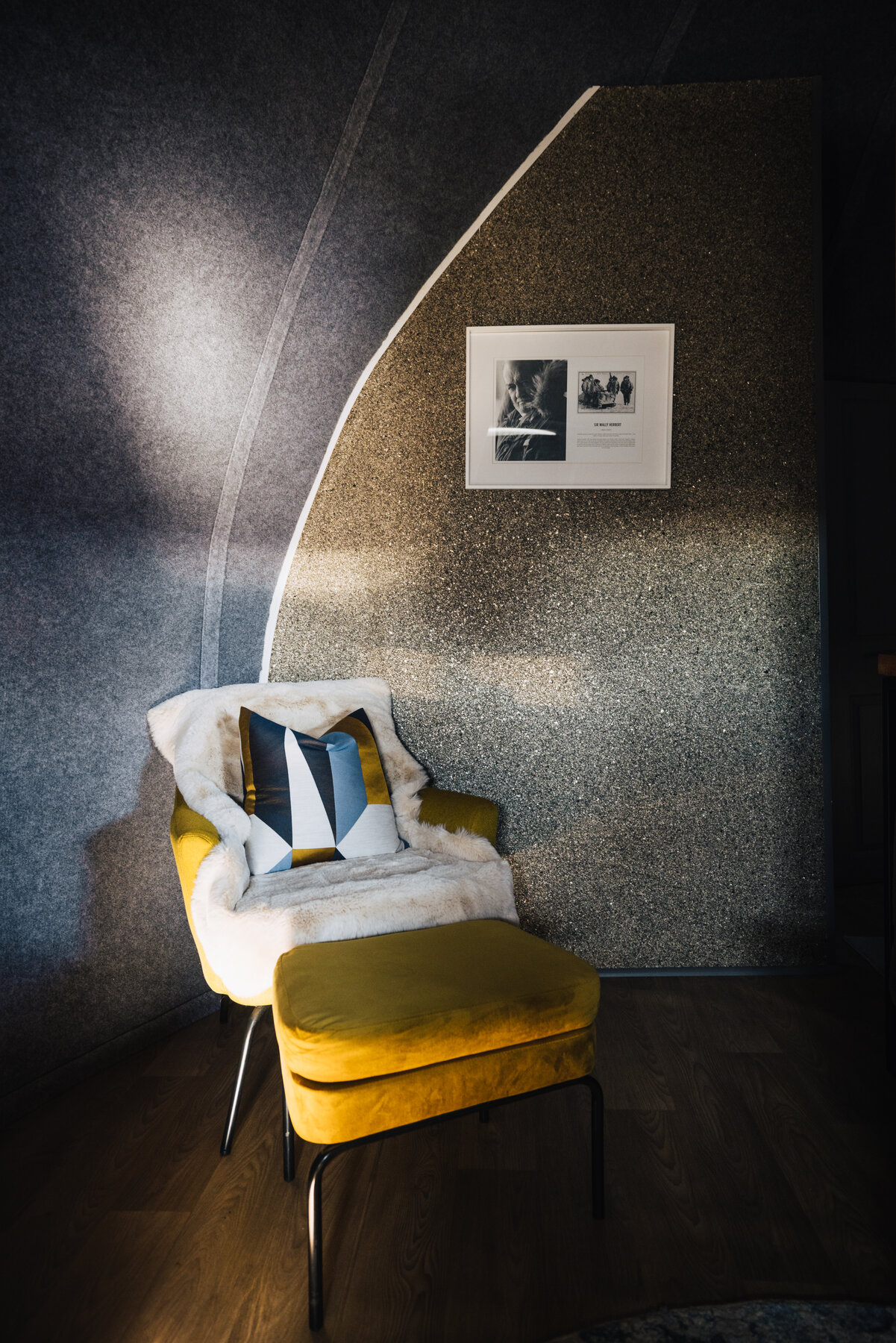
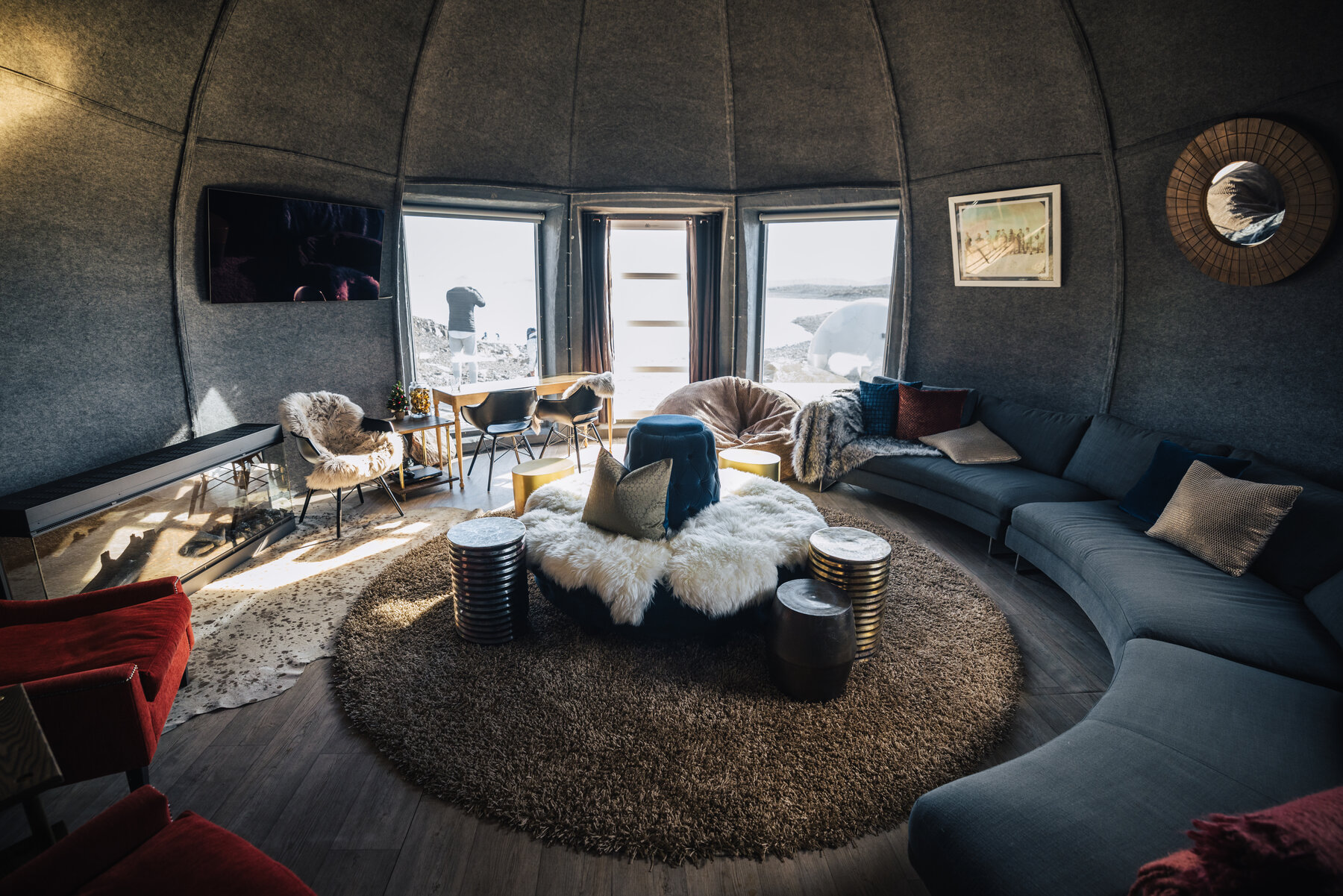
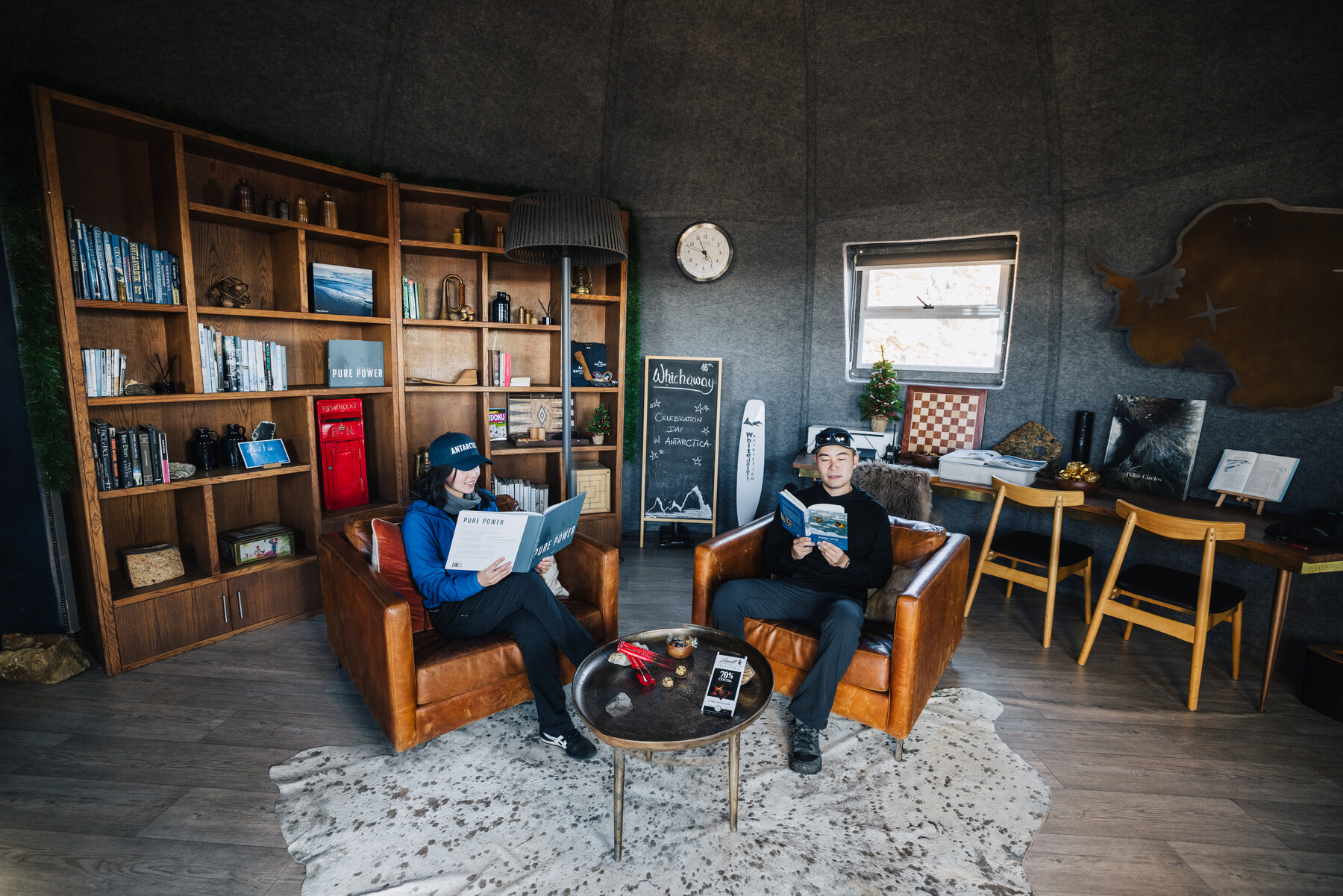
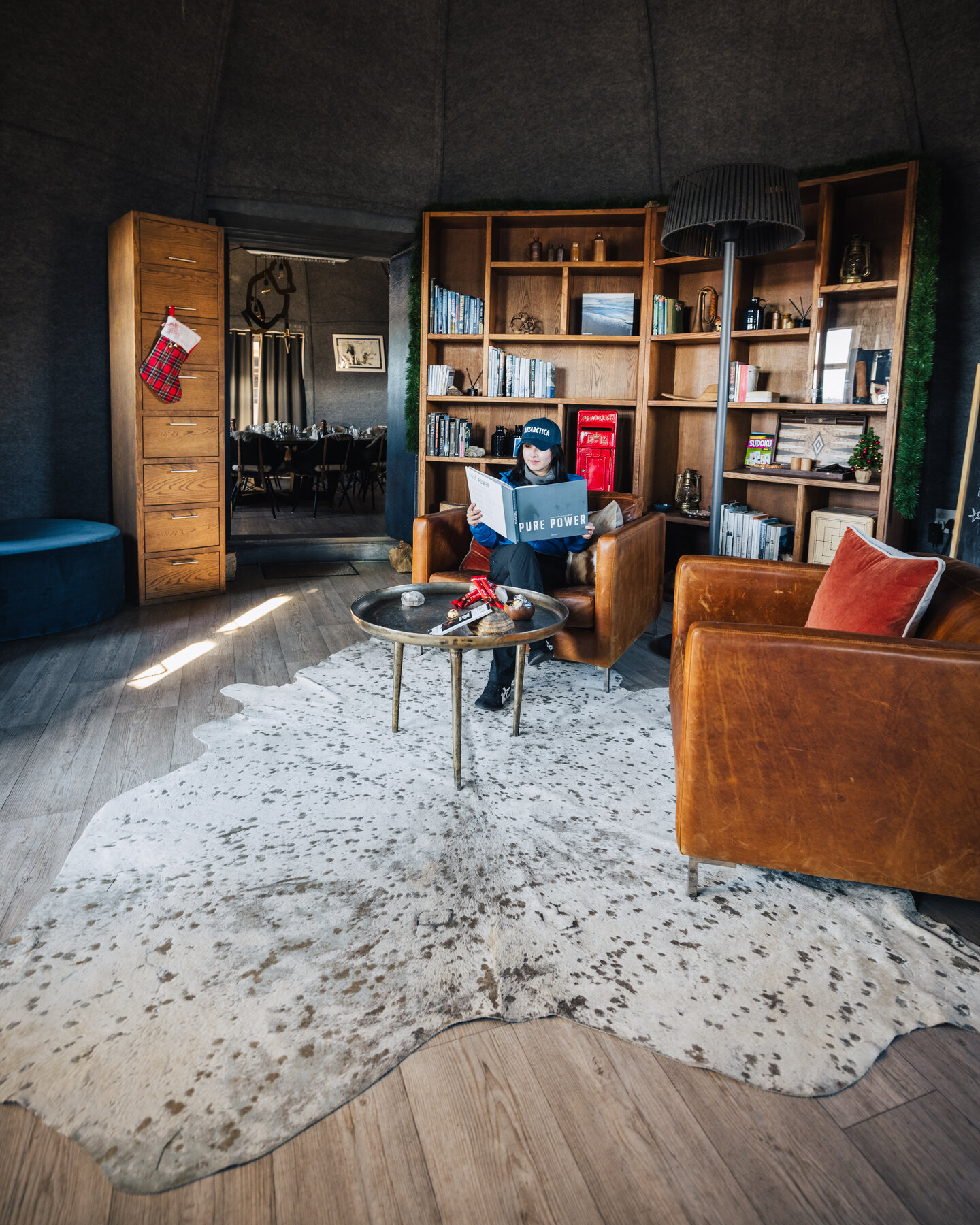
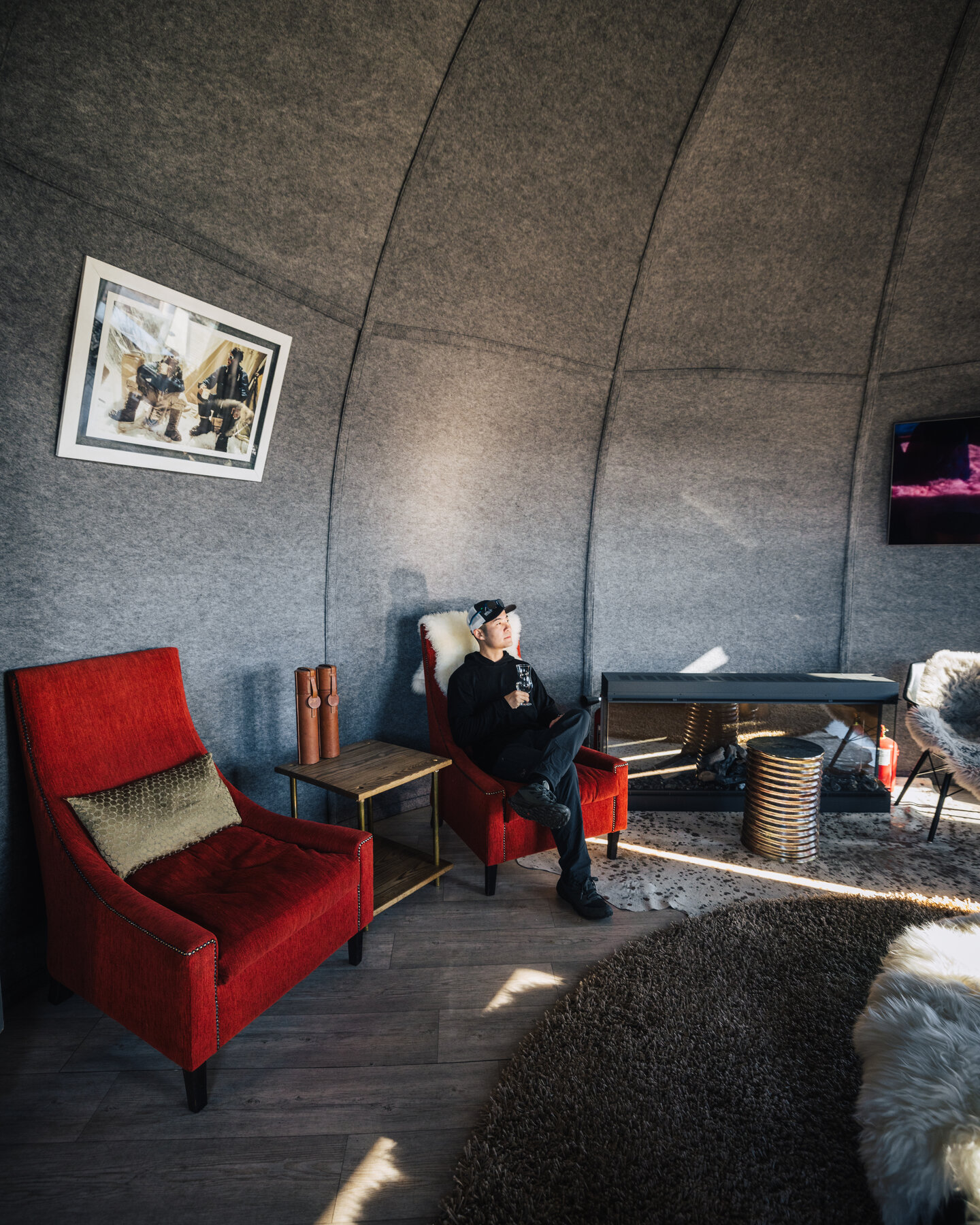
There are six eco-pods that blend seamlessly into the landscape, plus communal pods for dining, cocktails, a cedar sauna, and a library lounge. The exteriors are cutting-edge sustainable architecture; the interiors are inspired by the "Golden Age" of Antarctic exploration — warm woods, sheepskin, brass lamps, leather chairs. Our sleeping pod was just big enough to feel like home at the bottom of the world.
Inside our sleeping pod, and the main lounge — the social heart of camp, with curved sofas wrapped around windows that look straight out onto the ice.Whichaway in afternoon light. Elevated wooden boardwalks connect the pods so the fragile polar surface stays undisturbed.
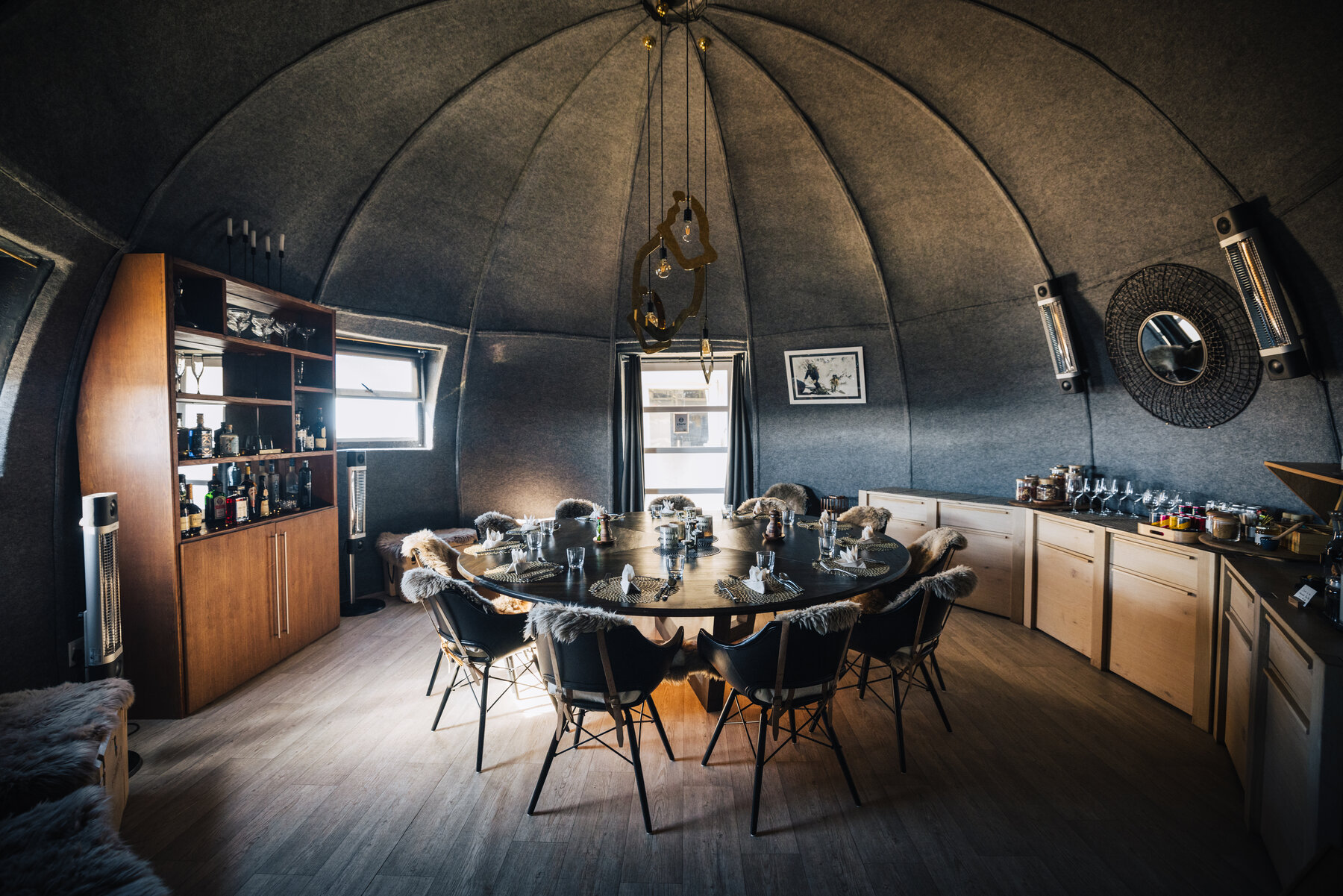
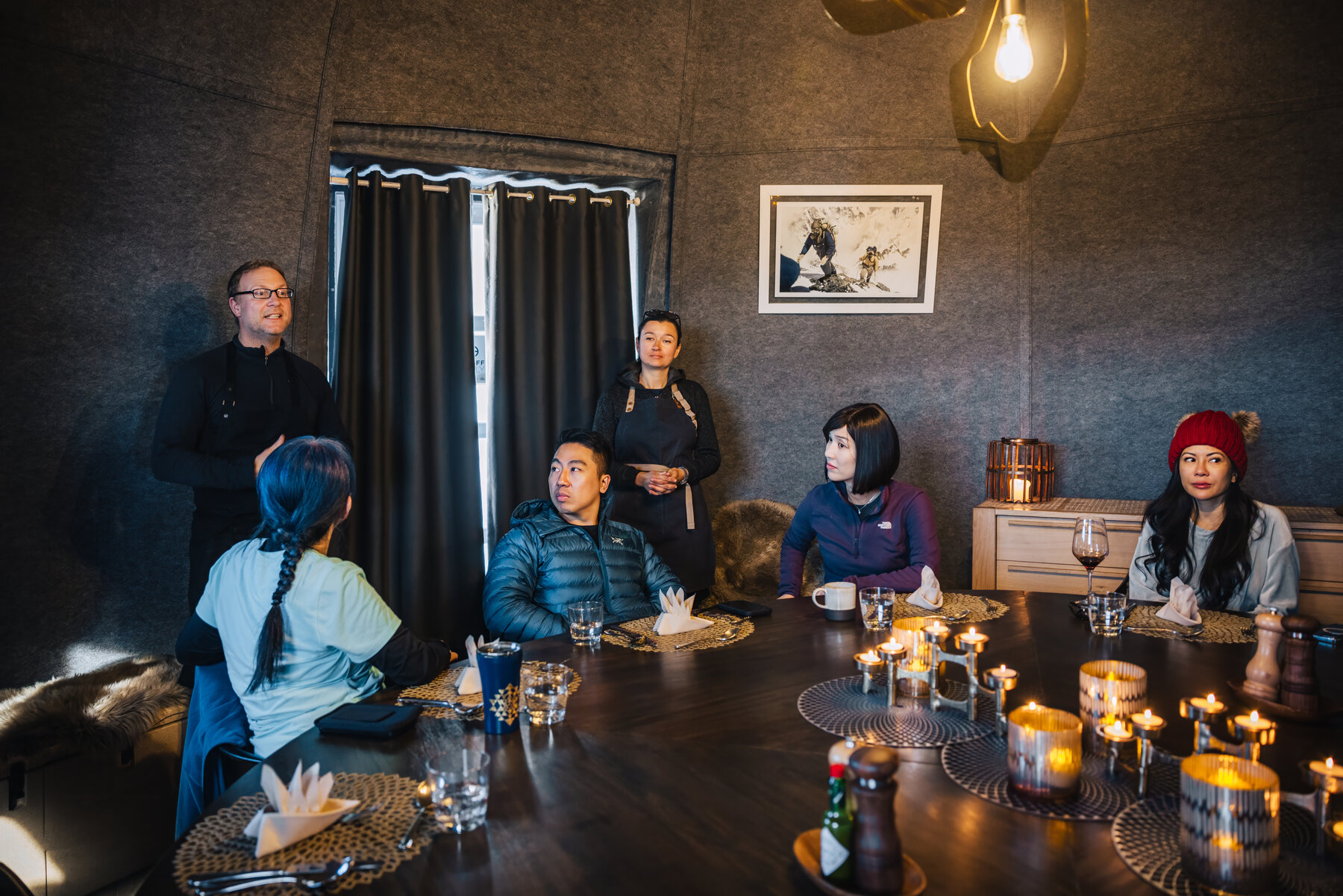
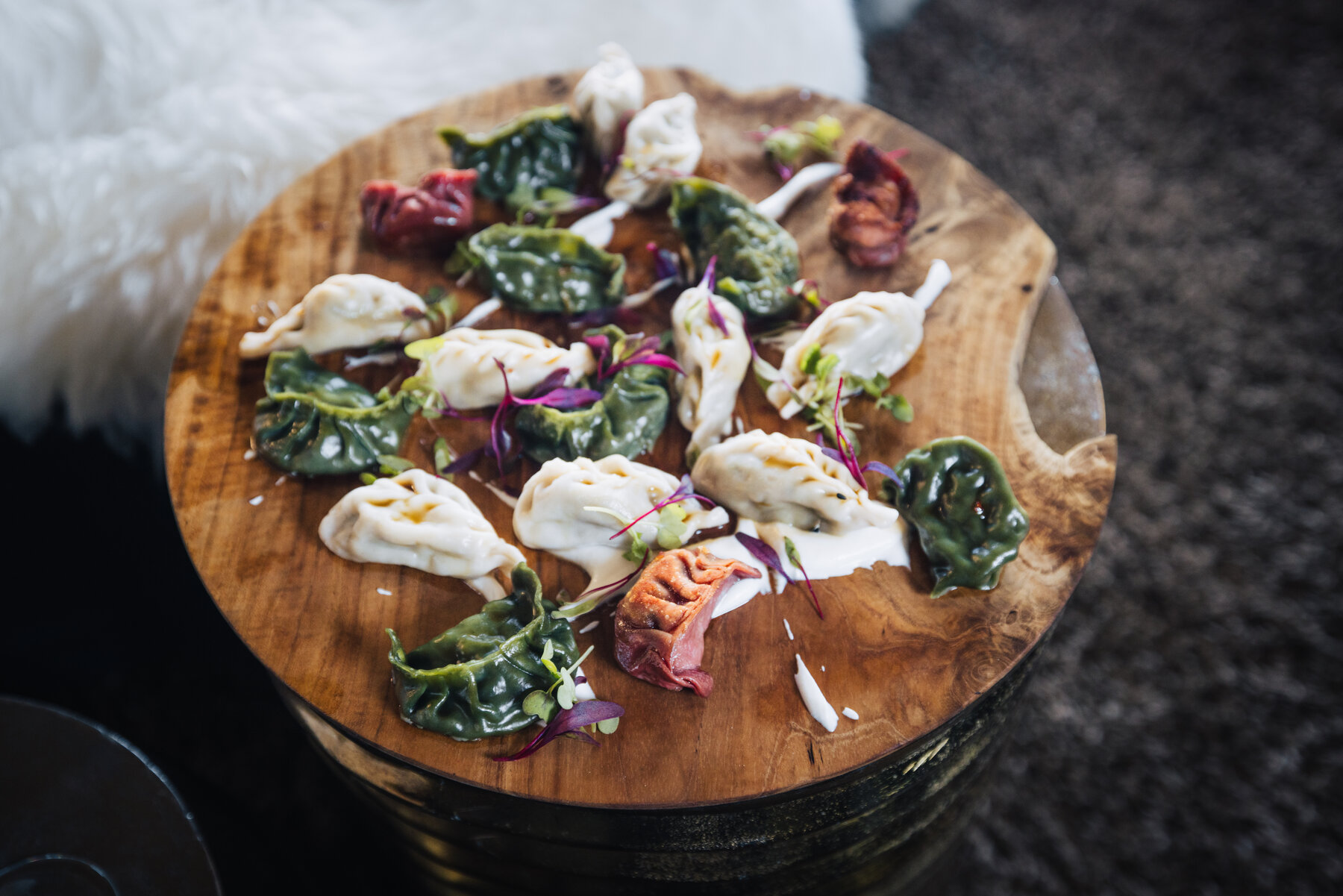
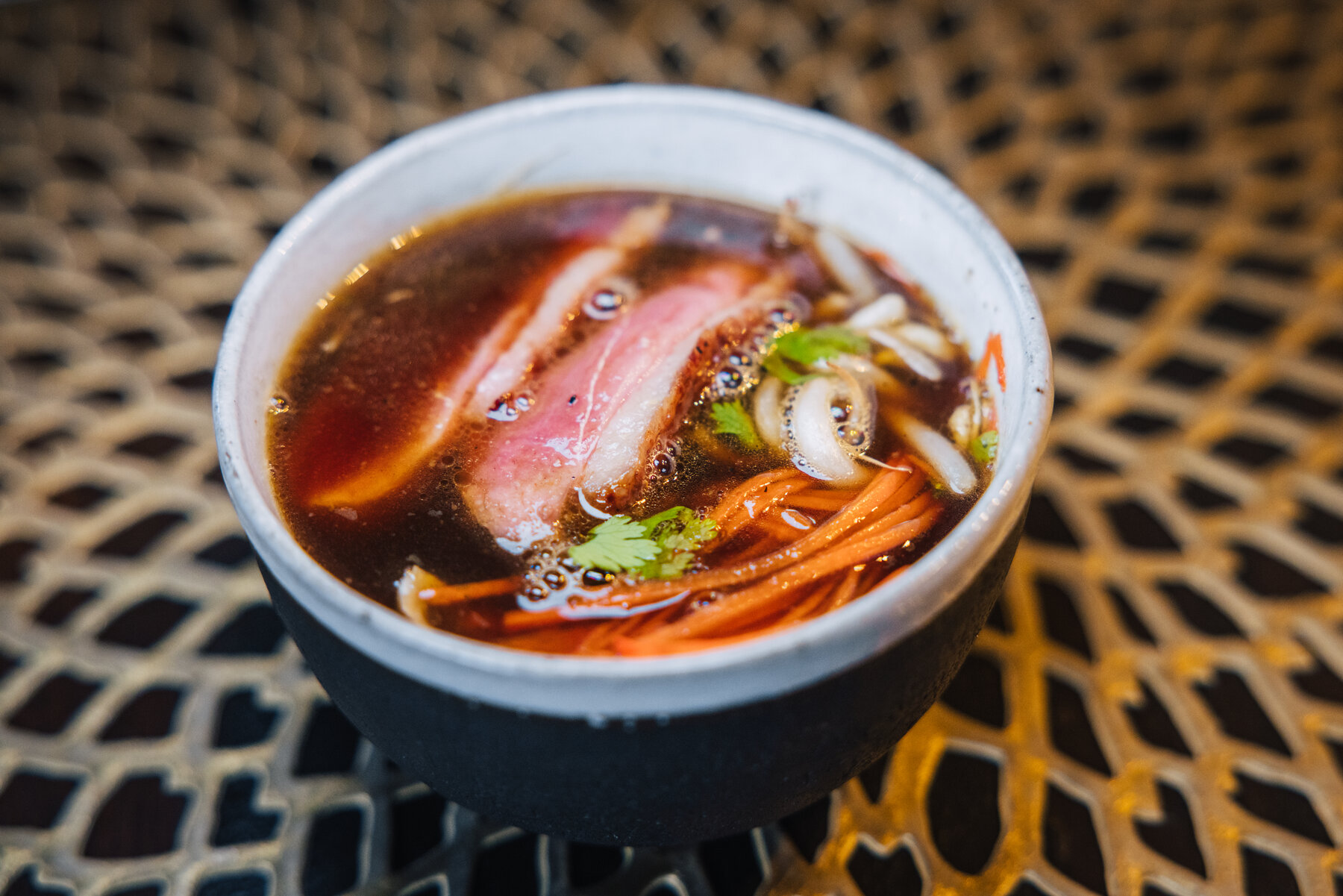
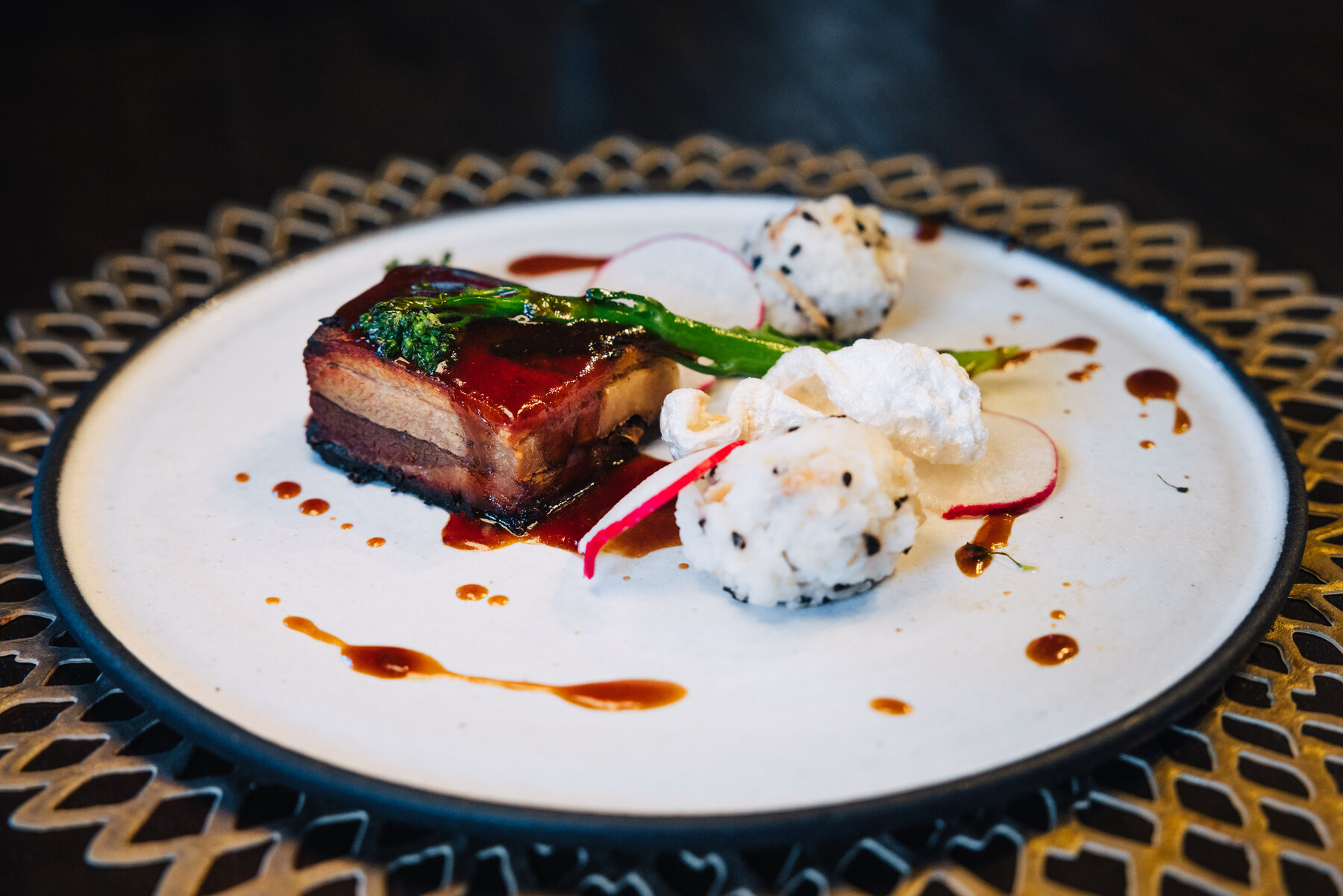
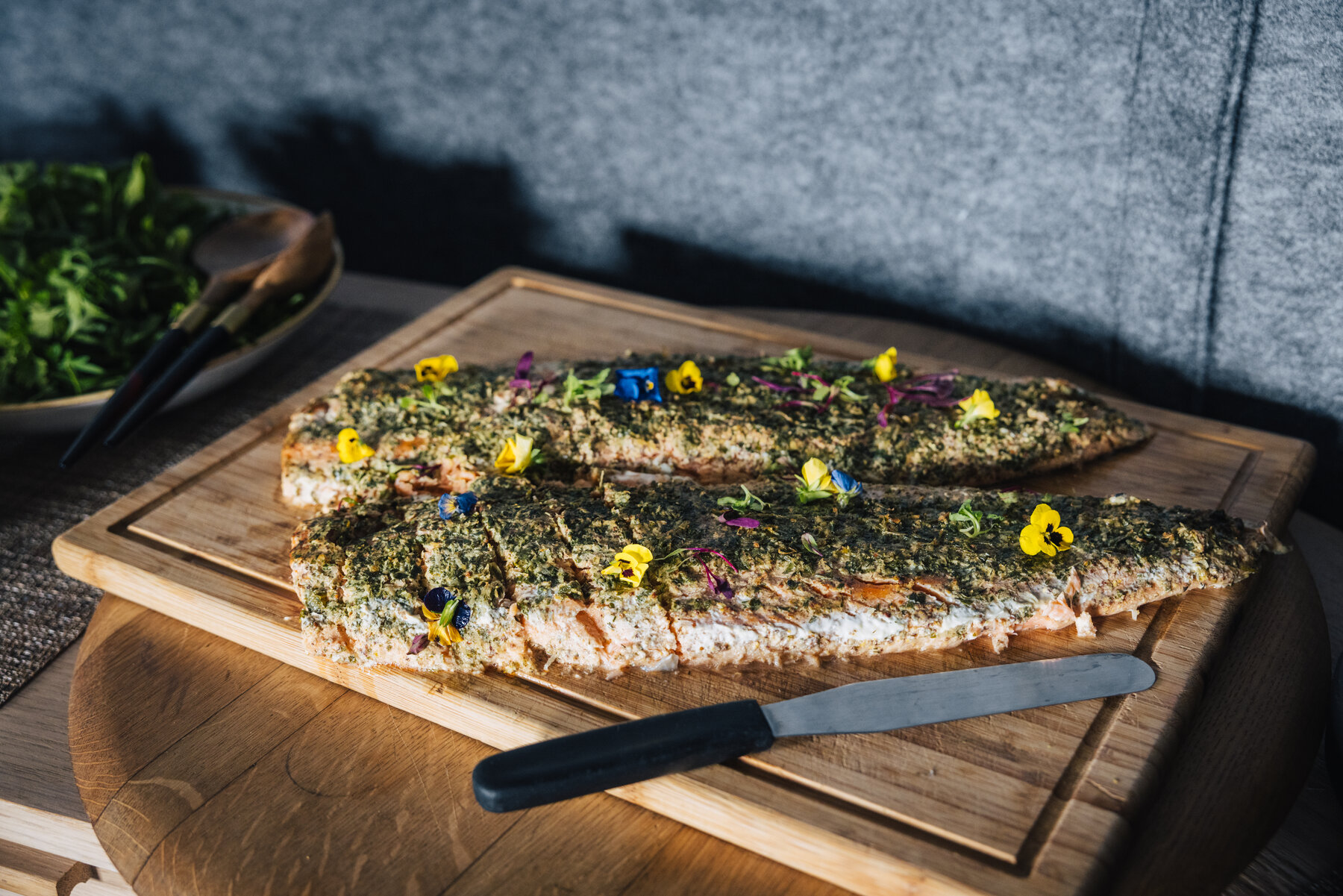
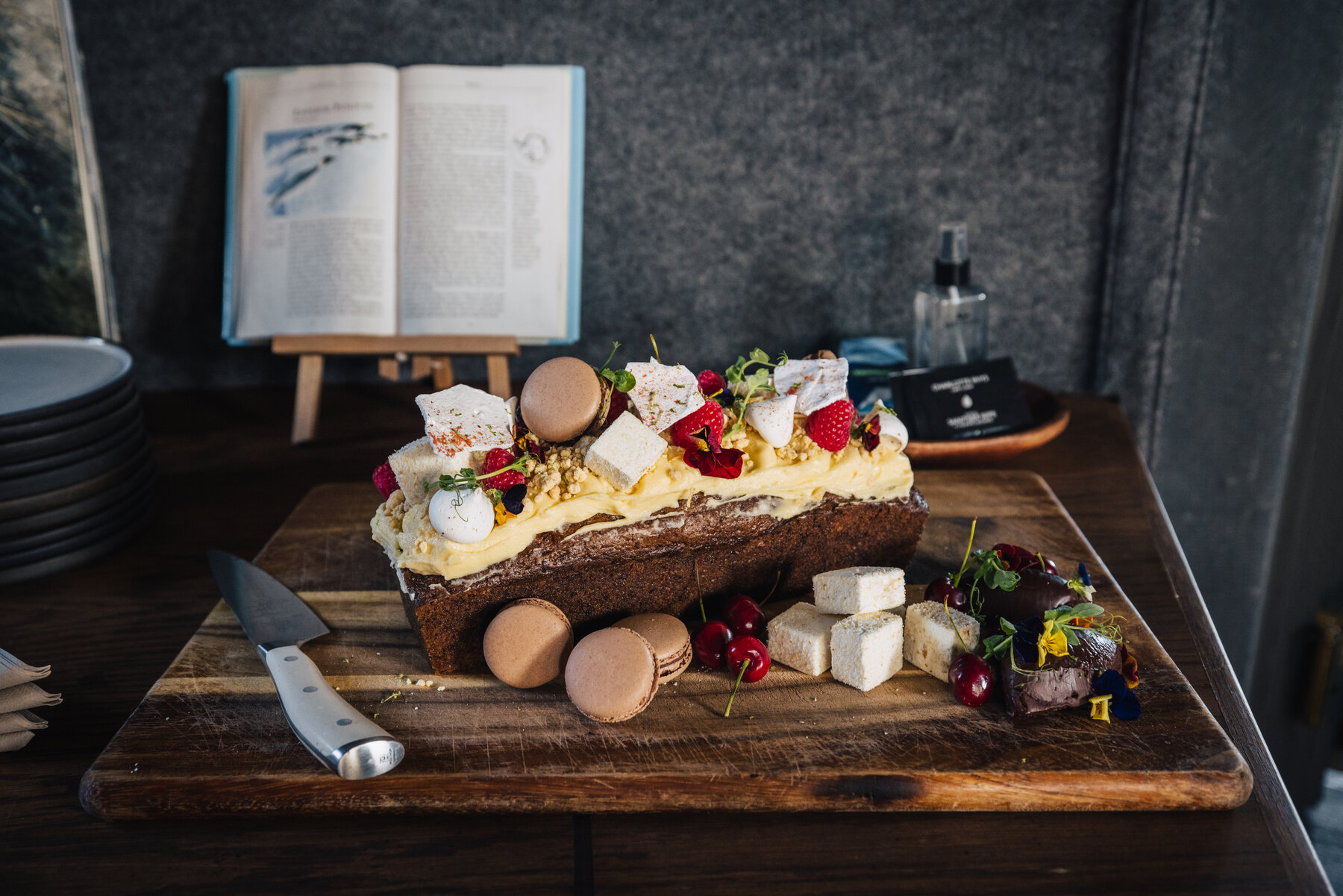
We had a private chef who prepared every meal using fresh South African produce and wines from the best Cape vineyards. Every dinner felt like a small miracle given we were eating at one of the most remote camps on the planet — candlelit evenings, long conversations, and plate after plate that wouldn't have been out of place at a Michelin restaurant in Cape Town.
The dining pod and a candlelit dinner. Our chef introducing a course — this became the favorite ritual of the trip.
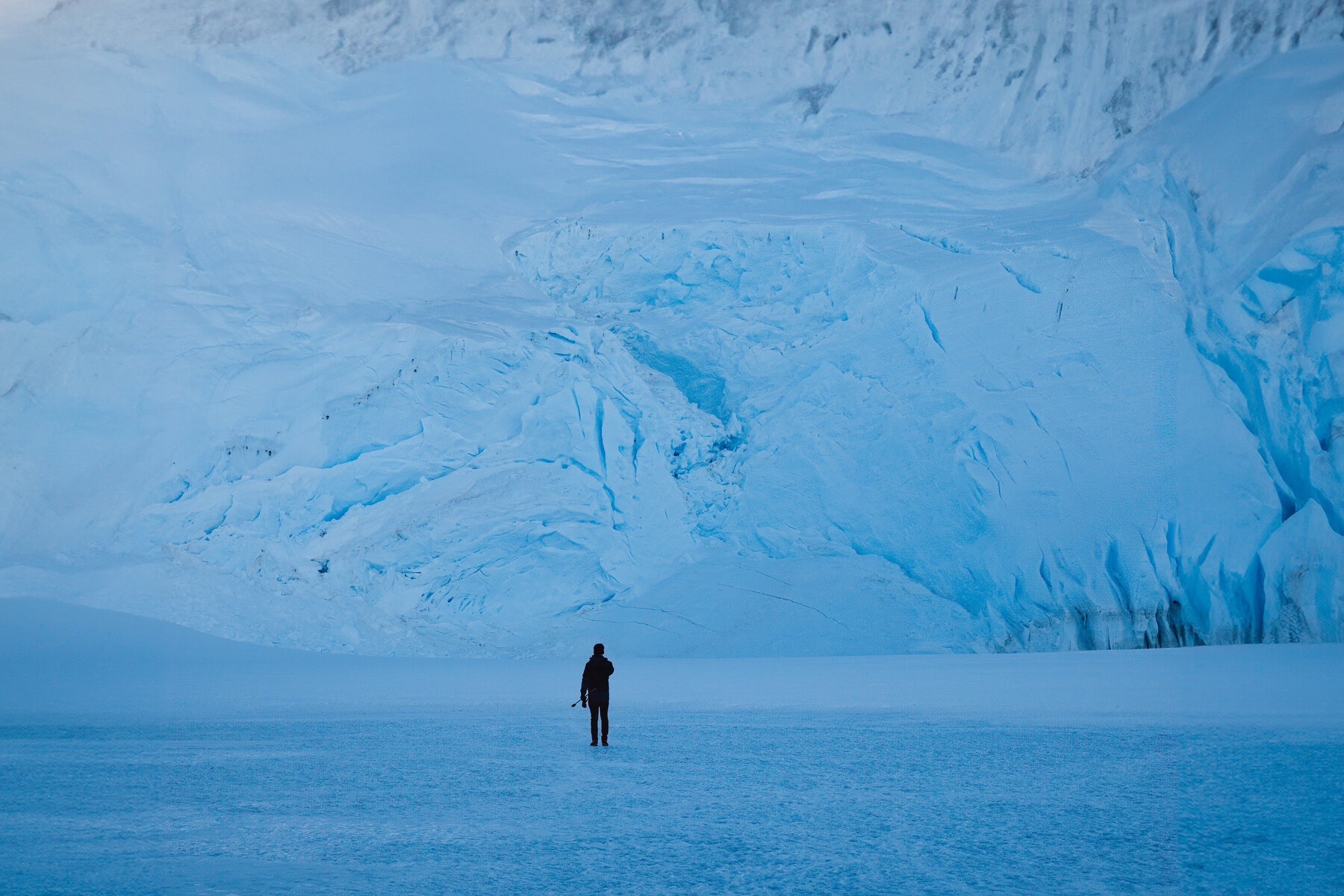
As the sun hung low on the horizon (it doesn't set in December this far south), we stepped outside to witness views that no photograph can truly capture. The camp sits minutes from a wall of blue glacial ice — a separate world you can walk right up to.
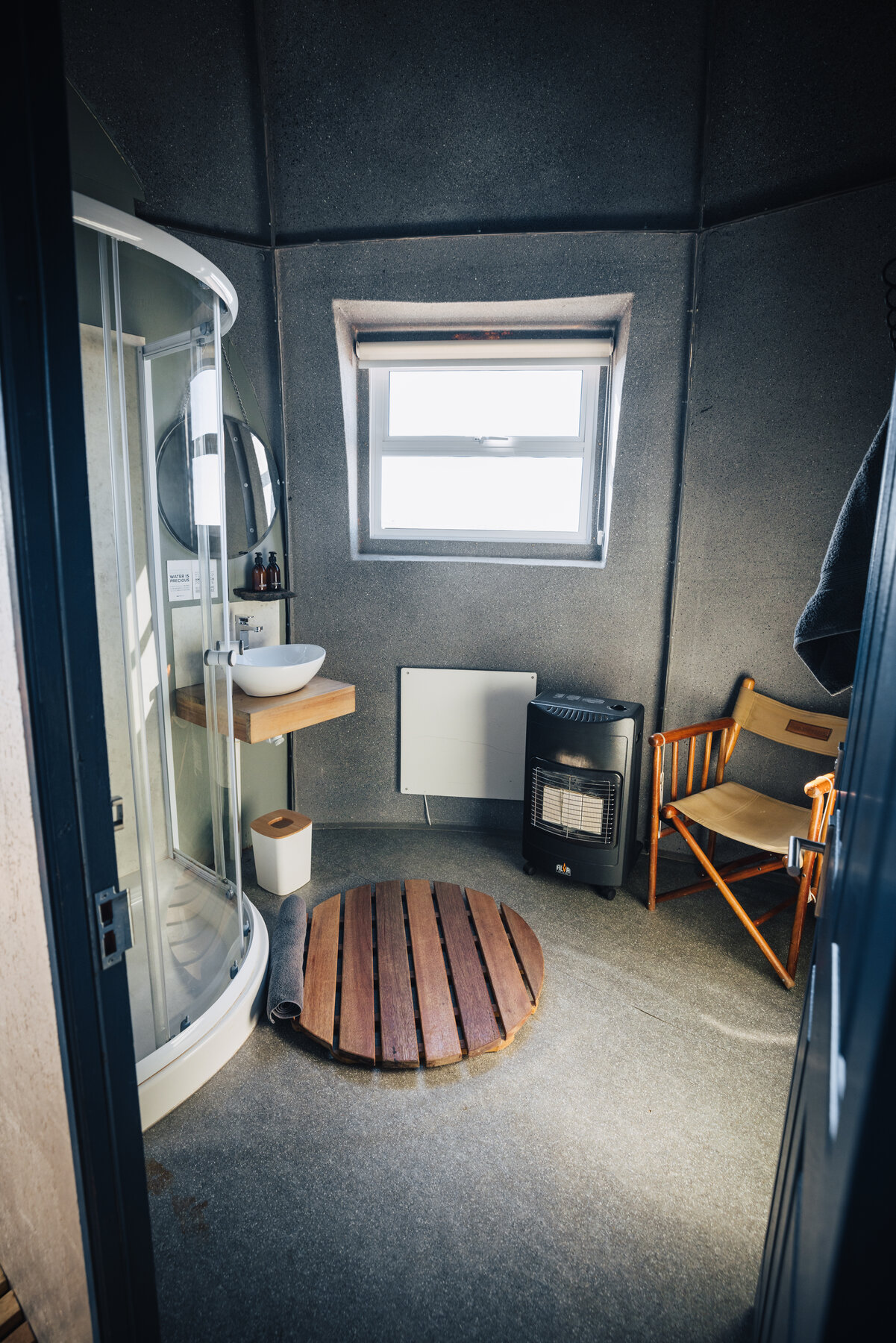
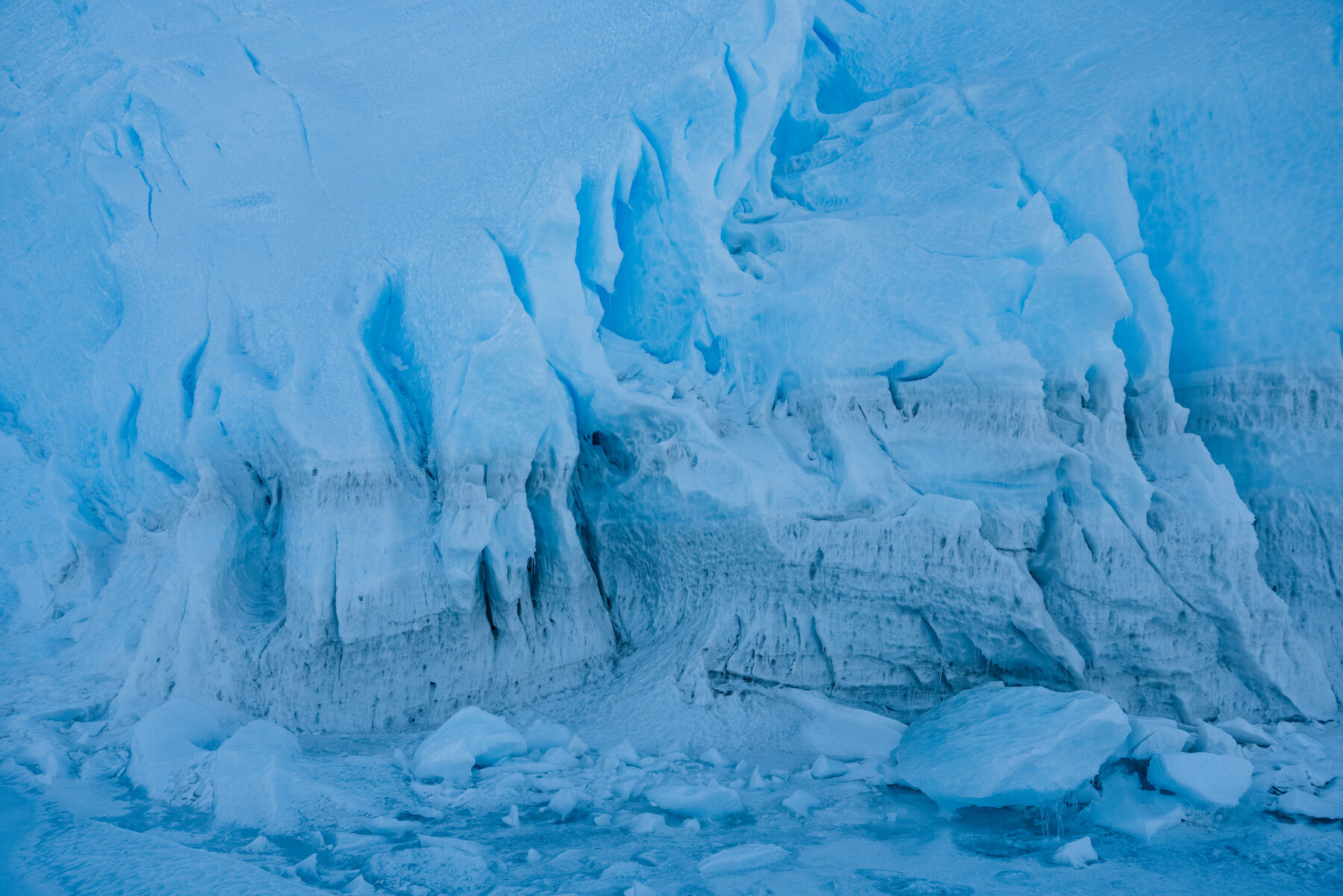
The blue ice cliff behind the camp — you realize how small you are against the scale of this continent.The bedroom and bathroom of our pod. Heated floors, king bed, fresh towels — details you do not expect at 70° south.The cedar sauna. Hot bench, cold view, and a window that frames the glacier perfectly.
Day 04
Ice Waves & Tunnels
December 16, 2023 · Whichaway Camp, Schirmacher Oasis
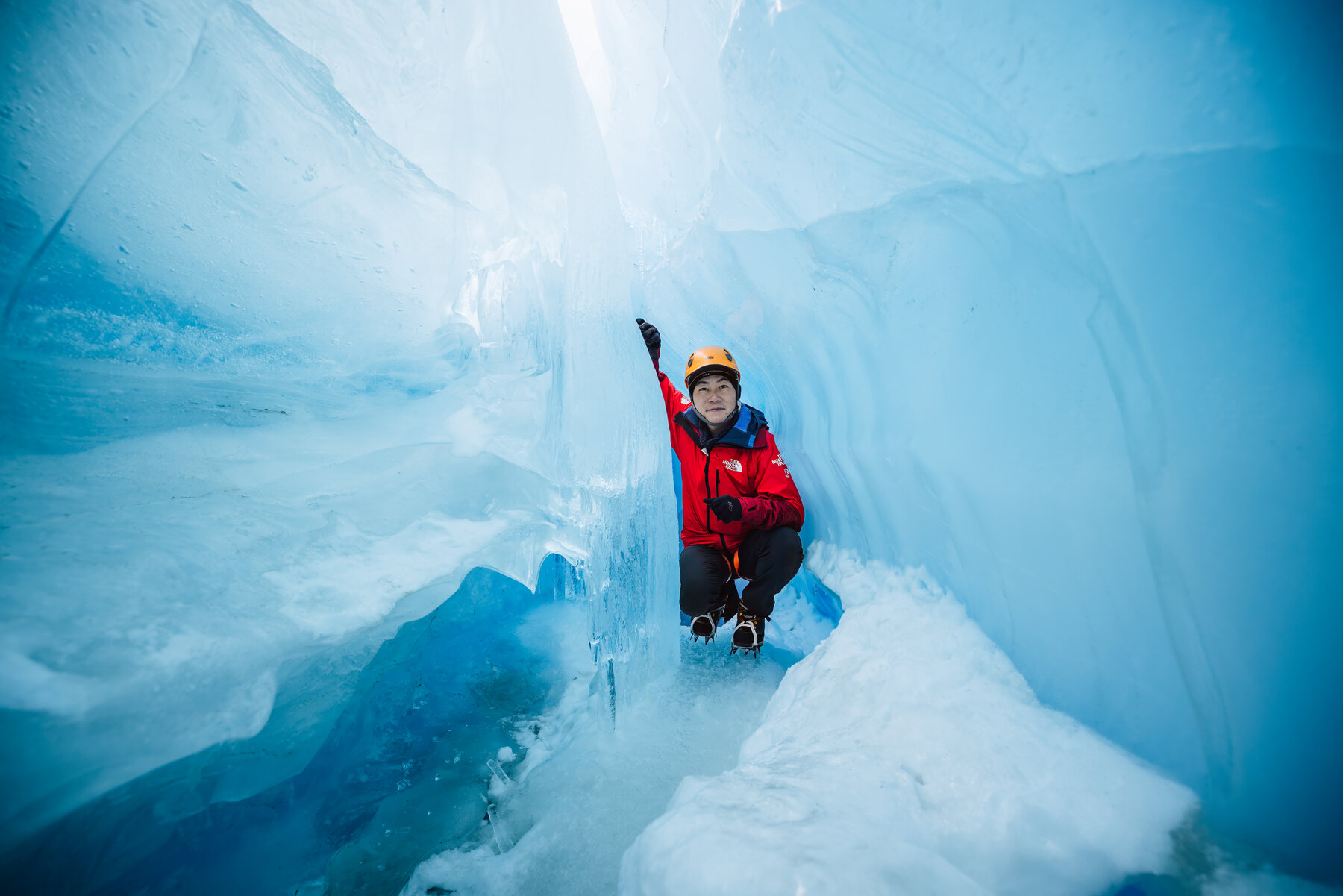
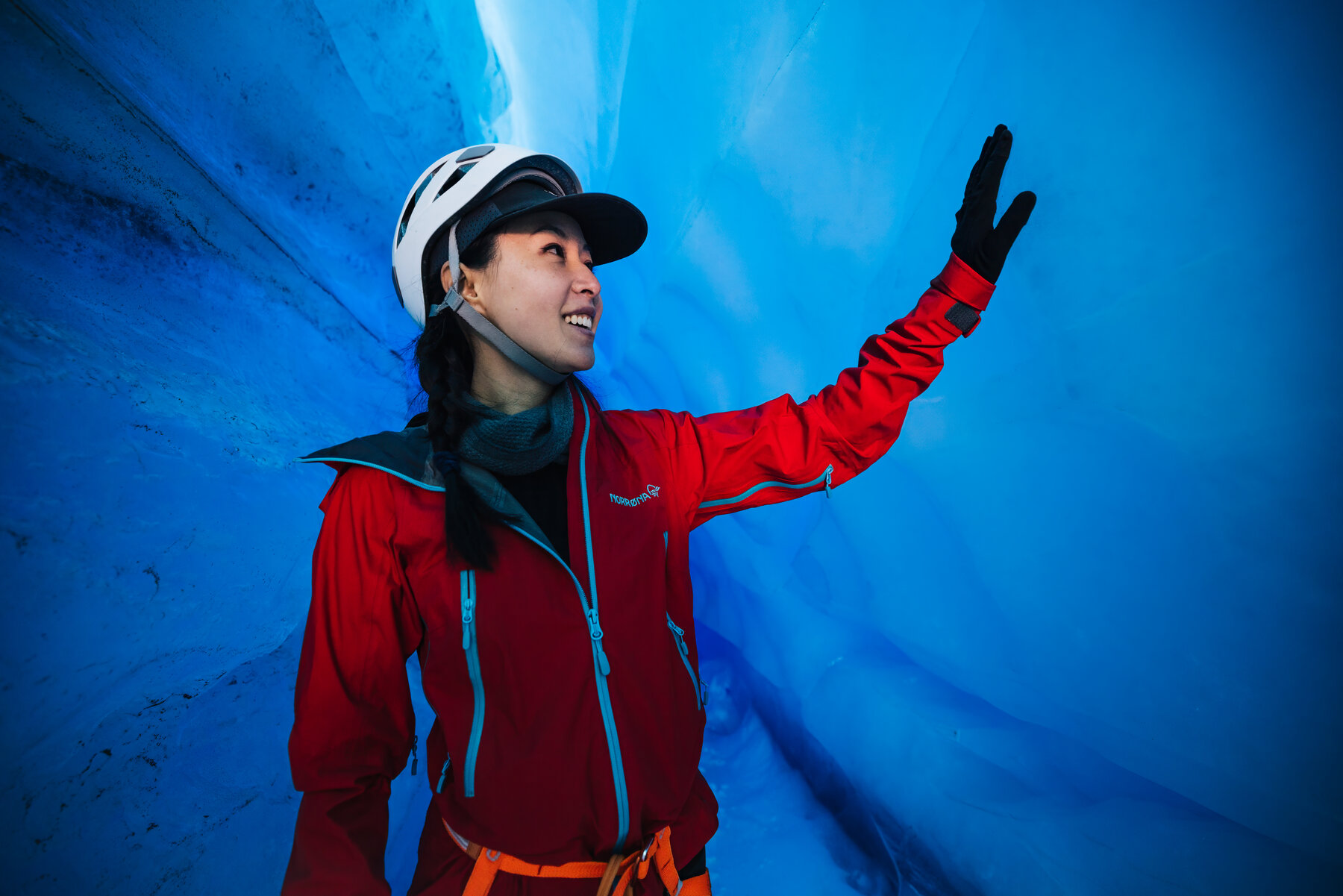
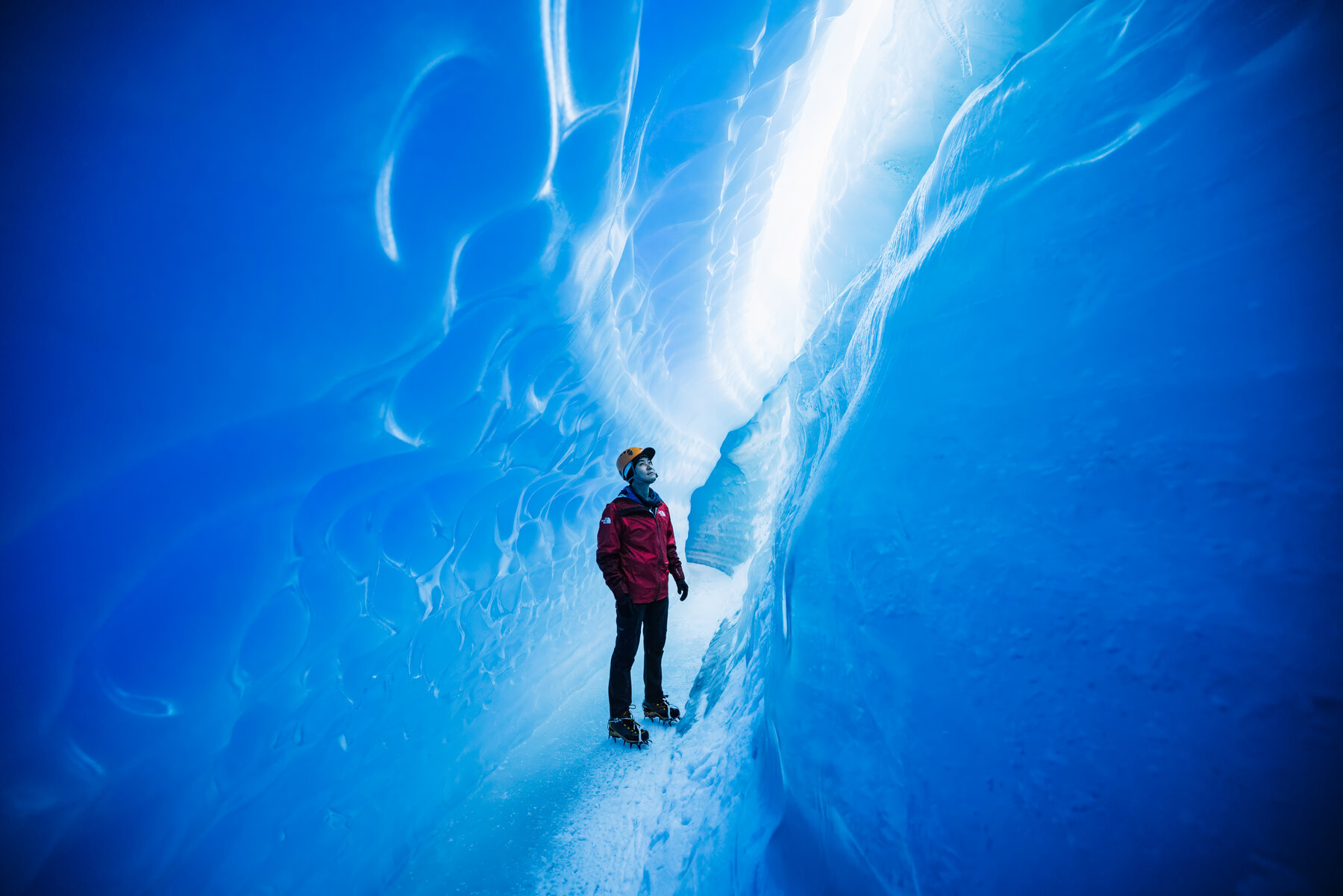
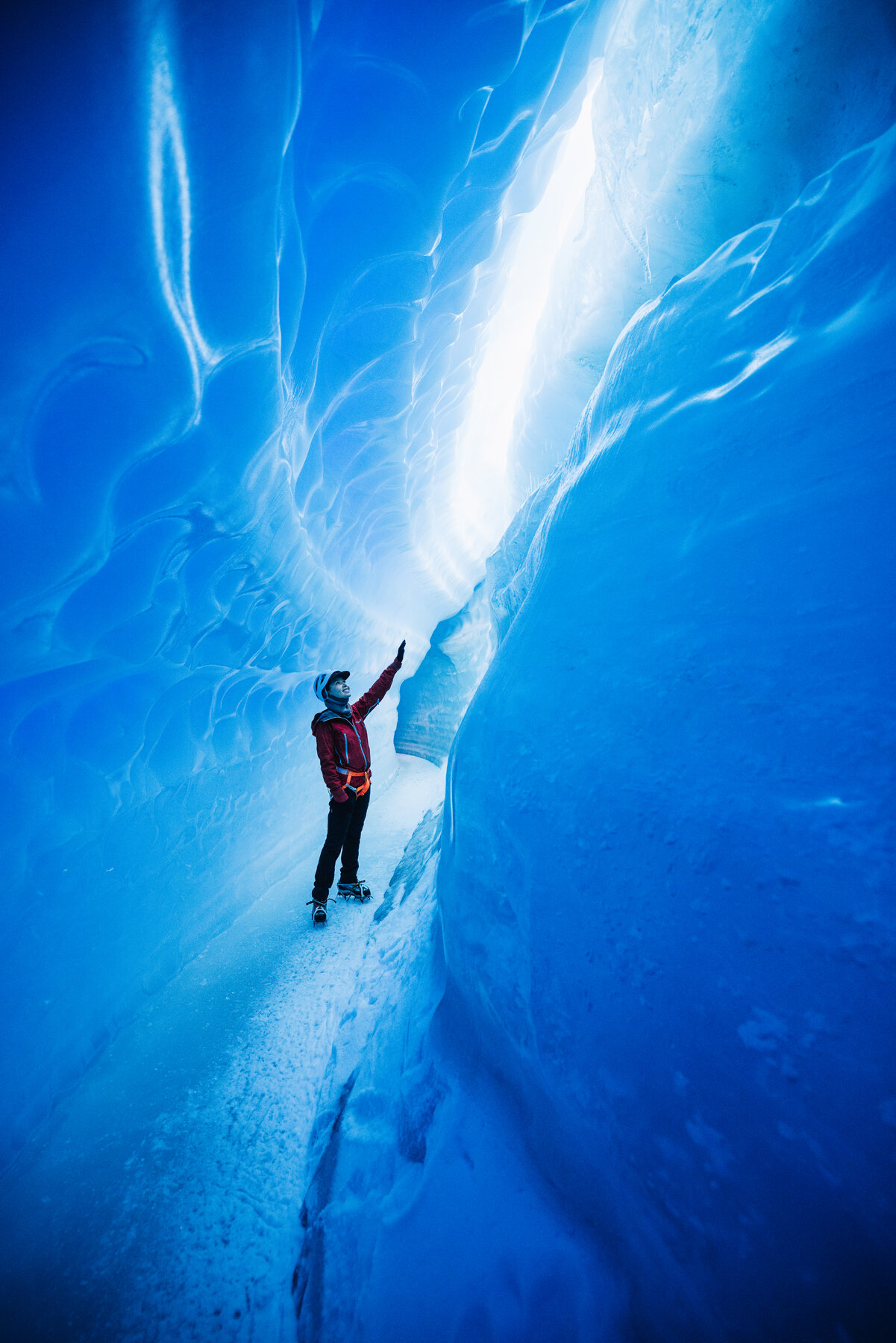
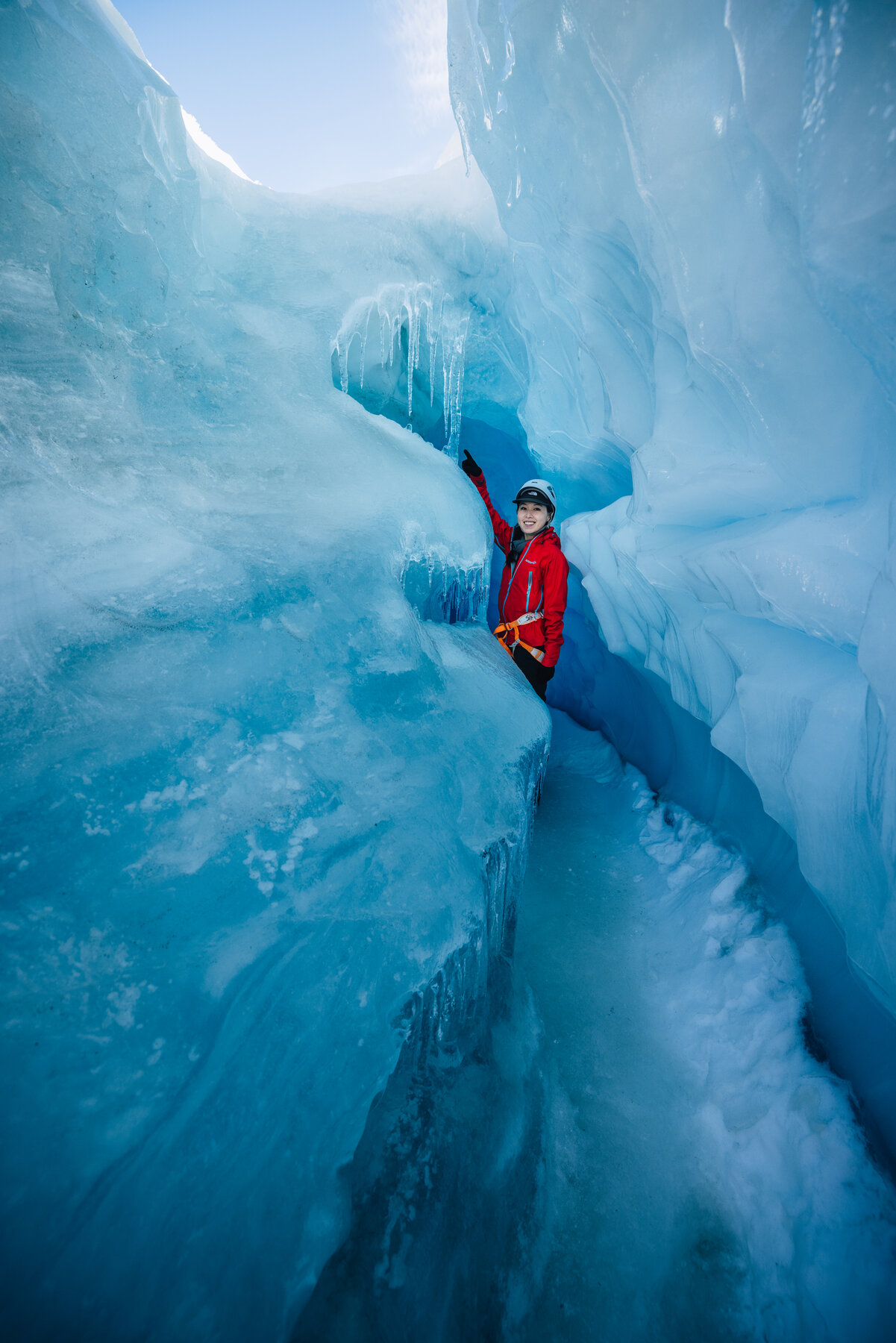
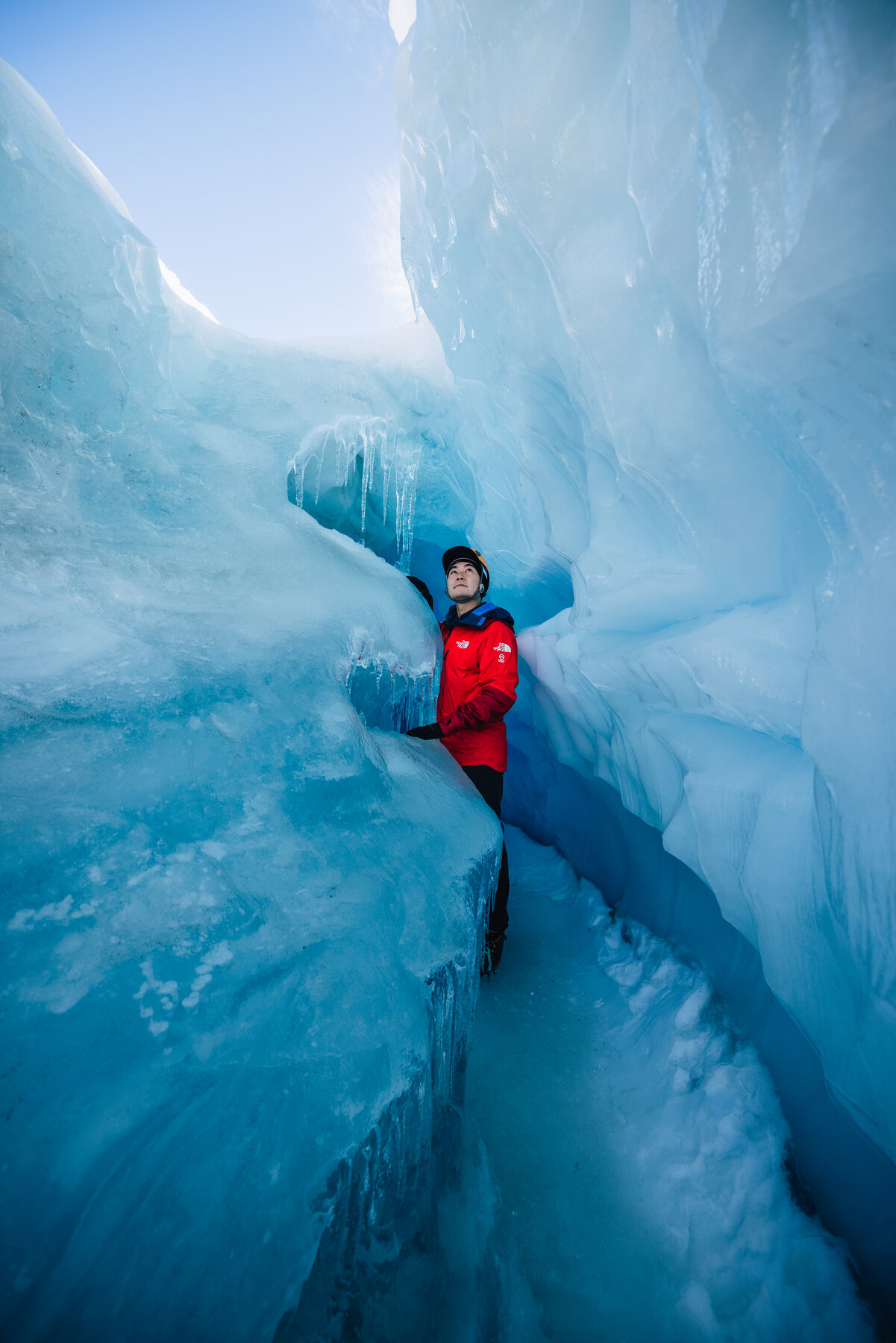
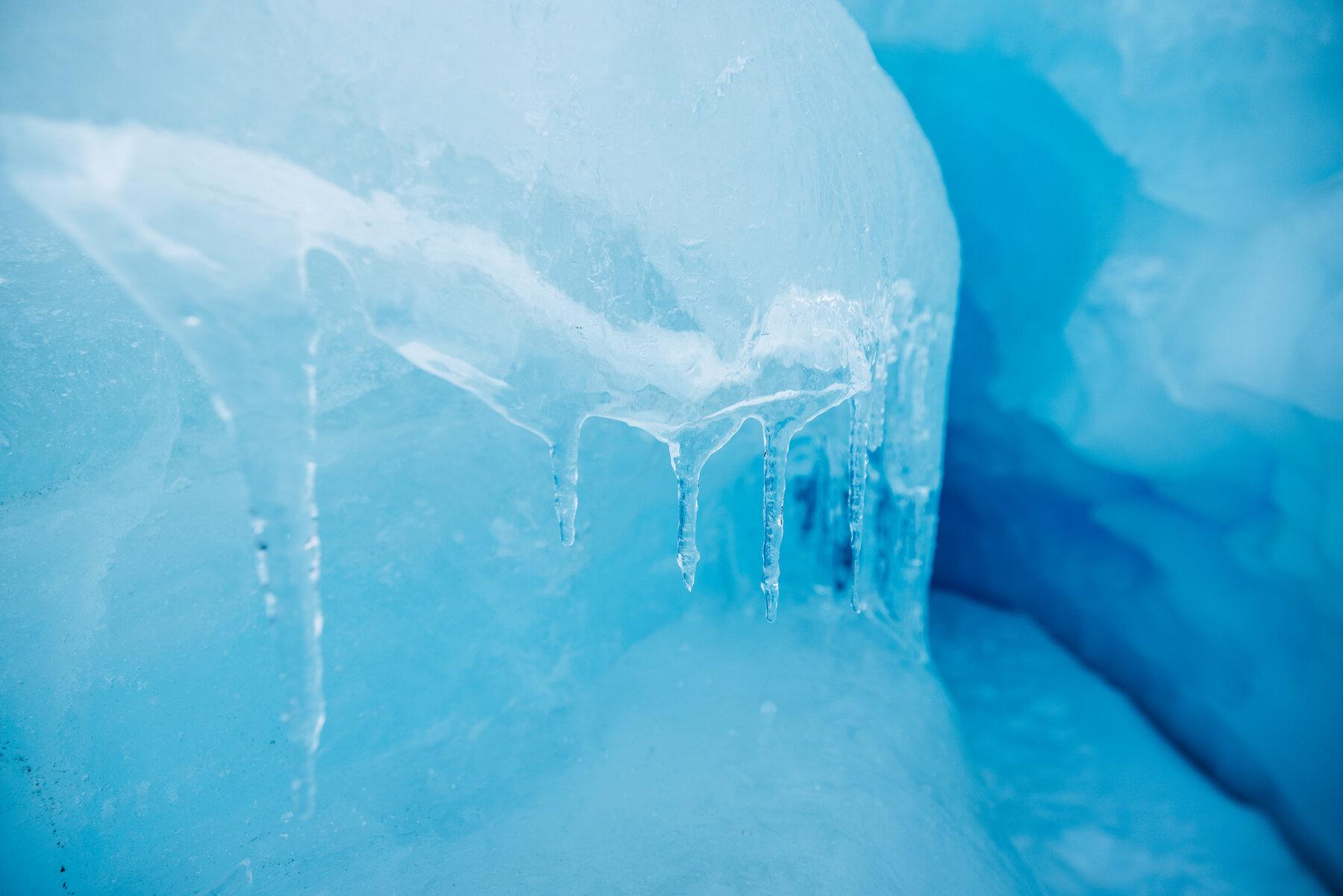
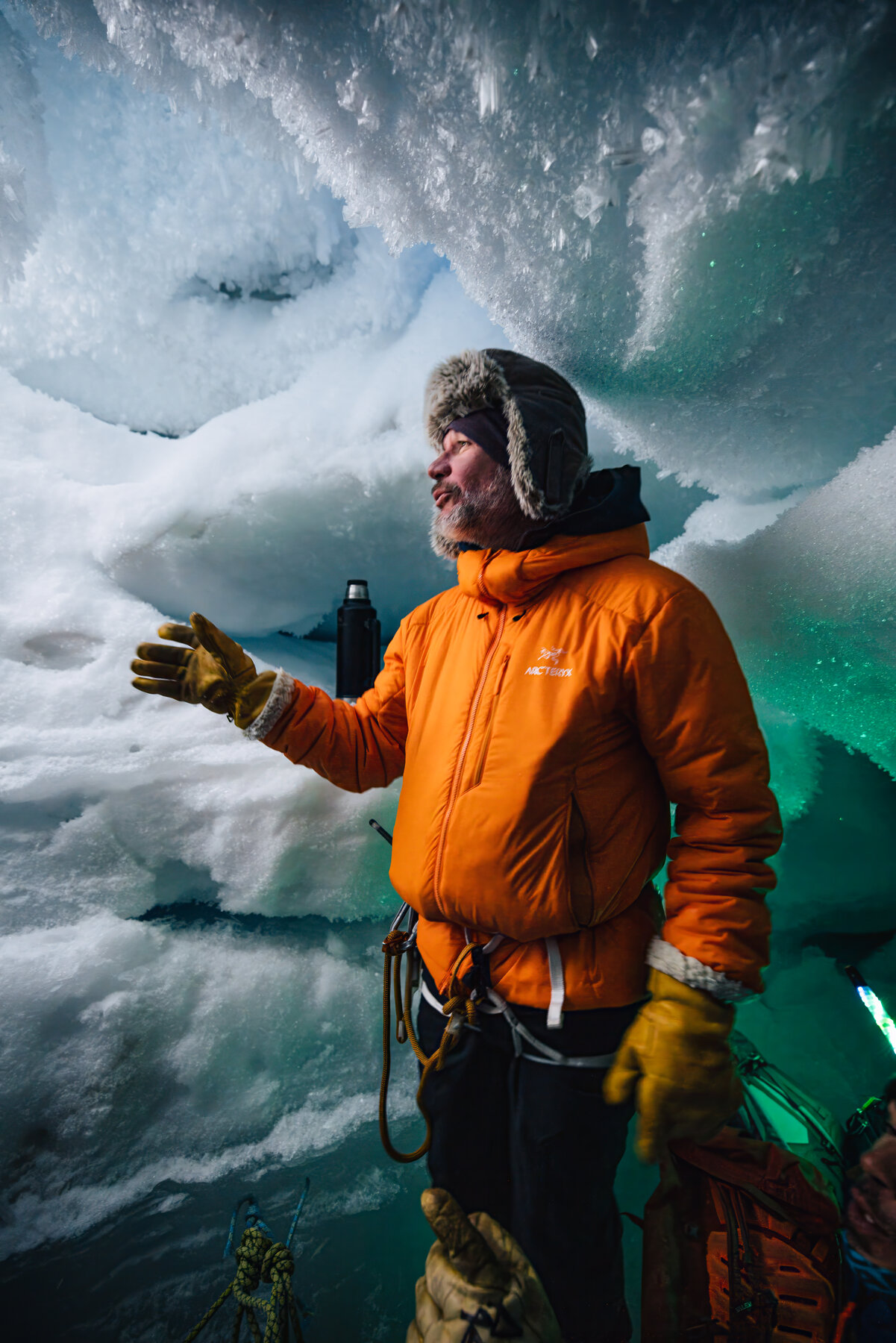
Inside the ice tunnel at Whichaway. The walls glow a blue that feels almost synthetic — light filtering through ice compressed over thousands of years.
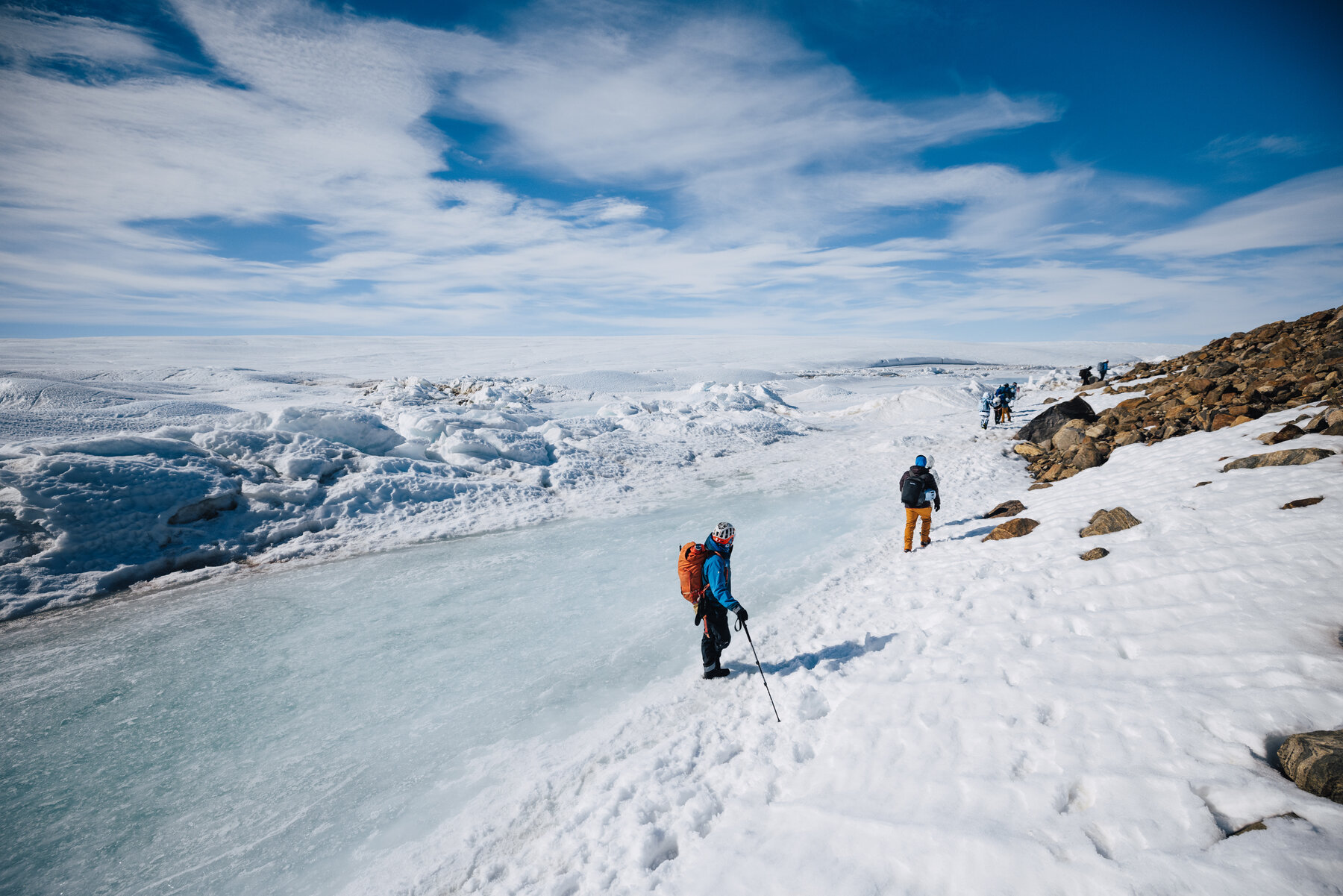
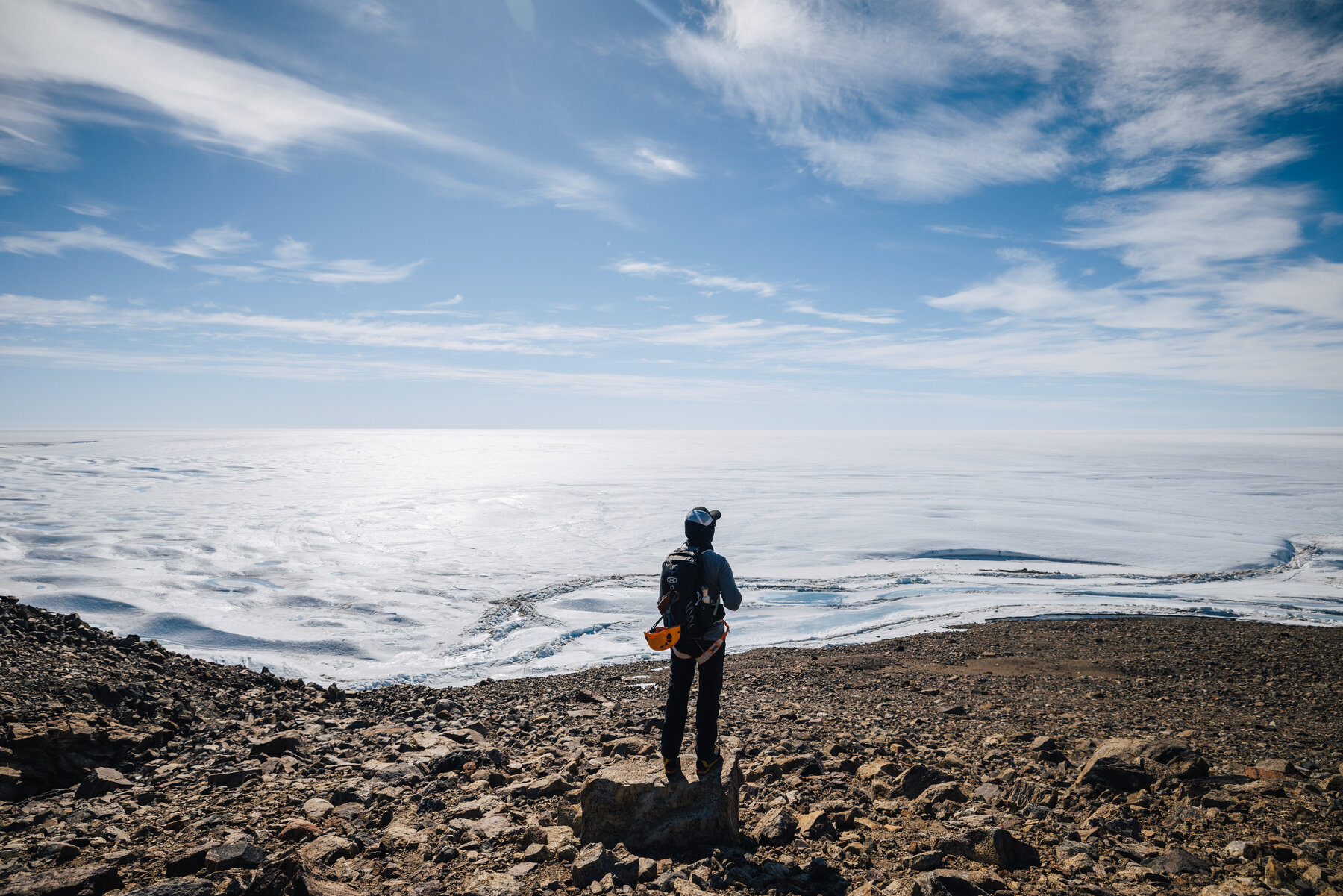
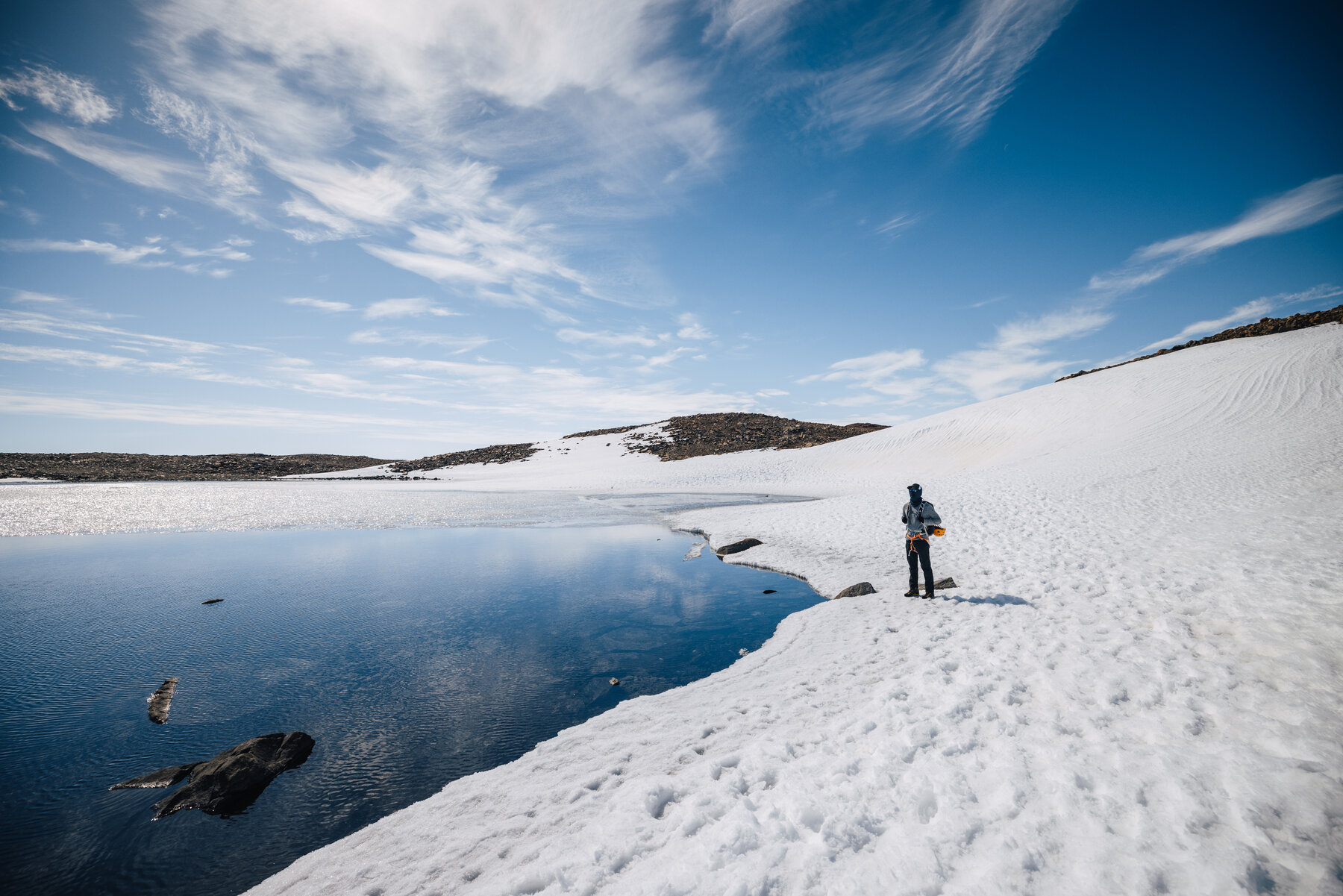
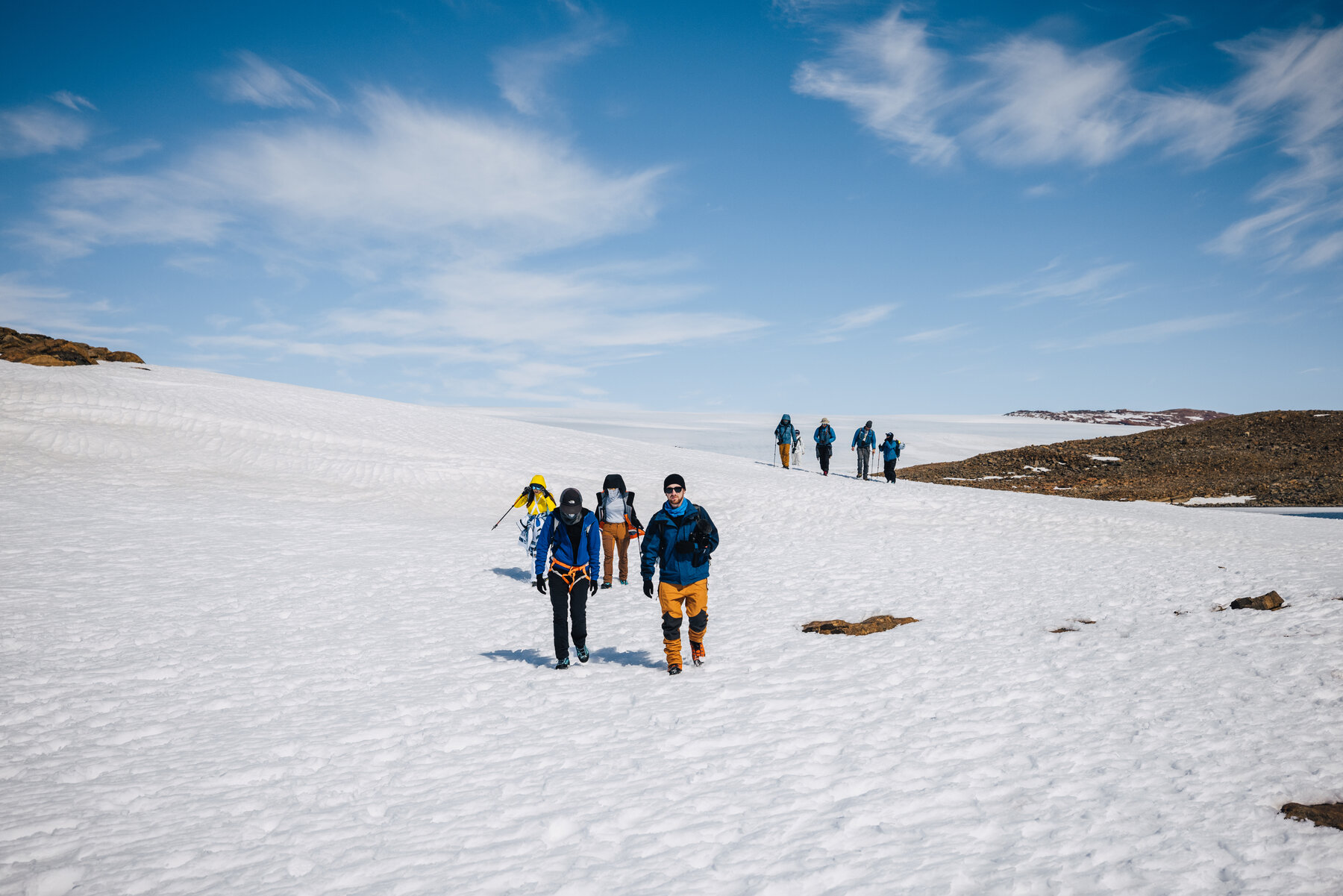
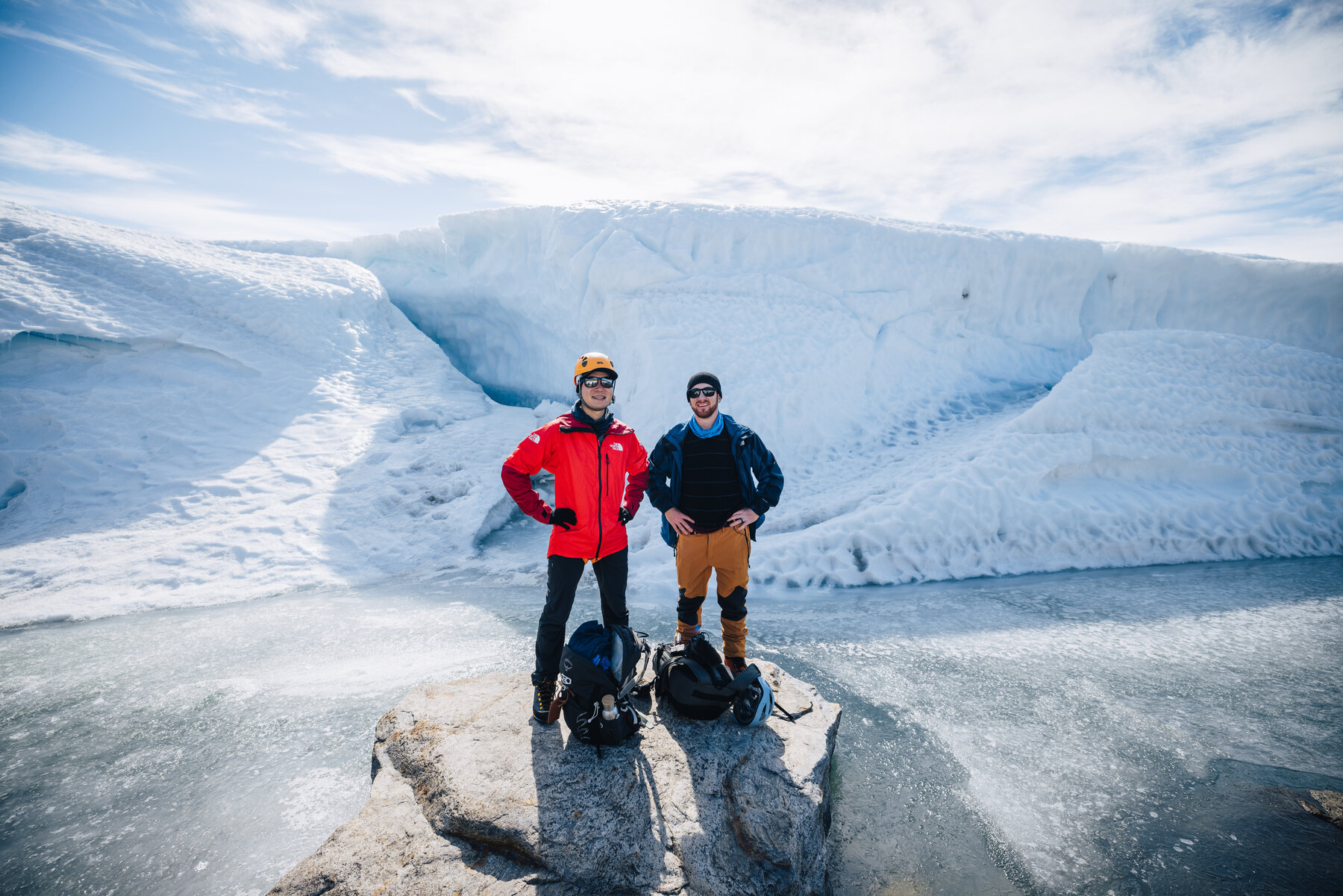
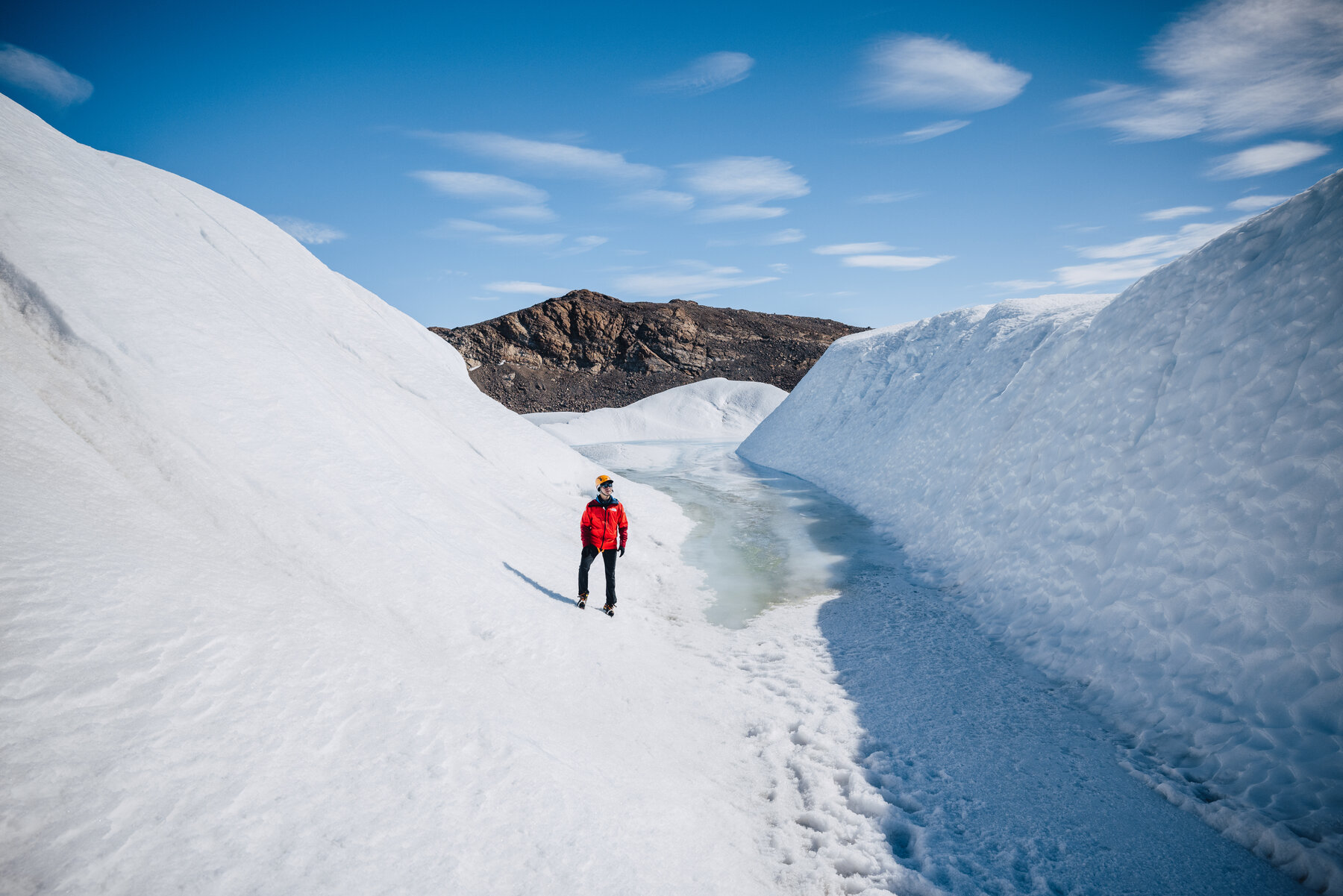
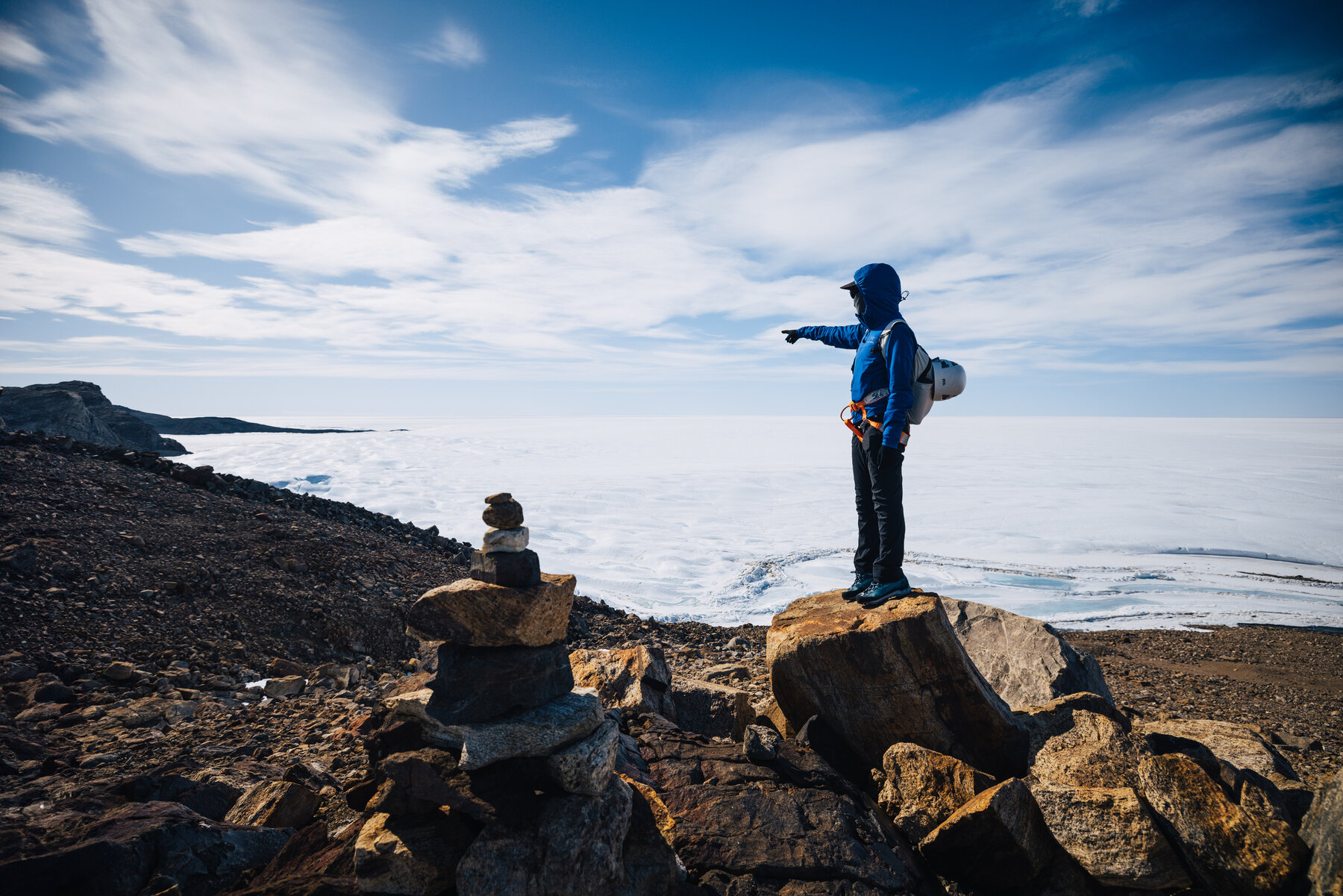
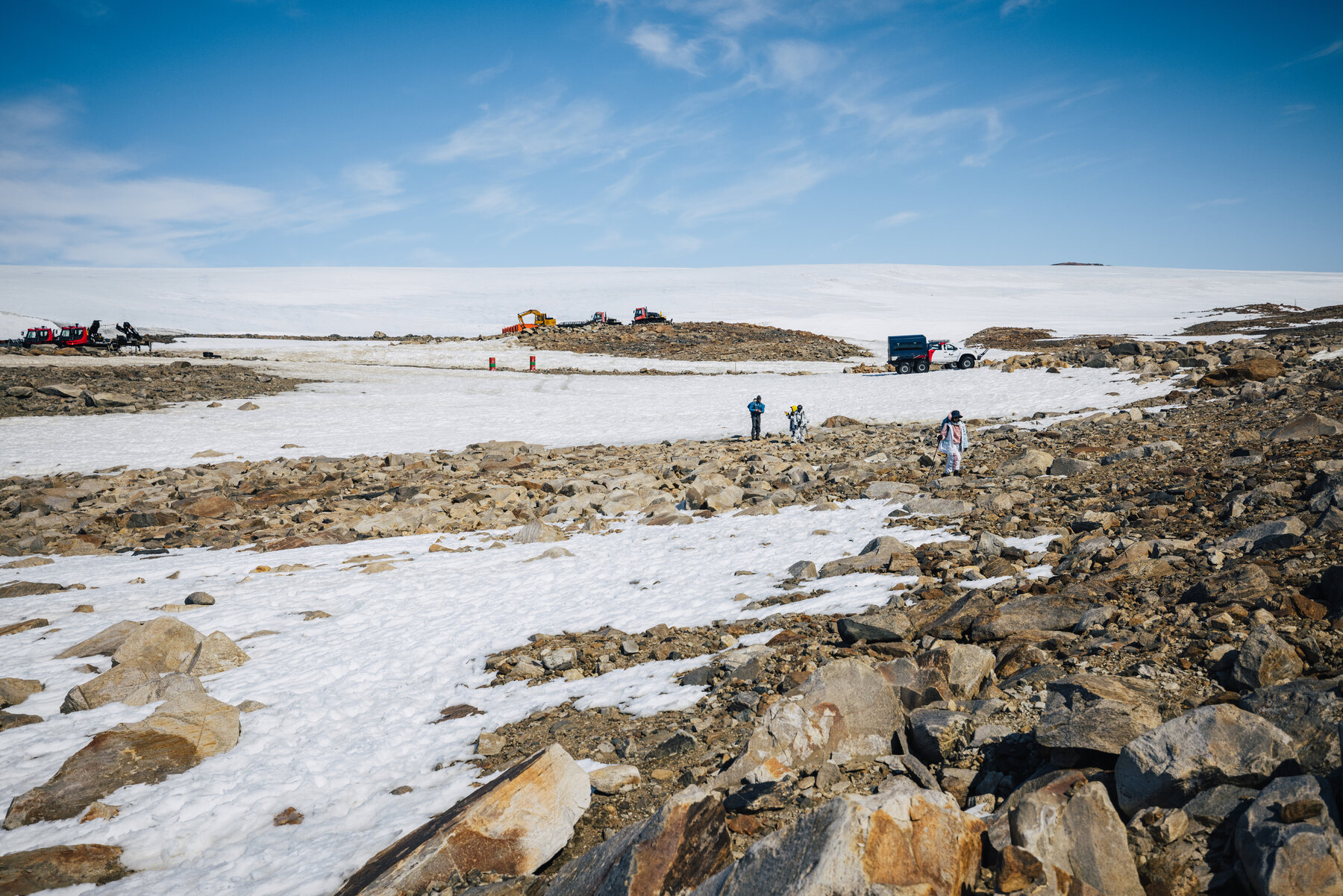
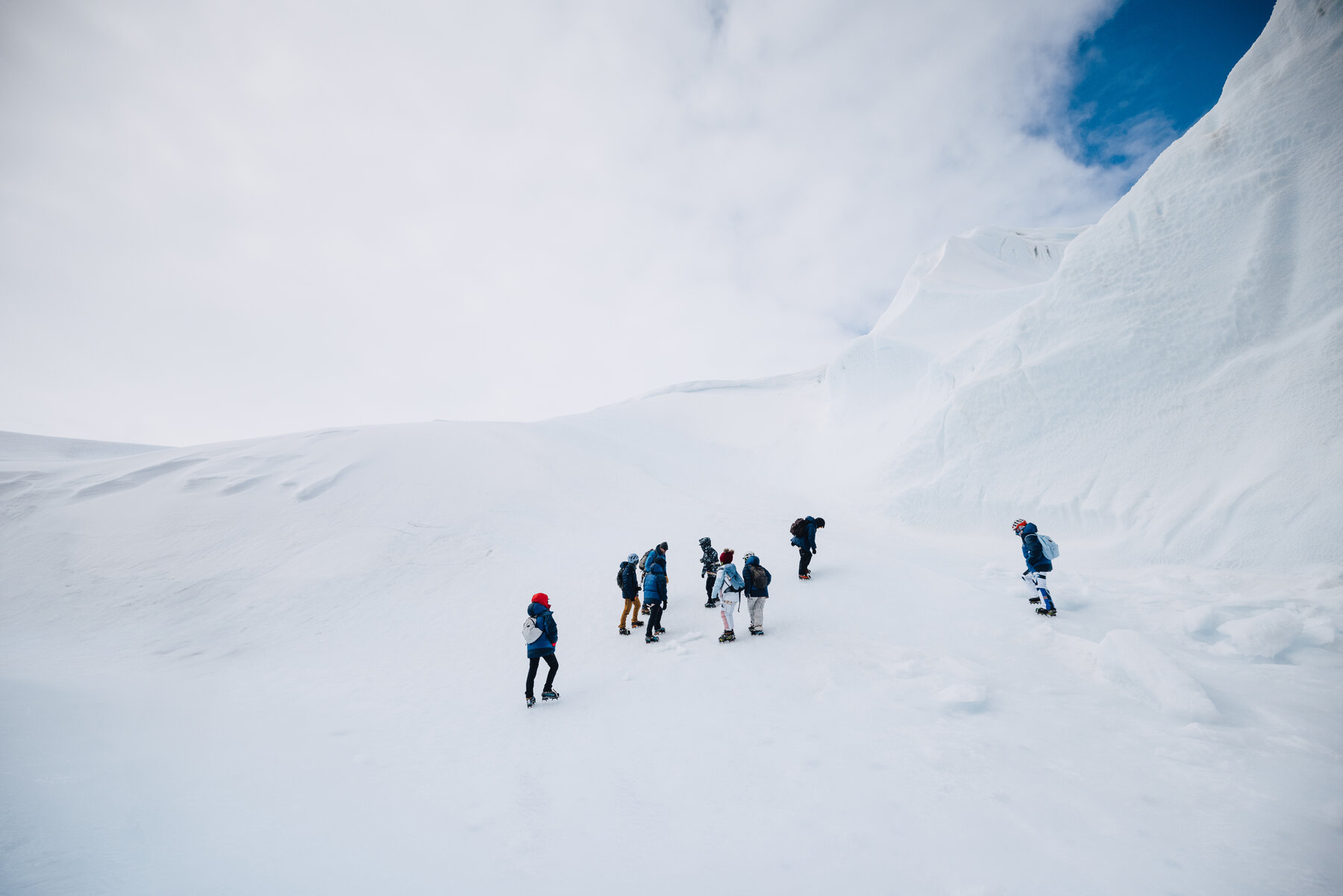
Our first full day of exploring from Whichaway. We strapped on climbing gear after breakfast and drove out onto the polar plateau to find the ice waves — a vast field of sculpted snow swells shaped by relentless katabatic winds — and a glacial ice tunnel carved into the side of a nunatak. The Antarctic light was flat and bright, the air still cold enough to feel every breath.
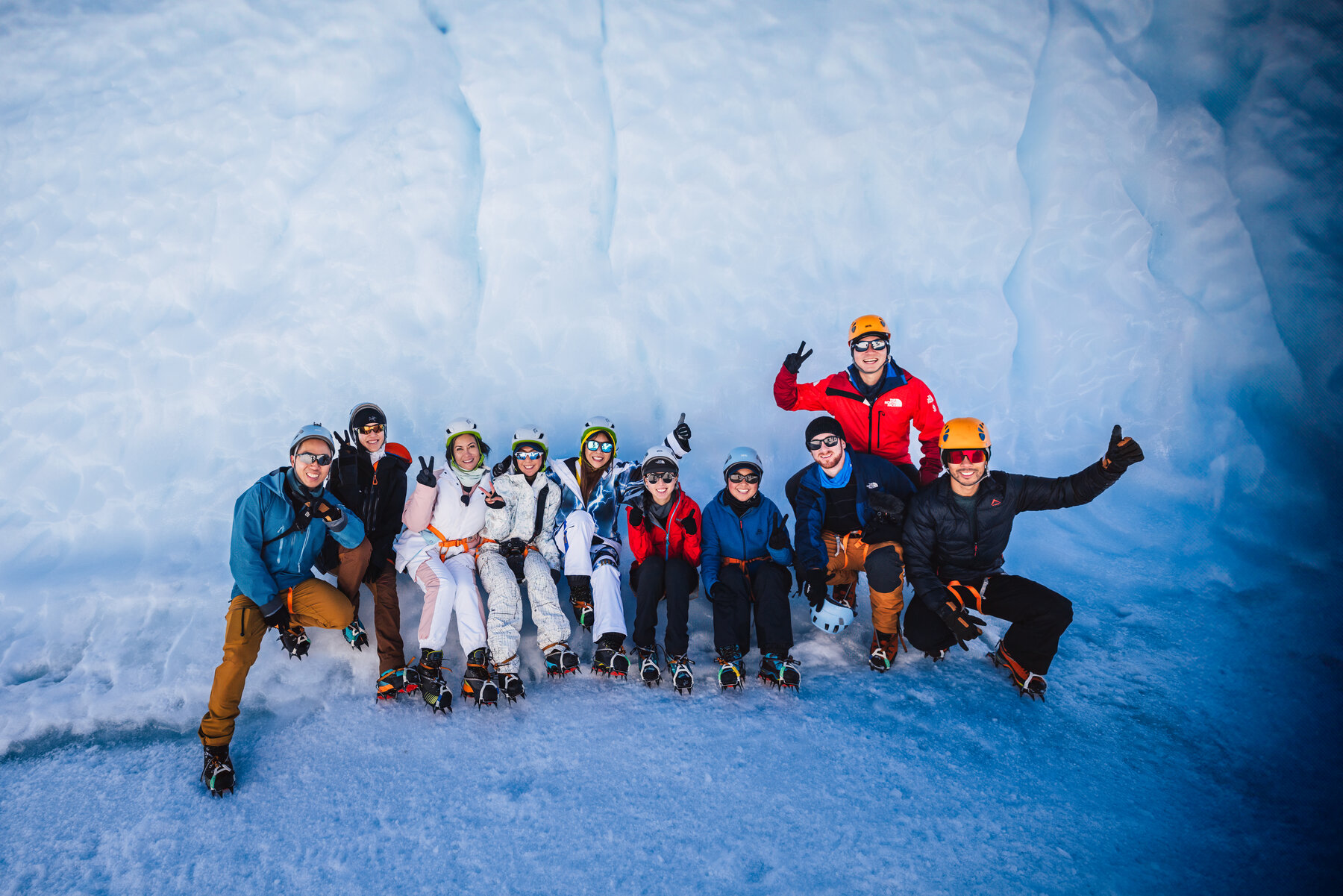
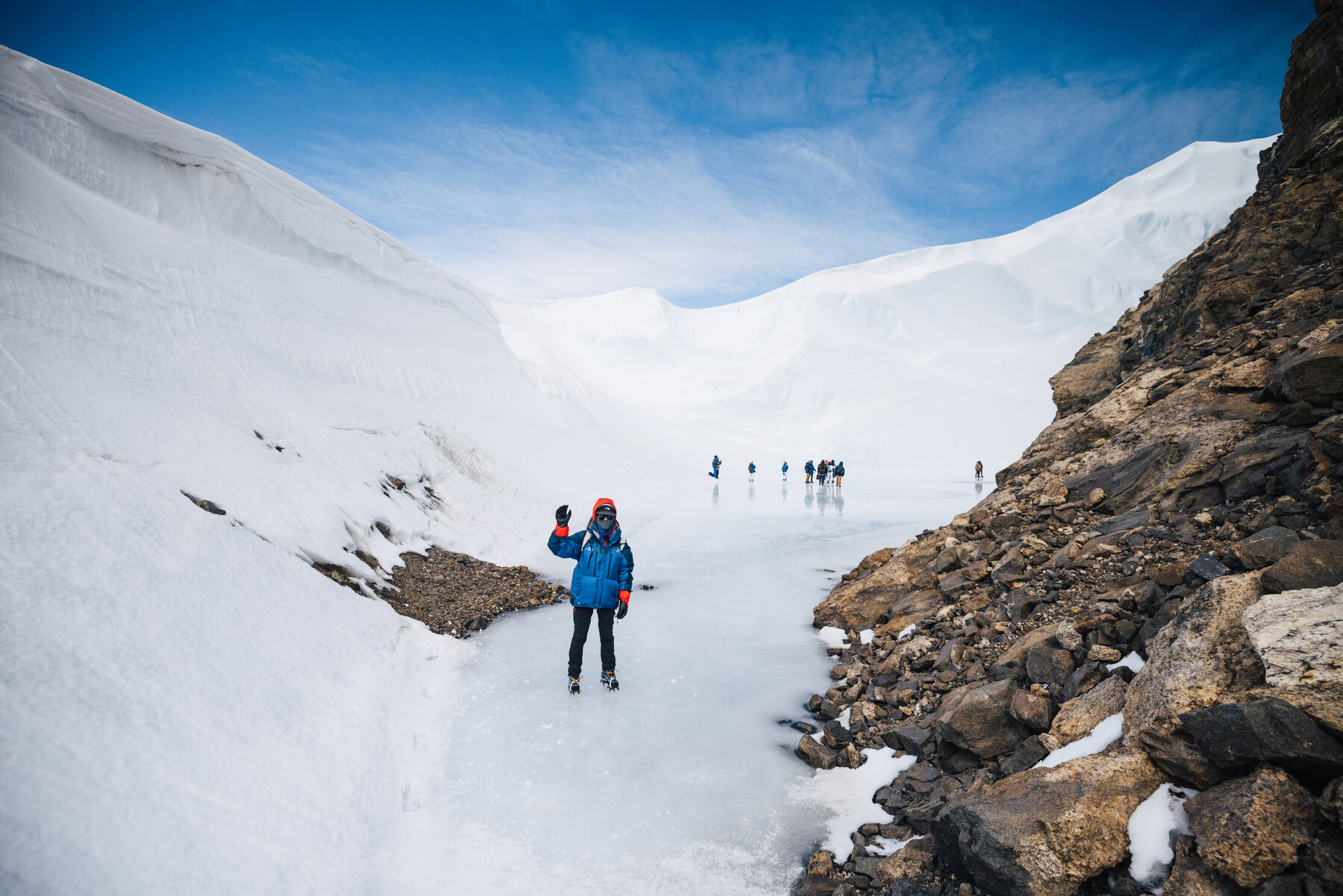
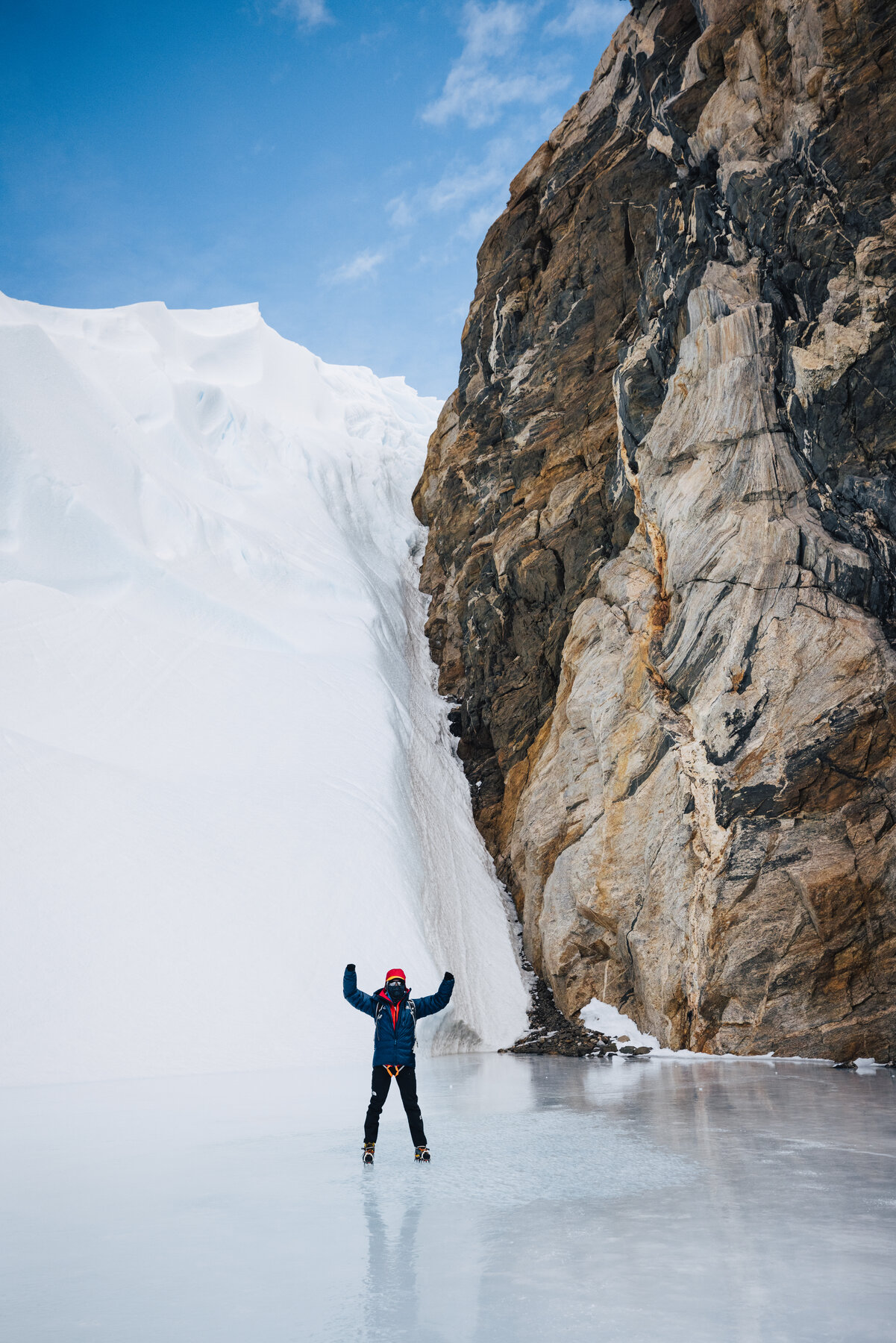
Hiking out to the ice waves. The scale only reveals itself once you're standing at the edge of the field.A deep-blue meltwater pond on the plateau, and the group moving across the snowfield toward the ice formations.Gearing up at the foot of the ice wall outside the tunnel, and a nearby snow canyon where summer meltwater has carved a frozen channel along its floor.Deep inside the crevasse. Every shade of blue the eye can see, and a few it probably can't.Portraits inside the tunnel. The blue light makes the red of our parkas glow even more.Rippled ice walls — centuries of flow preserved in texture.Back on the plateau, surveying the ice waves from a small cairn at the field's edge.
Day 05
Ice Climbing the Nunatak
December 17, 2023 · Whichaway Camp, Schirmacher Oasis
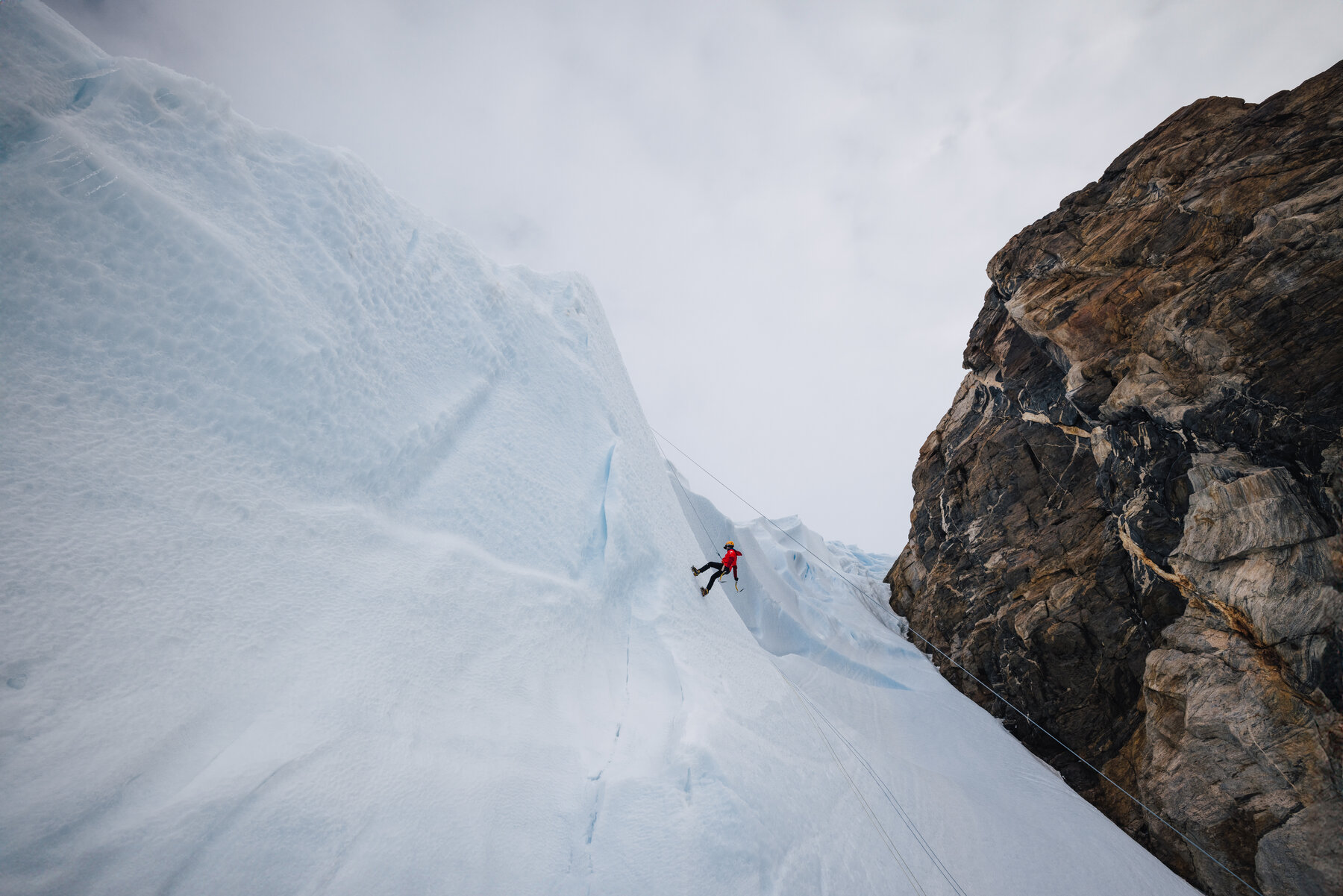
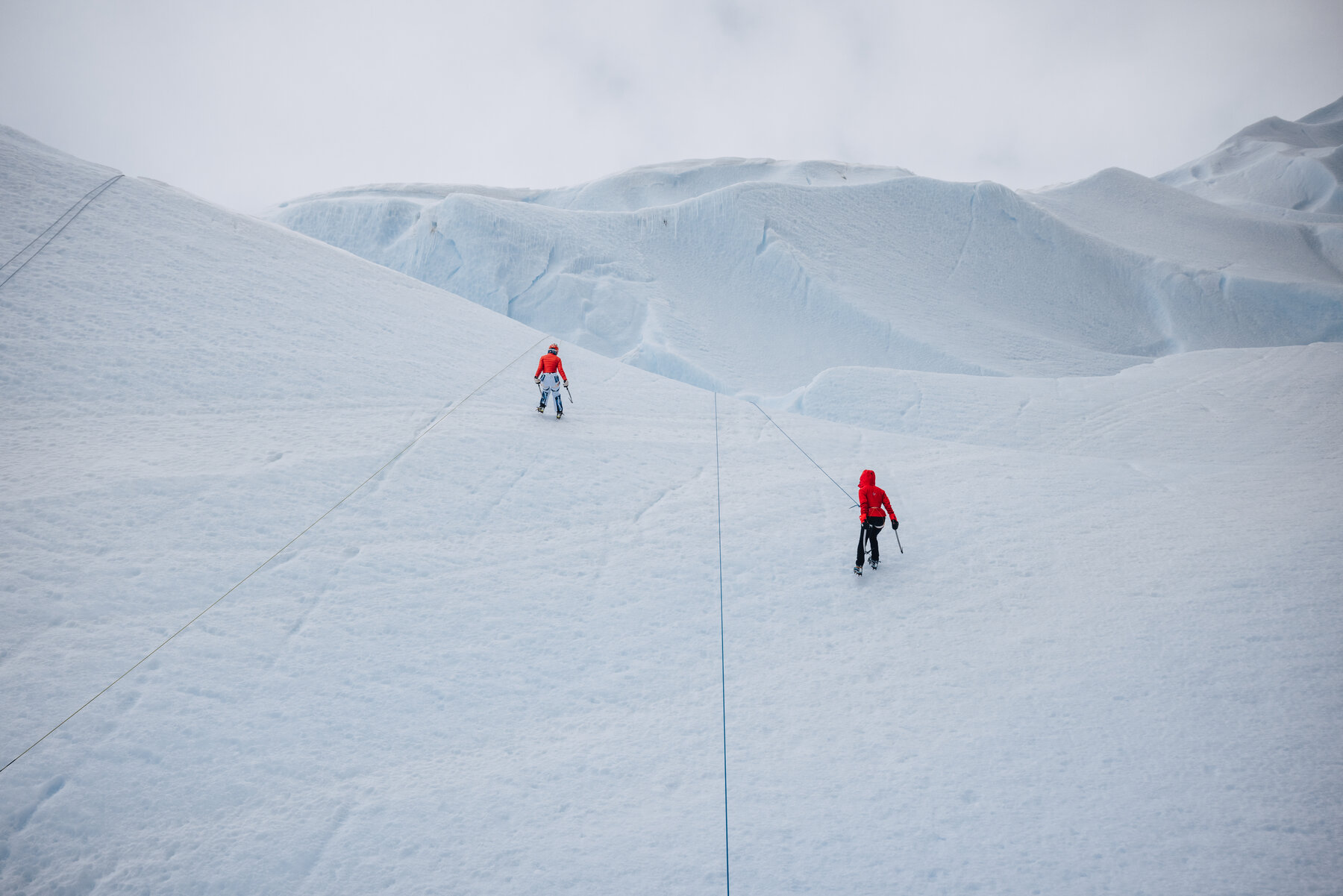
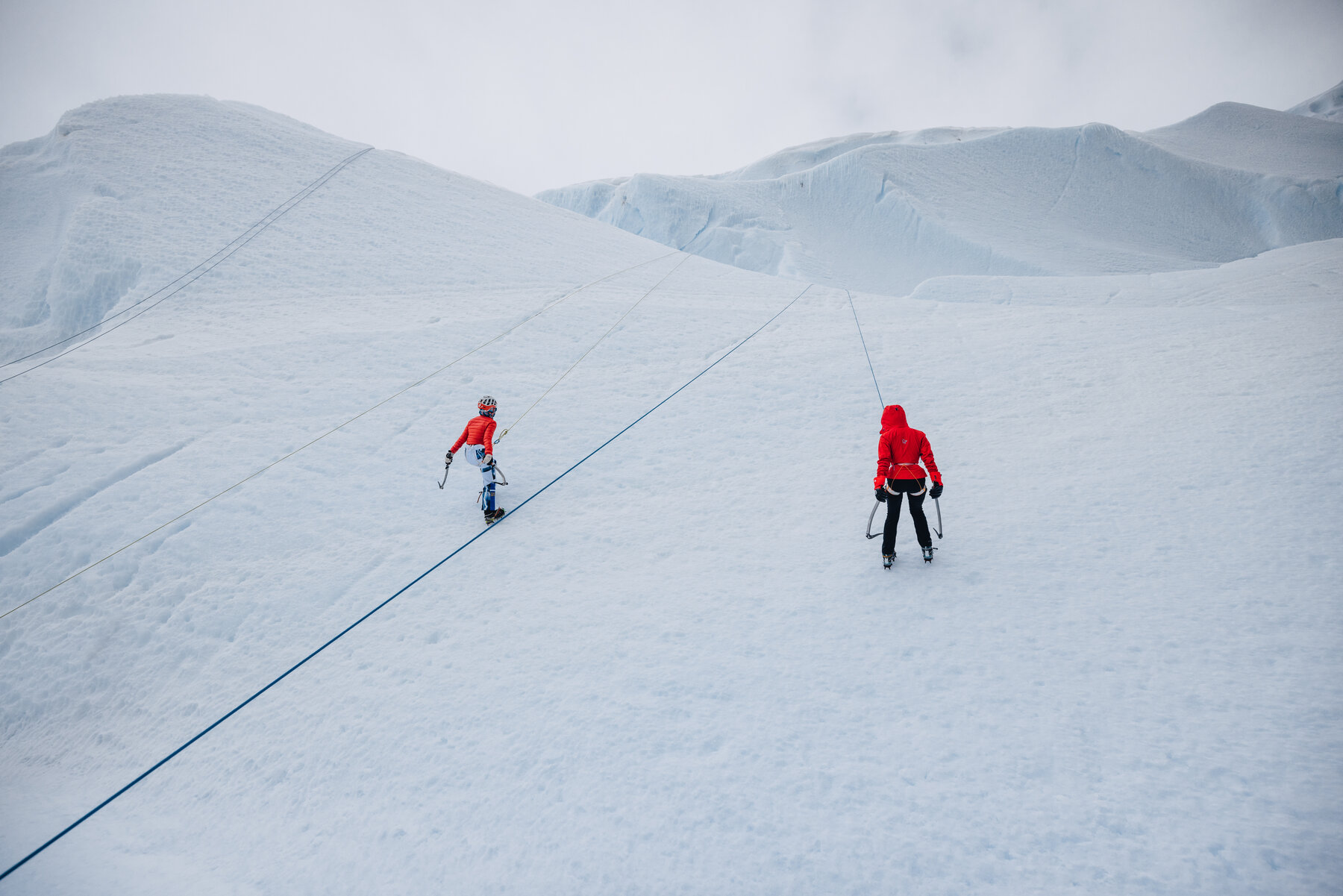
Rappelling off the nunatak. The scale of these ice walls only registers when you see a climber dangling off one.
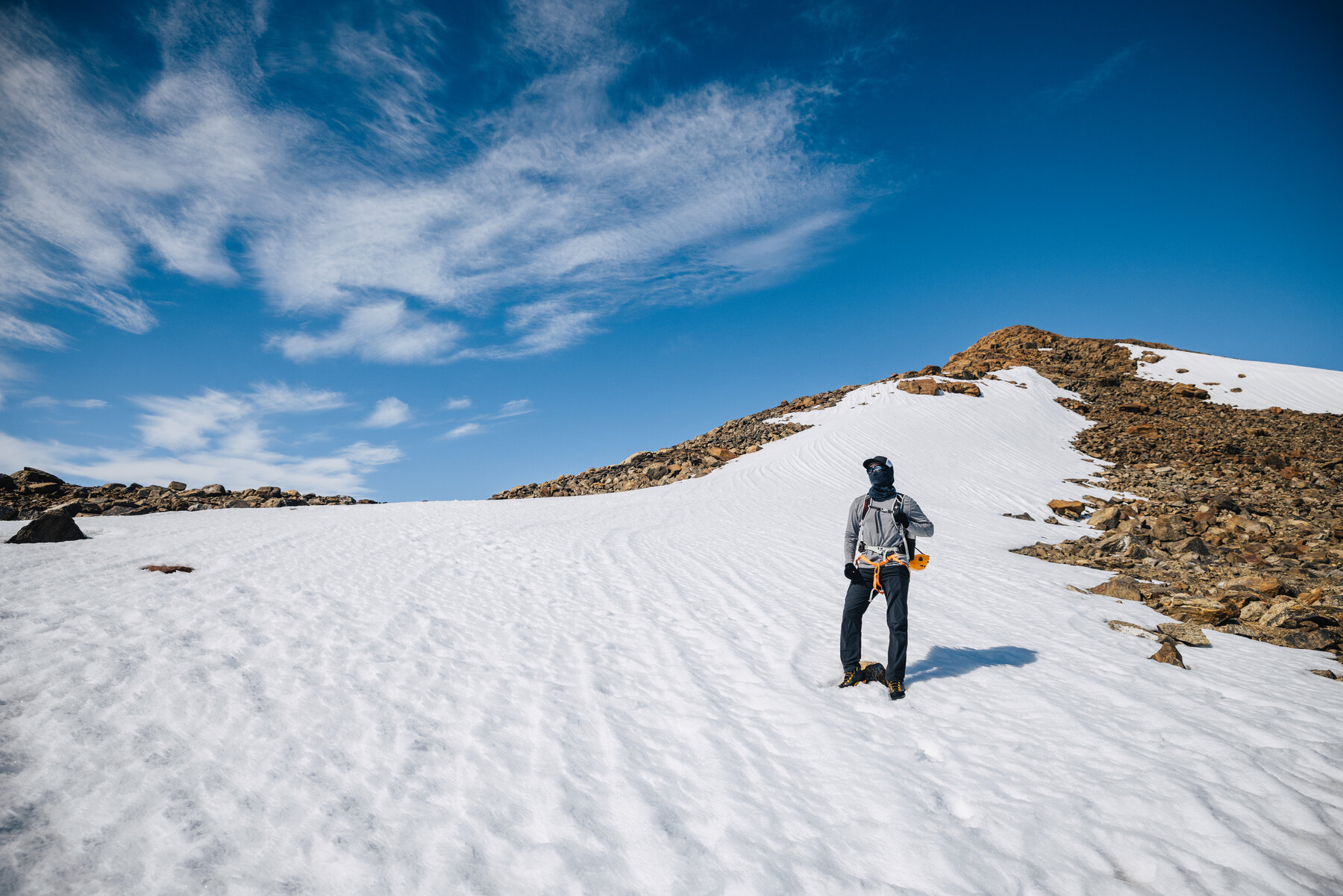
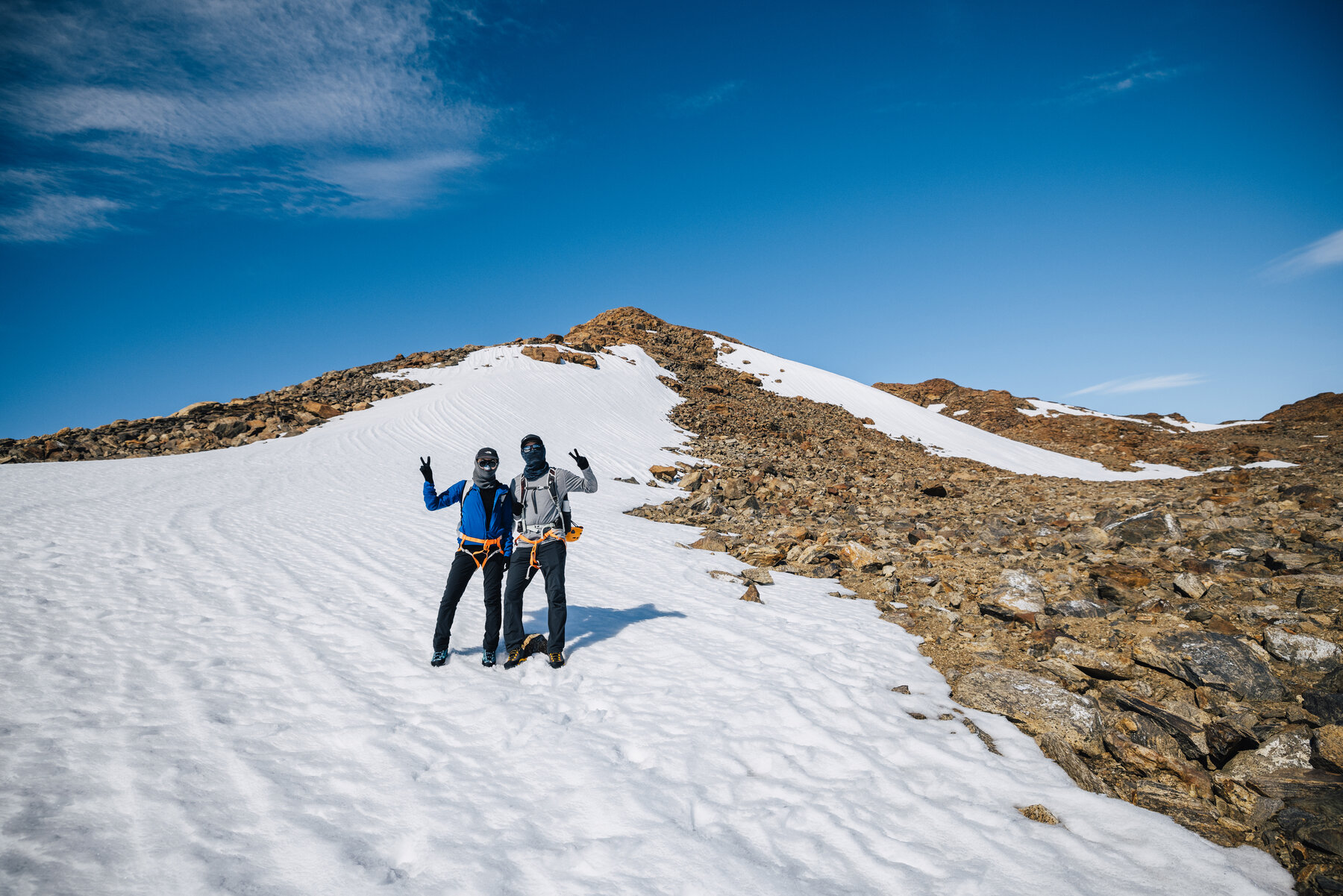
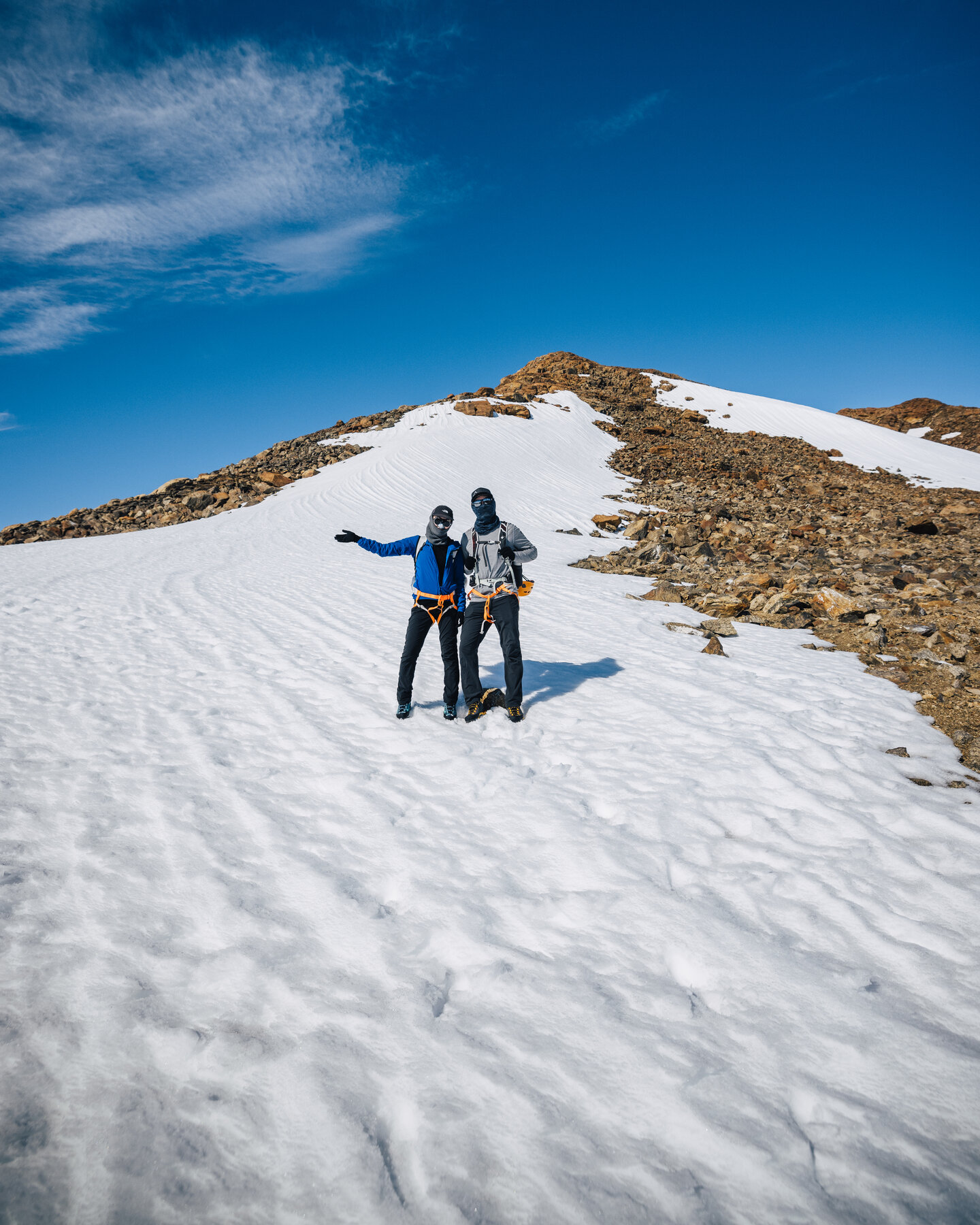
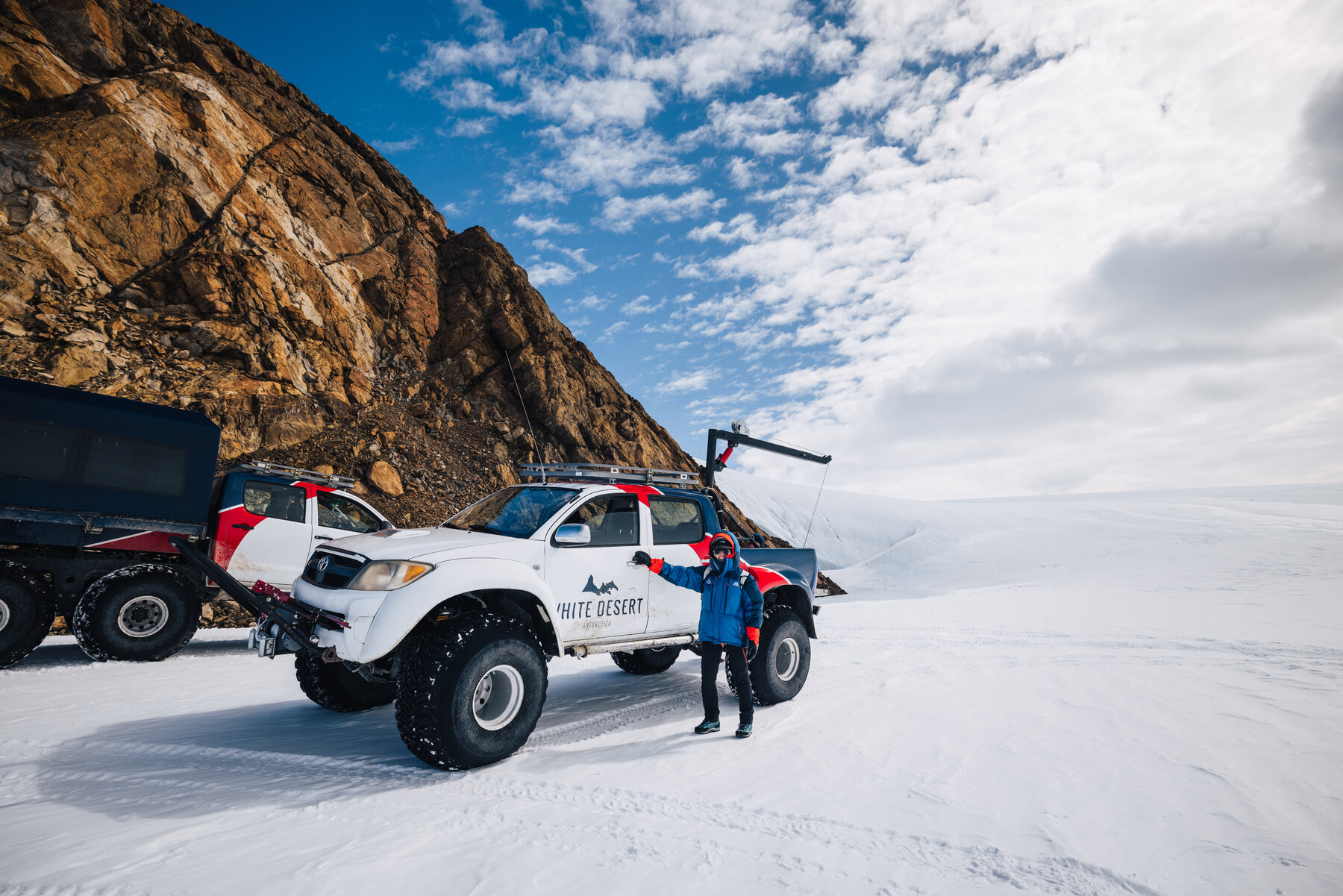
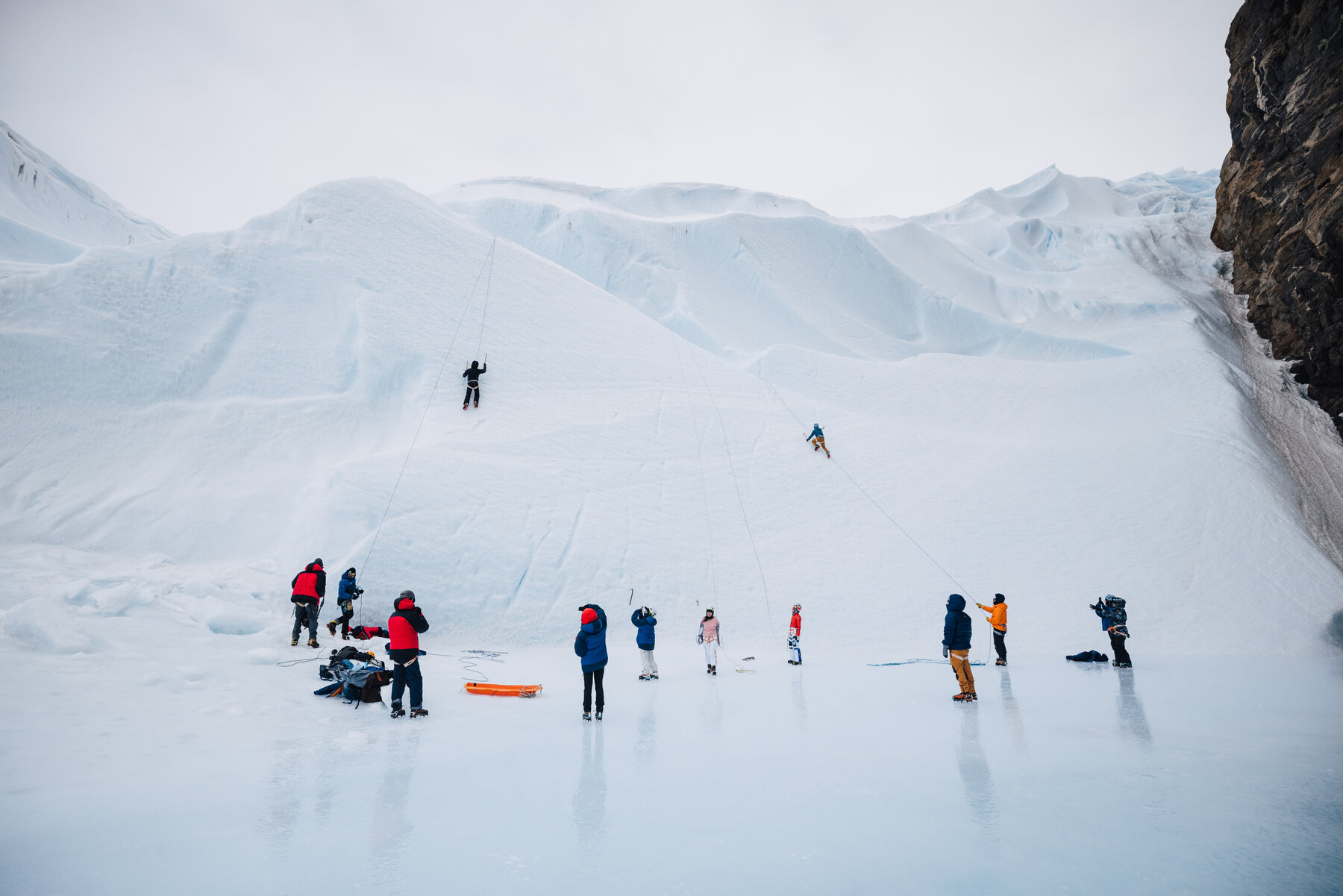
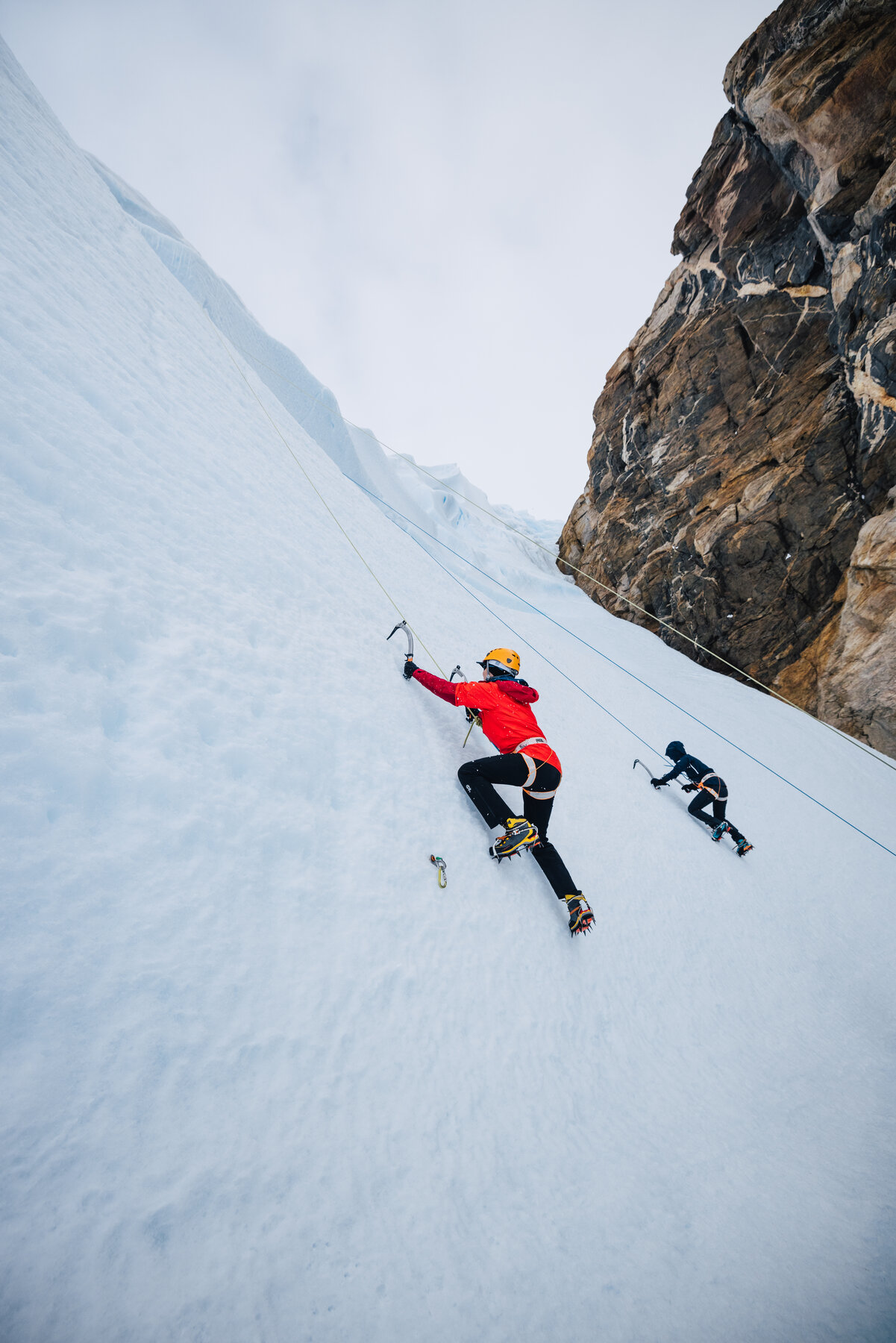
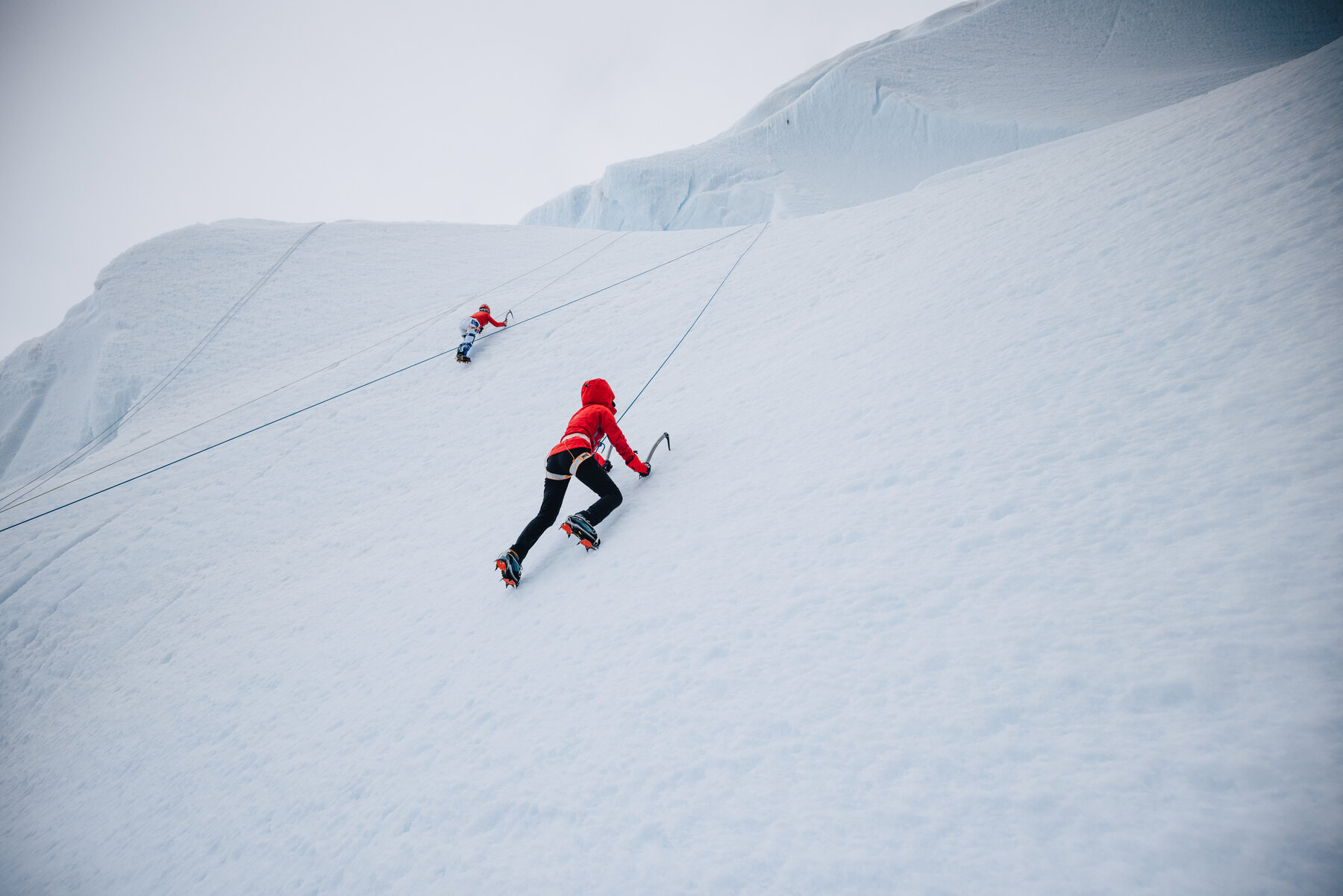
Another adventure of a lifetime — ice climbing a nunatak in the middle of Antarctica. Nunataks are the rocky peaks that poke up through the ice sheet, and the one we climbed rises sharply above the plateau near Whichaway. The day started with a convoy of White Desert's custom 6x6 trucks carrying us across the ice. From there, we roped up, strapped on crampons, and spent hours working our way up ice walls and snow slopes with the guides.
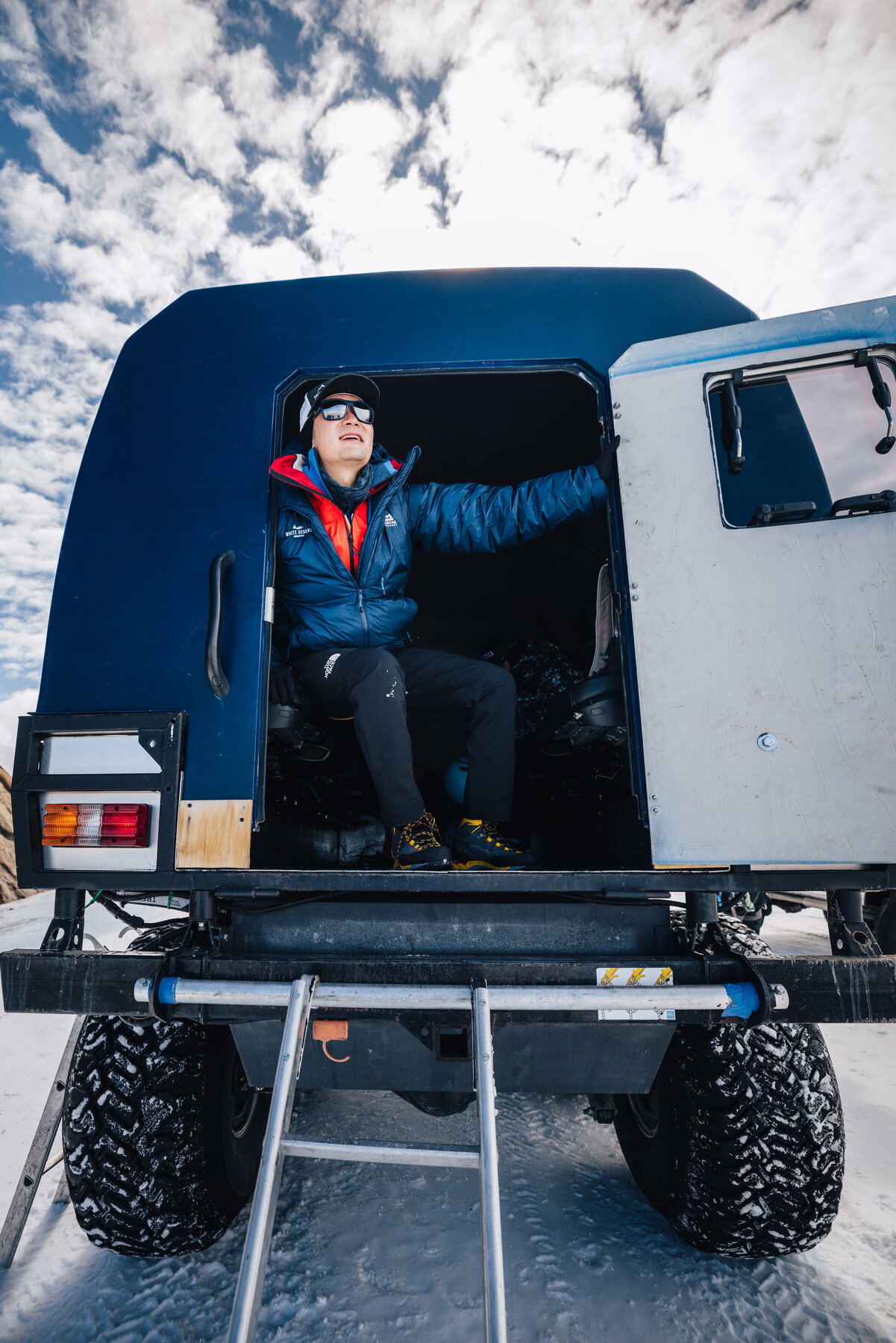
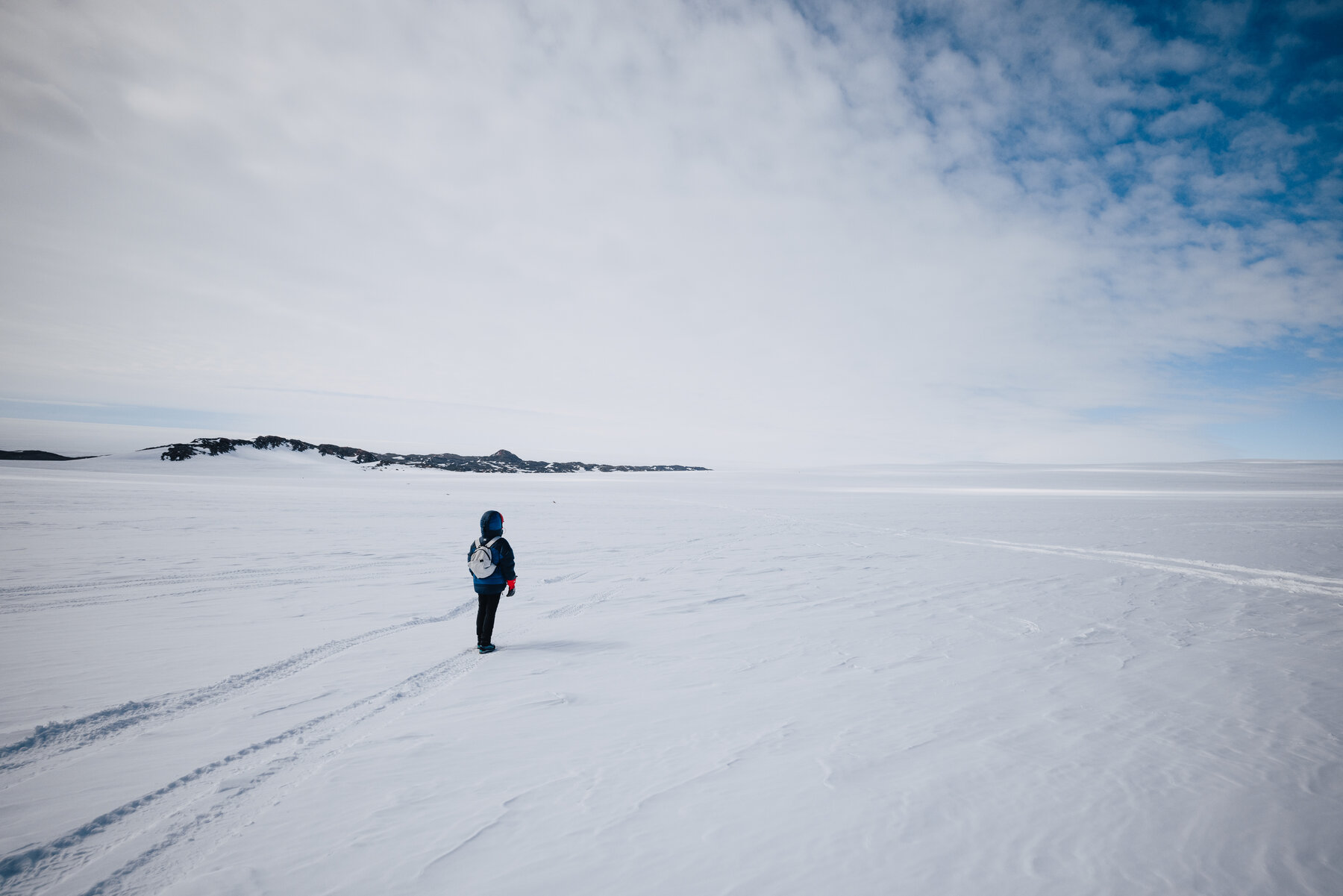
The ride out. White Desert's custom Arctic Trucks on tires the size of a person are built for the plateau — we rolled to the nunatak in one of these beasts.A moment walking the plateau alone. The silence out here is the loudest thing you'll ever hear.Approaching the nunatak — the base of the cliff towers overhead by the time you're under it.The final push up to the ice. Every layer earns its keep.The climbing camp at the base. Guides belaying, climbers on the wall, gear laid out across the ice.On the wall. Each swing of the axe sends ancient ice flying.Roped traverse along the ridge. You feel the rope tug in rhythm with the climber ahead of you.
Day 06
Emperor Penguins at Atka Bay
December 18, 2023 · Atka Bay, Antarctica
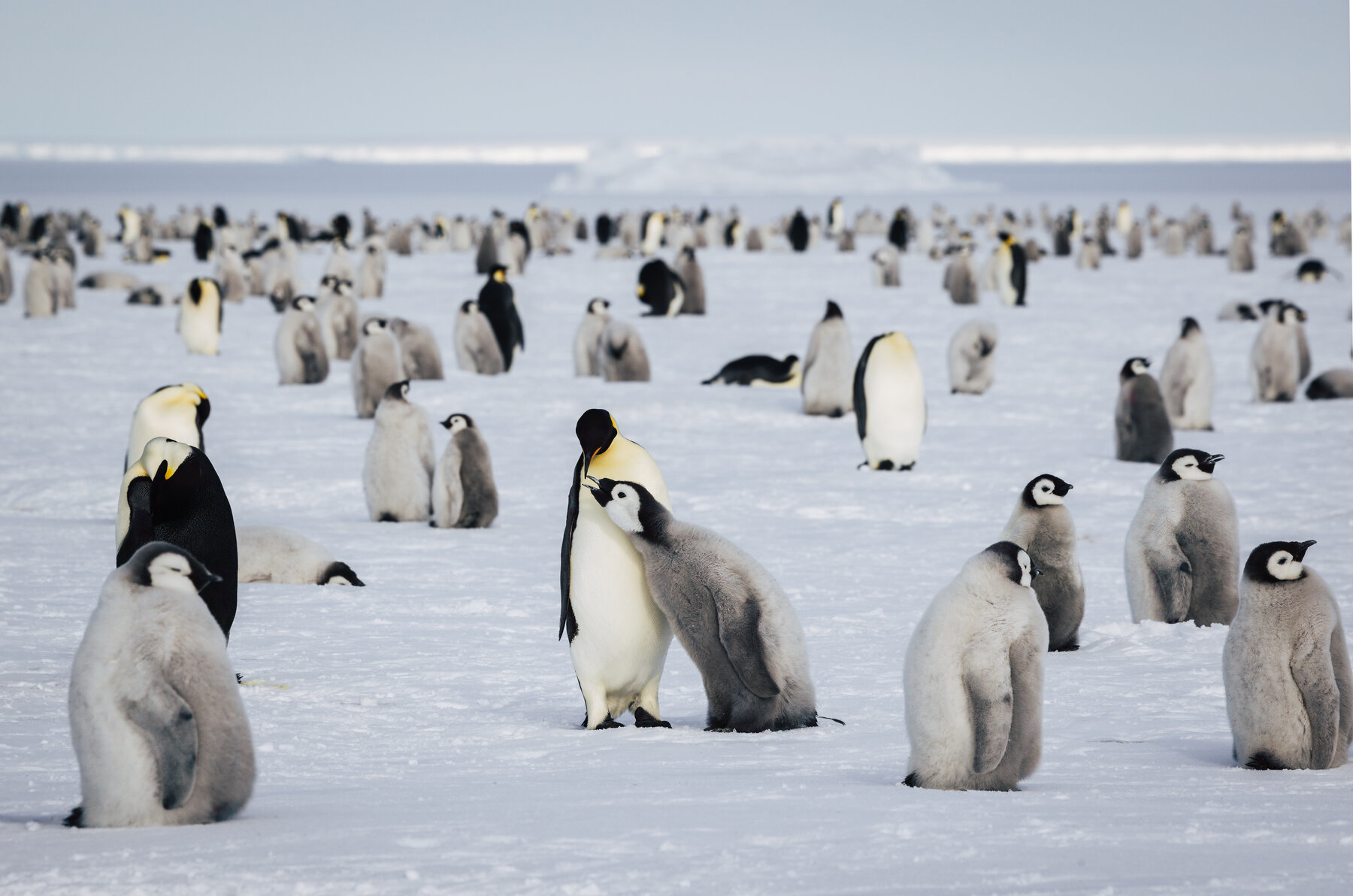
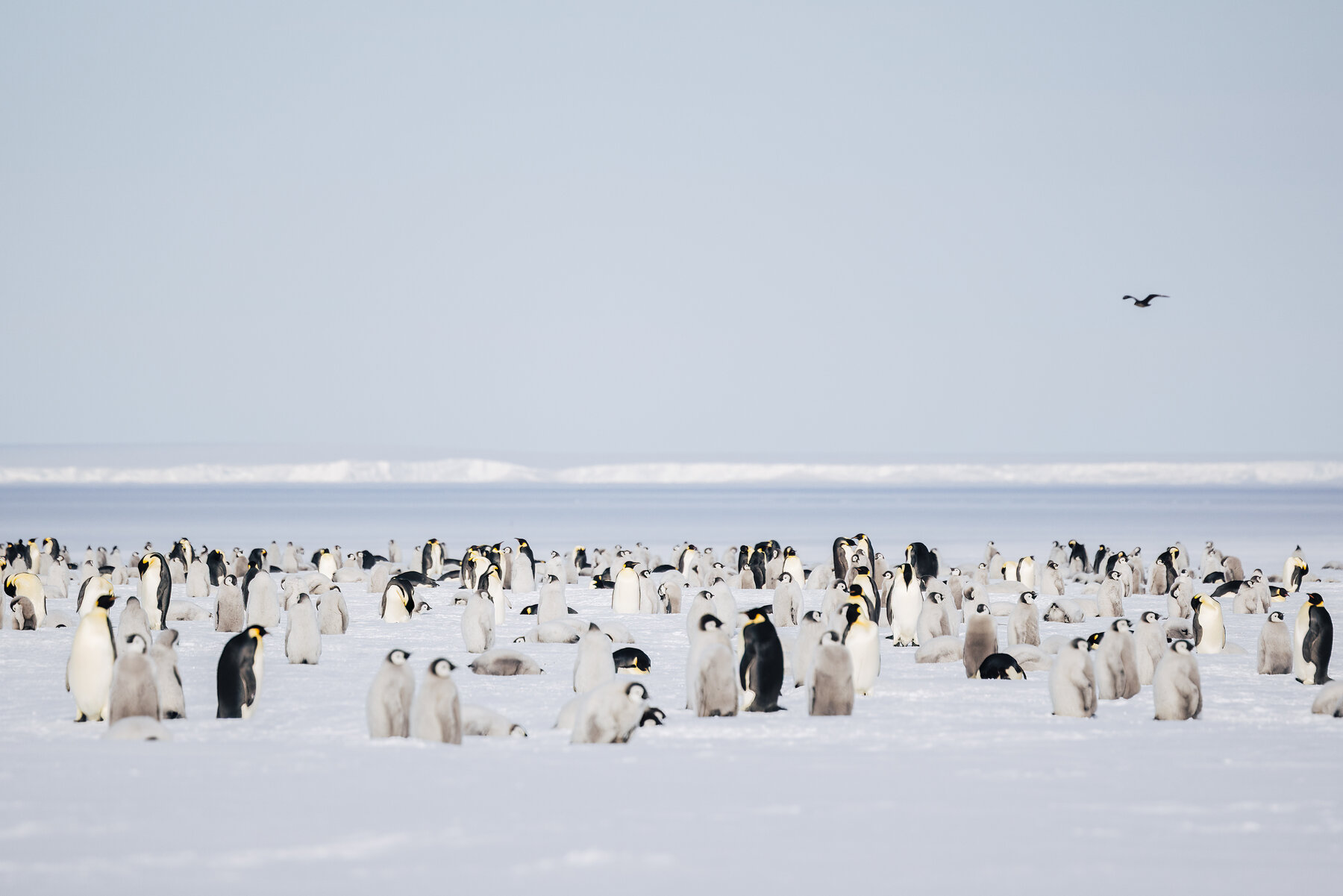
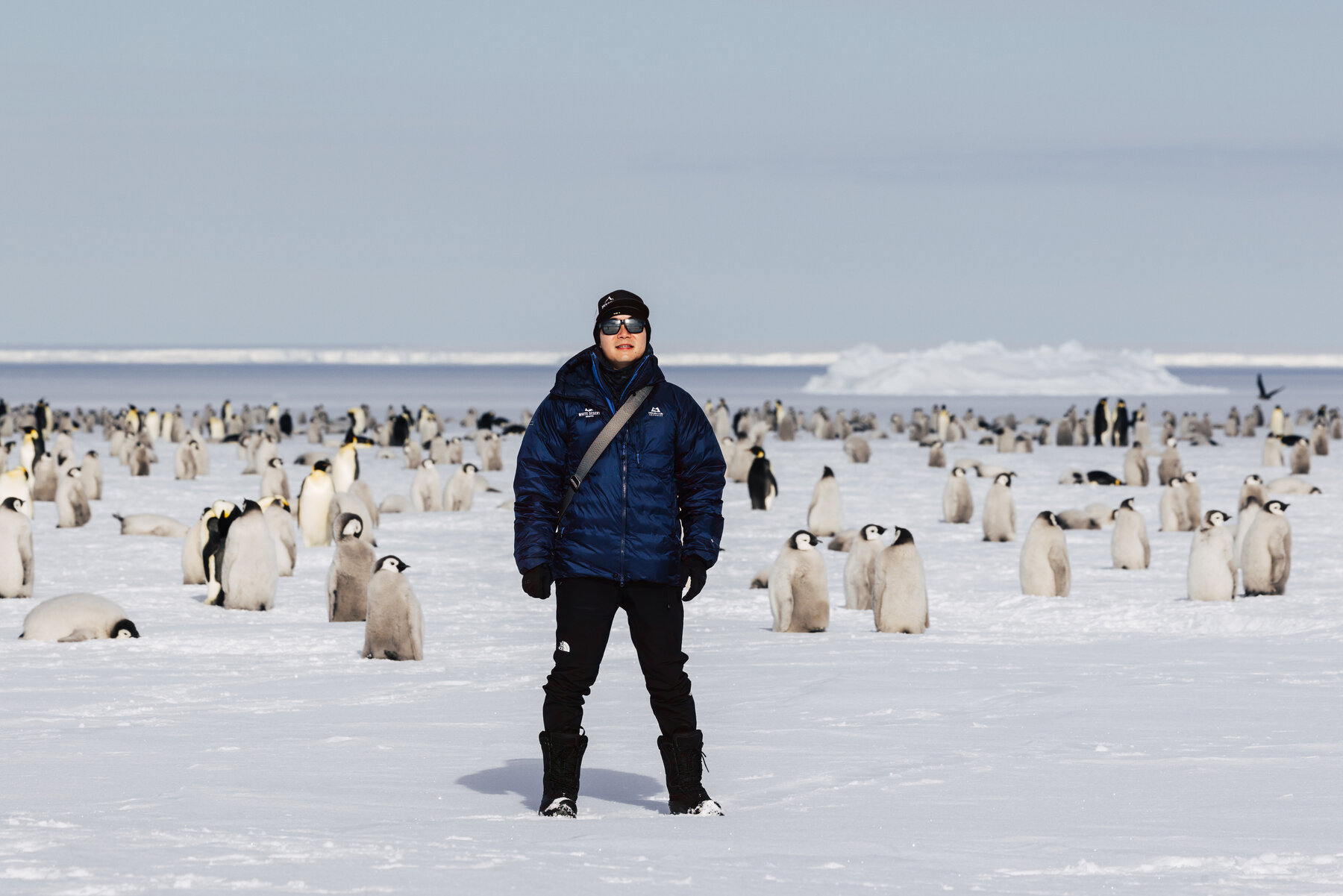
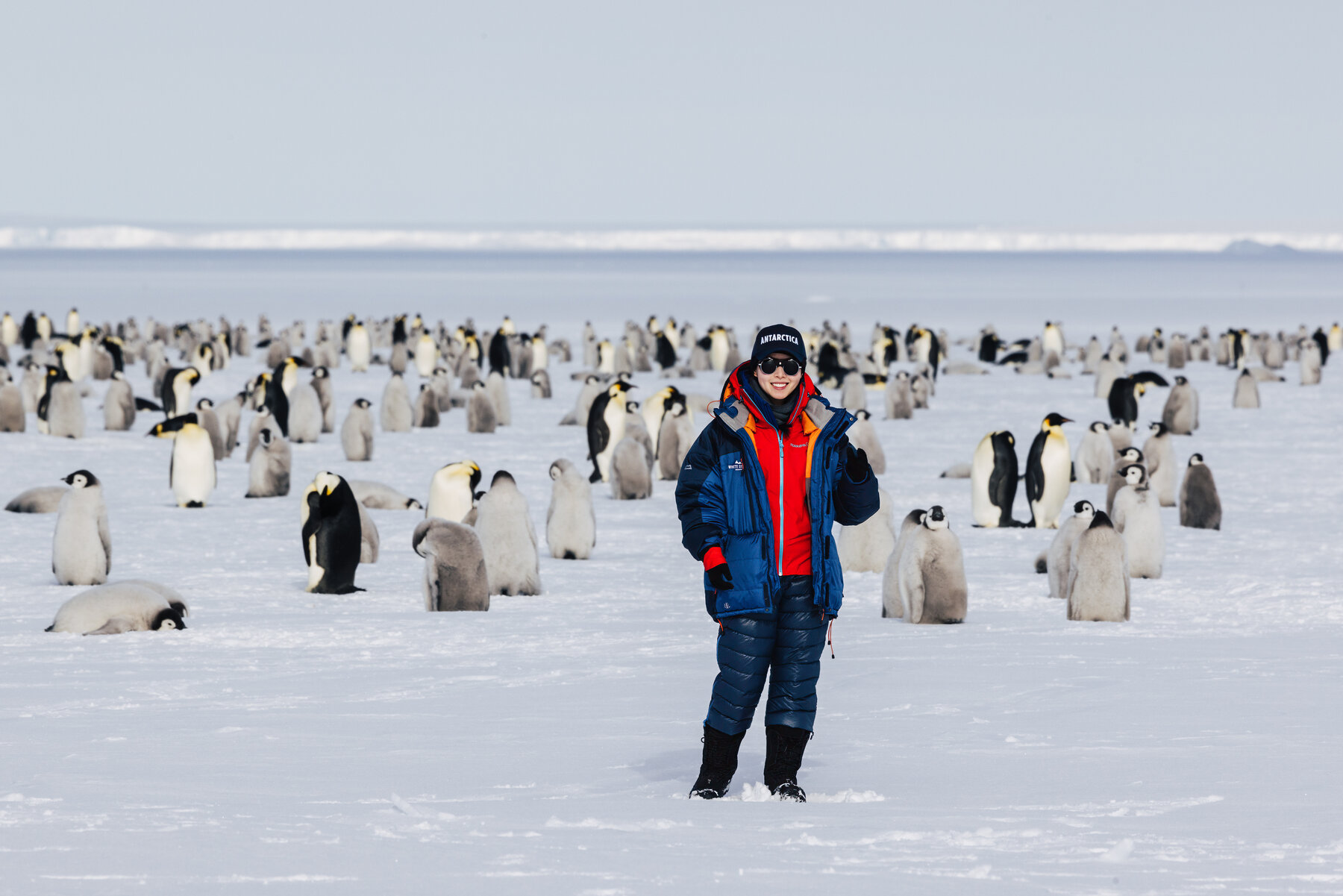
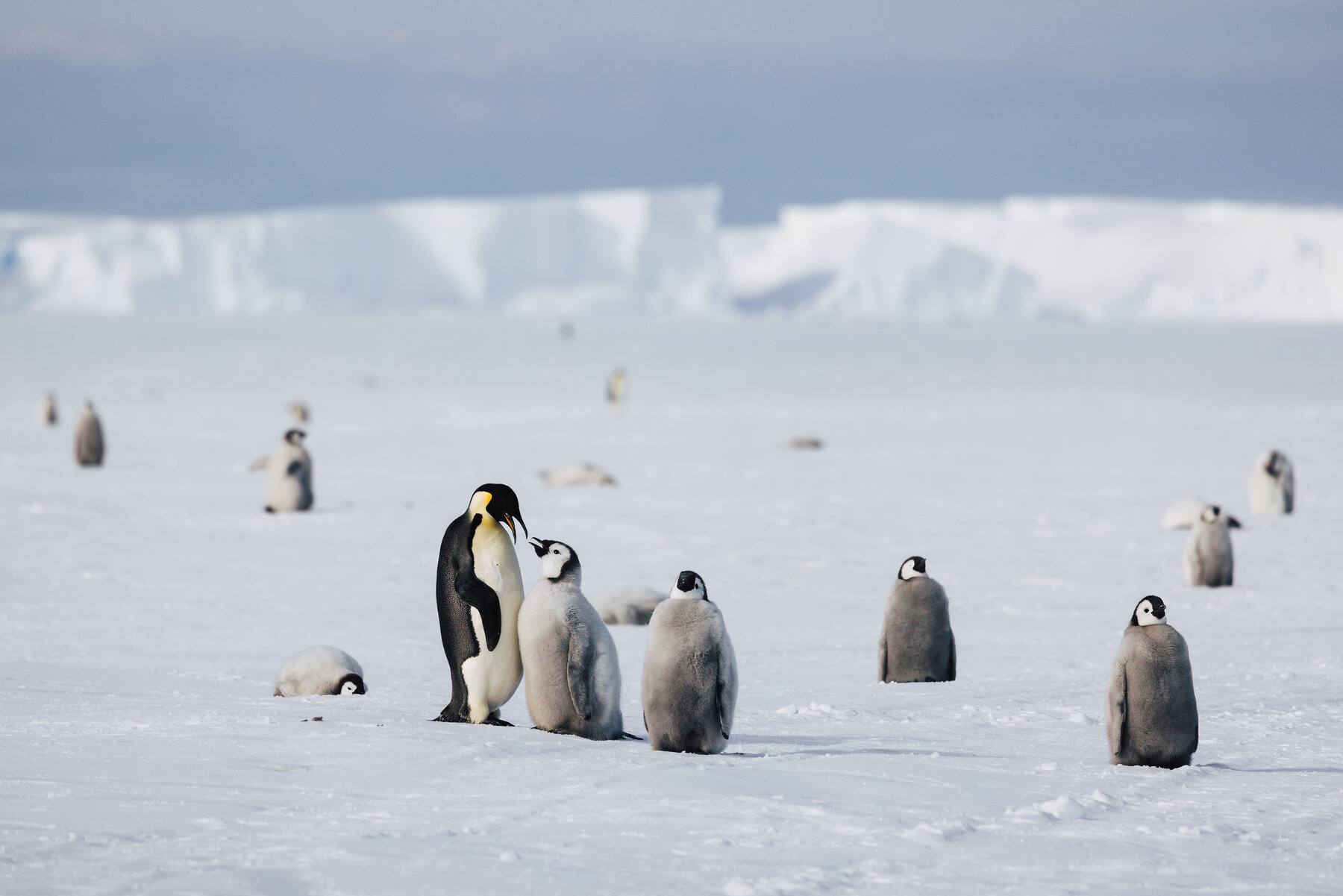
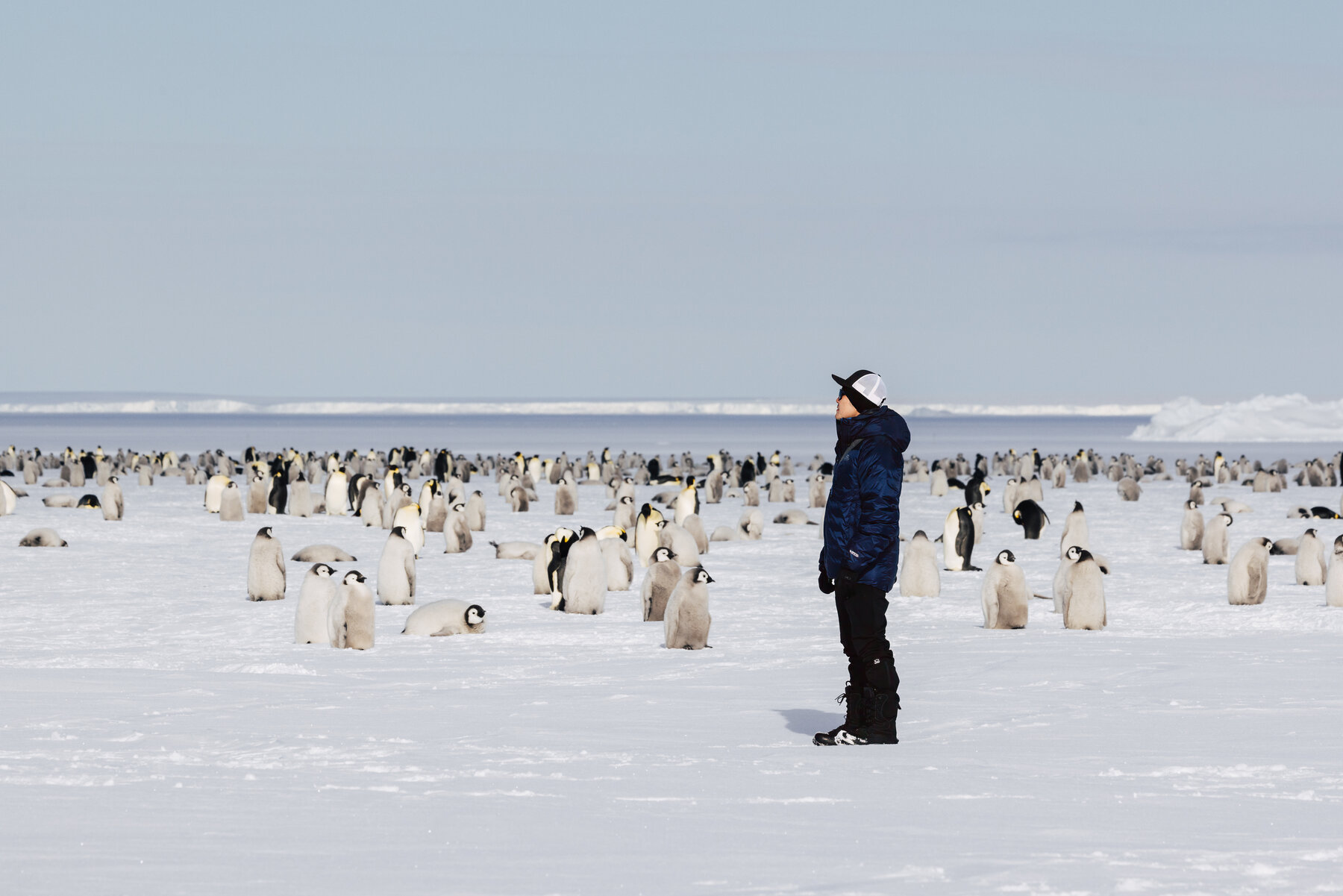
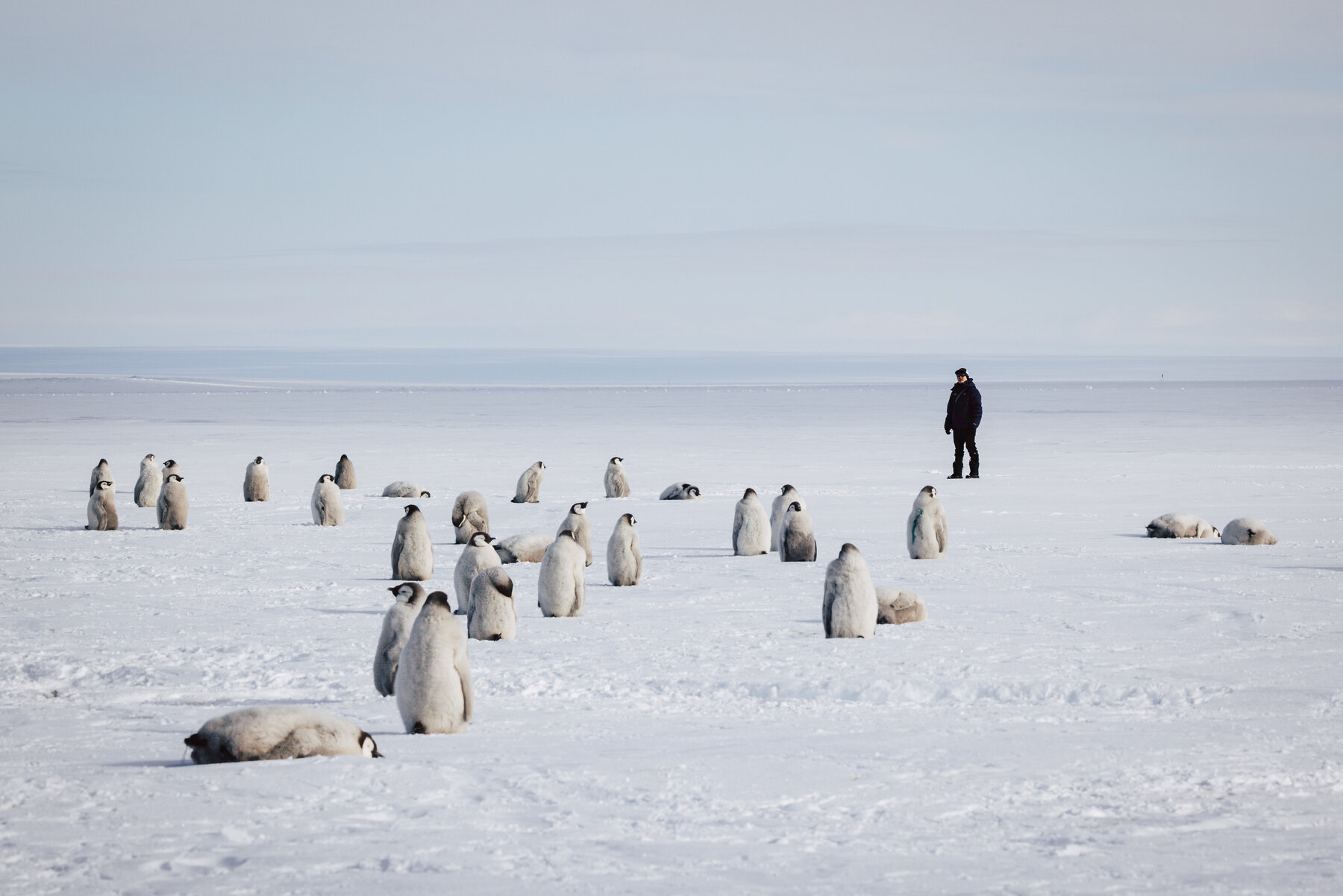
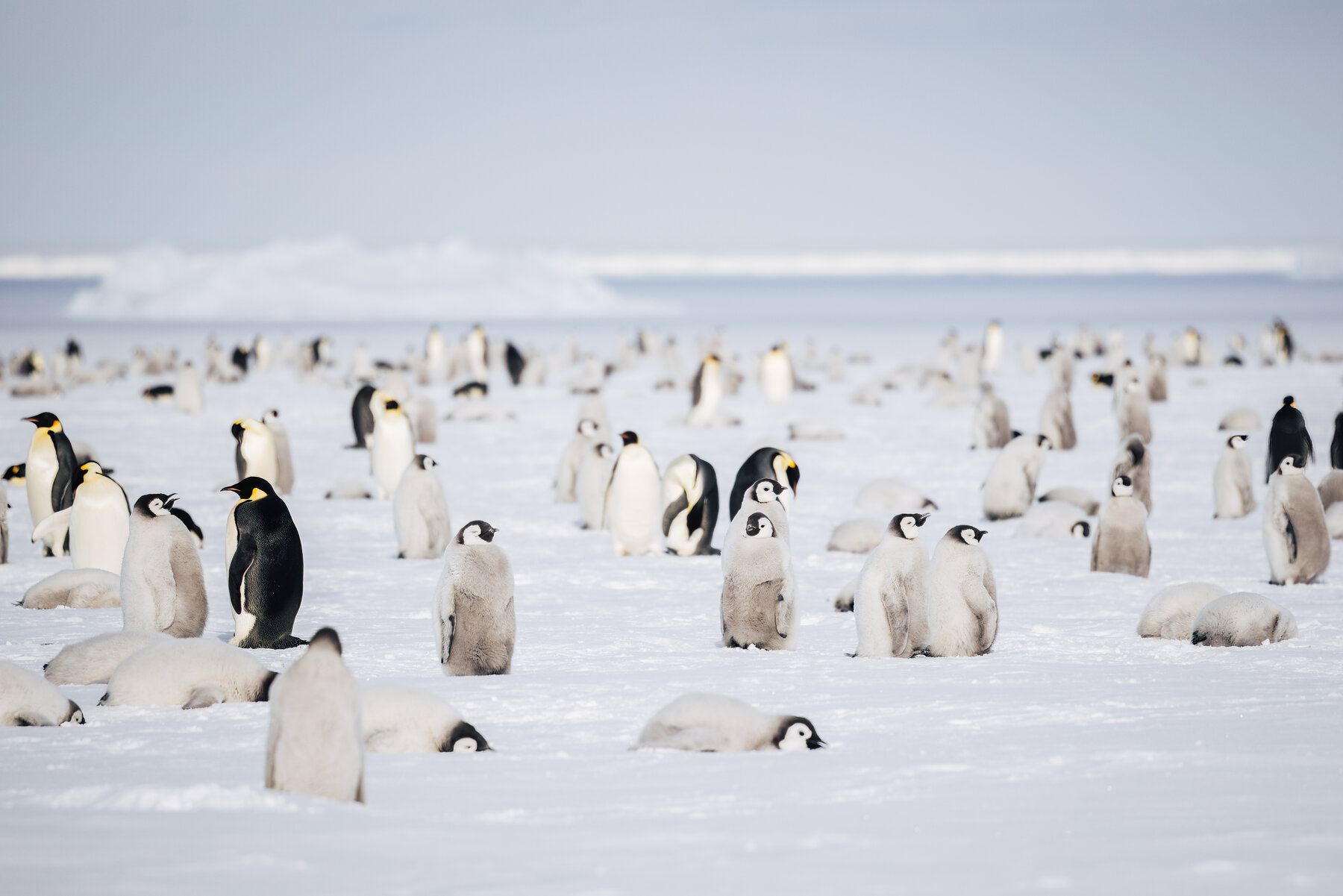
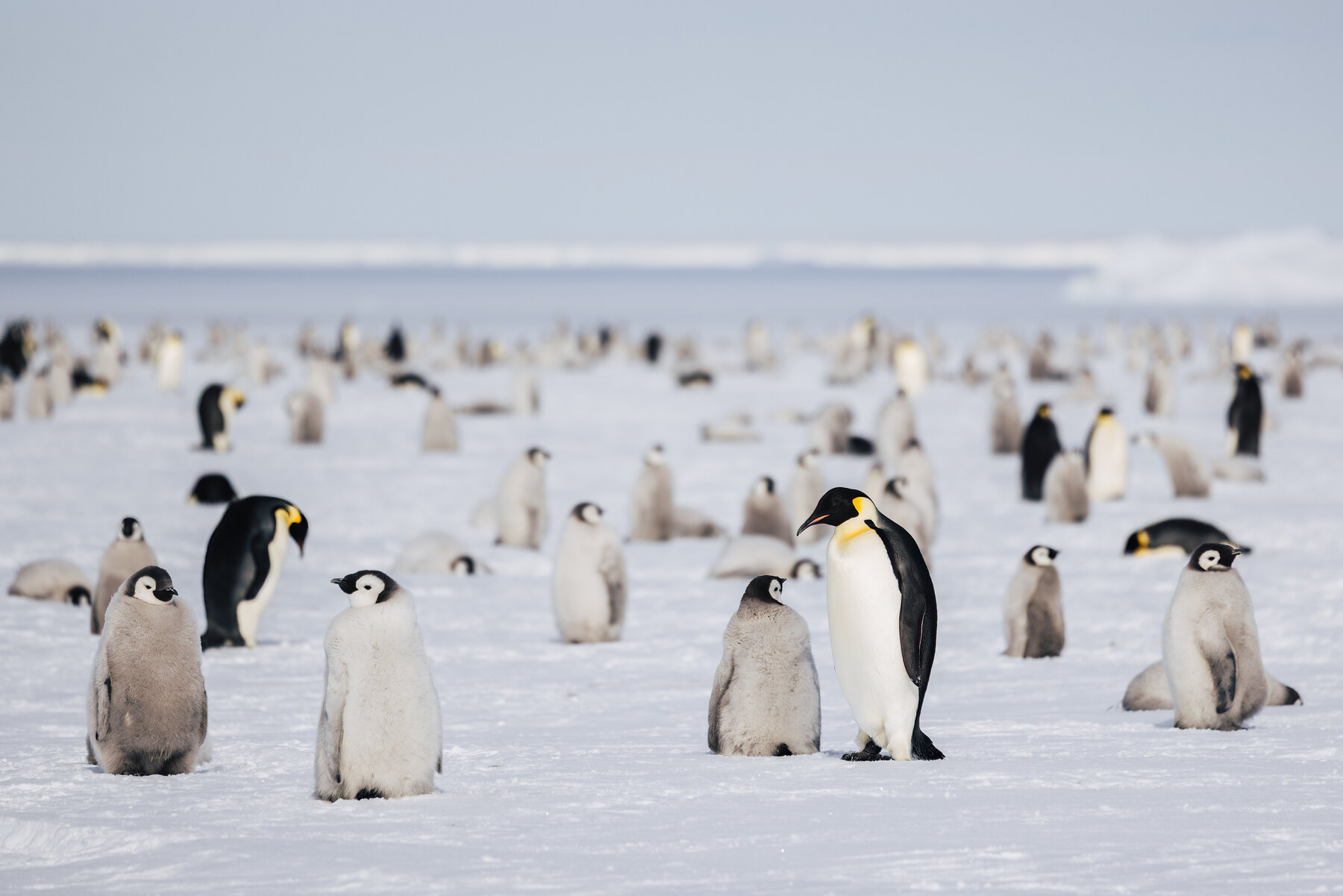
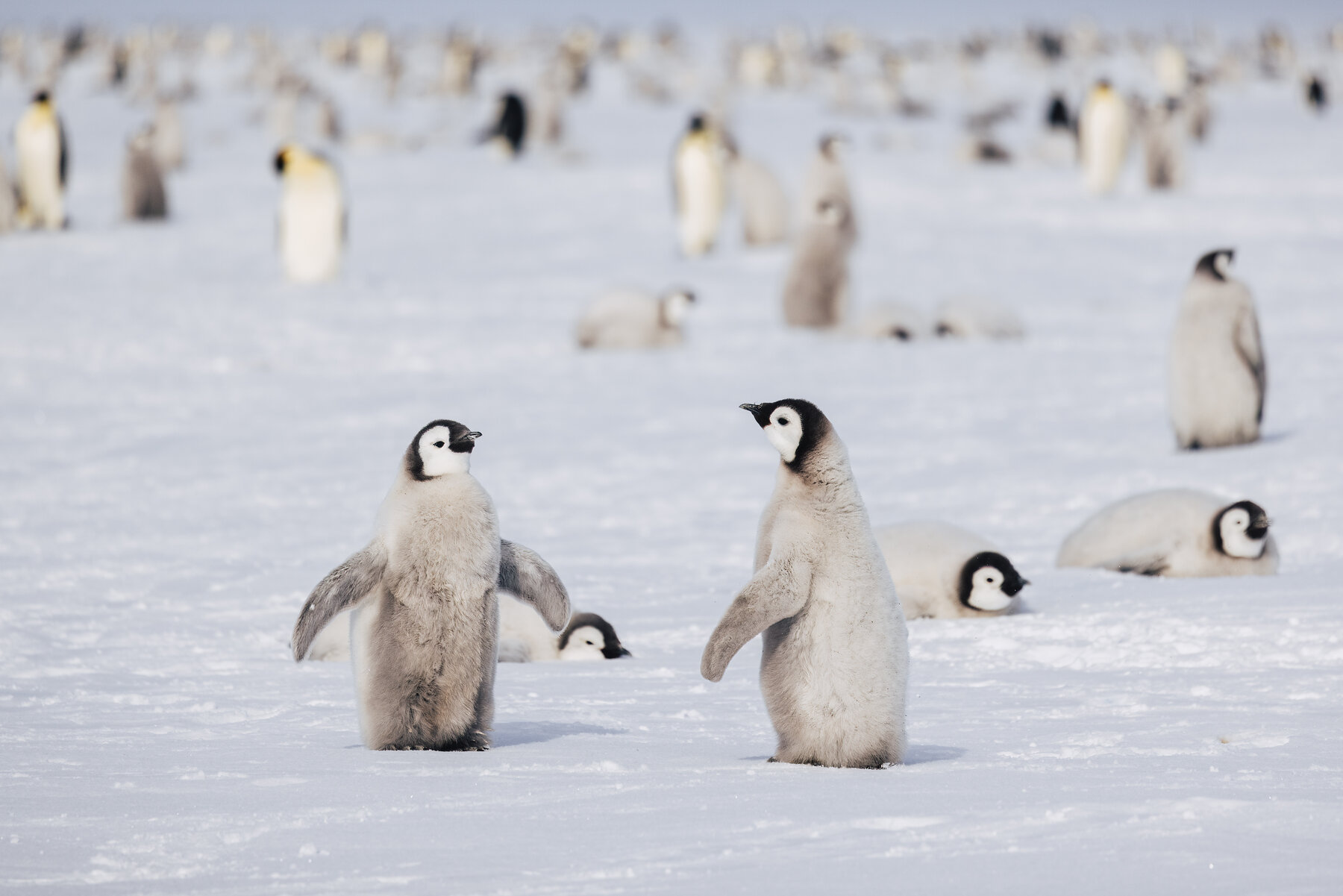
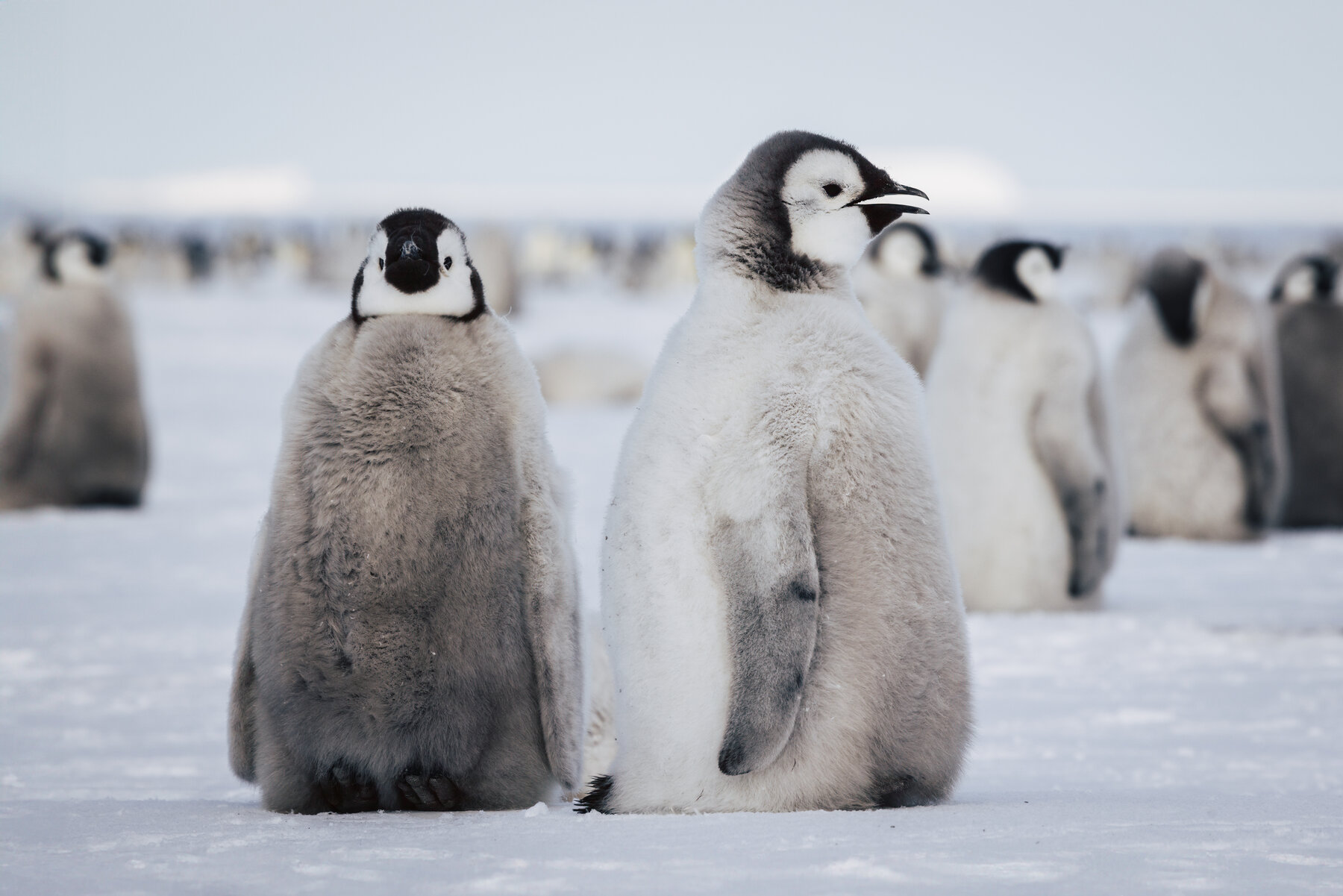
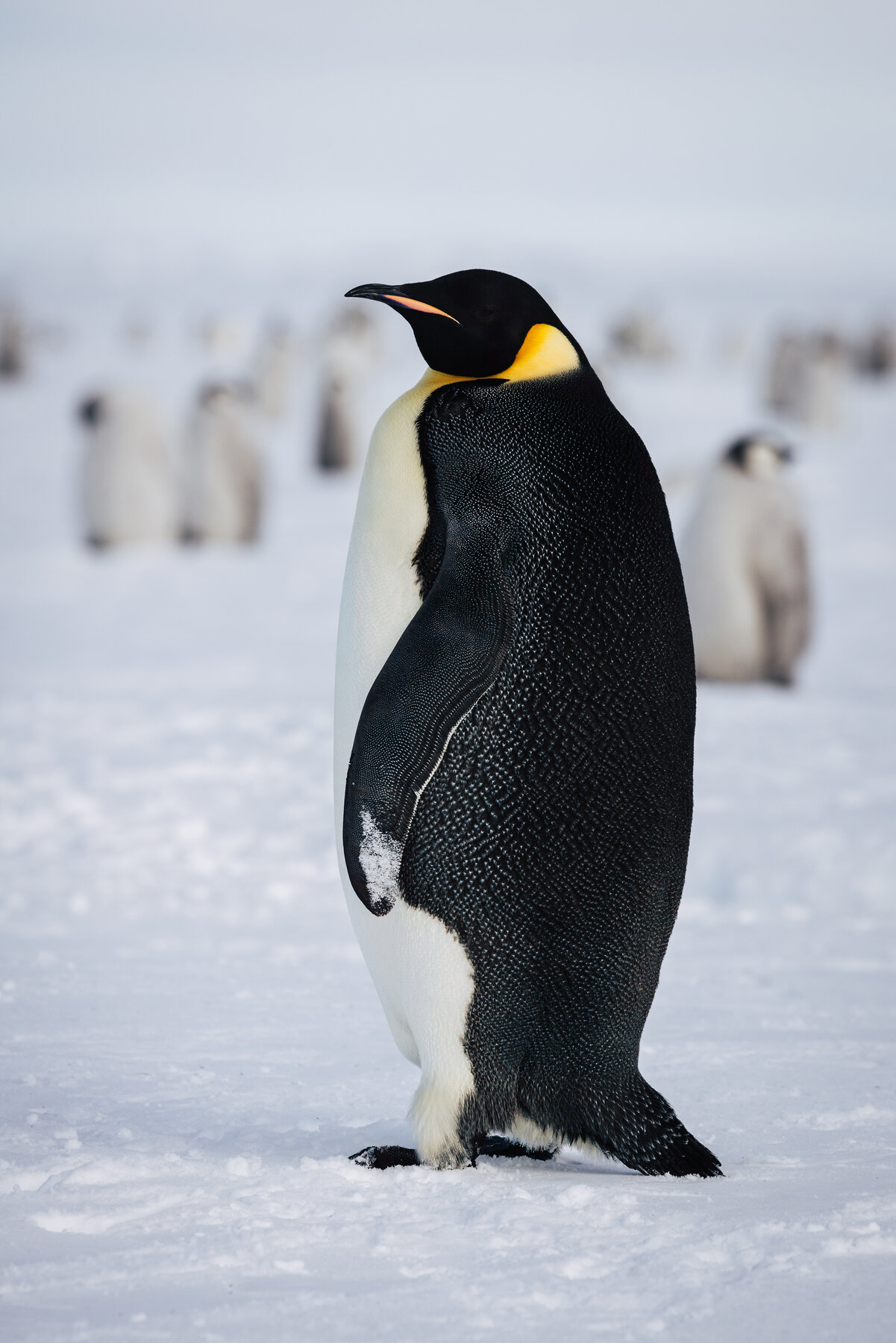
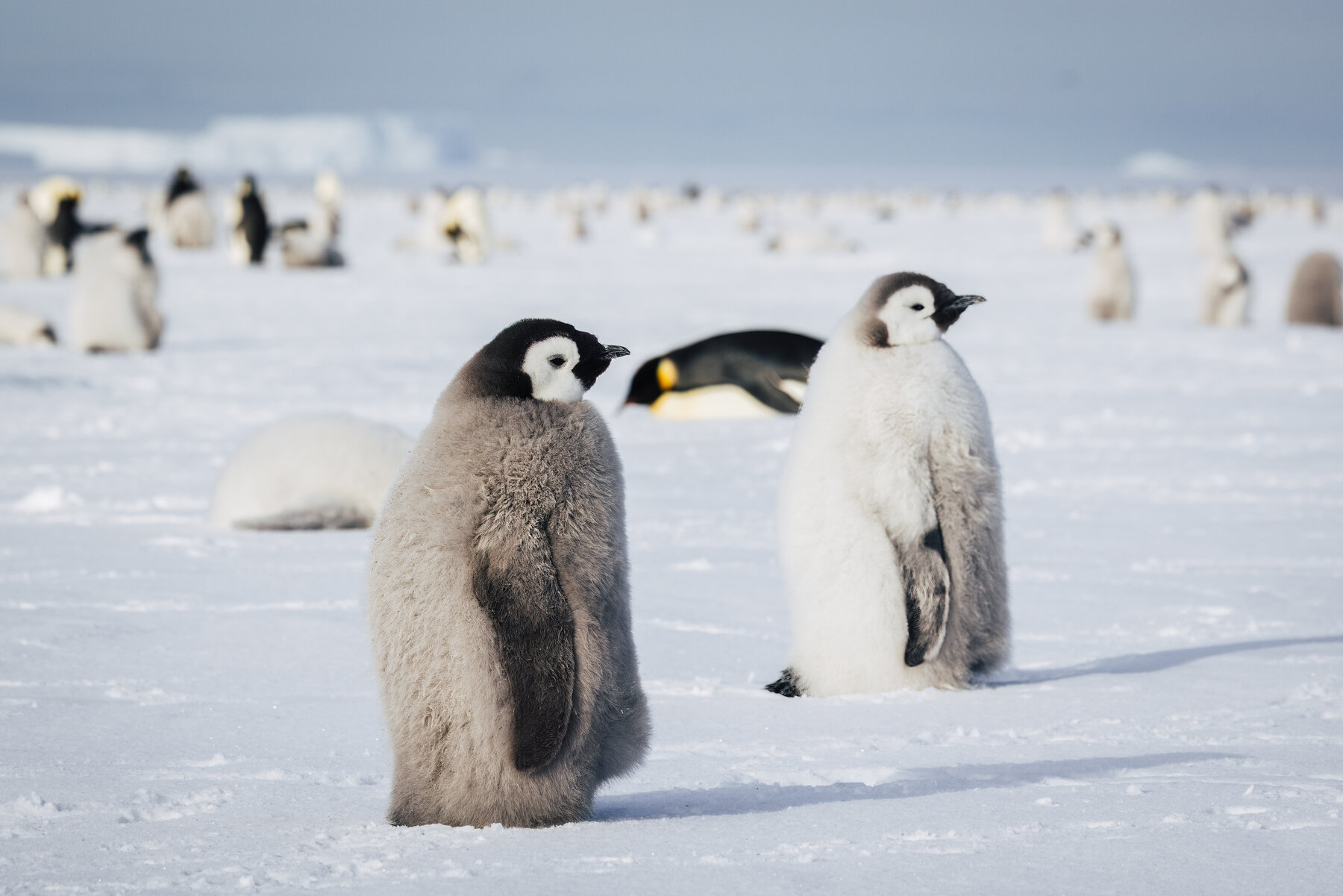
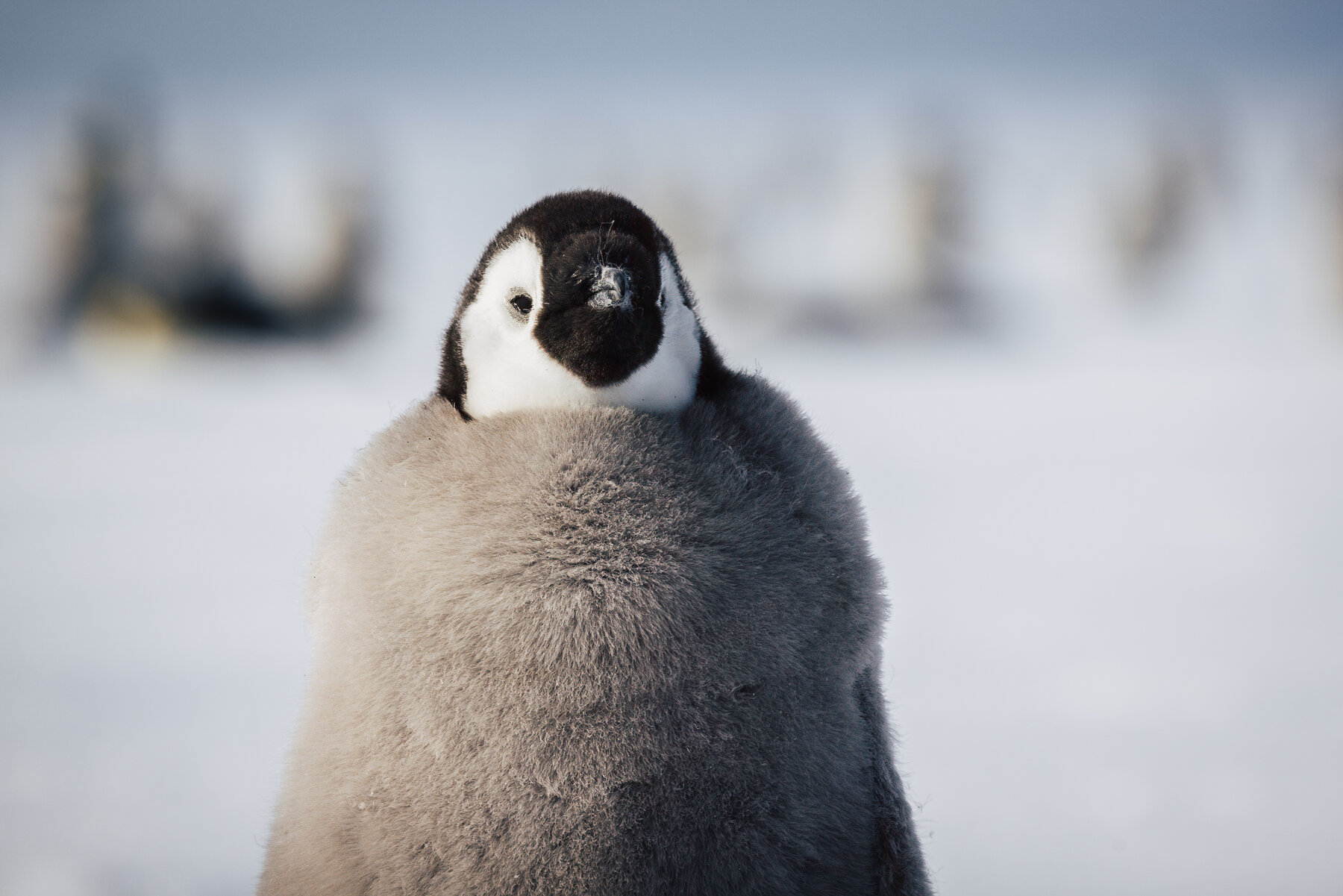
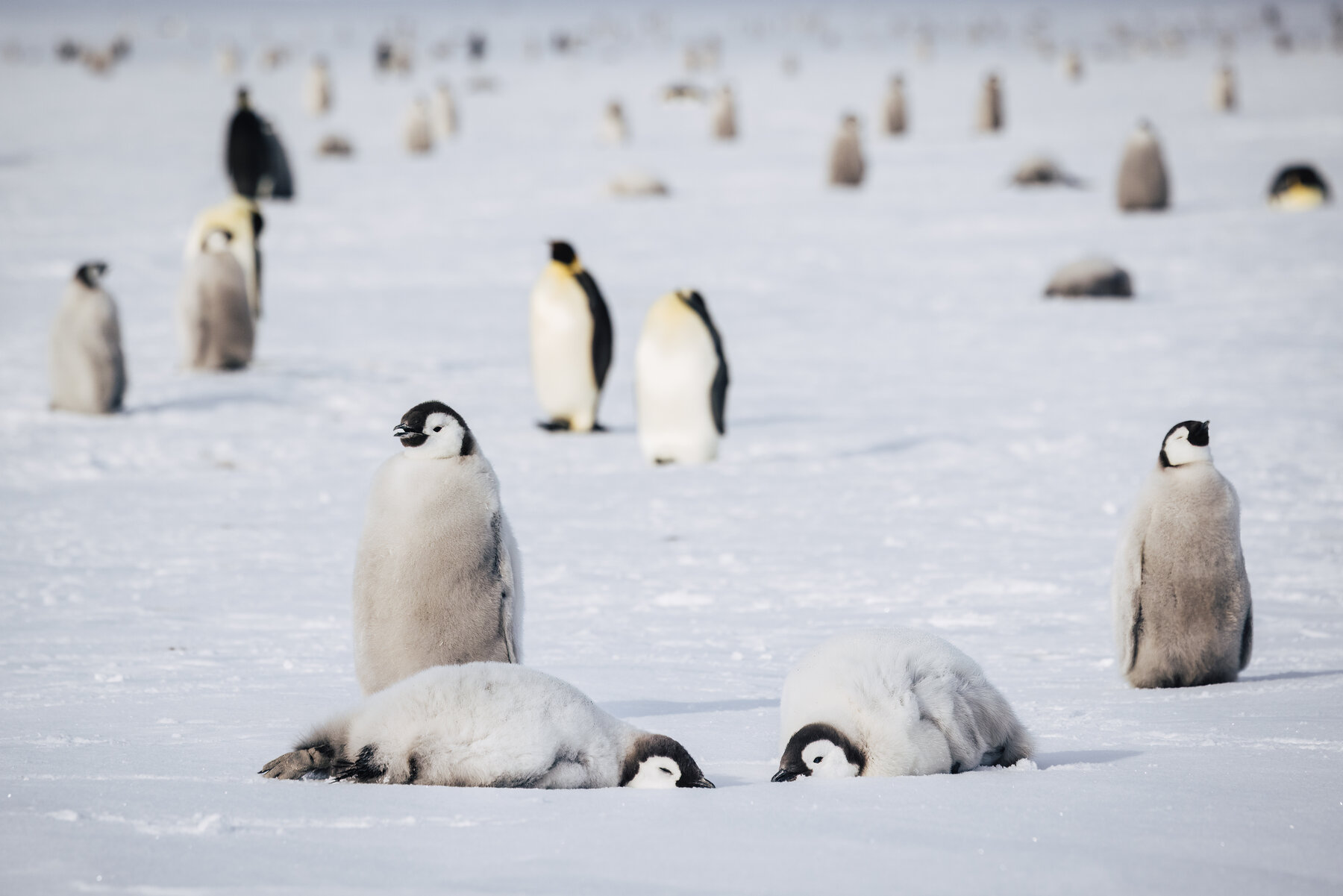
At the colony. Thousands of Emperors and their fluffy grey chicks, the silence broken only by trumpeting calls.
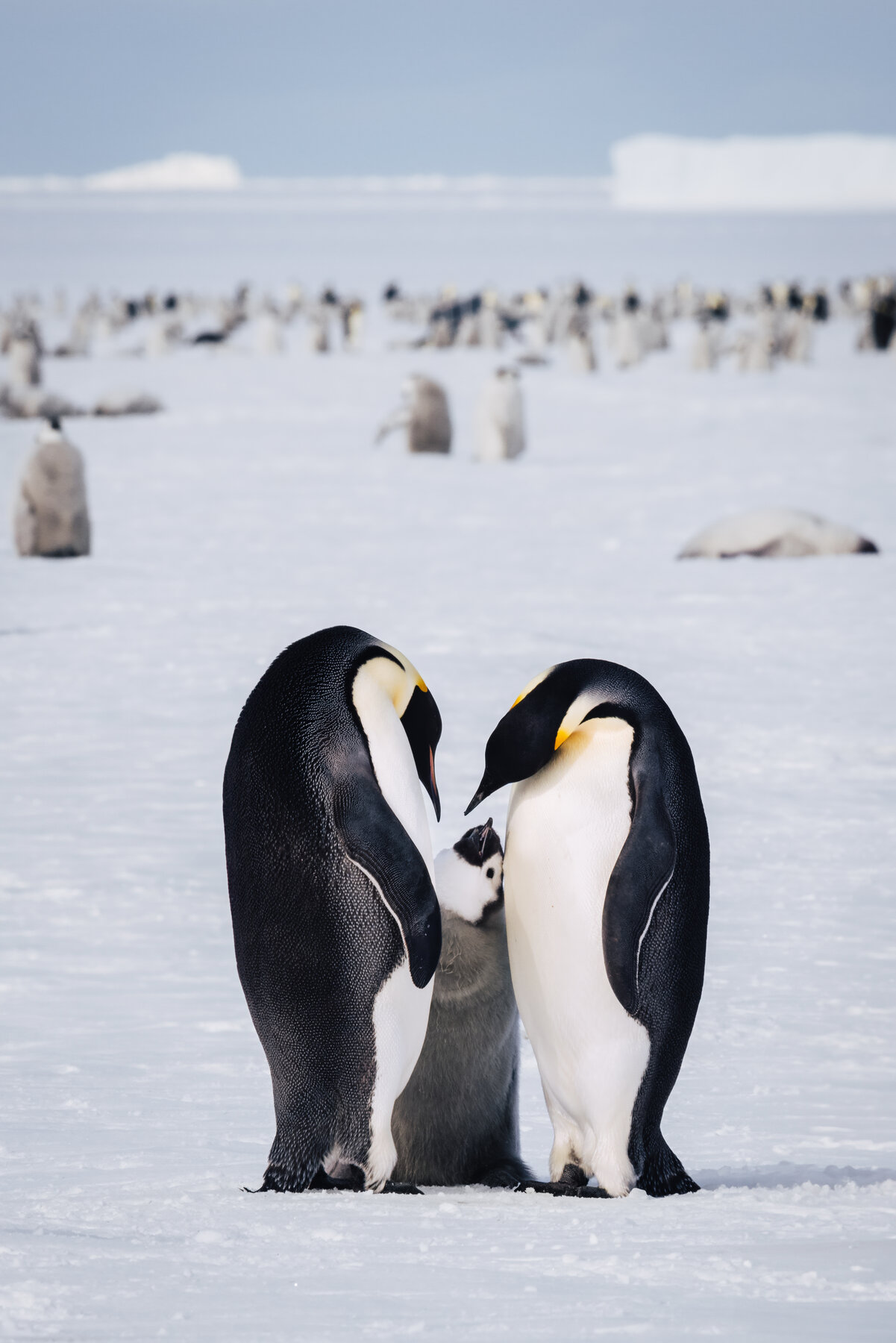
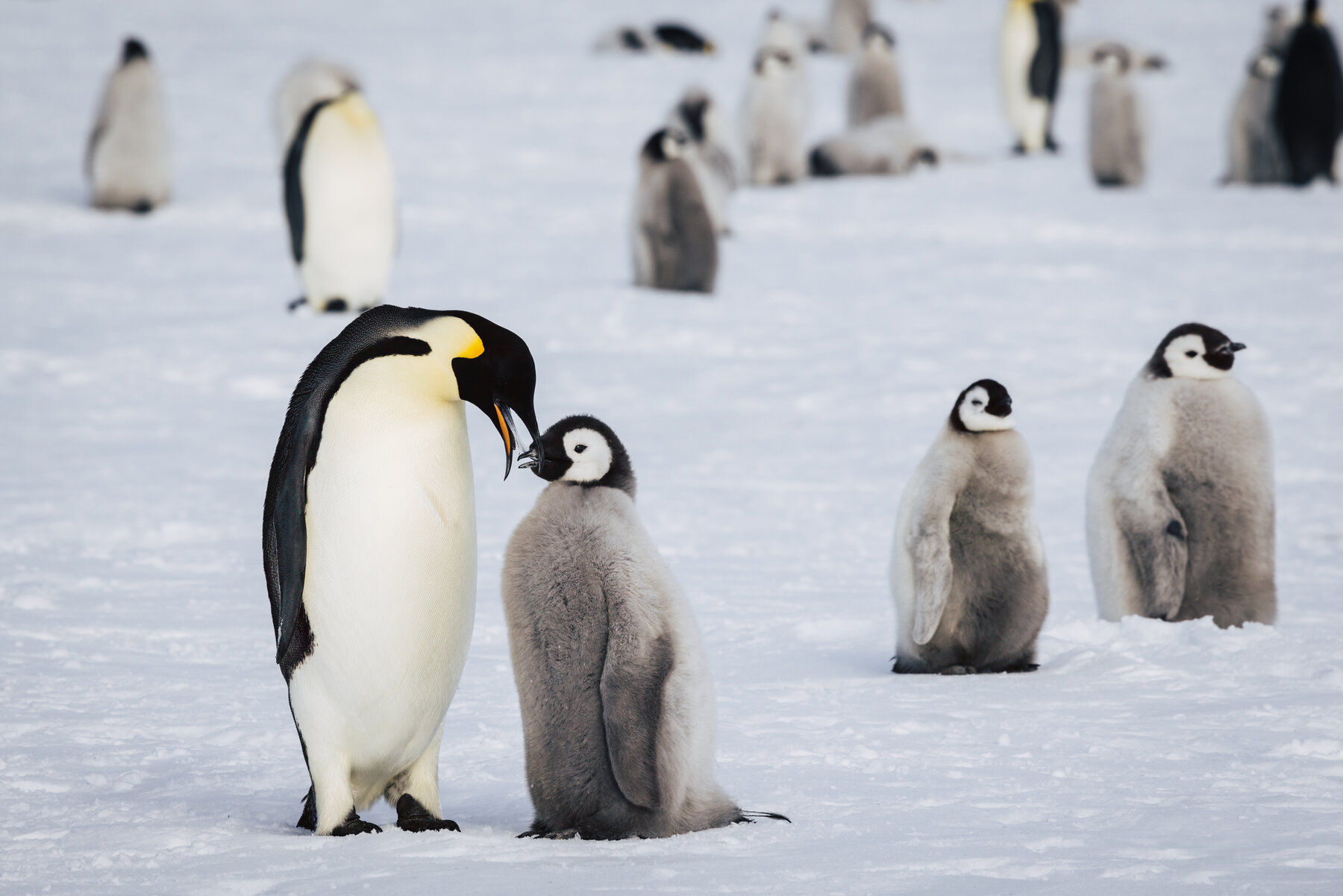
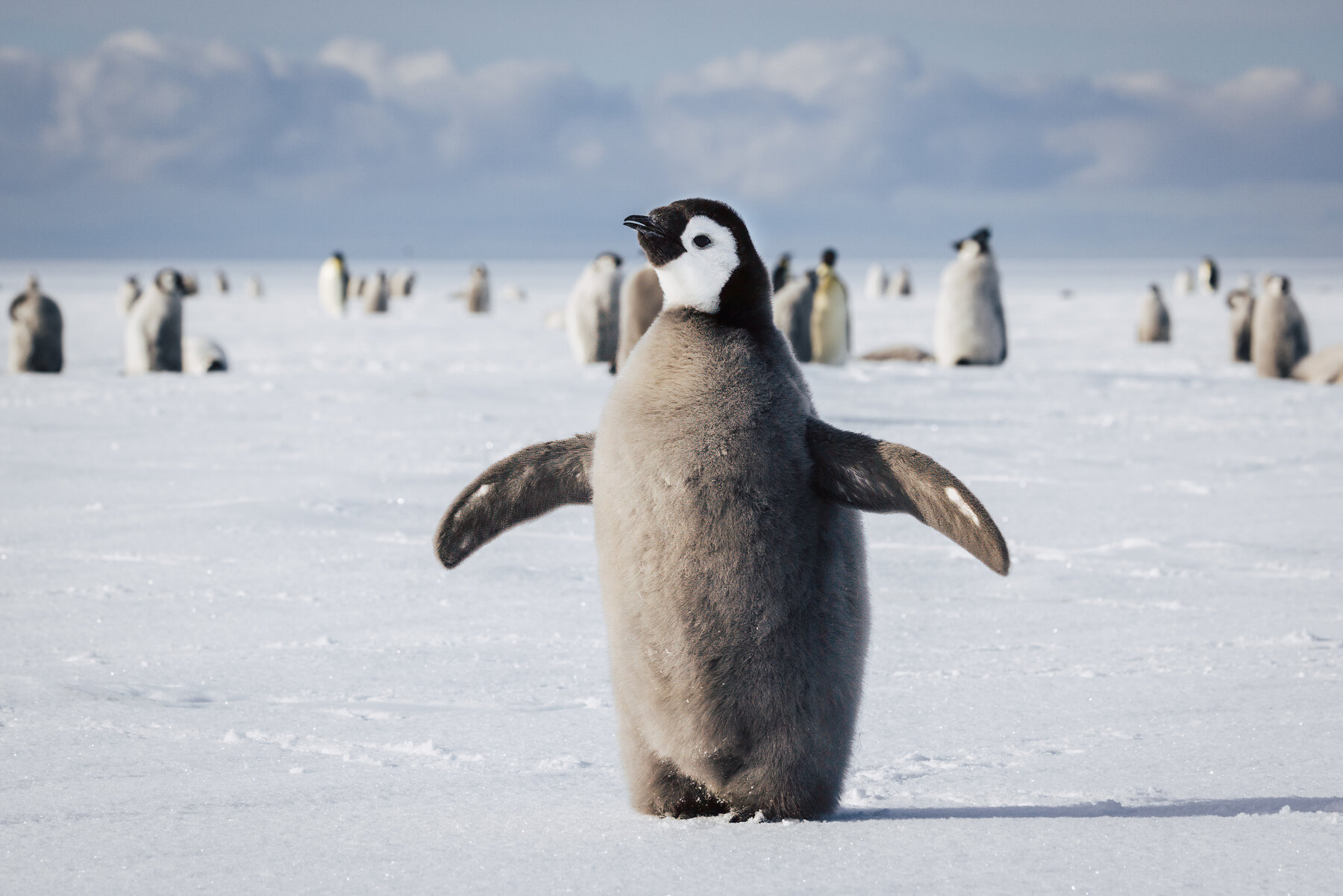
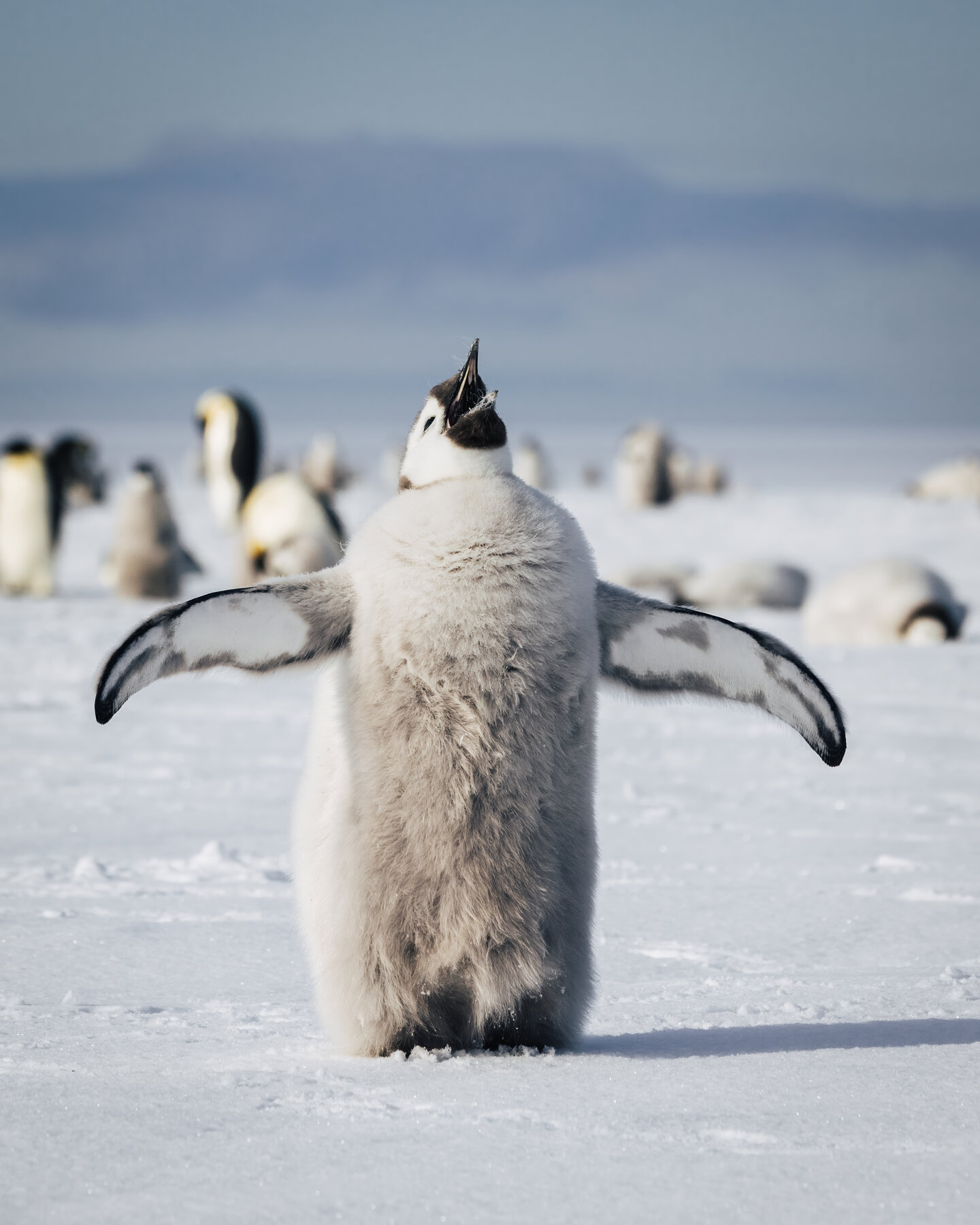
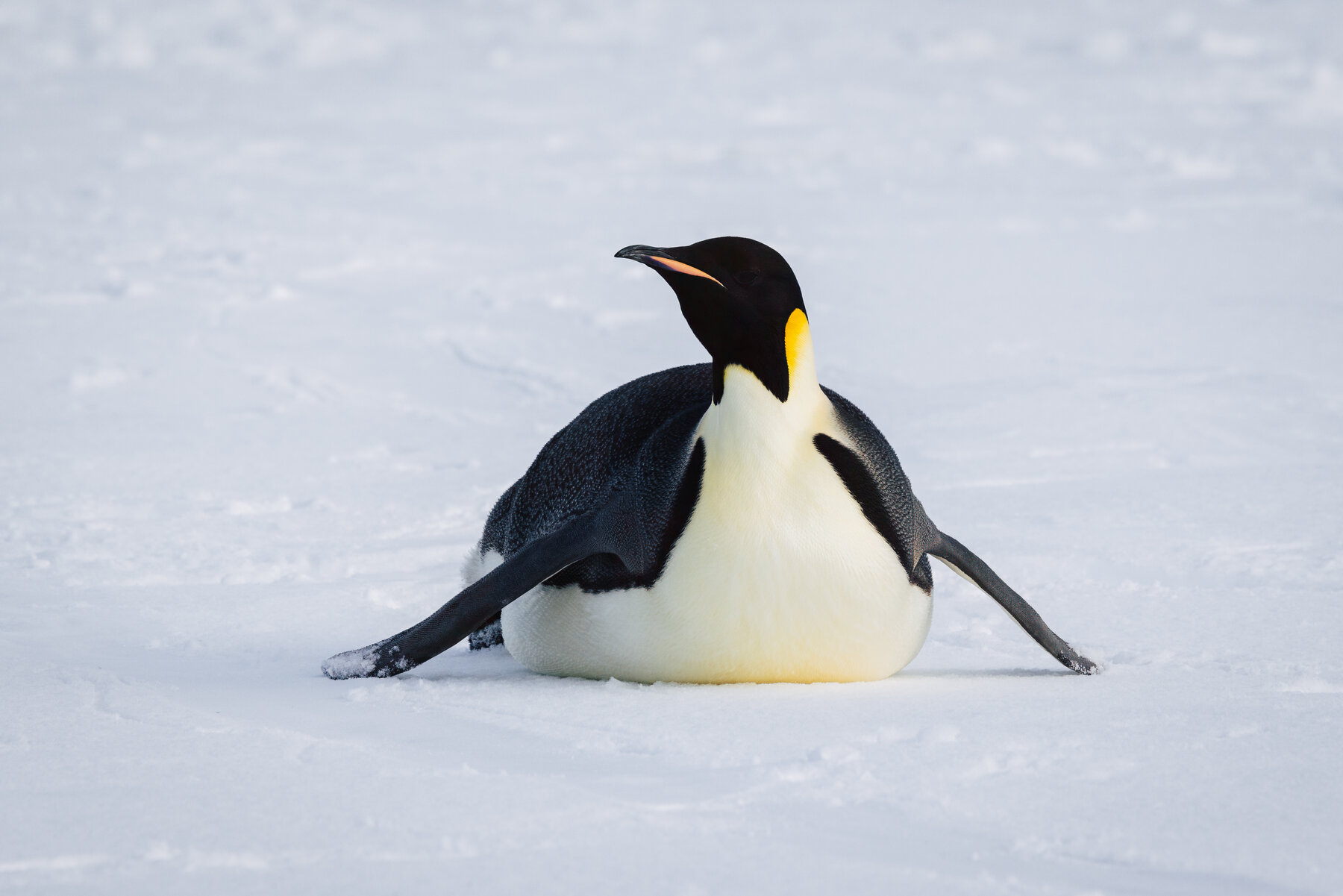
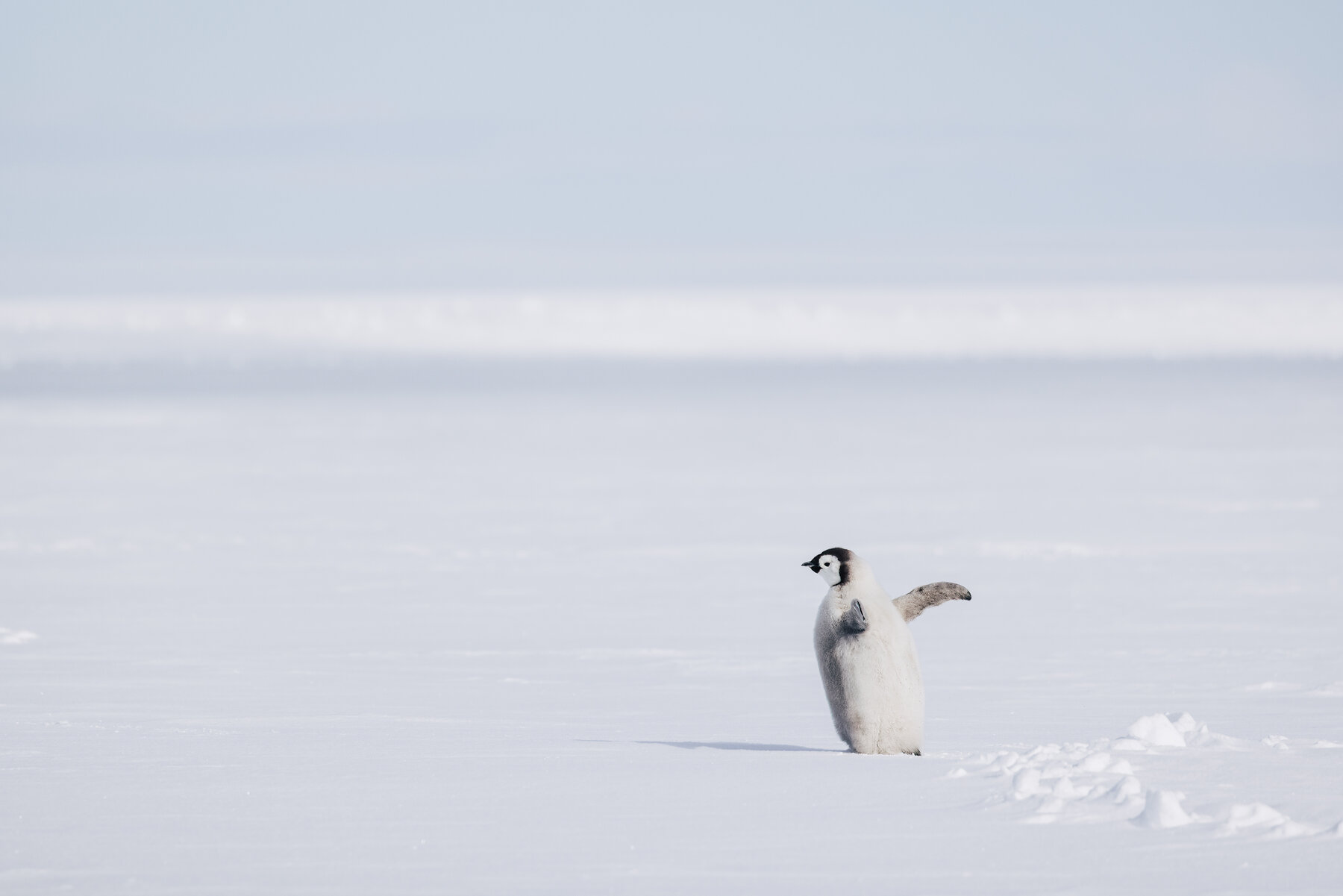
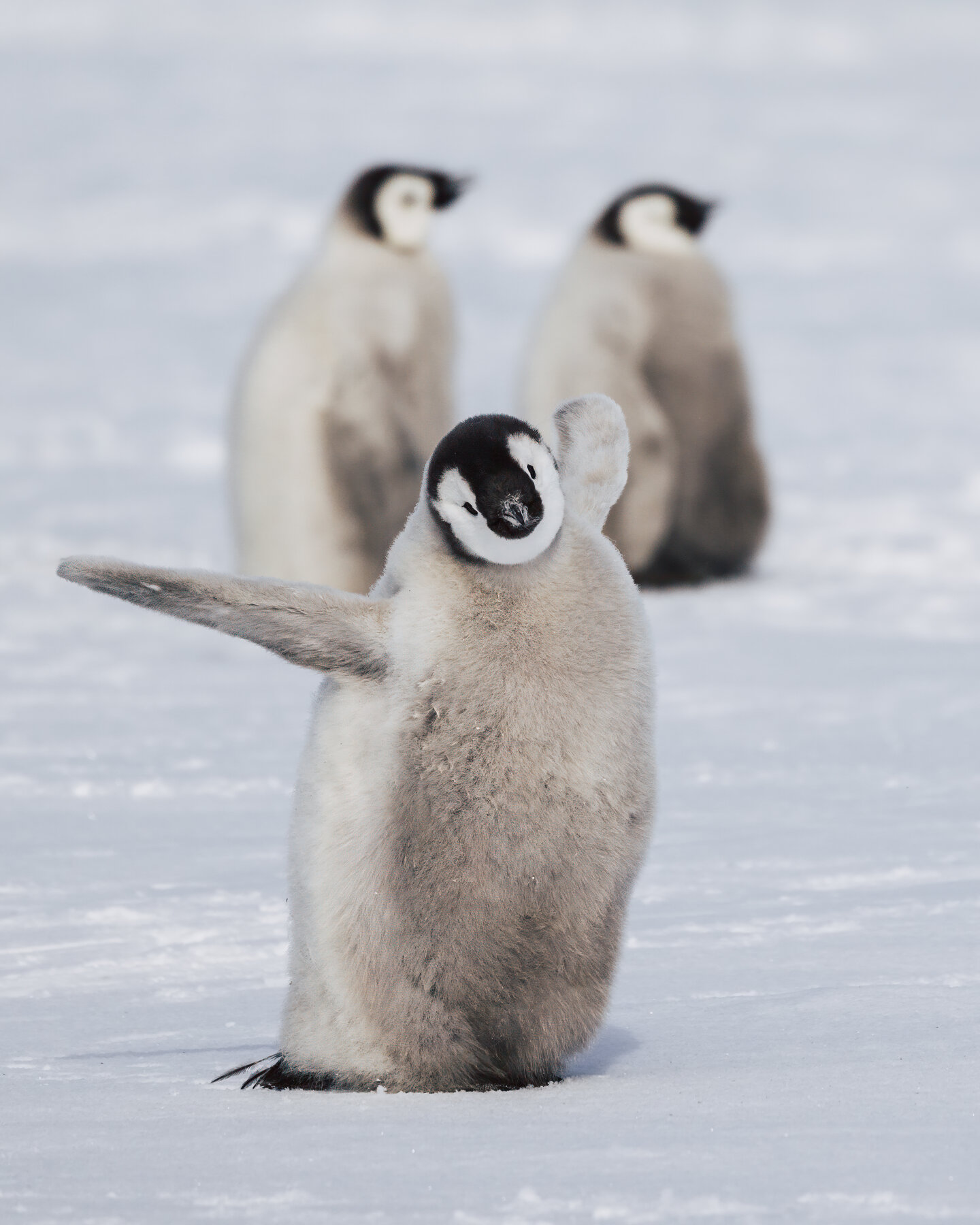
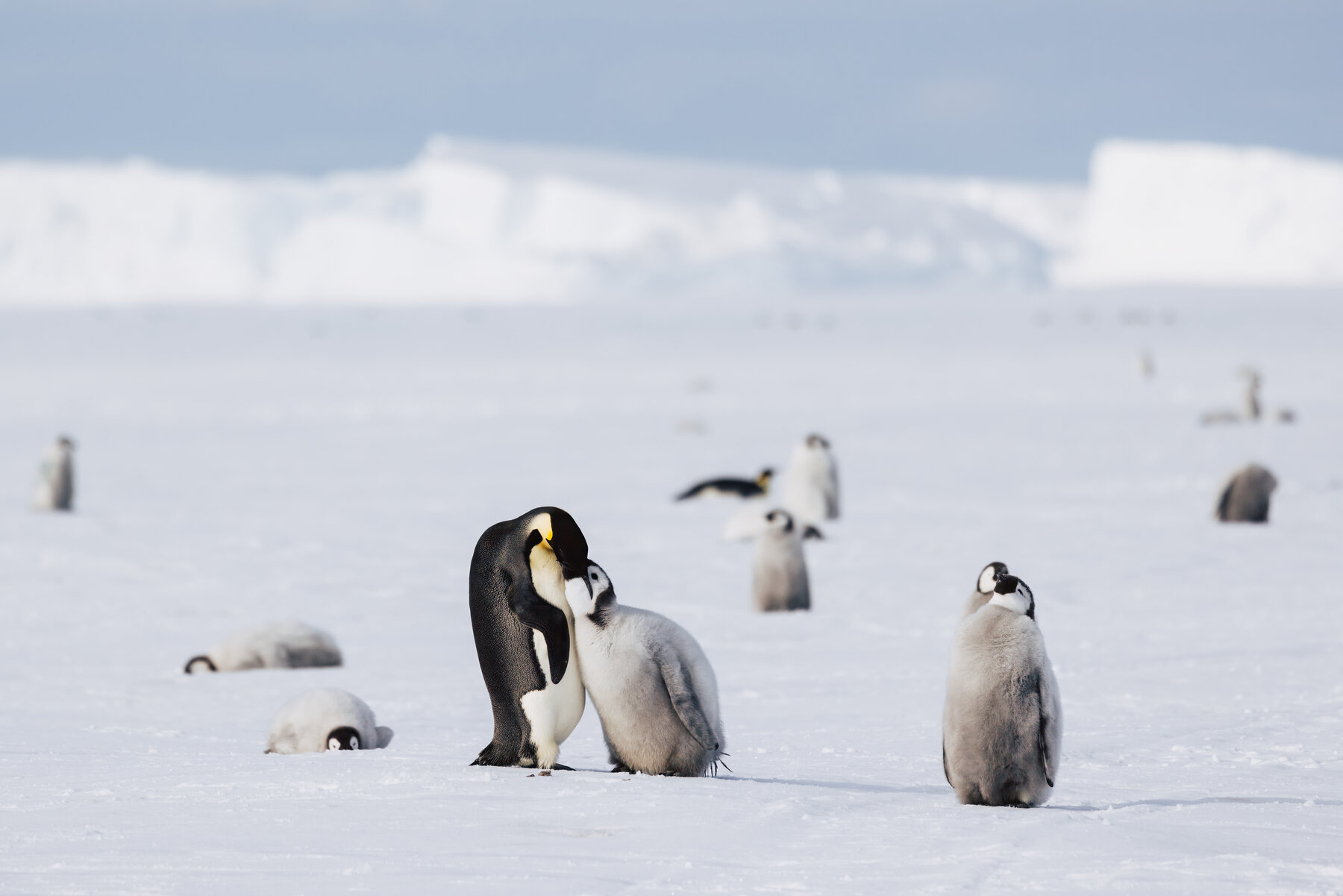
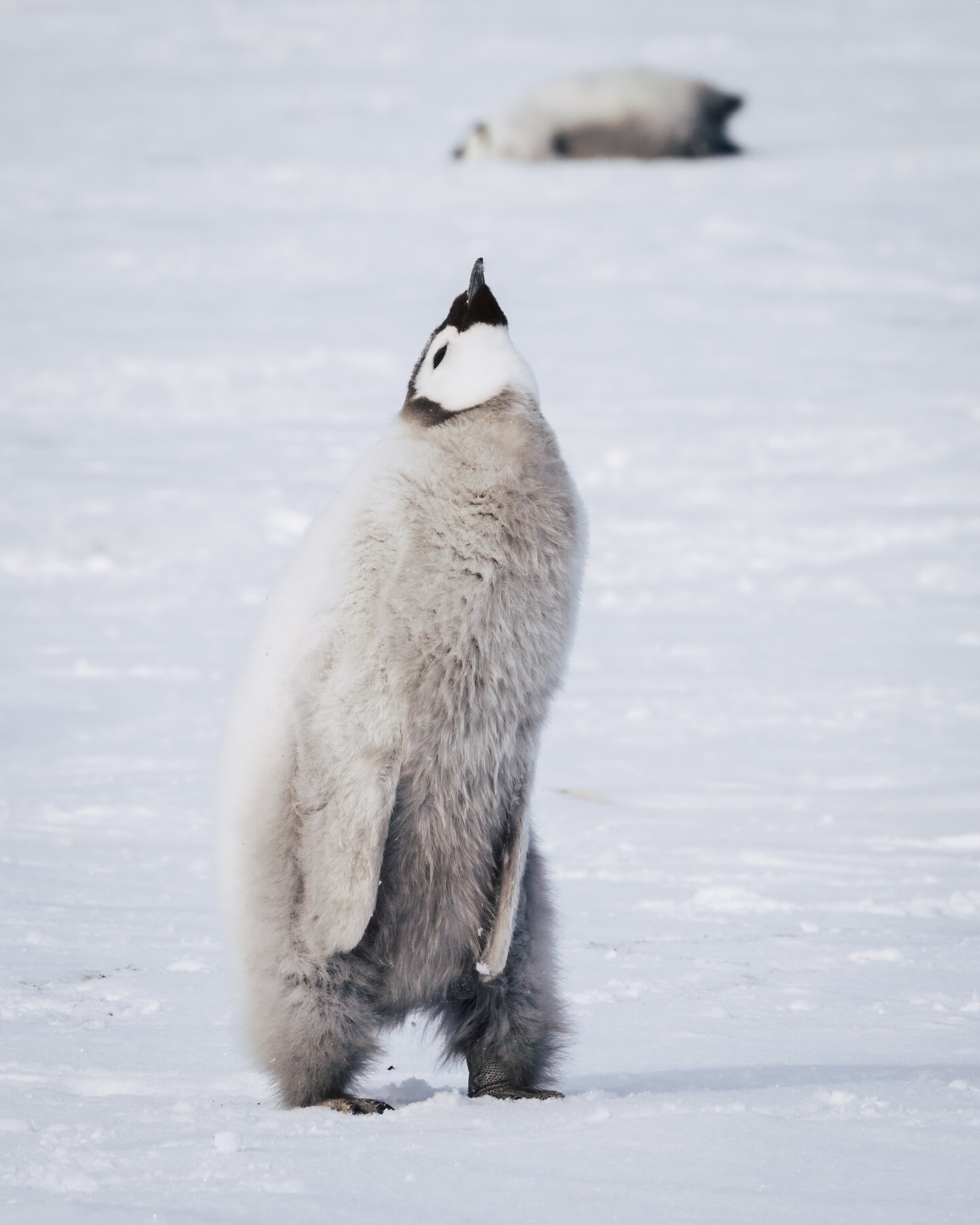
A dream come true. We flew to Atka Bay in a ski-equipped DC-3 to witness a colony of a few thousand Emperor Penguins in their natural habitat. Watching these iconic birds — the largest of all penguin species — waddle around and tend to their fluffy chicks was like stepping into a scene from a National Geographic documentary. They are built to survive the harshest environment on Earth, enduring temperatures as low as −76°F. Emperors are the only penguin species that breed during the Antarctic winter, trekking up to 120 km over the ice to reach their breeding sites.
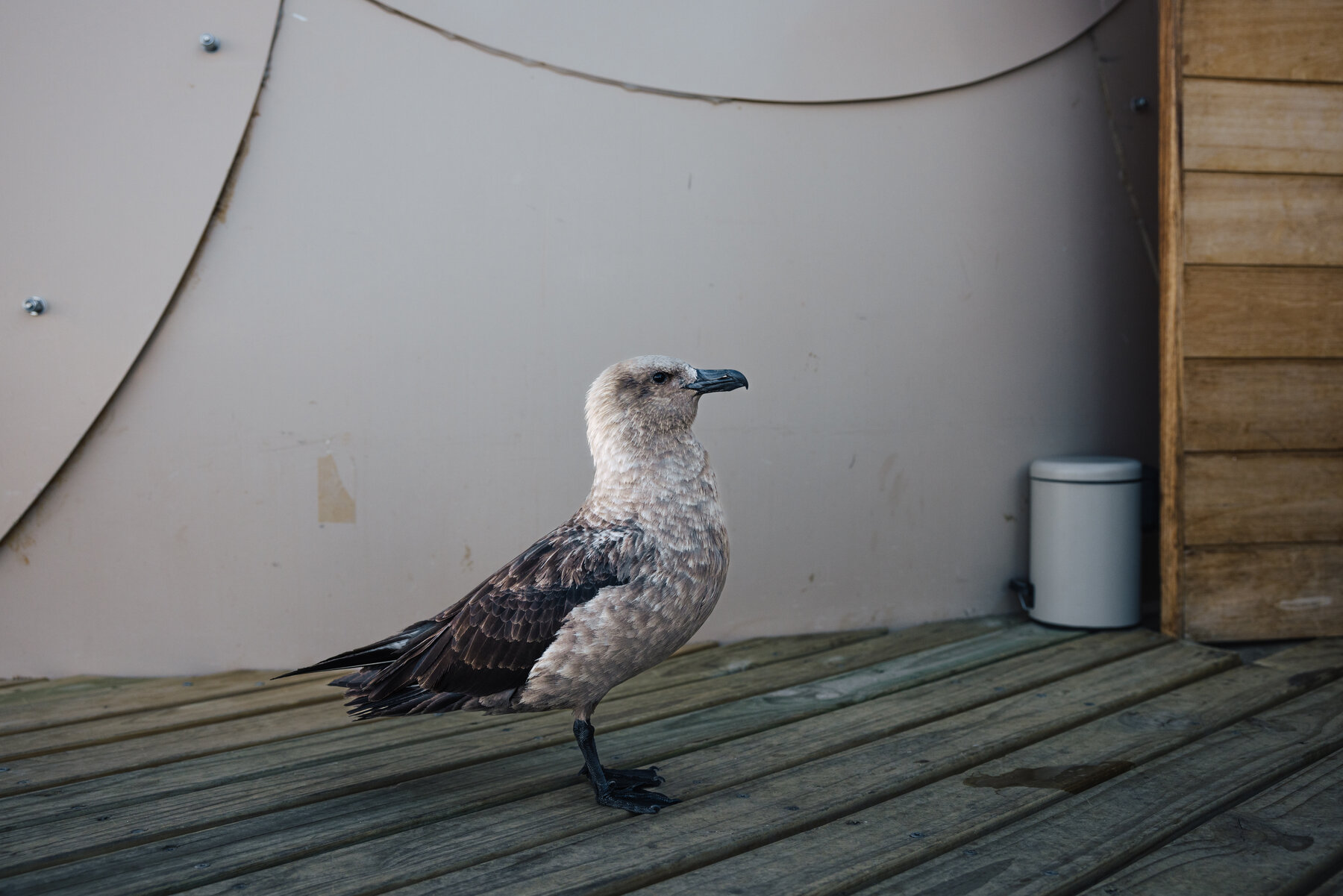
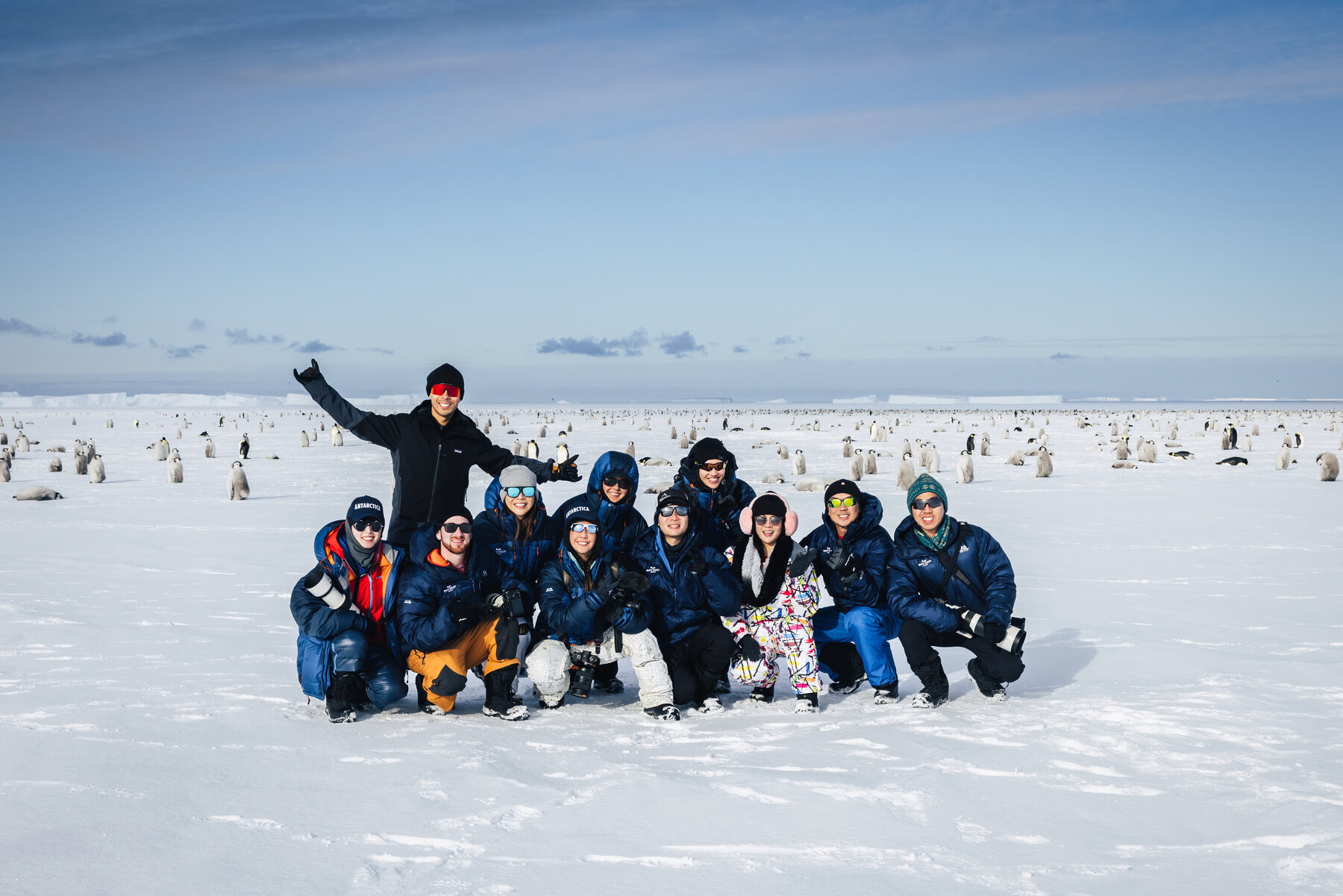
The first view of the colony. A skua drifts overhead as the scale sinks in.Standing among the colony. The penguins pay almost no mind — we’re just two more shapes on the ice.A family portrait. Both parents share chick-rearing duties — an unusual trait among penguins.Feeding time. Chicks beg by tapping the adult’s beak, triggering a regurgitated meal of fish, squid, or krill.The chicks stretch their flippers often — partly to cool off, partly just because they can.An adult taking a break between foraging trips. On land they waddle; on ice they slide.Quiet moments in the colony. The scale of it takes a while to settle in.The whole group at the colony. A day none of us will forget.
Day 07
Crystal Ice Cave
December 19, 2023 · Schirmacher Oasis, Antarctica
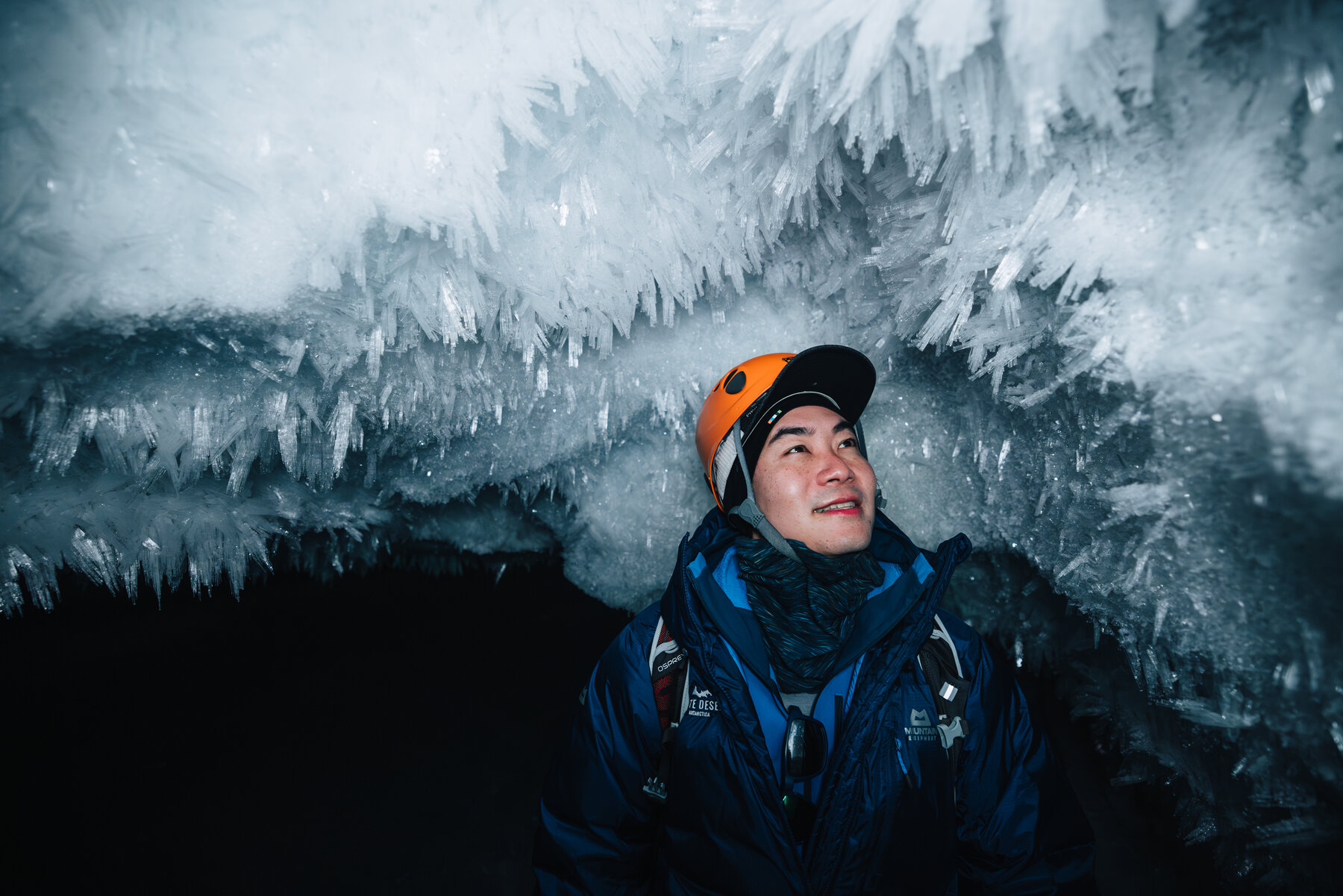
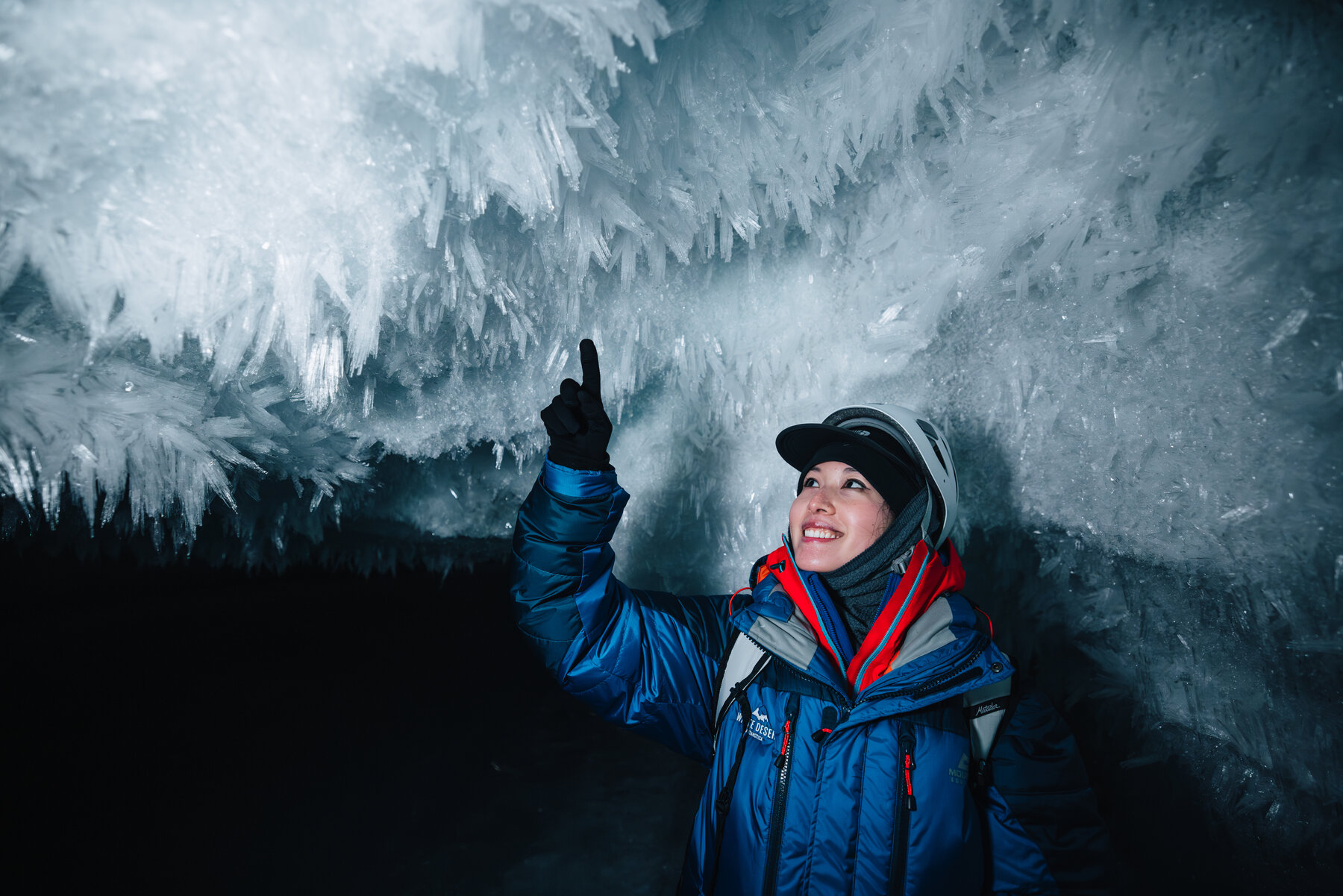
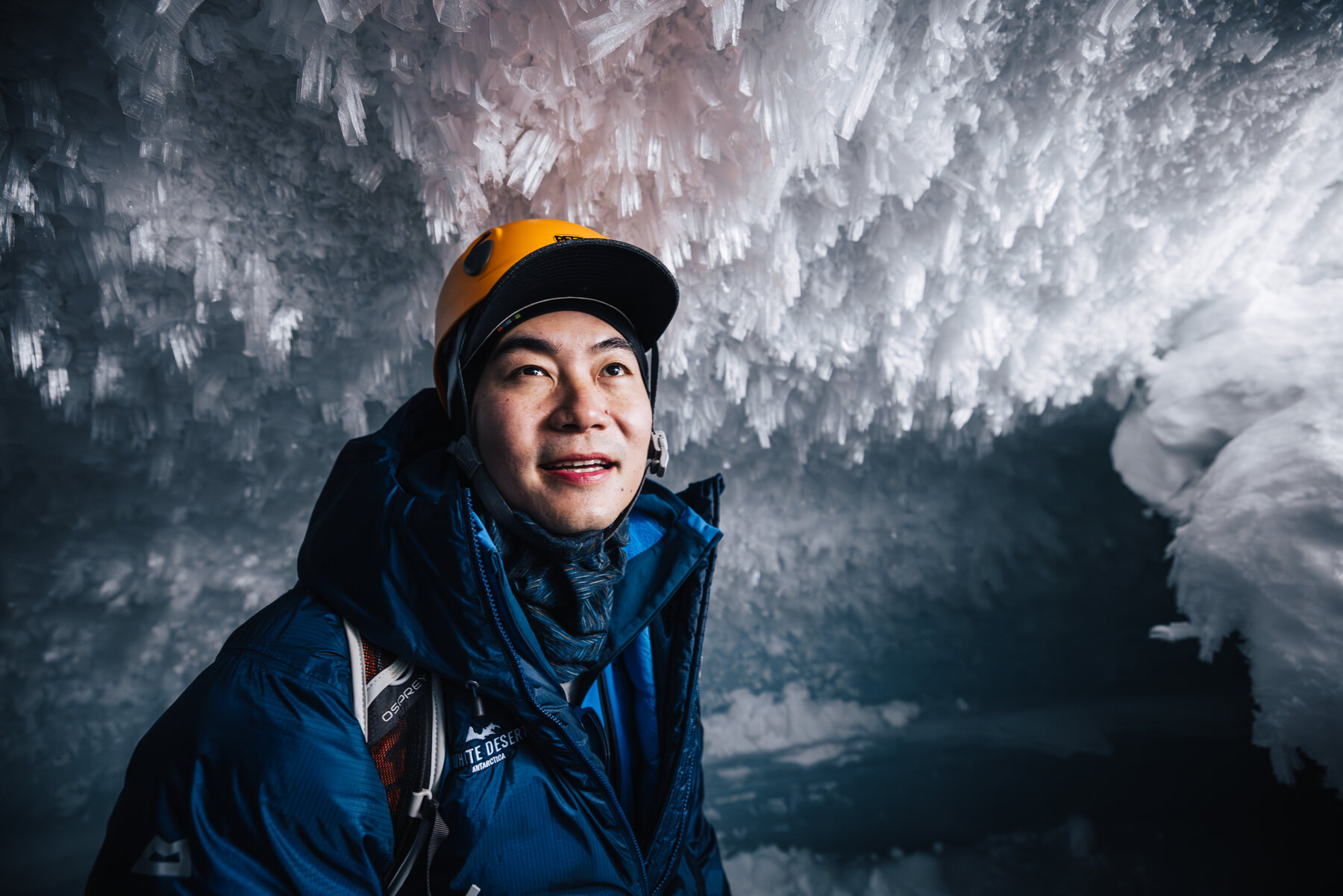
Inside the crystal ice cave. A natural cathedral carved from ice, every surface shimmering with refracted light.
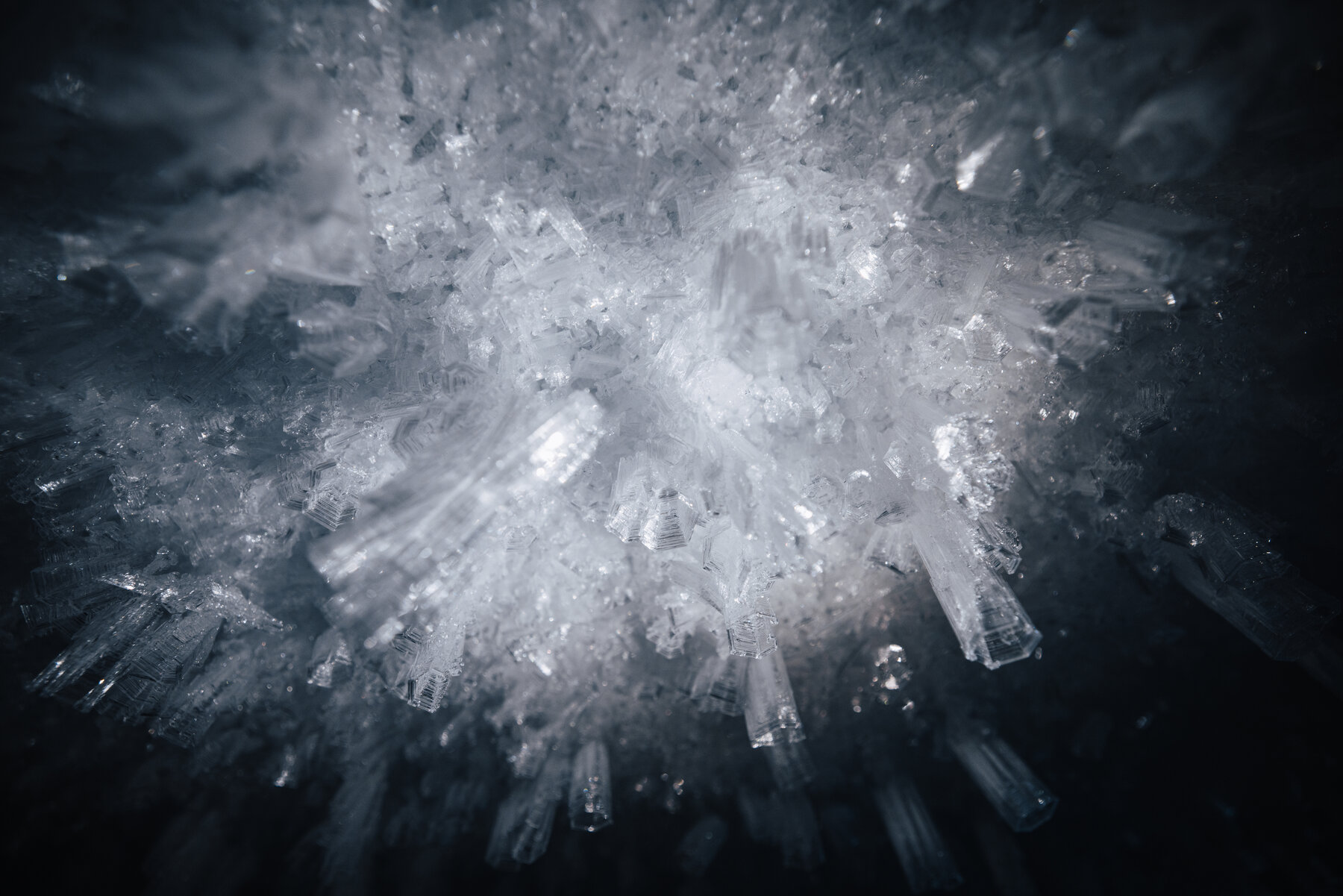
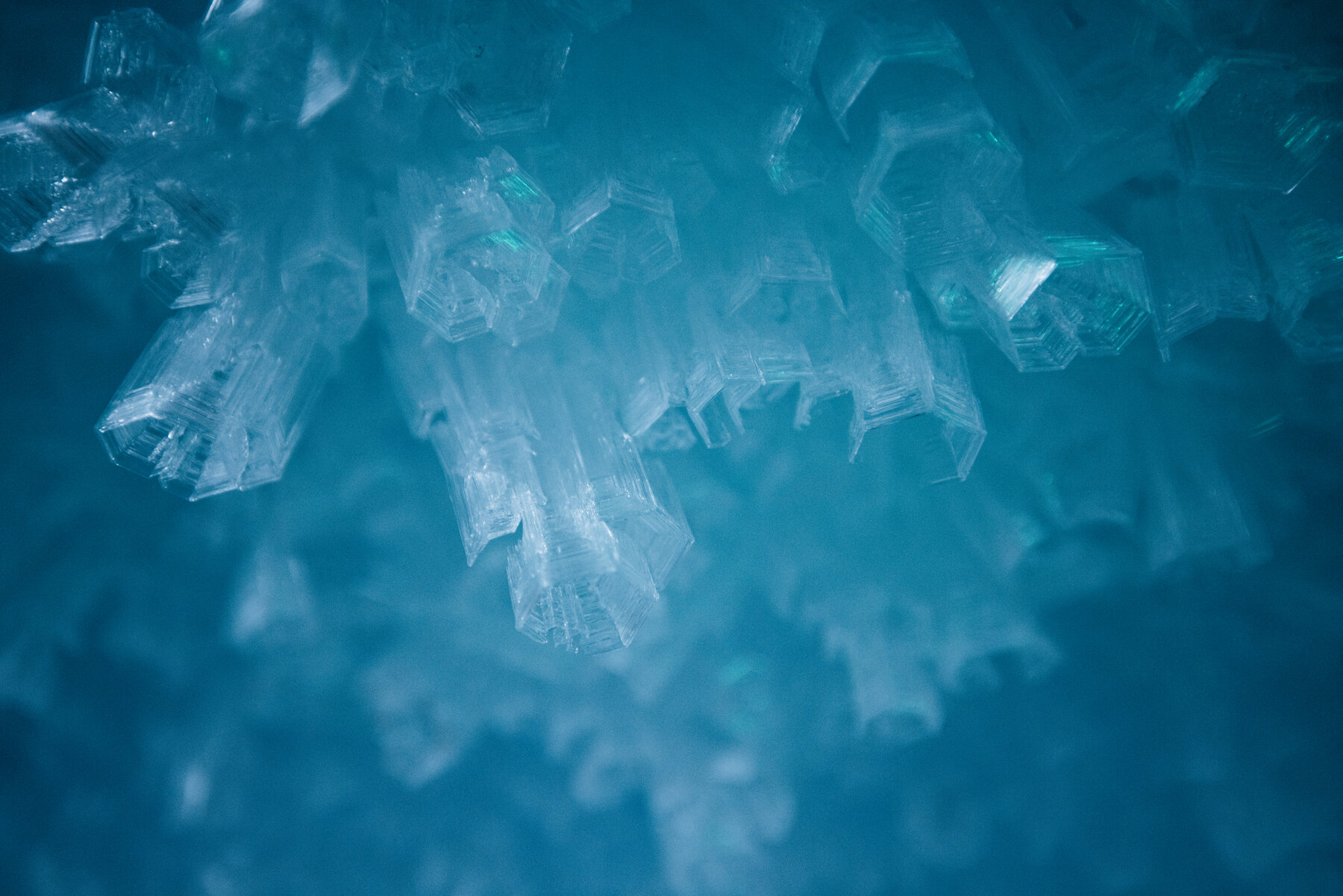
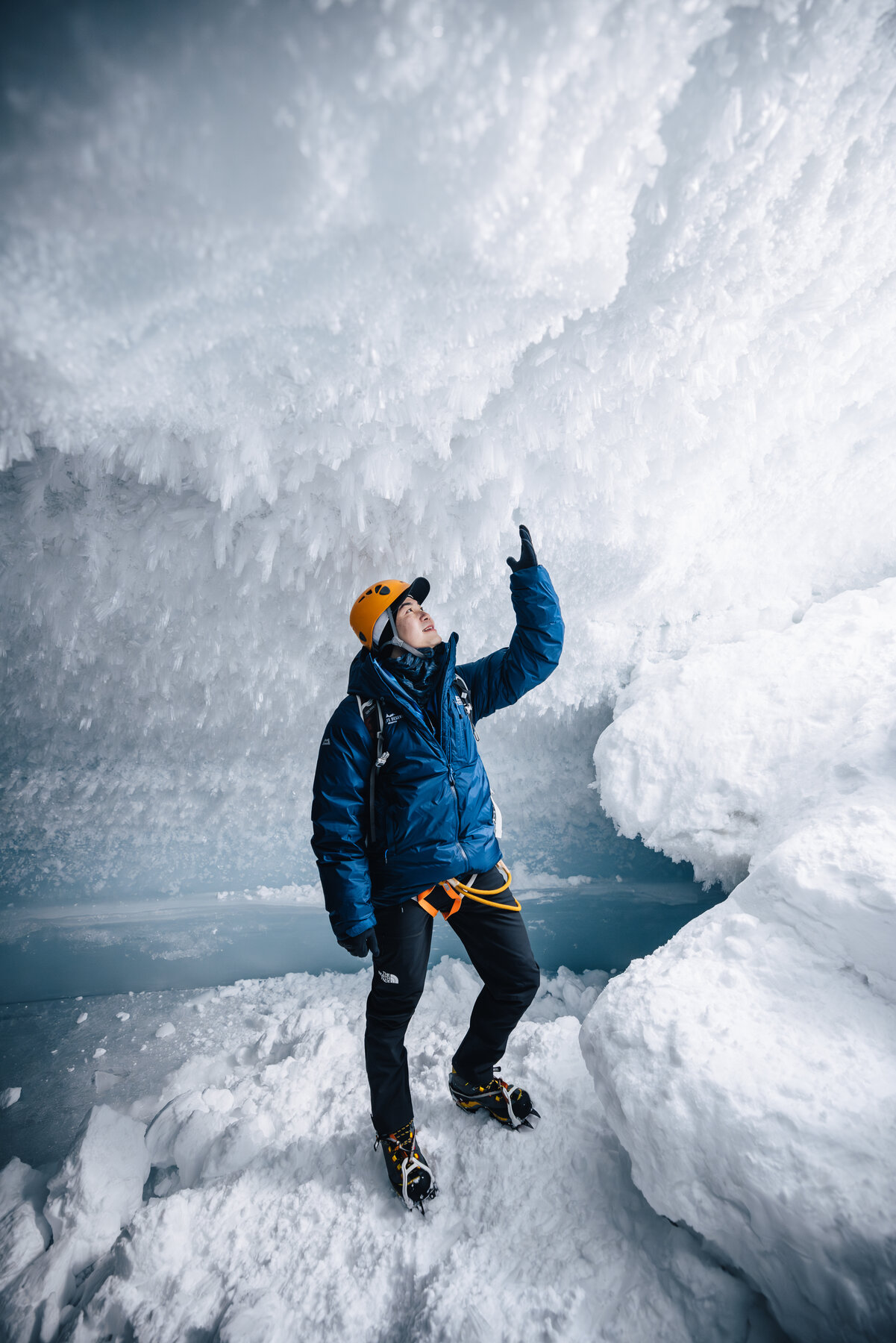
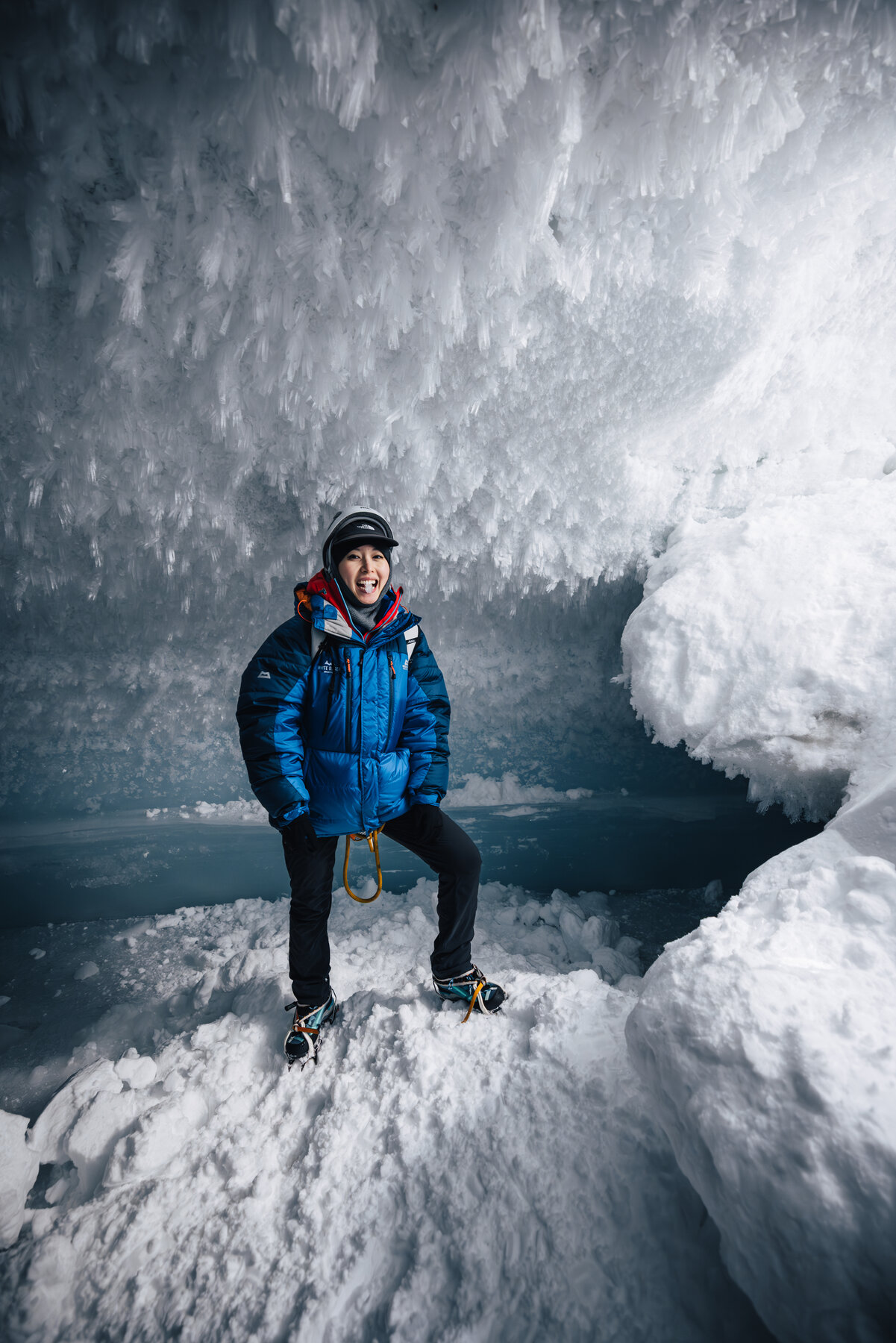
Inside a crystal ice cave in Antarctica. What made our adventure truly unique is knowing we were the last ones of the season to witness its beauty. The cave was a natural cathedral of ice, its ceiling a dense tapestry of centuries-old crystals that glittered and refracted light in ways that made every surface shimmer. The temperature inside was warmer than the outside air, and the silence was almost sacred.
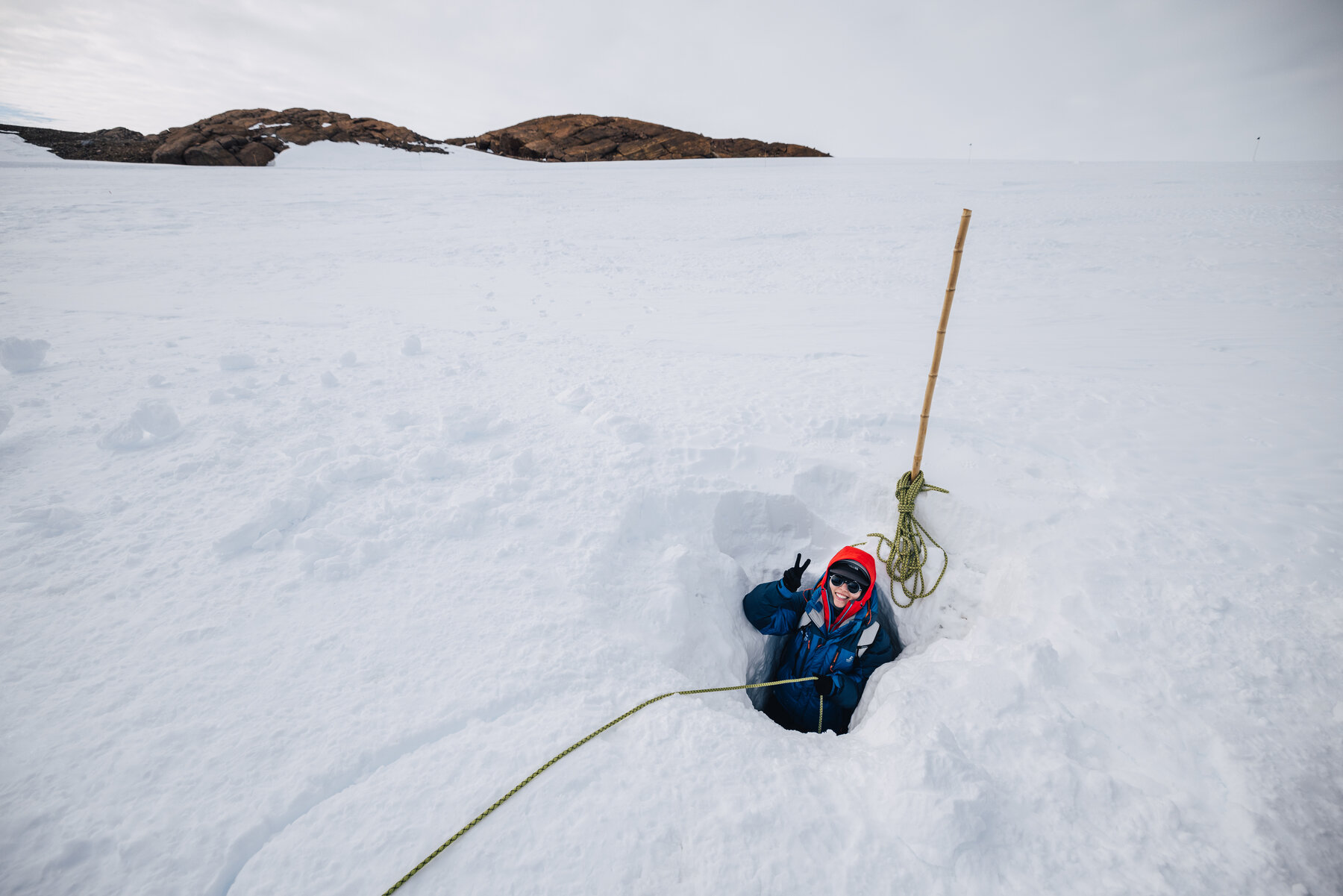
The entrance. Access is through a hole in the snow — rope first, then a careful descent into the cave below.First glimpses of the ceiling. Centuries of slow sublimation built a garden of crystals overhead.Our guide walking us through how the cave formed — and why it won’t last much longer. The cave would be sealed by snow within days.A moment of disbelief. You look up, and the ceiling is alive with light.Up close. Each crystal is hexagonal, built one molecule at a time over centuries of cold and stillness.Last visitors of the season. Within days, fresh snowfall would seal the entrance and the cave would belong to the ice again.
Day 08
Departure
December 20, 2023 · Whichaway Camp → Wolf's Fang → Cape Town
Our final morning at Whichaway was bittersweet. After eight days on the ice, Antarctica had imprinted itself on us in ways we hadn't expected. It wasn't just the South Pole or the penguins or the ice caves. It was the totality of the experience. The silence. The light. The feeling of standing somewhere so few humans have ever been. We packed our bags, said goodbye to the staff who had made this dream possible, and boarded the aircraft back to Wolf's Fang, then onward to Cape Town.
Antarctica doesn't let you leave unchanged. We carry these eight days with us: in our memories, our photographs, and in the profound understanding that our planet still holds places of absolute, untouched wonder.