Denali: Thirteen Days on the Roof of North America
Thirteen days in the Alaska Range, hauling sleds through crevasse fields, and standing at 20,310 feet on the roof of North America.
Elevation
6,190 m / 20,310 ft
Location
Alaska Range, USA
Summit Date
May 28, 2022
Route
West Buttress
Days on Mountain
13 (May 18–30)
Guide Company
Alaska Mountaineering School
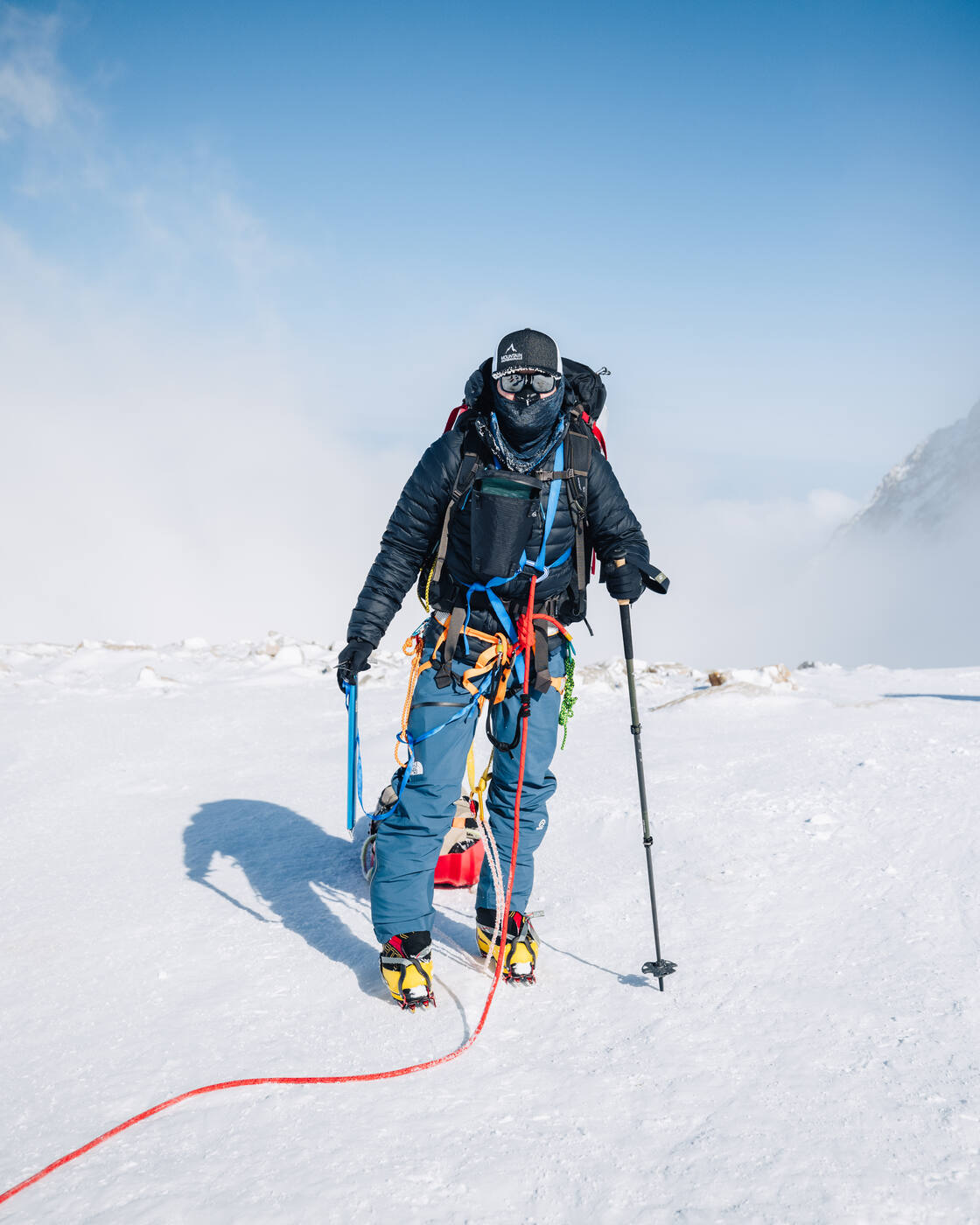
Denali was always going to be different. After climbing Kilimanjaro, Aconcagua, Elbrus, and Vinson over the past four years, Grace and I knew that the tallest mountain in North America would test us like nothing before it. It has a reputation as one of the most demanding of the Seven Summits, and for good reason. There are no porters carrying your gear. There are no pre-established camps with tents already set up. Everything you need to survive, you carry yourself—on your back and in a sled dragged behind you, roped to your team across glaciers riddled with crevasses.
We stopped traveling for three months before the climb to train specifically for this mountain. Strength training, conditioning, cardio, no days off. We flew into the Alaska Range a few weeks early for technical mountaineering training with our guides at Alaska Mountaineering School. When the day came for our bush plane flight from Talkeetna to the Kahiltna Glacier, we traded flip flops for mountaineering boots and said goodbye to civilization for the next two weeks.
Denali sits at 6,190 meters—20,310 feet—in the heart of the Alaska Range. It's not just the elevation that makes it brutal. It's the cold, the weight, the isolation, and the sheer physical toll of moving heavy loads up and down the mountain day after day. We came prepared and ready to tackle whatever the mountain threw at us. What followed was thirteen days of glaciers, fixed lines, extreme cold, and one perfect summit day that made it all worth it.
Days 1–4: Basecamp to 11,200 ft
May 18–21, 2022 · Kahiltna Glacier → 11,200 ft Camp · 2,195 m → 3,414 m
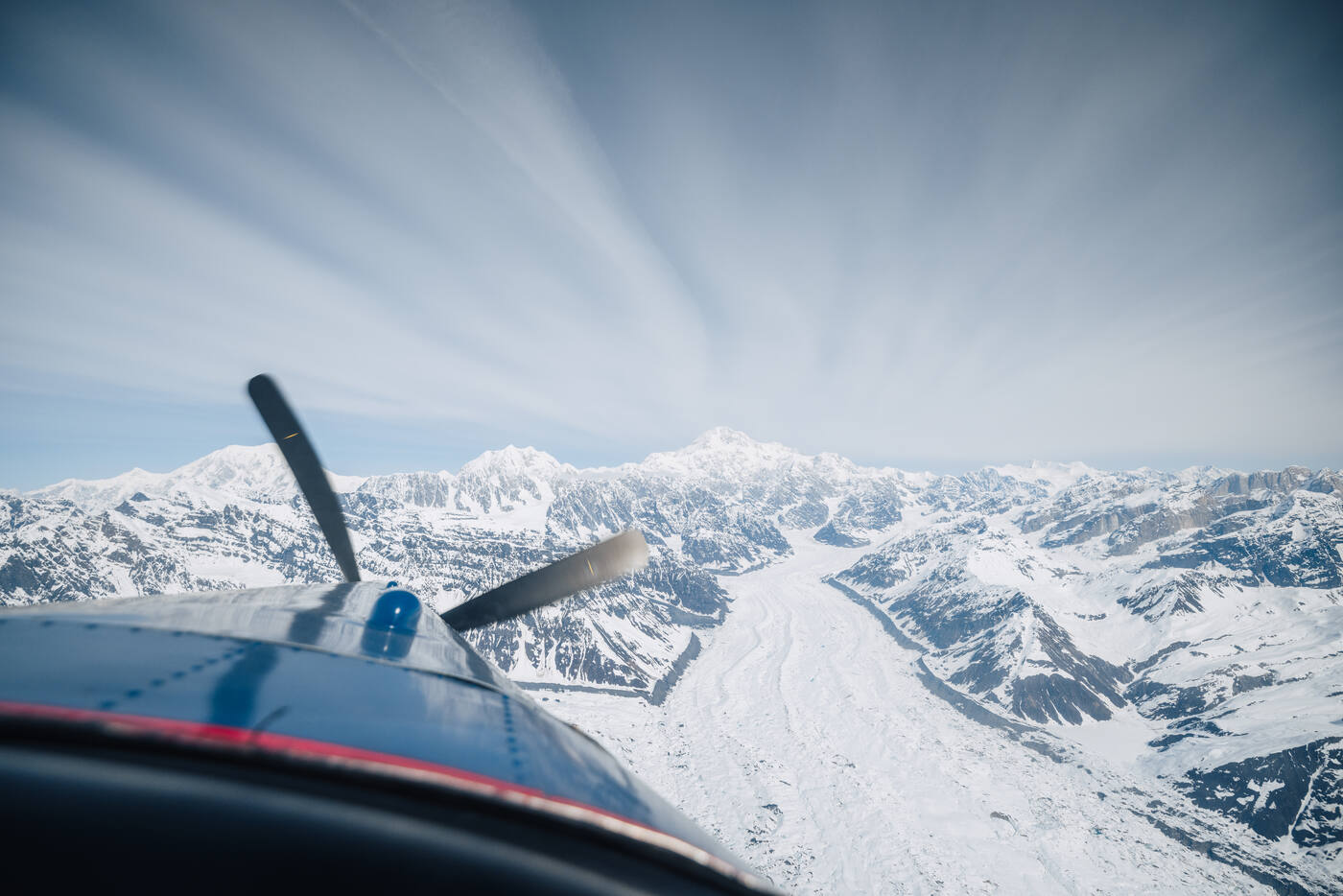
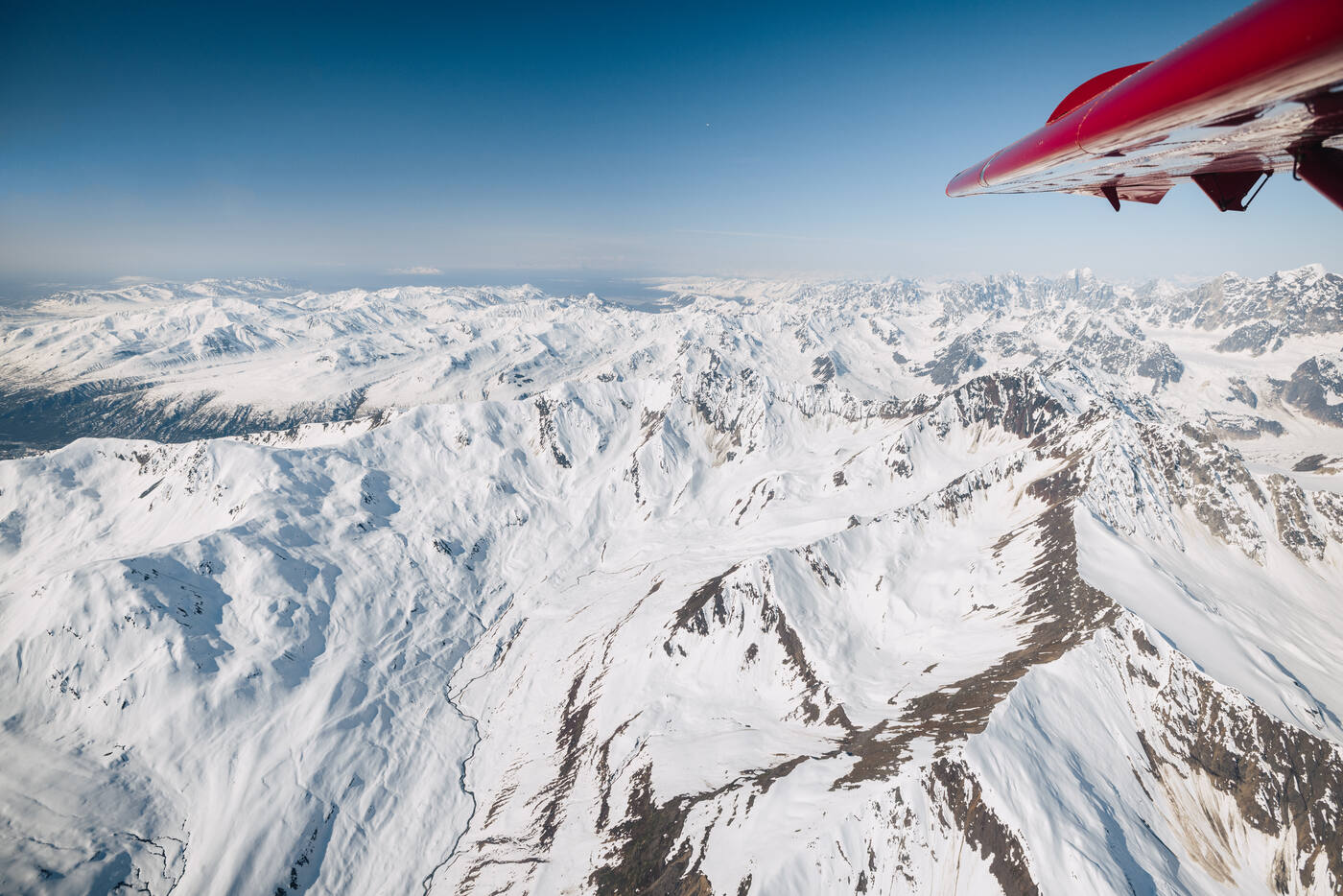
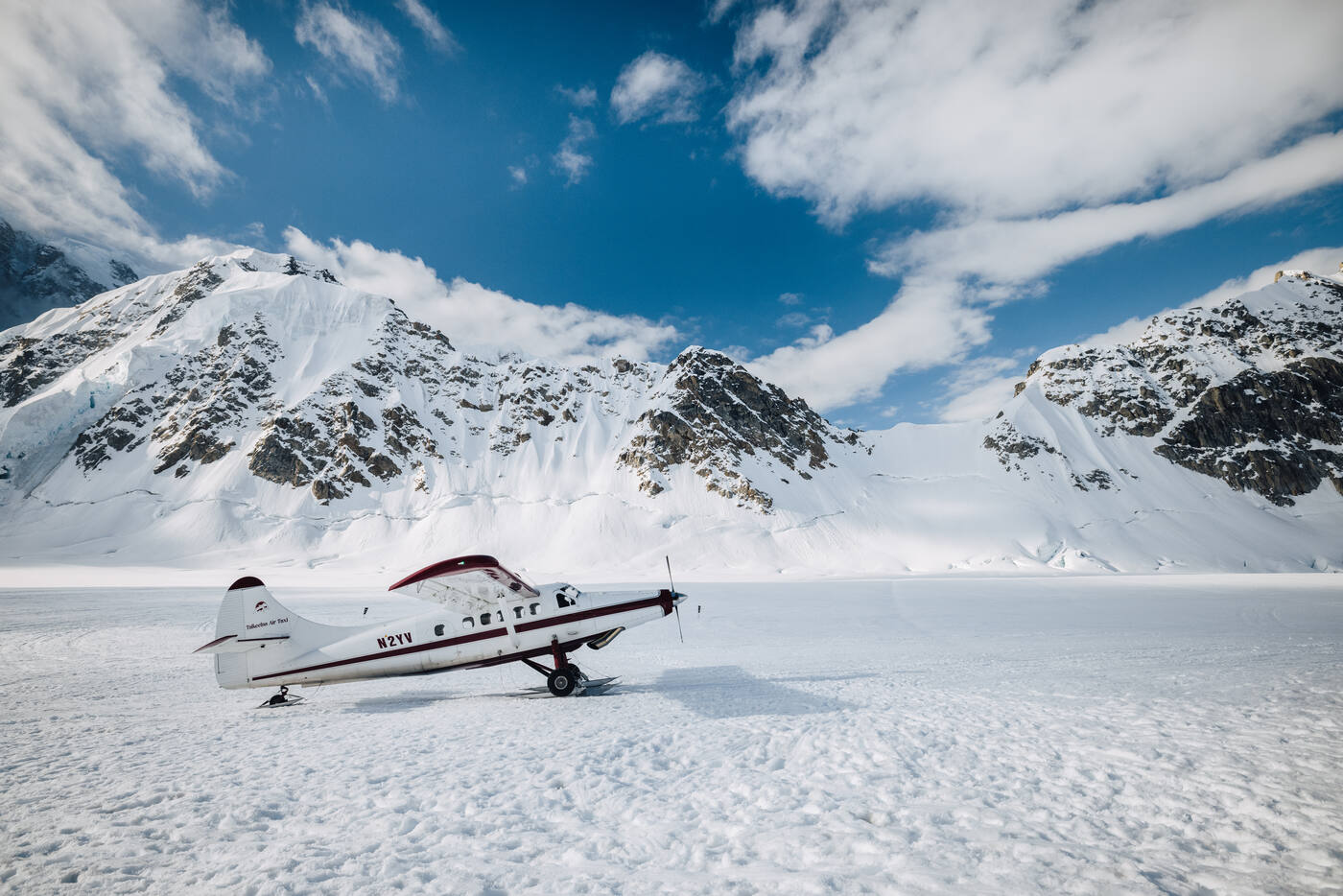
The bush plane flight from Talkeetna to the Kahiltna Glacier. Propeller spinning, glaciers stretching below, the Alaska Range rising in every direction.
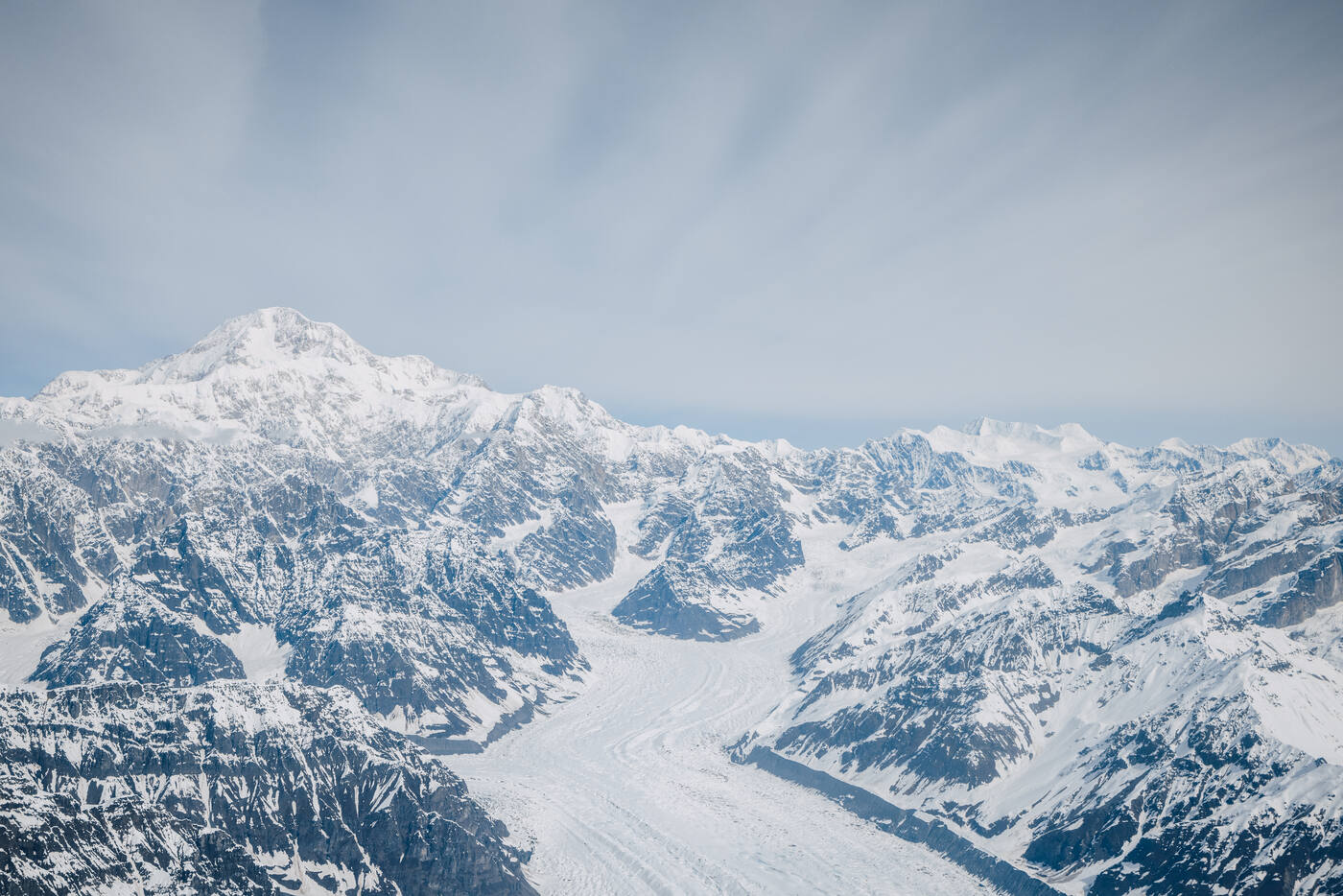
The expedition began with a bush plane flight from Talkeetna deep into the Alaska Range. Looking out the window as the plane banked through the mountains, the scale of this place was overwhelming—endless glaciers carving through jagged peaks, with Denali's massive bulk dominating the horizon. We landed on the Kahiltna Glacier at 7,200 feet, changed into climbing gear, and hit the ground running.
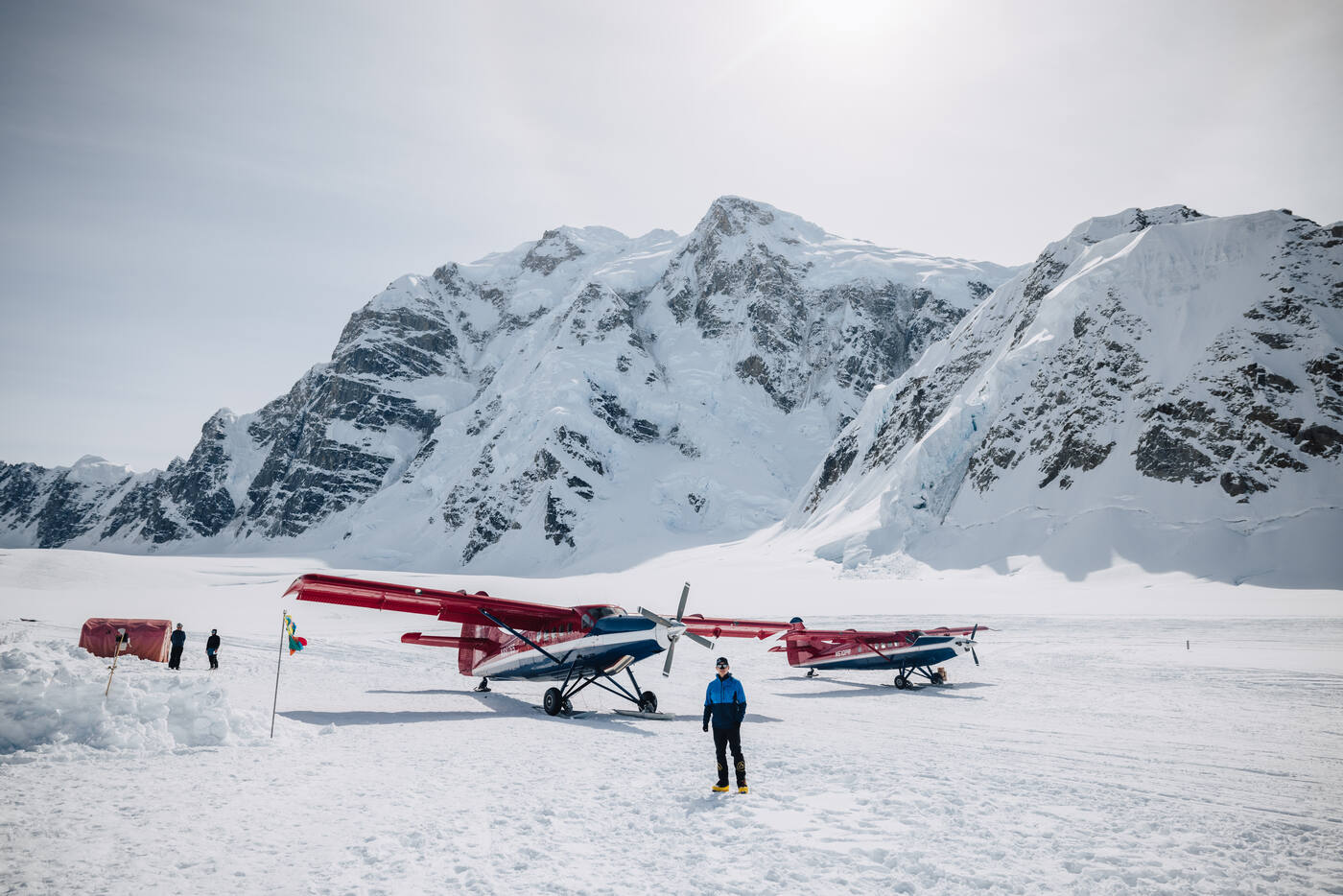
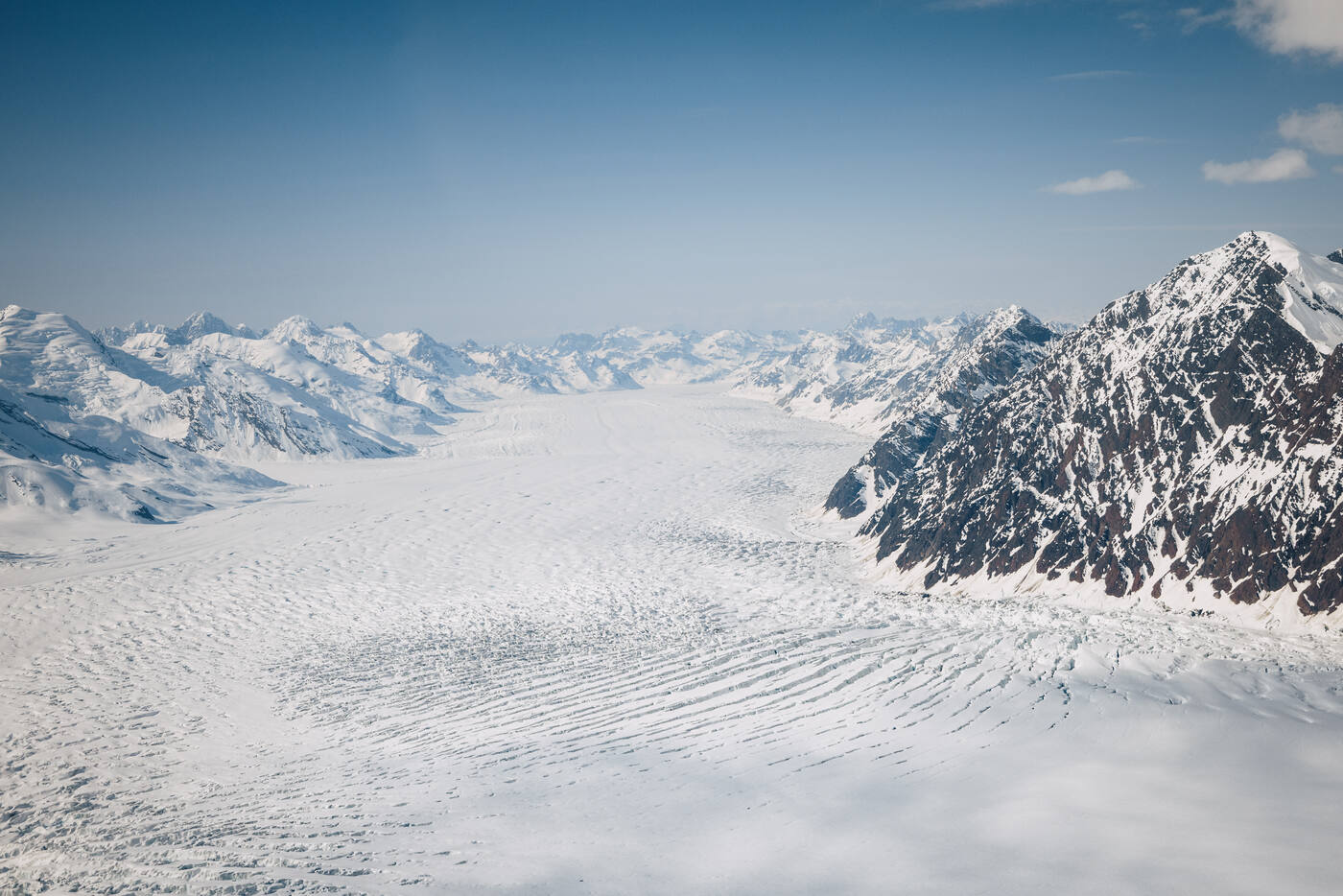
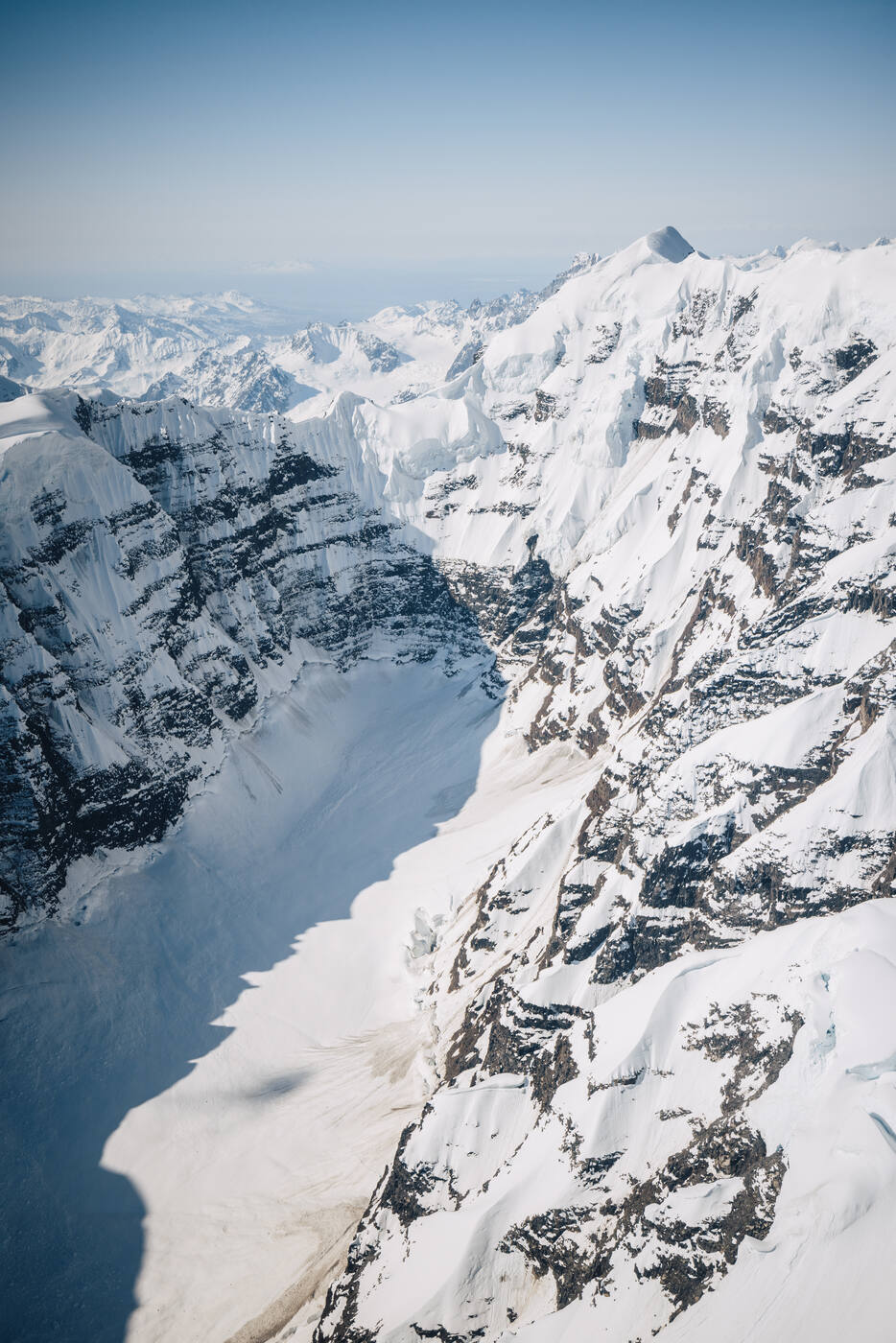
The Alaska Range from the air. Glaciers flowing between peaks like frozen rivers.Landed on the Kahiltna Glacier. The landing strip is nothing more than a packed strip of snow.
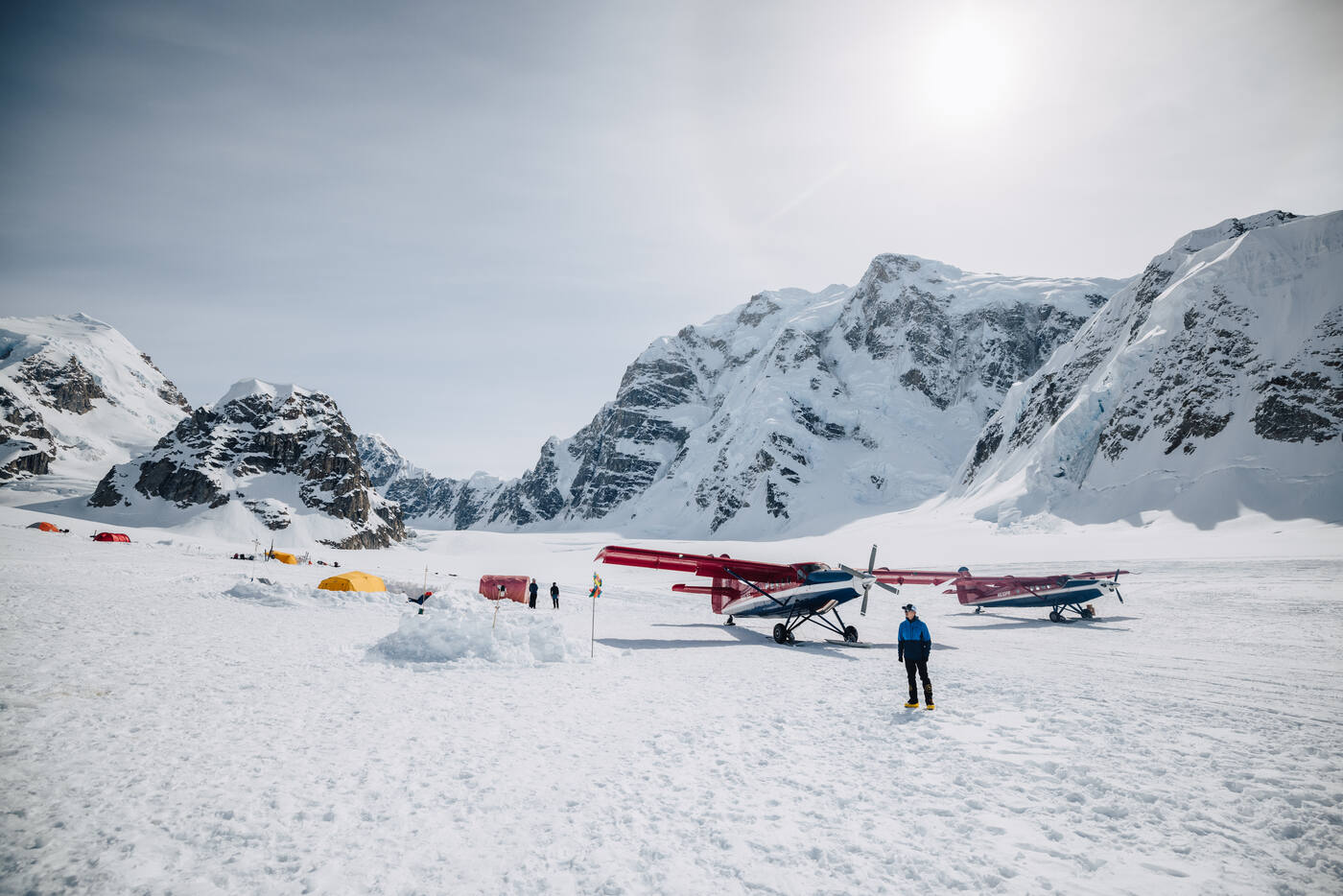
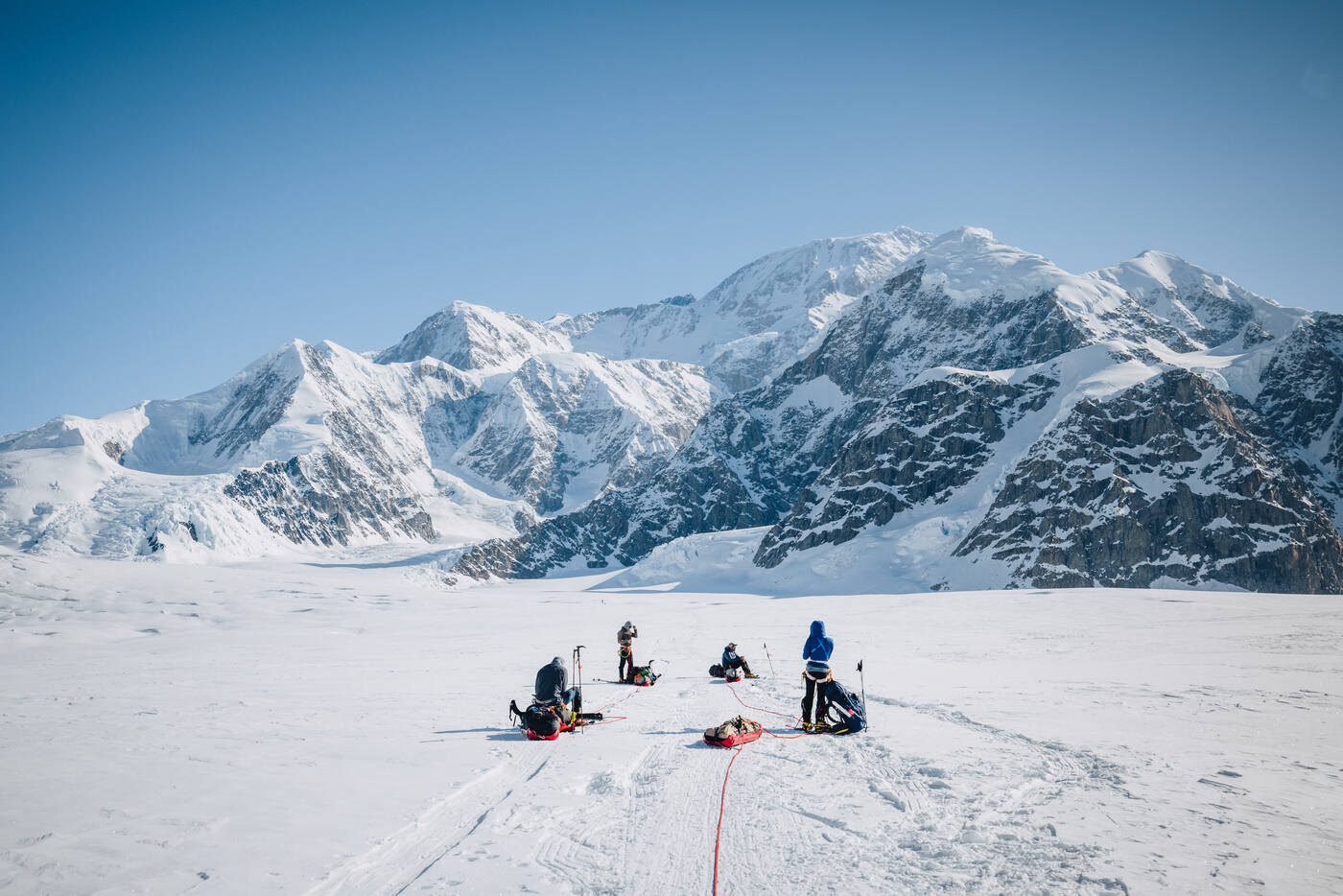
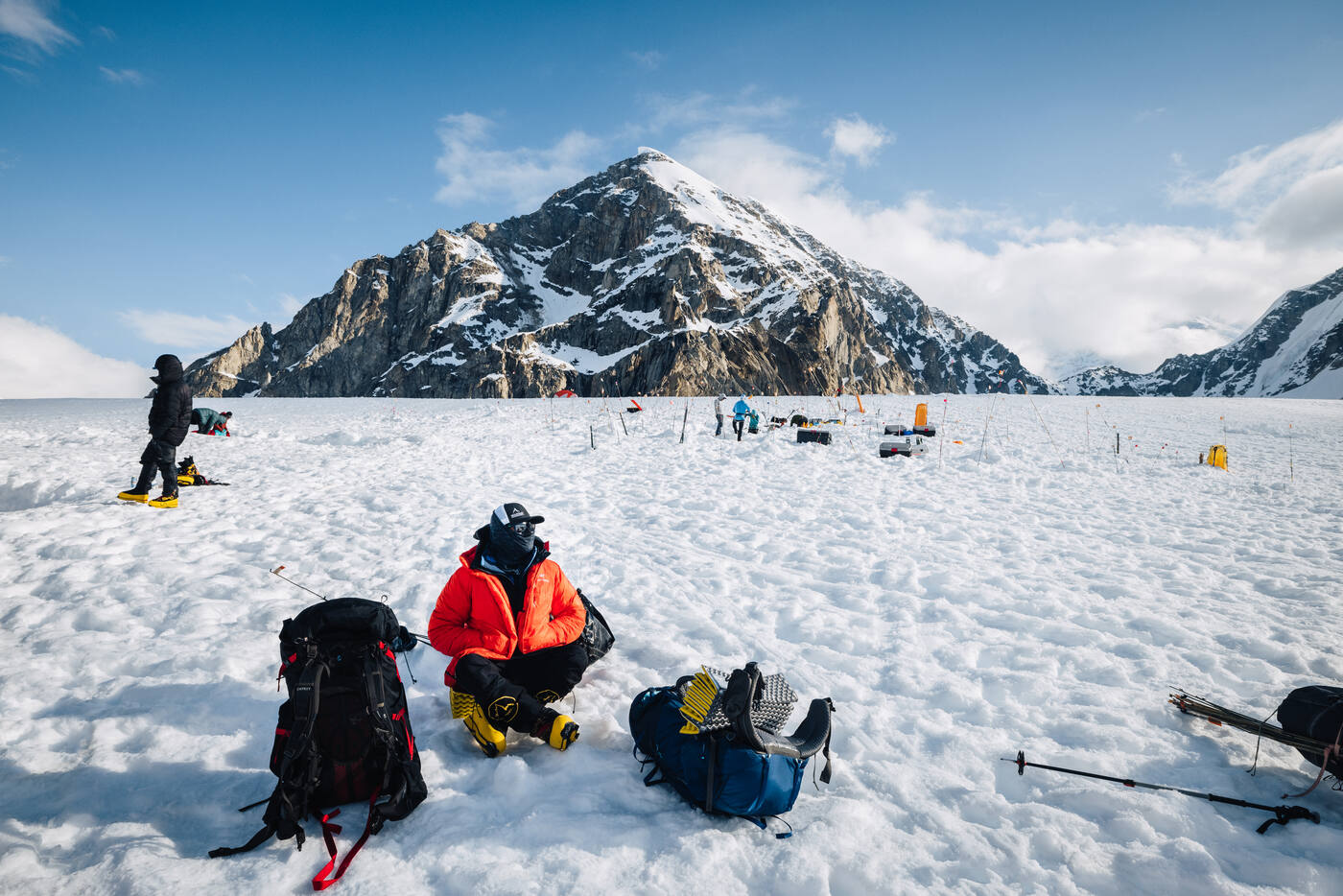
Basecamp on the Kahiltna Glacier. Bush planes parked on the ice, tents scattered around, and the Alaska Range towering in every direction.
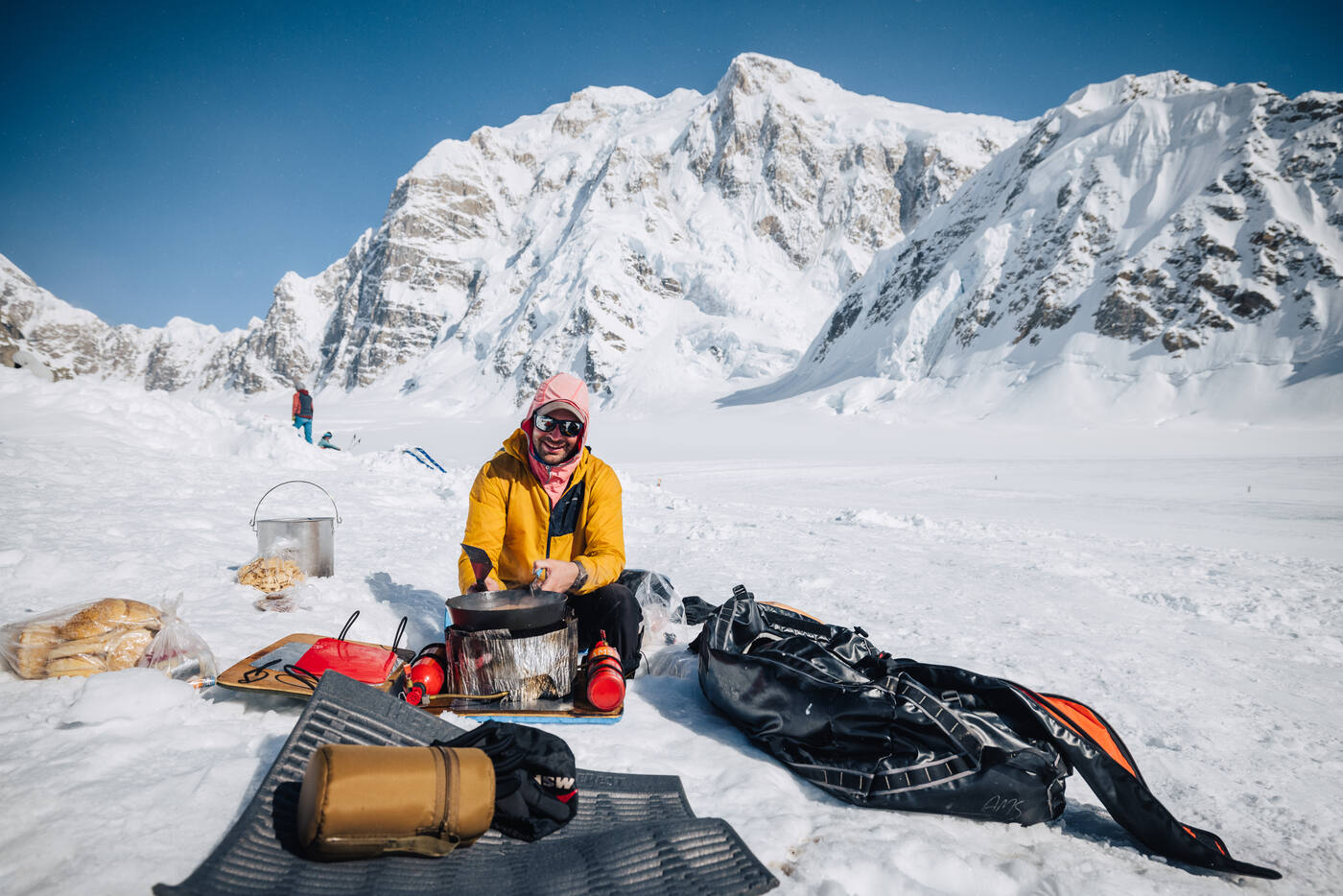
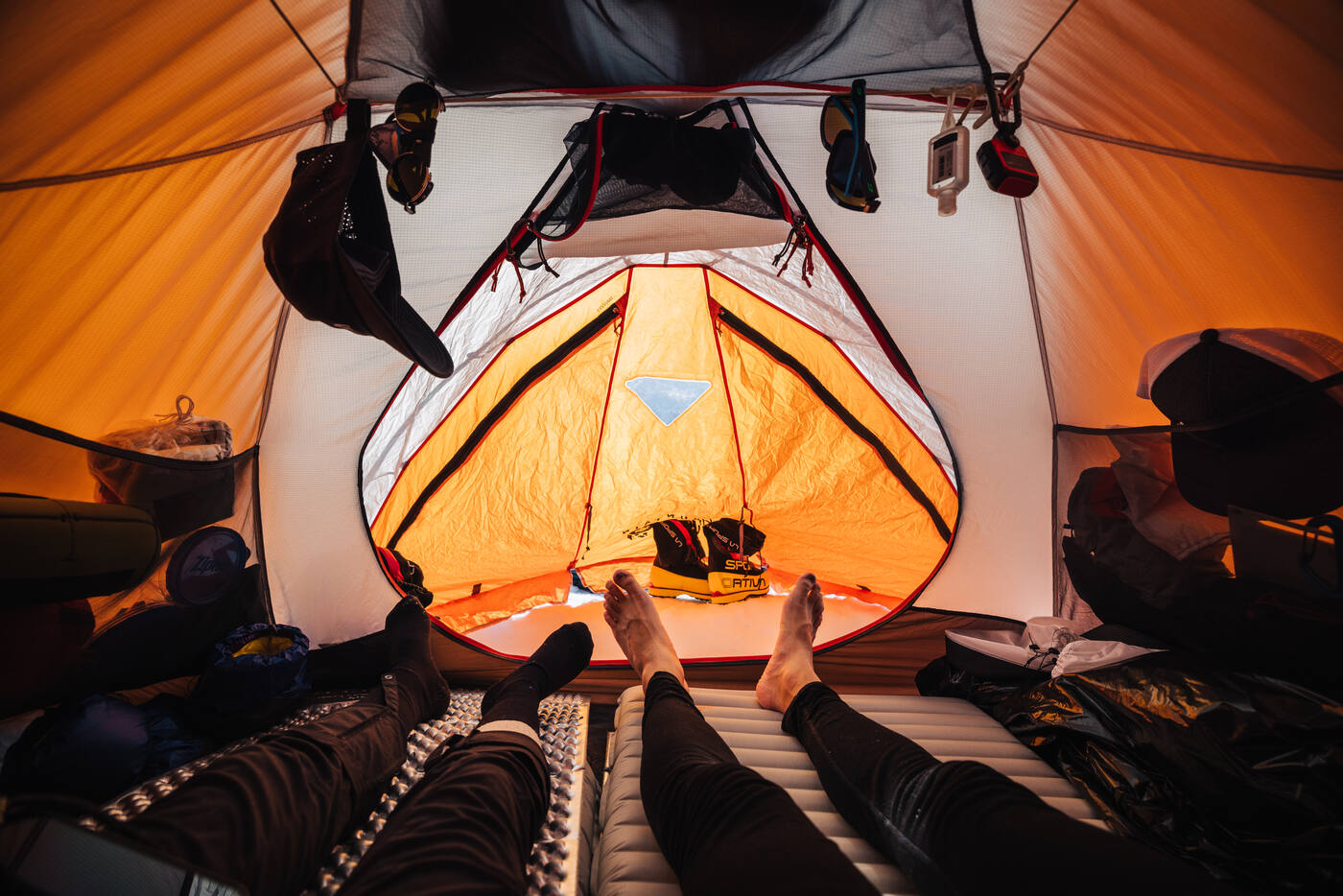
First meal on the glacier. Cooking setup at basecamp with the mountain looming overhead.Home for the next two weeks. The tent was small but warm, and after a long day hauling gear, it felt like a palace.
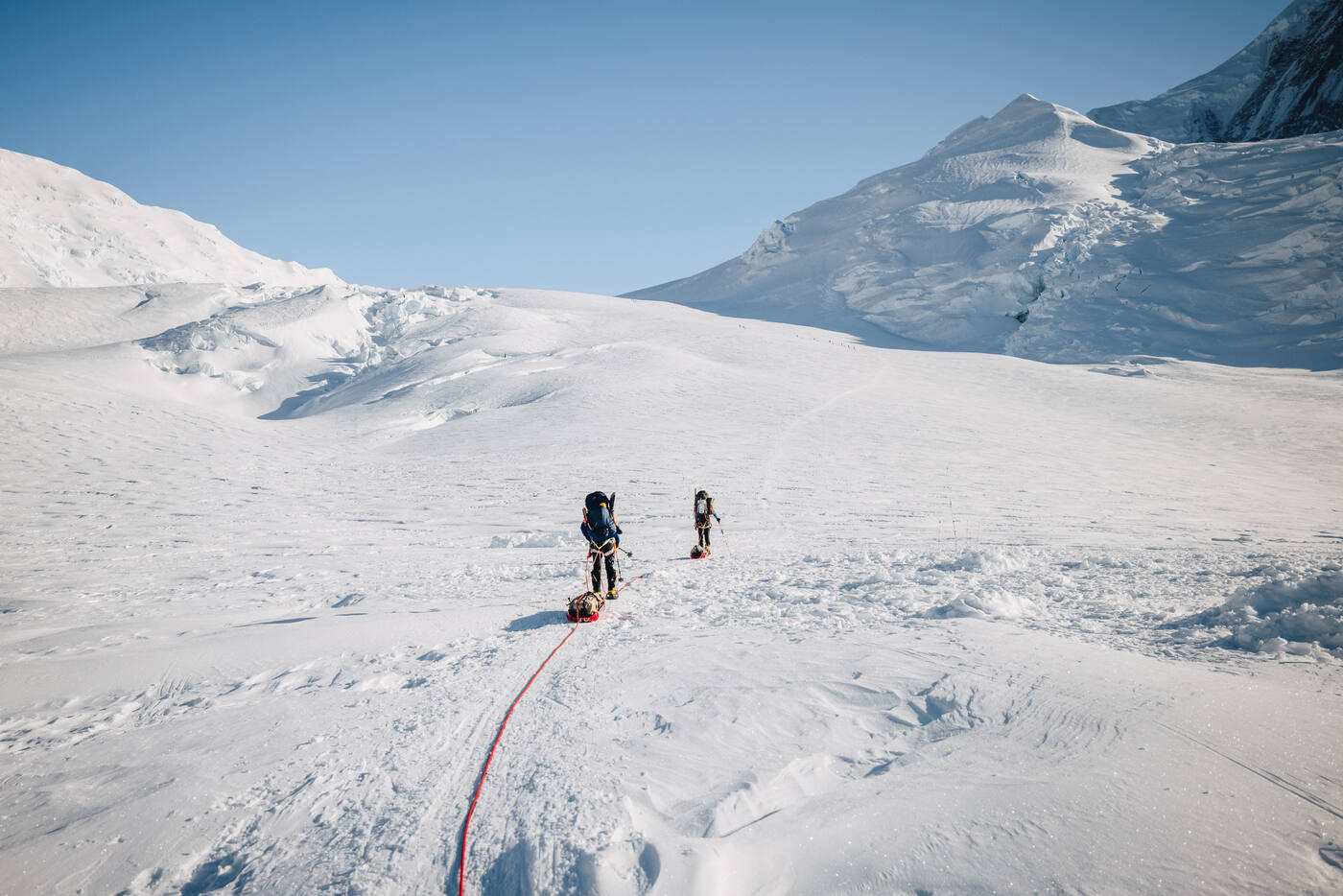
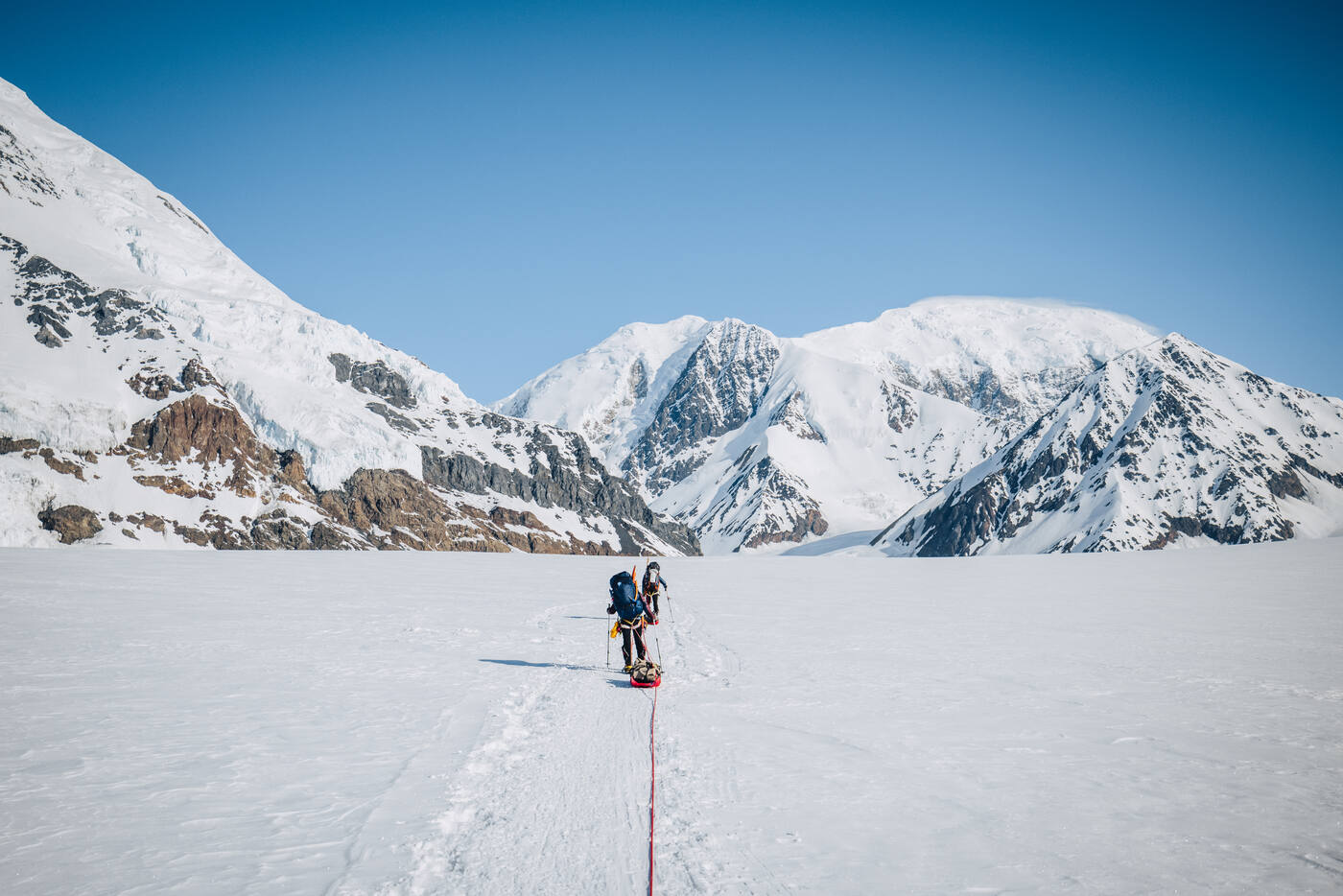
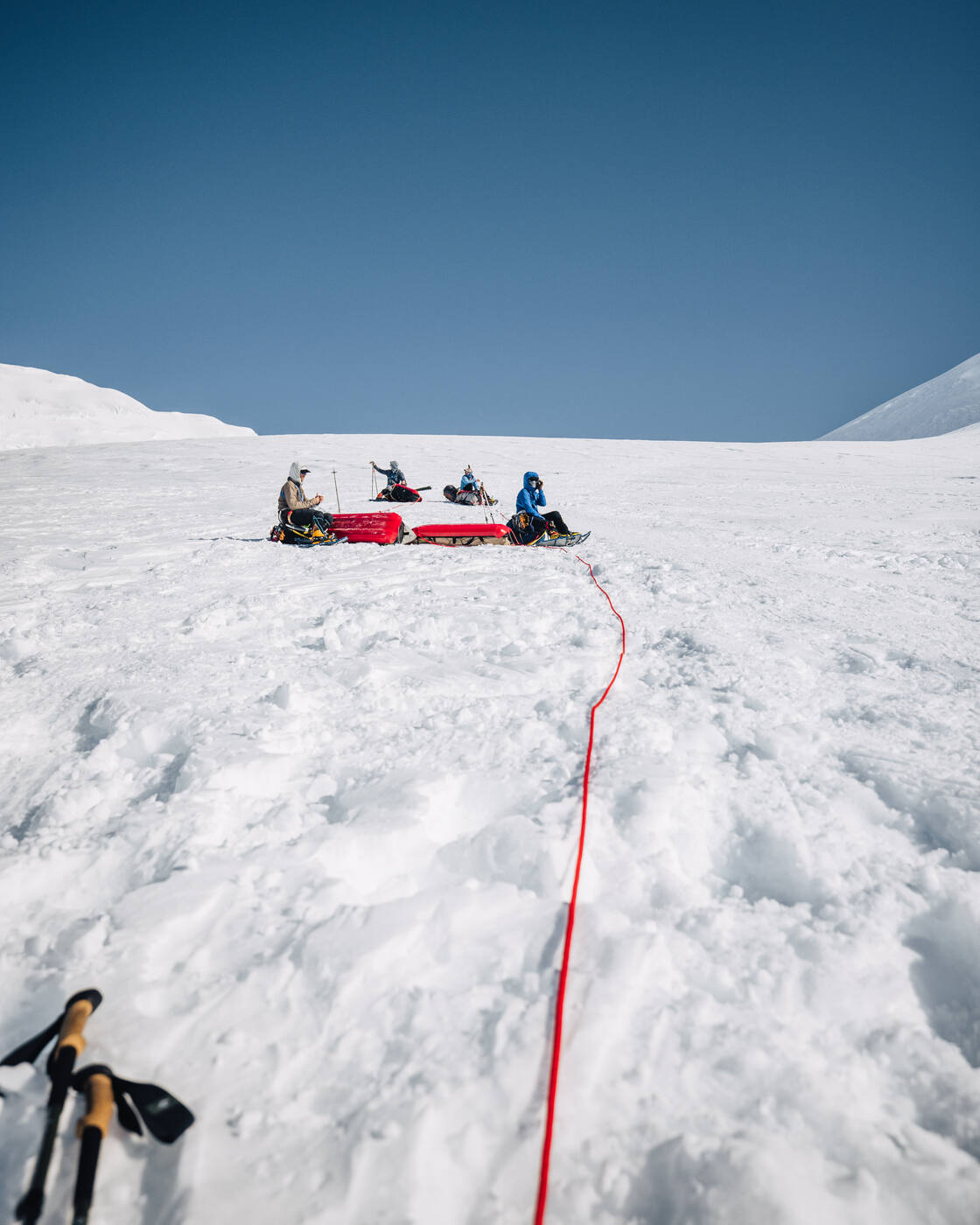
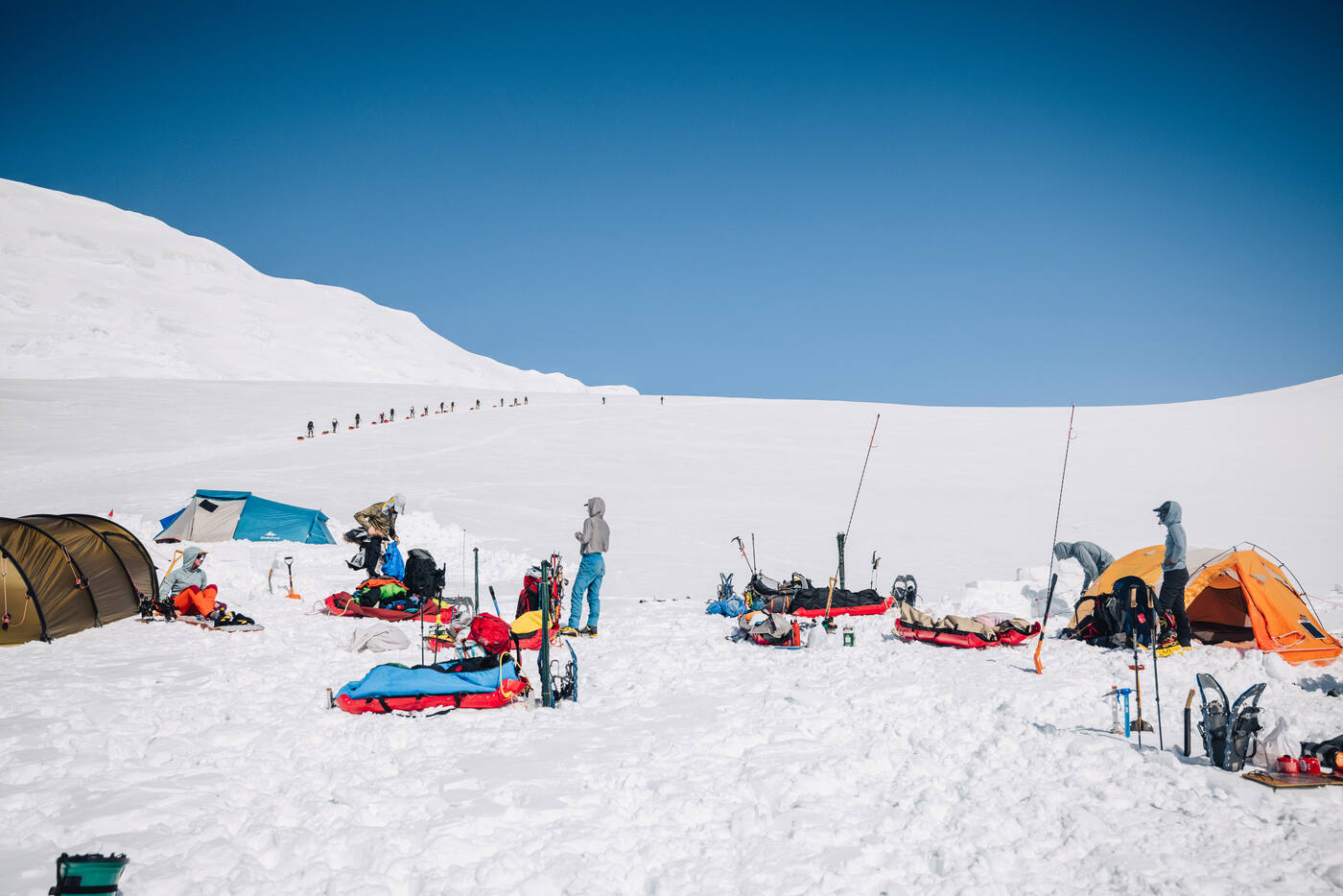
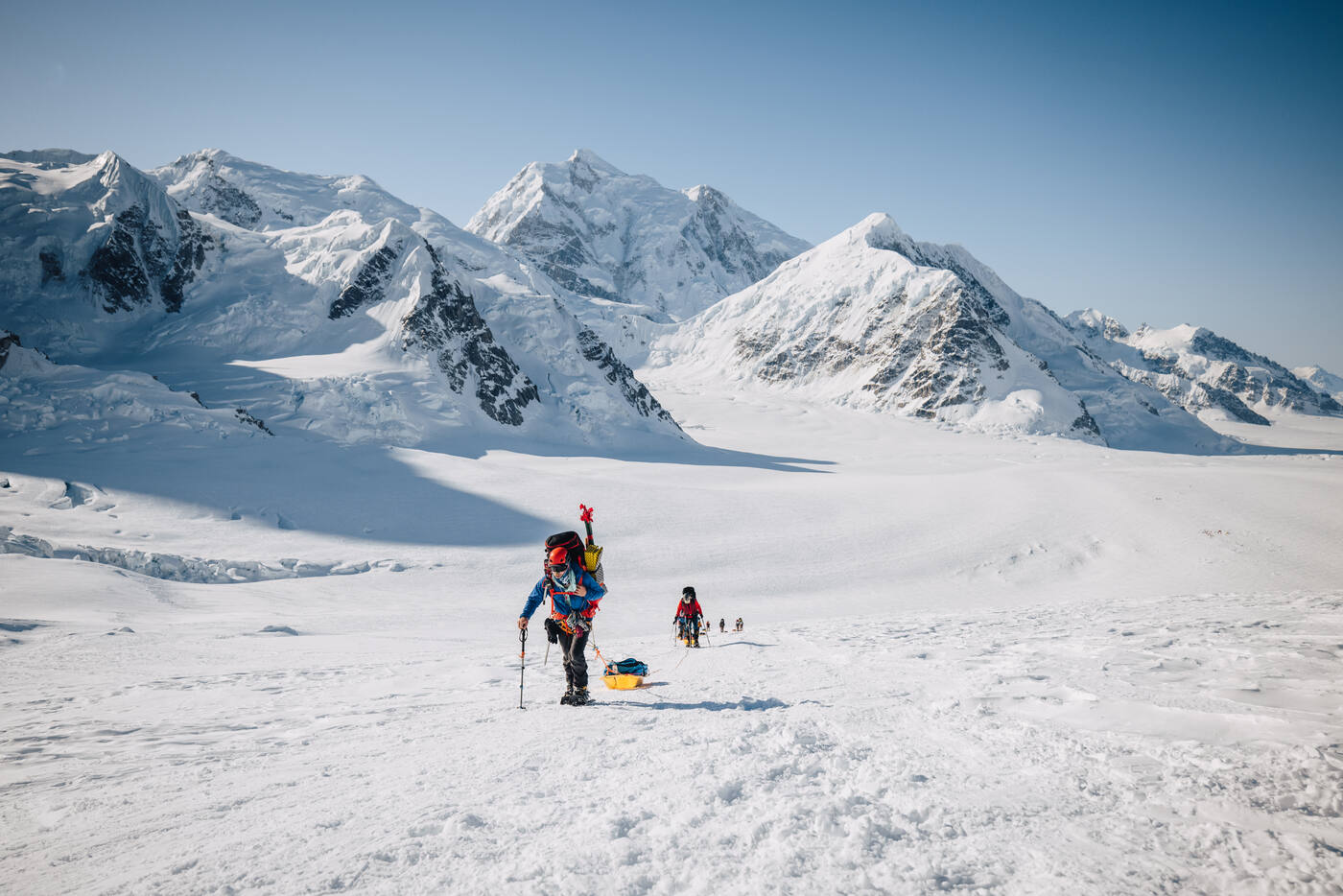
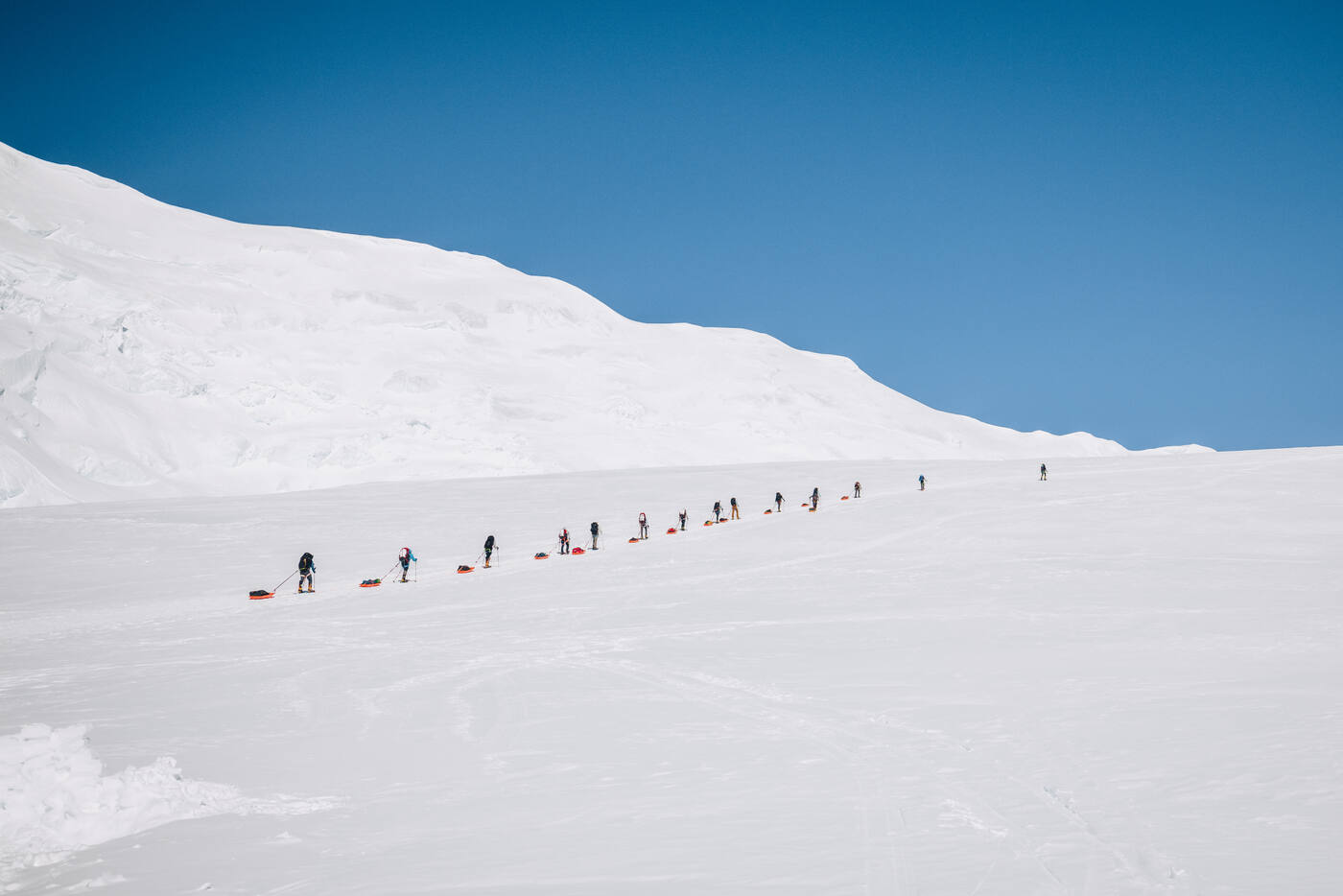
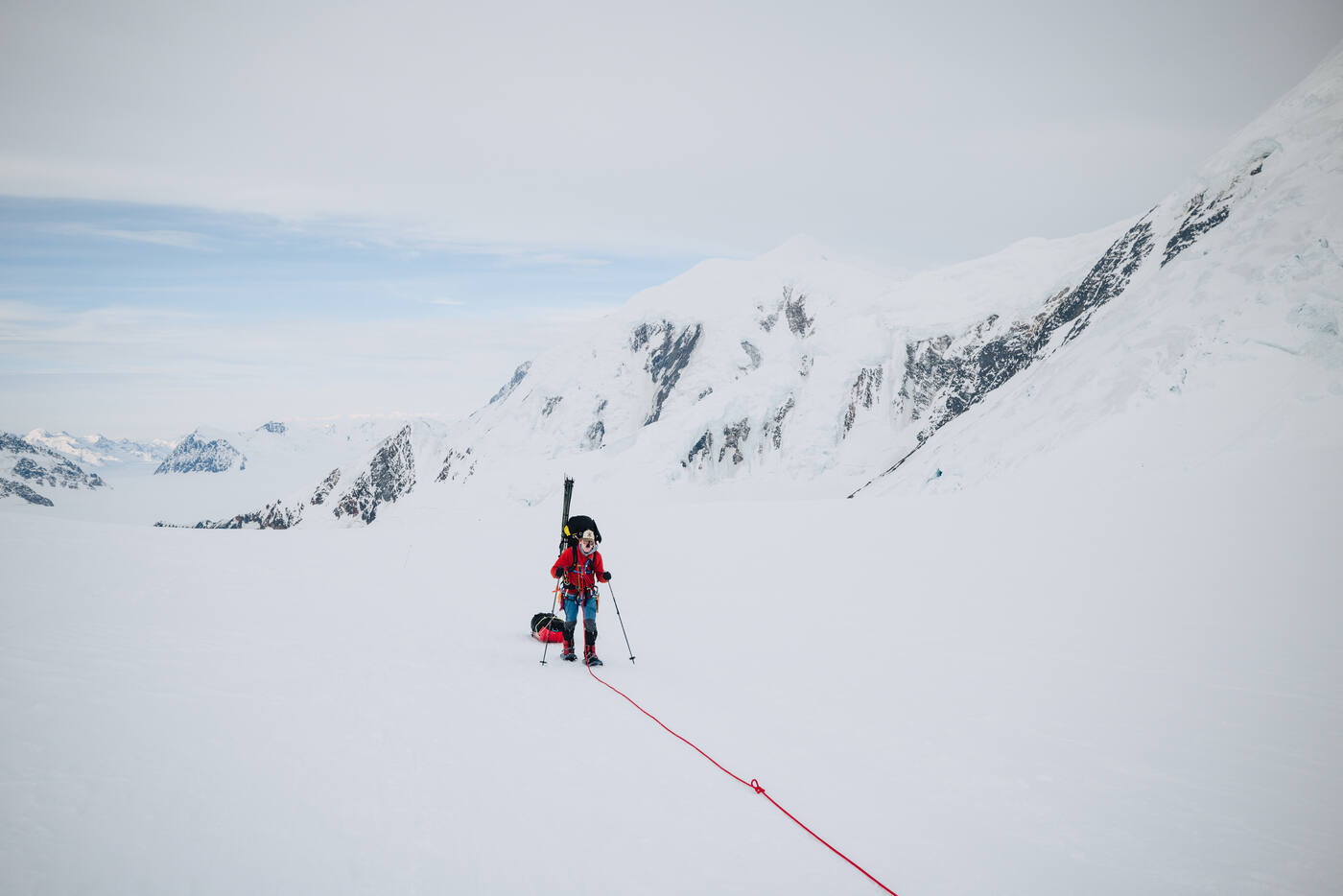
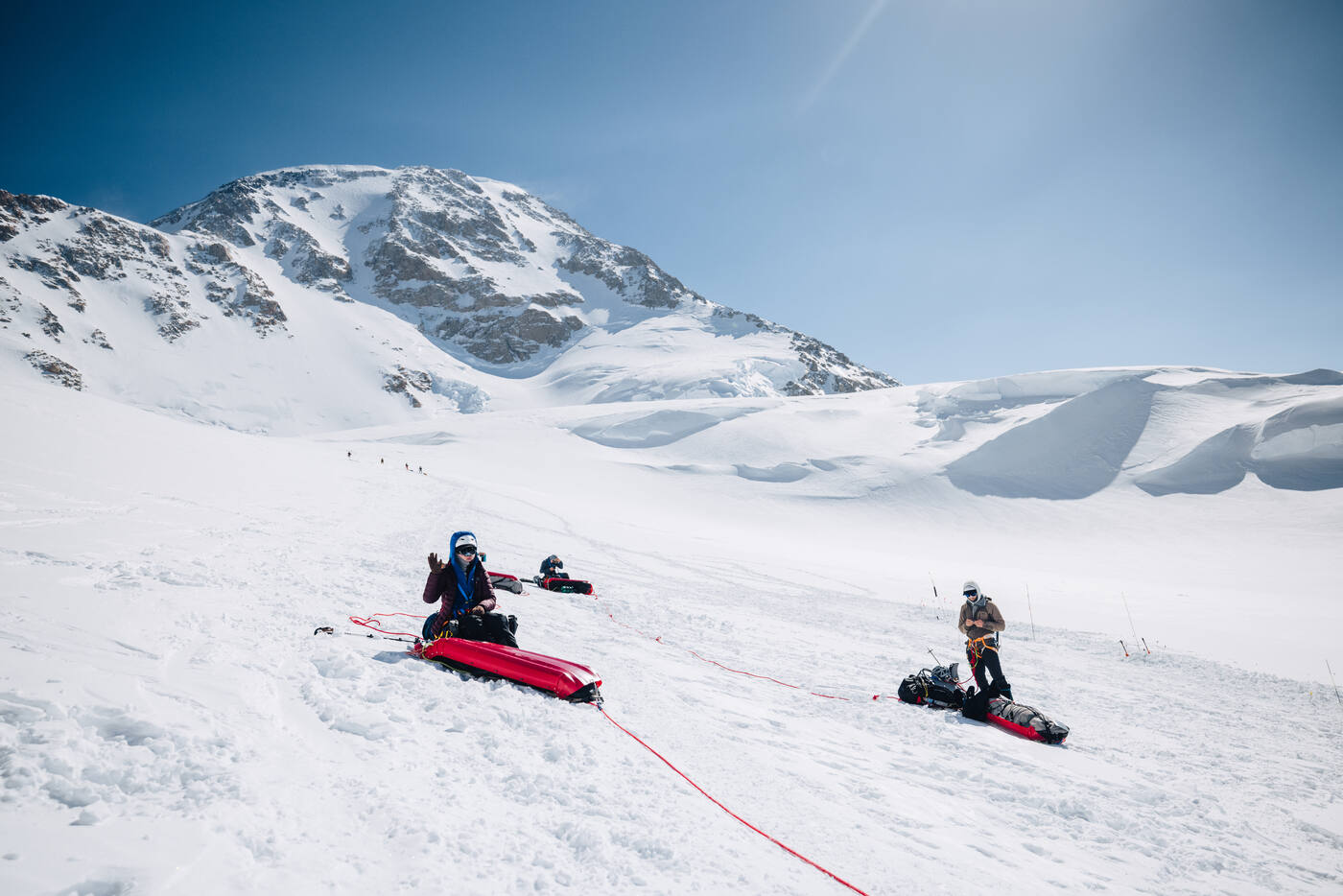
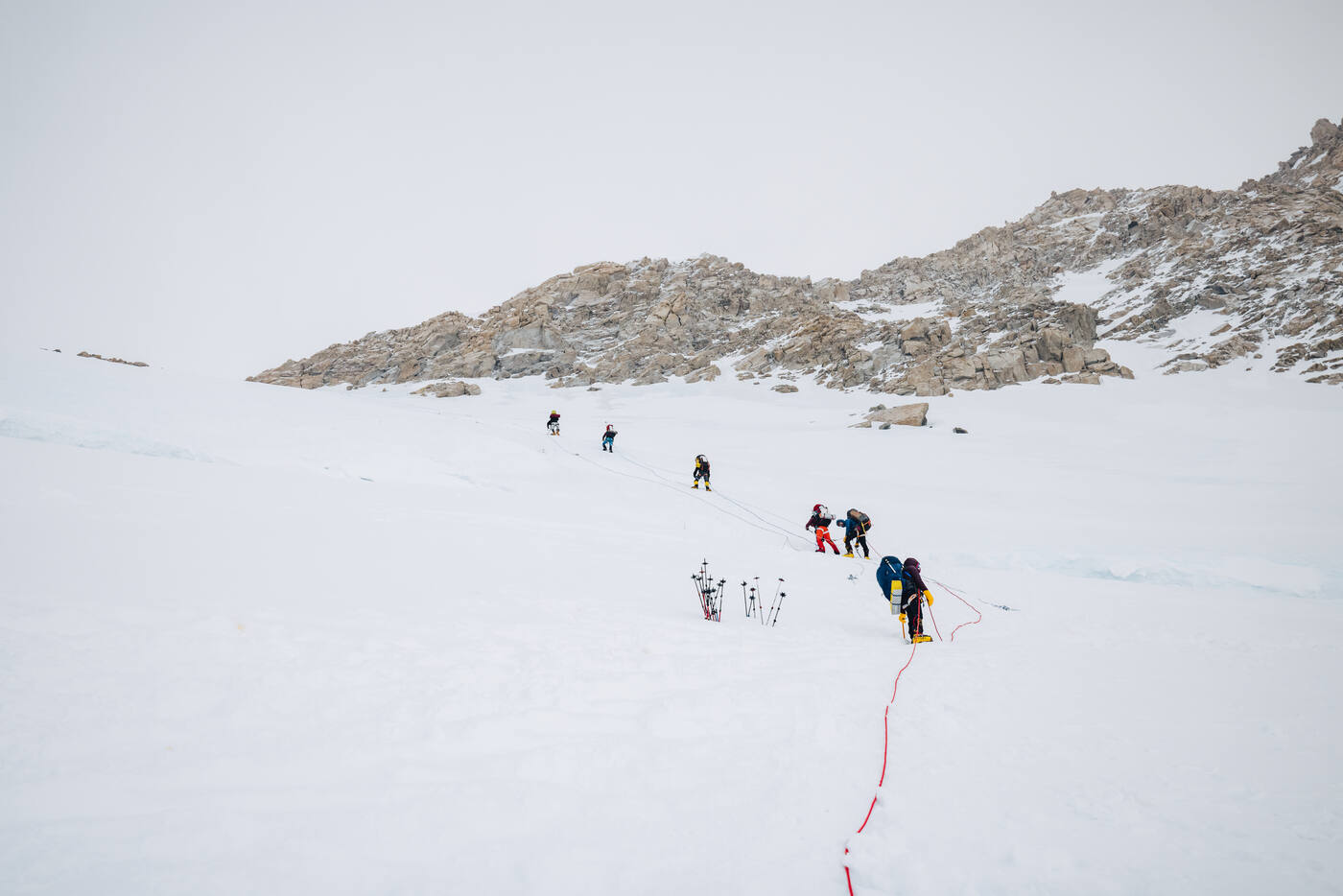
The first four days were spent moving from basecamp through areas called Heartbreak Hill and Ski Hill, passing through camps at 7,800 feet and 9,600 feet before reaching 11,200 feet. Because of our nimble team, we were able to single-carry the entire way—moving all gear and equipment in a single push from camp to camp rather than the usual double-carry method. Heavy backpacks, sleds loaded with supplies, climbing ropes connecting us as a team, and snowshoes crunching through soft glacier snow.
Roped up and moving across the Kahiltna Glacier. Every step measured, every crevasse respected.
Day two on the glacier. The sun reflecting off the snow was relentless.Regrouping on the rope. Gaining elevation one step at a time.
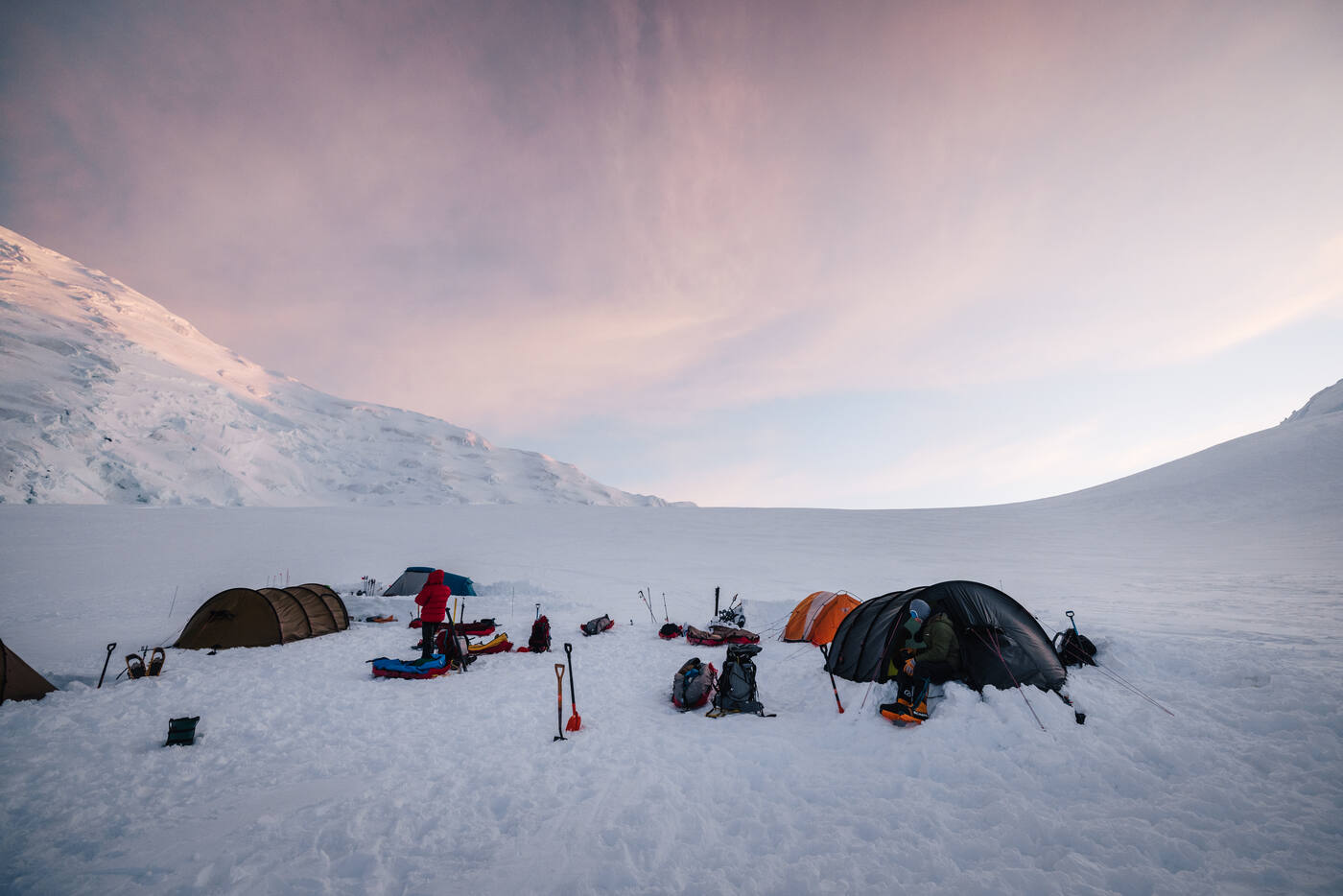
Early morning at camp. Pink light spilling across the glacier before another long day of climbing.The final approach to 11,200 ft Camp. Almost there.
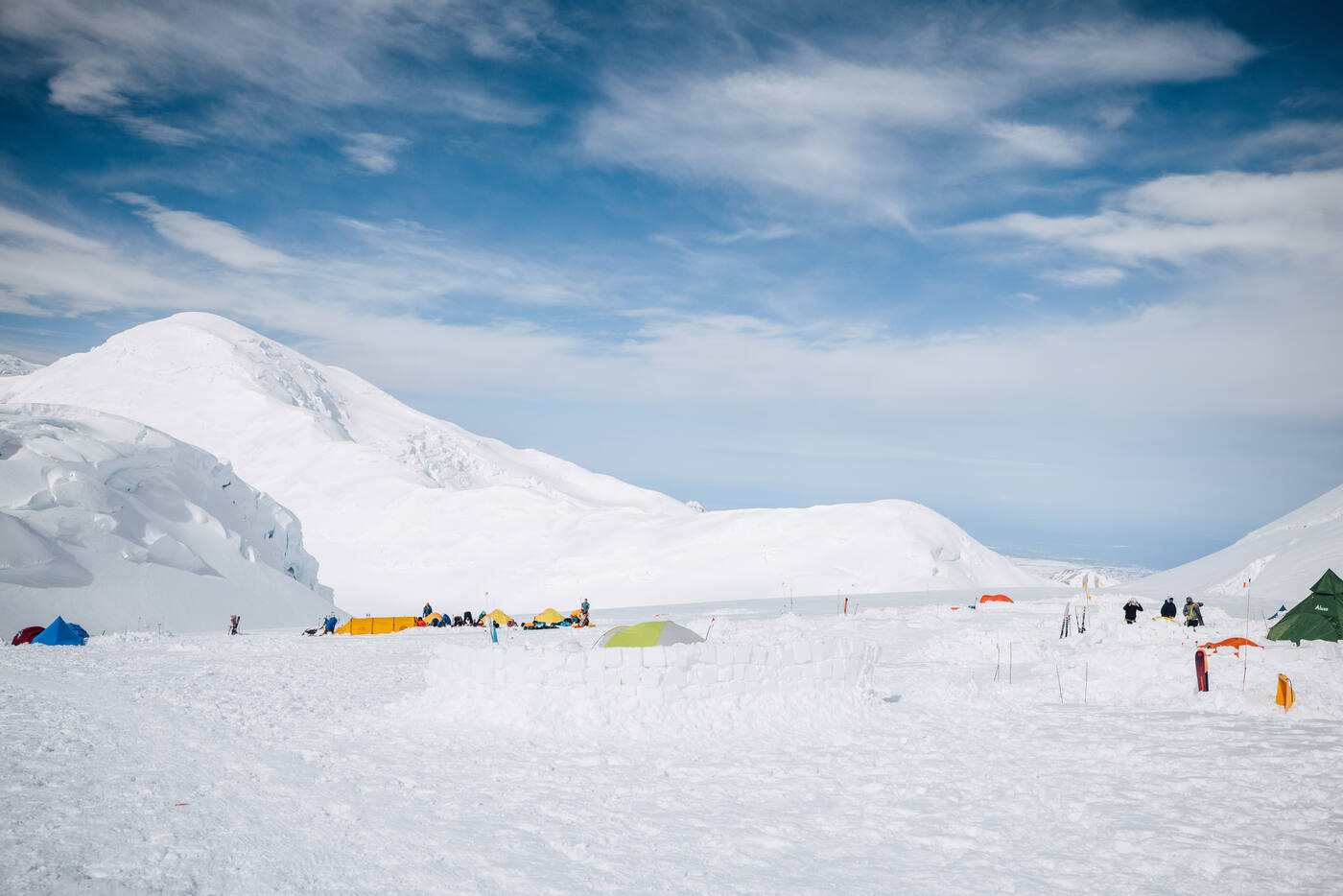
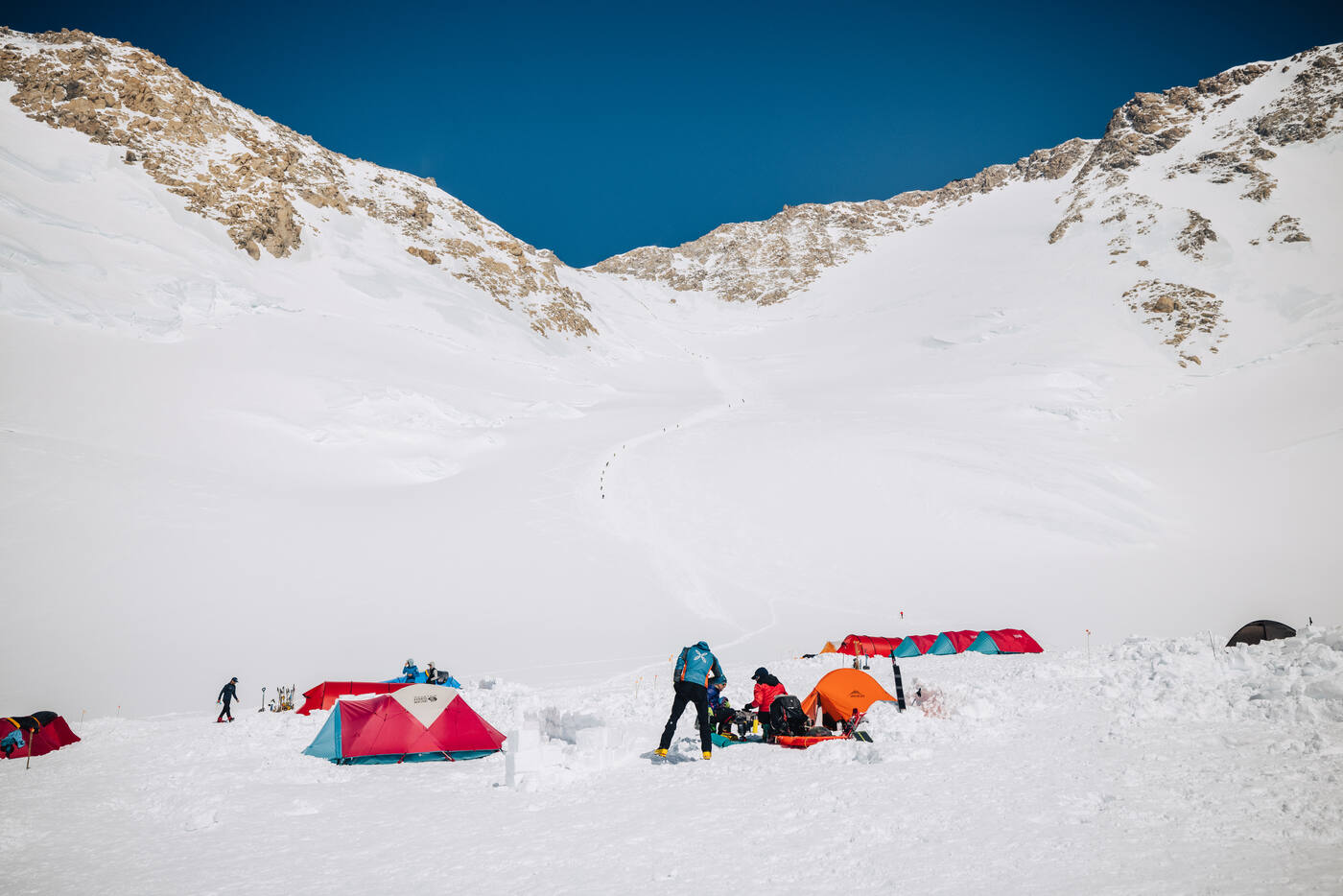
Settling in at 11,200 ft Camp, at the base of Motorcycle Hill.
Days 5–6: Motorcycle Hill to 14,200 ft Camp
May 22–23, 2022 · 11,200 ft → 14,200 ft Camp · 3,414 m → 4,328 m
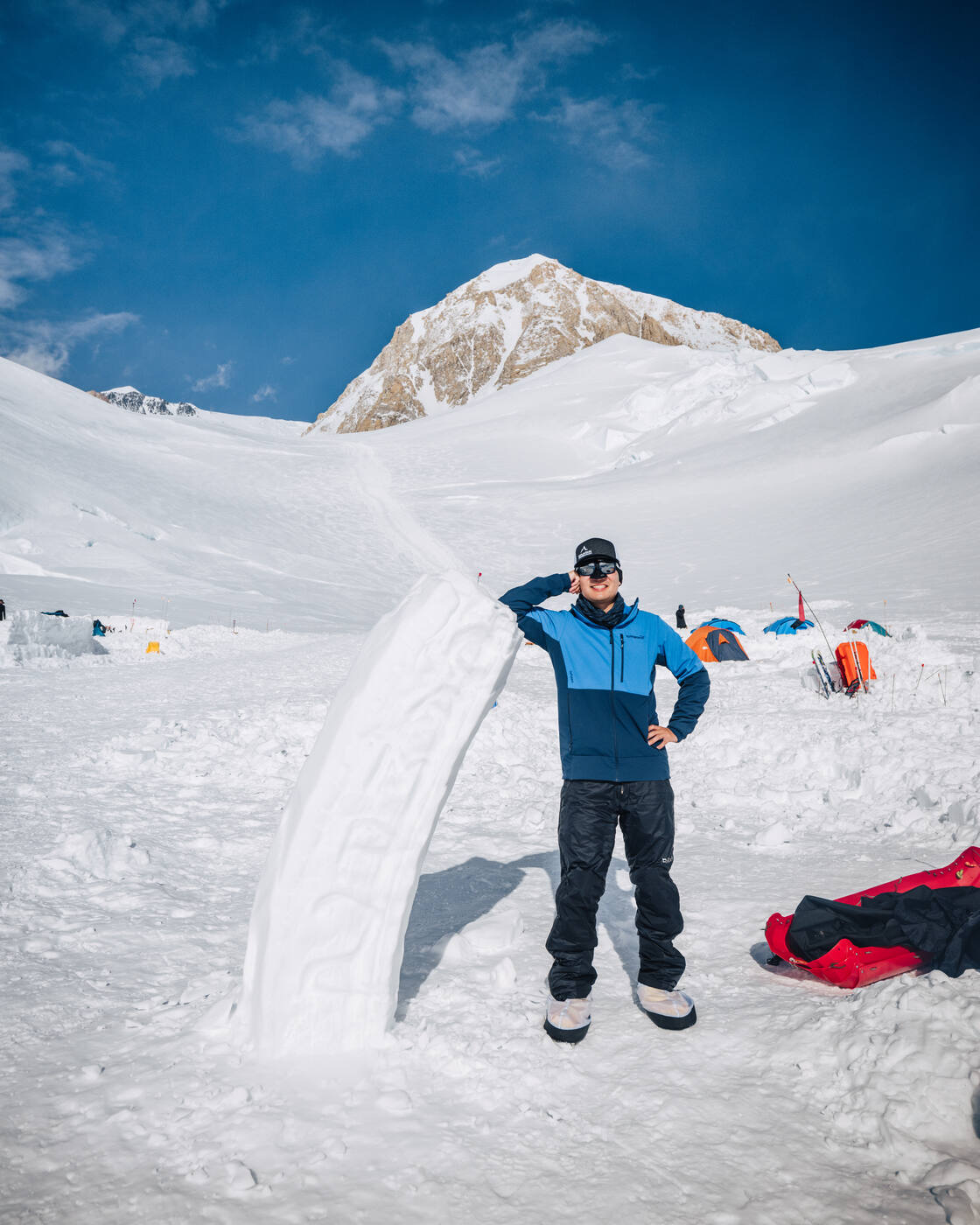
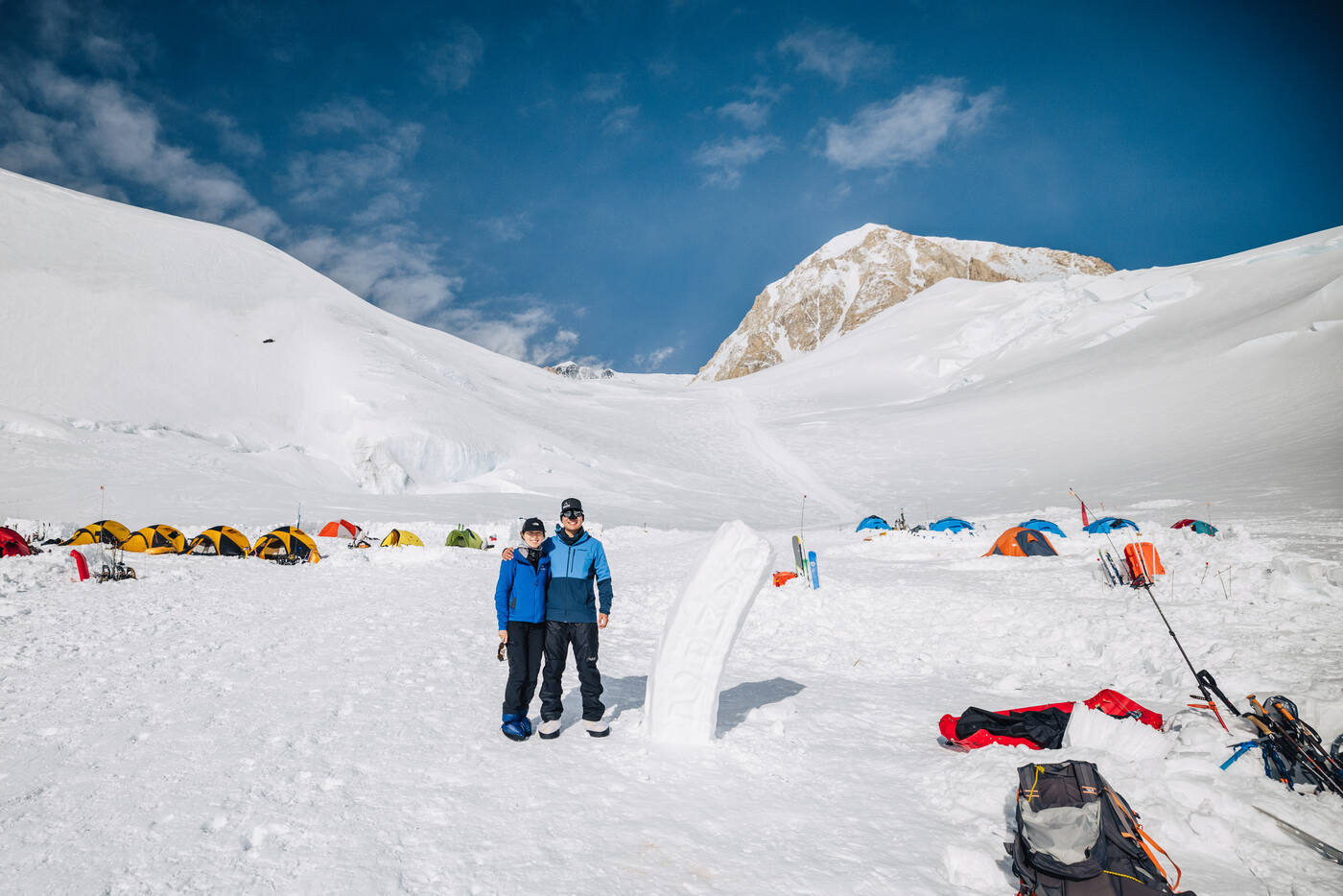
Jason and Grace at 11,200 ft Camp. Rested and ready for the push to 14k.
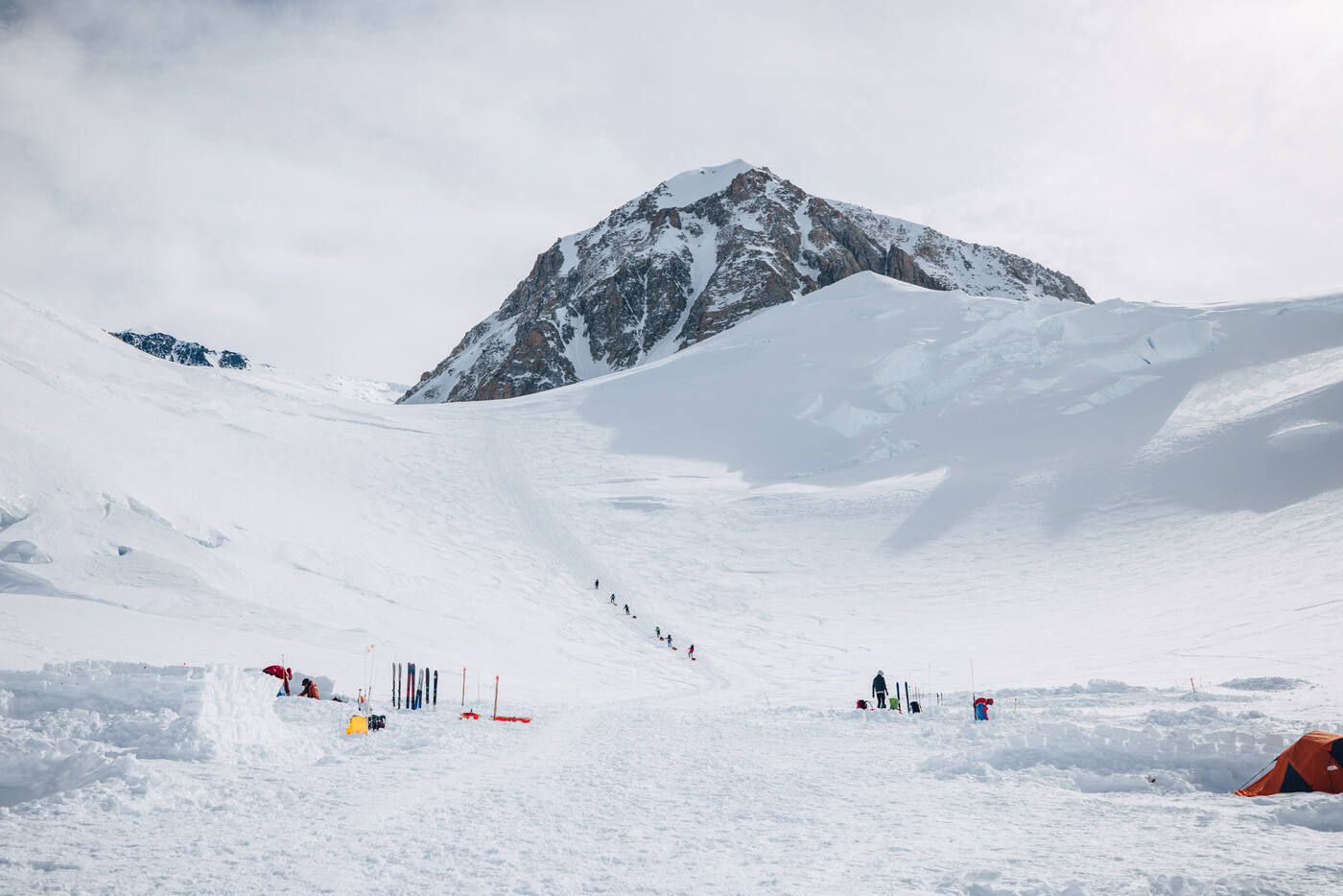
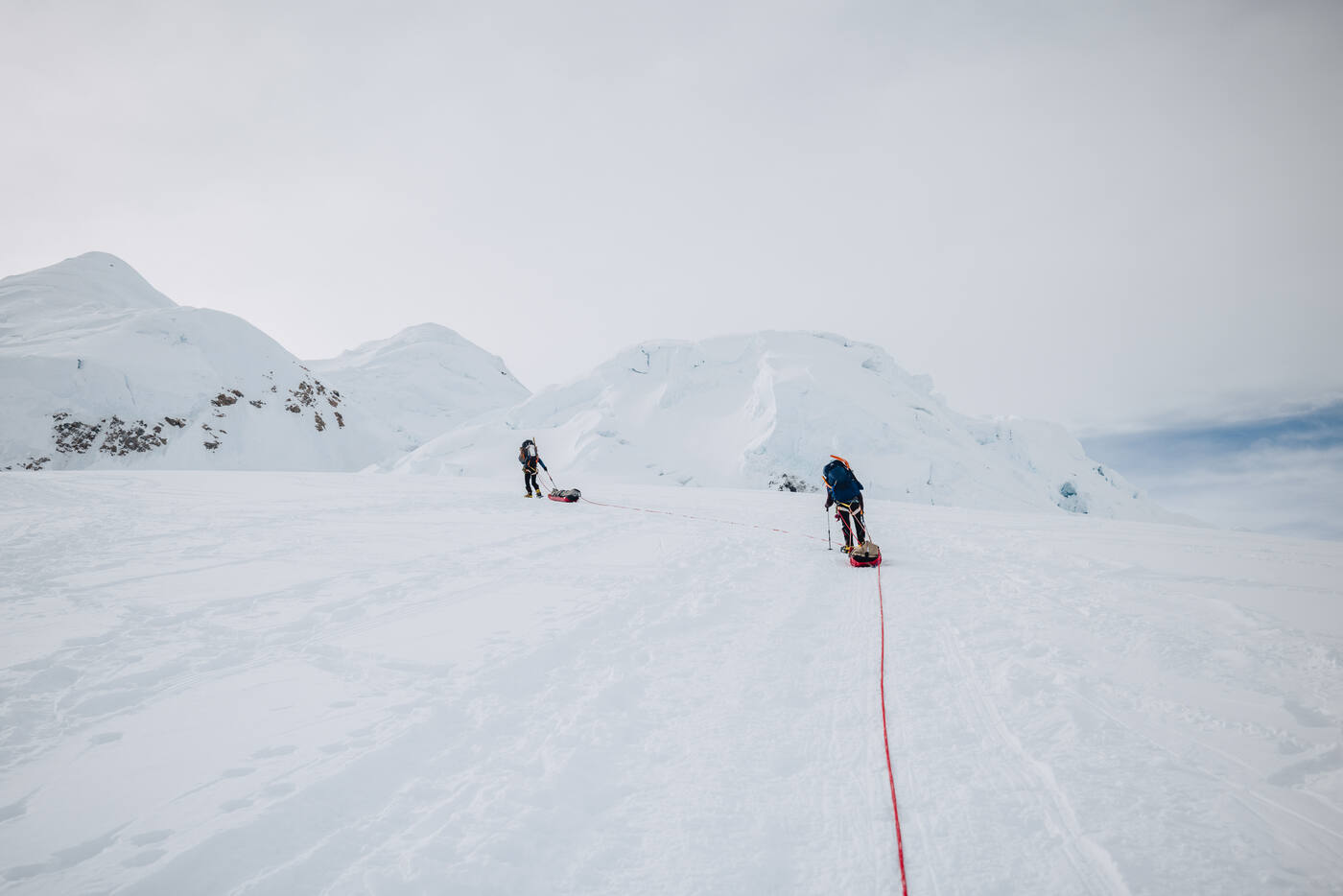
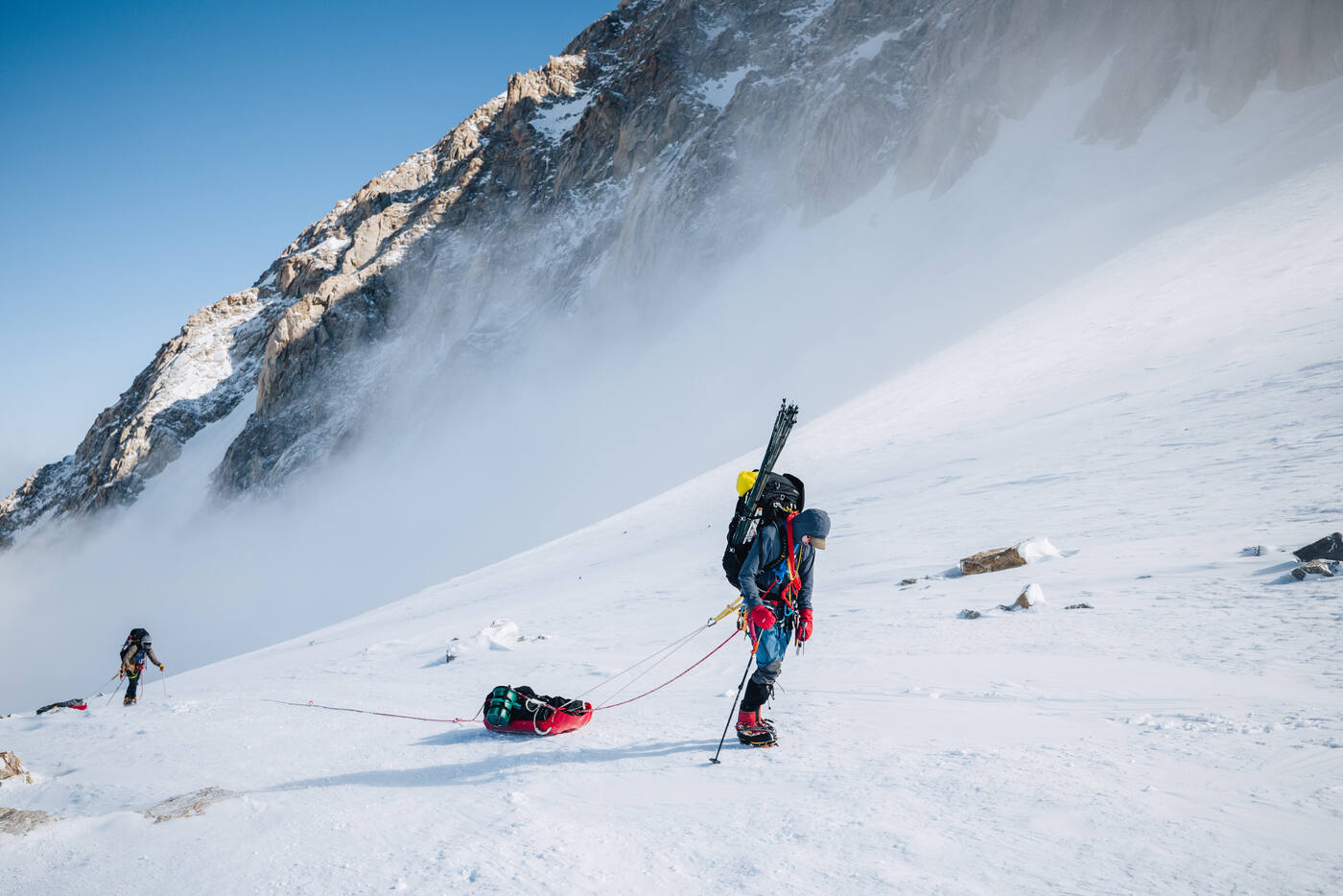
After a full rest day at 11,200 feet, we felt ready to tackle one of the most difficult stretches on Denali. Right out of camp, we climbed the 700-foot Motorcycle Hill—steep and heavily crevassed the entire way. Immediately after, Squirrel Hill. Then the final obstacle: Windy Corner, where the sleds refused to stay on the trail and fought to pull us off the edge toward the crevasses below. Ice axe in one hand, trekking pole in the other, hauling a sled that seemed to have a mind of its own.
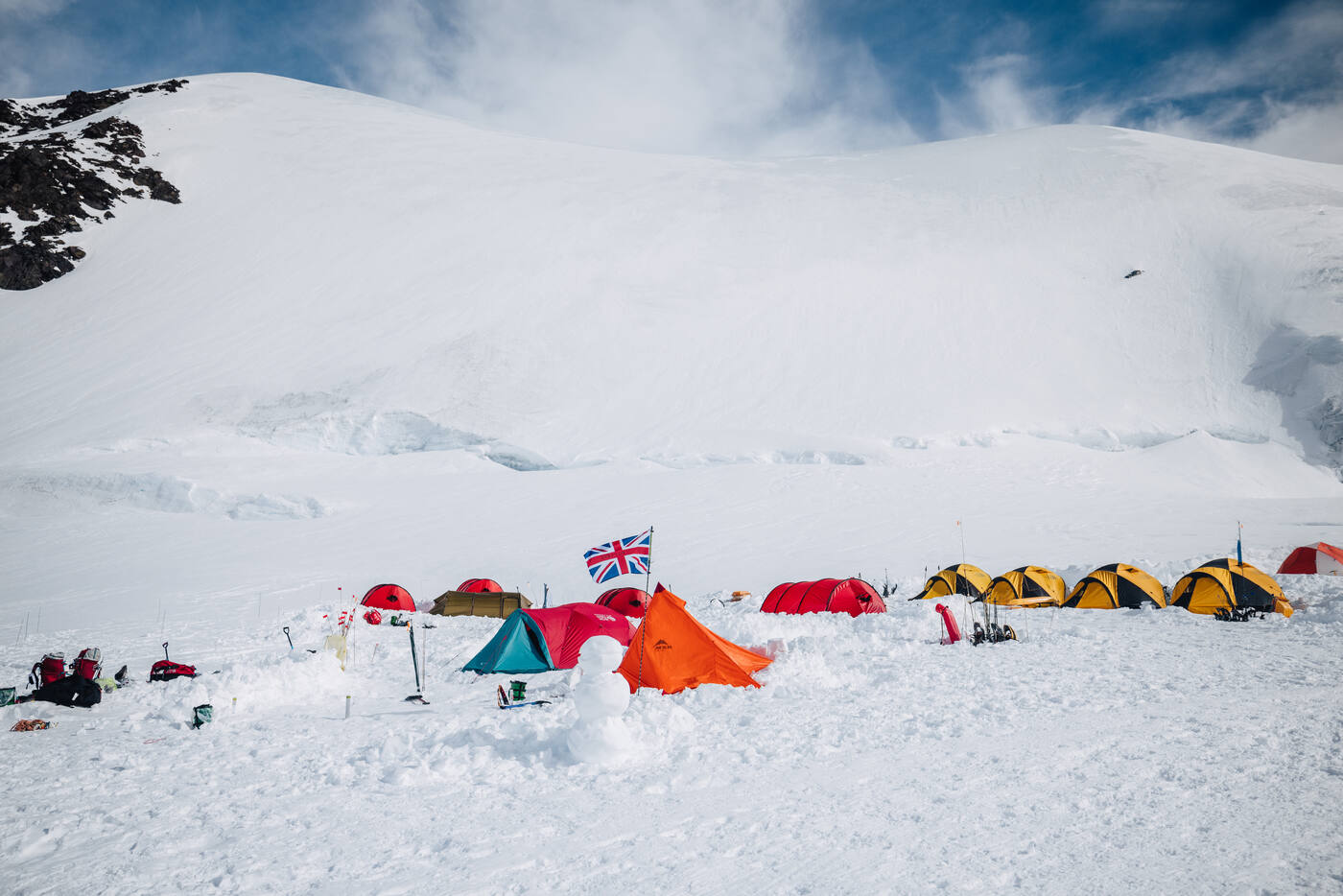
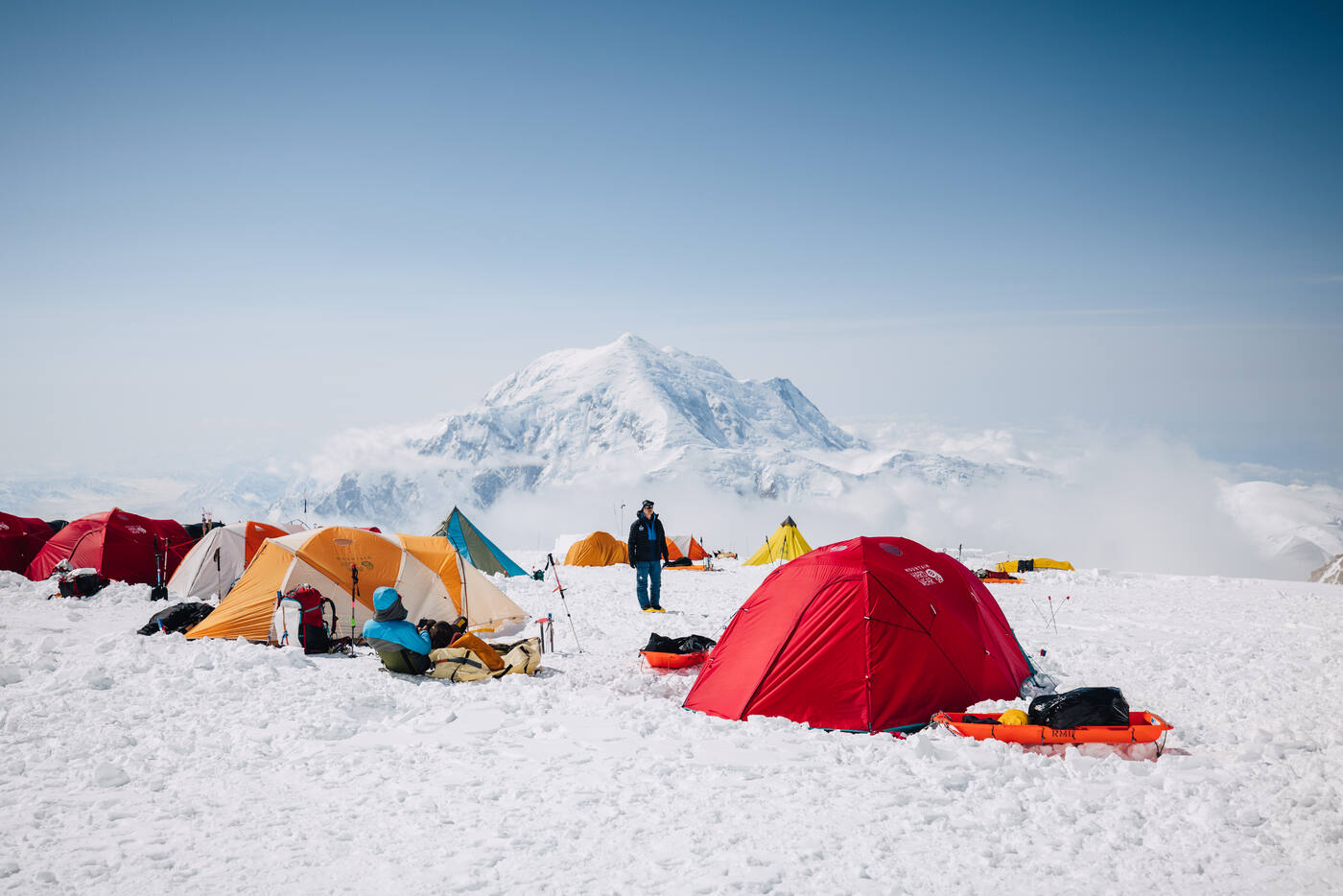
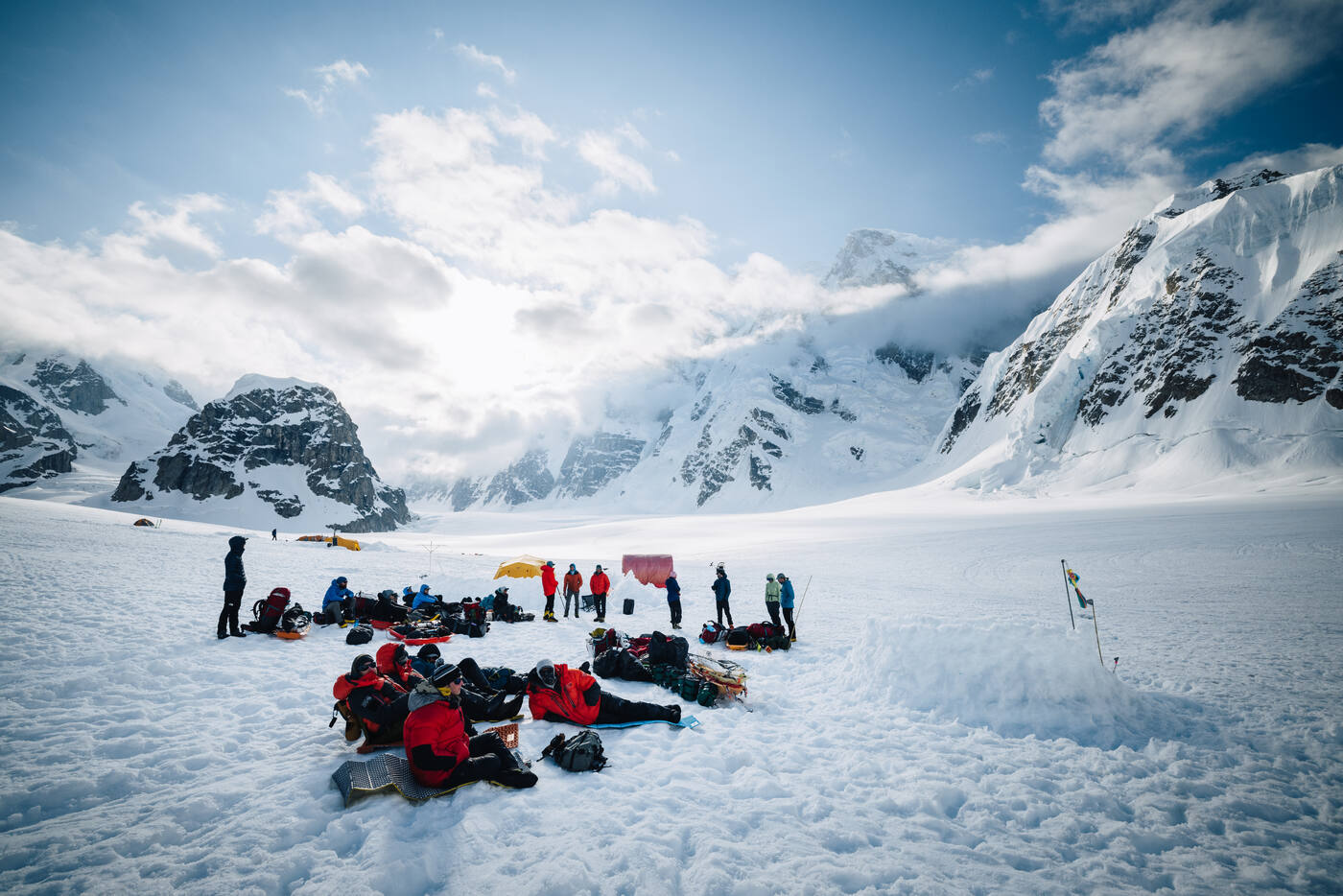
Camp life at 11,200 feet. Climbers from all over the world sharing the glacier.Hauling the sled up Motorcycle Hill. The sleds fought us every step of the way through this section.
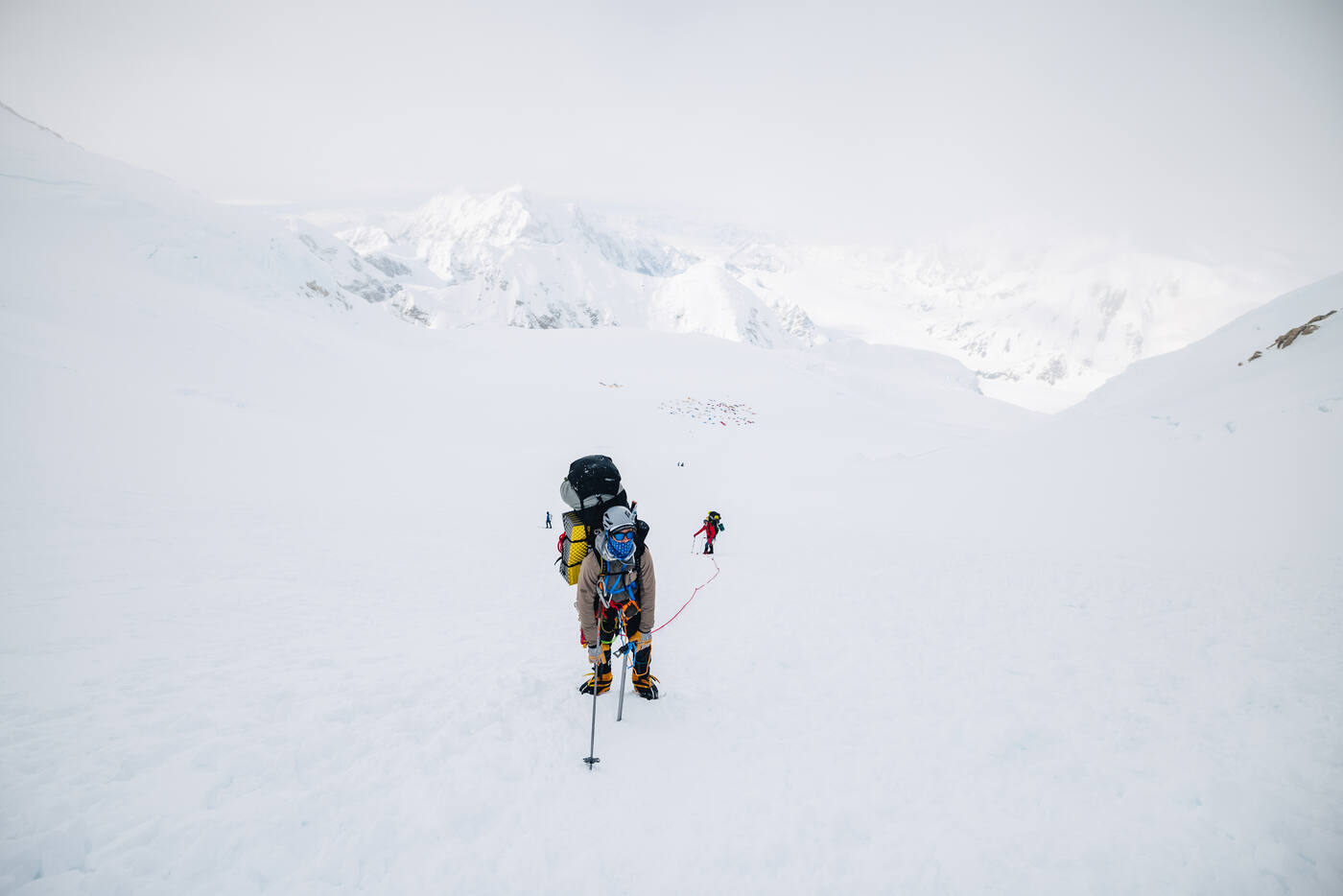
The push up Motorcycle Hill. Steep, crevassed, and relentless.A breather between Squirrel Hill and Windy Corner. Sleds parked, rope slack, the next pitch waiting above.
Approaching Windy Corner. The most difficult section for hauling sleds—they pulled us toward the crevasses with every gust.
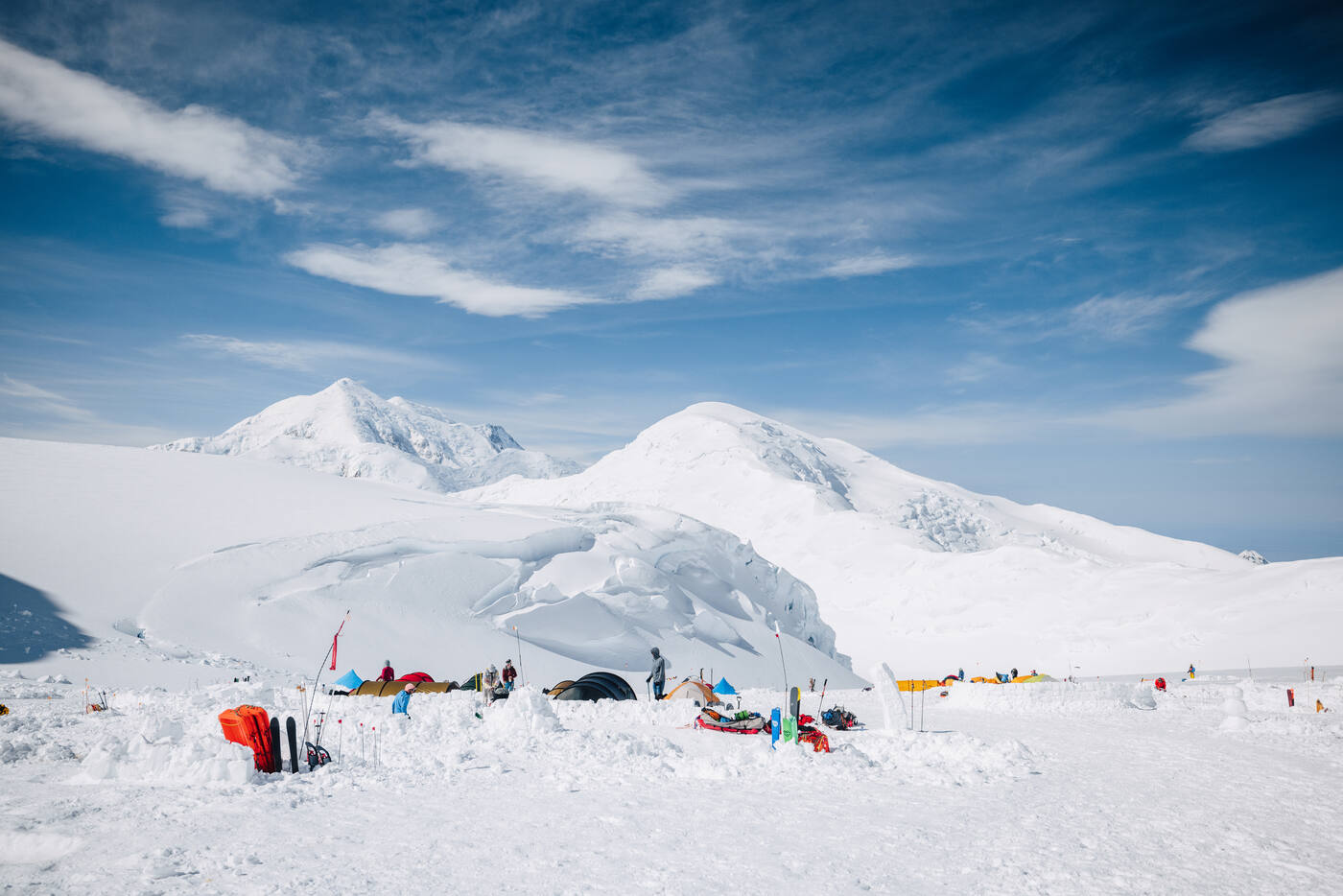
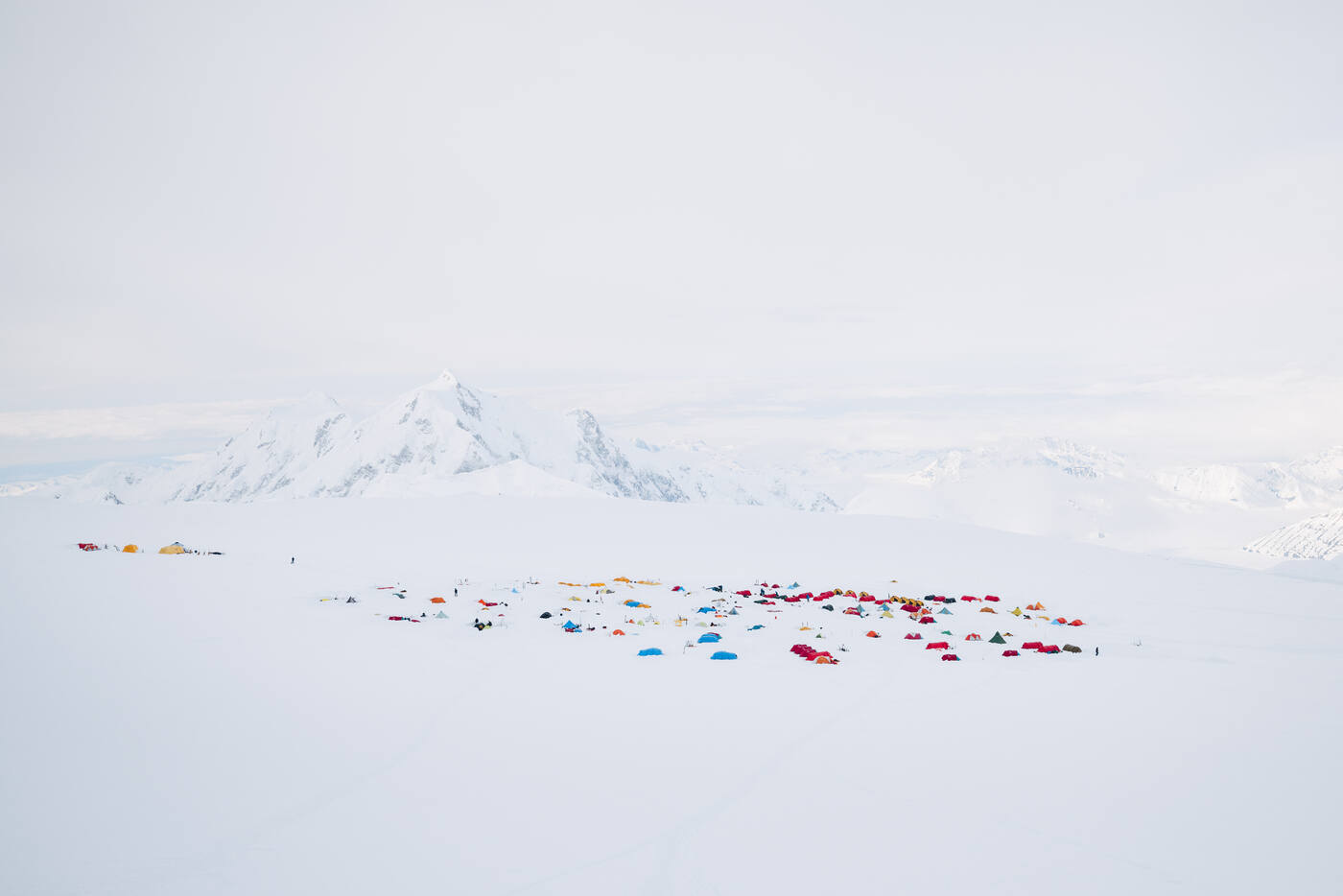
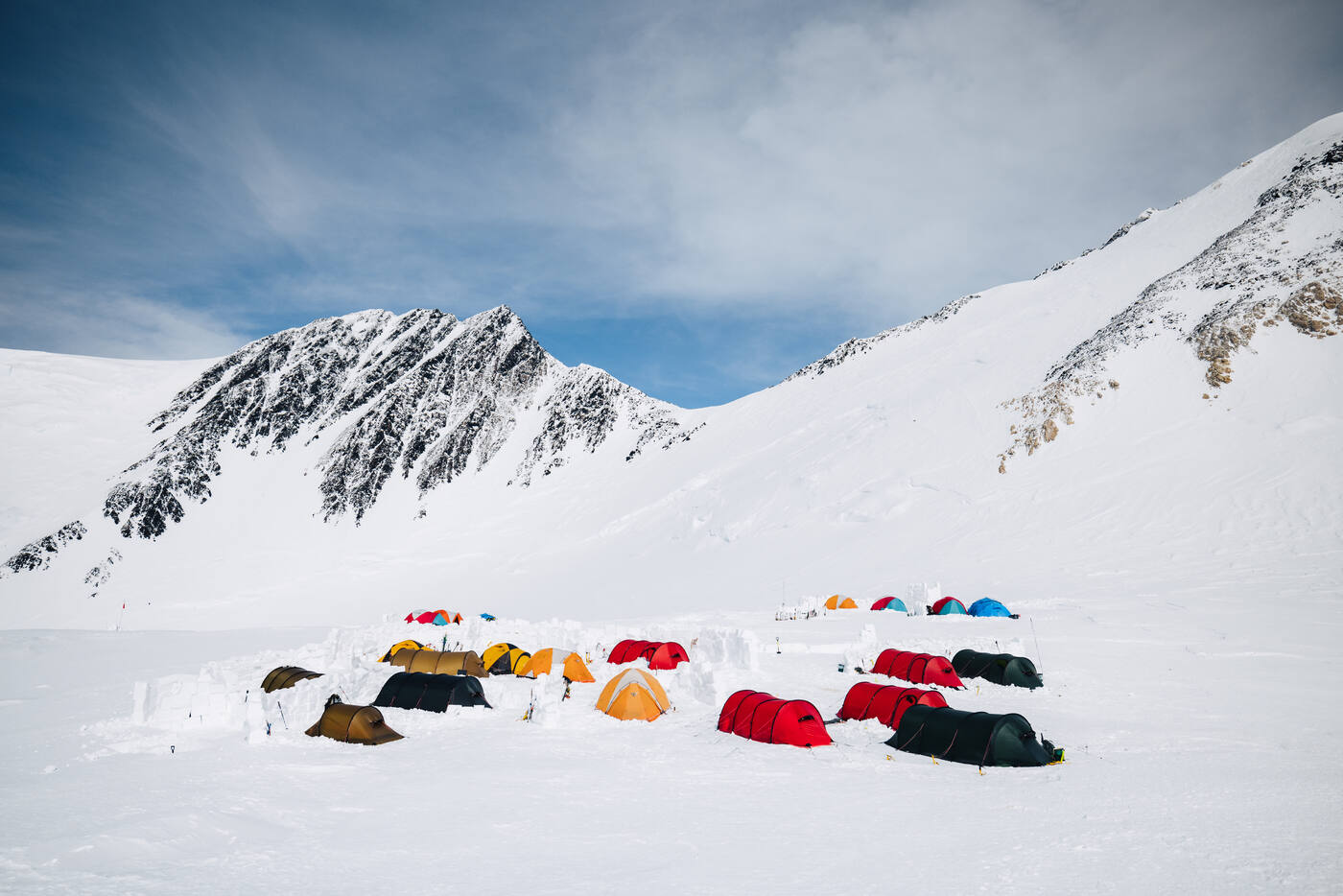
We made it after a grueling five and a half hours in a single carry. Reaching 14,200 ft Camp was a major milestone. It felt like a mini-city on the mountain—climbers from all around the world, colorful tents tucked behind snow walls, and a real sense of camaraderie among the teams. From here, it was all about resting, recovering, and carefully watching the weather for the right window to push higher.
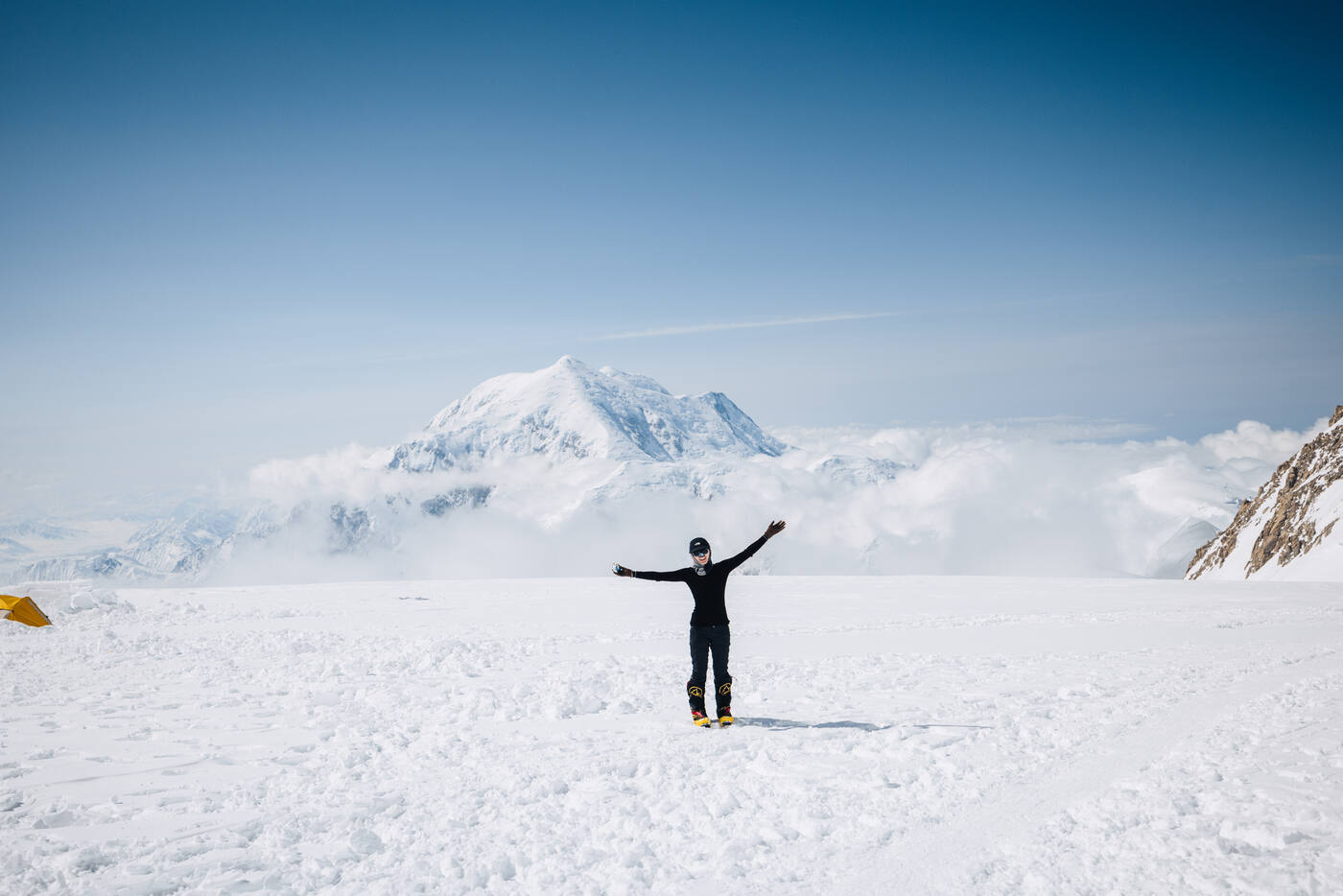
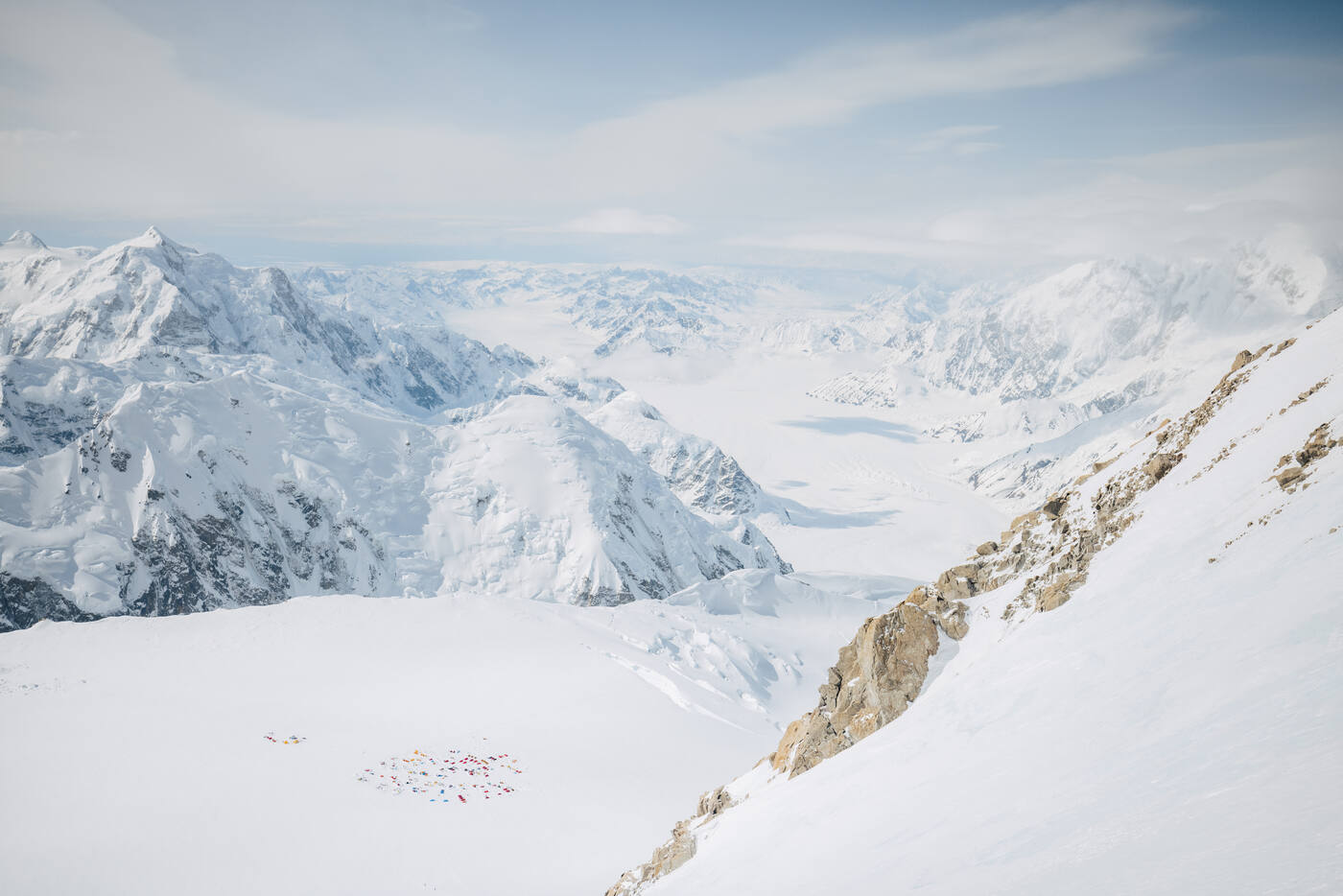
Standing at 14,200 ft Camp with the Alaska Range behind. The scale of this place never stopped humbling us.
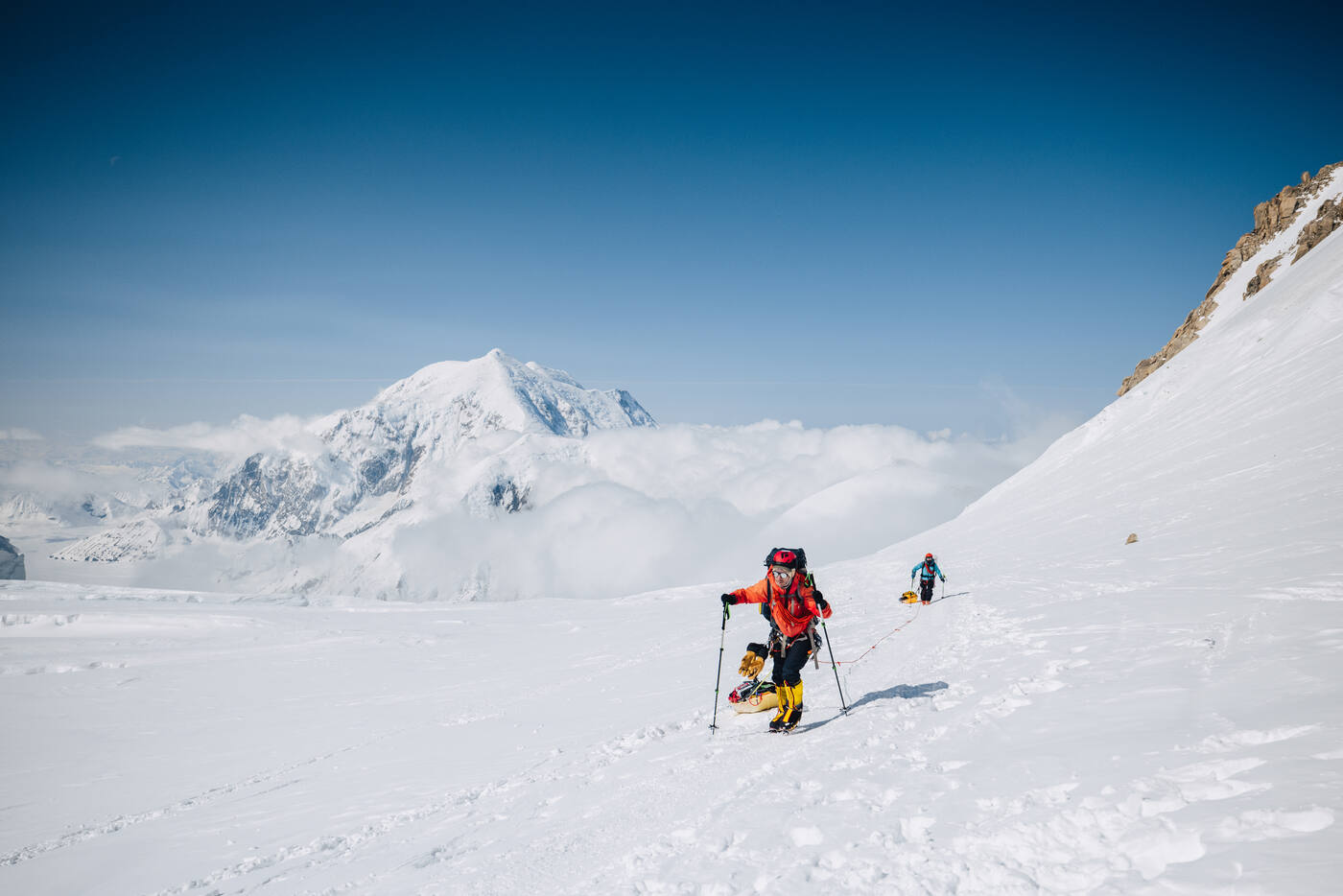
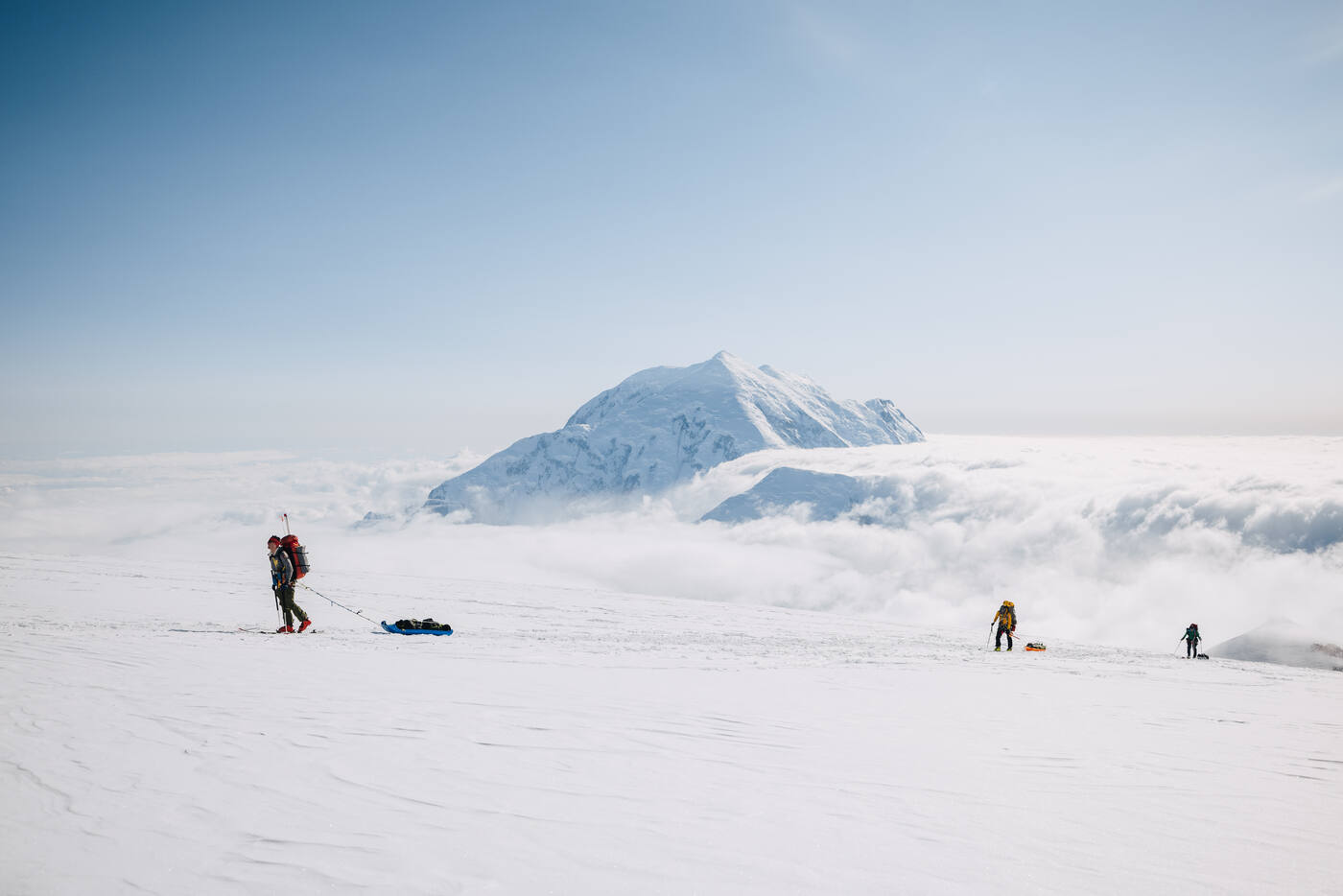
Afternoon arrival at 14k. Exhausted but relieved to have made it through Windy Corner.Hauling sleds above the clouds. The glacier stretched endlessly ahead, the world far below.
Days 7–8: Fixed Lines to 17,200 ft High Camp
May 24–25, 2022 · 14,200 ft → 17,200 ft Camp · 4,328 m → 5,243 m
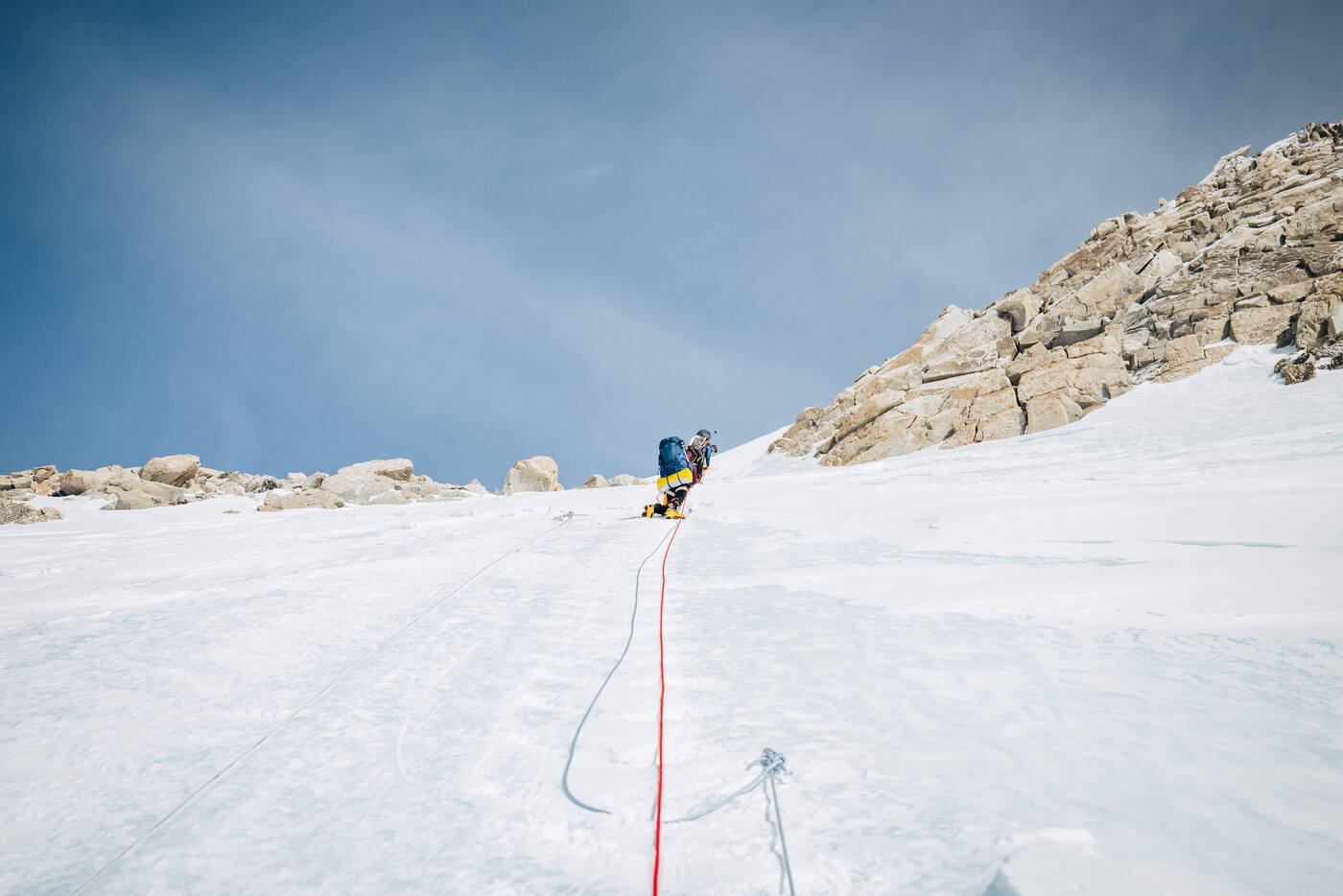
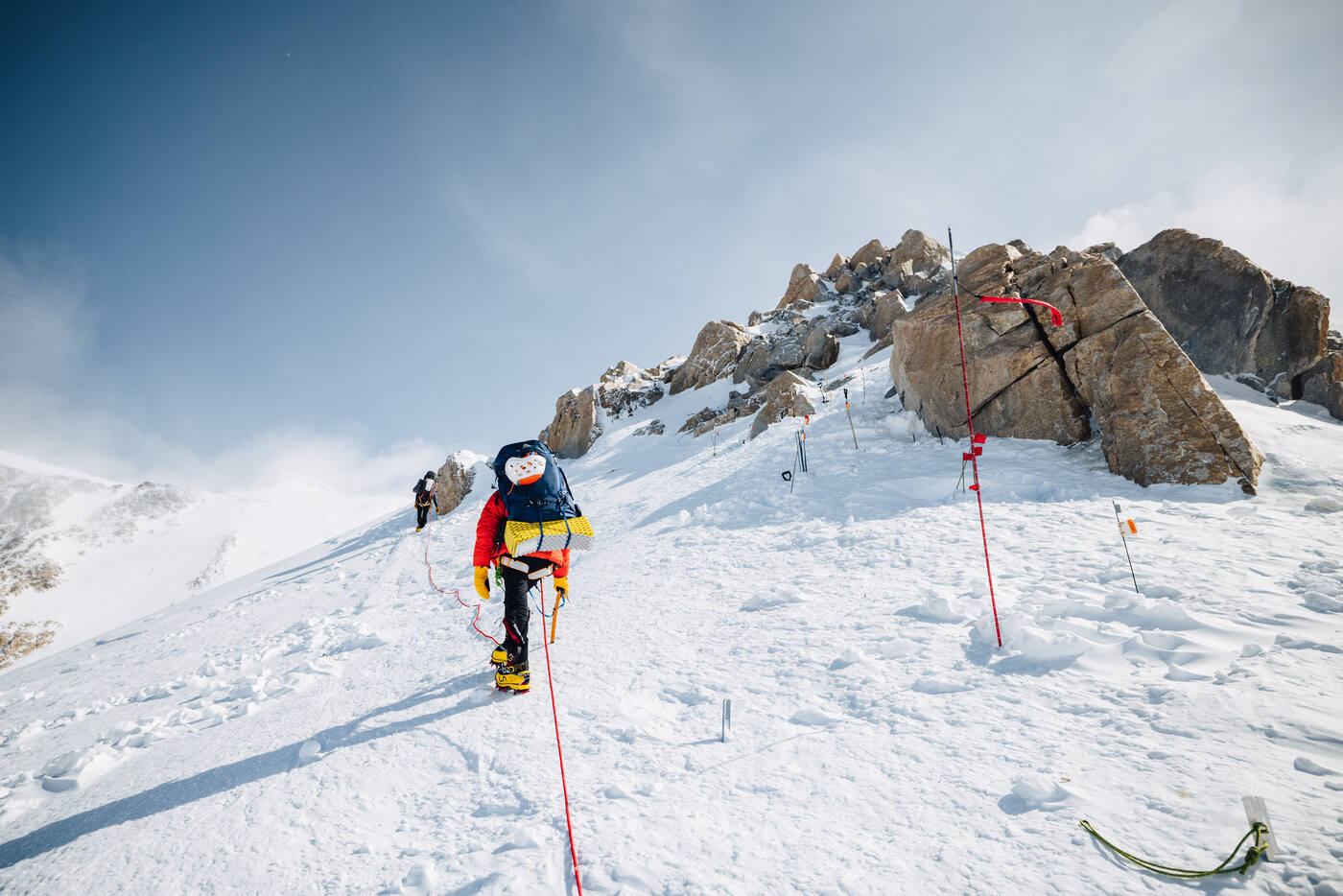
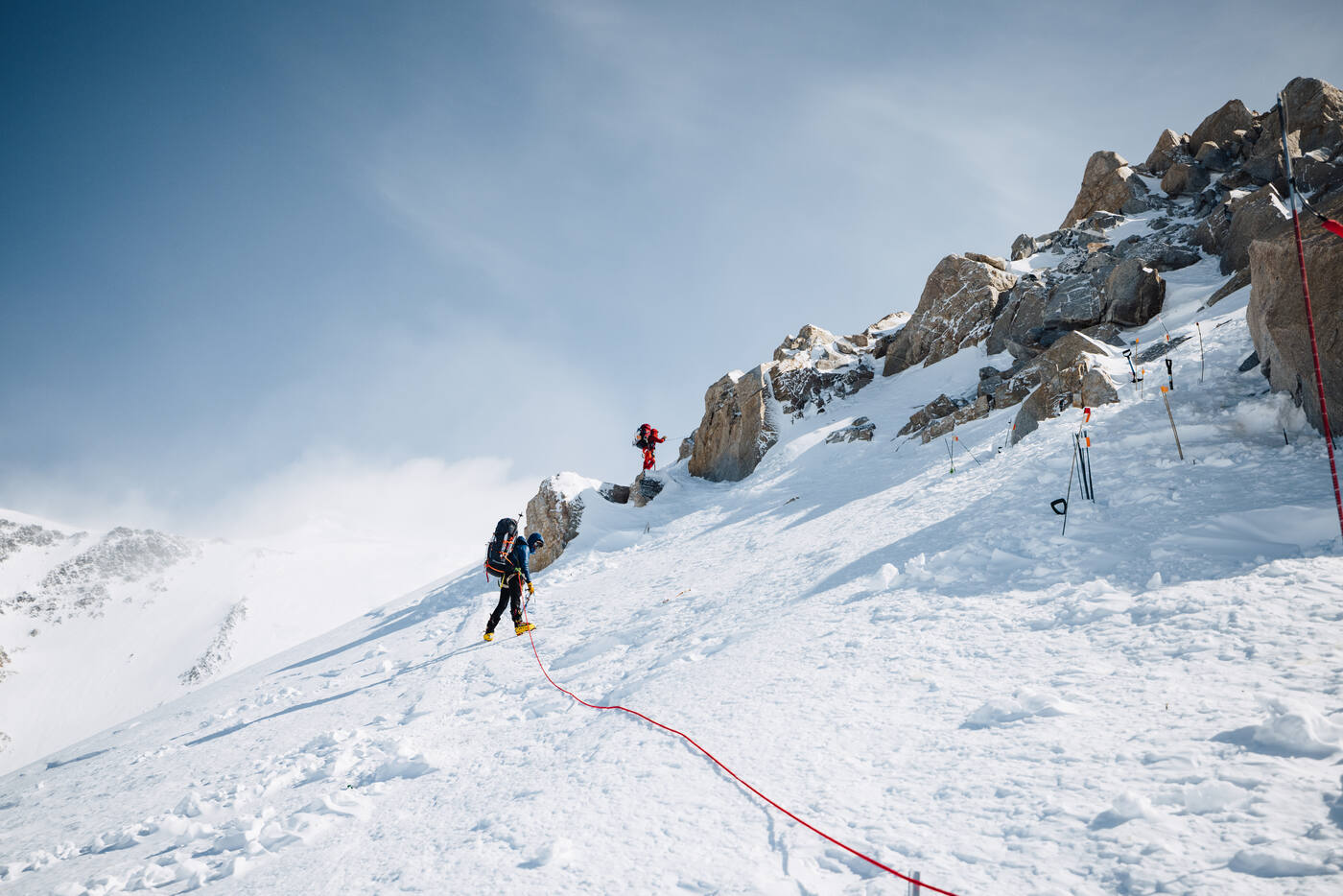
The longest and most technically demanding climbing day on Denali was the move from 14,200 ft to 17,200 ft High Camp, lasting seven and a half hours. The first section is brutally steep—about fifty degrees—and consists of fixed lines strung together and anchored to the mountain with snow pickets over blue ice. We used ascenders connected to our harnesses, stepping up one move at a time with heavy packs. No sleds from here—everything we needed for high camp and summit day was on our backs.
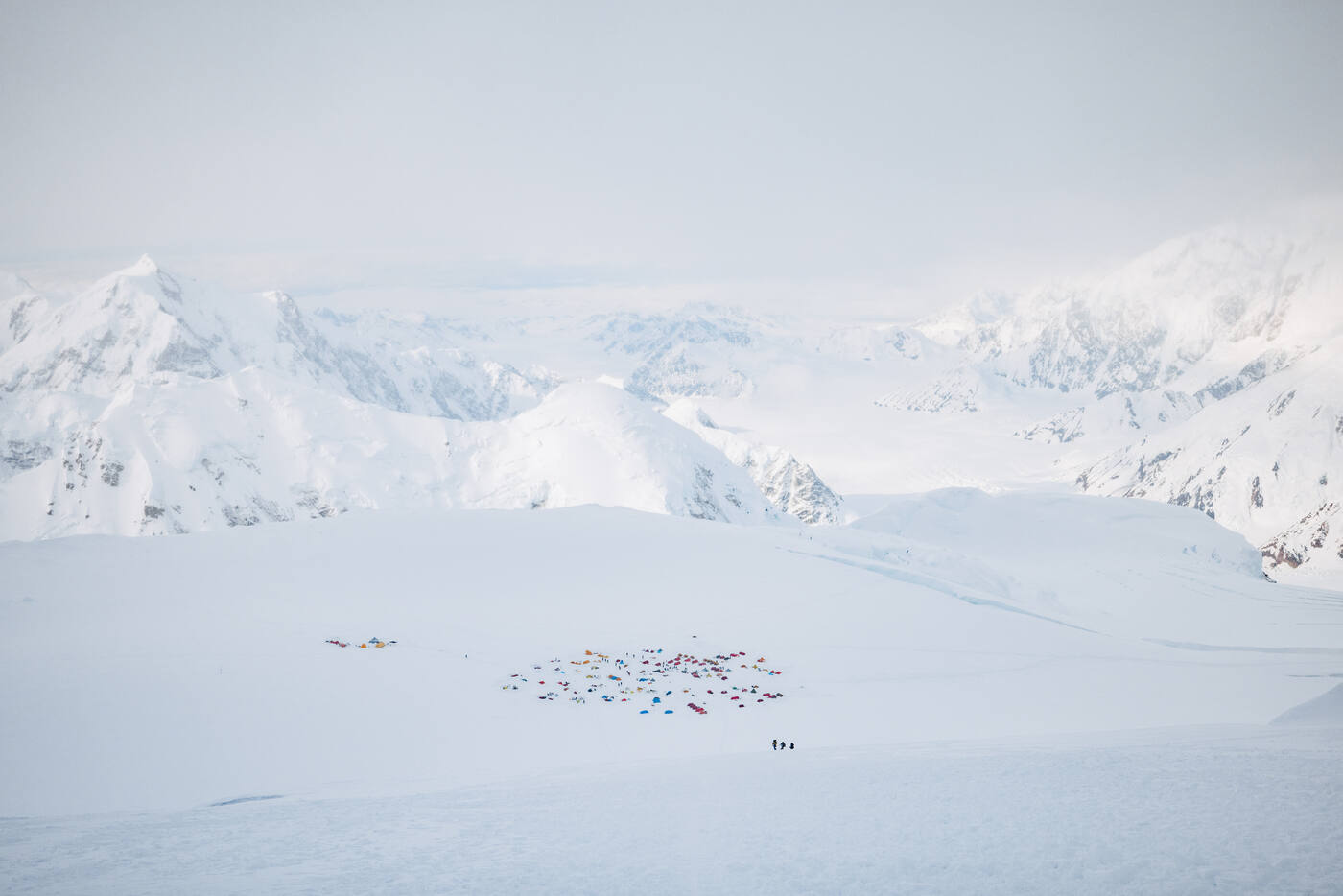
The sprawl of 14k camp from above. Dozens of teams, hundreds of tents, all waiting for a weather window.On the fixed lines. Fifty-degree blue ice, ascender clipped in, one step at a time.
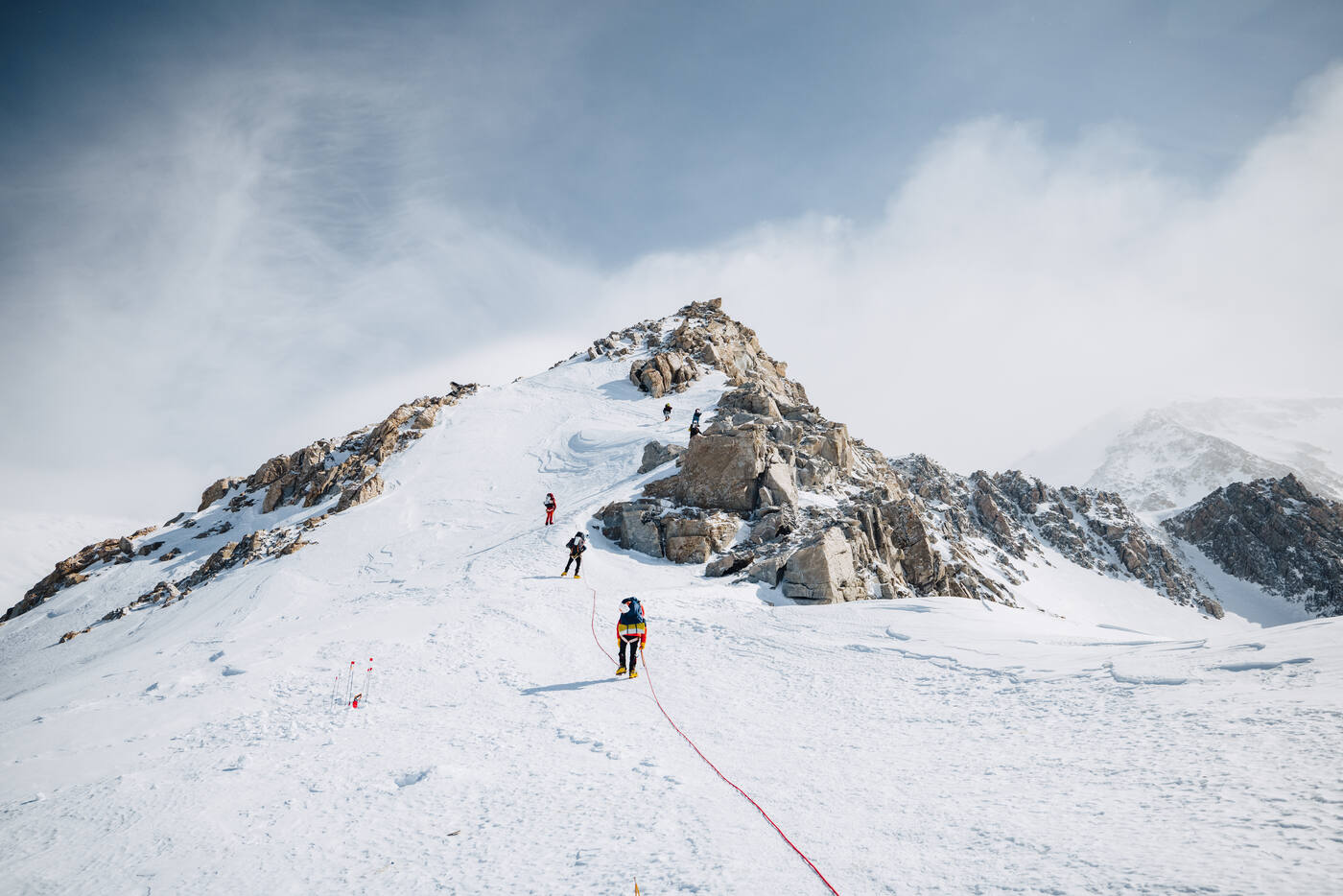
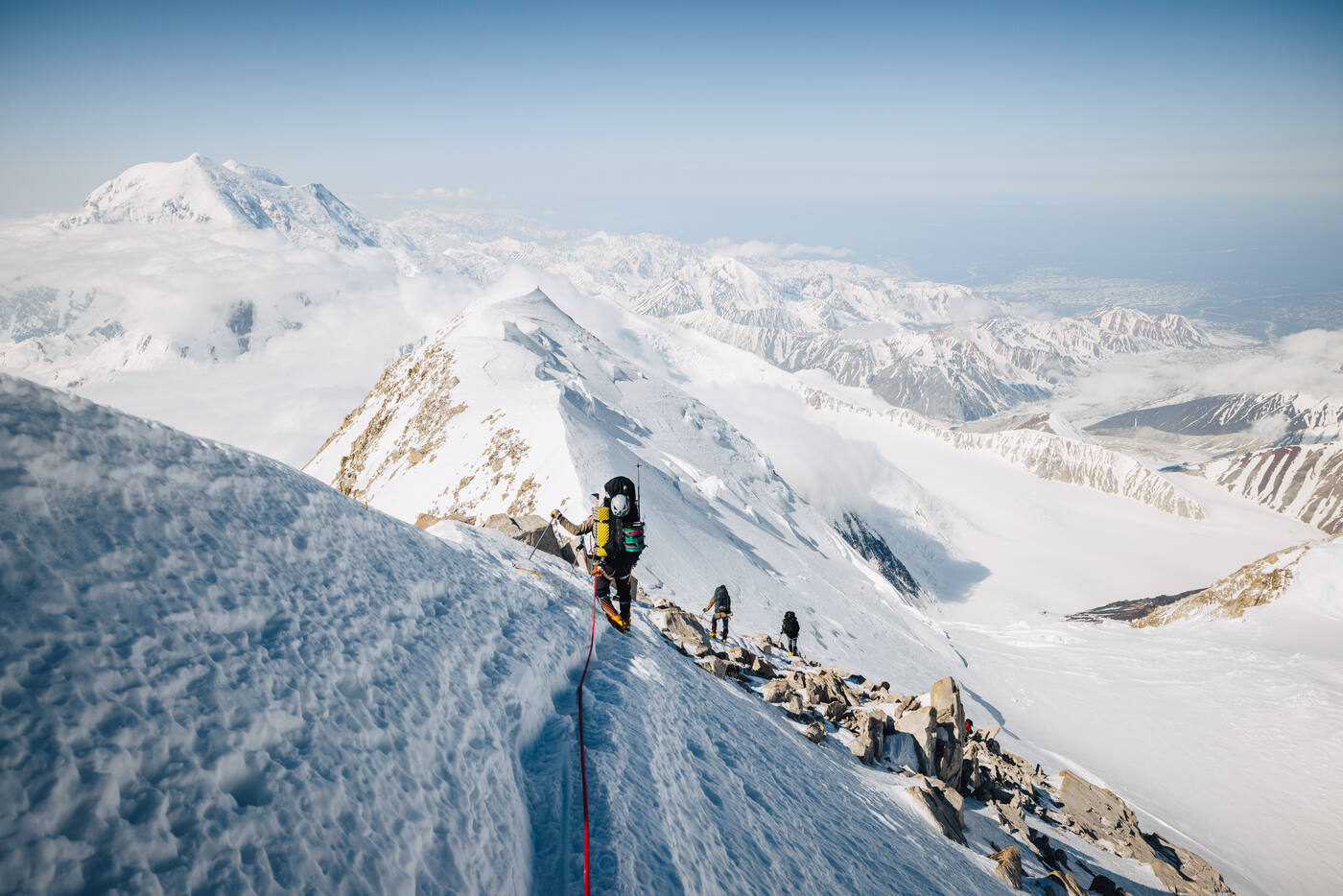
The team spread out on the fixed lines. Rocky terrain above, the glacier far below.Approaching the 16k ridge. The exposure on both sides was intense.
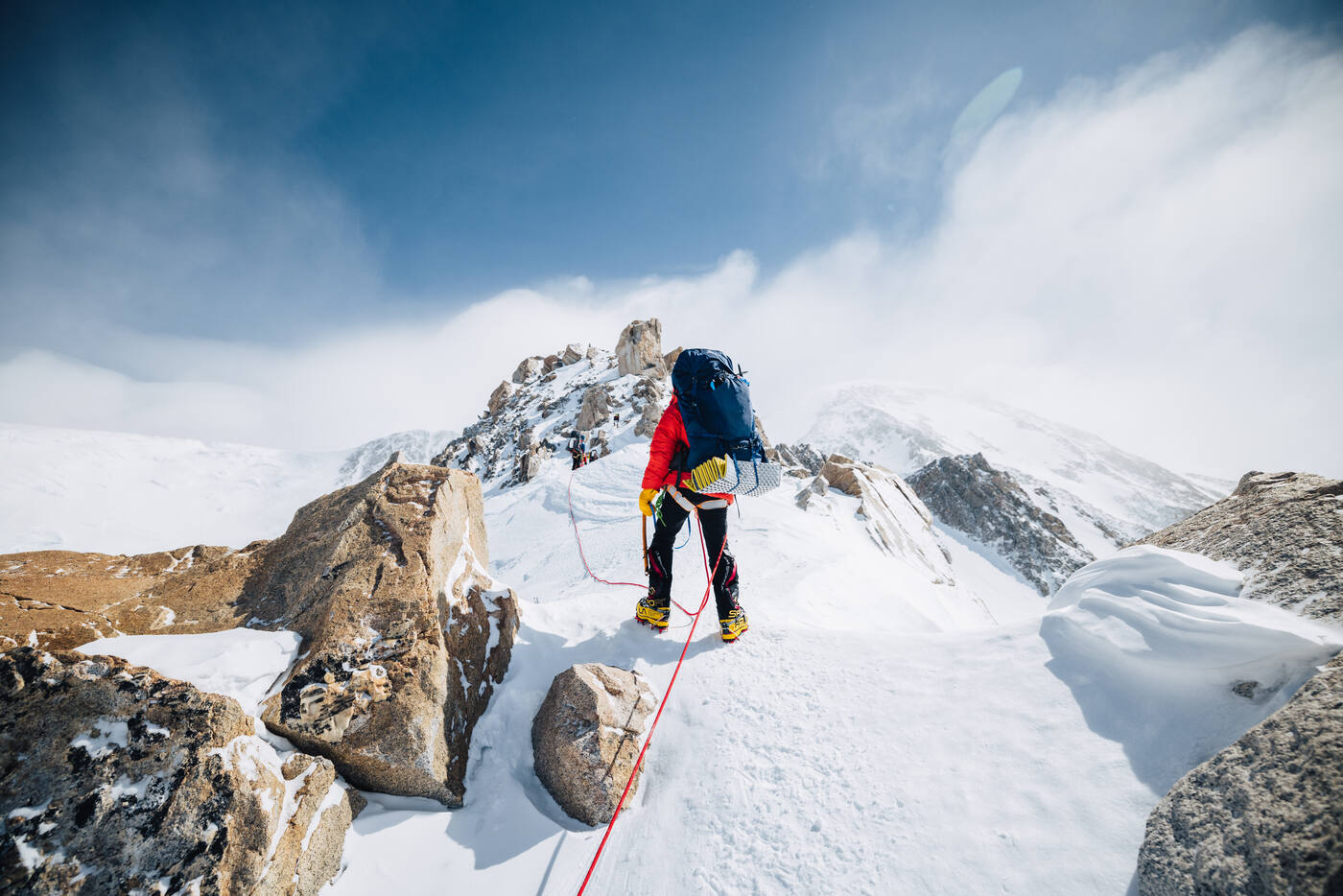
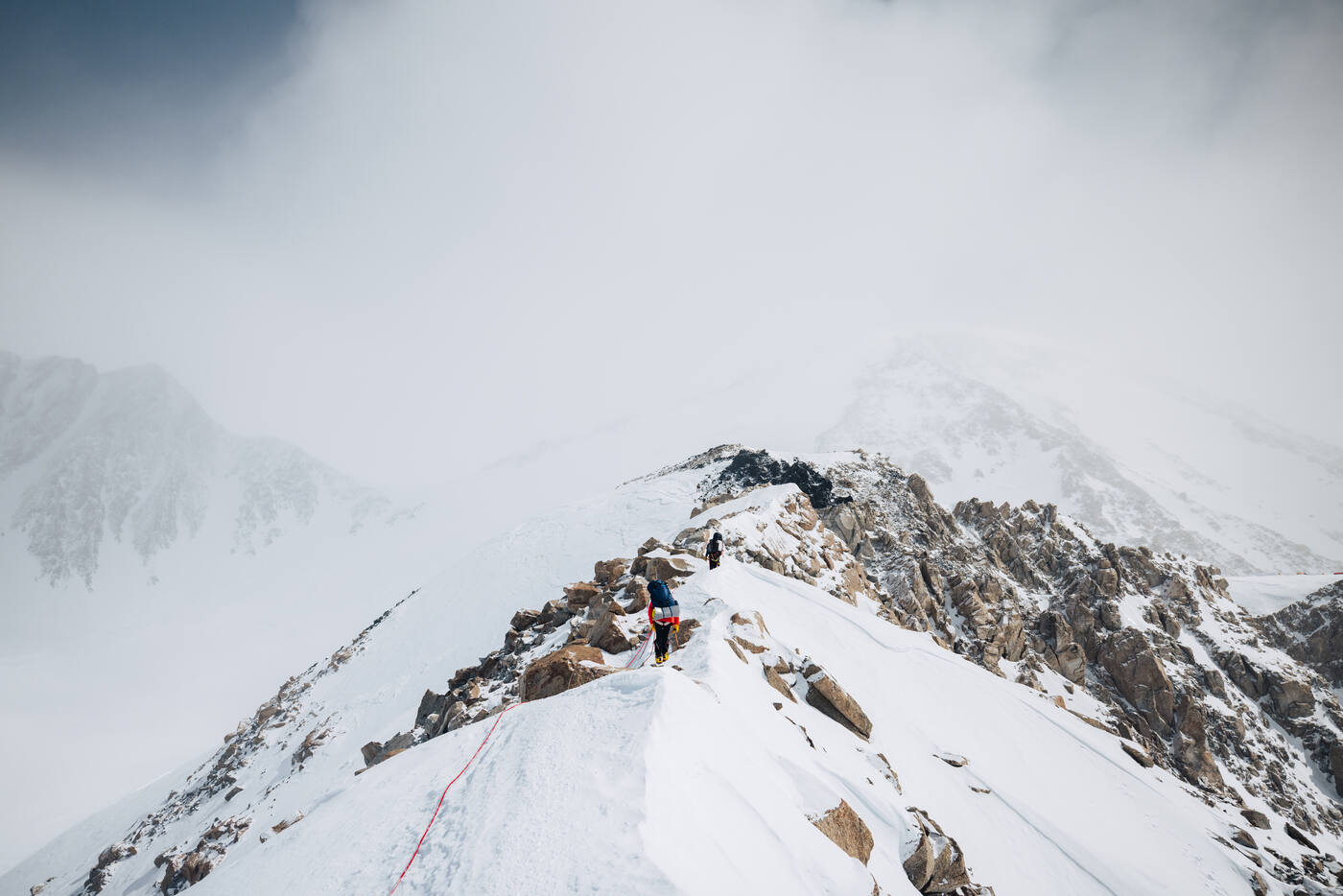
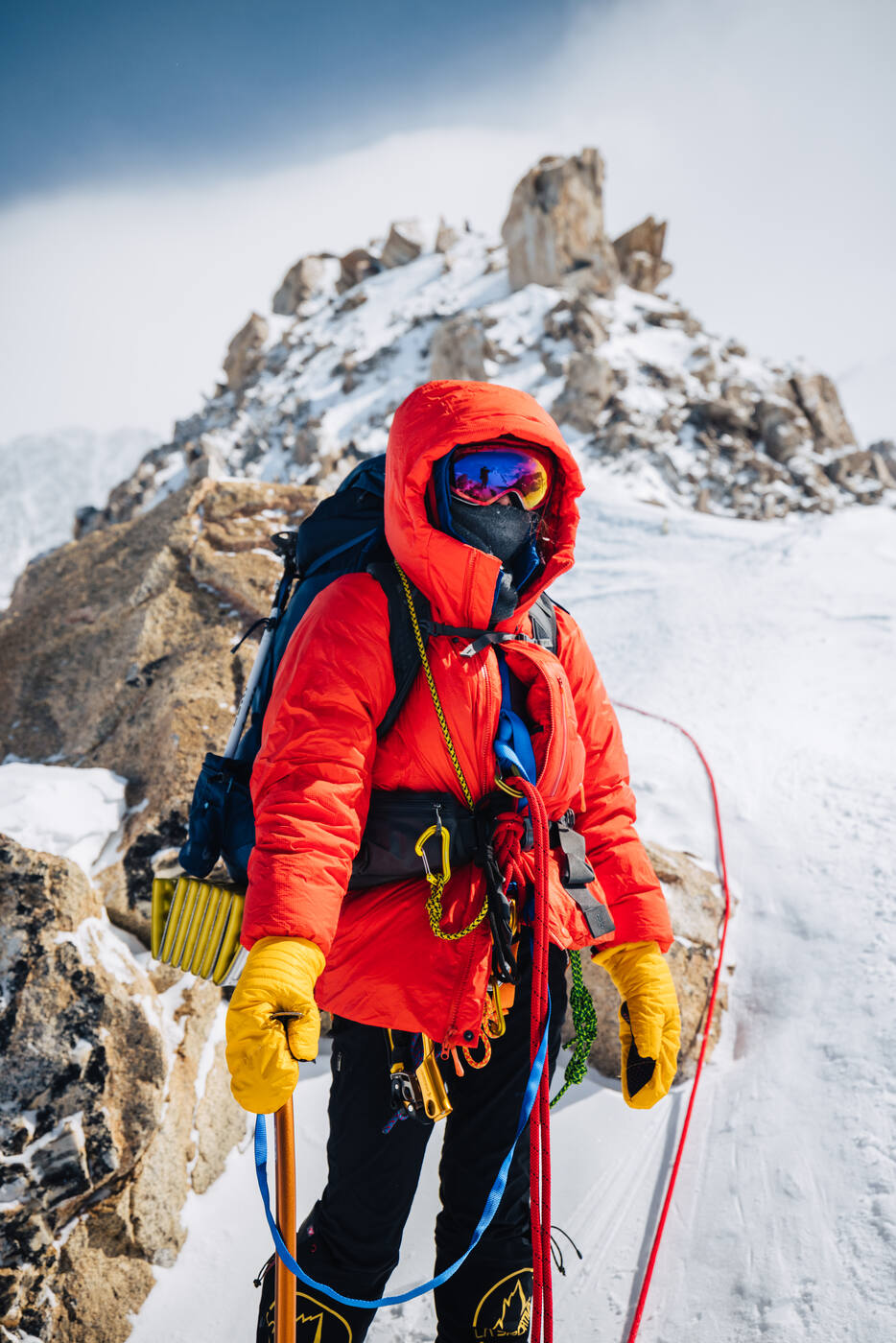
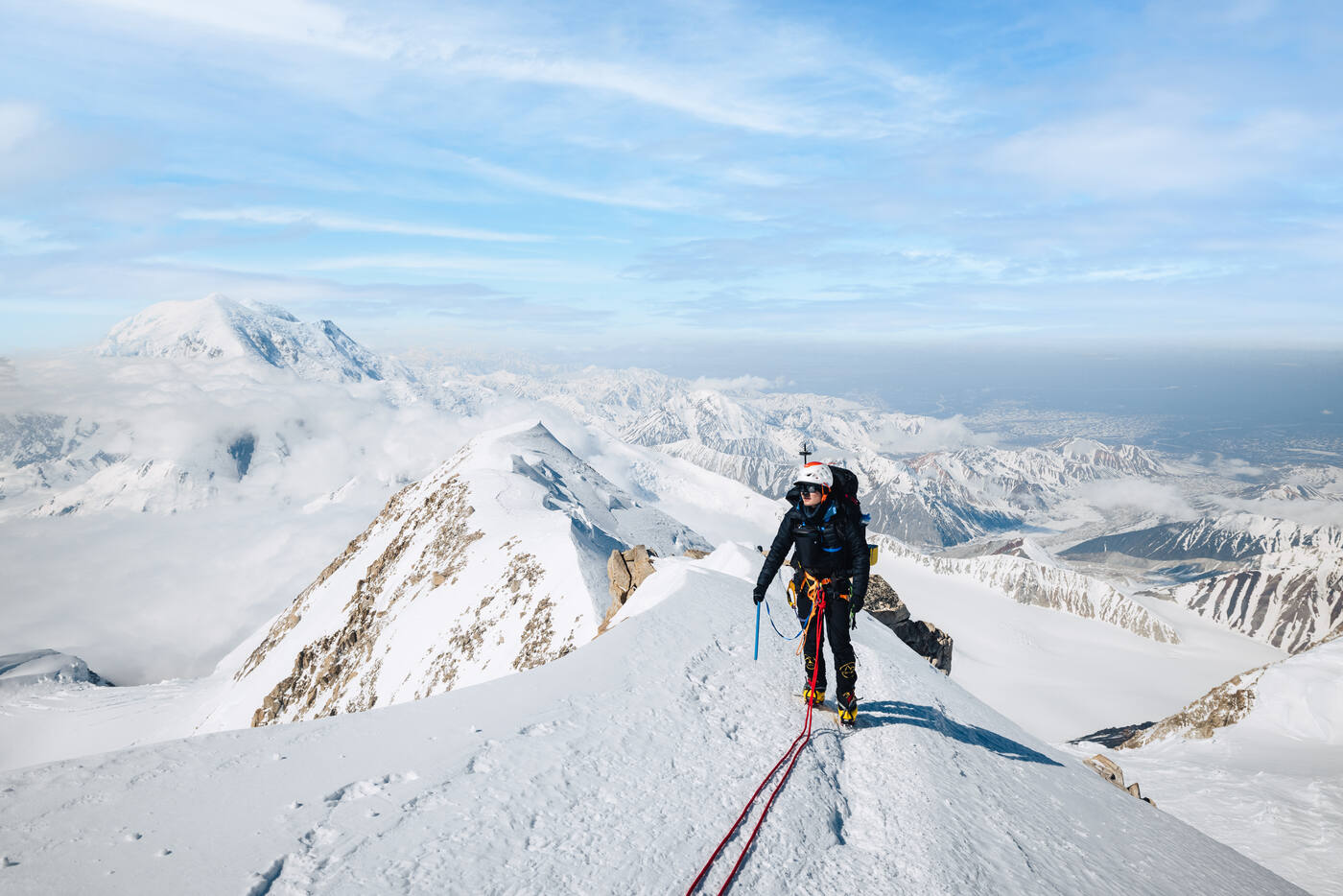
Once above the fixed lines, it was a windy battle across the exposed 16,000-foot ridge overlooking pristine mountains on both sides. We had to clip in several times for safety as gusts tried to knock us off balance.
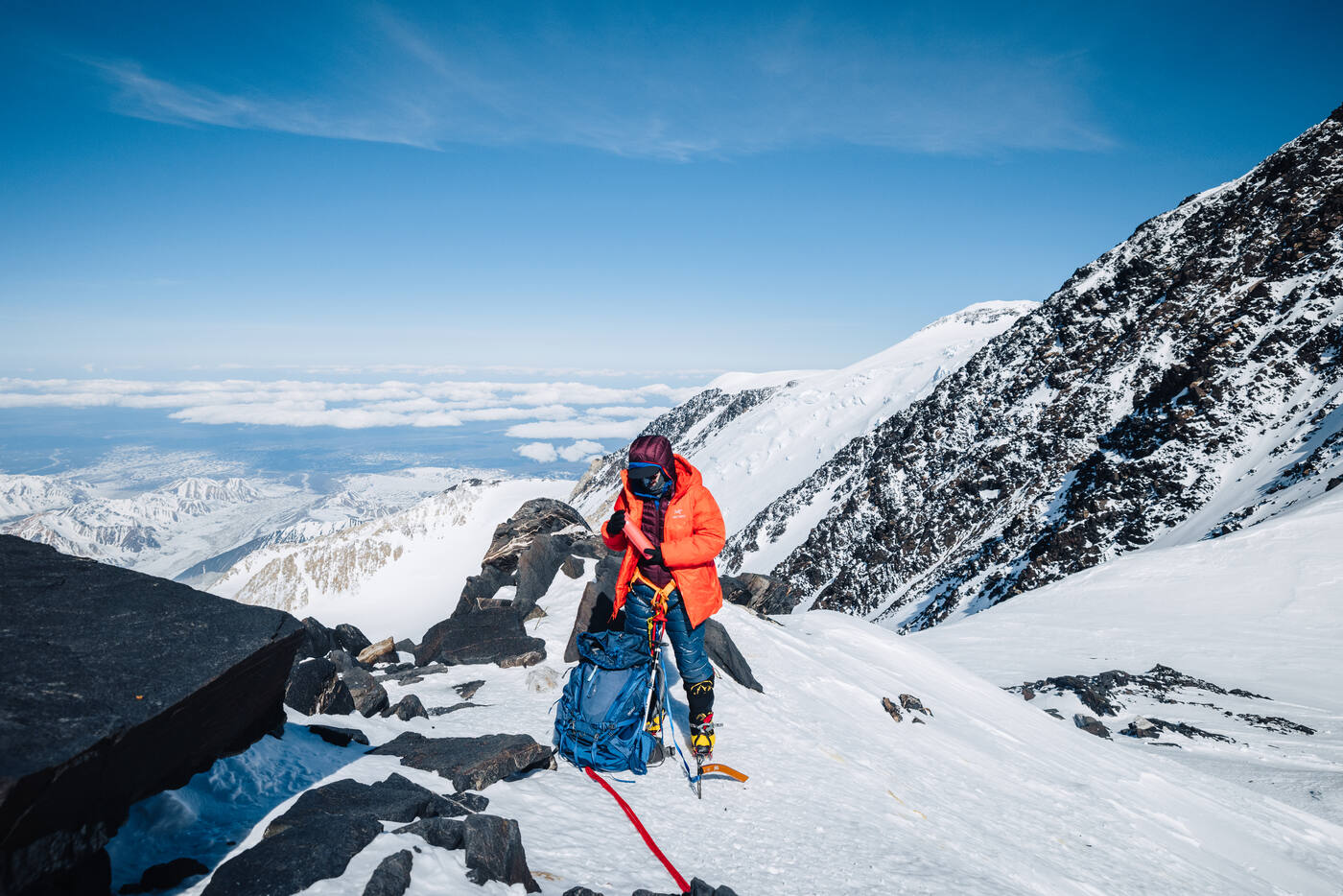
Navigating the rocky ridge above the fixed lines. Exposed on both sides with nowhere to hide.
The 16k ridge. Wind in our faces, ice beneath our crampons.Almost there. The final push toward 17,200 ft High Camp.
Traversing the exposed ridge above 16,000 feet. Wind-blasted snow on both sides, the route narrowing to a knife edge.The tent city at high camp. Dug into snow walls for protection against the wind.
Grace taking it all in near high camp. The Alaska Range stretching out in every direction from 17,200 feet.
Days 9–10: Waiting for the Window
May 26–27, 2022 · 17,200 ft High Camp · 5,243 m
At 17,200 feet, the air was thin and the temperature freezing. The only times we left our sleeping bags and tent were to use the outdoor toilet or check the weather forecast that arrived via radio each day. The wind shook the tent constantly and it felt like we might blow off the mountain at any moment. It was all about self-care and rest—eating, hydrating, and waiting for the perfect summit weather window.
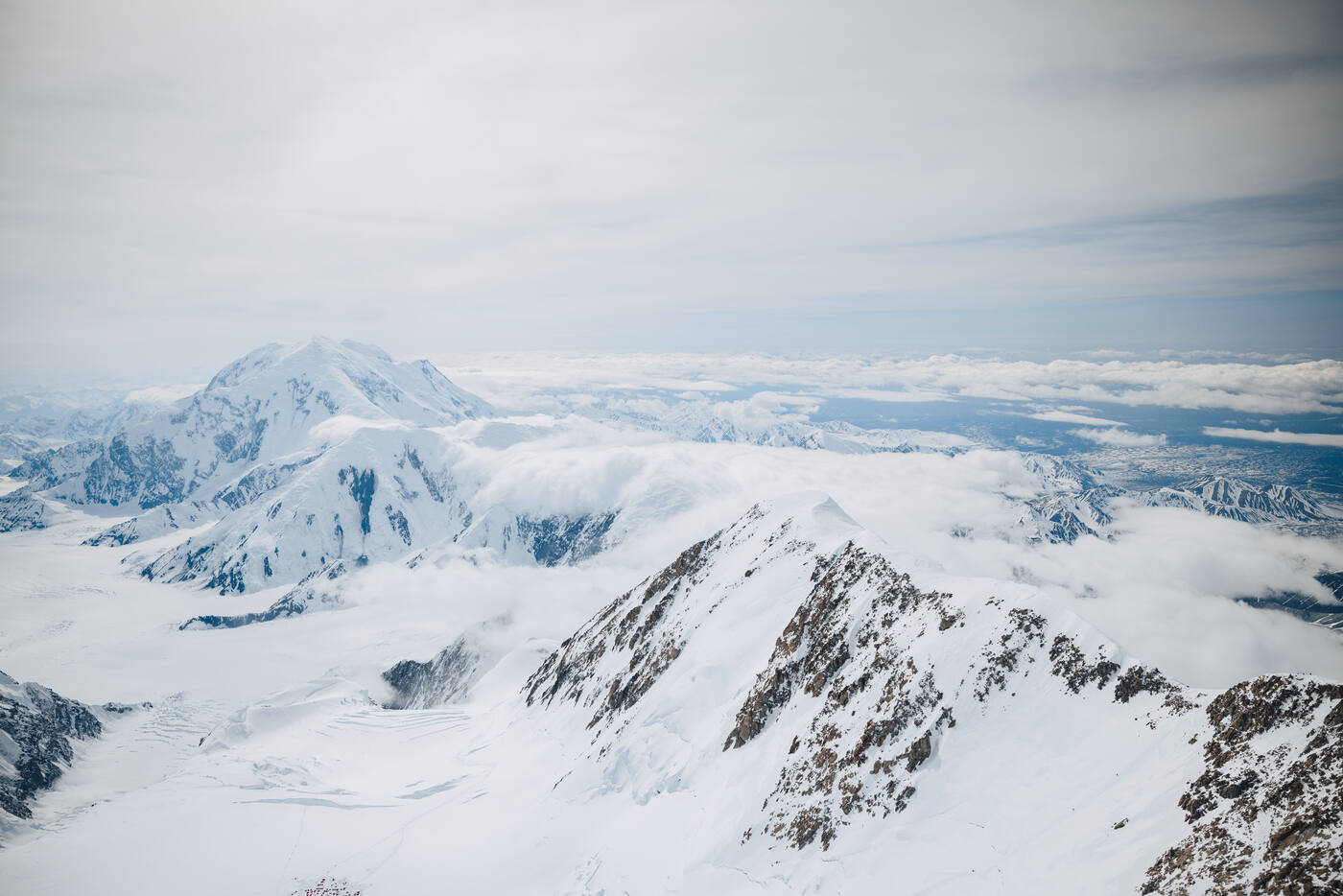
The Alaska Range from above 17,000 feet. Mountains and glaciers stretching in every direction, clouds pooling in the valleys far below.
After two full rest days, the forecast finally aligned. Clear skies, light wind, and a window that wouldn't last. It was time to go.
Day 11: The Roof of North America
May 28, 2022 · High Camp → Summit (6,190 m / 20,310 ft) · 11 hours round trip
A dream come true. After all the training, all the hard work, all the days hauling weight up and down the mountain, summit day arrived. Just outside of camp, we faced our first obstacle: the Autobahn, a dangerous and steep traverse to the saddle. It's nicknamed the Autobahn because if you fall and can't self-arrest, you pick up speed on the way down before dropping off the mountain into a crevasse. Concentration and proper use of crampons and ice axes were paramount. No mistakes allowed.
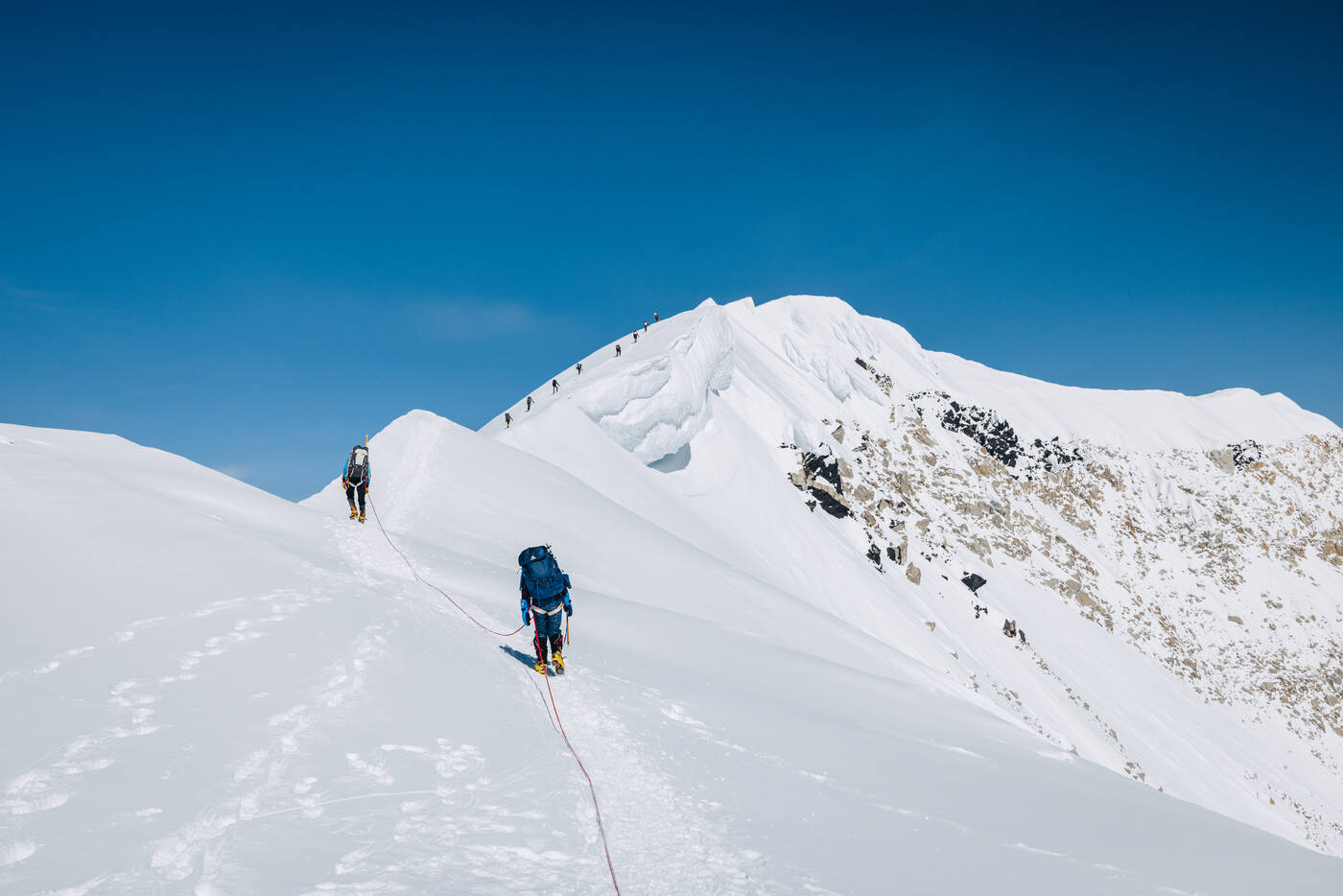
The early hours of summit day. Every step deliberate, every breath earned.Climbing toward the Autobahn. The most exposed and dangerous section of the route.
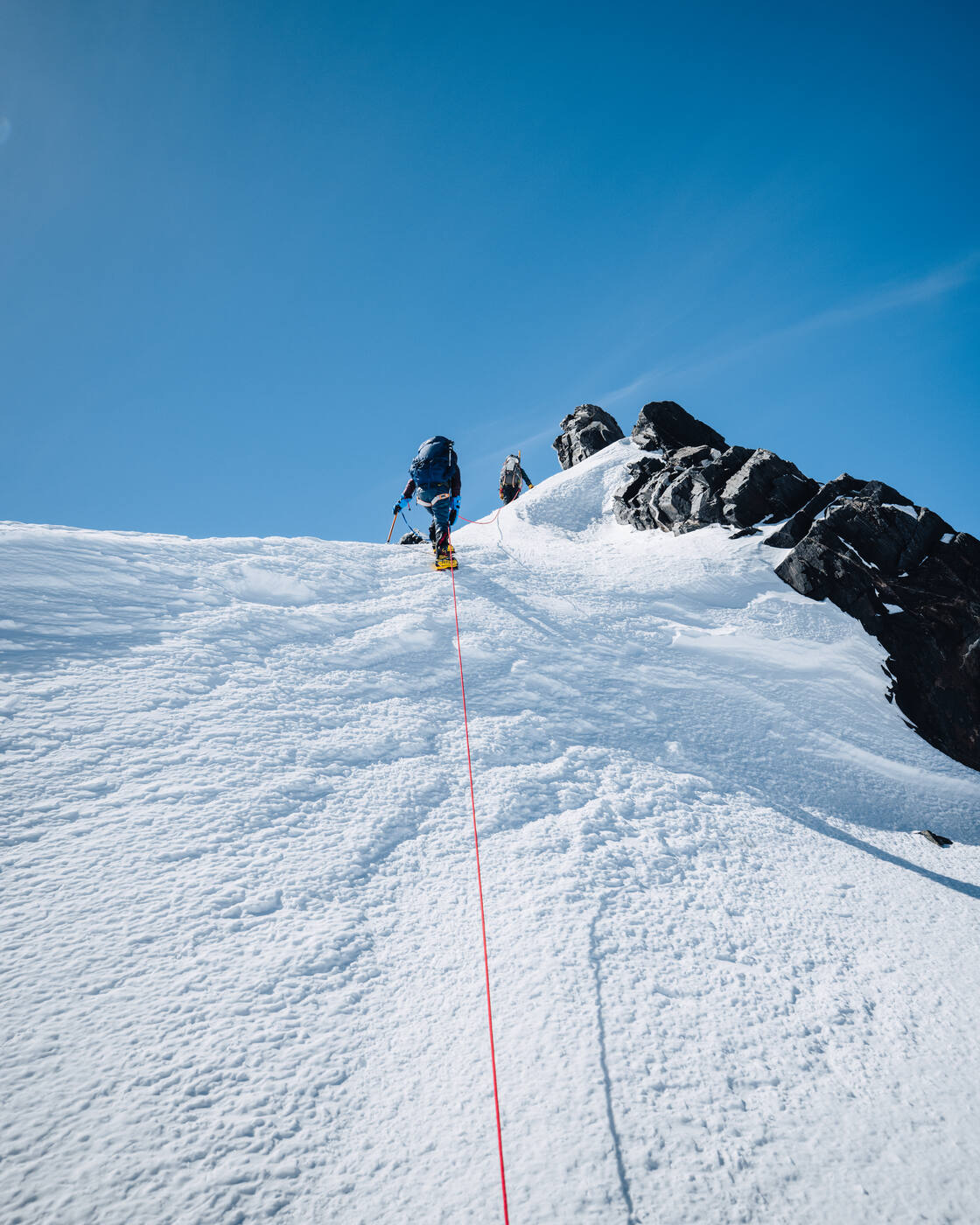
From the saddle between the two summits, we slowly continued up over an easy slope. Though it wasn't steep, the altitude made walking incredibly hard. Then came the Football Field—a flat section that led to a short but demanding final hill to the summit ridge. A series of switchbacks, then the ridge's crest, and only a few hundred feet to the grand finale.
Approaching the summit. The entire Alaska Range spread out below like a map.
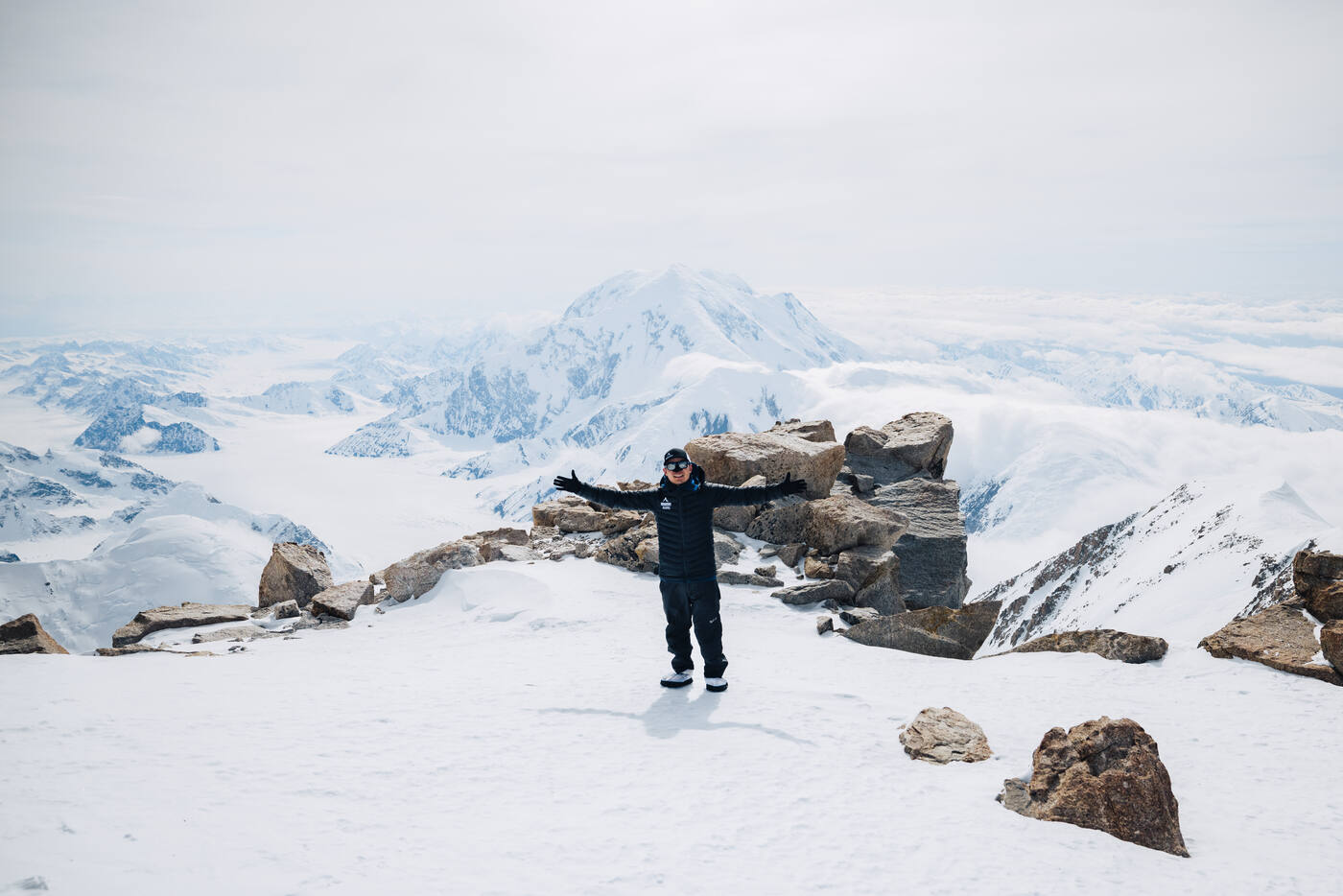
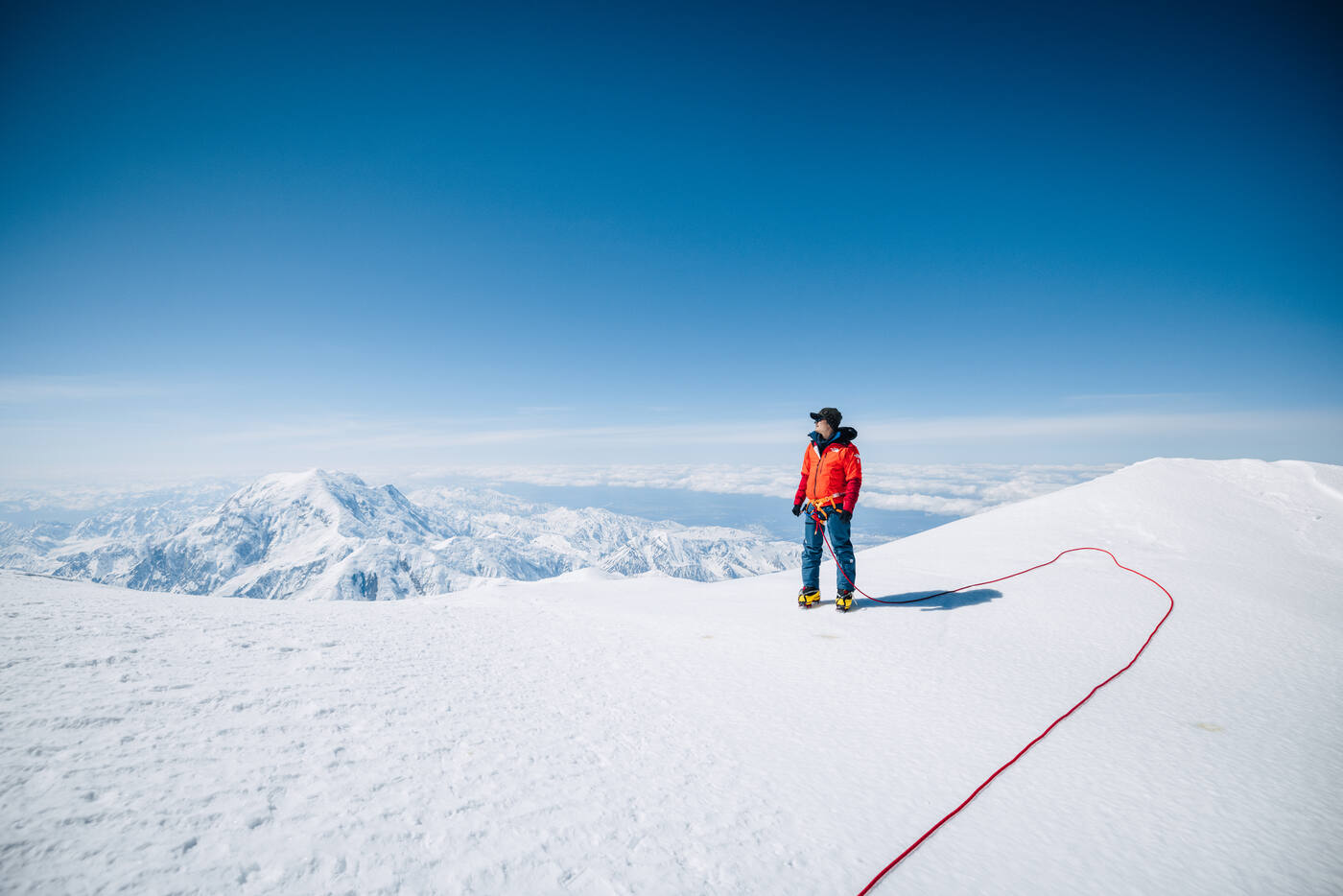
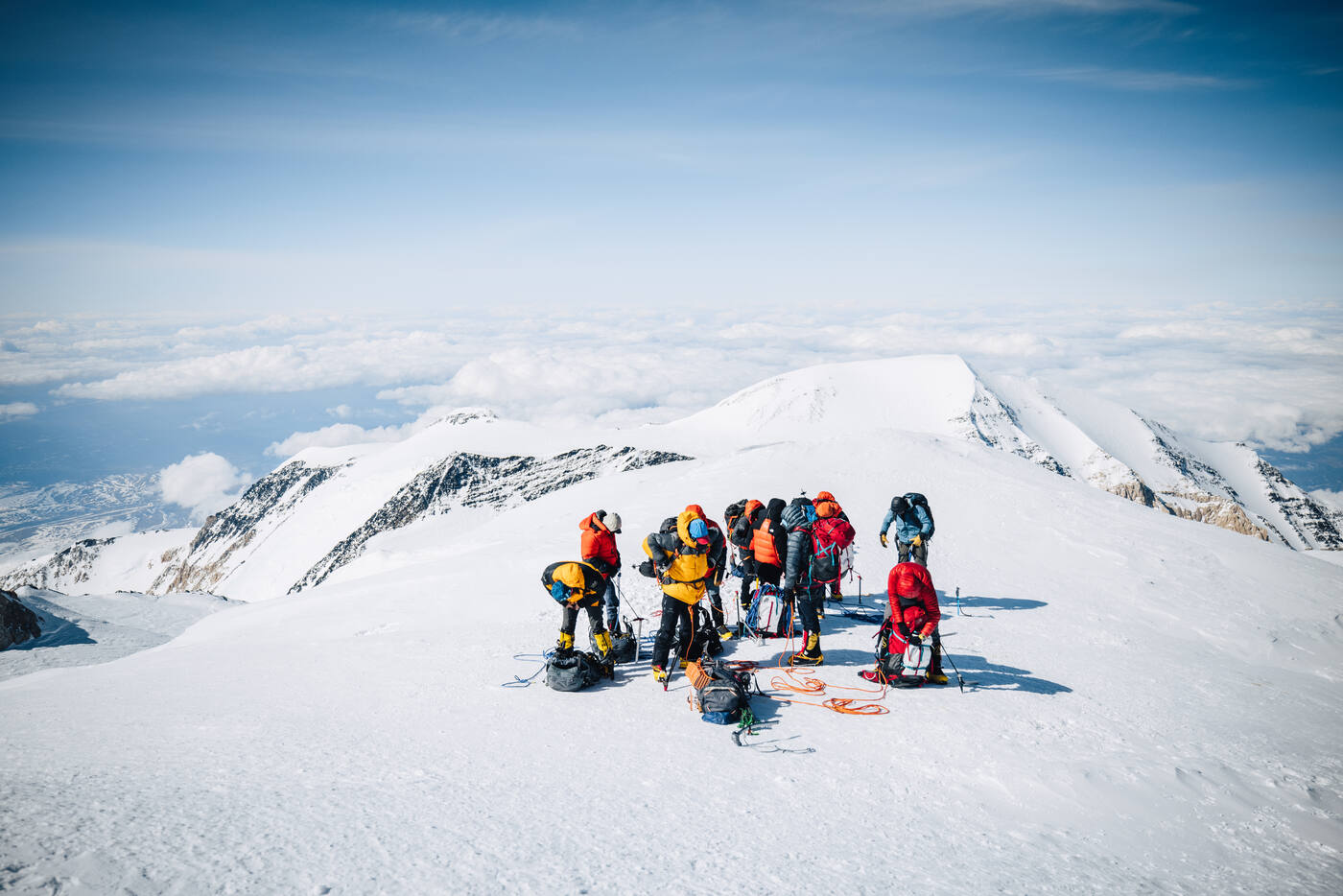
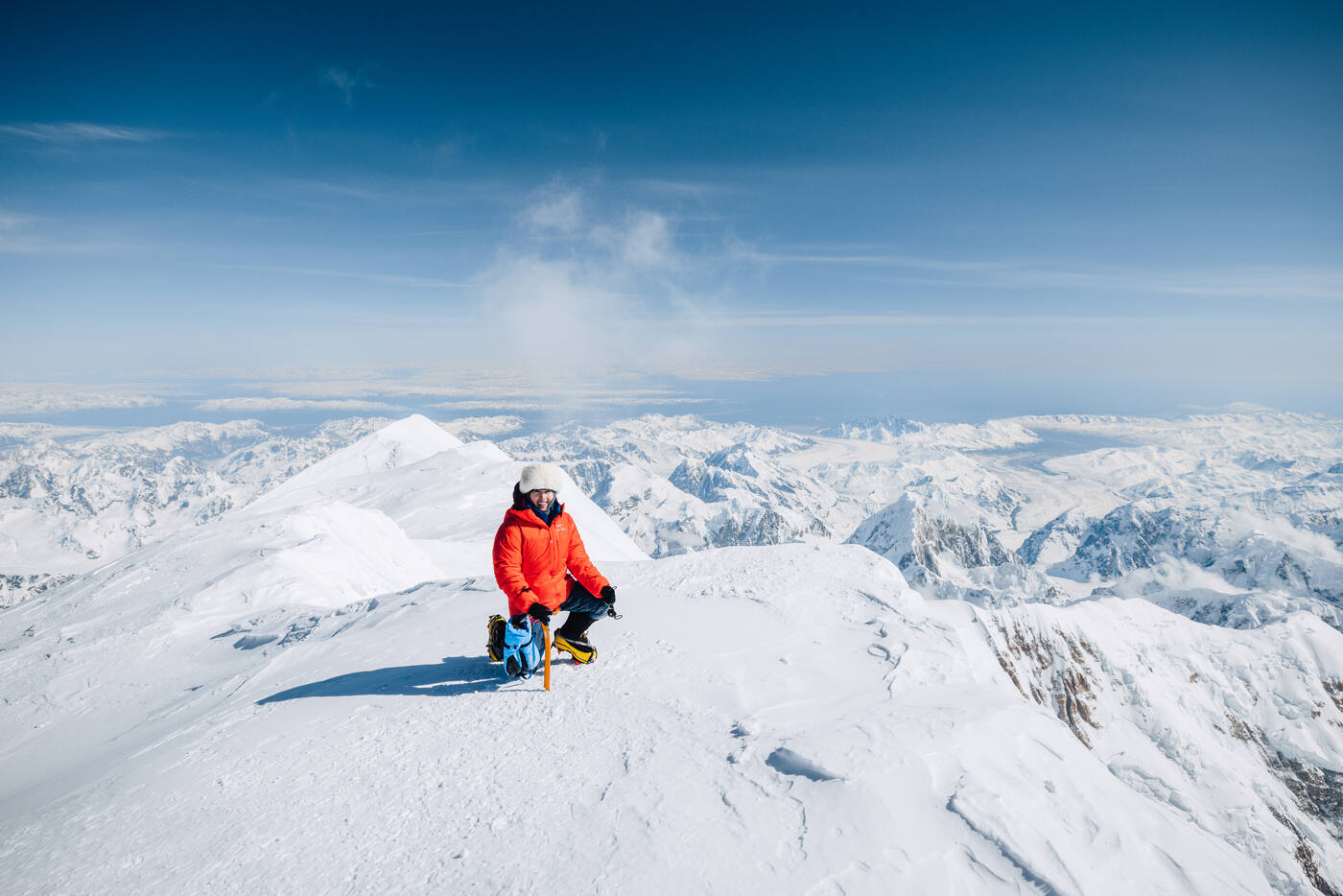
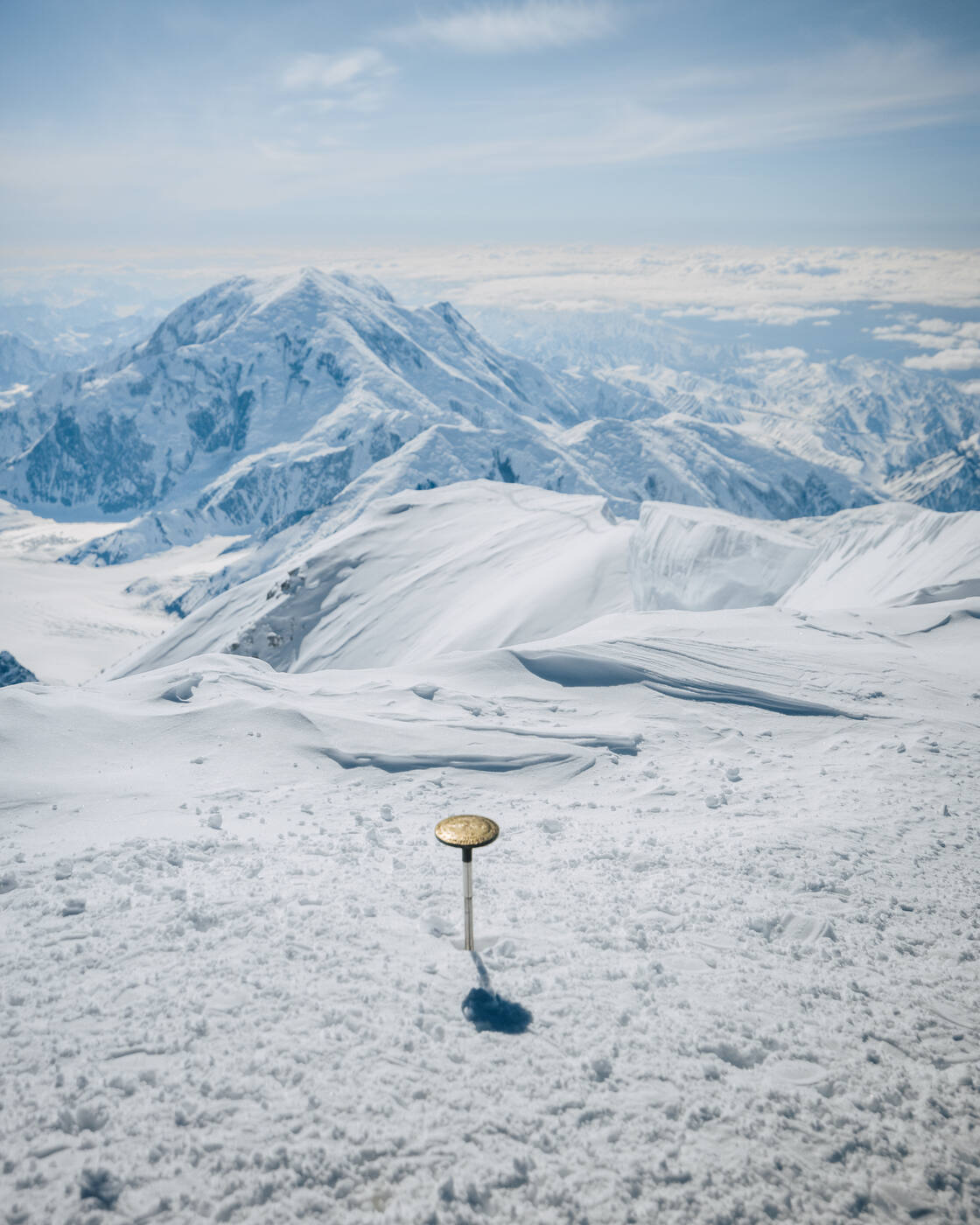
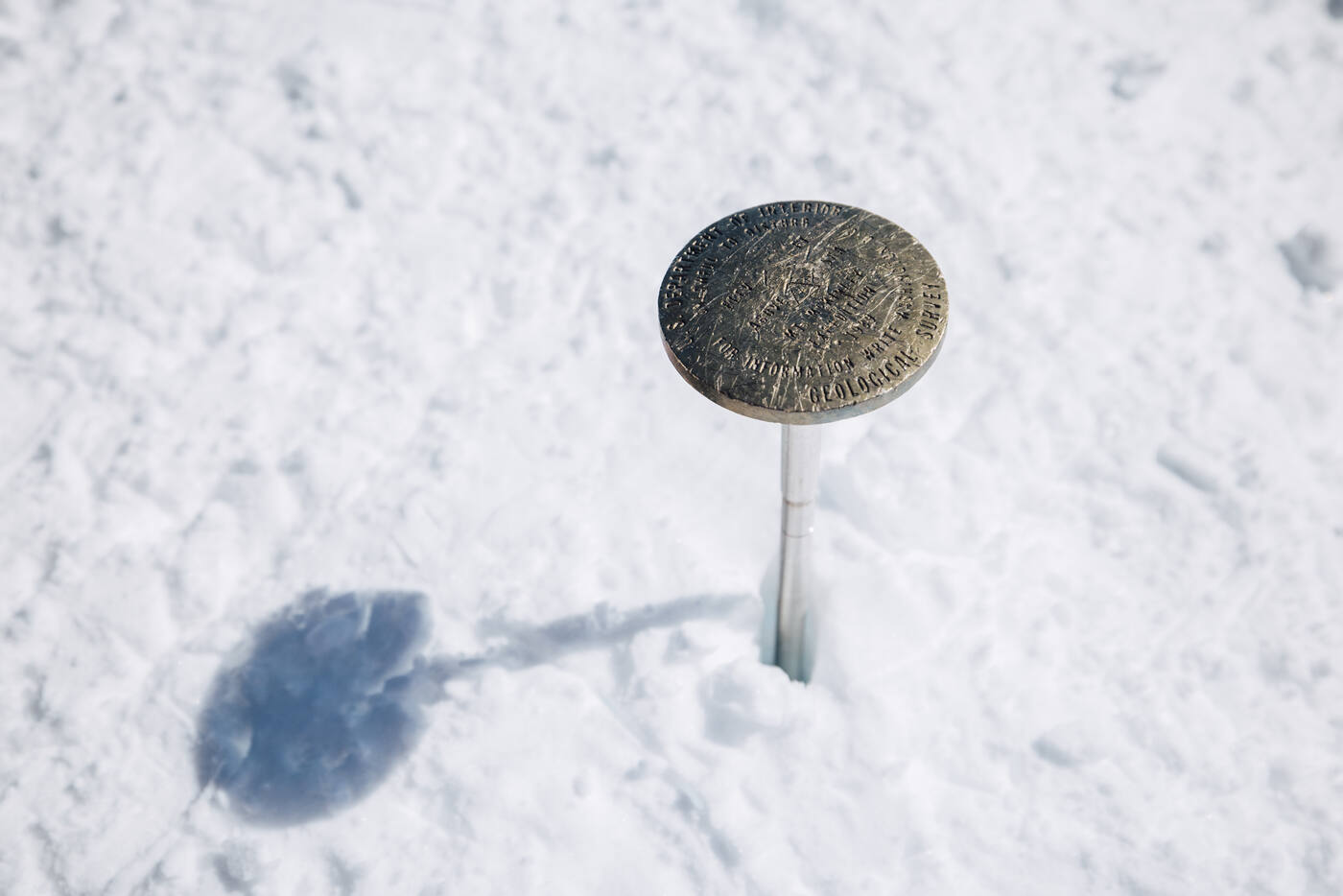
The weather at the summit was perfect—sunny and barely any wind. We got to spend a whole forty-five minutes up there before turning around. Standing at 20,310 feet, the highest point in North America, with the Alaska Range stretching to the horizon in every direction. Number five of seven.
6,190 m / 20,310 ft
The Highest Point in North America
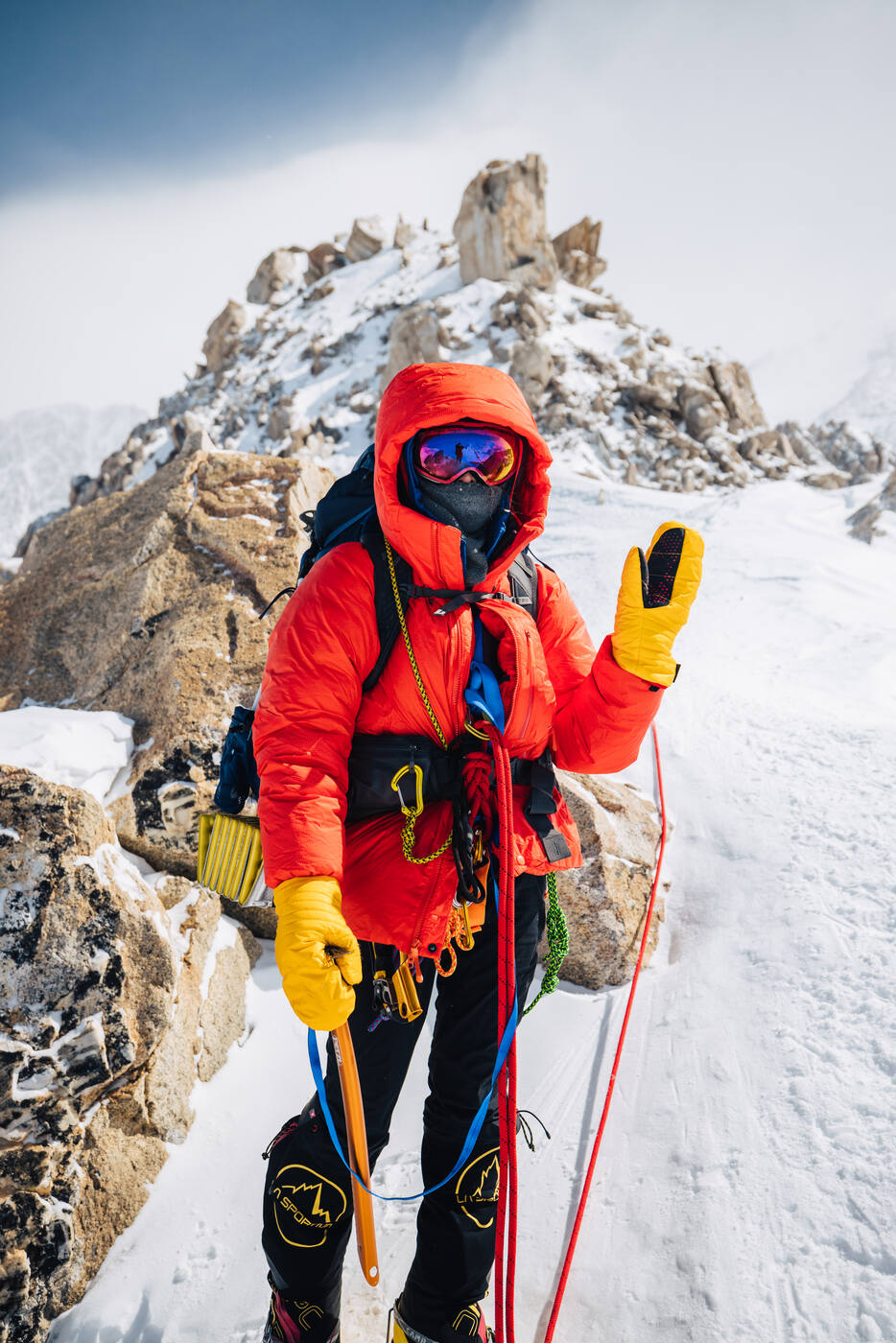
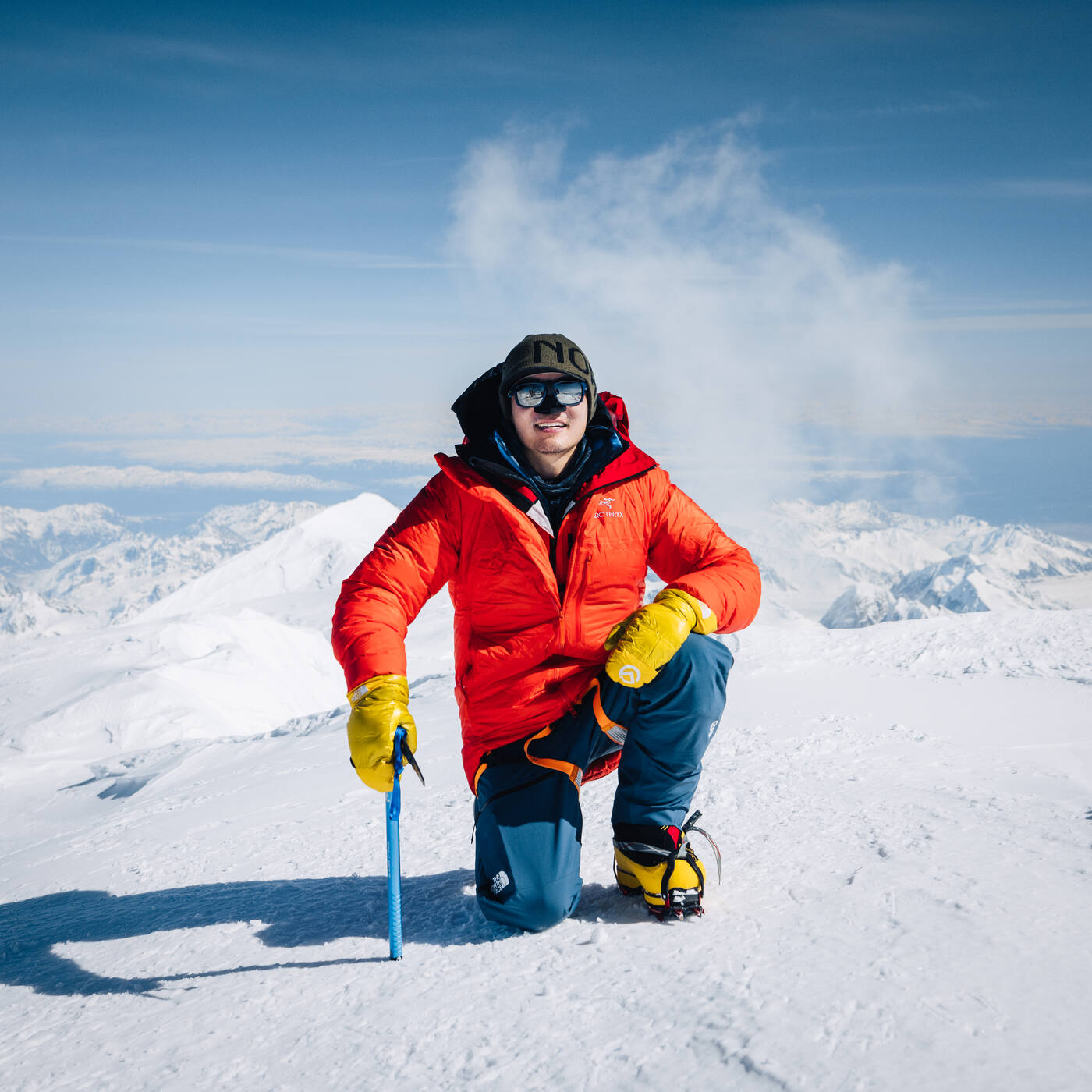
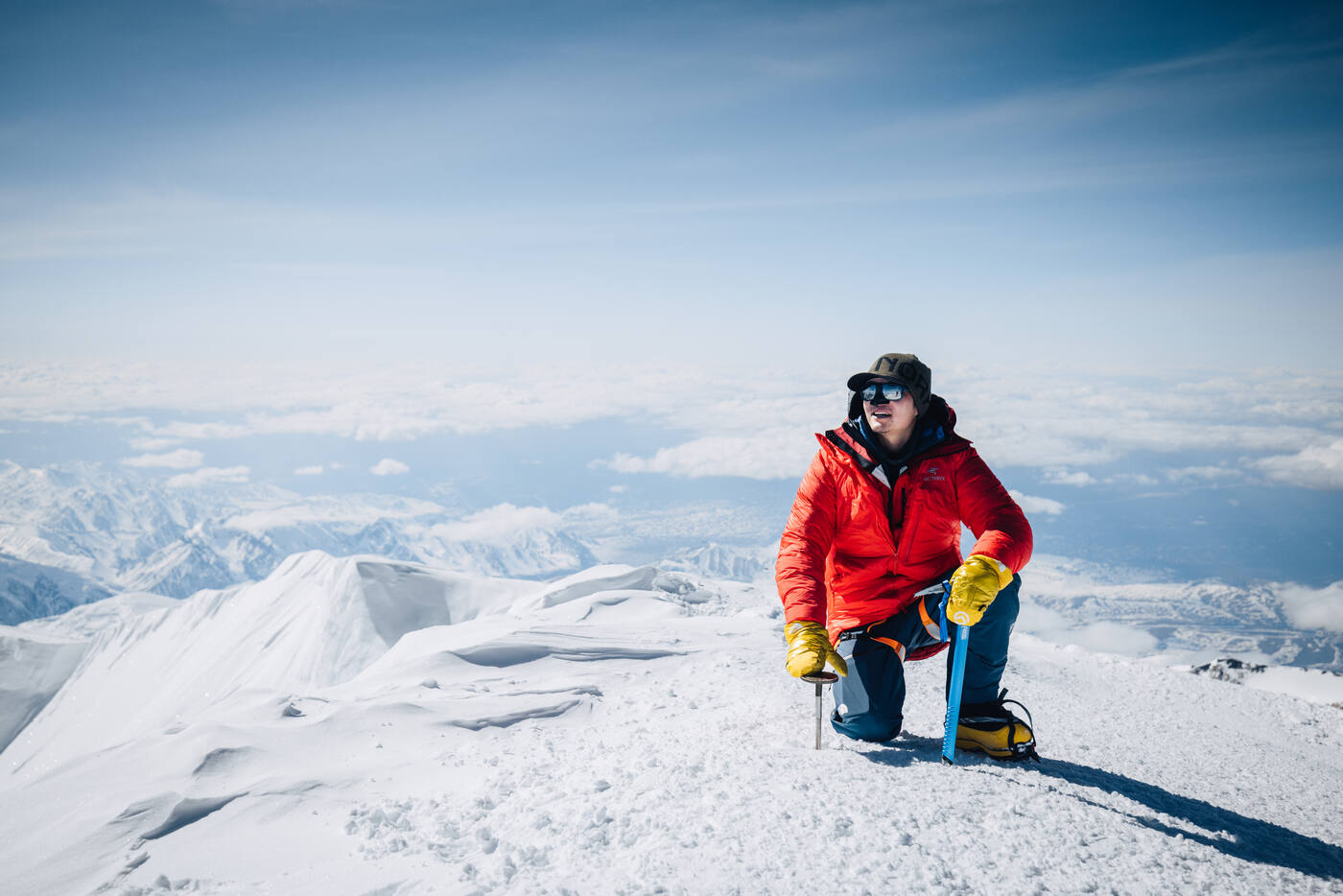
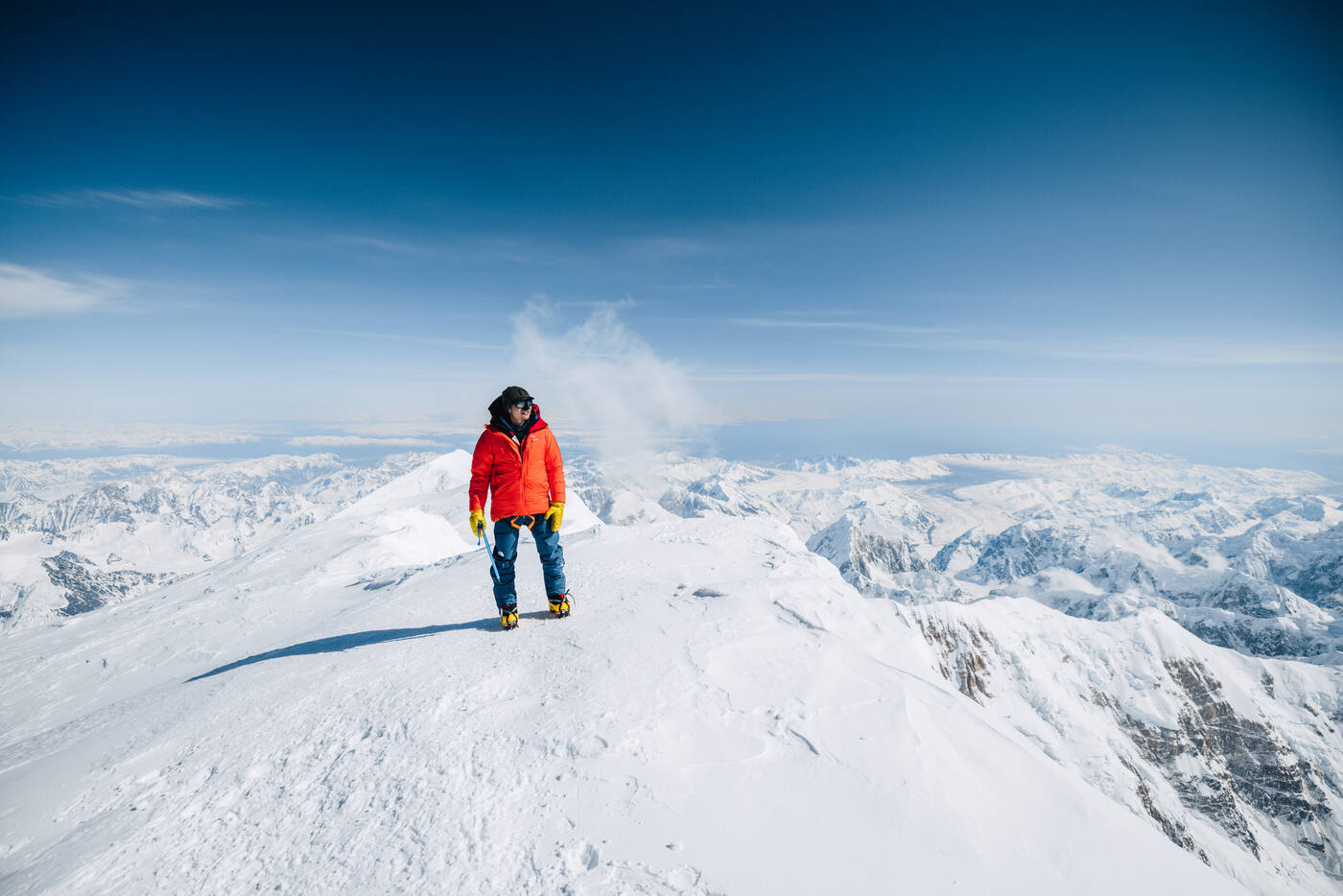
Jason at the summit. 20,310 feet. Red jacket, yellow gloves, and nothing but sky.
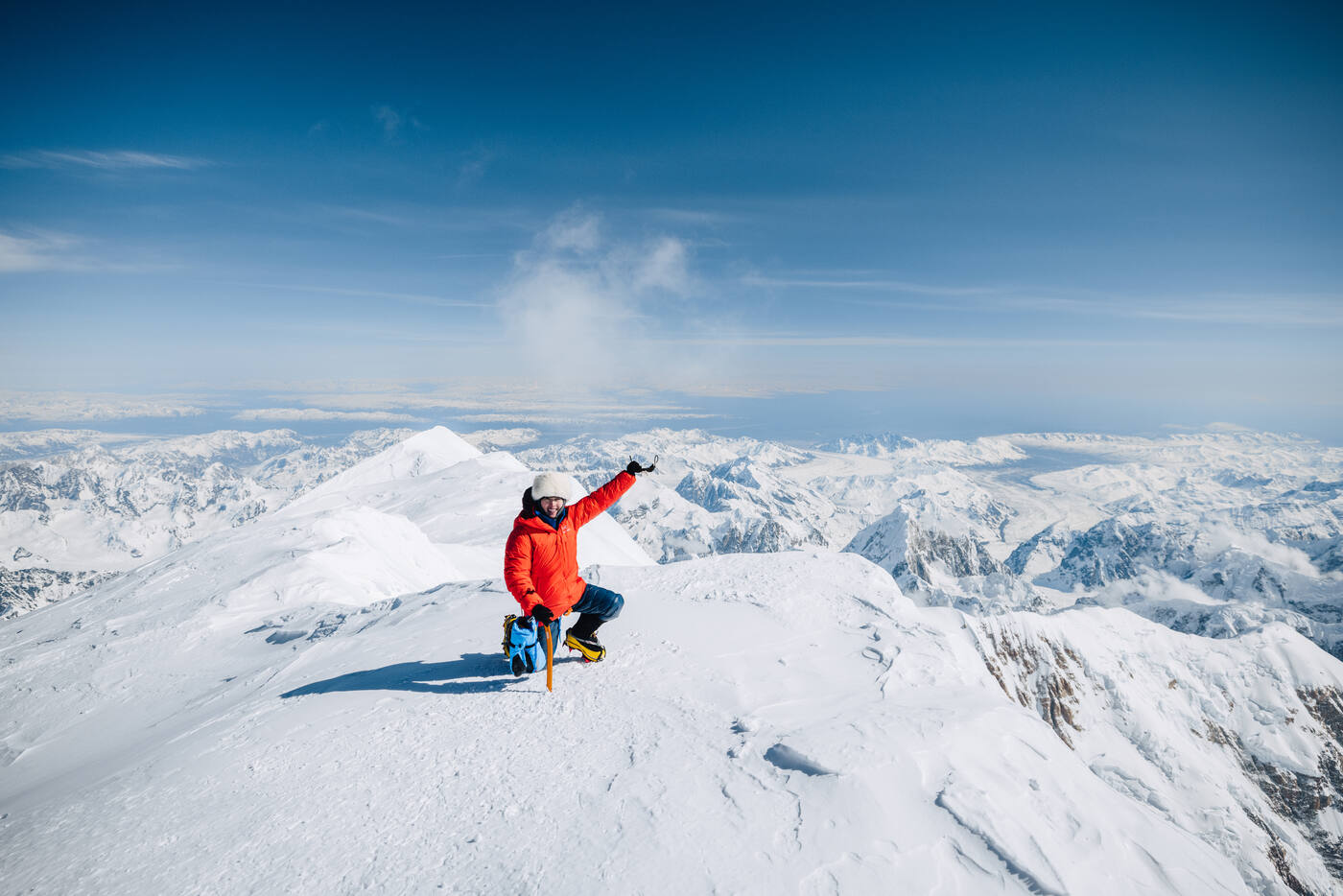
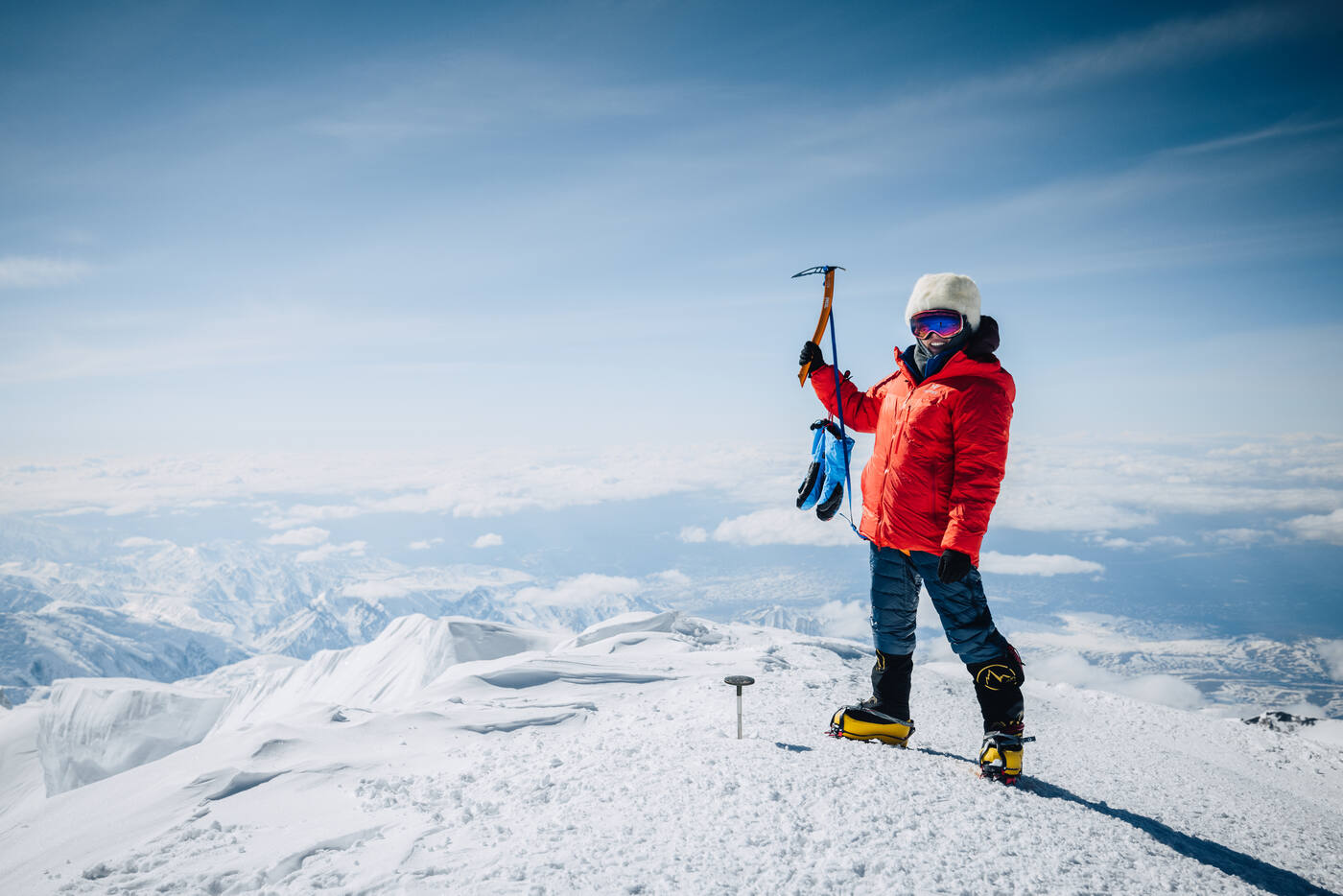
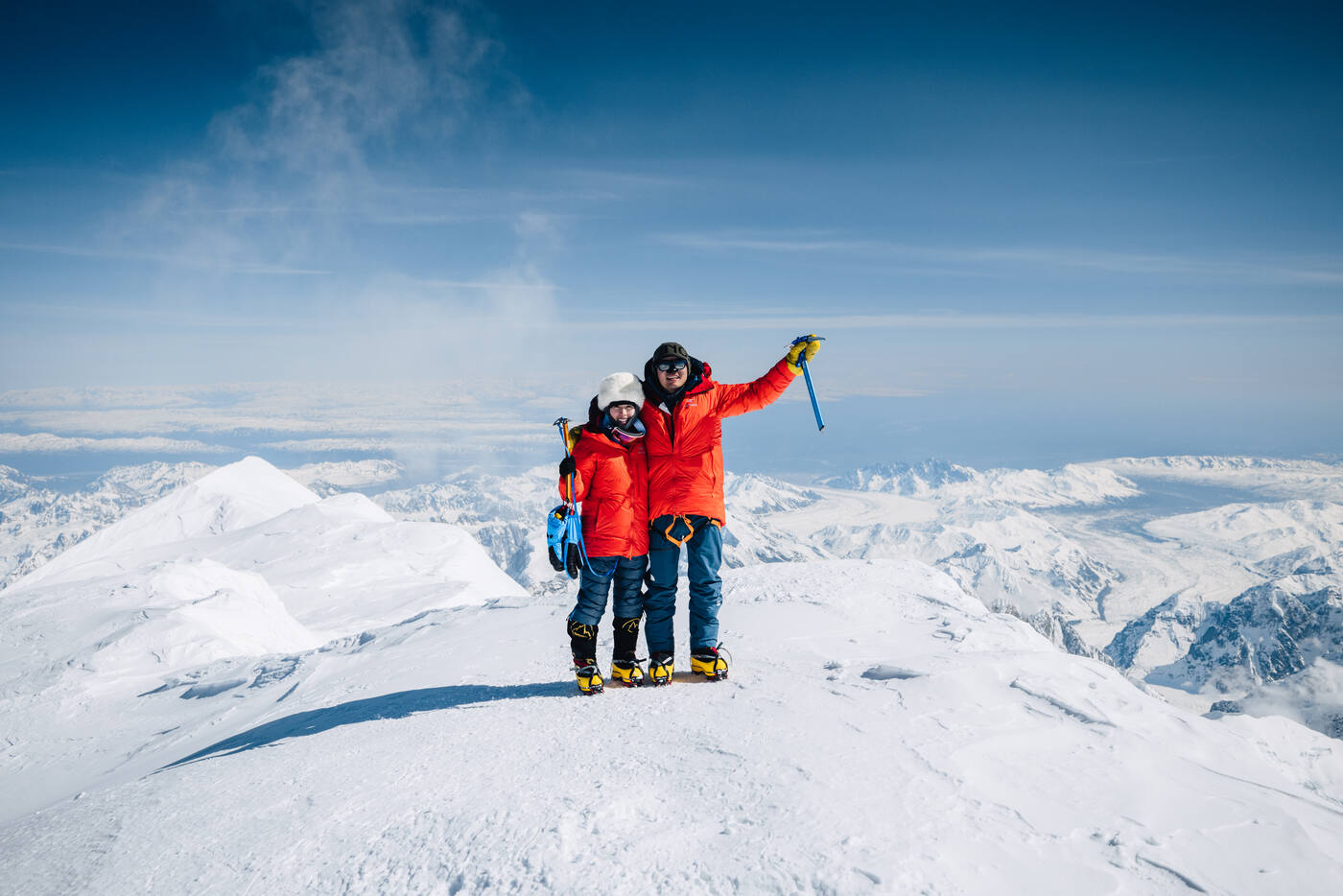
Grace at the top. Arm raised, ice axe in hand, the world far below.Jason taking it all in. Five summits down, two to go.
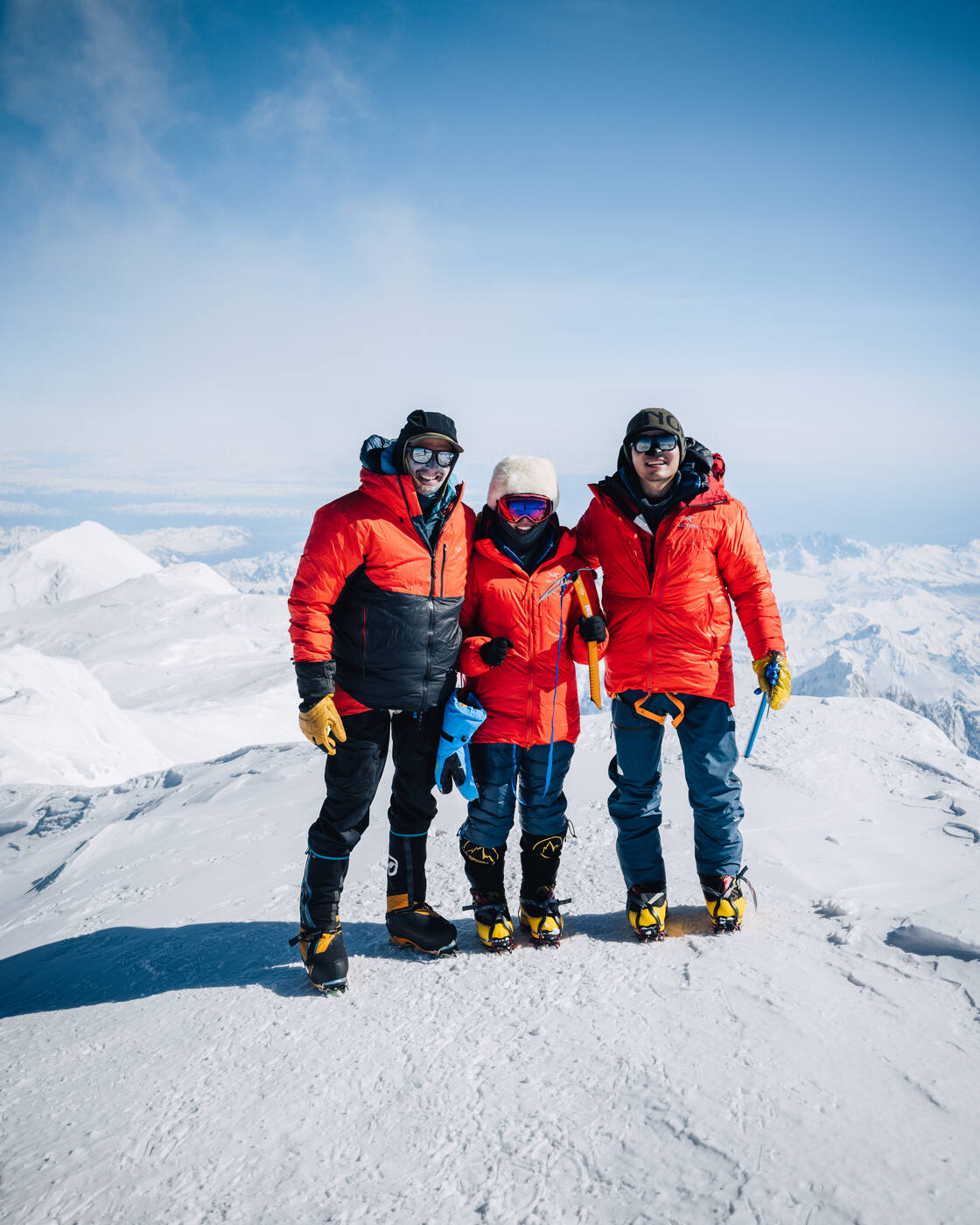
The team at the summit. Every single person made it to the top. That's what matters most.
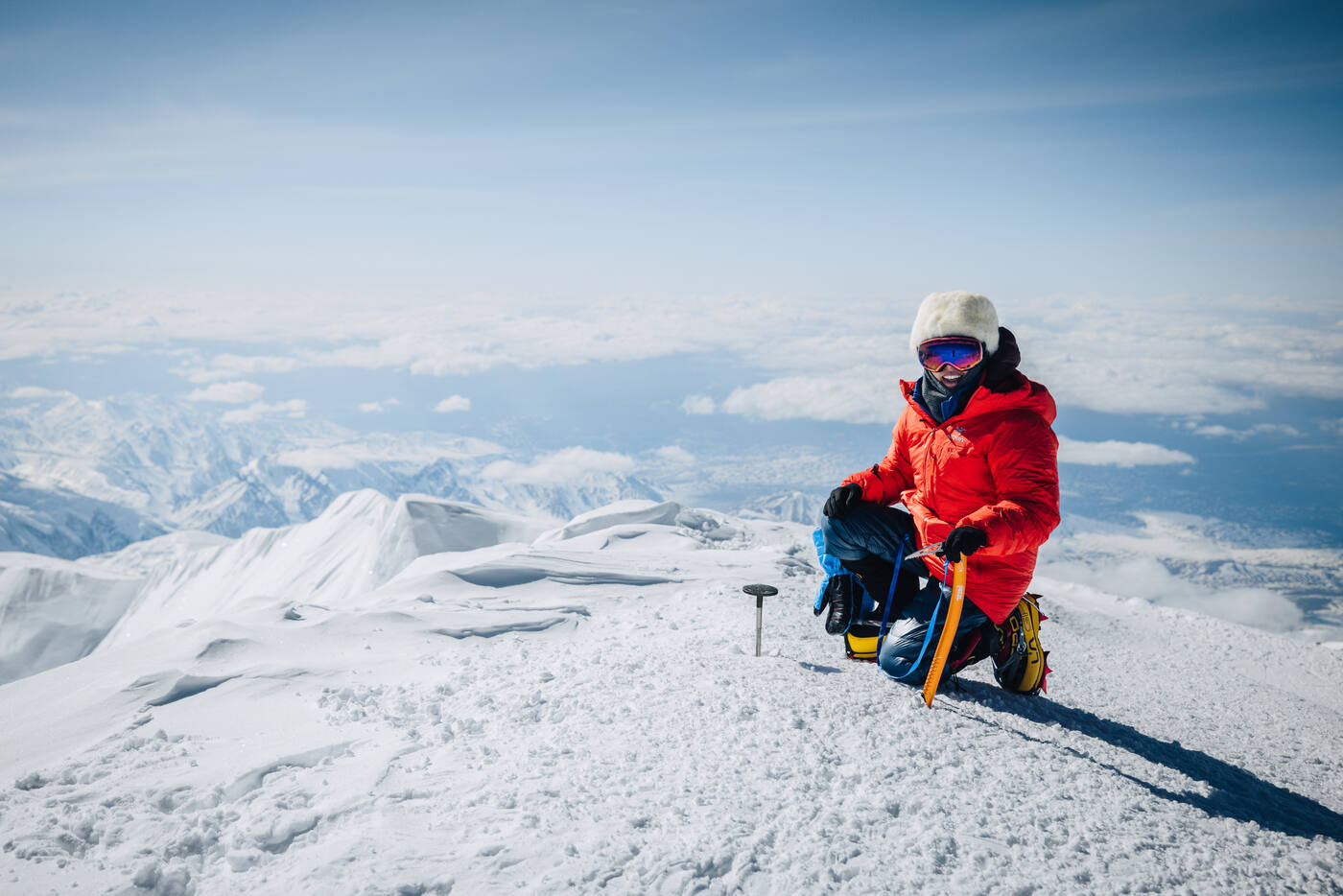
Grace with ice axe raised at 20,310 feet. The Alaska Range stretching endlessly behind.Kneeling on the roof of North America. Mountains in every direction, clouds rolling far below.
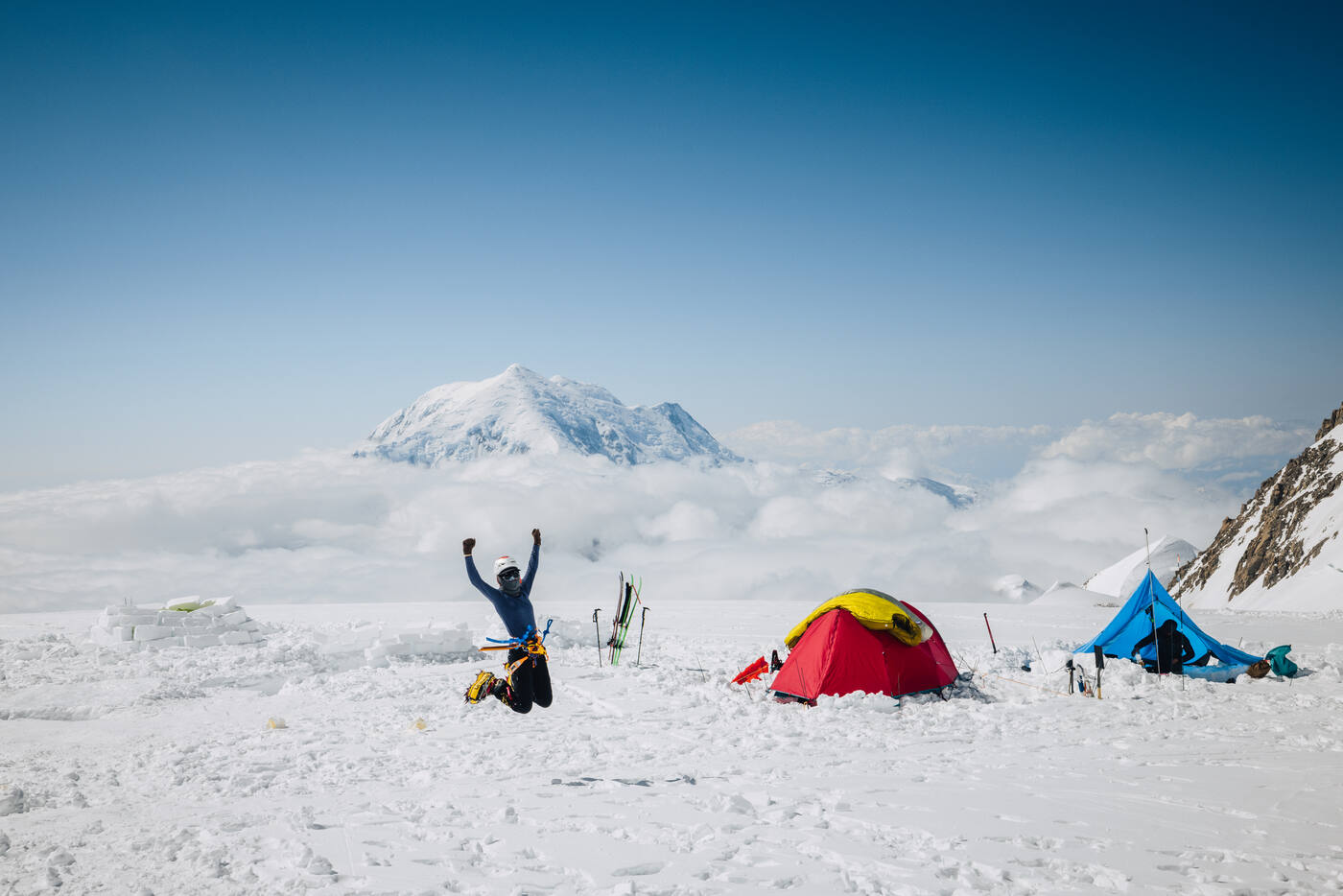
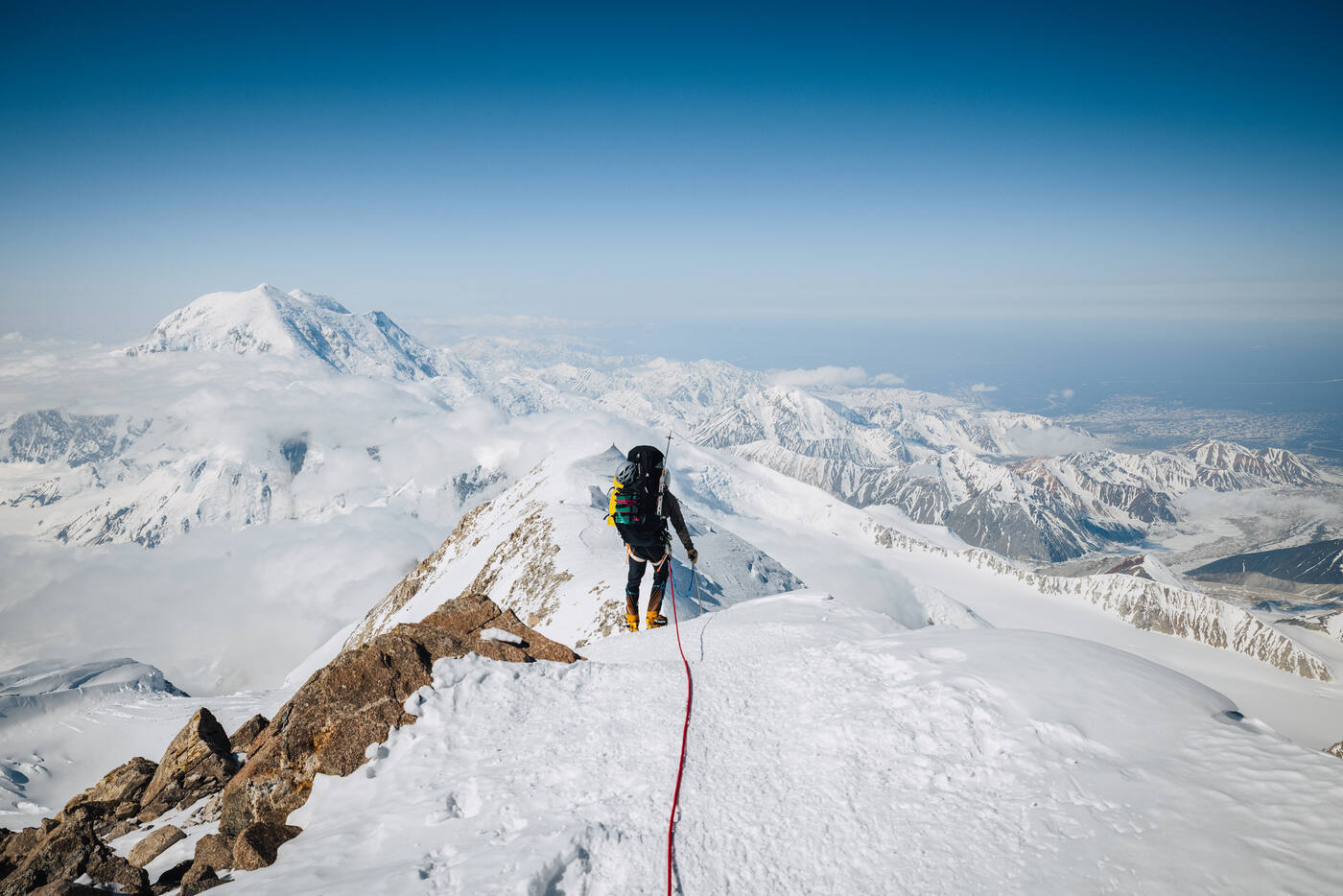
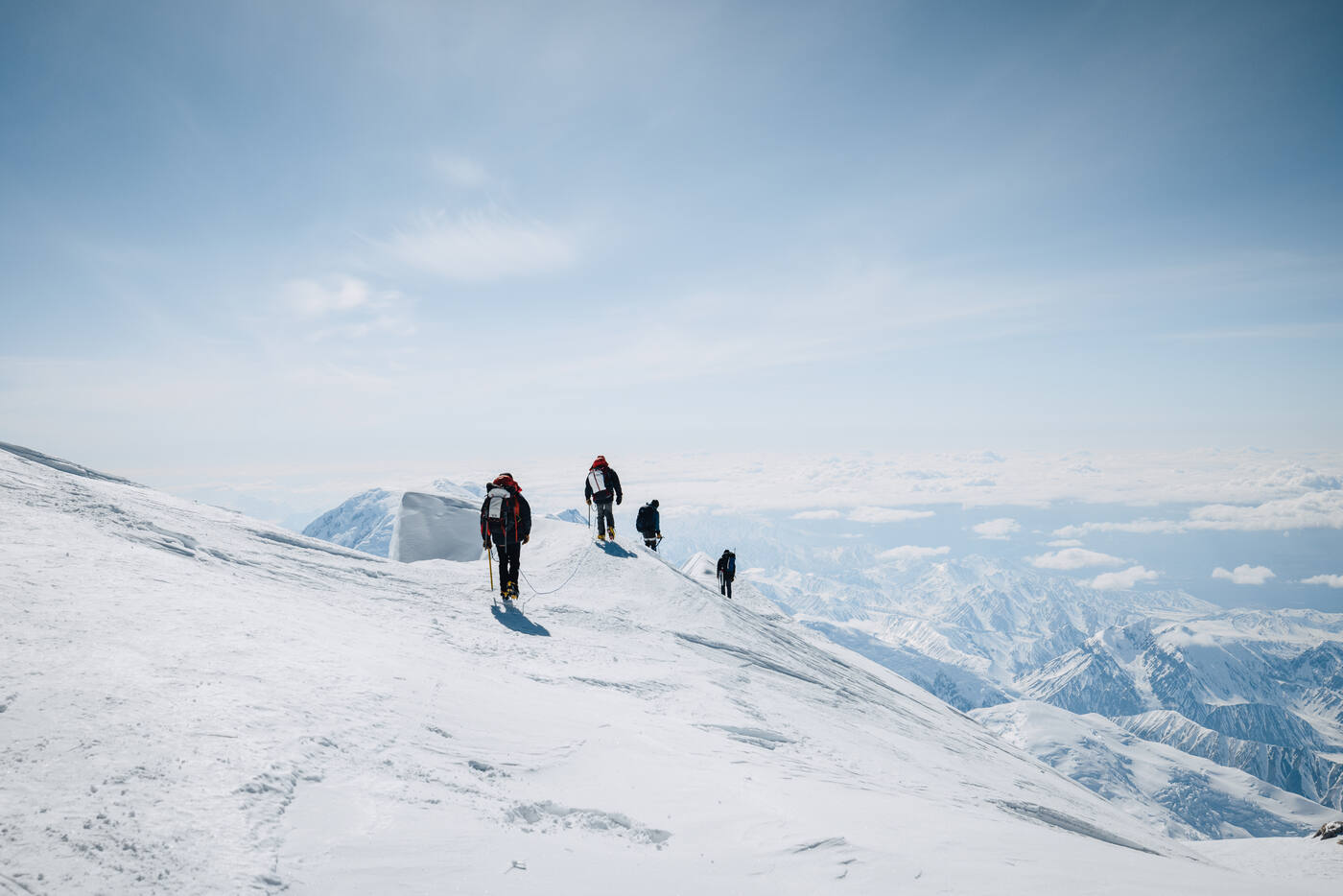
The full team on top of North America. Thanks to Alaska Mountaineering School for getting us here safely.Grace descending the ridge after the summit. Exhausted, elated, and already missing the view.Back at camp after the summit. Pure joy. The relief and accomplishment hitting all at once.
Days 12–13: The Long Way Down
May 29–30, 2022 · High Camp → Basecamp → Talkeetna
As mountaineering legend Ed Viesturs once said, “getting to the top is optional, getting down is mandatory.” After a night’s rest back at 17,200 ft Camp, we packed up everything and climbed all the way back down, going straight to 11,200 ft Camp before the long slog to basecamp. We made it to the airstrip at dawn with a couple of hours to spare before the first plane arrived — just enough time to savor our last moments on this beautiful mountain.
The morning after. Packing up and heading all the way back down to basecamp.The long walk back across the glacier. The mountain shrinking behind us.
The Kahiltna Glacier from the air on the way out. That entire white expanse was our world for the last two weeks.Flying home. The red wing of the bush plane cutting across the range that nearly broke us.
Planning Your Denali Climb
TL;DR
West Buttress route, late May (prime season). Budget 17–21 days total. This is a fully unsupported expedition—you carry everything. Fly from Talkeetna to Kahiltna Glacier basecamp. Prior high-altitude and technical mountaineering experience is essential. We used Alaska Mountaineering School (AMS)—highly recommended. One of the most demanding of the Seven Summits.
When to Go
The climbing season runs from mid-May through mid-July. Late May and early June offer the best balance of weather and daylight. We summited on May 28 and had excellent conditions. Earlier in the season means colder temps but more stable weather windows.
Getting There
Fly into Anchorage, then drive or take the train to Talkeetna. From there, bush plane operators fly you onto the Kahiltna Glacier at 7,200 feet. The flight itself is one of the most spectacular parts of the trip.
The Route
The West Buttress is the standard route. It follows the Kahiltna Glacier through four established camps at roughly 7,800, 9,600, 11,200, and 14,200 feet before high camp at 17,200 feet. Summit day is an 11-hour push involving the Autobahn traverse, the Football Field, and the summit ridge.
Fitness and Skills
Denali requires serious physical fitness and technical mountaineering skills. You need to be comfortable with crampons, ice axes, fixed lines, ascenders, crevasse rescue, and rope travel. Prior high-altitude climbing experience is essential. We trained for three months with no days off.
What Makes It Hard
Unlike other Seven Summits, Denali is fully unsupported. You haul everything yourself—60+ pound packs plus sleds. The cold is extreme, with temperatures reaching -50°F at high camp. The mountain's northern latitude means the effective altitude feels significantly higher than its actual elevation.
Guide Company
We climbed with Alaska Mountaineering School (AMS) and can't recommend them enough. Their guides were experienced, safety-focused, and genuinely invested in getting the whole team to the summit. Having a strong guide team is non-negotiable on a mountain like this.