Russia was never supposed to be easy. After climbing Kilimanjaro in Tanzania and Aconcagua in Argentina over the previous thirteen months, Grace and I wanted something that felt different: a mountain with real technical demands, real cold, and a country that would push us out of our comfort zone in every way possible. Elbrus checked all of those boxes.
Mount Elbrus is a dormant volcano in the Caucasus Mountains of southern Russia, just north of the Georgian border. It has two summits: the east peak at 5,621 meters and the west peak at 5,642 meters. The west summit is higher, and that was our target. It's the tallest mountain in Europe by a wide margin, and for us it would be number three on the Seven Summits list.
Our journey started in Moscow, where we caught a connecting flight to Mineralnye Vody followed by a three-hour drive into the Baksan Valley. The town of Terskol at 2,143 meters would be our starting point. From there, we'd spend a week acclimatizing, training, and waiting for the weather before making our push for the top. The Mountain Professionals would be guiding us, and we trusted them completely. What followed was seven days of clouds, cold, wind, and one perfect morning that changed everything.
Day 1: Arrival in Terskol
August 1, 2019 · Terskol, Baksan Valley · 2,143 m / 7,030 ft
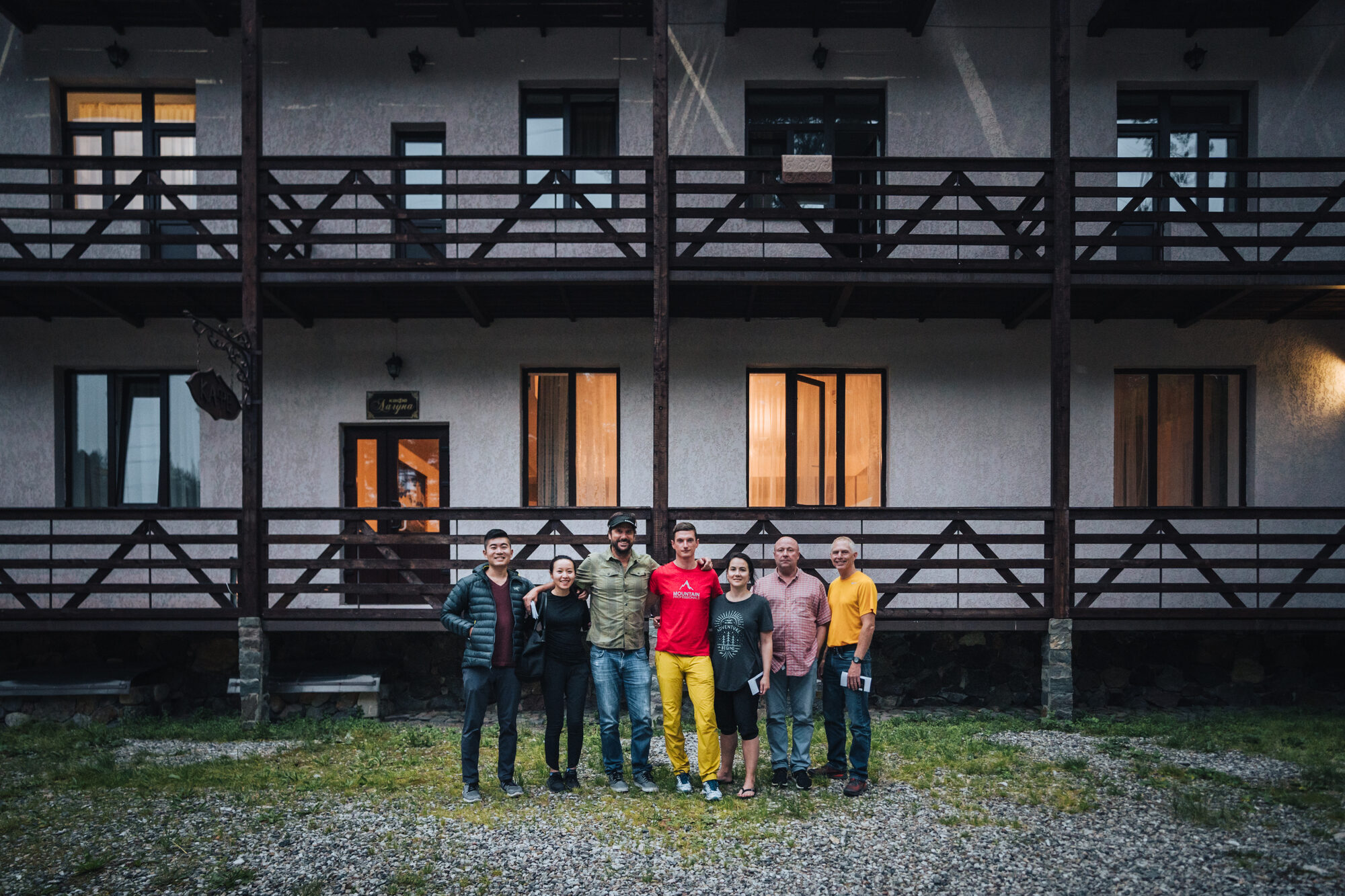
The full team at our lodge in Terskol. Fresh off the drive from the airport, ready to start the climb.
We landed in Mineralnye Vody late in the afternoon and piled into a van for the drive south. The road wound through the Baksan Valley, narrowing as the mountains closed in on both sides. By the time we reached Terskol, the sun was dropping behind the ridgeline and the air had that clean, thin bite to it that tells you altitude is coming.
Our lodge was simple and comfortable, a wooden building with balconies looking out at the surrounding peaks. The team gathered for dinner, introductions, and a briefing from the guides. The plan was straightforward: acclimatize for a couple of days in the area, move up onto the mountain, train at base camp, and then wait for the right weather window to go for the summit. For Grace and me, Elbrus is our 3rd of the 7 Summits — we completed Kilimanjaro in Tanzania and Aconcagua in Argentina in the thirteen months leading up to this.
Day 2: Cheget Peak
August 2, 2019 · Terskol → Mt. Cheget · 3,601 m / 11,815 ft
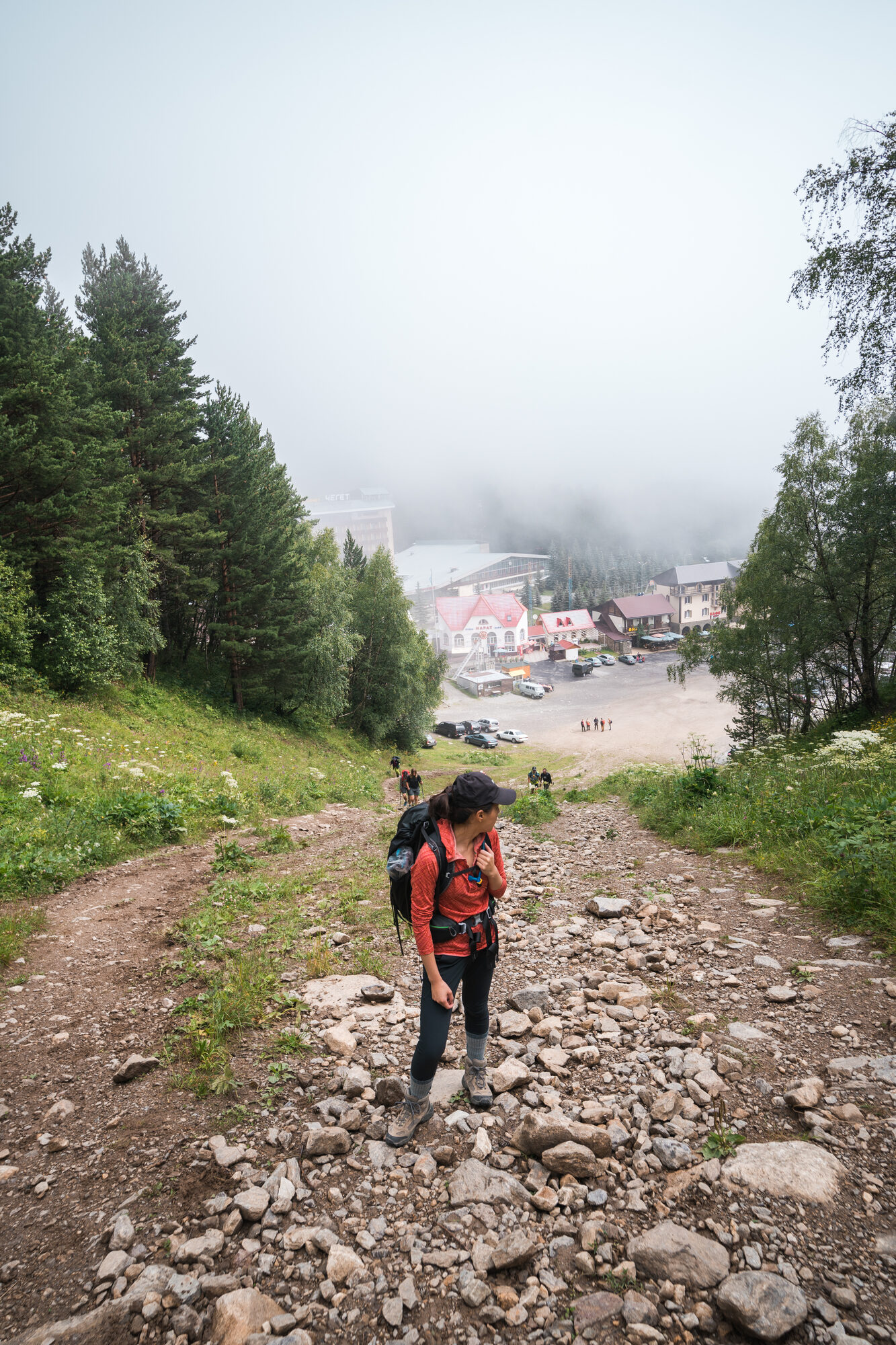
Our first acclimatization hike took us up Mount Cheget, the peak directly across the valley from Elbrus. The idea was simple: gain several thousand feet of elevation to let our bodies start adjusting, then come back down to sleep at the lower altitude. Go high, sleep low. It's the oldest trick in the mountaineering playbook.
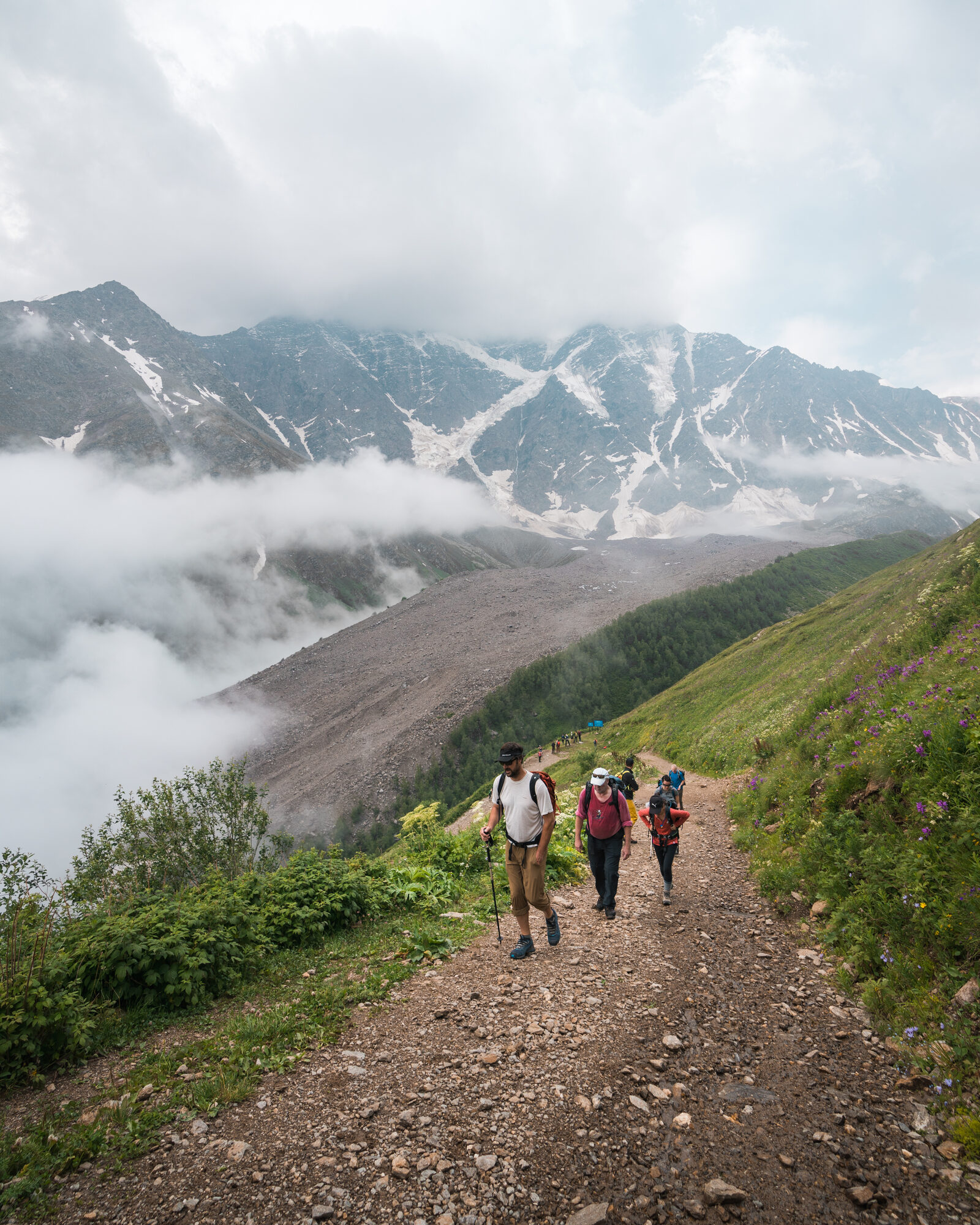
Here we go — acclimatization hike up Mount Cheget.Slow and steady up the mountain, the Baksan Valley falling away below.
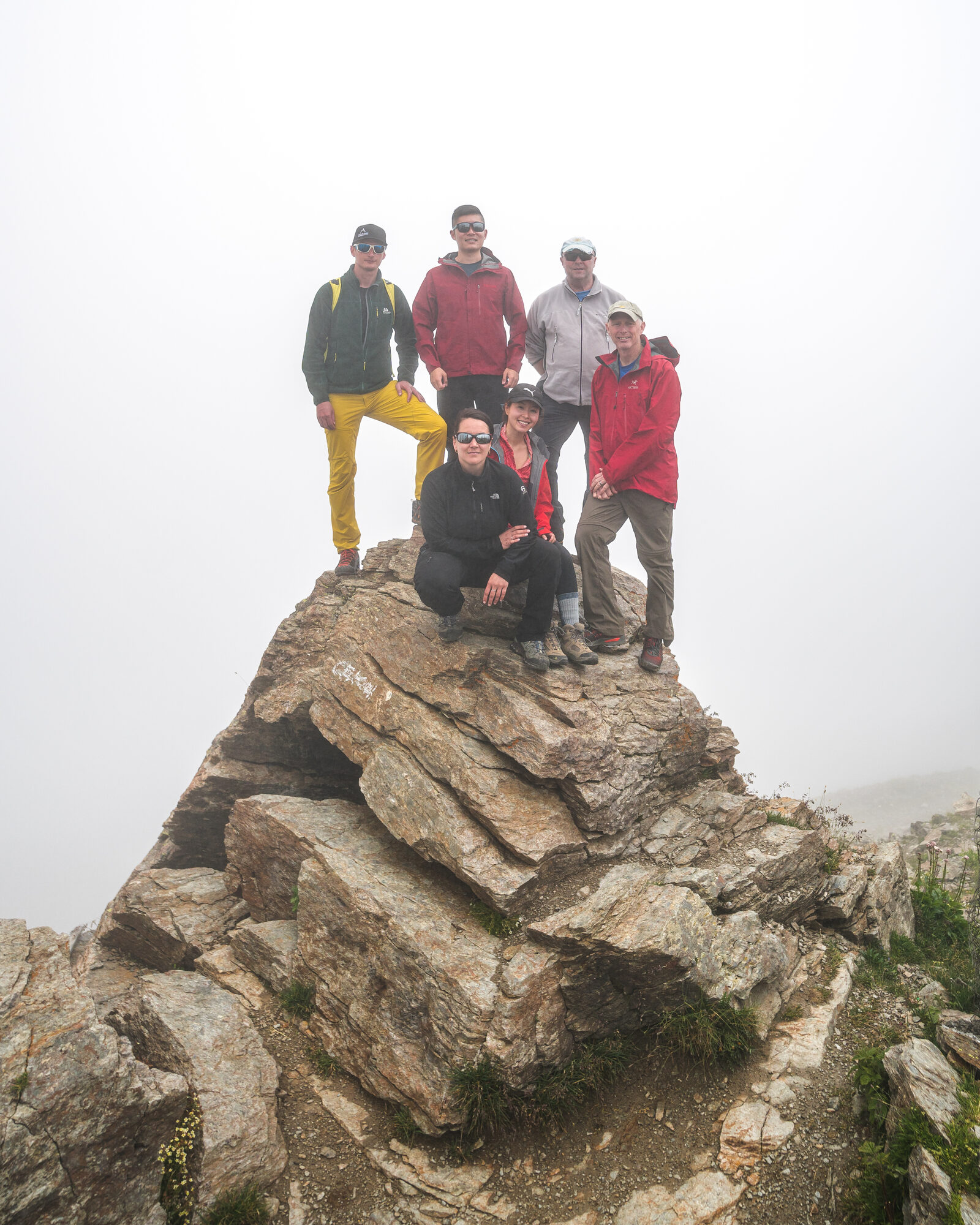
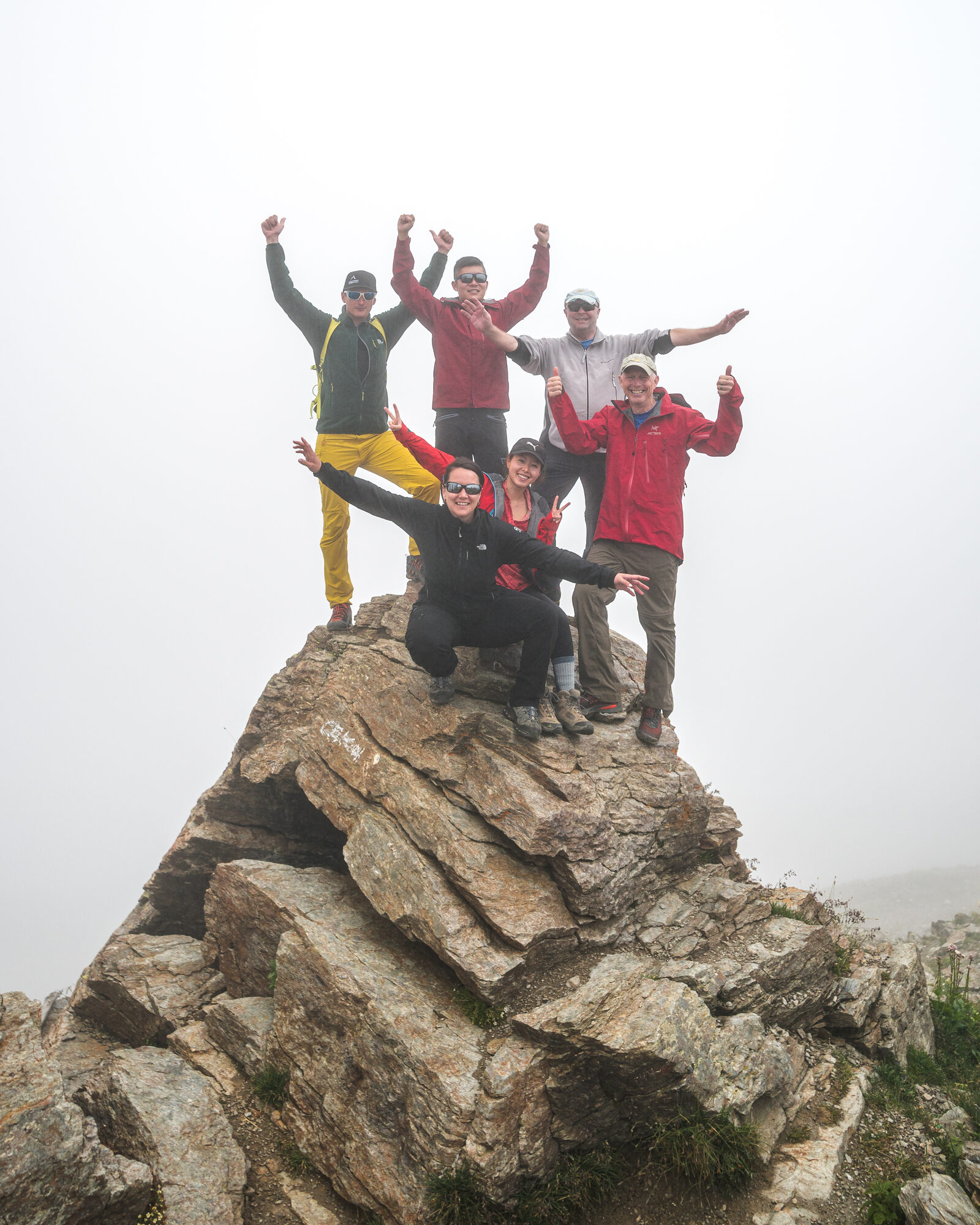
The team on Cheget Peak. Visibility was almost zero at the top, but the legs felt good.
The weather had other plans for us, though. Clouds rolled in heavy and stayed all day. By the time we reached the upper slopes of Cheget, we couldn't see more than fifty feet in any direction. Elbrus, which on a clear day dominates the skyline from this spot, was completely invisible. We stood on the rocky summit at 3,601 meters, took a few photos in the grey, and started back down. Not the most scenic day, but our lungs were getting their first taste of thin air.
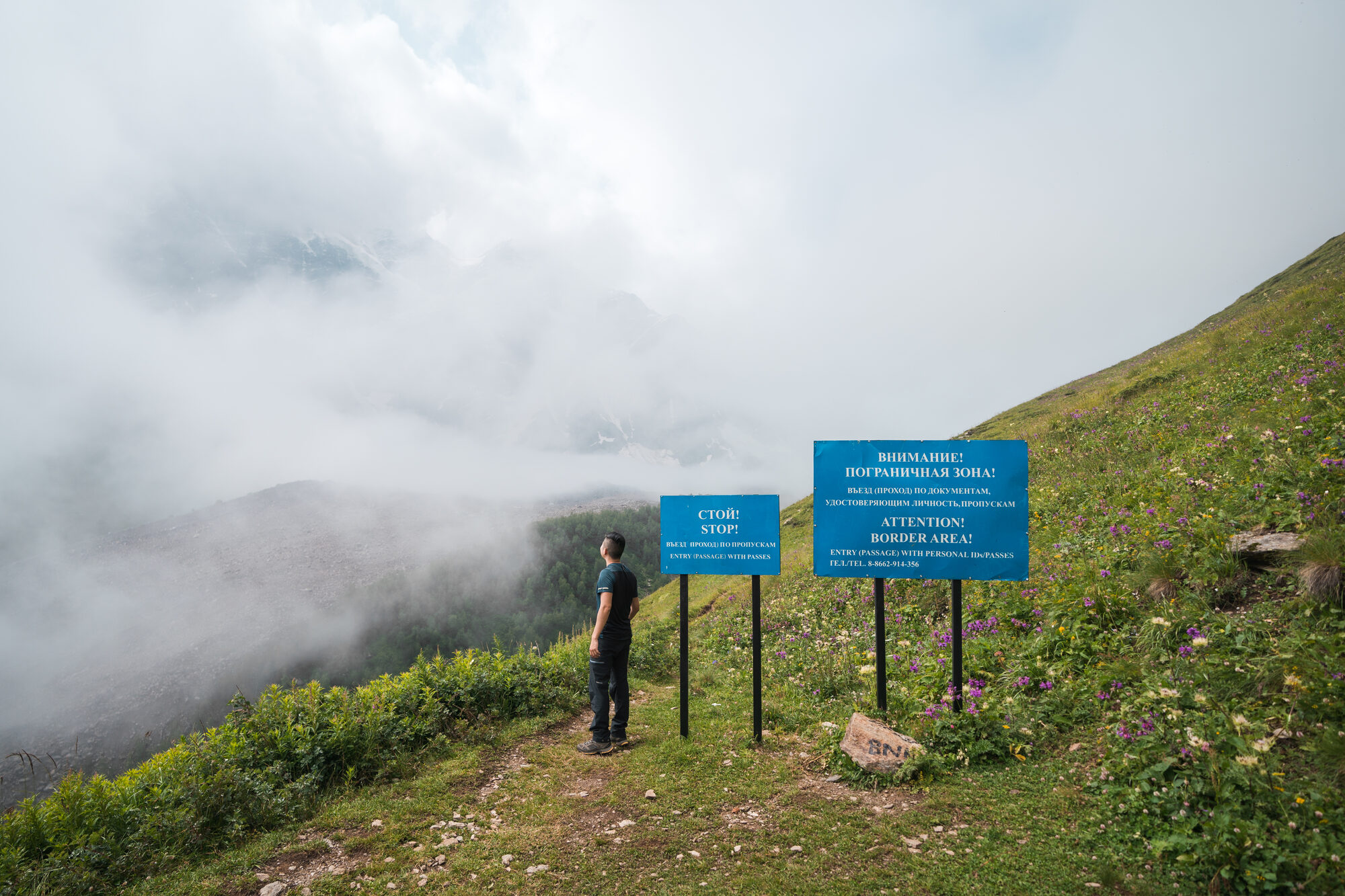
On the border of Russia and Georgia — the frontier runs right through these mountains.Near the top of Mount Cheget. Too cloudy to see Elbrus behind us, but the team was in good spirits.
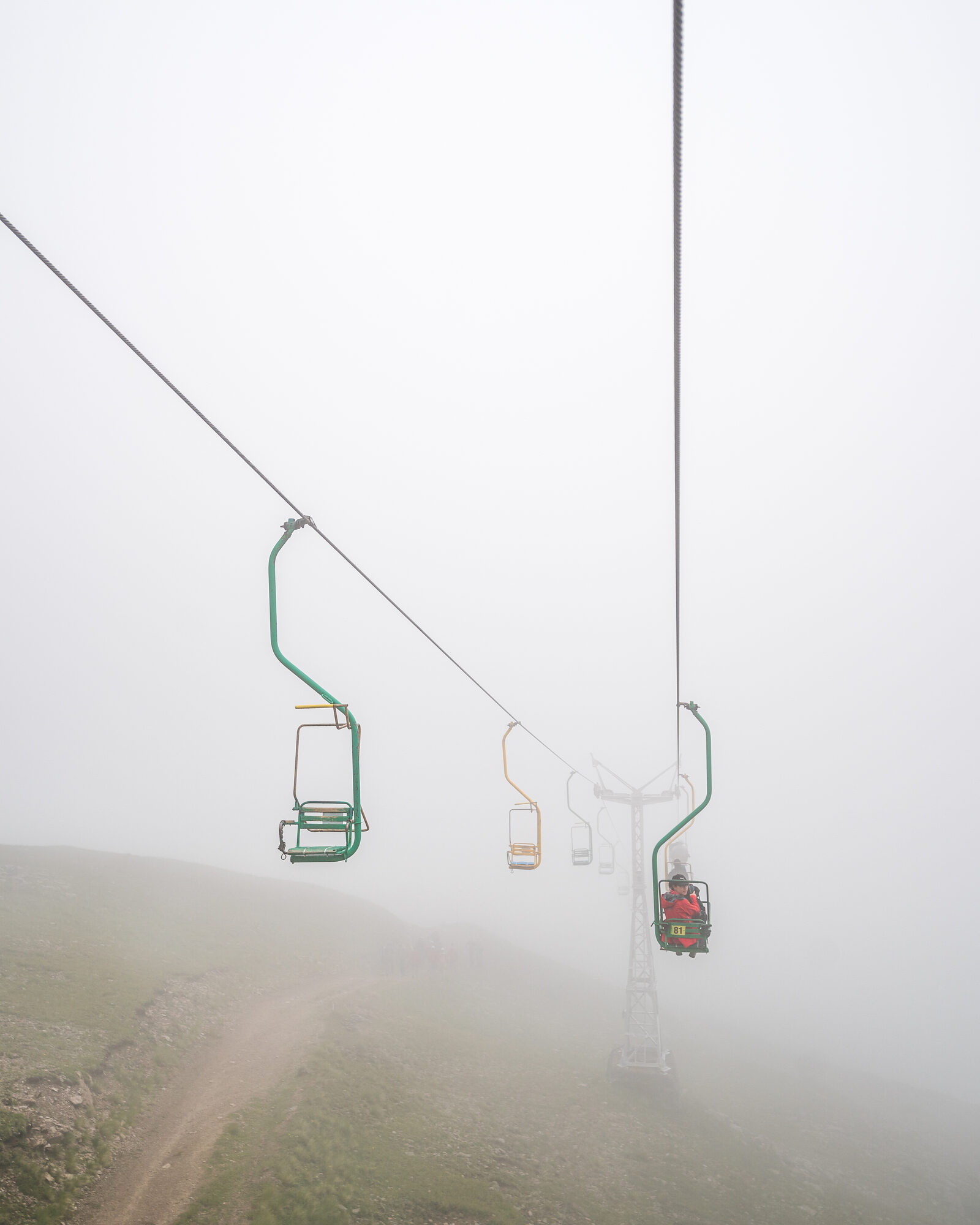
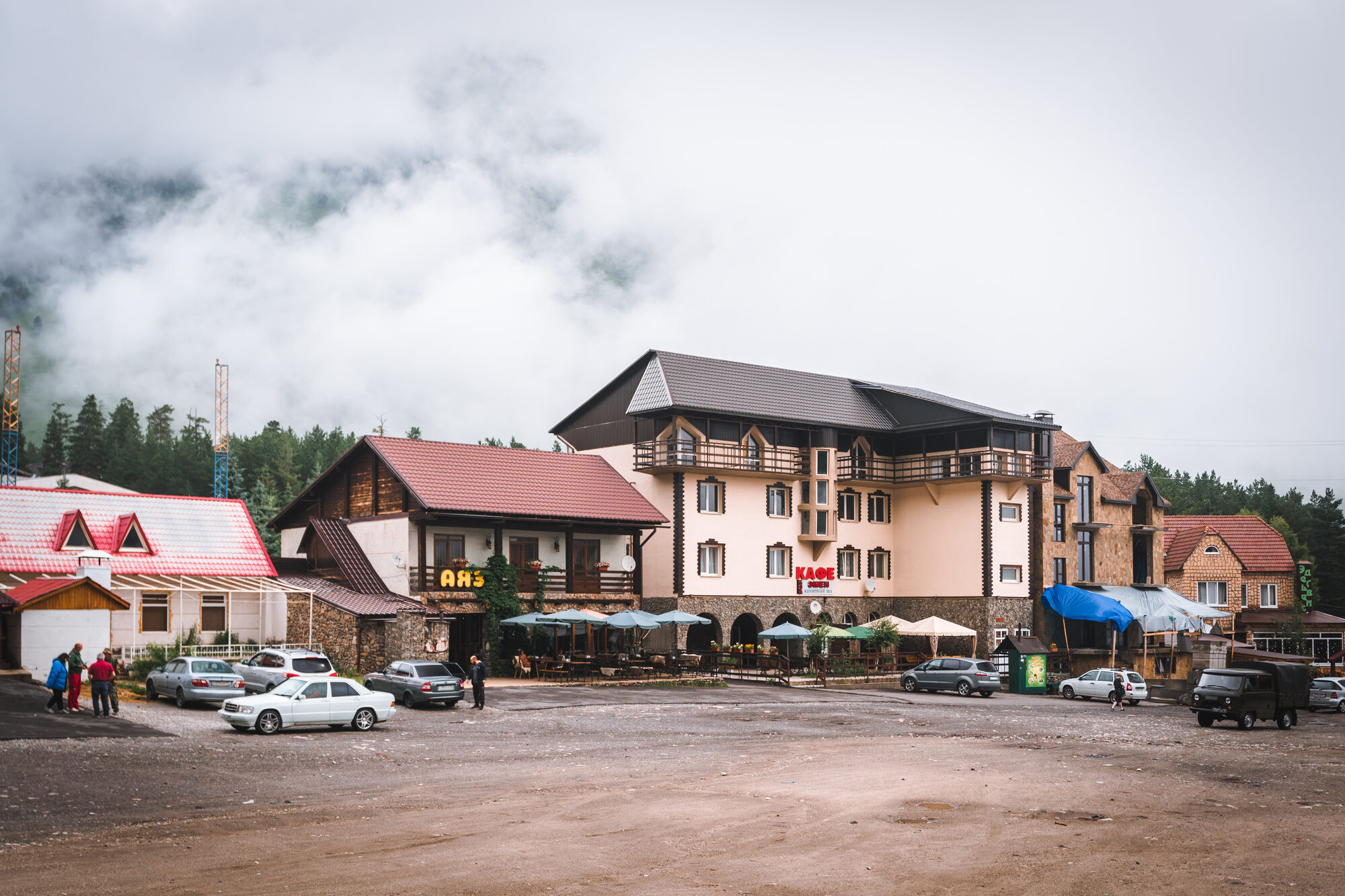
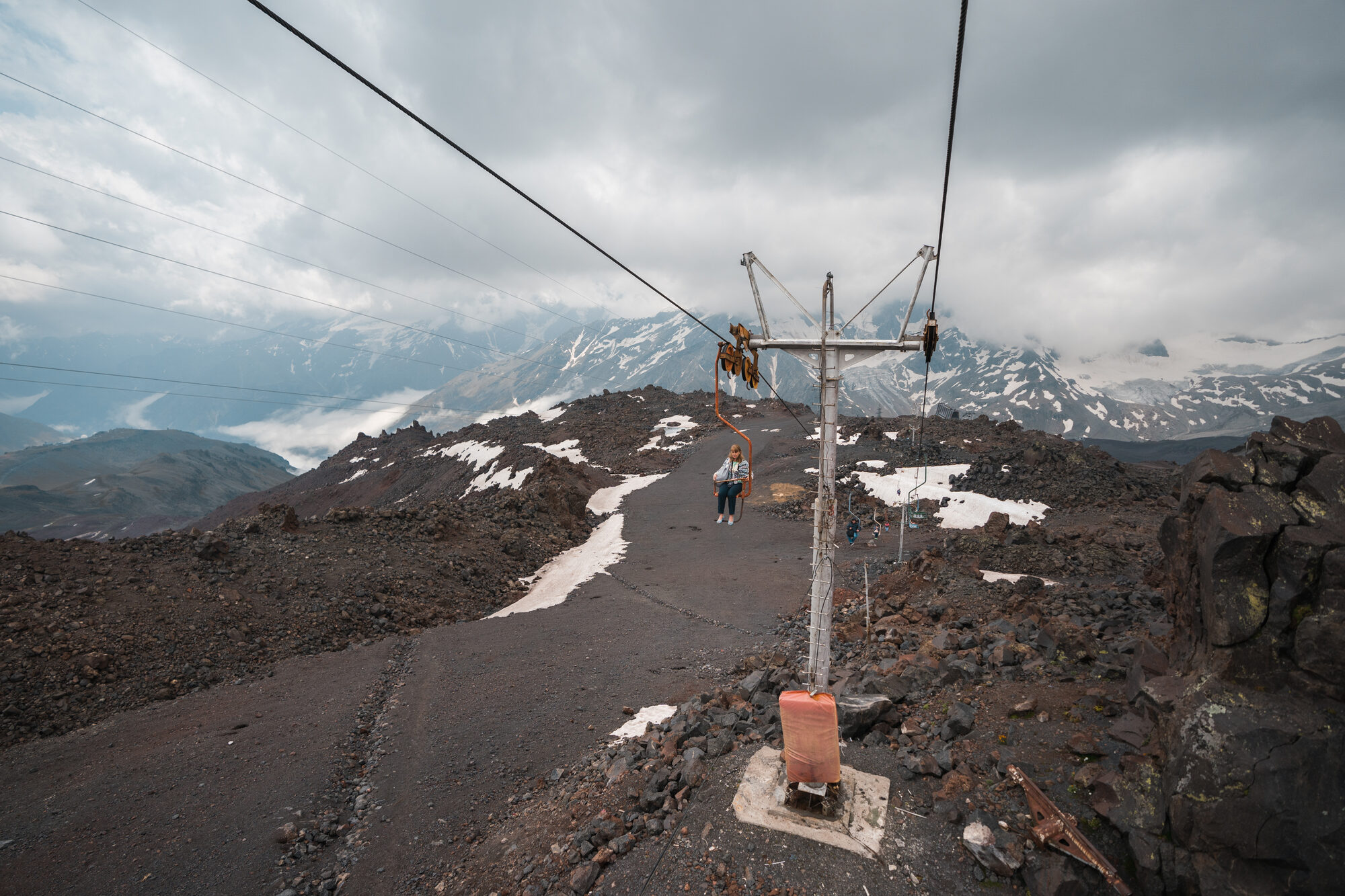
The old chairlift on Cheget, swallowed by fog. Soviet-era infrastructure still running strong.Back down in Cheget village. Hotels, cafes and a muddy square — we dropped back to sleep at lower altitude.
Day 3: First Day on Elbrus
August 3, 2019 · Cable Car → Priut 11 · ~4,100 m / 13,450 ft
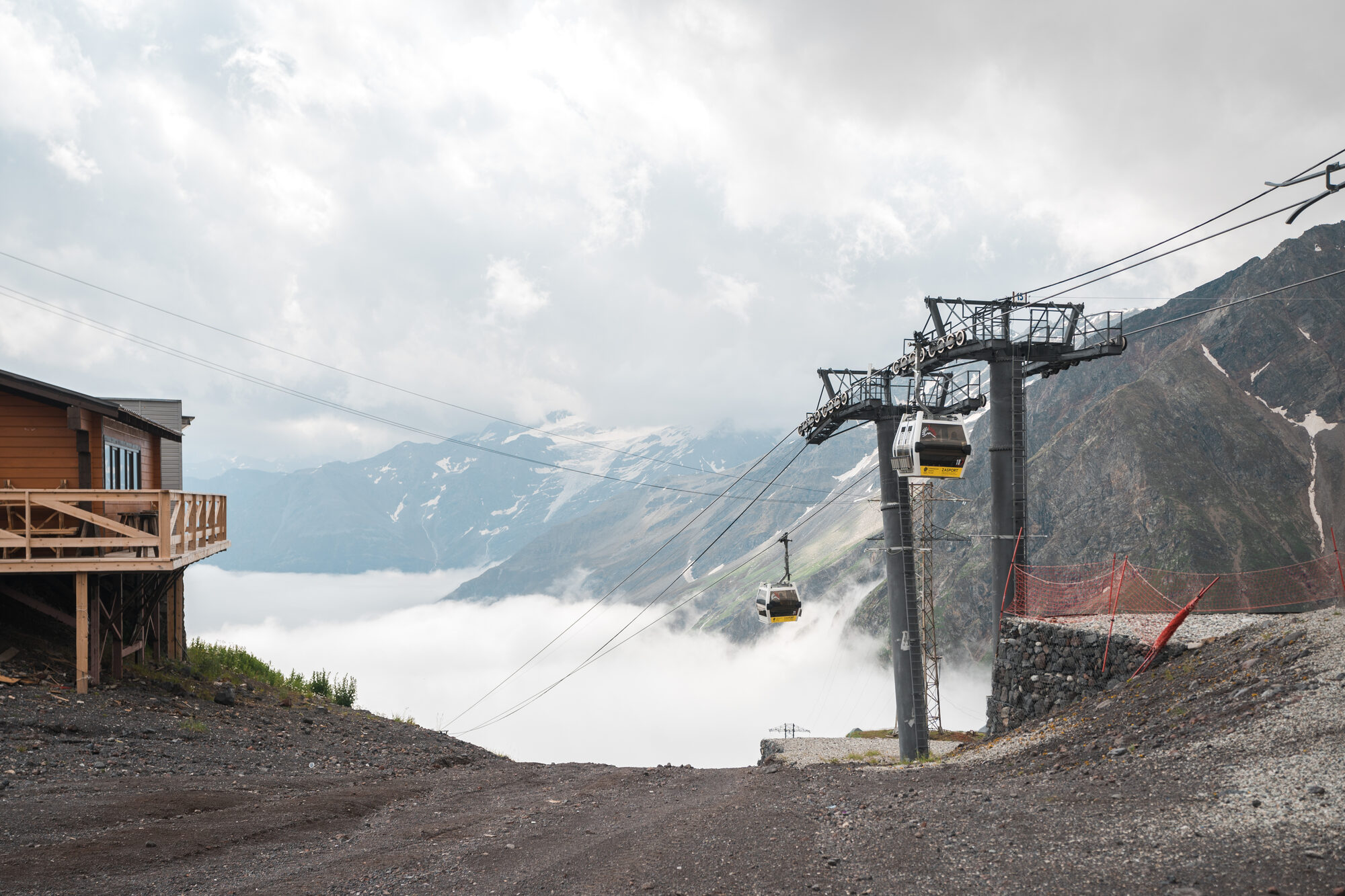
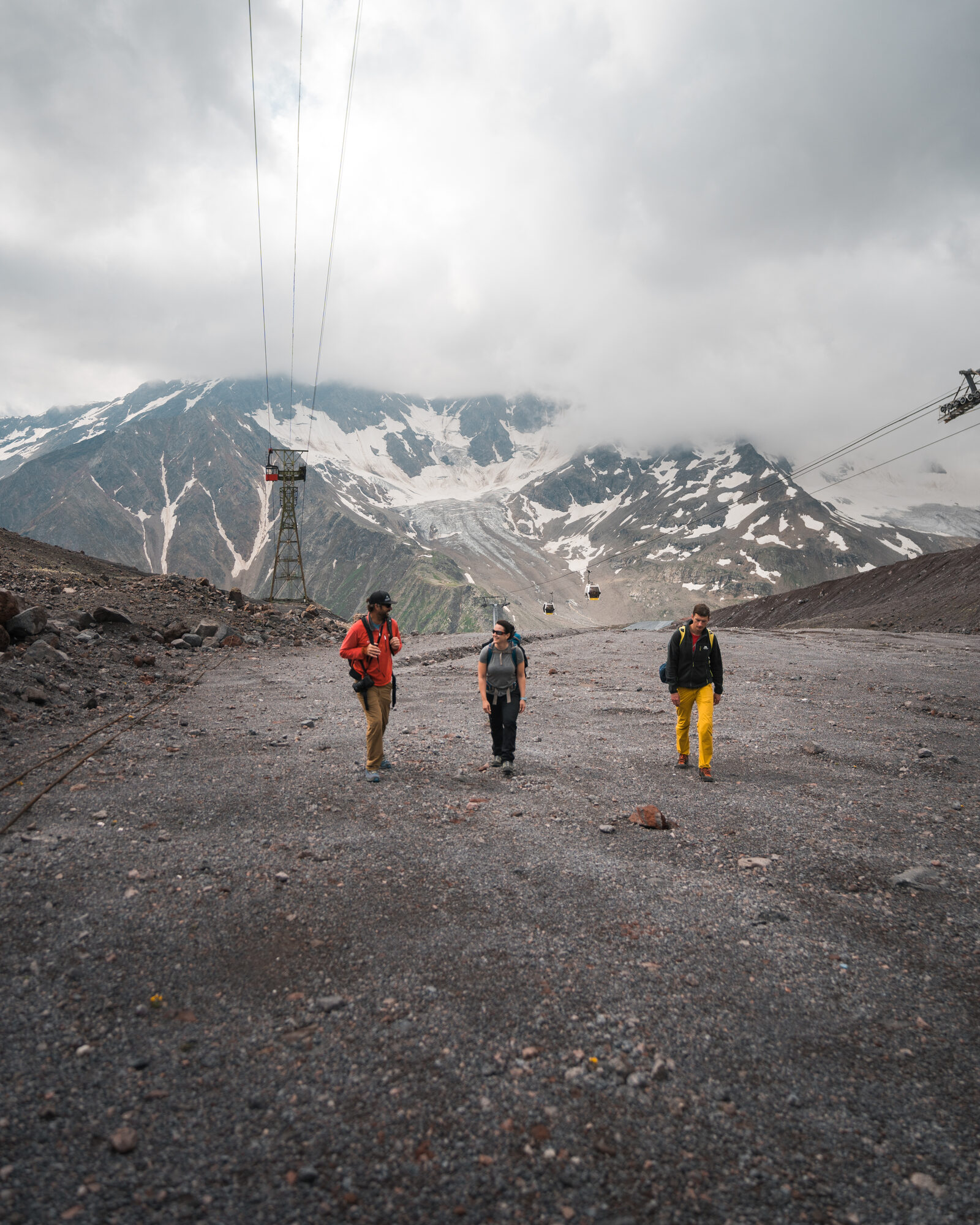
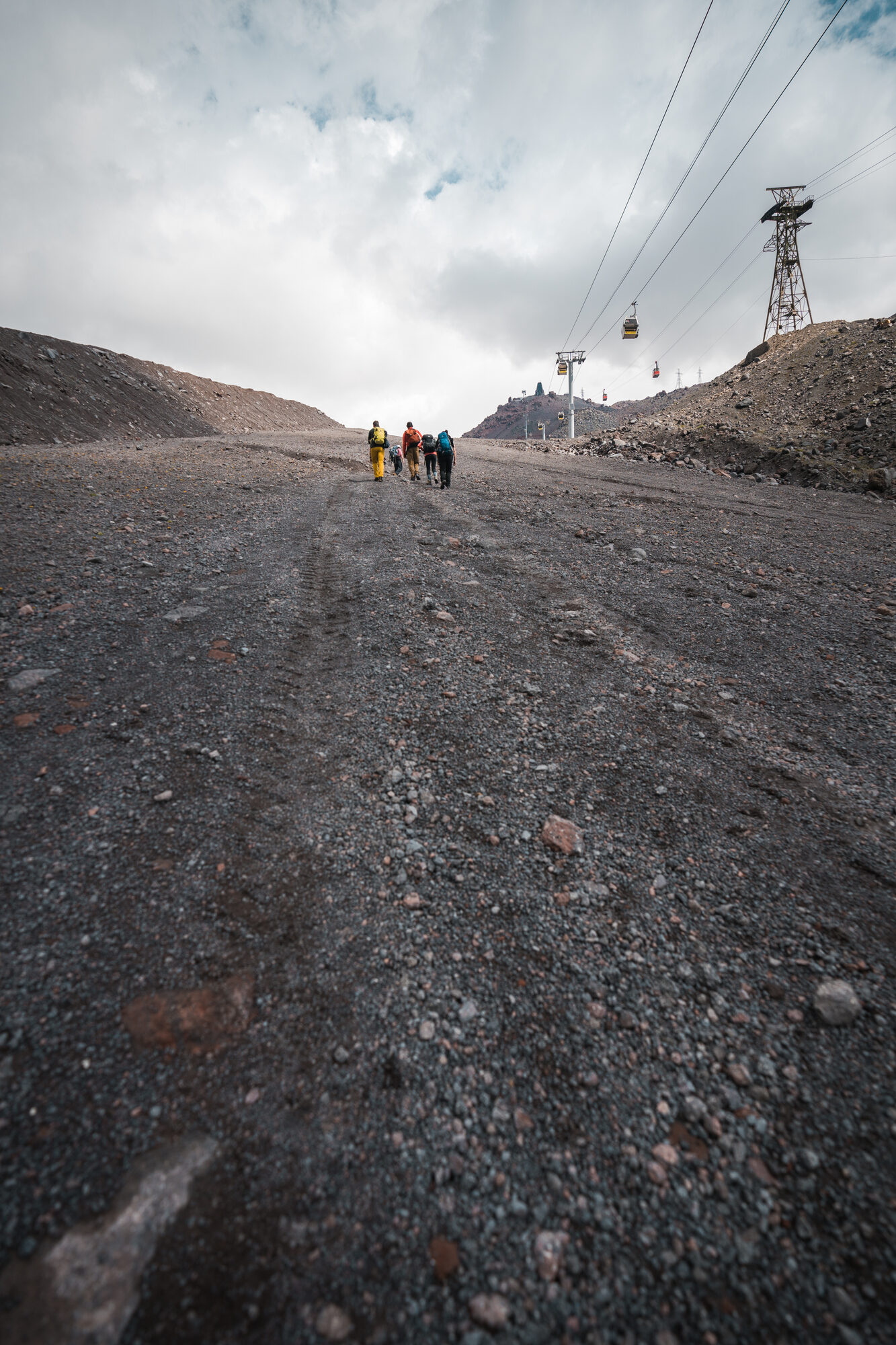
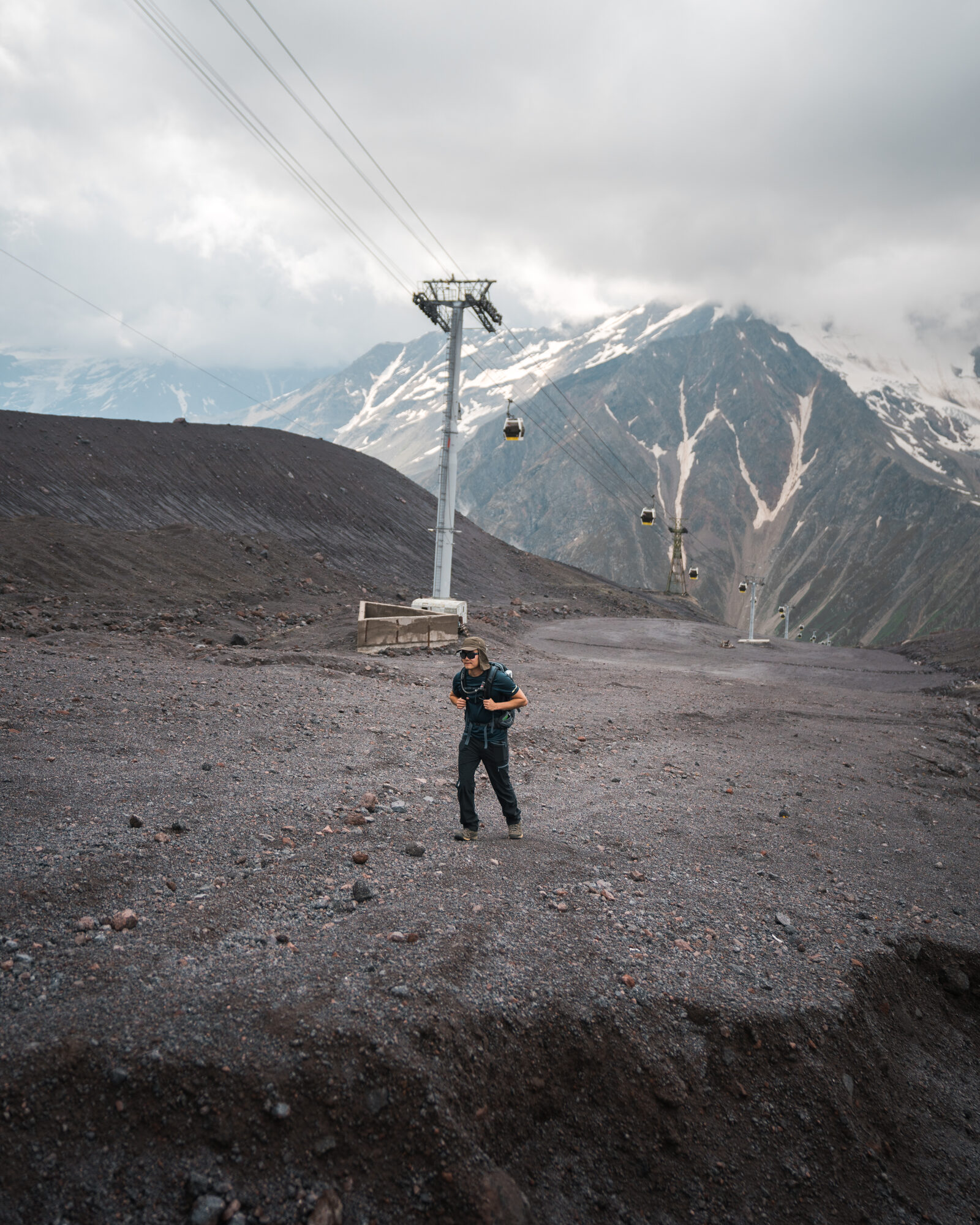
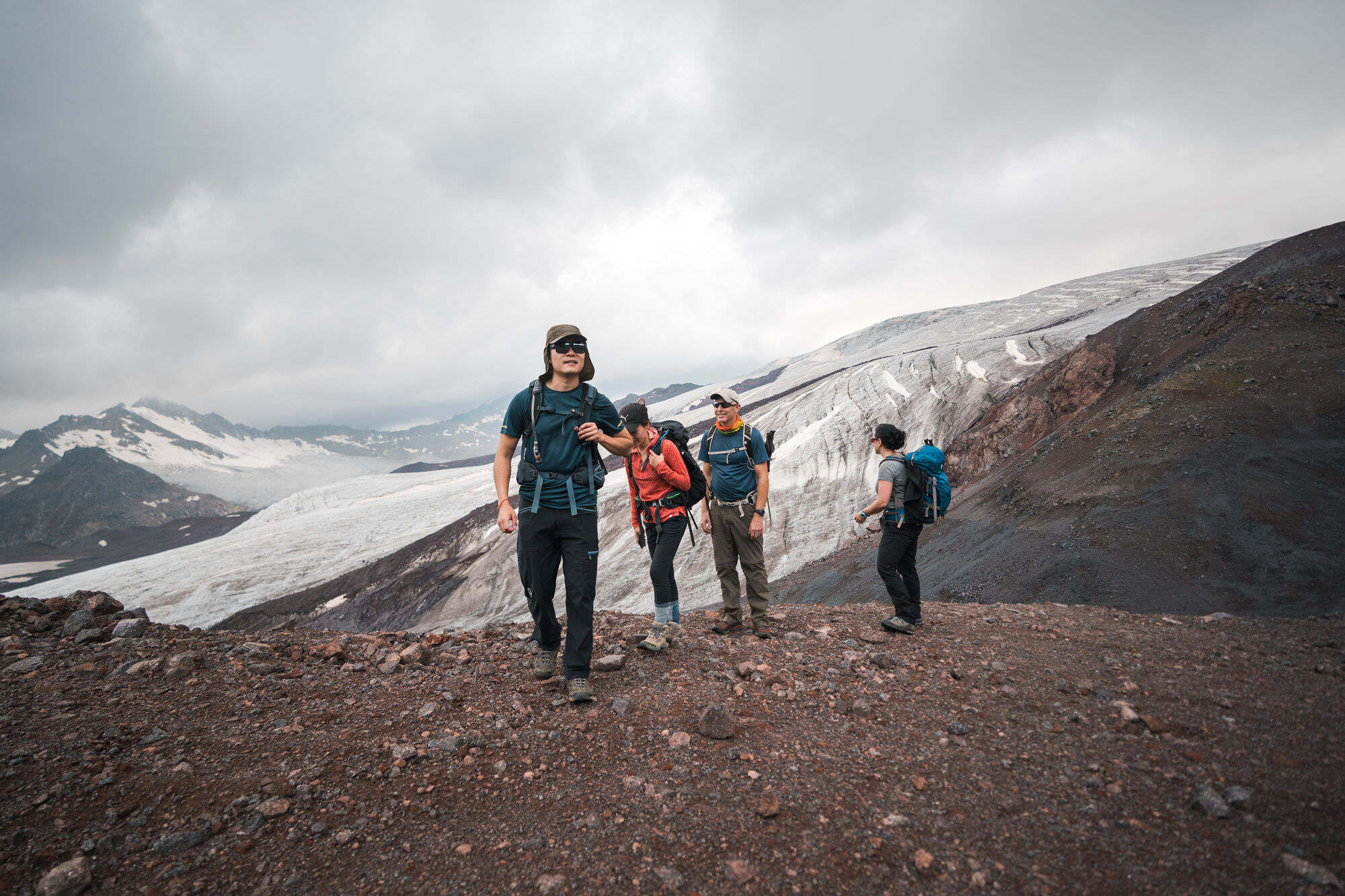
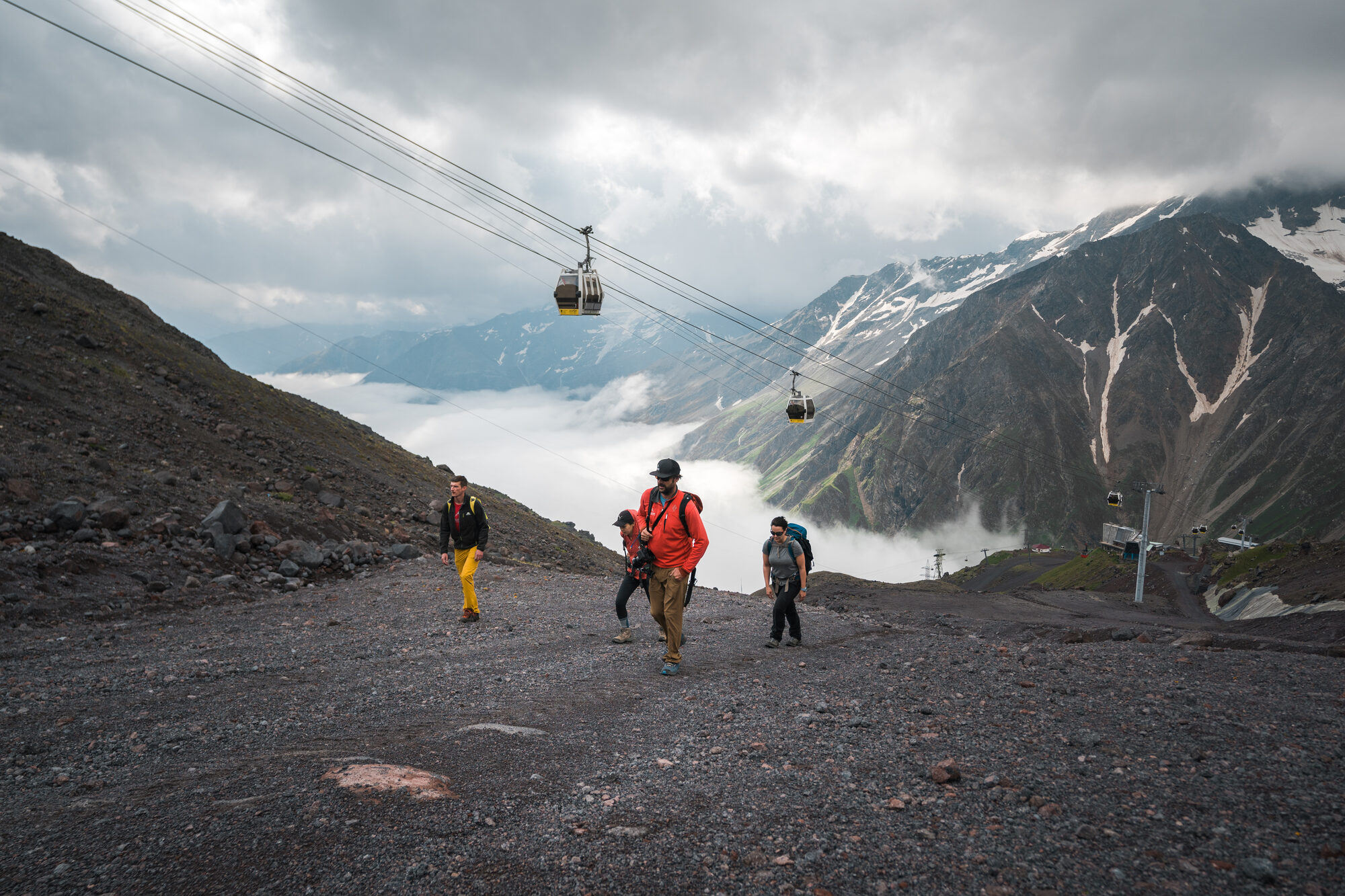
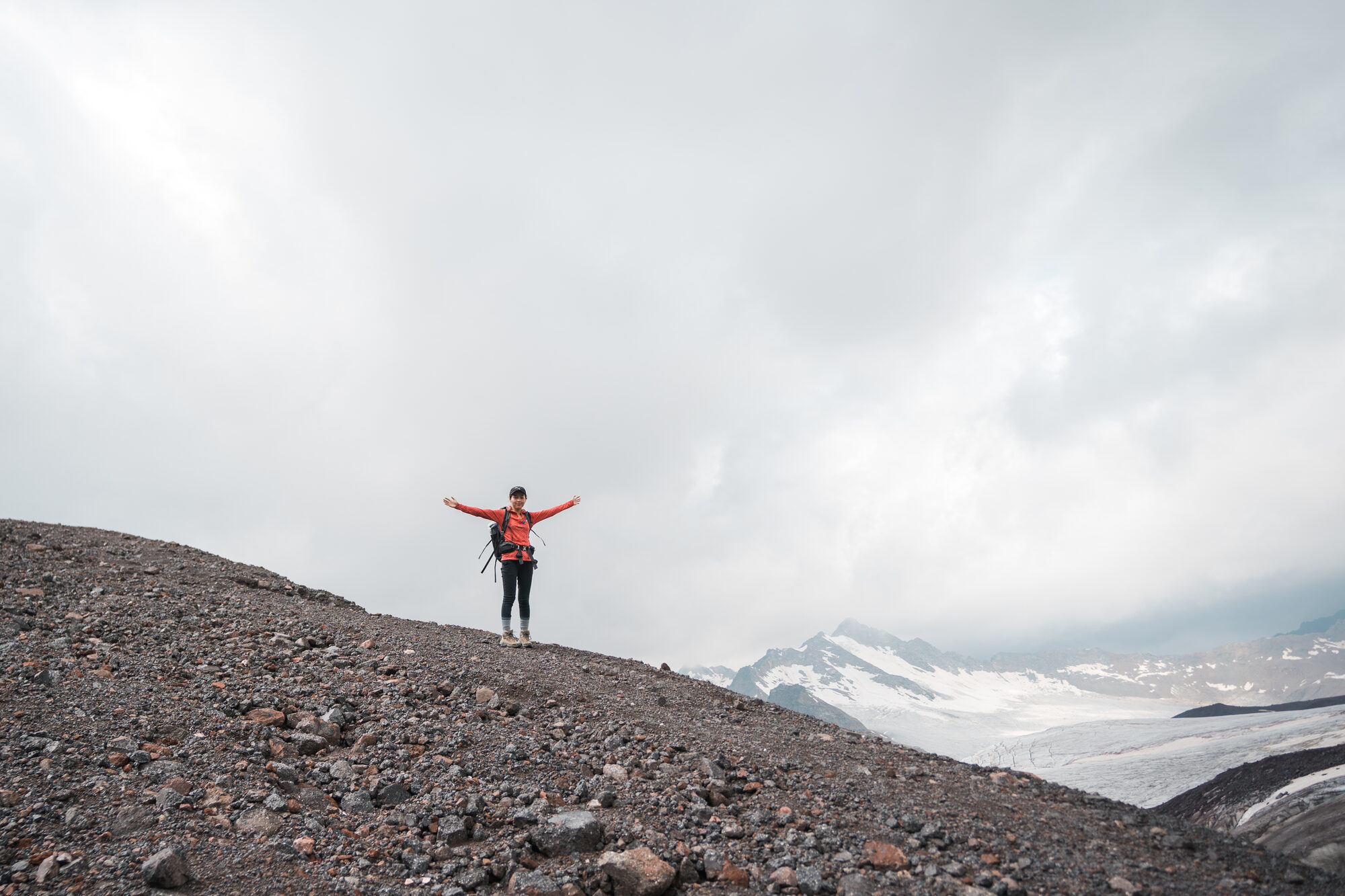
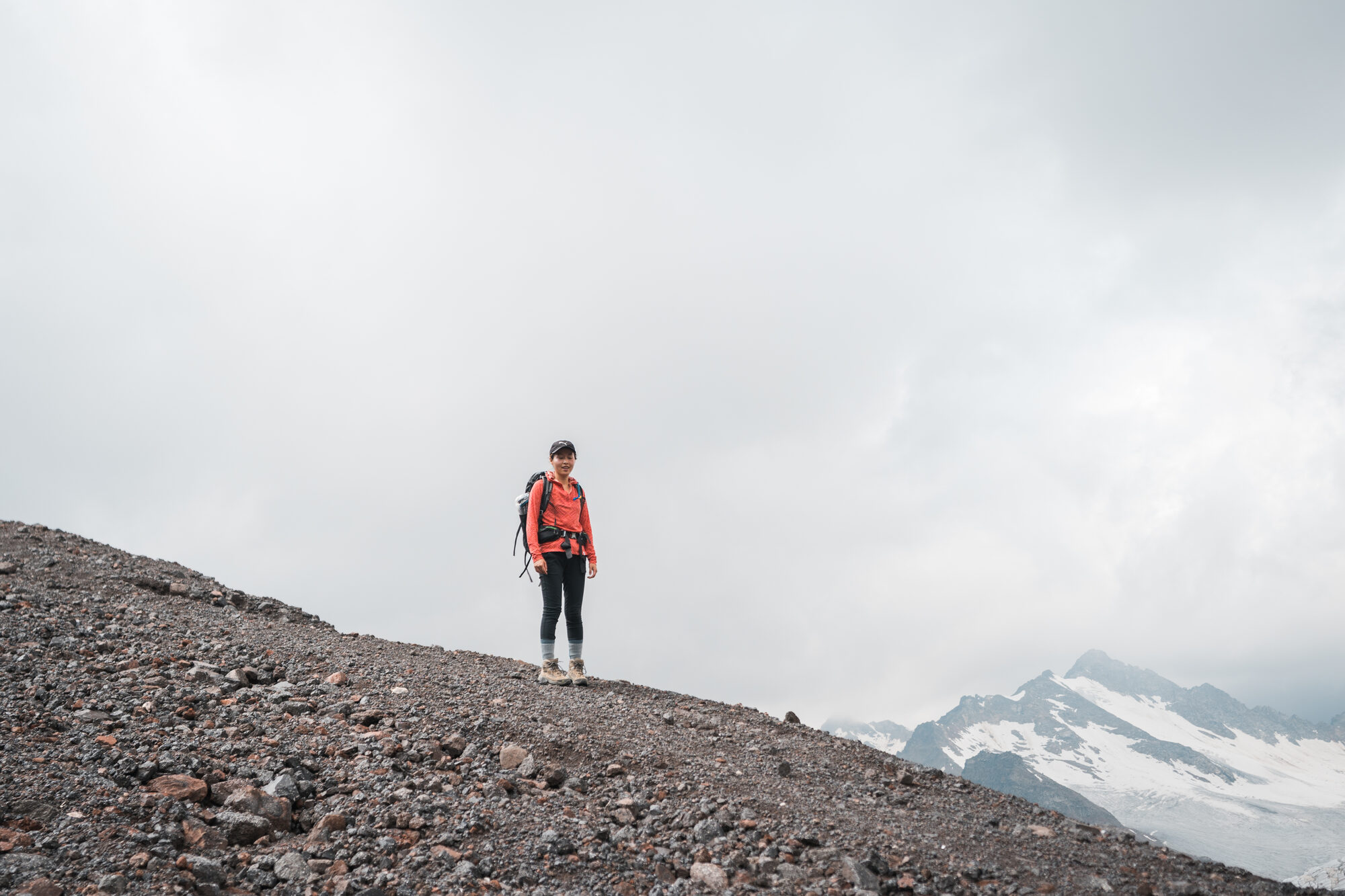
Today we finally set foot on the mountain. And what a mountain it is. From the base station, we took the cable car system partway up and then started hiking on foot, climbing steep gravel terrain with glaciers flanking both sides. The landscape felt volcanic and raw, loose rock and scree with snow patches and cable car lines stretching up into the clouds overhead.
The gondola station above the clouds. From here the real mountain begins.
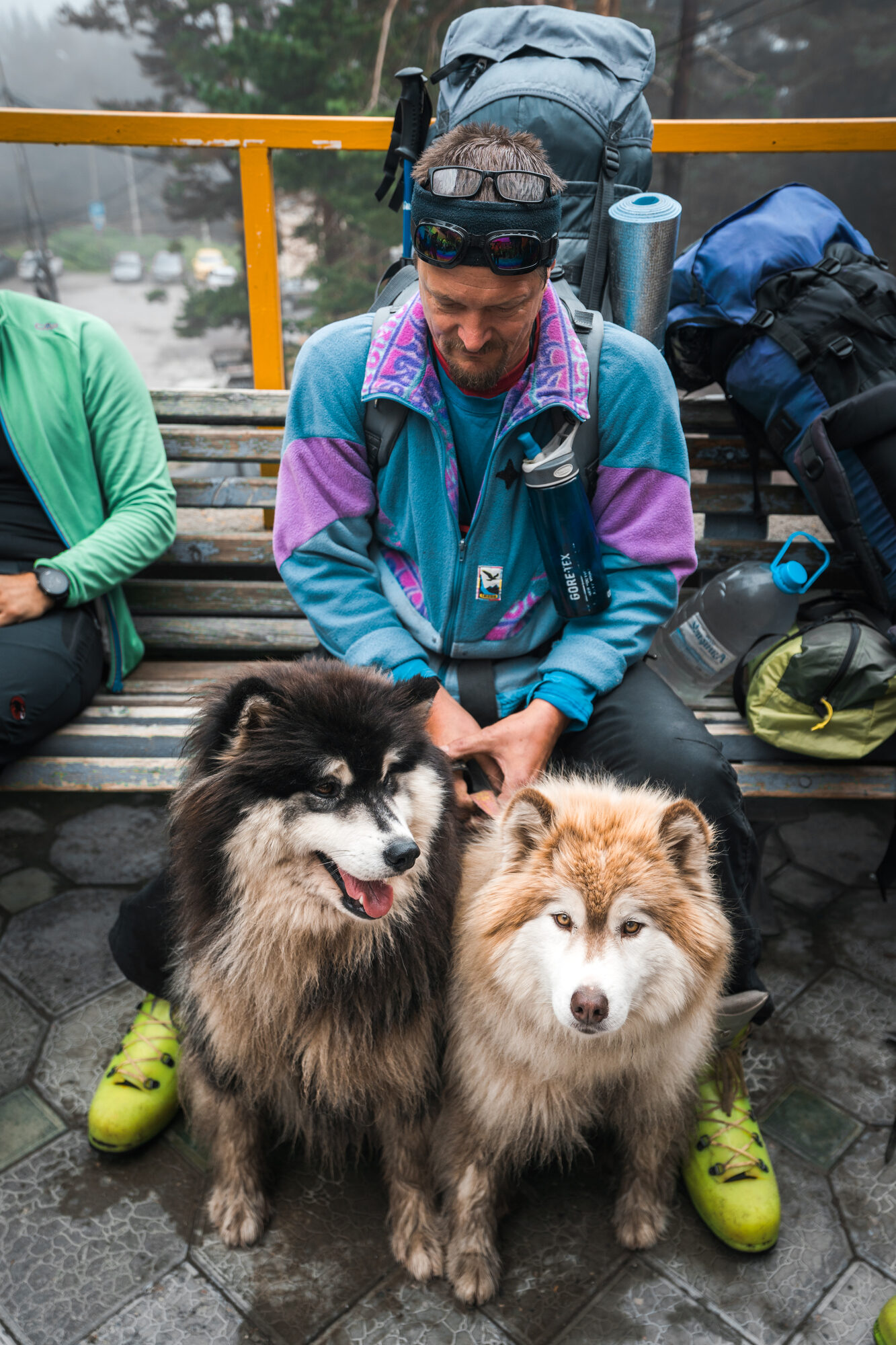
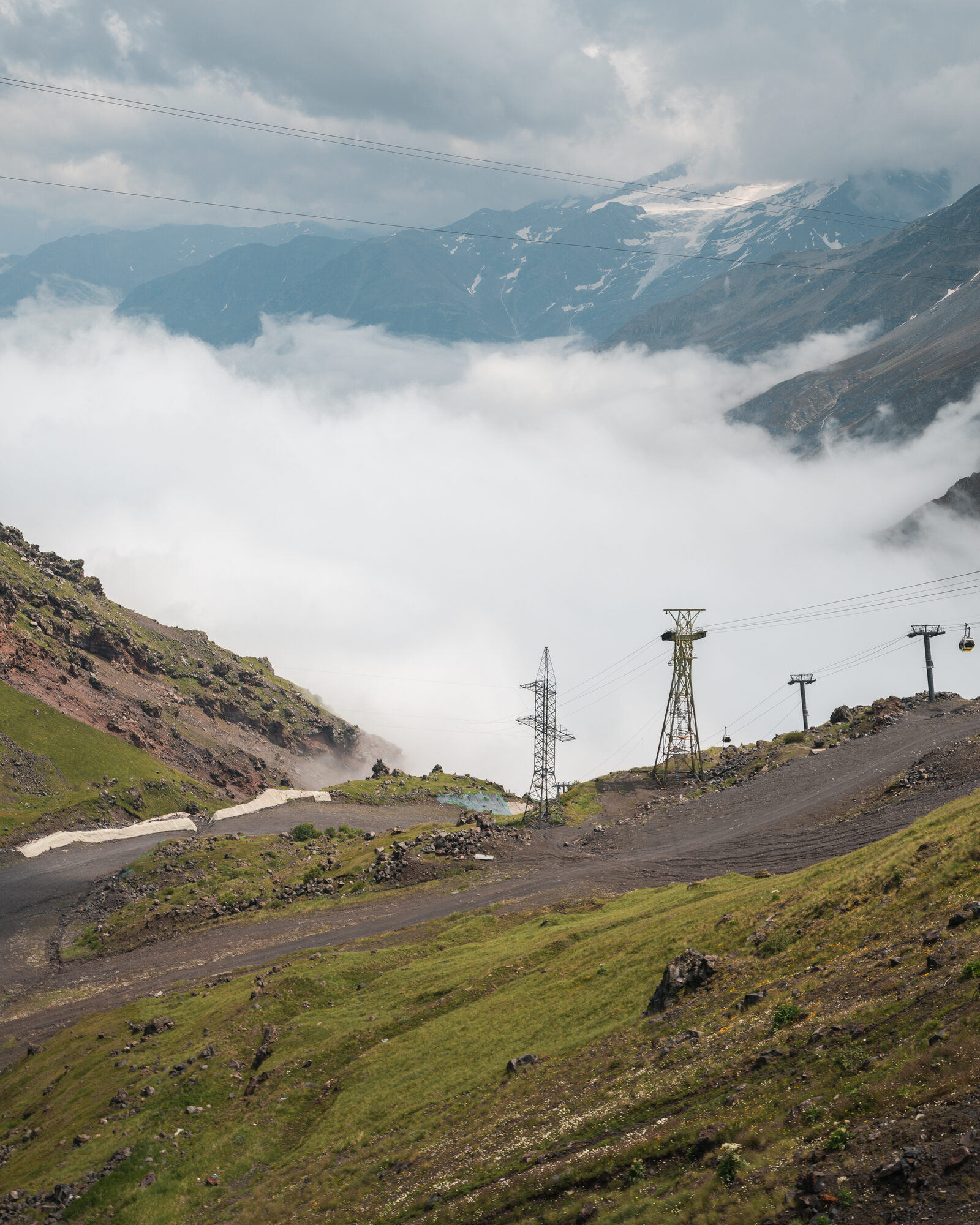
Making friends on the mountain. Two fluffy Caucasian shepherds at a rest stop on the approach.Riding up from Azau — cable car towers disappearing into cloud as the road switchbacks drop away below.
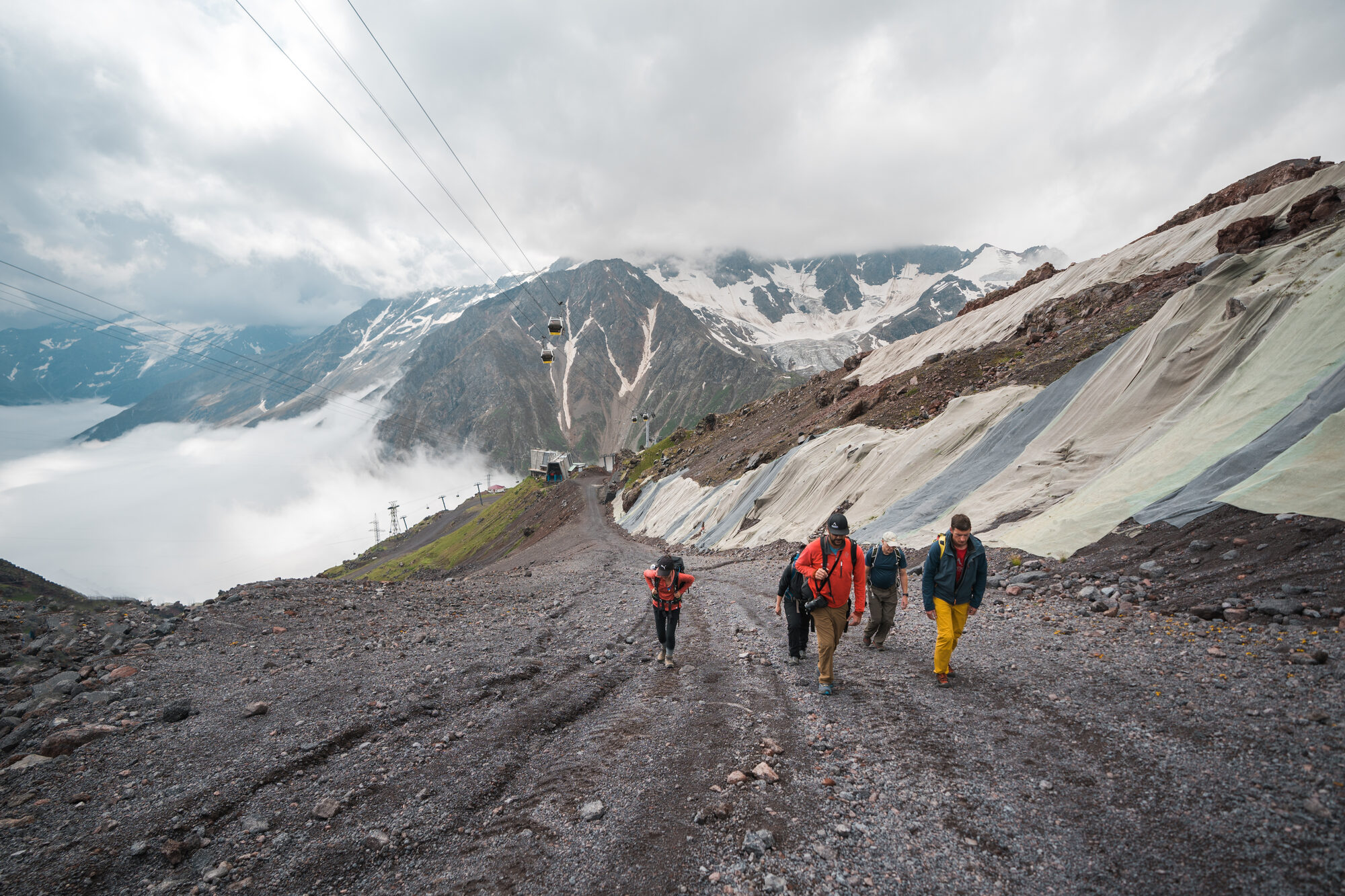
First steps on Elbrus. The cable car station behind us, glaciers on both sides, and a long way still to go.
Starting up the approach. Cable car lines overhead, peaks lost in cloud.The scale of it. Figures shrunk to dots against the cable car towers.
Our high point for the day was Priut 11 at around 4,100 meters, the site of the famous old mountain refuge. The key to preventing altitude sickness is to go high and sleep low. Each day, you push a little higher and come back down. Today was the first of those pushes, getting our bodies used to the thinner air at altitude before we'd eventually move up and stay.
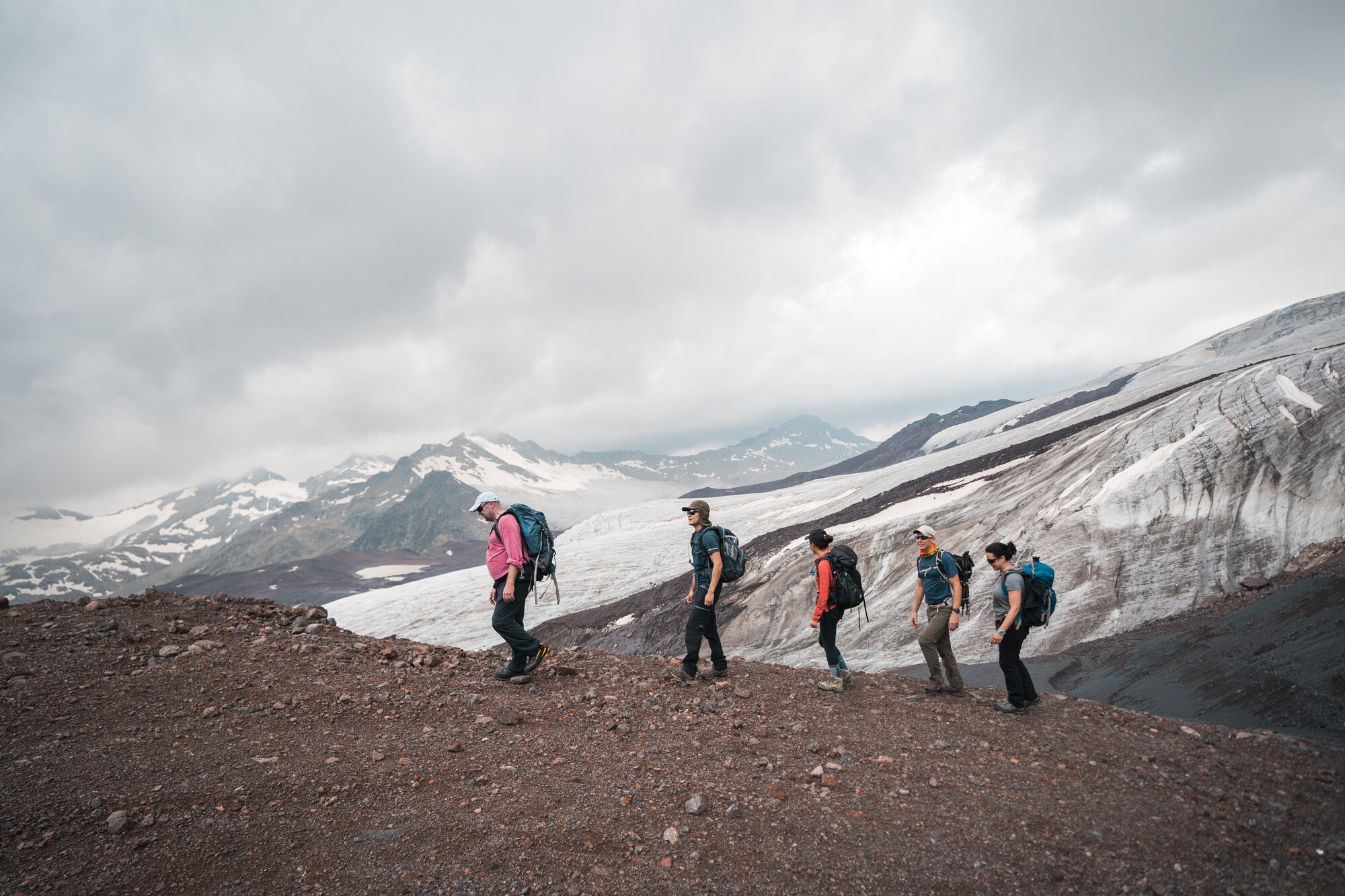
Jason near the upper cable car station. Elbrus rising behind the clouds.The team trekking toward the glacier. The scale of this mountain is hard to put into words.
A team shot with the glacier wall rising behind. Volcanic rock underfoot, ice above.
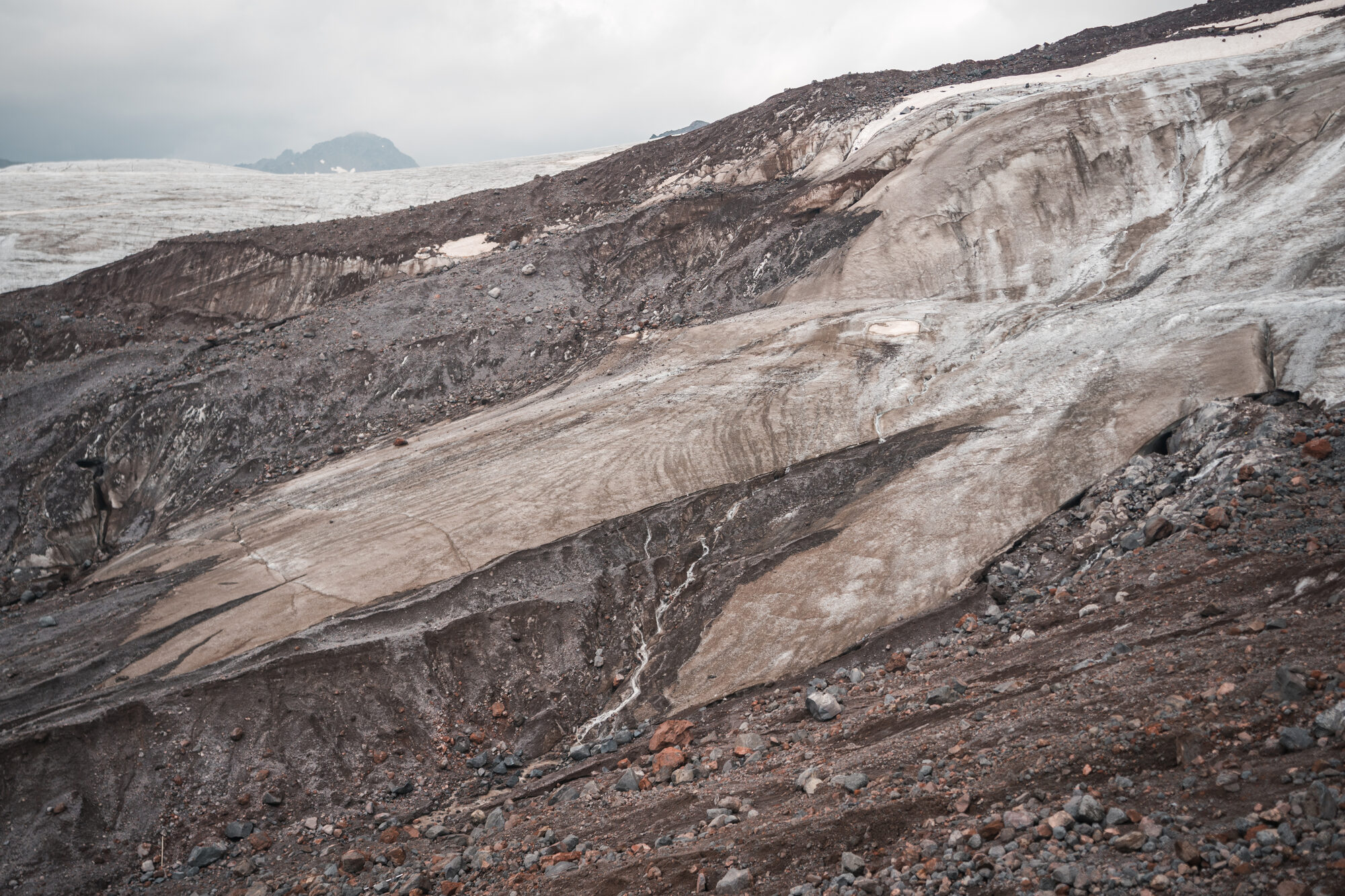
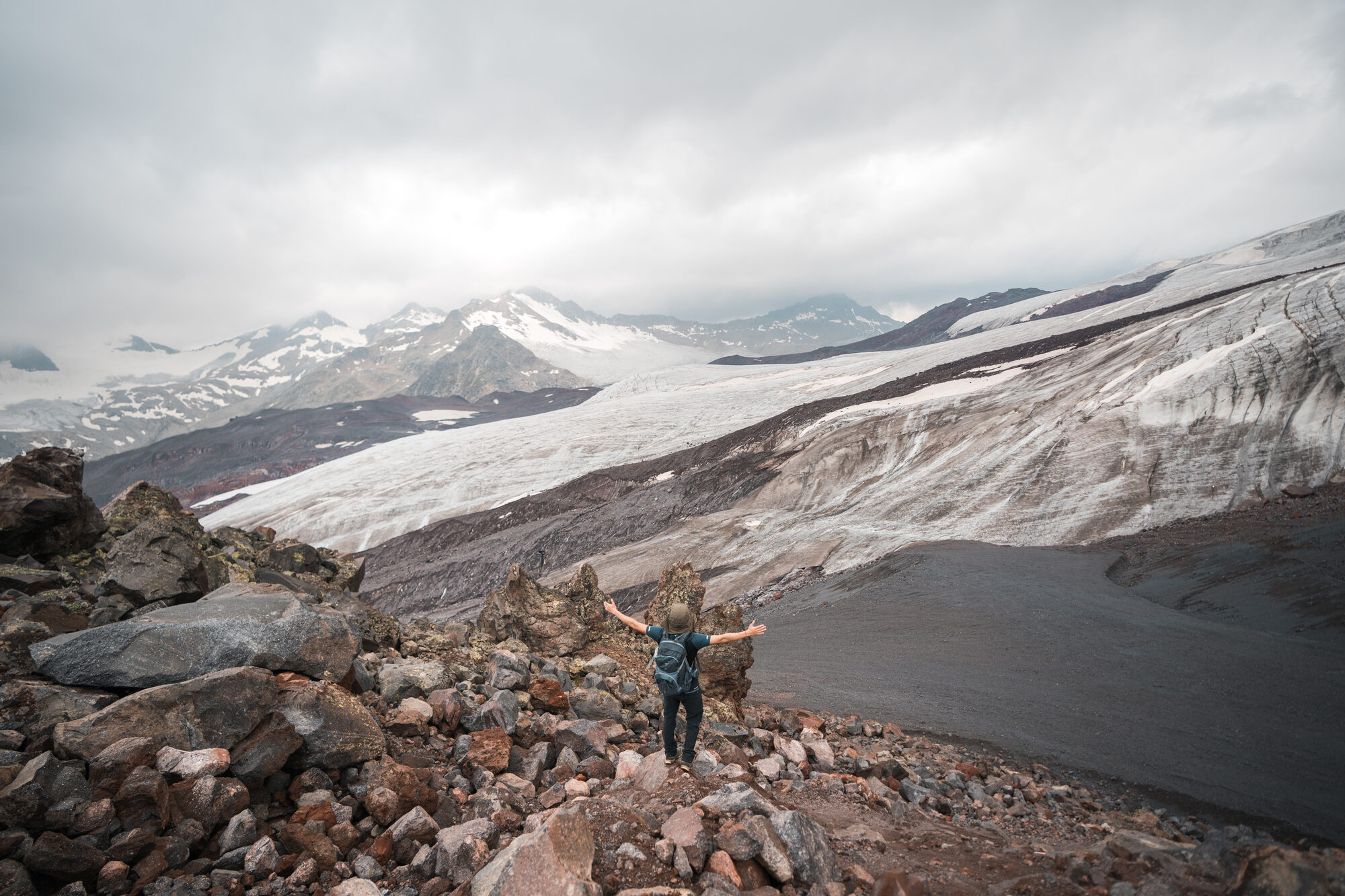
Gravel and volcanic rock underfoot. Nothing grows up here.The glacier up close. Layers of ice and rock exposed on the Elbrus slopes.
The view from near Priut 11. You could see the summit from here, which gave us a real sense of what we were up against.
Taking in the moment on the Elbrus slopes. Snowy peaks peeking through the clouds behind.Old ski lift infrastructure on the Elbrus slopes. The mountain has a long history as a resort and a climb.
Turning back toward camp. A moment on the moraine with the glacier laid out below.
Days 4–6: Base Camp and Pastukhov Rocks
August 4–6, 2019 · Base Camp (3,800 m) → Pastukhov Rocks (4,750 m / 15,600 ft)
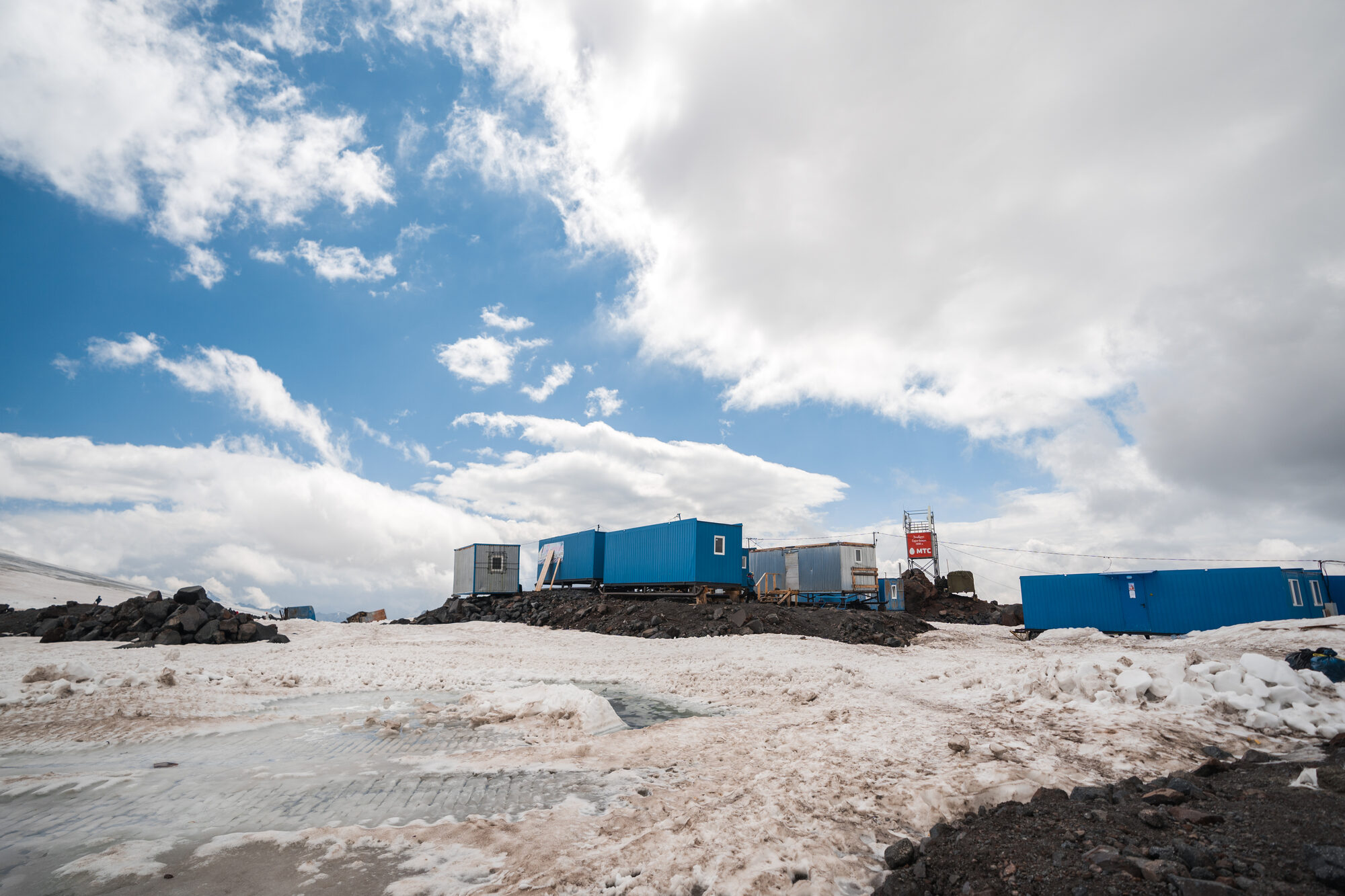
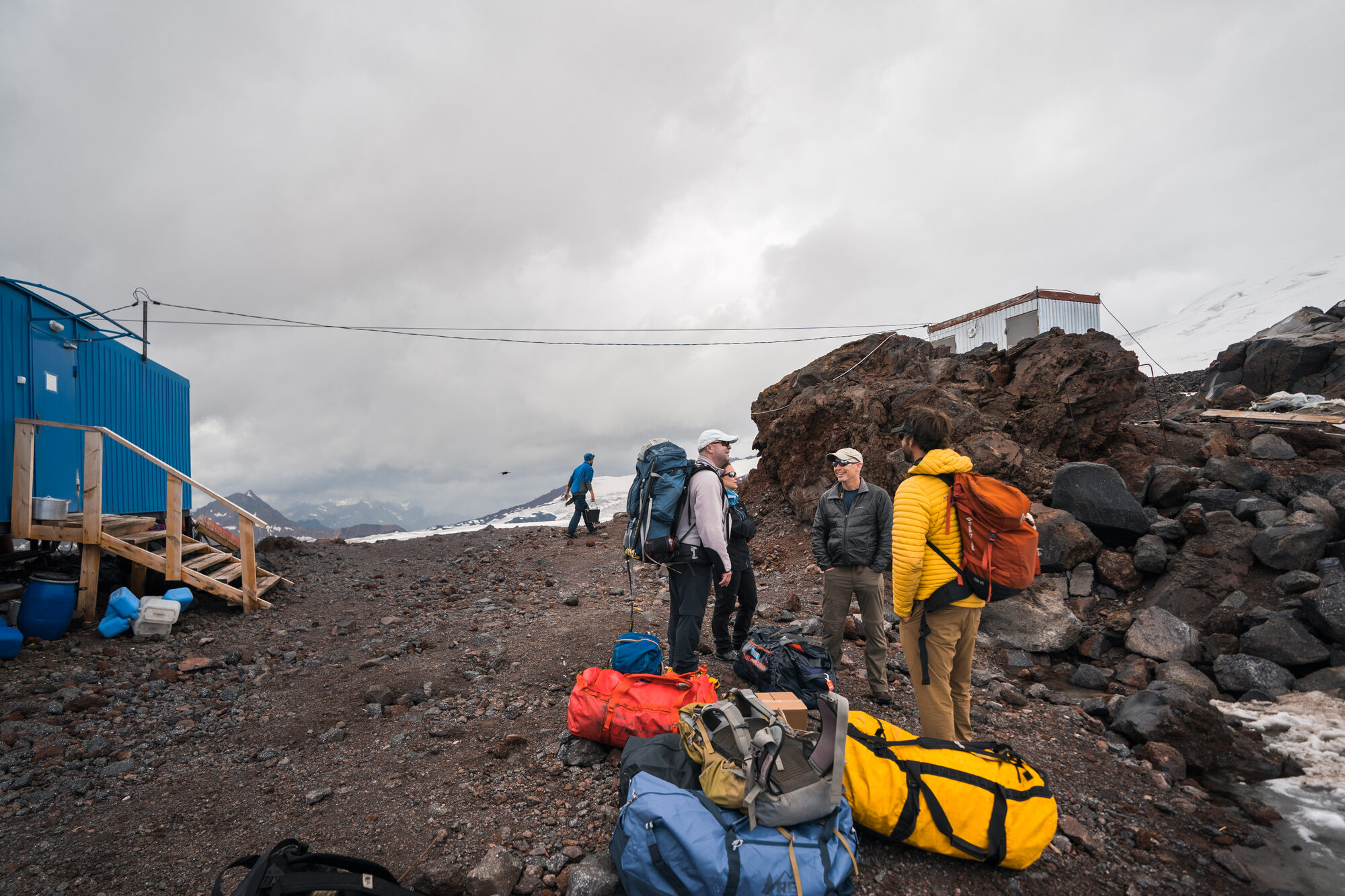
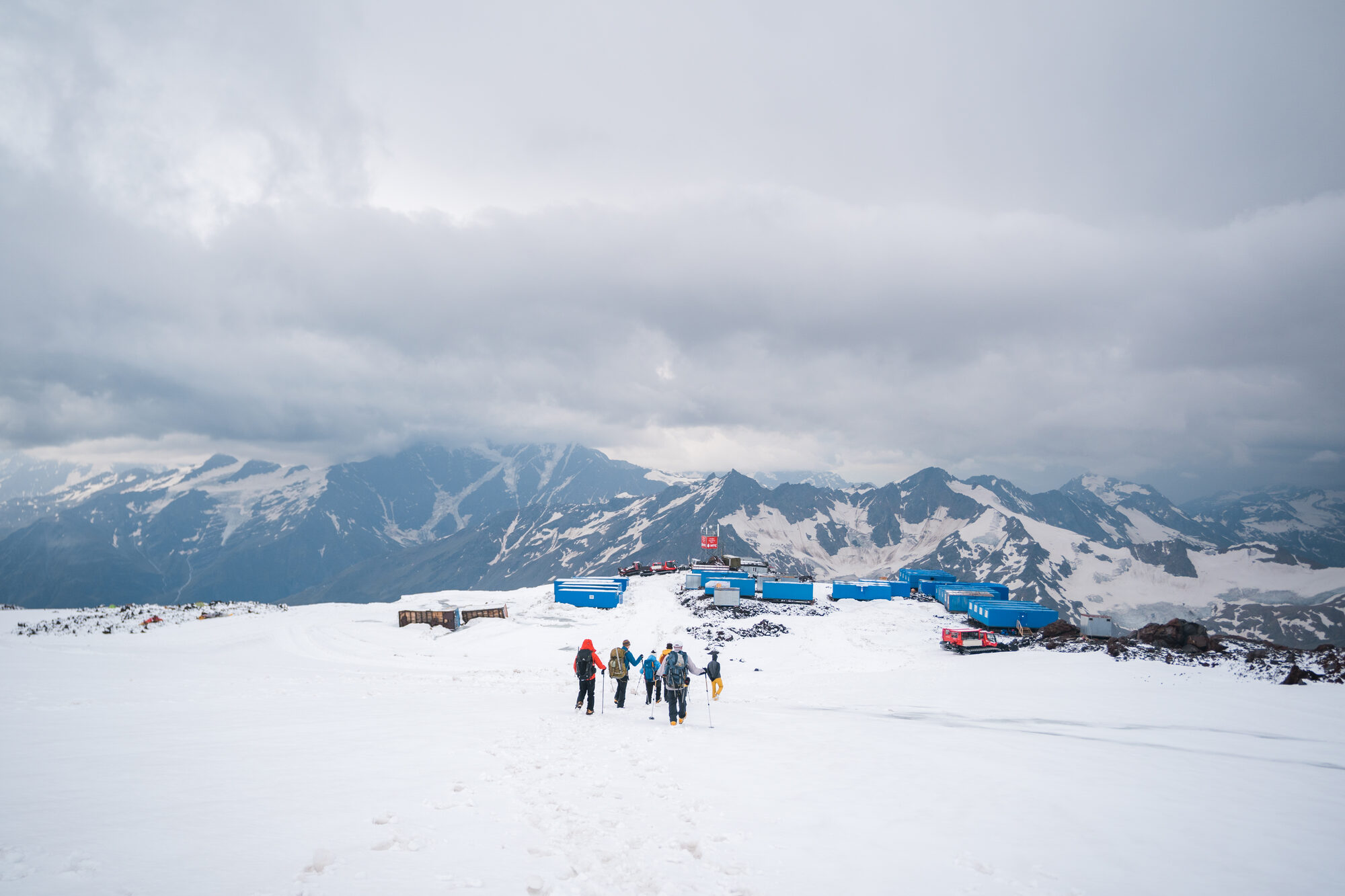
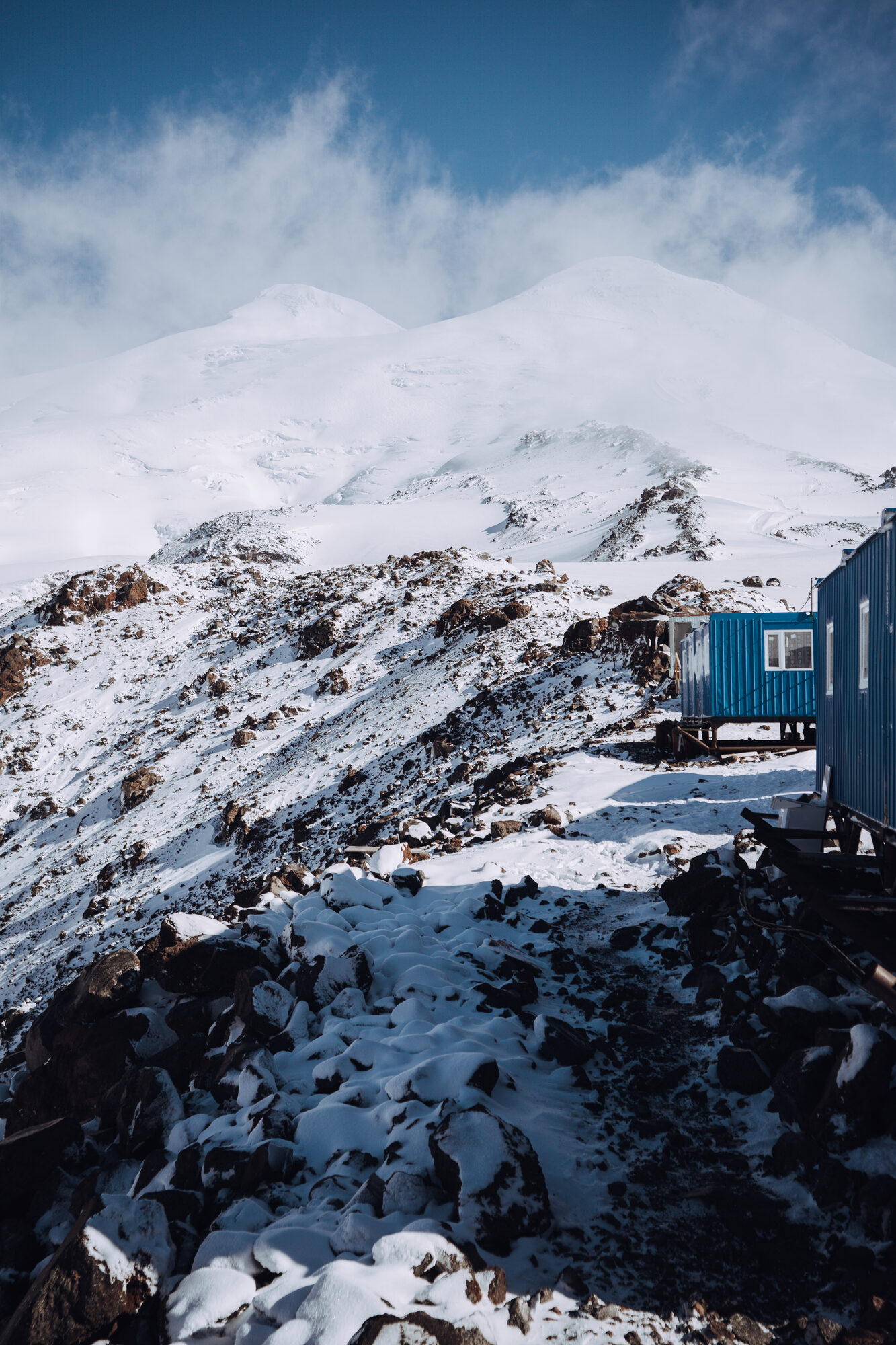
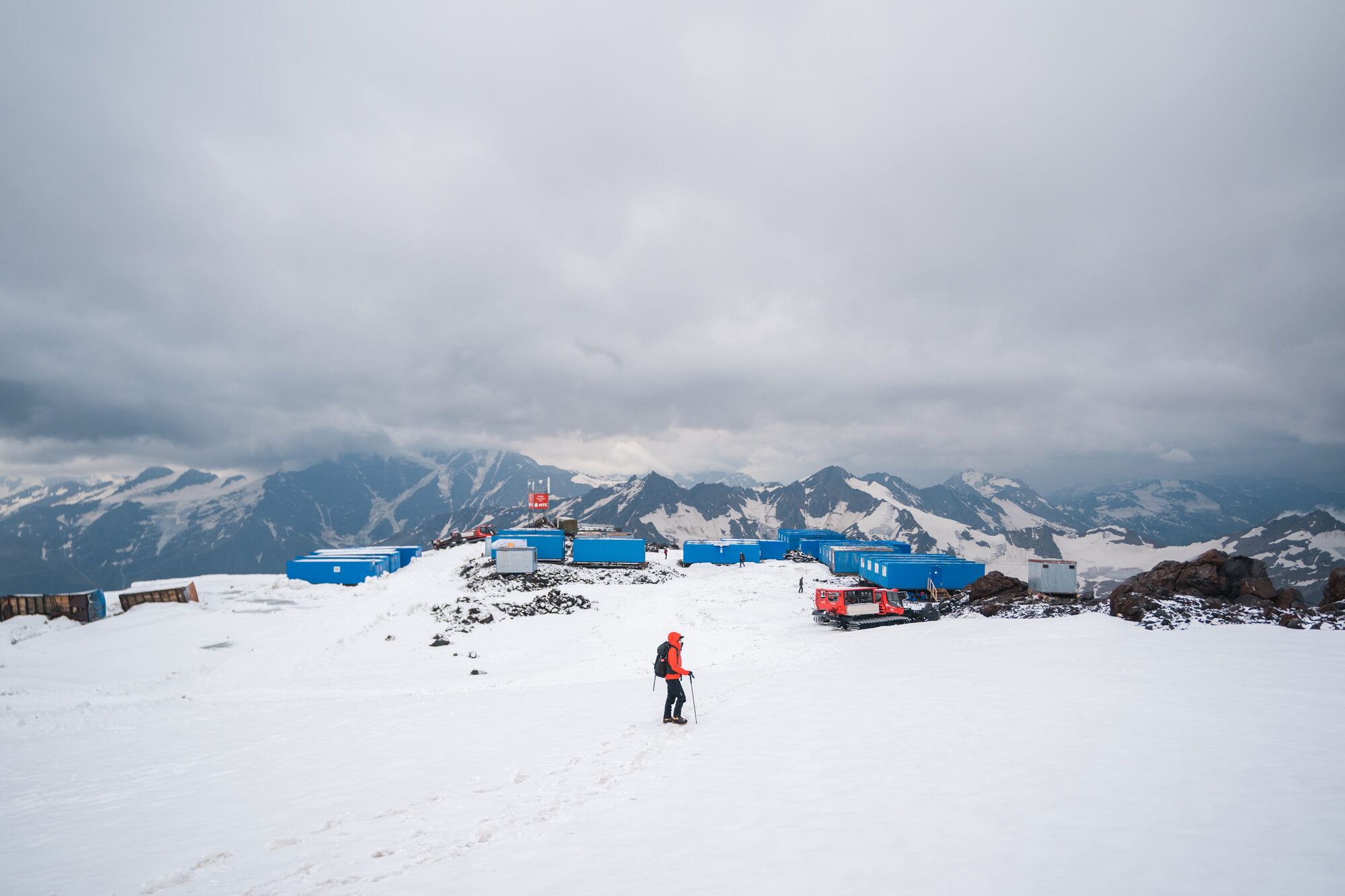
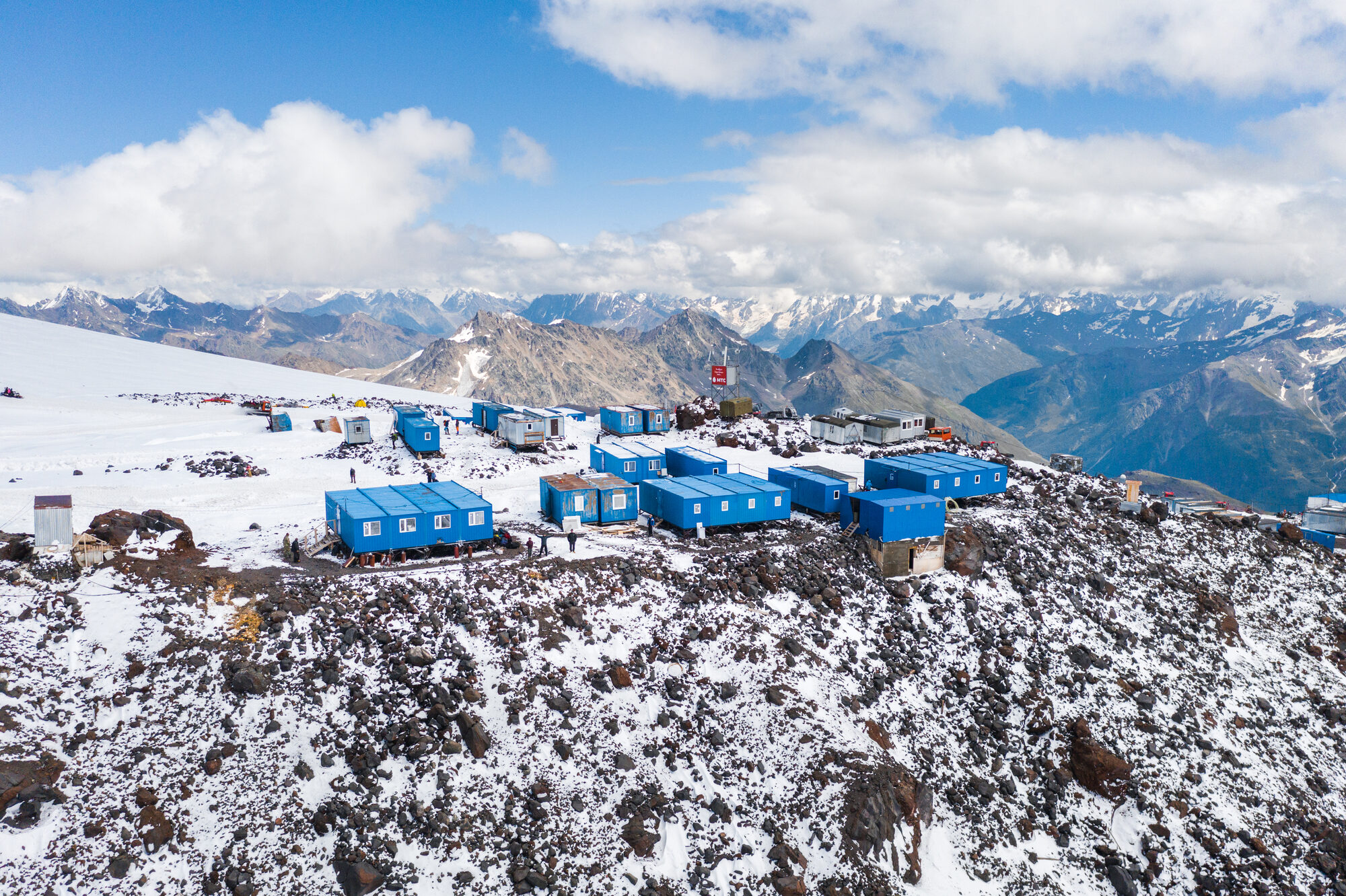
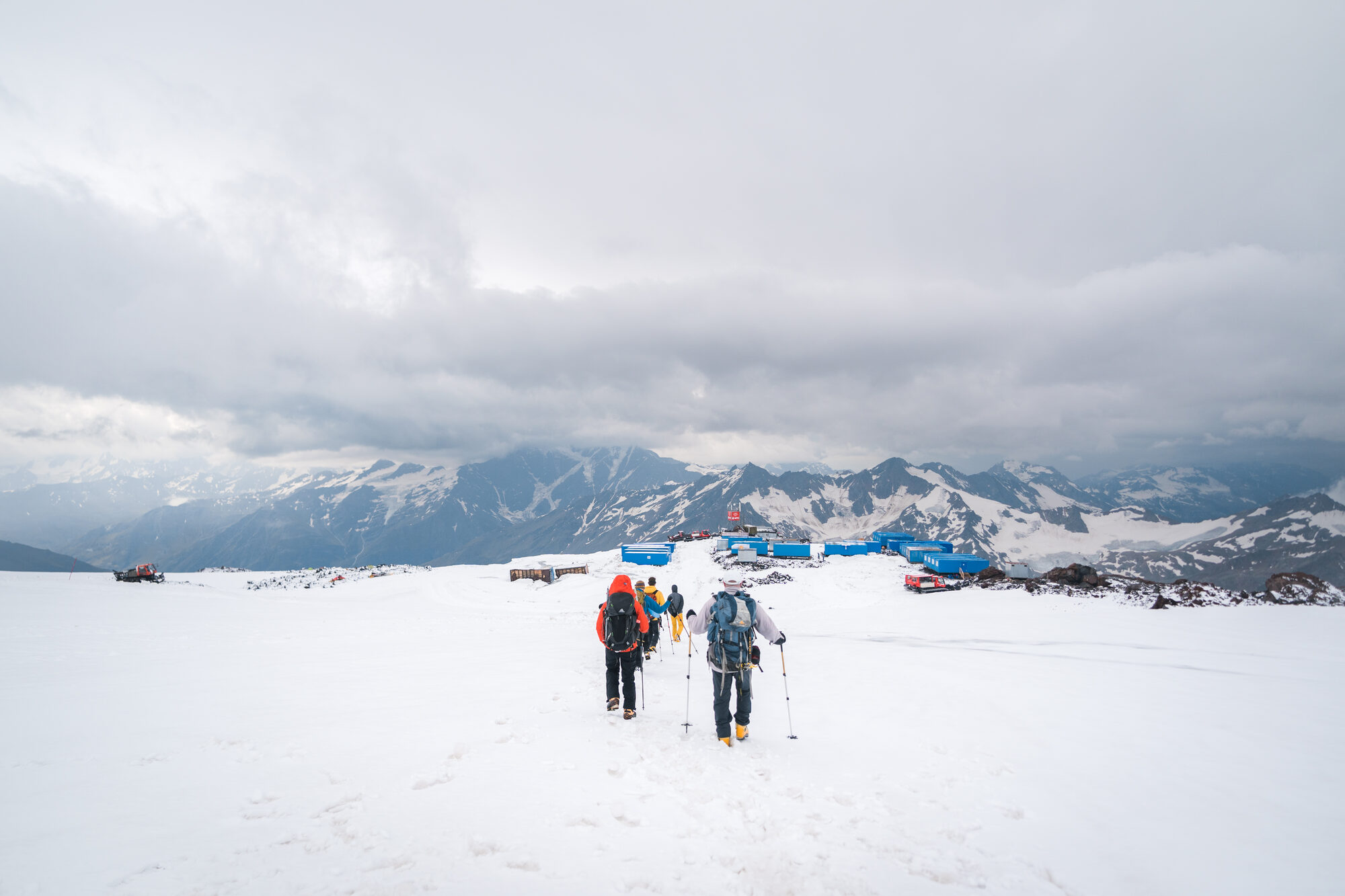
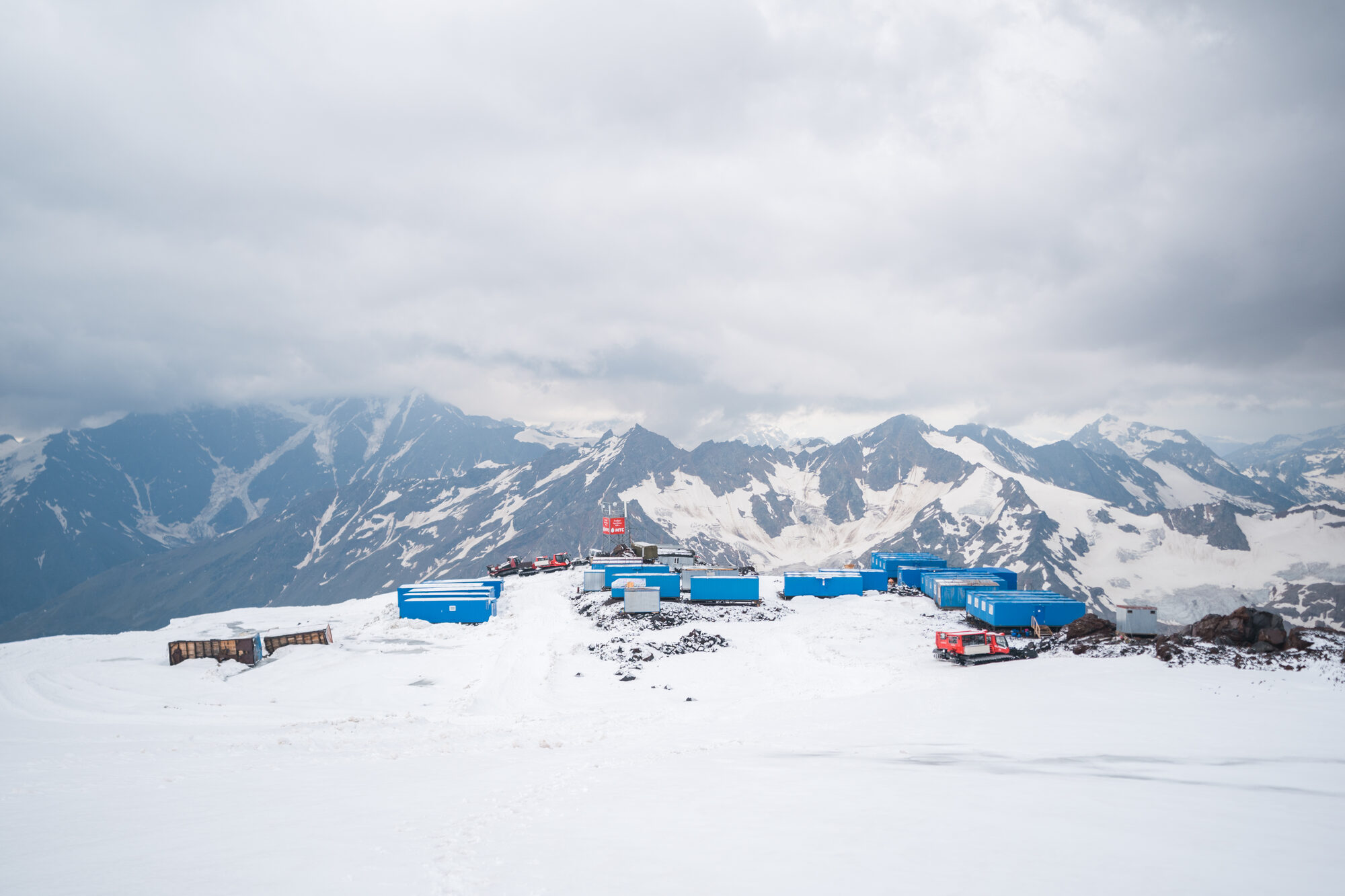
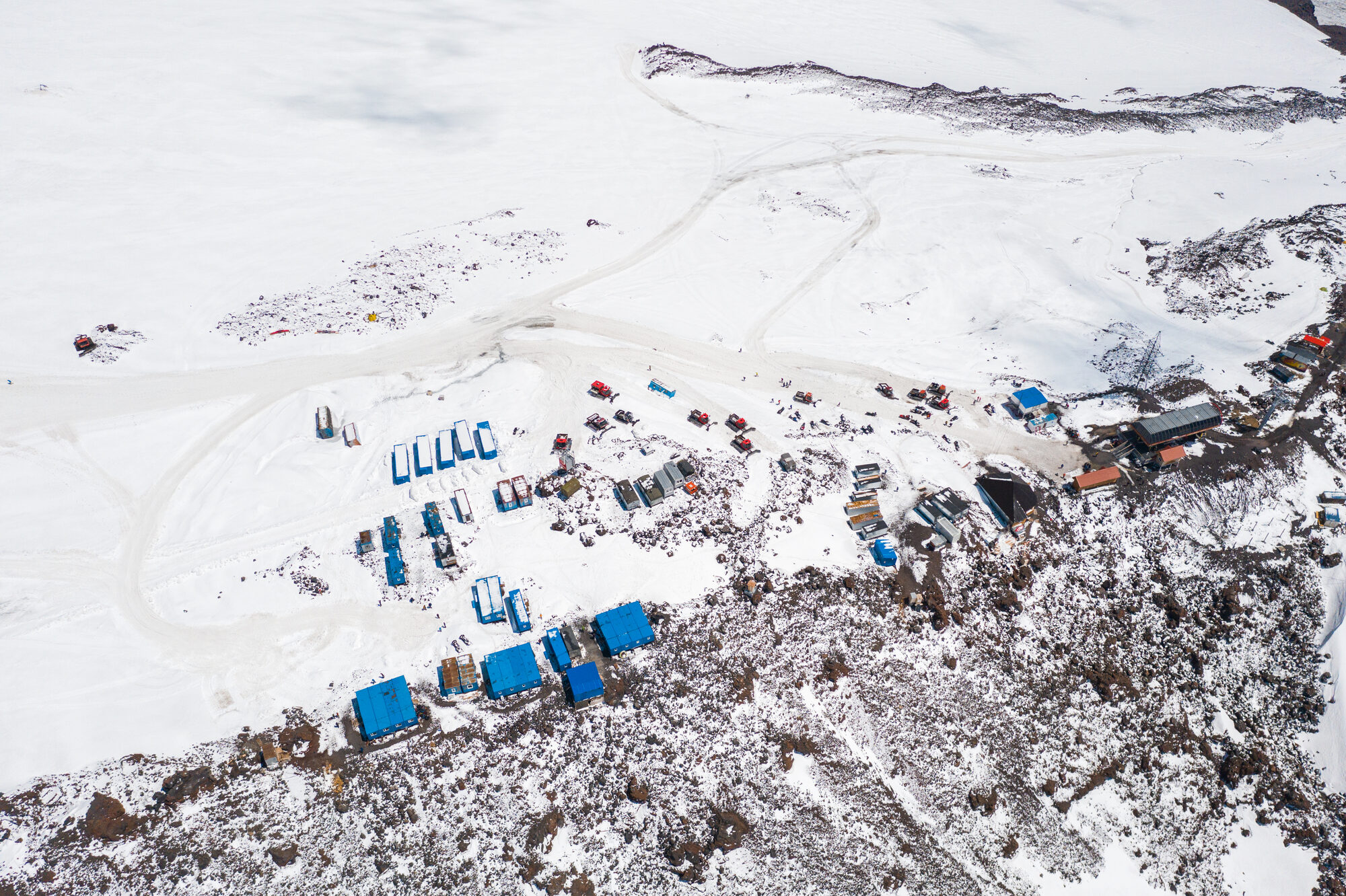
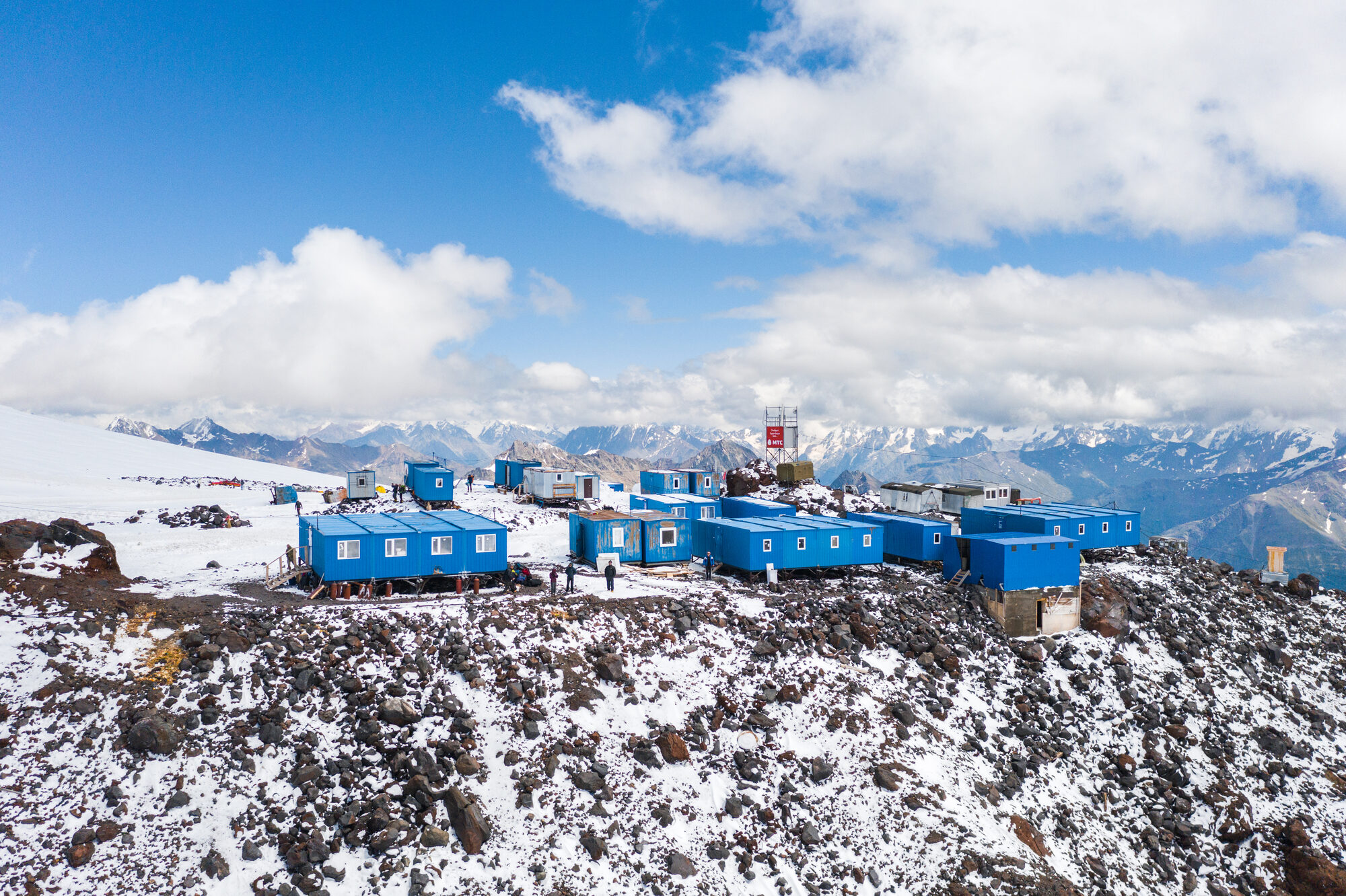
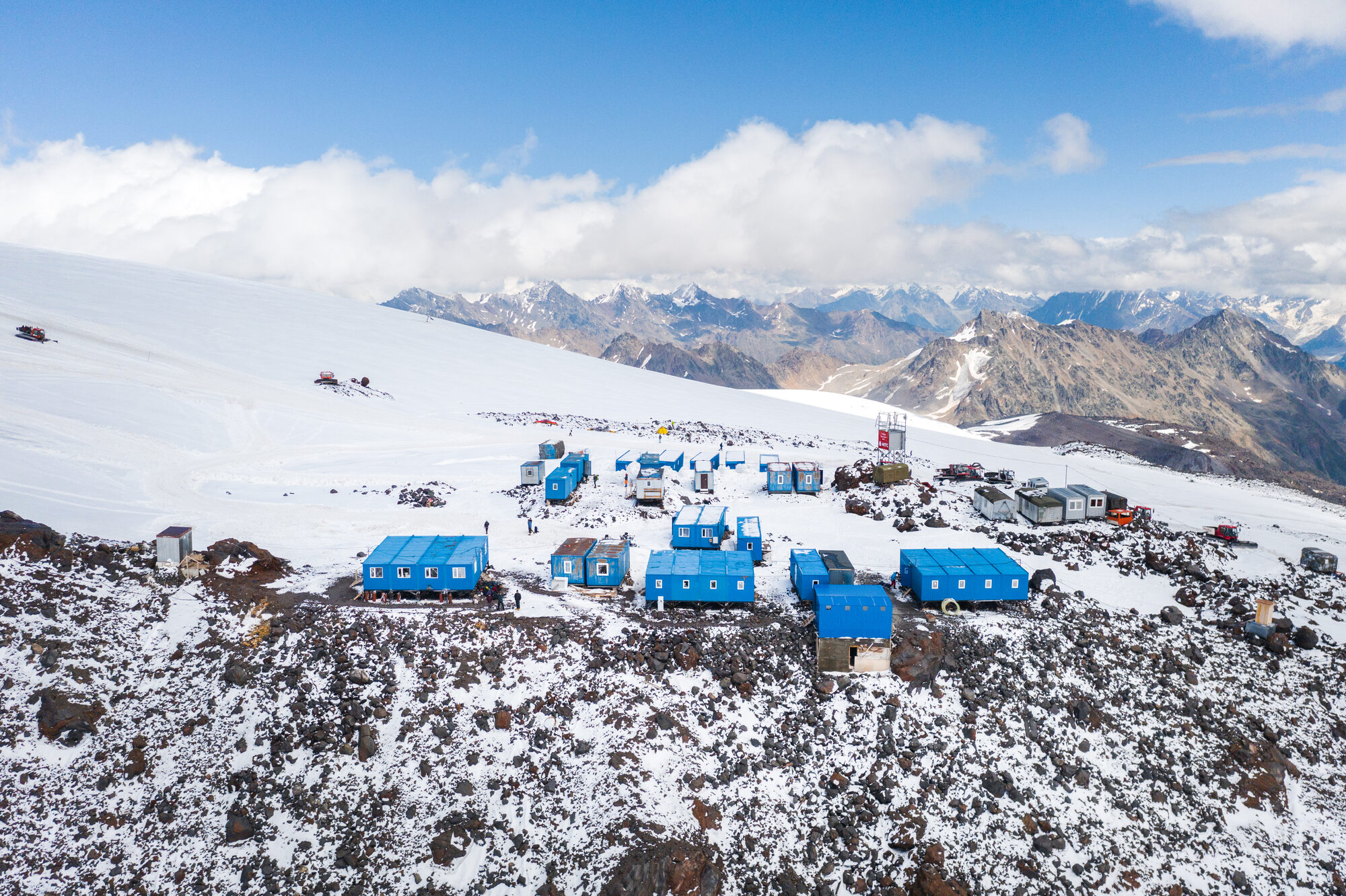
We moved our gear up to base camp and settled into our home for the next few days: a shipping container. Not a tent, not a hut, but a literal blue shipping container bolted to the mountainside at 3,800 meters. It was basic, but it had walls, a floor, and enough room for the team to sleep side by side. The containers are a signature of Elbrus, and honestly, after a long day on the mountain, they felt like a hotel.
Home for the next few days. The shipping container huts at base camp. Not glamorous, but warm and dry.
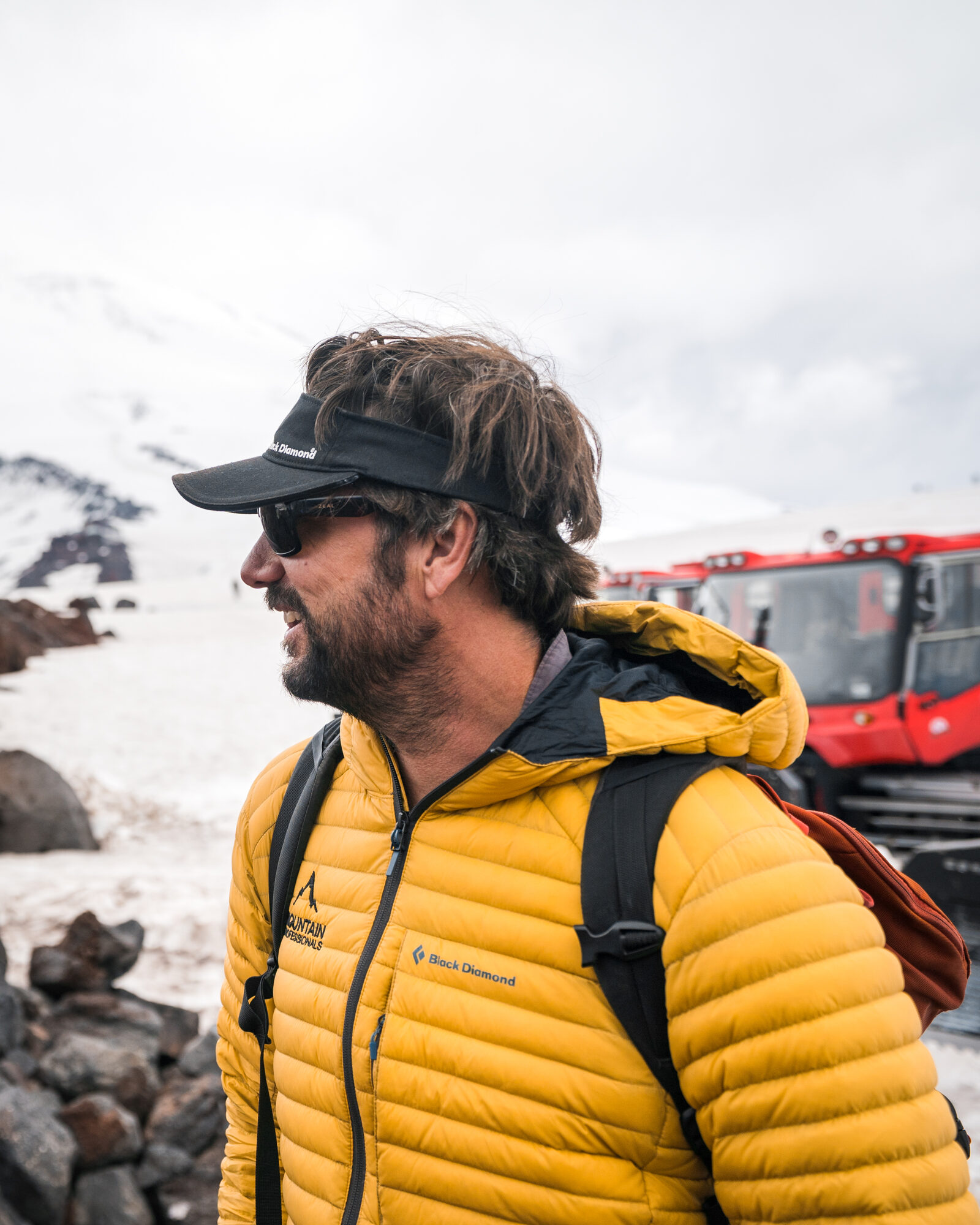
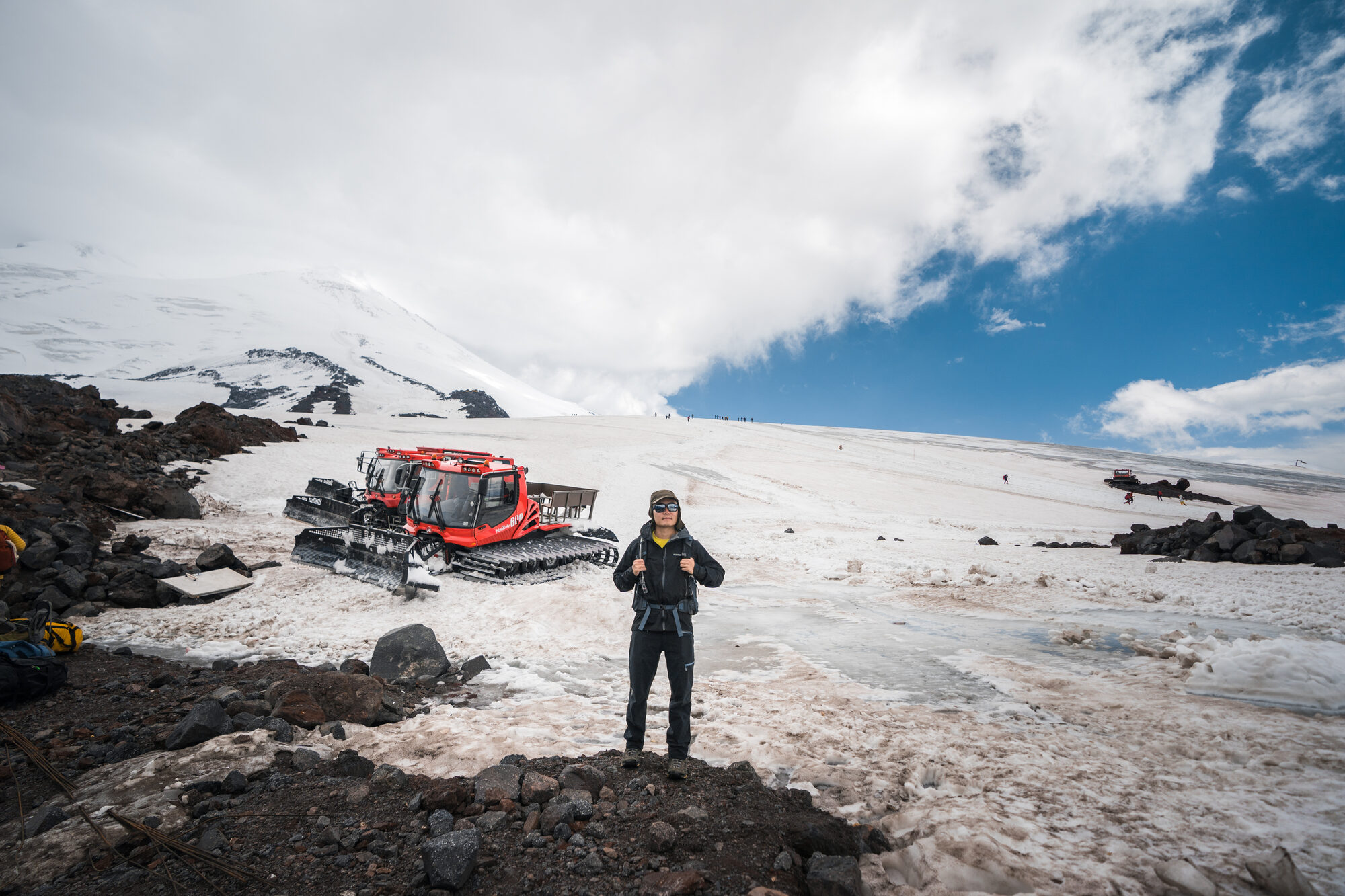
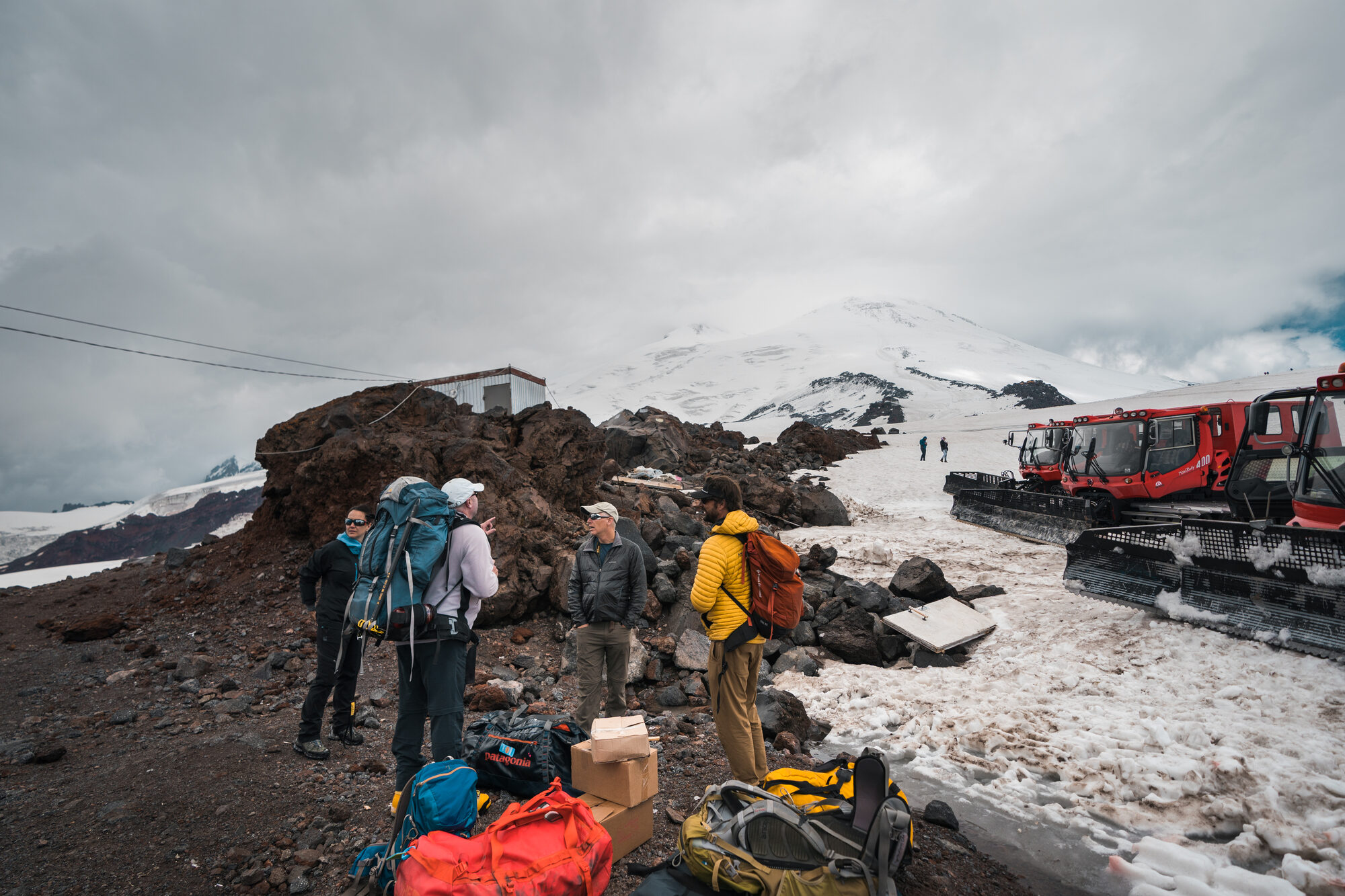
Drop the bags, sort the gear — first hour at base camp.Camp portrait with the snowcat behind — the red machines that ferry gear up the mountain.
What's cool about Elbrus is that you can see the summit from base camp. It sits right there above you, gleaming white against the sky. That visual connection gave us a real sense of readiness. We could trace the route with our eyes and picture ourselves on it. It made the whole thing feel possible.
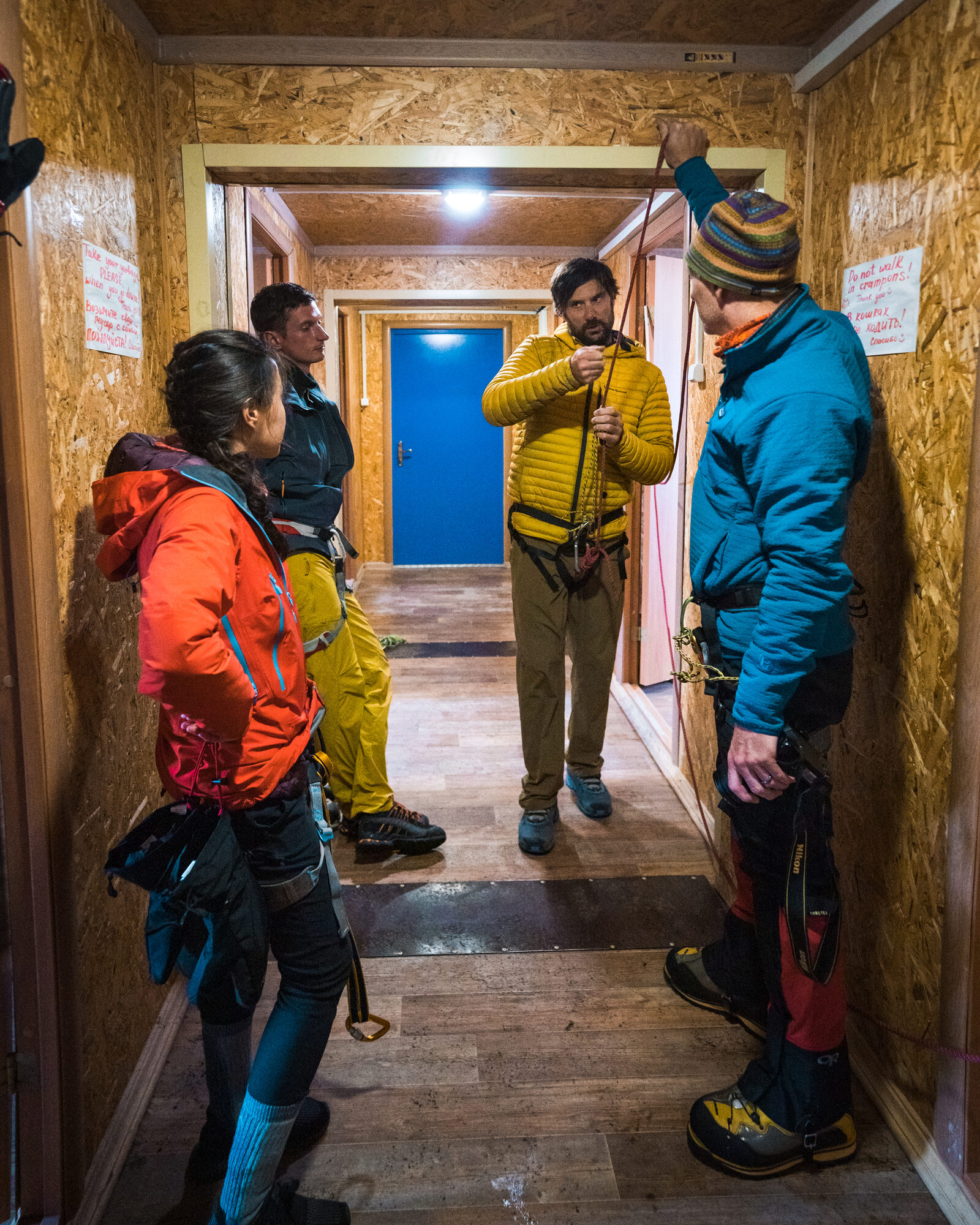
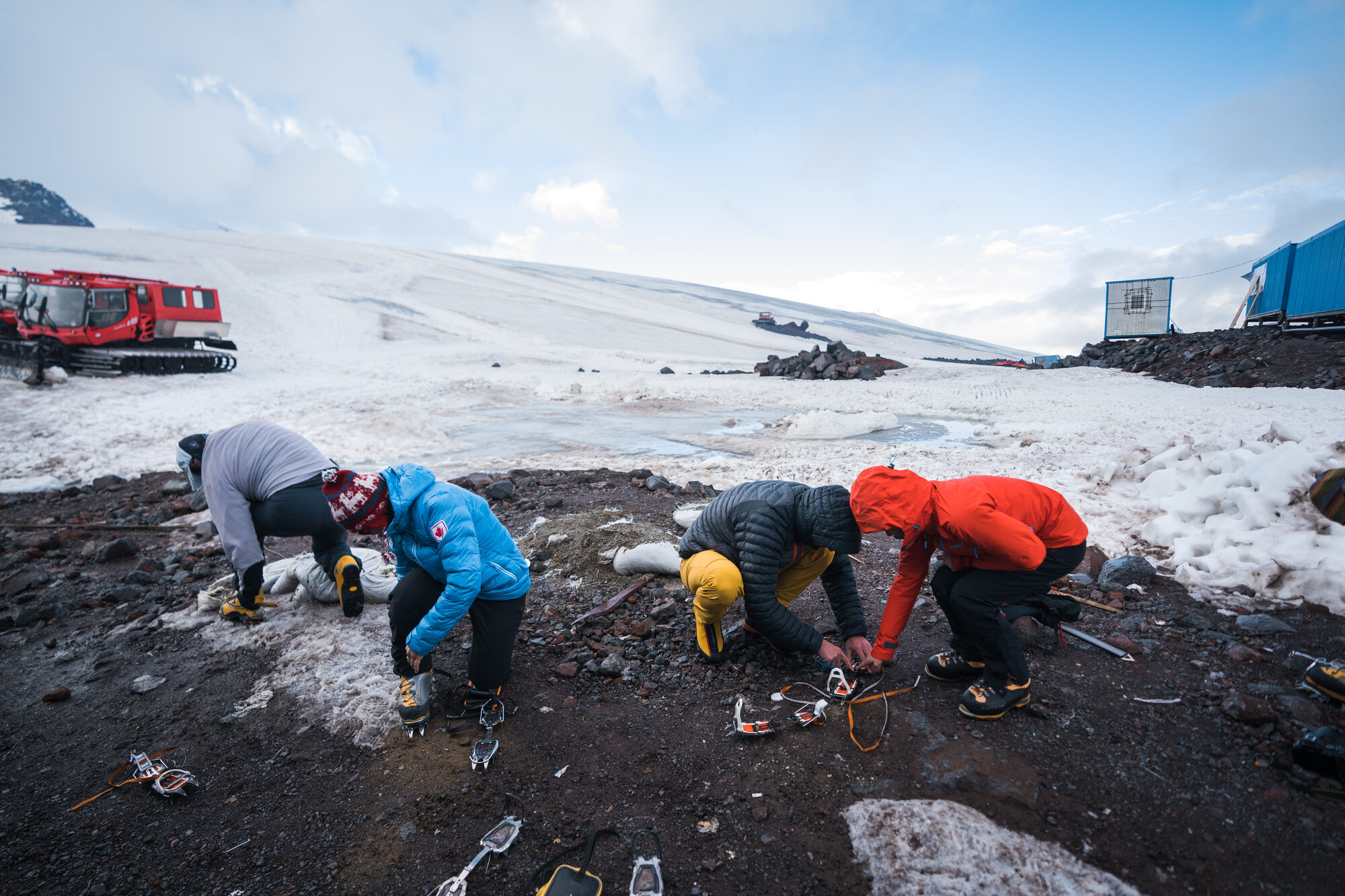
We spent a couple of days learning basic mountaineering skills: crampons, ice axes, rope work, and self-arrest (how to stop yourself if you start sliding down an icy slope). The trail to the summit is steep, slippery, and covered in ice and snow. Safety was the top priority, and our guides made sure we were ready before letting us go any higher.
Learning rope skills inside the hut. Our guides walked us through crampons, ice axes, and self-arrest techniques.Crampons on outside the hut — last-minute adjustments before heading up.
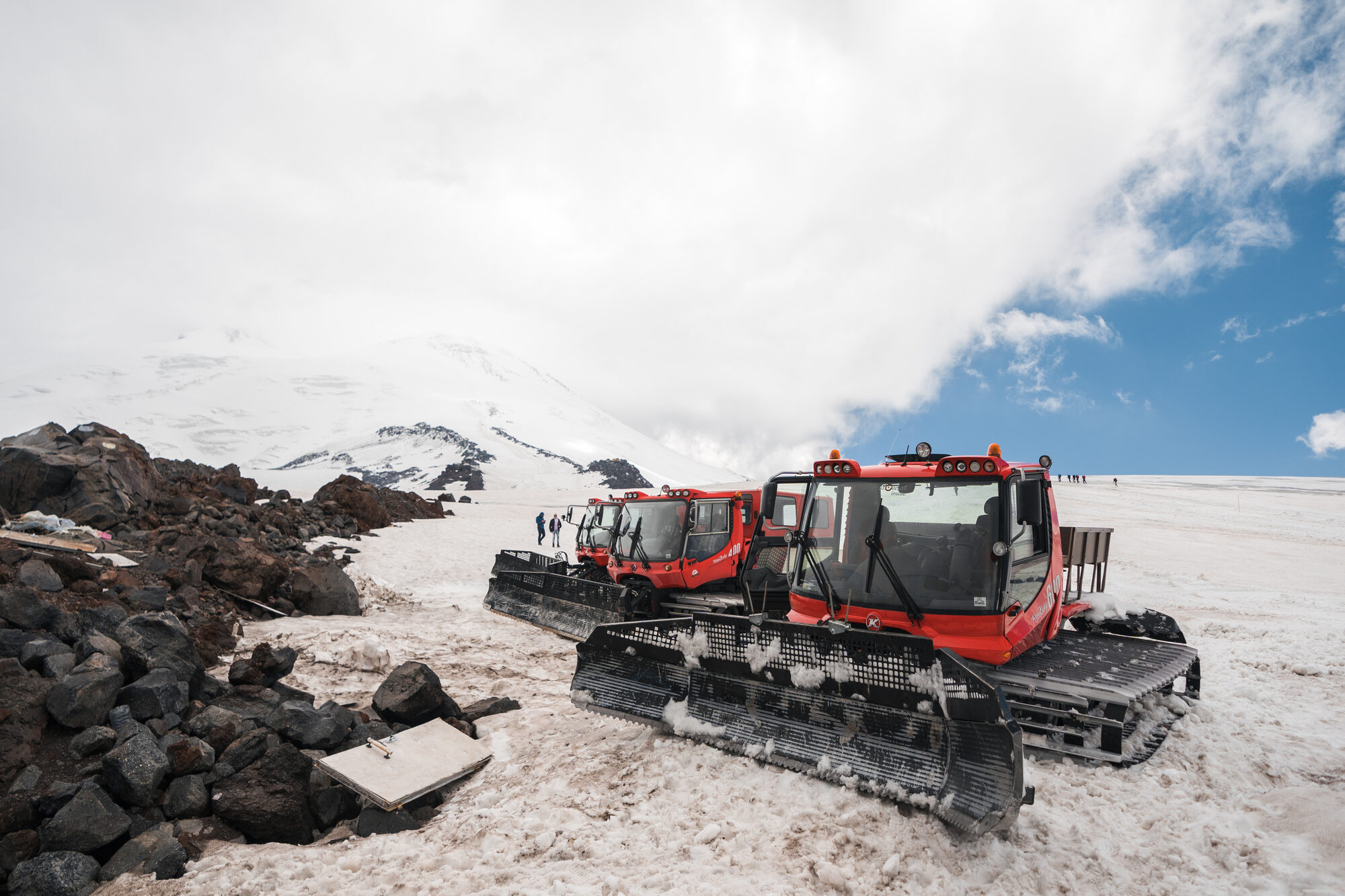
The snow cats that ferry supplies and climbers up the mountain. Industrial mountaineering, Russian style.Portrait with a snowcat. These machines make base camp life possible.
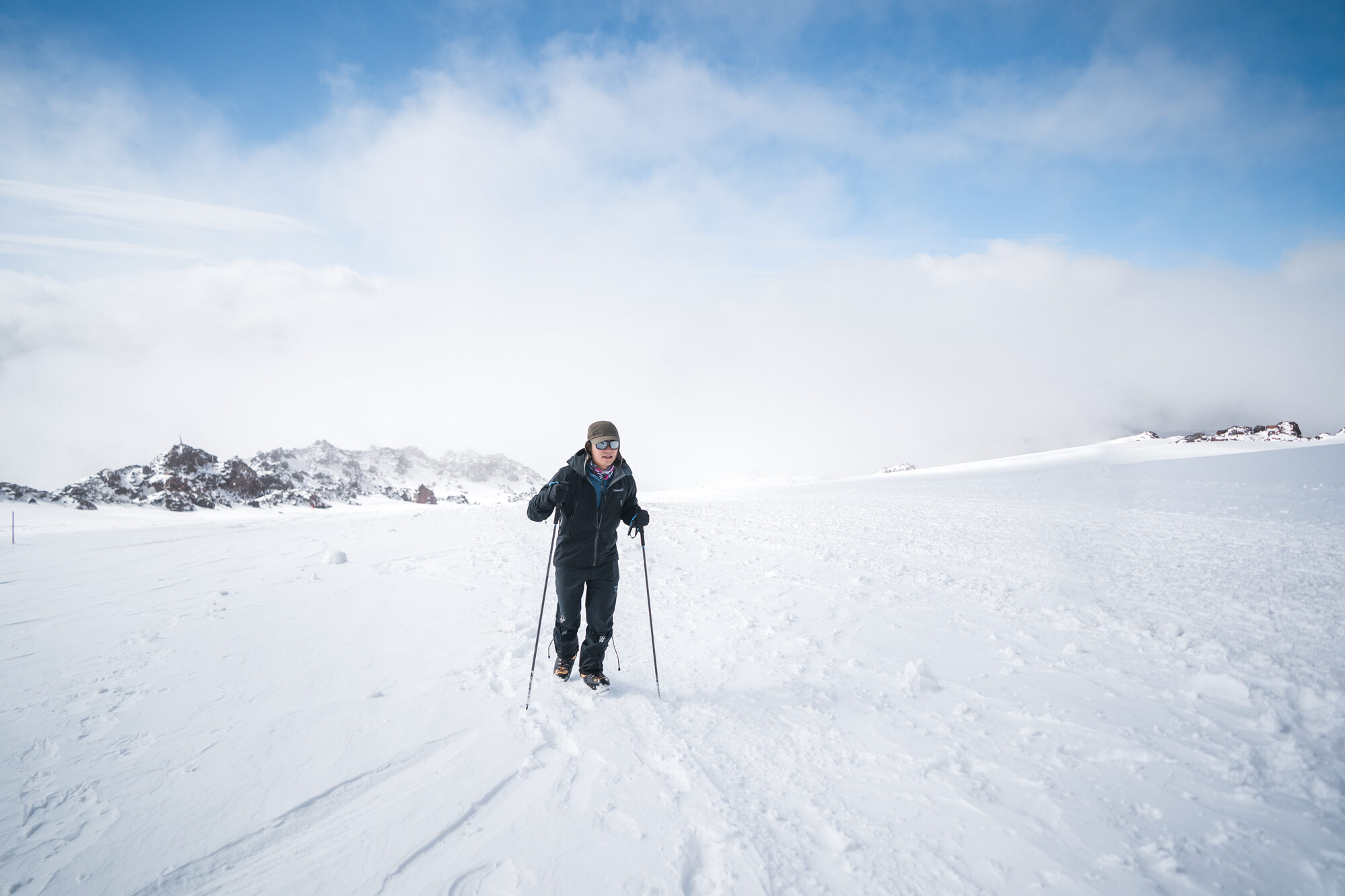
Grace pushing through the snow during acclimatization. Pastukhov Rocks visible in the distance.
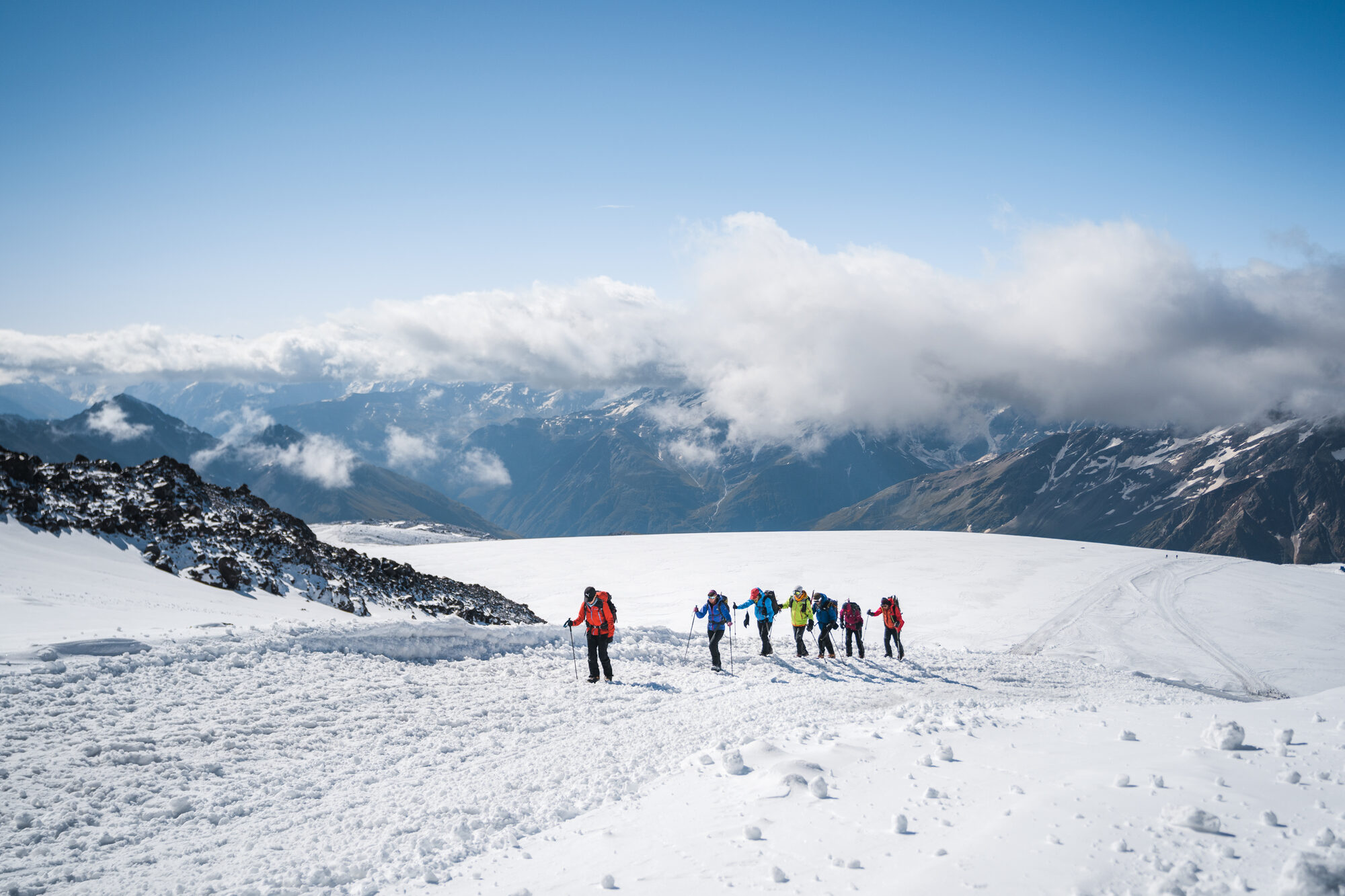
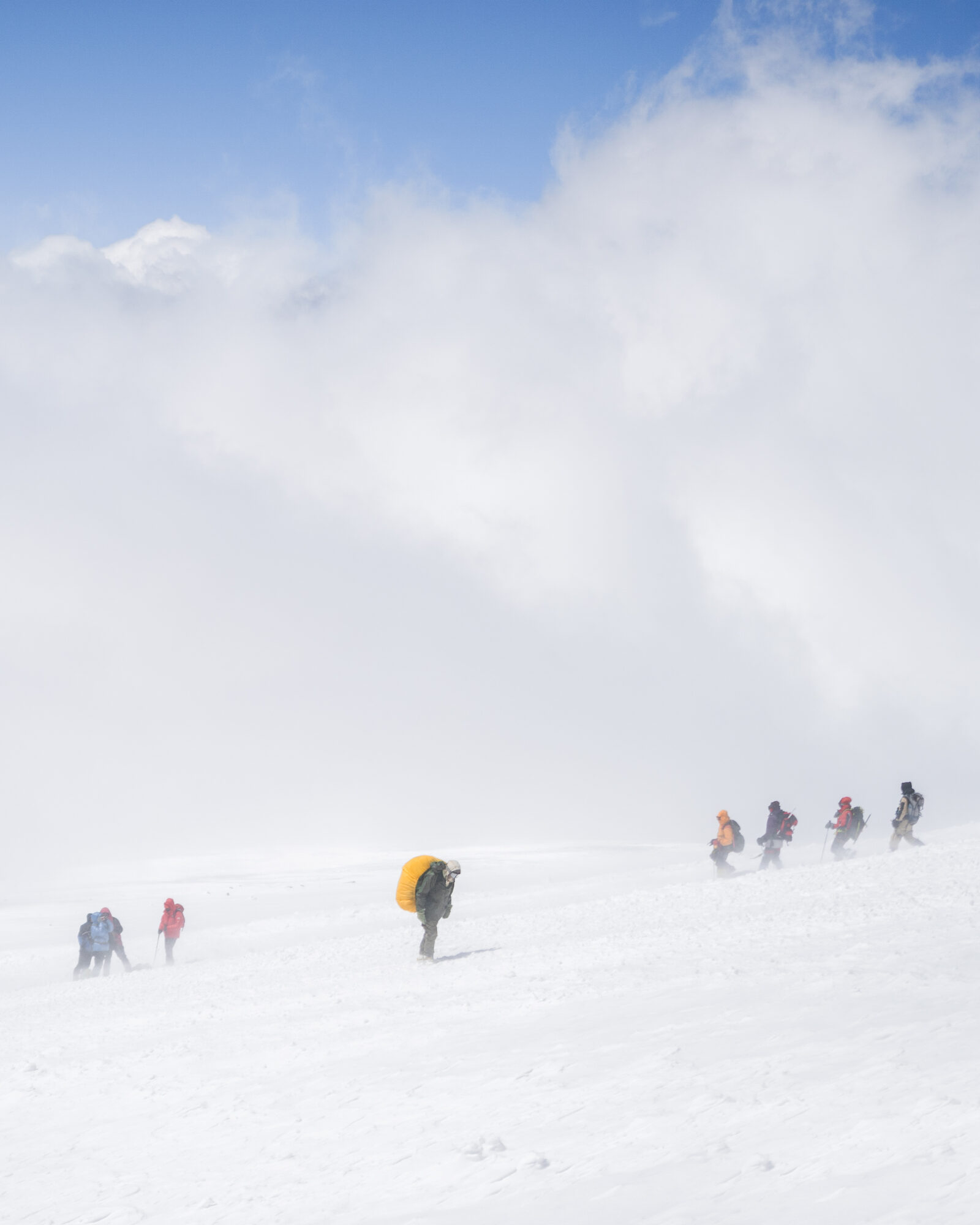
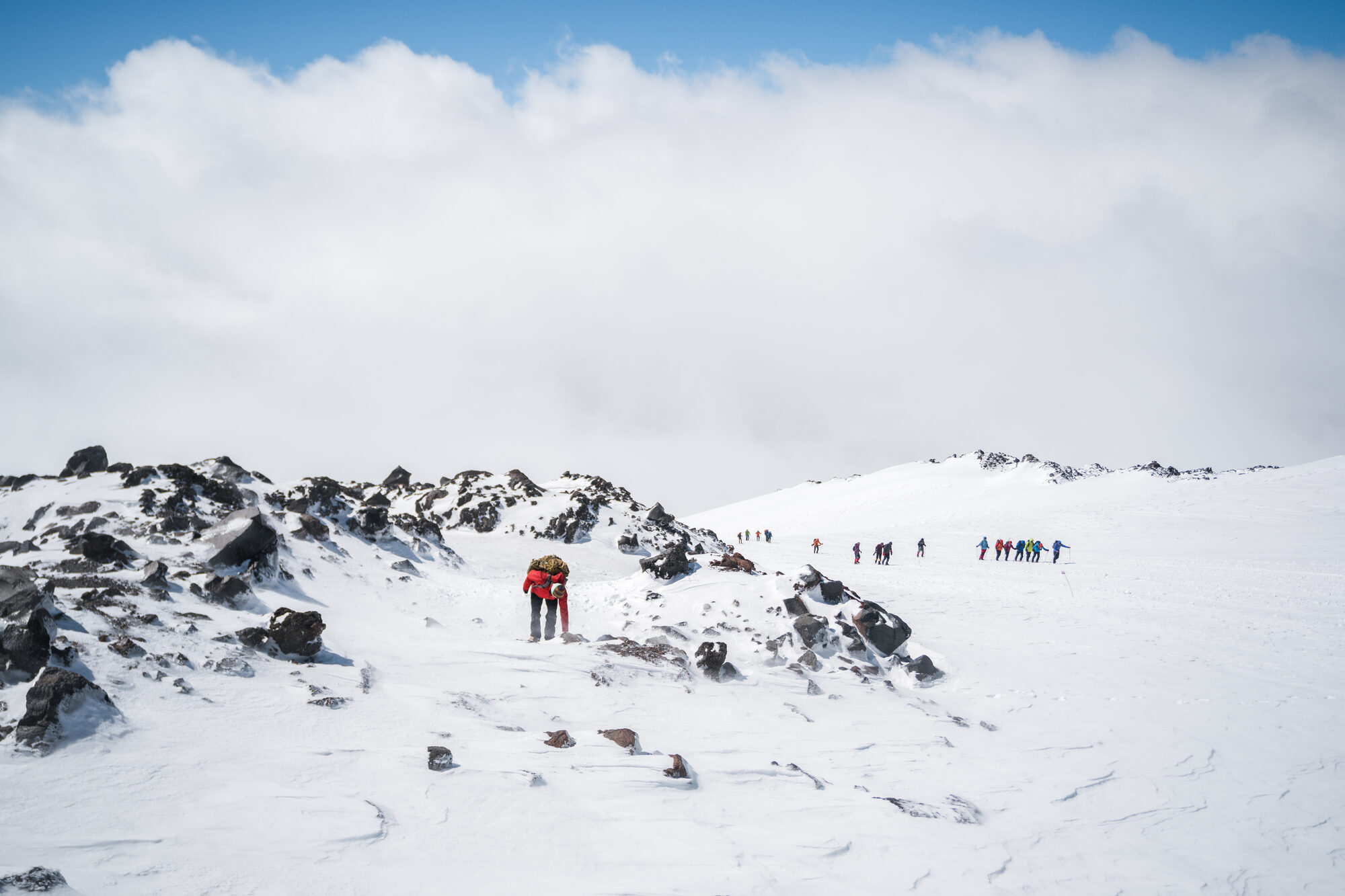
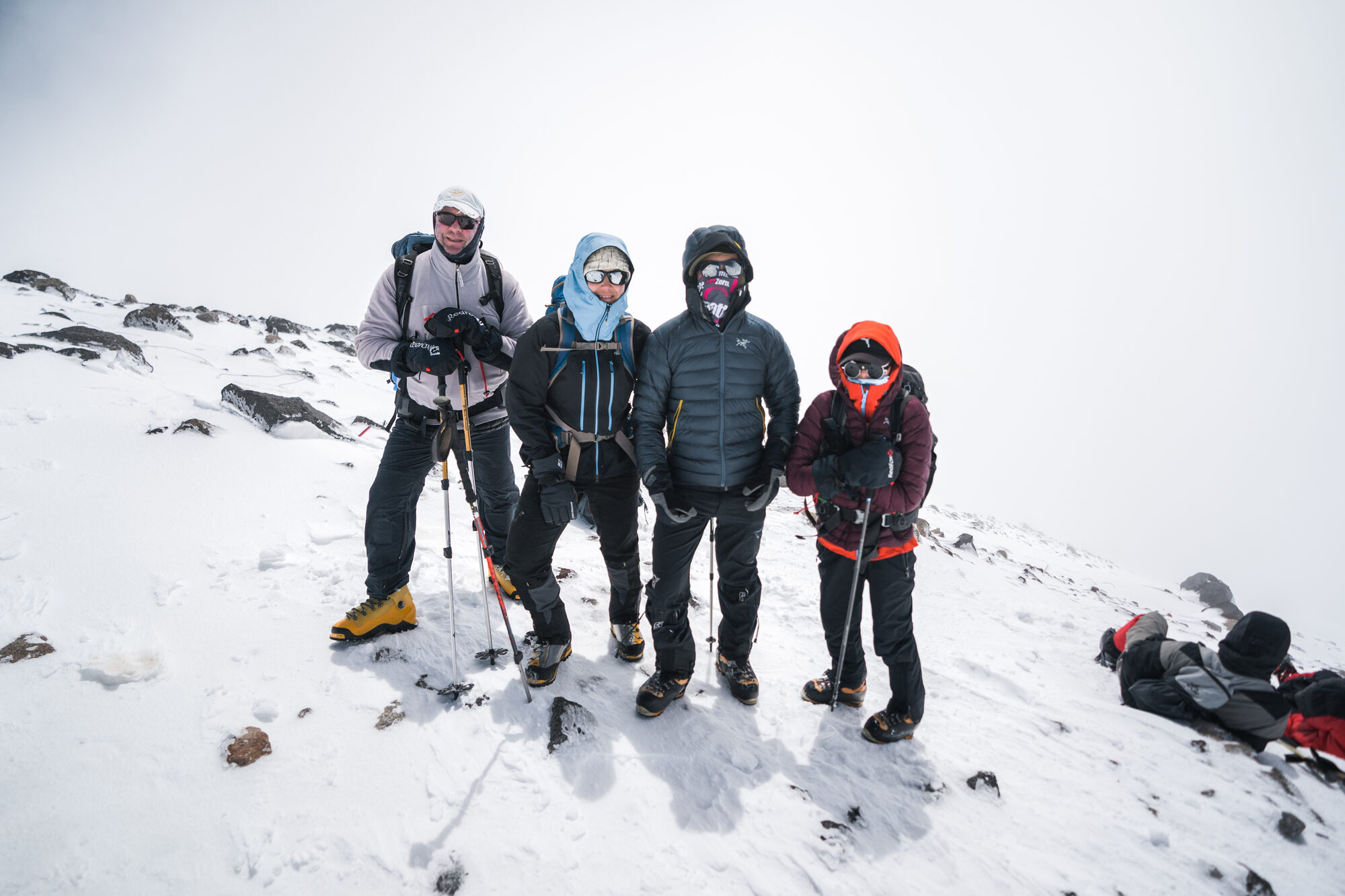
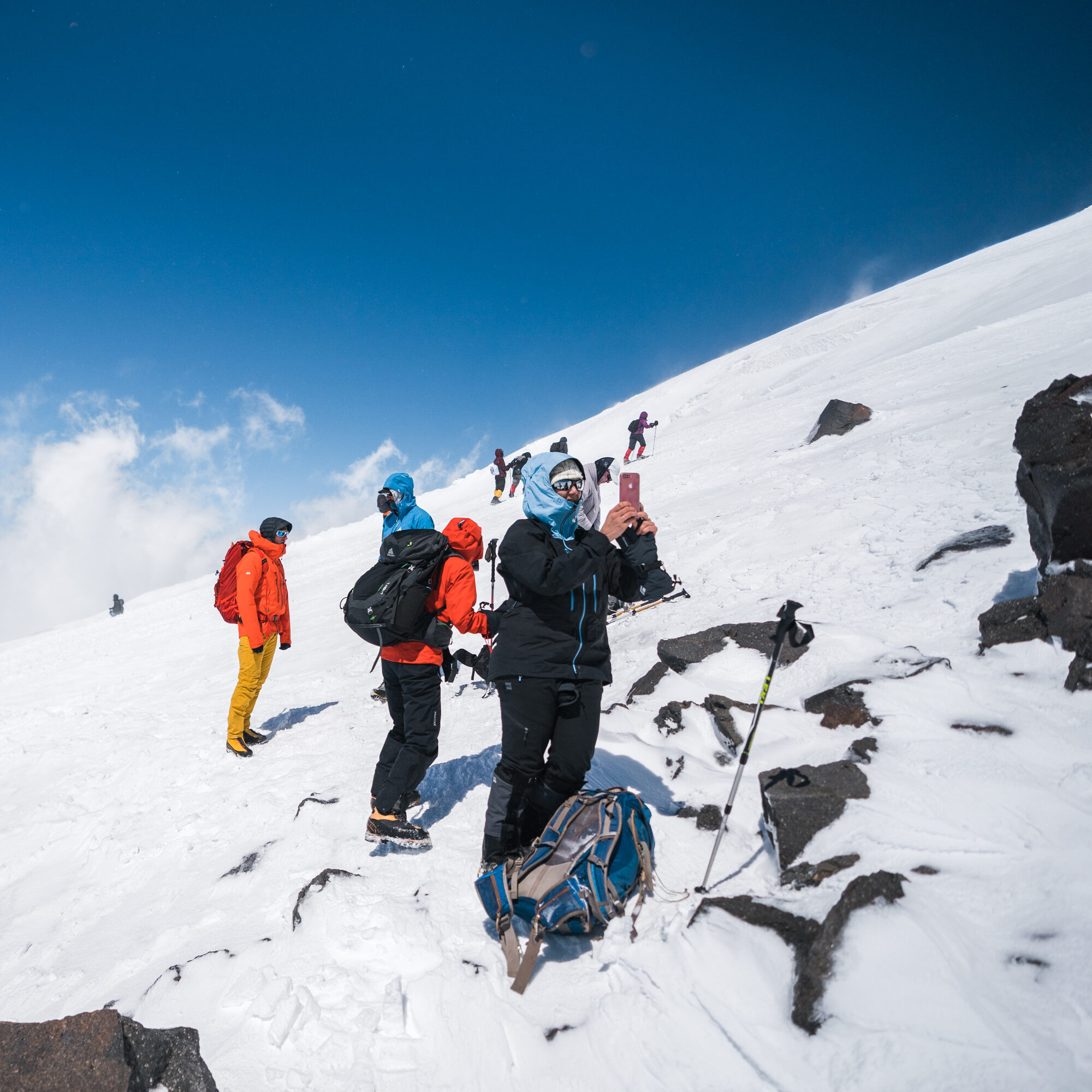
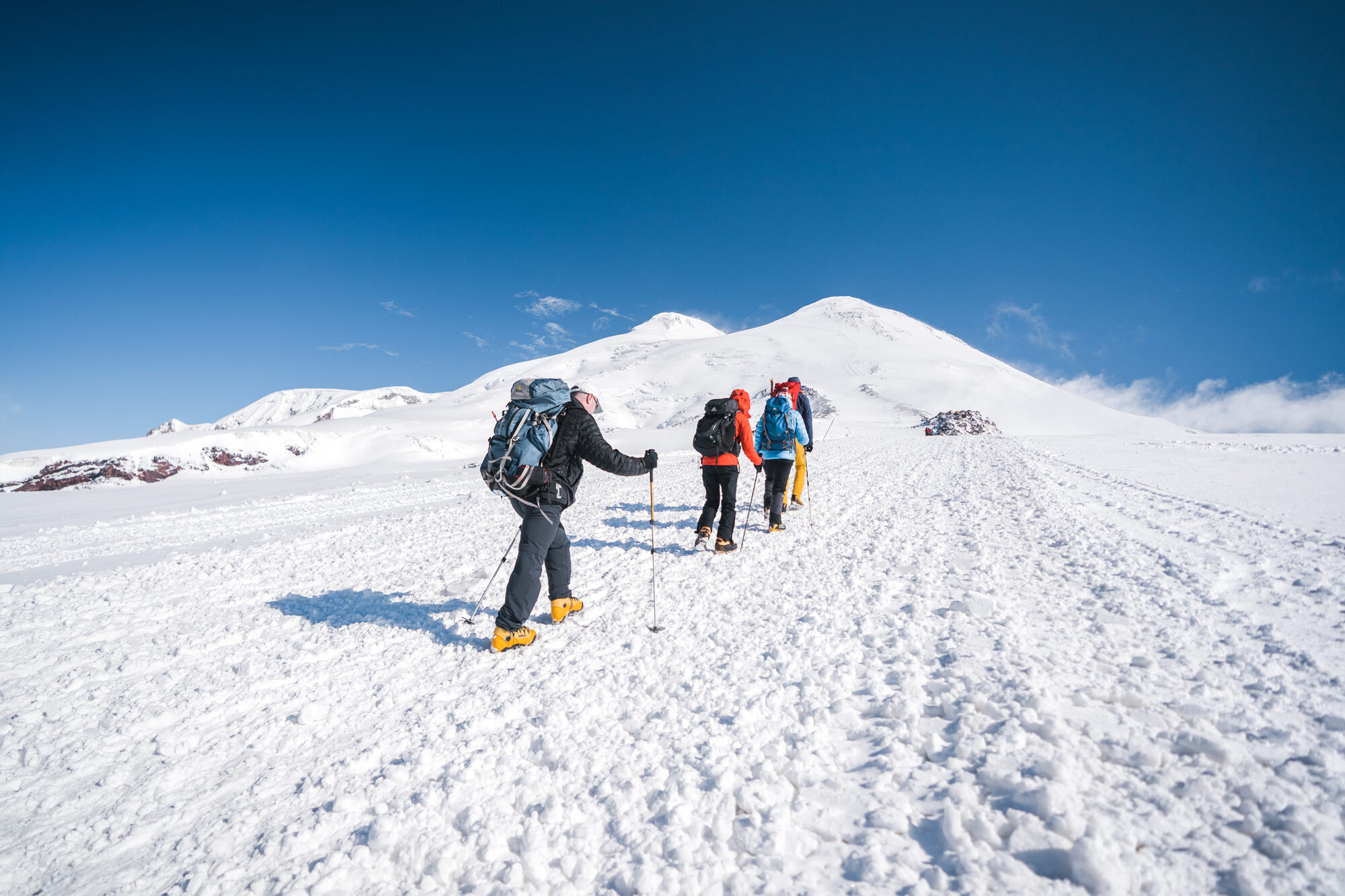
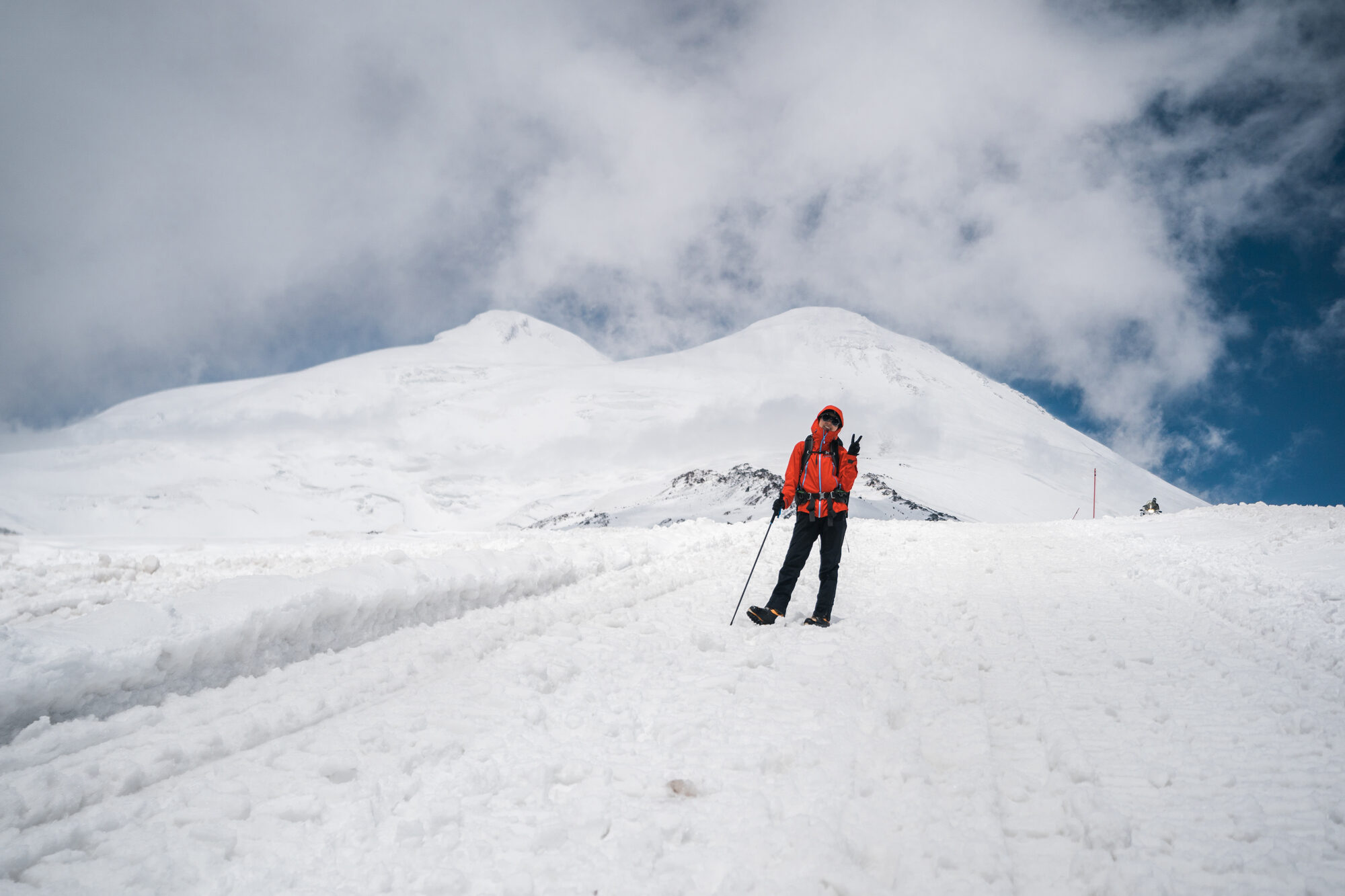
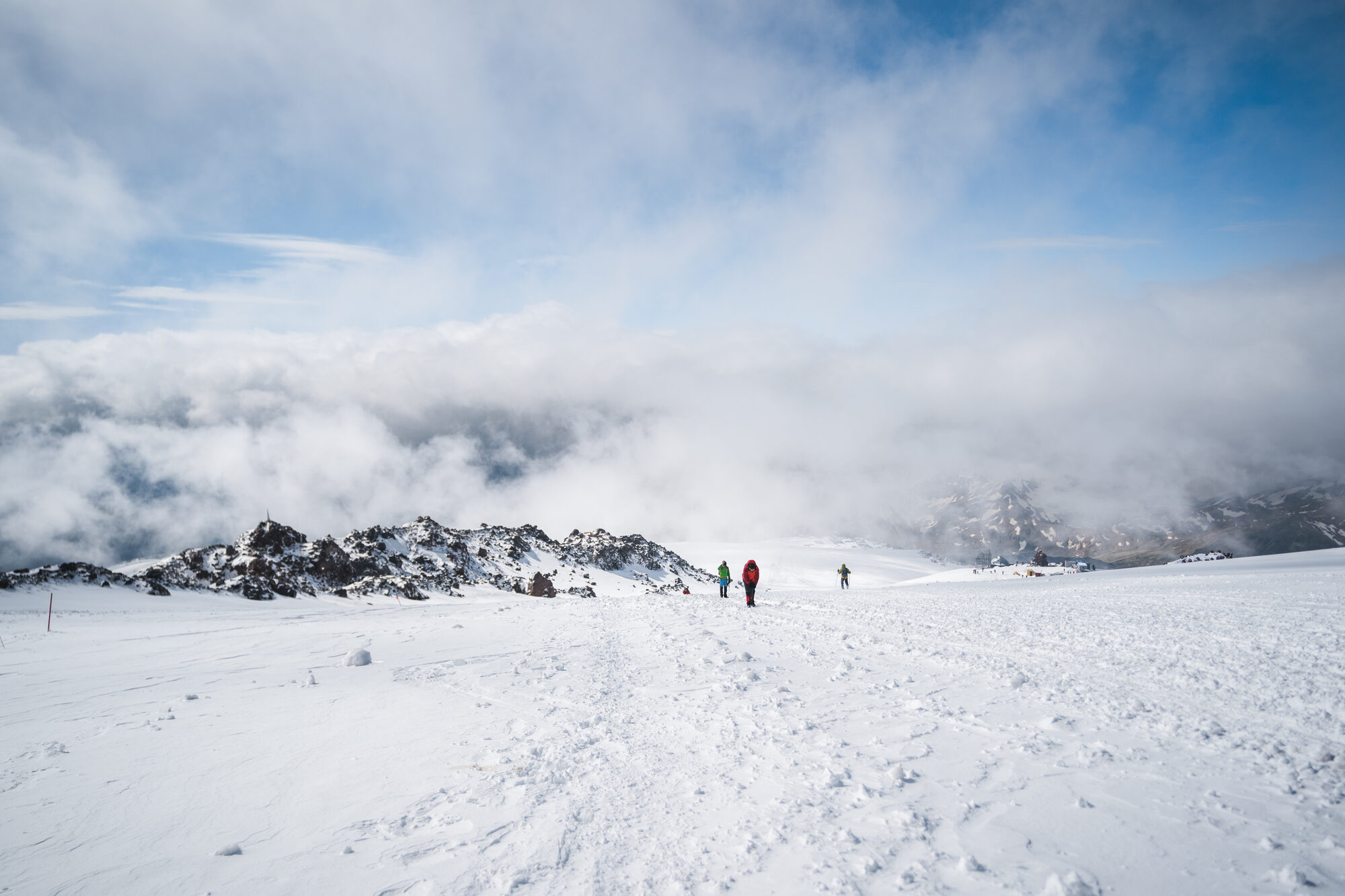
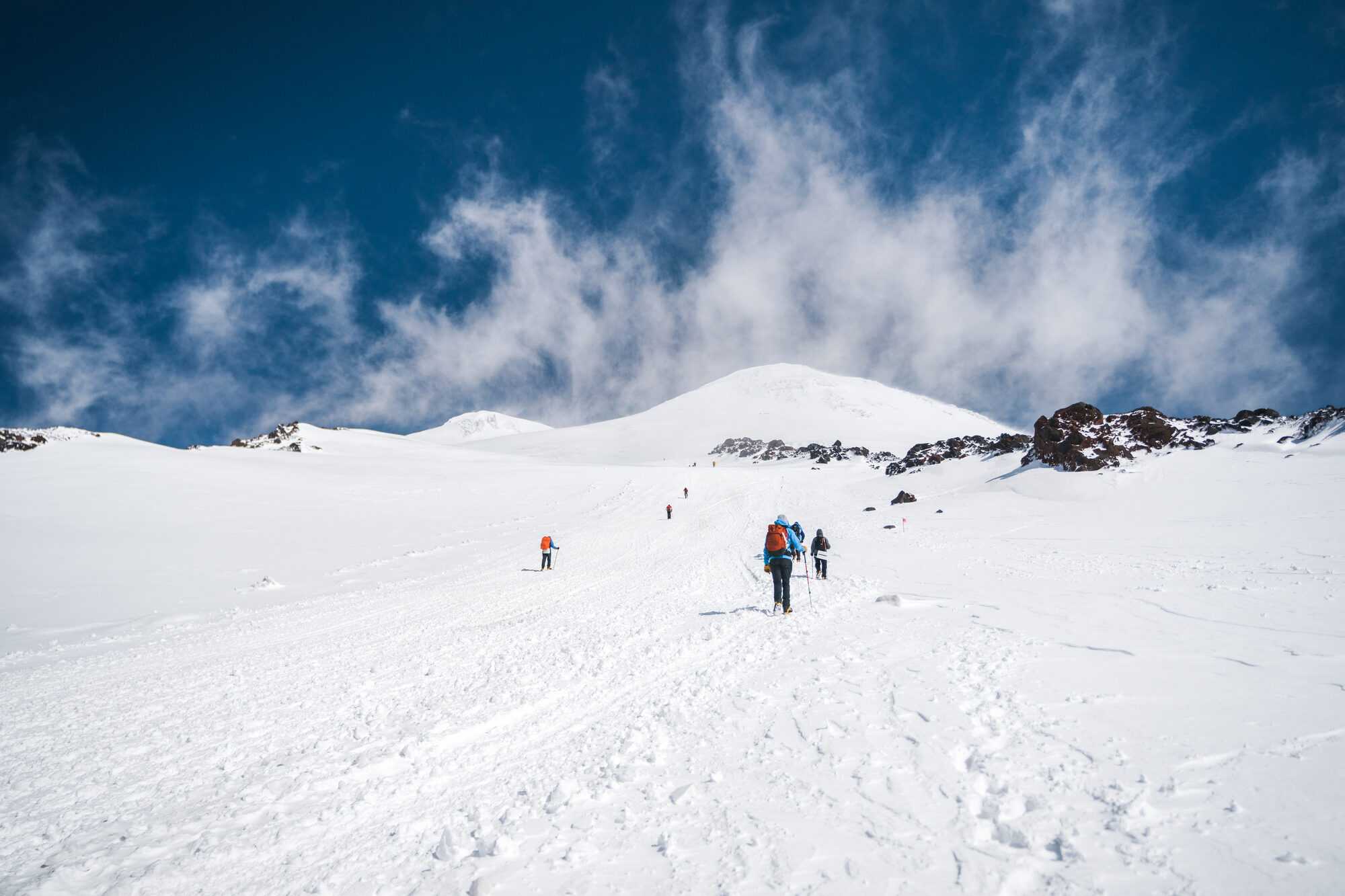
Our final acclimatization stop was Pastukhov Rocks at around 4,750 meters. The wind up there was blowing at about 40 km/hr, giving us a real taste of what summit day would feel like. Your face goes numb. Your hands ache. Every step in deep snow takes twice the energy you'd expect. But getting that high and coming back down safely was exactly what our bodies needed.
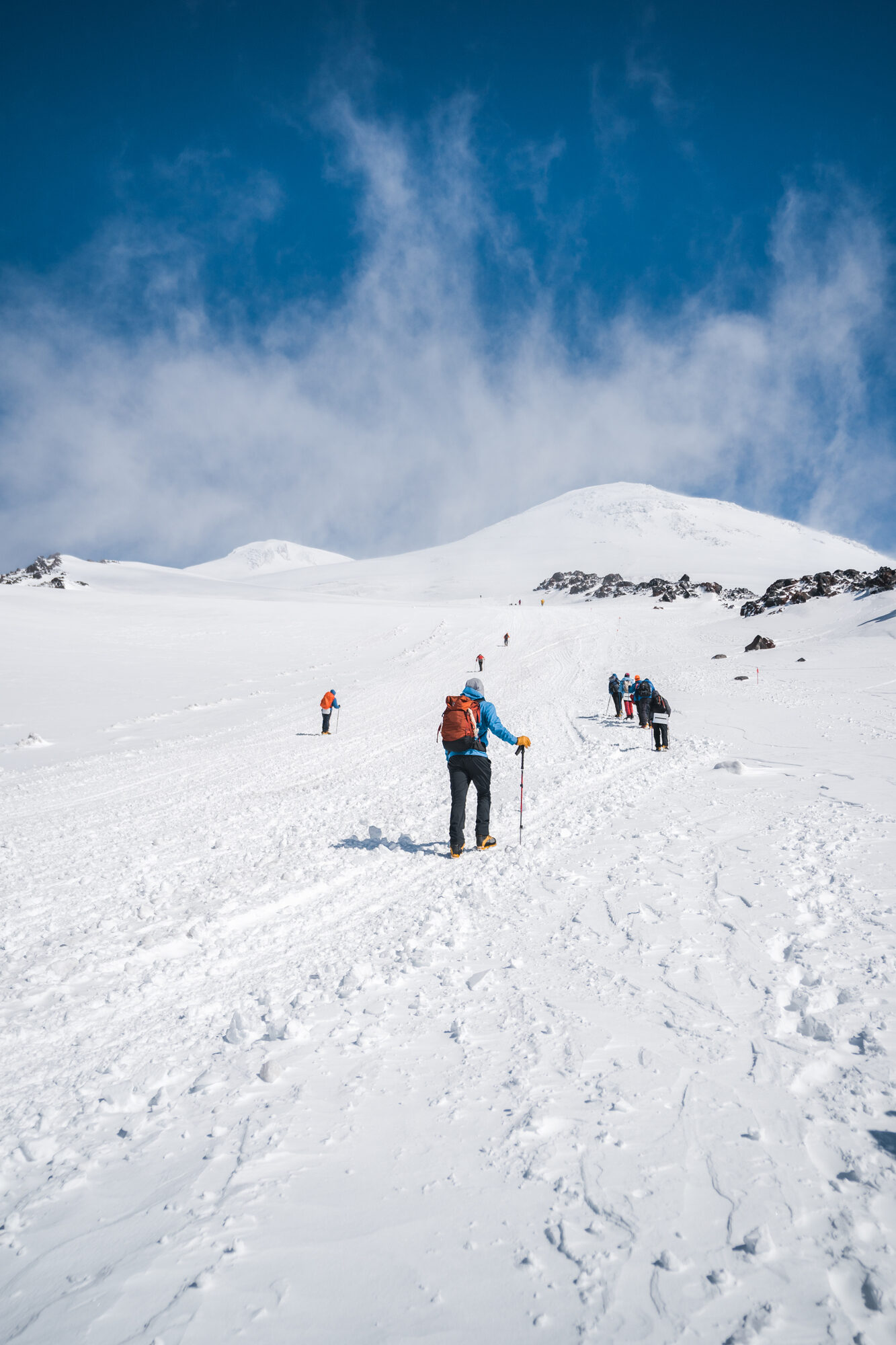
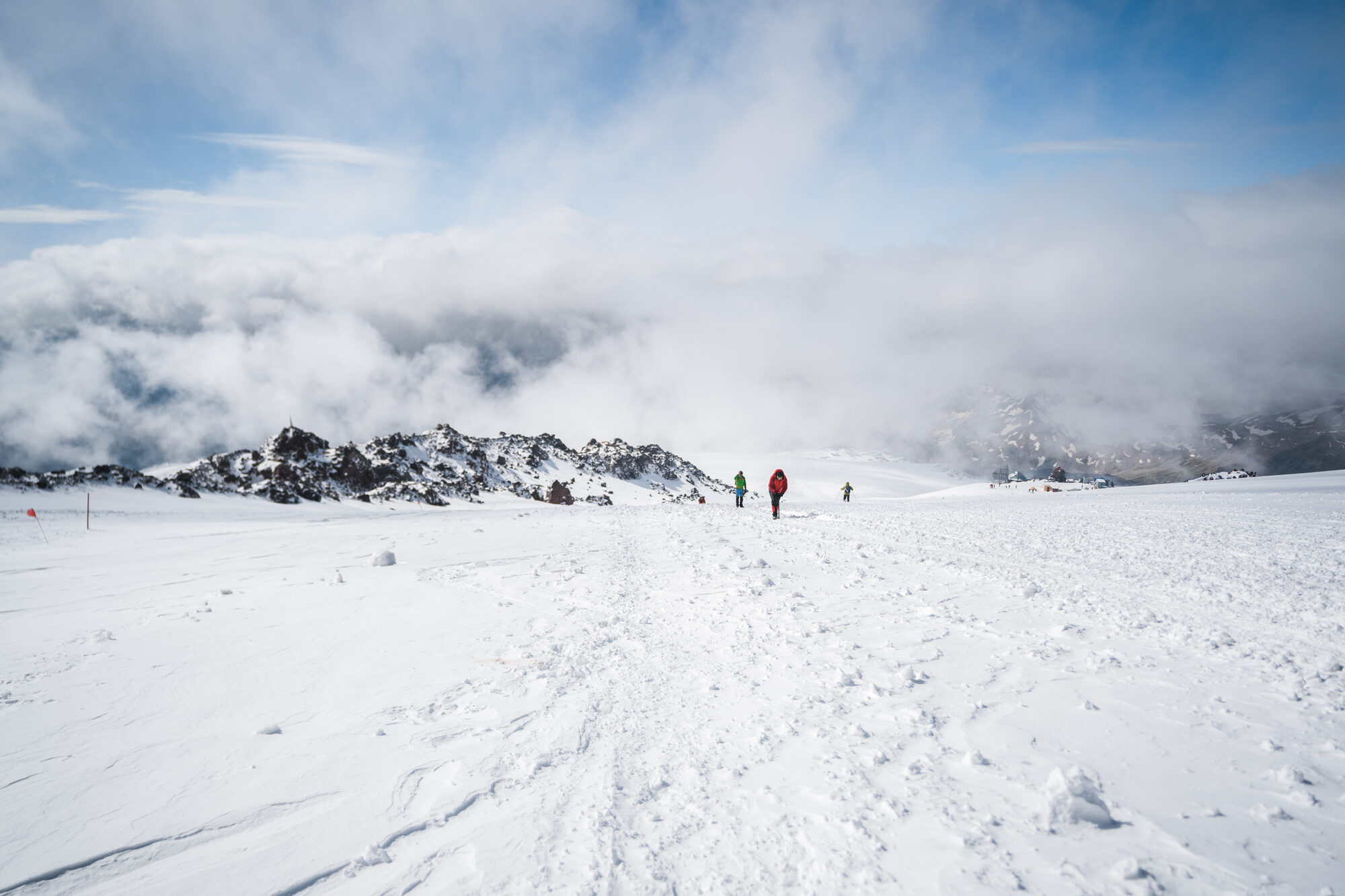
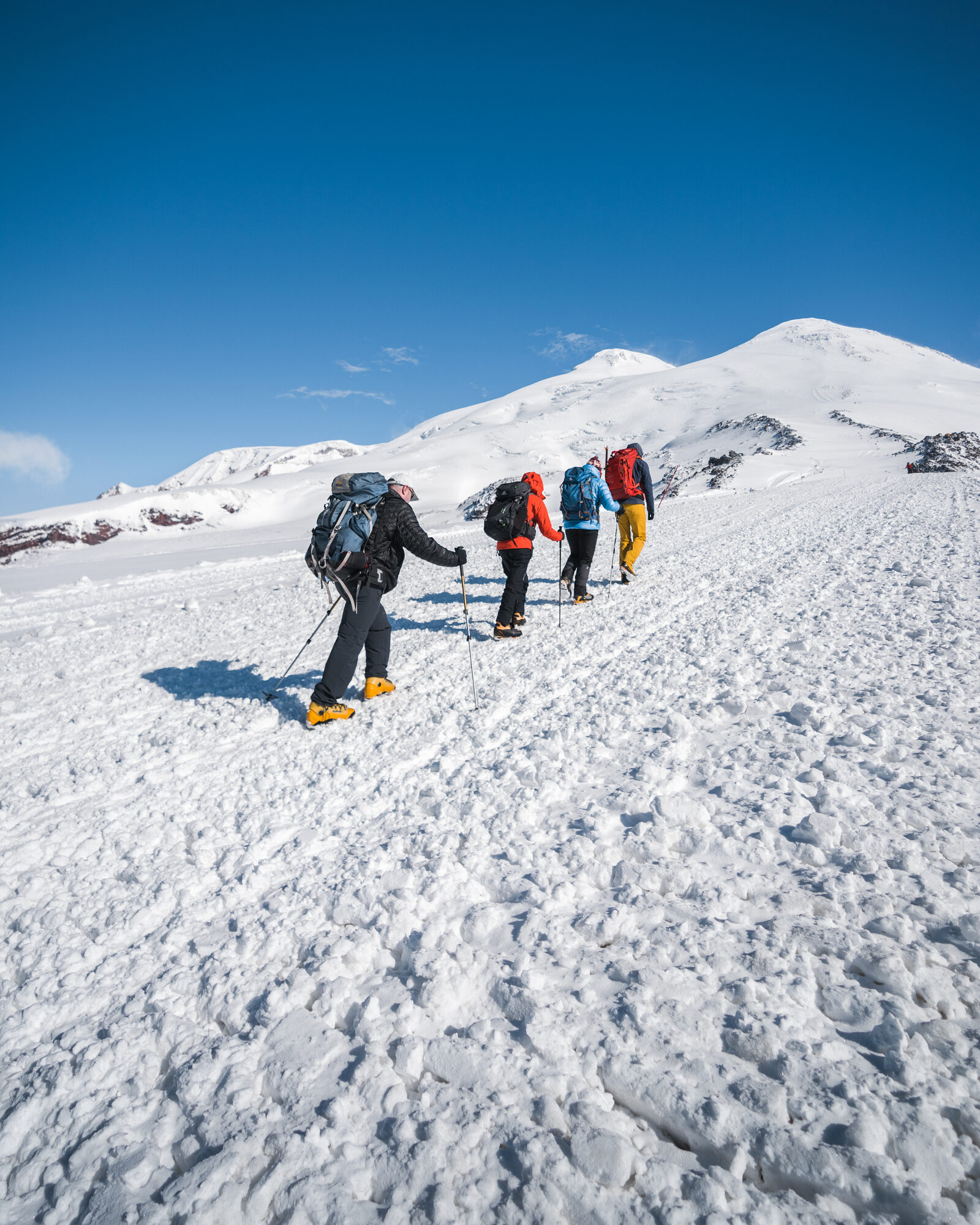
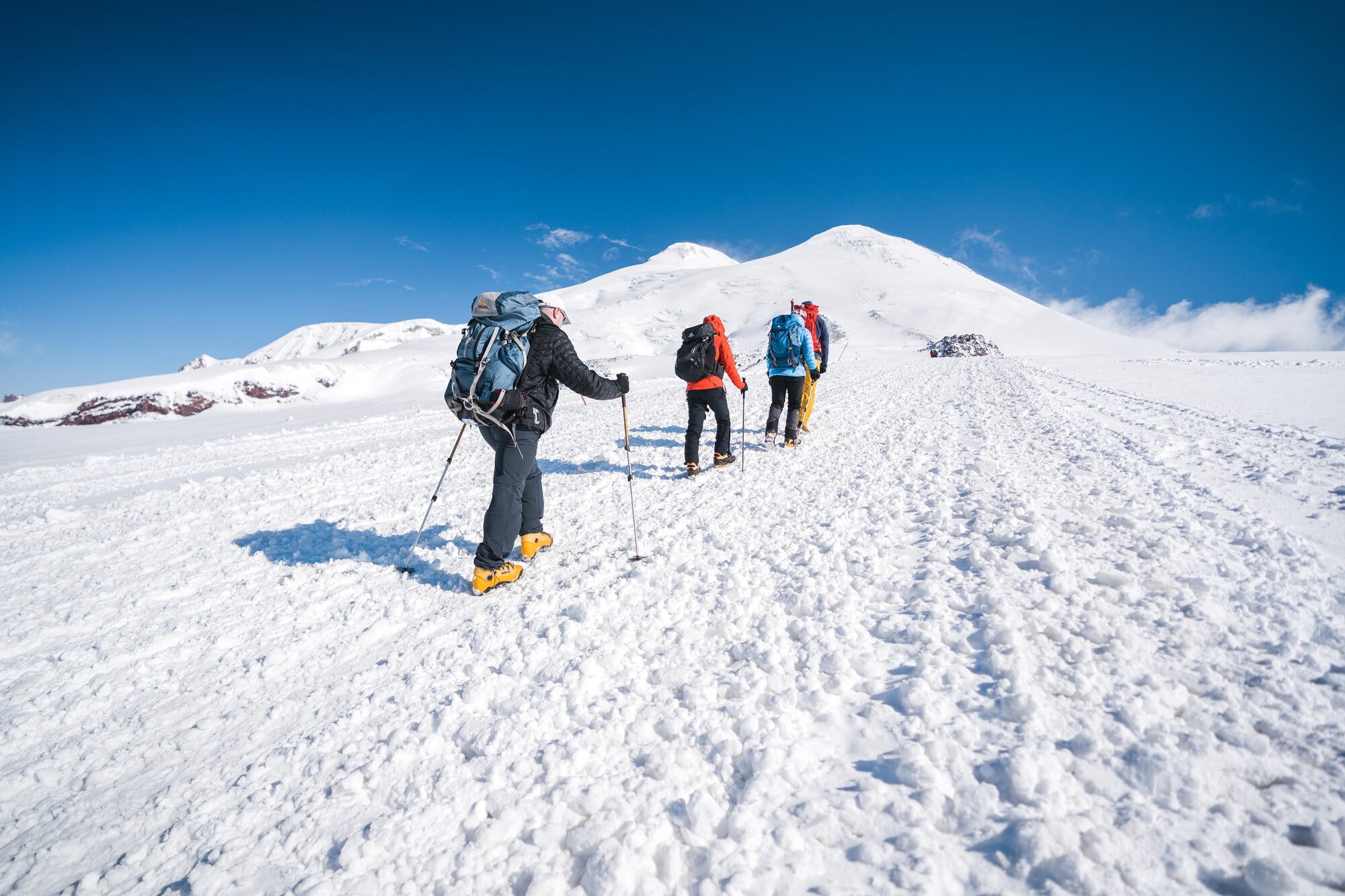
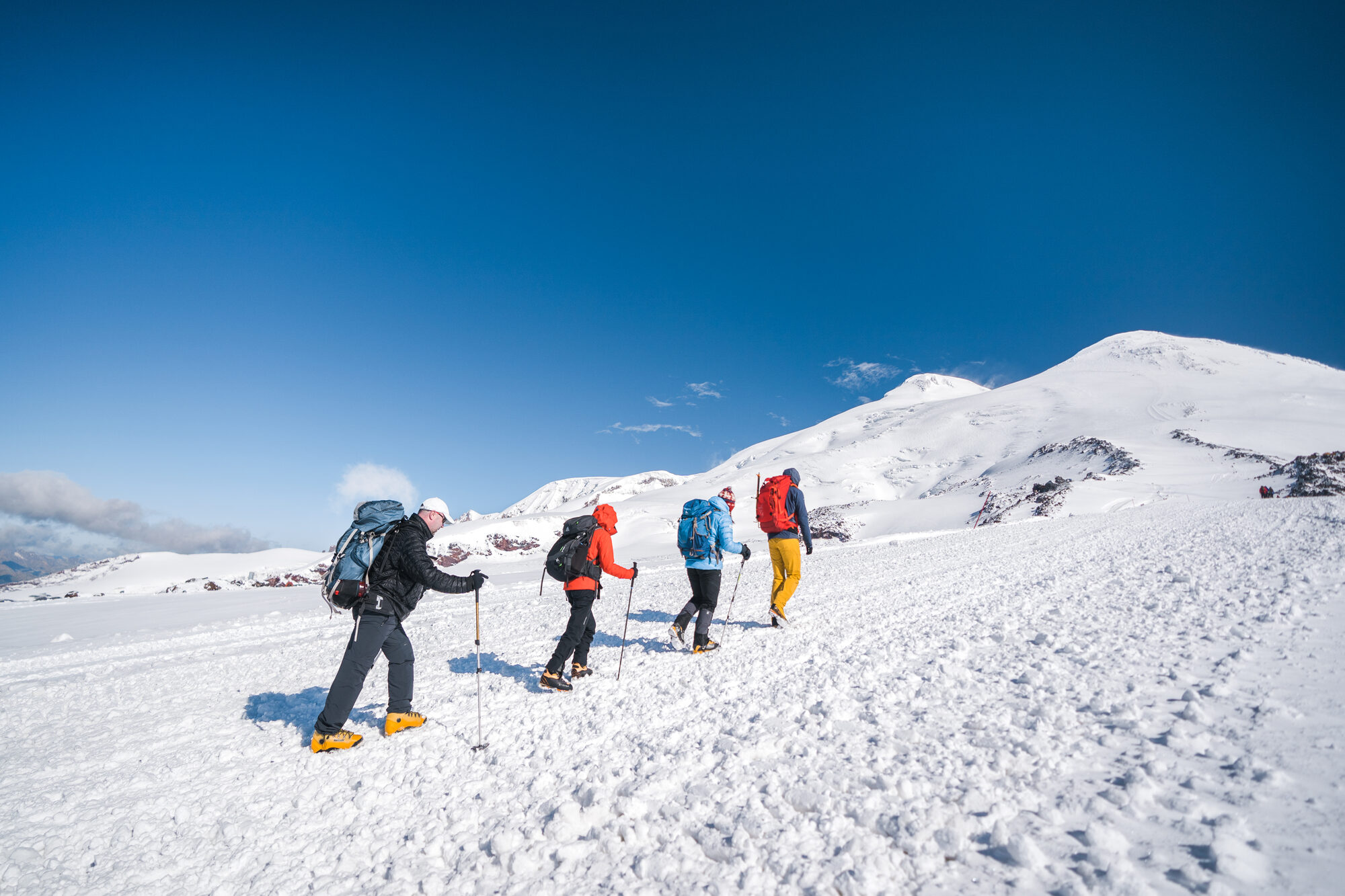
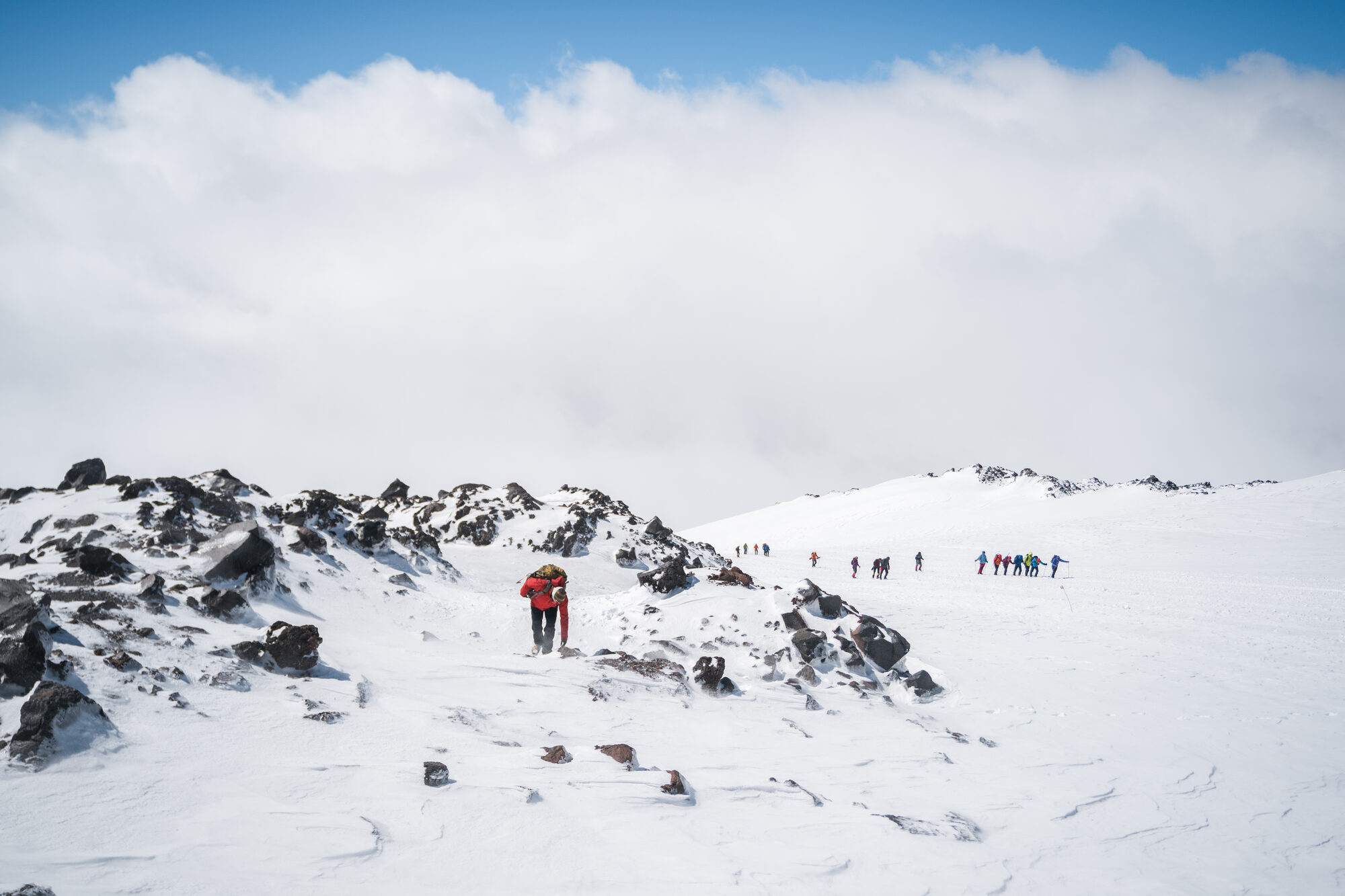
Steady plod across the snow plateau, clouds pooling in the valleys far below.Looking up toward the twin cones — a perfect-weather push on an acclimatization day.
Reaching the Pastukhov Rocks turnaround. The clouds stayed politely below us.The push to Pastukhov Rocks. Wind, snow, and thin air. Perfect practice for summit day.
Wind ripping across the upper slopes — a real preview of what summit day would feel like.
Heading back to camp after a day on the upper slopes.The full team strung out across the snow on the walk back in.
The container huts with Elbrus towering behind. Home at 3,800 meters.Part of the team on the slopes. Bundled up and ready for whatever Elbrus throws at us.
Fed at 3,800 meters
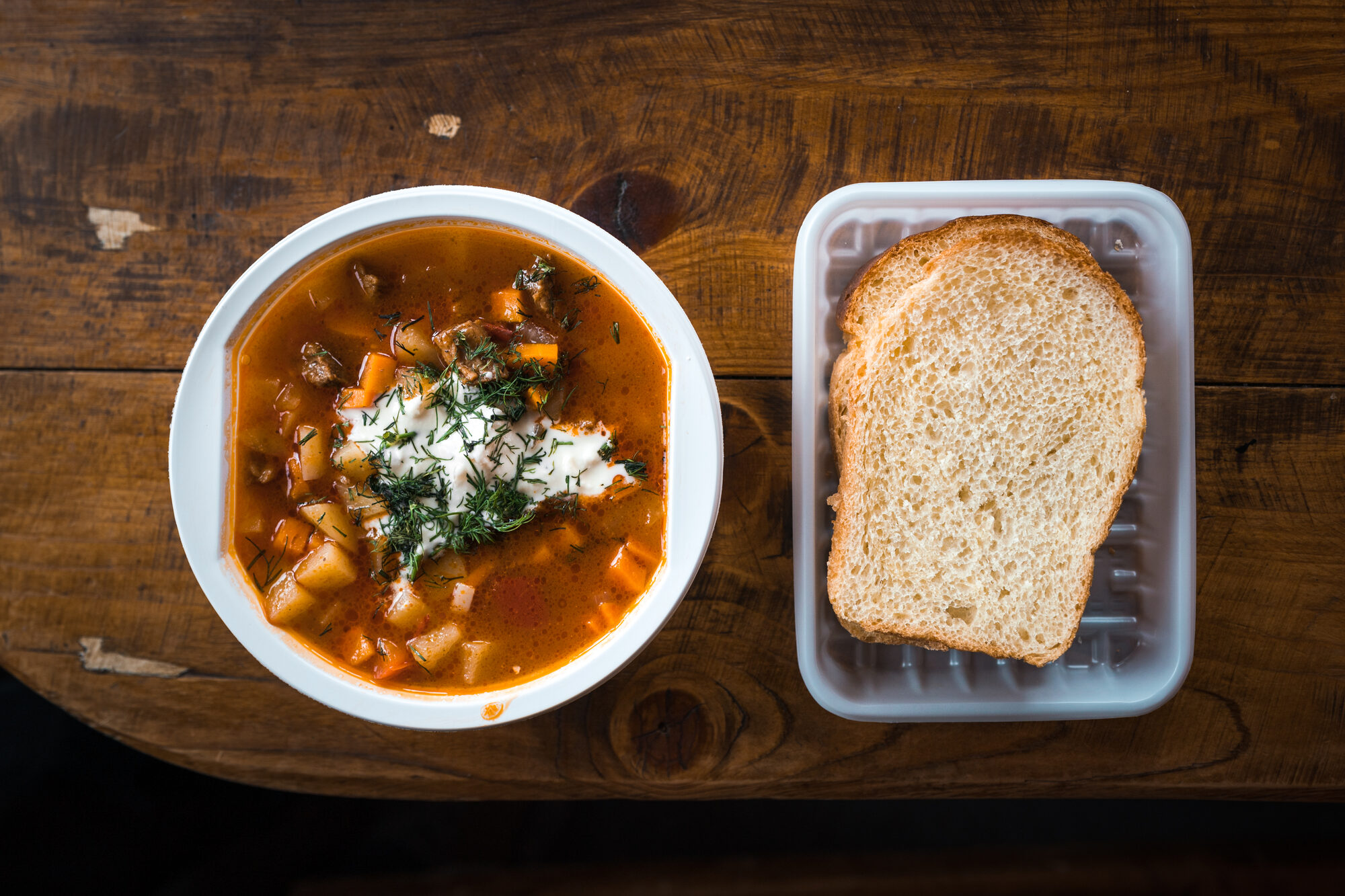
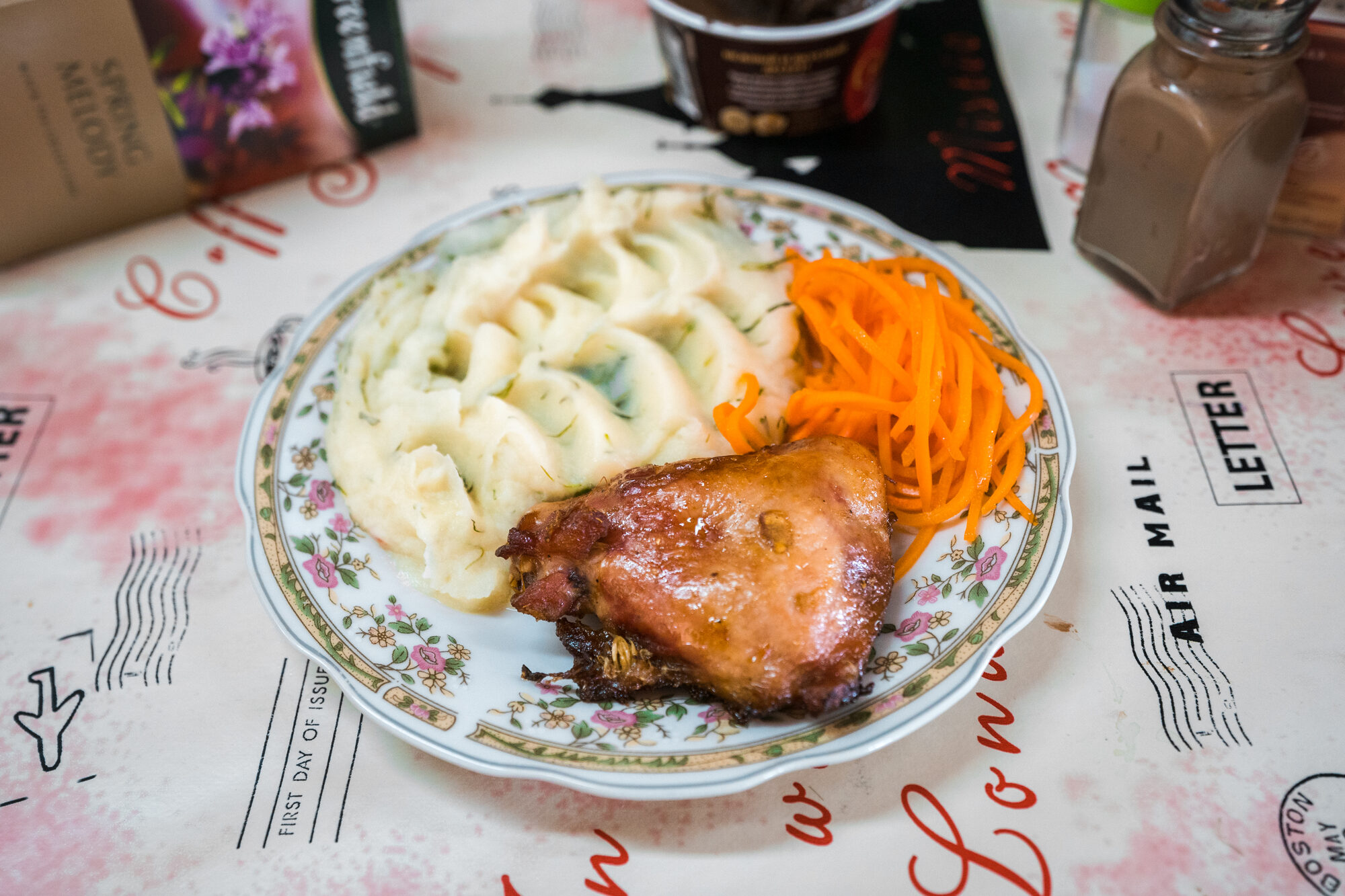
Base camp meals were one of the unexpected highlights. The cook turned out surprisingly generous plates on those flowered china dishes, the same pattern showing up meal after meal. Real food, real calories, and a good reminder that Russian hospitality extends all the way up the mountain.
Rassolnik-style soup and bread — fuel for the afternoon.Spaghetti with chicken ragu on the house flowered plates.
Chicken, potatoes, and pickled carrots — carb-loading before the summit push.
Sunset over the glacier
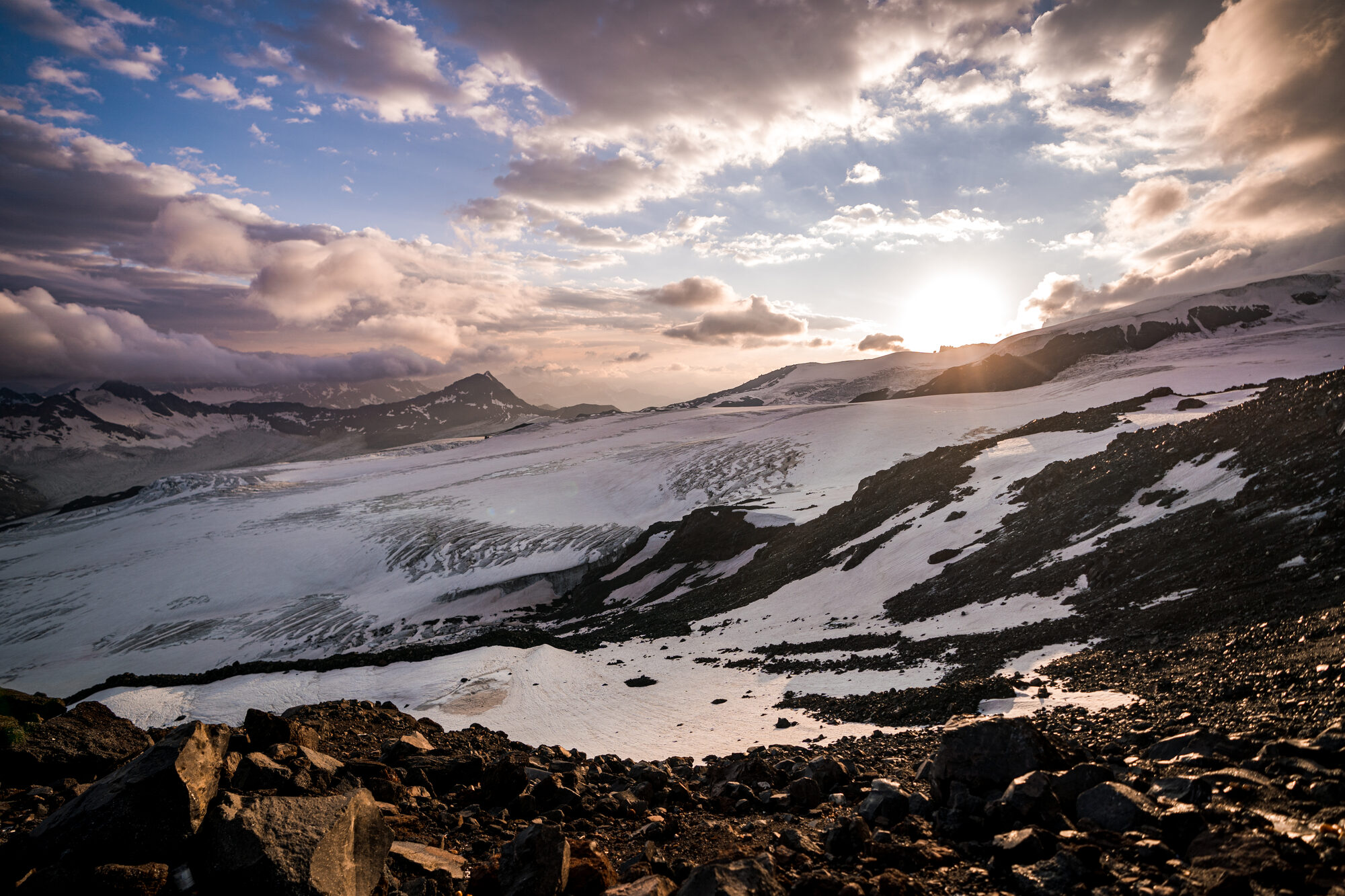
Evening light over the glacier below camp — the peaks line up in a ragged horizon.
Base camp from above. Drone shot showing the shipping container village at 3,800 meters.The wider view — a row of metal containers clinging to the ridge above a frozen world.
Day 7: The West Summit
August 7, 2019 · Base Camp → West Summit (5,642 m / 18,510 ft)
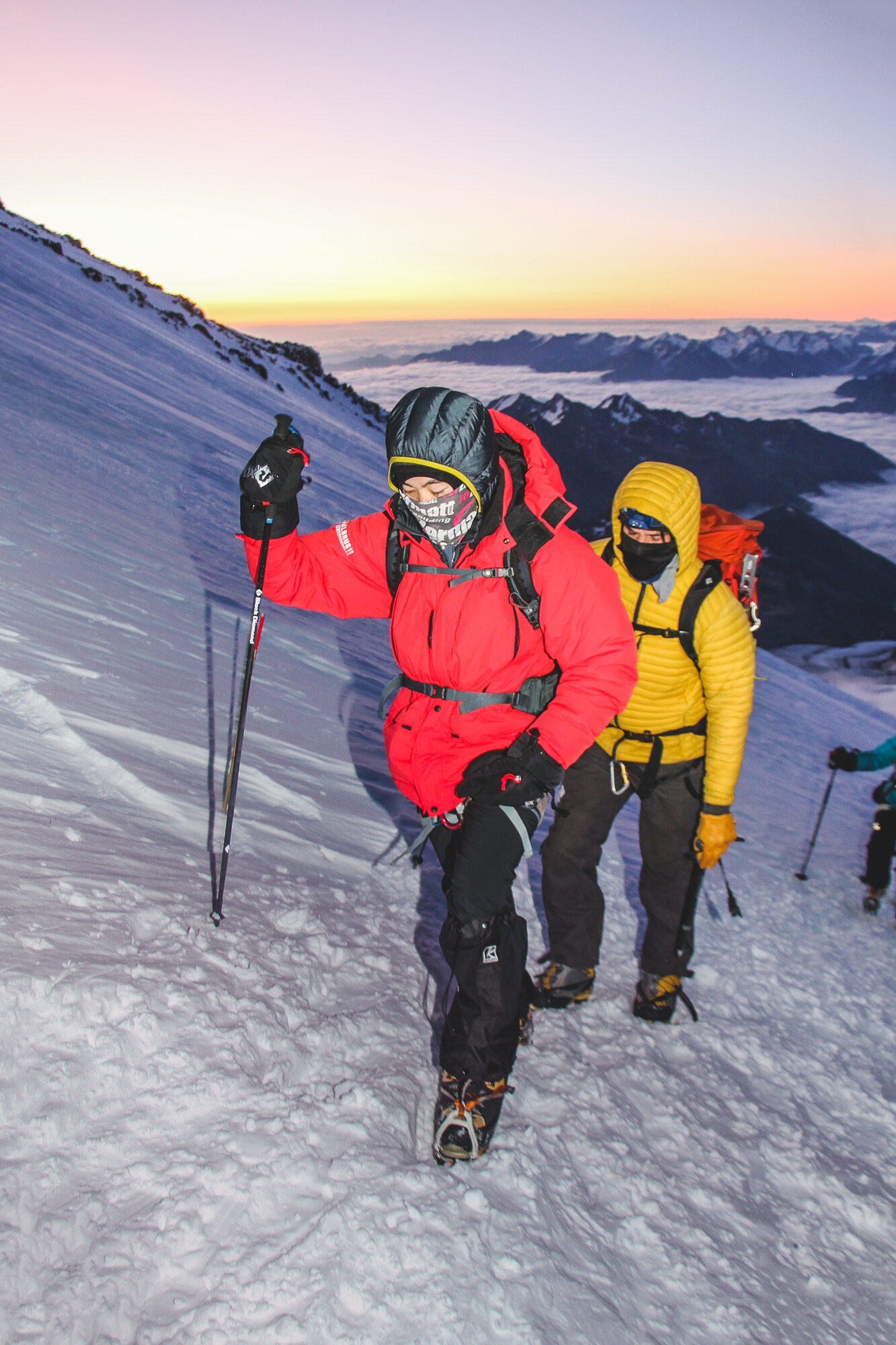
Summit day. Excitement, fear, anxiety, cold, tired, locked in. All of those at once. The anticipation never settles, no matter how calmly you try to lie in bed the night before. 3:00 AM was our departure time, giving us just two hours of darkness before sunrise.
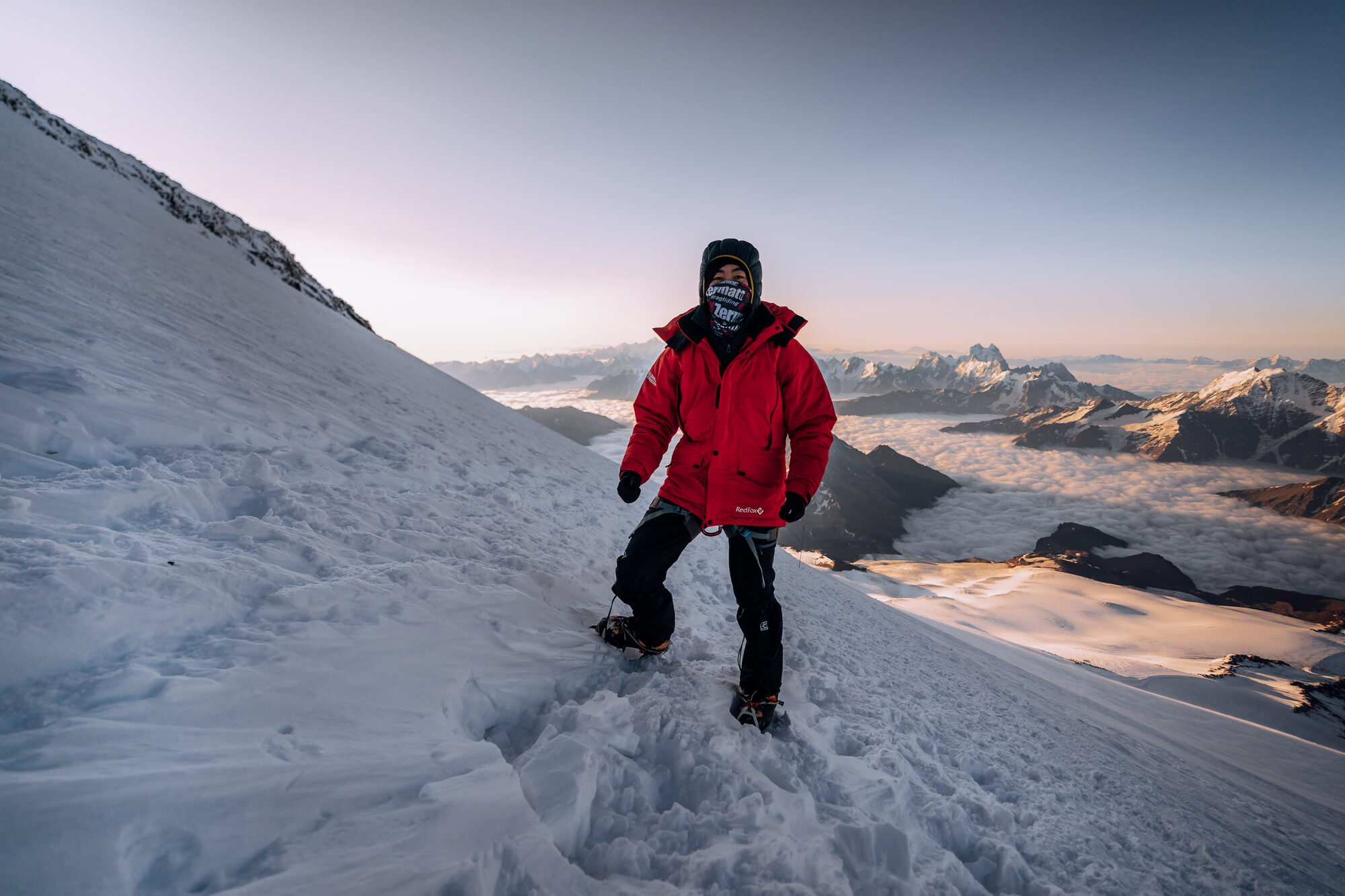
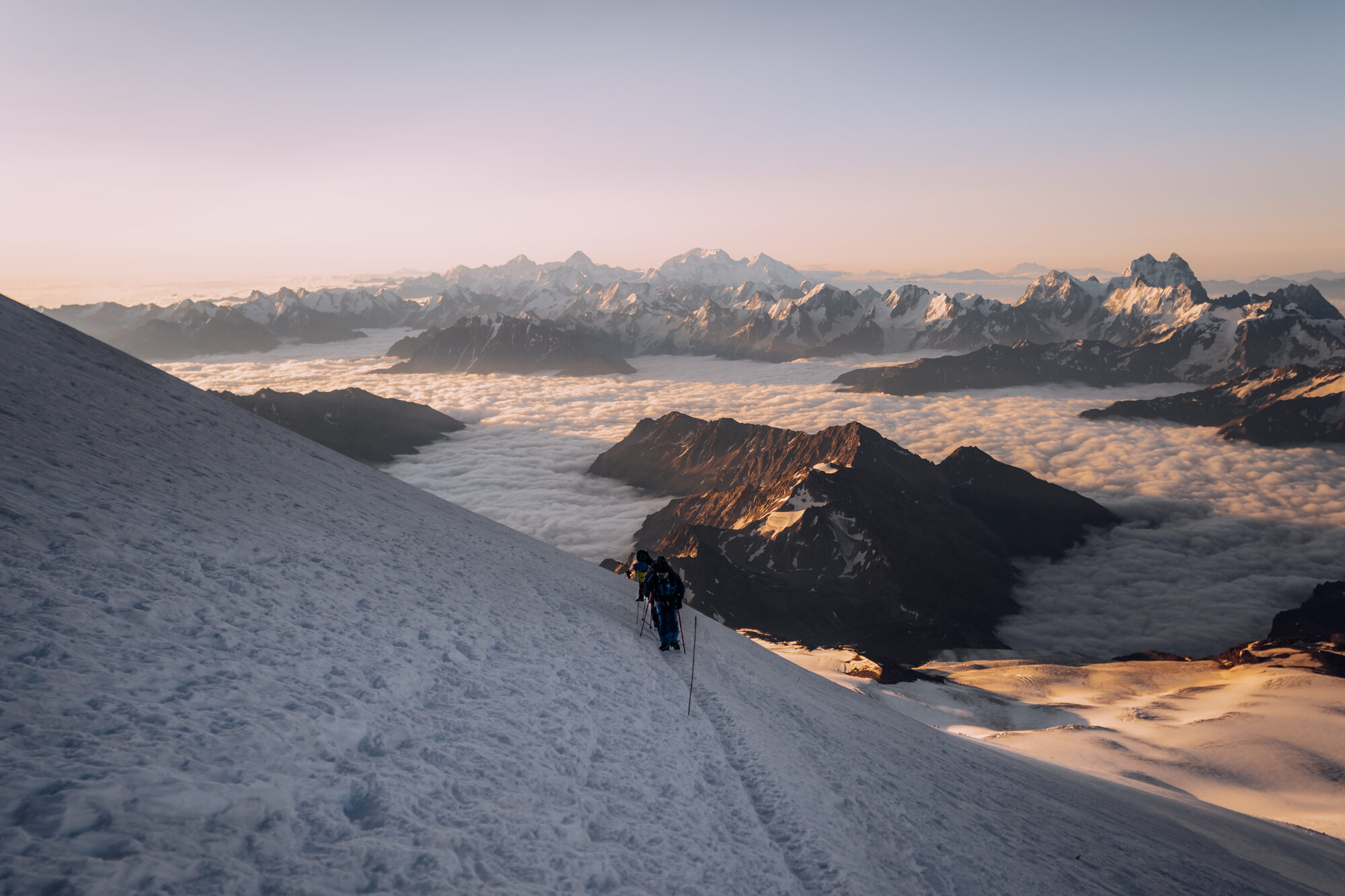
The first light of the day. Climbing toward the sunrise with the Caucasus spread out below.
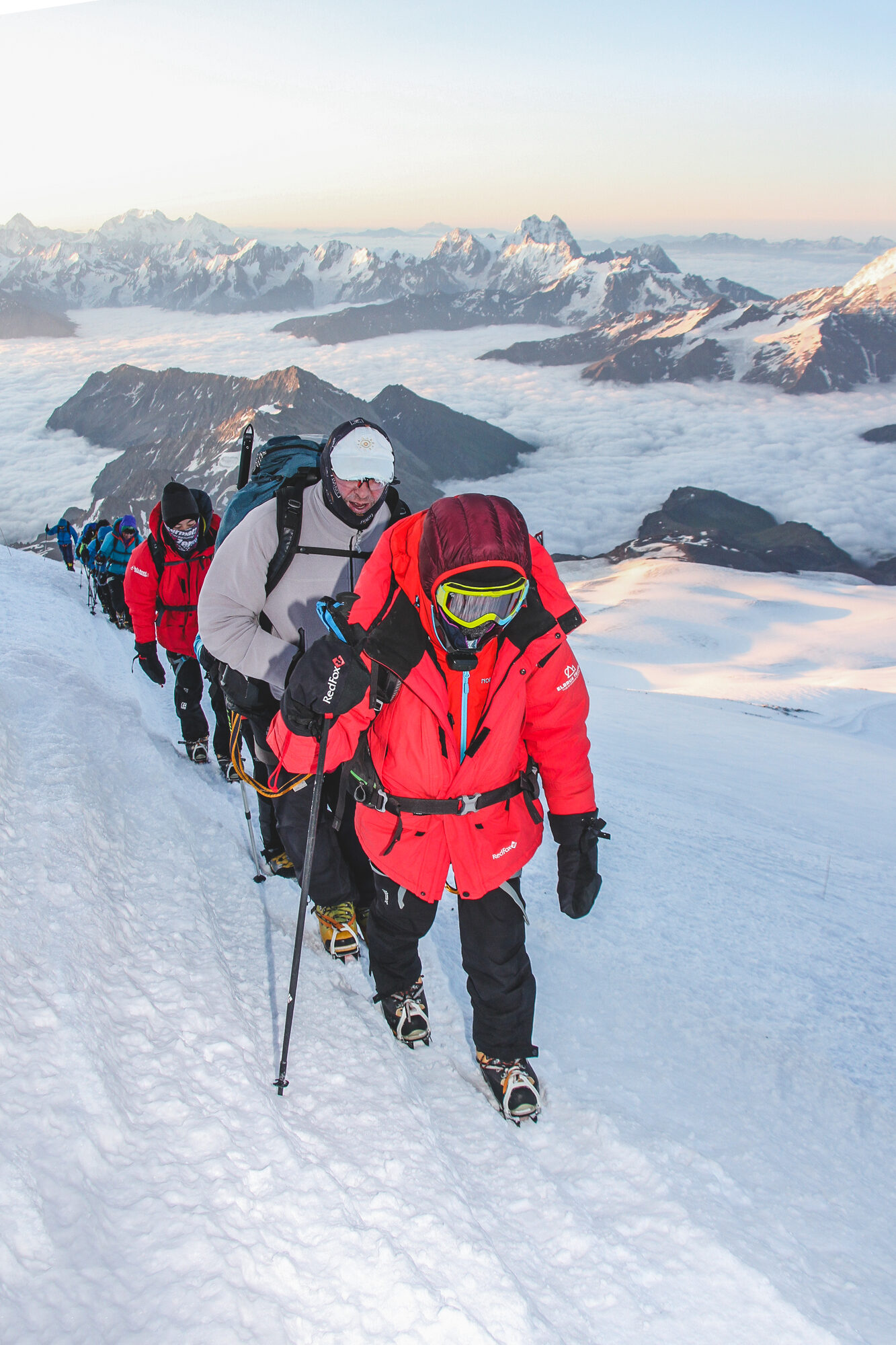
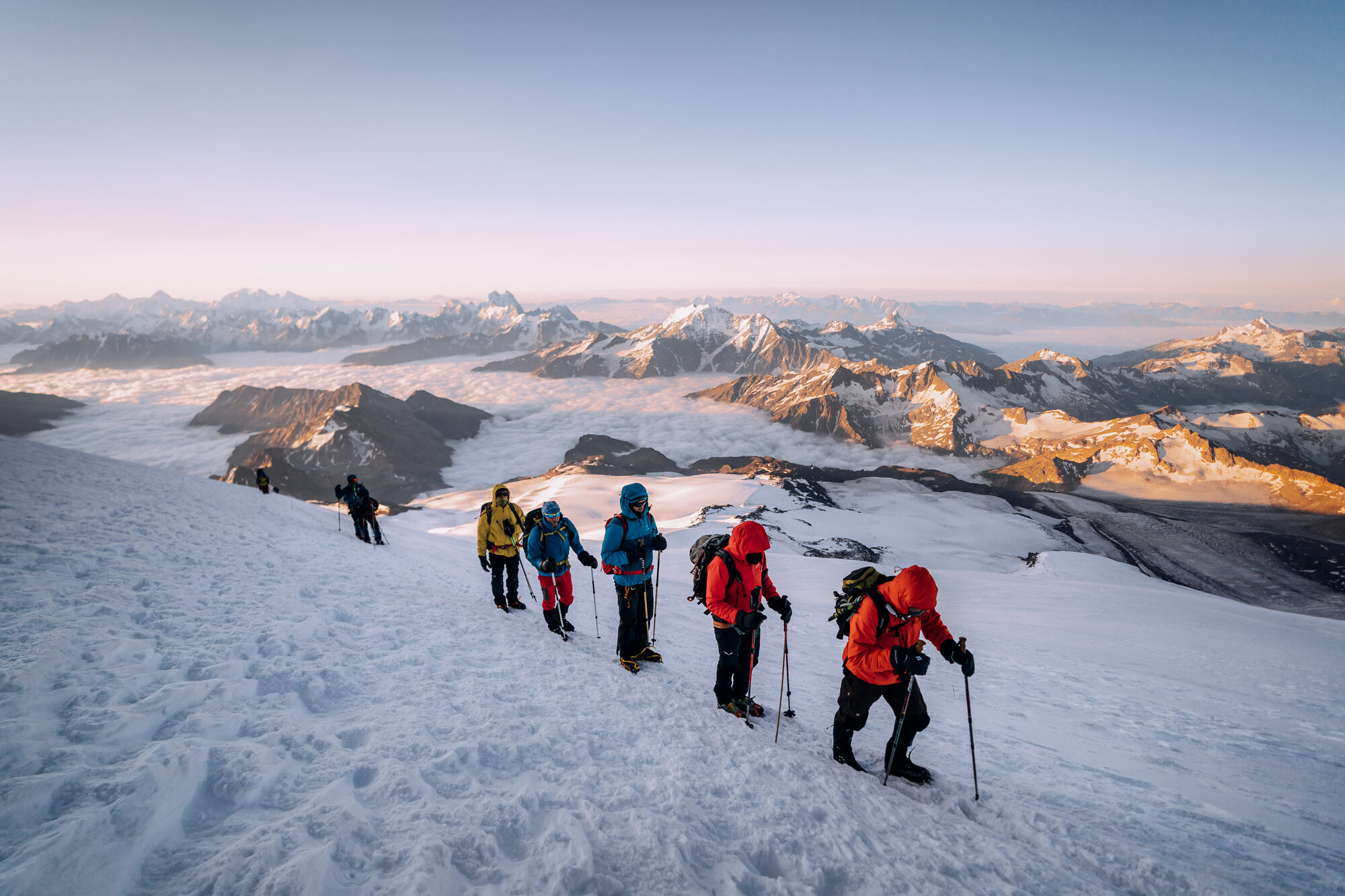
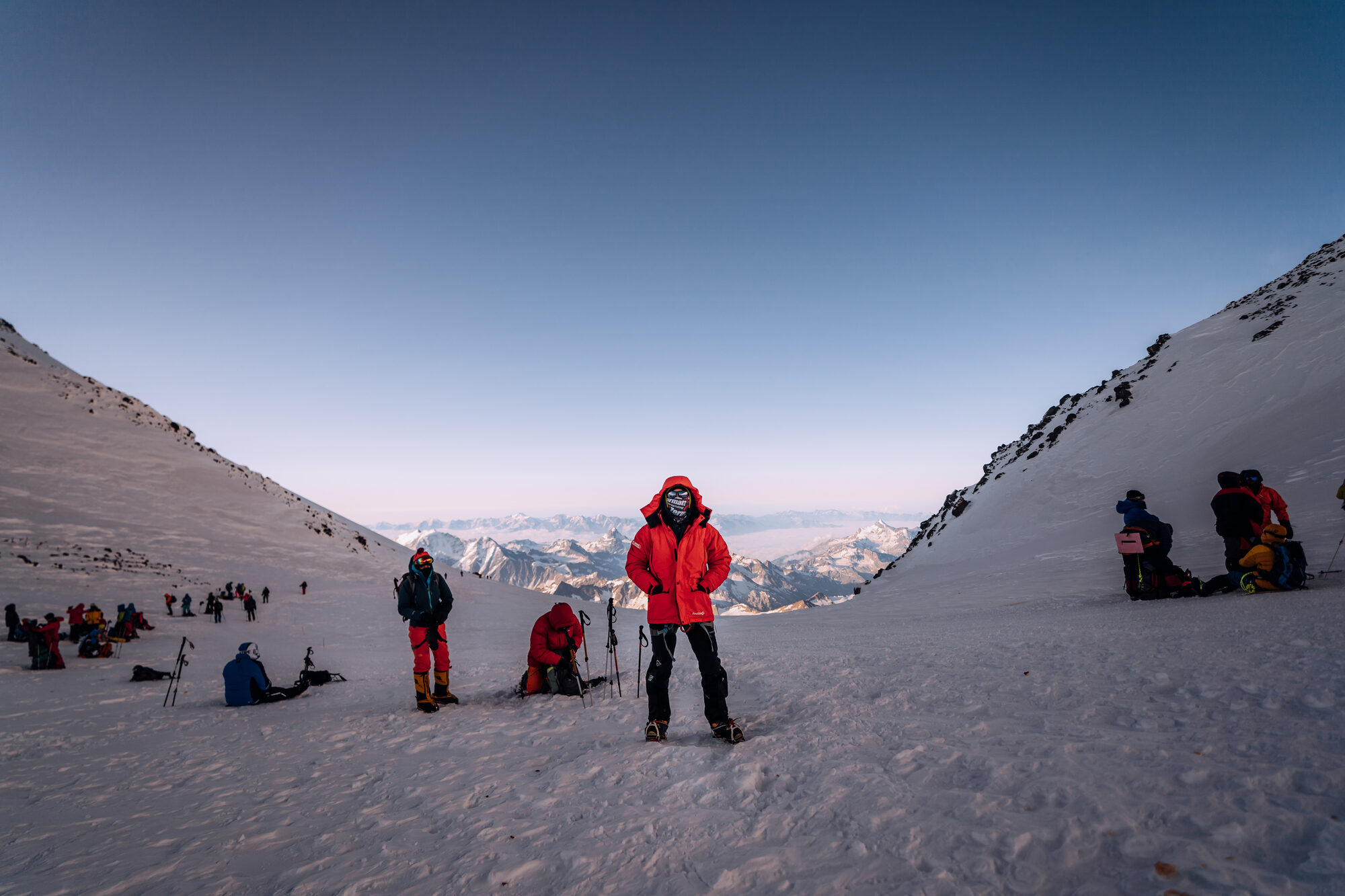
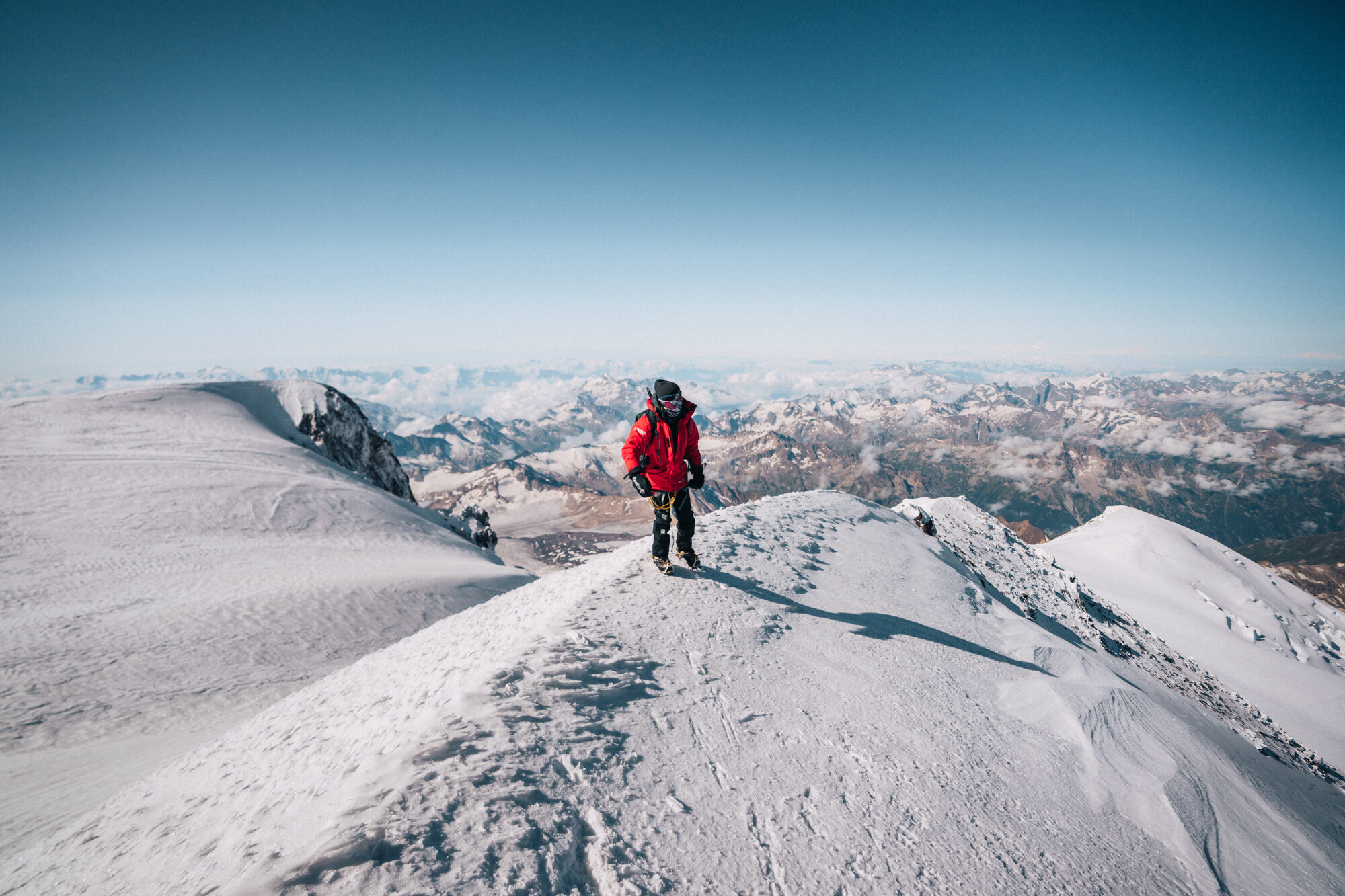
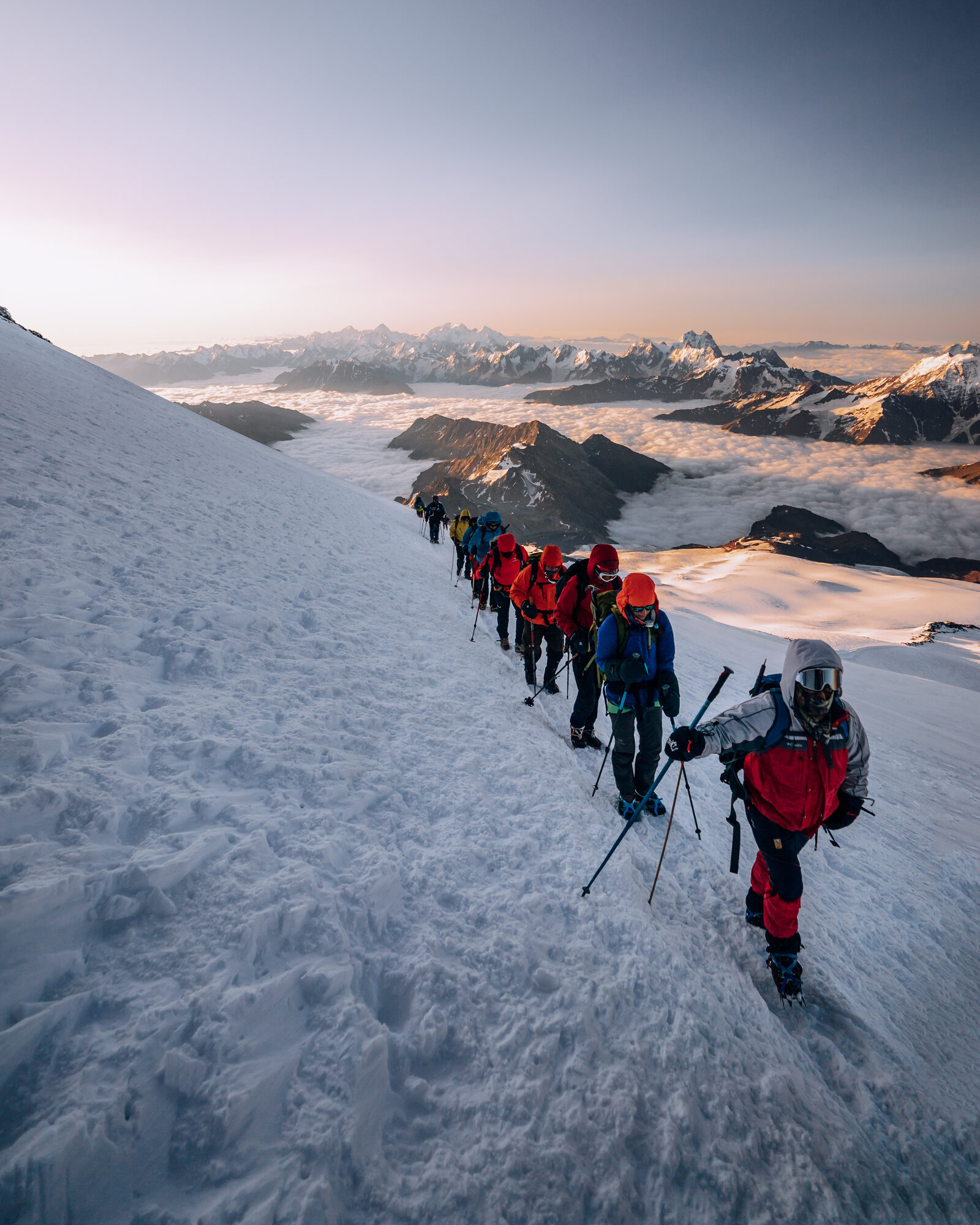
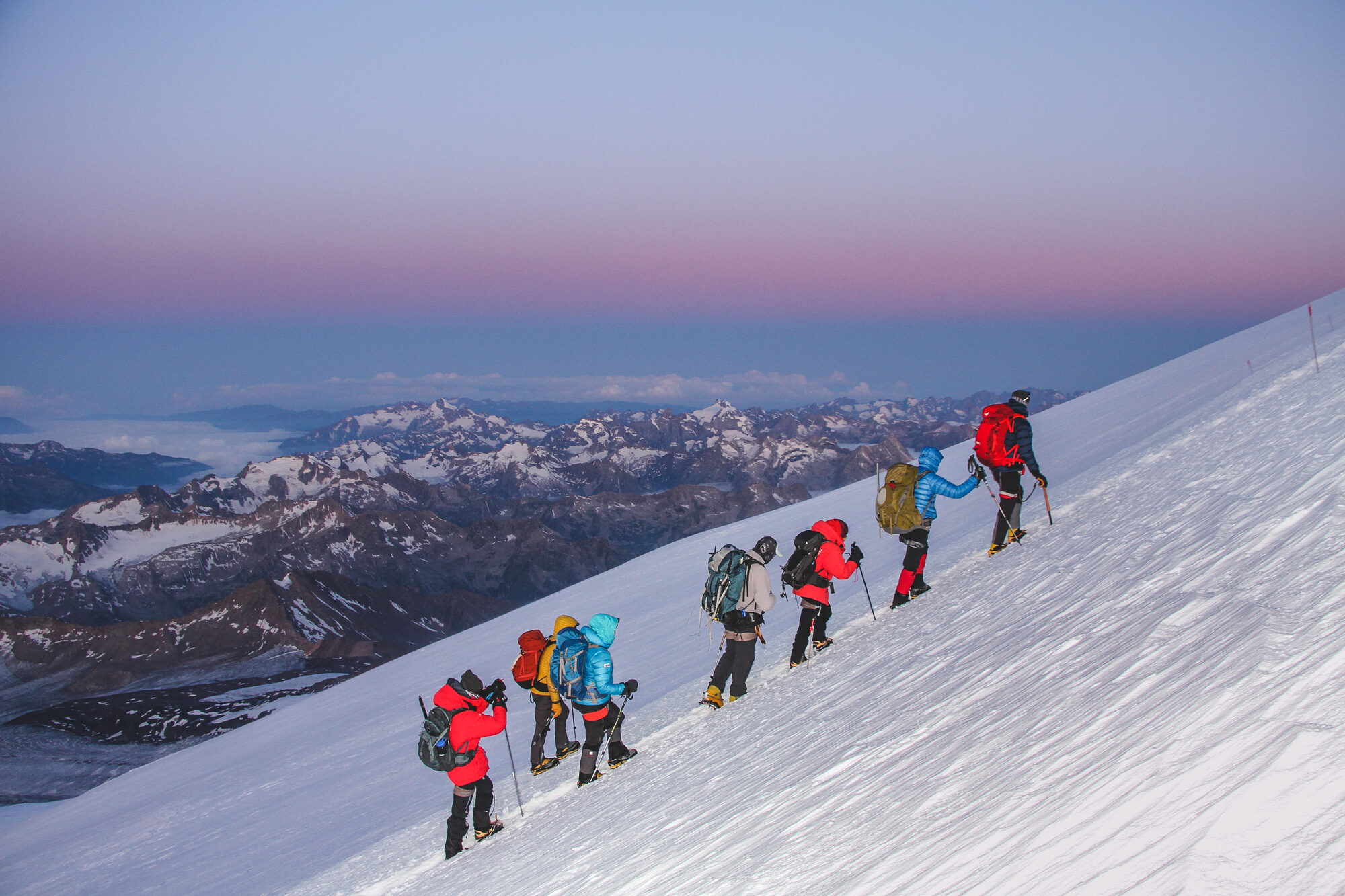
We started up toward Pastukhov Rocks, where we'd hiked the previous day for acclimatization, and then traversed slowly across to the saddle between the two peaks. Step by step. At this point, we weren't roped in, so any misstep could be costly. The snow was firm, the air was biting, and headlamps bobbed in a single-file line above and below us.
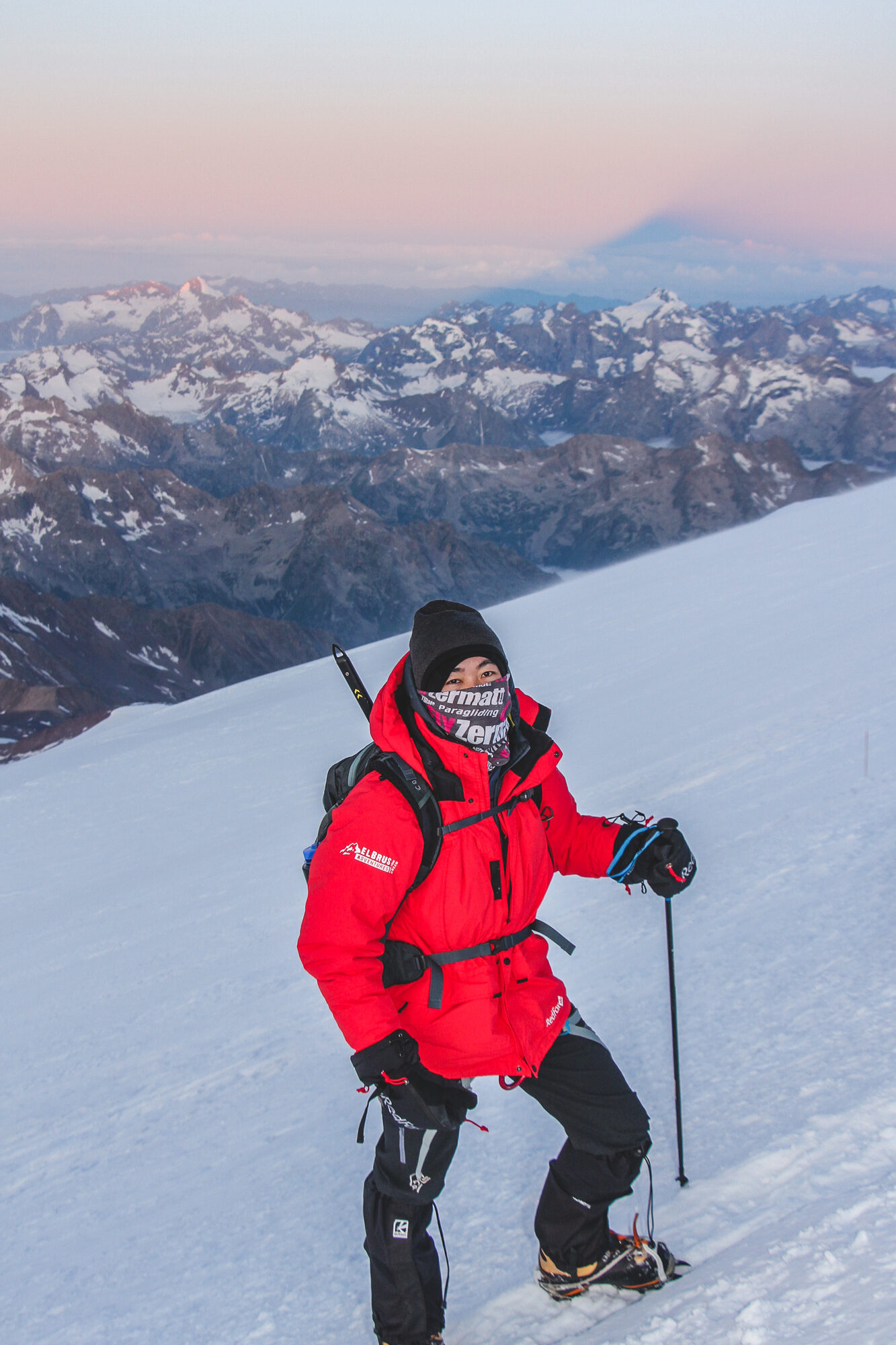
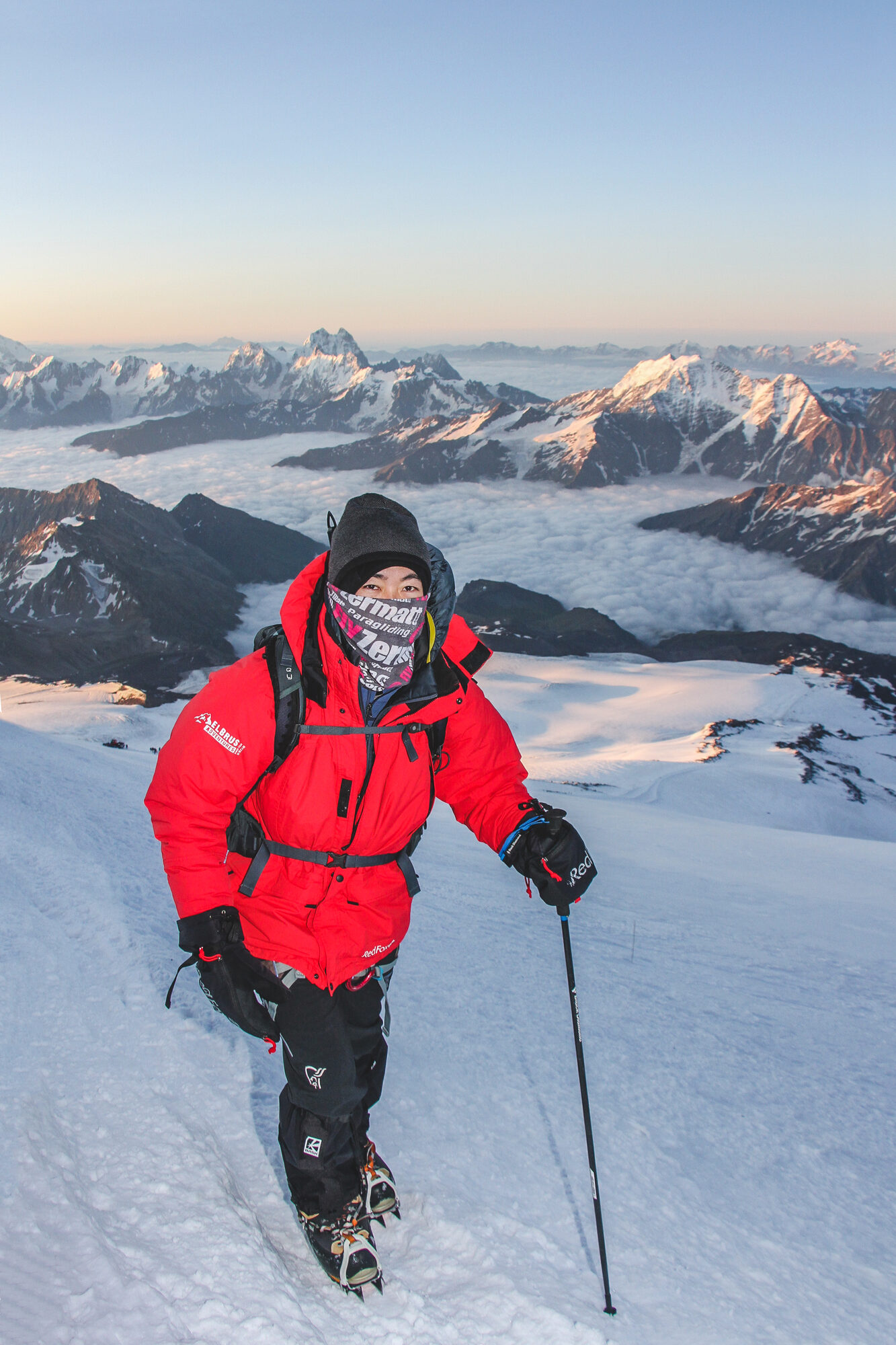
Pushing up the steep slope at sunrise. The cold was brutal, but the views kept us going.Jason in the golden hour. Elbrus casting its shadow across the Caucasus behind.
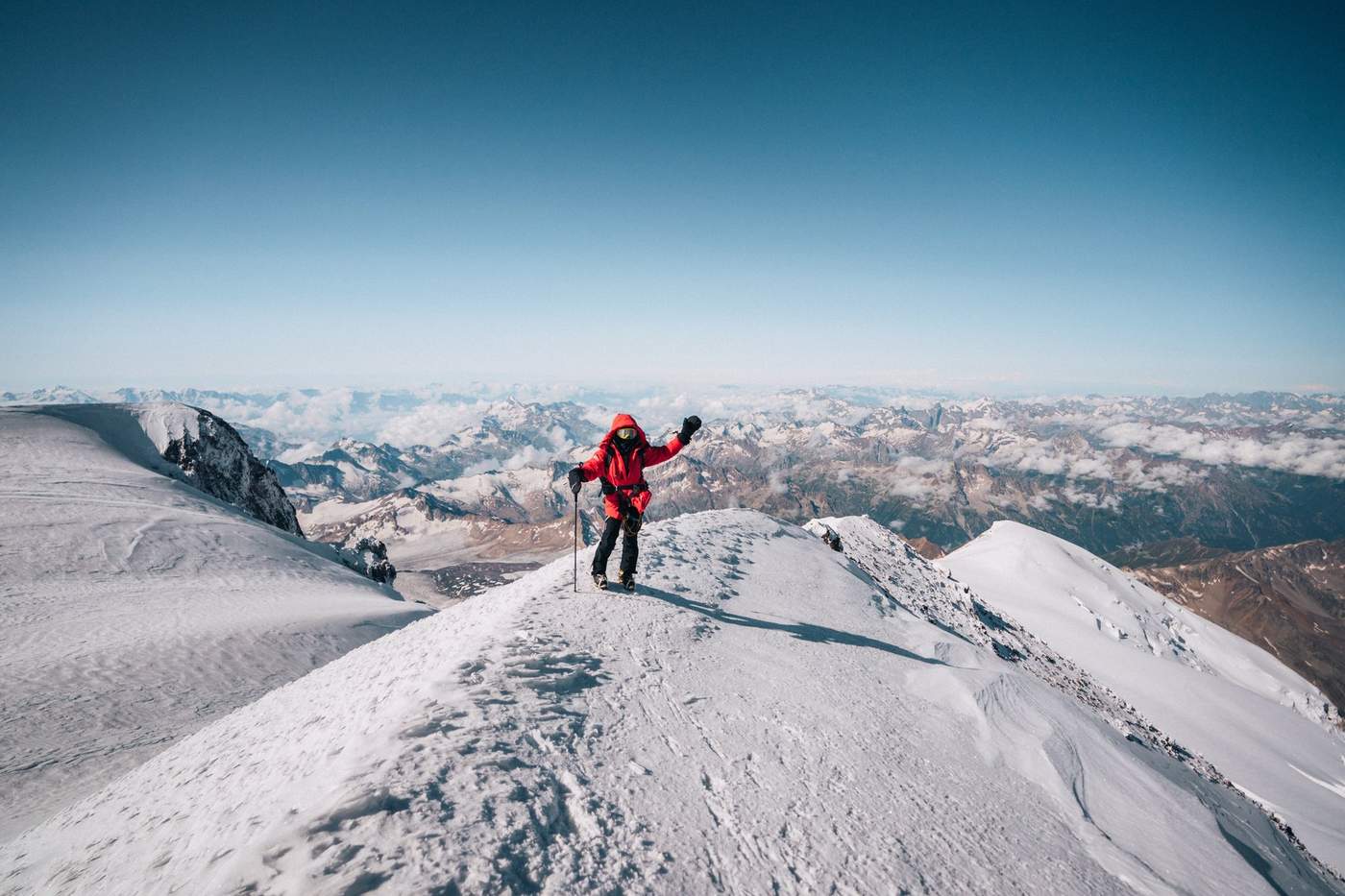
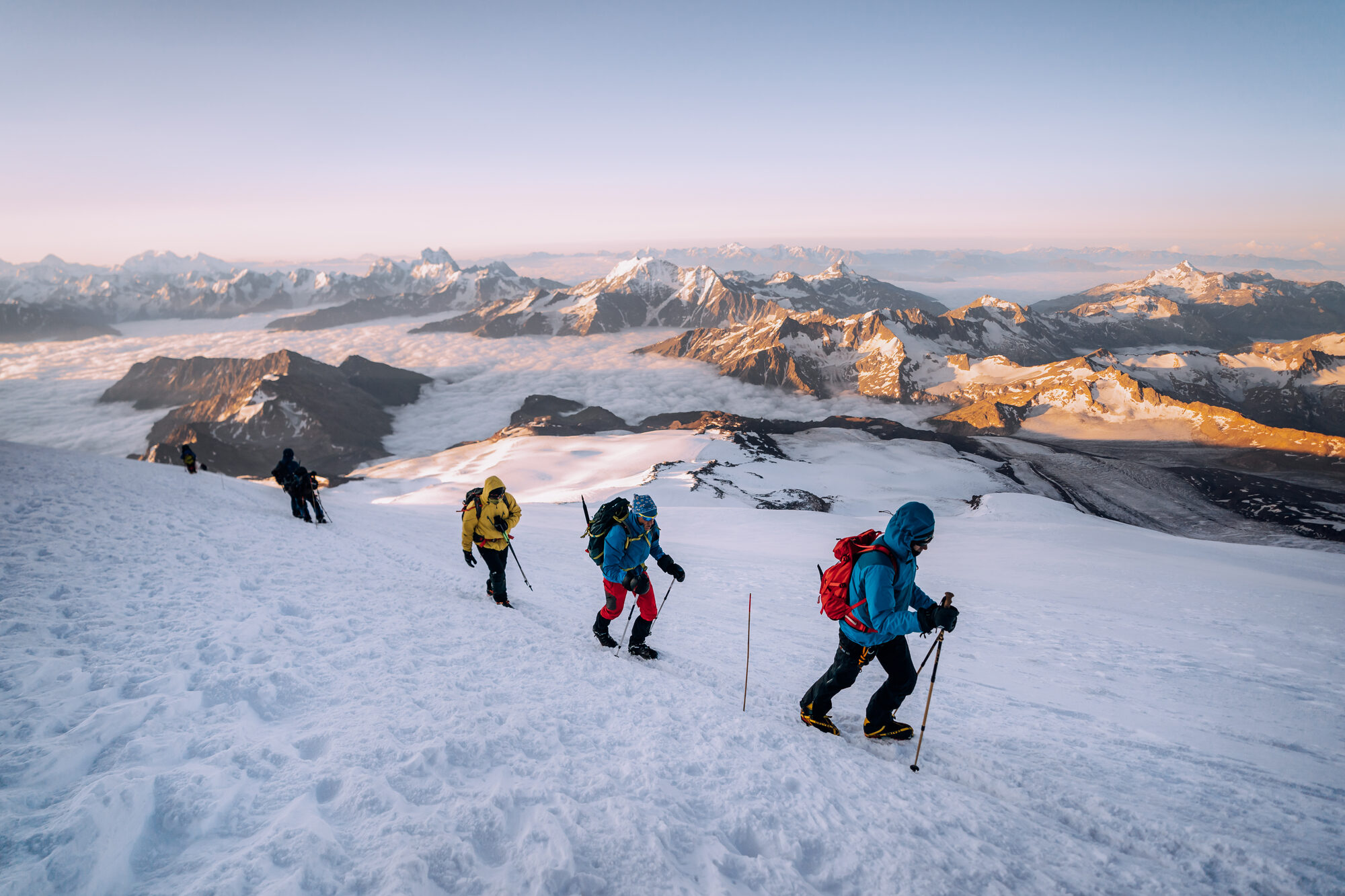
As the sun peeked over the horizon, it brought on new life. Warmth and strength to continue upward. It was one of the most beautiful and surreal moments we've ever experienced. The entire Caucasus range lit up in orange and gold, with a sea of clouds rolling below us like a slow ocean. How crazy is it that we were climbing the tallest mountain in Europe in the middle of the night? Awesomely crazy.
Traversing across the slope as the first light hit the peaks — one of the most beautiful moments of the climb.The team in formation. Single file, one step at a time, sunrise turning the world gold.
The full line traversing the upper ridge as the Caucasus turned gold behind us.A breather in the saddle between the twin peaks before the final 200 meters.
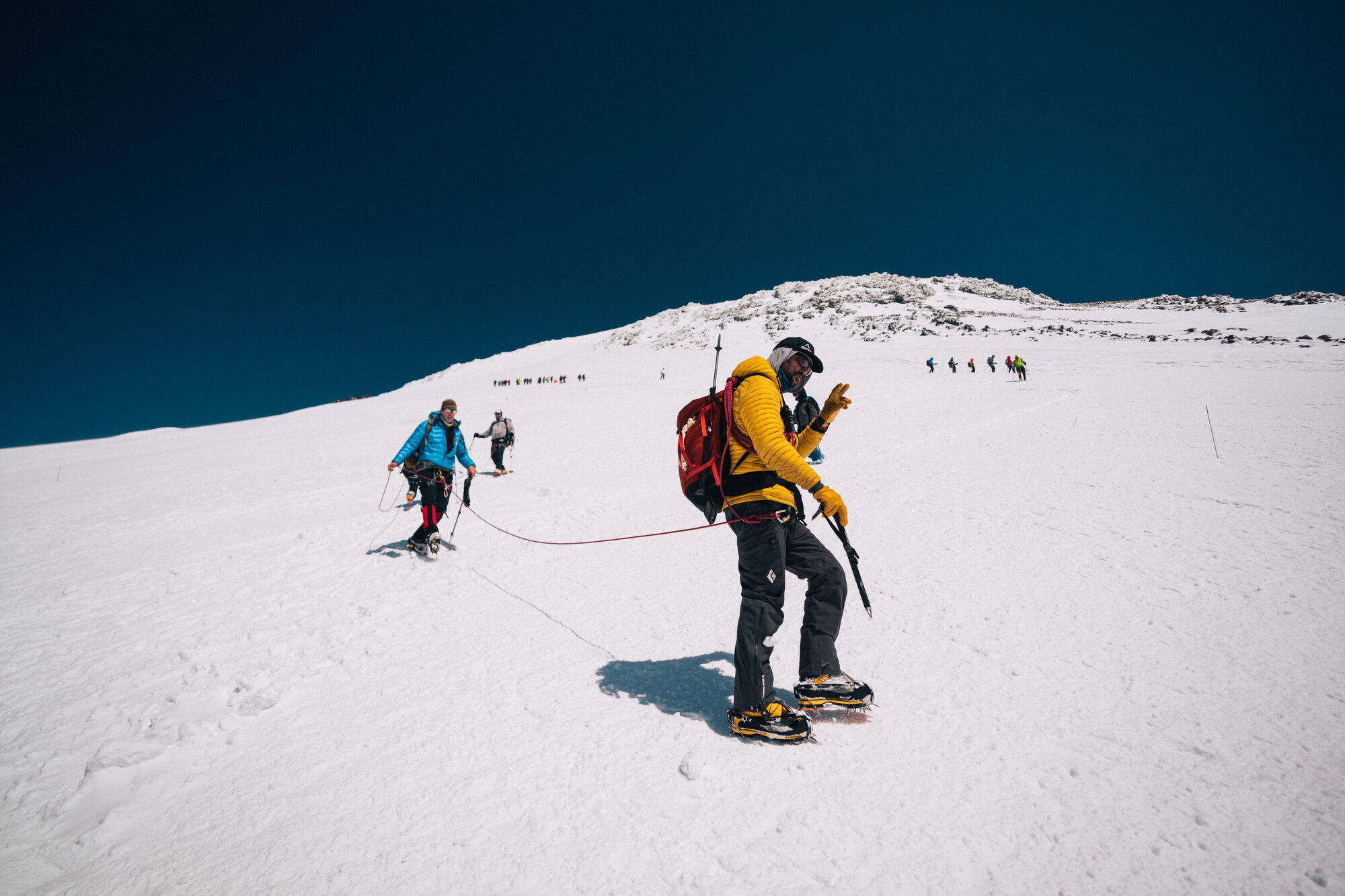
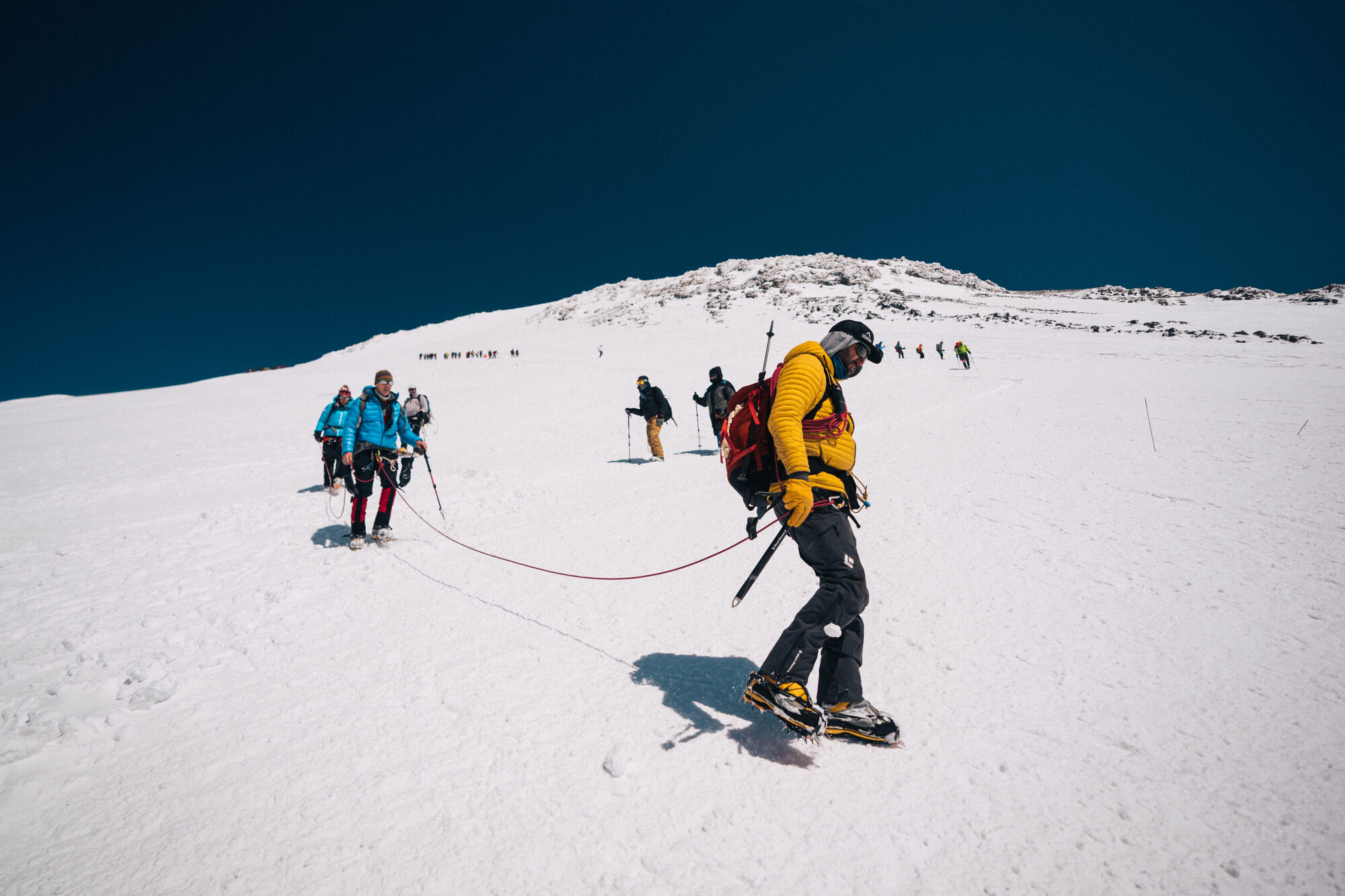
Roped up for the steepest part. The summit cone looming above, the line strung out below.
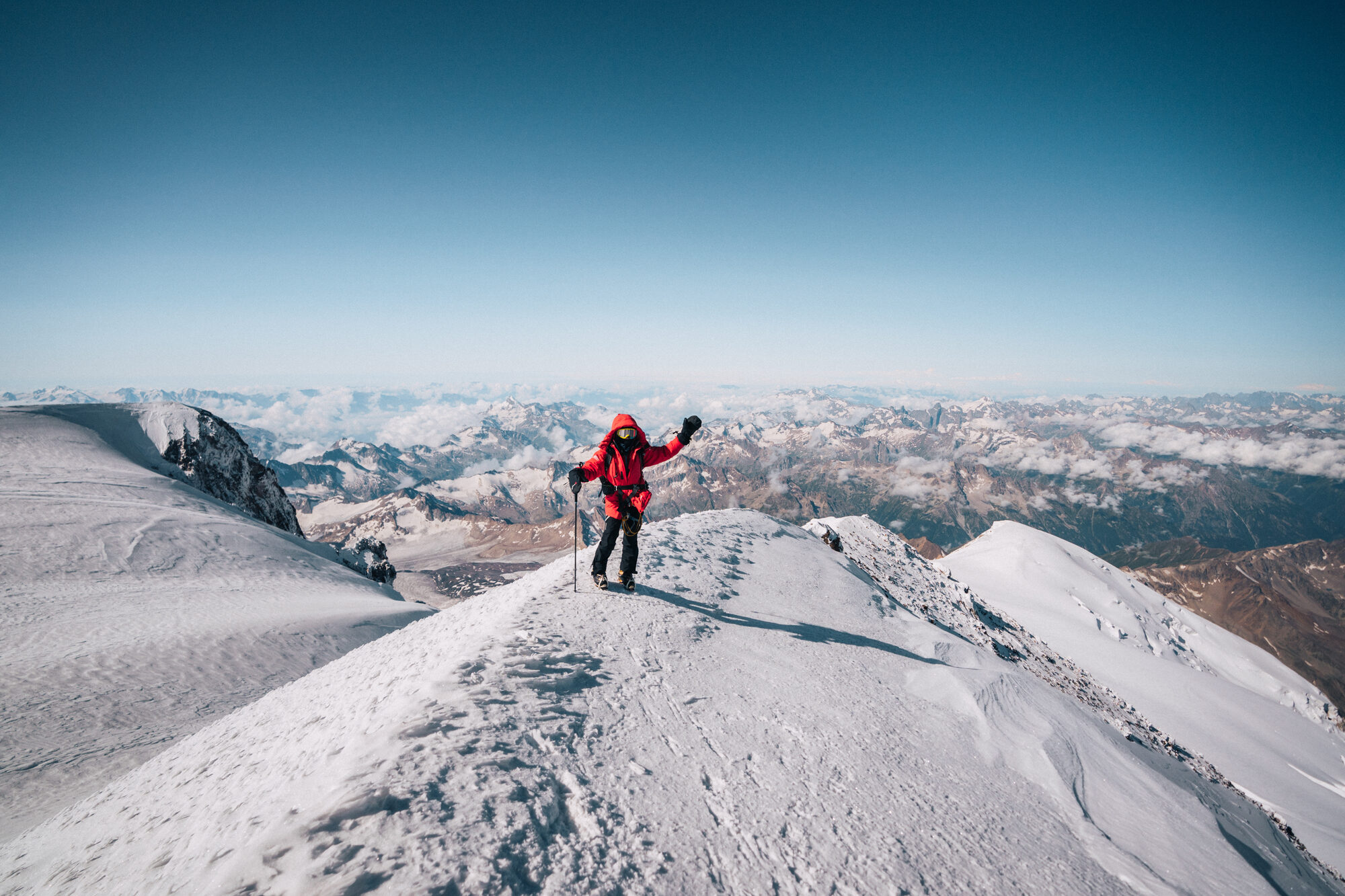
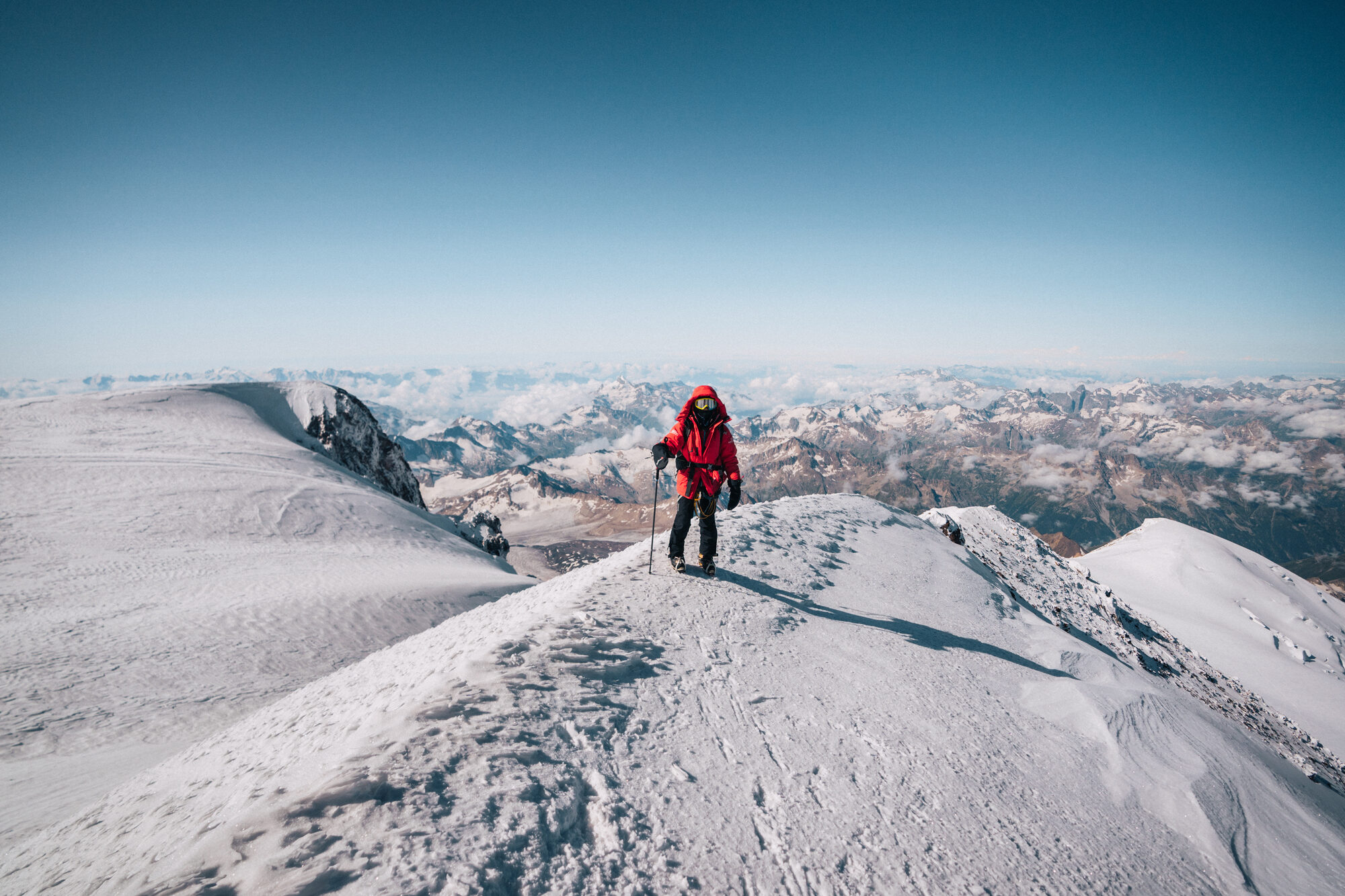
The last 200 meters were the steepest and most difficult. It was the point of no return. Legs burning, lungs screaming, every step a negotiation with your own body. But with sheer determination, our entire team made it to the top.
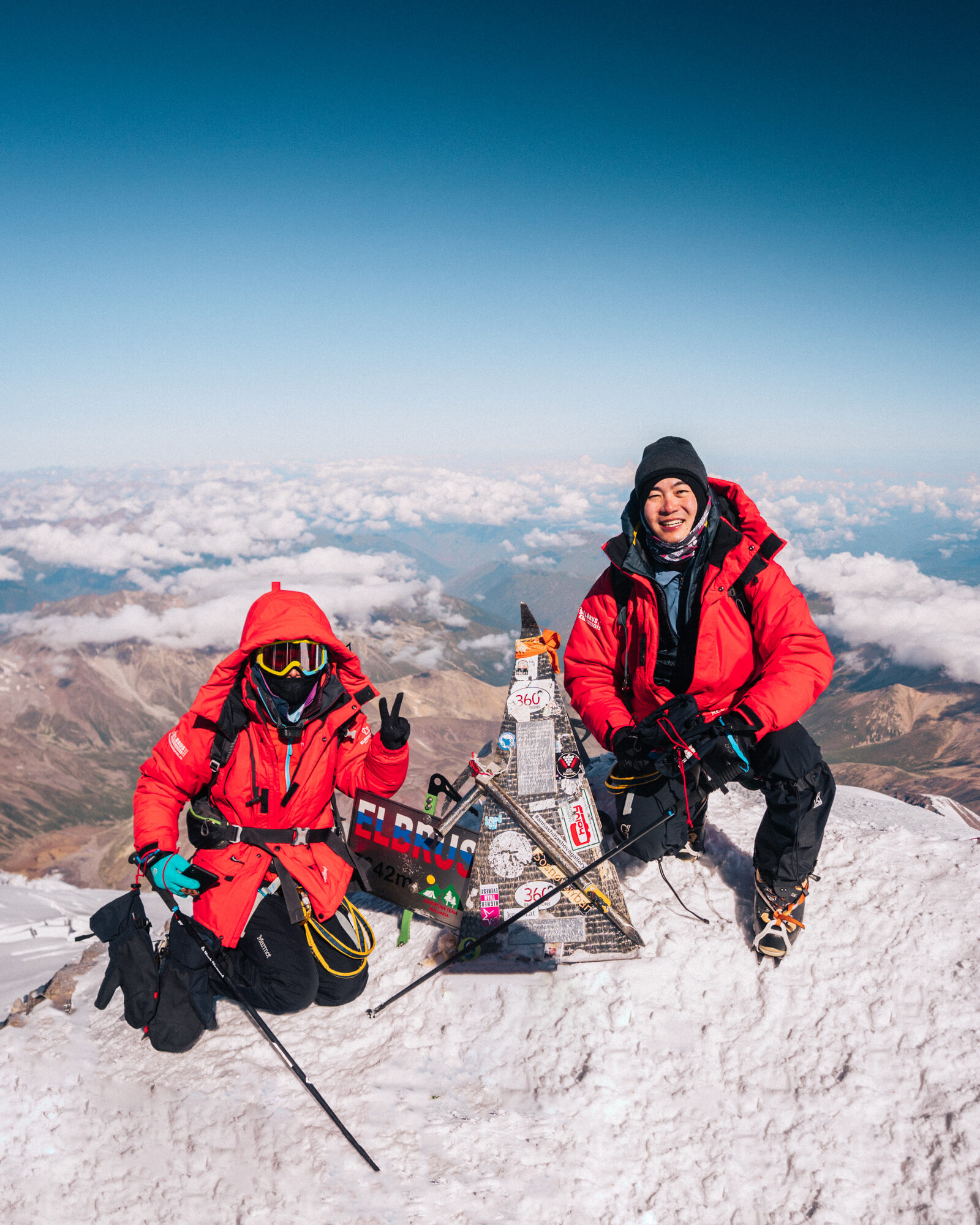
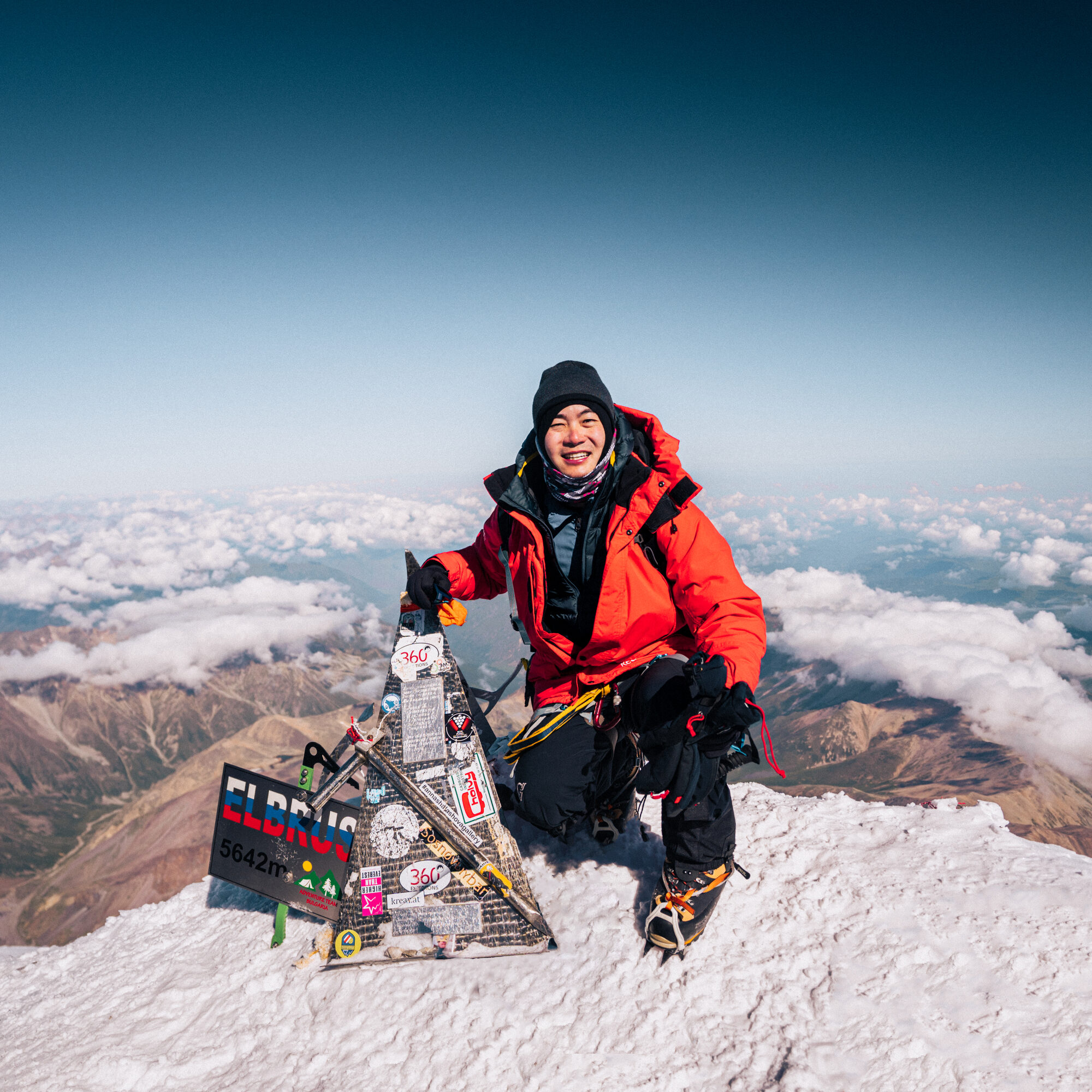
5,642 m
West Summit · The Highest Point in Europe
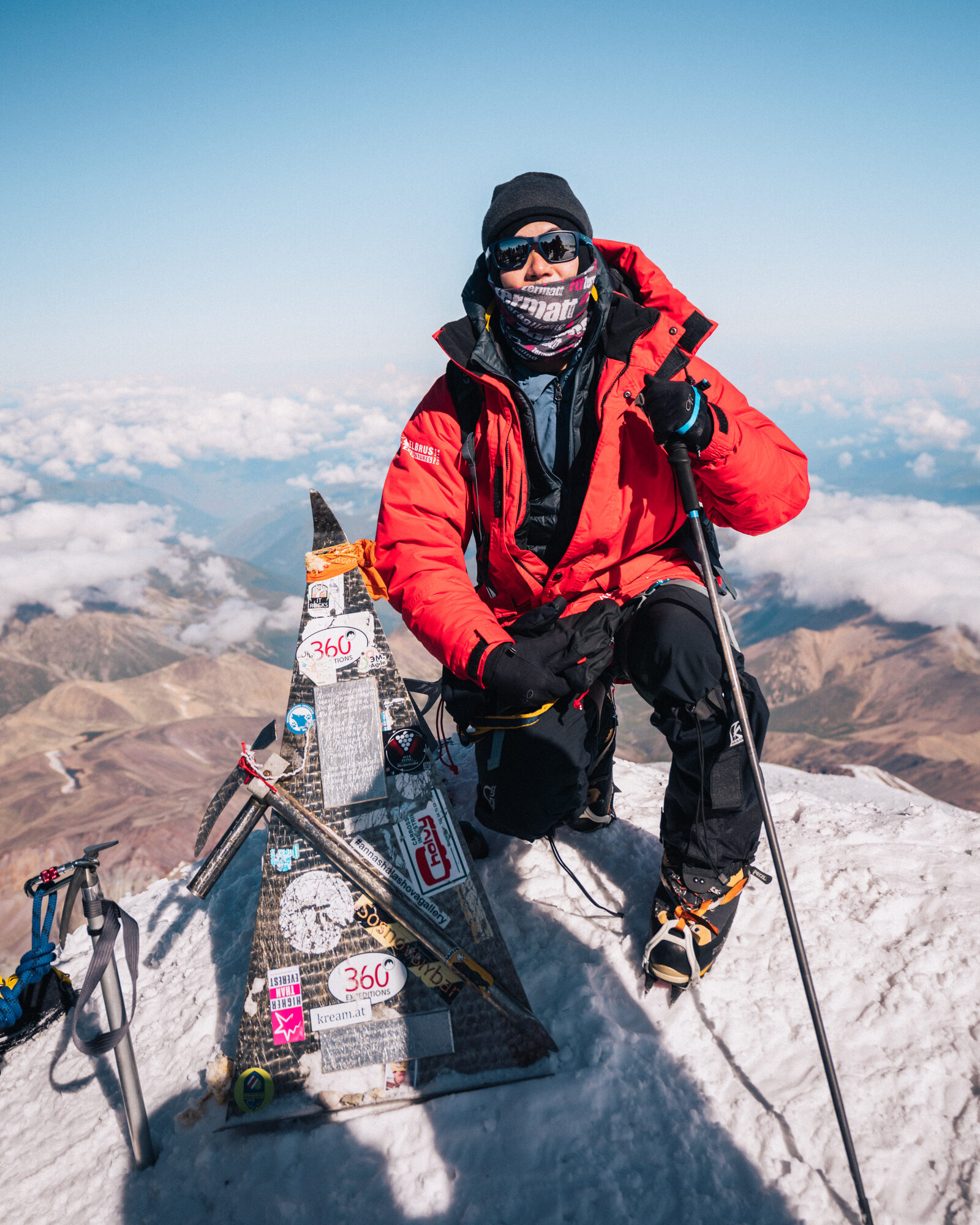
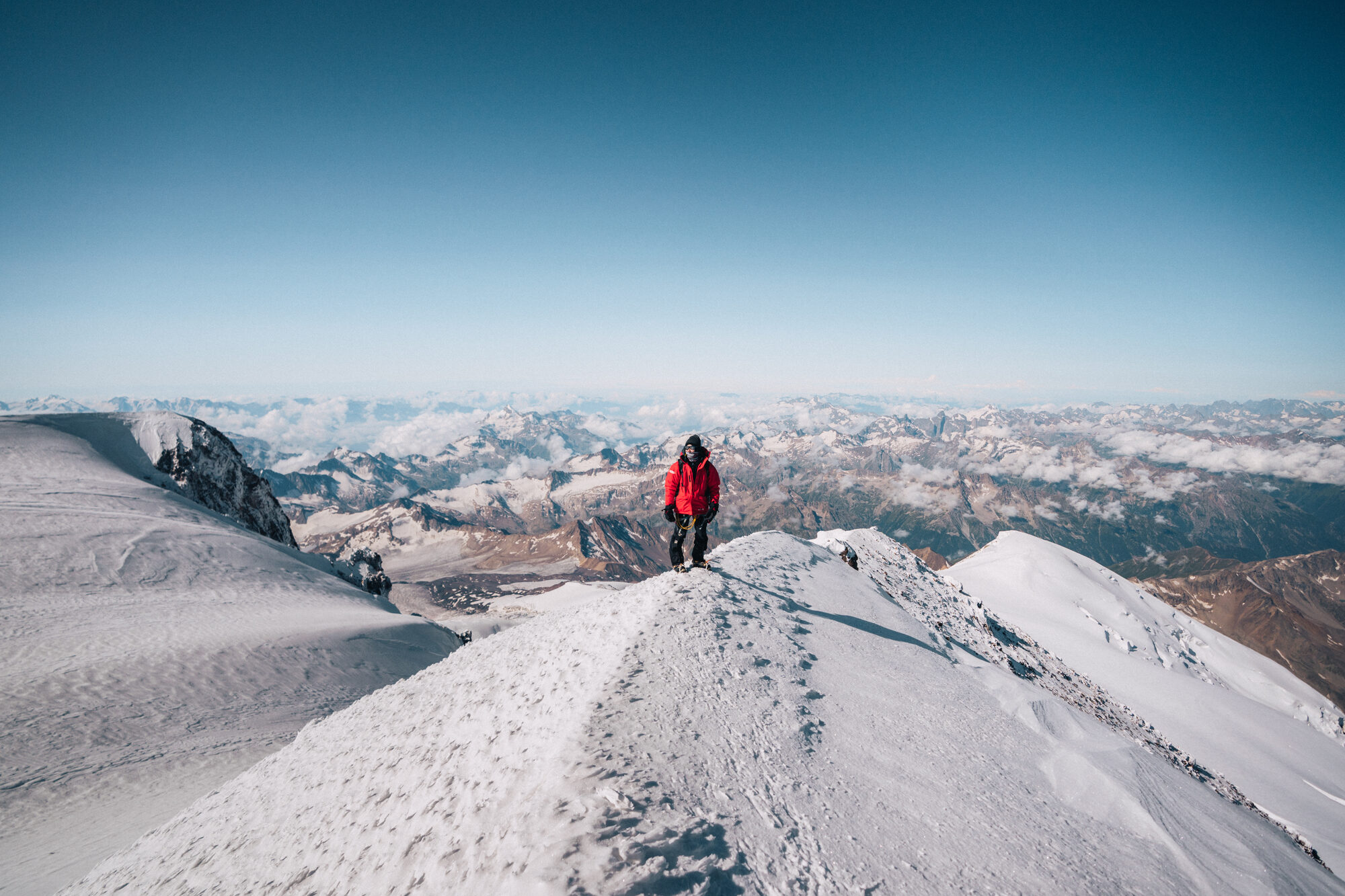
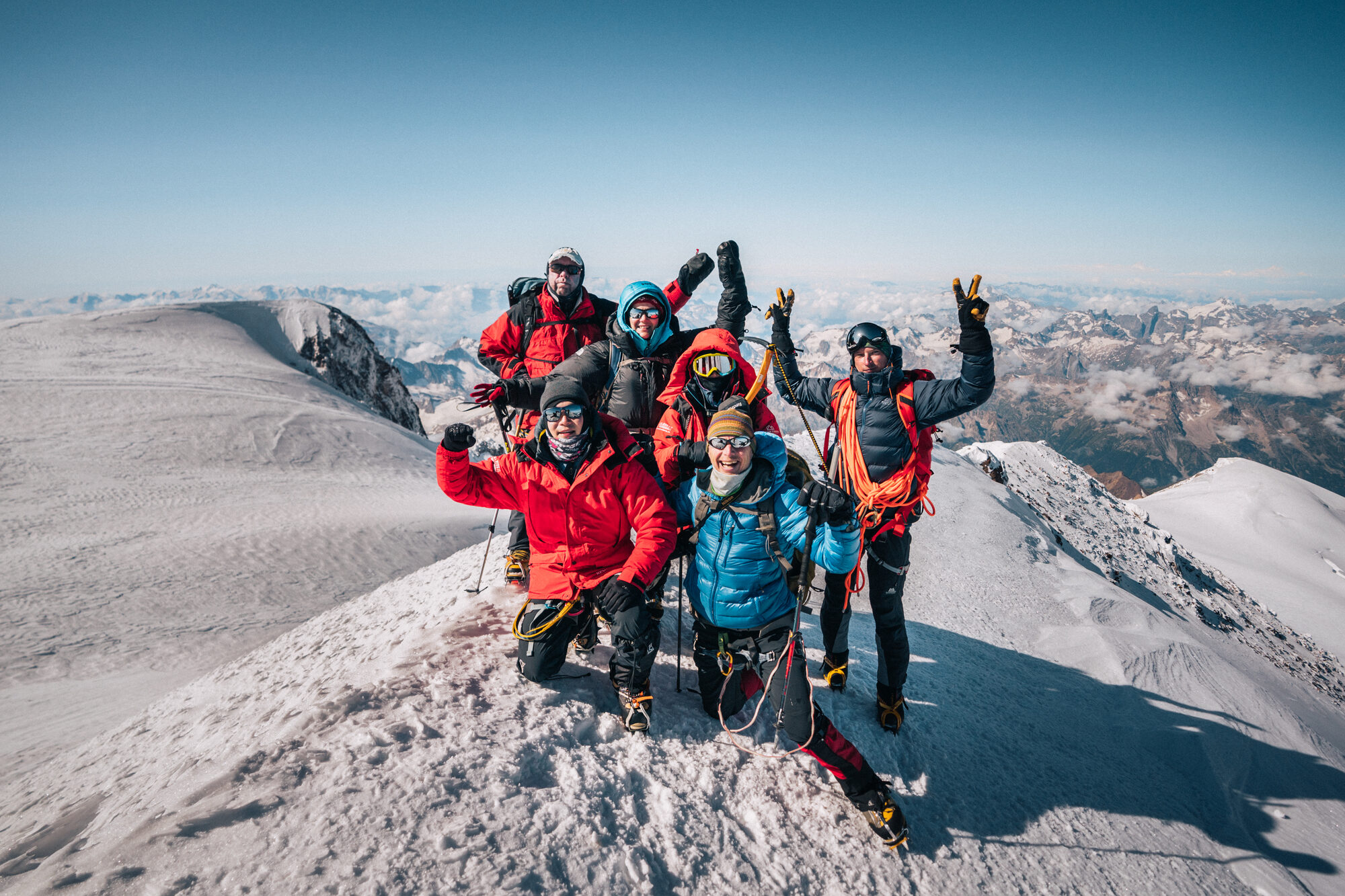
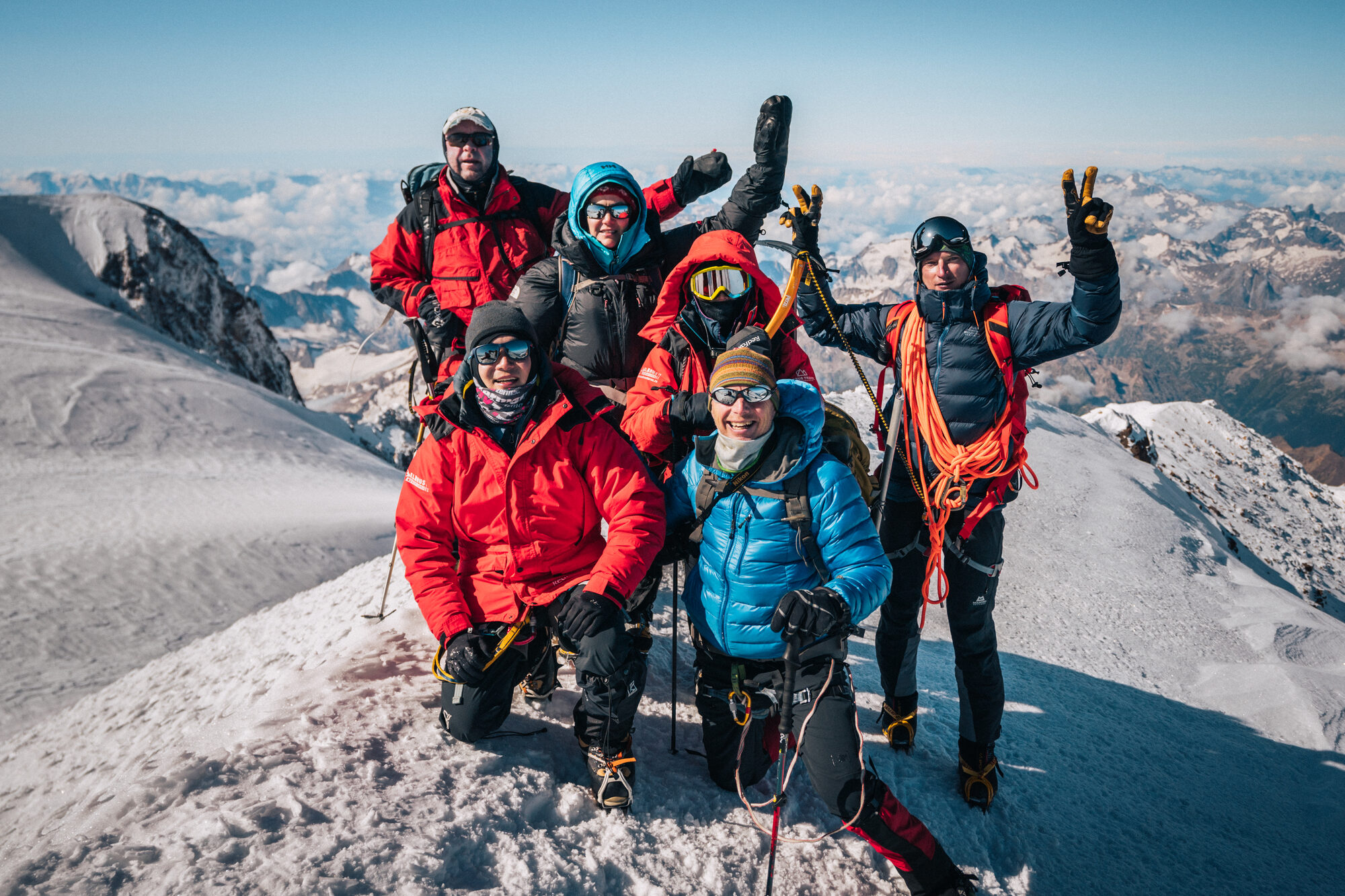
Jason and Grace at the summit. 5,642 meters. Number three of seven.
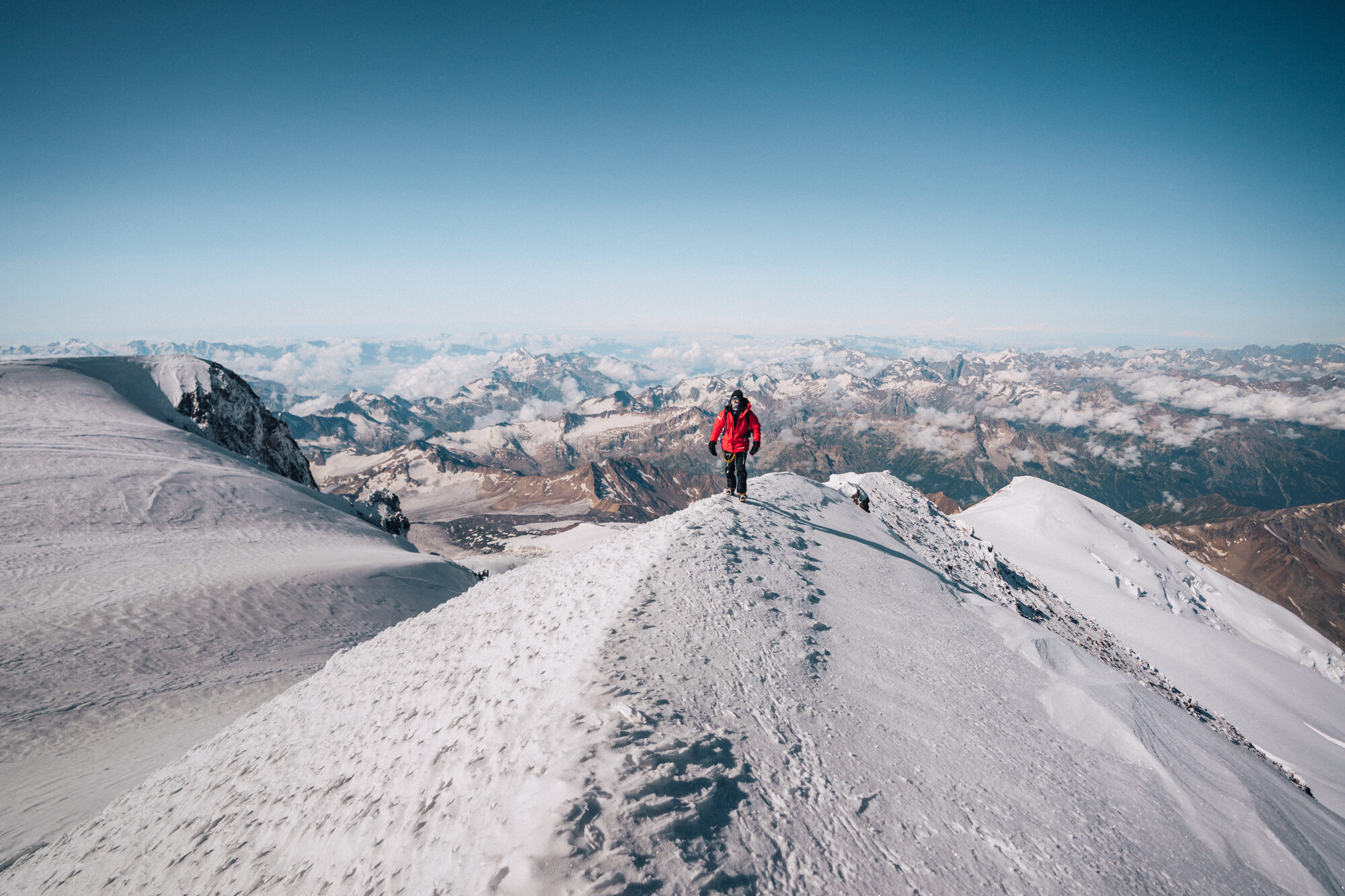
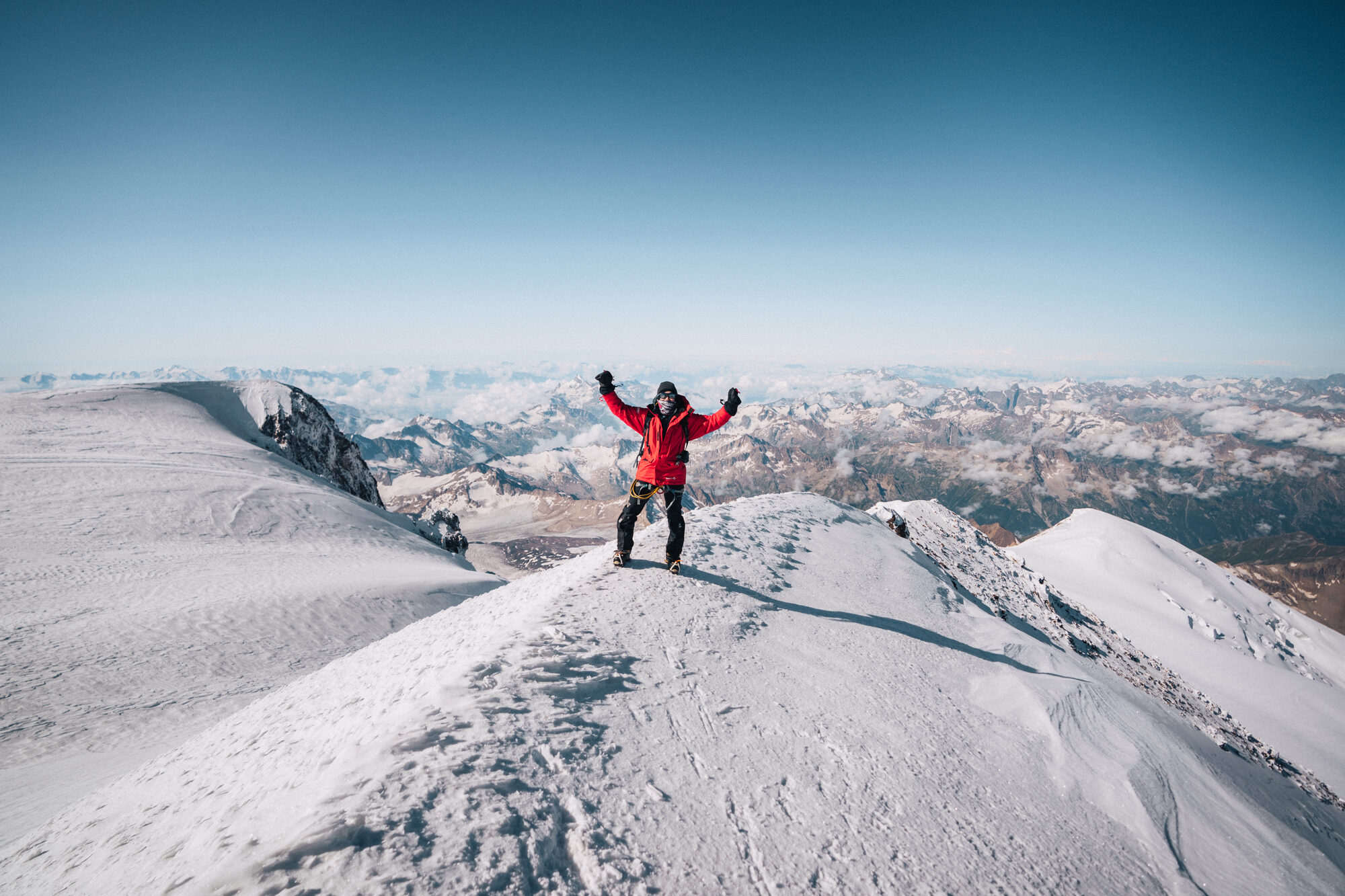
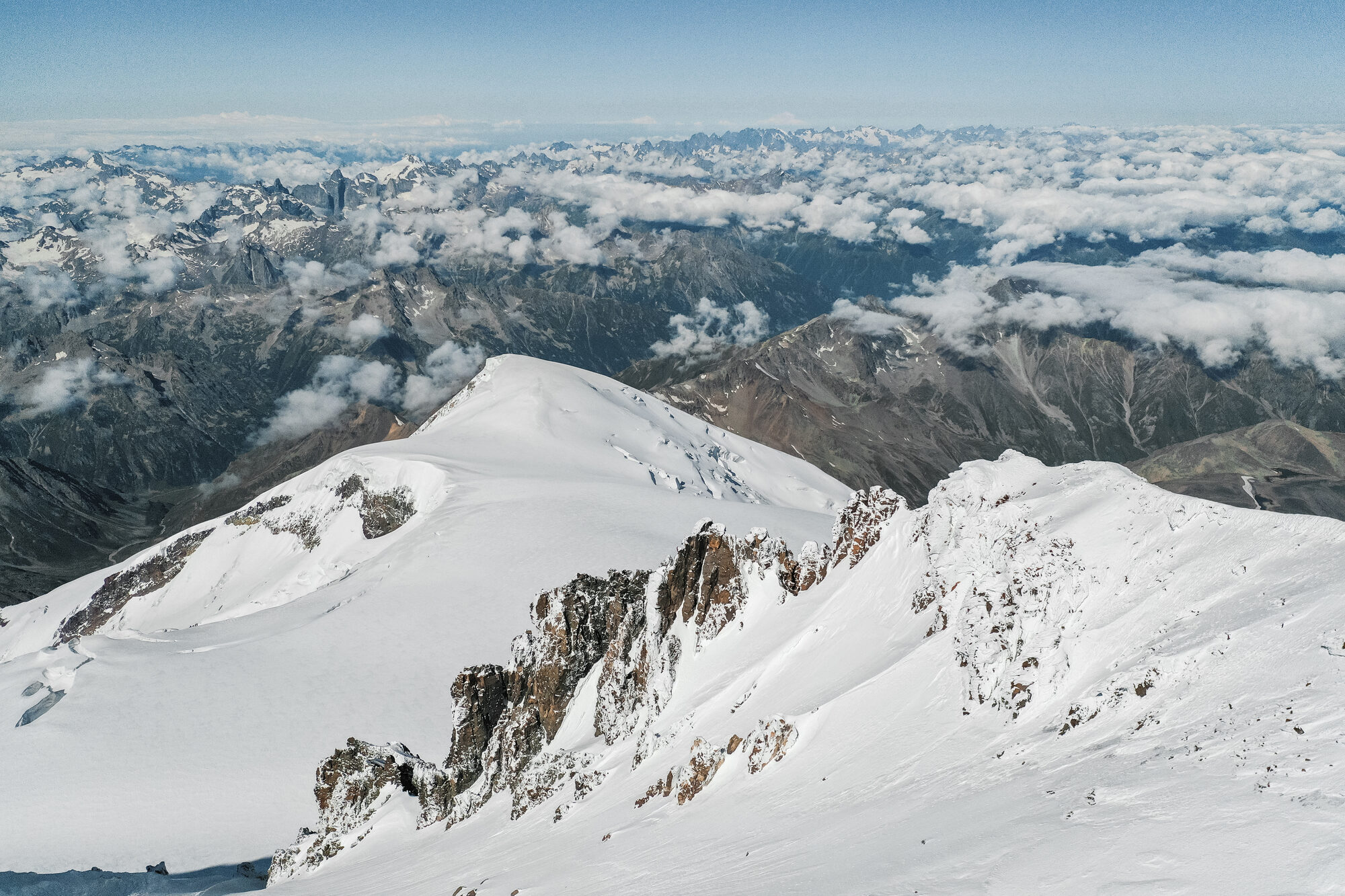
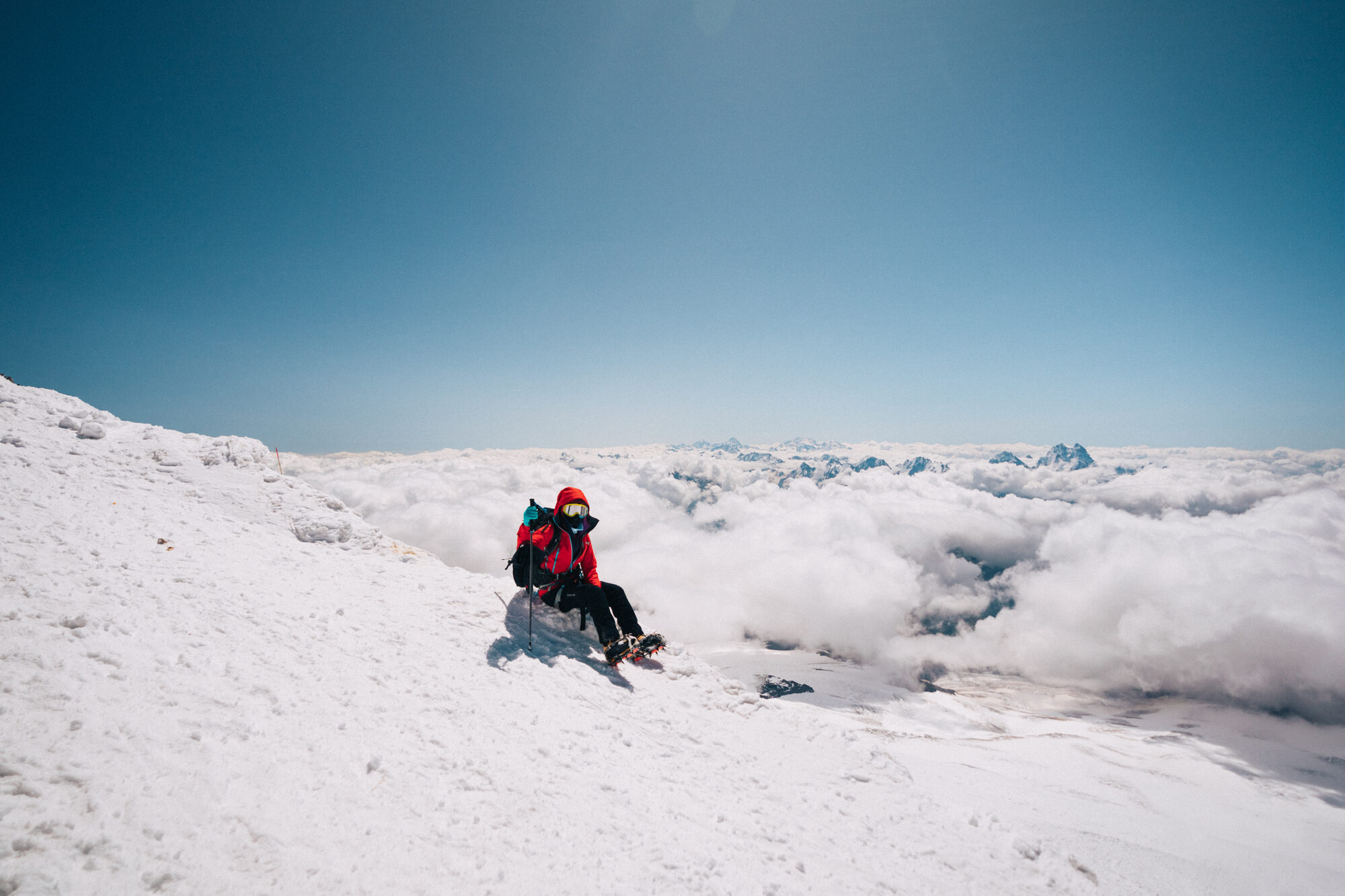
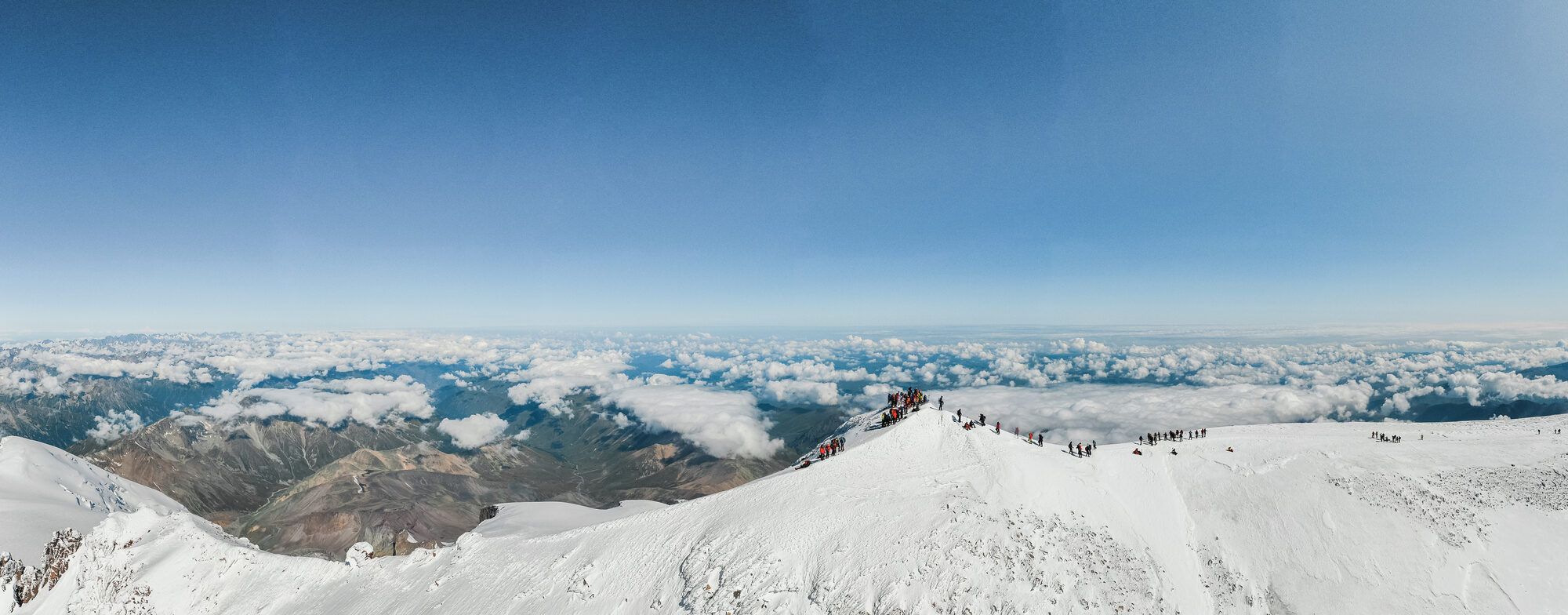
We stood proudly above a serene sea of clouds with the peaks of the Caucasus stretching out as far as the eye could see. After all, we were on top of Europe.
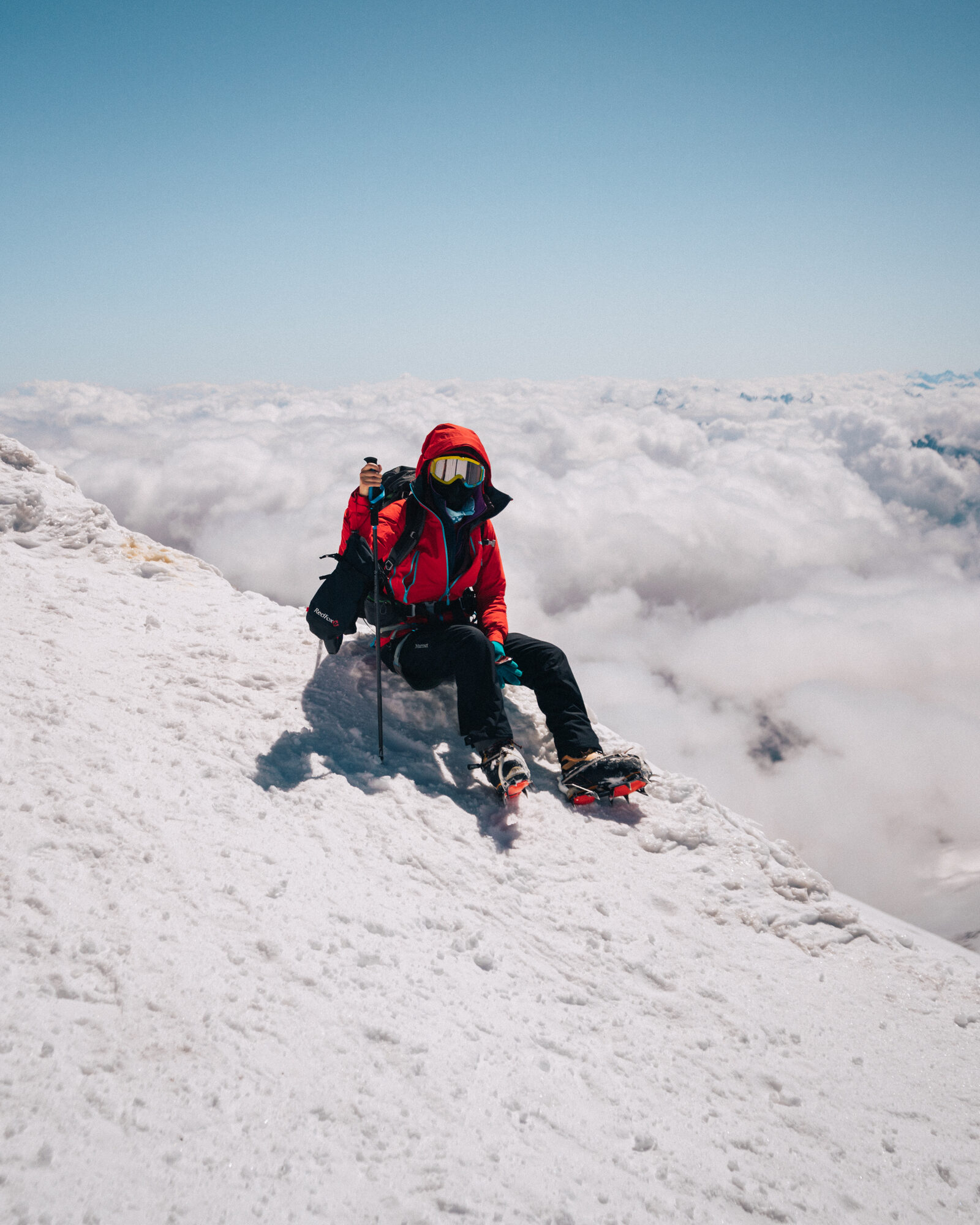
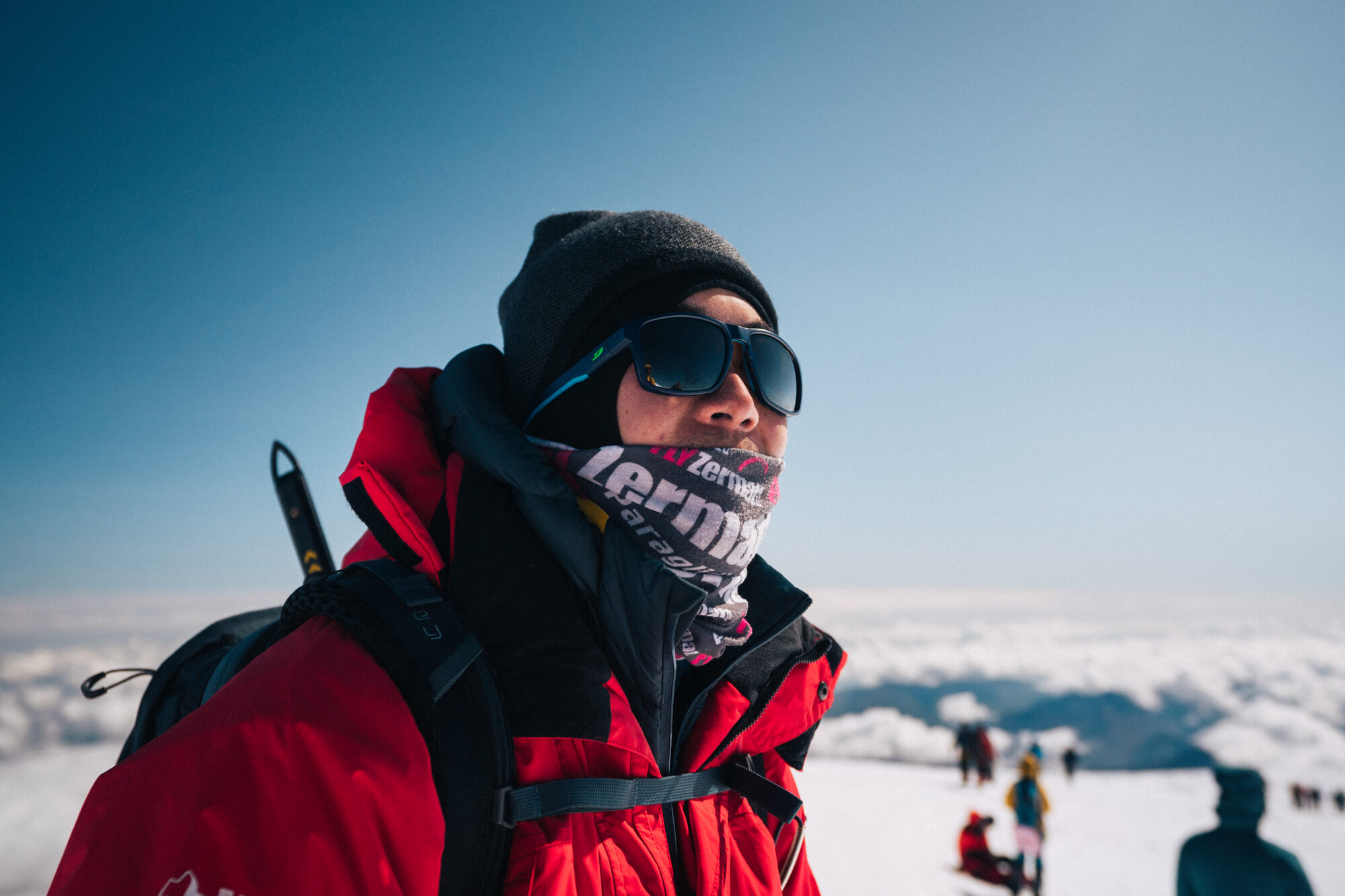
Grace at the summit. Clouds far below, nothing but sky above.Jason at the summit sign. Face covered, grinning underneath.
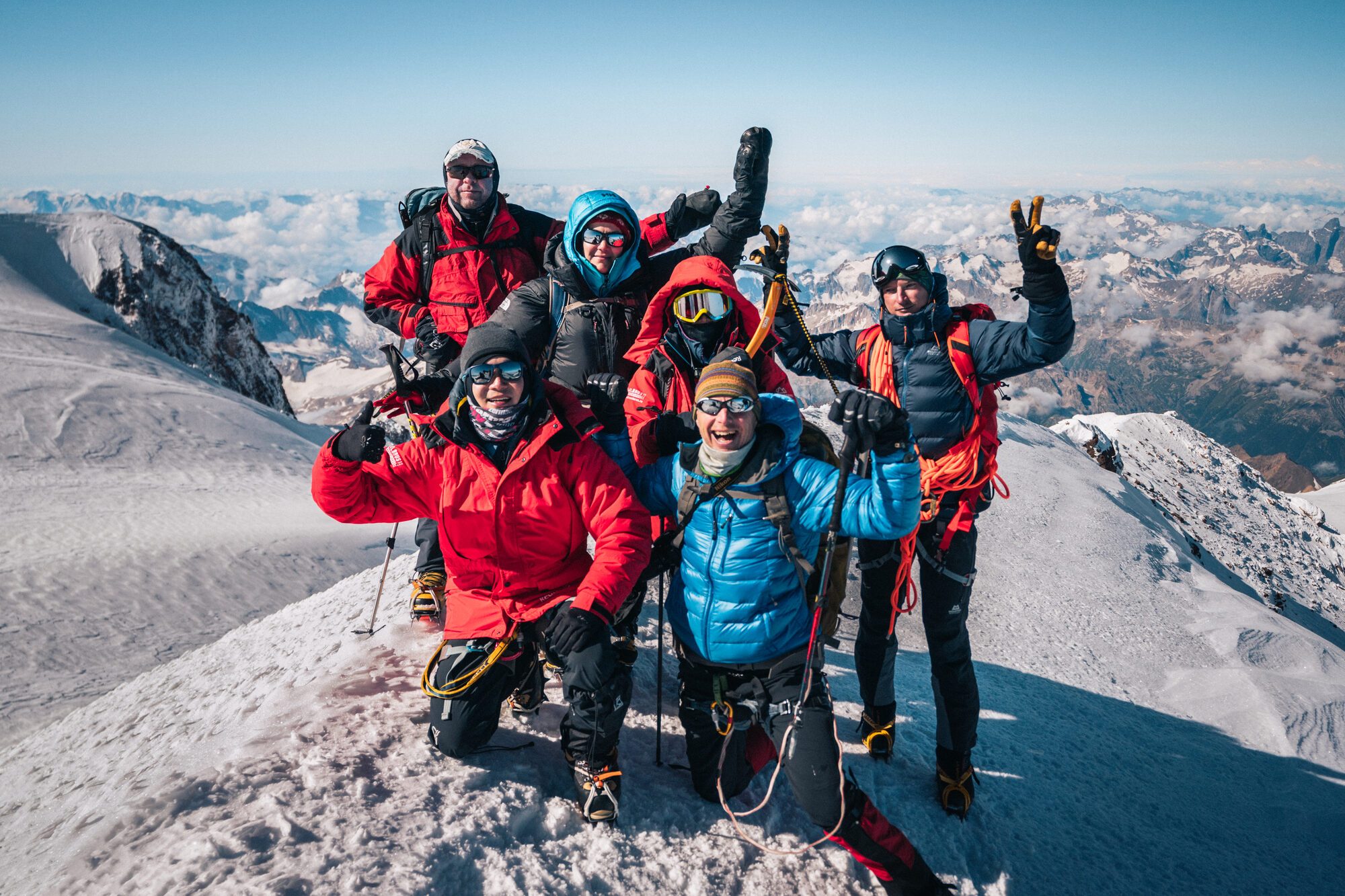
Grace taking a moment on the ridge. The clouds rolled below us like a slow ocean.The entire team on top. Every single person made it. That's what matters most.
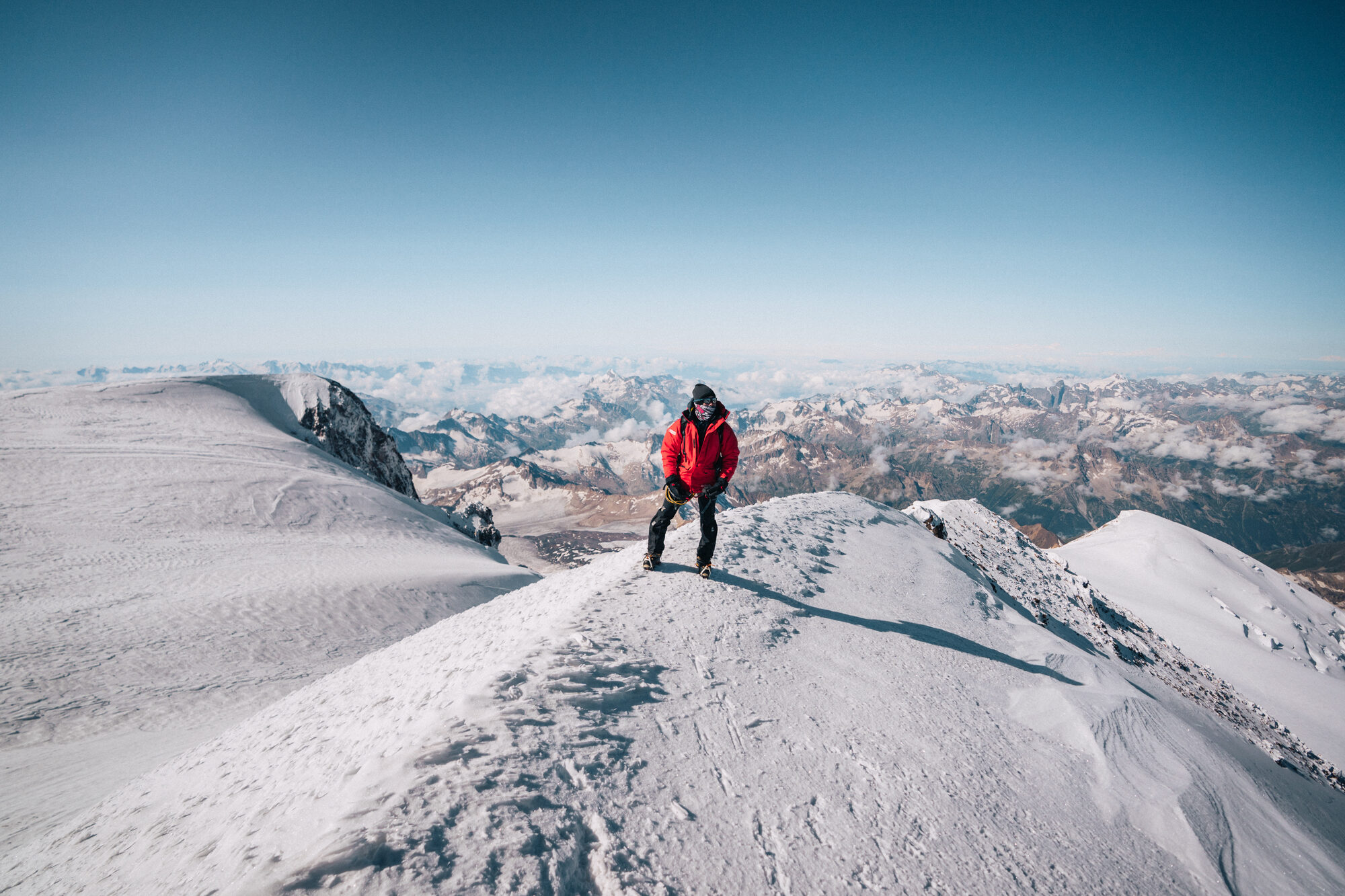
Standing on the summit ridge. The Caucasus in every direction, clouds below like a second floor of sky.Jason on the ridge. A view that made every cold, exhausting step worth it.
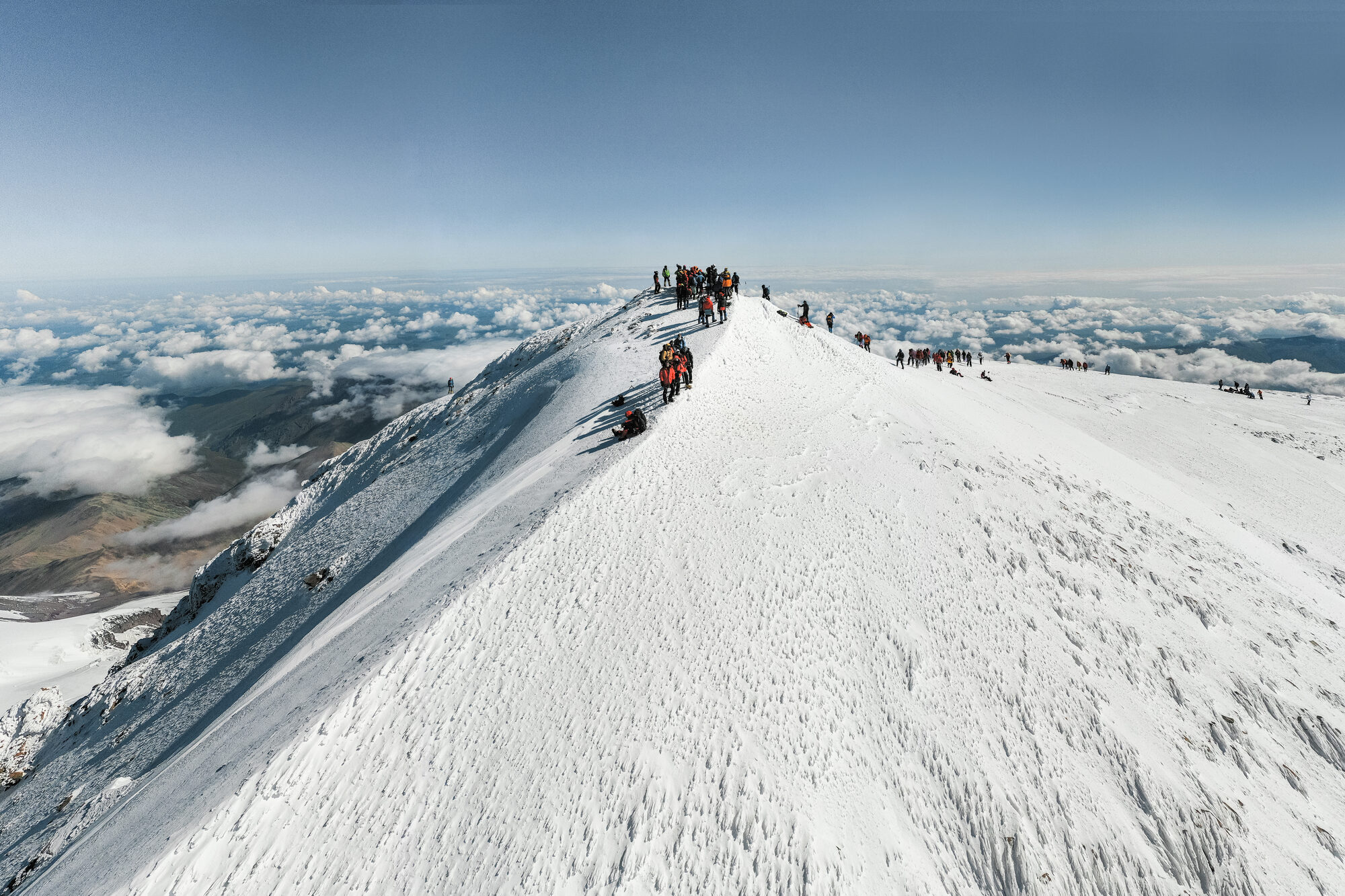
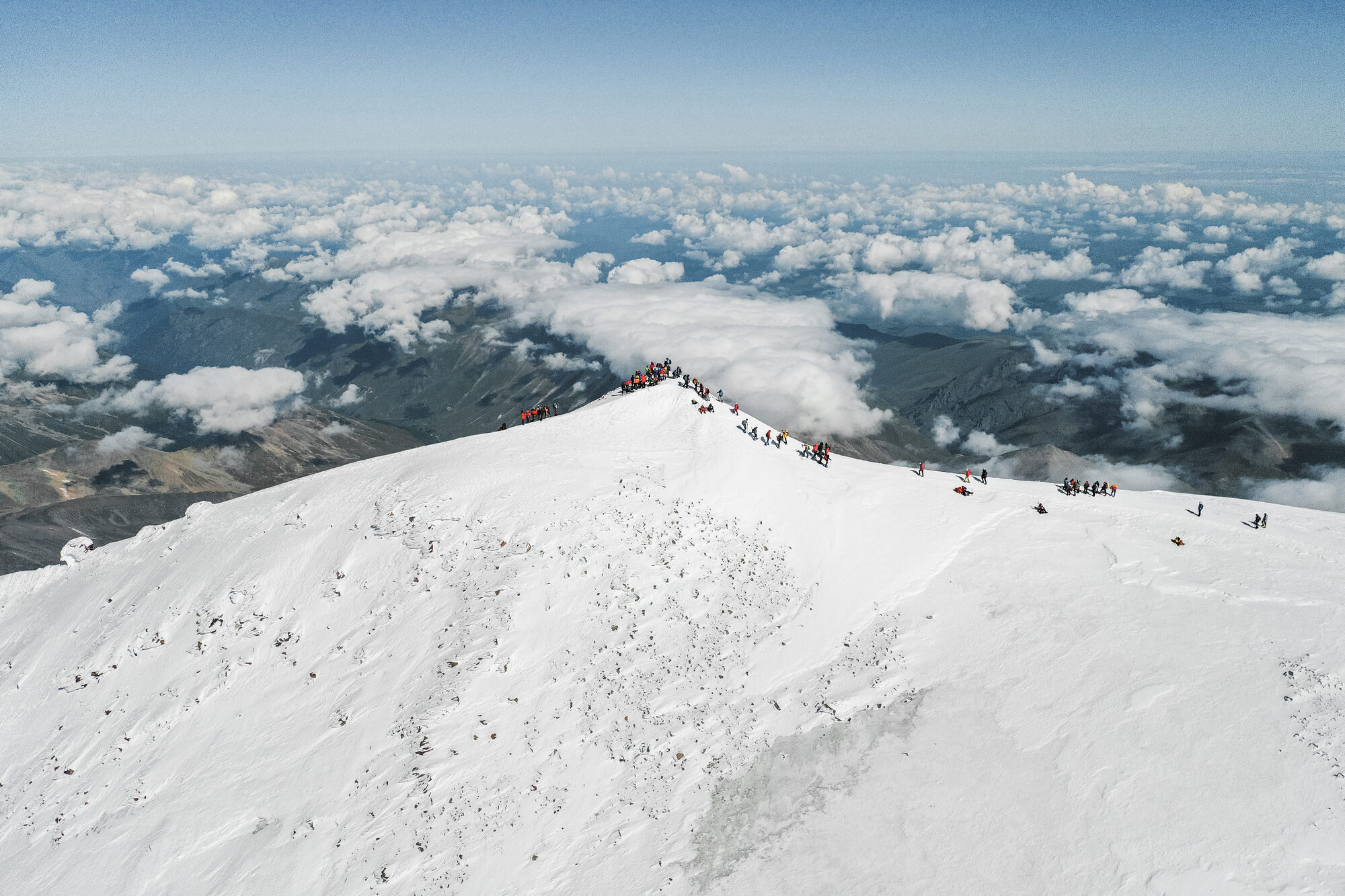
Drone shot from the summit ridge. The winds were just low enough to fly without getting blown away.The line strung out across the ridge from above. A perspective you only get with a drone and a calm minute.
A wave from the ridge on the way down. Hard to wipe the grin off anyone's face up here.
Group celebration at the top. Exhausted and elated.Arms raised on the roof of Europe. Thank you Mountain Professionals for getting us here safely.
Jason taking it all in. Three summits down, four to go.
Planning Your Elbrus Climb
TL;DR
South route via cable car, early August (peak season). Budget 7–10 days total including acclimatization. You'll need crampons and ice axe skills — your guide teaches this. Fly into Mineralnye Vody, drive to Terskol. Summit push starts around 3 AM. Prior altitude experience strongly recommended. We used Mountain Professionals — highly recommended.
When to Go
The climbing season runs from mid-June through early September. July and August offer the best weather windows with longer days and more stable conditions. We climbed in early August and had excellent summit-day weather.
Getting There
Fly into Moscow, then connect to Mineralnye Vody (MRV). From there it's about a three-hour drive south to Terskol in the Baksan Valley. Most guide companies arrange the transfer.
The Route
The standard south route uses the cable car system to gain altitude, then base camps in shipping containers around 3,800 meters. From there, summit day is a long push starting around 3 AM. The route crosses snow and ice and requires crampons and an ice axe.
Fitness and Skills
Elbrus is more technical than Kilimanjaro. You'll need basic crampon and ice axe skills, which most guide companies teach during the acclimatization days. Prior high-altitude experience is strongly recommended. Cardio fitness matters more than strength.
Acclimatization
Plan for at least two to three days of acclimatization hikes before your summit attempt. Cheget Peak and Pastukhov Rocks are the standard stops. Go high, sleep low. Don't skip this part.
Guide Company
We climbed with Mountain Professionals and can't recommend them enough. Experienced, safety-focused, and genuinely invested in getting the whole team to the top. A good guide makes all the difference on a mountain like this.