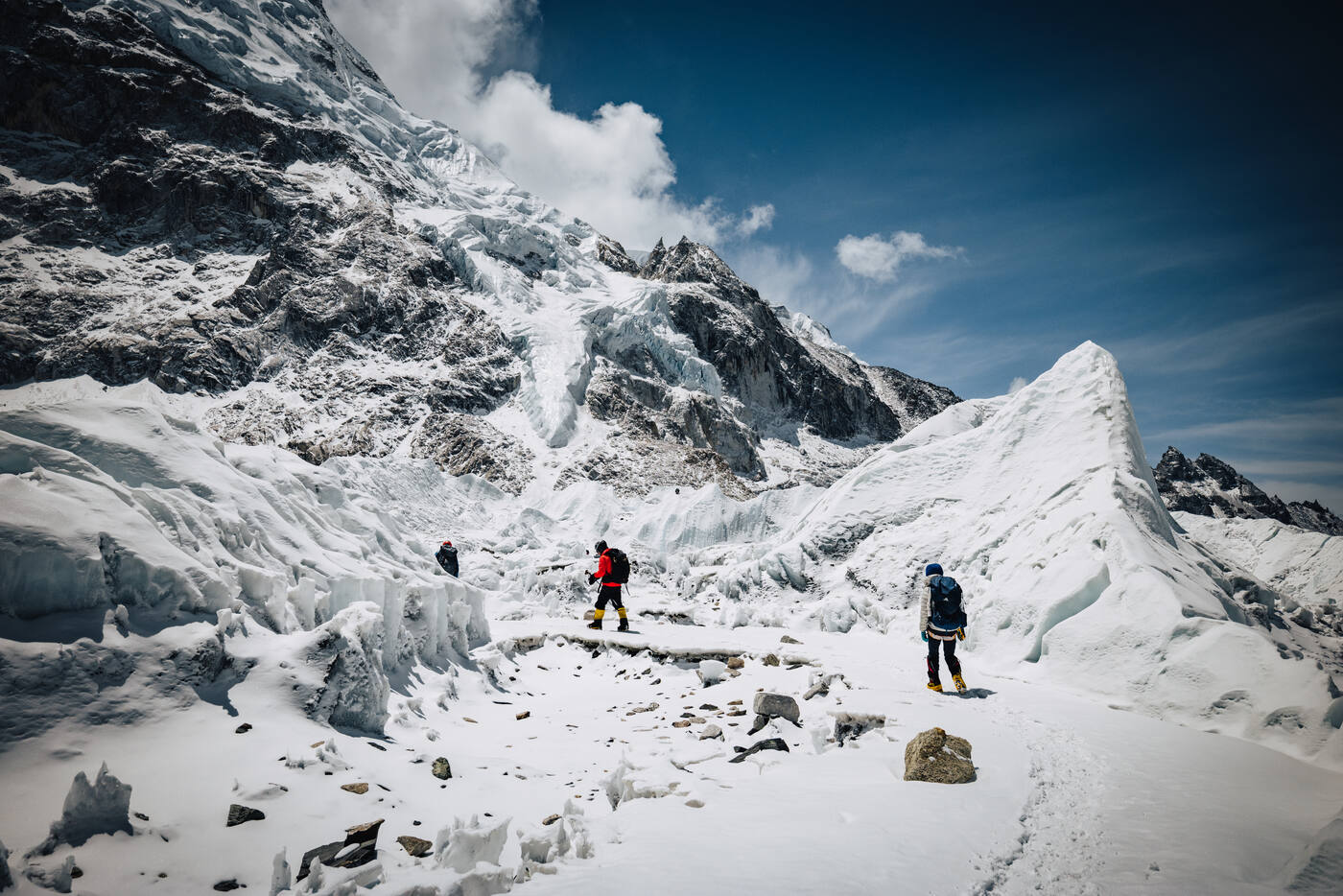
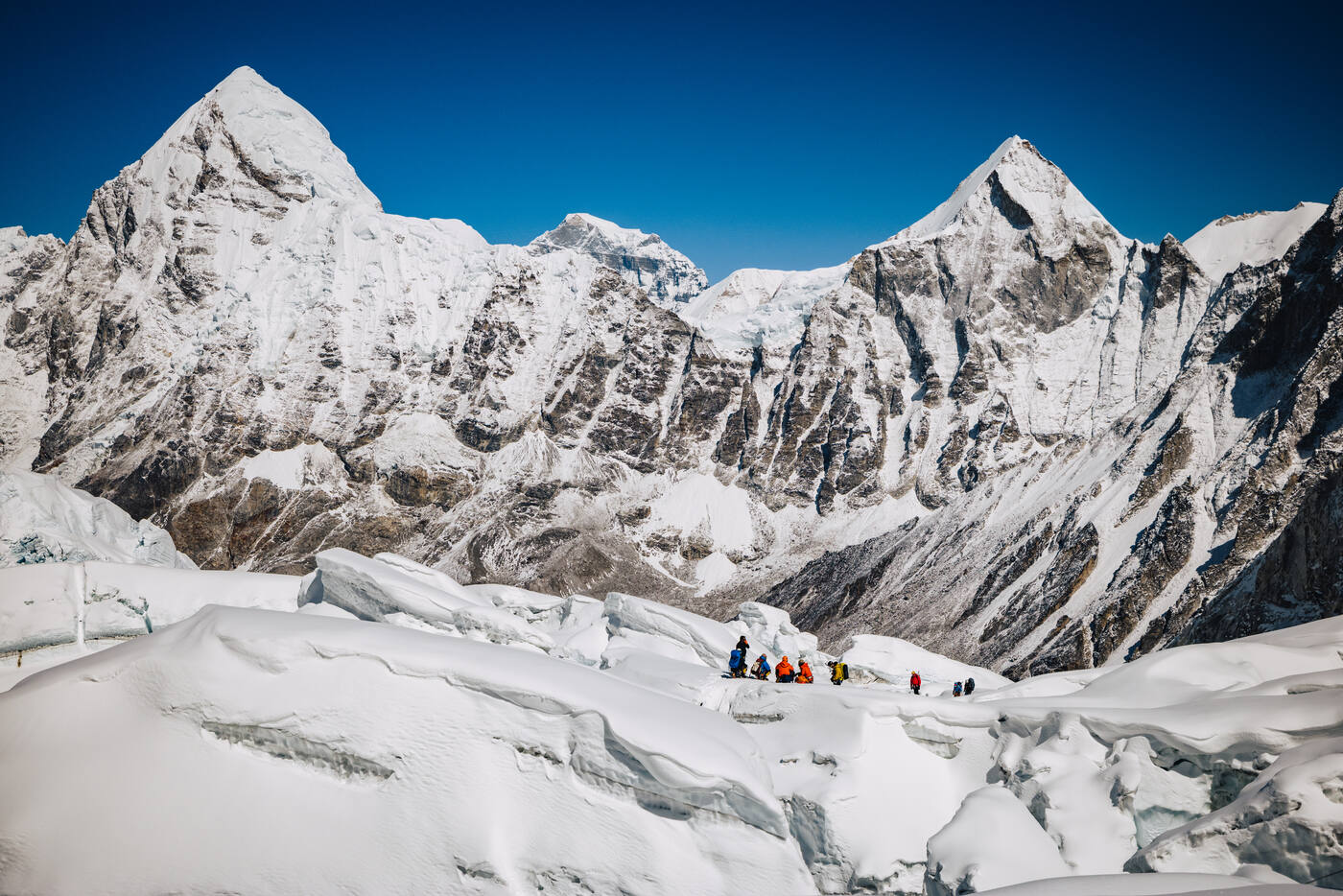
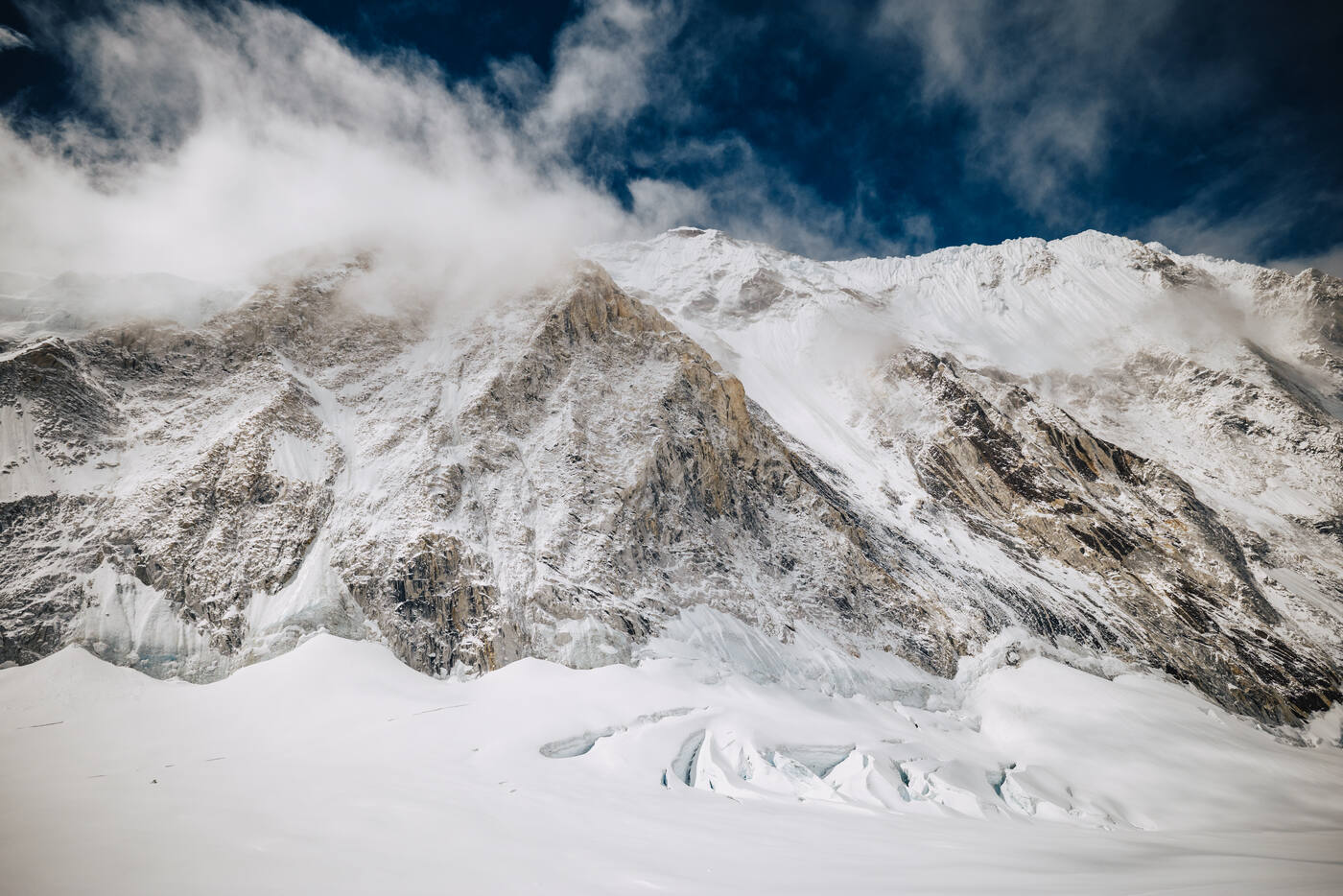
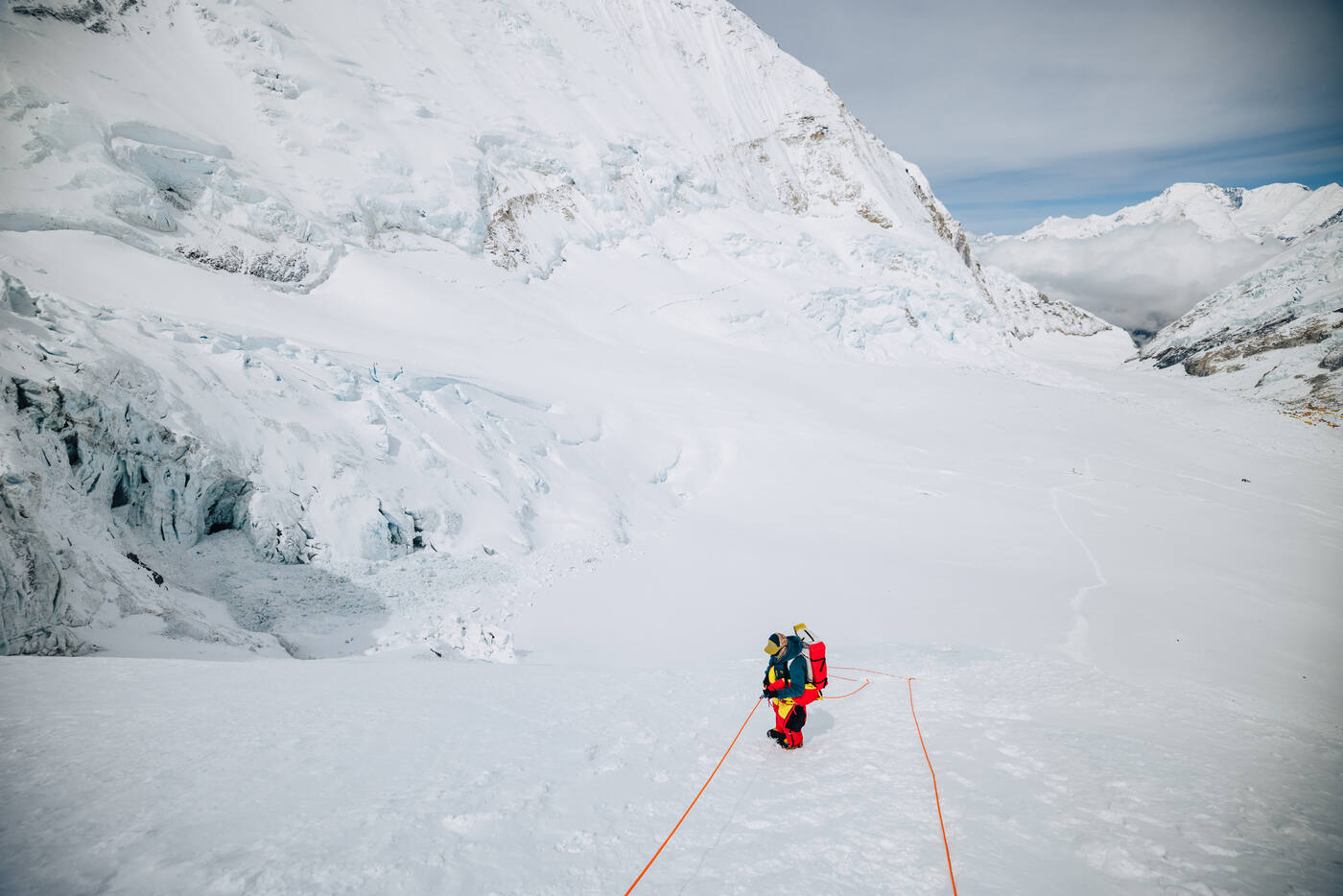
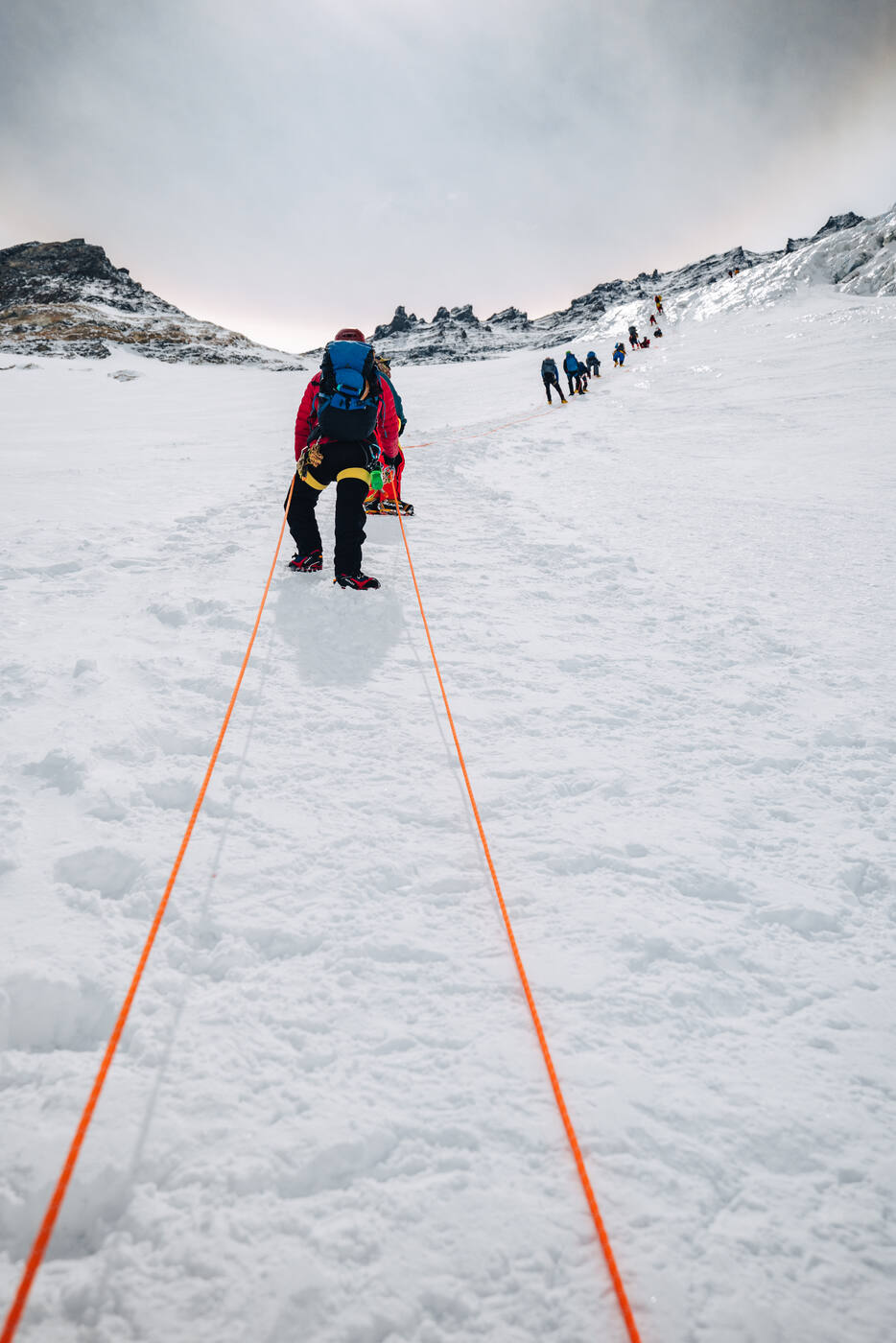
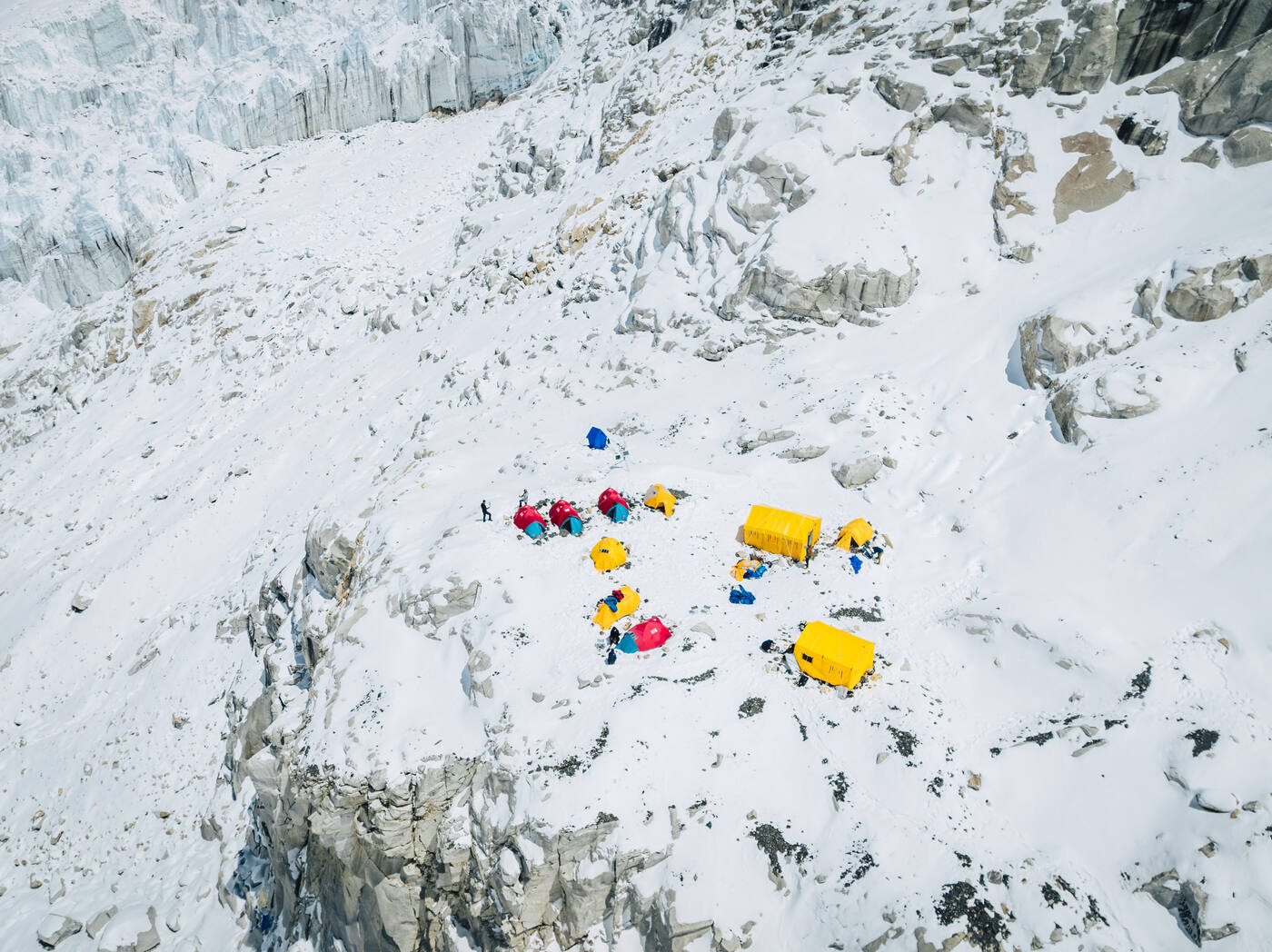
45 days in the Khumbu Valley. A first rotation summiting Lobuche East, a second through the Khumbu Icefall, and a 20-hour summit push to 8,849 meters. The Seven Summits, complete.
Everest was always the plan. Six mountains across six continents over seven years, each one building toward this moment. Kilimanjaro taught us what altitude feels like. Aconcagua showed us real expedition life. Elbrus gave us our first taste of technical climbing. Vinson proved we could handle isolation. Carstensz Pyramid tested our nerves on exposed rock. Denali put us through brutal cold and multi-week endurance. Every one of those summits was preparation for this: the tallest mountain on Earth.
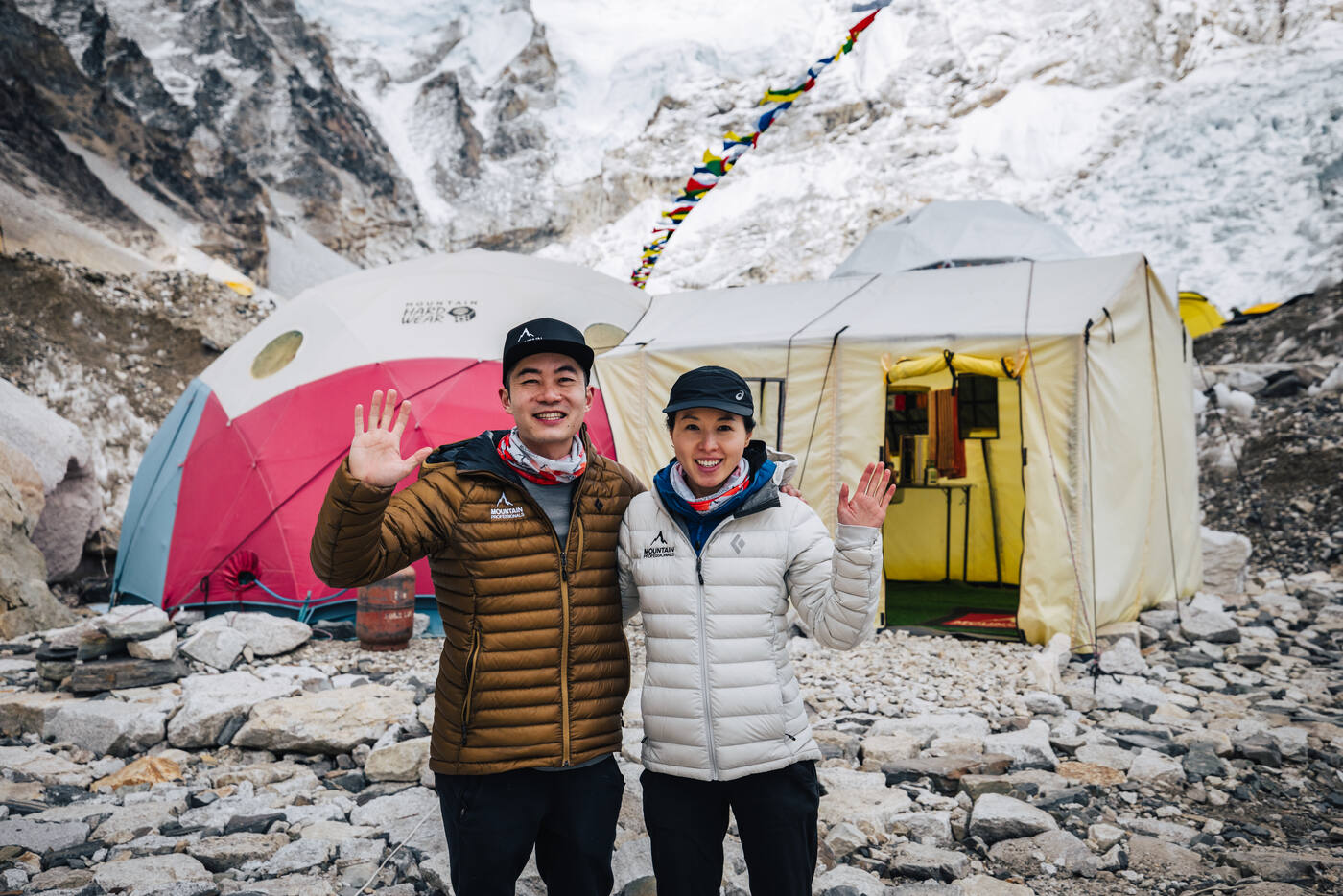
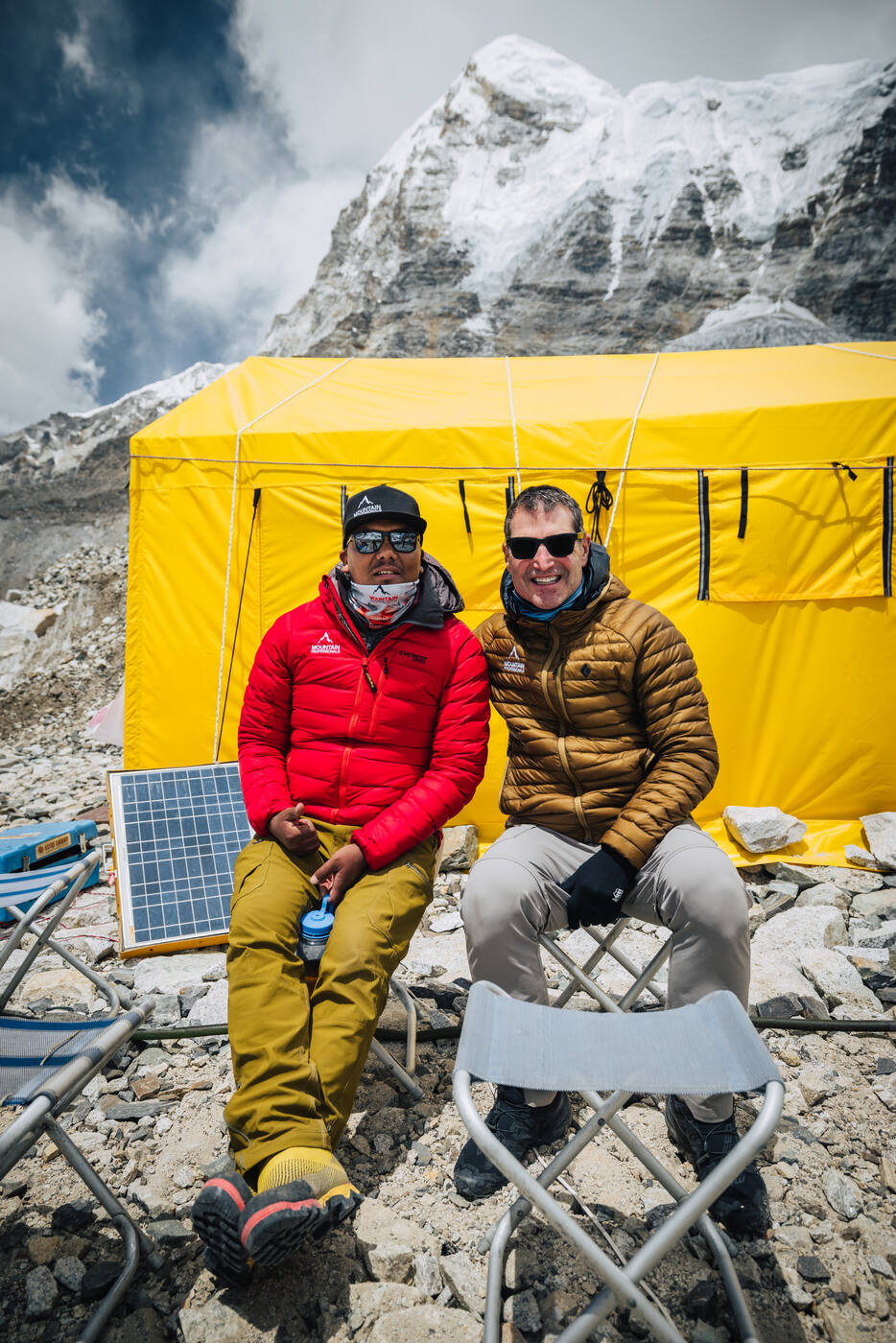
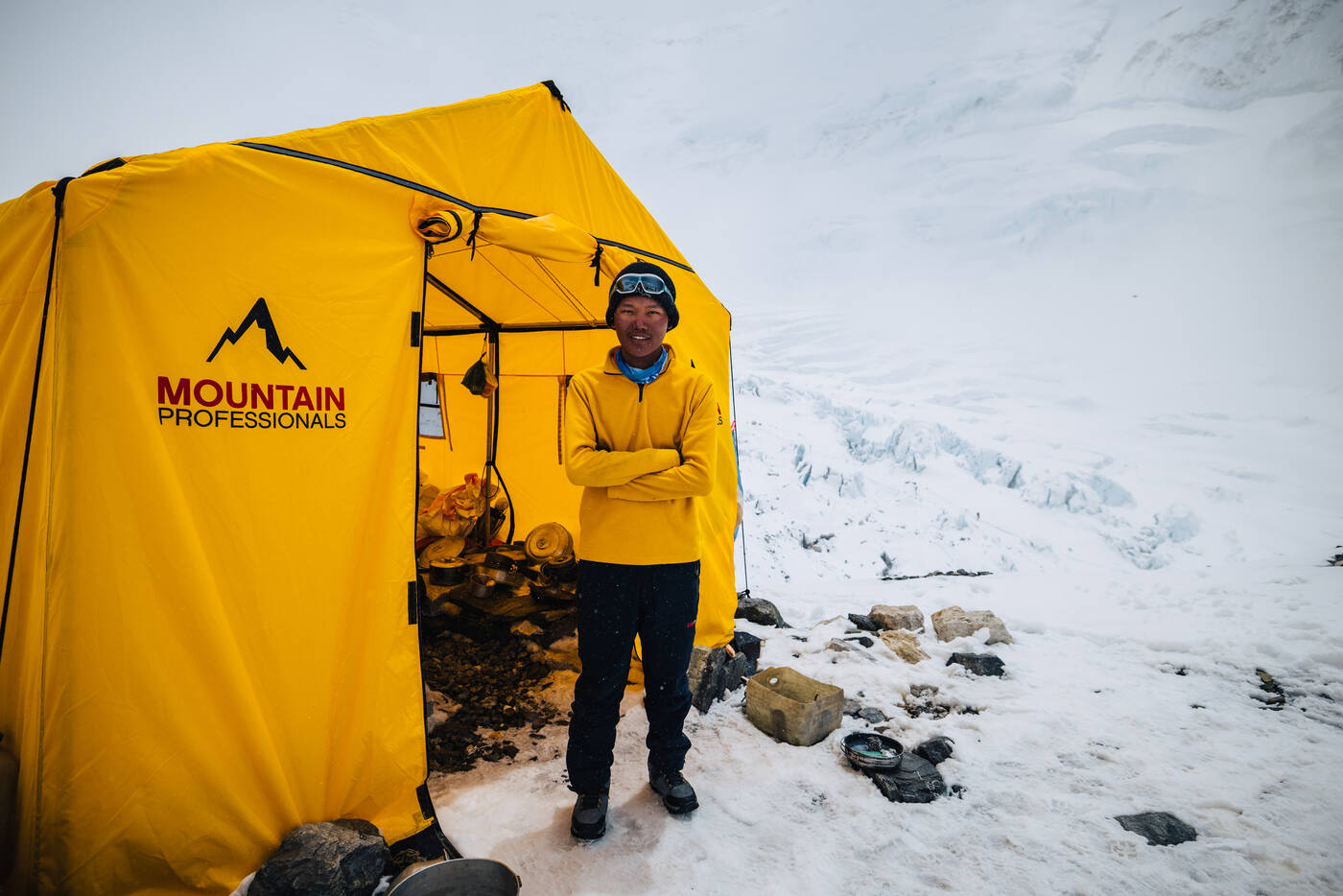
Mount Everest sits at 8,849 meters in the Mahalangur Himal sub-range of the Himalayas, straddling the border of Nepal and Tibet. We would attempt the South Col route from Nepal, the same route Hillary and Tenzing used in 1953. Our guide company was Mountain Professionals, led by Ryan Waters. This was our fourth expedition with Ryan. He already knew our pace, our strengths, and our limits. That familiarity mattered here more than anywhere else.
The plan was simple in concept and enormous in execution: ten days of trekking to Base Camp, two acclimatization rotations up the mountain, then a wait for the weather window before the final summit push. 45 days total. 468 foreign climbing permits had been issued for the season. Base Camp would be a small city on ice, and we would call it home for over a month.
Looking for the trek to Base Camp? Read our full story of Days 1 through 10 in the Everest Base Camp Trek blog post.
The Climb: 45 Days on Everest
Elevation profile showing the journey from Lukla (2,850m) to the summit (8,849m) and back
Days 10–11: Arriving at Everest Base Camp
April 19–20, 2025 · Gorak Shep → Everest Base Camp · 5,364 m / 17,598 ft
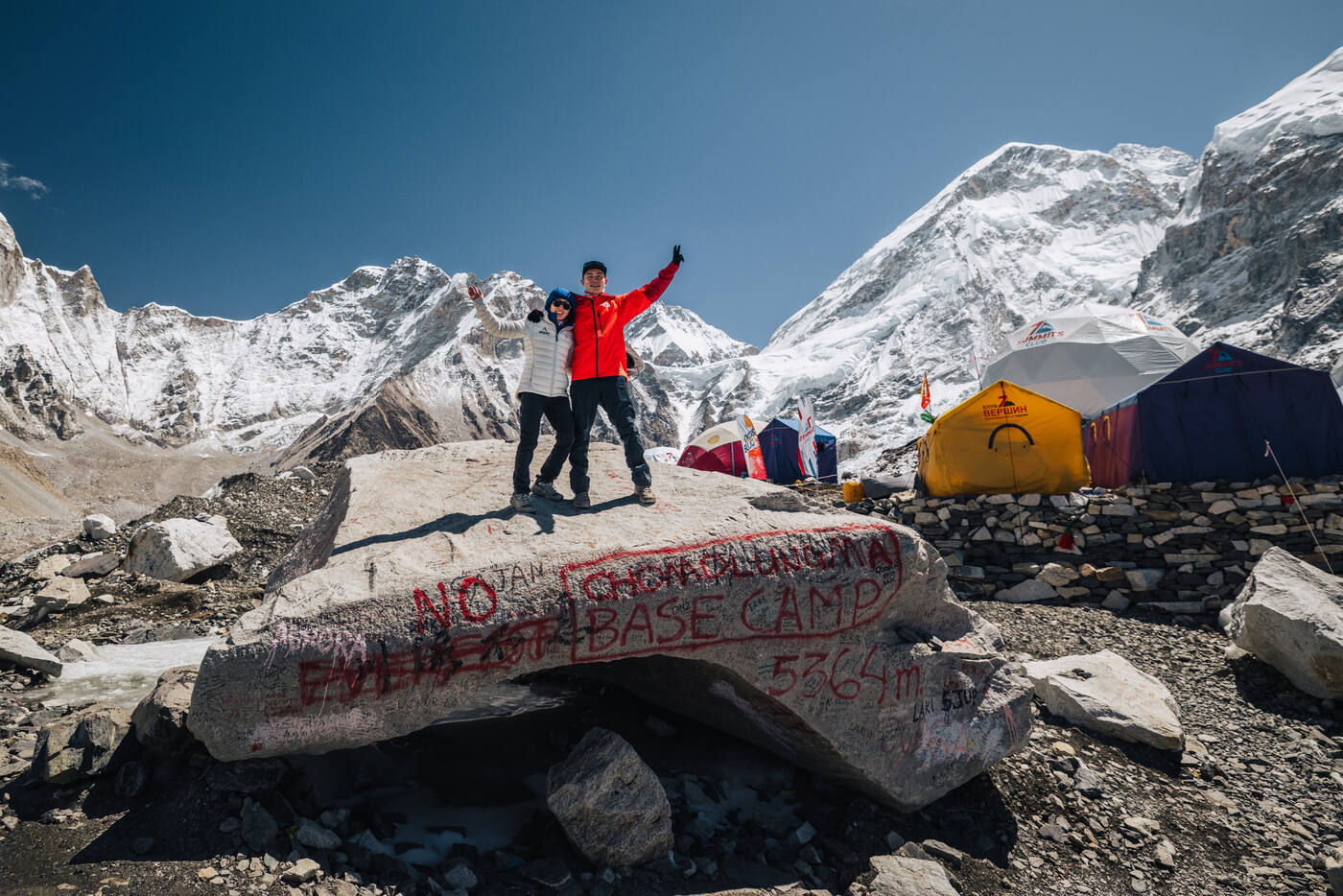
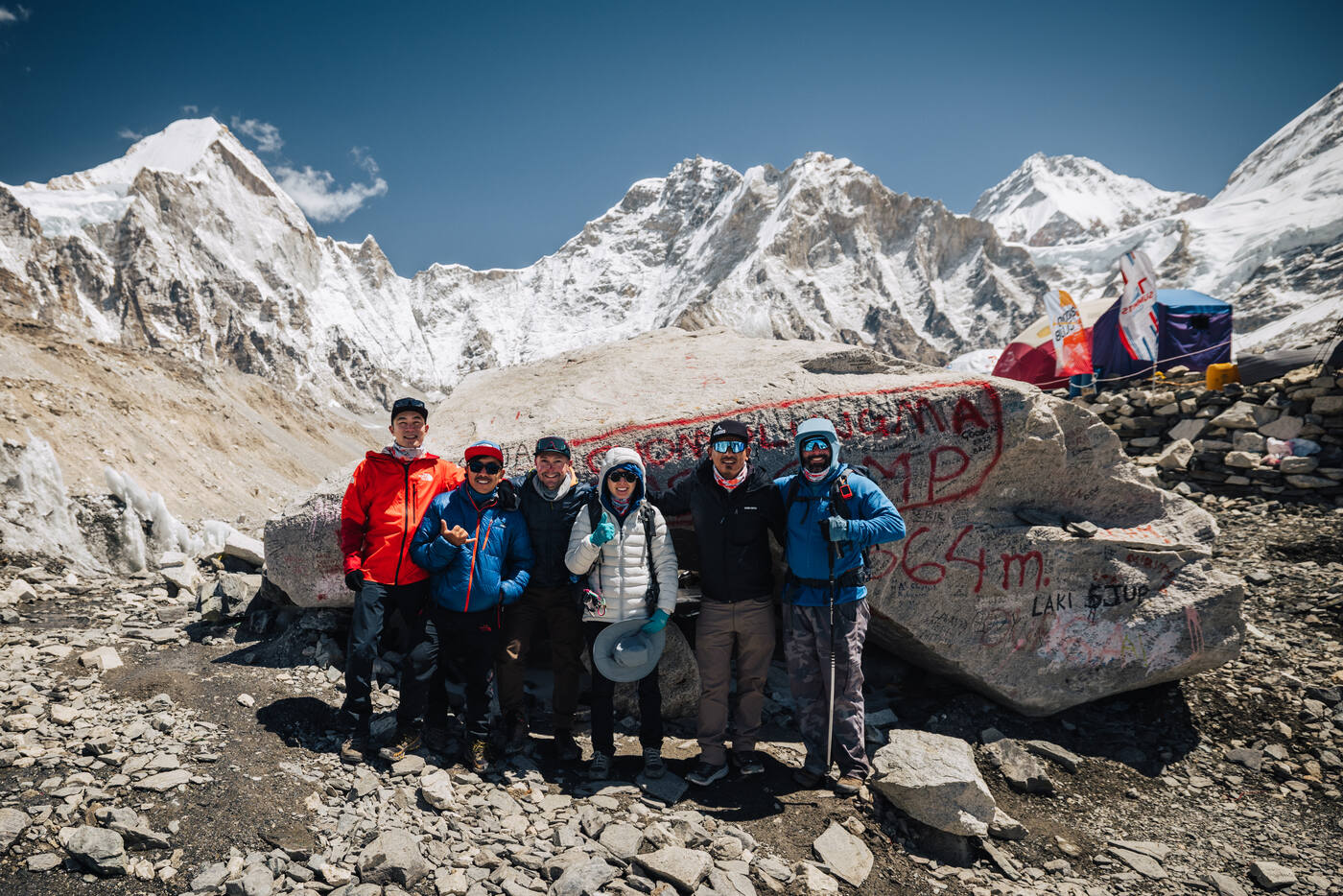
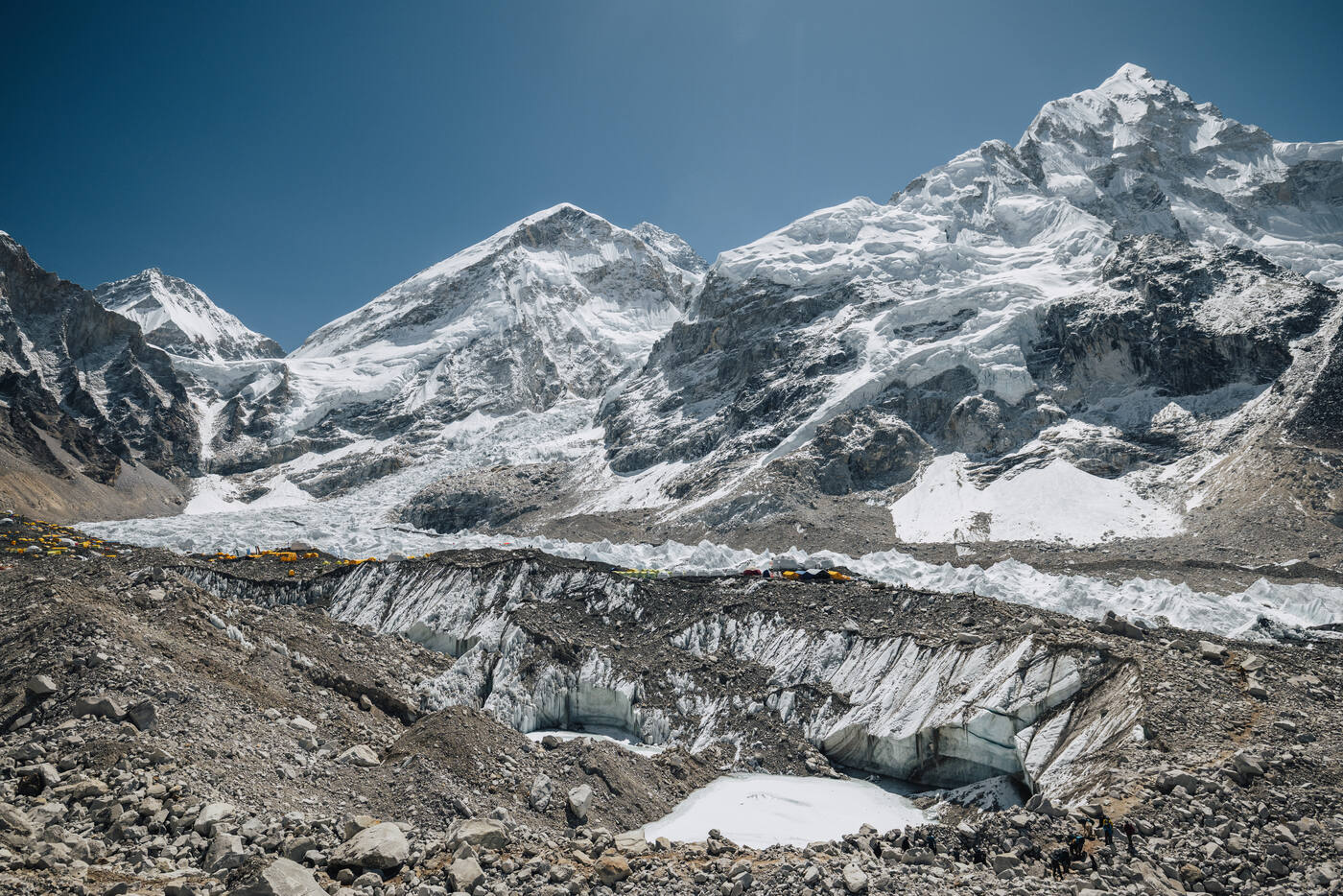
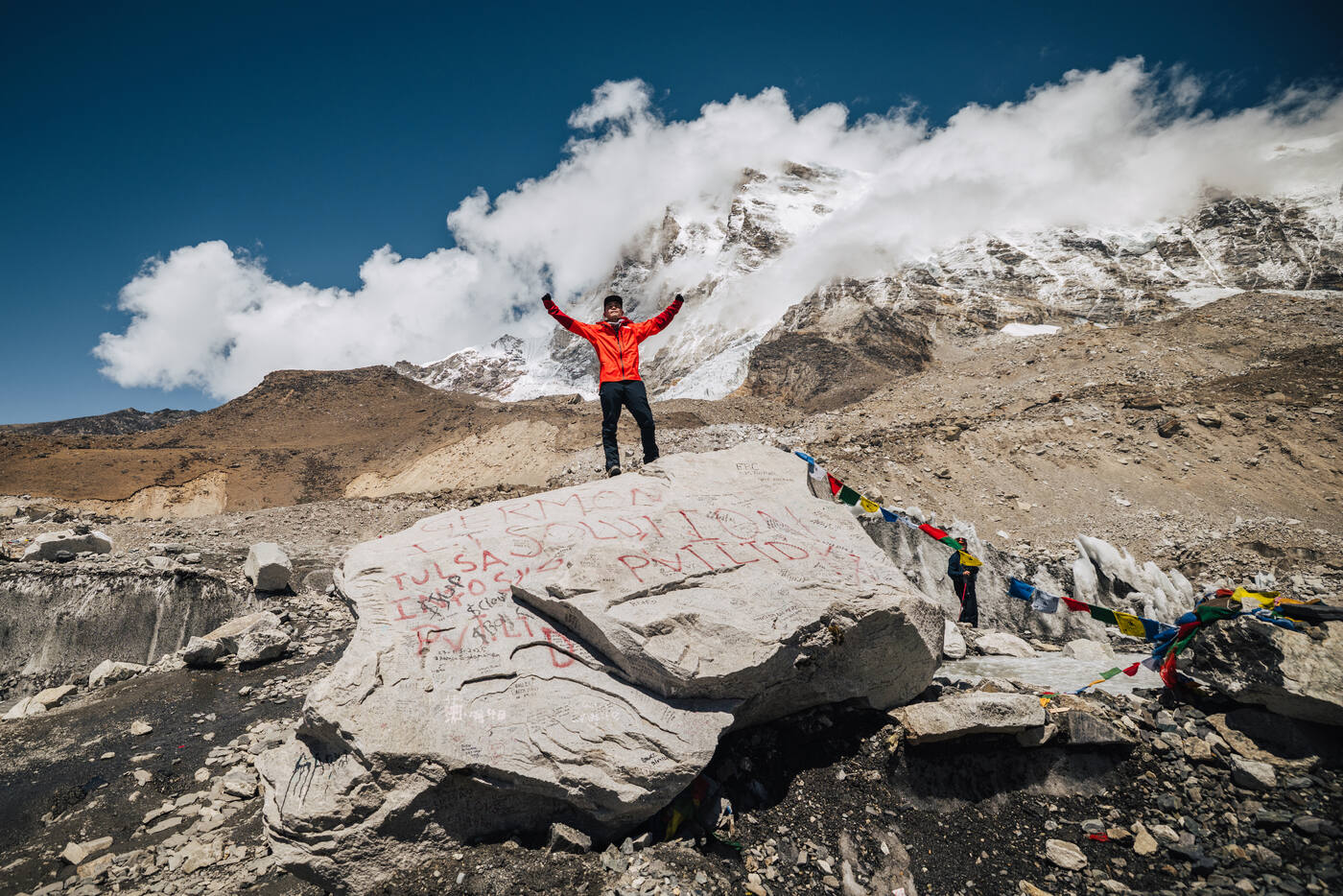
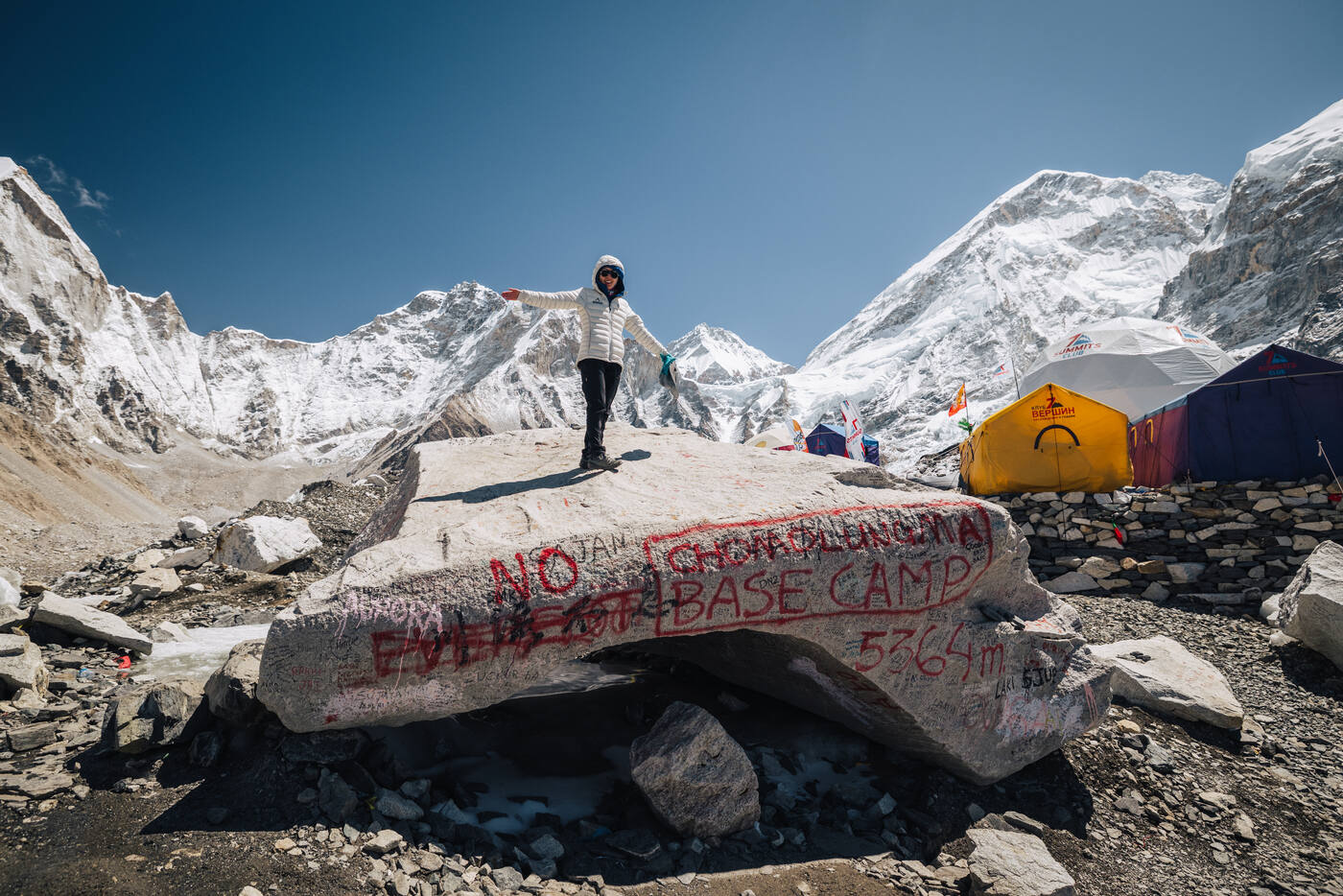
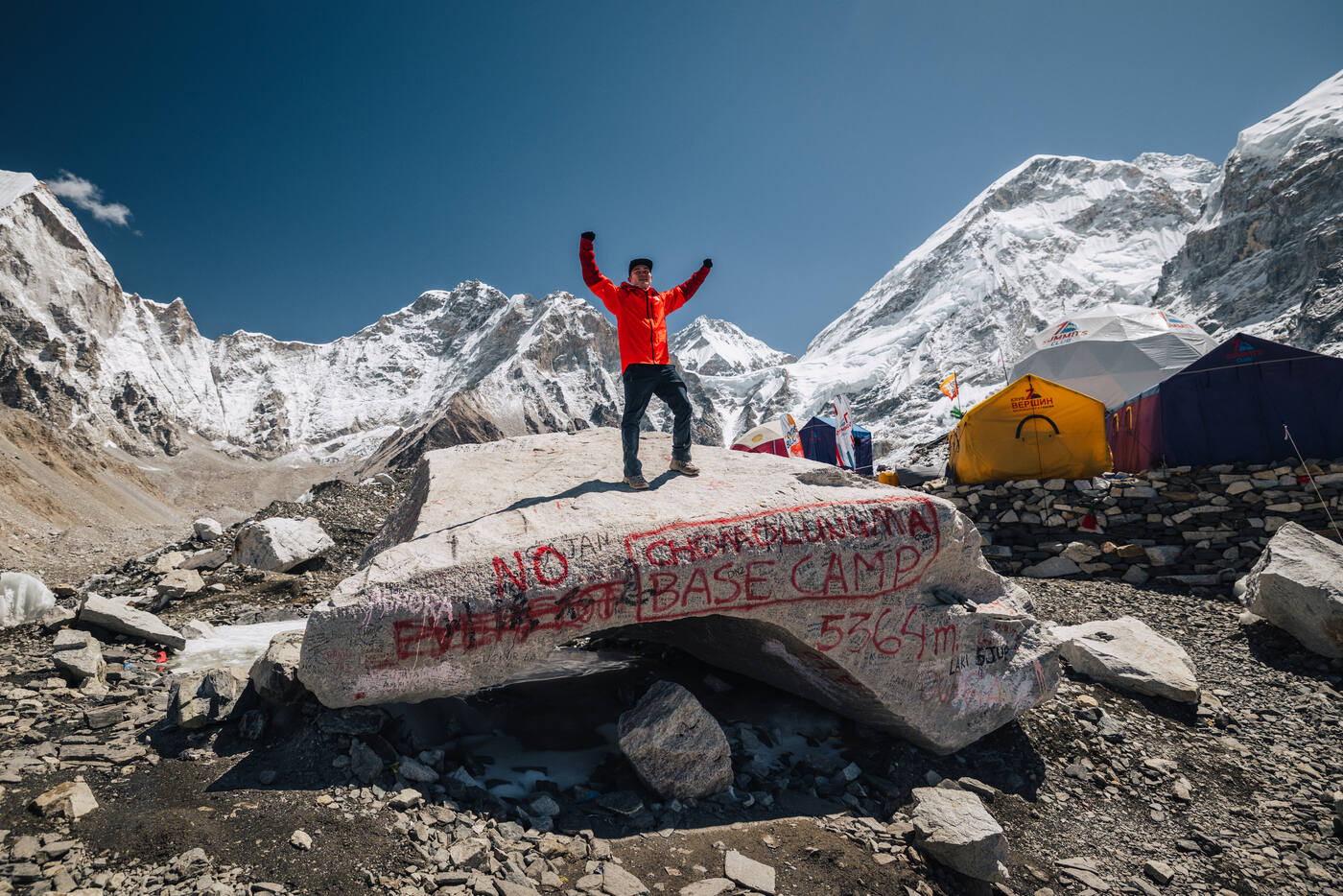
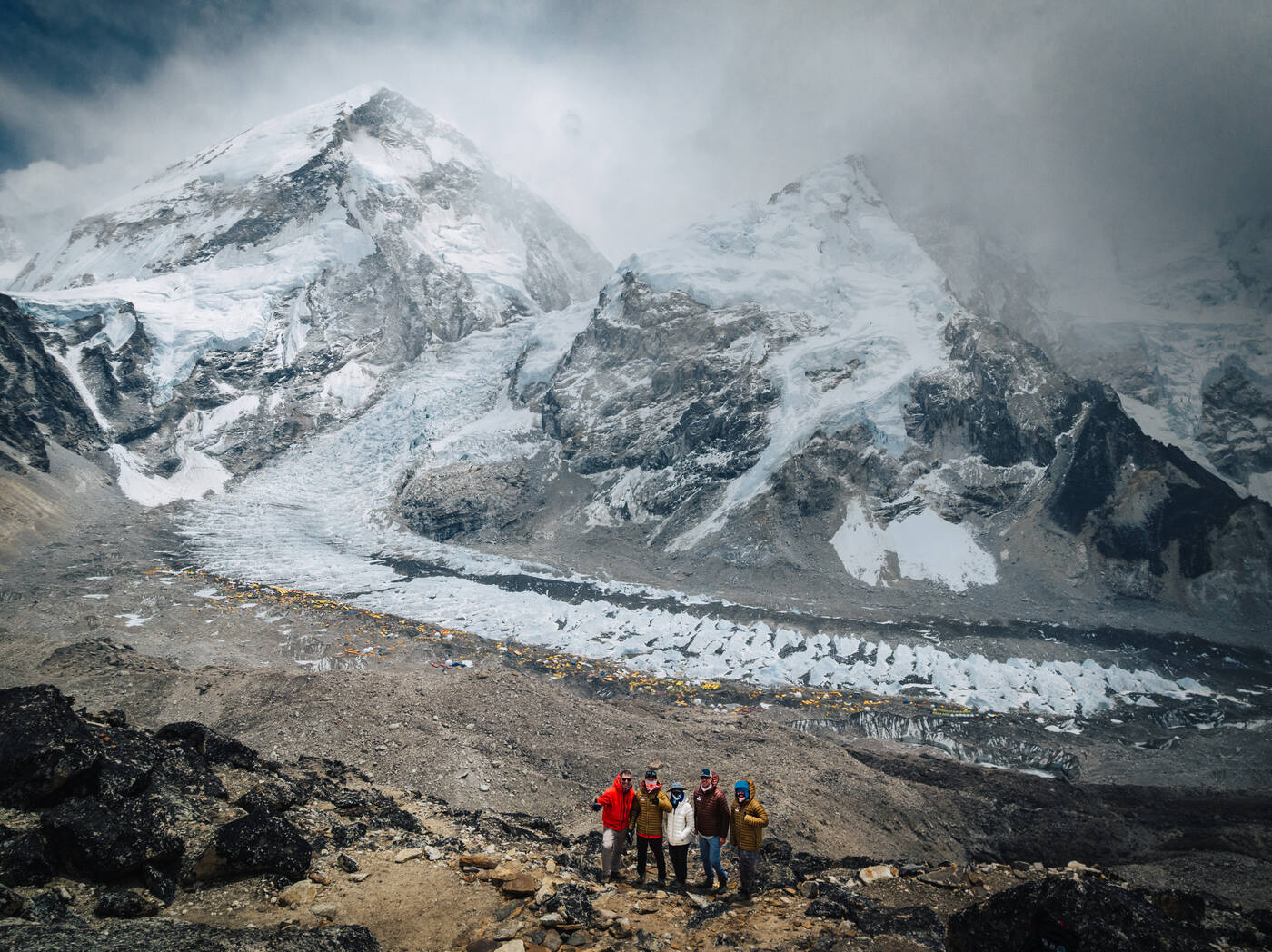
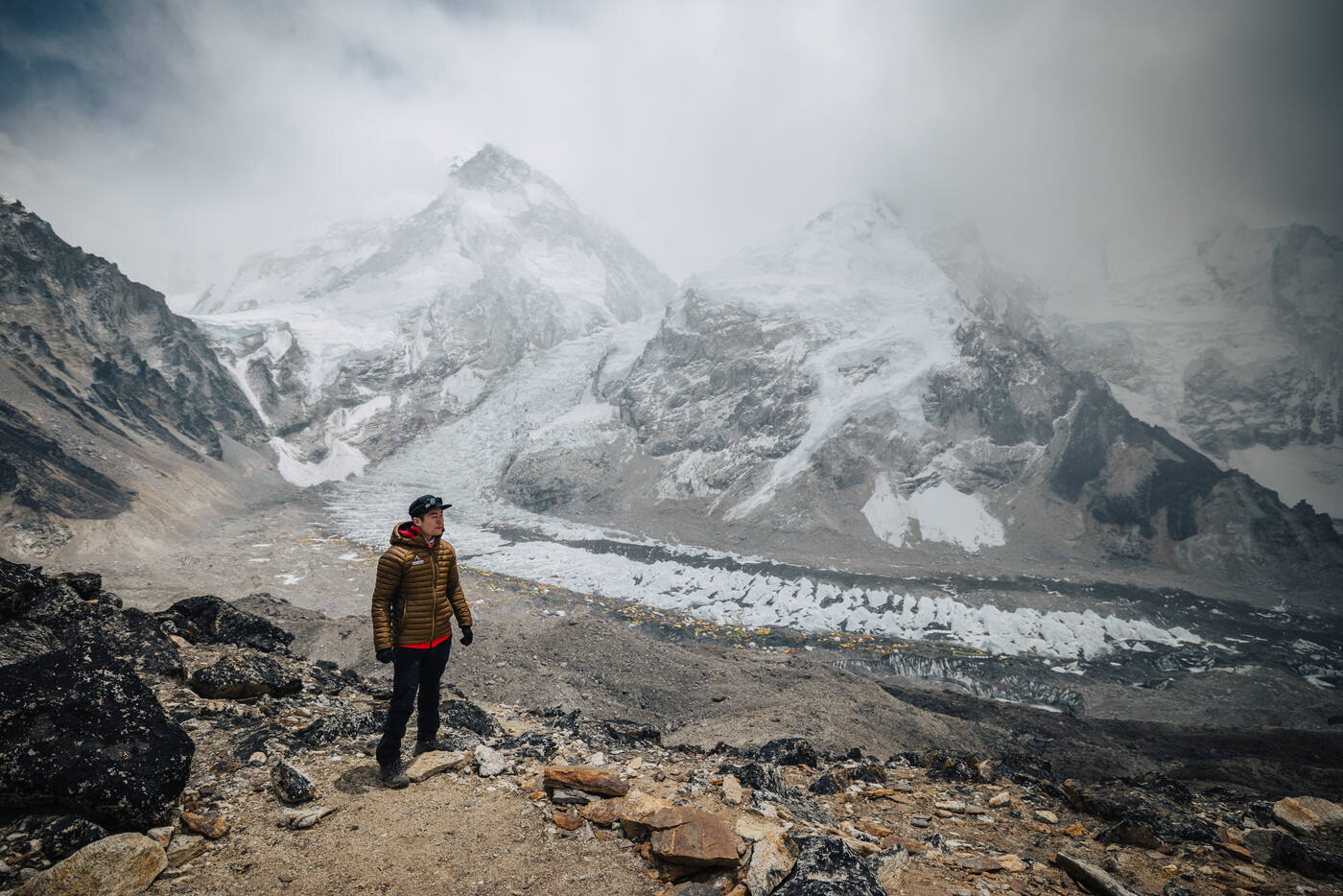
A short but momentous walk from Gorak Shep to Everest Base Camp. We paused at Trekker's Rock, the traditional photo spot that marks the entry to EBC. For most people, this rock represents the culmination of their journey. For us, it was where everything changed. What was once a lifelong dream in 2018 is now our launching point.
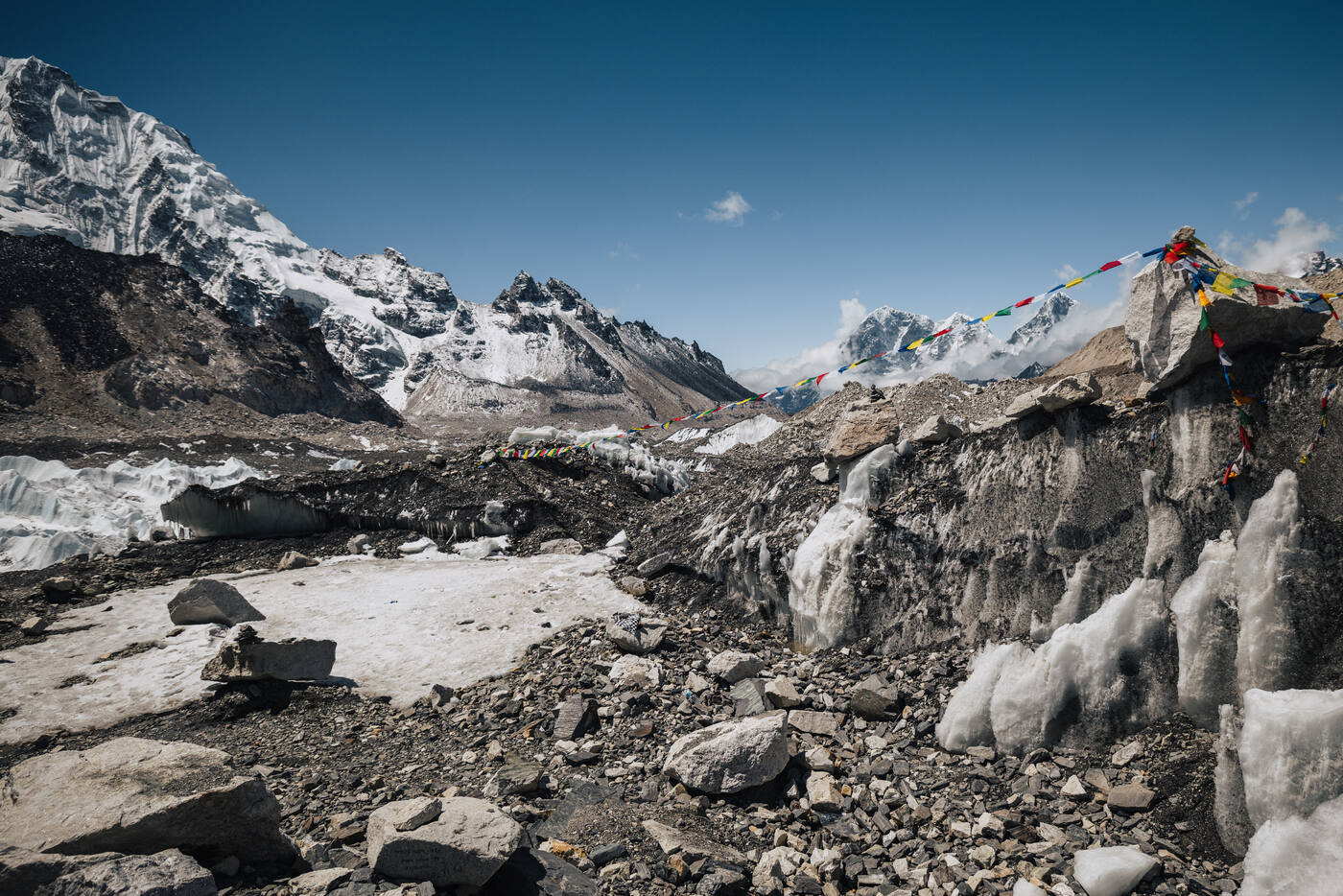
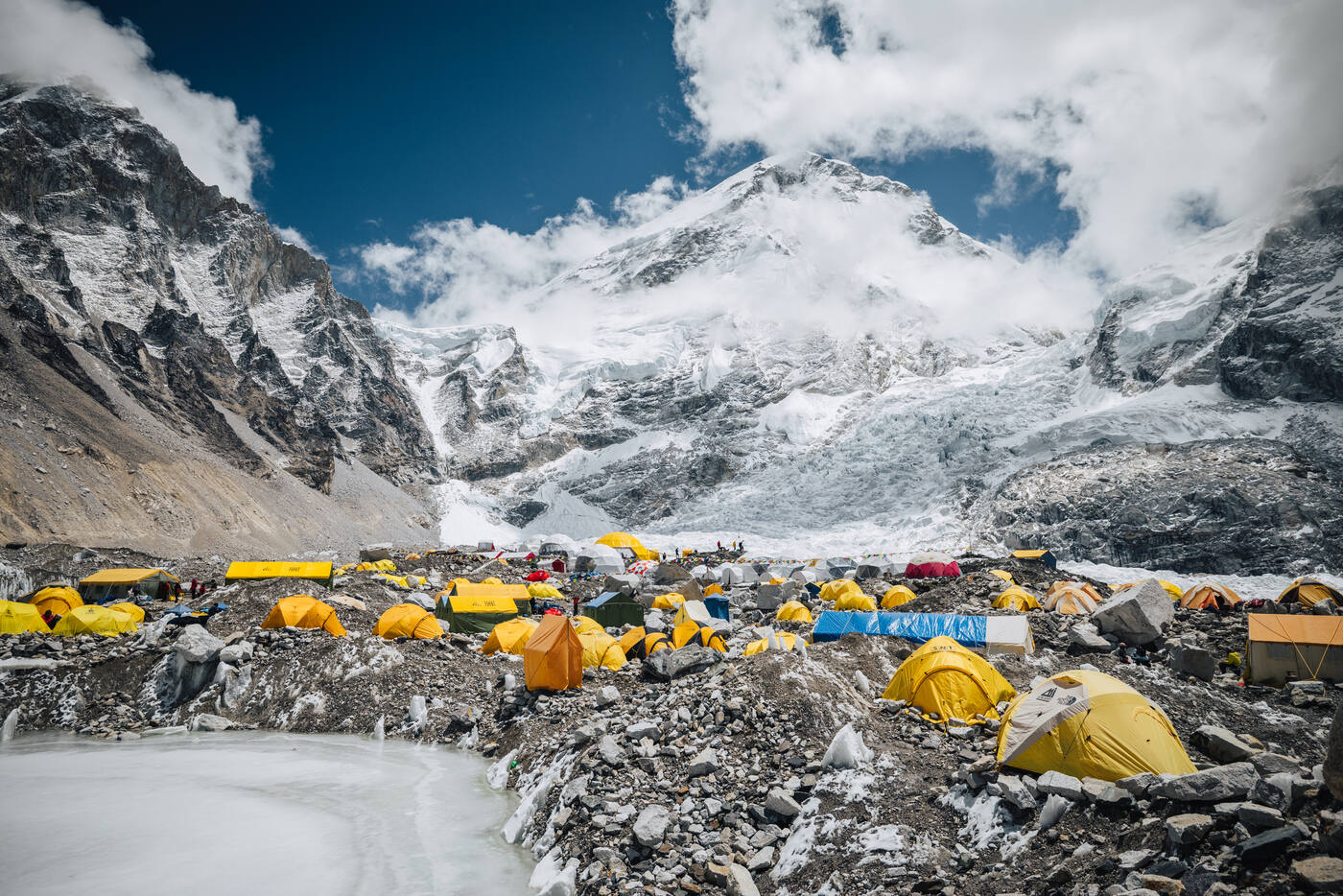
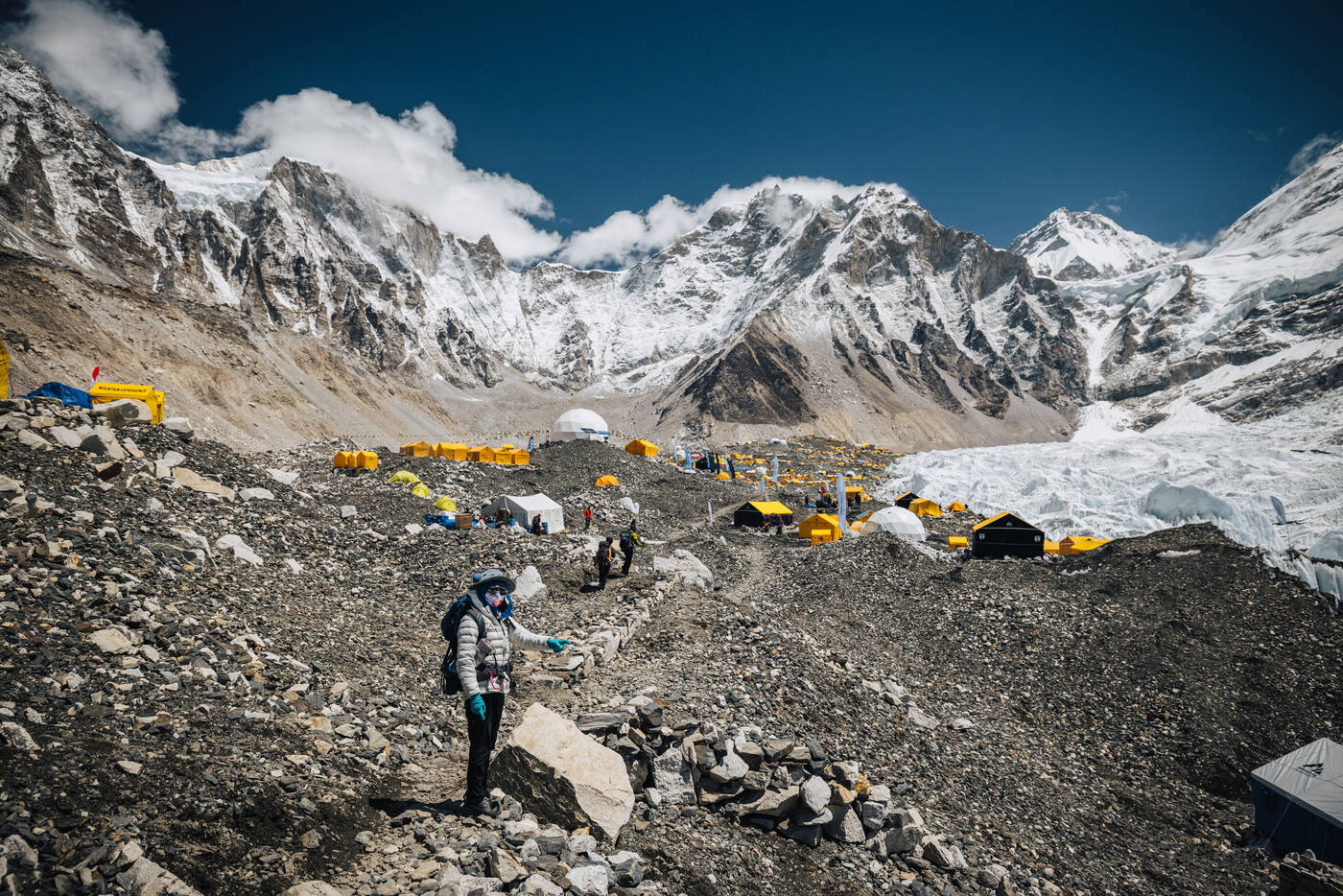
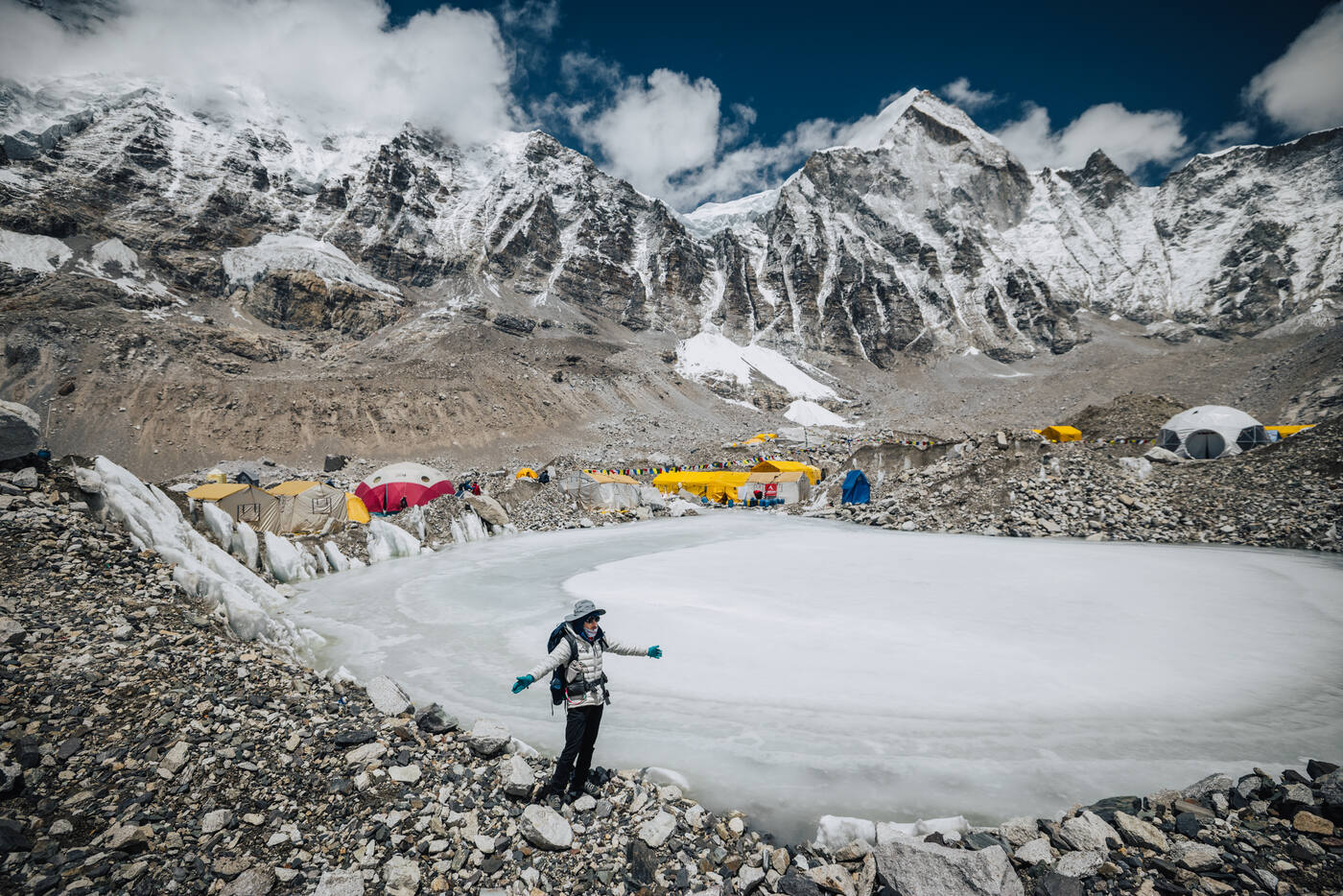
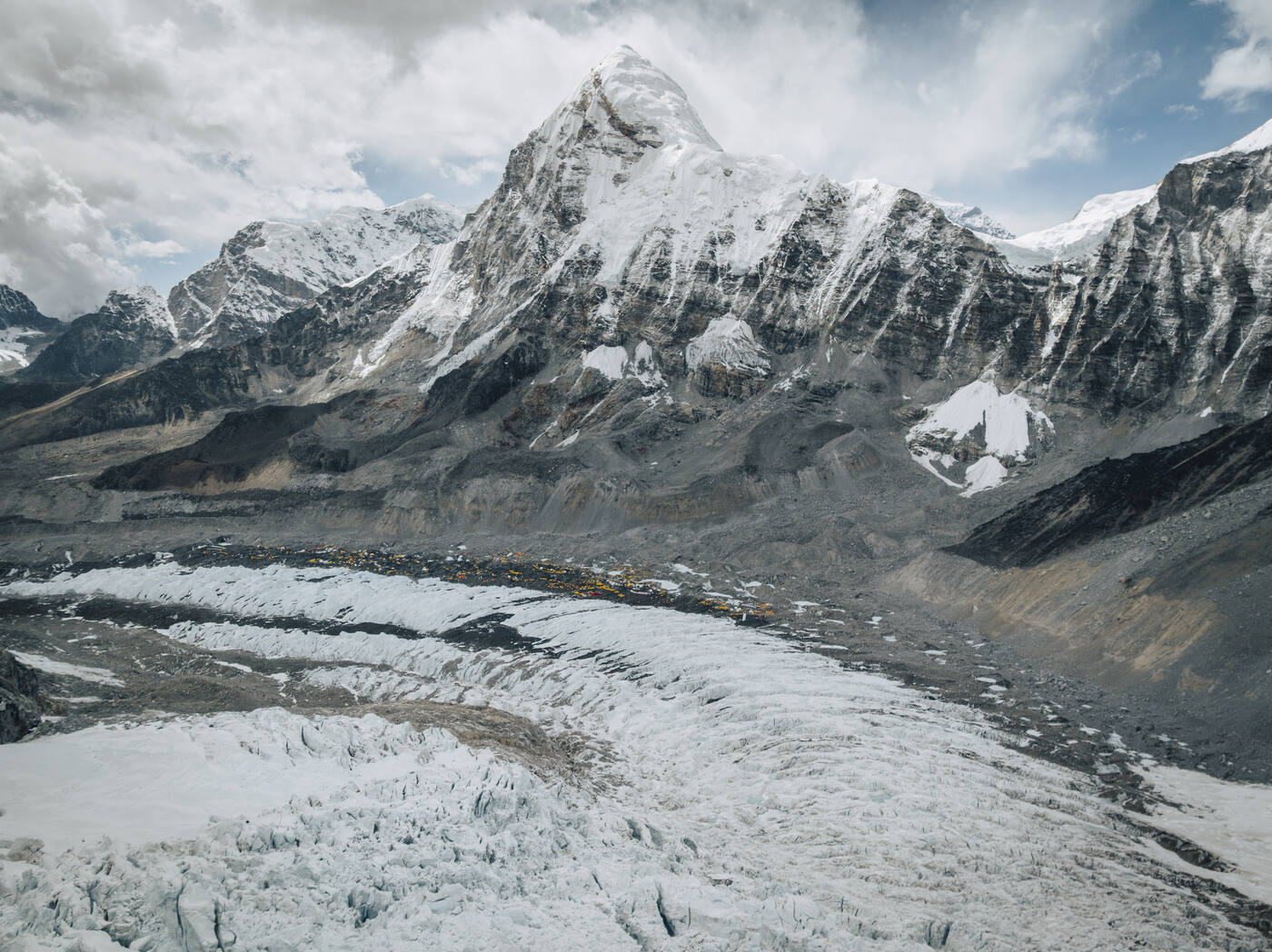
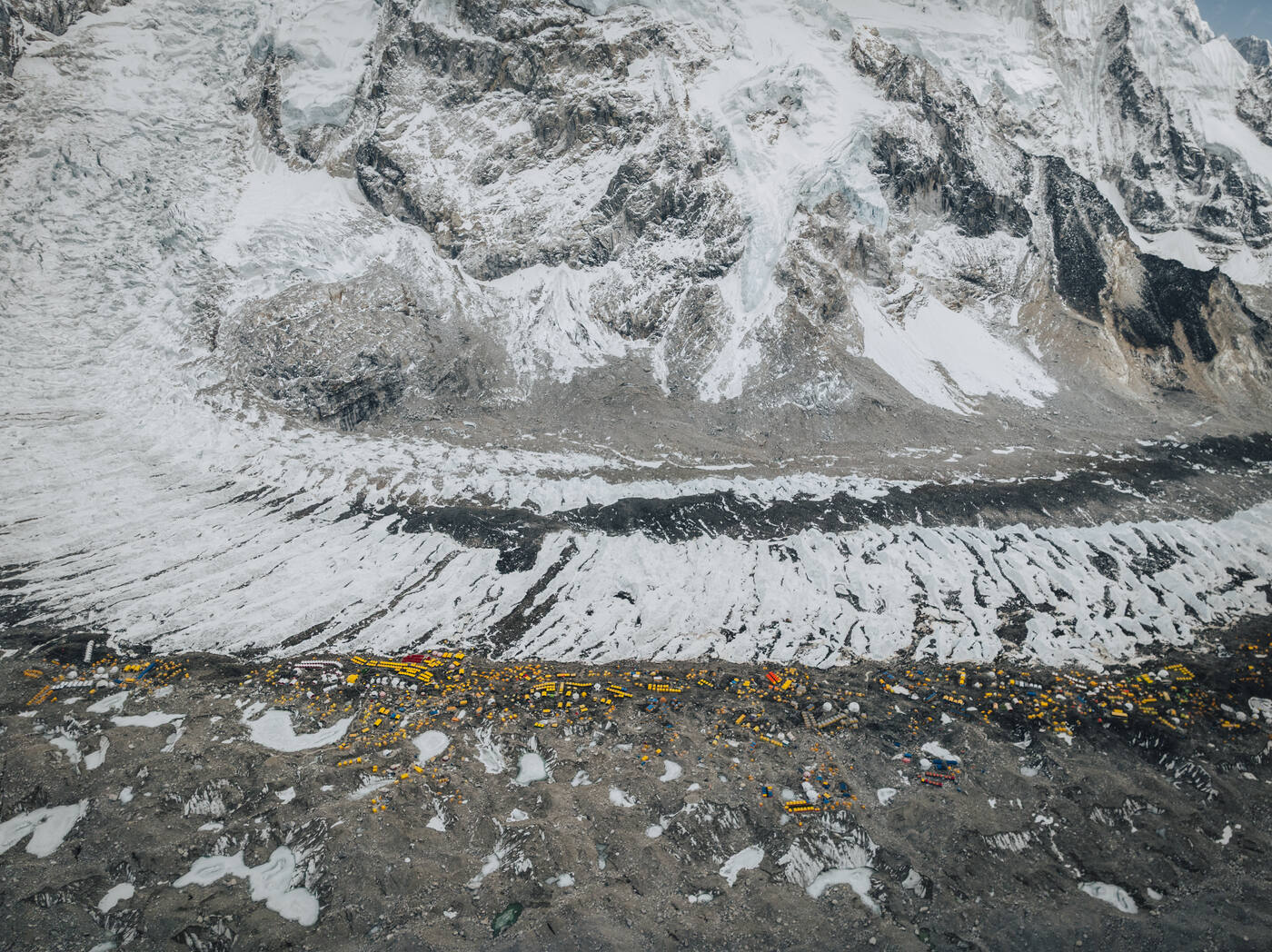
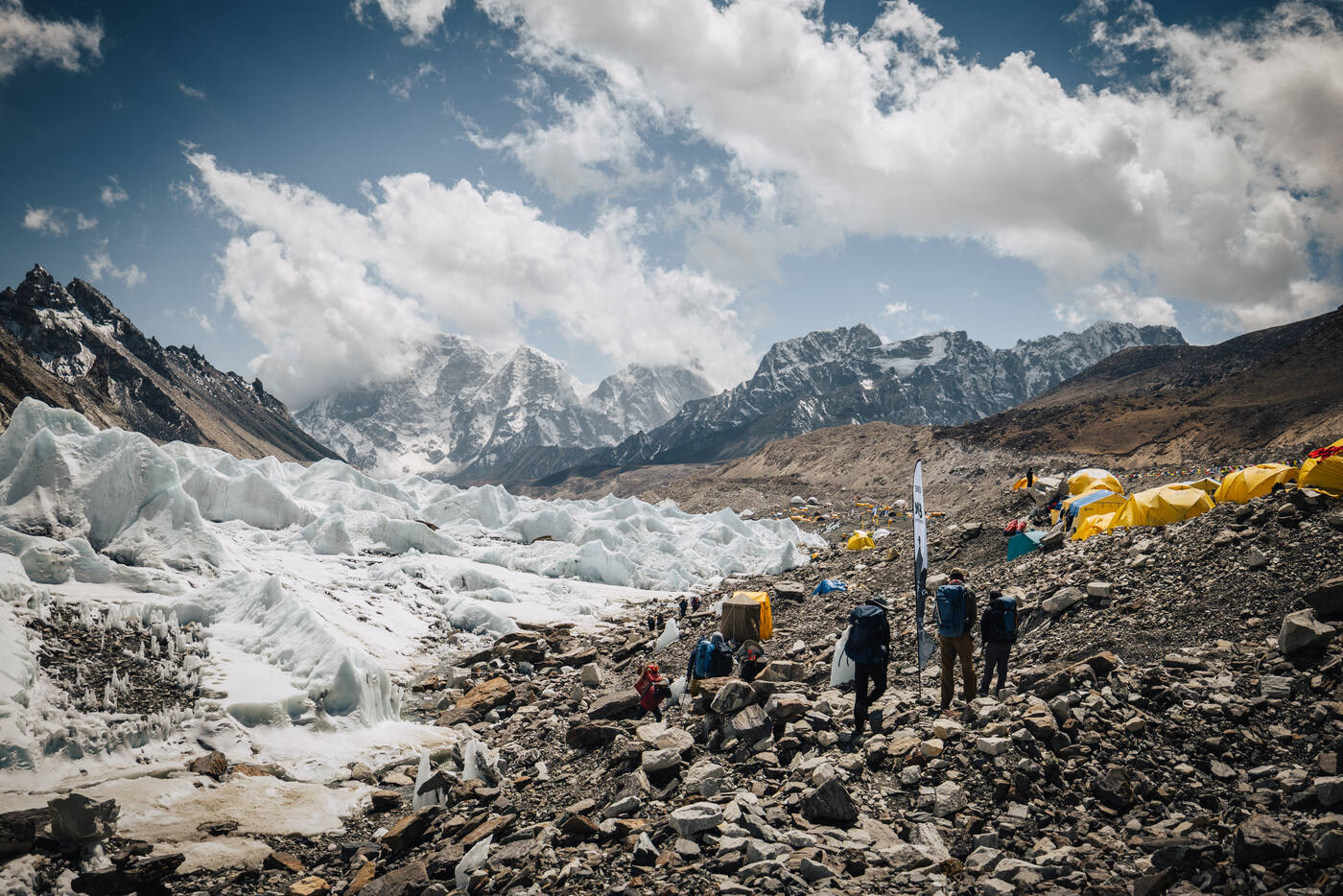
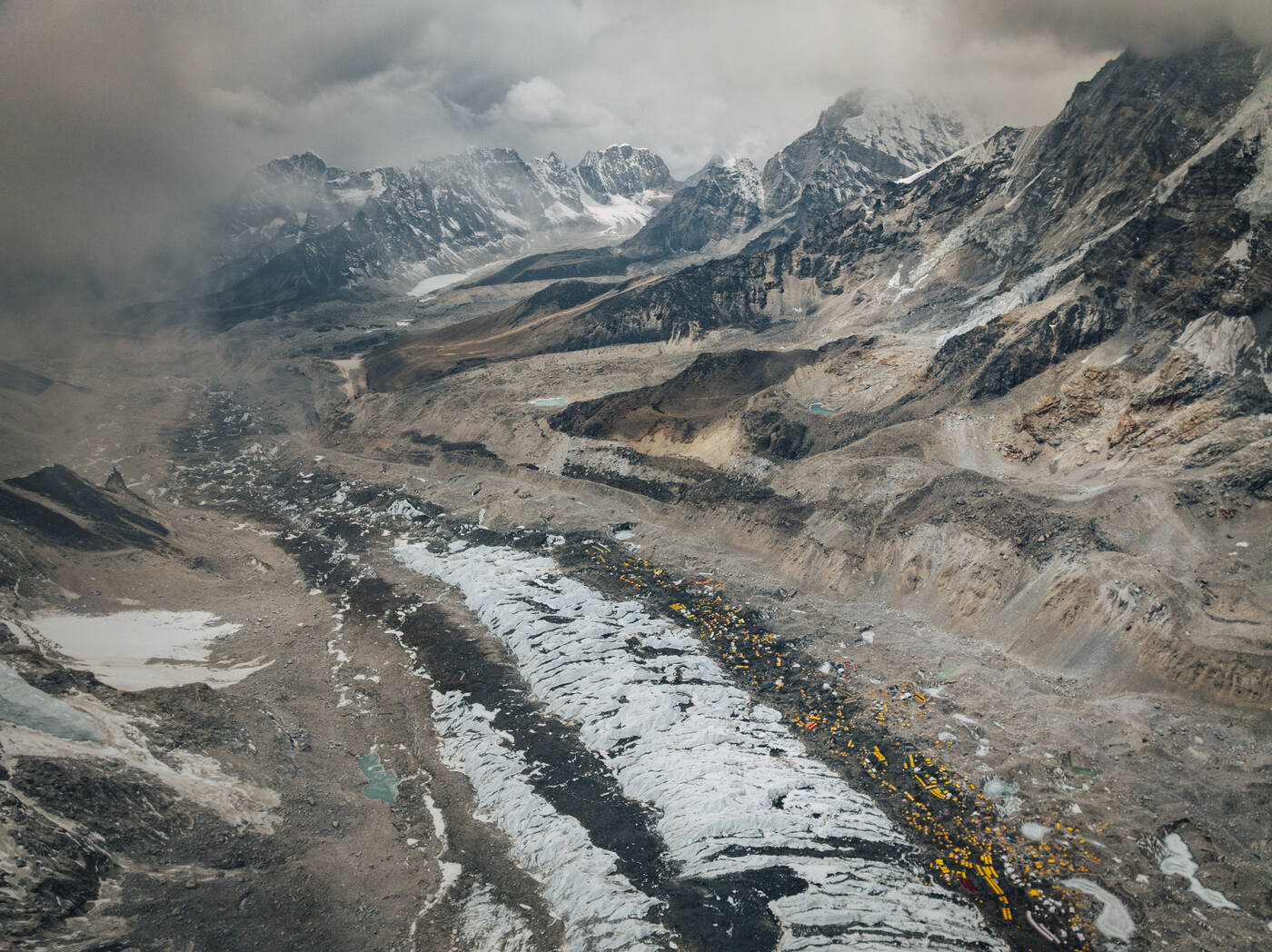
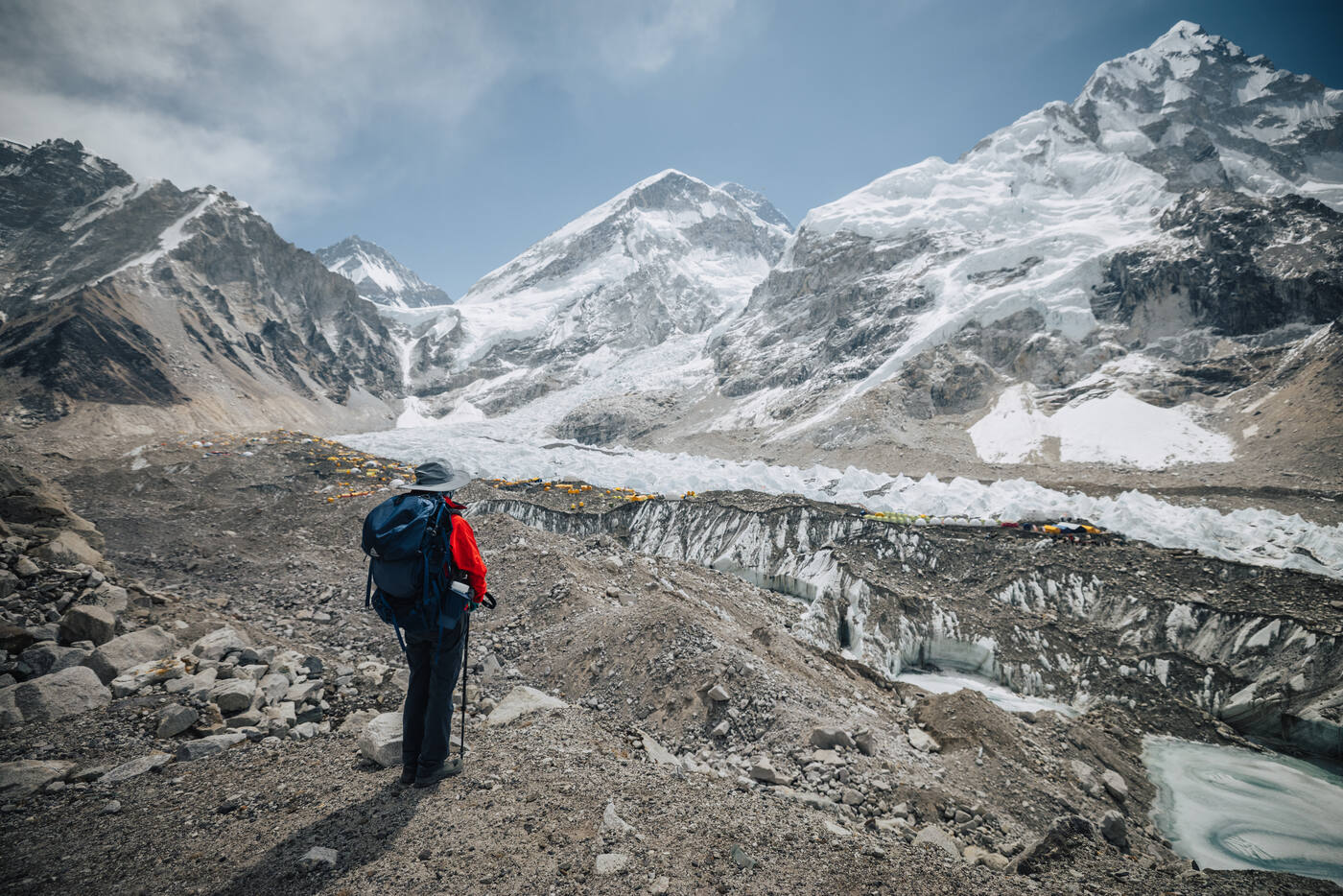
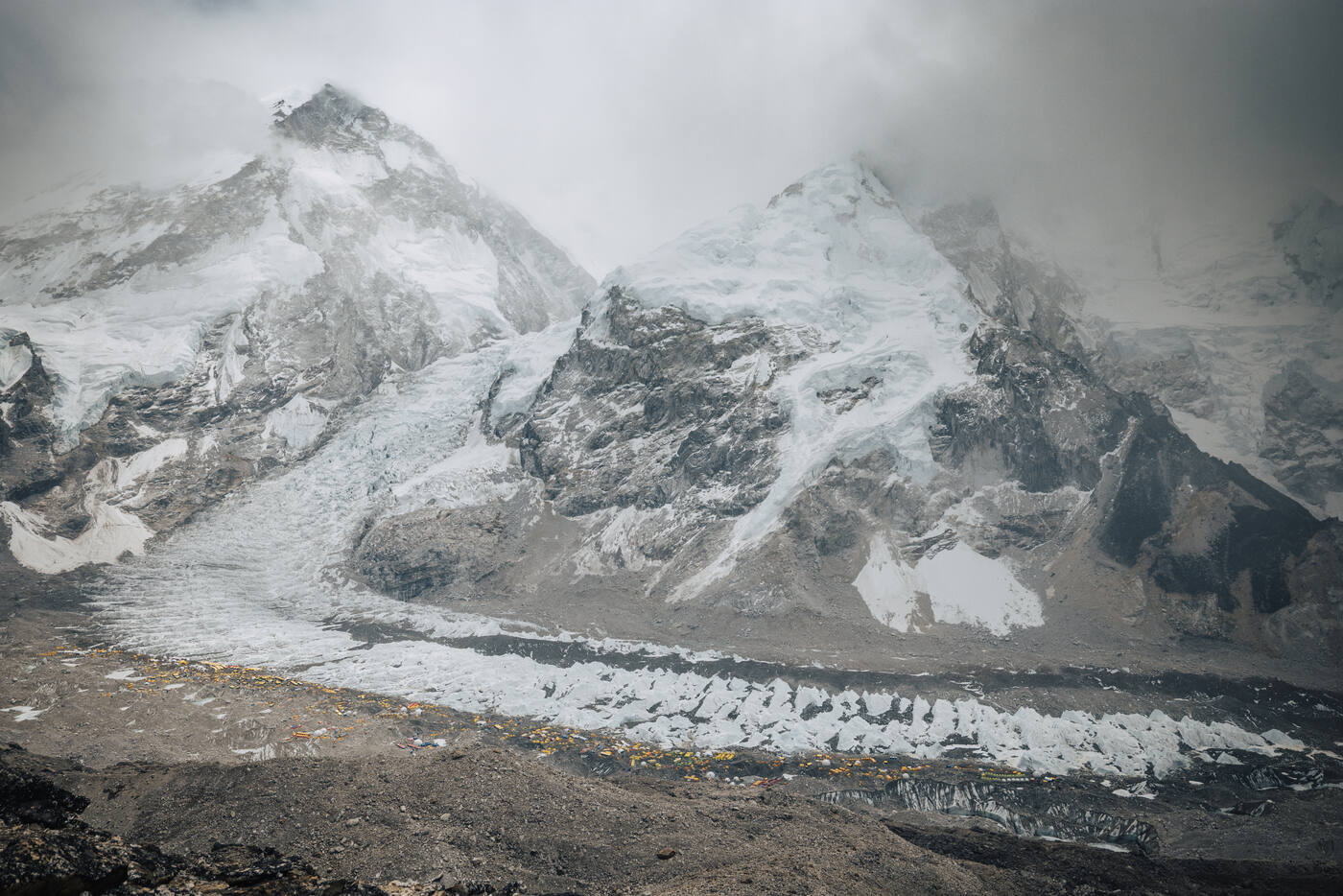
Standing on Trekker's Rock. For most people this is the finish line. For us, it's where the real climb begins.The approach to EBC across the Khumbu Glacier. The city of tents emerges from the moraine.
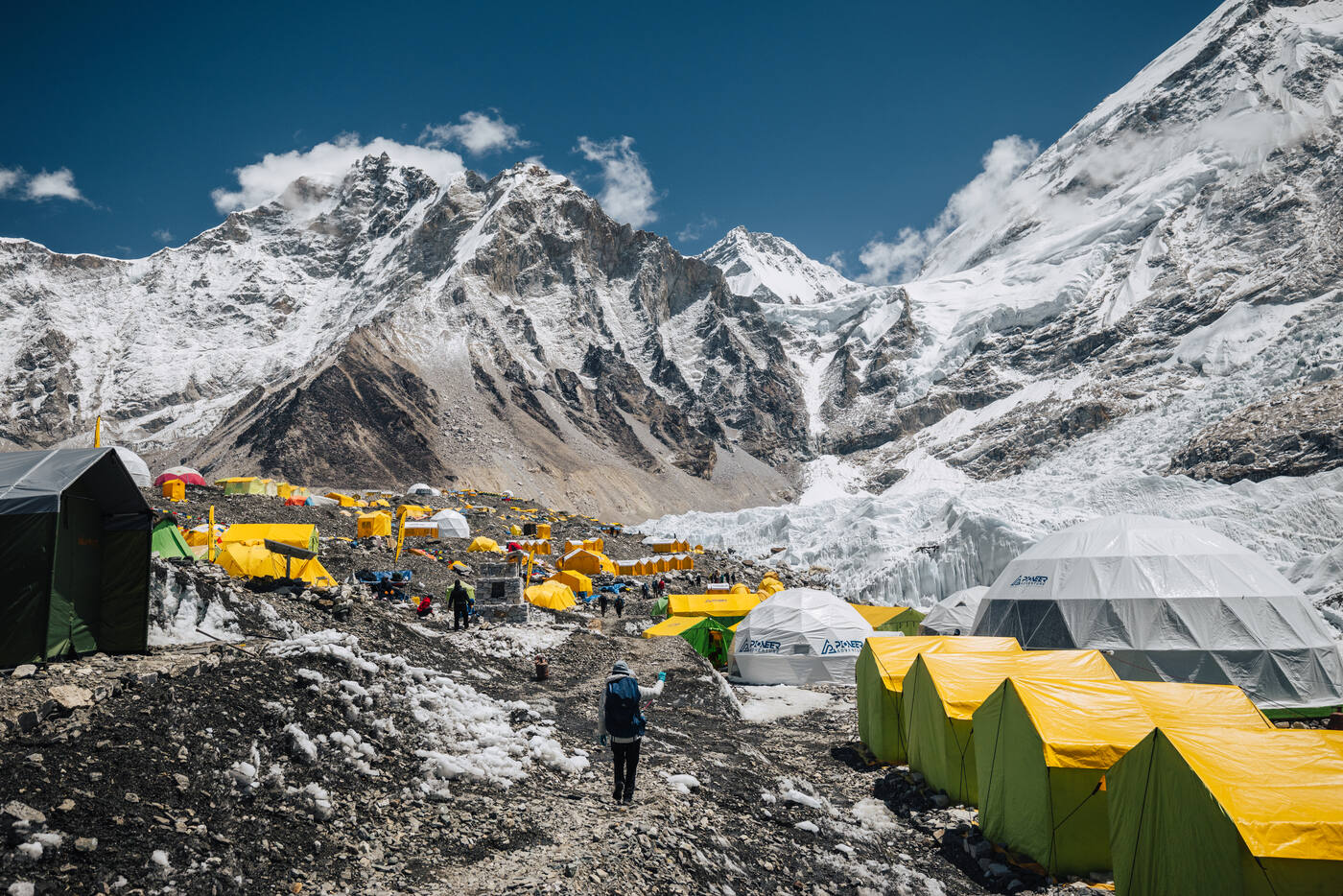
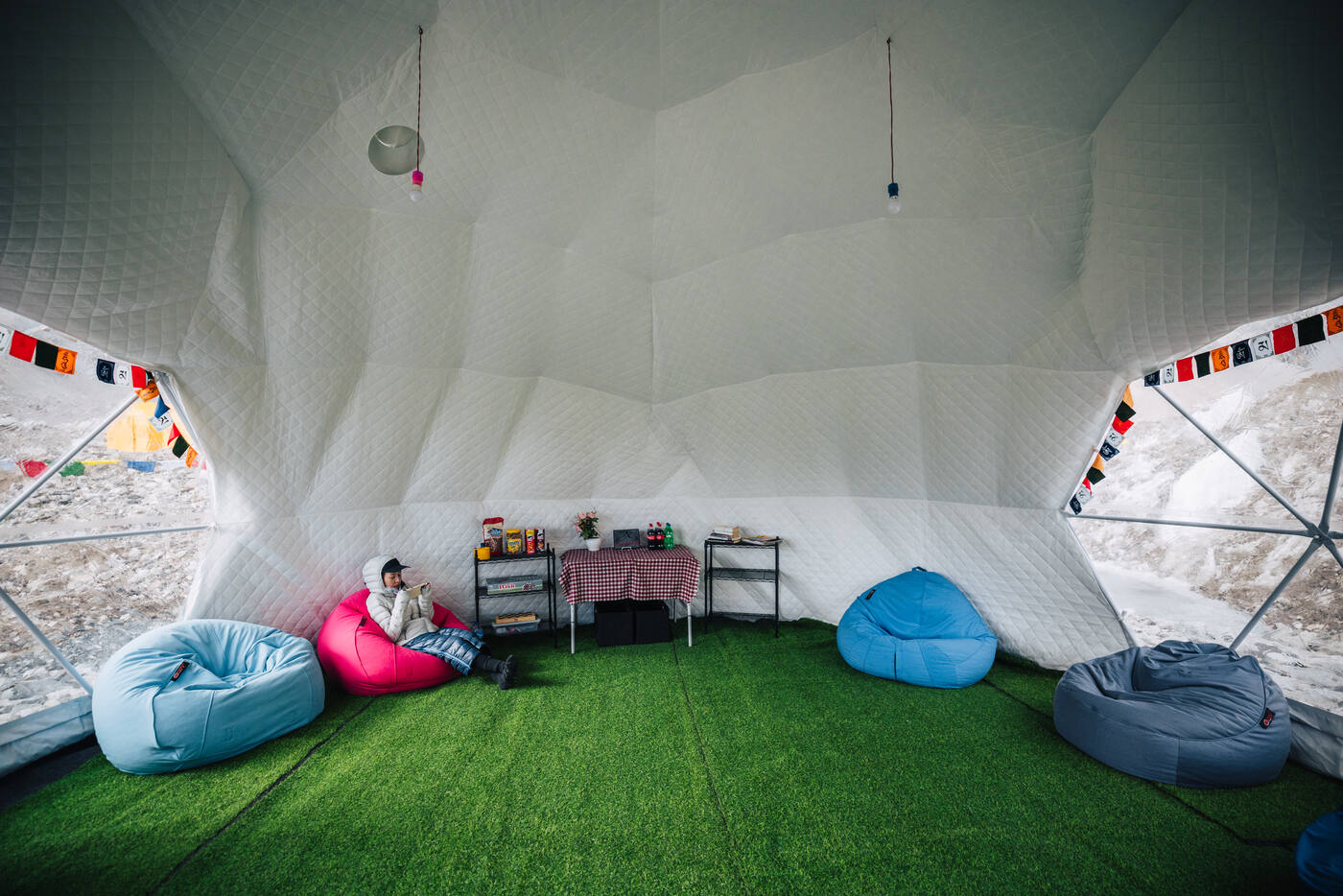
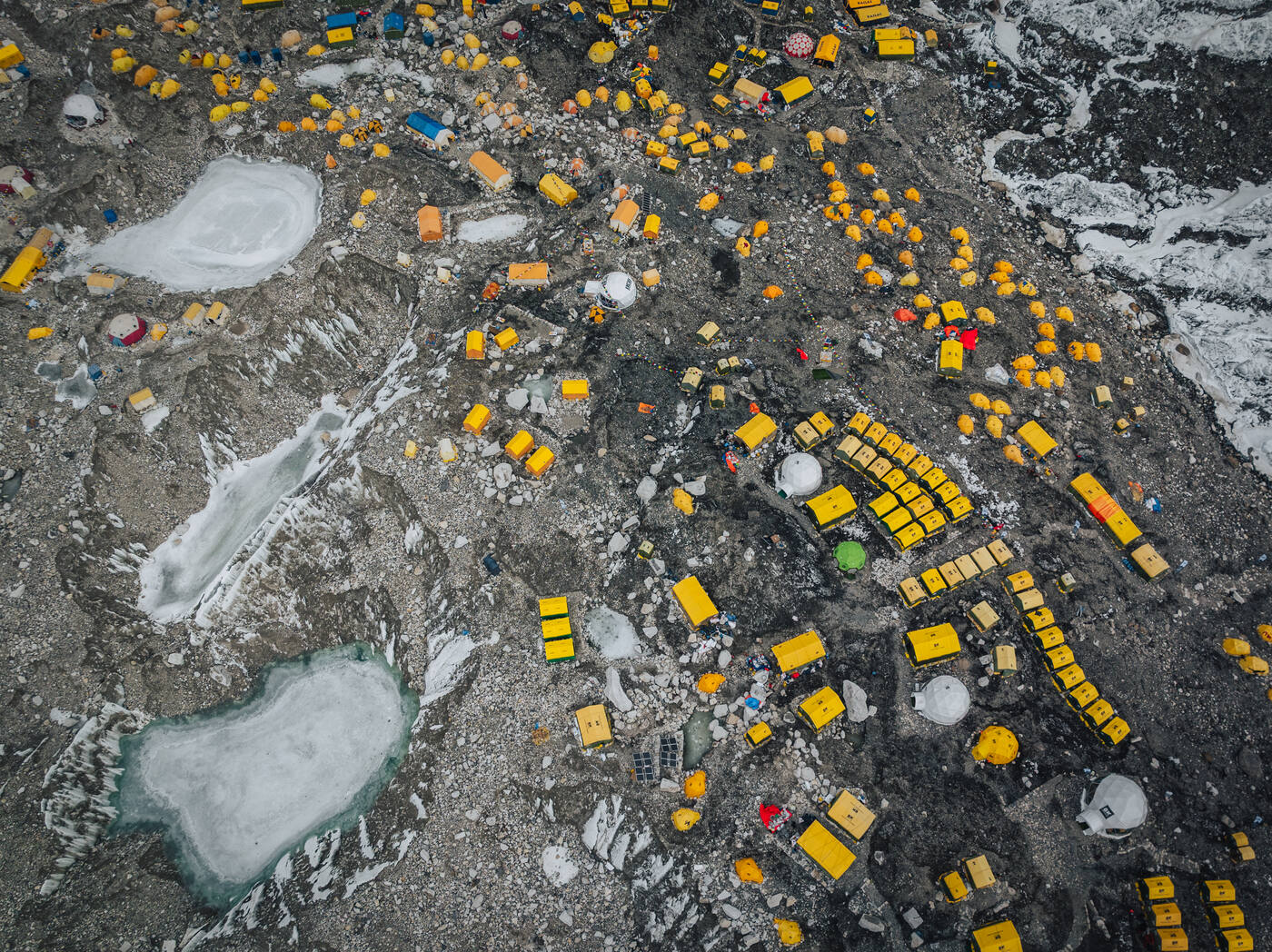
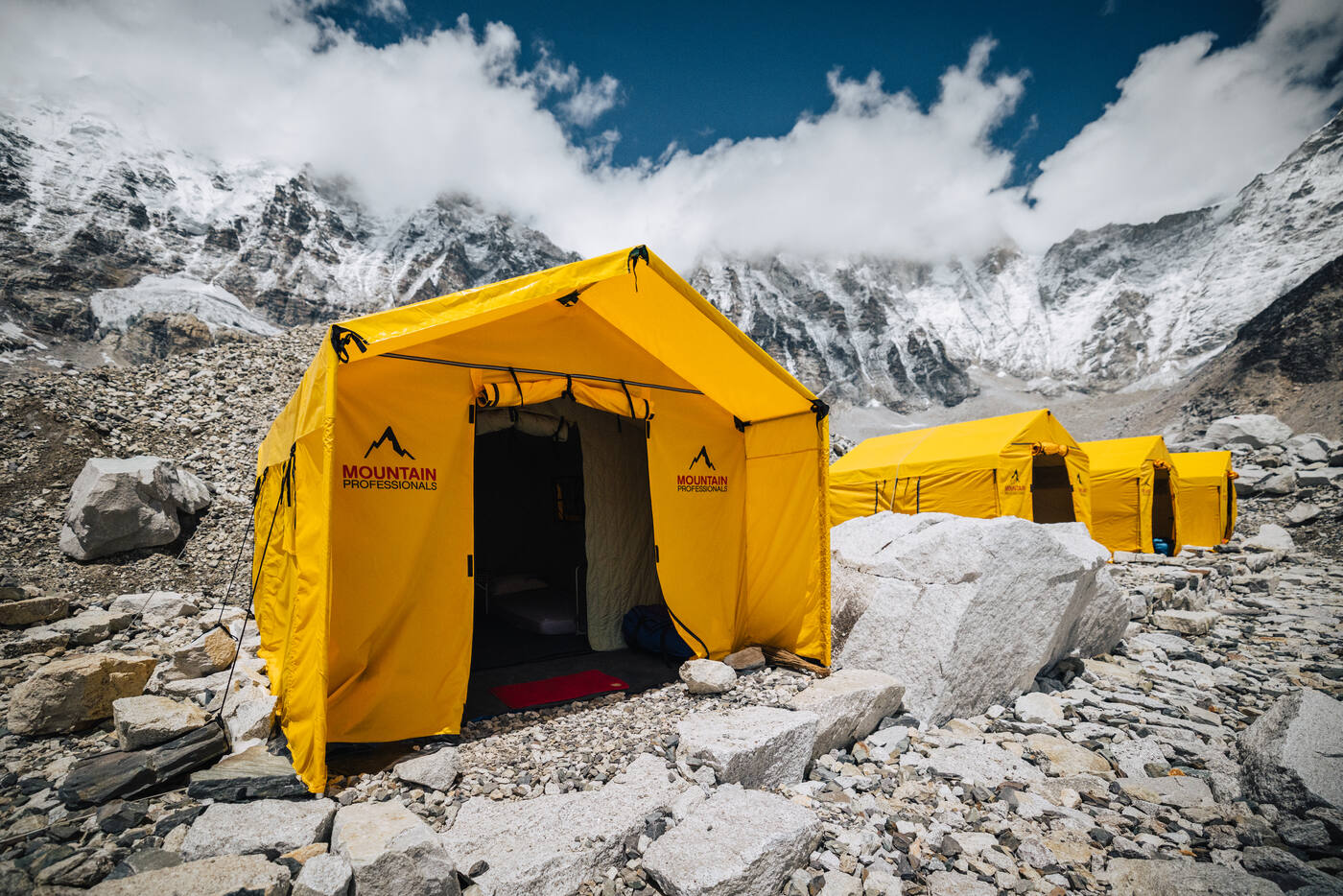
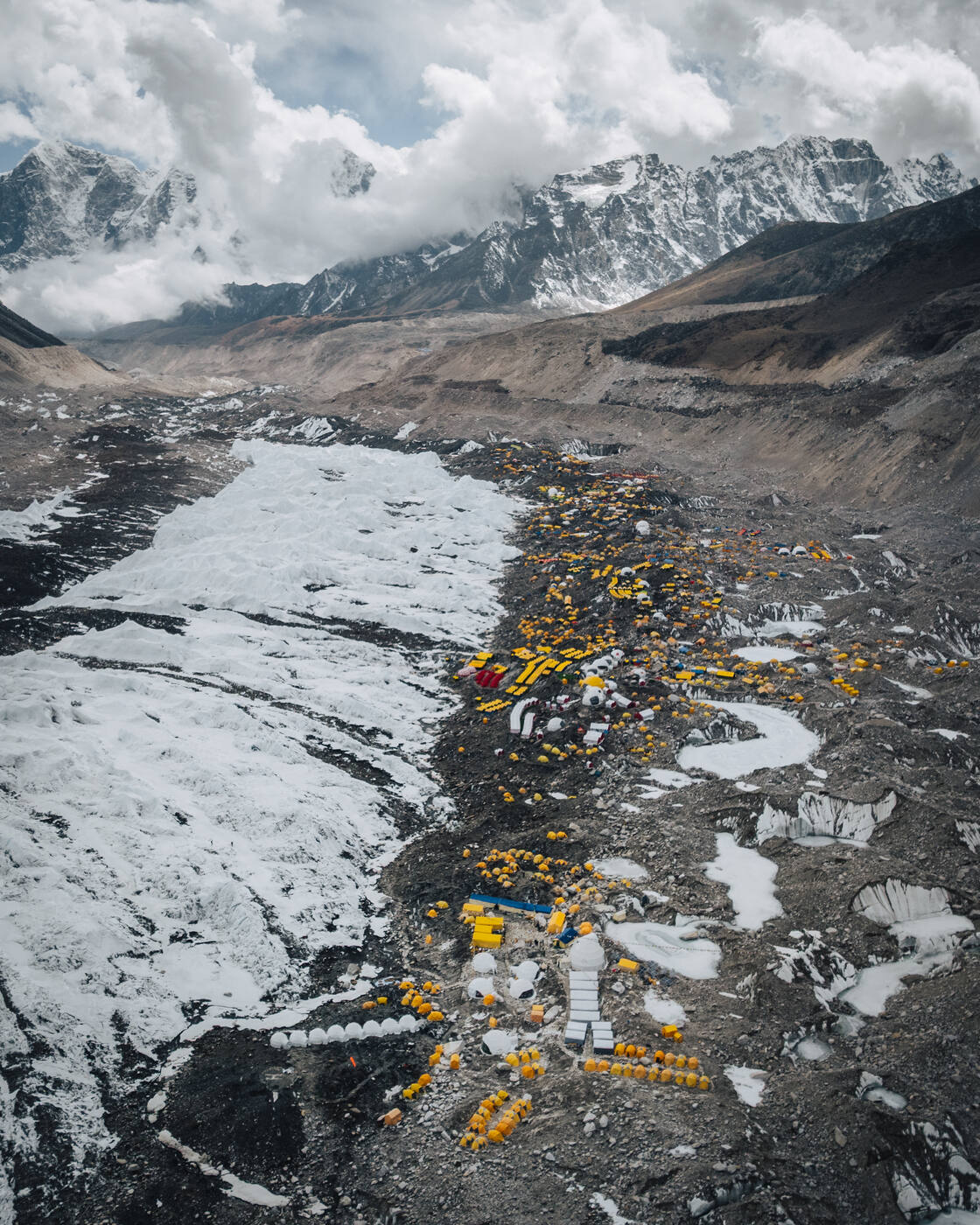
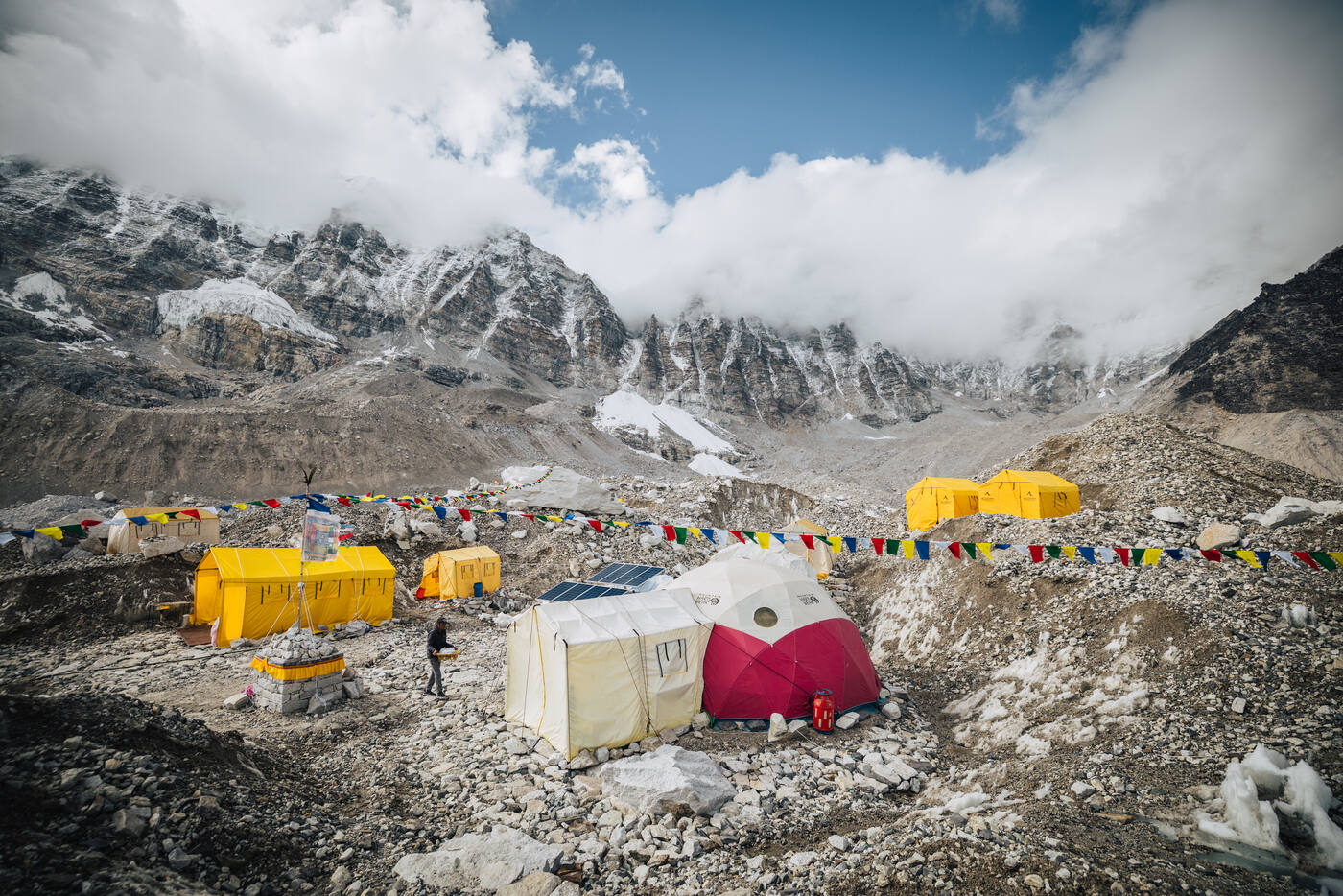
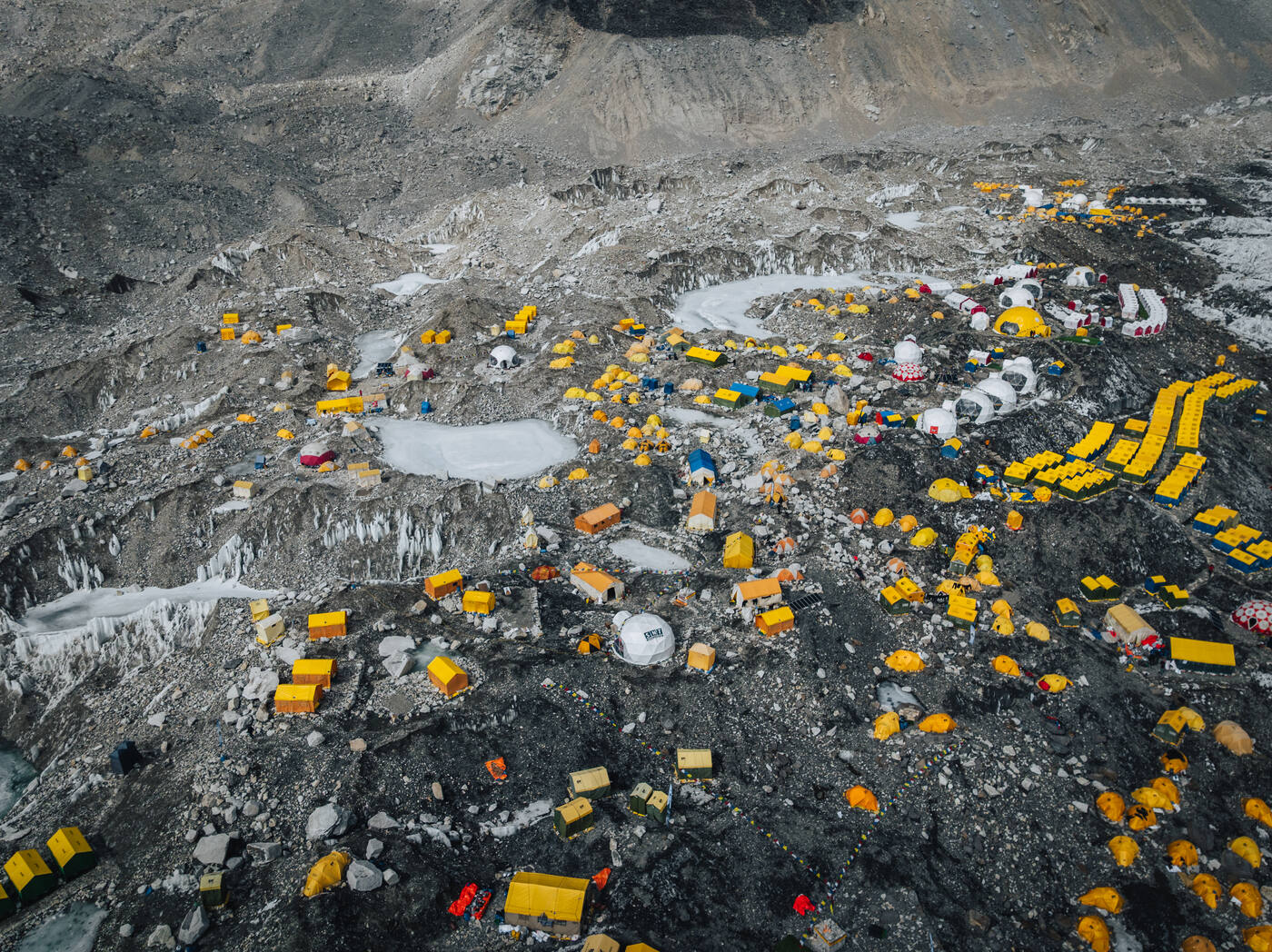
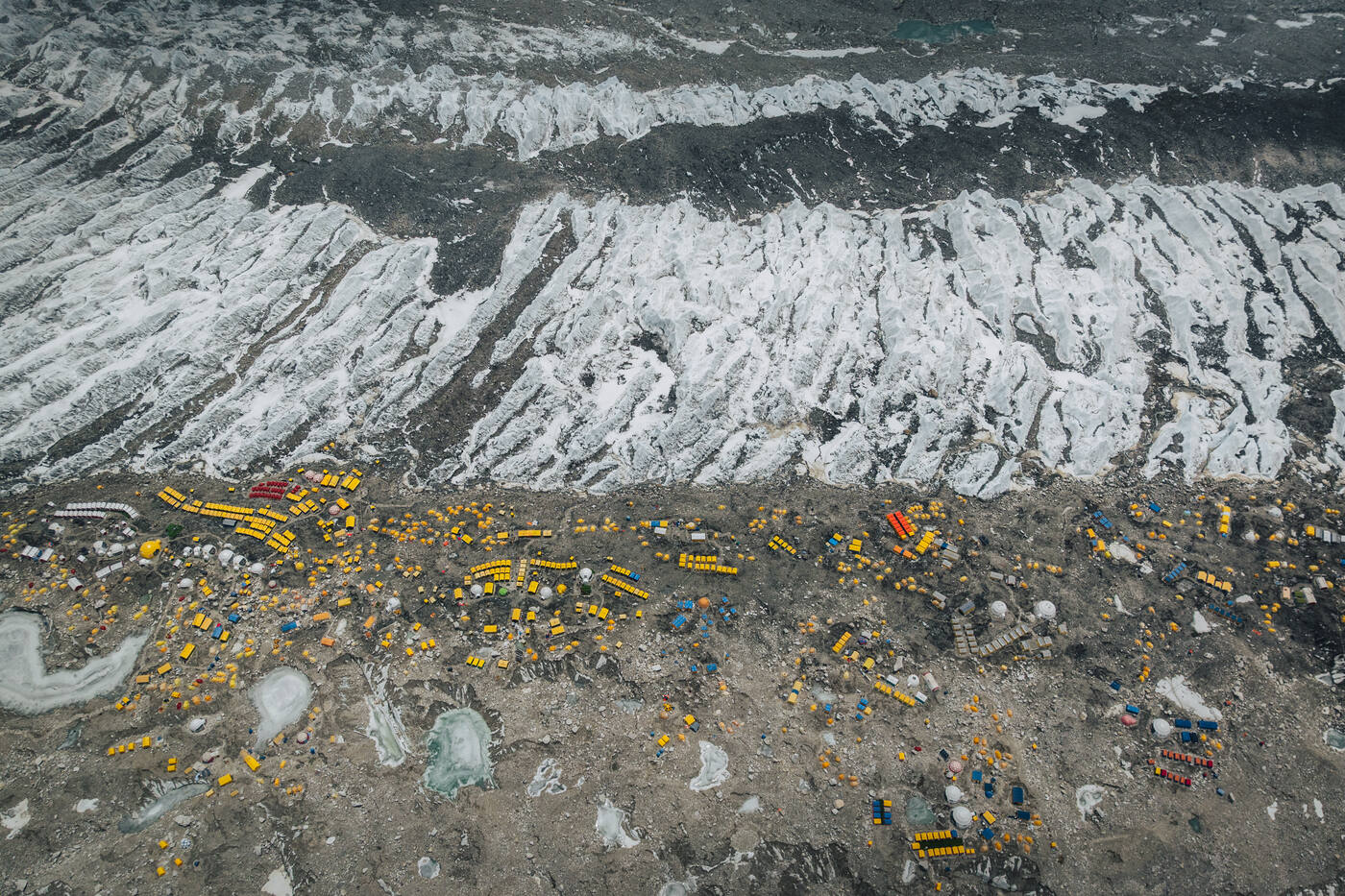
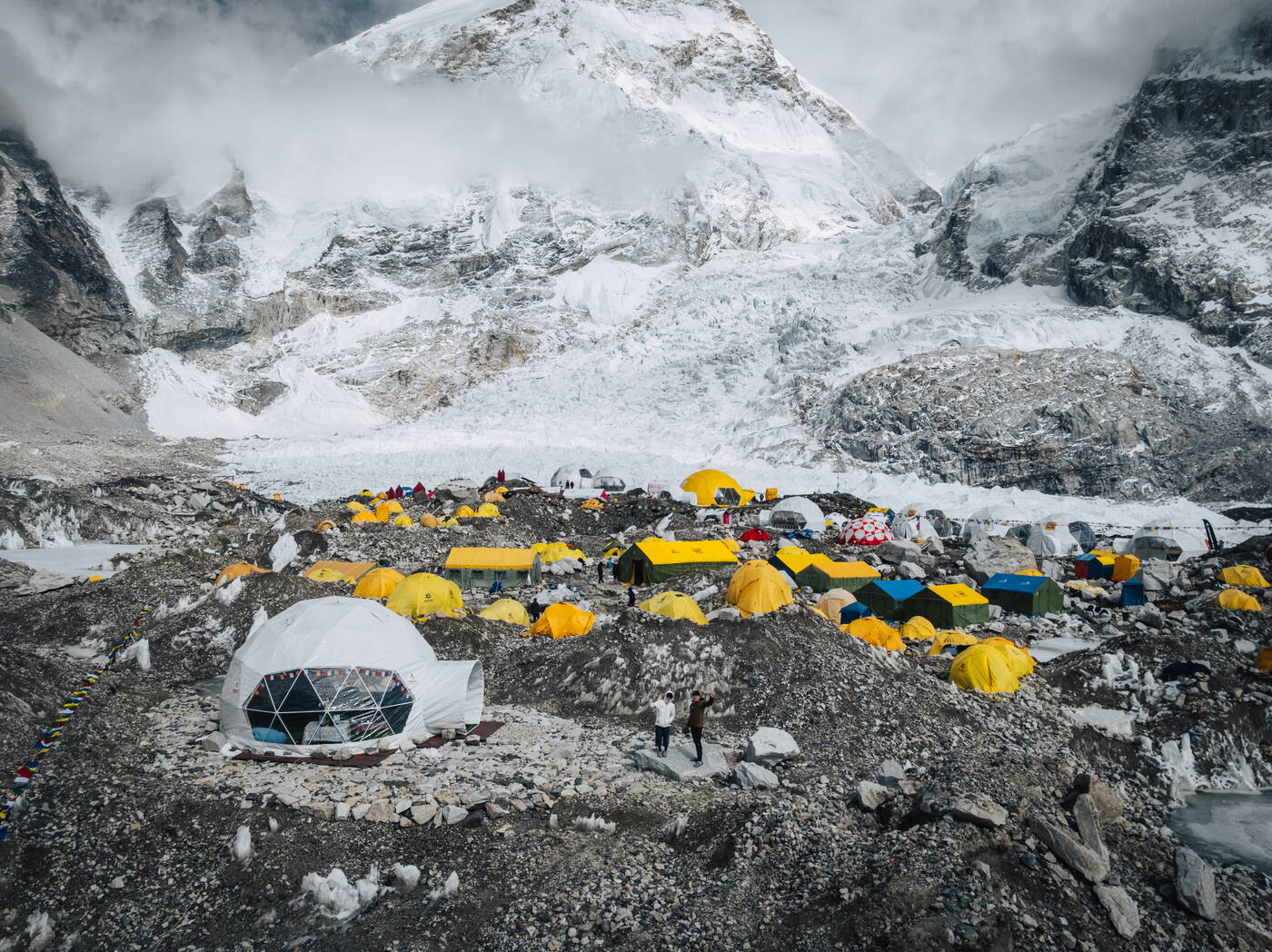
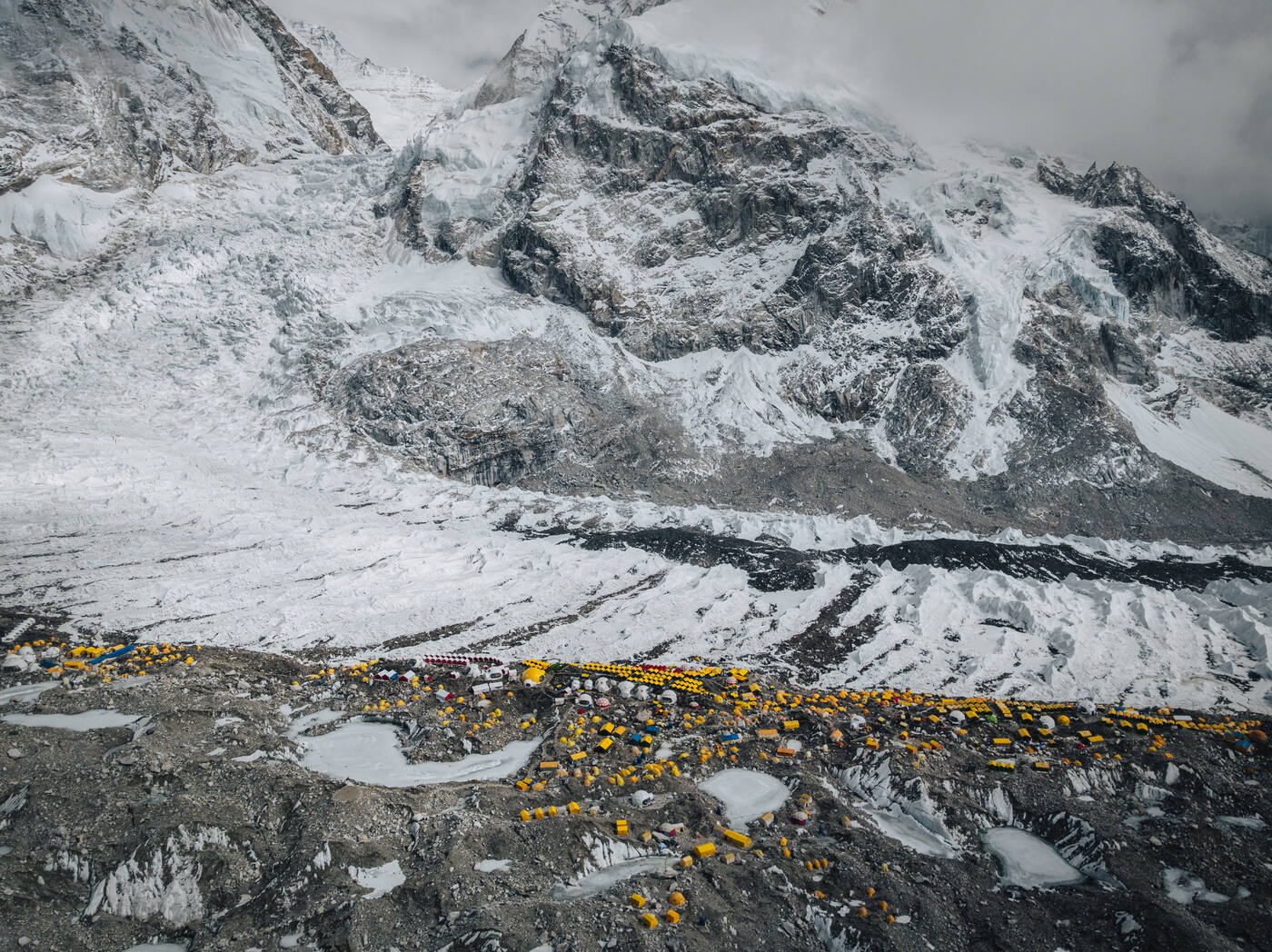
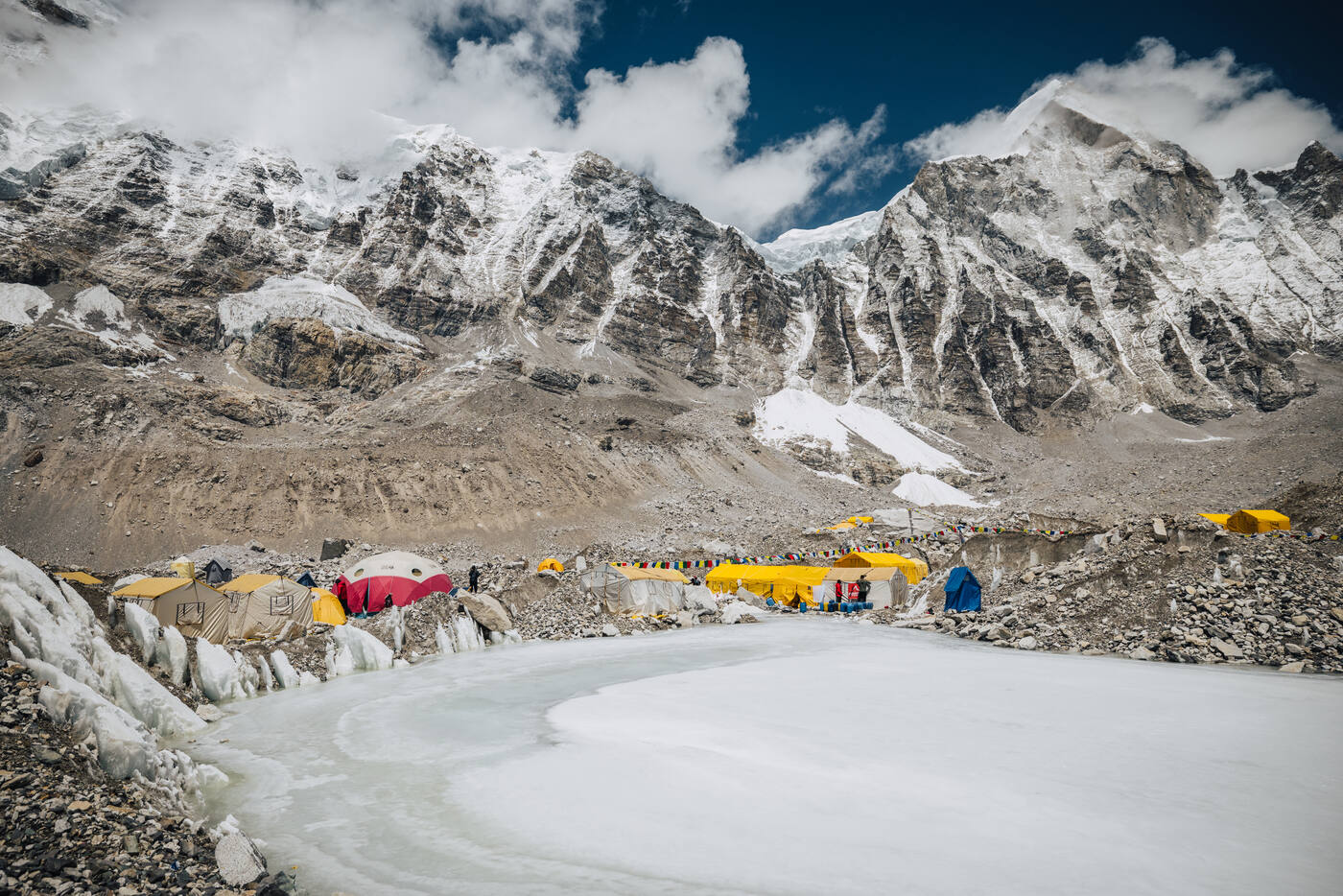
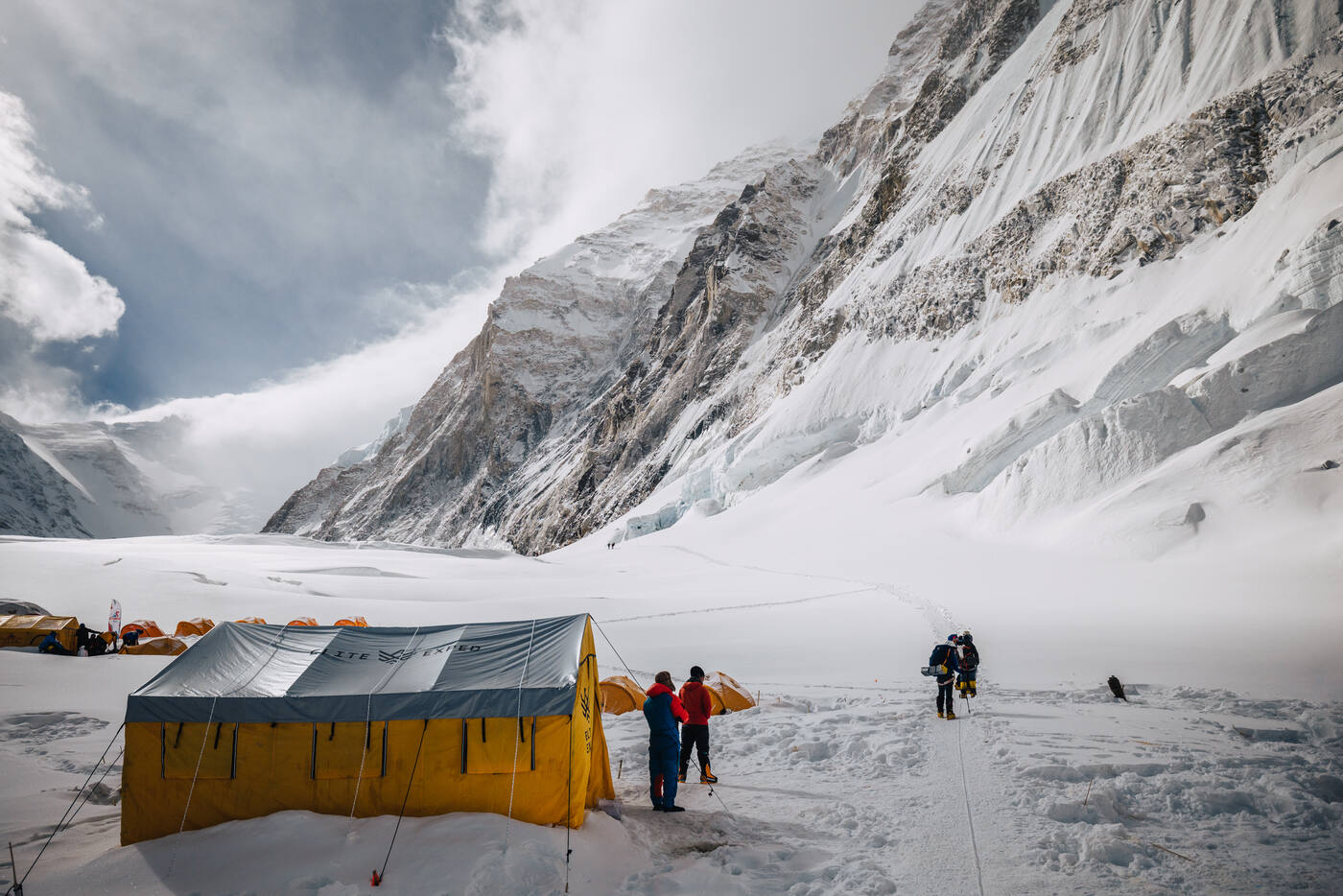
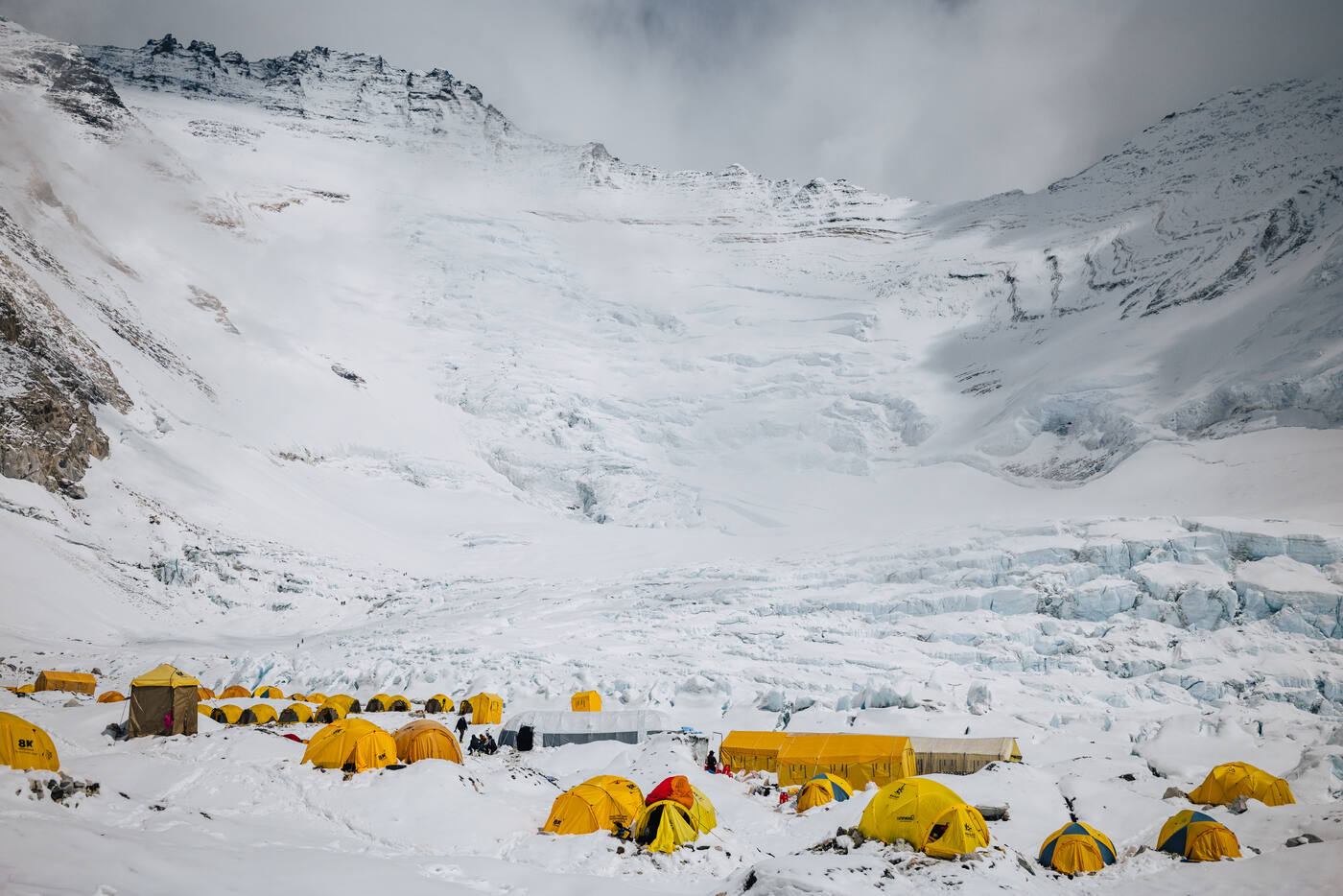
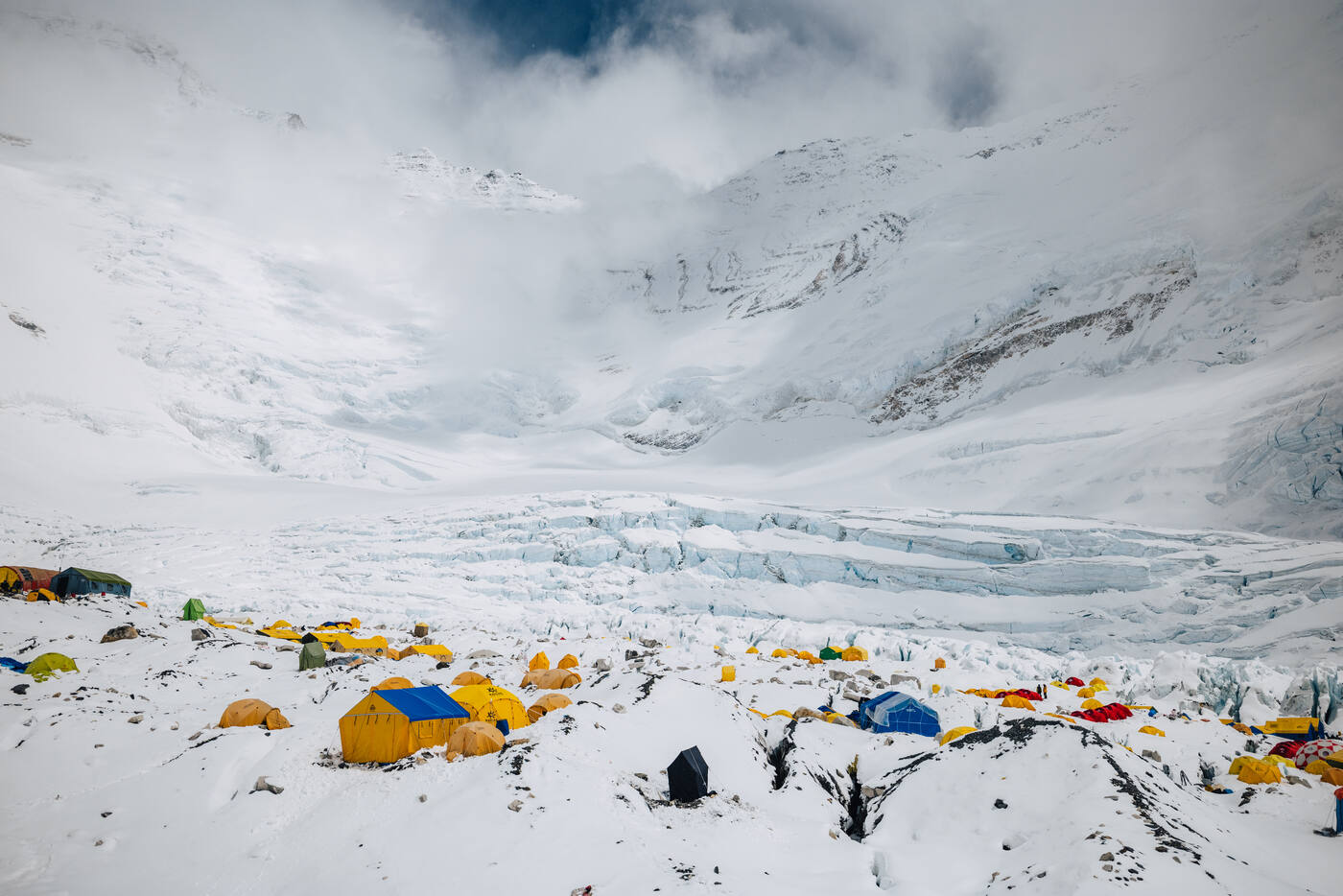
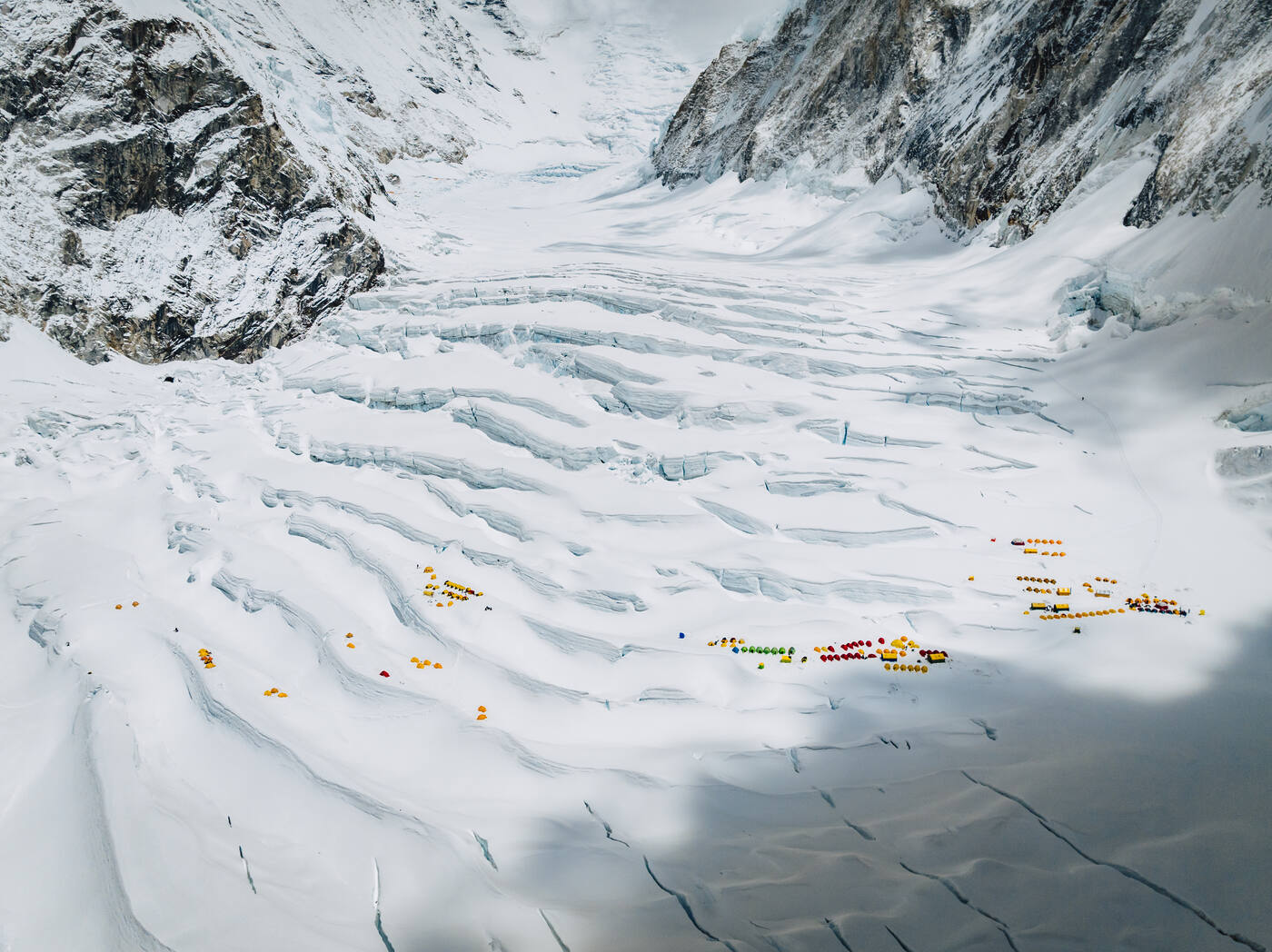
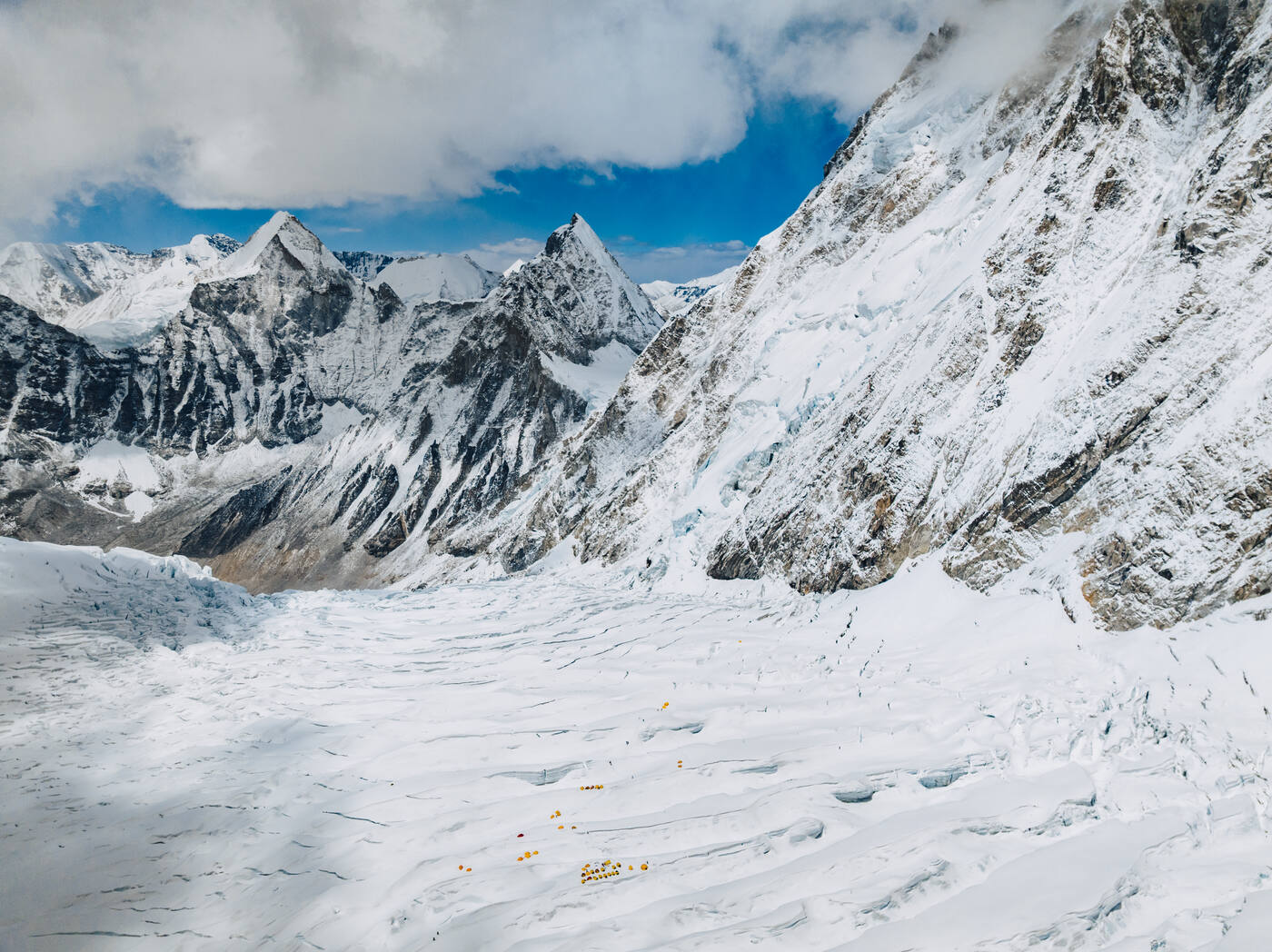
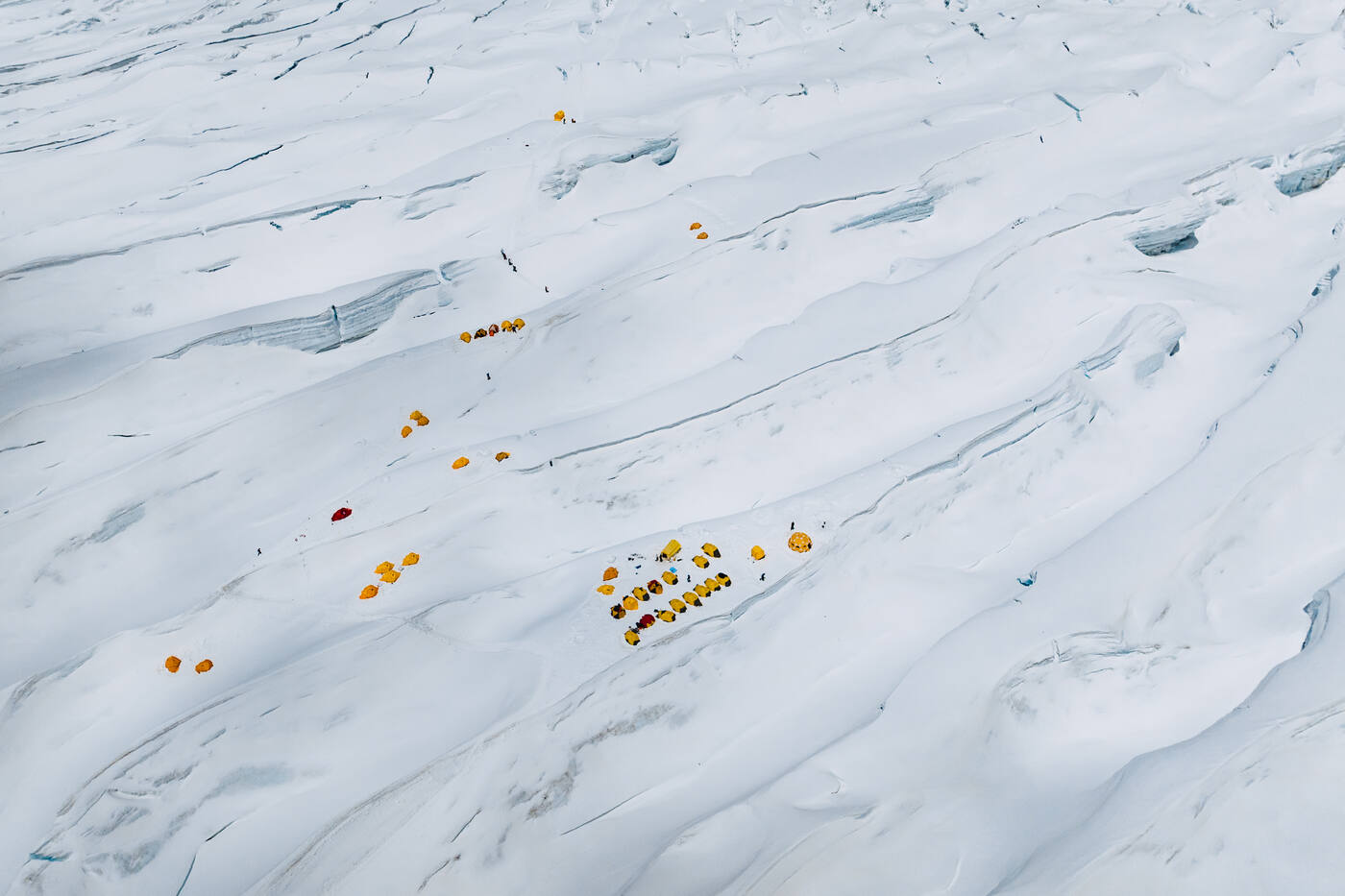
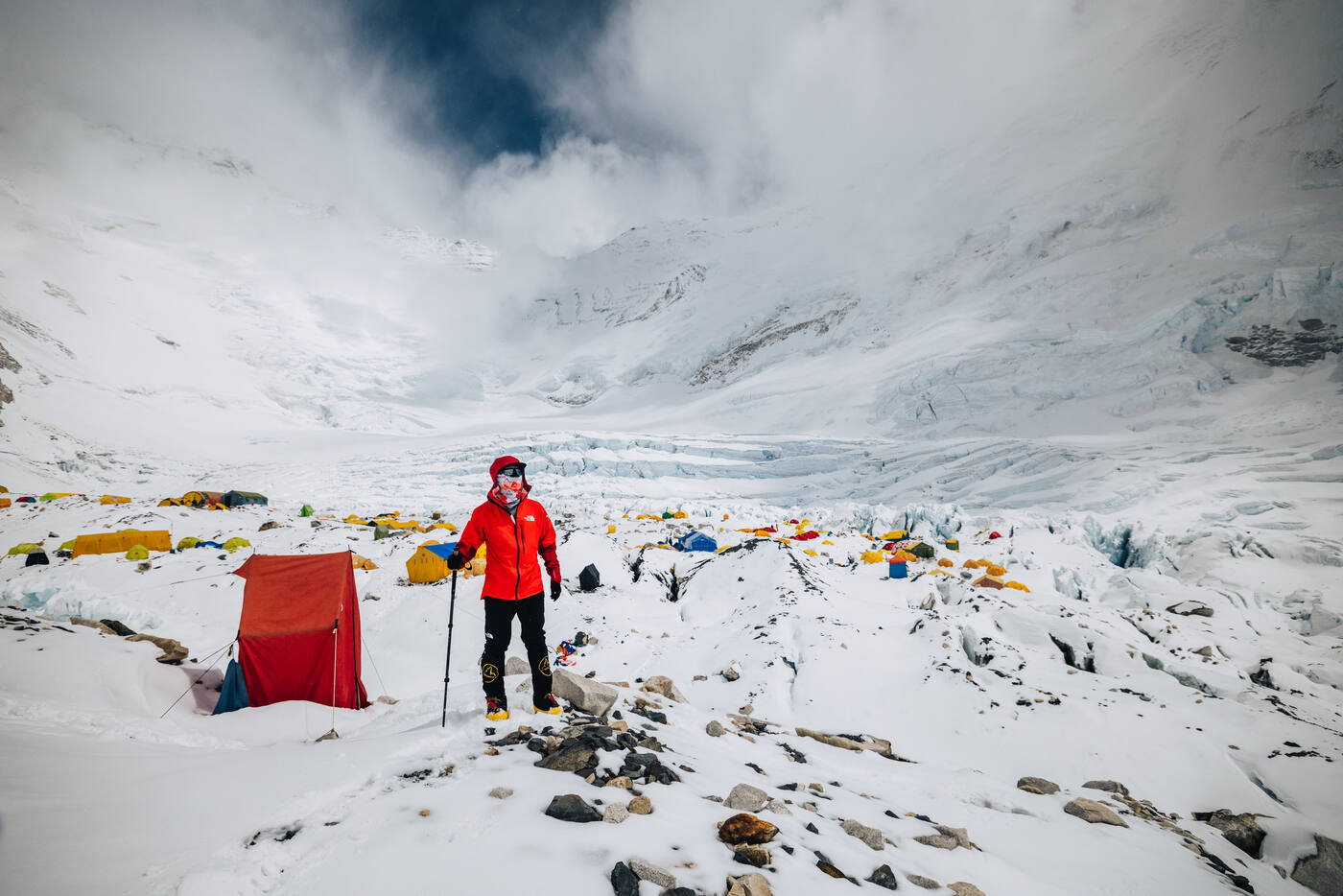
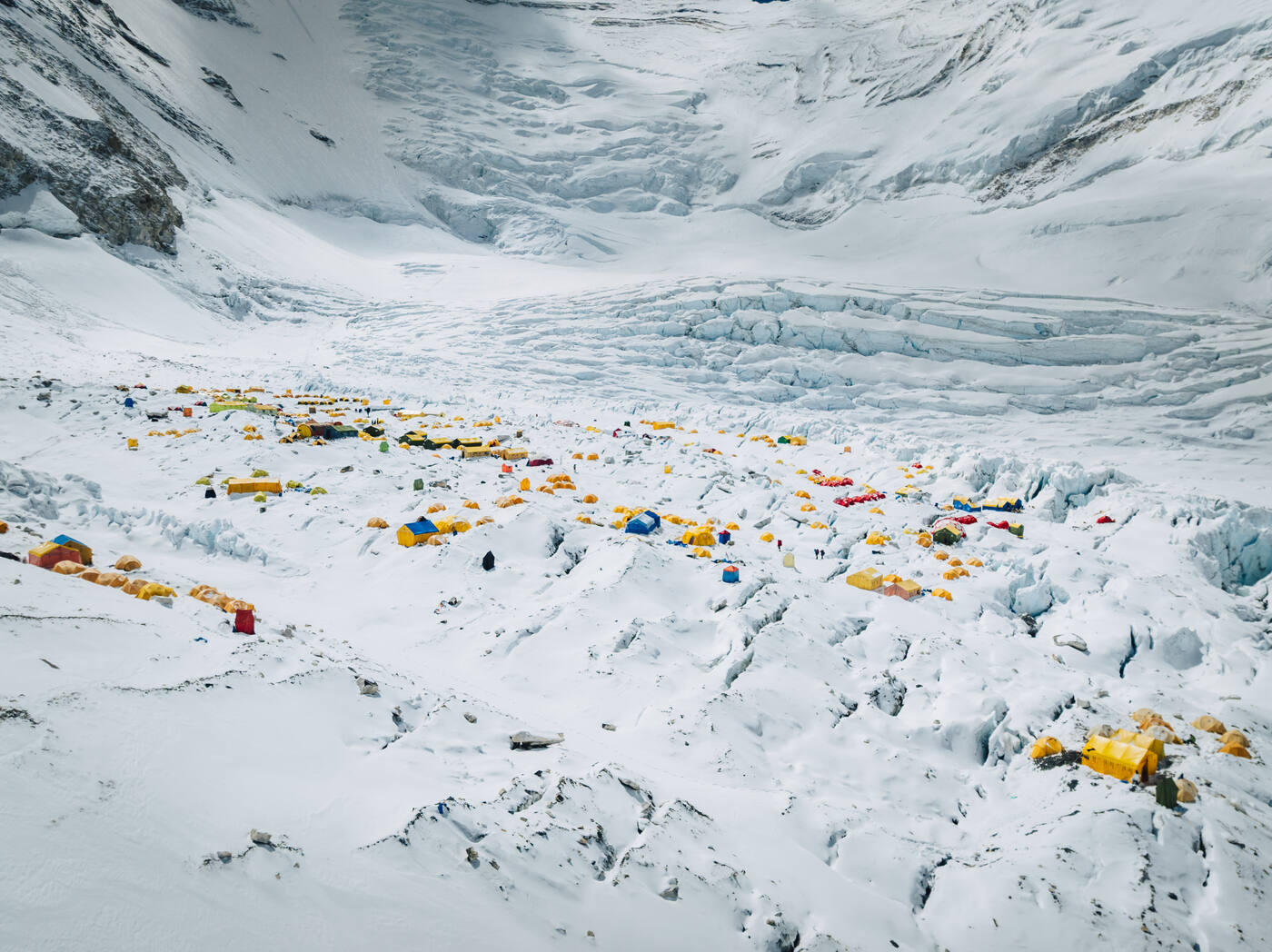
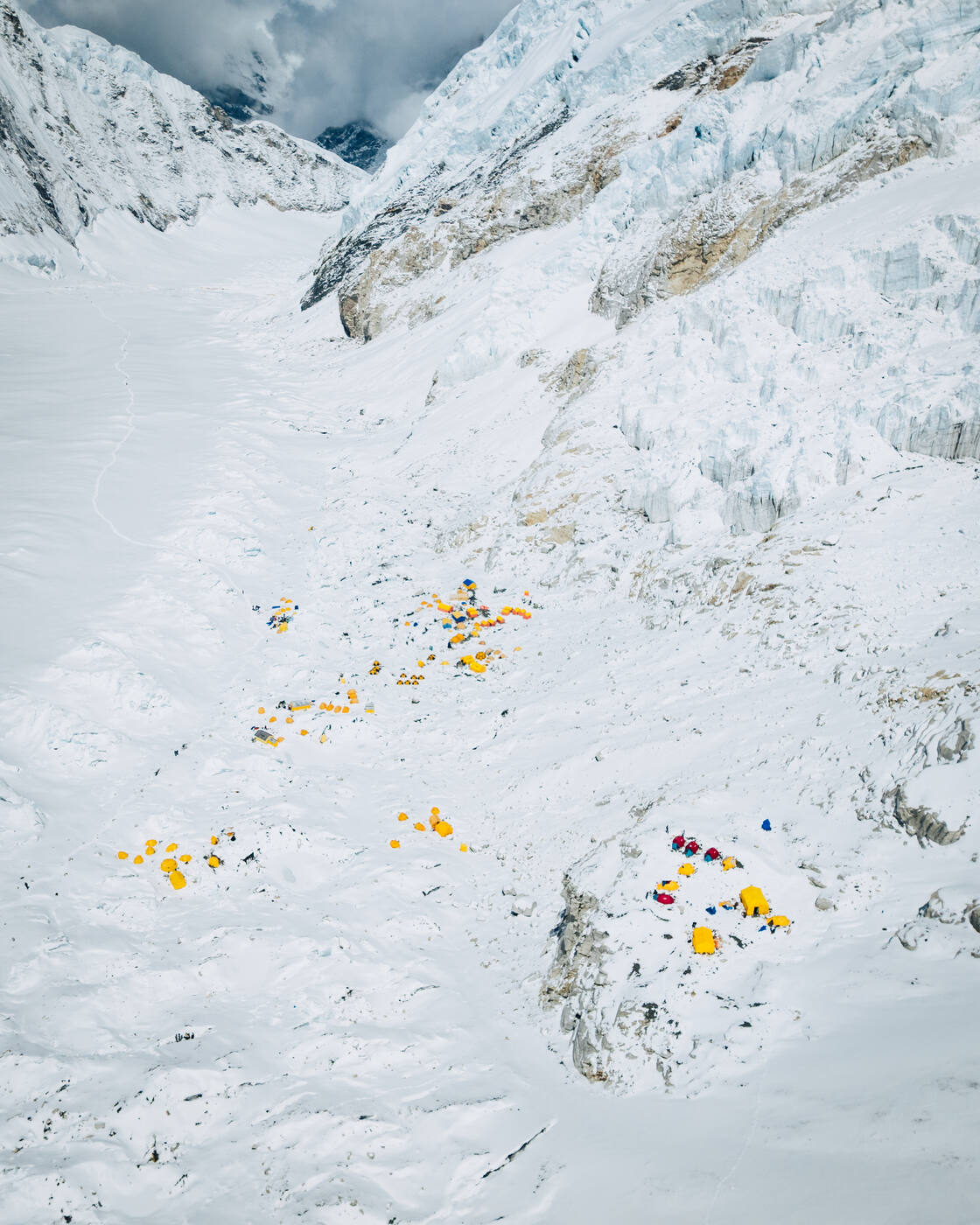
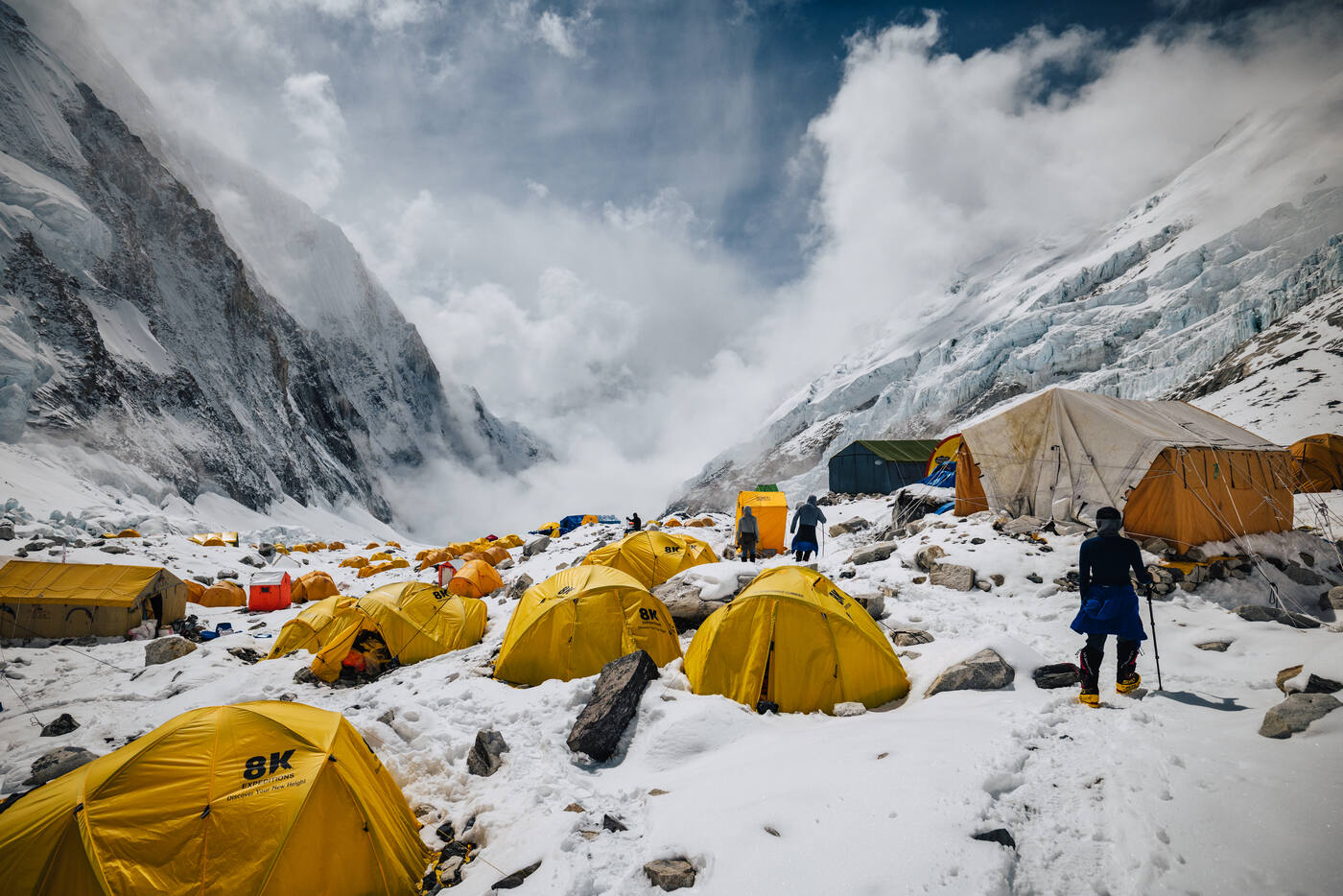
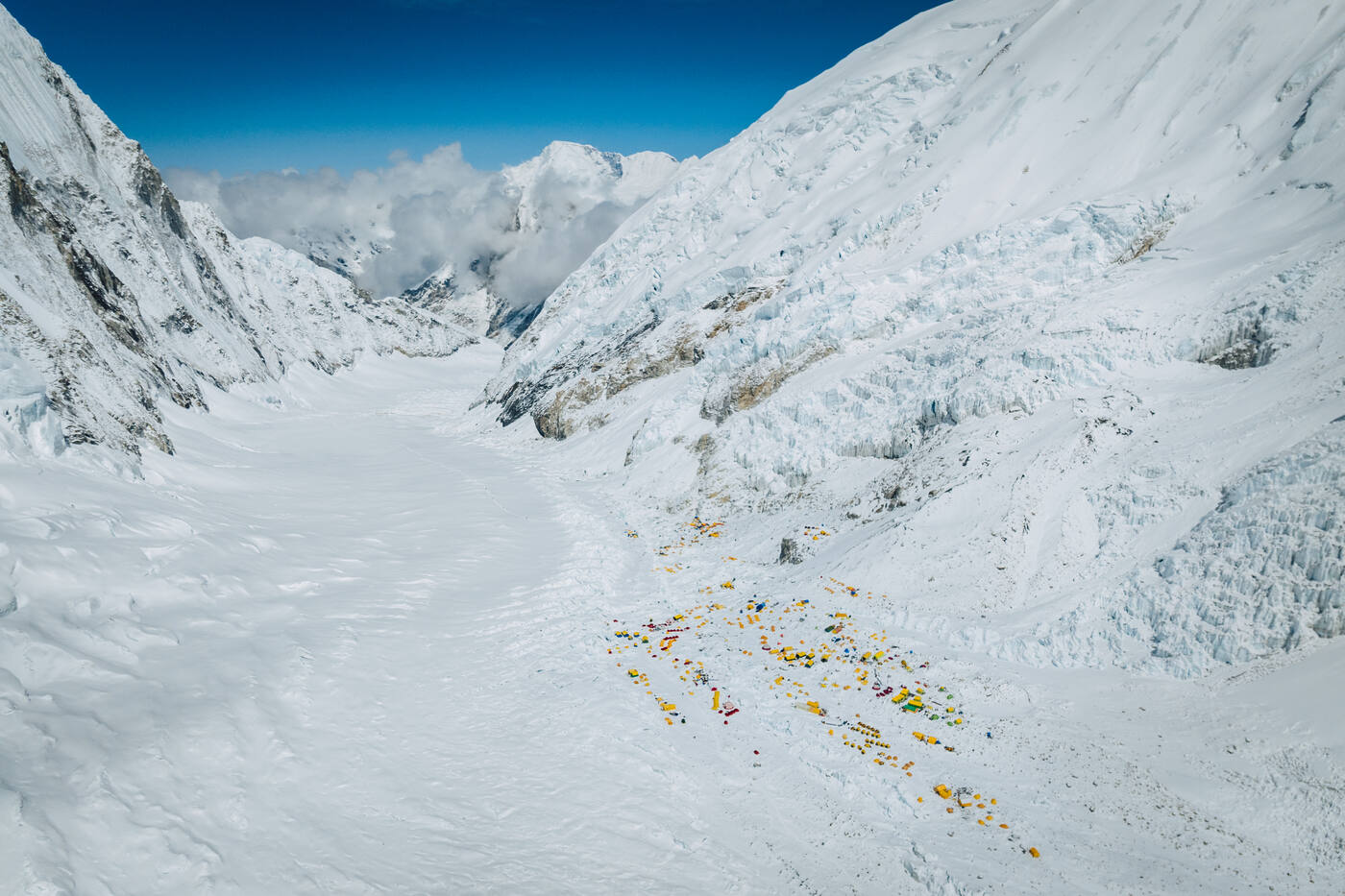
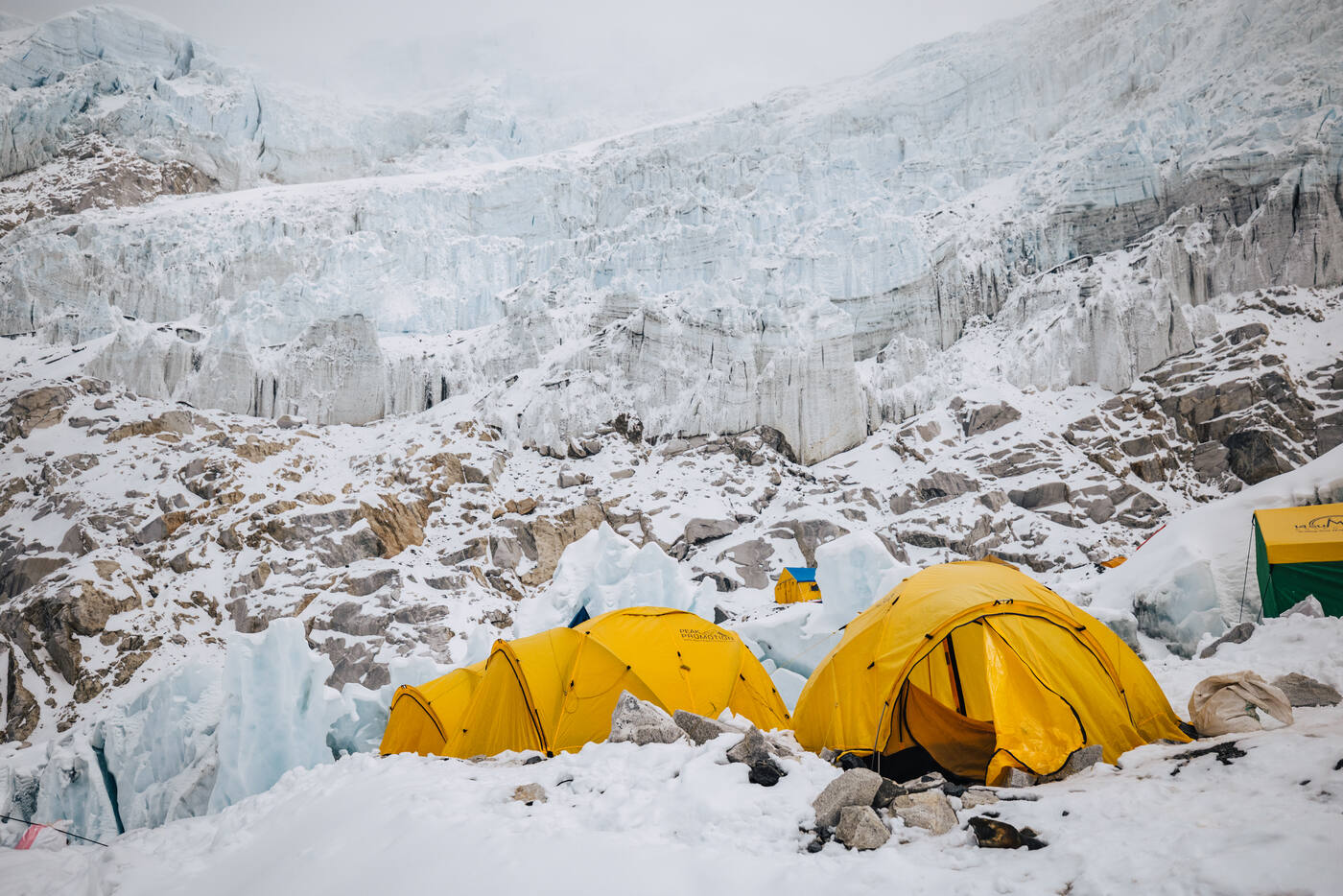
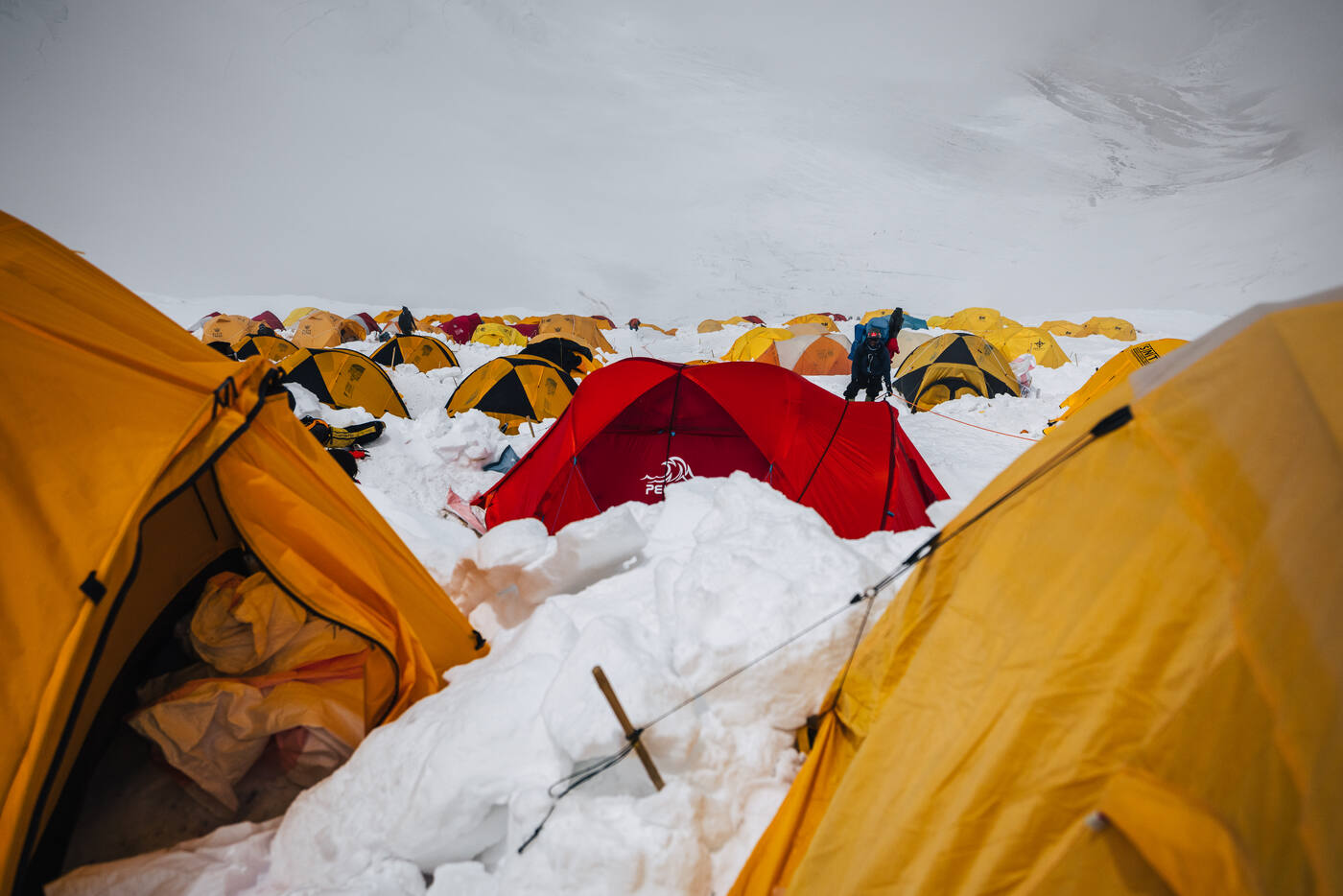
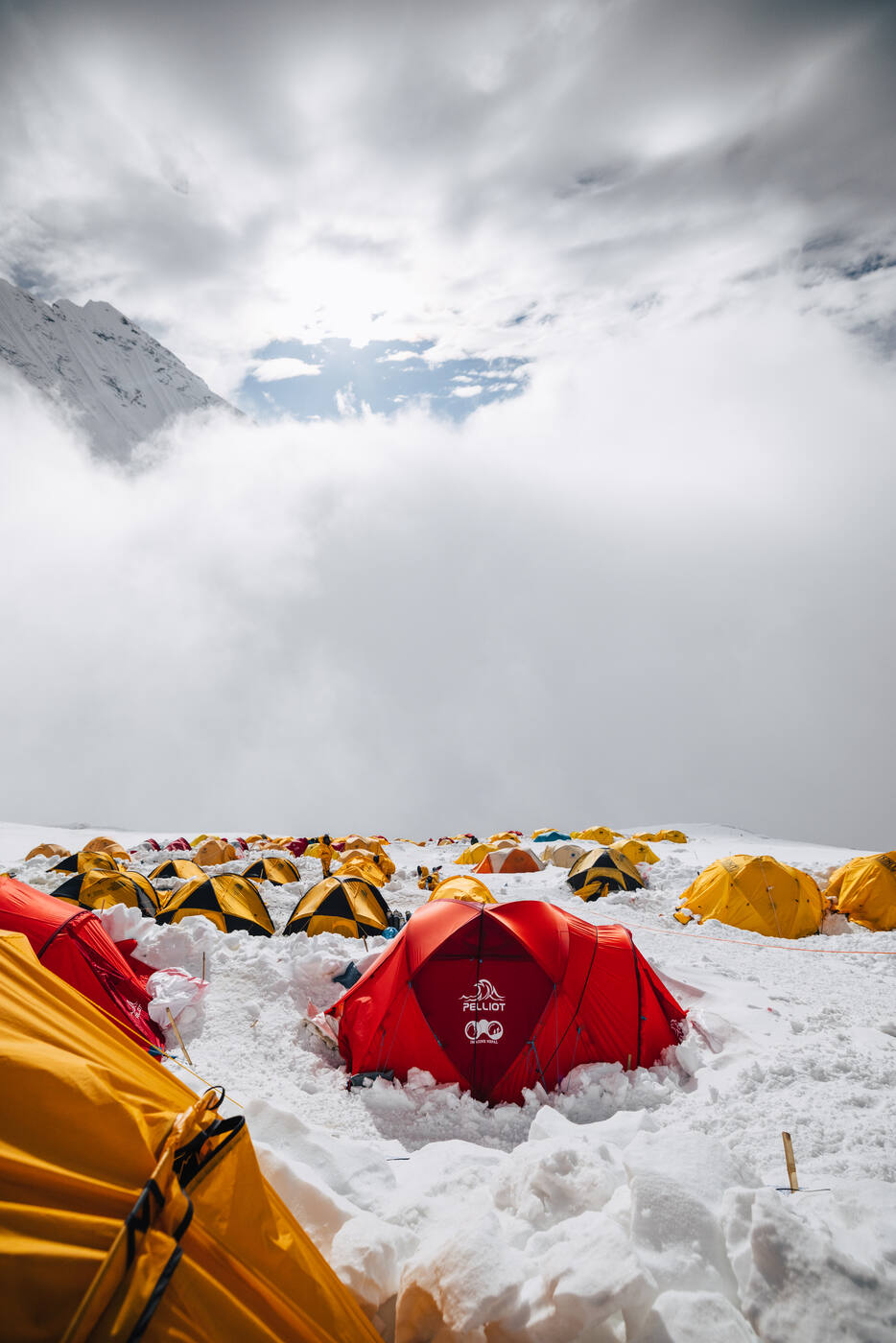
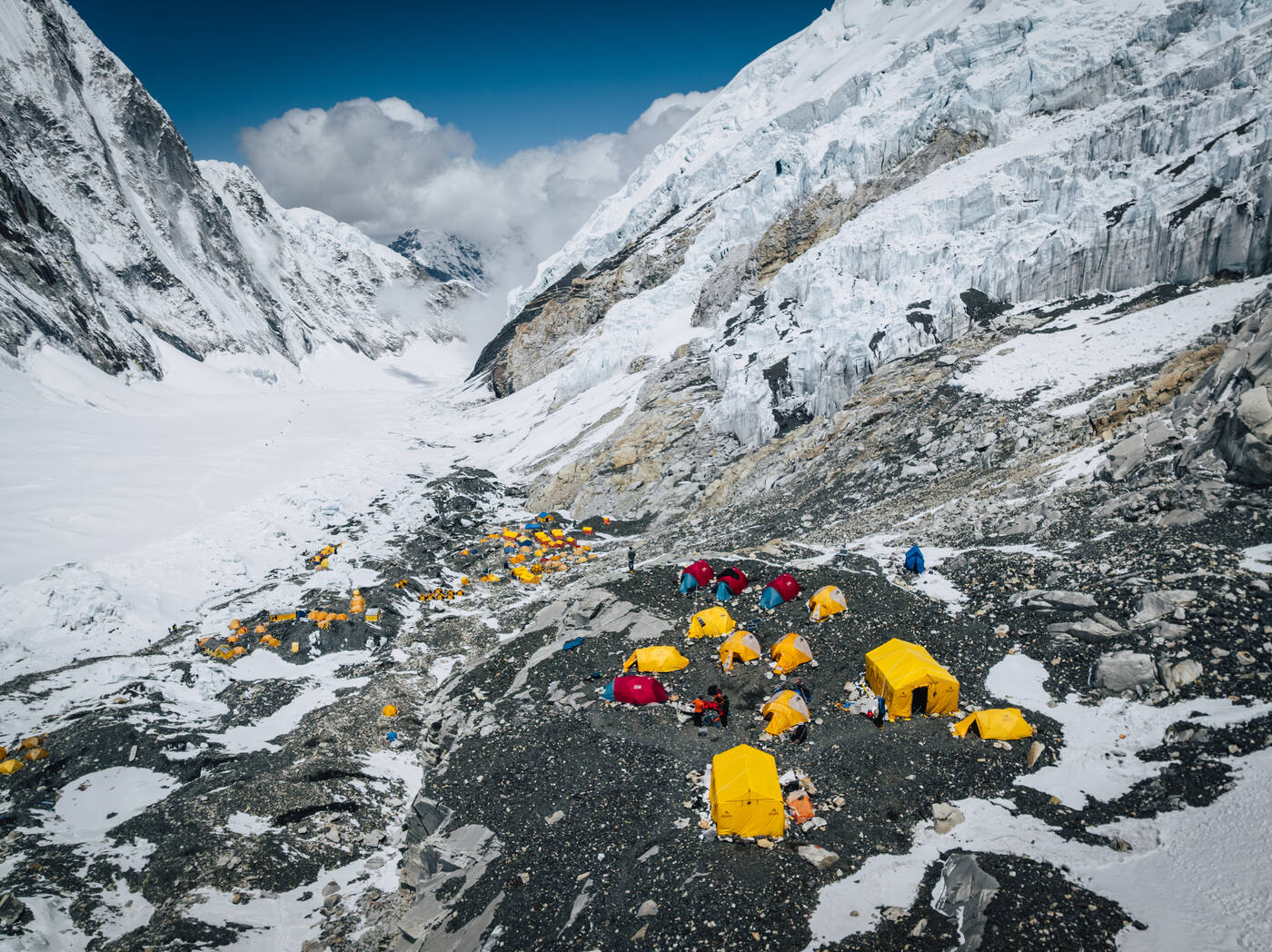
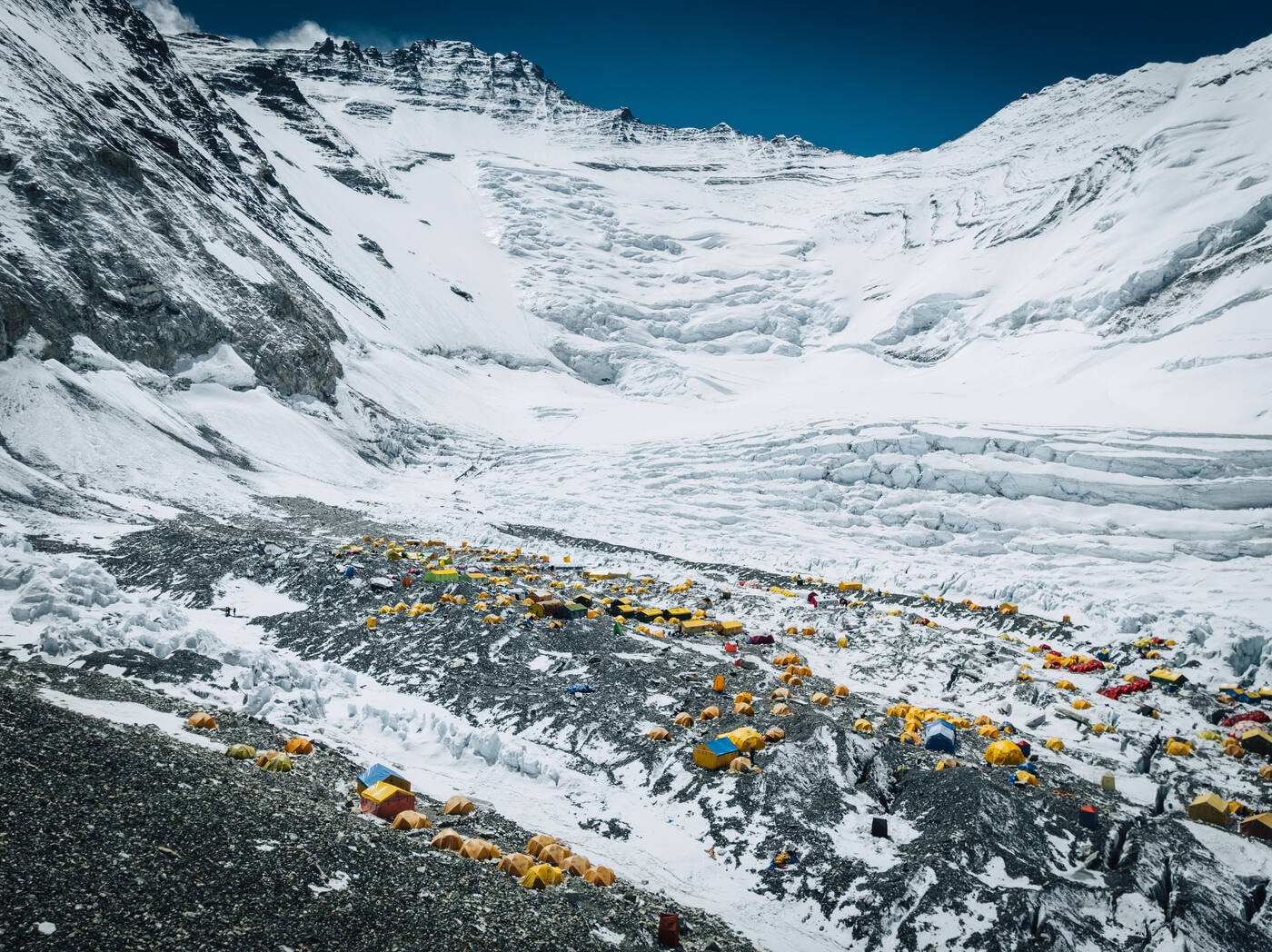
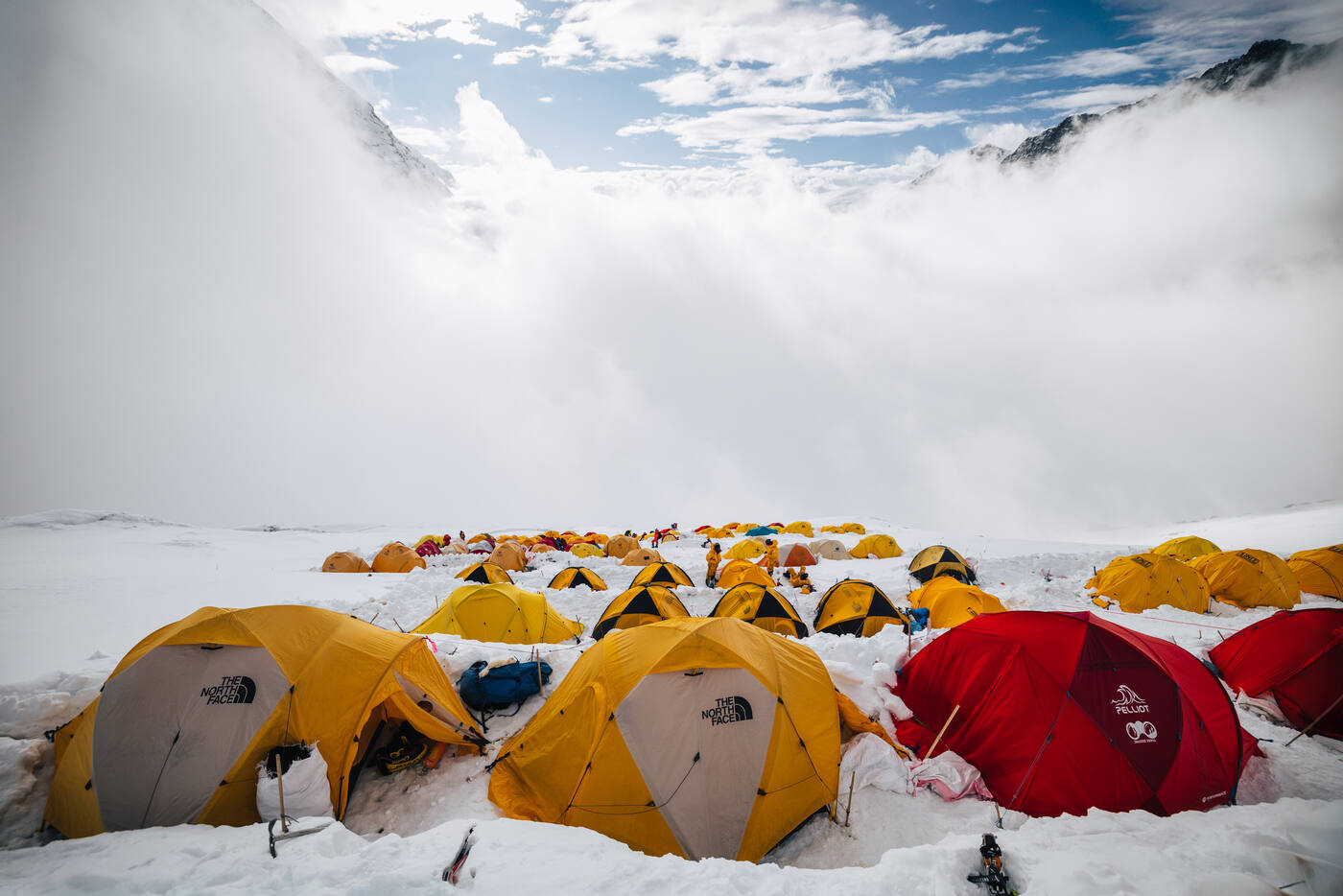
Base Camp is a temporary city built on ice. With 468 foreign climbing permits issued this season, the glacier was dotted with colorful tents, prayer flags snapping in the wind, and climbers from every corner of the globe. Mountain Professionals had set up a remarkably comfortable home: individual sleeping tents with proper mattresses, a heated dining tent, a geodesic dome hangout space, a kitchen turning out fresh meals three times a day, dedicated shower and toilet tents, and Starlink keeping us connected to the world.
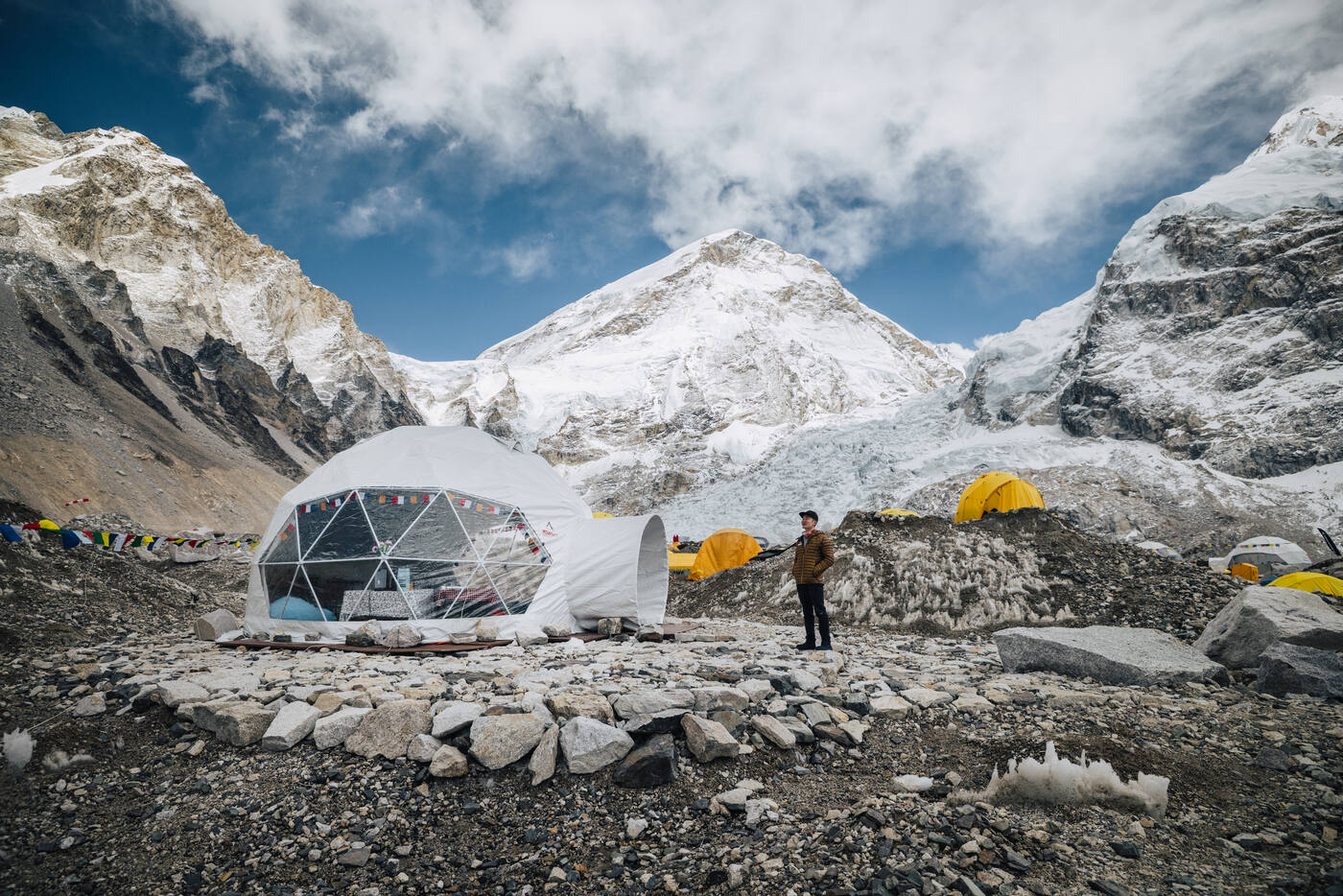
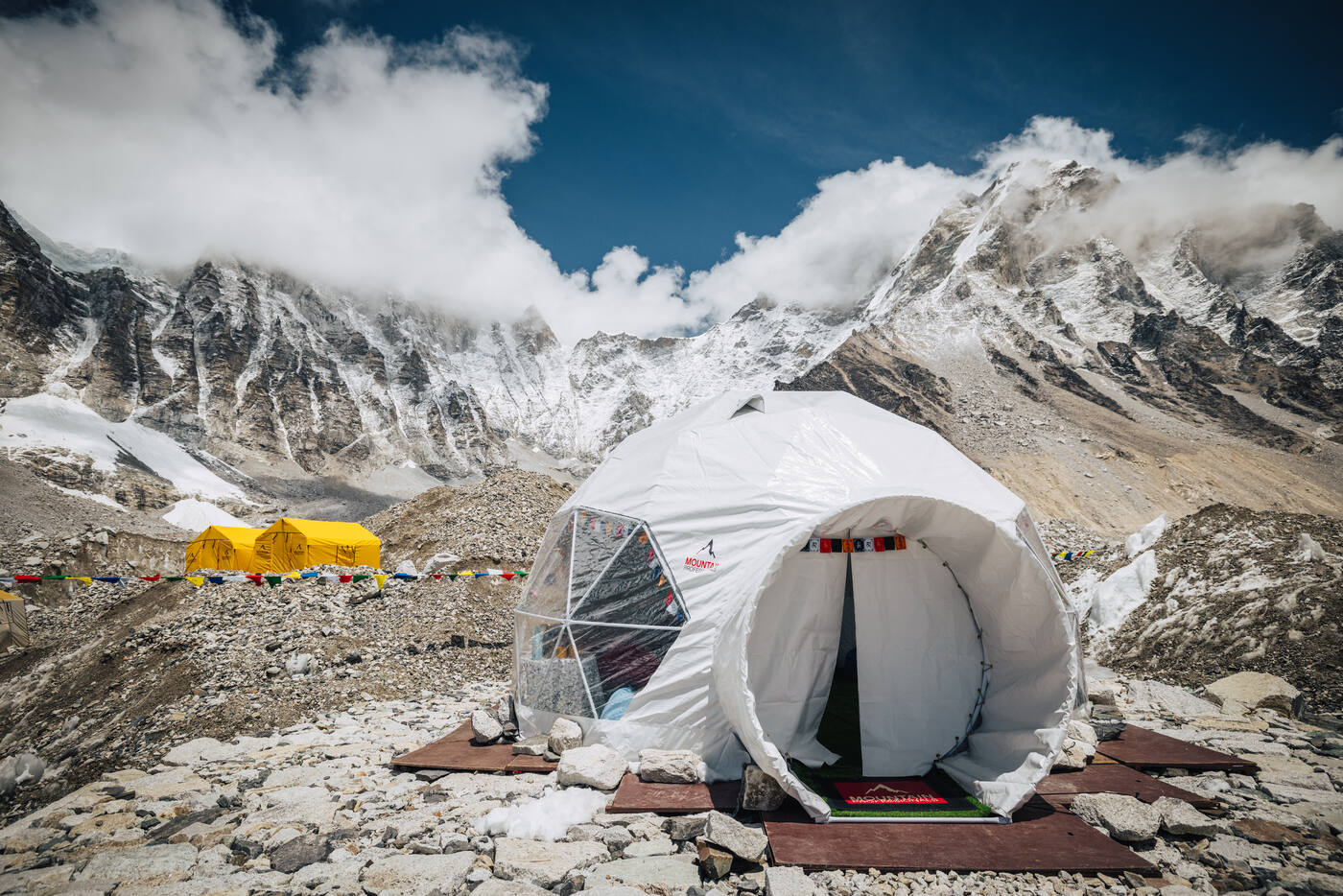
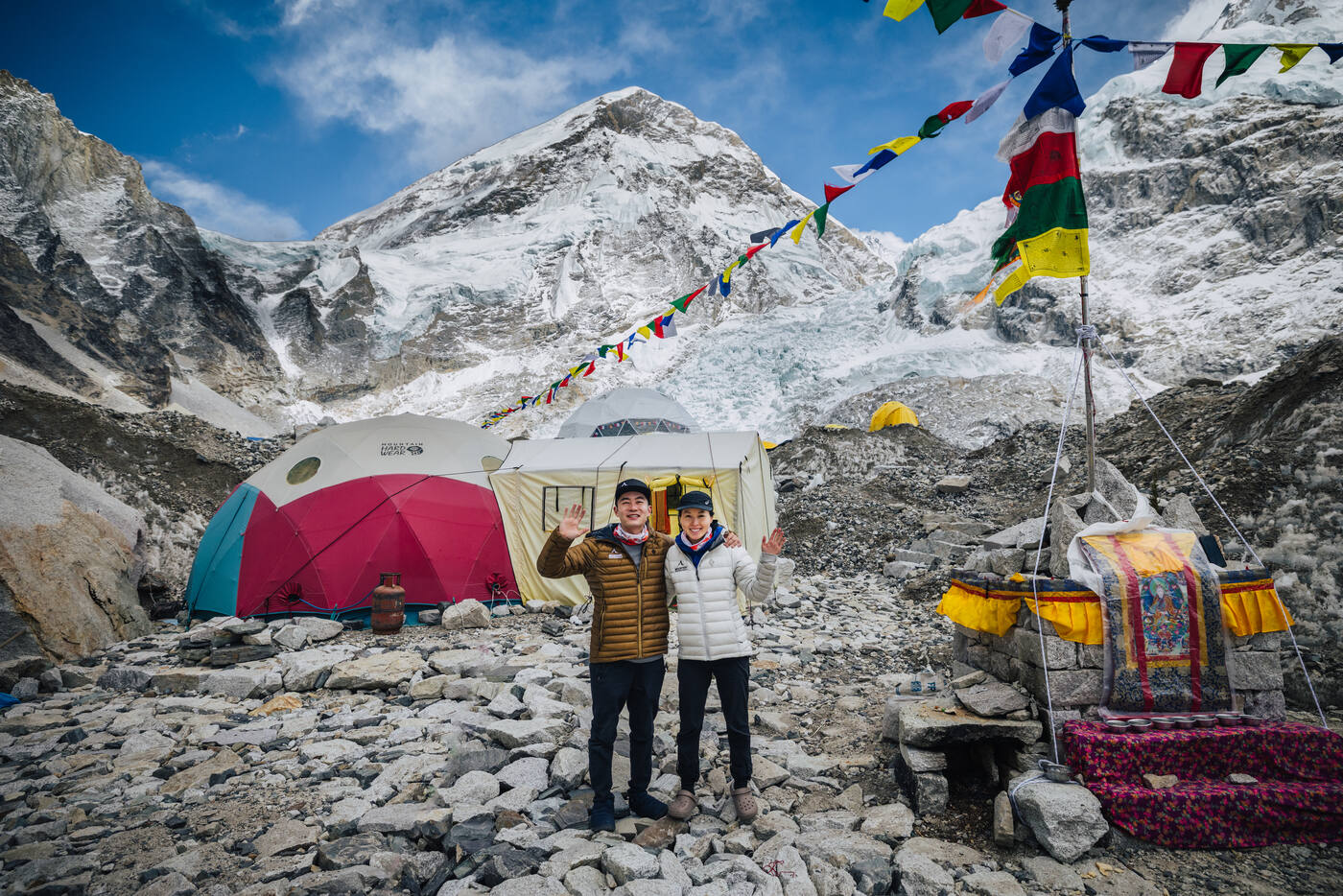
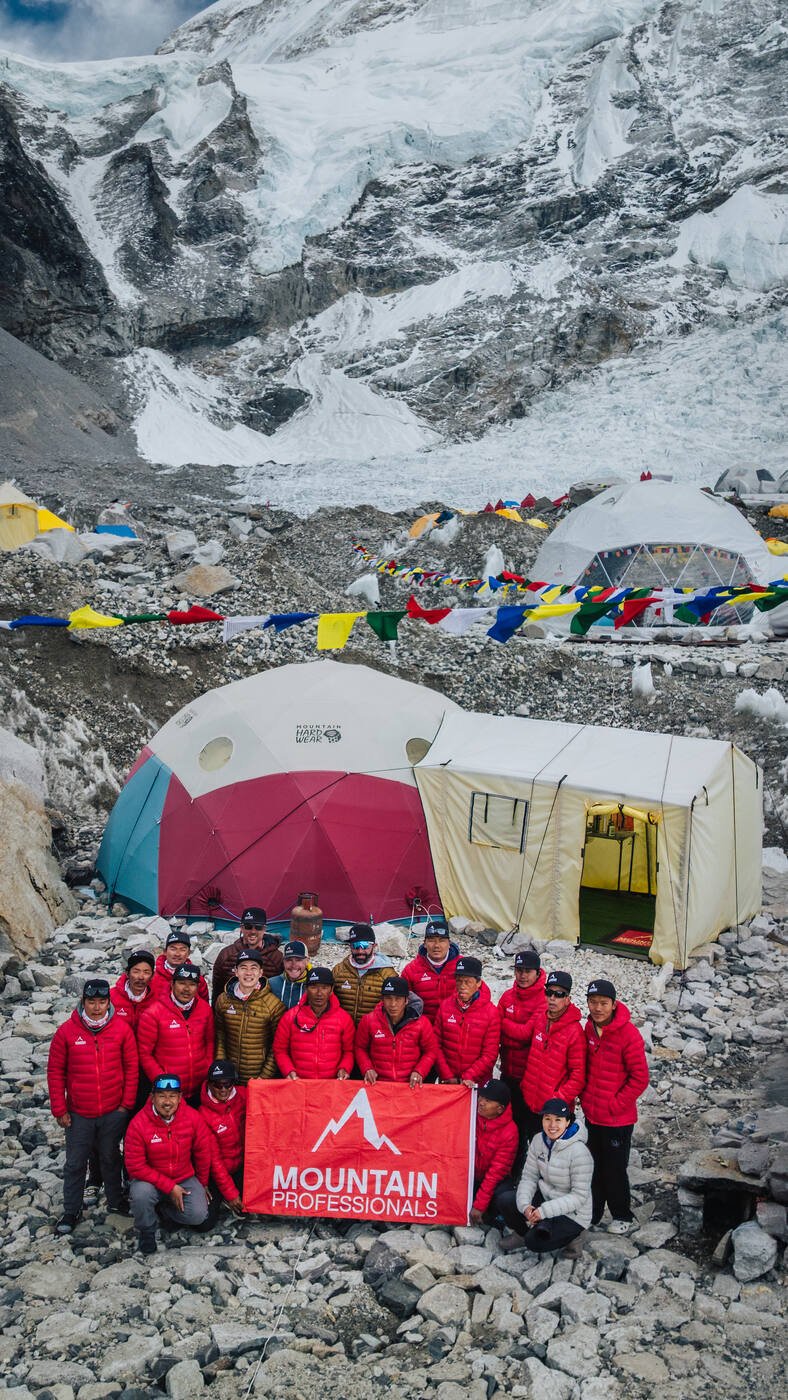
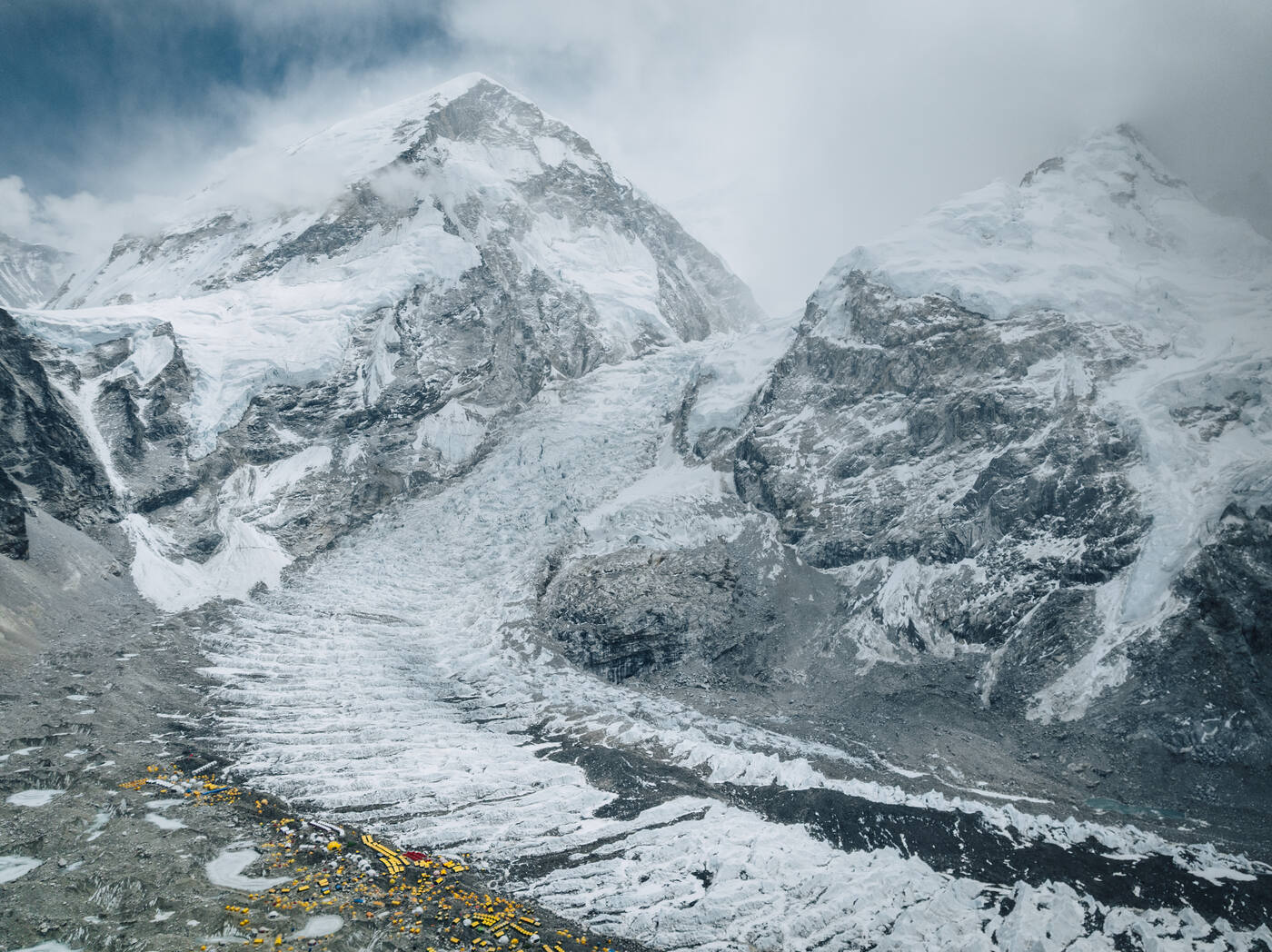
The Mountain Professionals dome tent. The Khumbu Icefall looming right behind camp.Camp setup. Individual sleeping tents, dining tent, and the dome all positioned with precision.
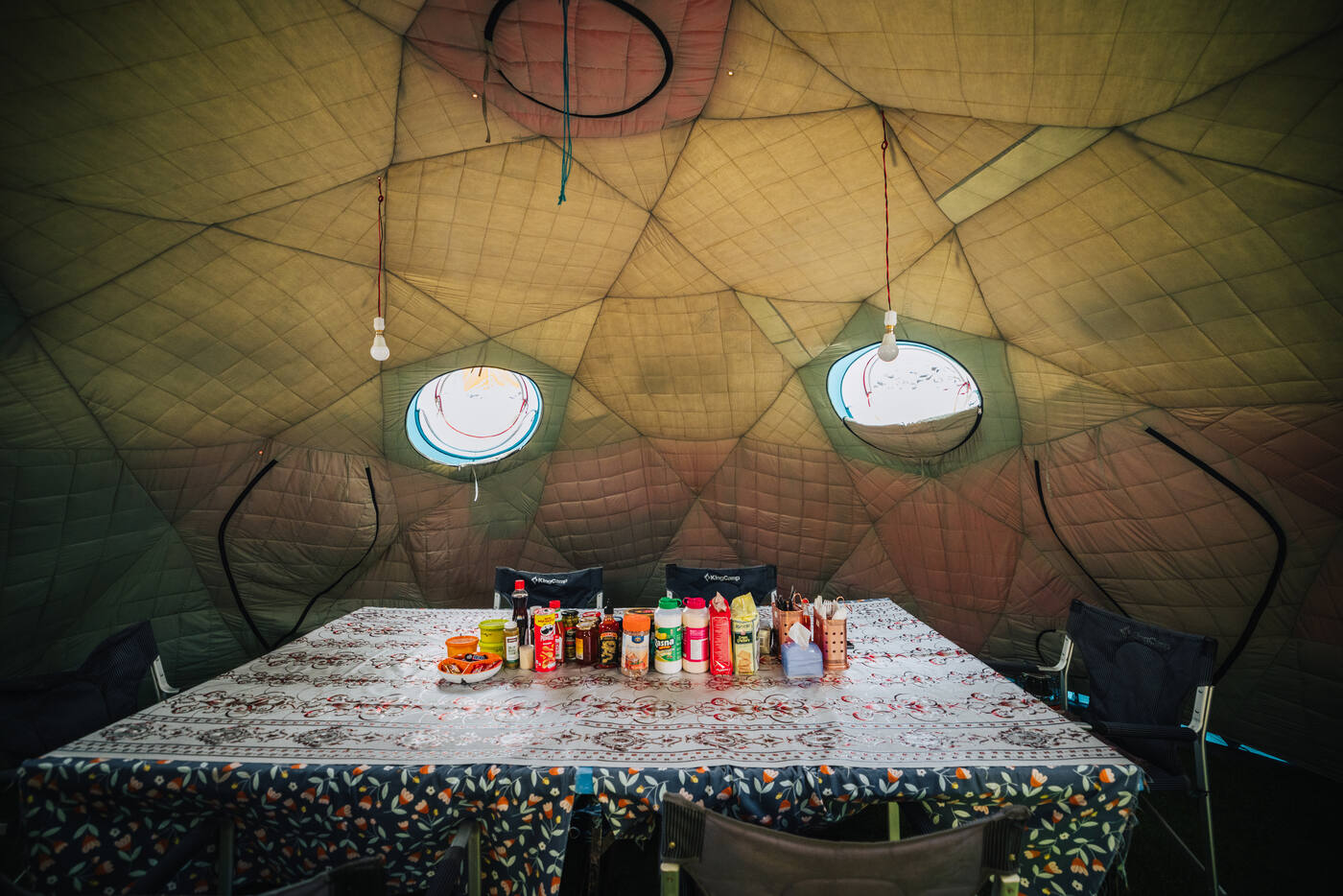
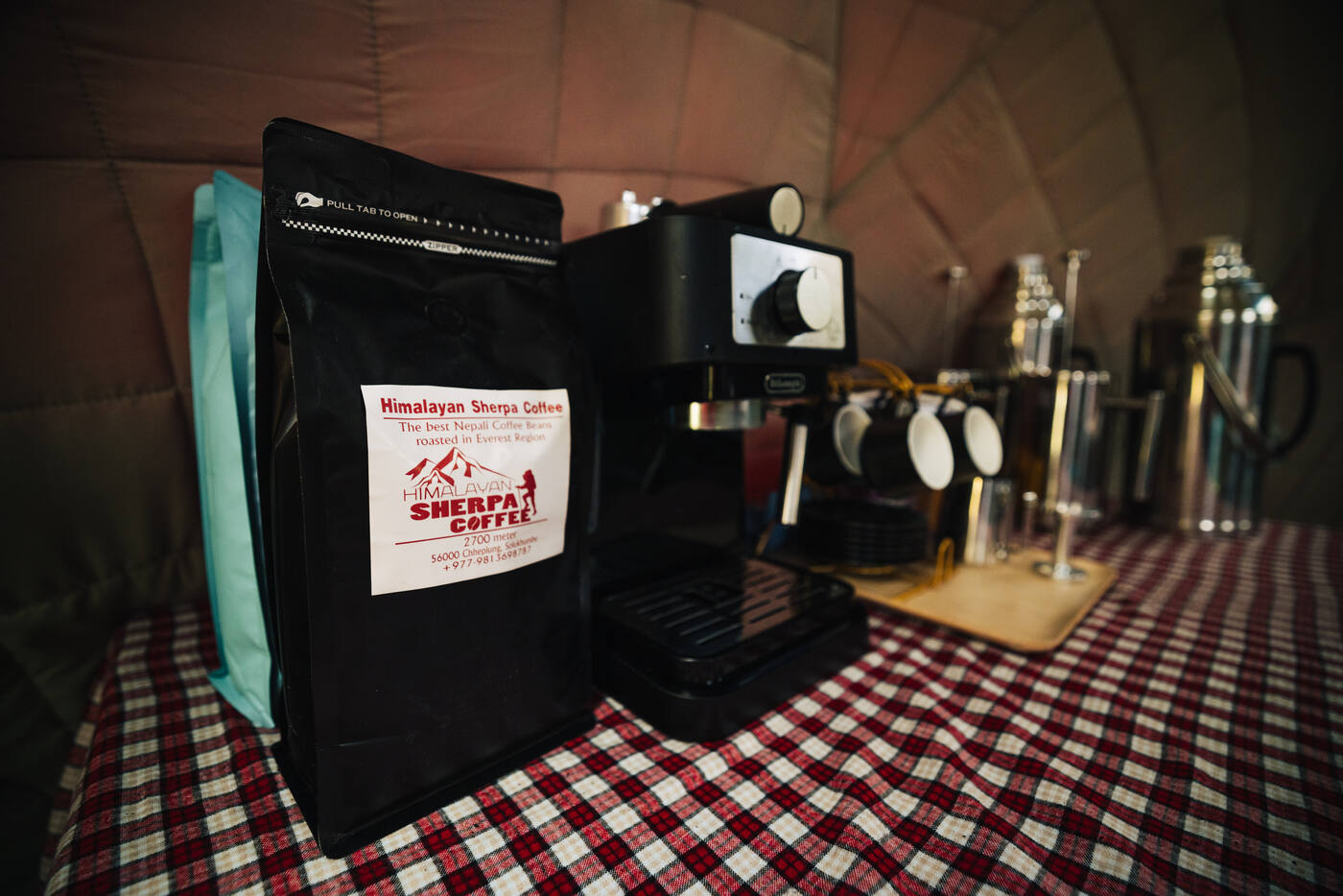
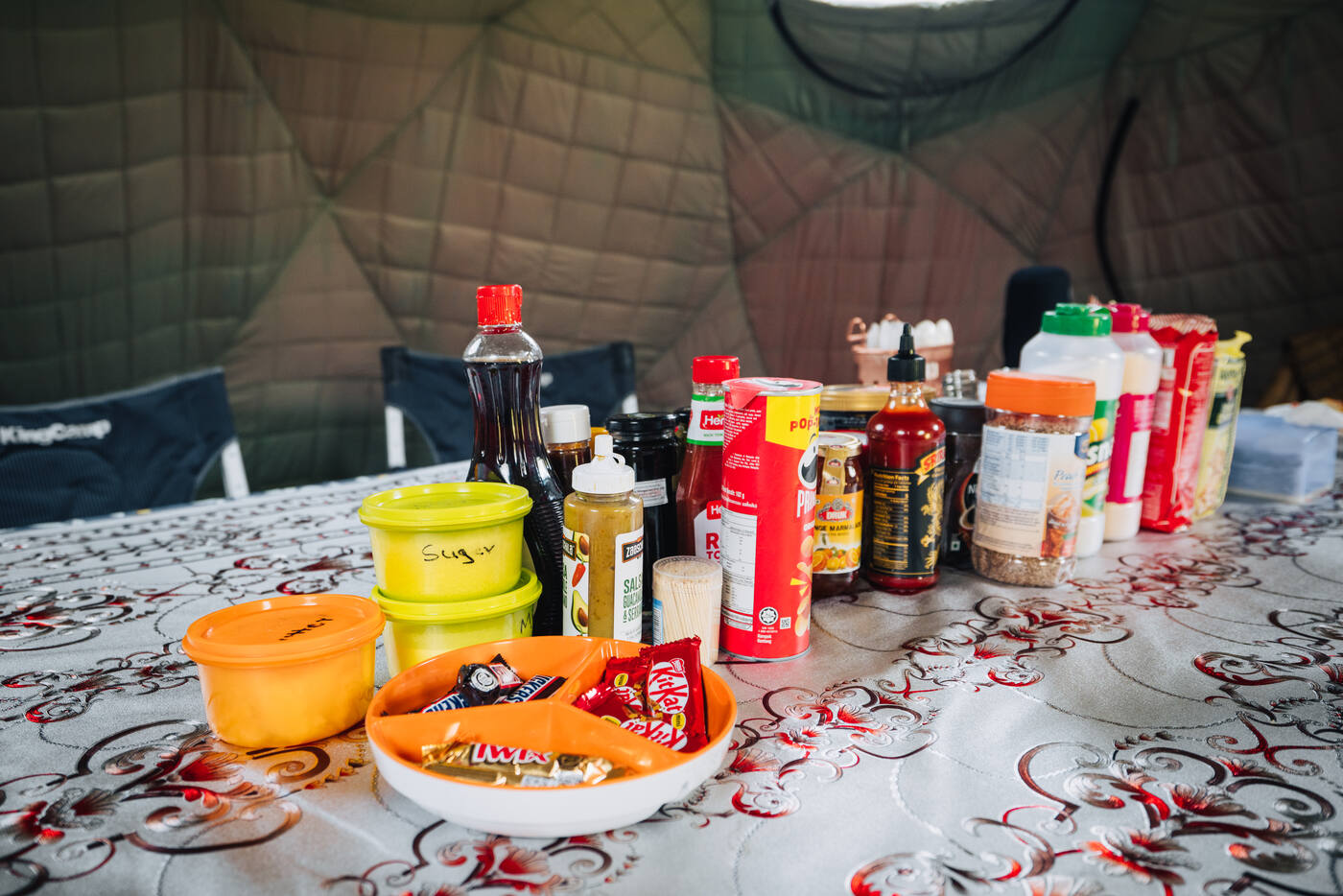
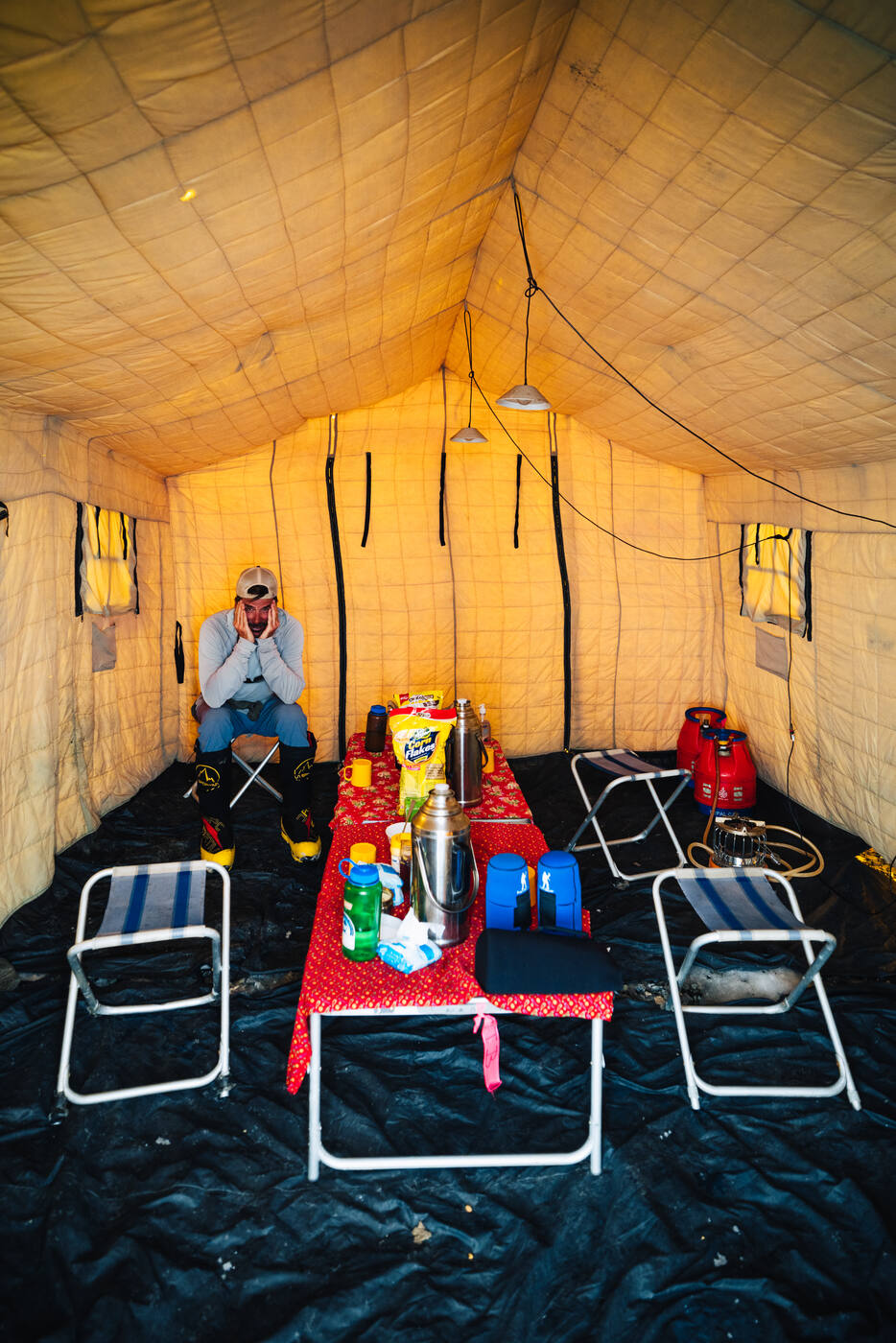
Inside the dining tent. Hot meals, condiments, and a tablecloth at 17,600 feet.The Mountain Professionals dome tent. Our communal hangout space at 17,600 feet.
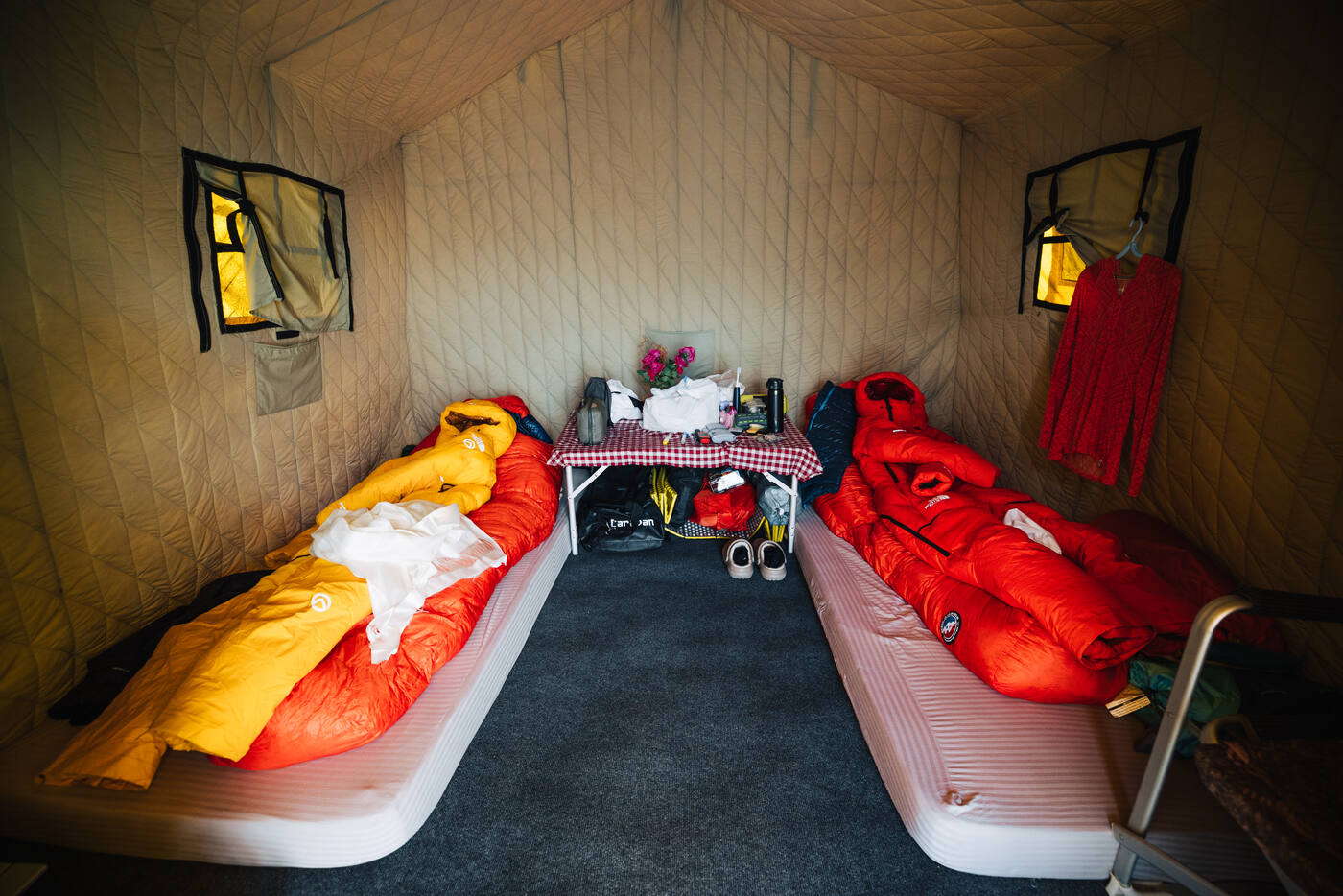
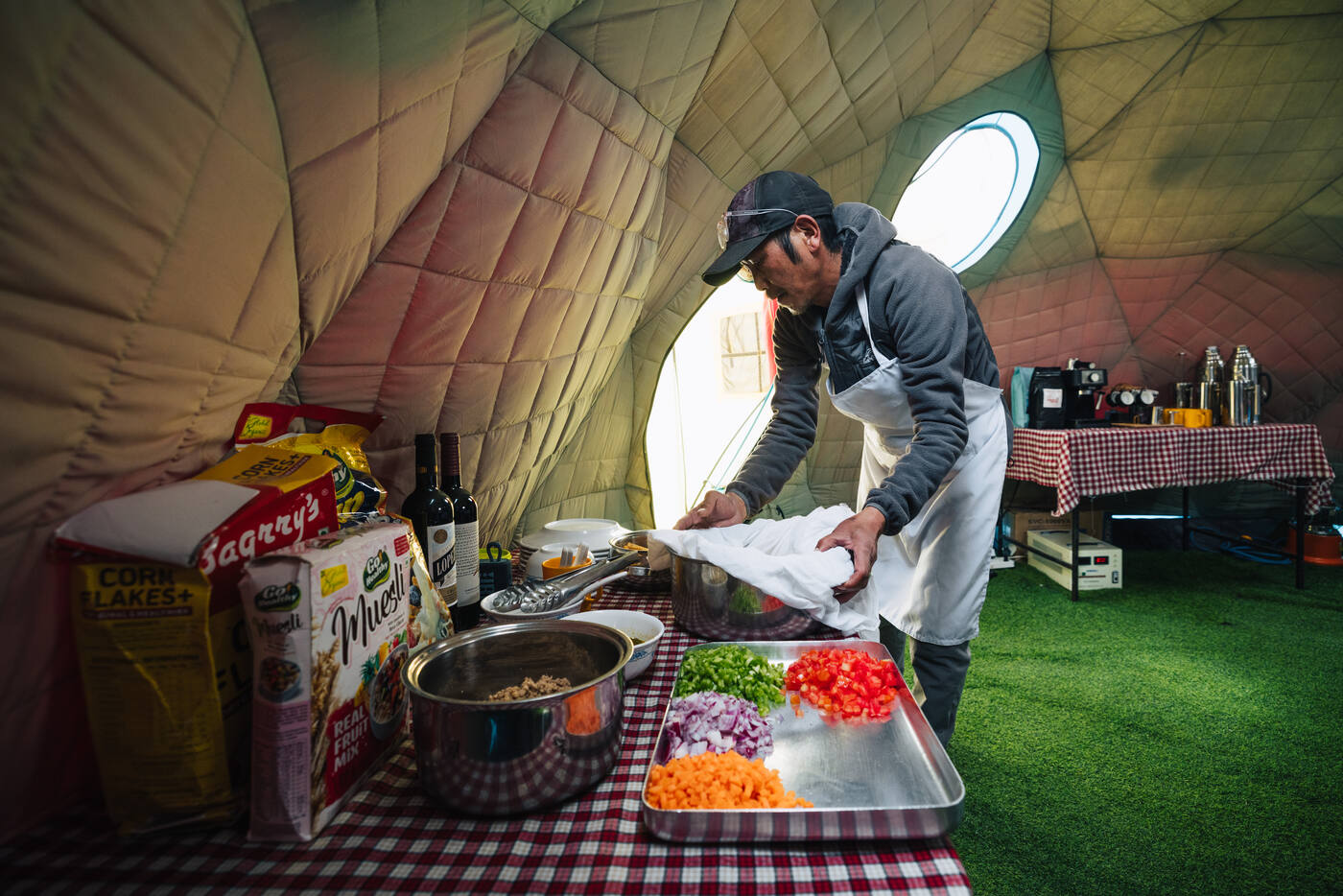
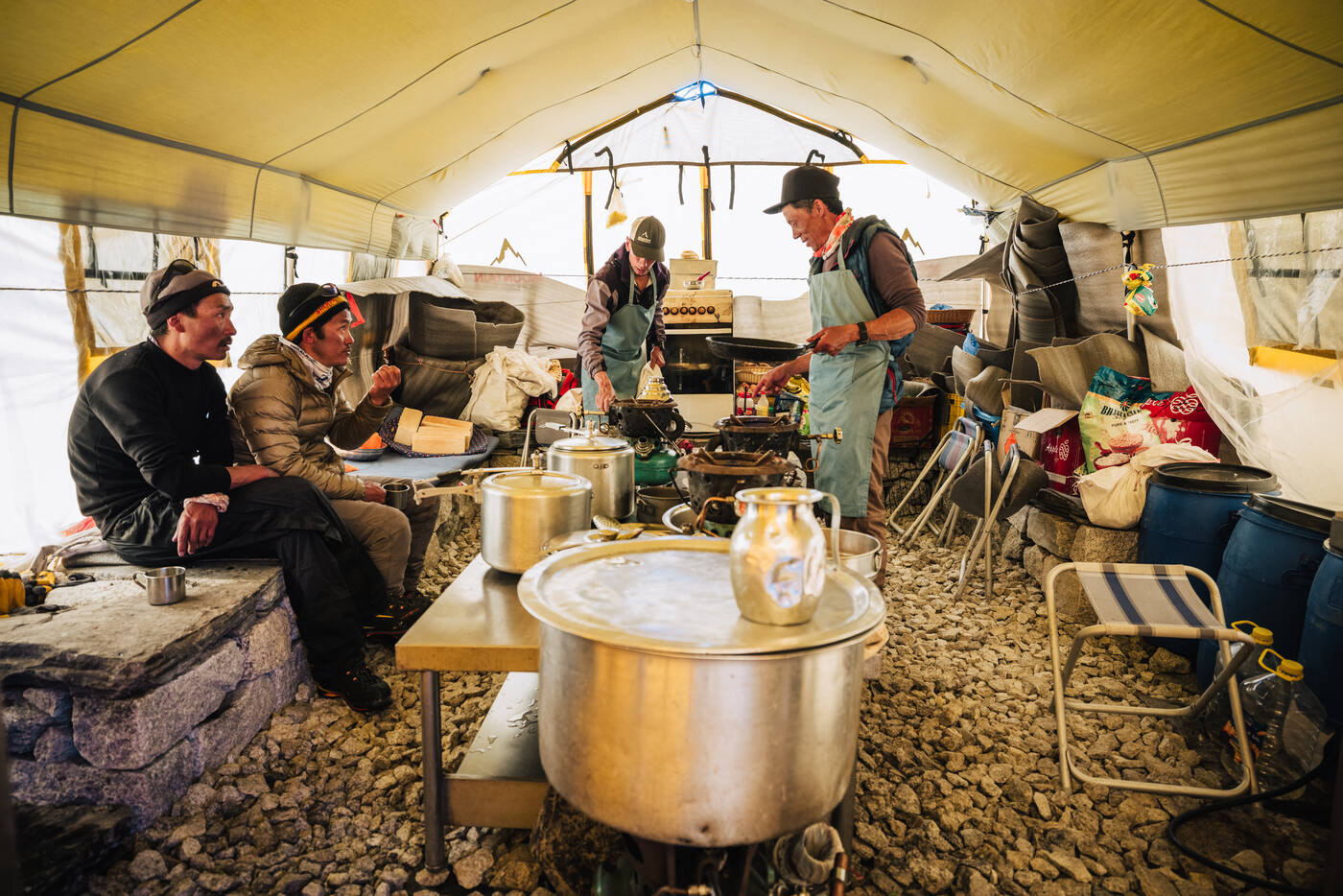
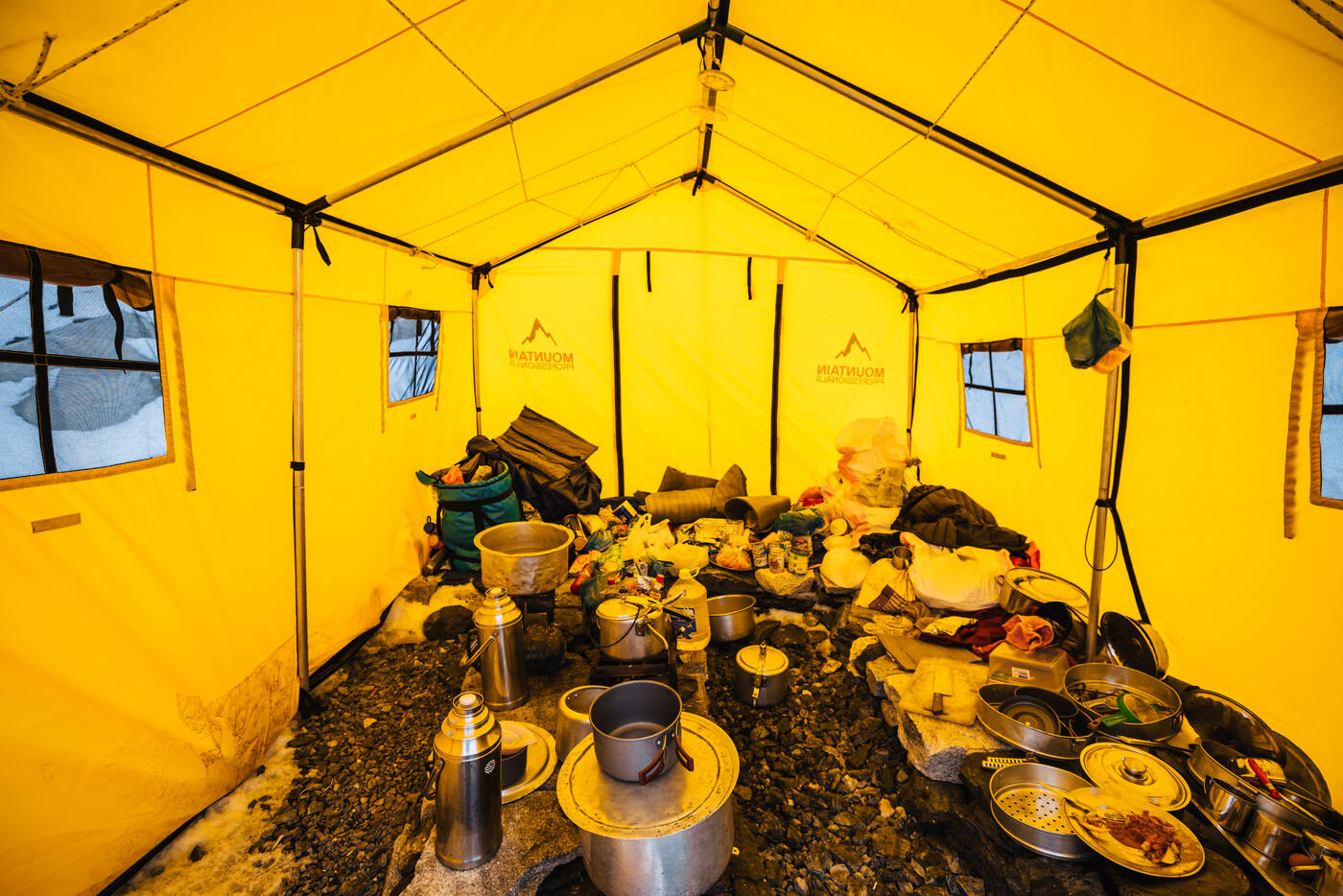
Our sleeping tent. Two cots, two down bags, and a bedside table on the glacier.The kitchen crew at work. Fresh meals three times a day, including baked goods. Essential for morale.
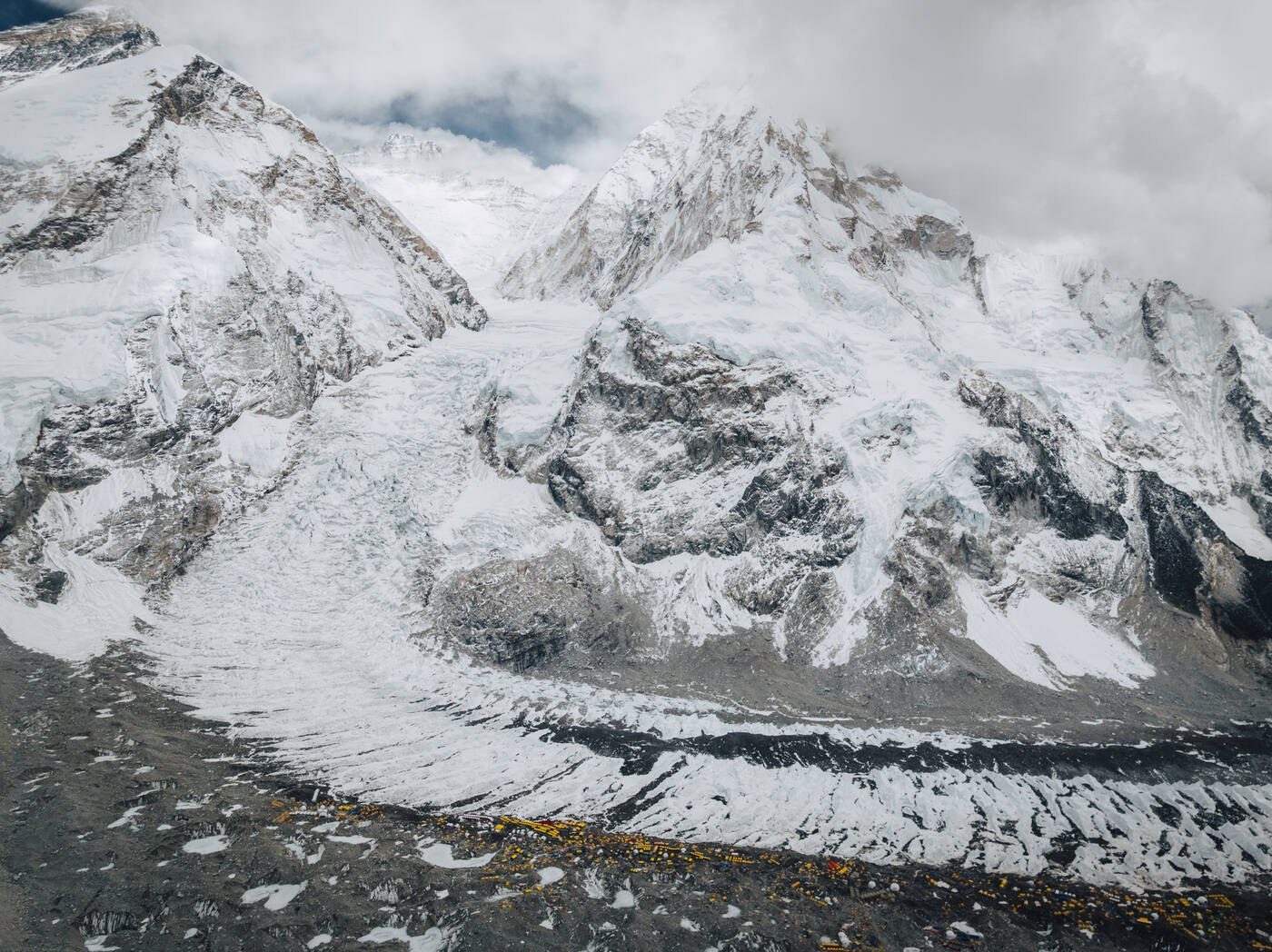
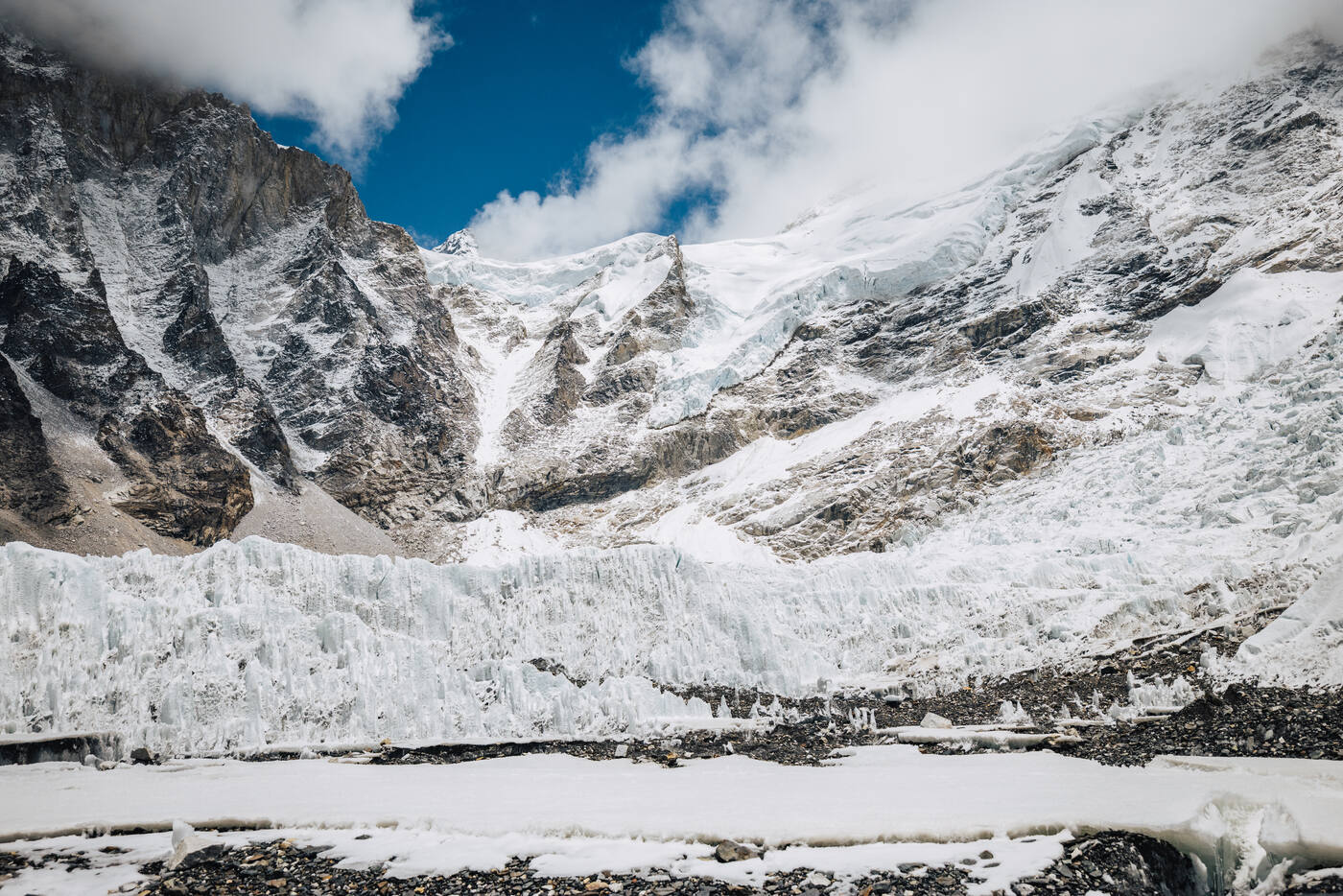
Our camp sat in a strategic spot close to the start of the Khumbu Icefall and away from the noise of the larger groups. Health checks showed oxygen saturation near 90%, which is excellent for 5,364m. Ryan and his team had dialed in every detail from our previous climbs together. The rhythm of expedition life had already begun.
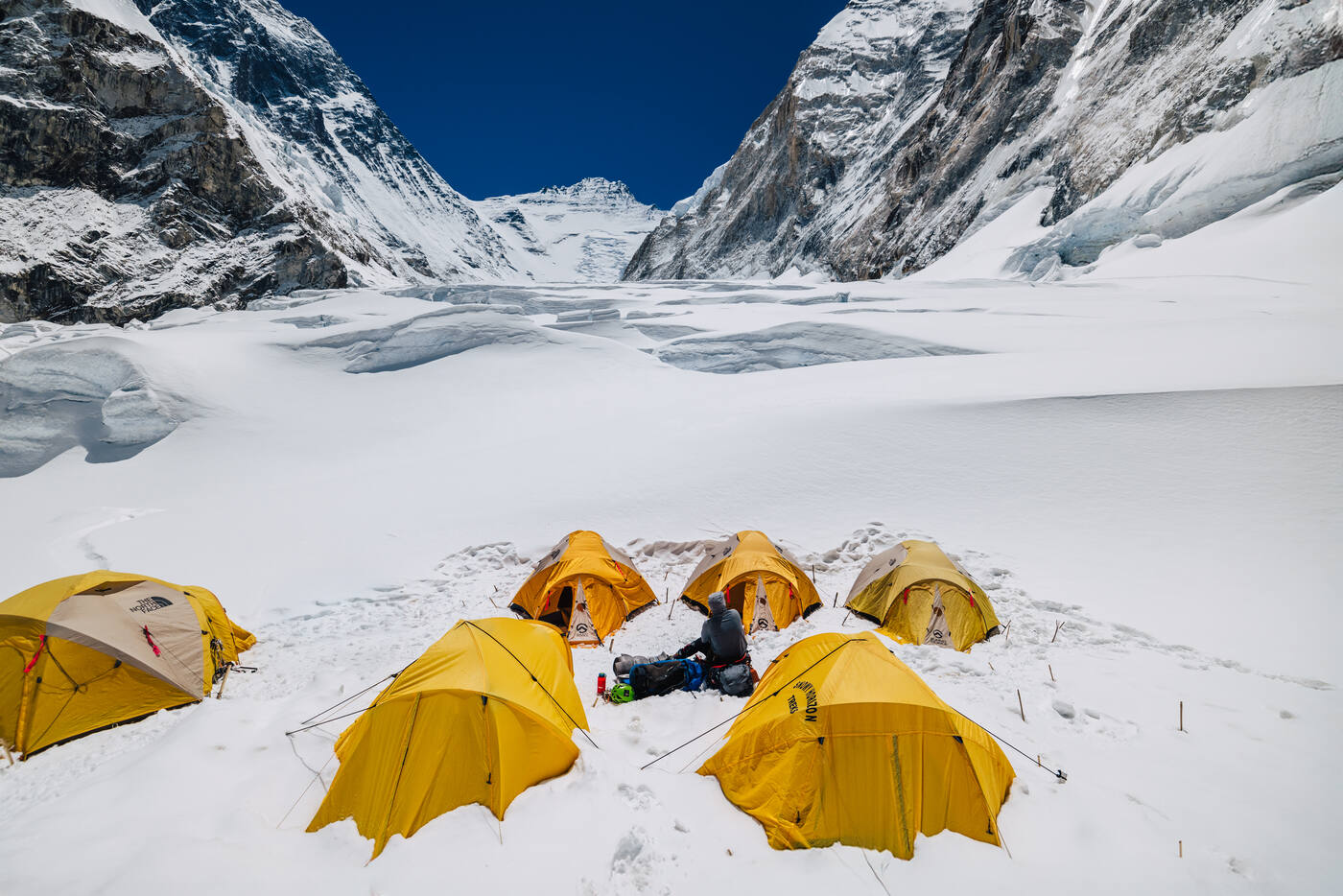
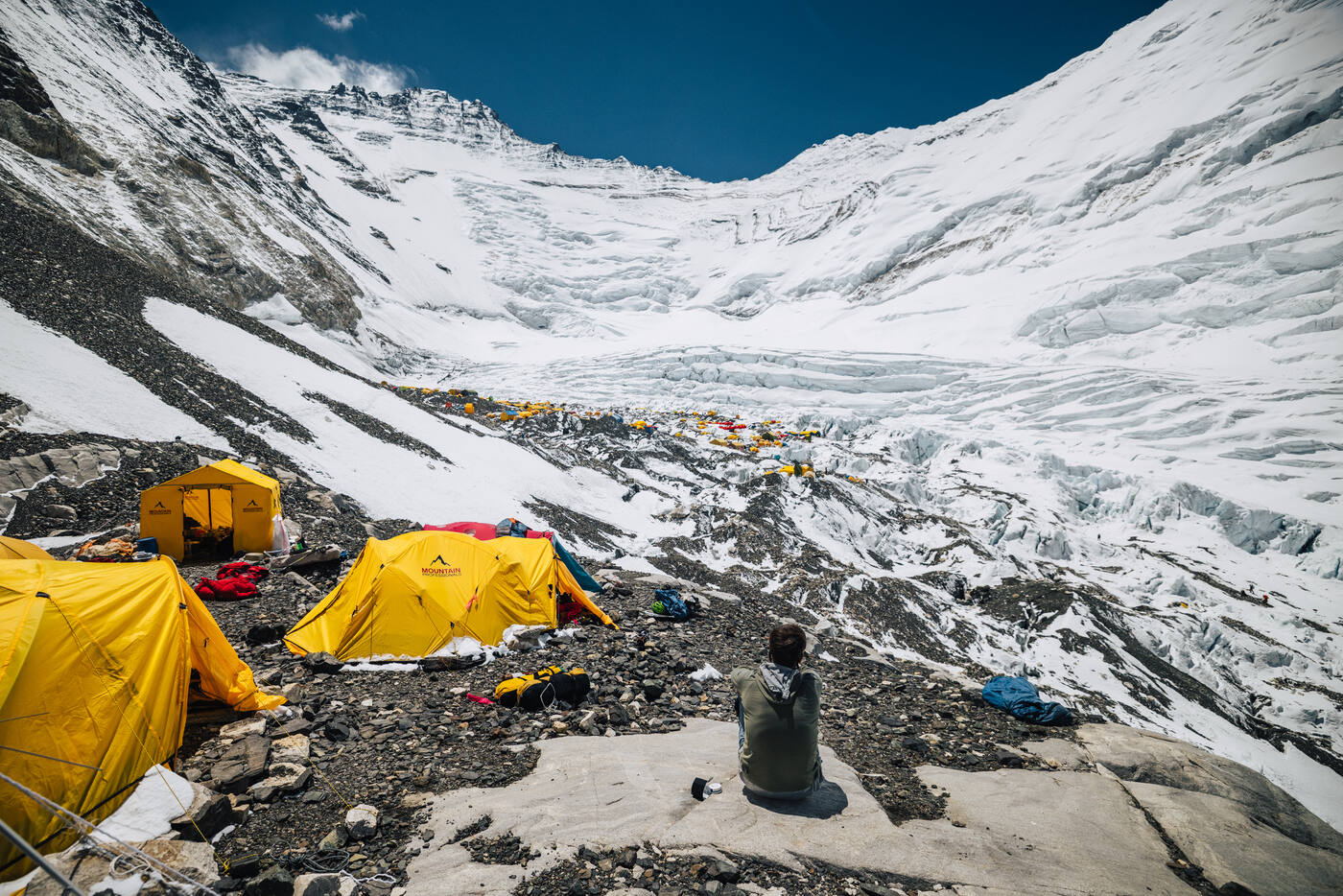
Our tents in the shadow of the Khumbu Icefall. The route through the frozen maze visible above.Home base. The dome tent became our living room, office, and card game headquarters.
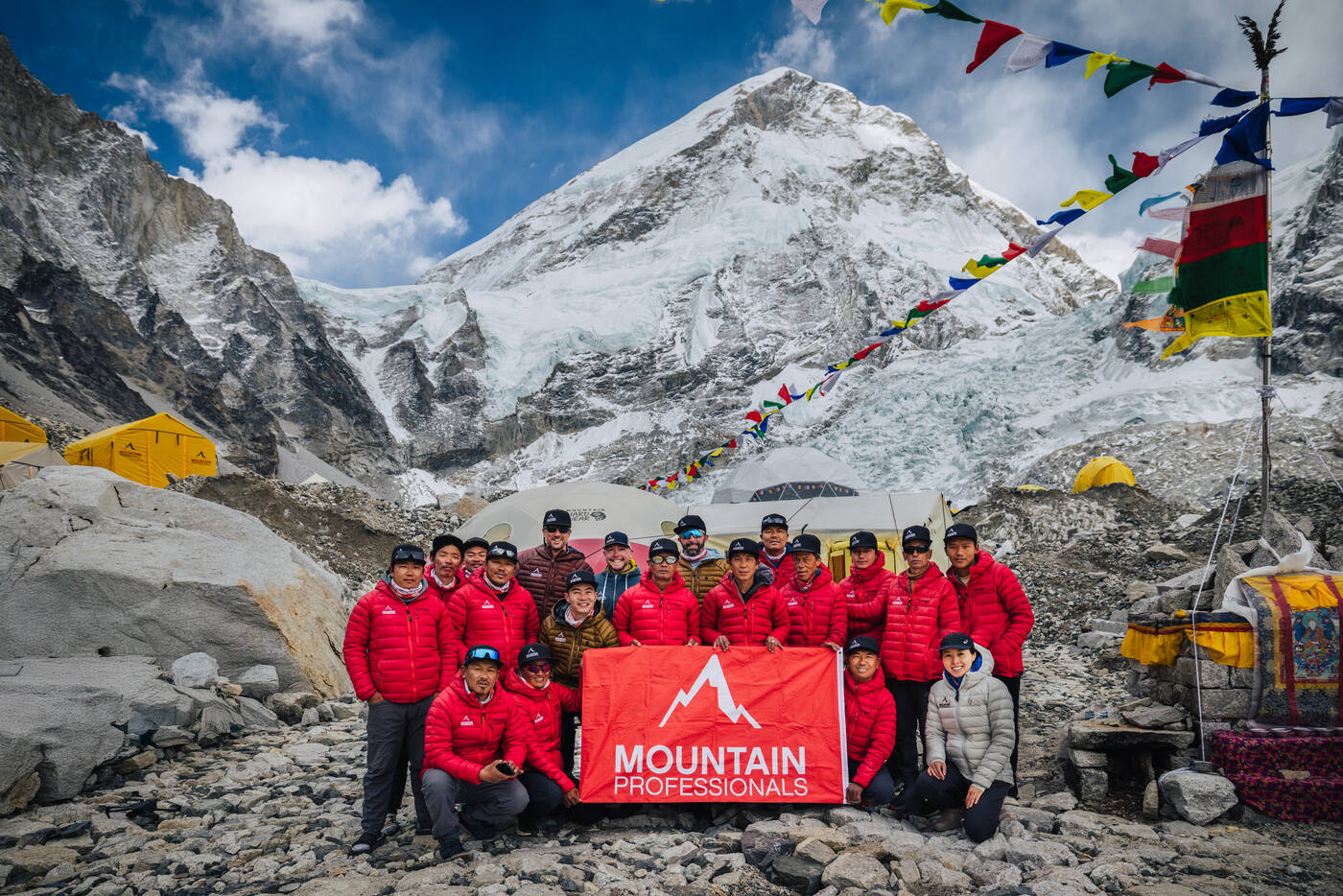
The full Mountain Professionals team. Guides, Sherpas, cooks, and climbers. Our family for the next month.Inside the dome. Bean bag chairs, artificial turf, and enough space to decompress between rotations.
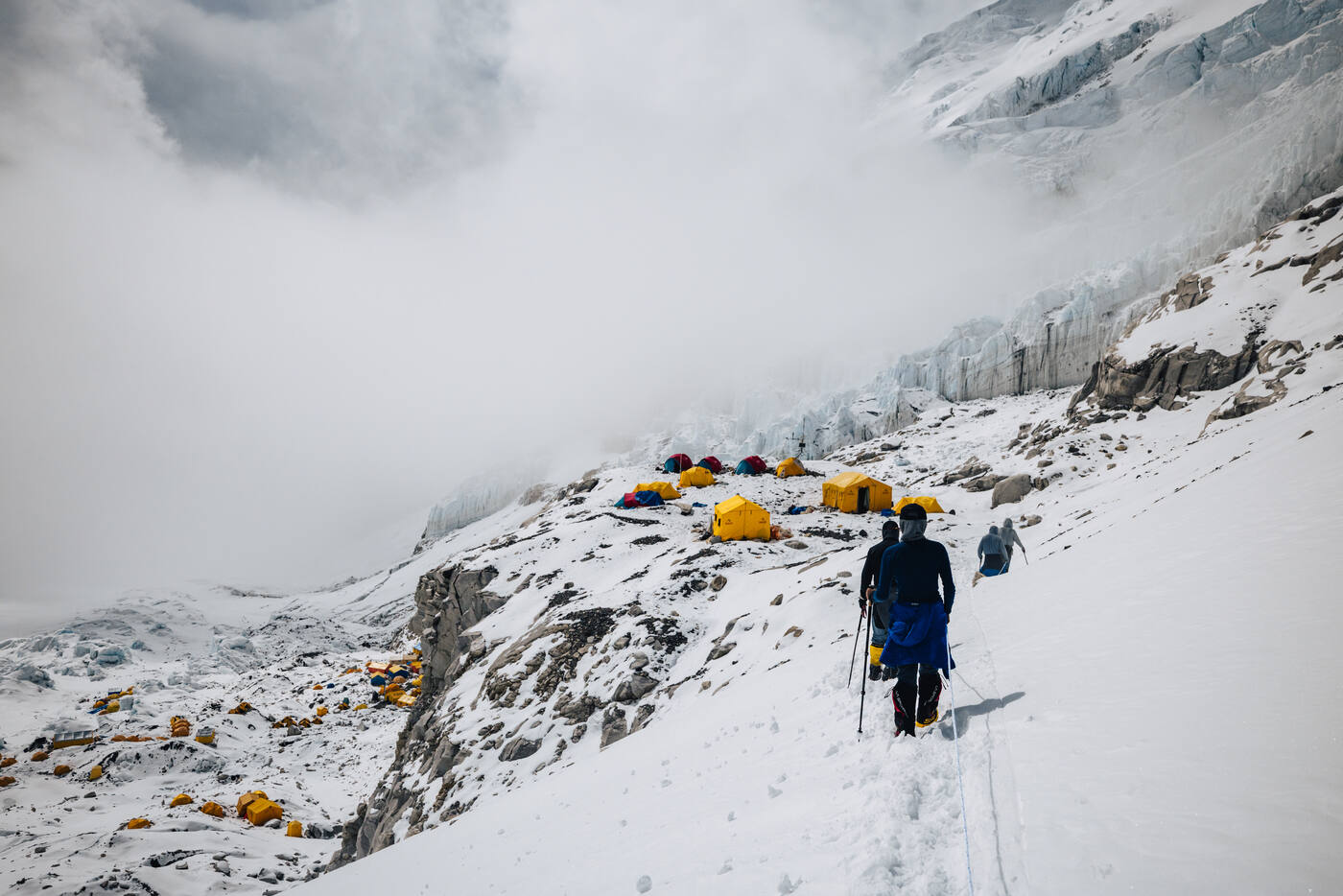
Base Camp from above. A temporary city of hundreds of tents on the Khumbu Glacier. 468 permits this season.Mountain Professionals camp. Our home during the endless wait for the weather window.The tent city on the glacier. 468 climbers waiting for the same narrow weather window.
Days 12–16: Rotation 1 – Lobuche East
April 21–25, 2025 · EBC → Lobuche → Lobuche East Summit (6,119 m / 20,075 ft)
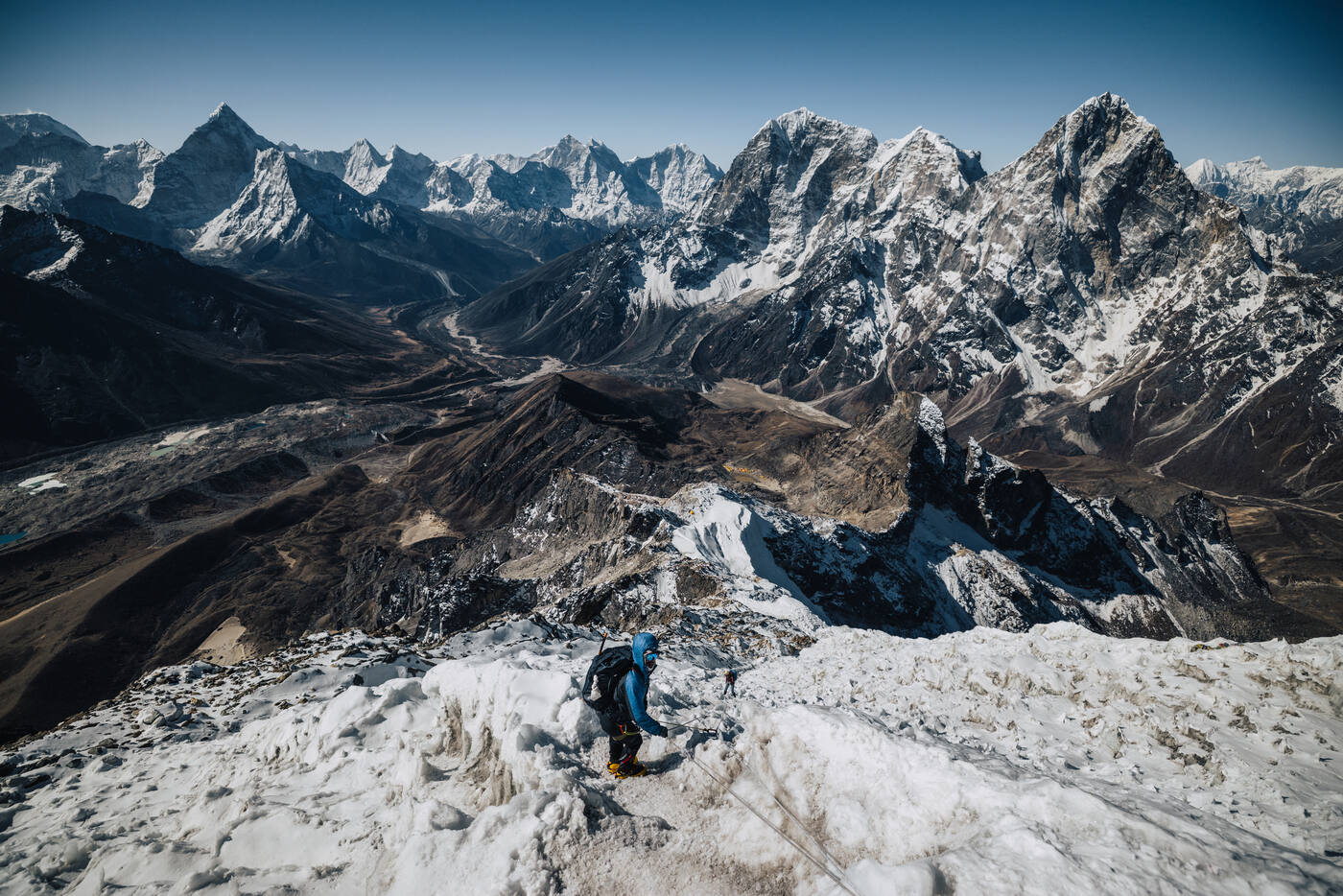
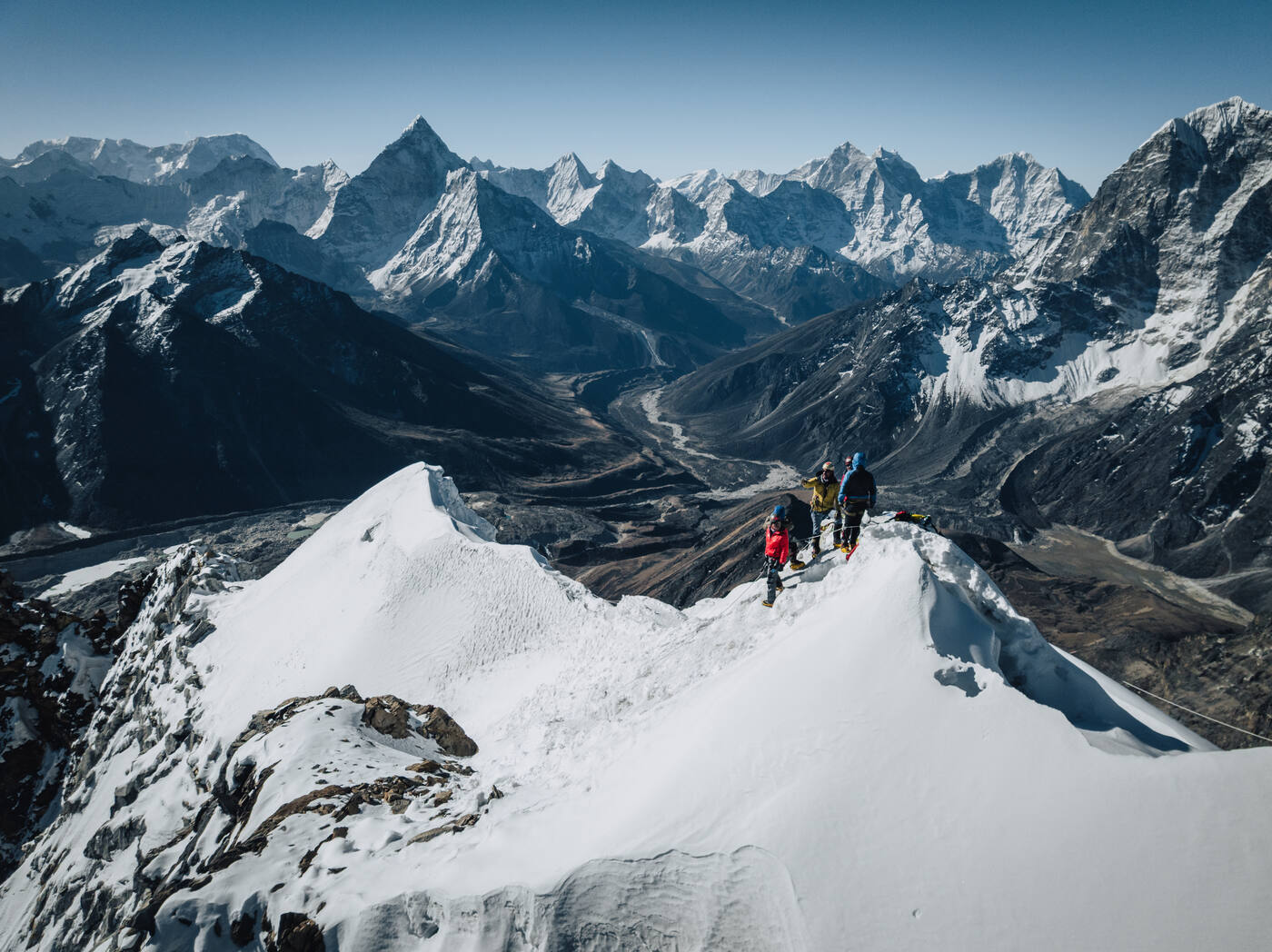
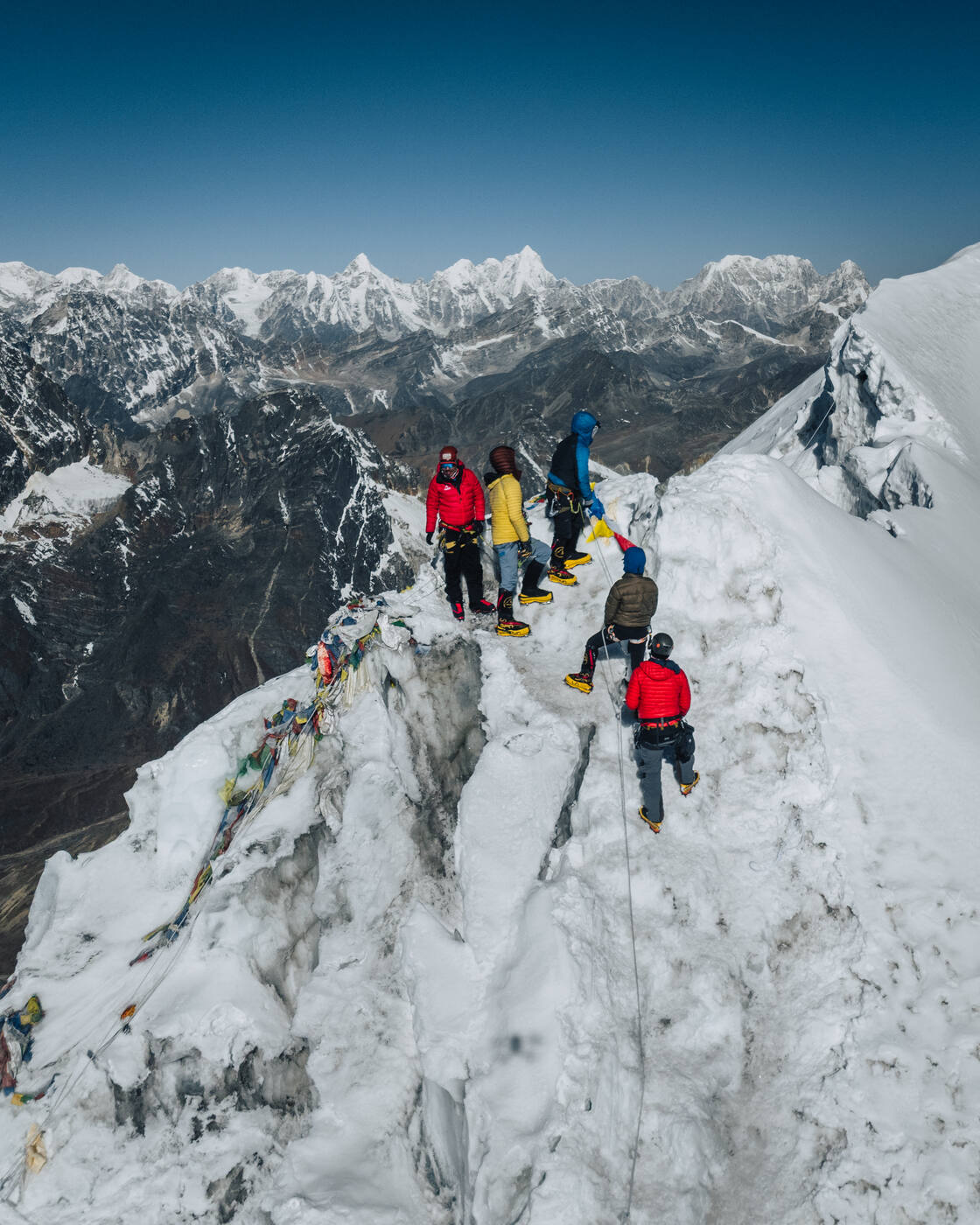
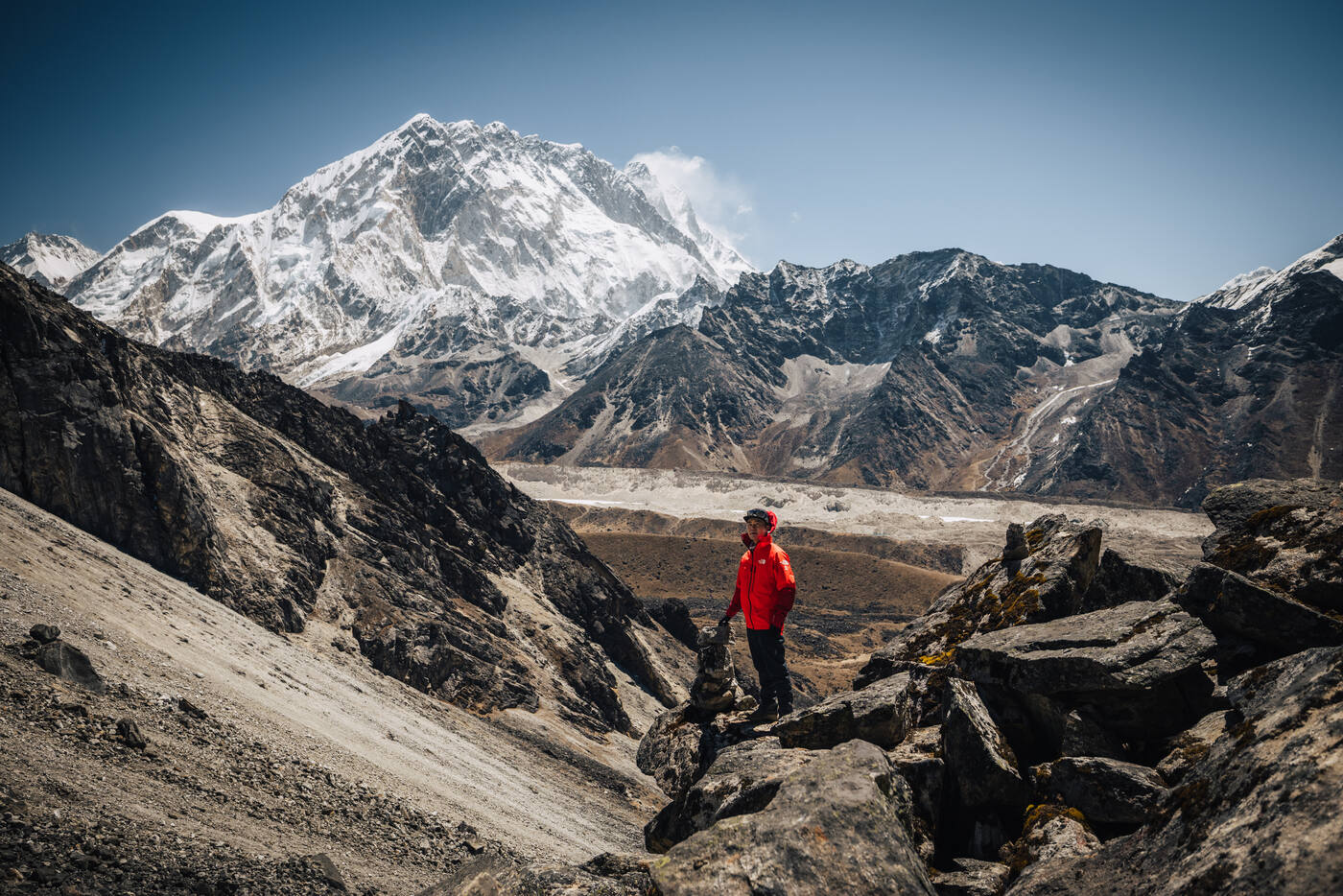
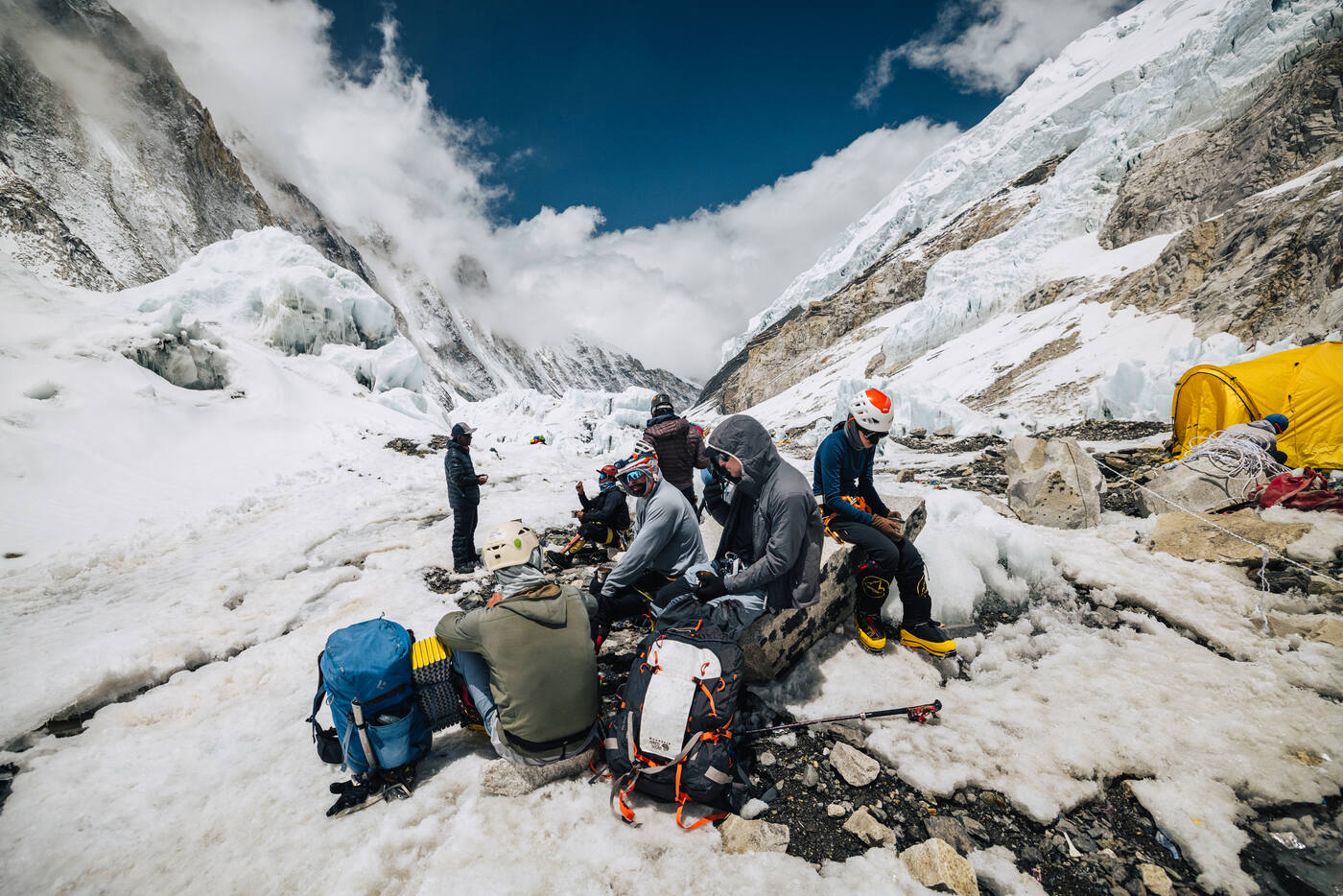
Our first acclimatization rotation took us away from Base Camp and up Lobuche East. This was our shakedown climb: test the gear, test the systems, test the team before committing to Everest's flanks. We trekked back down to Lobuche village, pushed up to High Camp, then started for the summit at 2 AM.
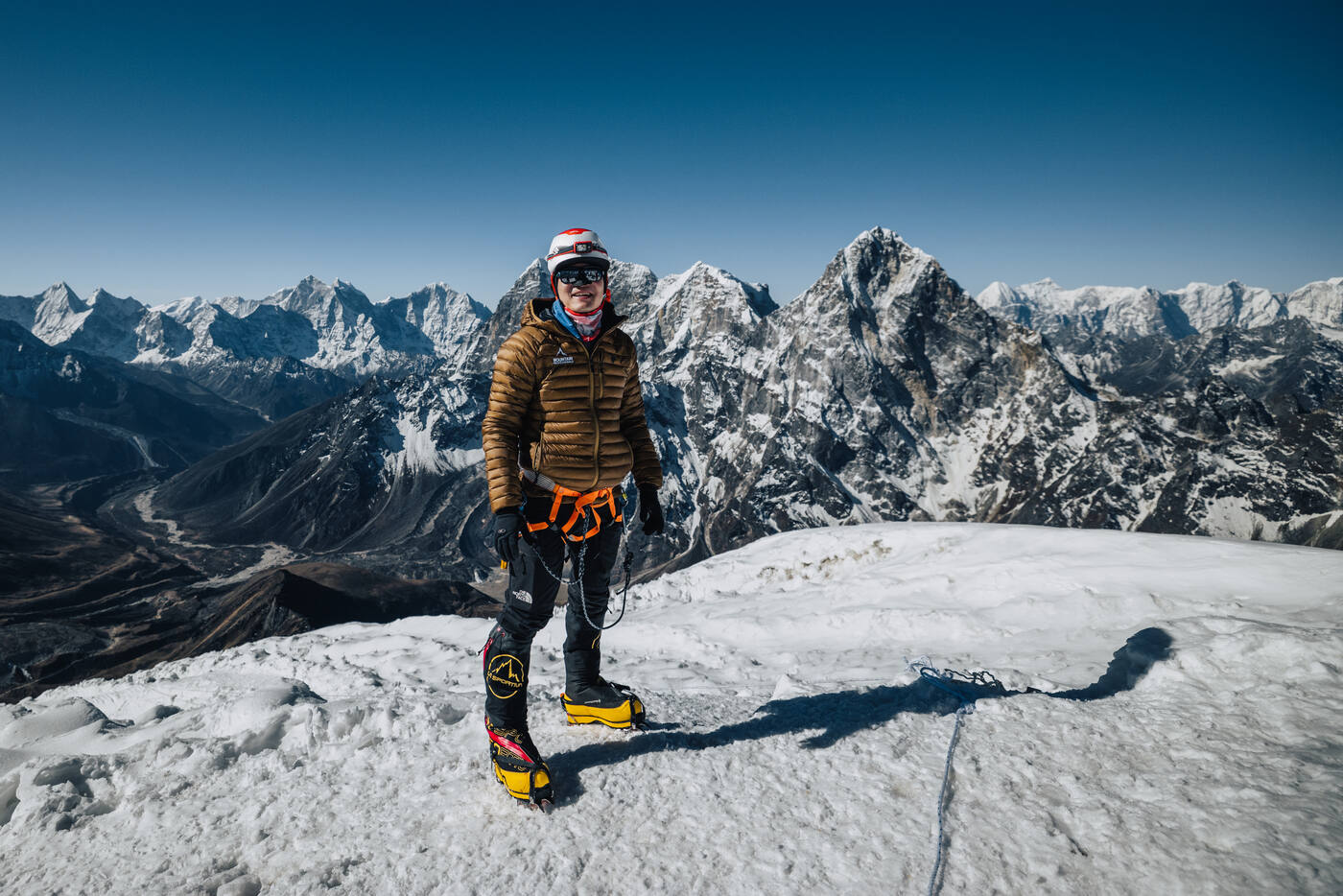
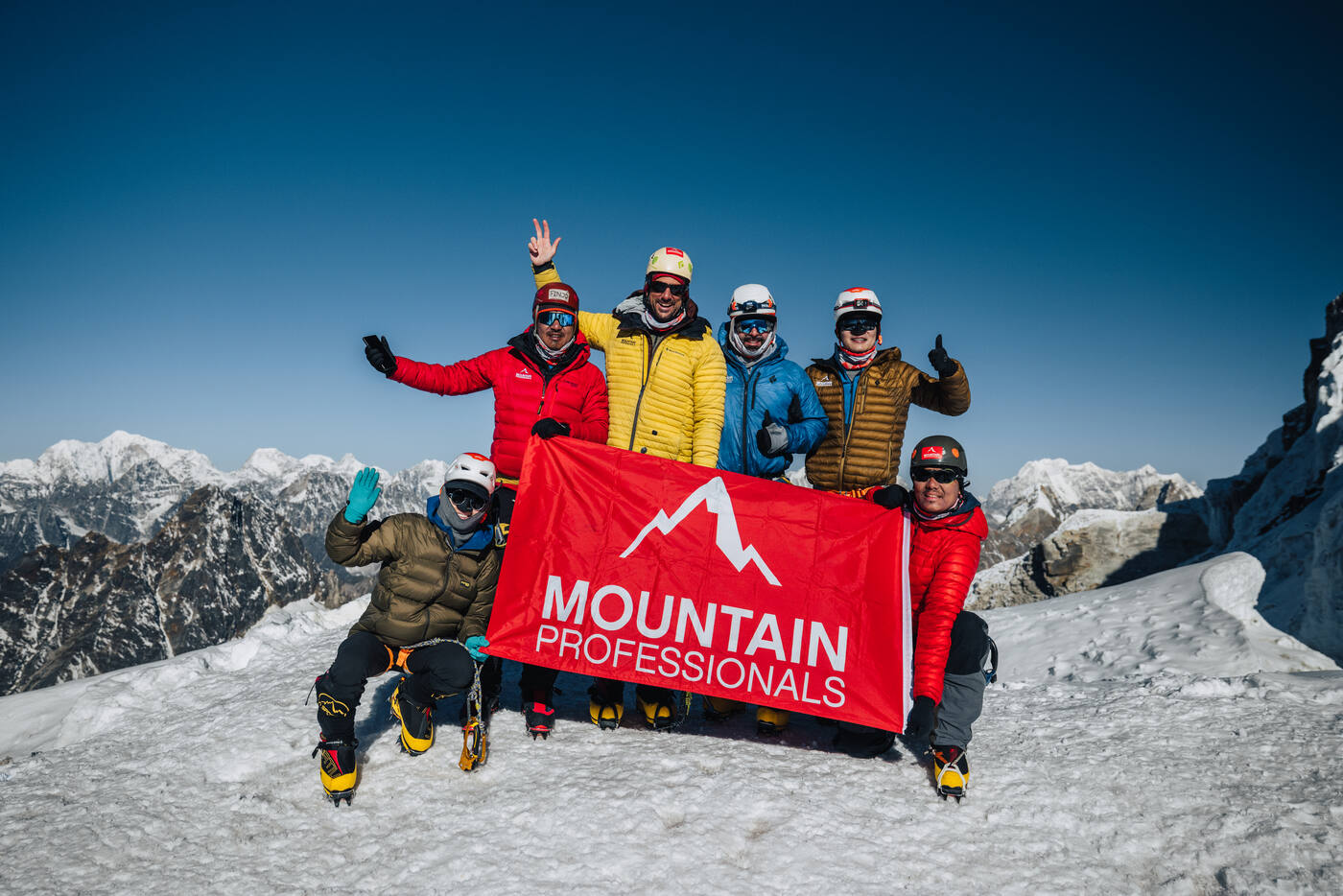
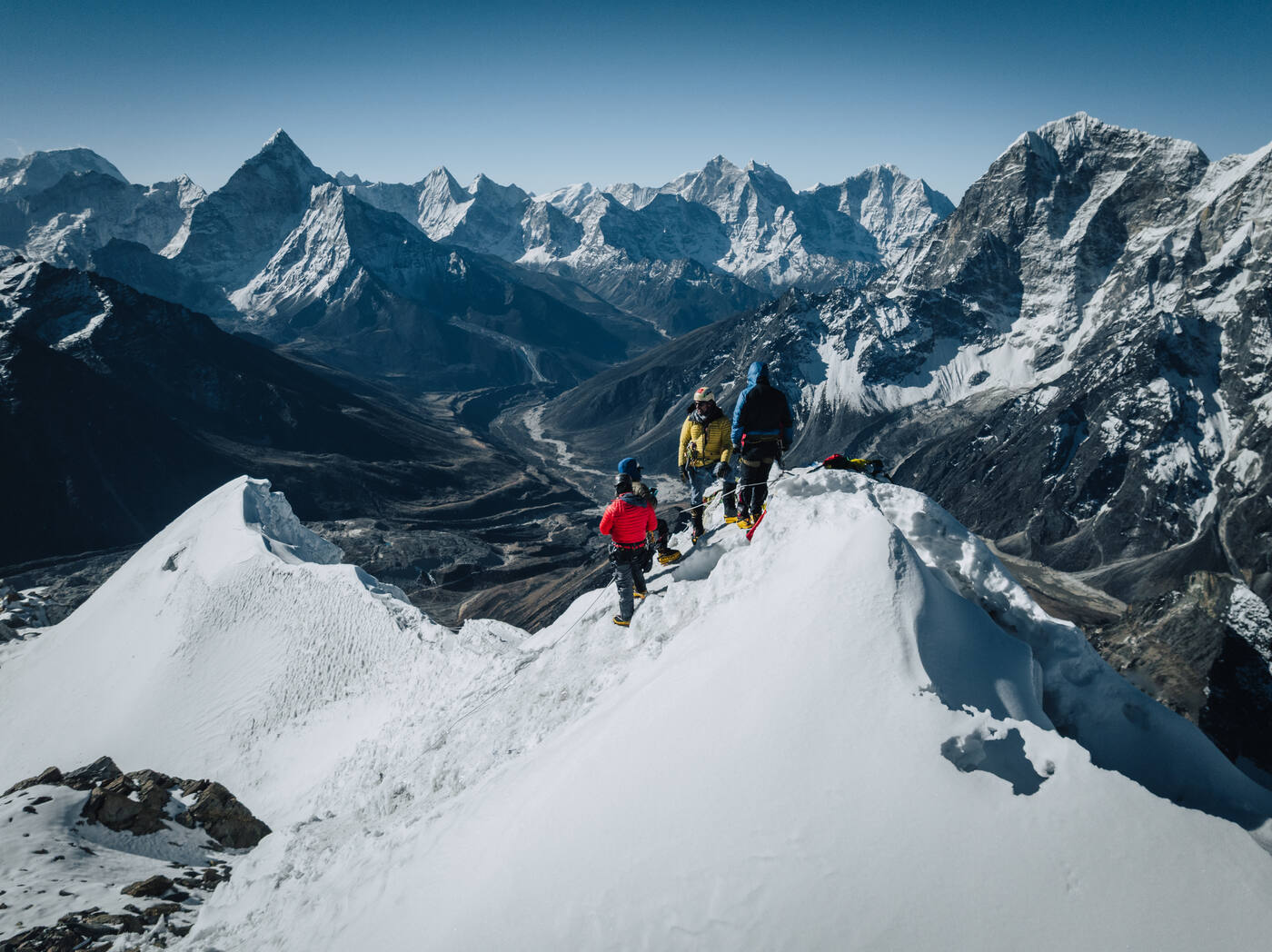
Summit of Lobuche East, 6,119m. Crampons, harness, and the entire Himalayan range spread out below.
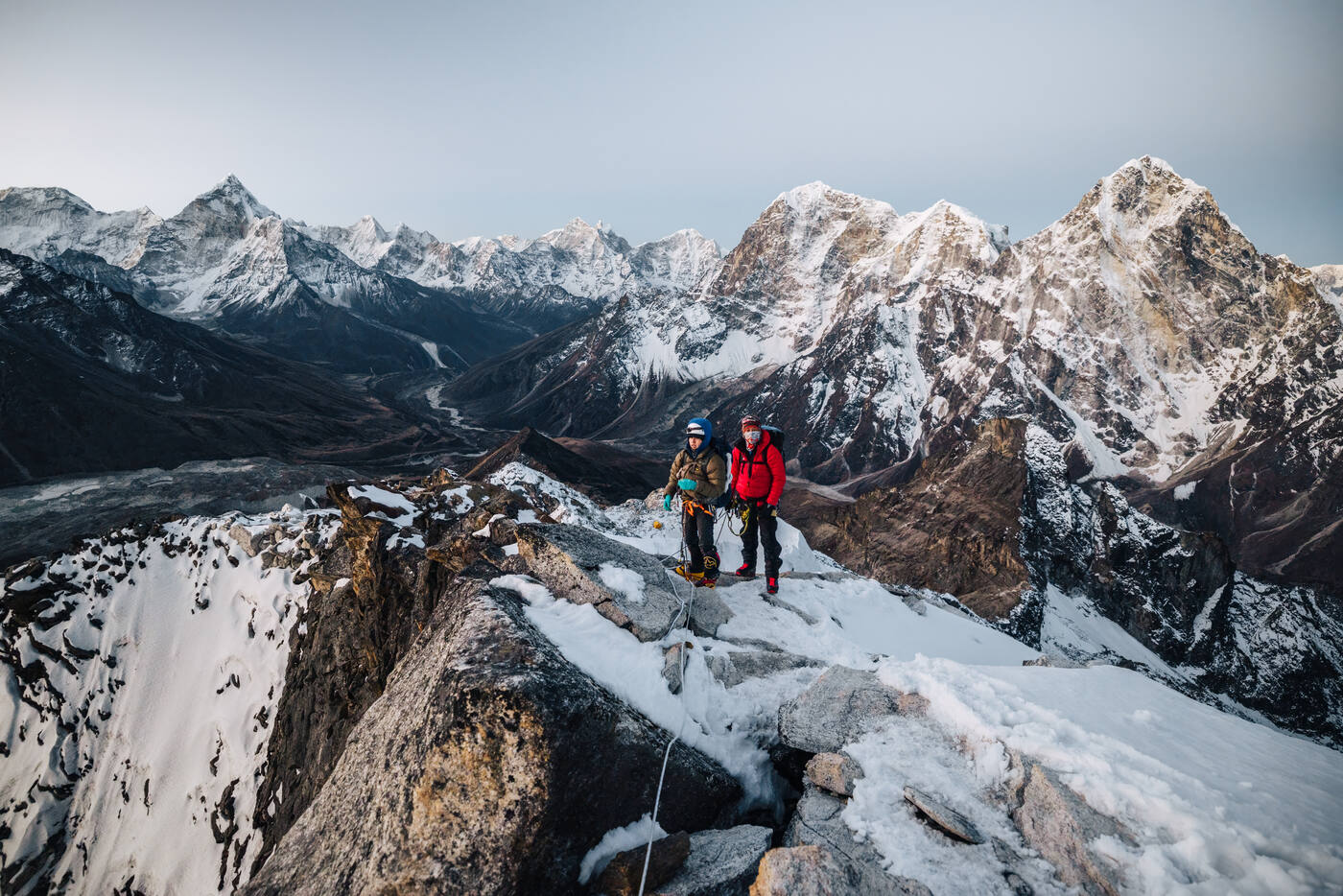
The climb to the summit was no easy warm-up. In pitch black, headlamps cutting through the cold, we navigated steep snow slopes and exposed ridges. Every piece of gear got tested: crampons biting into ice, harnesses loaded on fixed lines, down jackets battling the pre-dawn cold.
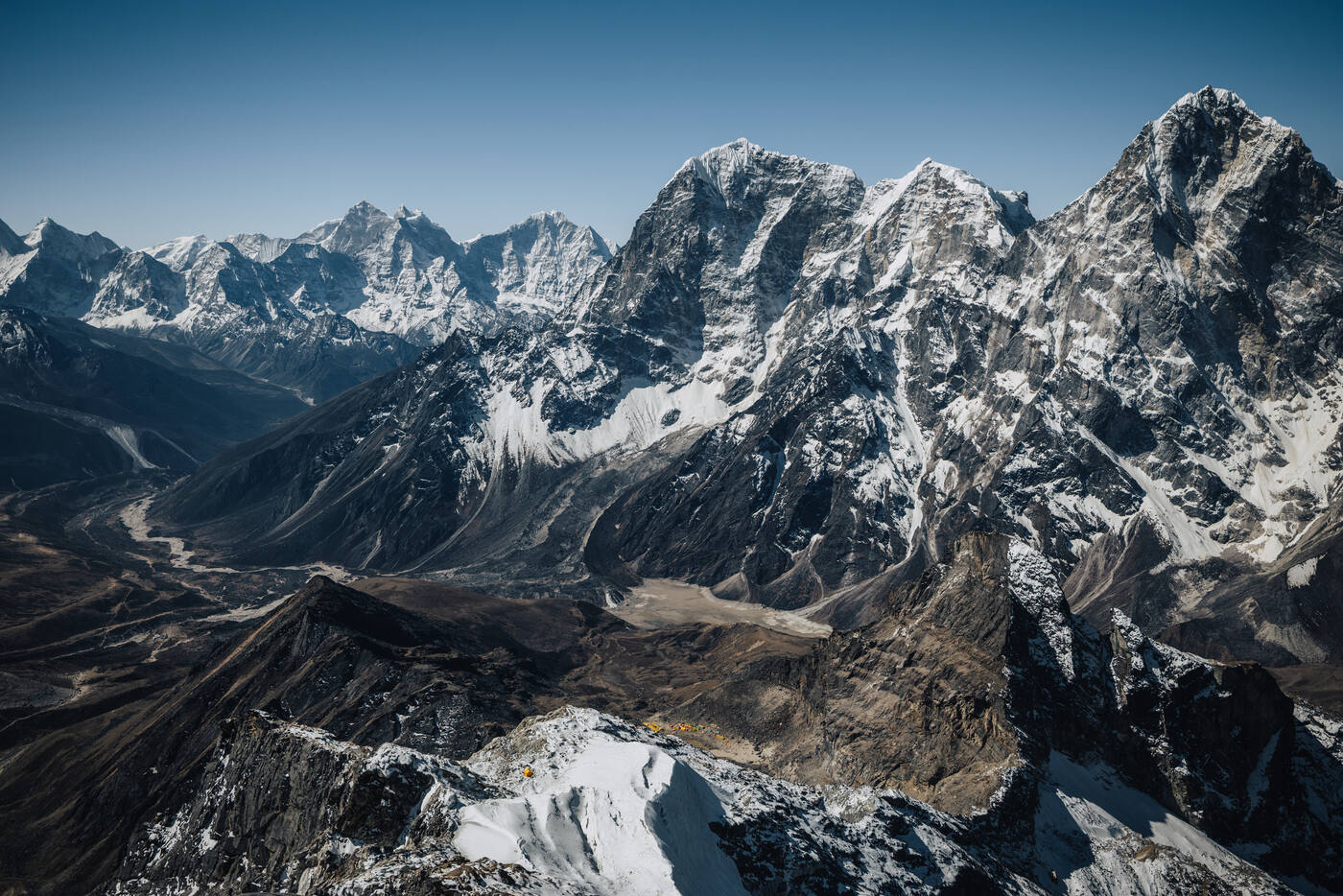
We reached the summit at 7:30 AM just as the sun painted the Himalayan giants gold. Everest's massive pyramid dominated to the north. The Khumbu Icefall was clearly visible snaking down from the Western Cwm. Makalu's black triangle pierced the sky to the east. Standing above 20,000 feet again, this time with Everest filling the horizon, made every labored breath worth it.
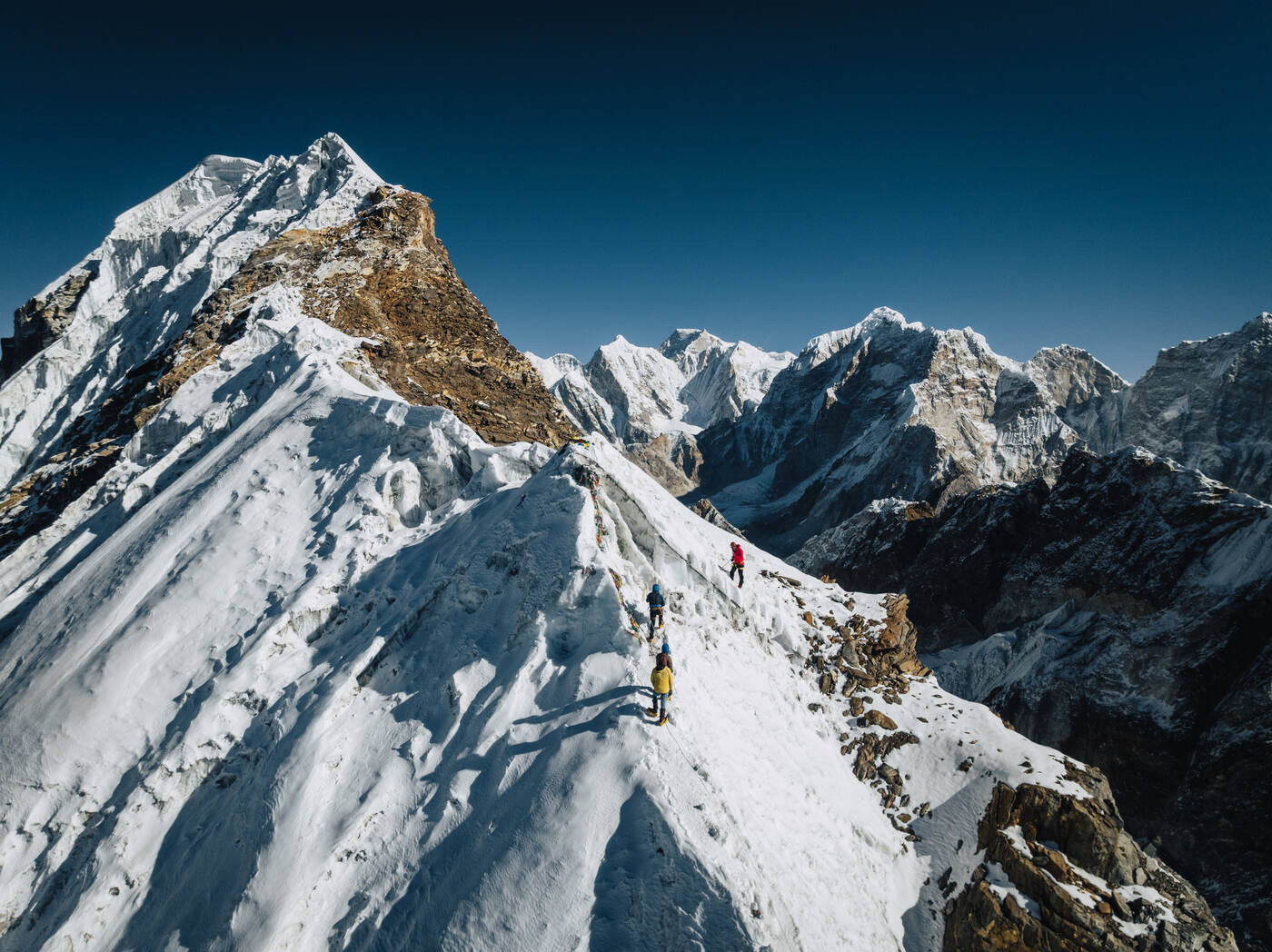
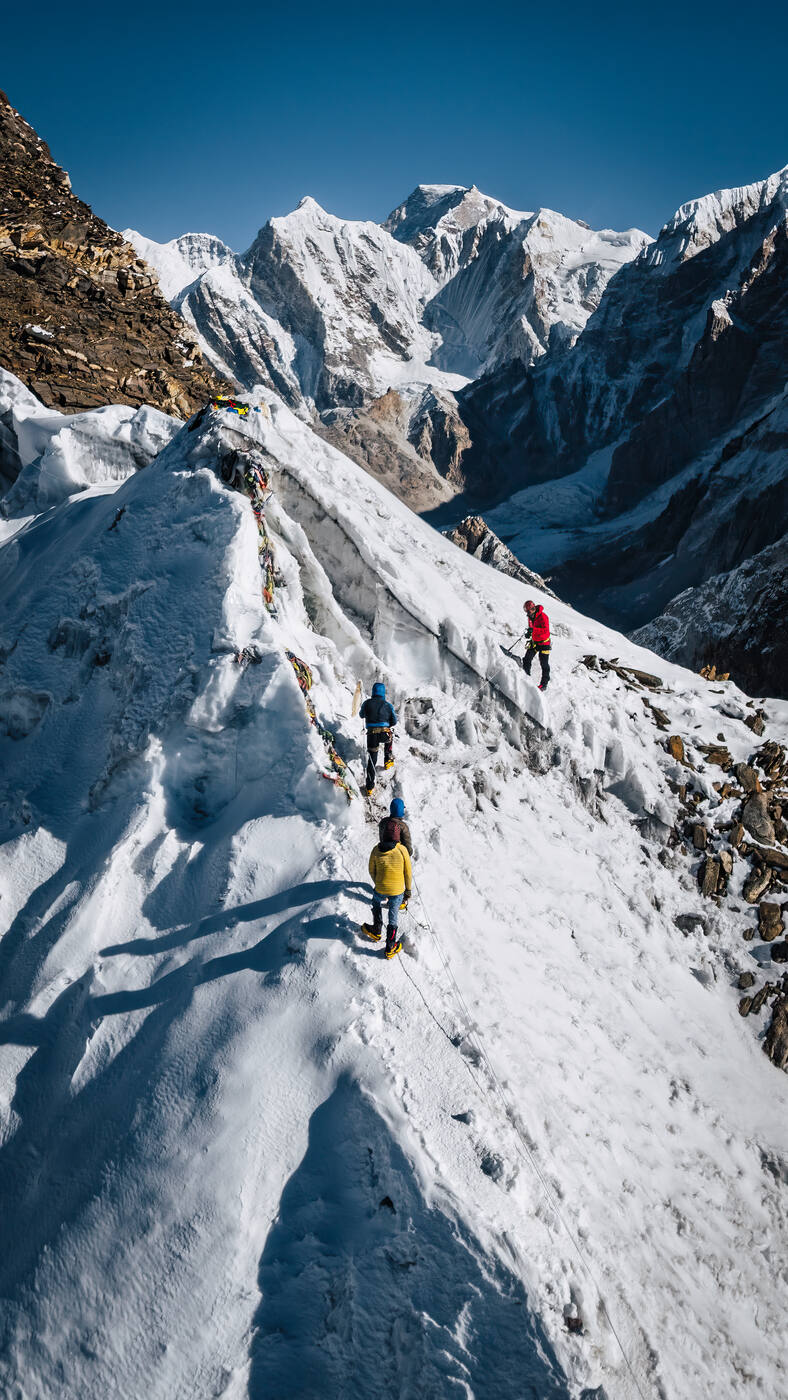
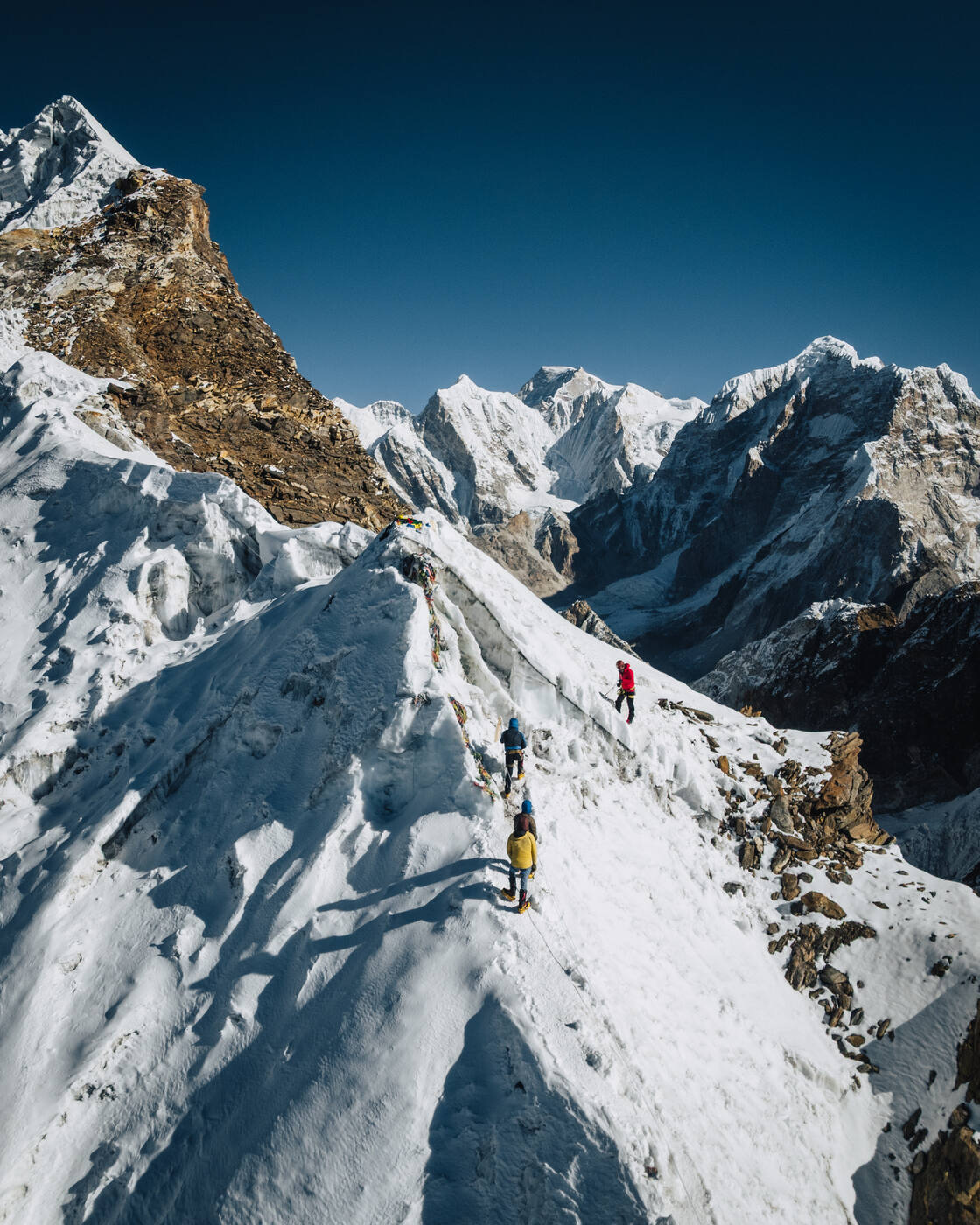
Grace working up the final ridge of Lobuche East. Our first time above 6,000m on this expedition. A good sign of what our bodies could handle.The view from 20,000 feet. The entire Himalayan range stretching to the horizon. One rotation down, one to go.
The Himalayan range from above. One rotation complete. Back to Base Camp to rest before the Icefall.
Day 17: The Puja Ceremony
April 26, 2025 · Everest Base Camp · 5,364 m
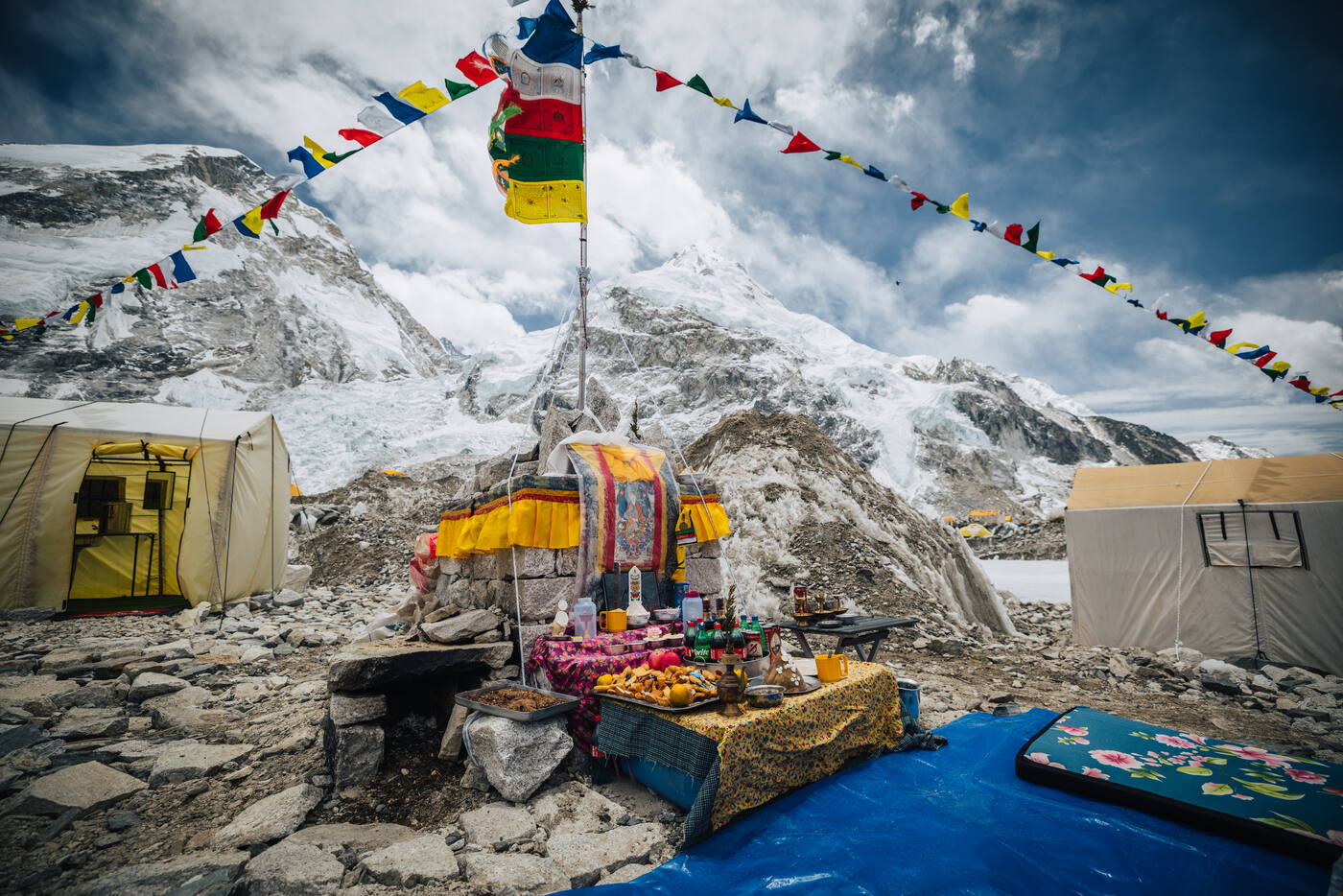
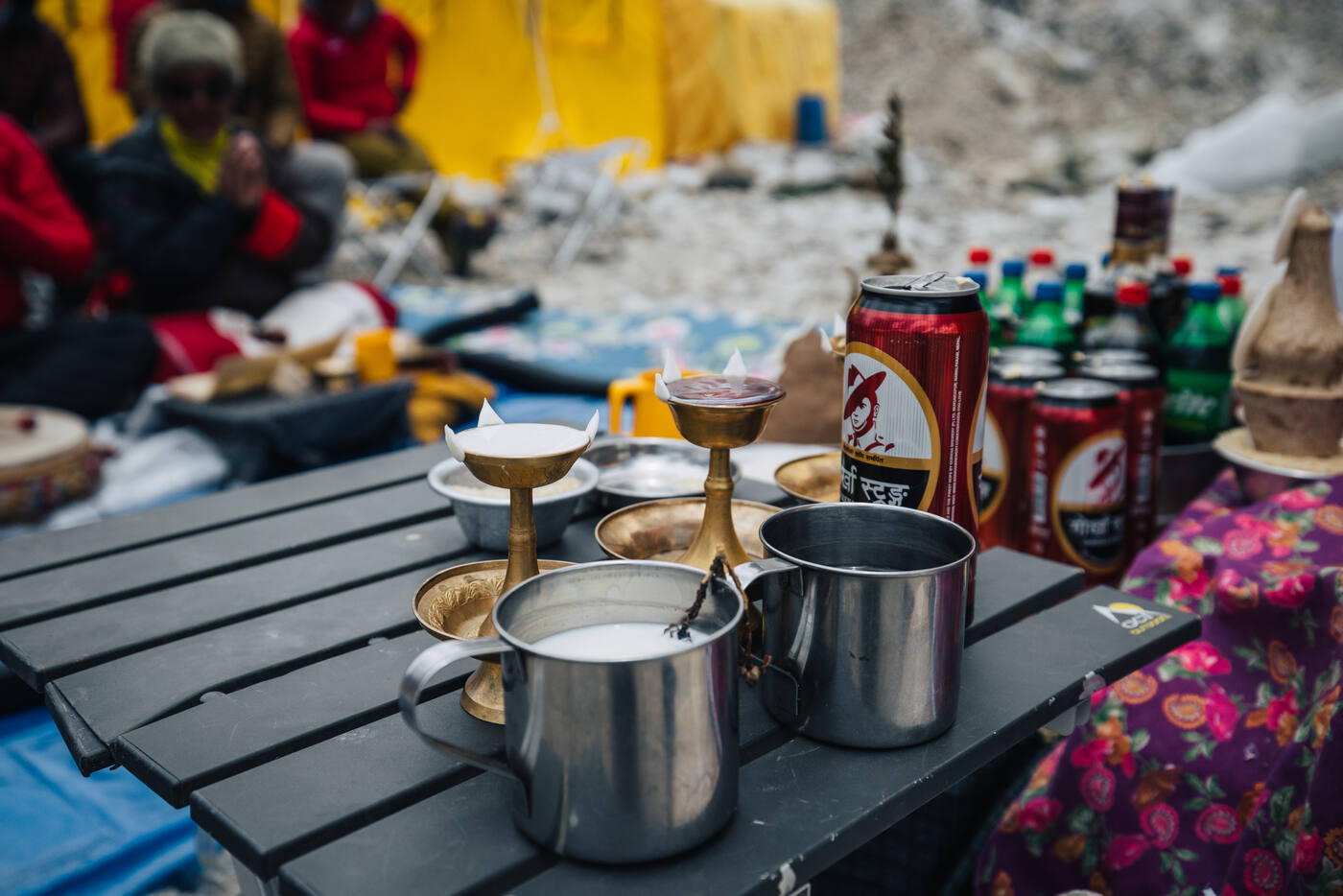
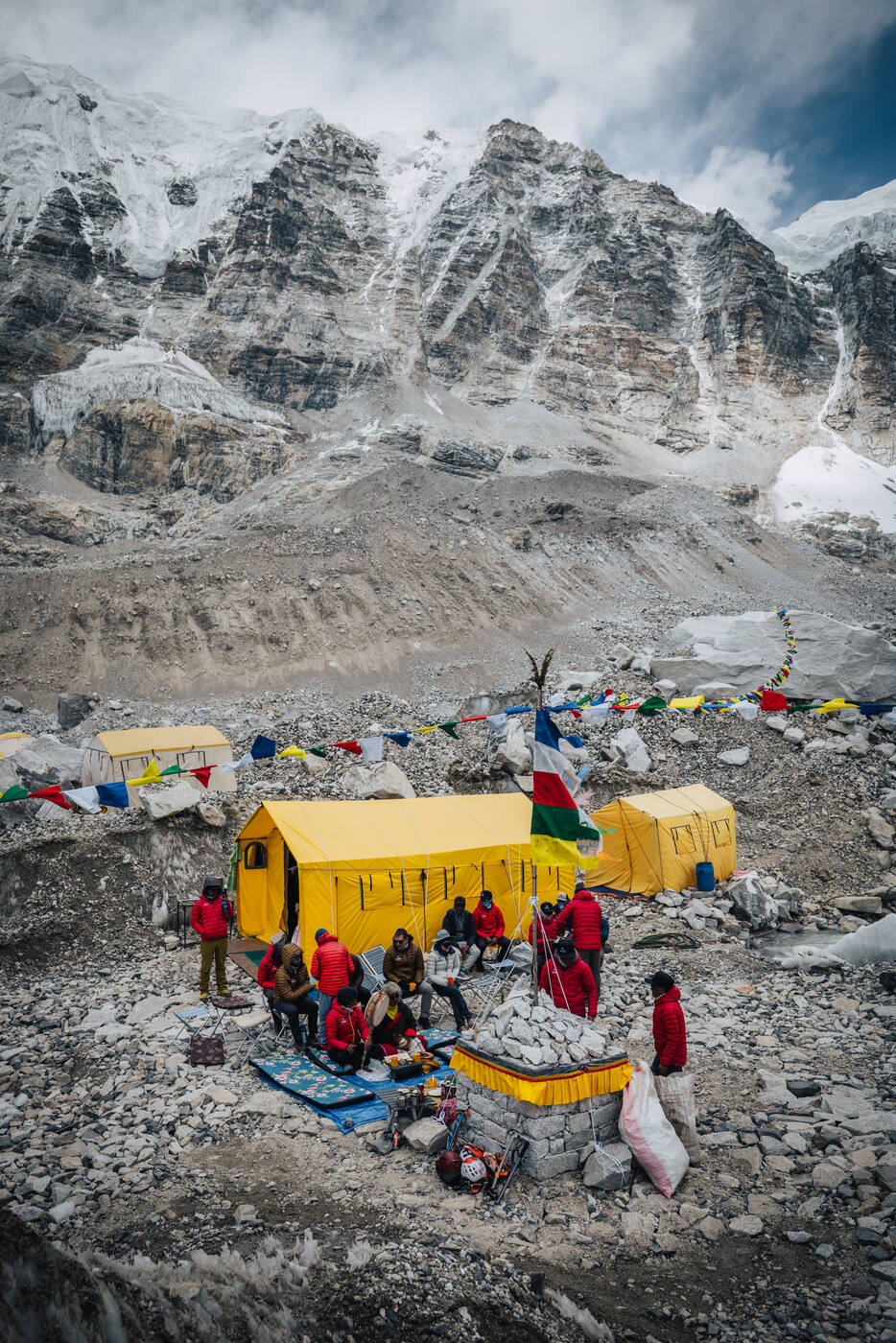
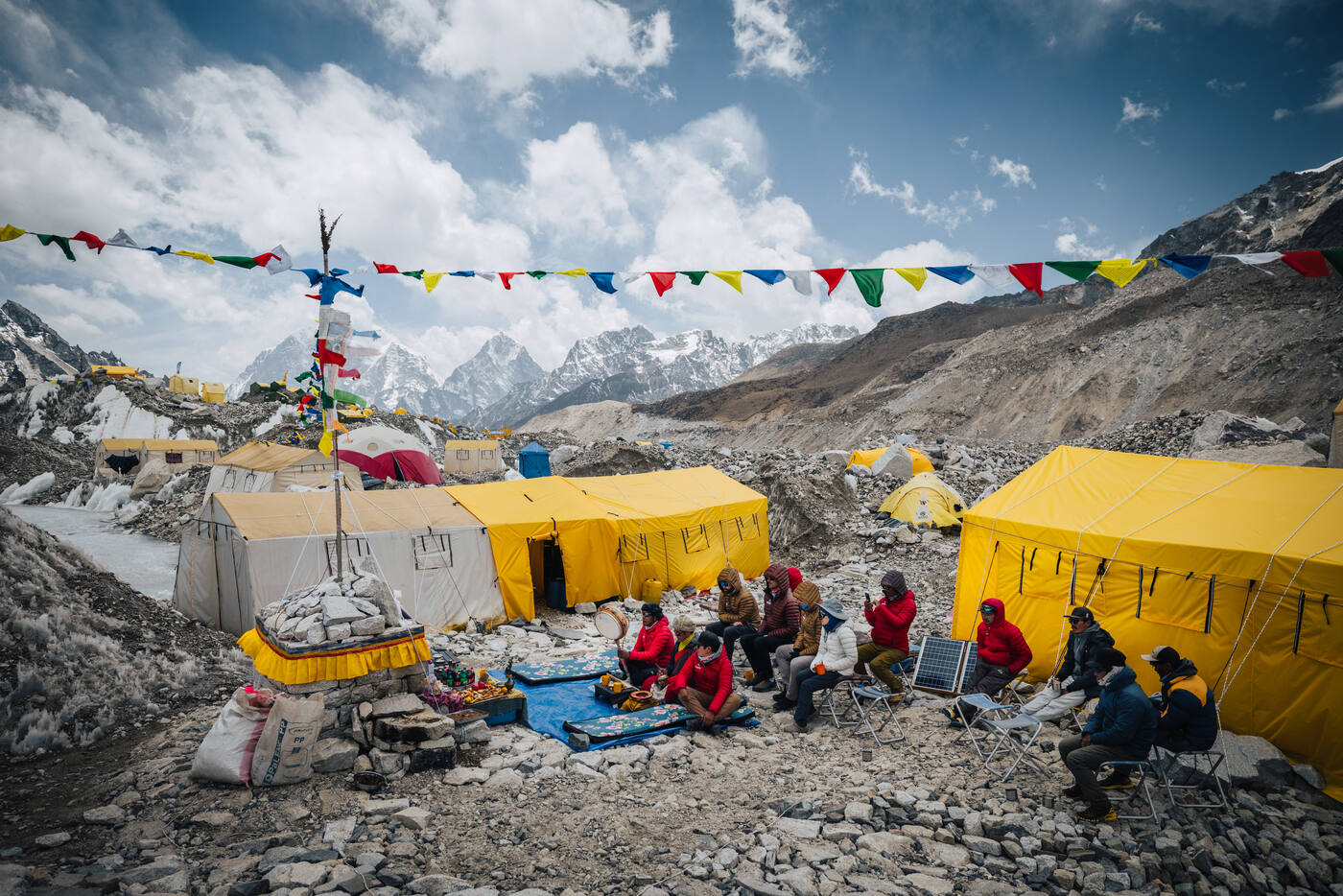
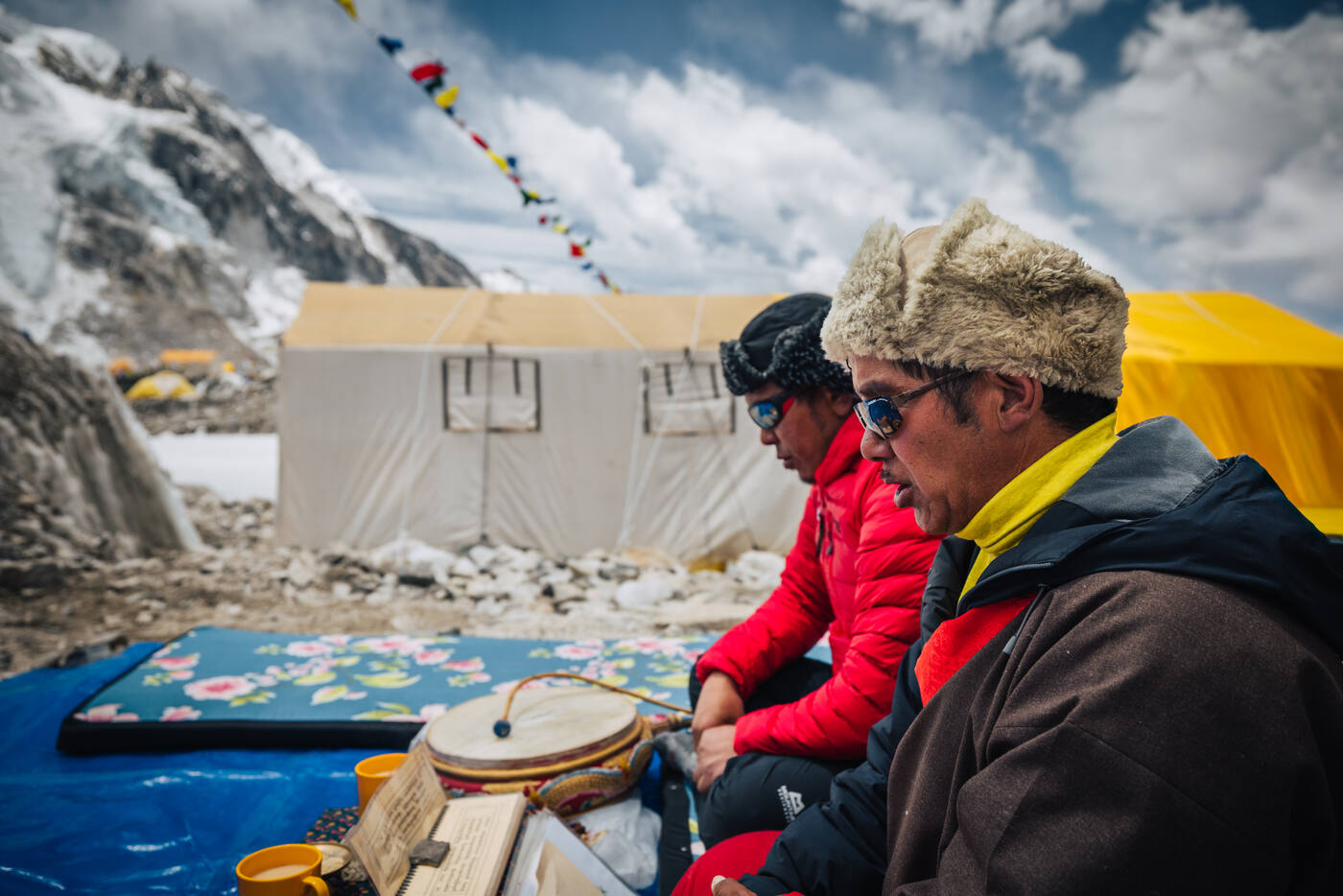
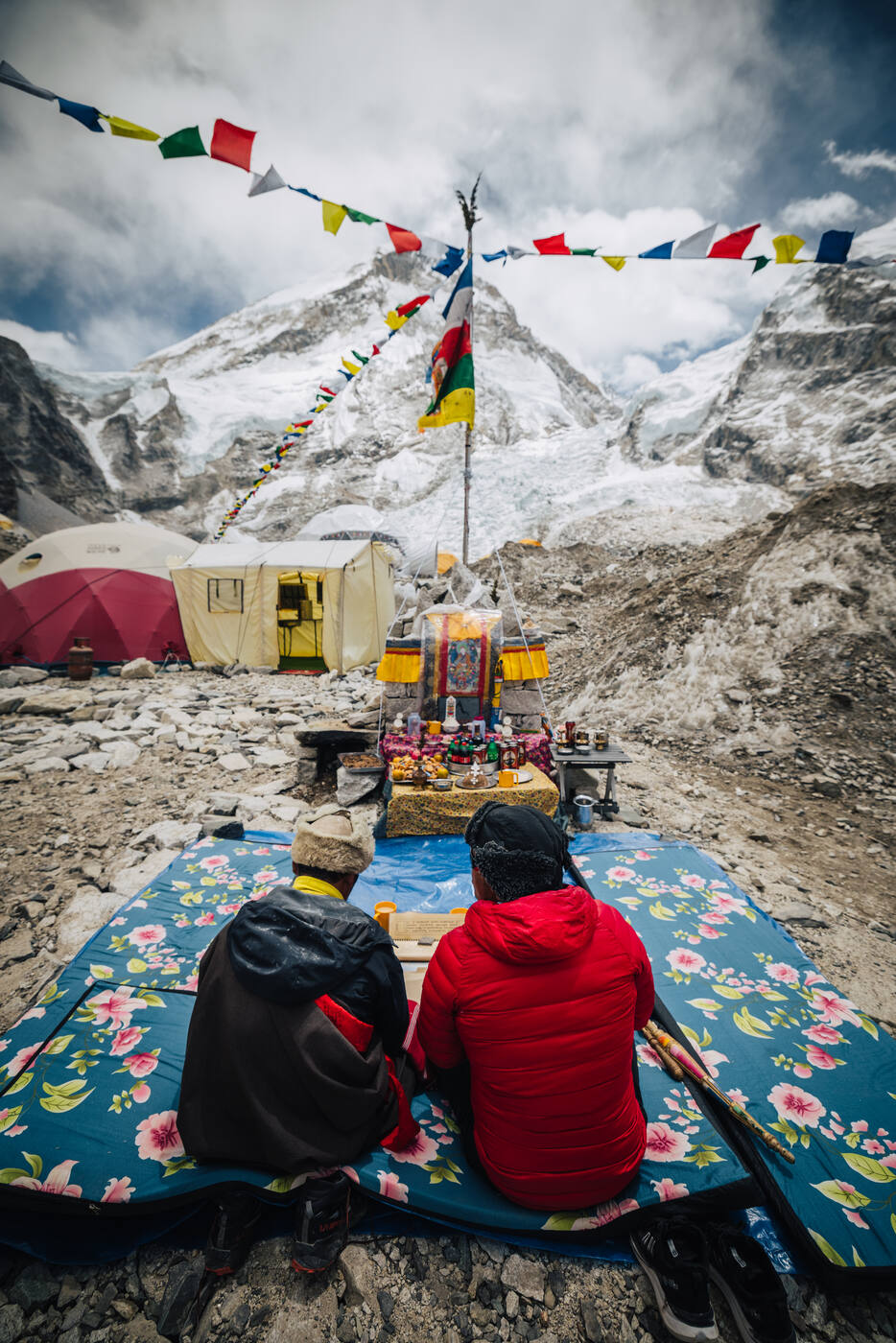
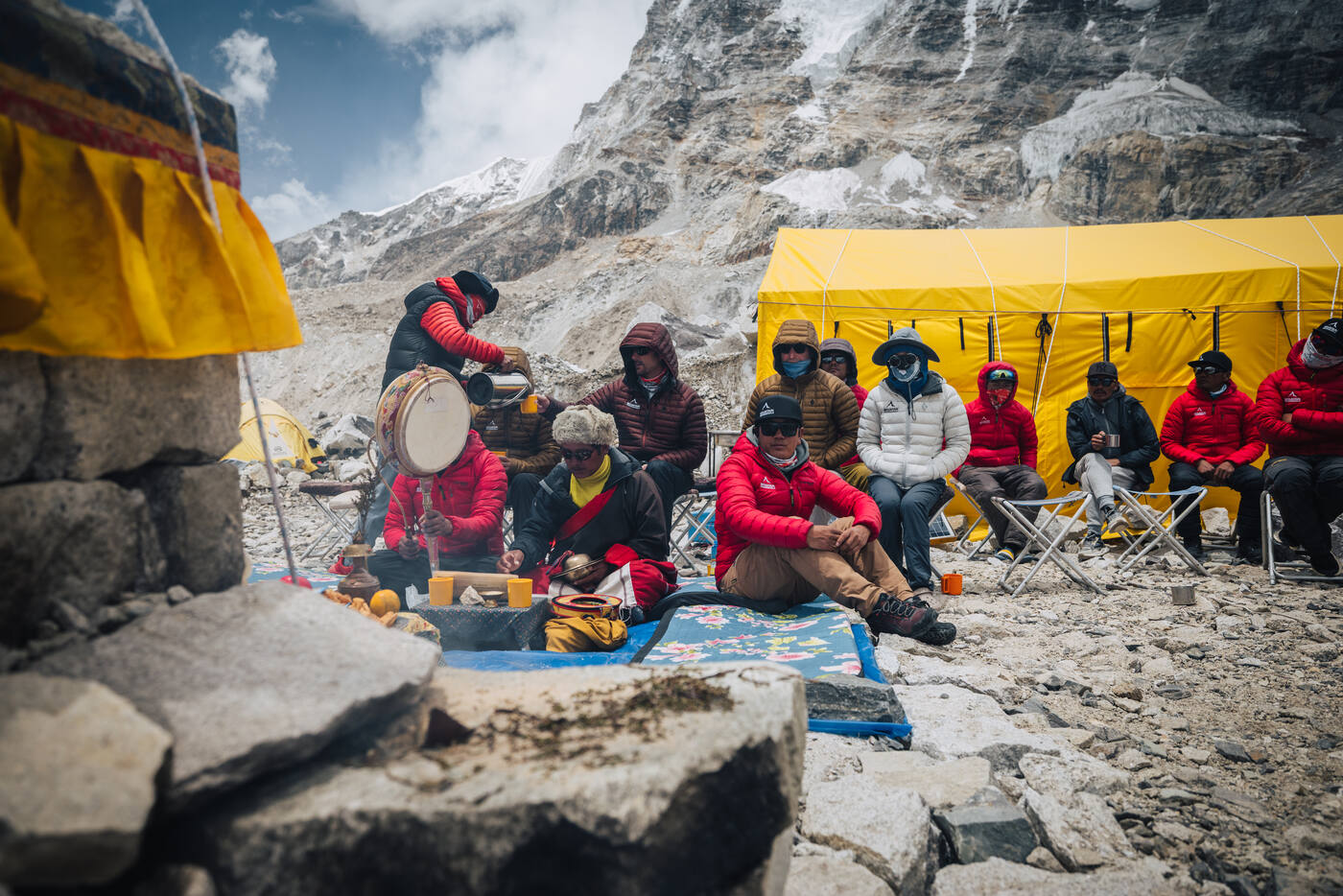
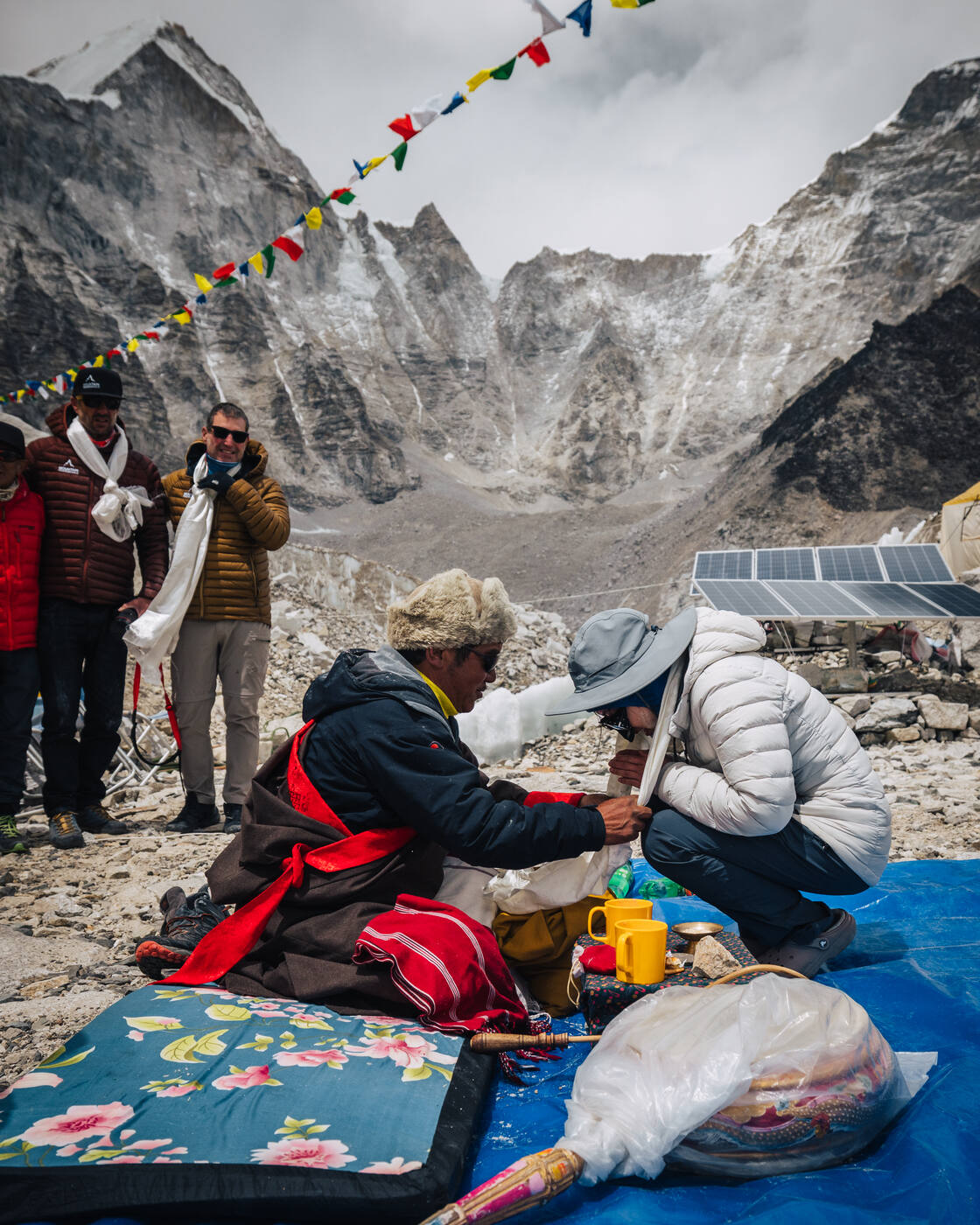
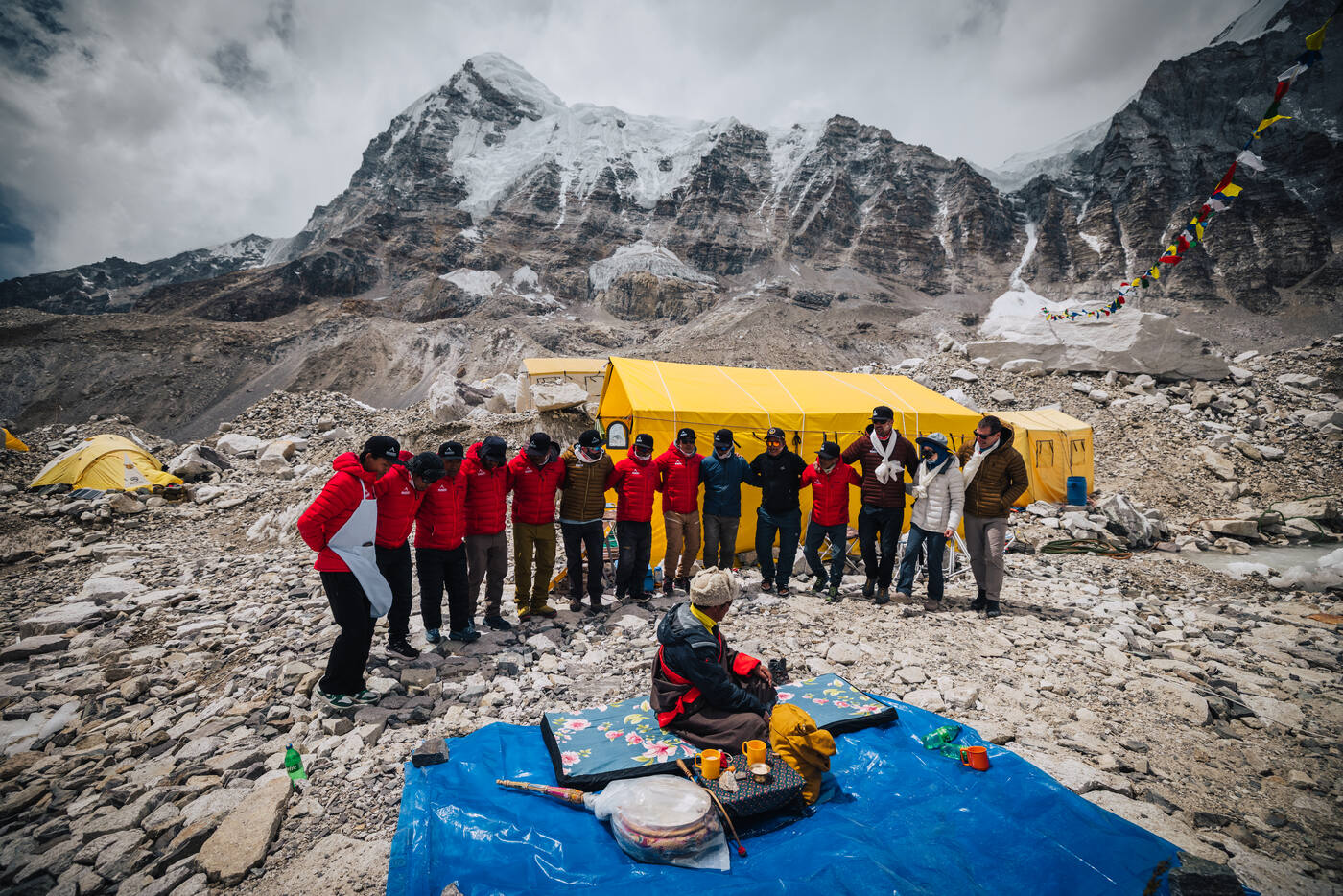
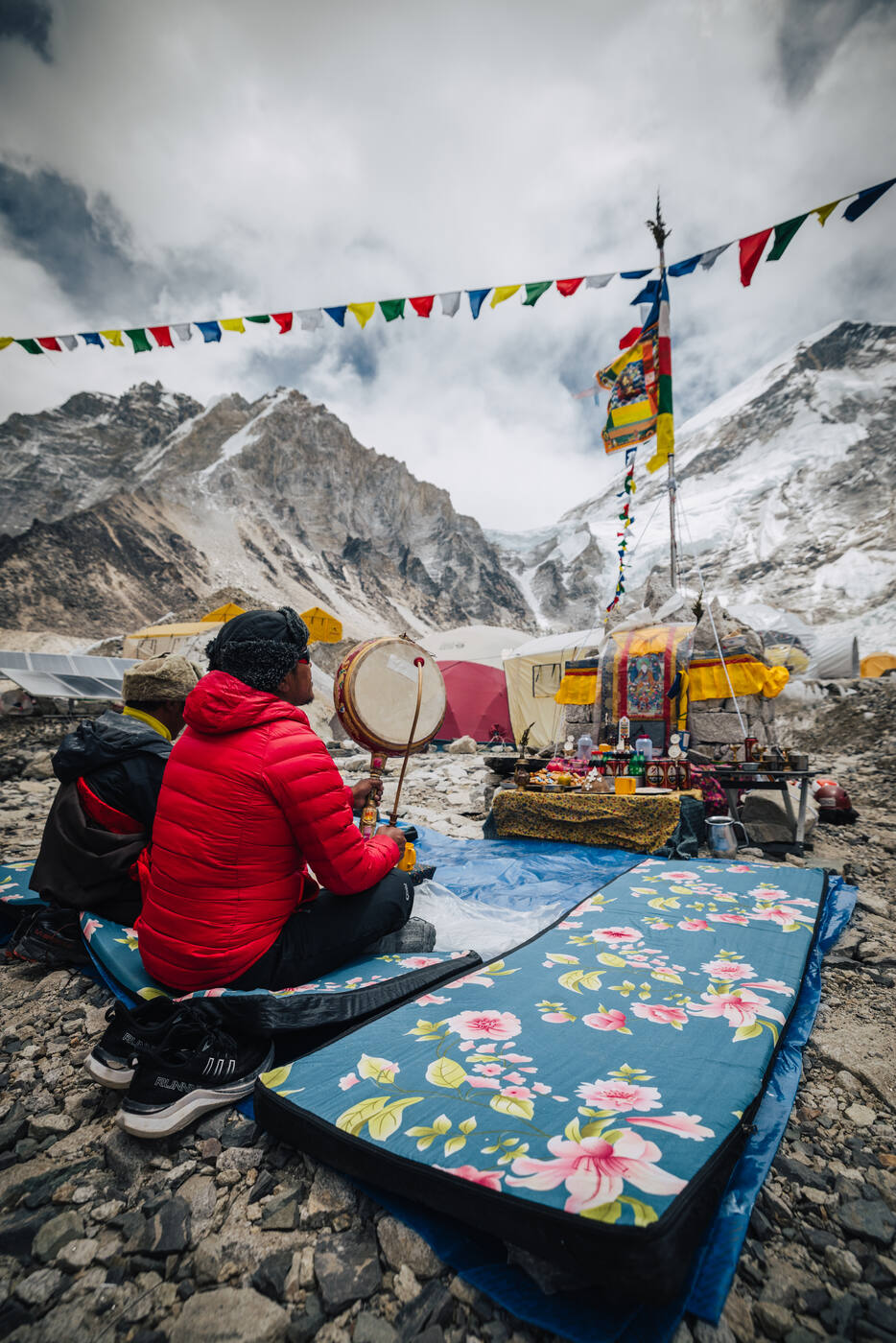
One of the most important moments of the expedition. The Mountain Professionals team had built a beautiful stone altar decorated with prayer flags radiating in all directions. As the morning sun hit Everest's summit, the Buddhist monk began his chant. The smell of burning juniper filled the air as offerings of tsampa, rice, and chang were made to Chomolungma, the Goddess Mother of the World.
The Puja altar. Prayer flags strung in every direction, juniper smoke rising toward Everest.
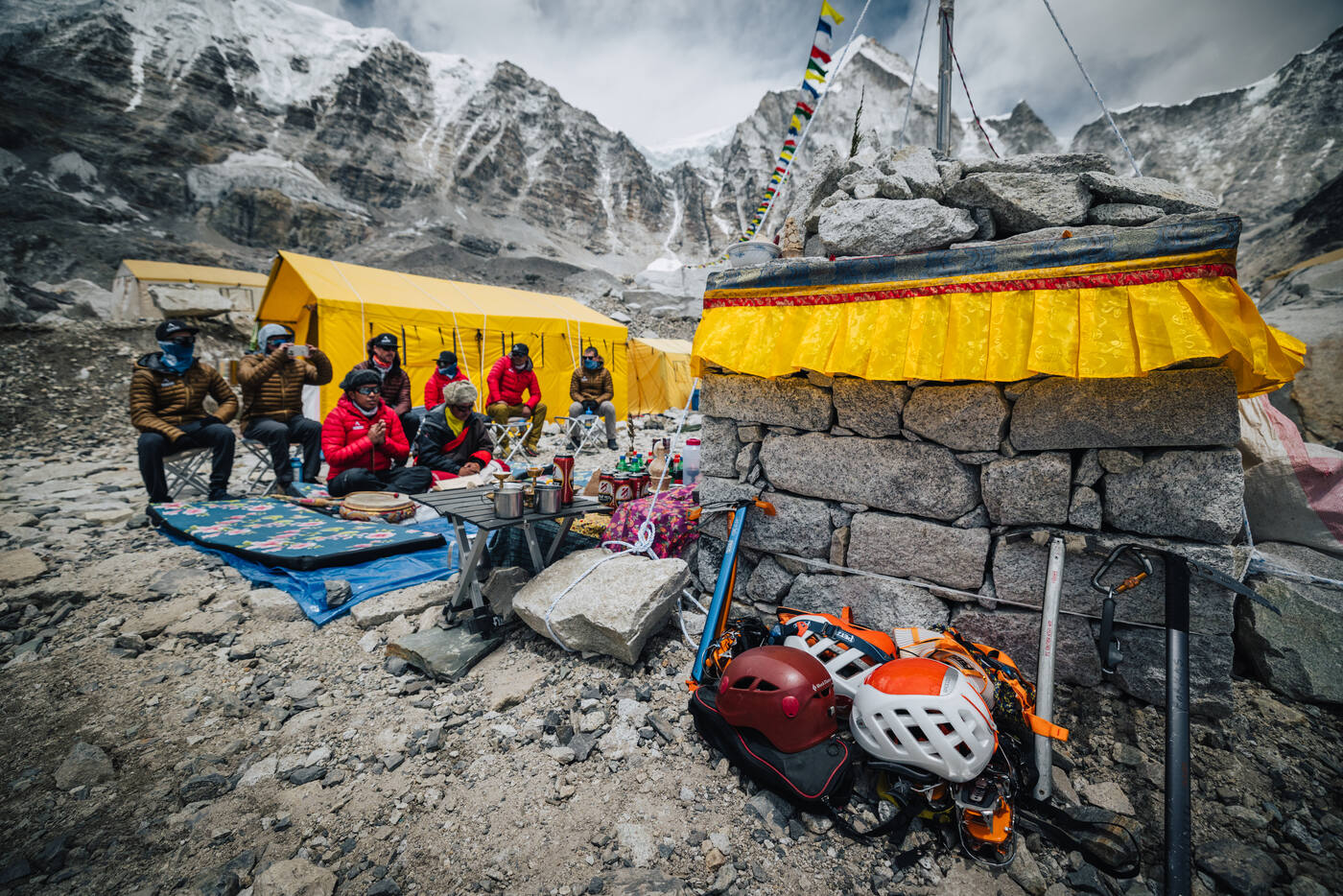
Settling into expedition life. The rhythm of Base Camp becomes home within days.Ice axes, helmets, and harnesses laid at the altar. Everything that goes up the mountain gets blessed first.
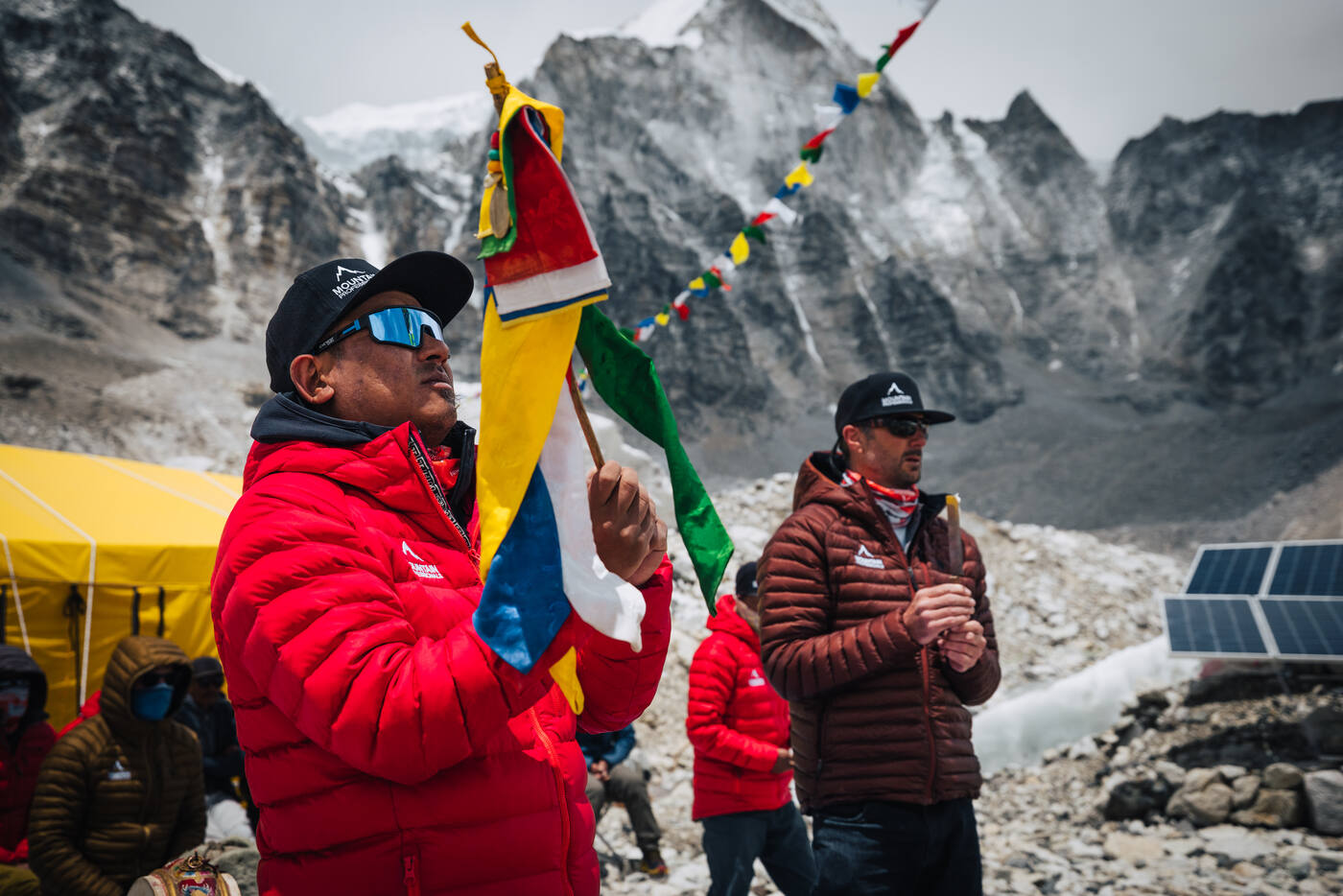
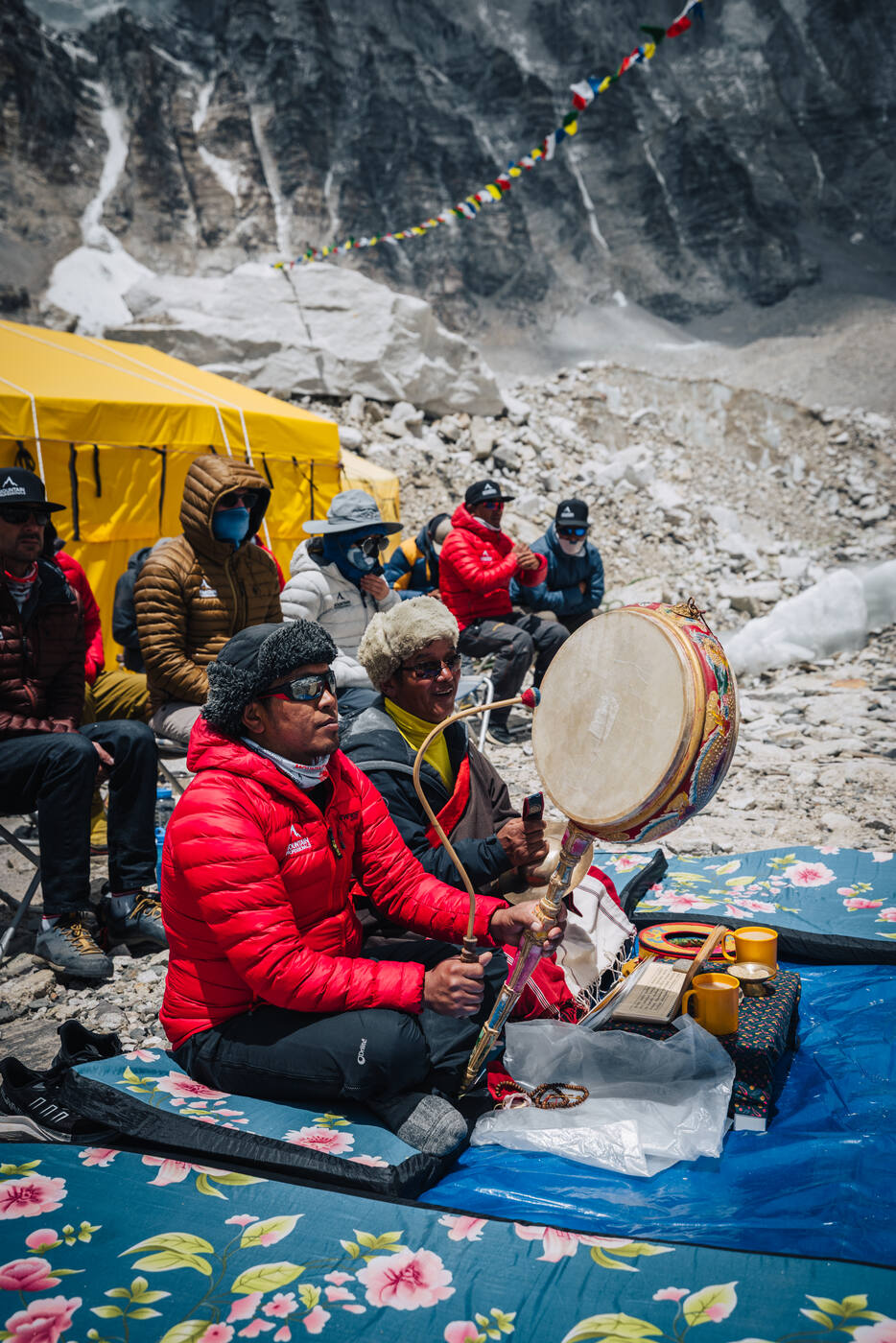
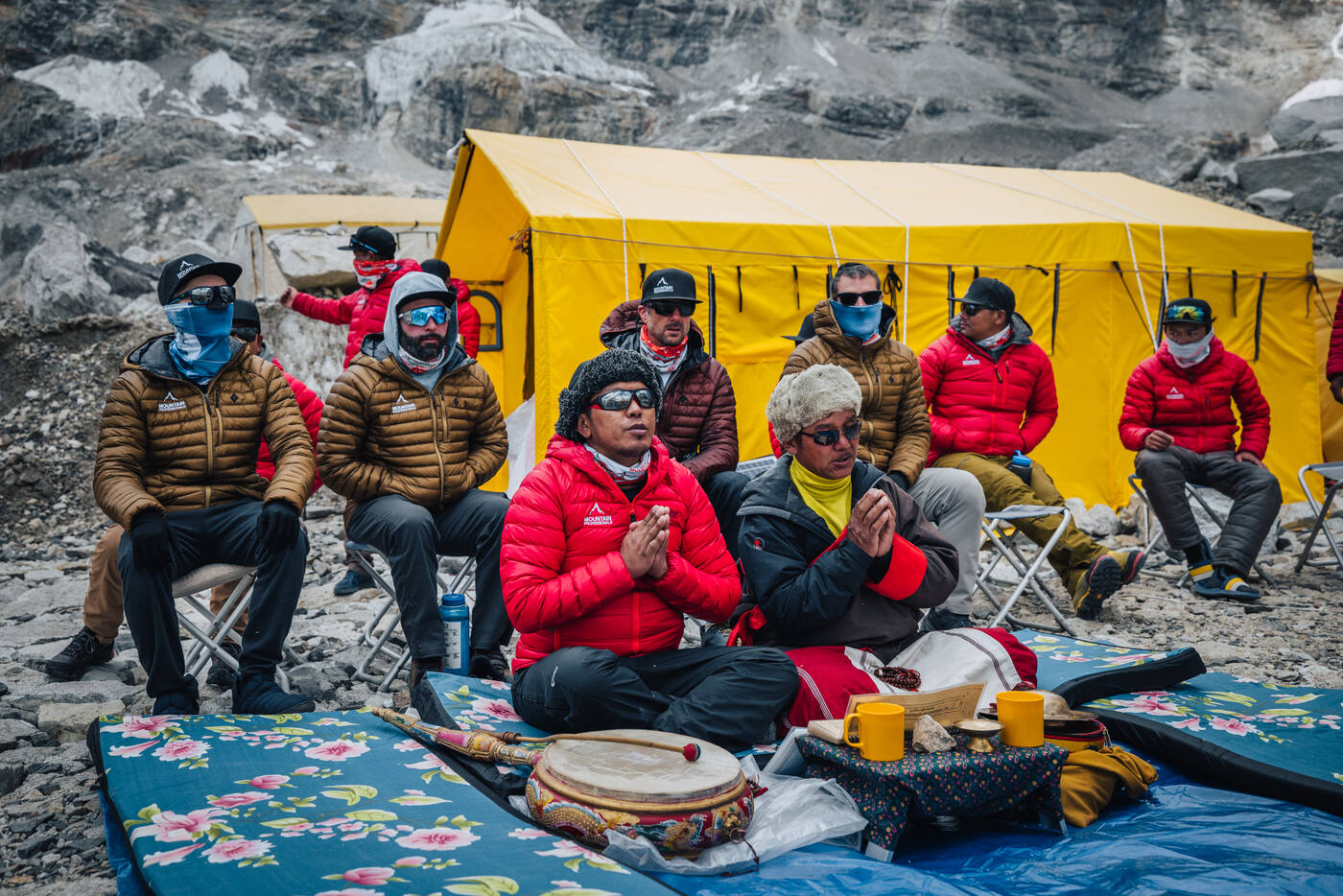
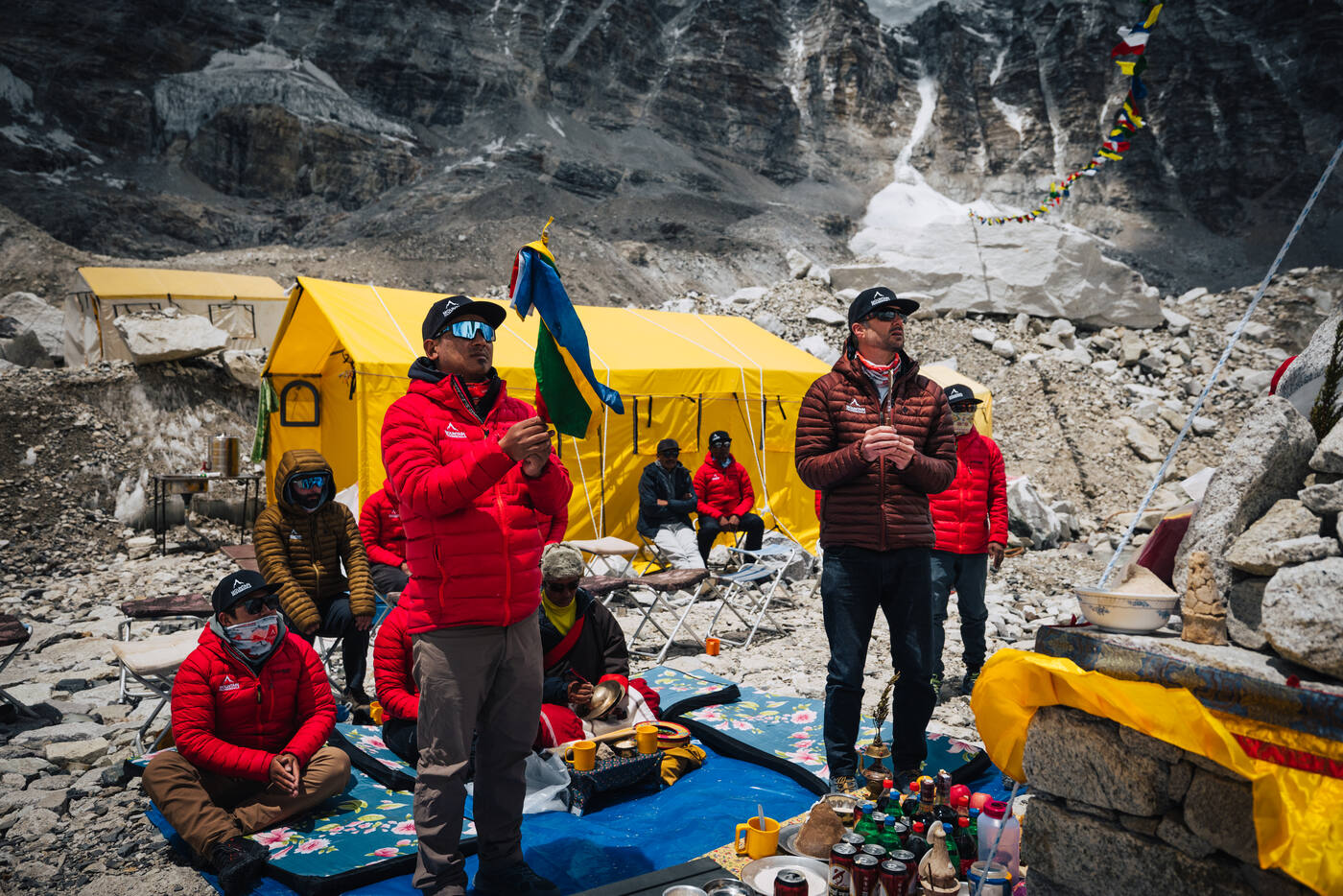
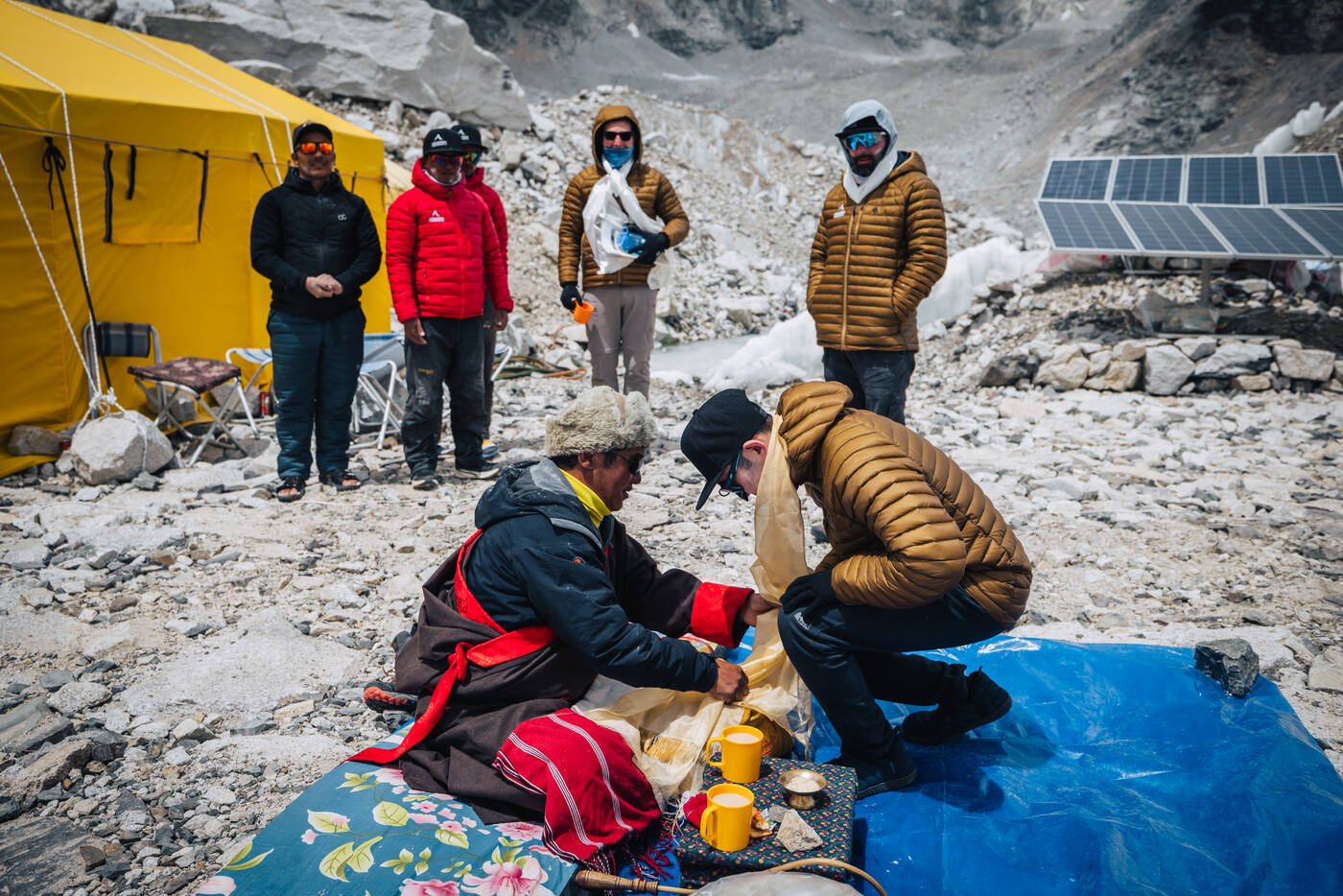
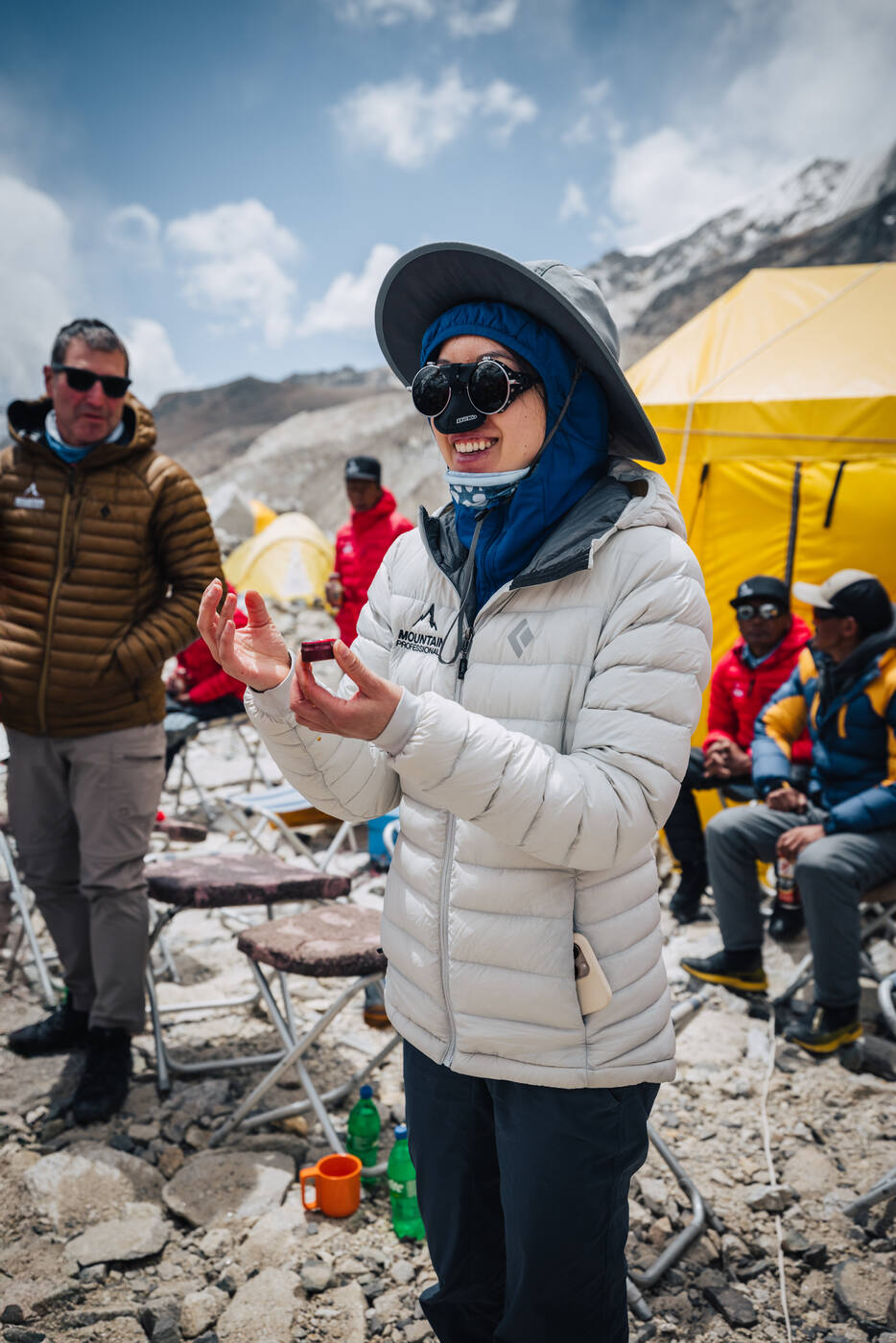
Every piece of our climbing equipment was blessed: ice axes, crampons, harnesses, summit flags, boots. The monk touched each item with sacred scarves while chanting protection prayers. We each received a blessing, with tsampa flour dabbed on our faces and red blessing strings tied around our necks. The ceremony ended with everyone throwing tsampa into the air while shouting "Lha Gyal Lo!" (May the Gods be Victorious!).
Raising the prayer flags. Each line strung from the altar carries the team's prayers out across the glacier.Offerings at the altar. Butter lamps, chang, and ceremonial items arranged for the blessing.
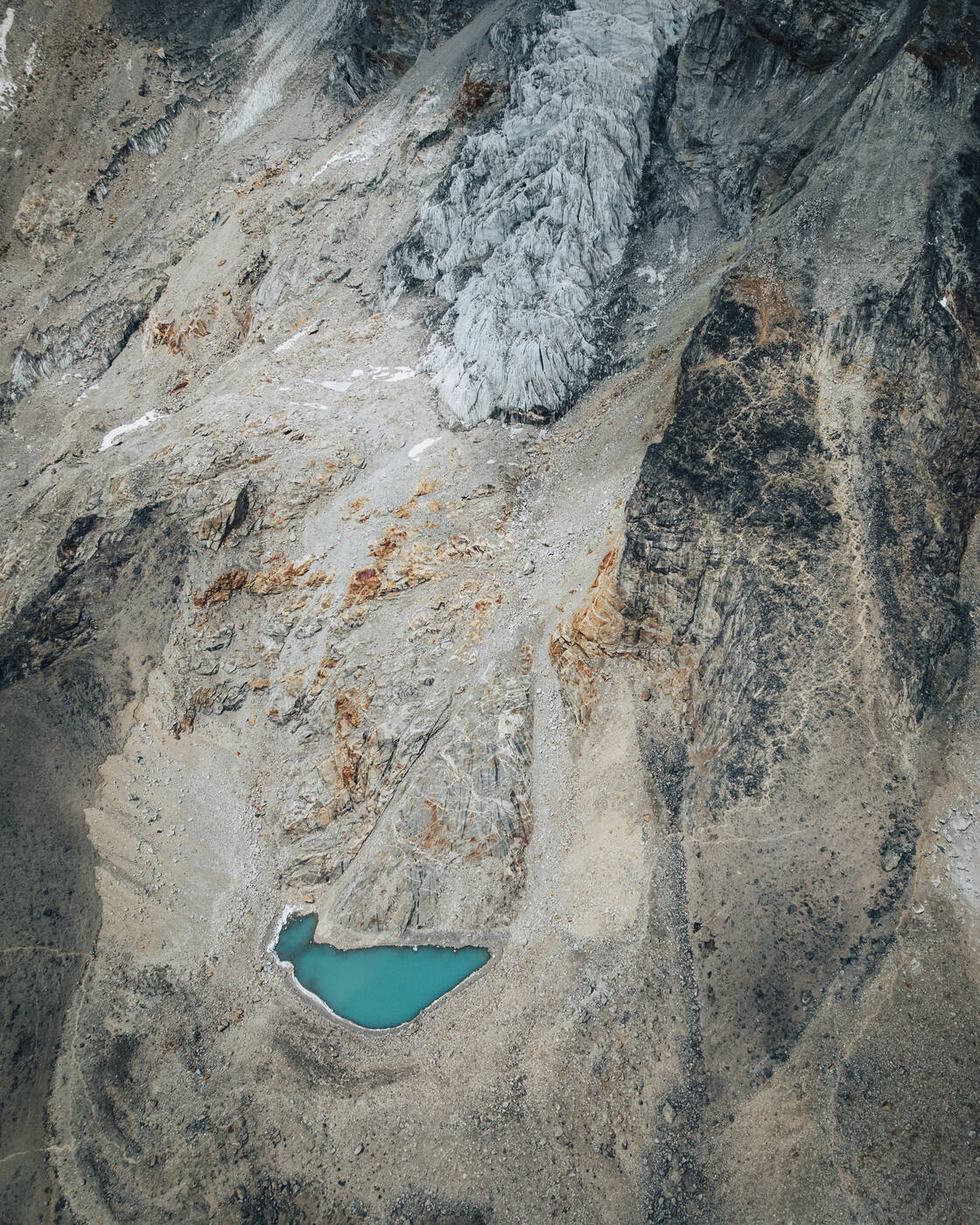
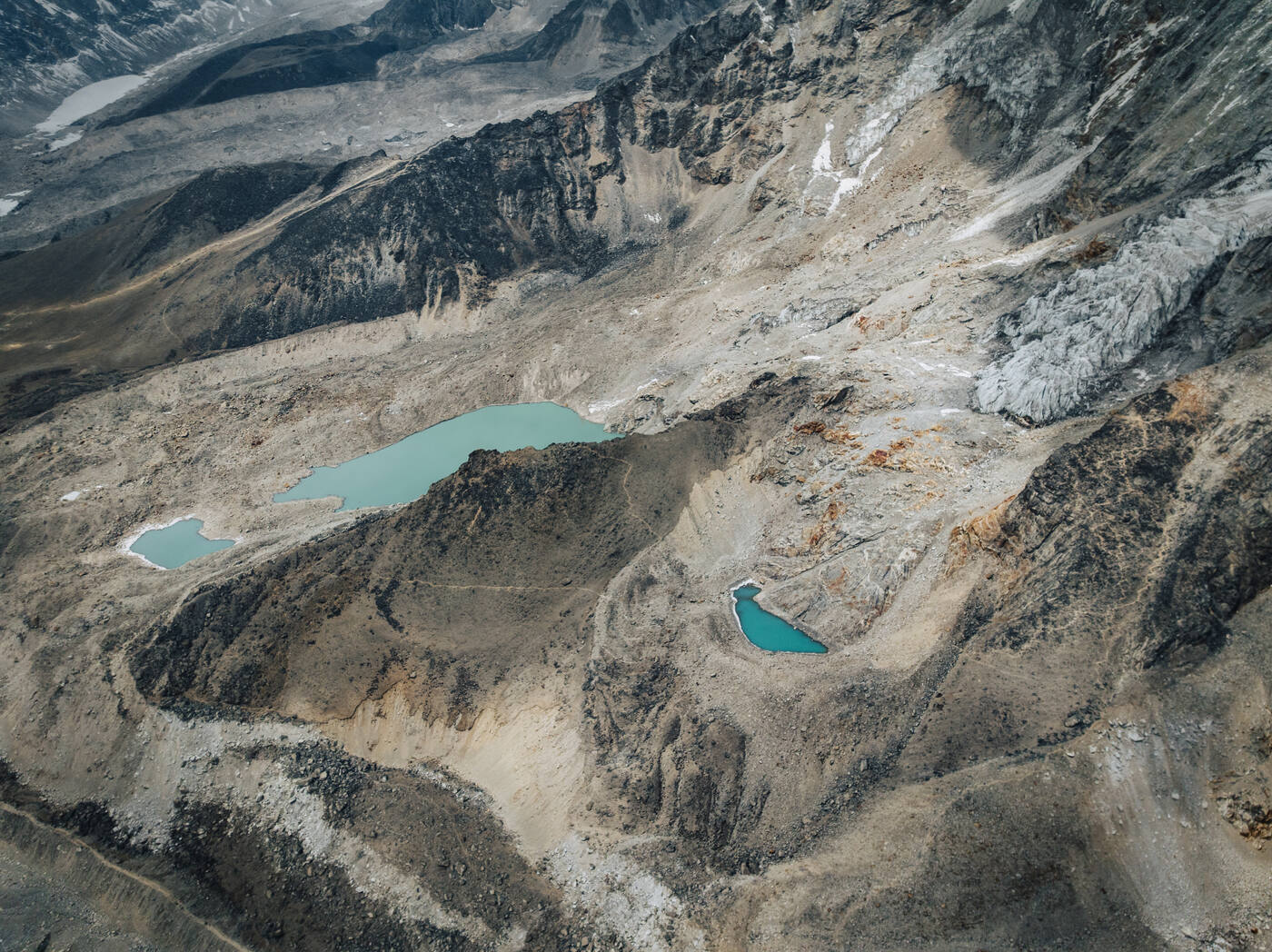
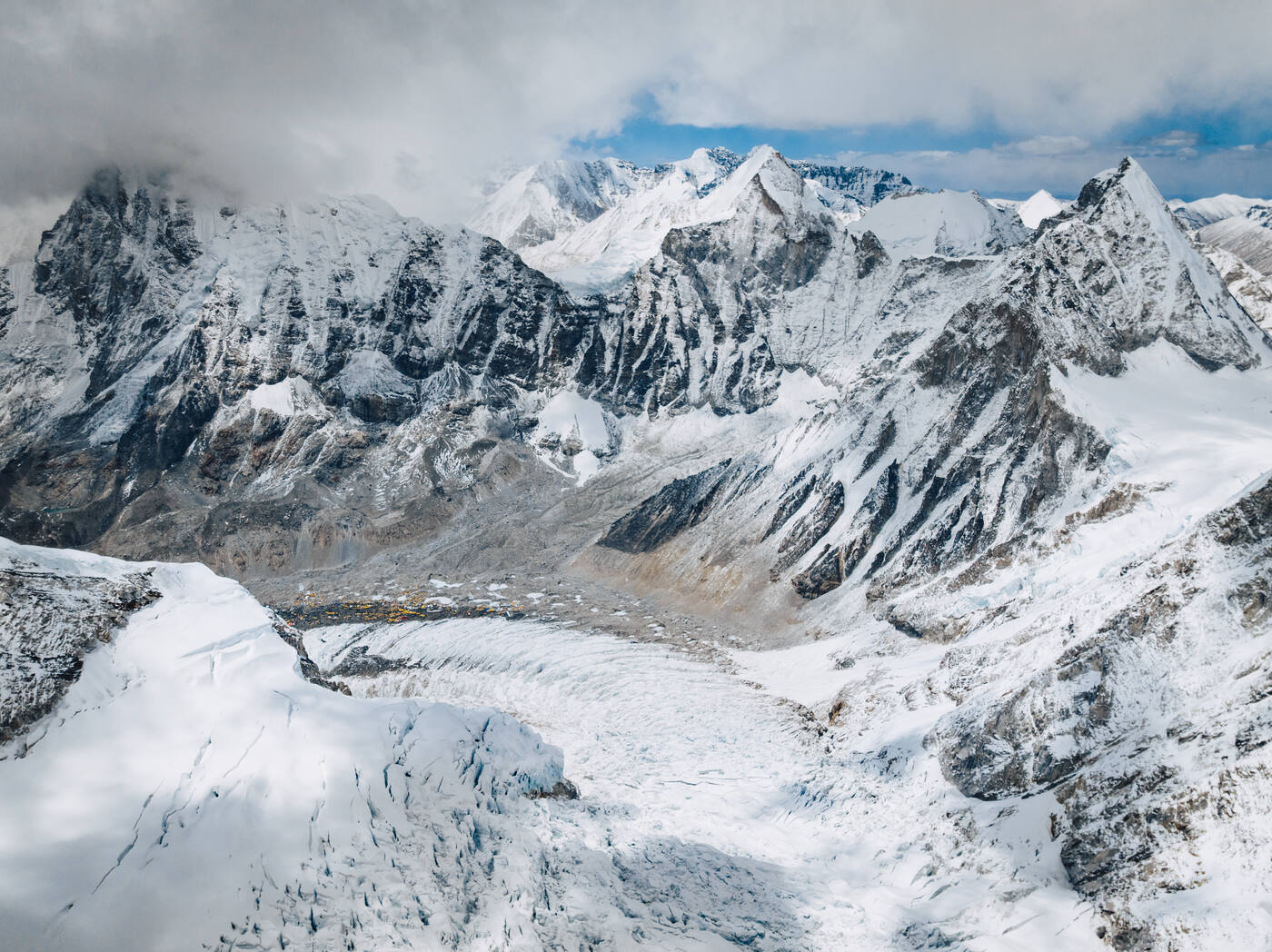
The monk's drum carries across the glacier, mixing with chants and the smell of juniper.Base Camp from above. The tent city and frozen glacial lake visible from the Puja altar area.
Hands together as the chanting begins. The ceremony connects us to centuries of tradition.The Puja from above. The whole team gathered at the altar beneath the mountain walls.
The team after the ceremony. Blessed and ready for the mountain.Offerings at the altar: tsampa, rice, chang, and the sacred scarves.
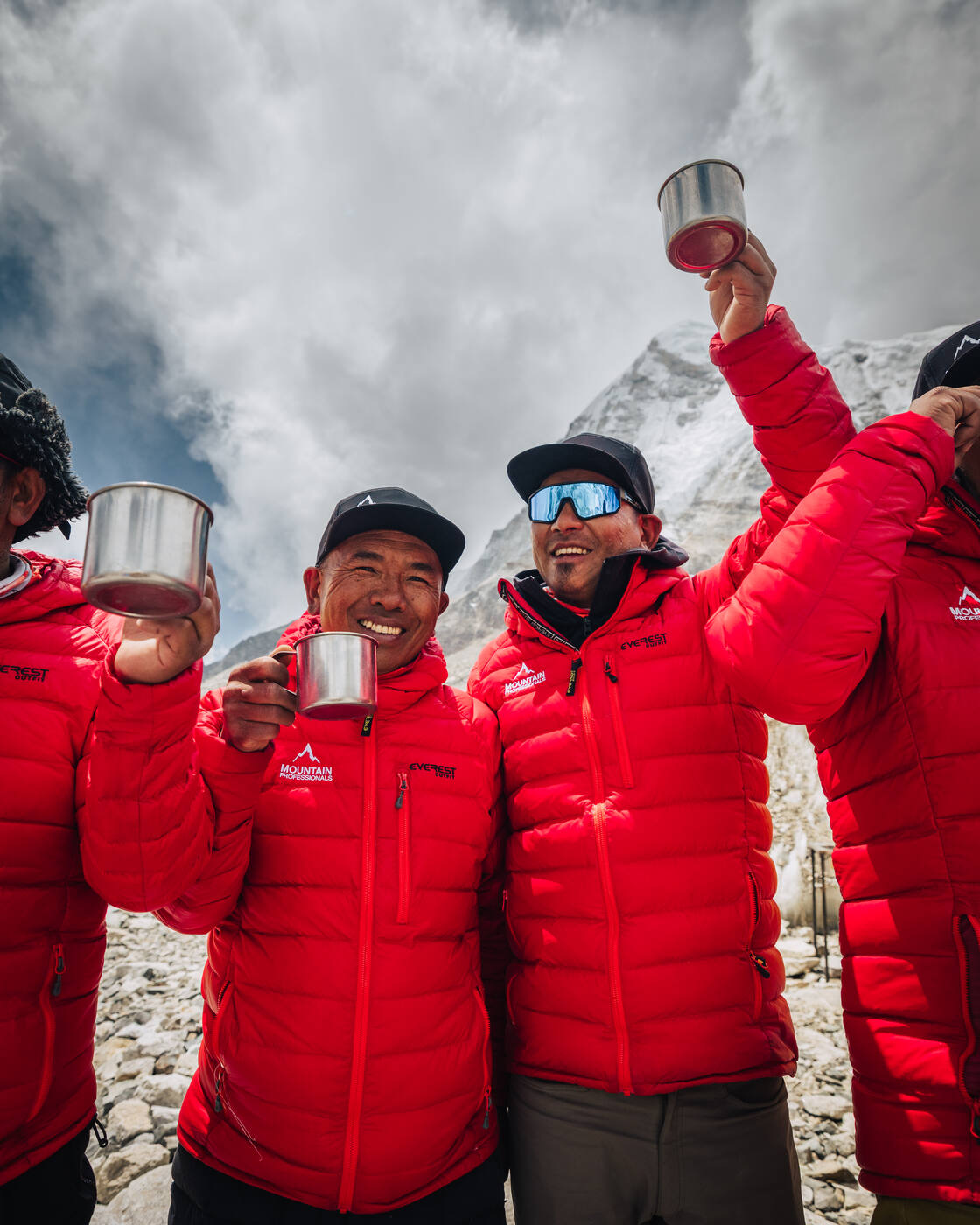
The Sherpa team at the Puja. Their knowledge and strength would be the difference on summit day.
Days 18–23: Pumori, Icefall Training, and Rest
April 27–May 2, 2025 · Pumori High Camp (5,628 m) · Khumbu Icefall Training
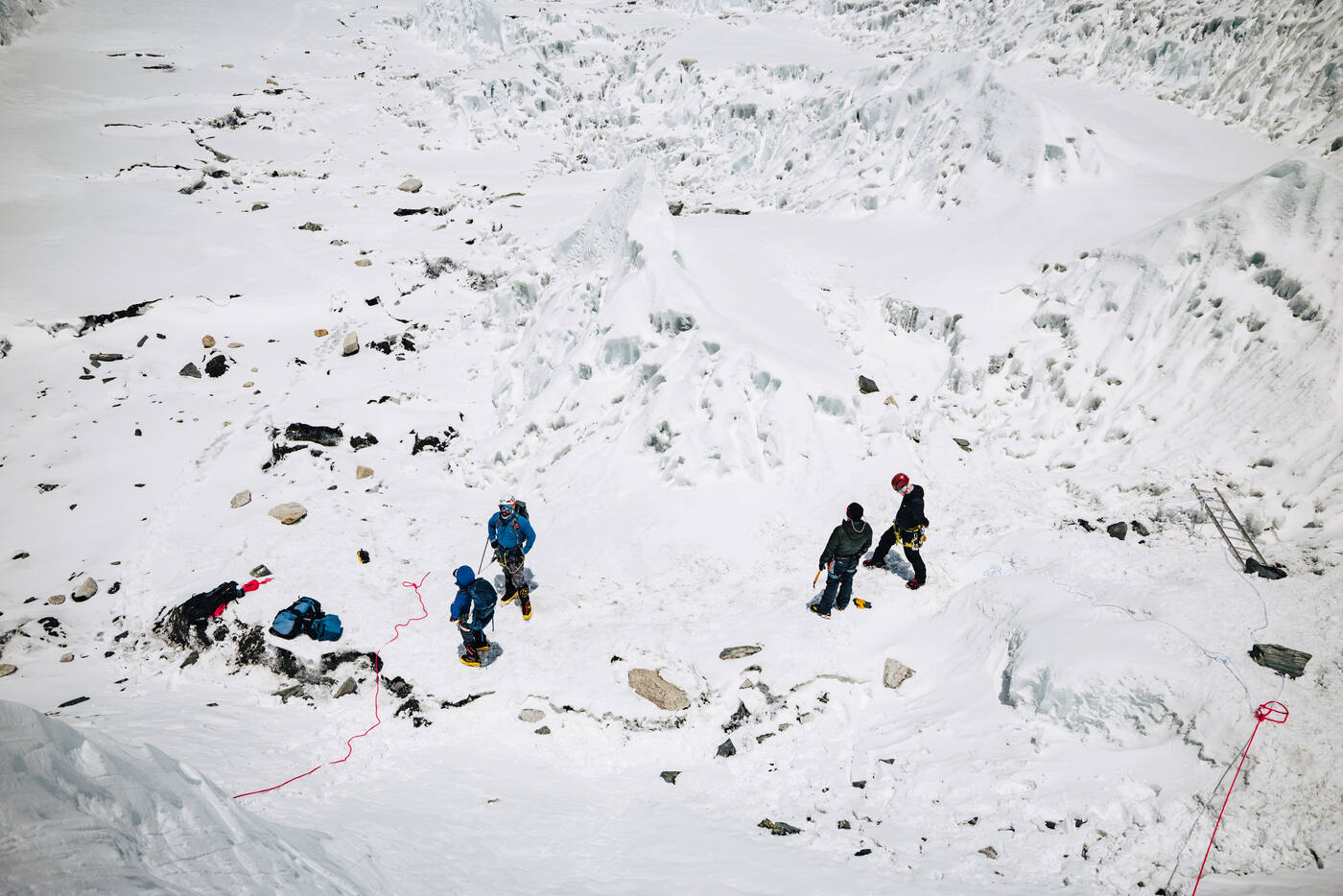
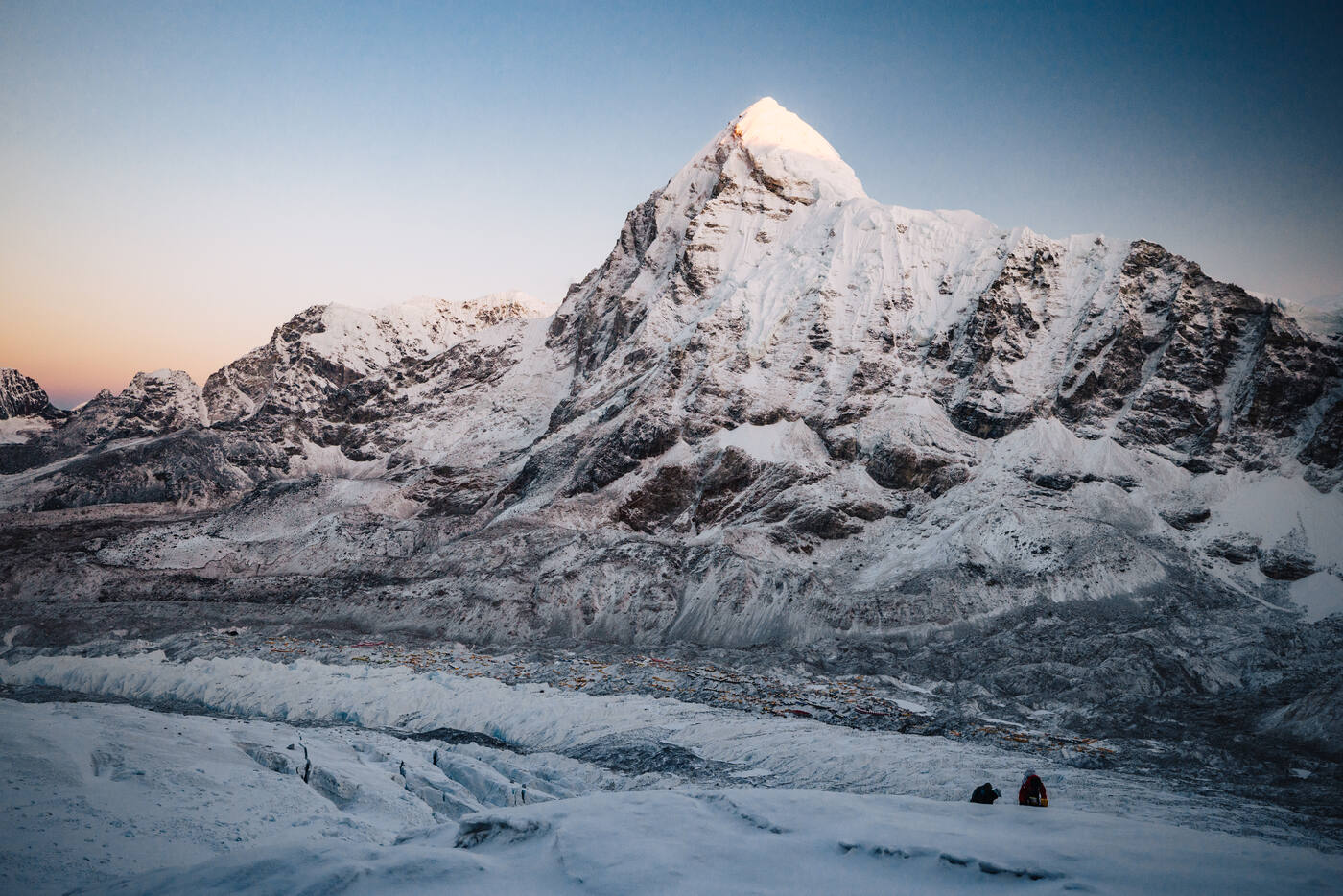
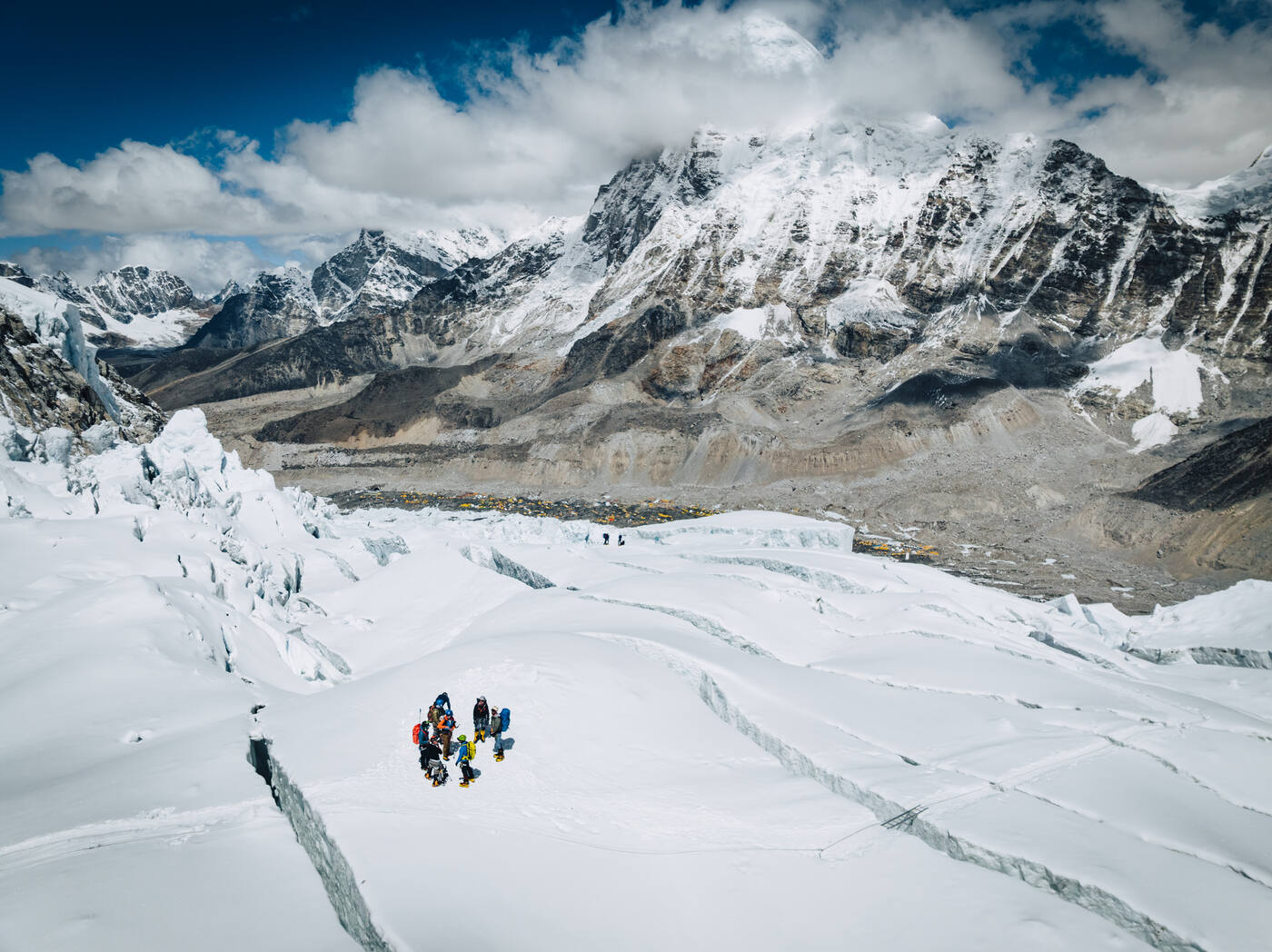
Not many idle days at Base Camp. We headed up to Pumori High Camp at 5,628m for active acclimatization. The 3-hour climb from camp was perfect for keeping our bodies working at altitude. Looking down from Pumori, we could see the entire sprawl of Base Camp spread across the glacier like a small city. But the real showstopper was looking up the Khumbu Icefall. From that vantage point, we could trace our upcoming route through the entire frozen maze.
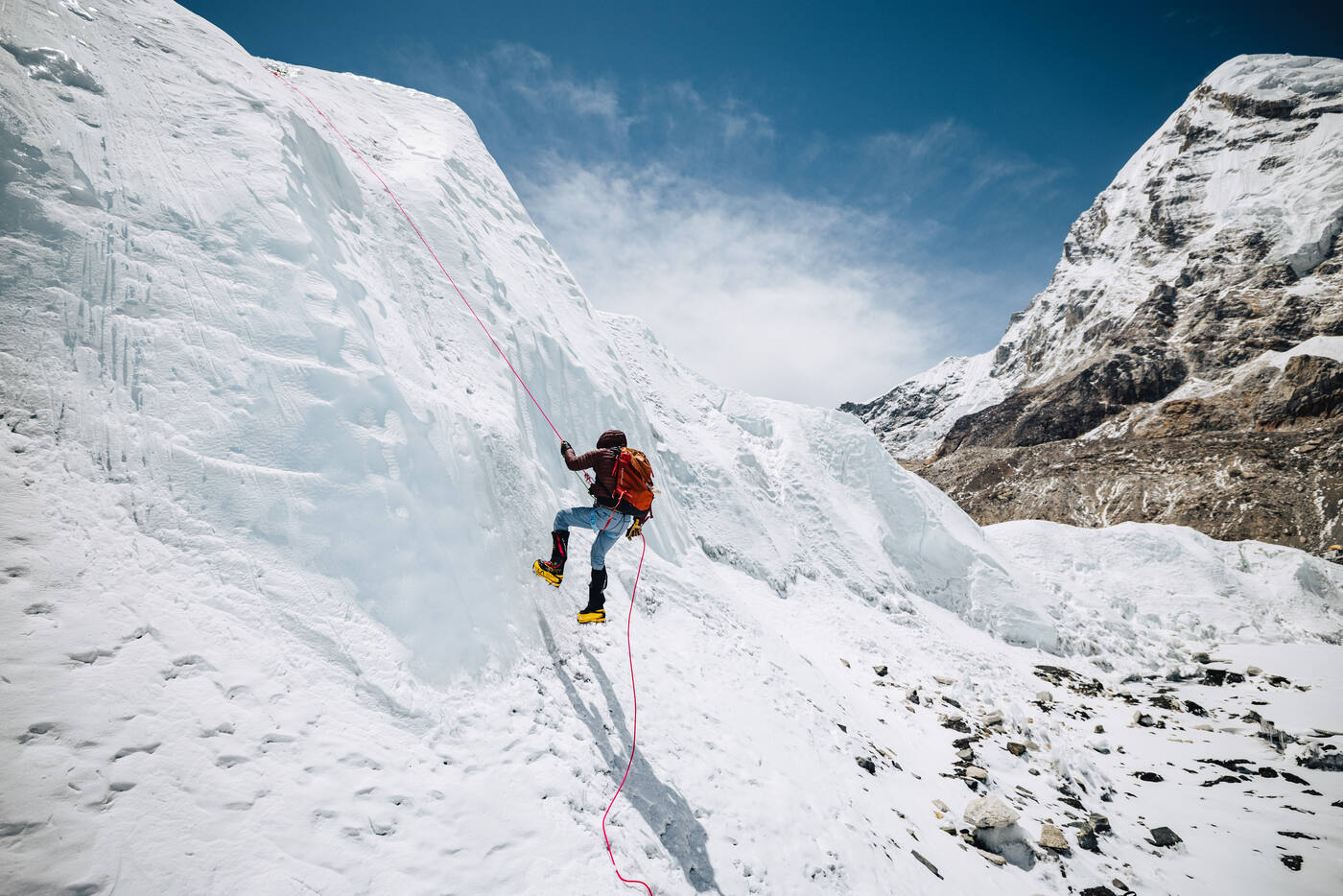
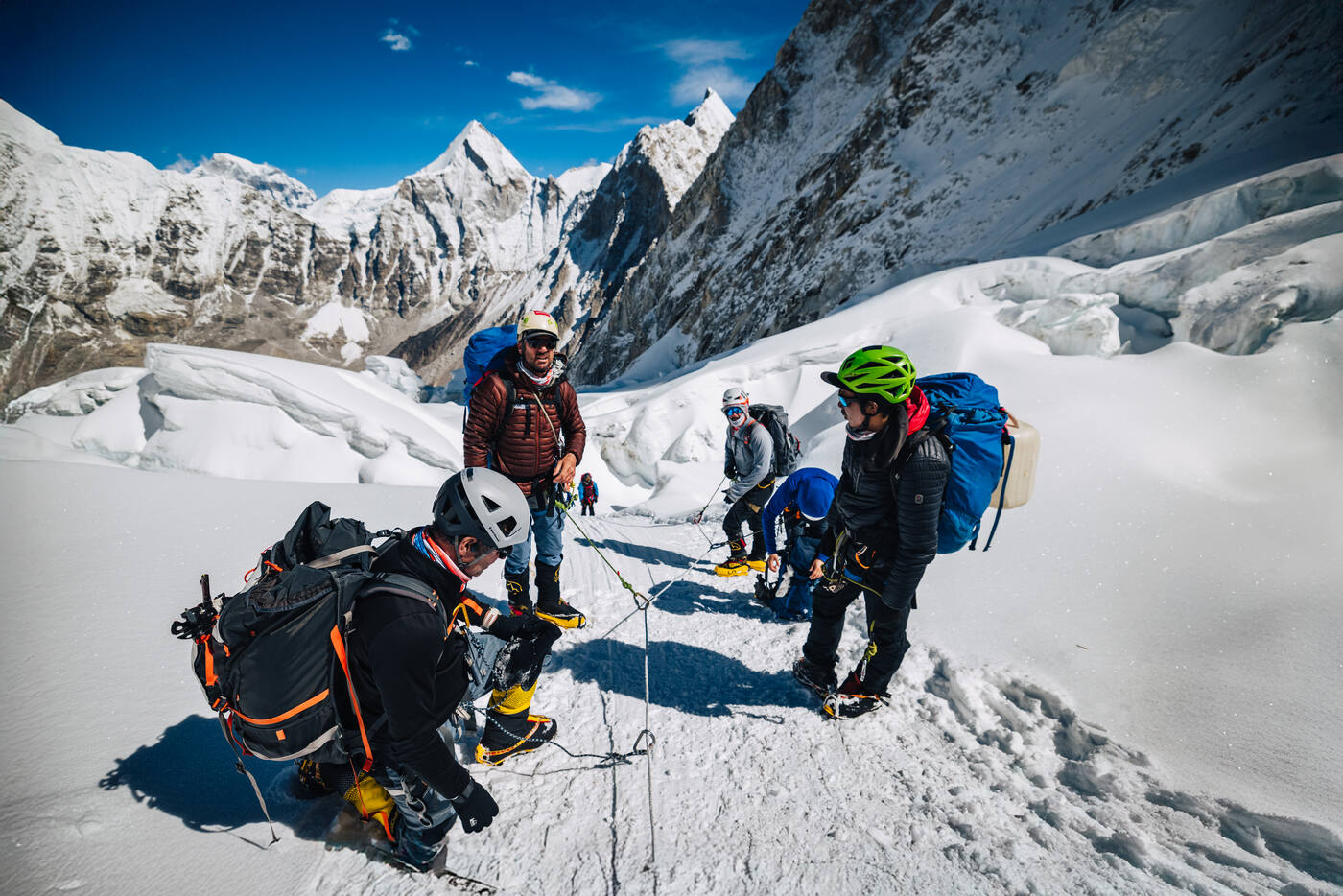
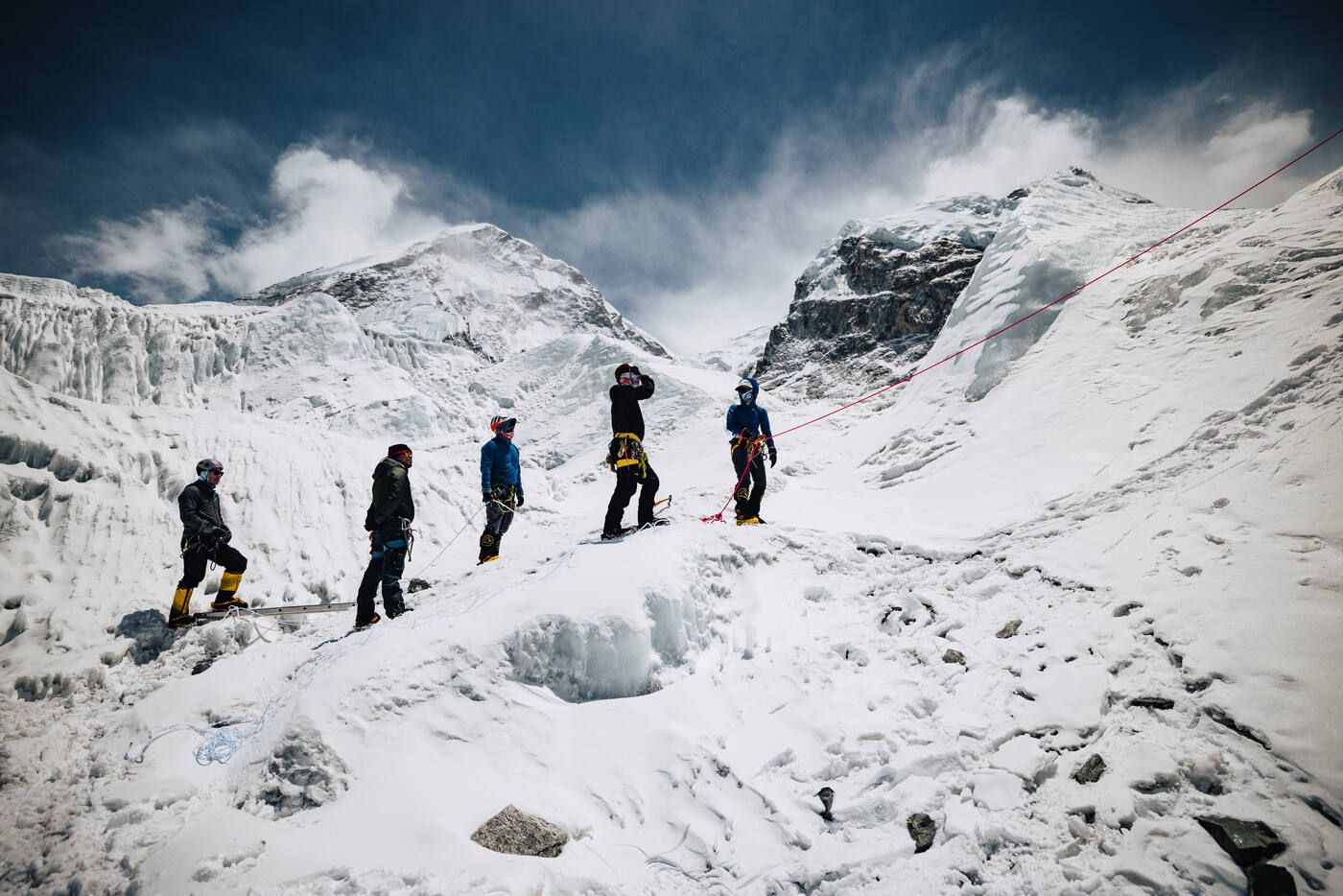
Steep ice near the Icefall entrance. Every skill drilled here would be tested higher up.
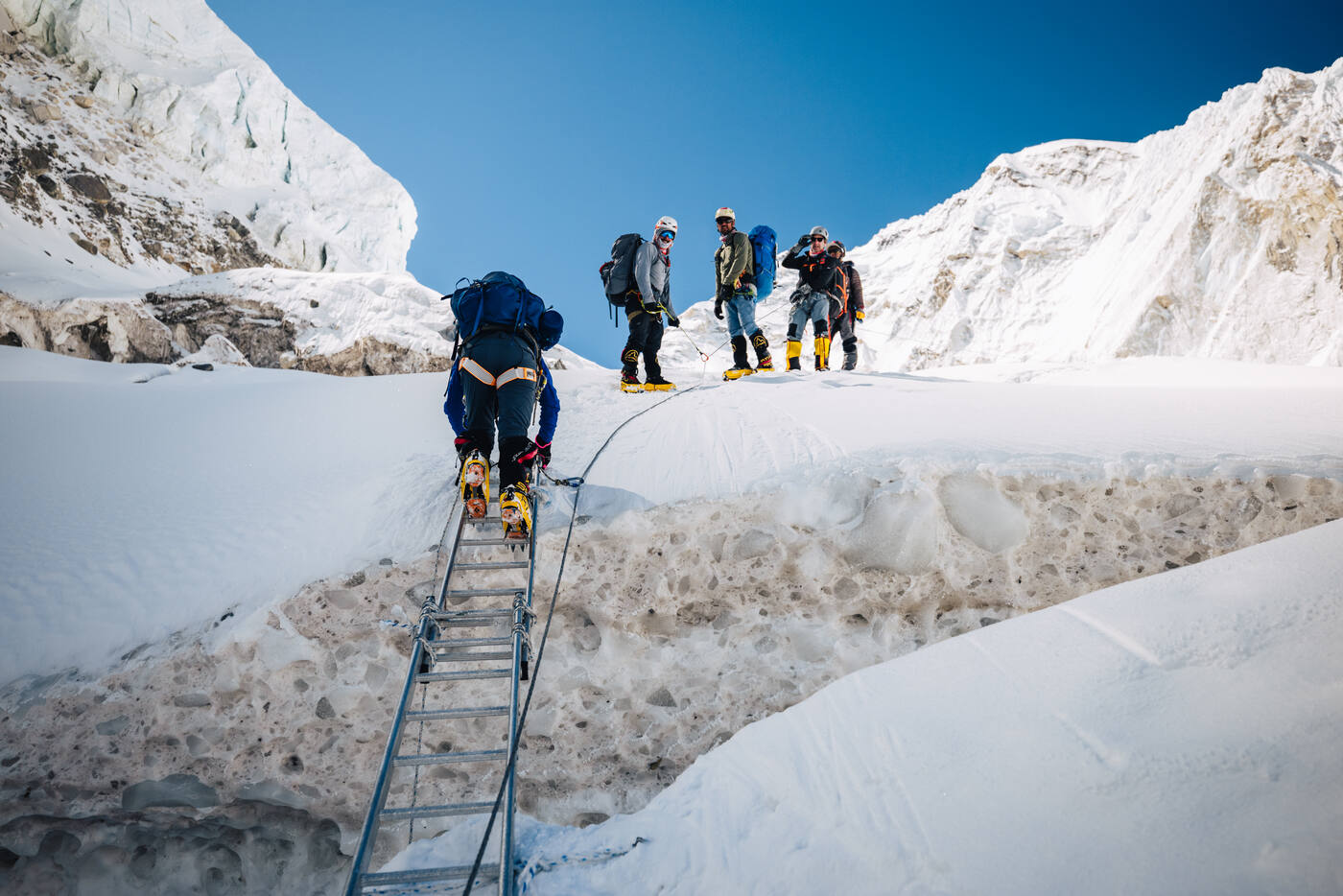
Ladder crossing practice. Aluminum rungs over a blue crevasse. Making it automatic before the real thing.Ascending a vertical ladder against the ice. Crampons on aluminum rungs become second nature.
At the Icefall entrance. The frozen maze looms above, our route through it marked by prayer flags.Another ladder crossing. Each one a test of nerve and balance over the void.
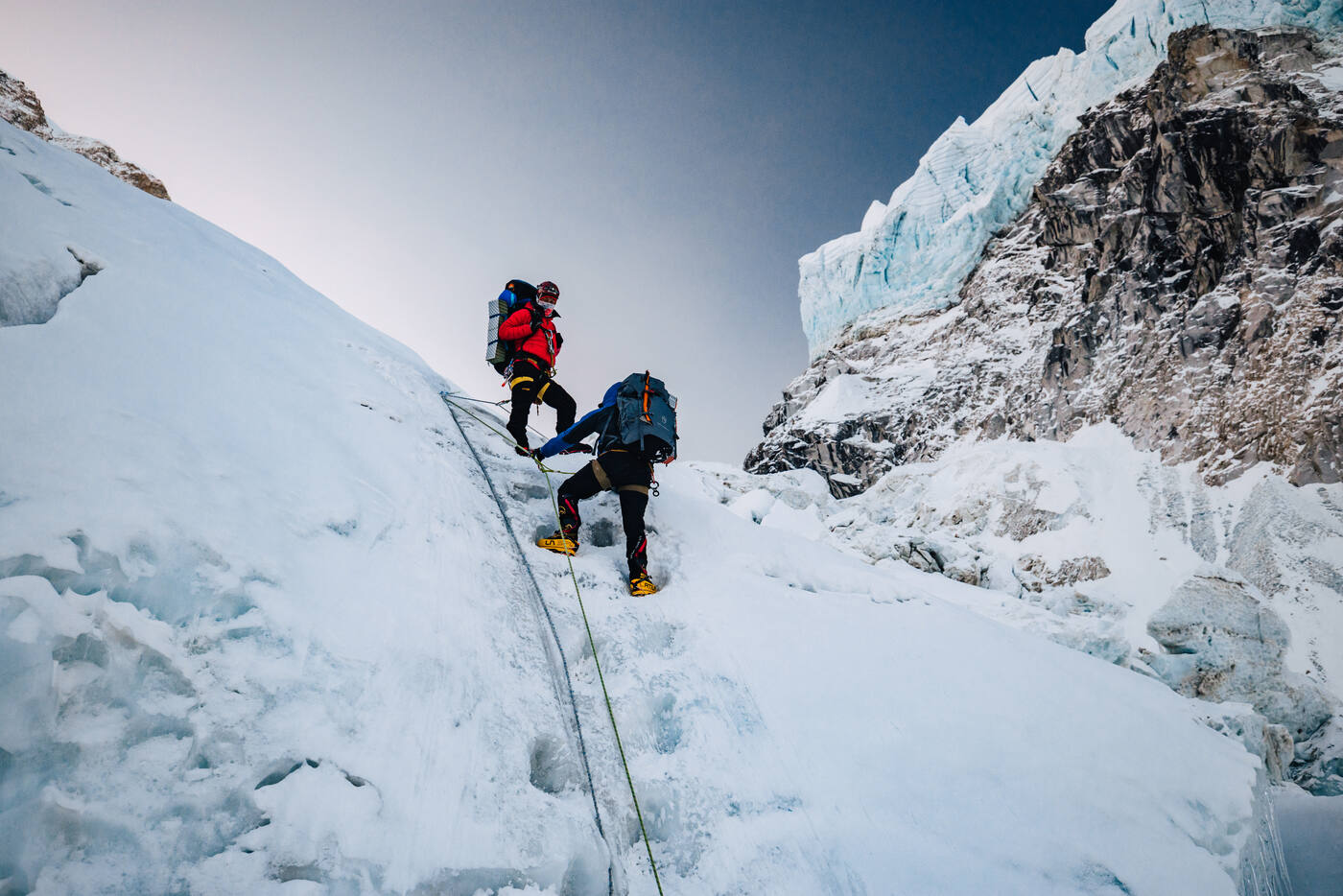
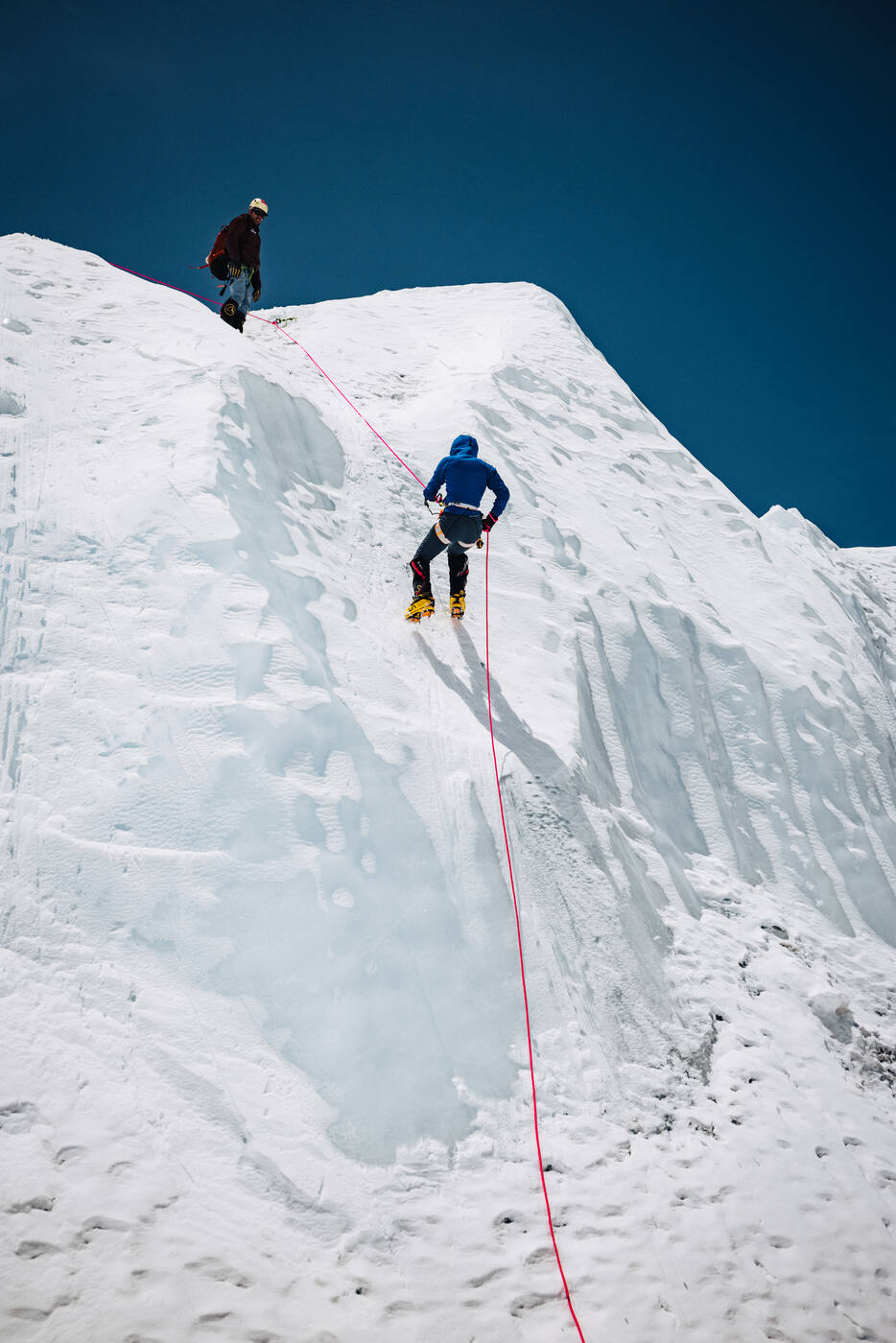
Ascending steep blue ice on fixed ropes. The Icefall demands every skill you have.
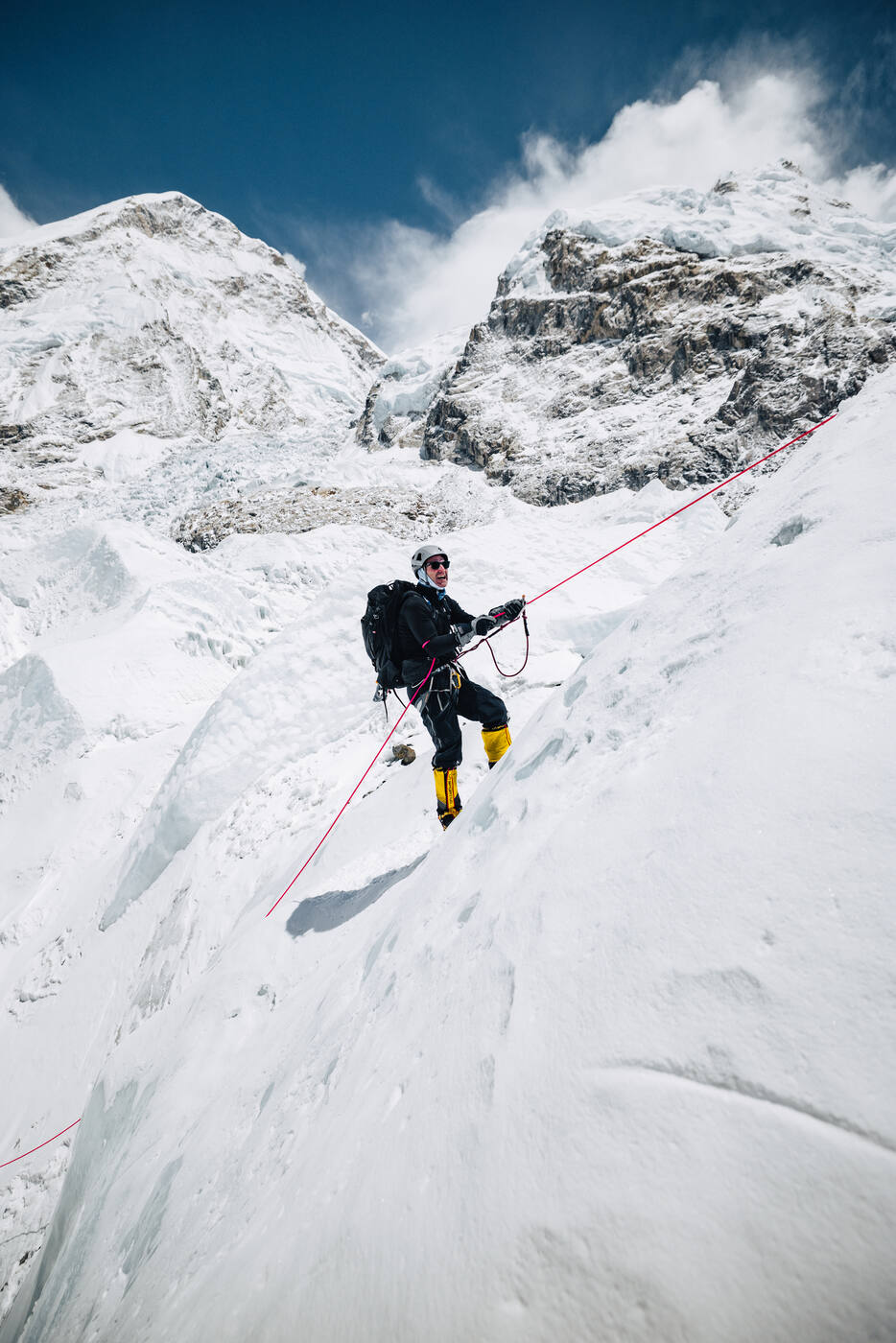
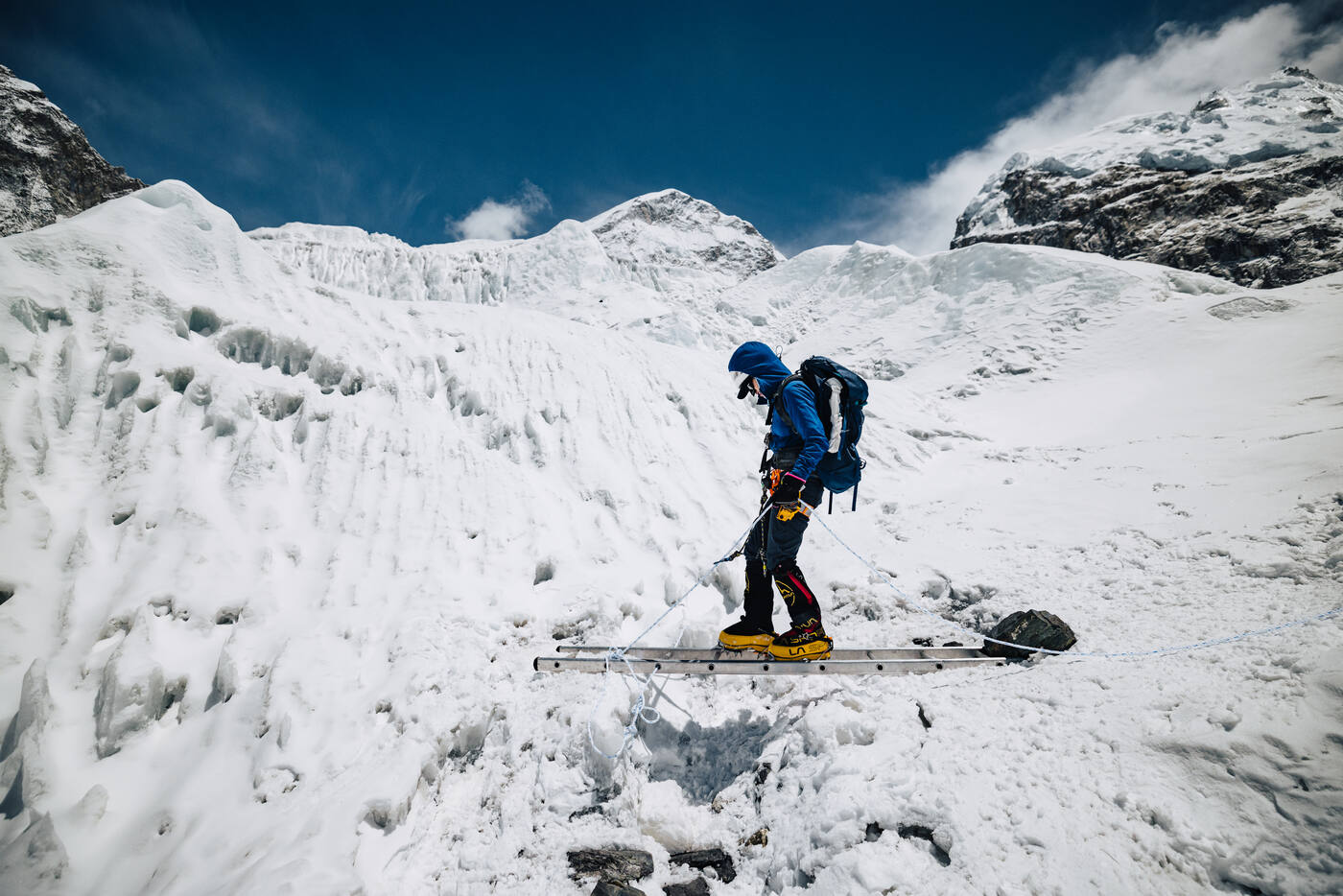
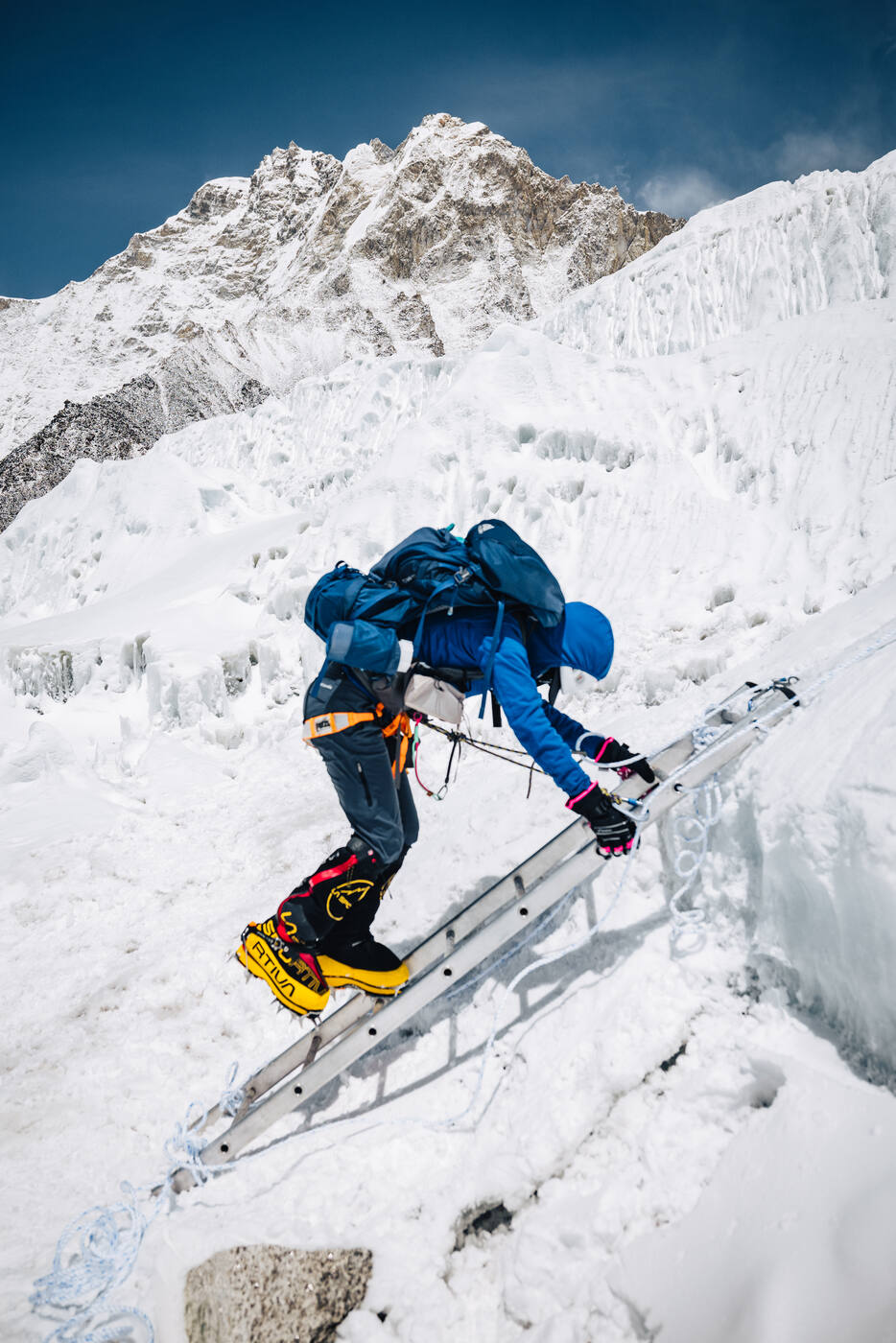
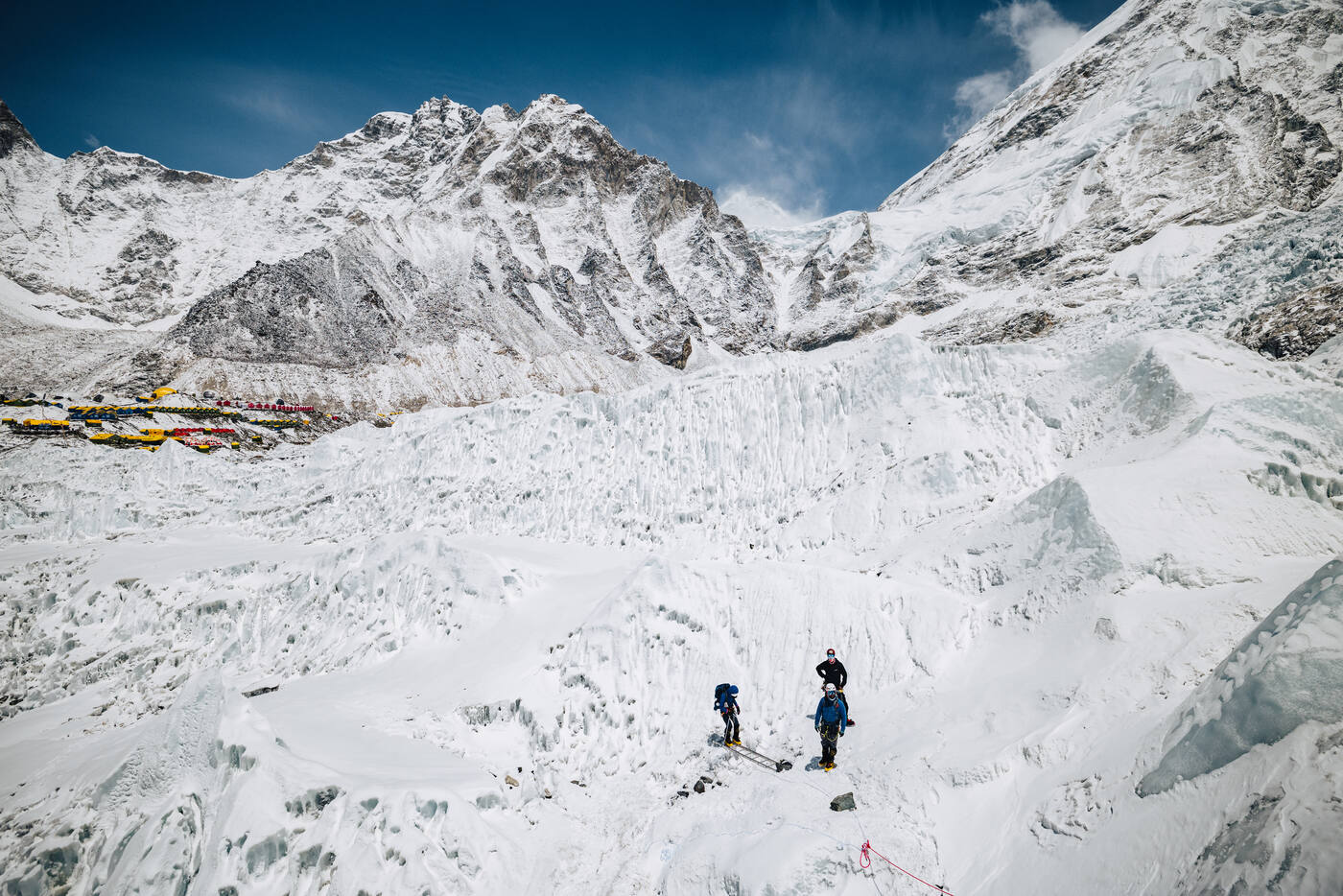
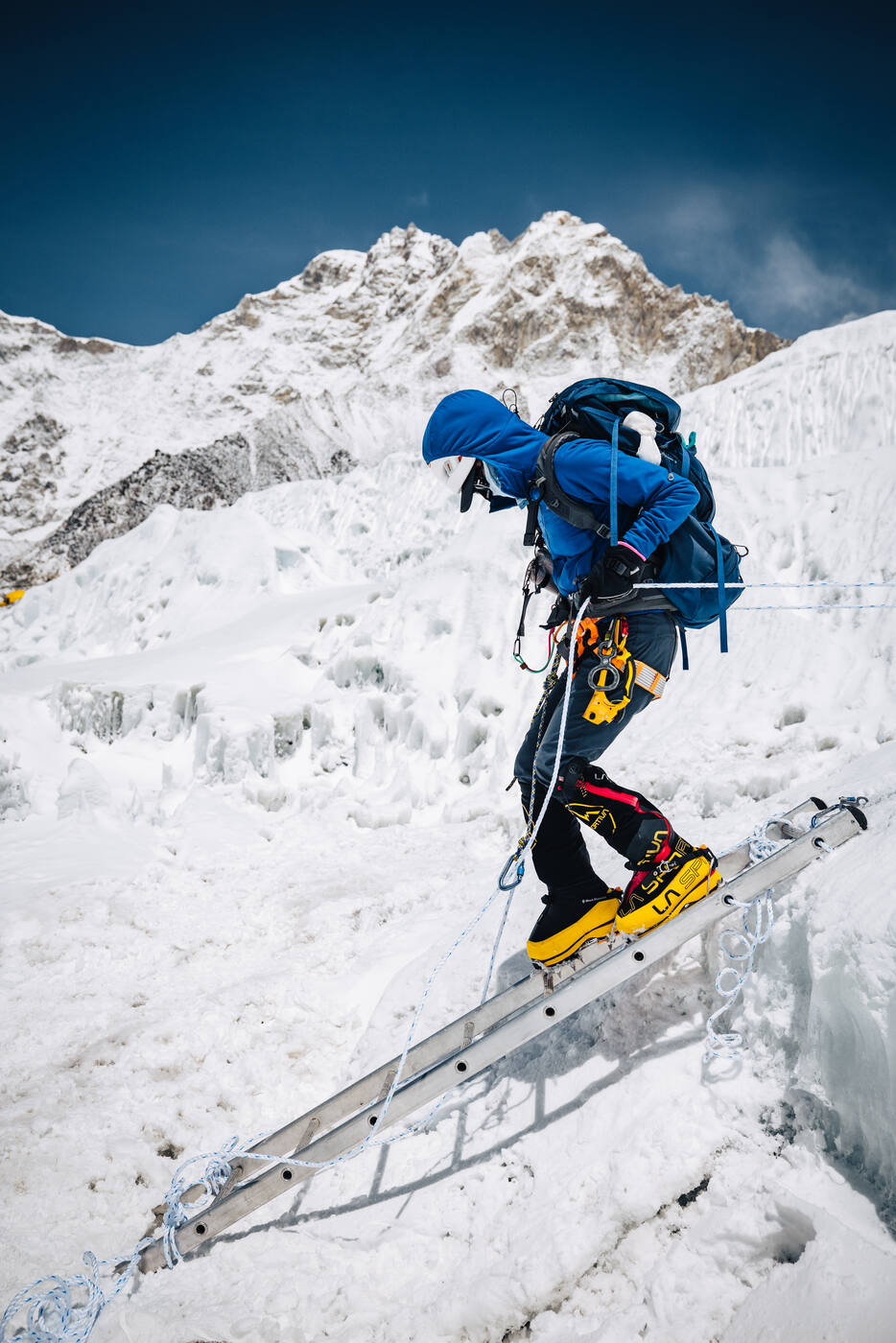
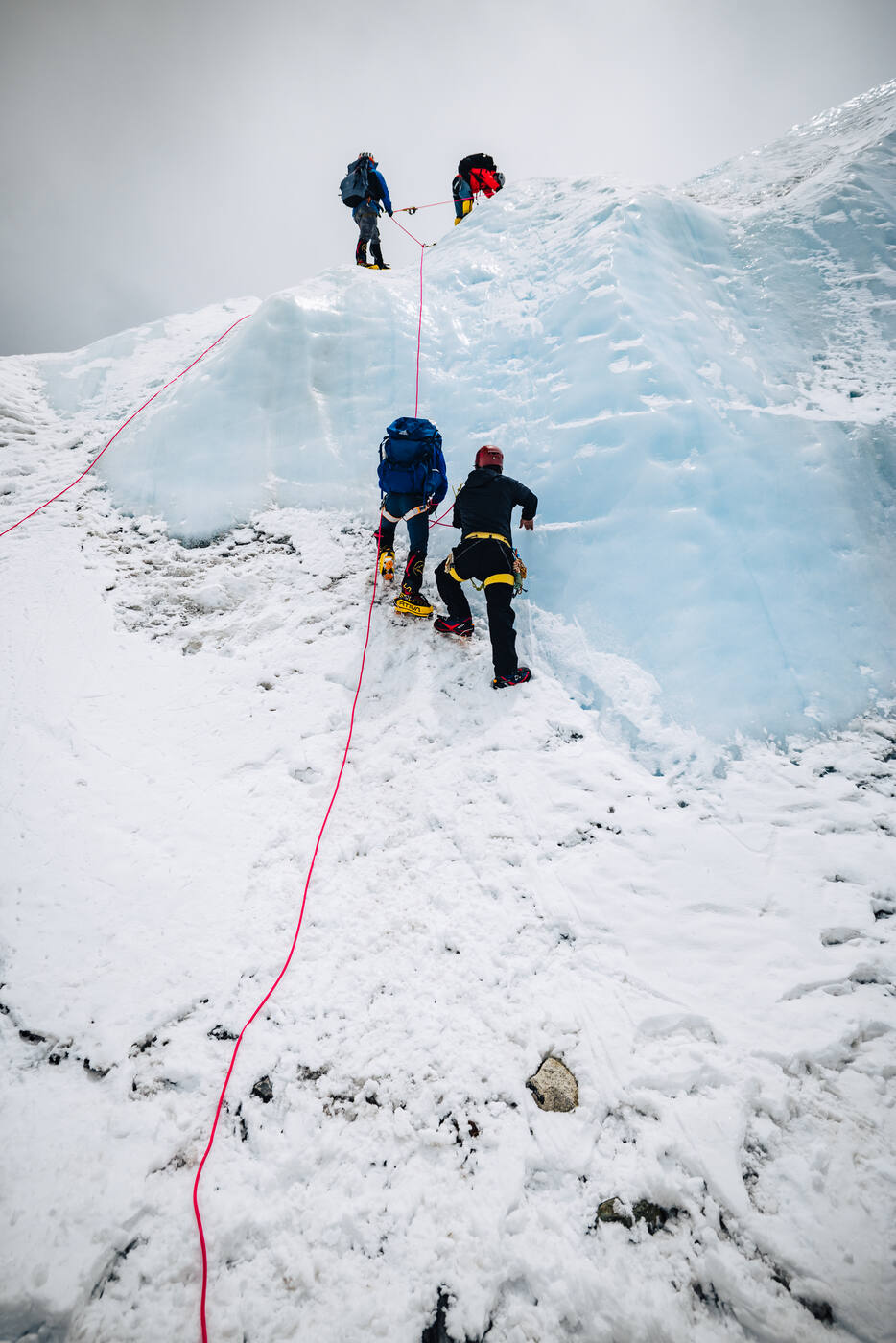
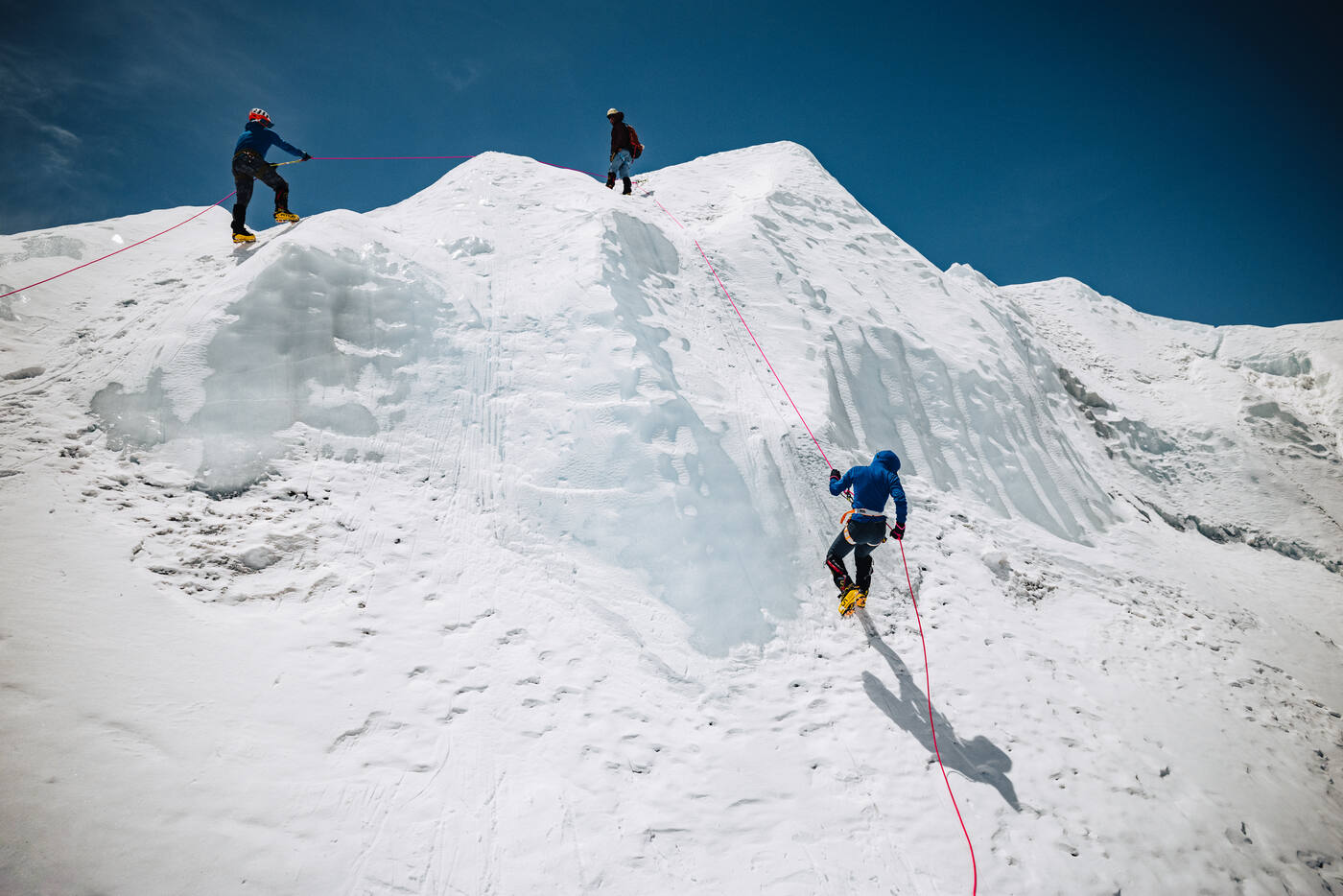
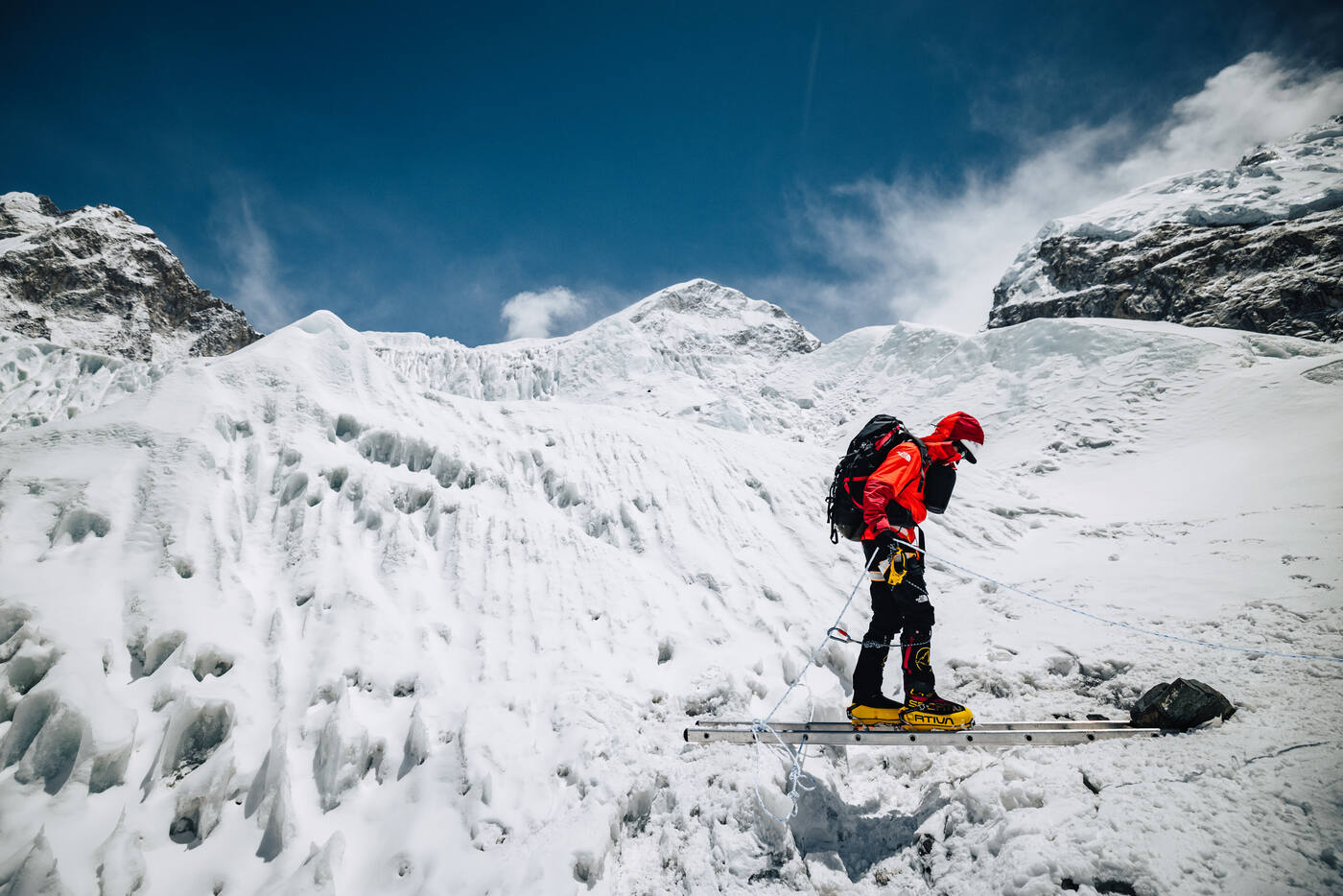
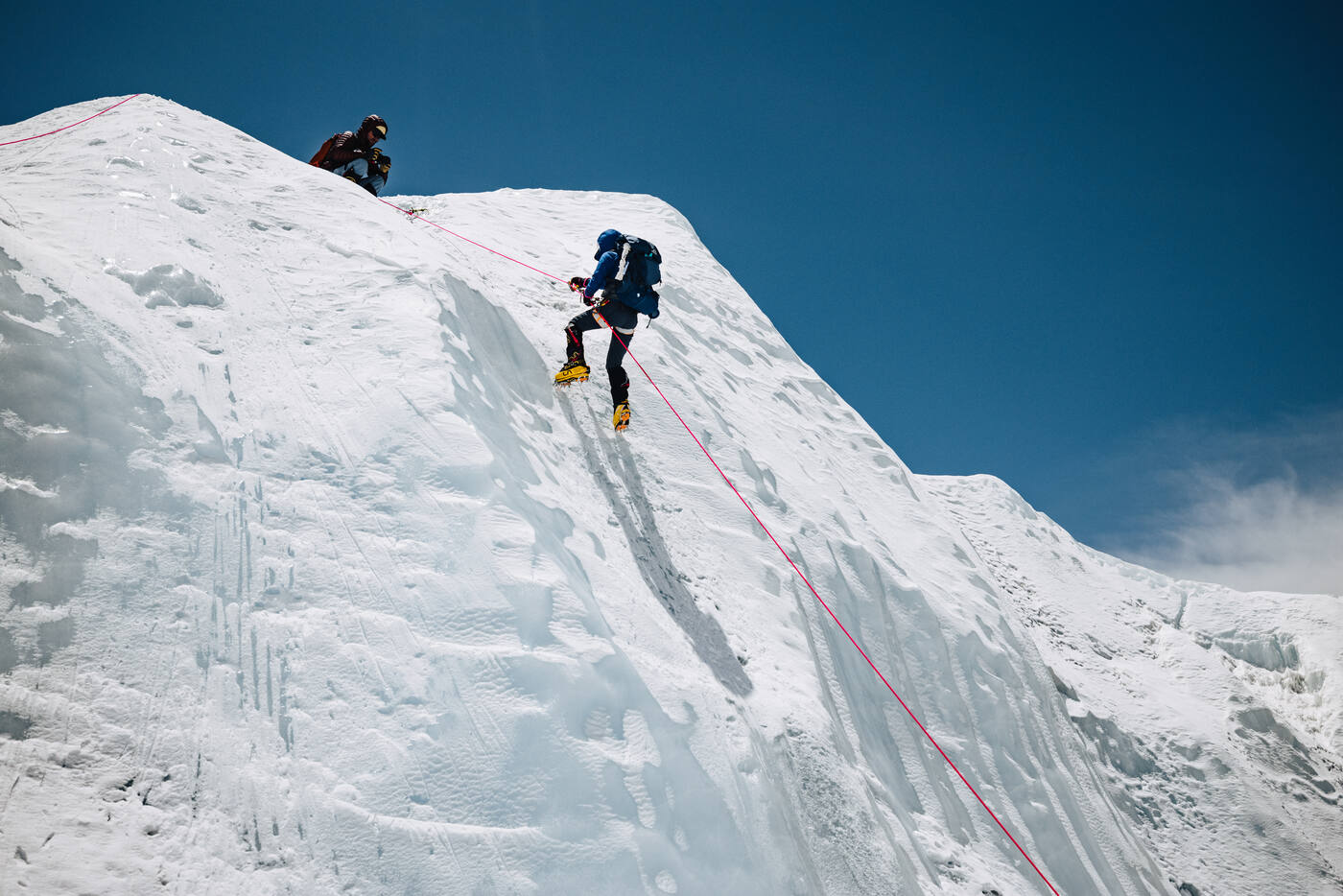
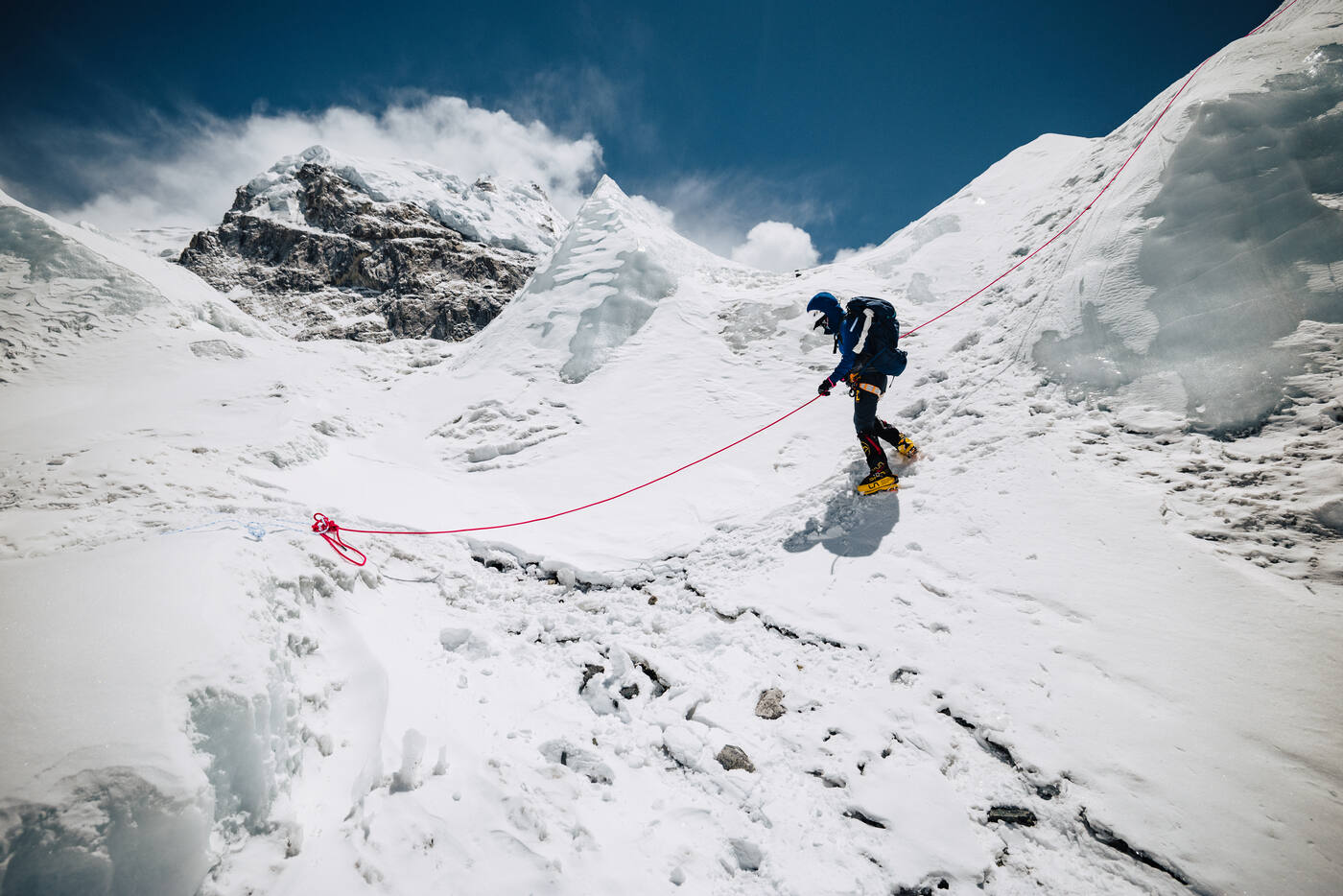
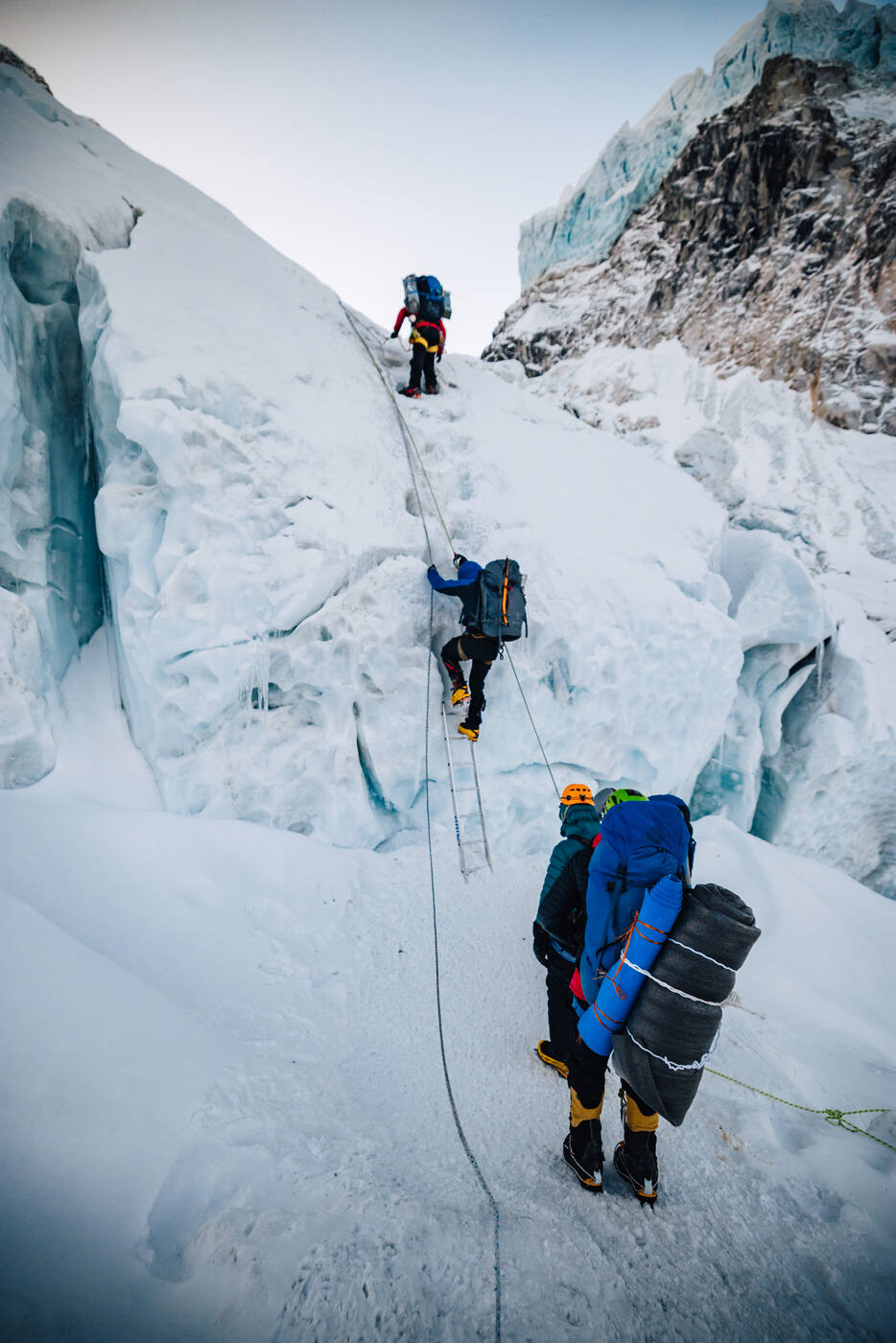
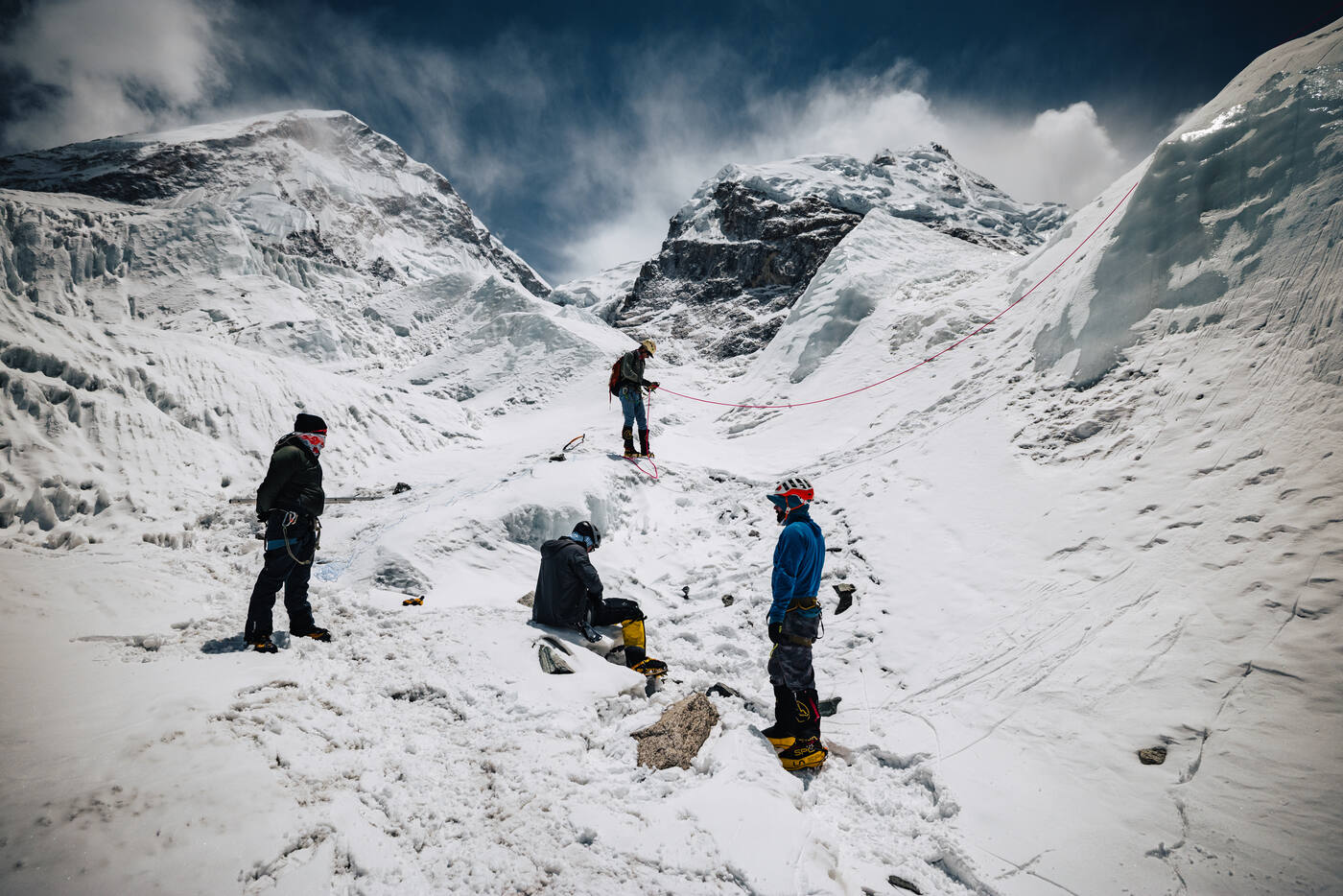
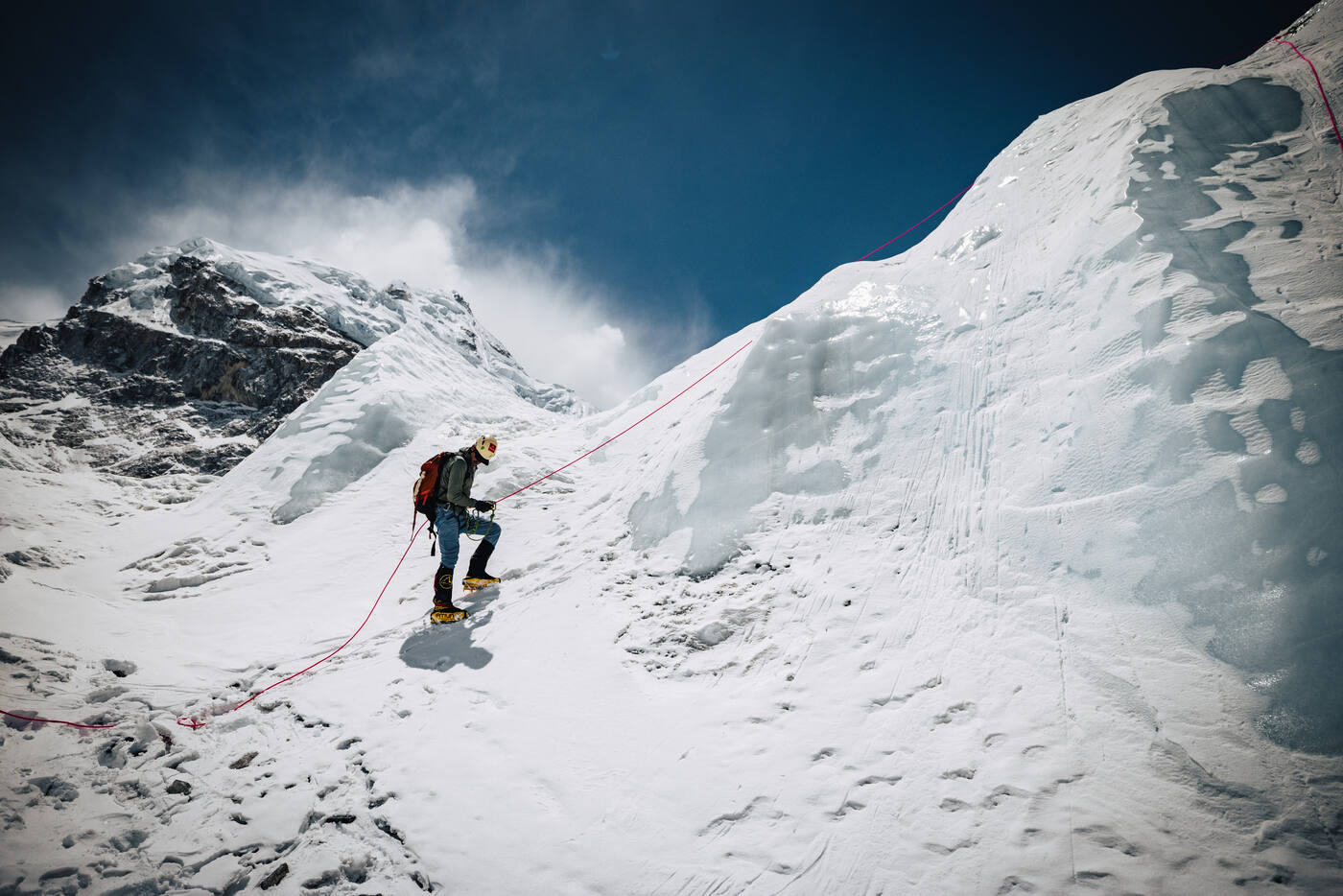
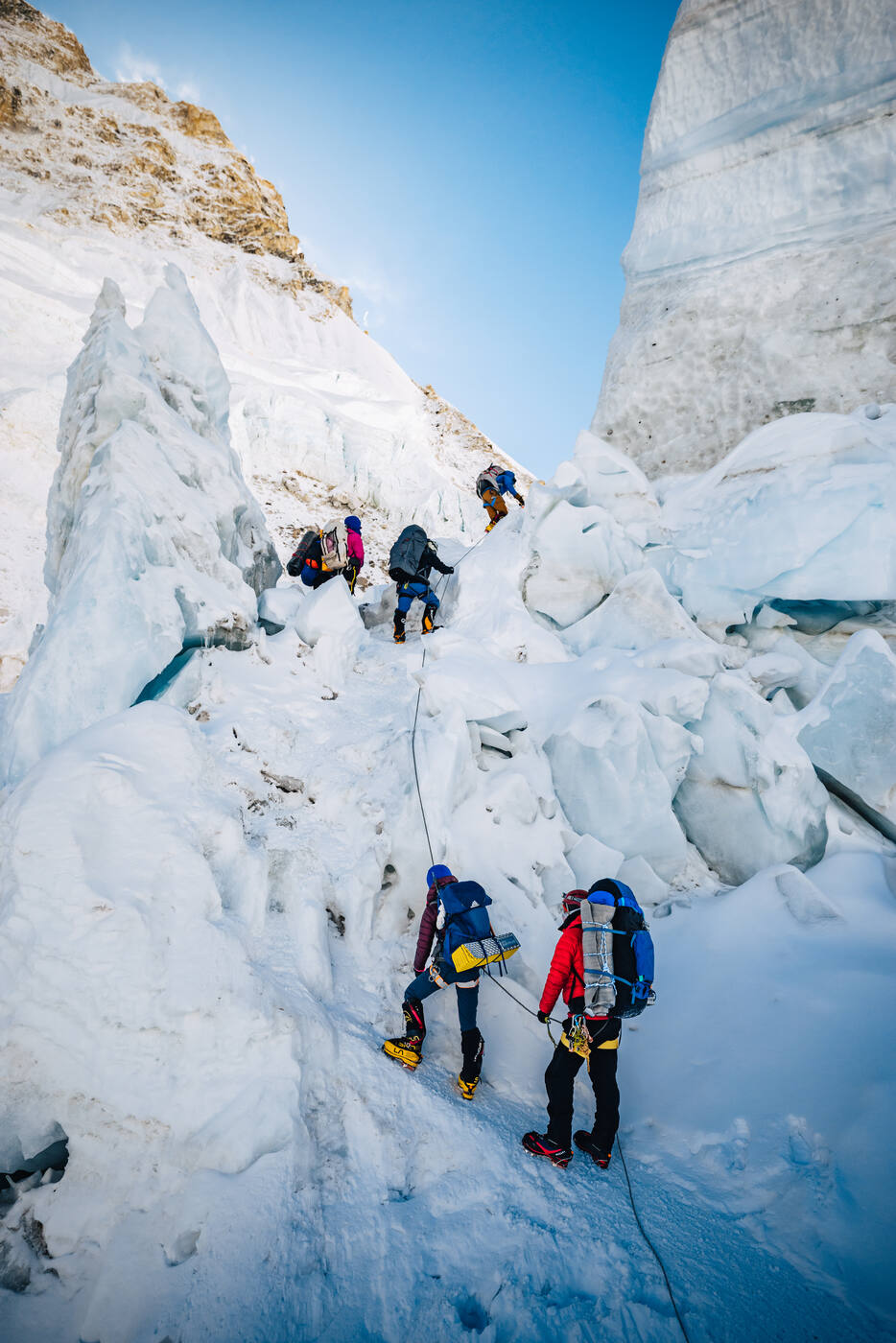
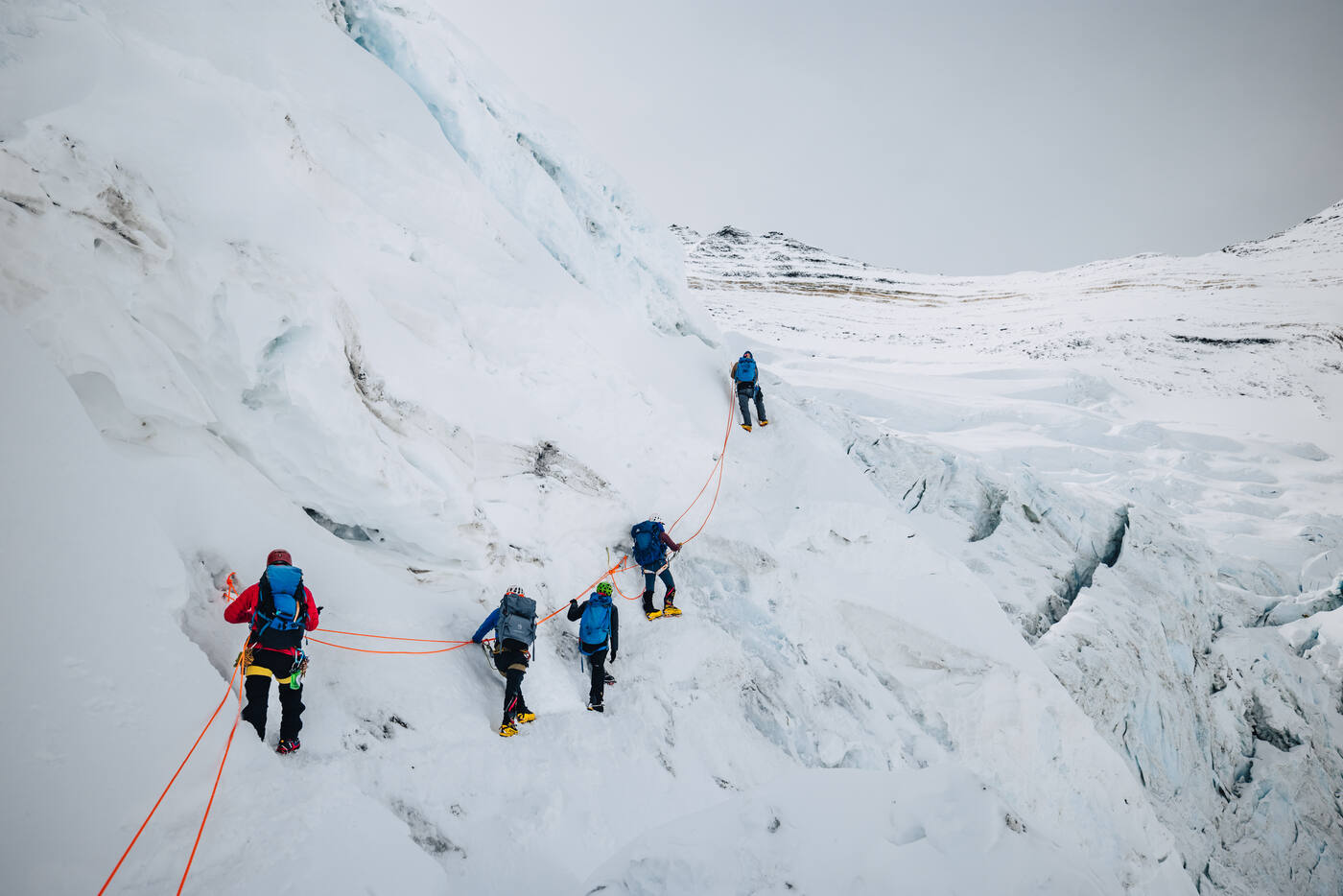
Then came Icefall training. Ryan had us in full gear for two days, drilling every skill we would need. Ascending and descending fixed lines with ascenders. Rappelling techniques. Clipping and unclipping carabiners quickly with thick gloves. The ladder crossings got special attention. There is no way to fully simulate crossing a 20-foot-deep crevasse on aluminum ladders, but we drilled the footwork and clipping sequences until they became automatic. When you are in the Icefall at 3 AM, exhausted and cold, muscle memory takes over.
Ice climbing practice. Every minute spent training is time saved higher up.Ladder bridge practice. One step at a time over the void. Muscle memory takes over.
Ascending techniques. Going up steep ice is as much about rhythm as strength.Full-gear drill near the Icefall. Every technique repeated until it becomes automatic.
Navigating steep ice on fixed rope. When you are in the Icefall at 3 AM, muscle memory takes over.
Days 24–28: Rotation 2 – Through the Icefall to Camp 3
May 3–7, 2025 · EBC → Camp 1 (6,054 m) → Camp 2 (6,472 m) → Camp 3 (7,038 m) → EBC
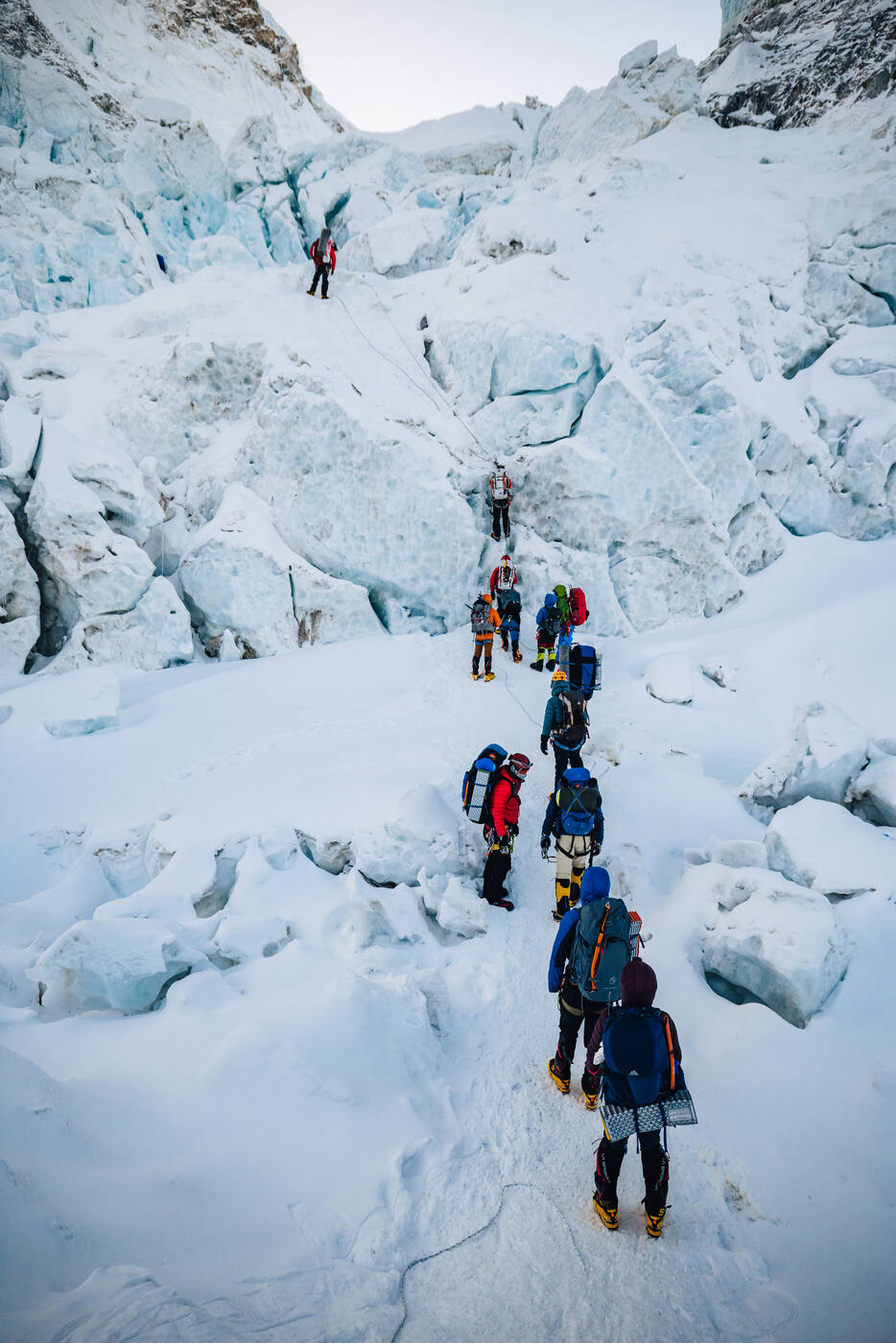
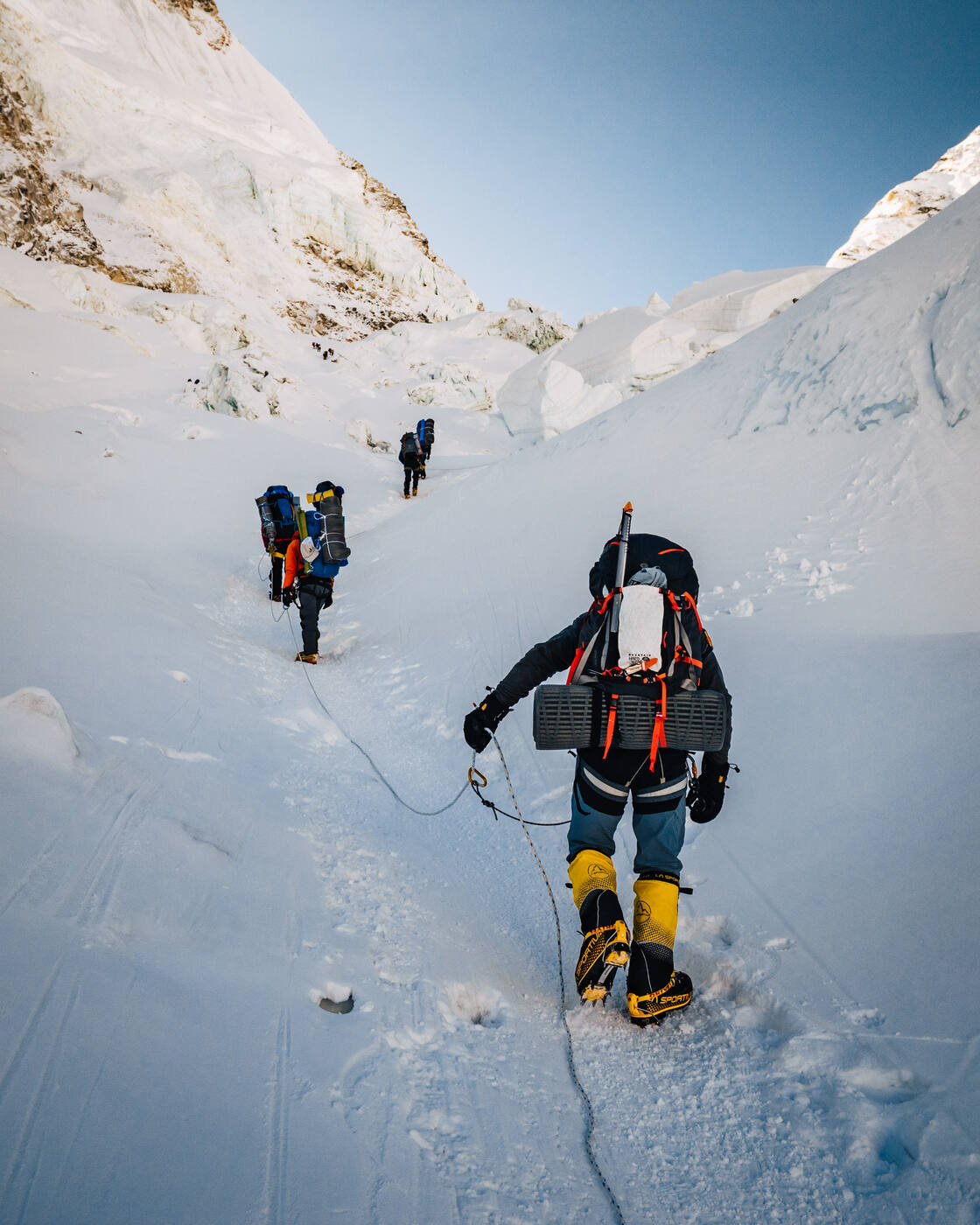
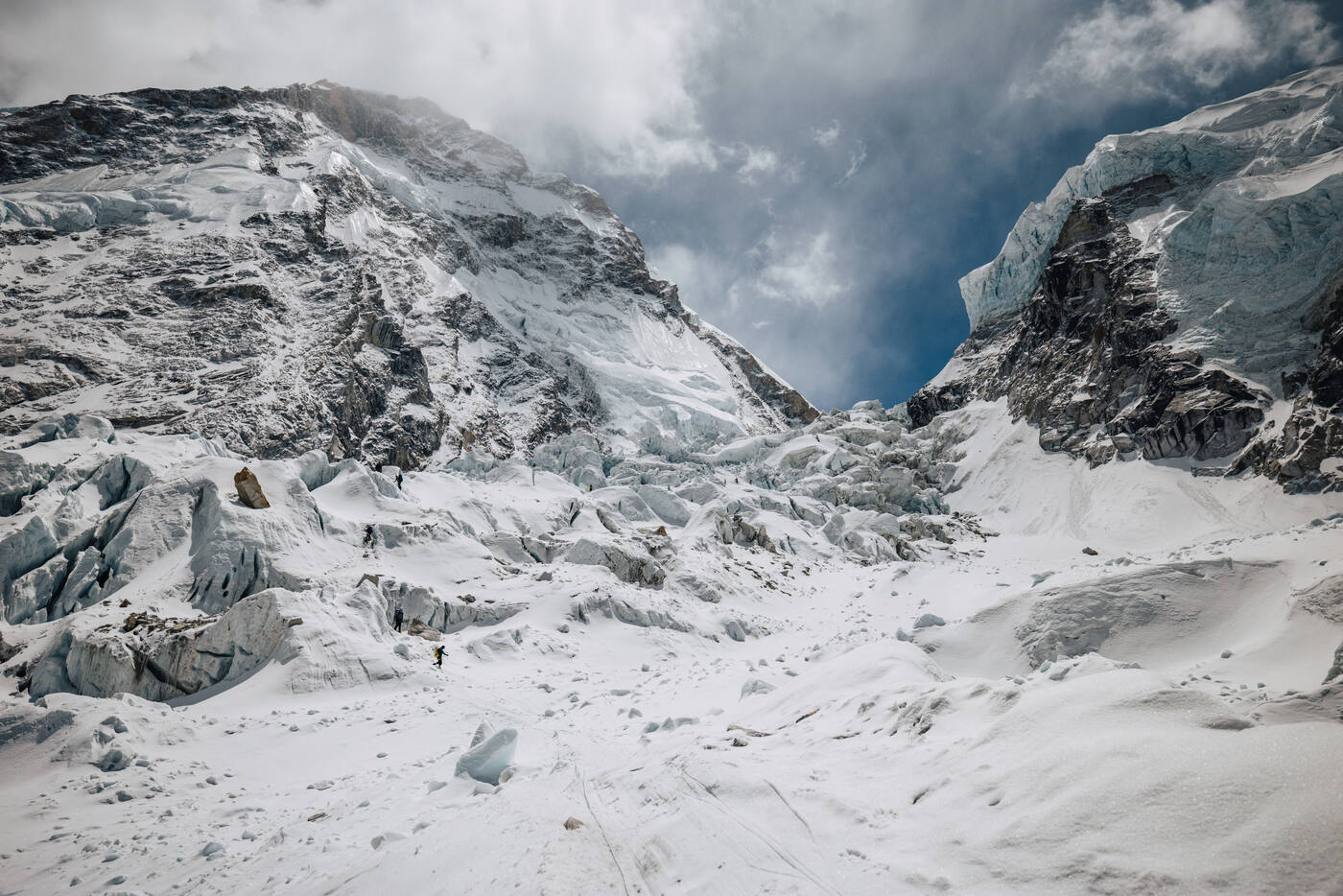
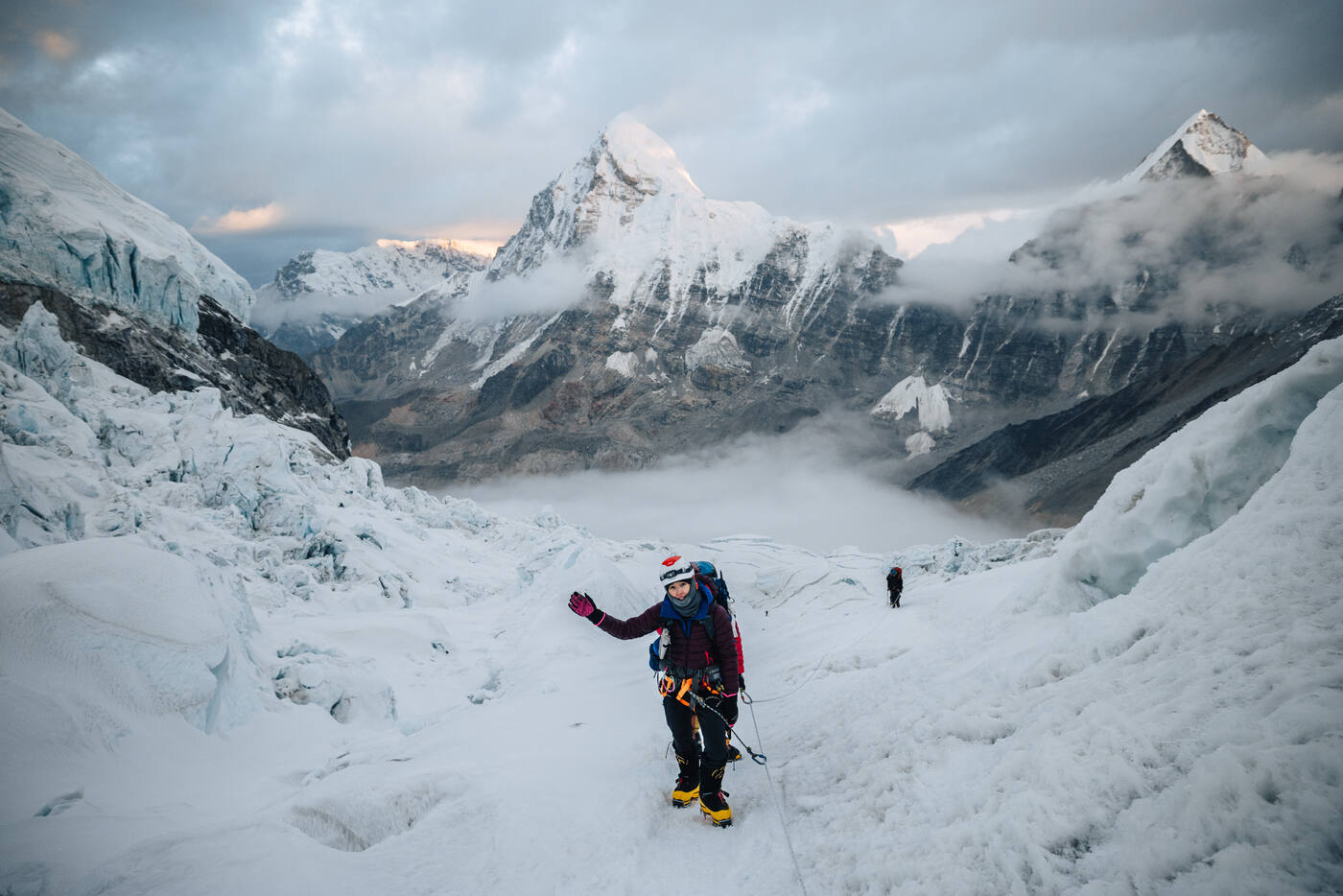
The alarm went off at 2 AM after only 4.5 hours of sleep. By 2:30 AM we were moving through Base Camp in the dark, headlamps on, crampons crunching on ice. The Khumbu Icefall is safest in the pre-dawn cold when the ice is most stable, so these alpine starts are non-negotiable.
Into the Icefall. Ascending steep ice and ladders through the frozen maze above Base Camp.
Facing the Icefall. The route through the frozen maze lies ahead.Ascending steep ice. Crampons biting, ascenders pulling, the route winding upward through seracs.
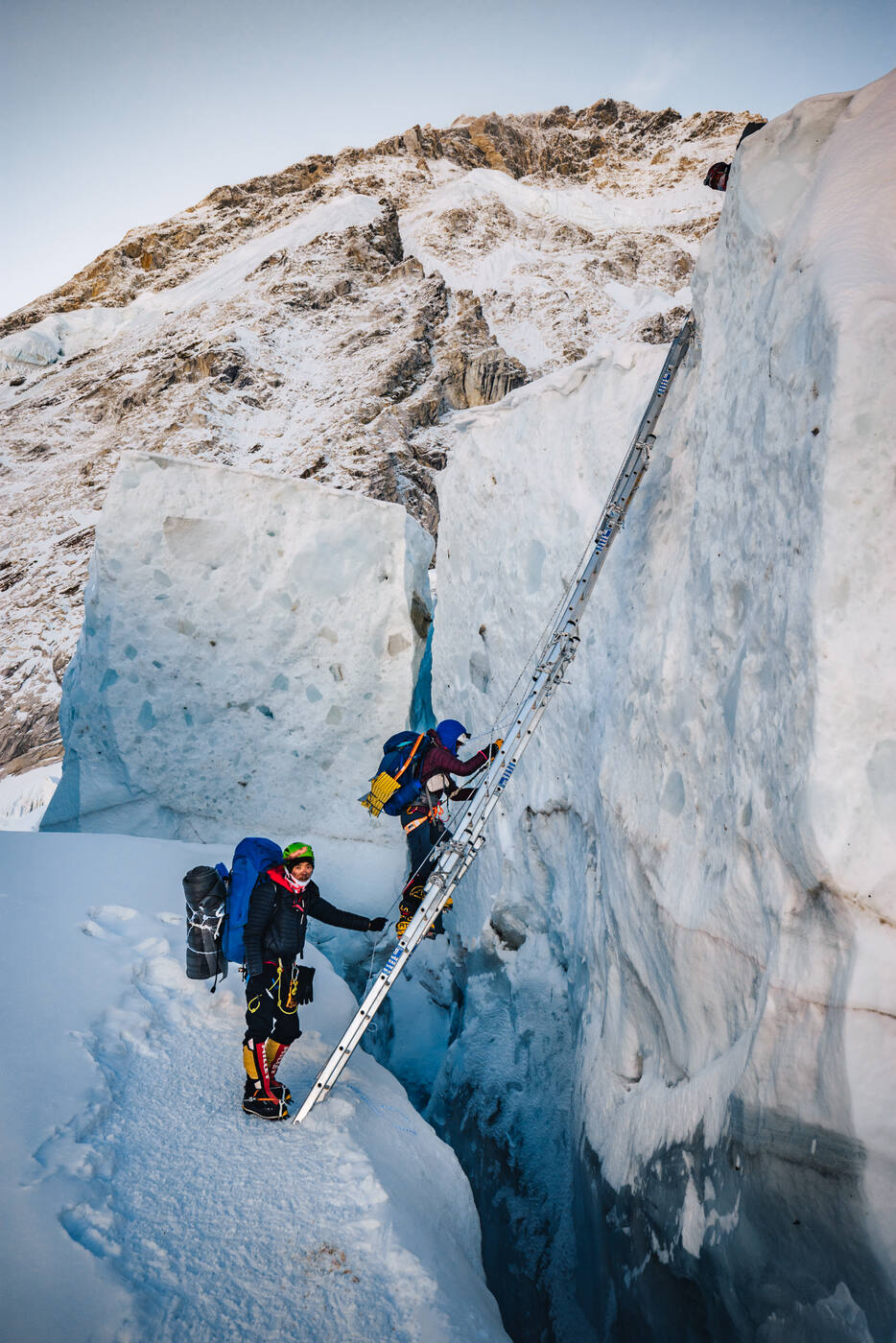
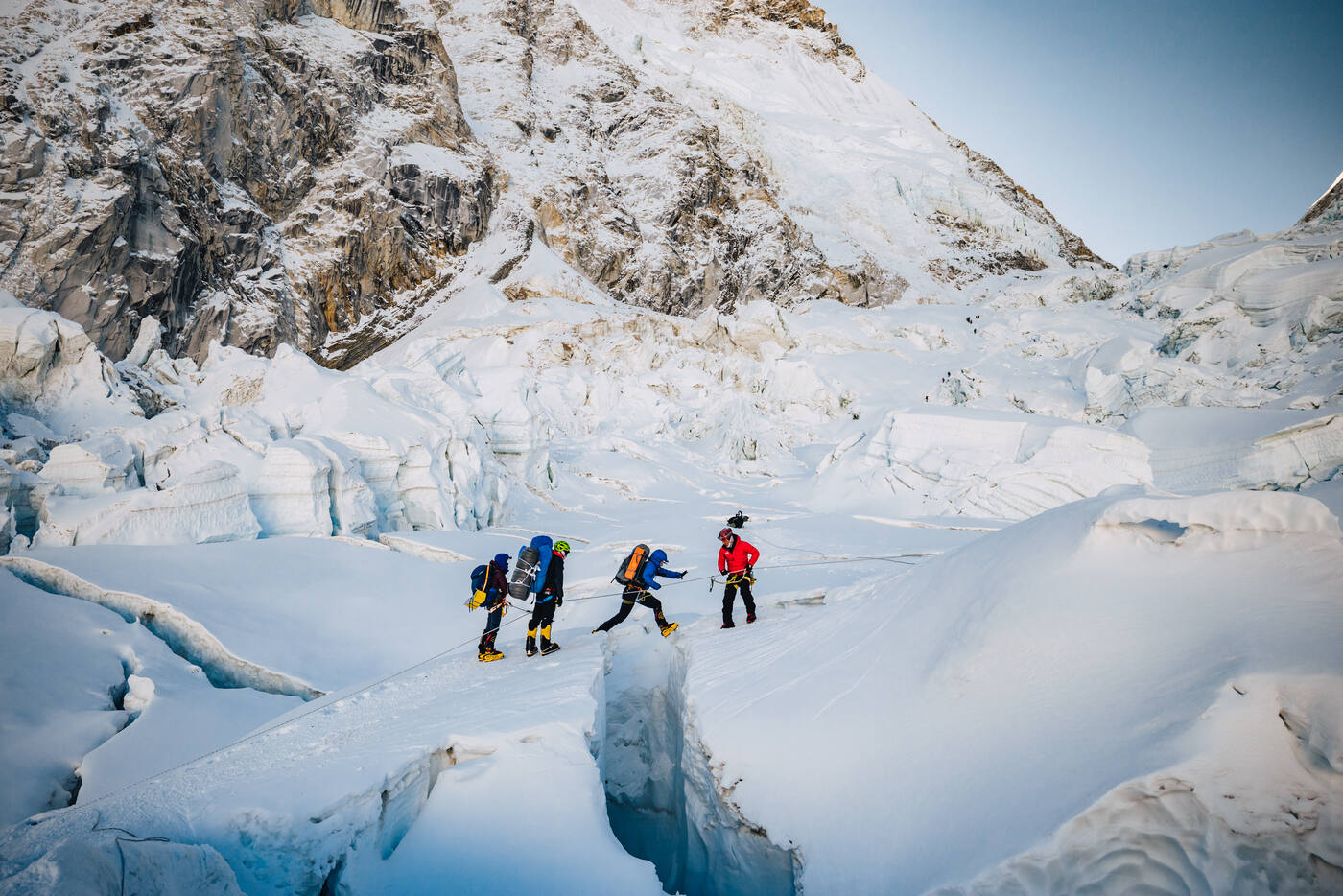
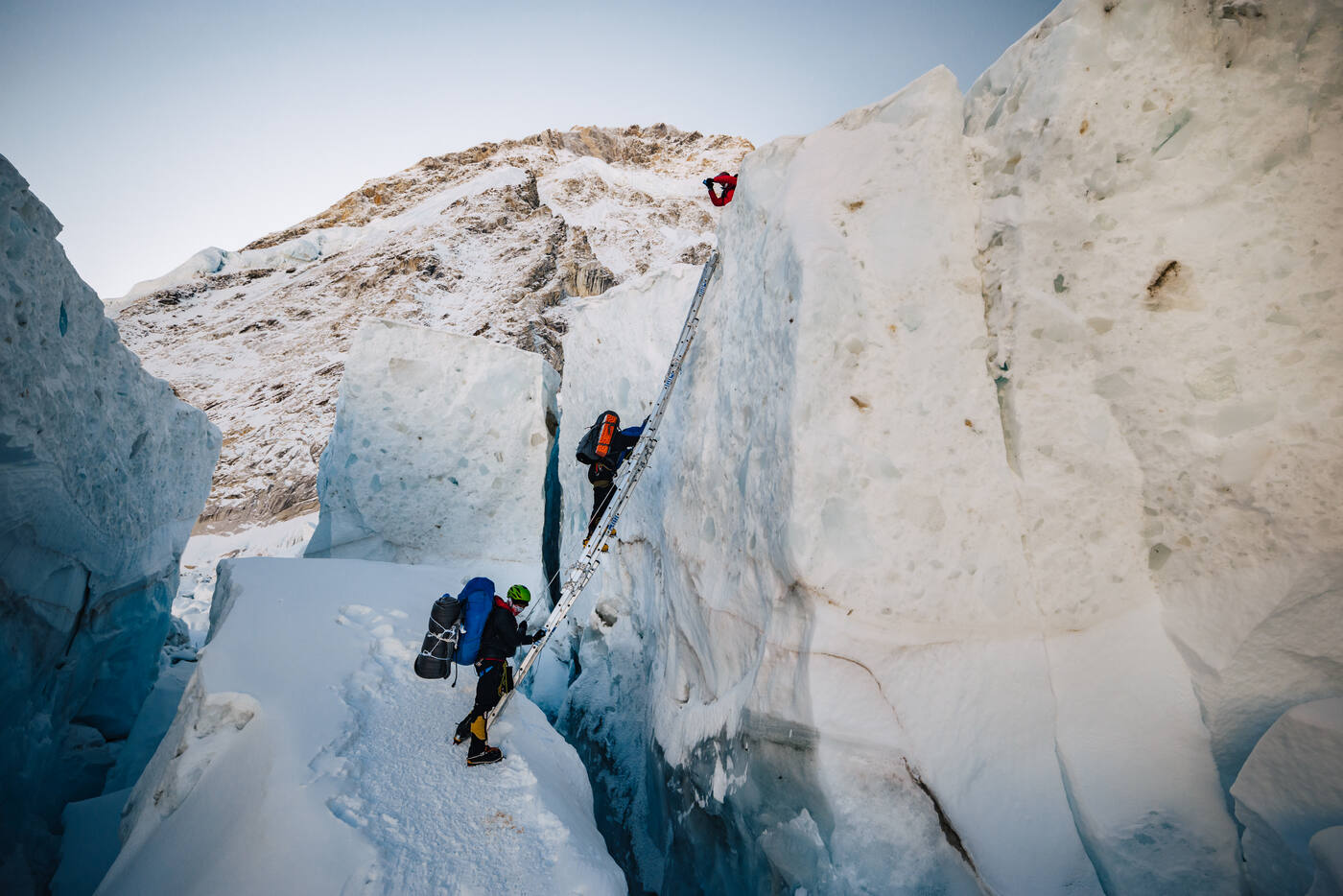
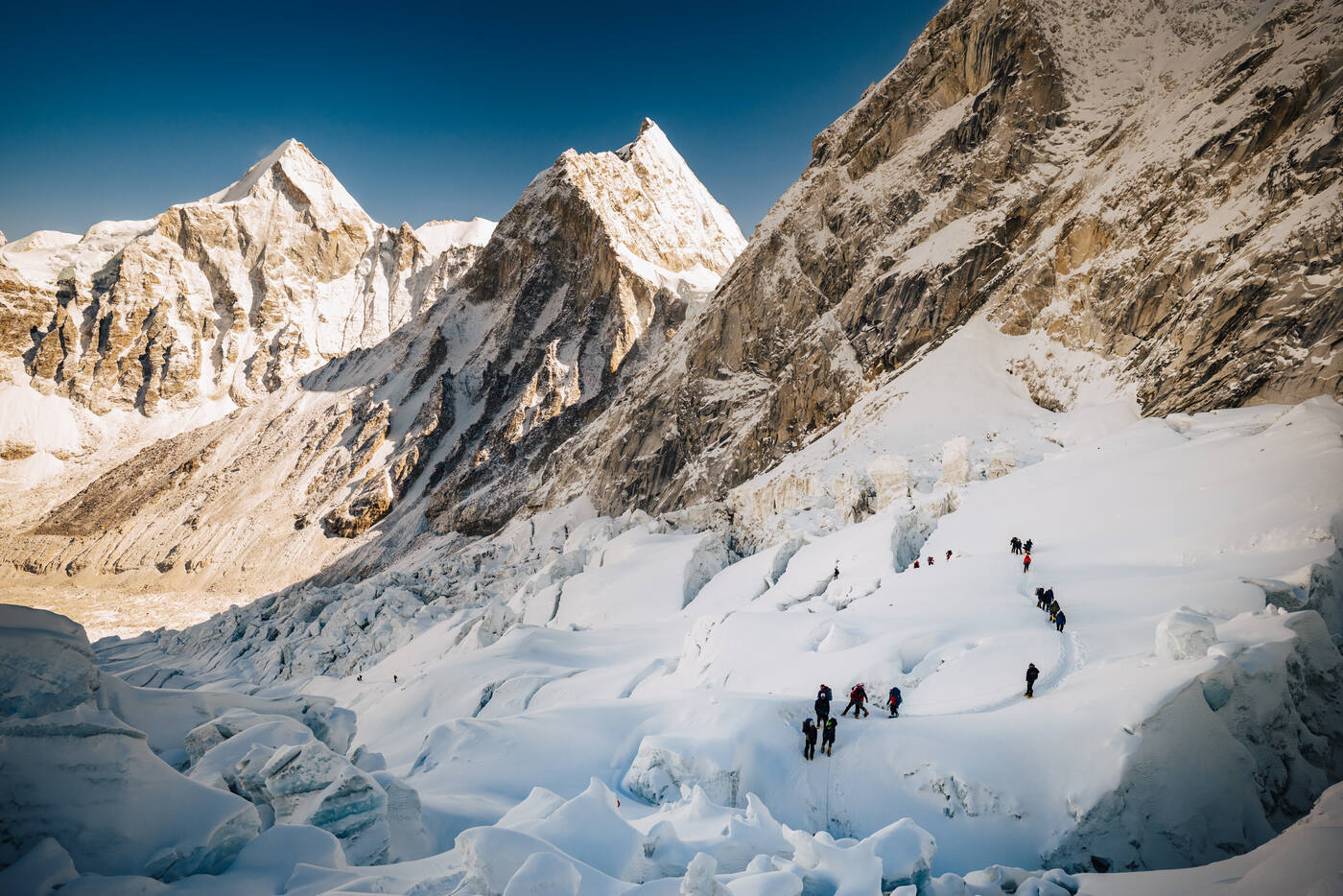
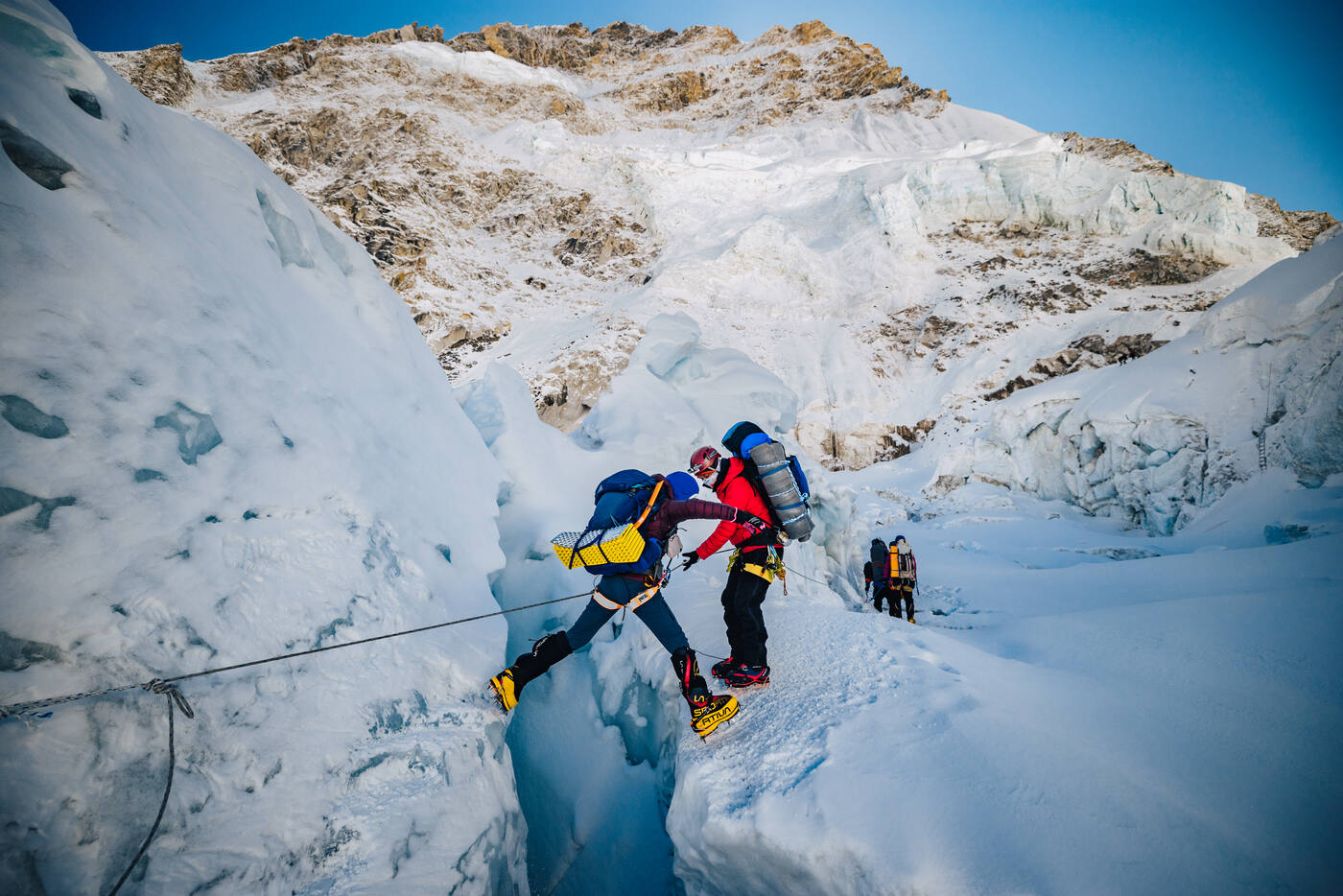
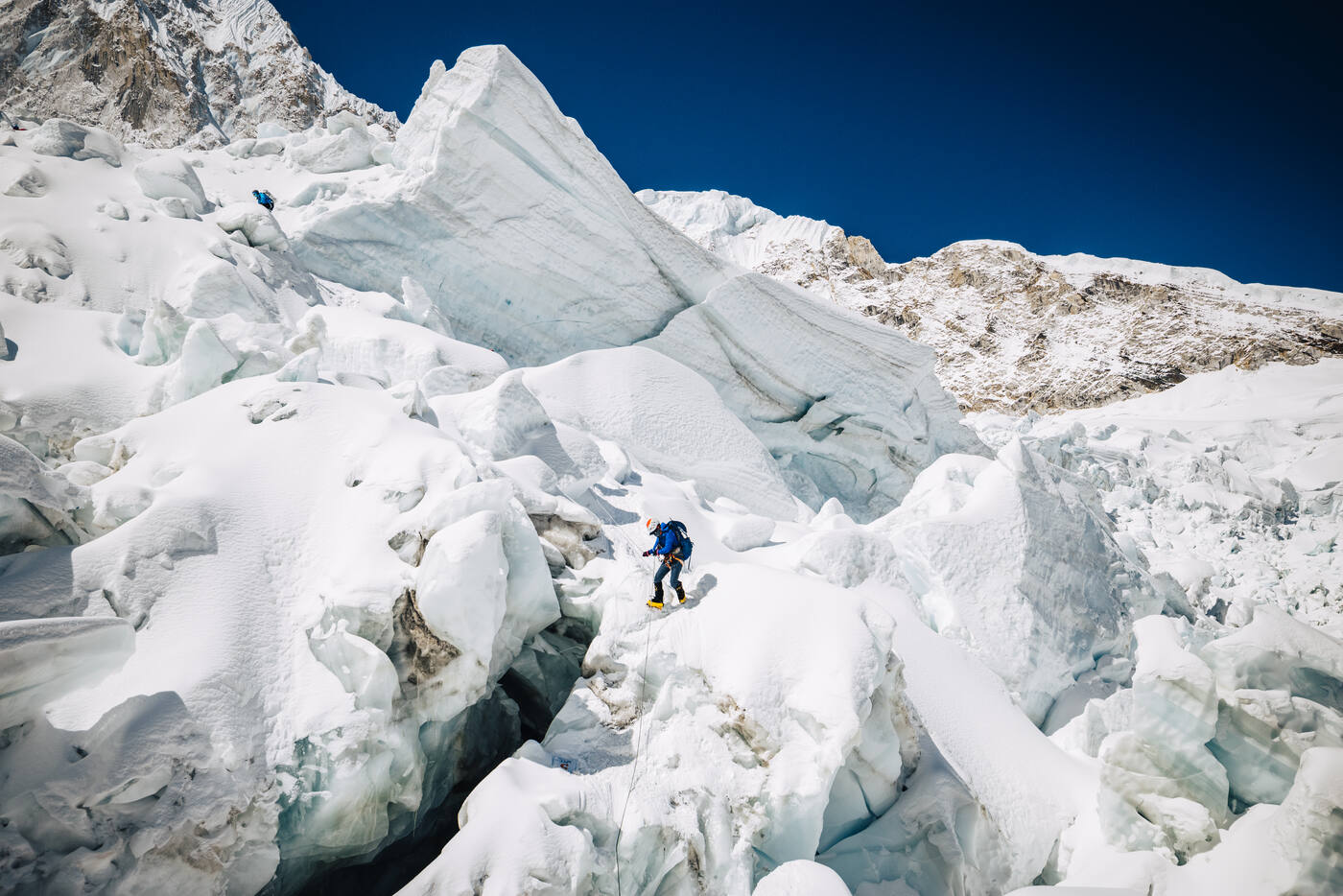
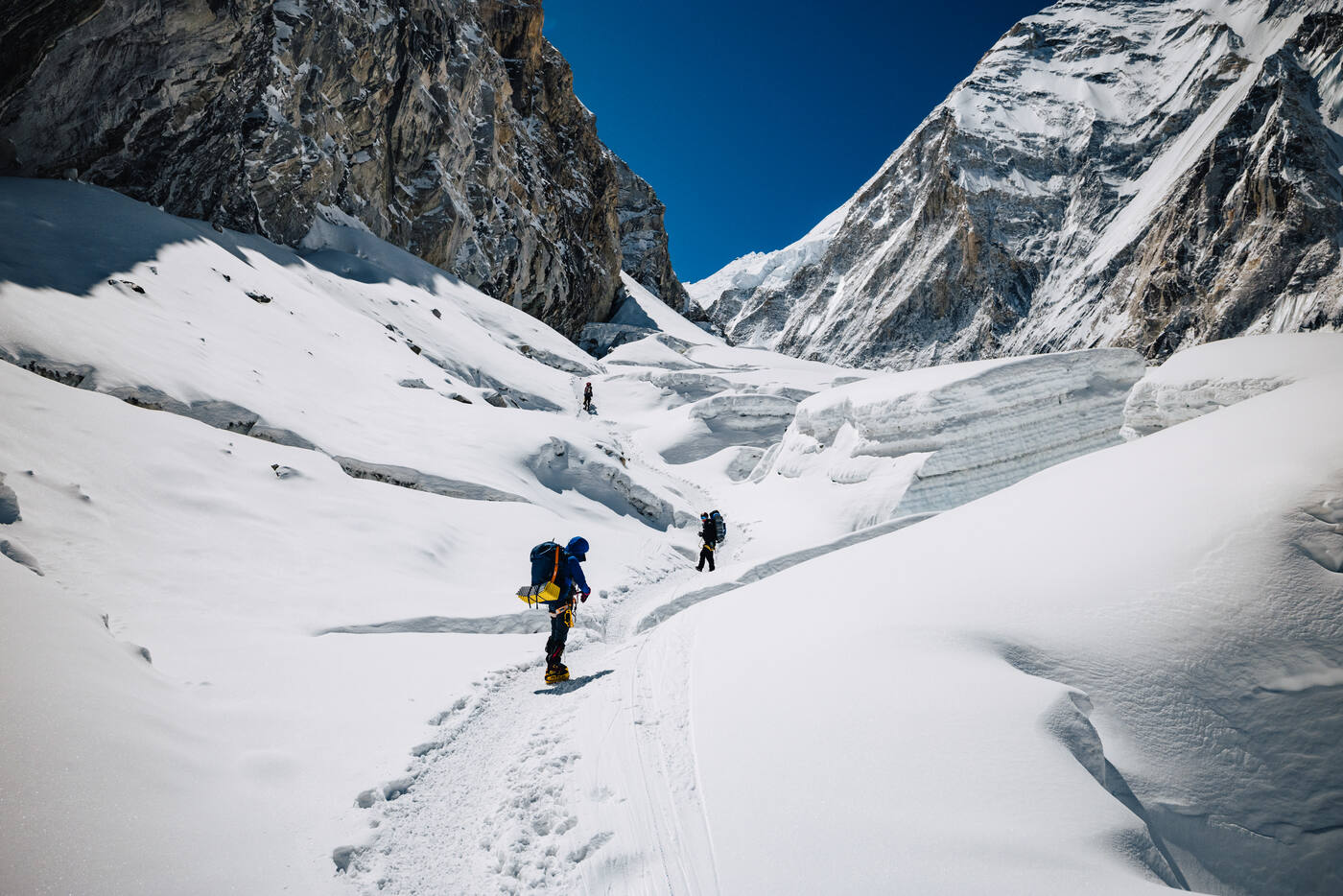
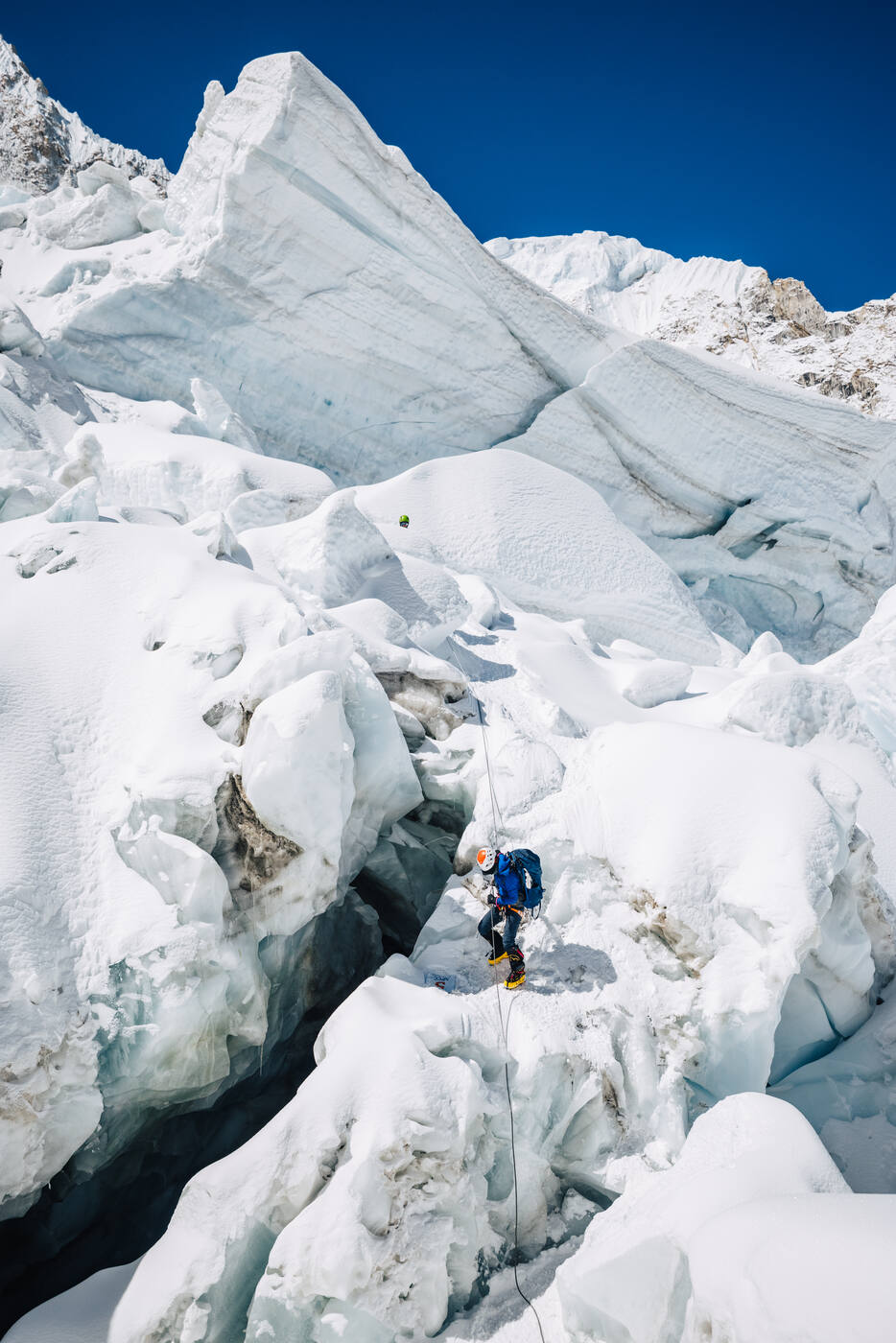
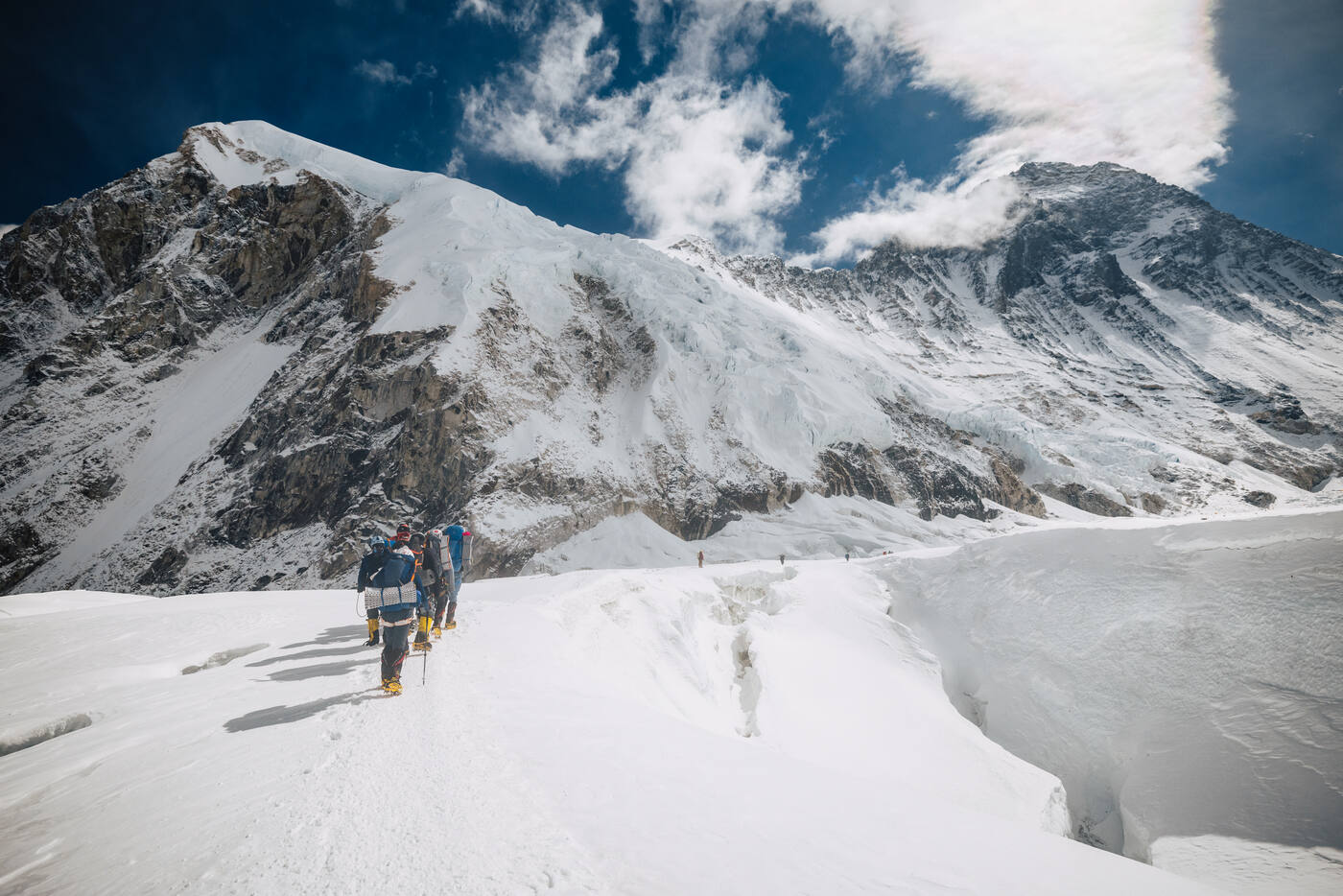
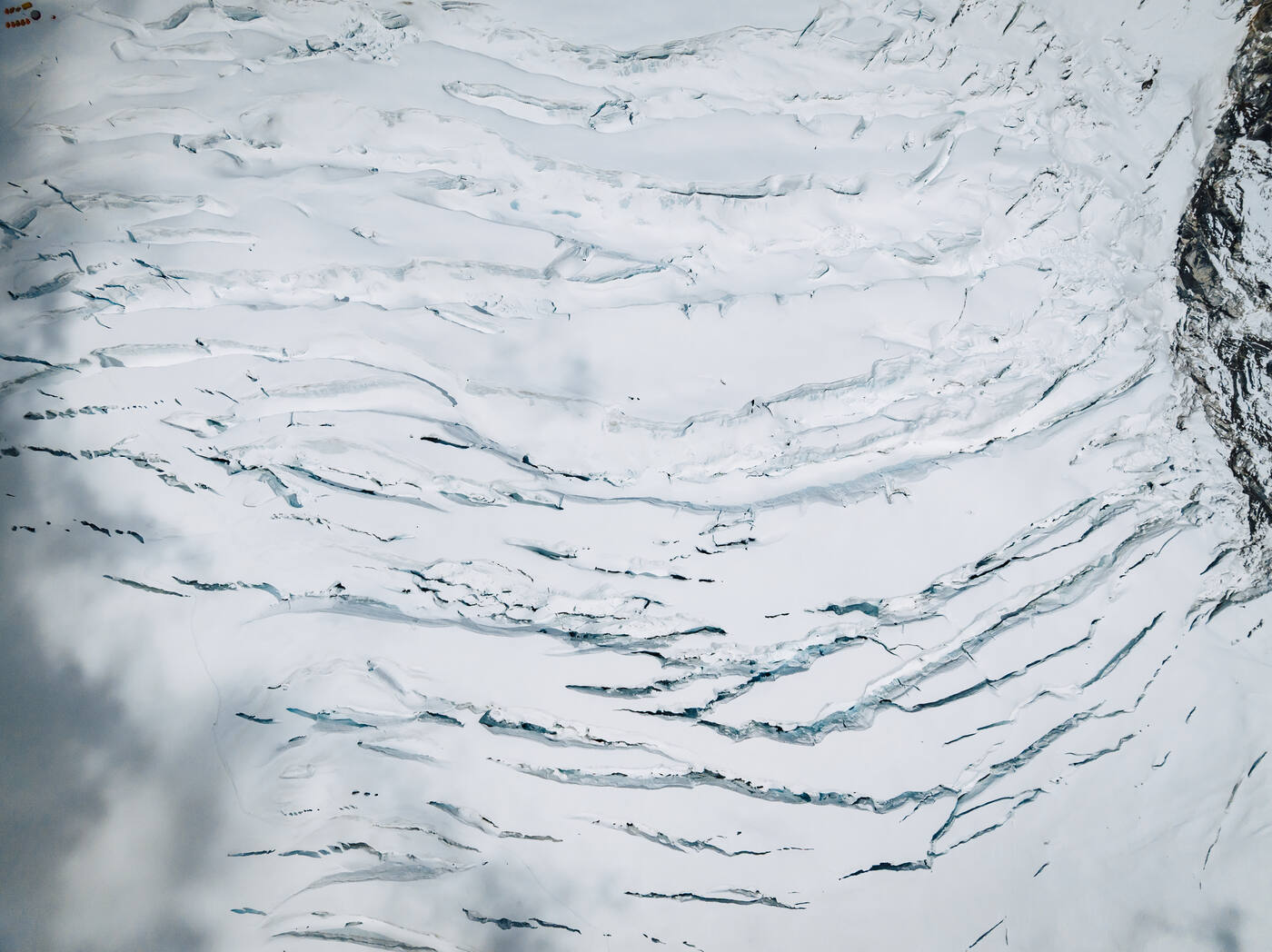
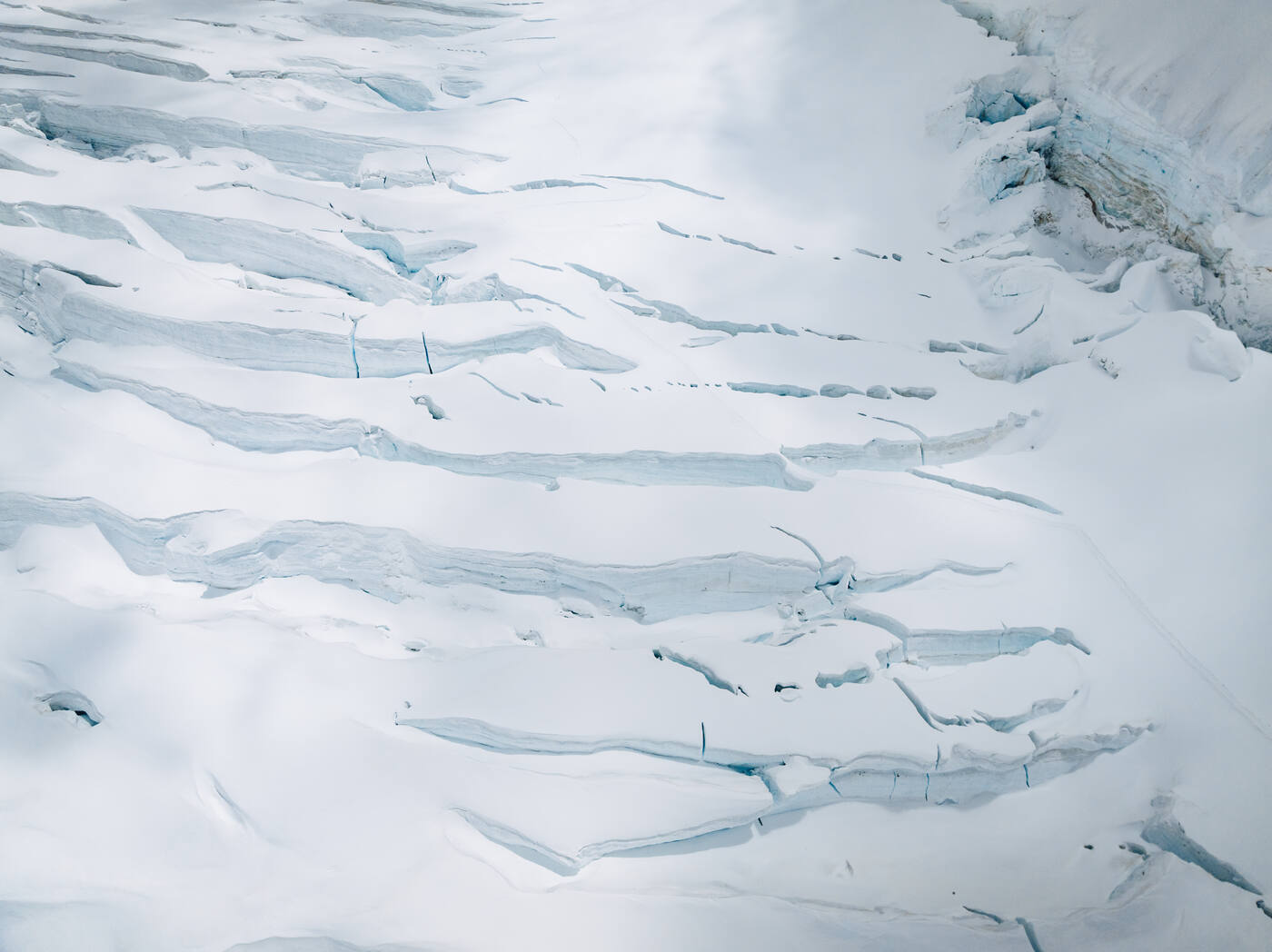
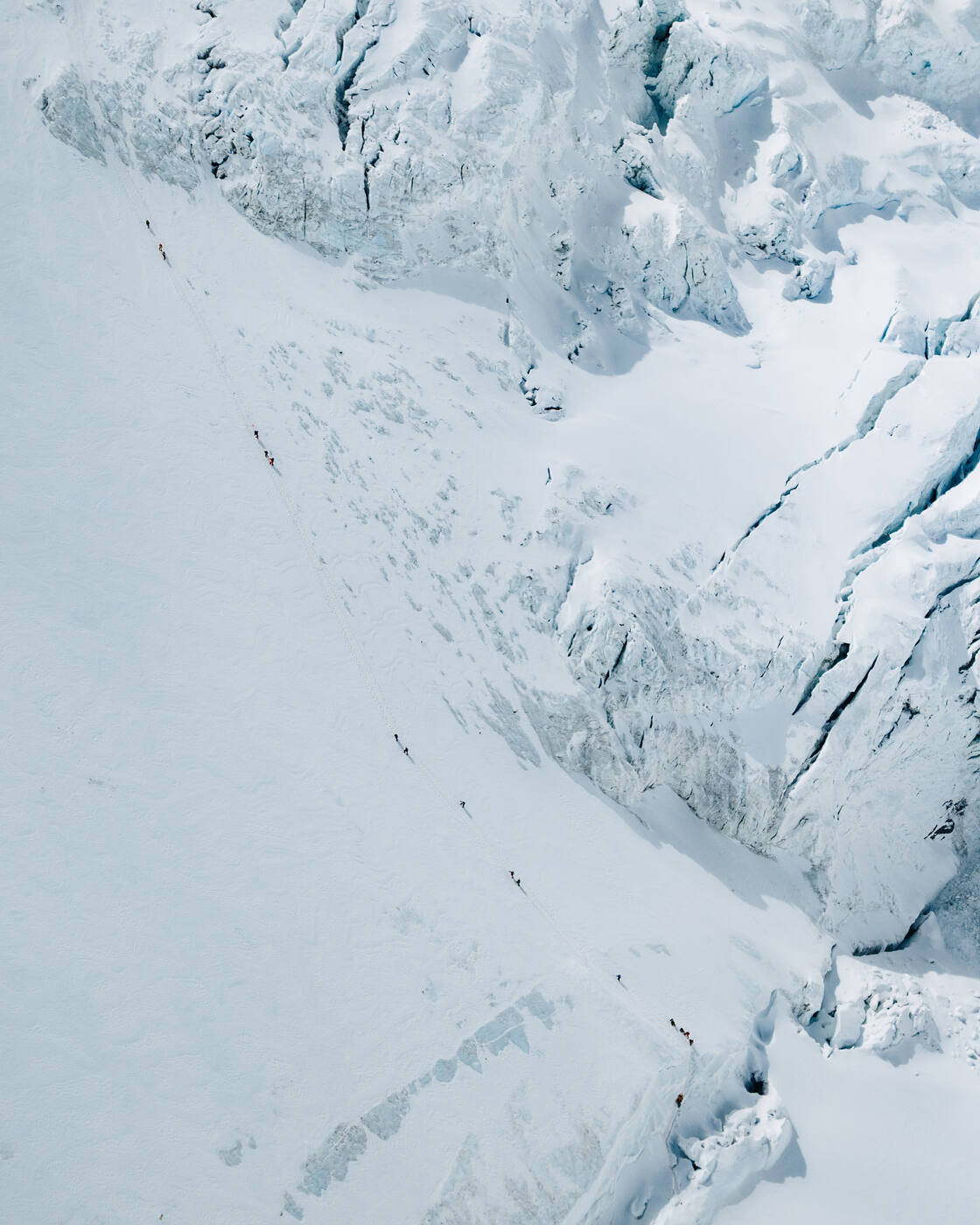
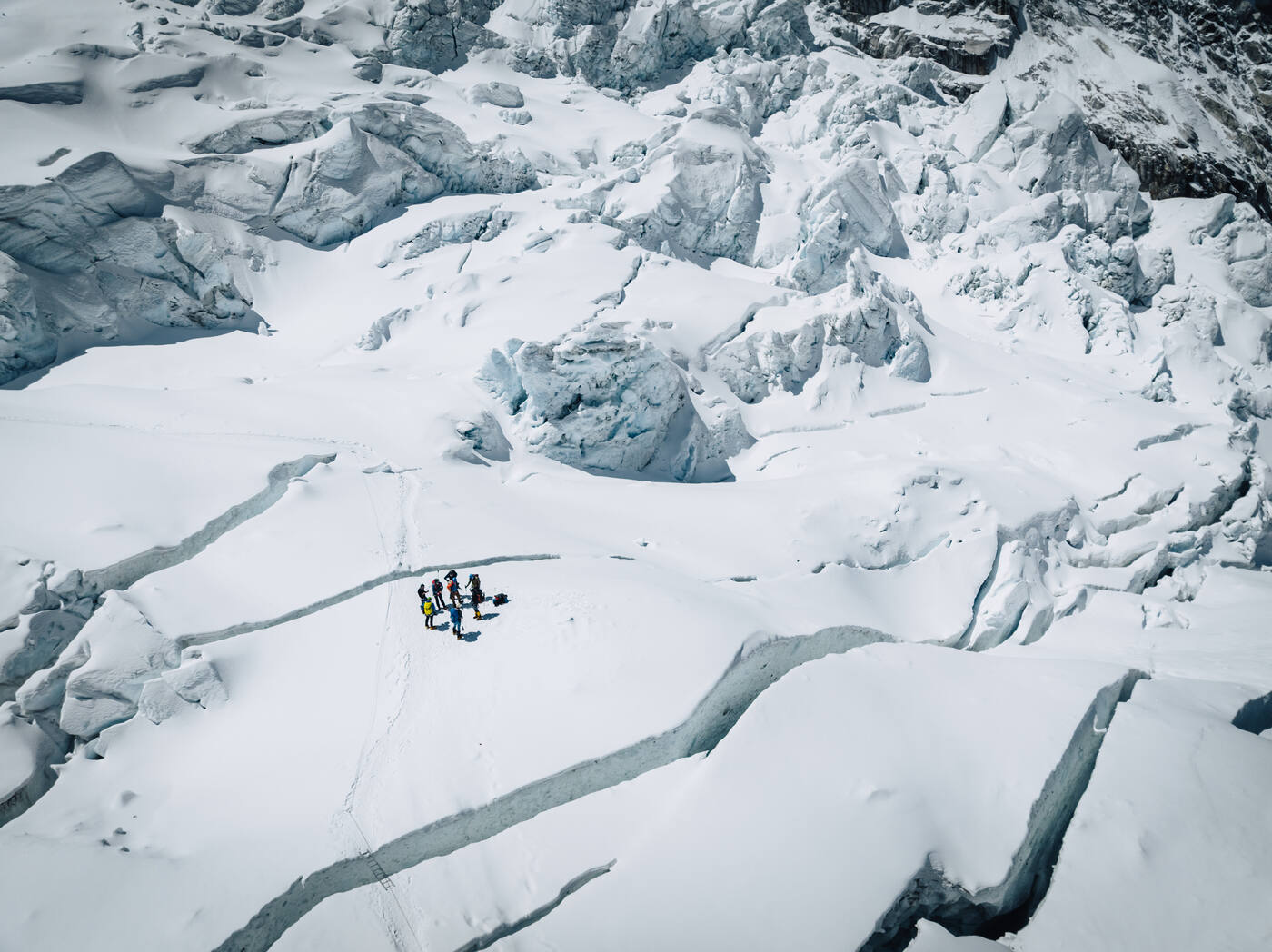
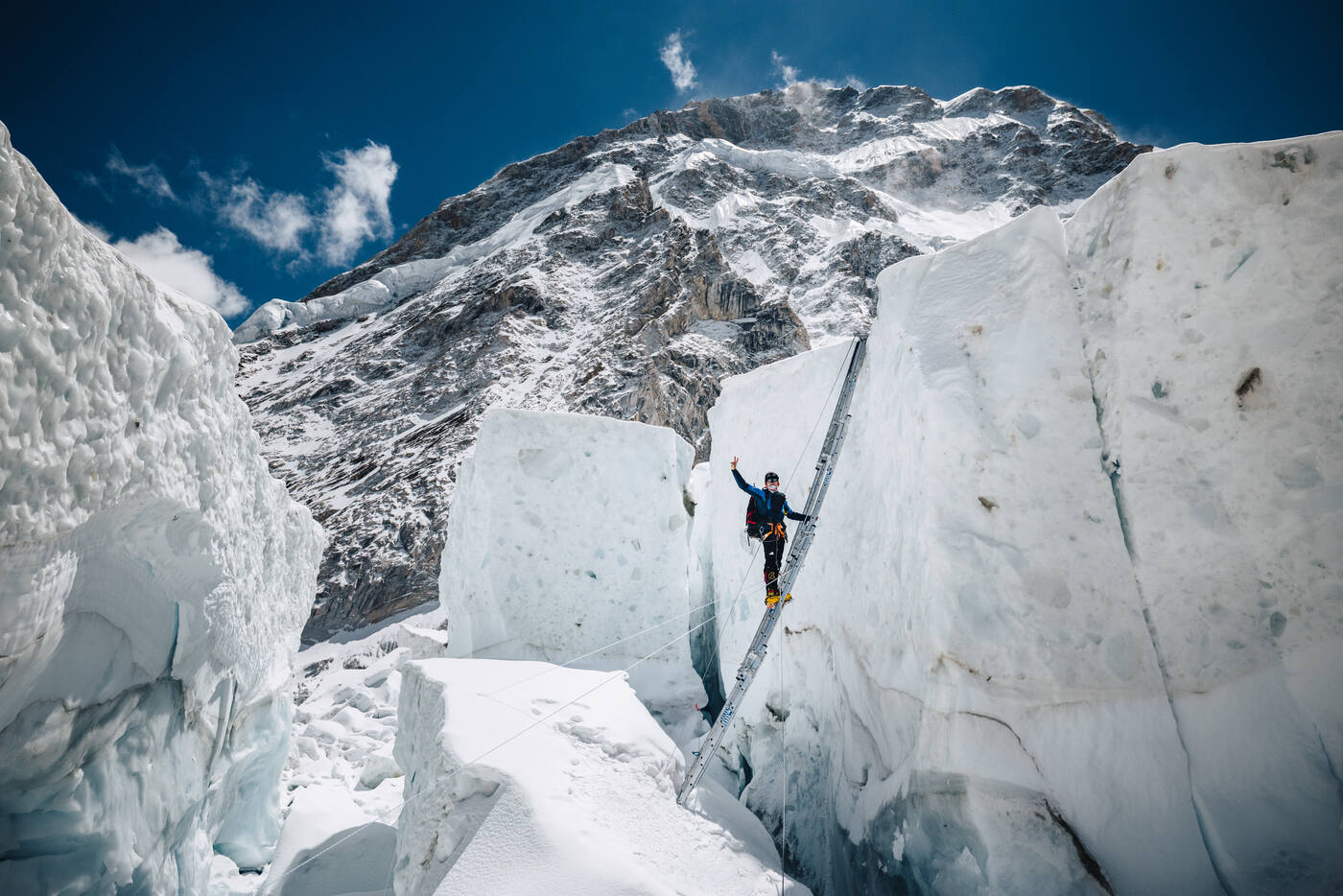
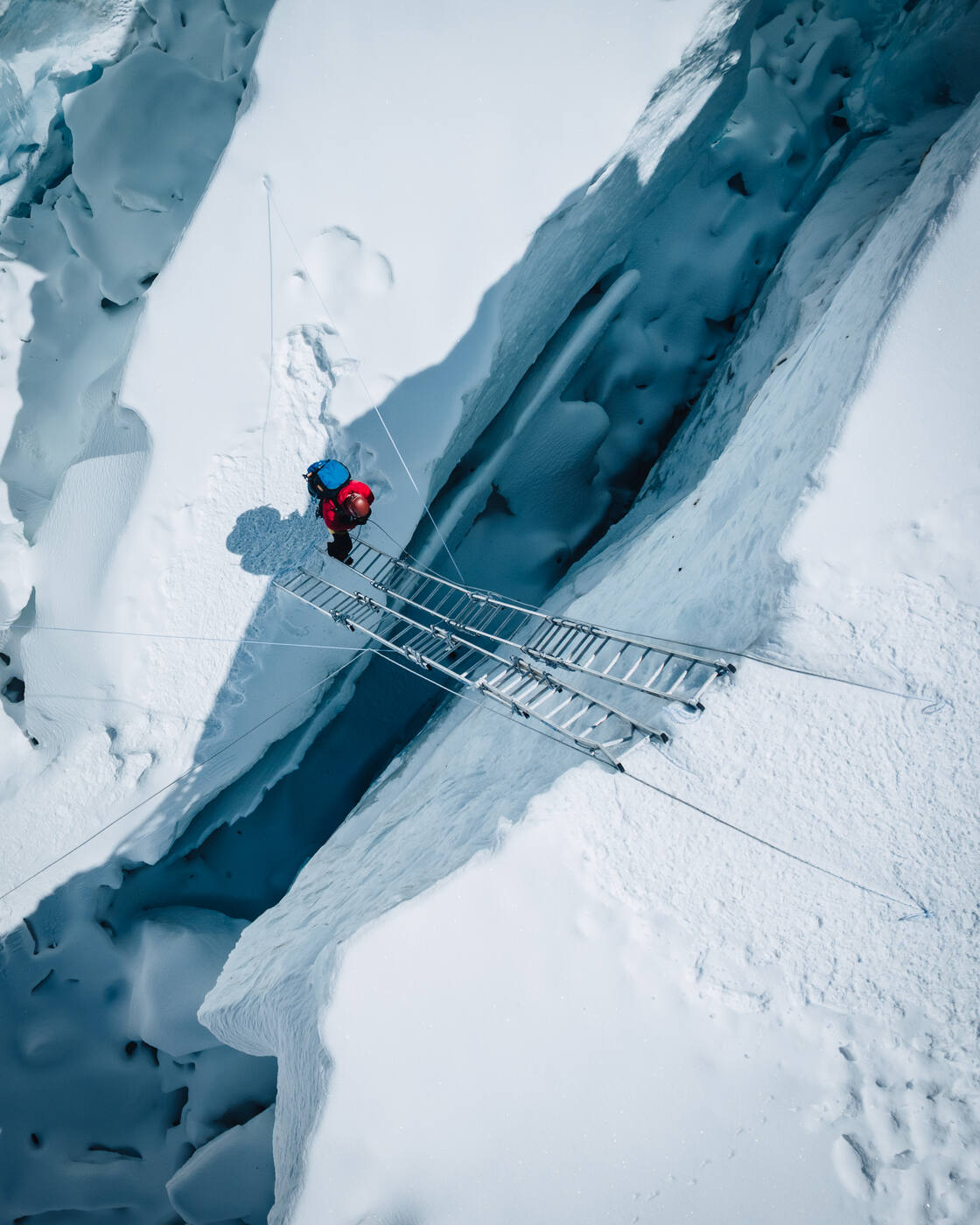
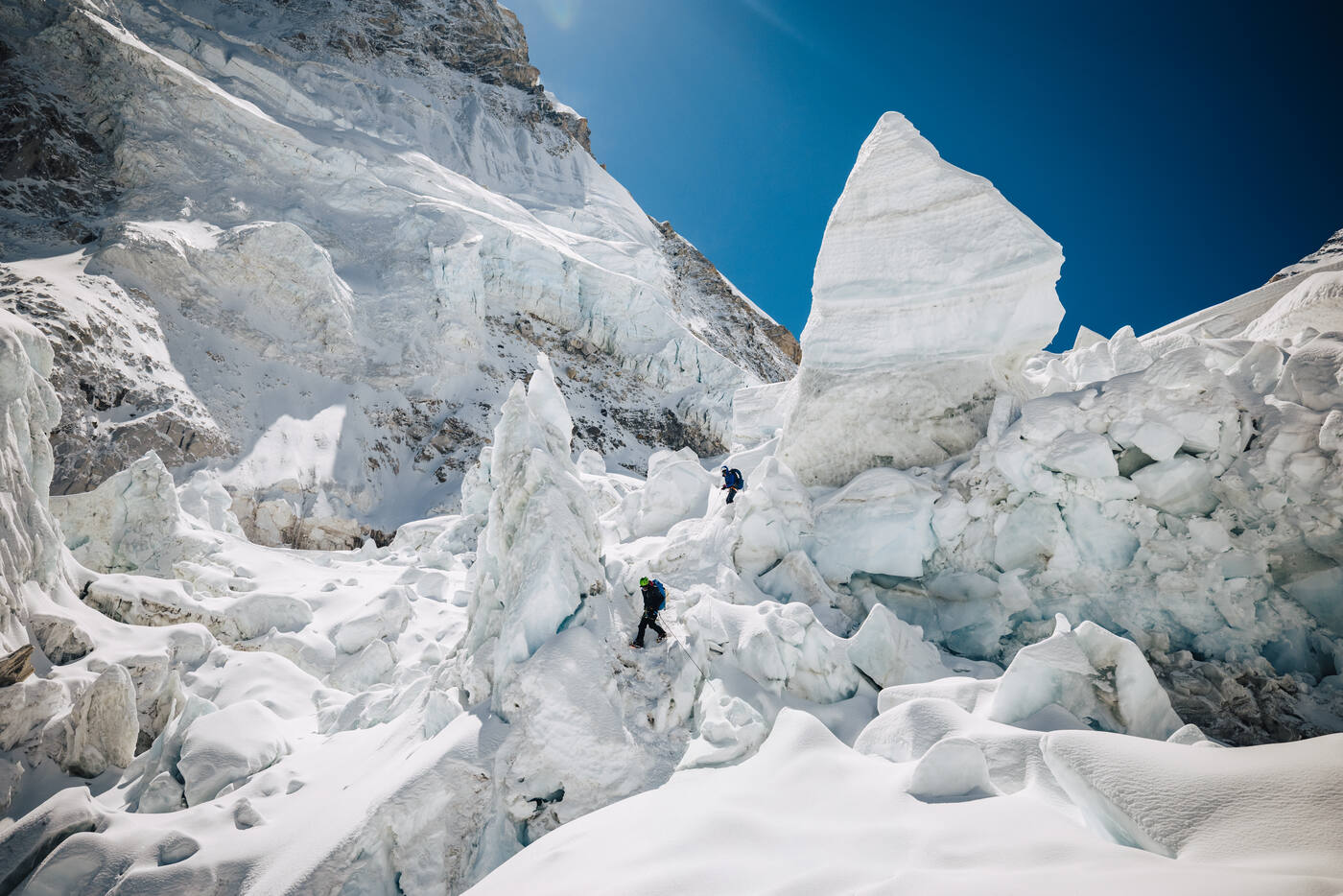
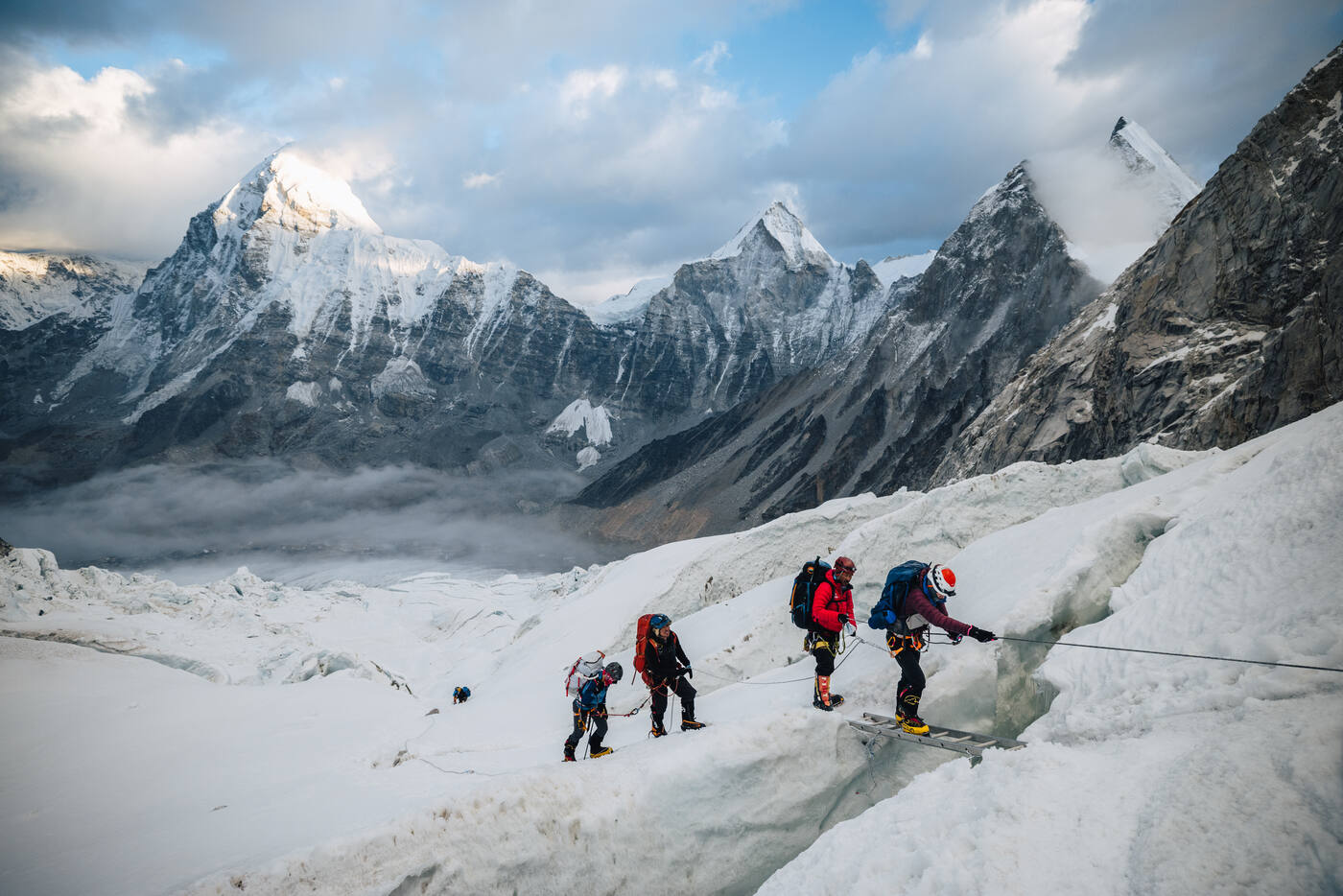
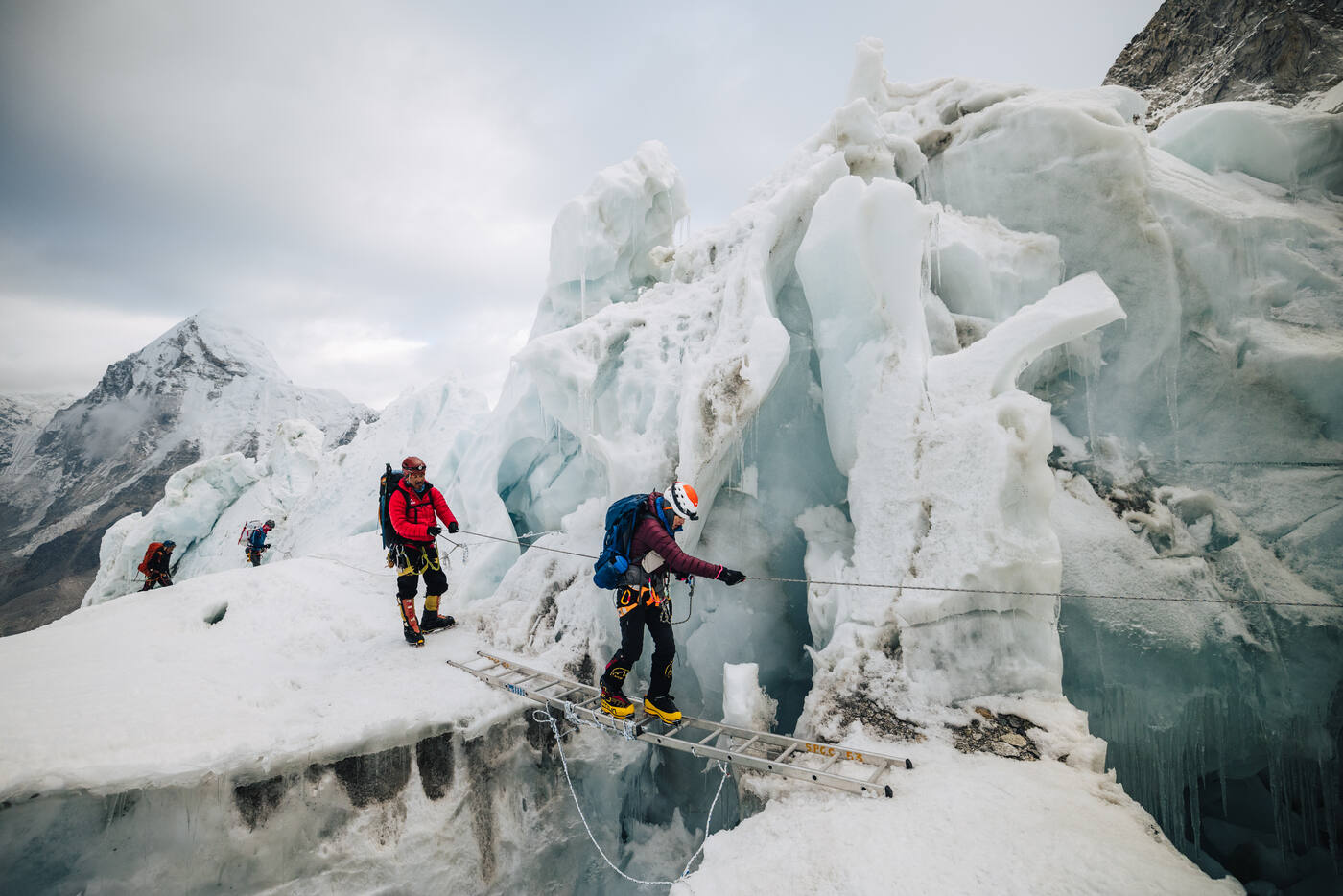
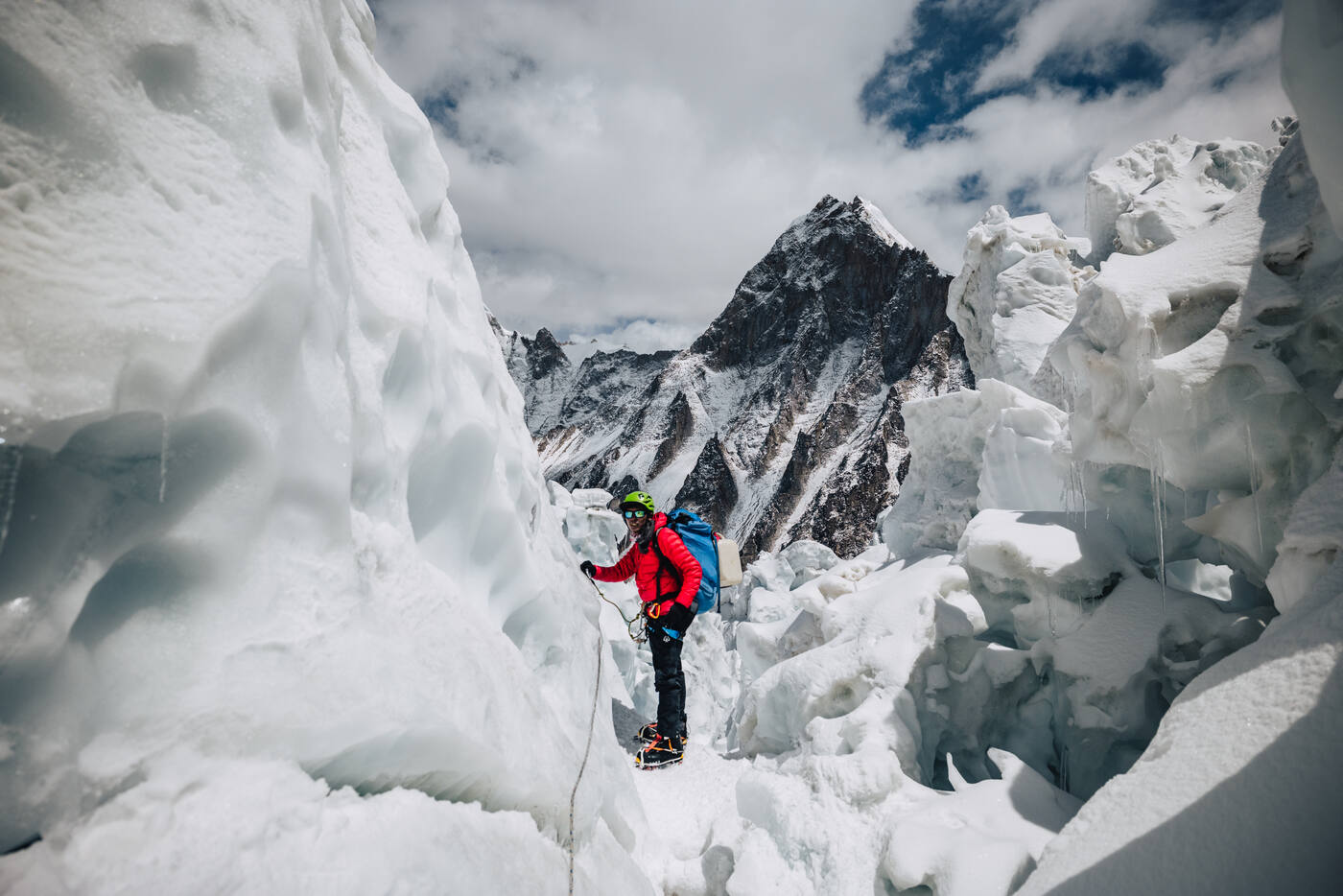
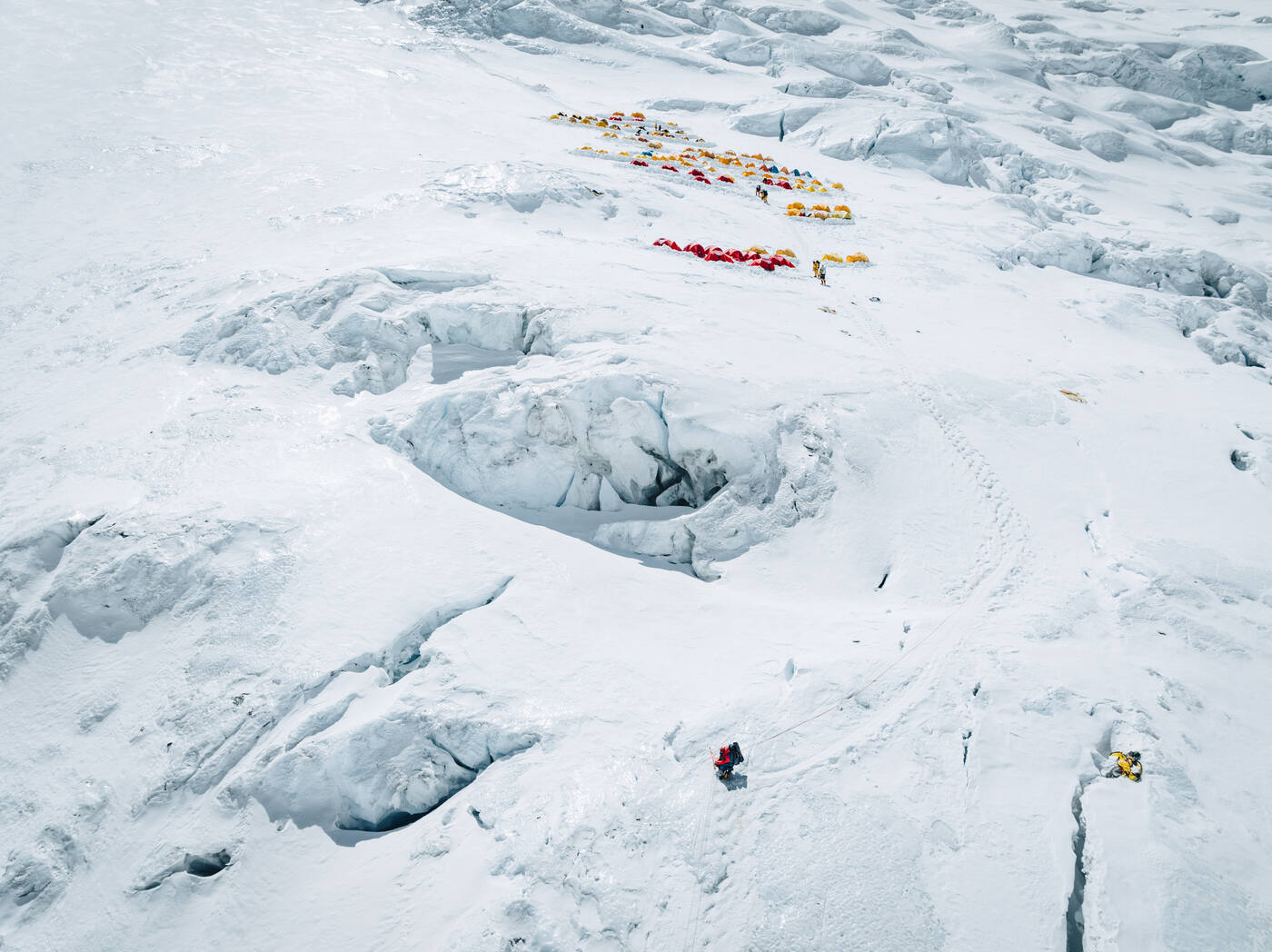
For 8.5 hours, we navigated a constantly shifting maze of crevasses, seracs, and ice towers. Ladder crossings that seemed straightforward in training became heart-pounding exercises when spanning bottomless blue cracks. Some crevasses required multiple ladders lashed together. Others were just narrow enough that we had to jump across. No ladder, just a running start and a leap of faith over the void.
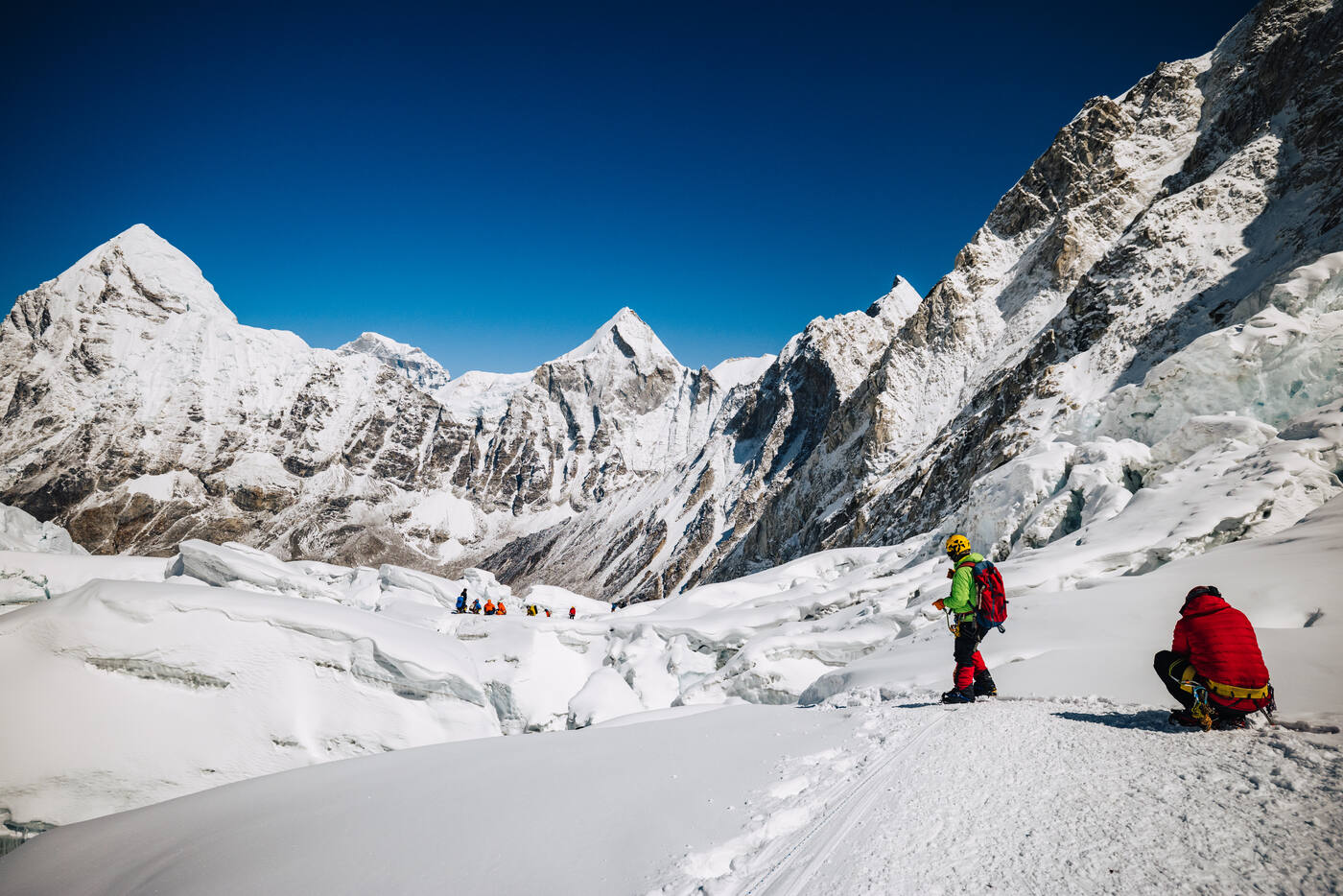
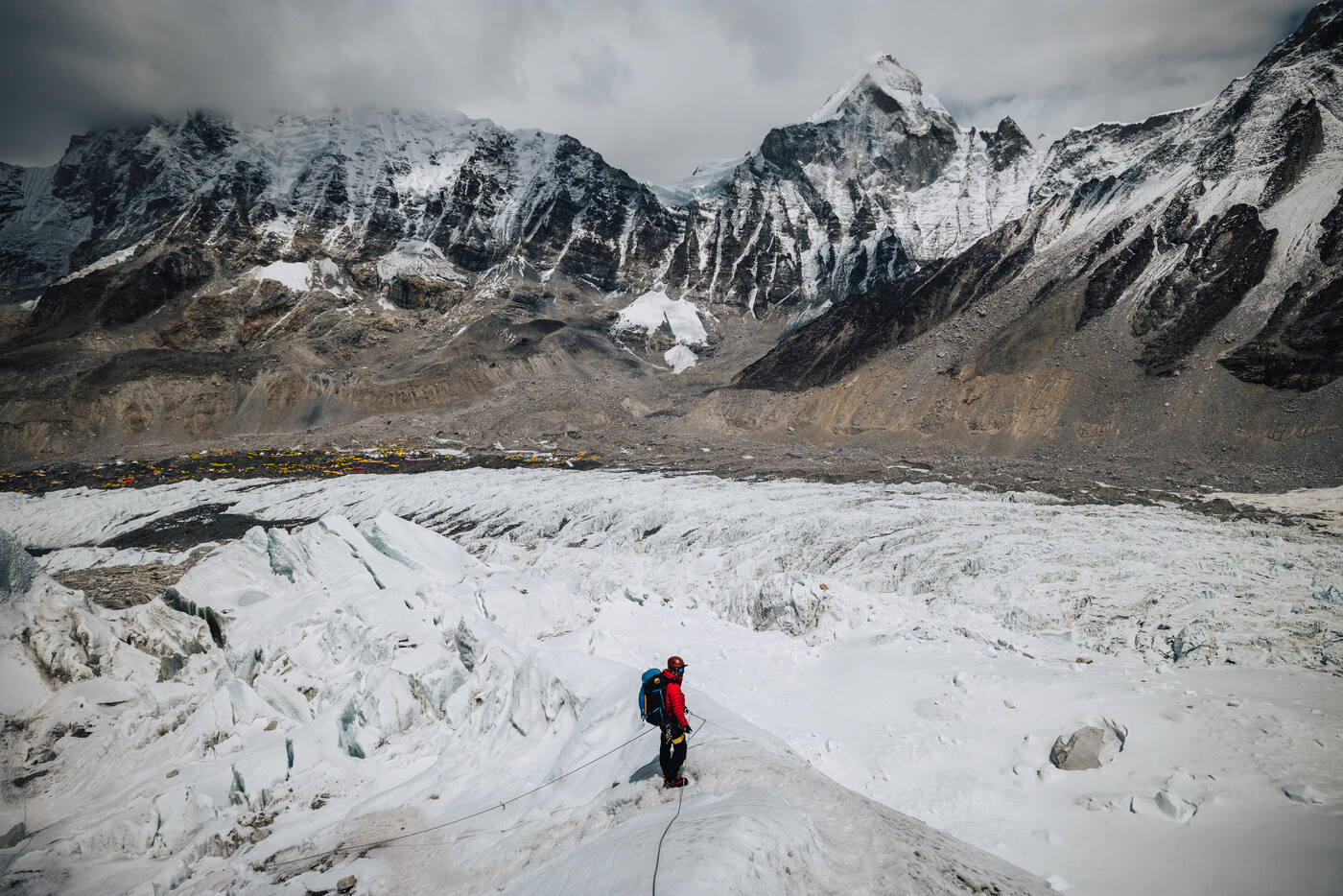
The approach to the Icefall. Walking across the glacier toward the frozen maze.Inside the Khumbu Icefall. Towering seracs on every side.
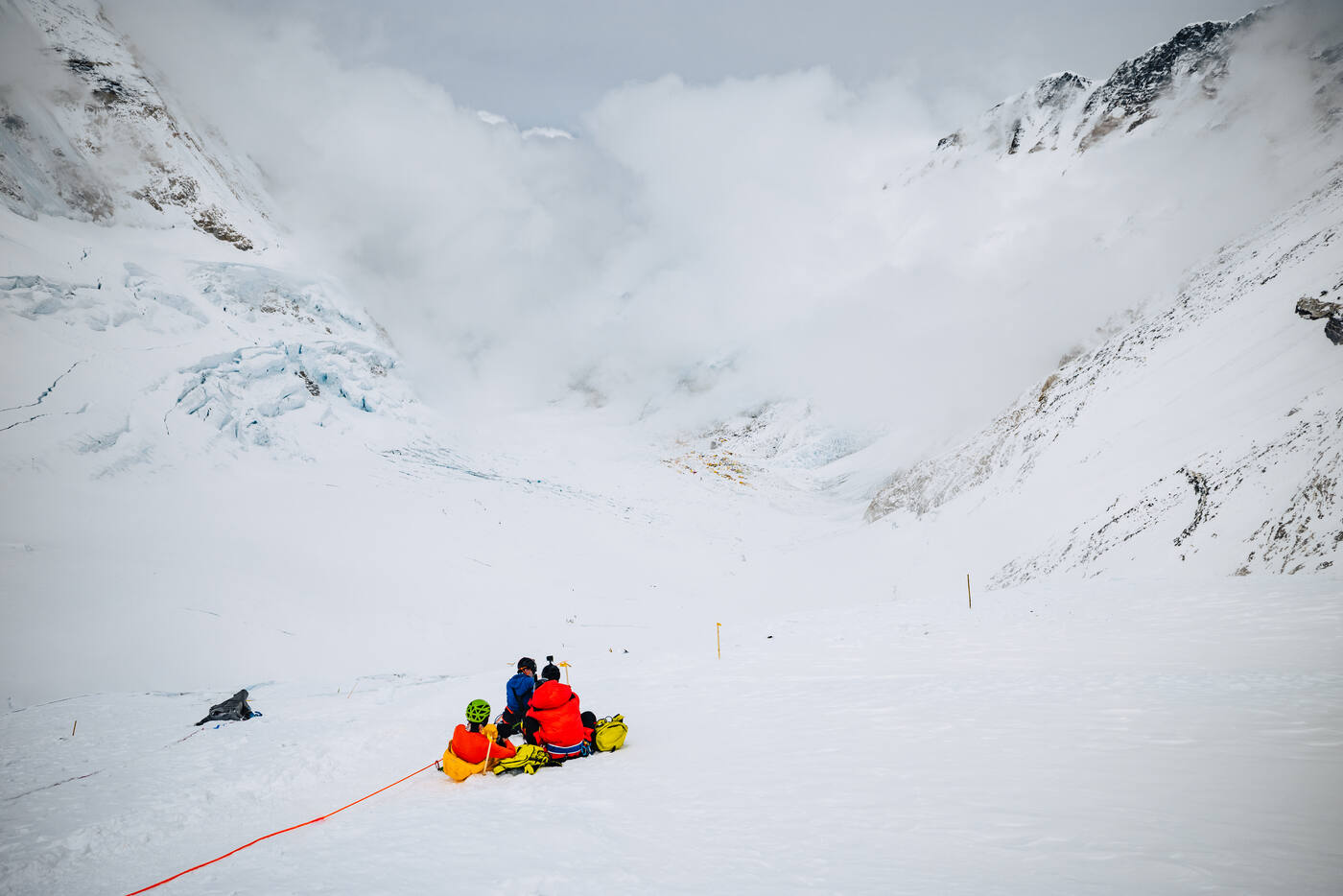
Rest stop in the Icefall. Brief pauses between the technical sections to catch breath.The Icefall through the clouds. A constantly shifting landscape of beauty and danger.
Ascending steep ice. The higher sections of the Icefall demand everything you have.
Ladder crossing in the depths of the Icefall. Vertical ice on both sides, the route going straight up.Threading through the Icefall. Every step calculated, every crevasse assessed.
Ladder crossing. Aluminum rungs over a bottomless blue crack. One step at a time.Deep inside the Icefall. Ice corridors, ladders, and fixed ropes through the frozen labyrinth.
Brief rest in the upper Icefall. Catching breath before the next section.Through the serac field. The Icefall is a constantly shifting landscape of ice towers.
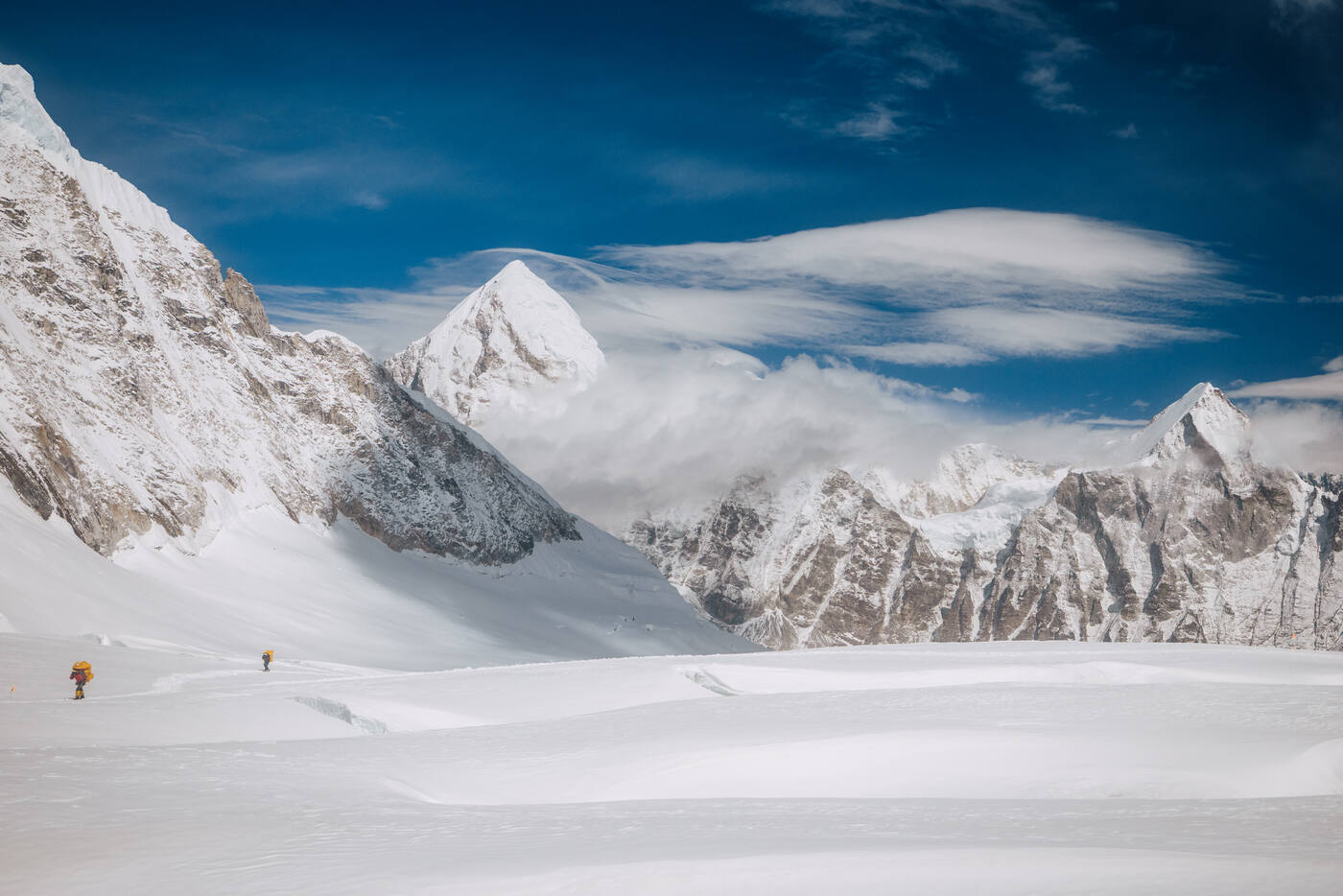
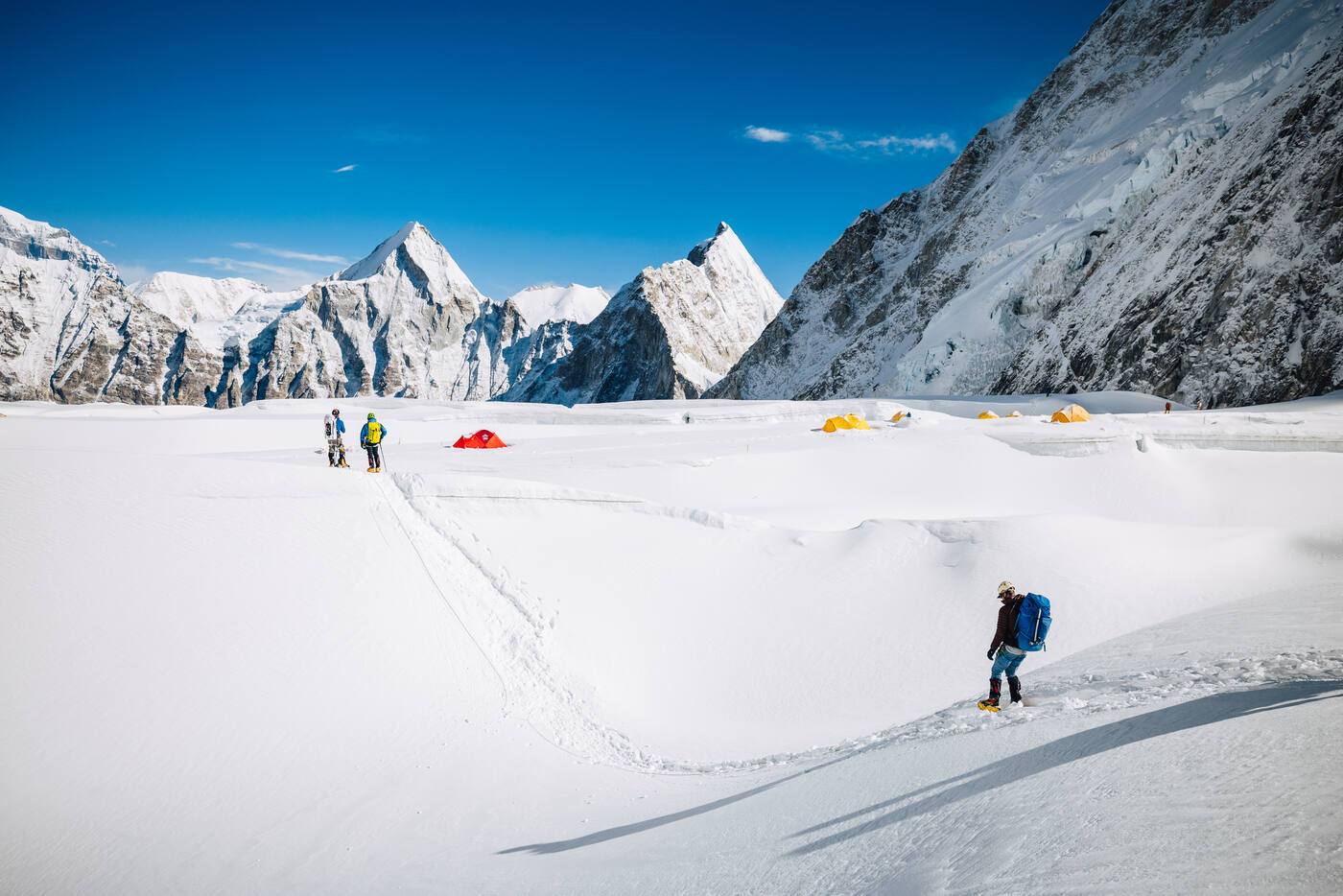
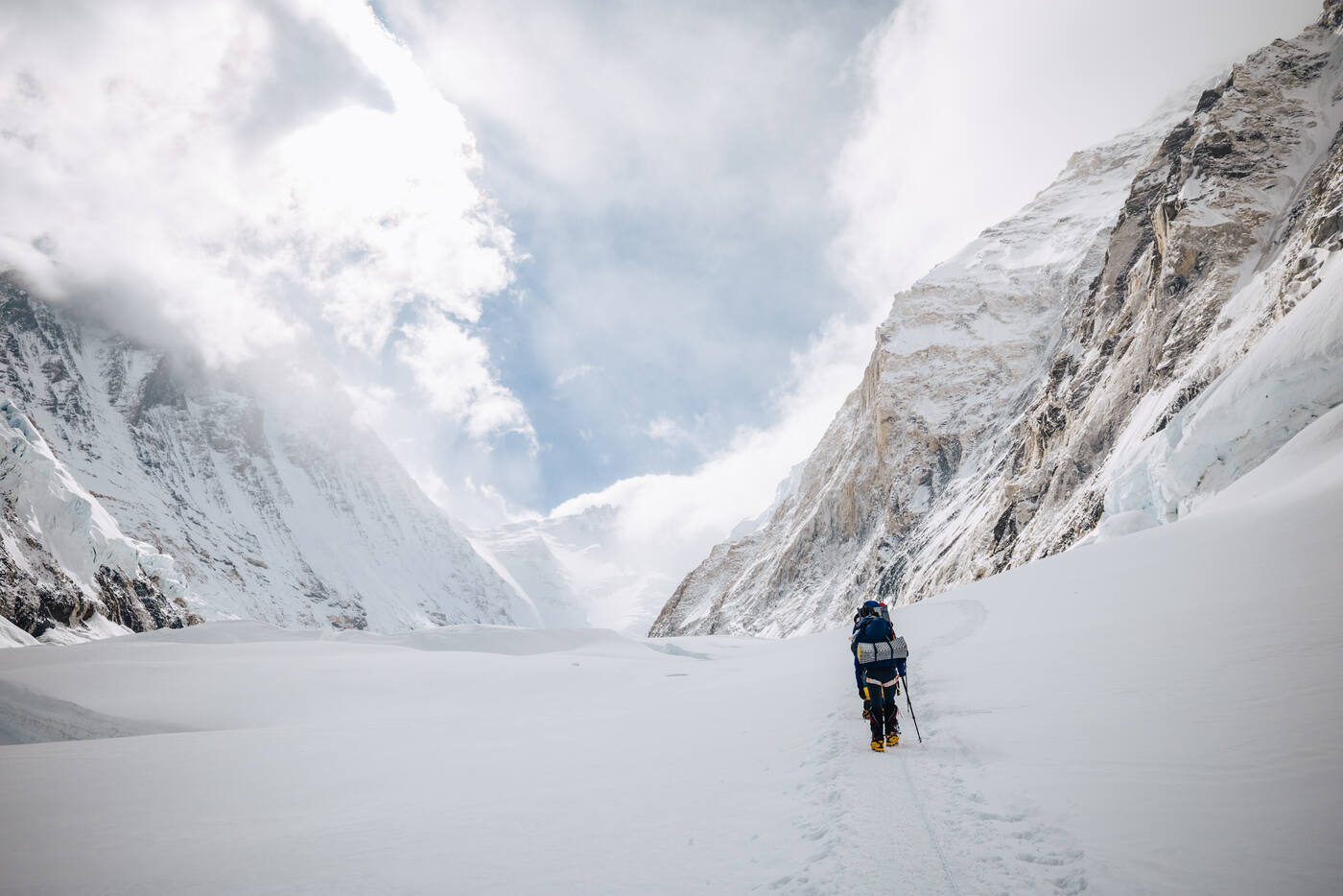
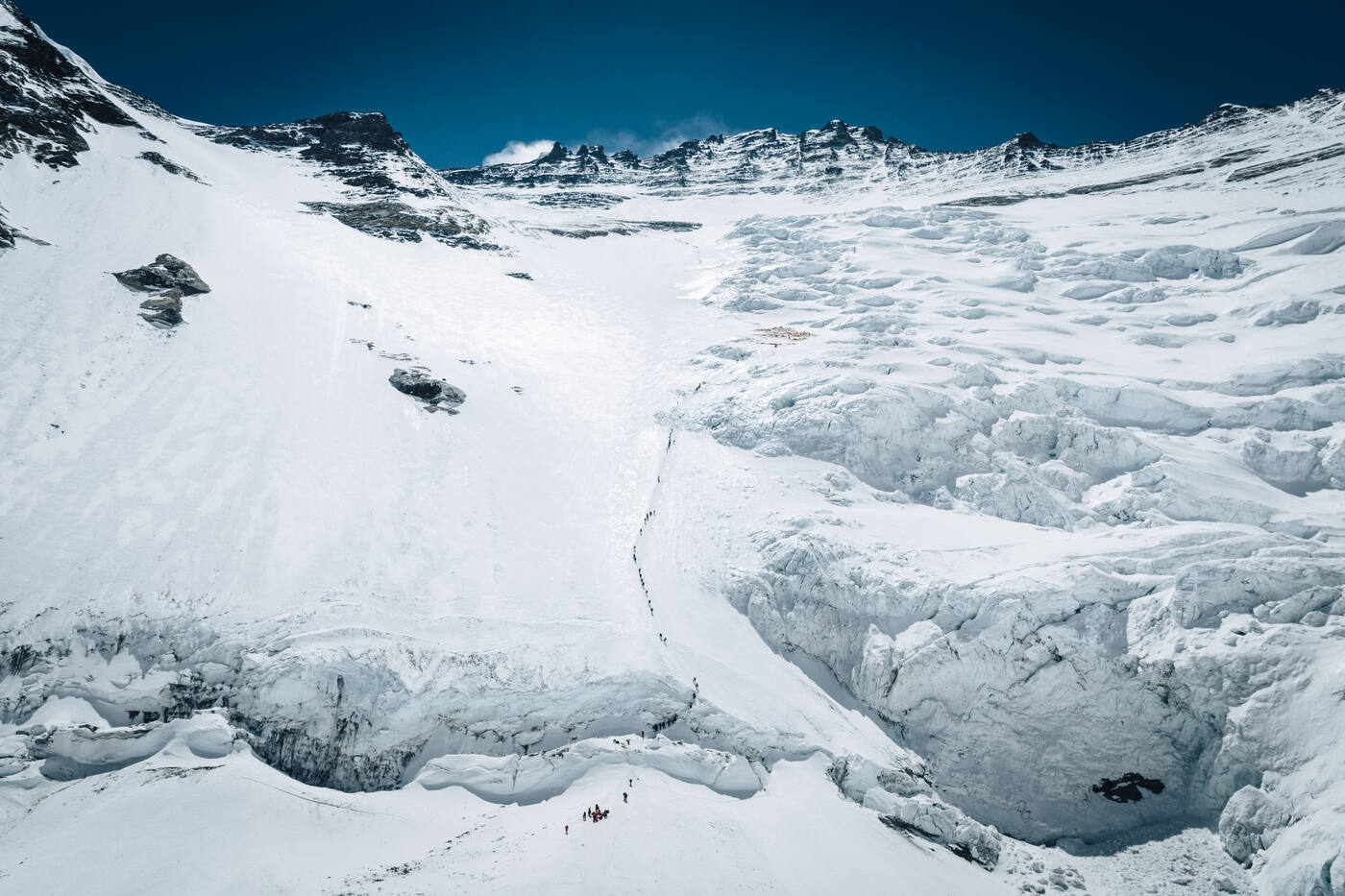
Fixed ropes through the steepest sections. Ascenders bite into the rope with each pull.The Western Cwm. A massive glacial valley flanked by the world's highest walls. Our highway to Camp 2.
Near the top of the Icefall. The team regrouping before the last stretch to Camp 1.Solo navigation through the serac field. Each ice tower could collapse without warning.
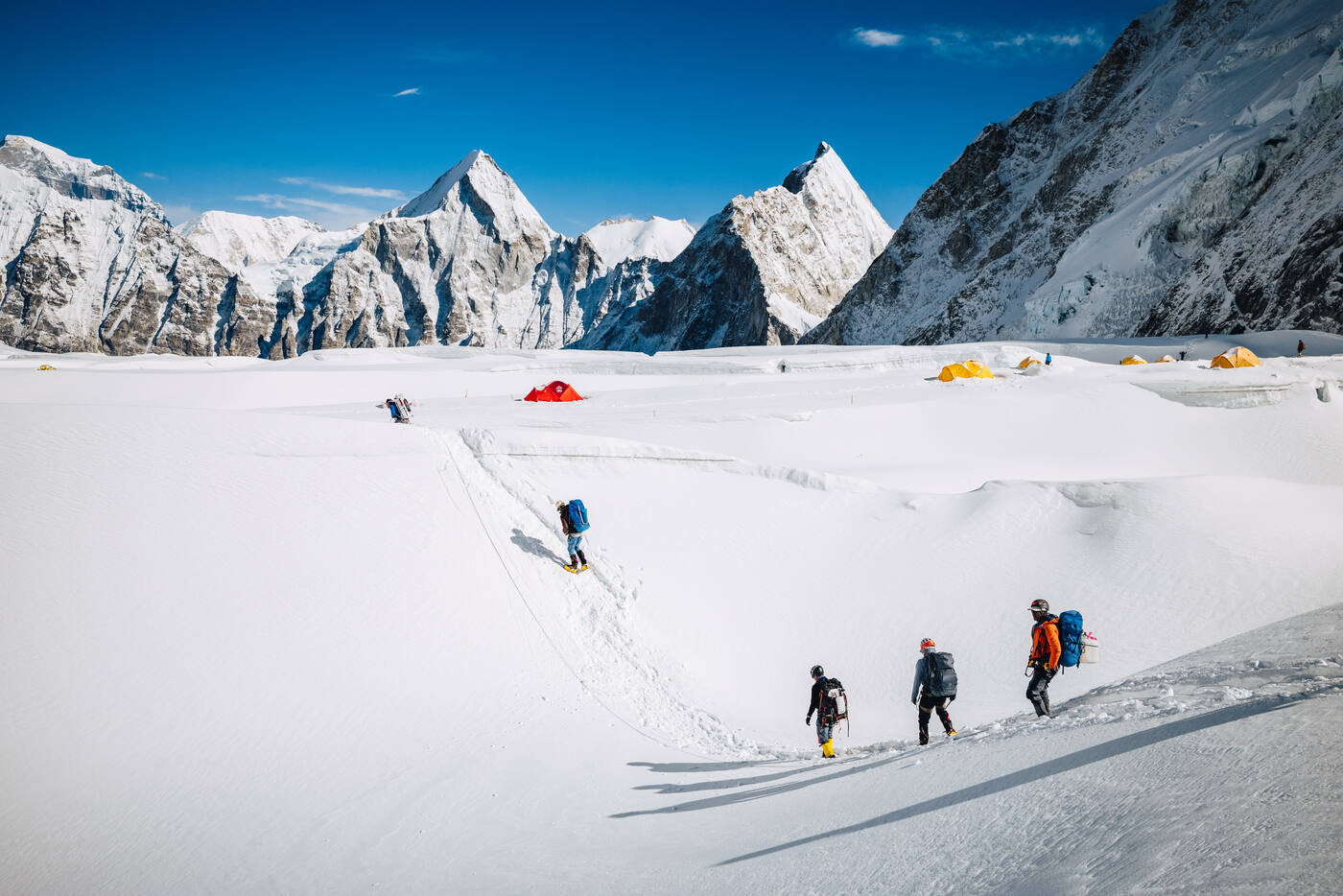
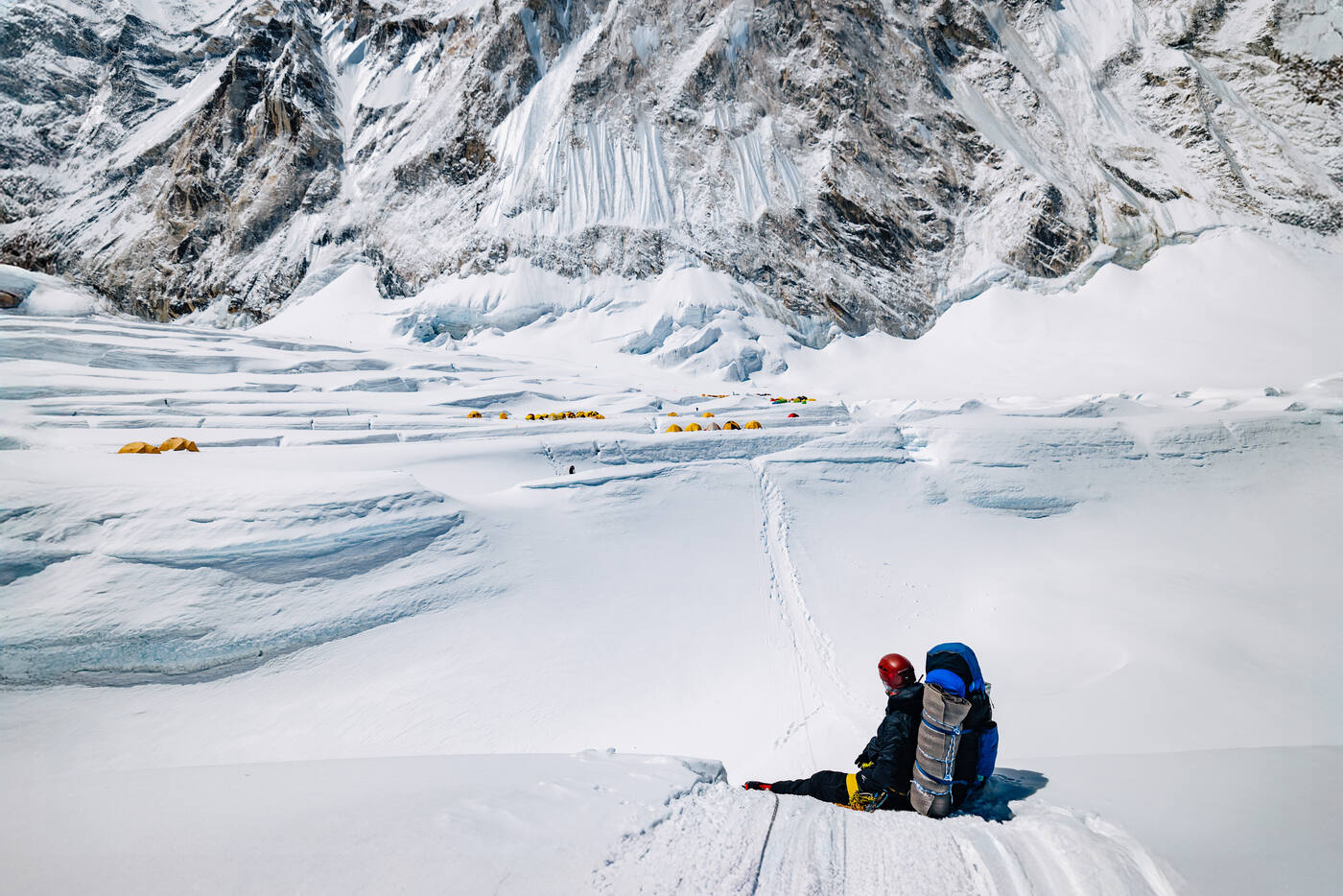
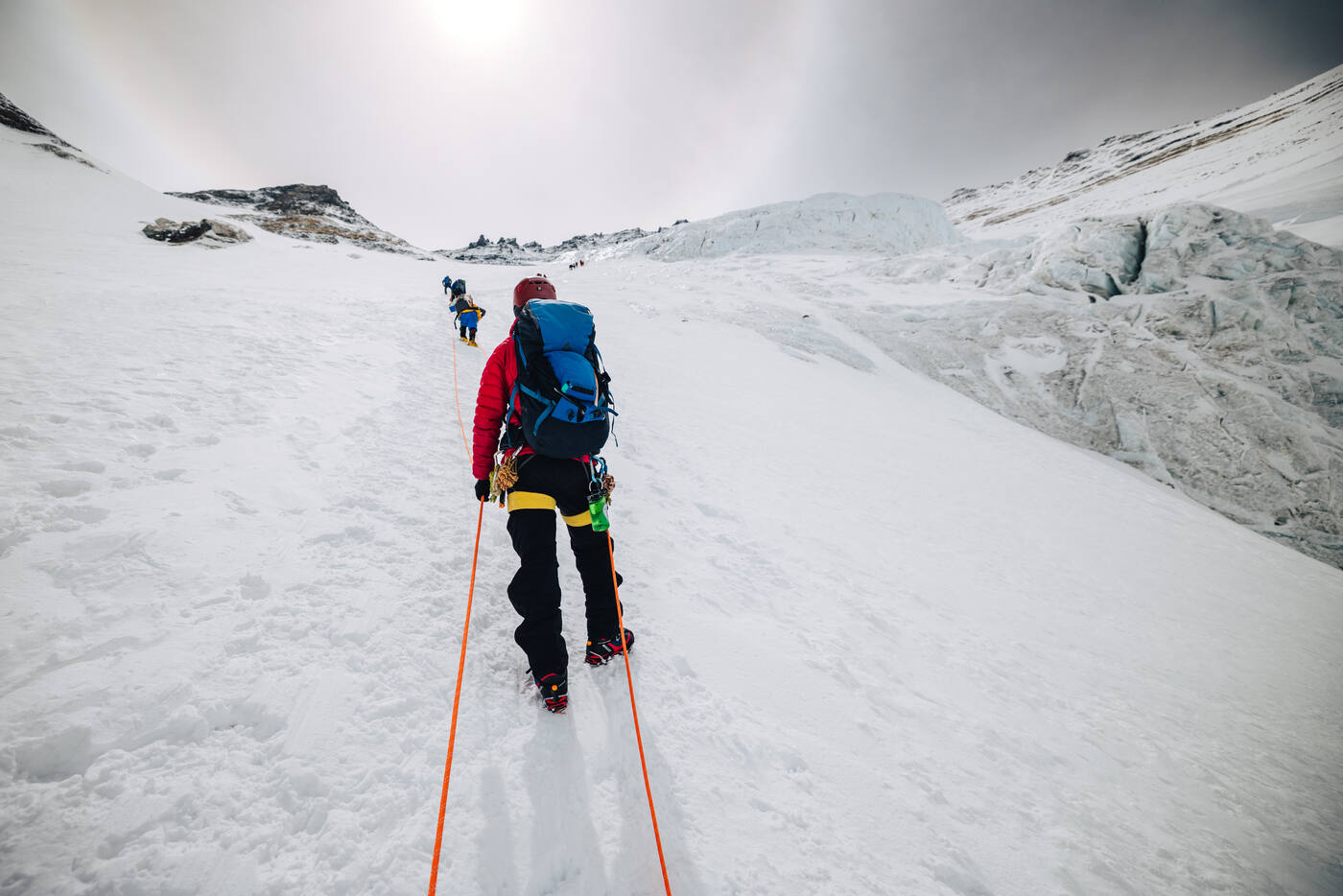
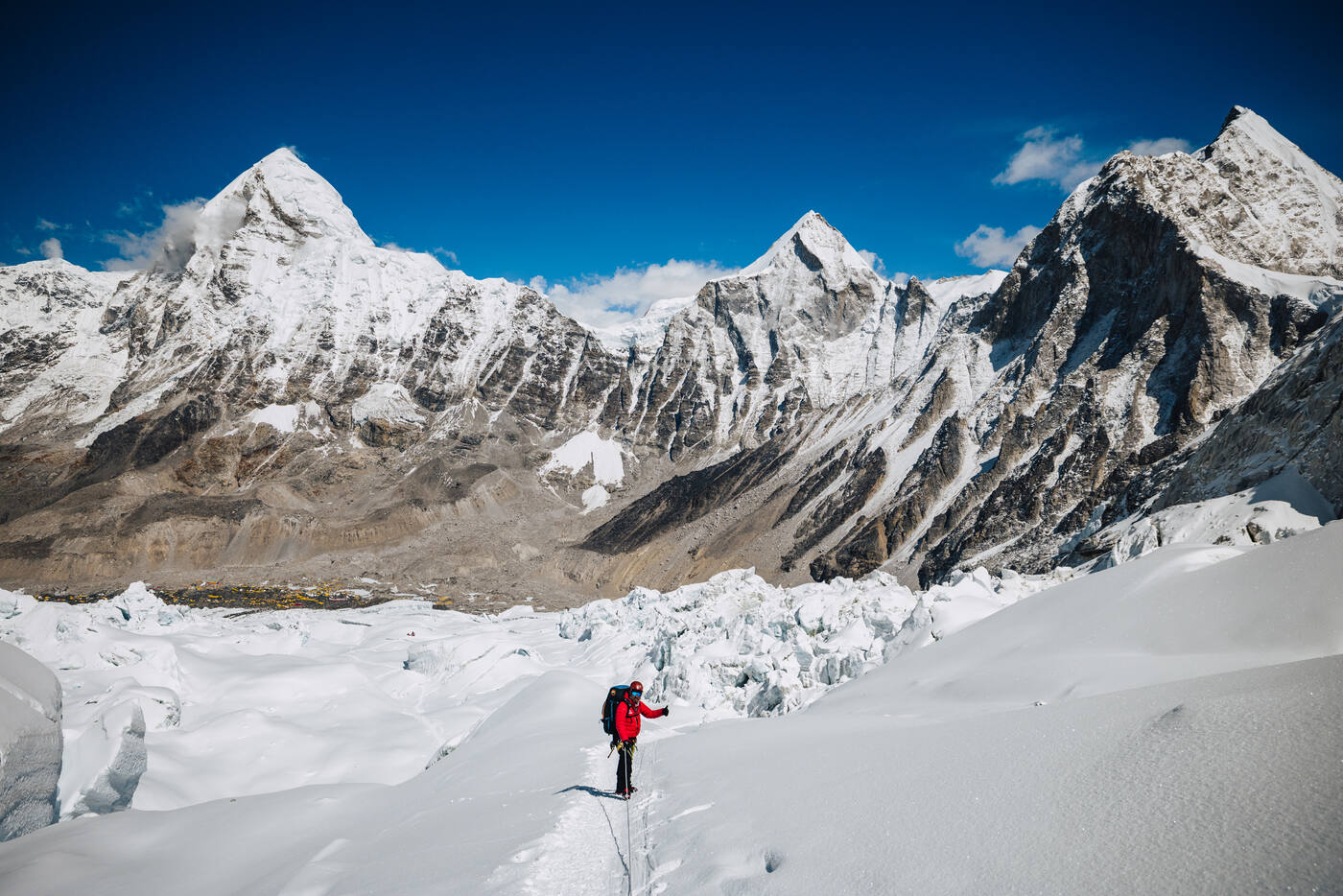
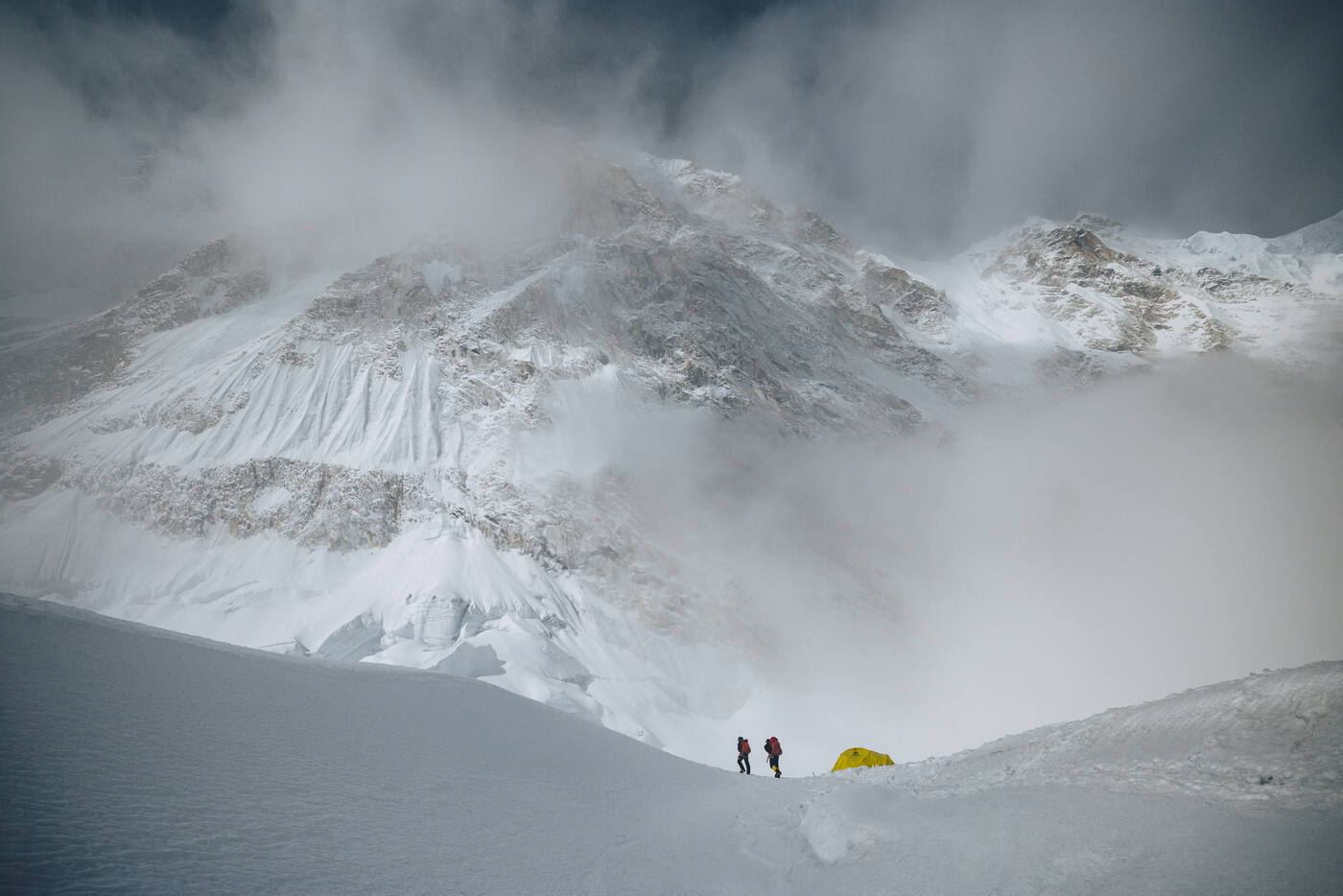
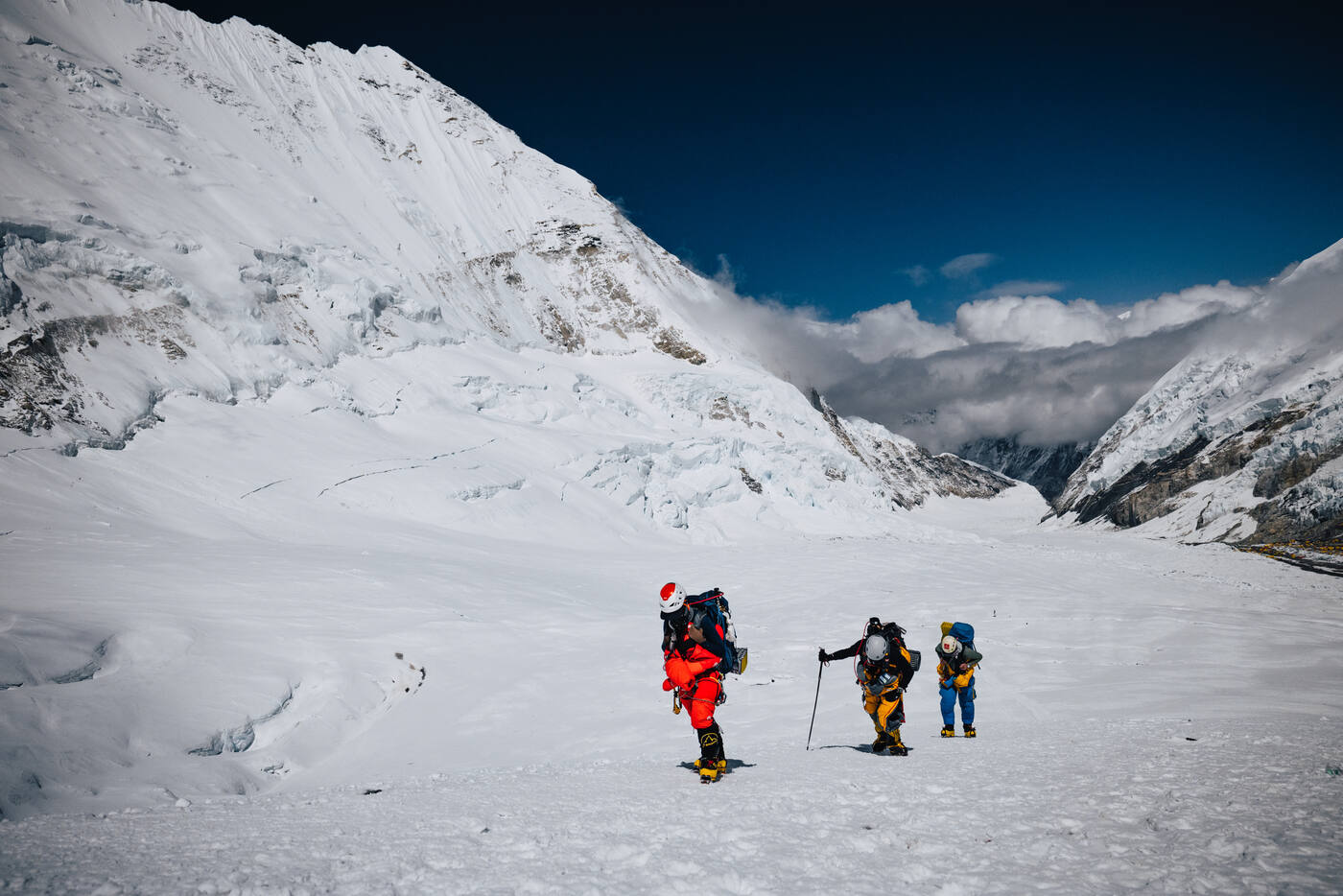
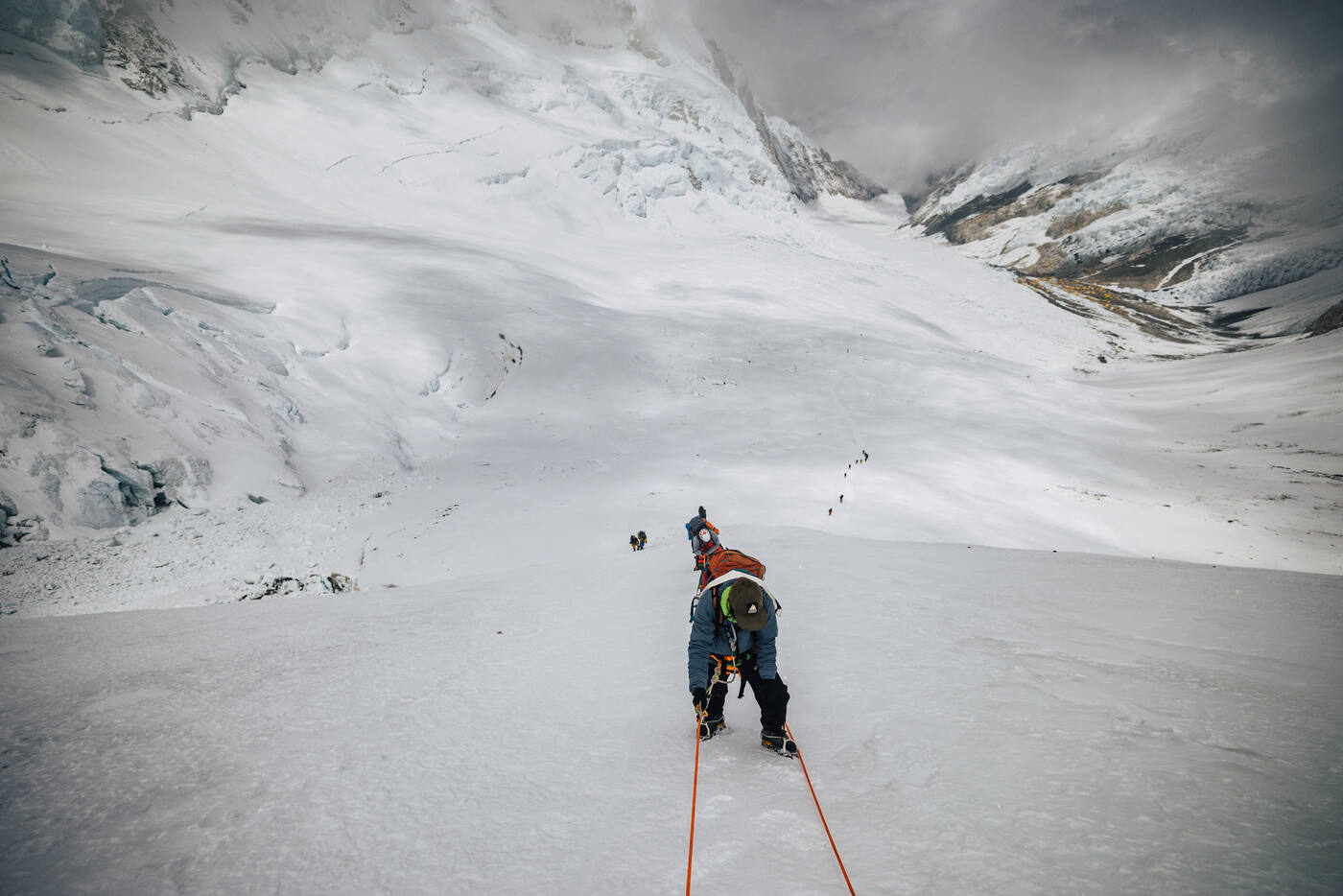
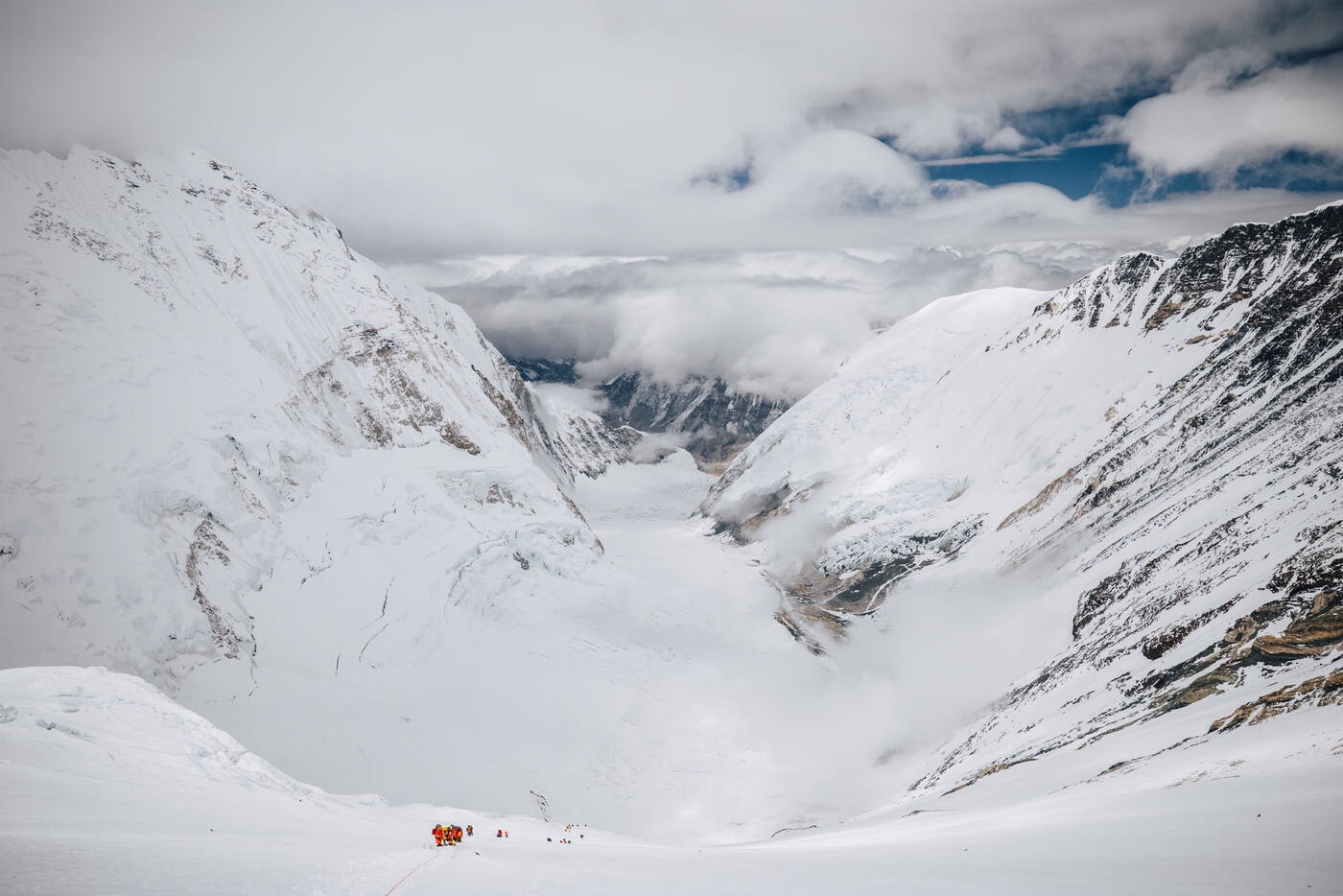
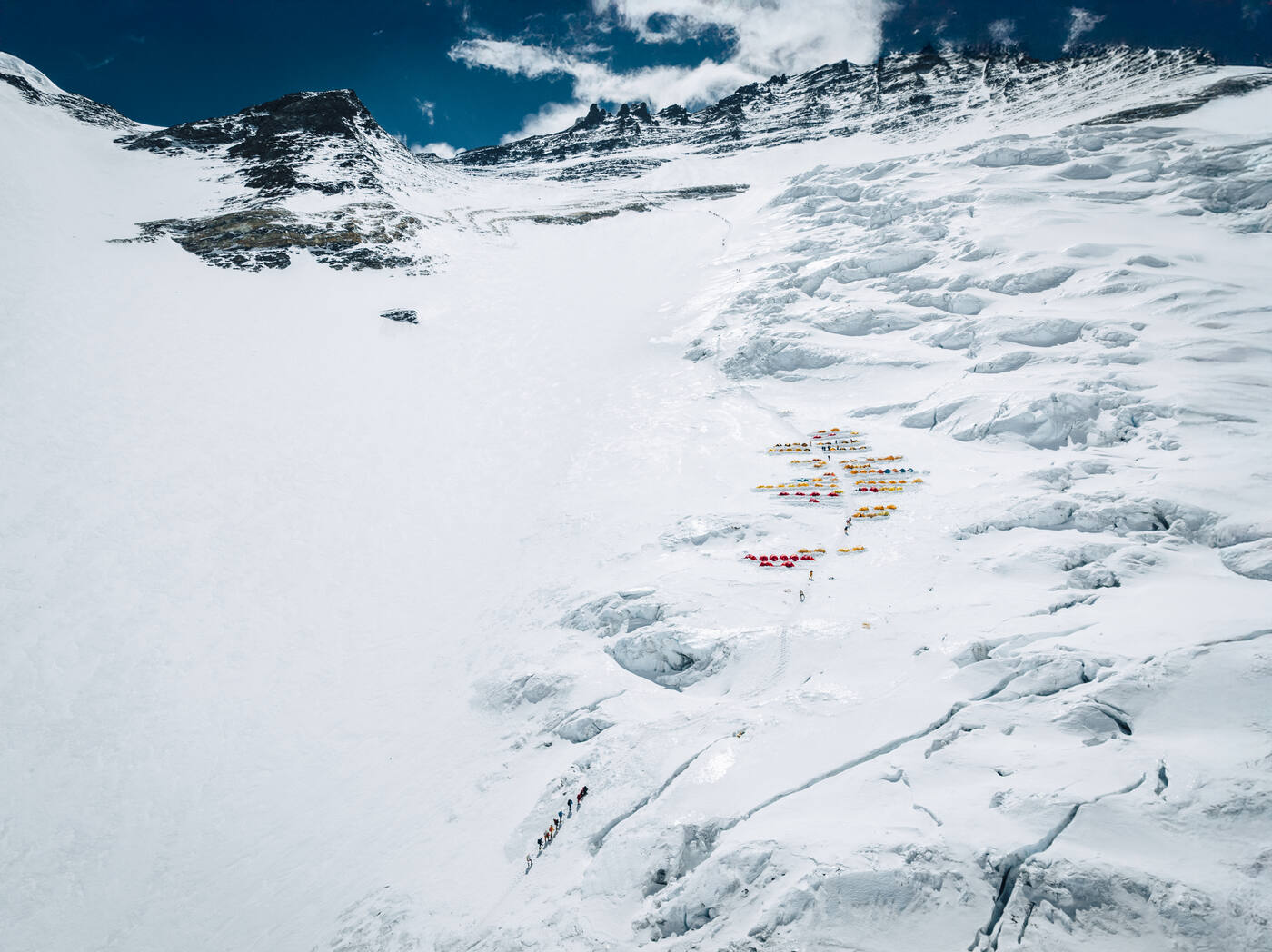
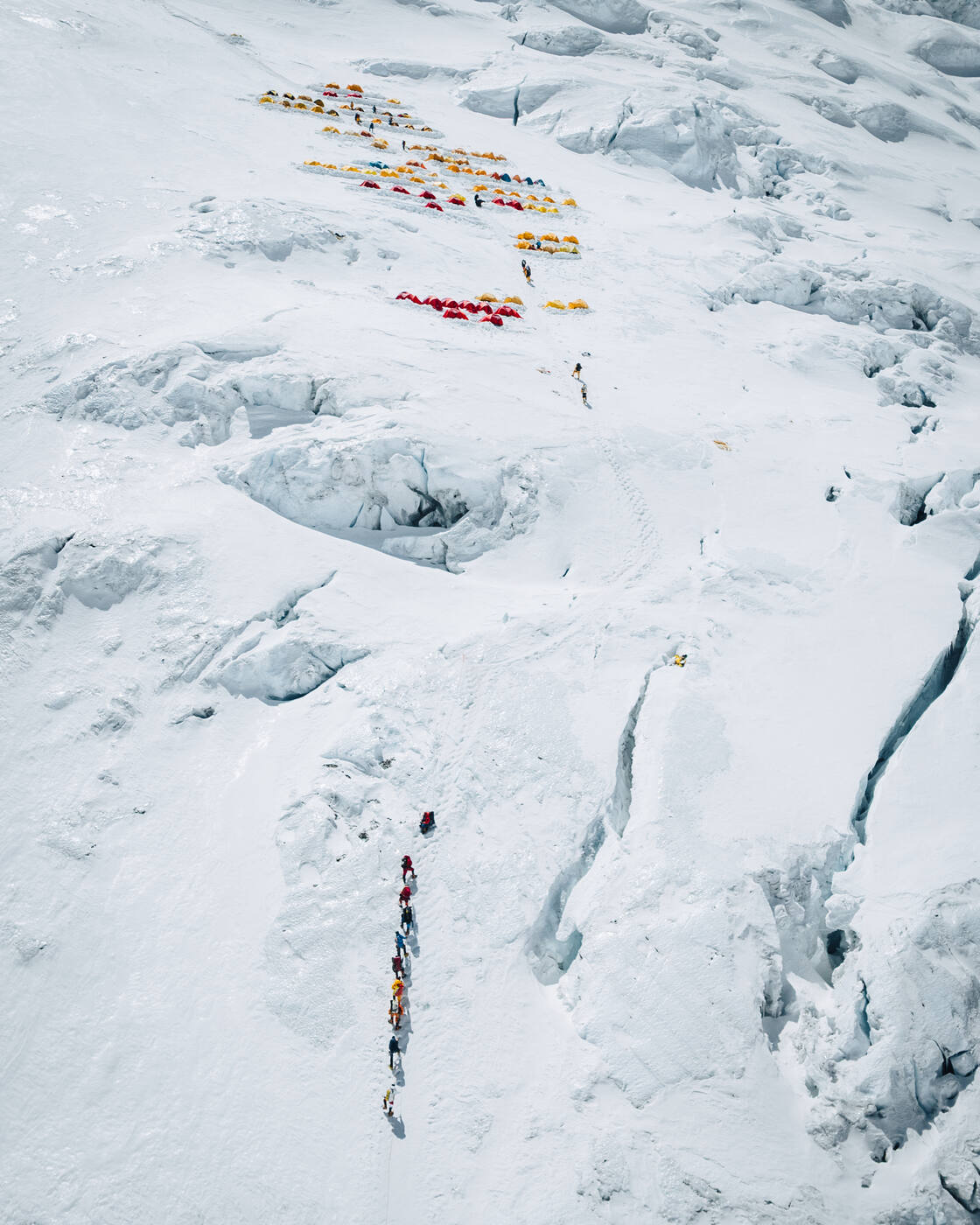
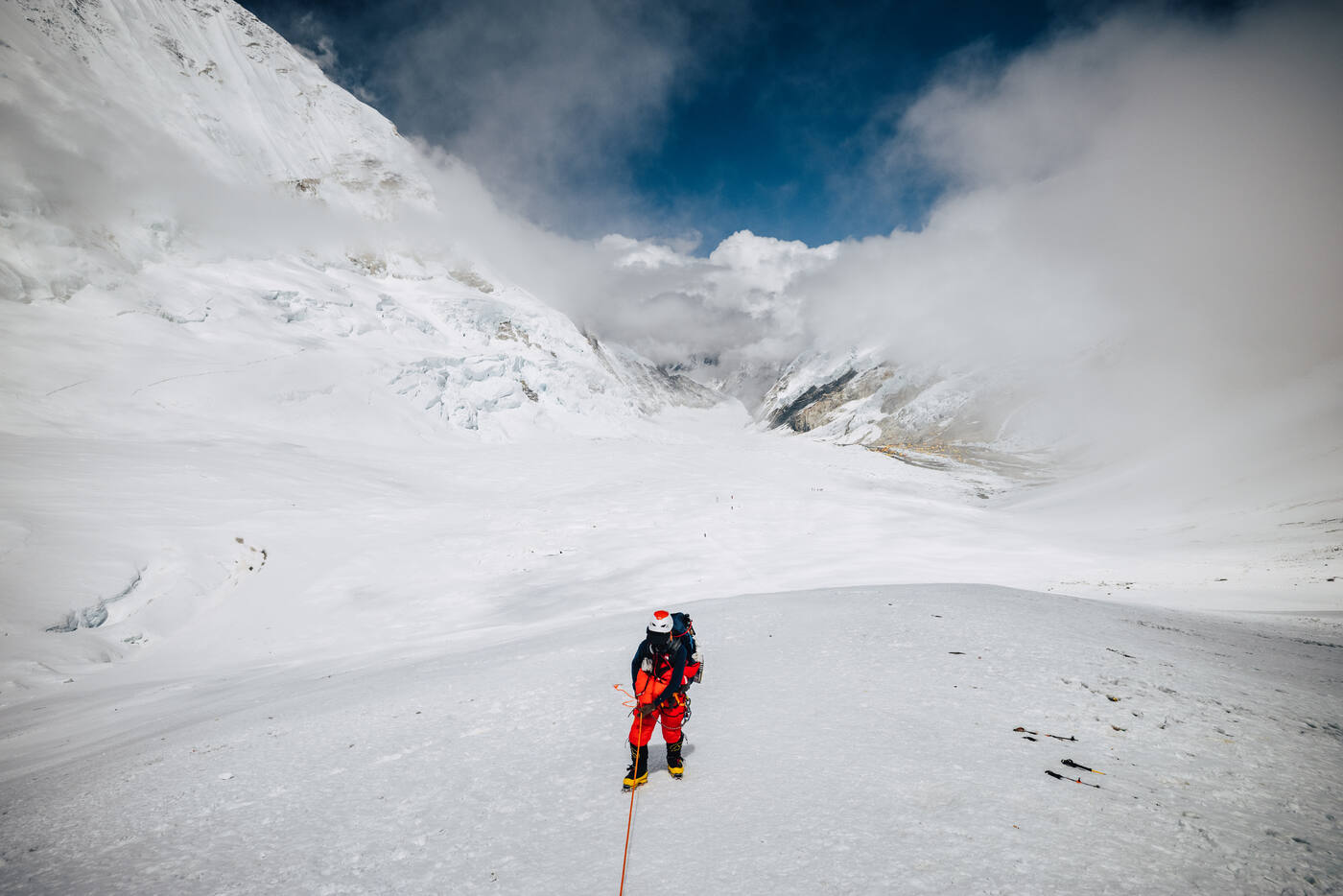
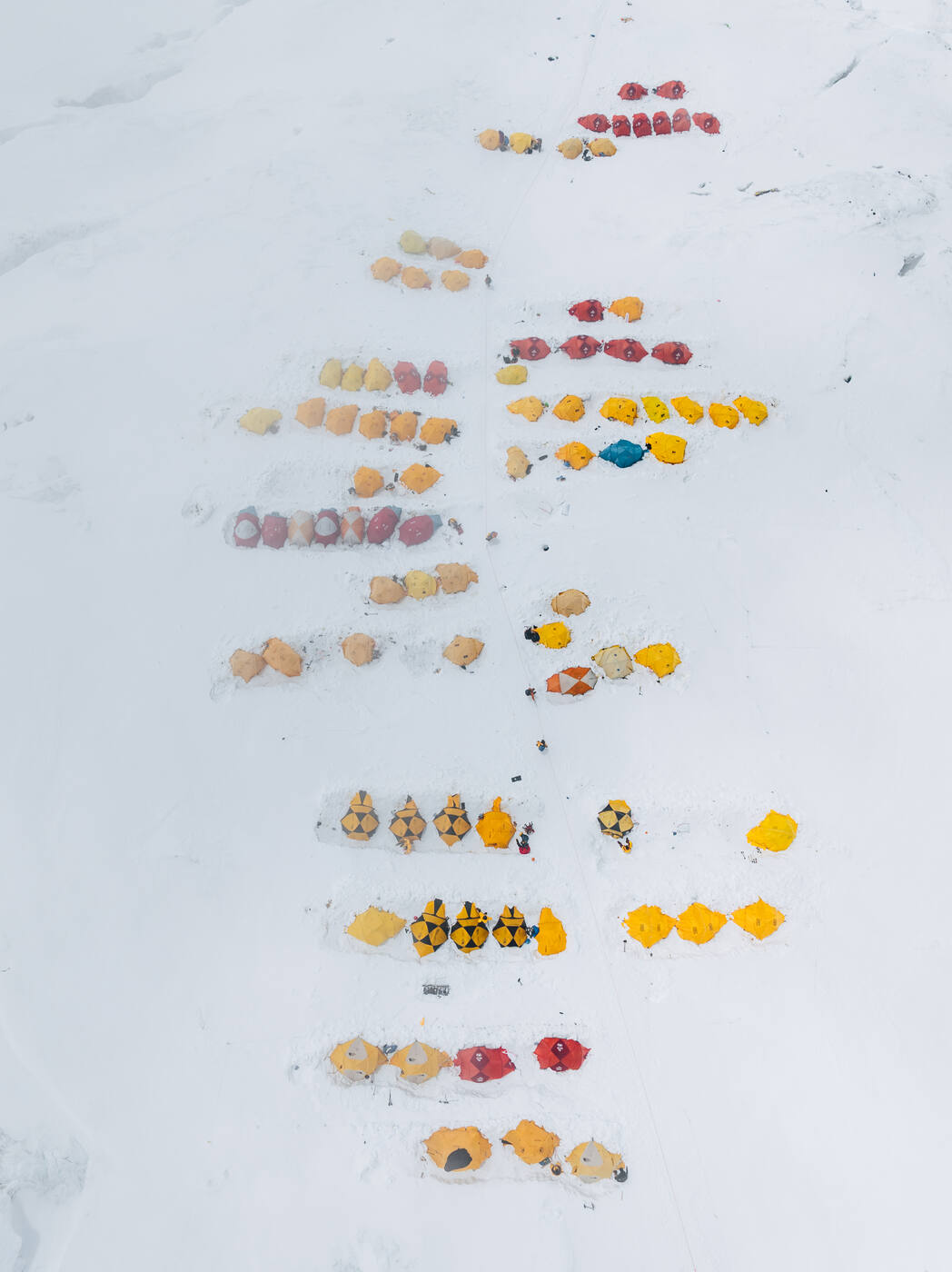
We reached Camp 1 at 6,054m exhausted but exhilarated. The Western Cwm opened up before us, a massive glacial valley flanked by Everest, Lhotse, and Nuptse. The next day, the walk from Camp 1 to Camp 2 felt almost leisurely. Just 3.5 hours through the most spectacular mountain amphitheater on Earth.
Between the seracs. The ice towers on both sides, the route threading through narrow gaps.Above the Icefall. The Western Cwm opens up, Camp 1 visible with dramatic peaks behind.
Moving through the Icefall in single file. Clip, climb, unclip, repeat. Hundreds of times.Emerging from the Icefall. The Western Cwm opens into a glacial highway flanked by the world's highest walls.
Walking to Camp 2 through the most spectacular mountain amphitheater on Earth.Among the seracs. Multi-story blocks of ice that shift and groan constantly.
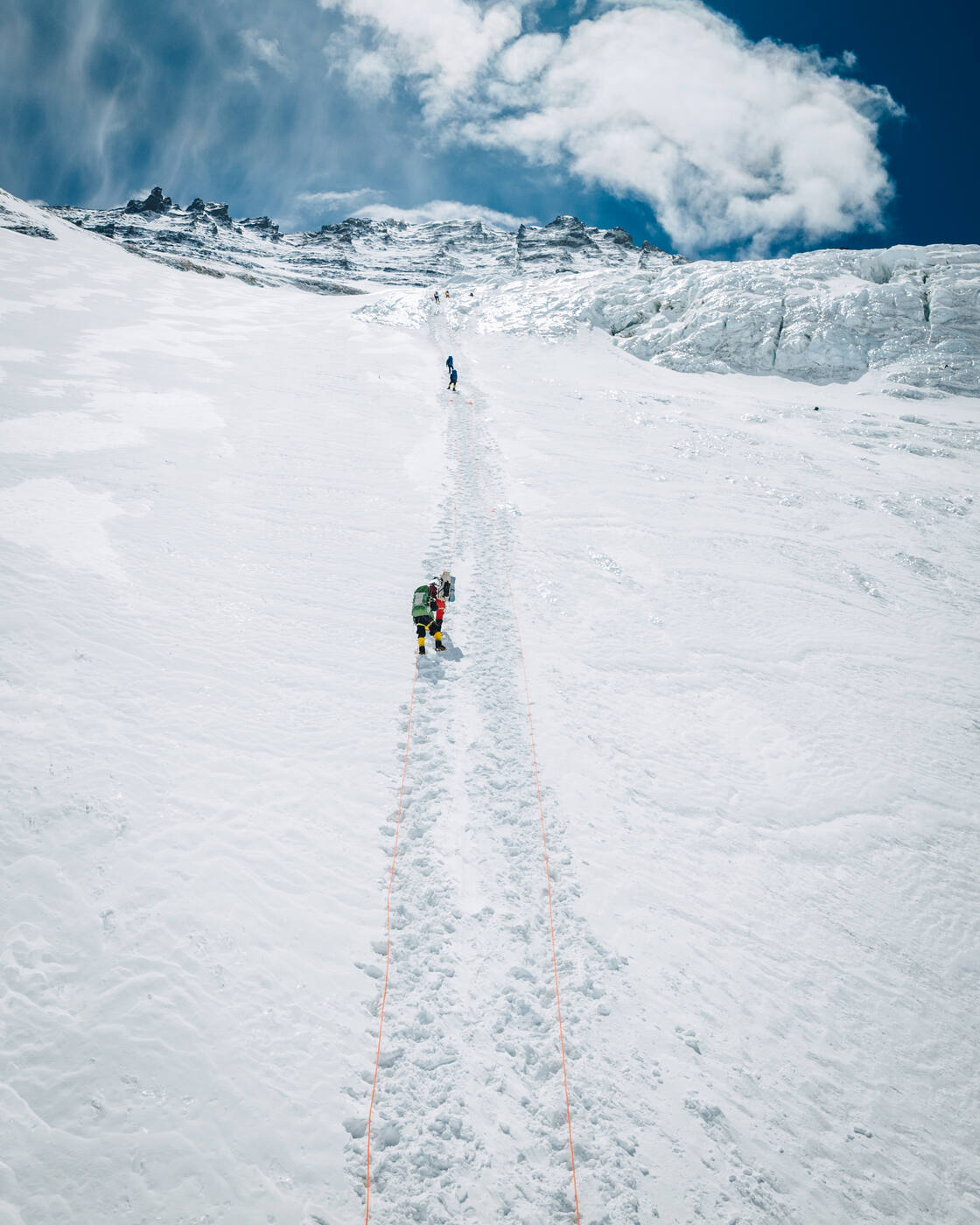
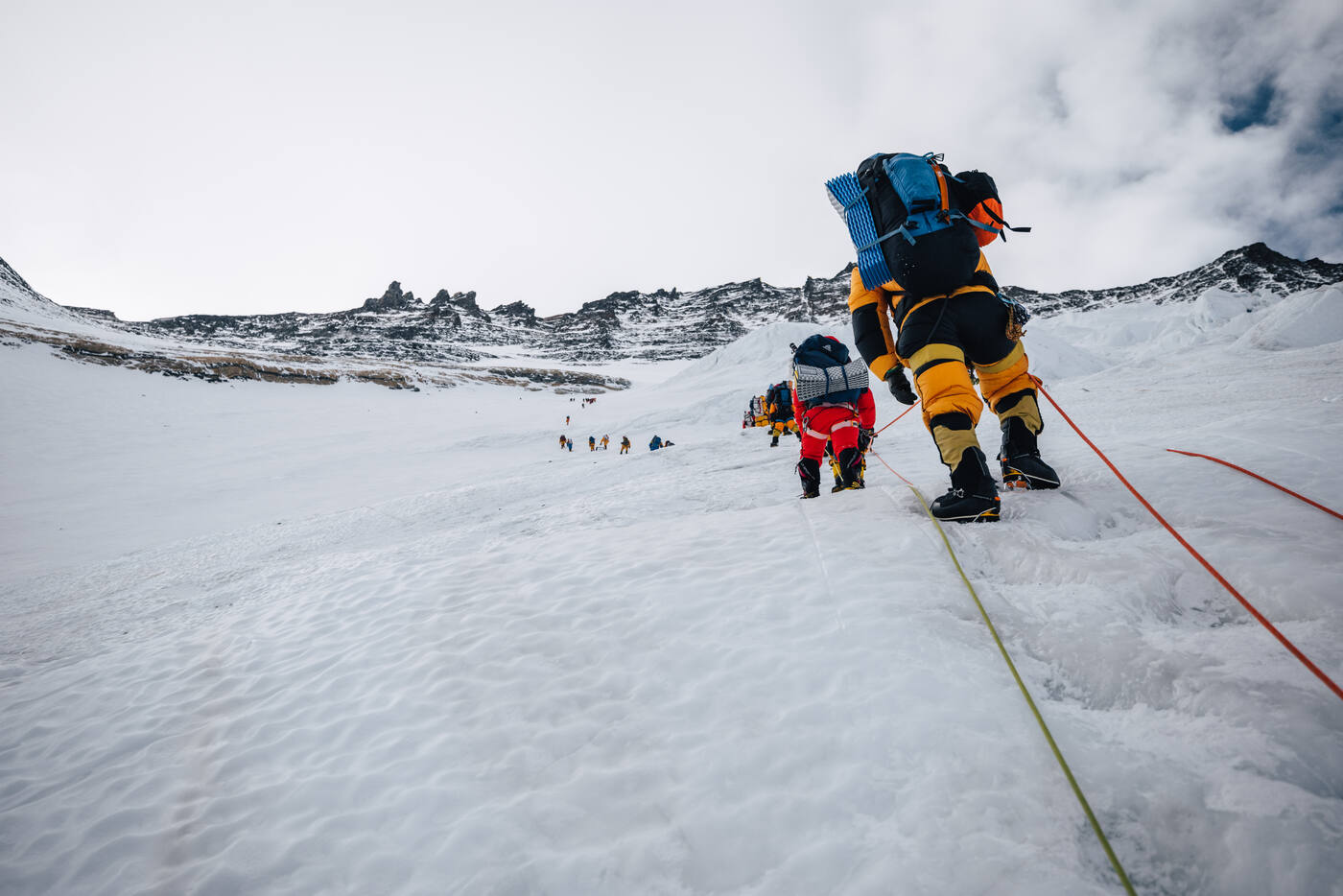
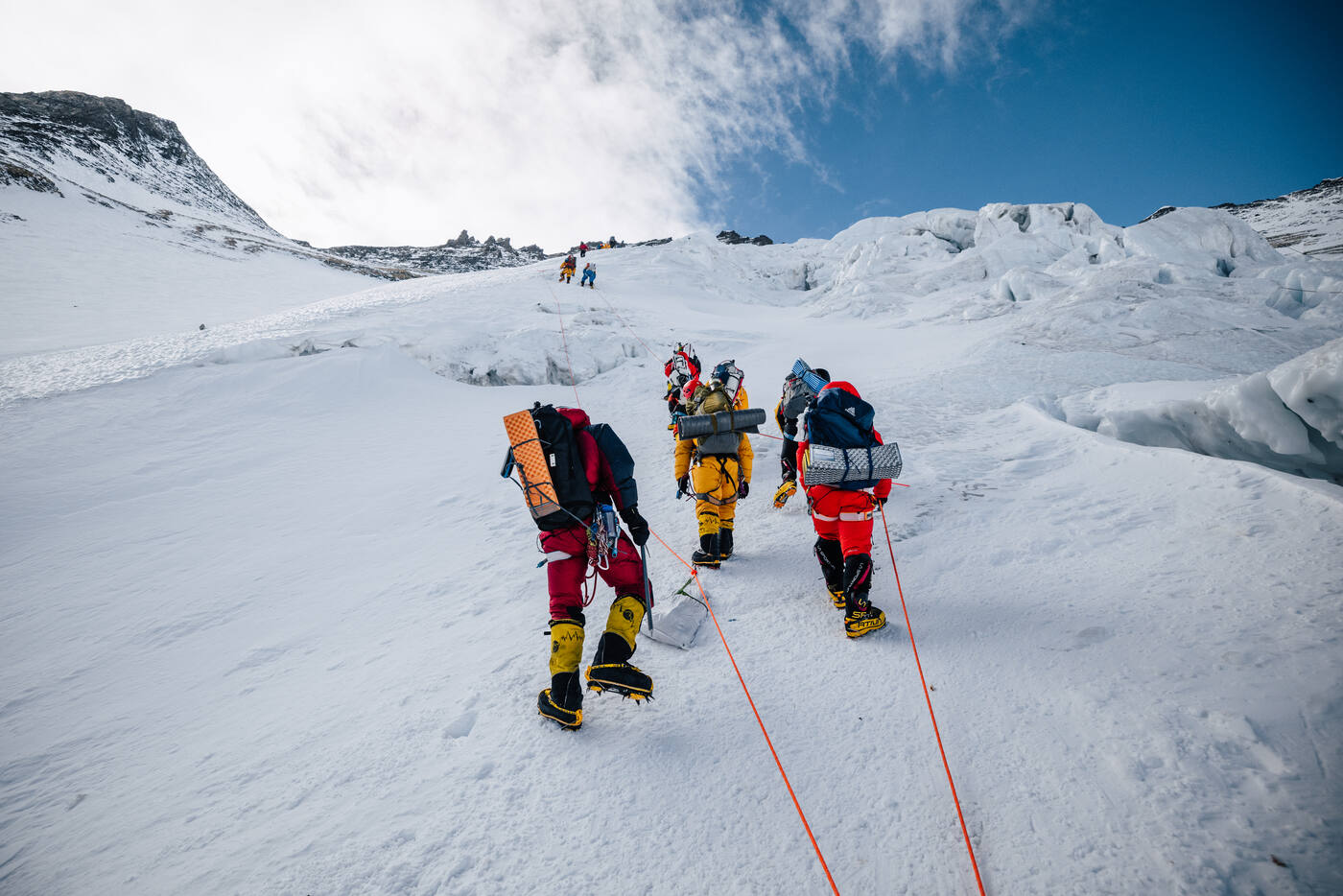
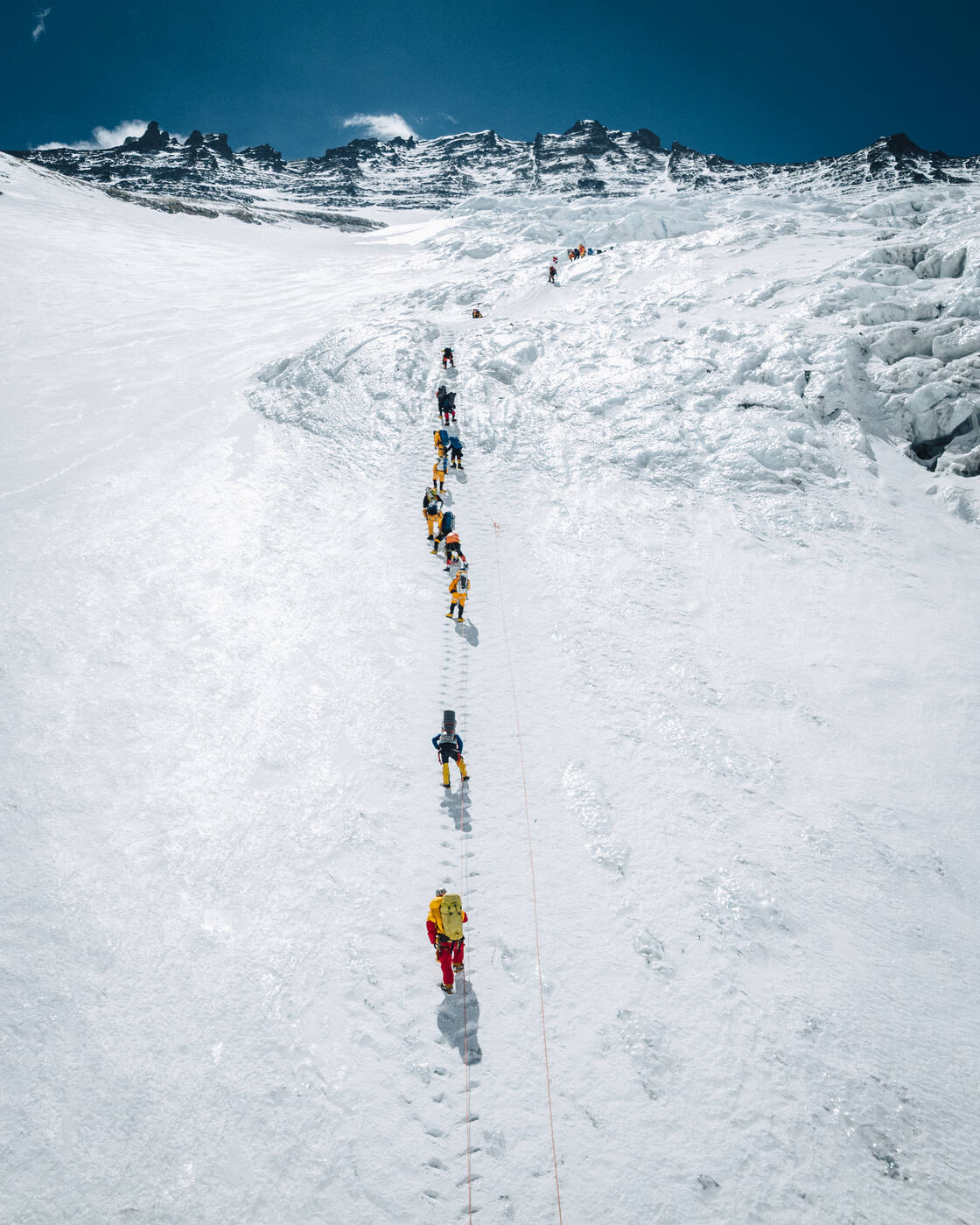
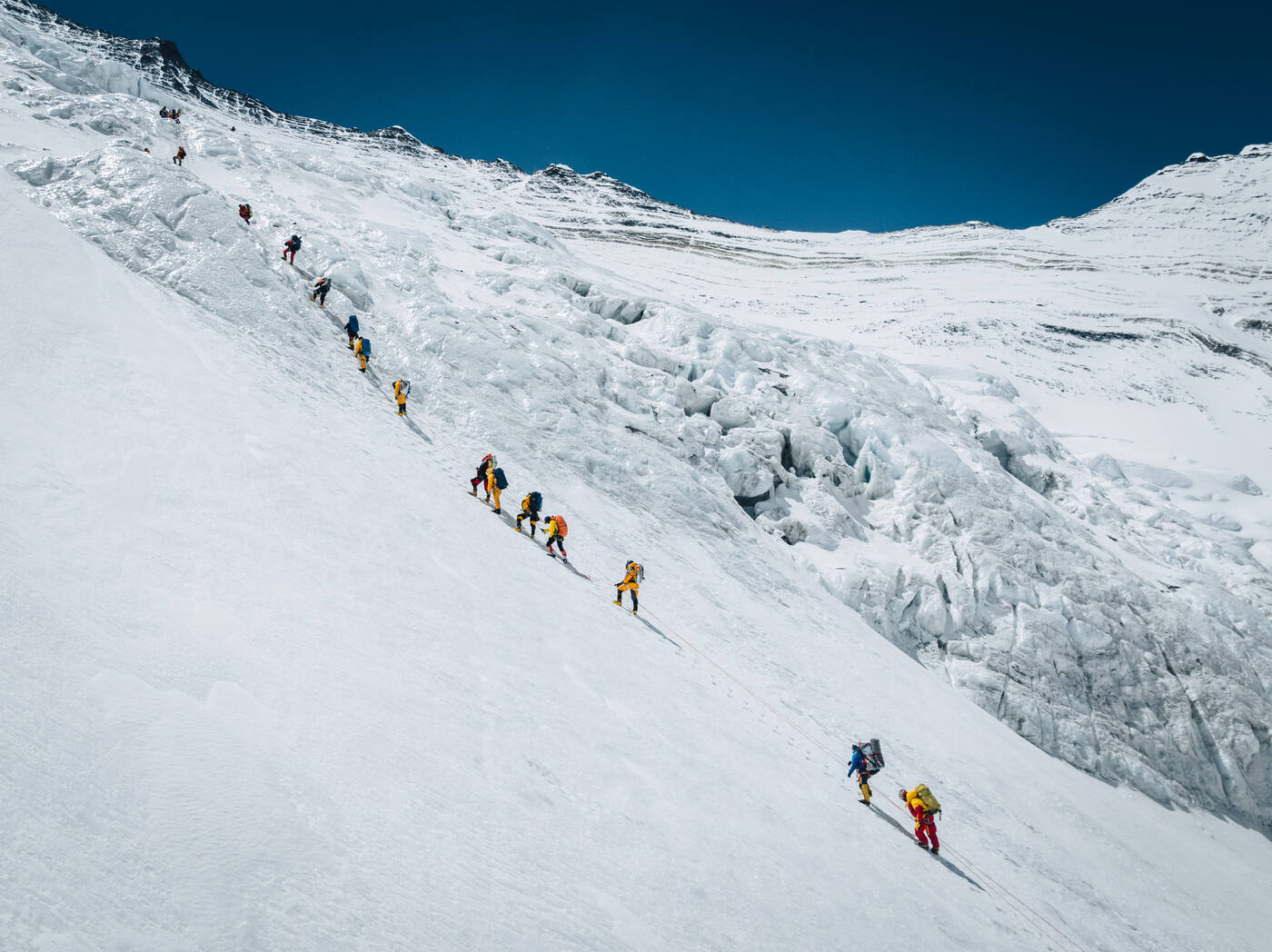
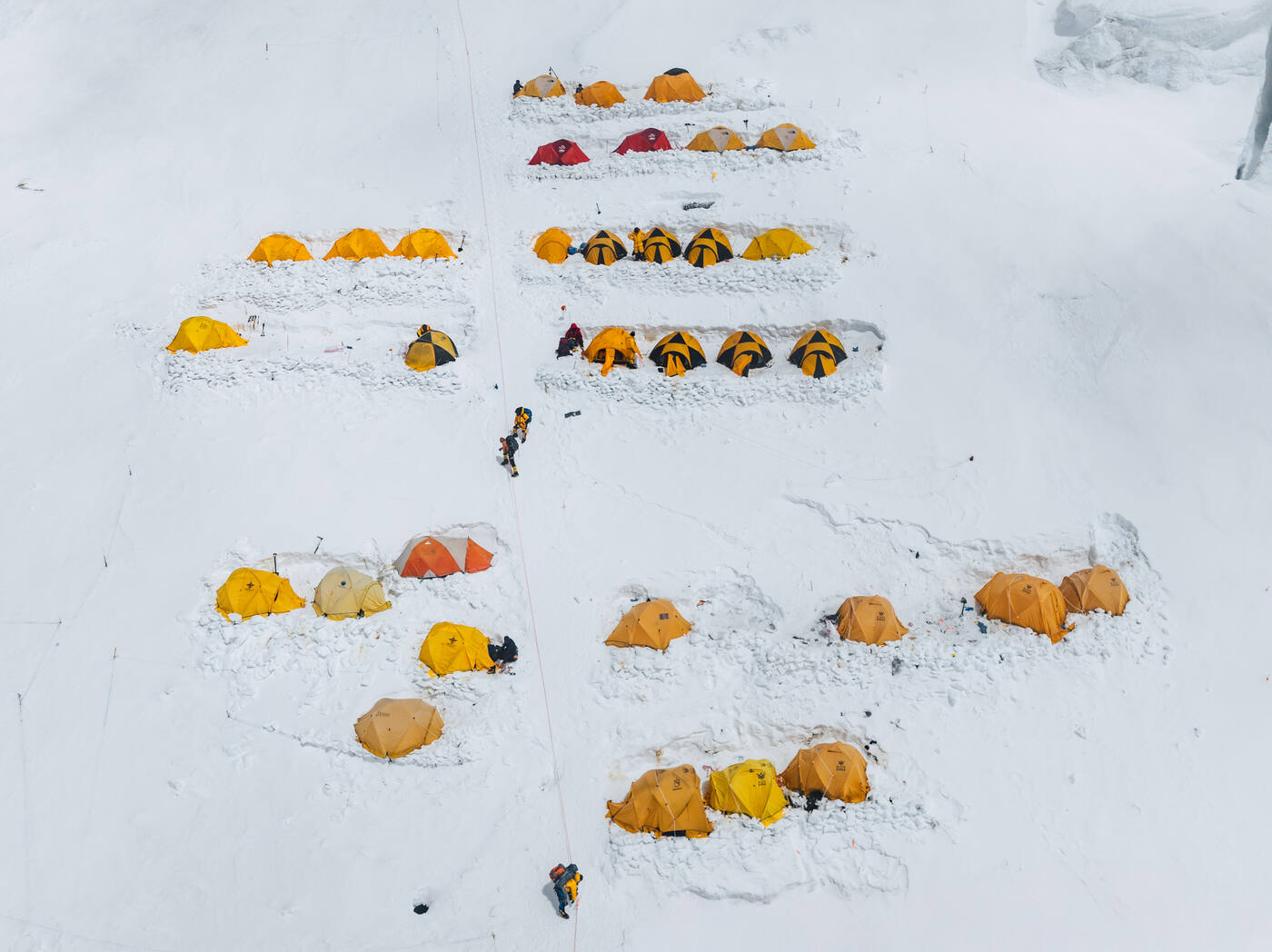
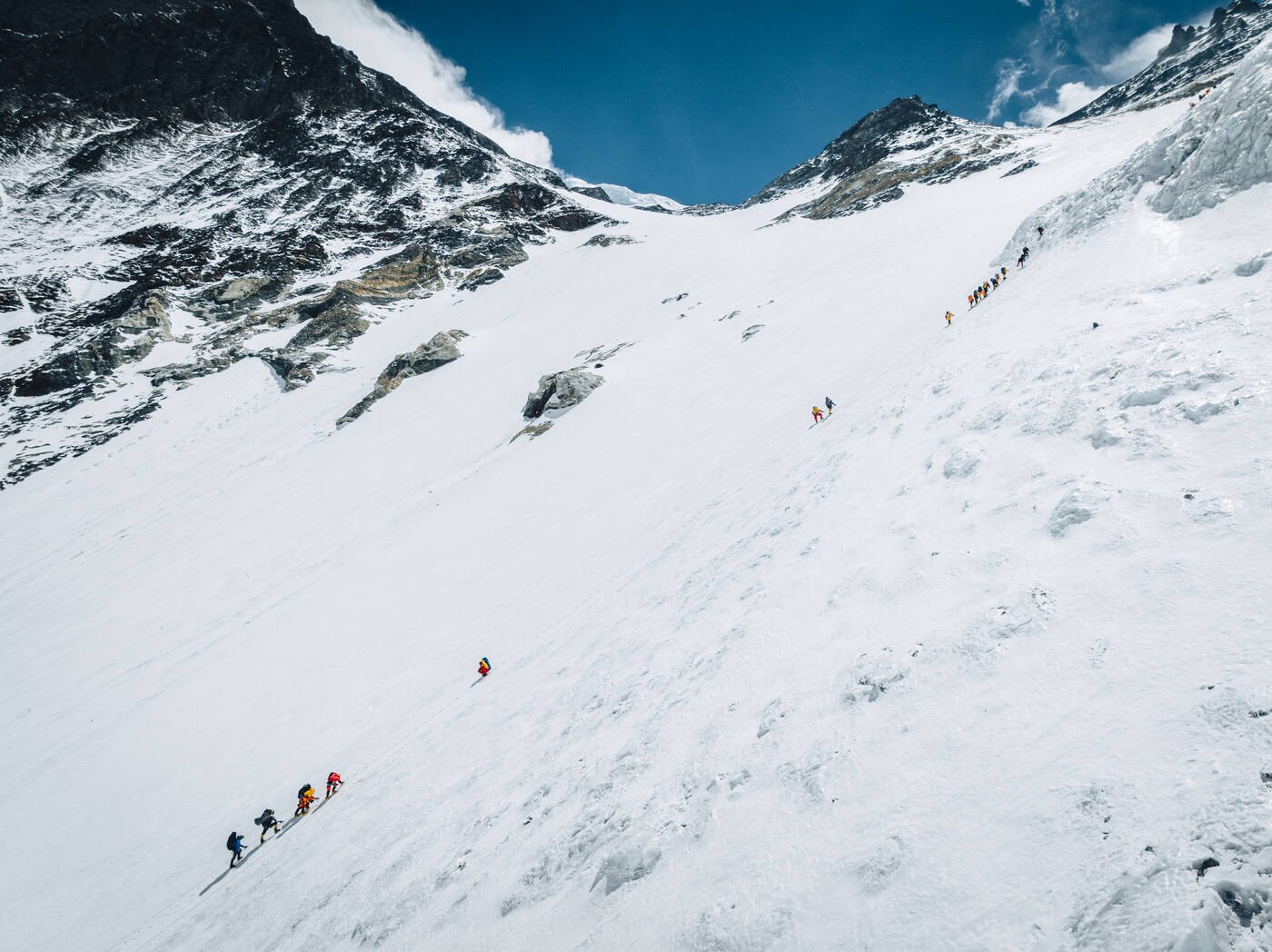
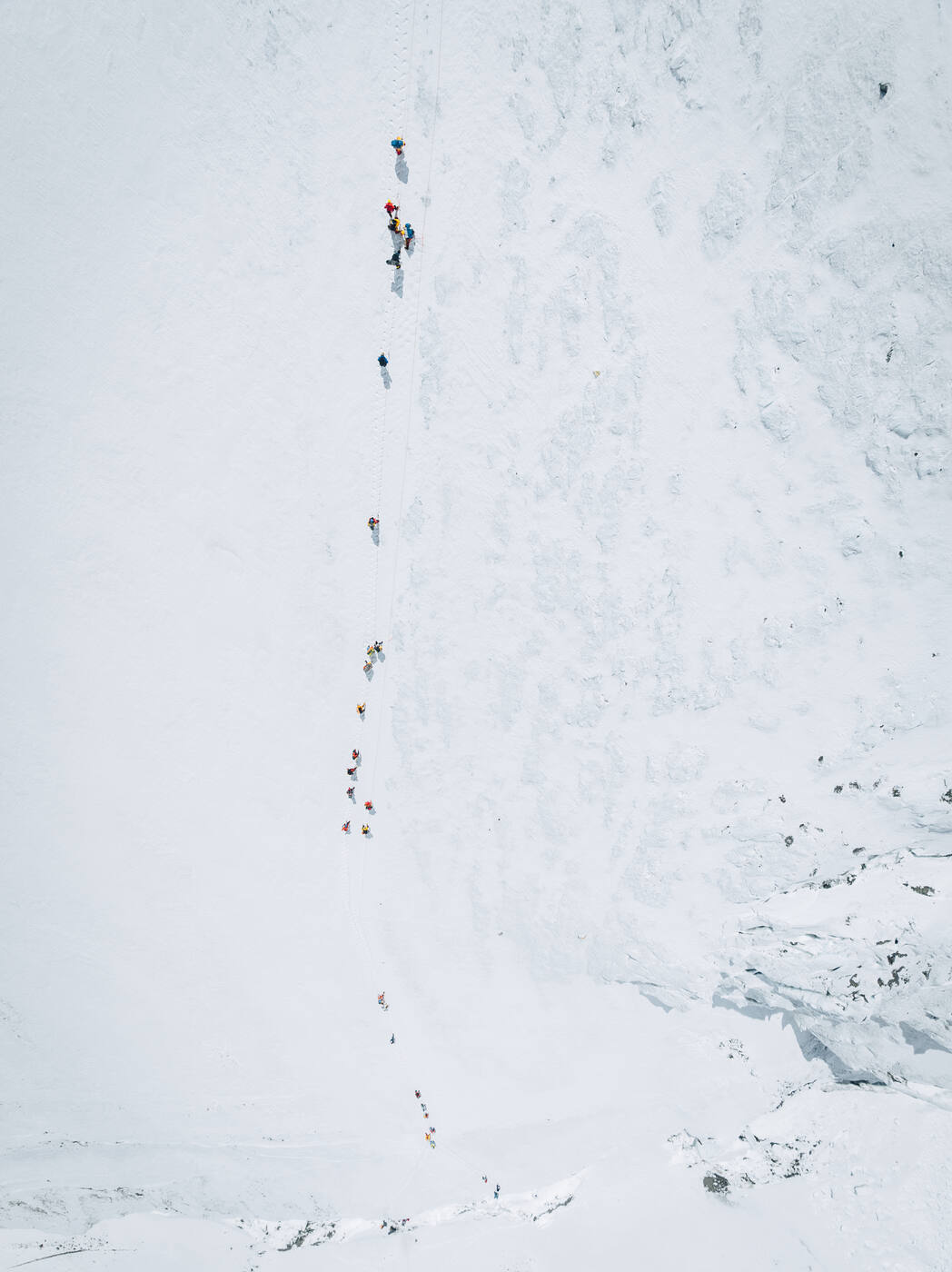
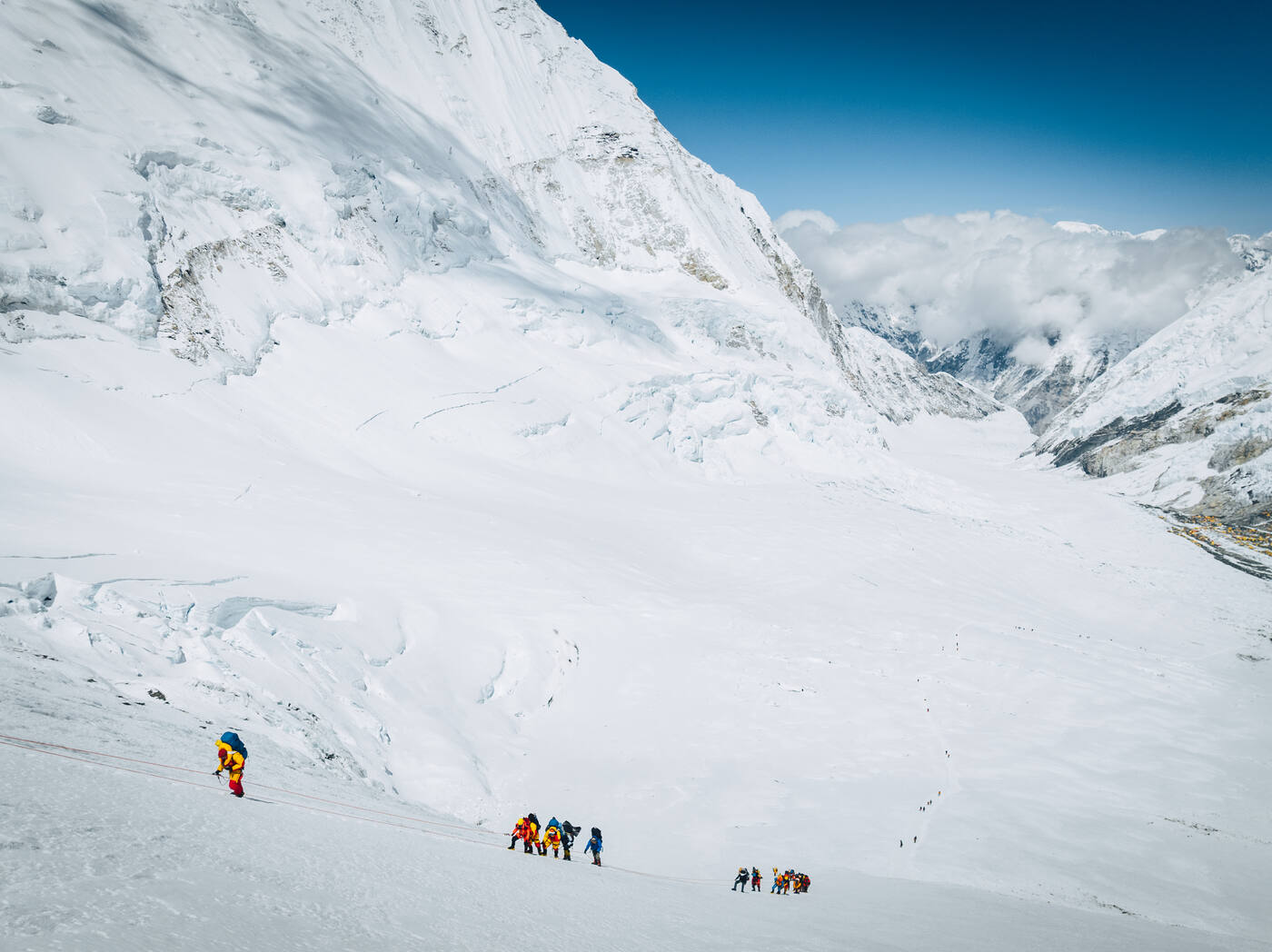
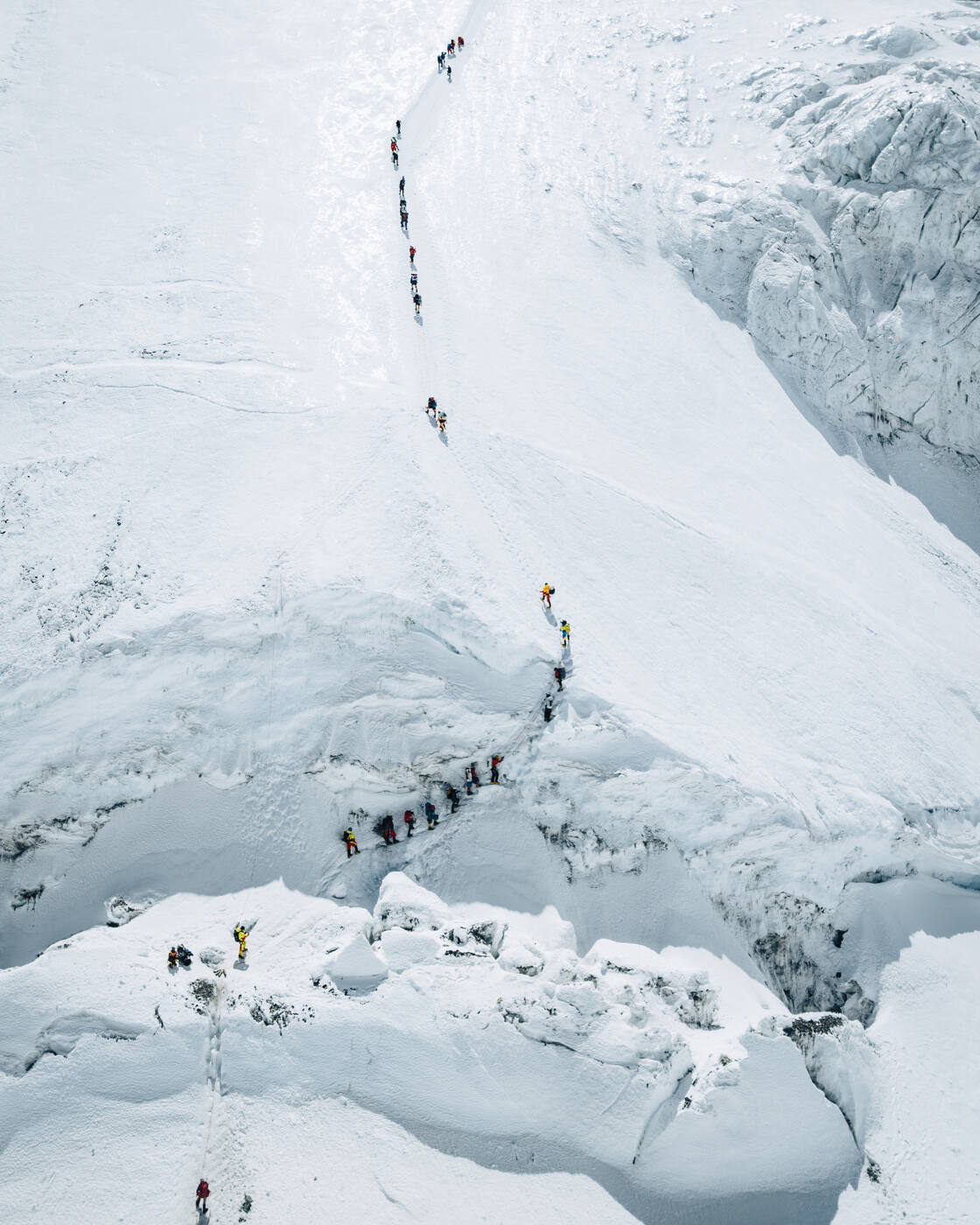
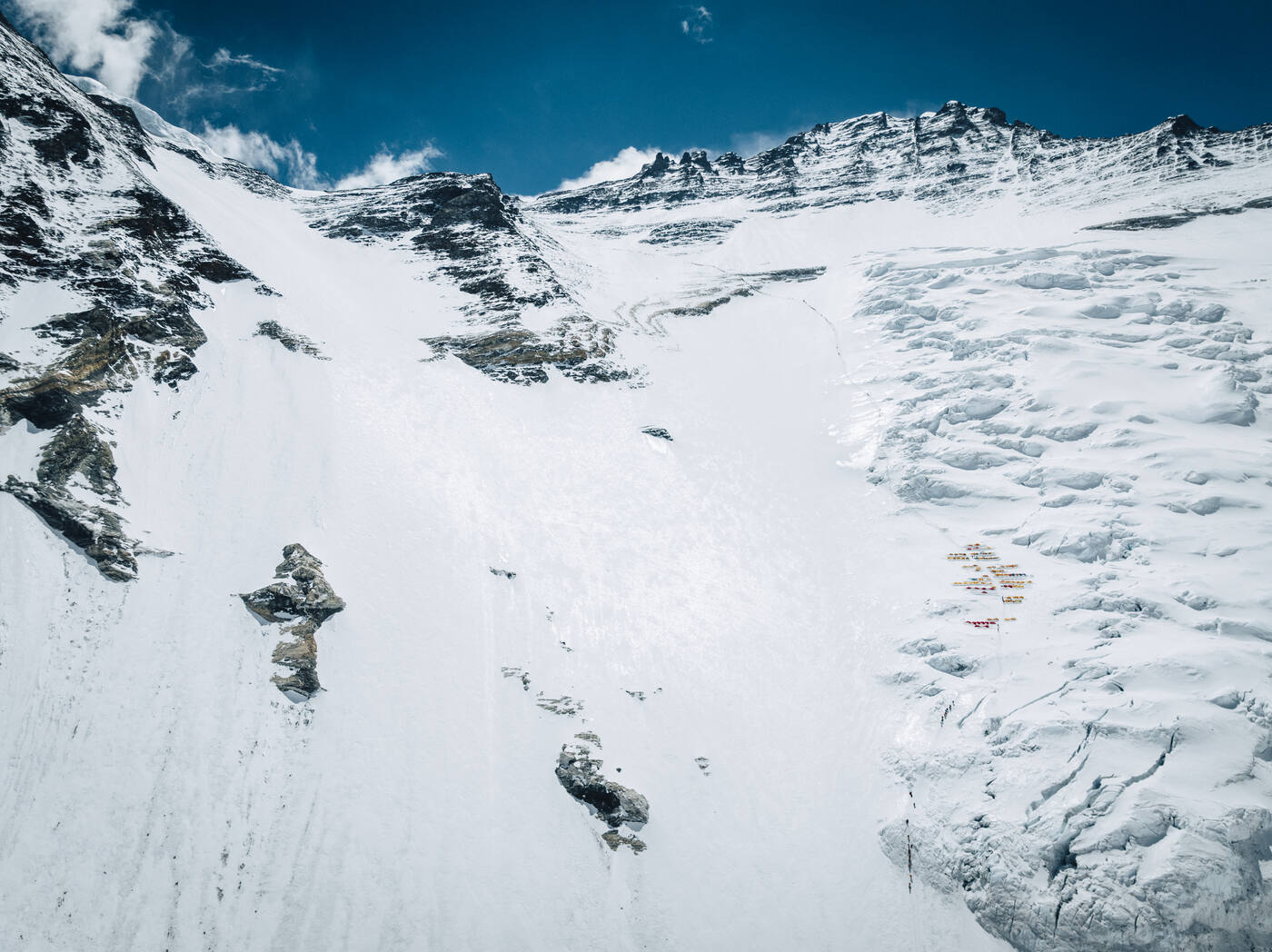
Day 27 we got our first taste of the Lhotse Face. The climb to Camp 3 at 7,038m took 5 hours of steep, relentless climbing on fixed ropes. The Face is a sheet of blue ice at 40 to 50 degree angles that seems to go on forever. Exhausting, exposed, and exactly what we would face on summit day, except higher. We tagged Camp 3 and immediately descended back to Camp 2.
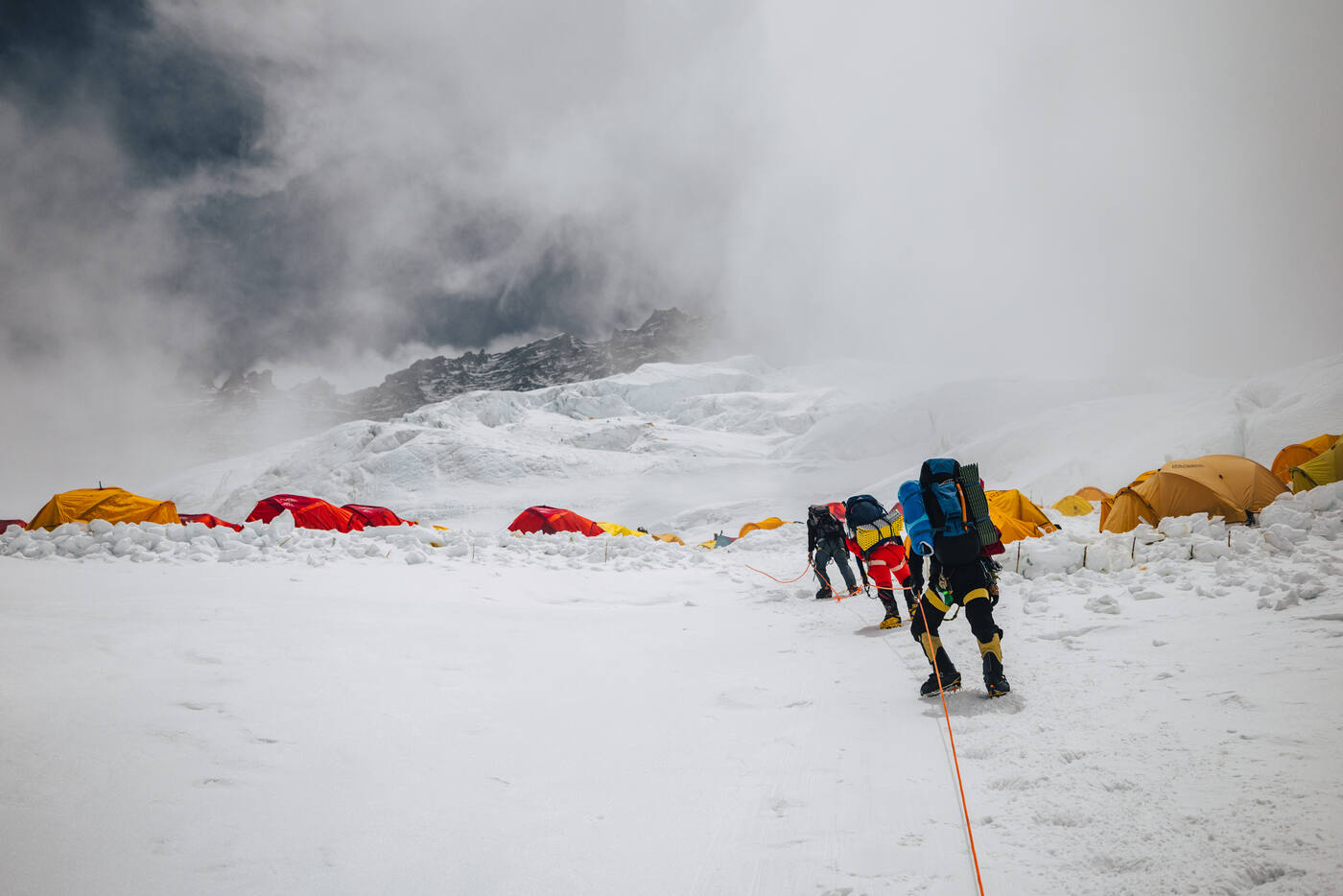
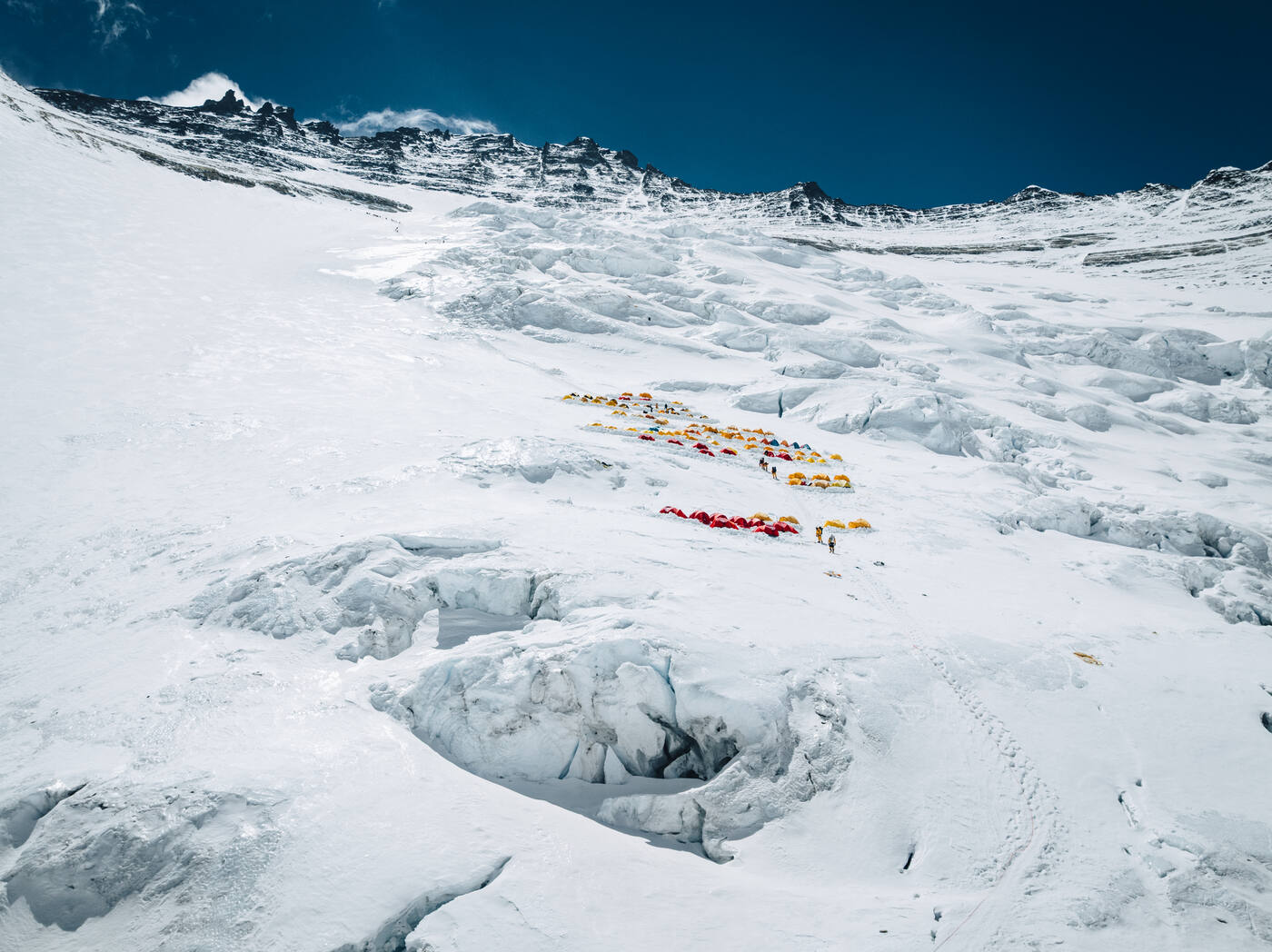
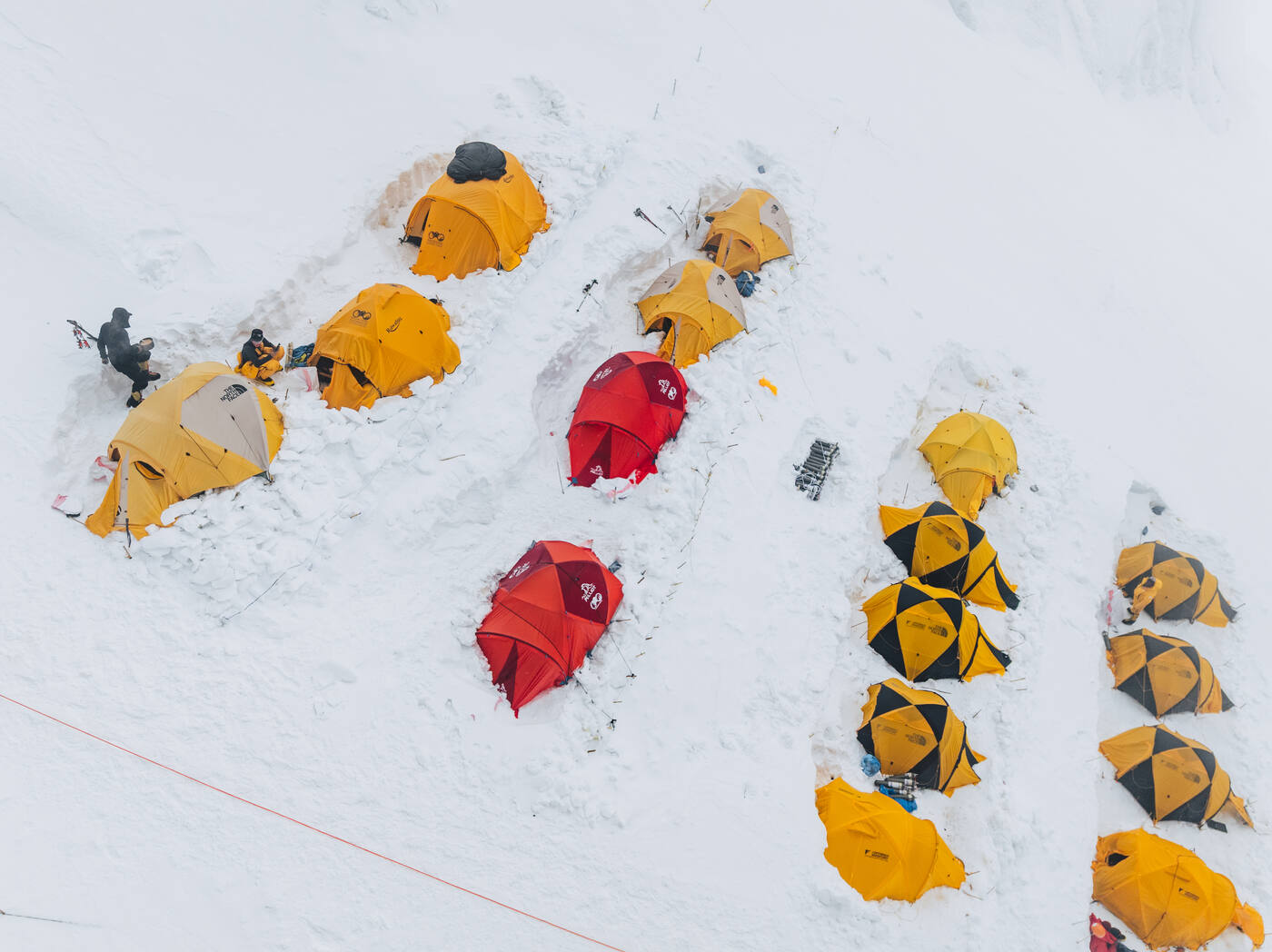
Camp 2 at 6,472m. The Lhotse Face rising steeply behind. The steepest section of our route awaits.Camp 2 from the approach. Mountain Professionals secured a prime spot above the main camps.
Moving up the Western Cwm. A crevasse yawning beside the trail, the Lhotse Face still ahead.Rest stop in the upper Cwm. The Lhotse Face hidden in cloud above us.
Walking through the Western Cwm. The Lhotse Face rising ahead, a wall of blue ice at 40 to 50 degrees.Camp 2. The tent city at 6,472m with the Lhotse Face looming behind.
Back at Camp 2. We tagged Camp 3 at 7,038m and immediately descended to sleep lower.
Before leaving Camp 2, we cached essential gear for the summit bid. Our minus-40 sleeping bag, Thermarest, ice axe, clothes, snacks. Every ounce matters when you are moving above 20,000 feet. The descent through the Icefall took less than half the time going up. Our bodies were stronger, more efficient. We knew every ladder and anchor point by feel. Back at Base Camp, the thick air at 5,364m felt almost luxurious. Two rotations down. Summit push pending.
Days 29–36: The Wait
May 8–15, 2025 · Everest Base Camp · 5,364 m
The hardest part of climbing Everest is not the climbing. It is the waiting. We had done everything possible to prepare: two full rotations, a Puja ceremony, multiple acclimatization hikes. Now we needed the weather window to open. Forecast models ran constantly. Weather windows on Everest are rare and precious. When it opens, you move fast. Until then, you rest, hydrate, and try not to think too much about what lies ahead.
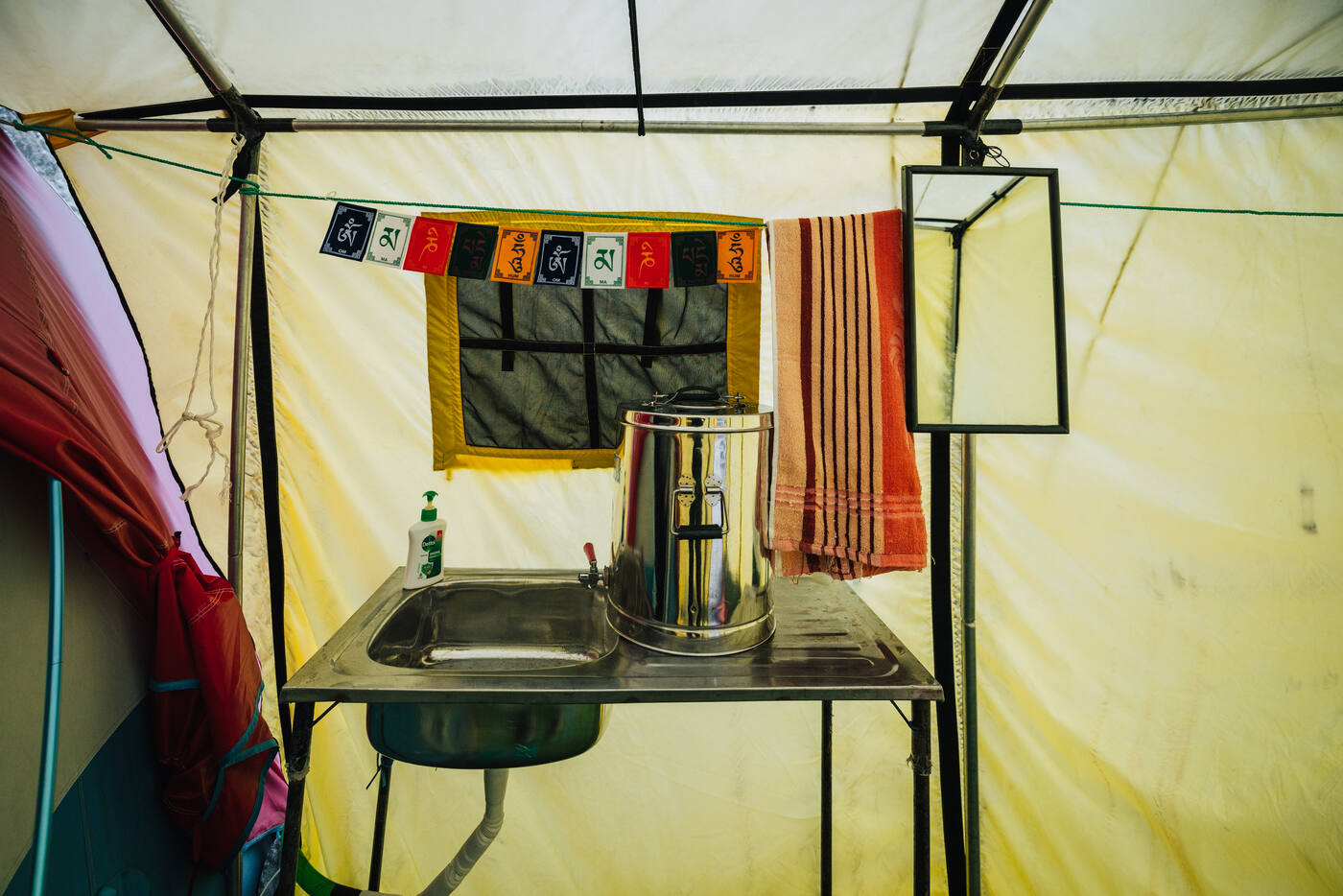
The wash tent. Hot water, prayer flags, and a semblance of civilization at 17,600 feet.
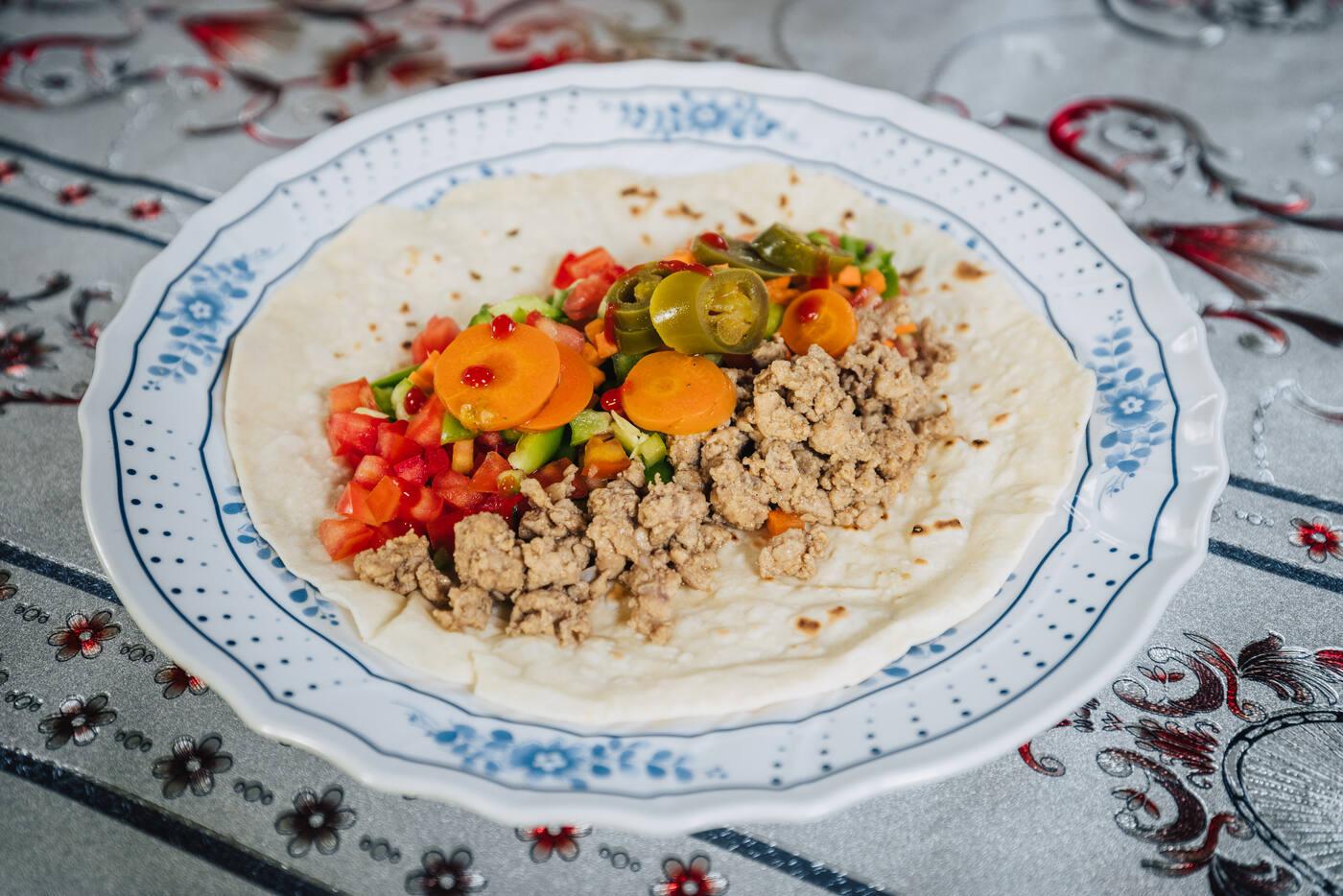
Fresh meals from the kitchen crew. Tortilla wraps with all the fixings at 17,600 feet.
We stayed sharp. Day 31 we hiked up to Pumori again. Day 33 we tested our oxygen masks and regulators, making sure every valve and seal was perfect. You do not want to troubleshoot your oxygen system at 26,000 feet. The days blurred together. Coffee in the morning. Weather briefings. Card games in the dome tent. Emails home. And always, the sound of the Icefall cracking and groaning in the distance.
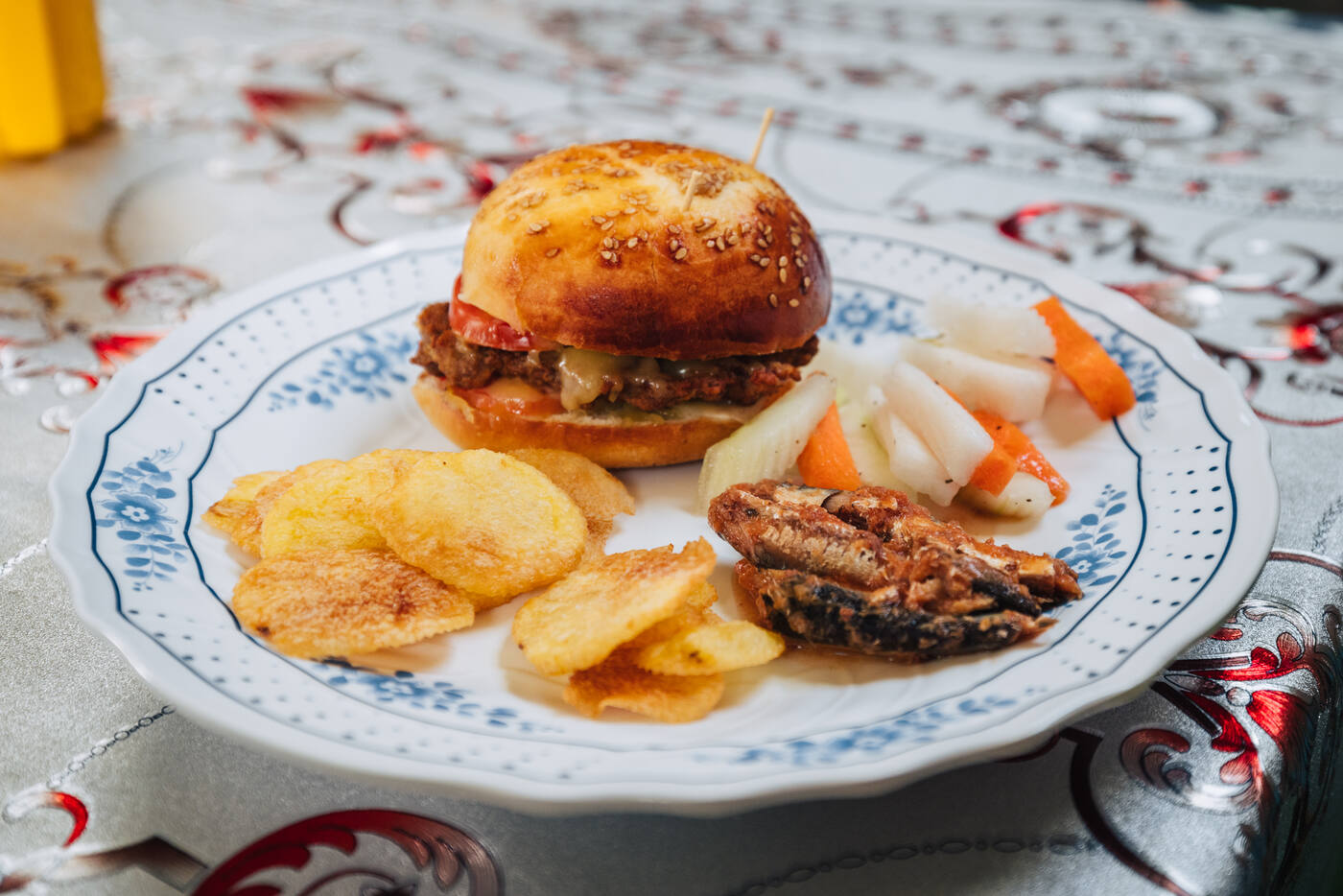
Burger day at Base Camp. The kitchen crew kept morale high with meals like this.The Sherpa team. Toasting between rotations. Their strength would be the difference on summit day.
Days 37–41: The Summit Push
May 16–20, 2025 · EBC → Camp 2 → Camp 3 → Camp 4 (South Col, 7,907 m)
After more than a week of watching weather models, our window finally opened. We made a strategic decision to delay our originally planned departure by a couple days to avoid the crowds. Smart mountaineering is not just about weather. It is about timing your summit bid when you can move efficiently and safely.
Back in the Icefall at dawn. The peaks across the valley emerging through the clouds. This time, we are not coming back until it is done.
Back in the Icefall for the final time. The route is familiar now. Every ladder memorized.Morning seracs. We moved through the Icefall in just over 6 hours this time.
The Icefall from the inside. Ice towers dwarf everything around them.
We left Base Camp at 1:18 AM under a canopy of stars. The Khumbu Icefall, which took us 8.5 hours during Rotation 2, fell in just over 6 hours this time. Our bodies were machines now, perfectly adapted. Every ladder crossing, every crampon placement was automatic. We reached Camp 2 at 12:21 PM. Total time: just over 11 hours.
Through Camp 1 without stopping. Eyes on the prize now.The Western Cwm again. Familiar ground, but this time the stakes are different.
Ascending toward Camp 2. 11 hours from Base Camp through the Icefall and Western Cwm.Rest day at Camp 2. The last day of relative comfort before the Death Zone.
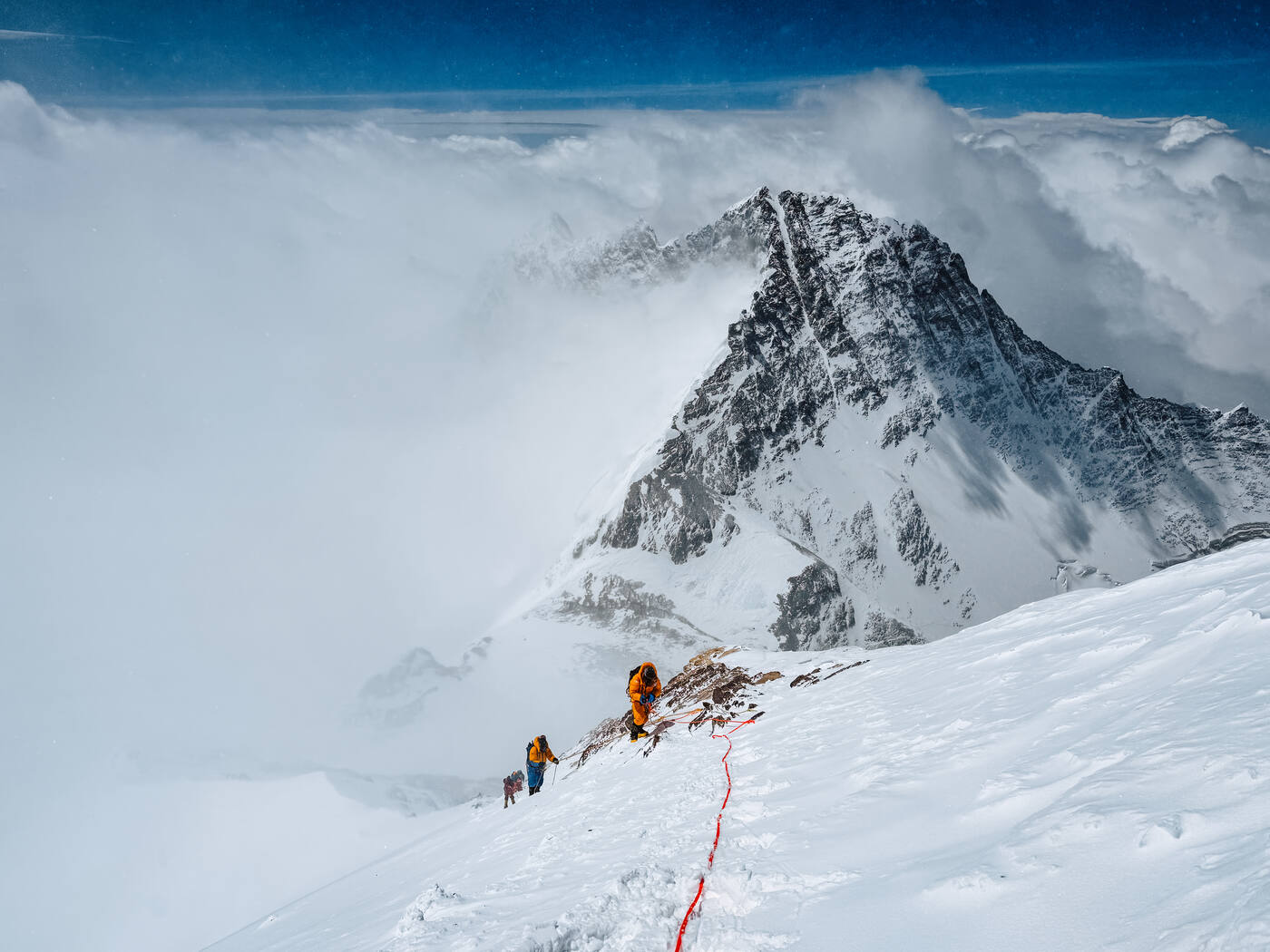
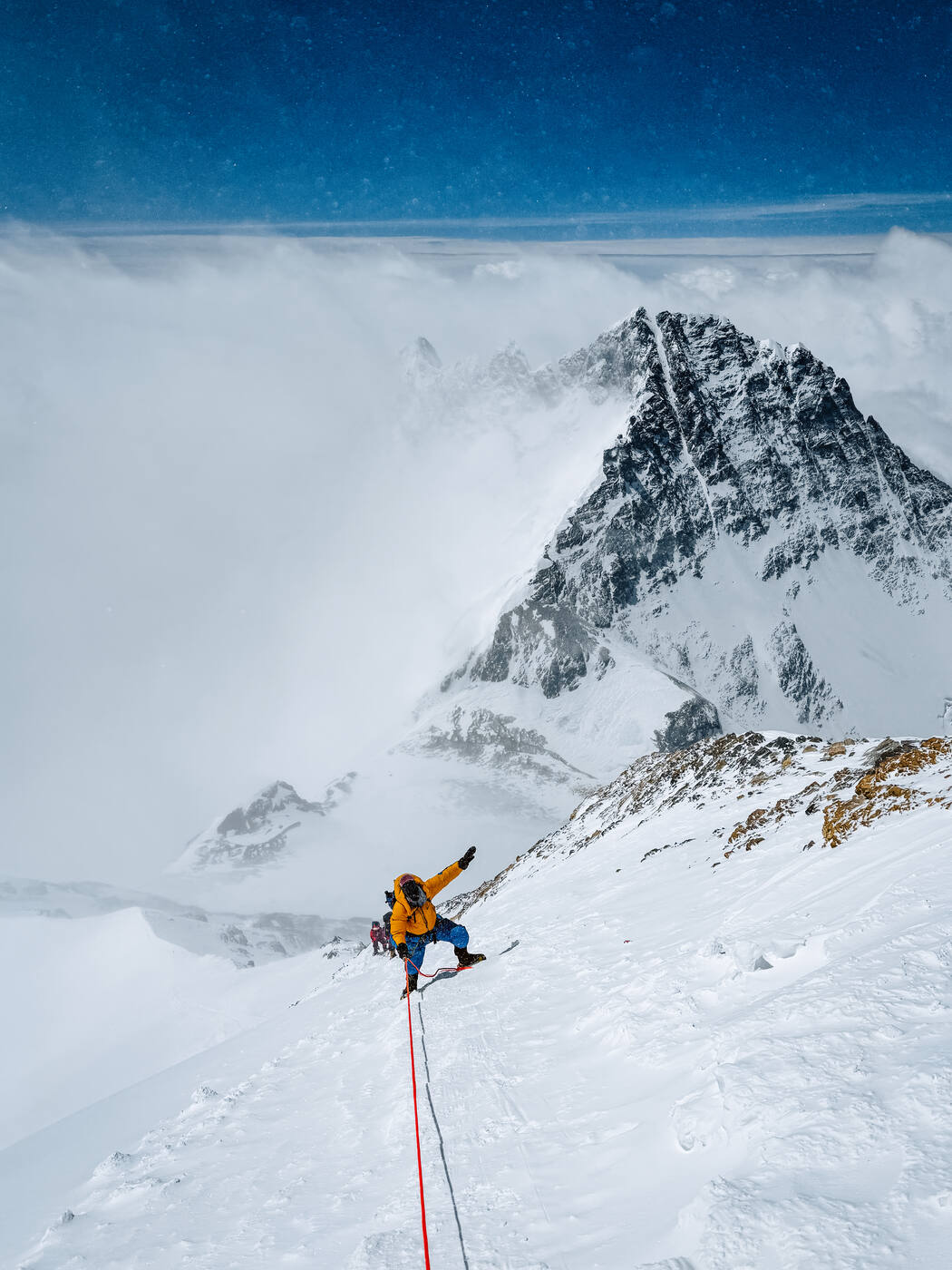
After a rest day at Camp 2, we started the push to Camp 3 at 6:52 AM, fully committed in our down suits and carrying oxygen. Started with just 0.5 liters of flow since we did not need supplemental O2 yet, but cranked it up to 1.5 liters when we hit the bottom of the Lhotse Face. The sun turned the Face into an oven. Sweating in a down suit at 23,000 feet is a special kind of misery. But we kept moving. Arrived Camp 3 at 12:31 PM to find our tents already set up by the Sherpa team. Camp 3 at 7,038m is notorious. The entire camp sits on the 40 to 50 degree Lhotse Face. Everything slopes downward. Sleeping means constantly sliding toward the tent door.
Camp 2 looking up. Down suits, oxygen, and the Lhotse Face waiting above.The steep sections. Crampon placement must be perfect on this blue ice.
Climbing the Face. The altitude crushes you with every step above 7,000 meters.Looking back down the Cwm from the Lhotse Face. Cloud filling the valley below.
Climbing above Camp 3. Every step a negotiation with altitude and exhaustion.Approaching camp through the clouds. The higher you go, the more the weather closes in.
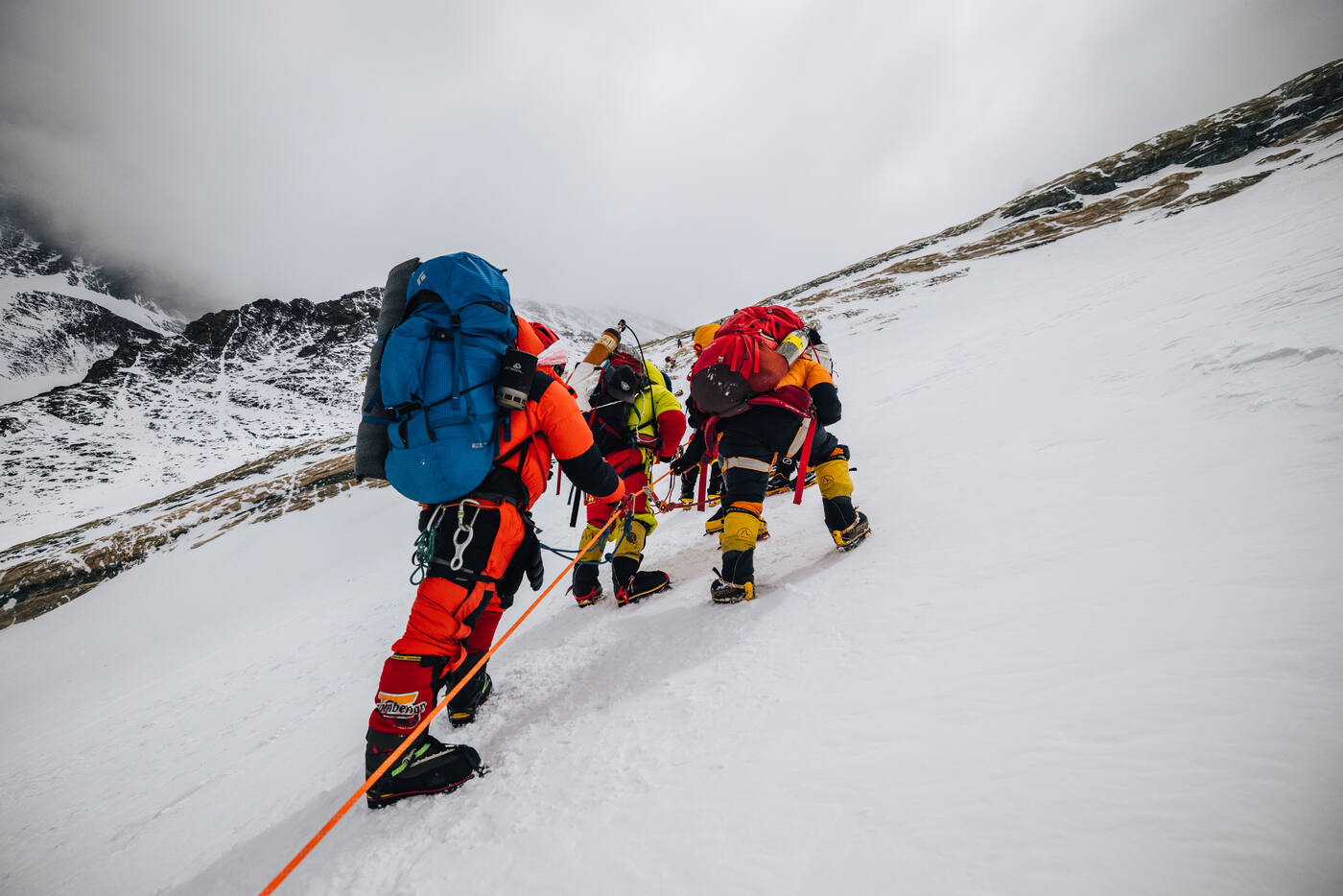
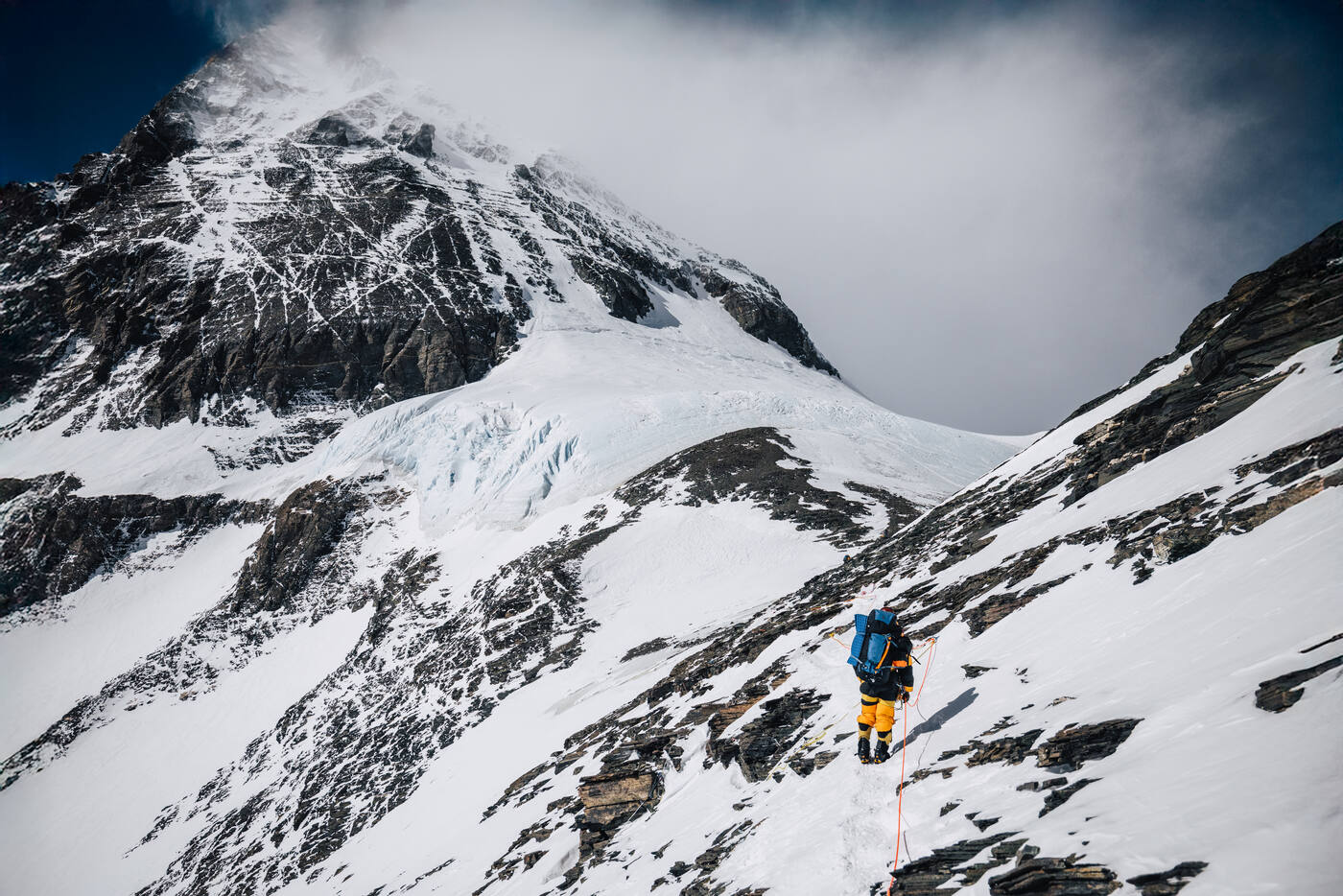
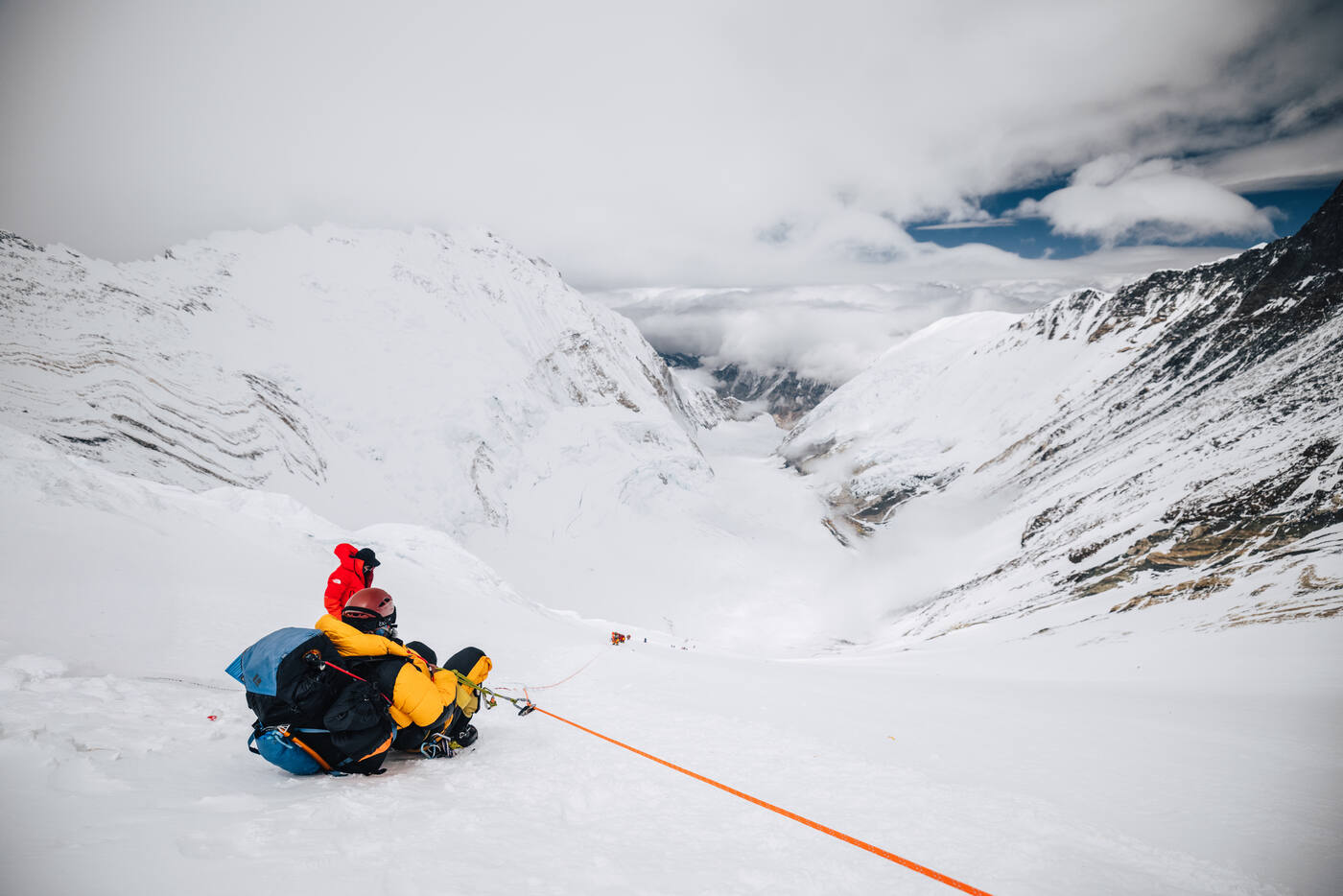
Day 40 was the hardest day yet. Left Camp 3 just after 6 AM. The route from Camp 3 to Camp 4 is brutal: continuing up the Lhotse Face, through the Yellow Band, and over the Geneva Spur to the South Col. It took 10 grueling hours. Started on 0.5 liters of oxygen, had to increase to 2 liters after reaching Lhotse High Camp. During the final section at the Geneva Spur, we passed a body. A stark reminder of what happens when things go wrong up here.
The last stretch to the South Col. Every step a negotiation with your body.
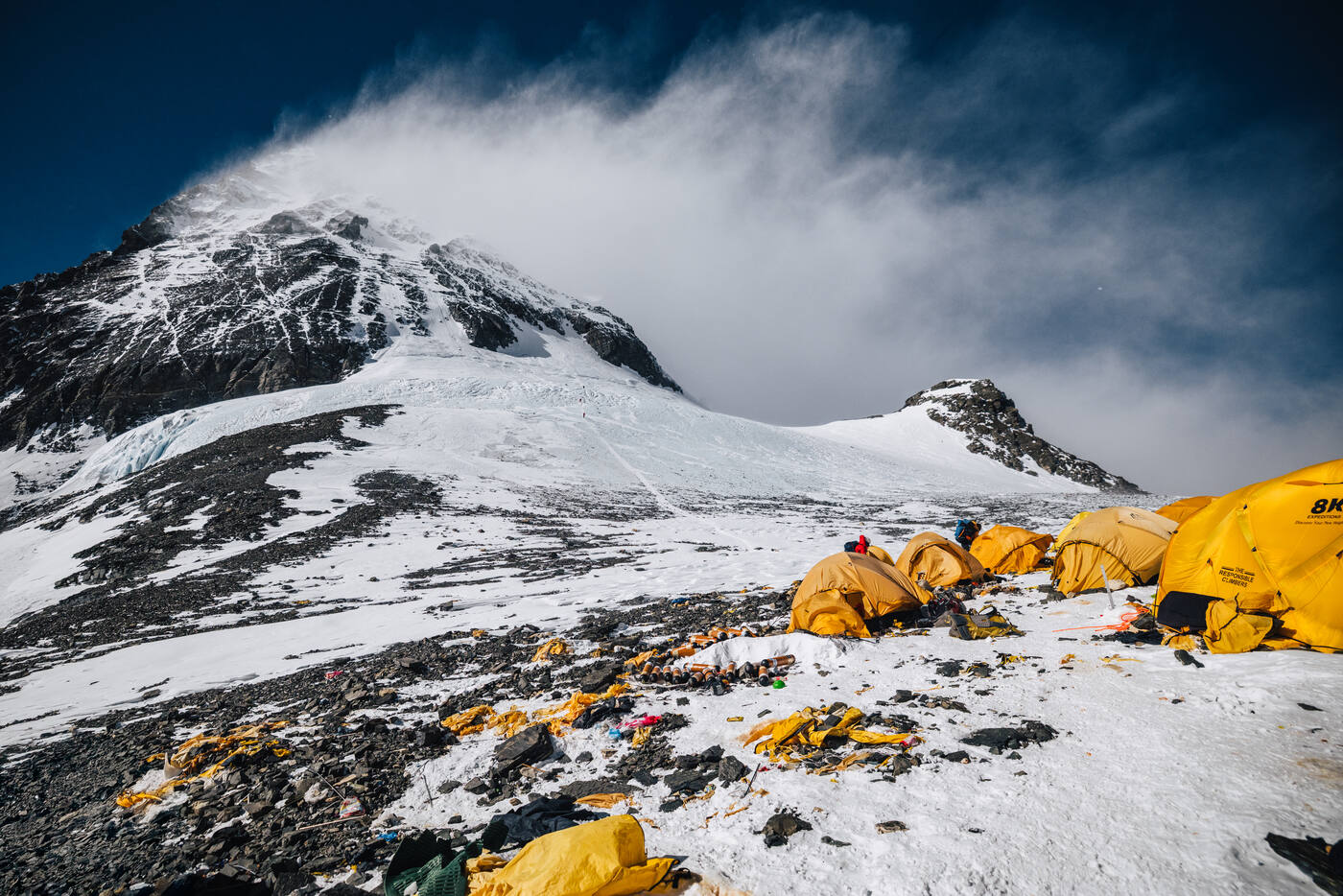
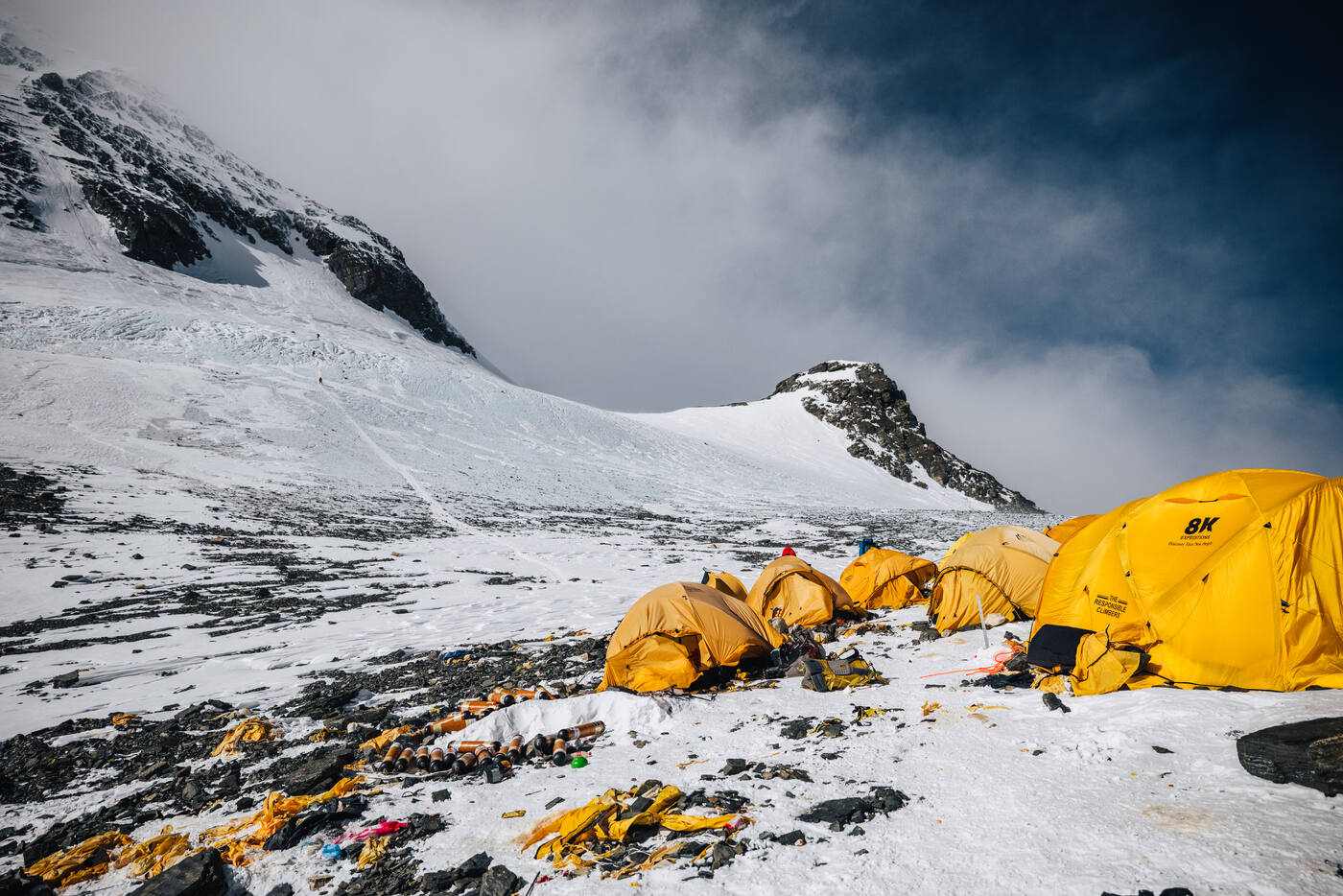
Reached Camp 4 at 4 PM to find chaos. The South Col was getting hammered by violent winds. Tents were shredded and abandoned, their remains flapping like prayer flags. We made the hard call to delay our summit attempt by one full night. That meant an extra night in the Death Zone, burning through precious oxygen and limited food. Day 41, we spent the entire day horizontal as winds roared across the Col. At 7,907m, even lying still is exhausting. We were on oxygen 24 hours a day now, carefully managing supply. If the winds died down that night, we would go. If not, we would have to make some very difficult decisions.
Camp 4 on the South Col at 7,907m. The summit pyramid visible above. This is where the Death Zone begins.
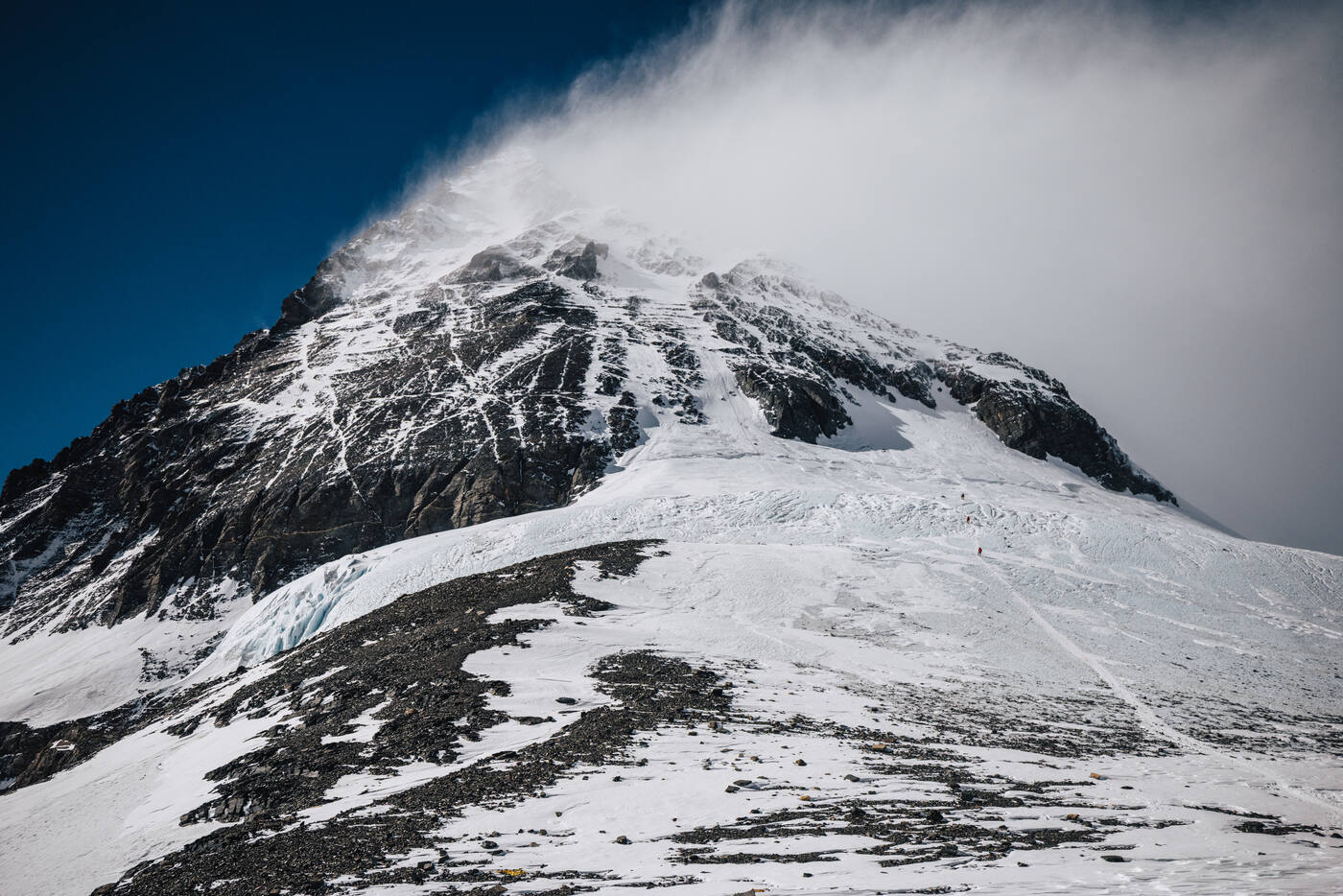
The South Col. Violent winds shred abandoned tents. We would spend two nights here.The summit pyramid. Clouds streaming off the peak. Our target is up there.
Day 42: Summit Day
May 21, 2025 · Camp 4 (7,907 m) → Summit (8,849 m) → Camp 4 · 20 hours 15 minutes round trip
We left Camp 4 at 11:44 PM on May 20 into a brutally cold and windy night. We were essentially the only team going for the summit, having found a narrow window between wind events. 2 liters of oxygen per minute. Headlamps cutting through darkness.
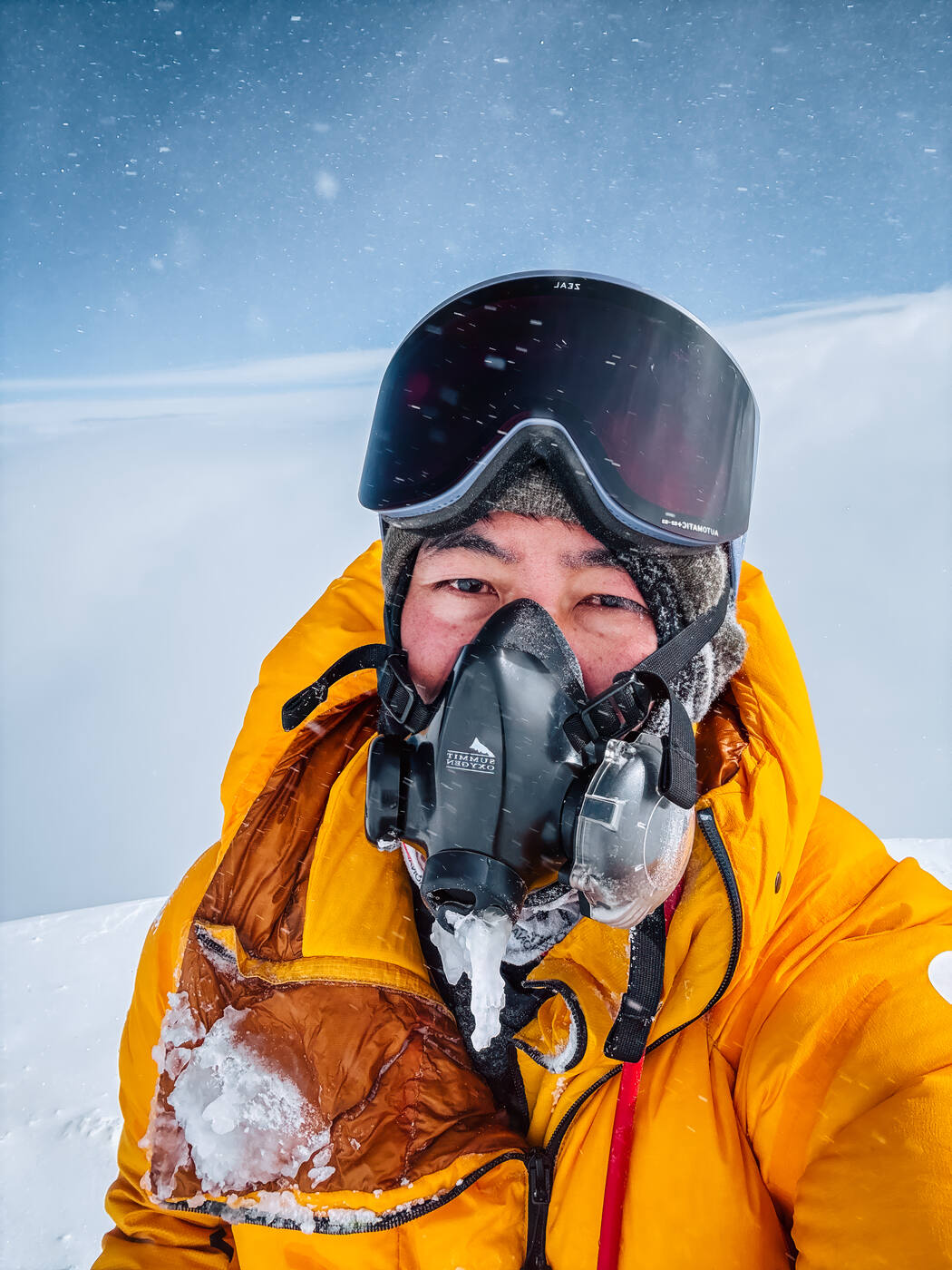
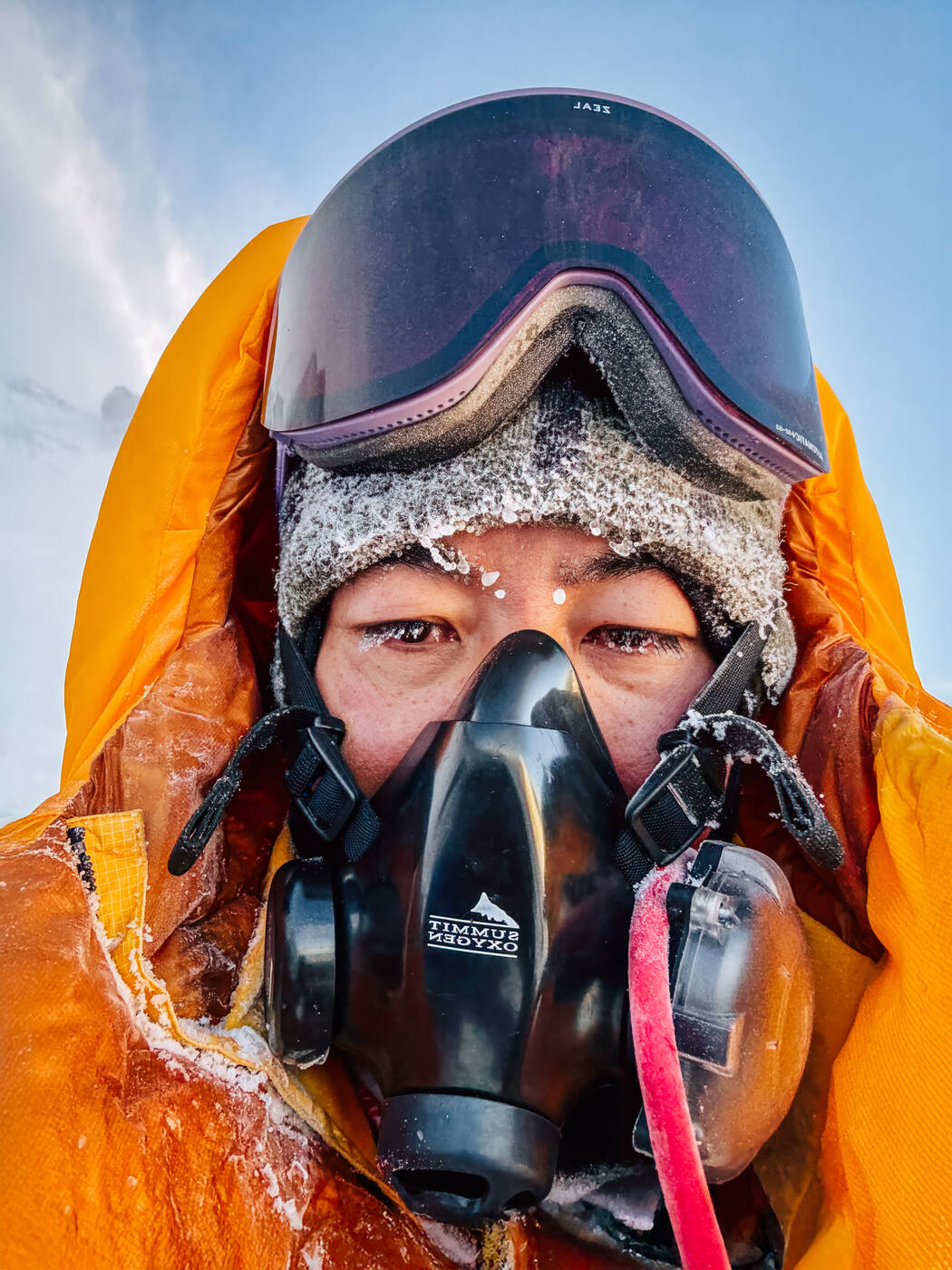
The climb to the Balcony was a slow, frozen slog. When we reached it at 5:53 AM, conditions were so harsh we could not even stop for a proper break. My goggles fogged and froze solid. Fingers and toes went numb. A gust caught my left cheek, leaving a frostbite mark I will carry as a summit souvenir.
Above the Balcony. The air is impossibly thin. Every step demands total concentration.
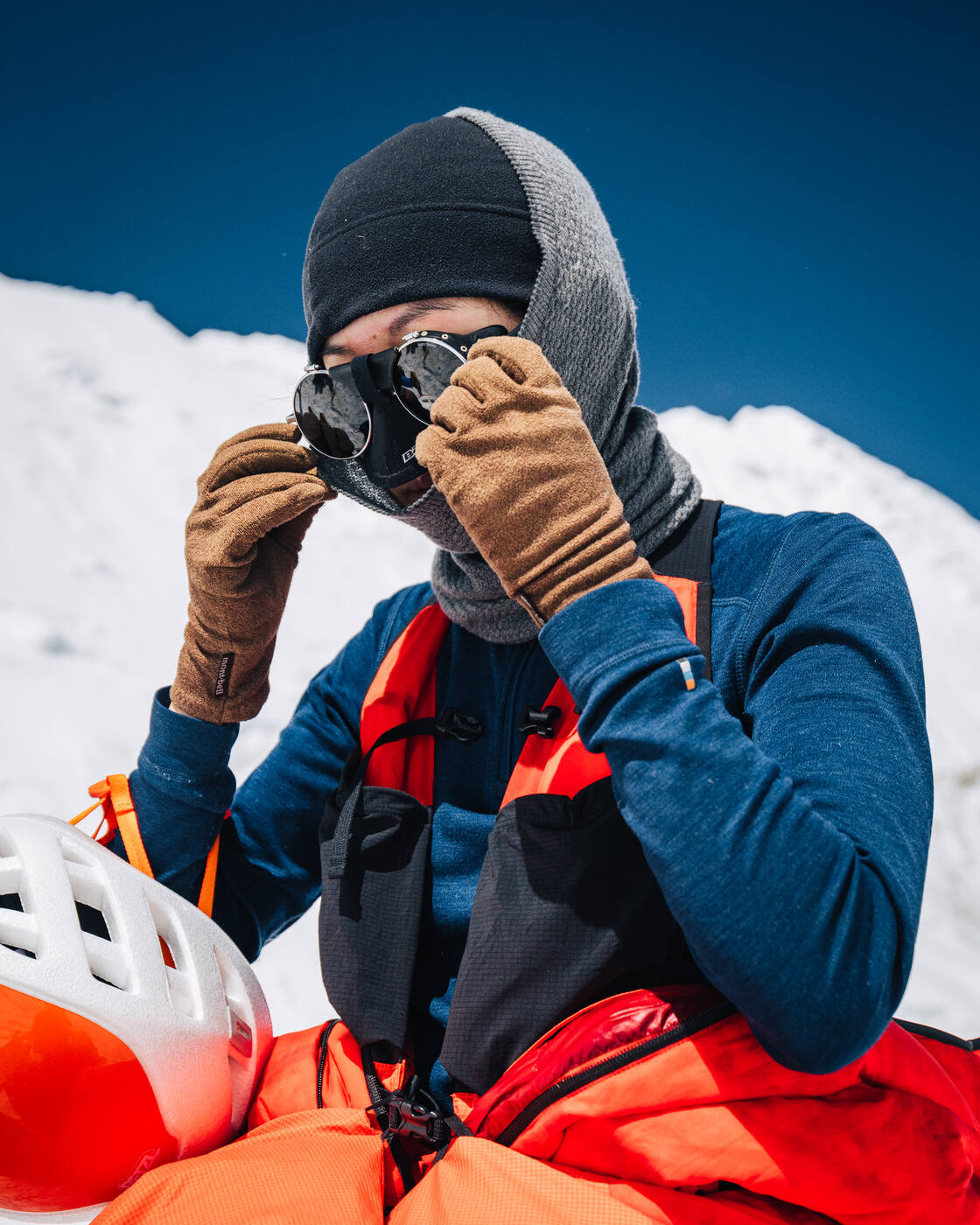
Sunrise brought salvation. Above the Balcony, I added my balaclava and expedition mittens. The sun unfroze my goggles just in time. Avoiding snow blindness was pure luck. We took our first real break at 7:46 AM. First sip of water from the 1-liter bottle tucked inside my down suit. The 1.5 liters in my pack had frozen solid despite insulation.
High on the mountain. Lhotse and the clouds far below.High on the mountain, a sea of cloud below. The calm before the wind returned.
The approach to the South Summit. The exposure is absolute.
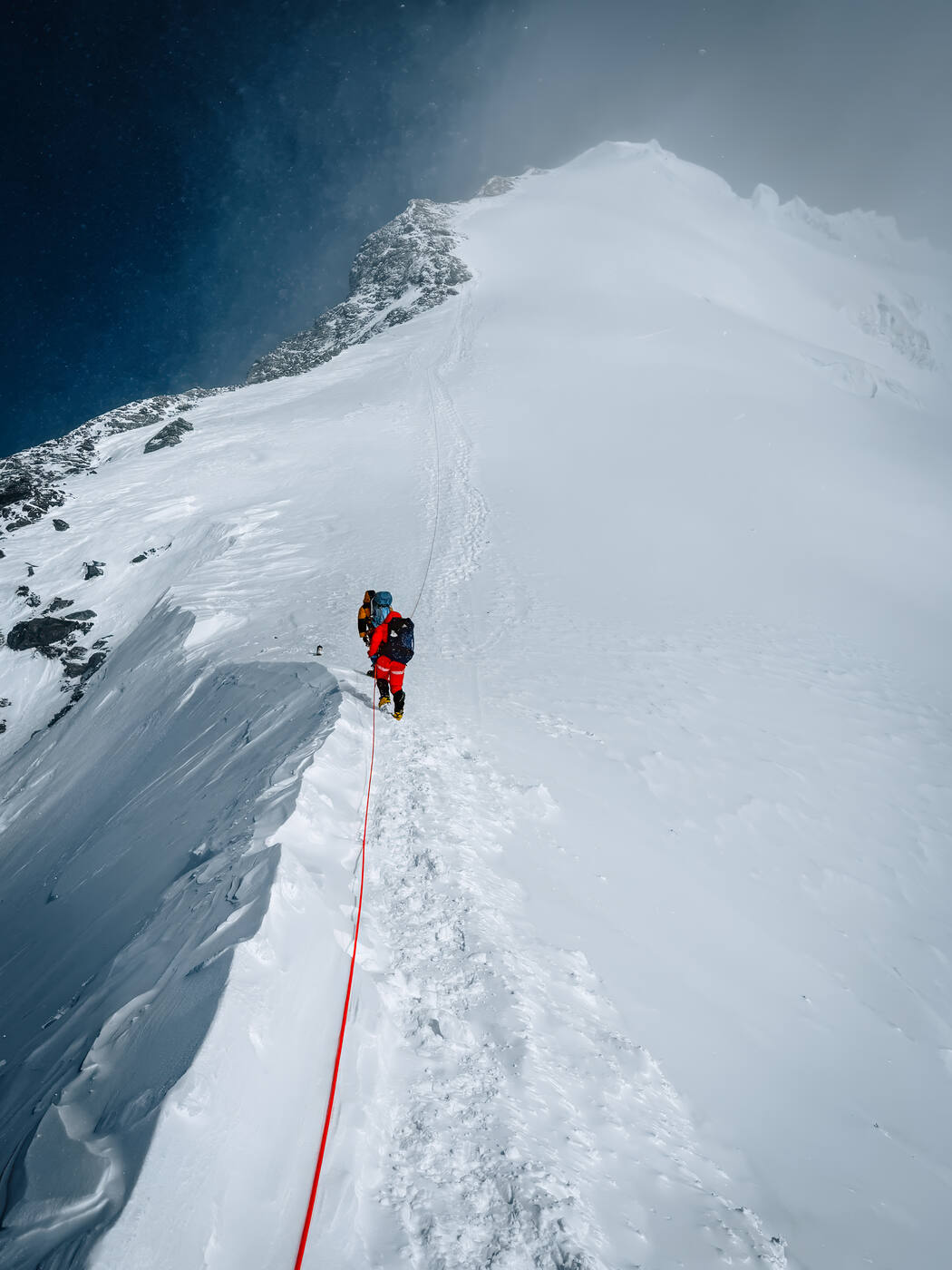
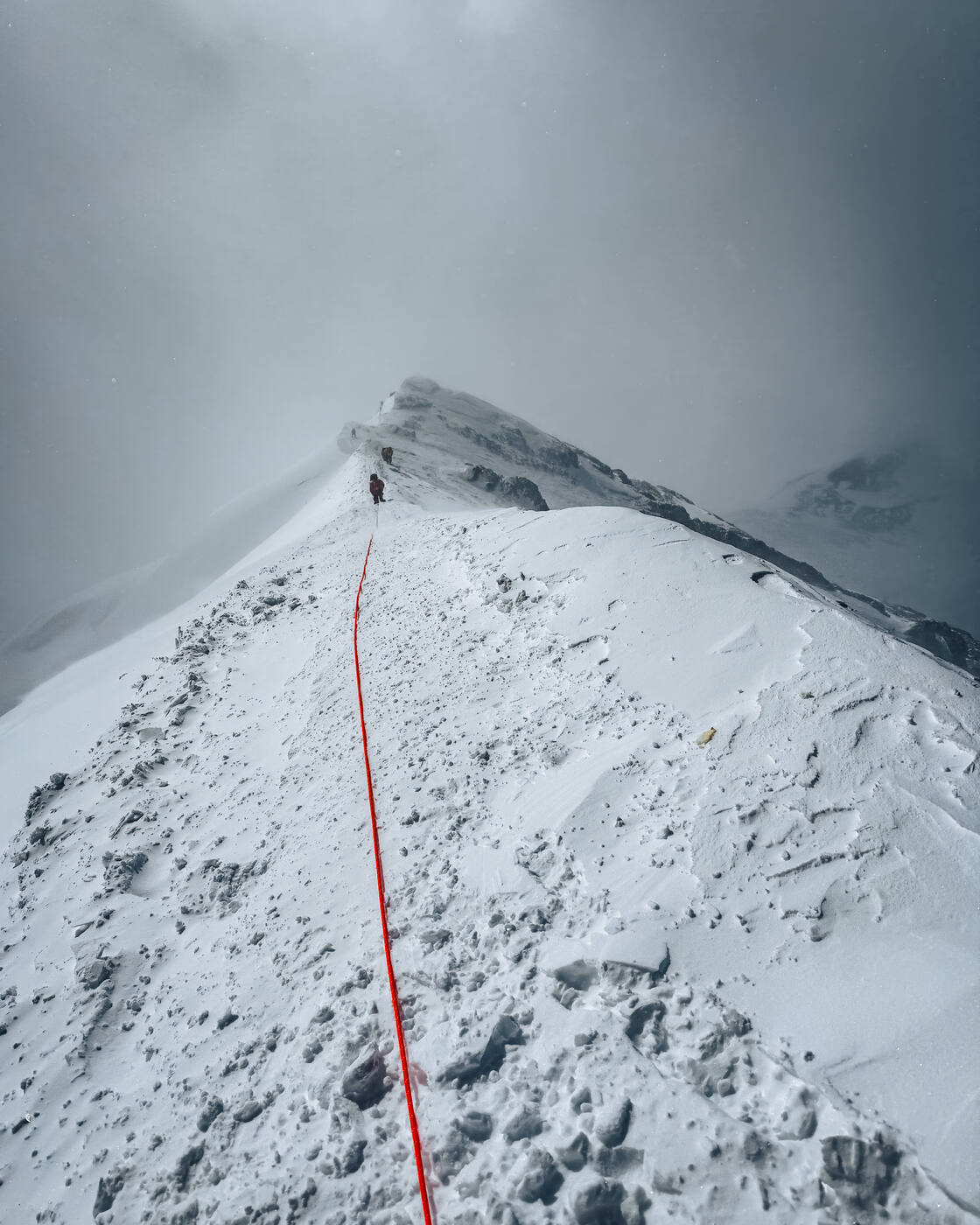
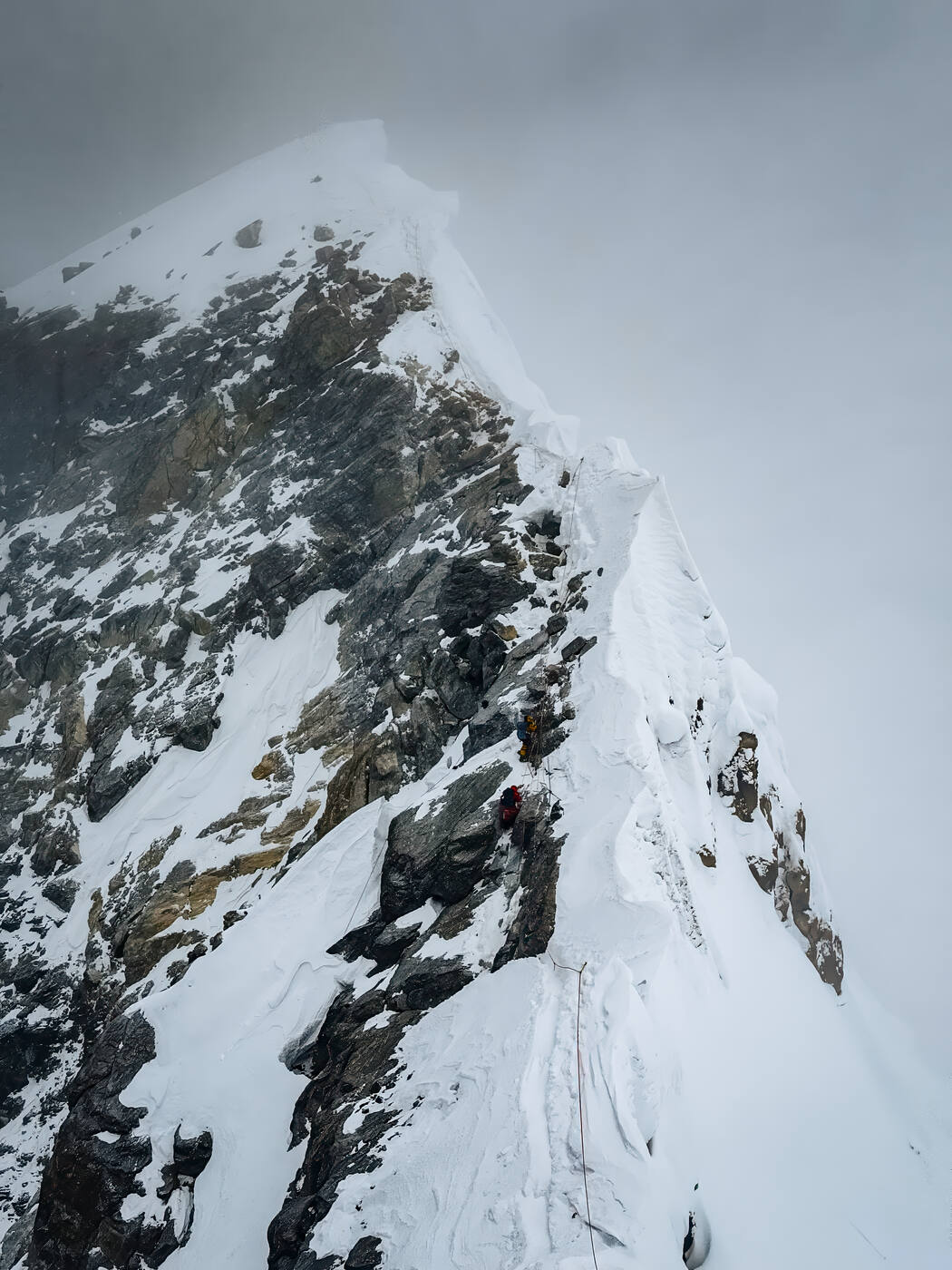
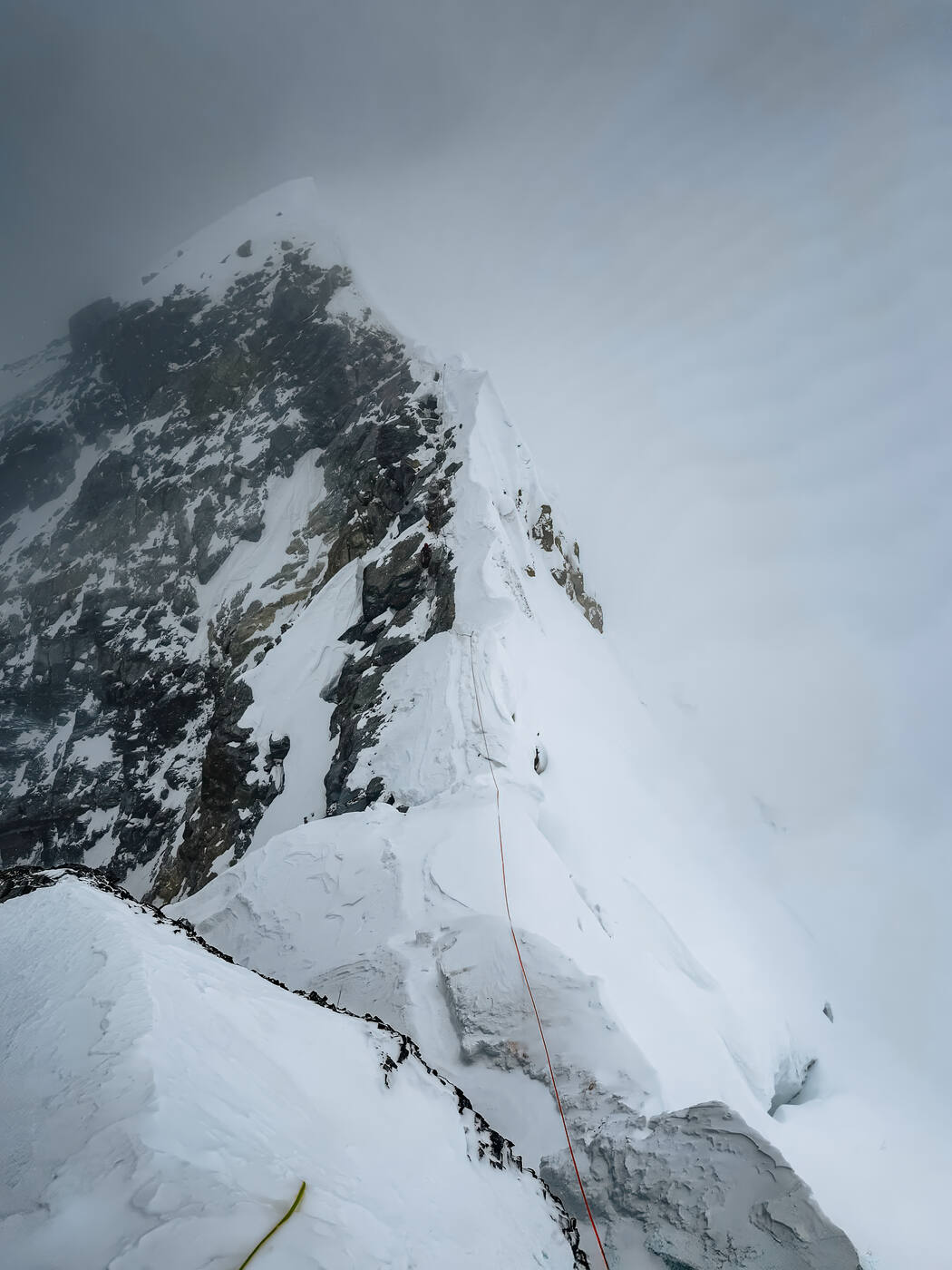
Reached the South Summit at 10:09 AM. But the hardest part lay ahead: the summit ridge and Hillary Step. Energy reserves were empty. Every step a monumental effort. Then the winds returned with a vengeance. 30 km/hr gusts that would not let up. Visibility dropped to near zero as clouds engulfed the upper mountain.
Near the top. Oxygen mask, frozen goggles, and the frostbite mark on my left cheek already forming.The Hillary Step. The last technical obstacle before the summit. Rock and ice at 8,790 meters.Nearly there. Engulfed in cloud. The world reduced to the next footstep and the rope in your hand.
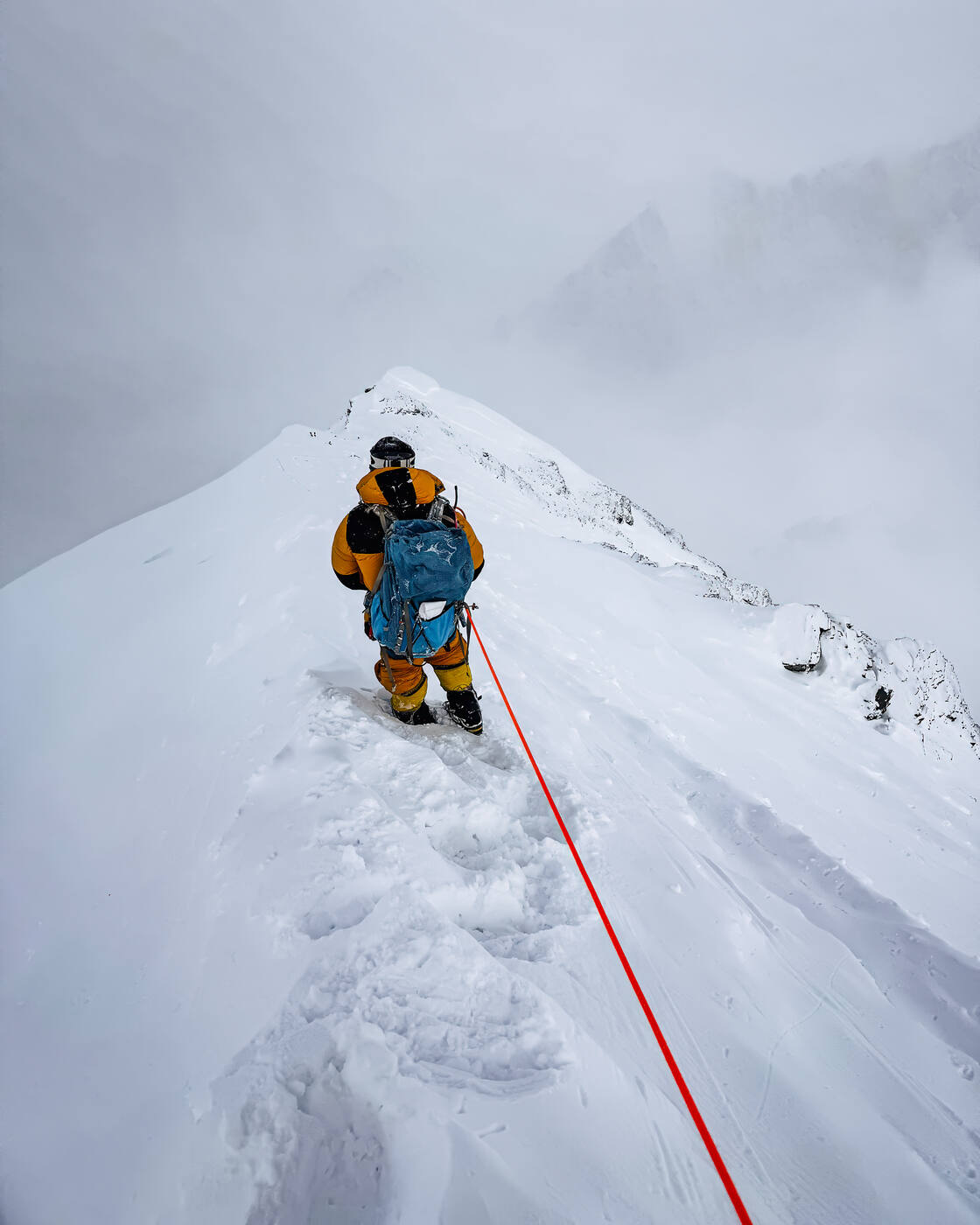
The final ridge. Whiteout conditions. No views. Just wind and the rope in your hand.Grace near the top. Oxygen mask, frozen goggles, and the determination that got us here.
8,849 m
The Top of the World · Seven Summits Complete
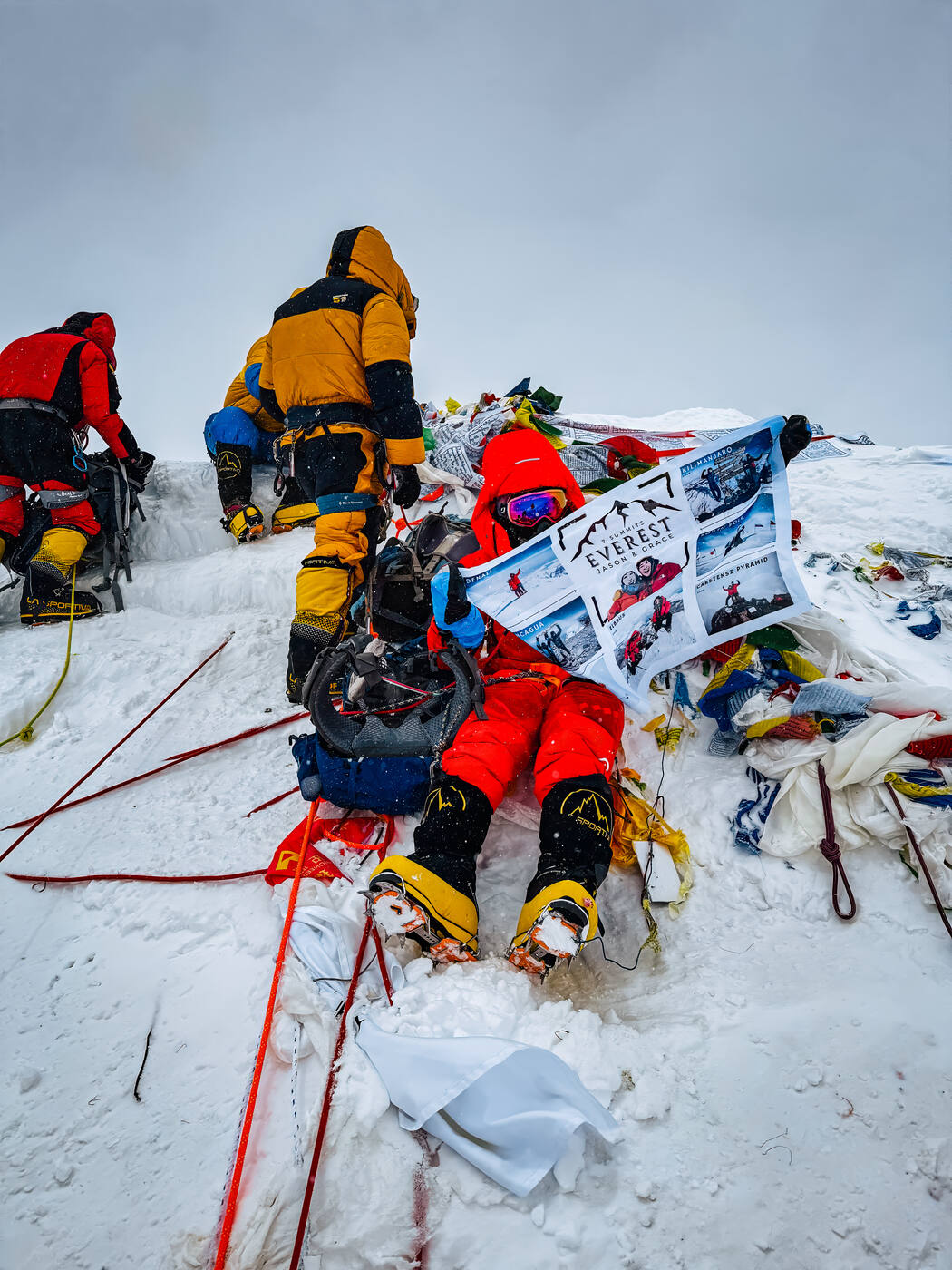
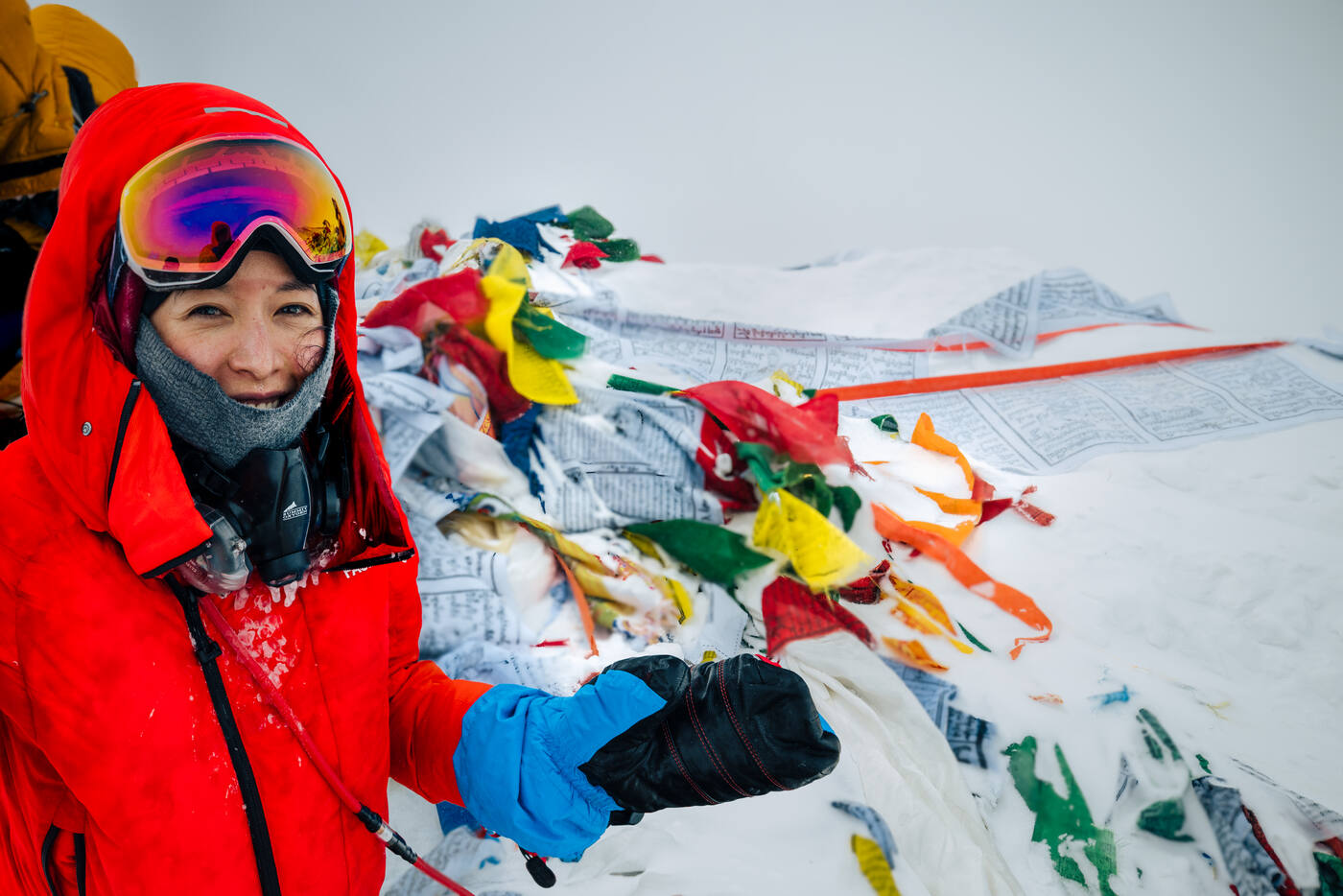
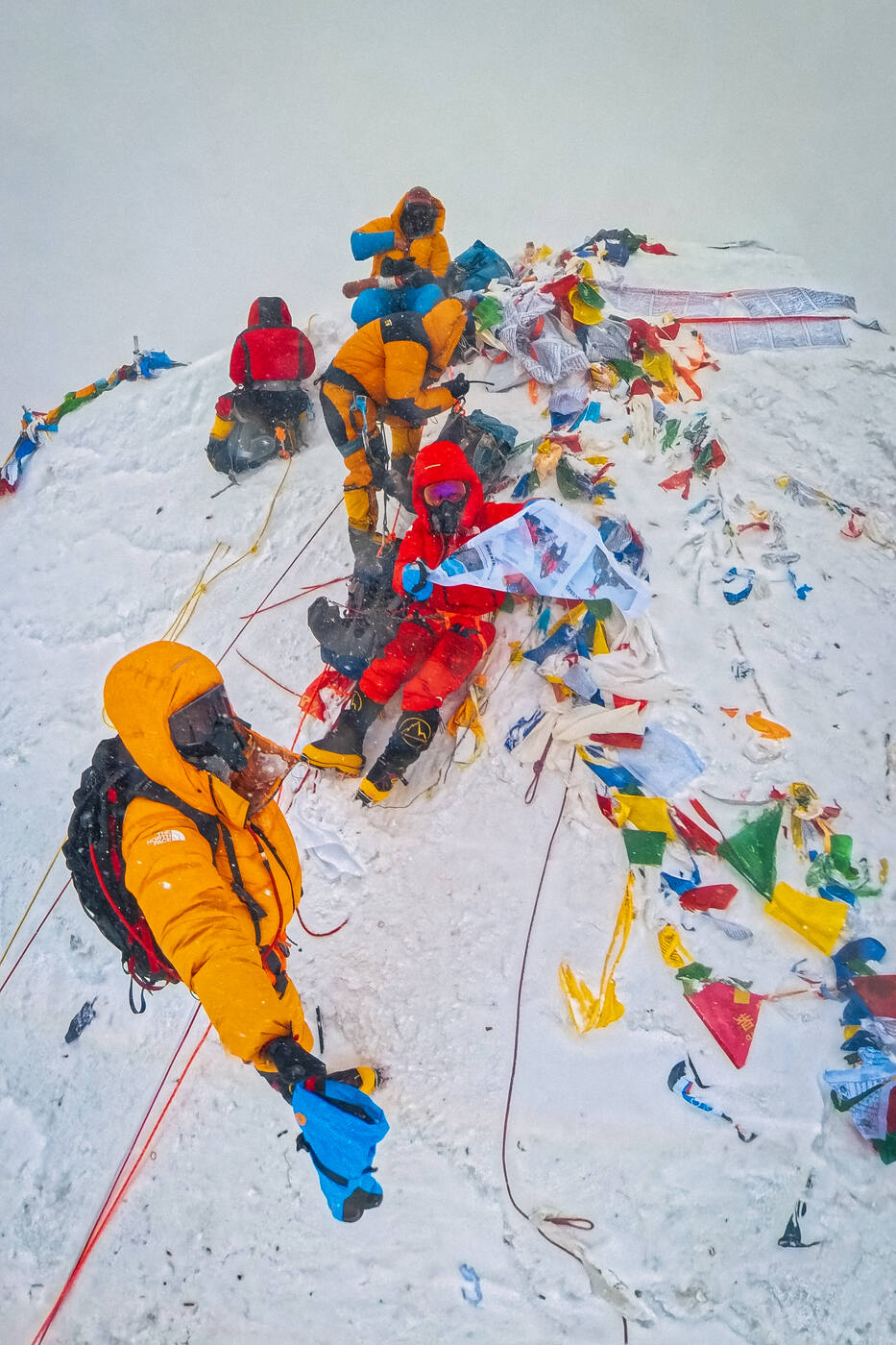
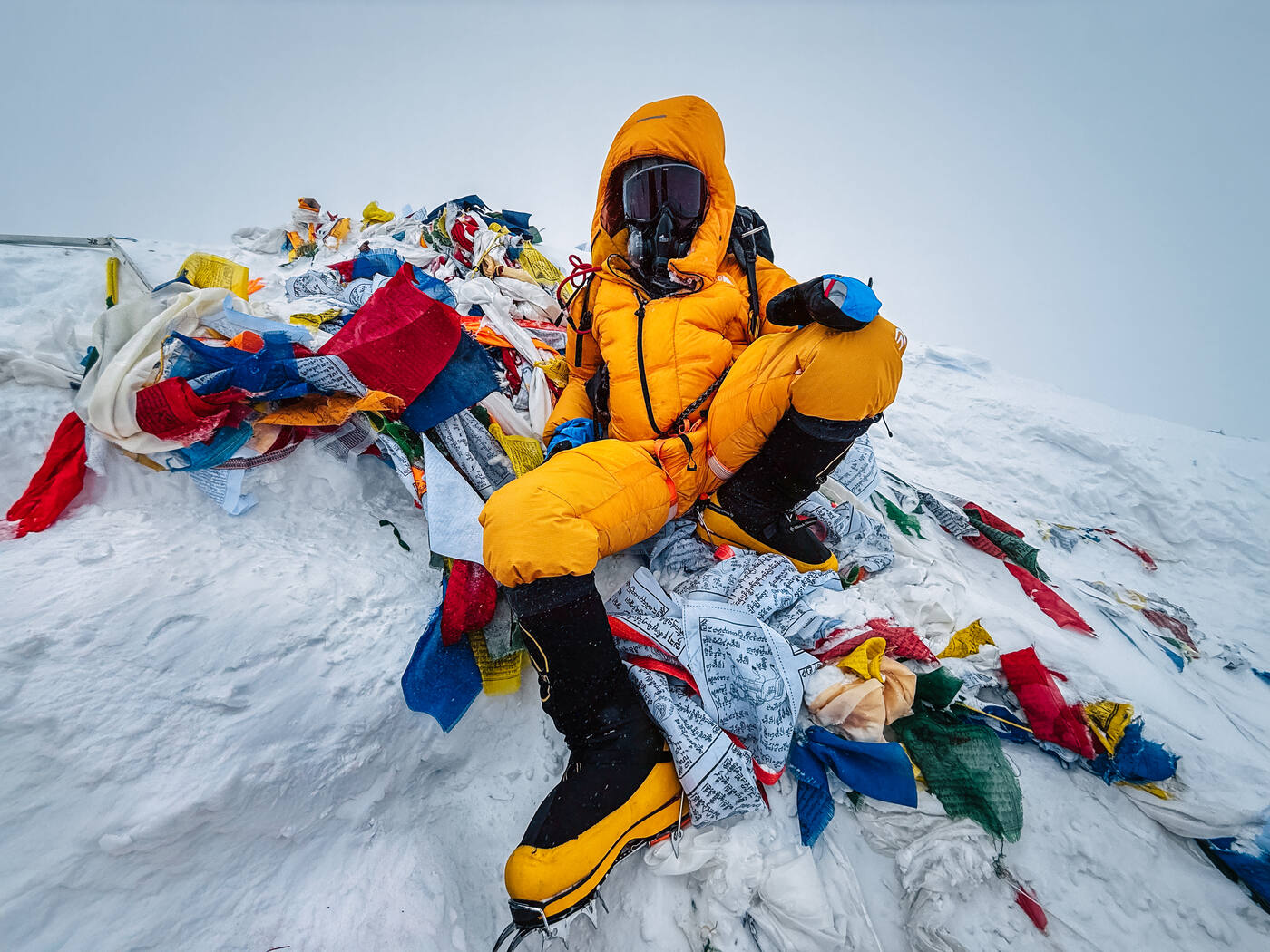
At 1:16 PM, we finally stood on the summit. The top of the world, in a complete whiteout. No views, just wind and cloud. Our camera died after one shot. But the iPhone and Insta360 survived to document the moment.
Prayer flags at the top of the world. 8,849 meters. The wind has not stopped.
The summit of Everest. Prayer flags whipping in the wind at 8,849 meters.The Insta360 capture. Total whiteout at the roof of the world.
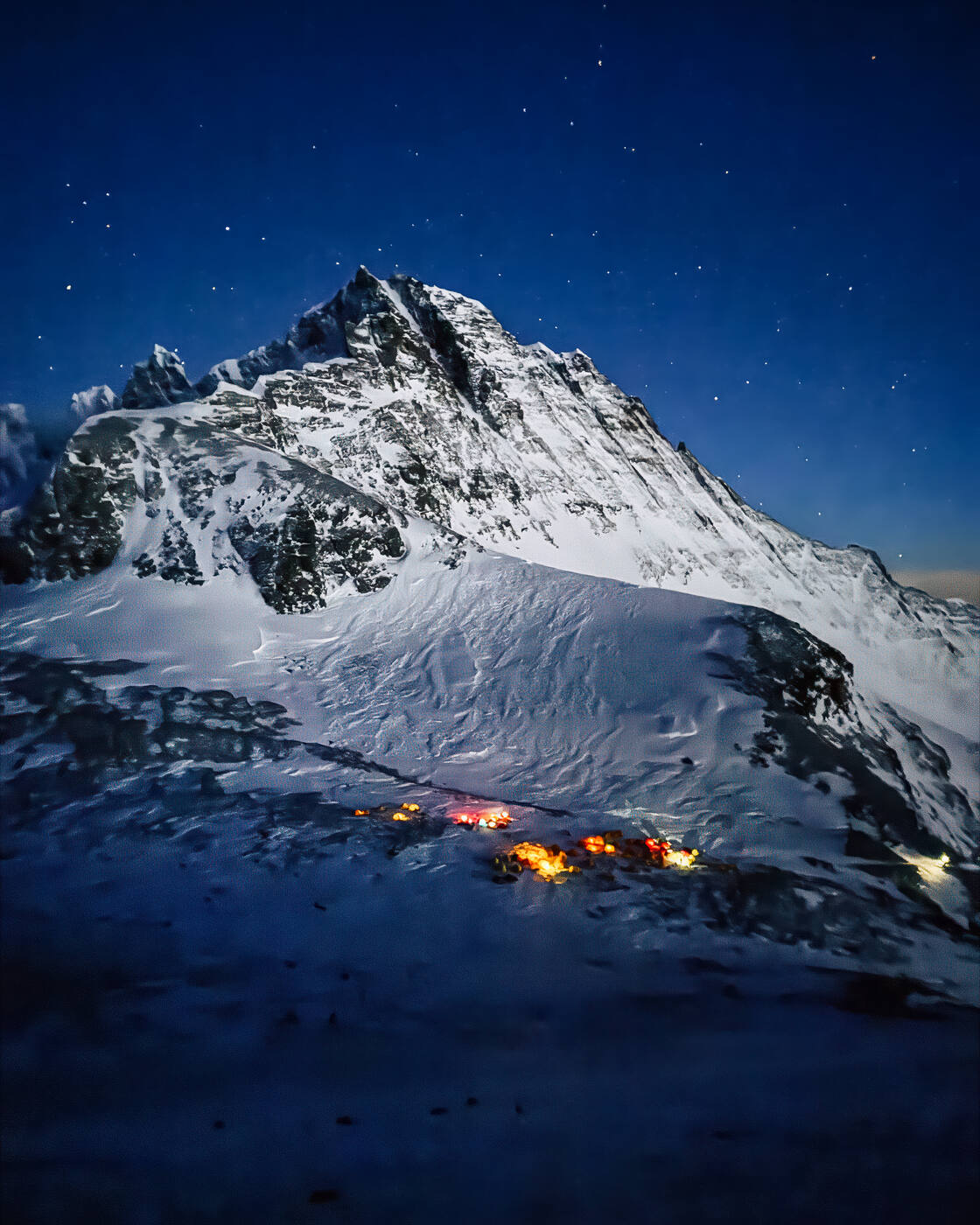
At the top of the world. Prayer flags, wind, and the end of a seven-year journey.The mountain at night. Camp lights glowing far below, stars above. Seven Summits complete.
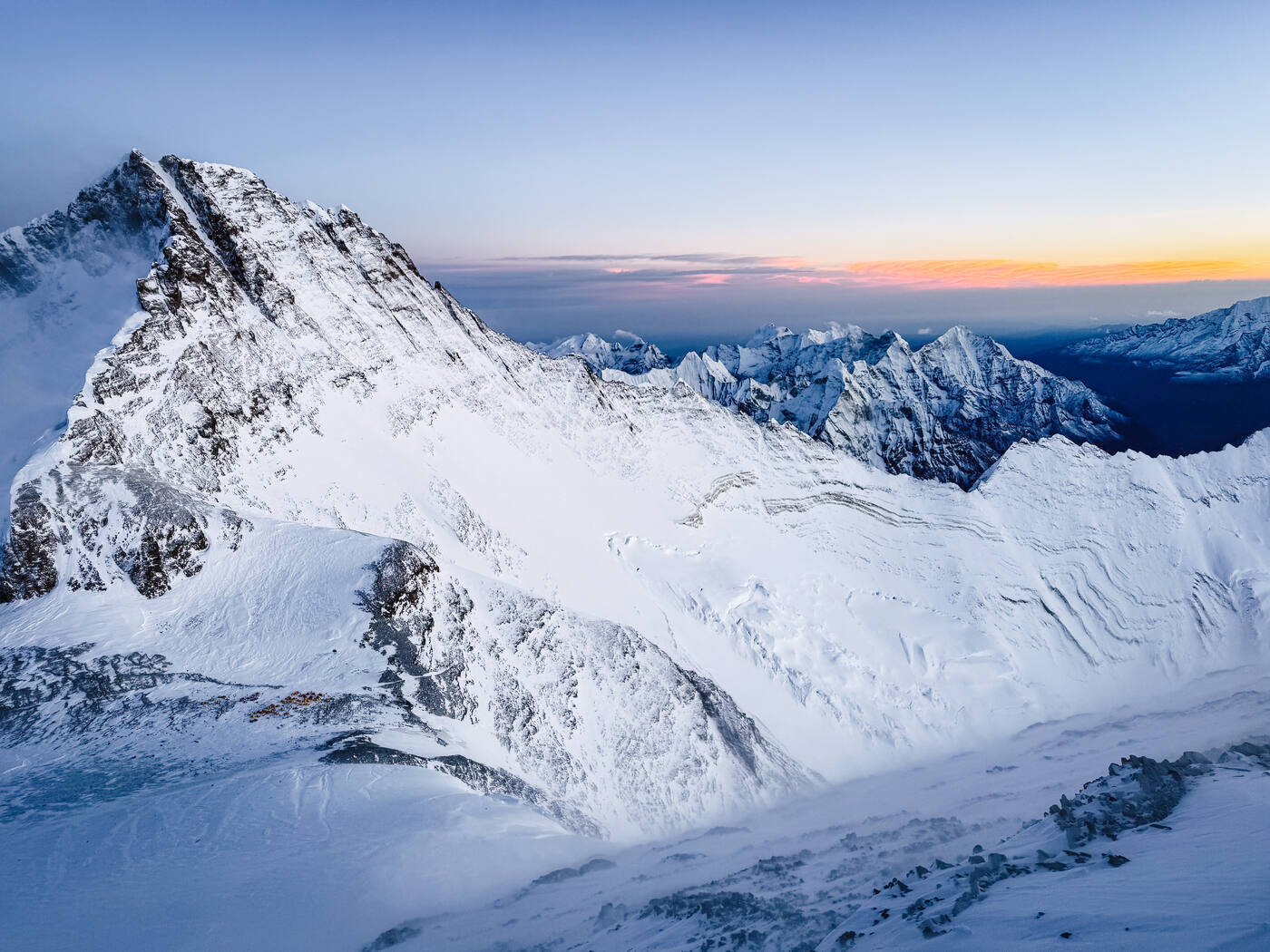
The summit pyramid from above. A drone capture from a clear evening earlier in the expedition. Nothing like the whiteout we climbed into.
As every mountaineer knows, getting to the top is only half the battle. Going up is optional. Coming down is mandatory. The descent was equally brutal. Heavy winds, zero visibility, pure survival mode. Reached Camp 4 at 7:59 PM to find our tent filled with snow. But none of that mattered. We had done it. 20 hours and 15 minutes round trip. The Seven Summits, complete.
Days 43–45: The Descent
May 22–24, 2025 · Camp 4 (7,907 m) → Camp 2 → Base Camp → Kathmandu
We woke at 7,907 meters to a tent still half full of spindrift and bodies that had nothing left to give. Nobody lingers at the South Col. We packed slowly, clipped in, and left Camp 4 at 10:43 AM. The Lhotse Face was crowded in both directions, teams still pushing up for their own window while we worked our way down past them, one anchor at a time. It took until 3:03 PM to reach Camp 3 and 6:31 PM to reach Camp 2. That night we slept properly for the first time in days.
May 23 was the last day on the upper mountain. We left Camp 2 at 8:27 AM, passed through Camp 1 at 9:42 AM, and walked into the Khumbu Icefall for the final time. Every ladder, every serac we had come to know over two rotations, crossed once more and then left behind for good. We stepped off the glacier and into Base Camp at 2:33 PM, where the Sherpa team and the dome tent were waiting. The air at 5,364 meters felt thick enough to drink.
On May 24 a helicopter lifted off from Base Camp at 7:24 AM, touched down in Pheriche, and reached Lukla by 7:44 AM. A second flight had us in Kathmandu at 10:05 AM. Forty-five days after we set out, the Seven Summits were complete, and the quiet of a hotel room felt stranger than any camp on the mountain.
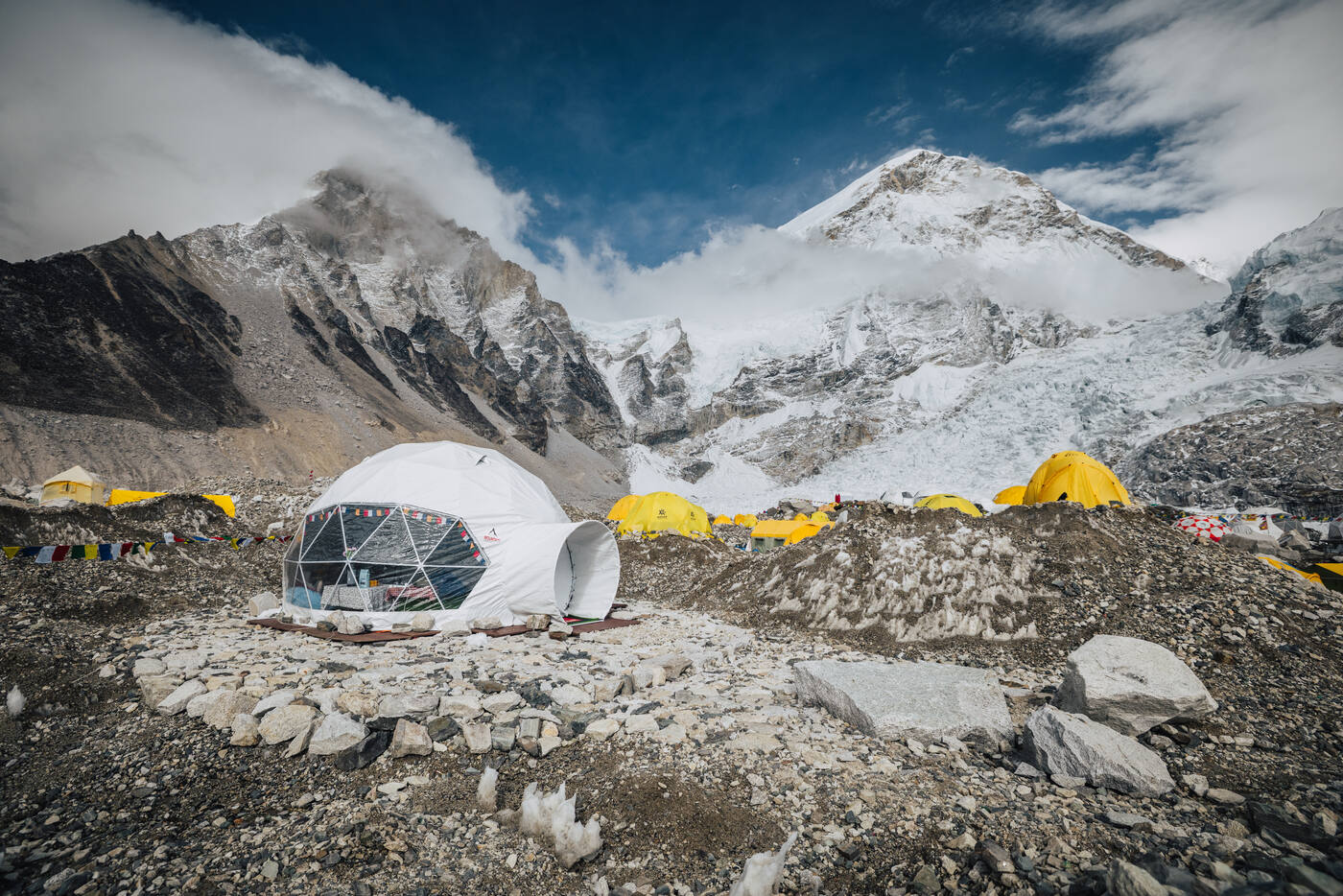
The Mountain Professionals dome at Base Camp. Home for forty-five days, and the last thing we saw before the helicopter lifted off.
Satellite track · 45 days · 399 photos and clips
The Journey, Day by Day
Every step from Lukla to the summit, recorded by the Garmin inReach we carried. Scrub through the days, click a stretch of the route, open the photos we took along it, or press play and watch the whole expedition unfold. Prefer words? Read the written timeline.
Everest2025
The whole routeLoading the track
Trek inBase CampRotationsSummit push
Track recorded on a Garmin inReach and simplified for the web; elevations come from a 30 m terrain model, so the line hugs the slope rather than our exact GPS altitude. Photos and video clips were shot on our phones along the way; clips stream from the original host.
Planning Your Everest Expedition
TL;DR
South Col route from Nepal. Budget 45 days total (10 days trekking + 35 days climbing). Expect two acclimatization rotations before the summit push. Supplemental oxygen above Camp 3. Prior 6,000m+ experience required. We used Mountain Professionals (fourth expedition with them). Total cost is significant. This is not a decision to take lightly.
When to Go
The spring season (April through May) is the primary window. Summit windows typically open in mid to late May. Autumn is possible but has shorter windows and colder temperatures. We summited May 21.
Getting There
Fly into Kathmandu. From there, helicopter or small plane to Lukla. Ten days of trekking through the Khumbu Valley to Base Camp. The trek itself is one of the world's great hiking experiences.
The Route
The South Col route goes from Base Camp through the Khumbu Icefall, Western Cwm, up the Lhotse Face to Camp 3, over the Geneva Spur to Camp 4 on the South Col, then summit via the Balcony, South Summit, and Hillary Step.
Fitness and Experience
You need significant high-altitude mountaineering experience. We had six prior summits over seven years. You need to be comfortable with crampons, fixed ropes, ice axes, and multi-week expedition life. Cardio fitness is paramount.
Oxygen
Supplemental oxygen is used above Camp 3 during the summit push, and at Camp 4 around the clock. Flow rates vary from 0.5L to 2L per minute depending on altitude and exertion. Manage your supply carefully. Running out is not an option.
Guide Company
We climbed with Mountain Professionals and cannot recommend them enough. Ryan Waters and his team have an exceptional track record. Having guides who already know you from previous expeditions is a significant advantage at this level.