Fewer people have summited Vinson Massif than Everest. That fact alone tells you something about how remote this mountain is. It lies deep in the heart of the Ellsworth Mountains, a range most people have never heard of, on a continent with no permanent civilization. There are no roads in, no towns nearby, no rescue helicopters on standby. You fly in on a wheeled jet that lands on a naturally occurring blue-ice runway, then transfer to a ski-equipped Twin Otter for the short hop to Base Camp, and from that moment forward, you are truly on your own.
Vinson is the highest peak in Antarctica at 4,892 meters. It's not the tallest mountain we've climbed, but it is almost certainly the coldest. Temperatures can plummet to minus fifty degrees Fahrenheit with wind chill, and the weather changes without warning. For us, it was the fourth summit on our Seven Summits journey, after Kilimanjaro, Aconcagua, and Elbrus. We kicked off 2022 by flying to the bottom of the world to attempt the most remote mountain on the list.
Our journey started in Punta Arenas, the southernmost city in Chile, located on the Strait of Magellan. From there, a single weekly flight operated by Antarctic Logistics & Expeditions carries climbers four and a half hours south to Union Glacier, the only full-service camp of its kind in Antarctica. It operates during the austral summer and is dismantled at the end of each season. What followed was ten days of ice, wind, patience, and one unforgettable push to the top.
Day 1: Arrival at Union Glacier
January 2022 · Union Glacier Camp, Antarctica · 700 m / 2,300 ft
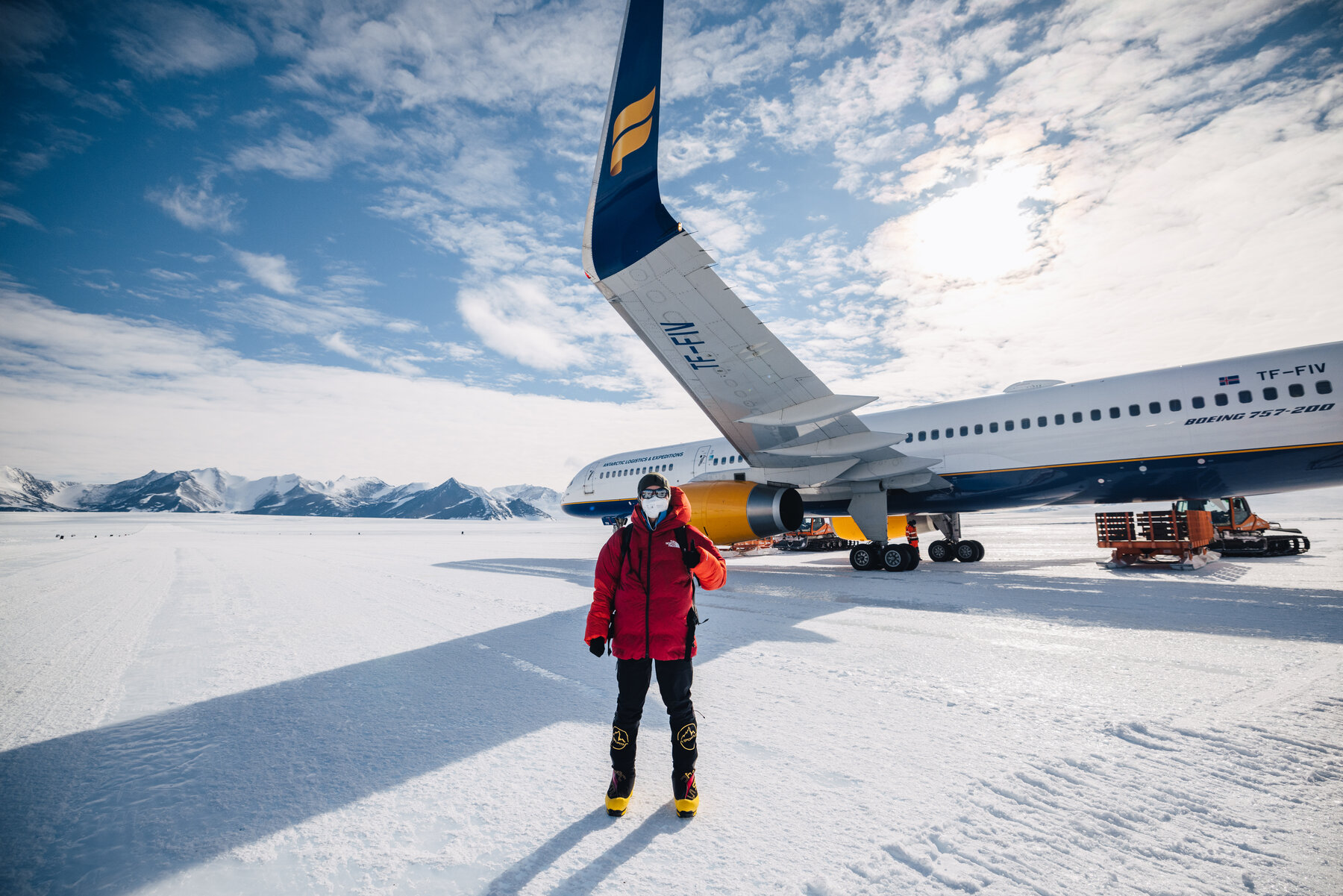
Touching down in Antarctica. The ice runway at Union Glacier is the first taste of the continent.
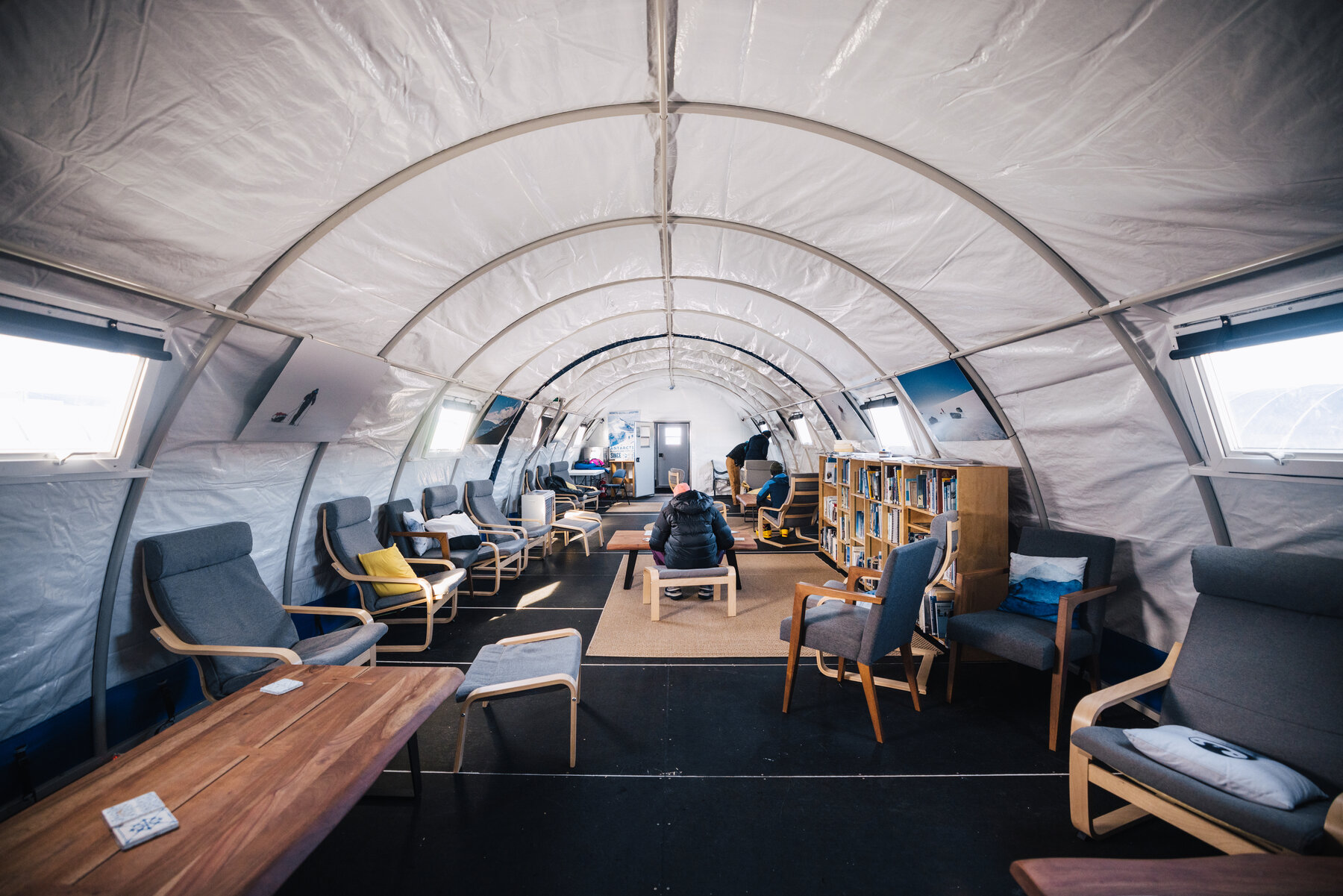
The Antarctic climate is cold, dry, and windy. Even in summer, temperatures remain below freezing at all times. It's a shock initially coming from a warmer climate, but we got used to it quickly. Union Glacier is not just a base for climbing Vinson — it's a logistics hub supporting private expeditions and National Antarctic Programs across the continent.
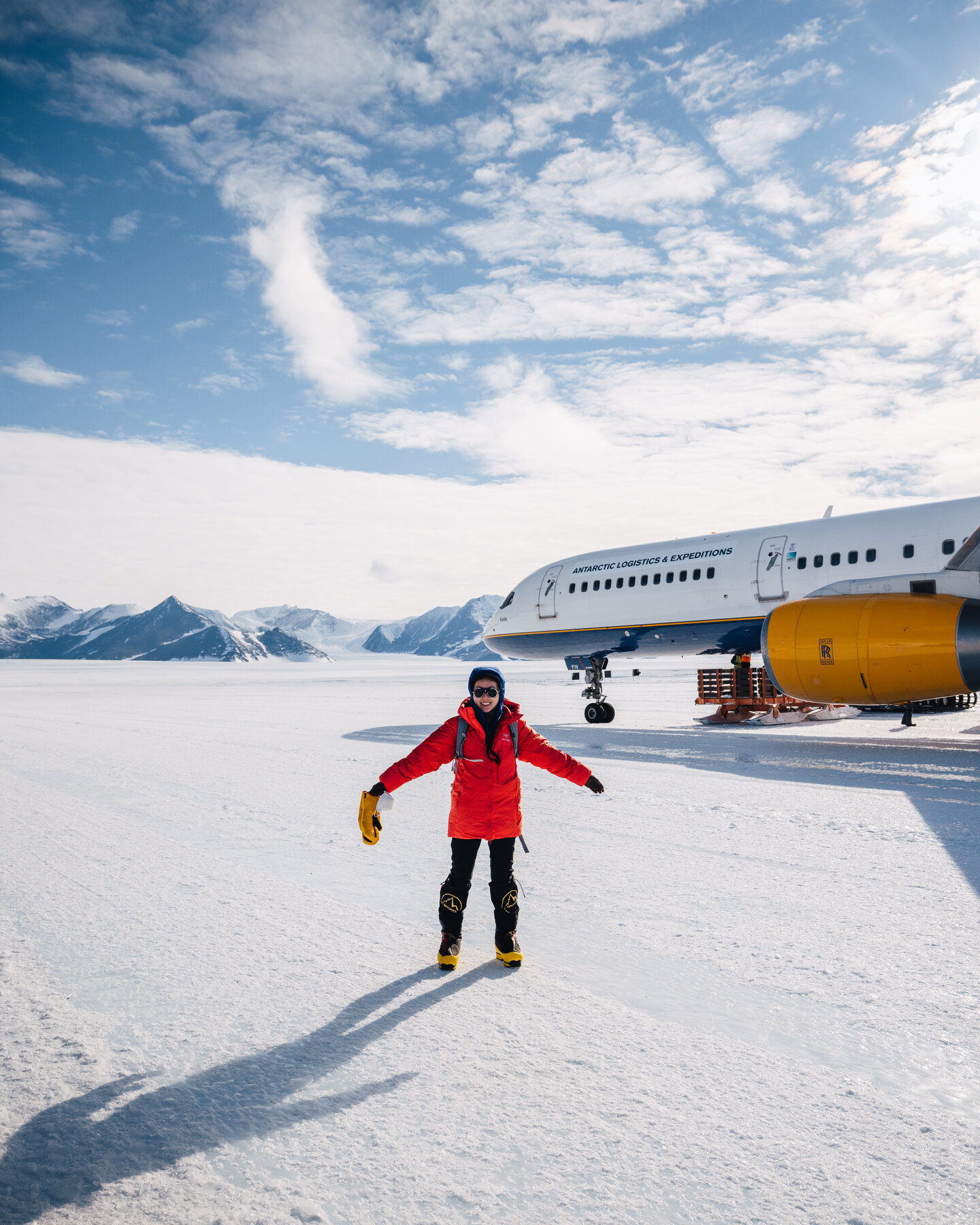
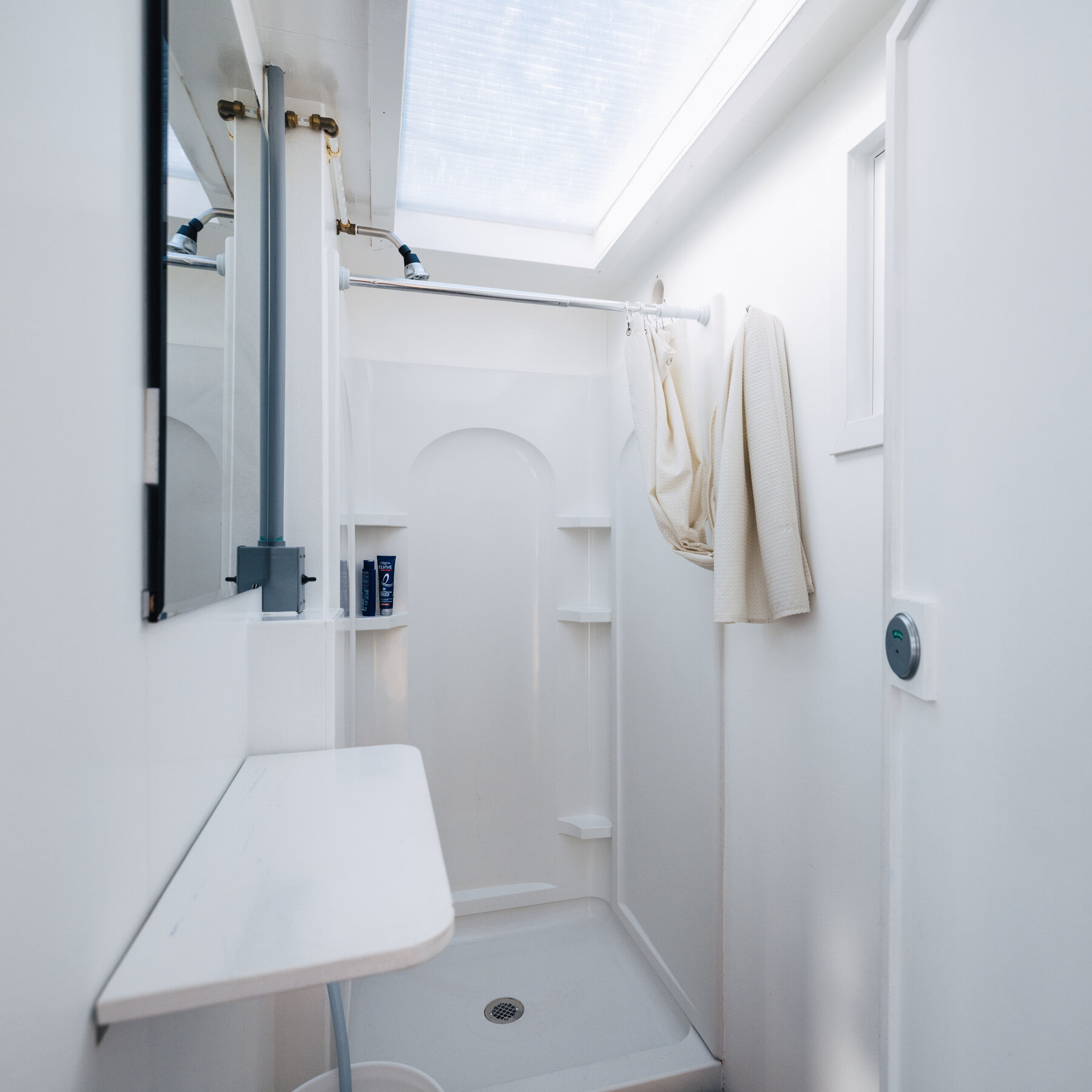
The ice runway at Union Glacier. That first moment stepping off the plane onto the Antarctic ice.The camp shower at Union Glacier. A luxury you don't expect at the bottom of the world.
It's always daylight here — 24 hours a day during the Antarctic summer. The sun circles overhead without ever dipping below the horizon, and you lose all sense of time within the first day. We had to be extra careful about not exposing skin for too long to avoid frostbite, sunburn, and snow blindness. As we settled into Union Glacier, the anticipation was already building for the flight north to Base Camp.
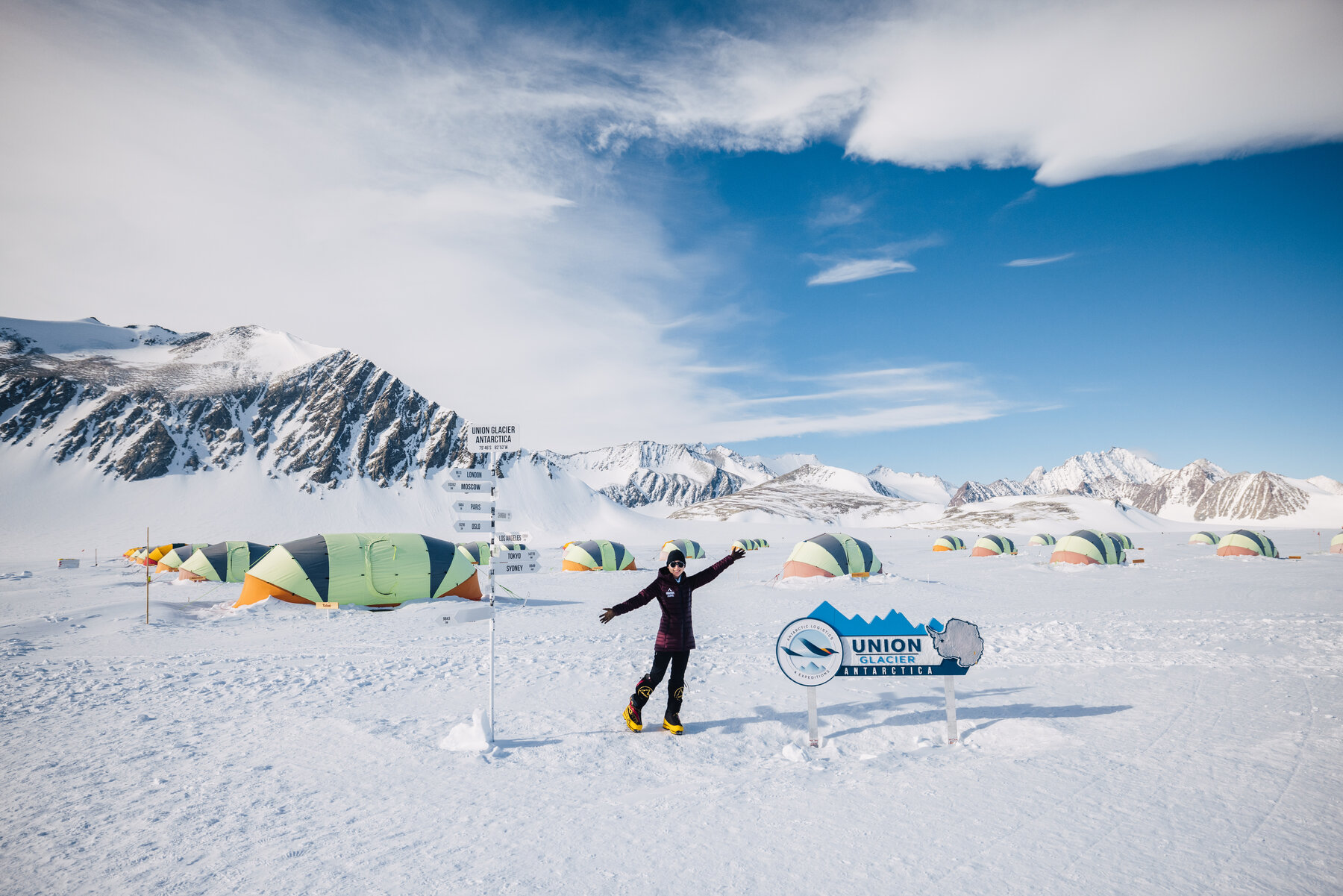
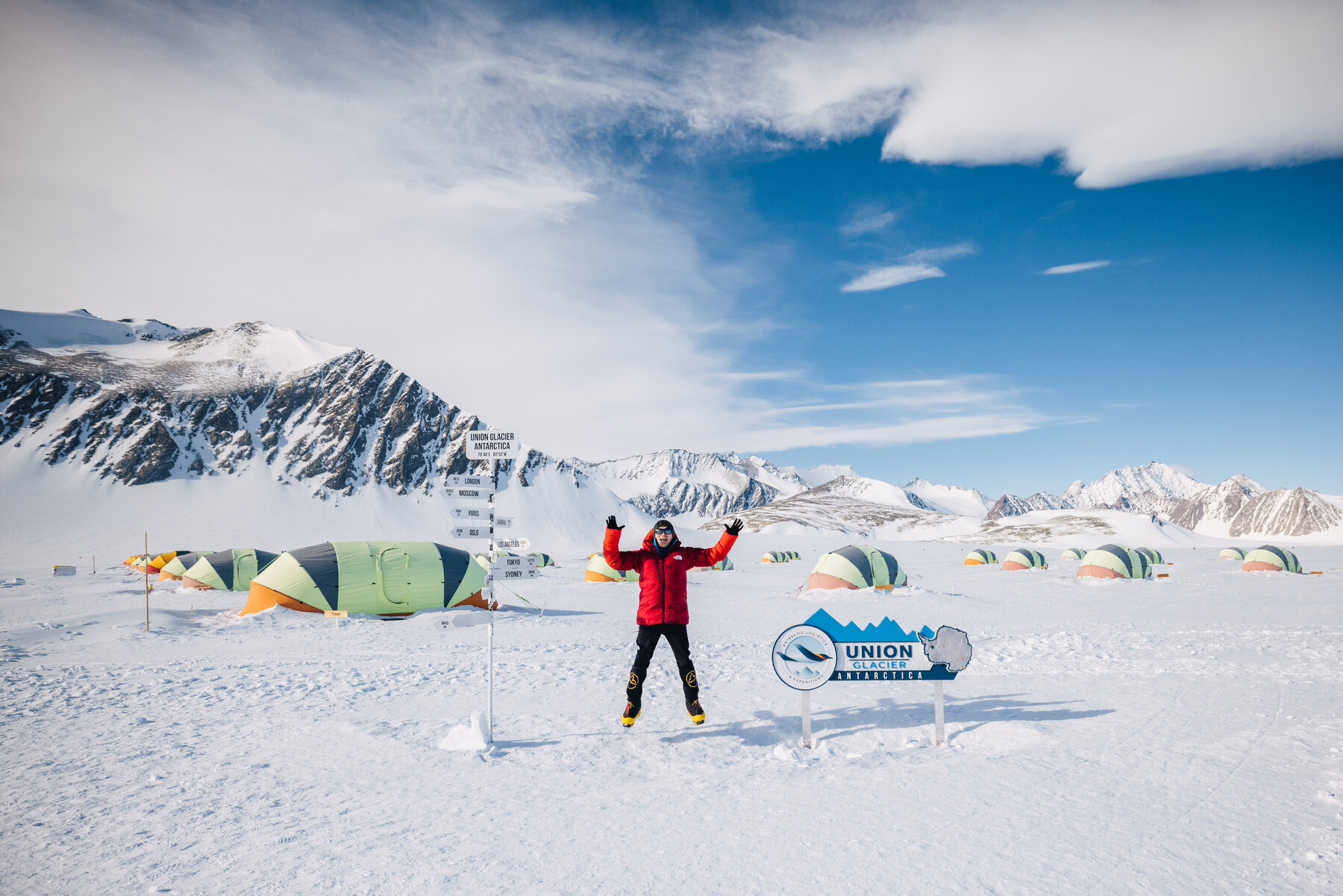
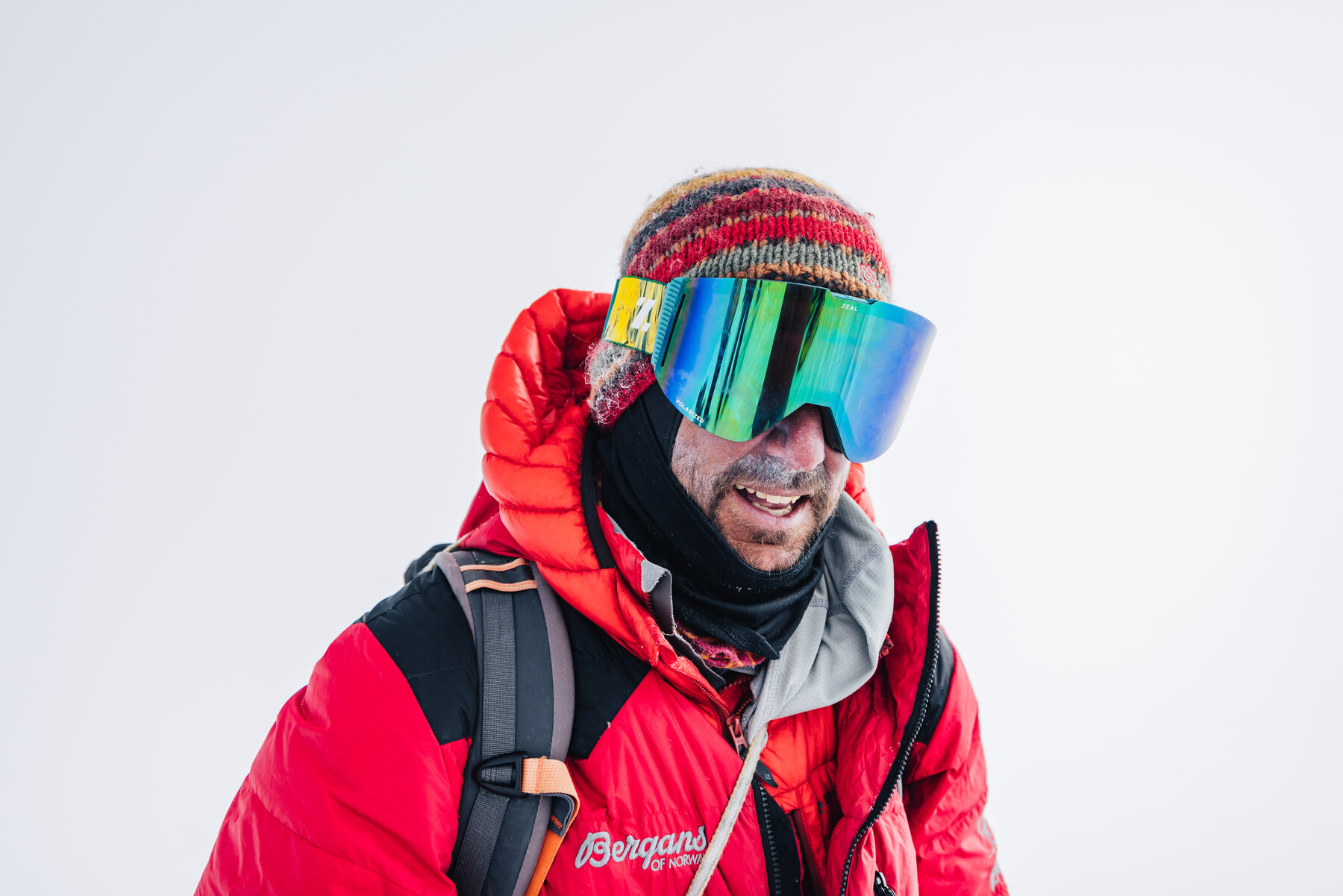
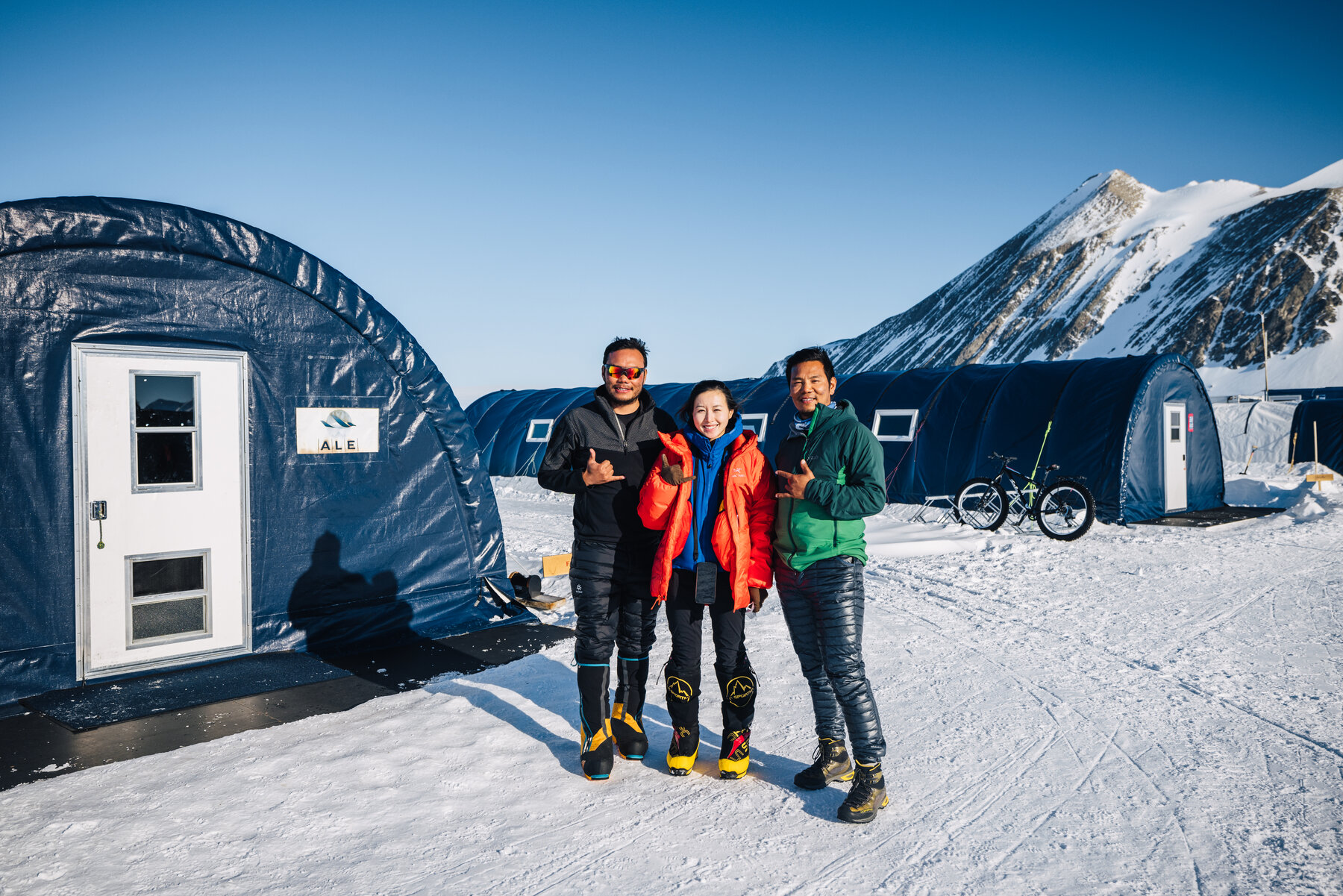
Arriving at Union Glacier Camp. The welcome sign, the tents, the mountains. It's real.Jason at Union Glacier. Bundled up and ready for whatever Antarctica has planned.
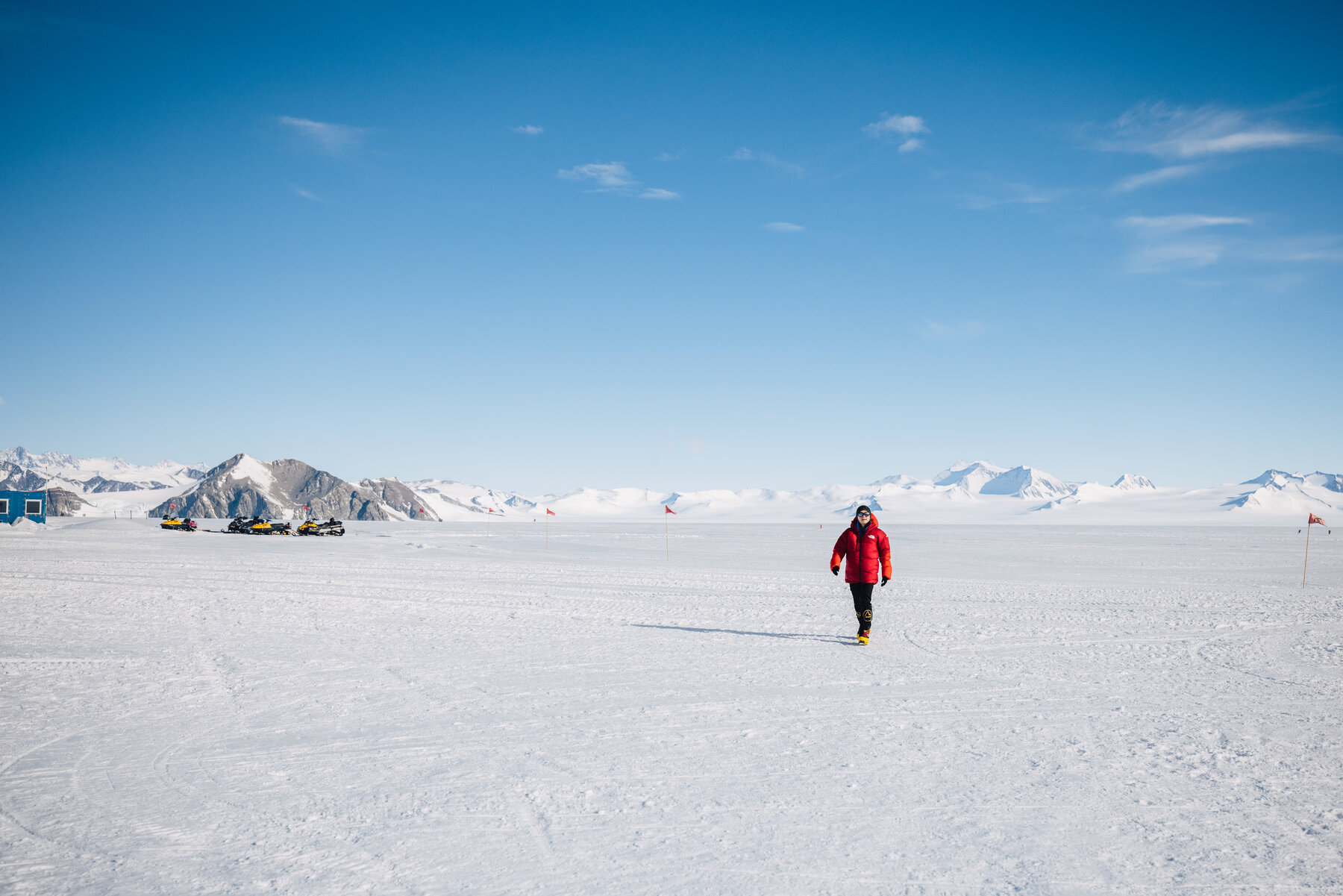
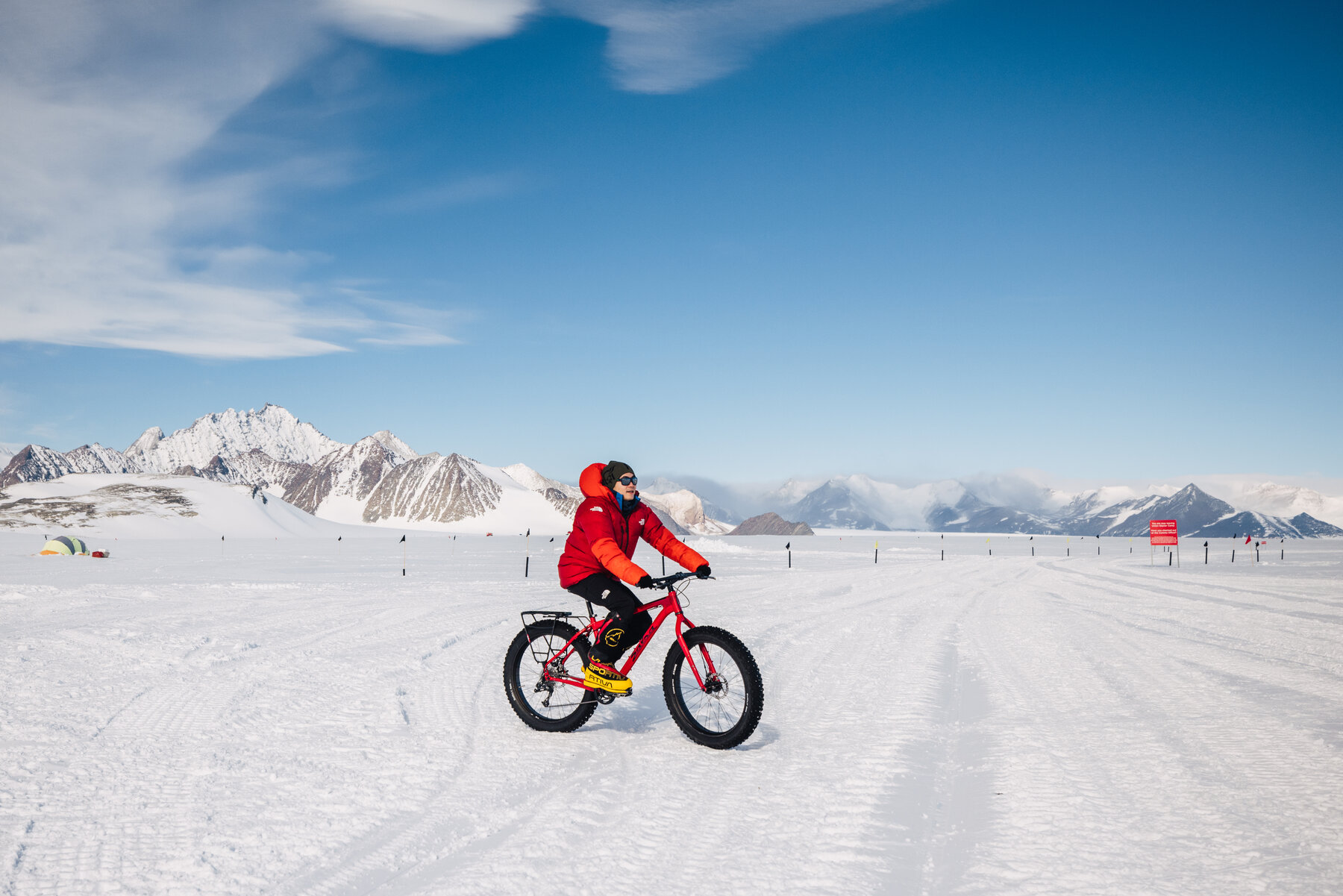
Walking across Union Glacier. The emptiness of Antarctica hits you when you're alone on the ice.Fat biking on the glacier. One of the unexpected perks of downtime at Union Glacier Camp.
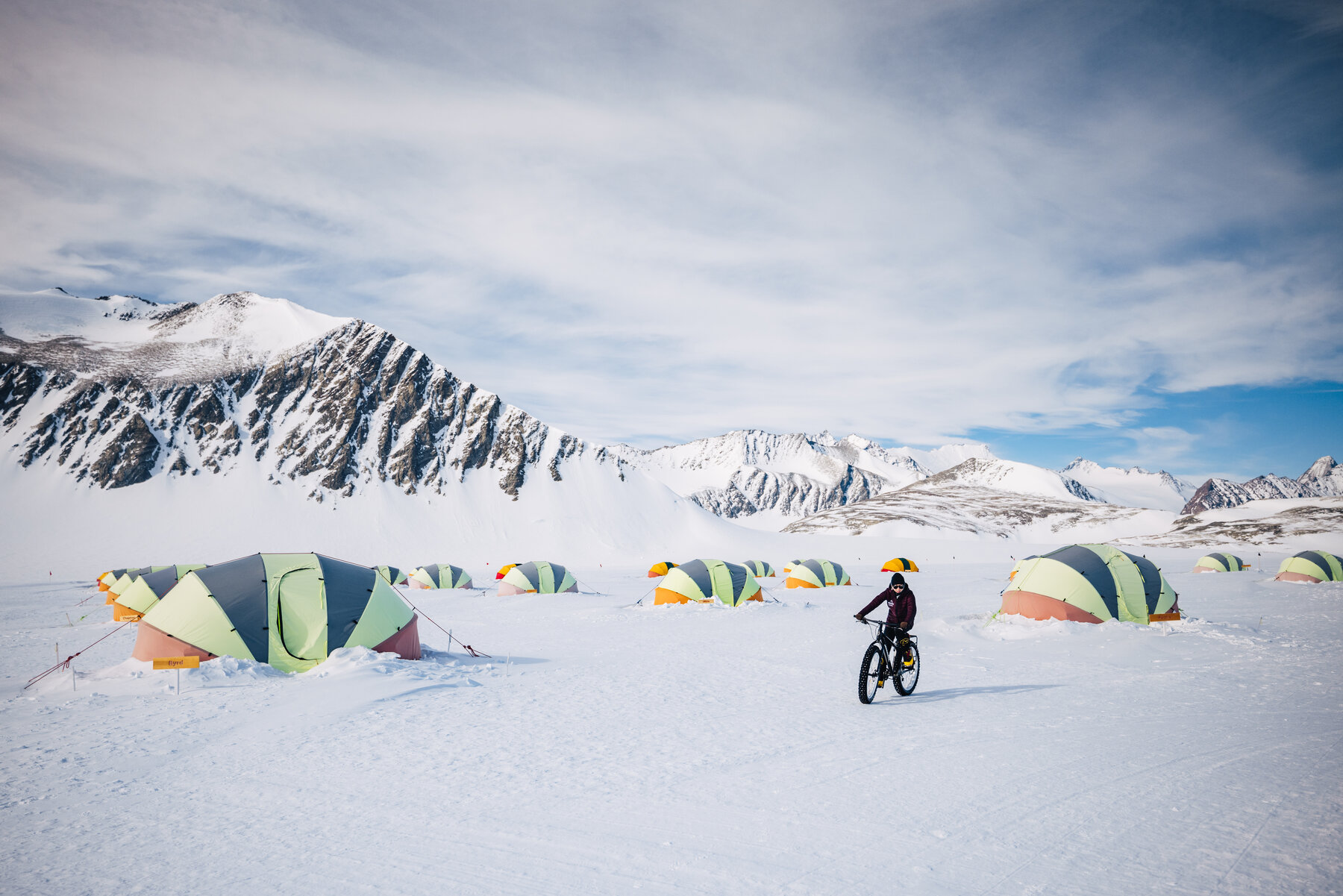
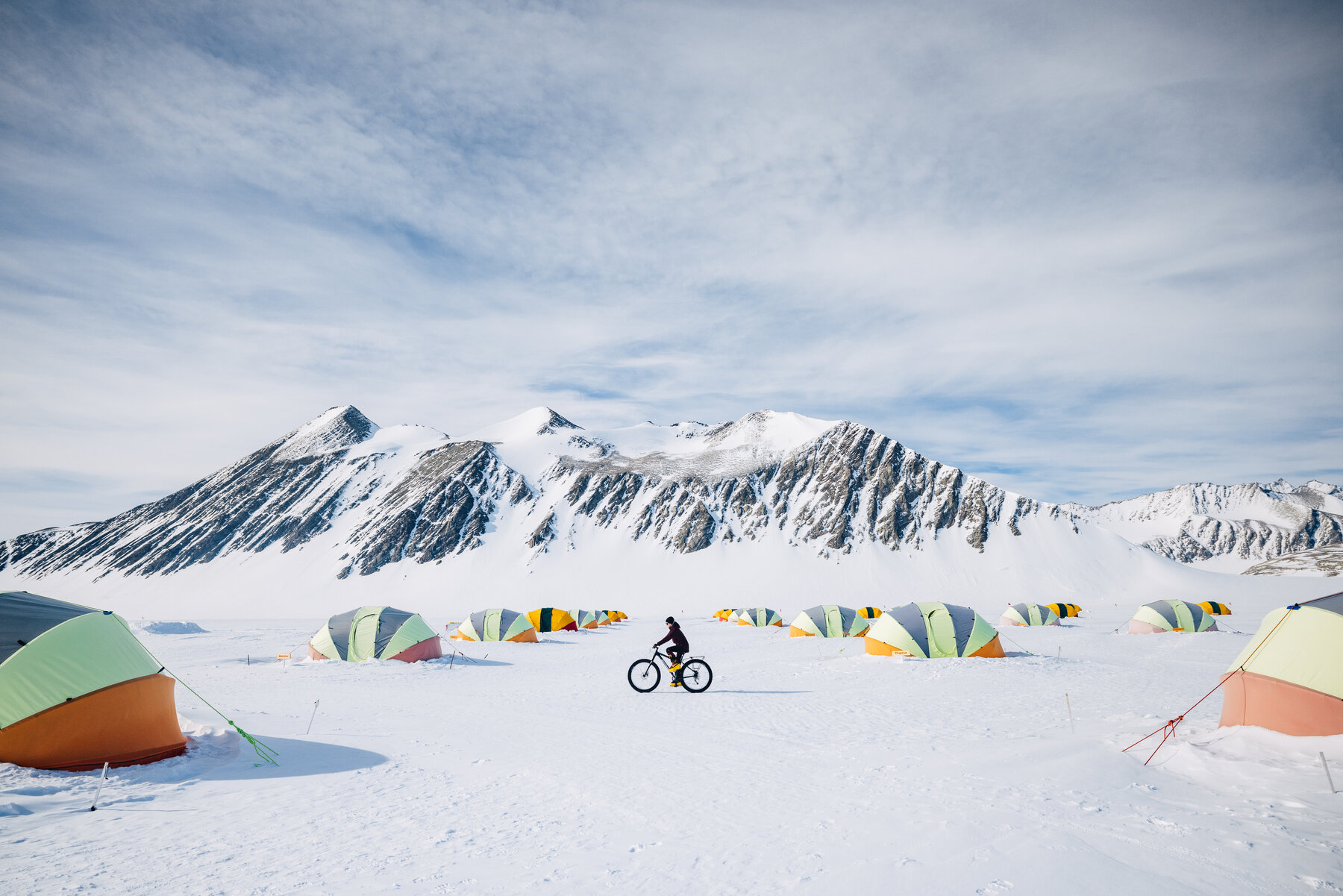
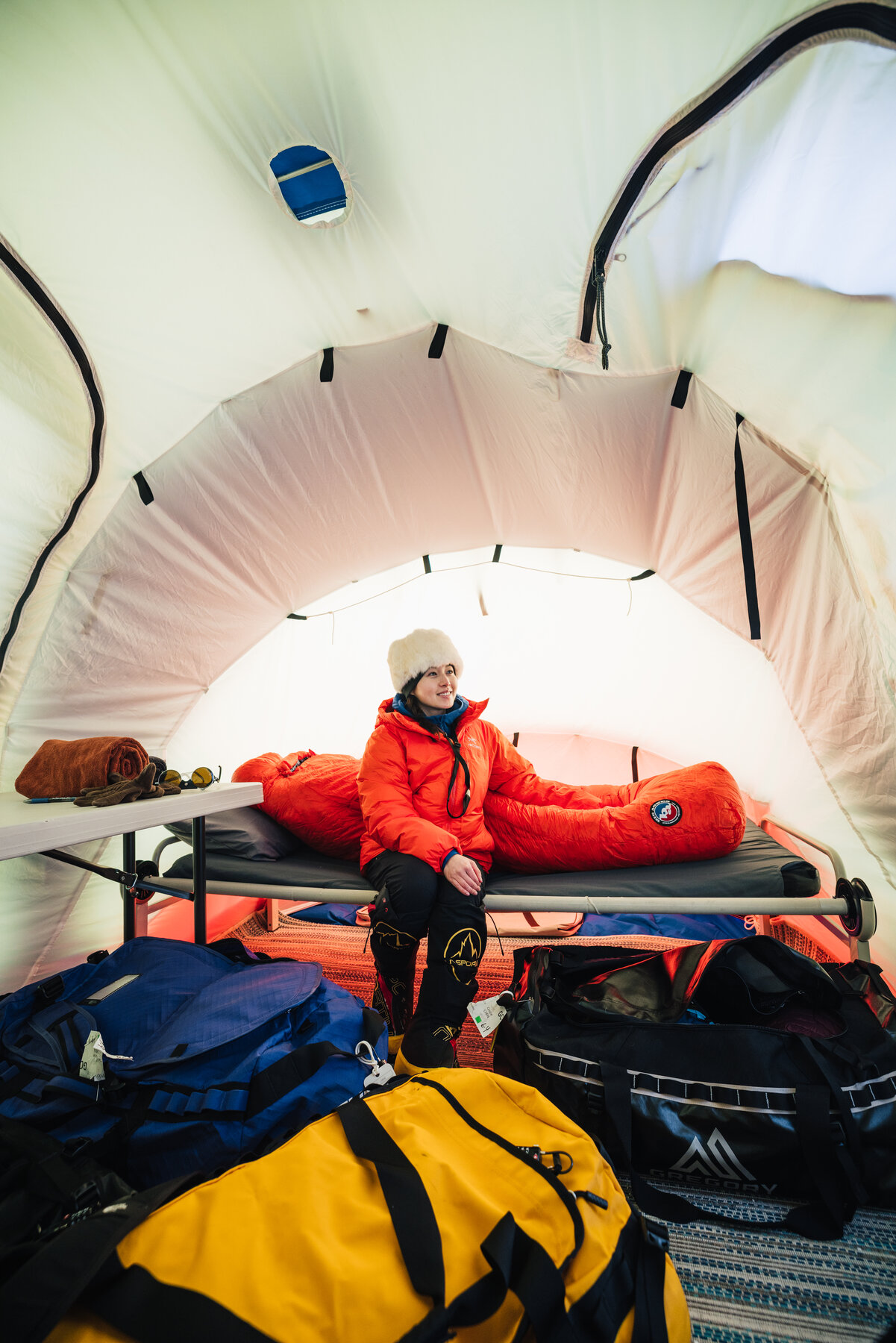
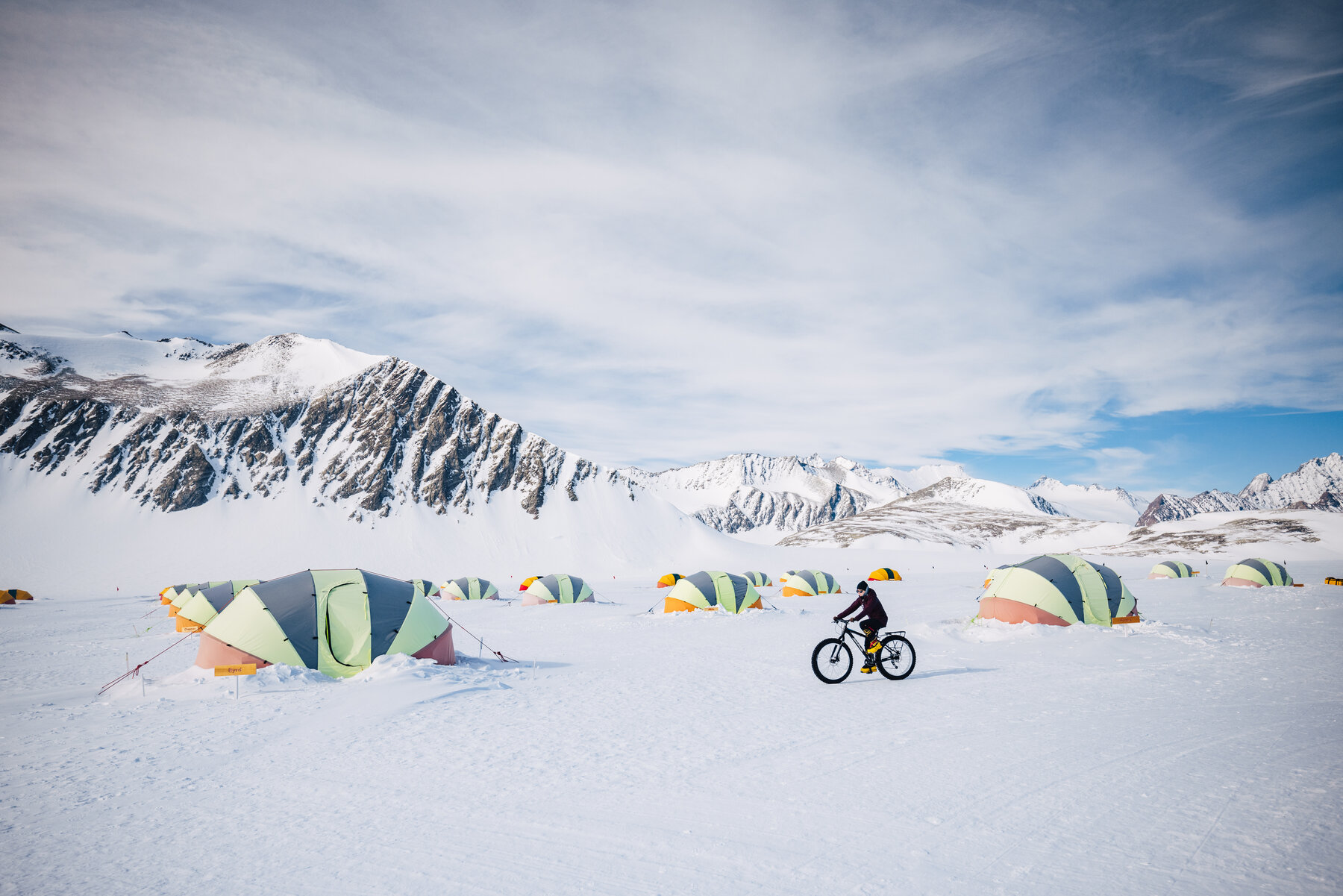
Fat biking through camp. The dome tents and distant peaks make Union Glacier feel like base camp on another planet.The Union Glacier tent city from the ground. Row after row of climate-controlled tents on the ice.
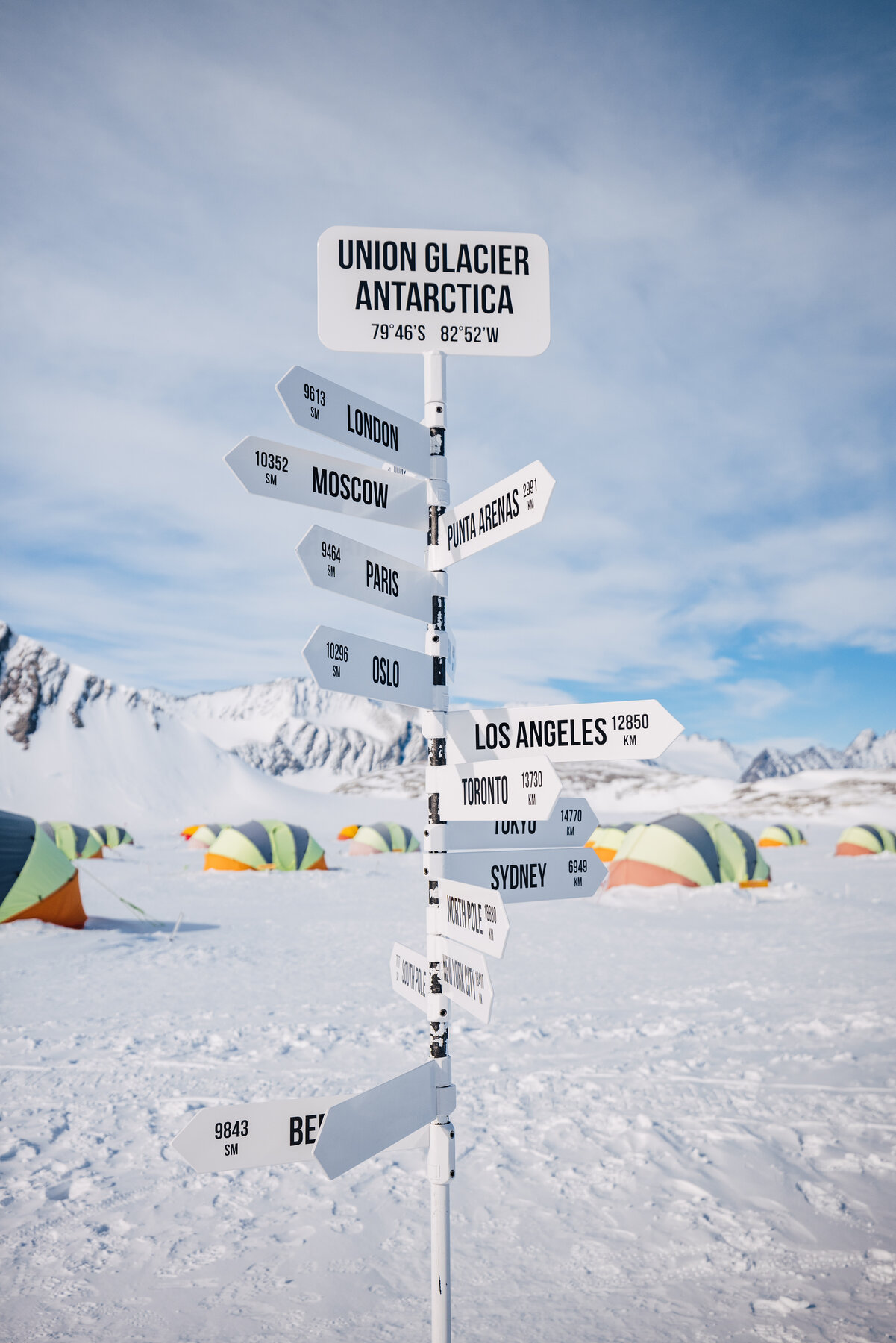
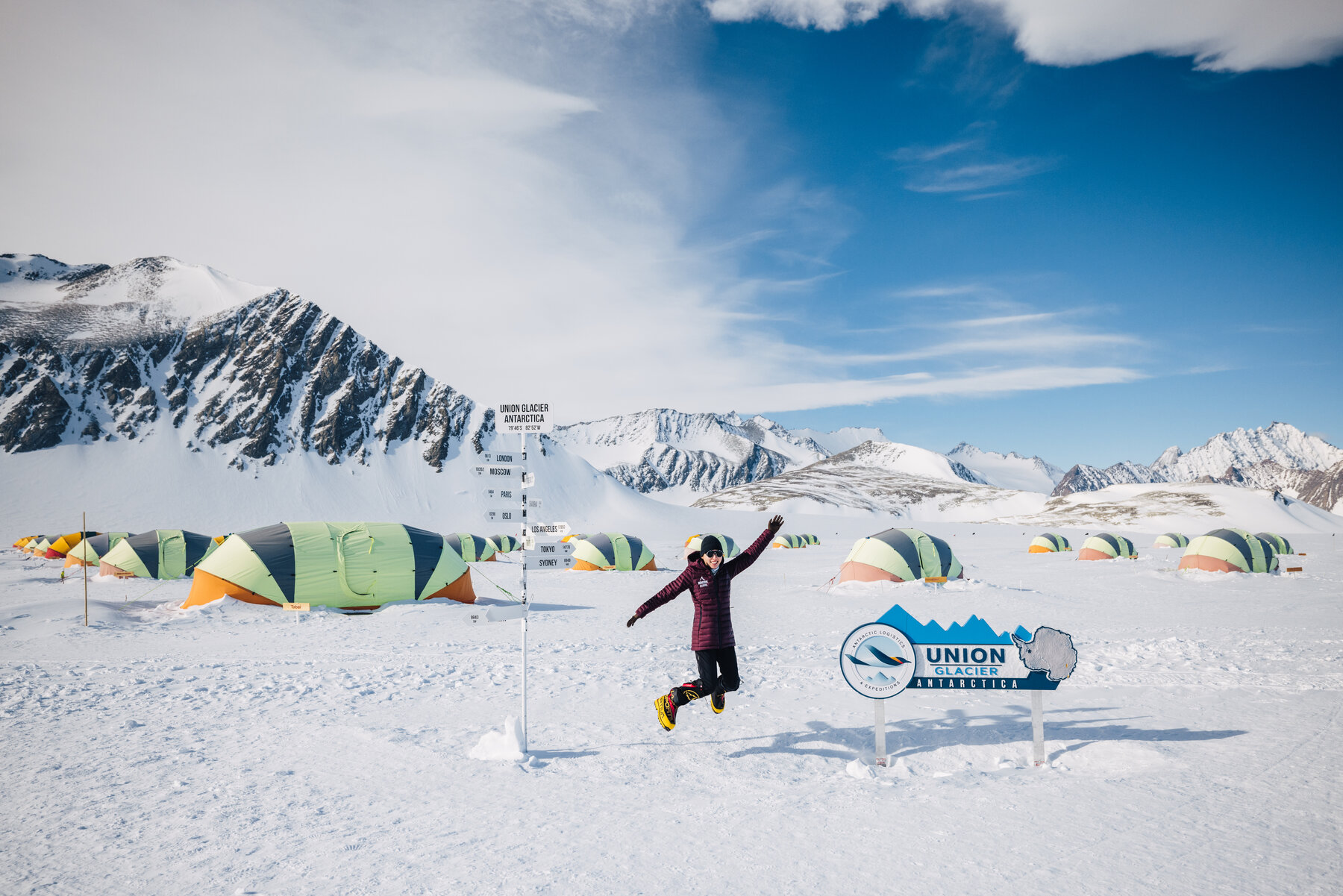
The Union Glacier signpost. Every direction on Earth is a long way from here.
Days 2–3: Base Camp to Low Camp
January 2022 · Vinson Base Camp (2,100 m) → Low Camp (2,750 m / 9,000 ft)
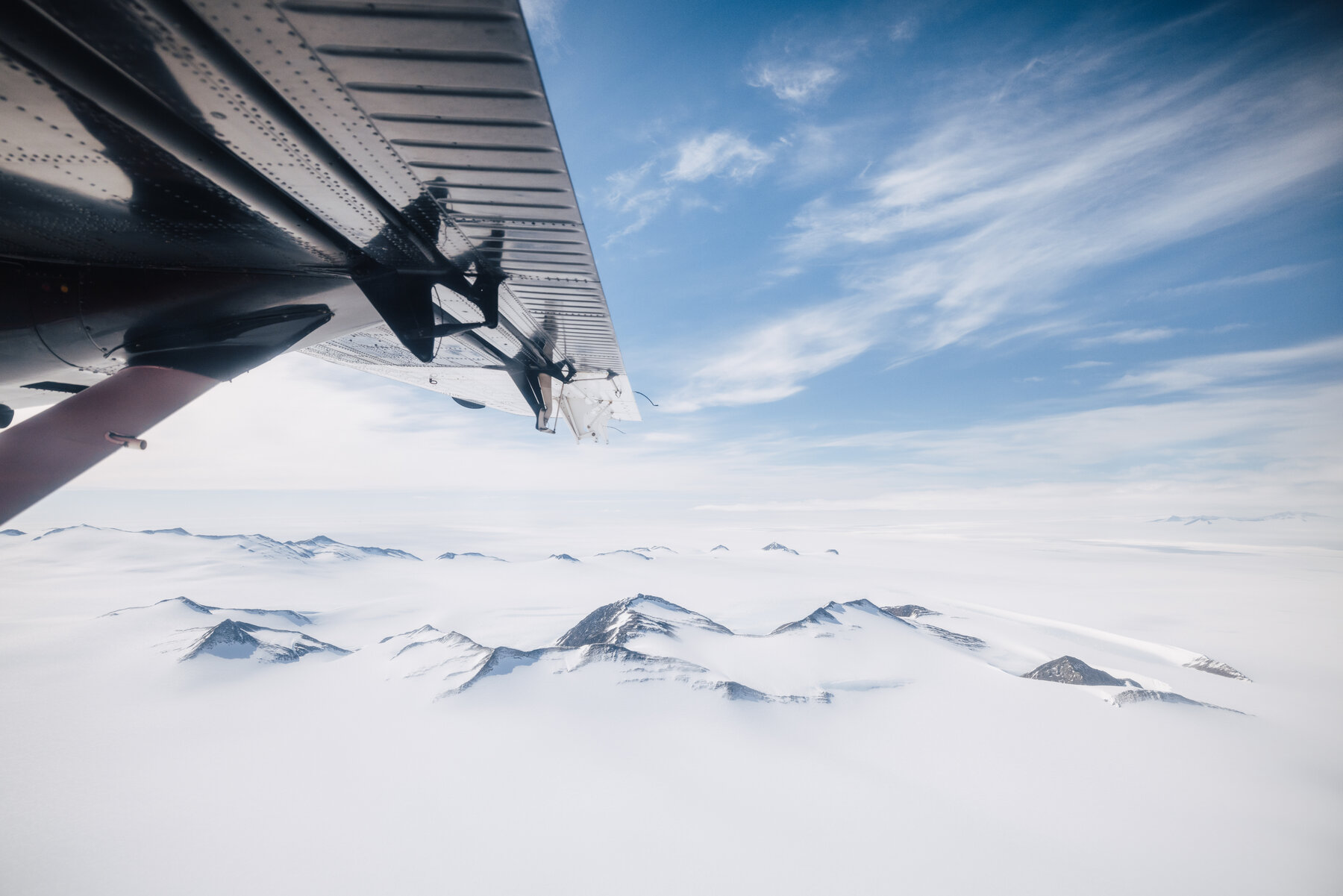
After a night's rest at Union Glacier, we were off to Vinson Base Camp. The flight north in a Twin Otter only takes fifty minutes, but the view from the window was jaw-dropping. It finally settled in that we were here on the frozen continent. Row after row of unnamed peaks stretched to the horizon, and the ice below looked like it went on forever.
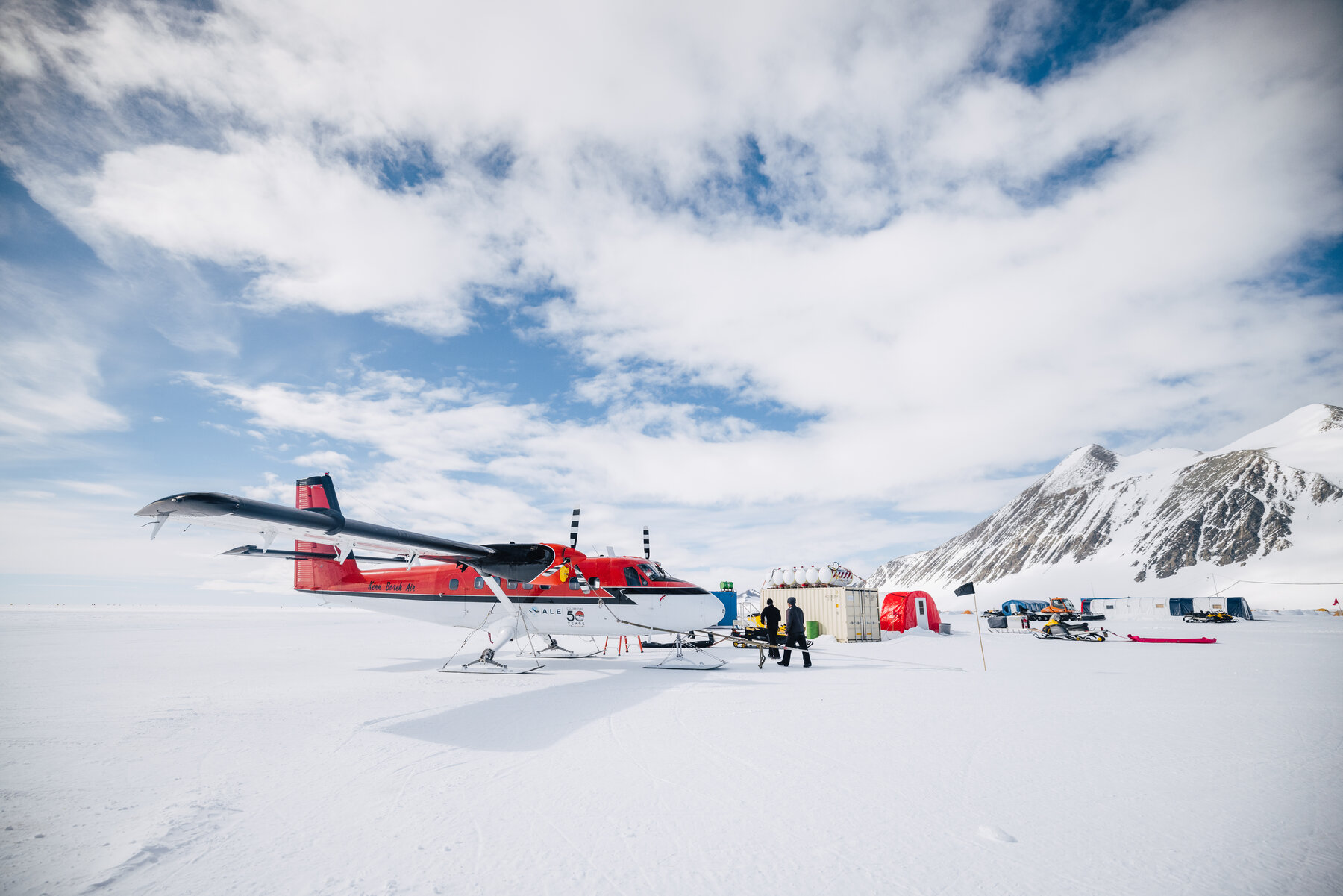
The Twin Otter that brought us to Base Camp. Your lifeline in and out of the Vinson area.
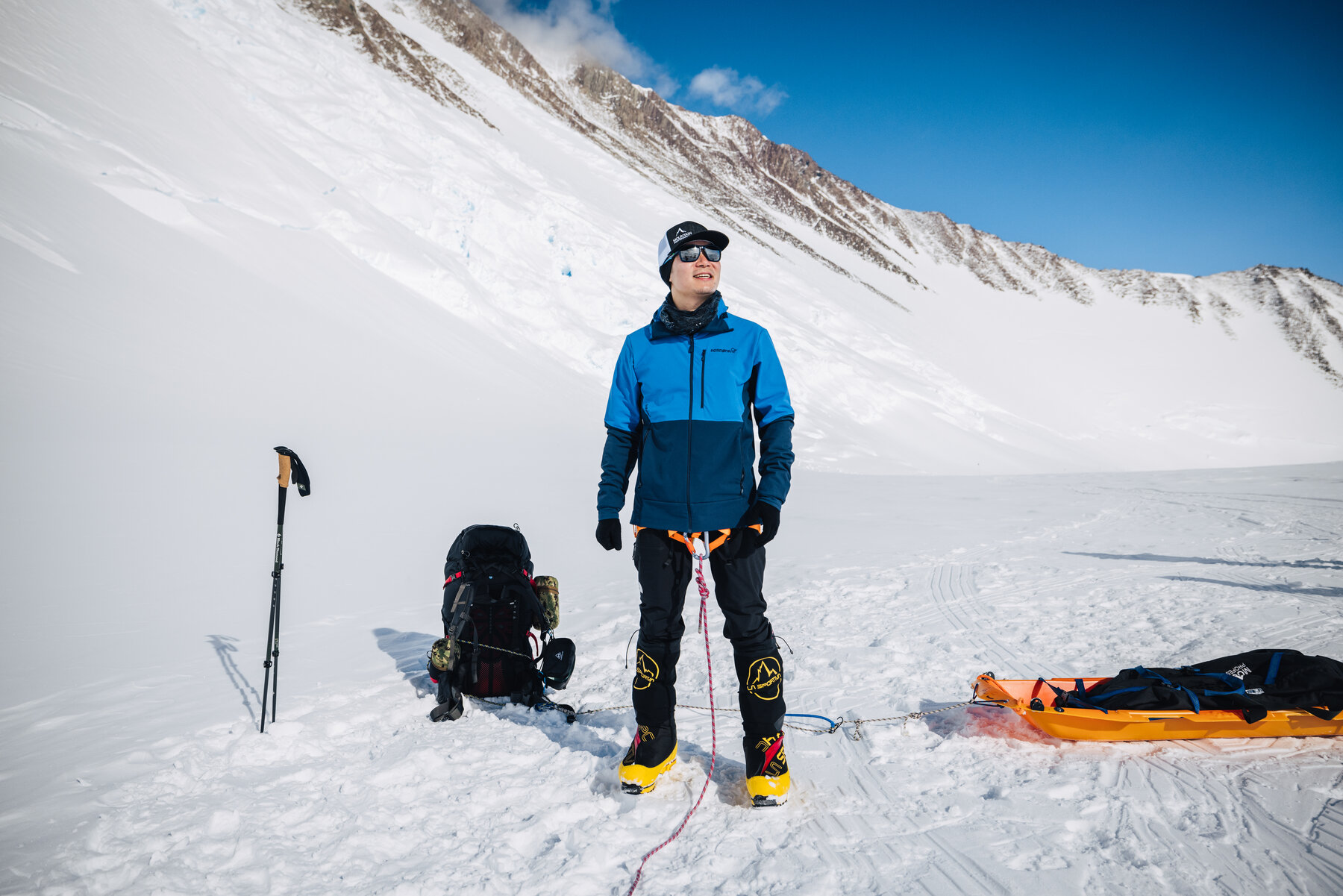
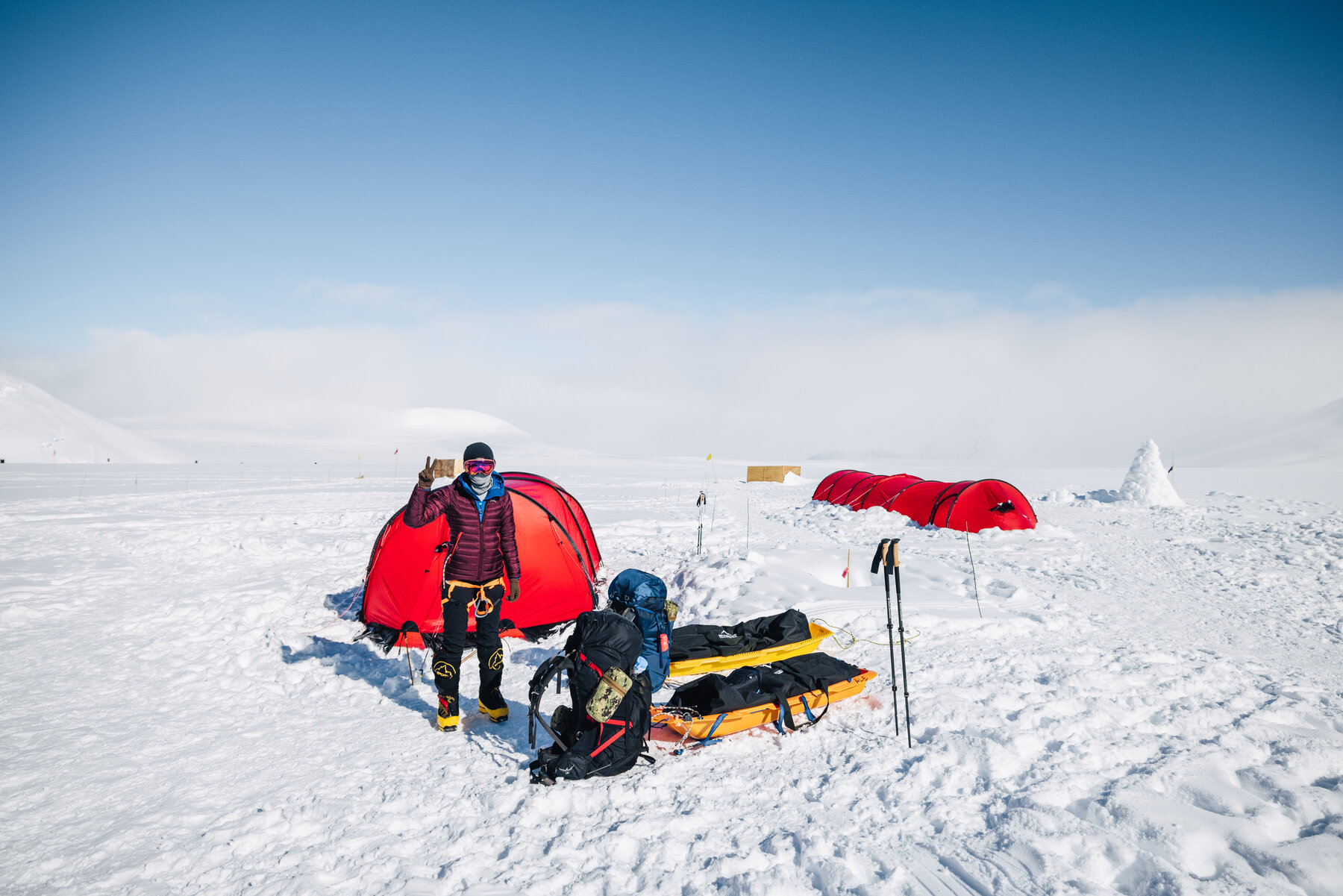
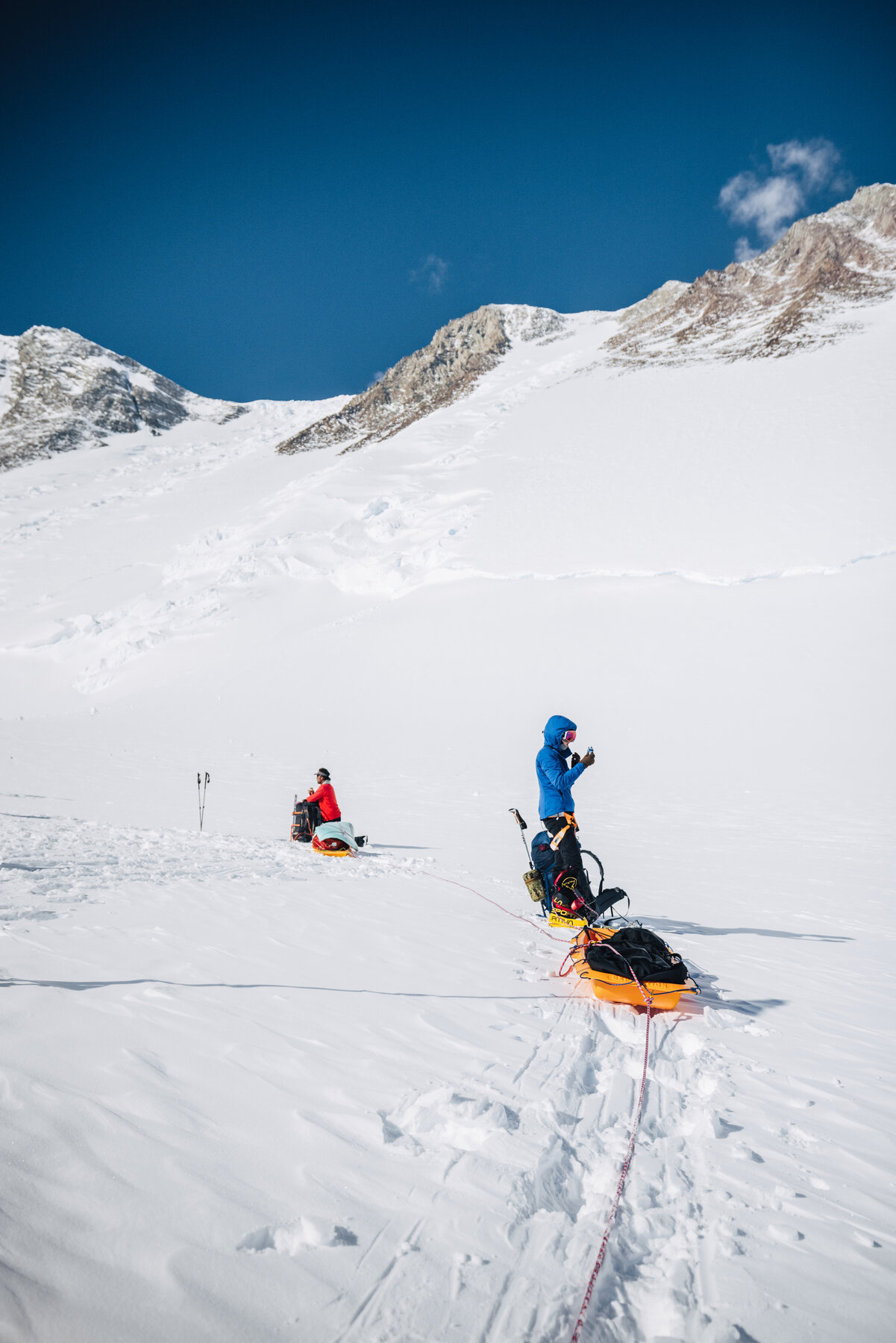
In the quiet surroundings of Base Camp, we could appreciate the beauty of Antarctica while preparing for our climb. No running water. No proper toilets. Temperatures dropping to minus twenty degrees Fahrenheit plus wind chill. From here on out, the reality of Antarctica would be constant. Sleds loaded and packs ready — most climbers spread the weight across both, typically around 30 to 40 kilograms.
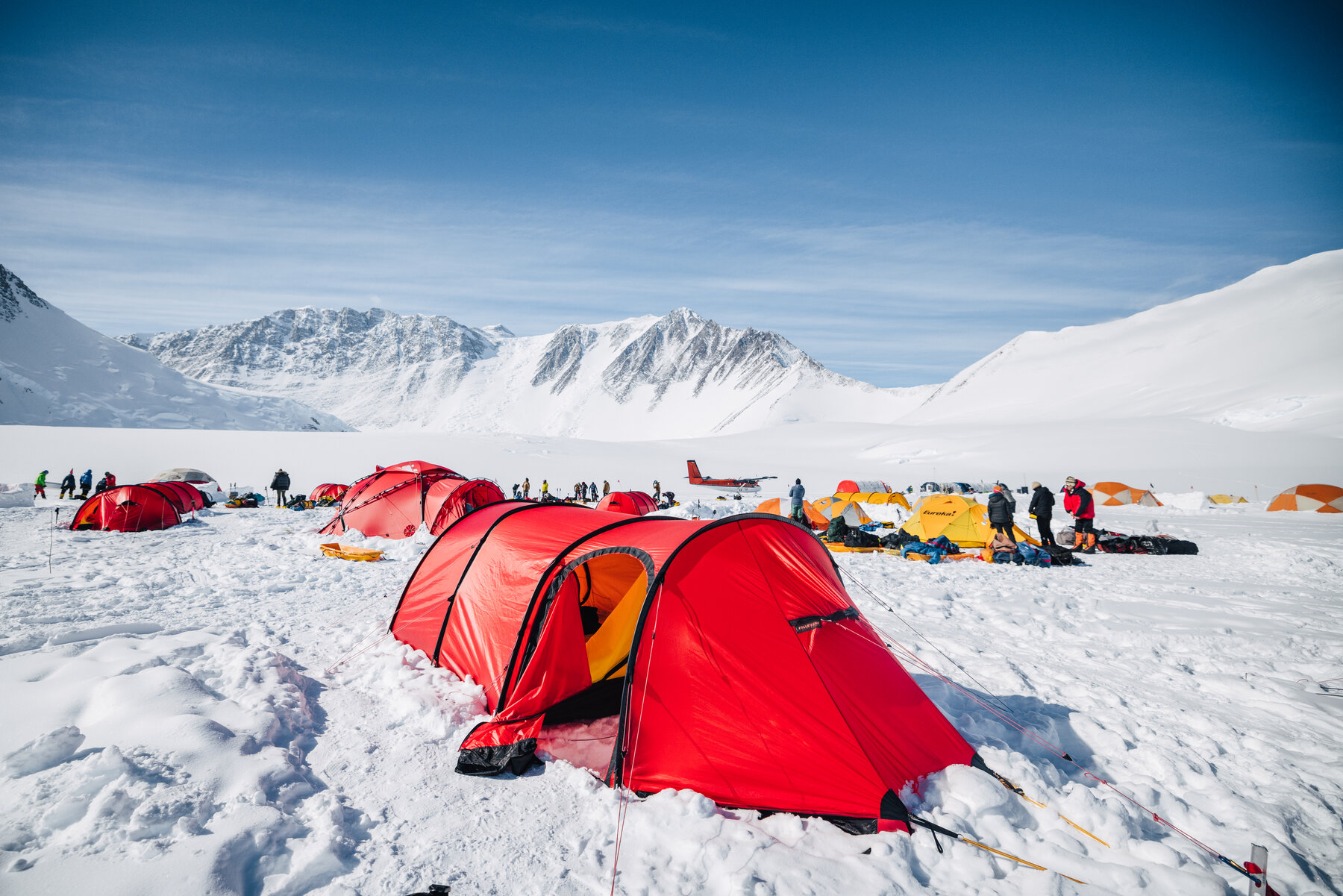
The view from the Twin Otter. Endless ice and unnamed peaks stretching to the horizon.Base Camp on the glacier. Red tents, the Twin Otter, and the Ellsworth Mountains rising above.
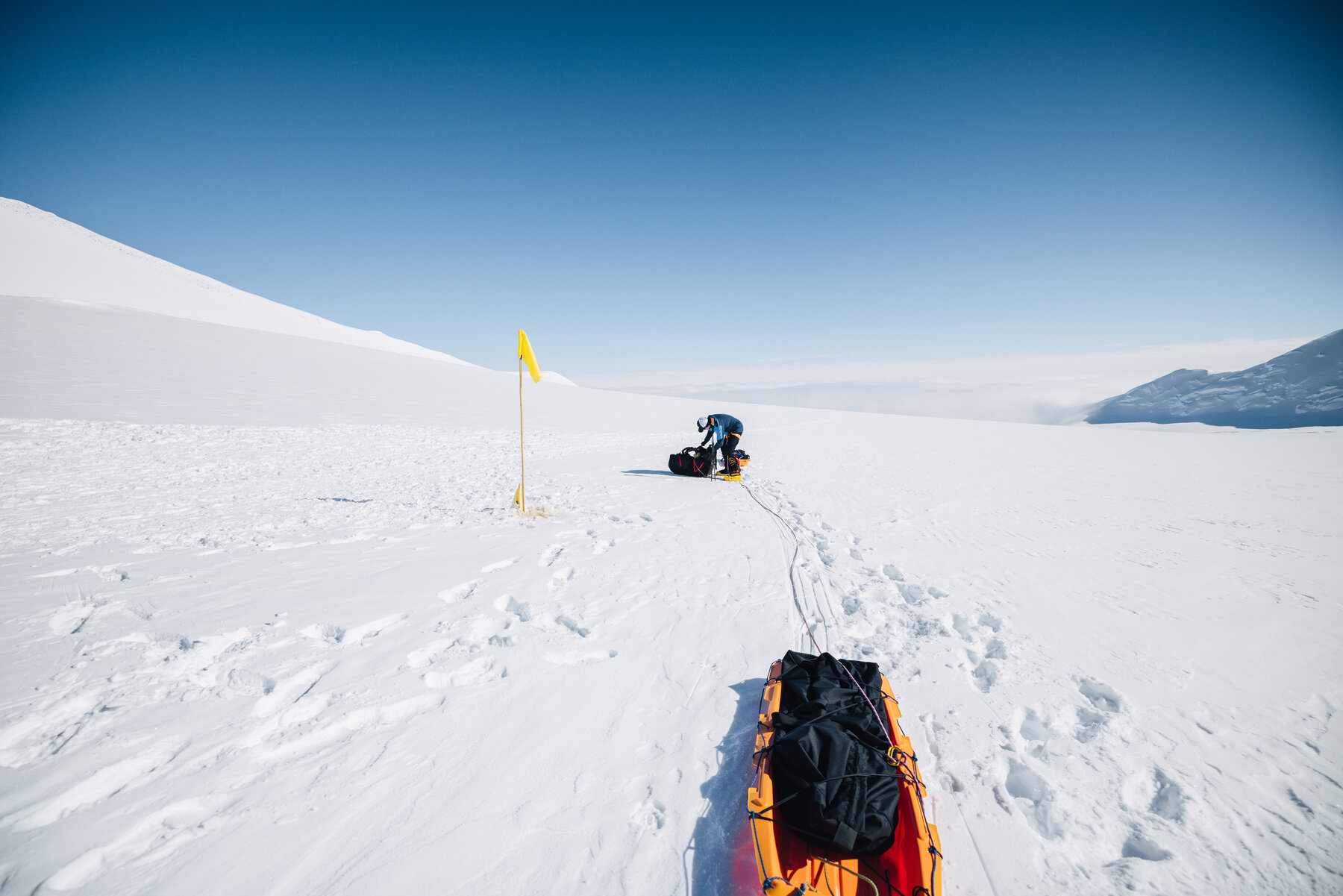
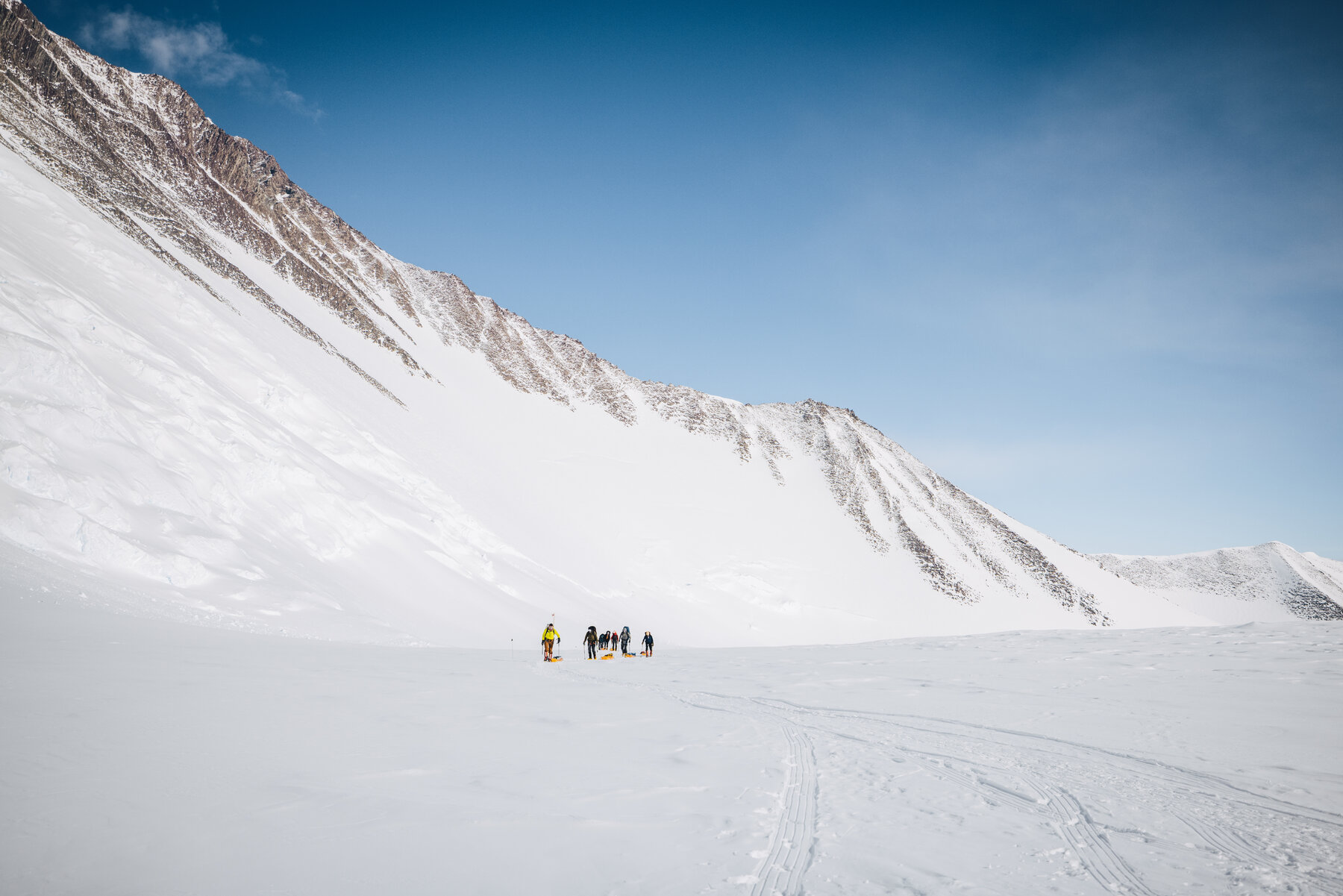
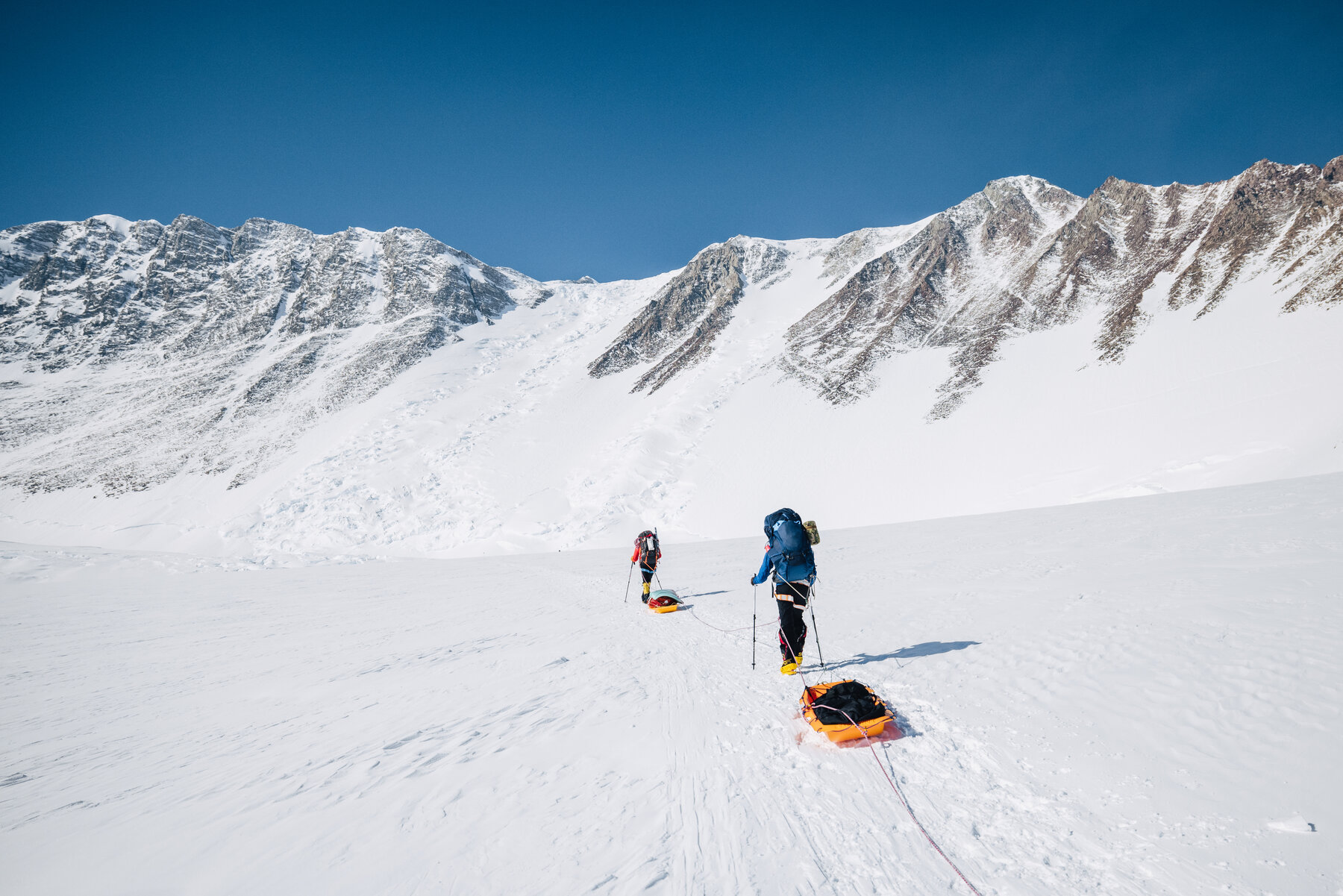
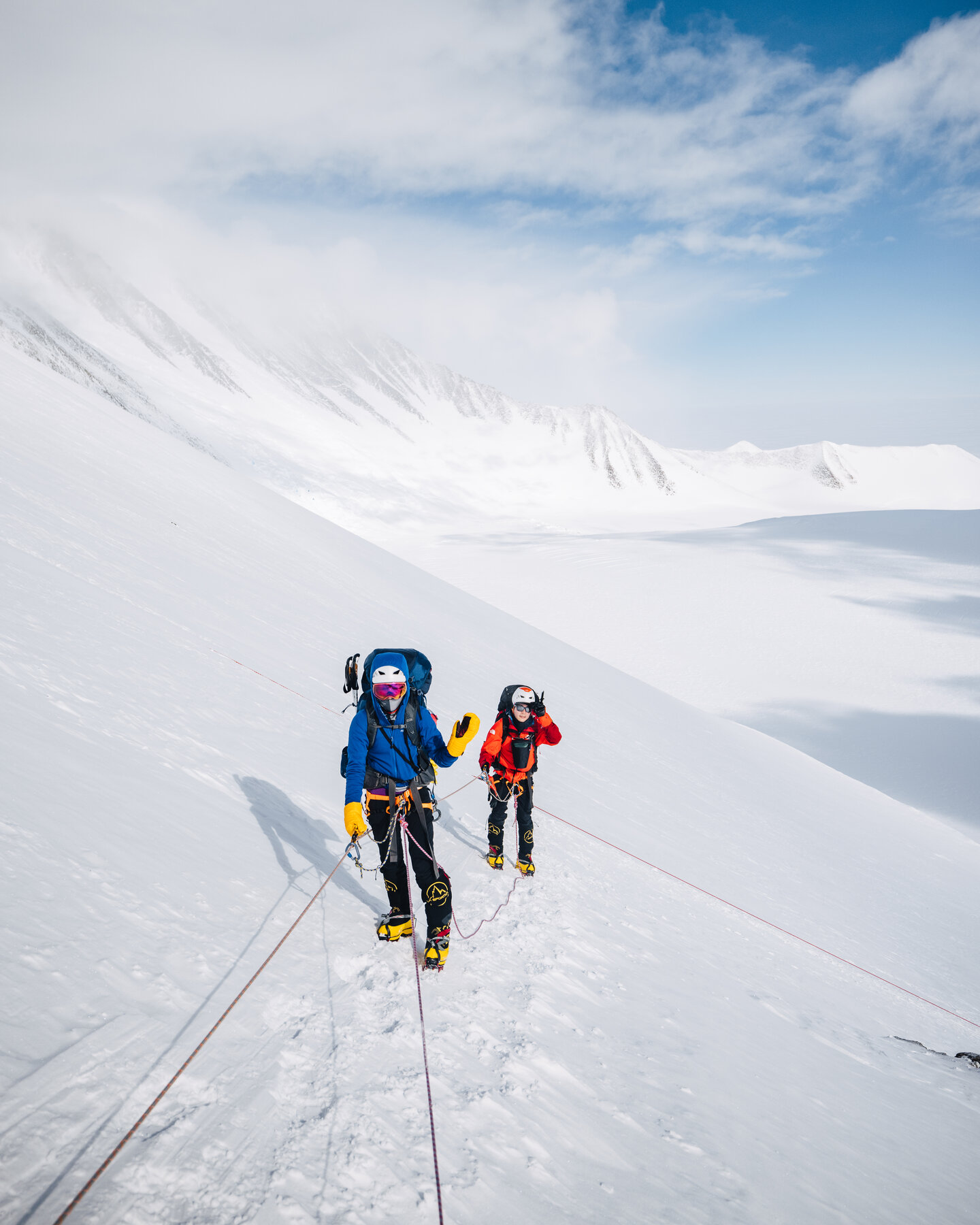
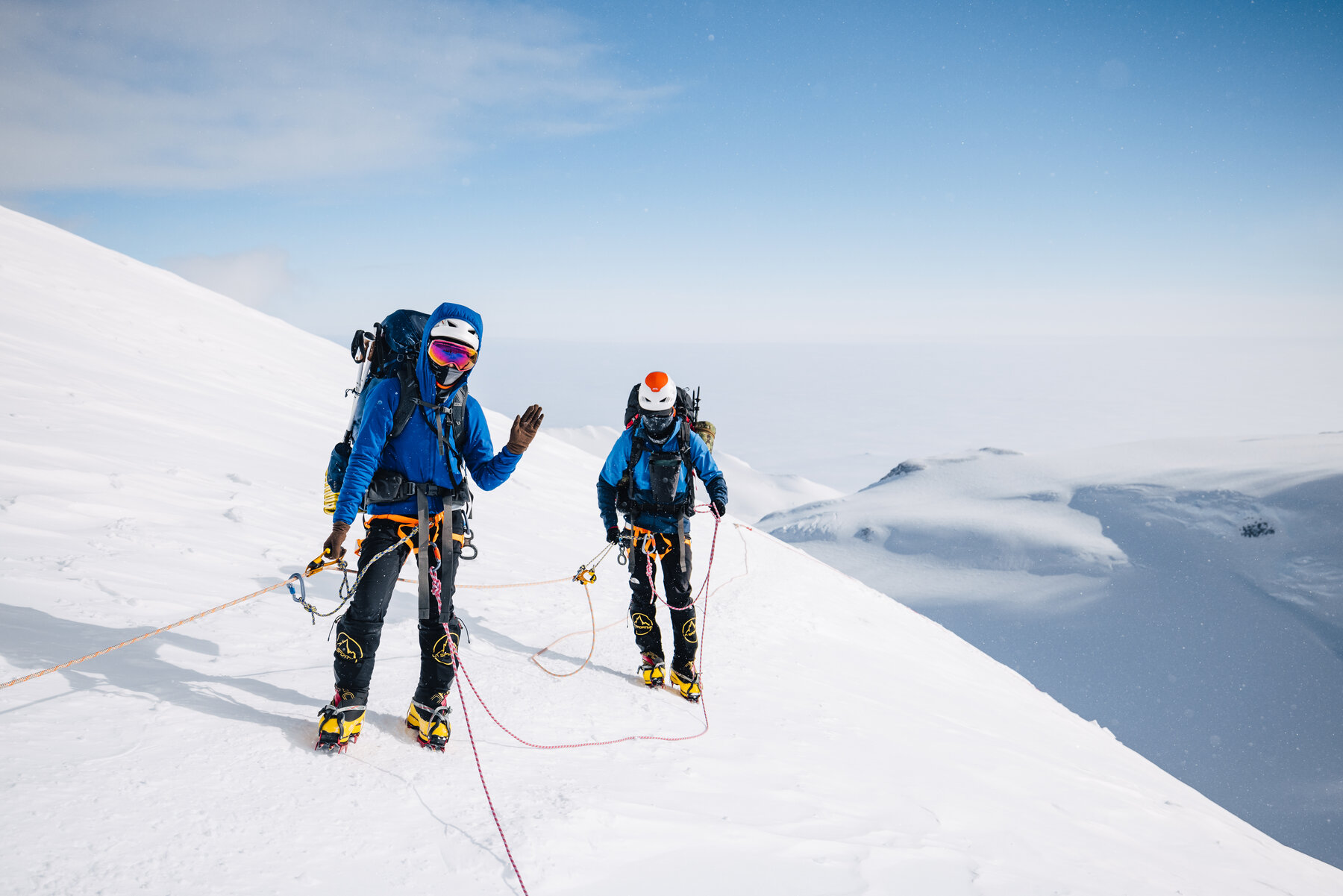
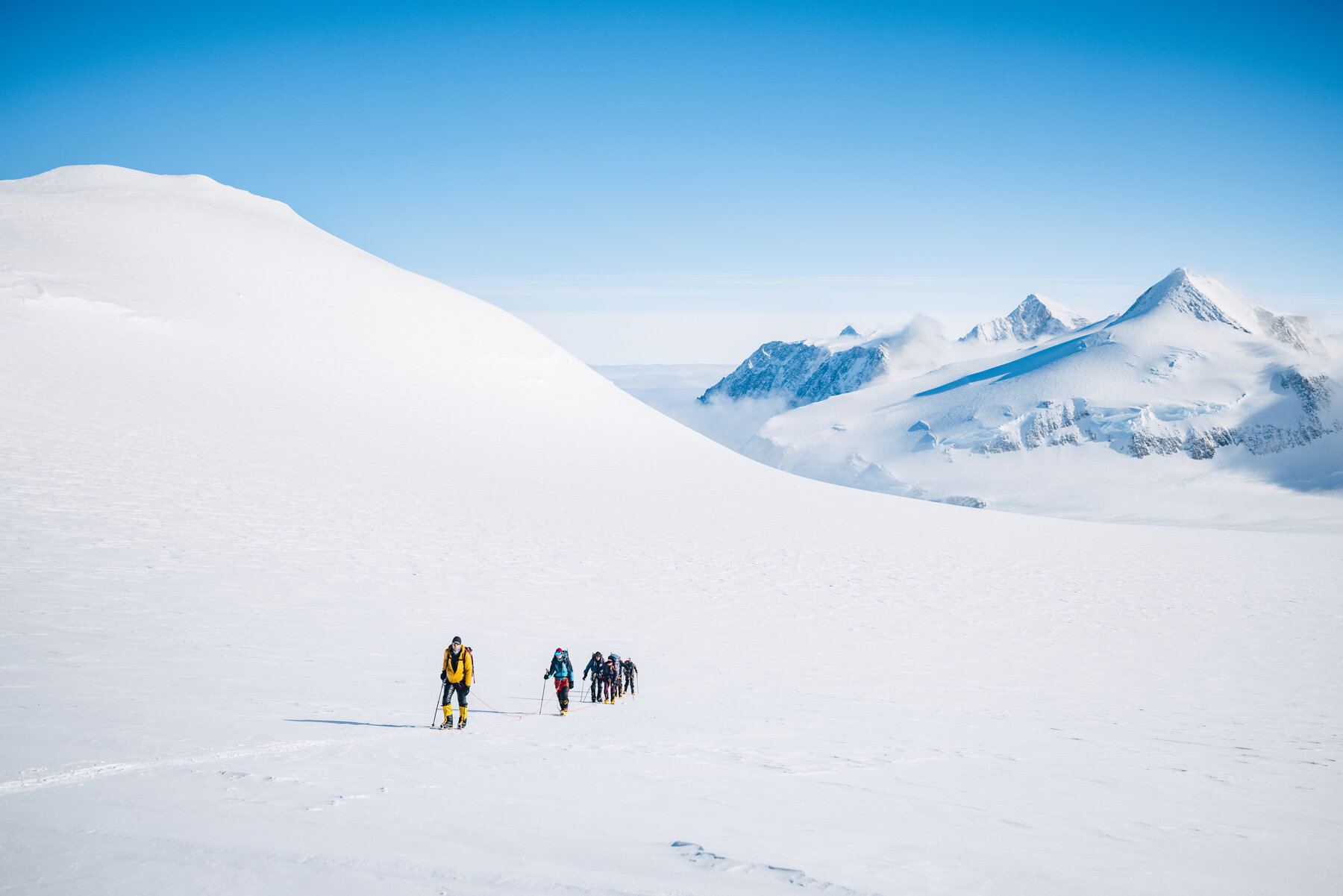
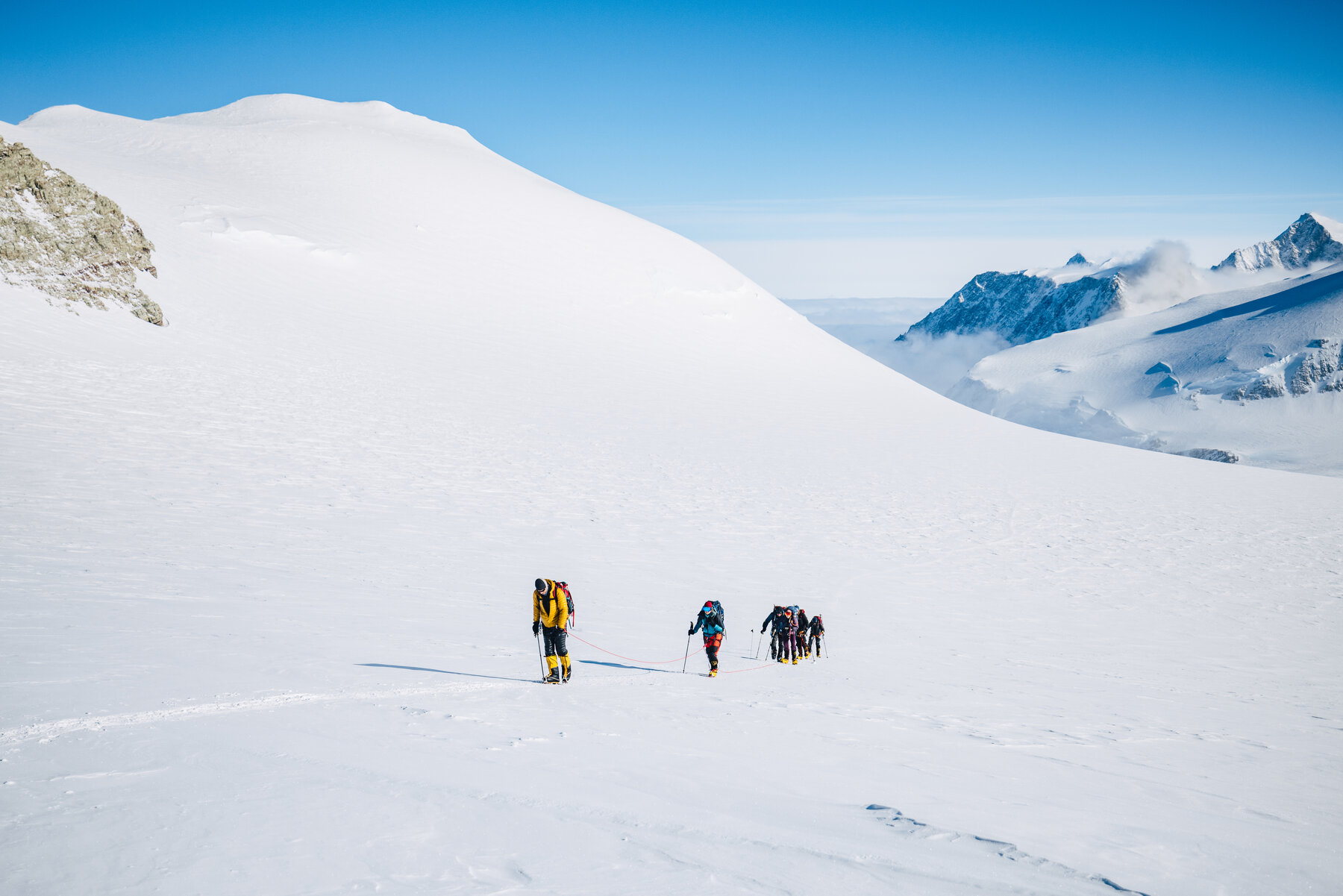
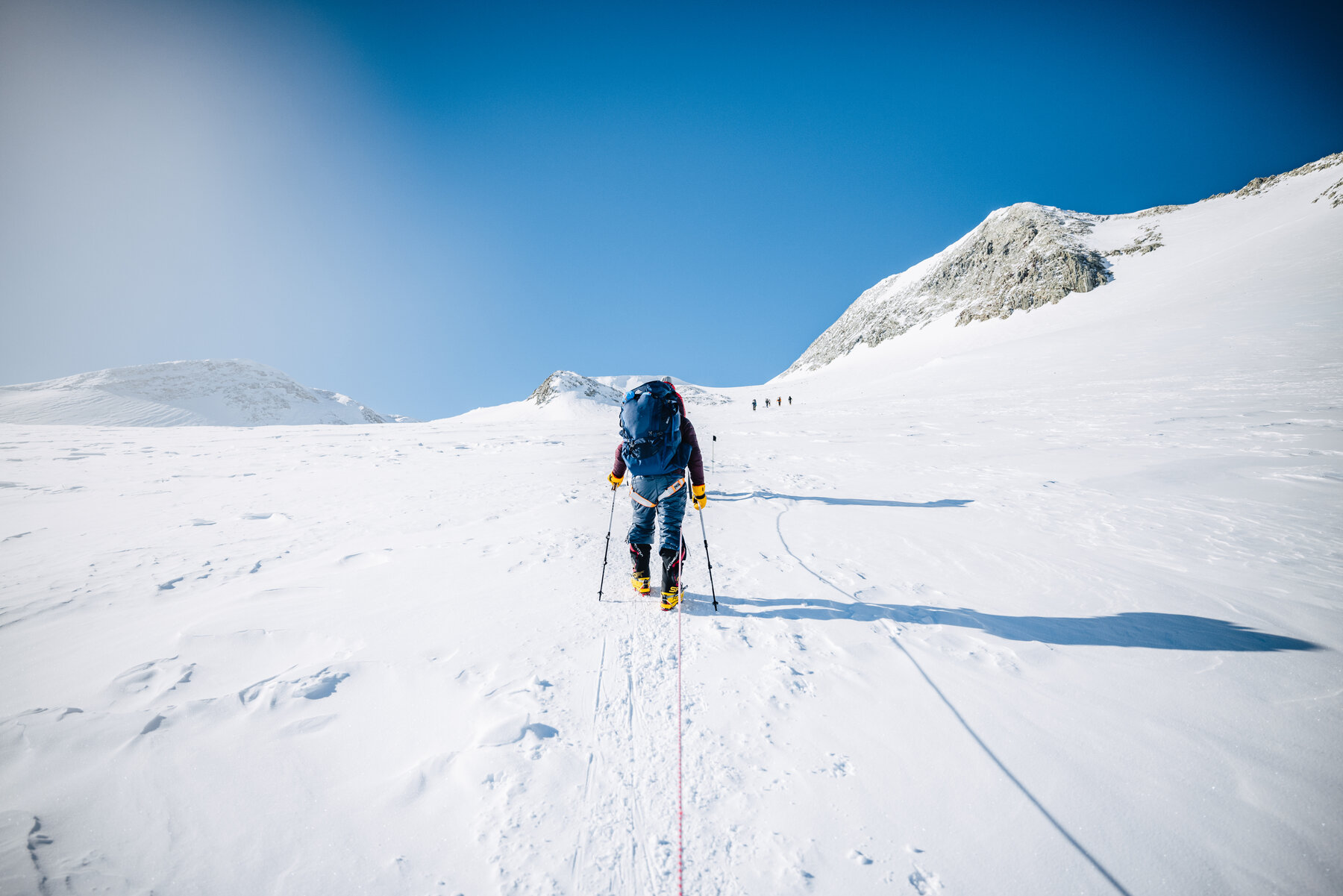
From Vinson Base Camp to Low Camp, we followed the gradual rise of the Branscomb Glacier for about ten kilometers. Due to the crevasse hazard, we traveled roped together throughout our time on the mountain. After four and a half hours, we arrived at Low Camp, sheltered by the broad, snowy west face of Vinson. The weather forecast for the summit window was already shrinking, so we decided to forgo any carry, rest, and acclimatization days. The schedule was go, go, go — a quick summit bid in the coming days if no surprises derailed our plan.
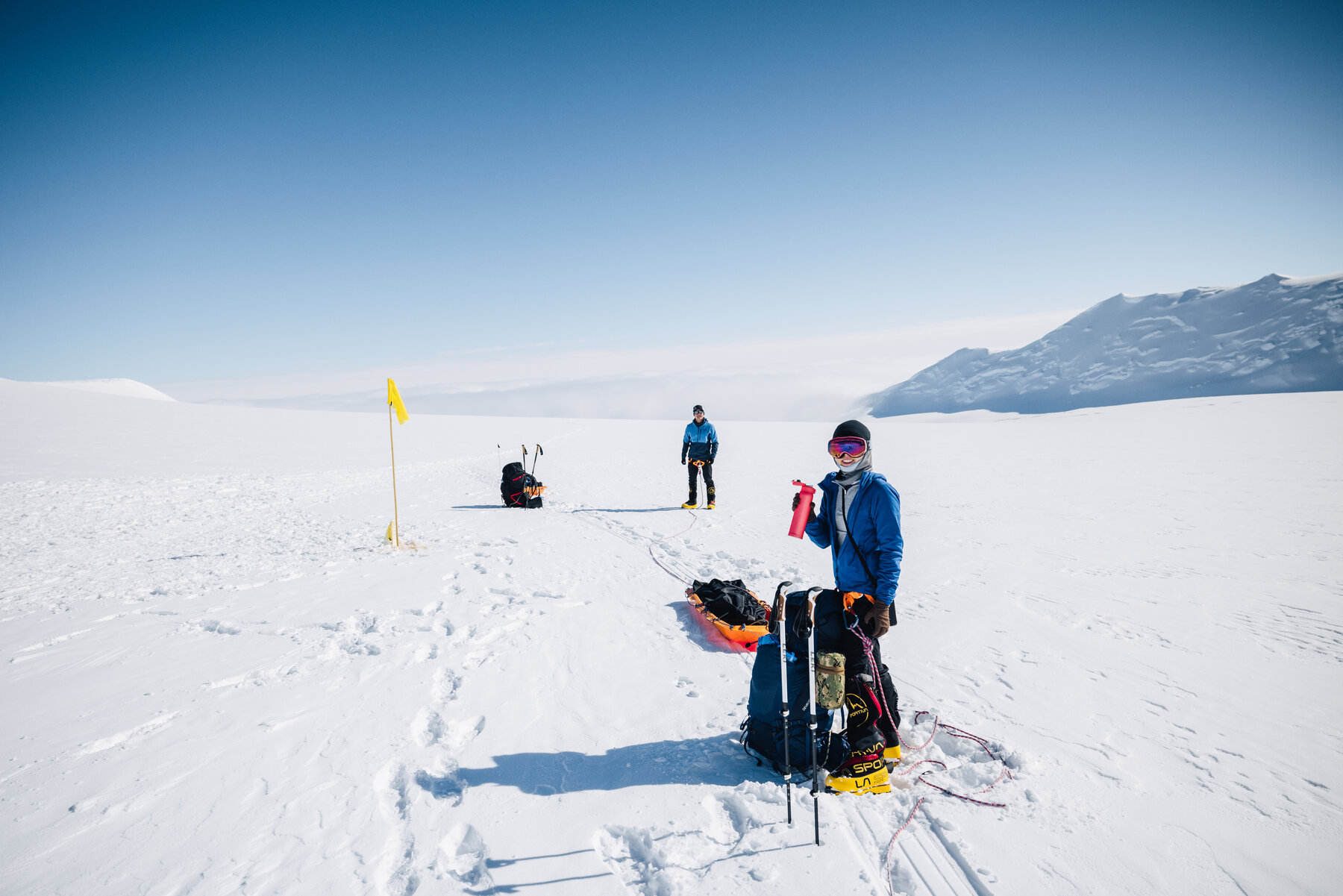
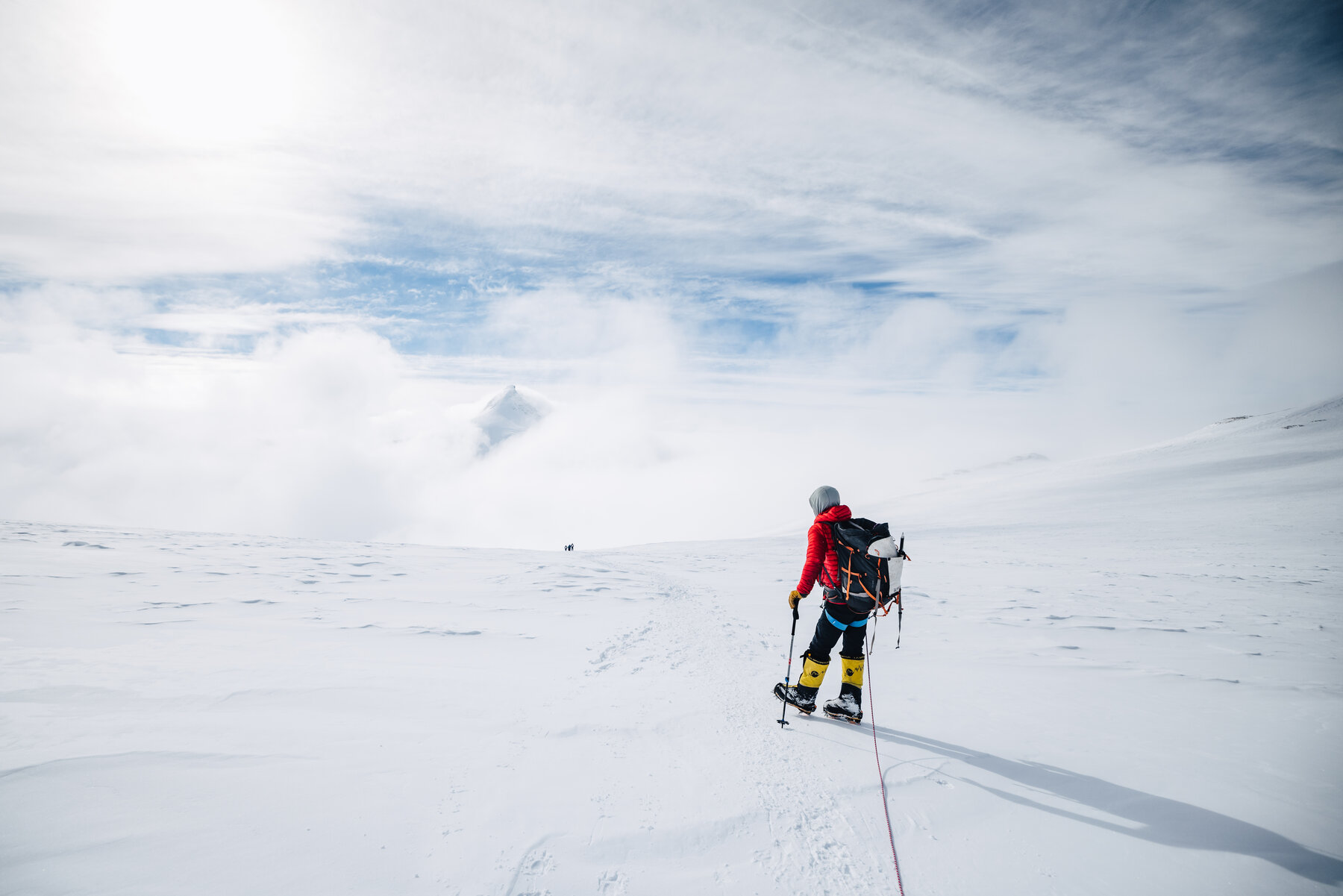
The Branscomb Glacier stretching ahead. Nothing but white in every direction.Hauling toward Low Camp, one marker wand at a time. The summit still days away.
The scale of this place is overwhelming. Countless miles of untouched mountains stretching in every direction.
Hauling sleds up the glacier. Every ounce of gear comes with you on Vinson.Low Camp. Sheltered by the west face, but still very much in Antarctica's grip.
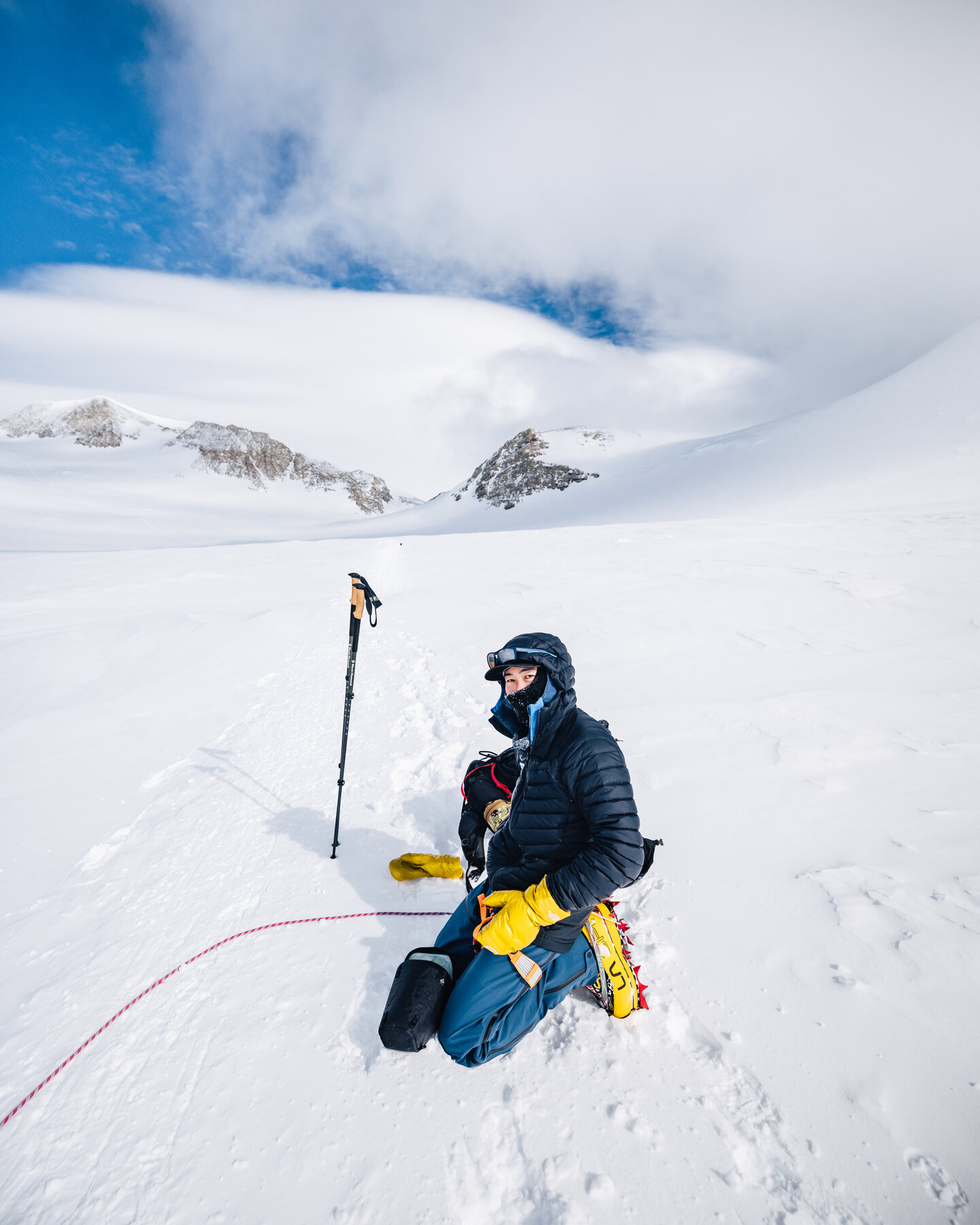
A rest stop on the approach to Low Camp. Sled, pack, and poles all leaned against the snow.
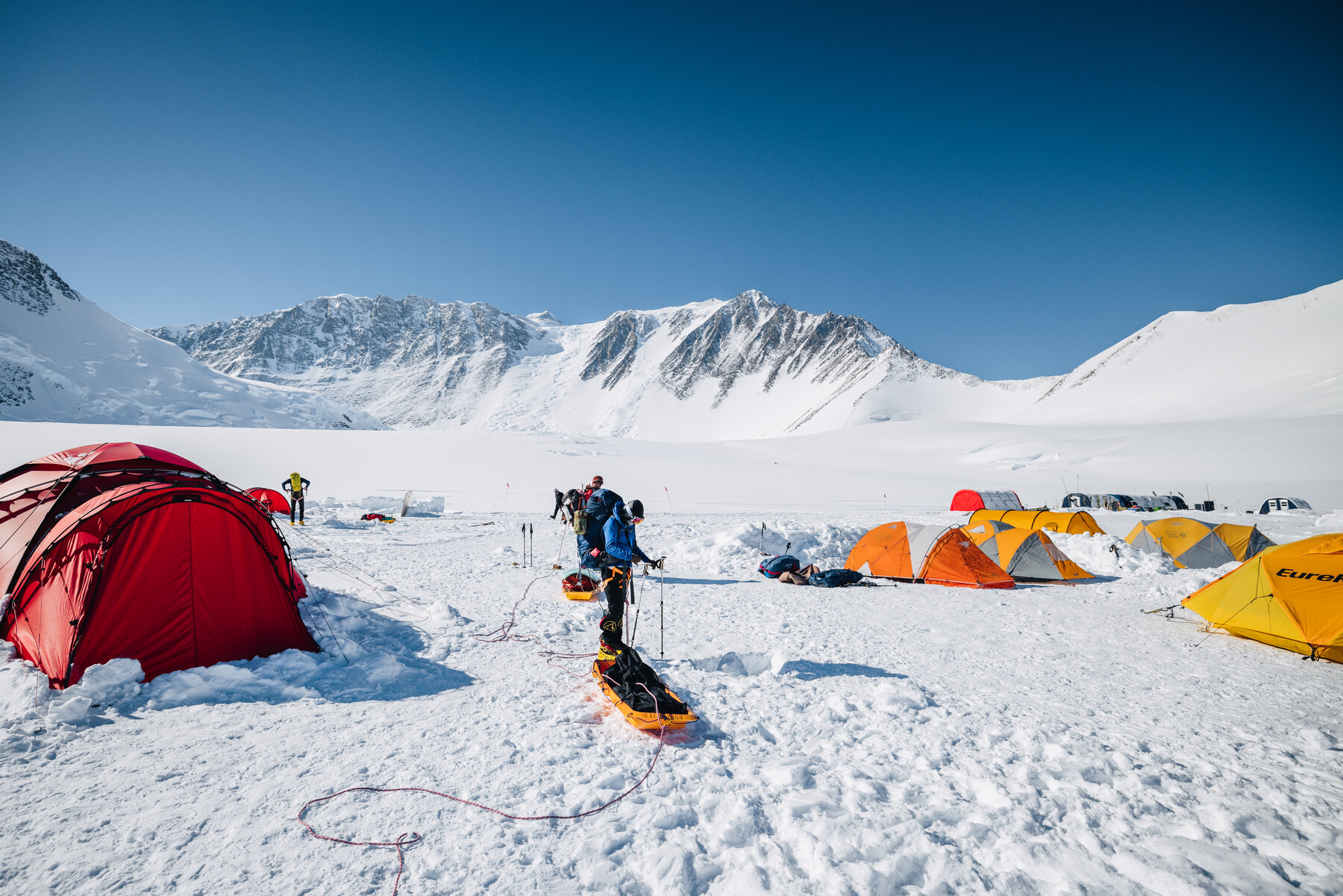
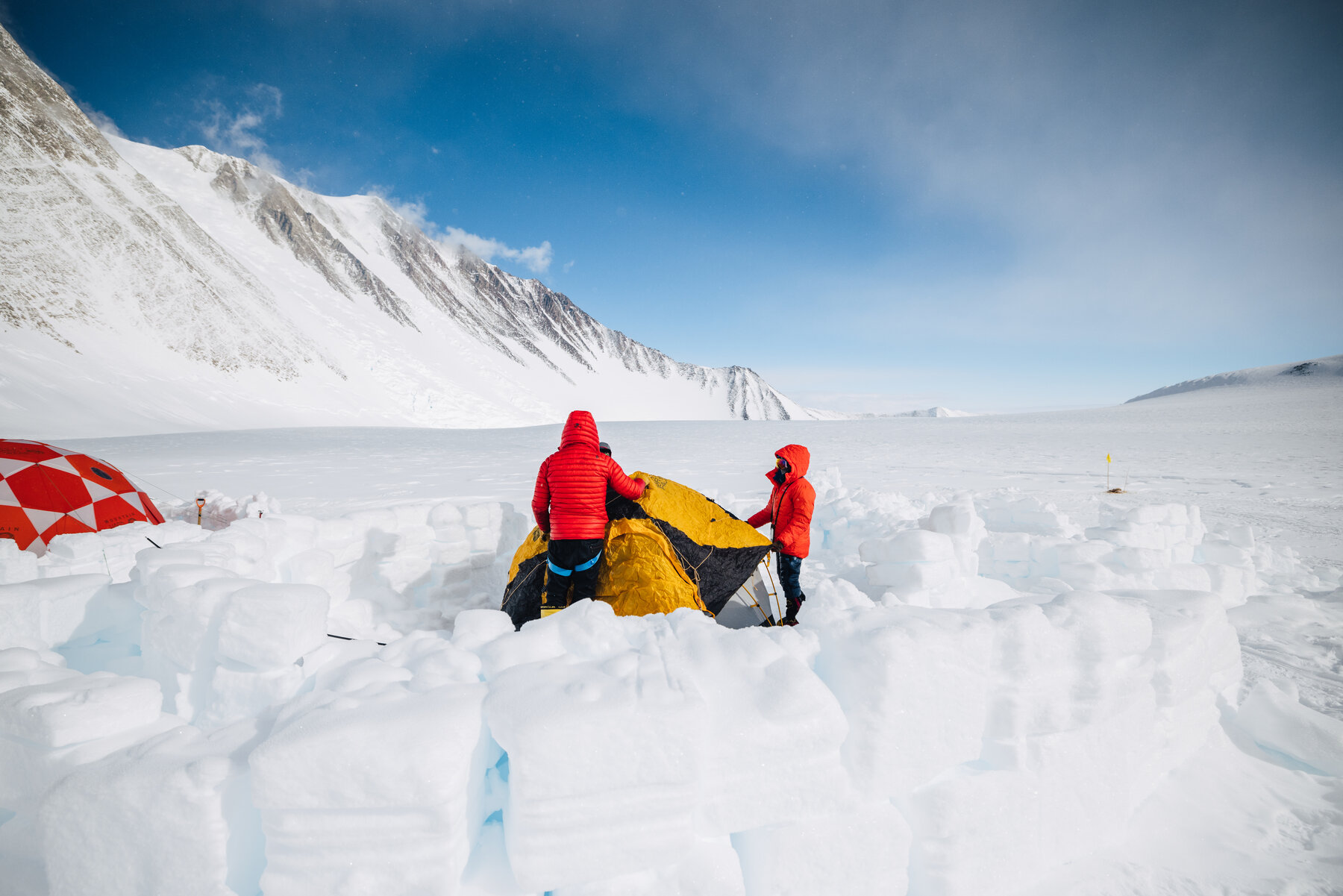
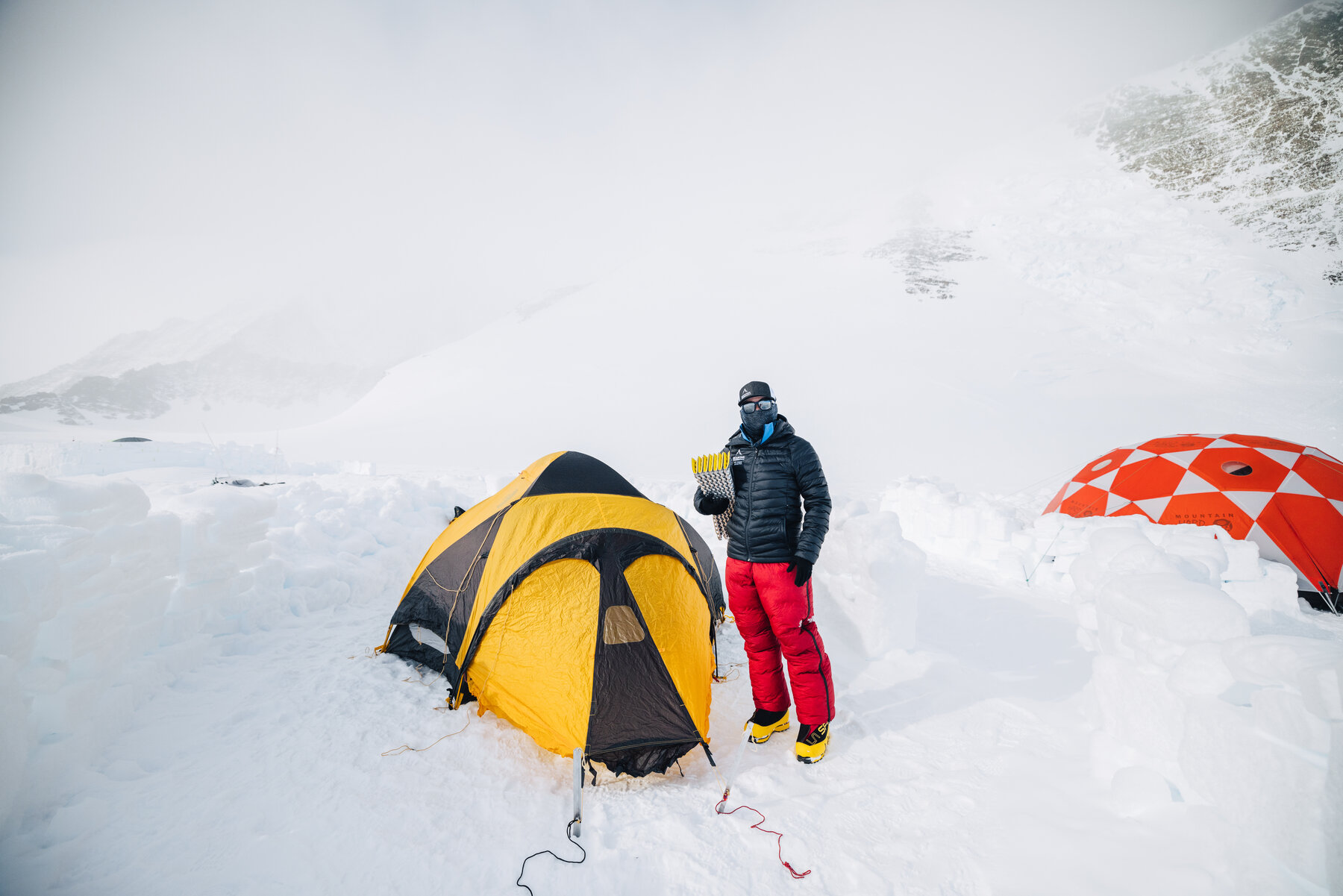
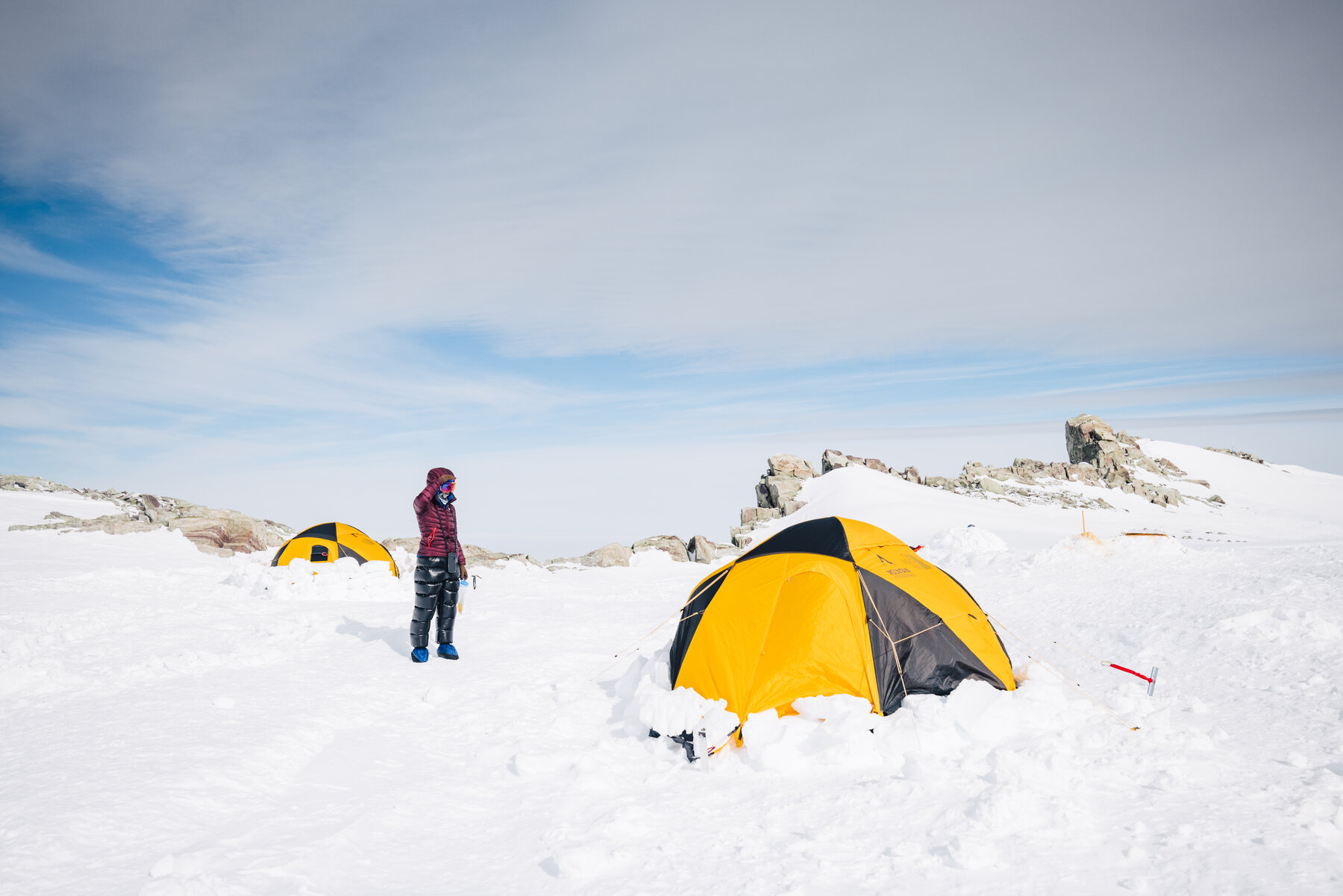
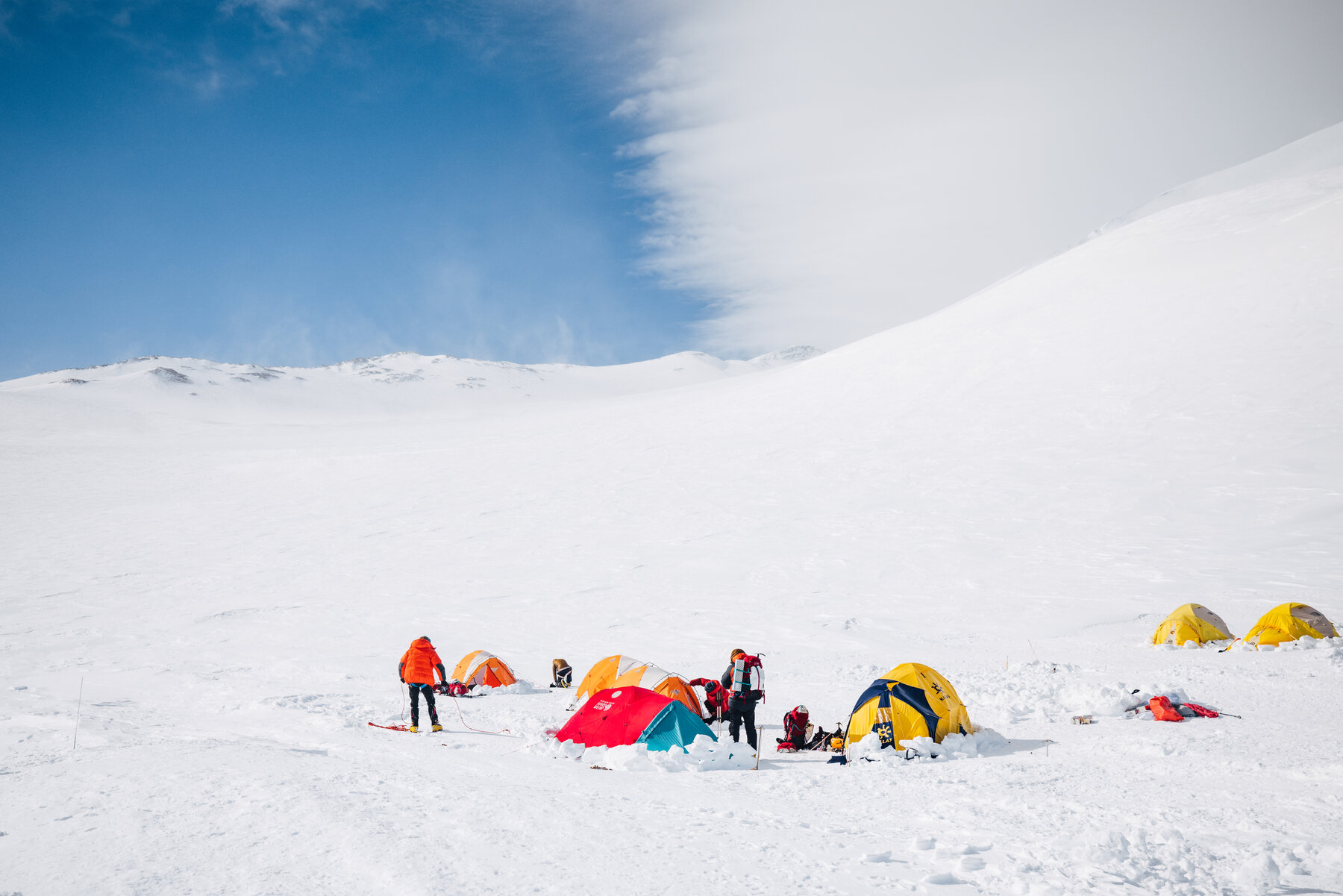
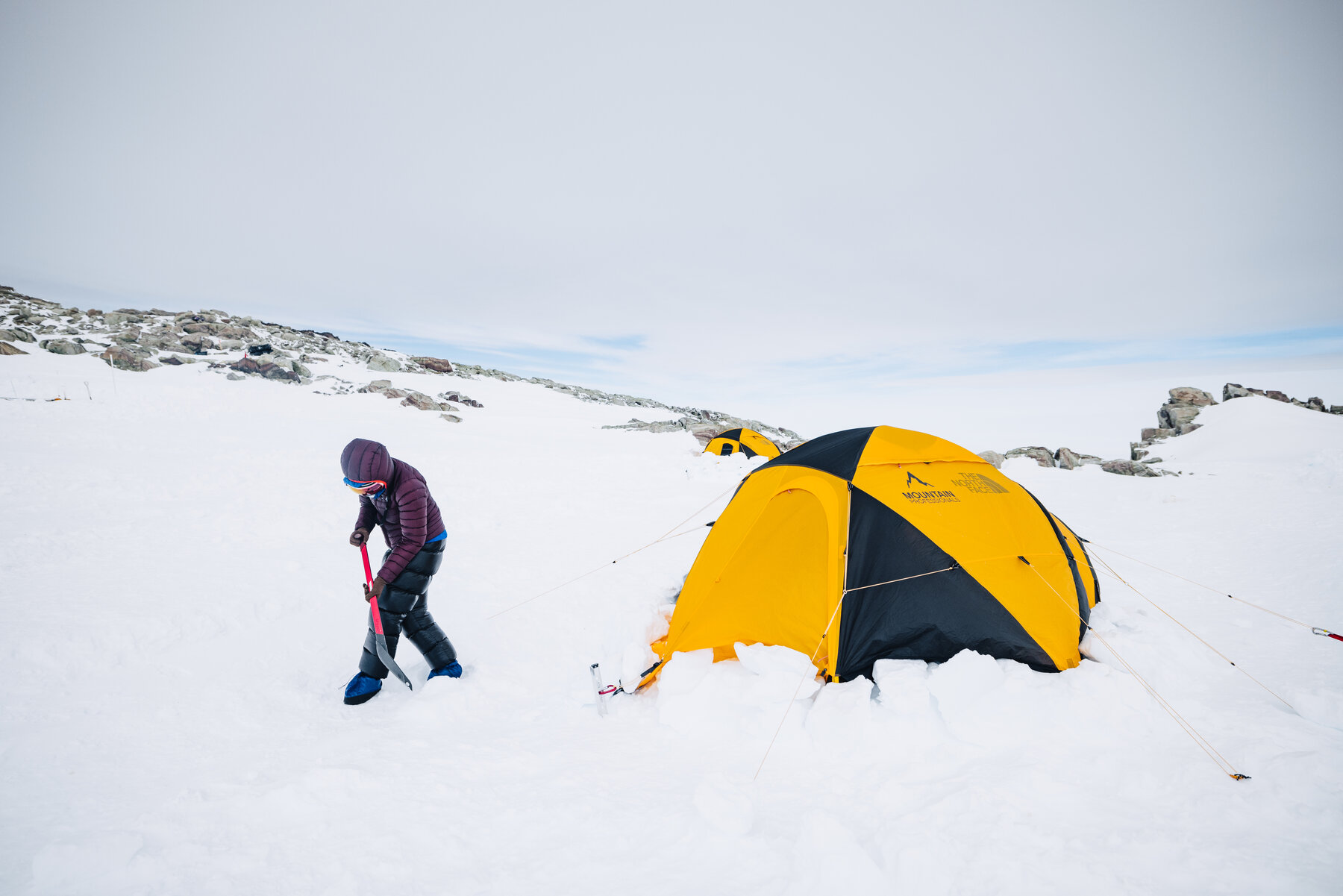
Pitching tents at Low Camp. You build snow-block walls around every tent to break the wind.Low Camp established. Yellow tent, red Mountain Hardwear tent, snow walls against the wind.
Day 4: The Fixed Lines to High Camp
January 2022 · Low Camp (2,750 m) → High Camp (3,770 m / 12,400 ft)
The toughest day yet. Since 2006, a fixed rope to Vinson High Camp has been set up each season, running up the left-hand side of the west face. Climbers face 1,020 meters of elevation gain on 45-degree slopes with a heavy pack. The weather forecast arrived via radio at 11 AM, and today's report predicted partly sunny skies, light snow, and variable winds. If all went well, summit day would be the following day.
Starting up the west face. Over a thousand meters of elevation gain ahead, one step at a time.
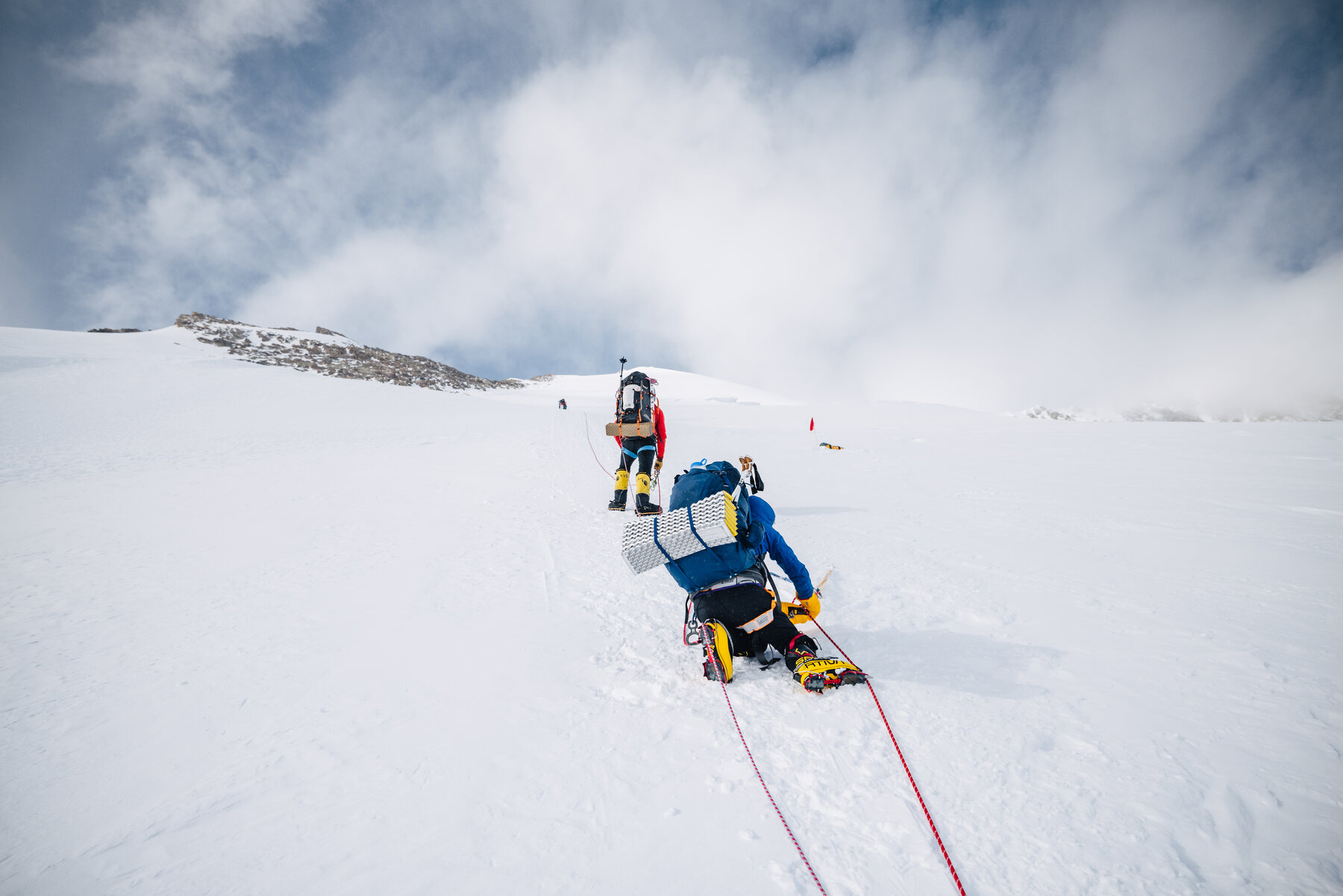
Everything sounded favorable after the radio call, so we packed everything up at Low Camp and cached our sleds. Everything we needed for High Camp and Summit was stuffed into our packs. On the fixed lines, we fell into a rhythm: two or three breaths, then a step. We occasionally switched the ascender between our right and left hands to balance the effort. We made it to High Camp in five hours, and it was arduous. But we felt strong and ready to keep moving up the mountain.
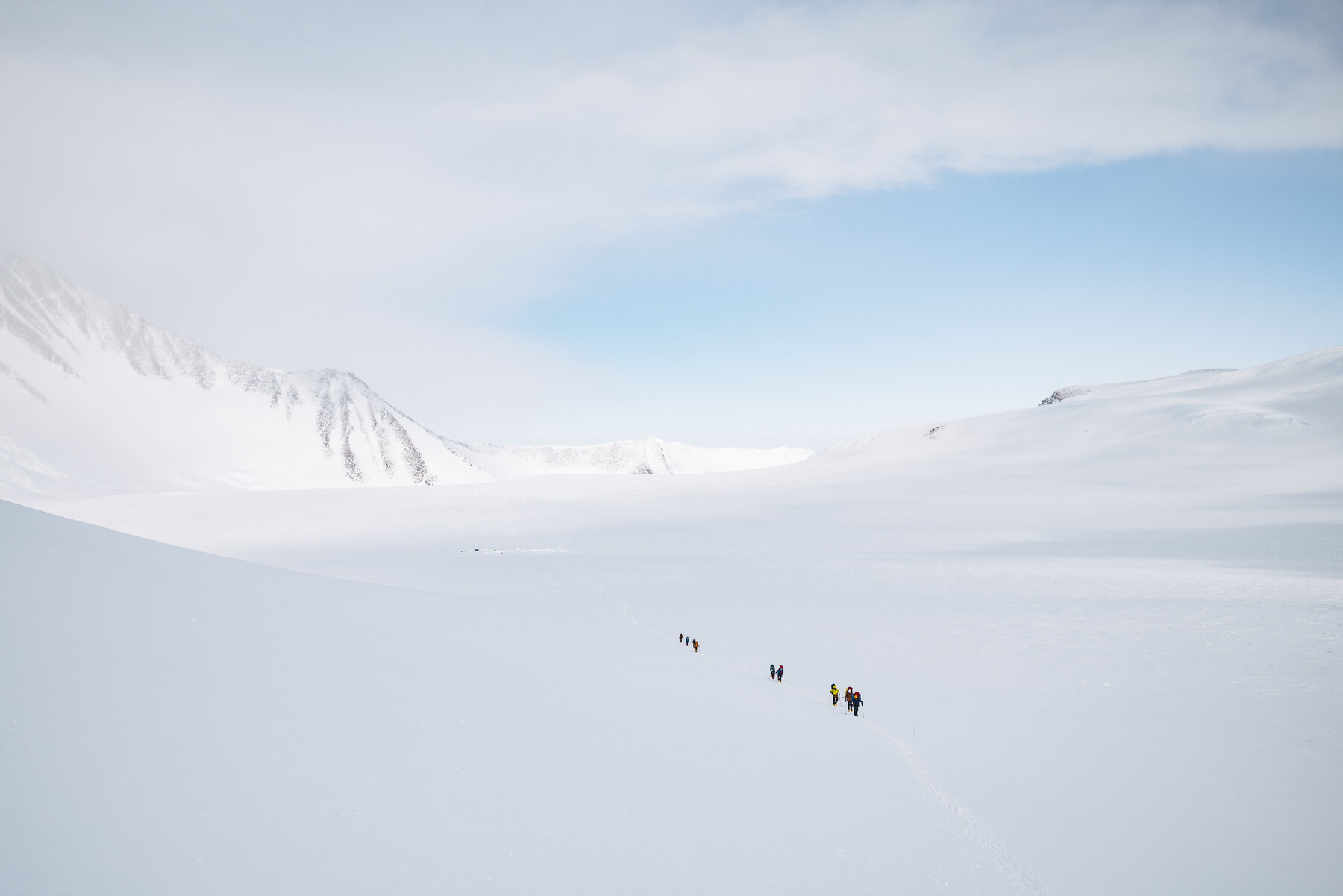
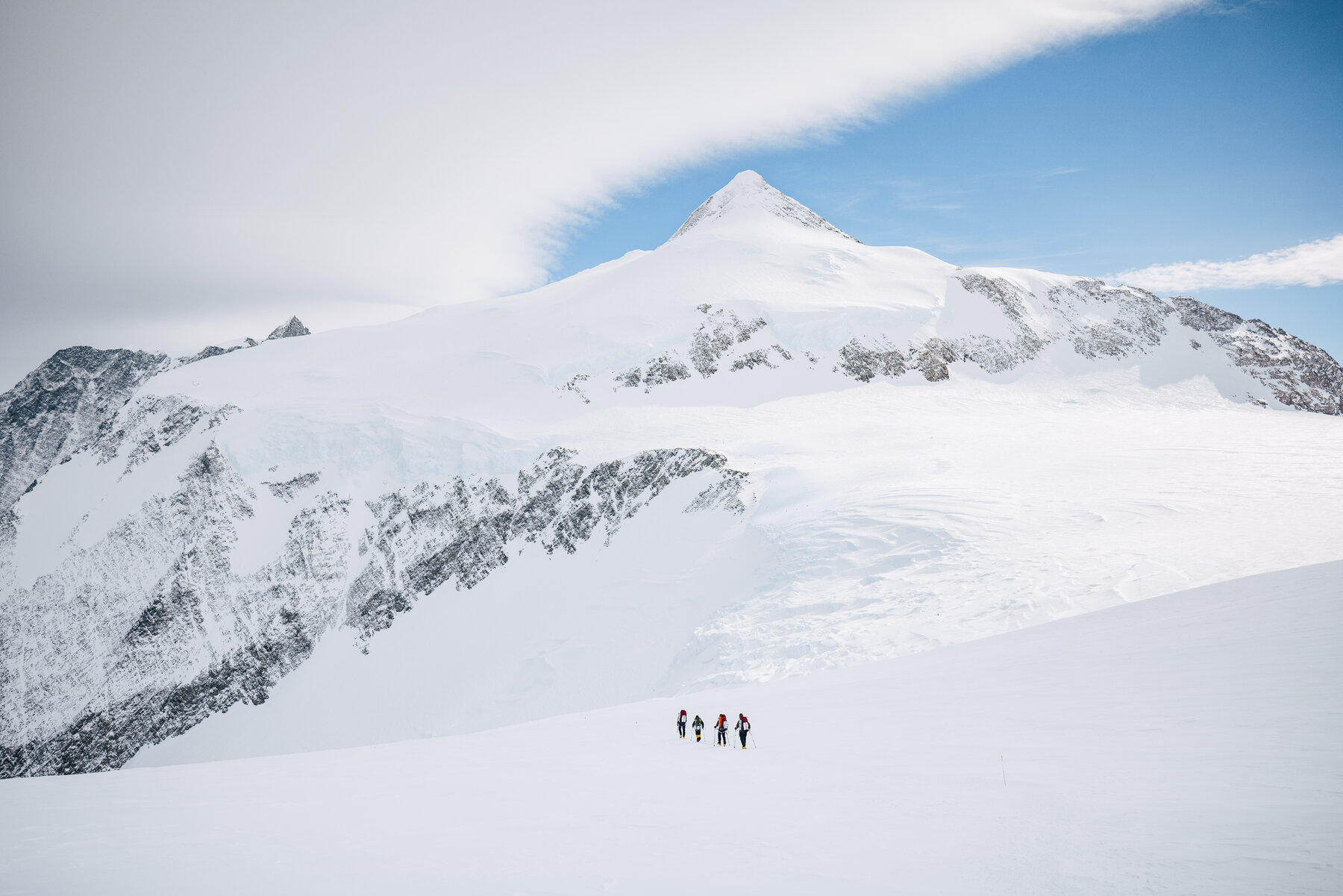
The team crossing the glacier. Tiny dots on an enormous white canvas.Clipped in and climbing. The ascender is your lifeline on slopes this steep.
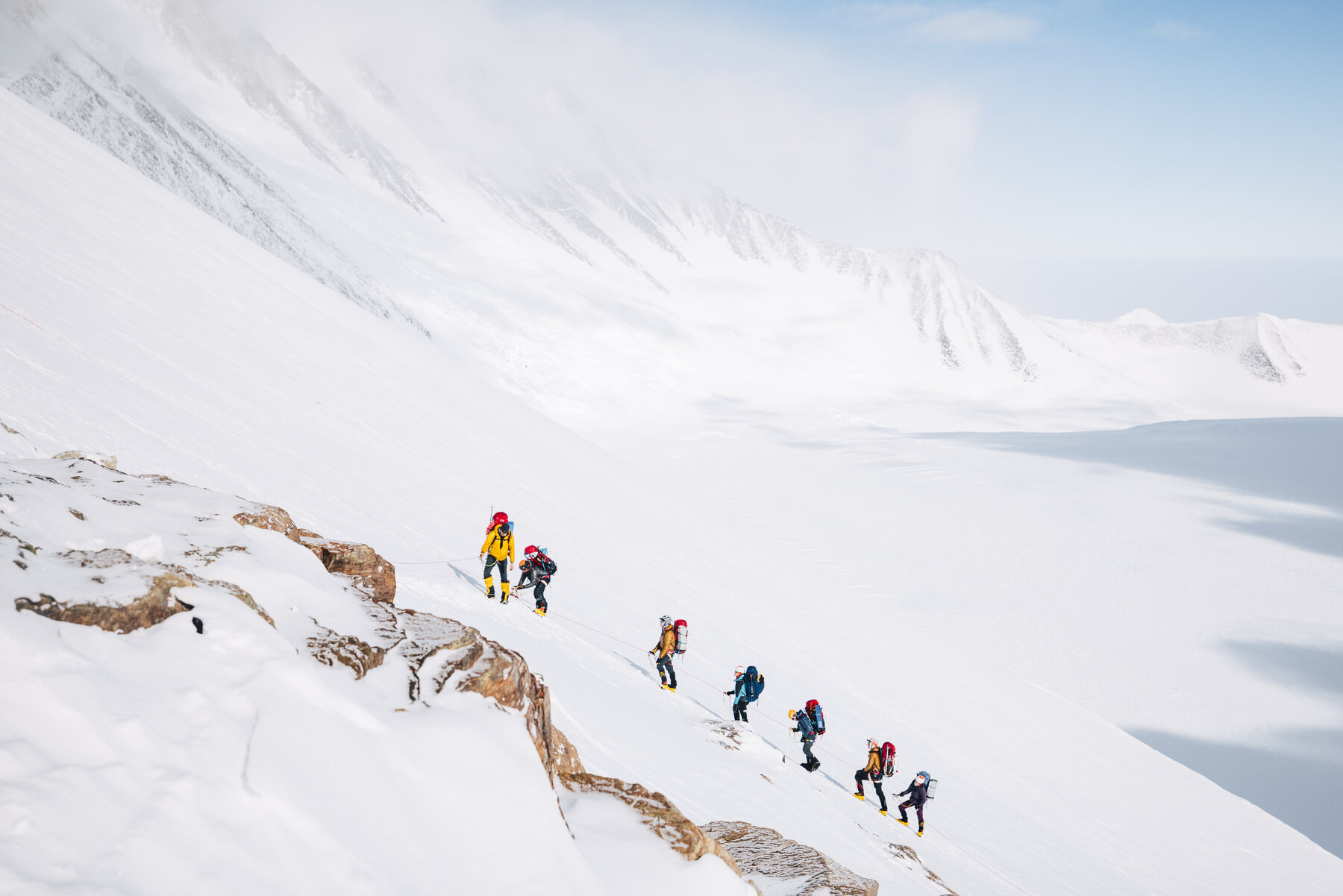
The team strung out on the fixed lines. Everyone finding their own rhythm.Looking back down the west face. The glacier far below, High Camp somewhere above.
Altitude portrait. The cold and effort written on every face, but the determination is unmistakable.
Thumbs up on the upper west face. The glacier is a long way down now.Arriving at High Camp at 3,770m. Yellow tents, scattered rocks, the wind-sculpted plateau.
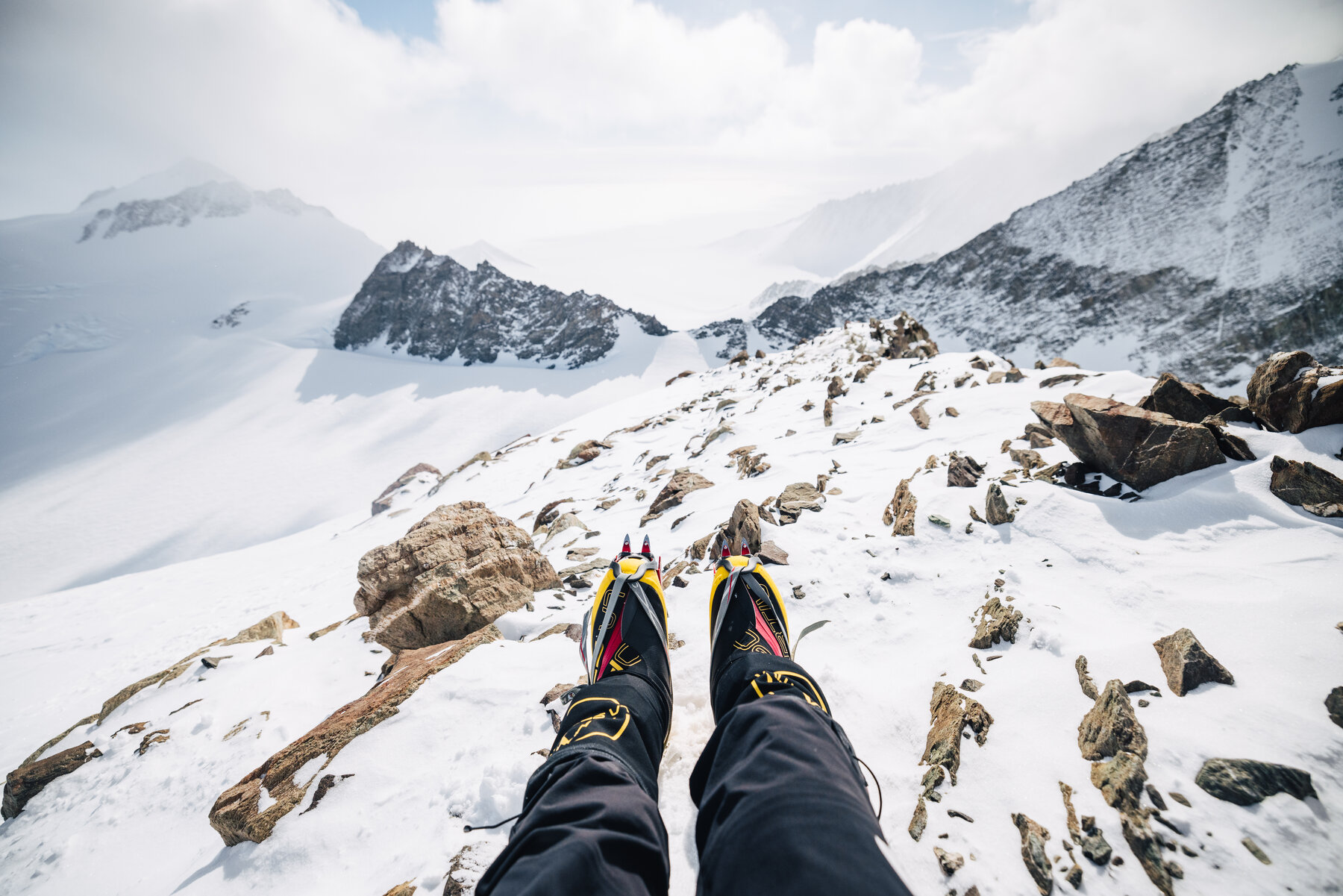
High Camp at 3,770m. The snow pyramid behind is what we'll attempt next.The view from your boots. A rest stop on the rocky ridge above the glaciers.
Days 5–8: Pinned at High Camp
January 2022 · High Camp · 3,770 m / 12,400 ft · −50°F wind chill
Hit by a 90 km/h storm high on the route, we had to turn around halfway on Day 5, our first attempt. It was a devastating blow — to be denied the summit as the predicted forecast took a turn for the worse. In the mountains, the weather can change any second, and you must let go and be patient.
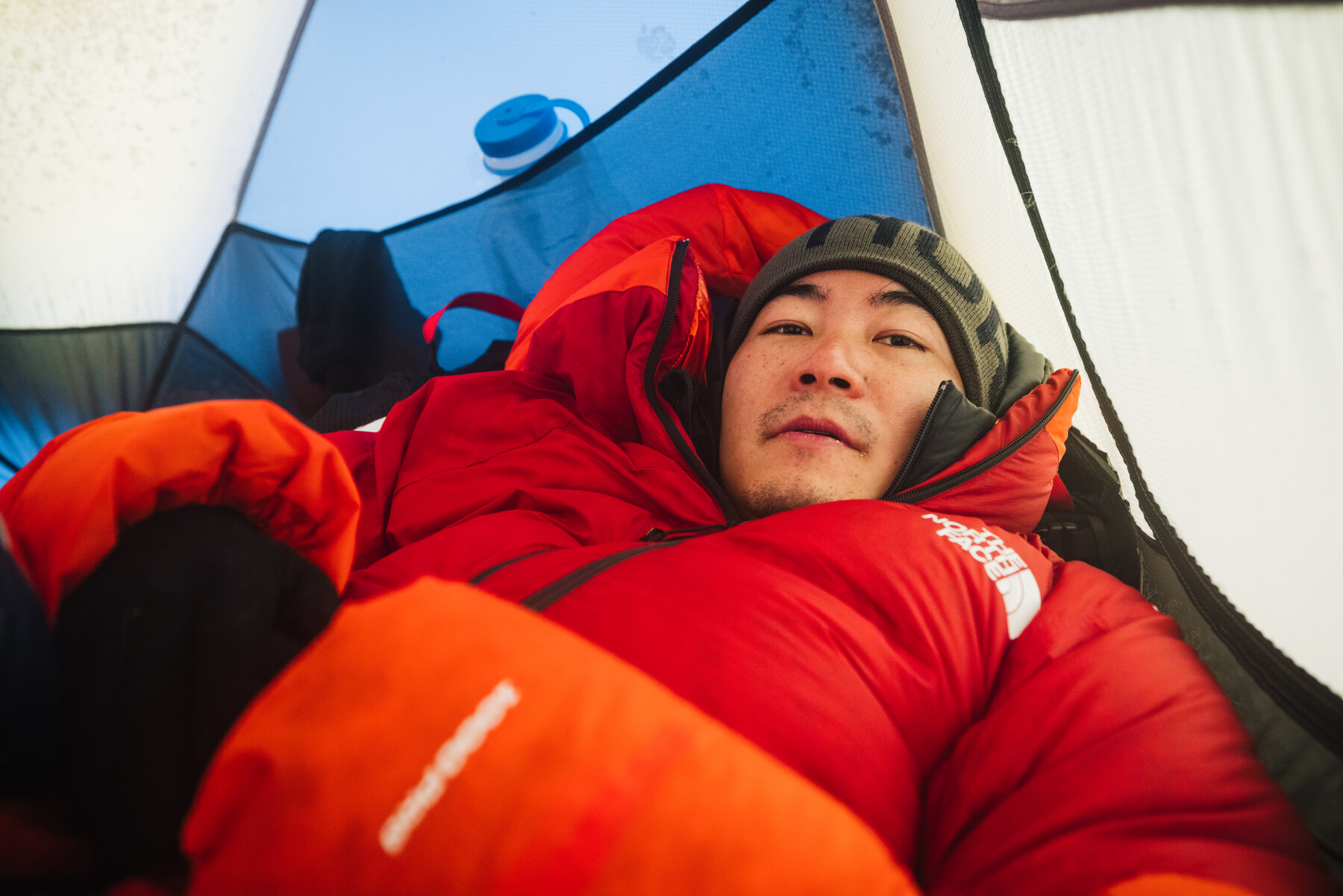
Inside the tent at High Camp. Four storm-bound days of waiting, resting, and staring at the ceiling.
When the wind picks up and the weather turns bad, it feels lethal. It's hard to do anything without risk of frostbite, especially using the outdoor bucket toilet. It's hard to sleep as the winds constantly shake the tent and you feel like you'll blow off the mountain at any moment. Our original plan was to spend only a single night at High Camp before the summit attempt, so we weren't prepared mentally for the next five nights.
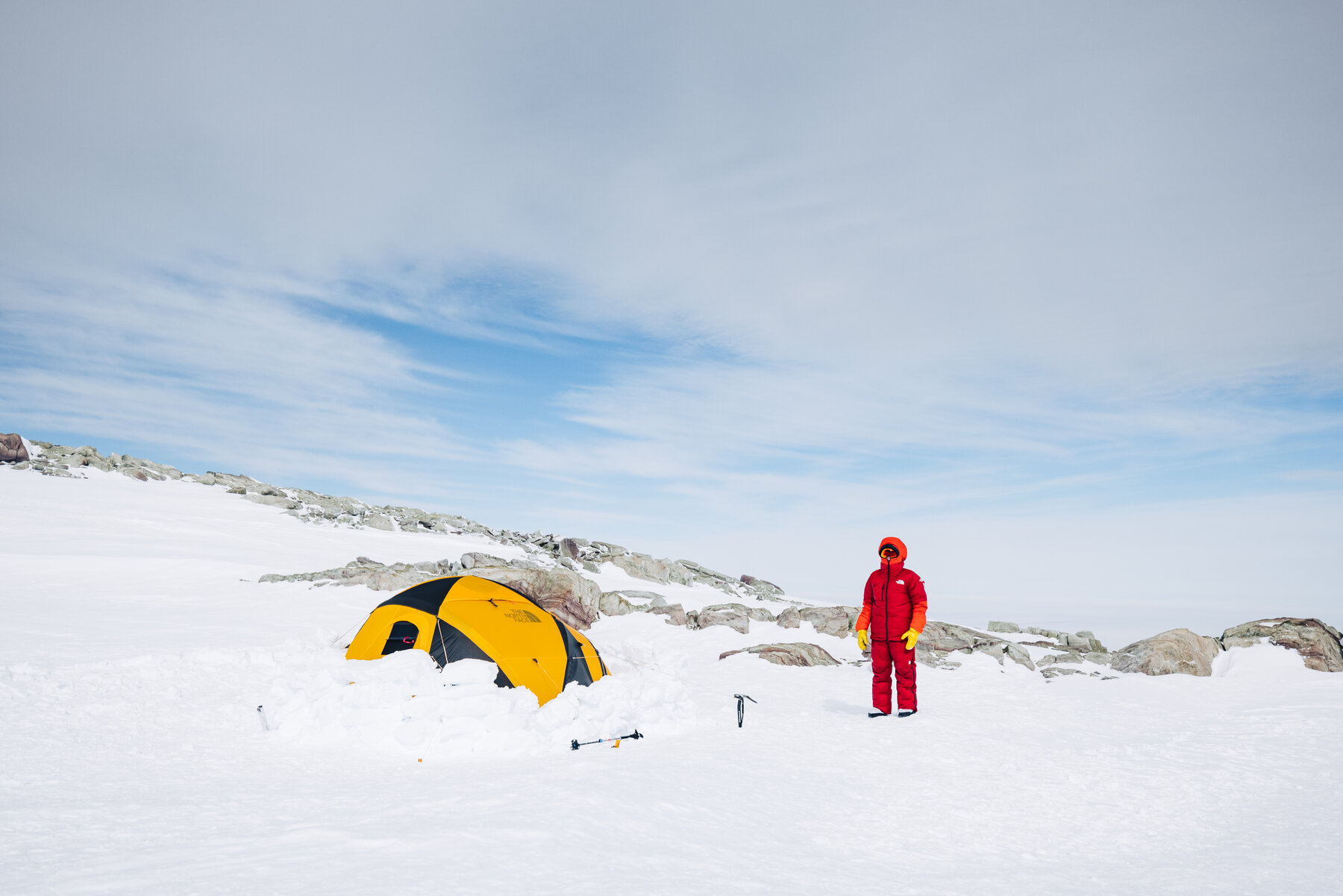
Camp beneath the slope. So close, yet completely out of reach when the weather says no.Standing outside the tent at High Camp. Rocky outcrops and endless white in every direction.
It was one of the greatest mental struggles and acts of patience we've ever experienced. At 3,770 meters, High Camp is quite exposed, and temperatures at times reached minus fifty degrees Fahrenheit. There wasn't much to do except lie in our tents covered in our sleeping bags and wait for time to pass. Or listen to an audiobook, watch a show — thank goodness for offline downloads.
There were moments when the weather was calm, so we went outside to build snow walls and take photos. With time running out before our scheduled flight out of Antarctica, our summit window was also shrinking. Whatever happens, happens. Hoping for the best, but also prepared for the worst.
Roped together on our first attempt, before the storm turned us around. The steepness and the altitude make every step count.A brief clearing between storms. The frozen continent revealing itself for a moment.
Digging out after the storm. The wind buries everything if you don't stay on top of it.
Day 9: The Summit
January 2022 · High Camp → Summit (4,892 m / 16,050 ft) · 10 hours round trip
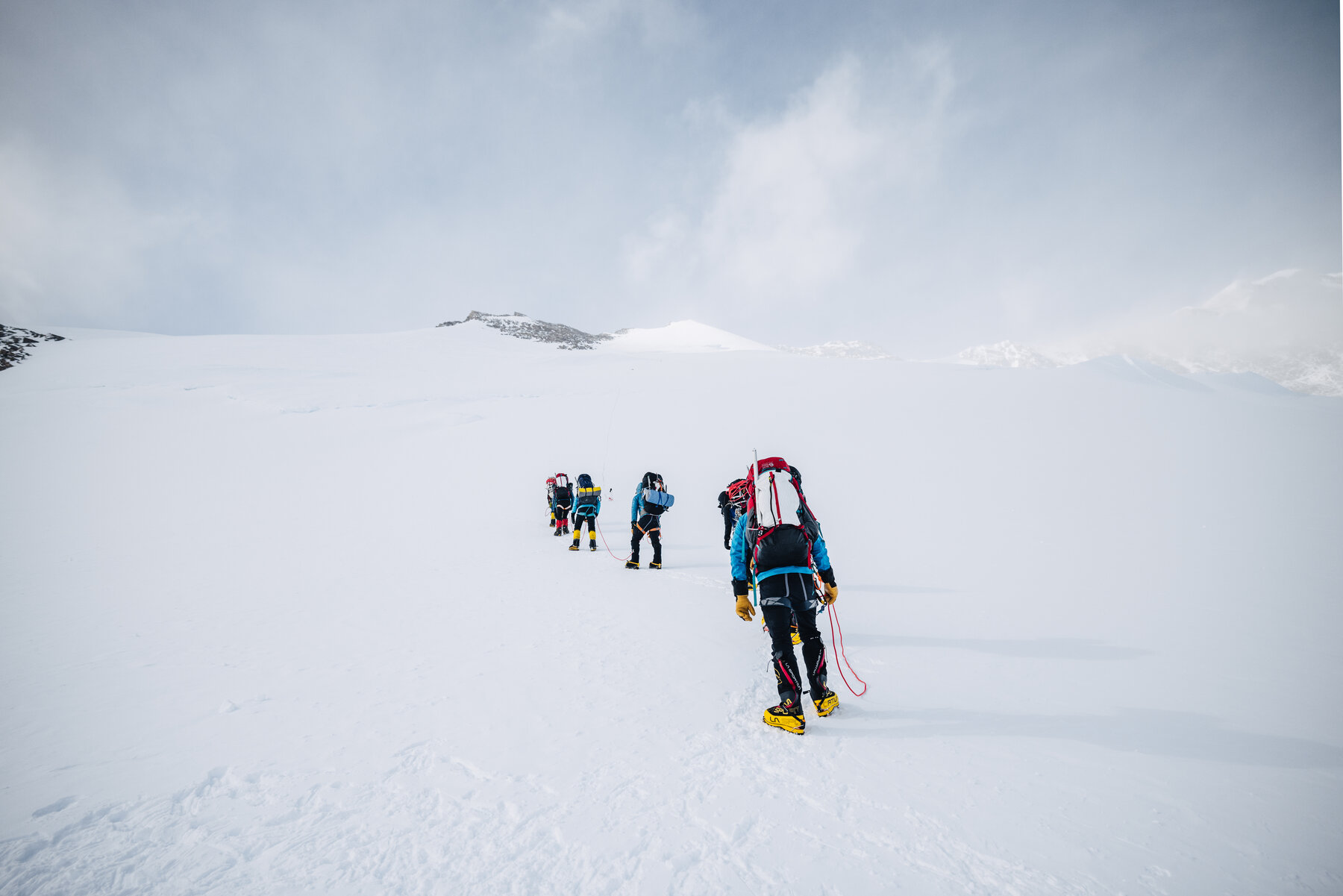
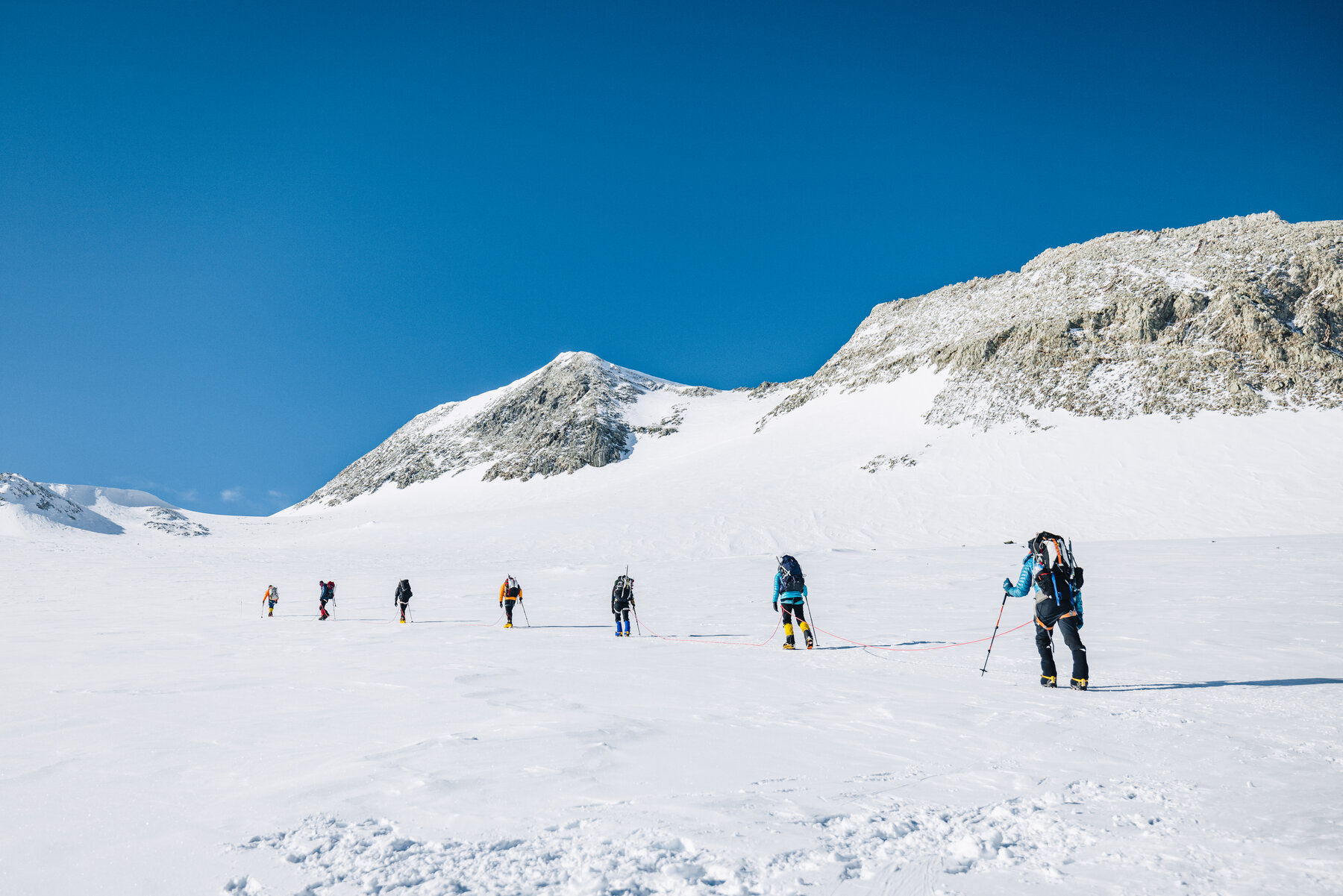
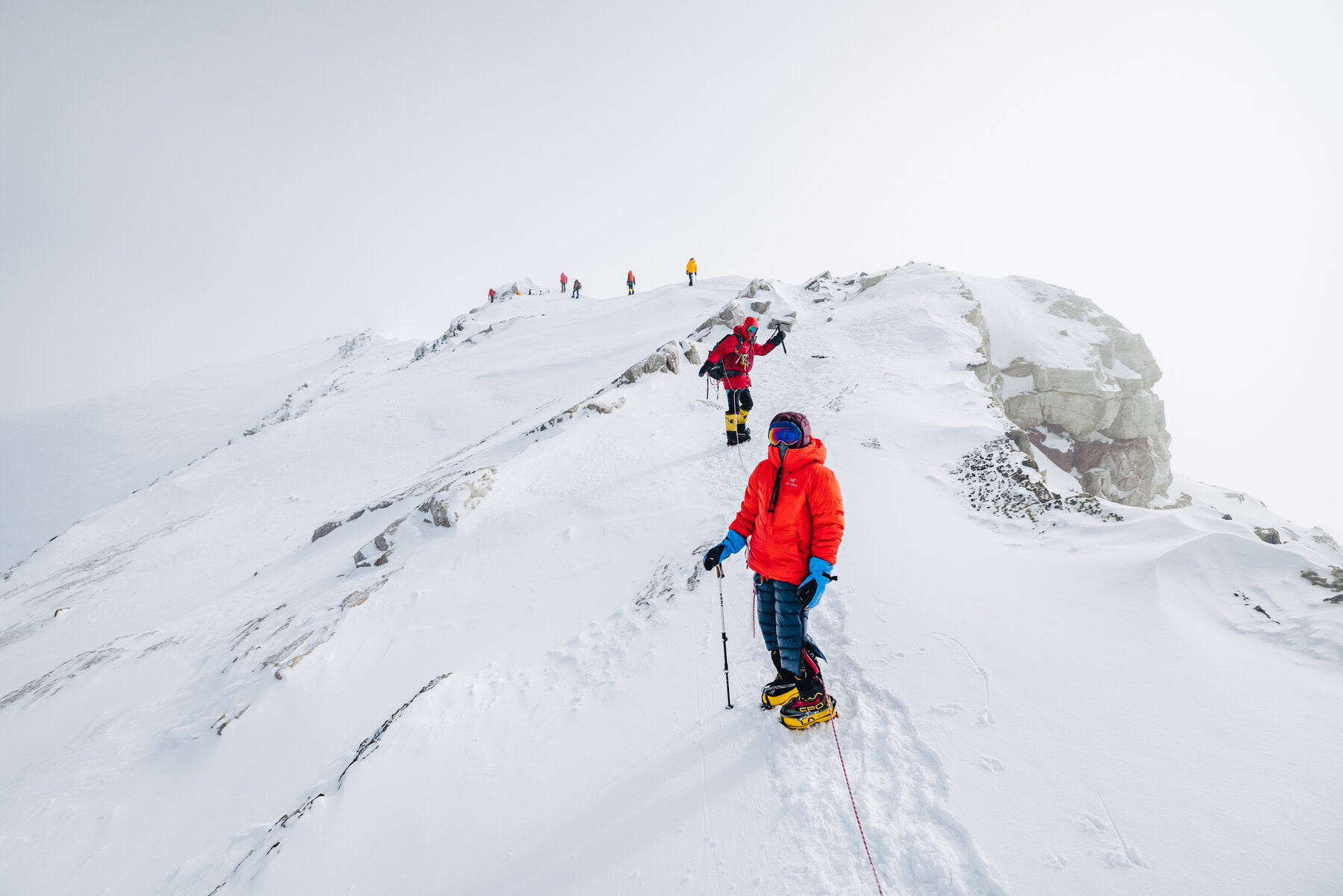
After four long days stuck at High Camp, we were finally gifted a brief summit window. It was our last shot at making it to the top, and after a long period of rest, we were more than ready. Roped up, we began the ten-hour day step by step up the glaciated valley.
Summit day. After four days of waiting, finally moving toward the top.
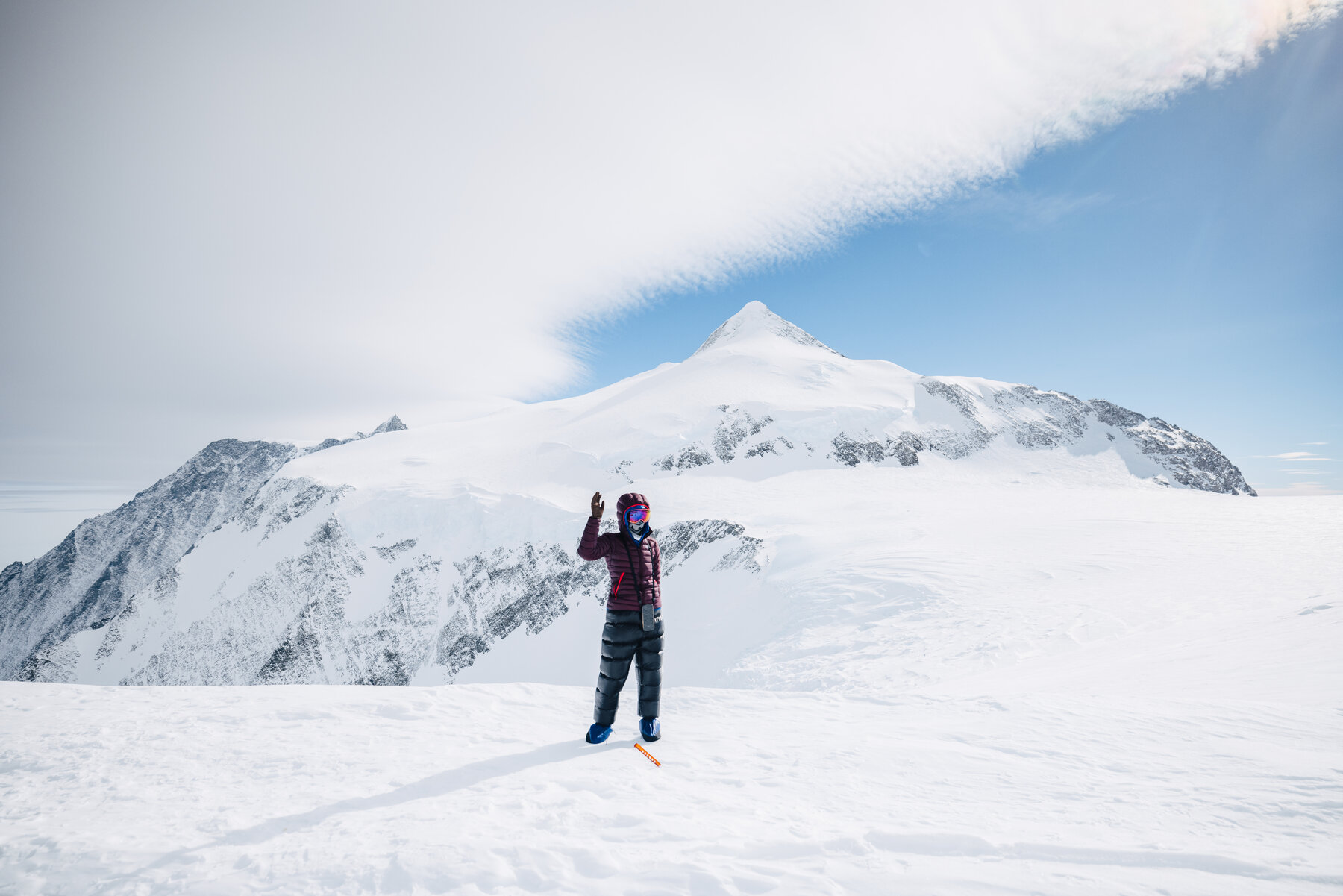
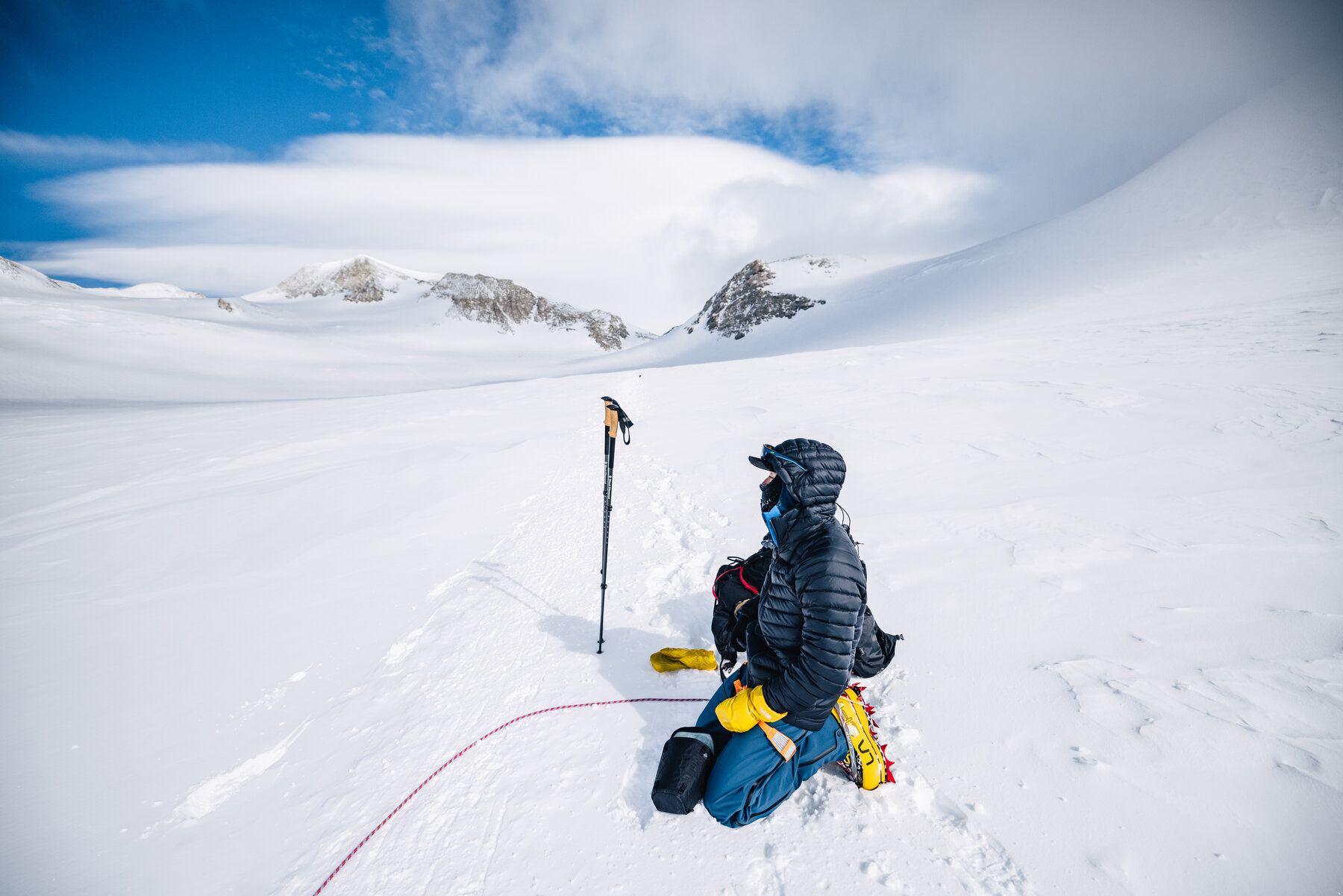
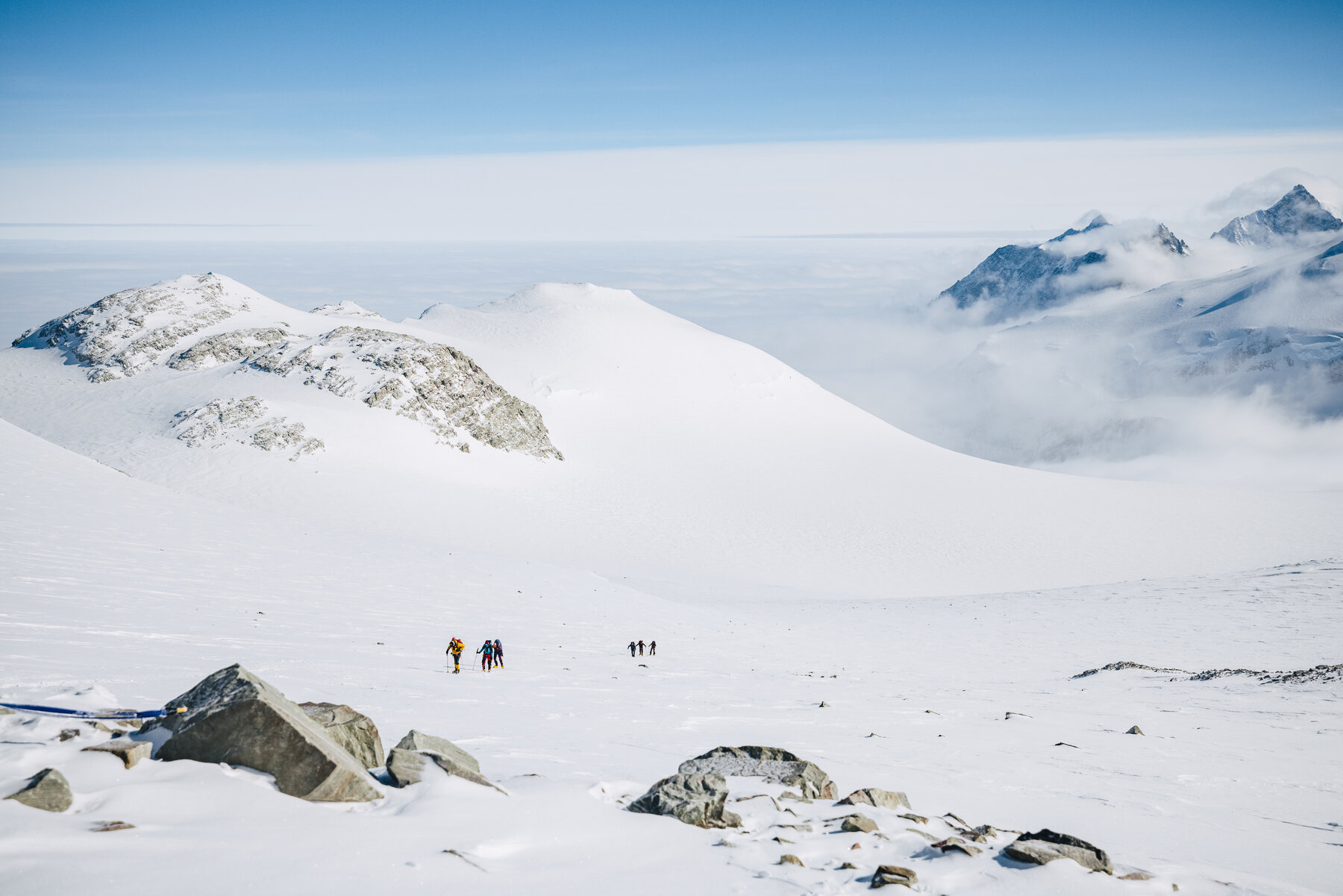
There are sub-peaks on either side of you, so it can be hard to tell which peak is the true summit. Eventually, we could see Mount Vinson off to the right, growing closer as we moved toward it. Everything felt wide and broad and expansive and quiet except for the heavy breathing. We were incredibly lucky — the weather was calm with very little to no wind.
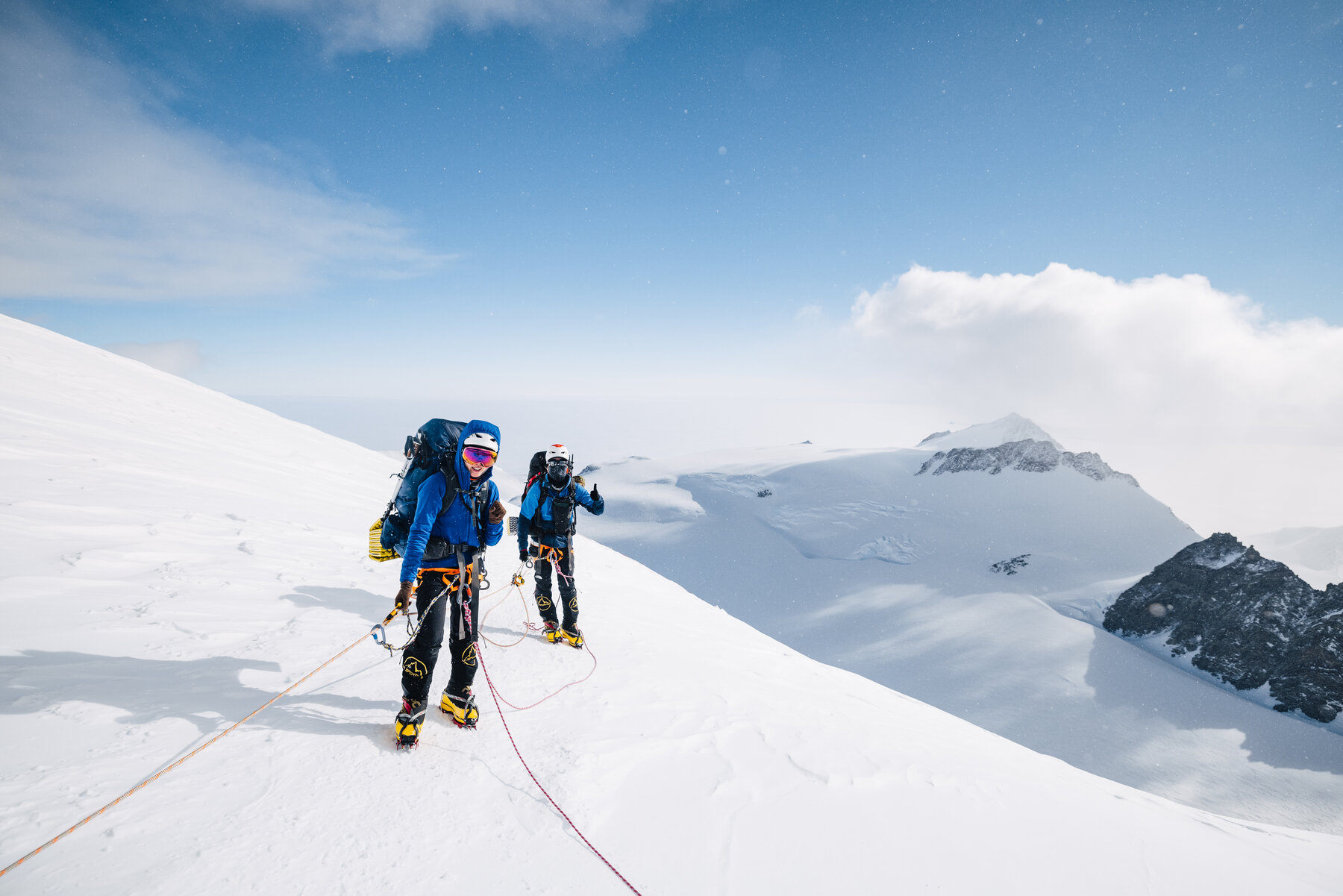
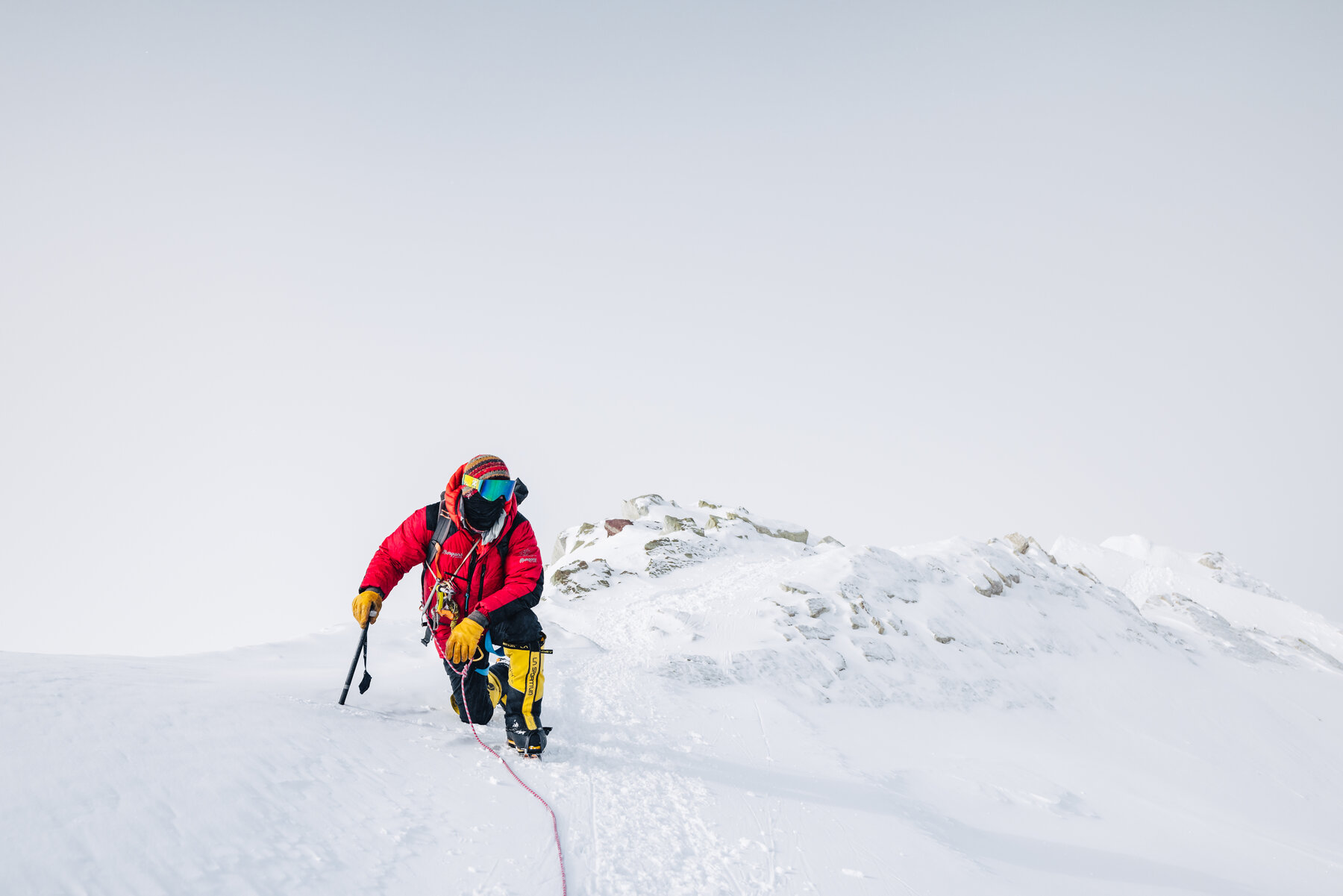
Roped in and climbing. The summit finally within reach after days of waiting.Moving through the glaciated valley. Sub-peaks flanking us on both sides.
Following the rope up the glaciated valley. Step by deliberate step toward the summit ridge.Walking above the clouds. Sub-peaks rise like islands as the team makes its way to the top.
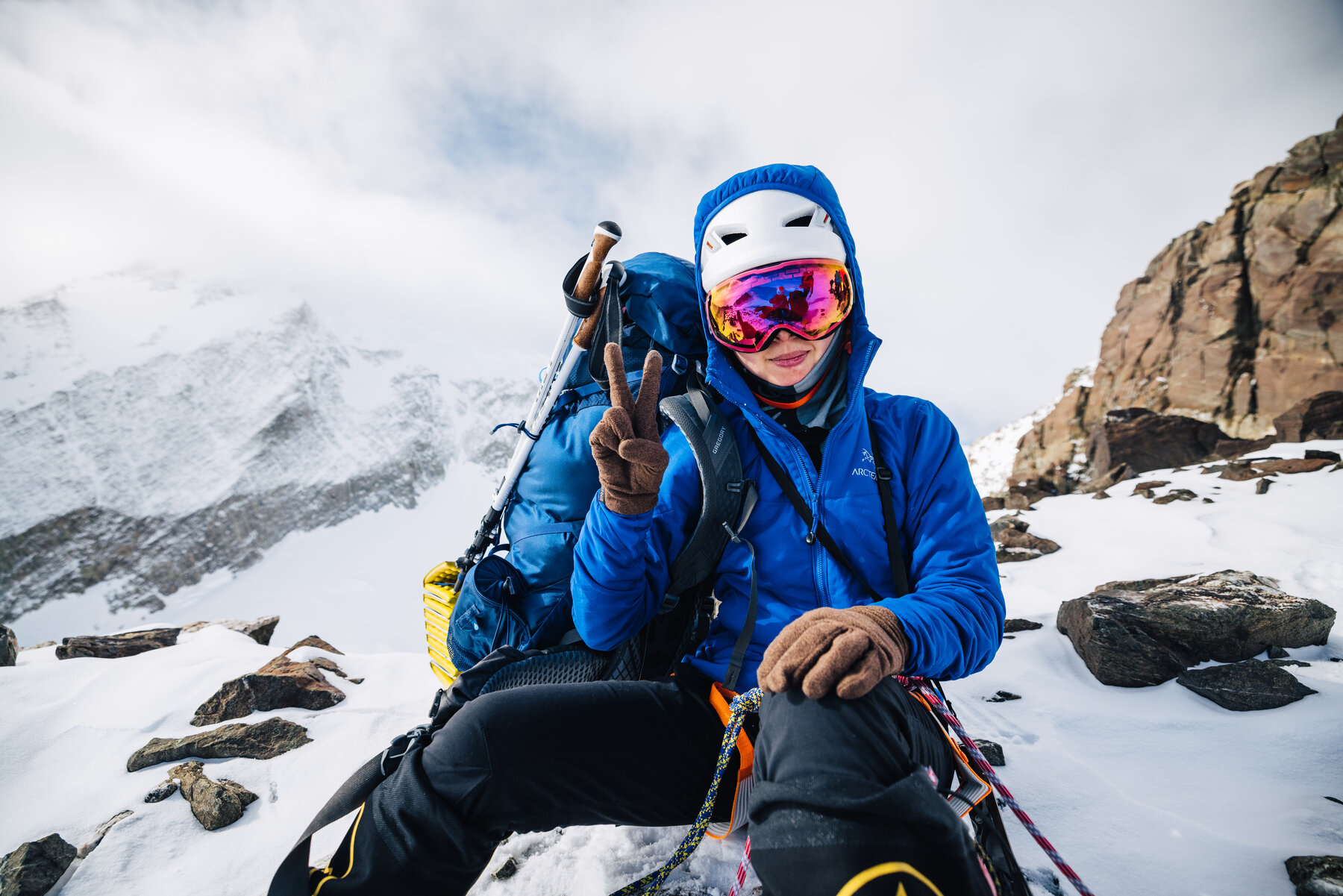
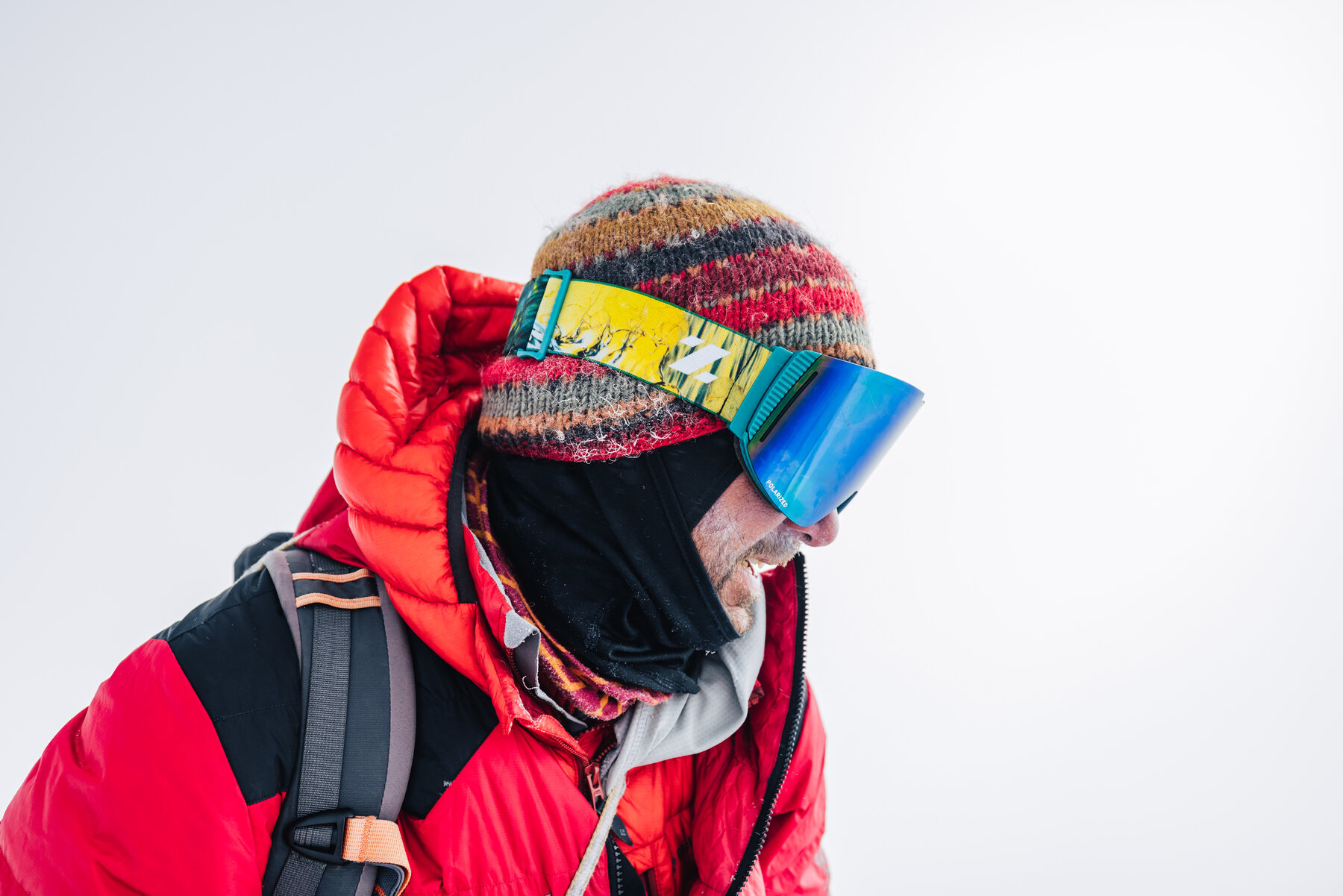
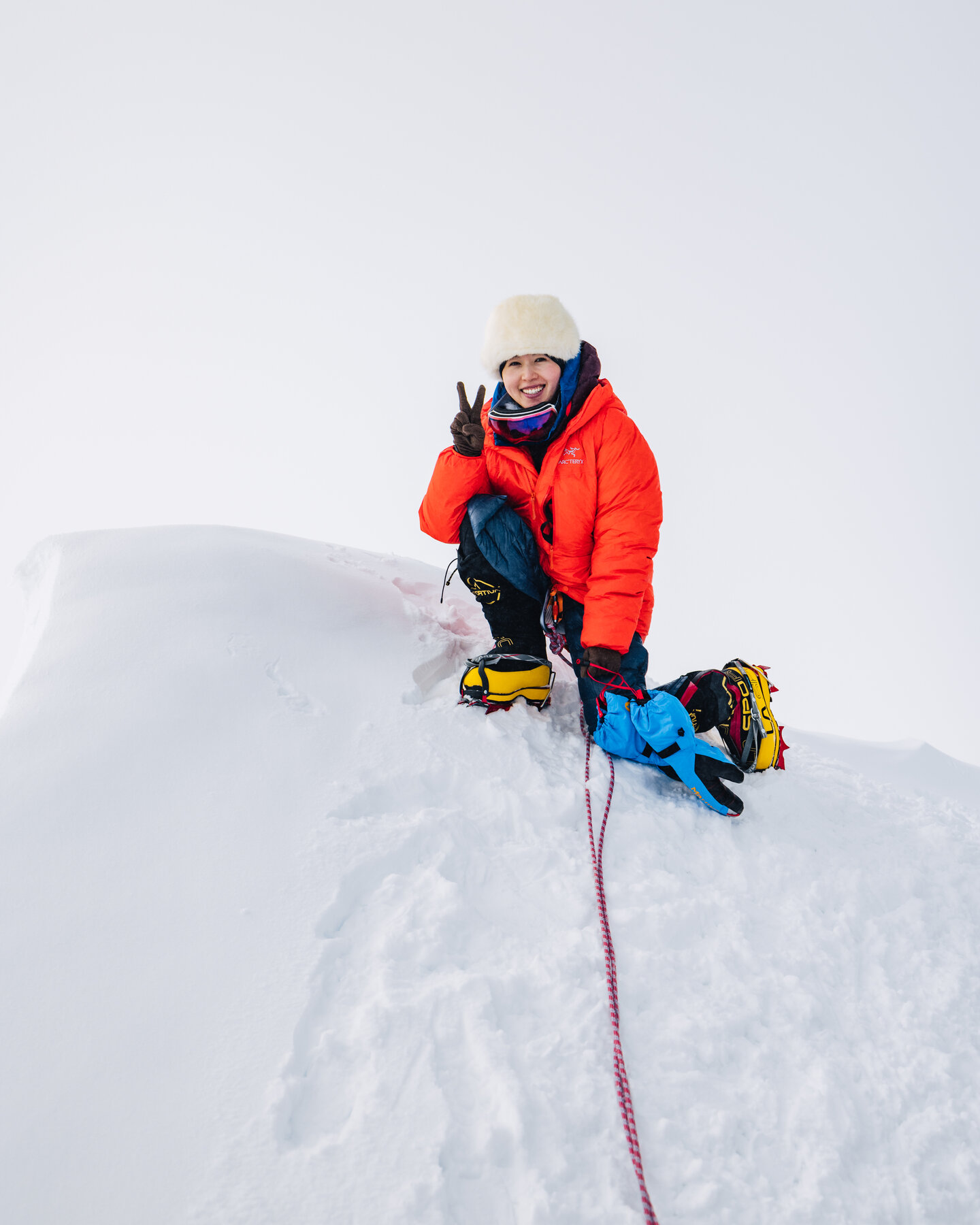
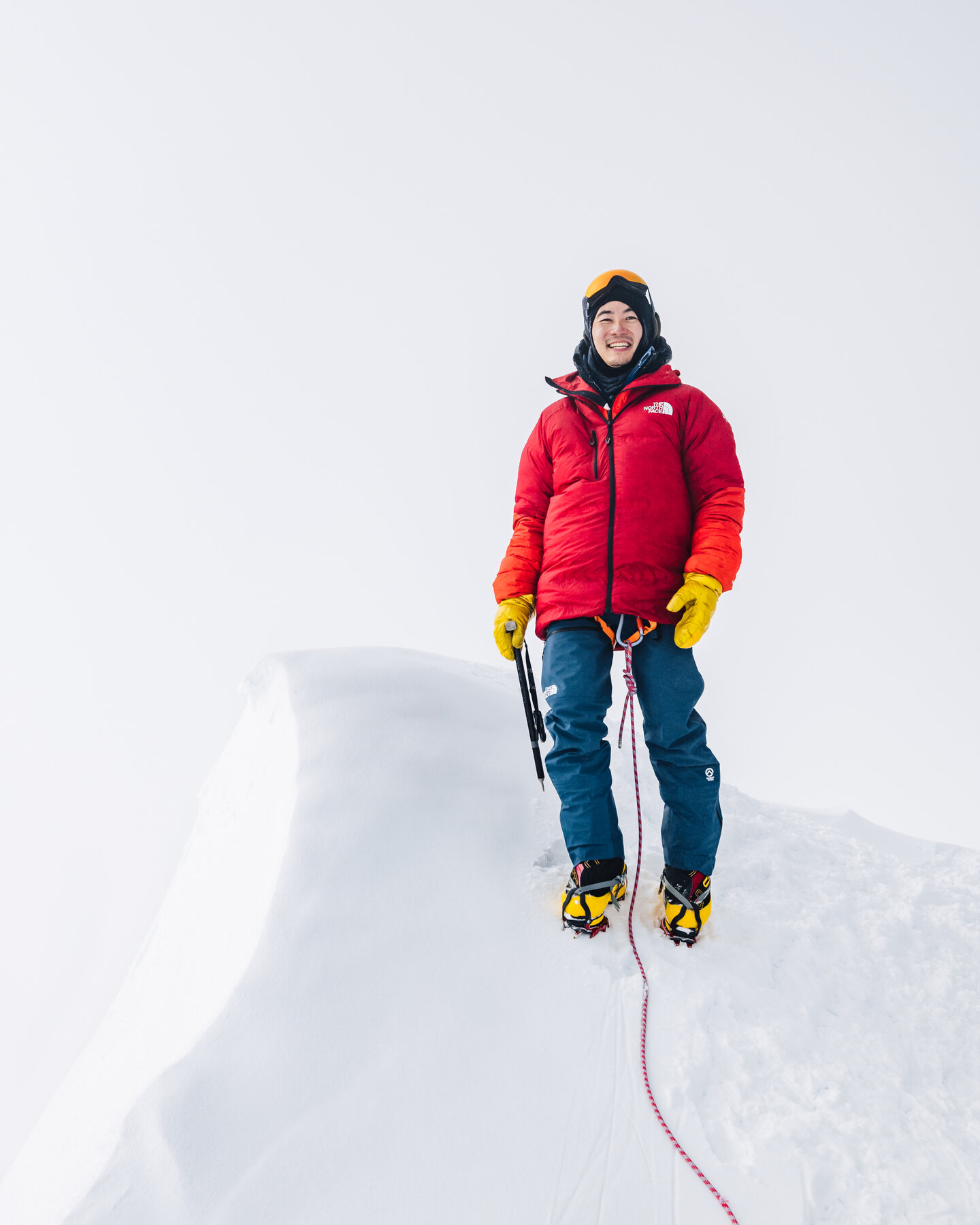
Summit-day portrait. Goggles, beanie, balaclava — every layer earning its place.Grace flashing a peace sign near the top. The white-out behind, the smile beneath the goggles.
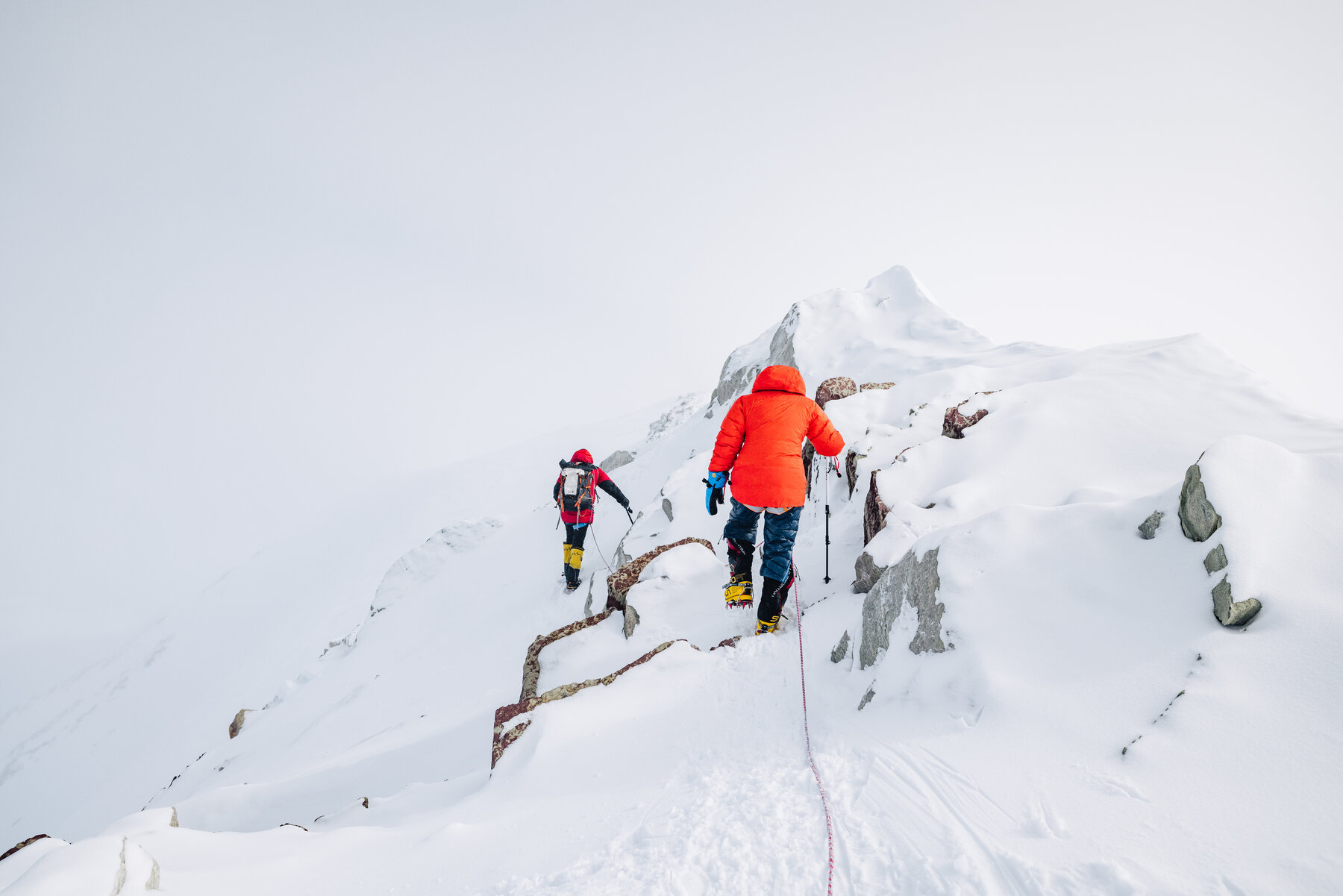
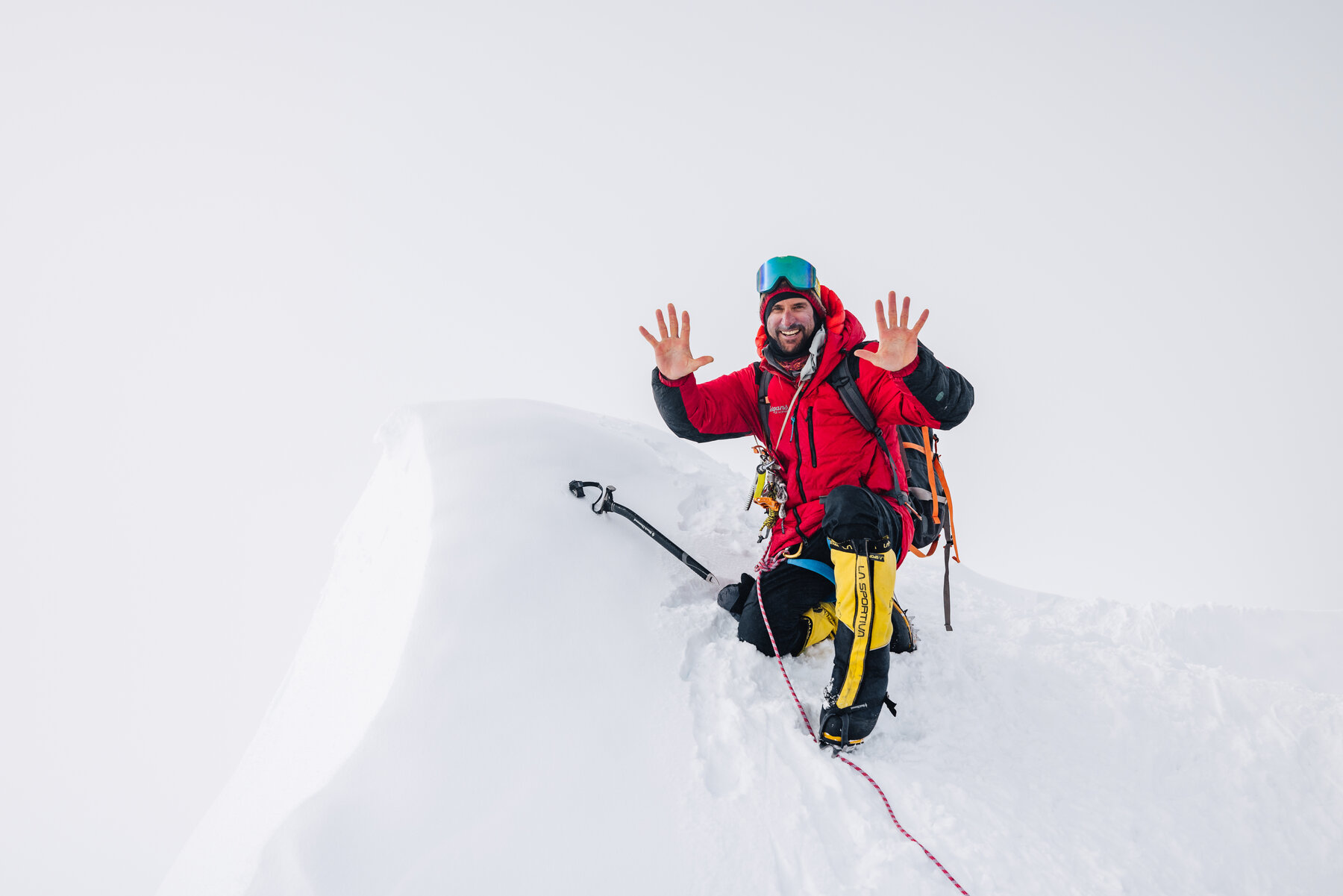
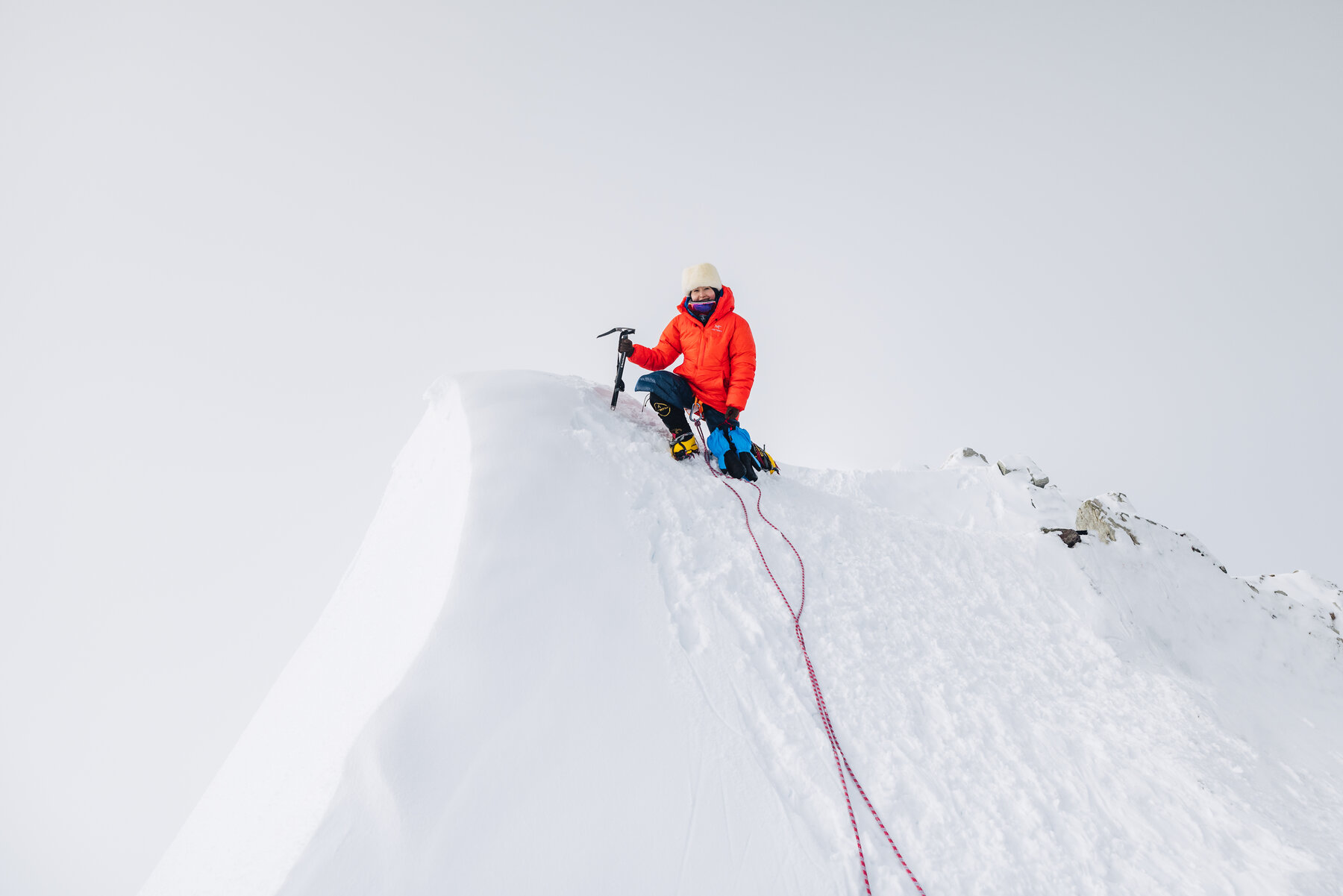
Cresting the rocky summit ridge. The final stretch before the highest point in Antarctica.A moment to kneel and take it in. The sub-peaks of the Vinson Massif spread out below.
4,892 m
Vinson Massif · The Highest Point in Antarctica
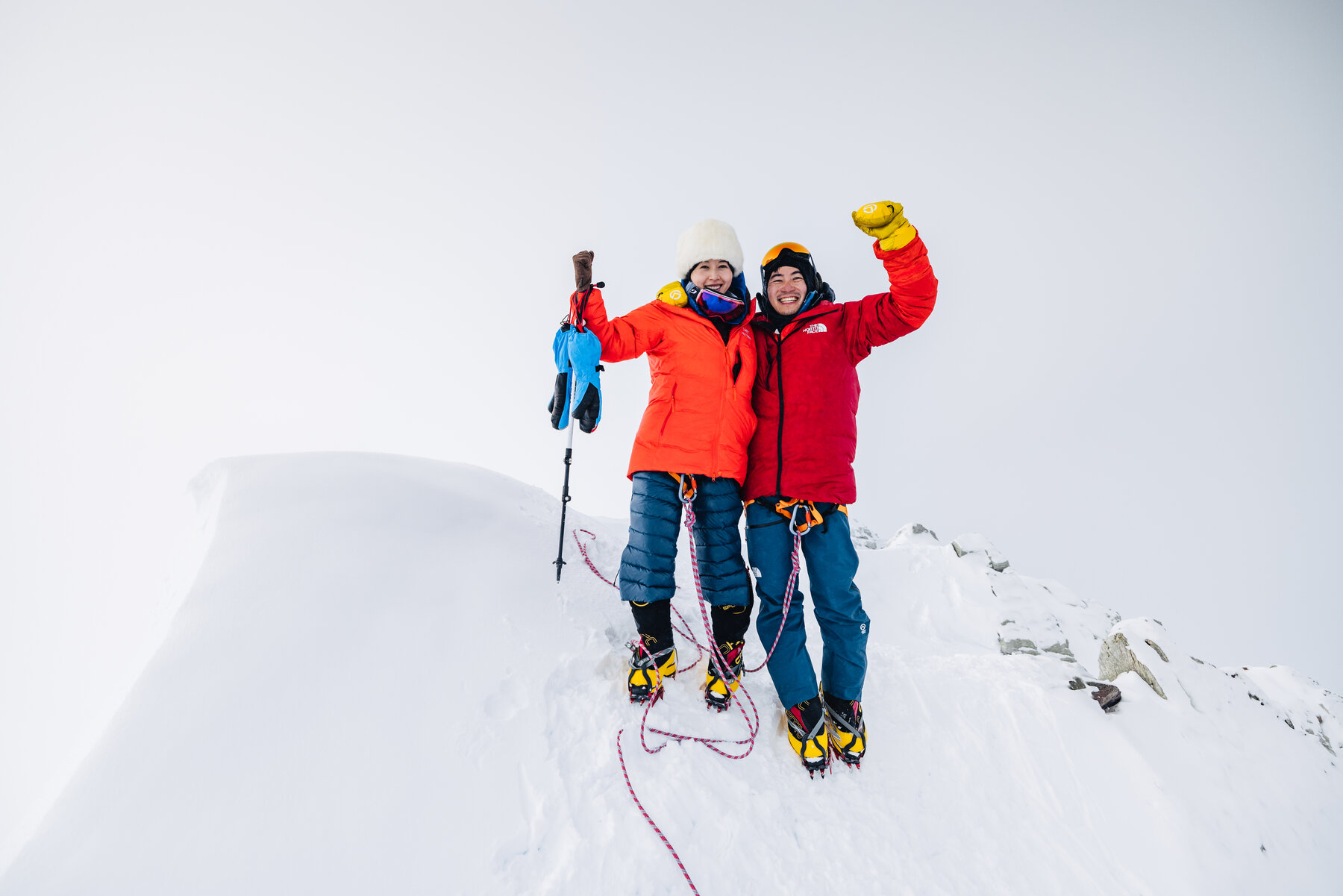
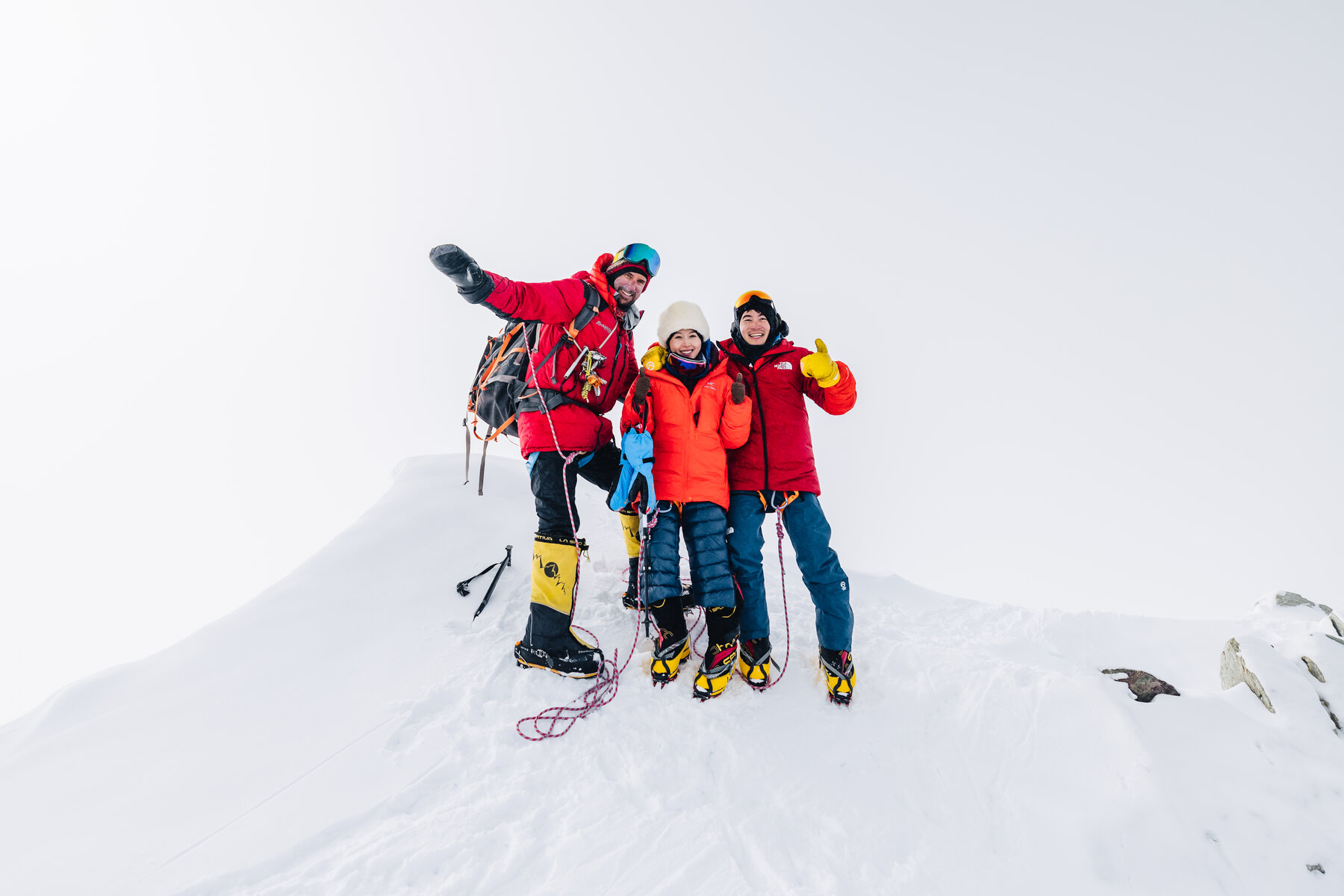
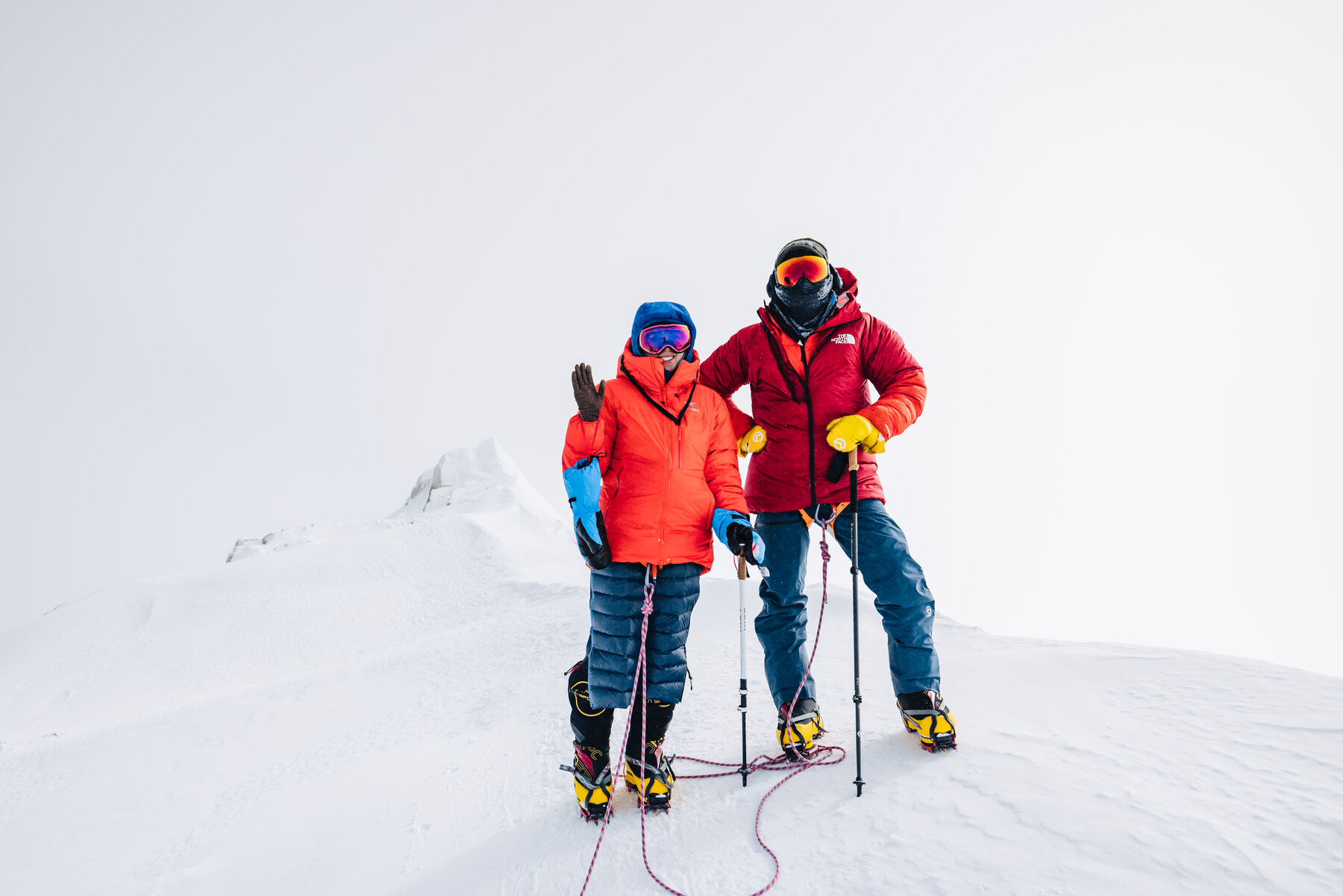
When we reached the rocky summit ridge, there was a thick layer of fog surrounding us. No views of the surrounding mountains, but we were elated to have made it to the top nonetheless. After a good forty-five minutes at the summit, we descended the ridge and made our way back to camp without incident.
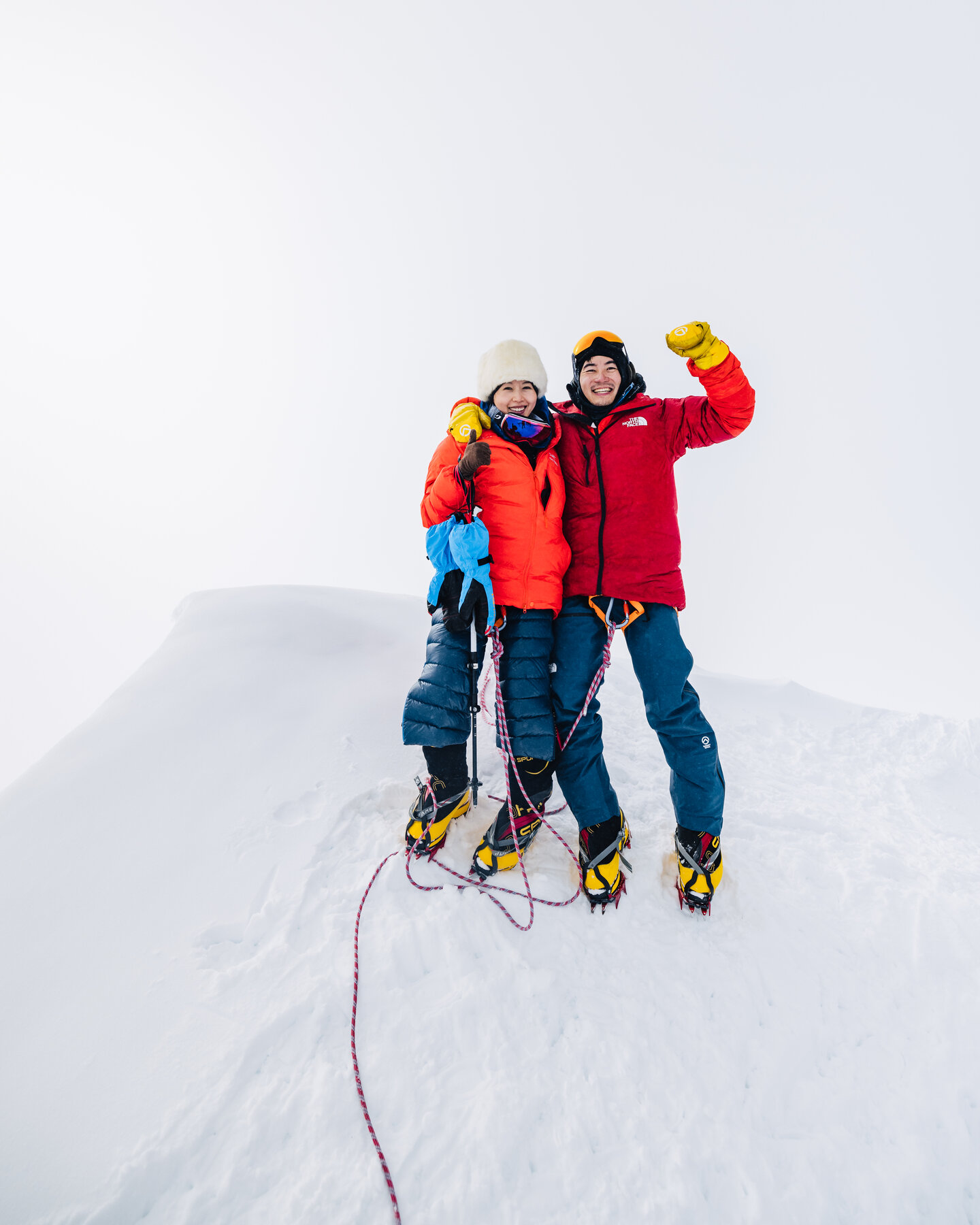
Jason and Grace on top of Antarctica. Four summits down, three to go.
The whole team at the summit. Every single person made it to the top.Summit embrace. Moments like these make every cold, exhausting day worth it.
On the summit ridge. Fog wrapped around us, but the elation was unmistakable.
The scale of Vinson. Climbers as tiny specks against the enormity of the Antarctic landscape.Standing on top of Antarctica. A moment we'll carry forever.
Triumph at 16,050 feet. The coldest summit on the Seven Summits list.Personal victory. Tested physically and mentally, and we came through.
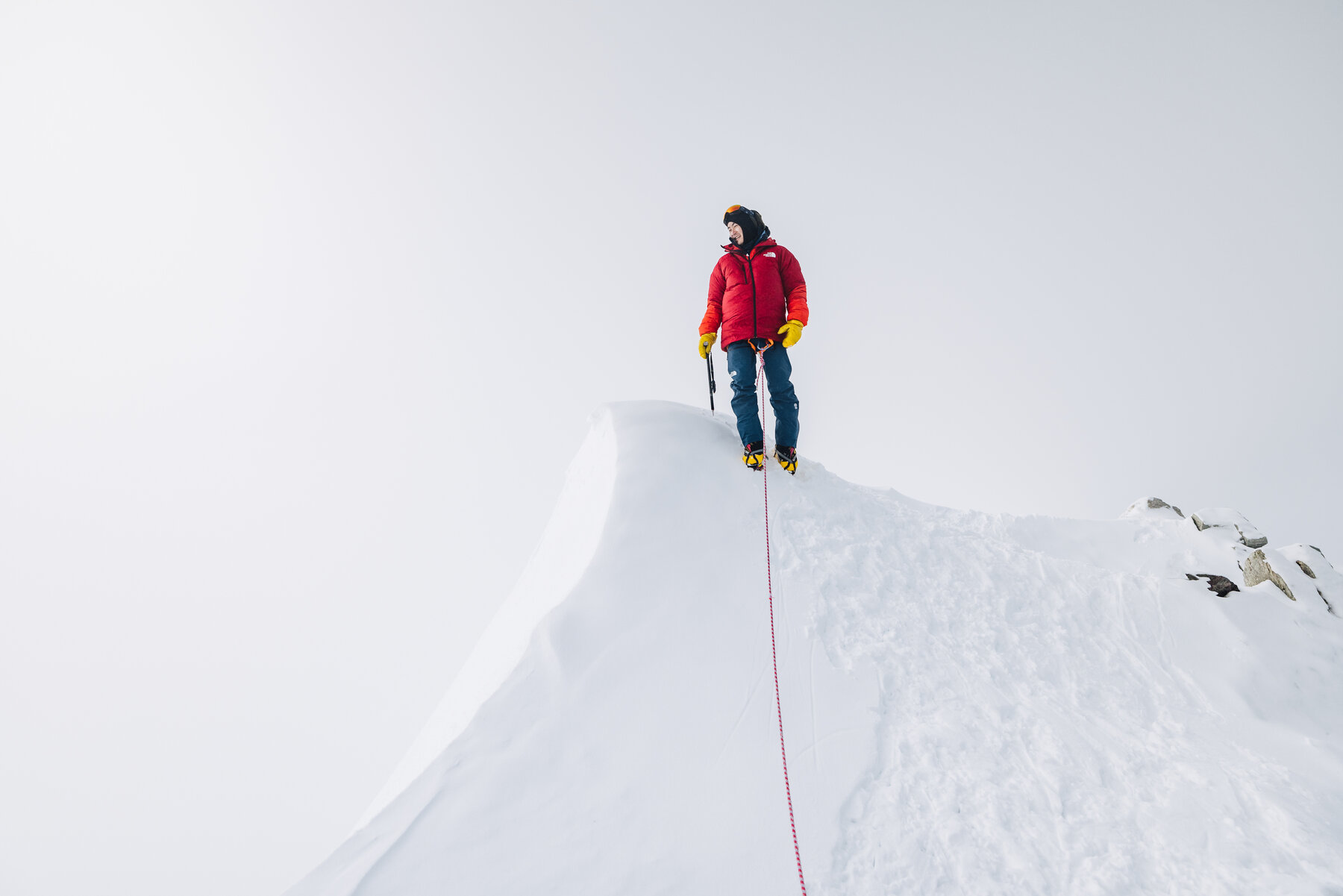
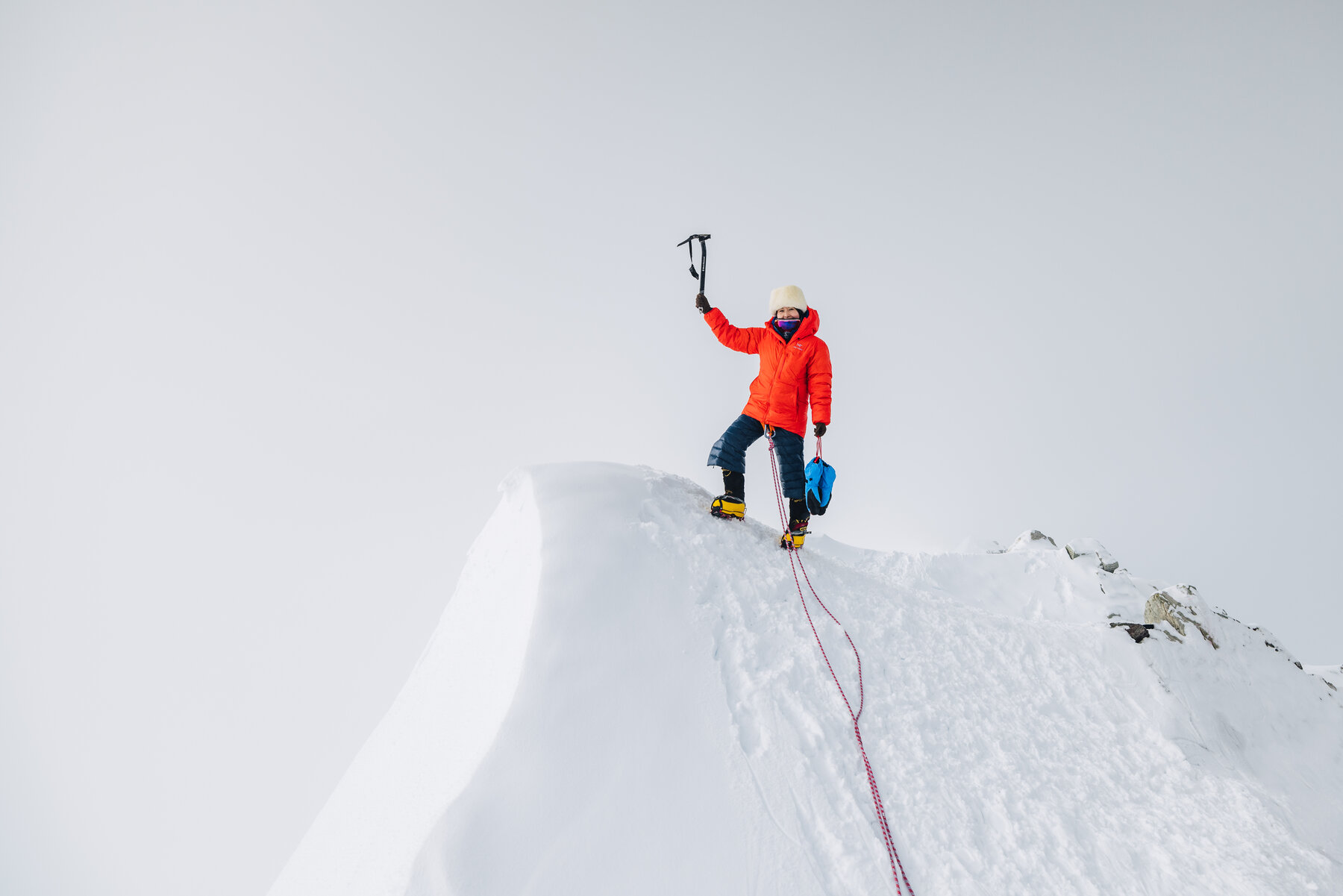
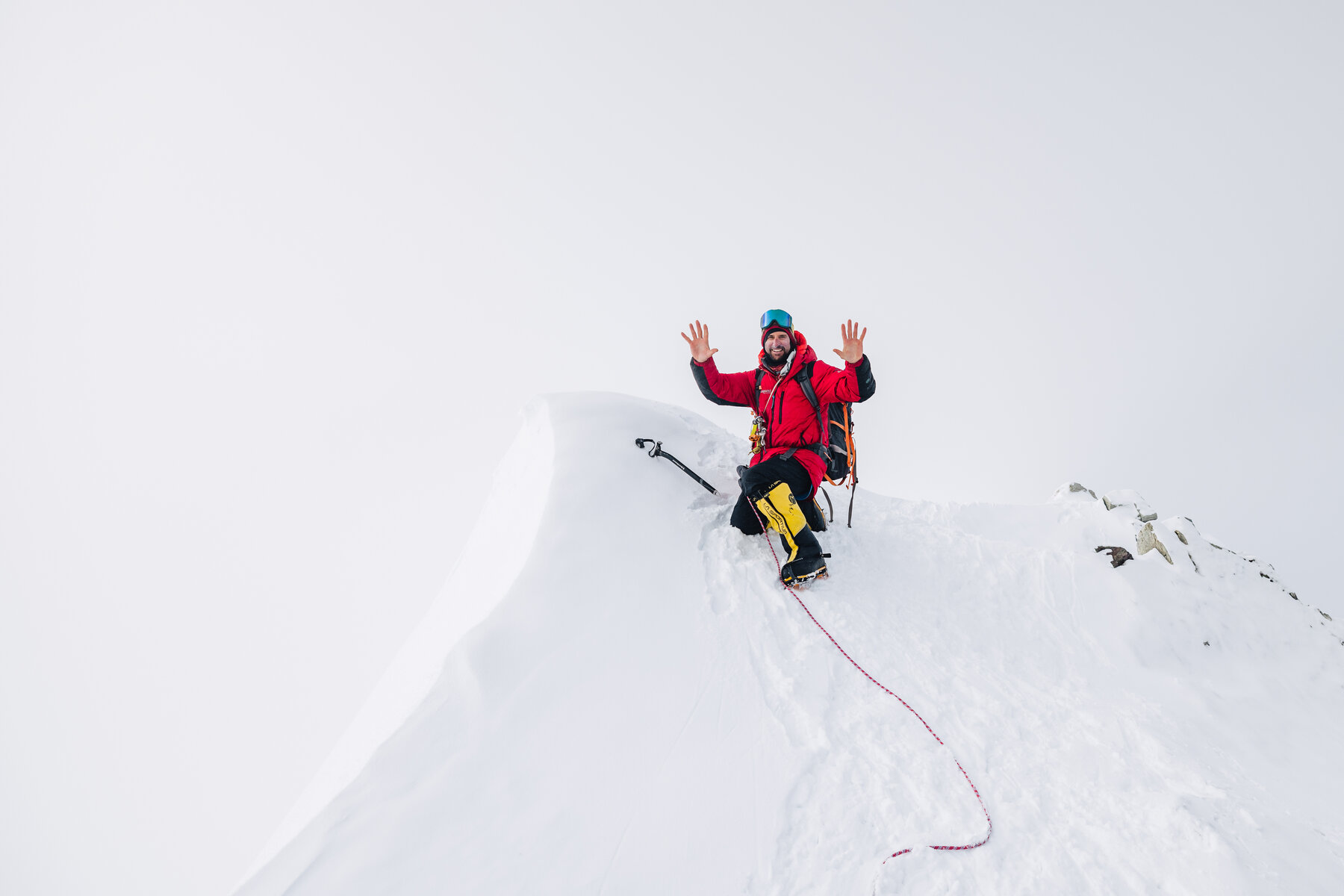
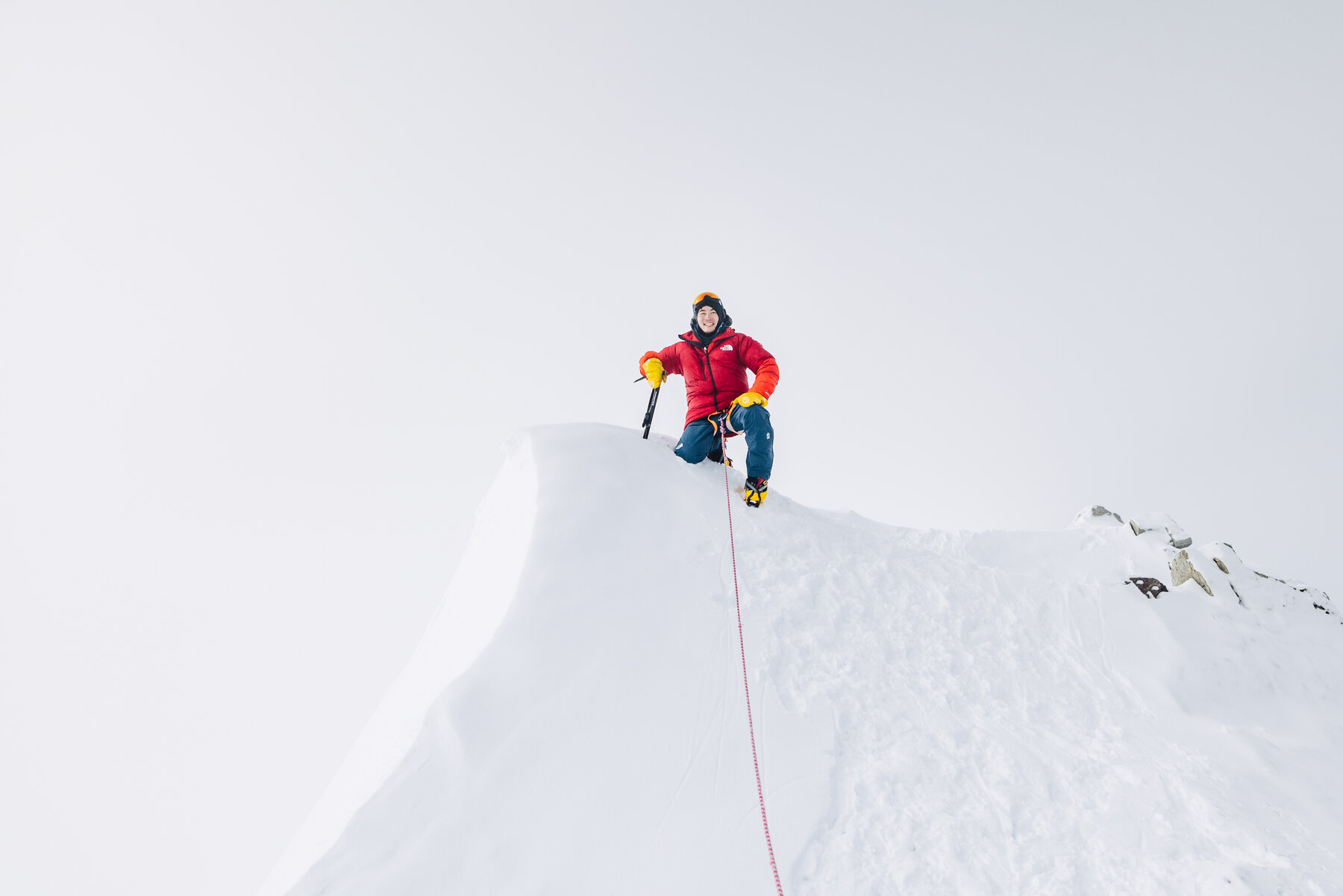
Partners on top. The whole expedition compressed into a single celebratory moment.Ice axe raised on the corniced ridge. Antarctica's highest point, no one else in sight.
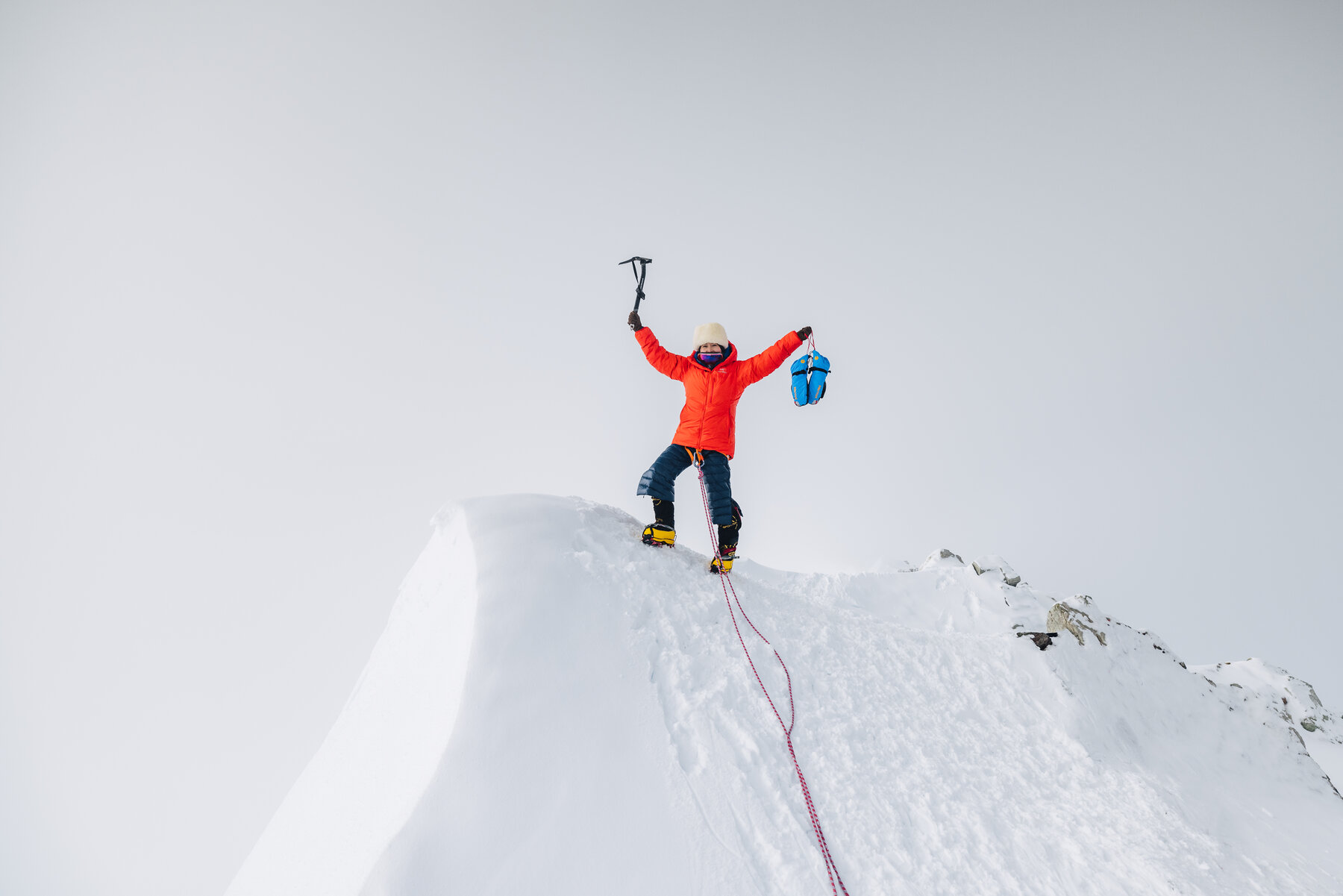
Arms and ice axe raised on the summit. The highest point in Antarctica, earned after five nights at High Camp.
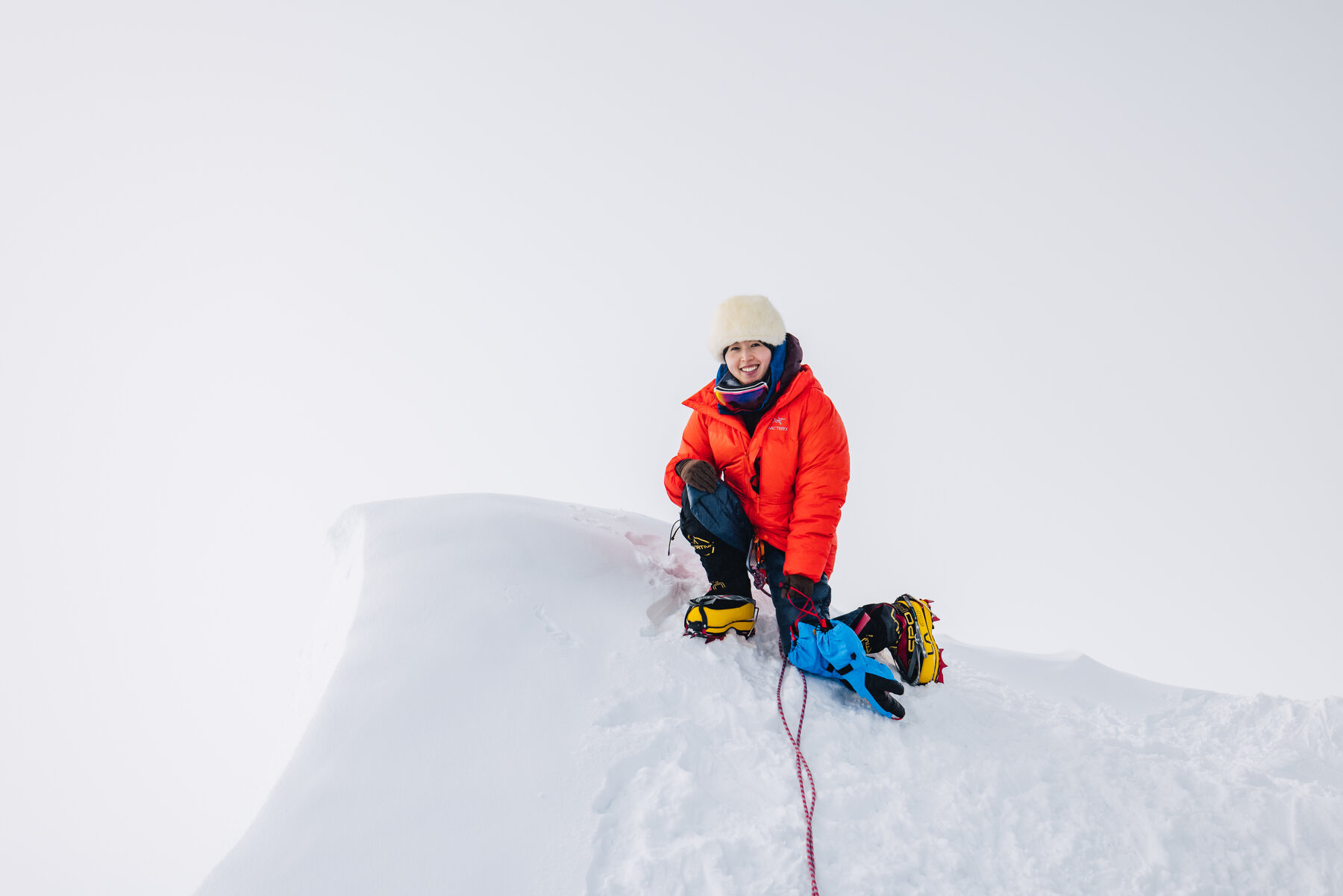
Grace on the summit. Taking a quiet moment on top of Antarctica before the descent.Navigating the summit ridge. The final stretch before the descent begins.
Starting the descent. The hard part is over, but respect for the mountain never stops.
Back at camp, we enjoyed a much-deserved chicken risotto dinner. We felt good, tired from a long day, but relieved that we were given this opportunity.
Day 10: Back to Base Camp
January 2022 · High Camp → Base Camp · 2,100 m / 6,900 ft
That feeling of accomplishment when you've made it to the top and back down again is indescribable. After summit day, we had a leisurely morning and enjoyed a late breakfast before packing up to depart from High Camp all the way back down to Base Camp.
Despite the harsh environment, the Vinson Massif is one of the most beautiful places that we've experienced. It is overwhelming to consider the vastness of this continent and the countless miles of untouched mountains. A small part of us didn't want to leave.
Climbing Vinson will forever be a cherished memory that tested us physically and mentally. We thrived and survived, and now we're ready to tackle the next challenge that comes our way.
Planning Your Vinson Climb
TL;DR
Standard route via the west face, November through January (Antarctic summer). Budget 14–21 days total including weather delays. Fly from Punta Arenas, Chile to Union Glacier, then Twin Otter to Base Camp. Expect extreme cold (−20°F to −50°F with wind chill) and 24-hour daylight. Prior high-altitude and cold-weather experience is essential. We climbed with Mountain Professionals; Antarctic Logistics & Expeditions (ALE) runs the flights and Union Glacier camp.
When to Go
The climbing season runs November through January during the Antarctic summer. December and January offer the warmest temperatures (still below freezing) and continuous daylight. Weather windows are unpredictable, so build extra days into your schedule.
Getting There
Fly to Punta Arenas, Chile. From there, ALE operates weekly flights to Union Glacier on a blue-ice runway. A Twin Otter then takes you to Vinson Base Camp. The entire journey from civilization to Base Camp takes one to two days depending on weather.
The Route
The standard route follows the Branscomb Glacier to Low Camp, then fixed lines up the west face to High Camp. Summit day is a long push up the glaciated valley to the rocky summit ridge. Expect 10 hours round trip on summit day. Crampons and rope skills are essential.
Cold Weather Prep
Vinson is likely the coldest of the Seven Summits. Temperatures with wind chill can reach minus fifty degrees Fahrenheit. Invest in the best expedition-grade down suit, boots, and gloves you can find. Frostbite is a constant risk, especially on exposed skin.
Weather Delays
Plan for them. We were pinned at High Camp for five nights. Storms can arrive without warning and last for days. Bring entertainment (audiobooks, shows with offline downloads), extra food, and above all, patience. The mountain decides when you go.
Logistics Provider
Antarctic Logistics & Expeditions (ALE) is the primary operator for Vinson. They handle flights, Union Glacier camp, and provide weather forecasts via radio. The operation is professional and well-run, but Antarctica is still Antarctica. Flexibility is non-negotiable.